Sports Moneyline Parlay Calculator: Multi-Bet Payout Analysis (2026)

Sports Moneyline Parlay Calculator: Combining Bets for Bigger Payouts
Moneyline parlays combine multiple straight bets into one—all must win for any payout. Our calculator multiplies odds, calculates true probabilities, and reveals how the house edge compounds with each additional leg.
What Is a Moneyline Parlay?
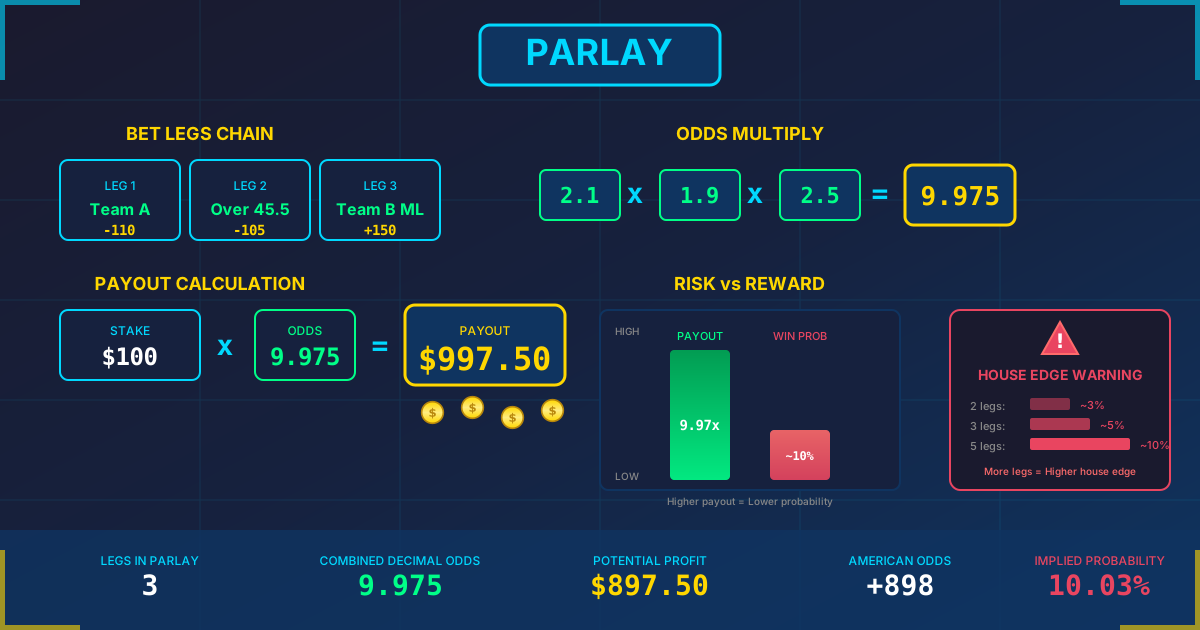
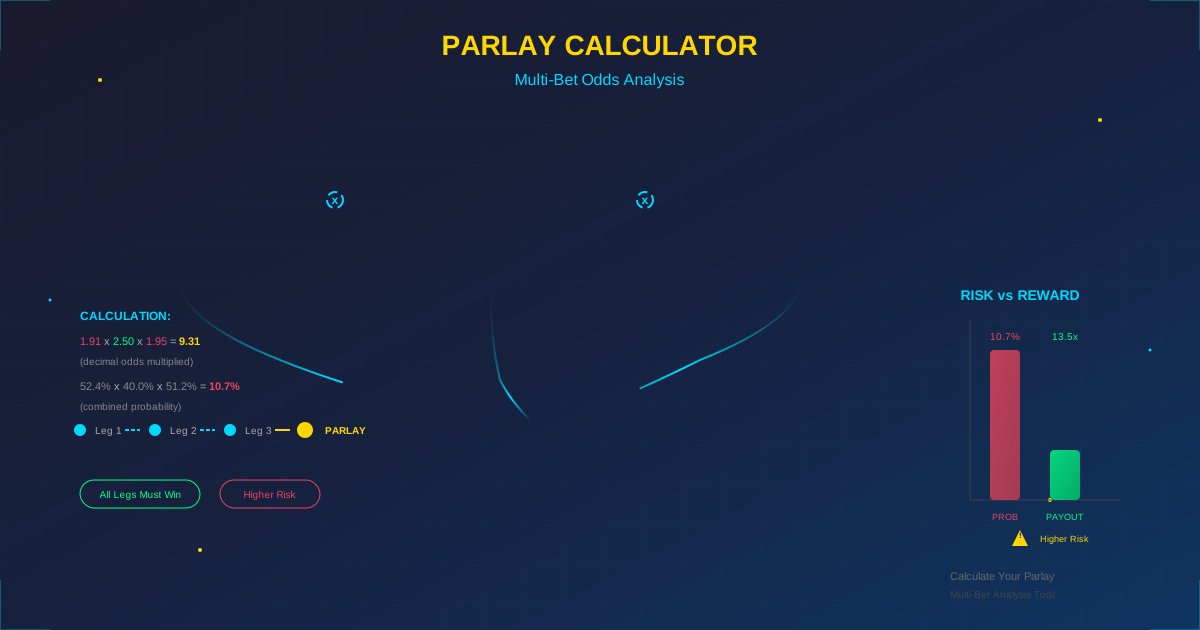
A moneyline parlay combines two or more moneyline bets into a single wager. All selections must win for the parlay to pay. The odds multiply together, creating larger potential payouts but dramatically lower win probability as legs are added.
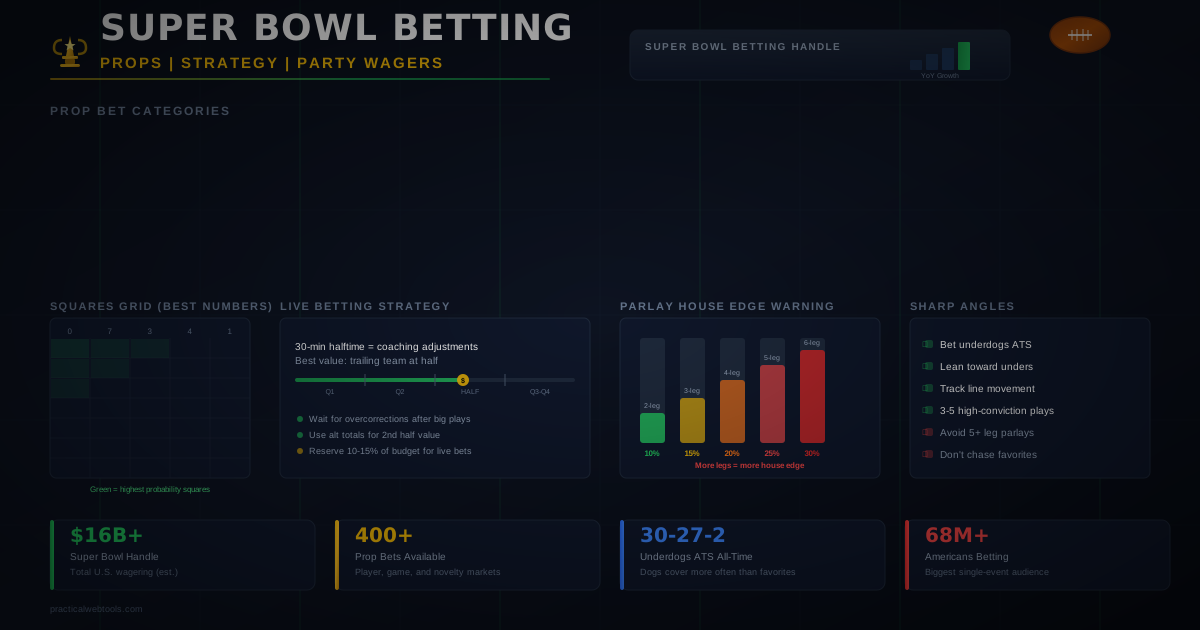
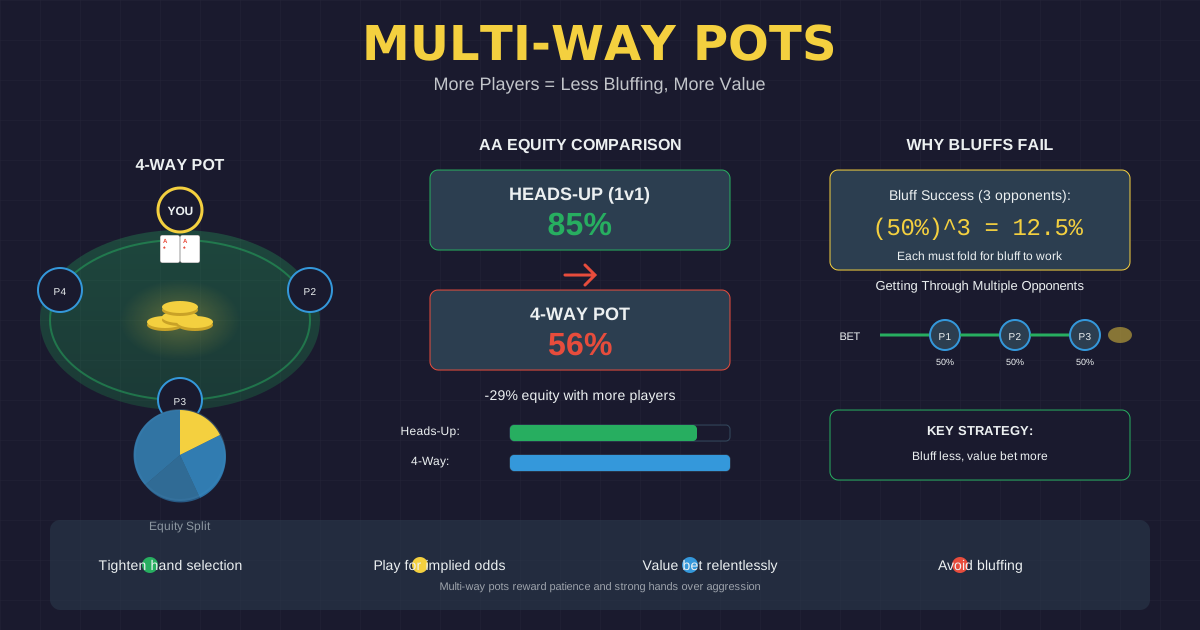
Quick Answer: Moneyline parlay = multiple moneyline bets combined into one. All must win or bet loses. Odds multiply: -110 × -110 ≈ +264. More legs = higher payout but lower probability. 2-leg: ~25% win rate. 5-leg: ~3% win rate. House edge compounds per leg (3-5% → 10-25%+). Exciting but mathematically poor long-term.
How to Use Our Calculator
Use the Moneyline Parlay Calculator →
Enter multiple selections to calculate combined parlay odds.
Step-by-Step Instructions
-
Add First Leg: First moneyline odds
-
Add Additional Legs: Each selection
-
View Combined Odds: Multiplied result
-
Enter Bet Amount: Your wager
-
See Payout and Probability: Full analysis
Input Fields Explained
| Field | Description | Example |
|---|---|---|
| Leg 1 Odds | First selection | -150 |
| Leg 2 Odds | Second selection | +120 |
| Leg 3 Odds | Third selection | -110 |
| Combined Odds | Parlay odds | +423 |
| Bet Amount | Your wager | $25 |
| Potential Payout | If all win | $130.75 |
| Win Probability | All correct | 17.8% |
How Parlay Math Works
Odds Multiplication
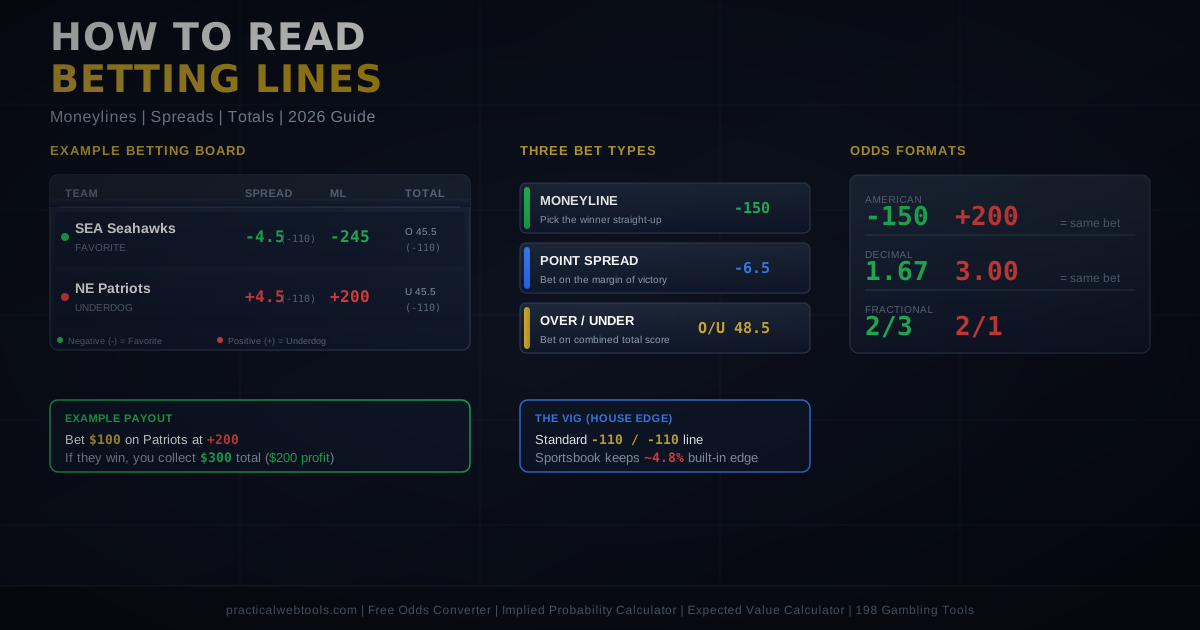
Converting to decimal:
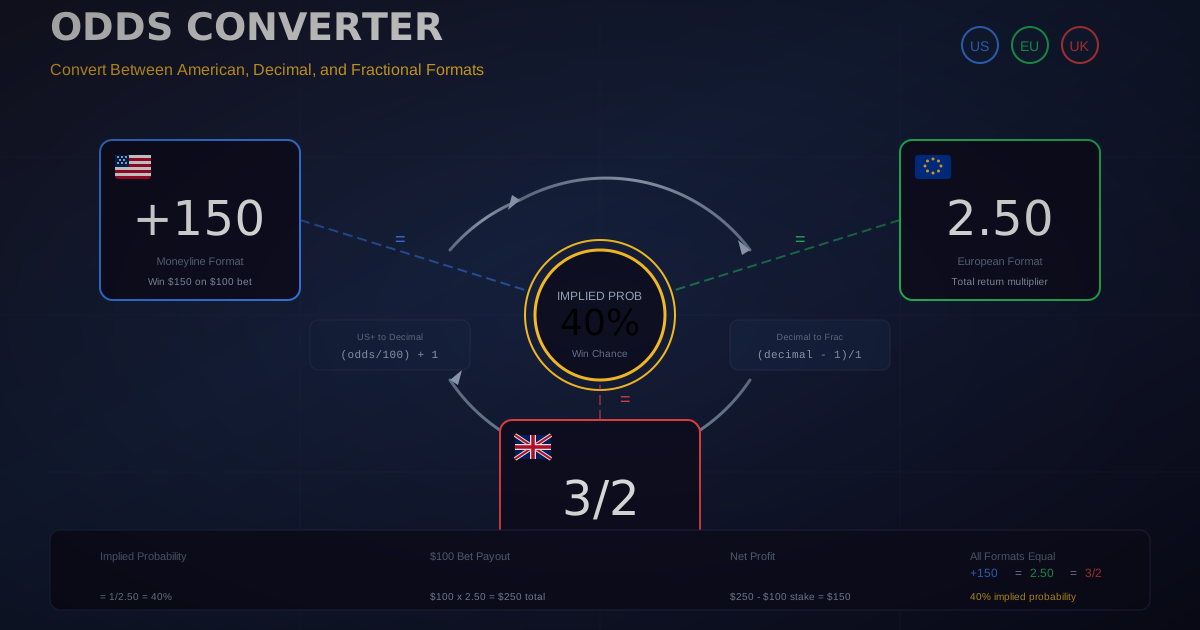
-150 = 1.667 (100/150 + 1)
+120 = 2.200 (120/100 + 1)
-110 = 1.909 (100/110 + 1)

Multiply decimals:
1.667 × 2.200 × 1.909 = 7.00

Convert back:
7.00 = +600 American odds

$25 bet wins $175
Probability Calculation
True probability per leg:
-150: 60% (150/250)
+120: 45.45% (100/220)
-110: 52.38% (110/210)

Combined probability:
0.60 × 0.4545 × 0.5238 = 14.3%

Fair odds: +600
But includes house edge
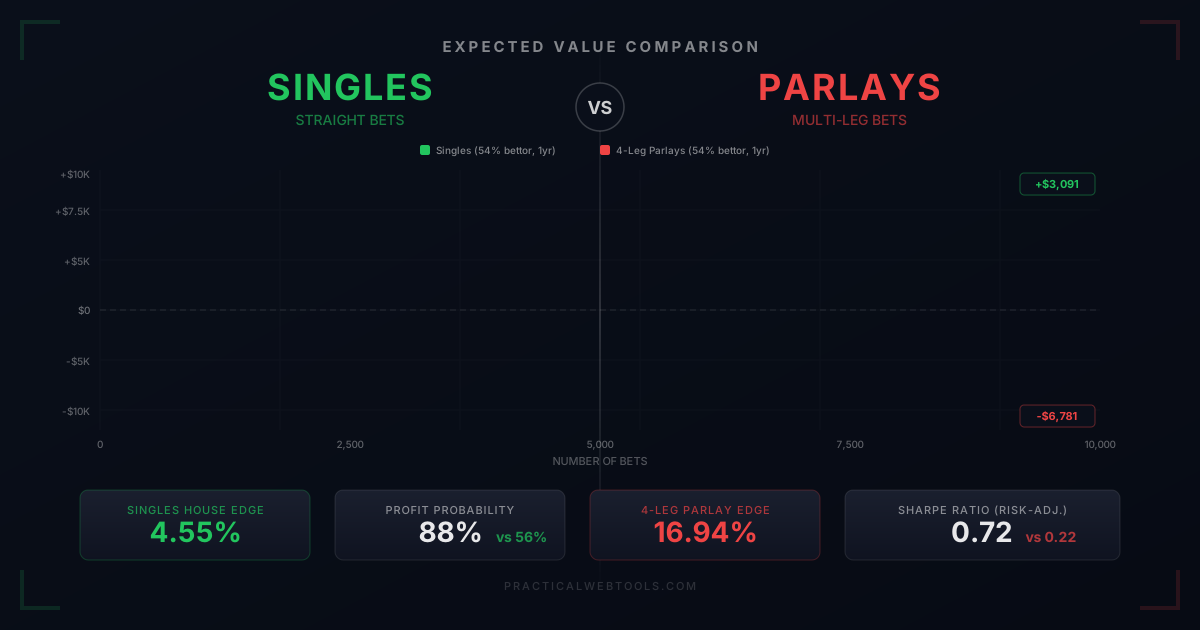
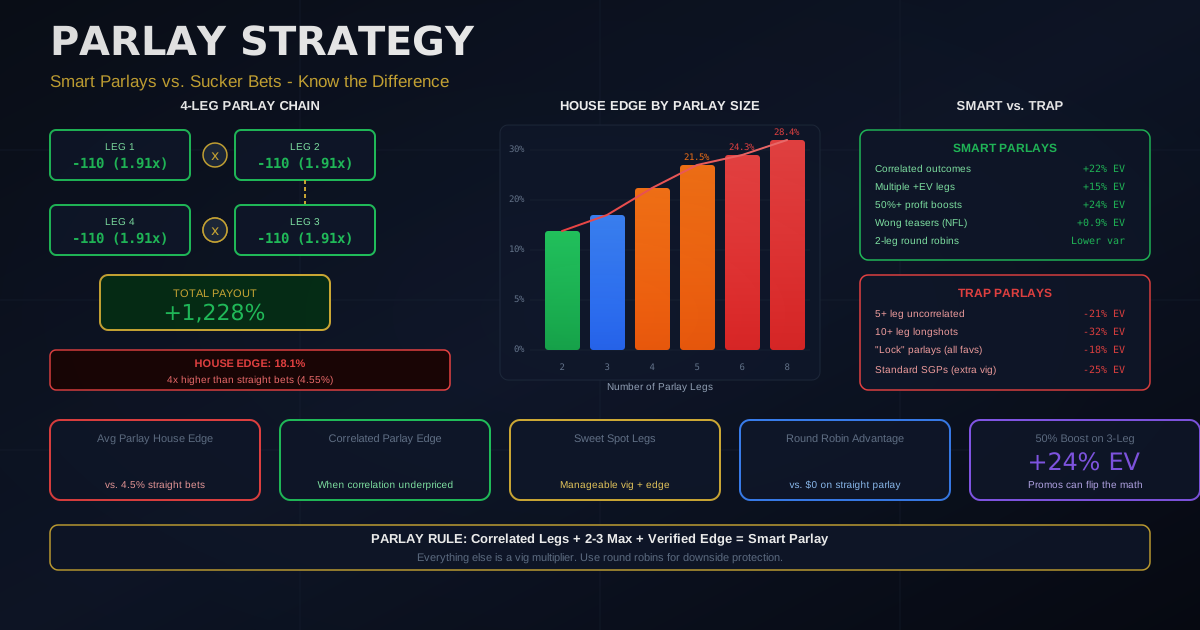
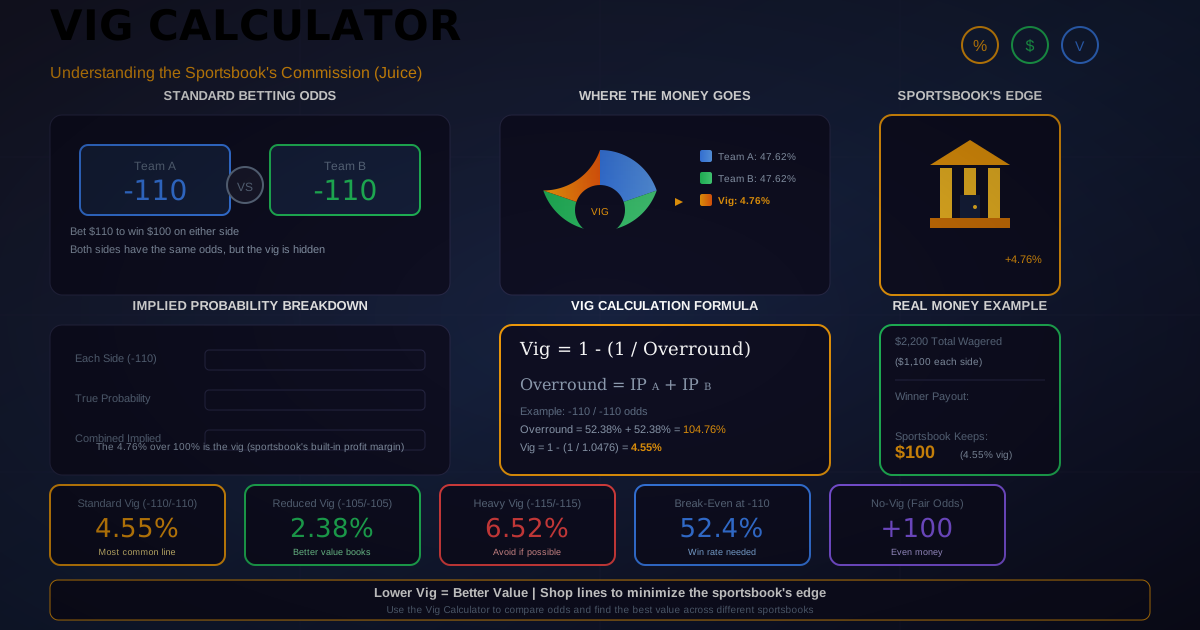
House Edge Compounding
Each -110 bet:
House edge ≈ 4.55%
Win probability: 52.38%

2-leg parlay (-110 × -110):
Edge: ~9%

3-leg parlay:
Edge: ~13%

5-leg parlay:
Edge: ~20%+

Edge grows with each leg
Parlay Payouts by Legs
2-Team Parlay
Two -110 favorites:

Decimal: 1.909 × 1.909 = 3.64
American: +264

$100 bet pays $364 total
$264 profit

Win rate: 27.4% (theoretical)
House advantage: ~9%
3-Team Parlay
Three -110 favorites:

Decimal: 1.909³ = 6.96
American: +596

$100 bet pays $696 total
$596 profit

Win rate: 14.4%
House advantage: ~13%
4-Team Parlay
Four -110 favorites:

Decimal: 1.909⁴ = 13.29
American: +1229

$100 bet pays $1,329 total
$1,229 profit

Win rate: 7.5%
House advantage: ~17%
5-Team Parlay
Five -110 favorites:

Decimal: 1.909⁵ = 25.37
American: +2437

$100 bet pays $2,537 total
$2,437 profit

Win rate: 3.9%
House advantage: ~21%
Mixed Odds Parlays
Favorites and Underdogs
Typical 3-leg parlay:
-200 (heavy favorite): 66.67%
-110 (slight favorite): 52.38%
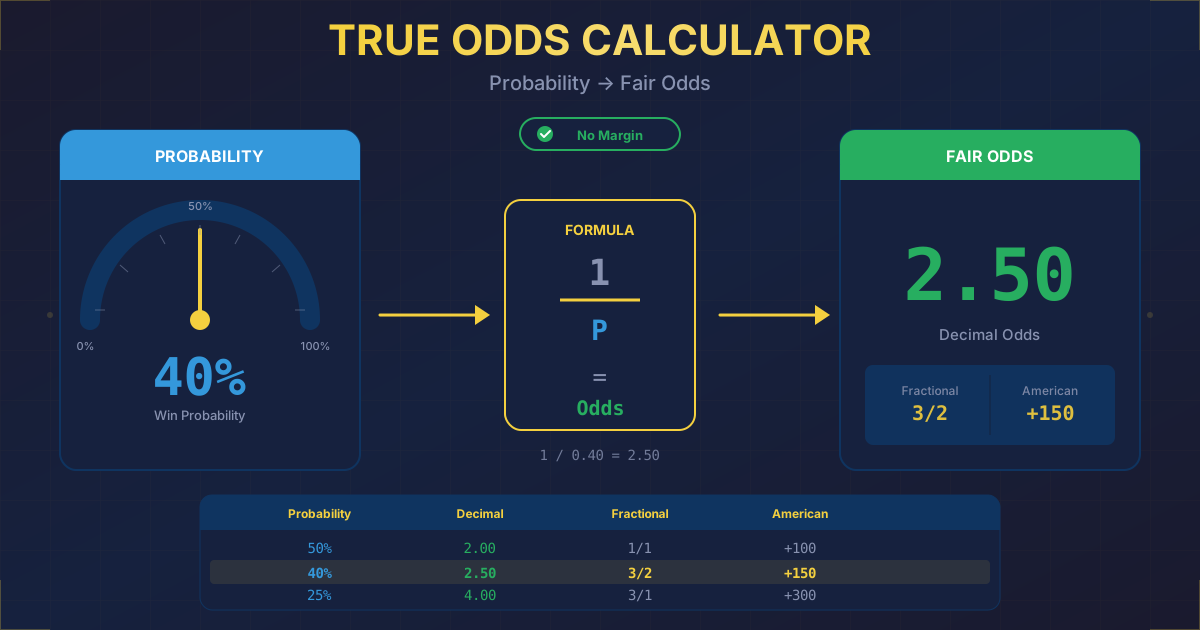
+150 (underdog): 40%

Combined: 14.0% win rate
Odds: 1.50 × 1.909 × 2.50 = 7.16
American: +616

More interesting than all favorites
All Underdogs
3-leg underdog parlay:
+150, +175, +200

Probability: 40% × 36.4% × 33.3% = 4.85%
Odds: 2.50 × 2.75 × 3.00 = 20.63
American: +1963

$50 pays $1,031
Low probability, high payout
All Heavy Favorites
3-leg favorite parlay:
-300, -250, -200

Probability: 75% × 71.4% × 66.67% = 35.7%
Odds: 1.33 × 1.40 × 1.50 = 2.80
American: +180

Lower payout but "safer"
Still 64.3% lose
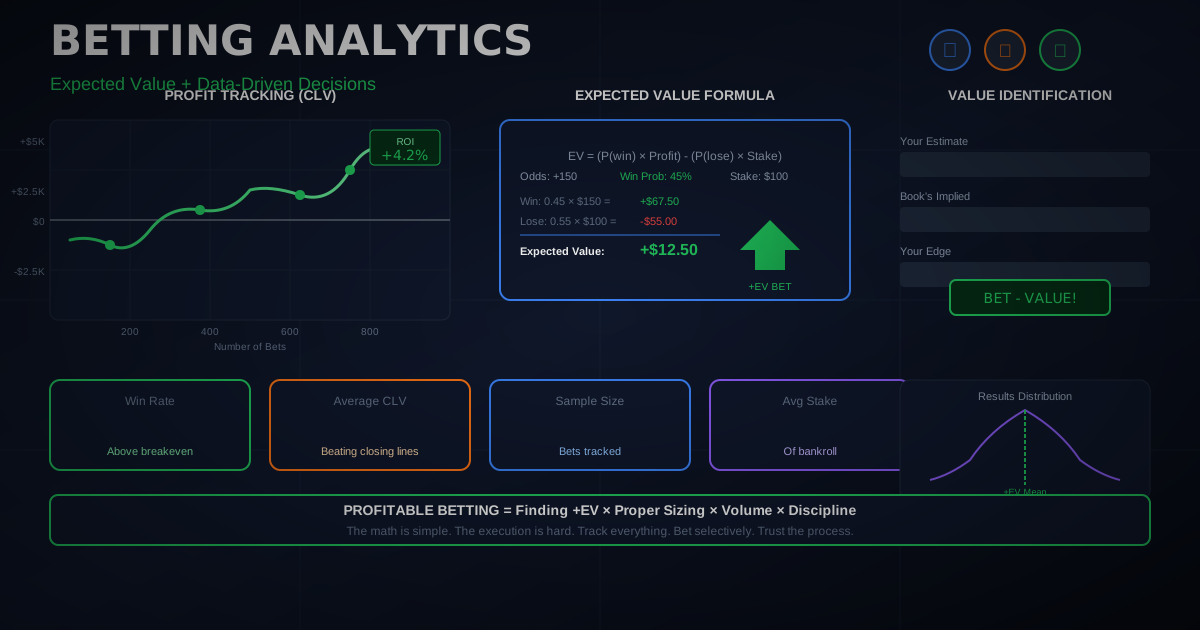
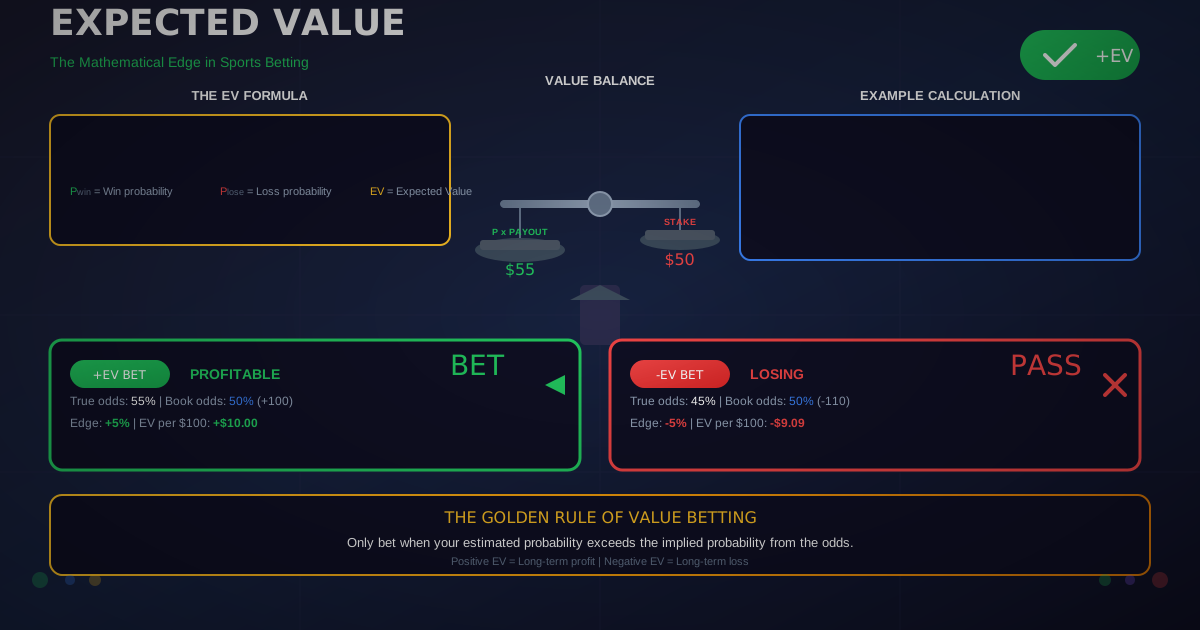
Expected Value Analysis
Single Bet vs Parlay
$100 on 3 separate -110 bets:

Each bet EV: -$4.55
Total EV: -$13.65

$100 on 3-leg parlay:

Payout if win: $696
Win rate: 14.4%
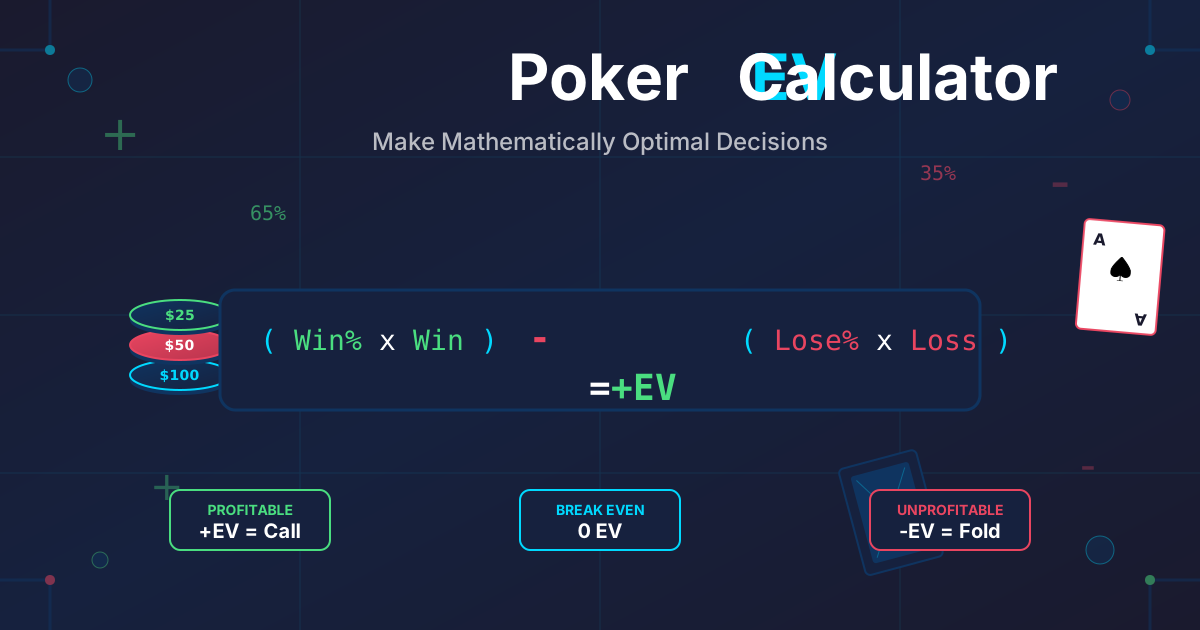
EV: (0.144 × $596) - (0.856 × $100)
EV: $85.82 - $85.60 = +$0.22

Wait—nearly the same!
But variance is much higher
Why Parlays Seem Worse
Perception vs reality:

Sportsbooks often cap payouts
May offer worse parlay odds
"House odds" vs "true odds"

Standard -110 parlay:
Theoretical edge ~13% for 3-leg
Some books pay worse

Always check actual payout
Long-Term Results
100 three-leg parlays at $100:

Expected wins: 14.4
Expected revenue: 14.4 × $696 = $10,022
Cost: 100 × $100 = $10,000
Theoretical profit: +$22

Reality:
Variance is enormous
16 wins = +$1,136
12 wins = -$1,648

Massive swings per sample
Real-World Examples
Example 1: Weekend Football Parlay
3-team NFL moneyline:
Chiefs -180
Bills -150
Ravens -200

Conversions:
1.556 × 1.667 × 1.500 = 3.89
American: +289

$50 bet pays $194.50 total

Win probability:
64.3% × 60% × 66.67% = 25.7%

Better odds than expected
Favorites reduce edge slightly
Example 2: Underdog Special
3-team underdog parlay:
Panthers +200
Jets +175
Jaguars +150

Conversions:
3.00 × 2.75 × 2.50 = 20.63
American: +1963

$25 bet pays $515.75 total

Win probability:
33.3% × 36.4% × 40% = 4.85%

Longshot but big payout
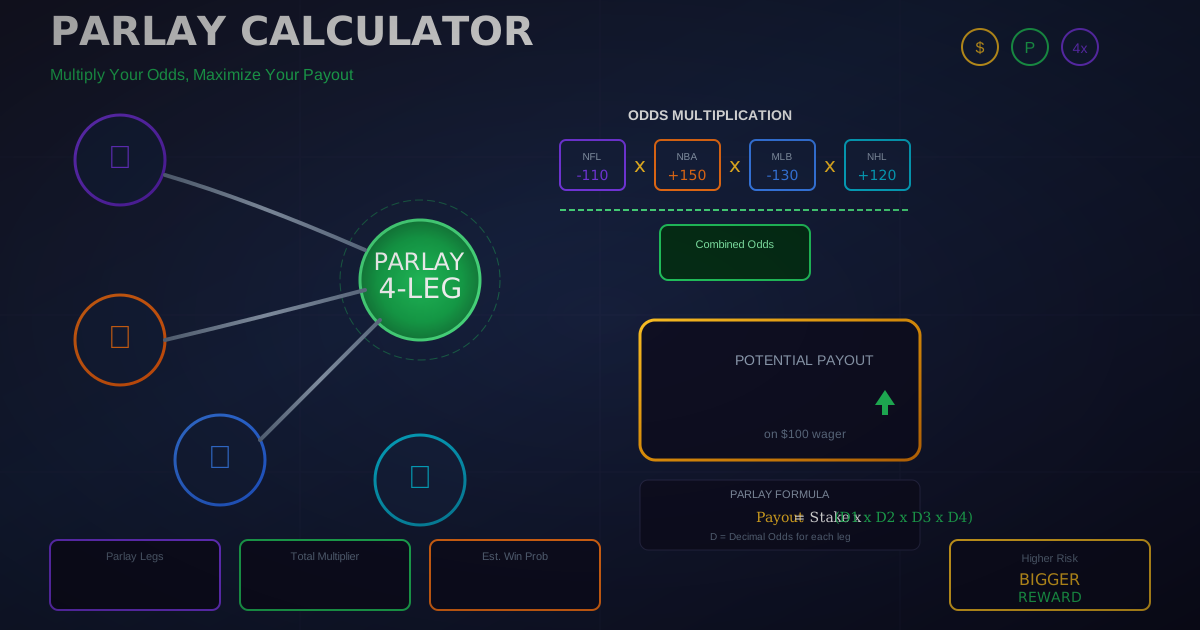
Example 3: Mixed Sport Parlay
4-team cross-sport:
Lakers -140 (NBA)
Yankees -120 (MLB)
Chiefs -110 (NFL)
Oilers +110 (NHL)

Conversions:
1.714 × 1.833 × 1.909 × 2.10 = 12.60
American: +1160

$20 bet pays $252 total

Win probability:
58.3% × 54.5% × 52.4% × 47.6% = 7.93%
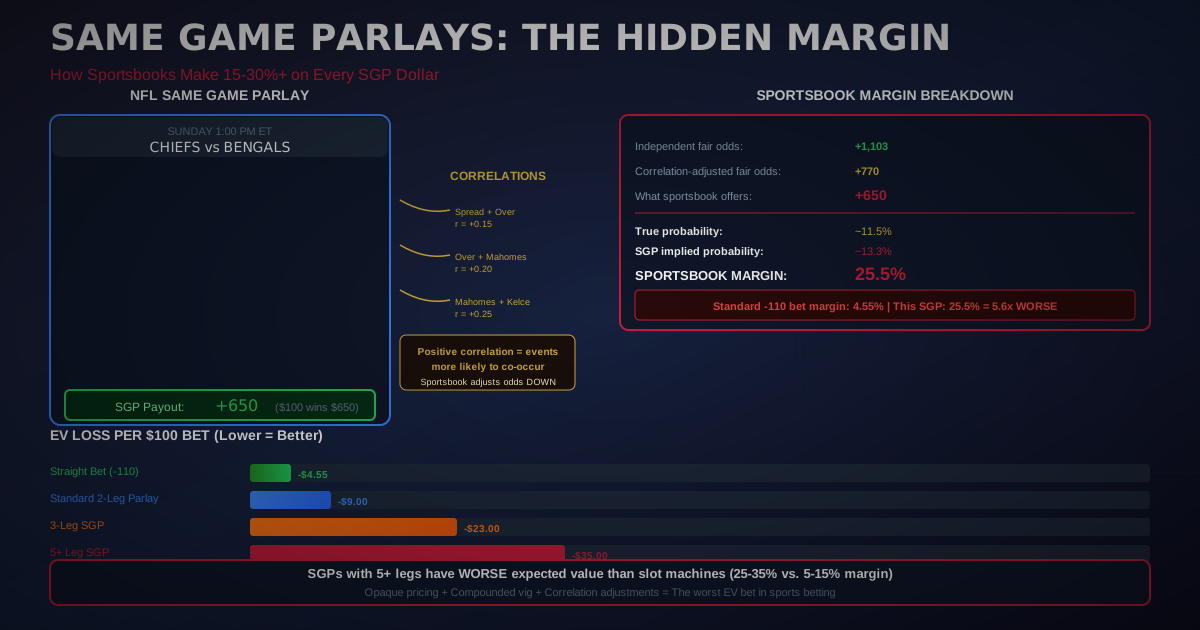
Example 4: Same Game Parlay
3-leg NBA same game:
Lakers -3.5 spread
Over 218.5 total
LeBron over 28.5 points

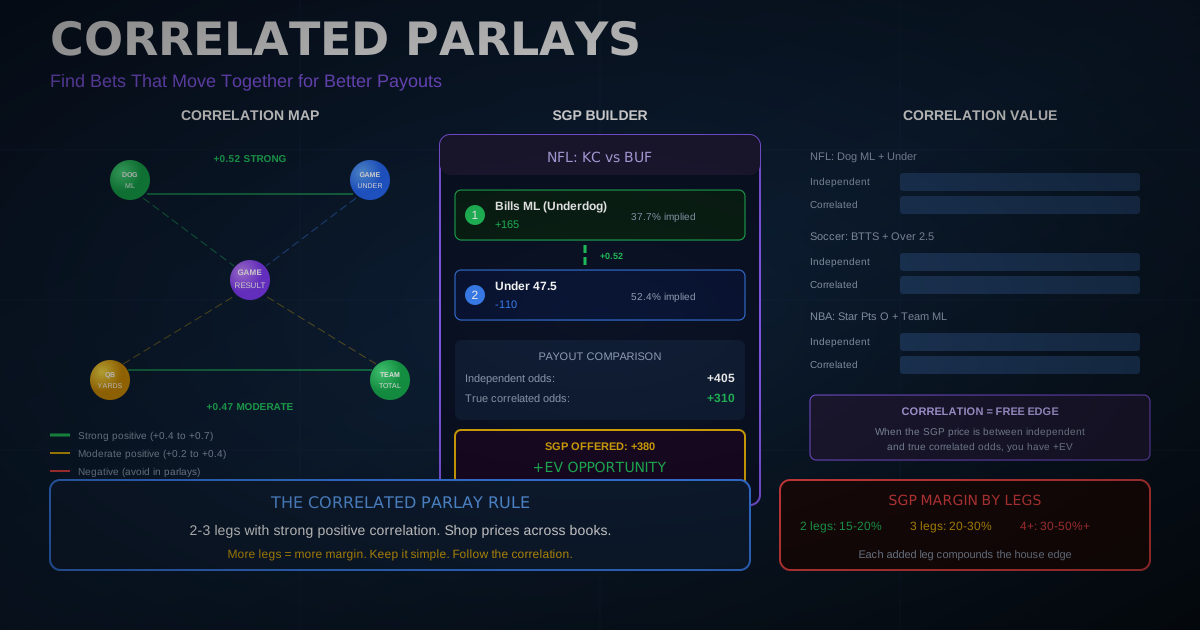
These bets correlate!
Actual odds may differ
Books adjust same-game

Standard calculation won't apply
Use book's actual odds
Strategy Considerations
When Parlays Make Sense
Entertainment value:
- Small bet, big potential
- Watching multiple games
- "Lottery ticket" mentality

Strategy:
- Positive EV legs exist
- Correlated events (carefully)
- Promotional offers

Not for: Grinding profit
Common Mistakes
Parlay pitfalls:

1. Too many legs (5+)
2. Adding "locks" (nothing is locked)
3. Ignoring probability
4. Chasing losses with parlays
5. Not comparing to straight bets
Leg Limit Wisdom
Recommended limits:

2-leg: Reasonable
3-leg: Acceptable
4-leg: Getting risky
5+ leg: Entertainment only

Each leg adds ~4-5% edge
Four legs = ~17% disadvantage
Common Mistakes
1. "Can't Lose" Parlays
Mistake: All heavy favorites Problem: Still 30-40% lose Fix: Respect probability
2. Too Many Legs
Mistake: 8-team parlays Problem: <1% win rate Fix: Limit to 2-4 legs
3. Ignoring Correlation
Mistake: Same-game without adjustment Problem: Events aren't independent Fix: Use book's same-game odds
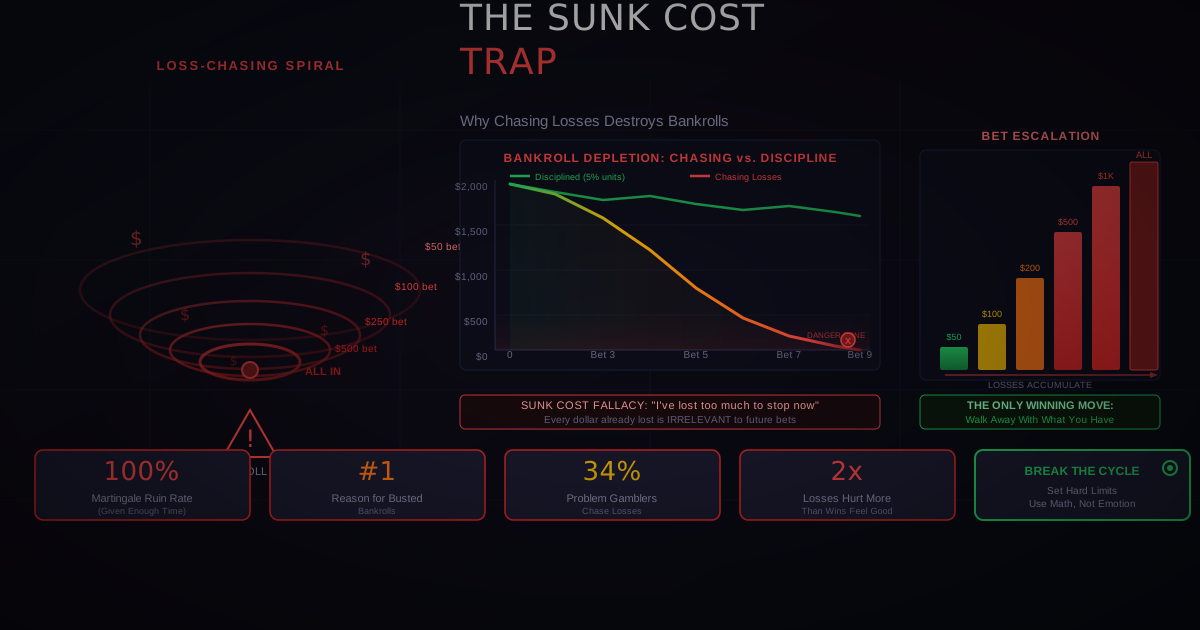
4. Chasing with Parlays
Mistake: Parlay to recover losses Problem: Compounds losing Fix: Straight bets for recovery
Frequently Asked Questions
Are parlays a good bet?
For entertainment, yes. For long-term profit, no. The house edge compounds with each leg, making parlays mathematically worse than straight bets.
Why do parlays pay so much?
The odds multiply because all legs must win. The payout reflects the low probability, but the house still takes a cut at each step.
What happens if one leg pushes?
Most sportsbooks reduce the parlay by that leg. A 3-leg becomes a 2-leg at reduced odds.
Are same-game parlays different?
Yes. Legs in same-game parlays often correlate (if team scores more, total is higher). Books adjust odds to account for this.
What's the maximum number of legs?
Varies by sportsbook—typically 10-15 legs. But win probability at 10+ legs is essentially zero.
Should I ever bet parlays?
For small entertainment bets with money you expect to lose, sure. Never as a serious betting strategy.
Pro Tips
-
Limit to 2-4 legs: Edge compounds quickly
-
Check actual payouts: Some books pay worse
-
Understand probability: Multiply win rates
-
Entertainment mindset: Expect to lose
-
Straight bets win: Long-term profit strategy
Related Calculators
- Parlay Calculator - General parlays
- Moneyline Calculator - Single bets
- Implied Probability Calculator - Convert odds
- Expected Value Calculator - Bet analysis
- Kelly Criterion Calculator - Optimal sizing
Conclusion
Moneyline parlays multiply odds for bigger payouts—but the house edge compounds with every leg added. Our calculator shows exact probabilities, reveals the true cost of parlays, and helps you understand why sportsbooks love when you bet them.
That 4-team parlay at +1200 looks amazing until you calculate the 7.5% win probability. Our calculator proves why the house edge on your "sure thing" parlay is three times worse than straight bets.