Sports Staking Plan Calculator: Kelly, Flat, and Percentage Systems (2026)
Sports Staking Plan Calculator: Choose the Right Betting System
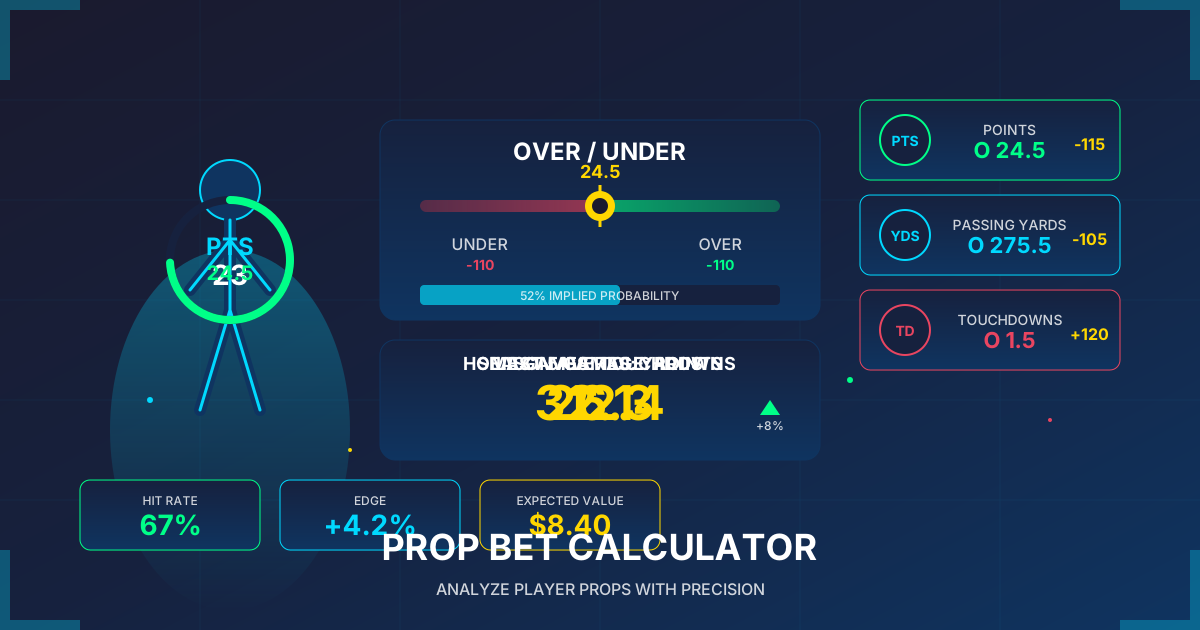
Your staking plan determines how much you bet on each wager. The right system maximizes growth while managing risk; the wrong one can amplify losses or limit profits. Our staking plan calculator compares Kelly Criterion, flat betting, proportional, and variable systems to help you find the optimal approach for your betting style.
What Is a Staking Plan?
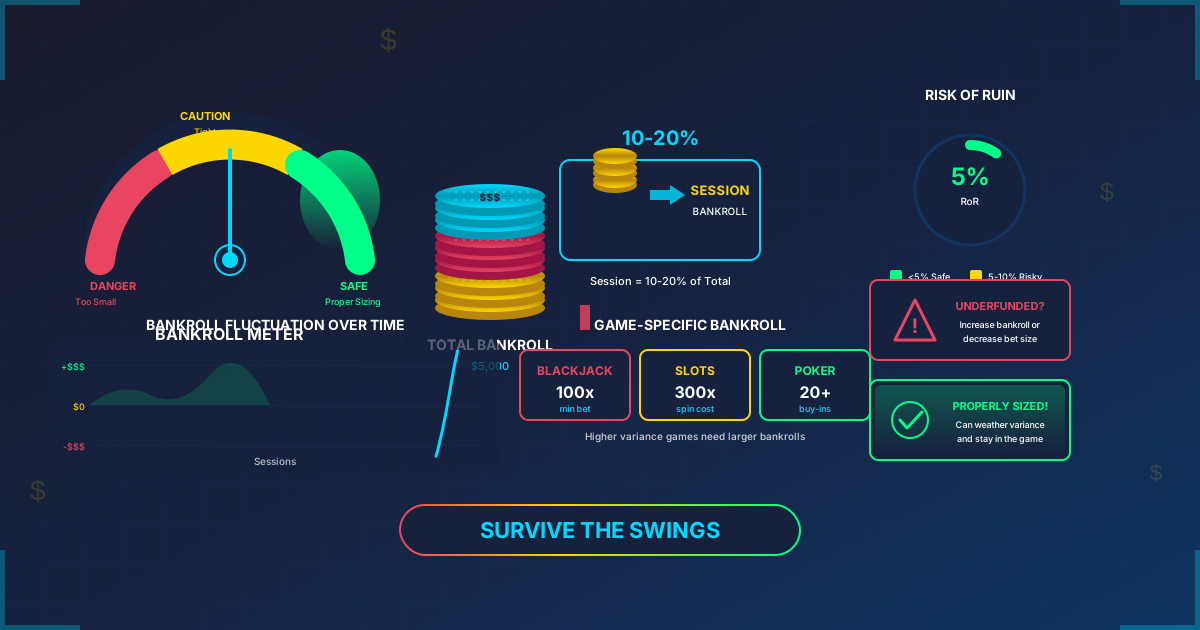
A staking plan is a systematic method for determining bet sizes based on your bankroll, edge, and risk tolerance. Rather than betting arbitrary amounts, a staking plan provides consistent rules for every wager. Good staking plans balance growth potential against risk of ruin, ensuring long-term sustainability.
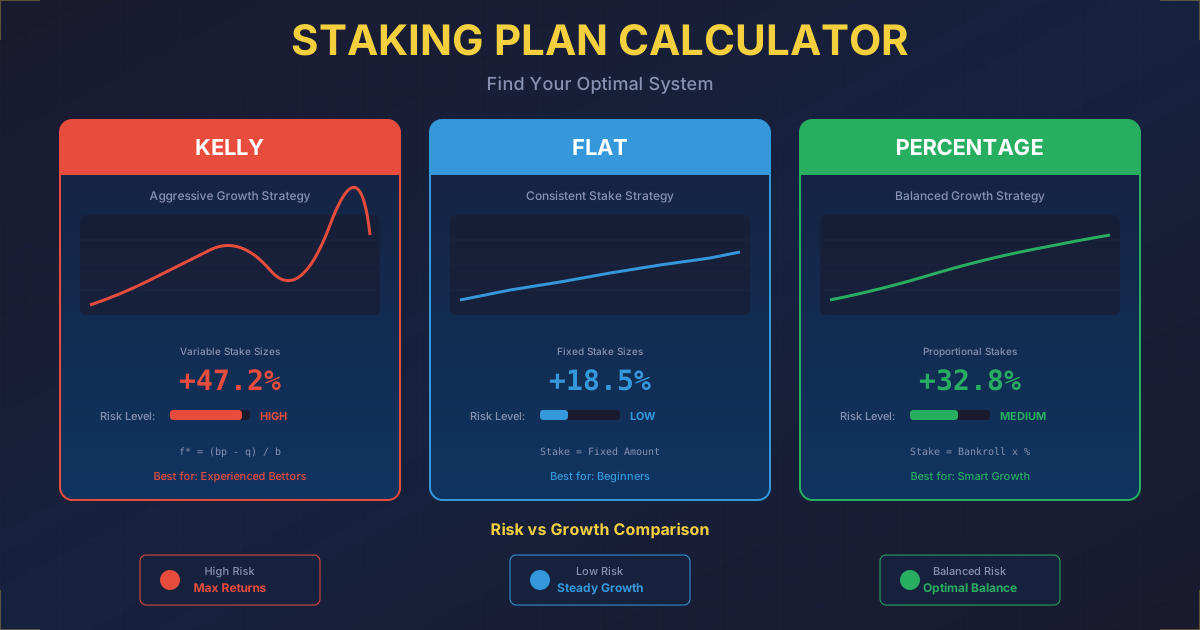
Quick Answer: The three main staking approaches are: (1) Flat betting - bet the same amount every time (1-2% of bankroll), safest and simplest; (2) Percentage/Proportional - bet a fixed percentage of current bankroll, self-adjusting; (3) Kelly Criterion - bet based on edge size, mathematically optimal but aggressive. For most bettors, flat betting or fractional Kelly (25-50% of full Kelly) provides the best risk-adjusted returns.
How to Use Our Calculator
Use the Sports Staking Plan Calculator →
Step-by-Step Instructions
- Enter Bankroll: Input your total betting funds
- Select System: Choose flat, percentage, Kelly, or hybrid
- Input Parameters: Enter edge estimate and odds (for Kelly)
- Calculate Stakes: Get recommended bet sizes
- Compare Systems: See projected growth under each method
Input Fields
| Field | Description | Example |
|---|---|---|
| Total Bankroll | Dedicated betting funds | $5,000 |
| Staking Method | Flat, Percentage, Kelly | Kelly |
| Base Percentage | For flat/percentage | 2% |
| Estimated Edge | Your advantage (Kelly) | 3% |
| Odds | Current bet odds (Kelly) | 2.10 |
| Kelly Fraction | Portion of full Kelly | 25% |
Staking System Comparison
Overview of Methods
System          | Risk   | Growth | Complexity | Best For
----------------|--------|--------|------------|----------
Flat Betting    | Low    | Slow   | Simple     | Beginners
Percentage      | Medium | Medium | Simple     | Intermediate
Full Kelly      | High   | Fast   | Complex    | Never (too risky)
Fractional Kelly| Medium | Good   | Moderate   | Advanced
Variable/Tiered | Medium | Medium | Moderate   | Confident bettors
Risk vs Reward Profile
Flat Betting (1% units):
- Losing streak of 50: Lose 50% bankroll
- Winning streak of 50: Gain 50% bankroll
- Steady, predictable outcomes

Percentage Betting (2%):
- Self-adjusting as bankroll changes
- Never go broke (mathematically)
- Slower recovery from losses

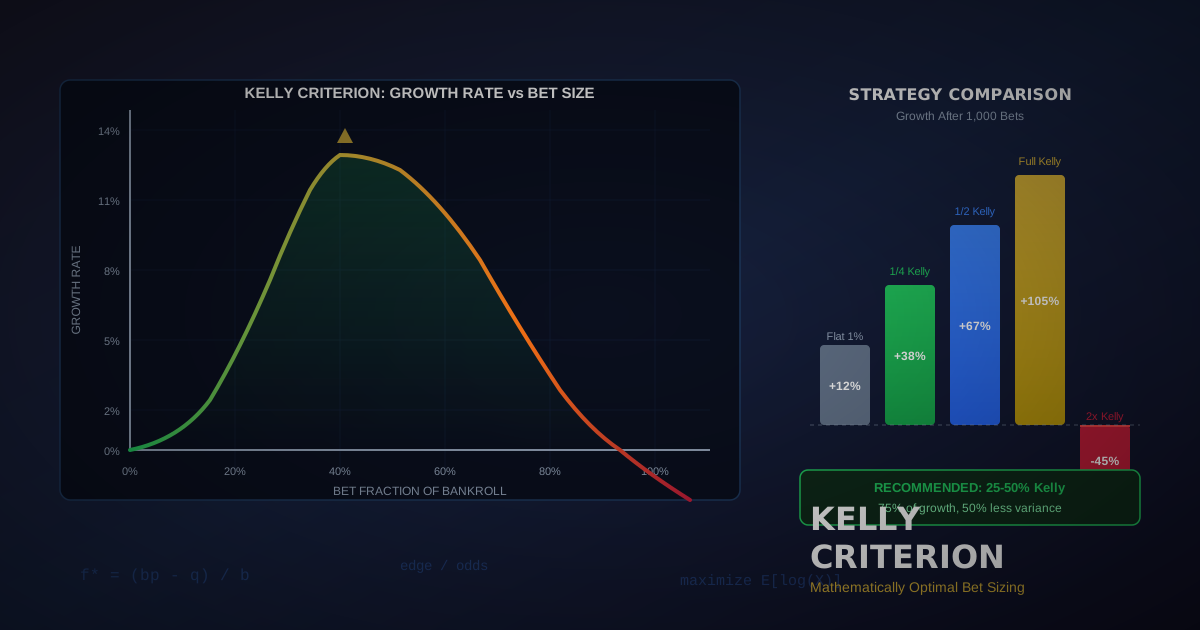
Full Kelly:
- Optimal growth when edge is correct
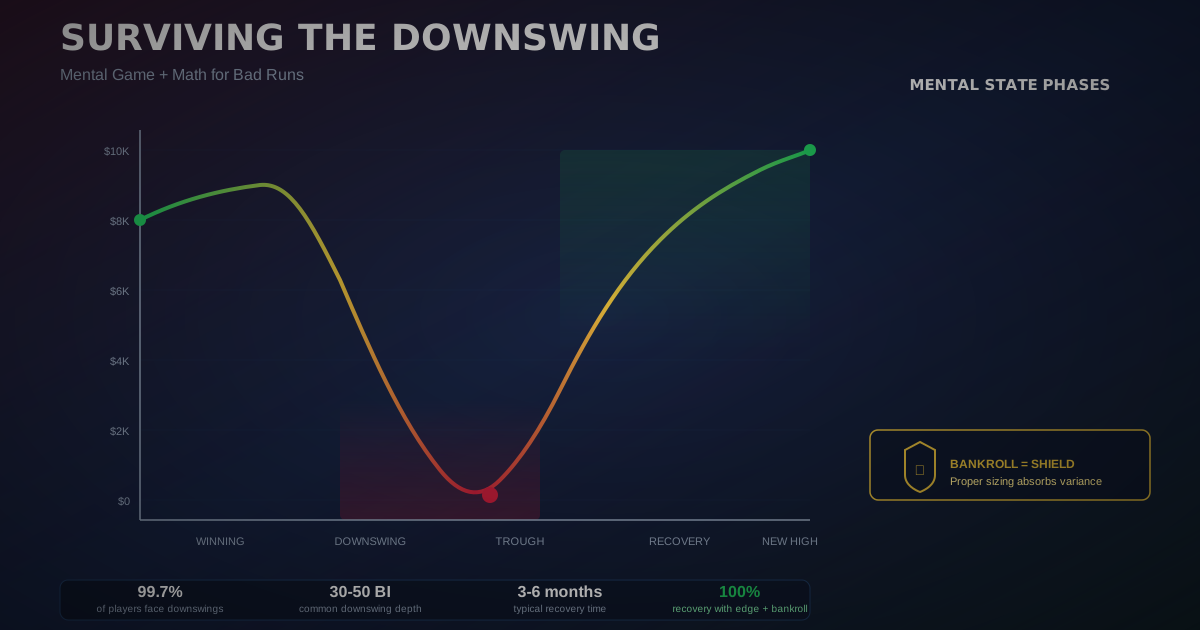
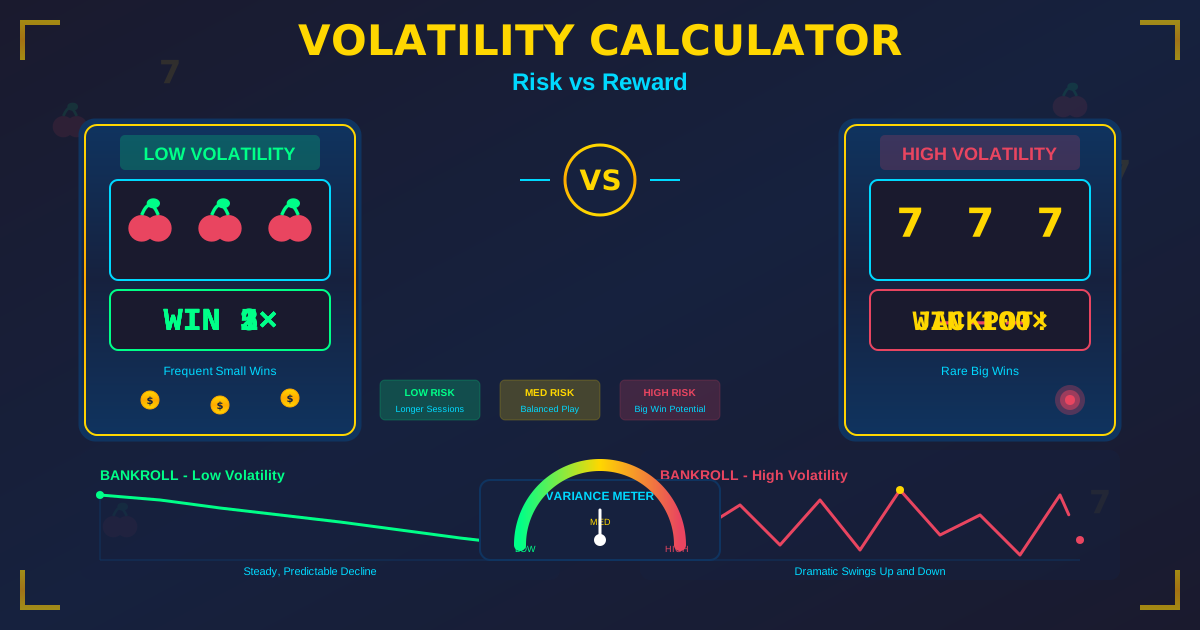
- High volatility, frequent large drawdowns
- Devastating if edge is overestimated

Quarter Kelly:
- 25% of full Kelly suggestion
- Good growth with manageable risk
- Industry standard among professionals
Flat Betting System
How It Works
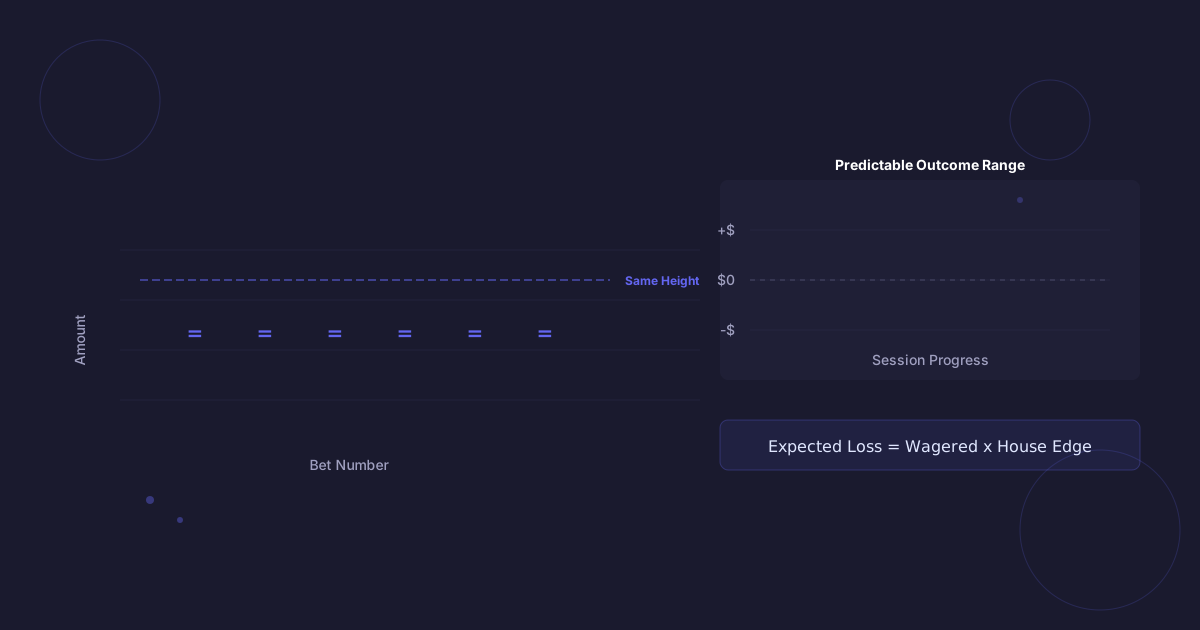
Method: Bet the same fixed amount on every wager

Formula:
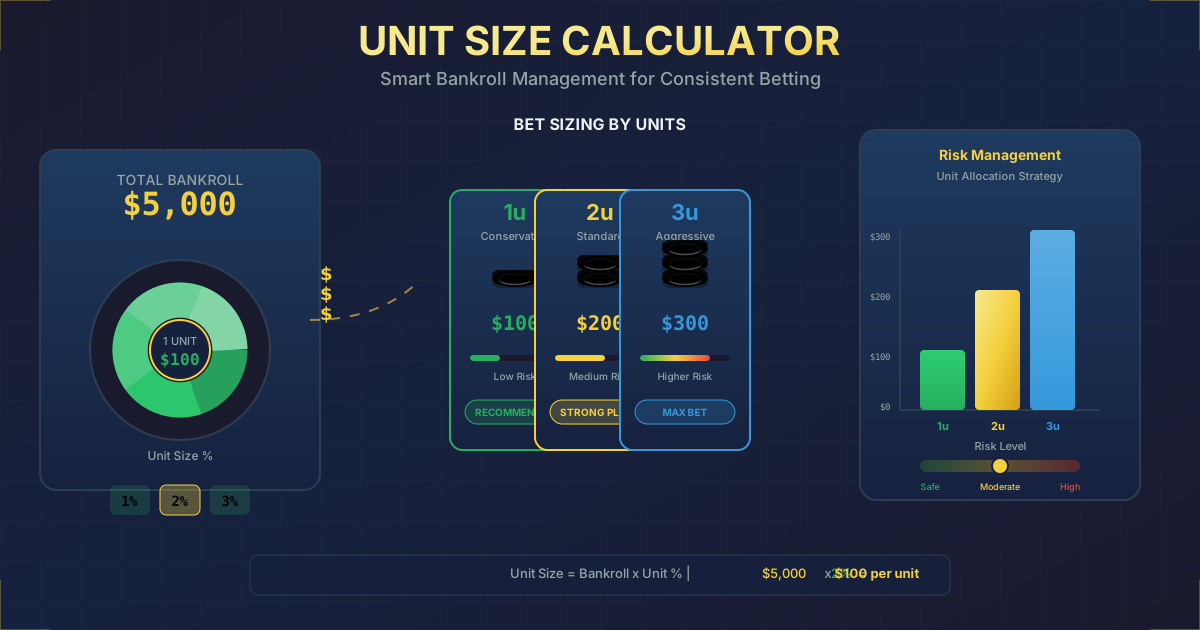
Stake = Bankroll × Percentage

Example:
Bankroll: $10,000
Percentage: 2%
Stake: $200 (every bet)

This stake stays at $200 until you
manually adjust based on bankroll changes
Pros and Cons
Advantages:
✓ Simple to implement
✓ Easy to track results
✓ Limits both losses and overconfidence
✓ Good for learning
✓ Reduces emotional decisions

Disadvantages:
✗ Doesn't maximize strong edges
✗ All bets treated equally
✗ Manual adjustment needed
✗ May over-bet after losses
When to Use Flat Betting
Best situations:
- New to sports betting
- Uncertain about edge size
- Want simplicity over optimization
- Building bankroll from small start
- Recreational betting

Execution Rules:
1. Set initial stake (1-2% of bankroll)
2. Bet that amount on every selection
3. Review monthly, adjust if needed
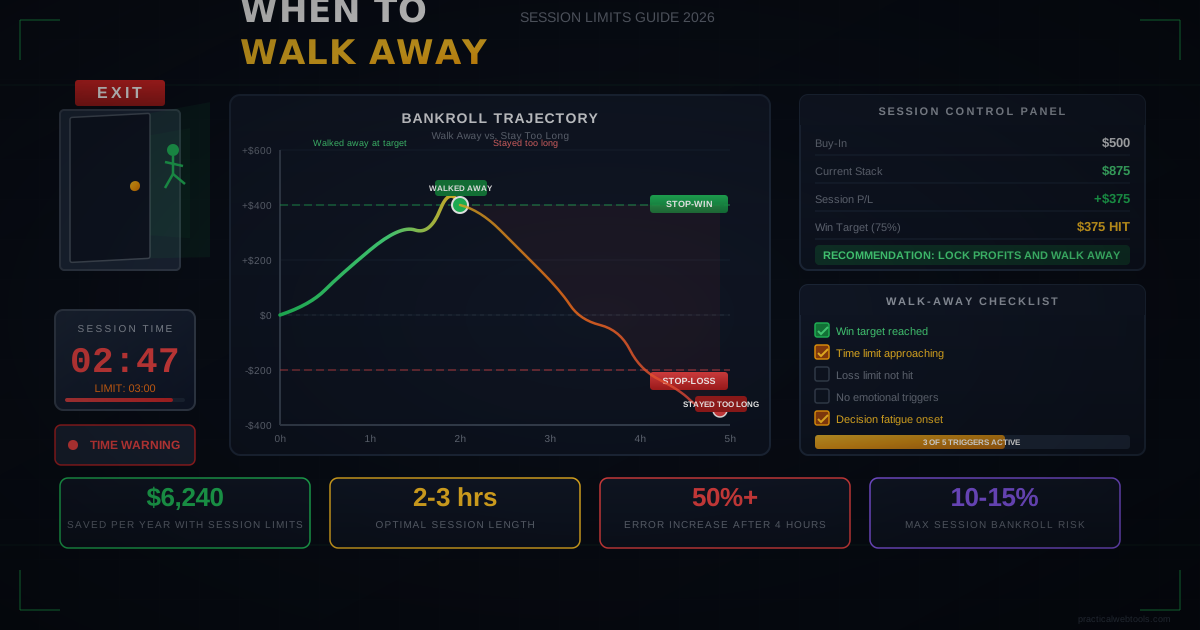
4. Reduce after 20%+ bankroll loss
5. Increase after 25%+ bankroll gain
Percentage Staking System
How It Works
Method: Bet a fixed percentage of CURRENT bankroll

Formula:
Stake = Current Bankroll × Percentage

Example:
Starting bankroll: $10,000
Percentage: 2%
Initial stake: $200

After winning $500:
New bankroll: $10,500
New stake: $210

After losing $300:
New bankroll: $10,200
New stake: $204
Automatic Adjustment
This system self-corrects:

During losing streaks:
- Bankroll shrinks
- Stakes automatically reduce
- Protects remaining capital

During winning streaks:
- Bankroll grows
- Stakes automatically increase
- Compounds gains faster

Mathematical property:
You can never go completely broke
(always betting a percentage of what remains)
Pros and Cons
Advantages:
✓ Self-adjusting stakes
✓ Can't lose entire bankroll
✓ Natural compounding effect
✓ Adapts to changing circumstances
✓ No manual recalculation needed

Disadvantages:
✗ Slower recovery from drawdowns
✗ Very small bets after losses
✗ Still doesn't account for edge
✗ All bets same percentage regardless of confidence
Kelly Criterion System
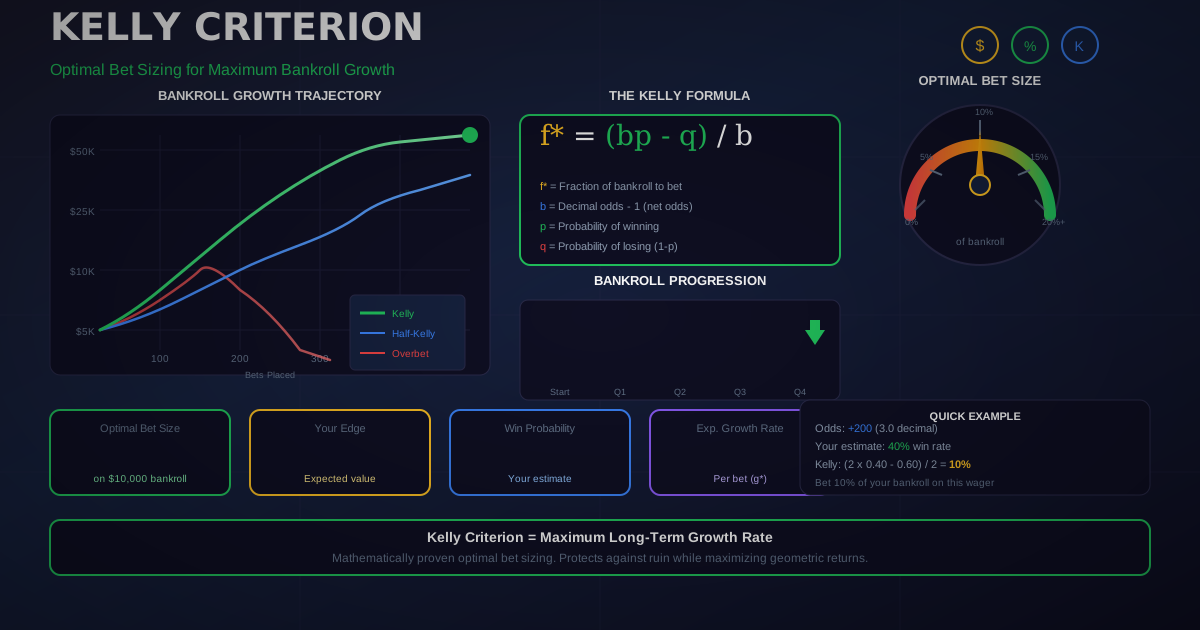
The Kelly Formula
Full Kelly Formula:
f* = (p × b - q) / b

Where:
f* = Fraction of bankroll to bet
p = Probability of winning
b = Net odds (decimal odds - 1)
q = Probability of losing (1 - p)

Simplified:
f* = Edge / Odds

Example:
True probability: 55%
Decimal odds: 2.00
b = 2.00 - 1 = 1.00

f* = (0.55 × 1.00 - 0.45) / 1.00
f* = 0.10 / 1.00
f* = 10% of bankroll
Why Full Kelly Is Dangerous
Full Kelly issues:

1. Edge Estimation Error
   If you think 5% edge but actual edge is 2%:
   Full Kelly bets 2.5x too much
   Turns profit into loss

2. High Volatility
   Full Kelly experiences 50%+ drawdowns regularly
   Emotionally difficult to maintain

3. Simultaneous Bets
   Multiple concurrent bets complicate calculation
   Over-exposure common

4. Kelly assumes:
   - Perfect edge knowledge (impossible)
   - Unlimited betting opportunities (false)
   - No psychological factors (unrealistic)
Fractional Kelly
Method: Use fraction of full Kelly suggestion

Common Fractions:
Quarter Kelly (25%): Most conservative
Third Kelly (33%): Conservative
Half Kelly (50%): Moderate
Full Kelly (100%): Not recommended

Example with 10% Full Kelly suggestion:
Quarter Kelly: 2.5% of bankroll
Half Kelly: 5% of bankroll

Why Fractional Works Better:
- Reduces volatility significantly
- Still maintains positive edge
- Accounts for edge estimation errors
- Industry standard among professionals
Real-World Examples
Example 1: Comparing Systems on Same Bet
Situation:
Bankroll: $5,000
Bet: NFL spread at -110 (1.91)
True probability: 54%
Edge: 3.7%
System Comparison:
Flat Betting (2%):
Stake = $5,000 × 0.02 = $100

Percentage (2%):
Stake = $5,000 × 0.02 = $100
(Same as flat at this moment)

Full Kelly:
b = 1.91 - 1 = 0.91
f* = (0.54 × 0.91 - 0.46) / 0.91
f* = (0.491 - 0.46) / 0.91
f* = 0.034 / 0.91 = 3.74%
Stake = $5,000 × 0.0374 = $187

Quarter Kelly:
Stake = $187 × 0.25 = $47

Half Kelly:
Stake = $187 × 0.50 = $93
Result:
Recommended Stakes:
- Flat (2%): $100
- Percentage (2%): $100
- Full Kelly: $187 (risky)
- Quarter Kelly: $47 (conservative)
- Half Kelly: $93 (balanced)

For this moderate-edge bet:
Half Kelly and flat betting similar
Quarter Kelly more conservative
Full Kelly over-bets the edge
Example 2: High-Value Underdog
Situation:
Bankroll: $8,000
Bet: MLB underdog +180 (2.80)
True probability: 42%
Edge: 17.6% (huge edge)
System Comparison:
Flat Betting (2%):
Stake = $160
Doesn't account for massive edge

Full Kelly:
b = 2.80 - 1 = 1.80
f* = (0.42 × 1.80 - 0.58) / 1.80
f* = (0.756 - 0.58) / 1.80
f* = 0.176 / 1.80 = 9.78%
Stake = $8,000 × 0.0978 = $782

Quarter Kelly:
Stake = $782 × 0.25 = $196

Half Kelly:
Stake = $782 × 0.50 = $391
Result:
Stakes for big edge opportunity:
- Flat: $160 (under-betting edge)
- Full Kelly: $782 (way too aggressive)
- Quarter Kelly: $196 (appropriate)
- Half Kelly: $391 (aggressive but reasonable)

Key insight:
Kelly systems scale with edge
Flat betting misses value on strong plays
But verify edge is real before scaling up
Example 3: Grinding Small Edges
Situation:
Bankroll: $3,000
Bet: Soccer 1X2 at 2.10
True probability: 50%
Edge: 5%
System Comparison:
This is marginal edge territory

Full Kelly:
b = 2.10 - 1 = 1.10
f* = (0.50 × 1.10 - 0.50) / 1.10
f* = (0.55 - 0.50) / 1.10
f* = 0.05 / 1.10 = 4.55%
Stake = $3,000 × 0.0455 = $136

Quarter Kelly:
Stake = $136 × 0.25 = $34

Flat (2%):
Stake = $60
Result:
For small edges:
- Quarter Kelly: $34 (1.1% of bankroll)
- Flat 2%: $60 (more than quarter Kelly)

Interesting:
Flat betting is MORE aggressive than
quarter Kelly on small-edge bets

For grinding small edges:
Quarter Kelly may be too conservative
Half Kelly or flat 1.5-2% may be better
Example 4: Recovering From Drawdown
Situation:
Starting bankroll: $10,000
Current bankroll: $7,000 (30% drawdown)
Same bet appears
System Behavior:
Flat Betting (original $200):
Still betting $200
Now 2.86% of reduced bankroll
Relatively aggressive for position

Percentage (2% of current):
Now betting $140
Automatically reduced exposure
Slower recovery but safer

Quarter Kelly (assuming same edge):
Scales to current bankroll
$7,000 × [Kelly %] × 0.25
More conservative approach
Result:
Post-drawdown comparison:
- Flat: Unchanged, risk increases
- Percentage: Reduces, protects capital
- Kelly-based: Scales down, slower recovery

Best practice:
Review flat stakes after 20%+ drawdown
Percentage handles automatically
Kelly systems need bankroll update
Hybrid Staking Systems
Tiered Confidence System
Combine flat betting with confidence levels:

Tier 1 (Standard): 1% of bankroll
- Regular plays, moderate edge

Tier 2 (Strong): 1.5% of bankroll
- Good edge, multiple factors align

Tier 3 (Max): 2% of bankroll
- Best opportunities, strongest edge

Rules:
- 60% of bets at Tier 1
- 30% at Tier 2
- 10% at Tier 3
- Never exceed Tier 3 regardless of confidence
Modified Kelly
Kelly with caps and floors:

Calculate Kelly stake, then:
- Minimum: 0.5% of bankroll
- Maximum: 3% of bankroll

This prevents:
- Over-betting perceived large edges
- Under-betting to meaningless amounts
- Extreme volatility

Example:
Full Kelly says 8% → Cap at 3%
Quarter Kelly says 0.3% → Floor at 0.5%
Bankroll Milestone System
Adjust base percentage at milestones:

Bankroll < Starting: 1% stakes
Bankroll = Starting to +25%: 1.5% stakes
Bankroll = +25% to +50%: 2% stakes
Bankroll > +50%: 2.5% stakes

This approach:
- Protects when struggling
- Accelerates when profitable
- Automatic risk adjustment
Staking Plan Simulations
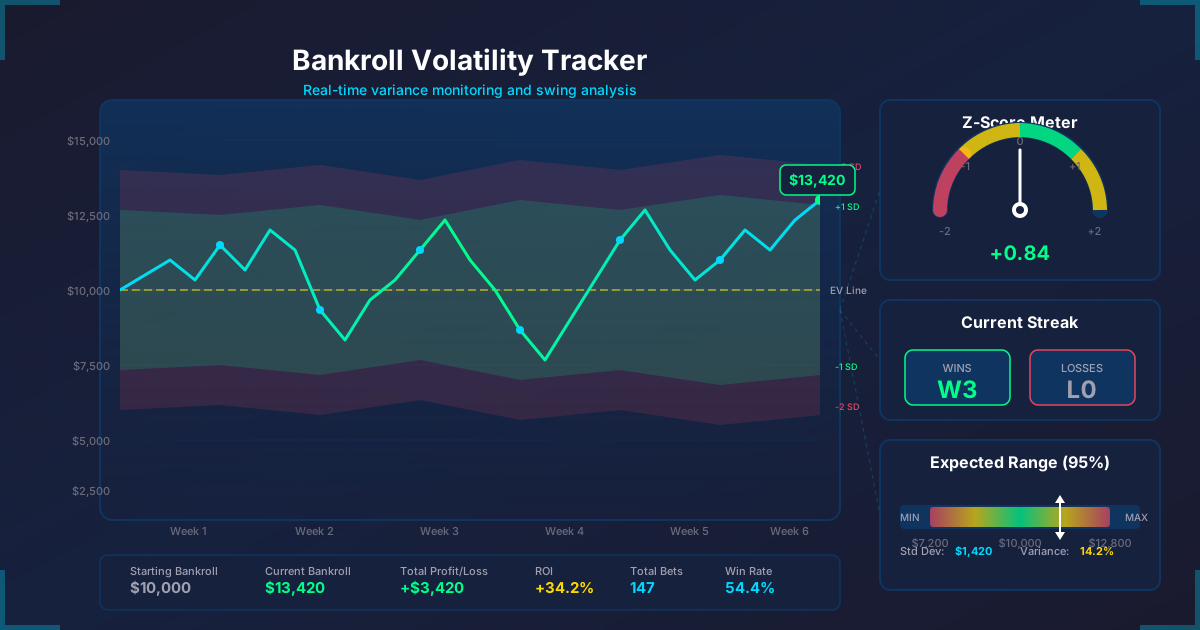
1000-Bet Simulation Comparison
Assumptions:
- 54% win rate
- -110 odds
- Starting bankroll: $10,000

Flat 2% Results:
Average final: $12,800
Std deviation: $2,100
Worst case: $6,500
Best case: $19,500

Percentage 2% Results:
Average final: $13,200
Std deviation: $2,400
Worst case: $5,800
Best case: $22,000

Half Kelly Results:
Average final: $14,500
Std deviation: $3,800
Worst case: $4,200
Best case: $32,000

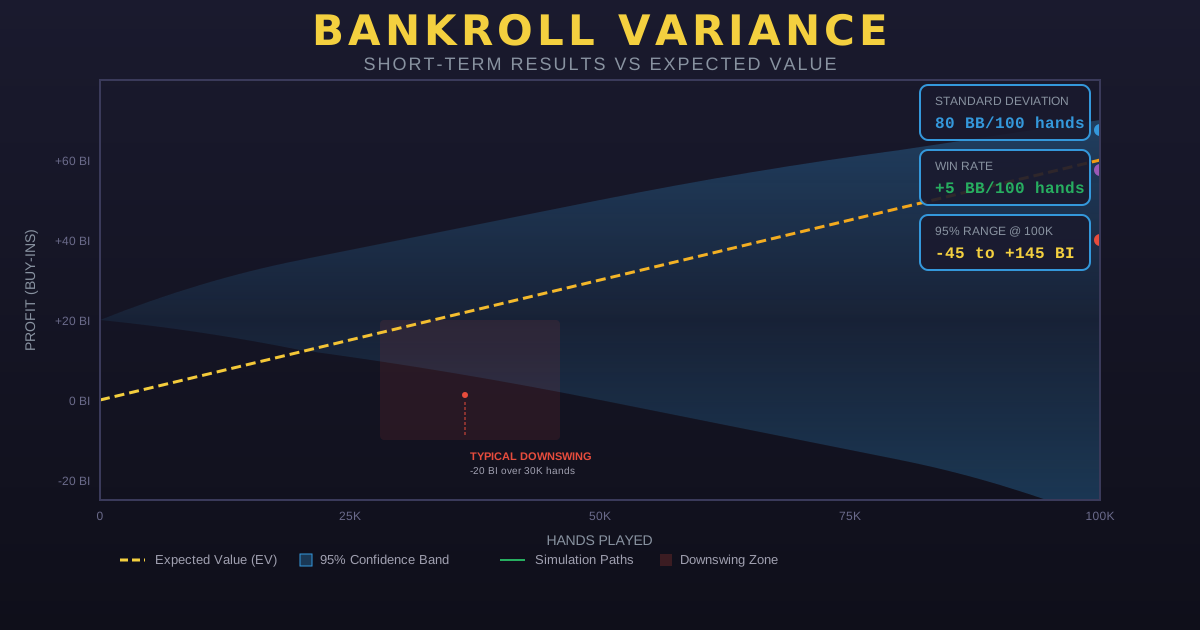
Observation:
Higher growth = higher variance
Choose based on risk tolerance
Drawdown Comparison
Maximum Drawdown (median scenarios):

Flat 2%: -18% max drawdown
Percentage 2%: -22% max drawdown
Half Kelly: -28% max drawdown
Full Kelly: -45% max drawdown

How often >30% drawdown occurs:
Flat: 5% of simulations
Percentage: 12% of simulations
Half Kelly: 20% of simulations
Full Kelly: 45% of simulations
Common Mistakes to Avoid
-
Using Full Kelly: Even with accurate edge estimates, full Kelly is too volatile. Fractional Kelly (25-50%) provides better risk-adjusted returns for real-world betting.
-
Overestimating Your Edge: If you think you have 5% edge but actually have 2%, Kelly-based systems will over-bet significantly. Be conservative with edge estimates.
-
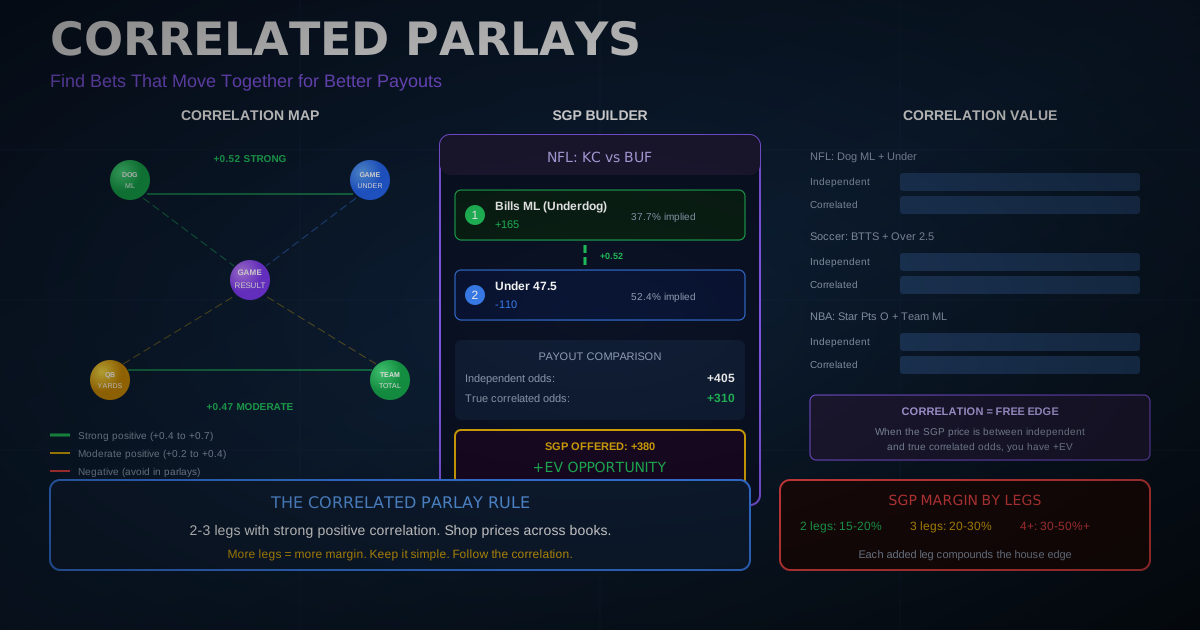
Ignoring Correlation: Betting multiple NFL games on the same Sunday creates correlated risk. Your staking plan should account for simultaneous exposure.
-
Emotional Adjustments: Staking plans work when followed consistently. Doubling up after losses or cutting back after wins defeats the purpose.
-
Not Tracking Results: You need data to evaluate your staking plan. Track every bet with the system used and review monthly.
-
Mixing Systems Randomly: Pick one system and stick with it. Switching between Kelly and flat betting based on feelings isn't a plan - it's chaos.
Frequently Asked Questions
Which staking plan is best for beginners?
Flat betting at 1-2% of bankroll. It's simple to execute, limits downside, and helps you focus on improving your handicapping rather than complex bet sizing.
Can staking plans create edge where none exists?
No. Staking plans optimize existing edge, they don't create edge. If you're picking losers, no staking plan will turn you profitable.
How do I know if my edge estimate is accurate?
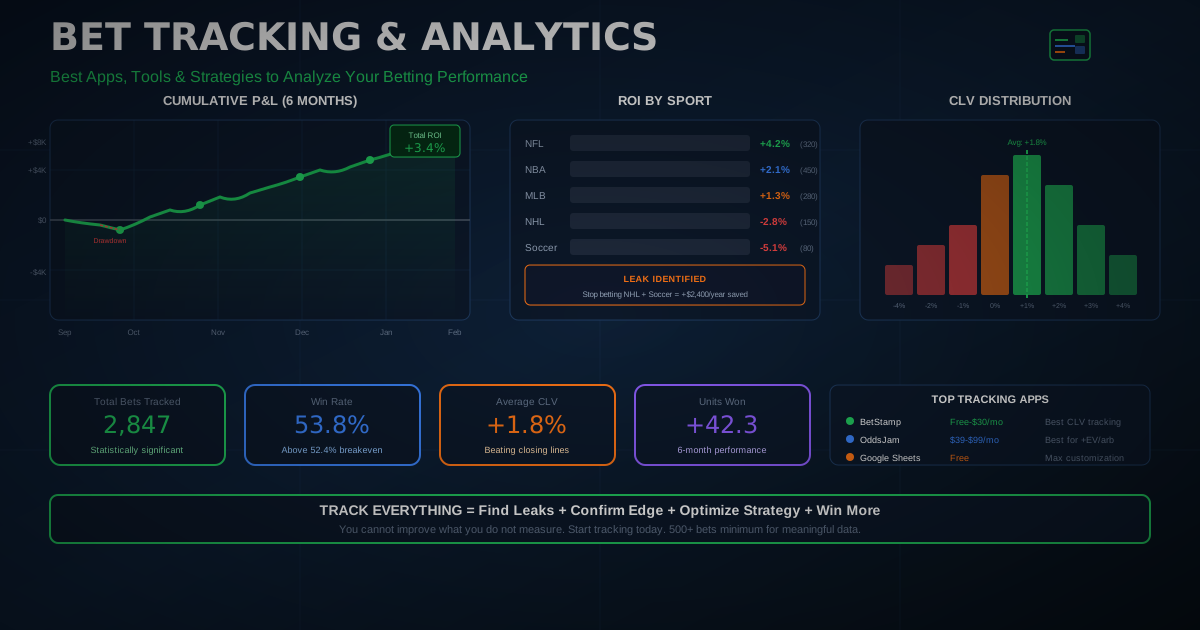
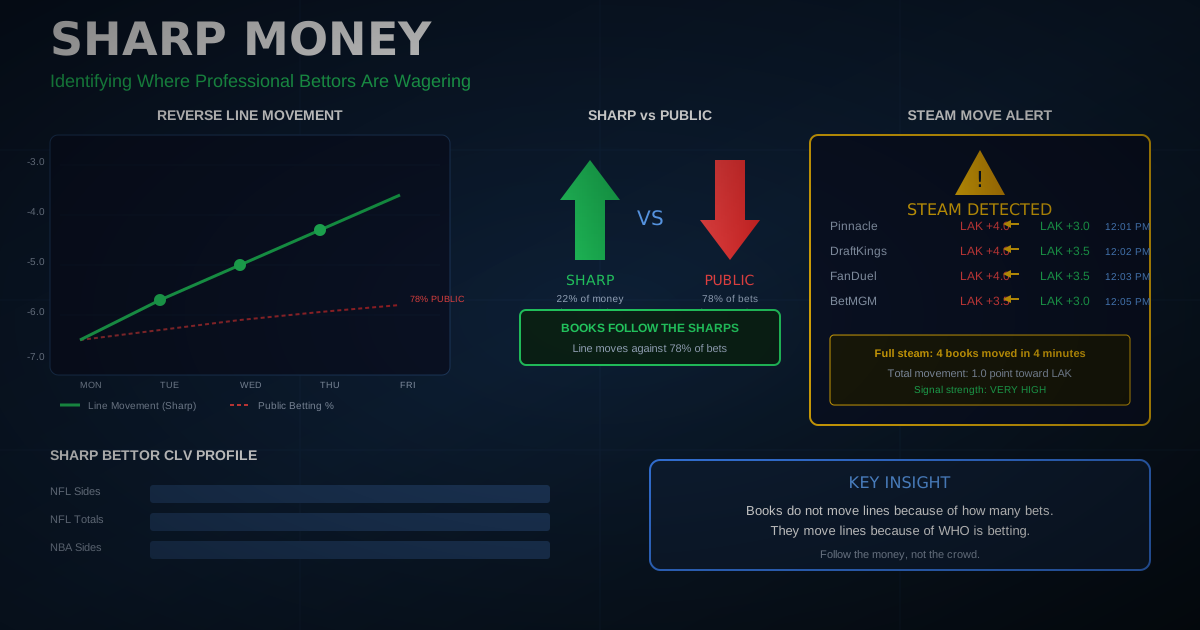
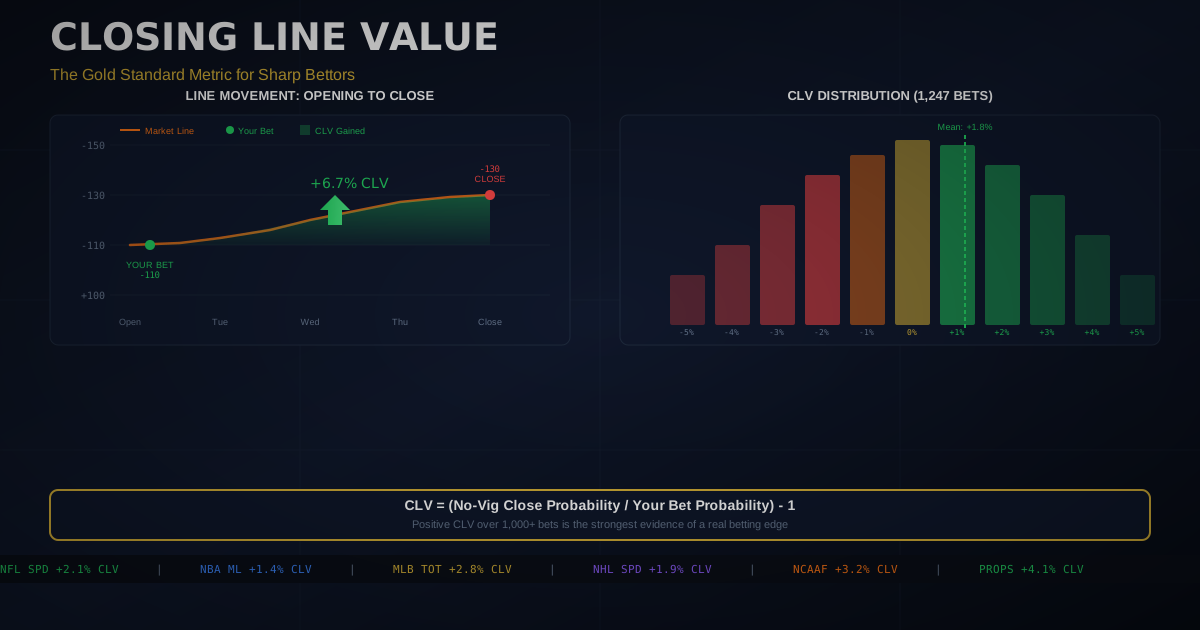
Track closing line value (CLV). If you consistently bet better than closing odds, you likely have edge. 500+ bets needed for meaningful data.
Should I use different systems for different sports?
Potentially. You might have more confidence in your NFL edges than soccer, justifying more aggressive staking on NFL. But keep it simple if possible.
What about martingale and doubling systems?
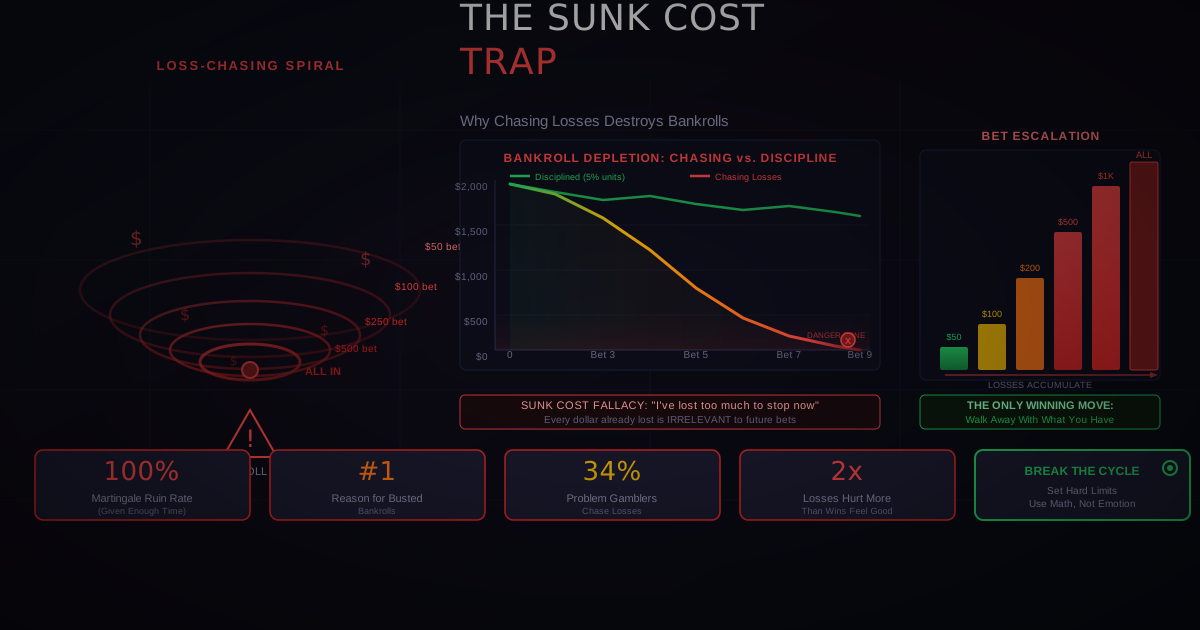
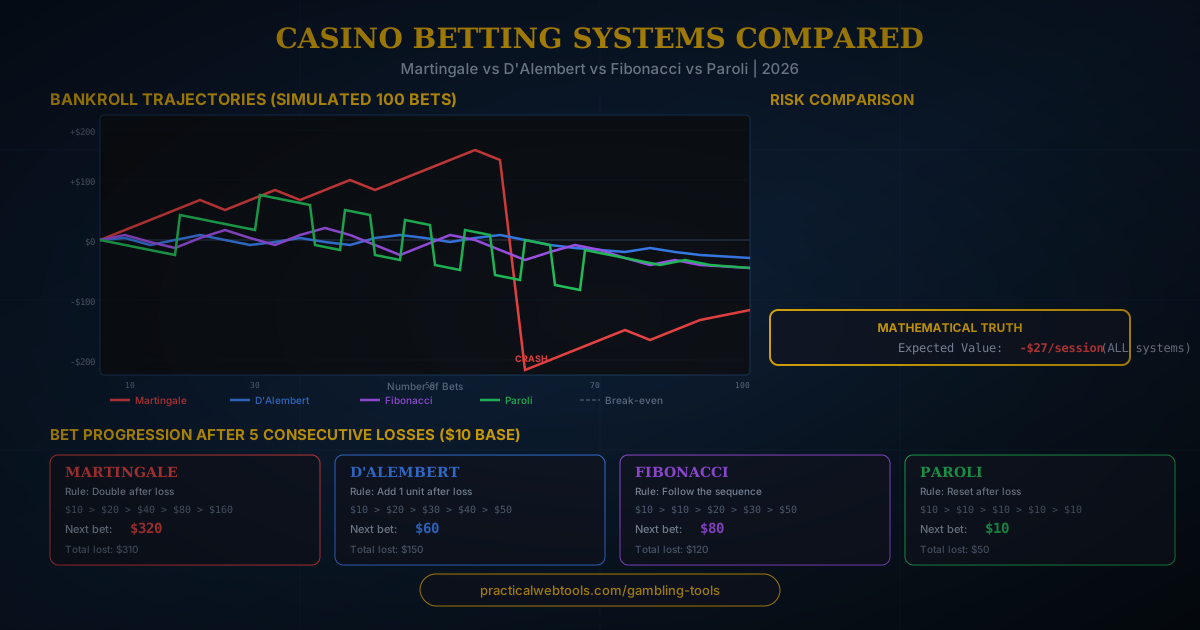
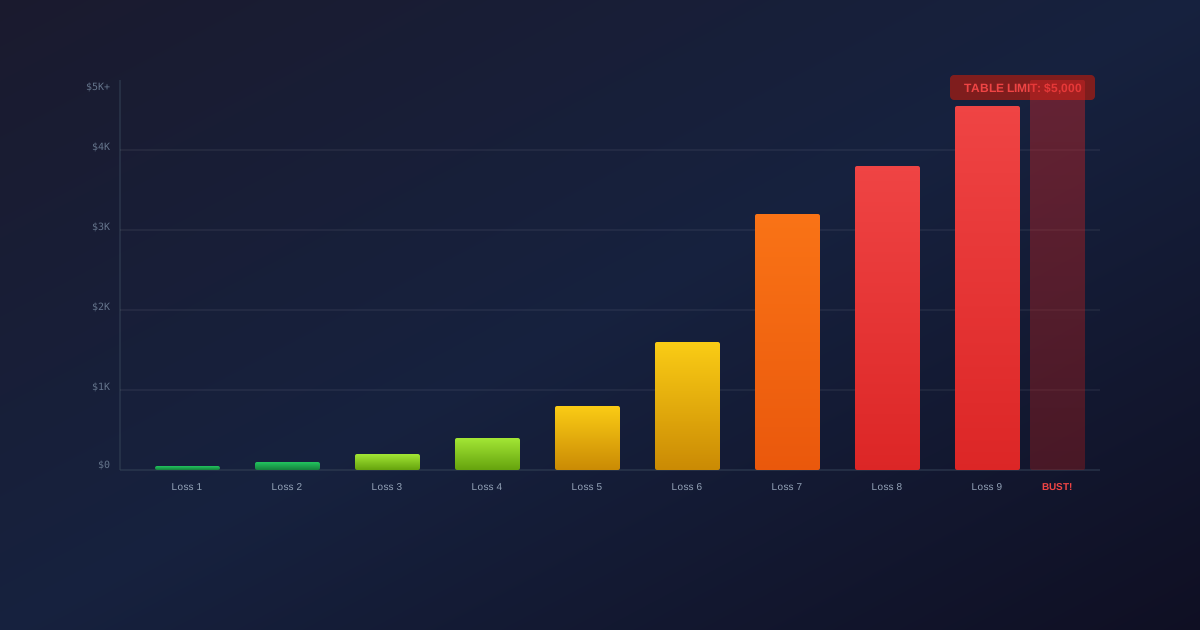
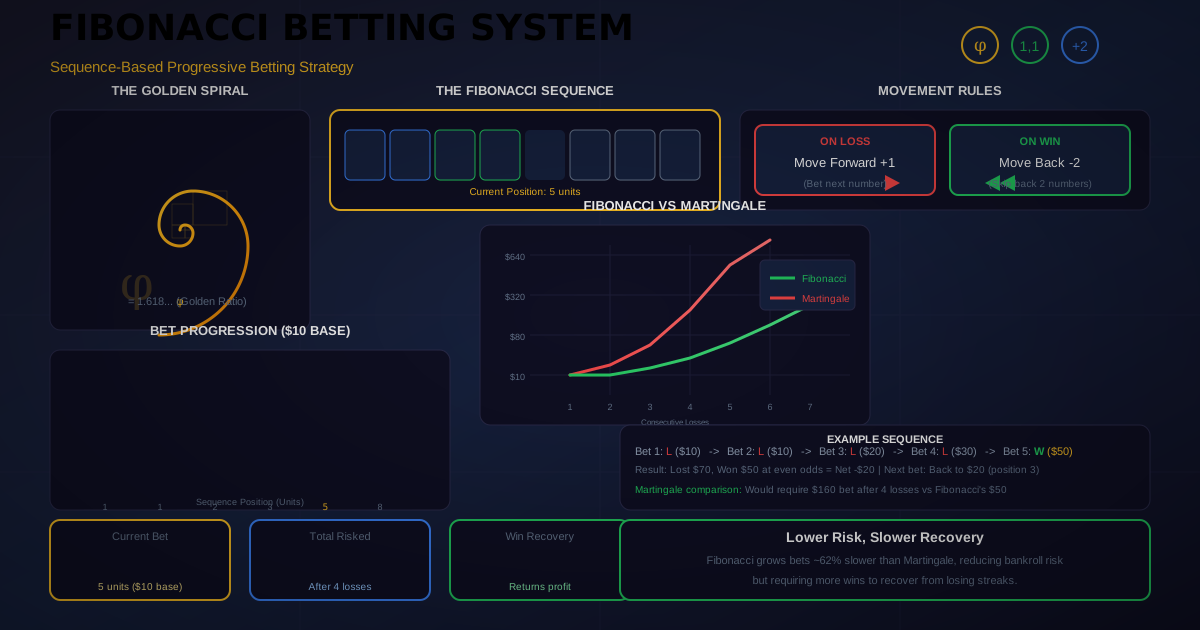
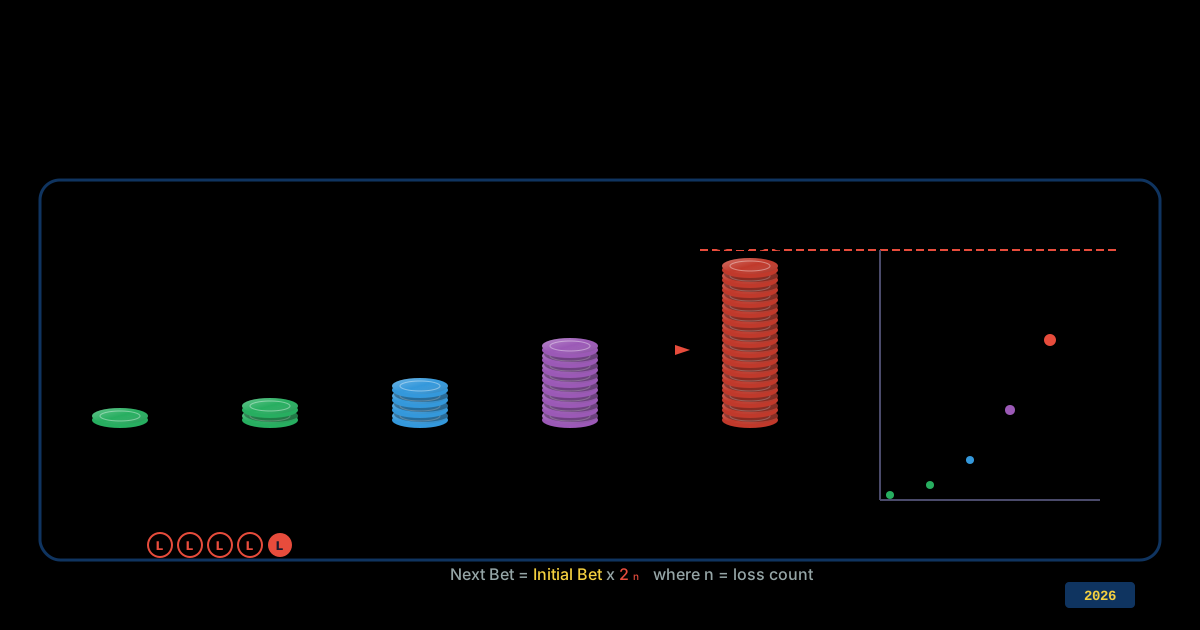
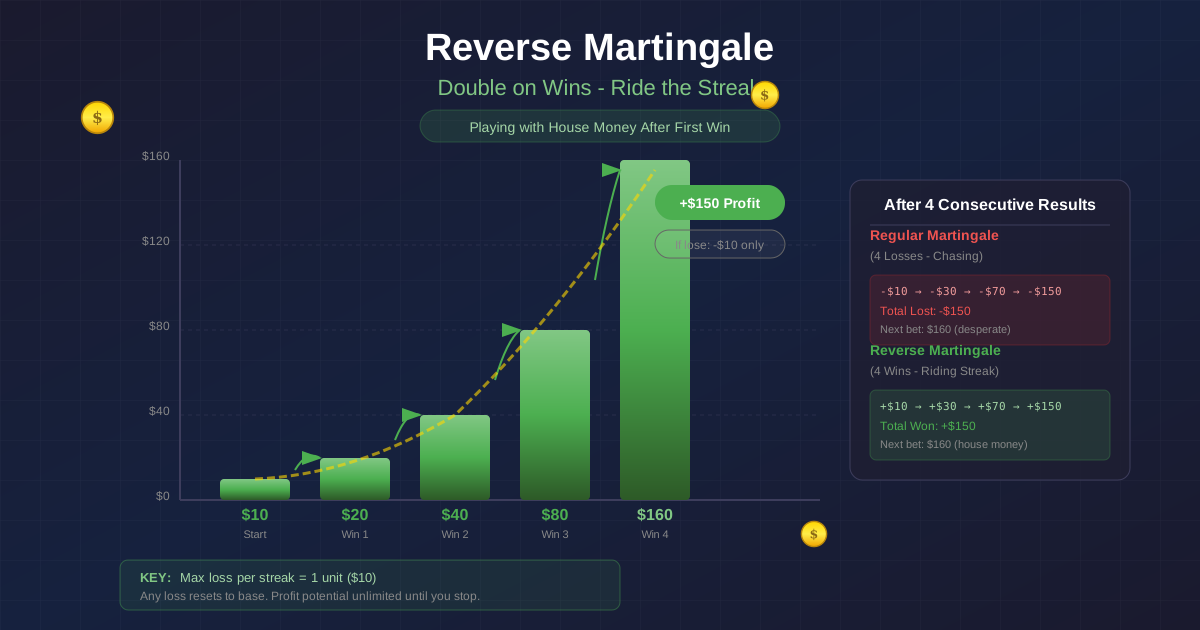
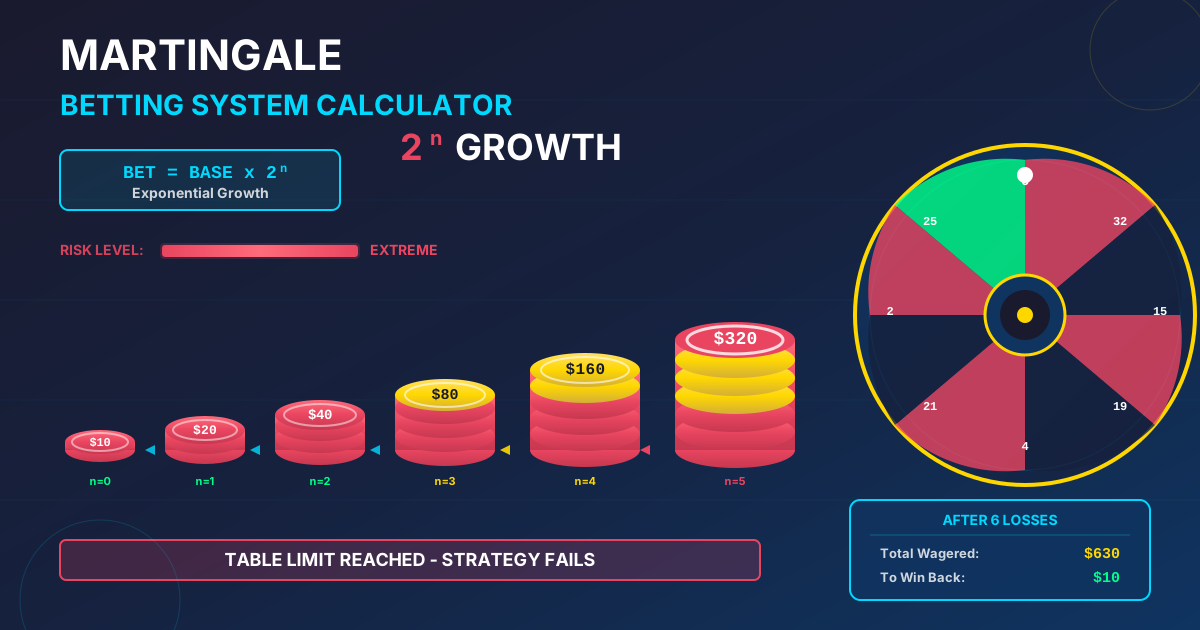
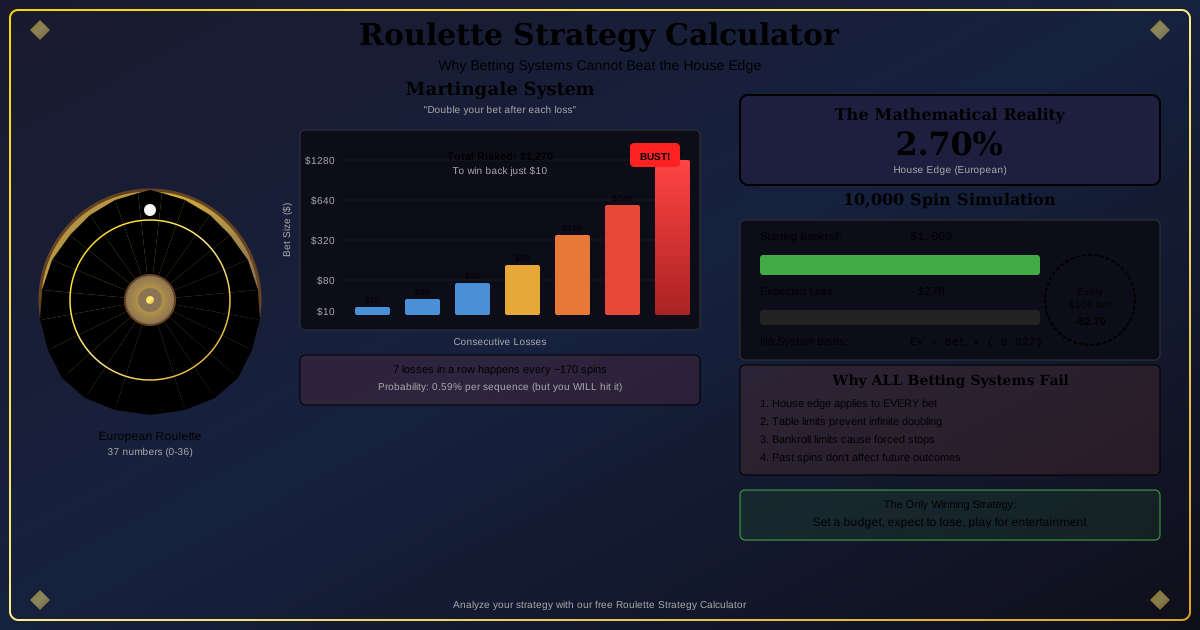
Avoid them. Martingale requires infinite bankroll and has negative expected value. These systems don't overcome house edge - they just disguise losses until catastrophic failure.
How does Kelly work with parlays?
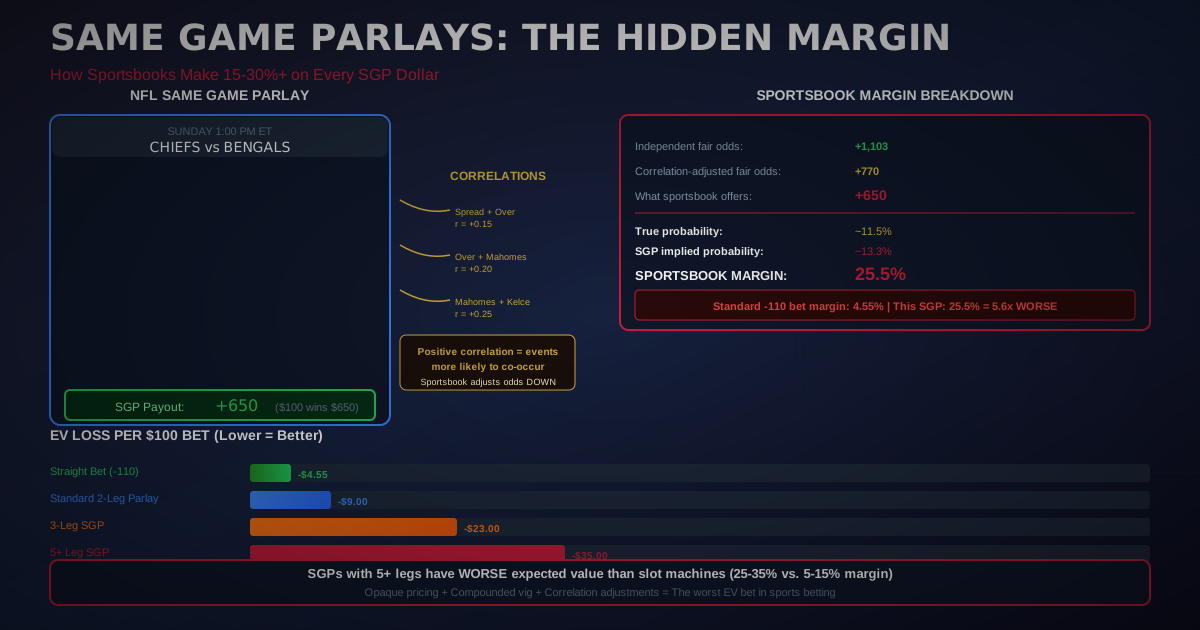
Carefully. Each parlay leg multiplies vig and compounds Kelly calculation complexity. Most professionals avoid mixing Kelly with parlays.
Pro Tips
- Start with flat betting until you have 500+ tracked bets proving consistent edge before considering Kelly-based systems
- Use quarter Kelly as your maximum - half Kelly is aggressive, full Kelly is reckless regardless of perceived edge
- Stress test your staking plan with losing streak scenarios before implementing - can you emotionally handle 20 straight losses?
- Keep a separate spreadsheet showing what each system would have recommended historically so you can compare performance
- Review and potentially adjust your staking plan quarterly, not after every losing week
Related Calculators
- Kelly Criterion Calculator - Optimal Kelly sizing
- Unit Size Calculator - Basic unit calculation
- Bankroll Calculator - Overall bankroll management
- Expected Value Calculator - Calculate bet profitability
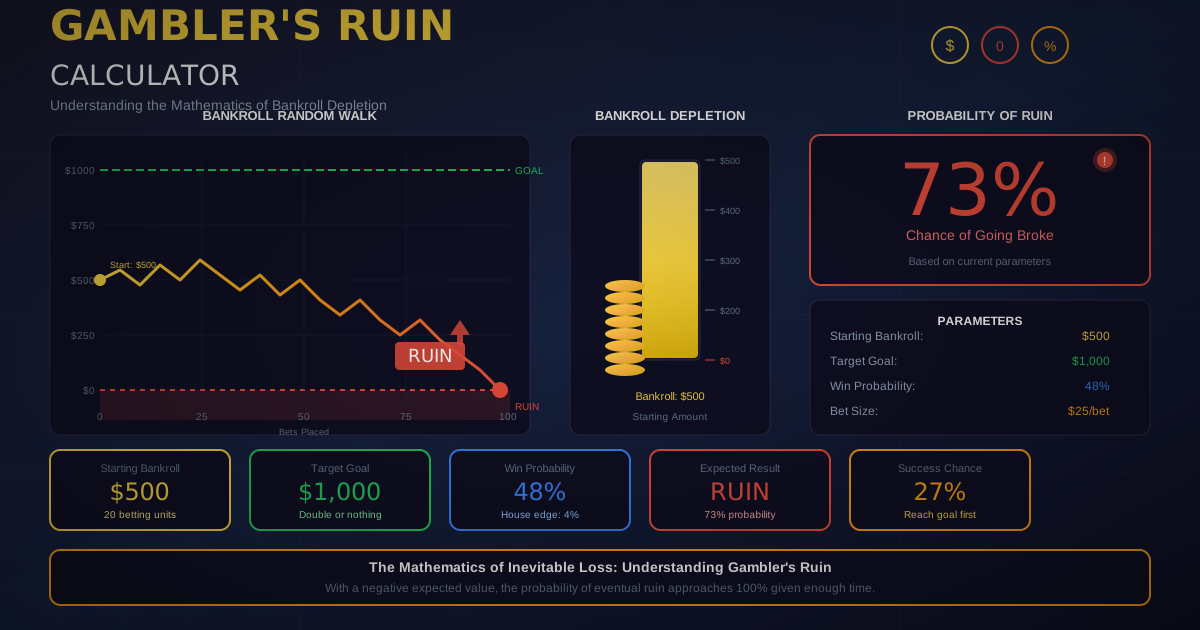
- Risk of Ruin Calculator - Probability of going broke
Conclusion
Your staking plan is as important as your handicapping ability. The right system ensures you're still betting when your edge finally manifests over thousands of wagers, while the wrong system can turn a winning strategy into bankruptcy. Our calculator helps you compare approaches and find the optimal system for your situation.
For most bettors, simplicity wins: flat betting at 1-2% provides solid risk management with minimal complexity. As you develop proven track records and accurate edge estimation, fractional Kelly systems can optimize growth. But always err on the side of conservative - the market will still be there tomorrow.