Poker Staking Calculator: Structure Fair Deals for Horses and Backers (2026)
Poker Staking Calculator: Build Fair Deals for Players and Backers
Staking is the bridge between poker skill and opportunity. Players with talent but limited bankrolls can access higher stakes, while investors can profit from others' abilities. But staking only works when deals are structured fairly. Our poker staking calculator helps both horses (players) and backers (investors) understand the true value and terms of staking arrangements.
What Is Poker Staking?
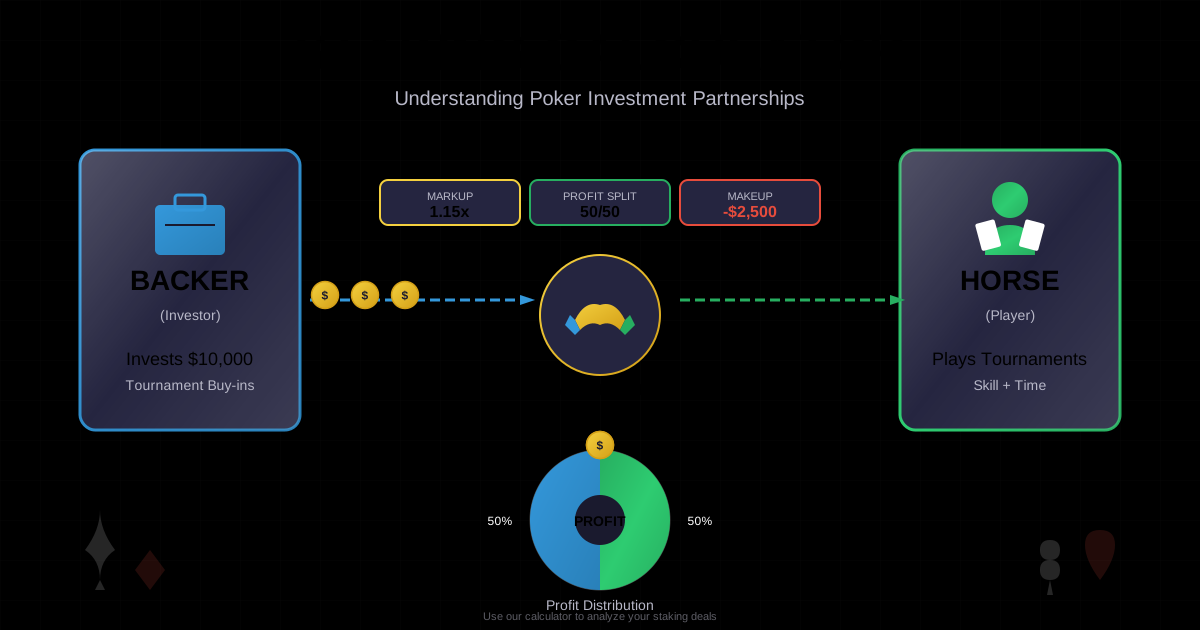
Poker staking is an arrangement where an investor (backer) provides the bankroll for a player (horse) in exchange for a share of the profits. The horse plays poker using the backer's money and splits winnings according to predetermined terms. Staking allows players to play higher stakes than their personal bankroll permits.
Quick Answer: A typical staking deal involves: Buy-in coverage (backer pays entries), profit split (commonly 50/50), and optional markup (player sells at premium, e.g., 1.2x means $1,200 cost for $1,000 worth of action). Use this formula: Backer's Share = Investment × Markup × (Profit Split%). If backing $10,000 at 1.1 markup for 50% of profits, backer invests $11,000 and receives 50% of all winnings.
How to Use Our Calculator
Use the Poker Staking Calculator →
Step-by-Step Instructions
- Enter Total Action: Input total buy-ins needed for the staking period
- Set Markup: Input markup percentage (1.0 = no markup)
- Define Profit Split: Input player's and backer's profit shares
- Specify Makeup Terms: Include makeup provisions if applicable
- Calculate Deal Value: See expected returns for both parties
Input Fields
| Field | Description | Example |
|---|---|---|
| Total Action | Buy-ins to be covered | $50,000 |
| Markup | Premium over face value | 1.15 (15% markup) |
| Profit Split | Percentage to each party | 55/45 (player/backer) |
| Expected ROI | Player's estimated ROI | 20% |
| Makeup | Accumulated losses to recover | $8,000 |
| Staking Period | Length of arrangement | 6 months |
Key Staking Terms
Markup
Markup is the premium charged over face value of action:
Markup Formula:
Backer Pays = Face Value × Markup

Example:
Face value: $10,000
Markup: 1.2 (20%)
Backer pays: $10,000 × 1.2 = $12,000

Backer receives $10,000 worth of action for $12,000
Why Markup Exists:
Player's skill creates value above face value
Market demand for winning players exceeds supply
Markup compensates player for opportunity cost
Strong results command higher markup
Typical Markup Ranges:
| Player Type | Markup Range |
|---|---|
| Unproven recreational | 1.0 (no markup) |
| Solid winning player | 1.0 - 1.1 |
| Strong proven record | 1.1 - 1.3 |
| Elite crusher | 1.3 - 1.5+ |
Profit Split
How winnings are divided between horse and backer:
Standard Splits:
50/50: Equal partnership
55/45: Slightly favors player
60/40: Player-favorable
40/60: Backer-favorable (rare, usually with high markup)
Factors Affecting Split:
Player proven track record → More player-favorable
Backer taking all risk → More backer-favorable
High markup → Can offset lower split
Makeup involved → Affects effective split
Makeup
Accumulated losses the player must "pay back" from future profits:
With Makeup:
Month 1: Lose $5,000 → Makeup = $5,000
Month 2: Win $8,000 → Clear makeup, profit = $3,000
Month 2 split: Only $3,000 is split as profit

Without Makeup:
Month 1: Lose $5,000 → Backer absorbs
Month 2: Win $8,000 → Full $8,000 split as profit
Makeup Pros/Cons:
For Backer: Protection against player losses
For Player: Must recover losses before earning
For Deal: Creates more committed arrangement
Risk: Deep makeup can be demotivating
Calculating Expected Value
Horse (Player) EV
Calculate what the player expects to earn:
Player EV = (Expected Profit × Player Split %) + (Action Sold × (Markup - 1) × Player Split %)

Example:
Action: $50,000
Expected ROI: 25%
Expected profit: $12,500
Markup: 1.15
Player split: 55%

From profit: $12,500 × 0.55 = $6,875
From markup: $50,000 × 0.15 × 0.55 = $4,125
Total Player EV: $11,000
Backer EV
Calculate what the backer expects to earn:
Backer EV = (Expected Profit × Backer Split %) - (Action × (Markup - 1))

Example:
Expected profit: $12,500
Backer split: 45%
Markup cost: $50,000 × 0.15 = $7,500

Backer profit share: $12,500 × 0.45 = $5,625
Net Backer EV: $5,625 - $7,500 = -$1,875

This backer is paying too much markup for this player's ROI!
Break-Even Markup
Find the maximum markup a backer should pay:
Break-even Markup = 1 + (Expected ROI × Backer Split %)

Example:
Expected ROI: 25%
Backer split: 50%
Break-even: 1 + (0.25 × 0.50) = 1.125

Any markup above 1.125 loses money for this backer
Real-World Examples
Example 1: Simple Tournament Package
Setup:
Player selling: $10,000 WSOP package
Markup: 1.1 (10%)
Split: 50/50
No makeup
Backer Calculation:
Investment: $10,000 × 1.1 = $11,000
Expected ROI (assume 30%): $3,000
Backer share: $3,000 × 0.50 = $1,500
Net: $1,500 - $1,000 markup = +$500 expected

Backer EV: +$500 (+4.5% on investment)
Player Calculation:
Receives: $10,000 in buy-ins
From profit: $3,000 × 0.50 = $1,500
From markup: $1,000 × 0.50 = $500
Total: $2,000 for playing (doesn't risk own money)
Example 2: Long-Term Cash Game Staking
Setup:
Monthly bankroll: $20,000
Duration: 6 months
Total action: $120,000
Markup: 1.05
Split: 55/45 (player/backer)
Makeup: Yes
Expected win rate: 5 BB/100 at $2/$5 (~15% monthly)
Expected Outcome:
6-month expected profit: $120,000 × 0.15 = $18,000
Player share: $18,000 × 0.55 = $9,900
Backer share: $18,000 × 0.45 = $8,100
Markup cost: $120,000 × 0.05 = $6,000

Net Backer Profit: $8,100 - $6,000 = $2,100
Net Player Profit: $9,900 + $3,000 (markup share) = $12,900
Example 3: Makeup Scenario
Setup:
Month 1: Player loses $10,000 → Makeup: $10,000
Month 2: Player wins $6,000 → Makeup: $4,000
Month 3: Player wins $12,000 → Makeup: $0, Profit: $8,000
Split: 50/50
Result:
Backer invested: $26,000 (across all losses and wins)
Net profit: $8,000
Backer receives: $4,000
Player receives: $4,000

Without makeup:
Month 2 profit: $3,000 each
Month 3 profit: $6,000 each
Player would have earned $9,000 total
Makeup cost player $5,000 in this scenario
Example 4: High Markup Justified
Setup:
Player: Proven 35% MTT ROI over 2,000 tournaments
Selling: $100,000 in tournament action
Markup: 1.3
Split: 60/40 (player/backer)
Analysis:
Expected profit: $100,000 × 0.35 = $35,000
Backer pays: $100,000 × 1.3 = $130,000
Markup premium: $30,000
Backer profit share: $35,000 × 0.40 = $14,000
Net Backer EV: $14,000 - $30,000 = -$16,000

Even with proven ROI, 1.3 markup and 40% split loses money
Player should lower markup or improve split to attract backers
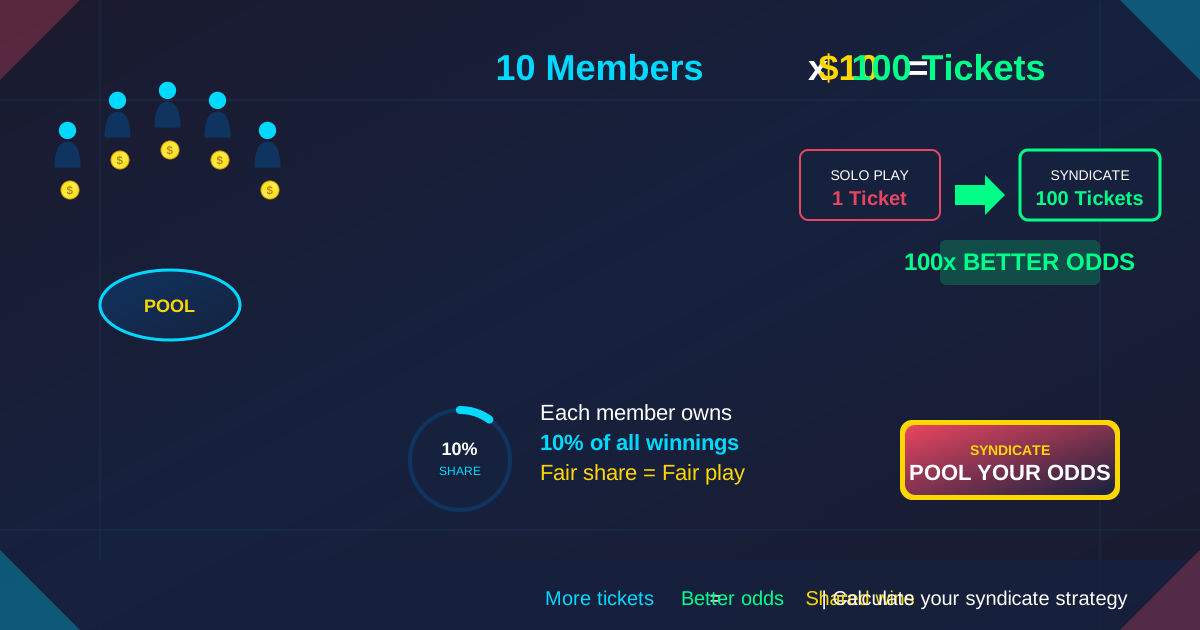
Example 5: Group Staking Pool
Setup:
Player selling: $50,000 action
5 backers each buy: $10,000 at 1.1 markup
Split: 50/50
Per Backer:
Investment: $11,000
Ownership: 20% of profits
Expected profit ($50k × 25% ROI): $12,500
Backer's 20%: $2,500 × 0.50 = $1,250
Net: $1,250 - $1,000 = +$250 expected
Diversification Benefit:
Single backer risking $50k: High variance
Five backers at $10k each: Lower individual risk
Same expected return per dollar invested
Example 6: Evaluating a Staking Offer
Offer Received:
Player claims: 40% ROI
Asking: 1.25 markup, 55/45 split (player-favorable)
Backer wondering: Is this a good deal?
Analysis:
If 40% ROI is real:
Expected profit per $100: $40
Backer's 45%: $18
Markup cost per $100: $25

Net EV per $100: $18 - $25 = -$7
This is a LOSING deal for backer even at 40% ROI!

Break-even ROI needed:
$25 markup = 45% of X
X = $55.56 profit needed
ROI needed = 55.6%

Player would need 55%+ ROI to justify these terms
Structuring Fair Deals
For Players (Horses)
Pricing Your Action:
1. Know your true ROI (verified over large sample)
2. Set markup based on market demand
3. Offer competitive splits
4. Be transparent about makeup terms
5. Provide access to results tracking
Red Flags for Players:
Backer demands >60% split with makeup
No clear terms in writing
Backer wants access to your accounts
Unrealistic expectations discussed
Payment delays or excuses
For Backers
Evaluating Deals:
1. Verify player's claimed results
2. Calculate EV at offered terms
3. Assess makeup implications
4. Consider variance and time horizon
5. Diversify across multiple players
Red Flags for Backers:
Unverified claimed results
Excessive markup for unproven player
Reluctance to use makeup
Player has history of failed stakings
Terms heavily favor player without justification
Fair Deal Guidelines
| Player Track Record | Suggested Markup | Suggested Split |
|---|---|---|
| Unproven | 1.0 | 50/50 with makeup |
| Moderate (100+ events) | 1.0-1.1 | 50/50 to 55/45 |
| Strong (500+ events) | 1.1-1.2 | 55/45 to 60/40 |
| Elite (1000+ events) | 1.2-1.3 | 55/45 to 65/35 |
Common Mistakes to Avoid
-
Ignoring EV Calculations: Deals can look attractive but be -EV for one party. Always run the numbers.
-
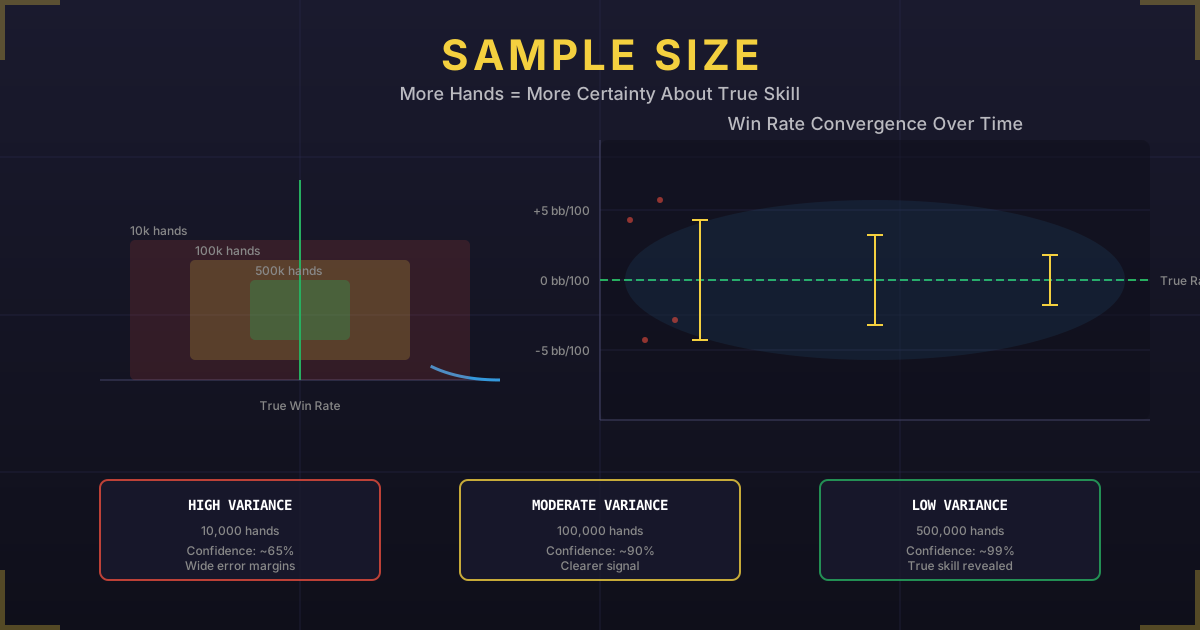
Overestimating ROI: Players often overstate their win rate. Use verified, large-sample results.
-
No Written Agreement: Verbal deals lead to disputes. Document all terms clearly.
-
Ignoring Makeup Implications: Deep makeup can trap players in losing arrangements indefinitely.
-
Insufficient Bankroll: Even with staking, variance can exceed allocated funds.
-
Emotional Decision Making: Don't stake friends without proper terms, or take bad deals out of desperation.
Frequently Asked Questions
What is a fair markup for a proven winning player?
For a player with verified 25%+ ROI over 500+ tournaments, 1.1-1.2 markup is typical. Higher markup requires exceptional track record. Unproven players should sell at face value.
How do I verify a player's results?
Request access to Sharkscope, OPR, or similar tracking sites. Ask for database exports. Verified third-party data is essential; self-reported results are unreliable.
Should I use makeup in staking deals?
Makeup protects backers but can demotivate players in deep holes. Consider: makeup with a cap, makeup that clears after certain period, or no makeup with higher backer split.
How long should a staking arrangement last?
Long enough for variance to smooth (usually 6-12 months minimum for meaningful results). Short-term staking is highly variance-dependent.
What happens if the player goes broke mid-stake?
Define this in your agreement. Options: backer provides additional funds, arrangement ends, makeup accumulates. Clear terms prevent disputes.
Can I stake multiple players to reduce risk?
Yes, diversification reduces variance. Staking 10 players for 10% each is less risky than one player for 100%, assuming similar expected ROIs.
What percentage do staking platforms take?
Platforms like YouStake typically take 5-10% of the markup or a flat fee. Factor this into EV calculations.
How are taxes handled in staking?
Complex and jurisdiction-dependent. Generally, both parties report their share of profits. Consult a tax professional familiar with gambling income.
Pro Tips
- Always get staking agreements in writing with clear terms
- Build relationships before large commitments
- Start with smaller stakes to test the partnership
- Review results monthly and communicate openly
- Have exit clauses defined before starting
- Calculate break-even scenarios for both sides
Related Calculators
- Poker EV Calculator - Expected value calculations
- MTT ROI Calculator - Tournament ROI tracking
- Bankroll Calculator - Bankroll requirements
- Variance Calculator - Understand variance impact
- Win Rate Calculator - Calculate win rates
Conclusion
Poker staking creates opportunities for both skilled players and savvy investors. Our staking calculator helps you structure deals that are fair to both parties, ensuring sustainable partnerships that can last for years.
Whether you're a horse looking to level up your stakes or a backer seeking poker investment opportunities, understanding the math behind markup, splits, and makeup is essential. Run the numbers, verify the results, and build relationships based on clear terms and mutual benefit.