The Chess Renaissance: Brain Benefits, Market Boom, and Masterful Play
Try the free tool
Play vs Stockfish →Play chess against the Stockfish 18 engine at 8 difficulty levels from Beginner to Maximum
Chess, an ancient game with roots in the Indian subcontinent, has transformed into a global phenomenon deeply intertwined with cognitive science, digital technology, and high-stakes competitive sports. Today's chess landscape is marked by a massive influx of participants worldwide, the ubiquity of online platforms, and the integration of advanced artificial intelligence for training and analysis. This guide synthesizes the latest data, academic insights, and strategic developments to provide a comprehensive look at the modern world of chess, guiding you toward practical tools for improvement and brain enhancement.
The Global Resurgence of Chess: A Multi-Billion Dollar Industry
The perception of chess has dramatically shifted from a niche intellectual pursuit to a mainstream cultural and competitive powerhouse. This transformation is fueled by online playing platforms, its integration into digital entertainment, and heightened visibility in popular media.
Try Play vs Stockfish — free, no sign-up, and it runs entirely in your browser.
Who's Playing? Demographics of a Growing Community
Pinpointing the exact number of chess players globally is challenging, but robust data provides a clear picture of its immense reach. Polling by YouGov and AGON indicates that approximately 70% of adults in surveyed nations (including the US, UK, Germany, Russia, and India) have played chess at some point [cite: 1, 2].
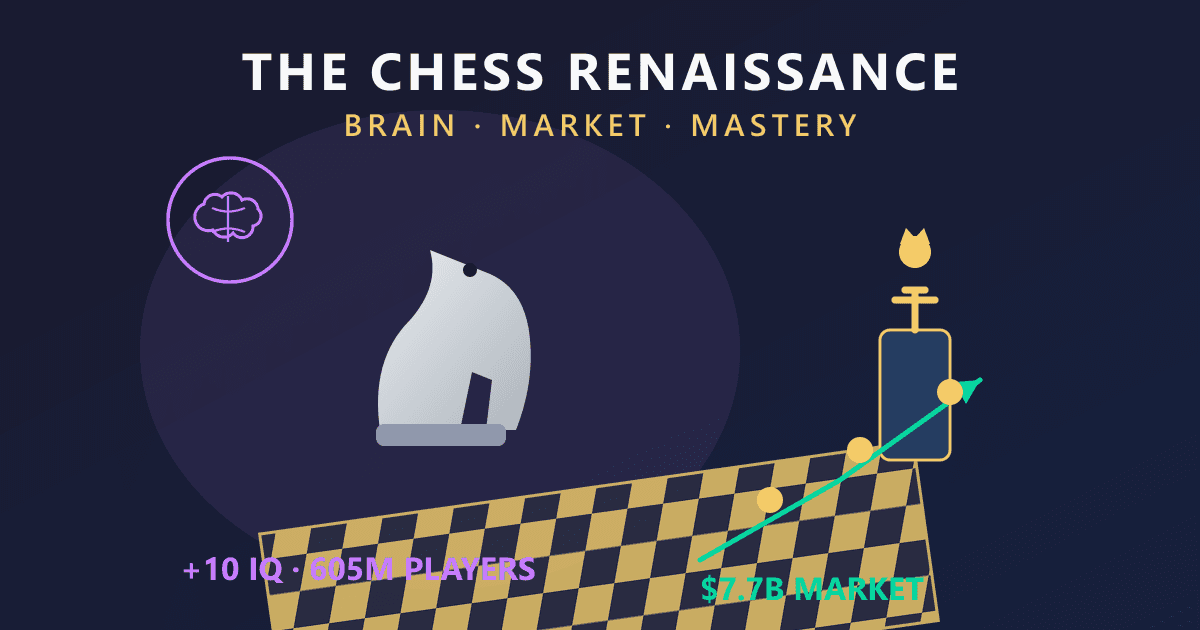
An estimated 605 million adults worldwide play chess regularly, a user base comparable to major social media networks in their early stages [cite: 1, 2]. India alone boasts over 85 million regular players (within the ABC1 demographic), with Russia accounting for 50 million, the United States 35 million, Germany 16 million, and the United Kingdom 6 million [cite: 1]. Significantly, over half of these regular players are between 18 and 34 years old, dispelling outdated stereotypes of chess as an older person's game [cite: 1].
Digital platforms showcase even more explosive growth. Chess.com, the leading online platform, surpassed 200 million registered members by April 2025, effectively doubling its user base in just over two years [cite: 3]. The platform facilitates an astonishing 20 million games daily and reported over six billion games played by its members in 2025 [cite: 3, 4].
The professional realm also reflects this expansion. The International Chess Federation (FIDE) tracks 1,643,067 rated players across all formats (standard, rapid, and blitz) [cite: 3, 5]. While Russia historically dominated and still leads with approximately 34,800 rated players, India has seen dramatic growth, reaching 32,500 rated players and producing 86 grandmasters [cite: 5].
Table 1: Estimated FIDE-Rated Player Distribution by Key Nations (As of May 2025) [cite: 5]
| Country | Approximate Number of Rated Players |
|---|---|
| Russia | 34,800 |
| India | 32,500 |
| Germany | 26,500 |
| Spain | 24,800 |
| France | 23,400 |
Cultural nuances are also evident; for instance, China's lower number of classical chess players is due to the overwhelming popularity of Xiangqi (Chinese Chess), played by an estimated 1.2 billion people regionally [cite: 5].
The Billion-Dollar Board: Chess Market Valuation
The chess industry's economic footprint spans physical boards, digital subscriptions, educational services, and tournament broadcasting. While market research firms use varying methodologies, the consensus points to a multi-billion dollar industry with robust compound annual growth rates (CAGR).
Fortune Business Insights valued the global chess market at $3.45 billion in 2025, projecting expansion to $3.77 billion in 2026, and ultimately reaching $7.66 billion by 2034, driven by a CAGR of 9.28% [cite: 6]. Dataintelo offered an even more optimistic assessment, valuing the 2025 market at $4.2 billion and projecting a climb to $7.1 billion by 2034 with a CAGR of 6.0% [cite: 7]. More conservative estimates, focusing primarily on physical chessboards and traditional sets, placed the 2024 market size between $874 million and $2.6 billion, projecting growth to $3.3 billion by 2030 [cite: 3, 8].
North America consistently dominates regional revenues (30.9% to 55.99% of the global market), fueled by strong casual player demand, leading digital platforms, and the rise of board game cafes [cite: 6, 7]. Europe is the second-largest market, while Asia-Pacific is the fastest-growing sector, propelled by state-sponsored educational initiatives and the cultural impact of emerging Indian grandmasters [cite: 3, 7]. Wooden chess sets remain the most lucrative physical product, capturing 48.5% to 60% of revenues due to their premium appeal and demand from collectors [cite: 7, 9]. The adult segment holds the largest revenue share (over 53%), while the children's segment is projected for the fastest growth, driven by chess's integration into education [cite: 6].
Elite Chess in Flux: From Prodigies to Esports
The world of professional chess has seen significant shifts, including a generational talent change, evolving time controls, and its entry into the lucrative esports ecosystem.
Gukesh Dommaraju: Youngest World Champion in History (2024)
The World Chess Championship, the pinnacle of classical chess, saw a dramatic paradigm shift in late 2024. In Singapore, between November 25 and December 12, 2024, 18-year-old Indian challenger Gukesh Dommaraju defeated reigning World Champion Ding Liren of China [cite: 10].
Gukesh secured his challenger status by winning the eight-player Candidates Tournament in Toronto in April 2024, becoming the youngest player ever to do so [cite: 10, 11]. Prior to the match, Gukesh was favored due to Ding Liren's prolonged slump, having gone 28 classical games without a win and falling to 23rd in FIDE rankings, while Gukesh ranked fifth globally [cite: 10, 12].
The best-of-14-games match, with a $2.5 million prize fund, saw Ding Liren surprisingly win Game 1 with Black, ending his 304-day winless streak [cite: 10, 12]. Gukesh retaliated in Game 3. After seven consecutive draws from Game 4 to Game 10, Gukesh won Game 11, only for Ding to immediately equalize in Game 12 [cite: 12].
The championship culminated dramatically in the 14th and final classical game. From a drawn position, Ding Liren made what was described as one of the worst blunders in championship history, playing 26. a4?!. This move, intended to force a draw through liquidation, instead allowed Gukesh to simplify into a mathematically winning king and pawn endgame [cite: 10, 13]. Ding resigned after 58 moves, sealing Gukesh's 7.5 to 6.5 victory [cite: 11, 12].
At 18 years and 195 days old, Gukesh Dommaraju shattered Garry Kasparov's record (22 years in 1985) to become the youngest undisputed open-category World Chess Champion, solidifying India's rise in global chess [cite: 5, 11, 12].
Chess Goes Esports: The Esports World Cup Debut (2025)
One of the most significant modern developments is chess's formal integration into the esports industry. In 2025, chess made its historic debut at the Esports World Cup (EWC) in Riyadh, Saudi Arabia, featuring a massive $1.5 million prize pool, with $250,000 for the winner [cite: 15, 16].
This partnership between Chess.com, Magnus Carlsen, and the Esports World Cup Foundation marked a milestone in presenting chess to a digital-first audience [cite: 16]. The format favored rapid, decisive action, with strict time controls of 10 minutes per player for the entire game and zero increment (10+0), forcing players to battle the clock as much as the board and increasing the likelihood of high-stakes blunders [cite: 15, 17]. Tiebreakers were resolved through sudden-death Armageddon games [cite: 16, 18].
Sixteen elite players qualified for the 2025 main event [cite: 17, 18]. The tournament concluded with Magnus Carlsen (Team Liquid) defeating Iranian-born French prodigy Alireza Firouzja in a spectacular final, claiming the inaugural title [cite: 15, 18, 19]. The event's success confirmed chess's ongoing presence, with its return slated for the 2026 EWC in Riyadh [cite: 19, 20].
Beyond the Board: Cognitive & Psychological Benefits of Chess
The idea that chess improves cognitive capacity is a cornerstone of its appeal and its widespread adoption in educational systems globally. Countries like Armenia, Mexico, Germany, and Russia have even integrated chess into their school curricula [cite: 3]. Academic consensus strongly supports that chess enhances multiple facets of human cognition.
Boosting Executive Function and Academic Performance
Executive functioning (EF) encompasses mental skills like working memory, flexible thinking, and self-control. Chess inherently demands these skills as players evaluate the board, inhibit impulsive moves, and plan strategies. Studies suggest that long-term chess play develops stronger cognitive pathways for critical decision-making [cite: 21]. Brain imaging research confirms that chess activates multiple brain regions associated with planning, logical reasoning, and memory [cite: 21].
In children, these cognitive workouts directly translate to academic benefits. A Venezuelan study involving 4,000 second-grade students showed a considerable average increase of 10 IQ points after just 4.5 months of structured chess instruction [cite: 22]. Furthermore, research in 2019 by Ortiz-Pulido et al. demonstrated that children playing chess once a week for 10 weeks performed significantly better in mathematics and reading than non-playing control groups [cite: 21]. Chess has also shown benefits for children with ADHD, leading to reduced impulsivity and improved self-regulation due to the game's demand for patience and analysis [cite: 21].
Sharpening Memory, Problem Solving, and Critical Thinking
Chess's tactical and strategic demands require robust working and long-term memory. Players must memorize opening theories, recognize patterns, and recall endgame techniques. A 2019 study by Burgoyne et al. found that children with regular chess instruction showed a 20% improvement in general memory tasks [cite: 22].
Problem-solving is similarly enhanced. A highly cited 2017 study by Sala et al. concluded that chess instruction improved students' problem-solving capabilities by roughly 32% compared to control groups [cite: 22]. Additionally, a 2020 meta-analysis of 24 studies by Burgoyne et al. determined that chess instruction positively impacts critical thinking and planning skills, yielding an average improvement of 25% across the analyzed literature [cite: 22].
Table 2: Summary of Key Cognitive Studies on Chess
| Study / Author (Year) | Focus Area | Key Finding / Improvement Metric |
|---|---|---|
| Venezuelan Study | Overall IQ | ~10 point increase in IQ after 4.5 months [cite: 22] |
| Sala et al. (2017) | Problem-Solving | ~32% improvement vs. non-players [cite: 22] |
| Burgoyne et al. (2019) | Memory Tasks | ~20% improvement in memory recall [cite: 22] |
| Burgoyne et al. (2020) | Critical Thinking & Planning | ~25% improvement across 24 studies [cite: 22] |
Researchers often call chess the “fruitfly of cognitive psychology” due to its utility in studying human information processing and expertise acquisition [cite: 23]. While some debate skill transferability, the overwhelming evidence shows that the mental elasticity required for chess strengthens neural connections in the brain [cite: 22, 24, 25].
Neurological Health and Dementia Prevention in Older Adults
The cognitive benefits of chess extend into adulthood and old age. Challenging mental activities like chess produce and strengthen synaptic connections, stimulating neurogenesis [cite: 26]. Maintaining this “cognitive reserve” is vital for delaying neurodegenerative diseases like Alzheimer's and other forms of dementia.
A landmark 20-year study in southwestern France monitored 3,675 participants without dementia. It found that regular board game players (32% of the group) had a 15% lower risk of developing dementia [cite: 27]. These individuals also showed smaller declines in cognitive test scores and lower rates of depression [cite: 27]. Researchers emphasized that the proactive decision-making and strategic foresight in games like chess are critical for preserving cognitive function [cite: 27].
Masterful Play: Practical Methodologies for Chess Improvement
For enthusiasts aiming to translate chess's cognitive benefits into tangible success, knowing how to study is paramount. The digital era has democratized access to grandmaster-level tools, but without proper methodology, players often stagnate.
The following actionable advice is designed for players seeking continuous improvement, utilizing digital resources like the comprehensive suite available at Chess Tools.
Strategic Approaches to Chess Openings
The opening sets the foundation for the middlegame. A common pitfall is rote memorization of deep theory without understanding underlying principles.
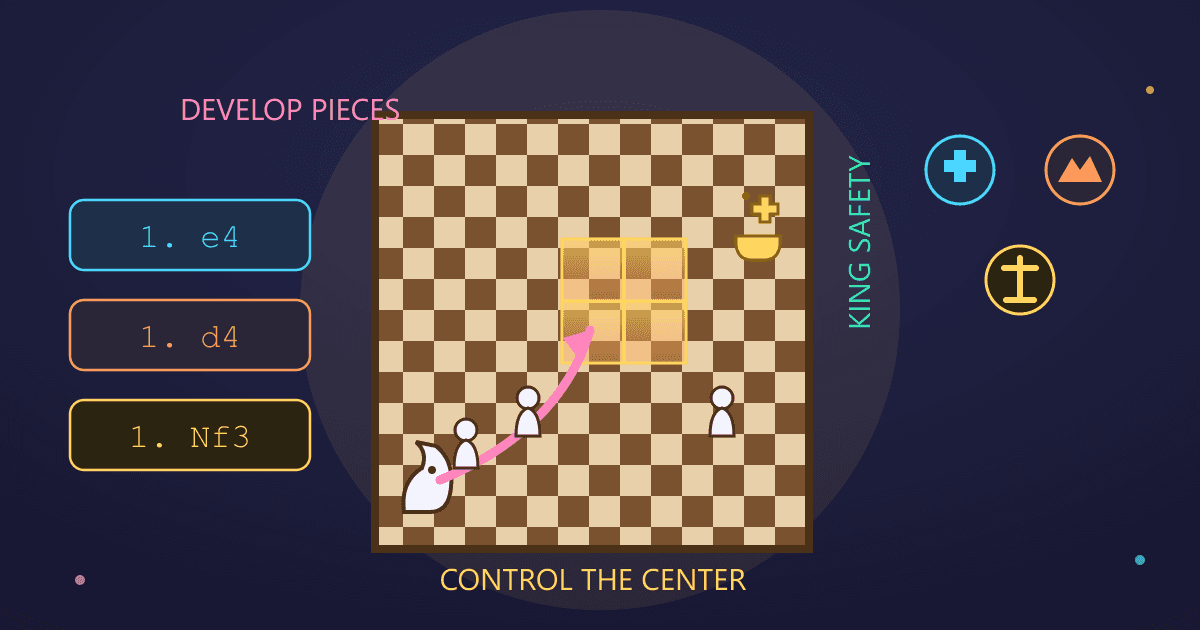
1. Focus on Principles and Plans over Memorization Avoid theory-heavy openings (like the Sicilian Najdorf) in early stages [cite: 28]. Instead, focus on openings adhering to classical principles: controlling the center, rapid minor piece development, and securing king safety [cite: 29]. Understanding why a move is standard is crucial; if an opponent deviates, a player who only memorized moves will be lost, while one who understands the positional plan can adapt [cite: 28, 29].
2. Utilize Spaced Repetition Systems When specific variations require memorization, manual reading is inefficient. The most effective technique is spaced repetition—a method where lines are drilled, and mistakes prompt the system to show the sequence more frequently until mastered [cite: 30, 31]. Digital platforms excel at this. By using tools like the Chess Opening Trainer, players can input their preferred repertoires and systematically drill responses, ensuring maximum retention with minimal time investment [cite: 31].
3. Study Master Games and Overlapping Structures To understand middlegame plans from an opening, curate databases of master-level games featuring your chosen lines [cite: 30]. Analyzing how players rated over 2500 handle specific pawn structures provides invaluable insight [cite: 30]. Optimize study time by choosing openings with overlapping pawn structures. For instance, a player familiar with Caro-Kann Defense ideas as Black may find the Slav Defense intuitive, just as a Sicilian Defense player might adapt easily to the English Opening as White [cite: 28].
Advanced Analysis using Engine Technology
Super-human chess engines, like Stockfish, have revolutionized training. There are more possible chess games than atoms in the observable universe, yet modern engines evaluate millions of positions per second to find optimal paths [cite: 2]. However, engines can be detrimental if used incorrectly.
1. Avoid Using the Engine as a Crutch Many players fall into the trap of instantly turning on the engine after a game, glancing at the “best move,” and moving on [cite: 32]. This passive absorption bypasses the critical cognitive work of problem-solving. Stockfish plays like a computer, using deep tactical vision to justify positional moves humans play intuitively [cite: 32]. Simply copying engine lines without human comprehension does not improve practical over-the-board skill [cite: 32].
2. The "Manual First" Analysis Protocol Optimal engine use involves it as a secondary check to manual human analysis. Players should first review games from memory, noting critical moments, evaluating plans, and attempting to identify blunders [cite: 33]. Only after this mental effort is exhausted should the engine be engaged. Stockfish serves as a tactical calculator to verify if a conceived human plan drops a piece or misses a forced mate [cite: 33].
3. Interpreting Engine Evaluations to Learn Principles When an engine flags a move as a blunder, players must interrogate why. For instance, a player might hastily play an en passant capture, only for Stockfish to evaluate it poorly. Deeper inspection reveals the capture relinquished vital control of a key central square [cite: 34]. Engines also excel at demonstrating dynamic principles, such as proving that sacrificing a piece to open lines against an opponent's king (e.g., in the Cochrane Gambit) is mathematically sound if aggressive follow-up moves are found [cite: 34].
To practice these analysis skills in real-time, utilize interfaces like Play vs Stockfish. This allows users to test openings against an unforgiving opponent, safely experiment with tactical sacrifices, and immediately analyze evaluations in a controlled, privacy-focused environment.
Conclusion: Harness the Power of Modern Chess
The empirical evidence is clear: chess is thriving in a golden age. Global interconnectivity, dramatic elite narratives—like 18-year-old Gukesh Dommaraju's historic 2024 World Championship victory [cite: 12]—and high-stakes integration into modern esports [cite: 16] have made the game more relevant than ever.
For the modern adult or student, chess offers a scientifically backed mechanism for cognitive enhancement, improving IQ, memory, and executive function while actively staving off neurodegenerative decline [cite: 22, 27]. By adopting structured study methodologies and leveraging powerful online tools, anyone can harness the profound benefits of this ancient game.
Ready to elevate your game and sharpen your mind? Step away from passive consumption and actively engage with utilities like the Chess Opening Trainer and Play vs Stockfish at Practical Web Tools. Unlock your full potential and achieve practical mastery on the board and beyond.