Thin Value Bet Calculator: Extract Maximum Profit from Marginal Hands (2026)
Thin Value Bet Calculator: Squeeze Every Chip from Your Marginal Holdings
The difference between good and great poker players often comes down to thin value betting. While anyone can bet the nuts, extracting value from second pair or weak top pair separates profitable players from the masses. Our thin value bet calculator analyzes whether your marginal hands should bet for value or check for showdown.
What Is a Thin Value Bet?
A thin value bet is a bet made with a hand that beats only a narrow portion of your opponent's calling range. Unlike standard value bets where you comfortably beat most hands that call, thin value bets target the bottom of opponent's continuing range while accepting that you'll sometimes get called by better.
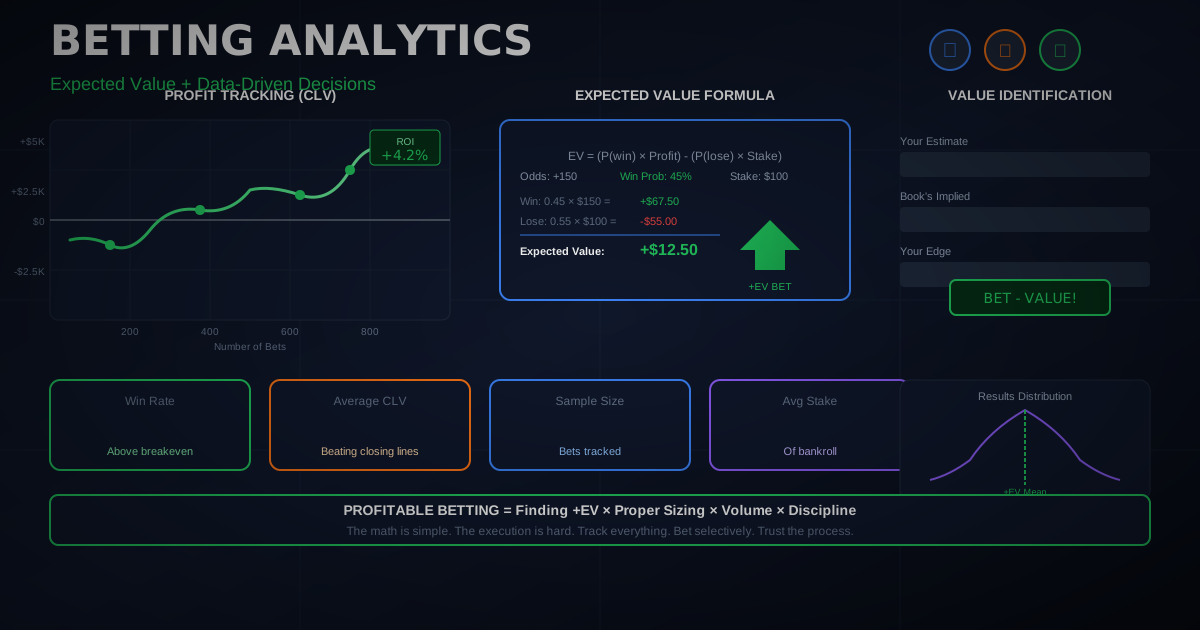
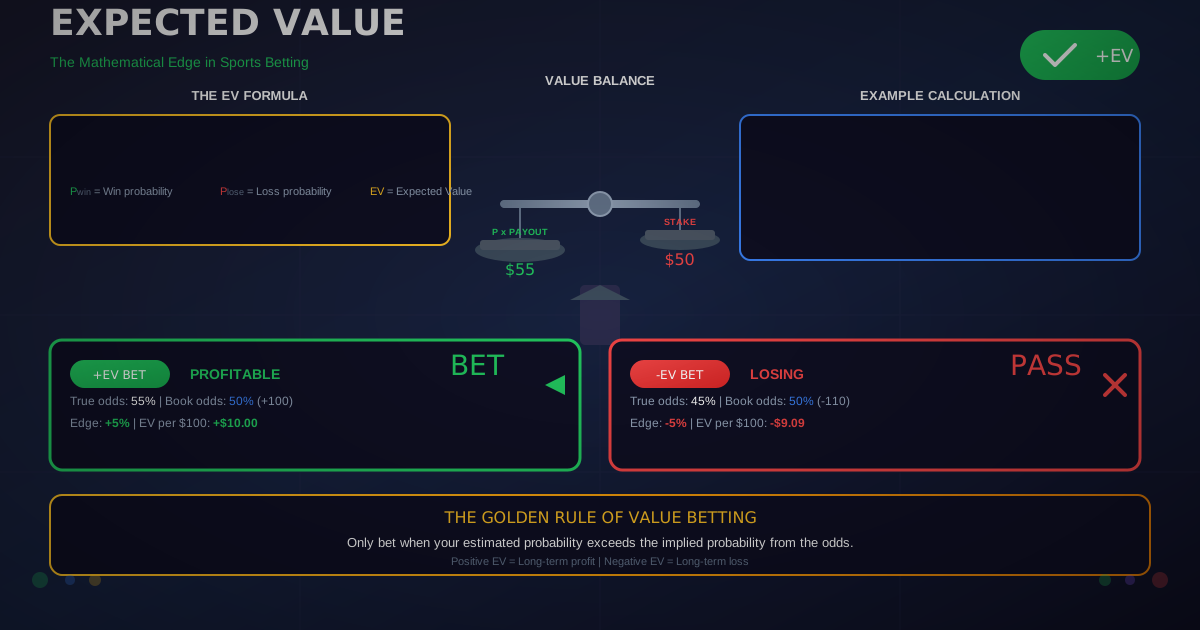
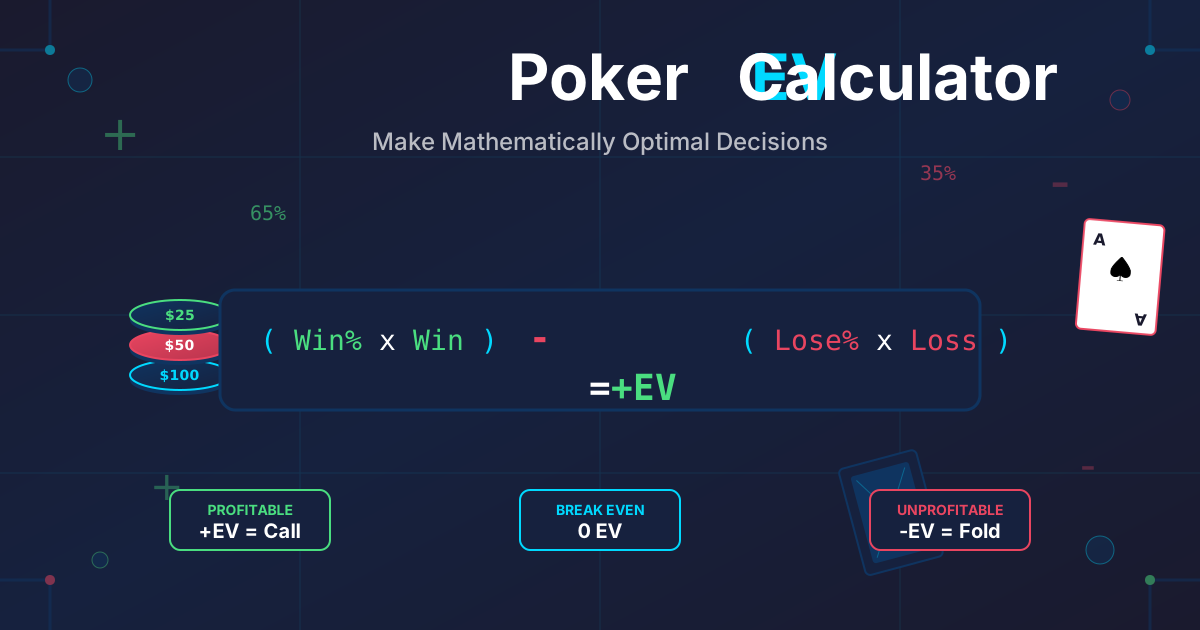
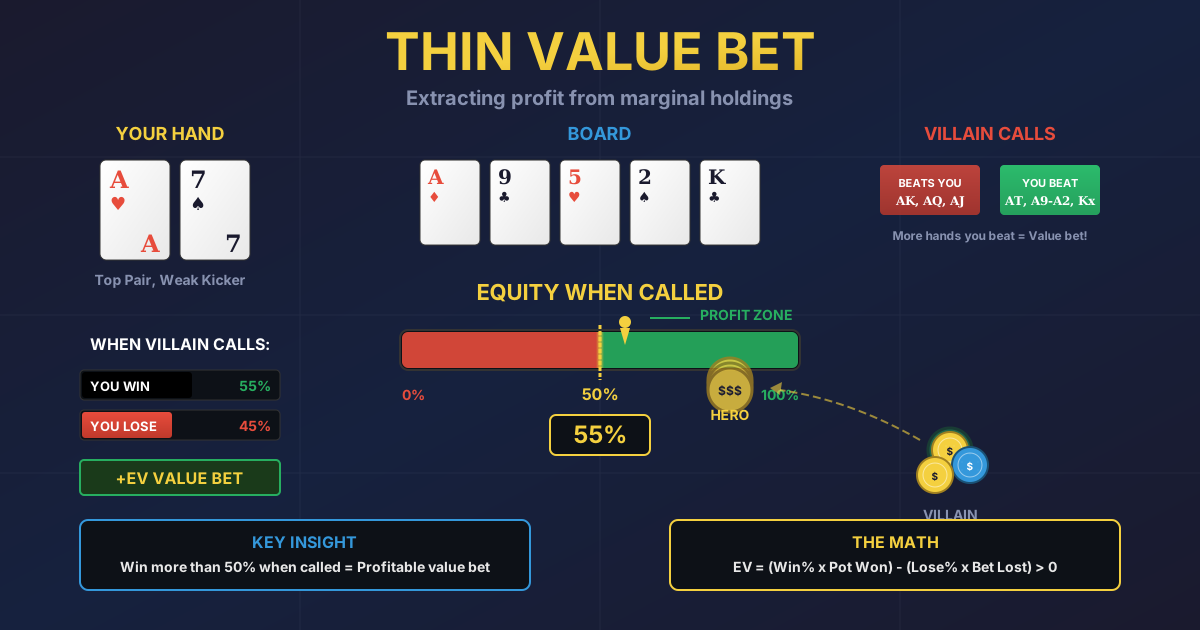
Quick Answer: Thin value betting is profitable when your hand beats more than 50% of your opponent's calling range. Calculate: Value Bet EV = (Win% x Bet Size) - (Lose% x Bet Size) + (Fold% x 0). If you beat 55% of calling hands and bet $50: EV = (0.55 x $50) - (0.45 x $50) = +$5 per bet. Bet thin when your win rate against the calling range exceeds 50%.
How to Use Our Calculator
Use the Thin Value Bet Calculator →
Step-by-Step Instructions
- Enter Your Hand: Input your hole cards and the complete board
- Define Opponent's Calling Range: Select or input the hands opponent continues with
- Enter Proposed Bet Size: Input the bet amount you're considering
- Analyze the Results: See your equity against the calling range and EV of betting versus checking
Input Fields
| Field | Description | Example |
|---|---|---|
| Your Hand | Your hole cards | AsTs |
| Board | All community cards | Kh Tc 7d 3s 2h |
| Calling Range | Hands opponent calls with | Top pair+, draws, bluff catchers |
| Bet Size | Amount you plan to bet | $60 (75% pot) |
| Pot Size | Current pot before betting | $80 |
| Check-Back Value | Estimated win rate if you check | 65% |
The Mathematics of Thin Value
Core Principle: The 50% Rule
Thin value betting becomes profitable when you beat more than half the hands that will call:
Required Equity vs Calling Range > 50%
This simplified formula assumes no raises. When facing potential raises, you need higher equity to account for that risk.
Complete EV Formula
Betting EV:
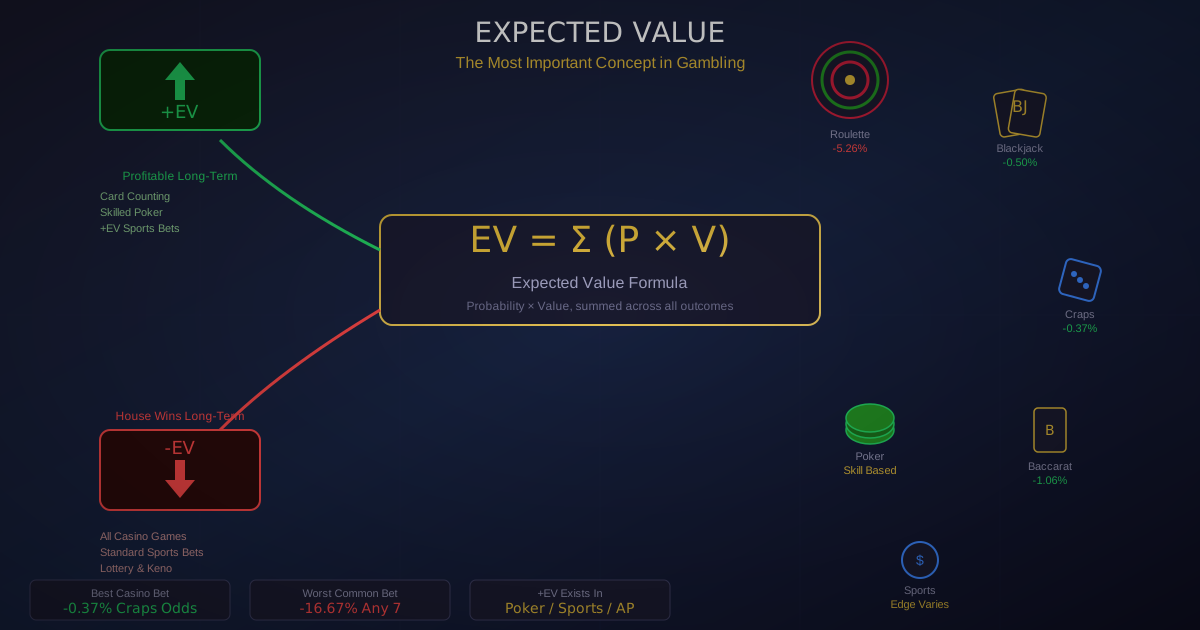
EV(bet) = [P(fold) x Pot] + [P(call) x (Win% x (Pot + Bet) - Lose% x Bet)]
Checking EV:
EV(check) = Win% x Pot
Thin value bet is correct when:
EV(bet) > EV(check)
Worked Example: River Decision with Top Pair Weak Kicker
You hold Ad8d on a board of As9c4h2d7s. Pot is $100.
Scenario Analysis:
- Your hand: Top pair, 8 kicker
- Opponent's likely calling range: Ax (any ace), some 9x, occasional bluff catchers
- Hands you beat when called: A7, A6, A5, A4, A3, A2, 99, 97s, 94s
- Hands that beat you when called: AK, AQ, AJ, AT, A9
Equity Calculation:
Assuming opponent calls with:
- AK, AQ, AJ, AT, A9 (you lose) = ~15 combos
- A7-A2 (you win) = ~18 combos
- 99, 97s, 94s (you win) = ~6 combos
Your equity vs calling range = 24 / 39 = 61.5%
EV of $60 bet (assuming 40% fold rate):
EV(bet) = (0.40 x $100) + (0.60 x [(0.615 x $160) - (0.385 x $60)])
EV(bet) = $40 + (0.60 x [$98.40 - $23.10])
EV(bet) = $40 + $45.18 = +$85.18
EV of checking (65% win rate at showdown):
EV(check) = 0.65 x $100 = $65
Result: Betting wins $85.18 vs checking's $65. The thin value bet is significantly better.
When to Thin Value Bet
Board Texture Considerations
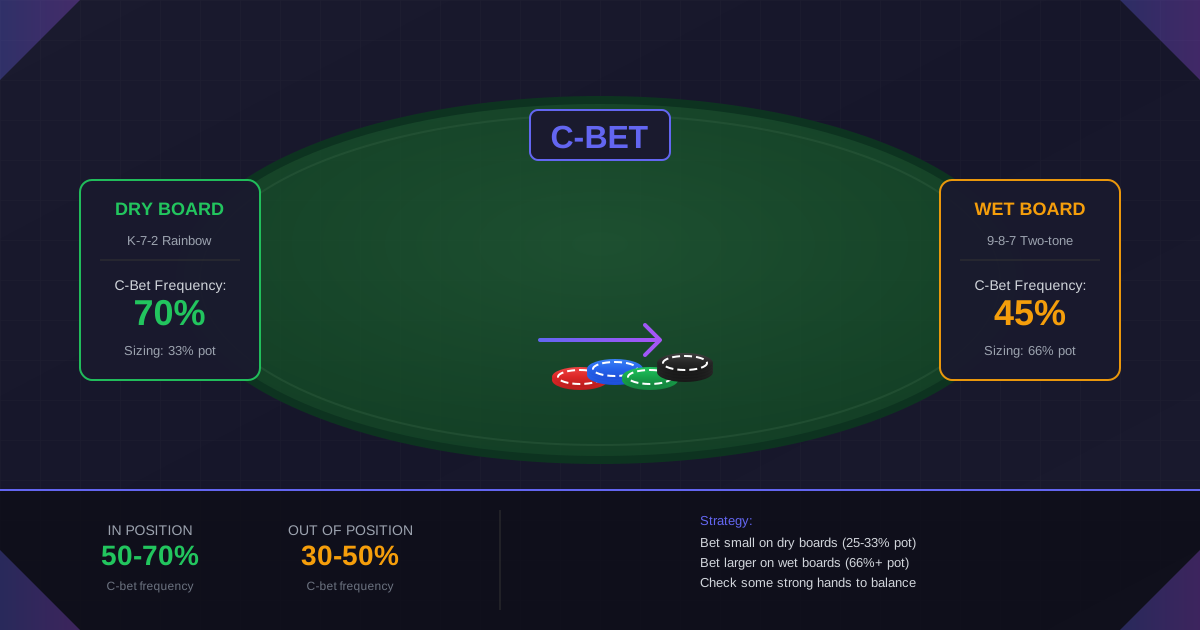
Dry Boards Favor Thin Value:
Board: Ah 7c 2d 4s 9h
- Few draws completed
- Ranges are capped
- Bluff catchers call more
Wet Boards Require Caution:
Board: Jh Tc 8h 7s Ah
- Multiple draws completed
- Stronger hands in opponent range
- Thin value becomes thinner
Opponent Type Adjustments
| Opponent Type | Thin Value Approach |
|---|---|
| Calling Station | Value bet widely, they call with worse |
| Tight Player | Narrow value range, they only call strong |
| Aggressive Player | Consider check-calling vs thin betting |
| Unknown | Use baseline 50%+ equity threshold |
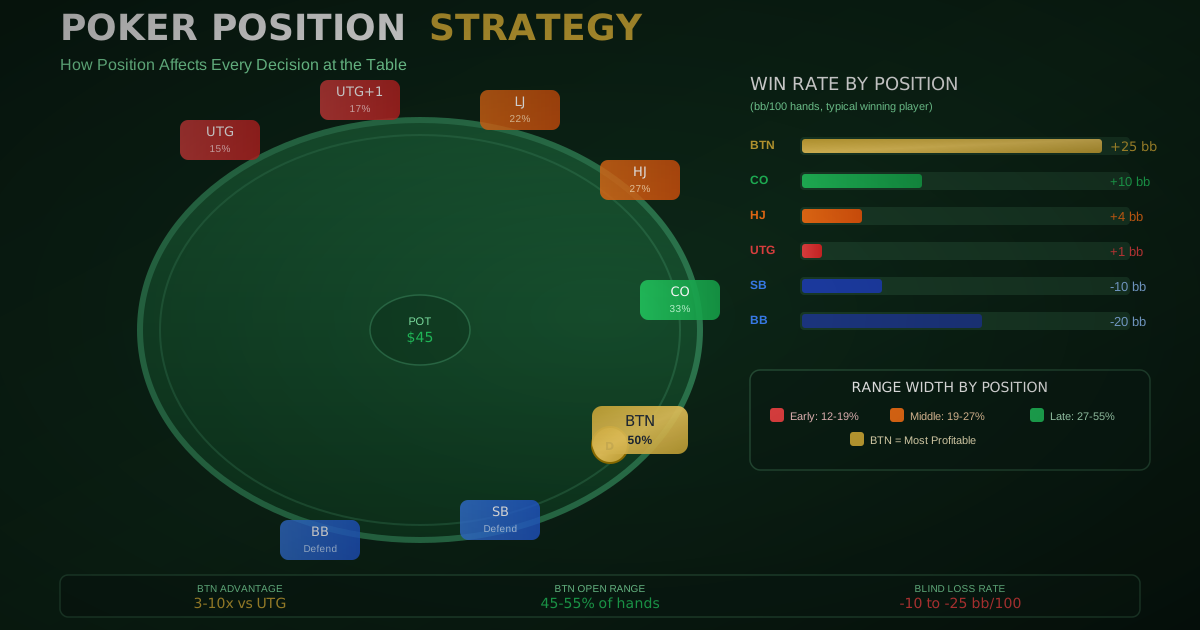
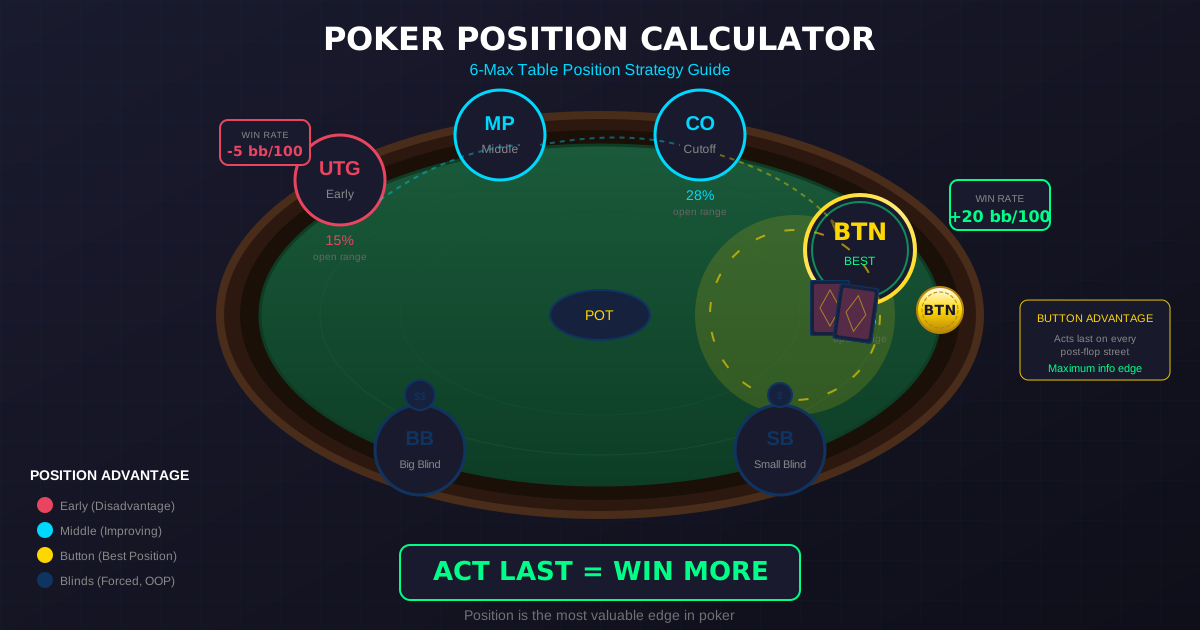
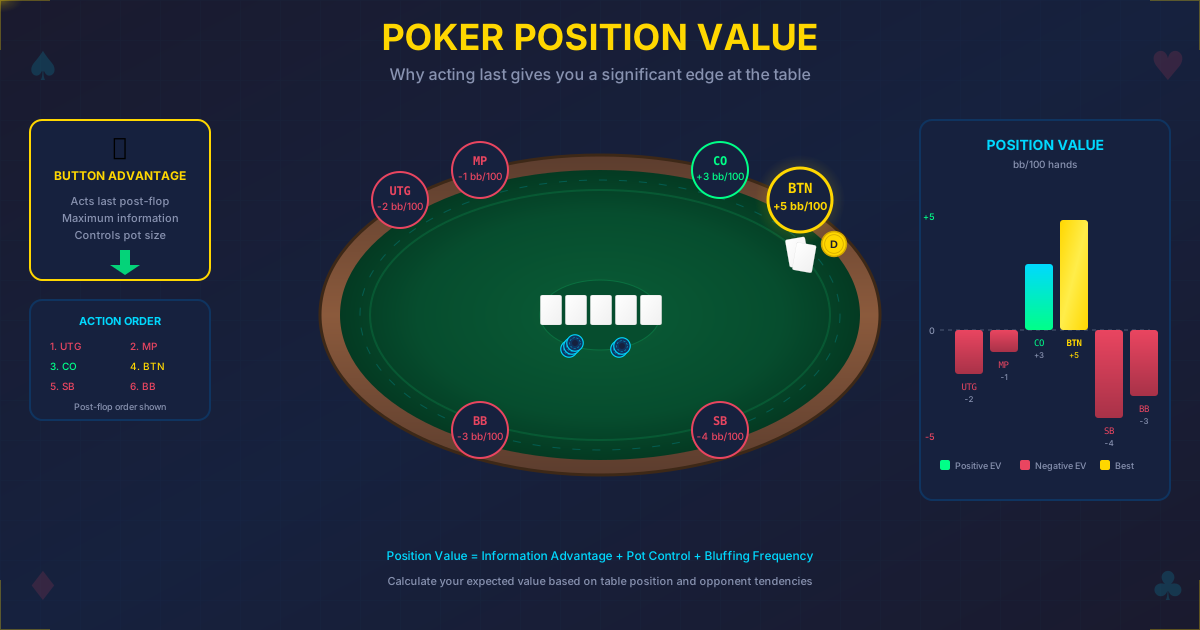
Position Impact
In Position:
- Full information before deciding
- Can size bets optimally
- Lower risk of check-raise
Out of Position:
- Must bet blind to opponent's action
- Risk getting raised
- Often better to check strong-ish hands
Optimal Thin Value Sizing
The Sizing-Range Relationship
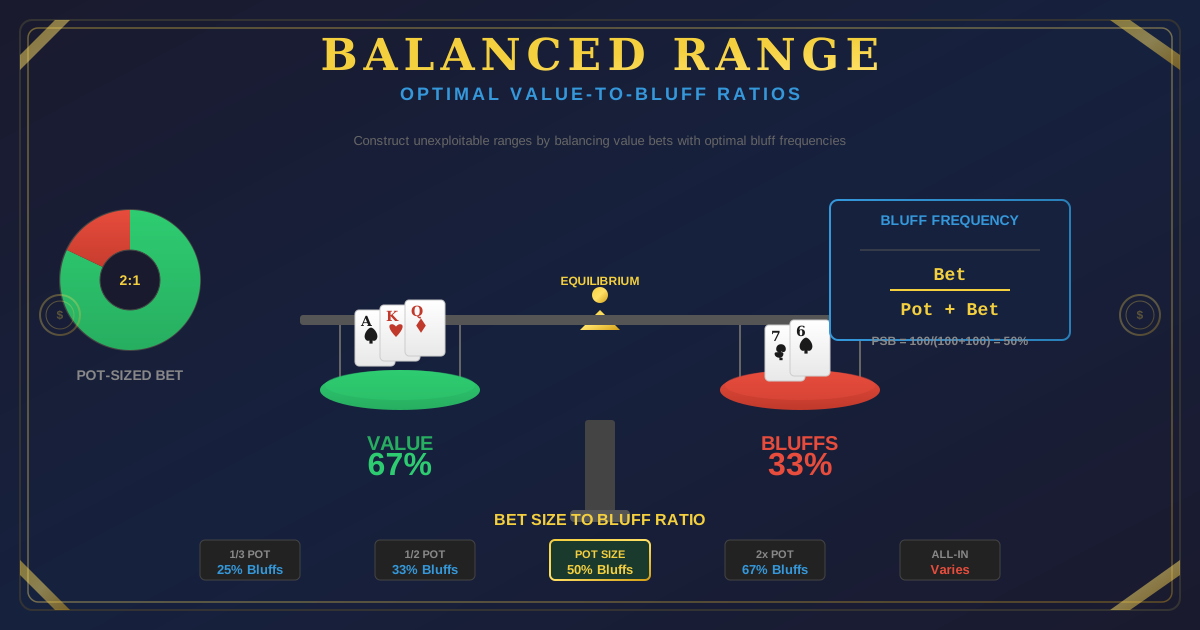
Smaller bets induce calls from wider ranges, but win less per call:
| Bet Size | Calling Range Width | Your Equity Needed |
|---|---|---|
| 25% pot | Very wide | ~51% |
| 33% pot | Wide | ~52% |
| 50% pot | Medium | ~53% |
| 66% pot | Narrower | ~54% |
| 75% pot | Narrow | ~55% |
| 100% pot | Very narrow | ~56%+ |
Sizing Strategy by Hand Strength
Very Thin Value (51-55% equity):
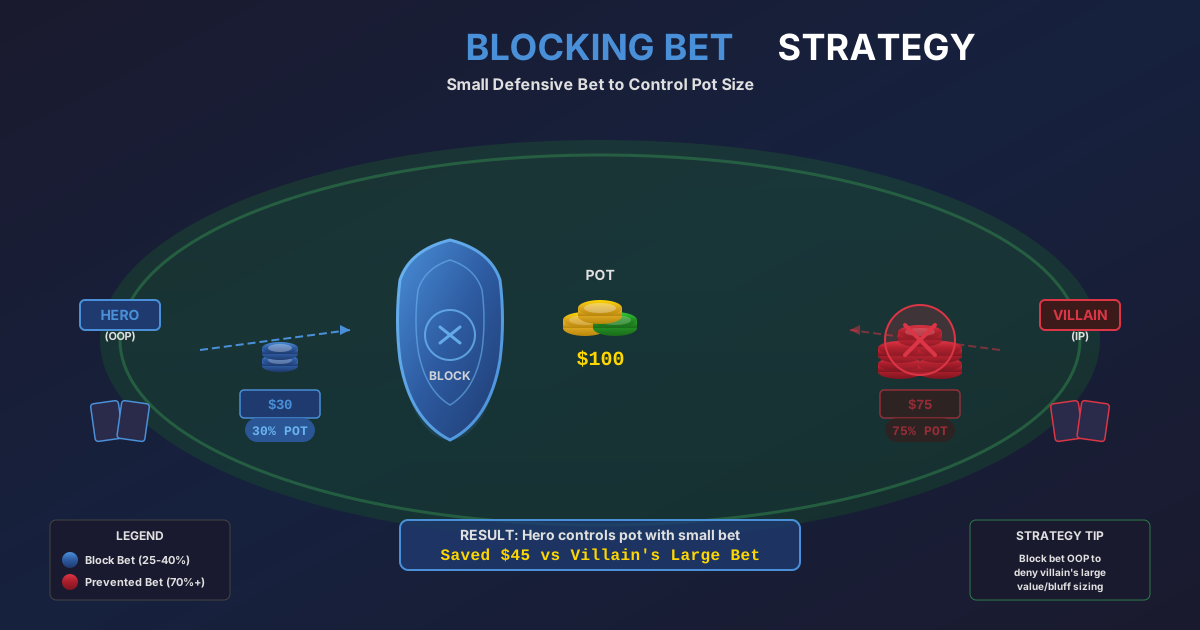
- Use small sizing (25-40% pot)
- Maximize calls from weak hands
- Example: Third pair on dry board
Standard Thin Value (55-65% equity):
- Use medium sizing (40-60% pot)
- Balance value extraction with protection
- Example: Second pair good kicker
Comfortable Value (65%+ equity):
- Can use larger sizing (60-80% pot)
- Extract maximum from calling range
- Example: Top pair good kicker
Real-World Examples
Example 1: Classic River Thin Value
Setup: You open AcJd, big blind calls. Board runs out Jh8c4d2s6h. You've bet flop and turn, pot is $120. Opponent checks river.
Analysis:
- Your hand: Top pair, good kicker
- Opponent's range: Jx (weaker), 8x, 44, underpairs, missed draws
- Calling range: Jx (J9-J2), 88, 44, perhaps 87s
Equity vs Calling Range:
Hands you beat: J9, J7, J6, J5, J3, J2 (~16 combos)
Hands that beat: JT, JQ, JK (~12 combos)
88, 44 beat you (~6 combos)

Your equity = 16/34 = 47%
Result: At 47% equity, you don't have a value bet. Check back for showdown.
Example 2: Thin Value Against a Calling Station
Setup: Same hand (AcJd) and board (Jh8c4d2s6h), but opponent is known calling station.
Adjusted Calling Range:
- Calling station calls with any pair, any 8x, backdoor busted draws
- Much wider range including 8x, underpairs
New Equity Calculation:
Additional calls: 86s, 85s, 87s, 77, 66, 55 (~18 more combos)
You beat all these additional hands

New equity = (16 + 18) / (34 + 18) = 34/52 = 65%
Result: Against calling station, you have comfortable value. Bet $70-80.
Example 3: Thin Value in a 3-Bet Pot
Setup: You 3-bet QQ, get called. Board: Tc7c4h2d5s. Opponent check-calls flop and turn. Pot is $180. Opponent checks river.
Analysis:
- Your hand: Overpair to the board
- Opponent's remaining range after flop and turn calls: JJ, TT, T9s, T8s, 77, 44, AcXc
Equity vs River Calling Range:
You beat: TT (3 combos), T9s, T8s (4 combos), 77 (3 combos), 44 (1 combo) = 11 combos
You lose to: JJ (6 combos), 77 that improved = 0
Note: Most JJ combos likely 4-bet preflop
Result: Strong value bet situation. Bet $100-120 for value.
Example 4: Borderline Thin Value Decision
Setup: You have Kd9d on Kc8s5h3d2c. Pot is $60 on the river.
Analysis:
- Your hand: Top pair, mediocre kicker
- Board is very dry, limiting opponent's strong hands
Calling Range Estimation:
Kx hands that call: KQ, KJ, KT (beat you) = 9+ combos
K9, K8-K2 (you tie or beat) = 12+ combos
8x calls sometimes = 6 combos
Slow-played sets: 88, 55, 33 (beat you) = 9 combos
Equity Calculation:
Beat: K8-K2, 8x hands = ~18 combos
Lose: KQ-KT, sets = ~18 combos
Tie: K9 = 3 combos

Effective equity = (18 + 1.5) / 39 = 50%
Result: Exactly breakeven. Consider checking or making a very small bet.
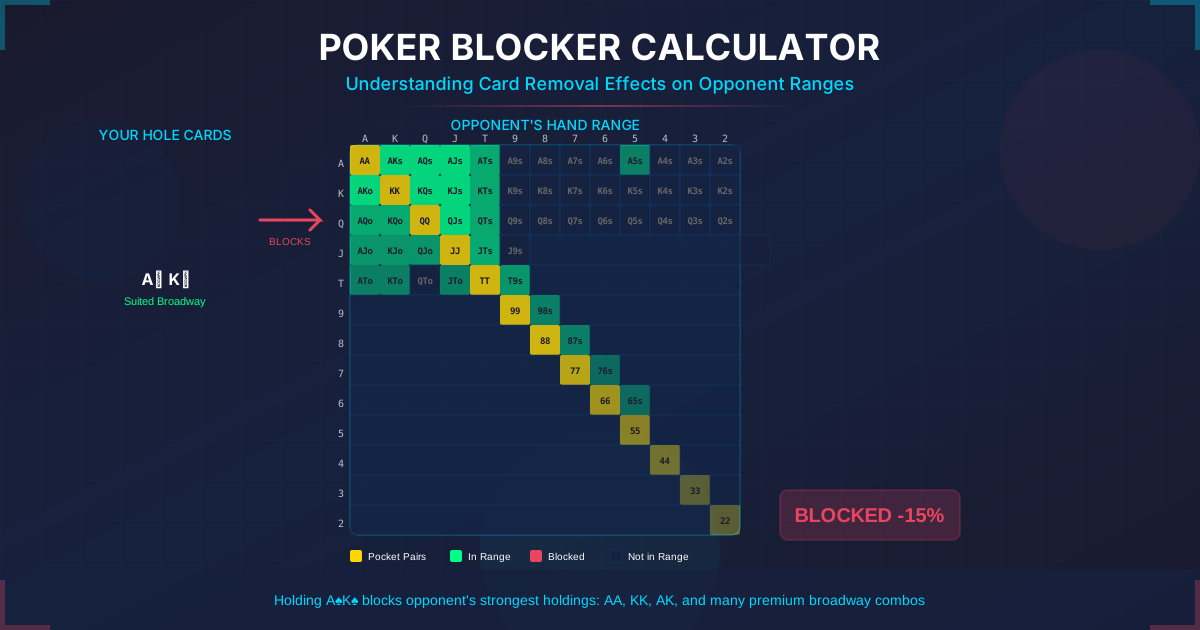
Example 5: Thin Value with Blockers
Setup: You have AhKs on Qh9d4c3h2s. Opponent checked to you on every street. Pot is $45.
Analysis:
- Your hand: Ace-high (no pair)
- Blockers: You block AQ, KQ
- Opponent's range: Mostly weak, some Qx that would have bet
Value Bet Consideration:
Can you beat 50% of calls? Unlikely.
Opponent only calls with Qx or better
You have no pair

Result: No thin value bet possible. Check back Ace-high.
Example 6: Exploitative Thin Value
Setup: You have Tc8c on Td6h3c2s5d against a player who never folds any pair.
Analysis:
- Against this specific opponent, any pair is calling
- You beat: T7, T6, T5, T4, T3, T2, all 6x, underpairs
- You lose to: TJ+, 66, 33
Equity vs This Opponent:
Wide calling range = 50+ combos
You beat approximately 35 combos
You lose to approximately 15 combos

Equity = 35/50 = 70%
Result: Clear value bet. Size for maximum extraction ($40-50 into $60).
Multi-Street Thin Value Considerations
Building the Pot for River Value
When you have thin value, consider your street-by-street plan:
Two Streets of Value:
Flop: Check (pot control)
Turn: Bet 50% pot for thin value
River: Bet 60% pot if turn called
Three Streets of Value:
Flop: Bet 33% pot
Turn: Bet 50% pot
River: Bet 66% pot
Recognizing When Value Turns Thin
| Street | Your Hand Quality | Adjustment |
|---|---|---|
| Flop | Top pair top kicker | Full value |
| Turn | Still TPTK | Moderate value |
| River | Board ran out scary | Thin value or check |
Common Mistakes to Avoid
-
Value Betting into Polarized Ranges: When opponent's range is polarized (nuts or air), thin value bets lose to the top and don't get called by the bottom. Check instead.
-
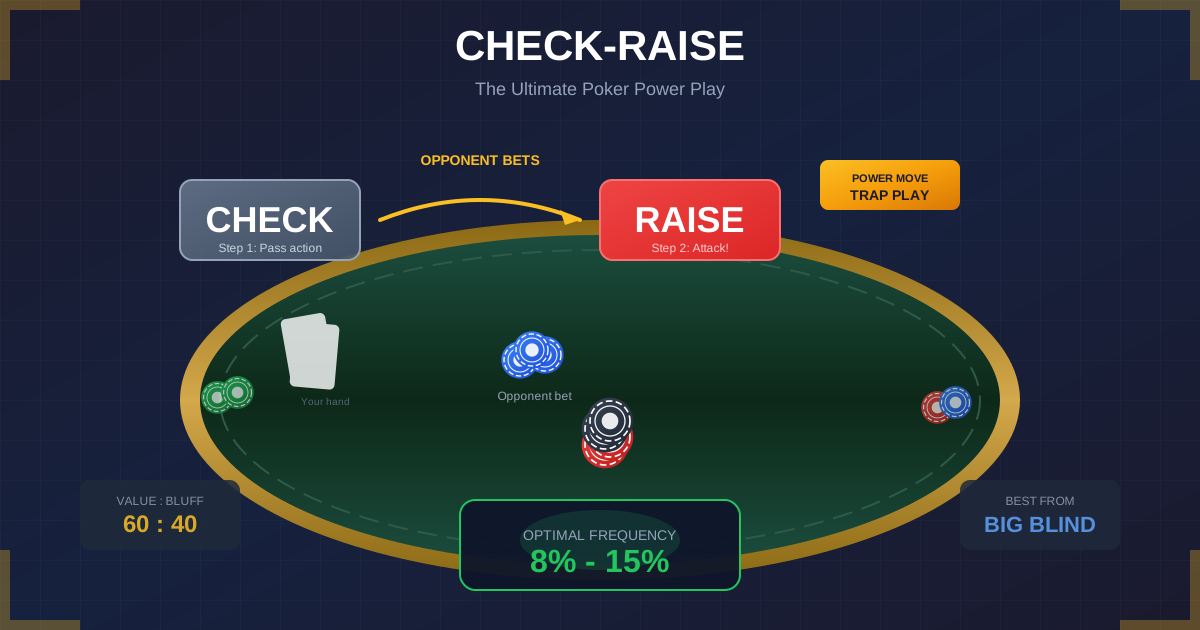
Ignoring the Check-Raise Risk: Out of position thin value bets are risky because opponents can check-raise with value hands you would have beat at showdown.
-
Betting the Same Size as Strong Value: Thin value requires smaller sizing. Using your normal bet size with marginal hands leaves money on the table.
-
Failing to Adjust for Opponent Type: Thin value against calling stations is wide; thin value against nits is almost nonexistent. Read your opponent.
-
Not Considering Your Range: If your range is weak in this spot, betting thin value can be exploitable. Sometimes checking strengthens your checking range.
-
Overcomplicating Simple Spots: If you beat less than 50% of calls, you don't have value. Check and showdown.
Frequently Asked Questions
What is considered a "thin" value bet?
A thin value bet is when your hand beats 50-60% of hands that will call. Anything above 60% is standard value; below 50% is not a value bet at all. The "thin" qualifier means you're targeting only the weakest portion of opponent's calling range.
How do I know if my value bet is too thin?
Your value bet is too thin if you lose to more than half the hands that call. List the hands opponent calls with, count how many you beat, and calculate your equity. Under 50% means check instead of bet.
Should I always bet when I have thin value?
Not always. Consider stack depth, opponent tendencies, and your checking range. Sometimes checking thin value hands balances your checking range and avoids difficult situations against raises.
What sizing should I use for thin value bets?
Smaller than standard value bets. Use 25-50% pot for thin value compared to 60-80% pot for strong value. Small bets induce calls from weaker hands while risking less when you're beaten.
How does position affect thin value betting?
Position greatly impacts thin value decisions. In position, you have complete information and can size perfectly. Out of position, you risk getting raised off the best hand. Thin value bet more frequently in position.
Can I thin value bet as a bluff?
No. Thin value betting means you expect to get called by worse hands. If you're betting hoping for folds, that's a bluff, not thin value. Know the difference and categorize your bets correctly.
How do I build a thin value betting range?
Start by identifying your standard value hands, then add weaker hands that still beat 50%+ of calls. Your thin value range expands against calling stations and contracts against tight opponents.
When should I check thin value hands in position?
Check thin value hands when: opponent's range is polarized, you can induce bluffs from worse hands, your hand has showdown value but limited value extraction potential, or checking balances your range.
Pro Tips
- Calculate the "indifference point" where betting and checking have equal EV, then adjust based on opponent tendencies
- Against unknown opponents, err on the side of checking thin spots until you have reads
- Use blockers to estimate calling ranges more accurately (blocking opponent's value hands increases your equity)
- Track your thin value bet success rate by opponent type to refine your strategies
- When in doubt about whether you have value, use the smallest sizing that still gets calls from target hands
Related Calculators
- Poker Equity Calculator - Determine your hand equity against ranges
- Poker EV Calculator - Calculate expected value of betting vs checking
- Value Bet Calculator - Standard value betting calculations
- Pot Odds Calculator - Understand the odds you're laying
- Hand Range Calculator - Build and analyze opponent ranges
Conclusion
Thin value betting is where poker profits hide. While flashy bluffs and monster hands get attention, consistently extracting extra bets from marginal holdings builds bankrolls. Our thin value bet calculator quantifies these close decisions, showing you exactly when betting edges out checking.
Master thin value betting by understanding your equity against calling ranges, sizing appropriately for marginal hands, and adjusting for opponent tendencies. The players who bet thin value correctly and check when they don't have it accumulate significant edges over opponents who miss these spots.