Three Card Poker Calculator: Strategy & Payout Guide (2026)
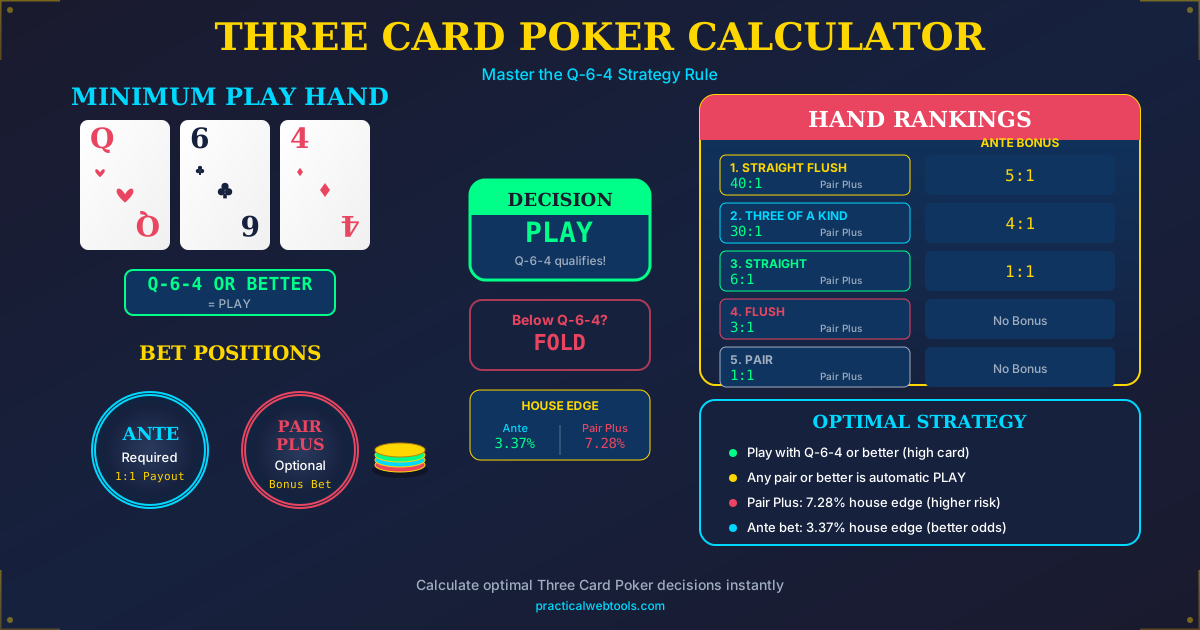
Three Card Poker Calculator: Master the Q-6-4 Rule
Three Card Poker combines fast action with simple strategy. Our calculator shows optimal play/fold decisions and analyzes both Ante and Pair Plus bets, helping you minimize the 3.37% house edge.
What Is Three Card Poker?
Three Card Poker is a casino table game with two separate bets: Ante (play against dealer) and Pair Plus (bet on your hand strength). You receive three cards and decide to play or fold.
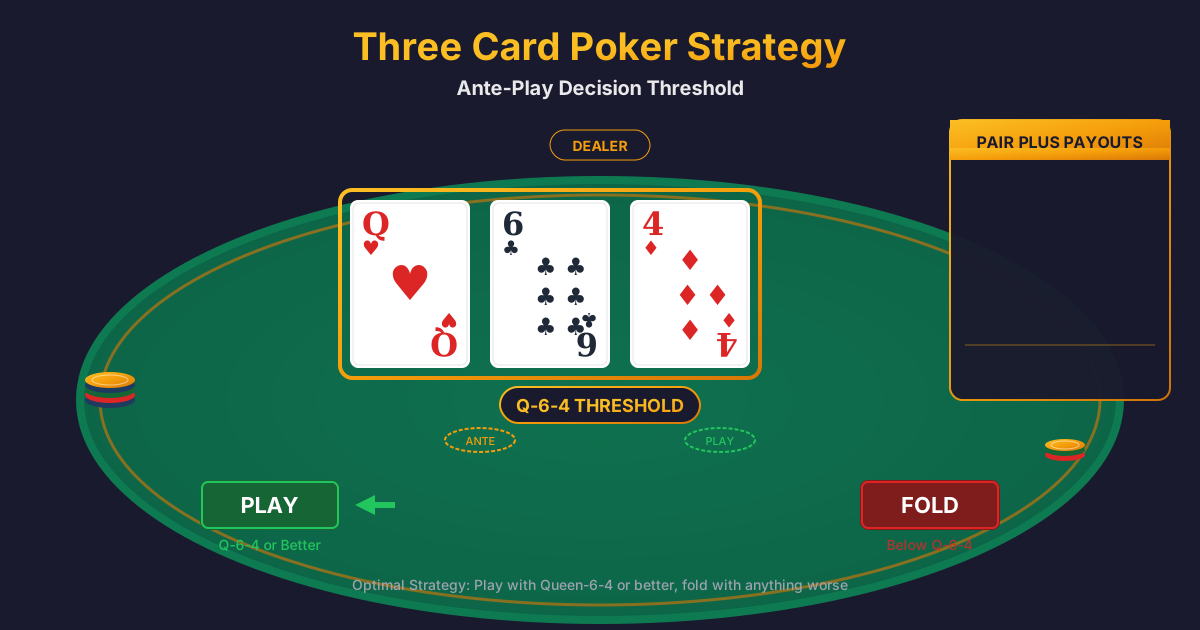
Quick Answer: The complete Three Card Poker strategy is one rule: Play Q-6-4 or better, fold everything else. This simple strategy yields a 3.37% house edge on Ante. Pair Plus is a separate bet with 7.28% edge (varies by pay table). Always know which bet you're making.
How to Use Our Three Card Poker Calculator
Use the Three Card Poker Calculator →
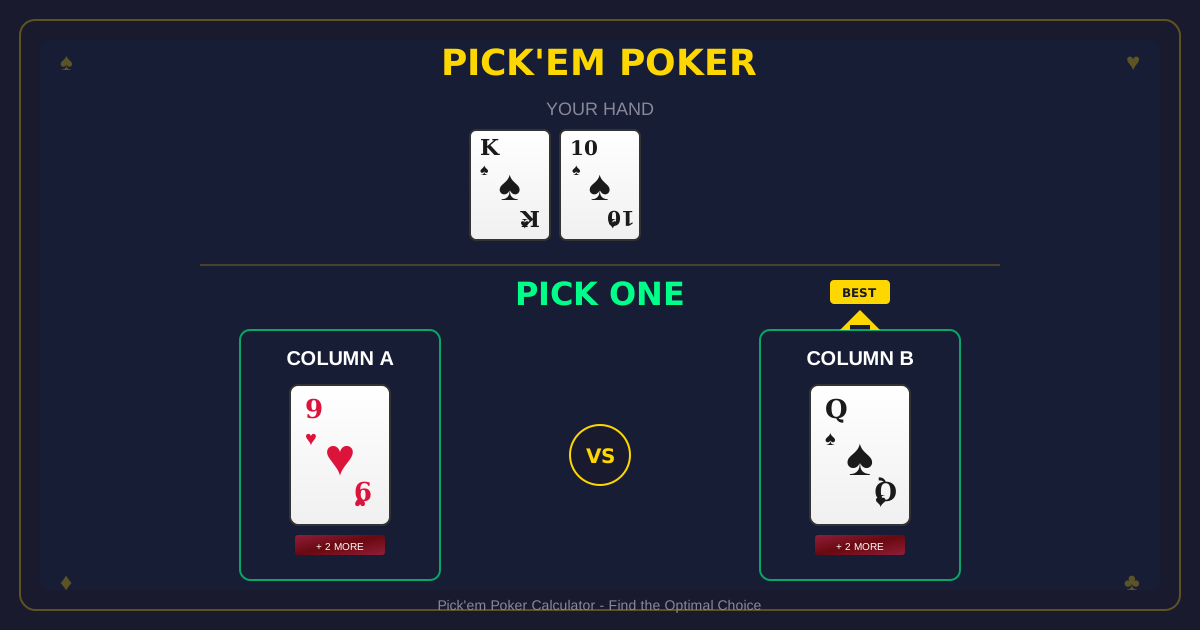
Enter your three cards to see optimal play/fold decision.
Step-by-Step Instructions
-
Enter Your Three Cards: Input your complete hand
-
View Hand Ranking: See what you have
-
Get Decision: Play or fold recommendation
-
Compare to Q-6-4: Understand the threshold
-
See Pair Plus Payout: If applicable
Input Fields Explained
| Field | Description | Example |
|---|---|---|
| Card 1 | First card | Q♠ |
| Card 2 | Second card | 7♦ |
| Card 3 | Third card | 3♣ |
| Hand Ranking | Your hand type | Queen High |
| Decision | Optimal play | Play/Fold |
| Pair Plus | Side bet payout | N/A (no pair) |
Three Card Poker Hand Rankings
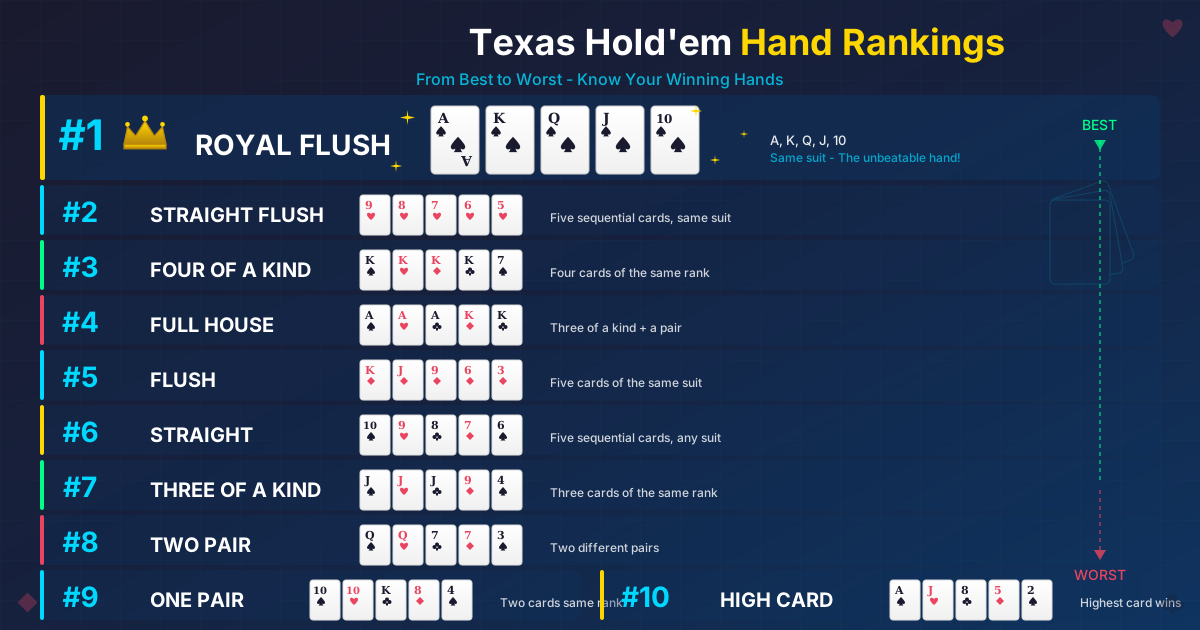
Ranking Order (High to Low)
| Rank | Hand | Example | Probability |
|---|---|---|---|
| 1 | Straight Flush | 5♠ 6♠ 7♠ | 0.22% |
| 2 | Three of a Kind | 8♠ 8♥ 8♦ | 0.24% |
| 3 | Straight | 9♣ 10♦ J♠ | 3.26% |
| 4 | Flush | A♥ 7♥ 2♥ | 4.96% |
| 5 | Pair | K♠ K♦ 5♣ | 16.94% |
| 6 | High Card | A♣ J♦ 4♠ | 74.39% |
Note: Unlike regular poker, straight beats flush in Three Card Poker (straights are harder to make with 3 cards).
The Q-6-4 Strategy
The Only Rule You Need
Play if your hand is Q-6-4 or better. Fold everything else.
What "Q-6-4 or Better" Means
| Hand | Decision | Why |
|---|---|---|
| Any pair | Play | Beats Q-6-4 |
| A-K-2 | Play | A-K-x beats Q-x-x |
| Q-7-2 | Play | Q-7-x beats Q-6-x |
| Q-6-5 | Play | Q-6-5 beats Q-6-4 |
| Q-6-4 | Play | Minimum threshold |
| Q-6-3 | Fold | Below threshold |
| Q-5-4 | Fold | Q-5-x loses to Q-6-x |
| J-10-9 | Fold | J-x-x loses to Q-x-x |
Quick Comparison Method
Compare hands card-by-card:
- Compare highest card
- If tied, compare second card
- If tied, compare third card
Q-6-4 is your benchmark—play if you beat it, fold if you don't.
Ante Bet Details
How Ante Works
- Place Ante bet
- Receive 3 cards
- Decide: Play (add equal bet) or Fold (lose Ante)
- Dealer reveals cards
- Dealer must have Q or better to qualify
Ante Outcomes
| Scenario | Result |
|---|---|
| Dealer doesn't qualify | Ante pays 1:1, Play pushes |
| Dealer qualifies, you win | Both pay 1:1 |
| Dealer qualifies, dealer wins | Lose both bets |
| Dealer qualifies, tie | Both push |
Ante Bonus
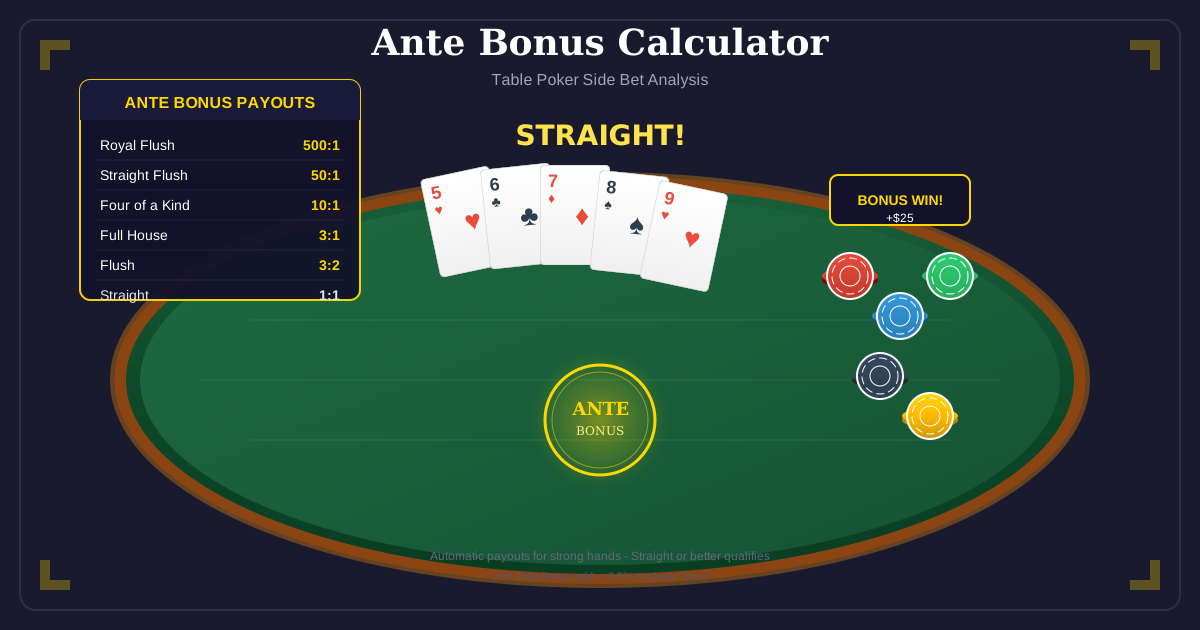
Many casinos pay an Ante Bonus regardless of dealer hand:
| Hand | Typical Bonus |
|---|---|
| Straight Flush | 5:1 |
| Three of a Kind | 4:1 |
| Straight | 1:1 |
Ante Bonus is automatic—no extra bet required.
Pair Plus Bet Details
How Pair Plus Works
Pair Plus is independent of the dealer—you're betting on your hand alone:
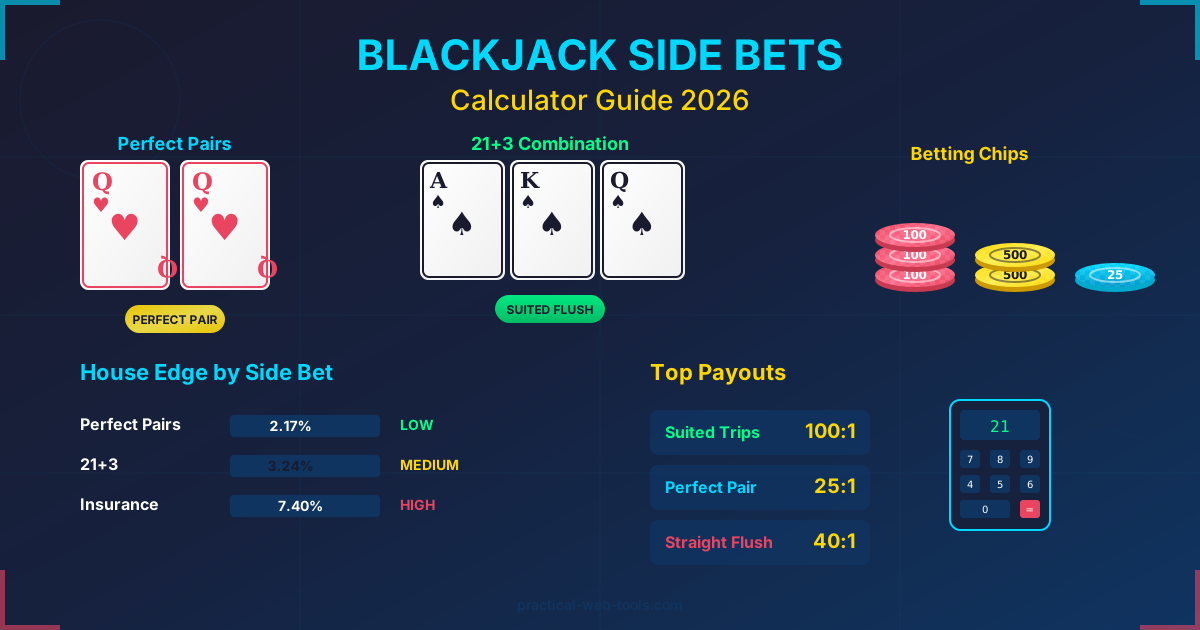
| Hand | Standard Payout | Alternative |
|---|---|---|
| Straight Flush | 40:1 | 35:1 |
| Three of a Kind | 30:1 | 25:1 |
| Straight | 6:1 | 6:1 |
| Flush | 3:1 | 4:1 |
| Pair | 1:1 | 1:1 |
Pair Plus House Edge
| Pay Table | House Edge |
|---|---|
| 40-30-6-3-1 (best) | 2.32% |
| 40-30-6-4-1 | 2.70% |
| 35-25-6-4-1 | 7.28% |
| 25-20-6-3-1 | 7.28% |
Check the pay table before playing—edges vary dramatically.
House Edge Comparison
Ante vs Pair Plus
| Bet | House Edge | Volatility |
|---|---|---|
| Ante (with Q-6-4 strategy) | 3.37% | Lower |
| Pair Plus (best table) | 2.32% | Higher |
| Pair Plus (worst table) | 7.28%+ | Higher |
Optimal Play
- Ante: Follow Q-6-4 strategy exactly
- Pair Plus: Only play at favorable pay tables
- Both: You can play both simultaneously
Real-World Examples
Example 1: Clear Play
Your Hand: K♣ 9♥ 2♦
Decision: Play Reasoning: K-9-2 beats Q-6-4 (King > Queen in first position)
Example 2: Clear Fold
Your Hand: J♠ 10♦ 8♣
Decision: Fold Reasoning: J-10-8 loses to Q-6-4 (Jack < Queen in first position)
Example 3: Close Call - Play
Your Hand: Q♥ 7♣ 2♠
Decision: Play Reasoning: Q-7-2 beats Q-6-4 (7 > 6 in second position)
Example 4: Close Call - Fold
Your Hand: Q♦ 5♠ 9♥
Decision: Fold Reasoning: Q-5-9 loses to Q-6-4 (5 < 6 in second position)
Example 5: Pair Plus Winner
Your Hand: 8♠ 8♦ 3♣
Decision: Play (beats Q-6-4), Pair Plus pays 1:1 Total: Win on both bets if dealer qualifies and loses
Optimal Betting Strategy
Bet Sizing Recommendations
| Strategy | Ante | Pair Plus | Notes |
|---|---|---|---|
| Conservative | Yes | No | Lower edge |
| Balanced | Yes | Yes (good table) | More action |
| Entertainment | Yes | Yes | Higher variance |
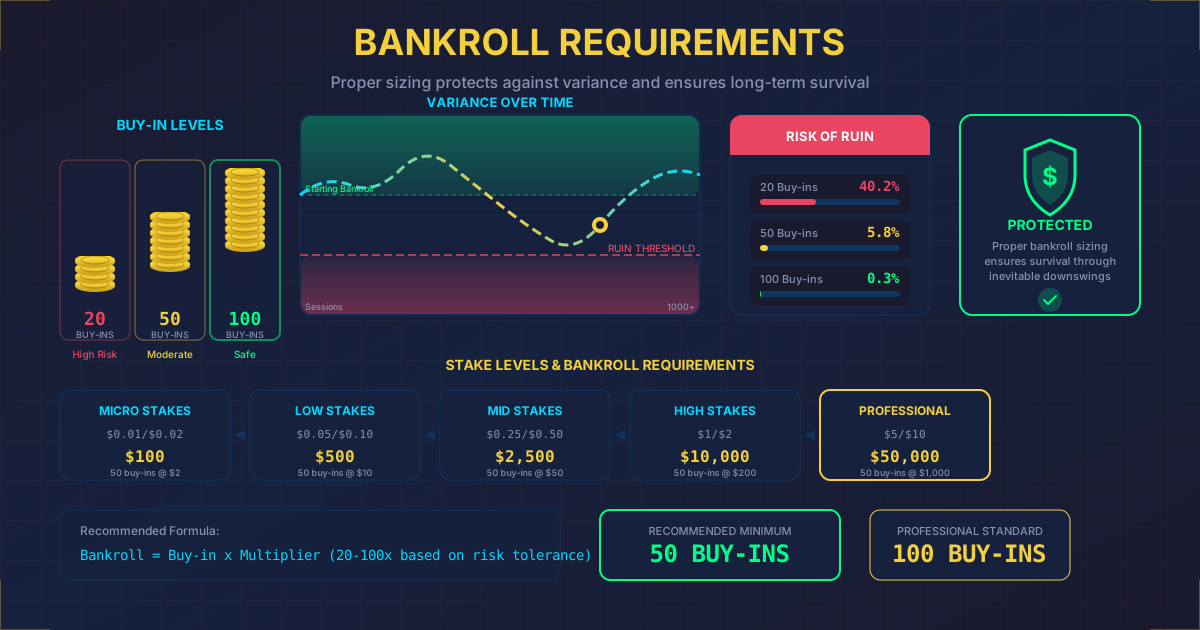
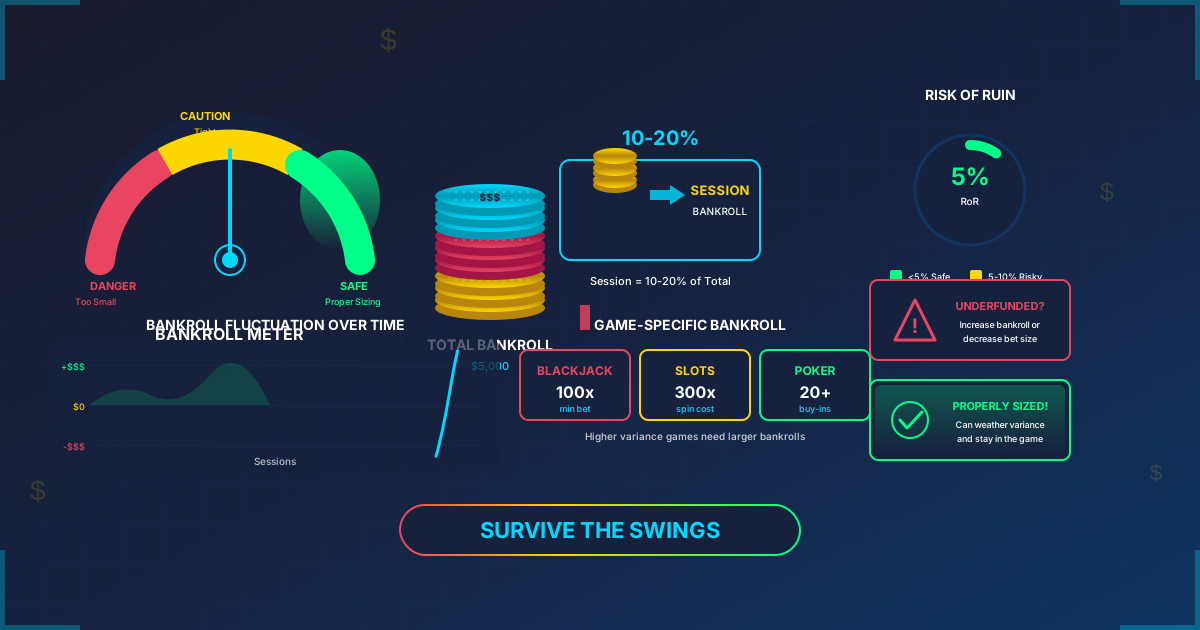
Bankroll Considerations
| Session Length | Recommended Units |
|---|---|
| 1 hour | 40-50 |
| 2-3 hours | 80-100 |
| Extended | 150+ |
Common Three Card Poker Mistakes
1. Playing Below Q-6-4
Mistake: "J-10-9 looks good, it's almost a straight" Reality: J-high loses money long-term Fix: If it doesn't beat Q-6-4, fold it
2. Ignoring Pay Tables
Mistake: Playing Pair Plus without checking odds Reality: House edge ranges from 2.32% to 7%+ Fix: Find 40-30-6-3-1 or 40-30-6-4-1 tables
3. Chasing Losses with Pair Plus
Mistake: Increasing Pair Plus bets to "get even" Reality: Pair Plus is high variance; cold streaks happen Fix: Flat bet or skip Pair Plus
4. Folding Pairs
Mistake: "Deuces can't win against the dealer" Reality: Any pair beats Q-high; always play pairs Fix: Pair = automatic play
Frequently Asked Questions
Why Q-6-4 specifically?
Mathematical analysis shows Q-6-4 is the exact break-even point. Hands slightly worse have negative expected value; hands slightly better have positive EV.
Should I play both bets?
Ante has the lower edge. Pair Plus adds variance and entertainment. Playing both is fine if Pair Plus has a good pay table.
Does the dealer's upcard matter?
No—unlike blackjack, you don't see dealer cards before deciding. You decide based only on your three cards.
Why does straight beat flush?
With only 3 cards, there are fewer straight combinations than flush combinations. The rankings reflect actual probability.
Is card counting possible?
Not effectively. The deck is shuffled after every hand at most tables.
What's the best Three Card Poker strategy?
Q-6-4. That's it. Play Q-6-4 or better, fold everything else. It's one of the simplest optimal strategies in casino gaming.
Advanced Considerations
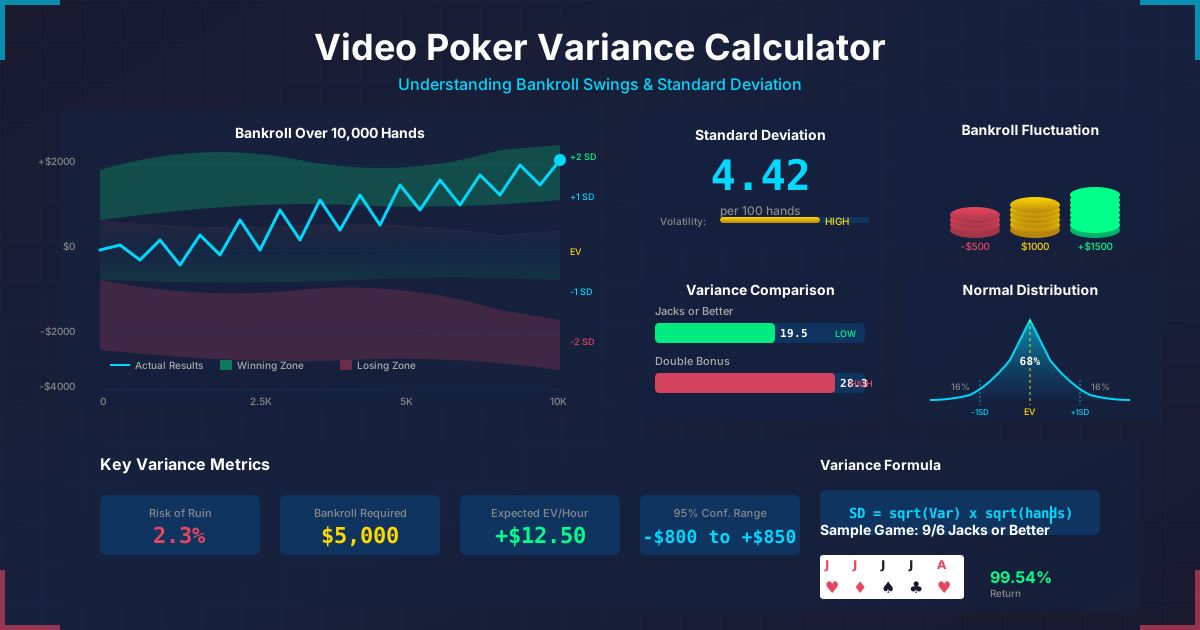
Variance Analysis
| Bet | Std Deviation | Character |
|---|---|---|
| Ante only | 1.64 units | Moderate |
| Pair Plus only | 2.85 units | High |
| Both | 3.22 units | Higher |
Element of Risk
| Bet | Element of Risk |
|---|---|
| Ante | 2.01% |
| Pair Plus | Varies by table |
Progressive Side Bets
Some tables offer progressive jackpots for mini-royal (AKQ suited). These typically have 15-25% house edge—avoid them.
Pro Tips for Three Card Poker
-
Memorize Q-6-4: One rule covers 100% of decisions
-
Check Pair Plus pay table: 40-30-6-3-1 is best
-
Don't overthink: Strategy is simpler than blackjack
-
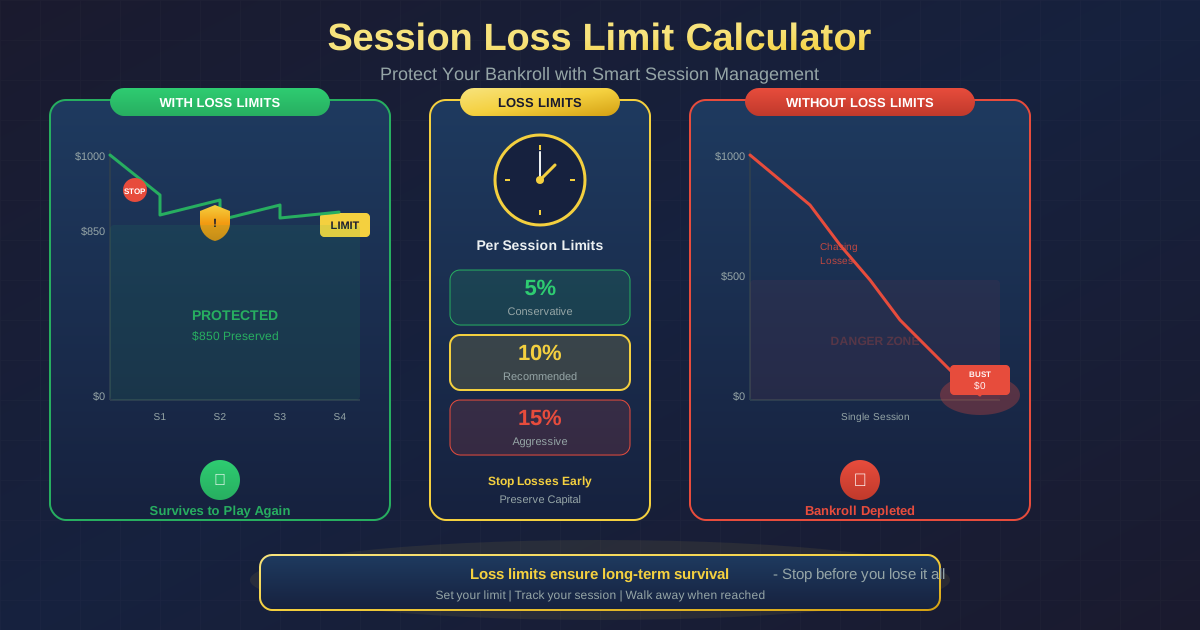
Set win/loss limits: 3.37% edge adds up over time
-
Skip progressives: Side bet edges are usually terrible
Related Casino Calculators
- Caribbean Stud Calculator - Five-card variant
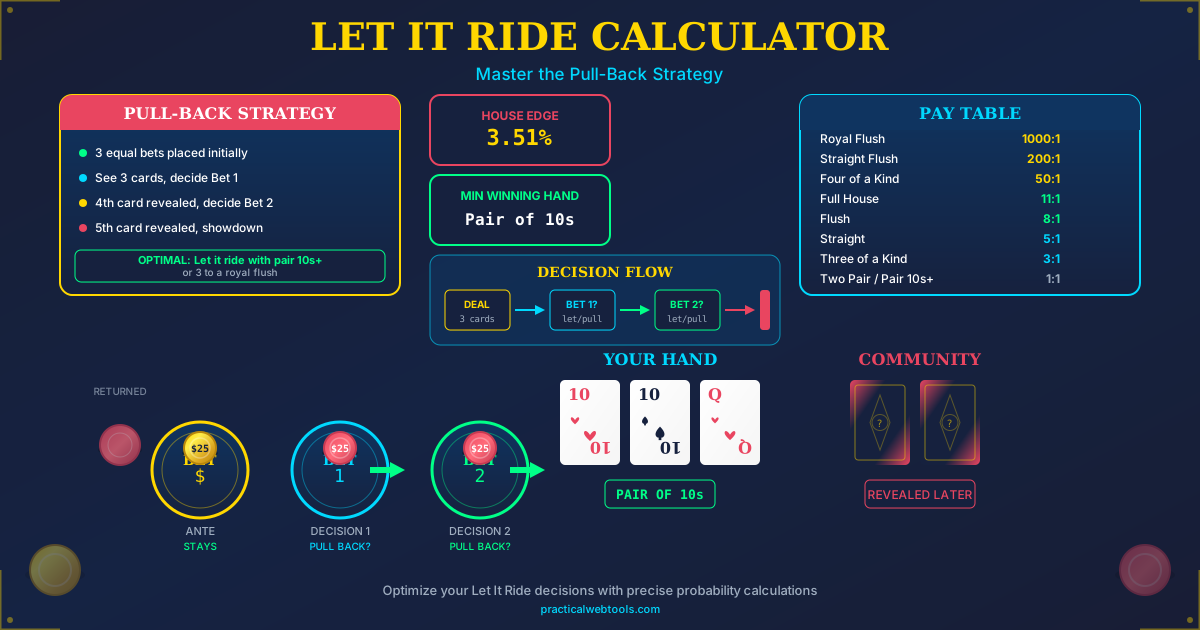
- Let It Ride Calculator - Pull-back poker
- Pai Gow Poker Calculator - Split hands
- Casino War Calculator - Simplest game
- Ultimate Texas Hold'em Calculator - Hold'em rules
Conclusion
Three Card Poker offers one of casino gaming's simplest optimal strategies: play Q-6-4 or better, fold everything else. Our calculator confirms optimal decisions instantly and shows Pair Plus payouts. With a 3.37% edge on Ante, it's a reasonable table game choice.
Calculate Your Three Card Poker Hands Now →
Master the Q-6-4 rule in one session, check Pair Plus pay tables before betting, and enjoy the fast-paced action. Three Card Poker rewards simple, disciplined play.