Tournament Bubble Calculator: Master ICM Pressure and Bubble Strategy (2026)

Tournament Bubble Calculator: Navigate ICM Pressure Like a Professional
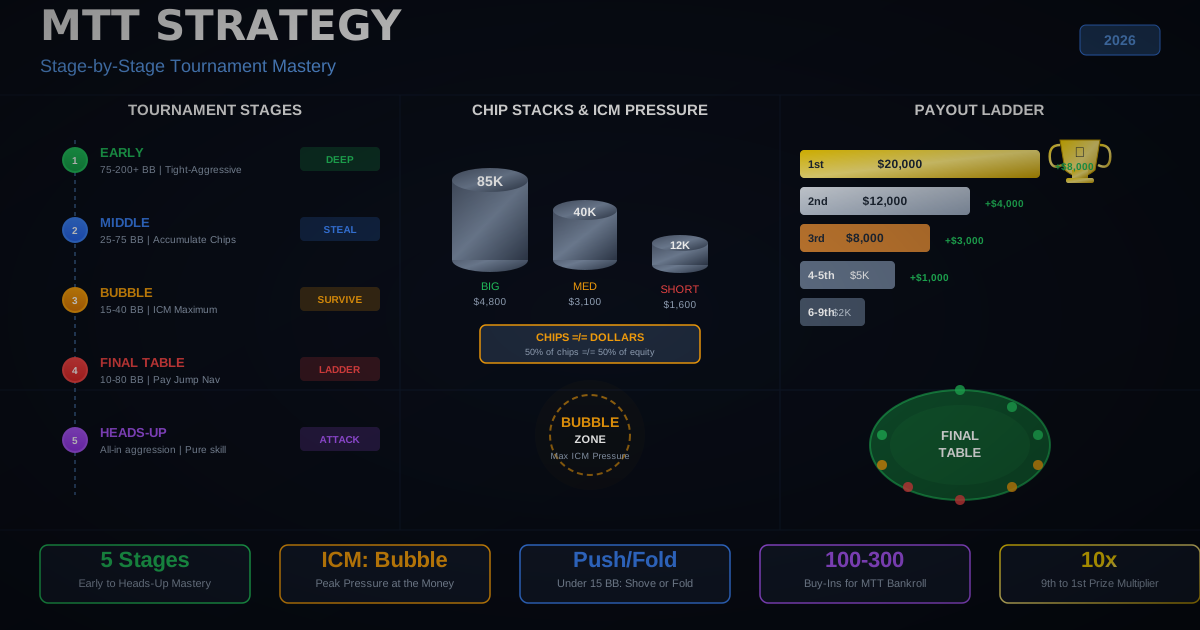
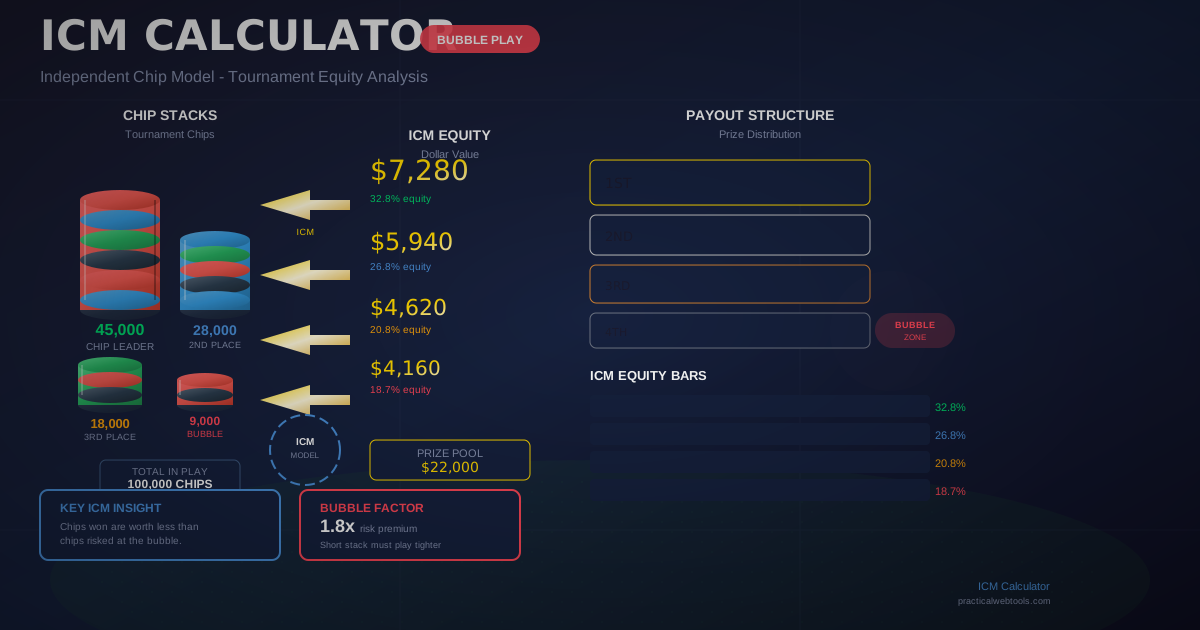
The money bubble is where tournament fortunes are made and lost. With the pay jump from zero to minimum cash looming, stack sizes become secondary to ICM considerations. Our tournament bubble calculator analyzes stack distributions, calculates bubble factors, and shows you exactly how to adjust your strategy when every chip matters exponentially more.
What Is the Tournament Bubble?
The tournament bubble is the period when one more elimination will cause all remaining players to "cash" and receive prize money. Players who bust on the bubble receive nothing, while survivors are guaranteed at least the minimum payout. This creates intense pressure that dramatically alters optimal strategy.
Quick Answer: On the bubble, your calling ranges should tighten by 15-30% while big stacks can widen stealing ranges by 20-40%. The ICM Bubble Factor formula: BF = 1 + (Payout Jump / Current Stack Value). With a $100 min-cash and $50 in equity, BF = 1 + (100/50) = 3x. You need 3x the chip EV to justify risky plays. Survival matters more than chip accumulation.
How to Use Our Calculator
Use the Tournament Bubble Calculator →
Step-by-Step Instructions
- Enter Tournament Details: Input total prize pool and payout structure
- Input Stack Sizes: Enter your stack and all opponent stacks
- Specify Bubble Position: How many players until the money
- Calculate ICM Values: See each player's tournament equity in dollars
- Analyze Specific Situations: Input hands to see ICM-adjusted decisions
Input Fields
| Field | Description | Example |
|---|---|---|
| Prize Pool | Total money to be distributed | $10,000 |
| Players Remaining | Current field size | 28 |
| Players Paid | Number of cash spots | 27 |
| Stack Sizes | All stacks in chips | You: 50k, Others: various |
| Payout Structure | Min cash, 2nd, 1st, etc. | $200 min cash |
| Your Position | Seat and action context | UTG with AQo |
Understanding ICM Bubble Pressure
The Bubble Factor Concept
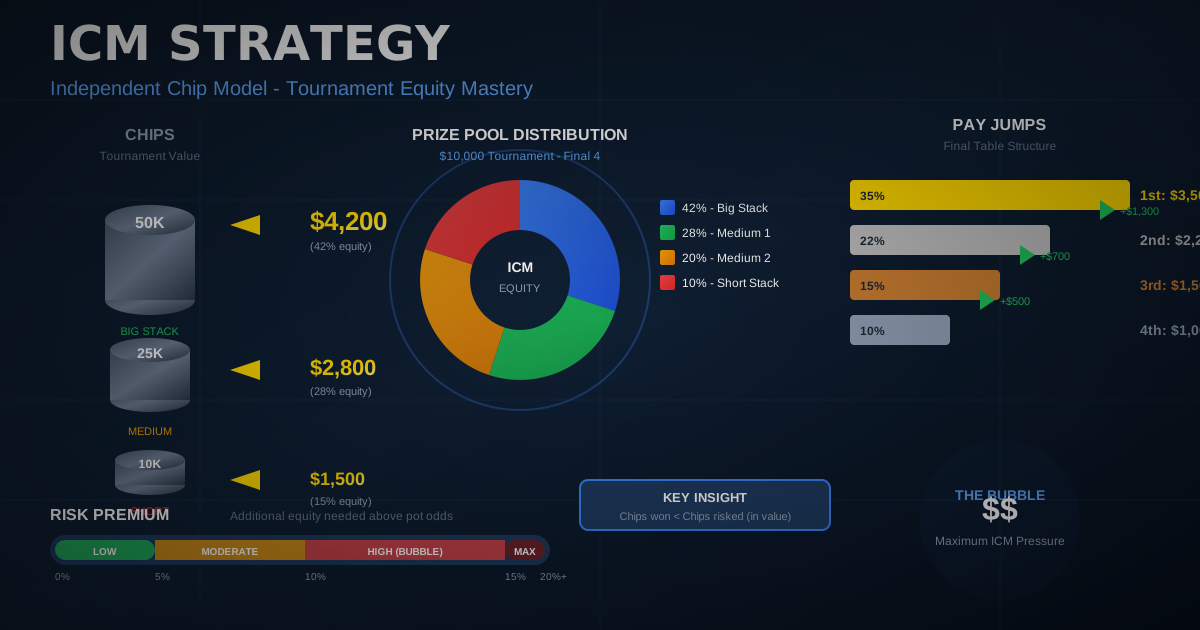
Bubble factor measures how much more valuable chips become near the money:
Bubble Factor = ($ Value of Min Cash) / ($ Value of Current Stack)
Example:
Min Cash: $500
Your current ICM equity: $320
Bubble Factor = 500 / 320 = 1.56

Interpretation: You need 56% better chip EV than normal to justify marginal plays
How Bubble Factors Change by Stack Size
| Stack Size (% of average) | Approximate Bubble Factor |
|---|---|
| 200%+ (big stack) | 1.1-1.3 |
| 100-150% (healthy) | 1.3-1.6 |
| 50-100% (medium) | 1.6-2.5 |
| 25-50% (short) | 2.5-4.0 |
| Under 25% (desperate) | 4.0-10.0 |
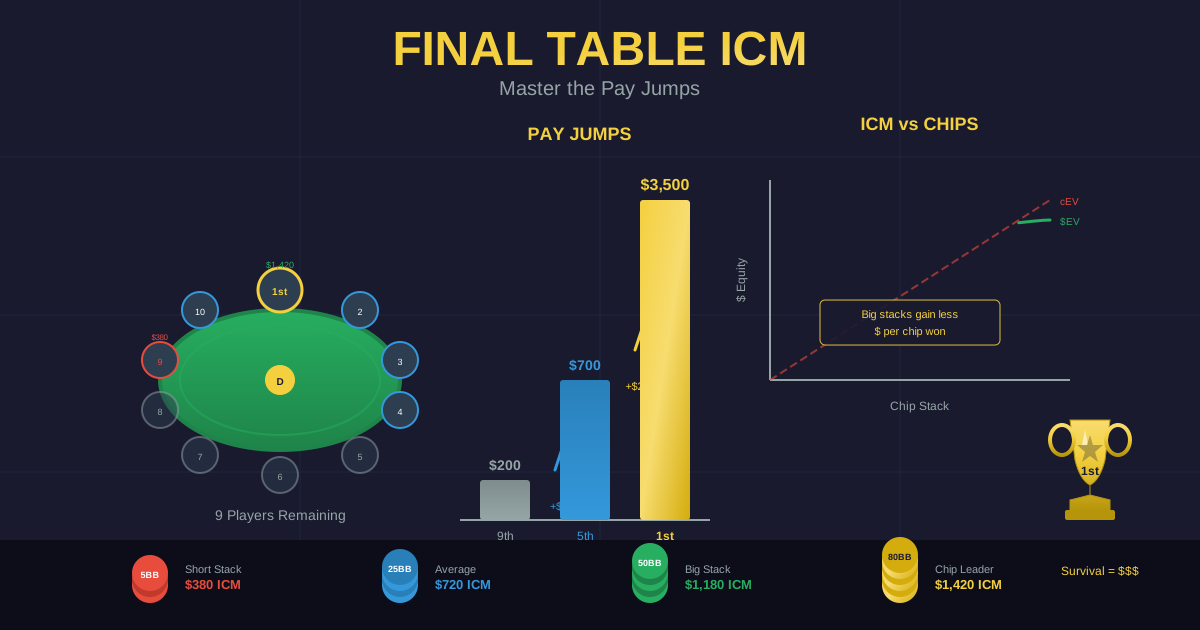
ICM Dollar Values on the Bubble
Sample 27-Player Bubble (28th = $0, 27th = $200):
Stack Distribution:
Player A: 150,000 chips → ICM: $485
Player B: 80,000 chips → ICM: $390
Player C: 50,000 chips → ICM: $310
Player D: 30,000 chips → ICM: $245
Player E: 10,000 chips → ICM: $140
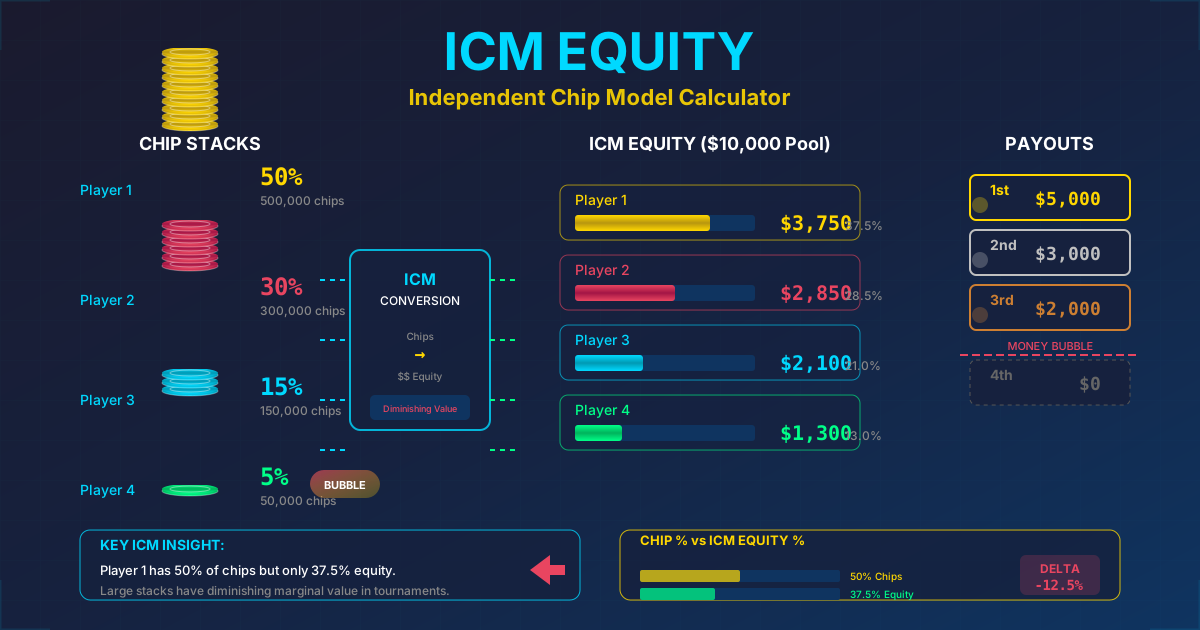
Notice how short stacks have disproportionately high ICM value relative to chips. Player E has 1/15th of Player A's chips but 29% of their ICM value.
Stack-Specific Bubble Strategies
Big Stack Strategy (150%+ Average)
With a big stack on the bubble, you have leverage:
Offensive Adjustments:
Increase open-raising frequency: +20-30%
Target medium stacks who can't call
Attack blinds relentlessly
Apply pressure at every opportunity
Defensive Considerations:
Avoid coin flips with other big stacks
Don't stack off light (preserve leverage)
Let short stacks bust each other
You can wait for premium hands vs big stacks
Example Big Stack Range vs Medium Stack:
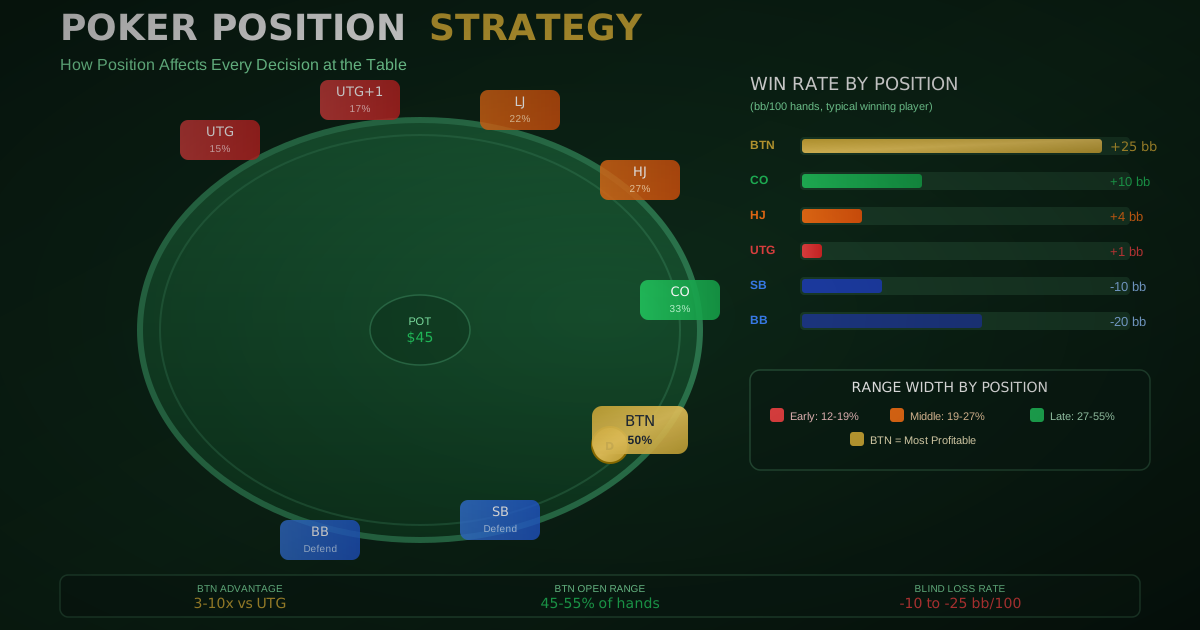
Standard BTN open: 50% of hands
Bubble BTN open vs medium BB: 65% of hands
They can't afford to gamble against you
Medium Stack Strategy (50-150% Average)
Medium stacks face the most difficult decisions:
Core Strategy:
Tighten significantly: -15-25% ranges
Avoid confrontations with big stacks
Pick on shorter stacks when safe
Survive first, accumulate second
Decision Framework:
vs Big Stack: Fold marginal hands, wait for premium
vs Medium Stack: Play tight, avoid flip situations
vs Short Stack: Can call wider, you have leverage
Example Medium Stack Adjustments:
Standard BB defense: 45%
Bubble BB defense vs big stack: 30%
Reason: Losing doubles their leverage, busting = $0
Short Stack Strategy (Under 50% Average)
Short stacks must balance survival with accumulation:
The Short Stack Paradox:
Too tight: Blind away, guaranteed to bust
Too loose: One bad beat = elimination
Optimal: Push wider, but pick spots carefully
Push Ranges by Blind Level:
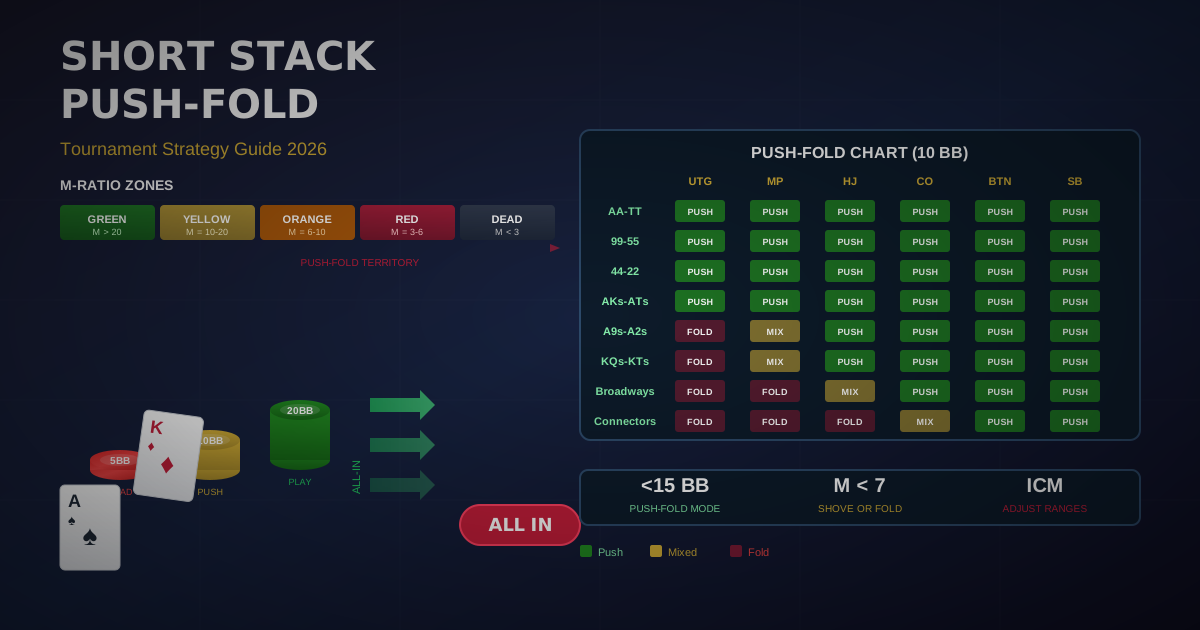
10+ BB: Standard push/fold ranges
7-10 BB: Push slightly wider, especially from late position
5-7 BB: Push any two cards from BTN/SB sometimes
Under 5 BB: Near-any-two-cards shoving (risk of blinding out)
Target Selection:
Preferred: Open-push into other short stacks
Avoid: Pushing into big stacks who call wide
Timing: Push when folding through blinds costs more
Micro Stack Strategy (Under 3 BB)
Desperate times call for desperate measures:
The Math of Micro Stacks:
With 2 BB, blinds in 2 hands:
Option A: Wait for premium → Likely blind out
Option B: Push any reasonable hand → Maybe double up
Push Frequency:
Push almost any two cards from late position
Any ace, any pair, any suited broadway
Connected cards, suited cards
Fold only: Worst offsuit garbage (72o, 83o)
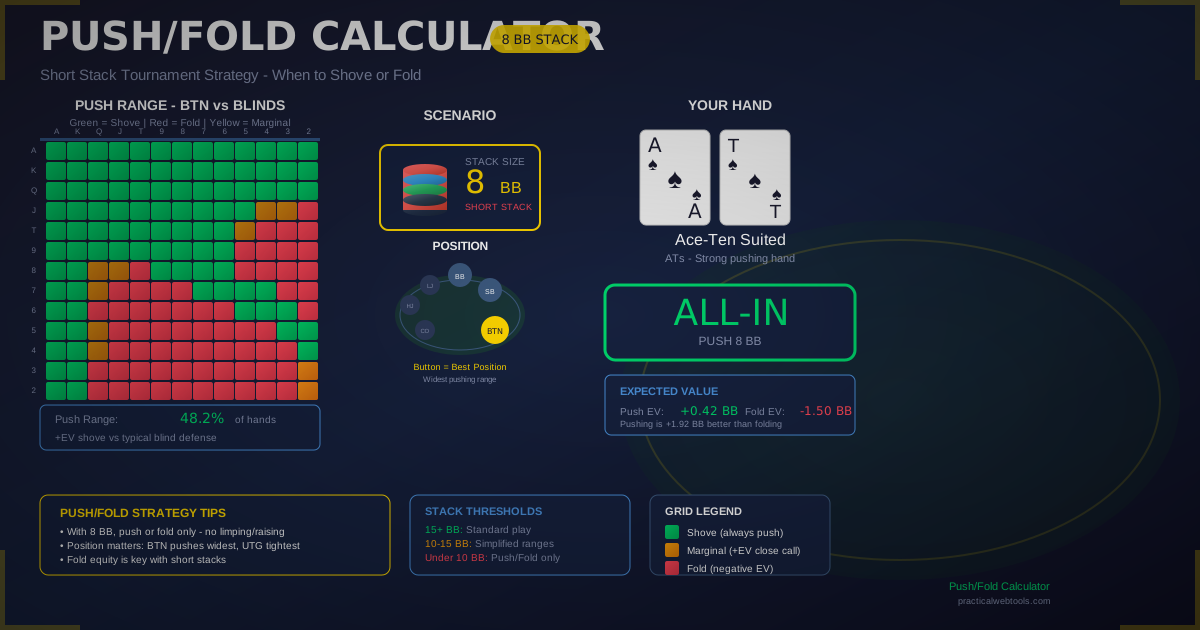
Bubble Push/Fold Charts
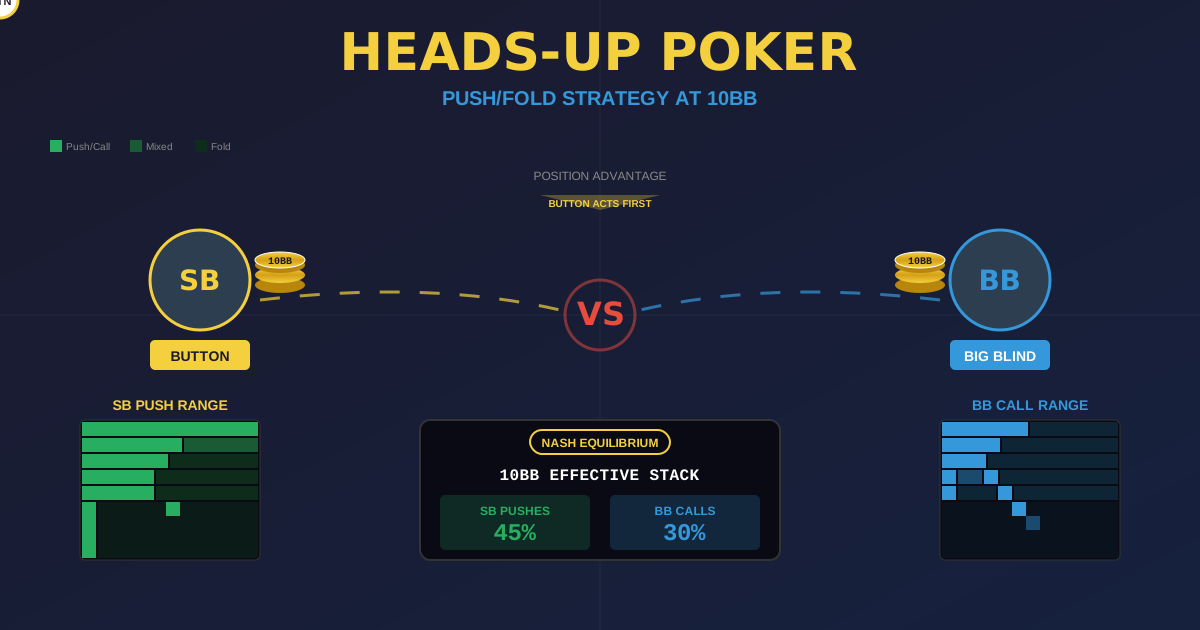
Small Blind Pushing Ranges (On the Bubble)
15 BB - Push Range vs Active BB:
Pairs: 22+
Aces: A2s+, A7o+
Broadway: K9s+, KTo+, QTs+, QJo, JTs
Suited connectors: 65s+
10 BB - Push Range vs Active BB:
Pairs: 22+
Aces: A2s+, A2o+
Broadway: K5s+, K9o+, Q8s+, QTo+, J9s+, JTo, T9s
Suited: 54s+
7 BB - Push Range vs Active BB:
All pairs
All aces
All kings suited
K4o+
Q6s+, Q9o+
J7s+, J9o+
T7s+, T9o
Most suited connectors
Big Blind Calling Ranges (On the Bubble)
Calling Big Stack Push (They can bust you):
Tighter than normal: Top 10-15%
Pairs: 77+
Aces: AJs+, AQo+
Calling Short Stack Push (You have leverage):
Wider: Top 25-35%
Pairs: 22+
Aces: A8s+, ATo+
Broadway: KJs+, KQo, QJs
Real-World Examples
Example 1: Big Stack Steal Attempt
Setup: 28 players, 27 paid. You have 120k (2x average). Folds to you on button. SB has 35k, BB has 45k.
Analysis:
Both blinds are medium stacks with high bubble factors
They cannot afford to call without premium hands
Your leverage is maximum
Range Expansion:
Standard BTN open: ~50%
Bubble BTN open here: ~70%
They fold JJ, AQ type hands that normally continue
Action: Raise to 2.5x with any playable hand. Expect folds 80%+ of time.
Example 2: Medium Stack Defense
Setup: You're BB with 55k (average). Big stack (130k) raises from CO to 2.5x. You have AhJd.
Standard Call: Yes, AJo is a standard defend vs CO open.
Bubble Adjustment:
Big stack can bust you
AJ often dominated by AK, AQ
Even when ahead, you're flipping vs pairs
Postflop is difficult OOP
ICM Calculation:
If you call and lose: $0 equity
If you fold: $340 equity preserved
Risk/reward heavily favors folding
Action: Fold AJo (even though it's normally a defend)
Example 3: Short Stack Desperation Push
Setup: You have 6 BB in the SB. Folds to you. BB has 40k (medium stack). You hold 9c6c.
Analysis:
You: Short stack, must make moves
BB: Medium stack, doesn't want confrontation
96s: Decent suited connector, not terrible
Push EV:
BB folds 55-65% to your shove
When called, you have ~35-40% equity vs calling range
Fold equity + showdown equity = positive EV
Action: Push all-in. The medium stack BB can't call without a premium.
Example 4: Stack Preservation Decision
Setup: You have 80k (above average). A 15k short stack pushes. You're in the BB with QdTd.
Chip EV Analysis:
QTs has ~52% equity vs 15 BB push range
Calling is +cEV
ICM Analysis:
You can wait for short stack to bust elsewhere
Calling risks tournament life on a flip
Other players will call and potentially bust them
Folding preserves your above-average position
Action: Fold QTs. Let other stacks take the risk.
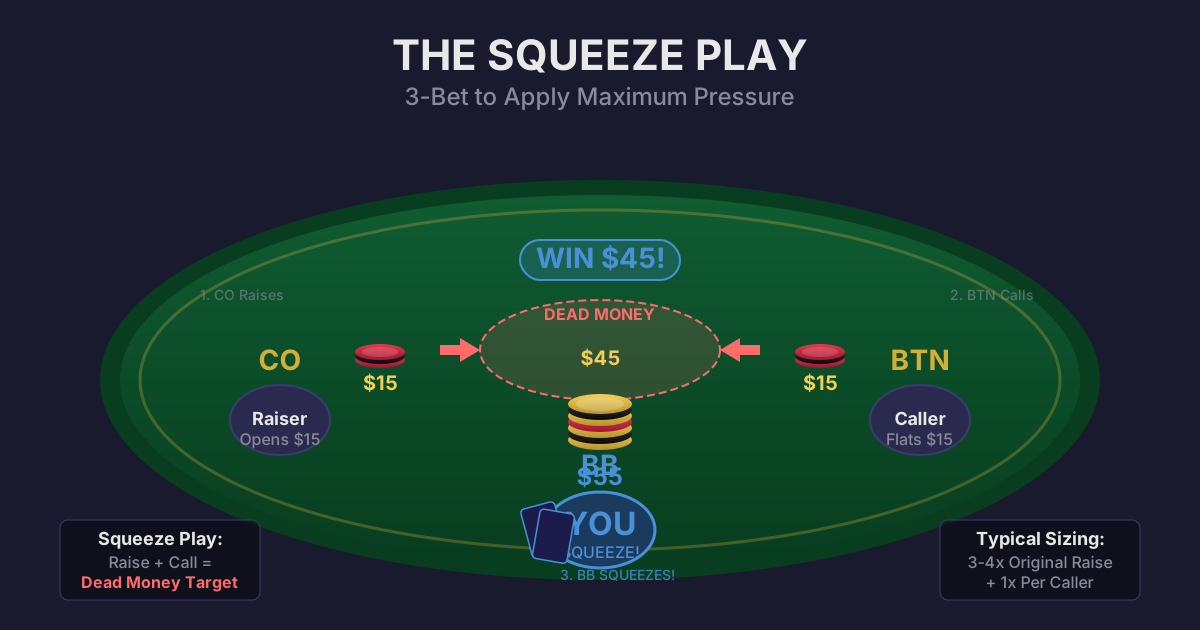
Example 5: The Squeeze Opportunity
Setup: Loose player opens from MP, short stack calls from CO. You have 150k in BB with Ad5d.
Standard Play: Fold or call (A5s not strong enough to 3-bet).
Bubble Adjustment:
MP opened loose = weak range
CO has short stack = trapped between you and opener
Your big stack creates maximum pressure
3-bet creates fold equity on both players
Action: 3-bet to ~25k. Both players will fold a huge portion of their ranges.
Example 6: Navigating the Exact Bubble
Setup: 28 players, 27 pay. You're in the BB with 45k. Short stack (8k) pushes from UTG. Folds to you. You have KhQh.
Analysis:
If you call and lose: You drop to 37k
If short stack busts: You're guaranteed $200 min cash
KQs = ~55% equity vs shoving range
Decision Framework:
Can other players bust the short stack? Yes, 5 more to act
Do you need to gamble? No, you have average stack
Is KQs strong enough to call? Normally yes, but...

ICM pressure: Let BB/SB/others call
They might have AK, AA, etc.
Your $200 guarantee is more valuable than extra chips
Action: Fold KQs and let others take the risk.
Advanced Bubble Concepts
Pay Jump Considerations
Not all min-cashes are equal:
Flat Payout Structure:
27th: $200
20th: $220
10th: $300
The jump from bubble to min-cash is everything
Steep Payout Structure:
27th: $200
20th: $300
10th: $600
Surviving bubble is less critical than laddering
The "ICM Tax"
Every all-in situation on the bubble carries an ICM tax:
ICM Tax = cEV - $EV

Example:
Chip EV of call: +5,000 chips
$ EV of call: -$15 (due to risk of busting)
ICM Tax: $15 cost for taking this +cEV spot
Table Position Dynamics
Your table position matters on the bubble:
Same table as short stacks: Great, you can wait for them to bust
No short stacks at table: Bad, you might bust before them
Big stacks at table: Challenging, they apply pressure to you
Common Mistakes to Avoid
-
Calling Off with Marginal Hands: Even hands that are +cEV can be -$EV on the bubble. The risk of elimination outweighs chip gains.
-
Ignoring Short Stacks: Short stacks provide free ladder opportunities. Don't volunteer to bust; wait for desperate players to make mistakes.
-
Being Too Tight with a Big Stack: Big stacks should exploit leverage. Playing tight wastes your positional advantage.
-
Open-Raising Then Folding: If you open, be prepared to defend against 3-bets. Better to not open than to open/fold repeatedly.
-
Not Adjusting for Payout Structure: Flat payouts require maximum tightness on the bubble. Top-heavy payouts allow more gambling.
-
Playing the Same as Everyone Else: If the entire table tightens, aggressive players profit. Find the correct level of adjustment.
Frequently Asked Questions
Should I ever bust on the bubble intentionally?
No. There's no scenario where busting for $0 is better than securing a min-cash. However, sometimes correct ICM play leads to bustouts.
How much should I tighten my calling range on the bubble?
Generally 15-30% tighter than normal, depending on stack depth. The shorter your stack relative to average, the more you should tighten calling (but widen pushing).
Is it ever correct to fold pocket aces on the bubble?
In extreme ICM spots, yes. With a massive chip lead, facing a short stack all-in where calling risks significant ICM equity, folding AA can be correct (but it's rare).
How do satellite tournaments change bubble strategy?
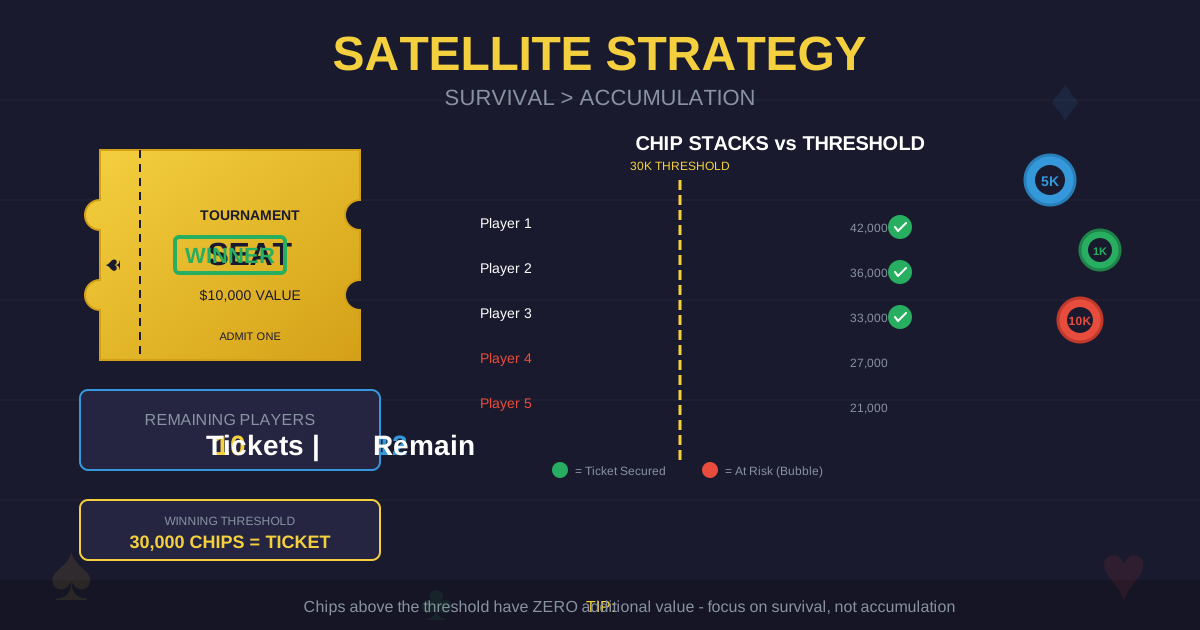
Satellites with flat payouts (top X get the same prize) require extreme tightness. Accumulating chips has zero value; only survival matters.
When does the bubble effectively start?
The bubble mentality starts when 10-15% of remaining players will miss the money. Pressure increases exponentially as the bubble approaches.
Should I attack other big stacks on the bubble?
Generally no. Big stack battles are coin flips where both players lose ICM equity. Attack medium and short stacks instead.
How do I play with exactly average stack on the bubble?
Cautiously. You're not short enough to push desperately nor big enough to bully. Avoid confrontation, pick spots carefully, wait for others to bust.
What if I'm one of multiple short stacks?
Great news. You can wait for other short stacks to bust first. Let them take risks while you play tight and survive.
Pro Tips
- Study ICM calculators to understand dollar equity versus chip equity
- Identify who at your table must gamble (shortest stacks) and who won't (medium stacks)
- Big stacks should attack blinds relentlessly but avoid each other
- When in doubt, fold and survive; min-cashes add up over time
- Pay attention to other tables; short stack bustouts affect your strategy
Related Calculators
- ICM Calculator - Calculate tournament equity
- Push/Fold Calculator - Optimal short stack ranges
- Tournament Equity Calculator - Prize pool distribution
- Bubble Factor Calculator - Quantify bubble pressure
- Final Table ICM Calculator - Final table specific calculations
Conclusion
Tournament bubbles are where poker tournaments are won and lost. Players who understand ICM pressure exploit those who don't, accumulating chips while others make costly mistakes. Our tournament bubble calculator provides the mathematical framework for optimal bubble play, showing you exactly how much to tighten or widen based on stack distributions.
Master bubble play by understanding your position in the field, recognizing leverage opportunities, and making disciplined folds when the math demands it. The min-cash might seem small, but the skills you develop navigating bubbles will serve you throughout your tournament career.