True Odds Calculator: Convert Probability to Fair Betting Odds (2026)
True Odds Calculator: Convert Probability to Fair Betting Odds
True odds represent the mathematically fair price for a given probability. If you believe a team has a 50% chance of winning, the true odds are 2.00 - no more, no less. Our true odds calculator converts any probability percentage into its corresponding fair odds, helping you identify when bookmaker prices offer genuine value.
What Are True Odds?
True odds are the betting odds that exactly reflect the actual probability of an outcome. They represent a "fair" bet where neither side has an advantage. In reality, bookmakers add margin to true odds, creating prices that favor the house. Understanding true odds lets you calculate the fair price and compare it against what's being offered.
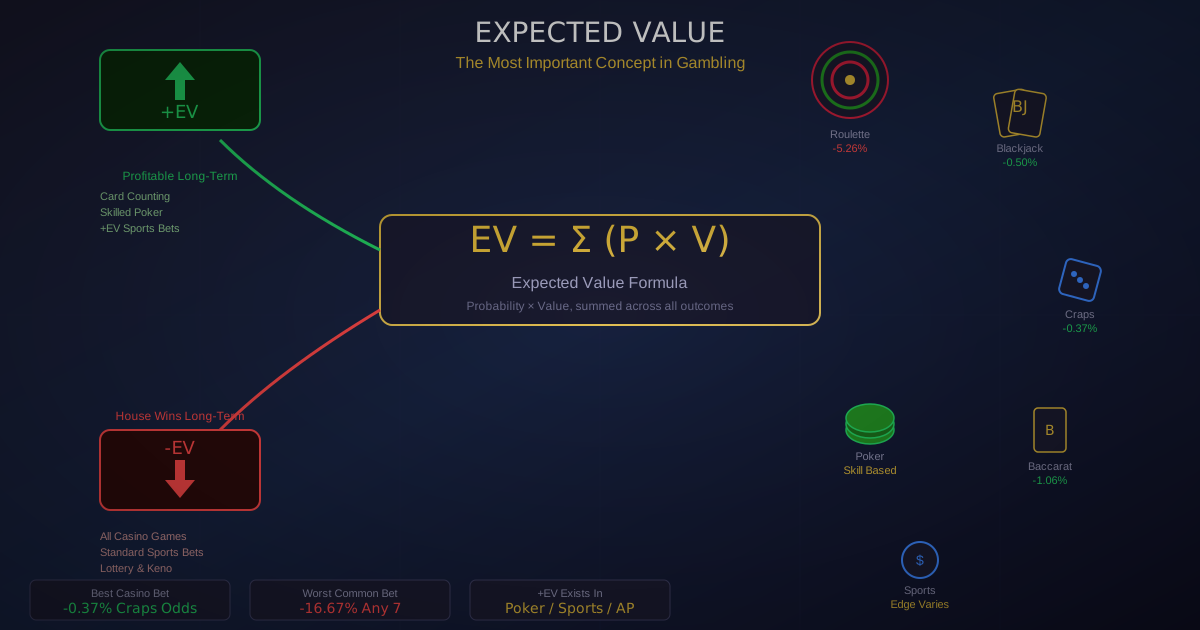
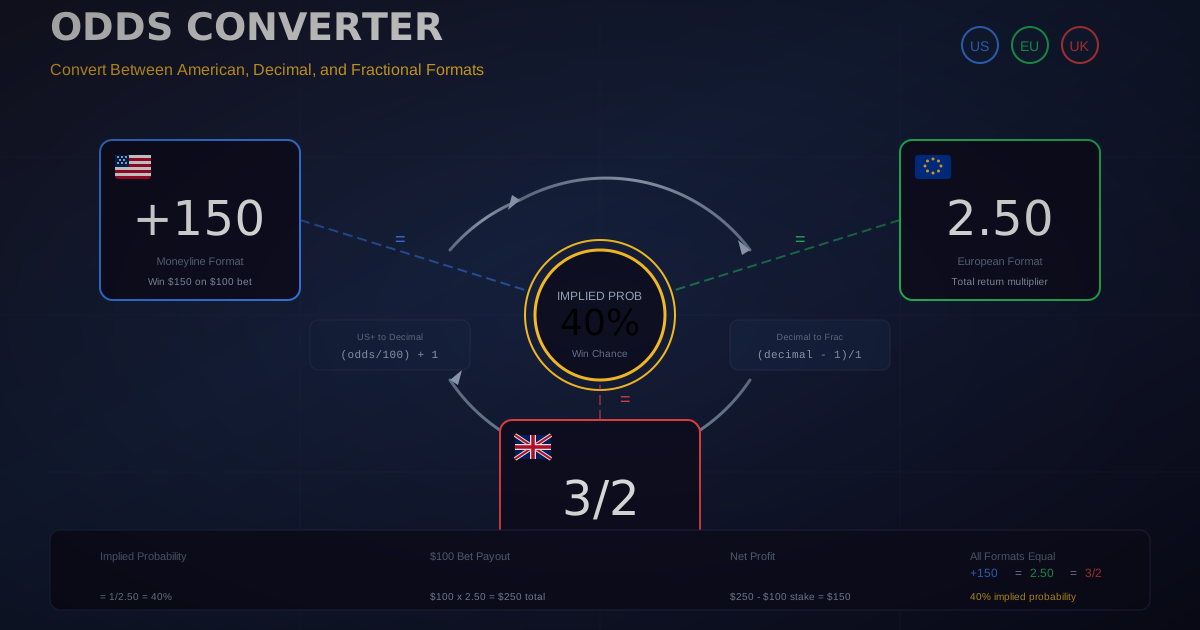
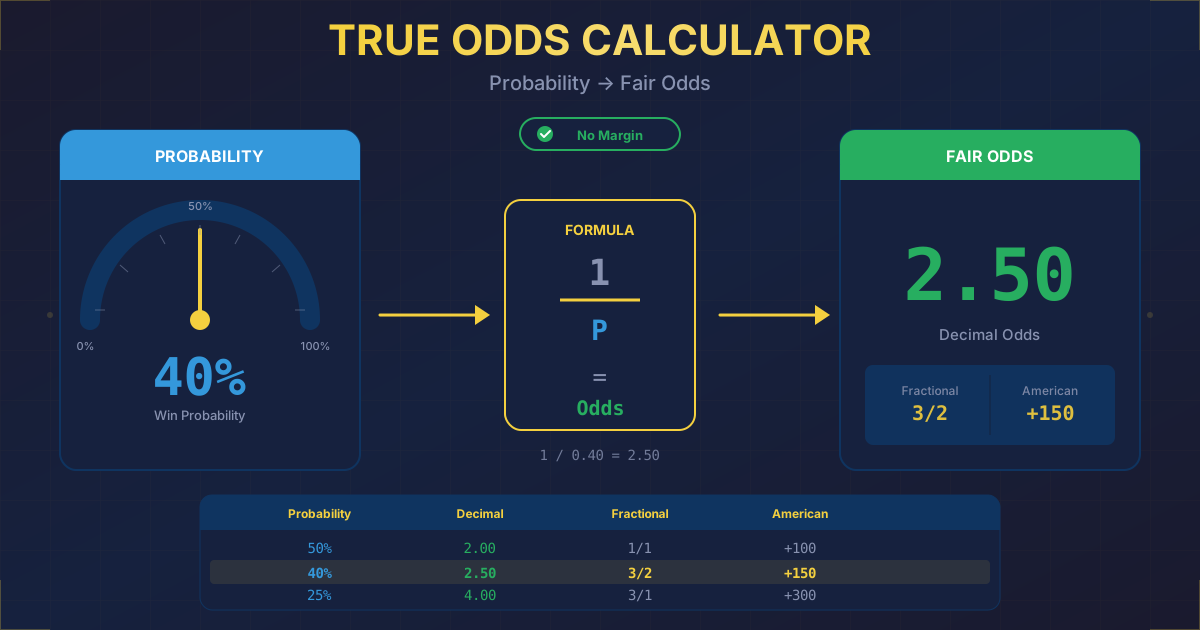
Quick Answer: True odds convert probability directly to odds with no margin. Formula: True Odds = 1 / Probability (as decimal). Example: 40% probability = 1 / 0.40 = 2.50 true odds. At 2.50 odds, a 40% winner is break-even. If bookmaker offers 2.60, you have positive expected value. If they offer 2.40, you have negative expected value. True odds are your benchmark for value.
How to Use Our Calculator
Use the True Odds Calculator →
Step-by-Step Instructions
- Enter Probability: Input your estimated win percentage
- Calculate True Odds: Get the mathematically fair decimal odds
- Compare to Market: Check against bookmaker prices
- Identify Value: See if market odds exceed true odds
- Convert Formats: View in decimal, American, or fractional
Input Fields
| Field | Description | Example |
|---|---|---|
| Probability (%) | Your estimated chance | 45% |
| Output Format | Decimal, American, Fractional | Decimal |
| Bookmaker Odds | Current market price | 2.30 |
| Stake | For return calculation | $100 |
The Mathematics of True Odds
Basic Conversion Formula
Probability to True Odds:

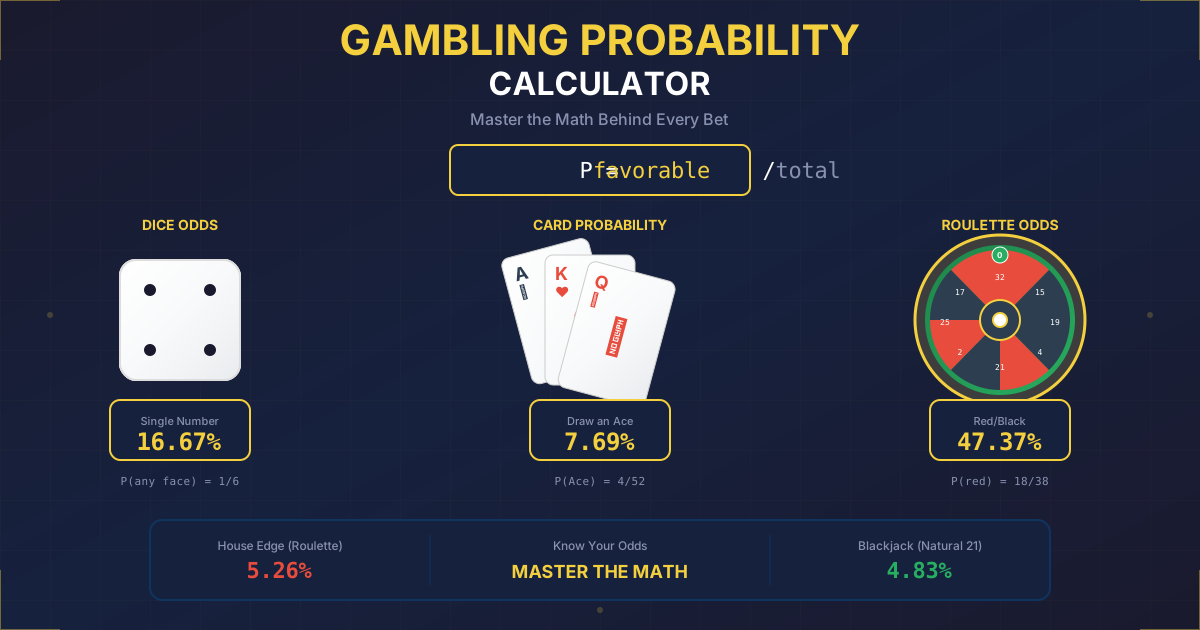
Decimal Odds = 1 / Probability (as decimal)

Examples:
50% chance: 1 / 0.50 = 2.00 decimal
25% chance: 1 / 0.25 = 4.00 decimal
80% chance: 1 / 0.80 = 1.25 decimal
10% chance: 1 / 0.10 = 10.00 decimal
33.33% chance: 1 / 0.3333 = 3.00 decimal

Reverse (Odds to Probability):
Probability = 1 / Decimal Odds

2.00 odds: 1 / 2.00 = 0.50 = 50%
3.50 odds: 1 / 3.50 = 0.286 = 28.6%
Converting Between Formats
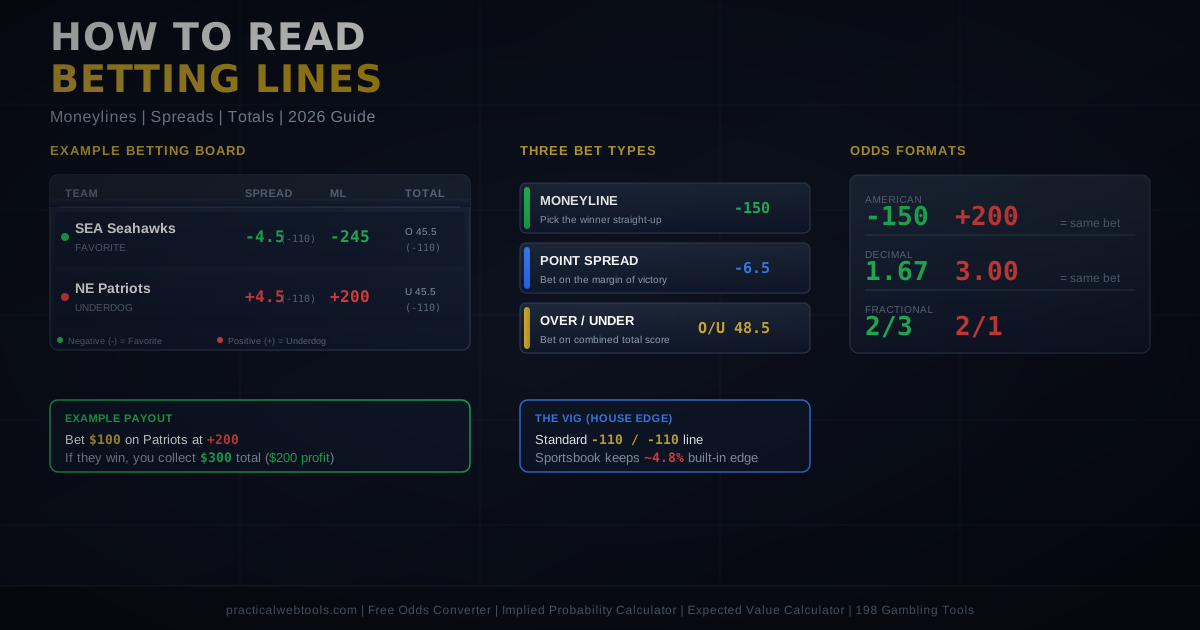
True Odds Format Conversions:

From Decimal to American:
If decimal > 2.00: American = (Decimal - 1) × 100
If decimal < 2.00: American = -100 / (Decimal - 1)

Example (40% = 2.50 decimal):
American = (2.50 - 1) × 100 = +150

Example (70% = 1.43 decimal):
American = -100 / (1.43 - 1) = -100 / 0.43 = -233

From Decimal to Fractional:
Fractional = (Decimal - 1) / 1

Example (25% = 4.00 decimal):
Fractional = (4.00 - 1) / 1 = 3/1

Example (60% = 1.67 decimal):
Fractional = 0.67/1 ≈ 2/3
Common Probability to Odds Reference
Quick Reference Table
Probability  |  True Odds  |  American  |  Fractional
-------------|-------------|------------|-------------
    5%       |    20.00    |   +1900    |    19/1
   10%       |    10.00    |   +900     |    9/1
   15%       |     6.67    |   +567     |    17/3
   20%       |     5.00    |   +400     |    4/1
   25%       |     4.00    |   +300     |    3/1
   30%       |     3.33    |   +233     |    7/3
   33.33%    |     3.00    |   +200     |    2/1
   40%       |     2.50    |   +150     |    3/2
   50%       |     2.00    |   +100     |    1/1
   60%       |     1.67    |   -150     |    2/3
   66.67%    |     1.50    |   -200     |    1/2
   70%       |     1.43    |   -233     |    3/7
   75%       |     1.33    |   -300     |    1/3
   80%       |     1.25    |   -400     |    1/4
   90%       |     1.11    |   -900     |    1/9
Odds Ranges by Probability
Longshots (5-20%):
Very unlikely outcomes
True odds: 5.00 - 20.00
High variance, high potential reward

Underdogs (20-40%):
Below average chance
True odds: 2.50 - 5.00
Moderate risk/reward balance

Coin Flip (40-60%):
Roughly even matchups
True odds: 1.67 - 2.50
Standard sports betting territory

Favorites (60-80%):
Above average chance
True odds: 1.25 - 1.67
Lower risk, lower reward

Heavy Favorites (80%+):
Very likely outcomes
True odds: 1.00 - 1.25
Low reward, still have risk
Identifying Value with True Odds
The Value Betting Concept
Value Exists When:

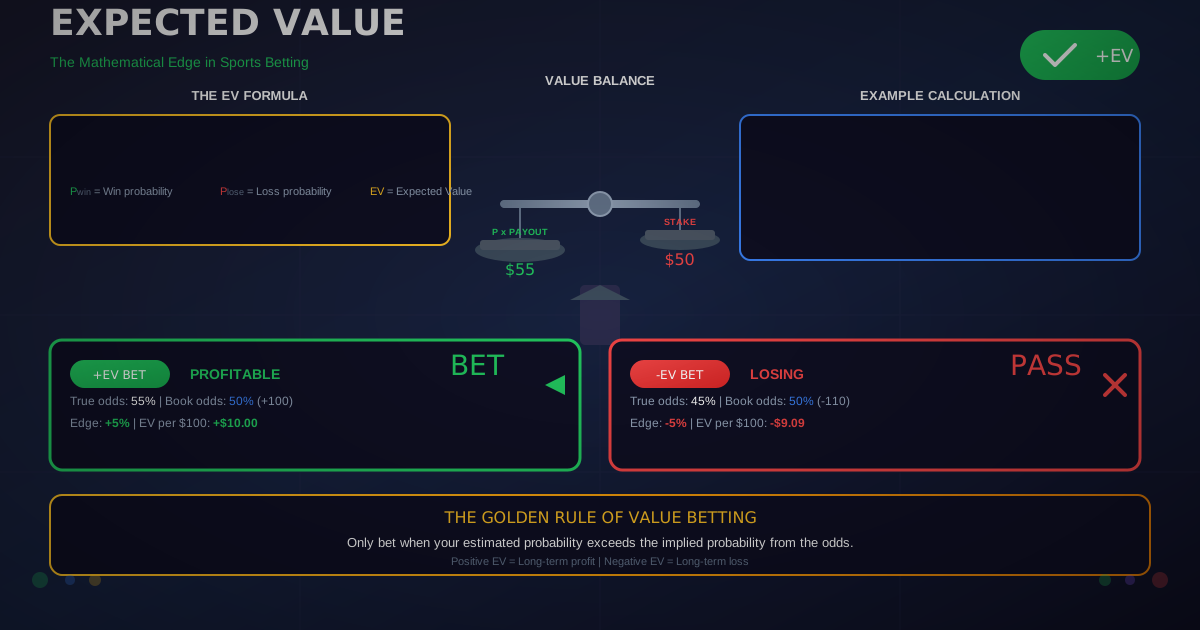
Bookmaker Odds > True Odds = Positive Value
Bookmaker Odds = True Odds = Break Even
Bookmaker Odds < True Odds = Negative Value

Example:
Your probability estimate: 45%
True odds: 1 / 0.45 = 2.22

Bookmaker offers: 2.40
Difference: 2.40 - 2.22 = +0.18 odds
Value: Positive (bet has expected profit)

Bookmaker offers: 2.10
Difference: 2.10 - 2.22 = -0.12 odds
Value: Negative (bet has expected loss)
Calculating Edge from True Odds
Edge Formula:

Edge = (Bookmaker Odds / True Odds) - 1

Or equivalently:
Edge = (Your Probability × Bookmaker Odds) - 1

Example:
True probability: 40%
True odds: 2.50
Bookmaker odds: 2.80

Edge = (2.80 / 2.50) - 1 = 0.12 = 12% edge

Or: (0.40 × 2.80) - 1 = 1.12 - 1 = 12% edge

A 12% edge means you expect $12 profit
per $100 wagered long-term
Real-World Examples
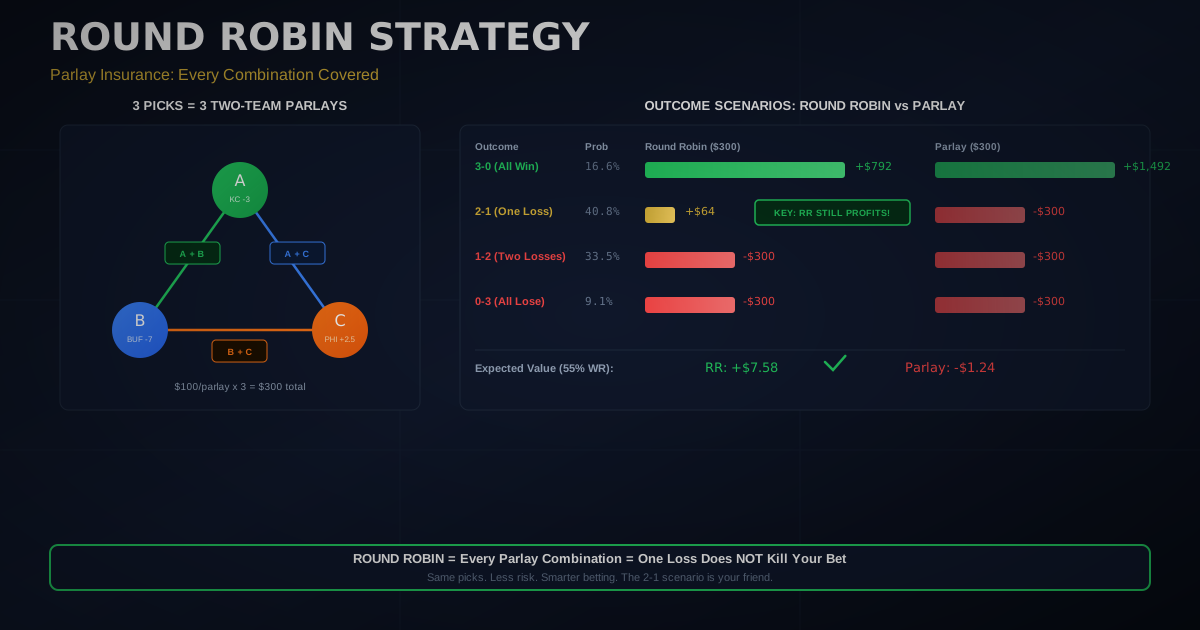
Example 1: NFL Point Spread Analysis
Situation:
Game: Kansas City vs Buffalo
Your analysis: KC has 55% chance of covering
Bookmaker odds: -110 (1.91 decimal) on KC

Question: Is there value?
Calculation:
Step 1: Calculate true odds from your probability
True odds = 1 / 0.55 = 1.82 decimal

Step 2: Compare to bookmaker
Bookmaker: 1.91 decimal
True odds: 1.82 decimal

Step 3: Calculate edge
Edge = (1.91 / 1.82) - 1 = 0.049 = 4.9%
Result:
Your true odds: 1.82
Bookmaker offers: 1.91

This is POSITIVE value (+4.9% edge)
The bookmaker is offering better odds
than your probability suggests fair

Recommendation: This is a value bet
Example 2: Soccer Match Outcome
Situation:
Match: Liverpool vs Chelsea
Your analysis:
- Liverpool wins: 48%
- Draw: 27%
- Chelsea wins: 25%

Bookmaker odds:
- Liverpool: 2.10
- Draw: 3.40
- Chelsea: 3.60
Calculation:
True Odds from your probabilities:
Liverpool: 1 / 0.48 = 2.08
Draw: 1 / 0.27 = 3.70
Chelsea: 1 / 0.25 = 4.00

Comparison:
Liverpool: Book 2.10 vs True 2.08 → Small value
Draw: Book 3.40 vs True 3.70 → Negative value
Chelsea: Book 3.60 vs True 4.00 → Negative value

Edges:
Liverpool: (2.10 / 2.08) - 1 = +1.0%
Draw: (3.40 / 3.70) - 1 = -8.1%
Chelsea: (3.60 / 4.00) - 1 = -10.0%
Result:
Only Liverpool offers slight value (+1%)
Draw and Chelsea are both negative value

With only 1% edge on Liverpool:
May not be worth betting (thin margin)
Edge needs to exceed commission/variance
Example 3: Horse Racing Longshot
Situation:
Horse: 20/1 on the morning line (21.00 decimal)
Your handicapping: 8% chance to win
Calculation:
Your true odds: 1 / 0.08 = 12.50 decimal

Bookmaker offers: 21.00 decimal

Edge = (21.00 / 12.50) - 1 = 0.68 = 68% edge!

Wait - is 8% realistic?
Result:
If your 8% probability is accurate:
68% edge is enormous value

Reality check:
- Morning line suggests ~4.8% chance
- Your 8% is nearly double
- Are you THAT much smarter than odds makers?

True odds analysis reveals:
You're claiming huge edge
Either you have rare insight
Or your probability estimate is optimistic

Proceed with caution on large edges
They require very accurate probability
Example 4: Tennis Match
Situation:
Match: Djokovic vs Rising Star
Bookmaker: Djokovic at 1.30 (implied 77%)
Your model: Djokovic has 85% chance
Calculation:
Your true odds: 1 / 0.85 = 1.18 decimal
Bookmaker offers: 1.30 decimal

Edge = (1.30 / 1.18) - 1 = 0.102 = 10.2%

Expected Value per $100:
EV = (0.85 × $30) - (0.15 × $100)
EV = $25.50 - $15.00 = $10.50 profit
Result:
Your true odds (1.18) say Djokovic is more likely
than bookmaker implies (1.30 = 77%)

10.2% edge is substantial but:
- Is your 85% accurate?
- Bookmakers have injury info, form data
- Rising stars upset favorites sometimes

If confident in 85%, this is value
Sources of Probability Estimates
Statistical Models
Build Probabilities From:

1. Historical Win Rates
   Team A: 60% home win rate
   Adjusted for opponent: 55%

2. Rating Systems
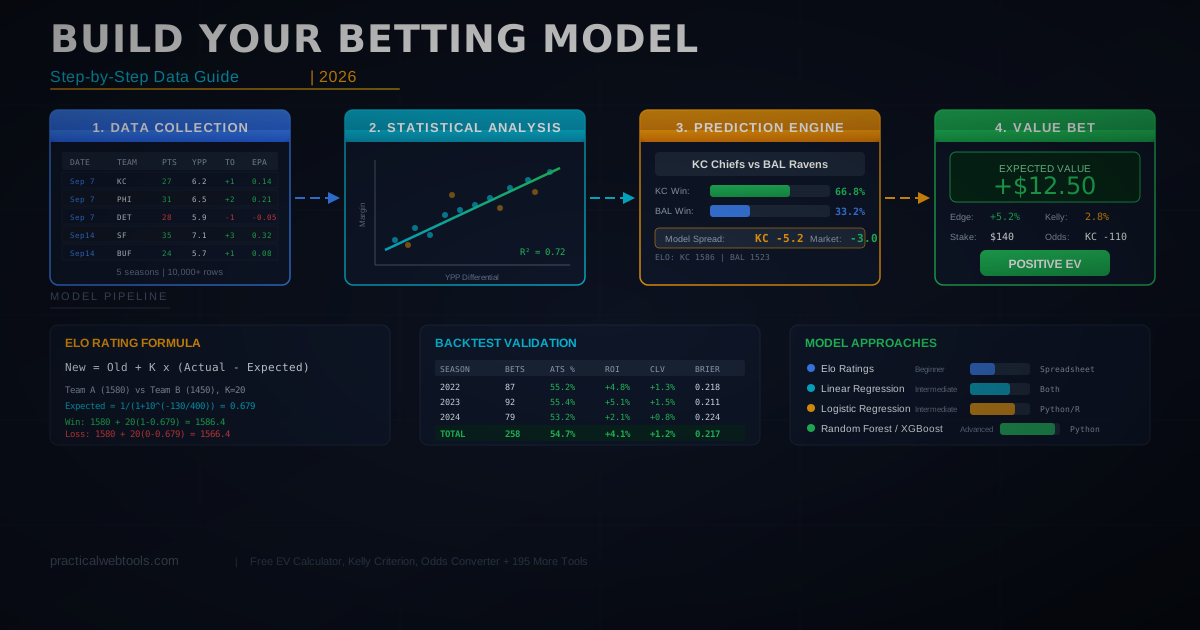
   Elo/Glicko ratings
   Convert to win expectancy

3. Advanced Metrics
   Expected goals (xG) for soccer
   Pythagorean expectation for baseball

4. Head-to-Head Records
   Previous meetings adjustments

5. Market Consensus
   Average of multiple bookmaker implied odds
   (Remove vig to get market probability)
Subjective Adjustments
Modify Base Probabilities For:

Injuries/Absences:
Key player out = ±3-10% adjustment

Weather:
Favors certain play styles
Wind, rain, extreme temperatures

Motivation:
Playoff implications
Rivalry games
Rested vs fatigued

Recent Form:
Hot/cold streaks
Momentum considerations

Home/Away:
Different performance levels
Travel factors
Common Mistakes to Avoid
-
Confusing True Odds with Bookmaker Odds: Bookmaker odds include margin. True odds are margin-free. Always calculate true odds from YOUR probability, not from other bookmaker prices.
-
Overconfidence in Probability Estimates: If you believe something has 70% chance but market says 50%, question your analysis before assuming huge value exists.
-
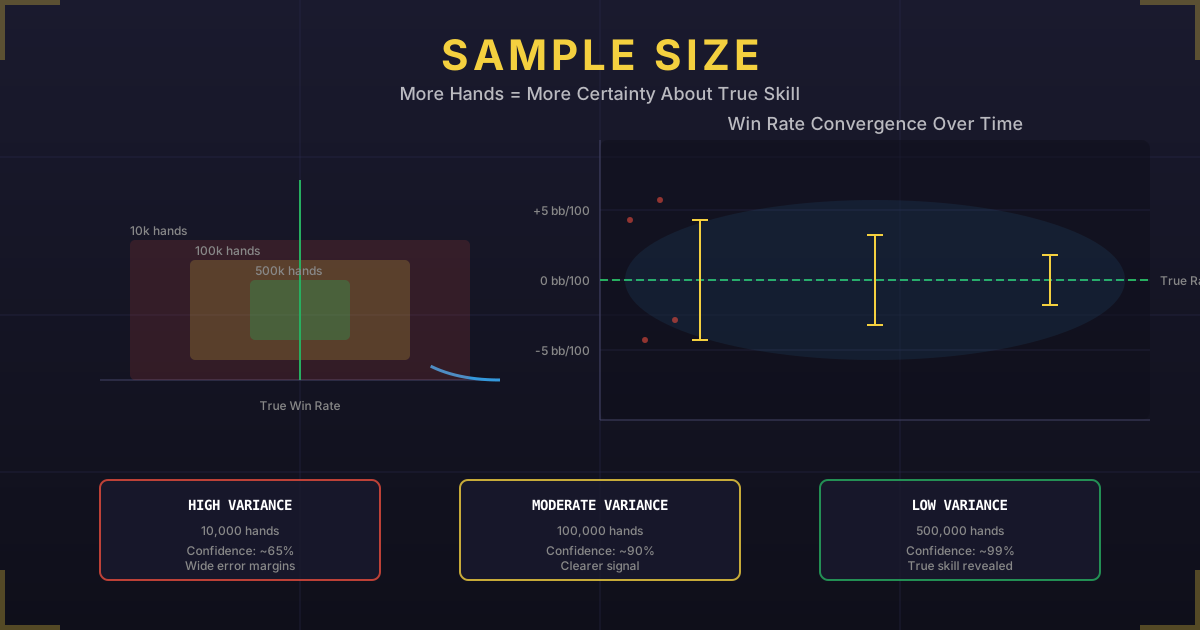
Ignoring Sample Size: Probabilities from small samples are unreliable. "Team is 3-0 in last 3 games" doesn't mean 100% win rate going forward.
-
Forgetting Probabilities Must Sum to 100%: In a three-way market, if your probabilities total 115%, your estimates are inconsistent.
-
Not Updating Probabilities: Information changes. Yesterday's 40% might be today's 50% after injury news. True odds should reflect current information.
-
Treating True Odds as Guaranteed Returns: True odds show expected break-even, not guaranteed results. Variance means short-term results differ from expectation.
Frequently Asked Questions
What's the difference between true odds and implied odds?
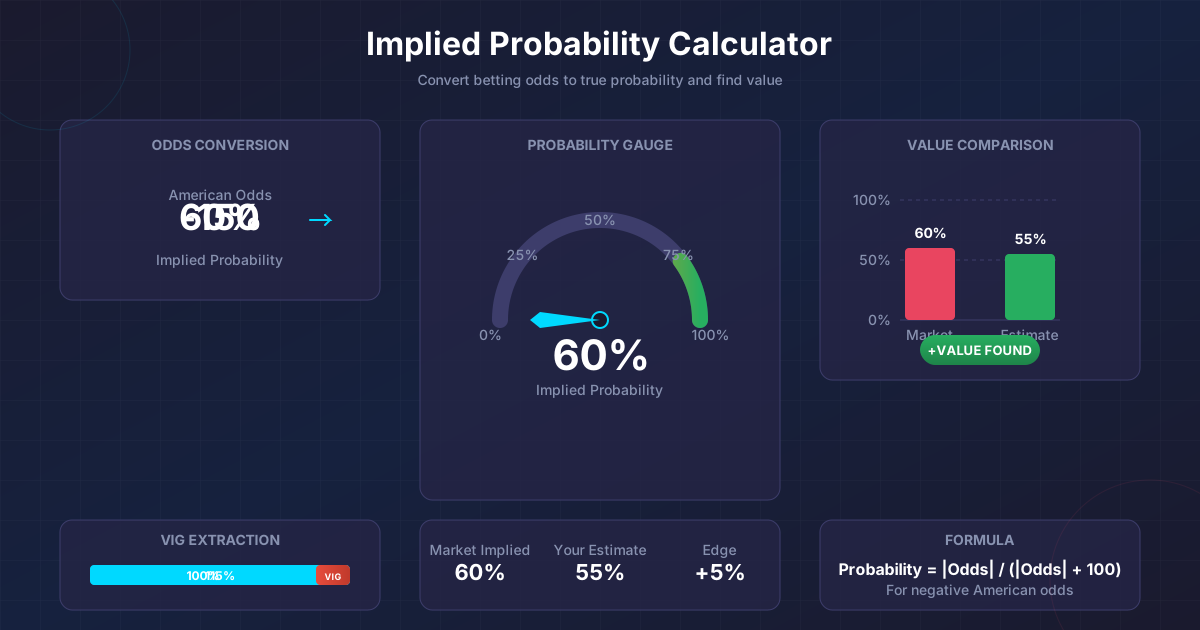
True odds come from your own probability estimate. Implied odds come from converting bookmaker prices to probability (including their margin). True odds are what you think is fair; implied odds are what the bookmaker thinks.
How accurate do my probabilities need to be?
For profitable betting, your probabilities need to be more accurate than the market on average. Even 1-2% better accuracy can create positive expected value over thousands of bets.
Can true odds guarantee profit?
No. True odds show the mathematically fair price, but outcomes are still probabilistic. A 60% favorite loses 40% of the time. True odds ensure long-term break-even, not short-term wins.
How do bookmakers set their odds vs true odds?
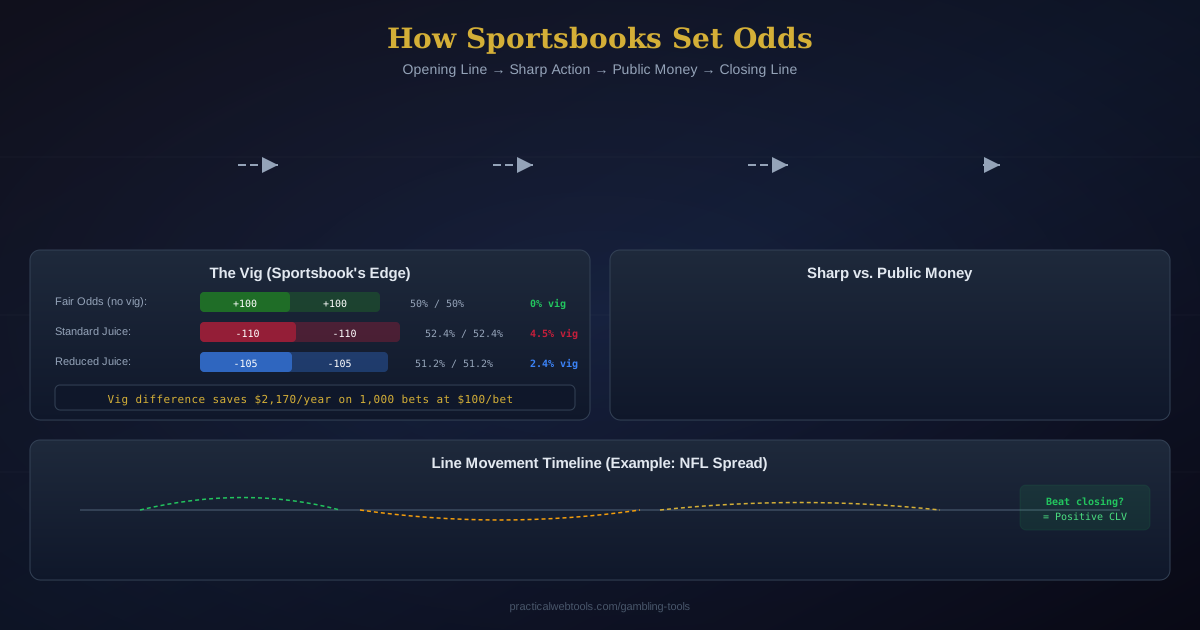
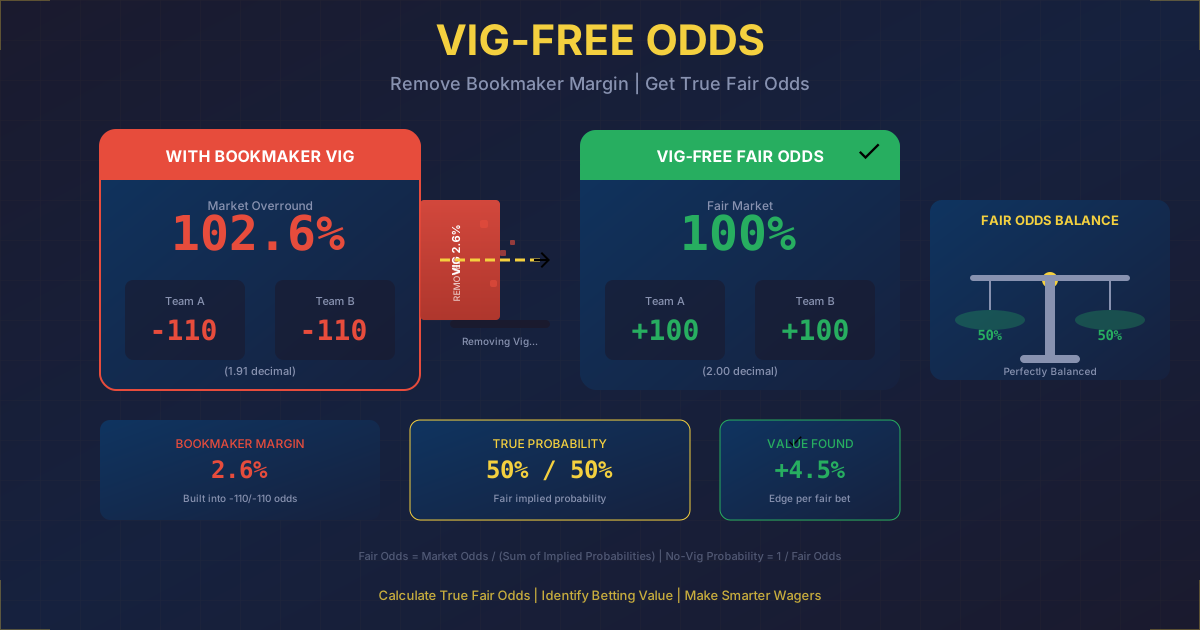
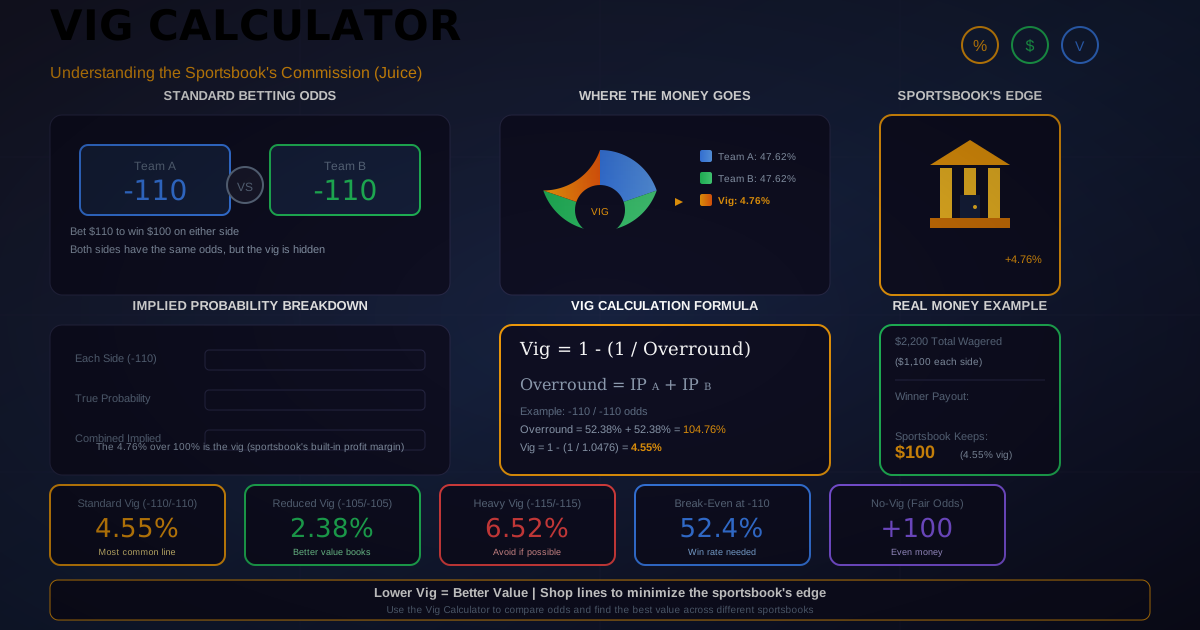
Bookmakers estimate true odds, then add margin (typically 2-10%). If true odds are 2.00, they might offer 1.91. The 4.5% difference is their profit margin.
Should I only bet when I find value vs true odds?
Ideally, yes. Betting where bookmaker odds exceed your true odds is the foundation of profitable betting. Betting without value is expected to lose long-term.
How do I calculate true odds for multiple outcomes?
Calculate each outcome's true odds separately: True Odds = 1 / Probability. Ensure your probabilities sum to 100% for consistency.
Pro Tips
- Create a spreadsheet that instantly converts your probabilities to true odds and compares them to multiple bookmaker prices
- Trust the market for close calls - if your probability differs from market by only 1-2%, you may not have real edge
- Factor in your prediction accuracy over time - if you historically overestimate favorites, adjust accordingly
- Use true odds as a filter, not a signal - meet a minimum edge threshold (e.g., 3%+) before betting
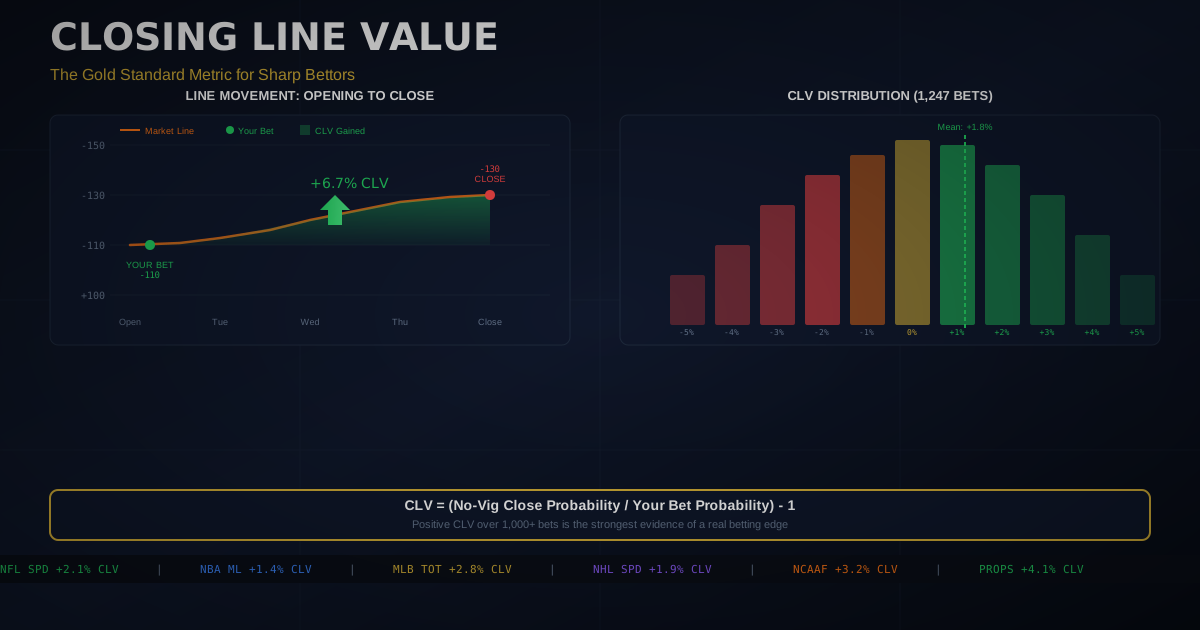
- Remember that closing line true odds are generally the most accurate - compare your early bets to closing to measure skill
Related Calculators
- Fair Odds Calculator - Remove bookmaker margin
- Expected Value Calculator - Calculate bet profitability
- Implied Probability Calculator - Odds to probability
- Odds Converter - Convert between formats
- Kelly Criterion Calculator - Optimal bet sizing
Conclusion
True odds are your benchmark for every bet. By converting your probability estimates into fair odds, you create an objective standard for comparing bookmaker prices. When bookmaker odds exceed your true odds, you've found value. When they fall short, you've identified a bet to avoid.
The challenge isn't the math - it's developing accurate probability estimates. Our calculator handles the conversion; your job is honest assessment of what you actually know versus what you think you know. Master that skill, and true odds become your roadmap to profitable betting.