Video Poker Double Bonus Calculator: Premium Four-of-a-Kind Strategy (2026)
Video Poker Double Bonus Calculator: Chasing Premium Quads
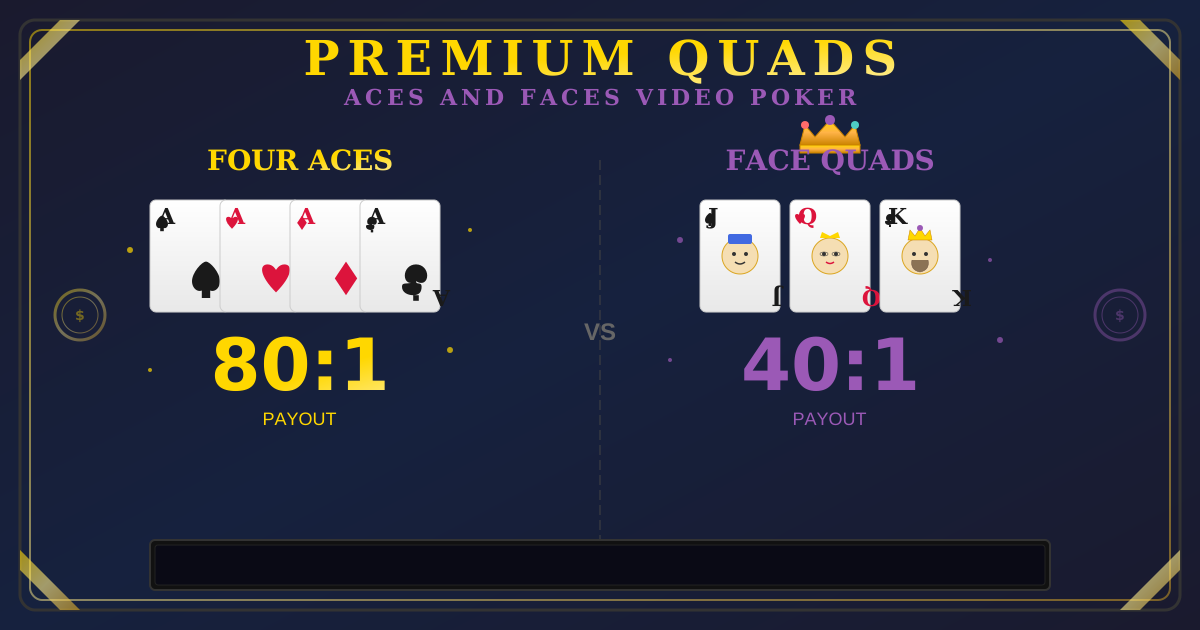
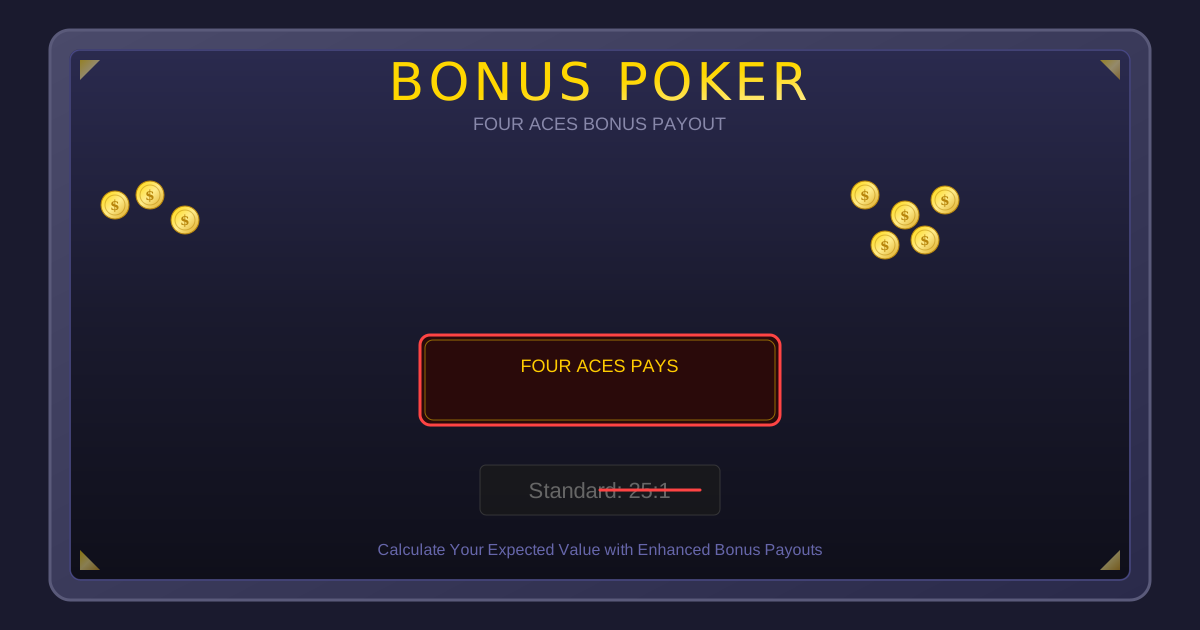
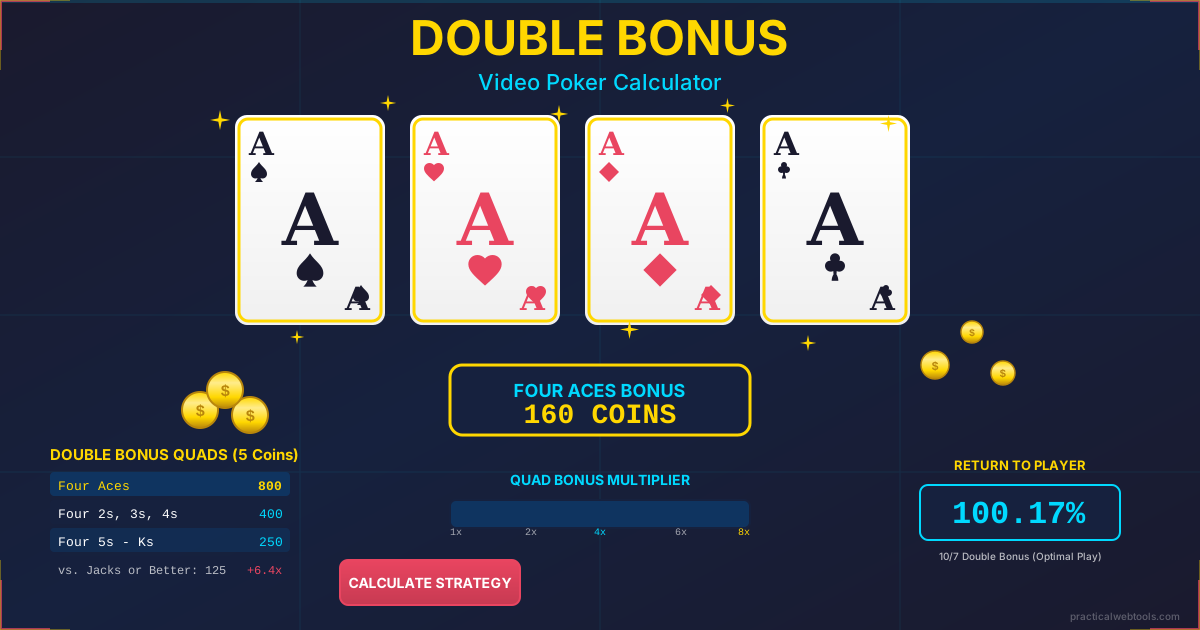
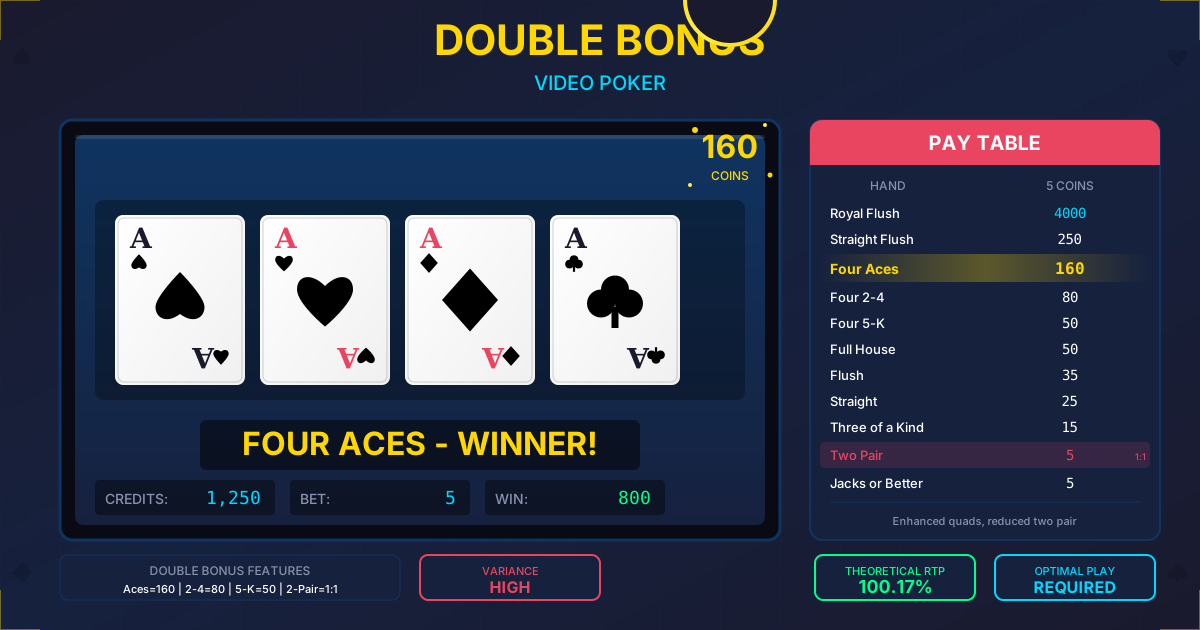
Double Bonus Poker enhances four-of-a-kind payouts dramatically—aces pay 160, twos through fours pay 80. Our calculator shows strategy adjustments needed to capture the theoretical 100.17% return on full-pay machines.
What Is Double Bonus Poker?
Double Bonus is a Jacks or Better variant with boosted four-of-a-kind payouts. The trade-off: two pair drops from 2x to 1x (push). This creates higher variance but better returns with perfect play—full-pay 10/7 Double Bonus returns 100.17%.
Quick Answer: Double Bonus quad payouts: Aces = 160, 2-4 = 80, 5-K = 50. Two pair pays only 1:1 (push). Full-pay version: 10/7 (10 for full house, 7 for flush). Theoretical return: 100.17% with perfect strategy. Higher variance than Jacks or Better. Strategy differs significantly—hold for quads more often.
How to Use Our Calculator
Use the Double Bonus Calculator →
Enter your hand to see optimal holds and expected value.
Step-by-Step Instructions
-
Enter Your Five Cards: Initial deal
-
View Hold Recommendations: Which to keep
-
See Expected Values: Each option EV
-
Check Strategy Deviation: From Jacks or Better
-
Calculate Return: Overall RTP
Input Fields Explained
| Field | Description | Example |
|---|---|---|
| Your Hand | Five dealt cards | Ah Ad 4s 8c Jh |
| Recommended Hold | Optimal keep | Ah Ad |
| Hold EV | Expected value | 0.84 |
| Alternative | Second best | Hold A only |
| Alternative EV | Comparison | 0.51 |
| Pay Table | Version played | 10/7 |
Double Bonus Pay Table
Full-Pay 10/7 Double Bonus
Royal Flush:        800 (max coins)
Straight Flush:      50
Four Aces:          160
Four 2s-4s:          80
Four 5s-Ks:          50
Full House:          10
Flush:                7
Straight:             5
Three of a Kind:      3
Two Pair:             1
Jacks or Better:      1
Key Differences from JoB
Jacks or Better:
Two Pair: 2
Four of a Kind: 25 (all)

Double Bonus:
Two Pair: 1 (push)
Four Aces: 160
Four 2-4: 80
Four 5-K: 50

Trade-off: Two pair value → Quad bonuses
Strategy Adjustments
Holding for Aces
Jacks or Better:
Pair of aces = good
But don't break much for it

Double Bonus:
Aces are gold
160 payout changes everything

Hold: A-A over many draws
Chase: Single ace more often
Reason: Quad aces worth $400 (max bet)
Holding for Low Quads
Pair of 2s, 3s, or 4s:
Quad pays 80 (not 25)
Worth chasing harder

Strategy shift:
Hold low pairs over inside straights
Low pair > 4 to a flush (sometimes)
Two Pair Devaluation
JoB: Two pair pays 2x
DB: Two pair pays 1x (push)

Impact:
Less incentive to chase two pair
Often hold one pair, not both
Particularly with pair of aces
Example Strategy Shifts
Hand: Ah Ad Jc Tc 9c

Jacks or Better:
Hold A-A-J-T-9 (flush draw)
Four to flush > pair

Double Bonus:
Hold A-A only
Quad aces worth 160
Flush only pays 7
Aces worth the chase
EV Calculations
Why 10/7 Matters
Full house: 10 vs 9 = +1
Flush: 7 vs 6 = +1

That +2 per hand matters:
9/6 Double Bonus: 97.81%
9/7 Double Bonus: 99.11%
10/7 Double Bonus: 100.17%

Find 10/7 machines
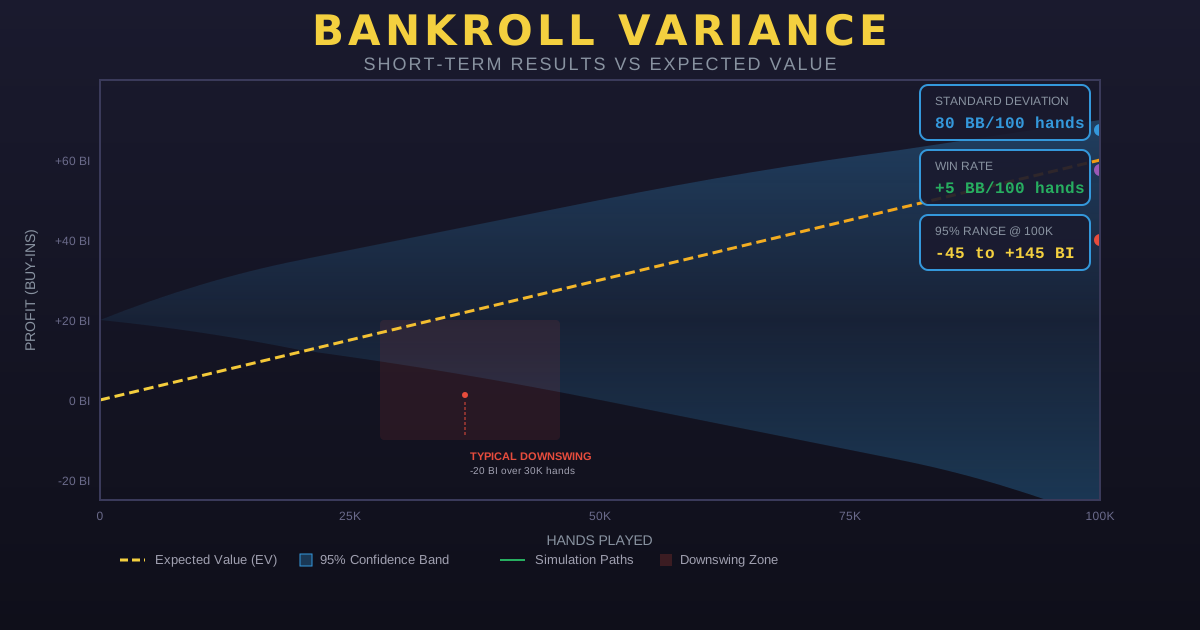
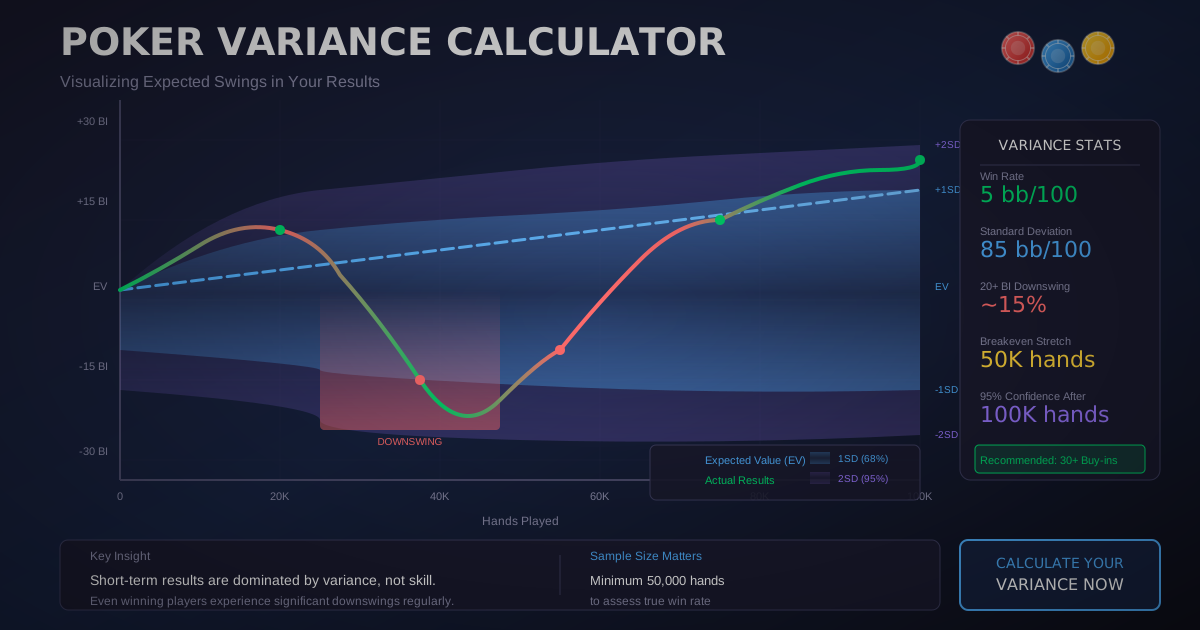
Variance Considerations
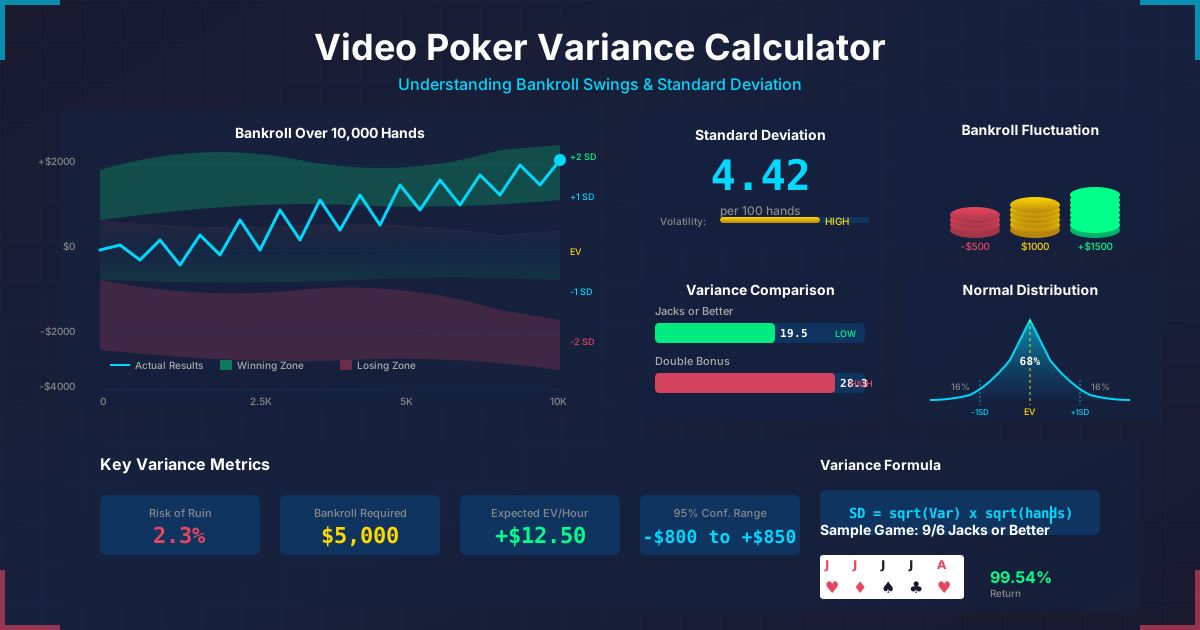
Jacks or Better variance: 19.51
Double Bonus variance: 28.26

45% higher variance:
Longer losing streaks
Bigger winning sessions
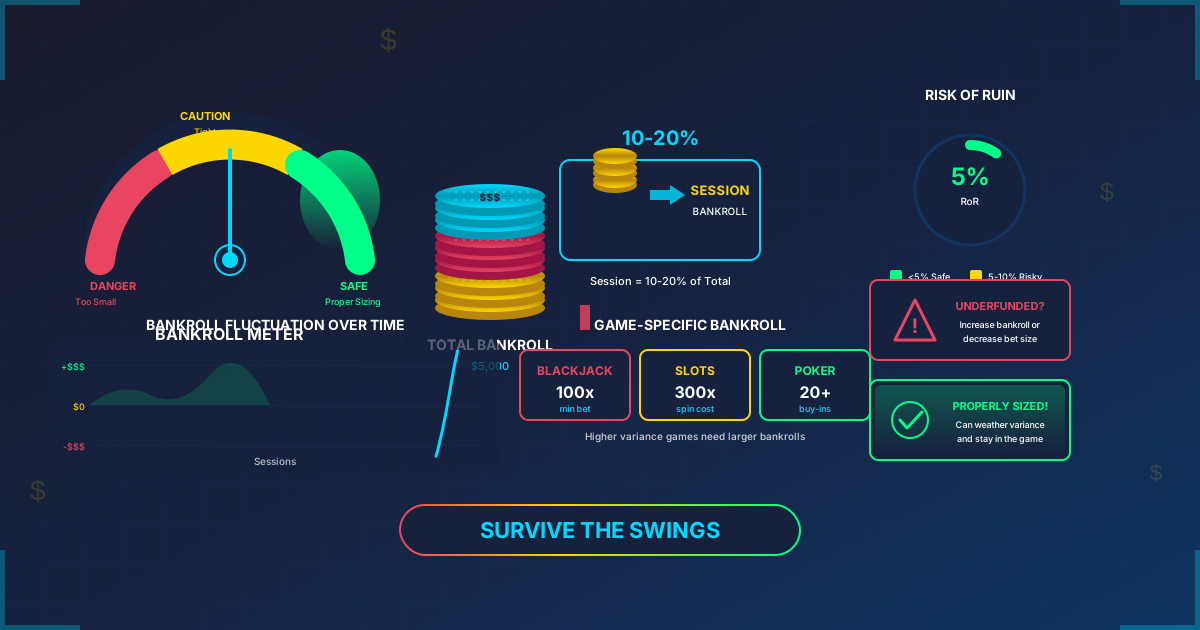
Need larger bankroll

Quad bonuses add variance
Real-World Examples
Example 1: Ace-Heavy Decision
Hand: Ah Ad Kc Qc Jc
Jacks or Better play:
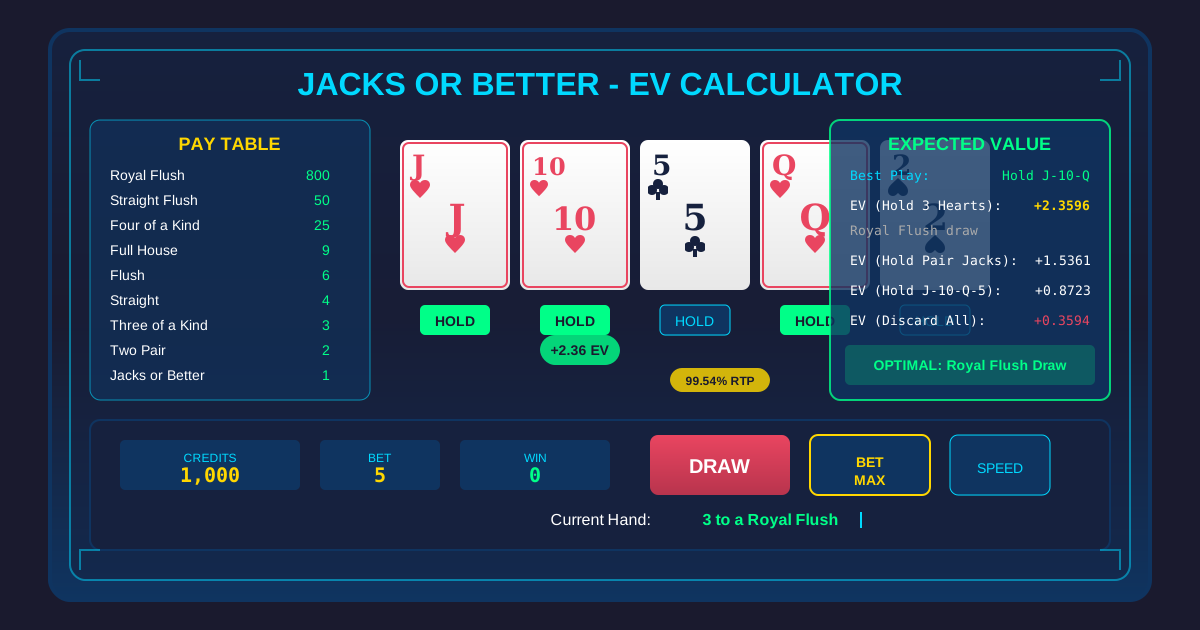
Hold 4 to royal: K-Q-J + A kicker
Discard pair of aces
Royal draw worth more
Double Bonus play:
Hold aces: A-A
Quad aces = 160
Royal = 800 but much rarer

EV(A-A): 7.68
EV(4 to royal): 3.40

Keep the aces!
Different game, different strategy
Example 2: Low Pair vs Overcards
Hand: 3s 3d Kh Qc 9s
JoB play:
Two high cards (K-Q) may beat pair
EV close, pair slightly better
Double Bonus play:
Pair of 3s clearly better
Quad 3s pays 80
K-Q has no bonus potential

Hold: 3-3
Chase the 80-unit quad
Example 3: Two Pair Situation
Hand: Ah Ad 7c 7d 9s
JoB play:
Hold both pairs
Two pair pays 2
Small chance of full house
Double Bonus play:
Hold aces only!
Two pair only pays 1 (push)
Full house pays 10
Quad aces pays 160

EV(A-A-7-7): 2.60
EV(A-A only): 7.68

Never hold two pair when one is aces
Example 4: Four to a Flush vs Pair
Hand: 4c 4d 8c Tc Kc
JoB play:
Four to flush: Draw 1
EV higher than low pair
Double Bonus play:
Close decision!
Pair of 4s leads to 80-unit quads
Four to flush leads to 7-unit payoff

EV(4-4): 2.51
EV(flush draw): 2.83

Still hold flush draw
But much closer than JoB
Optimal Strategy Charts
Pre-Flop Hand Rankings
Top holds in Double Bonus:

1. Royal flush (800)
2. Straight flush (50)
3. Four aces (160)
4. Four 2-4 (80)
5. Four 5-K (50)
6. Full house (10)
7. Flush (7)
8. Three aces (holds)
9. Straight (5)
10. Three 2-4 (holds)
Key Strategy Points
Always hold:
- Three of a kind or better
- Four to a royal
- Pair of aces

Usually hold:
- Four to a straight flush
- Pair of 2s, 3s, or 4s
- Two pair (unless one is aces)

Compare carefully:
- Low pair vs 4 to flush
- Suited high cards vs pair
- Three to royal vs pair
Finding Double Bonus Machines
Pay Table Identification
Check the full house/flush:
10/7: 100.17% return ✓
9/7: 99.11% return (acceptable)
9/6: 97.81% return (avoid)
8/5: 94.19% return (terrible)

Also verify quad payouts:
Aces must be 160
2-4 must be 80
5-K must be 50
Location Tips
Best locations:
- Las Vegas locals casinos
- Regional casinos
- Some online casinos

Often found at:
- Station Casinos properties
- Older strip properties
- Native American casinos
Common Mistakes
1. Playing JoB Strategy
Mistake: Use Jacks or Better decisions Problem: Missing quad bonus value Fix: Learn Double Bonus specific strategy
2. Holding Two Pair with Aces
Mistake: Keep A-A-K-K Problem: Two pair only pushes Fix: Hold aces only, chase quads
3. Ignoring Pay Table
Mistake: Play any Double Bonus machine Problem: 9/6 pays 97.81%, 10/7 pays 100.17% Fix: Only play full-pay versions
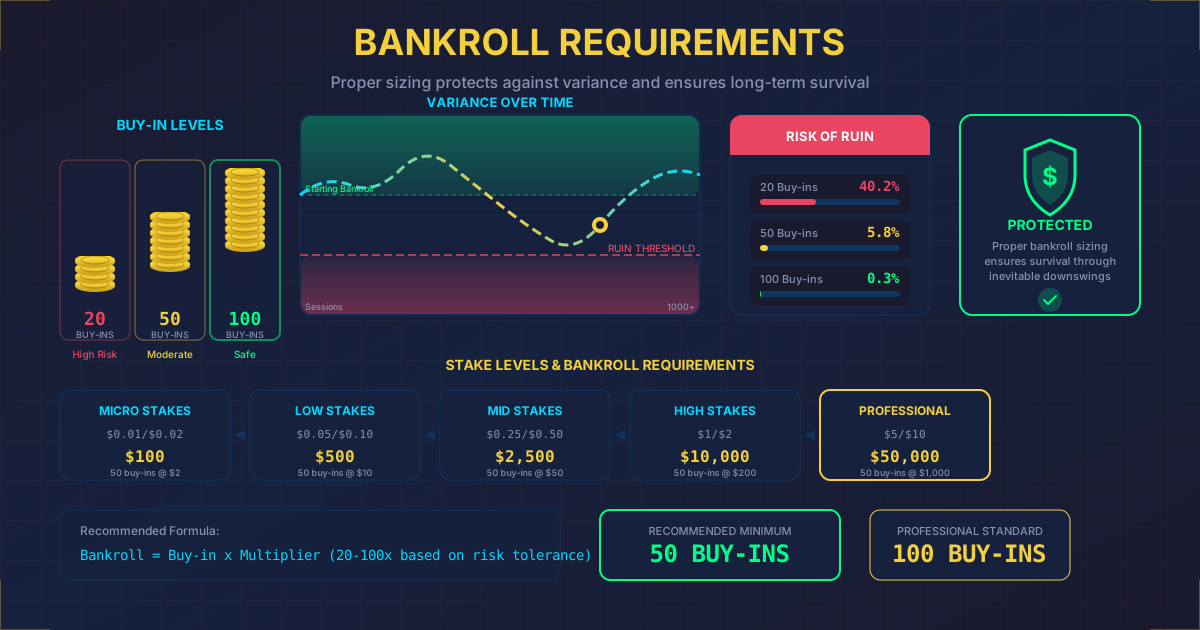
4. Insufficient Bankroll
Mistake: Same bankroll as JoB Problem: 45% higher variance Fix: Increase bankroll by 50%
Frequently Asked Questions
Is Double Bonus better than Jacks or Better?
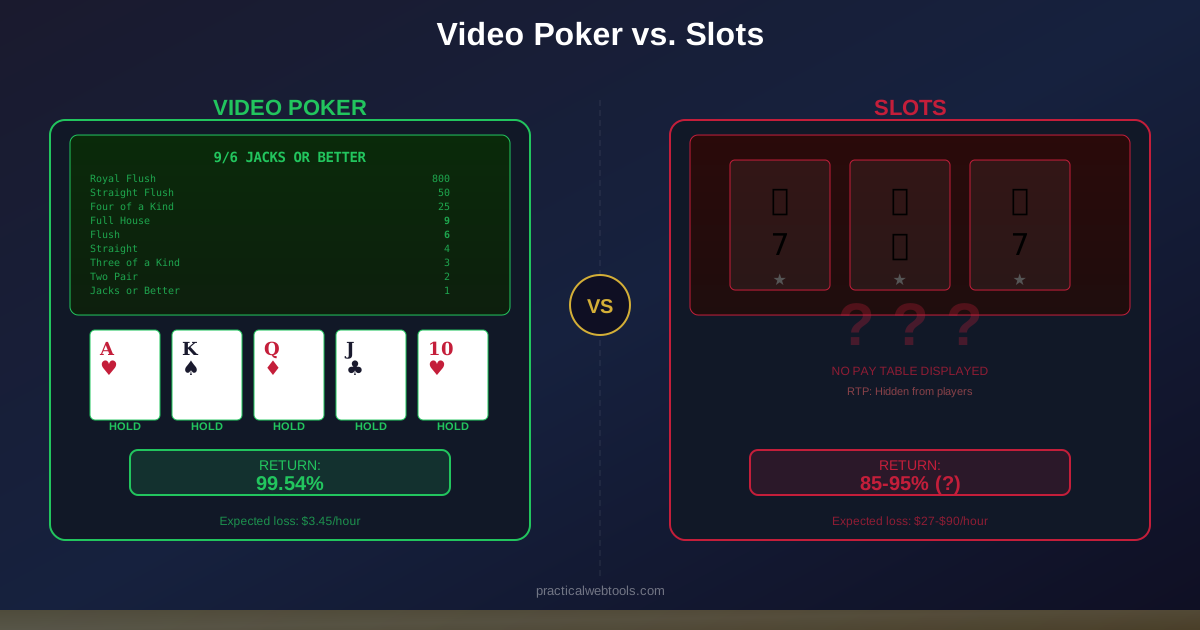
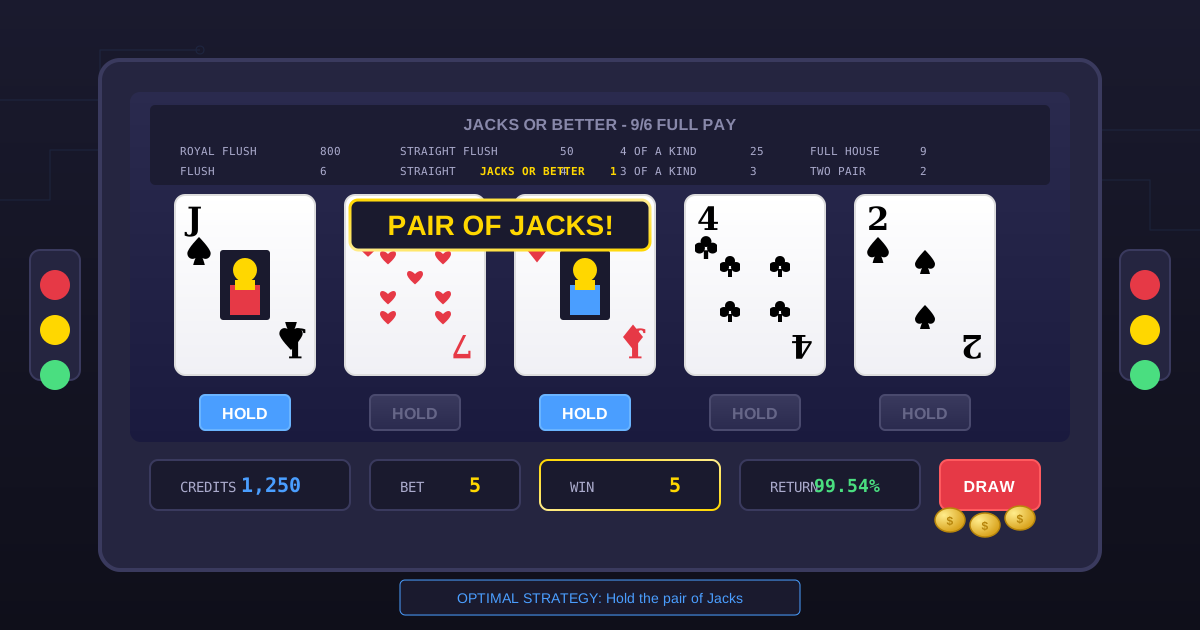
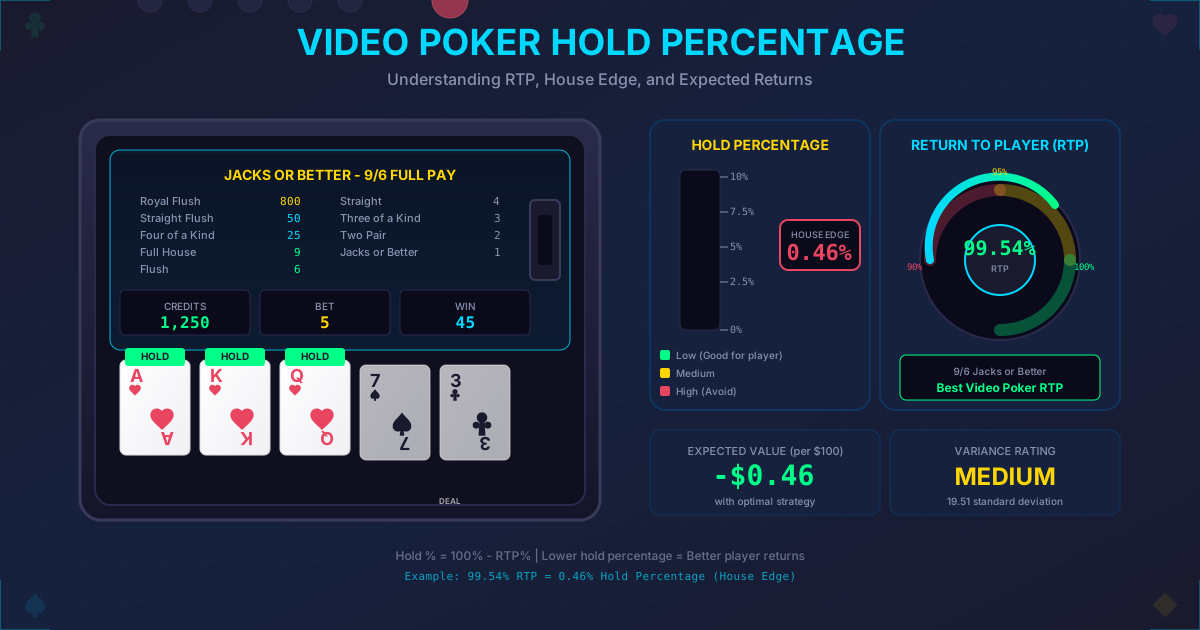
Higher return (100.17% vs 99.54%) but higher variance. Better if properly bankrolled and using correct strategy.
Why does two pair only pay 1:1?
To fund the enhanced quad payouts. The game trades consistent small wins for rare big wins.
What's the biggest strategy difference?
Holding aces aggressively. Quad aces at 160 changes many decisions compared to JoB's 25 for all quads.
How much bankroll do I need?
For 10/7 Double Bonus, approximately 2,500-3,000 max bets for comfortable play. More than JoB requires.
Are there other Double Bonus variants?
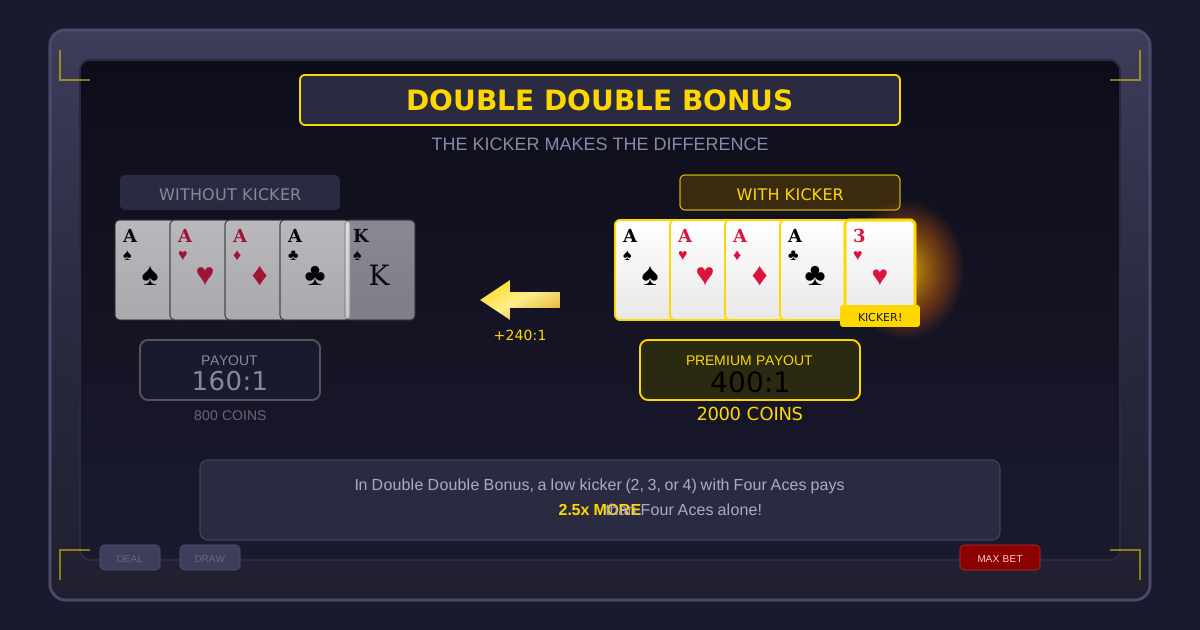
Yes—Double Double Bonus, Triple Double Bonus, etc. Each has different pay tables and strategies.
Can I find 10/7 Double Bonus online?
Some sites offer it. Always verify the exact pay table before playing.
Pro Tips
-
Find 10/7 machines: The only +EV version
-
Learn ace strategy: Most important adjustment
-
Skip two pair holds: When aces involved
-
Increase bankroll: Higher variance requires it
-
Practice strategy: Many decisions differ from JoB
Related Calculators
- Video Poker Jacks or Better Calculator - Standard version
- Video Poker Bonus Poker Calculator - Lower variance bonus
- Video Poker Deuces Wild Calculator - Wild card variant
- Video Poker Expected Value Calculator - EV analysis
- Gambling Bankroll Calculator - Bankroll sizing
Conclusion
Double Bonus Poker offers 100.17% theoretical return—but requires perfect strategy significantly different from Jacks or Better. Our calculator shows optimal holds that maximize quad bonus potential while navigating the reduced two pair payout.
Calculate Double Bonus Strategy Now →
The key to Double Bonus is recognizing that aces are dramatically more valuable. Quad aces at 160 changes hundreds of decisions. Our calculator reveals when to hold aces aggressively and when to chase those premium quad payouts.