Vig-Free Odds Calculator: Remove the Bookmaker Margin and Find True Odds (2026)
Vig-Free Odds Calculator: Strip Away the Bookmaker's Edge
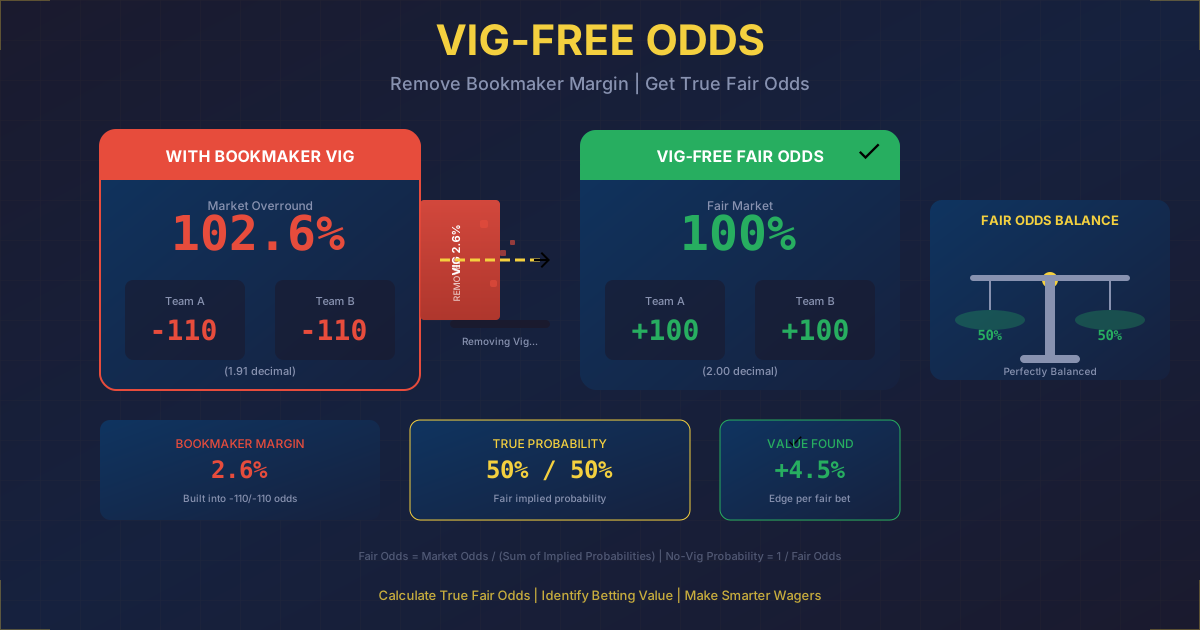
Every betting line includes the bookmaker's margin, known as the vig, juice, or overround. This built-in profit margin distorts the true probabilities of outcomes. Our vig-free odds calculator strips away this margin, revealing the fair odds and helping you identify when bookmakers offer genuine value.
What Is Vig (Vigorish)?
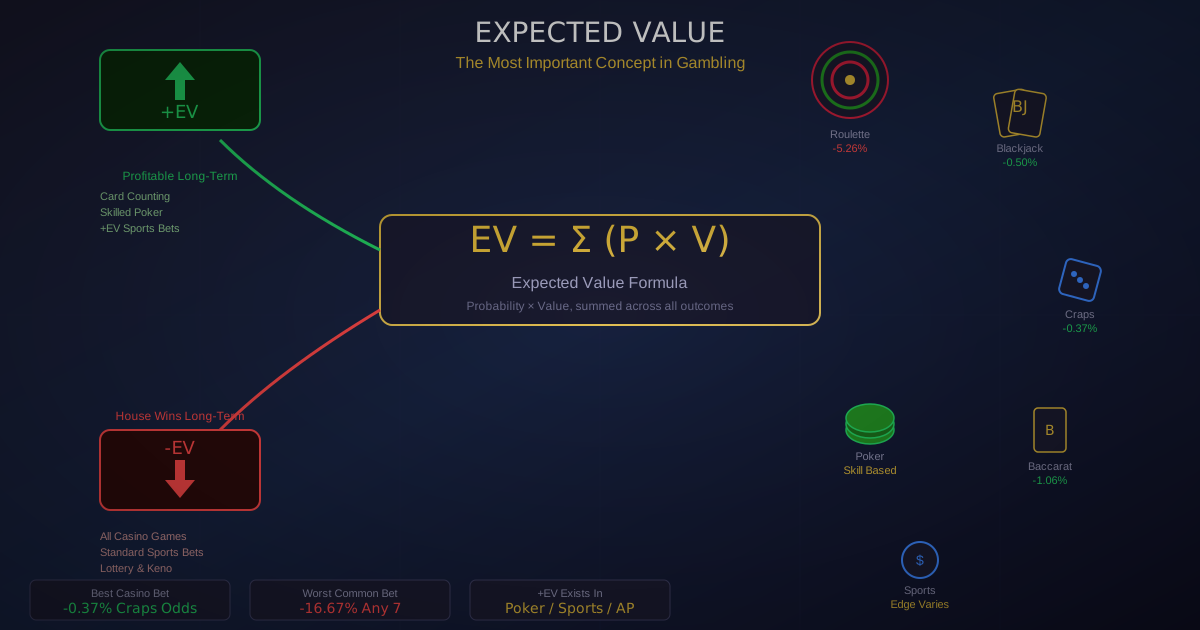
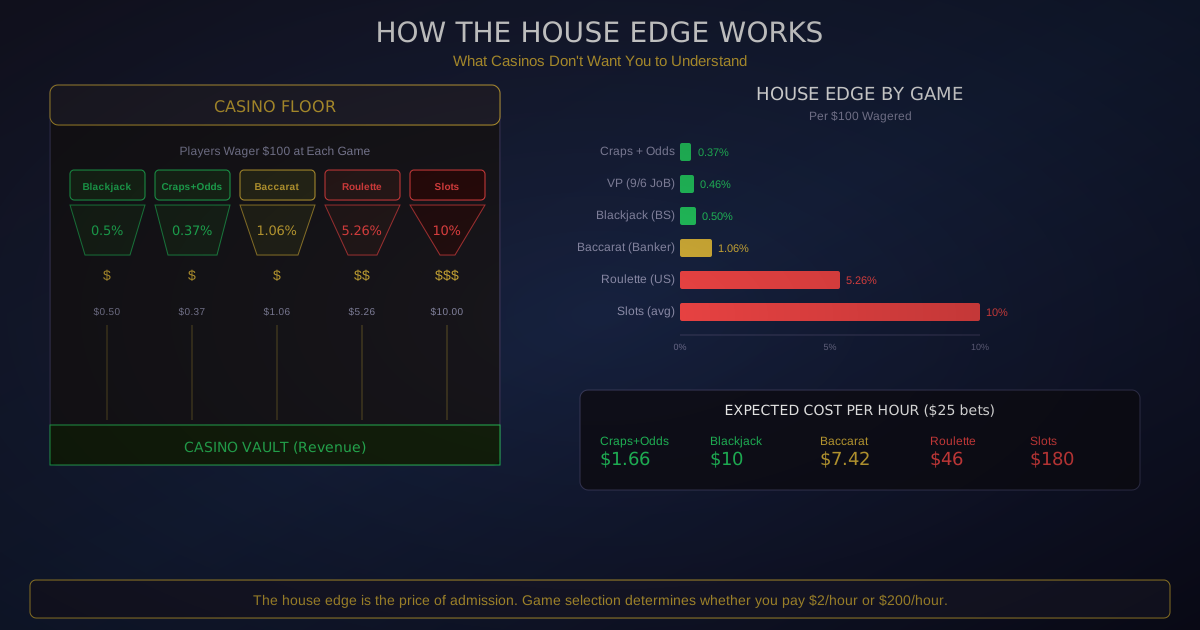
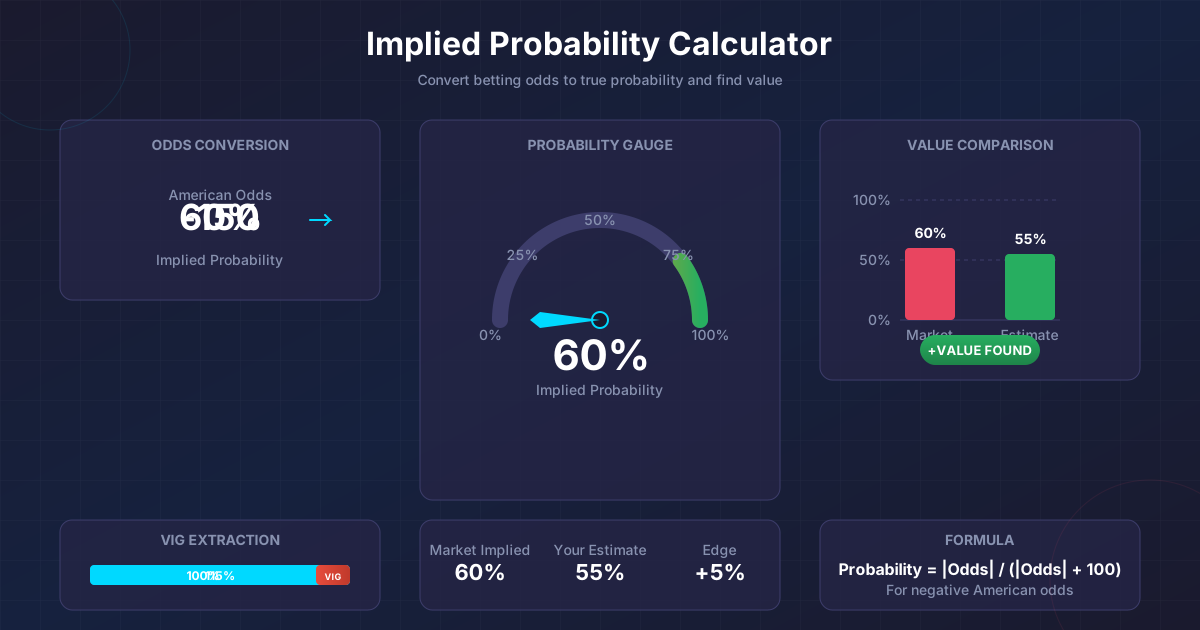
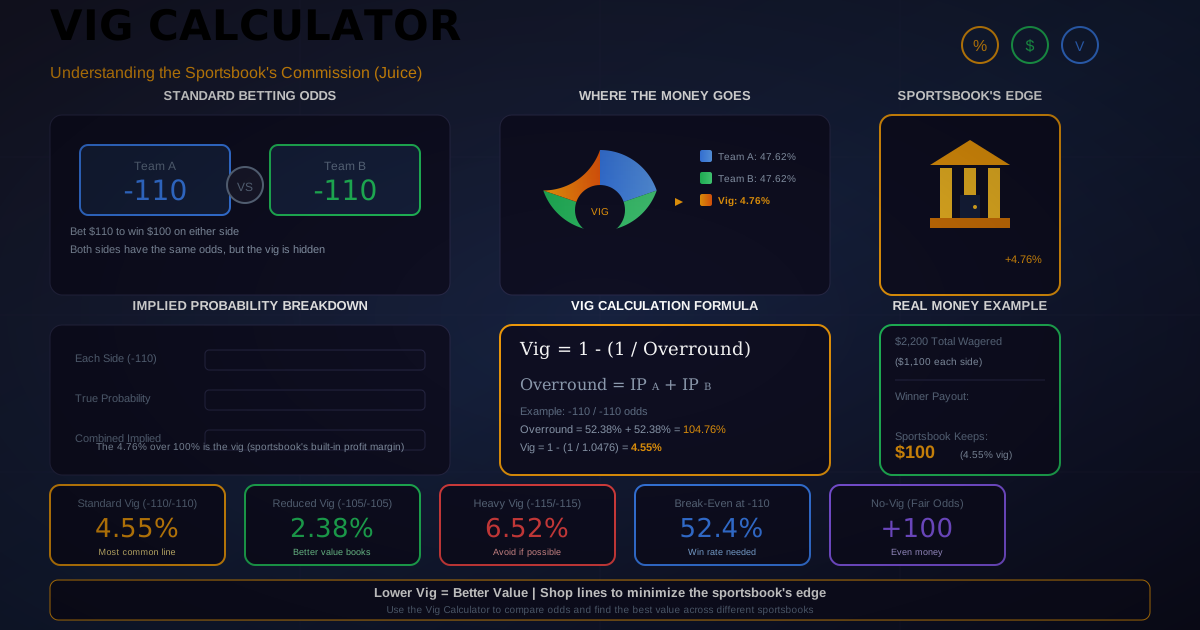
Vig, short for vigorish, is the bookmaker's commission built into betting odds. It ensures the sportsbook profits regardless of the outcome. In a fair market, all implied probabilities would sum to 100%. With vig included, they sum to more than 100% - the excess is the bookmaker's margin. Understanding and removing vig is essential for serious sports betting analysis.
Quick Answer: To calculate vig-free odds, first convert all odds to implied probabilities, sum them (the total minus 100% is the vig), then divide each probability by that sum to get fair probabilities. Convert back to odds. Formula: Fair Probability = Implied Probability / Total Implied Probability. Example: If Team A is 2.00 (50%) and Team B is 1.90 (52.6%), total is 102.6%, vig is 2.6%. Fair odds: Team A = 2.05 (48.7%), Team B = 1.95 (51.3%).
How to Use Our Calculator
Use the Vig-Free Odds Calculator →
Step-by-Step Instructions
- Enter All Outcome Odds: Input odds for every possible outcome
- Calculate Overround: See the total vig percentage
- View Fair Odds: Get vig-removed true odds for each outcome
- Compare Lines: Check multiple books to find best value
- Identify Edge: See which side offers positive expected value
Input Fields
| Field | Description | Example |
|---|---|---|
| Odds Format | Decimal, American, or Fractional | Decimal |
| Outcome 1 Odds | First outcome's odds | 2.10 |
| Outcome 2 Odds | Second outcome's odds | 1.85 |
| Outcome 3 Odds | Third outcome (if applicable) | 3.50 |
| Number of Outcomes | 2-way, 3-way, or more | 2 |
Understanding Bookmaker Margin
The Overround Concept
Fair Market (No Vig):
Team A Win: 50% + Team B Win: 50% = 100%
Decimal odds: 2.00 and 2.00

Real Market (With Vig):
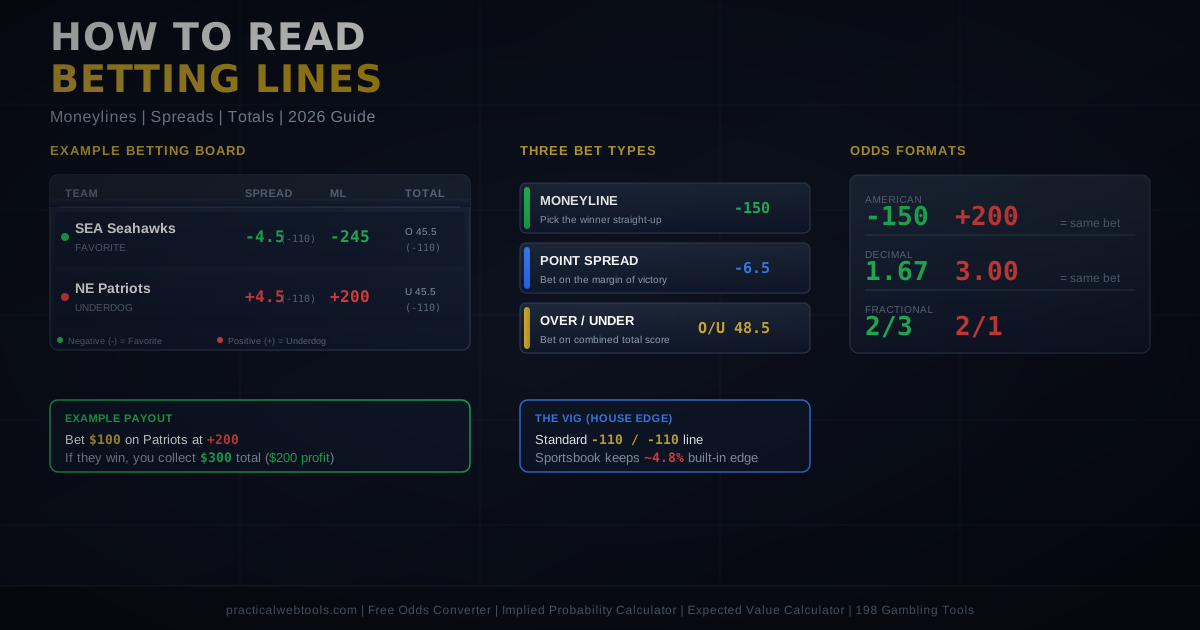
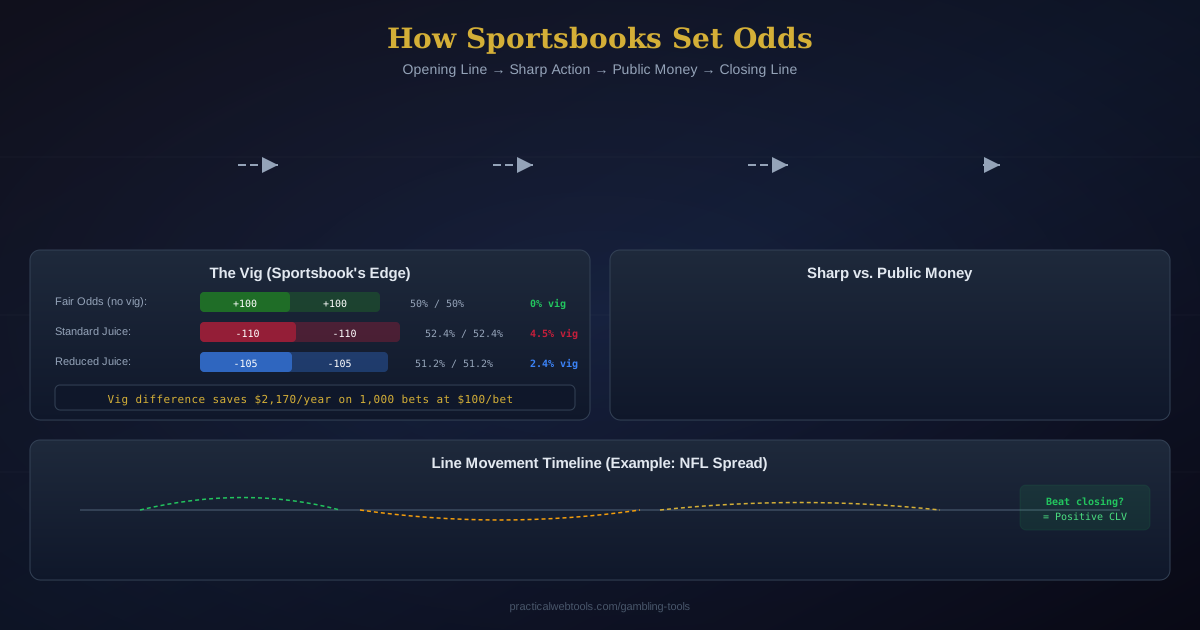
Team A Win: 52.4% + Team B Win: 52.4% = 104.8%
Decimal odds: 1.91 and 1.91

The 4.8% excess is the bookmaker's margin
At these odds, bookmaker profits ~4.8% regardless of result
Vig Calculation Formula
Step 1: Convert Odds to Implied Probability
Implied Probability = 1 / Decimal Odds

Step 2: Sum All Implied Probabilities
Overround = Sum of all implied probabilities

Step 3: Calculate Vig Percentage
Vig % = (Overround - 1) × 100

Example (Two-Way Market):
Team A: 1.87 → 1/1.87 = 53.5%
Team B: 2.00 → 1/2.00 = 50.0%

Overround = 53.5% + 50.0% = 103.5%
Vig = 3.5%
Removing the Vig
Fair Probability Formula:
Fair Prob = Implied Prob / Overround

Example Continuation:
Team A: 53.5% / 1.035 = 51.7%
Team B: 50.0% / 1.035 = 48.3%

Convert to Fair Odds:
Team A: 1 / 0.517 = 1.93
Team B: 1 / 0.483 = 2.07

Original vs Fair Odds:
Team A: 1.87 → 1.93 (fair is higher = poor value)
Team B: 2.00 → 2.07 (fair is higher = poor value)

Both sides have negative EV after vig removal
This is typical - bookmaker always has edge
Three-Way Market Vig Removal
Soccer 1X2 Markets
Example: Premier League Match

Offered Odds:
Home: 2.40 (41.7%)
Draw: 3.30 (30.3%)
Away: 3.10 (32.3%)

Total Implied: 41.7% + 30.3% + 32.3% = 104.3%
Vig: 4.3%

Fair Probabilities:
Home: 41.7% / 1.043 = 40.0%
Draw: 30.3% / 1.043 = 29.0%
Away: 32.3% / 1.043 = 31.0%

Fair Odds:
Home: 2.50
Draw: 3.45
Away: 3.23
Comparing to Find Value
If another bookmaker offers:
Home: 2.55 (vs fair 2.50) → +2% edge
Draw: 3.40 (vs fair 3.45) → -1.5% edge
Away: 3.15 (vs fair 3.23) → -2.5% edge

The Home bet at 2.55 offers positive value
when fair odds are 2.50

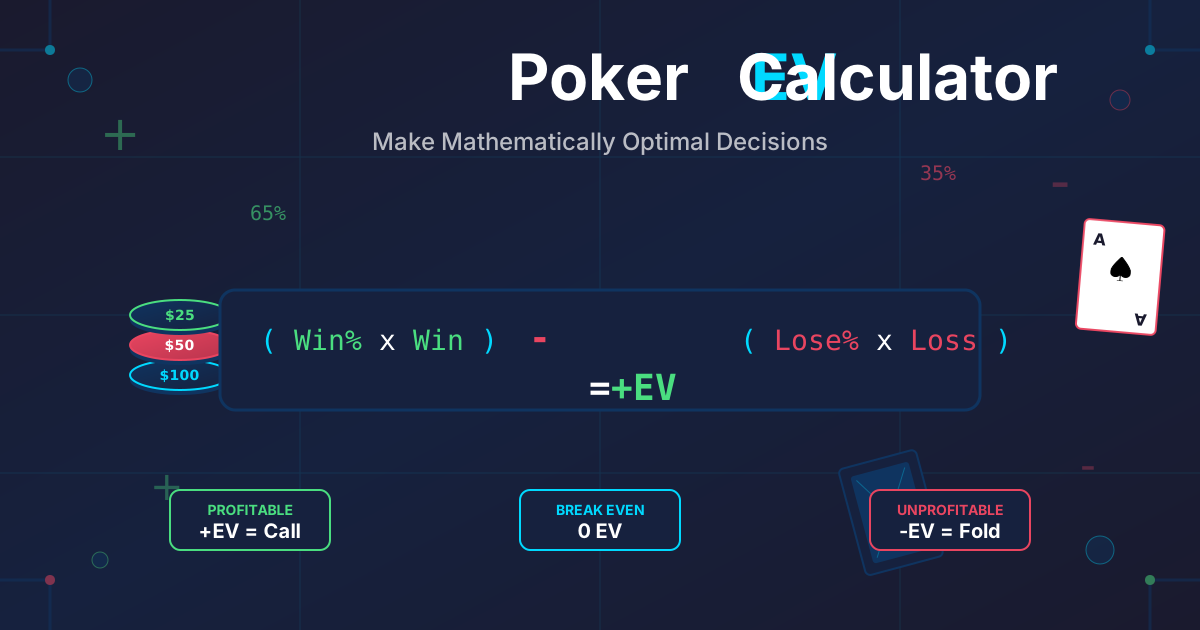
Expected Value:
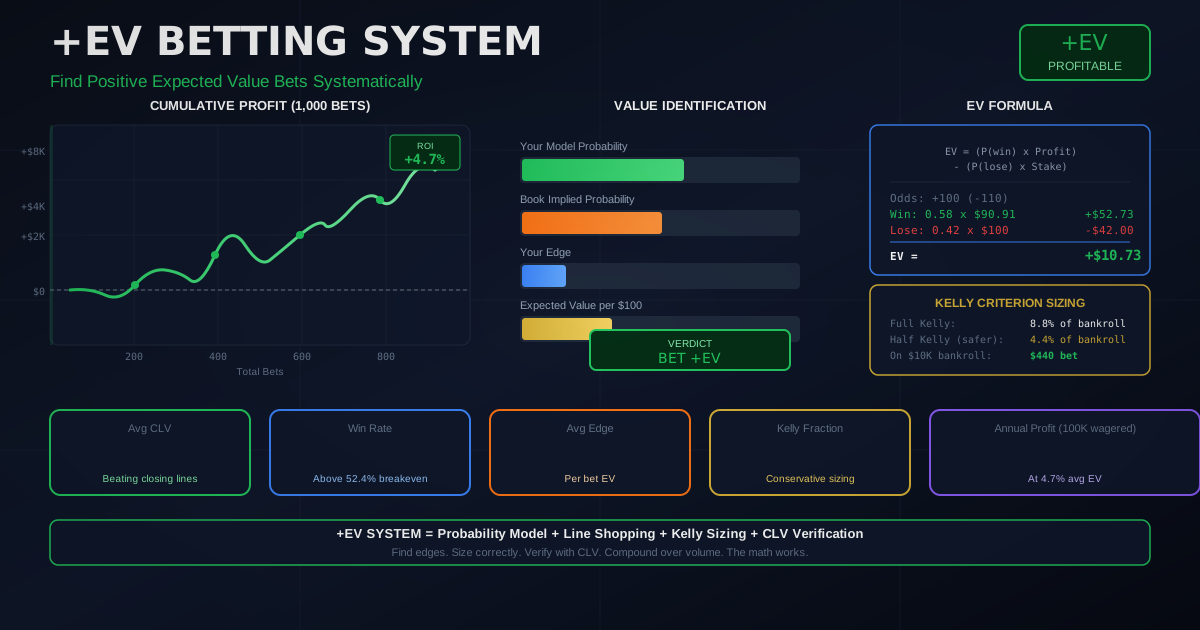
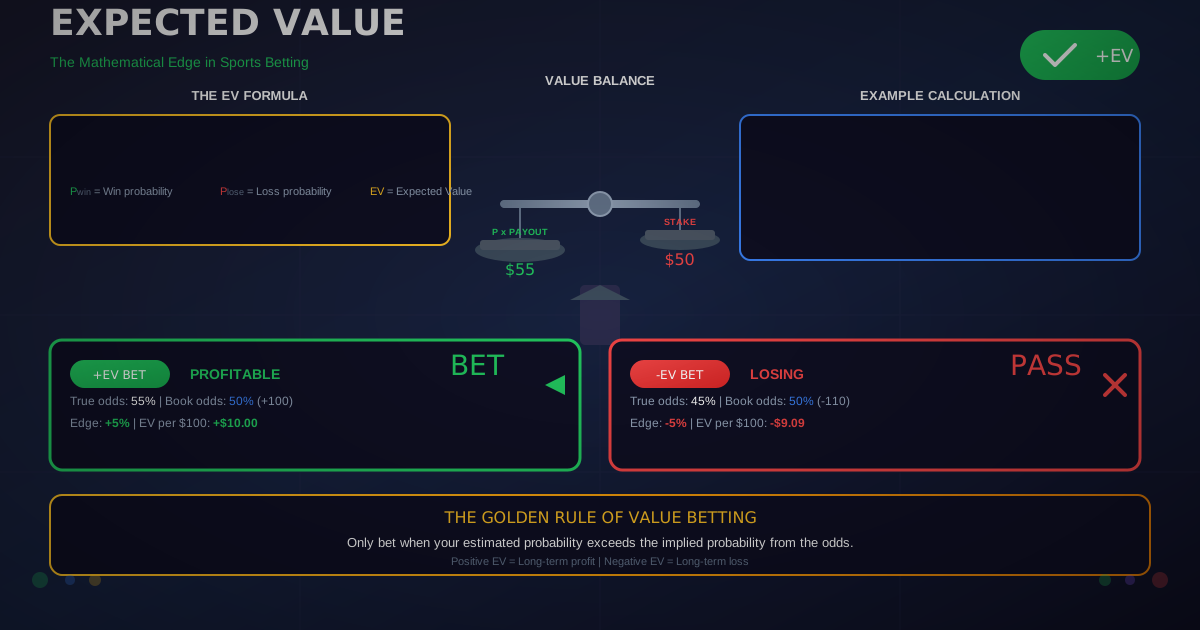
EV = (0.40 × 1.55) - (0.60 × 1) = 0.62 - 0.60 = +2%
Different Methods of Vig Removal
Method 1: Multiplicative (Equal Distribution)
Assumes vig is distributed equally across outcomes

Formula:
Fair Prob = Implied Prob / Overround

Best for:
- Two-way markets
- Markets where both sides are equally "sharp"
- Standard approach for most bettors
Method 2: Power Method
Assumes vig is distributed based on probability

Formula:
Fair Prob = (Implied Prob)^n / Sum((Implied Prob)^n)

Where n is solved iteratively to make probabilities sum to 1

Best for:
- Markets with extreme favorites
- When you believe vig loads on longshots
Method 3: Shin Method
Developed by Hyun Song Shin for horse racing

Assumes informed bettors (insiders) affect odds
Vig is proportional to uncertainty

Formula involves solving:
z = Sum(sqrt(z² + 4(1-z) × p_i / odds_i)) / 2 - 1

Best for:
- Horse racing
- Markets with potential insider trading
Method 4: Worst-Case Method
Assumes all vig is on one side only

Conservative approach:
- Keep favorite odds as-is
- Remove all vig from underdog

Formula:
Favorite stays same
Underdog fair odds = 1 / (1 - (1/Fav Odds))

Best for:
- When you only bet underdogs
- Conservative value estimation
Real-World Examples
Example 1: NFL Point Spread
Situation:
Game: Kansas City Chiefs vs Buffalo Bills
Spread: Chiefs -3

Offered Odds:
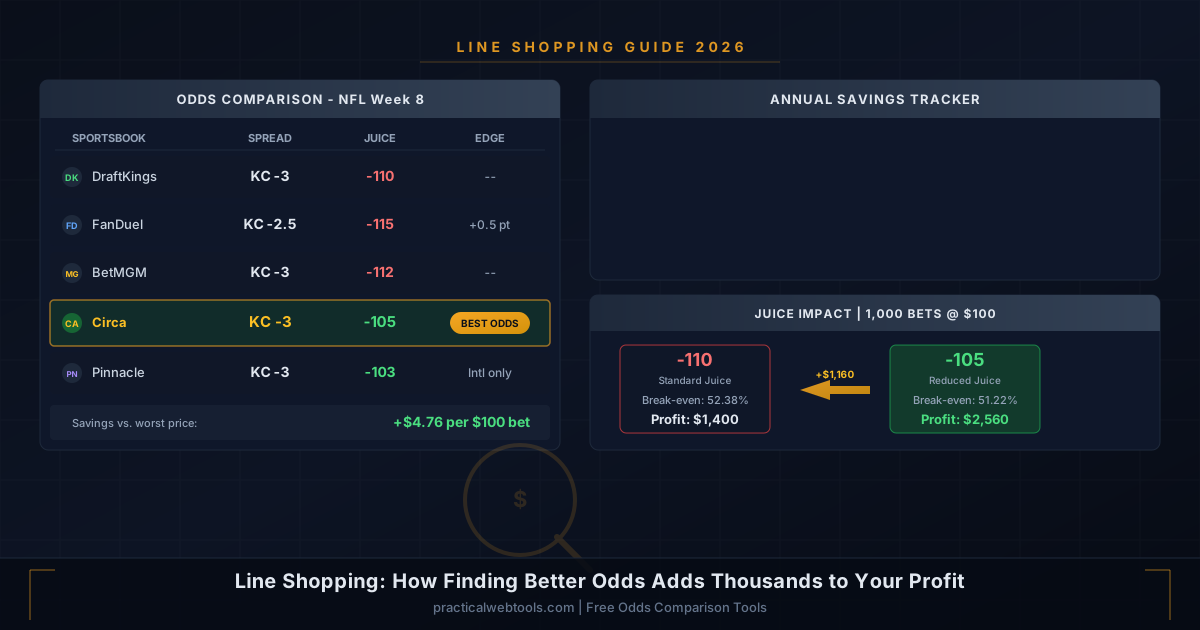
Chiefs -3: -110 (1.91)
Bills +3: -110 (1.91)

Standard -110 on both sides
Analysis:
Implied Probabilities:
Chiefs: 1/1.91 = 52.4%
Bills: 1/1.91 = 52.4%
Total: 104.8%

Vig: 4.8%

Fair Probabilities:
Each side: 52.4% / 1.048 = 50%

Fair Odds:
Each side: 2.00 (+100 American)

Offered -110 vs Fair +100
Edge per bet: -4.5%

To find value, need odds better than -105
Result:
Standard -110 lines carry 4.8% vig
Break-even requires 52.4% win rate
Finding -105 or better creates edge

Sharp books sometimes offer -105
This reduces vig to 2.4%
Example 2: Soccer Three-Way Market
Situation:
Match: Barcelona vs Real Madrid
Market: 1X2 (Match Result)

Bookmaker A:
Barcelona: 2.25
Draw: 3.60
Real Madrid: 3.00
Analysis:
Implied Probabilities:
Barcelona: 1/2.25 = 44.4%
Draw: 1/3.60 = 27.8%
Real Madrid: 1/3.00 = 33.3%
Total: 105.5%

Vig: 5.5%

Fair Probabilities:
Barcelona: 44.4% / 1.055 = 42.1%
Draw: 27.8% / 1.055 = 26.4%
Real Madrid: 33.3% / 1.055 = 31.6%

Fair Odds:
Barcelona: 2.38
Draw: 3.79
Real Madrid: 3.16
Result:
Comparing to offered odds:
Barcelona: 2.25 vs 2.38 fair → -5.5% EV
Draw: 3.60 vs 3.79 fair → -5.0% EV
Real Madrid: 3.00 vs 3.16 fair → -5.1% EV

All outcomes have negative EV
Need another book with better prices

If you find Real Madrid at 3.25:
3.25 vs 3.16 fair → +2.8% EV
Example 3: Tennis Match
Situation:
Match: Djokovic vs Alcaraz
Two-way market (no draw)

Bookmaker Odds:
Djokovic: 1.70
Alcaraz: 2.20
Analysis:
Implied Probabilities:
Djokovic: 1/1.70 = 58.8%
Alcaraz: 1/2.20 = 45.5%
Total: 104.3%

Vig: 4.3%

Fair Probabilities:
Djokovic: 58.8% / 1.043 = 56.4%
Alcaraz: 45.5% / 1.043 = 43.6%

Fair Odds:
Djokovic: 1.77
Alcaraz: 2.29
Result:
Djokovic: 1.70 vs 1.77 fair → -4.0% EV
Alcaraz: 2.20 vs 2.29 fair → -3.9% EV

Market is fairly balanced
Vig split roughly evenly

For value, need:
Djokovic at 1.78+ or
Alcaraz at 2.30+
Example 4: Prop Bet with High Vig
Situation:
Prop: Will there be overtime?
Yes: 6.00
No: 1.10

Extreme odds spread suggests high vig
Analysis:
Implied Probabilities:
Yes OT: 1/6.00 = 16.7%
No OT: 1/1.10 = 90.9%
Total: 107.6%

Vig: 7.6% (higher than typical!)

Fair Probabilities:
Yes OT: 16.7% / 1.076 = 15.5%
No OT: 90.9% / 1.076 = 84.5%

Fair Odds:
Yes OT: 6.45
No OT: 1.18
Result:
Prop bets typically carry higher vig
This market has 7.6% margin

Yes OT: 6.00 vs 6.45 fair → -7.0% EV
No OT: 1.10 vs 1.18 fair → -6.8% EV

The extreme longshot (Yes OT) carries
slightly more of the vig burden

Avoid prop bets with vig above 5%
unless you have strong edge on probability
Using Vig-Free Odds for Line Shopping
Building a Comparison Framework
Process:
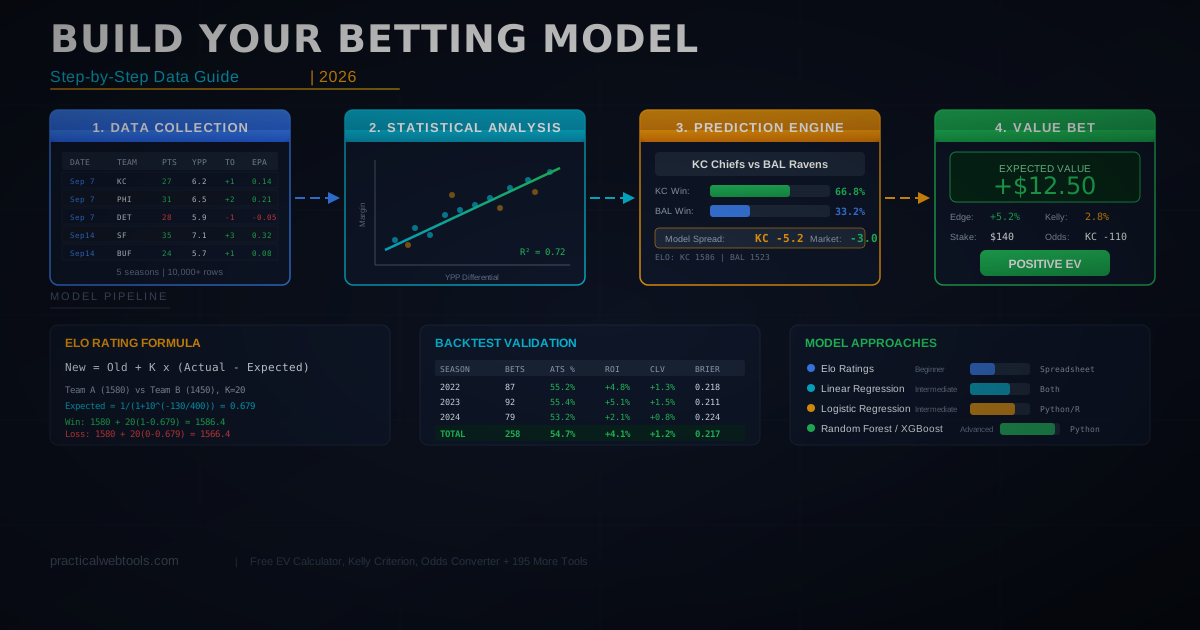
1. Calculate fair odds using pinnacle/sharp lines
2. Compare offered odds at multiple books
3. Bet only where offered > fair odds

Example Workflow:
Sharp Book: Team A 2.05, Team B 1.85
Devig to: Team A 2.10 fair, Team B 1.90 fair

Book A: Team A 2.15 → +2.4% edge (BET)
Book B: Team A 2.00 → -4.8% edge (PASS)
Book C: Team A 2.08 → -1.0% edge (PASS)
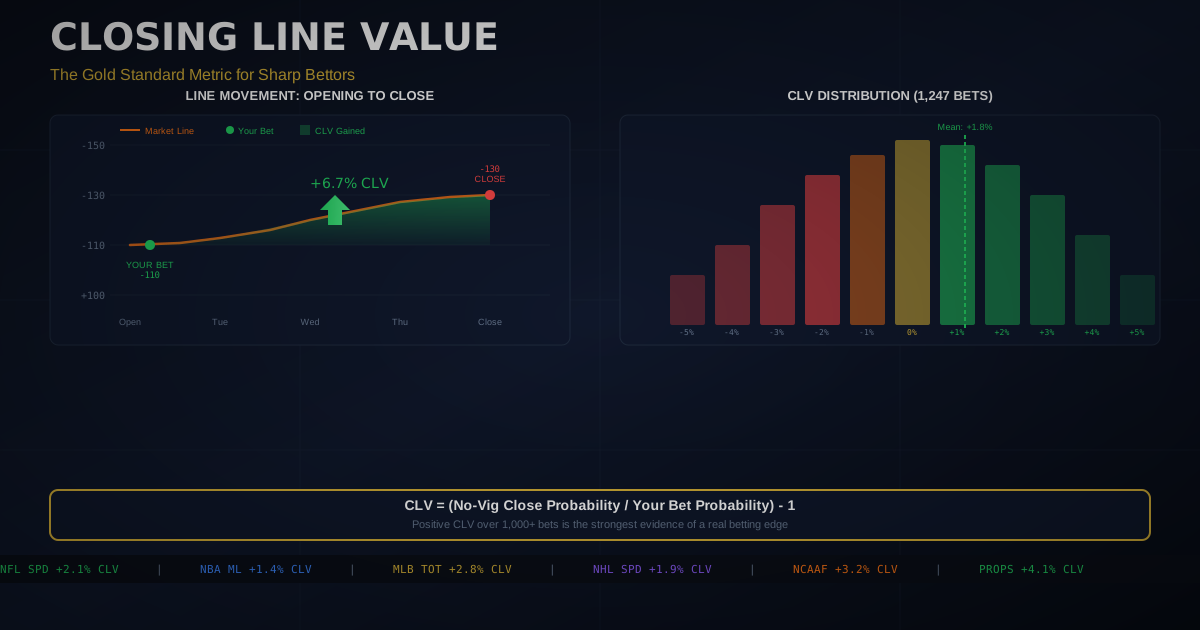
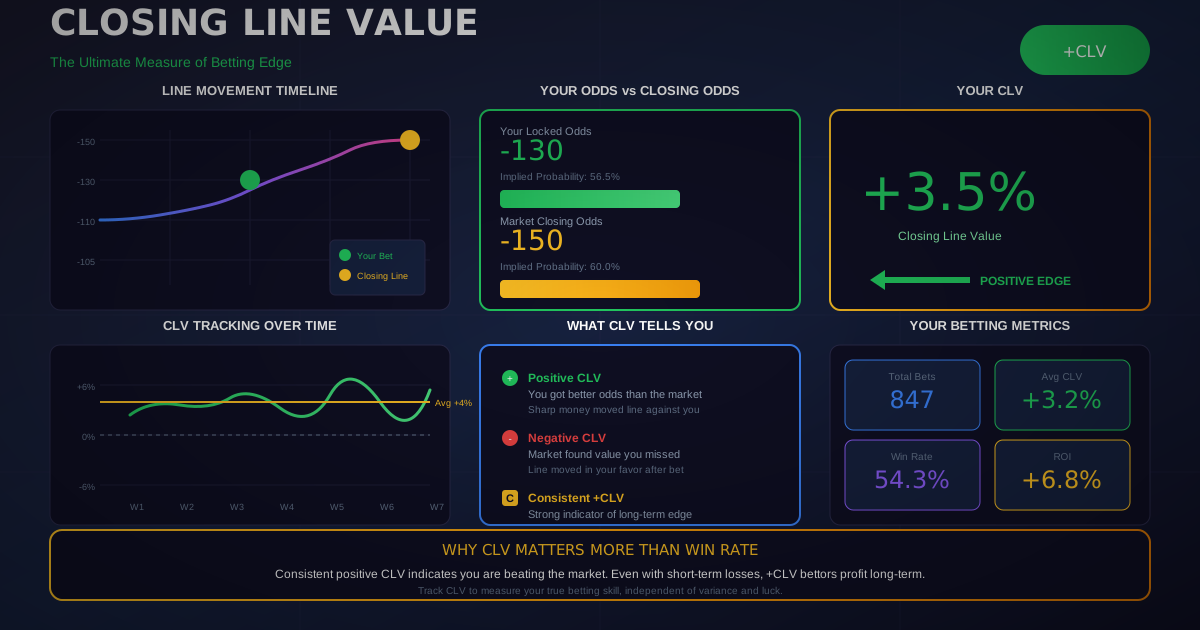
Closing Line Value (CLV)
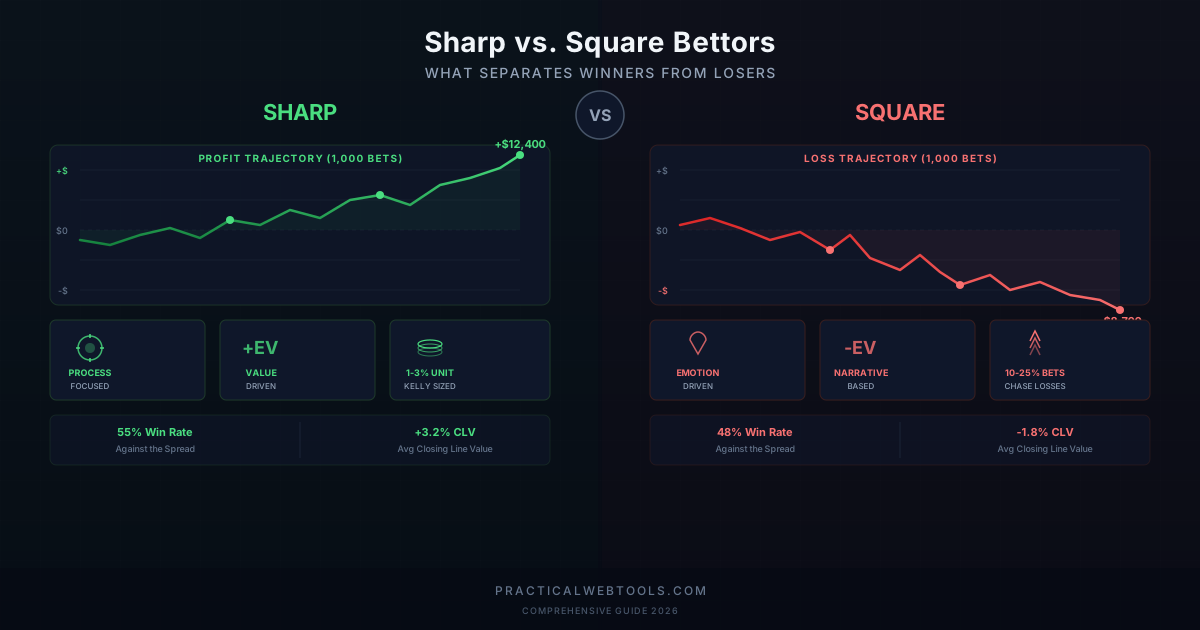
Sharp bettors track CLV to measure skill:

Definition:
CLV = Your Bet Odds vs Closing Vig-Free Odds

If you bet Team A at 2.20 and
closing vig-free odds are 2.10:

CLV = (2.20 - 2.10) / 2.10 = +4.8%

Consistently positive CLV indicates
you're identifying value before the market
Vig Across Different Markets
Market Type Comparison
Typical Vig by Market:

NFL/NBA Spreads: 4-5%
NFL/NBA Moneylines: 3-5%
NFL/NBA Totals: 4-5%
Soccer 1X2: 5-8%
Tennis: 4-6%
Props: 5-10%
Futures: 15-40%
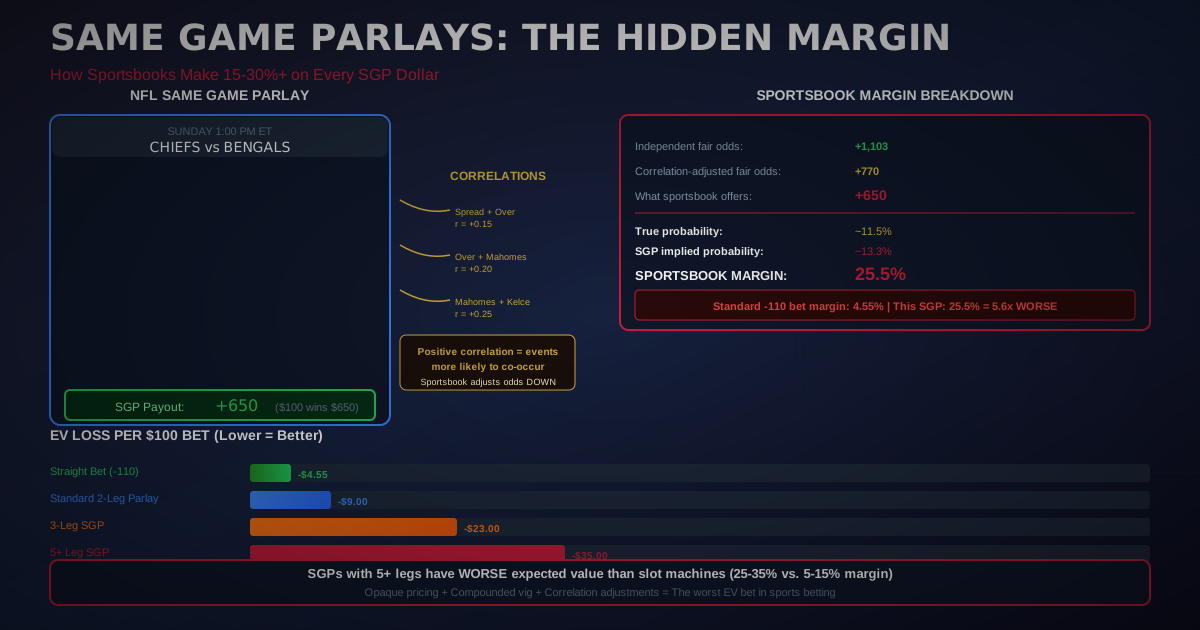
Parlays: Compound vig

Lower vig markets:
- Asian bookmakers
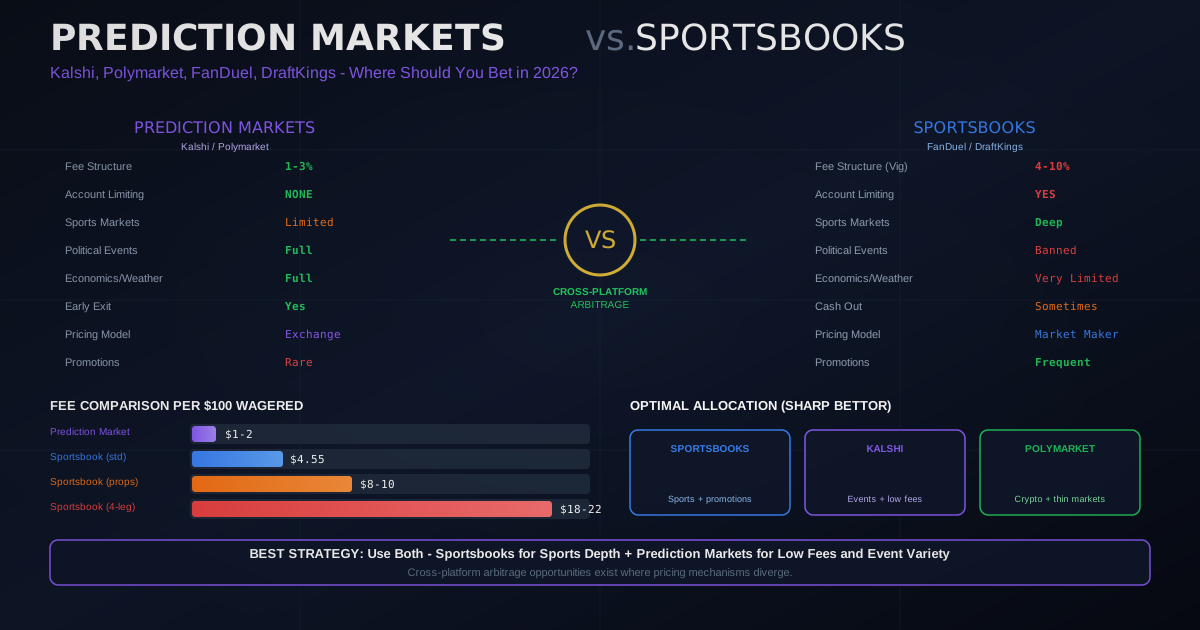
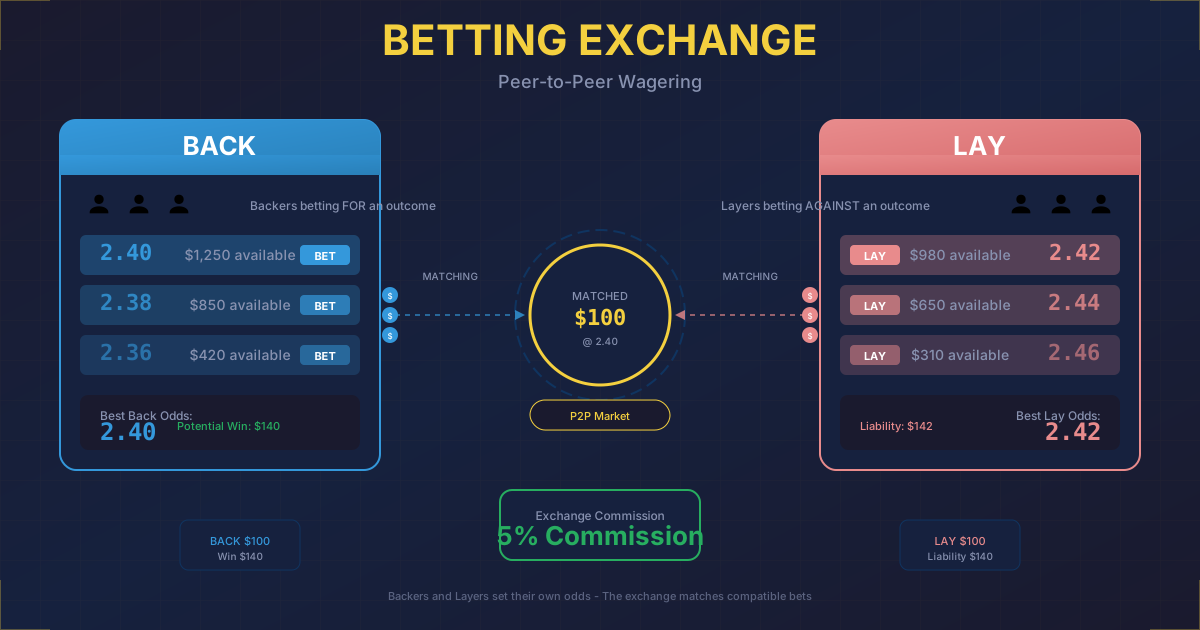
- Betting exchanges (commission instead)
- Sharp-friendly books
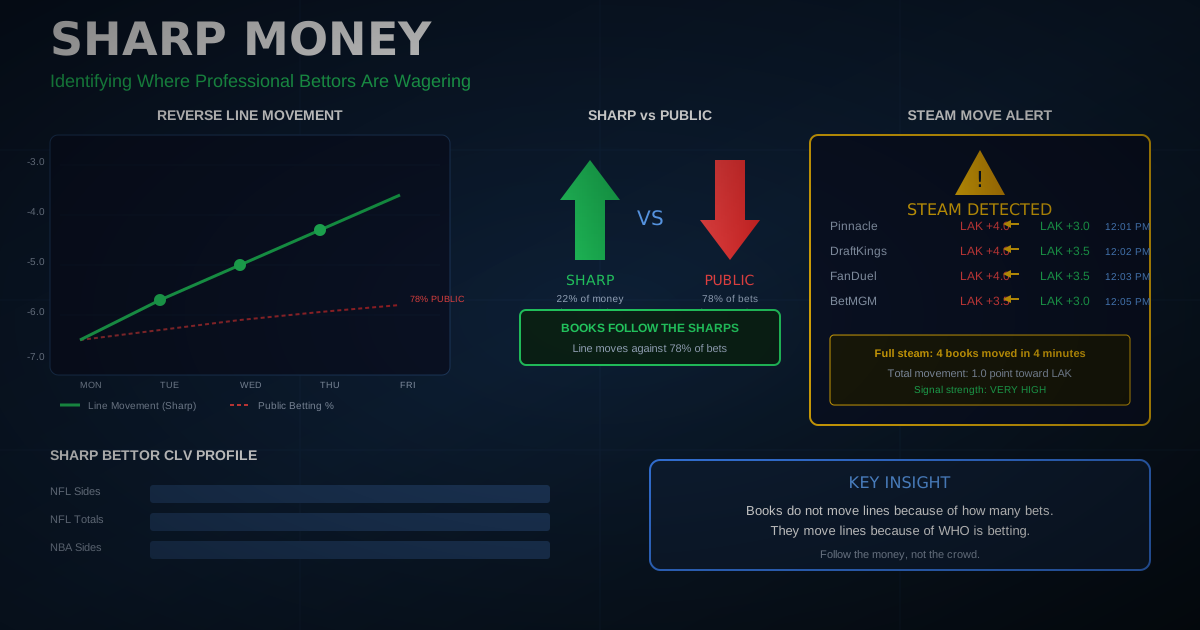
Identifying Sharp Books
Sharp books have:
- Lower vig (under 3%)
- Higher limits
- Don't limit winners
- Move lines based on sharp action

Examples of sharp-adjacent books:
- Pinnacle (~2% vig)
- BetCRIS
- Bookmaker.eu
- Circa Sports

Use these for vig-free fair odds
Then shop soft books for value
Common Mistakes to Avoid
-
Ignoring Vig Completely: Betting without understanding the margin guarantees long-term losses. Always factor vig into expected value calculations.
-
Using Wrong Devig Method: Multiplicative works for most cases, but extreme favorites may need power or Shin method. Match method to market type.
-
Comparing Different Markets: Don't use vig-free odds from one market to judge another. Each market has its own vig structure and efficiency.
-
Forgetting About Limits: Sharp books with low vig often have low limits. You may not be able to bet significant amounts at the best prices.
-
Assuming All Vig Goes to Longshots: While longshots often carry more vig, this varies by market. Test assumptions with data.
-
Not Updating Fair Odds: Lines move. The vig-free odds you calculated at 9 AM may differ from 1 PM. Recalculate before betting.
Frequently Asked Questions
What is a good vig percentage?
For major markets (spreads, totals), vig under 5% is standard, under 3% is excellent. For props and futures, vig often exceeds 10%. Lower is always better for bettors.
Do betting exchanges have vig?
Exchanges charge commission (typically 2-5%) on winning bets instead of building margin into odds. This often results in better effective odds than traditional bookmakers.
Can I always find positive EV after removing vig?
No. In efficient markets, all books may offer negative EV on all outcomes. Value appears when you find odds that exceed vig-free fair odds or when your probability assessment differs from the market.
Why do different books have different vig?
Sharp books compete on price with low margins. Soft books cater to recreational bettors who don't shop lines, allowing higher margins. Business model determines vig level.
Should I always bet at the lowest vig book?
Not necessarily. A higher-vig book offering better odds on your specific selection beats a lower-vig book with worse odds. Shop the specific bet, not the general vig.
How does vig affect parlays?
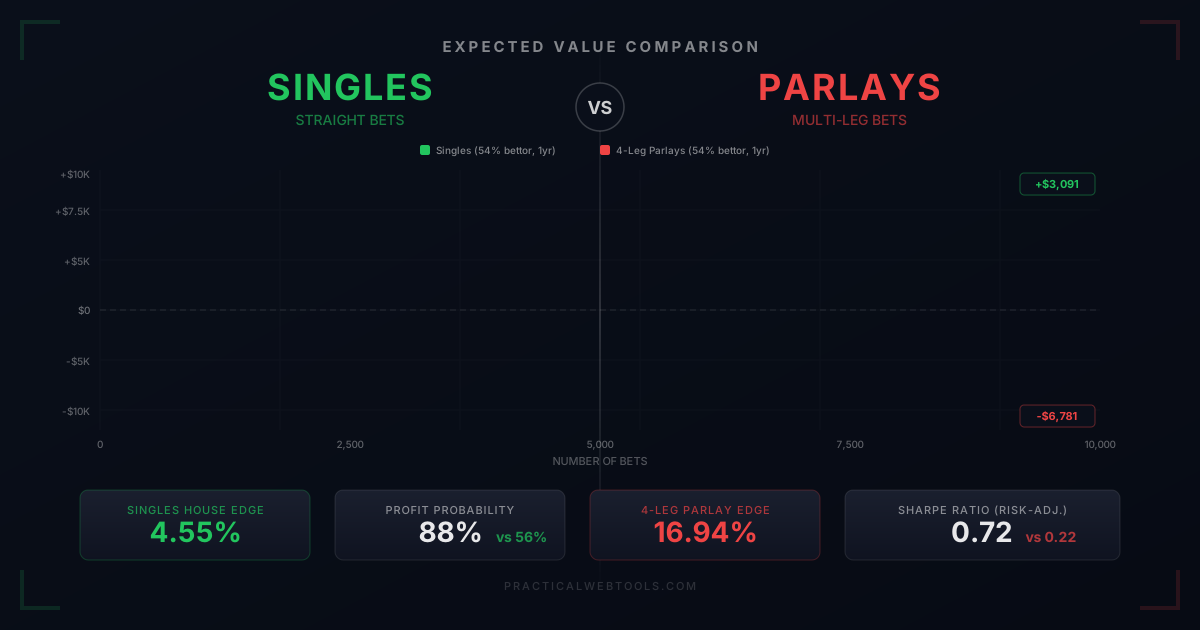
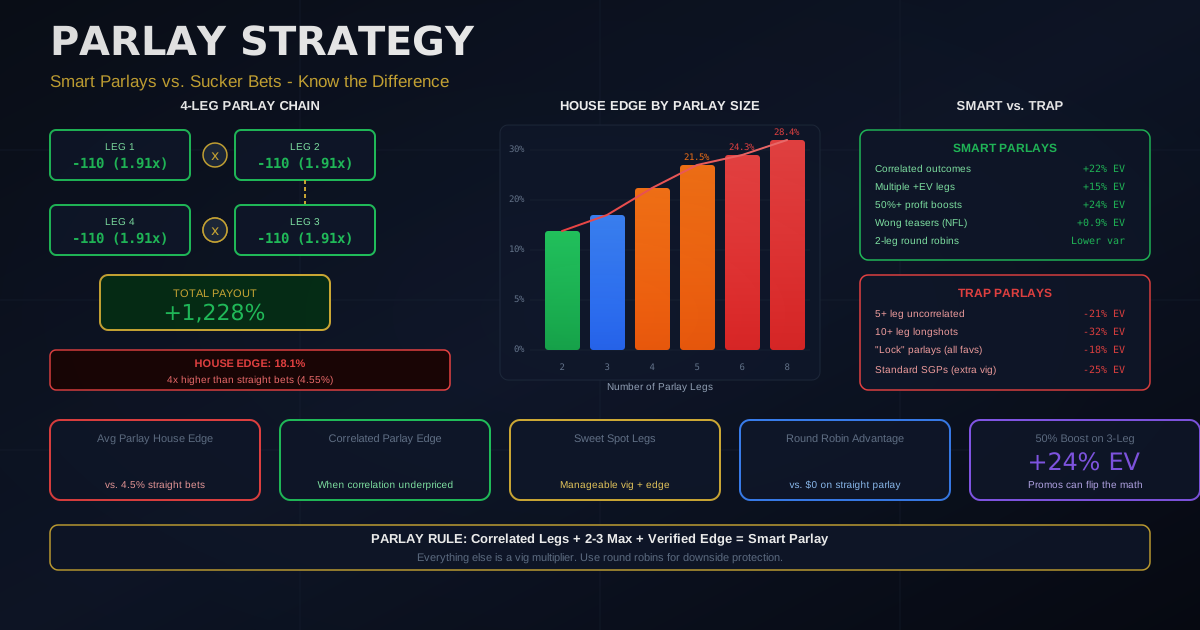
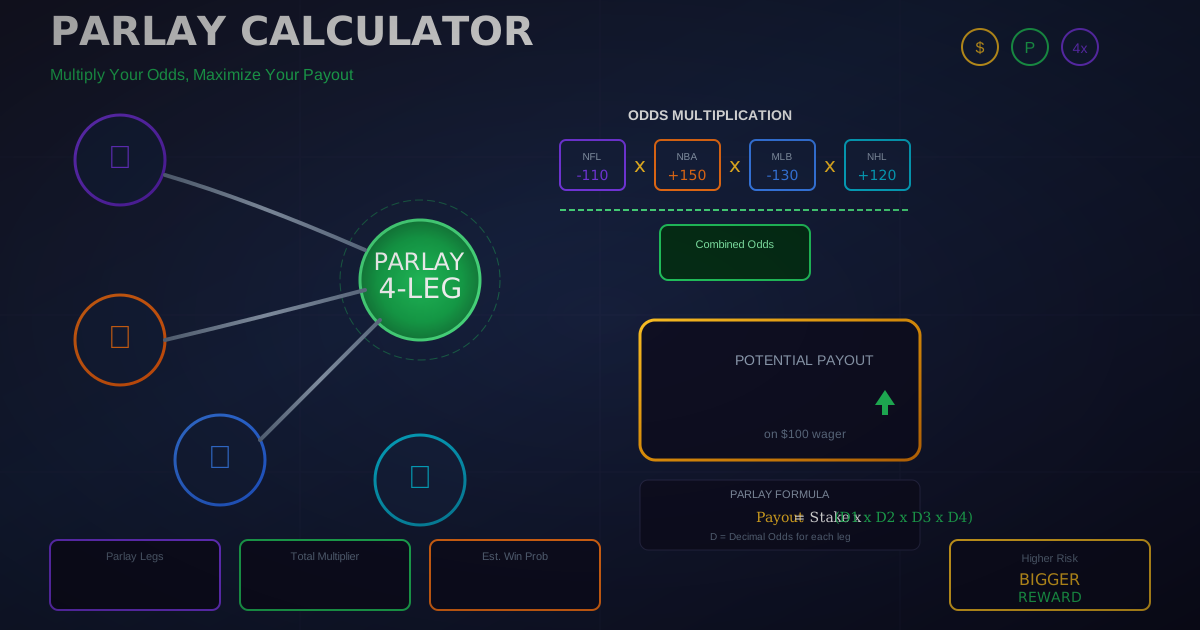
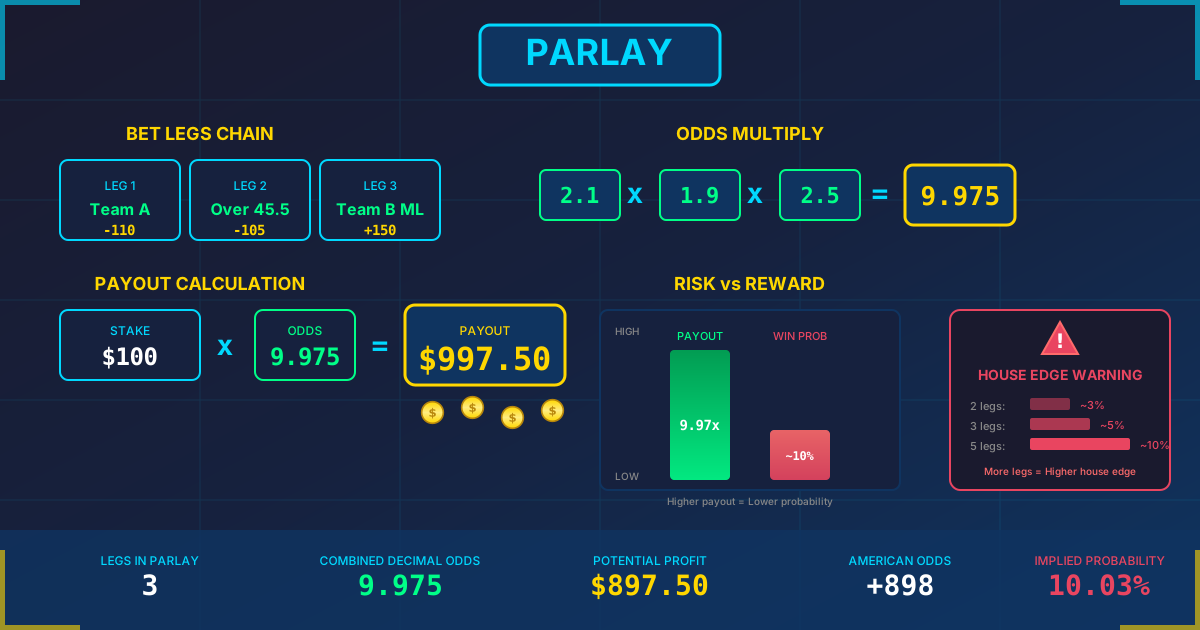
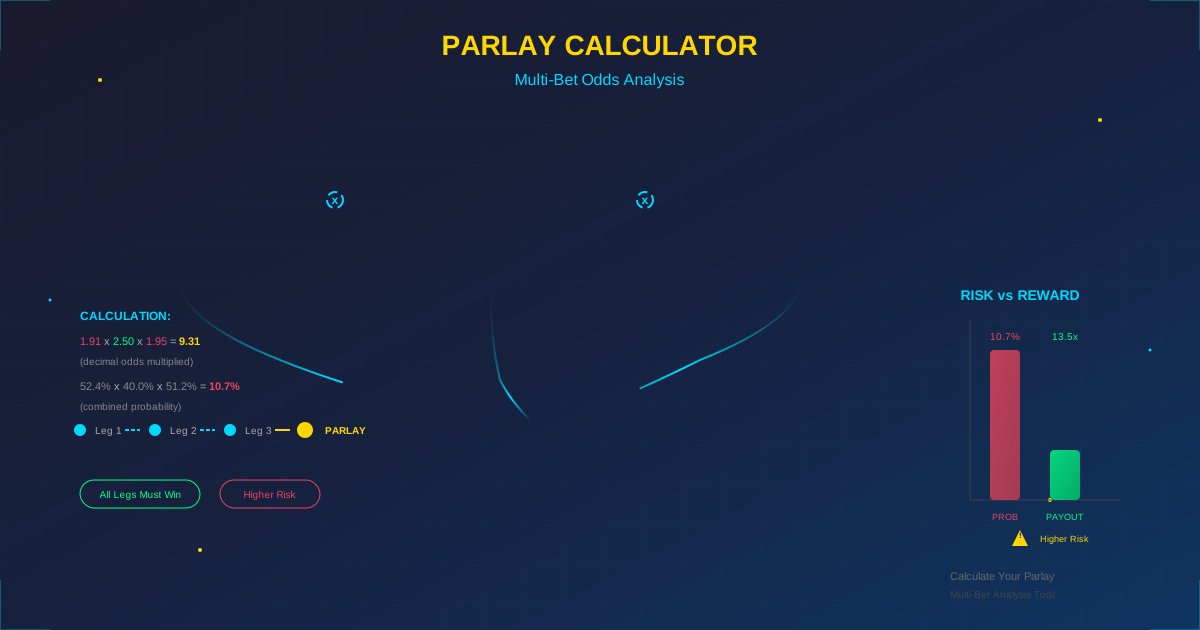
Parlay vig compounds. Each leg's vig multiplies, making parlays worse value than single bets. A 5% vig on each of 4 legs creates effective vig of ~20%+.
Pro Tips
- Use Pinnacle or other sharp books to establish vig-free baseline odds, then shop for better prices elsewhere
- Track your closing line value (CLV) by comparing your bet odds to final vig-free odds - consistent positive CLV indicates skill
- Focus on markets with lower vig (spreads, totals) over high-vig markets (props, futures) unless you have significant edge
- Build a spreadsheet comparing multiple books to quickly identify best prices after vig removal
- Remember that vig-free odds represent market consensus, not necessarily true probability - your edge comes from disagreeing correctly
Related Calculators
- Expected Value Calculator - Calculate bet profitability
- Odds Converter - Convert between formats
- Kelly Criterion Calculator - Optimal bet sizing
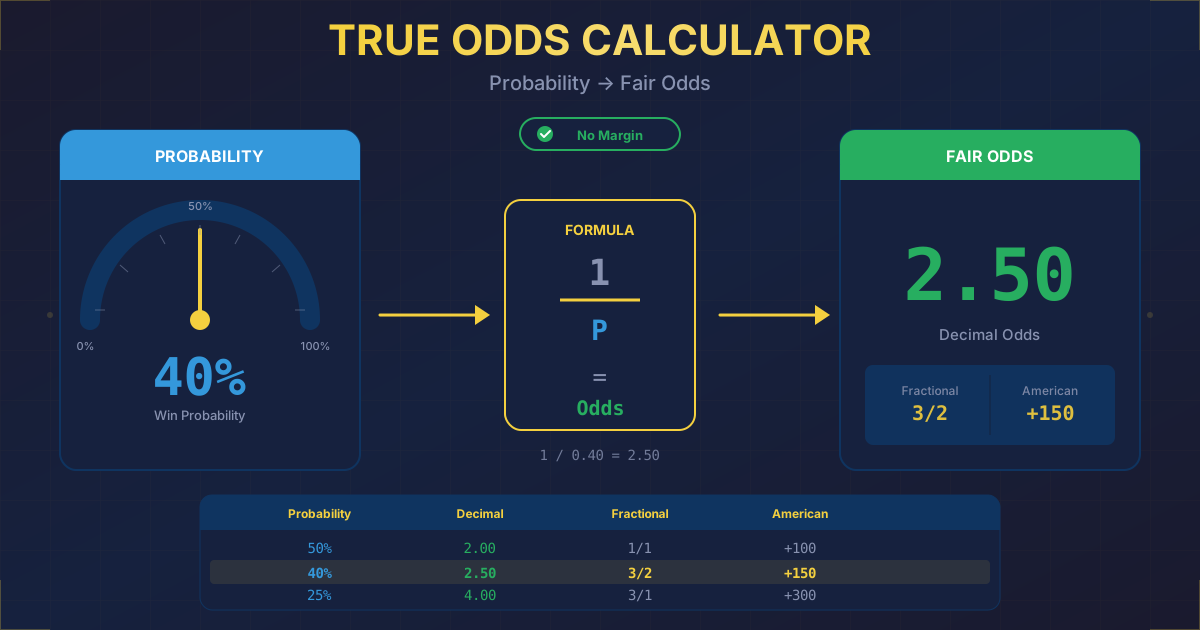
- True Odds Calculator - Probability to fair odds
- Arbitrage Calculator - Find guaranteed profits
Conclusion
Understanding and removing vig is fundamental to serious sports betting. The bookmaker's margin is their profit - it comes directly from your pocket over time. Our vig-free odds calculator reveals the true probabilities hidden behind betting lines, enabling you to identify when offered odds actually represent value.
Consistent profitability requires finding odds that exceed vig-free fair prices. This means line shopping across multiple books, understanding which markets carry acceptable vig, and developing probability assessments that beat the market consensus. The math is straightforward; the execution requires discipline and access.