Win Rate Calculator: Measure Your True Poker Earning Power (2026)
Win Rate Calculator: Quantify Your Edge at the Tables
Win rate is the fundamental measure of poker success. Whether measured in big blinds per 100 hands (BB/100), big blinds per hour (BB/hr), or dollars per hour, your win rate tells you exactly how much you're earning from your poker play. Our win rate calculator converts your results into meaningful metrics and helps you understand what your numbers actually mean.
What Is Win Rate?
Win rate is the average amount you win per unit of play, typically expressed as big blinds won per 100 hands (BB/100) for cash games. It represents your edge over the games you play, accounting for both skill advantage and game selection. A positive win rate means you're a winning player; a negative win rate means you're losing money.
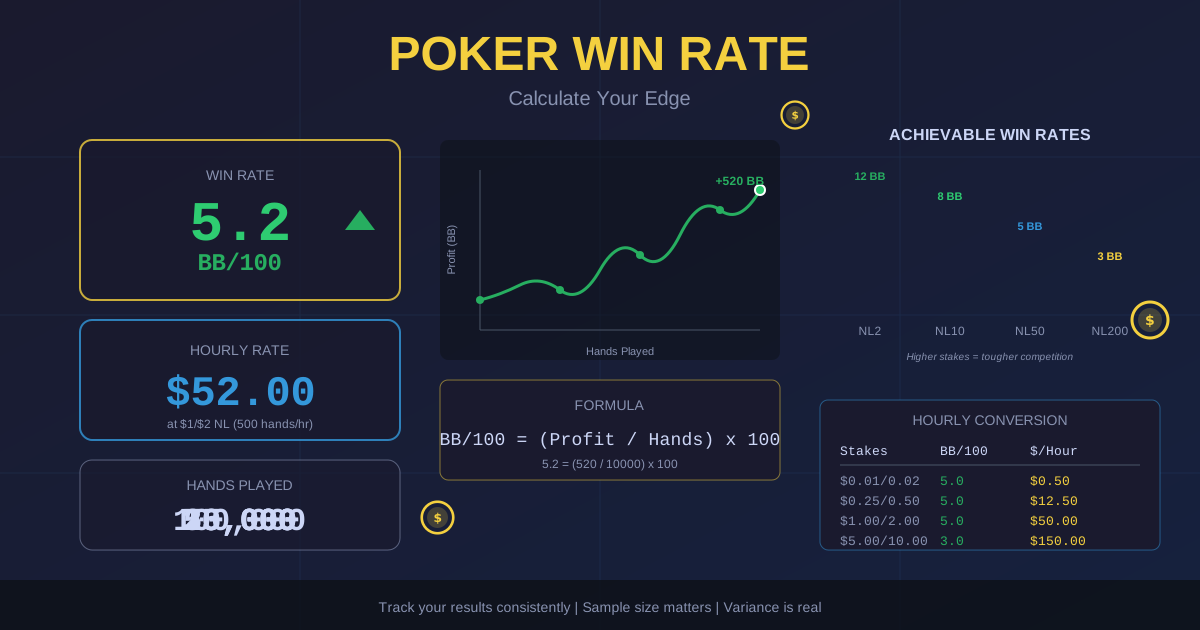
Quick Answer: Win Rate (BB/100) = (Total Profit in BB / Total Hands) x 100. If you've won 5,000 BB over 100,000 hands, your win rate is 5 BB/100. For hourly rate: multiply BB/100 by hands per hour, then by big blind size. At $1/$2 playing 30 hands/hour with 5 BB/100 win rate: 5 x 0.30 x $2 = $3/hour. Good win rates range from 2-10 BB/100 depending on stakes.
How to Use Our Calculator
Step-by-Step Instructions
- Enter Total Profit: Input your total winnings in dollars or big blinds
- Enter Hands Played: Input total hands in your sample
- Enter Stakes: Input the big blind size for dollar conversions
- Enter Hands Per Hour: Input your typical pace (optional for hourly)
- Calculate Win Rate: See BB/100, BB/hr, and $/hr results
Input Fields
| Field | Description | Example |
|---|---|---|
| Total Profit | Amount won (in BB or $) | 2,500 BB |
| Total Hands | Hands in sample | 50,000 |
| Big Blind Size | Stakes being played | $2 |
| Hands Per Hour | Typical pace | 75 (online) |
| Tables Played | Multi-tabling count | 4 |
Win Rate Formulas
BB/100 (Big Blinds per 100 Hands)
The standard measure for cash game win rates:
BB/100 = (Total Profit in BB / Total Hands) × 100

Example:
Profit: 3,000 BB
Hands: 60,000
BB/100 = (3,000 / 60,000) × 100 = 5 BB/100
BB/Hour
Convert to hourly big blind rate:
BB/hr = BB/100 × (Hands per Hour / 100)

Example:
BB/100: 5
Hands/hour: 75
BB/hr = 5 × 0.75 = 3.75 BB/hr
Dollars Per Hour
Convert to actual money:
$/hr = BB/hr × Big Blind Size × Tables

Example:
BB/hr: 3.75
Big Blind: $2
Tables: 4
$/hr = 3.75 × $2 × 4 = $30/hr
PTBB/100 (Pot-Size Big Blinds)
Some tracking software uses pot-size big blinds:
PTBB/100 = BB/100 / 2

Note: 1 PTBB = 2 BB (in a pot with SB + BB)
5 BB/100 = 2.5 PTBB/100
What Is a Good Win Rate?
Win Rates by Stakes Level
Expected win rates vary dramatically by stakes:
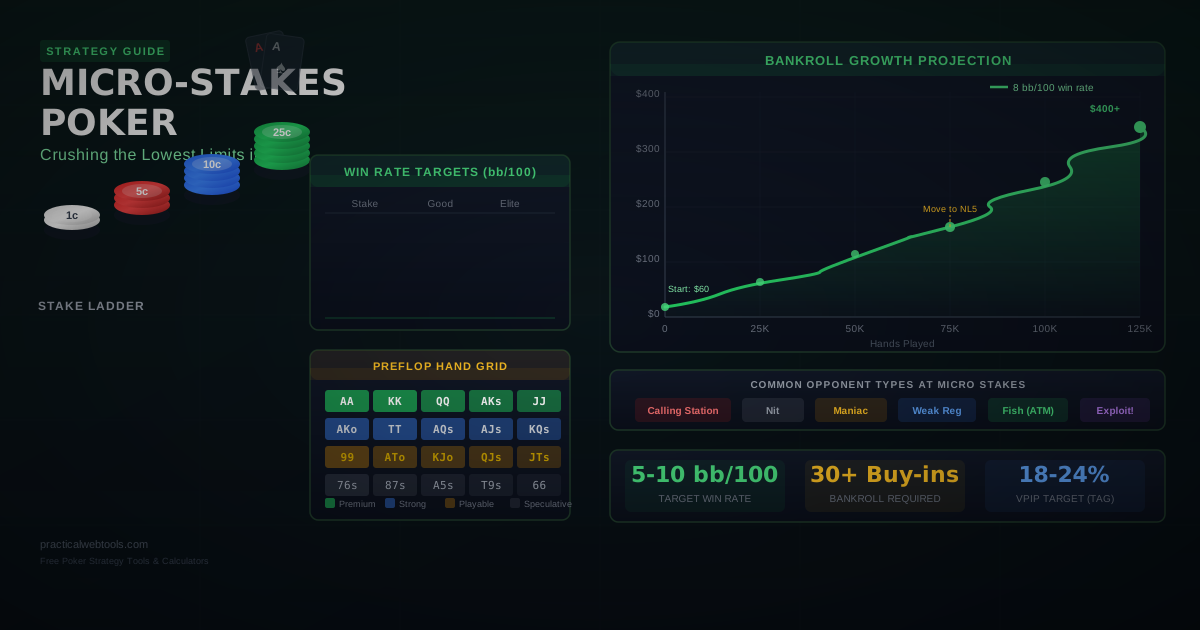
| Stakes | Achievable Win Rate | Elite Win Rate |
|---|---|---|
| $0.01/$0.02 | 15-30 BB/100 | 40+ BB/100 |
| $0.05/$0.10 | 8-15 BB/100 | 20+ BB/100 |
| $0.25/$0.50 | 5-10 BB/100 | 15+ BB/100 |
| $0.50/$1 | 4-8 BB/100 | 12+ BB/100 |
| $1/$2 | 3-6 BB/100 | 10+ BB/100 |
| $2/$5 | 2-5 BB/100 | 8+ BB/100 |
| $5/$10 | 1-4 BB/100 | 6+ BB/100 |
| $10/$20+ | 0.5-3 BB/100 | 4+ BB/100 |
Why Win Rates Decrease at Higher Stakes
Player Pool Quality:
Micro stakes: 80-90% recreational players
Low stakes: 60-70% recreational players
Mid stakes: 40-50% recreational players
High stakes: 20-30% recreational players
Nosebleeds: 5-15% recreational players
Competition Intensity:
Lower stakes: Wide skill gap to exploit
Higher stakes: Smaller edges, tighter margins
Top stakes: Playing against world-class opposition
Online vs Live Win Rates
Different environments produce different rates:
| Environment | Typical Win Rate | Hands/Hour |
|---|---|---|
| Live Cash | 8-15 BB/hr | 25-35 |
| Online Single Table | 3-8 BB/100 | 60-80 |
| Online 4-Tabling | 2-5 BB/100 | 240-320 |
| Online 12-Tabling | 1-3 BB/100 | 720-960 |
Live Advantages:
Softer player pools
Physical tells available
Slower pace allows better decisions
Higher hourly in BB terms
Online Advantages:
More hands per hour
Multi-tabling multiplies hourly
Better game selection
Lower rake at many stakes
Real-World Examples
Example 1: Micro Stakes Online Grinder
Profile:
Stakes: $0.05/$0.10
Hands played: 200,000
Total profit: $2,400
Tables: 6 average
Calculations:
Total profit in BB: $2,400 / $0.10 = 24,000 BB
BB/100 = (24,000 / 200,000) × 100 = 12 BB/100

Hands/hour: 70 × 6 = 420
BB/hr = 12 × 4.2 = 50.4 BB/hr
$/hr = 50.4 × $0.10 = $5.04/hr
Analysis: Excellent win rate for stakes. Volume compensates for low stakes.
Example 2: Mid-Stakes Live Regular
Profile:
Stakes: $2/$5 live
Hours played: 500
Total profit: $22,500
Hands/hour: 30
Calculations:
Total hands: 500 × 30 = 15,000
Total profit in BB: $22,500 / $5 = 4,500 BB
BB/100 = (4,500 / 15,000) × 100 = 30 BB/100
BB/hr = 30 × 0.30 = 9 BB/hr
$/hr = $22,500 / 500 = $45/hr
Analysis: Very strong live win rate. Sustainable professional income.
Example 3: High Volume Multi-Tabler
Profile:
Stakes: $0.50/$1
Hands played: 500,000
Total profit: $15,000
Tables: 12 average
Calculations:
Total profit in BB: $15,000 / $1 = 15,000 BB
BB/100 = (15,000 / 500,000) × 100 = 3 BB/100

Hands/hour: 65 × 12 = 780
BB/hr = 3 × 7.8 = 23.4 BB/hr
$/hr = 23.4 × $1 = $23.40/hr
Analysis: Modest win rate but massive volume creates good hourly.
Example 4: Break-Even Player Analysis
Profile:
Stakes: $1/$2
Hands played: 80,000
Total profit: $800
Calculations:
Total profit in BB: $800 / $2 = 400 BB
BB/100 = (400 / 80,000) × 100 = 0.5 BB/100
Analysis:
0.5 BB/100 is barely above break-even
Confidence interval at 80k hands: ±2 BB/100
True win rate could be -1.5 to +2.5 BB/100
Need more hands to determine if actually winning
Example 5: Comparing Two Players
Player A:
Stakes: $0.25/$0.50
Win rate: 8 BB/100
Hands/hour: 300 (4 tables)
Hourly: 8 × 3 × $0.50 = $12/hr
Player B:
Stakes: $1/$2
Win rate: 3 BB/100
Hands/hour: 30 (live)
Hourly: 3 × 0.30 × $2 = $1.80/hr
Comparison:
Player A earns more despite lower stakes
Volume and multi-tabling overcome lower stake
Player B needs higher stakes or more tables
Example 6: Win Rate Decline After Moving Up
At $0.50/$1:
100,000 hands
Win rate: 6 BB/100
Consistent winning player
At $1/$2 (moved up):
30,000 hands
Win rate: 1 BB/100
Significant decline
Analysis:
Sample size at $1/$2 is small (30k hands)
Decline could be variance or real
Continue playing, reassess at 100k hands
Consider that fields are tougher at higher stakes
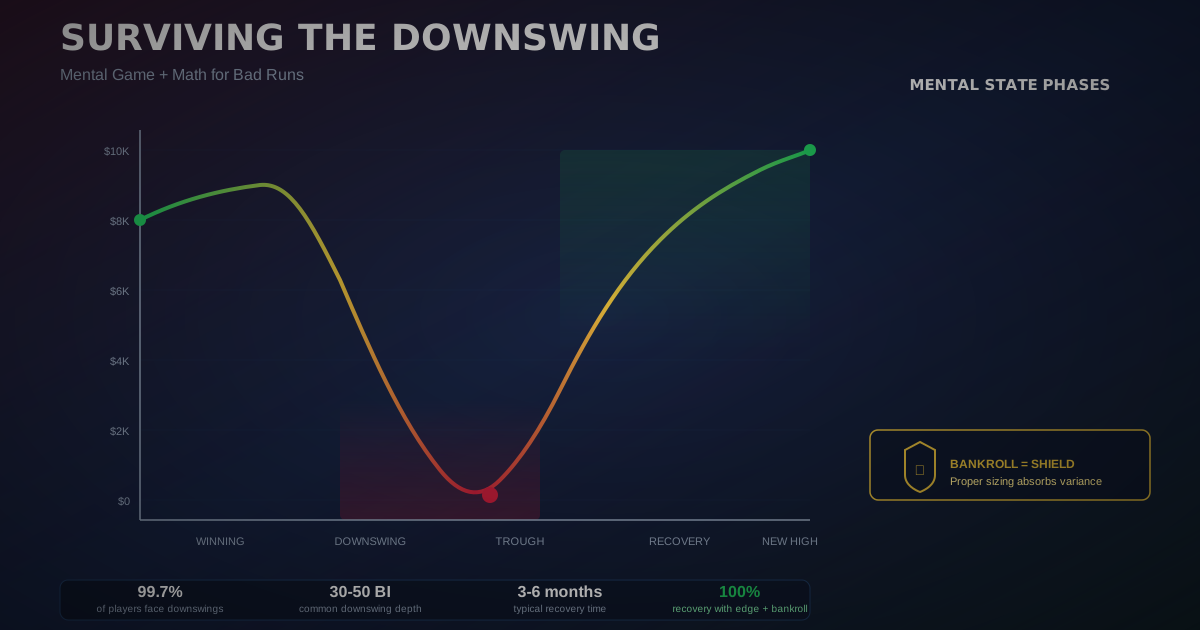
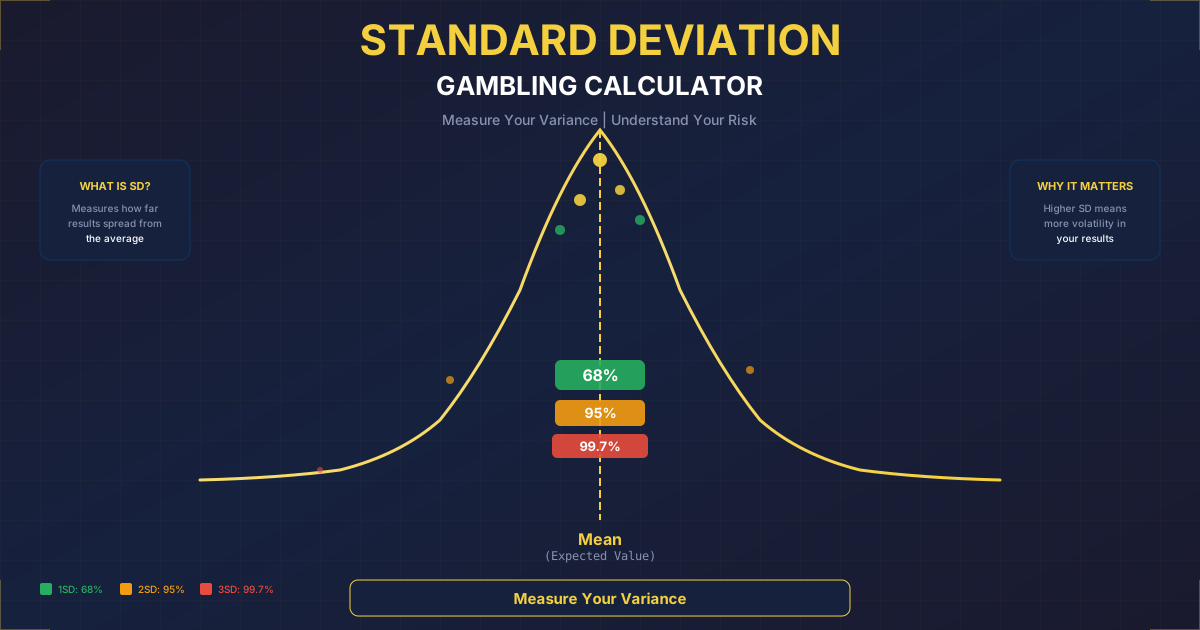
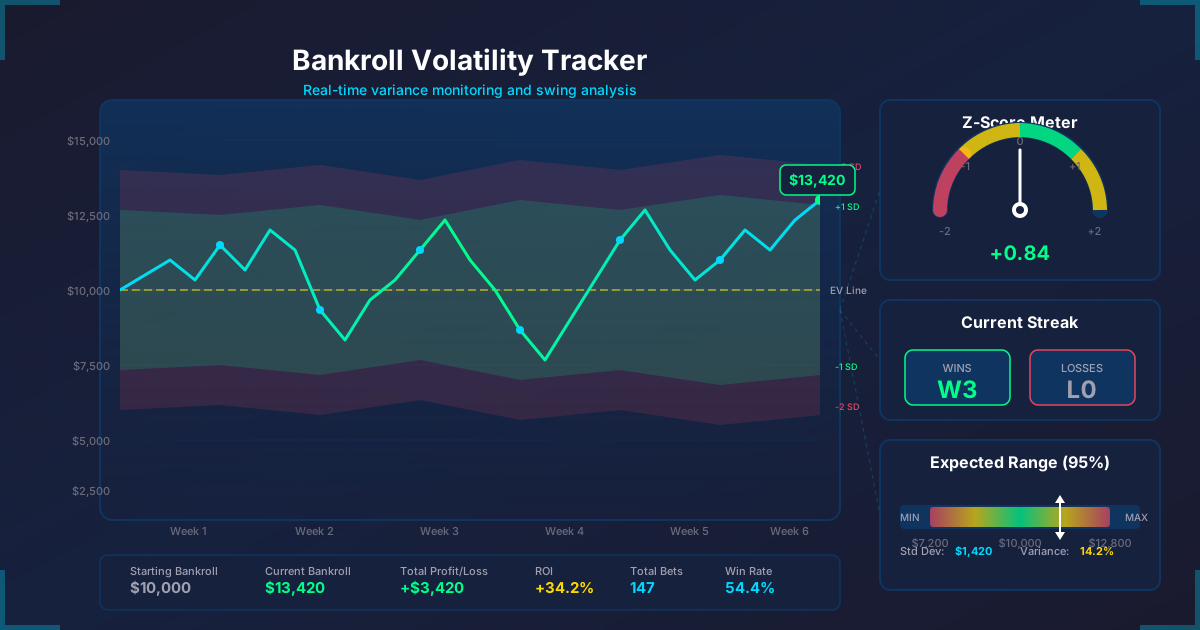
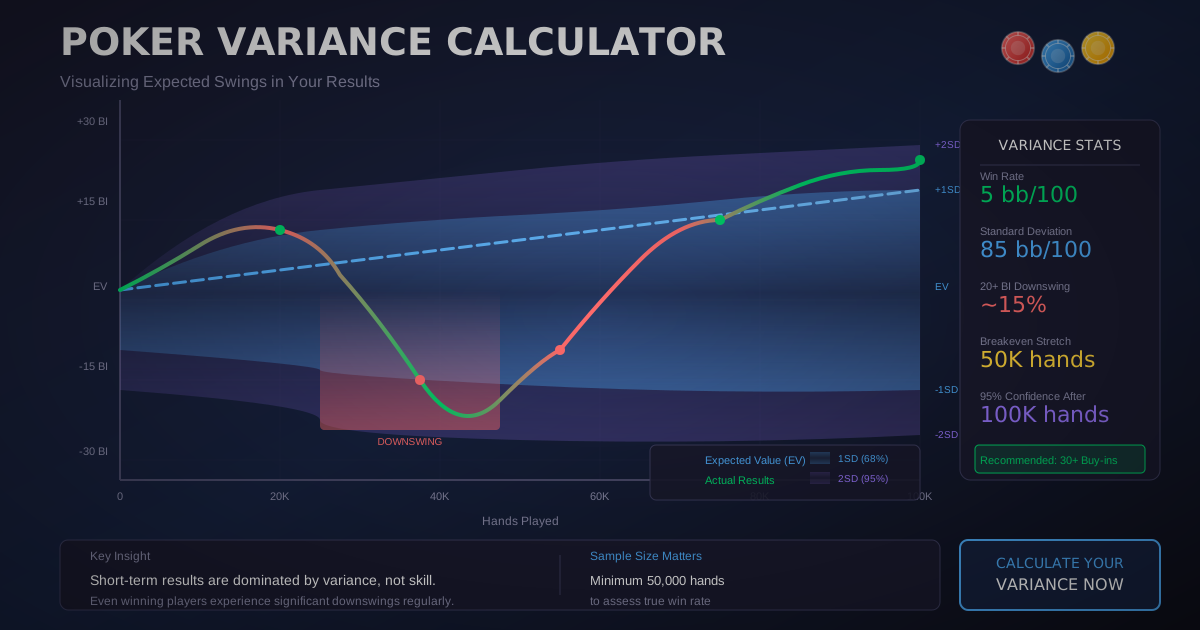
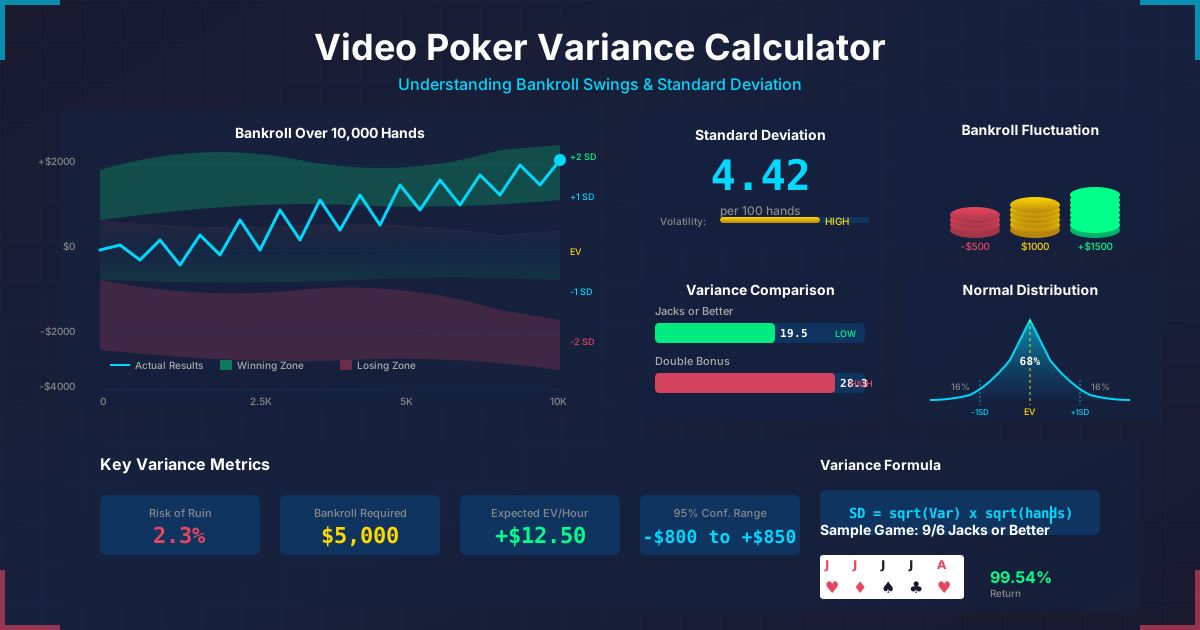
Win Rate and Variance
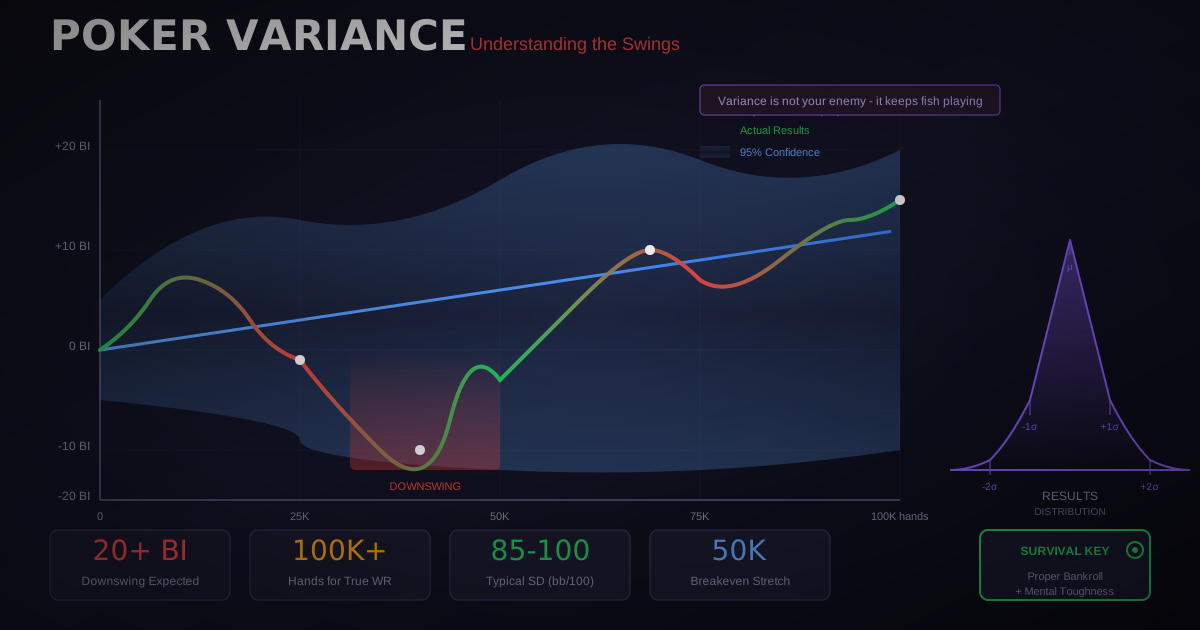
Confidence Intervals
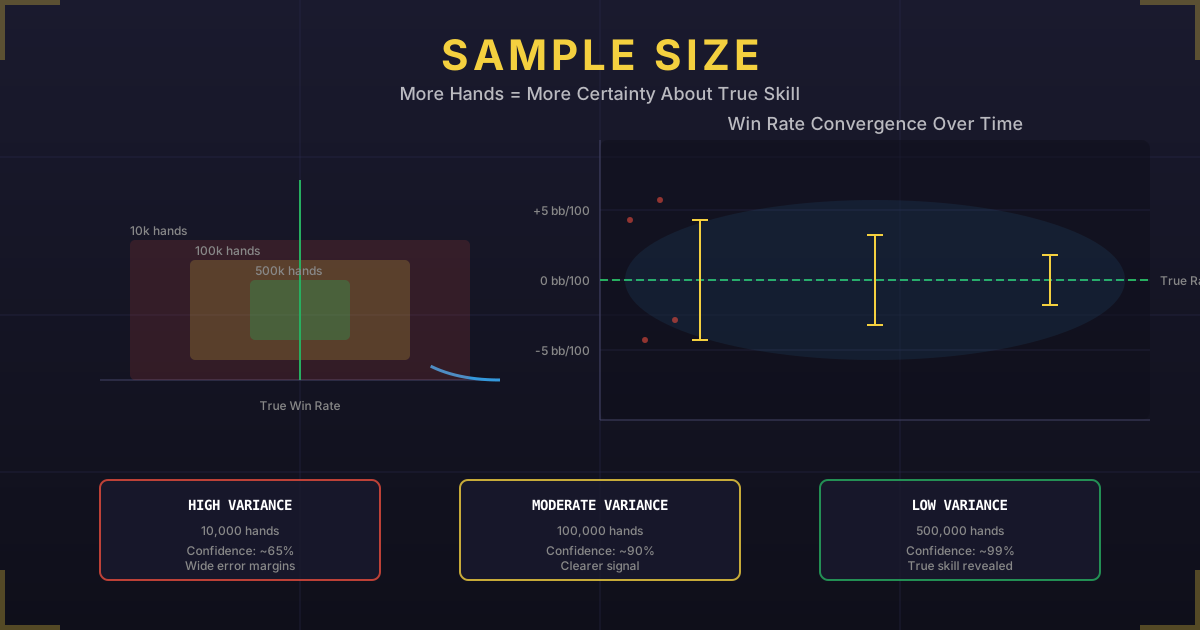
Win rate estimates have uncertainty:
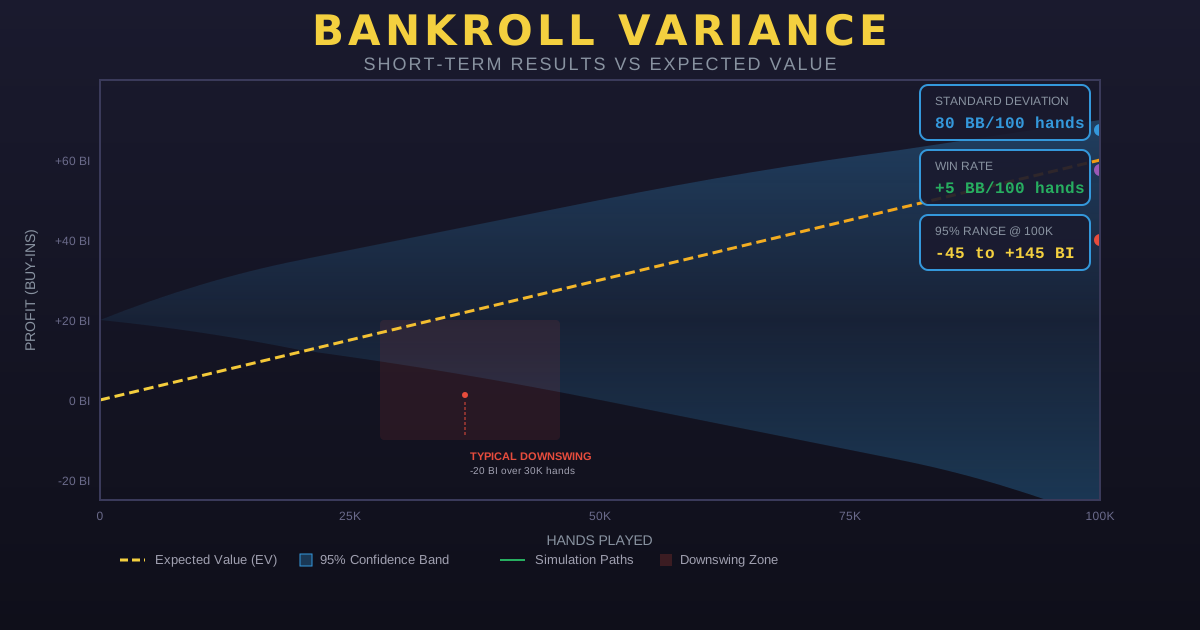
Standard Deviation: ~80-100 BB/100 (typical)
Standard Error = SD / sqrt(hands/100)

At 100,000 hands with 80 SD:
SE = 80 / sqrt(1000) = 2.53 BB/100

95% Confidence Interval: Win Rate ± 1.96 × SE
For 5 BB/100: Range is 0.04 to 9.96 BB/100
Sample Size Requirements
How many hands for reliable win rate?
| Confidence Level | Hands Needed |
|---|---|
| Directional (±3 BB/100) | 50,000 |
| Moderate (±2 BB/100) | 100,000 |
| Good (±1.5 BB/100) | 200,000 |
| Strong (±1 BB/100) | 500,000 |
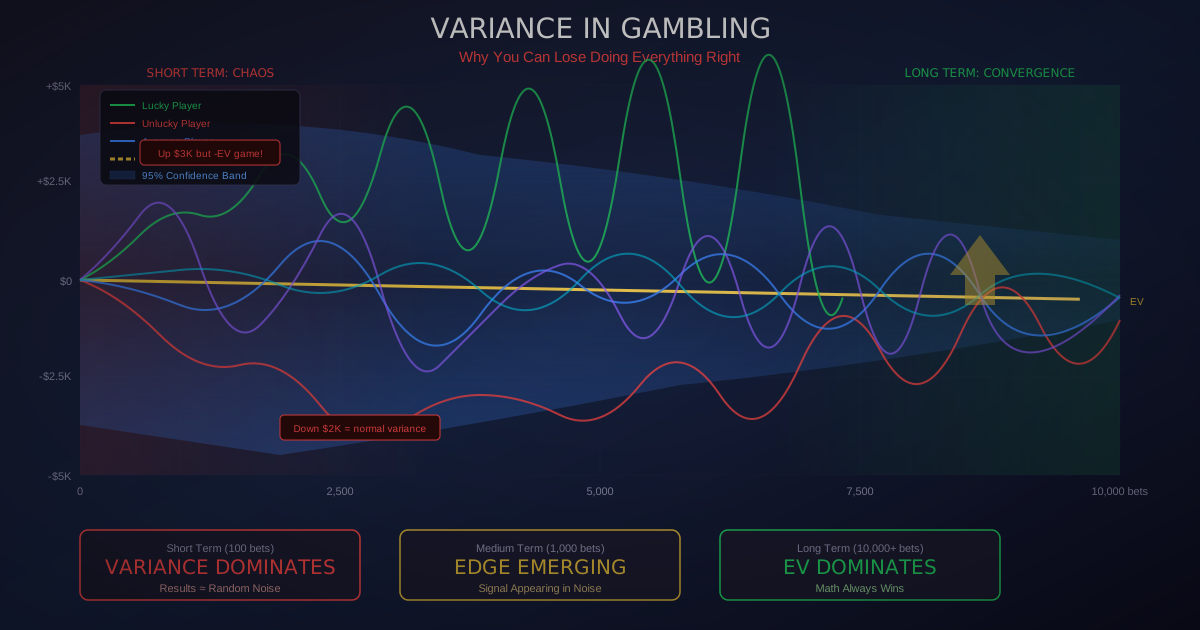
Win Rate Volatility
Short-term results vary wildly:
True win rate: 5 BB/100
Over 10,000 hands (short-term):
- 5% chance of -10 BB/100 result
- 25% chance of break-even or losing
- 50% chance of 0-10 BB/100
- 20% chance of 10+ BB/100

Reality: 10k hands tells you almost nothing
Factors Affecting Win Rate
Game Selection
Soft Tables:
More recreational players = higher win rate
Weekend evenings = softer fields
Lower stakes = easier competition
New player pools = less sophisticated
Tough Tables:
Regular-heavy tables = lower win rate
Off-peak hours = more professionals
Higher stakes = smaller edges
Established pools = studied opponents
Playing Style
TAG (Tight-Aggressive):
Lower variance
Consistent, smaller edges
Win rate: 3-6 BB/100 typical
LAG (Loose-Aggressive):
Higher variance
Larger swings, higher ceiling
Win rate: 4-10 BB/100 typical (higher variance)
Multi-Tabling Effects
1 table: Maximum focus, highest BB/100
4 tables: Slightly reduced BB/100, higher hourly
8+ tables: Significantly reduced BB/100, volume compensates
Optimal Balance:
Maximize: BB/100 × Tables × Hands/table/hour
Find the sweet spot where total hourly is highest
Common Mistakes to Avoid
-
Obsessing Over Short-Term Results: A 1,000-hand sample is meaningless. Don't celebrate or despair over tiny samples.
-
Ignoring Rake: Your gross win rate minus rake equals net win rate. High-rake environments destroy win rates.
-
Comparing Across Stakes: 5 BB/100 at $0.10/$0.25 is not the same achievement as 5 BB/100 at $5/$10.
-
Neglecting Hourly Rate: A lower BB/100 with more tables might produce higher hourly income.
-
Not Tracking Accurately: Incomplete data leads to inaccurate win rate calculations. Track every session.
-
Assuming Win Rate Is Fixed: Your win rate changes with skill development, game conditions, and opponent pool evolution.
Frequently Asked Questions
What is BB/100 in poker?
BB/100 stands for Big Blinds won per 100 hands. It's the standard measure of cash game win rate, allowing comparison across different stakes and session lengths.
How many hands do I need to know my true win rate?
Minimum 50,000 hands for a rough estimate, 100,000+ for moderate confidence, and 500,000+ for strong statistical confidence. Poker variance is extreme; small samples are unreliable.
Is 5 BB/100 a good win rate?
At micro stakes, 5 BB/100 is below average for a solid winner. At low stakes, it's good. At mid stakes, it's very good. At high stakes, it's exceptional. Context matters enormously.
Why is my win rate higher at lower stakes?
Lower stakes have weaker opposition. As you move up, you face better players with smaller edges. Additionally, rake takes a larger percentage at lower stakes, though you still win more gross BB.
Should I optimize for BB/100 or hourly rate?
Optimize for hourly rate. A 3 BB/100 player 8-tabling earns more than a 6 BB/100 player single-tabling at the same stakes.
How does rake affect my win rate?
Significantly. A 5 BB/100 gross win rate might become 3 BB/100 after rake. High-rake environments (live poker, some sites) reduce net win rate substantially.
Can I have a positive win rate and still lose money?
In the short term, absolutely. Variance can produce losing results over thousands of hands even for strong winners. Long-term, positive win rate equals profit.
How do I calculate win rate for tournaments?
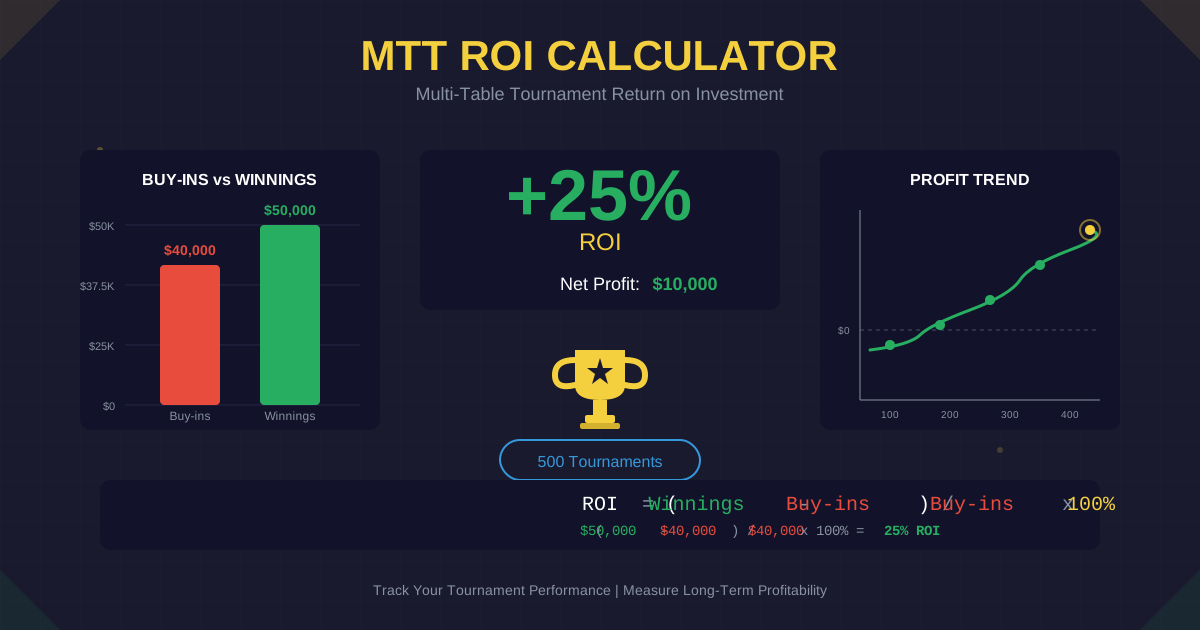
Tournaments use ROI (Return on Investment) rather than BB/100. Calculate: (Total Winnings - Total Buy-ins) / Total Buy-ins × 100%.
Pro Tips
- Track results separately by stakes to identify where you perform best
- Calculate win rate quarterly to spot trends and improvement
- Use Pokertracker, Hold'em Manager, or similar software for accurate tracking
- Compare your win rate to published population averages for your stakes
- Factor in opportunity cost when optimizing for hourly vs BB/100
Related Calculators
- Hourly Rate Calculator - Convert win rate to hourly income
- Sample Size Calculator - Determine statistical significance
- Bankroll Calculator - Required bankroll for your win rate
- Variance Calculator - Expected swings at your win rate
- MTT ROI Calculator - Tournament-specific metrics
Conclusion
Win rate is the definitive measure of your poker earning power. Our win rate calculator converts your results into meaningful metrics, showing you exactly how much you're winning and what that translates to in hourly income. Whether you're grinding micro stakes or battling at high stakes, understanding your win rate is essential for bankroll management, game selection, and career planning.
Track your results diligently, respect sample size requirements, and use win rate data to make informed decisions about stakes, volume, and table selection. Your win rate tells the story of your poker career in cold, hard numbers.