Blackjack Composition-Dependent Calculator: Card-Specific Strategy (2026)
Blackjack Composition-Dependent Calculator: The Cards Matter, Not Just the Total
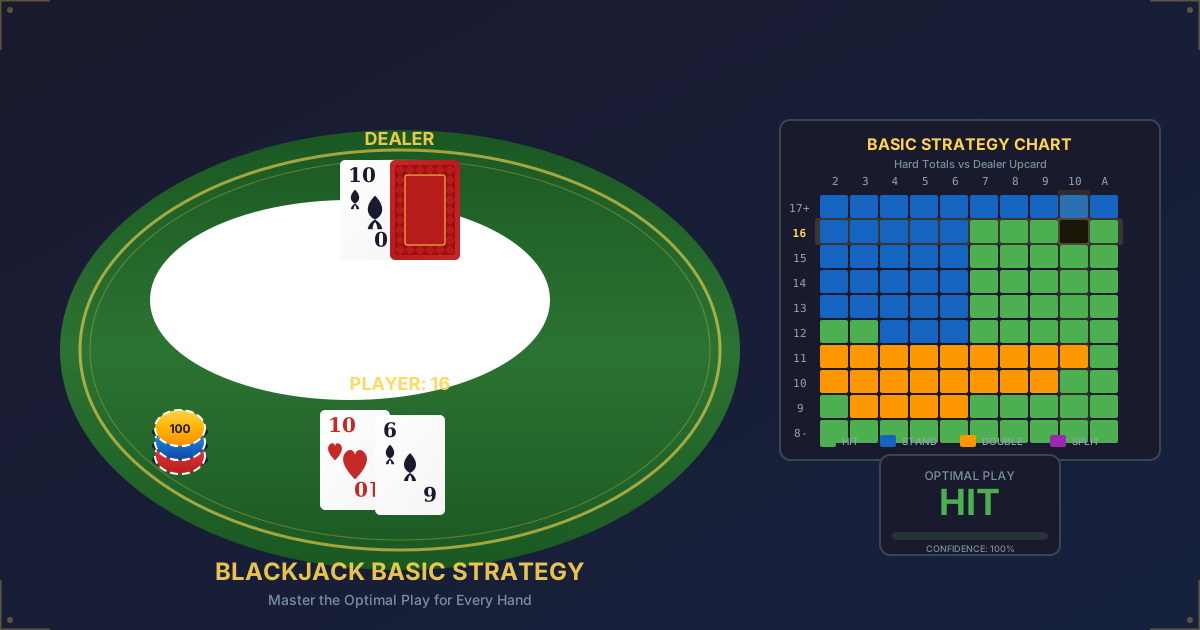
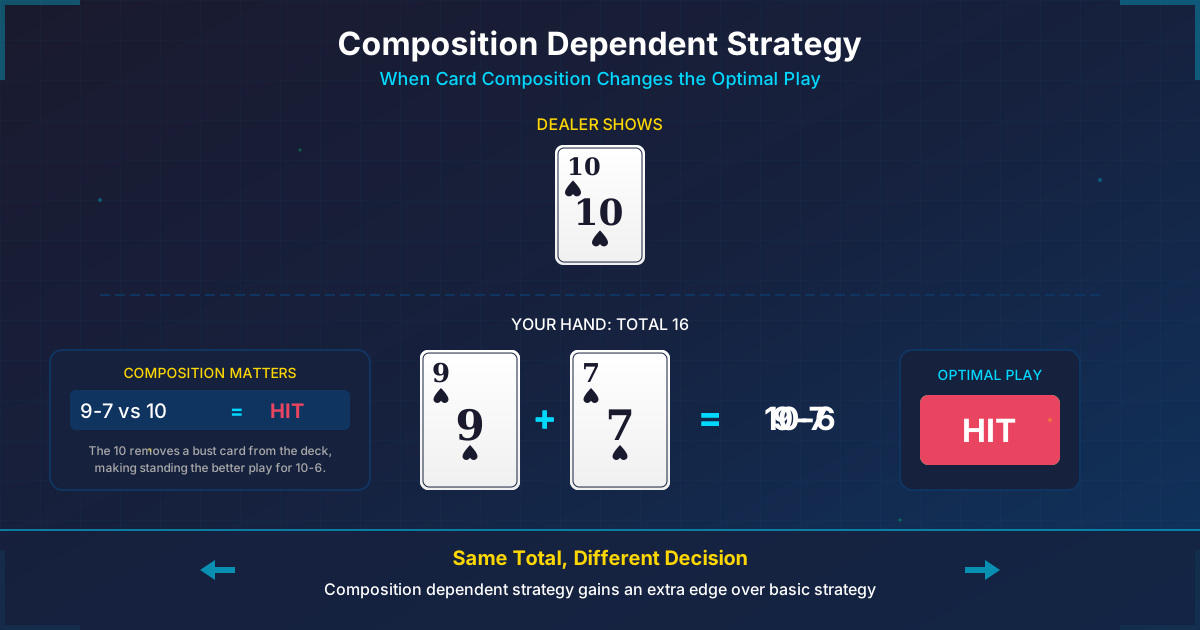
Basic strategy tells you what to do with a 16 against dealer 10—but does it matter if your 16 is T-6 or 4-4-4-4? Our calculator reveals composition-dependent plays where the specific cards change optimal strategy.
What Is Composition-Dependent Strategy?
Composition-dependent (CD) strategy considers which specific cards make up your hand, not just the total. A three-card 16 plays differently than a two-card 16 because the cards dealt affect what's left in the deck. Most basic strategy charts ignore this—CD strategy captures the edge.
Quick Answer: CD strategy matters most for hands of 16 vs 10. Two-card 16 (T-6): Stand or hit (close). Three+ card 16: Stand (the extra cards dealt changed the shoe composition). Surrender decisions also composition-dependent. Edge gain: ~0.01-0.03%. Small but real for serious players.
How to Use Our Calculator
Use the Composition-Dependent Calculator →
Enter your exact cards for composition-specific strategy.
Step-by-Step Instructions
-
Enter All Your Cards: Not just total
-
Input Dealer Upcard: Their showing card
-
View CD Strategy: Specific recommendation
-
Compare to Basic: What changes
-
See EV Difference: How much it matters
Input Fields Explained
| Field | Description | Example |
|---|---|---|
| Your Cards | Exact composition | 4-4-4-4 |
| Your Total | Hand value | 16 |
| Dealer Shows | Upcard | 10 |
| Basic Strategy | Total-dependent | Hit |
| CD Strategy | Composition-specific | Stand |
| EV Difference | How much gained | +0.02 |
Why Composition Matters
Card Removal Effect
When cards are dealt:
Those cards can't appear again
Affects remaining probabilities

Example: Four 4s in your hand
No more 4s available
Changes hitting/standing EV
Three-Card vs Two-Card Hands
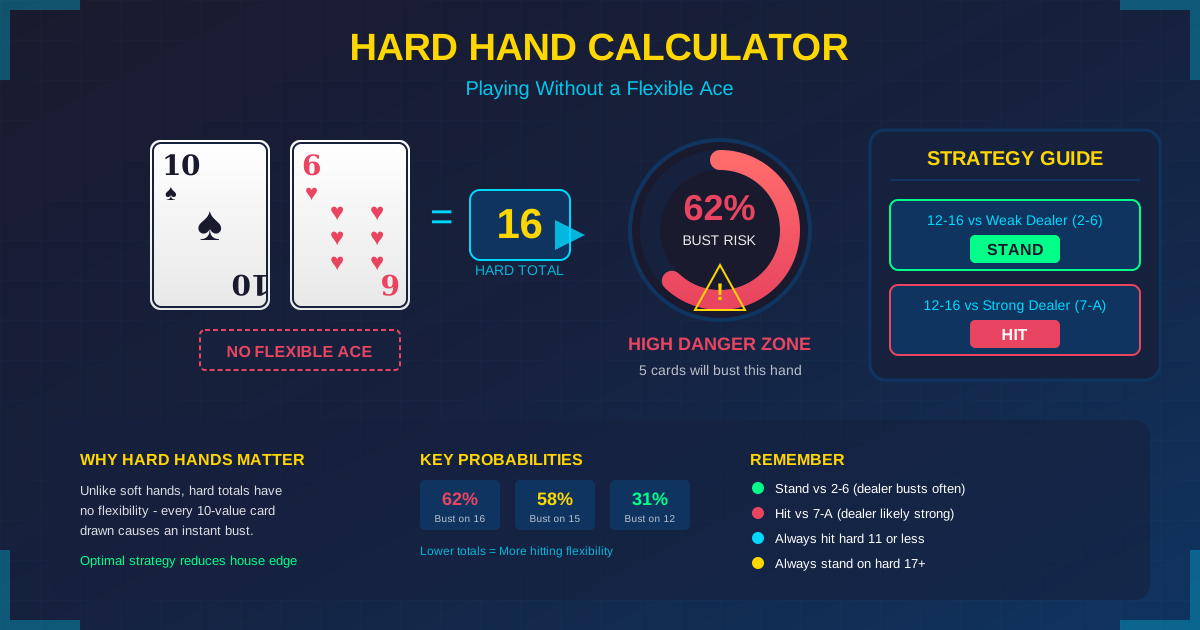
16 vs 10 (two cards):
10-6: Has a 10 in hand
Hitting is marginally better

16 vs 10 (three cards):
5-5-6: Three small cards removed
Remaining deck has more 10s
Standing becomes better
Key Composition-Dependent Plays
16 vs 10 (The Classic)
Two-card 16 (T-6, 9-7):
Marginally hit OR surrender
Borderline decision

Three+ card 16 (5-5-6, 4-4-4-4):
Stand!
Small cards removed = more 10s left
Standing EV improves significantly
16 vs 9
Two-card 16:
Hit (standard)

Multi-card 16:
Still hit (but closer)
Less dramatic than vs 10
12 vs 4 (Borderline Play)
Standard: Stand
CD consideration: Composition rarely matters
10-2 vs other 12s: Near identical
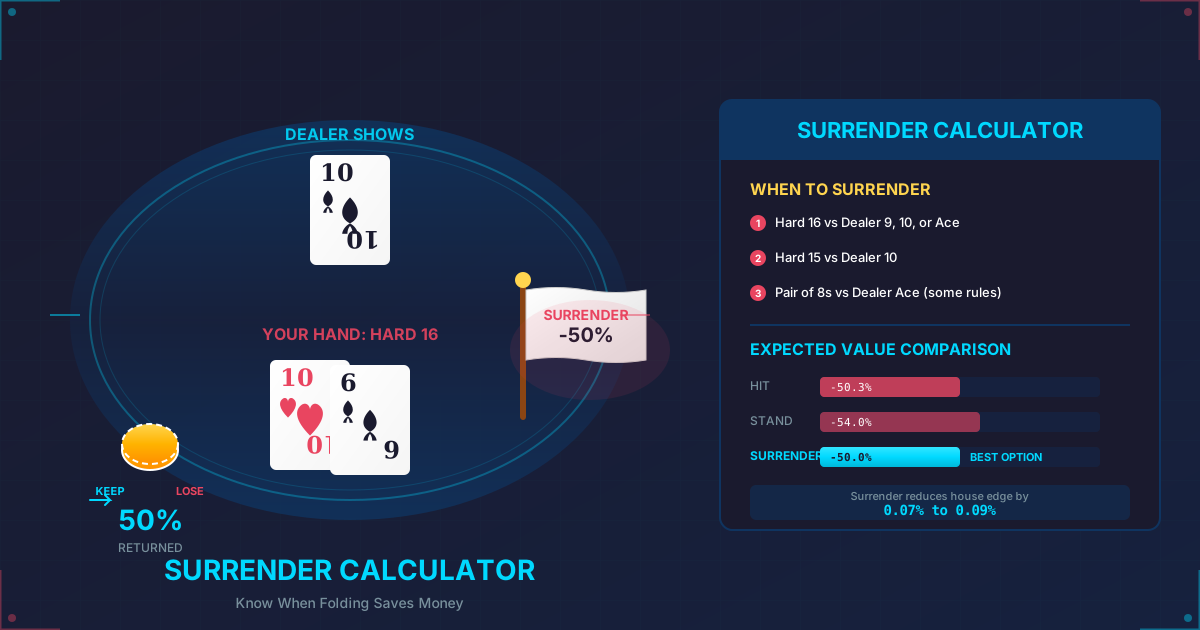
Surrender Decisions
16 vs 10:
T-6: Surrender optimal
7-9: Hit (no 10 in hand)
8-8: Split (never surrender)

Specific cards change surrender EV
Mathematical Basis
Card Removal Impact
Single deck, 16 made of T-6:
One 10 removed from shoe
51 cards remain
More small cards proportionally

If hitting:
Bust probability slightly lower
But standing EV also affected

Multi-deck reduces impact
But still measurable
Expected Value Comparison
16 vs 10 (8-deck shoe):

Two-card 16 (T-6):
Hit EV: -0.5399
Stand EV: -0.5403
Difference: 0.0004
Hit is marginally better

Four-card 16 (4-4-4-4):
Hit EV: -0.5467
Stand EV: -0.5386
Difference: 0.0081
Stand is better!
Real-World Examples
Example 1: The Famous 16 vs 10
Hand: 10-6 vs dealer 10
Analysis:
Two-card 16
Your 10 removed from deck
51/311 remaining 10s (8-deck)

Basic strategy: Hit (or surrender)
CD strategy: Hit (same)
Marginal decision either way
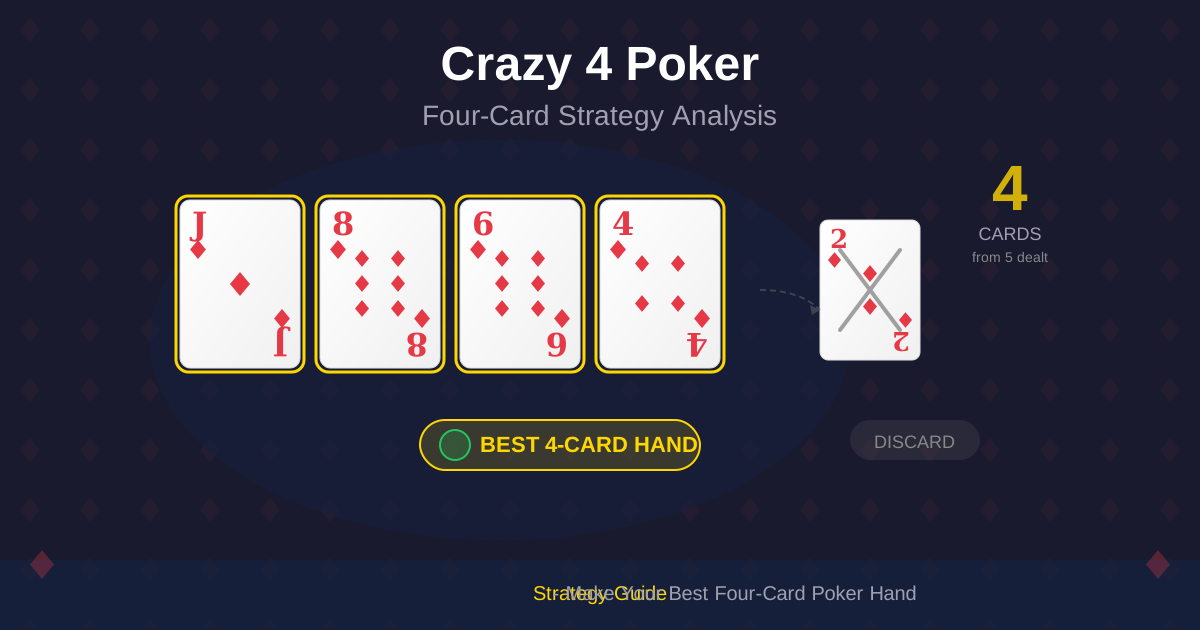
Hand: 4-4-4-4 vs dealer 10
Analysis:
Four-card 16
No 10s removed from your hand
Four 4s removed (useless cards gone)

Basic strategy: Hit
CD strategy: Stand
EV improvement: ~0.008

Your multi-card hand improved odds!
Example 2: Stiff Hands with Small Cards
Hand: 3-3-4-6 vs dealer 10
Analysis:
Four small cards removed
Remaining deck: More 10s proportionally
Hitting more likely to bust

Basic: Hit
CD: Stand (marginal)

Similar pattern to 4-4-4-4
Example 3: Two-Card vs Multi-Card 15
Hand 1: T-5 vs dealer 10 Hand 2: 3-5-7 vs dealer 10
Comparison:
Both total 15

T-5: One 10 removed
3-5-7: Three small cards removed

Standing EV similar
Hitting EV: 3-5-7 slightly worse
(More 10s left to bust you)

Borderline CD difference
Example 4: When Composition Doesn't Matter
Hand: A-7 (soft 18) vs dealer 9
Analysis:
CD impact: Minimal
One ace, one 7 removed
Doesn't significantly affect strategy

Hit is correct regardless
Composition barely changes EV
Focus on total-dependent strategy
When CD Strategy Matters Most
High Impact Situations
1. 16 vs 10 (multi-card)
2. 16 vs 9 (multi-card, marginal)
3. Surrender decisions (close calls)
4. Single/double deck games
5. Borderline hit/stand decisions
Low Impact Situations
1. Clear-cut decisions (12 vs 6)
2. Soft hand strategies
3. Splitting decisions
4. Eight-deck shoes (diluted effect)
5. Non-borderline totals
Edge Gained from CD Strategy
Realistic Expectations
Basic strategy house edge: ~0.50%
CD strategy improvement: ~0.01-0.03%
New edge: ~0.47-0.49%

Small but real improvement
Matters over thousands of hands
Free edge, no additional risk
When Worth Learning
Worth it if:
- Play high volume
- Already use perfect basic
- Single/double deck games
- Want every edge

Not worth it if:
- Casual player
- Haven't mastered basic
- Only play 8-deck shoes
- Memory capacity limited
Common Mistakes
1. Overcomplicating Simple Hands
Mistake: CD analysis on every hand Problem: Most hands are clear-cut Fix: Focus on borderline totals only
2. Ignoring Shoe Size
Mistake: Apply CD to 8-deck like single Problem: Effect diluted in large shoes Fix: Understand deck penetration impact
3. Sacrificing Speed for CD
Mistake: Slow play to calculate CD Problem: Lost hands, casino attention Fix: Pre-memorize key CD plays
4. Using CD Before Basic
Mistake: Study CD without perfect basic Problem: Missing much larger edge Fix: Master basic strategy first
Frequently Asked Questions
How much does composition-dependent strategy help?
Approximately 0.01-0.03% edge improvement. Small but measurable over many hands.
Should beginners learn CD strategy?
No. Master basic strategy first—it's worth 10-20× more than CD improvements. CD is for advanced players.
Does CD matter in online blackjack?
Less so. Online often uses large virtual shoes and reshuffles frequently, reducing CD value.
What's the most important CD play?
16 vs 10 with three or more cards. Stand instead of hit—this is the highest-impact CD deviation.
Does card counting incorporate CD?
Somewhat. Counting tracks general shoe composition. CD is more specific to your exact hand.
How do I memorize CD plays?
Learn the key ones: Multi-card 16 vs 10 = stand. Specific surrender exceptions. Don't try to memorize everything.
Pro Tips
-
Master basic first: CD is refinement, not foundation
-
Focus on 16 vs 10: Highest impact CD play
-
Single deck matters more: CD effect is larger
-
Pre-memorize: Don't calculate at the table
-
Know your edge: ~0.02% improvement realistic
Related Calculators
- Blackjack Basic Strategy Calculator - Foundation strategy
- Blackjack Odds Calculator - Probability analysis
- Blackjack Card Counting Calculator - Count-based strategy
- Blackjack Expected Value Calculator - EV analysis
- Blackjack House Edge Calculator - Edge breakdown
Conclusion
Composition-dependent strategy extracts a small additional edge by considering which specific cards make up your hand. Our calculator shows when the cards matter—particularly for multi-card 16s against dealer 10.
Calculate Composition-Dependent Strategy Now →
Most hands play identically regardless of composition, but the exceptions represent free edge. Our calculator identifies when your specific cards should change the decision, turning borderline plays into slightly better ones.