Blackjack Card Counting Calculator: Is It Worth It? (2026)
Blackjack Card Counting Calculator: The Math Behind Advantage Play
Card counting can flip the house edge in your favor—but is the effort worth it? Our calculator shows expected edge at various counts, required bankroll, and the realistic hourly expectation that makes or breaks a counting career.
What Is Card Counting?
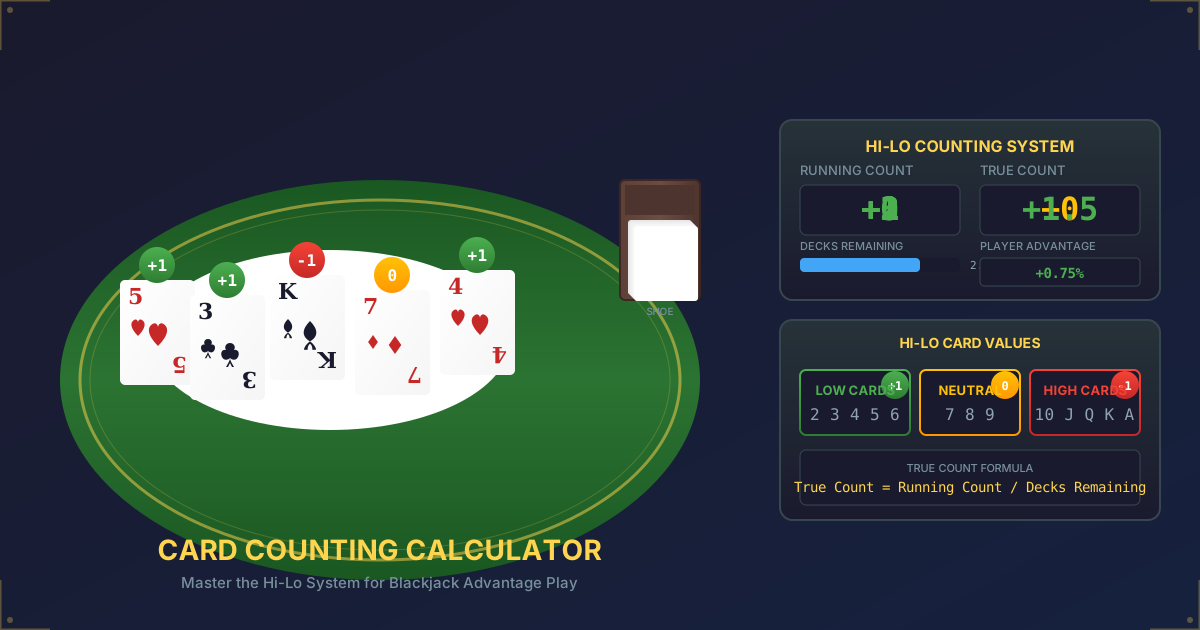
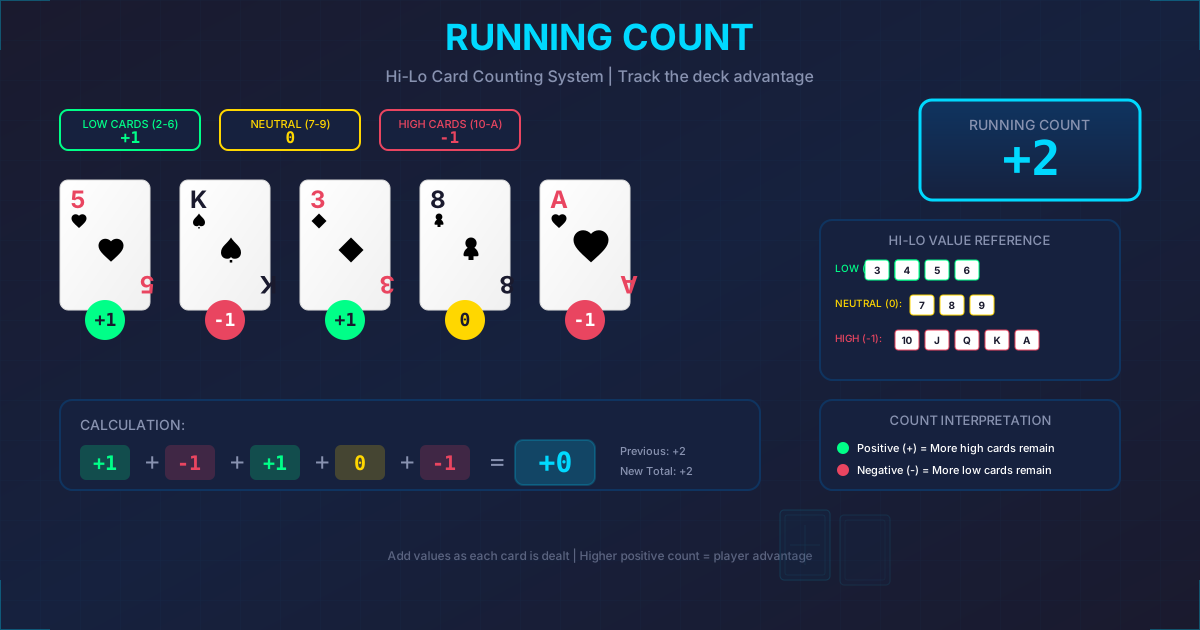
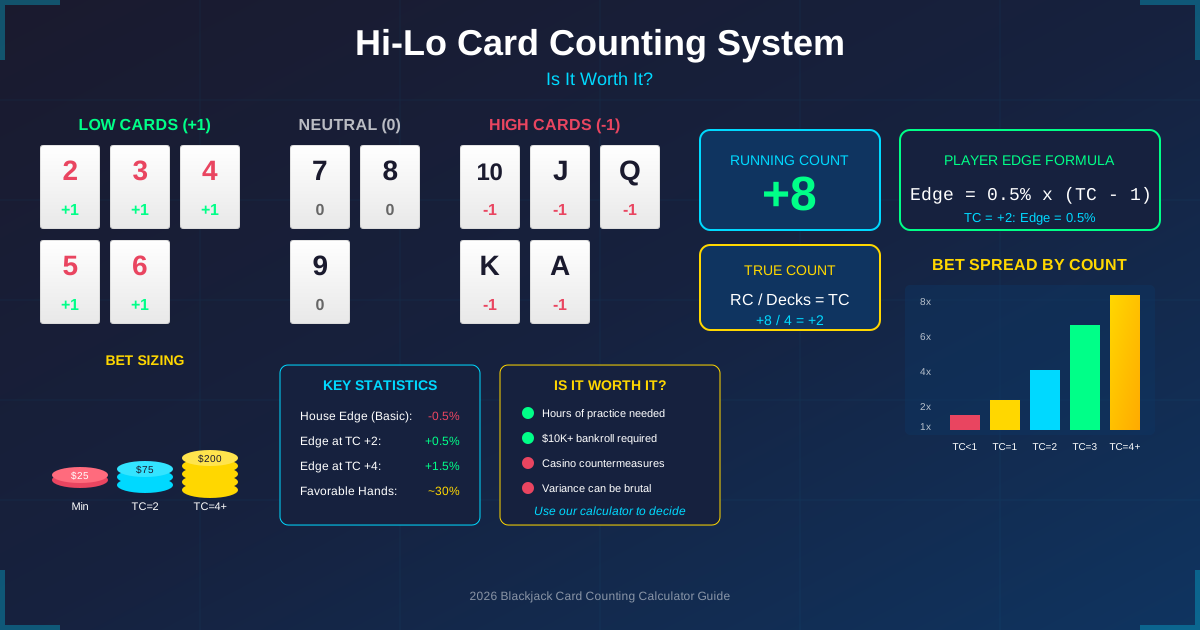
Card counting tracks the ratio of high to low cards remaining in the deck. High cards (10, J, Q, K, A) favor the player; low cards (2-6) favor the dealer. By betting more when the deck is "rich" in high cards, skilled counters can gain 0.5-1.5% edge over the casino.
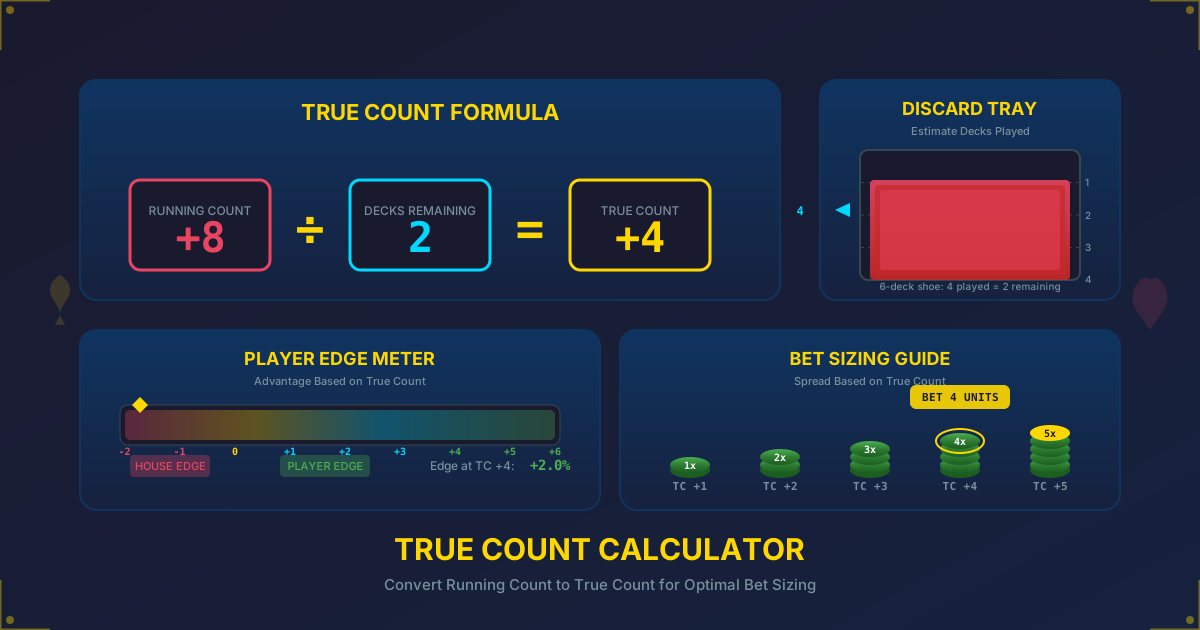
Quick Answer: Hi-Lo count: +1 for 2-6, 0 for 7-9, -1 for 10-A. True count = running count ÷ decks remaining. Player edge ≈ 0.5% × (true count - 1). At TC +3, you have roughly 1% edge. Requires $50,000+ bankroll for $100 max bet with 5% risk of ruin. Realistic hourly EV: $25-50/hour for recreational counters. Casinos use countermeasures; longevity is limited.
How to Use Our Calculator
Use the Card Counting Calculator →
Enter count and bet spread to calculate expected value.
Step-by-Step Instructions
-
Enter True Count: Current deck richness
-
Input Bet Spread: Min to max bet ratio
-
Set Bankroll: Available funds
-
View Player Edge: At current count
-
See Hourly EV: Expected earnings
Input Fields Explained
| Field | Description | Example |
|---|---|---|
| Running Count | Raw card count | +8 |
| Decks Remaining | Undealt decks | 2 |
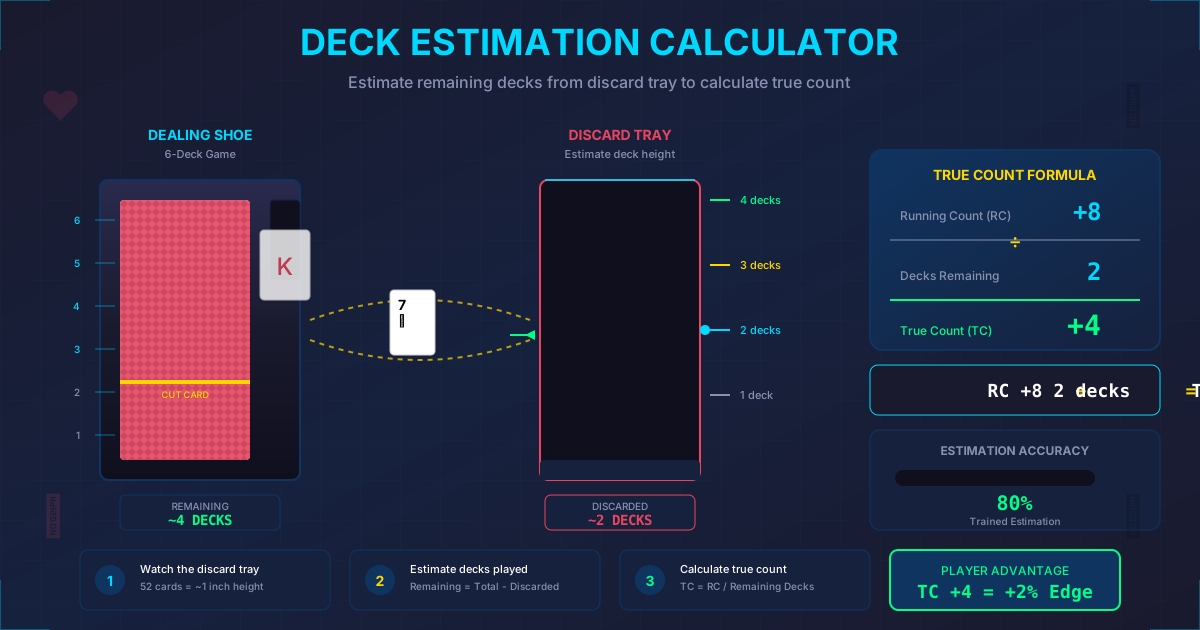
| True Count | Running ÷ Decks | +4 |
| Player Edge | At this count | +1.5% |
| Optimal Bet | Based on edge | $150 |
| Hourly EV | Expected rate | $35/hour |
The Hi-Lo System
Card Values
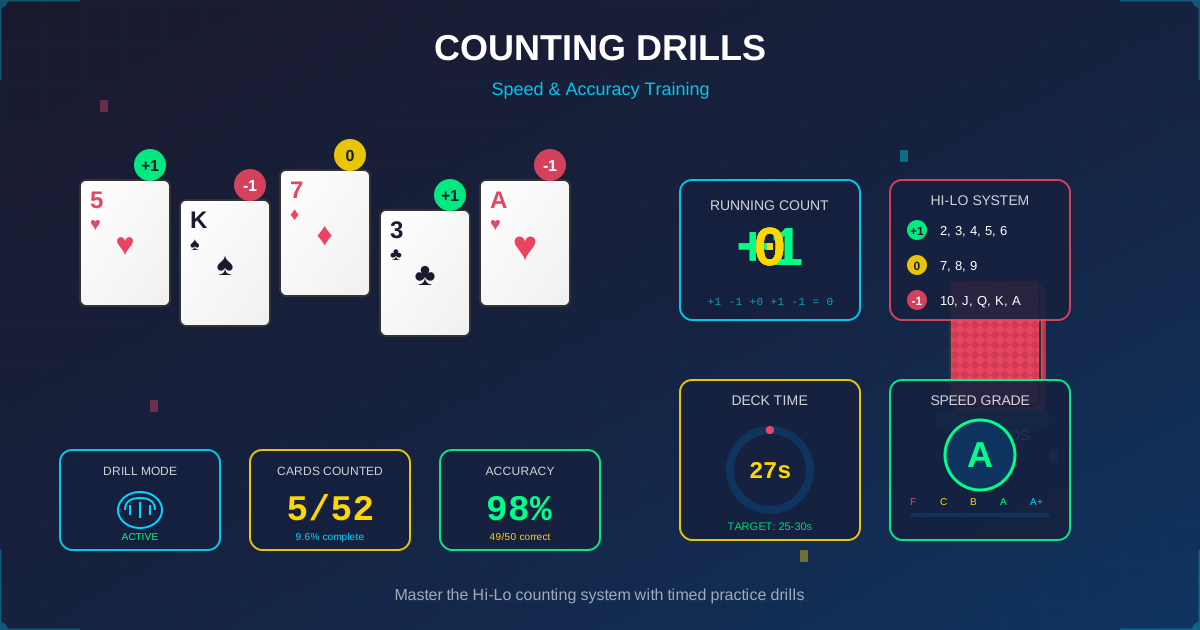
| Cards | Count Value | Why |
|---|---|---|
| 2, 3, 4, 5, 6 | +1 | Low cards favor dealer |
| 7, 8, 9 | 0 | Neutral cards |
| 10, J, Q, K, A | -1 | High cards favor player |
Why It Works
High cards help player:
- More blackjacks (3:2 payout)
- Better double down results
- Dealer busts more on stiff hands

When count is positive:
More high cards remain
Player has advantage
Bet more
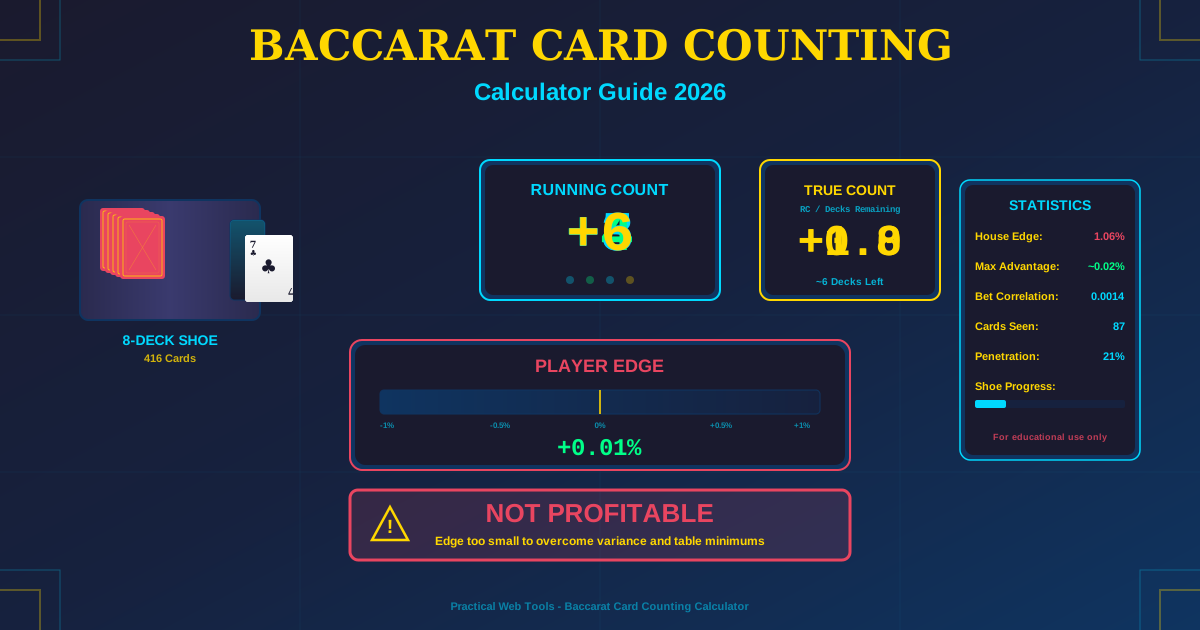
Running vs True Count
Running count: Raw total
True count: Adjusted for decks remaining

Example:
Running count: +6
Decks remaining: 2
True count: +6 ÷ 2 = +3

True count determines actual edge
Edge Calculation
Edge per True Count
Approximate formula:
Edge = 0.5% × (True Count - 1)

True Count | Edge
-1         | -1.0%
0          | -0.5% (basic house edge)
+1         | 0.0% (break even)
+2         | +0.5%
+3         | +1.0%
+4         | +1.5%
+5         | +2.0%
Factors Affecting Edge
| Factor | Impact |
|---|---|
| Number of decks | More decks = smaller edge |
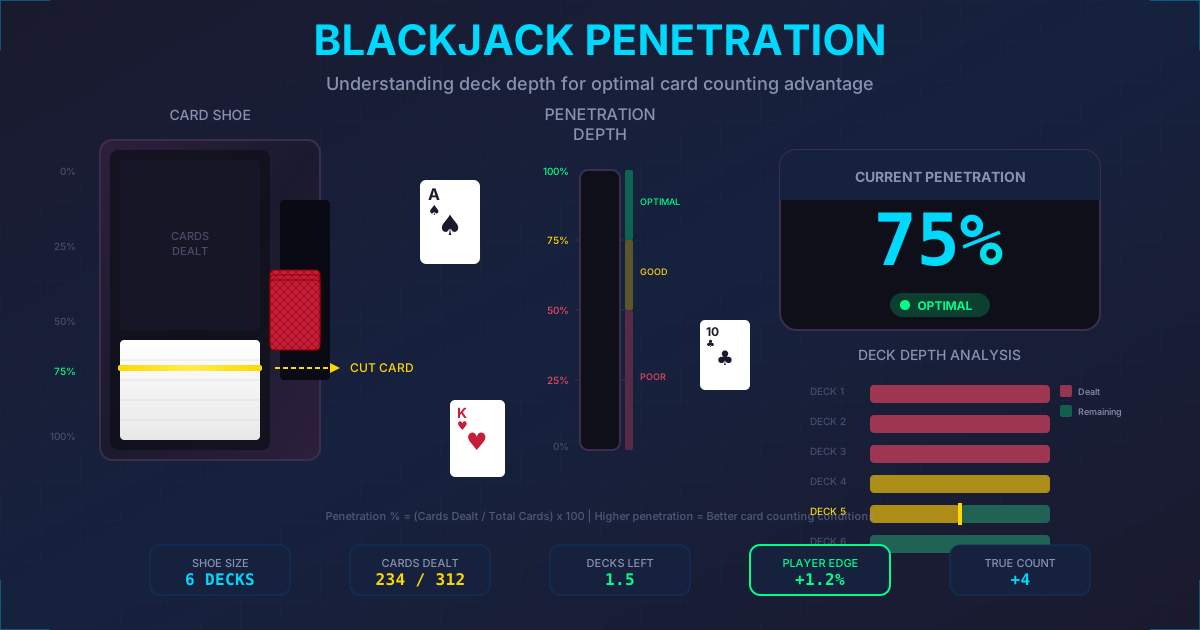
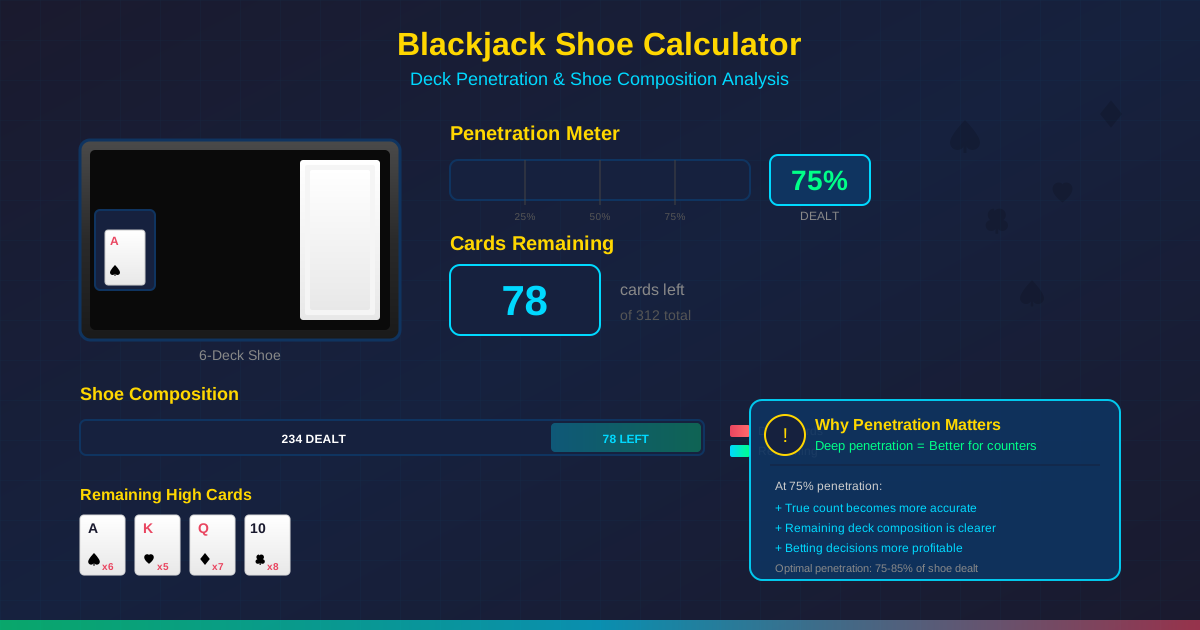
| Penetration | Deeper = better for counter |
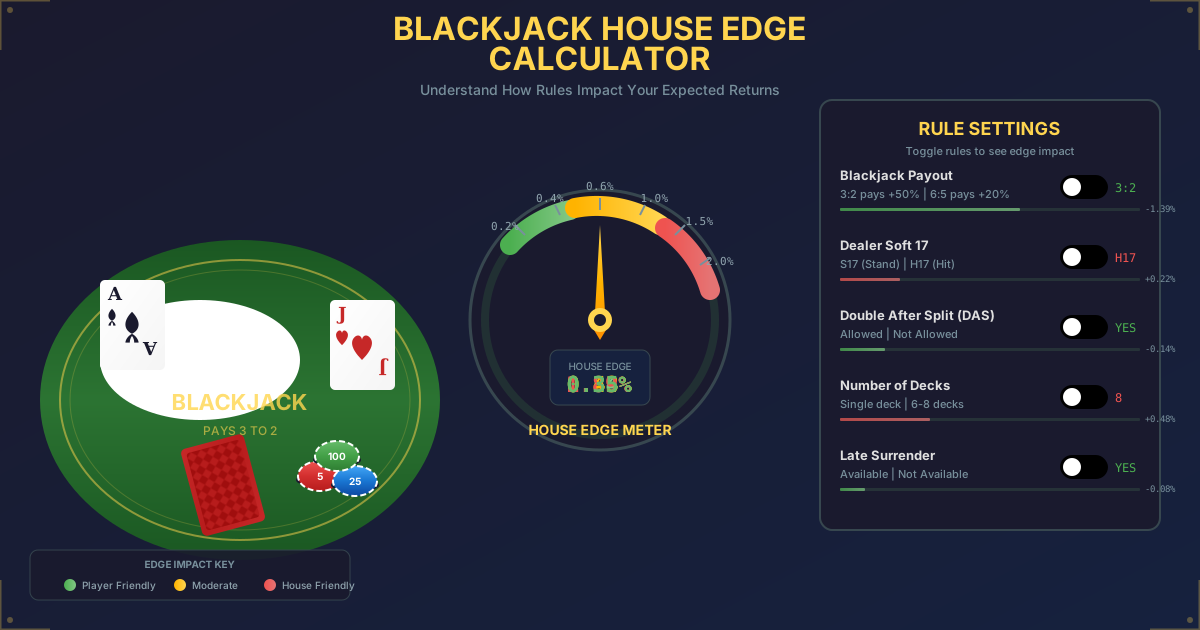
| Rules (S17, DAS, etc.) | Affects base edge |
| Bet spread | Wider = more EV |
| Playing deviations | Adds ~0.2% to edge |
Bet Spreading Strategy
Basic Spread
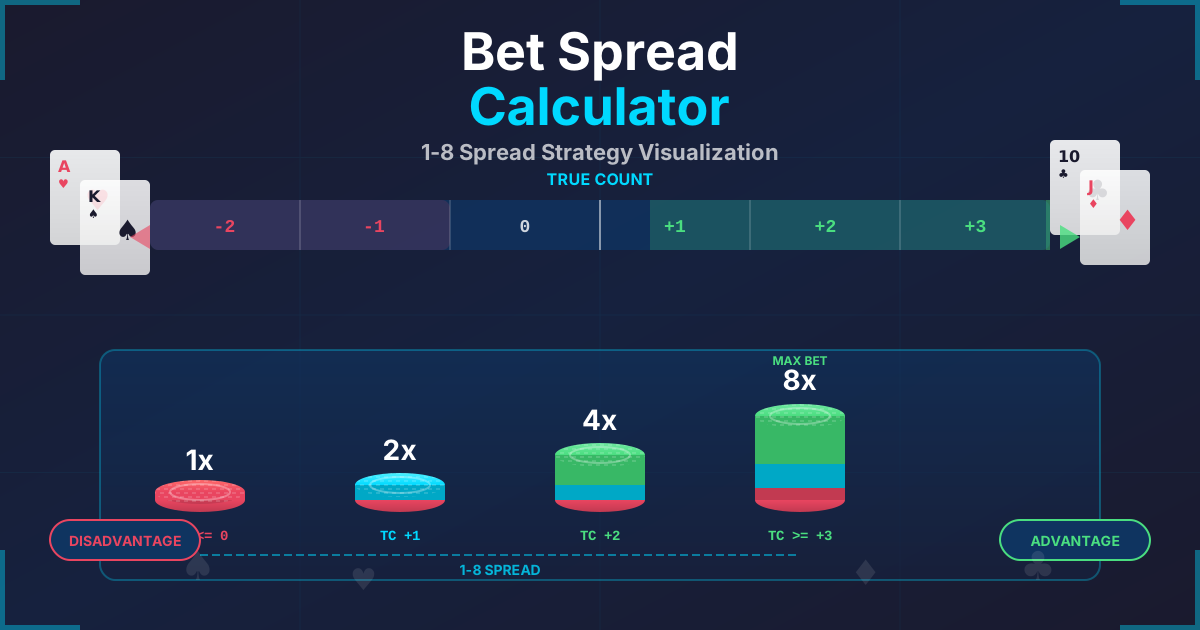
True Count | Bet Size
≤0         | Minimum ($10)
+1         | 1× min ($10)
+2         | 2× min ($20)
+3         | 4× min ($40)
+4         | 8× min ($80)
+5+        | 10× min ($100)

10:1 spread: $10-$100
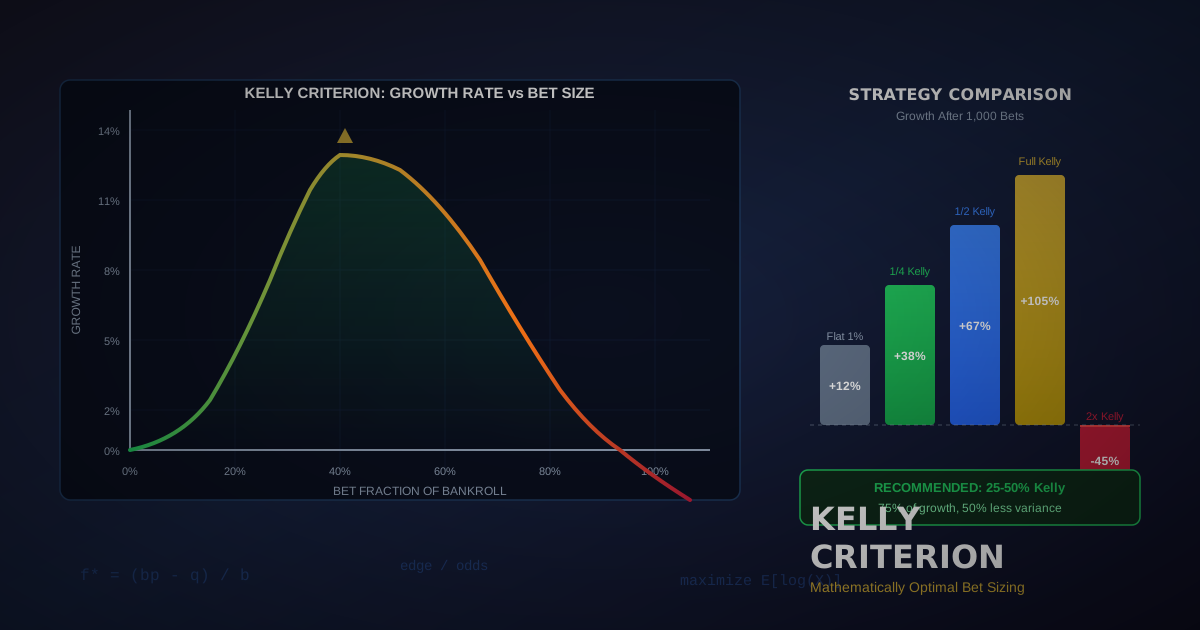
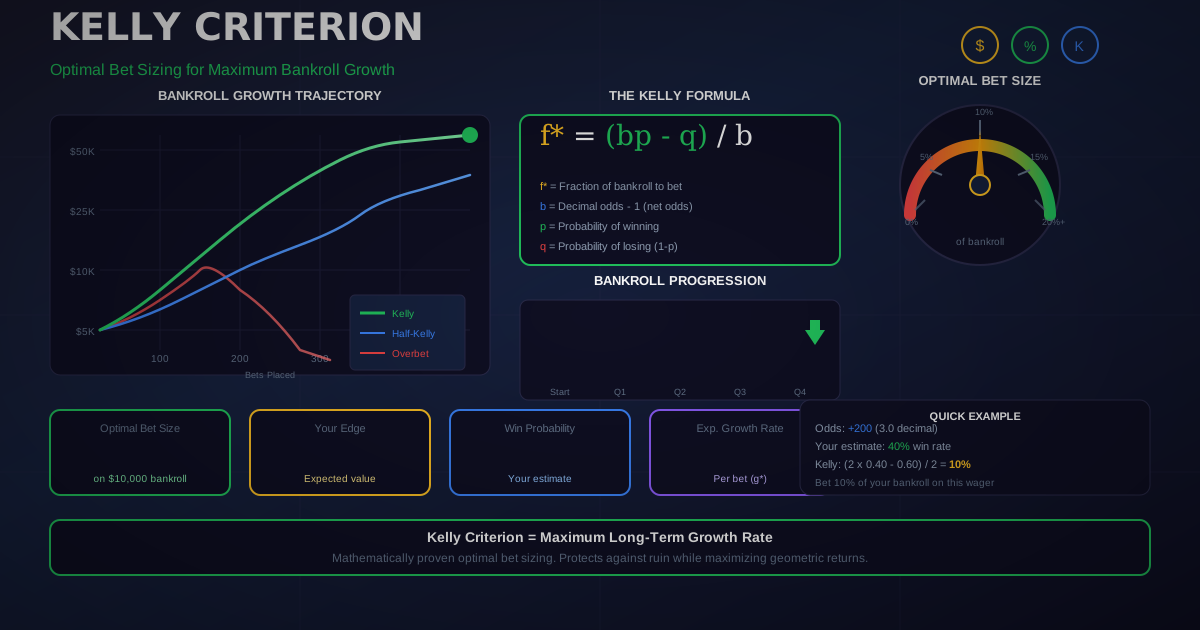
Kelly Criterion Betting
Optimal bet = Edge × Bankroll / Variance

Example at TC +3 (1% edge):
Edge: 1%
Bankroll: $50,000
Variance factor: ~1.3

Kelly bet = 0.01 × $50,000 / 1.3 = $385

Most use fractional Kelly (1/2 or 1/4)
to reduce variance
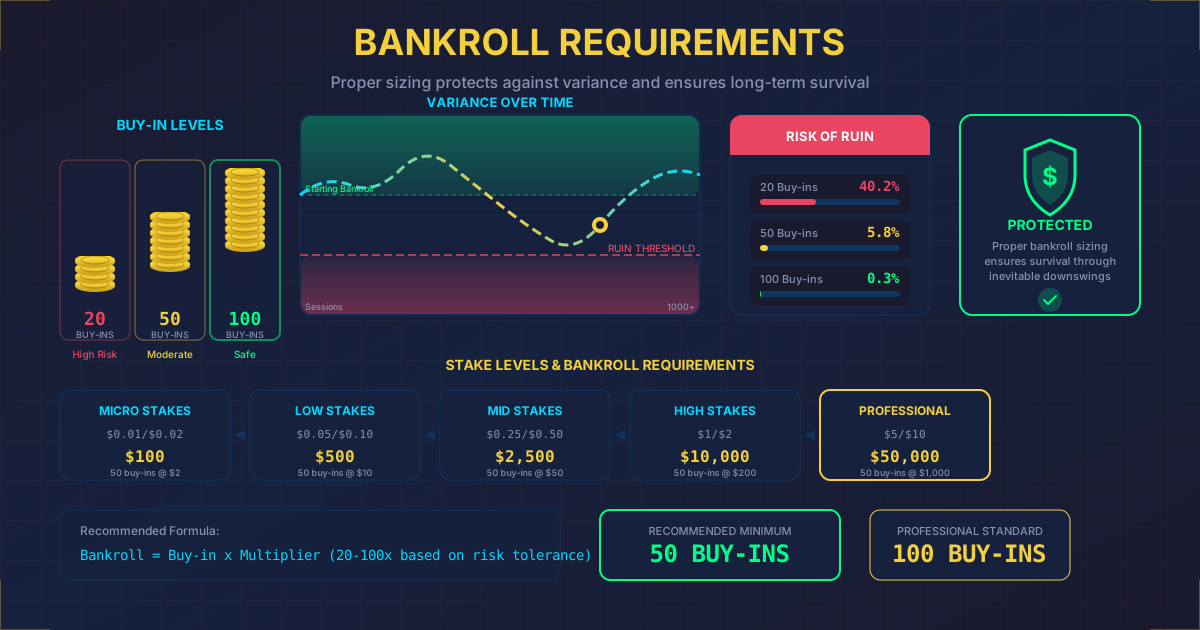
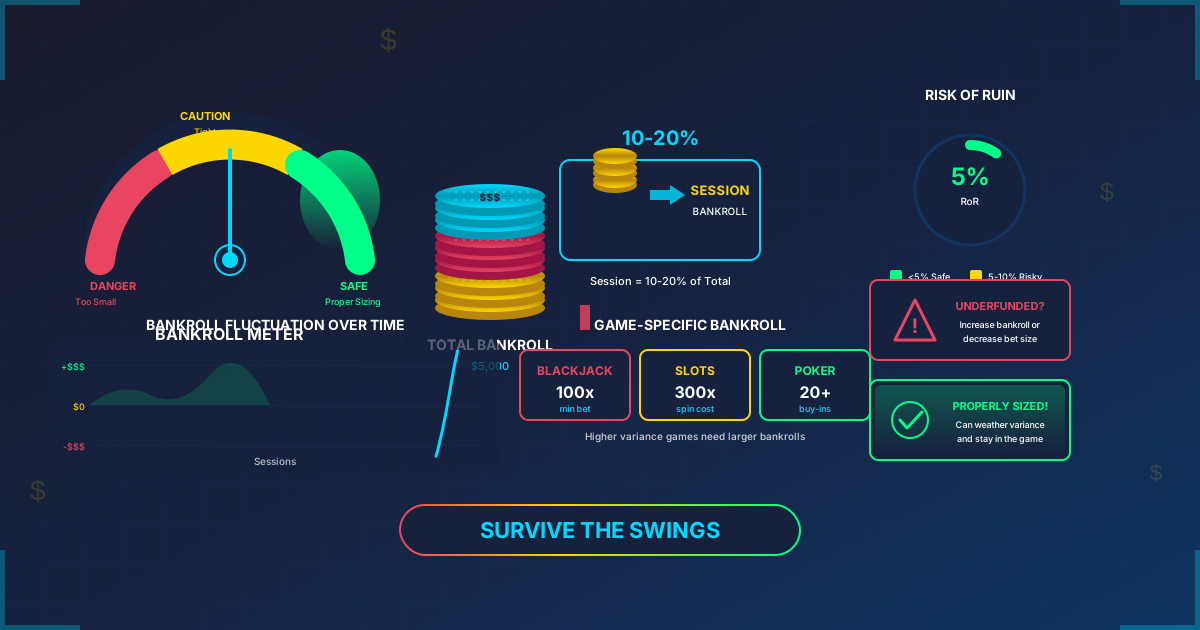
Bankroll Requirements
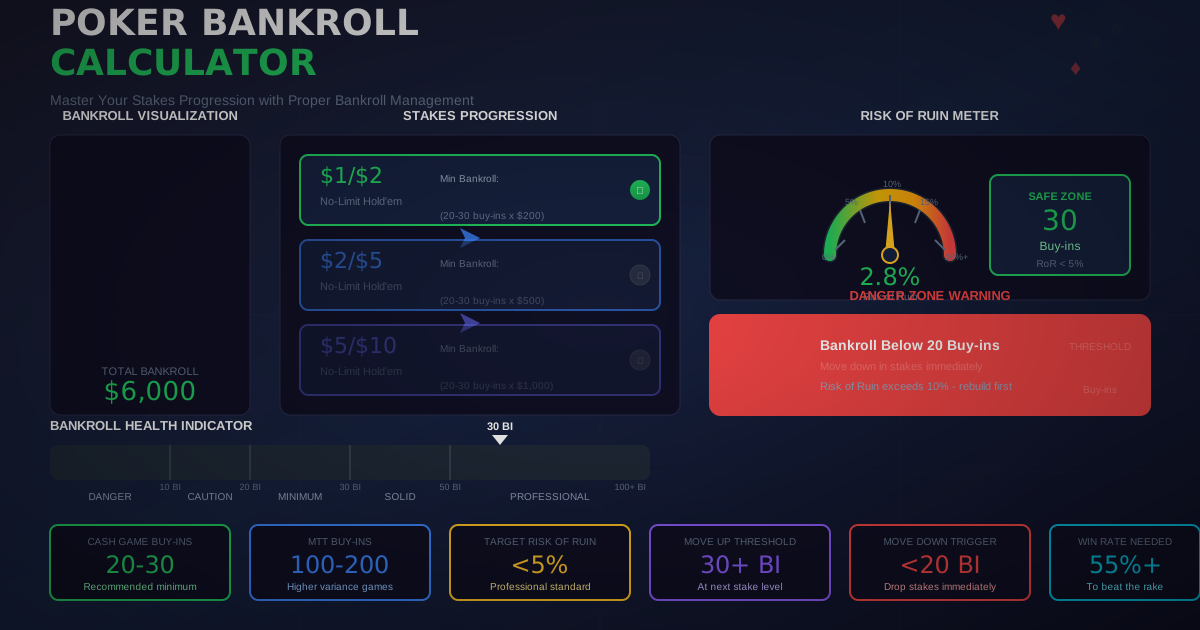
Risk of Ruin Table
| Bet Spread | 1% RoR | 5% RoR | 10% RoR |
|---|---|---|---|
| 1-5 units | 400 units | 200 units | 150 units |
| 1-10 units | 600 units | 300 units | 200 units |
| 1-15 units | 800 units | 400 units | 250 units |
Real Dollar Example
$25 minimum, 1-10 spread, 5% RoR:
Required: 300 units = $7,500

$100 minimum, 1-10 spread, 5% RoR:
Required: 300 units = $30,000

Professional level ($25-$500):
Typically $75,000-$150,000 bankroll
Expected Hourly Value
Calculation Components
Hourly EV = (Hands/hour) × (Average bet) × (Edge)

Example:
Hands/hour: 100
Average bet: $50
Overall edge: 0.8%

EV = 100 × $50 × 0.008 = $40/hour
Realistic Expectations
| Skill Level | Hourly EV |
|---|---|
| Beginner counter | $15-25/hour |
| Competent counter | $25-50/hour |
| Expert team play | $50-100/hour |
| High-stakes pro | $100-300/hour |
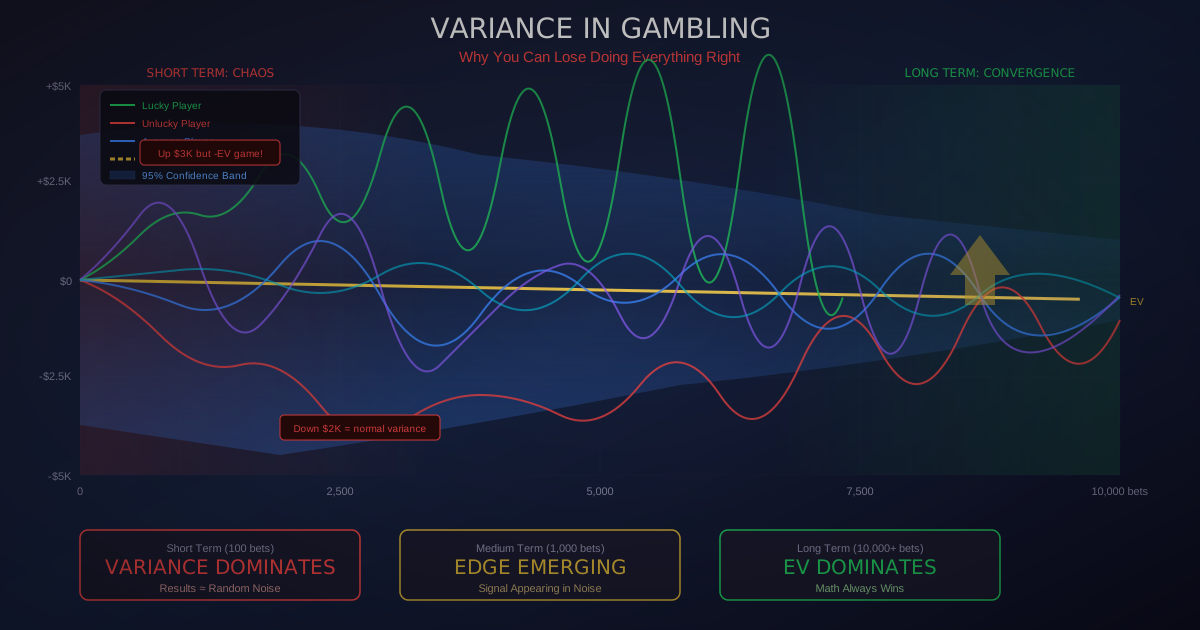
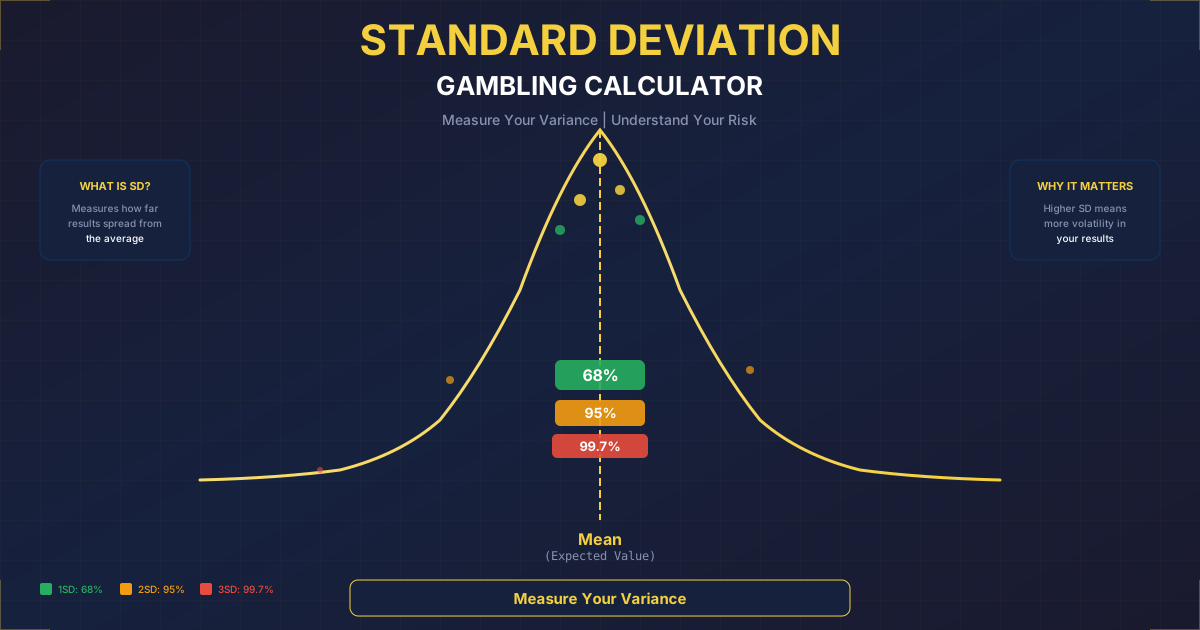
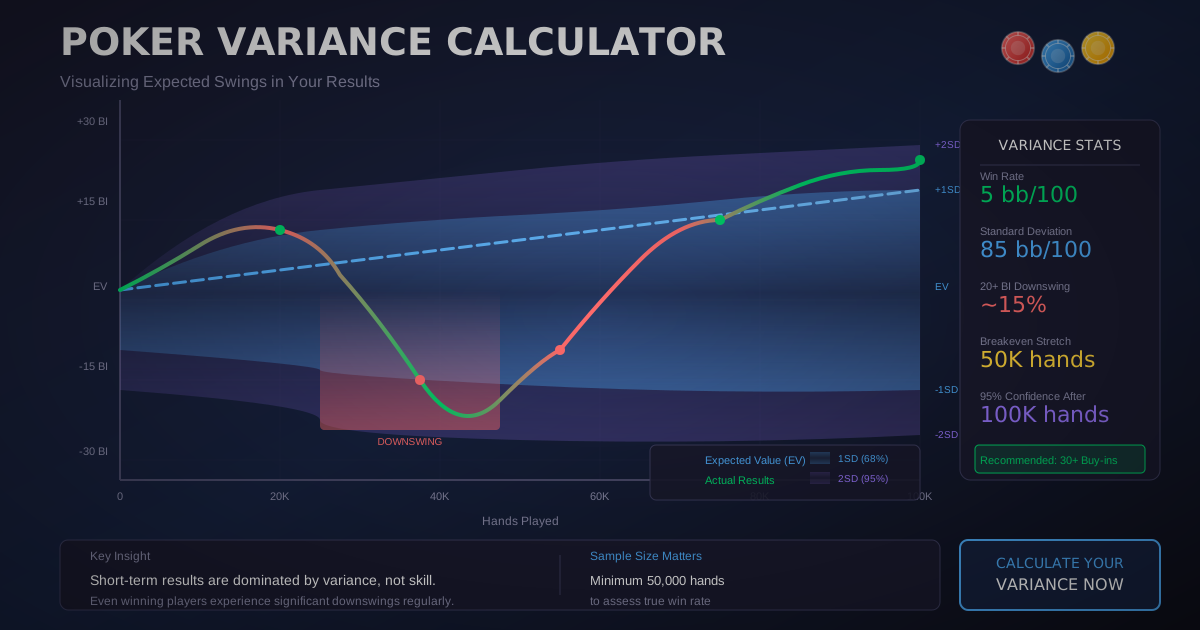
Variance Reality
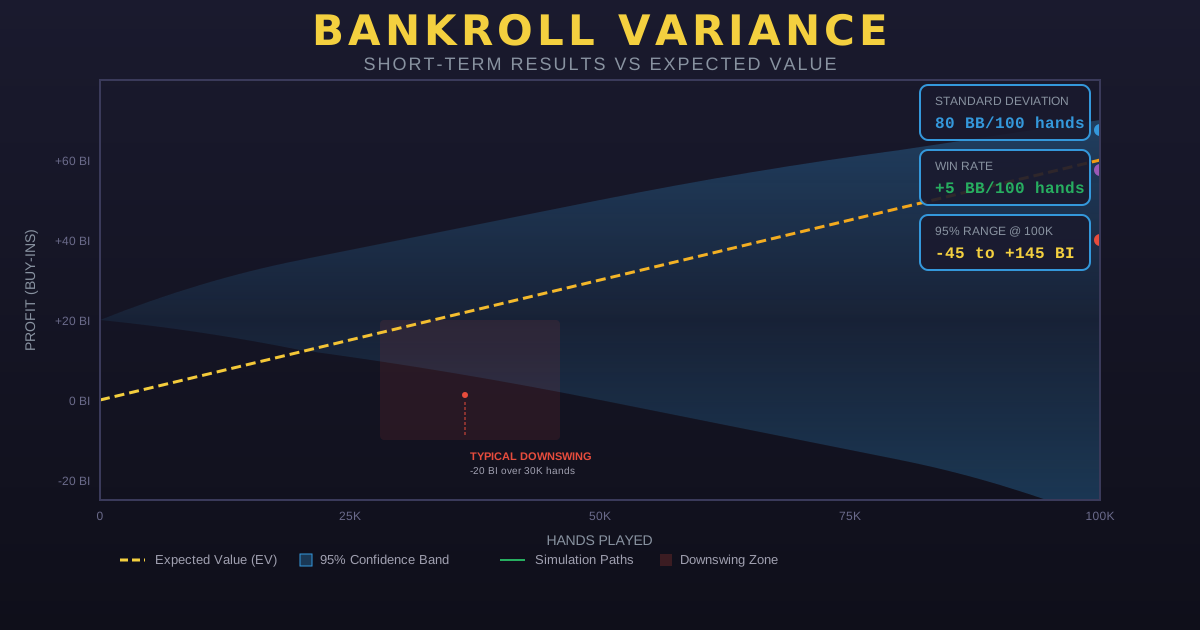
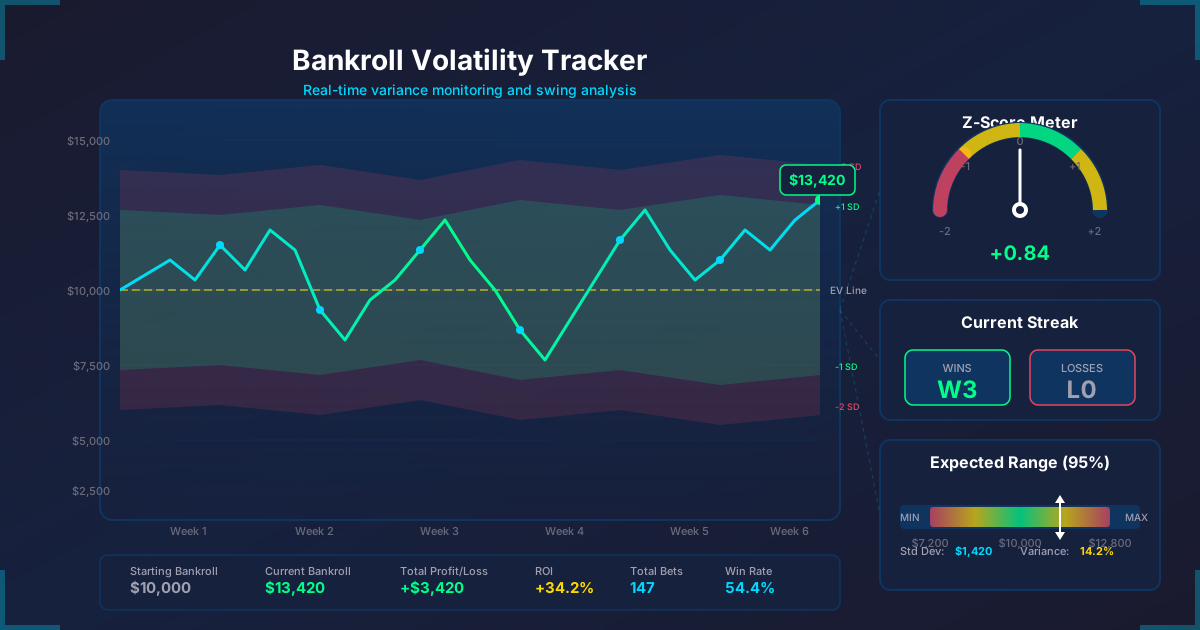
Standard deviation: ~$500/hour at $50 avg bet
Hourly EV: $40

In 8-hour session:
68% chance: -$1,380 to +$1,460
95% chance: -$2,800 to +$2,880

Huge swings are normal
Even with an edge
Real-World Examples
Example 1: True Count Calculation
Situation:
- Running count: +9
- 6-deck shoe
- 4.5 decks dealt (1.5 remaining)
Calculation:
True count = +9 ÷ 1.5 = +6
Edge ≈ 0.5% × (6 - 1) = 2.5%

With $50 min, 1-10 spread:
Optimal bet: $500 (max)
Expected win this hand: $12.50
Example 2: Session Simulation
Setup:
- 6-deck, S17, DAS
- $25 min, 1-8 spread ($25-$200)
- 100 hands played
Typical distribution:
True count frequency:
TC ≤ 0: 55% of hands (bet $25)
TC +1: 15% of hands (bet $25)
TC +2: 12% of hands (bet $50)
TC +3: 8% of hands (bet $100)
TC +4: 6% of hands (bet $150)
TC +5+: 4% of hands (bet $200)

Average bet: ~$45
Overall edge: ~0.6%
Session EV: 100 × $45 × 0.006 = $27
Example 3: Annual Projection
Professional counter:
- 1,000 hours/year
- $40/hour EV
- Standard deviation: ~$500/hour
Expected results:
Annual EV: $40,000
Annual SD: $500 × √1000 = $15,800

68% confidence: $24,200 to $55,800
95% confidence: $8,400 to $71,600

Could make $70k or could make $10k
Variance is brutal
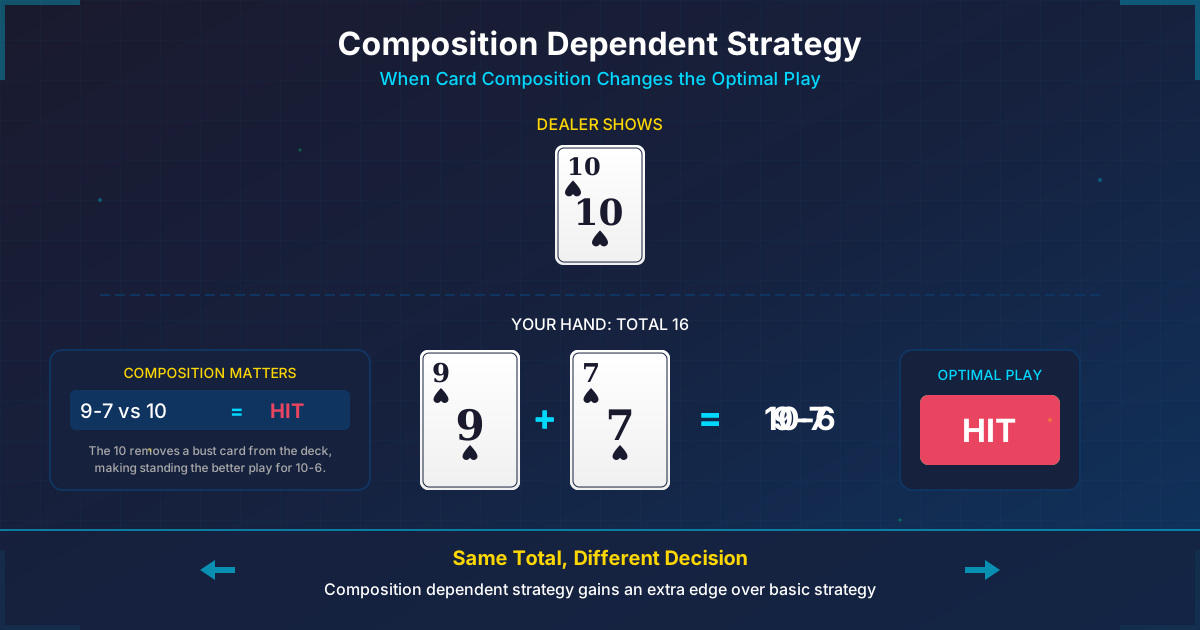
Playing Deviations
Index Numbers
Basic strategy deviations based on count:

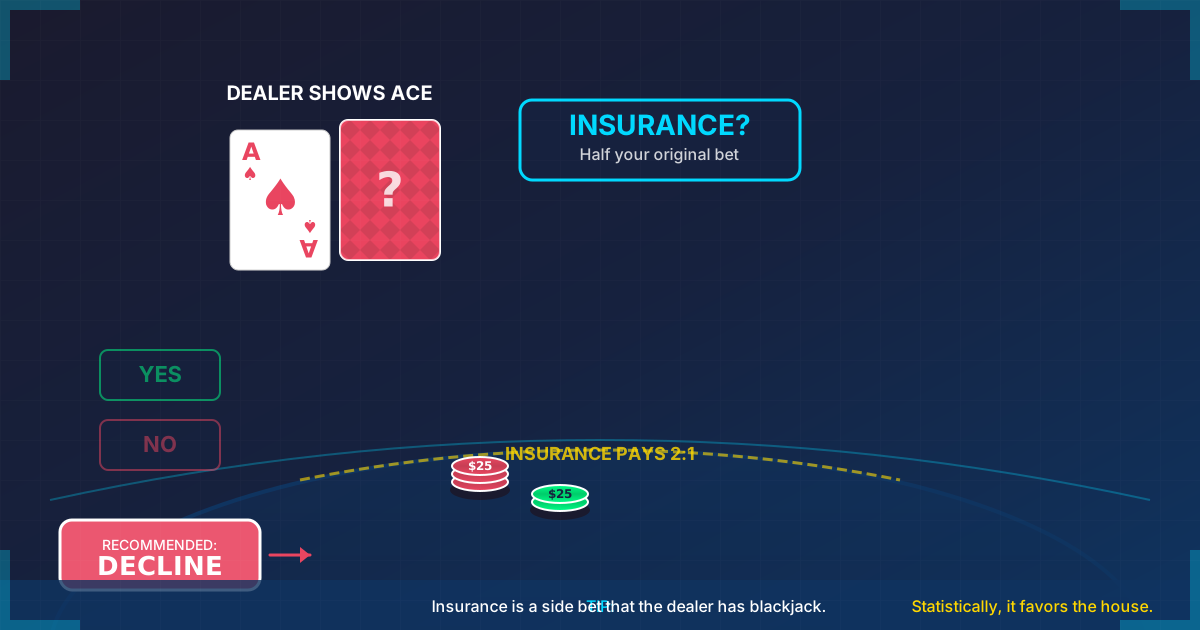
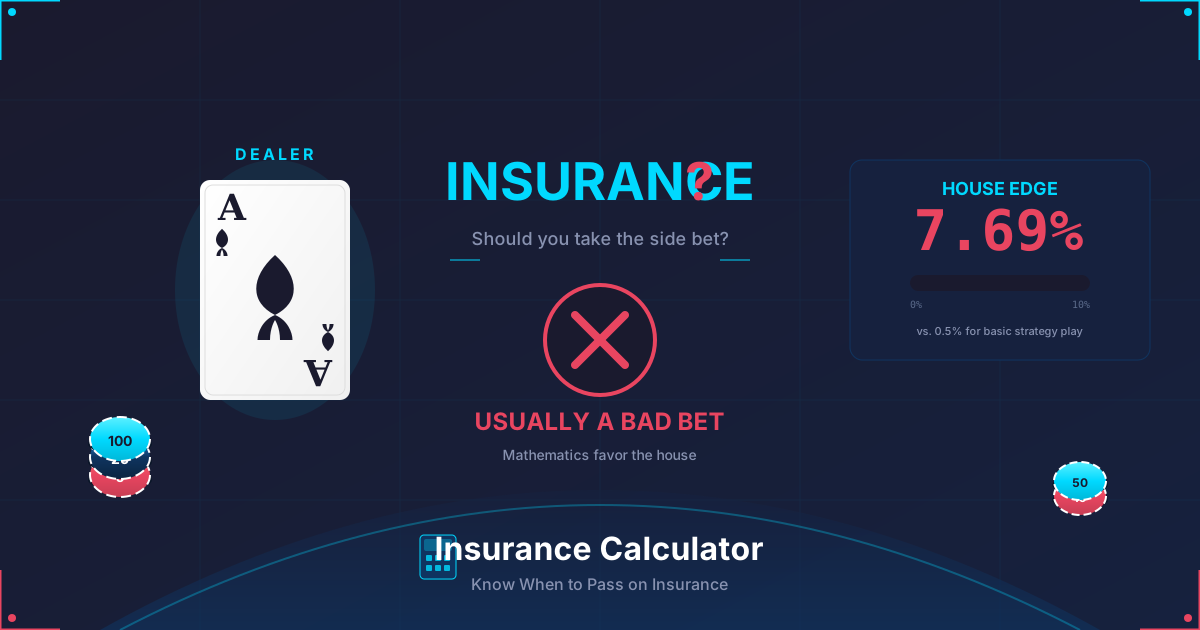
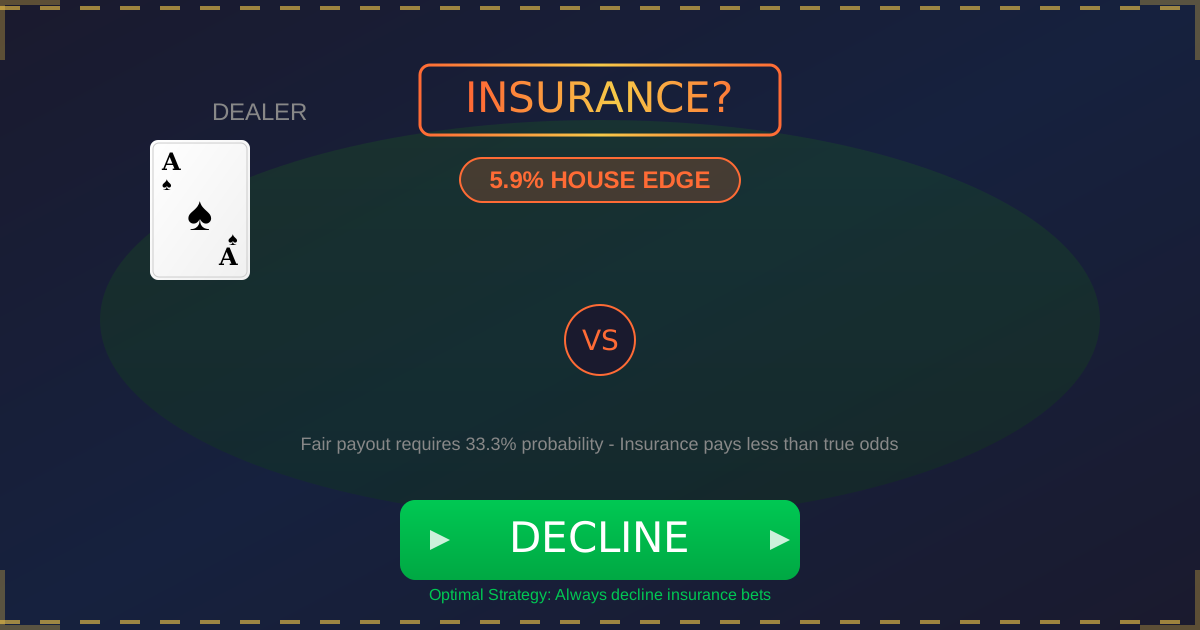
Insurance: Take at TC +3
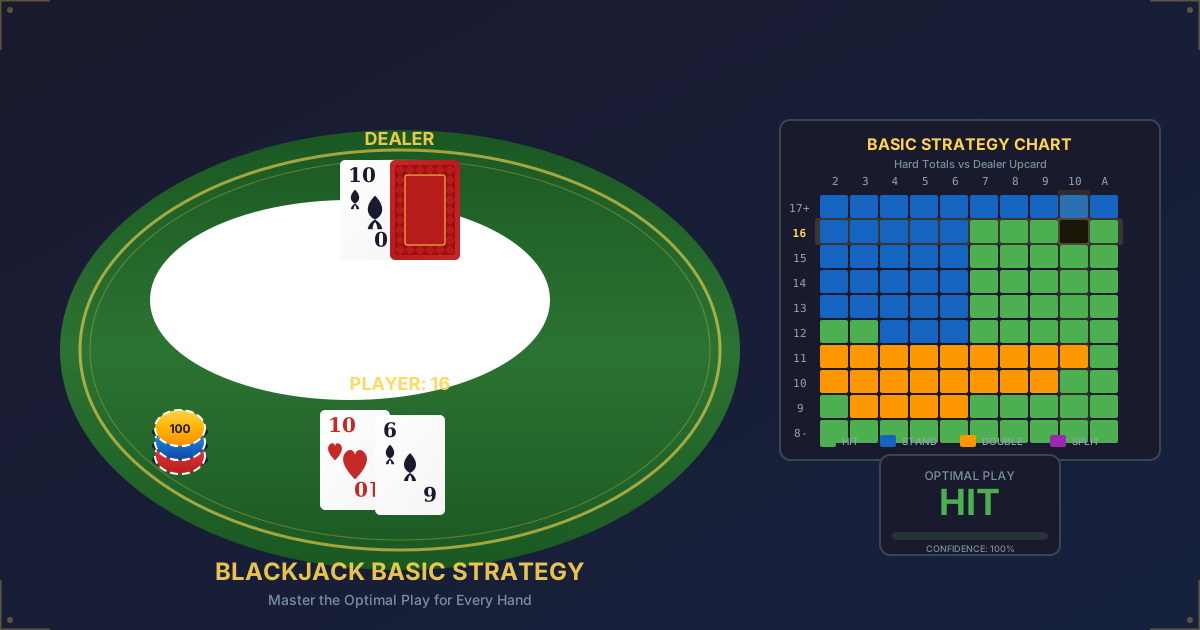
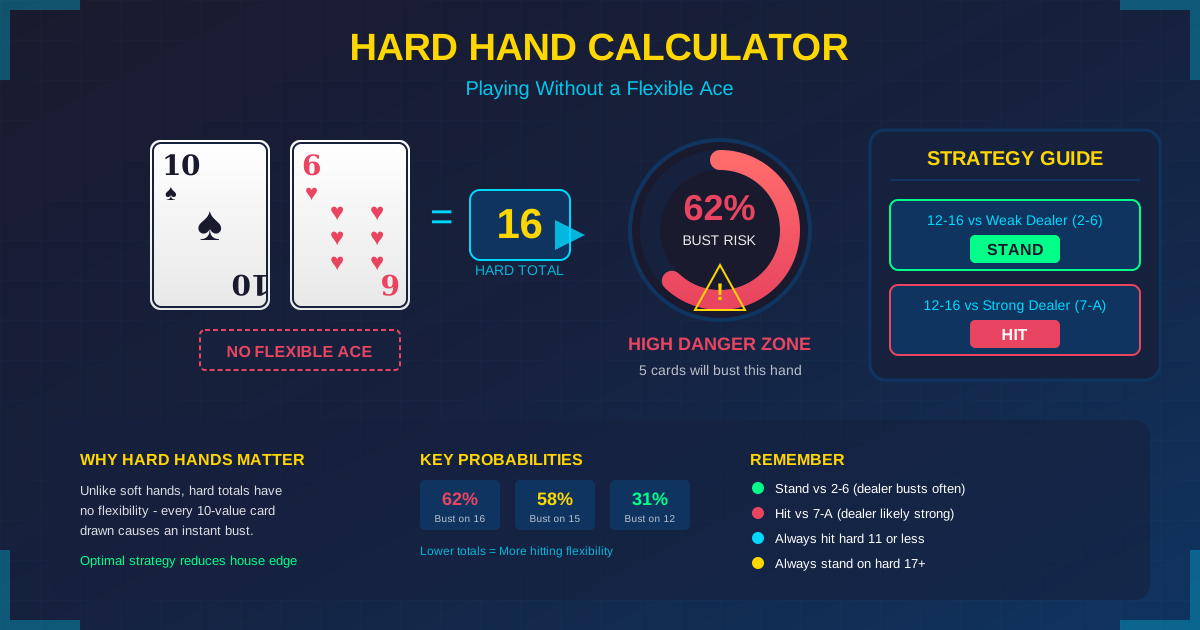
16 vs 10: Stand at TC +0
15 vs 10: Stand at TC +4
10 vs 10: Double at TC +4
12 vs 3: Stand at TC +2
Illustrious 18
| Situation | Index | Action |
|---|---|---|
| Insurance | +3 | Take it |
| 16 vs 10 | 0 | Stand |
| 15 vs 10 | +4 | Stand |
| 10 vs 10 | +4 | Double |
| 12 vs 3 | +2 | Stand |
| 12 vs 2 | +3 | Stand |
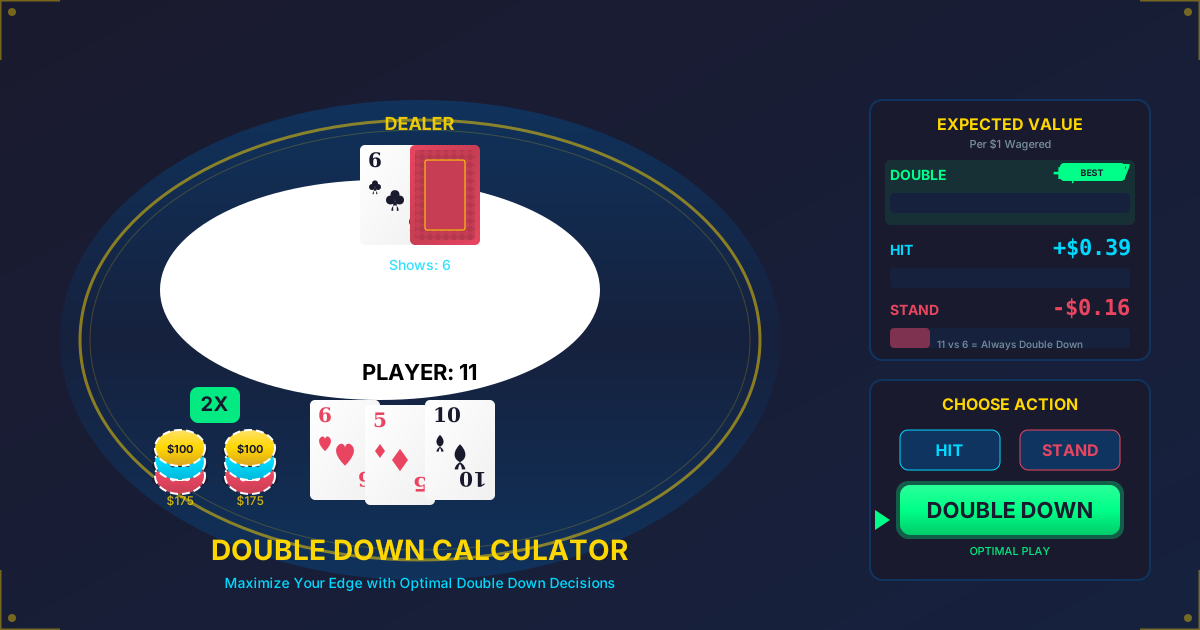
| 11 vs A | +1 | Double |
| 9 vs 2 | +1 | Double |
| 10 vs A | +4 | Double |
Value of Deviations
Basic counting (bet spread only): ~0.5% edge
Adding playing deviations: ~0.7% edge
Full index play adds ~0.2%

For most recreational counters:
Master basic Hi-Lo first
Add indexes gradually
Casino Countermeasures
Detection Methods
How casinos spot counters:
1. Bet spreading patterns
2. Playing deviation patterns
3. Surveillance footage analysis
4. Player tracking systems
5. "Heat" from pit bosses
Consequences
| Action | What Happens |
|---|---|
| Flat betting | Forced to bet same amount |
| Shuffle up | Dealer shuffles after big bets |
| Backoff | Asked to leave blackjack |
| Ban | Barred from casino property |
| Trespass | Legal action if return |
Longevity Strategies
Extend playing time:
1. Act like recreational player
2. Vary session length
3. Take breaks during hot shoes
4. Don't max bet immediately
5. Make small mistakes occasionally
Is Counting Worth It?
Pros
+ Legal (not cheating)
+ Proven mathematical edge
+ Skill-based, not luck
+ Can supplement income
+ Intellectually engaging
Cons
- Requires large bankroll
- Extreme variance
- Casino countermeasures
- Time-intensive practice
- Stressful mentally
- Limited longevity
Honest Assessment
For most people: No
- Hourly wage often below minimum
- Variance causes huge swings
- Casinos make life difficult
- Better income opportunities exist

For hobbyists: Maybe
- Turn losing activity into break-even
- Intellectual challenge enjoyable
- Small supplemental income

For professionals: Rare
- Requires serious bankroll
- Team play or high stakes needed
- Treat as full-time job
Common Mistakes
1. Underbankrolled Play
Mistake: $5,000 bankroll with $100 max bets Problem: High risk of ruin Fix: 200-300 max bets minimum
2. Poor Camouflage
Mistake: Obvious bet jumps Problem: Quick detection and ban Fix: Smooth out bet progression
3. Overestimating Edge
Mistake: Assume 2%+ edge Problem: Reality is 0.5-1.5% Fix: Use realistic projections
4. Ignoring Variance
Mistake: Expect steady wins Problem: Huge losing streaks happen Fix: Prepare mentally and financially
Frequently Asked Questions
Is card counting illegal?
No. Using your brain is legal. However, casinos are private property and can refuse service. They can't arrest you, but they can ban you.
How long to learn counting?
Basic Hi-Lo: 20-40 hours of practice. Competent counting: 100+ hours. Professional level: 500+ hours with live play.
Can you count with multiple decks?
Yes, using true count conversion. Six and eight-deck games are countable but offer less edge than single/double deck.
Do I need to memorize every card?
No. You only track the running count (+1/-1), not individual cards. Mental math, not photographic memory.
What's the minimum bankroll?
For $25 minimum bets with 1-10 spread and 5% risk of ruin: approximately $7,500. Scale accordingly for your betting level.
Can casinos cheat counters?
Legal casinos don't cheat—they have the edge. They use countermeasures like shuffling early or banning players instead.
Pro Tips
-
Master basic strategy first: Counting on bad strategy fails
-
Practice to automaticity: Count must be effortless
-
Start small: Learn with low stakes, scale up
-
Track results: Know your actual win rate
-
Manage emotions: Variance is brutal; stay disciplined
Related Calculators
- Blackjack Basic Strategy Calculator - Foundation skills
- Blackjack True Count Calculator - Count conversion
- Blackjack EV Calculator - Expected value
- Gambling Bankroll Calculator - Bankroll sizing
- Expected Value Calculator - EV analysis
Conclusion
Card counting is real advantage play—but it's not the get-rich-quick scheme movies portray. Our calculator shows realistic edges (0.5-1.5%), substantial bankroll requirements ($30,000+), and the variance that makes counting more marathon than sprint. For most players, it's a fascinating hobby that can turn a losing game into break-even entertainment.
Understanding counting mathematics helps you appreciate why casinos fear it—and why they don't fear most people who try it. The edge is real but small, the variance is massive, and the countermeasures are relentless. Our calculator helps you decide if the journey is worth starting.