Blackjack Penetration Calculator: Deck Depth Analysis (2026)
Blackjack Penetration Calculator: Measuring Deck Depth
Penetration determines how much of the shoe is dealt before reshuffling—a critical factor for card counters. Our calculator shows how penetration affects counting effectiveness and why casinos carefully control cut card placement.
What Is Deck Penetration?
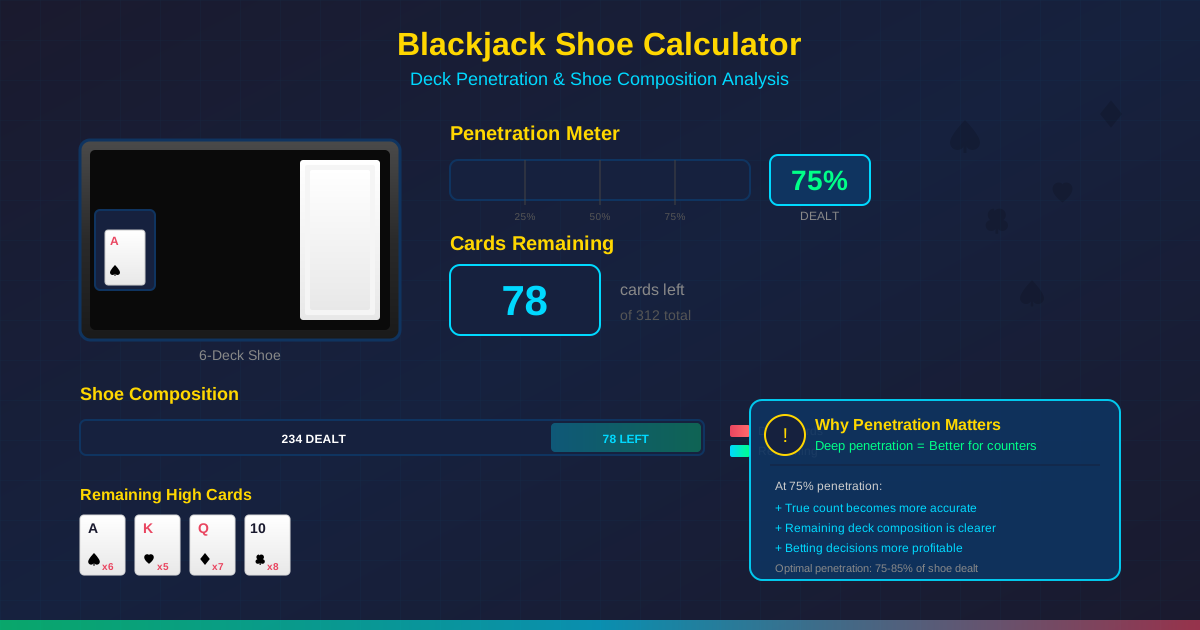
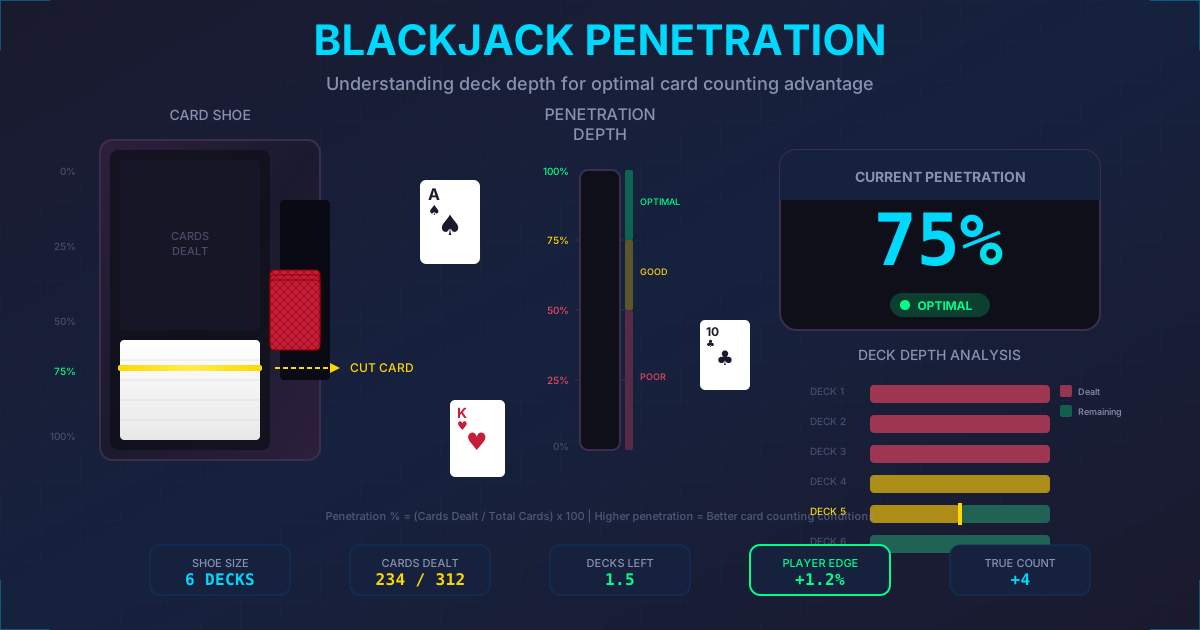
Deck penetration is the percentage of cards dealt before the cut card appears and the shoe is reshuffled. Higher penetration (more cards dealt) benefits card counters; lower penetration (early shuffle) diminishes counting advantage. Casinos use penetration as a key countermeasure.
Quick Answer: Penetration = % of shoe dealt before shuffle. Example: 6-deck shoe with 1.5 decks behind cut = 75% penetration. Card counting needs 70%+ to be effective. Casino average: 65-80%. Excellent: 85%+. Poor: Under 65%. Higher penetration = more accurate count = better betting decisions. Casinos limit penetration to reduce counter advantage.
How to Use Our Calculator
Use the Penetration Calculator →
Calculate penetration and its impact on counting effectiveness.
Step-by-Step Instructions
-
Enter Shoe Size: Number of decks
-
Input Cut Card Position: Decks behind cut
-
View Penetration: Percentage dealt
-
See Counting Impact: Effectiveness rating
-
Compare Scenarios: Different penetration levels
Input Fields Explained
| Field | Description | Example |
|---|---|---|
| Number of Decks | Shoe size | 6 decks |
| Cut Card Position | Decks behind cut | 1.5 decks |
| Cards Dealt | Before shuffle | 4.5 decks |
| Penetration % | Dealt percentage | 75% |
| Counting Rating | Effectiveness | Good |
| True Count Reliability | Accuracy level | High |
Understanding Penetration
The Calculation
Penetration = (Decks Dealt) ÷ (Total Decks)

6-deck shoe, 1.5 decks behind cut:
Decks dealt: 6 - 1.5 = 4.5
Penetration: 4.5 ÷ 6 = 75%

8-deck shoe, 2 decks behind cut:
Decks dealt: 8 - 2 = 6
Penetration: 6 ÷ 8 = 75%
Why It Matters
Higher penetration benefits counters:

Early shoe (shallow):
- Running count near zero
- True count uncertain
- Limited betting opportunity

Late shoe (deep):
- Running count meaningful
- True count reliable
- Clear betting signals
The Information Problem
Cards reveal information:

After 1 deck dealt:
Count could swing wildly remaining shoe

After 5 decks dealt:
Count is meaningful
Remaining deck composition clear
Betting decisions more accurate
Penetration Levels
Excellent Penetration (80%+)
6 decks, 1 deck behind cut = 83%

Benefits:
- Maximum counting accuracy
- Best betting opportunities
- Rare true count swings late
- Optimal spread effectiveness

Where found:
- Rare today
- Some high-limit rooms
- Player-favorable properties
Good Penetration (70-80%)
6 decks, 1.5 decks behind cut = 75%

Benefits:
- Counting still effective
- Reasonable betting windows
- Adequate true count reliability

Where found:
- Standard Vegas Strip
- Many regional casinos
- Most playable games
Mediocre Penetration (60-70%)
6 decks, 2 decks behind cut = 67%

Drawbacks:
- Counting advantage reduced
- Fewer betting opportunities
- True count less reliable

Where found:
- Counter-aware casinos
- Some tribal casinos
- Protective pit bosses
Poor Penetration (Under 60%)
6 decks, 2.5+ decks behind cut = <60%

Drawbacks:
- Counting nearly worthless
- Minimal advantage possible
- Information too limited

Where found:
- Super-paranoid casinos
- After identifying counters
- Some cruise ships
Counting Effectiveness
How Penetration Affects Edge
Card counter's approximate edge:

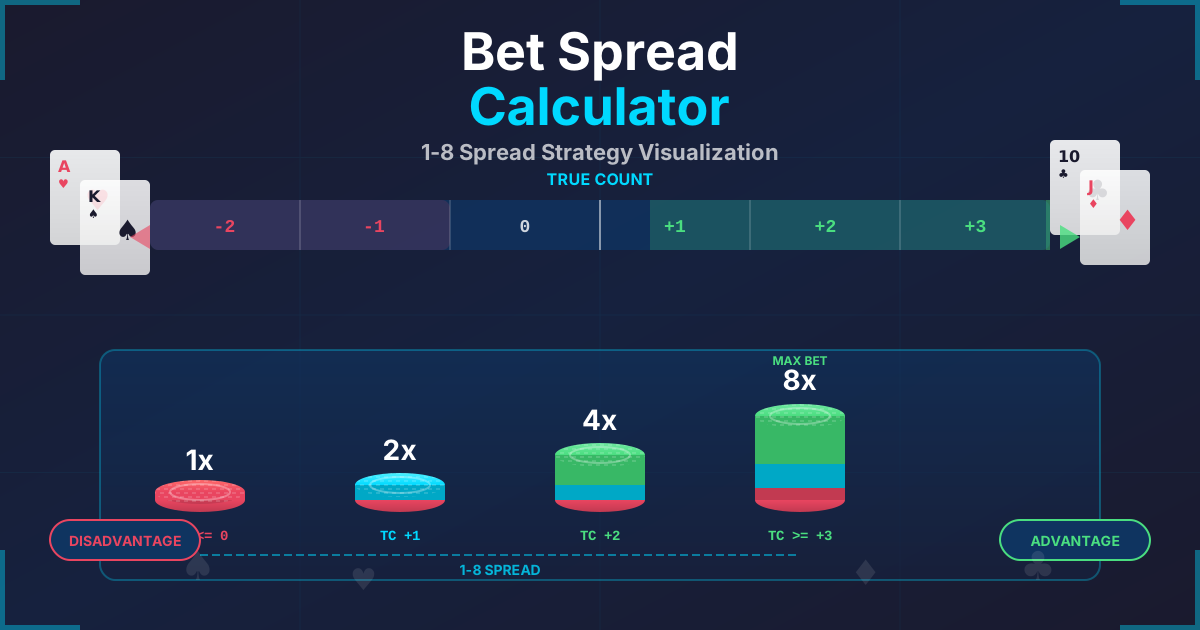
75% penetration, 1-8 spread:
Player edge: ~0.5-1.0%

65% penetration, 1-8 spread:
Player edge: ~0.2-0.4%

55% penetration, 1-8 spread:
Player edge: ~0.0-0.1%

Penetration roughly halves edge per 10%
True Count Reliability
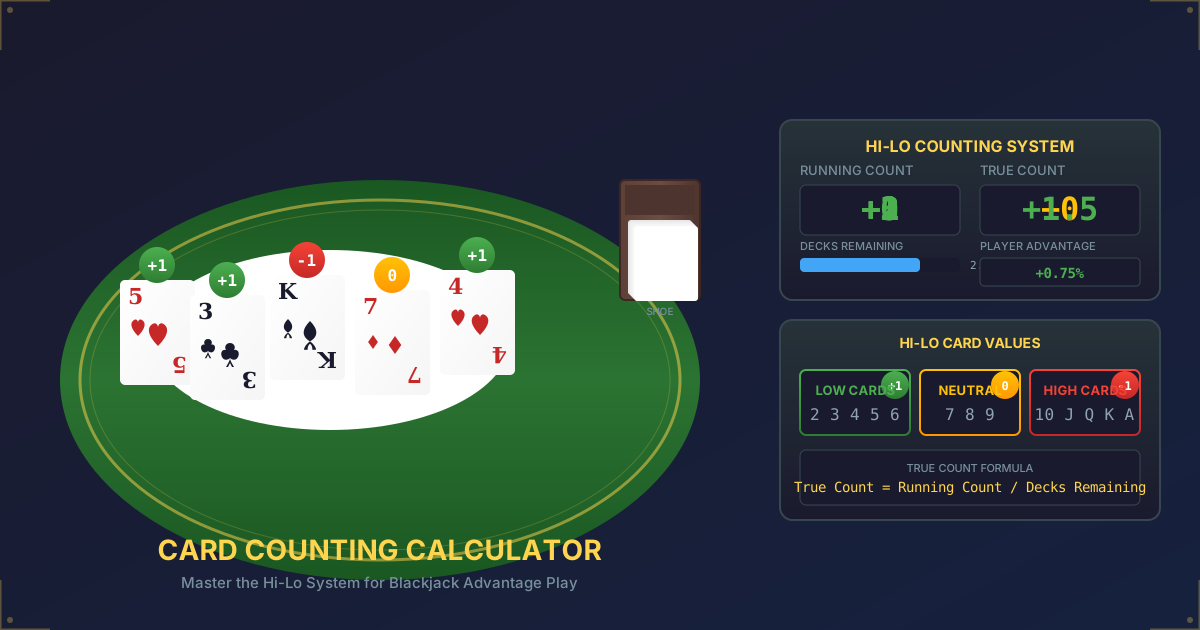
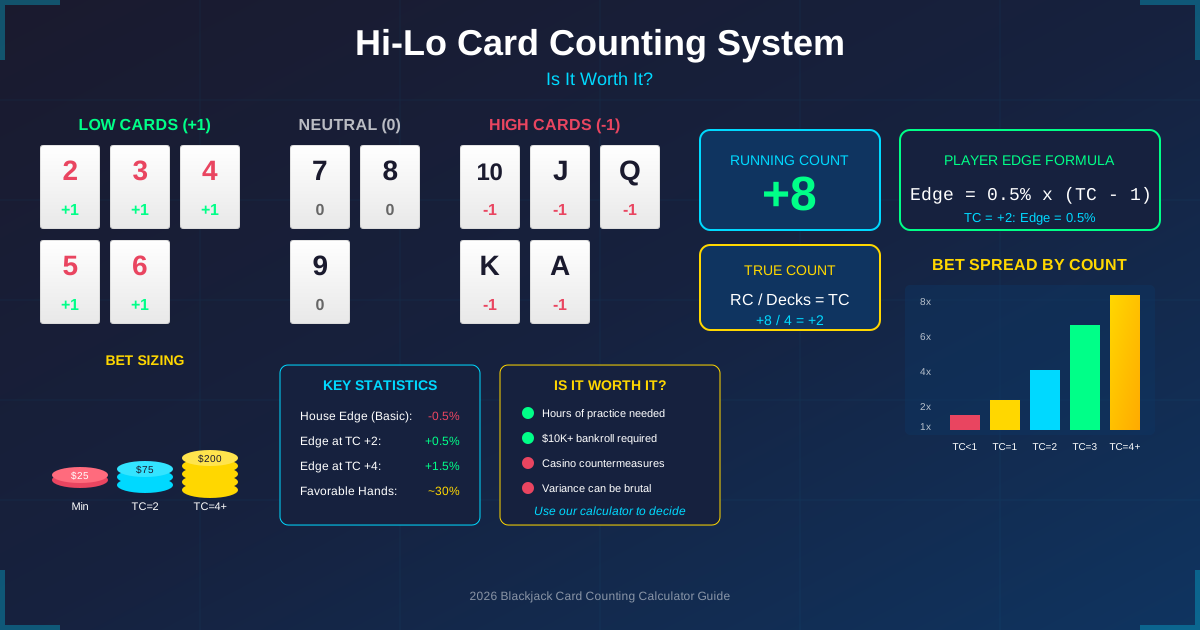
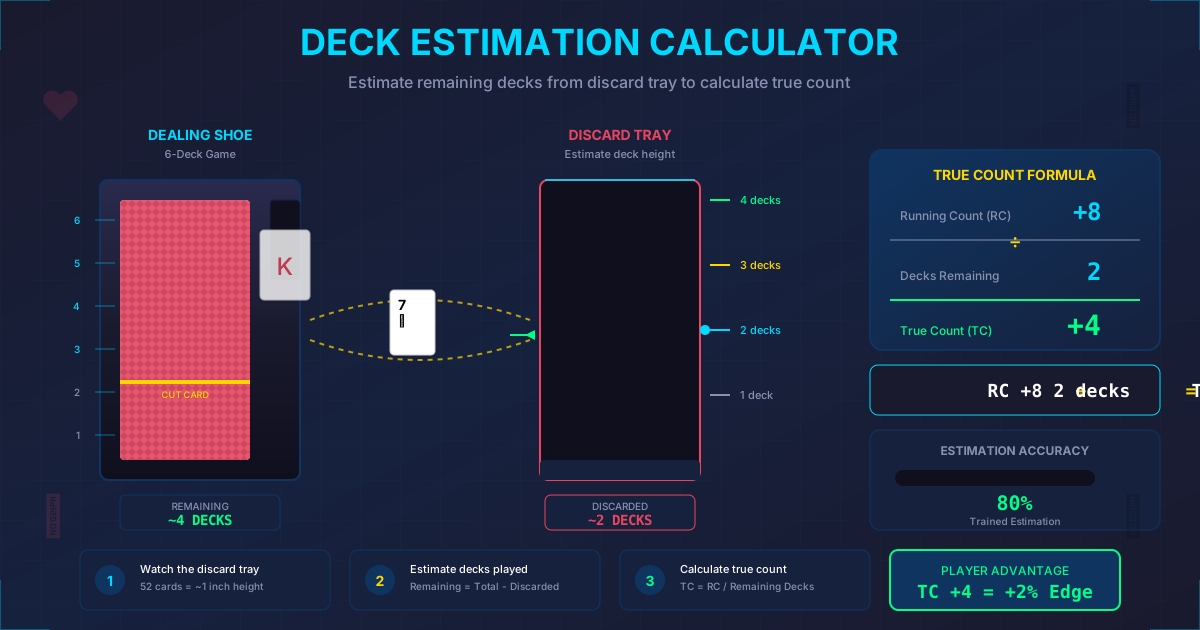
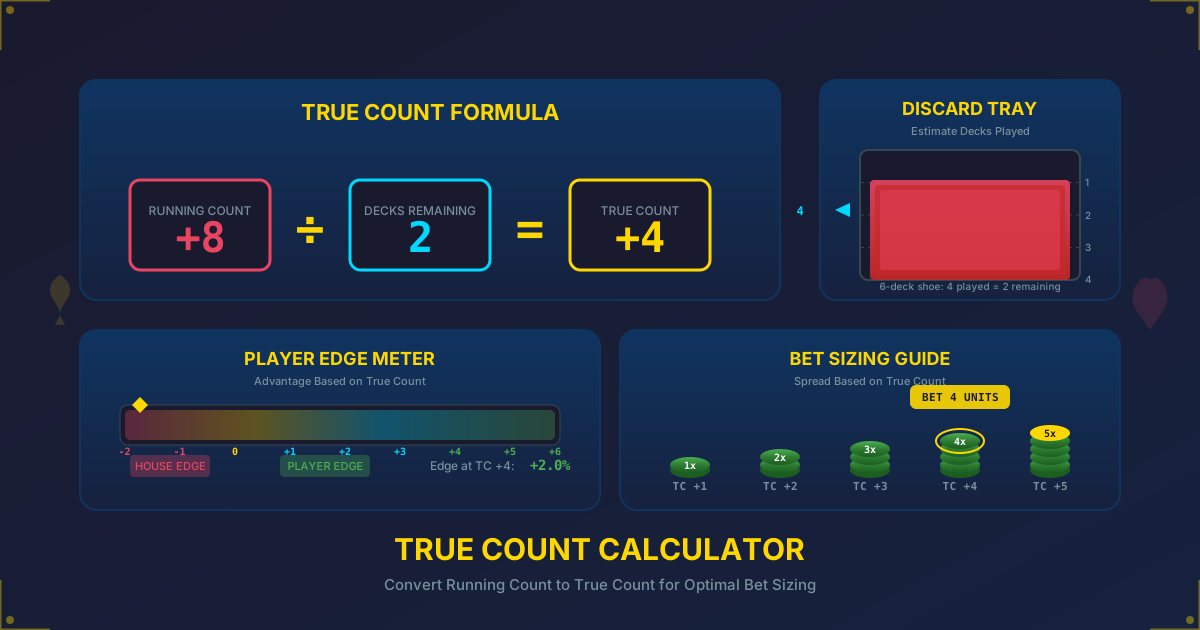
True count = Running count ÷ Decks remaining

At 50% penetration (3 decks left):
RC +6 = TC +2
Still early, could change

At 83% penetration (1 deck left):
RC +6 = TC +6
Very reliable, clear signal
Betting Correlation
When to bet big depends on TC reliability:

Deep penetration:
TC +3: Bet 4 units confidently
TC +5: Max bet territory

Shallow penetration:
TC +3: Might revert to zero
TC +5: Less meaningful
Deck Size Comparison
6-Deck Penetration
Common 6-deck scenarios:

1 deck behind (83%): Excellent
1.5 decks behind (75%): Good
2 decks behind (67%): Mediocre
2.5 decks behind (58%): Poor

Most 6-deck games: 65-75%
8-Deck Penetration
Common 8-deck scenarios:

1 deck behind (87.5%): Rare/excellent
1.5 decks behind (81%): Excellent
2 decks behind (75%): Good
2.5 decks behind (69%): Mediocre

8-deck harder to count anyway
Need deeper penetration
2-Deck Penetration
Double-deck hand-held:

0.5 deck behind (75%): Good
0.75 deck behind (62.5%): Mediocre
1 deck behind (50%): Poor

Double-deck needs good pen
Or counting isn't worthwhile
Real-World Examples
Example 1: Standard Vegas Game
6-deck, 1.5 decks cut off:
Penetration: 75%

Counter assessment:
✓ Playable for counting
✓ Reasonable spread effectiveness
✓ Worth playing with 1-8 spread
✓ Edge approximately 0.6%

Session expectation:
100 hands × $50 avg bet = $5,000 action
Edge: $30 expected profit
Example 2: Tight Game
6-deck, 2.5 decks cut off:
Penetration: 58%

Counter assessment:
✗ Marginal at best
✗ Spread barely effective
✗ True count unreliable
✗ Edge approximately 0.1%

Better to find different game
Example 3: High-Limit Room
6-deck, 1 deck cut off:
Penetration: 83%

Counter assessment:
✓ Excellent conditions
✓ Maximum counting value
✓ True counts very reliable
✓ Edge approximately 1.0%

Worth seeking these games
Example 4: Comparing Options
Choose your game:
Game A: 6-deck, 67% pen, H17, DAS
Game B: 8-deck, 75% pen, S17, DAS

For counter:
Game B likely better
Despite 8 decks
Penetration trumps deck count

For basic strategy:
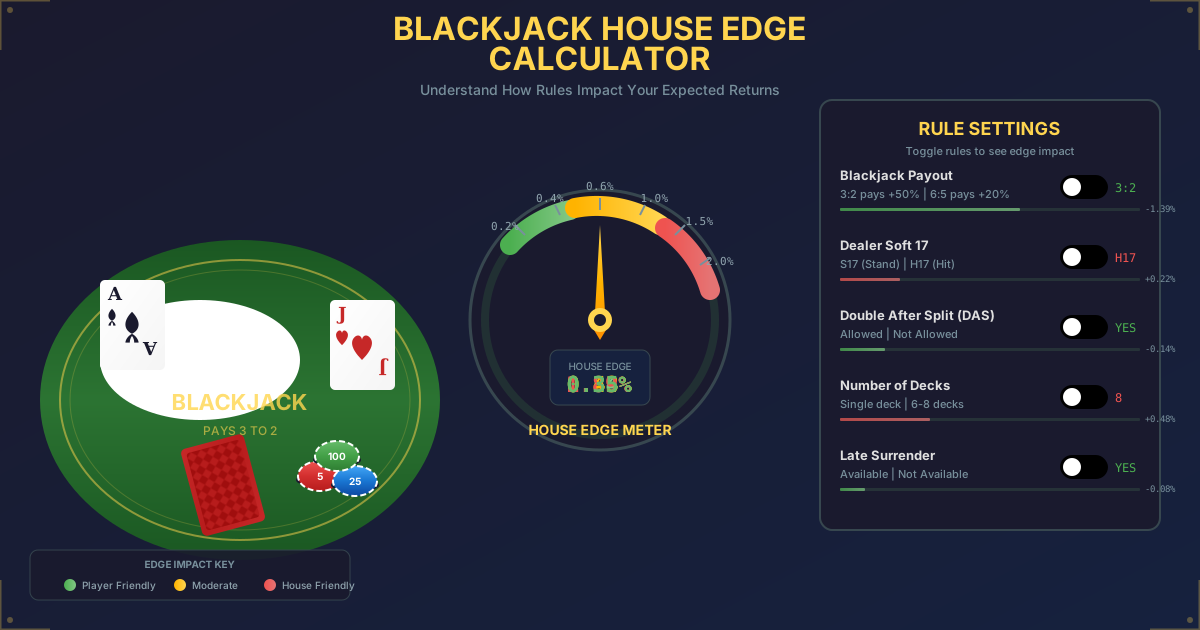
Game B also better
S17 helps, pen irrelevant
Casino Perspective
Why Limit Penetration
Casinos reduce penetration to:

1. Diminish counter advantage
2. Not reveal shoe composition
3. Force more shuffles = more speed bumps
4. Make spread betting ineffective

Cost: Fewer hands per hour
Benefit: Counter protection
Penetration Trade-offs
Shallow shuffle:
- More shuffles per hour
- Slower game = less profit from basics
- But blocks counting

Deep shuffle:
- Faster game = more hands
- More profit from basic players
- But counters exploit

Casinos balance these factors
Common Casino Practices
Standard approaches:

Low-limit tables: 65-70% pen
High-limit tables: 70-80% pen
After heat: Reduce 10-15%
Known counters: 50% or less

Pit bosses control cut card
Strategy Implications
For Card Counters
Penetration-based decisions:

Below 60%: Don't play
60-70%: Play only if other factors excellent
70-80%: Standard playable game
80%+: Prioritize these games

Penetration is non-negotiable factor
Spread Sizing by Penetration
Adjust spread to penetration:

85% pen: 1-12 spread viable
75% pen: 1-8 spread effective
65% pen: 1-4 spread maximum
55% pen: Don't bother

Deeper pen = bigger spreads work
Table Selection
When choosing tables:

1. Watch several shuffles
2. Estimate cut card position
3. Calculate penetration
4. Compare available options
5. Select deepest consistent pen

Don't play before you know
Common Mistakes
1. Ignoring Penetration
Mistake: Count at any game Problem: Shallow pen kills advantage Fix: Always assess before playing
2. Overestimating Effect
Mistake: "75% is almost as good as 85%" Problem: Each 10% matters significantly Fix: Understand diminishing returns
3. Not Measuring Consistently
Mistake: Eyeball penetration Problem: Inaccurate assessment Fix: Count decks remaining precisely
4. Playing Poor Penetration
Mistake: "It's the only game available" Problem: Wasting time and variance Fix: Find better games or don't play
Frequently Asked Questions
What penetration do I need for counting?
Minimum 65% for marginal effectiveness, 75% for reasonable returns, 85% for optimal advantage.
How do I measure penetration?
Estimate decks behind the cut card when it appears. Practice with fresh decks at home to calibrate your eye.
Why don't casinos deal the entire shoe?
The last cards reveal too much information. Deep penetration allows counters to bet with near-certainty on remaining composition.
Does penetration matter for basic strategy?
No. Basic strategy players face the same house edge regardless of penetration. It only matters for advantage play.
Can penetration vary table to table?
Yes. Different dealers and pit bosses may set cut cards differently. Always assess each table.
Is double-deck penetration different?
Same concept, but 75% of 2 decks (1.5 dealt) is less powerful than 75% of 6 decks (4.5 dealt). Single/double-deck needs exceptional penetration.
Pro Tips
-
Assess before playing: Know penetration first
-
75% minimum: Below this, counting struggles
-
Compare tables: Same casino, different pens
-
Track consistency: Some dealers vary
-
Adjust spread: Match to penetration depth
Related Calculators
- Card Counting Calculator - Count systems
- Blackjack True Count Calculator - Count conversion
- Blackjack House Edge Calculator - Rule analysis
- Blackjack Bankroll Calculator - Risk management
- Blackjack Expected Value Calculator - EV analysis
Conclusion
Deck penetration determines how much of the shoe is dealt—and how effective card counting can be. Our calculator shows why 75%+ penetration is essential for counting success and how casinos use shallow shuffles as a defense.
Calculate Deck Penetration Now →
That cut card placement isn't arbitrary—it's the casino's primary defense against counters. Our calculator reveals whether you're getting enough penetration to make counting worthwhile, or if you're better off finding a different game.