Blackjack Risk of Ruin Calculator: Bankroll Survival (2026)

Blackjack Risk of Ruin Calculator: Will Your Bankroll Survive?
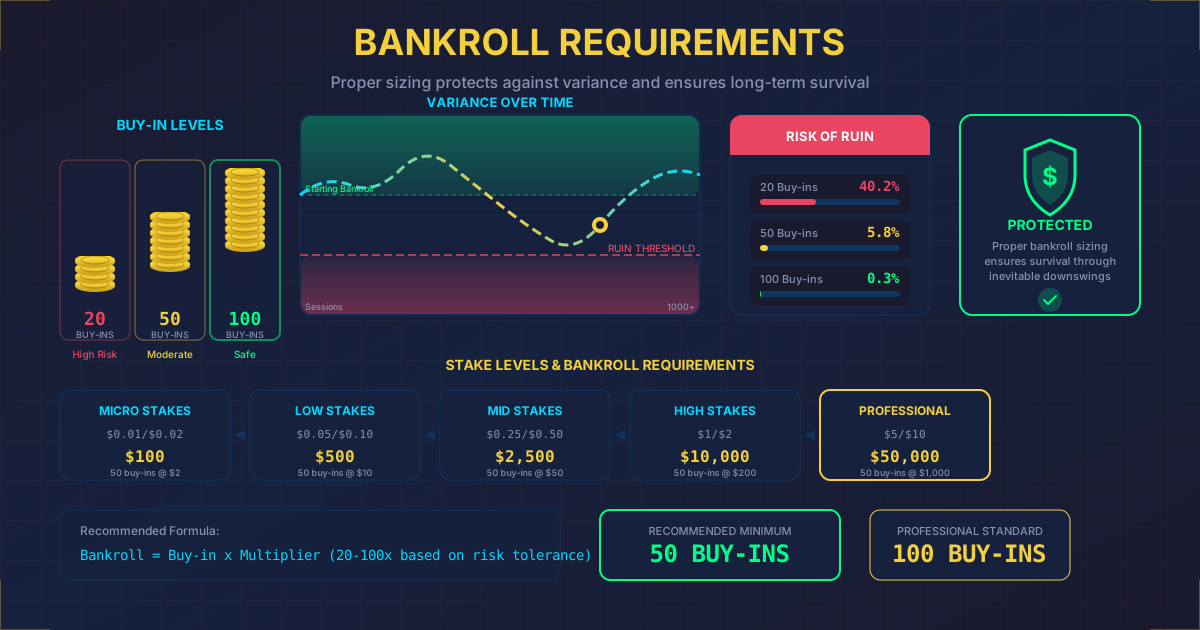
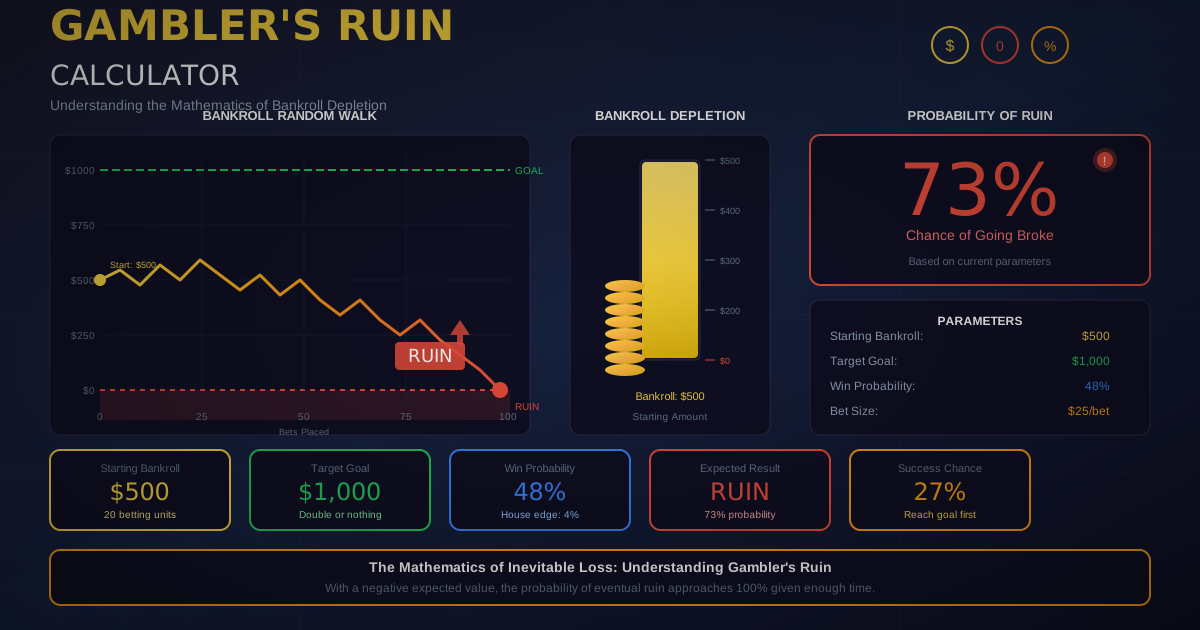
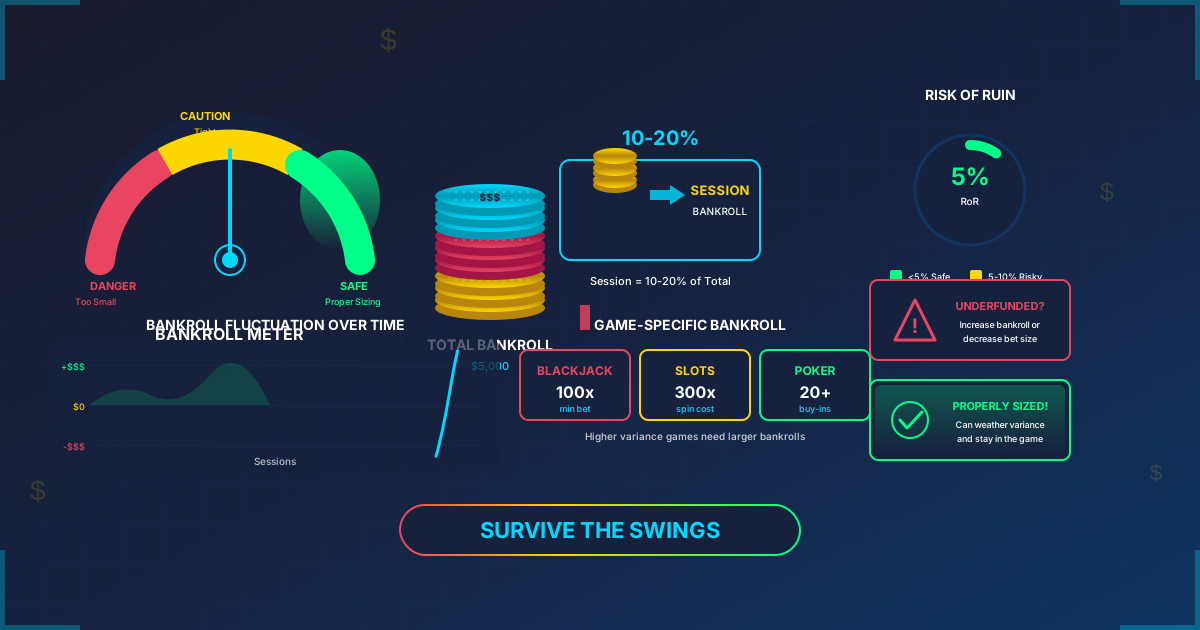
Risk of Ruin (RoR) is the probability of losing your entire bankroll before achieving your profit goals. For card counters and serious players, understanding RoR is essential for proper bet sizing and bankroll management.
What Is Risk of Ruin?
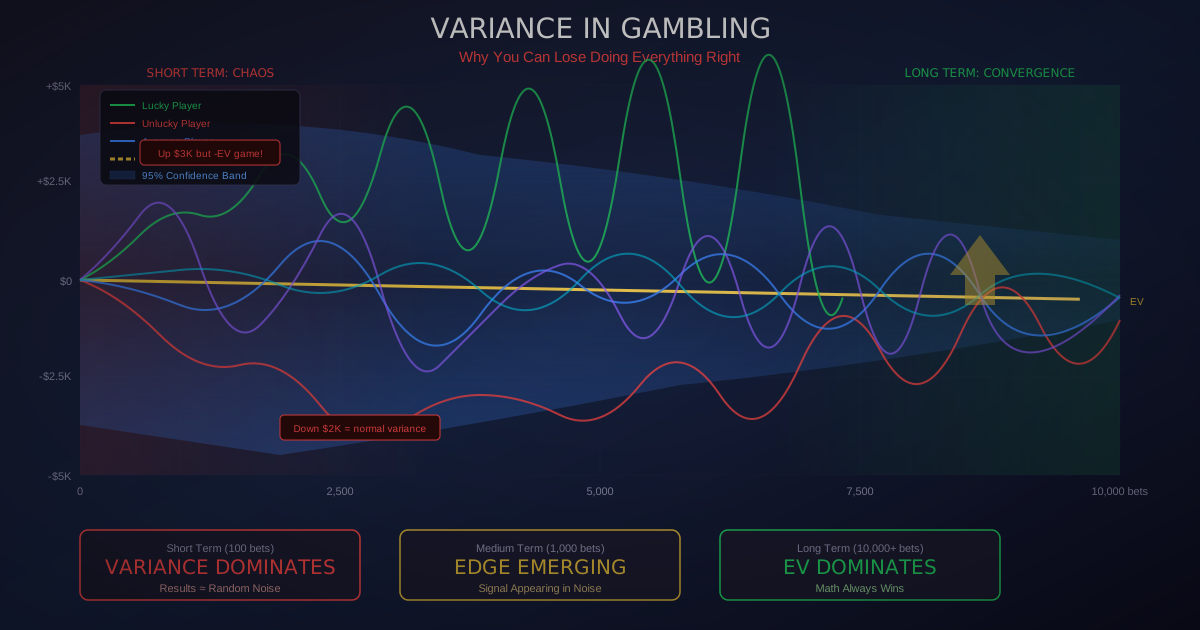
Risk of Ruin calculates the probability of going broke given your edge, variance, bankroll, and betting strategy. Even with a positive edge, variance can deplete your bankroll before long-term profits materialize.
Quick Answer: RoR depends on bankroll/bet ratio and edge. With 1% edge and 100-unit bankroll betting 1 unit, RoR is ~37%. With 200 units, RoR drops to ~13%. With 400 units, RoR is ~2%. General rule: 200-400 betting units with 1-2% edge gives <5% RoR. Underbankrolled players with positive edge still face significant ruin risk.
How to Use Our Risk of Ruin Calculator
Use the Blackjack Risk of Ruin Calculator →
Enter your edge, bankroll, and bet sizing to calculate survival probability.
Step-by-Step Instructions
-
Enter Edge: Your advantage percentage
-
Enter Bankroll: Total playing capital
-
Enter Bet Size: Average or max bet
-
Input Variance: Standard deviation per hand
-
View RoR: Probability of going broke
Input Fields Explained
| Field | Description | Example |
|---|---|---|
| Bankroll | Total capital | $10,000 |
| Average Bet | Typical wager | $50 |
| Edge | Player advantage | 1.0% |
| Variance | SD per hand | 1.15 |
| Risk of Ruin | Bust probability | 13.5% |
| Units | Bankroll/bet | 200 |
Risk of Ruin Formula
Basic RoR Calculation
RoR = ((1 - Edge) / (1 + Edge))^(Bankroll/Unit)

Simplified for small edges:
RoR ≈ e^(-2 × Edge × Units)

Example:
Edge = 1%, Units = 200
RoR ≈ e^(-2 × 0.01 × 200) = e^(-4) = 1.8%
With Variance Adjustment
RoR = e^(-2 × Edge × Bankroll / Variance²)

Where Variance ≈ 1.15 for blackjack
RoR by Bankroll Size
At 1% Edge
| Bankroll (Units) | Risk of Ruin |
|---|---|
| 50 | 60.7% |
| 100 | 36.8% |
| 150 | 22.3% |
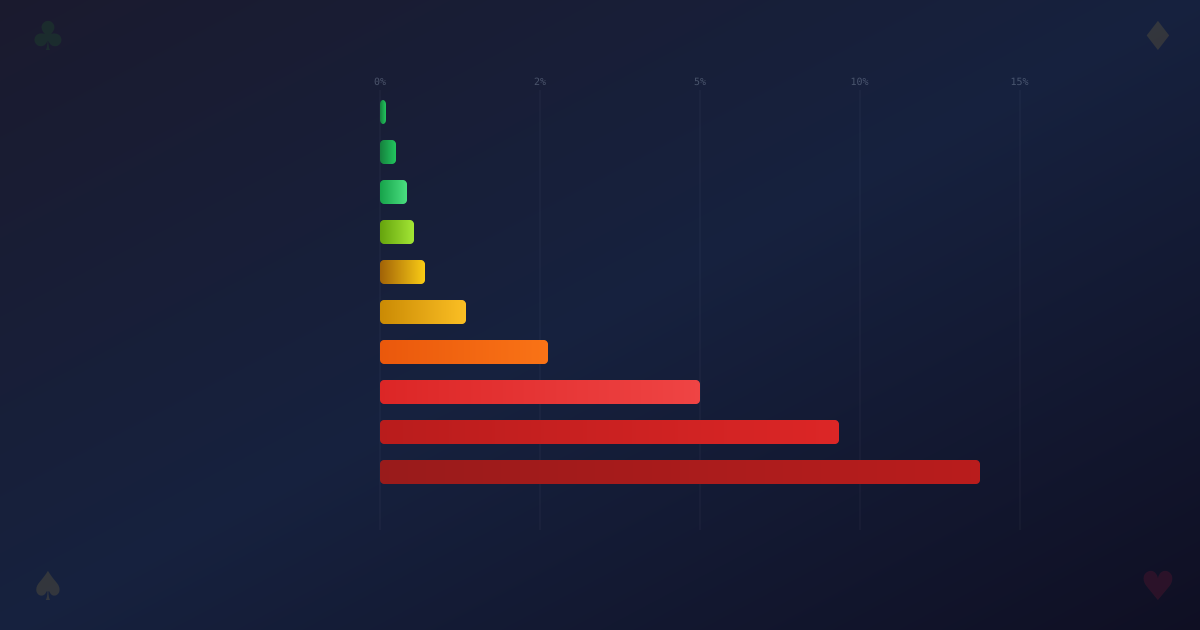
| 200 | 13.5% |
| 300 | 5.0% |
| 400 | 1.8% |
| 500 | 0.7% |
At 1.5% Edge
| Bankroll (Units) | Risk of Ruin |
|---|---|
| 50 | 47.2% |
| 100 | 22.3% |
| 150 | 10.5% |
| 200 | 5.0% |
| 300 | 1.1% |
| 400 | 0.2% |
At 0.5% Edge
| Bankroll (Units) | Risk of Ruin |
|---|---|
| 100 | 60.7% |
| 200 | 36.8% |
| 300 | 22.3% |
| 400 | 13.5% |
| 600 | 5.0% |
| 800 | 1.8% |
Edge Sources in Blackjack
Card Counting Edge
| Counting Skill | Typical Edge |
|---|---|
| Basic strategy only | -0.5% |
| Casual counter | 0.5-0.8% |
| Skilled counter | 1.0-1.5% |
| Team play | 1.5-2.5% |
Factors Affecting Edge
| Factor | Impact |
|---|---|
| Penetration | +0.1-0.5% per deck |
| Rules (DAS, RSA) | +0.1-0.3% |
| Bet spread | +0.2-0.5% |
| Table conditions | Variable |
Bet Sizing Strategies
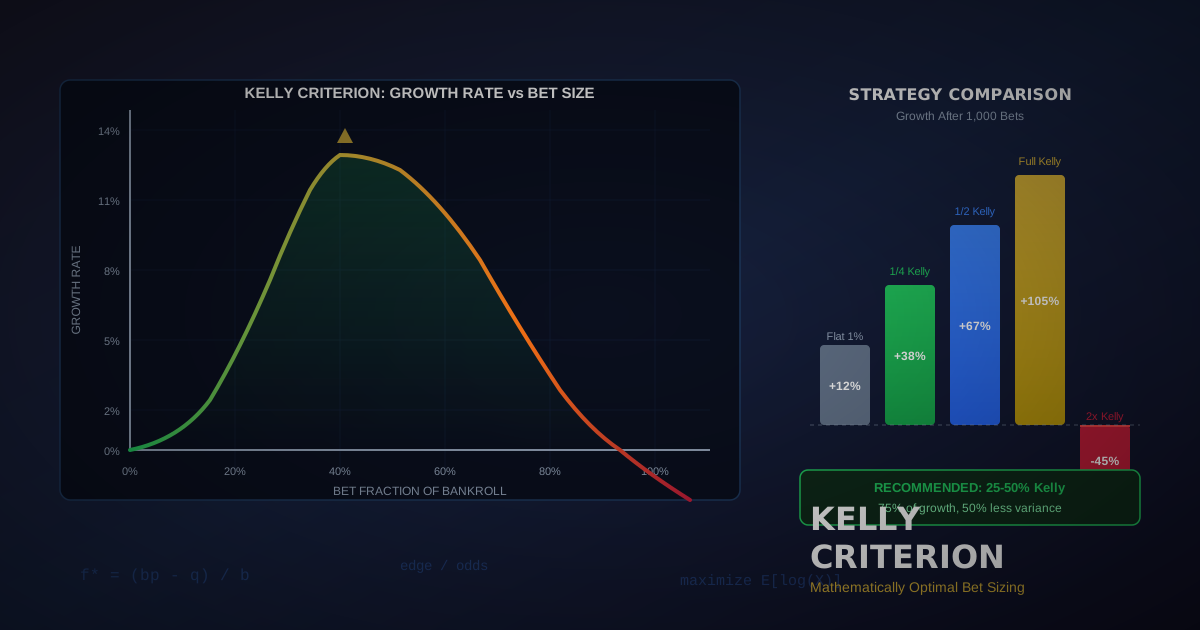
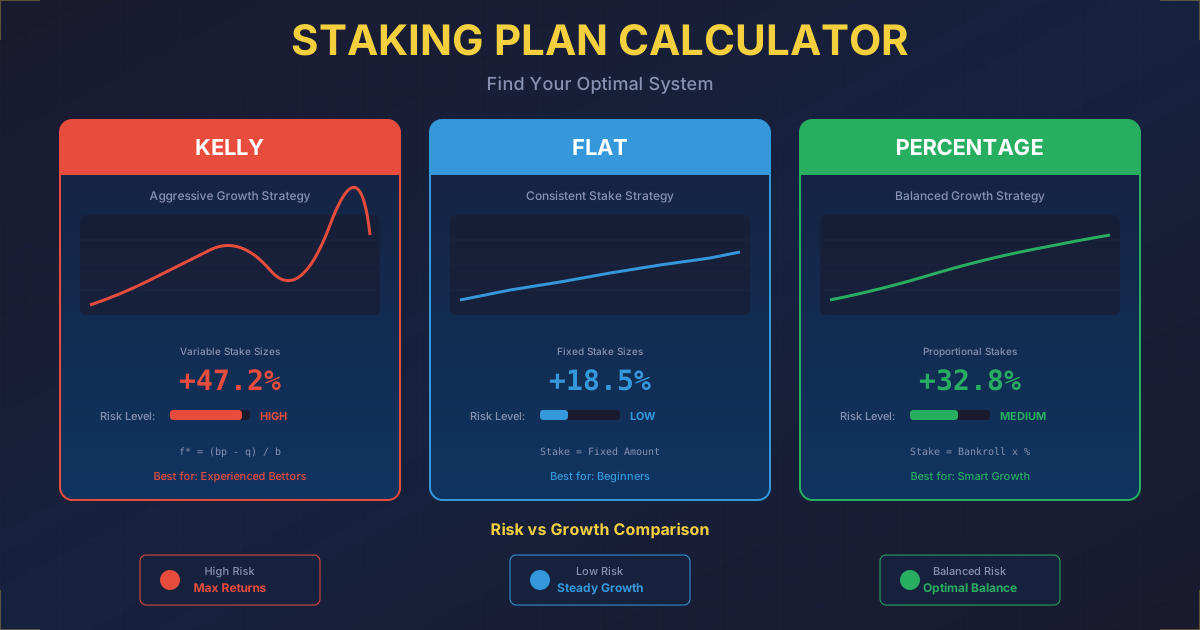
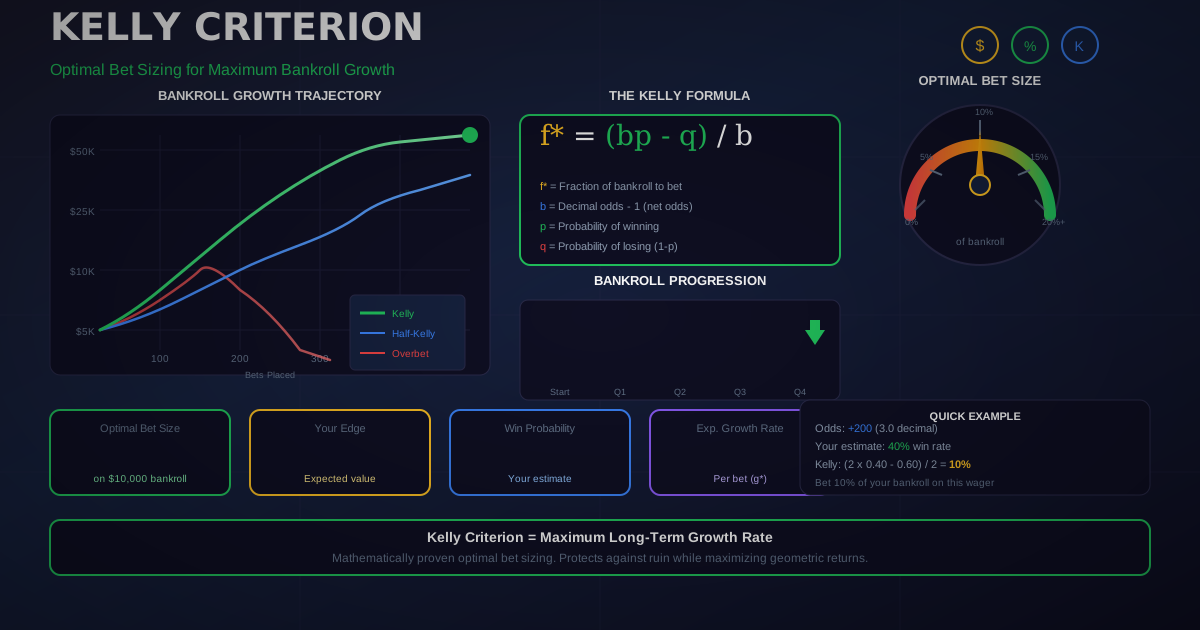
Kelly Criterion
Optimal Bet = Edge / Variance² × Bankroll

Example:
Edge = 1%, Variance = 1.15
Kelly = 0.01 / 1.32 = 0.76% of bankroll

For $10,000 bankroll: $76 optimal bet
Fractional Kelly
| Kelly Fraction | RoR | Growth Rate |
|---|---|---|
| Full Kelly | 13.5% | Maximum |
| 3/4 Kelly | 5.3% | 75% optimal |
| 1/2 Kelly | 1.8% | 50% optimal |
| 1/4 Kelly | 0.1% | 25% optimal |
Conservative Approach
| Risk Tolerance | Recommended Kelly |
|---|---|
| Aggressive | Full Kelly |
| Moderate | 1/2 Kelly |
| Conservative | 1/4 Kelly |
| Very safe | 1/8 Kelly |
Real-World Examples
Example 1: Recreational Counter
Profile:
- Bankroll: $5,000
- Edge: 0.75%
- Average bet: $25
- Units: 200
Calculation:
- RoR ≈ e^(-2 × 0.0075 × 200)
- RoR ≈ e^(-3) = 5%
Interpretation: 5% chance of going broke before profits materialize. Acceptable for recreational play.
Example 2: Serious Player
Profile:
- Bankroll: $25,000
- Edge: 1.2%
- Max bet: $200 (spread 1-8)
- Effective units: 312
Calculation:
- RoR ≈ e^(-2 × 0.012 × 312)
- RoR ≈ e^(-7.5) = 0.06%
Interpretation: Extremely low ruin risk. Can withstand significant downswings.
Example 3: Underbankrolled
Profile:
- Bankroll: $1,000
- Edge: 1.0%
- Bet: $25
- Units: 40
Calculation:
- RoR ≈ e^(-2 × 0.01 × 40)
- RoR ≈ e^(-0.8) = 45%
Interpretation: Nearly coin-flip on going broke. Need to reduce bet size or increase bankroll.
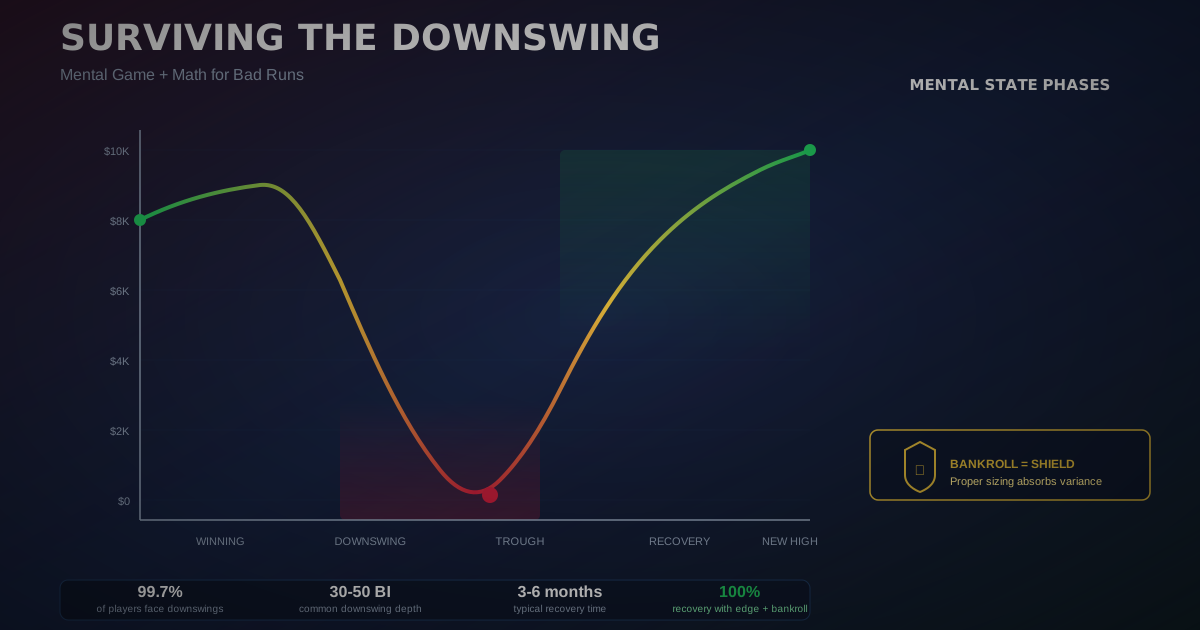
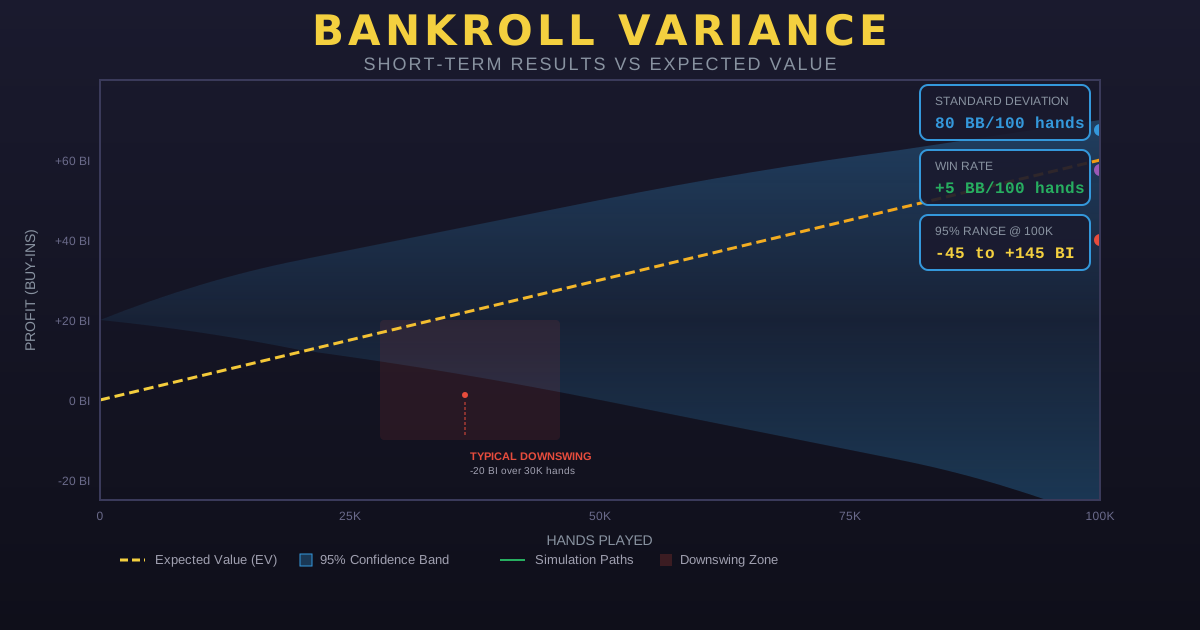
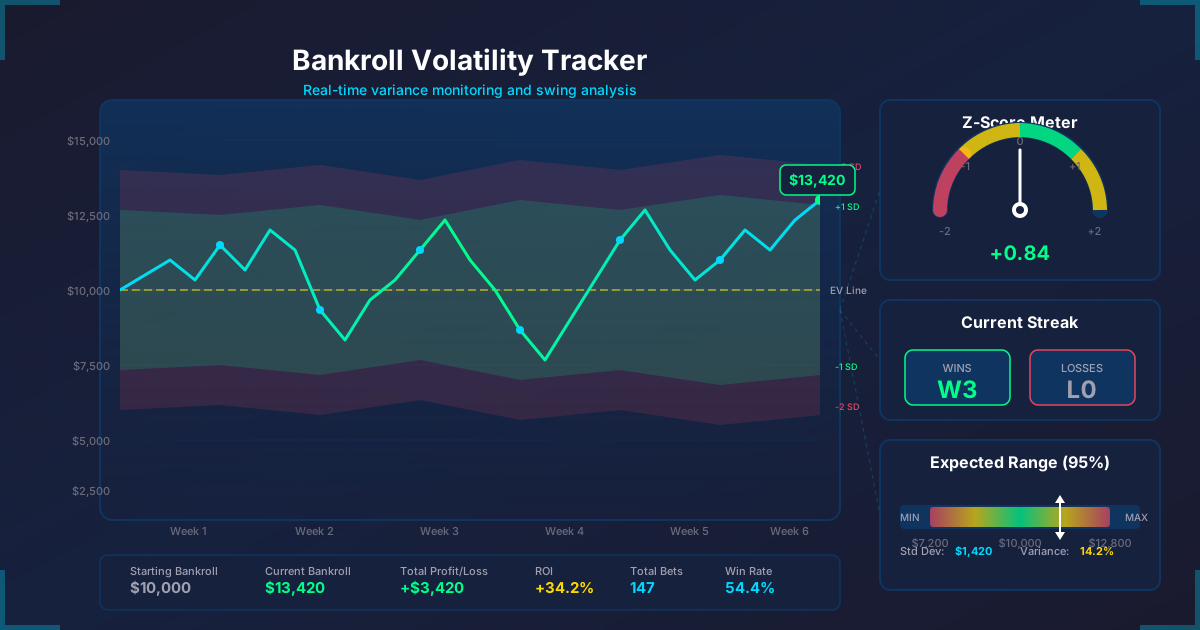
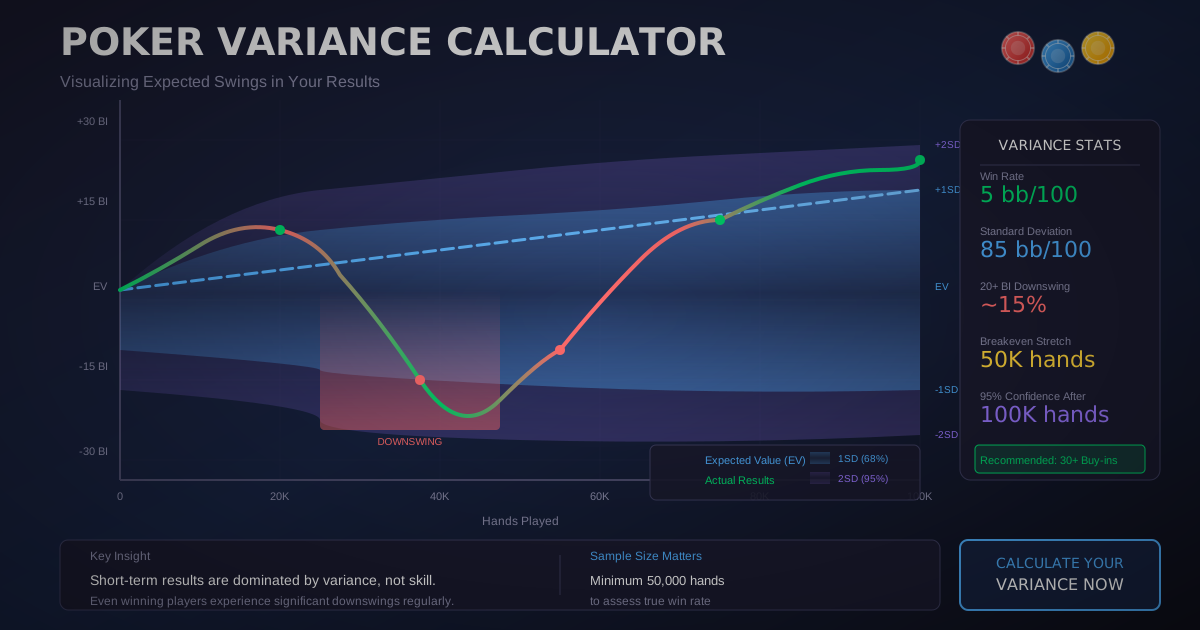
Downswing Probability
Expected Downswings
| Downswing (Units) | Probability |
|---|---|
| 25 units | ~76% (will happen) |
| 50 units | ~37% |
| 75 units | ~13% |
| 100 units | ~5% |
| 150 units | ~0.7% |
Downswing Duration
| Losing Streak | Avg Duration (hands) |
|---|---|
| 25 units | ~1,000-2,000 |
| 50 units | ~5,000-10,000 |
| 100 units | ~20,000-50,000 |
Bet Spreading Impact
Spread Effect on Edge/RoR
| Spread | Effective Edge | RoR (200 units) |
|---|---|---|
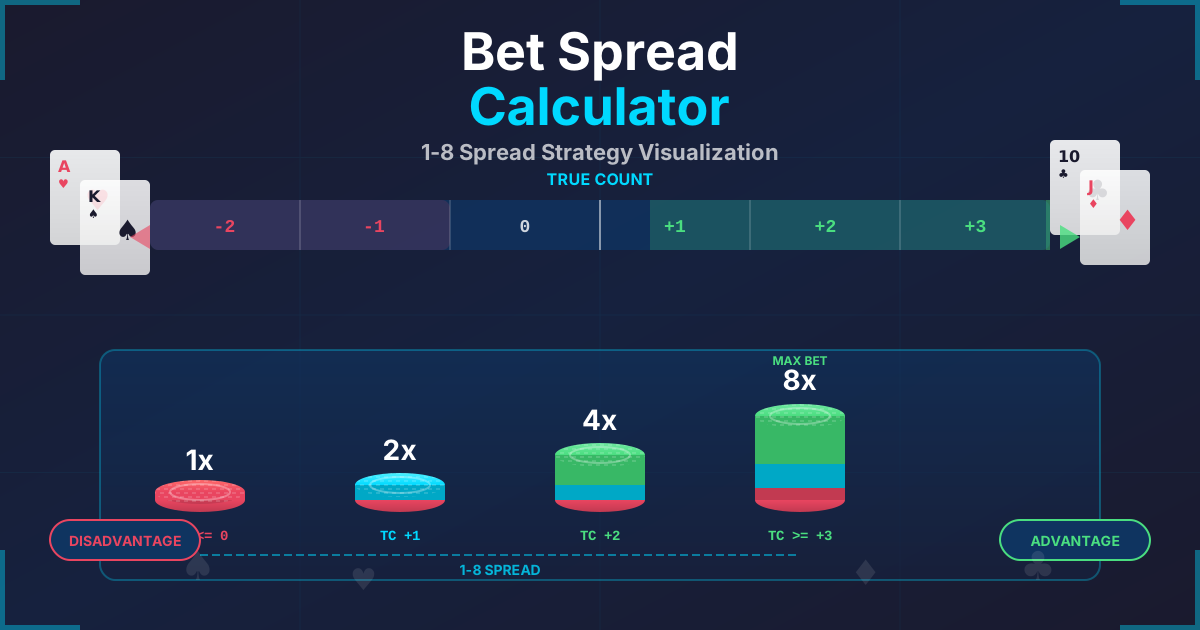
| 1-4 | 0.7% | 24% |
| 1-8 | 1.0% | 13.5% |
| 1-12 | 1.2% | 8% |
| 1-16 | 1.4% | 5% |
Optimal Spreads
| Penetration | Recommended Spread |
|---|---|
| 50% | Not playable |
| 67% | 1-8 |
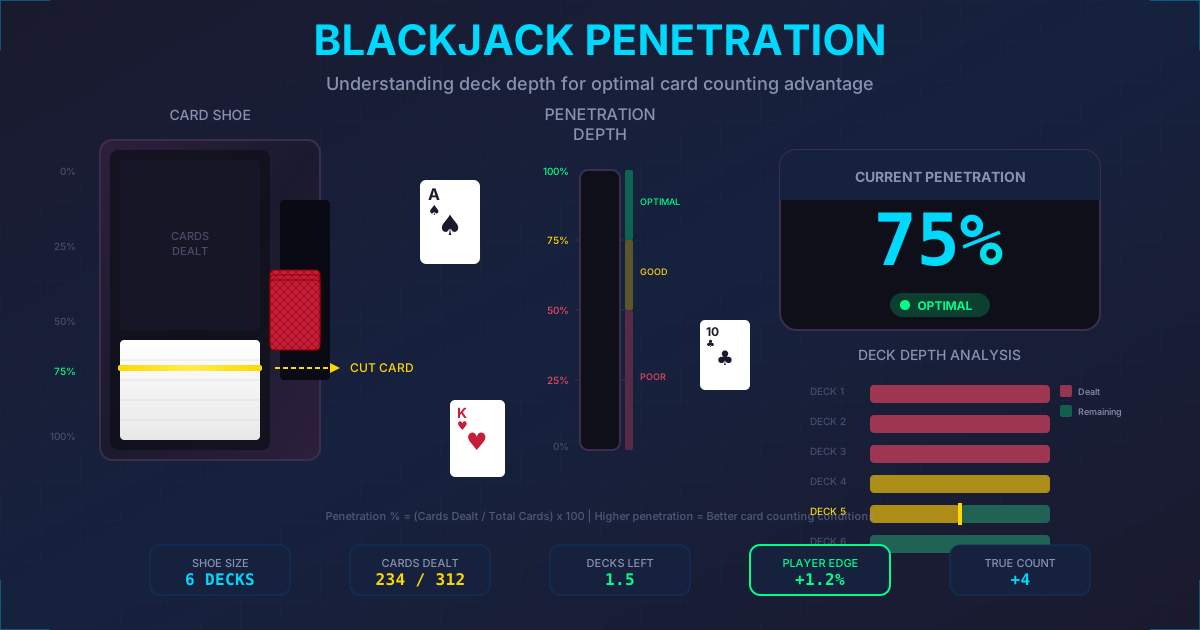
| 75% | 1-10 |
| 83% | 1-12 |
Common RoR Mistakes
1. Ignoring Variance
Mistake: "I have an edge, I can't lose" Problem: Short-term variance dominates Fix: Size bankroll for variance, not just edge
2. Overbetting
Mistake: Betting Kelly or more Problem: Maximizes growth but maximizes ruin risk Fix: Use 1/2 Kelly or less
3. Insufficient Bankroll
Mistake: Starting with 50-100 units Problem: 40-60% ruin probability Fix: 200-400 units minimum
4. Not Adjusting for Losing
Mistake: Same bet size during downswing Problem: Fewer units as bankroll drops Fix: Reduce bets proportionally
Frequently Asked Questions
What's an acceptable risk of ruin?
Professional players target 1-5% RoR. Recreational players might accept 10-15%. Above 25% is gambling on luck.
How many units do I need?
For 1% edge and <5% RoR: minimum 300 units. For <1% RoR: 500+ units.
Does counting guarantee profit?
No. Positive edge only guarantees profit over infinite hands. Short-term, variance can still cause ruin.
Should I use full Kelly betting?
Rarely. Full Kelly maximizes growth but gives ~13% RoR. Half Kelly is safer with 75% of the growth rate.
How do losing streaks affect RoR?
As bankroll drops, units decrease, raising RoR. Must reduce bet size proportionally.
What if my edge estimate is wrong?
If actual edge is lower than estimated, RoR increases significantly. Conservative estimates protect against this.
Advanced Concepts
Time to Goal vs RoR
| Win Goal | RoR | Avg Time (hands) |
|---|---|---|
| Double (100%) | 13.5% | 50,000 |
| +50% | 8% | 25,000 |
| +25% | 5% | 12,500 |
Resizing Strategy
When bankroll changes:
New Bet = (Current Bankroll / Original Bankroll) × Original Bet

Down 25%: Bet 0.75× original
Up 50%: Bet 1.5× original (or lock profits)
Team Play RoR
| Team Advantage | Description |
|---|---|
| Shared bankroll | Lower individual RoR |
| Larger spreads | Higher combined edge |
| Diversification | Variance reduction |
| Complexity | Coordination challenges |
Pro Tips
-
Start conservative: 1/2 Kelly or less initially
-
Track results: Verify edge matches expectations
-
Adjust dynamically: Resize bets with bankroll changes
-
Separate bankrolls: Playing bankroll vs life funds
-
Plan for worst case: Budget for 100+ unit downswing
Related Calculators
- Blackjack EV Calculator - Expected value
- Kelly Criterion Calculator - Optimal betting
- Blackjack Variance Calculator - Variance analysis
- Blackjack Card Counting Calculator - Count strategy
- Blackjack Session Bankroll Calculator - Session sizing
Conclusion
Risk of Ruin is the critical link between edge and survival. Our calculator shows that even with positive expectation, insufficient bankroll leads to high ruin probability. Target 200-400 units minimum with 1-2% edge for acceptable RoR. Bet fractional Kelly to balance growth and safety. Understanding RoR transforms gambling into calculated risk management.
Calculate Your Risk of Ruin Now →
A positive edge doesn't guarantee profit—it guarantees eventual profit if you survive. Proper bankroll management through RoR analysis ensures you'll be around long enough for the math to work in your favor. Size your bankroll for the worst-case scenario, not the expected outcome.