Blackjack Shoe Calculator: Deck Penetration and Shoe Composition (2026)
Blackjack Shoe Calculator: Understanding What's Left in the Deck
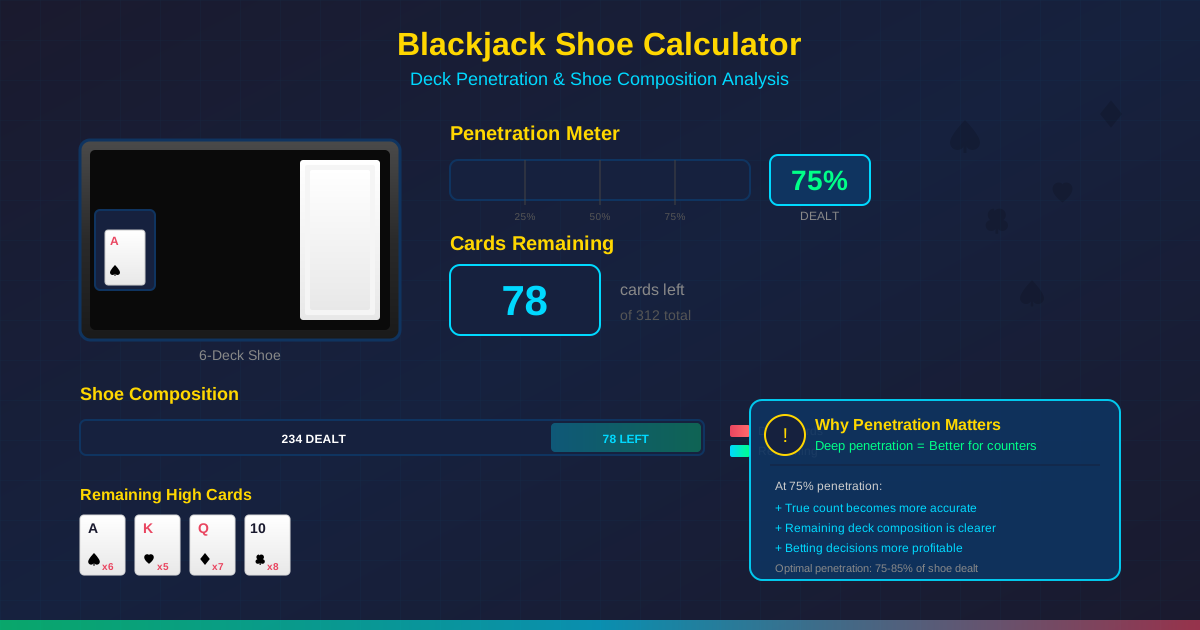
The shoe composition changes with every card dealt—affecting both basic strategy decisions and card counting effectiveness. Our calculator tracks remaining cards, penetration percentage, and how shoe depth impacts your expected value.
What Is Shoe Analysis?
Shoe analysis examines how many cards remain, what percentage of the shoe has been dealt (penetration), and theoretically what composition of cards might remain. While only advantage players exploit this fully, understanding shoe dynamics helps all players appreciate game mechanics.
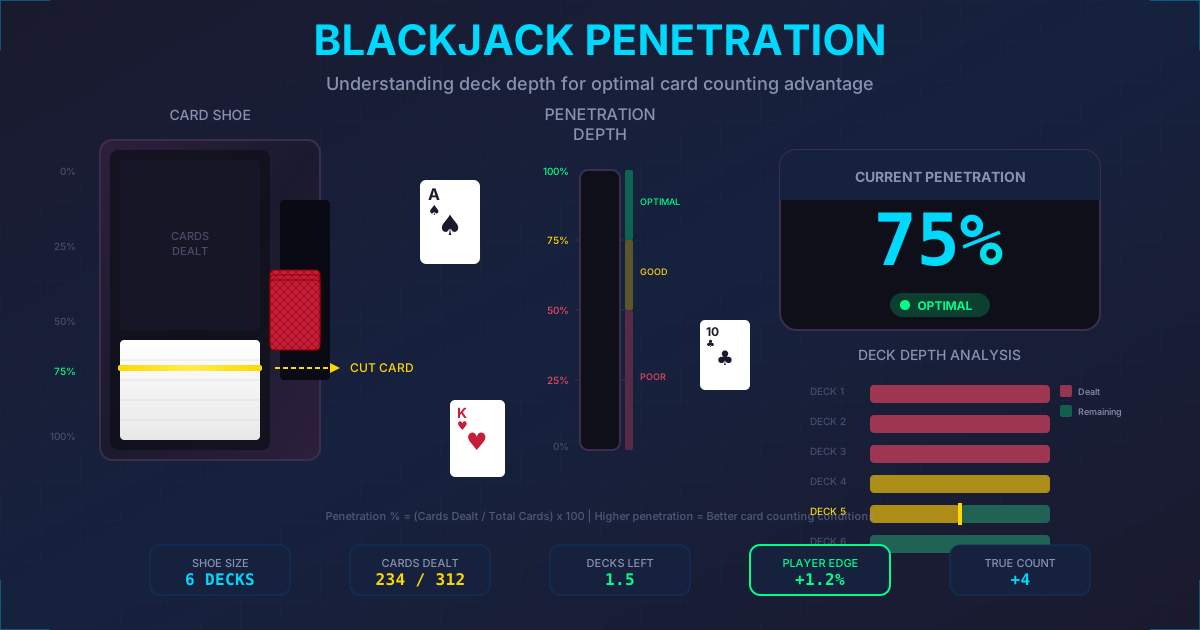
Quick Answer: Penetration = percentage of cards dealt before shuffle. Deep penetration (75%+) is better for counters—more information, larger bets at high counts. Standard games: 6-8 decks, 65-80% penetration. After 4 decks dealt from 6-deck shoe, ~104 cards remain. Basic strategy changes slightly with extreme penetration, but not enough for casual players to adjust. Shoe depth mainly matters for card counting effectiveness.
How to Use Our Calculator
Use the Blackjack Shoe Calculator →
Enter cards dealt to analyze remaining shoe composition.
Step-by-Step Instructions
-
Select Deck Count: 1, 2, 6, or 8 decks
-
Enter Cards Seen: What's been dealt
-
View Penetration: Percentage dealt
-
See Remaining Cards: Estimated composition
-
Analyze Impact: On strategy and counting
Input Fields Explained
| Field | Description | Example |
|---|---|---|
| Number of Decks | Shoe size | 6 |
| Cards Dealt | Hands played | 156 |
| Penetration | % dealt | 50% |
| Cards Remaining | In shoe | 156 |
| Estimated Composition | High/Low ratio | Neutral |
Deck Penetration Explained
What Is Penetration?
Penetration = Cards Dealt / Total Cards

6-deck shoe (312 cards):
156 dealt = 50% penetration
234 dealt = 75% penetration
250 dealt = 80% penetration
Why Penetration Matters
For basic strategy players:
Minimal impact
Slight composition effects
Not worth tracking

For card counters:
Critical factor
Deeper = more opportunities
Determines bet spread effectiveness
Penetration by Venue
| Venue Type | Typical Penetration |
|---|---|
| Vegas Strip | 70-80% |
| Downtown Vegas | 65-75% |
| Regional casinos | 60-75% |
| Online live dealer | 50-65% |
| Shoe games average | 70-75% |
| CSM (continuous) | N/A (no penetration) |
Shoe Composition Analysis
Starting Composition
6-deck shoe:
312 total cards
24 of each rank (6 × 4)
96 ten-value cards (10, J, Q, K)
24 Aces
192 non-ten cards
After Dealing
Tracking removed cards:
Fewer remaining of that type
Affects probability calculations
Most relevant at deep penetration
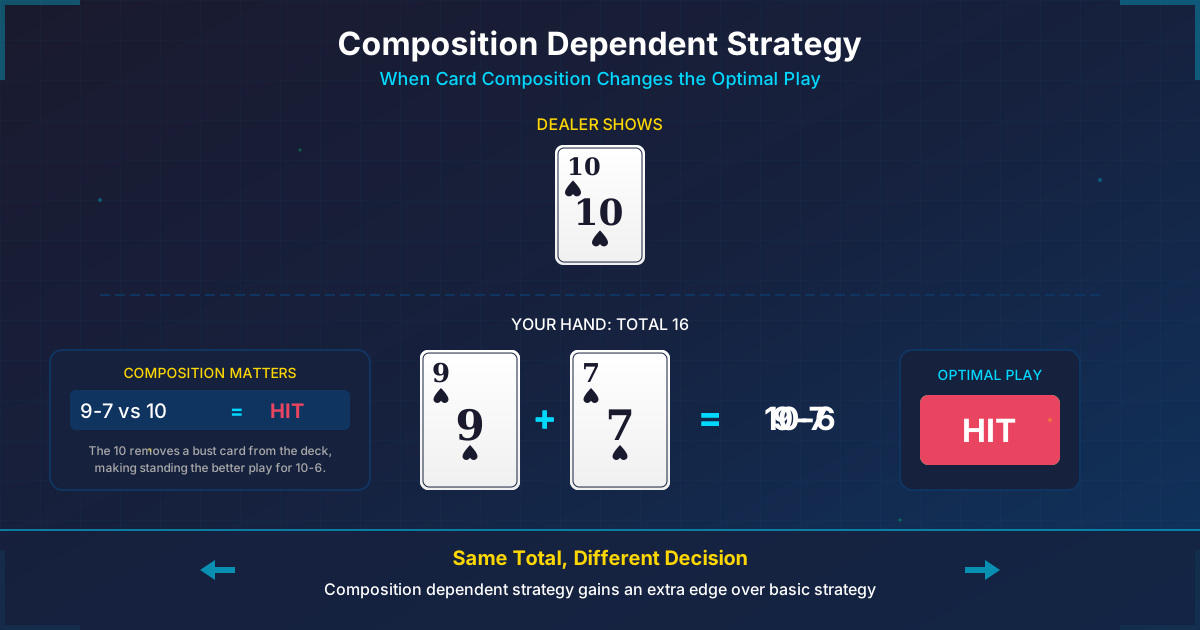
Composition-Dependent Strategy
Standard situations:
Basic strategy optimal

Extreme situations (rare):
All 4s dealt = never hit to 14
All Aces dealt = no blackjacks
These are unusual exceptions
Real-World Examples
Example 1: Mid-Shoe Analysis
Situation: 6-deck shoe, 150 cards dealt
Analysis:
Penetration: 150/312 = 48%
Cards remaining: 162
Decks remaining: ~2.7

For counters:
Early in shoe
Count less meaningful
Conservative bet sizing
Example 2: Deep Penetration
Situation: 6-deck shoe, 240 cards dealt
Analysis:
Penetration: 240/312 = 77%
Cards remaining: 72
Decks remaining: ~1.2

For counters:
True count very accurate
Extreme counts more likely
Time for large bets (if count positive)
Example 3: Card Tracking (Theoretical)
Counted through shoe:
High cards seen: 50 (vs 96 expected)
Remaining high cards: 46
With 72 cards left:

High card density:
46/72 = 63.9%
vs normal 96/312 = 30.8%

Shoe is VERY rich (for counters)
Example 4: Shallow Penetration Game
Situation: Casino shuffles at 50%
Impact:
156 cards dealt, shuffle
Counters never get advantage
True counts stay near zero
Edge opportunity minimal

This is intentional countermeasure
Penetration and Counting Effectiveness
Why Depth Matters
Early shoe:
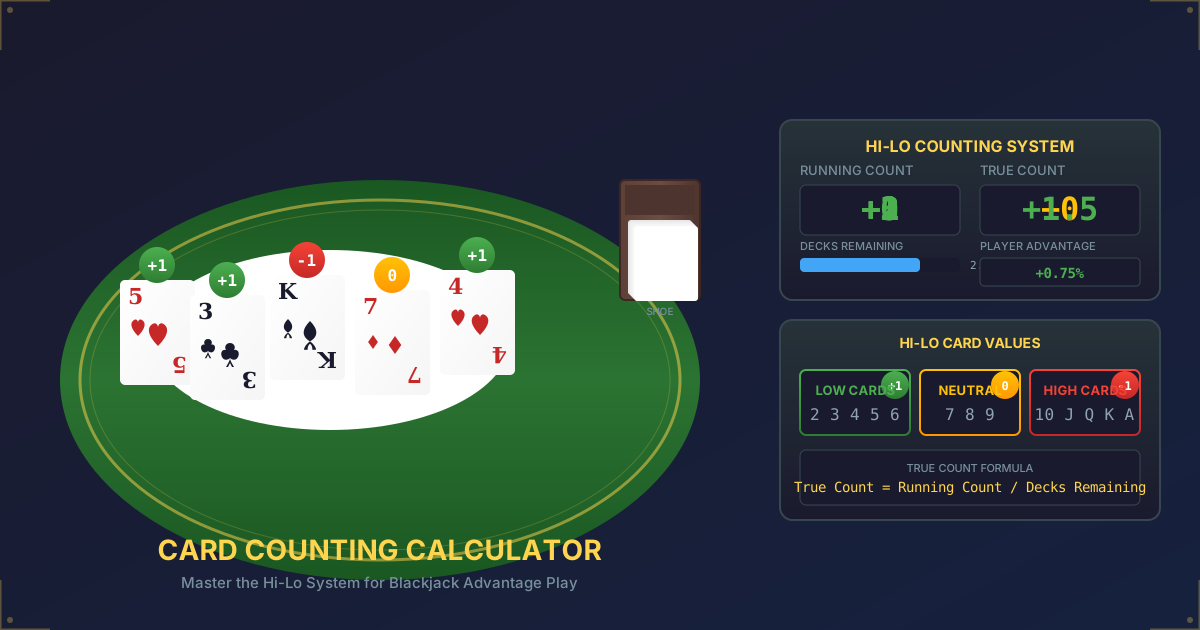
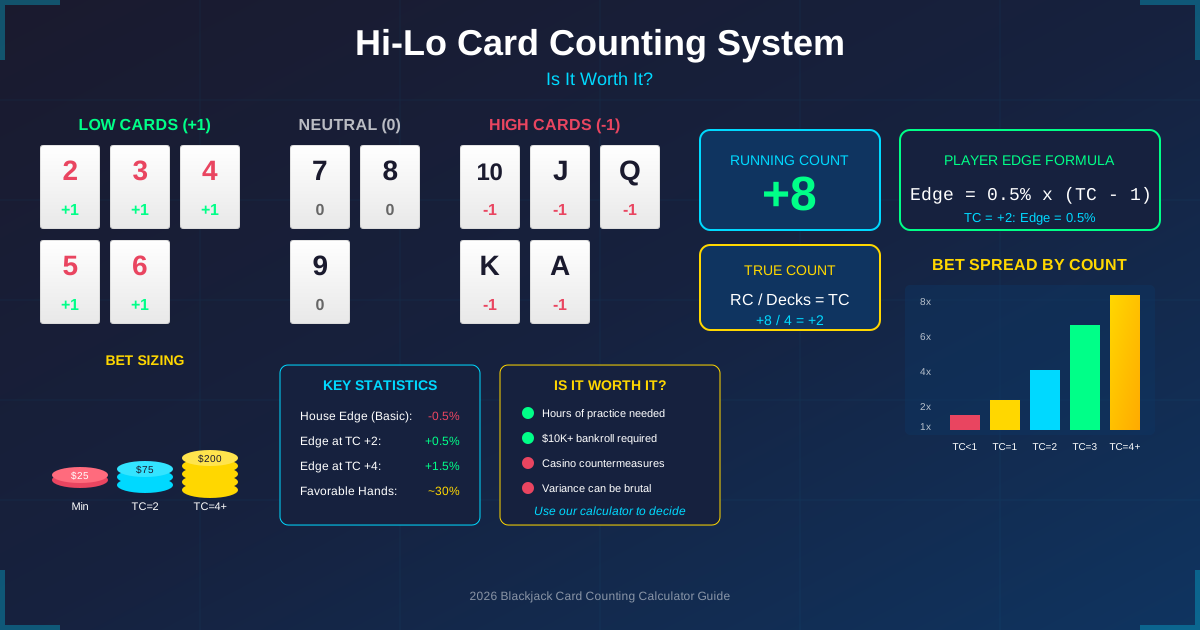
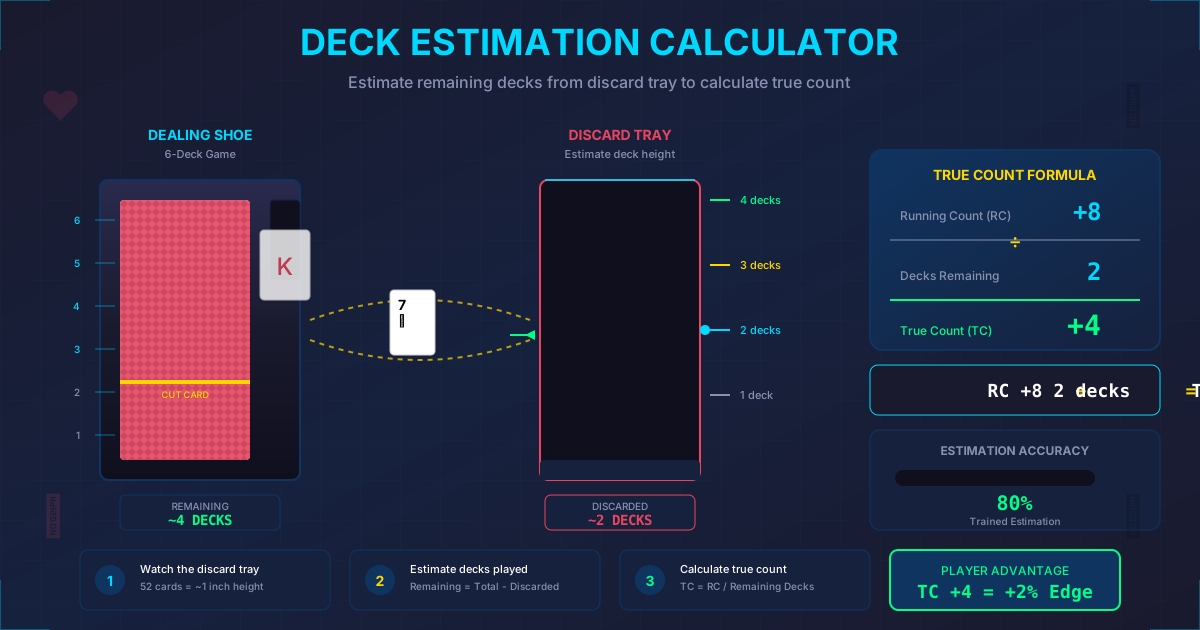
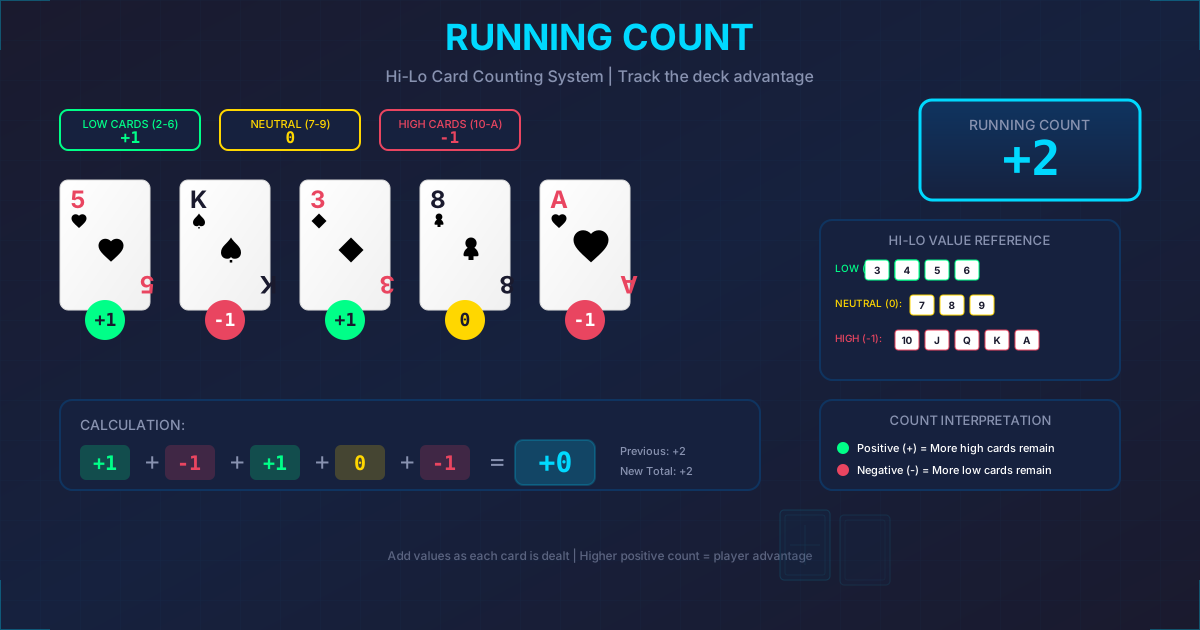
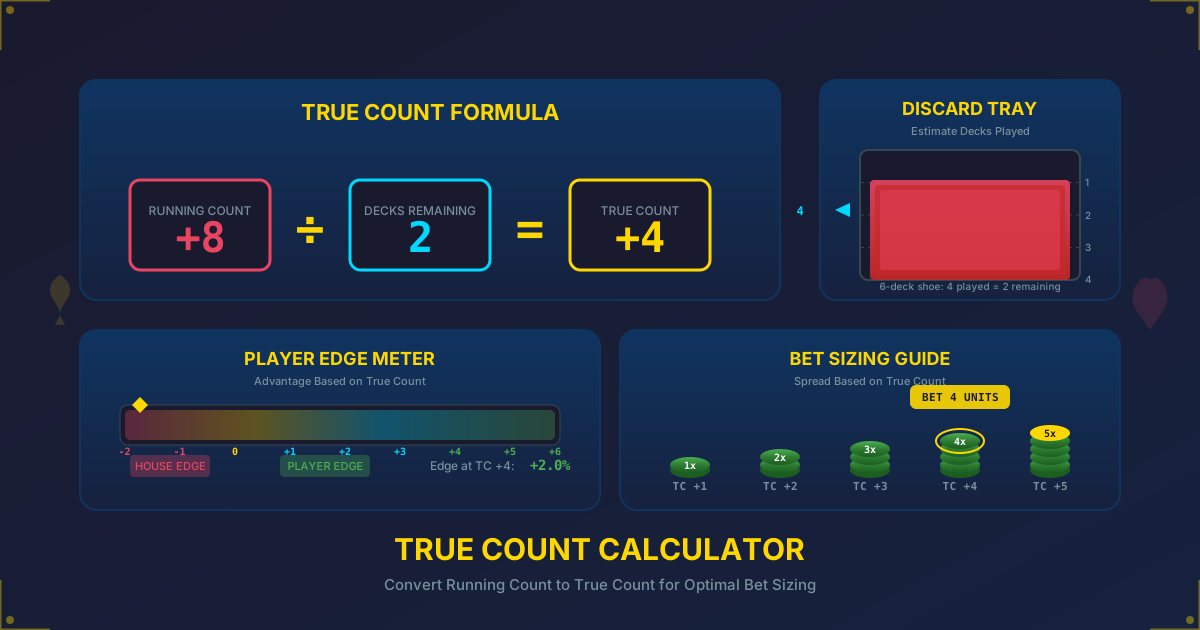
True count = Running count / Decks remaining
4 decks remaining = divide by 4
Counts stay small

Late shoe:
1 deck remaining = divide by 1
Counts become extreme
Betting opportunities arise
Edge by Penetration
| Penetration | Counter's Effective Edge |
|---|---|
| 50% | 0.2-0.3% |
| 65% | 0.5-0.7% |
| 75% | 0.8-1.0% |
| 85% | 1.2-1.5% |
The Math
More penetration = more hands at high counts
High counts = player edge
More edge hands = better overall return

80% vs 60% penetration:
~0.5% improvement in EV for counters
Significant over thousands of hands
Continuous Shuffle Machines (CSM)
How CSMs Work
Cards returned immediately after each hand
No deck depletion
No penetration concept
Always fresh composition
Impact on Strategy
Basic strategy:
Exactly same as always

Card counting:
Completely eliminated
No composition change to track
No advantage possible
Recognizing CSMs
Look for:
Automatic shuffle after each hand
Multiple slots for returned cards
No discard tray buildup
Dealer feeds cards back continuously
Basic Strategy Adjustments
When Composition Matters
Standard play:
Basic strategy optimal
Don't adjust for shoe

Extreme situations (rare):
No Aces left: Stand more
No 5s left: Double less on 9-11
All small cards dealt: Hit less stiffs

These rarely matter in practice
Practical Advice
For non-counters:
Ignore composition
Play basic strategy always
Don't track cards

For counters:
Focus on running count
Convert to true count
Bet and play accordingly
Deck Count Comparison
Single Deck vs Multi-Deck
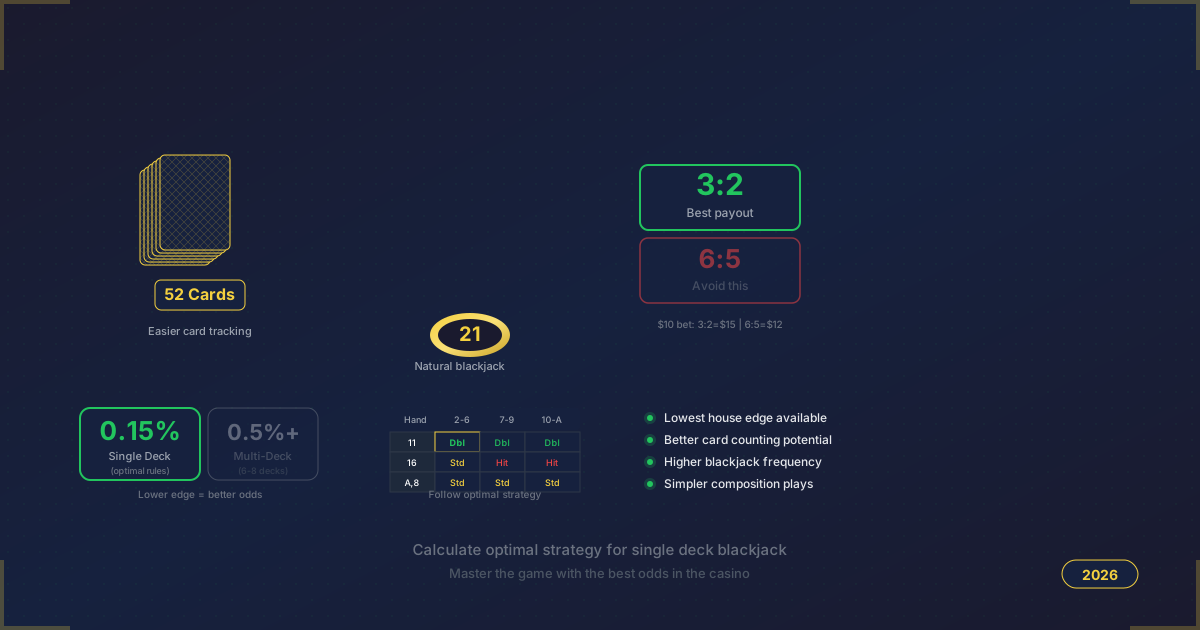
| Factor | Single | 6-Deck |
|---|---|---|
| Cards | 52 | 312 |
| Penetration typical | 65-70% | 75-80% |
| Card removal effect | Large | Small |
| House edge | Lower | Higher |
| Counting potential | Higher | Lower |
Why Casinos Use More Decks
More decks:
- Reduces card removal effect
- Makes counting harder
- Allows deeper penetration
- Faster dealing (less shuffling)

Casino advantages outweigh player's
Common Mistakes
1. Thinking Composition Trumps Basic Strategy
Mistake: Deviate based on "feel" for deck Problem: Intuition is unreliable Fix: Follow basic strategy without counting
2. Confusing Penetration with Advantage
Mistake: Think deeper = better for all players Problem: Only helps counters with positive counts Fix: Understand penetration role correctly
3. Overcomplicating Non-Counter Play
Mistake: Try to track cards casually Problem: Incomplete tracking worse than none Fix: Either count properly or don't count at all
4. Ignoring CSM Impact
Mistake: Think shoe rules apply to CSM Problem: CSMs eliminate composition effects Fix: Recognize and understand CSM games
Frequently Asked Questions
Does penetration matter if I'm not counting?
Minimally. Deep penetration slightly increases variance but doesn't significantly affect basic strategy players.
How can I tell the penetration?
Watch for the cut card. When it appears, note approximately how much was dealt versus what's behind it.
Should I leave a game with poor penetration?
Only if you're counting. Non-counters are unaffected by penetration in terms of expected value.
Do online games have real penetration?
Live dealer games do. RNG games shuffle each hand (like CSM). Check if you can see cards being dealt from a shoe.
What's the minimum useful penetration for counting?
Generally 65%+ for meaningful edge. Below 60%, counting becomes marginally profitable at best.
Can casinos adjust penetration?
Absolutely. It's a key countermeasure against counters. Supervisors can instruct dealers to shuffle earlier.
Pro Tips
-
Non-counters: ignore composition: Basic strategy is sufficient
-
Counters: prioritize penetration: Find 75%+ games
-
Avoid CSMs: No counting opportunity whatsoever
-
Track the cut card: Estimate penetration before sitting
-
Understand your game: Know how decks and penetration interact
Related Calculators
- Blackjack Basic Strategy Calculator - Optimal plays
- Blackjack Card Counting Calculator - Counting math
- Blackjack True Count Calculator - Count conversion
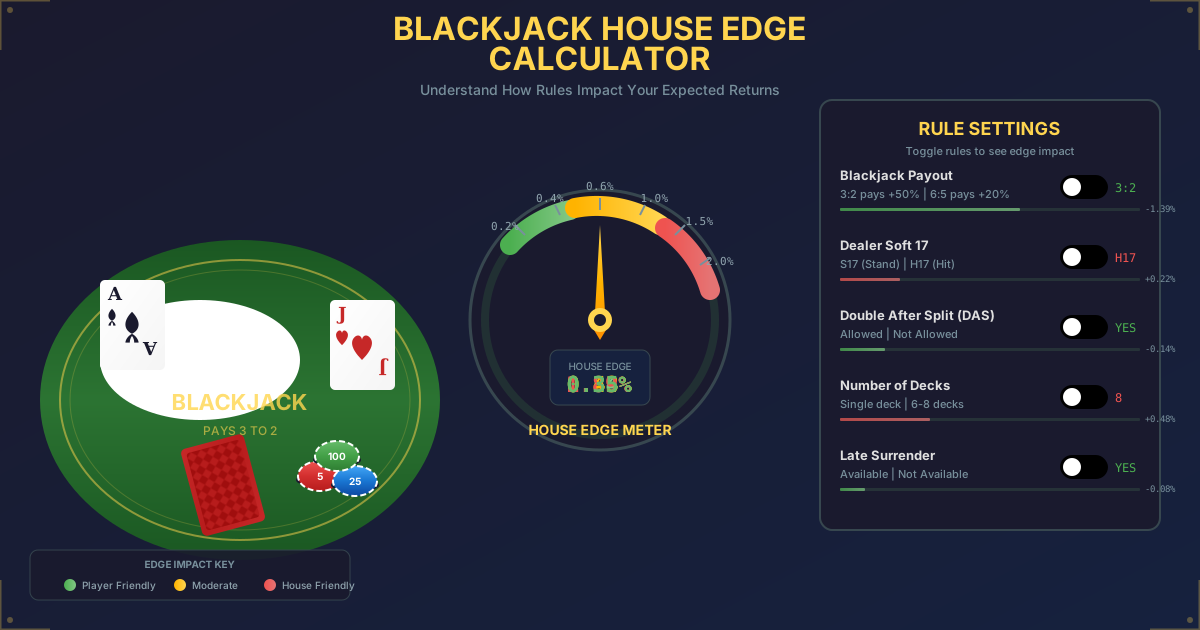
- Blackjack House Edge Calculator - Rule impact
- Expected Value Calculator - EV analysis
Conclusion
The blackjack shoe is a depleting reservoir of cards—its composition changes with every hand dealt. Our calculator helps visualize penetration and remaining cards, showing why shoe depth matters primarily to advantage players while basic strategy remains optimal for recreational play regardless of composition.
Calculate Shoe Composition Now →
Understanding shoe dynamics demystifies blackjack mechanics. Whether you're a counter seeking deep penetration or a casual player wondering about those cards in the shoe, our calculator provides insight into what's left and why it matters—or doesn't—for your game.