If Bet Calculator: Calculate Conditional Sports Betting Payouts (2026)
If Bet Calculator: Master Conditional Wagering Strategy
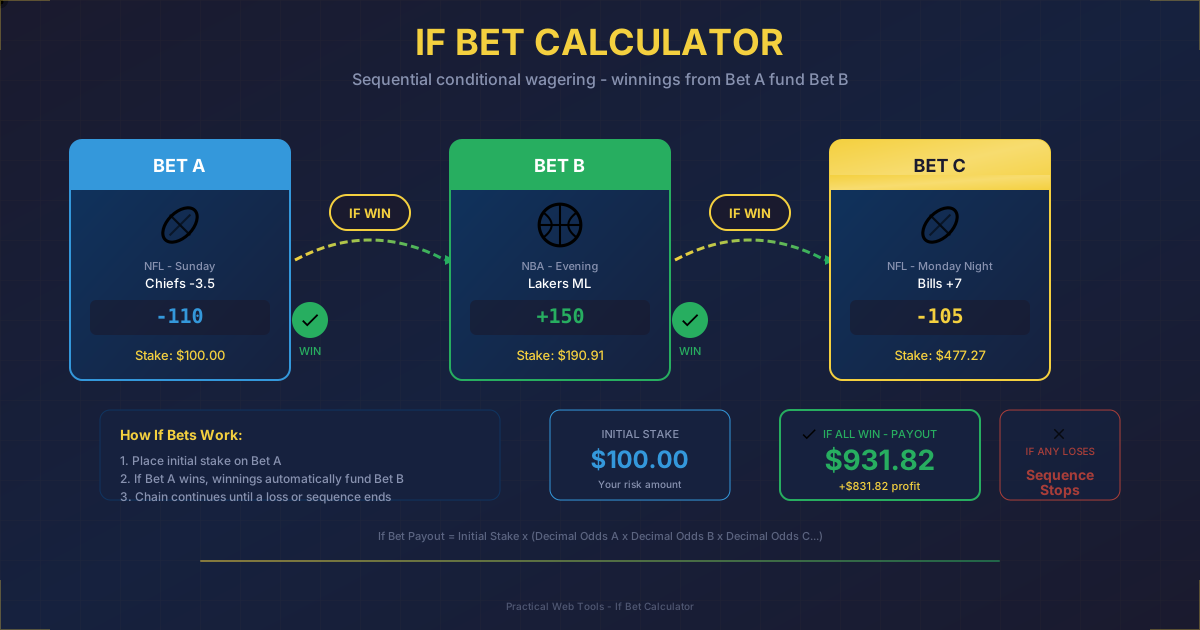
If bets offer a middle ground between parlays and straight bets, letting you link wagers while limiting risk. When your first bet wins, the winnings automatically fund your second bet. Our if bet calculator shows you exactly how these conditional wagers work, helping you understand payouts and determine when if bets make strategic sense.
What Is an If Bet?
An if bet is a conditional wager where the outcome of one bet determines whether a second bet is placed. If your first selection wins, your original stake plus winnings roll forward to fund the next bet. If the first bet loses, the sequence stops and no additional bets are placed. This limits your total risk compared to betting the same amount on multiple straight bets.
Quick Answer: If Bet Payout = First Bet Wins → Second Bet Placed with Winnings. Example: $100 if bet on two -110 favorites. First wins: $100 + $90.91 = $190.91 rolls to second bet. Second wins: $190.91 + $173.55 = $364.46 total return. If first loses: lose only $100 (not $200 like two straight bets). If bets reduce risk but also reduce potential profit compared to placing bets independently.
How to Use Our Calculator
Step-by-Step Instructions
- Enter First Bet Amount: Input your initial wager
- Enter First Bet Odds: Input American odds for first selection
- Enter Second Bet Odds: Input American odds for second selection
- Select If Bet Type: Choose "If Win Only" or "If Action"
- Calculate Payouts: See returns for all possible outcomes
Input Fields
| Field | Description | Example |
|---|---|---|
| Initial Stake | Amount wagered | $100 |
| First Bet Odds | American odds | -110 |
| Second Bet Odds | American odds | -110 |
| If Bet Type | Win Only or Action | If Win Only |
| Number of Legs | 2-7 selections | 2 |
Types of If Bets
If Win Only
Condition: First bet must WIN for second bet to be placed

First Bet Wins → Second bet placed with full returns
First Bet Loses → Sequence ends, lose first bet only
First Bet Pushes → Sequence ends, original stake returned
If Action (If Bet Action)
Condition: First bet must have ACTION for second bet

First Bet Wins → Second bet placed with full returns
First Bet Loses → Second bet placed with original stake
First Bet Pushes → Second bet placed with original stake

Note: "Action" means the bet was graded (not cancelled)
Comparison
| Scenario | If Win Only | If Action |
|---|---|---|
| First Wins | Roll to second | Roll to second |
| First Loses | Stop, lose stake | Continue with original stake |
| First Pushes | Stop, return stake | Continue with original stake |
| Max Loss | First bet amount | Both bet amounts |
If Bet Calculations
Basic If Bet Math
Two-Leg If Win Only:
Bet 1: $100 on Team A at -110
Bet 2: If win, bet all on Team B at -110

Scenario 1: Both Win
Bet 1 return: $100 + $90.91 = $190.91
Bet 2 return: $190.91 + $173.55 = $364.46
Net profit: $264.46

Scenario 2: First Wins, Second Loses
Bet 1 return: $190.91
Bet 2 loss: -$190.91
Net profit: $0 (break even on original $100)

Scenario 3: First Loses
Bet 1 loss: -$100
Net profit: -$100
Payout Formula
If Win Only (both win):
Total Return = Stake × (1 + Decimal Odds 1) × (1 + Decimal Odds 2)

For -110 odds (1.909 decimal):
$100 × 1.909 × 1.909 = $364.43

Profit = Total Return - Stake
$364.43 - $100 = $264.43
Multi-Leg If Bets
Three-Leg If Bet ($100 at -110 each):

All three win:
$100 → $190.91 → $364.46 → $695.96
Profit: $595.96

First two win, third loses:
$100 → $190.91 → $364.46 → $0
Profit: -$100 (original stake only)

First wins, second loses:
$100 → $190.91 → $0
Profit: -$100

First loses:
$100 → $0
Profit: -$100
If Bets vs Other Bet Types
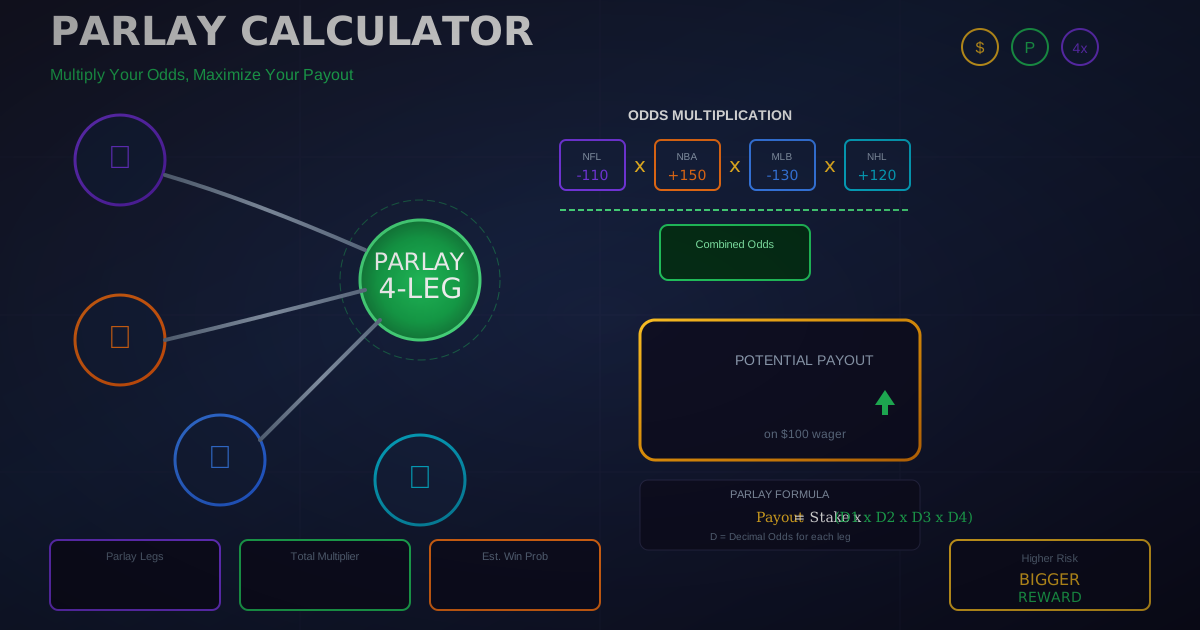
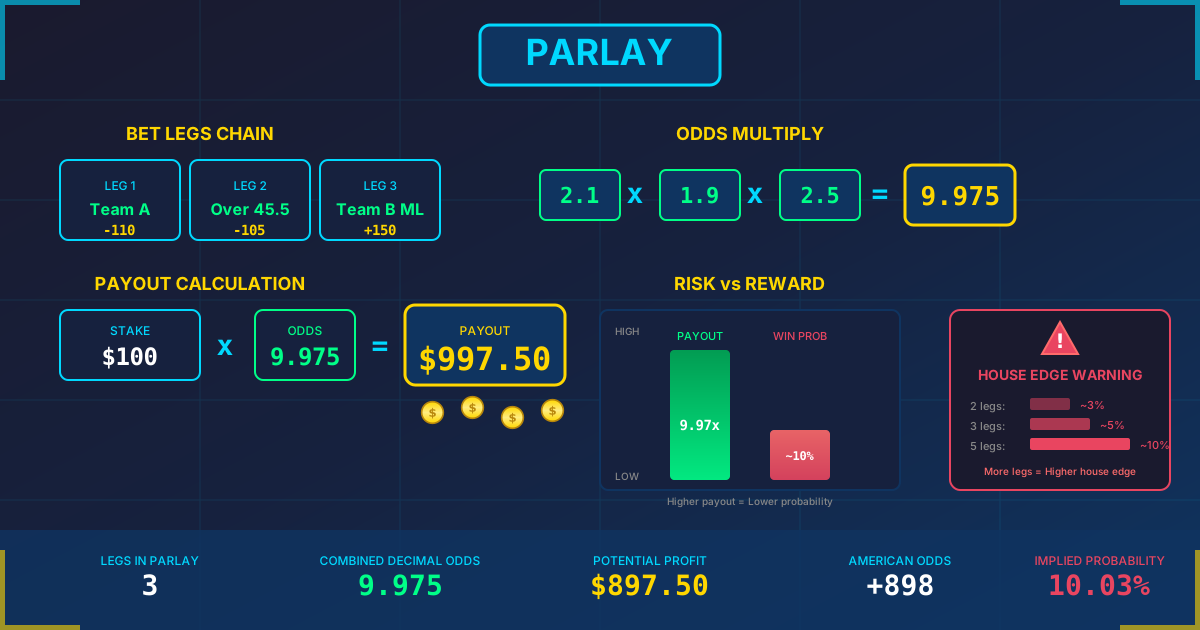
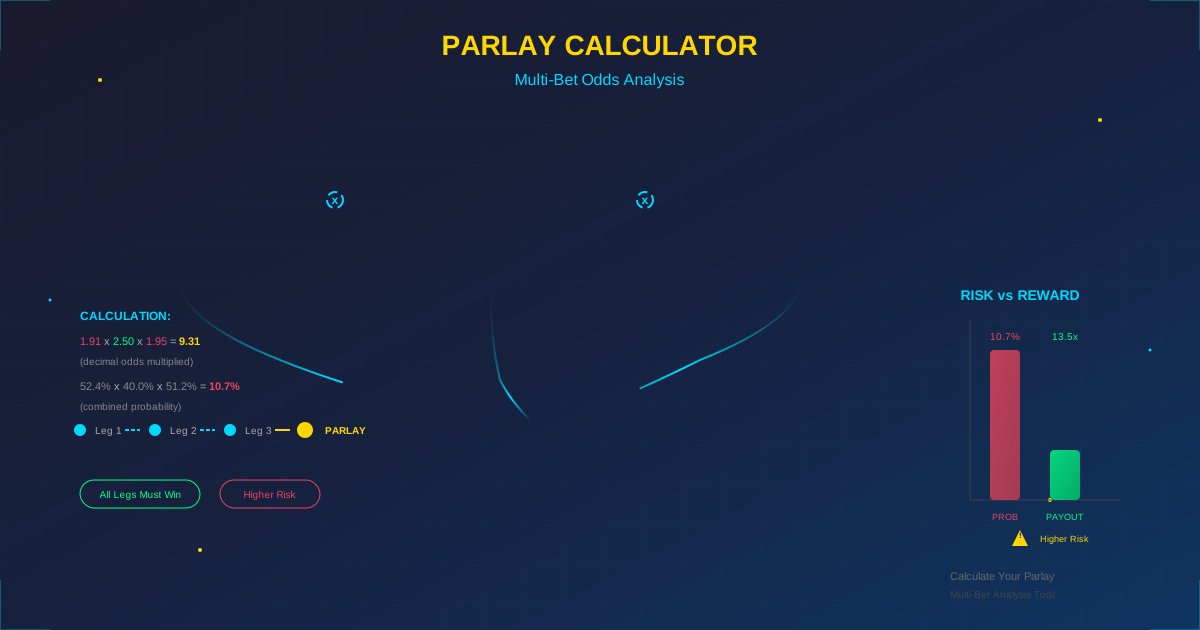
If Bet vs Parlay
$100 on two -110 games:

Parlay:
Both win: +$264.46 profit
One loses: -$100 loss
Risk: $100, Max win: $264.46

If Bet (Win Only):
Both win: +$264.46 profit
First wins, second loses: $0 (break even)
First loses: -$100 loss
Risk: $100, Max win: $264.46

Key difference: If bet protects if first wins but second loses
If Bet vs Two Straight Bets
$100 each on two -110 games:

Two Straight Bets:
Both win: +$181.82 profit
One wins, one loses: -$9.09 loss
Both lose: -$200 loss
Risk: $200

If Bet ($100):
Both win: +$264.46 profit
First wins, second loses: $0
First loses: -$100
Risk: $100

Trade-off: If bet has higher upside but no profit if split
When to Use Each
Use If Bets When:
- Want parlay-like upside with less risk
- Have strong opinion on game order
- Prefer limiting total exposure

Use Parlays When:
- Games start at similar times
- Want simplicity
- Comfortable with all-or-nothing

Use Straight Bets When:
- Want guaranteed profit on any winner
- Games have different confidence levels
- Prefer independent outcomes
Real-World Examples
Example 1: Standard Two-Leg If Bet
Setup:
Game 1: Chiefs -3 (-110) at 1:00 PM
Game 2: Bills -7 (-110) at 4:00 PM
Bet: $100 If Bet (Win Only)
Outcomes:
Chiefs win, Bills win:
$100 → $190.91 → $364.46
Profit: +$264.46

Chiefs win, Bills lose:
$100 → $190.91 → $0
Profit: $0 (break even)

Chiefs lose:
$100 → $0
Profit: -$100
Example 2: If Action Bet
Setup:
Game 1: Yankees ML (-150)
Game 2: Red Sox ML (+120)
Bet: $100 If Action
Outcomes:
Yankees win (+$66.67), Red Sox win:
$166.67 wagered on Red Sox
Return: $166.67 + $200 = $366.67
Profit: +$266.67

Yankees lose, Red Sox win:
$100 wagered on Red Sox (original stake continues)
Return: $100 + $120 = $220
Profit: $220 - $200 = +$20

Yankees lose, Red Sox lose:
Lost both bets
Profit: -$200
Example 3: Three-Leg If Bet
Setup:
Leg 1: Packers -3 (-110)
Leg 2: Cowboys +7 (-110)
Leg 3: Eagles ML (-130)
Bet: $50 If Win Only
Calculations:
All three win:
$50 → $95.45 → $182.26 → $322.46
Profit: +$272.46

First two win, third loses:
$50 → $95.45 → $182.26 → $0
Profit: -$50

First wins only:
$50 → $95.45 → $0
Profit: -$50

First loses:
$50 → $0
Profit: -$50
Example 4: Mixed Odds If Bet
Setup:
Leg 1: Heavy favorite (-200)
Leg 2: Underdog (+150)
Bet: $200 If Win Only
Calculations:
Both win:
Leg 1: $200 + $100 = $300
Leg 2: $300 + $450 = $750
Profit: +$550

Leg 1 wins, Leg 2 loses:
$200 → $300 → $0
Profit: -$200

Leg 1 loses:
$200 → $0
Profit: -$200
Example 5: Comparing Strategies
Same two games, different approaches:
Game A: -110, Game B: -110
Total bankroll commitment: $200

Option 1: Two $100 Straight Bets
Both win: +$181.82
Split: -$9.09
Both lose: -$200

Option 2: $200 If Bet
Both win: +$528.93
First wins, second loses: $0
First loses: -$200

Option 3: $100 Parlay + $100 Straight on Game A
Both win: +$354.55
A wins, B loses: +$90.91
A loses, B wins: -$9.09
Both lose: -$200

Best choice depends on confidence levels
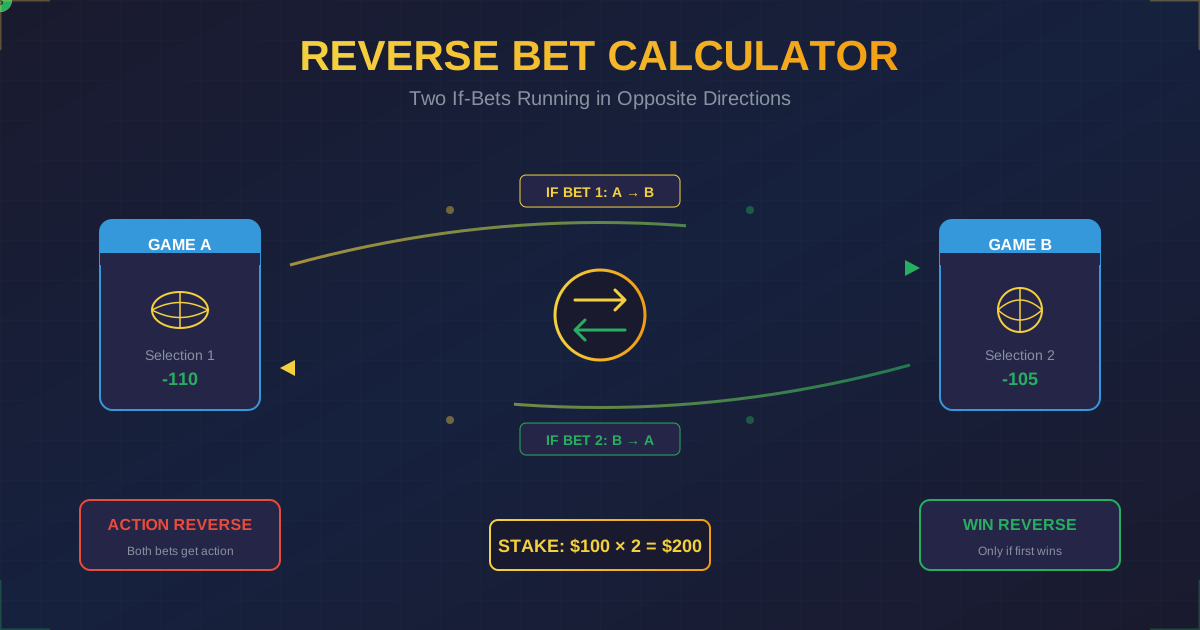
Example 6: Reverse If Bet
Setup:
Reverse if bet = Two if bets in opposite directions
$100 on A if B, $100 on B if A
Games: Both at -110
Calculations:
Both win:
A→B: $100 → $190.91 → $364.46
B→A: $100 → $190.91 → $364.46
Total return: $728.92
Profit: +$528.92

Split (A wins, B loses):
A→B: $100 → $190.91 → $0
B→A: $100 → $0 (B lost, no action on A)
Total return: $0
Profit: -$200

Both lose:
Both sequences end immediately
Profit: -$200
If Bet Strategy
Optimal Ordering
Order considerations:
1. Put highest confidence pick FIRST
2. Earlier game times should go first
3. Lower variance plays before higher variance

Why order matters:
- First bet must win for sequence to continue
- Strongest pick protects the sequence
- Time order prevents betting on completed games
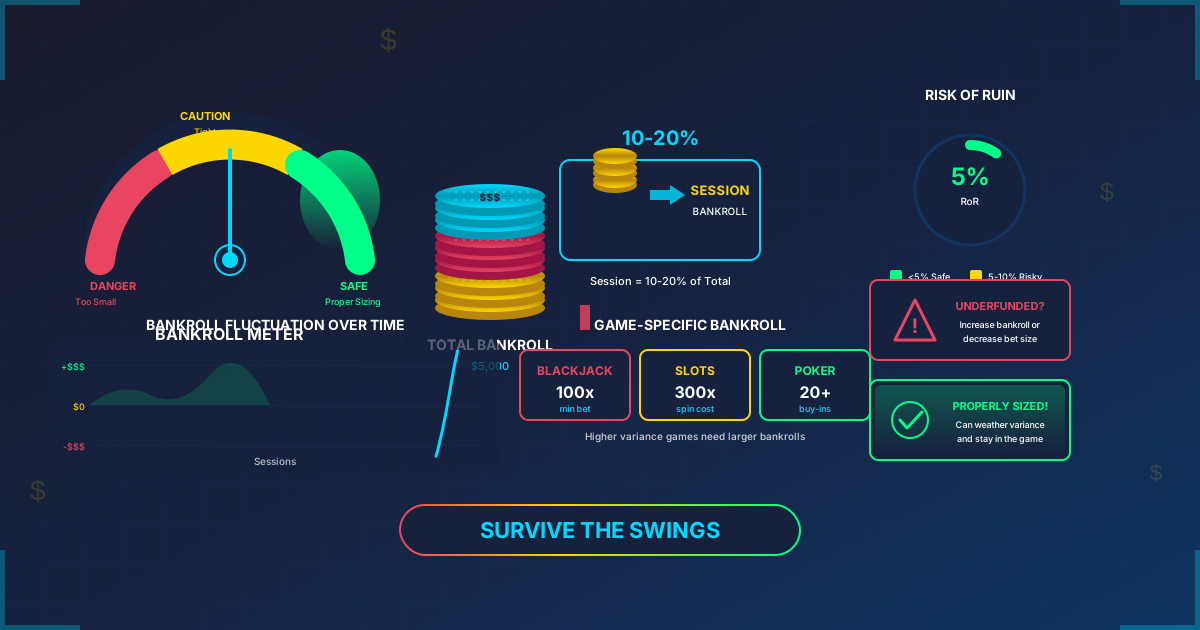
Bankroll Management
If bet position sizing:
- Risk only what you'd risk on a single bet
- Don't treat if bet as "cheap parlay"
- Consider worst case: total loss of stake

Example:
Normal bet size: $100
If bet stake: $100 (not $200 split across legs)
When If Bets Shine
Ideal scenarios:
1. Two games with different start times
2. High confidence in first leg
3. Want parlay upside without parlay risk
4. Limiting total exposure is priority

Avoid when:
1. Games start simultaneously
2. More confident in second leg
3. Want guaranteed profit on any winner
Common Mistakes to Avoid
-
Wrong Leg Order: Put your most confident pick first. If it loses, the whole sequence ends.
-
Treating as Cheap Parlay: If bets aren't free money. You still lose your stake if the first leg loses.
-
Ignoring Time Sequence: The first leg must be decided before the second bet is placed. Order matters for live games.
-
Using If Action Carelessly: If Action bets risk your full stake on both legs. Understand the difference from If Win Only.
-
Overcomplicating: Multi-leg if bets become complex quickly. Stick to 2-3 legs for clarity.
-
Forgetting Break-Even Scenario: First win + second loss = break even on If Win Only. This isn't a loss, but it's not profit either.
Frequently Asked Questions
What is the difference between If Bet and Parlay?
Parlays require all legs to win for any payout. If bets process sequentially - if your first leg wins but second loses, you break even (If Win Only) instead of losing everything.
Should I use If Win Only or If Action?
If Win Only is safer - you only risk your original stake. If Action risks your stake on both bets but lets the sequence continue even after a loss.
How do I decide the order of legs?
Put your highest confidence pick first. The first leg must win for the sequence to continue, so prioritize certainty over potential payout.
Can I do if bets with more than two legs?
Yes, most sportsbooks allow 2-7 leg if bets. Each winning leg rolls all returns to the next bet. The sequence ends when any leg loses (If Win Only).
Are if bets better than parlays?
Neither is objectively better. If bets offer downside protection when the first leg wins but second loses. Parlays are simpler and work for simultaneous games.
What happens if my first bet pushes?
In If Win Only, a push ends the sequence and returns your stake. In If Action, a push continues the sequence with your original stake moving to the next bet.
Do all sportsbooks offer if bets?
Most major US sportsbooks offer if bets, though they may be called different names. Check your book's rules for specific if bet options.
Can I cash out an if bet early?
Policies vary by sportsbook. Some allow cash out on the active leg, others don't permit if bet cash outs. Check your specific book's rules.
Pro Tips
- Always put the game you're most confident about as the first leg of your if bet
- Use if bets when games have staggered start times to track results sequentially
- Compare if bet returns to equivalent parlays before placing - sometimes the difference is minimal
- For If Action bets, only use when you want full action regardless of first leg outcome
- Keep if bets to 2-3 legs to maintain clarity on potential outcomes
Related Calculators
- Parlay Calculator - Compare parlay payouts
- Reverse Bet Calculator - Two-way if bet calculations
- Round Robin Calculator - Multiple parlay combinations
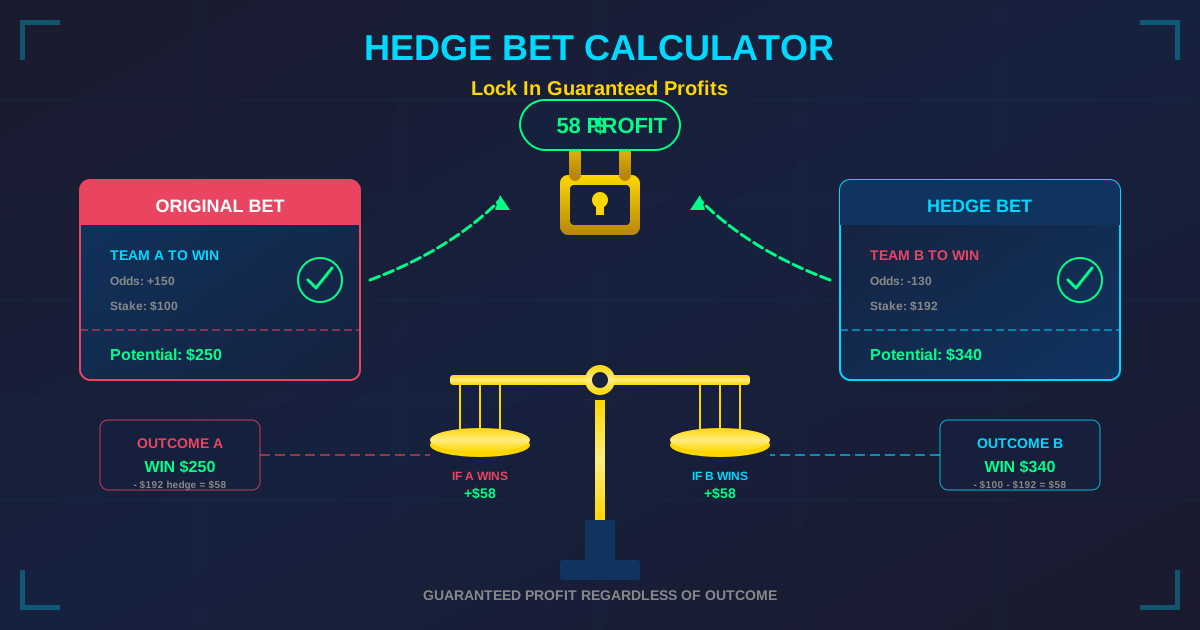
- Hedge Calculator - Lock in profits
- Expected Value Calculator - Assess bet quality
Conclusion
If bets offer strategic flexibility that parlays and straight bets can't match. By understanding how conditional wagering works, you can structure bets that provide parlay-like upside while limiting downside risk. Our if bet calculator shows you exactly what to expect from every outcome, helping you make informed decisions.
Remember: the order of your selections matters enormously. Put your strongest pick first, understand the difference between If Win Only and If Action, and use if bets when their unique structure aligns with your betting goals.