Mega Millions Calculator: Odds, Expected Value, and Prize Analysis (2026)
Mega Millions Calculator: The Real Math Behind the Dream
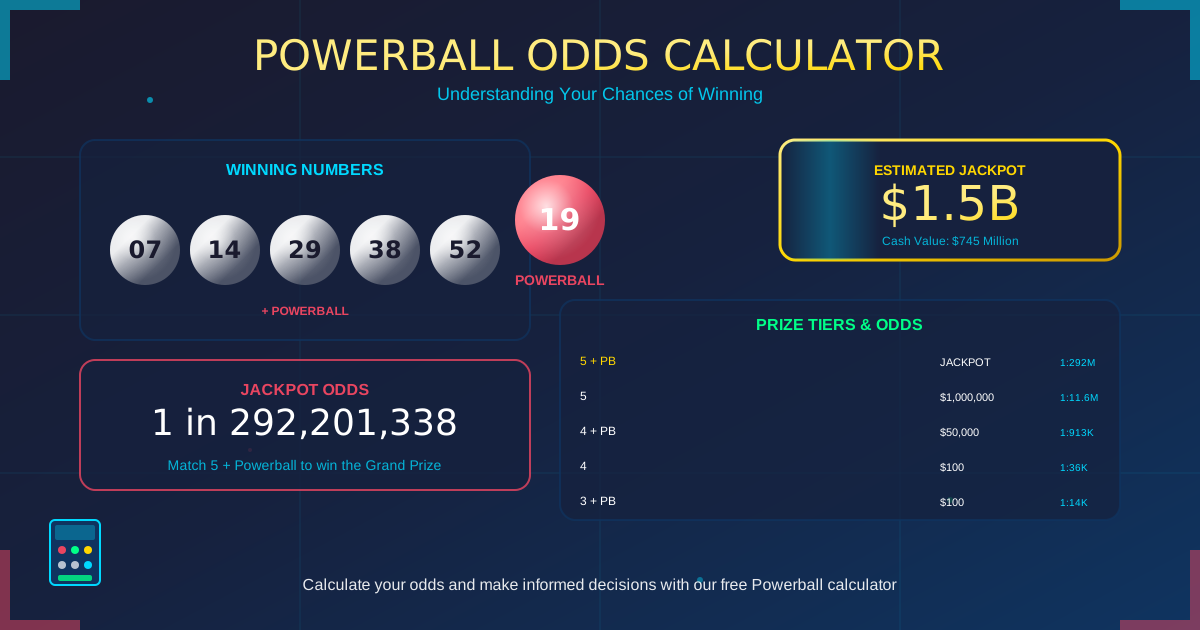
Mega Millions jackpots regularly exceed $500 million, capturing national attention and inspiring dreams. But what are your actual odds? What's the expected value of a ticket? Our Mega Millions calculator breaks down the mathematics, helping you understand exactly what you're buying when you purchase that $2 ticket.
What Is Mega Millions?
Mega Millions is a multi-state lottery game where players select five numbers from 1-70 (white balls) plus one Mega Ball from 1-25. Drawings occur Tuesday and Friday nights. Match all six numbers to win the jackpot; smaller prizes exist for partial matches. The game offers nine prize tiers, from $2 for matching just the Mega Ball to the multi-million dollar jackpot.
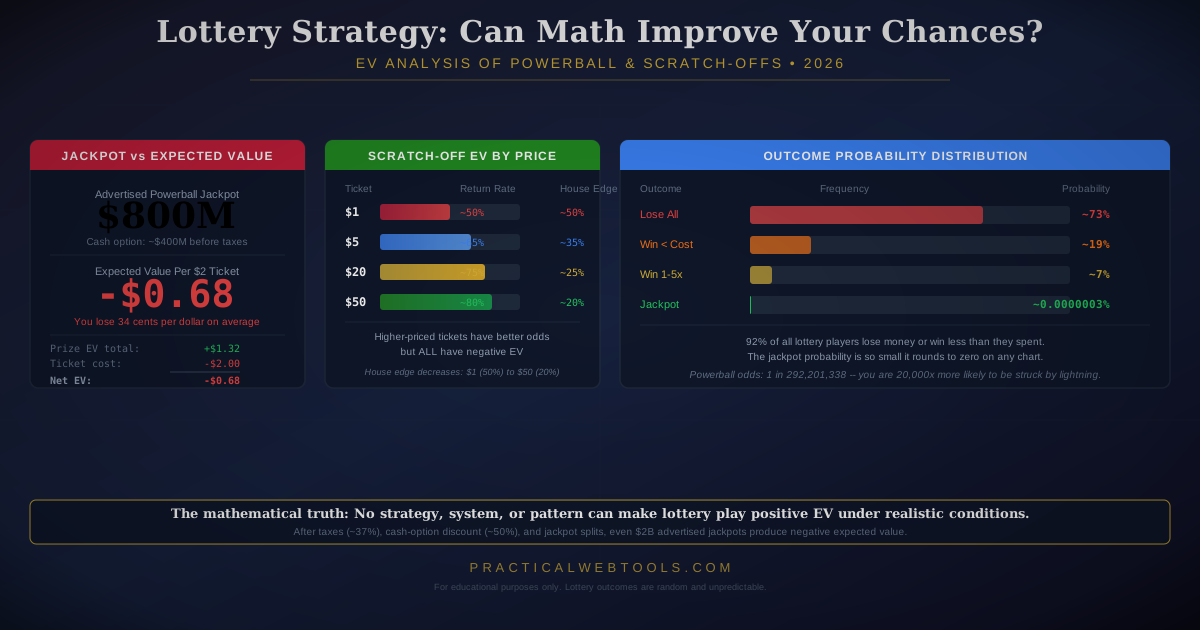
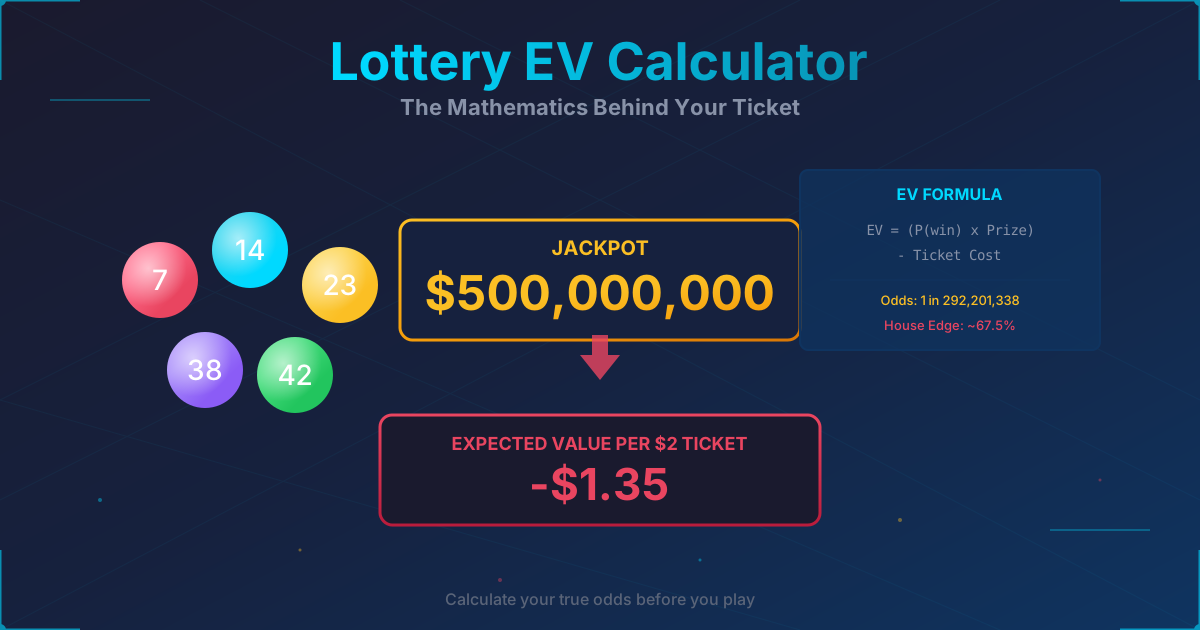
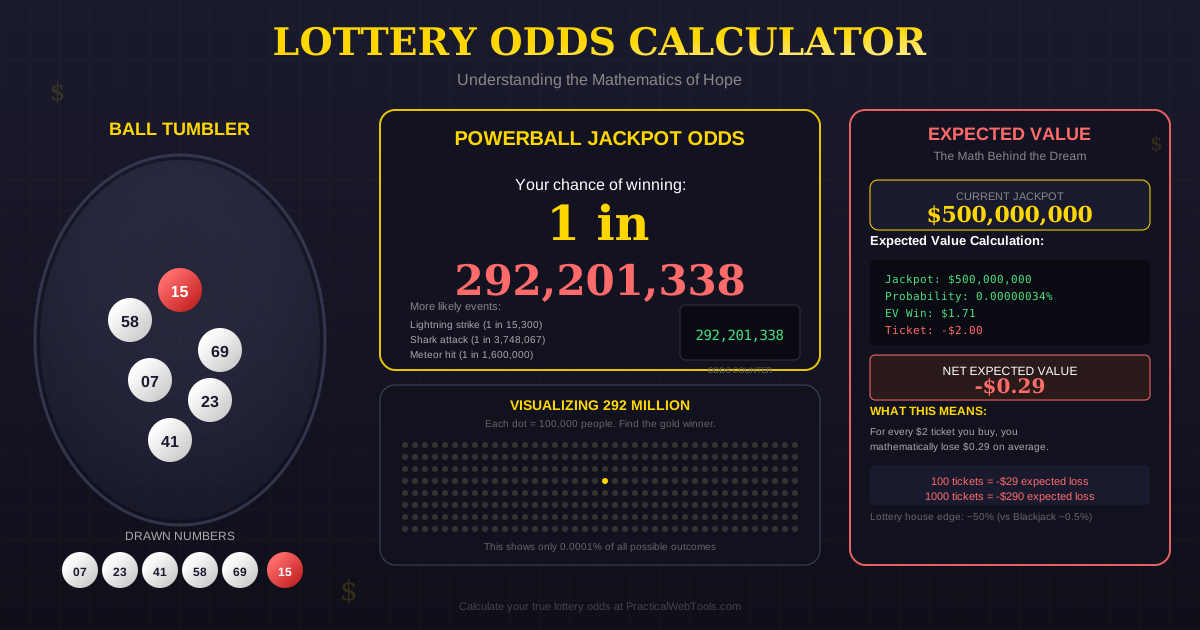
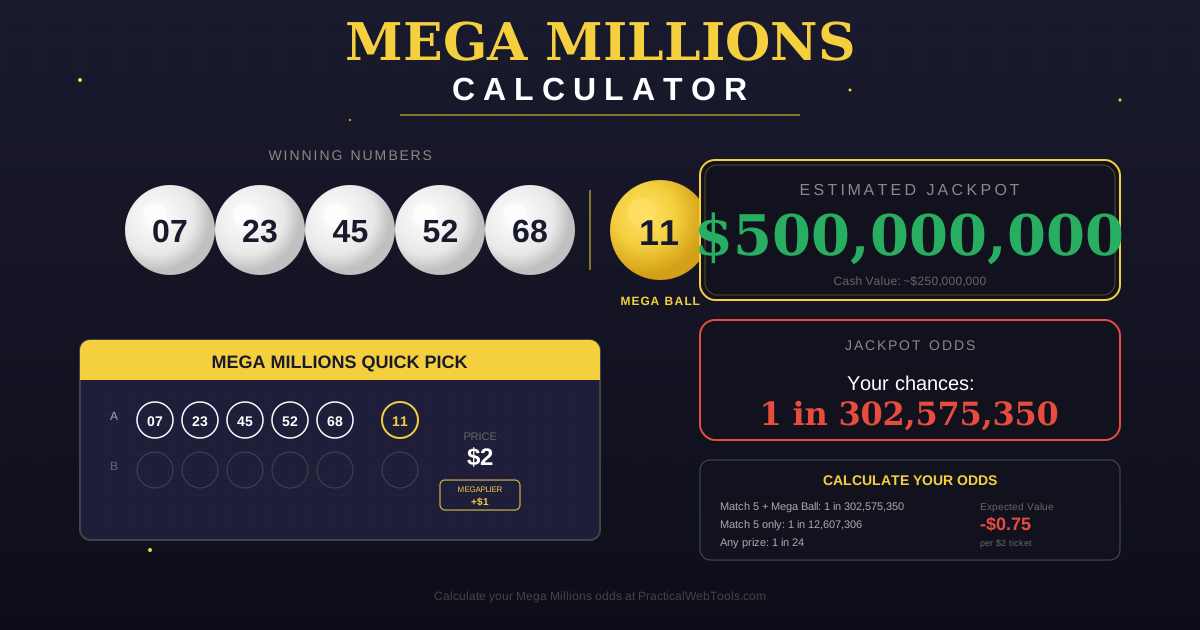
Quick Answer: Your odds of winning the Mega Millions jackpot are 1 in 302,575,350. Expected value varies with jackpot size but is typically negative. Formula: EV = (Prize × Probability) - Ticket Cost, summed across all prize tiers. At a $500 million jackpot (cash option ~$250M), expected value is approximately -$0.75 per $2 ticket after taxes. The lottery only becomes theoretically +EV at jackpots exceeding ~$1.5 billion, and even then, multiple winner scenarios reduce actual EV.
How to Use Our Calculator
Use the Mega Millions Calculator →
Step-by-Step Instructions
- Enter Current Jackpot: Input the advertised jackpot amount
- Select Payout Option: Annuity (30 years) or lump sum
- Enter Your State: For state tax calculations
- Calculate Odds: See probability for each prize tier
- View Expected Value: Understand the true worth of a ticket
Input Fields
| Field | Description | Example |
|---|---|---|
| Advertised Jackpot | Current headline amount | $750,000,000 |
| Payout Option | Annuity or Cash | Cash |
| State | Your state of residence | California |
| Federal Tax Rate | Your tax bracket | 37% |
| Number of Tickets | How many you're buying | 1 |
Mega Millions Odds Breakdown
Complete Probability Table
Prize Tier          | Match           | Odds           | Prize
--------------------|-----------------|----------------|-------------
Jackpot             | 5 + Mega Ball   | 1:302,575,350  | Jackpot
Second Prize        | 5 white only    | 1:12,607,306   | $1,000,000
Third Prize         | 4 + Mega Ball   | 1:931,001      | $10,000
Fourth Prize        | 4 white only    | 1:38,792       | $500
Fifth Prize         | 3 + Mega Ball   | 1:14,547       | $200
Sixth Prize         | 3 white only    | 1:606          | $10
Seventh Prize       | 2 + Mega Ball   | 1:693          | $10
Eighth Prize        | 1 + Mega Ball   | 1:89           | $4
Ninth Prize         | Mega Ball only  | 1:37           | $2

Overall odds of winning ANY prize: 1 in 24
How These Odds Are Calculated
Jackpot Odds Calculation:

White balls: Choose 5 from 70
C(70,5) = 70!/(5! × 65!) = 12,103,014 combinations

Mega Ball: Choose 1 from 25
25 possibilities

Total combinations:
12,103,014 × 25 = 302,575,350

Probability = 1/302,575,350 = 0.00000033%

For perspective:
- You're 300x more likely to be struck by lightning
- You're more likely to become a movie star
- Flipping 28 heads in a row is more likely
Partial Match Calculations
Example: 4 white + Mega Ball (Third Prize)

Ways to match 4 of 5 winning whites:
C(5,4) = 5 ways to choose which 4 you match
C(65,1) = 65 ways to pick 1 non-winning white

Ways to match Mega Ball: 1

Total: 5 × 65 × 1 = 325 ways

Probability: 325/302,575,350 = 1:931,001
Prize: $10,000
Expected Value Analysis
Basic EV Calculation
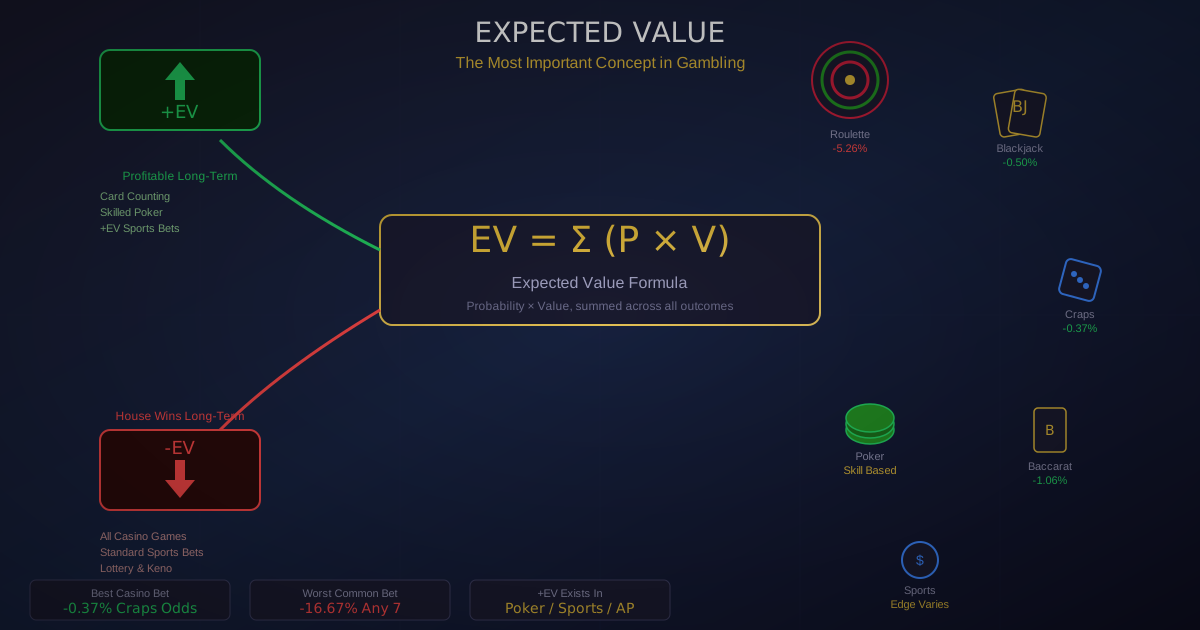
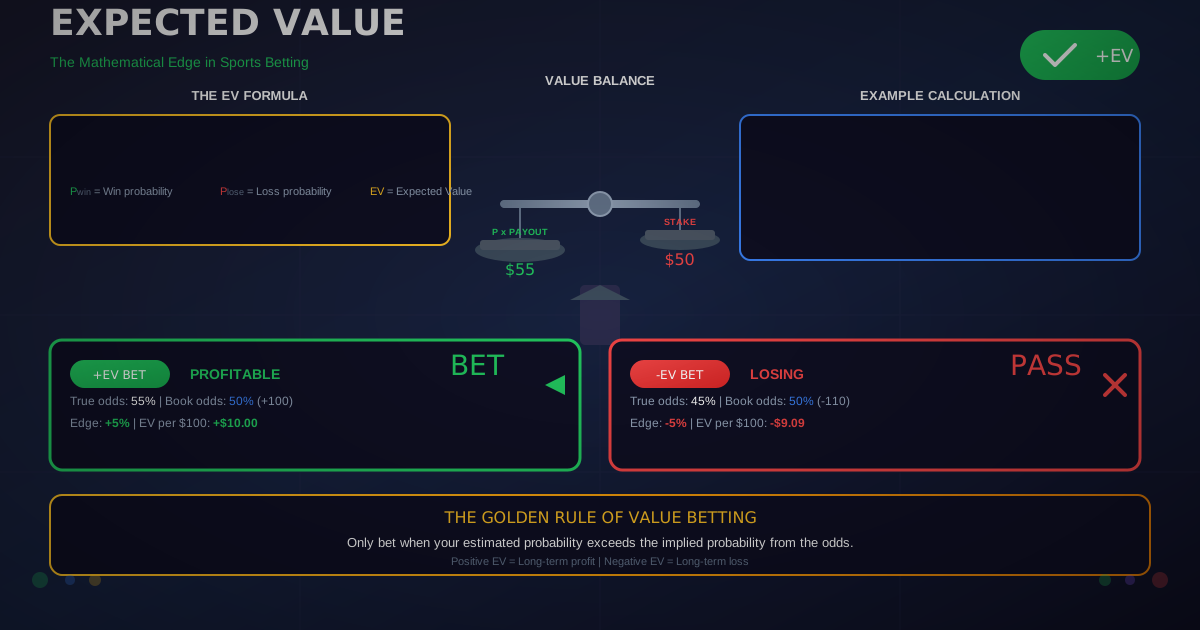
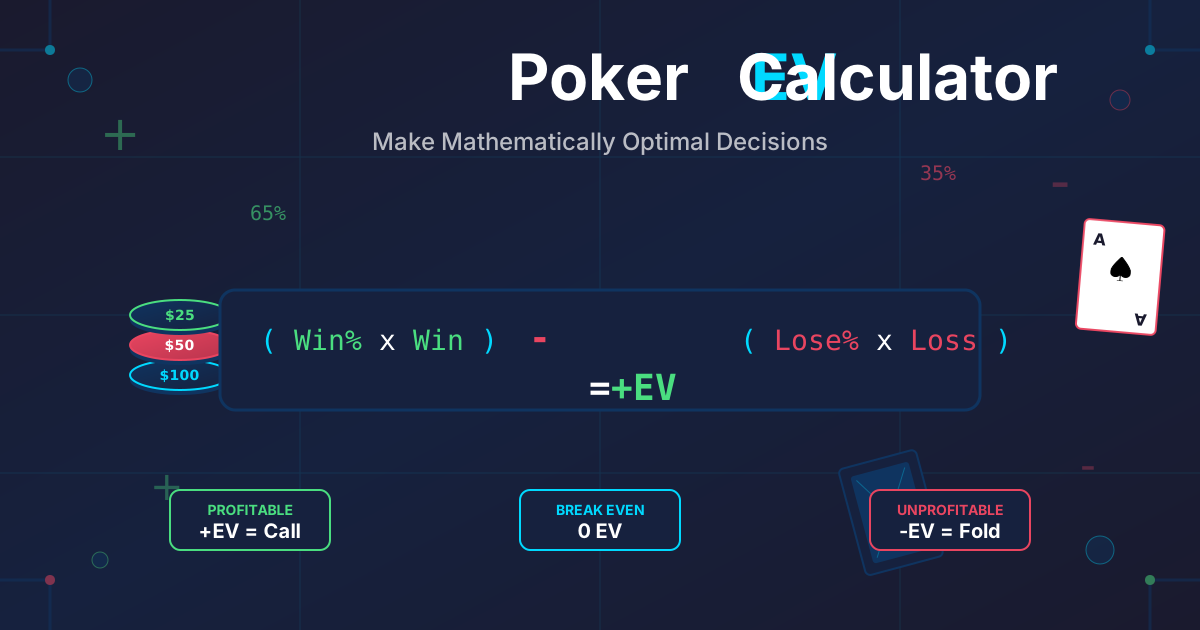
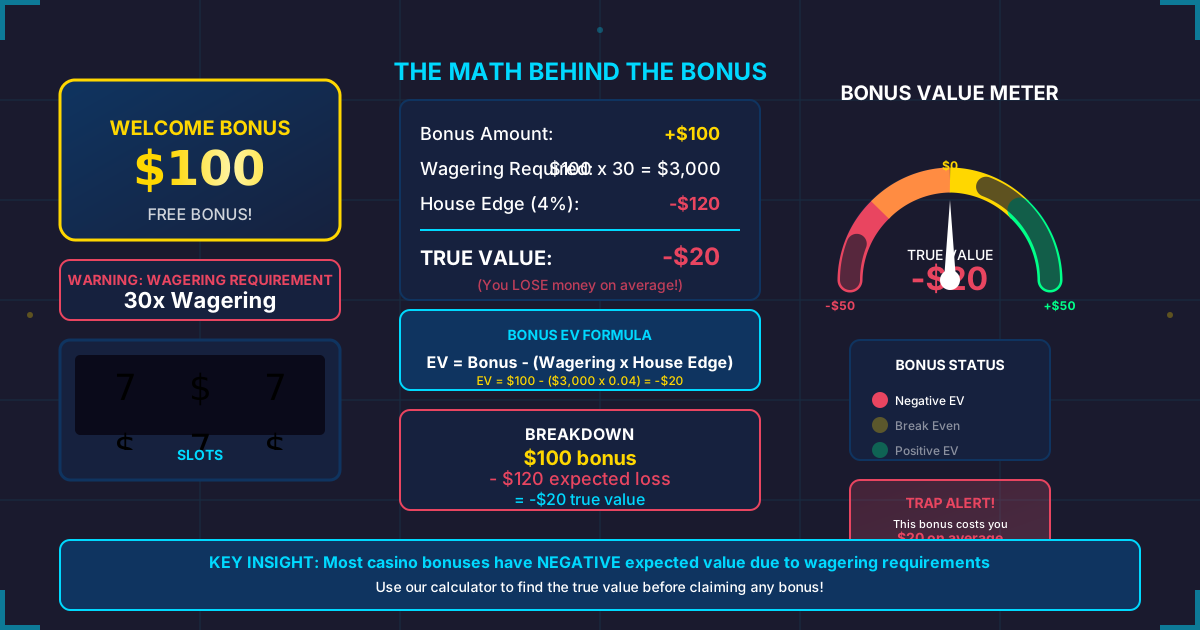
Expected Value = Σ(Prize × Probability) - Ticket Cost

For each prize tier:
Jackpot: $500M × (1/302,575,350) = $1.65
$1M prize: $1,000,000 × (1/12,607,306) = $0.079
$10,000: $10,000 × (1/931,001) = $0.011
$500: $500 × (1/38,792) = $0.013
$200: $200 × (1/14,547) = $0.014
$10: $10 × (1/606) = $0.017
$10: $10 × (1/693) = $0.014
$4: $4 × (1/89) = $0.045
$2: $2 × (1/37) = $0.054

Sum of all EVs ≈ $1.90 (before taxes)
Ticket cost: $2.00
Pre-tax EV: -$0.10

But this ignores taxes...
After-Tax Expected Value
Taxes devastate EV:

Jackpot ($500M advertised):
Cash option: ~$250M (50% of advertised)
Federal tax (37%): -$92.5M
State tax (varies): -$0 to $25M
After-tax: ~$135-160M

After-tax jackpot EV:
$150M × (1/302,575,350) = $0.50

Total after-tax EV ≈ $0.80
Ticket cost: $2.00
After-tax EV: -$1.20 per ticket

You lose $1.20 on average per $2 ticket
Jackpot Size Threshold
At what jackpot is EV positive (theoretically)?

Ignoring taxes and multiple winners:
Need EV > $2.00

Jackpot contribution needed:
$2.00 - $0.25 (other prizes) = $1.75 from jackpot
$1.75 × 302,575,350 = $529.5M cash value
Advertised: ~$1.06 billion

Including taxes (37% federal + 5% state):
Need ~$2.95 from jackpot after tax
Before tax: $2.95 / 0.58 = $5.09
Cash value: $5.09 × 302.6M = $1.54 billion
Advertised: ~$3 billion

But multiple winners in huge jackpots
reduce expected share significantly
Real-World Examples
Example 1: $500 Million Jackpot Analysis
Situation:
Advertised jackpot: $500,000,000
Cash option: $250,000,000
Your state: Texas (no state income tax)
Federal tax: 37%
Buying: 1 ticket
Calculation:
After-tax jackpot:
$250M × (1 - 0.37) = $157.5M

Jackpot EV contribution:
$157.5M / 302,575,350 = $0.52

Other prizes EV (after tax on $1M prize):
$1M × 0.63 / 12,607,306 = $0.050
Smaller prizes (usually not taxed): $0.15

Total EV: $0.52 + $0.05 + $0.15 = $0.72

Ticket cost: $2.00
Net EV: $0.72 - $2.00 = -$1.28
Result:
Expected loss: $1.28 per ticket

For every 100 tickets bought ($200):
Expected return: $72
Expected loss: $128

The lottery keeps 64% of your money on average
Example 2: $1.5 Billion Mega Jackpot
Situation:
Record-approaching jackpot: $1,500,000,000
Cash option: $750,000,000
State: California (13.3% state tax)
Federal tax: 37%
Buying: 10 tickets
Calculation:
After-tax jackpot:
Federal: $750M × 0.37 = $277.5M
State: $750M × 0.133 = $99.75M
Net: $750M - $277.5M - $99.75M = $372.75M

But at huge jackpots, expect multiple winners:
Estimated ticket sales: 400+ million
Probability of sole winner: ~25%
Expected share: ~$280M (accounting for splits)

Adjusted jackpot EV:
$280M / 302,575,350 = $0.93

Total EV with other prizes: $1.13

For 10 tickets:
Total EV: 10 × $1.13 = $11.30
Cost: 10 × $2 = $20.00
Net EV: -$8.70
Result:
Even at $1.5 billion:
Expected loss: $0.87 per ticket
10 tickets expected loss: $8.70

Multiple winners dilute the value
No realistic jackpot makes lottery +EV
Example 3: Playing Every Drawing for a Year
Situation:
Play 2 tickets per drawing
104 drawings per year
Average jackpot: $300M
Total spent: $416/year
Calculation:
At $300M average jackpot:
After-tax EV per ticket ≈ $0.65
Per ticket loss: $1.35

Annual expected value:
208 tickets × $0.65 = $135.20 expected return
208 tickets × $2.00 = $416.00 cost
Expected loss: $280.80/year

Probability of winning jackpot:
1 - (302,575,349/302,575,350)^208
≈ 208/302,575,350
≈ 0.0000687% or 1 in 1,455,651 years
Result:
Annual expected loss: $280.80
Jackpot odds: Still essentially zero

At 2 tickets/drawing for 50 years:
Total cost: $20,800
Expected return: $6,760
Expected loss: $14,040
Still only 1 in 29,113 lifetime jackpot odds
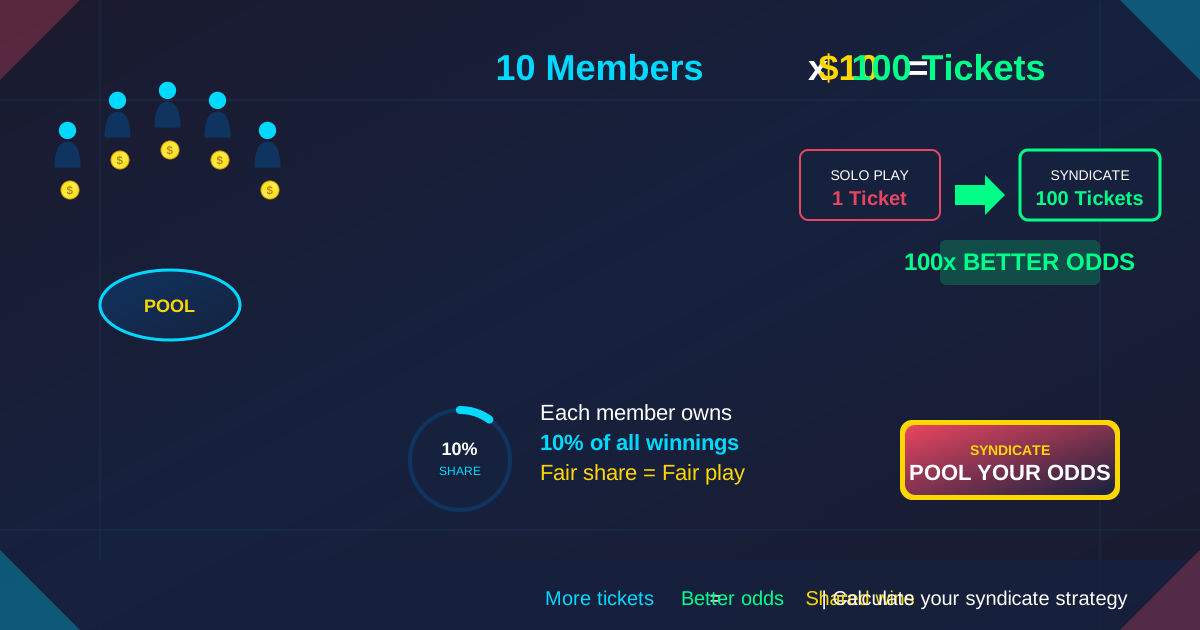
Example 4: Office Pool Analysis
Situation:
20 coworkers, $10 each
Total pool: $200 (100 tickets)
Current jackpot: $800M
Cash option: $400M
Calculation:
100 tickets total
Probability of ANY jackpot: 100/302,575,350 = 1:3,025,754

If jackpot won (after tax ~$240M):
Each person's share: $12,000,000

Expected value per person:
($12M × 100/302,575,350) + other prizes share
≈ $4.00 + $8.00 = $12.00

Cost per person: $10.00
EV per person: +$2.00 (!)

Wait - let's verify...
Total EV: $0.90/ticket × 100 = $90
Cost: $200
Net EV: -$110

Per person EV: -$5.50
Result:
Pool doesn't improve EV per dollar
Just increases odds at same rate as cost
Each person: -$5.50 expected value

Pool benefit: Social experience
Shared jackpot odds: 1 in 3 million (still awful)
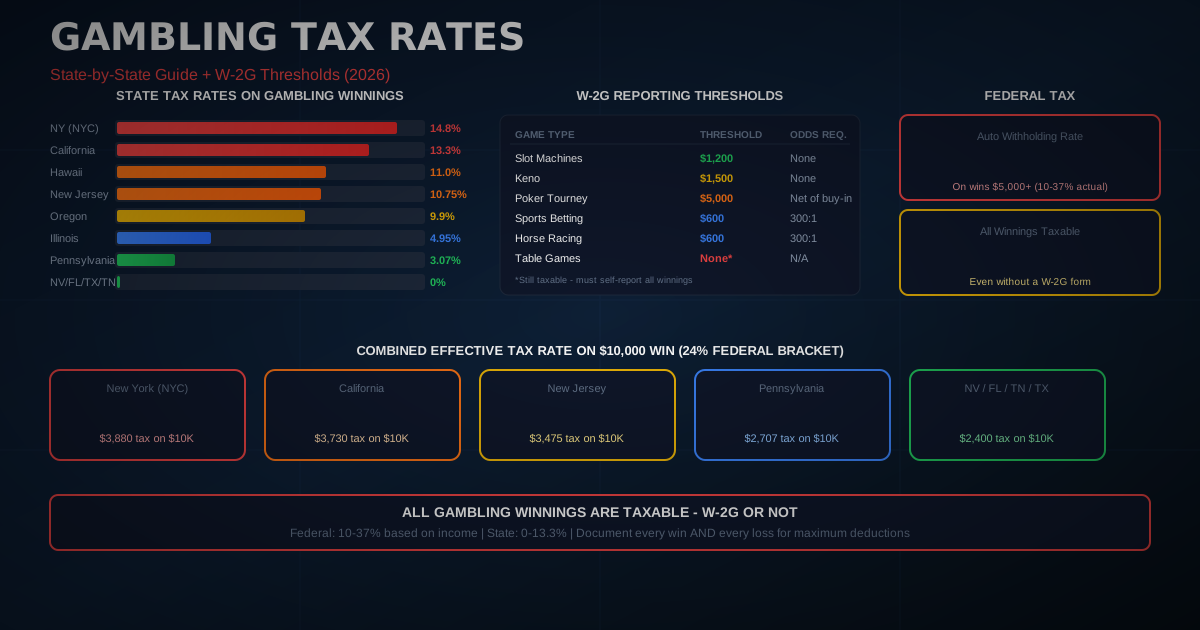
Tax Considerations
Federal Taxes
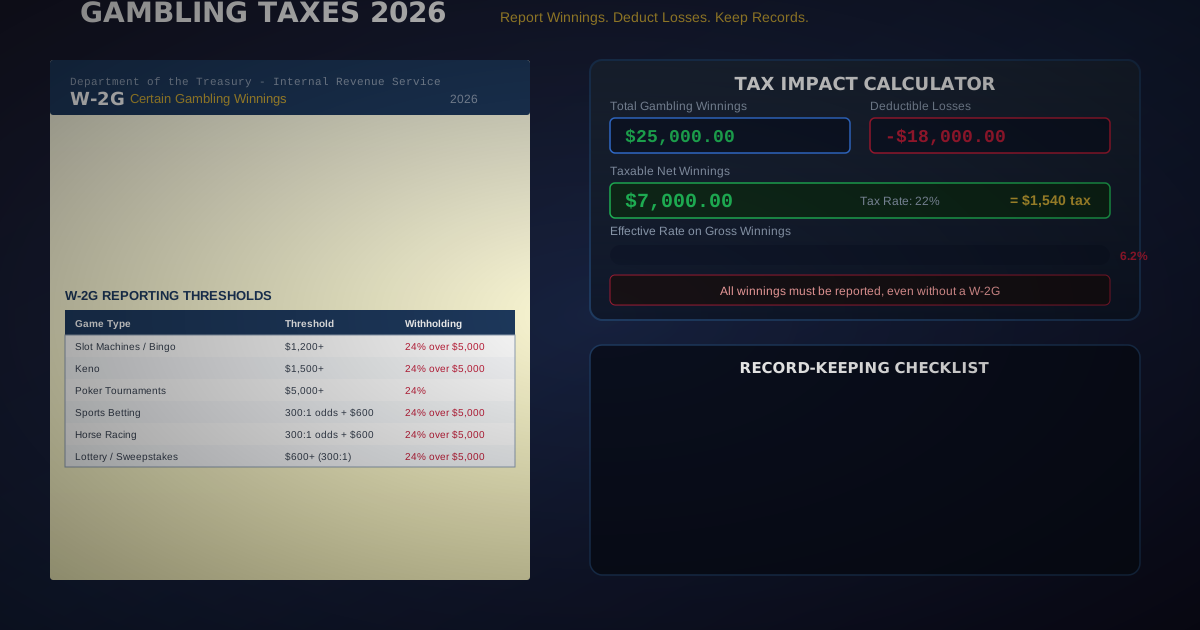
Lottery winnings tax brackets (2026):

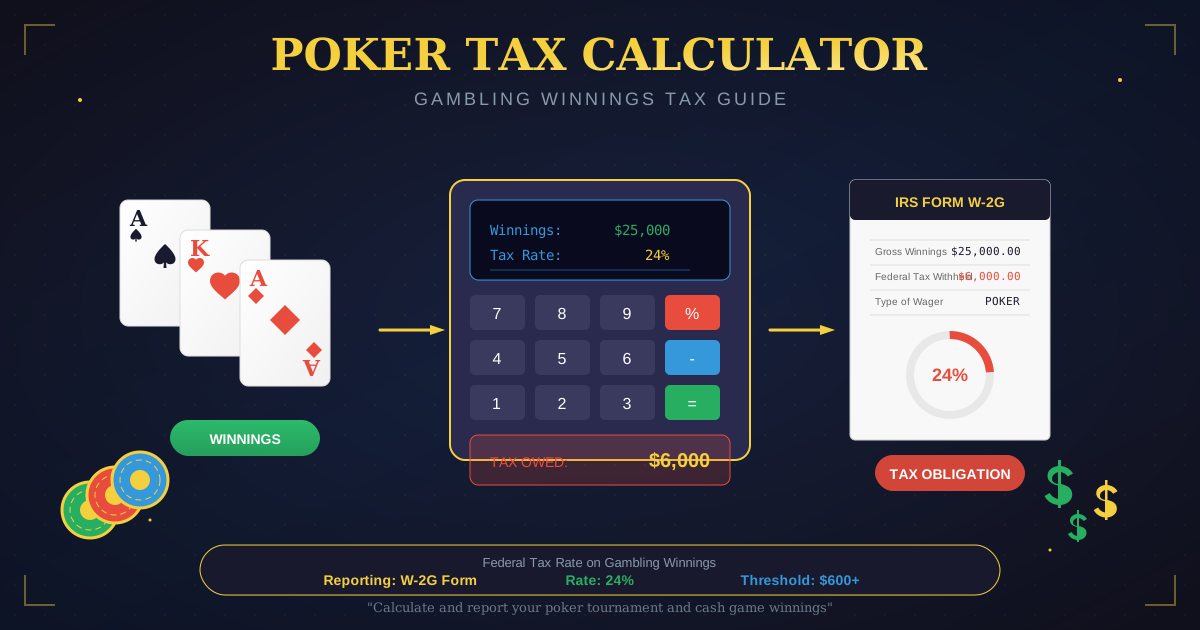
Prizes $600+: Reported to IRS
Prizes $5,000+: 24% automatic withholding
Actual rate: Your marginal bracket

For jackpot winners:
Falls into highest bracket (37%)
Plus Net Investment Income Tax (3.8%)
Effective federal rate: ~40%

Strategy:
Annuity spreads income over 30 years
May reduce marginal rate slightly
But present value of annuity is less than cash
State Taxes
State lottery tax varies enormously:

No state tax:
California (lottery exempt)
Texas, Florida, Washington (no income tax)
Wyoming, South Dakota, Tennessee

High state tax:
New York City: 12.7% state + 3.876% city
Oregon: 9.9%
Minnesota: 9.85%
New Jersey: 10.75%

Example $500M cash:
California: $315M after federal
New York: $268M after federal + state + city
Difference: $47 million!
Strategies and Considerations
Does Buying More Tickets Help?
Mathematically:

1 ticket: 1 in 302,575,350 odds
10 tickets: 1 in 30,257,535 odds
100 tickets: 1 in 3,025,754 odds
1000 tickets: 1 in 302,575 odds

Each ticket has same -$1.20 EV
10 tickets: -$12 expected
100 tickets: -$120 expected
More tickets = more expected loss

Buying more only makes sense if
you value the dream proportionally
Number Selection Strategies
Does number choice matter?

For WINNING: No
All combinations equally likely
"Lucky" numbers don't change probability

For PRIZE SIZE: Somewhat
Avoid popular numbers to reduce splits:
- Birthdays (1-31 heavy)
- Patterns (1,2,3,4,5)
- Recently drawn numbers

Better choices (less popular):
- Numbers 32-70 for white balls
- Higher Mega Ball numbers
- Random quick picks
When to Play (If You Choose To)
Factors that slightly improve EV:

1. Larger jackpots (higher EV per ticket)
2. Fewer estimated ticket sales (lower split probability)
3. No state income tax (keep more)
4. Lower tax bracket (keep more)

Still negative EV, but less negative:
$2B jackpot in Texas: ~-$0.50/ticket
$100M jackpot in NY: ~-$1.50/ticket

If playing for entertainment:
Large jackpots give more "dream value" per dollar
Common Mistakes to Avoid
-
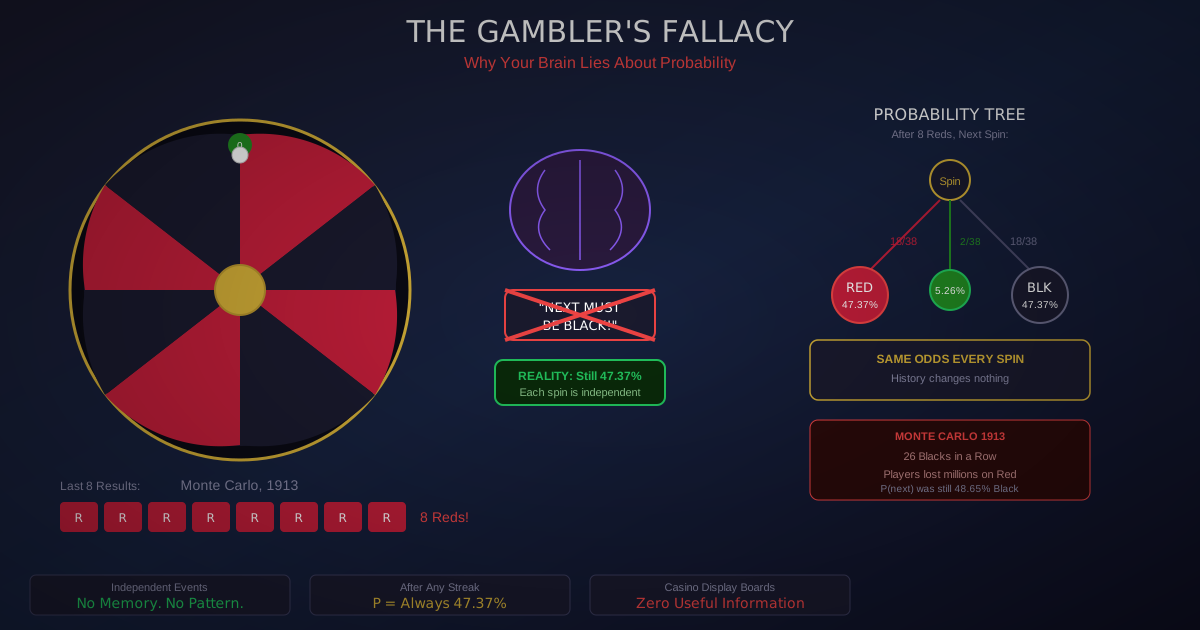
Believing You're "Due" to Win: Previous drawings have zero effect on future odds. Each ticket is a fresh 1 in 302 million chance.
-
Spending More Than Entertainment Budget: Lottery is entertainment expense, not investment. Never spend bill money or go into debt for tickets.
-
Ignoring Tax Impact: Advertised jackpots are misleading. After cash option and taxes, you'll receive 30-40% of the headline number.
-
Assuming Office Pools Improve Odds Efficiently: Pools increase odds proportionally to cost increase. EV per person doesn't improve.
-
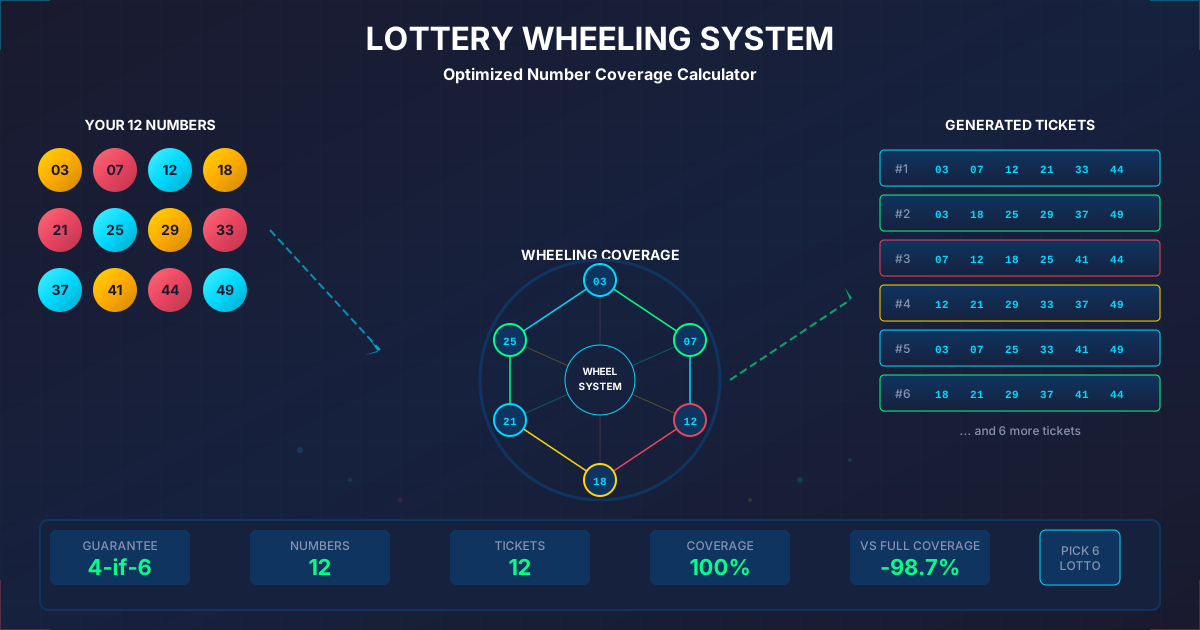
Playing "Systems" or Patterns: No betting system improves lottery odds. Random selection is equally valid and avoids popular number splits.
-
Underestimating the Odds: 1 in 302 million is incomprehensibly small. You will almost certainly never win the jackpot regardless of how long you play.
Frequently Asked Questions
What are my actual odds of winning the Mega Millions jackpot?
Exactly 1 in 302,575,350. This is roughly equivalent to flipping a coin and getting heads 28 times in a row, or being struck by lightning about 300 times.
Is the lottery ever a good investment?
No. The expected value is always negative for players. Even at record jackpots, after accounting for taxes and multiple winner probability, EV remains negative.
Should I take the lump sum or annuity?
Usually lump sum. Despite being ~50% of advertised, you can invest it and likely beat the annuity's effective return. Exception: If you can't trust yourself with a windfall, annuity provides forced discipline.
Does it matter which numbers I pick?
For odds of winning: No, all combinations are equally likely. For prize amount: Slightly - avoiding popular numbers reduces your chance of splitting with other winners.
How is the jackpot calculated?
The advertised jackpot is the annuity value over 30 years. Cash option is roughly 50% of advertised. Jackpot grows when no one matches all numbers and ticket sales roll over.
Why do people play if the odds are so bad?
Entertainment value, the dream of wealth, and the small price ($2) relative to the potential prize. It's rational to play for fun if you understand the math and can afford the loss.
Pro Tips
- Set a strict lottery budget and treat it as entertainment expense, not an investment
- If playing at all, focus on larger jackpots where EV is less negative (though still negative)
- Avoid popular number combinations to reduce split probability if you do hit
- Remember the cash option is roughly 50% of advertised, and taxes take another 40%+
- The best lottery strategy mathematically is not to play, but if you enjoy it, keep spending minimal
Related Calculators
- Lottery Expected Value Calculator - General lottery analysis
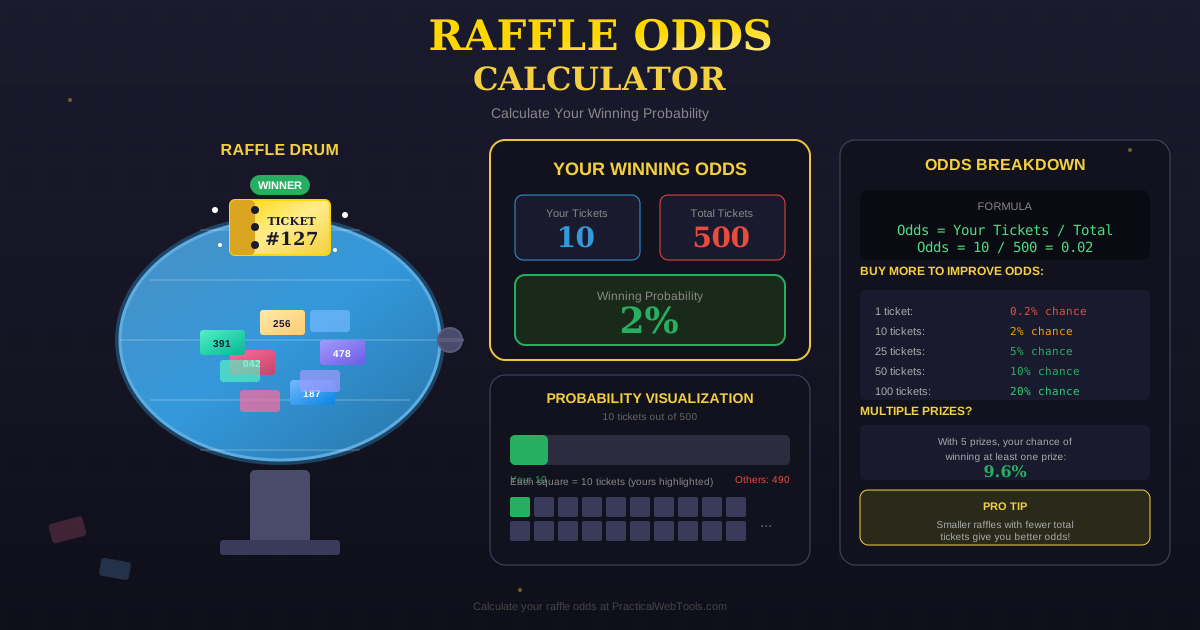
- Raffle Odds Calculator - Prize draw probability
- Gambling Probability Calculator - General probability math
- Tax Calculator - Estimate tax impact
- Investment Calculator - What if you invested instead?
Conclusion
Mega Millions sells a dream for $2. That dream has a 1 in 302,575,350 chance of coming true - odds so long that truly understanding them would probably end the lottery industry. Our calculator reveals the mathematical reality: negative expected value, massive tax impact, and odds that make "never winning" the near-certain outcome.
None of this means you shouldn't play if you enjoy it. Just understand what you're buying: a few days of fantasy, not a retirement plan. Keep it to entertainment budget, never money you need, and enjoy the dream for what it's worth - about $0.80 per ticket.