Poker ICM Calculator: Tournament Equity Analysis (2026)
Poker ICM Calculator: Convert Chips to Real Money Value
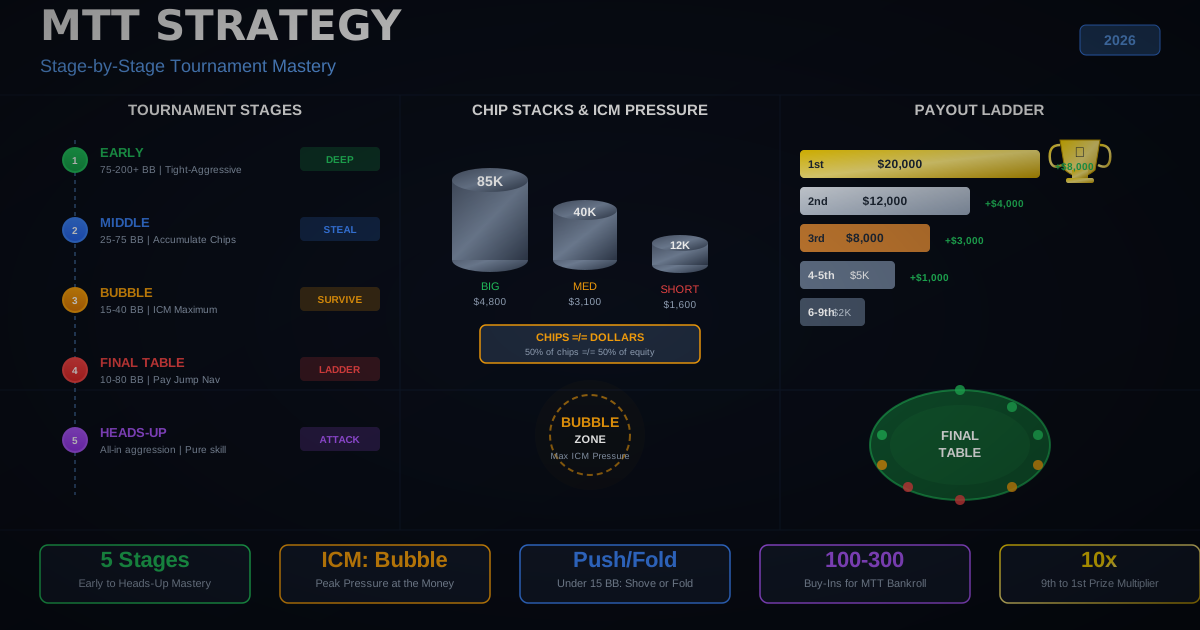
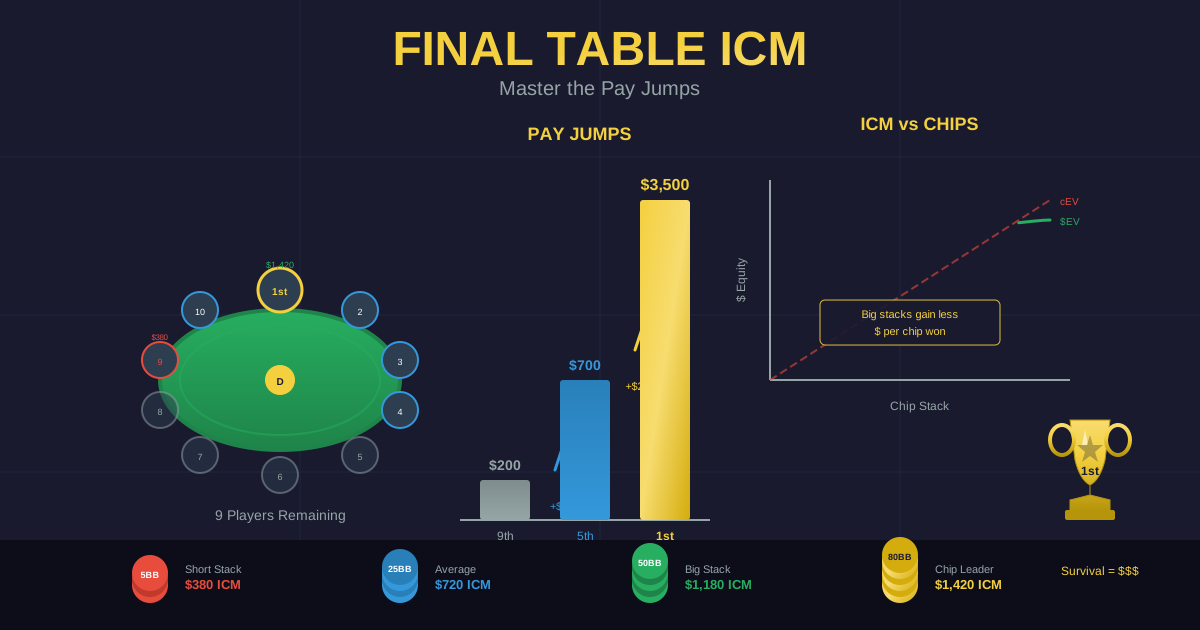
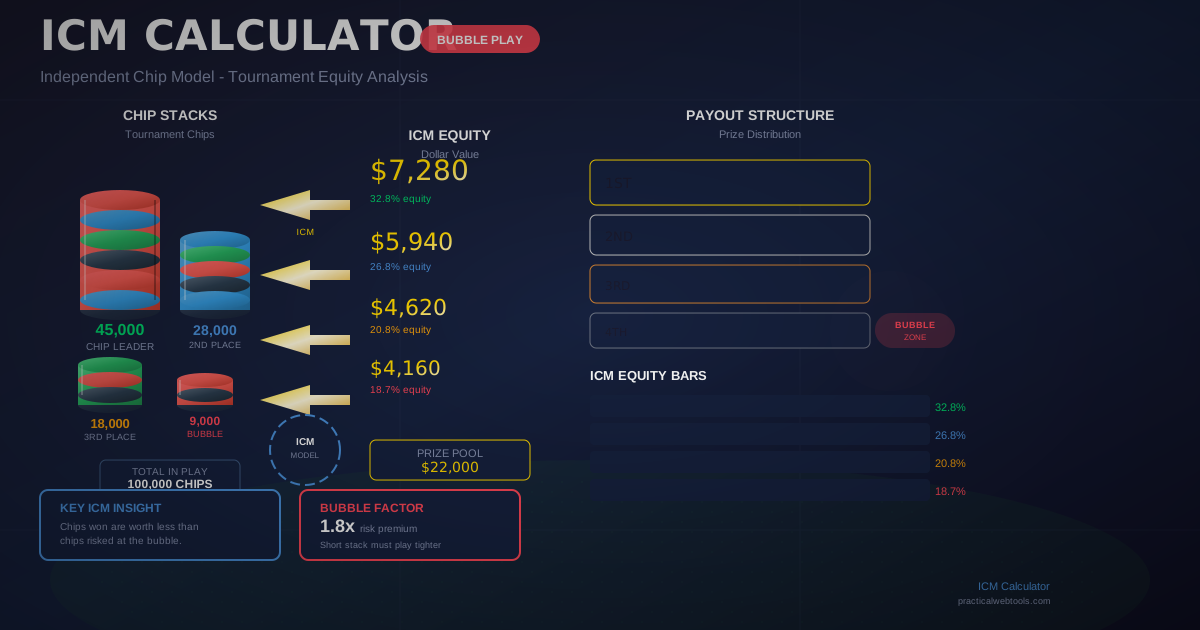
Tournament chips aren't worth face value—they're worth what they represent in prize pool equity. Our ICM calculator converts your stack into real dollar equity, helping you make mathematically correct decisions near bubbles and final tables.
What Is ICM?
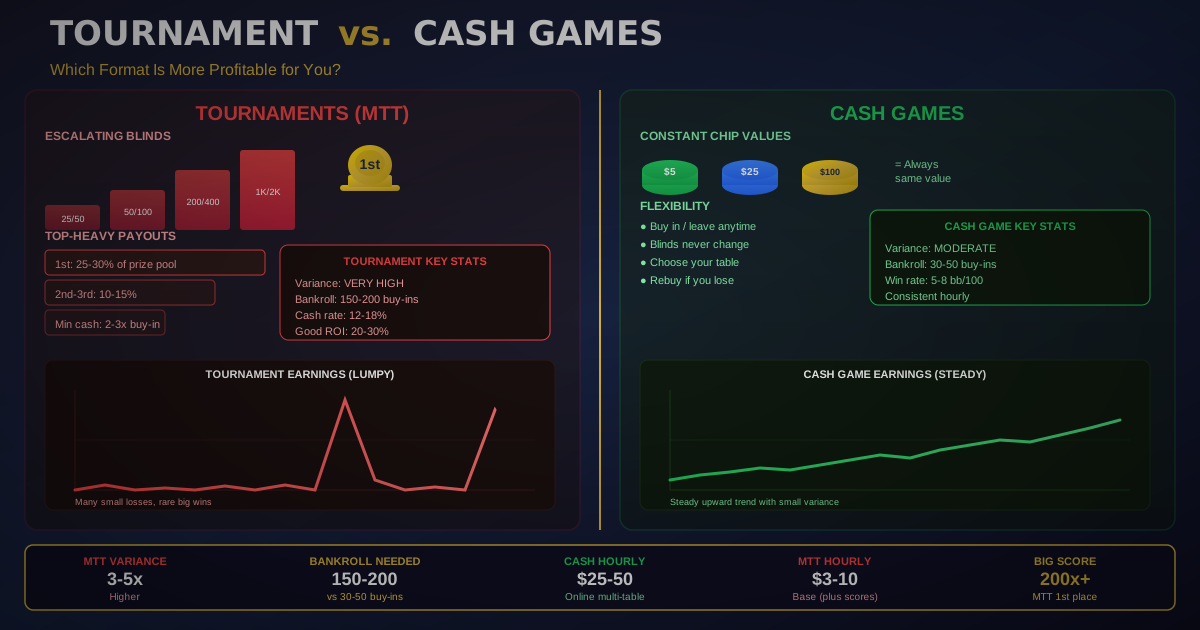
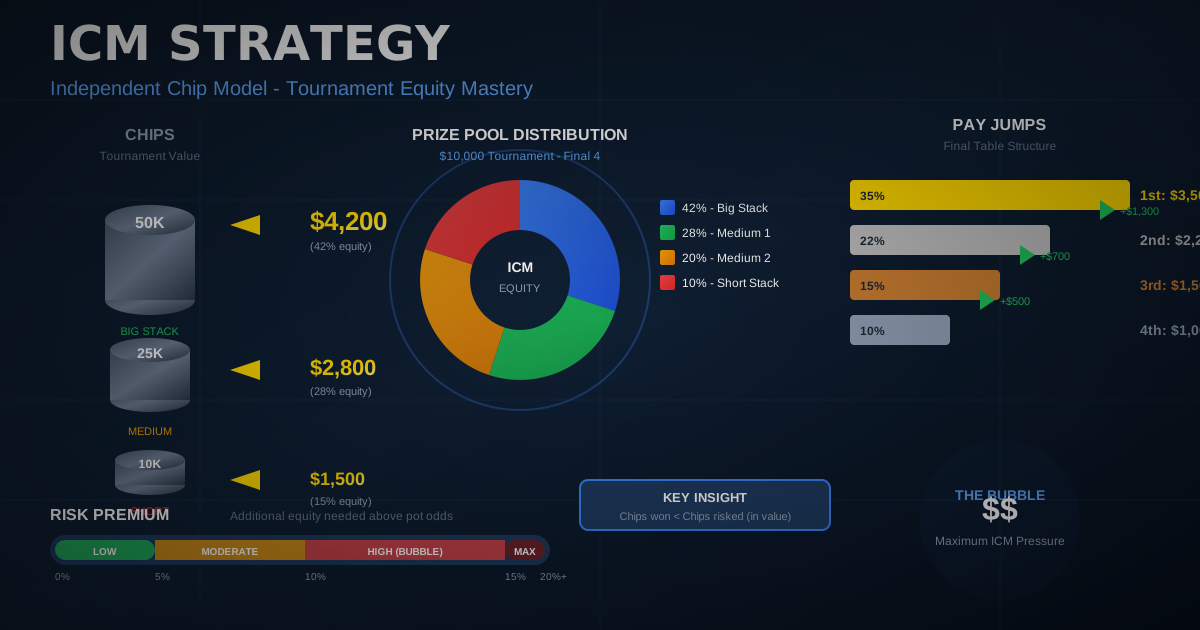
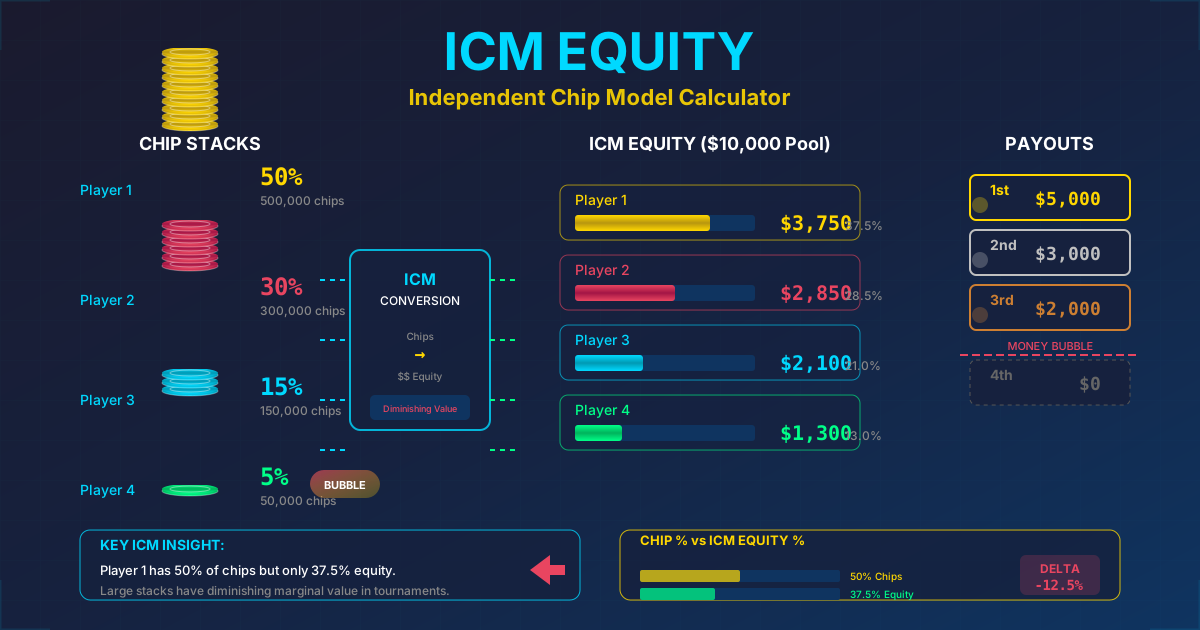
The Independent Chip Model (ICM) calculates the real-money equity of tournament stacks based on their probability of finishing in each paying position. Unlike cash games where chips equal dollars, tournament chips have diminishing marginal value.
Quick Answer: ICM converts chips to prize pool equity using a probability model. A chip leader with 50% of chips doesn't have 50% of the prize pool—they might have 35-40%. ICM matters most at bubbles and final tables where payout jumps are significant. The key insight: losing chips costs more equity than winning the same chips gains.
How to Use Our ICM Calculator
Use the Poker ICM Calculator →
Enter stack sizes and payout structure to see ICM equity for all players.
Step-by-Step Instructions
-
Enter Stack Sizes: All remaining players
-
Input Payout Structure: Prize amounts by place
-
View ICM Equity: Each player's dollar value
-
Compare Scenarios: See how decisions affect equity
-
Analyze Bubble: Understand protection premium
Input Fields Explained
| Field | Description | Example |
|---|---|---|
| Stacks | Chip counts | 50K, 30K, 20K, 15K |
| Payouts | Prize structure | $400, $240, $160, $100 |
| Total Prize | Sum of payouts | $900 |
| ICM Equity | Dollar value | $285, $225, $195, $175 |
| Chip Equity | % of chips | 43%, 26%, 17%, 13% |
| Premium | ICM - Chip | +$42, +$15, +$15, +$50 |
ICM Fundamentals
Why Chips ≠ Dollars
Example: 3 players, $900 prize pool
Stacks: 60K, 30K, 10K (100K total)
Payouts: $500 (1st), $300 (2nd), $100 (3rd)

Chip equity (linear):
Player 1: 60% = $540
Player 2: 30% = $270
Player 3: 10% = $90

ICM equity (actual value):
Player 1: ~$460 (less than chip equity)
Player 2: ~$290 (more than chip equity)
Player 3: ~$150 (more than chip equity)
The Core Insight
| Principle | Explanation |
|---|---|
| First chip is most valuable | Going from 0 to 1 chip is infinite % gain |
| Last chip is least valuable | Going from 50% to 51% hardly matters |
| Middle stacks benefit | Short stacks can ladder, big stacks can't gain proportionally |
| Small stacks have "protection" | Others bust each other, you move up |
ICM Calculation Method
Malmuth-Harville Formula
P(finish 1st) = Your chips / Total chips
P(finish 2nd) = Sum of: P(each player 1st) × P(you beat remaining)

For each remaining player k:
P(you 2nd | k wins) = Your chips / (Total - k's chips)

Continue recursively for all positions
Simple 3-Player Example
Stacks: A=50, B=30, C=20 (100 total)
Payouts: $500, $300, $100

P(A 1st) = 50/100 = 50%
P(B 1st) = 30/100 = 30%
P(C 1st) = 20/100 = 20%

P(A 2nd) = P(B 1st)×(50/70) + P(C 1st)×(50/80)
        = 0.3×0.714 + 0.2×0.625
        = 0.214 + 0.125 = 33.9%

Continue for all positions...
Real-World Examples
Example 1: Bubble Decision
Situation: 4 players, 3 paid Stacks: You: 25K, Others: 40K, 30K, 5K (100K total) Payouts: $500, $300, $200
ICM Equities:
- 40K: $340
- 30K: $300
- You (25K): $265
- 5K: $95
Key insight: The 5K stack has $95 despite only 5% of chips. You can ladder to $300+ by folding and letting others battle.
Example 2: Chip Leader Final Table
Situation: 6 players, final table Your stack: 500K (50% of chips) Prize pool: $10,000
Chip equity: $5,000 ICM equity: ~$4,200
Difference: -$800 (chips overstate your value)
Example 3: Short Stack Bubble
Situation: On bubble, shortest stack Your stack: 10BB ICM equity: $450 (3rd of 5 gets $400)
Should you shove A-Jo?
- If chip EV positive but ICM EV negative: Fold
- Survival often > accumulation at this stage
Bubble Factor
What Is Bubble Factor?
Bubble Factor = Risk / Reward (in ICM terms)

If losing all-in costs 2× the ICM equity that winning gains:
Bubble Factor = 2.0

You need 2× better odds to call profitably
Typical Bubble Factors
| Situation | Bubble Factor |
|---|---|
| Early tournament | 1.0-1.1 |
| Approaching bubble | 1.3-1.7 |
| On the bubble | 1.5-3.0+ |
| Final table early | 1.2-1.5 |
| Final 3 (top heavy) | 1.5-2.5 |
| Heads-up | 1.0 |
Applying Bubble Factor
Standard spot: Call requires 40% equity
Bubble factor = 1.5

Adjusted requirement: 40% × 1.5 = 60% equity needed

Many +chip EV calls become -ICM EV
ICM Strategy Adjustments
Big Stack Strategy
| Adjustment | Reason |
|---|---|
| More aggressive vs medium | They can't call light |
| Less risky vs short | Let them bust vs others |
| Target other big stacks | They'll make ICM folds |
| Attack bubble | Maximum fold equity |
Medium Stack Strategy
| Adjustment | Reason |
|---|---|
| Tighten considerably | Protect equity position |
| Avoid big stack confrontations | ICM disaster |
| Attack short stacks carefully | Sometimes let them survive |
| Watch for ladder opportunities | Survival = value |
Short Stack Strategy
| Adjustment | Reason |
|---|---|
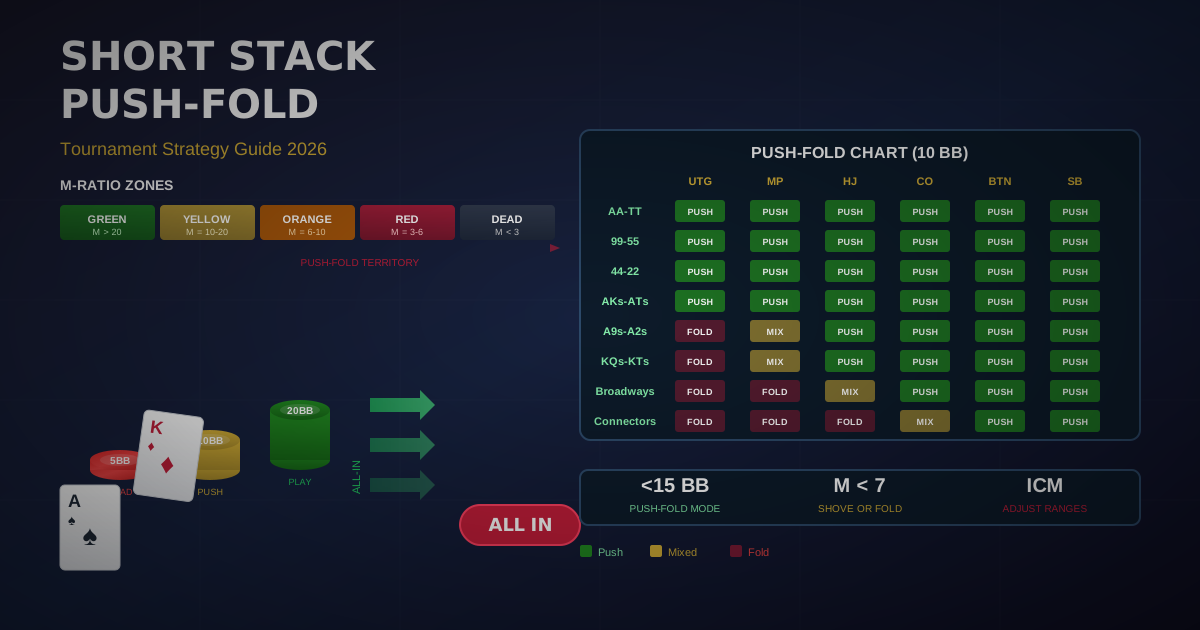
| Push/fold only | No chips to play post-flop |
| Look for double-up spots | Need chips to compete |
| Use ICM pressure | Others must fold light |
| Time your shoves | When big stacks are in blinds |
Common ICM Spots
The Bubble All-In
Scenario: You cover villain on exact bubble Your hand: A-Qs Villain shoves: 15BB
Chip EV analysis: Easy call with A-Qs ICM analysis: Depends heavily on:
- Other stacks
- Payout structure
- Whether others can bust each other
Often a fold despite having the best hand.
Final Table Pay Jump
Scenario: 4 left, huge jump from 4th to 3rd Stacks: Relatively even Action: Big stack opens, you have QQ
Chip EV: 3-bet/call off ICM EV: Possibly just call or even fold
The pay jump protection can outweigh hand strength.
ICM Mistakes
1. Ignoring ICM Until Bubble
Mistake: Playing chip EV early, ICM only at bubble Problem: ICM matters whenever payouts loom Fix: Gradual adjustment as money approaches
2. Over-Applying ICM
Mistake: Folding AA because "ICM" Problem: Extreme tightening costs too much Fix: Balance ICM with chip accumulation
3. Ignoring Stack Distributions
Mistake: Same strategy regardless of table stacks Problem: ICM effect depends on specific distributions Fix: Analyze actual equities before deciding
4. Not Considering Future ICM
Mistake: Making -EV call because you'll have chips Problem: Those chips are worth less too Fix: Calculate post-decision ICM equity
Frequently Asked Questions
When does ICM matter most?
On bubbles and at final tables with significant payout jumps. ICM effect is minimal early in tournaments.
Should I ever fold AA due to ICM?
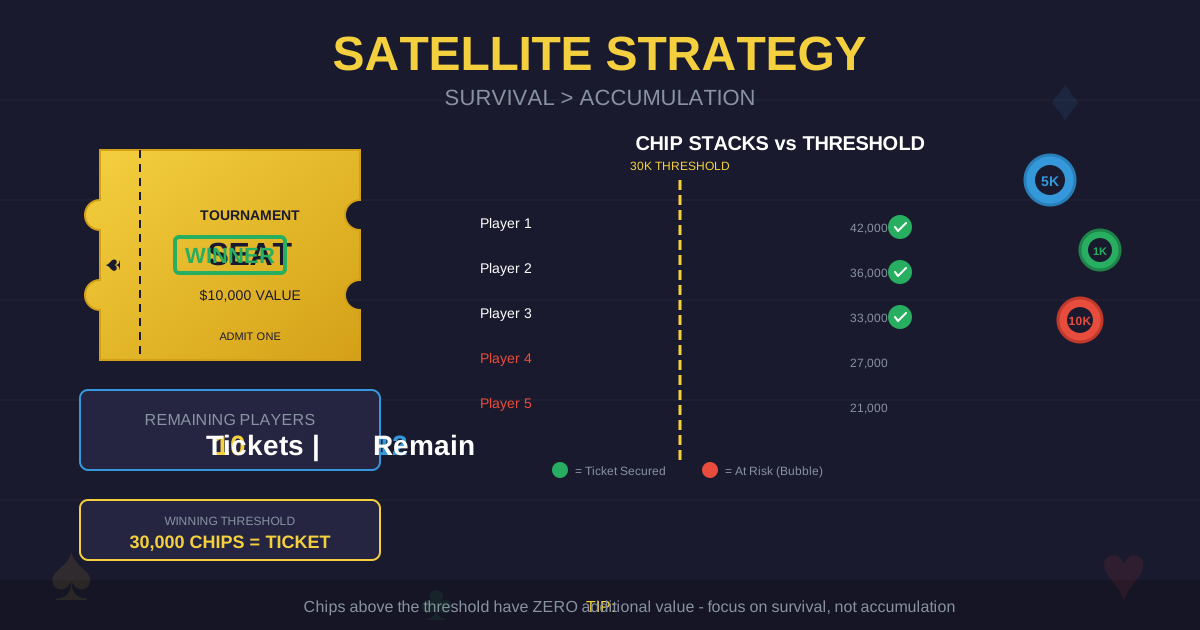
Extremely rarely—usually only in satellite situations where everyone wins the same prize or massive bubble spots with tiny stacks about to bust.
What's the difference between ICM and chip EV?
Chip EV treats all chips equally. ICM converts chips to real-money value, which changes your required equity to call/raise.
How do I calculate ICM at the table?
You can't precisely—it requires complex math. Instead, understand concepts: protect equity, avoid risks vs big stacks, exploit fold equity on bubbles.
Does ICM apply in cash games?
No. Cash game chips are worth face value. ICM only applies to tournaments with escalating payouts.
What about deal-making?
ICM is the standard basis for chop negotiations. Players typically receive their ICM equity plus a small amount for remaining chips.
Advanced ICM Concepts
Risk Premium
Risk Premium = Additional equity needed to risk tournament life

Standard: 60% to call all-in
With 1.5× bubble factor: 60% × 1.5 = 90%? No.
Adjusted: Need ~70-75% equity

The math isn't linear multiplication
Future Game (FGS)
Future Game Simulation accounts for:
- Post-decision chip dynamics
- Skill edges at future spots
- Tournament structure remaining

More accurate than pure ICM for skilled players
Nash ICM
Game-theory optimal ICM decisions:
- Incorporates all player actions
- Finds equilibrium strategies
- Used in poker solvers

Practical application: Approximations via push/fold charts
Pro Tips
-
Know your stack tier: Big/medium/short determines strategy
-
Identify the bubble short: That player gives everyone equity
-
Don't fear busting: Optimal play sometimes means going broke
-
Use ICM pressure: Opponents' fears benefit you
-
Calculate deal equity: Know your fair share in chop discussions
Related Calculators
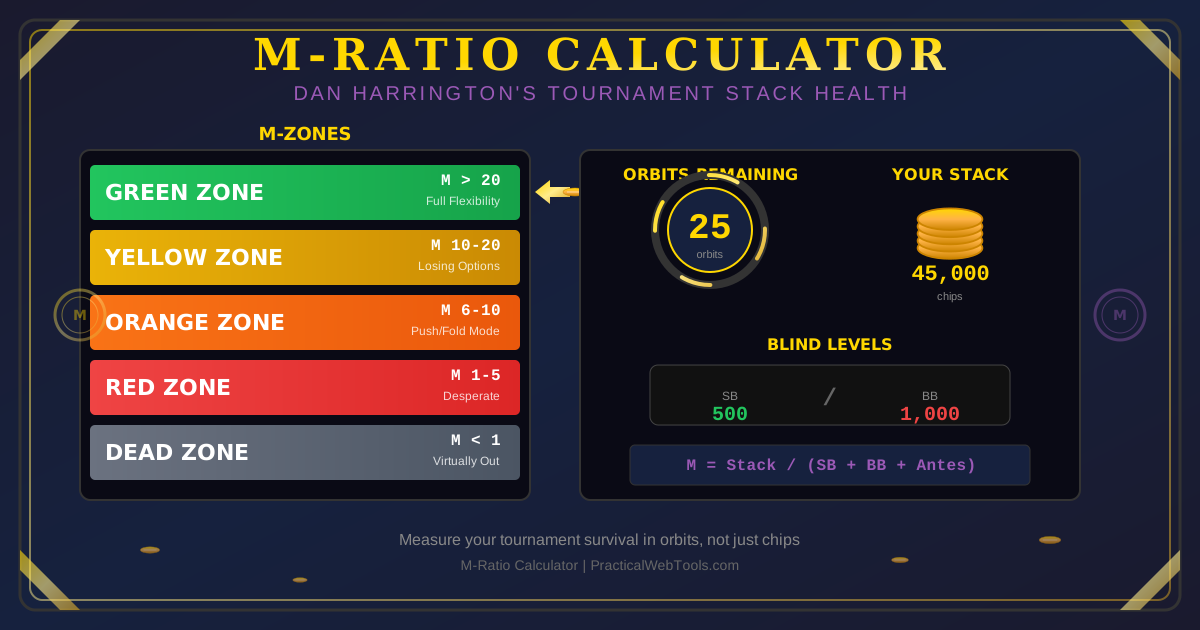
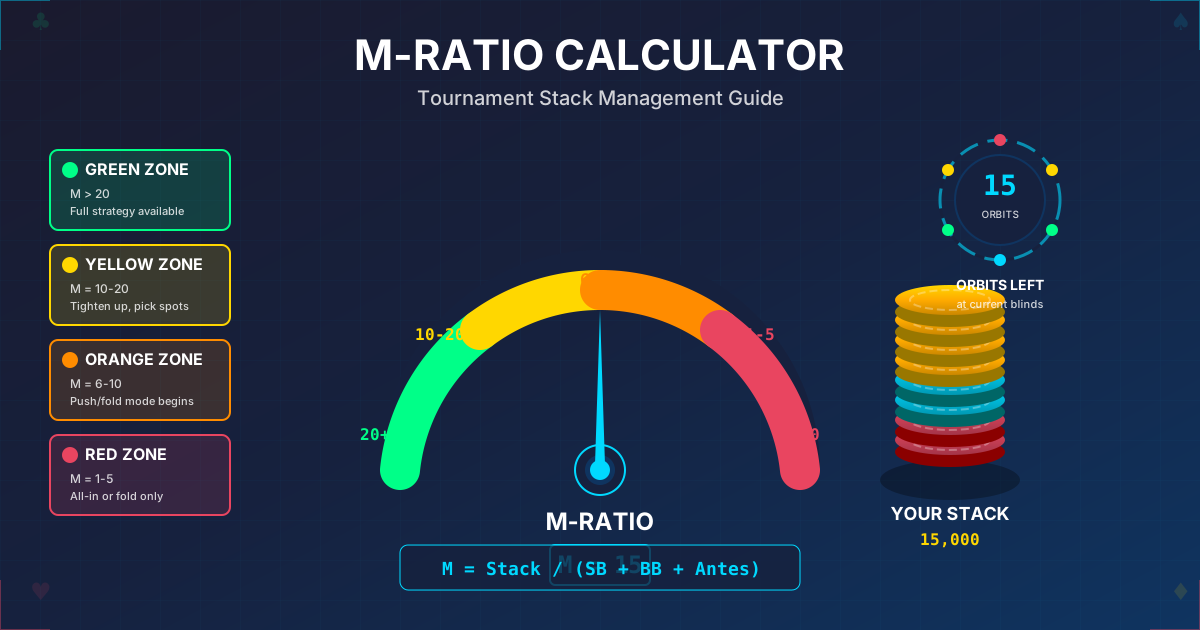
- M-Ratio Calculator - Stack health
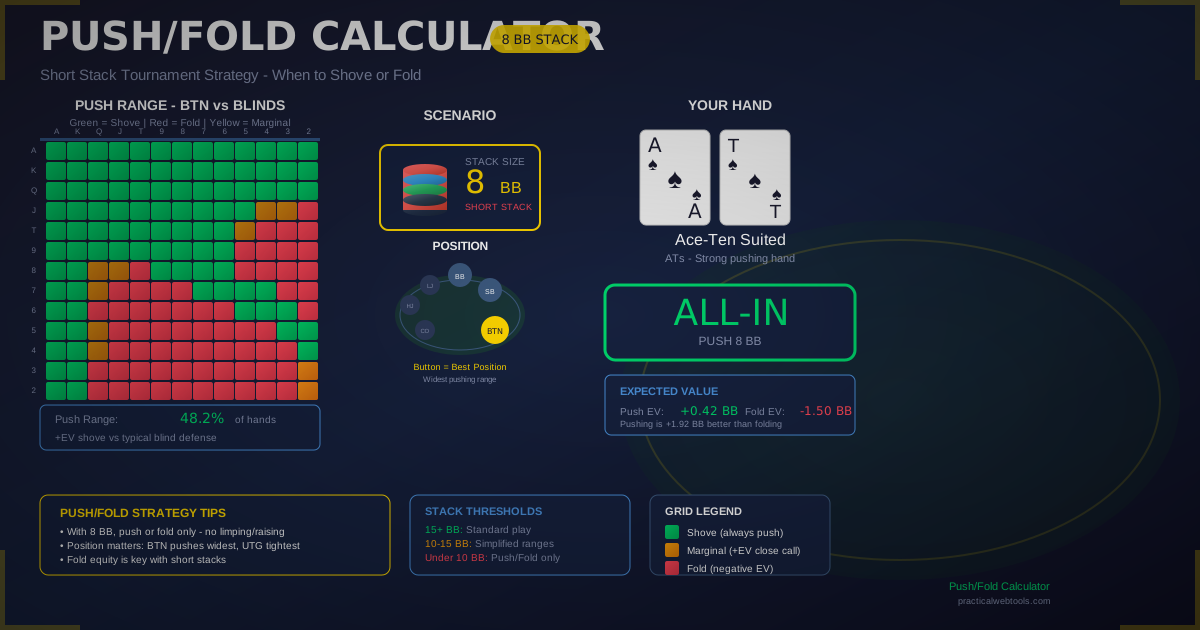
- Push/Fold Calculator - Short stack play
- Tournament Payout Calculator - Prize structures
- Poker Equity Calculator - Hand equity
- Poker EV Calculator - Expected value
Conclusion
ICM transforms tournament poker from chip accumulation to equity maximization. Our calculator shows the real-money value of every stack, revealing why bubble and final table play differs so dramatically from cash games. Understanding that chips have diminishing marginal value is the key insight—every decision should consider ICM equity, not just chip EV.
Tournament pros don't play for chips—they play for equity. Our ICM calculator reveals what your stack is actually worth, helping you make decisions that maximize real-money value. Whether you're protecting a cash or attacking the bubble, ICM understanding separates winners from players who "should have cashed."