Poker M-Ratio Calculator: Tournament Stack Strategy (2026)
Poker M-Ratio Calculator: Navigate Tournament Zones
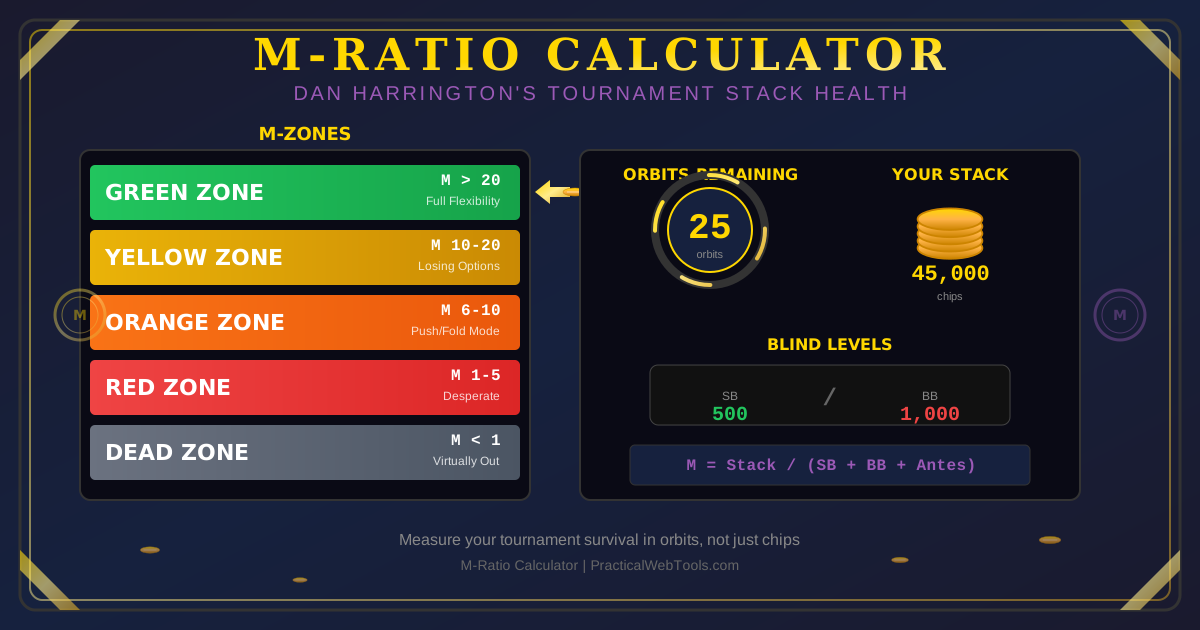
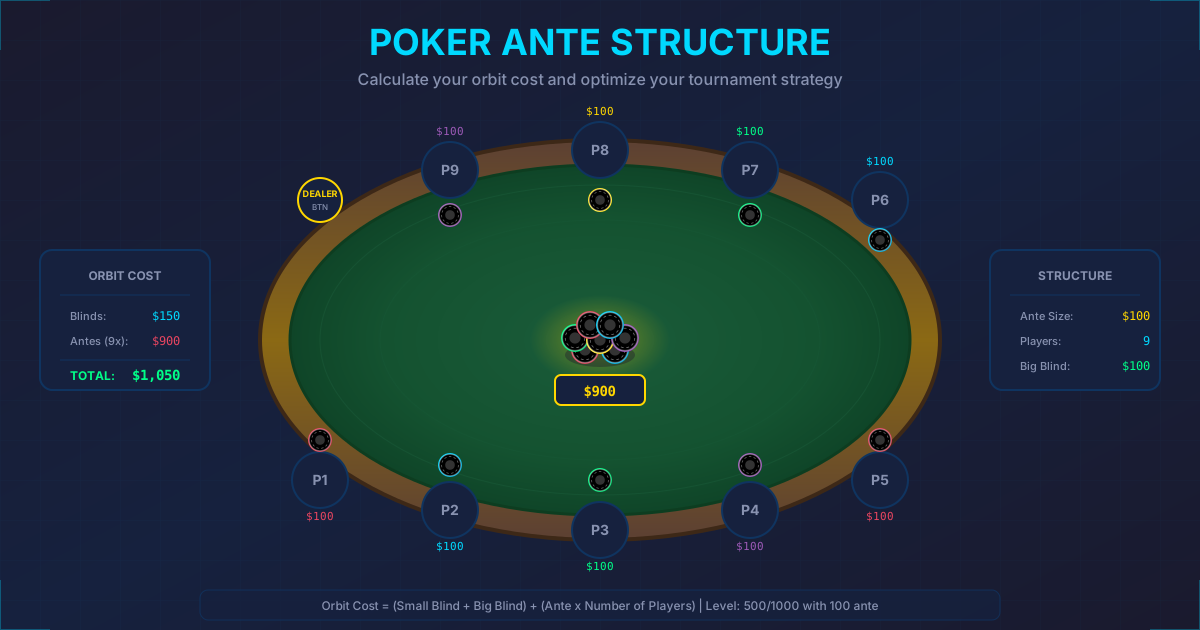
M-ratio measures how many orbits you can survive at current blind levels, revolutionizing tournament strategy. Our calculator computes your M, identifies your zone, and recommends optimal play adjustments based on your stack's tournament health.
What Is M-Ratio?
M-ratio (or M-number) represents how many rounds of blinds and antes your stack can sustain before being blinded out. Popularized by Dan Harrington, it's the essential metric for tournament stack assessment.
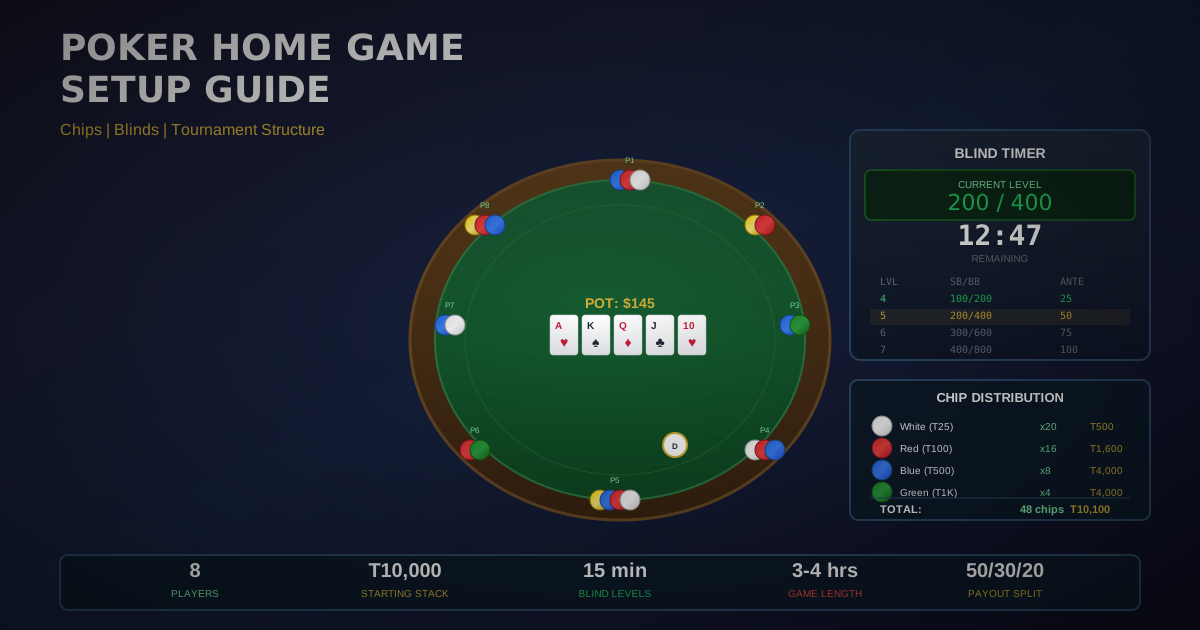
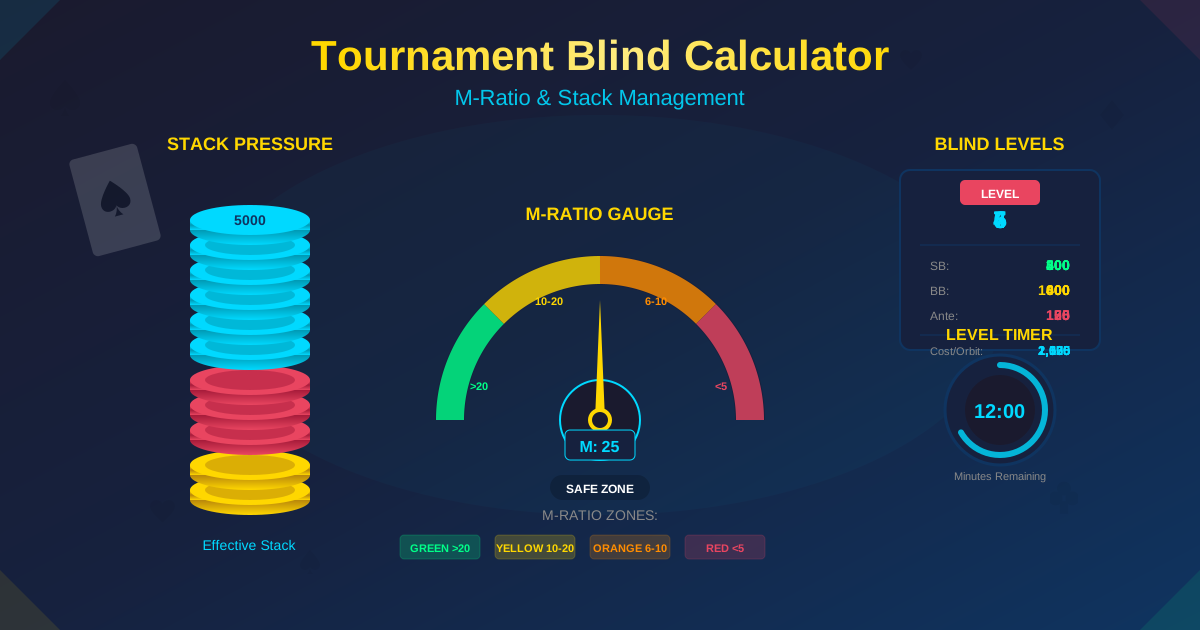
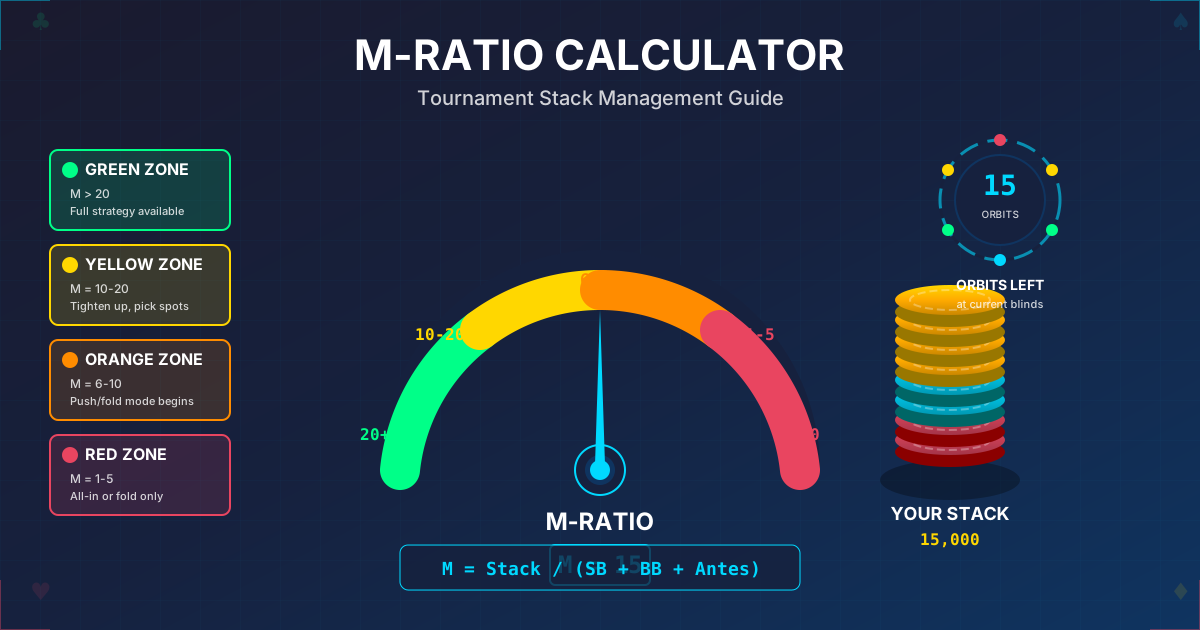
Quick Answer: M = Stack / (SB + BB + Antes). With 10,000 chips at 200/400 blinds with 50 antes (9-handed), your M = 10,000 / (200 + 400 + 450) = 9.5. This puts you in the "Orange Zone" (M 6-10) where you should be looking to resteal and avoid marginal situations. Below M=5, you're in push/fold territory.
How to Use Our M-Ratio Calculator
Use the Poker M-Ratio Calculator →
Enter your stack and blind structure to see your M and strategic recommendations.
Step-by-Step Instructions
-
Enter Stack Size: Your chip count
-
Enter Blinds: Small and big blind
-
Enter Antes: Per-player ante
-
Select Table Size: Players for ante calculation
-
View M and Zone: Strategic category
Input Fields Explained
| Field | Description | Example |
|---|---|---|
| Stack | Your chips | 15,000 |
| Small Blind | SB amount | 300 |
| Big Blind | BB amount | 600 |
| Ante | Per player | 75 |
| Table Size | Active players | 9 |
| M-Ratio | Orbits remaining | 10.7 |
| Zone | Strategy category | Orange |
M-Ratio Formula
Standard Calculation
M = Stack / (SB + BB + (Ante × Players))

Example:
Stack: 20,000
Blinds: 400/800
Ante: 100 × 9 players = 900
M = 20,000 / (400 + 800 + 900) = 9.5
Effective M (Short-Handed)
When table is short-handed, calculate Effective M:
Effective M = M × (Players / Full Table)

6-handed at 9-max table:
Effective M = 9.5 × (6/9) = 6.3
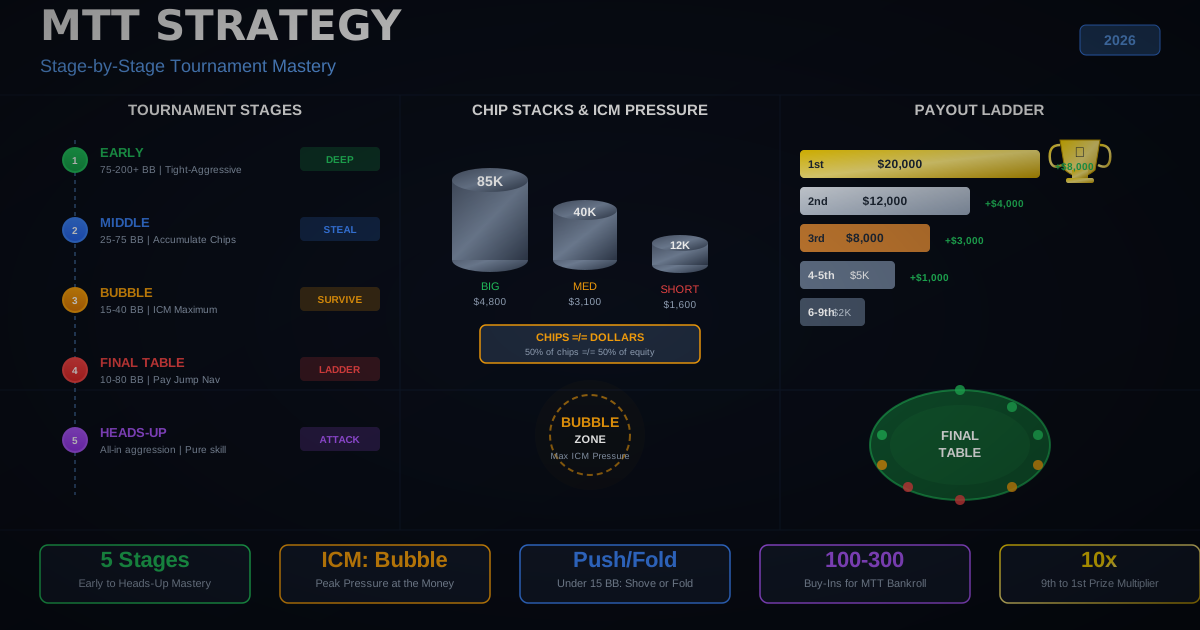
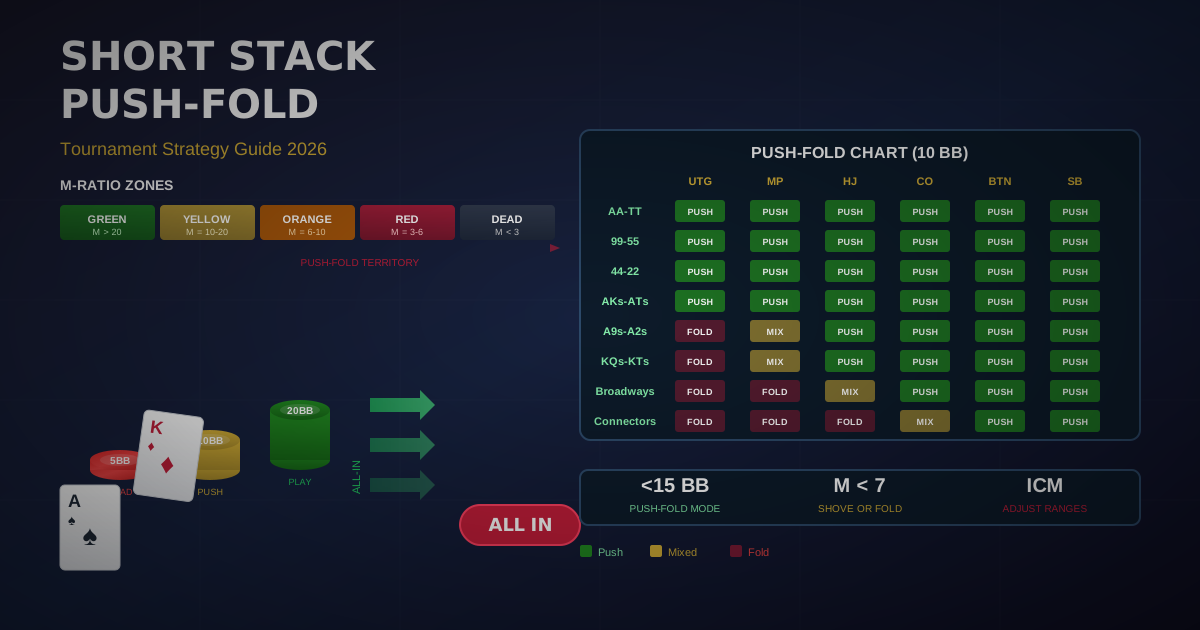
Harrington's Zones
Zone Classification
| Zone | M Range | Color | Strategy |
|---|---|---|---|
| Green | 20+ | Safe | Full strategy available |
| Yellow | 10-20 | Caution | Tighten up, avoid marginal |
| Orange | 6-10 | Danger | Resteal, first-in aggression |
| Red | 1-5 | Critical | Push/fold mode |
| Dead | <1 | Terminal | All-in only |
Green Zone (M 20+)
| Aspect | Recommendation |
|---|---|
| Open range | Full range |
| Position | All positions playable |
| Speculative hands | Profitable to play |
| Post-flop | Full flexibility |
Yellow Zone (M 10-20)
| Aspect | Recommendation |
|---|---|
| Open range | Tighten 10-15% |
| Small pairs | Less profitable |
| Suited connectors | Marginal |
| 3-betting | For value and strong semi-bluffs |
Orange Zone (M 6-10)
| Aspect | Recommendation |
|---|---|
| Open range | First-in aggression only |
| Calling | Rarely correct |
| Resteals | Primary weapon |
| All-in threshold | More frequent |
Red Zone (M 1-5)
| Aspect | Recommendation |
|---|---|
| Strategy | Push or fold only |
| Hand selection | Top 30-50% of hands |
| Position | Critical factor |
| Calling | With premium only |
Real-World Examples
Example 1: Healthy Stack
Stack: 45,000 Blinds: 600/1,200 Ante: 200 × 9 = 1,800 Total orbit: 3,600
M = 45,000 / 3,600 = 12.5
Zone: Yellow Strategy: Play normally but avoid marginal spots. Don't call light. Look for spots to accumulate.
Example 2: Short Stack
Stack: 12,000 Blinds: 500/1,000 Ante: 100 × 8 = 800 Total orbit: 2,300
M = 12,000 / 2,300 = 5.2
Zone: Red (borderline) Strategy: Push/fold. Look for first-in opportunities from late position. Don't wait for premiums.
Example 3: Desperate Stack
Stack: 4,500 Blinds: 800/1,600 Ante: 200 × 7 = 1,400 Total orbit: 3,800
M = 4,500 / 3,800 = 1.2
Zone: Dead Strategy: Shove any reasonable hand immediately. Can't afford to wait another orbit.
M-Ratio vs Big Blinds
Why M Is Better
| Situation | BBs | M | Reality |
|---|---|---|---|
| No antes | 15 BB | 10 | M more accurate |
| With antes | 15 BB | 7 | BBs misleading |
| Turbo antes | 15 BB | 5 | BBs very misleading |
Conversion Approximation
| Structure | M ≈ X BB |
|---|---|
| No antes | M ≈ 0.67 × BB |
| Standard antes | M ≈ 0.5 × BB |
| Big antes | M ≈ 0.4 × BB |
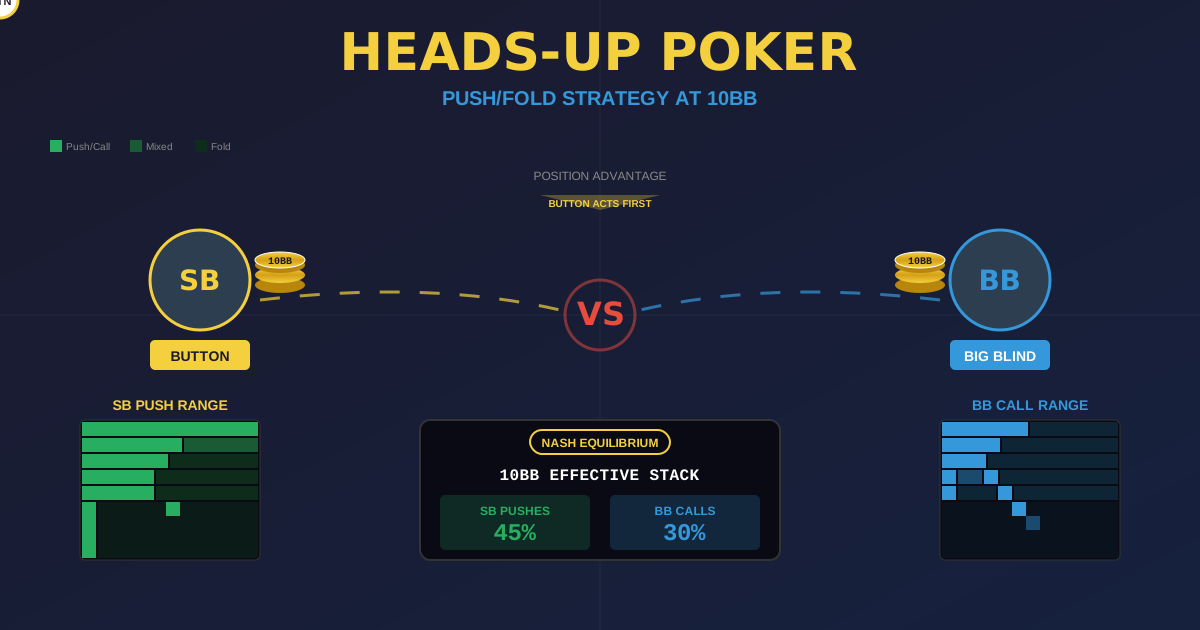
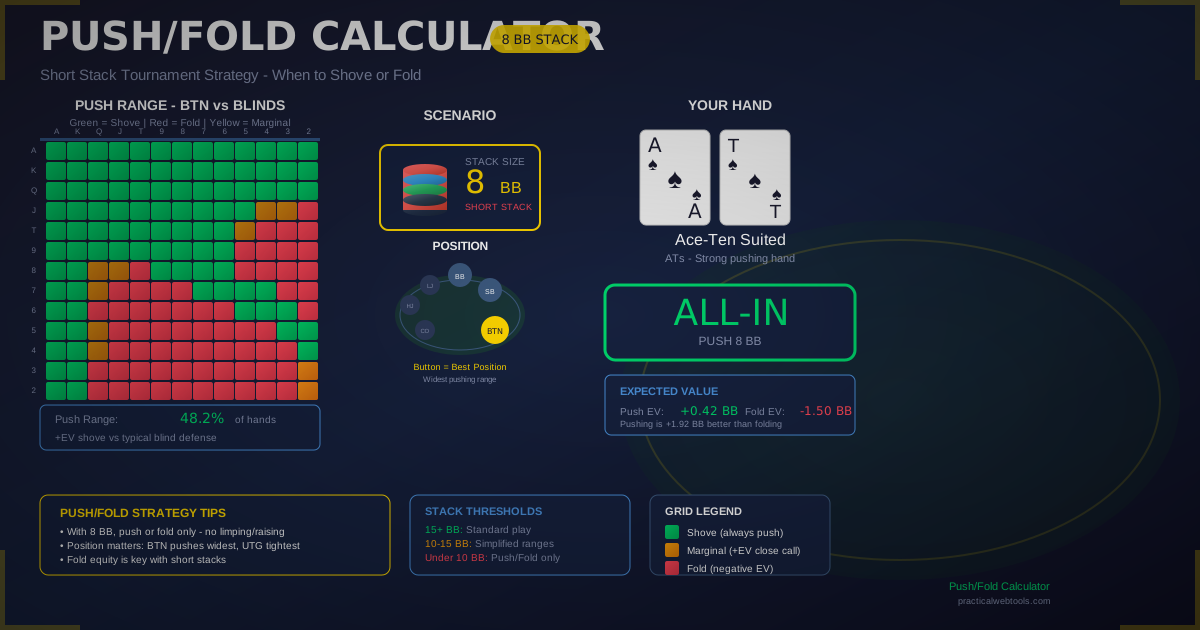
Push/Fold Strategy by M
M = 5 (Red Zone)
| Position | Push Range |
|---|---|
| UTG | 22+, A9+, KQ |
| MP | 22+, A7+, KT+, QJ |
| CO | 22+, A2+, K8+, Q9+, JT |
| BTN | 22+, A2+, K2+, Q7+, J8+, T8+ |
| SB | 22+, A2+, K2+, Q2+, J4+, T6+ |
M = 3 (Critical)
| Position | Push Range |
|---|---|
| UTG | Any pair, A5+, KJ+ |
| MP | Any pair, A2+, KT+, QJ |
| CO | Any pair, A2+, K5+, Q8+, J9+ |
| BTN | 40%+ of hands |
| SB | 50%+ of hands |
M = 1.5 (Desperate)
| Position | Push Range |
|---|---|
| Any | Push almost anything first-in |
| Against open | Need strong hand |
| Note | Survival requires doubling up |
Adjusting for Table Dynamics
Effective M at Short Tables
| Table Size | M Adjustment |
|---|---|
| 9-handed | Full M |
| 6-handed | M × 0.67 |
| 4-handed | M × 0.44 |
| 3-handed | M × 0.33 |
| Heads-up | M × 0.22 |
Stack Distribution Factors
| Factor | M Adjustment |
|---|---|
| Aggressive table | Play tighter M thresholds |
| Passive table | Can wait slightly longer |
| Big stacks behind | Reduce resteal frequency |
| Short stacks behind | More fold equity |
Common M-Ratio Mistakes
1. Using Only Big Blinds
Mistake: "I have 15 big blinds" Problem: Ignores antes, misleading in late stages Fix: Always calculate true M
2. Zone Transitions Too Late
Mistake: Playing Green Zone strategy at M=8 Problem: Bleeding chips with marginal hands Fix: Adjust strategy at zone boundaries
3. Ignoring Effective M
Mistake: Same M strategy at full vs short table Problem: Short-handed M is lower Fix: Calculate effective M for table size
4. Push/Fold Too Early
Mistake: All-in at M=12 Problem: Still have post-flop playability Fix: Yellow zone allows normal opens
Frequently Asked Questions
When should I switch to push/fold?
Below M=10, start incorporating more all-in plays. Below M=5, pure push/fold is correct. Context matters—aggressive tables require earlier adjustments.
Does M matter in cash games?
No. M is specifically for tournaments where blinds increase. Cash games use big blind count and stack-to-pot ratio.
How does M affect bubble play?
Low M players have less fold equity near bubbles. High M players can exploit this with wider stealing ranges.
Should I calculate M every hand?
Know your approximate M at all times. Recalculate when blinds increase or after significant pots.
What's more important: M or position?
Both matter. Low M makes position more critical because you can't see flops profitably—need first-in aggression.
How do antes affect M?
Significantly. Standard antes reduce M by 30-40% compared to no-ante calculation. Always include antes.
Advanced M Concepts
Future M Planning
Next Level M = Current Stack / Next Level Orbit Cost

Plan your stack's M at upcoming levels
Tournament Life Expectancy
| Current M | Expected Orbits | With Doubles |
|---|---|---|
| 20 | 20 | 40+ |
| 10 | 10 | 30+ |
| 5 | 5 | 15+ |
| 2 | 2 | 6+ |
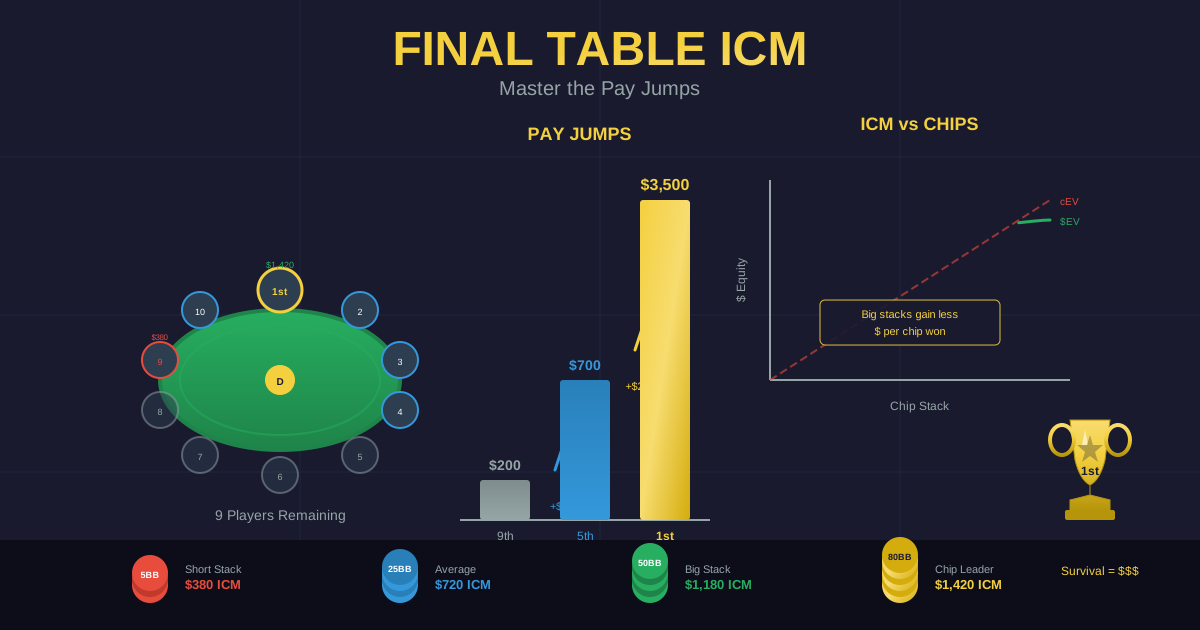
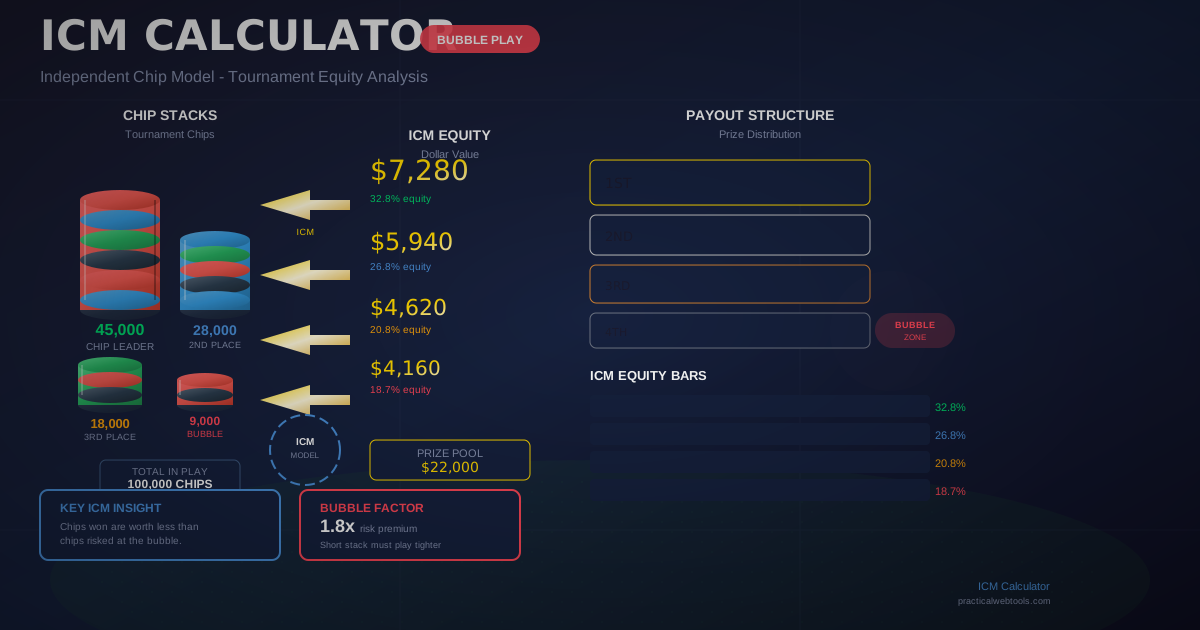
M and ICM
| M Level | ICM Consideration |
|---|---|
| High M | Less ICM pressure |
| Medium M | ICM starts mattering |
| Low M | ICM critical |
| Desperate | Survival > ICM |
Pro Tips
-
Know your M always: Glance at blinds, estimate orbits
-
Plan ahead: Know M at next level
-
Zone boundaries matter: Adjust at 20, 10, 5
-
Include all antes: Don't underestimate orbit cost
-
Effective M at short tables: More urgent than raw M
Related Calculators
- Push/Fold Calculator - Optimal shove ranges
- ICM Calculator - Tournament equity
- Poker Bankroll Calculator - Tournament buy-ins
- Tournament Payout Calculator - Prize structure
- Poker Variance Calculator - Downswing risk
Conclusion
M-ratio transforms tournament poker from guesswork to precision. Our calculator computes your M instantly, identifies your zone, and guides strategy adjustments. Understanding M means knowing when to open up, when to tighten, and when pure push/fold is your only option. Every tournament player should internalize these zones and check their M constantly as blinds increase.
Dan Harrington's M system revolutionized tournament poker by quantifying stack pressure. Our calculator makes M assessment instant, letting you focus on the strategic decisions that follow. Know your zone, play accordingly, and watch your tournament results improve.