Poker SPR Calculator: Stack-to-Pot Ratio Strategy (2026)
Poker SPR Calculator: Master Stack-to-Pot Ratio Decisions
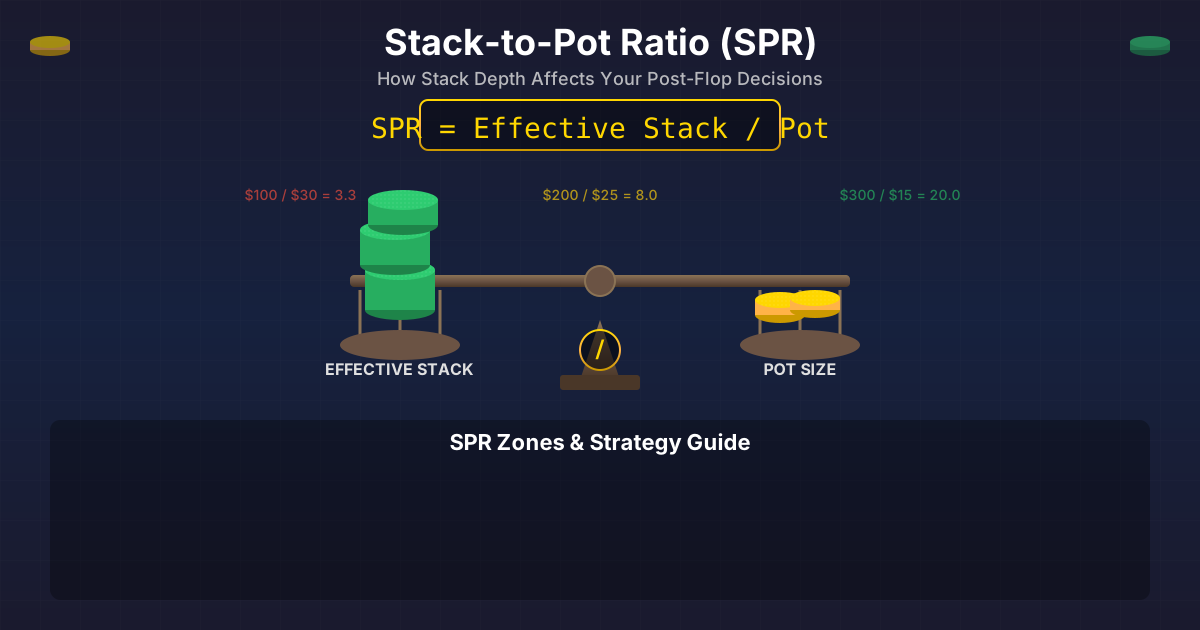
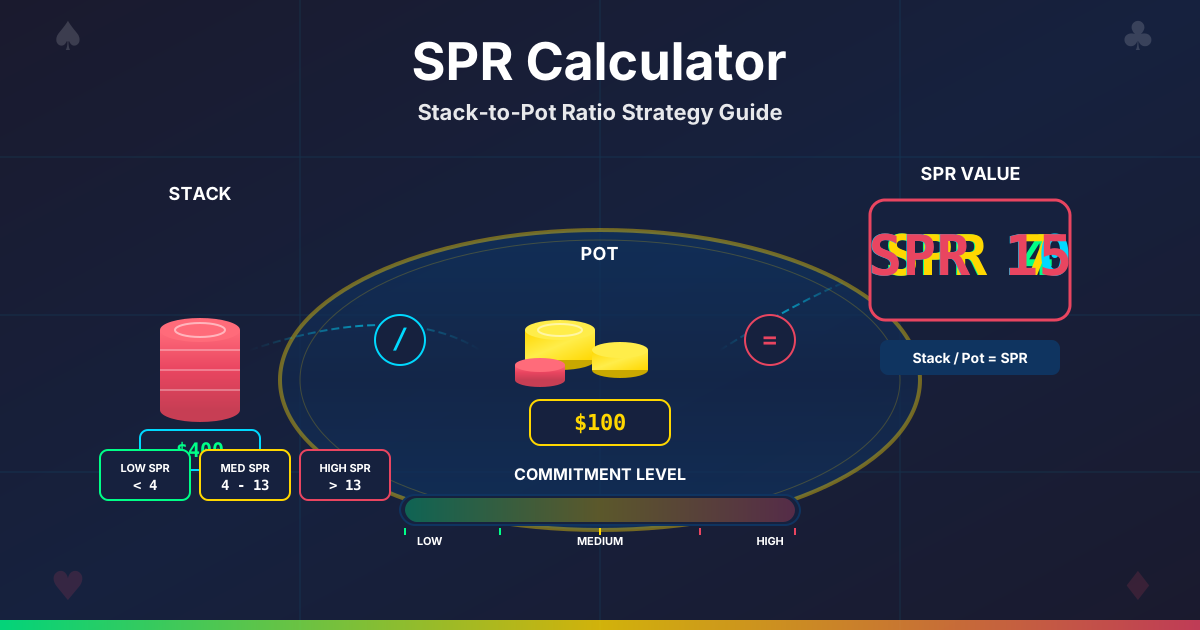
Stack-to-Pot Ratio (SPR) determines how you should play post-flop. Our calculator shows your SPR and explains whether you should commit, play cautiously, or set-mine based on the relationship between effective stacks and pot size.
What Is Stack-to-Pot Ratio?
SPR measures effective stack size relative to pot size on the flop, indicating commitment levels and optimal hand selection for post-flop play.
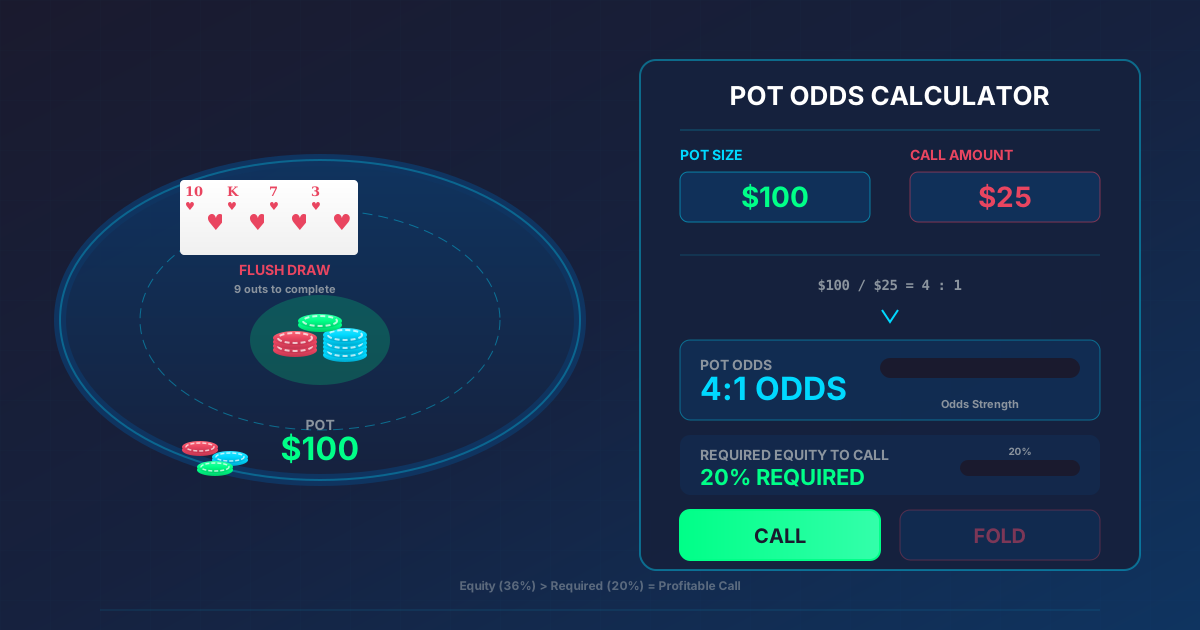
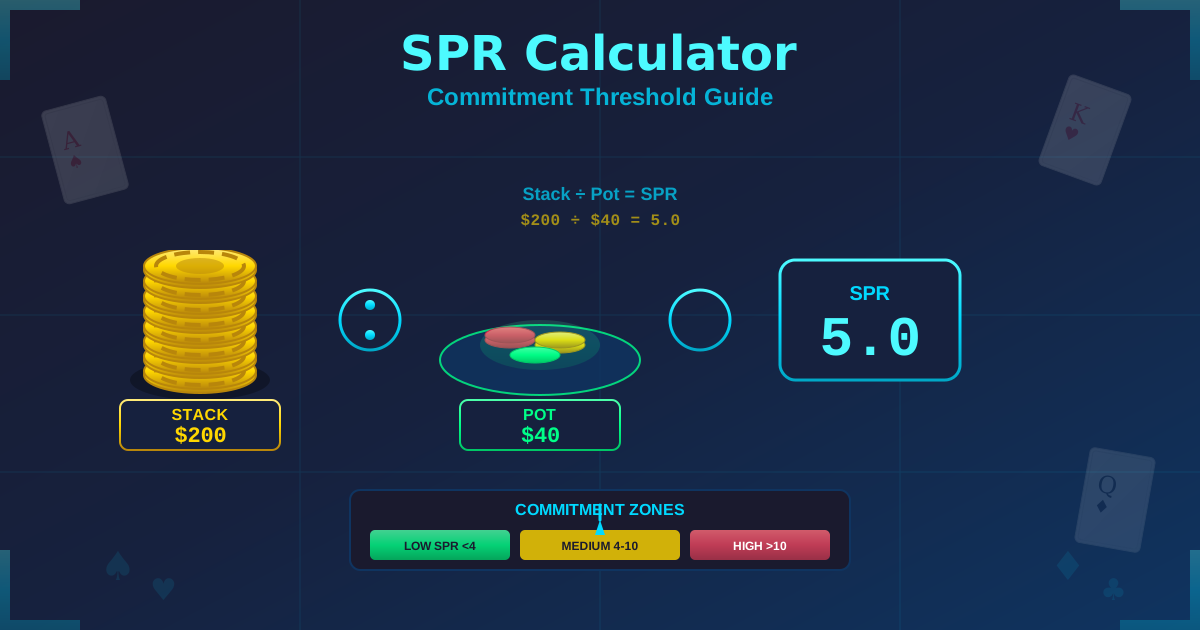
Quick Answer: SPR = Effective Stack / Pot Size. With $100 in stacks and a $25 pot, SPR = 4. Low SPR (under 4) means you're pot-committed with top pair; high SPR (13+) requires premium holdings for stacks. SPR dictates whether you should aim for big pots (low SPR) or play carefully (high SPR).
How to Use Our SPR Calculator
Use the Poker SPR Calculator →
Enter stack sizes and pot to calculate SPR and get strategic recommendations.
Step-by-Step Instructions
-
Enter Your Stack: Your remaining chips
-
Enter Opponent's Stack: Villain's chips
-
Input Pot Size: Amount in pot on flop
-
View SPR: Calculated ratio
-
See Strategy: Commitment recommendations
Input Fields Explained
| Field | Description | Example |
|---|---|---|
| Your Stack | Remaining chips | $150 |
| Villain's Stack | Their chips | $120 |
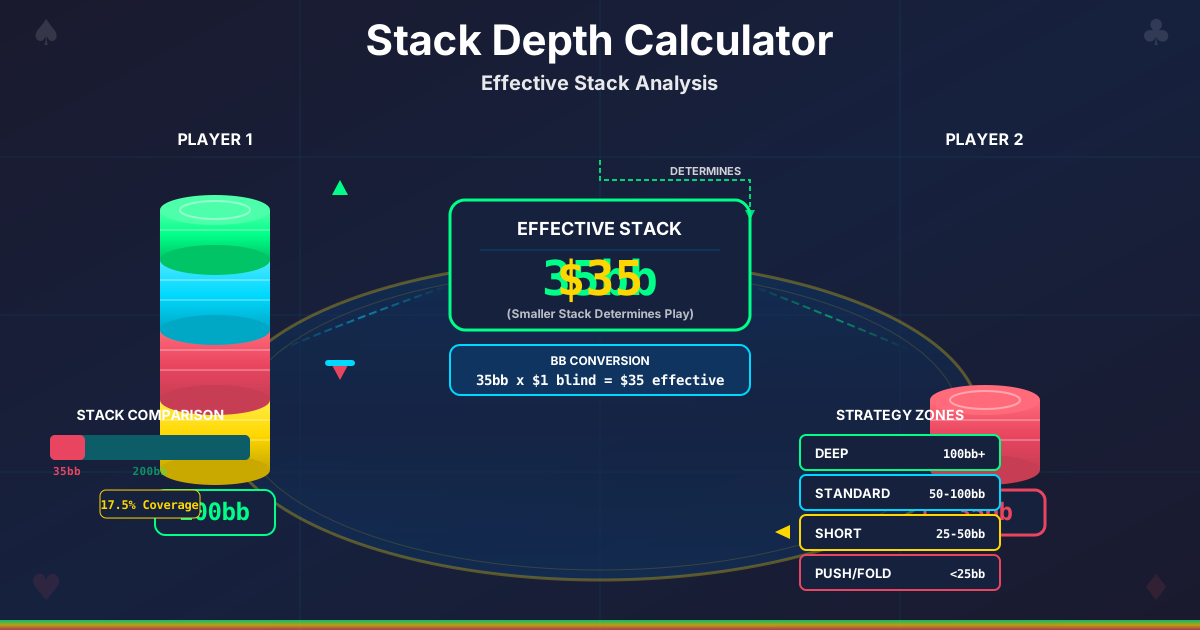
| Effective Stack | Smaller of two | $120 |
| Pot Size | Flop pot | $30 |
| SPR | Stack/Pot ratio | 4.0 |
| Strategy | Play suggestion | Commit with TPTK |
SPR Ranges and Strategy
Low SPR (0-4)
| SPR | Situation | Strategy |
|---|---|---|
| 0-2 | Near pot-committed | Get it in with any pair |
| 2-4 | Pot-committed | Commit with top pair+ |
| 4 | Threshold | TPTK is strong enough |
Hands to commit: Top pair good kicker, overpairs, sets, draws
Medium SPR (4-13)
| SPR | Situation | Strategy |
|---|---|---|
| 4-6 | Semi-committed | Need overpairs+ |
| 6-10 | Careful | Two pair+ preferred |
| 10-13 | Selective | Sets, straights, flushes |
Hands to commit: Two pair+, sets, strong draws
High SPR (13+)
| SPR | Situation | Strategy |
|---|---|---|
| 13-20 | Deep | Only nutted hands |
| 20+ | Very deep | Set-mining territory |
Hands to commit: Sets, straights, flushes, full houses
SPR and Hand Selection
Pre-Flop Adjustments Based on Expected SPR
| Expected SPR | Preferred Hands |
|---|---|
| Low (0-4) | Big cards, broadway, pairs |
| Medium (4-13) | Suited connectors, pocket pairs |
| High (13+) | Set-mining pairs, suited aces |
Flop Hand Strength Requirements
| SPR | Minimum for Commitment |
|---|---|
| 2 | Any pair |
| 4 | Top pair, good kicker |
| 6 | Top pair, top kicker |
| 10 | Overpair+ |
| 15 | Two pair+ |
| 20+ | Set+ |
Real-World Examples
Example 1: Low SPR Spot
Pre-flop: You raise to $15, one caller Stacks: You have $60, villain has $80 Pot on flop: $33 SPR: $60 / $33 = 1.8
Analysis:
- Very low SPR
- Commit with any top pair or better
- Overpairs are near-nuts
- Plan: Bet/get it in
Example 2: Medium SPR Spot
Pre-flop: You raise to $8, two callers Stacks: $200 effective Pot on flop: $25 SPR: $200 / $25 = 8
Analysis:
- Medium SPR
- Top pair needs caution
- Two pair/sets comfortable
- Plan: Build pot with strong hands, pot control with marginal
Example 3: High SPR Spot
Pre-flop: Limp, limp, you raise to $12, both call Stacks: $500 effective Pot on flop: $37 SPR: $500 / $37 = 13.5
Analysis:
- High SPR
- Top pair is a bluff catcher
- Sets and better for stacks
- Plan: Set-mine, draw carefully, trap with monsters
Manipulating SPR
Creating Lower SPR (When Desired)
| Action | Effect |
|---|---|
| Larger pre-flop raise | Inflates pot |
| 3-bet smaller | Still lowers SPR |
| Open limp-raise | Very low SPR |
When to want low SPR:
- Big pocket pairs
- Strong broadway hands
- Against passive calling stations
Creating Higher SPR (When Desired)
| Action | Effect |
|---|---|
| Smaller opens | Smaller pot |
| Flat calling | Keep pot small |
| Check behind | Maintain stack depth |
When to want high SPR:
- Speculative hands (suited connectors)
- Set-mining small pairs
- Against aggressive players
SPR in Different Game Types
Cash Games
| Stakes | Typical SPR | Notes |
|---|---|---|
| Low | 8-15 | Standard opens |
| Mid | 10-15 | Deeper stacks |
| High | 12-20 | Very deep often |
Tournaments
| Stage | Typical SPR | Notes |
|---|---|---|
| Early | 10-20 | Deep stacks |
| Middle | 5-12 | Tightening |
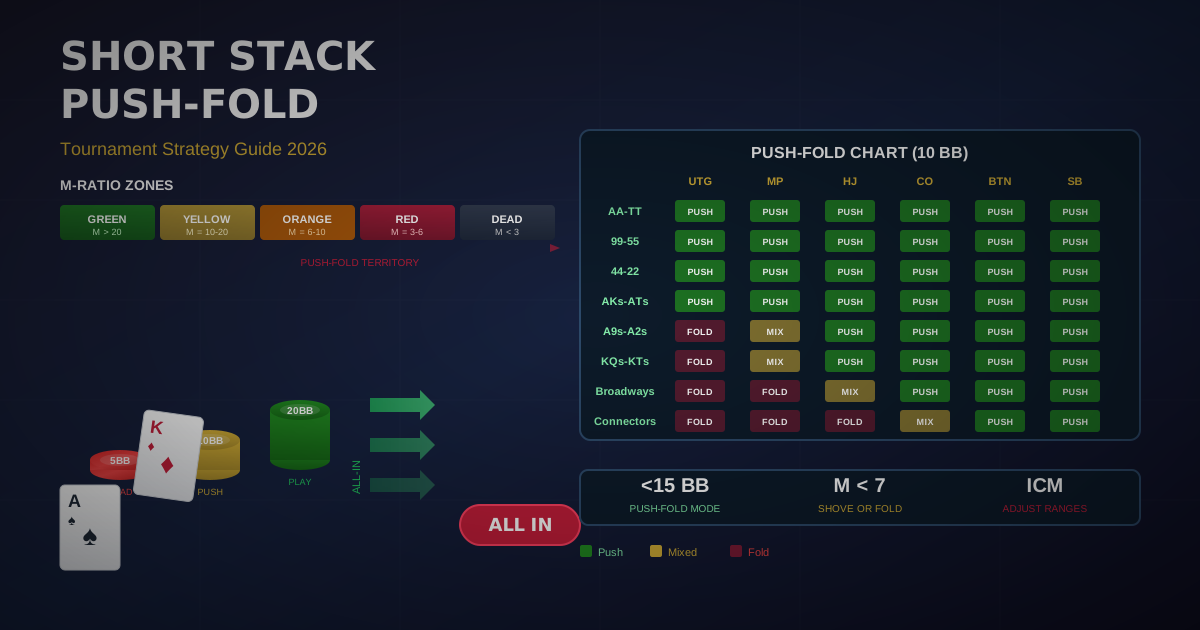
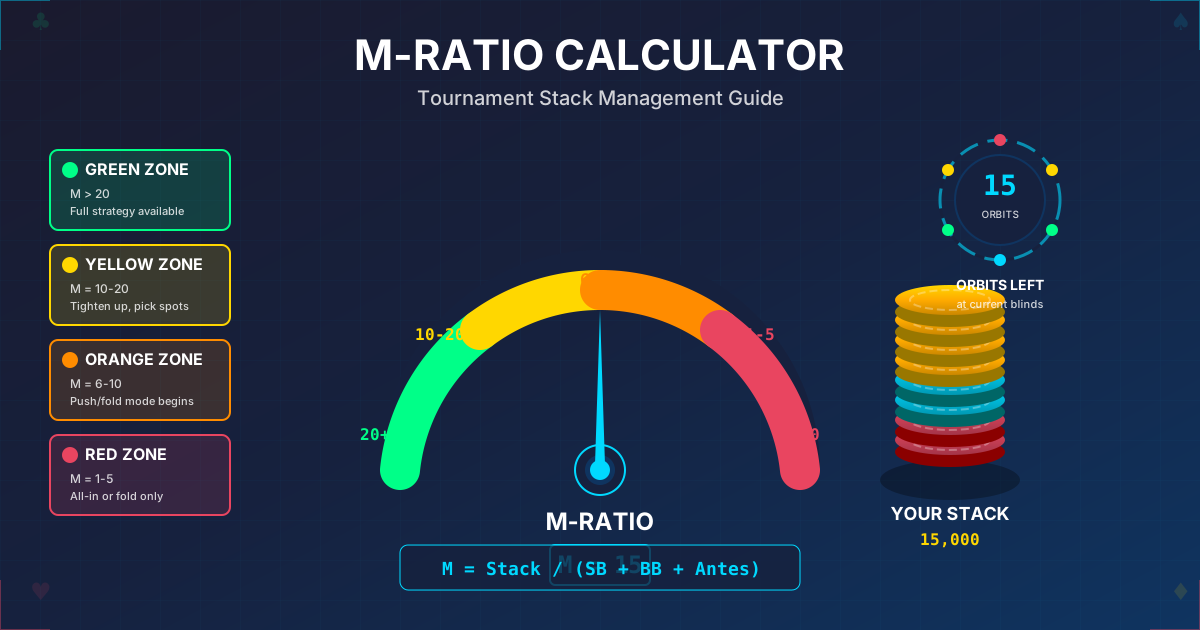
| Bubble | 3-8 | ICM pressure |
| Final table | 2-10 | Variable |
PLO vs Hold'em
| Game | SPR Impact |
|---|---|
| Hold'em | TPTK strong at low SPR |
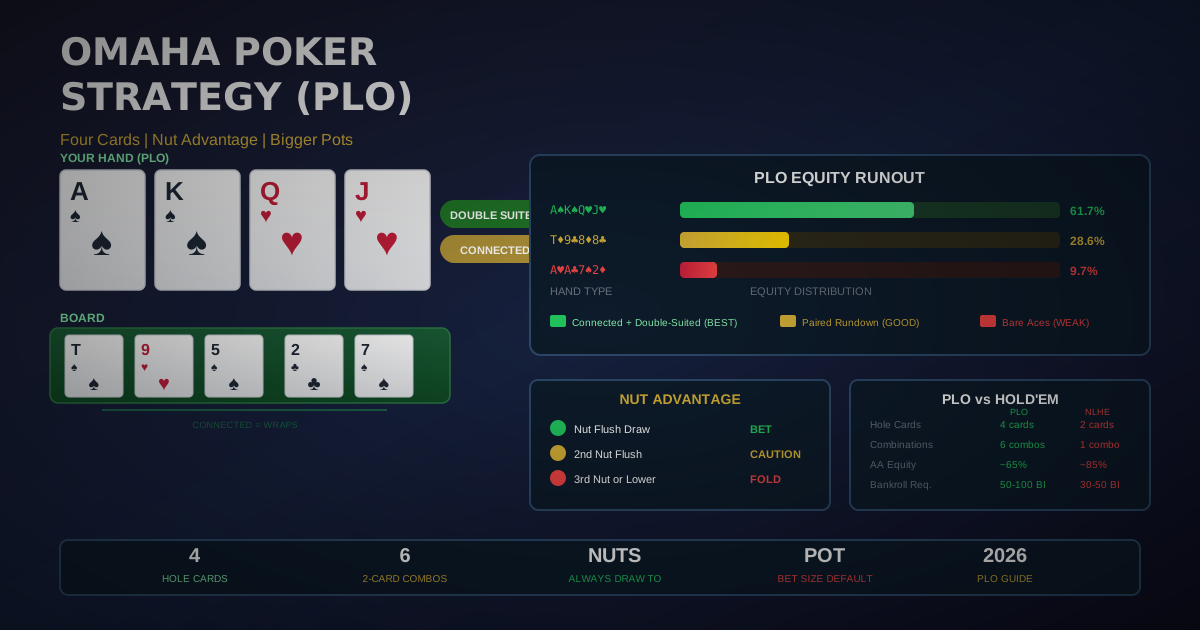
| PLO | Need much lower SPR for commitment |
Common SPR Mistakes
1. Ignoring SPR Pre-Flop
Mistake: Same sizing regardless of effective stacks Problem: Playing wrong SPR for your hand Fix: Adjust opens to create favorable SPR
2. Overcommitting at High SPR
Mistake: Getting stacks in with one pair at SPR 15+ Problem: Dominated by two pair+ ranges Fix: Recognize high SPR = need premium
3. Under-committing at Low SPR
Mistake: Folding top pair at SPR 2 Problem: Missing +EV spots Fix: Low SPR means wider commitment
4. Not Planning for SPR
Mistake: Not calculating SPR before flop bet Problem: Awkward stack-to-pot situations Fix: Know your SPR, plan accordingly
Frequently Asked Questions
What's the most important SPR threshold?
SPR 4 is the key threshold. Below 4, top pair is a premium hand. Above 4, you need increasingly stronger hands for stacks.
How do I use SPR in live play?
Quick estimation: If pot is 1/4 of stack = SPR 4. If pot is 1/10 of stack = SPR 10. Practice quick mental math.
Should I always try for low SPR with big pairs?
Generally yes. Aces and Kings perform better at low SPR where they can comfortably commit post-flop.
Does SPR matter in all-in or fold situations?
No. SPR is irrelevant when you're already all-in. It only matters when there's play remaining.
How does SPR affect bluffing?
High SPR allows more bluffs (fold equity space). Low SPR makes bluffing dangerous (pot-committed).
What's ideal SPR for set-mining?
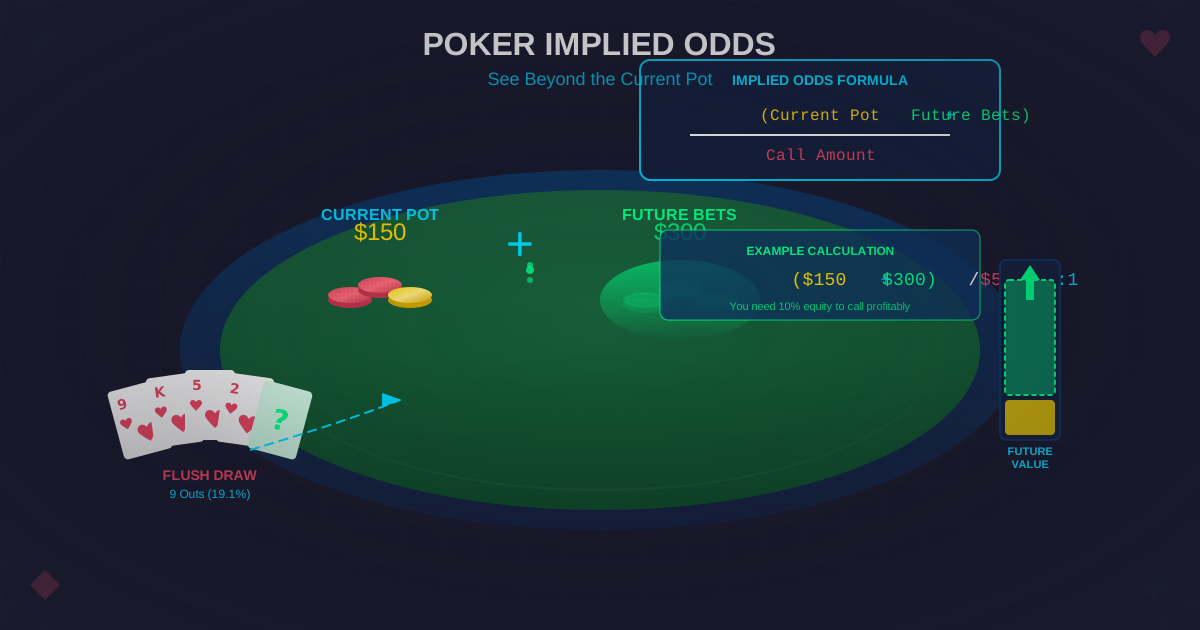
SPR 15-20 is optimal for set-mining. You need implied odds to profit from small pairs.
Advanced SPR Concepts
Multi-Way SPR Considerations
| Players | SPR Adjustment |
|---|---|
| Heads-up | Standard SPR |
| 3-way | Need stronger hands |
| 4+ way | Need near-nuts |
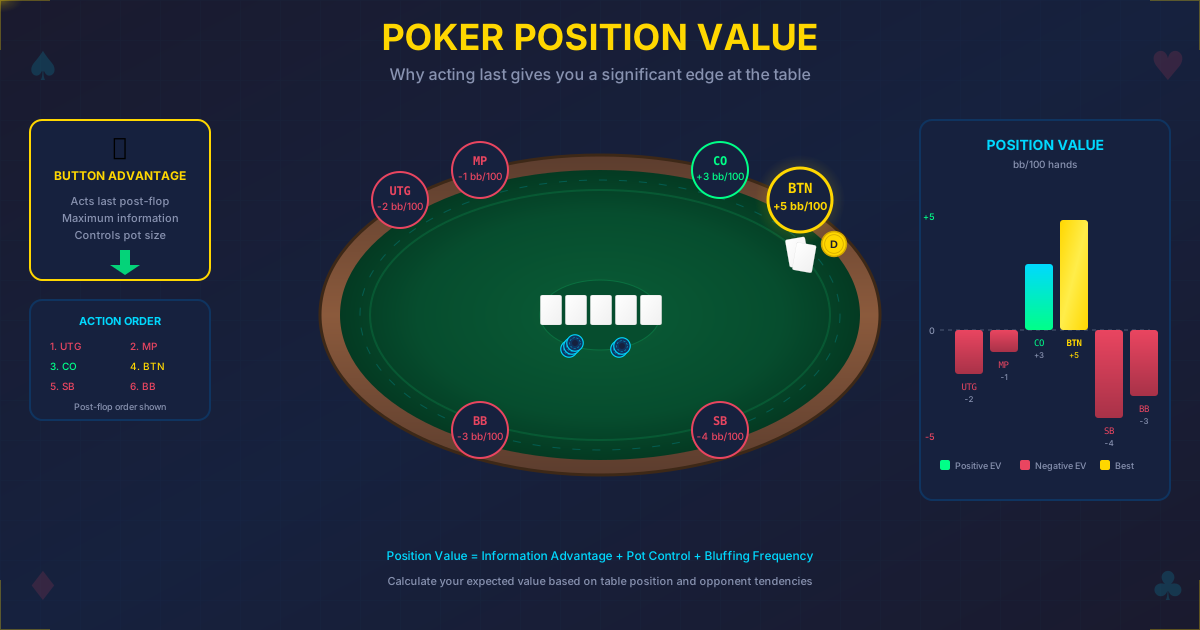
SPR and Position
| Position | SPR Strategy |
|---|---|
| In position | Can play higher SPR |
| Out of position | Prefer lower SPR |
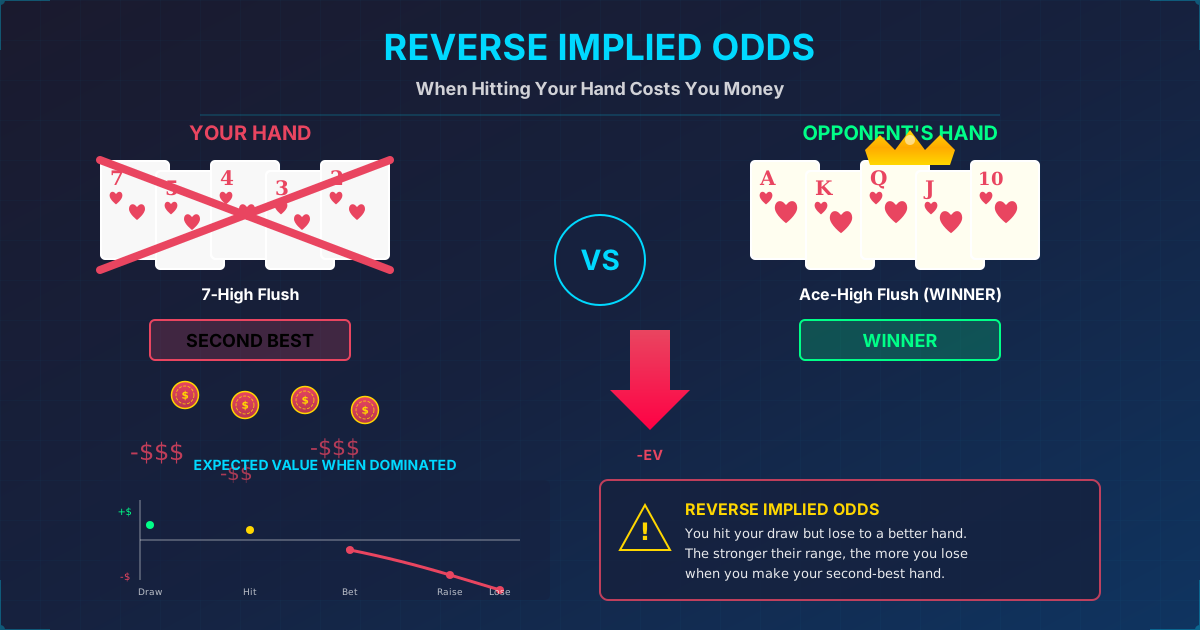
Reverse Implied Odds at High SPR
| Situation | Risk |
|---|---|
| Top pair, high SPR | Often second-best |
| Weak flush, high SPR | Higher flush possible |
| Straight, high SPR | Higher straight possible |
Pro Tips
-
Calculate pre-flop: Know your expected SPR before betting
-
Plan three streets: SPR determines your betting plan
-
Adjust hand selection: Pick hands that play well at the SPR
-
3-bet strategically: 3-betting creates lower SPR
-
Pot control: At high SPR, check to maintain stack depth
Related Calculators
- Poker Equity Calculator - Showdown odds
- Pot Odds Calculator - Pot odds math
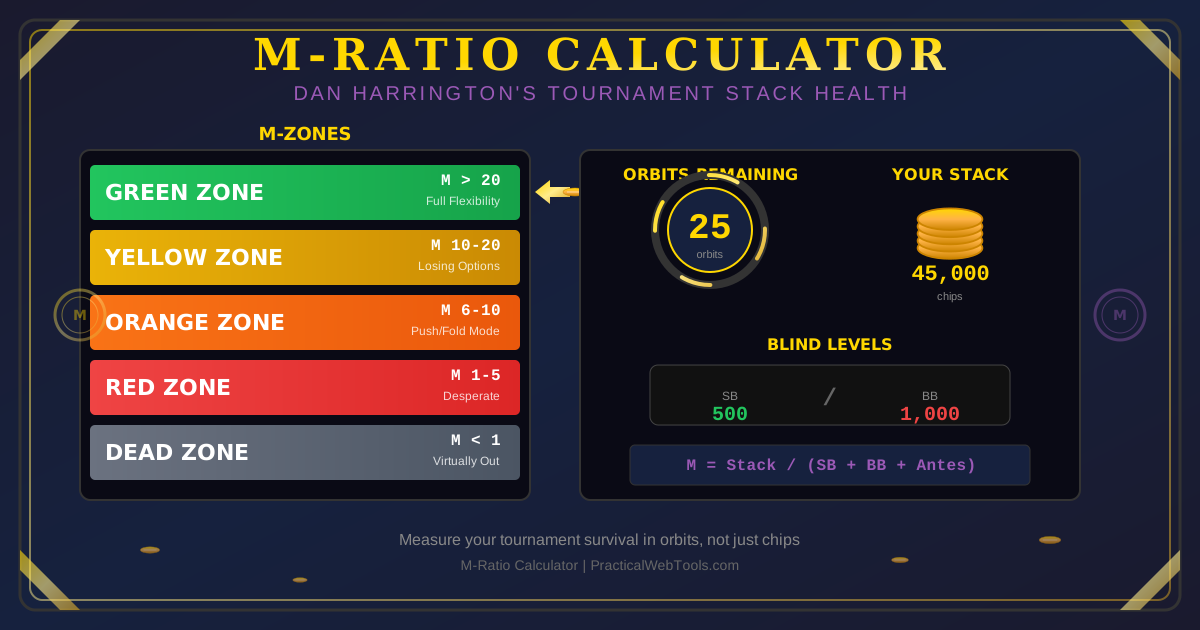
- M-Ratio Calculator - Tournament stacks
- Poker EV Calculator - Expected value
- Implied Odds Calculator - Implied odds
Conclusion
SPR is the foundation of post-flop strategy, determining which hands can commit and which need caution. Our calculator shows your SPR and provides strategic guidance for any stack-to-pot situation. Master SPR awareness to make better decisions about commitment, value betting, and bluffing.
Every strong player considers SPR before the flop. Whether you're trying to create low SPR for your premium hands or high SPR for speculative holdings, understanding this ratio transforms your post-flop decision-making from guesswork to strategy.