Poker Tax Calculator: Understand Your Tax Obligations as a Poker Player (2026)
Poker Tax Calculator: Navigate Your Tax Obligations
Poker winnings are taxable income. Whether you're a recreational player who hit a big tournament score or a professional grinding daily, the IRS expects its share. Our poker tax calculator helps you estimate your tax liability, understand reporting requirements, and identify legitimate deductions to minimize your tax burden legally.
What Are Poker Taxes?
Poker winnings are considered taxable income in the United States and most other jurisdictions. All gambling winnings, including poker, must be reported on your tax return. The tax treatment varies based on whether you're classified as a recreational player or a professional gambler, with significant implications for deductions and reporting.
Quick Answer: All poker winnings are taxable income. Recreational players report winnings on Line 8 of Schedule 1 (Form 1040) and can only deduct losses up to winnings as itemized deductions. Professional players report on Schedule C, can deduct all business expenses, and pay self-employment tax (15.3%). Tax rate depends on your total income bracket (10%-37% federal). A $50,000 tournament win for someone in the 24% bracket owes approximately $12,000 federal tax, plus state taxes.
How to Use Our Calculator
Use the Poker Tax Calculator →
Step-by-Step Instructions
- Enter Total Winnings: Input gross poker winnings for the tax year
- Enter Total Losses: Input documented gambling losses
- Select Player Status: Choose recreational or professional classification
- Enter Other Income: Input non-gambling income for bracket calculation
- Select State: Choose your state for state tax estimates
- Calculate Tax Liability: See estimated federal and state taxes owed
Input Fields
| Field | Description | Example |
|---|---|---|
| Gross Winnings | Total poker winnings | $75,000 |
| Documented Losses | Provable gambling losses | $30,000 |
| Player Status | Recreational or Professional | Professional |
| Other Income | W-2, business, investment income | $50,000 |
| Filing Status | Single, Married, etc. | Single |
| State | State of residence | Nevada |
Recreational vs Professional Status
Recreational Player Tax Treatment
Most poker players are classified as recreational:
Reporting:
- Winnings: Line 8, Schedule 1 (Form 1040)
- Losses: Schedule A (itemized deductions)

Key Rules:
- Cannot deduct losses exceeding winnings
- Losses only deductible if itemizing
- No business expense deductions
- No self-employment tax
Example (Recreational):
Gross winnings: $20,000
Gross losses: $15,000
Other income: $60,000

Taxable gambling income: $20,000
Loss deduction (if itemizing): -$15,000
Net taxable: $5,000 additional income

If standard deduction is better:
Full $20,000 added to income
No loss deduction available
Professional Gambler Tax Treatment
Professional status requires gambling as a trade or business:
IRS Criteria for Professional Status:
1. Gambling is primary income source
2. Regular and continuous activity
3. Profit motive demonstrated
4. Systematic record-keeping
5. Skill-based approach to gambling
Professional Reporting:
Schedule C (Profit or Loss from Business):
- Gross receipts: Total winnings
- Cost of goods sold: N/A
- Expenses: All business-related costs
- Net profit: Subject to income + SE tax
Deductible Business Expenses:
- Tournament buy-ins (as cost of winnings)
- Travel to poker events
- Coaching and training
- Software and tools
- Home office (if applicable)
- Professional development
- Accounting/legal fees
Comparison Table
| Aspect | Recreational | Professional |
|---|---|---|
| Income Reporting | Schedule 1, Line 8 | Schedule C |
| Loss Deduction | Limited to winnings | Full business loss |
| Itemizing Required | Yes for losses | No |
| Business Expenses | Not deductible | Fully deductible |
| Self-Employment Tax | No | Yes (15.3%) |
| Quarterly Estimates | Usually no | Yes |
| Record-Keeping | Recommended | Required |
Tax Calculations
Federal Income Tax Brackets (2026)
Single Filers:
$0 - $11,600: 10%
$11,601 - $47,150: 12%
$47,151 - $100,525: 22%
$100,526 - $191,950: 24%
$191,951 - $243,725: 32%
$243,726 - $609,350: 35%
$609,351+: 37%
Self-Employment Tax (Professional)
SE Tax = Net Earnings × 15.3%

Breakdown:
- Social Security: 12.4% (up to wage base)
- Medicare: 2.9% (no limit)
- Additional Medicare: 0.9% (over $200k single)

Note: Can deduct half of SE tax from income
Effective Tax Rate Calculation
Total Tax / Total Income = Effective Rate

Example:
Poker income: $100,000
Other income: $0
Filing: Single

Federal tax calculation:
$11,600 × 10% = $1,160
$35,550 × 12% = $4,266
$53,375 × 22% = $11,743
Total federal: $17,169

SE tax (if professional):
$100,000 × 0.9235 × 15.3% = $14,130

Total (professional): $31,299
Effective rate: 31.3%
State Tax Considerations
States With No Income Tax
No state tax on poker winnings:
- Alaska
- Florida
- Nevada
- New Hampshire (dividends/interest only)
- South Dakota
- Tennessee (dividends/interest only)
- Texas
- Washington
- Wyoming
High-Tax States
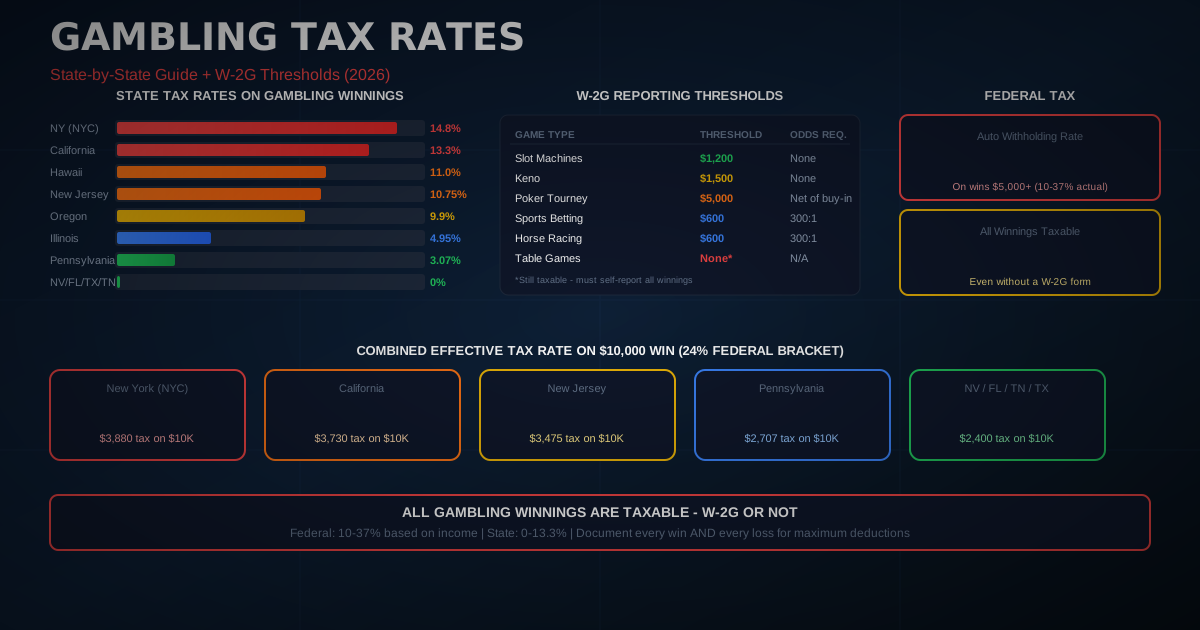
California: Up to 13.3%
New York: Up to 10.9%
New Jersey: Up to 10.75%
Oregon: Up to 9.9%
Minnesota: Up to 9.85%
State Tax Example
Poker winnings: $100,000
State: California (10% effective)
Federal bracket: 24%

Federal tax: ~$17,000
State tax: ~$10,000
SE tax (professional): ~$14,000
Total tax: ~$41,000
Take-home: ~$59,000
Real-World Examples
Example 1: Recreational Player - Small Winner
Situation:
Annual poker winnings: $8,000
Annual poker losses: $6,000
W-2 income: $70,000
Filing: Single
Itemized deductions: $10,000
Standard deduction: $14,600
Tax Analysis:
Standard deduction ($14,600) > Itemized ($10,000)
Therefore: Cannot deduct $6,000 in losses

Taxable income: $70,000 + $8,000 = $78,000
Tax on additional $8,000: 22% bracket
Additional federal tax: ~$1,760
State tax (varies): ~$400-800

Total tax on poker: ~$2,200
Net poker profit: $8,000 - $6,000 - $2,200 = -$200

Result: Actually lost money after taxes
Example 2: Recreational Player - Big Score
Situation:
Tournament win: $150,000
Annual losses: $20,000
Other income: $50,000
Filing: Single
Tax Analysis:
Must itemize to deduct losses
Gambling income: $150,000
Loss deduction: -$20,000 (only if itemizing)
Net gambling income: $130,000

Total taxable: $50,000 + $130,000 = $180,000
Federal tax (rough): ~$36,000
State tax (California): ~$13,000
Total tax: ~$49,000

Take-home from tournament: $150,000 - $49,000 = $101,000
Example 3: Professional Poker Player
Situation:
Gross winnings: $200,000
Buy-ins paid: $80,000
Travel expenses: $15,000
Coaching/training: $5,000
Software: $1,000
Filing: Single
Tax Analysis:
Schedule C Calculation:
Gross receipts: $200,000
Expenses:
- Buy-ins: $80,000
- Travel: $15,000
- Training: $5,000
- Software: $1,000
Total expenses: $101,000

Net profit: $99,000

SE tax: $99,000 × 0.9235 × 15.3% = $13,993
SE deduction: $13,993 / 2 = $6,997

Adjusted gross income: $99,000 - $6,997 = $92,003
Federal income tax: ~$14,500

Total tax: $13,993 + $14,500 = $28,493
Take-home: $99,000 - $28,493 = $70,507
Example 4: Part-Time Professional
Situation:
W-2 job income: $80,000
Poker winnings: $40,000
Poker expenses: $25,000
Questionable professional status
Analysis:
If classified as recreational:
- Report $40,000 income
- Losses deductible only if itemizing
- No expense deductions
- Tax on full $40,000: ~$10,000

If classified as professional:
- Net poker income: $15,000
- SE tax: ~$2,300
- Income tax on $15,000: ~$3,600
- Total poker tax: ~$5,900

Difference: ~$4,100 savings as professional
But: Must meet IRS criteria for professional status
Example 5: International Player
Situation:
Non-US resident
Tournament win in Las Vegas: $50,000
Tax Treatment:
Withholding at source: 30% (typically)
$50,000 × 30% = $15,000 withheld

Treaty benefits may reduce rate:
- Canada: 0% (exempt)
- UK: 0% (exempt)
- Germany: 0% (exempt)
- Many countries: 0% by treaty

Must file Form 1040-NR to claim treaty benefits
Potential full refund if treaty applies
Example 6: Loss Year
Situation (Professional):
Poker losses: $30,000
Other income: $60,000
Filing: Single
Tax Treatment:
Schedule C shows $30,000 loss
This offsets other income

New taxable income: $60,000 - $30,000 = $30,000
Tax savings: ~$7,200 (at 24% rate)

Note: Professional status allows losses to
offset other income - major advantage
Record-Keeping Requirements
What to Document
For All Players:
Per Session Records:
- Date and time
- Location (casino/site)
- Game type and stakes
- Duration
- Buy-in amount
- Cash-out amount
- Win/loss result
Documentation to Keep:
- Casino player's club records
- Online account statements
- W-2G forms received
- ATM/credit card receipts
- Tournament registration receipts
- Travel receipts (professional)
IRS Documentation Standards
Contemporaneous records required:
- Made at or near time of activity
- Specific and detailed
- Consistent format

NOT acceptable:
- Reconstructed records
- Round number estimates
- Memory-based logs
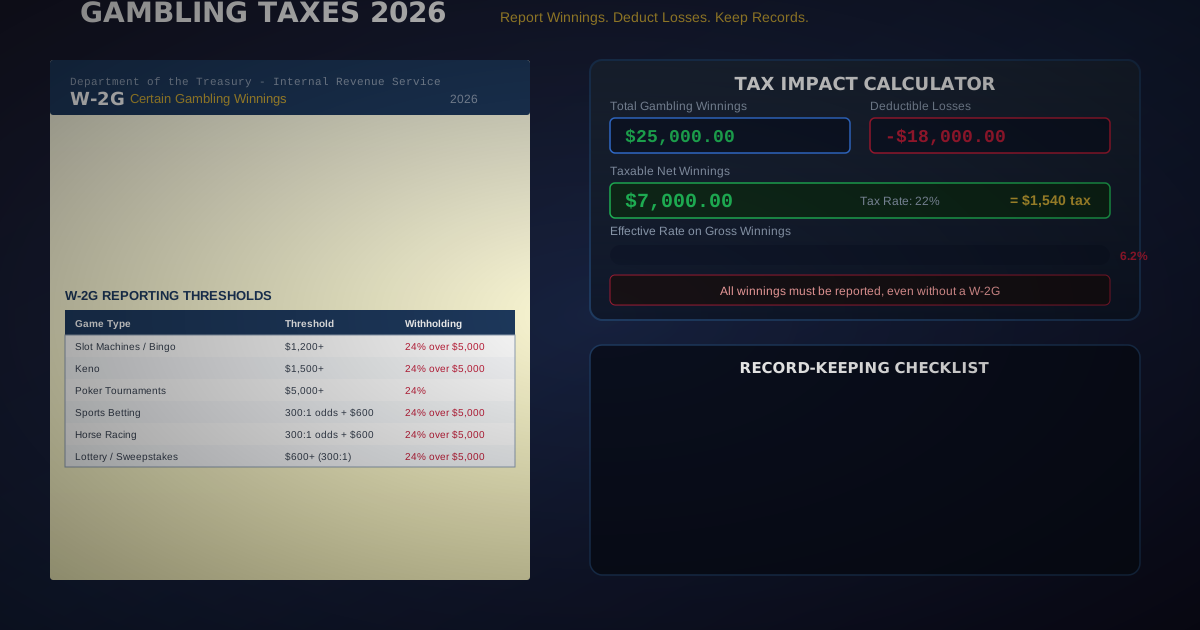
Form W-2G Reporting
When W-2G Is Issued
Poker tournaments: Winnings > $5,000
(Net of buy-in, if properly reported)

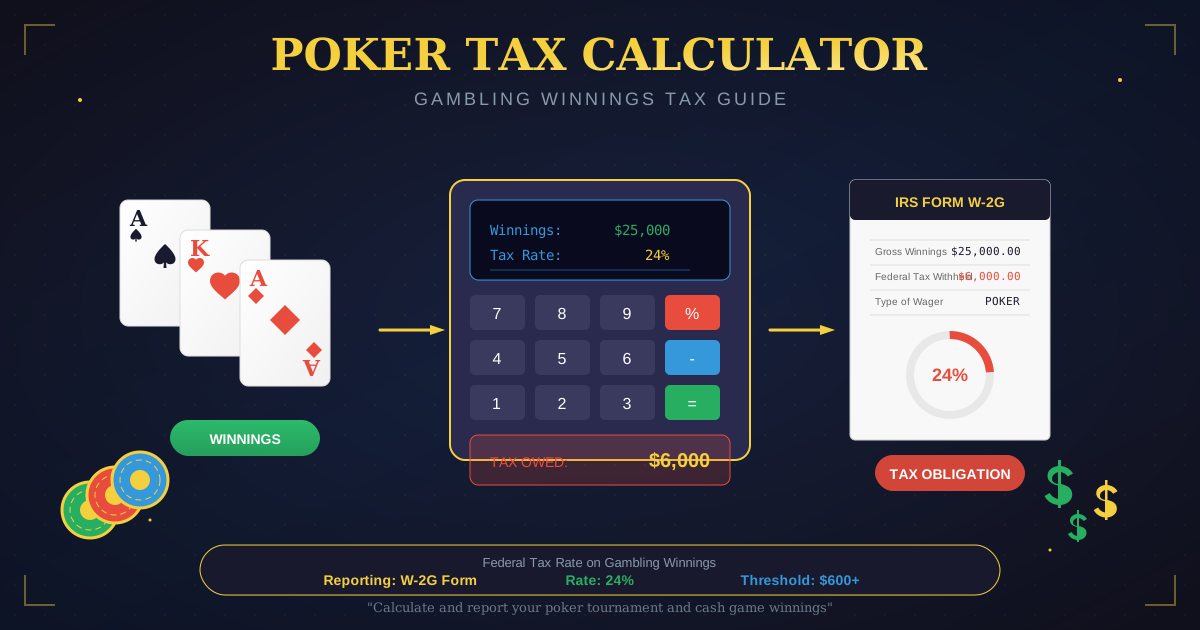
Withholding: 24% federal
Required when:
- Winnings exceed threshold
- Winner doesn't provide SSN (then 28%)
Handling W-2G
Received W-2G for $50,000 tournament:
Withholding: $12,000 (24%)
Net received: $38,000

On tax return:
Report full $50,000 as income
Claim $12,000 as withholding
Settle up based on actual tax rate
Common Mistakes to Avoid
-
Not Reporting All Income: The IRS receives copies of W-2G forms. Unreported winnings trigger automatic audits.
-
Deducting Losses Without Documentation: Keep detailed records. "I lost about $X" won't hold up in an audit.
-
Claiming Professional Status Incorrectly: Professional status requires meeting IRS criteria. Claiming falsely risks penalties.
-
Missing Quarterly Estimates: Professionals must pay quarterly estimated taxes. Missing payments incurs penalties.
-
Not Deducting Legitimate Expenses: Professionals can deduct many expenses. Keep receipts for everything poker-related.
-
Ignoring State Taxes: State taxes add significantly to your burden. Plan for both federal and state obligations.
Frequently Asked Questions
Do I have to pay taxes on poker winnings?
Yes. All poker winnings are taxable income in the United States. This applies to cash games, tournaments, and online poker regardless of whether you receive a W-2G form.
Can I deduct my poker losses?
Recreational players can deduct losses up to the amount of winnings, but only if they itemize deductions. Professional players can deduct all losses and expenses against winnings on Schedule C.
How do I know if I qualify as a professional?
The IRS looks at factors including: gambling as primary income, regular and continuous activity, profit motive, systematic record-keeping, and skill-based approach. No single factor is determinative.
What happens if I don't report poker winnings?
The IRS receives copies of W-2G forms. Unreported winnings may trigger audits, penalties, and interest. Criminal prosecution is possible for willful tax evasion.
Are online poker winnings taxable?
Yes. Online poker winnings are taxable regardless of whether the site issues tax forms. You're legally obligated to report all gambling income.
How do I handle a big tournament win?
Large tournament wins (over $5,000) generate W-2G forms with 24% withholding. Report the full amount on your return, claim the withholding as a credit, and settle the difference based on your actual tax rate.
Can I offset poker losses against other income?
Recreational players cannot. Professional players can offset gambling losses against other income because they report on Schedule C, allowing business losses to reduce AGI.
What records should I keep?
Keep detailed logs of every session including date, location, game type, buy-in, cash-out, and duration. Also keep casino statements, online account records, receipts, and all W-2G forms.
Pro Tips
- Consider consulting a tax professional experienced with gambling income for complex situations
- Keep digital and paper copies of all poker records for at least 7 years
- Track wins and losses separately by online vs live and by game type
- Set aside 30-35% of significant wins immediately for taxes
- If you have a big winning year, make quarterly estimated payments to avoid penalties
Related Calculators
- Win Rate Calculator - Track your actual profit rate
- Bankroll Calculator - Manage your playing funds
- ROI Calculator - Tournament return analysis
- Session Tracker - Log results for tax records
- Staking Calculator - Tax implications of staking
Conclusion
Poker taxes are complex but manageable with proper planning and record-keeping. Our poker tax calculator helps you estimate your obligations and understand the difference between recreational and professional treatment. Whether you're a weekend player or full-time grinder, knowing your tax situation prevents surprises and helps you keep more of your winnings legally.
Remember: when in doubt, consult a qualified tax professional. The cost of professional advice is far less than IRS penalties and interest.