Red Dog Poker Calculator: Card Spread Betting Analysis (2026)
Red Dog Poker Calculator: Betting on the Spread
Red Dog (also called Acey-Deucey or In-Between) is a simple card game where you bet that a third card will rank between two dealt cards. The wider the spread, the better your odds. Our calculator shows optimal raise strategy and reveals why spread size determines everything.
What Is Red Dog Poker?
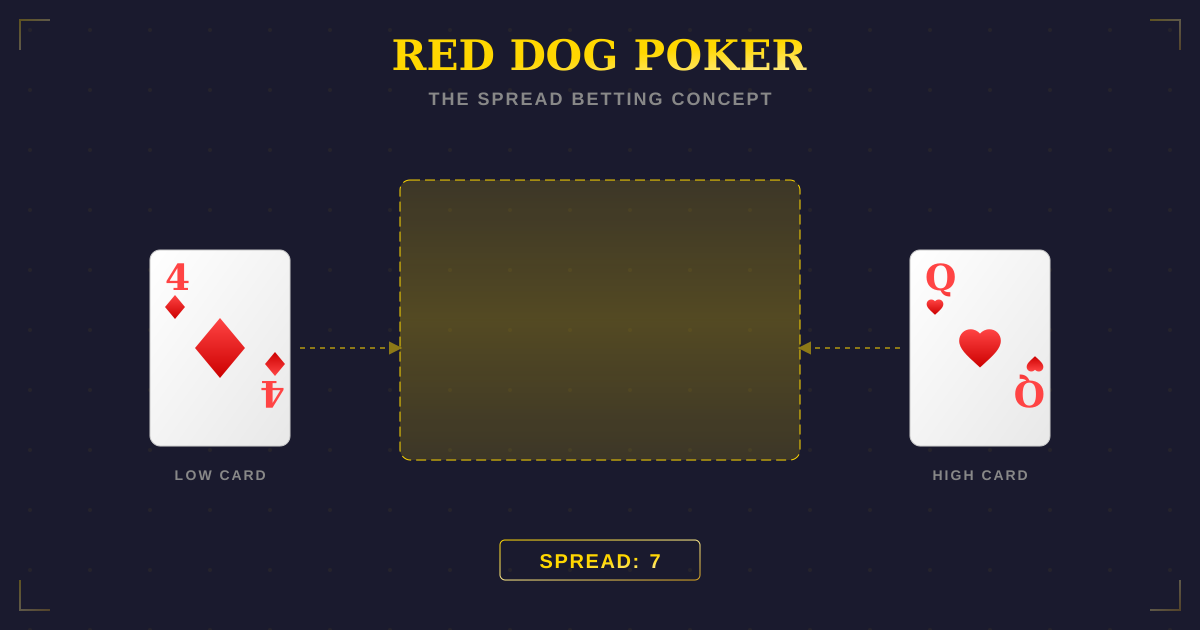
Red Dog Poker deals two cards and you bet whether a third card will fall between them in rank. A 4 and 10 has a spread of 5 (cards 5, 6, 7, 8, 9 win). Consecutive cards (like 7-8) push. Pairs hope for three of a kind (11:1). You can raise on spreads of 7+.
Quick Answer: Red Dog = bet third card falls between two cards. Spread 5 means 5 ranks win. Consecutive cards push. Pairs: hope for trips (11:1 payout). Raise only on spread 7+. House edge: 2.8-3.5% (varies by rules). Simple game, no skill except raise decision. Wider spread = better odds.
How to Use Our Calculator
Calculate win probability based on the spread.
Step-by-Step Instructions
-
Enter First Card: Left card rank
-
Enter Second Card: Right card rank
-
View Spread: Gap between cards
-
See Win Probability: Third card odds
-
Get Raise Decision: Optimal play
Input Fields Explained
| Field | Description | Example |
|---|---|---|
| Card 1 | First dealt | 4♠ |
| Card 2 | Second dealt | 10♦ |
| Spread | Gap in ranks | 5 |
| Win Probability | Hit rate | 38.46% |
| Raise? | Optimal | No |
| Payout | If win | 1:1 |
| House Edge | Game edge | 2.8% |
The Spread Concept
How Spread Is Calculated
Spread = difference in rank - 1

Examples:
4 and 10: 10-4-1 = 5 spread
3 and K: 13-3-1 = 9 spread
7 and 9: 9-7-1 = 1 spread
A and 2: 14-2-1 = 11 spread

Consecutive cards = 0 spread
Spread Values
Spread by card pairs:

Spread 1: 5-7, 6-8, etc.
Spread 2: 4-7, 5-8, etc.
Spread 3: 4-8, 5-9, etc.
...
Spread 11: A-2 only

Higher spread = more winning cards
Win Probability by Spread
Spread | Win Cards | Probability
-------|-----------|------------
1      | 4         | 7.69%
2      | 8         | 15.38%
3      | 12        | 23.08%
4      | 16        | 30.77%
5      | 20        | 38.46%
6      | 24        | 46.15%
7      | 28        | 53.85%
8      | 32        | 61.54%
9      | 36        | 69.23%
10     | 40        | 76.92%
11     | 44        | 84.62%

Win cards = spread × 4 (suits)
Payout Structure
Standard Payouts
Payouts by spread:

Spread 1: 5:1
Spread 2: 4:1
Spread 3: 2:1
Spread 4+: 1:1
Pairs (trips): 11:1
Consecutive: Push

Inverse relationship:
Lower spread = higher payout
Compensates for lower odds
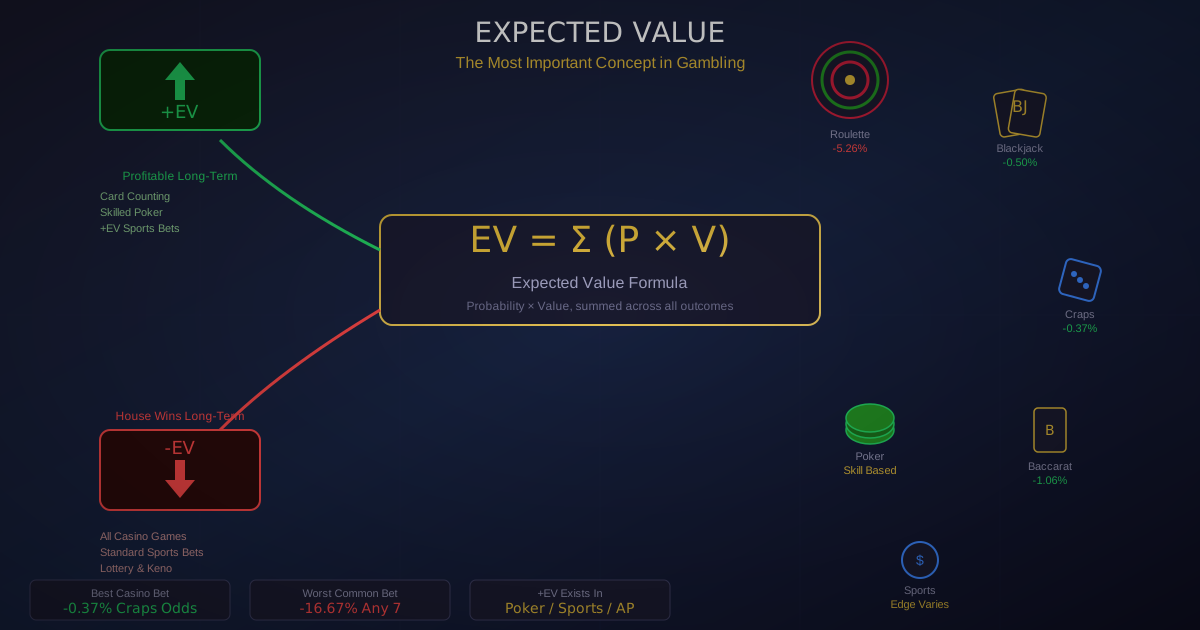
Expected Value by Spread
EV calculation:

Spread 1:
7.69% × 5:1 = 38.46%
Loss: 92.31%
Net: -53.85% (terrible)

Spread 7:
53.85% × 1:1 = 53.85%
Loss: 46.15%
Net: +7.70% (good!)
Raise Strategy
The Raise Decision
Raise option:

On 7+ spread: Can double bet
Additional wager at same odds

Only raise on favorable spreads
7+ has >50% win probability
Lower spreads negative EV to raise
Optimal Raise Threshold
When to raise:

Spread 7+: RAISE (53.85%+ win)
Spread 6 and below: Don't raise

Spread 7 = 53.85% win
EV positive to add money

Spread 6 = 46.15% win
EV negative to add money
Why 7 Is the Threshold
Mathematical reasoning:

Need >50% to profit on 1:1
Spread 7 = 53.85%
Spread 6 = 46.15%

Raising at 6:
Win 46.15% → +$1 each
Lose 53.85% → -$1 each
Net negative

Raising at 7:
Win 53.85% → +$1 each
Lose 46.15% → -$1 each
Net positive
Special Situations
Consecutive Cards
When cards are consecutive:

7-8, K-Q, 5-6, etc.
No spread possible
No winning third card

Result: PUSH
Bet returned
No win or loss
Pairs Dealt
When both cards same rank:

Third card drawn
If trips: Win 11:1
Otherwise: Push

Example:
7-7 dealt
Third card 7: Win 11:1
Third card other: Push

Probability: 1/13 ≈ 7.69%
Ties with Outside Card
What if third card equals?

Third card matches one dealt:
Counts as LOSS

Example:
4 and 10 dealt
Third card is 4 or 10
You lose

Not between = lose
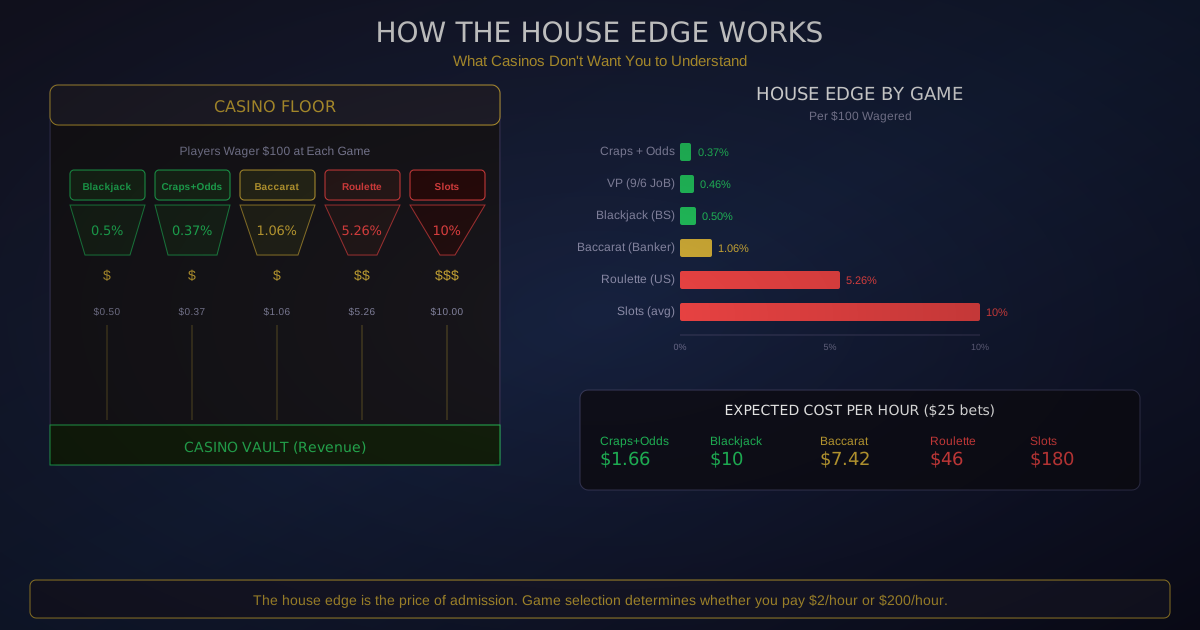
House Edge Analysis
Edge Calculation
Red Dog house edge:

Single deck: 3.16%
Multiple decks: 2.80%

More decks = slightly better
But still moderate edge
Why Multiple Decks Help
Deck effect:

Single deck:
Cards removed affect odds
Slightly less predictable

6-8 decks:
Cards nearly replaced
Probabilities more stable
Slightly lower edge
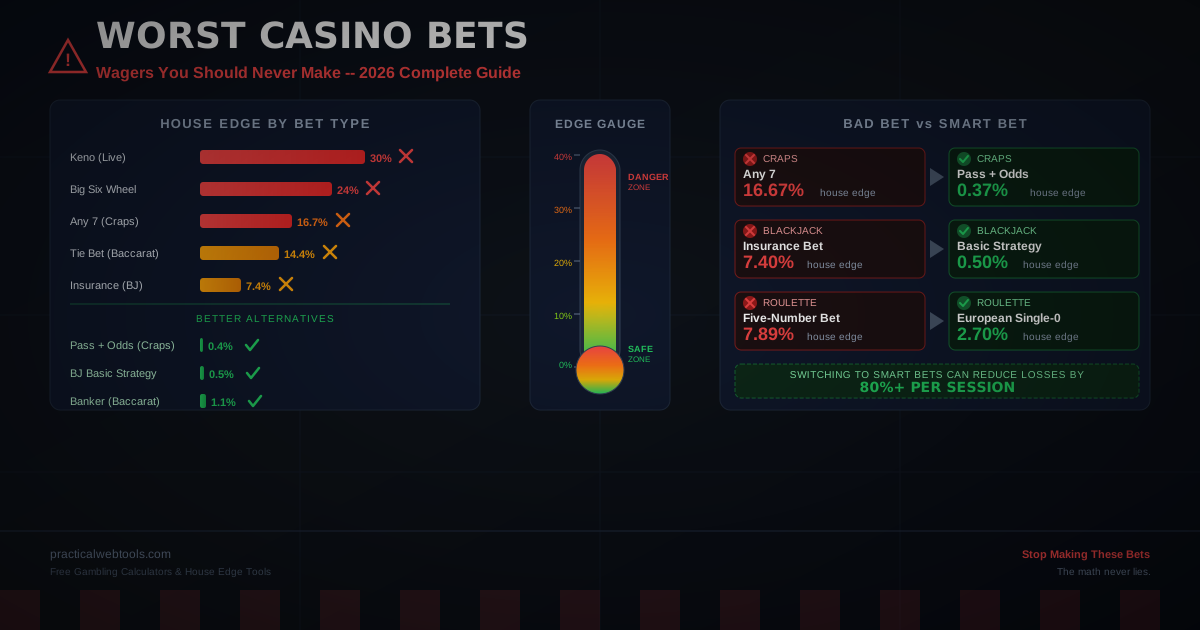
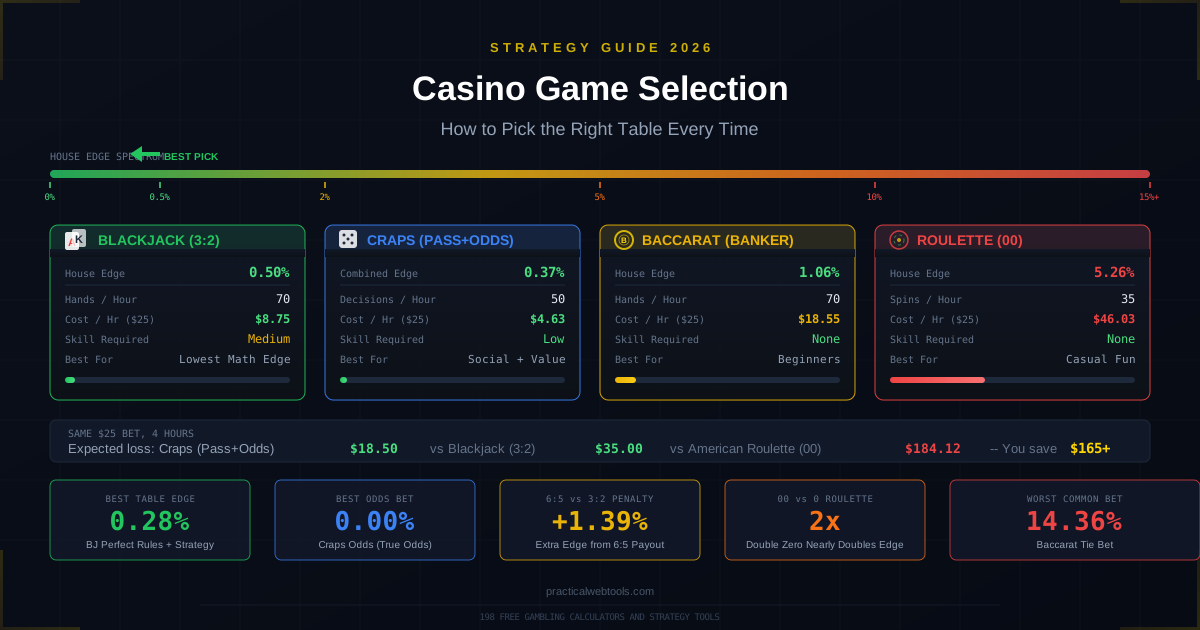
Comparison to Other Games
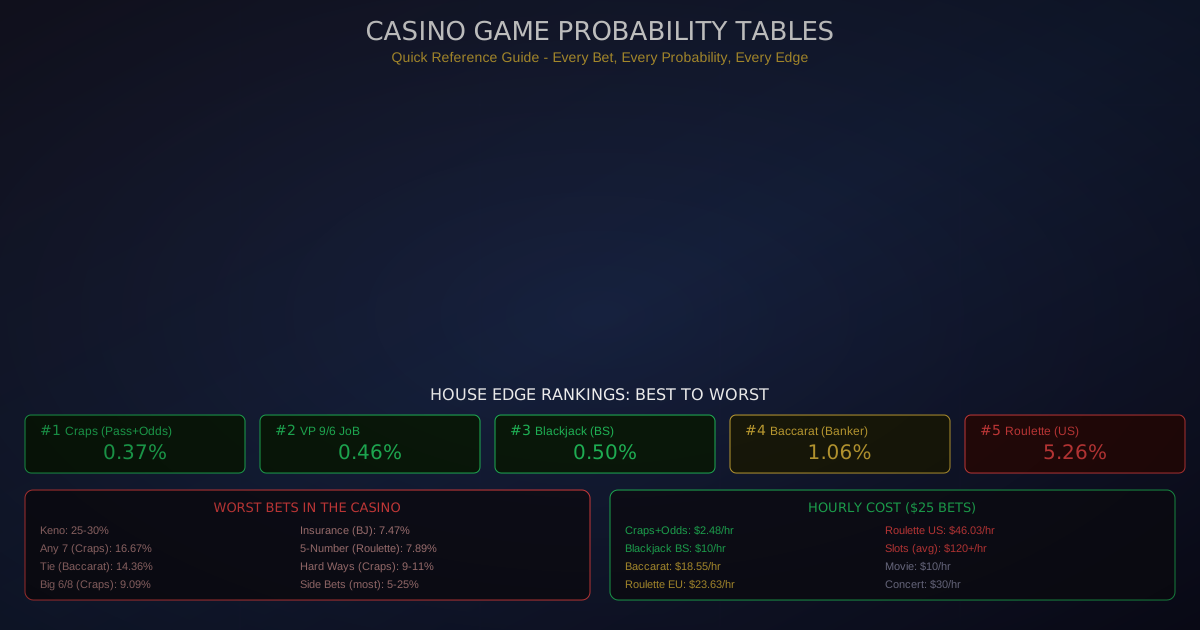
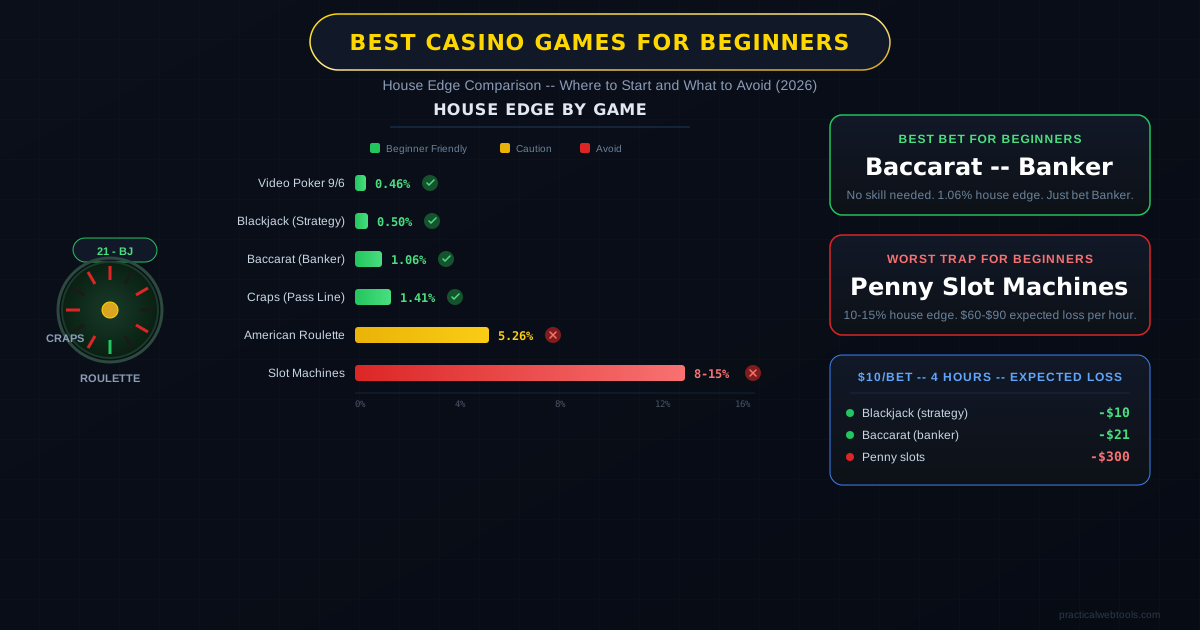
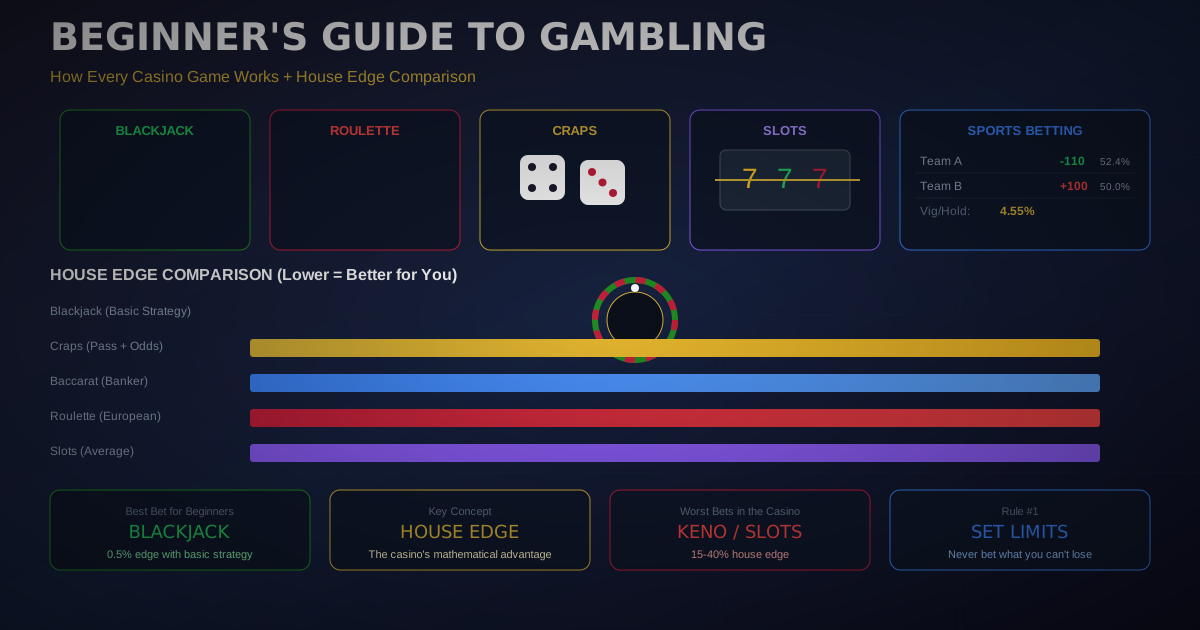
House edge comparison:

Blackjack (basic): 0.50%
Craps (pass): 1.41%
Red Dog: 2.80%
Roulette (Euro): 2.70%

Red Dog = moderate edge
Not great, not terrible
Real-World Examples
Example 1: Wide Spread
Clear raise situation:
Cards dealt: 3♠ and Q♦
Spread: 12-3-1 = 8

Win cards: 4,5,6,7,8,9,10,J
32 cards win (8 ranks × 4)

Probability: 61.54%
Payout: 1:1

Decision: RAISE
$10 initial → $10 raise
If win: +$20
If lose: -$20

Positive EV
Example 2: Small Spread
Don't raise here:
Cards dealt: 6♣ and 9♥
Spread: 9-6-1 = 2

Win cards: 7,8 only
8 cards win

Probability: 15.38%
Payout: 4:1

Decision: No raise
$10 bet only
If win: +$40
If lose: -$10

Expected value:
15.38% × $40 = $6.15
84.62% × -$10 = -$8.46
Net: -$2.31 (bad but locked in)
Example 3: Consecutive Cards
Automatic push:
Cards dealt: J♠ and Q♦
Spread: 0 (consecutive)

No third card between them
No possible winning card

Result: PUSH
$10 bet returned

No decision to make
Example 4: Pair Dealt
Hope for trips:
Cards dealt: 8♣ and 8♦
Third card drawn automatically

If third is 8♥ or 8♠:
Win 11:1 = $110 on $10

If third is anything else:
Push = $10 returned

Probability: 2/50 = 4%
(Two 8s left in deck)

Expected value:
4% × $110 + 96% × $0 = $4.40
Positive EV!
Strategy Summary
Complete Optimal Strategy
Red Dog optimal play:

1. Spread 7+: RAISE
2. Spread 1-6: Don't raise
3. Consecutive: Accept push
4. Pairs: Hope for trips

That's it!
Only one decision to make
Raise on 7+, otherwise don't
Why Strategy Is Simple
No other decisions:

Cards dealt randomly
Can't change cards
Can only add money

After raise decision:
Game plays out
No further input

Simple entertainment
Low skill ceiling
Bankroll Recommendations
Session planning:

House edge ~2.8%
Moderate variance
20-30 buy-ins adequate

$100 session:
$3-5 base bets
$6-10 total with raise

100+ hands playable
Common Mistakes
1. Raising on Low Spreads
Mistake: Raising on spread 5 or 6 Problem: Negative EV Fix: Only raise on 7+
2. Misunderstanding Ties
Mistake: Expecting push on edge cards Problem: Matching = loss Fix: Between means between
3. Ignoring House Edge
Mistake: Extended sessions Problem: Edge compounds Fix: Entertainment budget
4. Bet Sizing Errors
Mistake: Inconsistent base bets Problem: Uneven risk Fix: Fixed base bet amount
Frequently Asked Questions
What's the optimal strategy for Red Dog?
Simple: Raise only when the spread is 7 or higher. That's the only decision. Everything else is automatic.
Why do consecutive cards push?
Because there's no card between them—no winning outcome is possible. The push returns your bet as fair resolution.
Is Red Dog a good casino game?
Moderate house edge (2.8%), simple rules, quick play. Not as good as blackjack or craps, but reasonable entertainment.
What happens with pairs?
A third card is drawn. If it matches (trips), you win 11:1. Otherwise, it's a push. Pairs are slightly favorable.
Can I count cards in Red Dog?
Theoretically, but minimally useful. Removed cards affect probabilities slightly, but not enough for practical advantage.
What's the best spread to see?
Spread 11 (A-2) gives 84.62% win probability—best possible. Always raise on 11 spread.
Pro Tips
-
Memorize one number: Raise on 7+
-
Spreads 1-3: High payout but low odds
-
Pairs are okay: Slight positive EV
-
Quick game: Rounds are fast
-
Bankroll wisely: Moderate edge accumulates
Related Calculators
- Blackjack Odds Calculator - Card game
- Baccarat Odds Calculator - Simple rules
- Casino War Calculator - Another simple game
- House Edge Calculator - Compare games
- Expected Value Calculator - Bet analysis
Conclusion
Red Dog Poker offers simple entertainment—bet that a third card falls between two dealt cards. Our calculator shows why spread size is everything: raise on 7+ spreads (53.85%+ win rate), never raise below. At 2.8% house edge, it's a reasonable casino diversion with just one strategic decision.
Your 4 and Queen give a spread of 7—that's 28 winning cards and a 53.85% win rate. Our calculator shows why this is exactly the threshold where raising becomes profitable.