Reverse Bet Calculator: Calculate Action Reverse and Win Reverse Payouts (2026)
Reverse Bet Calculator: Two-Way Conditional Wagering Explained
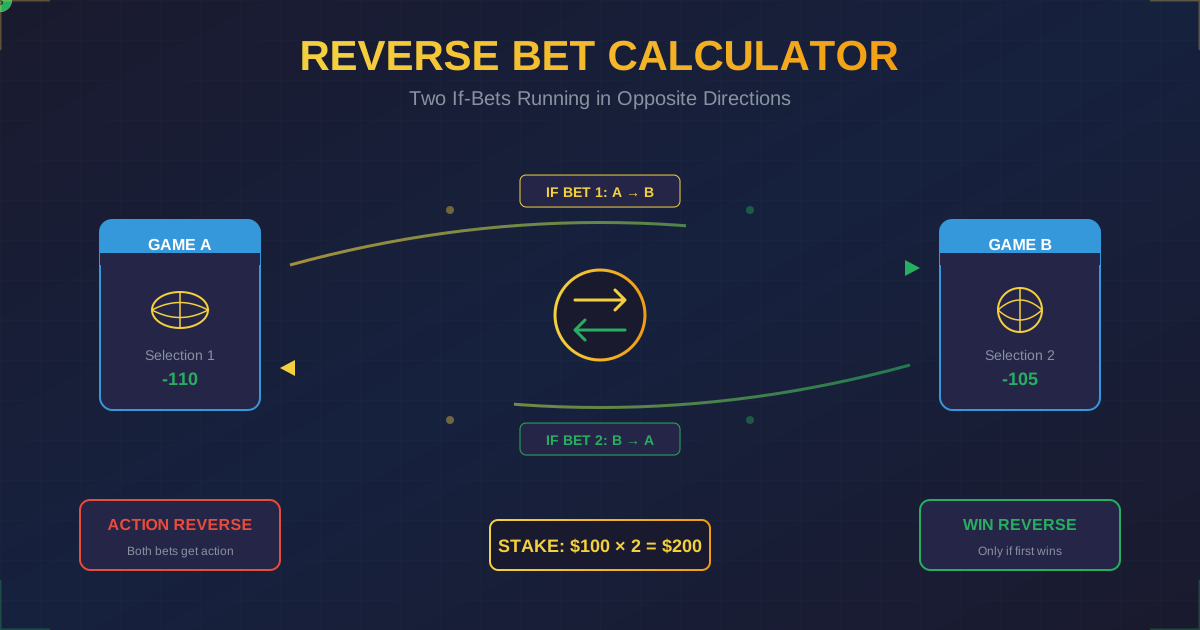
Reverse bets combine two if bets running in opposite directions, creating action on both selections regardless of which wins first. Our reverse bet calculator shows you exactly how these two-way conditional wagers work, helping you understand the payouts, risks, and strategic applications of this advanced betting structure.
What Is a Reverse Bet?
A reverse bet consists of two if bets going in opposite directions. If you have selections A and B, a reverse bet places "A if B" AND "B if A" simultaneously. This means both selections get action regardless of which game is decided first, but the total amount at risk depends on whether you choose an Action Reverse or Win Reverse.
Quick Answer: A reverse bet = two if bets in opposite directions. $50 Action Reverse on two -110 games: Bet 1 is "$50 on A, if action then bet winnings on B." Bet 2 is "$50 on B, if action then bet winnings on A." Total risk: $100. Both win: +$264.46 profit. Split (one wins, one loses): -$100 loss. Both lose: -$100 loss. Win Reverse only continues each sequence if the first leg wins, reducing split-result losses.
How to Use Our Calculator
Use the Reverse Bet Calculator →
Step-by-Step Instructions
- Enter Stake Per If Bet: Input amount for each direction
- Enter Selection A Odds: Input American odds for first pick
- Enter Selection B Odds: Input American odds for second pick
- Select Reverse Type: Choose Action Reverse or Win Reverse
- Calculate Payouts: See returns for all outcome combinations
Input Fields
| Field | Description | Example |
|---|---|---|
| Stake Per Direction | Amount for each if bet | $50 |
| Selection A Odds | American odds | -110 |
| Selection B Odds | American odds | +150 |
| Reverse Type | Action or Win | Action Reverse |
| Total Risk | Calculated exposure | $100 |
Types of Reverse Bets
Action Reverse
Structure:
If Bet 1: A → B (A if action, then B)
If Bet 2: B → A (B if action, then A)

Rules:
- Both sequences begin immediately
- Losing first leg → second leg still gets original stake
- Winning first leg → roll all returns to second leg
- Total risk = 2× stake (both directions active)
Win Reverse
Structure:
If Bet 1: A → B (A if win, then B)
If Bet 2: B → A (B if win, then A)

Rules:
- Both sequences begin immediately
- Losing first leg → sequence stops
- Winning first leg → roll returns to second leg
- Lower risk on split results than Action Reverse
Key Differences
| Scenario | Action Reverse | Win Reverse |
|---|---|---|
| Both Win | Same payout | Same payout |
| Both Lose | -Total Stake | -Total Stake |
| A Wins, B Loses | Moderate loss | Break even |
| A Loses, B Wins | Moderate loss | Break even |
| Push handling | Continues with stake | Ends sequence |
Reverse Bet Calculations
Action Reverse Math
$50 Action Reverse, both games at -110:
If Bet 1: $50 on A, if action → B
If Bet 2: $50 on B, if action → A

Scenario: Both Win
Bet 1: $50 → $95.45 → $182.26
Bet 2: $50 → $95.45 → $182.26
Total return: $364.52
Profit: $364.52 - $100 = +$264.52

Scenario: A Wins, B Loses
Bet 1: $50 wins (+$45.45) → $95.45 on B → loses
Bet 2: $50 on B loses → $50 on A (action) → wins (+$45.45)
Return: $0 + $95.45 = $95.45
Profit: $95.45 - $100 = -$4.55

Scenario: Both Lose
Bet 1: $50 on A loses → $50 on B loses
Bet 2: $50 on B loses → $50 on A loses
Net: Both initial $50 bets lose
Profit: -$100
Win Reverse Math
$50 Win Reverse, both games at -110:
If Bet 1: $50 on A, if win → B
If Bet 2: $50 on B, if win → A

Scenario: Both Win
Bet 1: $50 → $95.45 → $182.26
Bet 2: $50 → $95.45 → $182.26
Total return: $364.52
Profit: +$264.52 (same as Action Reverse)

Scenario: A Wins, B Loses
Bet 1: $50 wins → $95.45 on B → loses ($0)
Bet 2: $50 on B loses → sequence ends (no bet on A)
Return: $0
Profit: -$100

Wait - let me recalculate Win Reverse split:
Bet 1: $50 on A wins (+$45.45) → $95.45 rolls to B → B loses
Bet 2: $50 on B loses → sequence STOPS
Total wagered: $50 + $95.45 + $50 = $195.45
Return: $0
Profit: -$100 (original stakes lost)

Scenario: Both Lose
Bet 1: $50 on A loses → sequence stops
Bet 2: $50 on B loses → sequence stops
Profit: -$100
Comparing Total Risk
$50 per direction on -110 games:

Action Reverse Maximum Risk:
Both lose: -$100 (2 × $50 stakes)
Split: ~-$5 to -$10 (partial recovery)

Win Reverse Maximum Risk:
Both lose: -$100 (2 × $50 stakes)
Split: -$100 (no continuation after loss)

Note: Action Reverse has better split outcomes
Win Reverse has same extremes but worse splits
Real-World Examples
Example 1: Standard Action Reverse
Setup:
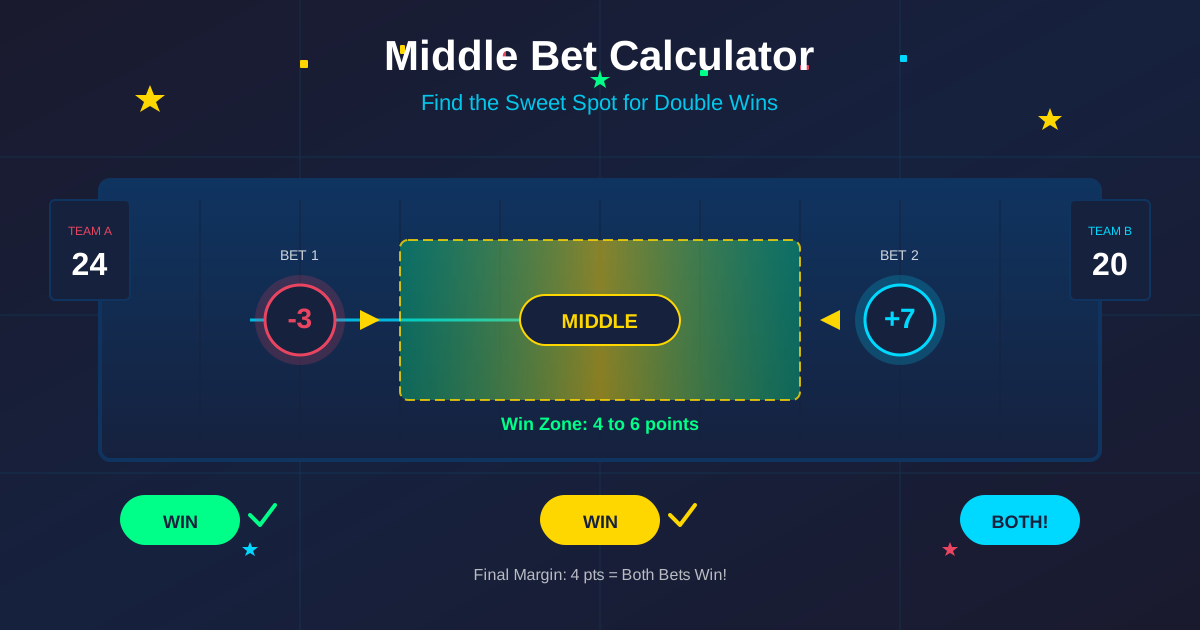
Game A: Patriots -3 (-110) at 1:00 PM
Game B: Dolphins +7 (-110) at 4:00 PM
Bet: $100 Action Reverse ($50 each direction)
All Outcomes:
Both Cover:
$50 on Pats → wins $45.45 → $95.45 on Dolphins → wins $86.77
$50 on Dolphins → wins $45.45 → $95.45 on Pats → wins $86.77
Total return: $182.22 + $182.22 = $364.44
Profit: +$264.44

Patriots Cover, Dolphins Don't:
$50 on Pats → $95.45 on Dolphins → loses
$50 on Dolphins → loses → $50 on Pats → wins $45.45
Return: $0 + $95.45 = $95.45
Profit: -$4.55

Dolphins Cover, Patriots Don't:
$50 on Pats → loses → $50 on Dolphins → wins $45.45
$50 on Dolphins → $95.45 on Pats → loses
Return: $95.45 + $0 = $95.45
Profit: -$4.55

Neither Covers:
Both initial bets lose, both continuation bets lose
Profit: -$100
Example 2: Mixed Odds Action Reverse
Setup:
Game A: Favorite -200
Game B: Underdog +180
Bet: $100 Action Reverse ($50 each direction)
Calculations:
Both Win:
$50 on Fav → $75 → $210 (on dog at +180)
$50 on Dog → $140 → $210 (on fav at -200)
Total: $420
Profit: +$320

Favorite Wins, Dog Loses:
$50 on Fav → $75 on Dog → loses
$50 on Dog → loses → $50 on Fav → wins $25
Return: $0 + $75 = $75
Profit: -$25

Dog Wins, Favorite Loses:
$50 on Fav → loses → $50 on Dog → wins $90
$50 on Dog → $140 on Fav → loses
Return: $140 + $0 = $140
Profit: +$40

Both Lose:
Profit: -$100
Example 3: Win Reverse Comparison
Same games as Example 1, but Win Reverse:
$50 Win Reverse on -110 games

Both Win: +$264.44 (same as Action)

Patriots Only:
$50 Pats → $95.45 Dolphins → loses
$50 Dolphins → loses → STOPS (no Pats bet)
Profit: -$100

Dolphins Only:
$50 Pats → loses → STOPS (no Dolphins bet)
$50 Dolphins → $95.45 Pats → loses
Profit: -$100

Both Lose: -$100
Key Insight: Win Reverse has no partial recovery on splits.
Example 4: Three-Team Action Reverse
Setup:
Teams A, B, C
$30 per if bet direction (6 directions total)
A→B→C, A→C→B, B→A→C, B→C→A, C→A→B, C→B→A
Total risk: $180
This gets complex fast:
All three win:
Each direction compounds through three legs
Maximum return significantly higher

Two of three win:
Some directions complete, some don't
Moderate return or small loss

One wins:
Most directions fail early
Significant loss

None win:
All $180 lost
Recommendation: Stick to two-team reverse bets for clarity.
Example 5: Reverse Bet vs Parlay vs Straight Bets
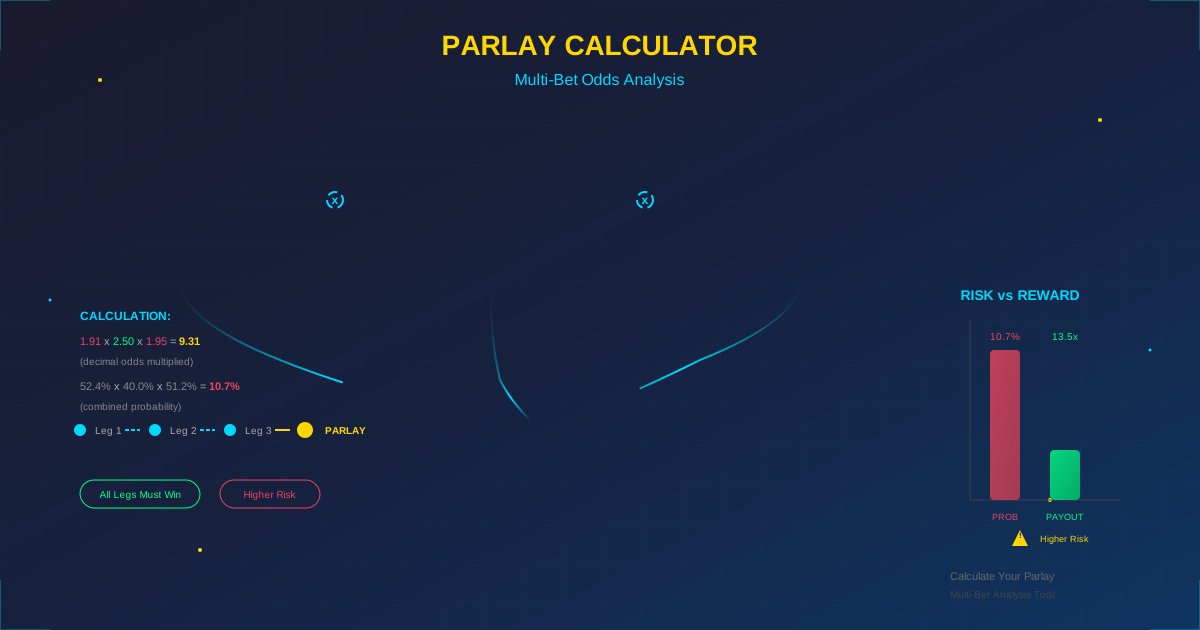
$100 total on two -110 games:
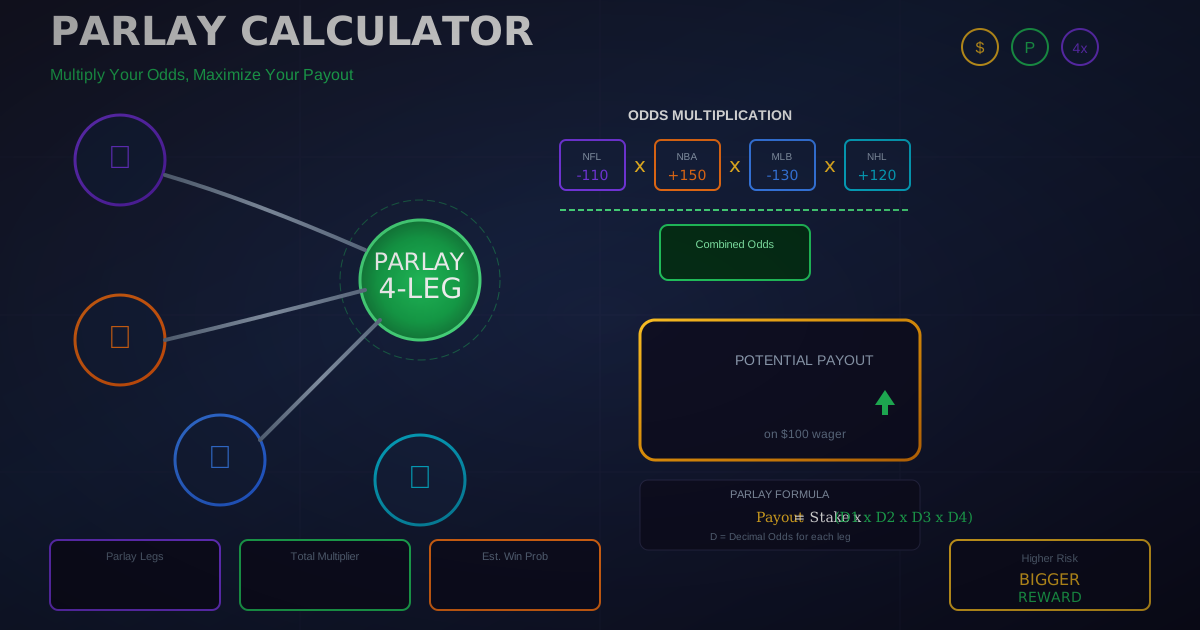
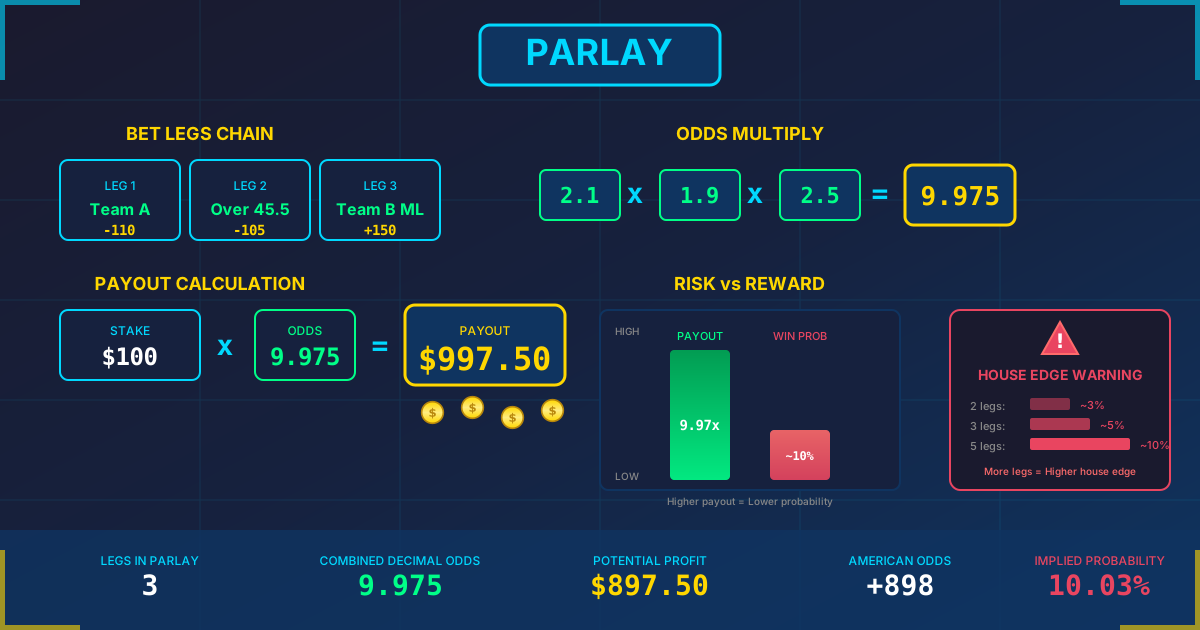
Option 1: $100 Parlay
Both win: +$264.46
Either loses: -$100

Option 2: $100 Action Reverse ($50 each way)
Both win: +$264.44
Split: ~-$5
Both lose: -$100

Option 3: Two $50 Straight Bets
Both win: +$90.90
Split: -$4.55
Both lose: -$100

Reverse bet = Parlay upside with split protection
Example 6: When Reverse Bets Excel
Scenario: High confidence in both picks
You like Chiefs -3 and Bills -7 equally
Don't want to choose which goes first in if bet

$100 Action Reverse ($50 each direction):
- Both win: +$264 (same as parlay)
- Split: Only ~$5 loss (not $100)
- Both lose: -$100 (same as parlay)

The split protection is the key advantage
Strategic Considerations
When to Use Reverse Bets
Good scenarios:
1. Equal confidence in both selections
2. Games at different times
3. Want parlay upside with split protection
4. Willing to accept complex structure

Poor scenarios:
1. Much more confident in one pick
2. Simultaneous game times (just parlay)
3. Want simplicity
4. Bankroll can't handle full loss
Action Reverse vs Win Reverse
Choose Action Reverse when:
- Want maximum protection on splits
- Comfortable with continuation after loss
- Prioritize partial recovery

Choose Win Reverse when:
- Want simpler outcome tracking
- Prefer sequences to end cleanly on losses
- Accept all-or-nothing on splits
Position Sizing
Reverse bet bankroll rule:
Risk = 2× the single bet amount

If normal bet is $100:
Reverse bet = $50 each direction = $100 total risk

Don't double your normal exposure
Treat reverse as one betting unit
Common Mistakes to Avoid
-
Doubling Normal Bet Size: A $100 reverse bet risks $100 total (2×$50), not $200. Size appropriately.
-
Using Win Reverse for Split Protection: Win Reverse doesn't protect splits - Action Reverse does. Know the difference.
-
Overcomplicating with 3+ Teams: Three-team reverse bets have 6 if-bet directions. Keep it simple with two teams.
-
Ignoring Time Sequencing: Reverse bets work best with staggered game times so you can track each sequence.
-
Expecting Parlay Odds: Reverse bet returns on both-win scenarios match parlays, but the structure is more complex.
-
Forgetting the Math: On splits with Action Reverse, you'll lose a small amount, not break even. Calculate before betting.
Frequently Asked Questions
What is the difference between Action Reverse and Win Reverse?
Action Reverse continues each if-bet sequence regardless of whether the first leg wins or loses. Win Reverse only continues a sequence if the first leg wins - a loss ends that direction.
Is a reverse bet the same as a parlay?
No. A reverse bet is two if bets running in opposite directions. When both legs win, the payout matches a parlay, but reverse bets offer protection when results split (Action Reverse).
How much do I risk on a reverse bet?
Your total risk is 2× your per-direction stake. A "$50 reverse" means $50 in each direction, for $100 total risk.
Which is better, Action Reverse or Win Reverse?
Action Reverse provides better outcomes when results split. Win Reverse has the same extremes (both win/both lose) but worse split results. Most bettors prefer Action Reverse.
Can I do reverse bets with more than two teams?
Yes, but complexity increases dramatically. A three-team reverse has six if-bet directions. Stick to two teams unless you fully understand the math.
Do reverse bets have better expected value than parlays?
No. The expected value is similar, but the variance profile differs. Reverse bets trade some parlay upside for split protection.
What happens if one game pushes?
In Action Reverse, a push counts as "action" so the sequence continues with the original stake. In Win Reverse, a push ends that sequence and returns the stake for that leg.
Are reverse bets available at all sportsbooks?
Most major US sportsbooks offer reverse bets, sometimes under different names like "if bets both ways." Check your book's betting options.
Pro Tips
- Use Action Reverse when you're equally confident in both picks and want split protection
- Size reverse bets as a single unit, not double your normal bet
- Track each direction separately to understand which sequences are active
- Reverse bets work best with staggered game times for sequential resolution
- Compare reverse bet outcomes to equivalent parlays before placing - understand what you're trading
Related Calculators
- If Bet Calculator - Single-direction conditional bets
- Parlay Calculator - Standard parlay payouts
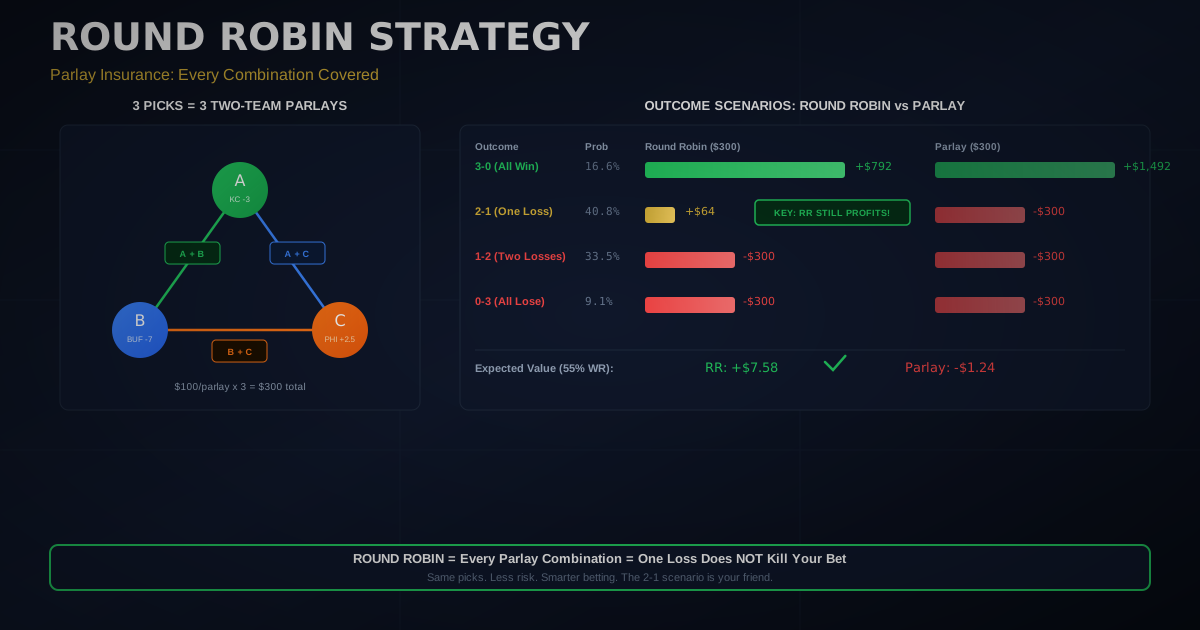
- Round Robin Calculator - Multiple parlay combinations
- Hedge Calculator - Lock in profits
- Expected Value Calculator - Assess bet quality
Conclusion
Reverse bets offer a sophisticated alternative to parlays, providing the same upside when both selections win while protecting against the harsh all-or-nothing outcome when results split. Our reverse bet calculator shows you exactly what to expect from every scenario, whether you choose Action Reverse or Win Reverse.
Understanding the math behind reverse bets helps you decide when they're strategically appropriate. When you're equally confident in two picks and want parlay-like returns with split protection, Action Reverse delivers exactly that.