Blackjack Double Down Calculator: When to Double Your Bet (2026)
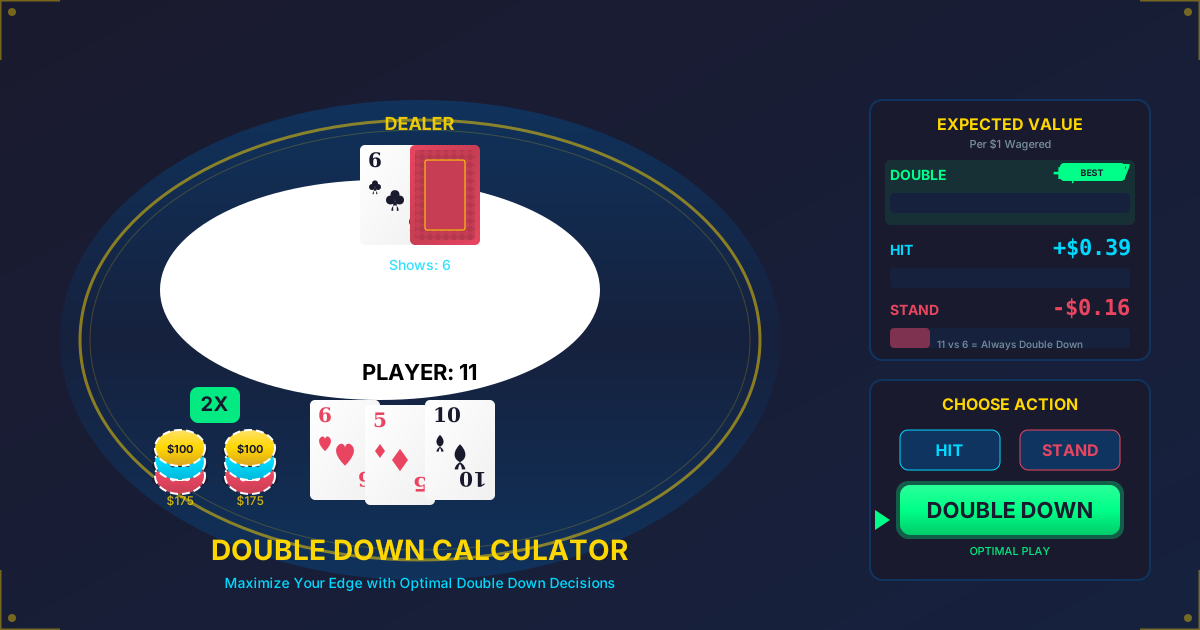
Blackjack Double Down Calculator: Maximize Your Winning Hands
Doubling down means doubling your bet to receive exactly one more card. Our calculator shows every profitable doubling situation, turning your edge hands into maximum profit opportunities.
What Is Doubling Down?
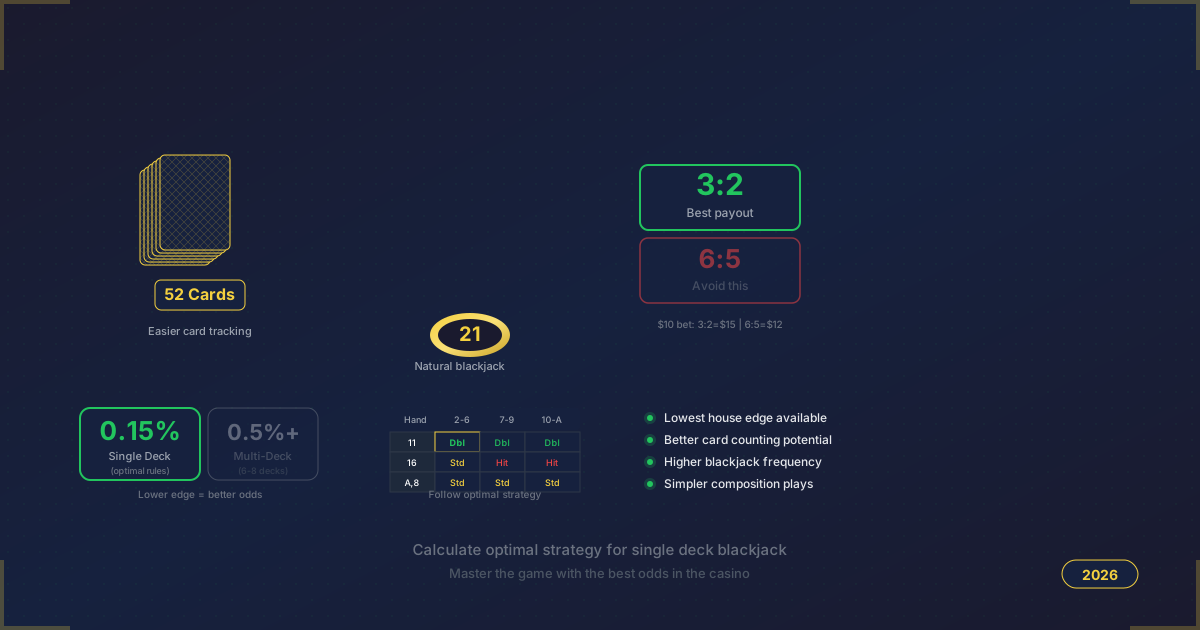
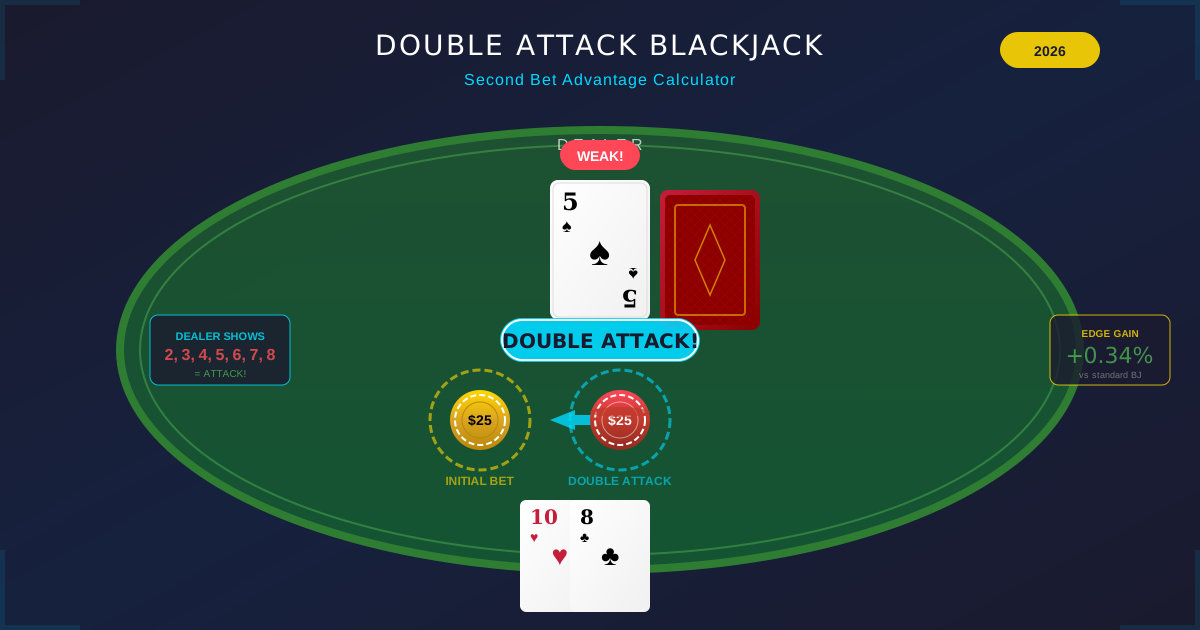
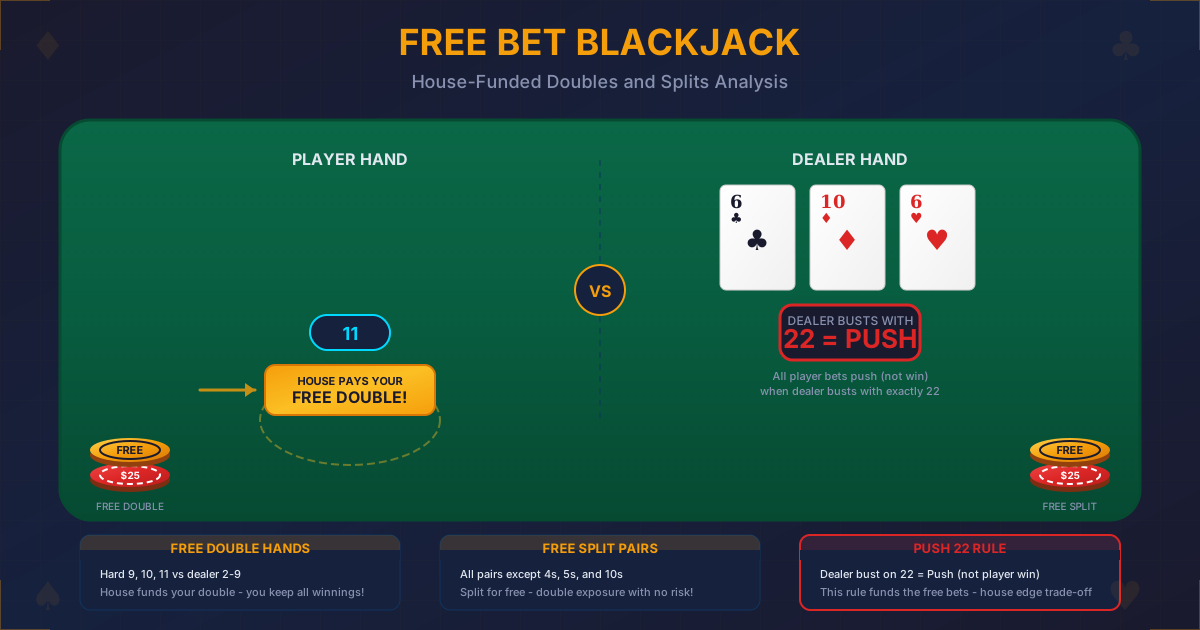
Doubling down lets you double your original bet in exchange for receiving exactly one additional card (no more hits). It's most valuable with totals of 10 or 11, where you're likely to make a strong hand against a weak dealer.
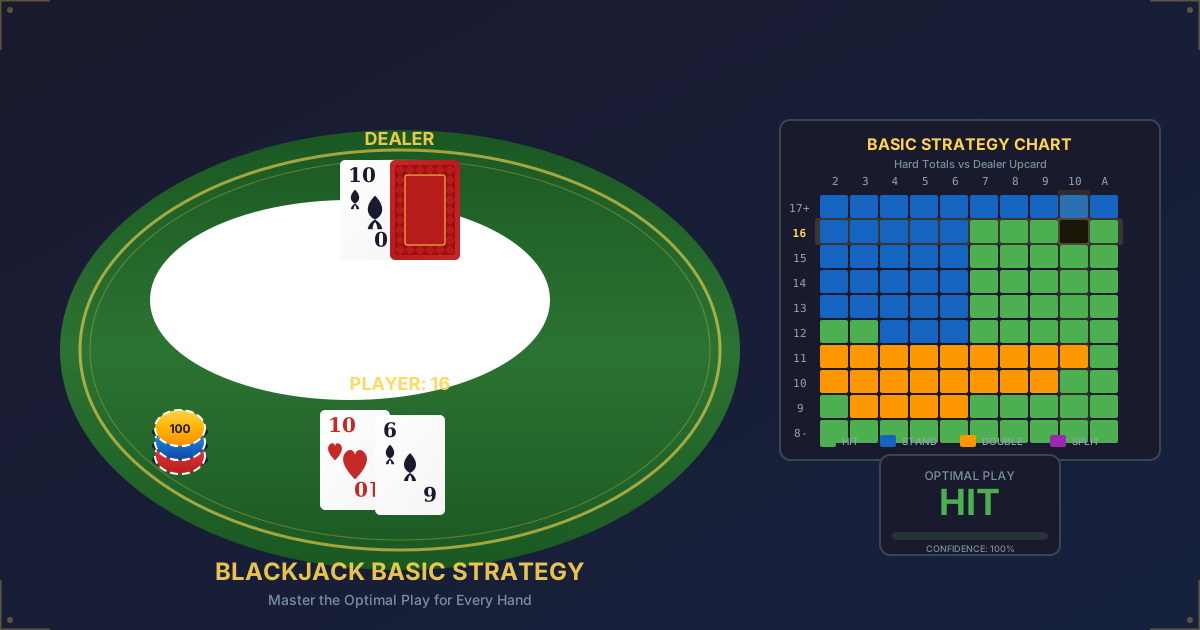
Quick Answer: Always double 11 vs dealer 2-10. Always double 10 vs dealer 2-9. Double 9 vs dealer 3-6. Double soft 13-17 vs dealer 5-6, soft 15-17 vs dealer 4, soft 17 vs dealer 3. Never double hard 12+ (hit or stand instead). Doubling correctly can reduce house edge by ~0.2% compared to just hitting.
How to Use Our Calculator
Use the Blackjack Double Down Calculator →
Enter your hand and dealer upcard to see if doubling is optimal.
Step-by-Step Instructions
-
Enter Your Hand: Total or cards
-
Input Dealer Upcard: Showing card
-
View Recommendation: Double, hit, or stand
-
See EV Comparison: Expected value of each action
-
Check Rule Variations: DAS, double any, etc.
Input Fields Explained
| Field | Description | Example |
|---|---|---|
| Your Hand | Cards or total | 6-5 (11) |
| Dealer Upcard | Showing card | 6 |
| Recommendation | Optimal action | DOUBLE |
| EV if Double | Expected value | +0.67 |
| EV if Hit | Expected value | +0.39 |
| Advantage | Double vs hit | +0.28 units |
Hard Total Double Strategy
Hard 11
| Dealer Shows | Action |
|---|---|
| 2-10 | DOUBLE |
| Ace | Hit (or double in some rules) |
Why 11 is best for doubling:
Hard 11 + one card:
P(making 17-21) = 58%
P(making 21) = 31%

Against weak dealer:
Massive positive expectation
Hard 10
| Dealer Shows | Action |
|---|---|
| 2-9 | DOUBLE |
| 10 | Hit |
| Ace | Hit |
Analysis:
Hard 10 + one card:
P(making 17-21) = 54%
P(making 20-21) = 39%

Doubling 10 vs 10:
Marginal—dealer ties too often
Hard 9
| Dealer Shows | Action |
|---|---|
| 3-6 | DOUBLE |
| 2, 7-A | Hit |
Why limited range:
Hard 9 + one card:
P(making 17-21) = 50%

Only profitable vs weakest dealers
Hard 8 and Below
| Hand | Action |
|---|---|
| Hard 8 | Hit (rarely double) |
| Hard 7 or less | Hit always |
Never double hard 8 in standard games
Hard 12 and Above
| Hand | Action |
|---|---|
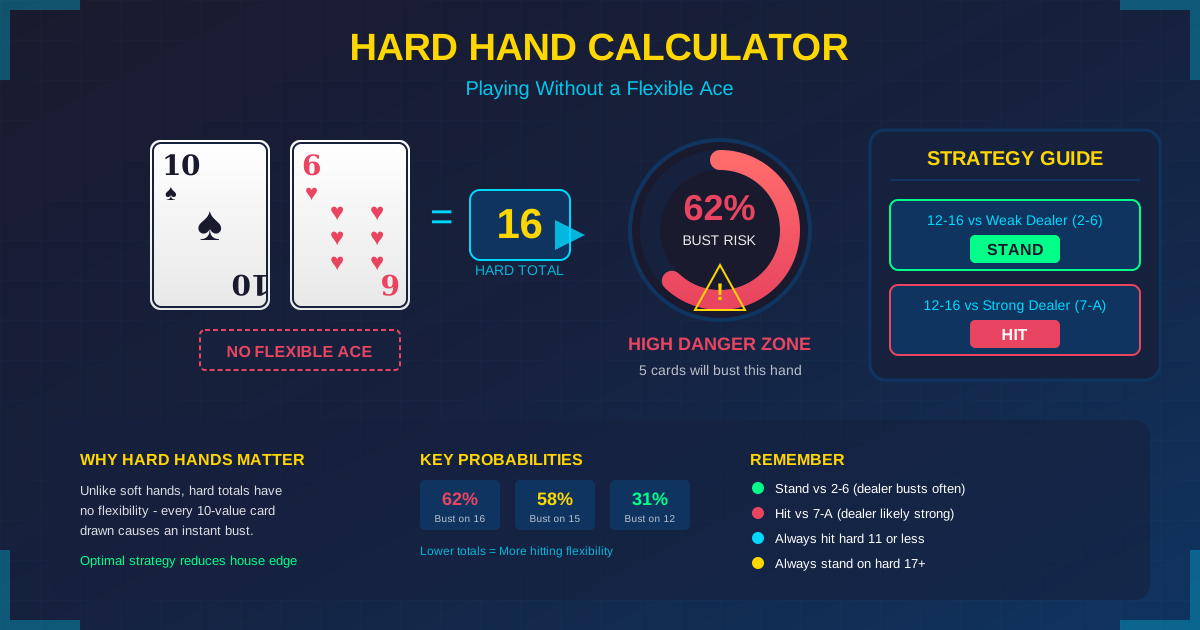
| Hard 12-16 | Hit or Stand (never double) |
| Hard 17-21 | Stand always |
Never double stiff hands—one card may bust
Soft Hand Double Strategy
Soft 13-14 (A-2, A-3)
| Dealer Shows | Action |
|---|---|
| 5-6 | DOUBLE |
| 2-4, 7-A | Hit |
Soft 15-16 (A-4, A-5)
| Dealer Shows | Action |
|---|---|
| 4-6 | DOUBLE |
| 2-3, 7-A | Hit |
Soft 17 (A-6)
| Dealer Shows | Action |
|---|---|
| 3-6 | DOUBLE |
| 2, 7-A | Hit |
Soft 18 (A-7)
| Dealer Shows | Action |
|---|---|
| 3-6 | DOUBLE |
| 2, 7-8 | Stand |
| 9-A | Hit |
Soft 19-20 (A-8, A-9)
| Dealer Shows | Action |
|---|---|
| All | Stand |
Never double soft 19+
Expected Value Analysis
EV by Hand (vs Dealer 6)
| Your Hand | EV Double | EV Hit | EV Stand | Best |
|---|---|---|---|---|
| 11 | +0.67 | +0.39 | -0.12 | Double |
| 10 | +0.56 | +0.29 | -0.21 | Double |
| 9 | +0.25 | +0.17 | -0.15 | Double |
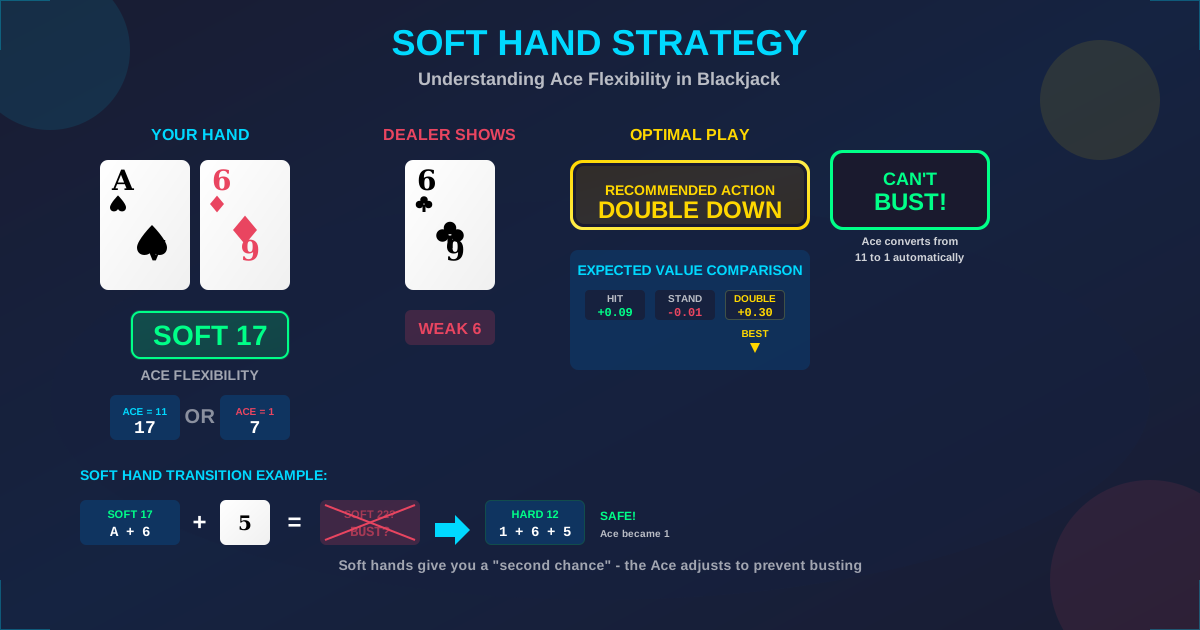
| A-6 | +0.30 | +0.09 | -0.00 | Double |
| A-7 | +0.26 | +0.07 | +0.12 | Double |
| A-2 | +0.12 | +0.06 | -0.14 | Double |
EV by Hand (vs Dealer 10)
| Your Hand | EV Double | EV Hit | EV Stand | Best |
|---|---|---|---|---|
| 11 | +0.18 | +0.12 | -0.54 | Double |
| 10 | -0.04 | +0.04 | -0.54 | Hit |
| 9 | -0.18 | -0.04 | -0.54 | Hit |
Real-World Examples
Example 1: Classic Double
Your hand: 7-4 (hard 11) Dealer shows: 6 Bet: $25
Analysis:
- 11 vs 6 is prime doubling territory
- EV(double) = +0.67 per unit
- EV(hit) = +0.39 per unit
Action: DOUBLE to $50
Expected profit: $25 × 0.67 = $16.75
Example 2: Soft Double
Your hand: A-6 (soft 17) Dealer shows: 5 Bet: $50
Analysis:
- Soft 17 vs 5 is double situation
- Can't bust (ace counts as 1 if needed)
- Dealer likely to bust
Action: DOUBLE to $100
Example 3: When Not to Double
Your hand: 6-4 (hard 10) Dealer shows: Ace Bet: $30
Analysis:
- 10 vs Ace is NOT a double
- Dealer too strong
- EV(double) < EV(hit)
Action: HIT (don't double)
Example 4: Split-Then-Double
Your hand: 5-5 (after splitting) Dealer shows: 6 Bet: $20 (after split)
Analysis:
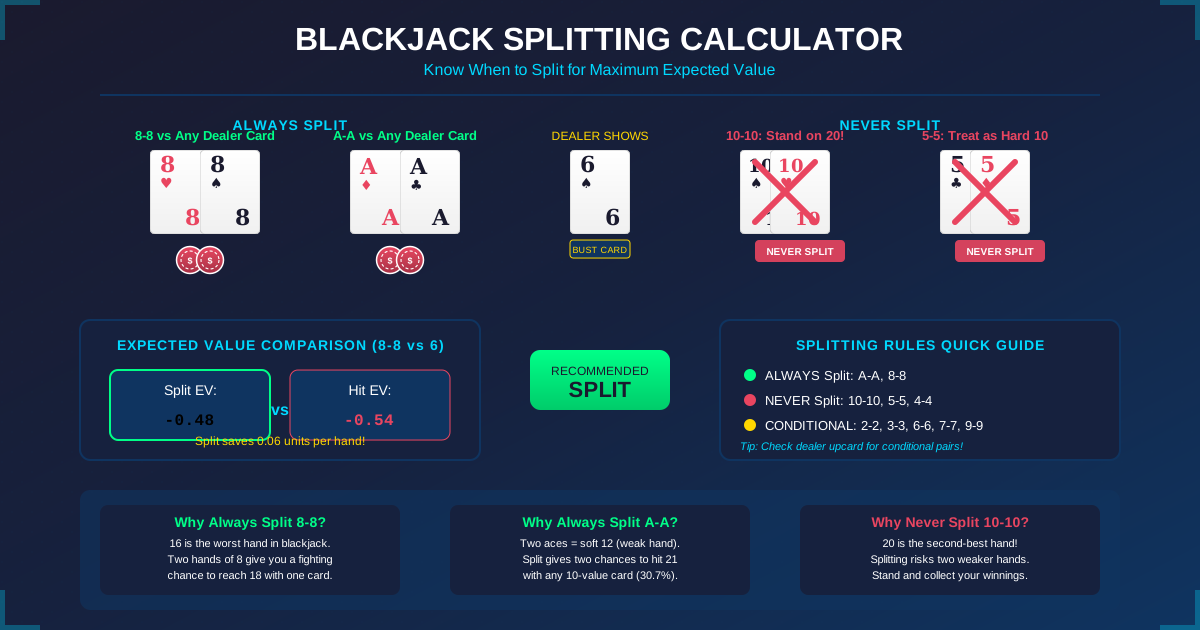
- Split 5s? No, never split 5s
- If you somehow have 10 from a split
- Still double if DAS allowed
Action: DOUBLE to $40
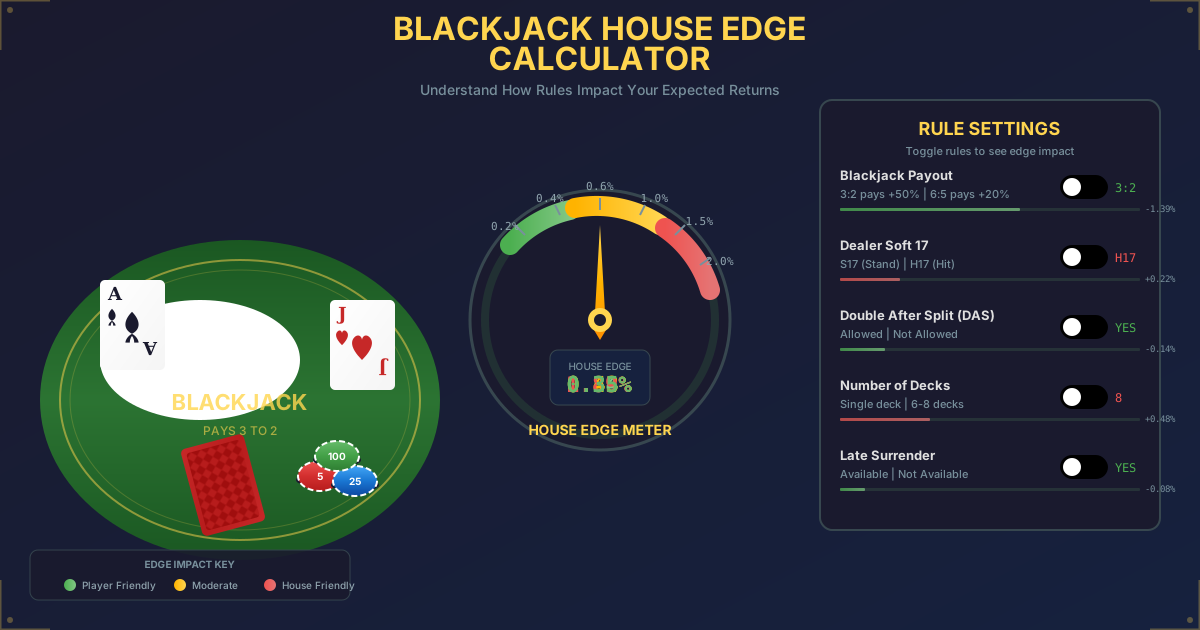
Rule Variations
Double After Split (DAS)
| Rule | Impact |
|---|---|
| DAS allowed | Favorable, changes split decisions |
| DAS not allowed | Less favorable for player |
House edge difference: ~0.14%
Double Any Two Cards
| Rule | Impact |
|---|---|
| Any two cards | Standard, best for player |
| 9-11 only | Restricted, worse |
| 10-11 only | Very restricted, worst |
House edge impact:
Double any: Baseline
9-11 only: +0.09% edge
10-11 only: +0.18% edge
Dealer Hits Soft 17
Dealer hits S17: Marginal change to doubles
Dealer stands S17: Standard

More doubles slightly beneficial with H17
Common Doubling Mistakes
1. Not Doubling Soft Hands
Mistake: Hit A-6 vs 5 Problem: Missing profitable double opportunity Fix: Learn soft doubling spots (vs 3-6)
2. Doubling 12 or Higher
Mistake: Double 12 vs 6 Problem: Can bust, lose double bet Fix: Never double hard 12+
3. Doubling 10 vs 10
Mistake: "10 vs 10, I should double" Problem: EV(hit) > EV(double) vs 10 Fix: Only double 10 vs 2-9
4. Afraid to Double 11 vs Ace
Mistake: Hit 11 vs Ace Problem: Depends on rules (H17 vs S17) Fix: Double in H17 games, hit in S17 usually
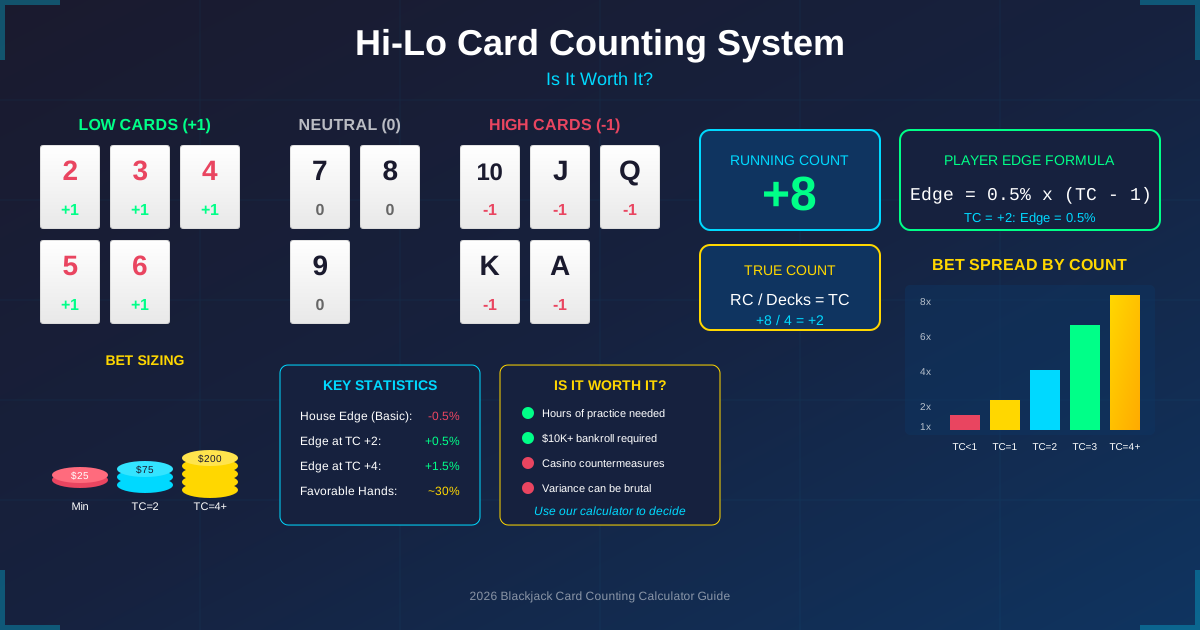
Counting and Doubling
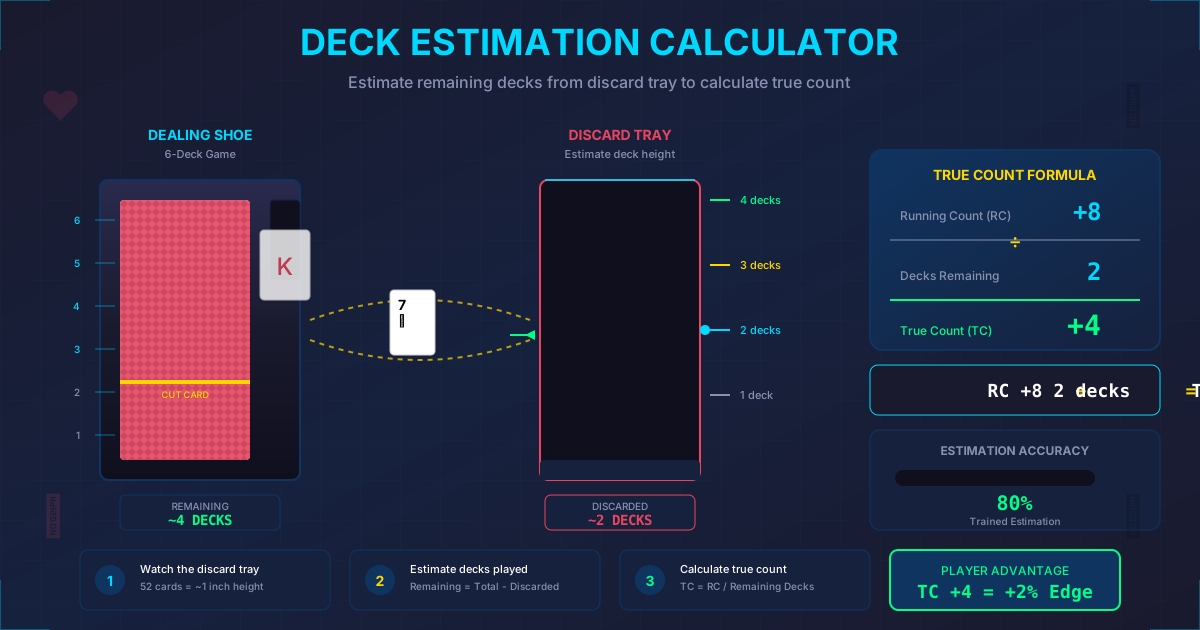
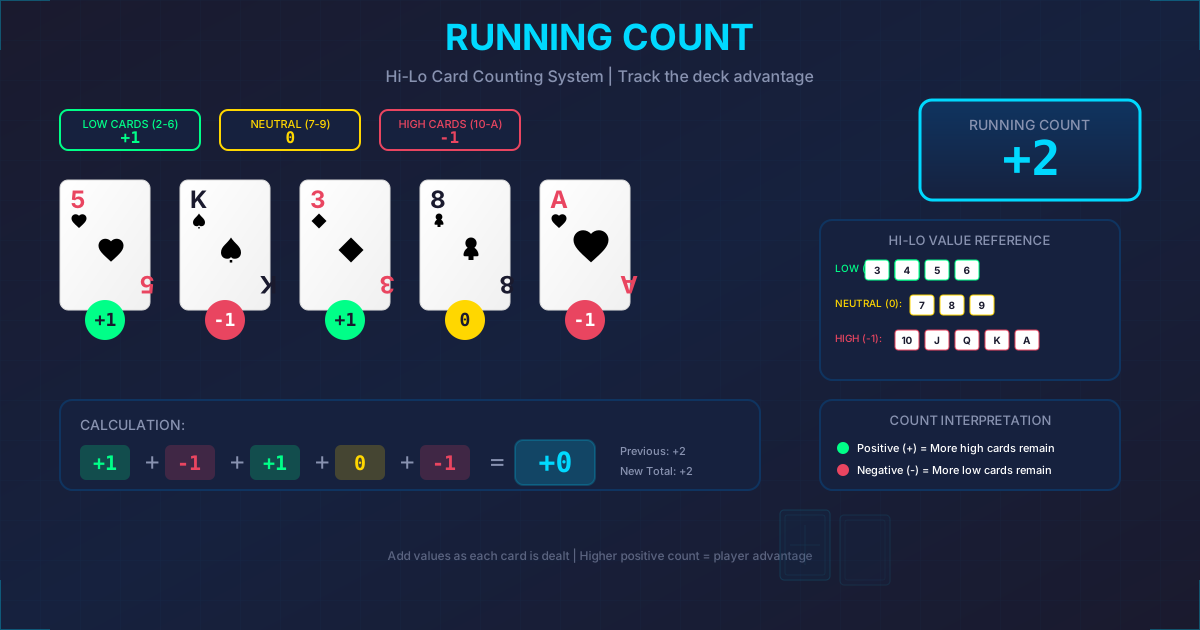
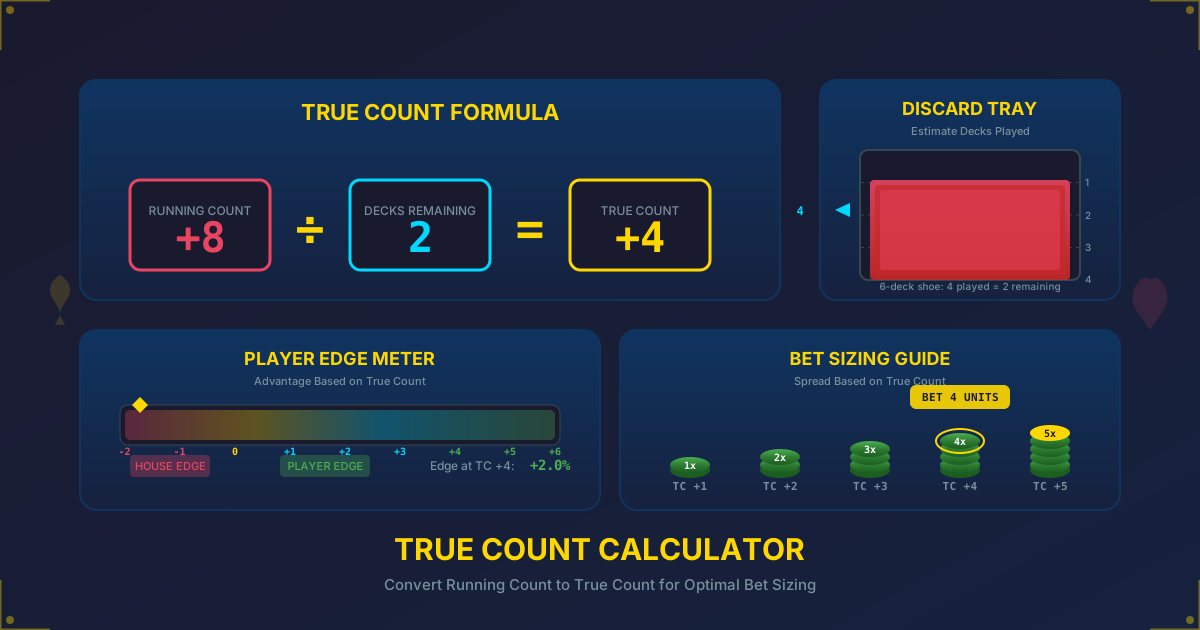
True Count Adjustments
| Standard Play | Counting Play |
|---|---|
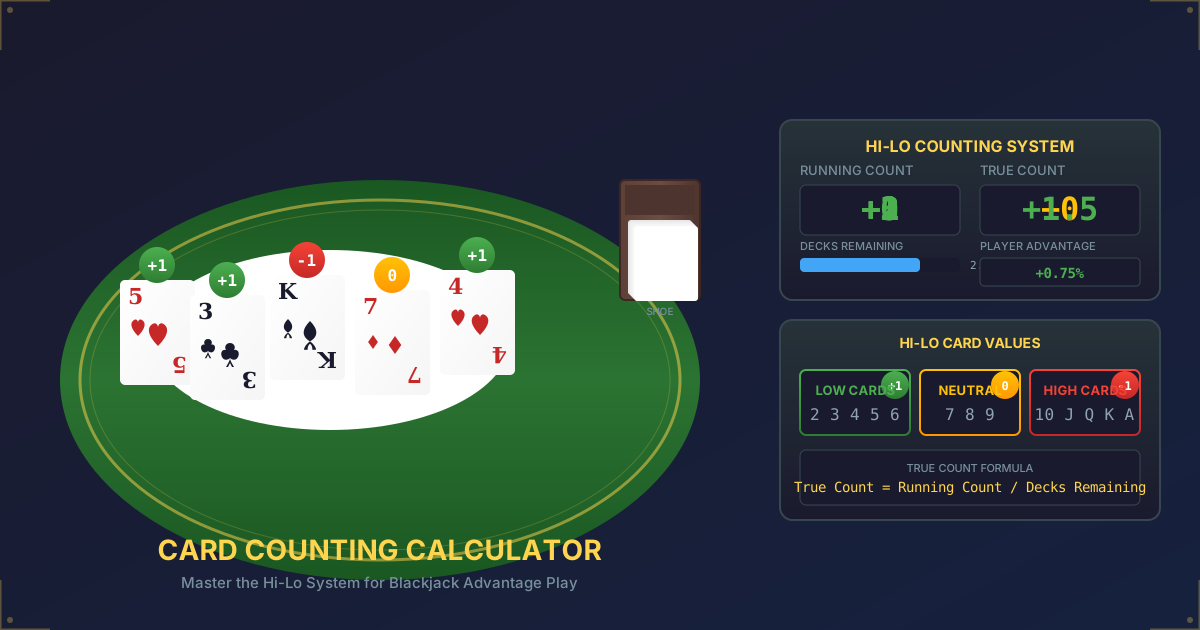
| Double 11 vs A: Hit | Double at TC +1 (H17) |
| Double 10 vs A: Hit | Double at TC +4 |
| Double 10 vs 10: Hit | Double at TC +4 |
| Double 9 vs 2: Hit | Double at TC +1 |
| Double 9 vs 7: Hit | Double at TC +3 |
| Double 8 vs 5: Hit | Double at TC +5 |
| Double 8 vs 6: Hit | Double at TC +2 |
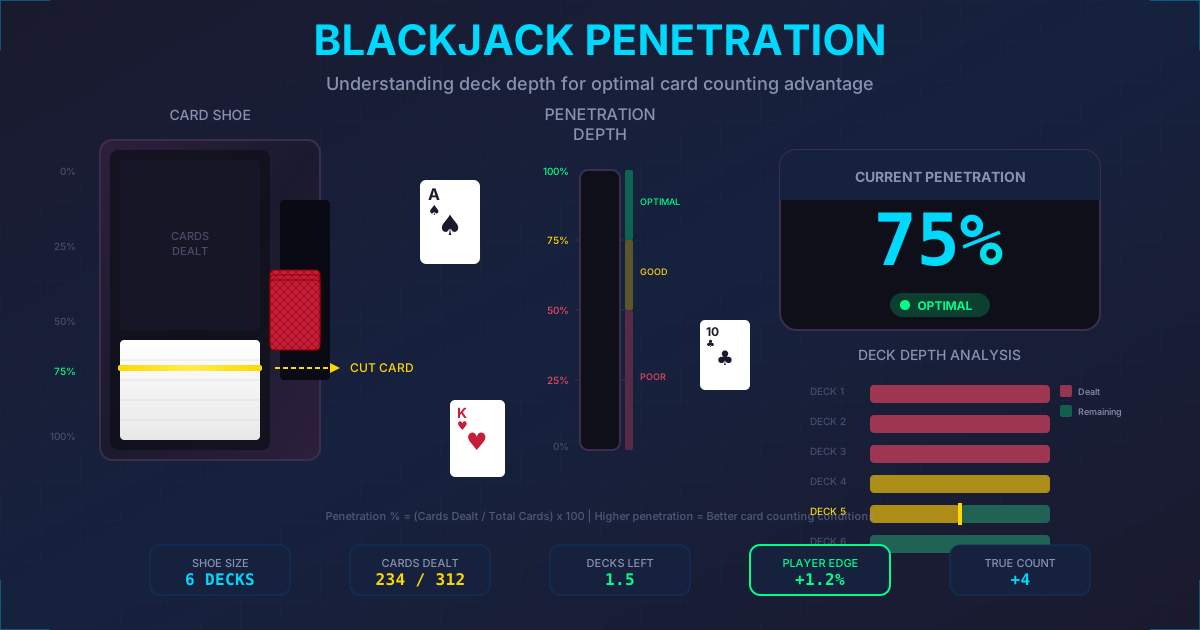
Why Count Affects Doubles
High count = more 10s remaining
More 10s = better for doubling
Drawing 10 to 11 = 21

Also: Dealer more likely to bust
Mathematical Foundation
Double Down Math
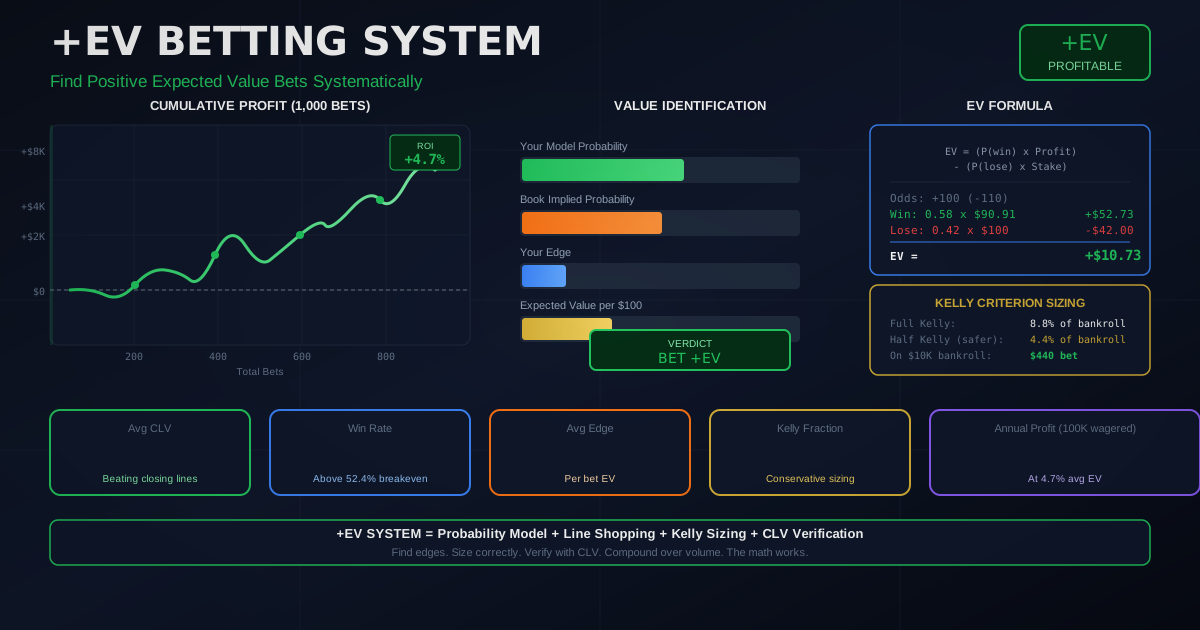
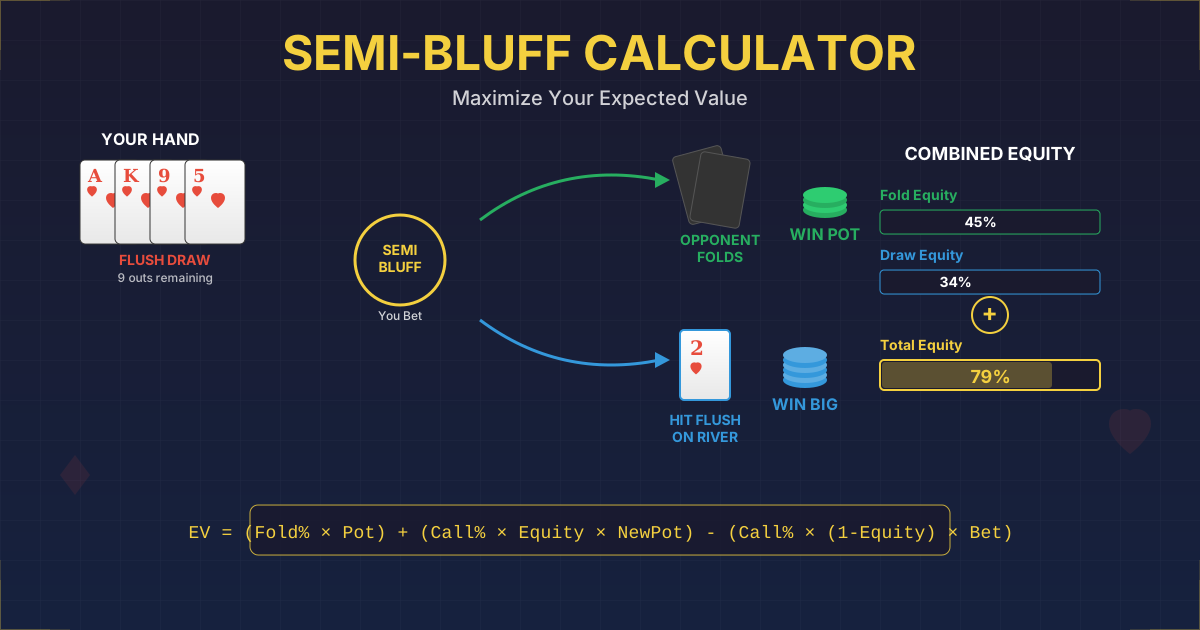
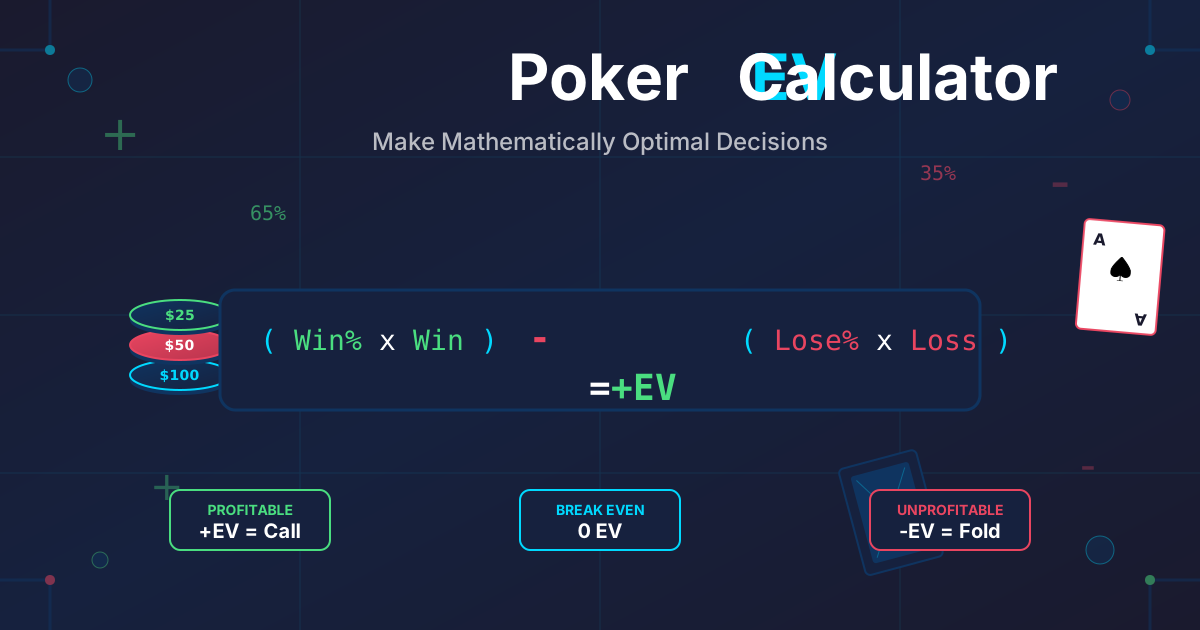
EV(double) = 2 × EV(one card and stop)
EV(hit) = EV(optimal play after one card)

Double when:
EV(double) > EV(hit)
2 × EV(one card) > EV(optimal continuation)
Probability Breakdown (11 vs 6)
P(drawing 10 to 21) = 30.8%
P(drawing 9 to 20) = 7.7%
P(drawing 8 to 19) = 7.7%
...
P(dealer busts) = 42%

Combined: Strong positive expectation
Frequently Asked Questions
Should I double 11 vs every dealer card?
Double 11 vs 2-10 always. Against Ace, it depends on rules (H17/S17) and sometimes count.
Is doubling soft hands important?
Yes. Soft doubles add ~0.14% to your expected return. They're often overlooked but valuable.
Can I double after splitting?
Depends on casino rules (DAS = Double After Split). When allowed, it's valuable and affects split decisions.
What if I can only double 10-11?
Restricted rules cost ~0.18% in house edge. You lose soft doubling and 9 vs weak dealers.
Should I double in tournaments?
Sometimes deviate based on chip situation. Double more aggressively when behind, less when ahead.
Does doubling always mean more money at risk?
Yes. That's the tradeoff—higher variance, but positive EV in correct situations.
Pro Tips
-
Memorize hard doubles: 11 vs 2-10, 10 vs 2-9, 9 vs 3-6
-
Learn soft doubles: Biggest leak for most players
-
Check house rules: DAS and double restrictions matter
-
Don't be timid: Doubling is expected, not aggressive
-
Count adjustments: Add doubles in positive counts
Related Calculators
- Blackjack Basic Strategy Calculator - Complete strategy
- Blackjack House Edge Calculator - Rule impact
- Blackjack Expected Value Calculator - Hand EV
- Blackjack Card Counting Calculator - Count strategy
- Blackjack Surrender Calculator - Surrender decisions
Conclusion
Doubling down transforms favorable situations into maximum profit opportunities. Our calculator shows every correct double—hard 11 against almost everything, hard 10 against weak dealers, hard 9 against weakest dealers, and often-forgotten soft hand doubles. Master these decisions and extract full value from your winning positions.
Calculate Double Down Strategy Now →
Doubling isn't gambling—it's math. Our calculator proves exactly when doubling has positive expected value versus hitting, showing the advantage you gain by putting more money in play with favorable hands. Learn the spots, double with confidence, and watch your expected return improve.