Blackjack Hard Hand Calculator: Playing Without an Ace (2026)
Blackjack Hard Hand Calculator: No Safety Net Decisions
Hard hands have no flexible ace—every hit risks busting. Our calculator shows optimal strategy for every hard total against every dealer upcard, revealing when to take calculated risks and when to stand pat on stiff hands.
What Is a Hard Hand?
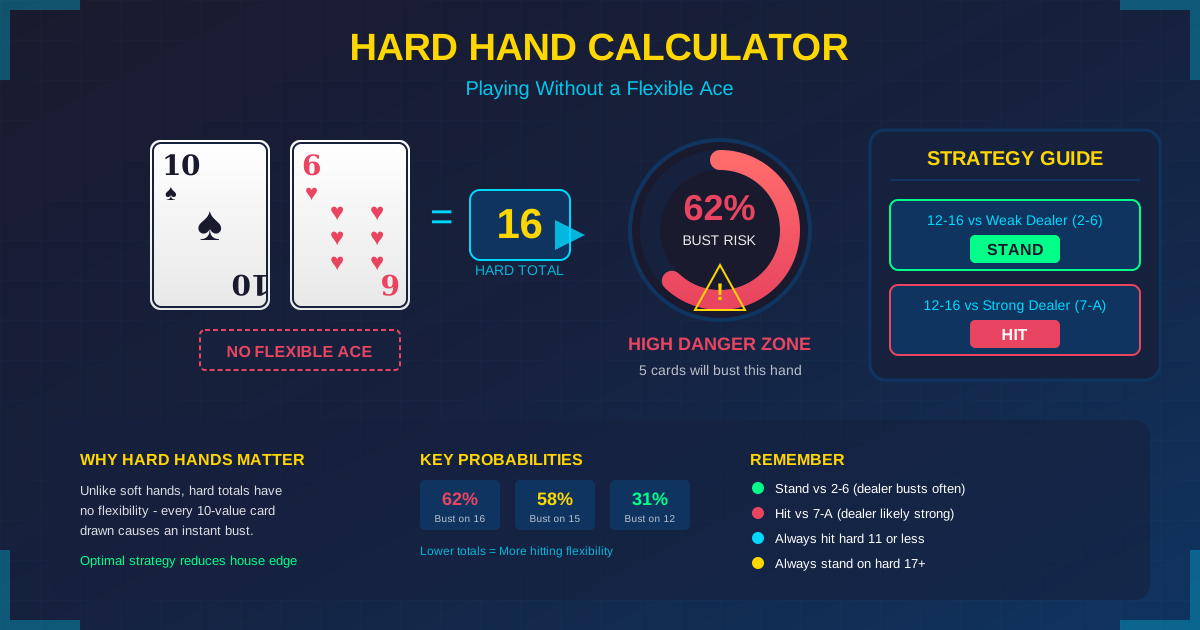
A hard hand either has no ace or has an ace that must count as 1 to avoid busting. Hard 16 (10-6 or 7-5-4) has no flexibility—hit and you might bust. This constraint makes hard hand decisions more consequential than soft hand plays.
Quick Answer: Hard hands lack ace flexibility. Stand on hard 17+, always. Hit hard 11 or less, always. The tough decisions are 12-16. Hit hard 12 vs dealer 2-3; stand vs 4-6. Hit hard 13-16 vs dealer 7+; stand vs 4-6. Double hard 11 vs 2-10. Double hard 10 vs 2-9. These "stiff" hands (12-16) are the most misplayed in blackjack.
How to Use Our Calculator
Use the Hard Hand Calculator →
Enter your hard total and dealer upcard for optimal play.
Step-by-Step Instructions
-
Enter Hard Total: 5 through 21
-
Input Dealer Upcard: 2 through A
-
View Recommendation: Hit, Stand, or Double
-
See EV Comparison: Each action's expected value
-
Understand Why: Reasoning for optimal play
Input Fields Explained
| Field | Description | Example |
|---|---|---|
| Your Hand | Hard total | 16 |
| Dealer Upcard | Showing | 10 |
| Optimal Play | Best action | HIT |
| EV (Hit) | Expected value | -0.54 |
| EV (Stand) | Alternative | -0.54 |
| Bust Probability | If you hit | 62% |
Complete Hard Hand Strategy
Hard 5-8
| Dealer | Action |
|---|---|
| All | HIT |
Never stand or double—too low
Hard 9
| Dealer | Action |
|---|---|
| 2 | Hit |
| 3-6 | DOUBLE |
| 7-A | Hit |
Hard 10
| Dealer | Action |
|---|---|
| 2-9 | DOUBLE |
| 10-A | Hit |
Hard 11
| Dealer | Action |
|---|---|
| 2-10 | DOUBLE |
| A | Hit (or Double in some rules) |
Best doubling hand in blackjack
Hard 12
| Dealer | Action |
|---|---|
| 2-3 | Hit |
| 4-6 | Stand |
| 7-A | Hit |
The "stiff" hand dilemma begins
Hard 13-14
| Dealer | Action |
|---|---|
| 2-6 | Stand |
| 7-A | Hit |
Hard 15
| Dealer | Action |
|---|---|
| 2-6 | Stand |
| 7-A | Hit |
Hard 16
| Dealer | Action |
|---|---|
| 2-6 | Stand |
| 7-A | Hit |
Most difficult hand—both options are bad
Hard 17-21
| Dealer | Action |
|---|---|
| All | STAND |
Never hit hard 17+
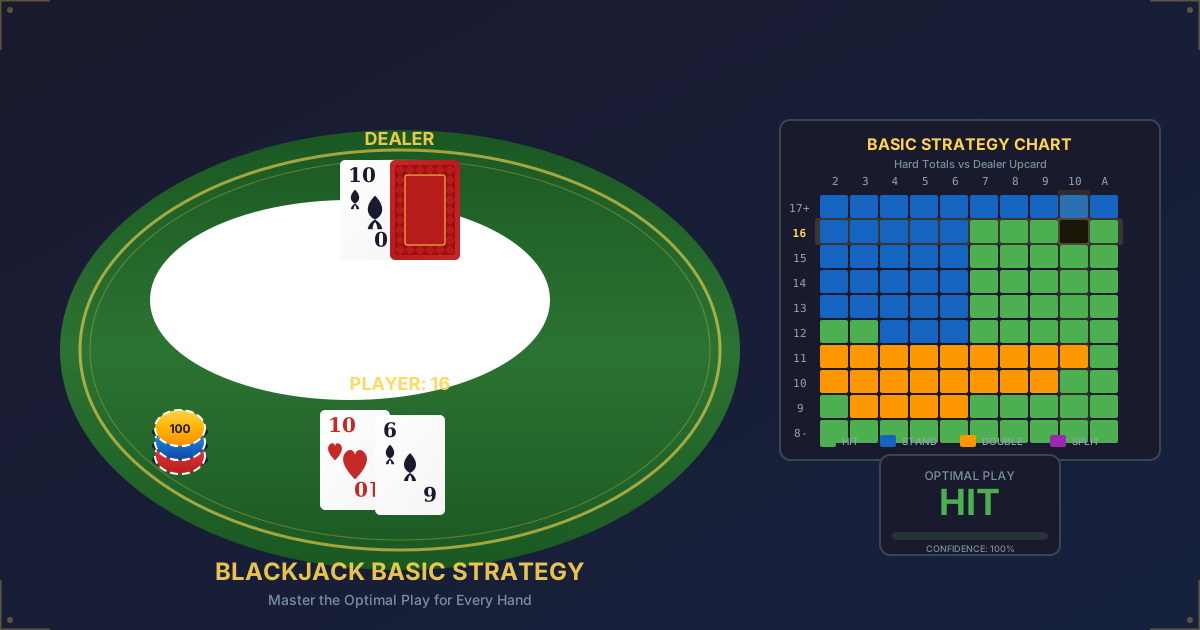
Strategy Chart Summary
| Hand | 2 | 3 | 4 | 5 | 6 | 7 | 8 | 9 | 10 | A |
|---|---|---|---|---|---|---|---|---|---|---|
| 8 | H | H | H | H | H | H | H | H | H | H |
| 9 | H | D | D | D | D | H | H | H | H | H |
| 10 | D | D | D | D | D | D | D | D | H | H |
| 11 | D | D | D | D | D | D | D | D | D | H |
| 12 | H | H | S | S | S | H | H | H | H | H |
| 13 | S | S | S | S | S | H | H | H | H | H |
| 14 | S | S | S | S | S | H | H | H | H | H |
| 15 | S | S | S | S | S | H | H | H | H | H |
| 16 | S | S | S | S | S | H | H | H | H | H |
| 17+ | S | S | S | S | S | S | S | S | S | S |
Why Hard Hands Are Challenging
Bust Risk
Hard 12: 31% bust if hit
Hard 13: 39% bust if hit
Hard 14: 56% bust if hit
Hard 15: 58% bust if hit
Hard 16: 62% bust if hit

Every hit is a gamble
No safety net like soft hands
The Stiff Hand Problem
Hard 12-16: "Stiff" hands
Too low to stand confidently
Too high to hit safely

The dealer decides your fate:
Weak dealer (2-6): Stand and hope dealer busts
Strong dealer (7-A): Hit and hope to improve
Why Standing on 12-16 vs Weak Dealer Works
Dealer upcard 6:
Dealer bust probability: 42%

Your hard 14 vs 6:
Stand: Win when dealer busts (42%)
Hit: Risk busting (56%) + dealer still plays

Standing lets dealer take the bust risk
Expected Value Analysis
Hard 16 vs Various Dealers
| Dealer | Hit EV | Stand EV | Best |
|---|---|---|---|
| 2 | -0.29 | -0.29 | Stand* |
| 3 | -0.25 | -0.25 | Stand* |
| 4 | -0.22 | -0.21 | Stand |
| 5 | -0.19 | -0.17 | Stand |
| 6 | -0.15 | -0.15 | Stand |
| 7 | -0.48 | -0.48 | Hit* |
| 8 | -0.51 | -0.51 | Hit |
| 9 | -0.54 | -0.54 | Hit |
| 10 | -0.54 | -0.54 | Hit |
| A | -0.51 | -0.67 | Hit |
*Very close—composition matters
Hard 11 Doubling Value
| Dealer | Hit EV | Double EV | Best |
|---|---|---|---|
| 2 | +0.12 | +0.23 | Double |
| 3 | +0.14 | +0.27 | Double |
| 4 | +0.16 | +0.31 | Double |
| 5 | +0.18 | +0.36 | Double |
| 6 | +0.20 | +0.40 | Double |
| 7 | +0.17 | +0.34 | Double |
| 10 | +0.04 | +0.08 | Double |
Real-World Examples
Example 1: Classic Stiff Hand
Hand: 10-6 (hard 16) Dealer: 10 Bet: $25
Analysis:
Hit EV: -0.54
Stand EV: -0.54

Both options lose long-term
But hitting gives chance to improve

Best: HIT
Outcomes if hitting:
- Draw 5 or less: 21 or less (safe)
- Draw 6+: Bust (62% chance)
Example 2: Profitable Double
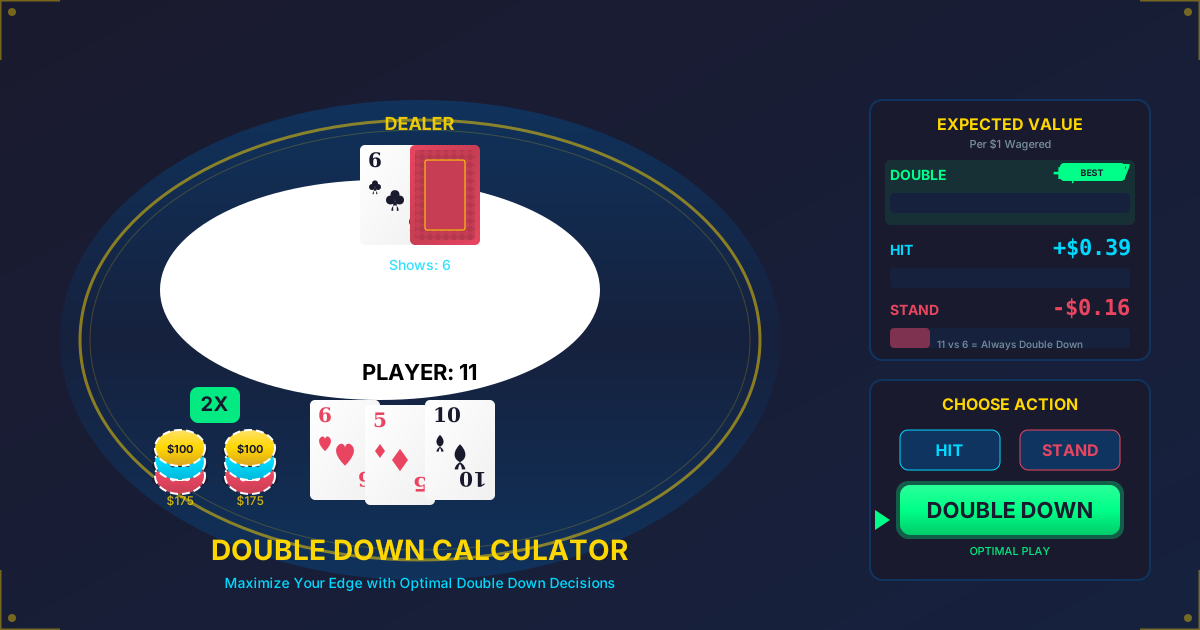
Hand: 7-4 (hard 11) Dealer: 6 Bet: $50
Analysis:
Stand: Waste of strong position
Hit EV: +0.20
Double EV: +0.40

Best: DOUBLE to $100
Why it works: High probability of making 18-21, plus dealer 6 busts 42% of time.
Example 3: Hit vs Weak Dealer
Hand: 7-5 (hard 12) Dealer: 3 Bet: $25
Analysis:
Stand EV: -0.25
Hit EV: -0.23

Slightly better to hit
12 is just too low vs dealer 3
Why hit: 12 wins only if dealer busts. Dealer 3 doesn't bust enough to justify standing on 12.
Example 4: Stand vs Bust
Hand: 8-5 (hard 13) Dealer: 5 Bet: $30
Analysis:
Stand EV: -0.17
Hit EV: -0.19

Best: STAND
Why stand: Dealer 5 busts 42%. Your 13 beats dealer bust. Hitting risks busting (39%) while dealer might still bust anyway.
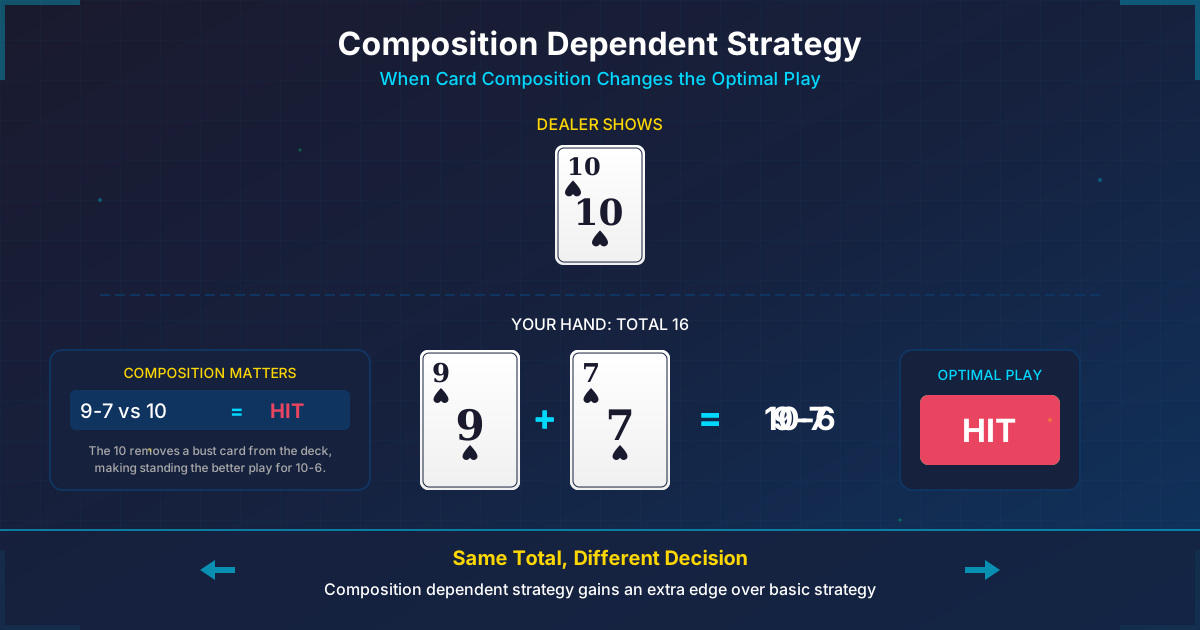
The Composition Effect
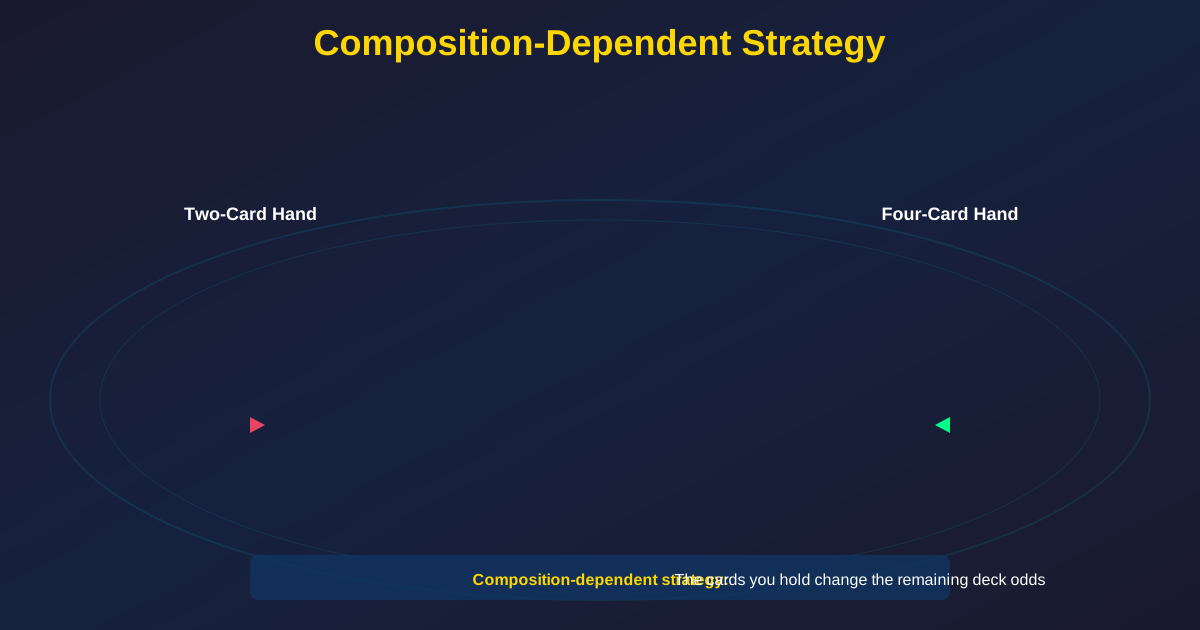
Card Composition Matters
Hard 16 can be:
10-6, 9-7, 8-8*, 7-5-4, etc.

10-6 vs dealer 10:
More 10s removed = slightly favor stand

7-5-4 vs dealer 10:
Small cards removed = slightly favor hit

Basic strategy: Treats all 16s same
Advanced: Slight composition adjustments
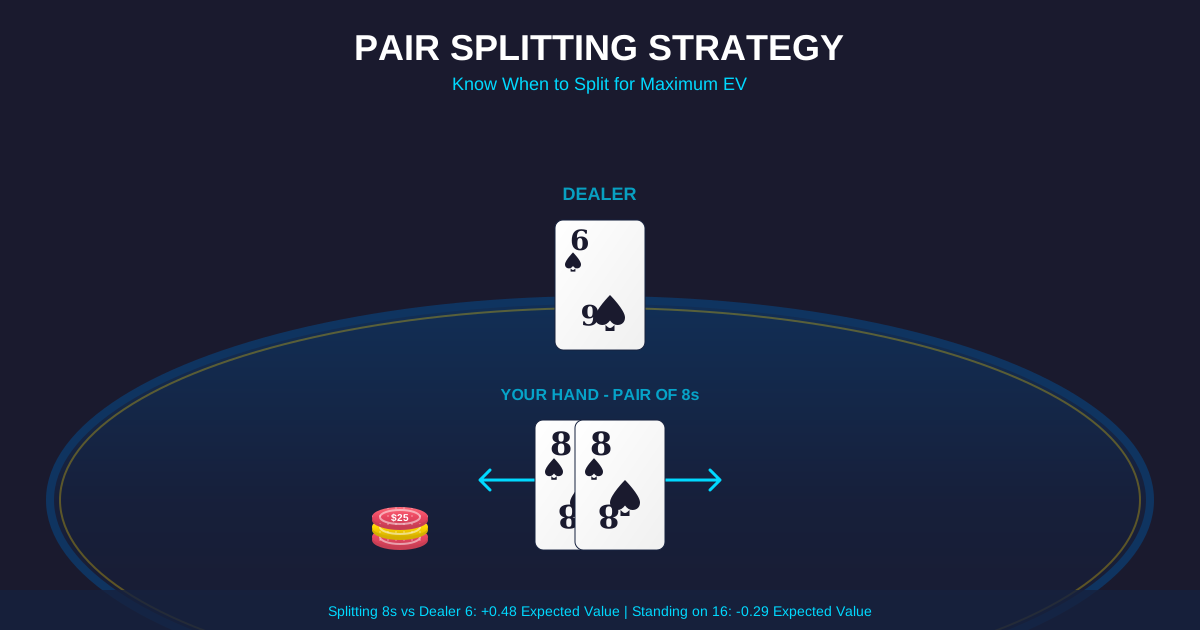
*8-8 should be split, not played as 16
When to Deviate
Hard 16 (10-6) vs 10:
Basic strategy says hit
But one 10 in hand, one showing
Remaining deck: Fewer 10s
Standing becomes marginally better

Advanced players: Stand on 10-6 vs 10
Basic players: Just hit all 16s vs 10
Common Mistakes
1. Standing on 12 vs 2 or 3
Mistake: "I don't want to bust" Problem: 12 needs improvement vs dealer 2-3 Fix: Hit 12 vs 2-3 (basic strategy)
2. Hitting 12-16 vs 4-6
Mistake: "Maybe I'll improve" Problem: Dealer bust rate makes standing +EV Fix: Stand on 12-16 vs 4-6
3. Not Doubling 10 and 11
Mistake: Hit instead of double Problem: Missing most profitable hands Fix: Double 11 vs 2-10, double 10 vs 2-9
4. Hitting Hard 17
Mistake: "17 might not be enough" Problem: 17 wins more than hitting wins Fix: Never hit hard 17+
Hard vs Soft Comparison
Same Total, Different Strategy
| Total | Hard Action | Soft Action | vs Dealer 6 |
|---|---|---|---|
| 13 | Stand | Double (A-2) | Different |
| 15 | Stand | Double (A-4) | Different |
| 17 | Stand | Double (A-6) | Different |
| 18 | Stand | Double (A-7) | Different |
Why Strategy Differs
Hard 17 vs 6:
- Hit: High bust probability
- Stand: Only sensible option

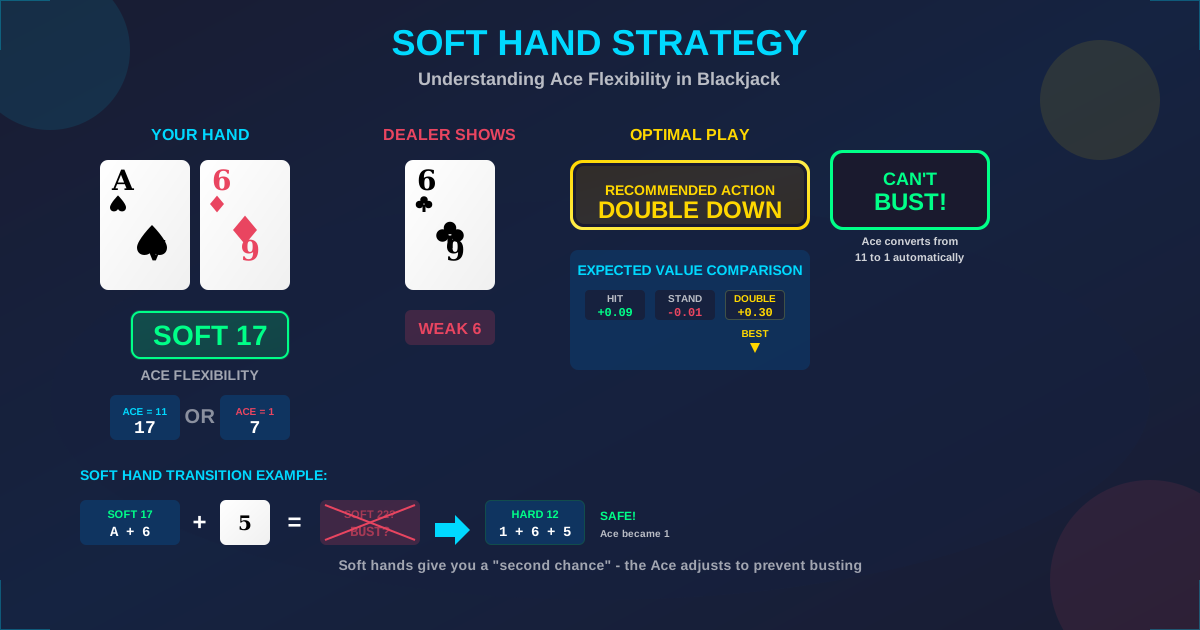
Soft 17 vs 6:
- Hit: Can't bust
- Double: Extra money vs weak dealer
- Stand: Wastes flexibility
Surrender Option
When Available
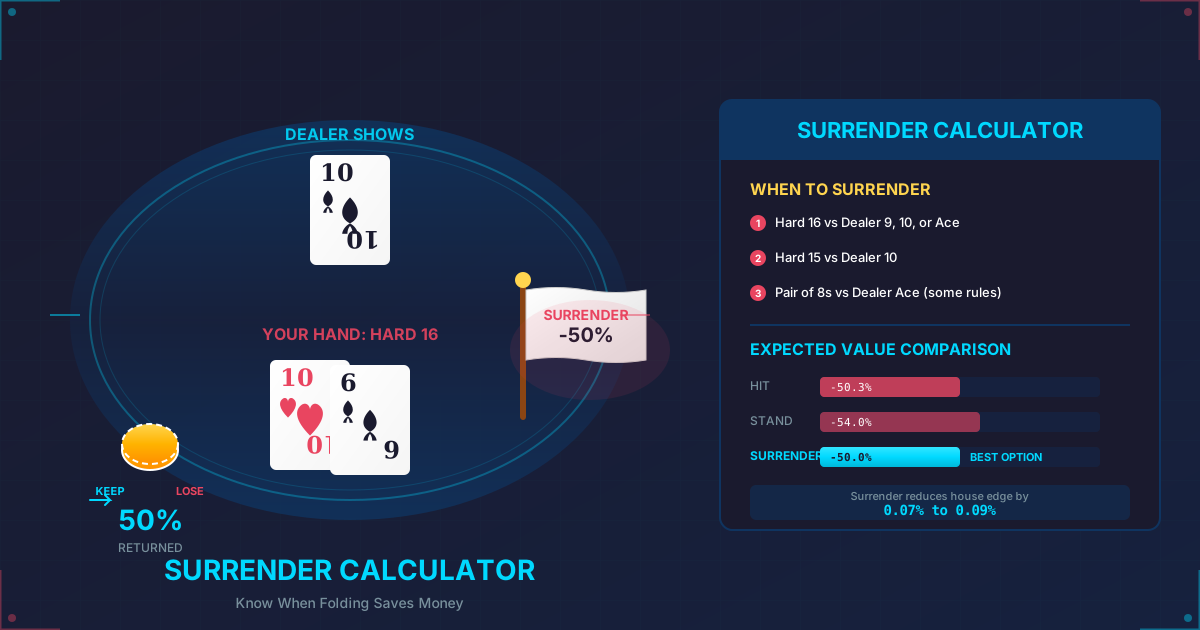
Some games offer surrender:
Give up half your bet, fold hand

Surrender hard 16 vs 9, 10, A
Surrender hard 15 vs 10

EV(surrender) = -0.50
Better than -0.54 (hard 16 vs 10)
Surrender Strategy
| Hand | Surrender vs |
|---|---|
| Hard 16 | 9, 10, A |
| Hard 15 | 10 |
| Hard 17 | A (sometimes) |
Frequently Asked Questions
Should I ever hit hard 17?
Never. Hard 17 standing wins more than any hit outcome. The bust risk (69%) far outweighs improvement potential.
Why hit 12 vs dealer 2 but stand vs dealer 4?
Dealer 2 busts only 35%. Dealer 4 busts 40%. The extra 5% bust rate makes standing worthwhile despite your bust risk.
Is hard 16 really the worst hand?
Yes. It's too high to hit safely (62% bust) and too low to stand confidently against strong dealers. Both options lose.
Should I double hard 9?
Yes, against dealer 3-6. You're getting money in when dealer is weak and one card might give you 19.
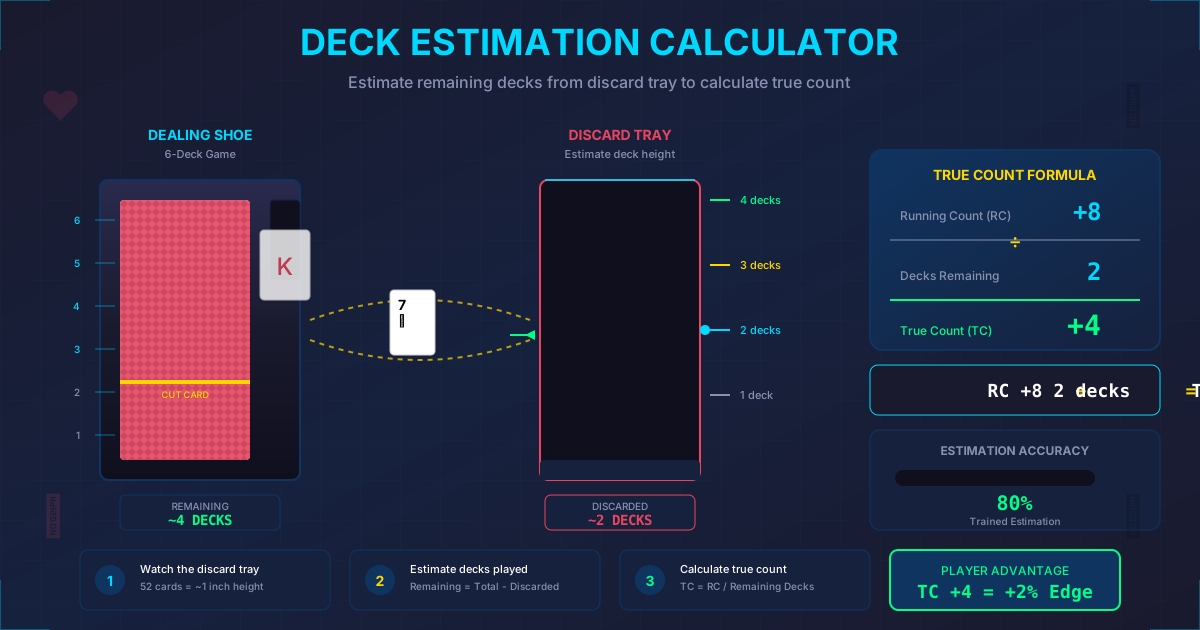
Does deck count affect hard hand strategy?
Slightly. More decks marginally favor hitting stiff hands. But basic strategy remains correct for all deck counts.
What if doubling isn't allowed?
Hit instead. You're still making the right decision—just can't get extra money in play.
Pro Tips
-
Stand on stiffs vs weak dealers: Let the dealer bust
-
Double strong totals: 11 and 10 are profit opportunities
-
Accept the 16 dilemma: Both options are bad, just pick one
-
Never hit 17+: Not negotiable
-
Consider surrender: When available, use it on 15-16 vs strong cards
Related Calculators
- Blackjack Basic Strategy Calculator - Complete strategy
- Blackjack Soft Hand Calculator - Soft totals
- Blackjack Double Down Calculator - Doubling decisions
- Blackjack EV Calculator - Expected value
- Blackjack House Edge Calculator - Rule impact
Conclusion
Hard hands demand careful decision-making because there's no ace flexibility to protect you. Our calculator shows optimal play for every hard total, revealing when to stand against weak dealers and when to hit despite bust risk. Master these decisions and eliminate the most common blackjack mistakes.
Calculate Hard Hand Strategy Now →
The difference between good and bad blackjack players often comes down to hard hand decisions. Standing on 12-16 against weak dealers and hitting against strong dealers—these counterintuitive plays are mathematically optimal. Our calculator builds the discipline to make the right call every time.