Blackjack Soft Hand Calculator: Playing Aces Correctly (2026)
Blackjack Soft Hand Calculator: The Flexible Power of Aces
Soft hands contain an ace counted as 11—giving you two ways to play. Our calculator shows optimal strategy for every soft total, revealing when to double down aggressively and when the ace's flexibility protects you from busting.
What Is a Soft Hand?
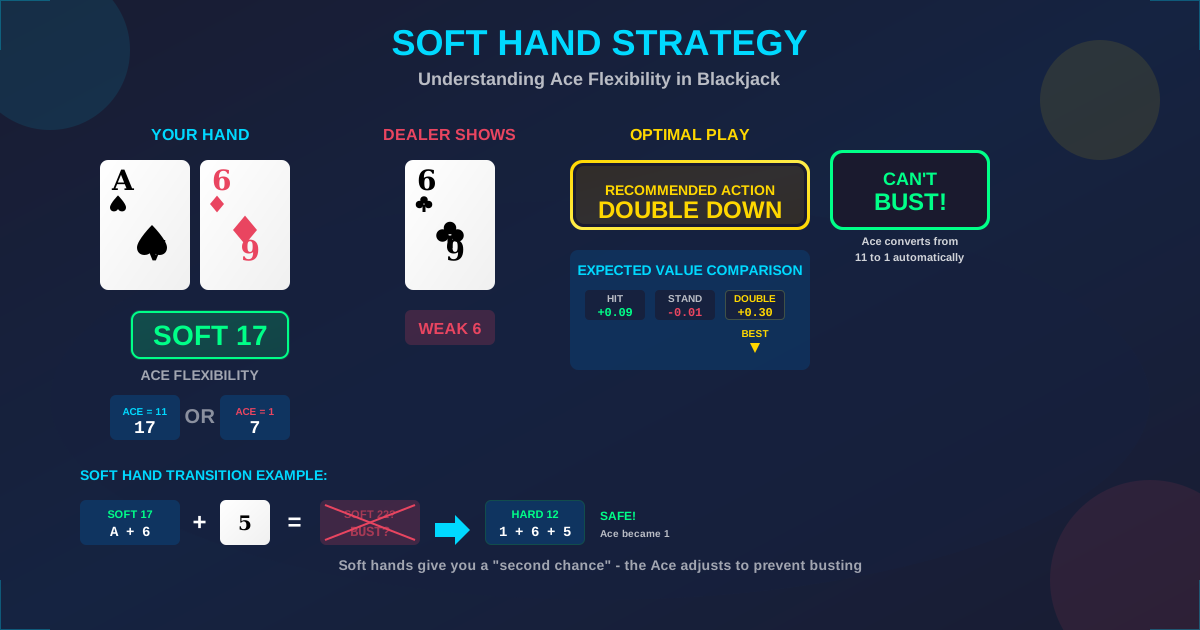
A soft hand has an ace that can be counted as either 1 or 11 without busting. A-6 (soft 17) can be 17 or 7. This flexibility means you can hit without bust risk—making soft hands much more playable than their hard equivalents.
Quick Answer: Soft hands are flexible because the ace can change value. Always hit soft 17 (dealer does in H17 games). Double soft 13-17 vs dealer 5-6. Double soft 18 vs 3-6. Stand soft 19+ always. Never bust hitting a soft hand—worst case it becomes hard. Soft doubling is one of the most overlooked +EV plays in basic strategy.
How to Use Our Calculator
Use the Soft Hand Calculator →
Enter your soft total and dealer upcard for optimal play.
Step-by-Step Instructions
-
Enter Soft Total: A-2 through A-9
-
Input Dealer Upcard: 2 through A
-
View Recommendation: Hit, Stand, or Double
-
See EV Comparison: Each action's expected value
-
Understand Why: Reasoning for optimal play
Input Fields Explained
| Field | Description | Example |
|---|---|---|
| Your Hand | Soft total | A-6 (soft 17) |
| Dealer Upcard | Showing | 6 |
| Optimal Play | Best action | DOUBLE |
| EV (Double) | Expected value | +0.30 |
| EV (Hit) | Alternative | +0.09 |
| EV (Stand) | Alternative | -0.01 |
Complete Soft Hand Strategy
Soft 13-14 (A-2, A-3)
| Dealer | Action |
|---|---|
| 2-4 | Hit |
| 5-6 | DOUBLE |
| 7-A | Hit |
Soft 15-16 (A-4, A-5)
| Dealer | Action |
|---|---|
| 2-3 | Hit |
| 4-6 | DOUBLE |
| 7-A | Hit |
Soft 17 (A-6)
| Dealer | Action |
|---|---|
| 2 | Hit |
| 3-6 | DOUBLE |
| 7-A | Hit |
Never stand on soft 17!
Soft 18 (A-7)
| Dealer | Action |
|---|---|
| 2 | Stand |
| 3-6 | DOUBLE |
| 7-8 | Stand |
| 9-A | Hit |
Most complex soft hand—varies by dealer card
Soft 19-20 (A-8, A-9)
| Dealer | Action |
|---|---|
| All | STAND |
Always stand—strong hands
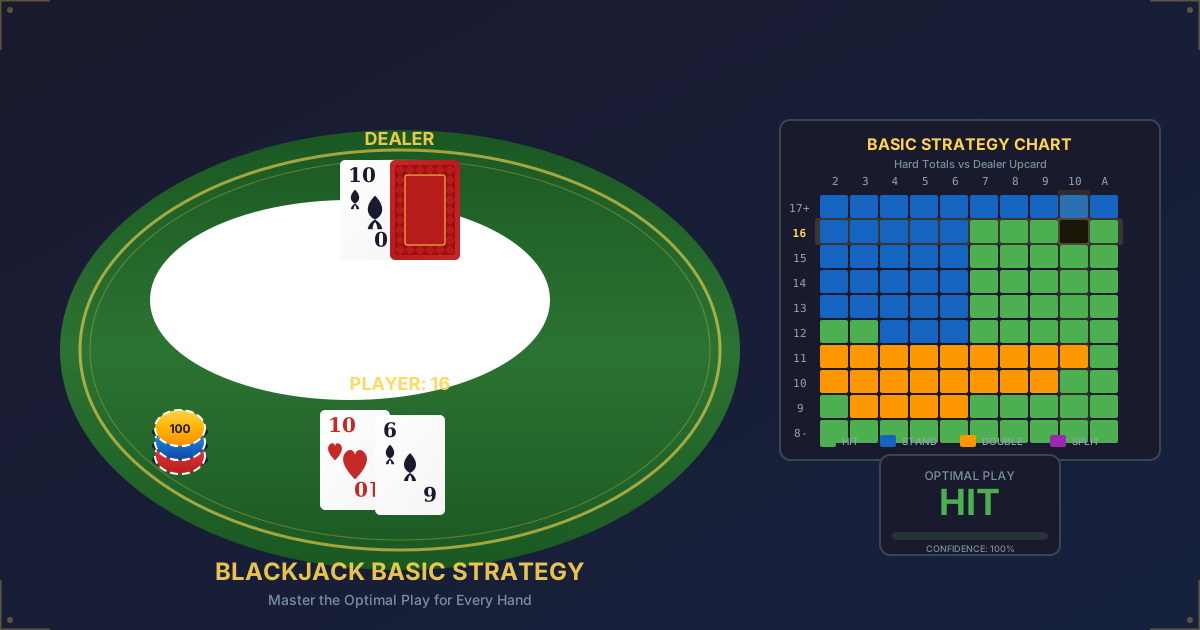
Strategy Chart Summary
| Hand | 2 | 3 | 4 | 5 | 6 | 7 | 8 | 9 | 10 | A |
|---|---|---|---|---|---|---|---|---|---|---|
| A-2 | H | H | H | D | D | H | H | H | H | H |
| A-3 | H | H | H | D | D | H | H | H | H | H |
| A-4 | H | H | D | D | D | H | H | H | H | H |
| A-5 | H | H | D | D | D | H | H | H | H | H |
| A-6 | H | D | D | D | D | H | H | H | H | H |
| A-7 | S | D | D | D | D | S | S | H | H | H |
| A-8 | S | S | S | S | S | S | S | S | S | S |
| A-9 | S | S | S | S | S | S | S | S | S | S |
Why Soft Hands Are Special
Bust Immunity
Soft 17 (A-6):
Hit and get 10: Now hard 17
Hit and get 5: Now soft 22 → hard 12
Hit and get K: Hard 17

Cannot bust! Worst case = hard hand
This is why you can hit soft 17
Soft 17 vs Hard 17
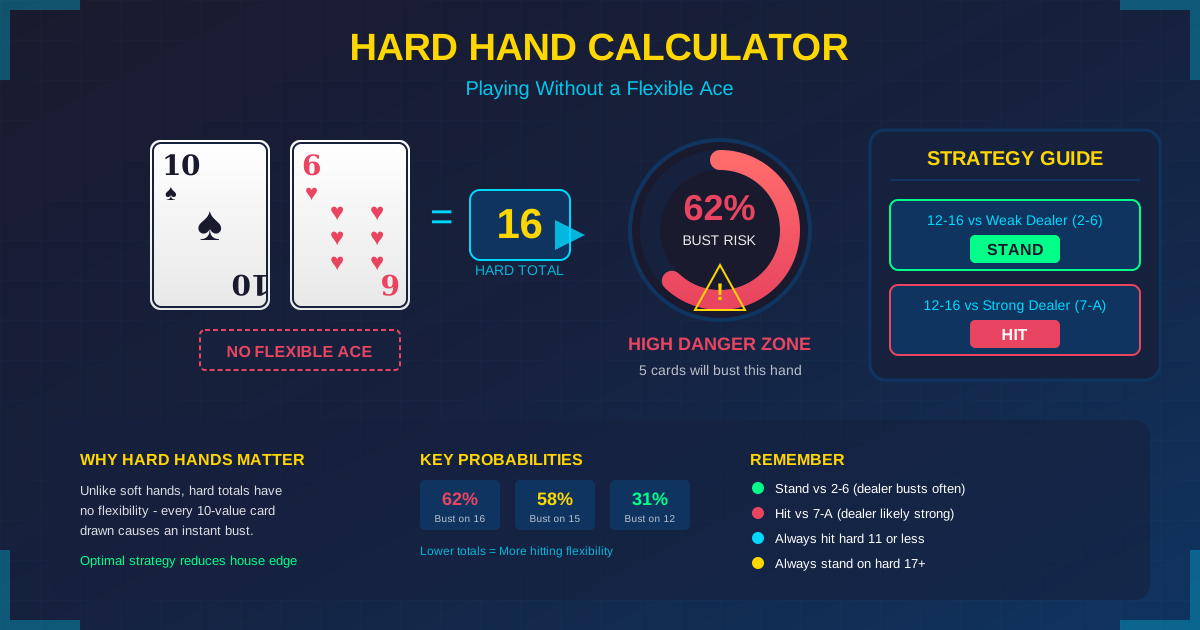
Hard 17: Must stand (hit = likely bust)
Soft 17: Must hit (can't bust, might improve)

Hard 17 EV vs dealer 6: -0.04
Soft 17 EV standing vs dealer 6: -0.01
Soft 17 EV hitting vs dealer 6: +0.09

Soft 17 has room to improve!
Double Down Value
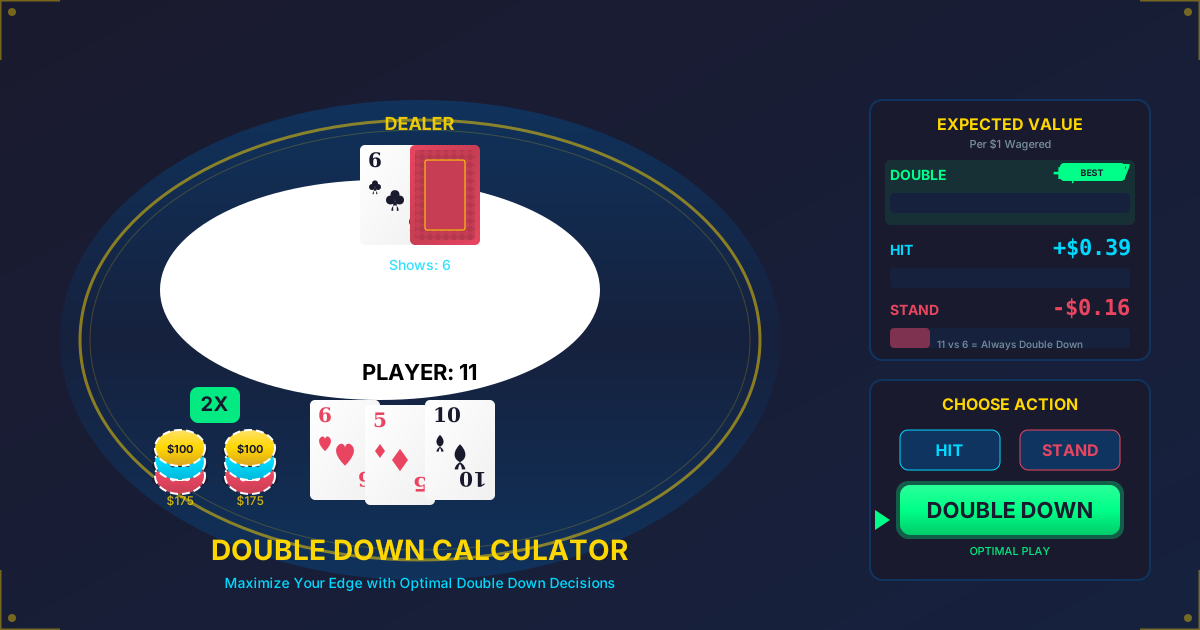
Soft hands + weak dealer = doubling opportunity

Soft 16 vs dealer 5:
Hit EV: +0.06
Double EV: +0.11

Double puts more money in play
When positive EV, more is better
Expected Value Analysis
Soft 17 vs Various Dealers
| Dealer | Hit EV | Stand EV | Double EV | Best |
|---|---|---|---|---|
| 2 | +0.01 | -0.15 | -0.01 | Hit |
| 3 | +0.03 | -0.12 | +0.04 | Double |
| 4 | +0.05 | -0.09 | +0.09 | Double |
| 5 | +0.07 | -0.06 | +0.14 | Double |
| 6 | +0.09 | -0.01 | +0.30 | Double |
| 7 | -0.09 | -0.38 | -0.11 | Hit |
| 10 | -0.18 | -0.42 | -0.36 | Hit |
Soft 18 vs Various Dealers
| Dealer | Hit EV | Stand EV | Double EV | Best |
|---|---|---|---|---|
| 2 | -0.01 | +0.12 | +0.02 | Stand |
| 3 | +0.01 | +0.15 | +0.06 | Stand |
| 4 | +0.02 | +0.18 | +0.11 | Stand |
| 5 | +0.04 | +0.21 | +0.16 | Double* |
| 6 | +0.06 | +0.28 | +0.26 | Double* |
| 9 | -0.10 | -0.18 | -0.20 | Hit |
| 10 | -0.11 | -0.18 | -0.22 | Hit |
*Double slightly better than stand
Real-World Examples
Example 1: Soft Double Opportunity
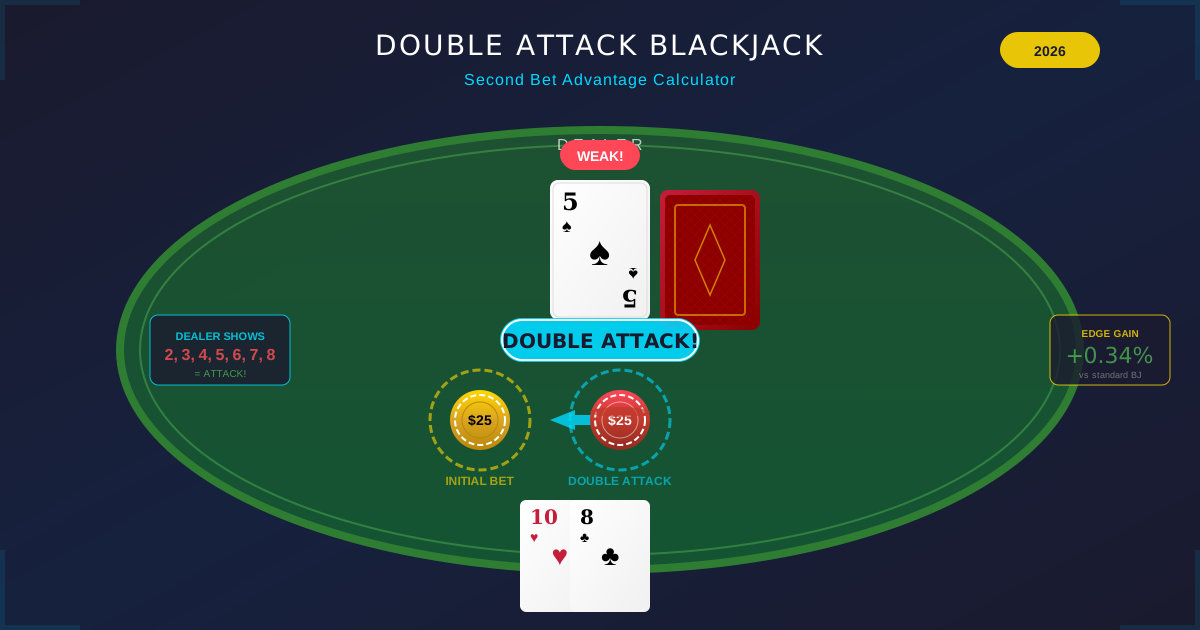
Hand: A-5 (soft 16) Dealer: 5 Bet: $25
Analysis:
Stand: EV = -0.06
Hit: EV = +0.06
Double: EV = +0.11

Best: DOUBLE to $50
Outcome scenarios:
- Draw 5: Soft 21 (great!)
- Draw 10: Hard 16 (ok, dealer weak)
- Draw A: Soft 17 (improved)
Example 2: Soft 18 Decision Point
Hand: A-7 (soft 18) Dealer: 9 Bet: $50
Analysis:
Stand: EV = -0.18
Hit: EV = -0.10
Double: Would be -0.20

Best: HIT
Why hit? 18 loses to dealer 9 often. Hitting gives chance to improve without bust risk.
Example 3: Clear Stand
Hand: A-8 (soft 19) Dealer: 10 Bet: $30
Analysis:
Stand: EV = +0.07
Hit: EV = -0.02
Double: Would be -0.05

Best: STAND
Why stand? 19 is strong. Hitting risks making it worse (hard 19 max, could be 12-18).
Example 4: Common Mistake Avoided
Hand: A-6 (soft 17) Dealer: 6 Bet: $25
Wrong play: Stand (mimics dealer) Correct play: DOUBLE
Standing EV: -0.01
Doubling EV: +0.30

Cost of mistake: 0.31 units ($7.75 on this hand)
Soft vs Hard Comparison
Same Total, Different Strategy
| Total | Hard | Soft |
|---|---|---|
| 12 vs 6 | Stand | Double (A-A as soft 12, split) |
| 13 vs 6 | Stand | Double (A-2) |
| 17 vs 6 | Stand | Double (A-6) |
| 18 vs 9 | Stand | Hit (A-7) |
Why Strategy Differs
Hard 17 vs 6:
- Hit: High bust probability
- Stand: Only option

Soft 17 vs 6:
- Hit: Can't bust
- Double: Even better with weak dealer
- Stand: Wastes flexibility
Dealer Soft 17 Rules
H17 vs S17
H17: Dealer hits soft 17
S17: Dealer stands soft 17

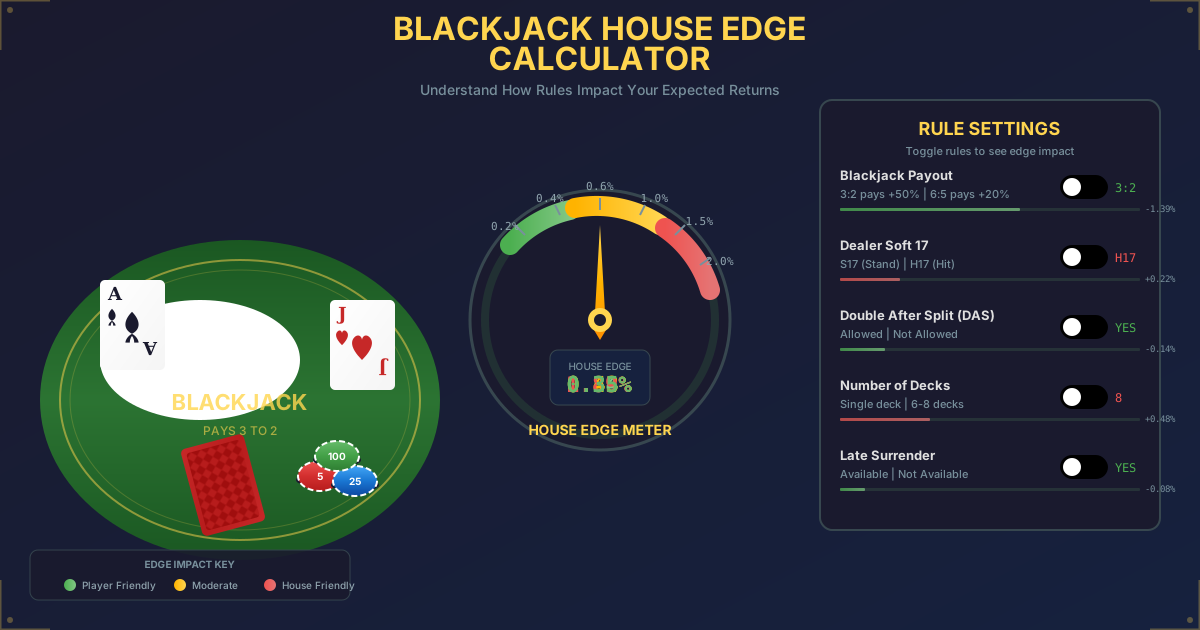
H17 favors house by ~0.2%

Your soft strategy unchanged
But affects dealer bust rates
H17 Impact on Your Soft Hands
When dealer hits soft 17:
Dealer improves more often
But also busts more often

Net: Slight player disadvantage
Reason: Dealer acts last
Common Mistakes
1. Standing on Soft 17
Mistake: Stand on soft 17 vs anything Problem: Missing improvement opportunity Fix: Always hit soft 17, double vs 3-6
2. Not Doubling Soft Hands
Mistake: Hit A-5 vs 6 instead of double Problem: Leaving money on table Fix: Learn soft doubling chart
3. Hitting Soft 19
Mistake: Hit A-8 thinking "might improve" Problem: More likely to hurt than help Fix: Stand on soft 19+, always
4. Treating All Soft 18s Same
Mistake: Always stand soft 18 Problem: Soft 18 vs 9-A should hit Fix: Know dealer-dependent strategy
Soft Hand Transitions
What Happens When You Hit?
Soft 16 (A-5) + 5 = Soft 21 (A-5-5)
Soft 16 (A-5) + 6 = Soft 22 → Hard 12
Soft 16 (A-5) + K = Hard 16

Transition rules:
Soft + low = Soft (improved)
Soft + medium = Soft or Hard
Soft + high = Hard (same total)
Multi-Card Soft Hands
A-2-3 = Soft 16 (same strategy)
A-A-5 = Soft 17 (same strategy)
A-2-2-2 = Soft 17 (same strategy)

Number of cards doesn't change strategy
Only total and ace flexibility matter
Advanced Considerations
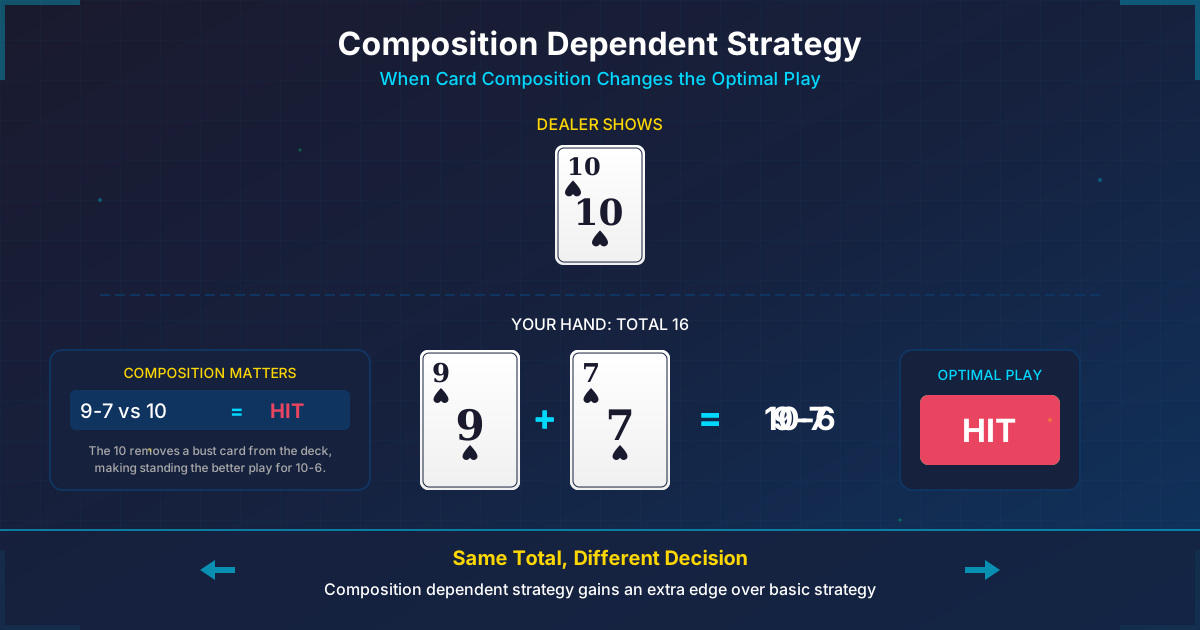
Composition Dependent
A-3-3 vs A-7 (both soft 17):
Slightly different optimal plays
Basic strategy treats same
Advanced: Minor adjustments

For most players: Basic strategy sufficient
Multi-Card Bonus Games
Some games pay for 5+ card hands
Soft hands help achieve this
More flexibility to draw cards
Consider bonus when applicable
Frequently Asked Questions
Should I always hit soft 17?
Yes, always hit soft 17. You cannot bust, and you have good chance to improve. Standing on soft 17 is a costly mistake.
Why is soft 18 so complicated?
Soft 18 is right at the decision boundary. Against weak dealers, it's strong enough to double. Against strong dealers (9-A), it's weak enough to need improvement.
Can I double any soft hand?
Rules vary. Some casinos allow doubling any hand. Others restrict to certain totals. Check before sitting down.
What if I can't double?
If doubling isn't allowed, hit the hands where double is recommended. You're still playing correctly.
Does soft strategy change with deck count?
Slightly. More decks marginally favor conservative play. But basic strategy changes are minimal for soft hands.
Why don't casinos teach soft strategy?
Soft hand mistakes add to house edge. Players standing on soft 17 or missing doubles benefits the casino.
Pro Tips
-
Never stand soft 17: This is the #1 soft hand mistake
-
Double against weak dealers: 5-6 are prime targets
-
Hit soft 18 vs 9-A: Standing loses more often
-
Soft 19+ is strong: Don't overthink—stand
-
Practice transitions: Know what your hand becomes
Related Calculators
- Blackjack Basic Strategy Calculator - Complete strategy
- Blackjack Double Down Calculator - Doubling decisions
- Blackjack Hard Hand Calculator - Hard totals
- Blackjack EV Calculator - Expected value
- Blackjack House Edge Calculator - Rule impact
Conclusion
Soft hands give you the flexibility that hard hands lack—hit without bust fear and double with confidence against weak dealers. Our calculator shows optimal play for every soft total, revealing the doubling opportunities most players miss and the hitting situations that feel counterintuitive but are mathematically correct.
Calculate Soft Hand Strategy Now →
Mastering soft hands separates basic players from skilled ones. The ability to hit soft 17, double soft 15 against 5, and hit soft 18 against 9—these plays seem wrong but are mathematically optimal. Our calculator builds the intuition to play aces perfectly every time.