Blackjack Splitting Calculator: When to Split Pairs (2026)
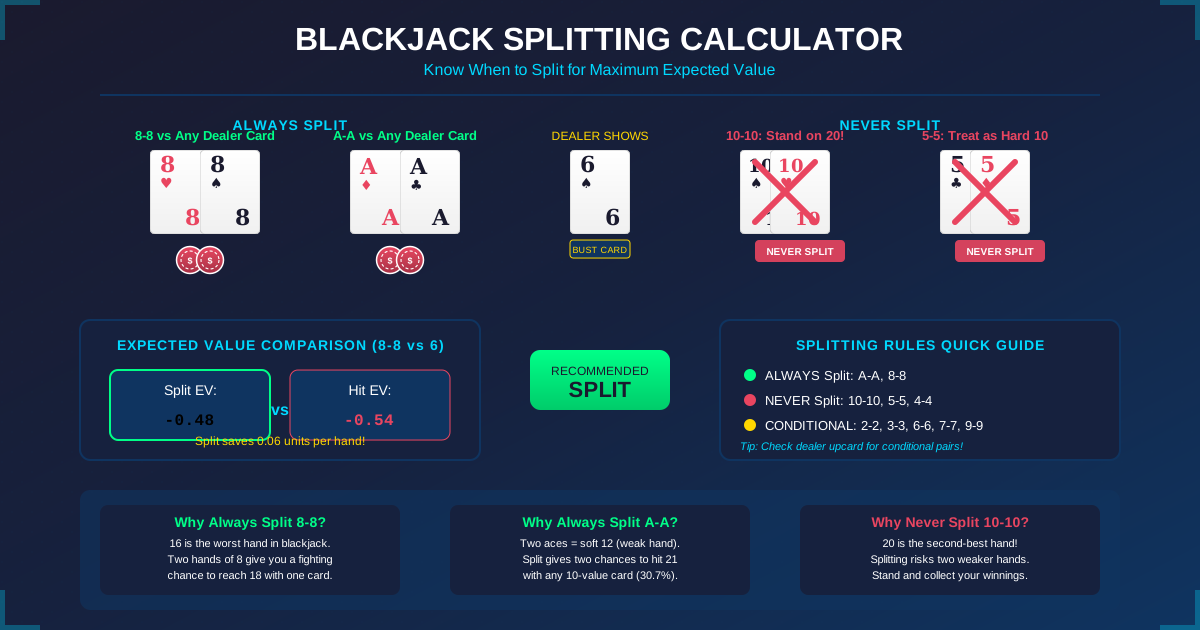
Blackjack Splitting Calculator: Maximize Pair Potential
Splitting turns one hand into two, doubling your action when profitable. Our calculator shows exactly when splitting beats playing the hand whole—from the always-split aces to the never-split 10s.
What Is Splitting in Blackjack?
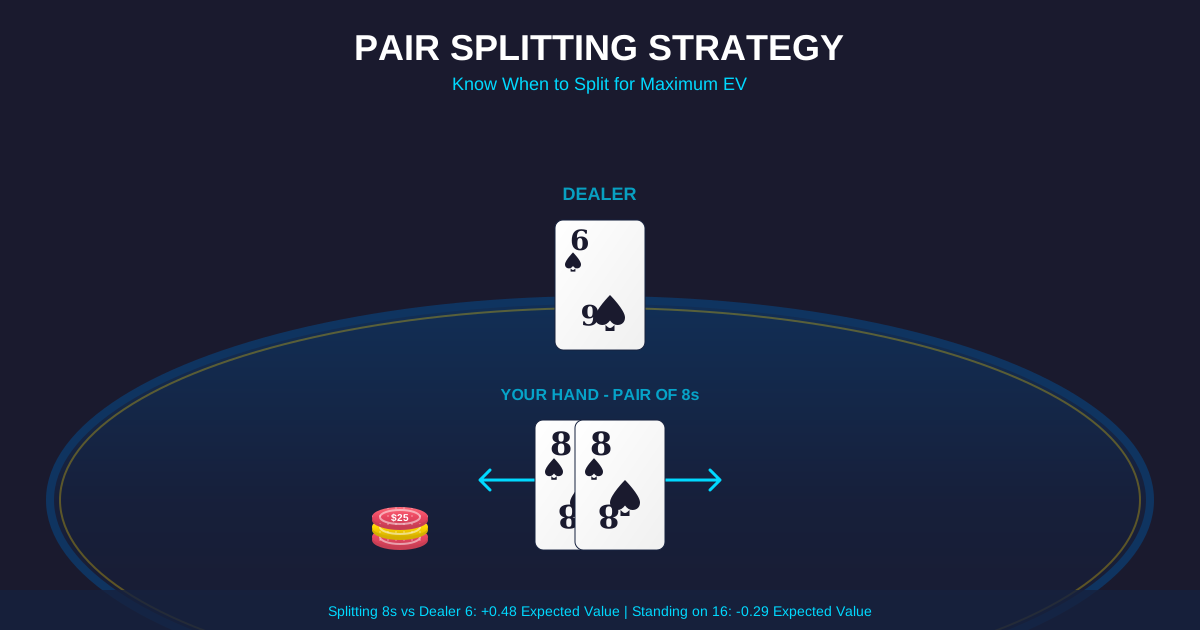
When dealt a pair, you can split them into two separate hands by matching your original bet. Each card becomes the start of a new hand, and you play them independently. Some pairs should always split; others should never split.
Quick Answer: Always split A-A and 8-8. Never split 10-10 or 5-5. Split 2-2, 3-3, 6-6, 7-7 vs dealer 2-7. Split 4-4 only with DAS vs 5-6. Split 9-9 vs 2-9 except 7. The key insight: splitting A-A creates two strong hands from one awkward 12 (or 2). Splitting 8-8 escapes the worst hand (16) into two reasonable starts.
How to Use Our Calculator
Use the Blackjack Splitting Calculator →
Enter your pair and dealer upcard to see if splitting is optimal.
Step-by-Step Instructions
-
Enter Your Pair: The pair you hold
-
Input Dealer Upcard: Showing card
-
Select Rules: DAS available?
-
View Recommendation: Split or don't split
-
See EV Comparison: Expected value analysis
Input Fields Explained
| Field | Description | Example |
|---|---|---|
| Your Pair | Cards held | 8-8 |
| Dealer Upcard | Showing | 10 |
| DAS Available | Double after split | Yes |
| Recommendation | Optimal action | SPLIT |
| EV if Split | Expected value | -0.48 |
| EV if Hit | Expected value | -0.54 |
| Advantage | Split vs play | +0.06 |
Complete Splitting Strategy
Always Split
| Pair | Reason |
|---|---|
| A-A | Two chances at 21 vs soft 12 |
| 8-8 | Escape terrible 16 |
Never Split
| Pair | Reason |
|---|---|
| 10-10 | 20 is great, don't break it |
| 5-5 | 10 is perfect doubling hand |
Conditional Splits
| Pair | Split vs | Don't Split vs |
|---|---|---|
| 2-2 | 2-7 (with DAS: 2-7) | 8-A |
| 3-3 | 2-7 (with DAS: 2-7) | 8-A |
| 4-4 | 5-6 (DAS only) | Everything else |
| 6-6 | 2-6 (with DAS: 2-7) | 7-A |
| 7-7 | 2-7 | 8-A |
| 9-9 | 2-6, 8-9 | 7, 10, A |
Full Split Chart
| Pair | 2 | 3 | 4 | 5 | 6 | 7 | 8 | 9 | 10 | A |
|---|---|---|---|---|---|---|---|---|---|---|
| A-A | Y | Y | Y | Y | Y | Y | Y | Y | Y | Y |
| 10-10 | N | N | N | N | N | N | N | N | N | N |
| 9-9 | Y | Y | Y | Y | Y | N | Y | Y | N | N |
| 8-8 | Y | Y | Y | Y | Y | Y | Y | Y | Y | Y |
| 7-7 | Y | Y | Y | Y | Y | Y | N | N | N | N |
| 6-6 | Y | Y | Y | Y | Y | N | N | N | N | N |
| 5-5 | N | N | N | N | N | N | N | N | N | N |
| 4-4 | N | N | N | Y* | Y* | N | N | N | N | N |
| 3-3 | Y | Y | Y | Y | Y | Y | N | N | N | N |
| 2-2 | Y | Y | Y | Y | Y | Y | N | N | N | N |
*4-4 splits vs 5-6 only with DAS
Why Split Each Pair
Always Split A-A
A-A as one hand: Soft 12 (awkward)
After split: Two hands starting with Ace

P(21 on either hand): ~31% per hand
Two chances at blackjack value

EV(split): Much higher than playing soft 12
Always Split 8-8
8-8 as one hand: Hard 16 (worst hand)
After split: Two hands starting with 8

16 vs any dealer card is terrible:
Hit: High bust probability
Stand: Dealer likely beats 16

Split turns disaster into opportunity
Never Split 10-10
10-10 = 20

20 wins ~85% of hands
Why risk two lesser hands?

Splitting 10s is a tell in card counting
But basic strategy: Never split
Never Split 5-5
5-5 = Hard 10

10 is perfect for doubling:
- High probability of making 20
- Against weak dealers, double!
- Against strong, still hit

5 is weak starting card—avoid splitting
DAS (Double After Split) Impact
Why DAS Matters
With DAS:
Split 2-2 vs 3
Get dealt 9 on first hand = A-9? No, 2-9 = 11
Can DOUBLE that 11!

Without DAS:
Same situation, can only hit
Miss value opportunity
DAS Changes Strategy
| Pair | Without DAS | With DAS |
|---|---|---|
| 2-2 | Split vs 4-7 | Split vs 2-7 |
| 3-3 | Split vs 4-7 | Split vs 2-7 |
| 4-4 | Never split | Split vs 5-6 |
| 6-6 | Split vs 3-6 | Split vs 2-6 |
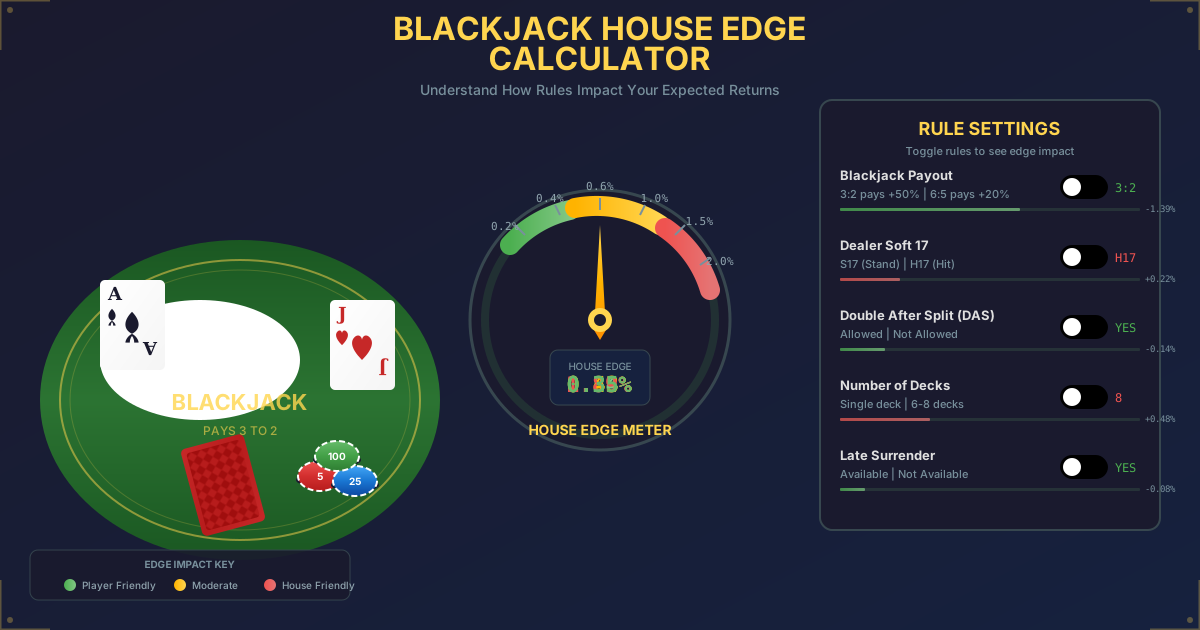
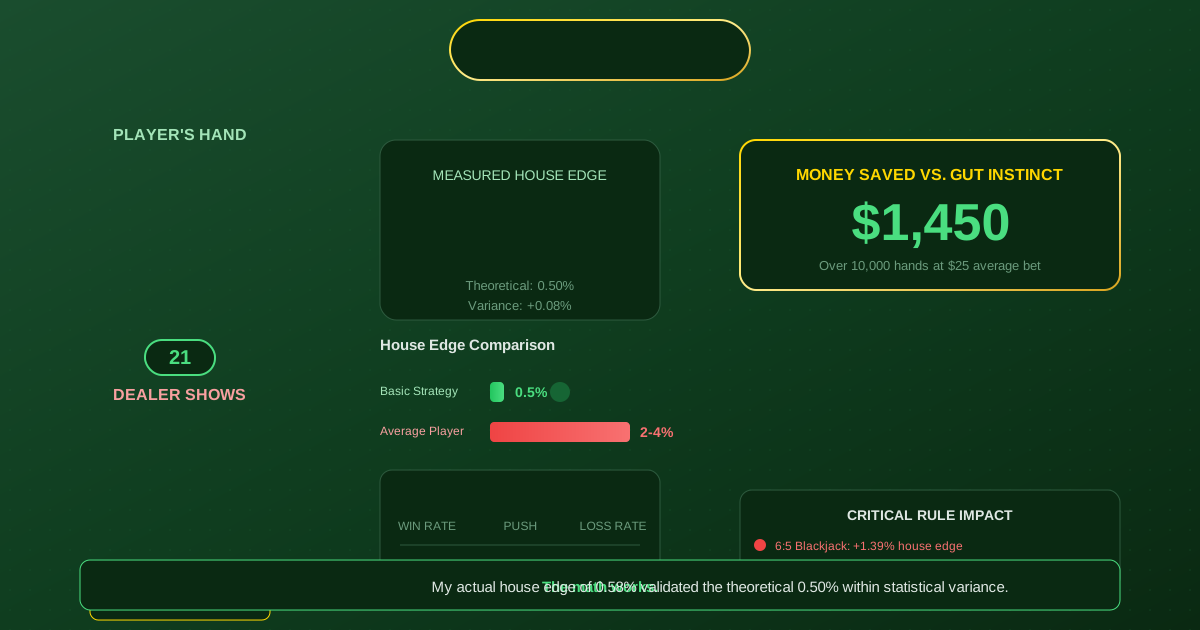
House Edge Impact
DAS reduces house edge by ~0.13%
Makes splitting more valuable
Changes several marginal decisions
Real-World Examples
Example 1: Classic 8-8
Hand: 8-8 Dealer: 10 Bet: $25
Without split: Hard 16 vs 10 EV(hit): -0.54 EV(stand): -0.54
With split: Two hands starting 8 EV(split): -0.48
Action: SPLIT (saves ~$1.50 per hand)
Example 2: 9-9 Decision
Hand: 9-9 Dealer: 7 Bet: $50
Without split: Hard 18 EV(stand): +0.40
With split: Two hands starting 9 EV(split): +0.35
Action: STAND (18 beats 7 often enough)
Example 3: 4-4 with DAS
Hand: 4-4 Dealer: 5 Bet: $30 Rules: DAS allowed
Without split: Hard 8, hit EV(hit): +0.06
With split (DAS): Two 4s vs 5 EV(split): +0.08
Action: SPLIT (can double good draws)
Example 4: 2-2 Without DAS
Hand: 2-2 Dealer: 3 Bet: $20 Rules: No DAS
Without split: Hard 4, hit EV(hit): -0.04
With split (no DAS): Two 2s vs 3 EV(split): -0.05
Action: HIT (splitting worse without DAS)
Expected Value Analysis
Split EV by Pair (vs Dealer 6)
| Pair | EV Split | EV Best Alt | Difference |
|---|---|---|---|
| A-A | +0.67 | +0.04 (hit) | +0.63 |
| 8-8 | +0.26 | -0.15 (stand) | +0.41 |
| 9-9 | +0.38 | +0.29 (stand) | +0.09 |
| 7-7 | +0.17 | -0.01 (stand) | +0.18 |
| 6-6 | +0.04 | -0.02 (hit) | +0.06 |
Split EV by Pair (vs Dealer 10)
| Pair | EV Split | EV Best Alt | Difference |
|---|---|---|---|
| A-A | +0.19 | -0.48 (hit) | +0.67 |
| 8-8 | -0.48 | -0.54 (hit/stand) | +0.06 |
| 9-9 | -0.38 | -0.18 (stand) | -0.20 (don't split) |
| 7-7 | -0.55 | -0.48 (hit) | -0.07 (don't split) |
Common Splitting Mistakes
1. Not Splitting 8-8 vs 10/A
Mistake: "I'll just hit the 16" Problem: 16 is terrible; splitting is less bad Fix: Always split 8-8 regardless of dealer card
2. Splitting 10-10
Mistake: "Two chances at 21!" Problem: Breaking 20 for two uncertain hands Fix: Stand on 20, always
3. Splitting 5-5
Mistake: "It's a pair, I should split" Problem: Missing doubling opportunity Fix: Treat 5-5 as hard 10, double/hit
4. Ignoring DAS Rules
Mistake: Same strategy regardless of DAS Problem: Missing profitable splits Fix: Know your casino's rules
Re-Splitting Rules
When You Can Re-Split
Example: Split 8-8
First hand gets another 8
Can you split again?

Most casinos: Yes (up to 4 hands)
Some casinos: No re-splitting
Aces: Usually only one card per ace
Re-Splitting Strategy
If you can re-split:
Same strategy applies
8-8-8? Split all three
A-A-A? Split (if allowed)

More hands = more variance
But each split is still +EV when correct
House Edge of Re-Splitting
No re-splitting: Baseline
Re-split to 4 hands: -0.05% edge
Re-split aces: -0.08% edge
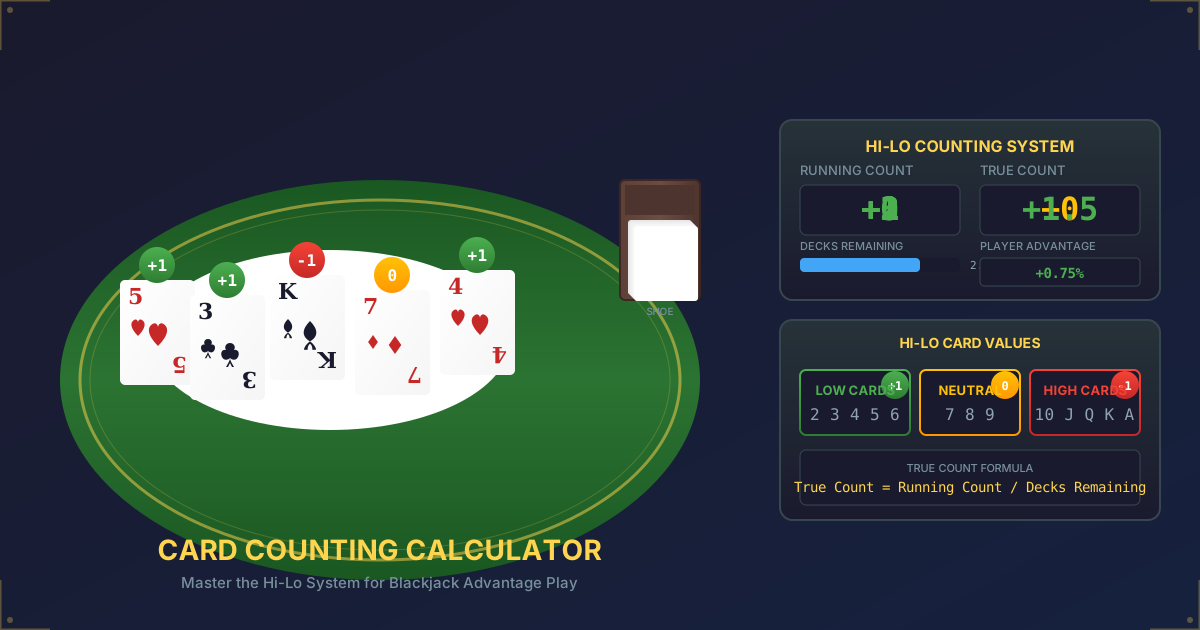
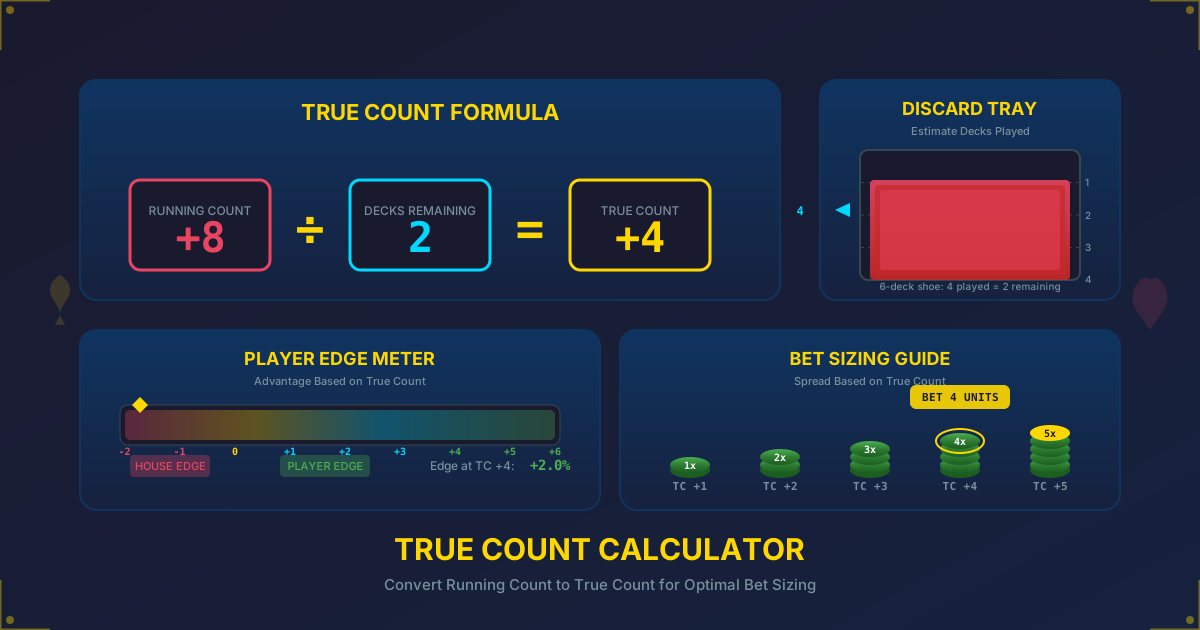
Card Counting Adjustments
Index Numbers for Splitting
| Pair | Standard | True Count Change |
|---|---|---|
| 10-10 vs 5 | Never | Split at TC +5 |
| 10-10 vs 6 | Never | Split at TC +4 |
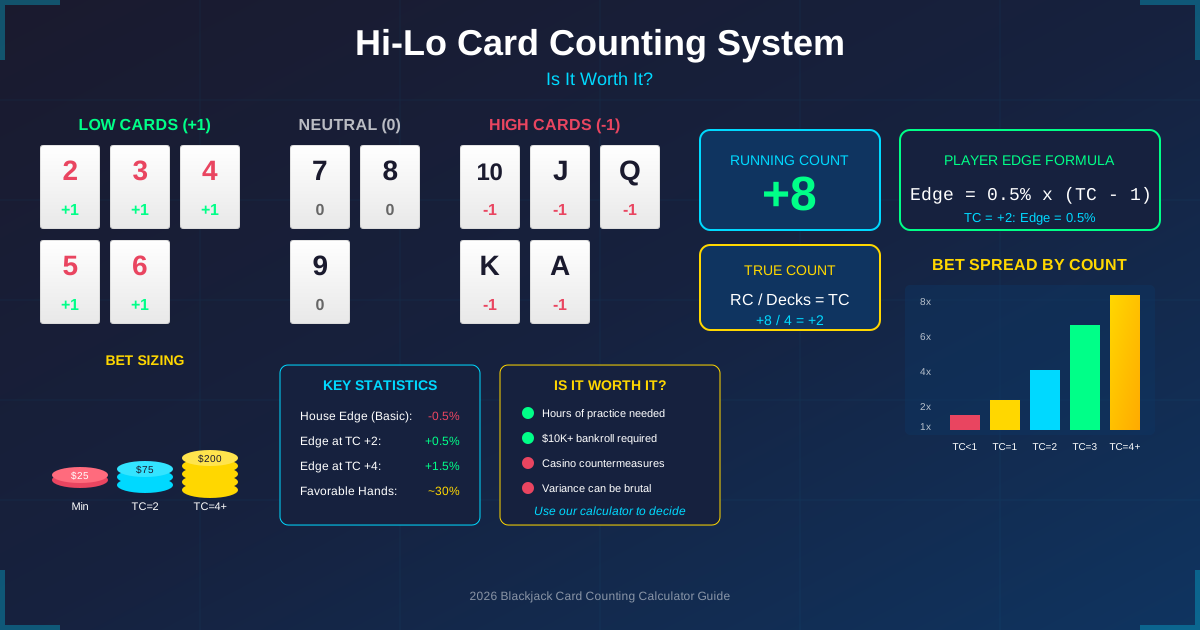
| 9-9 vs 7 | Stand | Split at TC +3 |
| 4-4 vs 4 | Hit | Split at TC +6 (DAS) |
Why Counts Change Splits
High count = more 10s remaining
More 10s makes:
- Splitting strong cards better
- Dealer bust more likely
- Your hands stronger
Frequently Asked Questions
Should I always split pairs?
No! Only split when EV(split) > EV(alternative). Never split 5-5 or 10-10. Many pairs only split vs certain dealer cards.
Does splitting double my bet?
Yes. You match your original bet for the second hand. Two hands means double exposure.
Can I split non-matching 10-values?
Usually yes (K-Q, 10-J). But strategy is identical: never split them.
What about splitting aces?
Always split. Most casinos limit to one card per ace. Still highly profitable.
Is 8-8 vs Ace really a split?
Yes. Hard 16 is terrible. Splitting reduces losses. You'll still lose often, but less than hitting/standing 16.
What if the casino doesn't allow DAS?
Some splits become incorrect (4-4 never splits, 2-2/3-3 need dealer 4+). Get a strategy card for your specific rules.
Pro Tips
-
Memorize always/never: A-A and 8-8 always; 10-10 and 5-5 never
-
Know DAS impact: Changes several marginal decisions
-
Don't fear 8-8 vs 10: It's correct, even though scary
-
Treat 5-5 as 10: Perfect doubling hand
-
Re-splitting is good: Take it when offered
Related Calculators
- Blackjack Basic Strategy Calculator - Complete strategy
- Blackjack Double Down Calculator - Doubling decisions
- Blackjack House Edge Calculator - Rule impact
- Blackjack EV Calculator - Hand expected value
- Blackjack Surrender Calculator - Surrender strategy
Conclusion
Splitting transforms one hand into two when the math favors it. Our calculator shows exactly when splitting creates value—from the always-split aces (two chances at 21) to the escape-hatch 8-8 split (fleeing terrible 16). Master these decisions and you'll extract maximum expected value from every pair dealt.
Calculate Splitting Strategy Now →
Splitting is the most visually dramatic blackjack decision—doubling your action on one hand. Our calculator reveals when that drama translates to profit and when it destroys value. Learn the chart, respect the never-splits, and watch your overall blackjack results improve.