ICM Poker Strategy: Master Tournament Equity and Win More Money (2026)
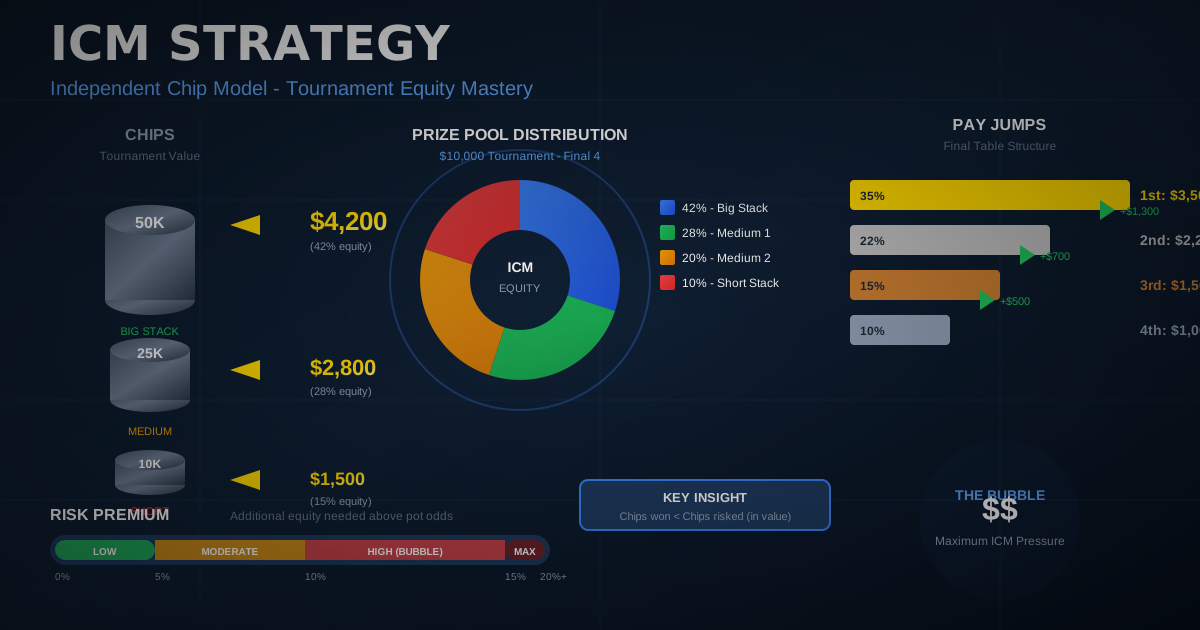
ICM (Independent Chip Model) is the mathematical framework that converts tournament chips into real dollar values—and understanding it is worth thousands of dollars in equity at every final table you reach. A player who masters ICM will consistently make more money than equally skilled opponents who ignore it.
The core insight is simple but profound: not all chips are worth the same in tournaments. Your first chip is worth the most, and each additional chip has diminishing value. This single concept changes everything about optimal tournament strategy, from how you approach the bubble to how you negotiate final table deals.
Consider two players with identical skills who both make a final table. The one who understands ICM might fold top pair in spots where the ICM-ignorant player calls—and the folder will profit more over time. That is the power of understanding tournament equity.
Calculate your exact ICM equity in any tournament situation with our free ICM Calculator.
What Is ICM in Poker?
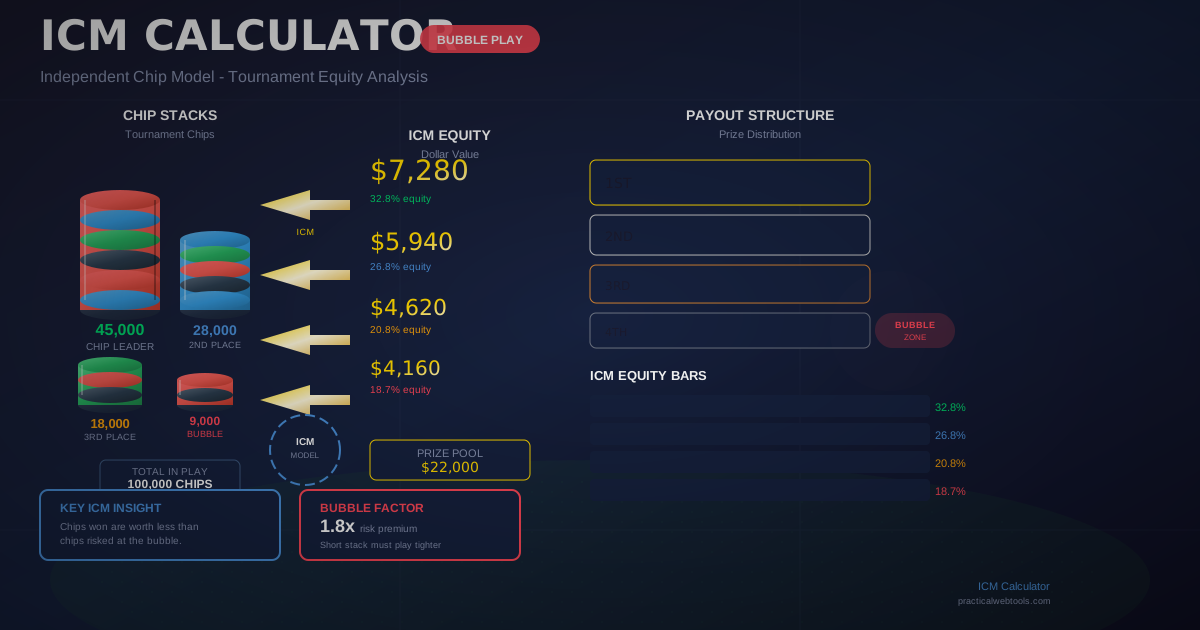
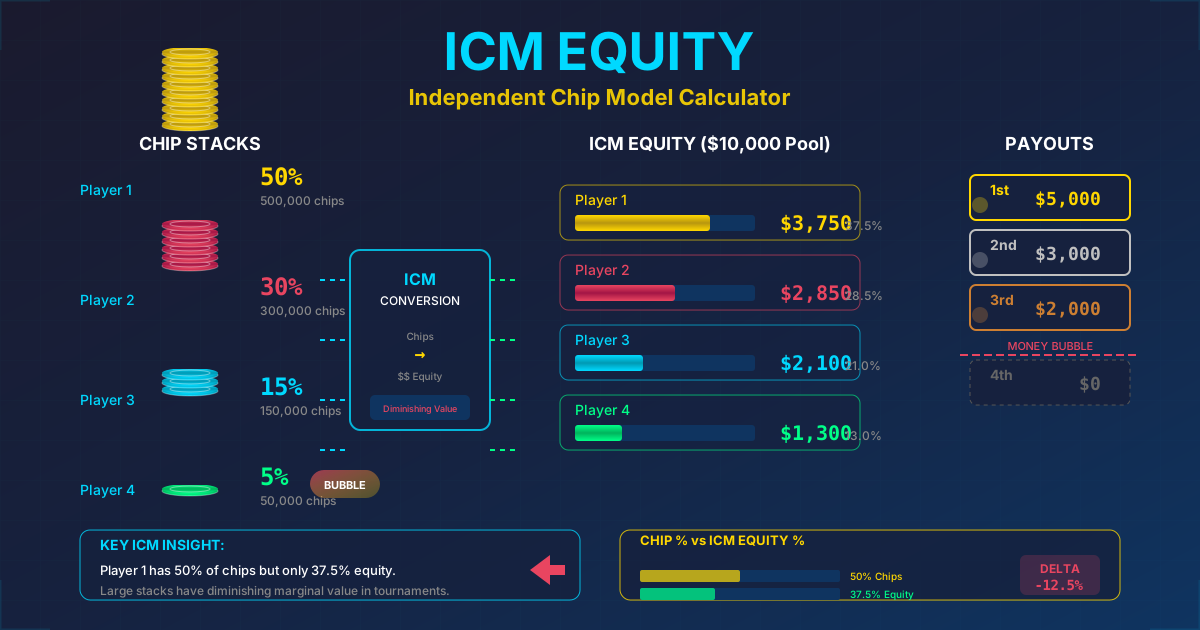
The Independent Chip Model (ICM) is a mathematical calculation that converts a player's tournament chip stack into its real-money value based on the current stack sizes of all remaining players and the tournament's payout structure.
ICM was originally developed by David Harville in a 1973 paper on horse racing probabilities. Mason Malmuth later adapted it for poker in 1987, and it has since become the foundational model for tournament poker strategy.
The key insight of ICM: chips you win are worth less than chips you might lose. This is because:
- If you double up, you do not double your equity—you gain less than double because of diminishing chip utility
- If you bust, you lose 100% of your equity
- Therefore, risk-taking must be compensated with additional expected value
A Simple ICM Example
Three players remain in a $100 tournament with $500 total prize pool:
- 1st place: $250
- 2nd place: $150
- 3rd place: $100
If all three players have exactly equal stacks (3,333 chips each), ICM calculates each player's equity at $166.67 (one-third of the prize pool).
Now imagine Player A has 5,000 chips while Players B and C have 2,500 each. Despite having 50% of the chips, Player A's ICM equity is only about $200-210 (roughly 40-42% of the prize pool)—not $250 (50%).
This gap between chip percentage and equity percentage defines ICM strategy.
Use our Tournament Payout Calculator to understand prize pool distributions before applying ICM concepts.
Why ICM Matters: The Risk Premium Concept
Risk Premium is the most important practical concept derived from ICM. It quantifies exactly how much more equity you need to profitably call an all-in due to ICM pressure.
Calculating Risk Premium
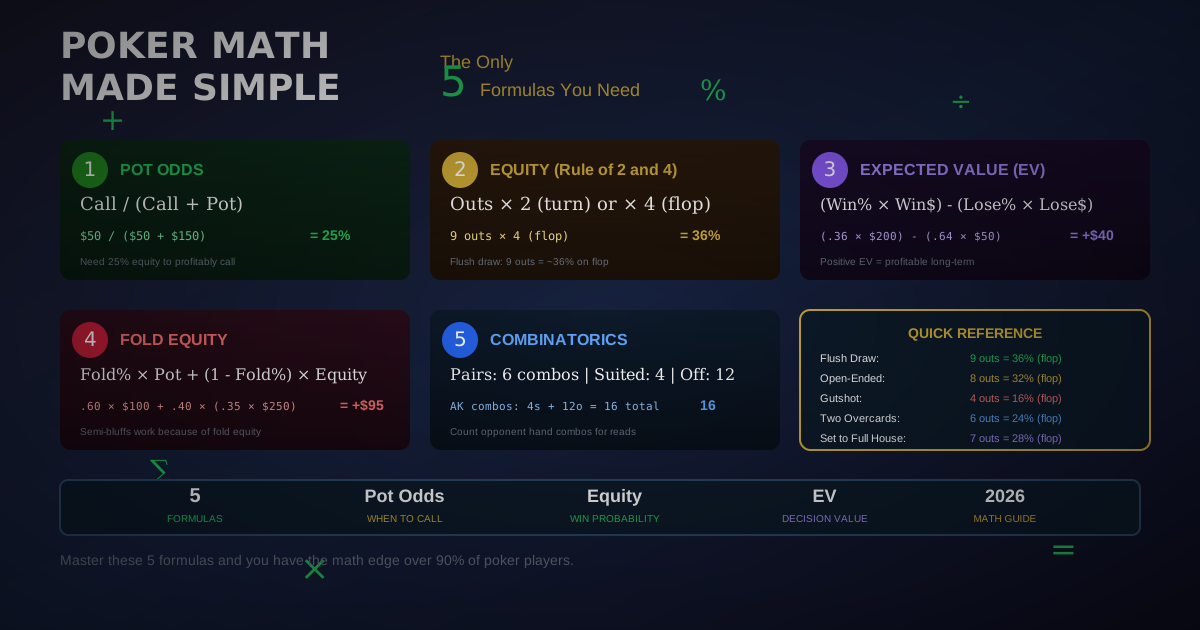
If you need 50% equity to call an all-in in a "chip EV" scenario (where chips equal value), and your Risk Premium is 12%, then you need 62% equity to make the same call profitable under ICM.
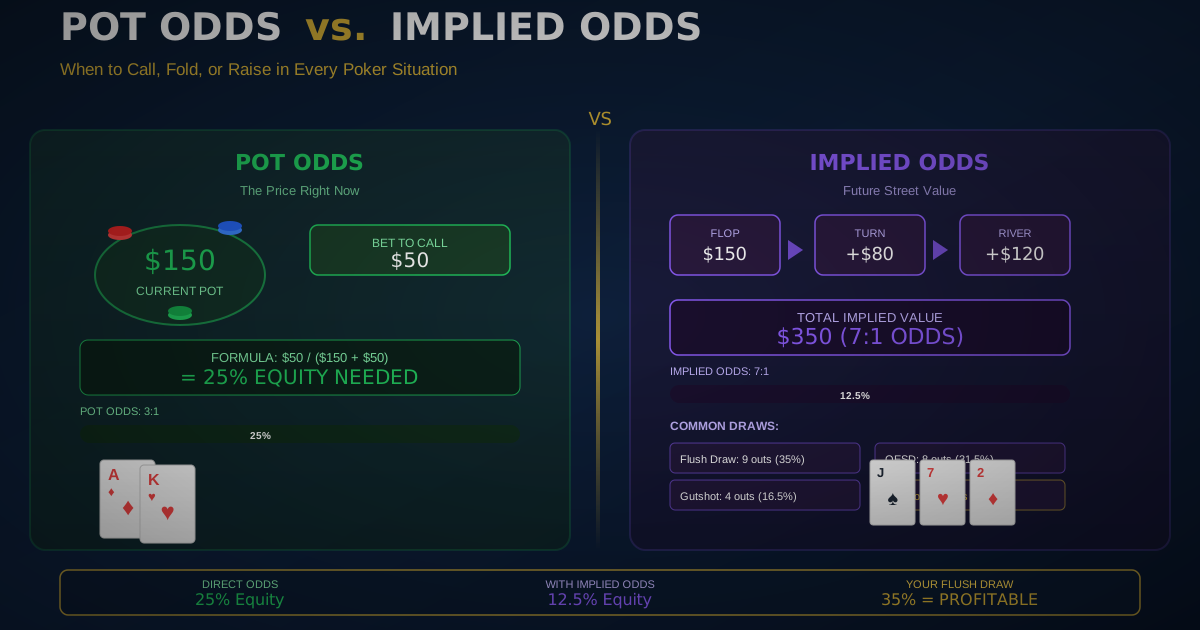
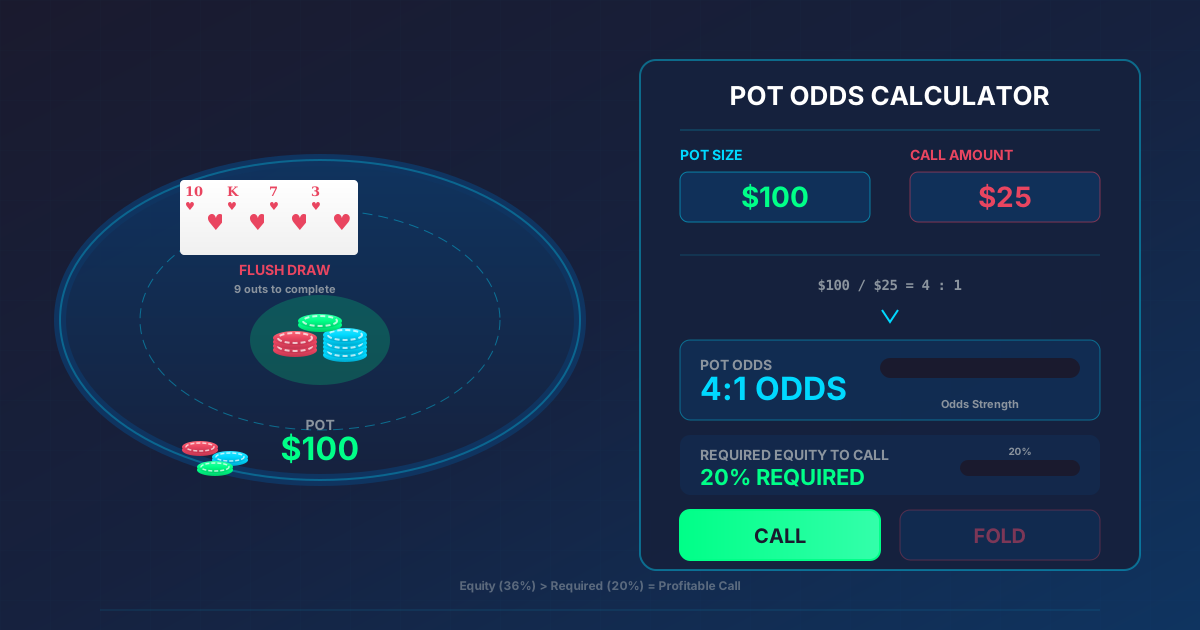
The formula is straightforward: Required Equity = Pot Odds + Risk Premium
What Affects Risk Premium?
Several factors influence your risk premium in any given situation:
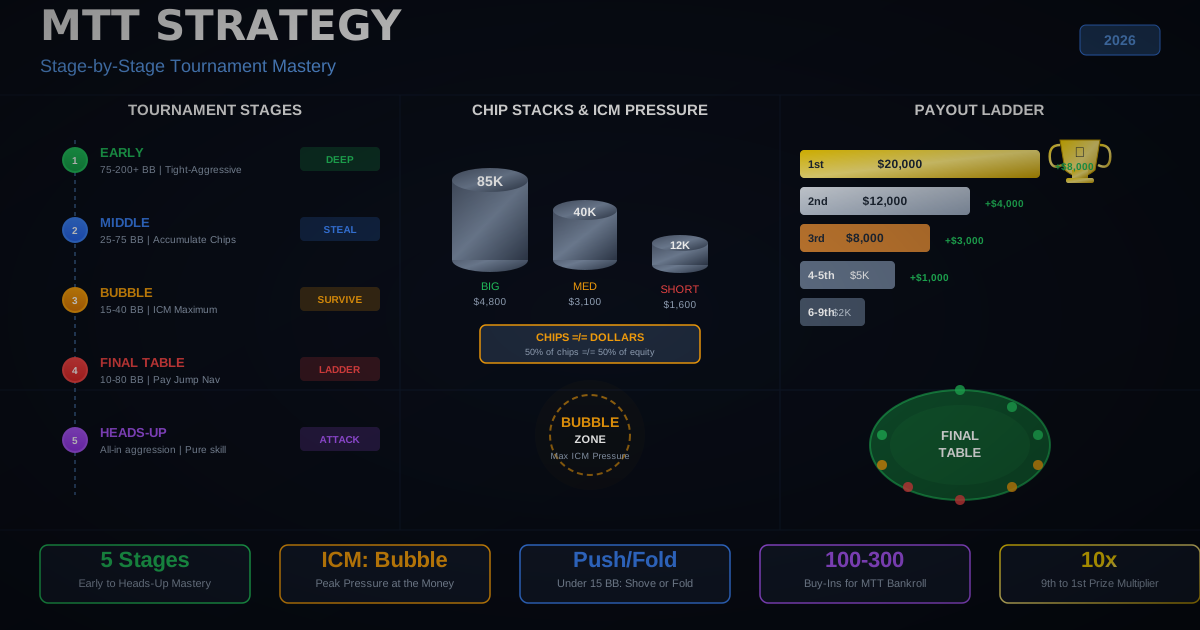
1. Tournament Stage
- Early tournament: Risk premium near 0%
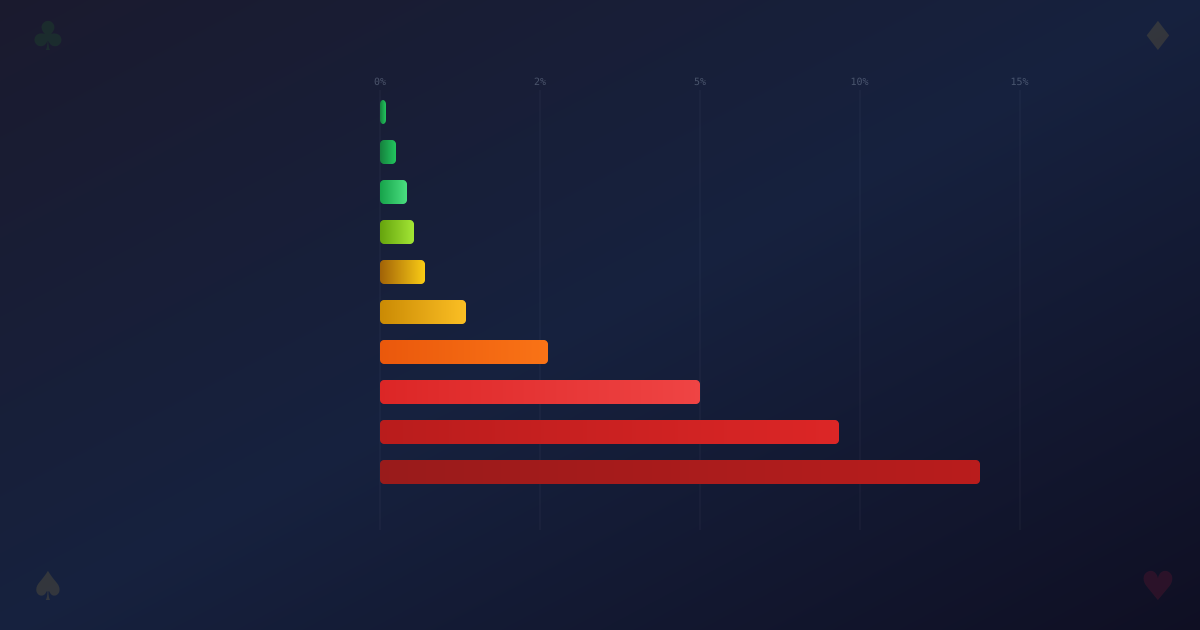
- Approaching bubble: Risk premium rises sharply (5-15%)
- On the bubble: Risk premium peaks (10-20%+)
- Final table: Risk premium varies by payout structure (5-15%)
2. Payout Structure
- Flat payouts (many similar prizes): Higher risk premium—survival matters more
- Top-heavy payouts (big first prize): Lower risk premium—playing for the win matters more
3. Stack Size Relative to Others
- Big stack: Lower risk premium—you can afford to gamble
- Medium stack: Highest risk premium—maximum to lose
- Short stack: Lower risk premium—need to double or bust anyway
4. Number of Players with Shorter Stacks
- More short stacks below you = higher risk premium (they might bust first)
- No short stacks = lower risk premium
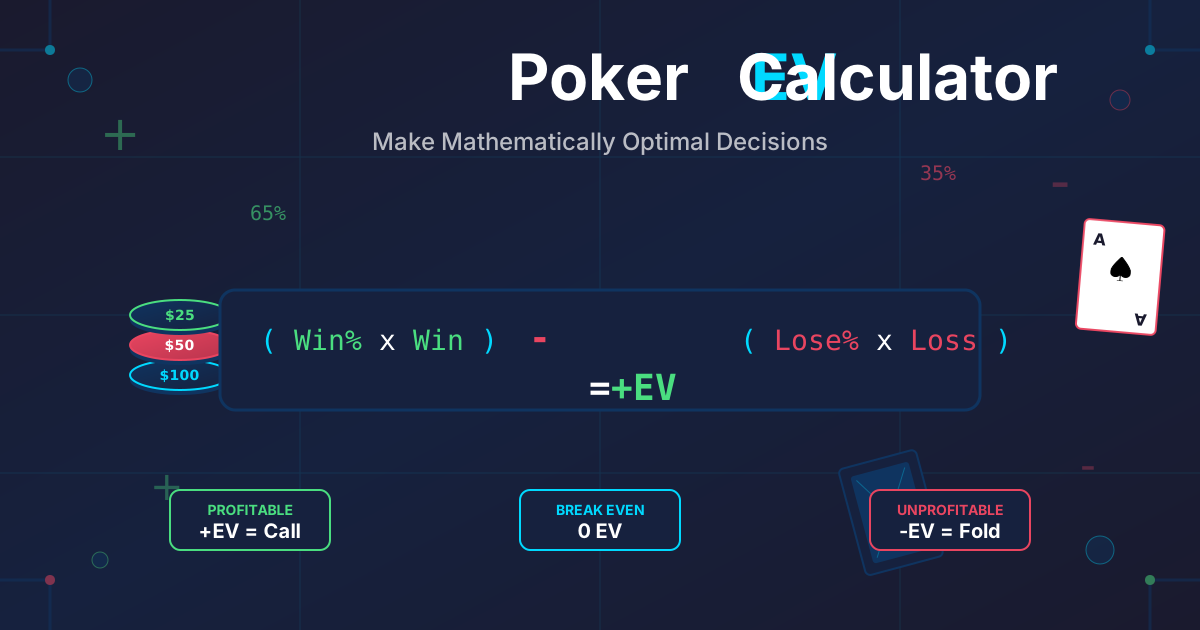
Calculate your exact risk premium in specific situations with our Poker EV Calculator.
ICM Strategy by Stack Size
Your stack size relative to the field dramatically changes optimal strategy under ICM.
Big Stack Strategy
As the chip leader or large stack at a final table, you have significant ICM advantages:
Pressure Opportunities:
- You can pressure medium stacks who cannot afford to play back without premium hands
- Your opponents' fear of busting creates fold equity that does not exist in cash games
- You can take small-edge spots because your risk of busting is minimal
Strategic Adjustments:
- Raise more liberally, especially against medium stacks
- Call wider against short stacks who shove with any two cards
- Avoid massive confrontations with other big stacks (ICM says let medium stacks battle)
Common Big Stack Mistakes:
- Calling off your stack in marginal spots against other big stacks
- Not applying enough pressure to medium stacks
- Playing too conservatively when you should be accumulating
Medium Stack Strategy
Medium stacks face the most ICM pressure because they have the most to lose relative to their potential gain.
The Medium Stack Dilemma: A medium stack busting before a short stack is a disaster. You would have jumped to a higher payout by doing nothing, but instead you took a risk and busted for less money.
Strategic Adjustments:
- Tighten your calling ranges significantly, especially against other big/medium stacks
- Only engage with premium hands in large pots
- Focus on picking up small pots with minimal risk
- Let short stacks bust while you protect your stack
When to Loosen Up:
- When you become the short stack (your risk premium drops)
- When the bubble has burst and short-term survival matters less
- When confronting a specific player who folds too much
Short Stack Strategy
Short stacks experience the least ICM pressure because they have the least to lose.
Short Stack Advantages:
- Your shoves put maximum pressure on medium stacks
- You need to double up regardless, so marginal spots become acceptable
- Your risk premium is lower—sometimes near zero
Strategic Adjustments:
- Shove wider than medium stacks can call
- Target players who cannot afford to gamble with you
- Accept that you will bust more often, but you will also double up more often
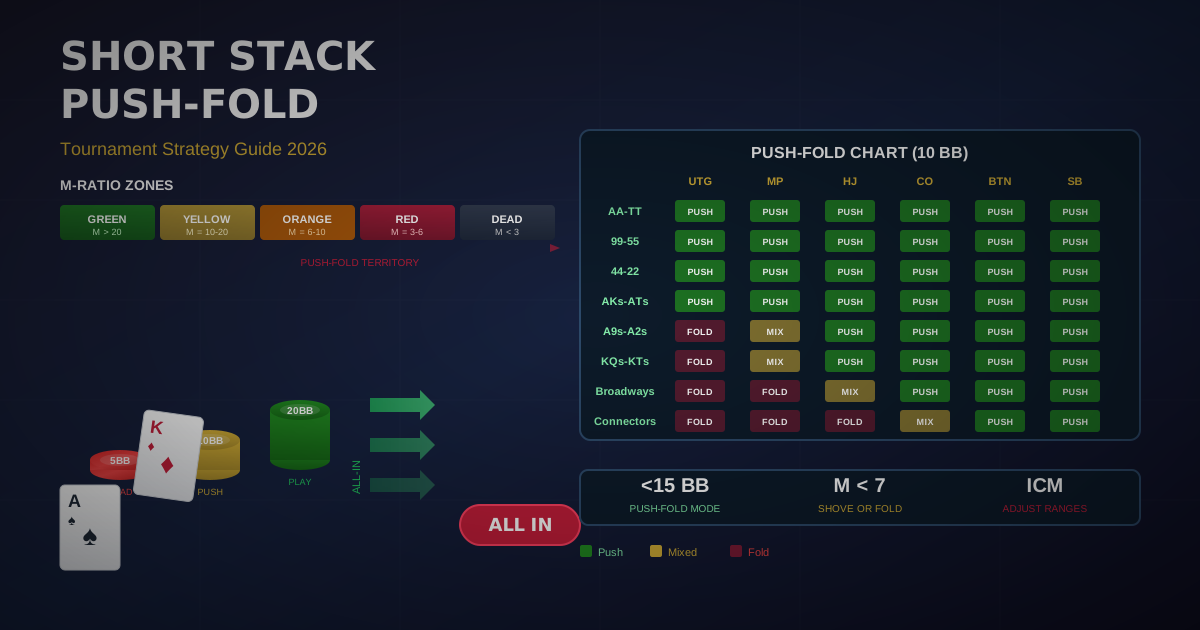
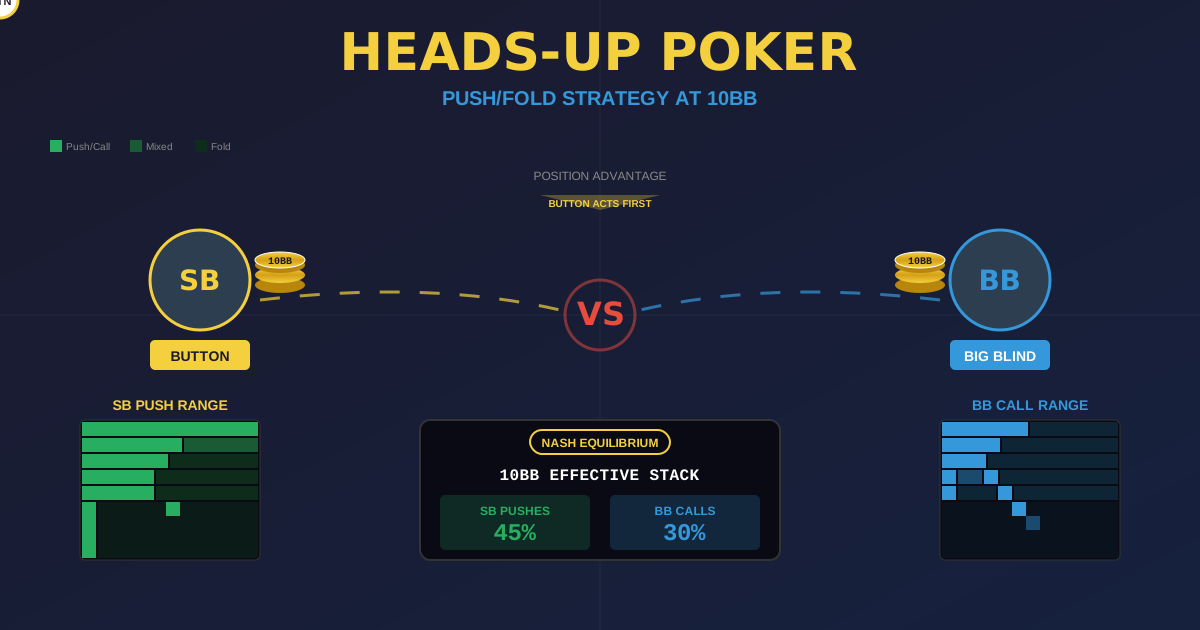
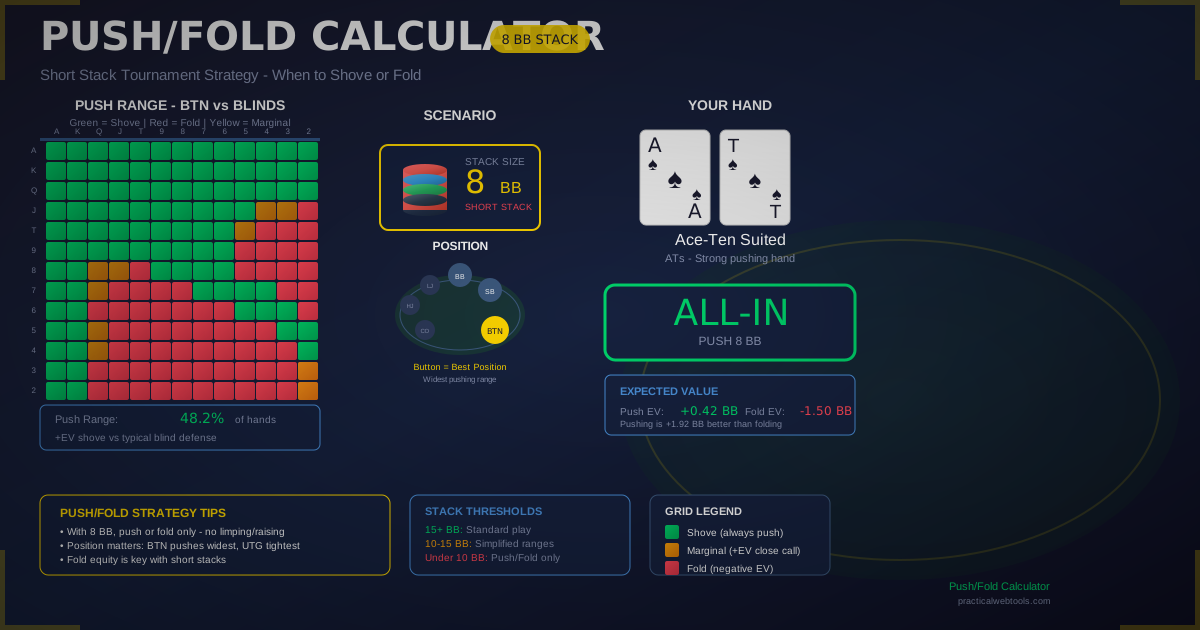
Use our Push/Fold Calculator to find optimal shoving ranges based on your stack depth and position.
ICM on the Bubble
The bubble—when one more elimination means everyone remaining gets paid—creates maximum ICM pressure. This is where ICM knowledge translates most directly into dollars.
Bubble Fundamentals
Everyone's Risk Premium Increases: On the bubble, every player faces the risk of being the last person to bust without prize money. Even big stacks cannot afford unnecessary risks because the guaranteed min-cash has real value.
Short Stacks Have Leverage: Paradoxically, very short stacks can sometimes be more aggressive on the bubble because medium stacks cannot call. A 5 big blind stack can shove 100% of hands against a 25 big blind stack and show profit.
Bubble Strategy by Position
Chip Leader:
- Raise aggressively but avoid all-in confrontations
- Target the players most desperate to make the money
- Steal blinds relentlessly from medium stacks
Medium Stacks:
- Fold everything except premium hands in large pots
- Only play against shorter stacks
- Let the short stacks battle each other
Short Stacks:
- Shove when you have fold equity against medium stacks
- Time your shoves for maximum pressure
- Avoid picking on other short stacks (they will call wider)
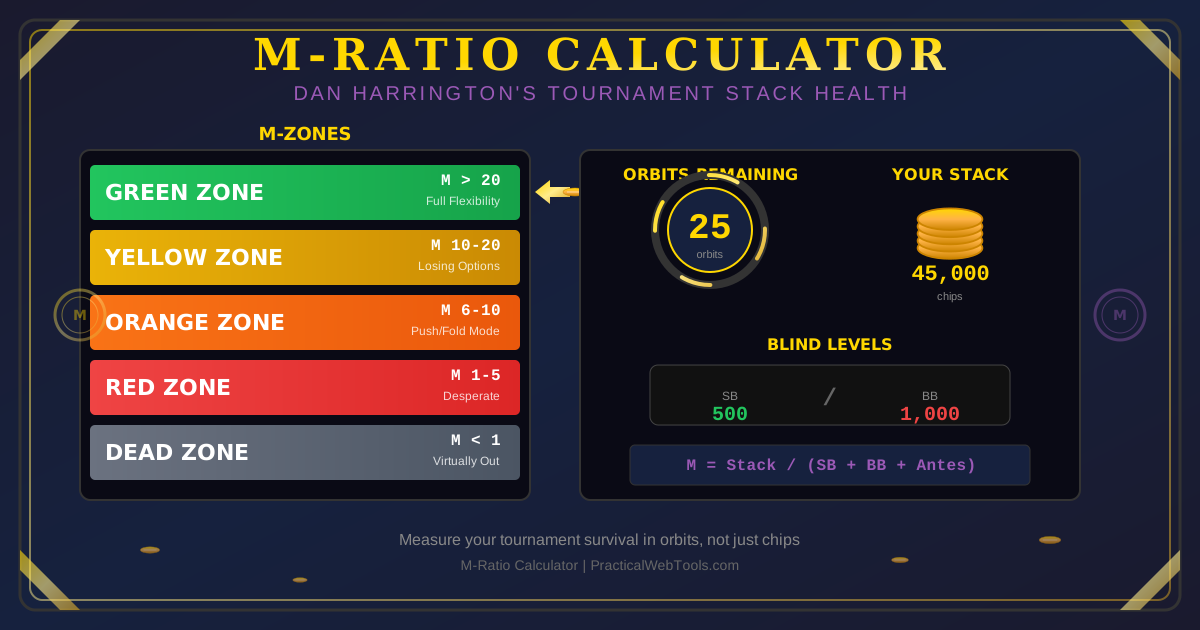
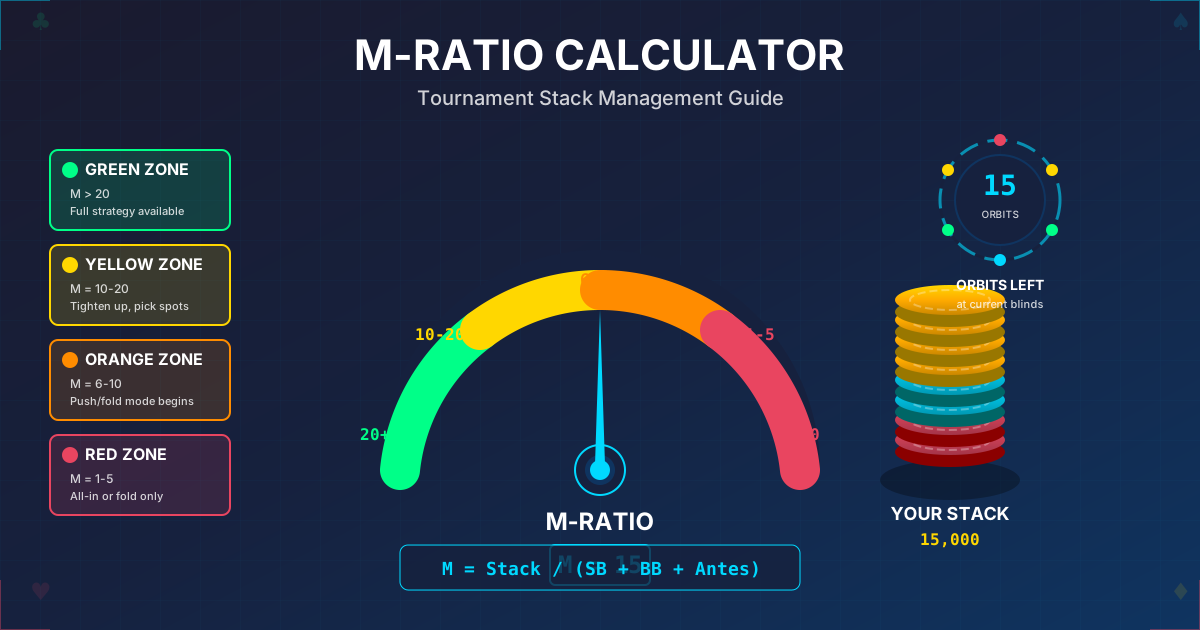
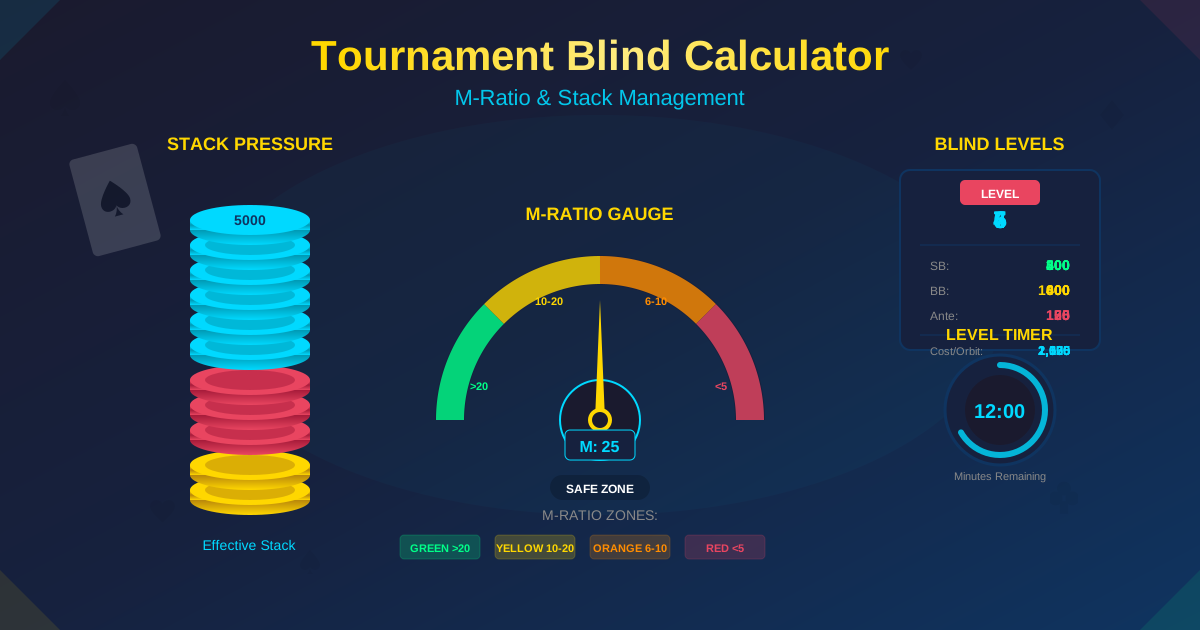
Calculate your M-Ratio to understand your tournament urgency with our M-Ratio Calculator.
ICM at the Final Table
Final table ICM differs from bubble ICM because everyone is already in the money. The focus shifts from survival to maximizing equity through the payout structure.
Pay Jump Awareness
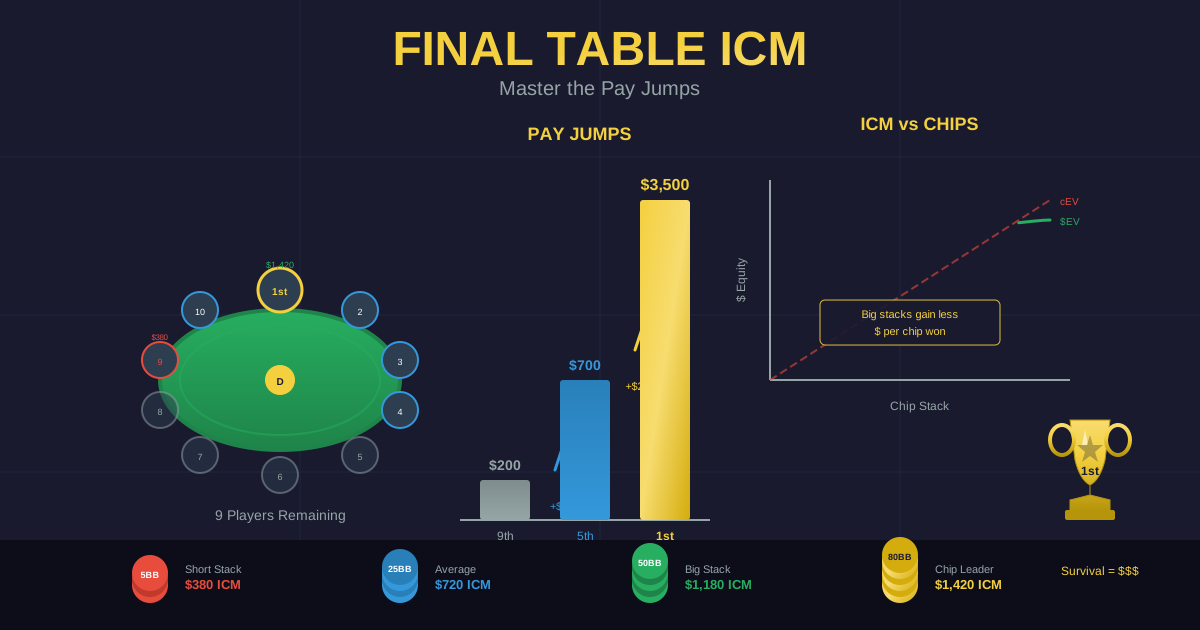
At a final table, every elimination creates a "pay jump" where everyone remaining moves up in equity. Your strategy should constantly account for these jumps:
Example Pay Jump Impact:
- 9 players left: 9th pays $500
- 8 players left: 8th pays $800 (8th place jump)
- 7 players left: 7th pays $1,200 (7th place jump)
If you are 8th in chips and bust 9th, you get $500. If the 9th place stack busts, you lock up at least $800—a $300 gain for doing nothing.
Heads-Up ICM
When two players remain, ICM is irrelevant. All chips are worth exactly the same because there are only two outcomes (1st or 2nd). Heads-up play should be pure chip EV optimization.
Final Table Deal Making
ICM is the standard method for calculating fair deals at final tables. When players want to negotiate a deal, ICM provides an objective starting point based on current equity.
Our ICM Calculator can calculate exact equity percentages for deal negotiations.
Common ICM Mistakes
Mistake #1: Ignoring ICM Entirely
Many recreational players treat tournament chips like cash game chips. They call shoves with hands that are "getting the right price" in chip EV without considering their ICM loss from busting.
The Cost: Thousands of dollars in equity over a tournament career.
Mistake #2: Over-Applying ICM Early in Tournaments
ICM pressure is minimal when the bubble is far away. Playing too conservatively in the early stages costs you chips you need to survive deep.
The Fix: Play close to chip EV early, shift to ICM thinking as the bubble approaches.
Mistake #3: Not Adjusting for Payout Structure
A top-heavy structure (winner takes 40%+) requires more aggression than a flat structure (many similar payouts). One-size-fits-all ICM play leaves money on the table.
Mistake #4: Failing to Pressure Medium Stacks
Big stacks often play too passively against medium stacks. These players will fold premium hands to protect their equity—exploit this mercilessly.
Mistake #5: Calling Too Wide as a Medium Stack
Medium stacks frequently bust trying to "pick off" short stack shoves with marginal hands. The ICM math rarely supports these calls.
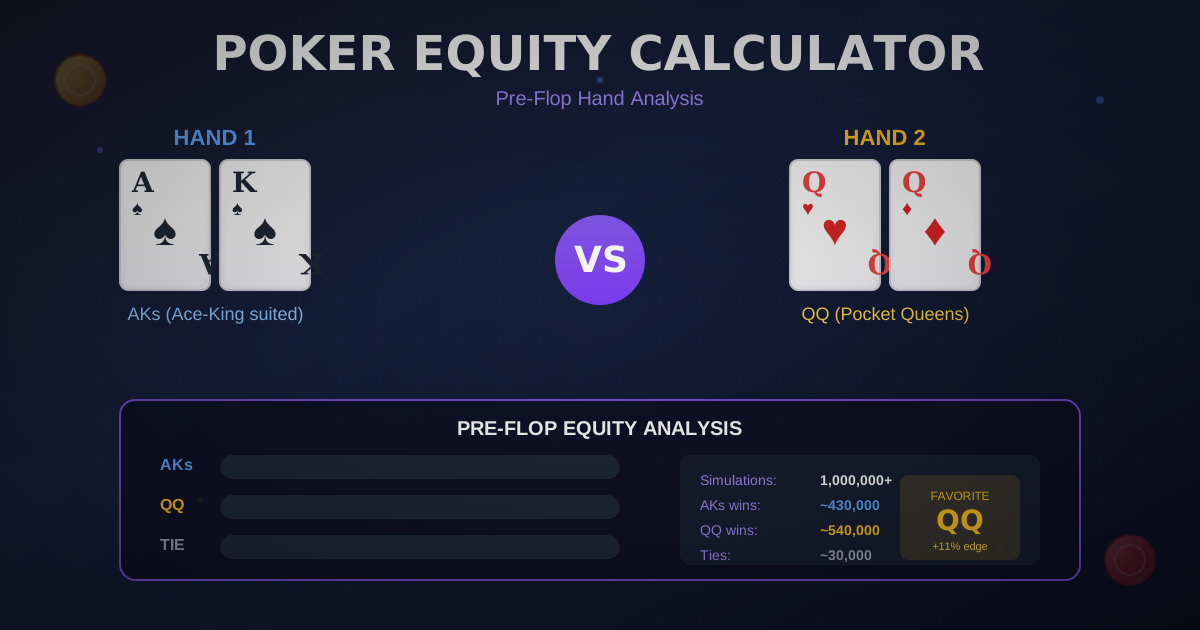
Analyze your hand decisions with our Poker Equity Calculator.
Advanced ICM Concepts
ICM Spots Away from All-In Decisions
ICM affects all decisions, not just shove/fold spots:
Sizing Adjustments:
- Bet smaller when ICM says opponents will fold more
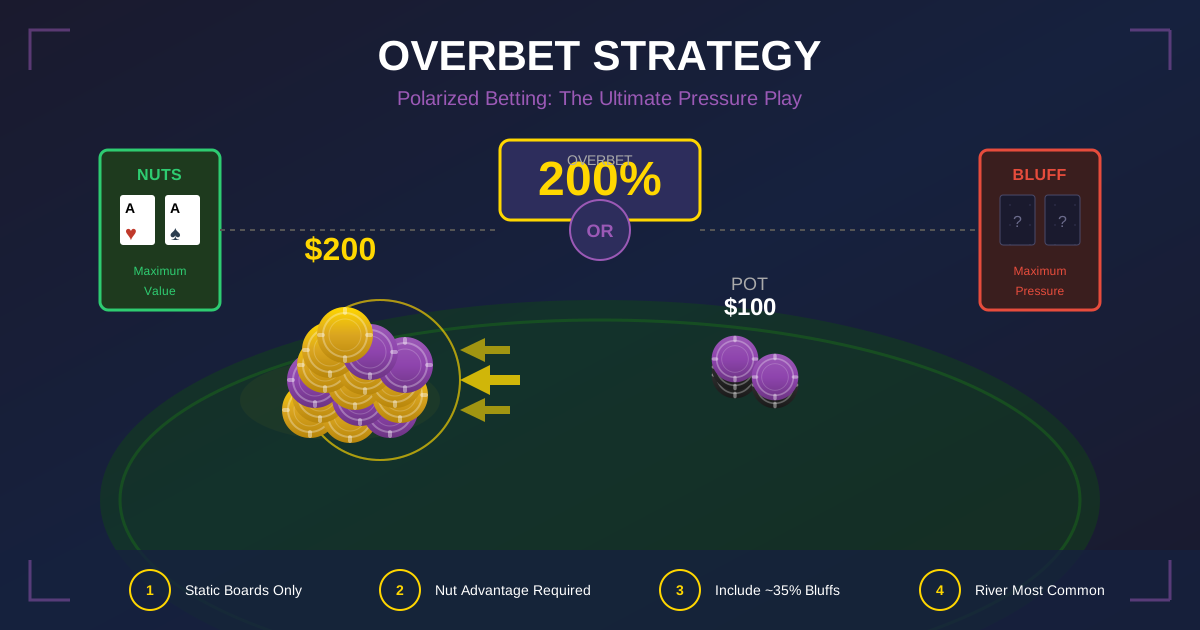
- Overbet when opponents have too much equity to call
Checking and Calling:
- Check more often to avoid bloating pots
- Call instead of raise when the pot is already large enough
Future Game Dynamics
ICM calculations assume the tournament ends after the current hand. In reality, you will play more hands, and your decisions affect future dynamics:
- Showing down a bluff affects your image
- Busting a player changes the table dynamics
- Stack changes affect everyone's ICM
Experienced players factor these dynamics into their ICM decisions.
Multi-Table ICM
In multi-table situations (like approaching a money bubble), you must consider what is happening at other tables:
- A short stack at another table affects your risk premium
- Hand-for-hand play changes all calculations
- Satellite situations have extreme ICM implications
Using ICM Calculators Effectively
When to Use an ICM Calculator
ICM calculators are most valuable for:
- Post-session analysis: Review key decisions from tournaments
- Deal negotiations: Calculate fair equity splits
- Study sessions: Build intuition for ICM spots
- Spot-checking decisions: Verify your reads were correct
Use our ICM Calculator to analyze specific tournament situations.
What Inputs You Need
To calculate ICM equity, you need:
- All remaining stack sizes
- Complete payout structure
- The specific hand/situation (for decision analysis)
Limitations of ICM
ICM has known limitations:
- Assumes equal skill: ICM treats all opponents as equally skilled
- Ignores position: Chip utility varies by position at the table
- Static calculation: Does not account for future hands
- Perfect information: Requires accurate stack counts
Despite these limitations, ICM remains the best available model for tournament equity.
ICM in Different Tournament Formats
Sit & Gos
Sit & Gos have extreme ICM implications because the bubble happens with 3-4 players remaining. Every decision from 5 players onward has significant ICM impact.
Key SNG ICM Points:
- Never bust 4th when 3rd is attainable
- Heads-up revert to chip EV
- Stack relationships are everything
Satellites
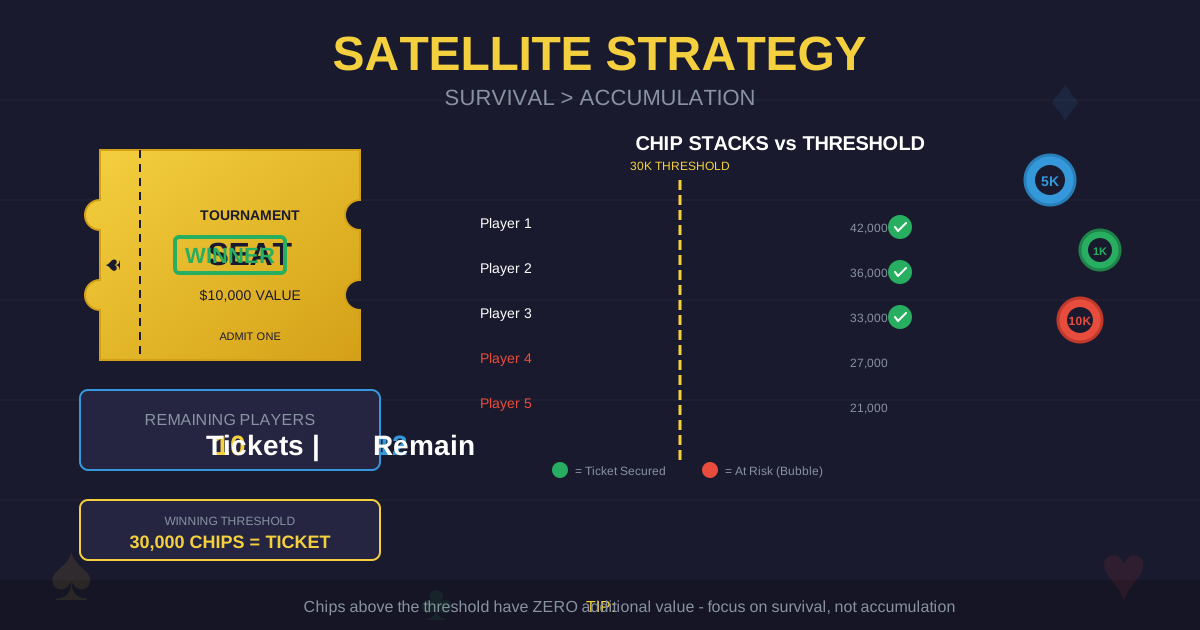
Satellites have the most extreme ICM of any format because all finishing positions that qualify pay exactly the same. If a satellite awards 10 seats, finishing 1st-10th pays identically.
Satellite ICM Strategy:
- Fold everything once you have a comfortable stack
- Never risk your stack once you can safely qualify
- Only play when forced or when it costs nothing
Bounty/PKO Tournaments
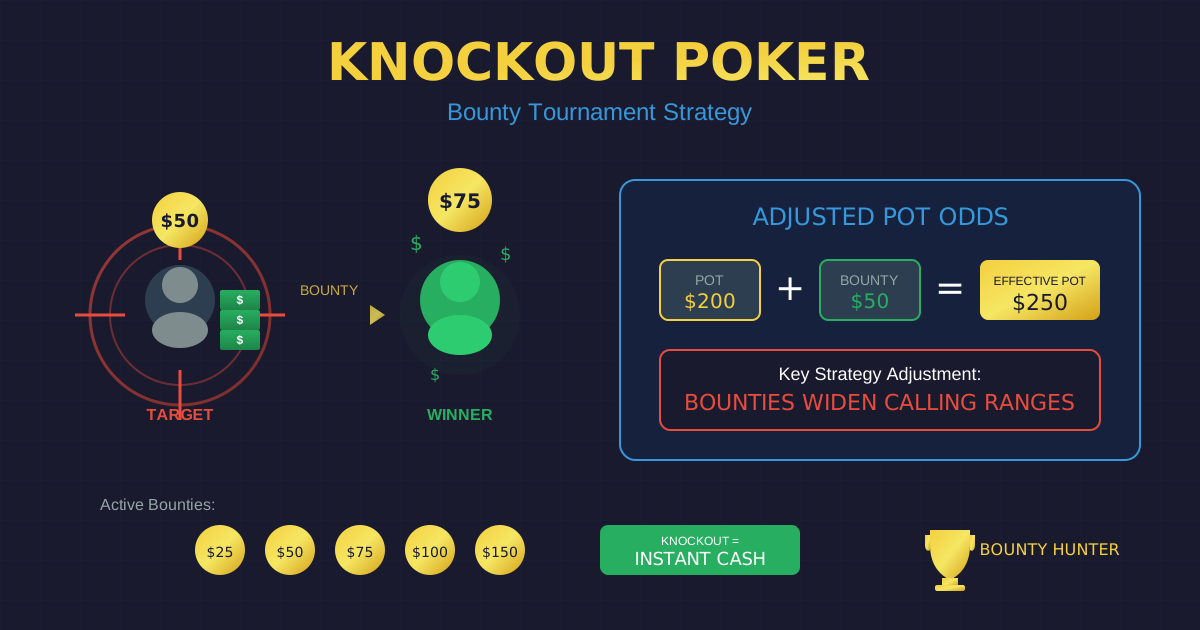
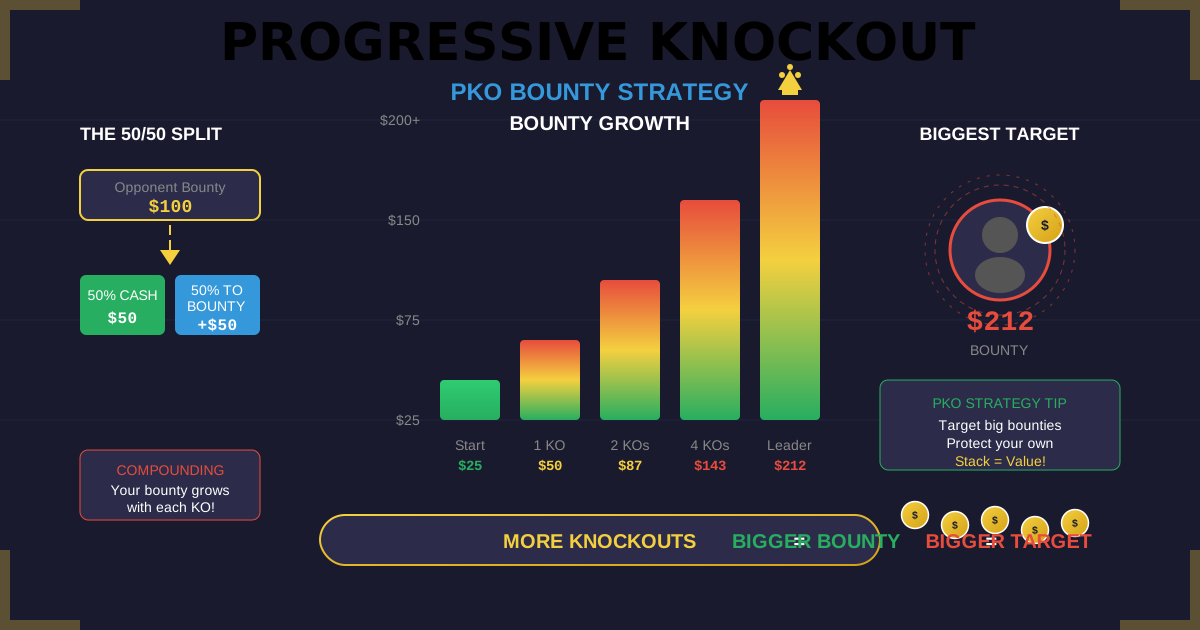
Progressive Knockout tournaments add bounty considerations to ICM. The bounty value of eliminating someone offsets some ICM loss:
Bounty ICM Adjustments:
- Call wider when bounties are large
- Your own bounty increases your risk of being targeted
- Late-stage PKO approaches standard ICM
ICM Study Resources
Building ICM Intuition
The best way to improve ICM understanding is repeated practice with calculators and training tools. Over time, you develop intuition for:
- Approximate risk premiums in common spots
- Which hands to call/fold on bubbles
- Deal negotiation starting points
Tools for ICM Study
Our gambling tools suite includes several calculators useful for ICM study:
- ICM Calculator: Direct ICM equity calculations
- Push/Fold Calculator: Optimal short-stack ranges
- Poker Equity Calculator: Hand vs. range equity
- M-Ratio Calculator: Tournament stack urgency
- Tournament Payout Calculator: Payout structure analysis
Frequently Asked Questions
What does ICM stand for in poker? ICM stands for Independent Chip Model. It is a mathematical model that calculates the real-money value of tournament chip stacks based on remaining player stacks and the payout structure.
How do I calculate ICM? ICM calculations are complex and typically require software. Use our ICM Calculator to input stack sizes and payouts for instant equity calculations.
When does ICM matter most? ICM matters most on the bubble (when one elimination means everyone gets paid) and at final tables where pay jumps are significant. ICM is negligible in early tournament stages.
Should I always play according to ICM? ICM provides mathematically optimal plays assuming static situations. In practice, factor in opponent tendencies, table dynamics, and your read on specific players.
What is the difference between chip EV and ICM? Chip EV treats all chips equally (like cash game chips). ICM recognizes that tournament chips have diminishing value and adjusts accordingly.
How much does ICM cost if I ignore it? Ignoring ICM can cost 5-15% of your potential winnings over a tournament career. For serious players, this represents thousands of dollars.
Do professionals use ICM? Yes. All professional tournament players understand and apply ICM concepts. Many study with ICM trainers and use calculators for deal negotiations.
What is risk premium in ICM? Risk premium is the additional equity you need above pot odds to make a call profitable under ICM. It quantifies how much ICM pressure exists in a given spot.
Master ICM for Tournament Success
Understanding ICM separates breakeven tournament players from consistent winners. The concepts are not intuitive—our instincts from cash games and everyday life do not translate to tournament poker.
The good news: ICM is learnable. With dedicated study using calculators and training tools, you can develop accurate intuition for:
- When to tighten dramatically (bubble, medium stack)
- When to apply pressure (big stack, short stack leverage)
- How to negotiate deals fairly
- Which spots are closer than they appear
Start building your ICM skills today with our free ICM Calculator. Input your recent tournament situations and see how close your decisions were to optimal. Then use our Push/Fold Calculator to master short-stack play and our M-Ratio Calculator to understand tournament urgency.
The money you save (and earn) from better ICM decisions will compound over your tournament career. One correct ICM fold or shove can be worth more than the entire entry fee—and those spots come up multiple times per tournament.