How to Bet Underdogs Profitably: When Long Shots Actually Have Value (2026)

The favorite-longshot bias is real, persistent, and one of the most well-documented edges in all of sports betting. Academic research spanning decades -- from the Journal of Political Economy to the National Bureau of Economic Research -- has confirmed that the betting public systematically overpays for favorites and undervalues underdogs. The bias is not a theory. It is an empirical regularity observed across horse racing, football, basketball, baseball, hockey, and soccer markets worldwide. And for the disciplined bettor who understands when and how to exploit it, it remains one of the most reliable paths to long-term profitability.
This is not a guide about blindly betting every underdog on the board. That approach will drain your bankroll faster than backing -800 favorites on parlays. The edge exists in specific, repeatable situations where the market misprices underdogs -- where public money has inflated the favorite's line beyond its true probability, where situational factors create exploitable inefficiencies, and where the plus-money payoff more than compensates for the lower win rate. Finding those spots, sizing them correctly, and maintaining the discipline to endure the higher variance that comes with underdog betting -- that is how professionals extract consistent profit from the long side of the board.
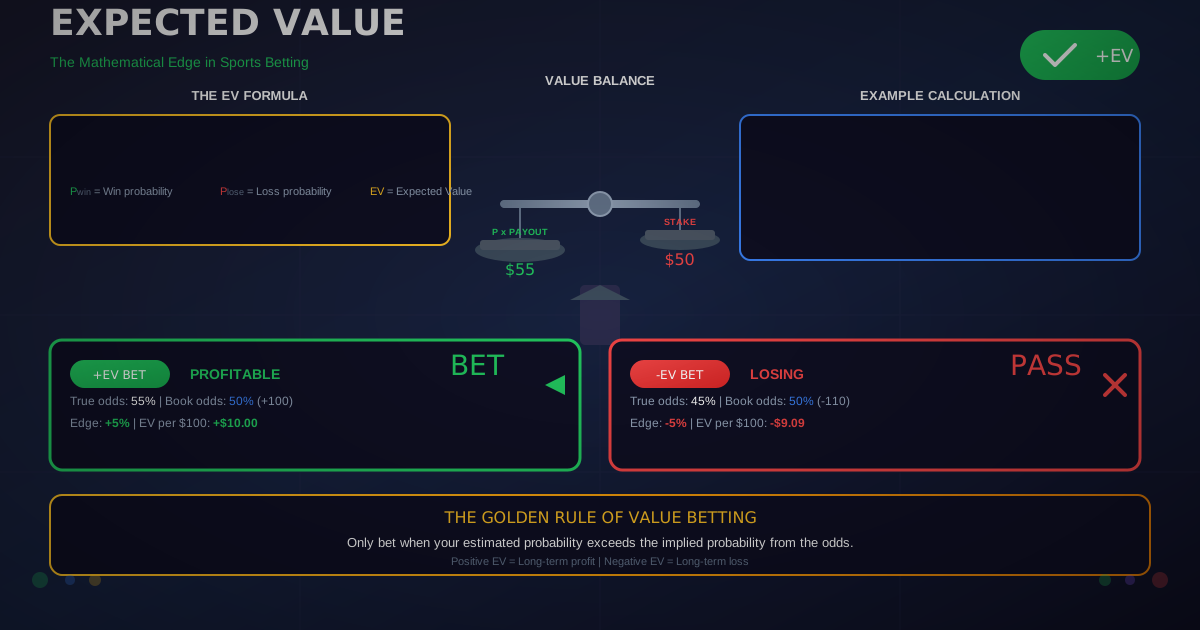
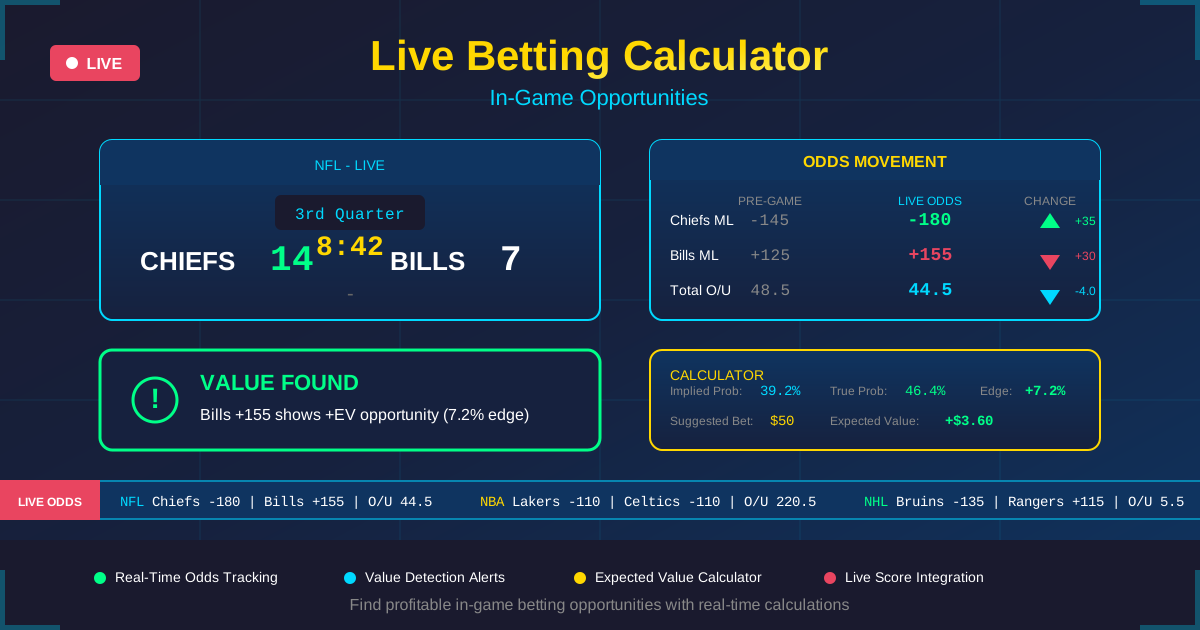
Calculate whether any underdog bet has positive expected value with our free Expected Value Calculator.
The Favorite-Longshot Bias Explained
The favorite-longshot bias describes a pattern where bets on longshots (underdogs) lose proportionally more than their true probability warrants, while bets on favorites lose proportionally less. In simpler terms, the public overestimates how often longshots will hit and underestimates how reliable favorites actually are -- but paradoxically, this creates situations where strategic underdog bets carry outsized value relative to their price.
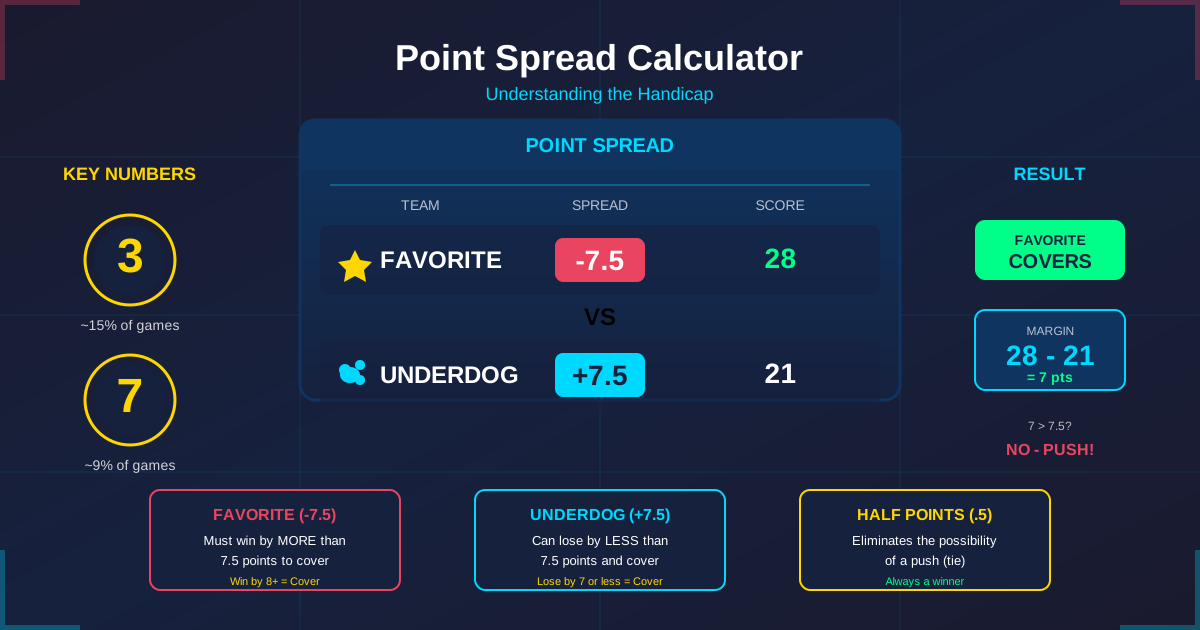
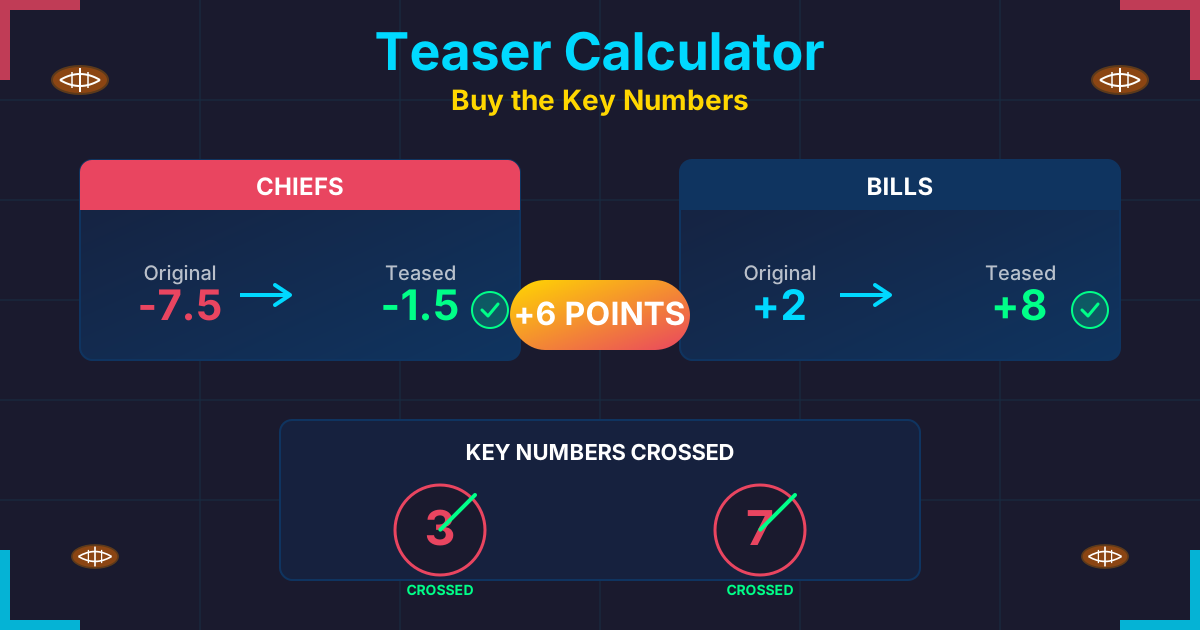
The mechanism works like this: sportsbooks set their lines based on where they expect the money to flow, not just where the true probability lies. When 75% of the public loads up on the Kansas City Chiefs at -7.5, the book shades the line toward -8 or -8.5, creating value on the other side. The underdog does not need to win the game outright to cover an inflated spread. It just needs to keep it close -- something that happens far more often than the casual bettor believes.
What the Research Shows
| Study / Source | Key Finding | Year |
|---|---|---|
| Snowberg & Wolfers (NBER/JPE) | Probability misperception drives the bias; bettors overweight small probabilities consistent with prospect theory | 2010 |
| Whelan (Economica) | Risk aversion by bookmakers in competitive markets produces systematic favorite-longshot bias in fixed-odds markets | 2024 |
| Shin (Management Science) | Longshot bias is a context effect -- it disappears when bettors evaluate each wager in isolation rather than comparing payoffs | 2023 |
| College Football/Basketball Study (ScienceDirect) | Favorite-longshot bias confirmed in fixed-odds college sports markets with statistical significance | 2017 |
| Green, Lee & Rothschild (Berkeley) | The bias is modulated by market structure -- two-outcome markets sometimes show reverse bias; multi-outcome markets consistently show longshot overpricing | 2015 |
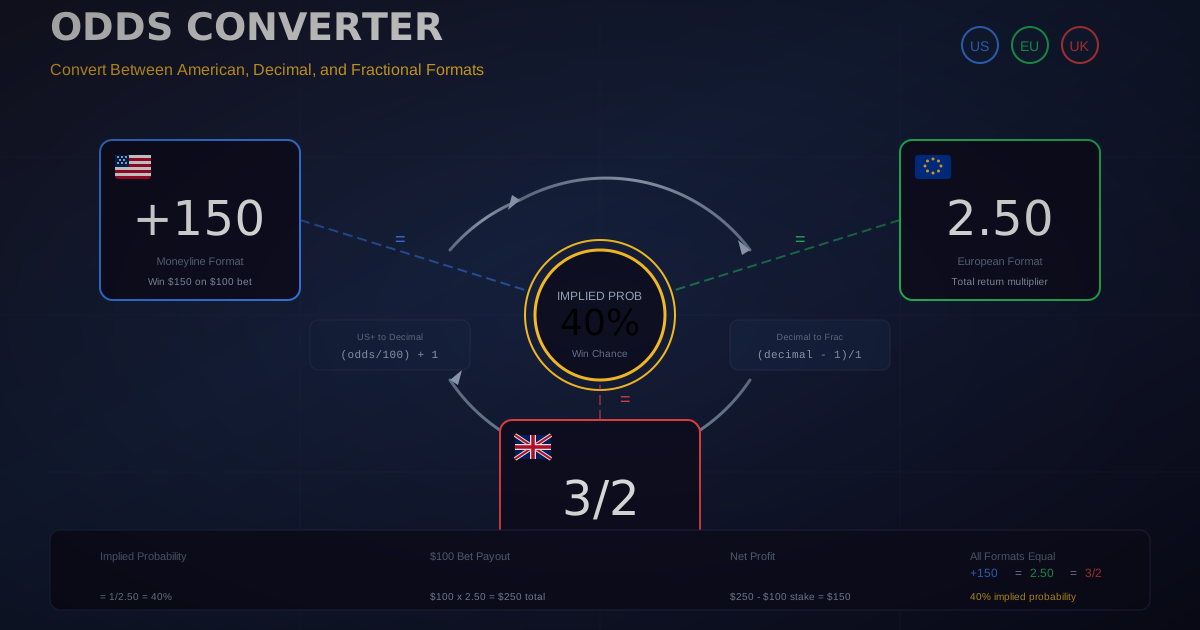
Convert between American, decimal, and fractional odds to understand any underdog price with our Odds Converter.
The practical takeaway: the market is not perfectly efficient. Favorites are overpriced in certain contexts, and underdogs are underpriced in others. Your job is to identify those contexts systematically rather than relying on gut feelings about who "deserves" to be an underdog.
Why the Public Overvalues Favorites
Understanding why the bias persists is essential to exploiting it. The public's preference for favorites is driven by several cognitive and structural factors that are unlikely to disappear anytime soon.
Cognitive Biases at Work
Recency bias and narrative gravity. The team that won last week's nationally televised game gets disproportionate public attention and betting action. Patrick Mahomes throws four touchdowns on Sunday Night Football, and the following week 78% of the public backs the Chiefs regardless of the spread. The narrative overwhelms the number.
Loss aversion asymmetry. Losing a bet on a -3 favorite that wins by 2 feels like bad luck. Losing a bet on a +7.5 underdog that loses by 10 feels like a bad decision. Bettors avoid the psychological pain of "choosing the wrong team" by gravitating toward the perceived better team, even when the price does not justify it.
Win rate fixation over ROI. Recreational bettors track how often they win, not how much they profit. A bettor who goes 7-3 on favorites at -110 feels successful (net: +$330 on $100 bets) while a bettor who goes 4-6 on underdogs averaging +180 feels like a loser (net: +$120 on $100 bets) -- even though both are profitable, the underdog bettor's ROI percentage is often competitive or superior given the right selection criteria.
Structural Market Factors
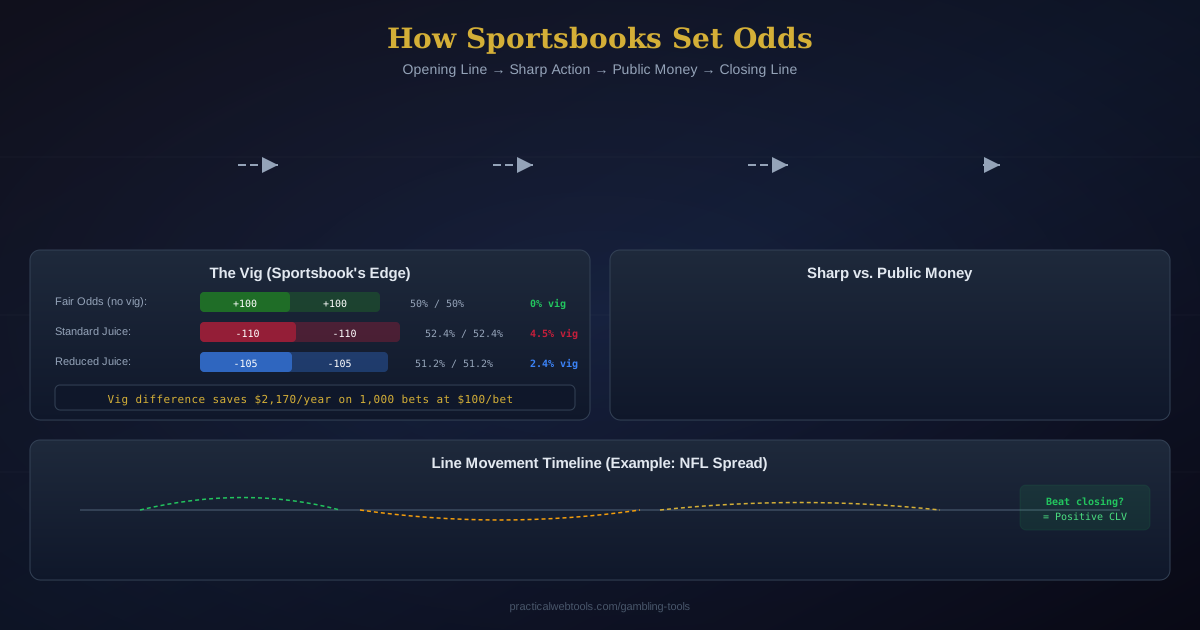
Sharp money vs. public money divergence. Research consistently shows that when there is a significant gap between the percentage of bets on a side and the percentage of money on that side, sharp money is involved. Data shows public favorites cover only about 47.2% of the time while public underdogs cover approximately 51.8% of the time. When sharp money moves the opposite direction from public consensus, those contrarian plays have historically won around 54.1% of the time.
| Metric | Favorites | Underdogs |
|---|---|---|
| Avg. public bet % | 65-75% | 25-35% |
| ATS cover rate (public sides) | ~47.2% | ~51.8% |
| Sharp contrarian play win rate | -- | ~54.1% |
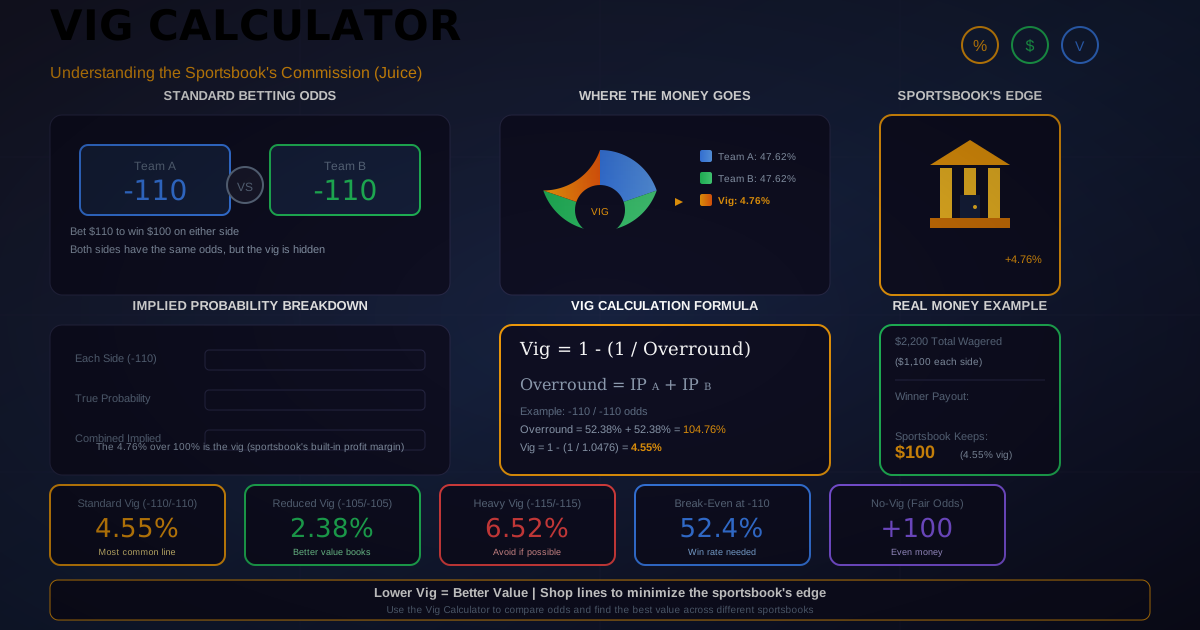
| Typical vig cost at -110 | 4.55% | 4.55% |
| Breakeven ATS cover needed | 52.4% | 52.4% |
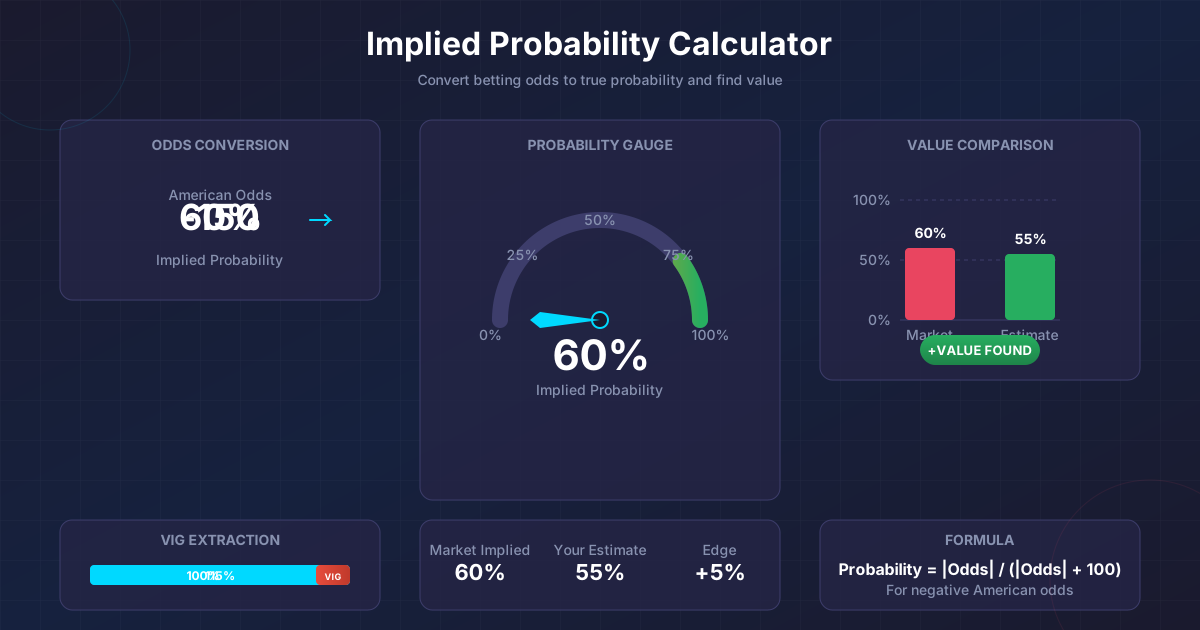
Calculate the implied probability behind any betting line with our Implied Probability Calculator.
The numbers are clear: the public's bias toward favorites creates a measurable edge on the underdog side -- not on every game, but in aggregate across the right situations.
Sport-by-Sport Underdog Analysis
Not all underdog bets are created equal. The dynamics of underdog profitability vary significantly across sports due to differences in scoring variance, season length, parity, and market structure.
NFL: The Spread Sport
The NFL is the most heavily bet sport in North America, and it is also the sport where underdog betting has the deepest research base. The key distinction is between spread (ATS) and moneyline betting for underdogs.
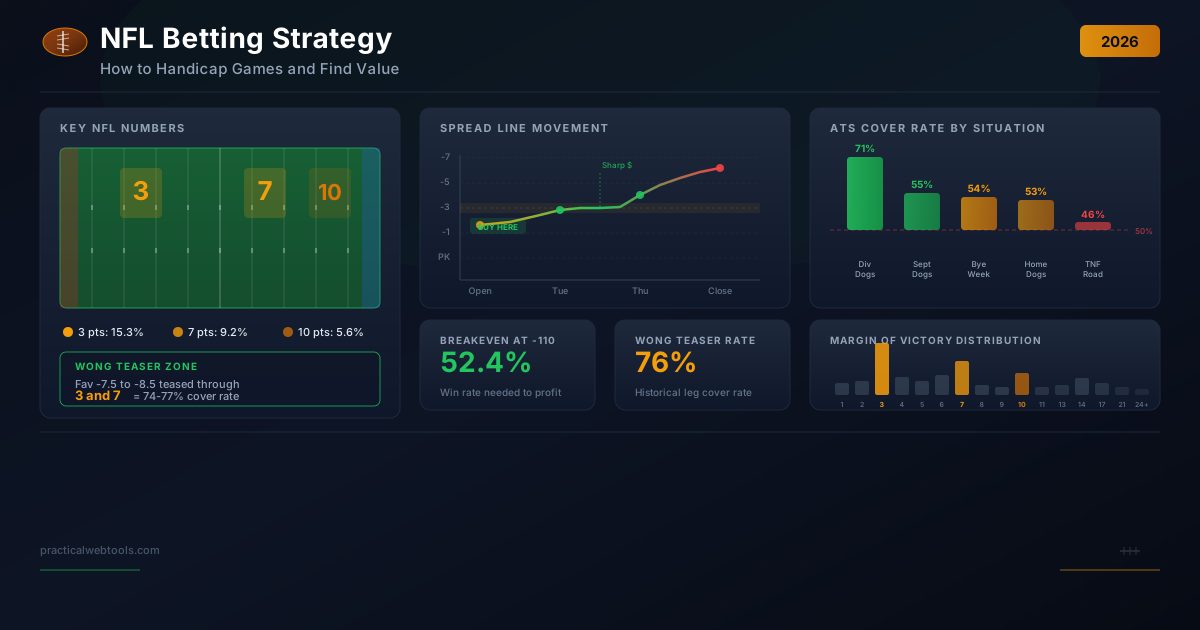
NFL underdogs ATS by spread size (historical composite, 2015-2025):
| Spread Range | ATS Record | Cover % | ROI (to -110) | Notable Pattern |
|---|---|---|---|---|
| +1 to +3 | 36-26-5 | 58.1% | +10.2% | Small dogs in close matchups consistently cover |
| +3.5 to +6.5 | Varies by season | ~51-53% | +1 to +4% | The sweet spot for spread value |
| +7 to +9.5 | Season-dependent | ~49-52% | -1 to +3% | Public overreacts to "blowout" narratives |
| +10 to +13.5 | Early 2024: 13-2 ATS | Varies widely | Season-dependent | Massive early-season edges can appear |
| +14 and above | High variance | ~47-50% | Marginal | Too much variance for reliable strategy |
2024 season highlight: In the first three weeks of the 2024 NFL season, underdogs of 5.5 points or more went an extraordinary 13-2 ATS and won 9 of those 15 games outright on the moneyline. That is a 86.7% cover rate and a 60% outright win rate for large underdogs -- a historic pace that, while unsustainable, underscored how badly the market can misprice teams before meaningful regular-season data exists.
Example: Early-Season NFL Underdog Opportunity (2024 Week 2)
You identify the Jacksonville Jaguars as +7.5 home underdogs against the Buffalo Bills. The public is 72% on Buffalo after their dominant Week 1 performance. Your analysis shows Jacksonville's defense matchup better than the market implies.
- Bet: Jaguars +7.5 (-110), $100 stake
- Result: Bills win 23-20 -- Jaguars cover by 4.5 points
- Profit: $90.91 (standard -110 payout)
- Key insight: The public's recency bias on Buffalo inflated the line by at least 2 full points
Determine the sportsbook's true edge on any line with our Hold/Vig Calculator.
NFL Home Underdogs: A Nuanced Picture
Home underdogs in the NFL present a more complex story than the blanket "always bet home dogs" narrative suggests. Recent data shows home underdogs have covered only about 33.3% of the time in aggregate -- but this figure is heavily skewed by bad teams in mismatched games. When filtered by specific situational criteria, the picture changes dramatically.
NFL home underdog profitability by situation:
| Situation | ATS Cover % | Sample (Last 5 Seasons) | Edge |
|---|---|---|---|
| All home underdogs | ~33.3% | Large | Unprofitable raw |
| Home dogs, total 42 or under | ~55-59% | 140+ games | Strong edge |
| Divisional home dogs, total 42 or under | 59.6% | 84-57-4 (5 seasons) | Best documented angle |
| Home dogs after opponent covered 5+ straight ATS | ~54-57% | Moderate | Regression-based |
| Home dogs +3 or less | ~55% | Moderate | Close games favor home field |
The divisional home underdog with a low total is one of the most well-documented profitable betting systems in the NFL. Over the last five seasons, divisional underdogs with a total of 42 or less have gone 59.6% ATS (84-57-4). The logic is sound: divisional games feature teams with intimate familiarity, low totals constrain how much the favorite can win by, and home-field advantage matters more in divisional matchups where crowd noise and travel fatigue compound.
Example: Divisional Home Dog with Low Total
Week 12, 2024: The Cleveland Browns are +3 home underdogs against the Pittsburgh Steelers. The total is set at 39.5. This is a classic divisional home dog in a low-total game.
- Bet: Browns +3 (-110), $100 stake
- Rationale: Divisional rivalry, low total constrains scoring, AFC North weather game
- Historical edge in this spot: 59.6% ATS
- Even if the Browns lose 17-14, you cover. If they win outright, even better.
NBA: Rest Advantages and Back-to-Back Underdogs
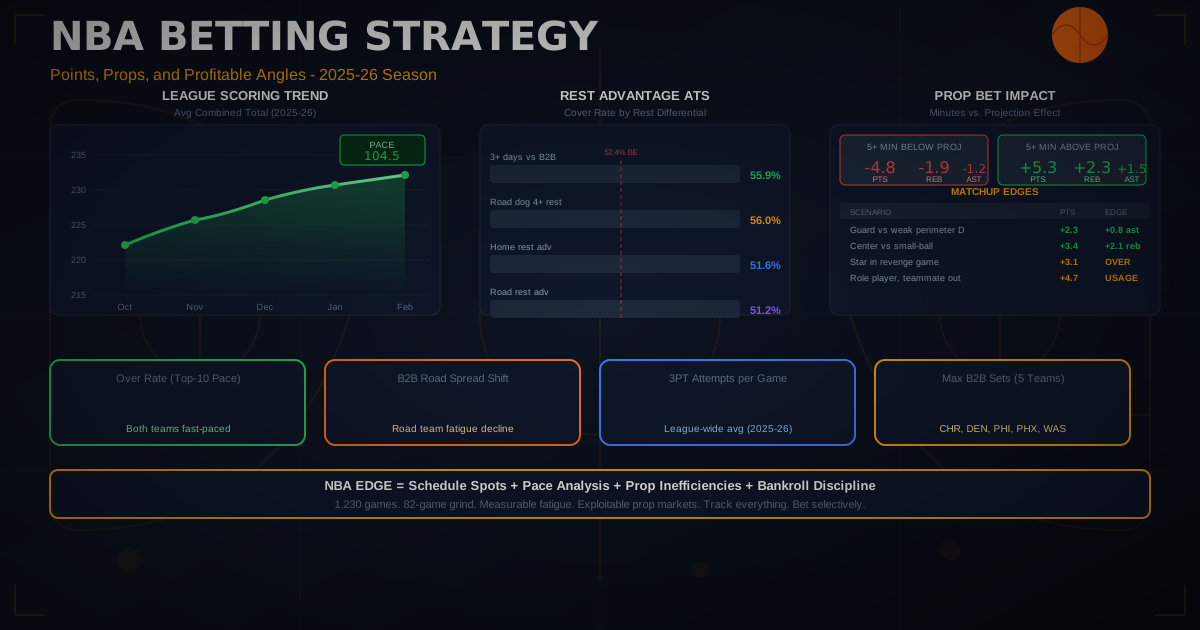
The NBA's 82-game season creates a different kind of underdog value: fatigue-based inefficiency. Teams playing on the second night of a back-to-back, traveling across time zones, or facing a well-rested opponent create systematic pricing errors that the market does not fully account for.
Key NBA underdog edges:
| Situation | Historical Edge | Why It Works |
|---|---|---|
| Rested underdog vs. B2B favorite | ~53-55% ATS | Market underprices fatigue impact on favorites |
| Home underdog off 2+ days rest | ~52-54% ATS | Rest + home court amplifies underdog potential |
| Underdog vs. team on 3rd game in 4 nights | ~54-56% ATS | Cumulative fatigue rarely priced fully |
| Underdog in nationally televised games | ~51-53% ATS | Public overloads on name recognition |
The NBA market is sharper than the NFL due to higher game frequency and more data, but the rest angle persists because it requires tracking schedules, travel miles, and fatigue accumulation -- work that most recreational bettors will not do.
Example: NBA Rest Advantage Underdog
The Memphis Grizzlies are +6.5 home underdogs against the Boston Celtics. Boston is playing the second night of a back-to-back after traveling from a game in Miami the previous night. Memphis had two days off.
- Bet: Grizzlies +6.5 (-110), $100 stake
- Edge: Rested home underdog vs. fatigued road favorite
- Result: Celtics win 108-104. Grizzlies cover by 2.5 points.
- Profit: $90.91
MLB: The Underdog Paradise
Baseball is the single best sport for underdog moneyline betting. The reason is structural: even the worst MLB team wins 35-40% of its games, and even the best team loses 35-40% of its games. The sport has the highest variance per game of any major professional league, and the moneyline market (not a point spread) means underdogs are priced at plus-money that frequently offers positive expected value.
MLB underdog moneyline ROI by price range (10-year composite):
| Price Range | Avg. Win % | Breakeven Win % | Approx. ROI | Strategic Note |
|---|---|---|---|---|
| +100 to +120 | ~45-46% | 45.5-47.6% | -1 to +1% | Near-coinflip; marginal value |
| +121 to +145 | ~43-44% | 40.8-43.5% | +1 to +3% | Sweet spot for small dogs |
| +146 to +175 | ~38-40% | 36.4-40.0% | +0.5 to +2% | Profitable with selectivity |
| +176 to +200 | ~34-36% | 33.3-36.2% | -1 to +1% | Breakeven zone; needs filters |
| +201 to +250 | ~28-32% | 28.6-33.2% | -2 to +1% | High variance; only with strong edge |
| +251 and above | ~20-25% | <28% | Typically negative | Longshot trap territory |
The +121 to +175 range represents the most consistently profitable zone for MLB underdog moneyline bets. In this range, you win frequently enough (38-44%) to overcome the breakeven threshold while receiving payouts that meaningfully exceed your risk.
Home underdogs are particularly profitable in MLB. Data shows home underdogs win at approximately 45.9% -- far outperforming road underdogs who sit at around 33.1%. Home-field advantage in baseball is modest but real, and when it is combined with plus-money odds, the expected value swings positive more often than the market accounts for.
Example: MLB Home Underdog in the Sweet Spot
The Seattle Mariners are +135 home underdogs against the Houston Astros. The Mariners have their ace on the mound while Houston is starting their fourth starter in a day game after a night game.
- Bet: Mariners ML +135, $100 stake
- Breakeven win rate needed: 42.6%
- Your estimated true win probability: 47%
- Expected value: (0.47 x $135) - (0.53 x $100) = $63.45 - $53.00 = +$10.45 per $100 wagered
- Result: Mariners win 4-2. Profit: $135.
Calculate whether your underdog bets have genuine positive expected value with our Expected Value Calculator.
NHL: Parity Creates Persistent Underdog Value
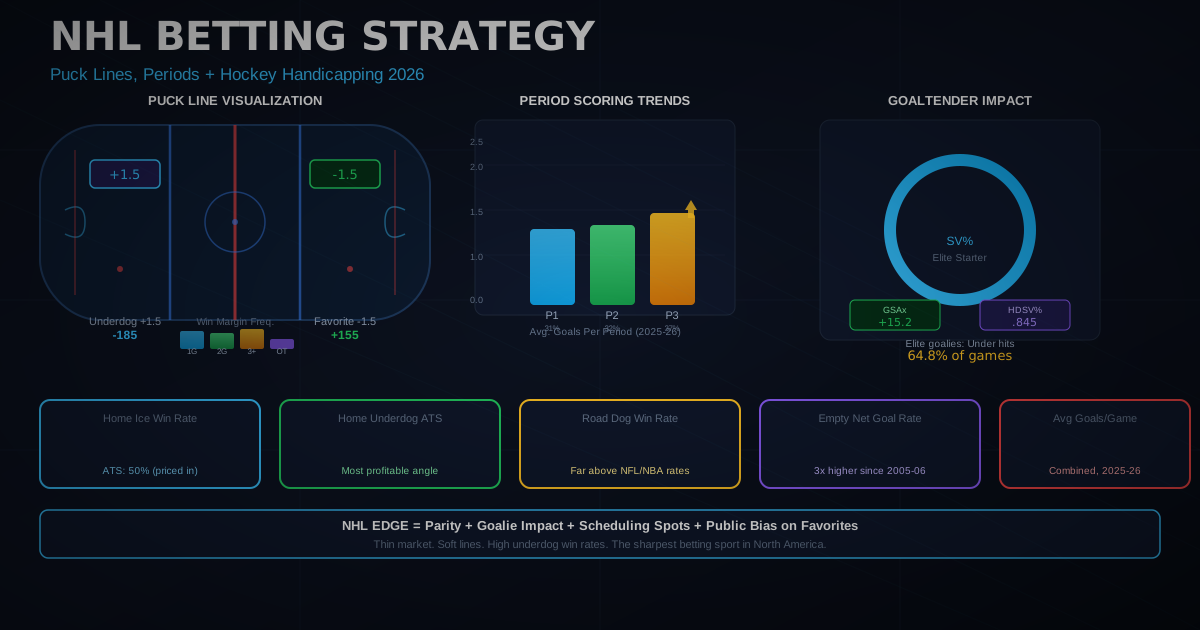
The NHL is the parity league. Unlike the NBA, where a top-4 team might lose only 20 games, the NHL regularly sees 48-win teams miss the playoffs and 38-win teams make deep runs. This structural parity means underdogs win at a high rate, and the moneyline market frequently underprices them.
NHL underdog profitability snapshot (2024-25 season):
| Category | Win % | Notable Edge |
|---|---|---|
| All underdogs | ~40.6% | Solid base rate for plus-money bets |
| Home underdogs | ~43-45% | Slight profitability on aggregate |
| Road underdogs | ~35.6% | Historically low; avoid without filter |
| Best underdog team (WSH Capitals, 2024-25) | 66.7% (14-of-21) | Massive outlier; +$11.08 profit units |
| Worst underdog team (Nashville, 2024-25) | 13.3% (2-of-15) | Avoid blindly -- not all dogs are equal |
The Washington Capitals' 2024-25 season illustrates the power of selective underdog betting. Winning 14 of 21 games as underdogs, the Capitals generated significant profit for anyone who identified them as a team whose true talent level was underpriced by the market. Conversely, Nashville's 2-of-15 record as underdogs shows that blindly betting all NHL underdogs is a losing approach.
The edge in NHL underdog betting comes from identifying teams whose true talent is closer to their opponent's than the moneyline implies. When a team is priced at +140 but your model suggests they win 42% of the time (breakeven is 41.7%), you have a marginal but real edge that compounds over hundreds of bets.
When Underdogs Are Most Profitable: Situational Spots
The data consistently shows that raw underdog performance is close to breakeven across most sports and timeframes. The profit comes from filtering -- identifying the specific situations where the market's bias is most acute.
The Most Profitable Underdog Situations
| Situation | Sport(s) | Historical ATS/ML Edge | Why the Edge Exists |
|---|---|---|---|
| Divisional home dog, low total (42 or under) | NFL | 59.6% ATS | Familiarity + low scoring = close games |
| Early-season large underdog (Week 1-3) | NFL | 53%+ ATS (Week 1 since 2000) | Market uses stale prior-season data |
| Rested underdog vs. fatigued favorite | NBA | 53-56% ATS | Schedule fatigue not fully priced |
| Home underdog, +121 to +175 | MLB | ~45.9% ML win rate | Home field + plus-money = +EV |
| Home underdog after opponent's long road trip | NHL | ~43-45% ML | Travel fatigue across time zones |
| Underdog when 70%+ public on favorite | All | ~51.8% ATS | Line shaded too far toward public |
| Underdog off a blowout loss | All | ~52-54% ATS | Market overreacts to single-game result |
| Underdog in low-total games | NFL, NHL | ~55%+ ATS | Scoring variance compresses margins |
| Playoff underdog in Game 1 | NBA, NHL | ~52-54% ATS | Market overvalues regular-season record |
The Closing Line Value Connection
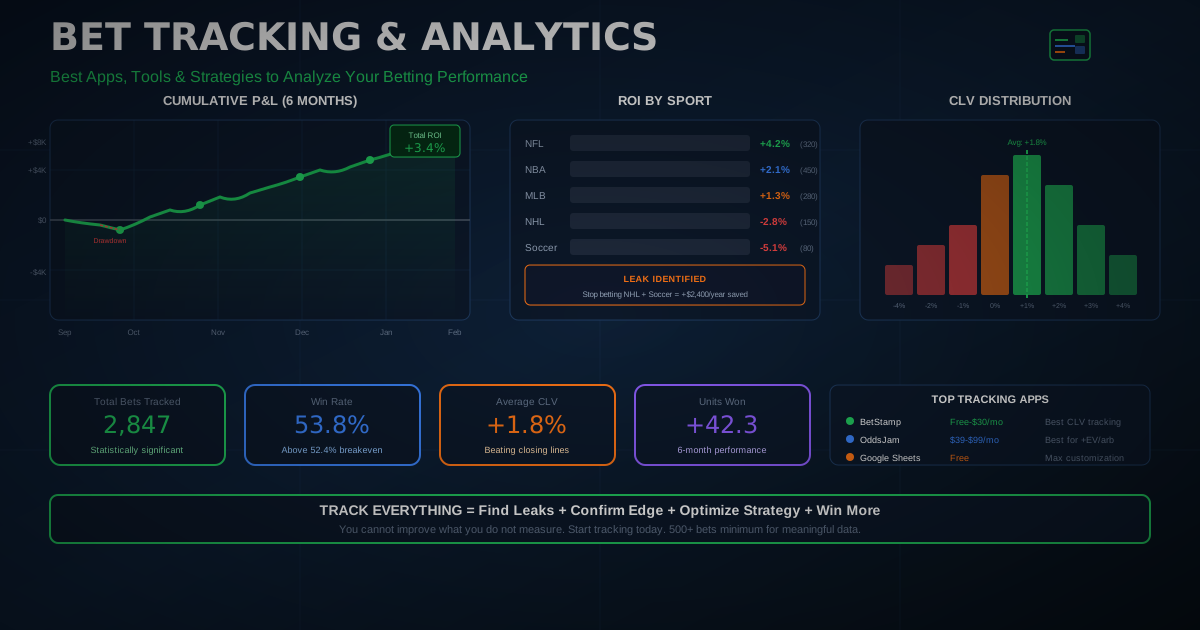
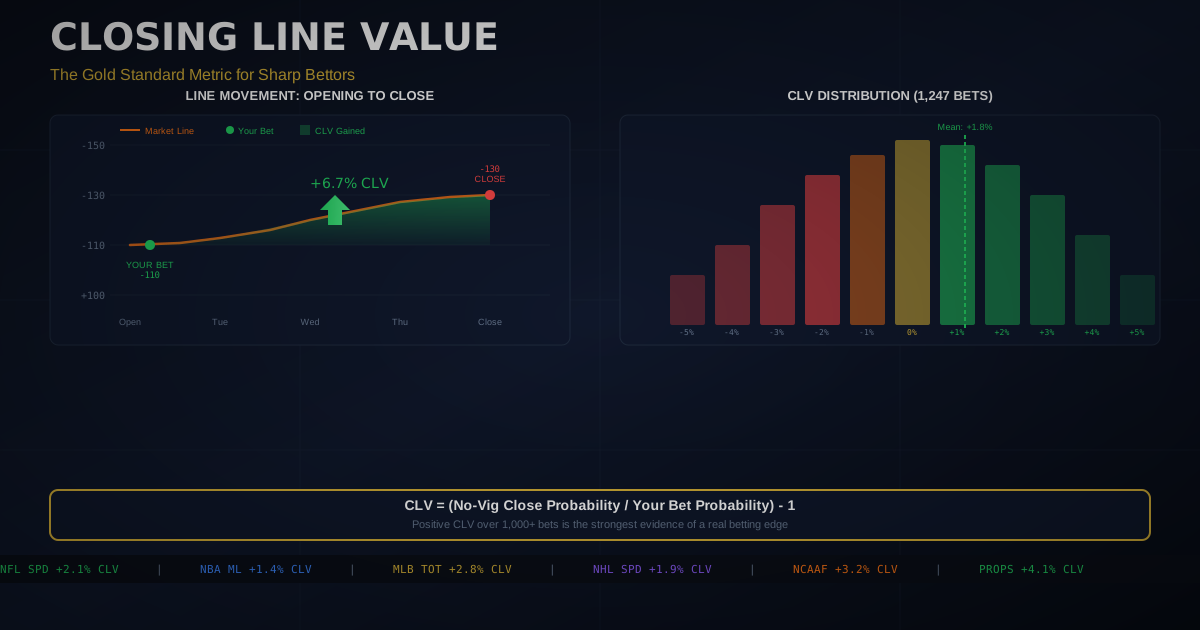
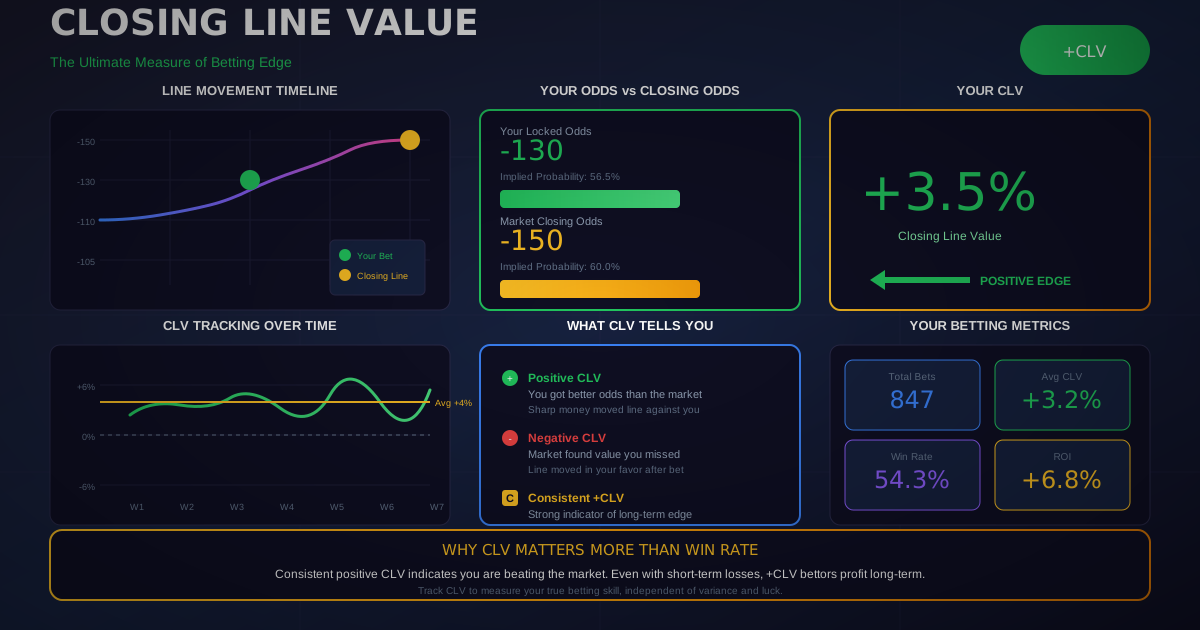
One of the strongest indicators that an underdog bet has genuine value is closing line value (CLV). If you bet the Chargers at +7.5 on Tuesday and the line closes at +6 by Sunday, the market moved toward your position -- confirming that your assessment was sharper than the opening price.
Data from betting platforms shows that bettors using early lines on underdog positions achieved 3-4% higher CLV compared to those betting closer to game time. This suggests that underdog value is most available early in the week before sharp money corrects the line.
Track your closing line value on every underdog bet to measure whether you are truly finding value or just getting lucky. Our sports betting tools can help you quantify your edge over time.
Moneyline vs. Spread for Underdogs
One of the most important strategic decisions in underdog betting is choosing between the moneyline and the spread. The optimal choice depends on the sport, the size of the spread, and your assessed win probability.
When to Bet the Moneyline
The moneyline is the better choice when:
-
The spread is small (+1 to +3.5). In these games, the underdog has a realistic chance of winning outright, and the moneyline payout significantly exceeds the ATS payout. If you are getting +135 on a +2.5 underdog, and you believe they win 42% of the time, the moneyline has a higher expected value than the -110 spread.
-
The sport is MLB or NHL. Both sports use moneyline as the primary market. The run line (+1.5) in MLB and puck line (+1.5) in NHL are secondary markets with higher vig. For underdogs in these sports, the moneyline is almost always the correct market.
-
You have a strong opinion on outright victory. If your edge comes from believing the underdog is better than the market thinks (not just that they will keep it close), the moneyline captures that opinion more efficiently.
When to Bet the Spread
The spread is the better choice when:
-
The spread is large (+7 and above). In the NFL especially, getting +10 at -110 is often a better risk-adjusted bet than getting +350 on the moneyline, because you can lose the game by 9 and still cash.
-
The sport is NFL or NBA. Point spreads are the primary market and typically offer the lowest vig.
-
You believe the underdog is competitive but not likely to win. If you think the 2-8 team will lose by 3-6 points rather than the 10 the market expects, the spread captures that opinion perfectly.
Moneyline vs. Spread Expected Value Comparison
Example: NFL underdog priced at +7 (-110) and +260 ML
| Bet Type | Your Win Estimate | Payout per $100 | Expected Value |
|---|---|---|---|
| +7 ATS (-110) | 54% cover | $90.91 | (0.54 x $90.91) - (0.46 x $100) = +$3.09 |
| +260 ML | 25% outright | $260.00 | (0.25 x $260) - (0.75 x $100) = -$10.00 |
| +260 ML | 30% outright | $260.00 | (0.30 x $260) - (0.70 x $100) = +$8.00 |
In this example, the spread is +EV if you estimate 54% ATS cover, while the moneyline only becomes +EV if you estimate 30%+ outright win probability. The spread is the safer play unless you have strong reason to believe the underdog wins outright at a rate exceeding the breakeven threshold.
Calculate optimal parlay combinations with our Parlay Calculator -- though note that parlaying underdogs dramatically increases variance.
How to Identify Value Underdogs
Identifying which underdogs represent genuine value is the core skill that separates profitable bettors from those who simply "like" underdogs. Here is a systematic framework.
Step 1: Assess True Win Probability
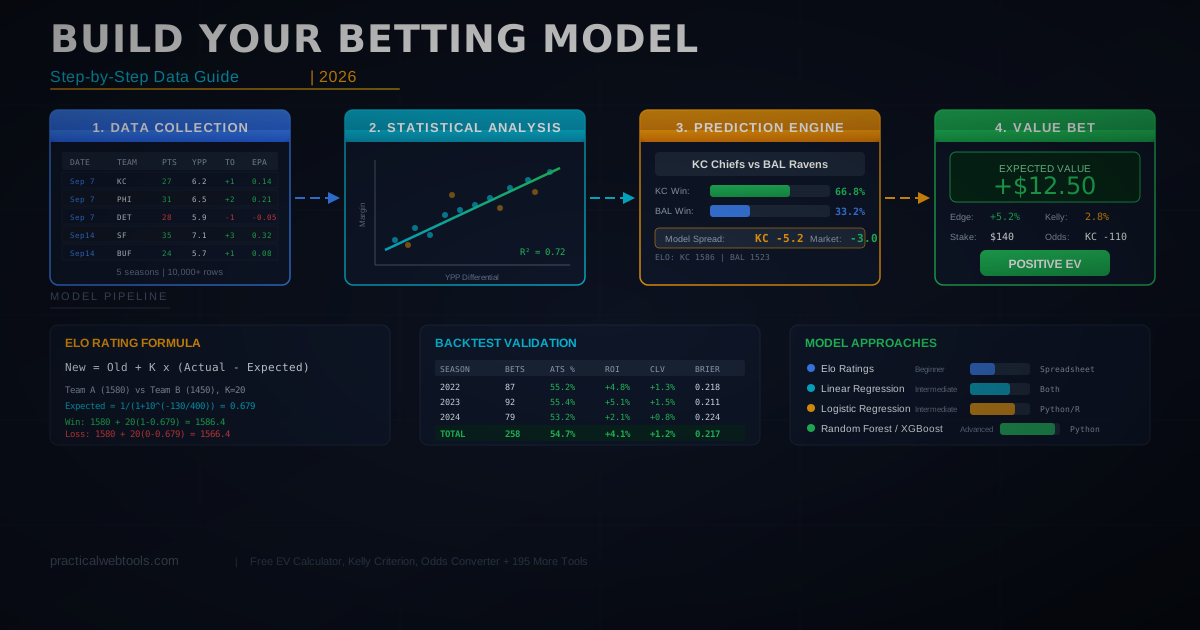
Before looking at the line, estimate the underdog's true probability of covering the spread or winning outright. Use power ratings, advanced metrics (DVOA, net rating, run differential, expected goals), injury reports, and matchup analysis.
Step 2: Compare to Implied Probability
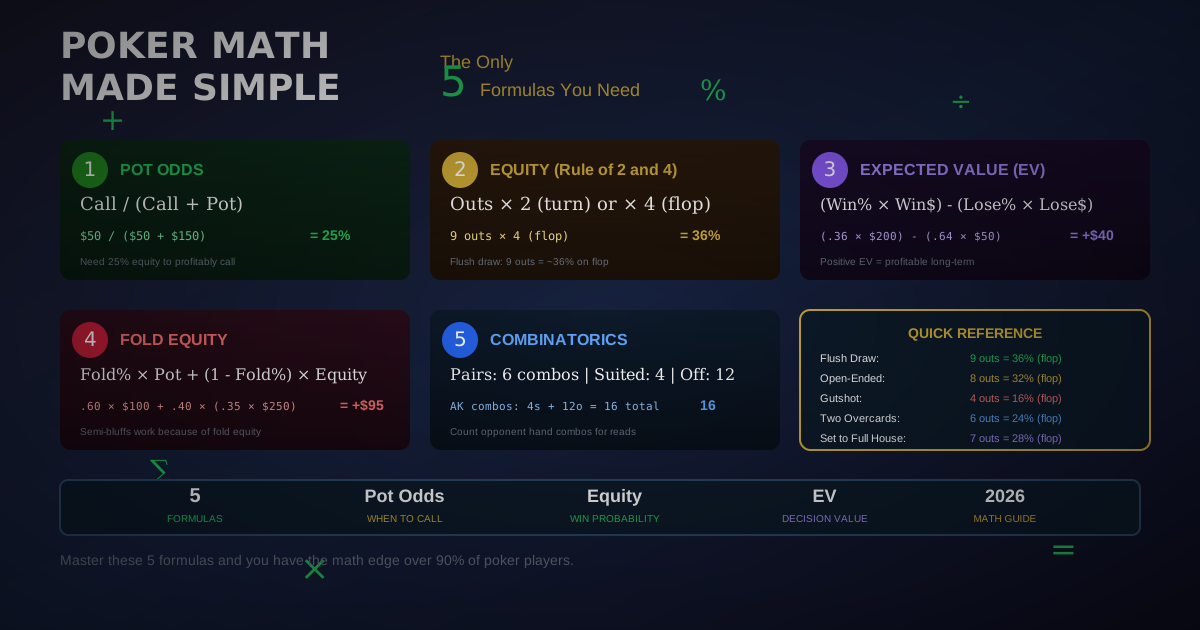
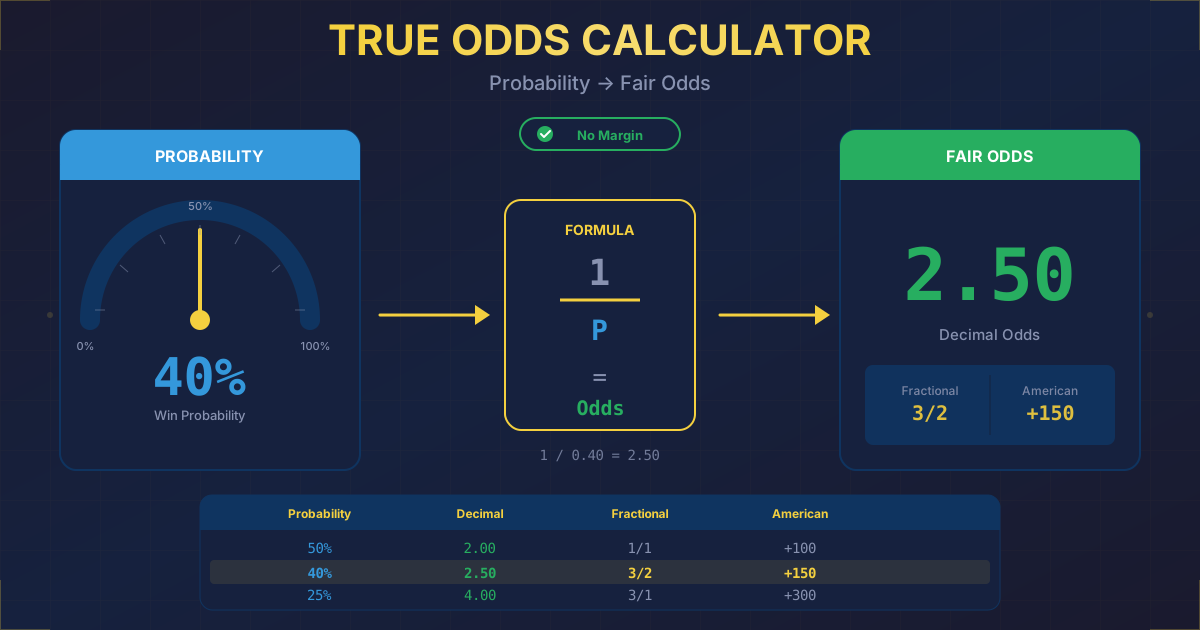
Convert the sportsbook's odds to implied probability using the formula:
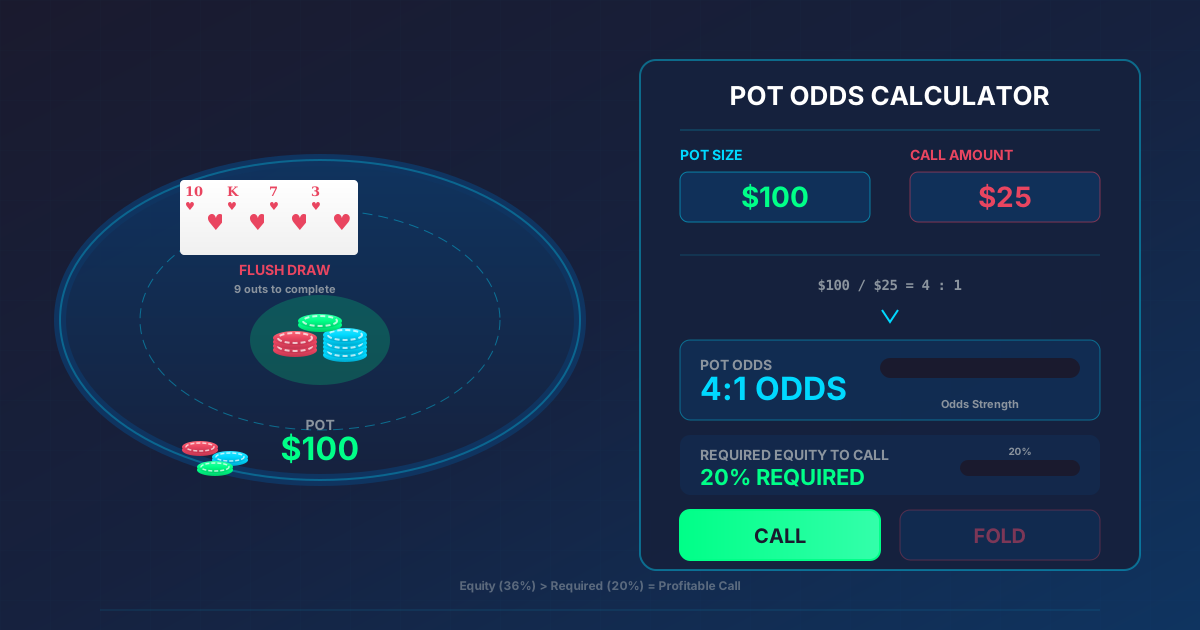
- For positive American odds: Implied % = 100 / (Odds + 100)
- Example: +150 = 100 / 250 = 40.0% implied probability
If your true probability estimate exceeds the implied probability, you have a potential value bet.
Step 3: Account for the Vig
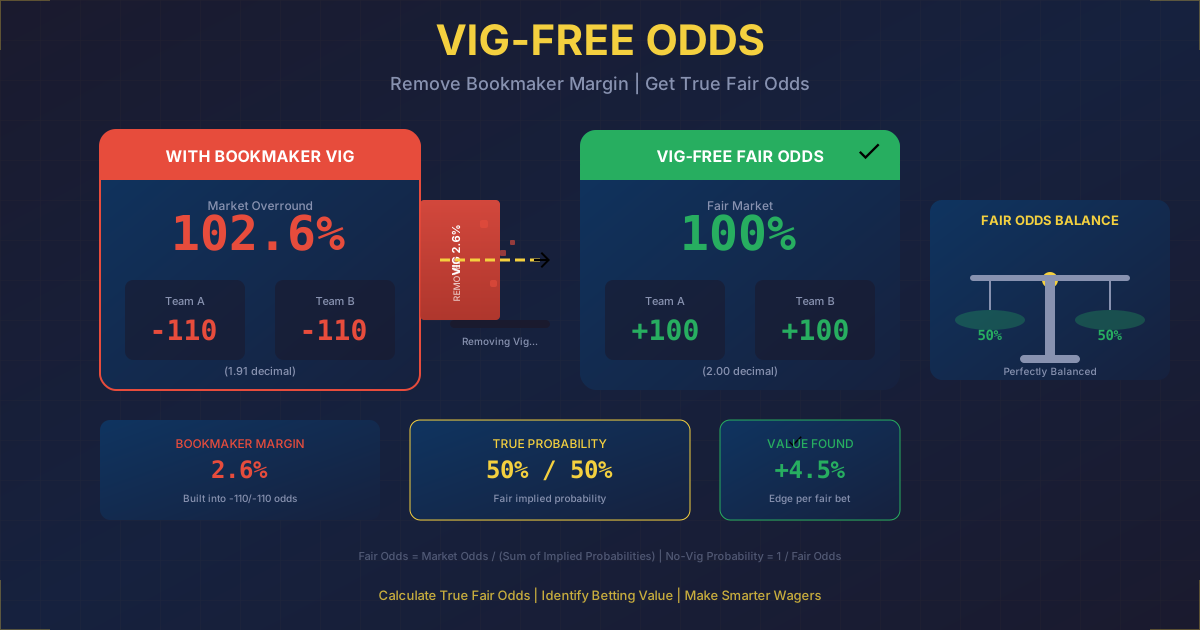
The sportsbook's vig means both sides are slightly overpriced. Remove the vig to get the "no-vig" implied probability. If the true no-vig implied probability is 43% and your estimate is 47%, your edge is 4%.
Strip the vig from any line with our Hold/Vig Calculator to see the true implied probability.
Step 4: Confirm with Market Indicators
Check for sharp money indicators:
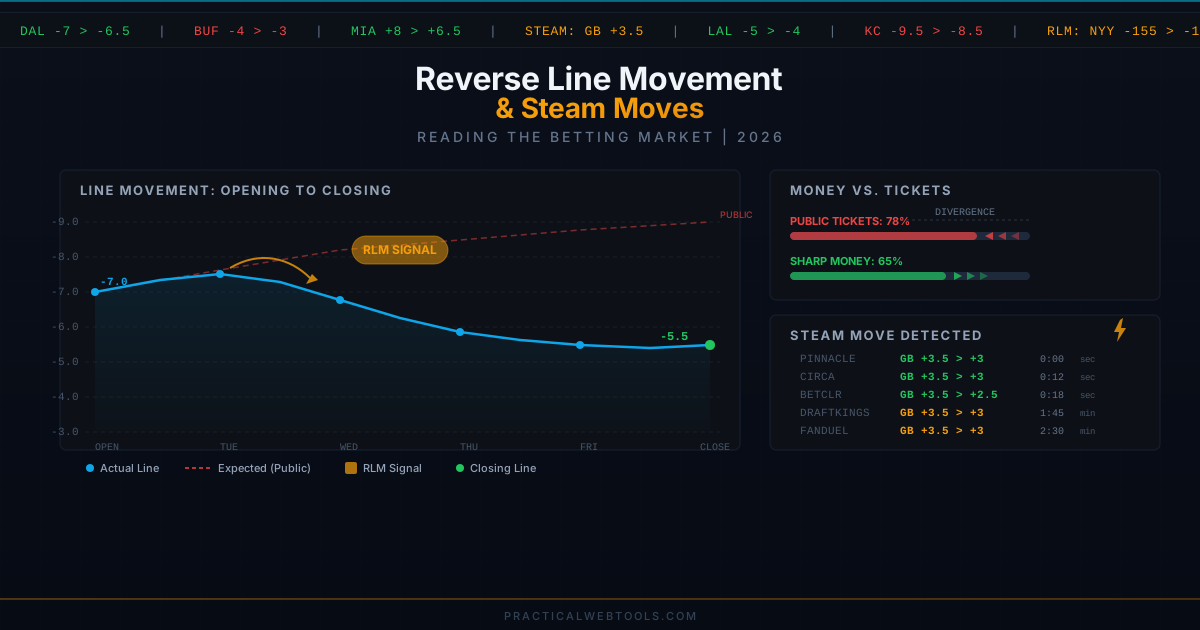
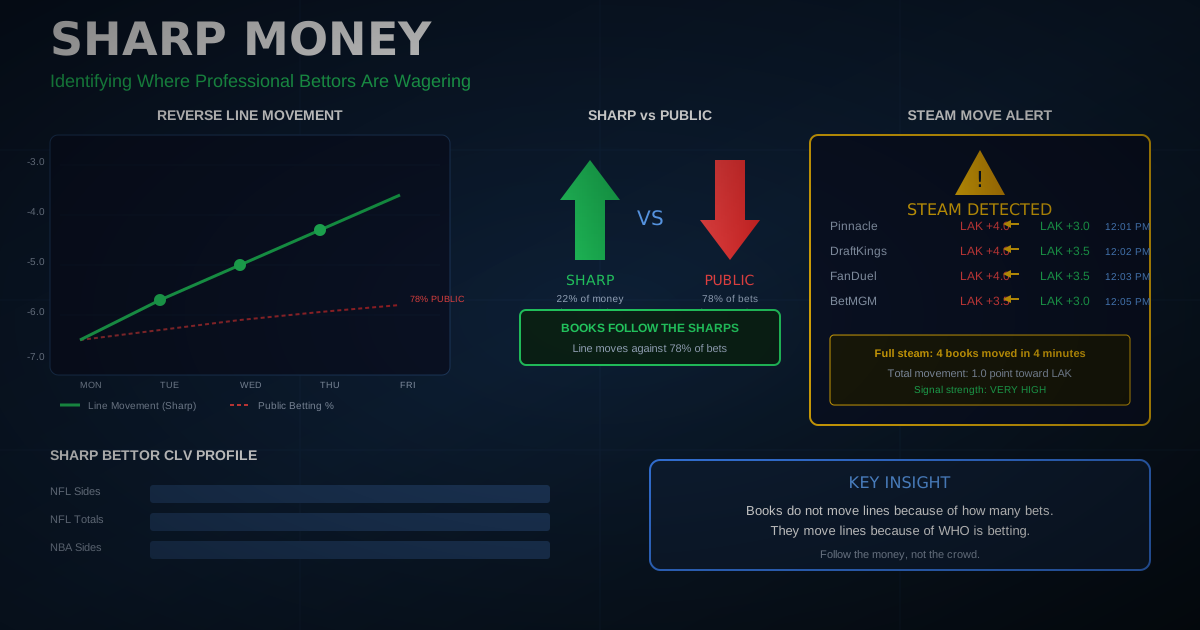
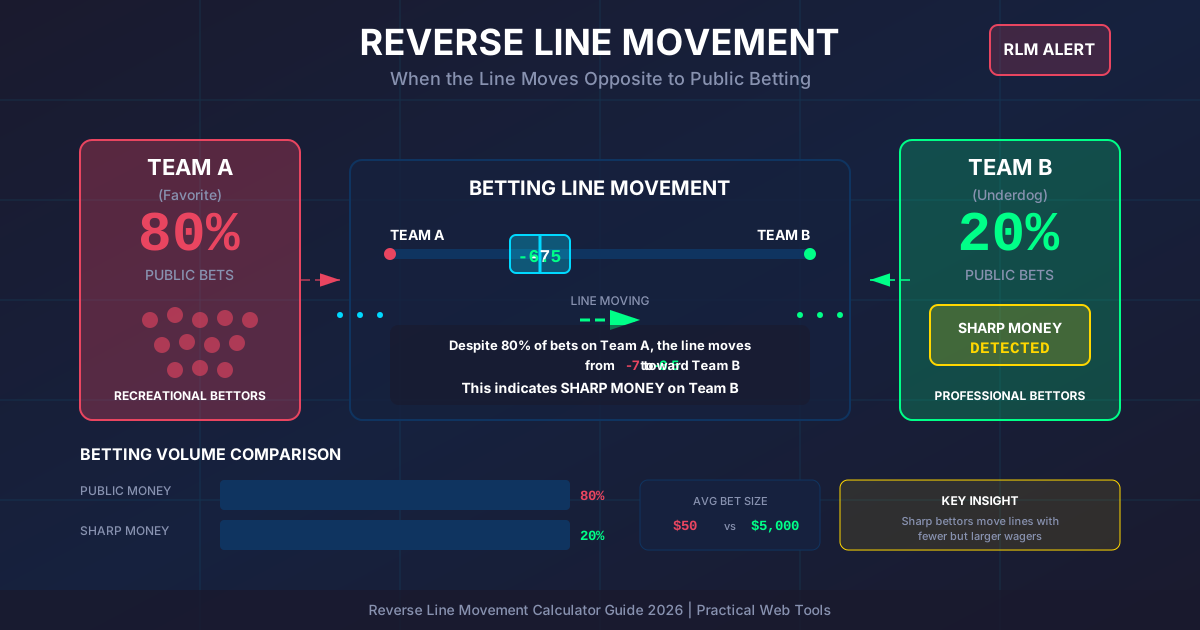
- Reverse line movement: The line moves toward the underdog despite heavy public action on the favorite. This strongly suggests sharp money on the dog.
- Steam moves: Rapid, simultaneous line movement across multiple books signals professional action.
- Ticket % vs. money % divergence: If 30% of tickets but 55% of money is on the underdog, sharps are likely involved.
Step 5: Calculate Expected Value
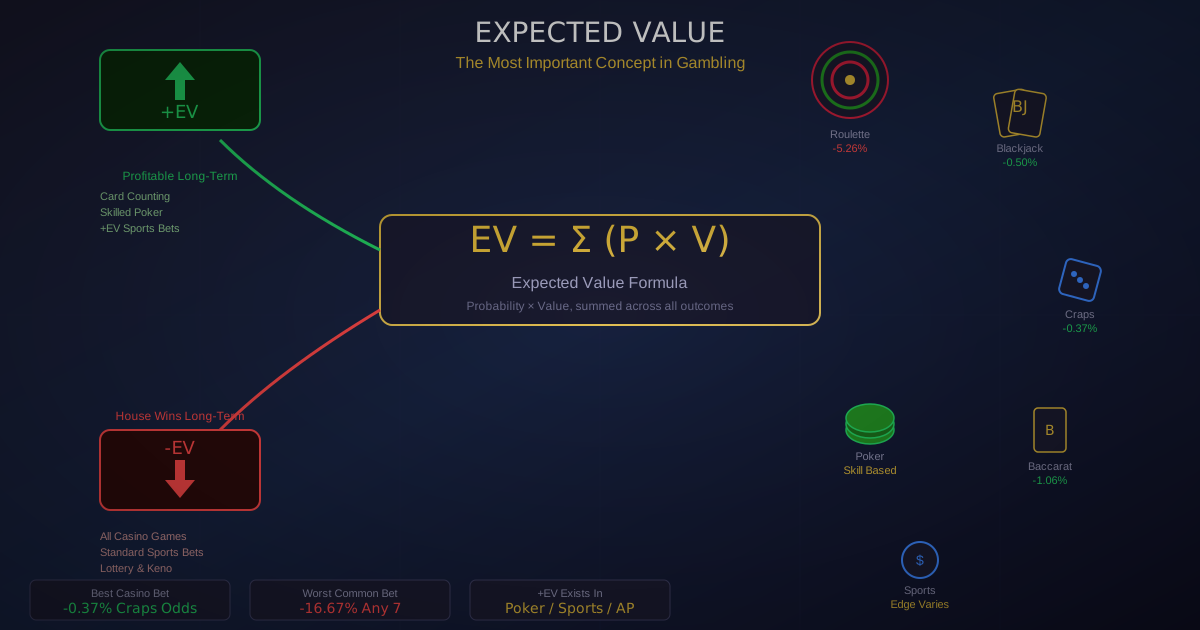
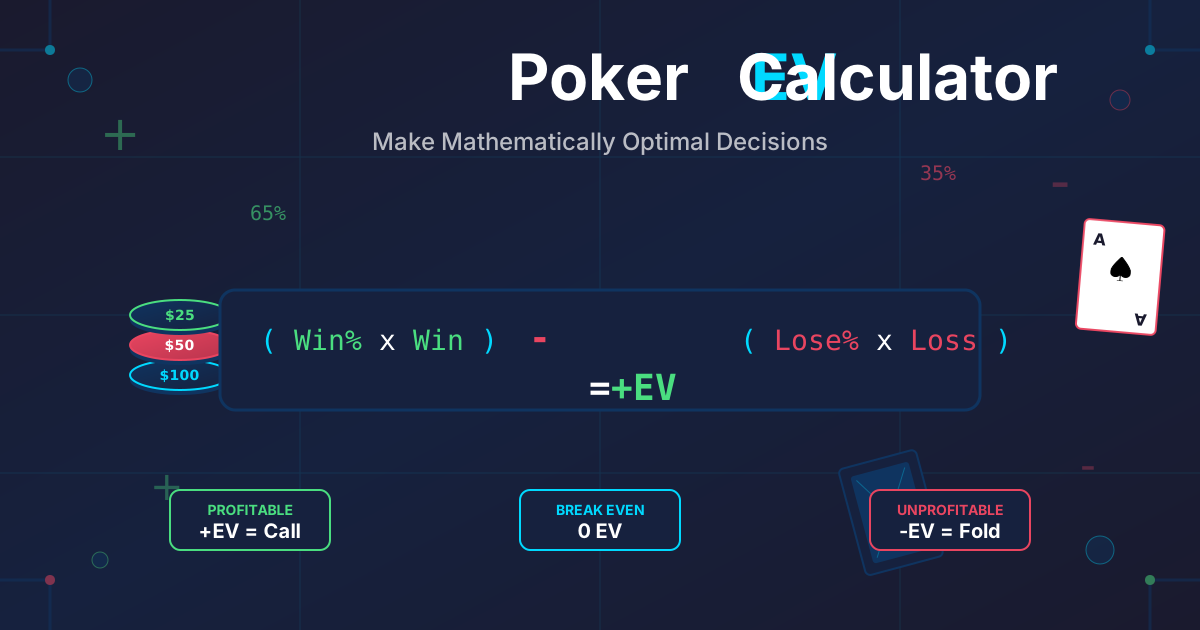
Use the EV formula:
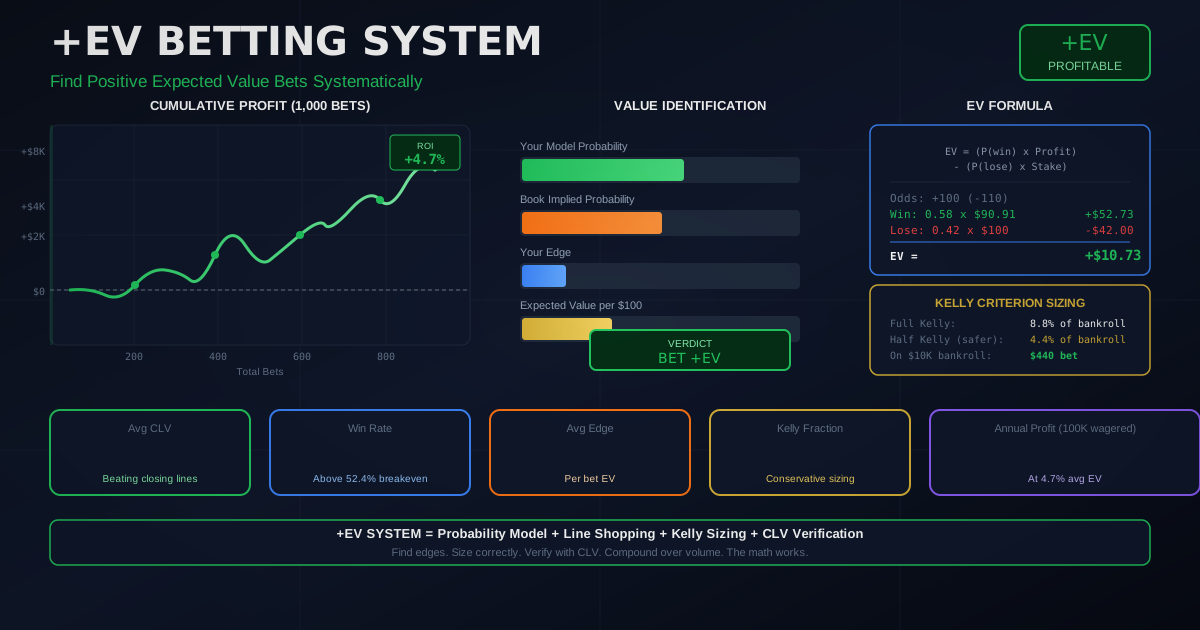
EV = (Your Probability x Profit) - (1 - Your Probability x Stake)
Only bet when the expected value is meaningfully positive -- ideally +3% or higher to overcome the inherent uncertainty in your probability estimate.
Calculate exact expected value, hedge amounts, and alternative strategies with our Hedge Calculator.
Bankroll Management for Underdog Betting
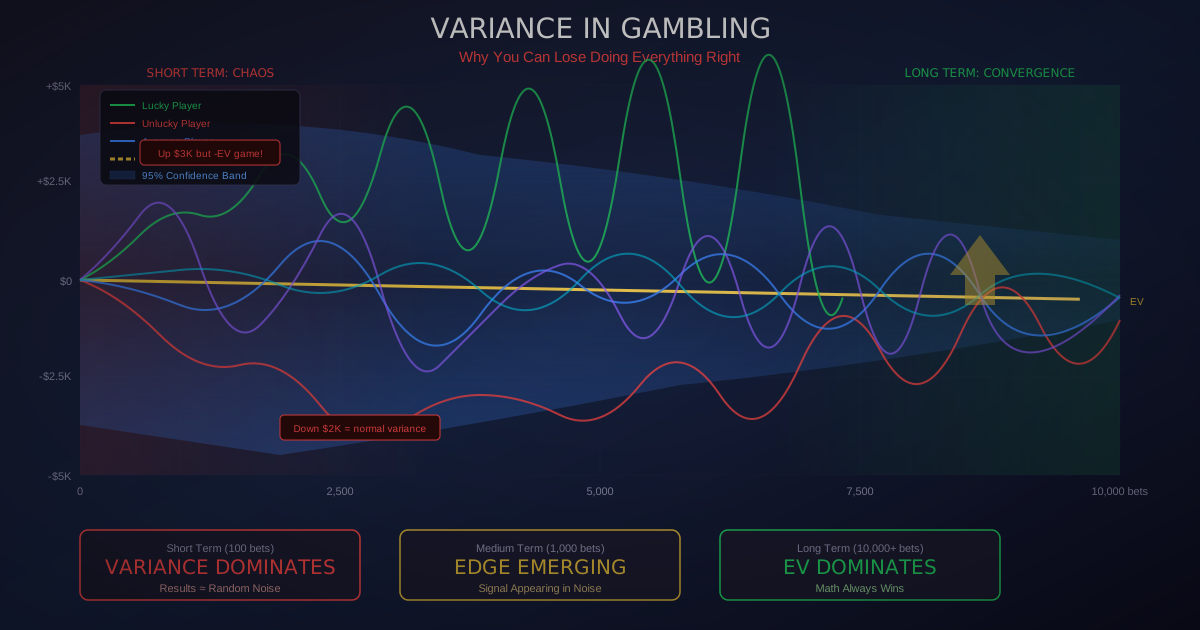
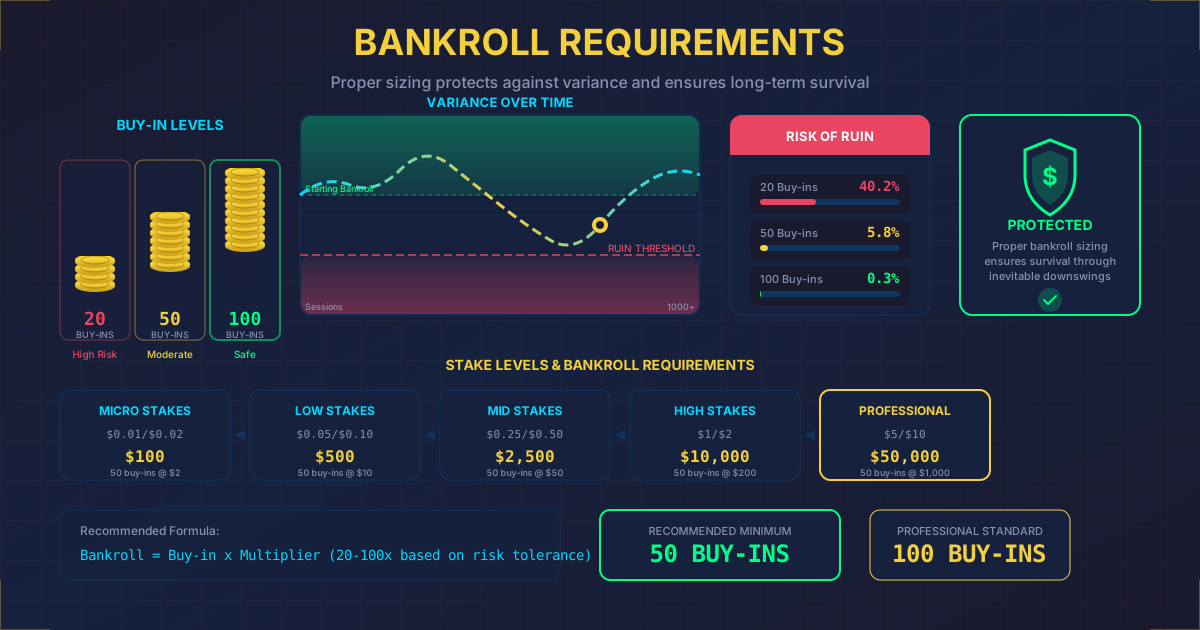
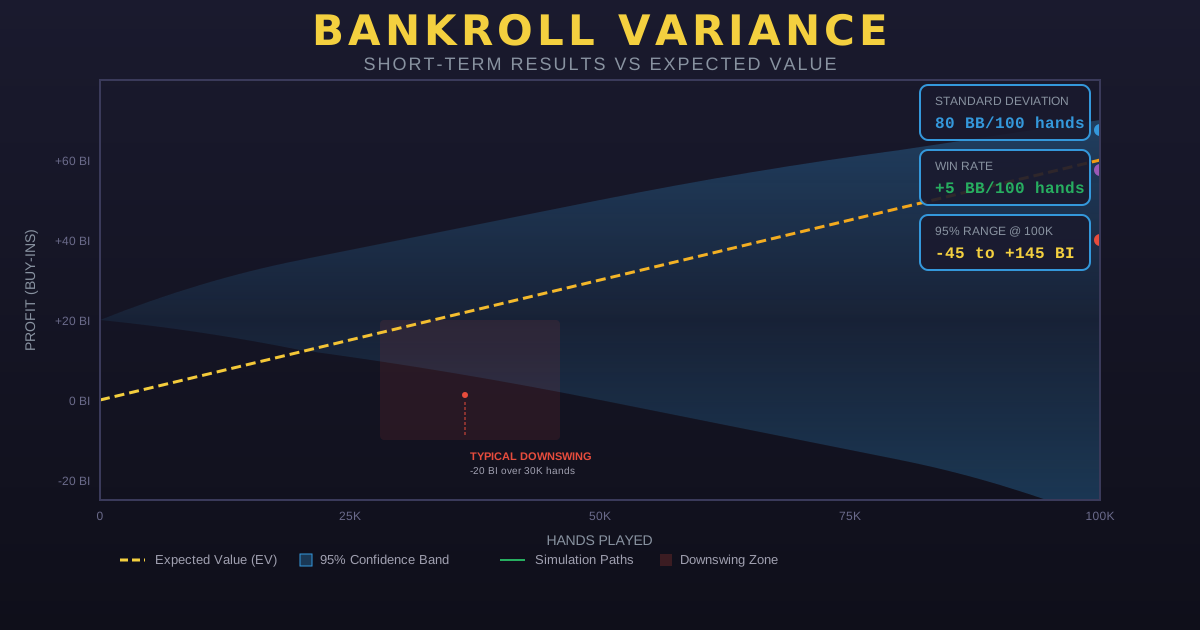
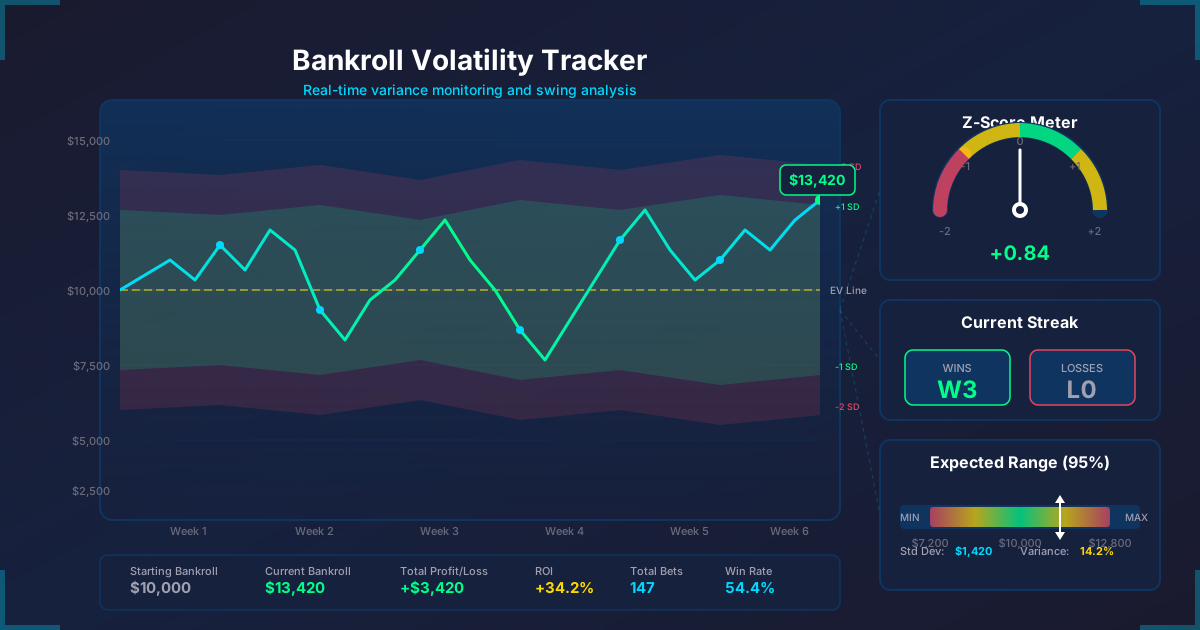
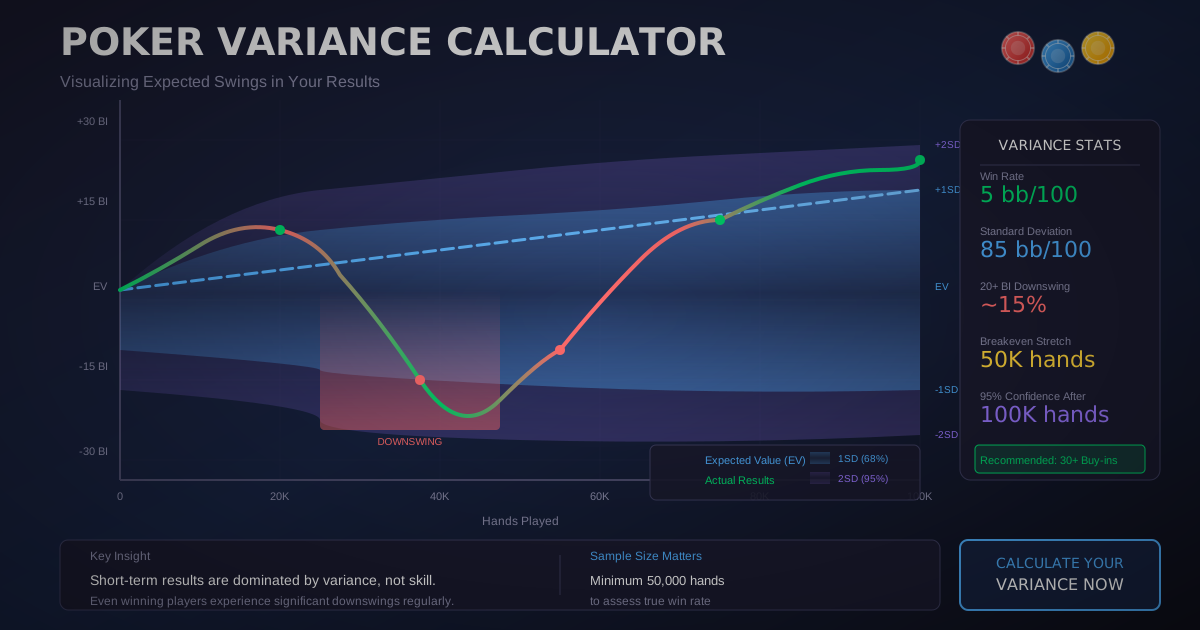
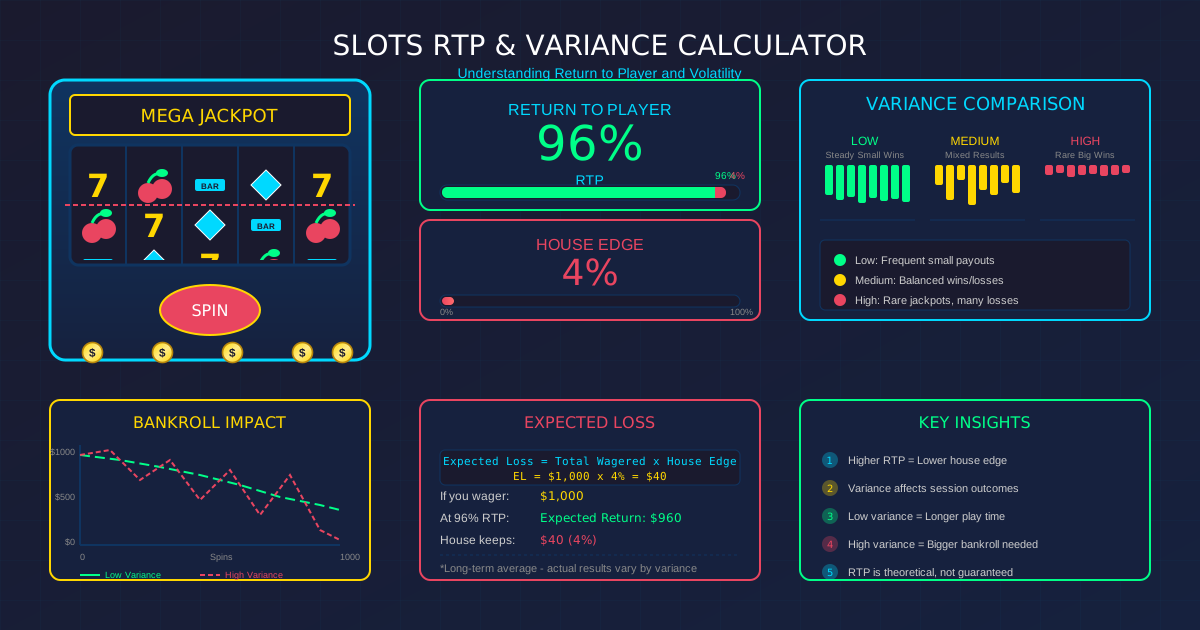
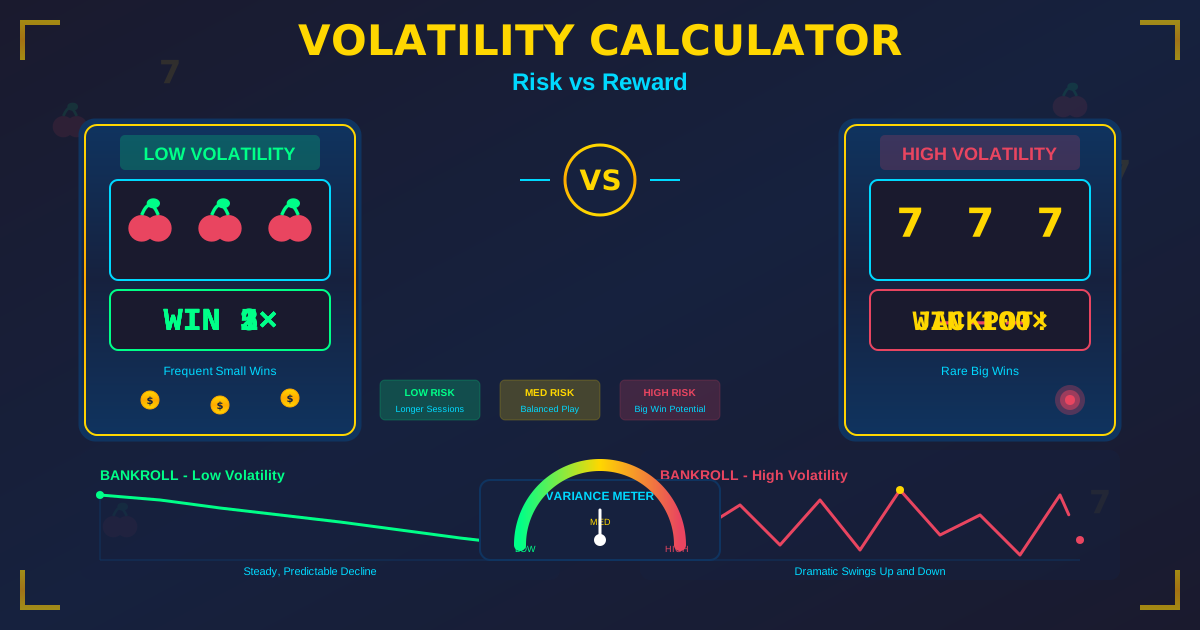
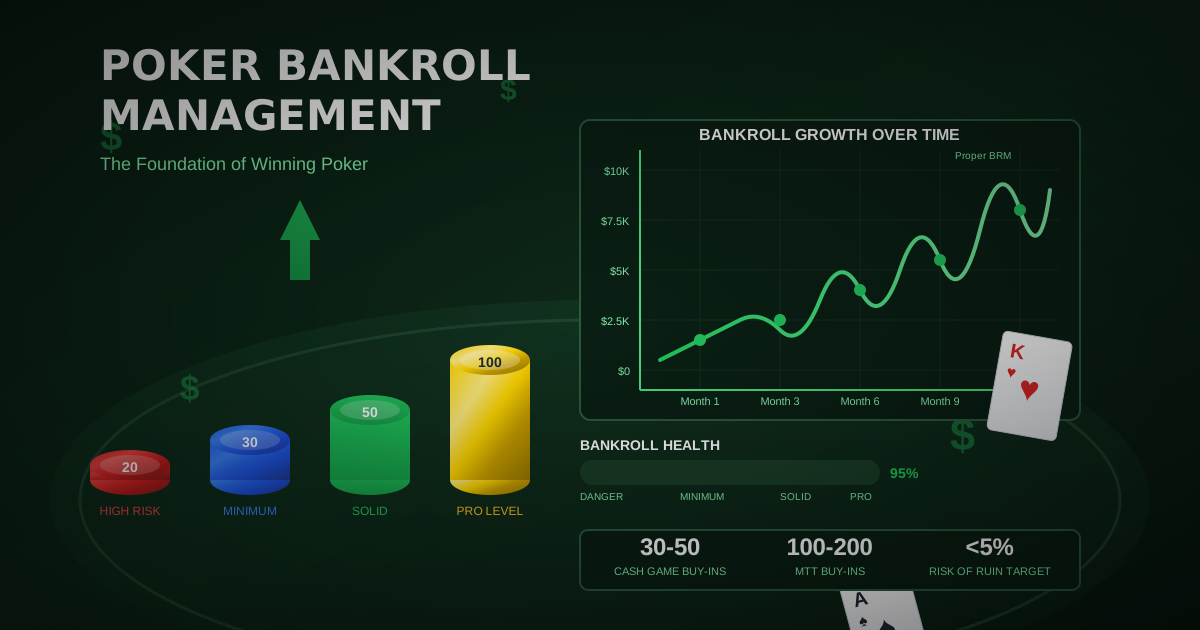
Underdog betting inherently carries higher variance than betting favorites. You will experience longer losing streaks, larger swings, and more emotional pressure. Proper bankroll management is not optional -- it is the structural foundation that allows your edge to materialize over time.
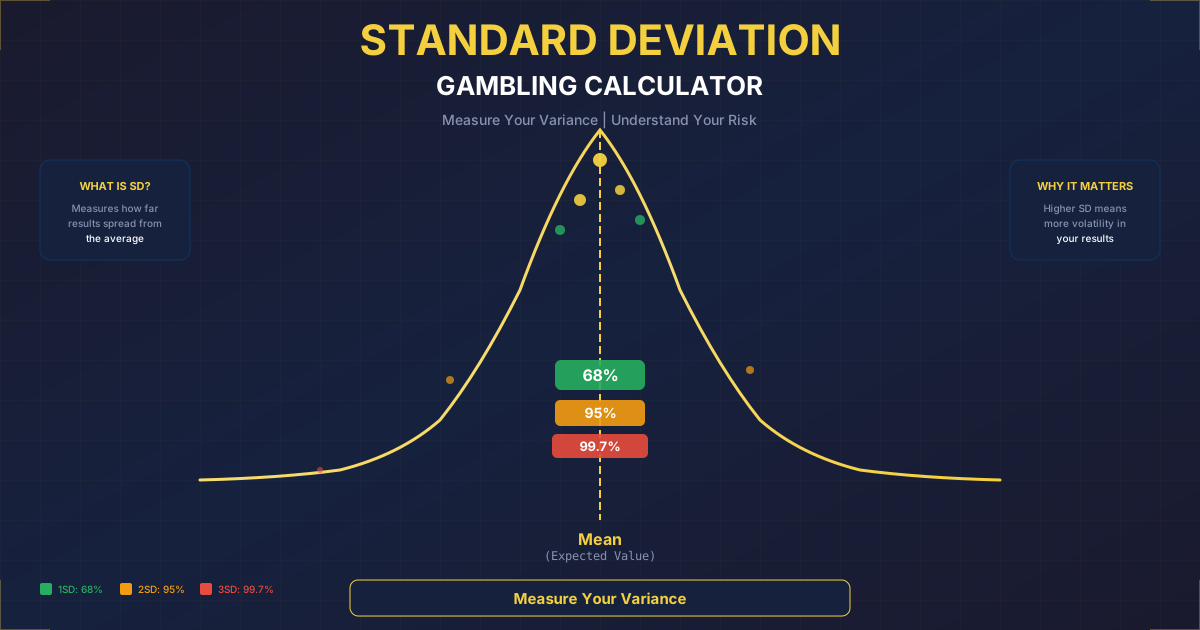
Why Underdog Betting Is Higher Variance
Consider two bettors, each making 100 bets with a 5% edge:
Bettor A (Favorite Bettor): Wins 57% at -130 average odds
- Expected profit: ~$5,000 on $100 flat bets
- Standard deviation of results: Moderate
- Longest expected losing streak in 100 bets: ~6-7 bets
Bettor B (Underdog Bettor): Wins 38% at +170 average odds
- Expected profit: ~$4,600 on $100 flat bets
- Standard deviation of results: High
- Longest expected losing streak in 100 bets: ~10-14 bets
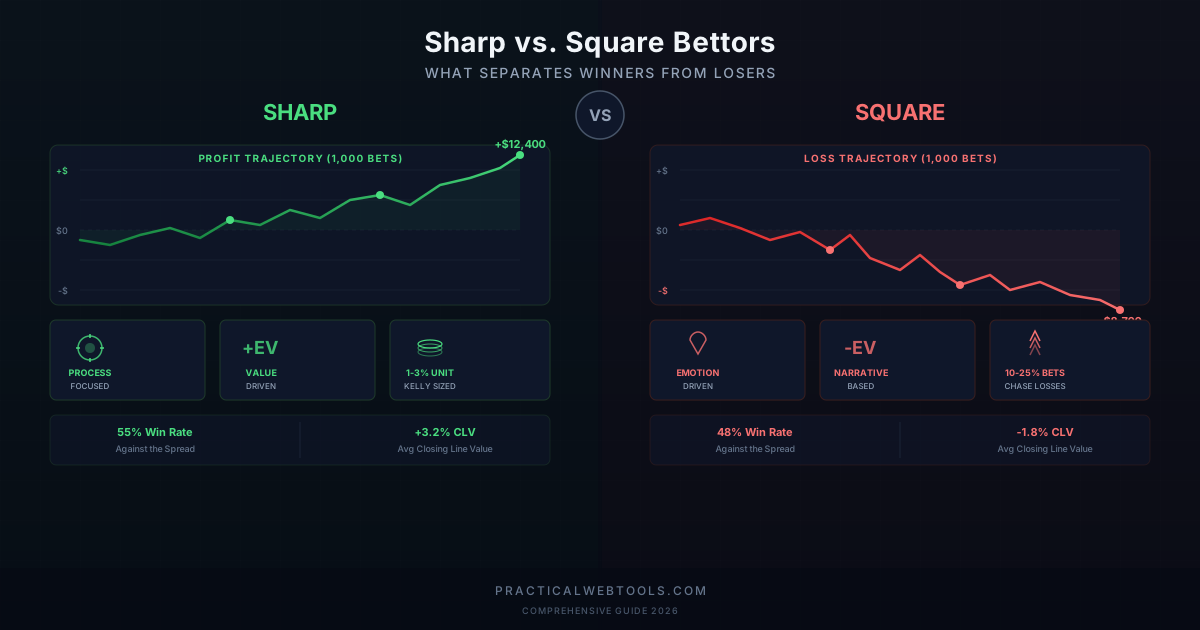
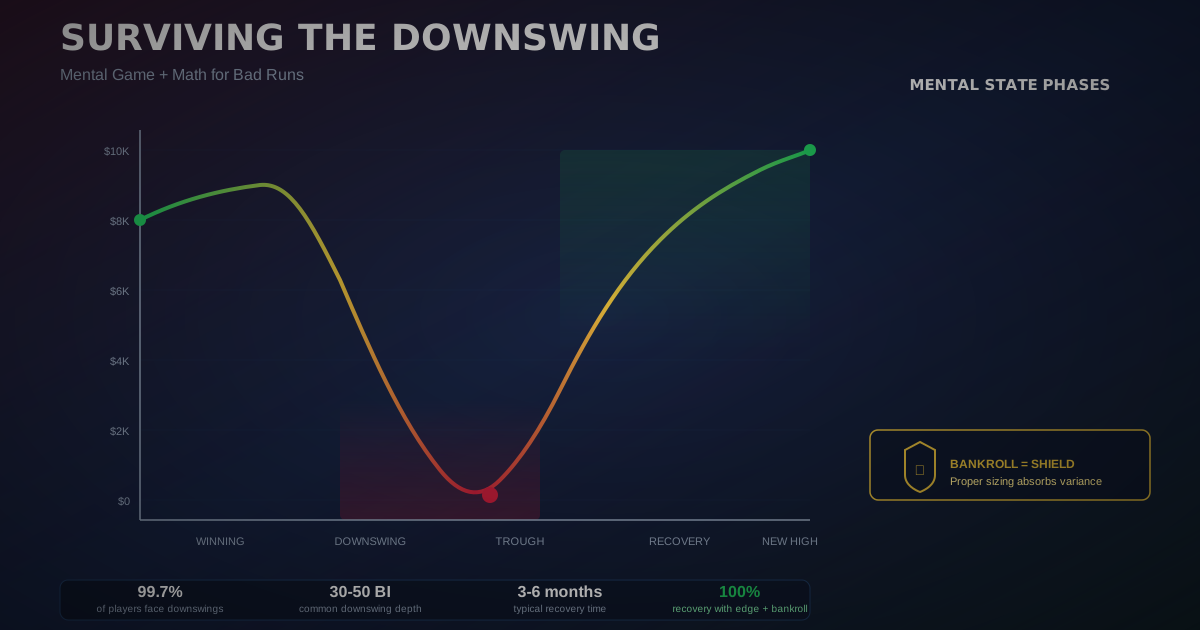
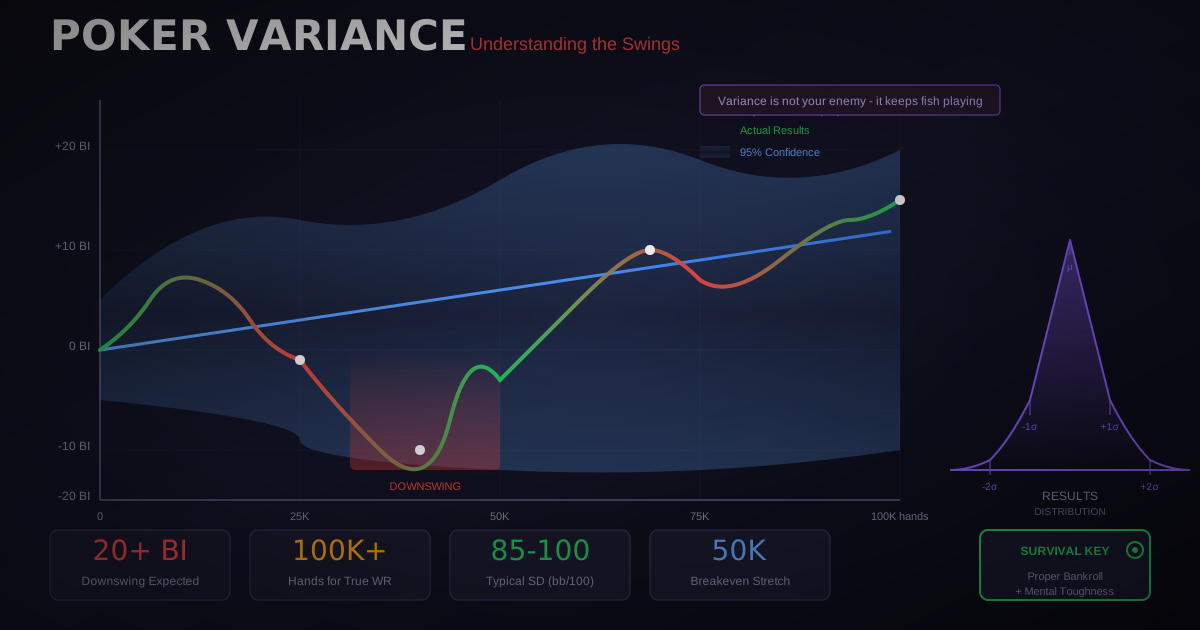
Bettor B's edge is real, but experiencing 10-14 consecutive losses tests psychological resolve. Without proper bankroll sizing, that losing streak can trigger emotional decision-making (increasing bet sizes to chase losses, abandoning the strategy entirely, or switching to "safe" favorites).
Recommended Bankroll Sizing
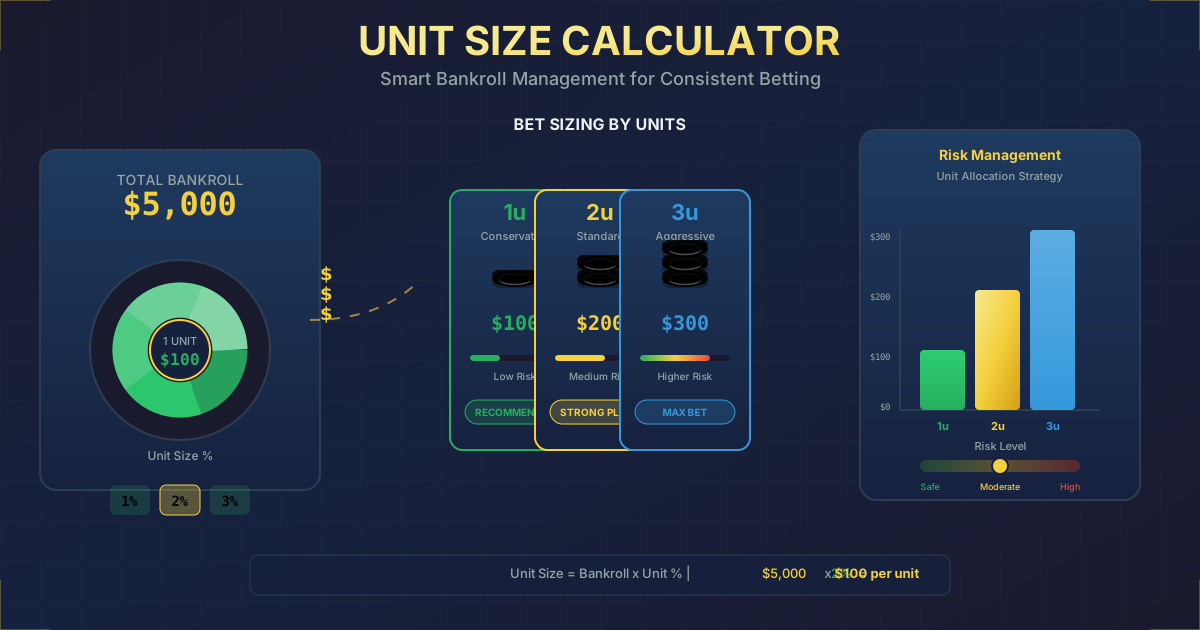
| Underdog Type | Suggested Stake (% of Bankroll) | Rationale |
|---|---|---|
| Small underdogs (+100 to +150) | 1.5-2.5% | Lower variance, more frequent wins |
| Medium underdogs (+151 to +200) | 1.0-2.0% | Moderate variance |
| Large underdogs (+201 to +300) | 0.5-1.0% | High variance, need small stakes |
| Longshot underdogs (+301 and above) | 0.25-0.5% | Extreme variance, entertainment sizing |
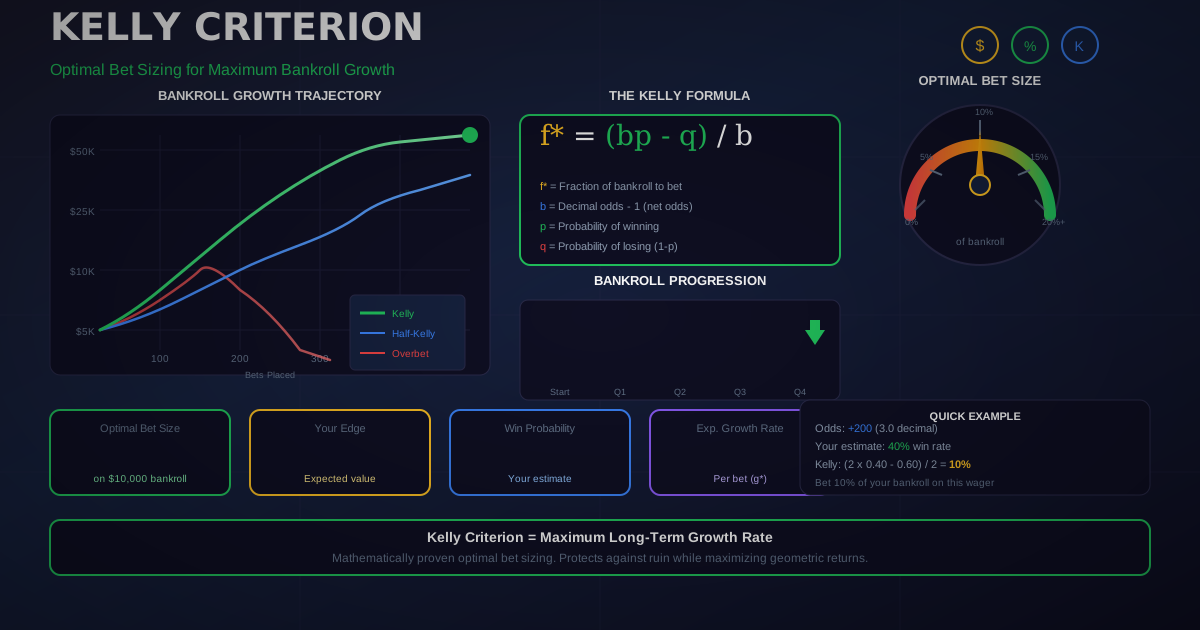
Calculate mathematically optimal bet sizing based on your estimated edge with our Kelly Criterion Calculator.
Practical Bankroll Rules for Underdog Bettors
-
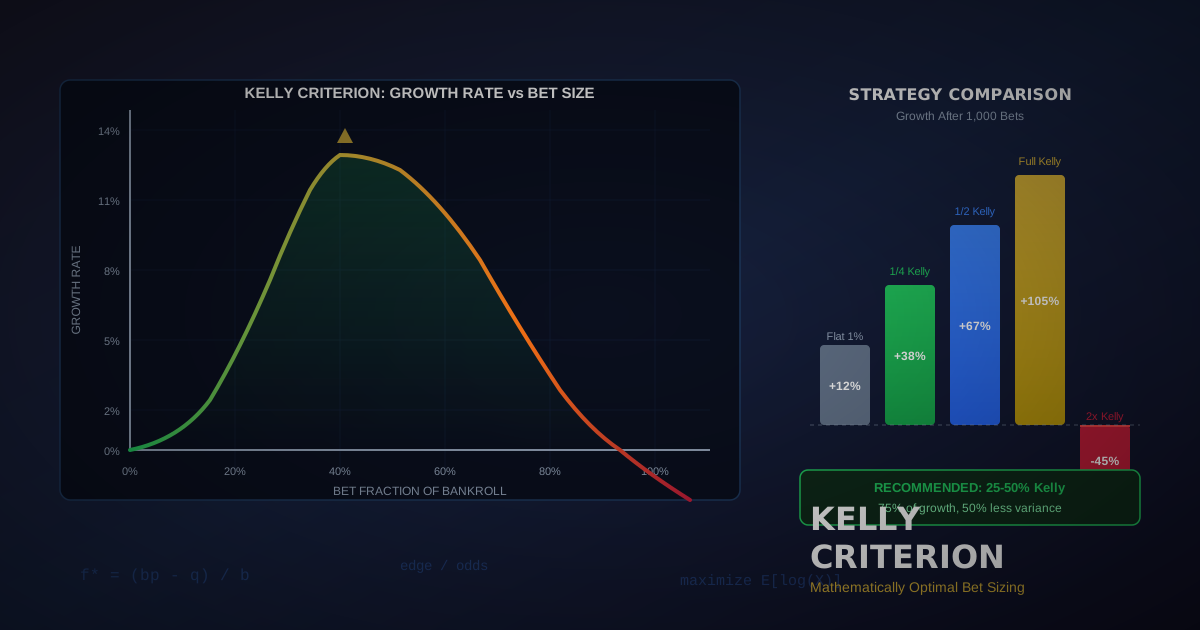
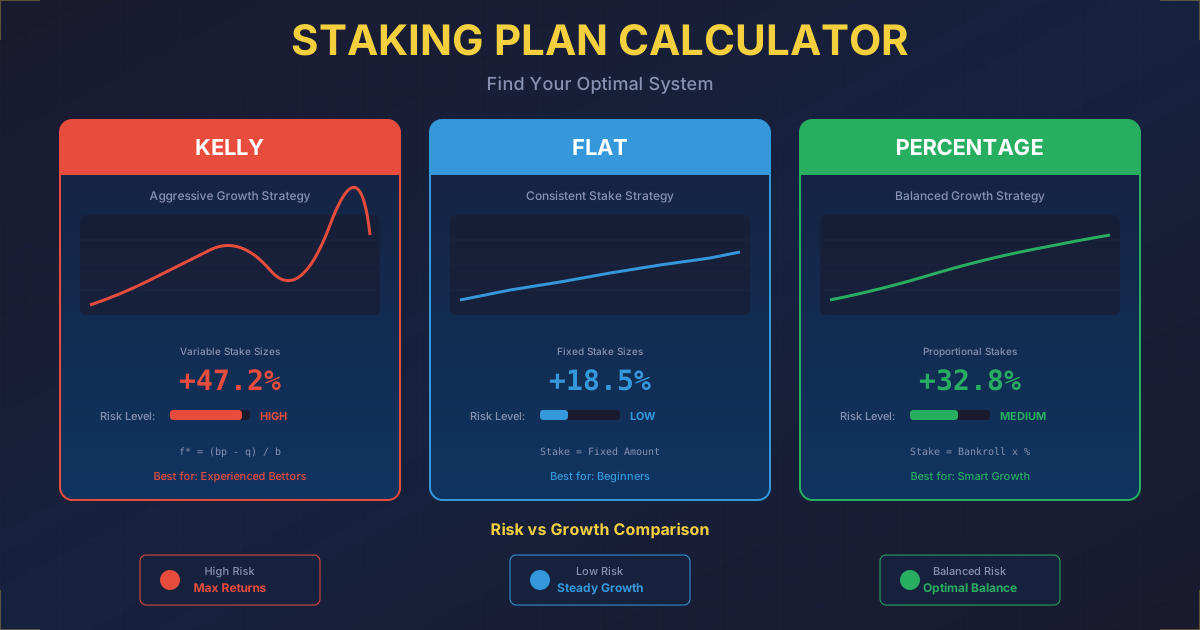
Use fractional Kelly (25-50% of full Kelly). Full Kelly maximizes growth but is too aggressive for most bettors. Quarter-Kelly smooths out variance significantly while still capturing the majority of the edge.
-
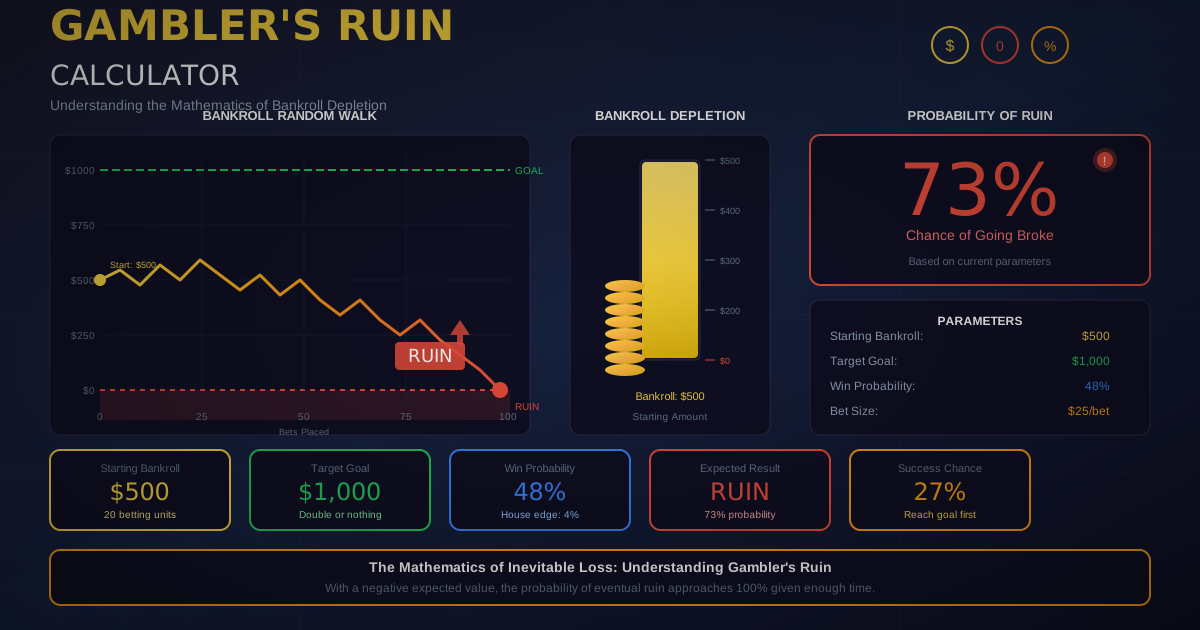
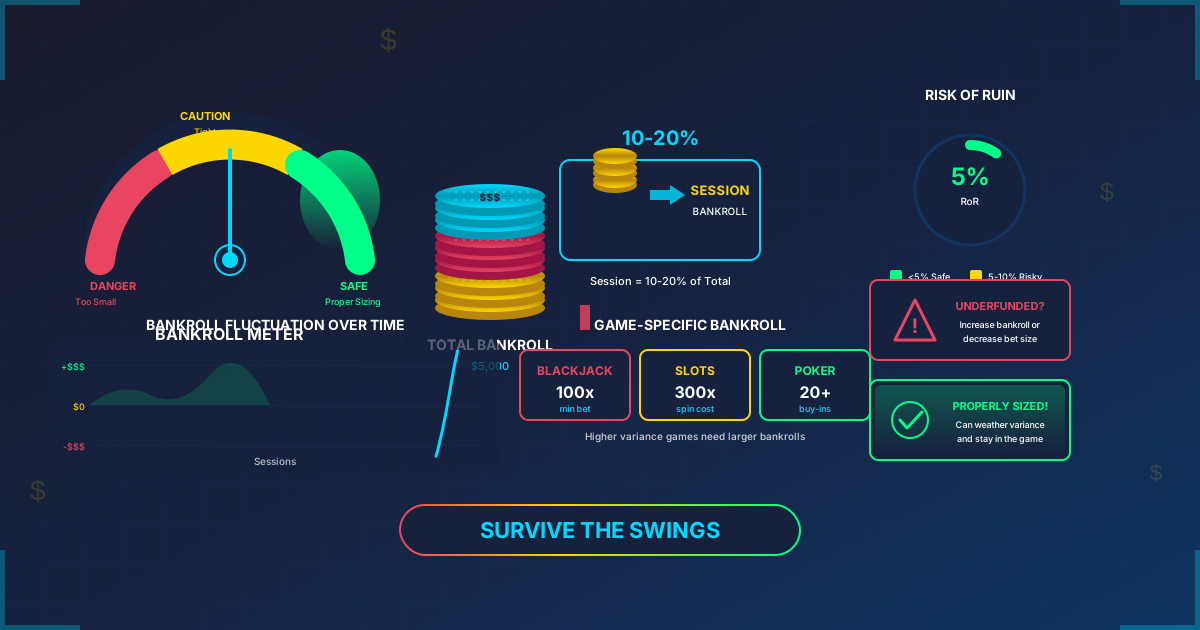
Maintain a 100-unit bankroll minimum. If you are betting 1-2% per play, your bankroll should support 50-100 losing bets in a row before you would be in serious trouble. This sounds extreme, but 20-30 bet losing streaks happen to skilled underdog bettors.
-
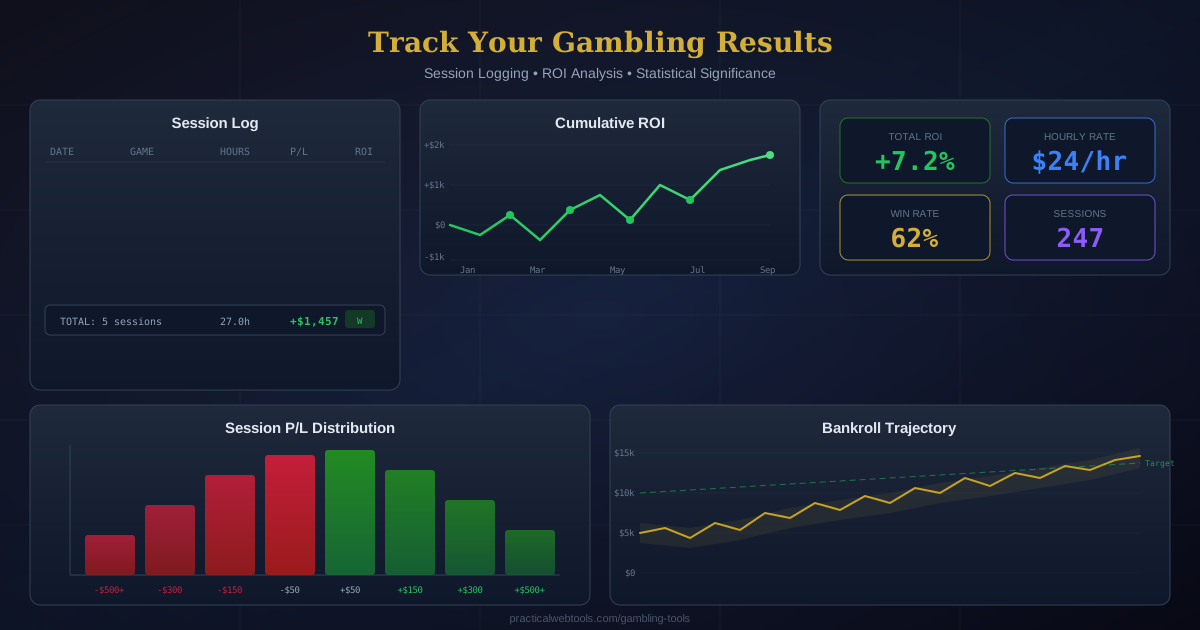
Track every bet meticulously. Record the opening line, your bet line, the closing line, your stake, the result, and your CLV. Over 500+ bets, CLV is a far better indicator of your true edge than win/loss record.
-
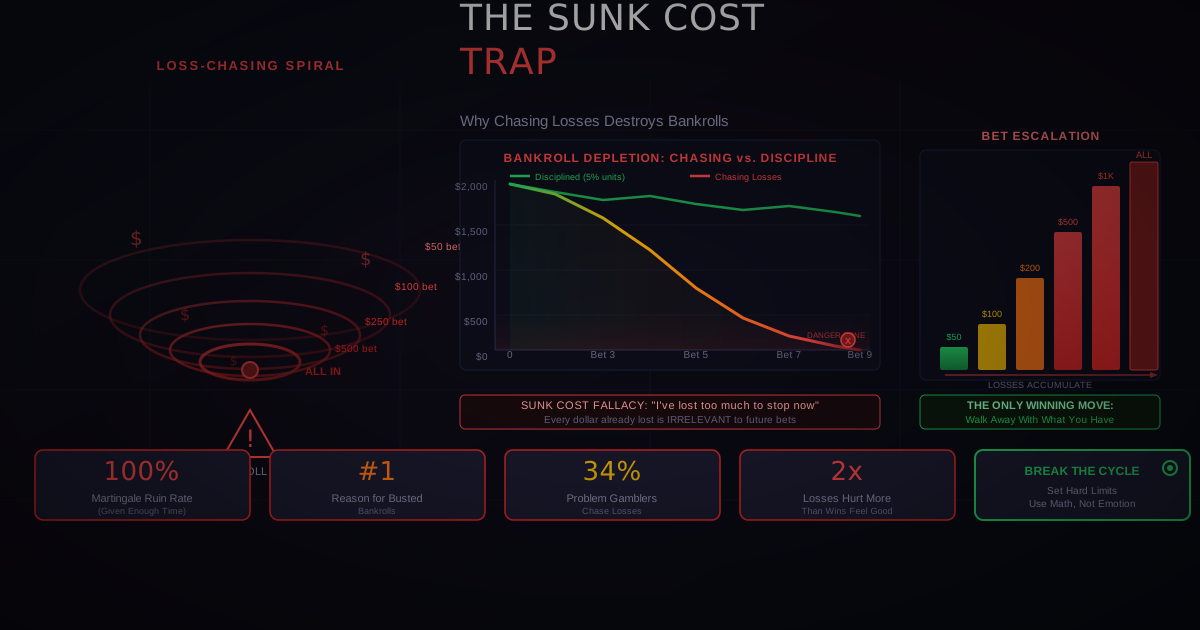
Never increase stakes during a losing streak. This is the single most destructive behavior in all of sports betting. If your process is sound, maintain your standard sizing and let the math work.
Combining Underdog Betting with Other Edges
Underdog betting becomes most powerful when combined with other analytical edges. Here are the most effective combinations.
Underdogs + Line Shopping
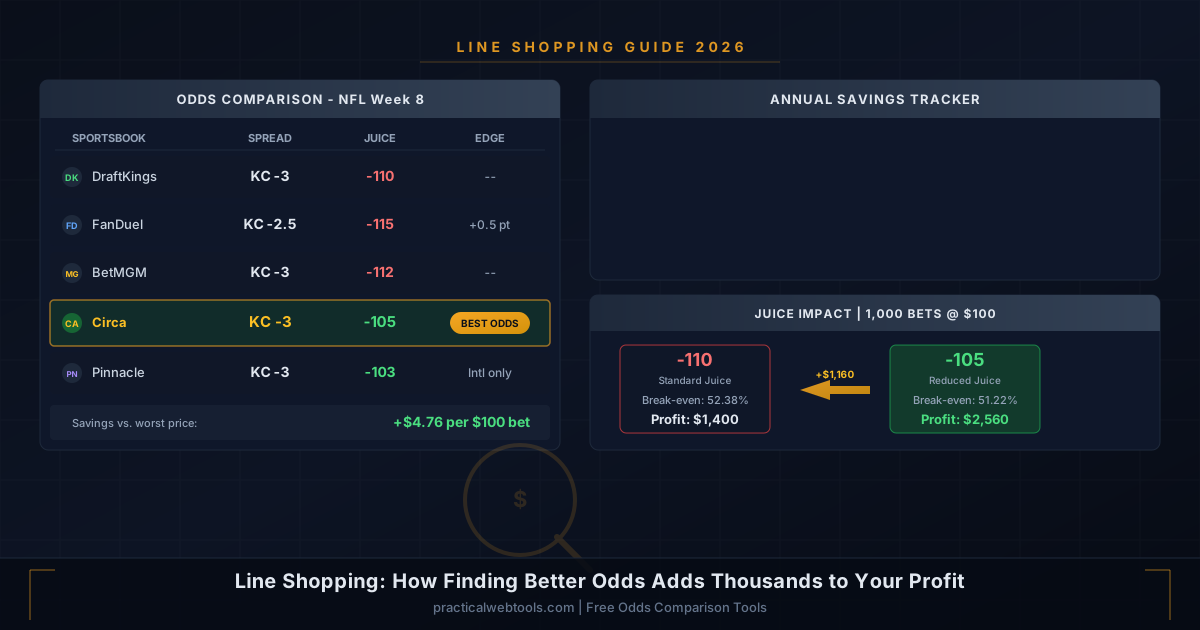
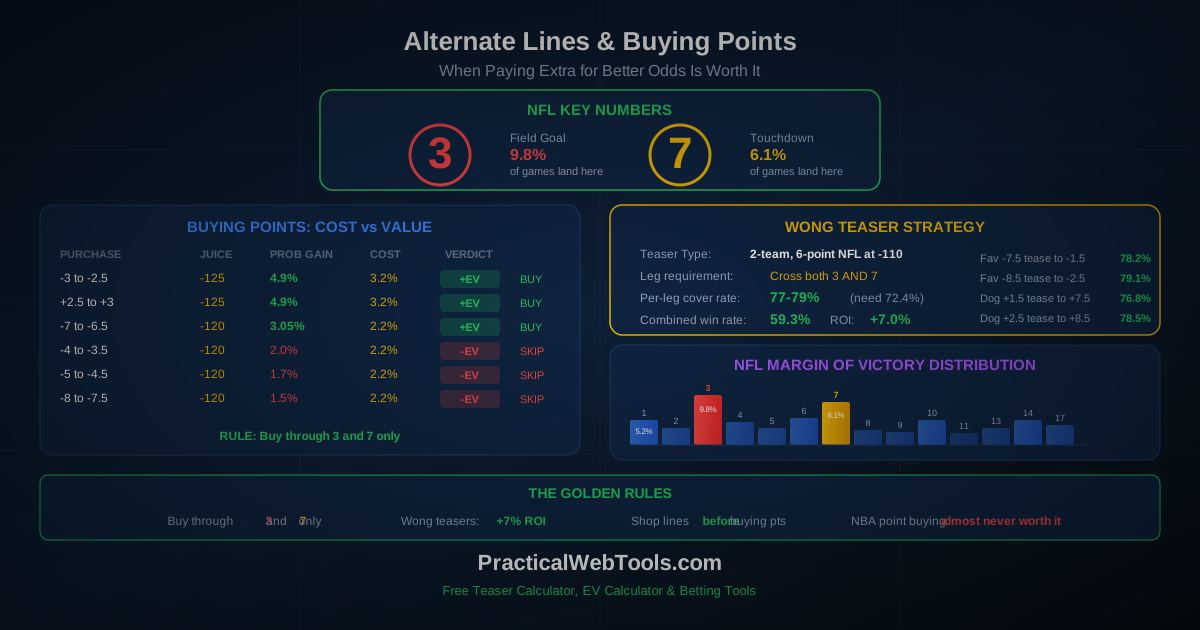
The same underdog might be +6.5 at one book and +7.5 at another. That extra point of spread is worth approximately 2-3% in expected value in the NFL. Line shopping is not optional for serious underdog bettors -- it is the single highest-ROI activity in all of sports betting.
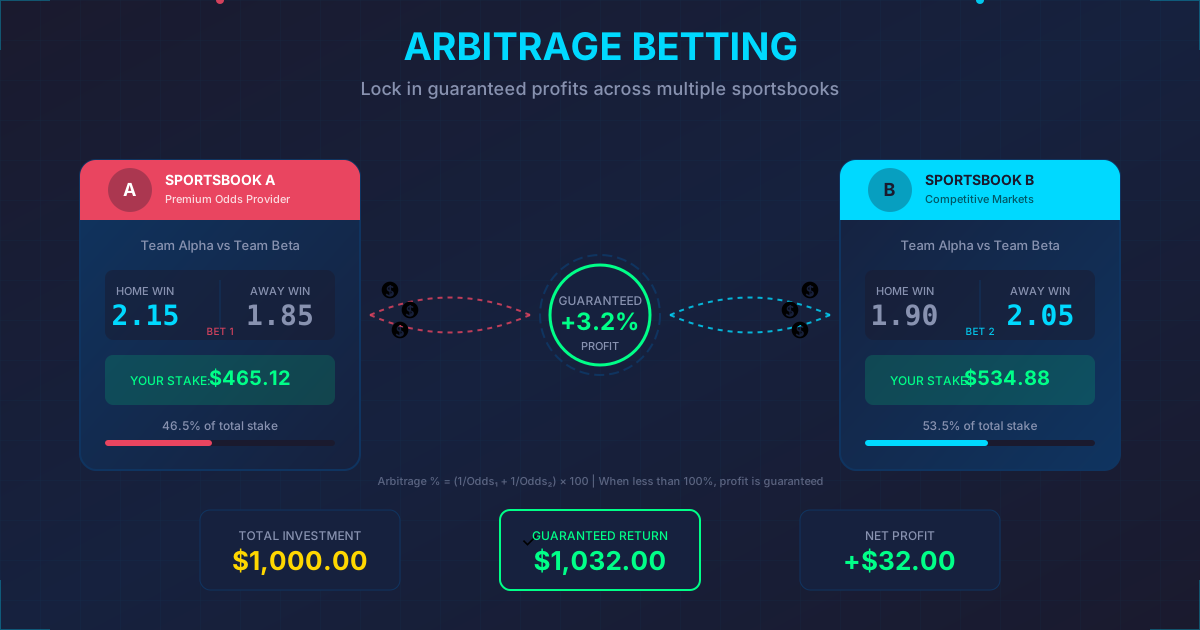
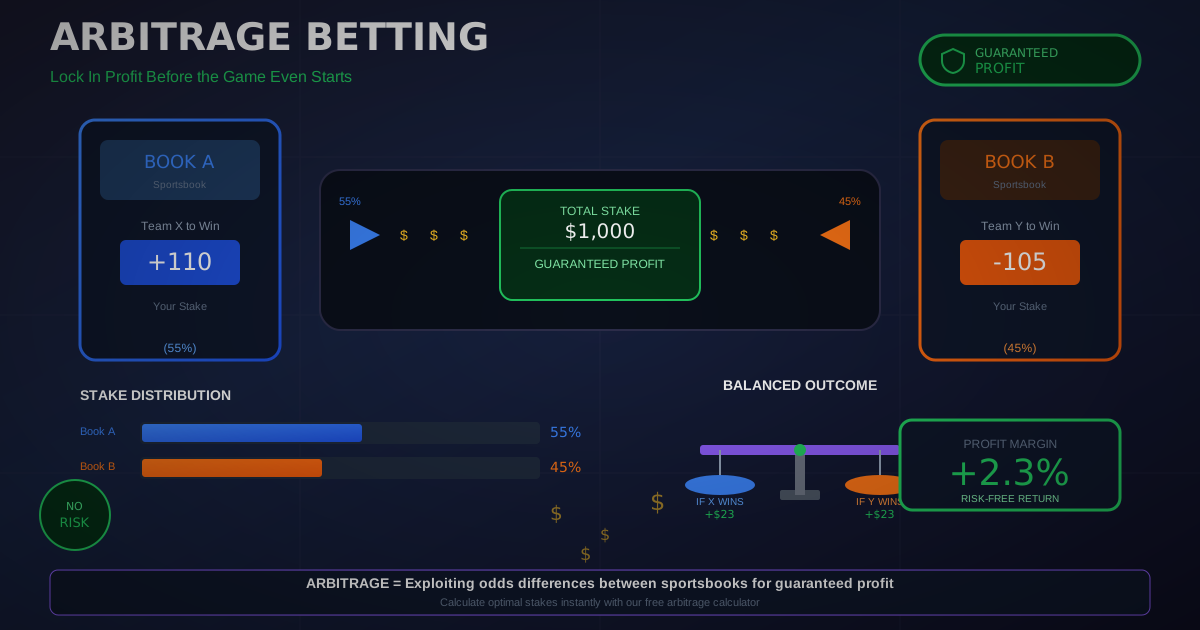
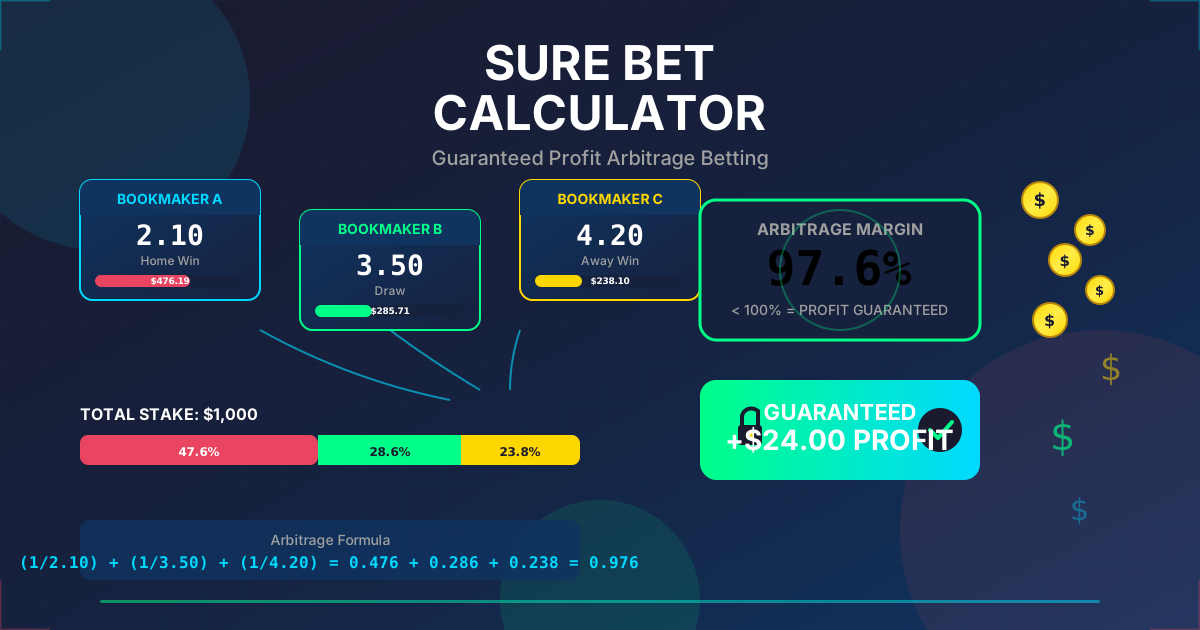
Find opportunities where different books disagree on the underdog's price with our Arbitrage Calculator.
Underdogs + Early Lines
The market is least efficient when lines first open. Sharp money has not yet corrected mispriced underdogs, and the public has not yet loaded up on favorites. Data shows that bettors who grab underdog lines early achieve 3-4% better CLV than those who wait.
Underdogs + Weather/Situational Overlays
In outdoor sports, weather conditions (wind, rain, extreme cold) benefit underdogs by reducing scoring variance. A team that is a 10-point underdog in ideal conditions might be a 6-point underdog in a 30 mph wind game -- but the market often does not adjust the spread fully for weather.
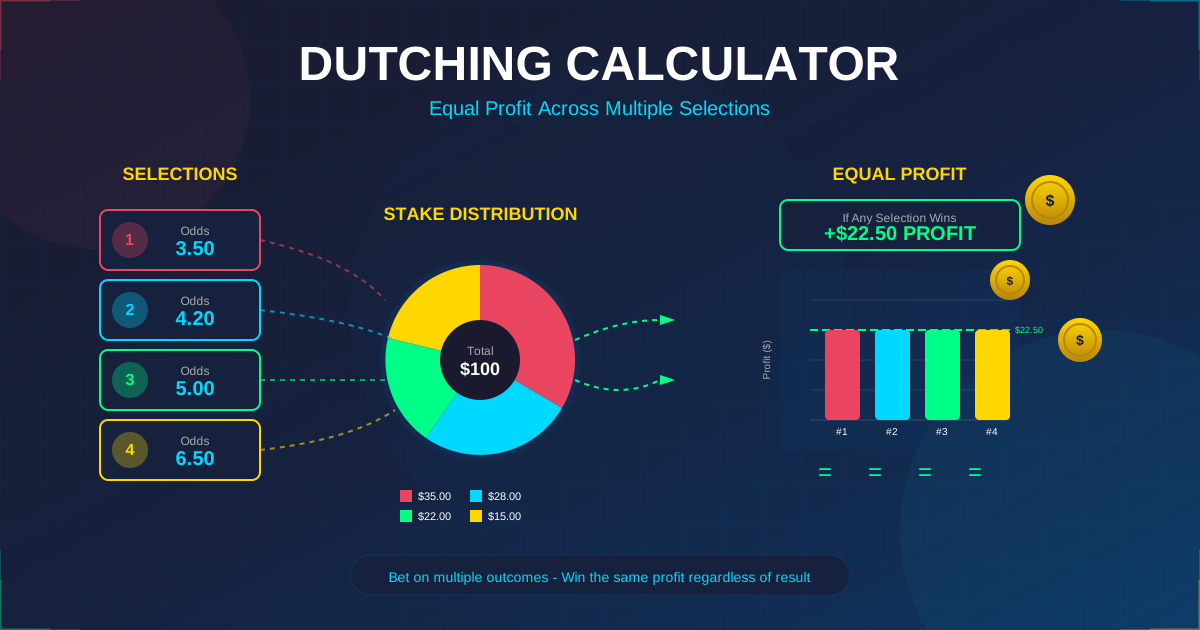
Underdogs + Dutching
When you identify multiple underdogs in the same event (e.g., a golf tournament or soccer match with a draw), you can spread your risk across multiple outcomes using a dutching strategy.
Calculate optimal stake distribution across multiple underdog bets with our Dutching Calculator.
Underdogs + Hedging
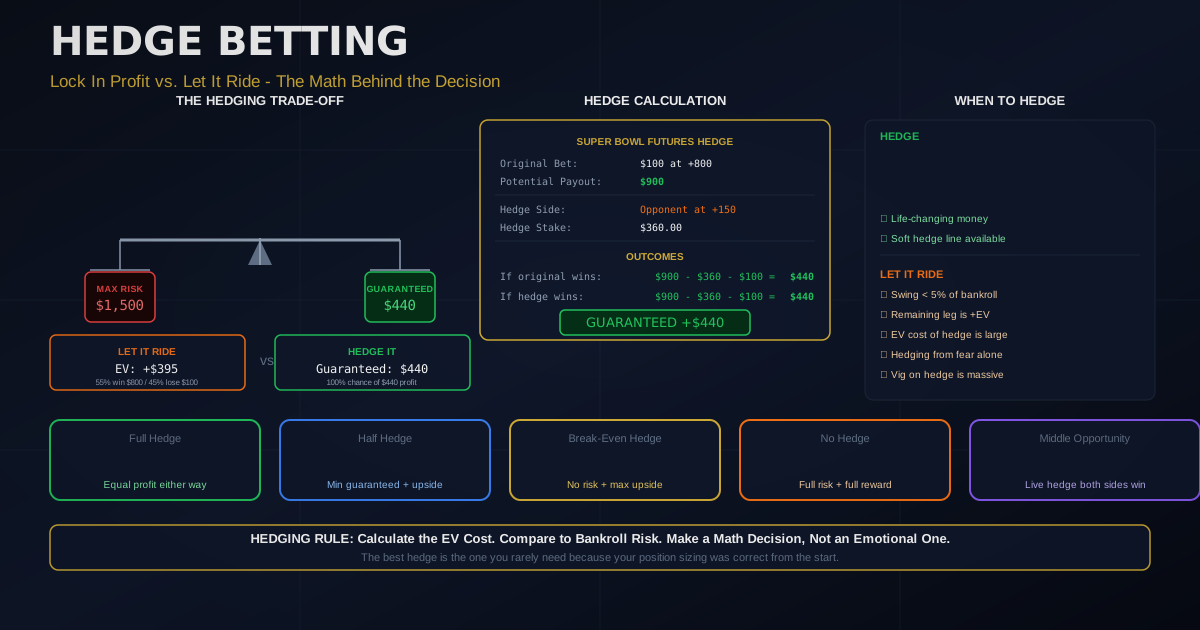
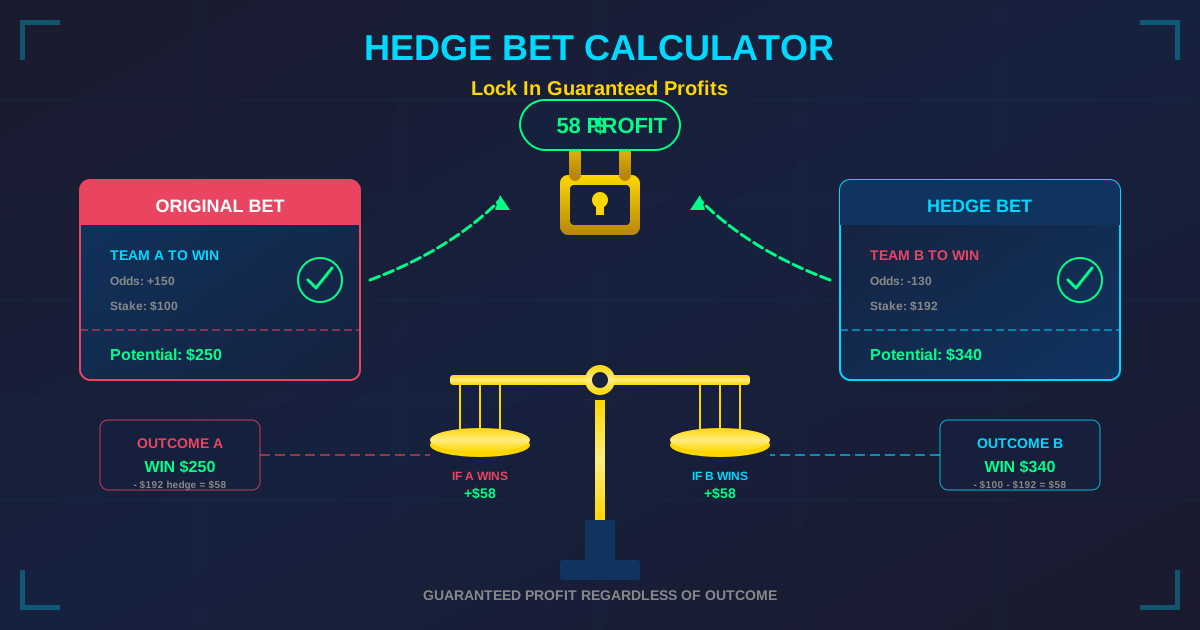
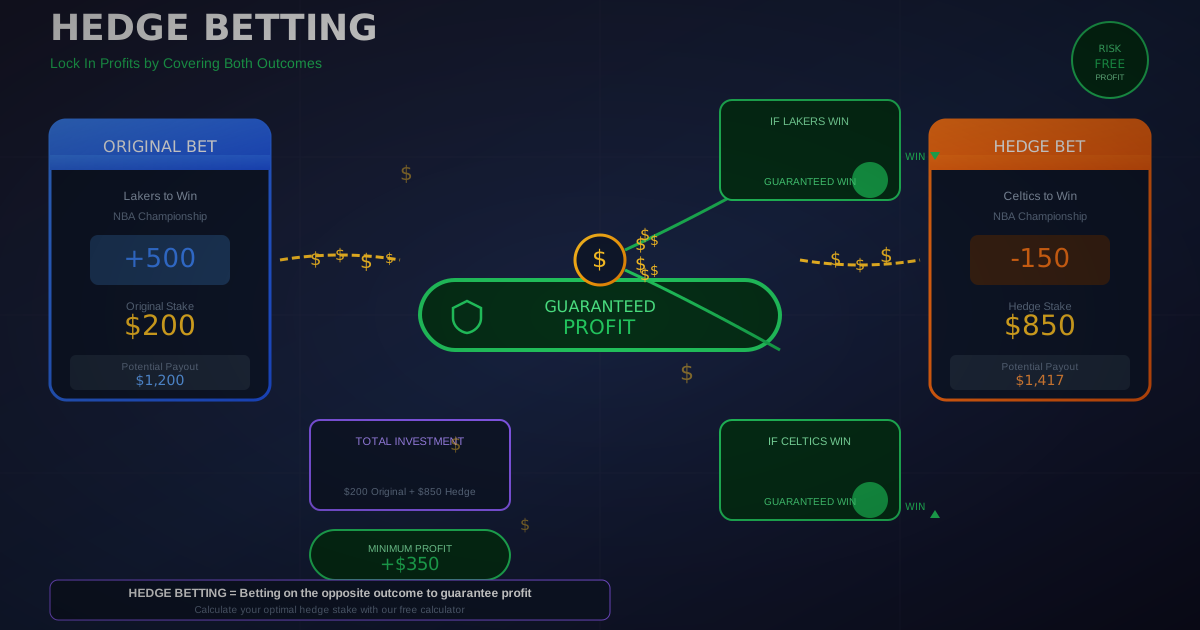
When an underdog future bet or early-round playoff bet gains significant value, you can hedge to lock in guaranteed profit. If you bet the Detroit Lions at 30-1 to win the Super Bowl and they reach the conference championship, you can hedge the opponent to guarantee a profit regardless of outcome.
Calculate exact hedge amounts to lock in profit on underdog futures with our Hedge Calculator.
Common Underdog Betting Mistakes
Even bettors who understand the theory behind underdog value frequently make execution errors that erode their edge.
Mistake 1: Betting Every Underdog
The favorite-longshot bias does not mean every underdog is a value bet. It means the market systematically overprices favorites in certain contexts. Blindly betting all underdogs yields approximately breakeven results before the vig -- meaning a net loss of 2-5% after juice. You need filters.
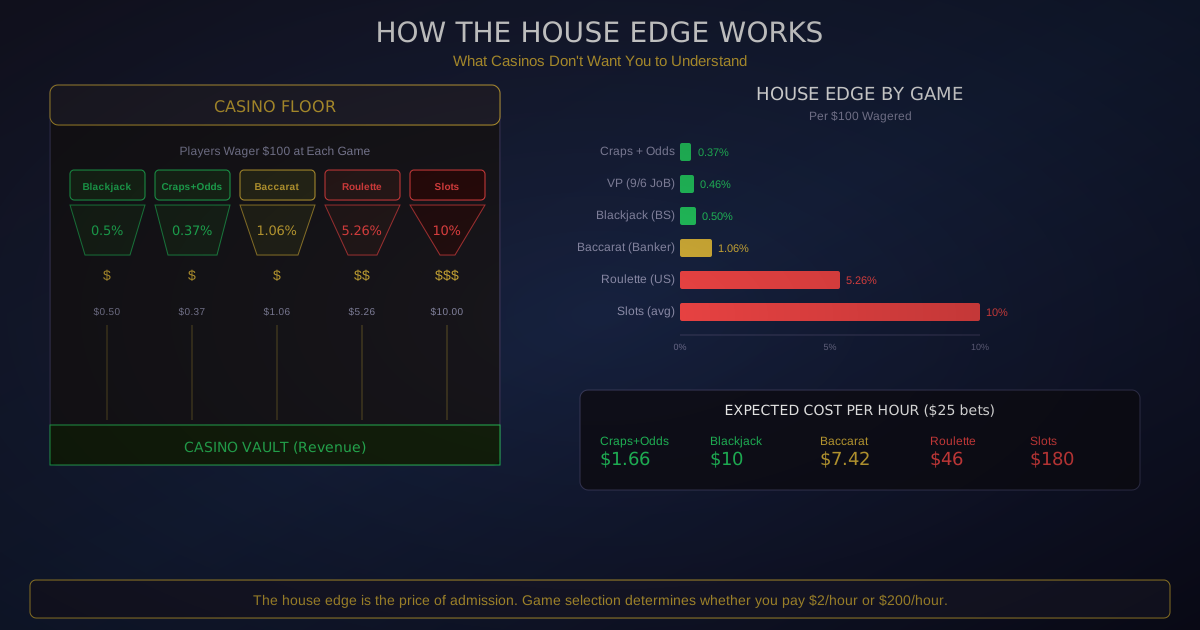
Mistake 2: Ignoring the Vig
A +150 underdog is not a 40% implied probability bet. After removing the vig (which might be 4-5% on this particular line), the true no-vig implied probability could be 37-38%. Your true probability estimate needs to exceed the no-vig number, not the vigged number.
Mistake 3: Chasing Longshots for Entertainment
There is a reason the bias is called the "favorite-longshot" bias. The most overpriced bets in the market are extreme longshots (+500 and above). The public loves the dream of a massive payout. But +500 implied probability is 16.7%, and the true probability for most +500 dogs is often closer to 12-14%. That is a massive negative EV gap. Keep your underdog bets in the +100 to +250 range where the edge is real.
Mistake 4: Failing to Track CLV
You won your last five underdog bets. Are you a genius or did you get lucky? Without tracking CLV, you cannot answer this question. A bettor who wins 5 of 10 underdog bets but was on the wrong side of CLV on 8 of them is running hot and likely to regress. A bettor who wins 3 of 10 but beat the closing line on 7 of them is running cold and likely to recover.
Mistake 5: Overleveraging on High-Variance Plays
A +300 underdog with 5% estimated edge sounds incredible -- but a 1-in-4 win rate means you could easily lose 15 of the next 20 bets. If you are staking 3% of bankroll on each, you have lost 45% of your bankroll waiting for the math to work. Stake sizing must reflect variance, not just edge.
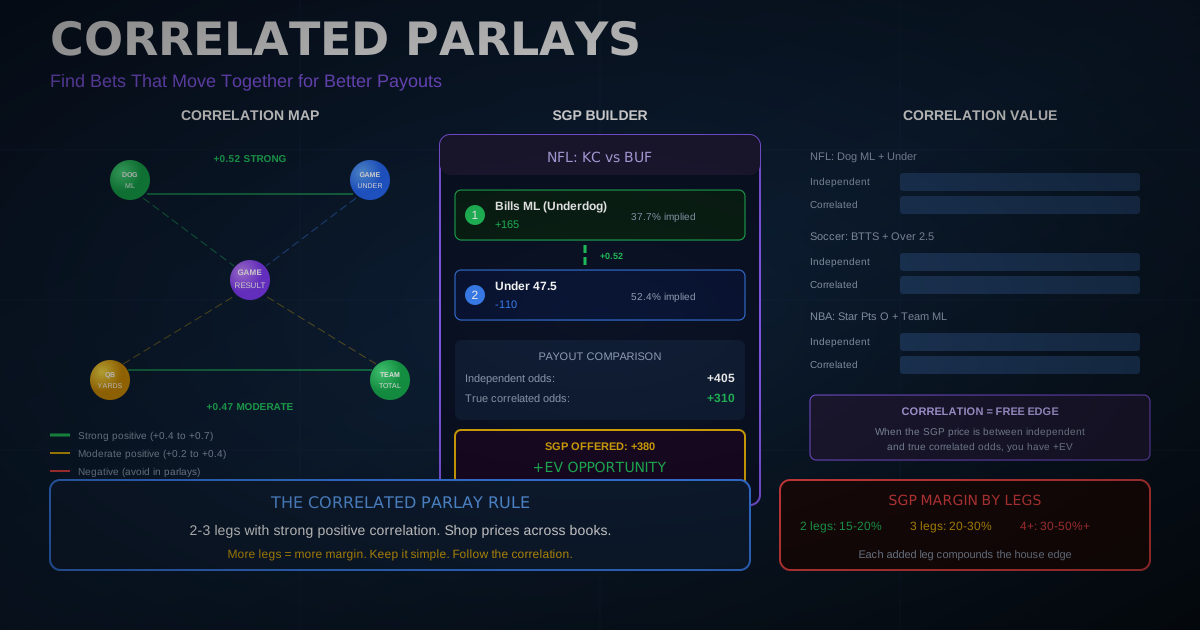
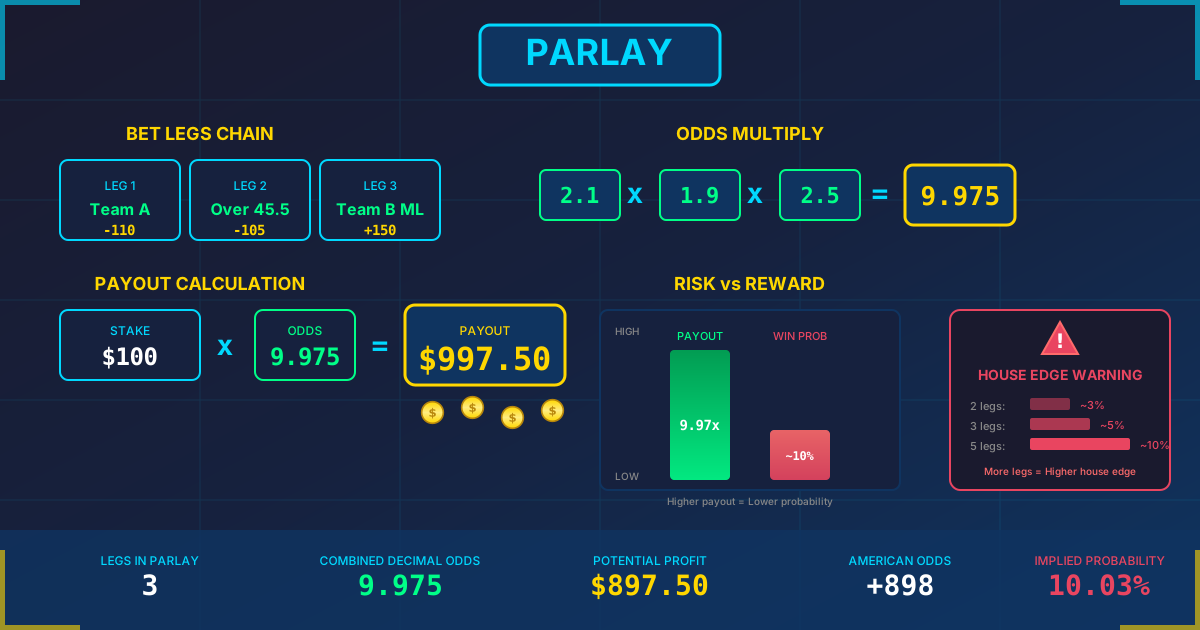
Mistake 6: Parlaying Underdogs
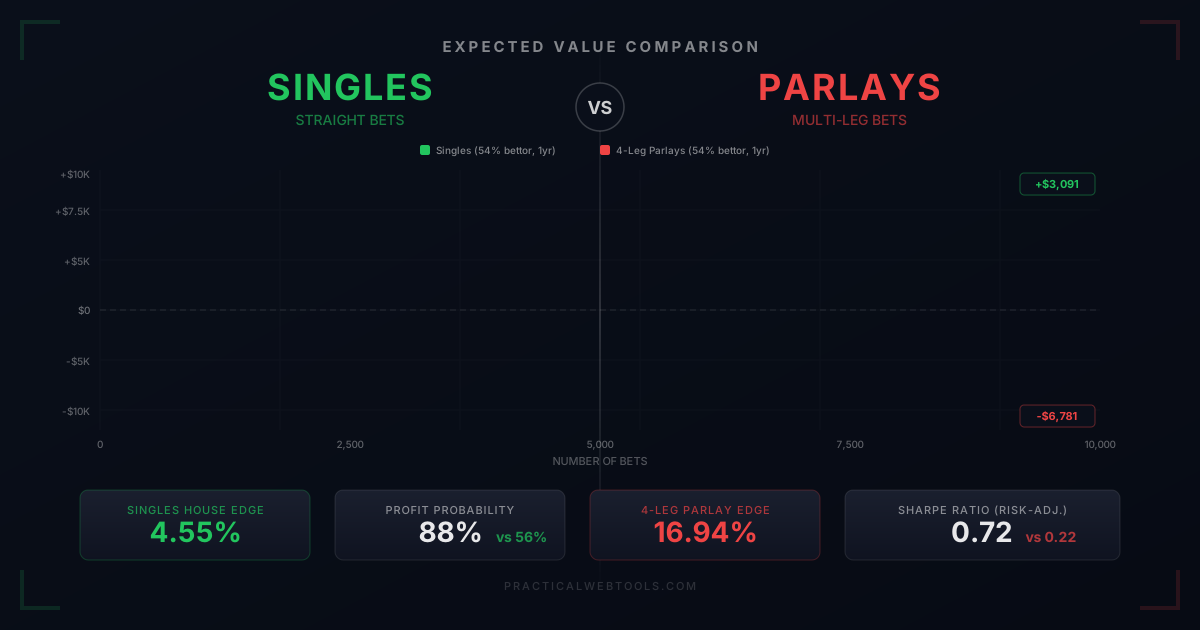
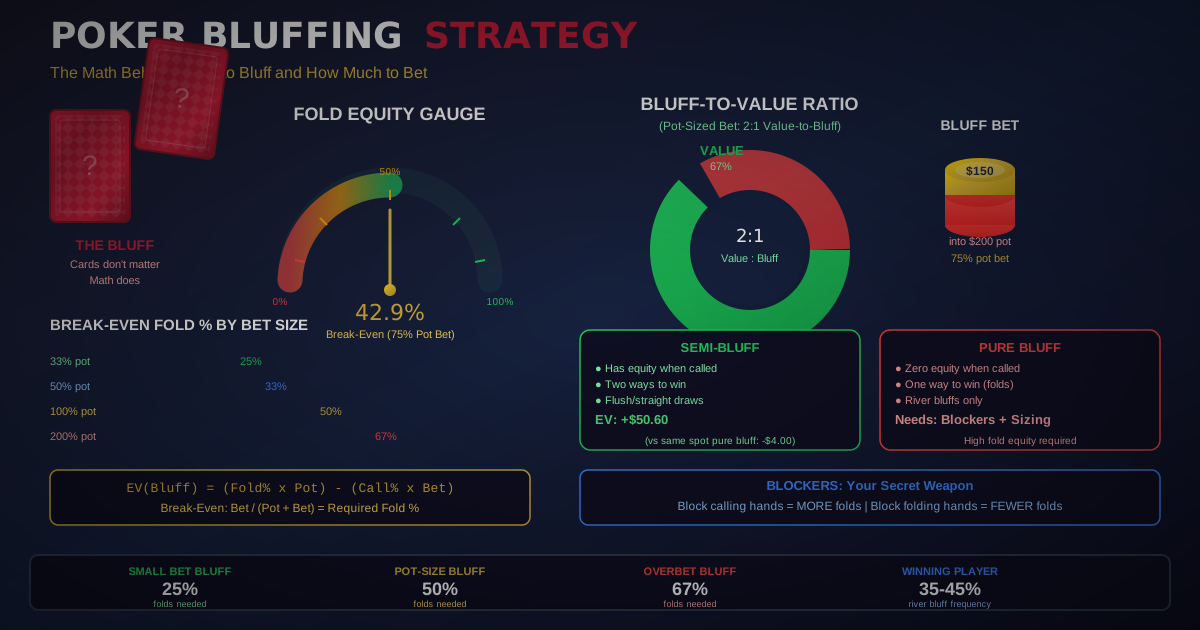
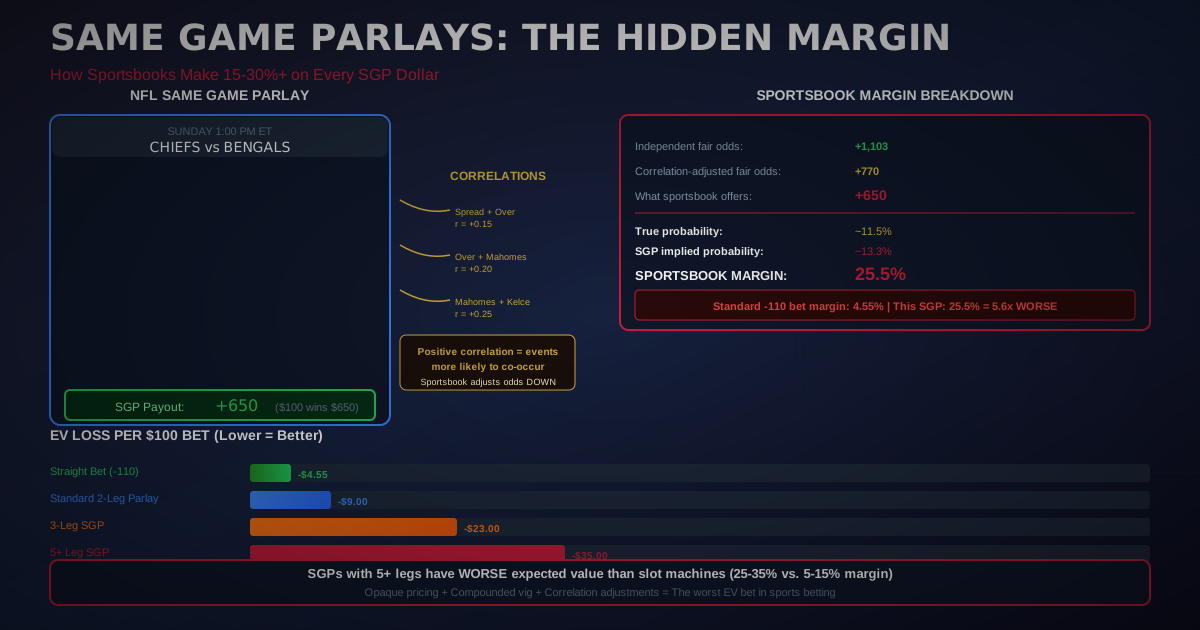
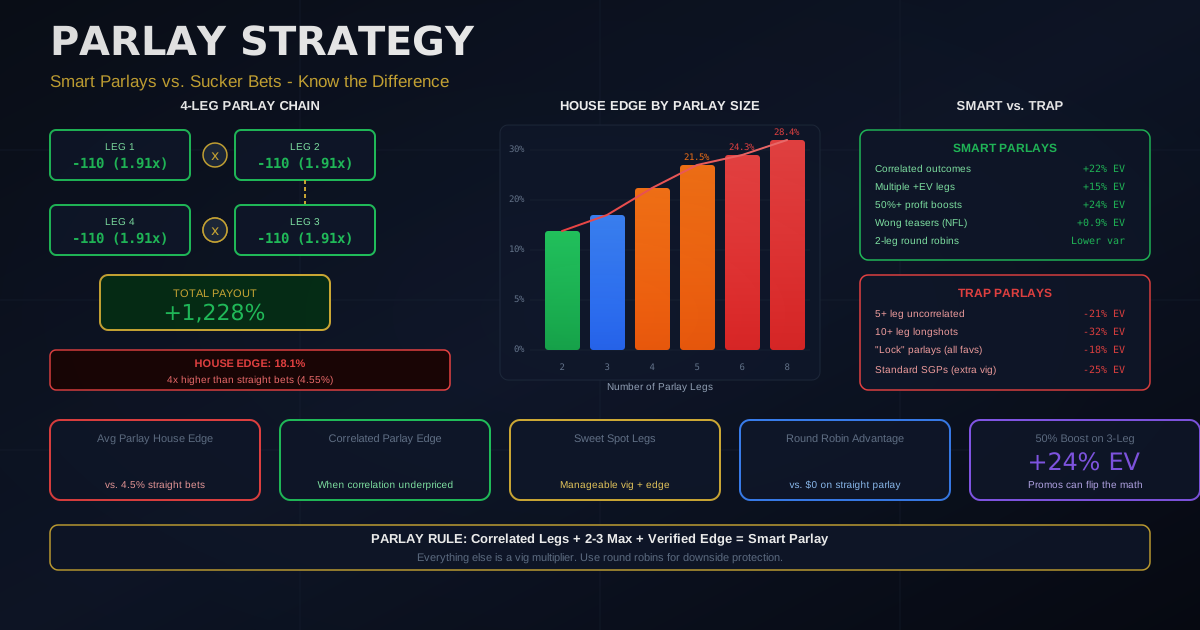
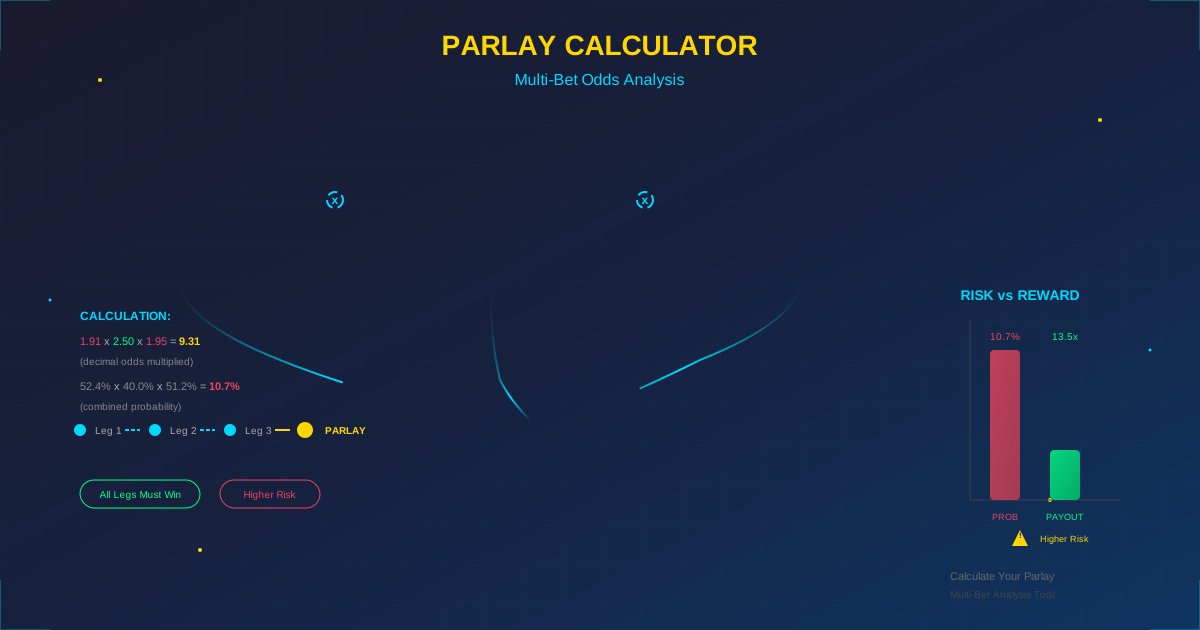
Parlaying multiple underdogs feels exciting and the potential payouts are enormous. But parlay vig compounds multiplicatively, and the true edge on each leg is marginal. A 3-leg underdog parlay where each leg has +2% edge does not yield +6% edge -- it yields approximately -8% EV after the compounded vig. Bet underdogs as singles unless the book is offering a significant parlay boost that changes the math.
Check whether a parlay has positive expected value with our Parlay Calculator.
Frequently Asked Questions
Is it really more profitable to bet underdogs than favorites?
It depends on context. In aggregate across all sports and situations, underdogs are approximately breakeven ATS before vig, making them slightly unprofitable after juice. However, in specific situational filters -- divisional NFL home dogs with low totals, MLB home underdogs in the +121 to +175 range, rested NBA underdogs against fatigued favorites -- underdog betting has demonstrated sustained profitability over multi-year samples. The edge is in the selection, not in blindly backing all underdogs.
What is the favorite-longshot bias and how can I use it?
The favorite-longshot bias is a well-documented phenomenon where the betting public systematically overestimates the value of favorites and underestimates underdogs. Academic research from institutions including the NBER, University of Chicago, and others has confirmed this pattern across horse racing, football, basketball, baseball, and soccer. You can exploit it by identifying situations where public money has inflated the favorite's line, then betting the underdog when your probability assessment indicates positive expected value.
What is the best sport for underdog moneyline betting?
MLB (Major League Baseball) is the best sport for underdog moneyline betting due to the sport's inherent parity -- even the worst teams win 35-40% of games -- and the moneyline-primary market structure. Home underdogs in the +121 to +175 price range have shown the most consistent profitability over 10-year samples, with win rates of 38-44% against breakeven thresholds of 36-43%. The NHL is the second-best sport due to similar parity dynamics.
How much of my bankroll should I risk on underdog bets?
For small underdogs (+100 to +150), risk 1.5-2.5% of your bankroll. For medium underdogs (+151 to +200), risk 1.0-2.0%. For large underdogs (+201 to +300), risk 0.5-1.0%. For longshots above +300, risk no more than 0.25-0.5%. These ranges reflect the higher variance inherent in underdog betting. Use the Kelly Criterion Calculator to calculate mathematically optimal sizing based on your estimated edge, then apply fractional Kelly (25-50%) for safety.
Should I bet underdogs on the moneyline or the spread?
For NFL and NBA, the spread is typically the better market for underdogs getting 4+ points, because you can lose the game and still win the bet. For MLB and NHL, the moneyline is almost always the correct market because point/run/puck lines carry higher vig. For small NFL and NBA underdogs (+1 to +3.5), the moneyline can offer better expected value if you believe the team has a legitimate chance to win outright at plus-money prices.
How do I know if a specific underdog bet has positive expected value?
Estimate the underdog's true win or cover probability using power ratings, advanced metrics, injury reports, and situational analysis. Convert the sportsbook's odds to implied probability (removing vig). If your true probability estimate exceeds the no-vig implied probability, the bet has positive expected value. Use the Expected Value Calculator and Implied Probability Calculator to run these calculations quickly.
What is closing line value and why does it matter for underdog bettors?
Closing line value (CLV) measures the difference between the odds you received and the final odds at game time. If you bet an underdog at +7.5 and the line closes at +6, you achieved positive CLV of 1.5 points. Research consistently shows that CLV is the strongest predictor of long-term betting profitability. For underdog bettors, tracking CLV is essential because it separates skill (consistently finding value before the market corrects) from luck (winning bets that happened to go your way despite being poorly priced).
Can I profitably parlay underdogs?
Parlaying underdogs is generally a negative expected value proposition because the vig compounds multiplicatively across each leg. A 3-leg parlay where each leg has a 2% edge individually does not yield 6% edge combined -- the compounded vig typically overwhelms the marginal edge on each leg. The exception is when sportsbooks offer significant parlay boost promotions that add enough value to overcome the vig. Bet underdogs as singles for the most reliable long-term profitability.
How many underdog bets do I need before I know if my strategy works?
Due to the higher variance of underdog betting, you need a larger sample size than favorite betting to distinguish skill from luck. A minimum of 500 bets is recommended before drawing firm conclusions about your ATS record, though CLV analysis can provide meaningful signal in as few as 100-200 bets. Track every bet, record your CLV, and evaluate your process rather than your short-term results.
Essential Tools for Underdog Betting
Probability and Value Assessment
- Expected Value Calculator: Calculate the exact EV of any underdog bet
- Implied Probability Calculator: Convert any odds to true probability
- Odds Converter: Translate between American, decimal, and fractional odds
- Hold/Vig Calculator: Strip the vig to see the true market price
Bet Sizing and Portfolio Management
- Kelly Criterion Calculator: Optimal bankroll allocation based on edge
- Hedge Calculator: Lock in profit when your underdog futures hit
- Dutching Calculator: Spread risk across multiple underdogs
Market Analysis
- Arbitrage Calculator: Find pricing discrepancies across books
- Parlay Calculator: Check parlay math before combining underdogs
Conclusion
Profitable underdog betting is not about romantic narratives of small teams toppling giants. It is about mathematics, market structure, and systematic exploitation of well-documented cognitive biases. The favorite-longshot bias is real. Public money inflates favorites in predictable, repeatable situations. And in specific contexts -- divisional NFL home dogs in low-total games, rested NBA underdogs against fatigued favorites, MLB home dogs in the +121 to +175 price range, NHL home underdogs against teams the public has overvalued -- the underdog side of the market offers genuine, measurable positive expected value.
The discipline is harder than the theory. You will lose more individual bets than you win. You will endure stretches of 10, 12, even 15 consecutive losses that will make you question everything. You will watch the public collect on their -300 favorites while your +180 underdog falls apart in the fourth quarter. And then, over 500 or 1,000 bets, you will look at your results and see that the math worked. The CLV was positive. The ROI is real. The edge materialized.
That is what separates recreational bettors from professional ones. Not picking winners -- finding value. And underdogs, when selected with discipline and sized with intelligence, are one of the most reliable places to find it.
Start calculating whether your next underdog bet has genuine positive expected value with our Expected Value Calculator. Understand the true price with our Implied Probability Calculator. And size your bets intelligently with our Kelly Criterion Calculator.
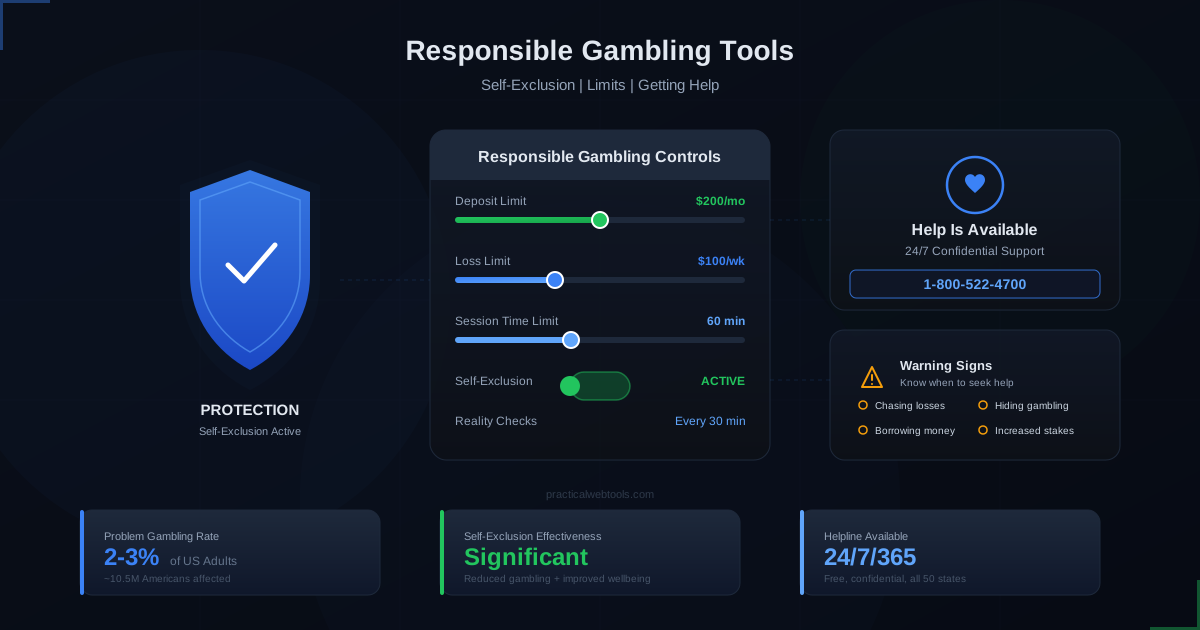
Gambling involves risk. This content is for educational and informational purposes only. Always gamble responsibly, set limits you can afford, and seek help if gambling becomes a problem. Visit the National Council on Problem Gambling or call 1-800-522-4700 for support.