How to Set Up a Poker Home Game: Complete Guide to Chips, Blinds, and Tournament Structure (2026)
A well-organized poker home game is the best entertainment value in existence -- eight friends, a few hundred dollars in chips, some drinks, and five hours of strategy, trash talk, and unforgettable hands. But the difference between a home game people talk about for weeks and one that falls apart after two hours comes down entirely to preparation: chip distribution, blind structure, payout formula, and clear house rules.
The most common home game disasters are completely preventable. Tournaments that end in 45 minutes because the blinds escalate too fast. Cash games where nobody has enough small denomination chips to make change. Arguments about string bets, table talk, or who has to shuffle. Every one of these problems has a mathematical or procedural solution, and this guide covers them all.
Whether you are hosting your first poker night or optimizing your monthly game, the tools and formulas here will transform your setup from amateur hour to a smooth, professional-quality experience. Your guests will notice the difference immediately.
Calculate the perfect chip distribution for your game with our free Home Game Chip Distribution Calculator.
Choosing Your Game Format: Cash Game vs. Tournament
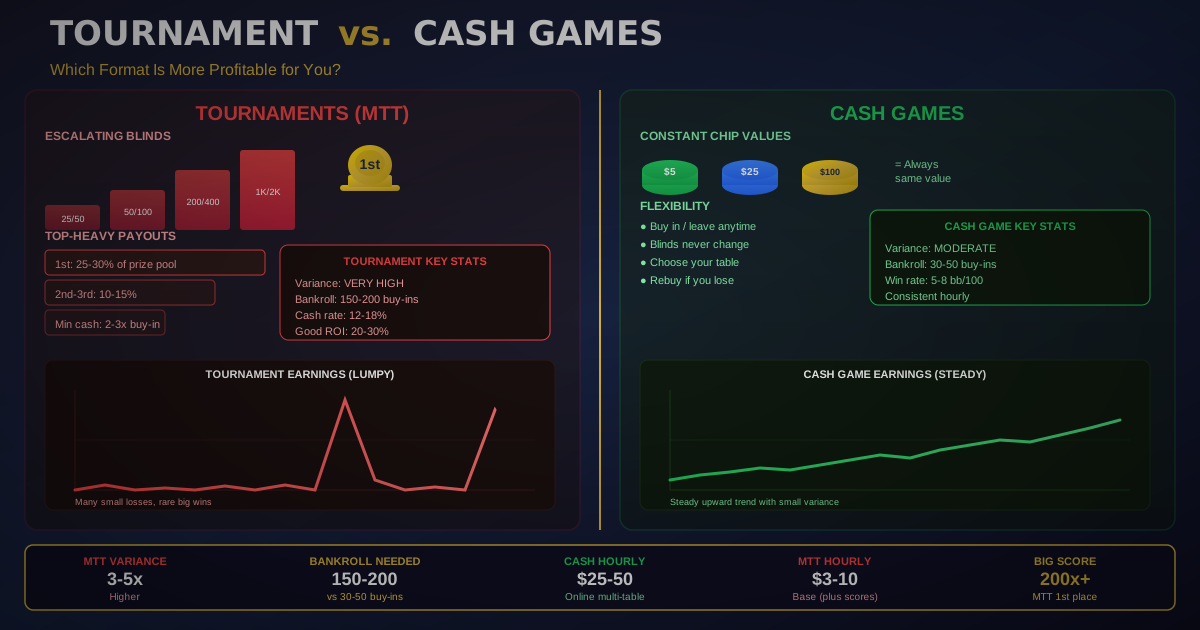
The first decision is whether to run a cash game, a tournament, or a combination of both. Each format has different advantages for a home game setting.
Cash Game Format
In a cash game, chips represent real money. Players buy in for a set amount, can rebuy when they lose their chips, and can leave at any time.
Advantages:
- Players can join and leave at any time (perfect for groups with varying schedules)
- No pressure to finish by a specific time
- Players who bust can rebuy and keep playing
- More social atmosphere since elimination does not occur
- Simpler to organize (no blind schedule or payout structure needed)
Disadvantages:
- Can feel less exciting without the finality of tournament elimination
- Big winners and big losers emerge, which can create tension in friend groups
- Players may feel trapped if they are losing
- Requires more chips in smaller denominations for making change
Ideal for: Groups of 4-8 friends who want a relaxed, ongoing game with flexible arrival and departure times.
Tournament Format
In a tournament, everyone buys in for the same amount, receives the same number of starting chips, and plays until one person has all the chips. Payouts go to the top finishers.
Advantages:
- Fixed buy-in limits losses (nobody can lose more than the entry fee plus rebuys)
- Creates exciting, escalating drama as the bubble approaches
- Has a definitive winner and clear ending
- Easier to manage total money in play
- Creates a competitive, event-like atmosphere
Disadvantages:
- Eliminated players have nothing to do (unless a cash game runs on the side)
- Requires careful blind structure design to hit your target game length
- Late-arriving guests cannot easily join
- Must commit to the full time (leaving early wastes your entry)
Ideal for: Groups who want a defined competition with a clear winner and fixed time commitment.
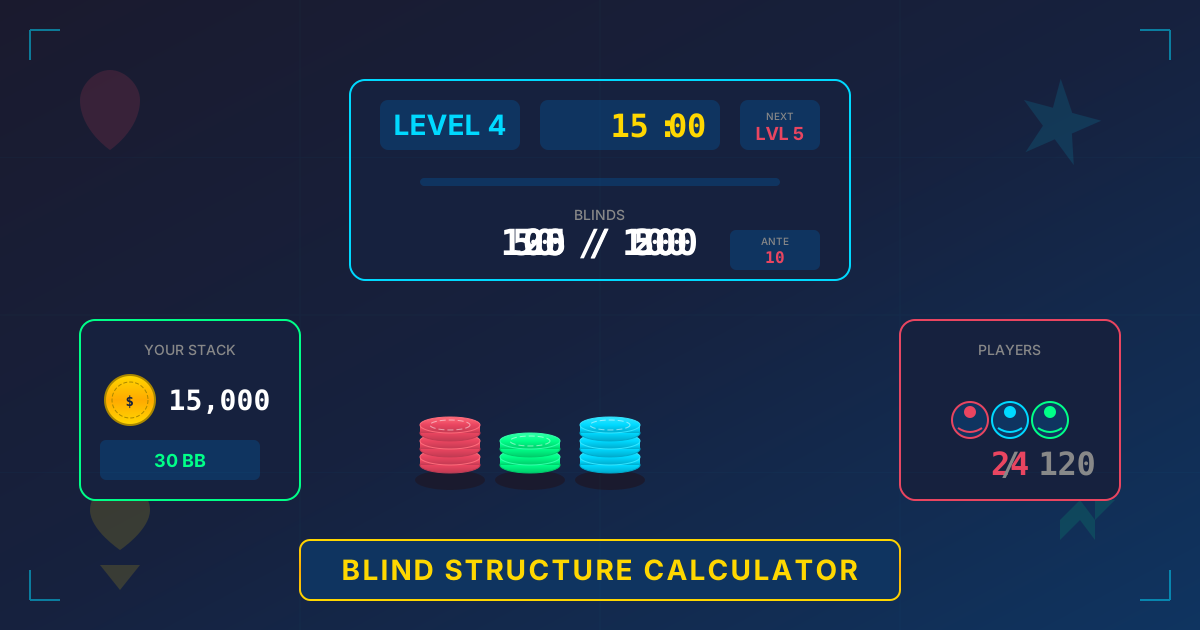
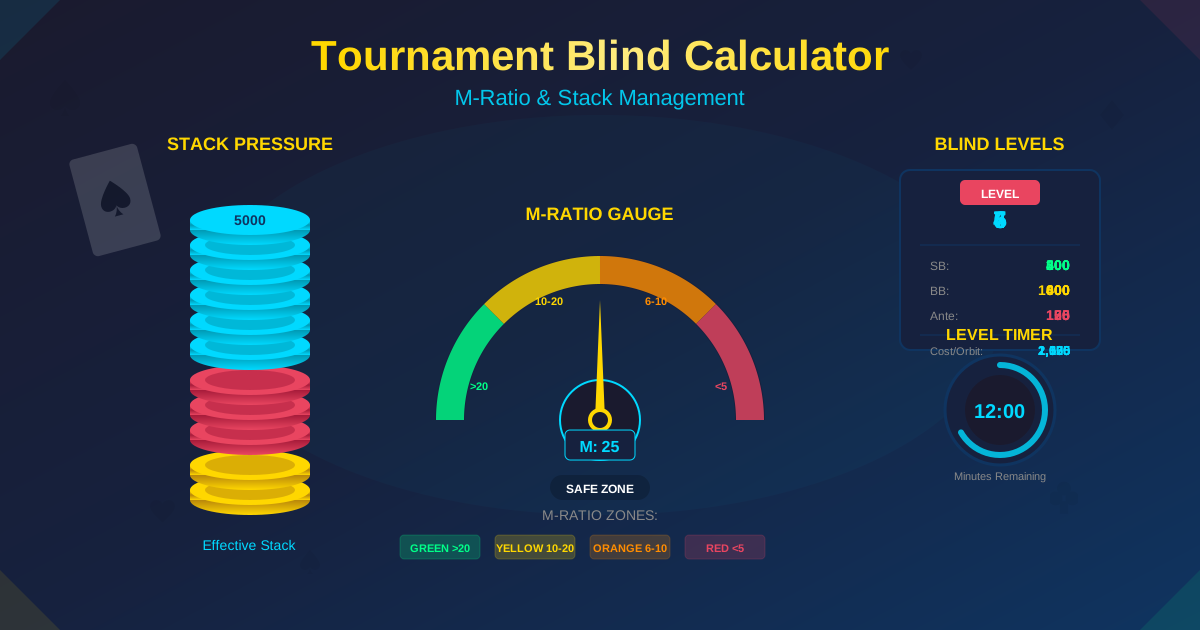
Design your blind schedule for any target game length with our Blinds Timer Structure Calculator.
Hybrid Format
Many successful home games run a tournament first, then transition to a cash game for eliminated players and anyone who wants to keep playing after the tournament concludes. This is the best of both worlds.
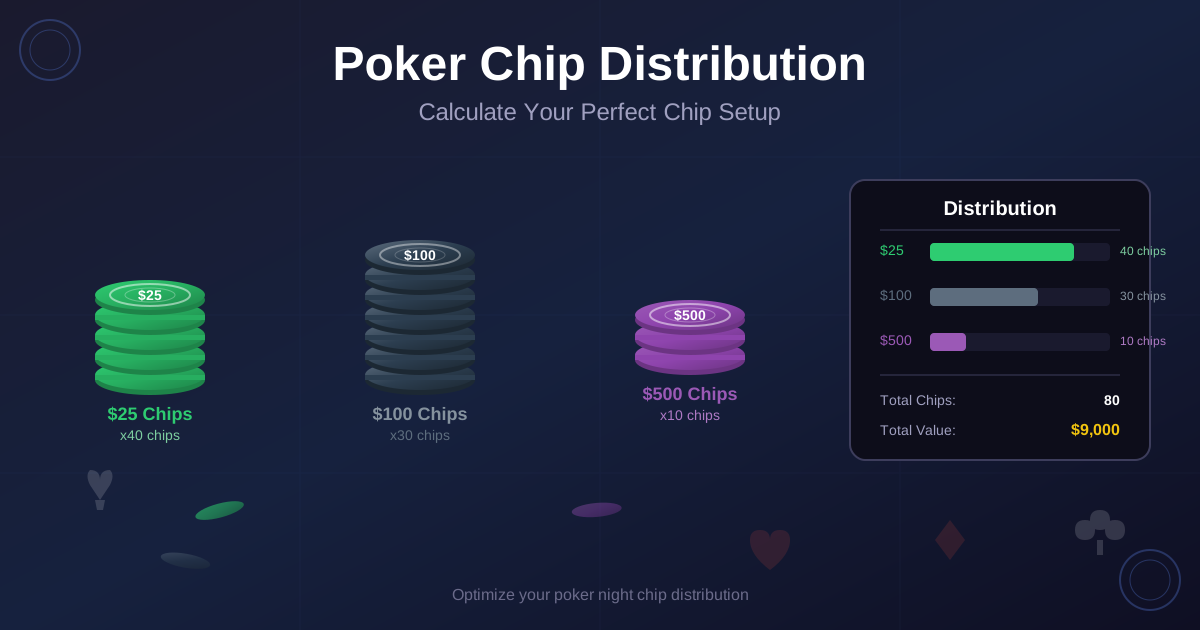
Chip Distribution for Cash Games
Proper chip distribution ensures smooth gameplay without constant chip-breaking delays.
Recommended Chip Denominations
For a typical $0.25/$0.50 home cash game ($50 buy-in):
| Chip Color | Value | Quantity Per Player | Total Value |
|---|---|---|---|
| White | $0.25 | 20 | $5.00 |
| Red | $0.50 | 15 | $7.50 |
| Blue | $1.00 | 15 | $15.00 |
| Green | $5.00 | 4 | $20.00 |
| Black | $25.00 | 1 | $25.00 |
| Total | 55 chips | $72.50 |
Wait -- that total exceeds $50. That is intentional. You want extra small denomination chips in play to facilitate betting. Players exchange larger chips as needed. The actual buy-in remains $50; the extra chip coverage is for making change.
For a simpler setup, the minimum viable distribution for a $50 buy-in:
| Chip Color | Value | Quantity Per Player | Total Value |
|---|---|---|---|
| White | $0.25 | 20 | $5.00 |
| Red | $1.00 | 15 | $15.00 |
| Blue | $5.00 | 6 | $30.00 |
| Total | 41 chips | $50.00 |
Cash Game Chip Quantity Planning
For a game with N players, you need at least:
Minimum chip set size: N x 40-60 chips
| Players | Minimum Chips | Recommended Set Size |
|---|---|---|
| 4 | 160 | 300 |
| 6 | 240 | 500 |
| 8 | 320 | 500 |
| 10 | 400 | 750 |
A standard 500-chip poker set handles up to 8 players comfortably. For 10 players, consider a 750 or 1,000-chip set.
Calculate the exact chip distribution for your specific buy-in and player count with our Home Game Chip Distribution Calculator.
Cash Game Stake Recommendations
Match your stakes to your friend group's comfort level. The goal is entertainment, not financial stress.
| Group Budget | Blind Level | Typical Buy-In | Max Loss (3 buy-ins) |
|---|---|---|---|
| Very Casual | $0.05/$0.10 | $10 | $30 |
| Casual | $0.10/$0.25 | $25 | $75 |
| Standard | $0.25/$0.50 | $50 | $150 |
| Serious | $0.50/$1.00 | $100 | $300 |
| High Stakes | $1/$2 | $200 | $600 |
The "max loss" column assumes a 3 buy-in cap, which is a reasonable house rule to prevent anyone from losing more than they are comfortable with.
Tournament Setup: Blind Structure Design
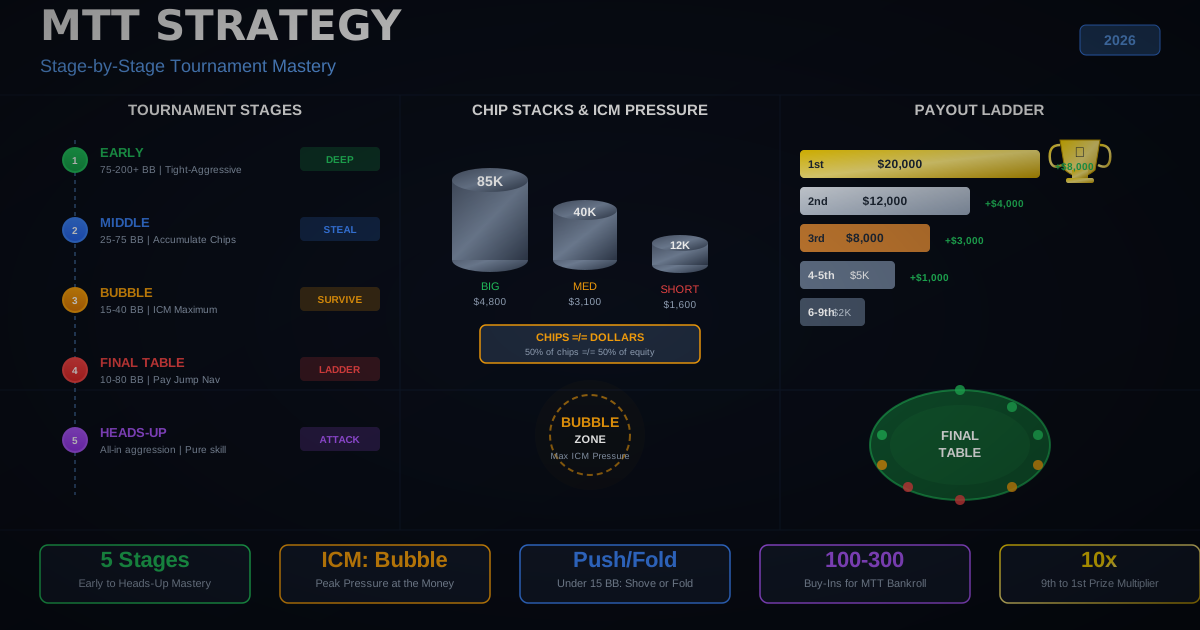
The blind structure is the single most important element of a home tournament. Get it right, and your game flows perfectly toward an exciting conclusion. Get it wrong, and players either sit around for six hours or the tournament devolves into an all-in fest after 30 minutes.
The Blind Structure Formula
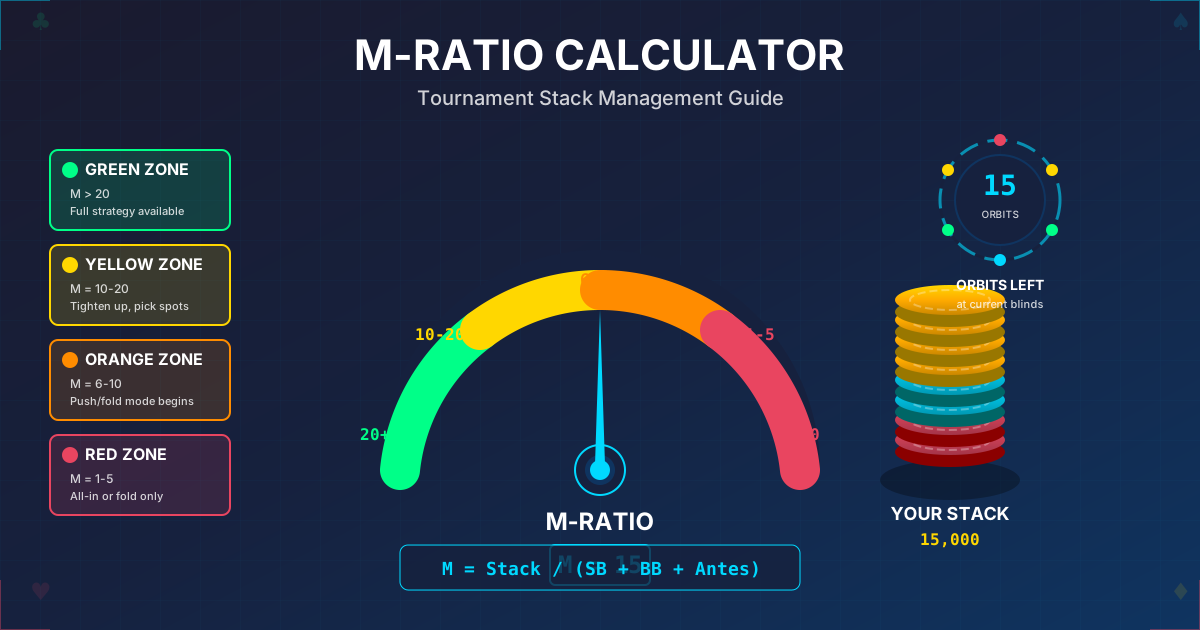
The key variable is Total Starting Chips / Final Big Blind. This ratio determines when the game transitions from strategic poker to push-fold mode.
Target ratio by game feel:
| Game Feel | Starting Stack / Final BB | Game Length |
|---|---|---|
| Deep and strategic | 50-100 | 4-6 hours |
| Standard | 25-50 | 2.5-4 hours |
| Fast and exciting | 10-25 | 1.5-2.5 hours |
| Turbo | 5-10 | Under 1.5 hours |
Sample Blind Structures
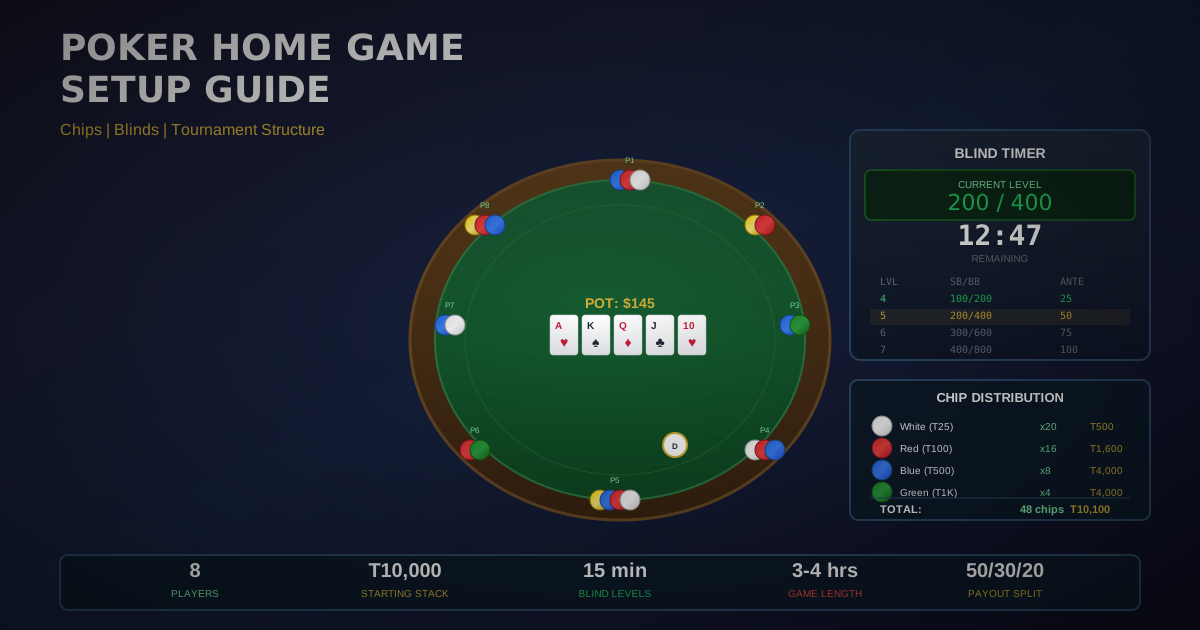
3-Hour Tournament (8 players, 5,000 starting chips):
| Level | Small Blind | Big Blind | Ante | Duration |
|---|---|---|---|---|
| 1 | 25 | 50 | 0 | 20 min |
| 2 | 50 | 100 | 0 | 20 min |
| 3 | 75 | 150 | 0 | 20 min |
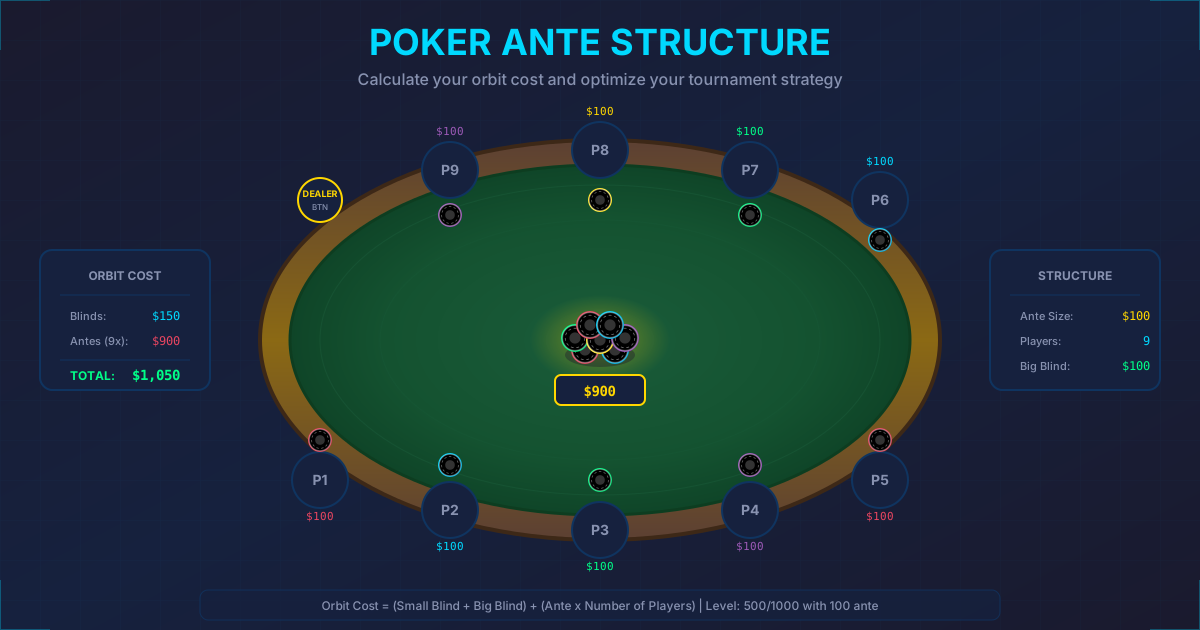
| 4 | 100 | 200 | 25 | 15 min |
| 5 | 150 | 300 | 25 | 15 min |
| 6 | 200 | 400 | 50 | 15 min |
| 7 | 300 | 600 | 50 | 15 min |
| 8 | 400 | 800 | 100 | 15 min |
| 9 | 500 | 1,000 | 100 | 15 min |
| 10 | 750 | 1,500 | 200 | 15 min |
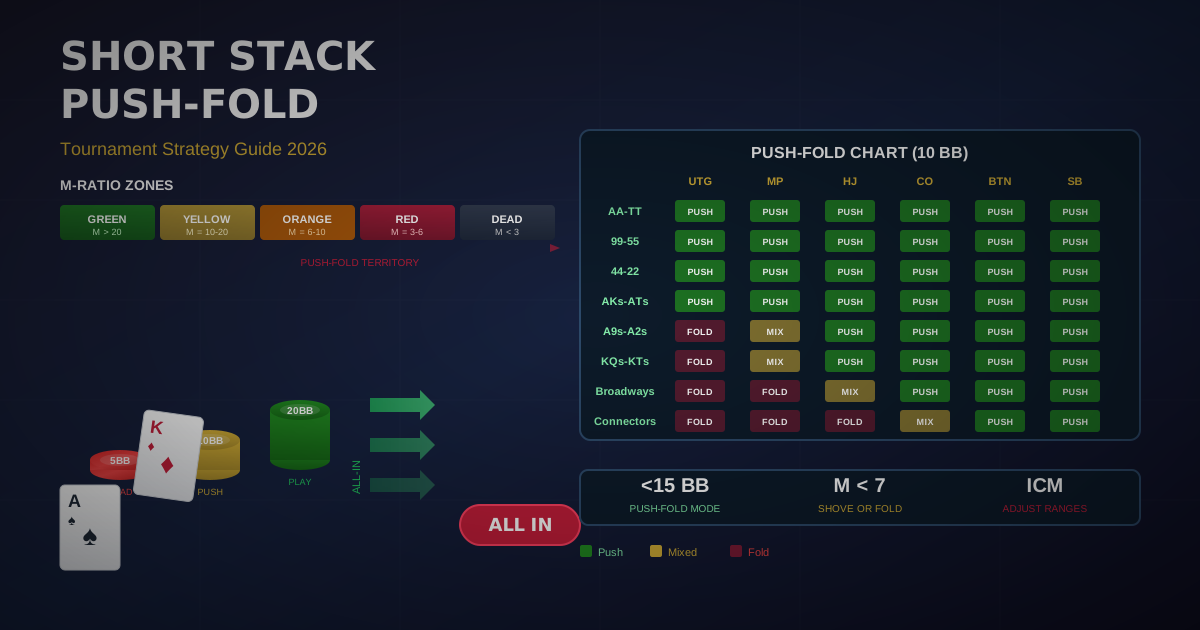
This structure gives players approximately 100 big blinds to start, transitions through comfortable middle levels, and reaches push-fold territory (under 15bb) around level 7-8, which is roughly 2 hours in. The final 2-3 players will be in pure push-fold mode, creating exciting all-in confrontations to end the night.
Calculate your custom starting stack for any blind structure with our Starting Stack Calculator.
4-Hour Deep Stack Tournament (8 players, 10,000 starting chips):
| Level | Small Blind | Big Blind | Ante | Duration |
|---|---|---|---|---|
| 1 | 25 | 50 | 0 | 25 min |
| 2 | 50 | 100 | 0 | 25 min |
| 3 | 75 | 150 | 0 | 20 min |
| 4 | 100 | 200 | 25 | 20 min |
| 5 | 150 | 300 | 25 | 20 min |
| 6 | 200 | 400 | 50 | 20 min |
| 7 | 300 | 600 | 75 | 15 min |
| 8 | 400 | 800 | 100 | 15 min |
| 9 | 600 | 1,200 | 100 | 15 min |
| 10 | 800 | 1,600 | 200 | 15 min |
| 11 | 1,000 | 2,000 | 200 | 15 min |
| 12 | 1,500 | 3,000 | 300 | 15 min |
This deeper structure starts at 200bb and allows more postflop play, better hand reading, and more strategic decisions. It is ideal for experienced groups who want a more skill-intensive game.
Design the perfect blind schedule for your game with our Blinds Timer Structure Calculator.
Tournament Chip Distribution
Tournament chips do not represent real money, so the denominations are simpler:
Standard 5,000-chip starting stack (8-10 players):
| Chip Color | Value | Quantity Per Player | Total |
|---|---|---|---|
| White | 25 | 16 | 400 |
| Red | 100 | 16 | 1,600 |
| Blue | 500 | 4 | 2,000 |
| Green | 1,000 | 1 | 1,000 |
| Total | 37 chips | 5,000 |
Standard 10,000-chip starting stack:
| Chip Color | Value | Quantity Per Player | Total |
|---|---|---|---|
| White | 25 | 20 | 500 |
| Red | 100 | 20 | 2,000 |
| Blue | 500 | 6 | 3,000 |
| Green | 1,000 | 3 | 3,000 |
| Black | 5,000 | 1 | 5,000 |
| Total | 50 chips | 13,500 |
Note: The total exceeds 10,000 because players need extra small chips for antes and blinds. Excess chips are colored up as blinds increase.
Coloring Up Chips
When the smallest denomination chips become unnecessary (because blinds have surpassed their value), you should "color up." This means exchanging small chips for larger ones.
When to color up: When the smallest chip in play is less than 1/10 of the current big blind.
Example: When blinds reach 200/400, the 25-value white chips are no longer useful. Collect all white chips, exchange them for red (100) chips, and race off any odd chips.
Racing off procedure: If a player has an odd number of small chips that do not convert evenly, deal one card face up per odd chip. The player with the highest card gets an extra chip of the next denomination.
Payout Structures for Home Tournaments
The payout structure determines how the prize pool is distributed among the top finishers.
Common Payout Formulas
For 6-8 Players (pay top 2-3):
| Players | 1st Place | 2nd Place | 3rd Place |
|---|---|---|---|
| 6 | 70% | 30% | -- |
| 7 | 65% | 25% | 10% |
| 8 | 60% | 25% | 15% |
For 9-12 Players (pay top 3):
| Players | 1st Place | 2nd Place | 3rd Place |
|---|---|---|---|
| 9 | 55% | 30% | 15% |
| 10 | 50% | 30% | 20% |
| 12 | 50% | 25% | 15% (+10% for 4th) |
For 13+ Players (pay top 4):
| Players | 1st | 2nd | 3rd | 4th |
|---|---|---|---|---|
| 14 | 45% | 25% | 18% | 12% |
| 16 | 42% | 24% | 18% | 10% (+6% for 5th) |
| 20 | 40% | 22% | 15% | 12% (+6% 5th, +5% 6th) |
Calculate exact payouts for any player count and buy-in with our Tournament Payout Calculator.
Real-World Payout Examples
Example 1: Standard Friday Night Game
- 8 players, $50 buy-in, prize pool $400
- 1st: $240 (60%), 2nd: $100 (25%), 3rd: $60 (15%)
Example 2: Monthly Serious Game
- 10 players, $100 buy-in, prize pool $1,000
- 1st: $500 (50%), 2nd: $300 (30%), 3rd: $200 (20%)
Example 3: Annual Championship
- 16 players, $200 buy-in, prize pool $3,200
- 1st: $1,344 (42%), 2nd: $768 (24%), 3rd: $576 (18%), 4th: $320 (10%), 5th: $192 (6%)
Rebuy and Add-On Structures
Rebuys allow eliminated players to buy back in during the early levels. This increases the prize pool and keeps the action going.
Standard rebuy rules:
- Allow rebuys during the first 3-4 blind levels only
- Each rebuy costs the same as the original buy-in
- Rebuy stacks equal the starting stack
- Cap rebuys at 1-3 per player
- Offer an optional add-on at the end of the rebuy period (one additional starting stack for one buy-in)
Example: $50 tournament with unlimited rebuys through level 4 and one optional $50 add-on.
- Minimum prize pool (no rebuys, no add-ons): 8 x $50 = $400
- Typical prize pool (average 1.5 rebuys per player + 60% add-on rate): $400 + (8 x 0.5 x $50) + (5 x $50) = $850
- Maximum prize pool (everyone does 3 rebuys + add-on): $400 + (8 x 3 x $50) + (8 x $50) = $2,000
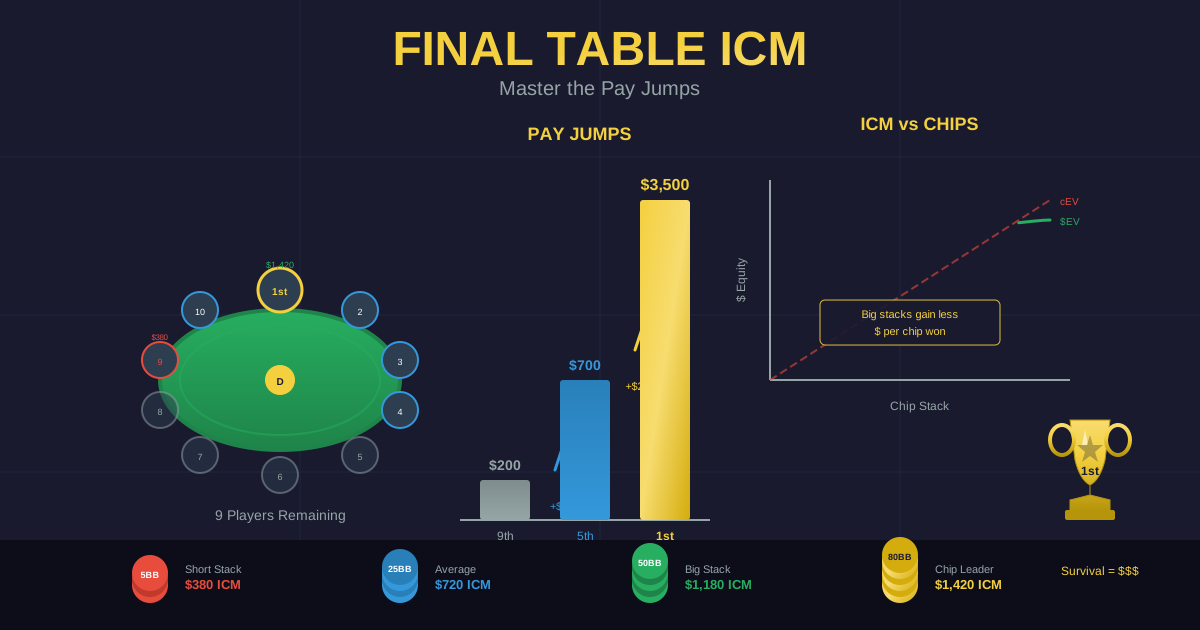
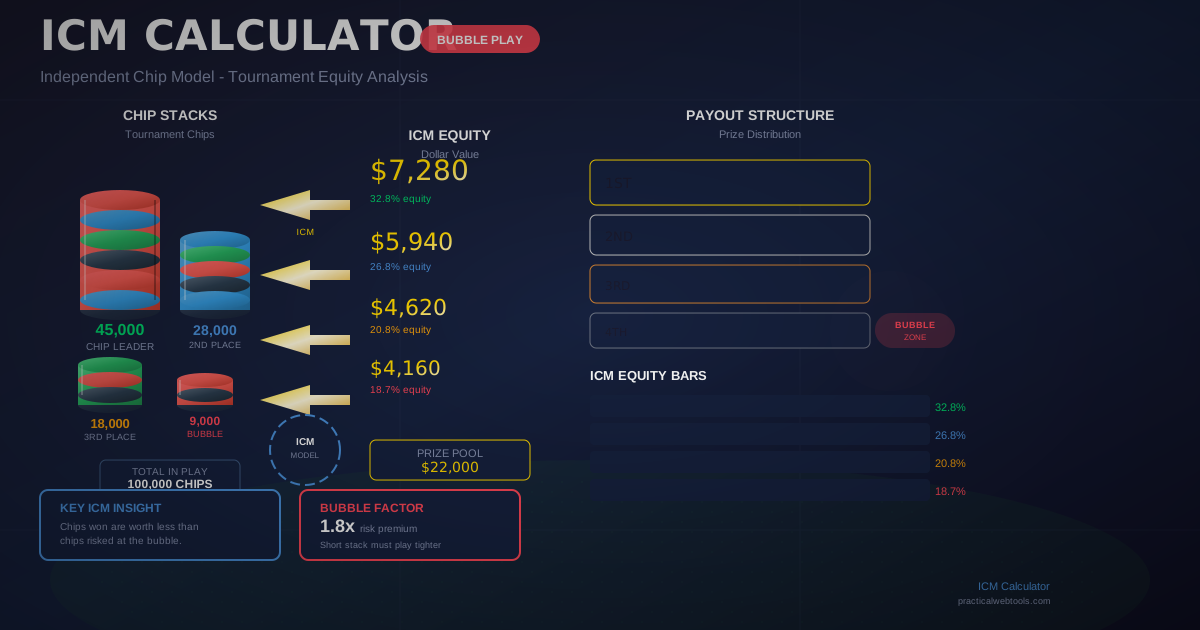
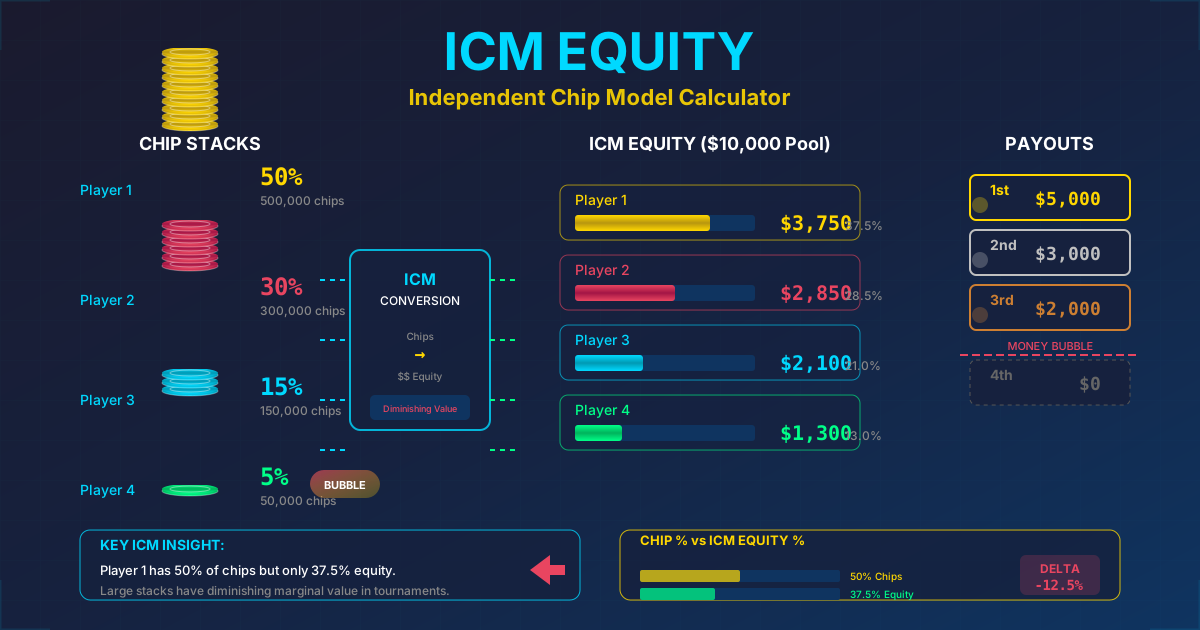
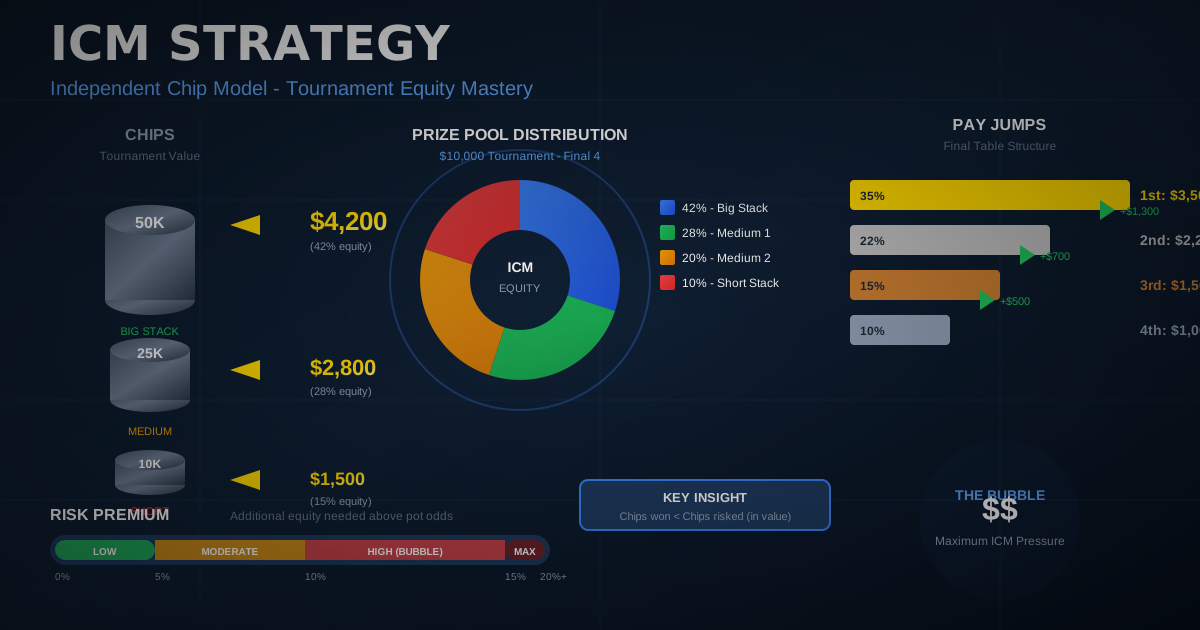
Understand the ICM implications of different stack sizes in your tournament with our ICM Calculator.
Essential House Rules
Clear house rules prevent arguments and ensure a smooth game. Establish these before the first hand is dealt.
Critical Rules to Establish
1. Buy-In and Rebuy Rules
- Minimum and maximum buy-in amounts (cash game)
- Maximum number of rebuys (tournament)
- How to handle late arrivals
2. The "One Player Per Hand" Rule
- No coaching or advising during active hands
- No showing cards to non-players until the hand is over
- No discussion of hand possibilities with spectators
3. Verbal Declarations Are Binding
- If you say "raise," you must raise
- If you say "call," you must call
- If you say an amount ("I bet $20"), that is your bet
4. String Bet Rule
- All chips must go in at once, or a verbal declaration must precede the action
- Reaching back for more chips after placing some forward constitutes a call, not a raise
- To raise, either announce "raise" first or put the entire amount in one motion
5. Table Talk Rules
- No discussing your hand while it is in play
- No discussing what you folded during an active hand
- Friendly conversation is fine; strategic commentary about the current hand is not
6. Show One, Show All
- If a player shows their cards to any opponent, they must show all players at the table
- Optional: winning hands do not need to be shown if the bet was uncalled
7. Cash Game Rules
- Minimum/maximum buy-in
- When players can leave (at any time, or with notice)
- How to handle IOUs (recommendation: do not allow them)
8. Tournament-Specific Rules
- Late registration cutoff (end of level 2 or 3)
- Absent players still post blinds
- Dealing for eliminated players (auto-fold)
- Break schedule (every 60-90 minutes)
Dealing Procedures
Rotating Dealer: The most common home game format. The dealer button rotates clockwise after each hand. The player with the button shuffles and deals, or the player two seats to the right of the button shuffles while the current hand is played.
Dedicated Dealer: For larger games (10+ players), designating a non-playing dealer improves speed and reduces errors. The dealer receives a small fee from the host (or the pot, though this introduces rake).
Dealing Best Practices:
- Shuffle at least three times with a cut
- Deal one card at a time, starting with the small blind
- Keep the deck low to the table during the deal
- Burn a card before each community card round (flop, turn, river)
- Place community cards in the center where all players can see
Setting Up Your Physical Space
Table Requirements
| Component | Budget Option | Standard Option | Premium Option |
|---|---|---|---|
| Table | Kitchen table with felt mat ($20-40) | Folding poker table ($80-150) | Permanent poker table ($300-1,000) |
| Chairs | Existing chairs | Folding chairs ($15-25 each) | Padded poker chairs ($50-100 each) |
| Chip Set | 300-chip set ($15-30) | 500-chip clay composite ($50-100) | 500-chip ceramic/clay ($150-500) |
| Cards | Standard bicycle deck ($5) | Two sets of premium cards ($15) | KEM or Copag plastic cards ($25-40) |
Minimum investment for a solid setup: $80-120 (felt mat, 500-chip set, two decks of quality cards, and a timer app on your phone).
Recommended Accessories
- Card shuffler (optional, saves time with two decks in rotation)
- Dealer button (usually included in chip sets)
- Timer app or dedicated blind timer (several free apps available)
- Card protectors (optional but add a nice touch)
- Felt tablecloth or poker mat (essential for card sliding and chip stacking)
Seating and Table Size
| Players | Minimum Table Size | Comfortable Table Size |
|---|---|---|
| 4-6 | 48-inch round | 52-inch round |
| 6-8 | 72-inch oval | 84-inch oval |
| 8-10 | 84-inch oval | 96-inch oval |
Each player needs approximately 24-30 inches of table space to comfortably play, manage their chips, and see their cards.
Running Your First Home Tournament: Step-by-Step
Pre-Game Preparation (Day Before)
- Confirm player count via group text or chat
- Count and organize chips into starting stacks
- Prepare payout structure based on confirmed players
- Set up the blind schedule (print a copy or use a phone app)
- Verify you have at least 2 decks of cards (one to shuffle while the other is in play)
- Prepare the playing area (table, chairs, lighting)
- Stock refreshments
Game Day Setup (1 Hour Before)
- Place chip stacks at each seat
- Post house rules where all players can see them
- Set up the blind timer
- Prepare a seating chart (draw for seats or assign randomly)
- Have the payout structure visible to all players
- Designate where eliminated players will sit/socialize
Running the Tournament
Starting the Game:
- Collect buy-ins from all players before dealing a single card
- Announce the starting stack, blind levels, and payout structure
- Draw for the initial dealer button (highest card deals first)
- Start the blind timer
- Deal the first hand
During Play:
- Announce blind level changes clearly ("Blinds are now 100/200 with a 25 ante")
- Call breaks every 60-90 minutes (5-10 minutes each)
- Color up small chips when appropriate
- Update the player count as eliminations occur
- Announce when the bubble is approaching ("Four players left, three get paid")
Endgame:
- When 3 players remain, discuss and offer a deal if desired
- Calculate deal amounts based on current chip stacks using ICM
- If no deal, play until one player has all chips
- Distribute payouts immediately after the tournament ends
Calculate equitable final table deals with our ICM Calculator.
Advanced Home Game Formats
Bounty Tournaments
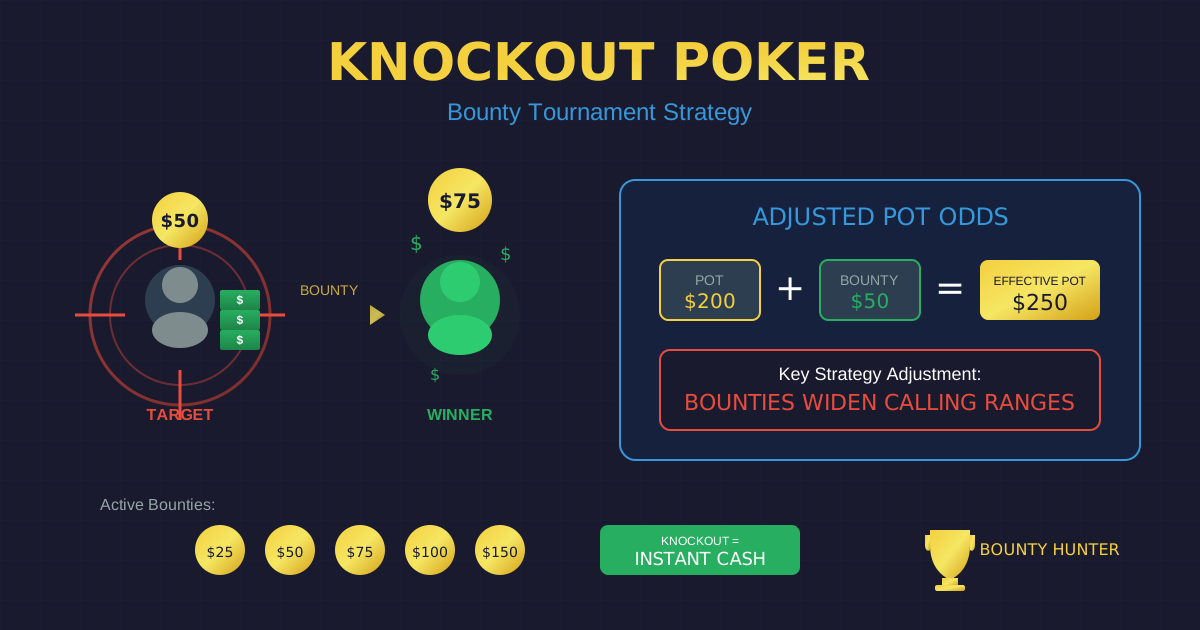
Each player has a bounty on their head (typically $5-20 of the buy-in). When you eliminate a player, you collect their bounty immediately.
Example: $50 buy-in, $10 bounty. Prize pool for places: 8 x $40 = $320. Bounty pool: 8 x $10 = $80 (distributed as eliminations happen).
Bounties add excitement because every elimination earns immediate cash. Aggressive players love this format.
Progressive Bounty (PKO) Tournaments
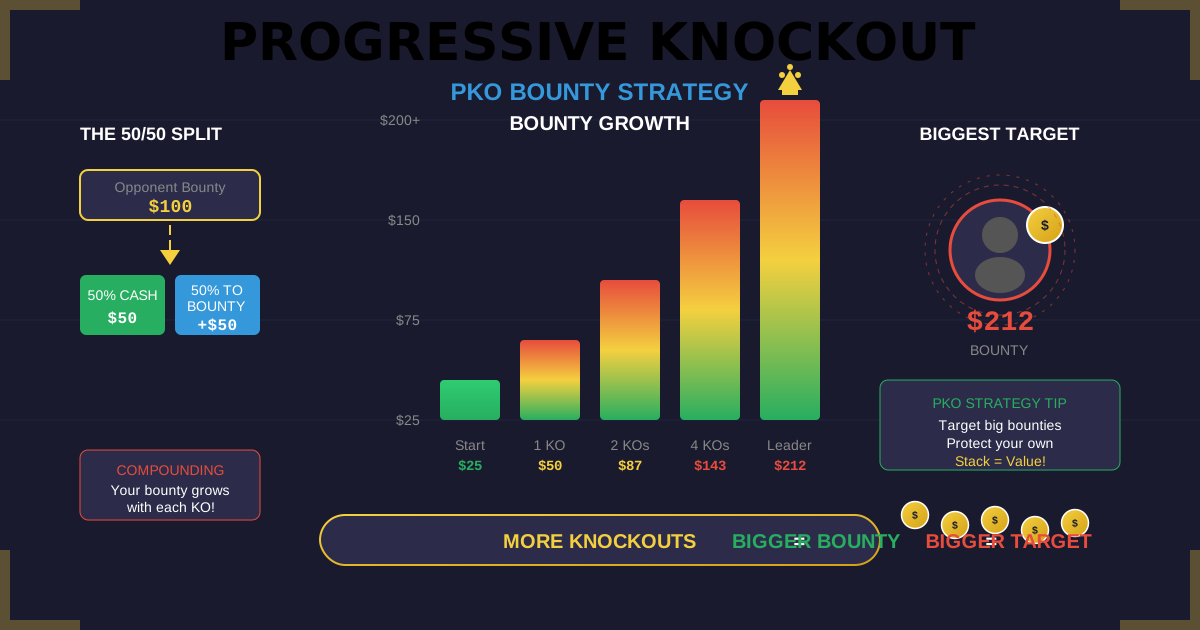
When you eliminate a player, you receive half their bounty immediately and the other half is added to your own bounty. This creates escalating drama as bounties grow larger throughout the tournament.
Points League Format
For recurring home games, track results across multiple sessions:
| Finish | Points |
|---|---|
| 1st | 10 |
| 2nd | 7 |
| 3rd | 5 |
| 4th | 4 |
| 5th | 3 |
| 6th | 2 |
| 7th-8th | 1 |
After a set number of games (typically 8-12), the points leader wins an additional prize. This format rewards consistency over single-game results and encourages regular attendance.
Dealer's Choice
Each player, when they have the dealer button, chooses the game variant for their deal. Common choices include Texas Hold'em, Omaha, Omaha Hi-Lo, Stud, Razz, and mixed games.
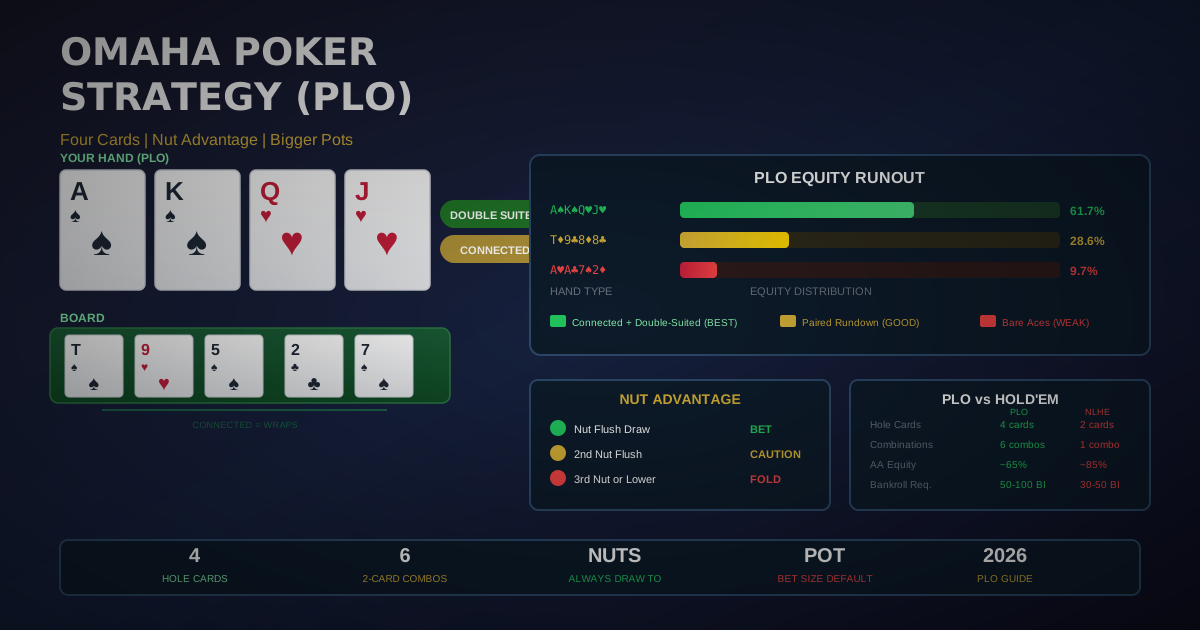
If your group plays Omaha, use our Omaha Odds Calculator to study hand equities.
Real-World Home Game Examples
Example 1: The Casual Friday Night ($25 Buy-In)
Setup:
- 6 players, $25 buy-in, prize pool $150
- Starting stack: 3,000 chips
- Blind levels: 15 minutes each
- Target duration: 2 hours
Blind Structure: 25/50, 50/100, 100/200, 150/300, 200/400, 300/600, 400/800, 500/1000
Payouts: 1st: $100, 2nd: $50
Budget: $15 for a cheap chip set, $5 for cards, $30 for beer and snacks = $50 total investment for the host.
Example 2: The Monthly Home Game ($100 Buy-In)
Setup:
- 9 players, $100 buy-in, 1 rebuy allowed through level 4, $100 add-on
- Starting stack: 10,000 chips
- Blind levels: 20 minutes each
- Target duration: 4 hours
Expected Prize Pool: $900 (buy-ins) + $400 (est. rebuys/add-ons) = $1,300
Payouts: 1st: $650 (50%), 2nd: $390 (30%), 3rd: $260 (20%)
This is a serious home game that provides substantial prizes and a full evening of entertainment.
Example 3: The Annual Poker Championship ($200 Buy-In)
Setup:
- 16 players across 2 tables, $200 buy-in, prize pool $3,200
- Starting stack: 15,000 chips
- Blind levels: 25 minutes each
- Target duration: 5-6 hours
- Tables merge to final table at 8 players remaining
Payouts: 1st: $1,280 (40%), 2nd: $800 (25%), 3rd: $576 (18%), 4th: $352 (11%), 5th: $192 (6%)
This event requires planning two weeks in advance, two full poker tables, 1,000+ chips, a dedicated blind timer, and ideally a non-playing dealer for each table.
Model the complete payout structure with our Tournament Payout Calculator.
Common Home Game Problems and Solutions
Problem: "The Tournament Ended Too Fast"
Cause: Blind levels increase too quickly relative to starting stacks.
Solution: Either increase starting stacks (give more chips), lengthen blind levels (20 min instead of 15), or smooth the blind increases (avoid doubling blinds each level). Use our Blinds Timer Structure Calculator to design a structure that fits your target duration.
Problem: "We Ran Out of Small Chips"
Cause: Insufficient chips in small denominations for cash games.
Solution: Follow the chip distribution formula: 60% of total chips should be in the two smallest denominations. For a $0.25/$0.50 game, you need plenty of $0.25 and $0.50 chips. Use our Home Game Chip Distribution Calculator to calculate exact quantities.
Problem: "The Cash Game Is Too Boring / Too Wild"
Cause: Stakes are either too low (no one cares about the money) or too high (people play scared).
Solution: Find the sweet spot where losing a buy-in stings a little but does not affect anyone's finances. A good rule of thumb: the buy-in should equal what you would spend on a nice dinner out.
Problem: "Nobody Agrees on the Rules"
Cause: No established house rules before the game started.
Solution: Write out your house rules and share them with all players before game day. Cover the five most contentious issues: string bets, verbal declarations, show-one-show-all, straddles, and rebuy policies.
Problem: "We Cannot Agree on a Final Table Deal"
Cause: No formal method for calculating equitable chip chop deals.
Solution: Use ICM. Our ICM Calculator converts chip stacks into dollar values based on the payout structure, giving every player a fair deal proposal.
The Math Behind Home Game Setup
Optimal Starting Stack to Big Blind Ratio
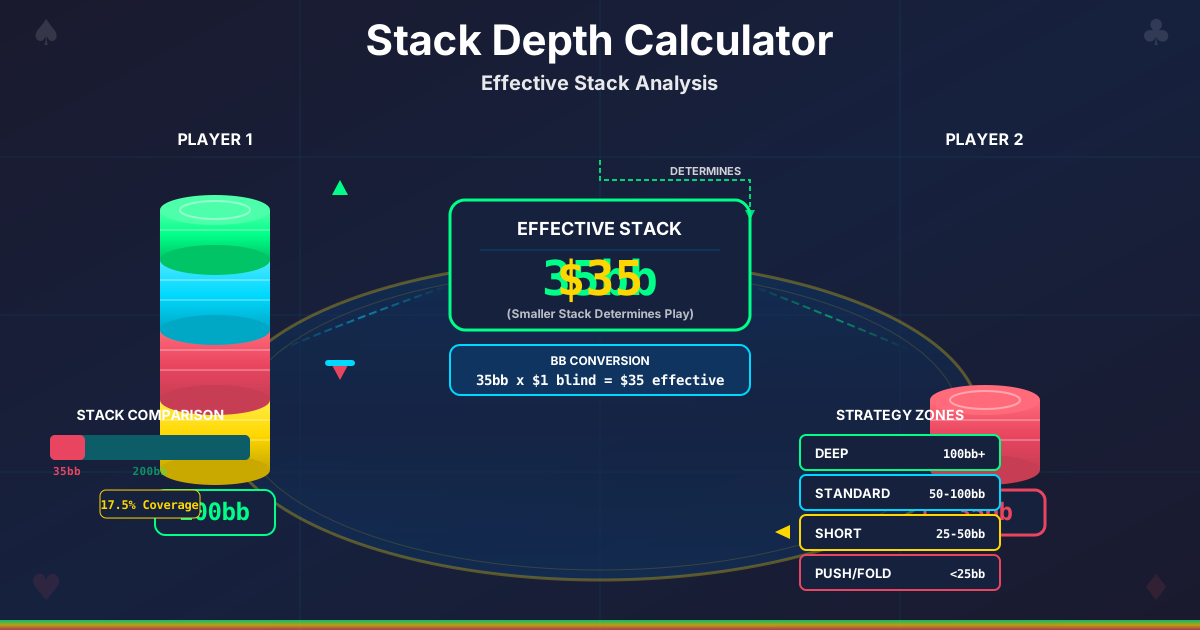
The starting stack divided by the first big blind determines how many "levels" of play you get before the game becomes push-fold poker.
Formula: Effective Levels = log2(Starting Stack / First Big Blind)
For a 5,000 starting stack with 50 big blind start:
- Starting ratio: 5,000 / 50 = 100bb
- With blinds roughly doubling each level: log2(100) = approximately 6.6 levels of strategic play
For 20-minute levels, that is approximately 2.2 hours of good poker before push-fold takes over. Plan 1-2 additional levels for the push-fold endgame, bringing total game time to approximately 3 hours.
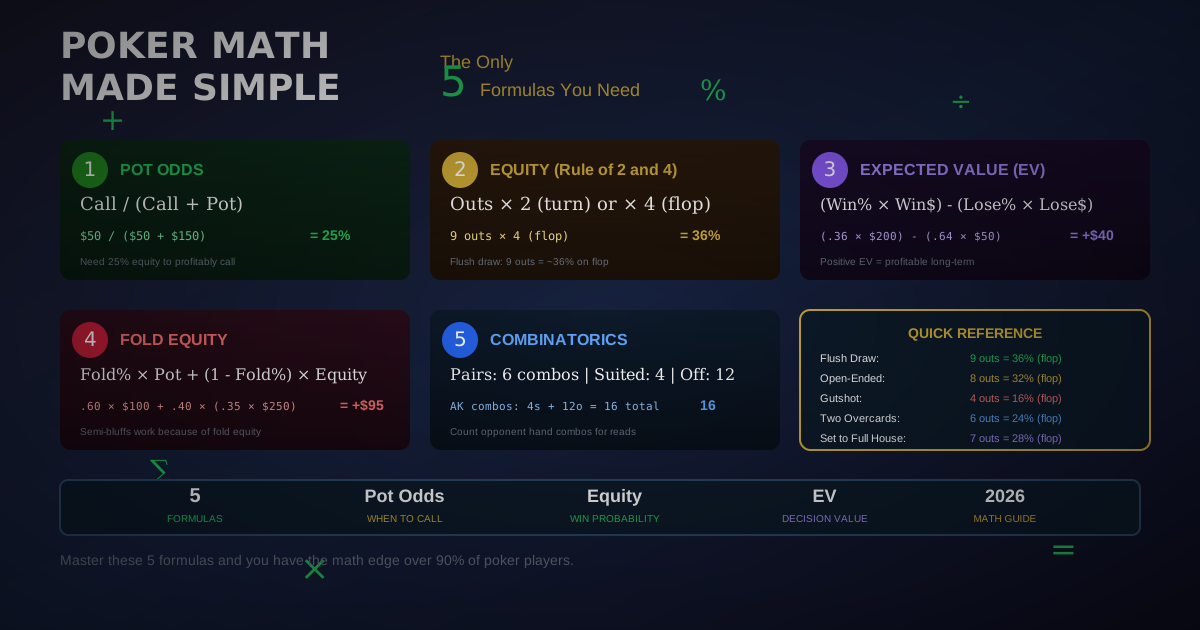
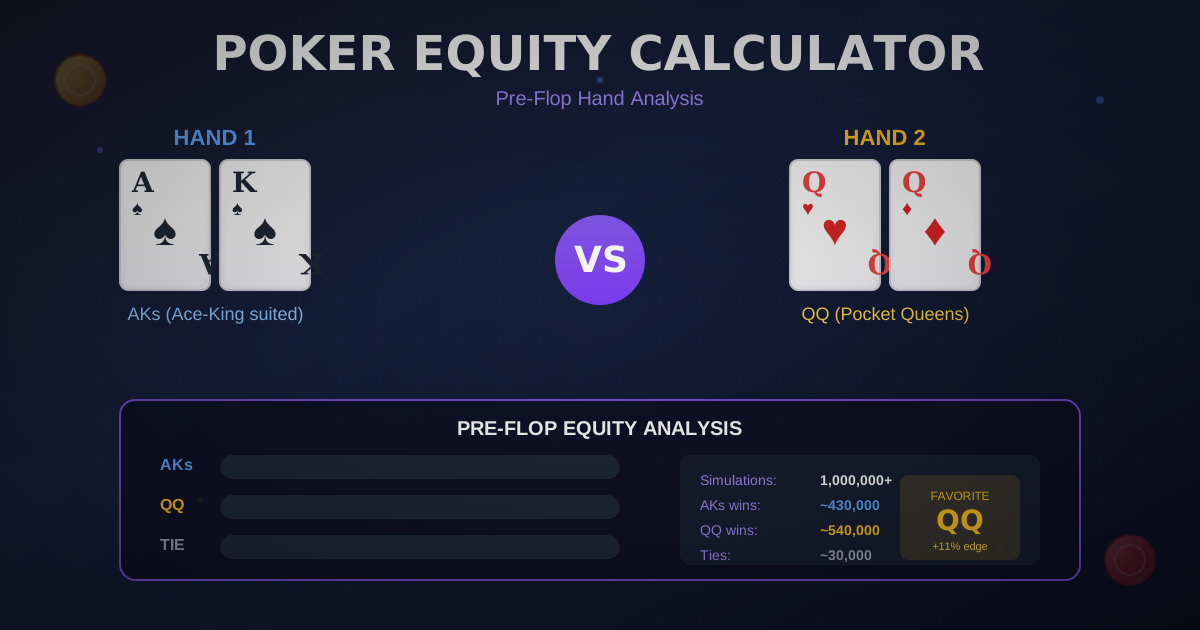
Analyze the equity math of any poker decision with our Poker Equity Calculator.
Break-Even Chip Set Investment
If you host a monthly game where you take a small rake or host fee:
- Good 500-chip set: $80
- Two sets of plastic cards: $25
- Felt table mat: $25
- Total investment: $130
At $5/player host fee with 8 players, you recover your investment in approximately 3.25 sessions. After that, the host fee covers refreshments and card replacement.
Expected Value of Hosting
You might not realize it, but hosting provides a small strategic advantage:
- You choose the blind structure (can design it to favor your style)
- You play in a comfortable environment (home field advantage)
- You build social capital that keeps the game running
- You can seat weak players to your right (position advantage)
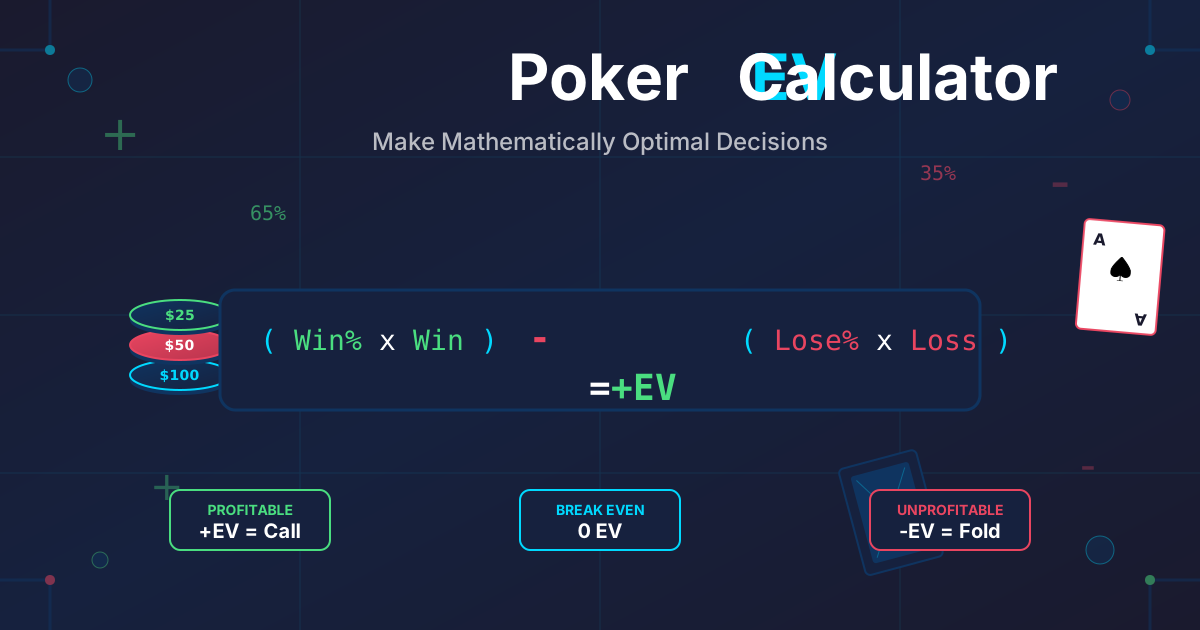
Calculate expected values in specific poker scenarios with our Poker EV Calculator.
Frequently Asked Questions
How many chips do I need for a home poker game? For a cash game with up to 8 players, a 500-chip set is sufficient. For a tournament with up to 10 players, 500 chips also works. If you plan to run cash games with 10+ players or tournaments with rebuys, consider a 750 or 1,000-chip set. Use our Home Game Chip Distribution Calculator for exact quantities based on your setup.
What is the best blind structure for a 3-hour tournament? Start with a 100bb deep stack (e.g., 5,000 chips with 25/50 blinds), use 15-20 minute levels, and gradually increase blinds by 50-100% each level. By level 7-8, the average stack should be around 15-20bb, creating exciting push-fold action for the final hour. Our Blinds Timer Structure Calculator generates complete structures for any target duration.
How should I handle chip distribution for a poker tournament? Give each player 37-50 chips in 3-4 denominations. The smallest denomination should match the smallest blind in your structure. Use our Starting Stack Calculator for optimal chip breakdowns.
What stakes should I use for a home cash game? Use stakes where the buy-in equals roughly what your group would spend on a night out. For most friend groups, $0.25/$0.50 with a $50 buy-in hits the sweet spot. Casual games work well at $0.10/$0.25 ($25 buy-in), and serious groups can play $0.50/$1.00 ($100 buy-in).
How do I prevent arguments about rules? Establish written house rules before the first hand. Cover string bets (not allowed), verbal declarations (binding), show-one-show-all (enforced), and any special rules your group wants (straddles, bomb pots, etc.). Share these rules with all players before game day.
How do I calculate tournament payouts? For small tournaments (6-8 players), pay top 2-3 using a 60/25/15 split. For larger fields (10-16 players), pay top 3-4 using a 50/25/15/10 split. Our Tournament Payout Calculator computes exact dollar amounts for any buy-in, player count, and percentage distribution.
Should I allow rebuys in home tournaments? Rebuys increase the prize pool and keep eliminated players involved longer. They work best when limited to the first 3-4 blind levels and capped at 1-3 per player. Without rebuys, short-stacked players tend to leave early. With too many rebuys, the tournament feels endless.
What is the best poker chip set for home games? For serious home games, clay composite chips (like Claysmith or Da Vinci) in the $50-100 range offer the best value. They feel substantial, stack well, and last for years. Avoid ultra-cheap plastic chips that slide and feel flimsy. Premium clay or ceramic chips ($150-500) are worth it only if you play regularly.
Essential Tools for Home Game Hosts
Set up your perfect home game with these calculators:
- Home Game Chip Distribution Calculator: Calculate exact chip quantities and denominations for any buy-in
- Blinds Timer Structure Calculator: Design blind schedules for any target game length
- Starting Stack Calculator: Determine optimal starting chip counts
- Tournament Payout Calculator: Calculate prize pool distributions for any field size
- ICM Calculator: Compute fair deal amounts at the final table
- Poker Equity Calculator: Study hand matchups to improve your play
- Poker EV Calculator: Analyze the expected value of any decision
- Pot Odds Calculator: Calculate whether calling or folding is correct
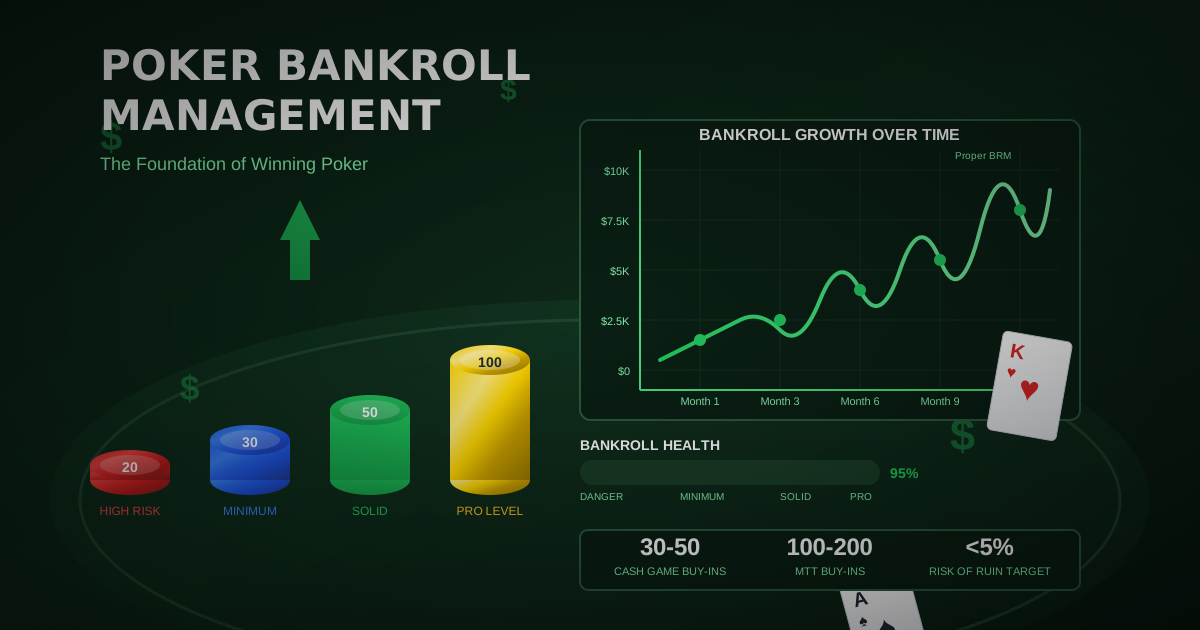
- Poker Bankroll Requirements Calculator: Determine how much to allocate for poker entertainment
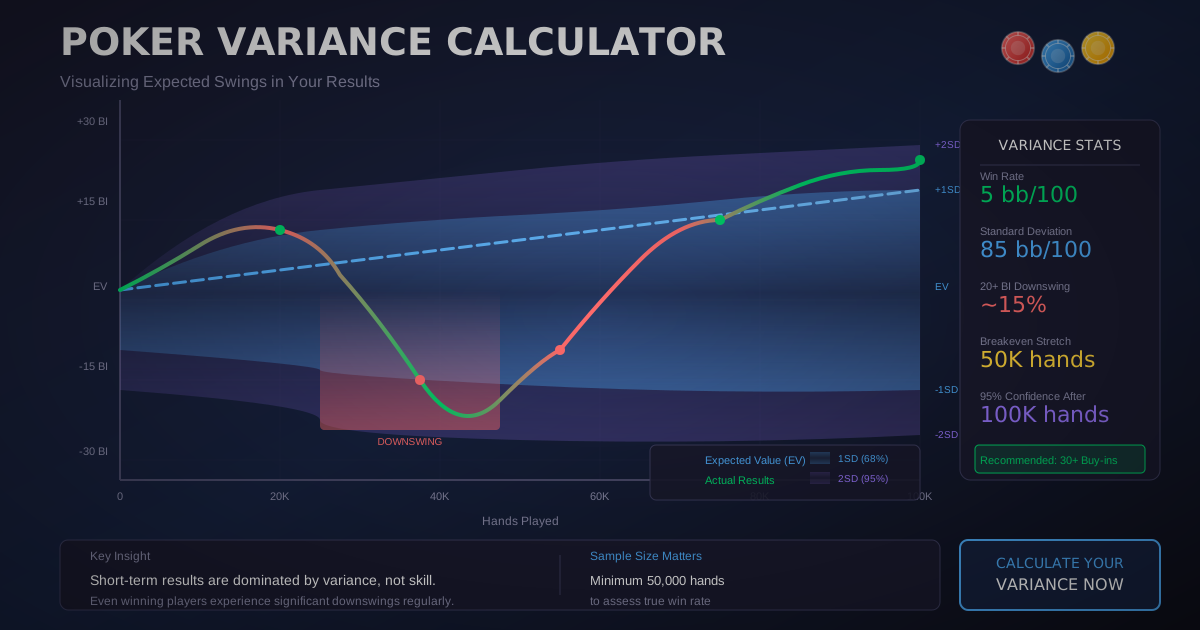
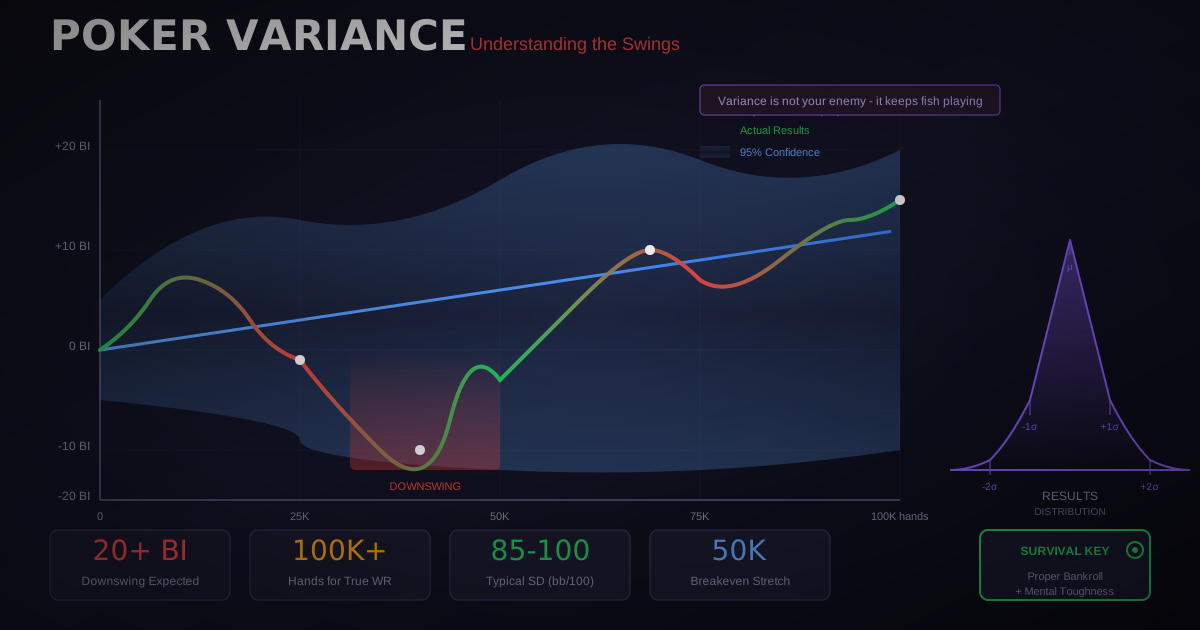
- Poker Variance Calculator: Understand expected swings in your home game results
Conclusion: Host the Game Everyone Wants to Play
The best poker home games are the ones people clear their schedules for. That happens when the host puts in the preparation to make everything run smoothly: proper chips, thoughtful blind structure, clear rules, and a welcoming atmosphere.
Your checklist for a great home game:
- Choose your format (cash, tournament, or hybrid)
- Calculate chip distribution based on buy-in and player count
- Design a blind structure that fits your target game length
- Establish payout percentages before the game
- Write out and share house rules in advance
- Set up a comfortable playing space with good lighting
- Have refreshments ready
- Start on time and run a tight game
Start planning your next home game with our Home Game Chip Distribution Calculator. Design the perfect blind structure with our Blinds Timer Structure Calculator. And calculate your payouts with our Tournament Payout Calculator.
Your friends will thank you. Your game will thrive. And somewhere around hour three, when the blinds are rising and the trash talk is flowing, you will know you built something worth coming back to every month.
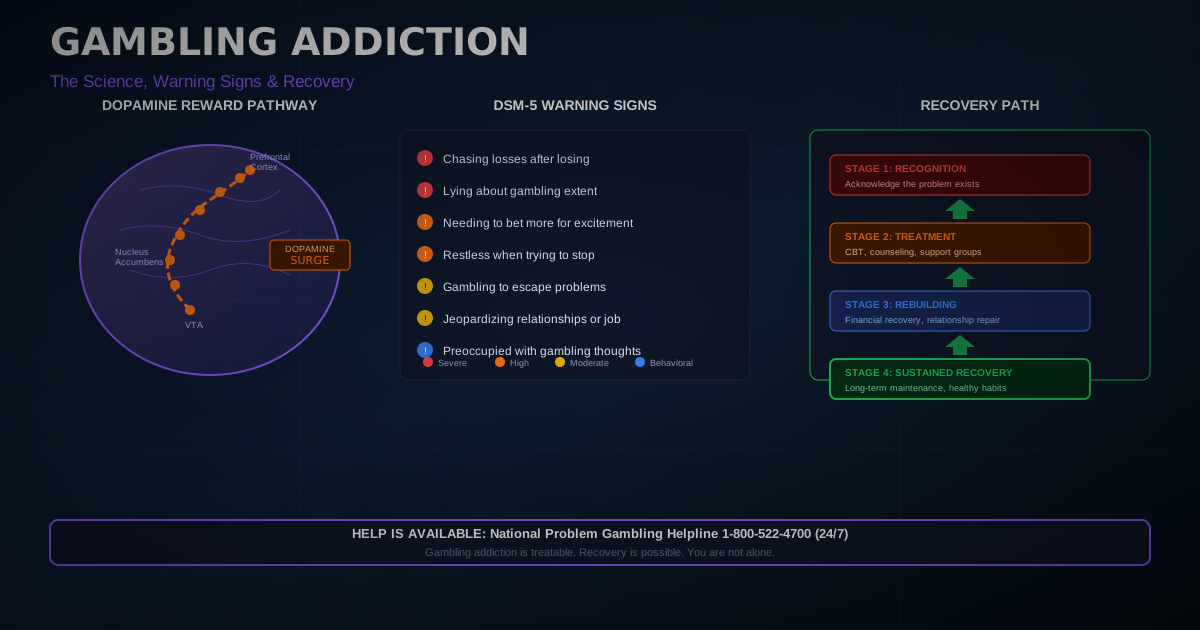
Gambling involves risk. This content is for educational and informational purposes only. Always gamble responsibly, set limits you can afford, and seek help if gambling becomes a problem. Visit the National Council on Problem Gambling or call 1-800-522-4700 for support.