Casino Comps and Loyalty Programs: How to Maximize Free Stuff Without Losing More (2026)
Casinos give away approximately $8 billion annually in complimentary rooms, meals, shows, and perks, and every dollar of it is calculated to ensure they get far more back from you. The comp system is not generosity. It is the most sophisticated customer retention program in any industry, designed to make you feel valued while ensuring your theoretical losses far exceed the value of the freebies you receive. Understanding the math behind comps is the difference between getting genuine value from a system designed to exploit you and falling into the trap of playing more to "earn" rewards.
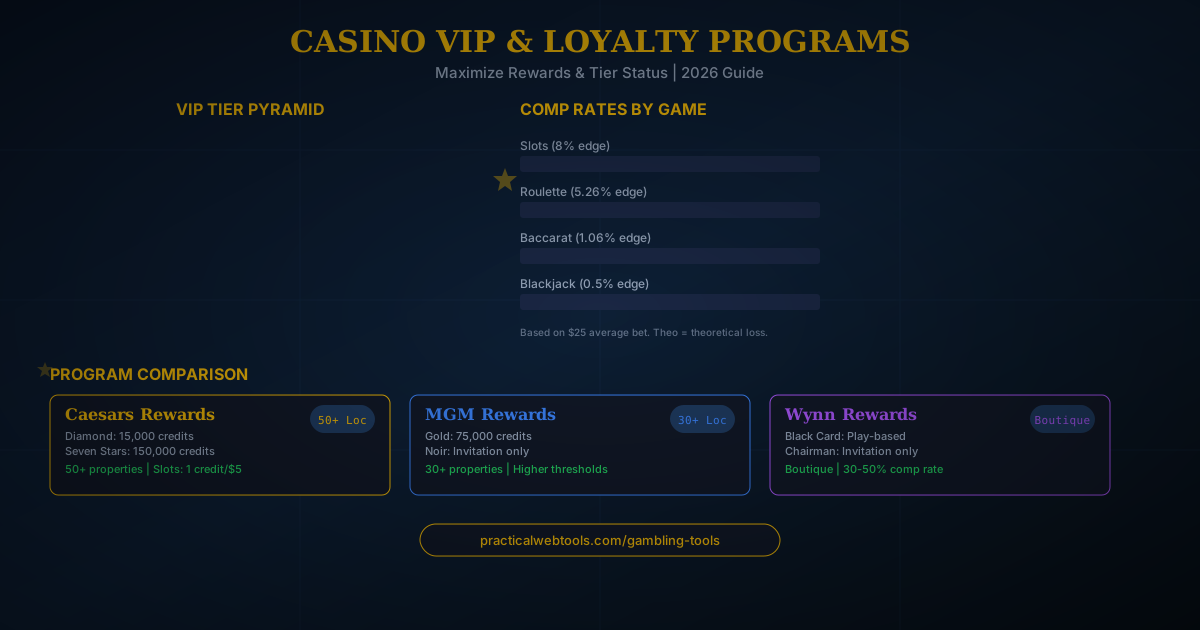
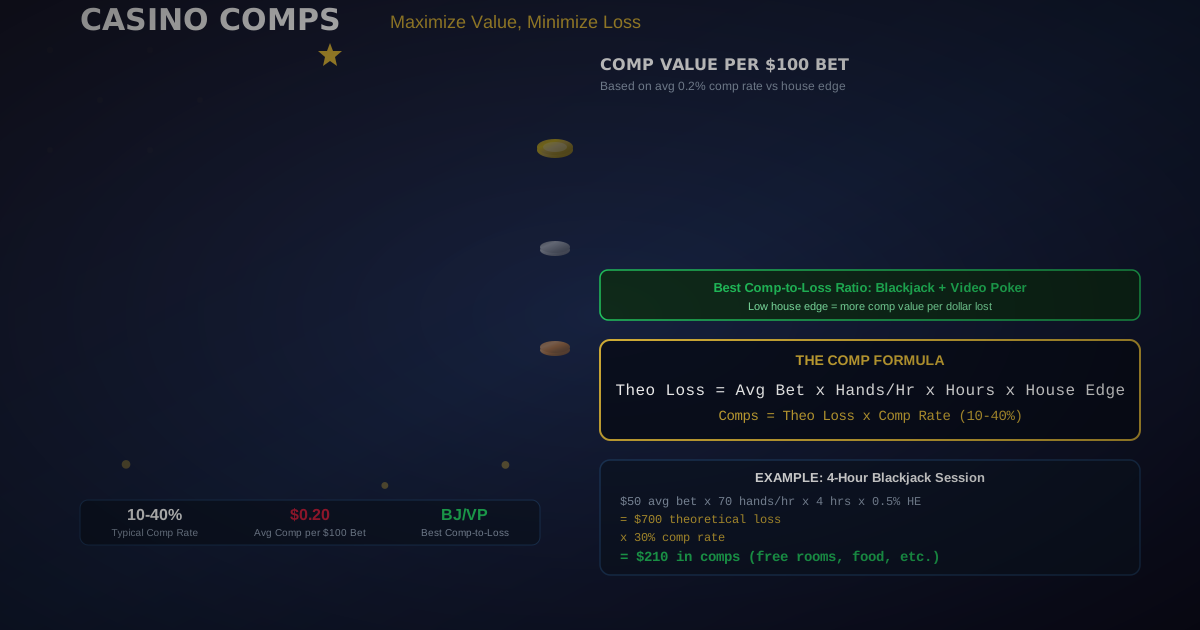
The average casino comp rate ranges from 10% to 40% of your theoretical loss. That means for every $100 the casino expects you to lose based on your play, they give back $10 to $40 in comps. The remaining $60 to $90 is pure profit for the house. If you understand this math and choose your games strategically, you can shift the equation significantly in your favor by playing low-edge games where your theoretical loss is small but your action (and therefore your comp value) remains high.
This is not about beating the casino. It is about losing less while getting more back, or for advantage players, getting comp value on top of an already profitable game.
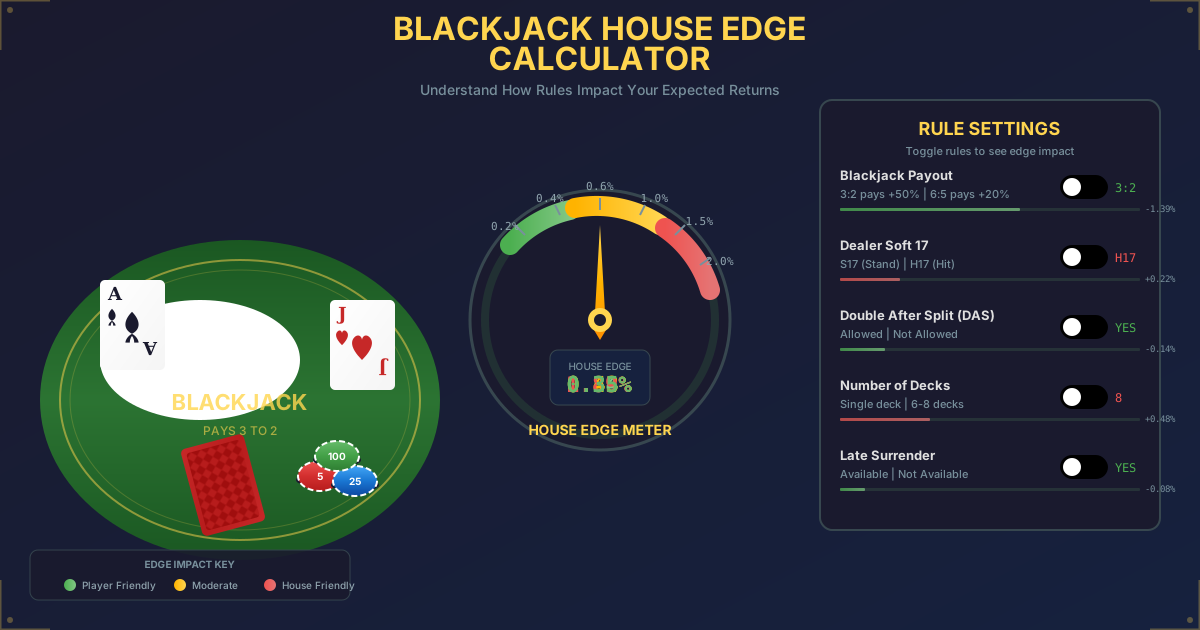
Calculate the house edge on any casino game with our free Blackjack House Edge Calculator.
How Casino Comp Systems Actually Work
Every time you insert your player's card at a slot machine or hand it to a table game dealer, the casino begins tracking your play. This data feeds into a formula that determines your "theoretical loss," which is the foundation of every comp decision.
The Theoretical Loss Formula
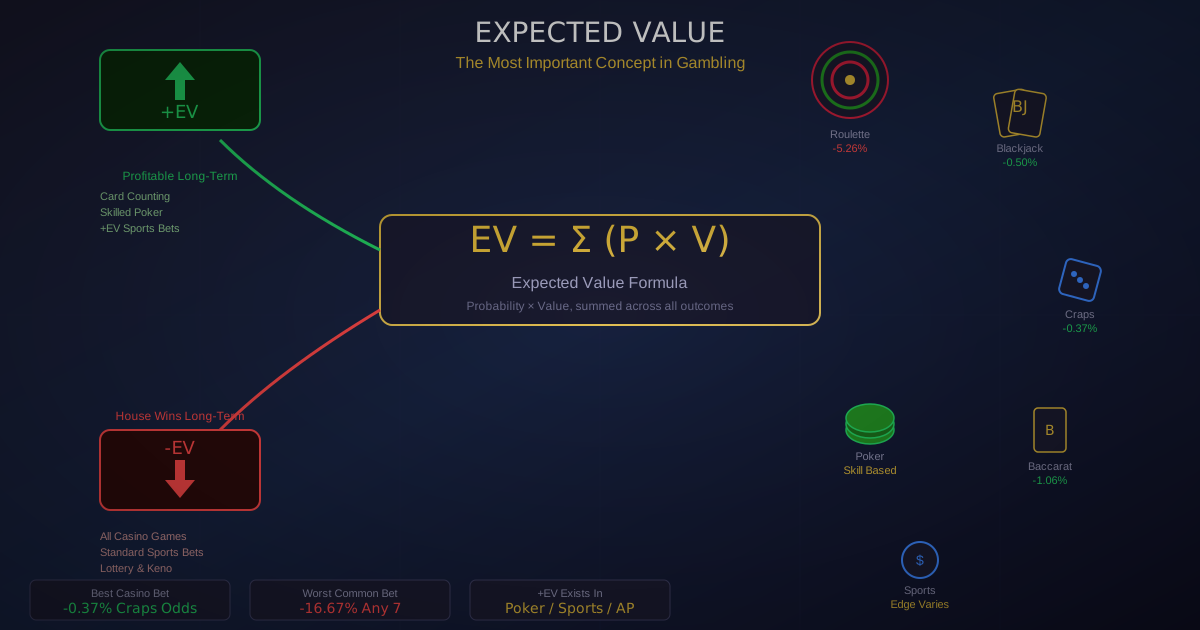
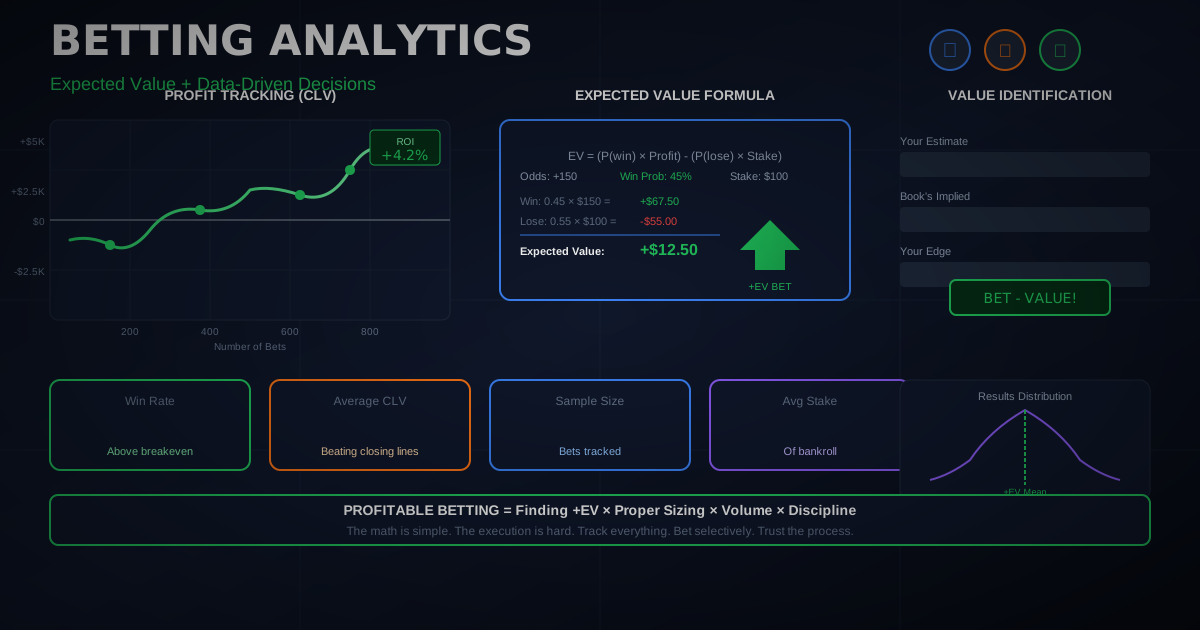
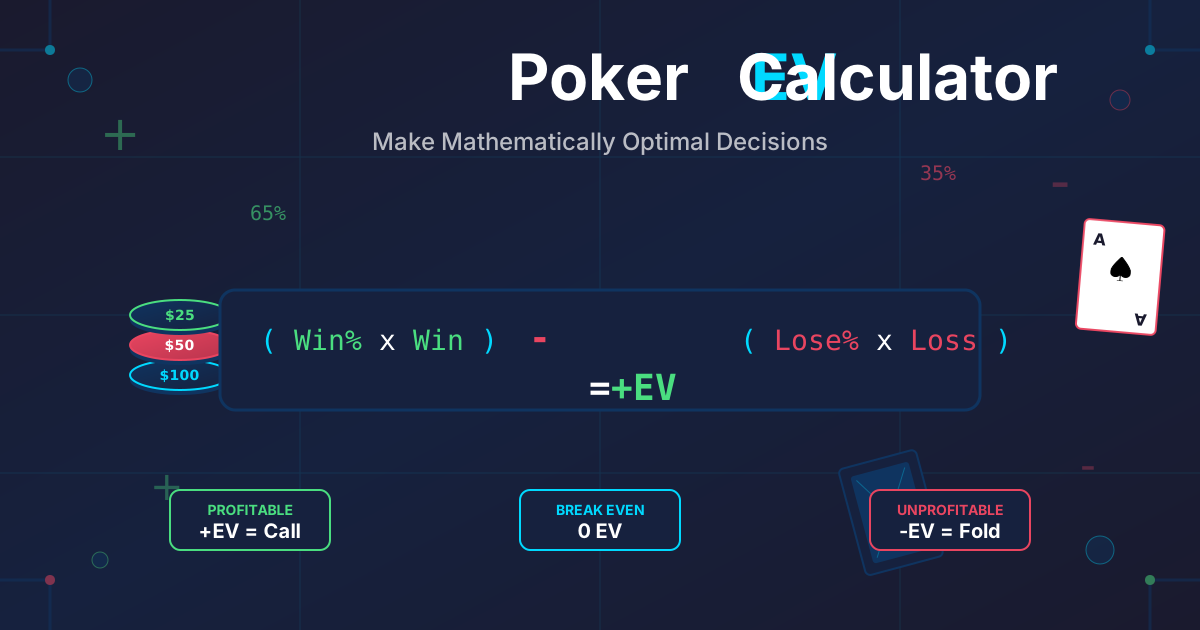
Theoretical Loss = Average Bet x Hours Played x Decisions Per Hour x House Edge
This is the single most important formula in the comp world. The casino does not care whether you actually won or lost. They care about your theoretical loss, which represents what they expected to earn from your play statistically.
Example: Blackjack player
- Average bet: $50
- Hours played: 4
- Decisions per hour: 70 (typical for blackjack)
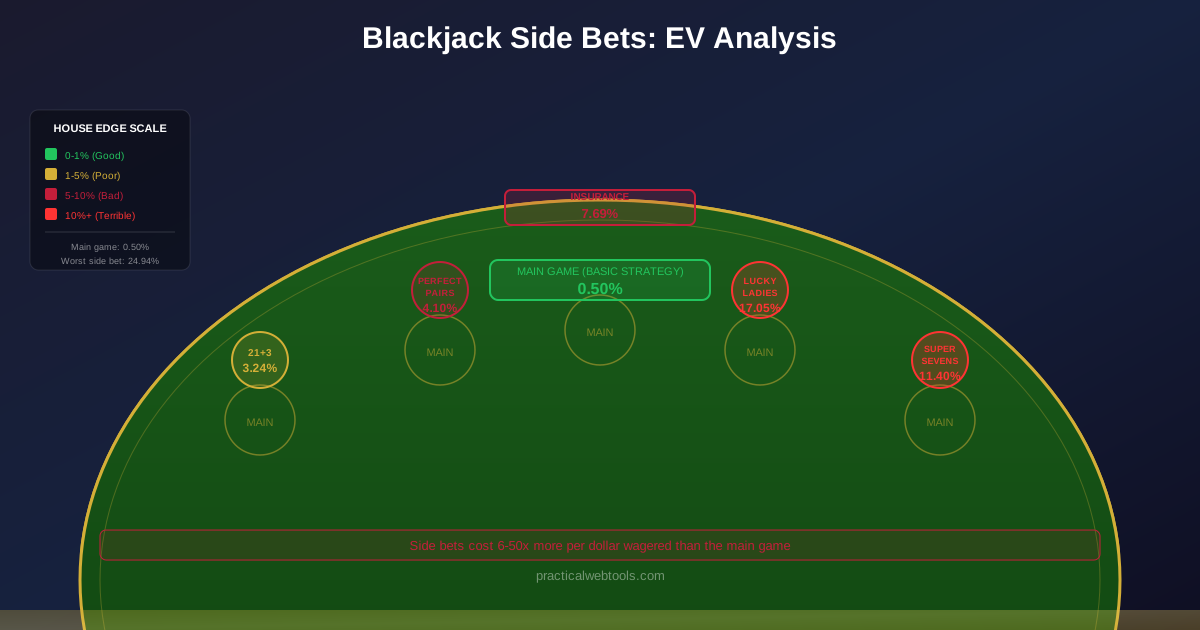
- House edge: 0.5% (with basic strategy)
Theoretical loss = $50 x 4 x 70 x 0.005 = $70
The casino expects to make $70 from this player's session. If the comp rate is 30%, this player earns $21 in comps (free food, room credit, etc.).
Example: Slot player
- Average bet: $2 per spin
- Hours played: 4
- Decisions per hour: 600 (slots are fast)
- House edge: 8%
Theoretical loss = $2 x 4 x 600 x 0.08 = $384
The casino expects $384 from this slot player. At a 30% comp rate, that is $115 in comps, but the player's expected loss is nearly four times what they receive in perks.
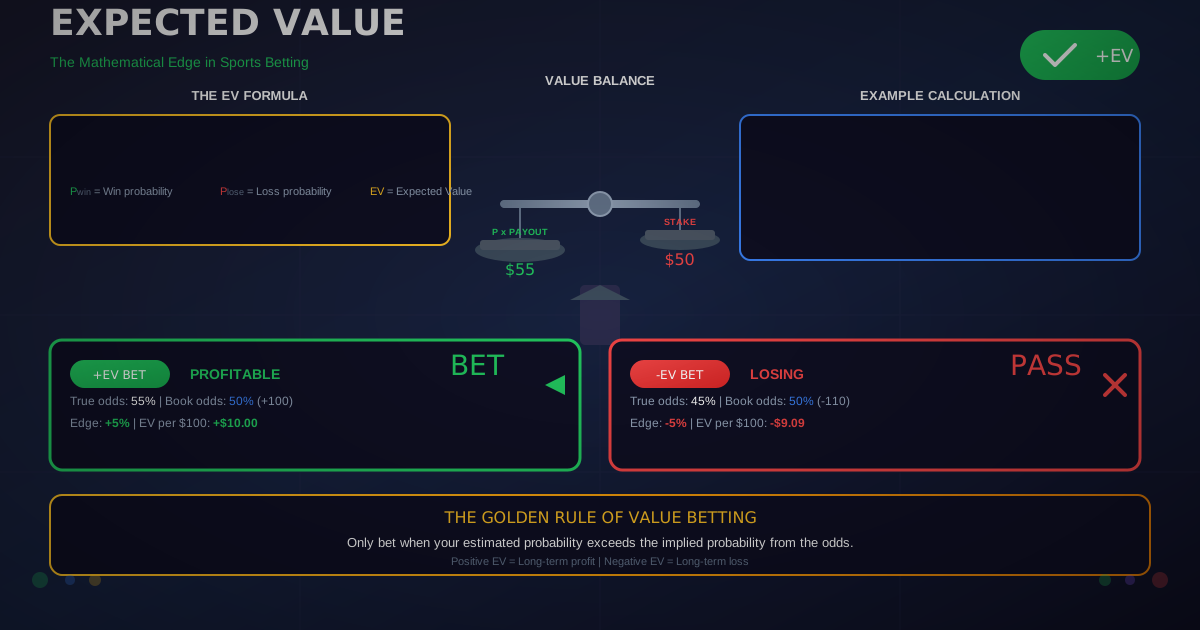
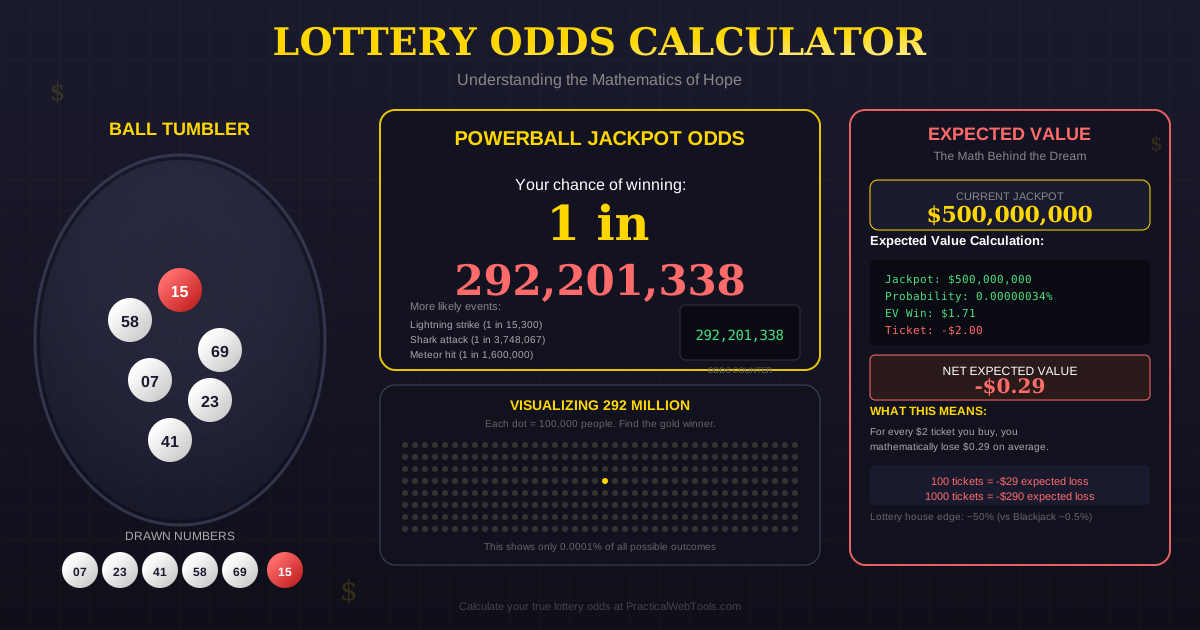
Calculate your expected loss at any casino game with our Expected Value Calculator.
Comp Rates by Casino Tier
Comp rates vary by casino and player tier:
| Player Tier | Typical Comp Rate | How to Reach |
|---|---|---|
| Base/Bronze | 10-15% of theo loss | Any rated play |
| Silver/Gold | 15-25% of theo loss | $500-$2,000 theo/trip |
| Platinum/Diamond | 25-35% of theo loss | $2,000-$10,000 theo/trip |
| VIP/Seven Stars | 35-50%+ of theo loss | $10,000+ theo/trip |
Higher tiers also receive non-quantifiable benefits: dedicated casino hosts, exclusive events, priority reservations, and gifts.
Which Games Give the Best Comp Value Per Dollar of Expected Loss
This is where strategy matters. Your goal is to maximize your comp value relative to your actual expected loss. Games with low house edges generate high "action" (total amount wagered) relative to expected loss, which means better comp value per dollar lost.
Game-by-Game Comp Efficiency Analysis
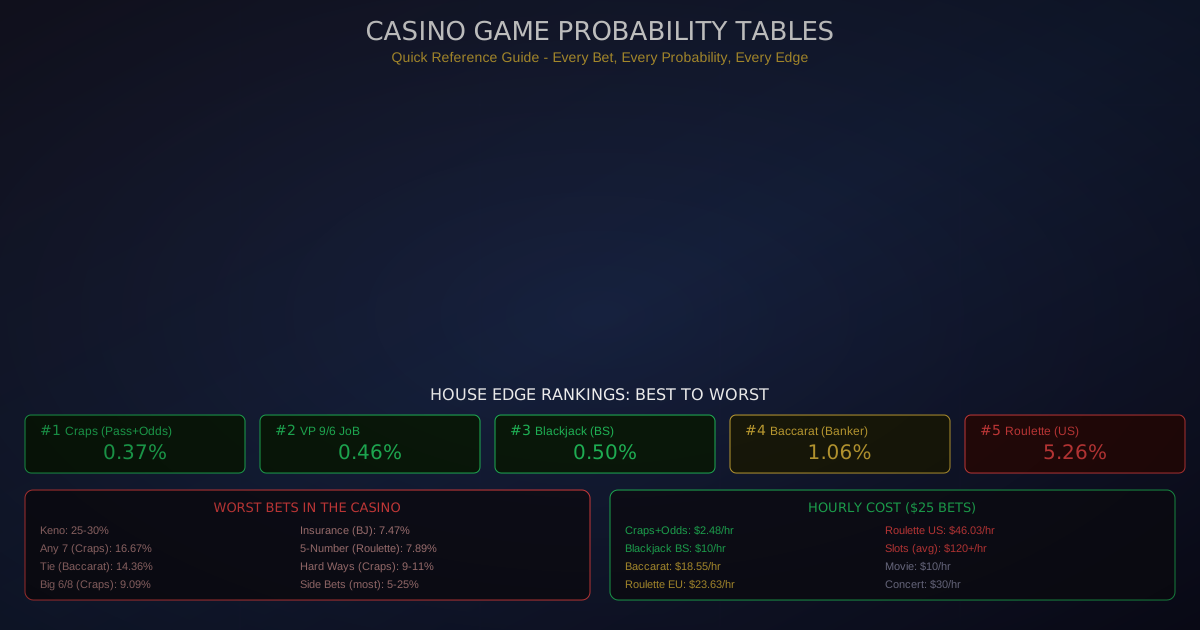
| Game | House Edge | Decisions/Hour | Action per $50 Avg Bet/Hour | Theo Loss/Hour | Comp Value/Hour (25% rate) | Comp per $1 Lost |
|---|---|---|---|---|---|---|
| Blackjack (basic strategy) | 0.5% | 70 | $3,500 | $17.50 | $4.38 | $0.25 |
| Craps (pass/don't pass) | 1.36% | 36 | $1,800 | $24.48 | $6.12 | $0.25 |
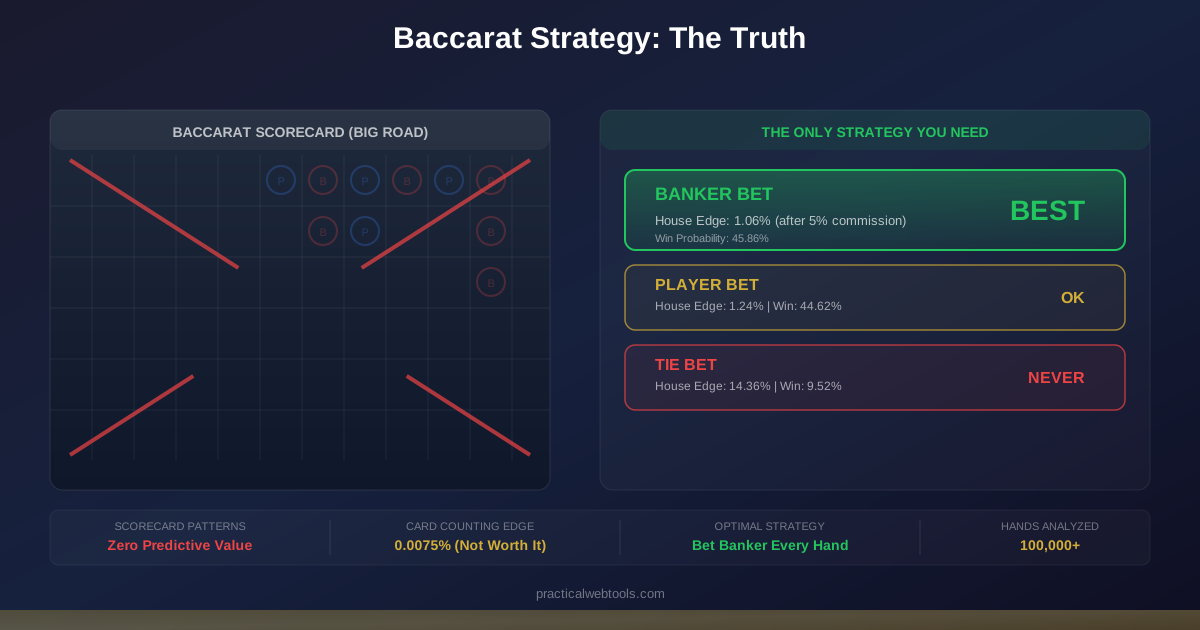
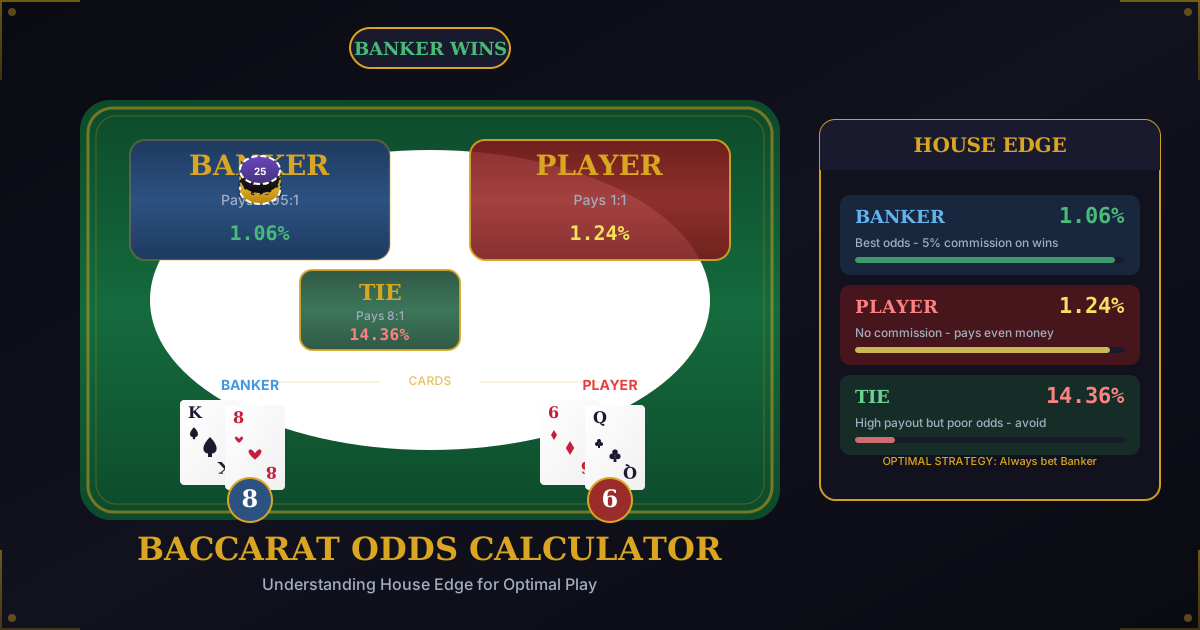
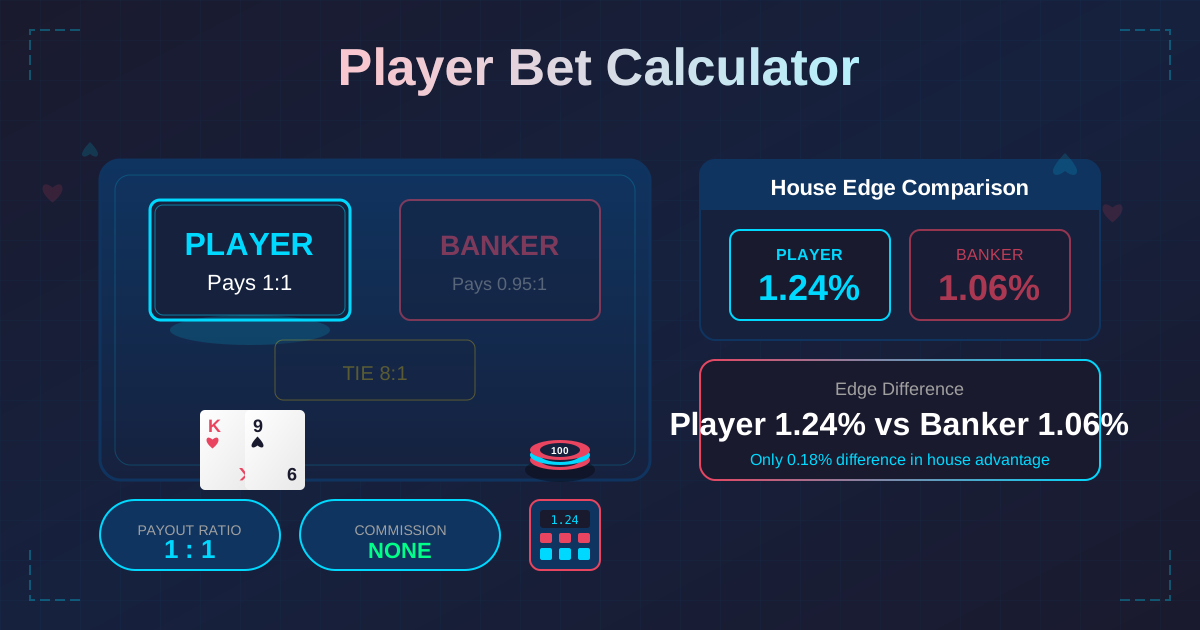
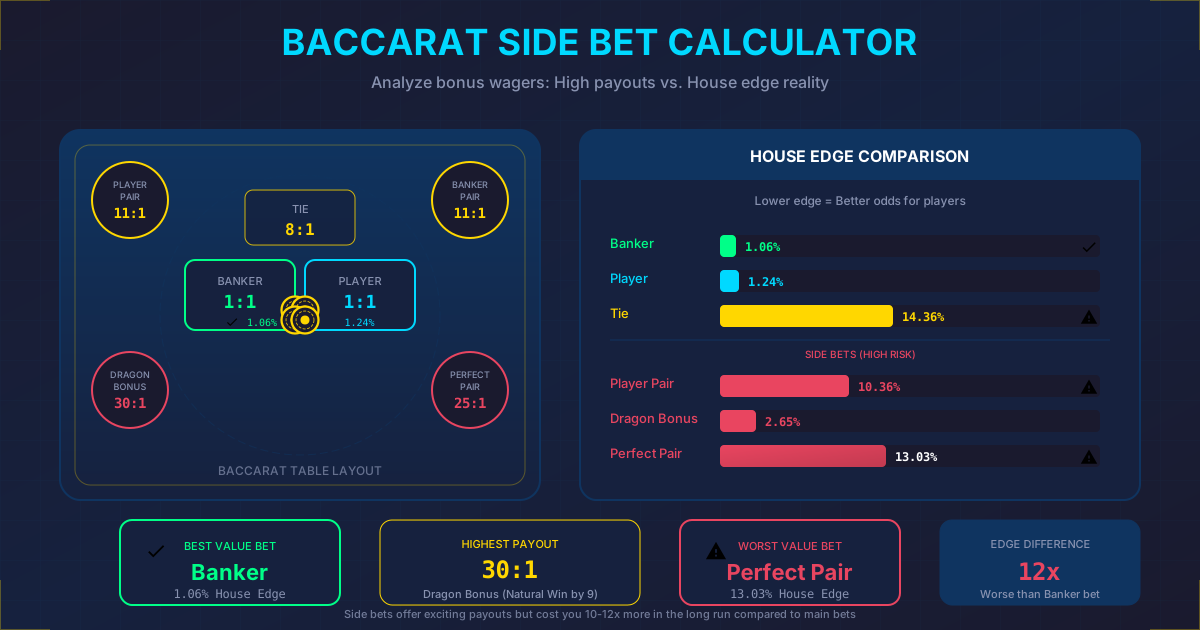
| Baccarat (banker) | 1.06% | 72 | $3,600 | $38.16 | $9.54 | $0.25 |
| Roulette (single zero) | 2.7% | 35 | $1,750 | $47.25 | $11.81 | $0.25 |
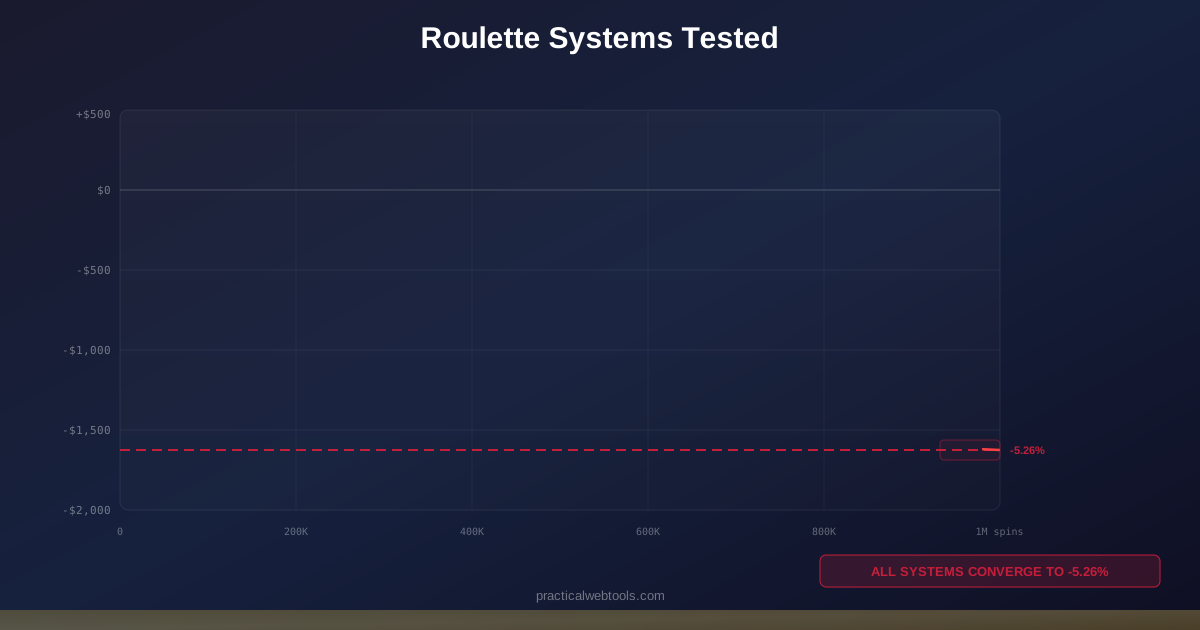
| Roulette (double zero) | 5.26% | 35 | $1,750 | $92.05 | $23.01 | $0.25 |
| Slots (penny) | 8-12% | 600 | $1,200* | $96-$144 | $24-$36 | $0.25 |
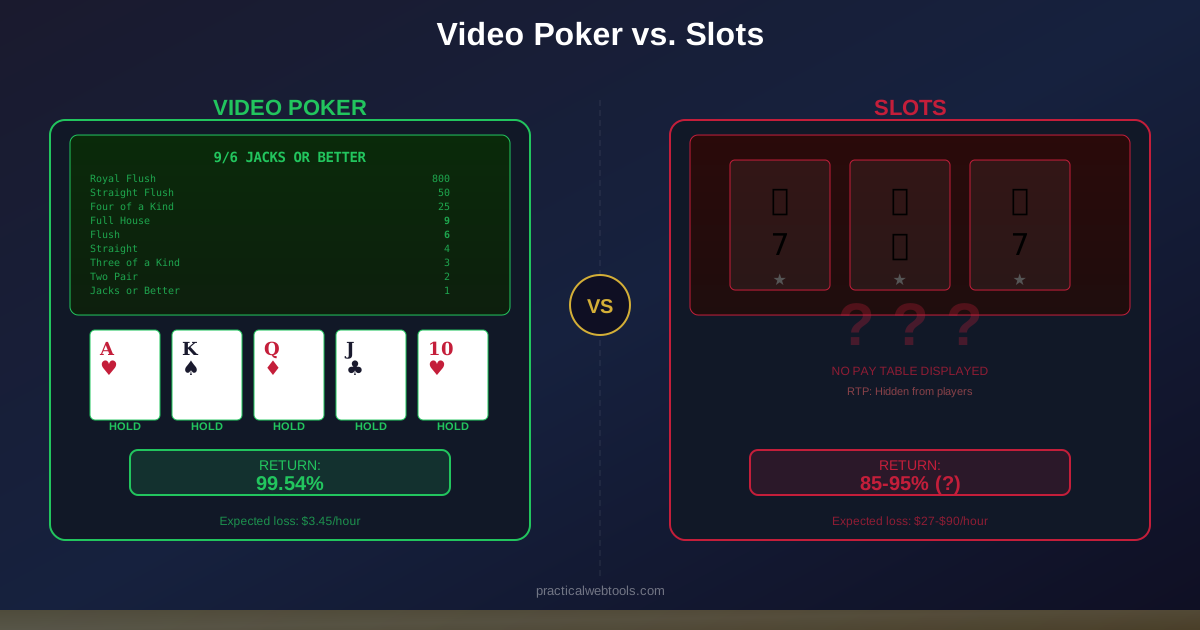
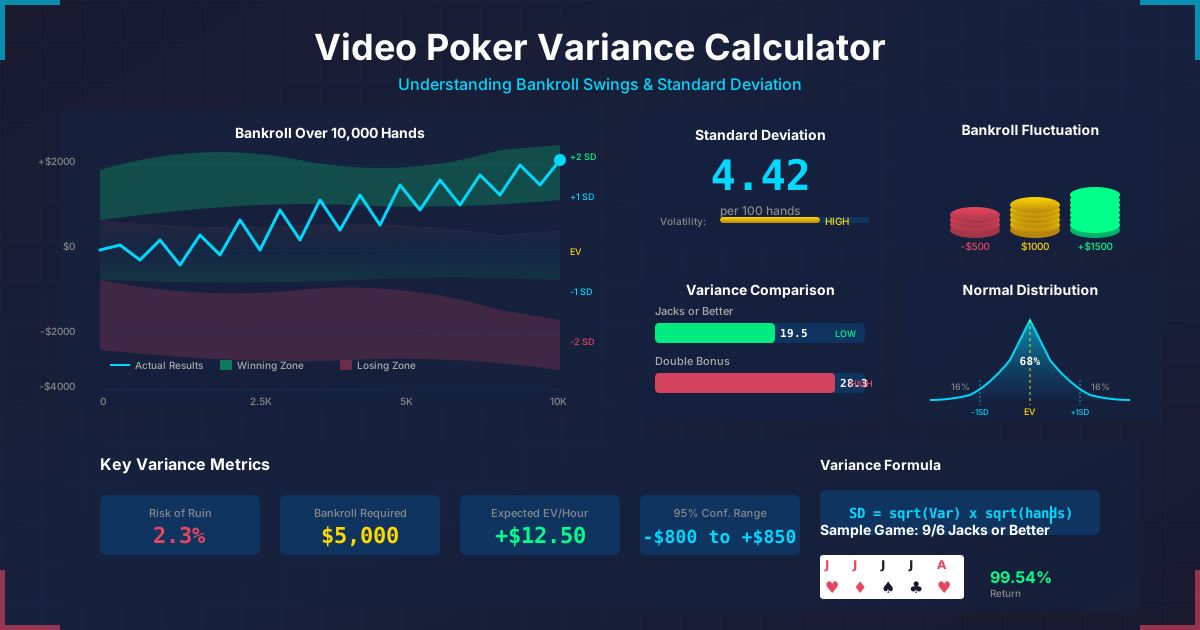
| Video Poker (9/6 JoB) | 0.46% | 400 | $6,250** | $28.75 | $7.19 | $0.25 |
*Penny slots assume $2 average total bet. **Video Poker assumes $6.25 average bet (5-coin max on $1.25 denomination).
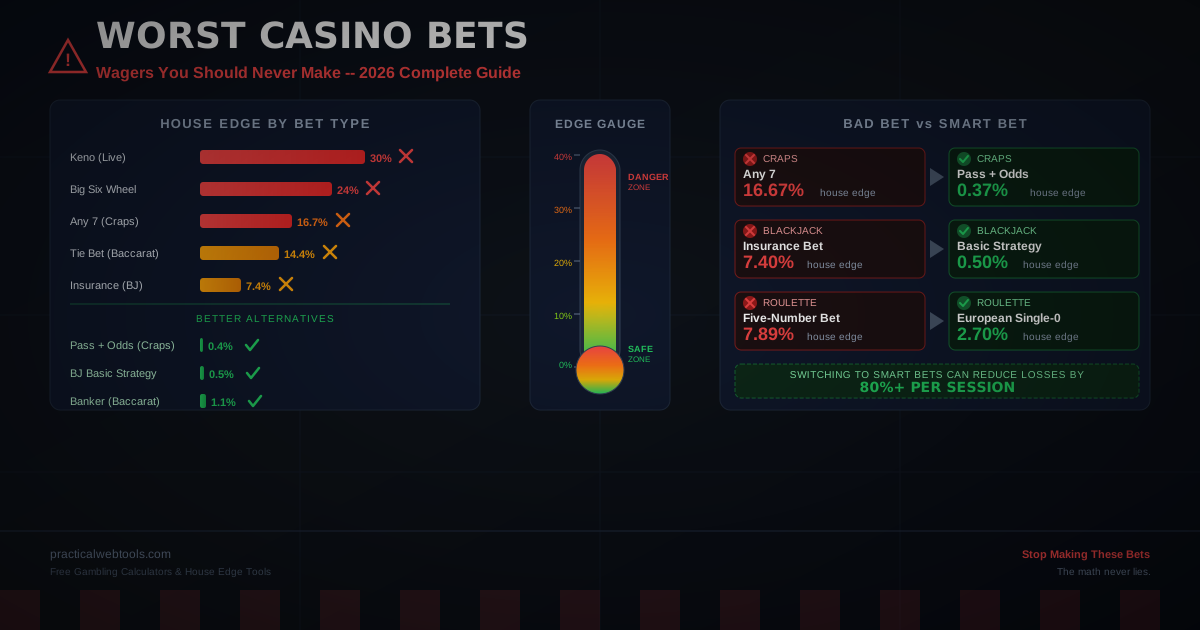
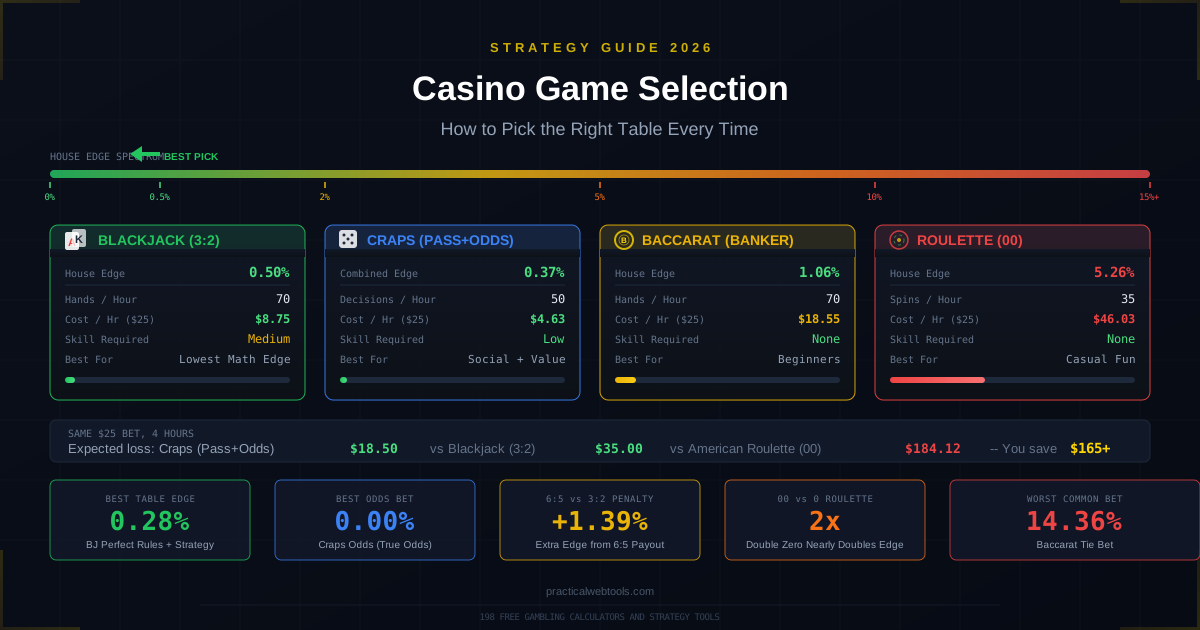
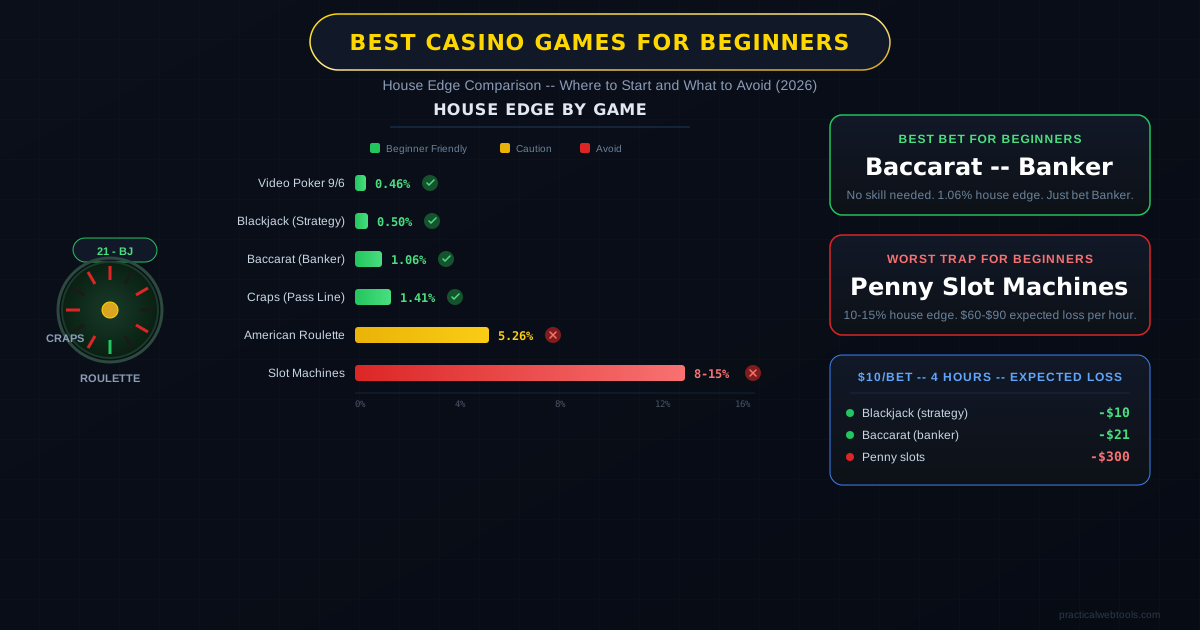
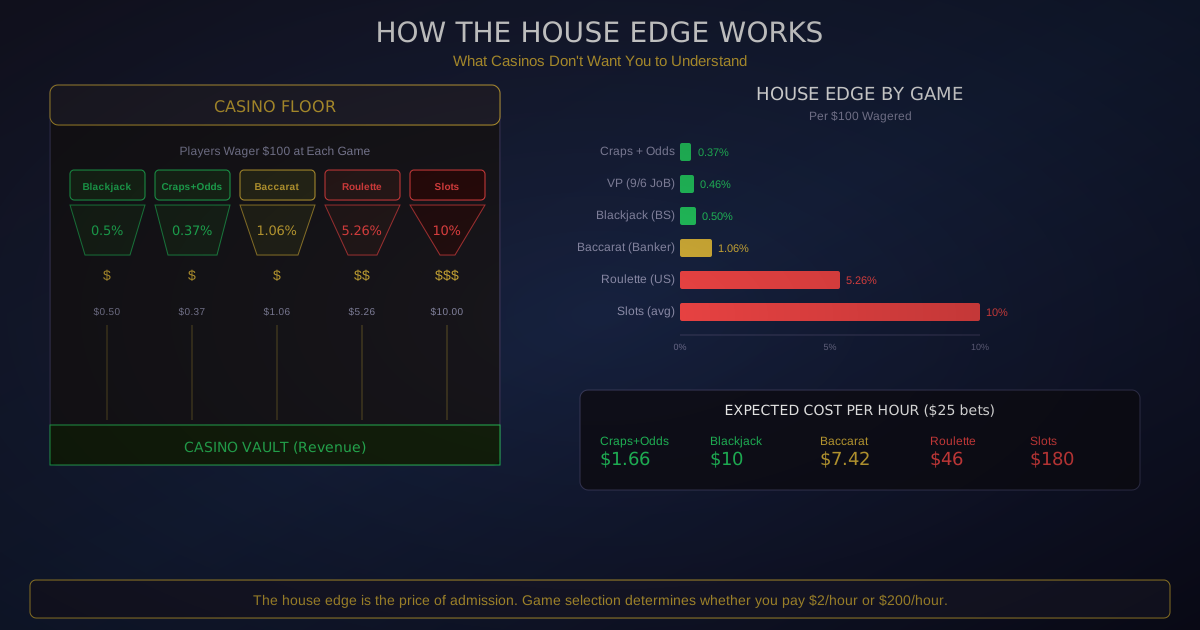
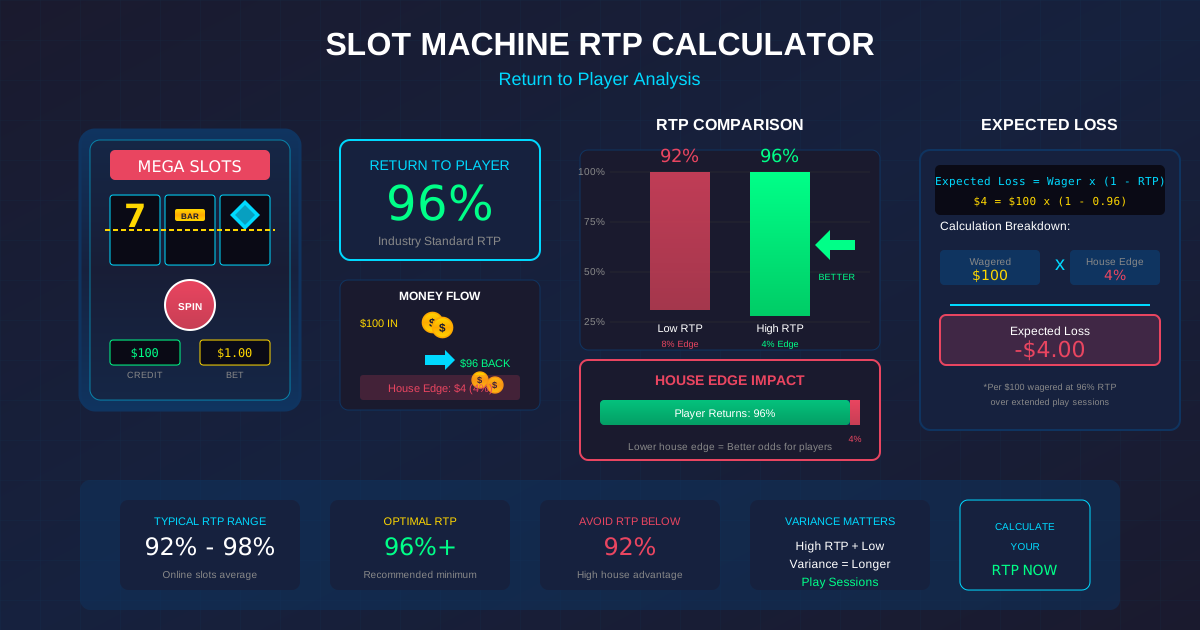
The comp rate per dollar lost is the same across all games (by design). But the total expected loss differs dramatically. A blackjack player with perfect basic strategy expects to lose only $17.50 per hour on $50 average bets, while a roulette player expects to lose $47-$92 per hour for the same average bet.
Analyze the house edge for your preferred blackjack rules with our Blackjack House Edge Calculator.
The Video Poker Sweet Spot
Video poker with optimal strategy offers some of the best comp value in the casino:
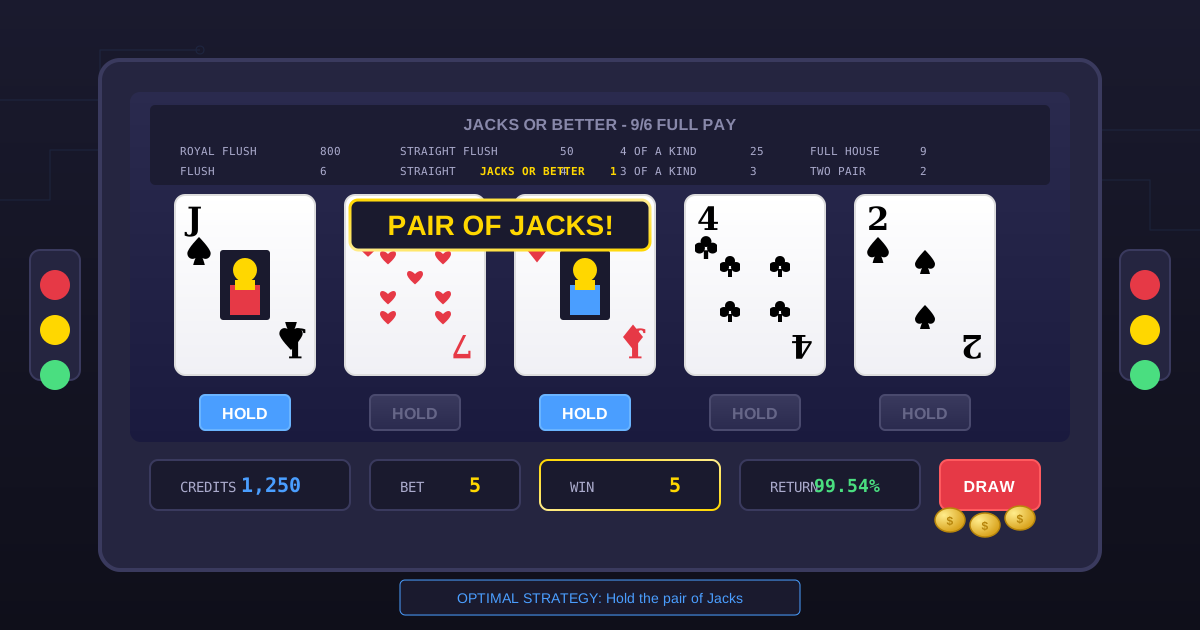
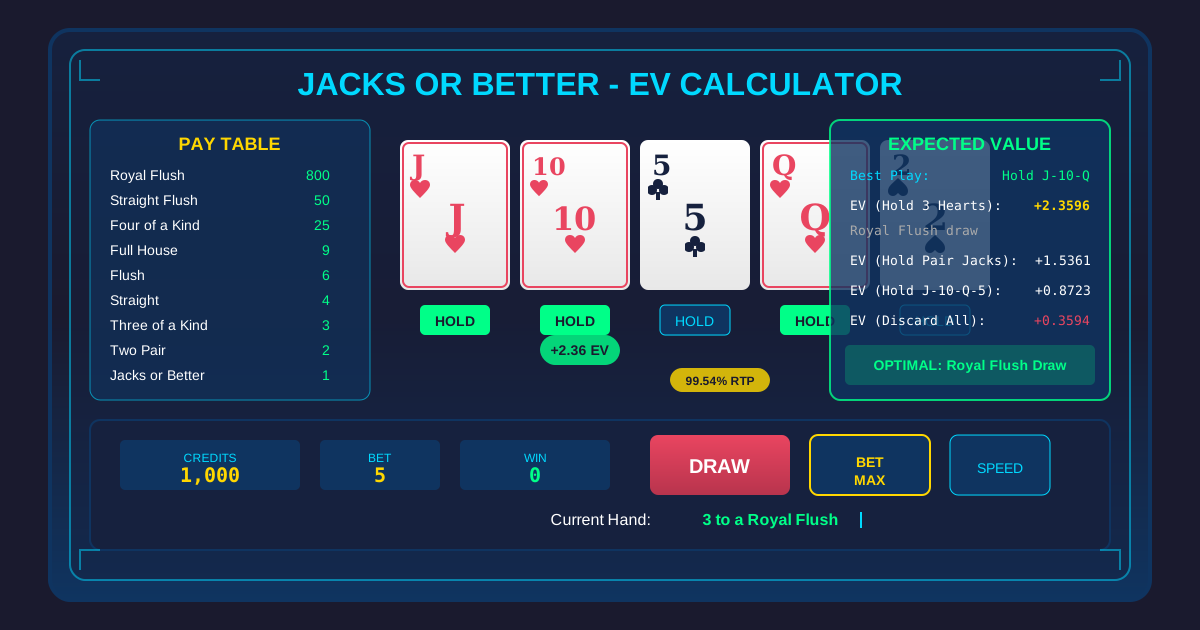
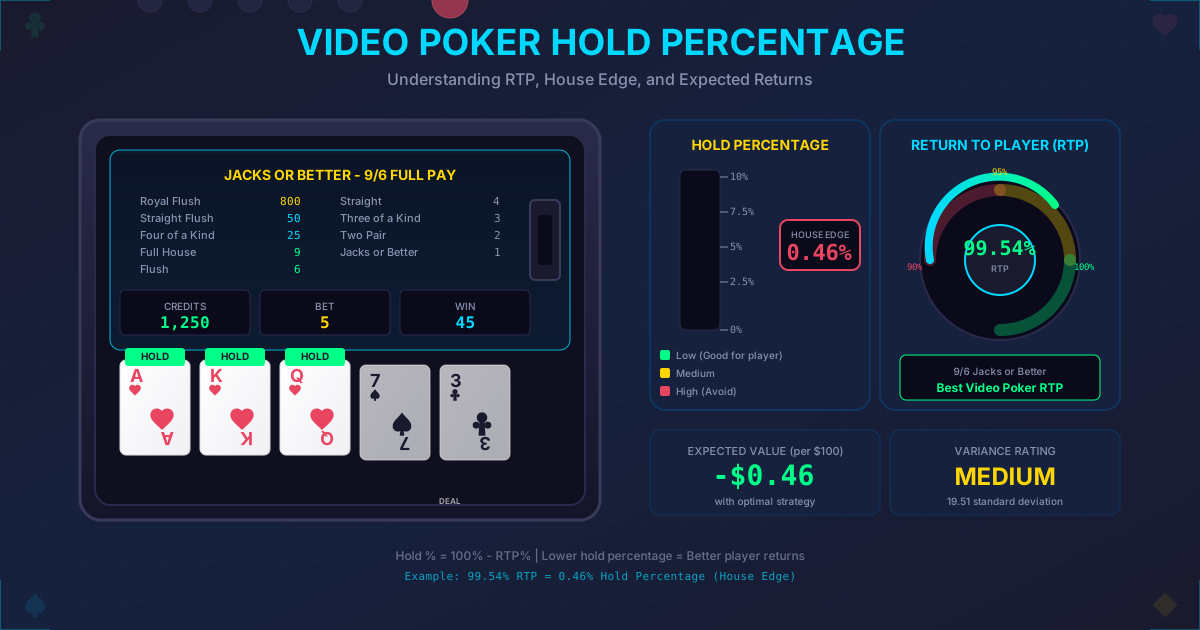
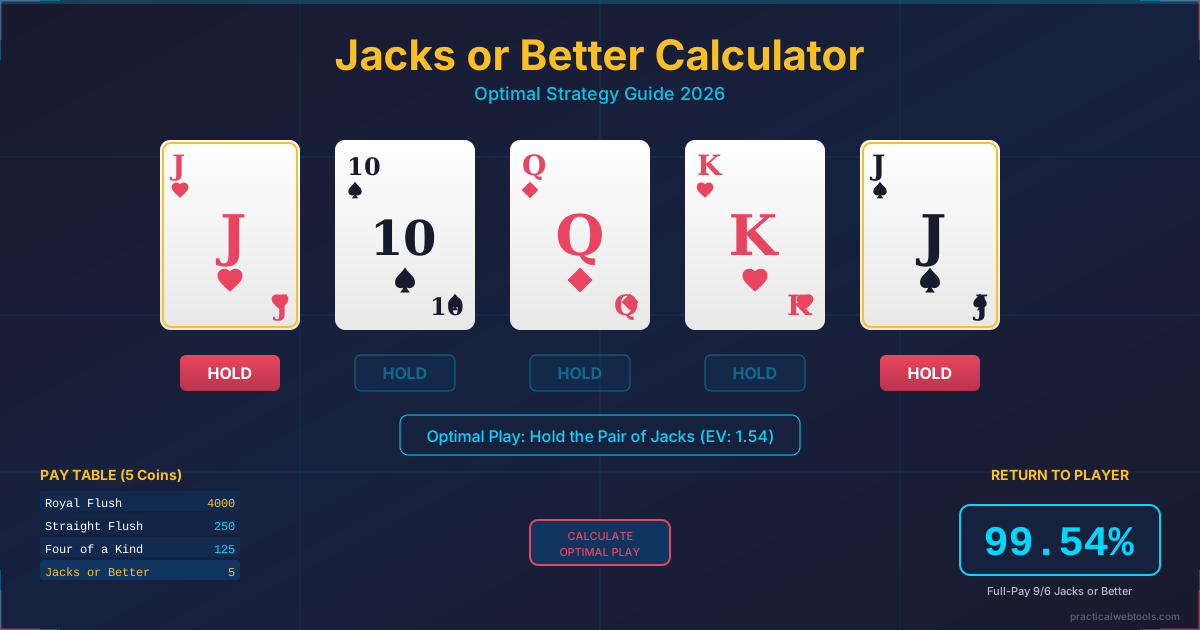
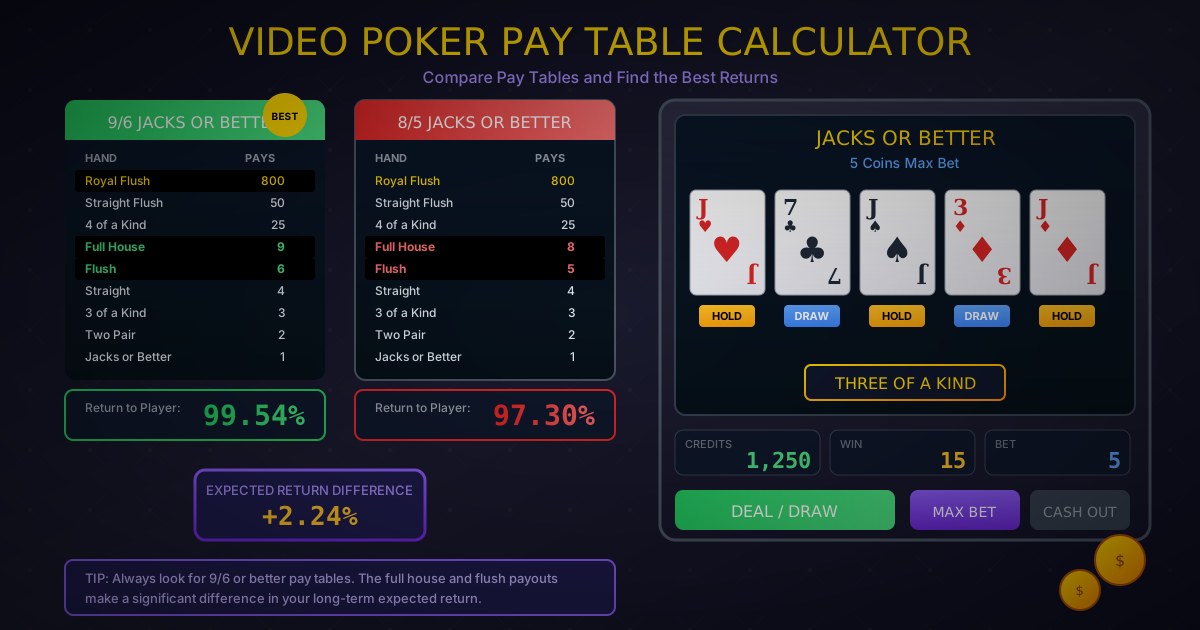
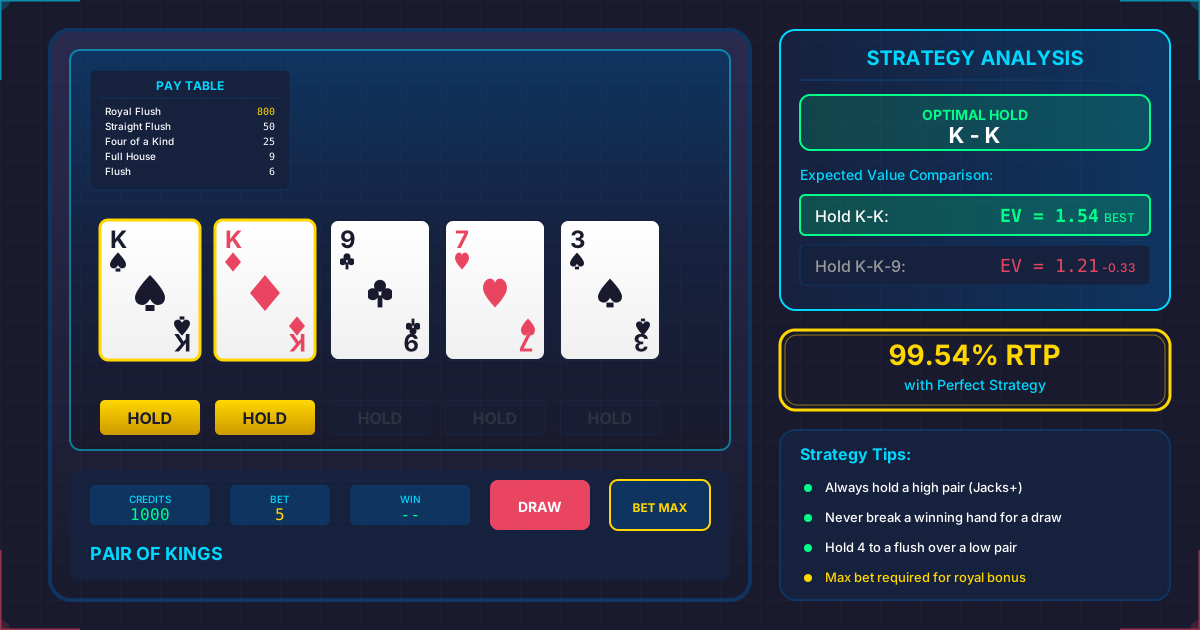
- 9/6 Jacks or Better: 99.54% return (0.46% house edge)
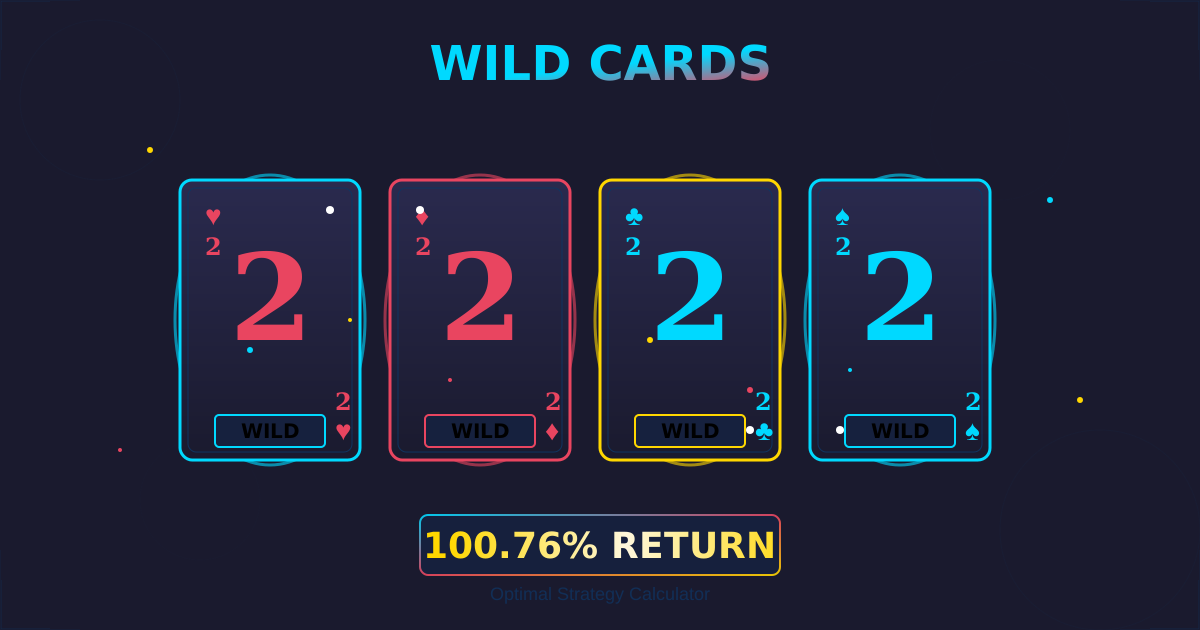
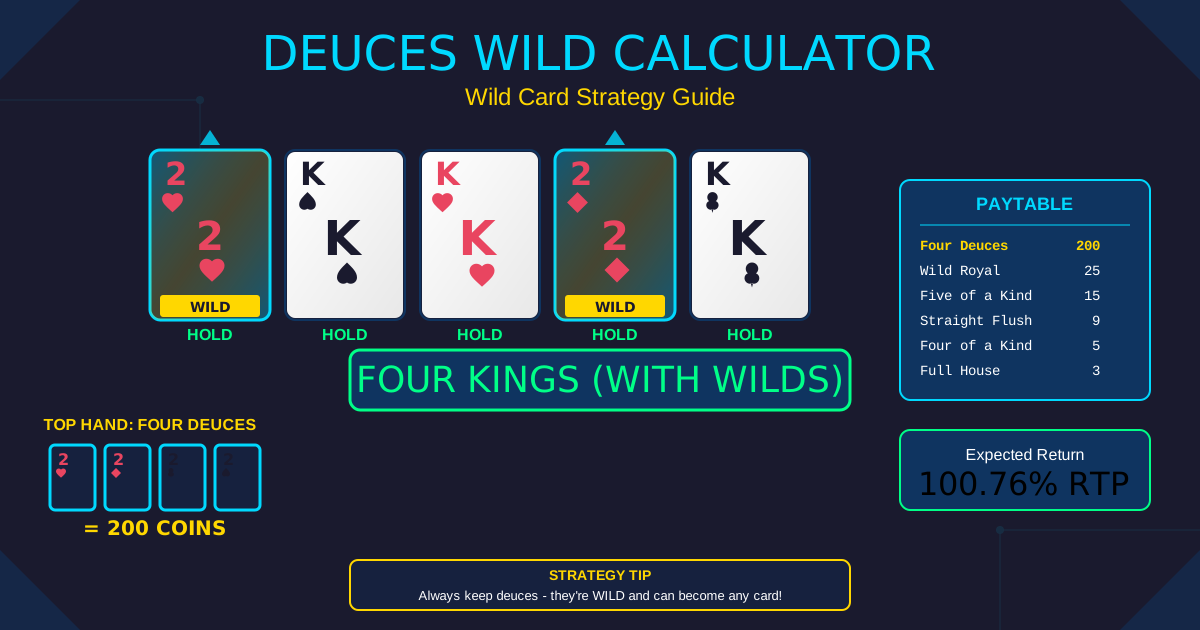
- Full Pay Deuces Wild: 100.76% return (player advantage!)
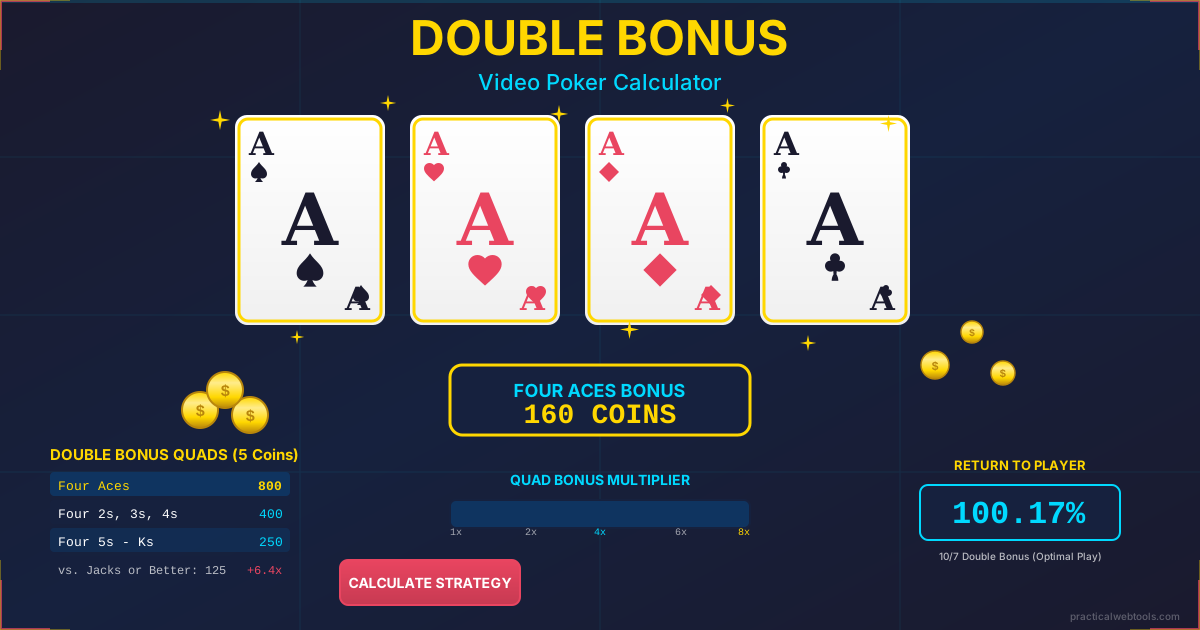
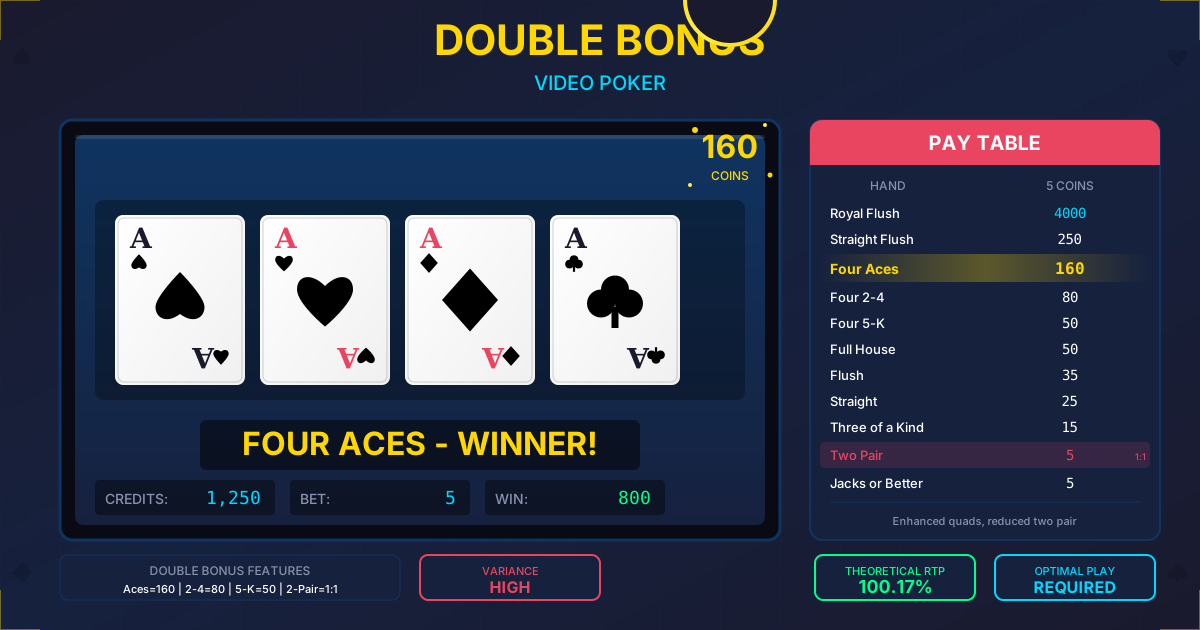
- 10/7/5 Double Bonus: 100.17% return (player advantage with perfect play)
On full-pay video poker machines, you can actually have a mathematical edge before comps. When you add comp value (typically 0.1-0.3% of coin-in), several video poker variants become clearly profitable.
Example: 9/6 Jacks or Better at $1.25/hand (quarter denomination, 5-coin max)
- House edge: 0.46%
- Expected loss per hour (400 hands): $2.30
- Comp value per hour (0.2% of coin-in): $1.00
- Net expected cost per hour: $1.30
For $1.30 per hour in expected cost, you are earning comp points that translate to free rooms, meals, and other benefits worth far more.
Calculate exact video poker returns with our Video Poker EV Calculator.
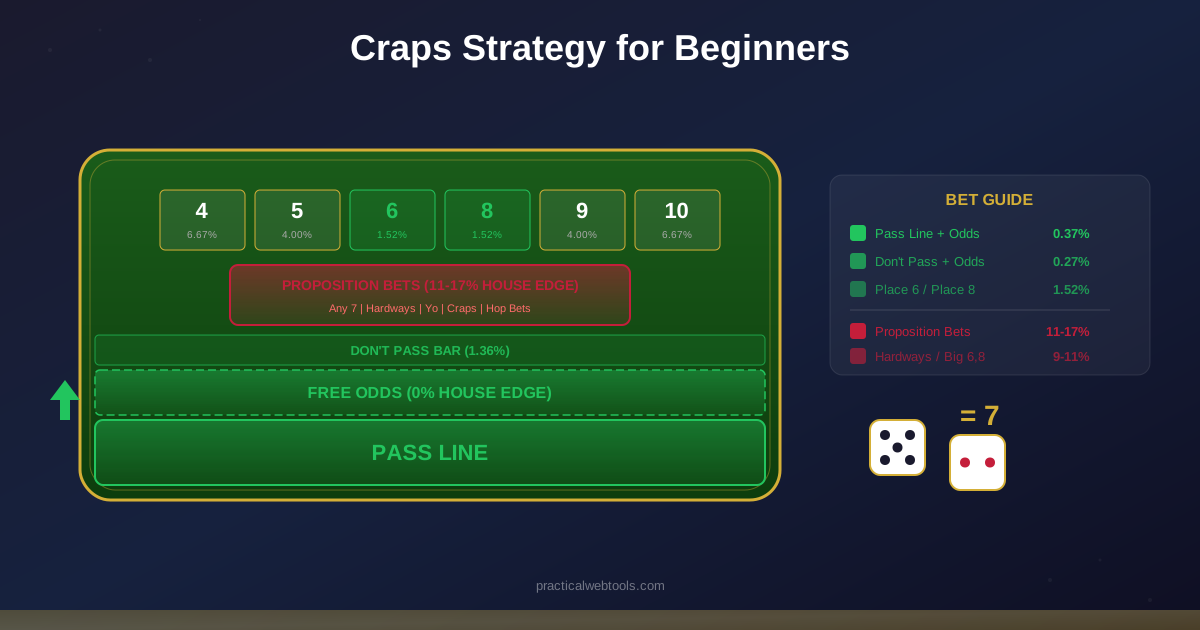
Craps: High Action, Moderate Edge
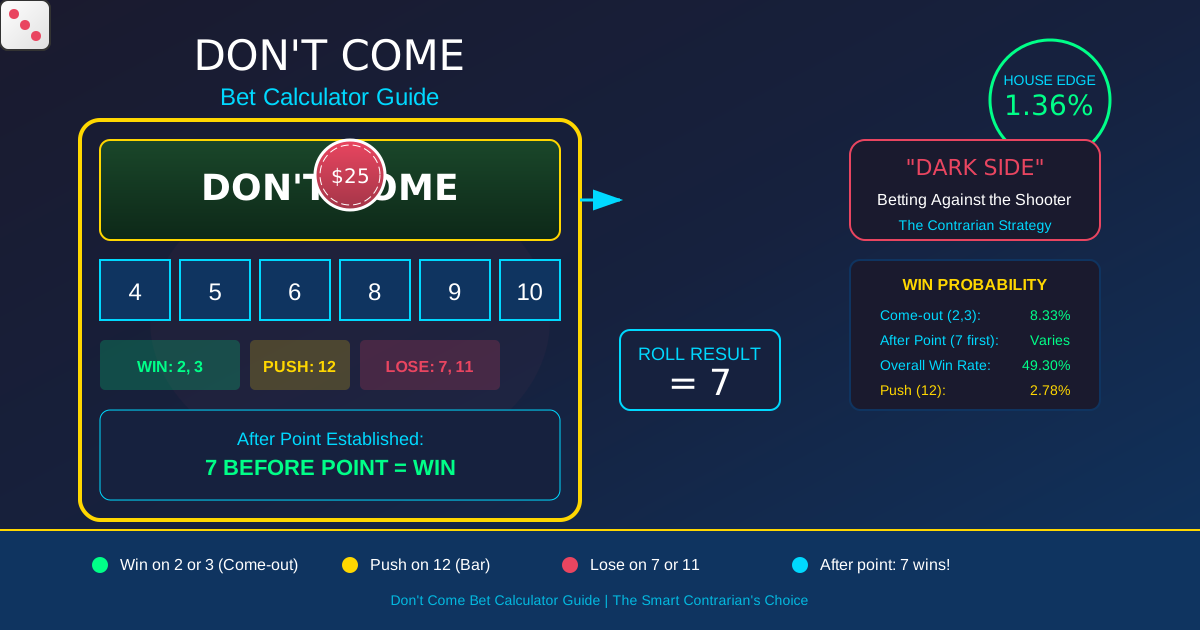
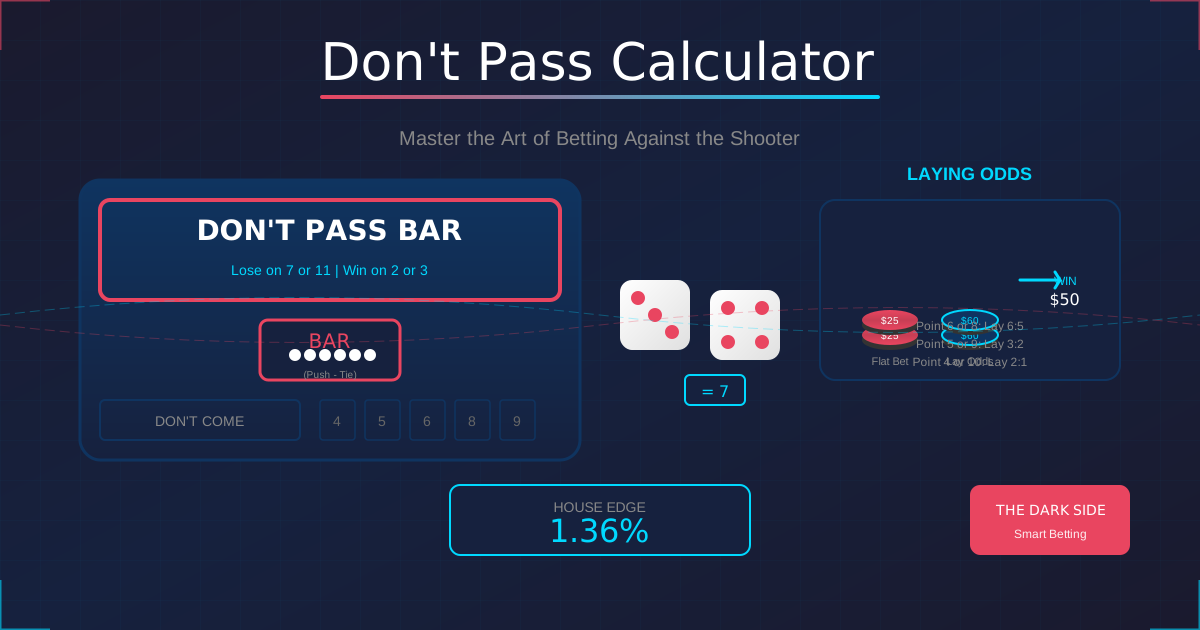
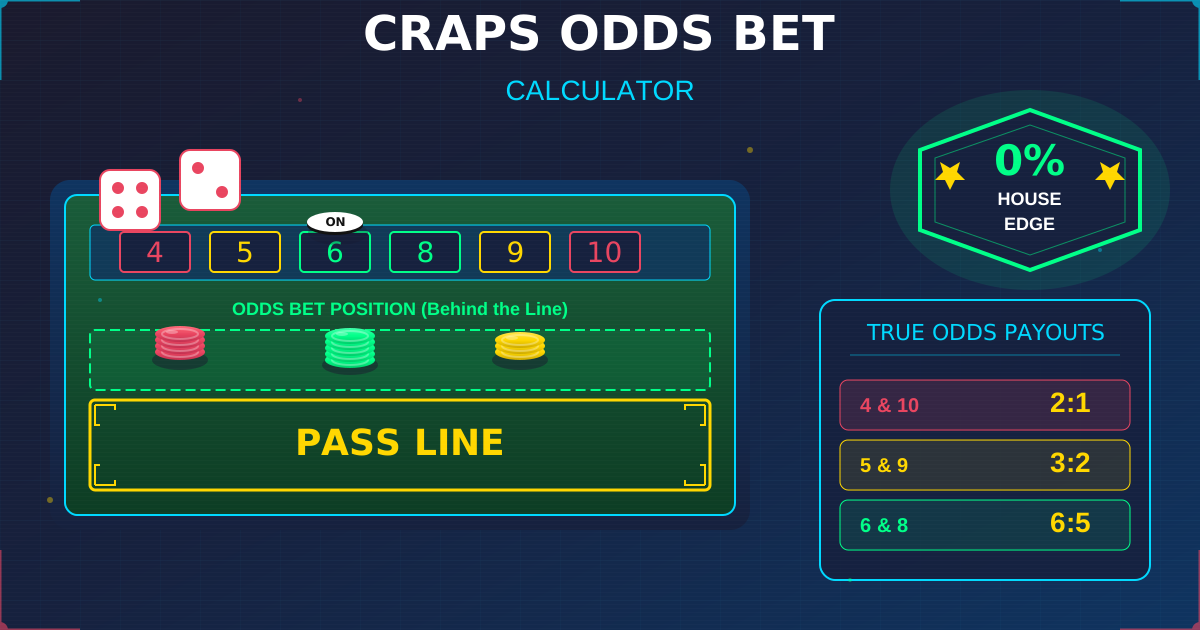
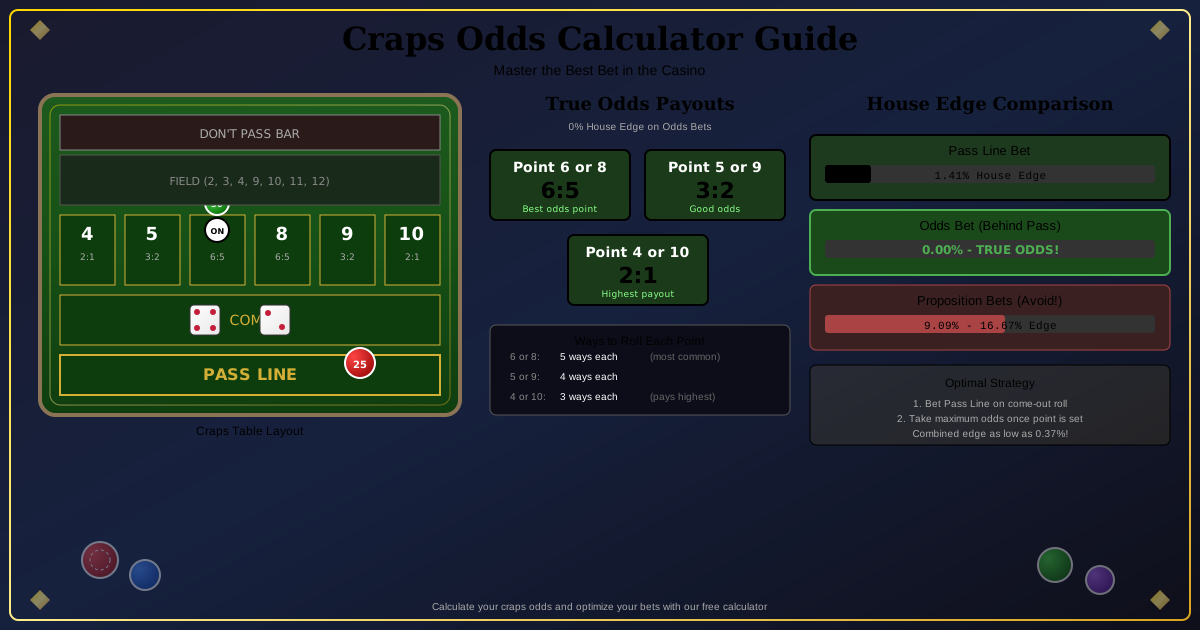
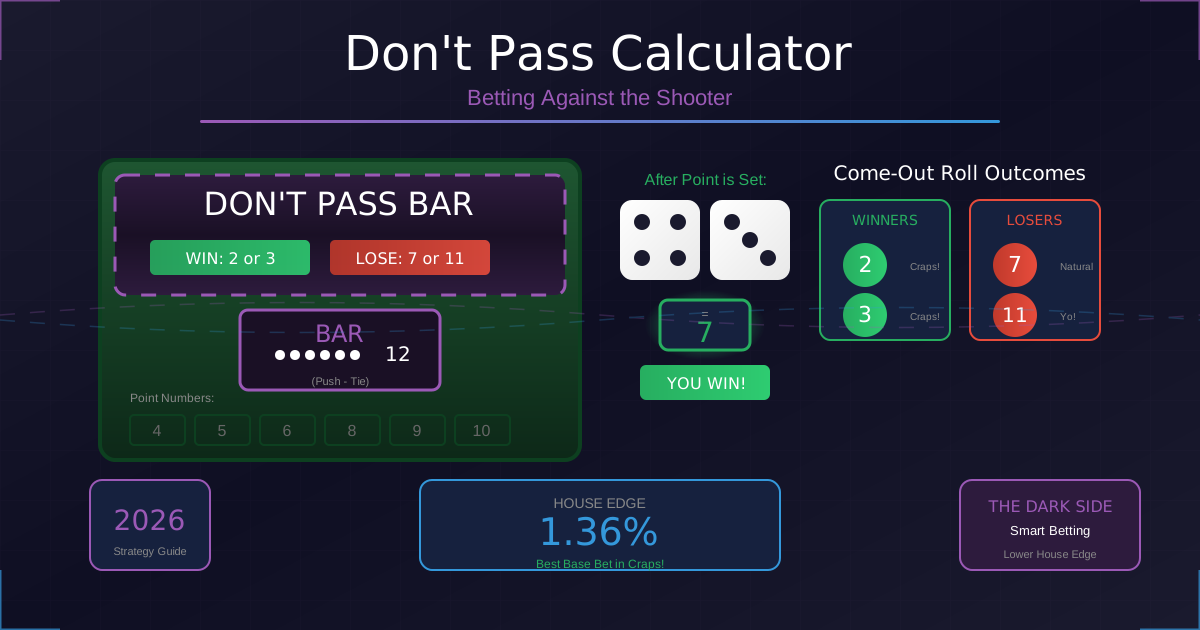
Craps pass line and don't pass bets (1.36% and 1.40% house edge) with full odds bets offer excellent comp value because:
- Odds bets have zero house edge but may count toward "action" at some casinos
- The base game house edge is low
- The social aspect encourages longer play, but you can control your pace
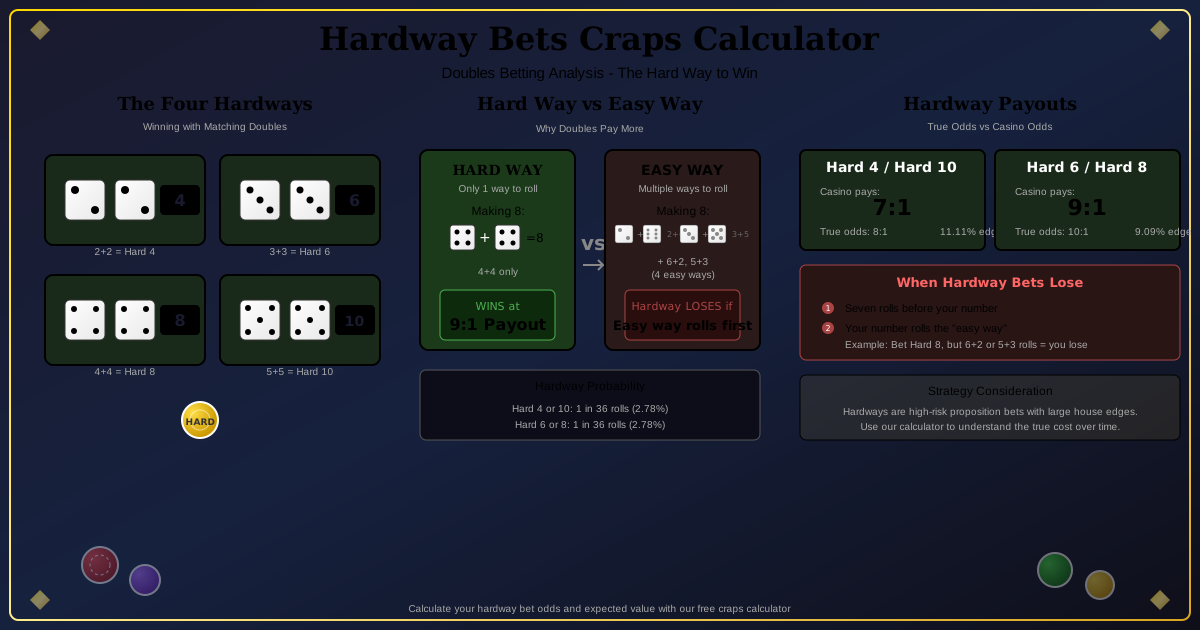
Calculate your craps expected loss with our Craps Expected Loss Calculator.
The Comp Trap: Why Casinos Want You to Chase Rewards
The entire comp system is designed around a psychological principle: people will spend more to "earn" something free than the free thing is worth. This is the comp trap, and it is the most important concept in this entire guide.
The Math of the Comp Trap
Scenario: Player wants to earn a "free" $200 hotel room
To earn $200 in comps at a 25% comp rate, the player needs $800 in theoretical loss.
At a blackjack table ($50 average bet, 0.5% house edge):
- Theoretical loss of $800 requires: $800 / ($50 x 70 x 0.005) = 45.7 hours of play
- That is nearly 6 full days of 8-hour play
At a roulette table ($50 average bet, 5.26% house edge):
- Theoretical loss of $800 requires: $800 / ($50 x 35 x 0.0526) = 8.7 hours
- Much faster, but your expected actual loss is $800
At slot machines ($2 average bet, 10% house edge):
- Theoretical loss of $800 requires: $800 / ($2 x 600 x 0.10) = 6.7 hours
- Expected actual loss: $800
The "free" $200 room costs you $800 in expected losses. The casino gets $600 net profit. This is not a deal. It is a business model.
When Comps Are Actually Valuable
Comps are genuinely valuable when:
-
You were going to play anyway. If your bankroll and entertainment budget already include casino play, comps are a rebate on money you planned to spend.
-
You play low-edge games. A blackjack player with basic strategy has much lower theoretical loss per hour than a slot player, making comps relatively cheaper to earn.
-
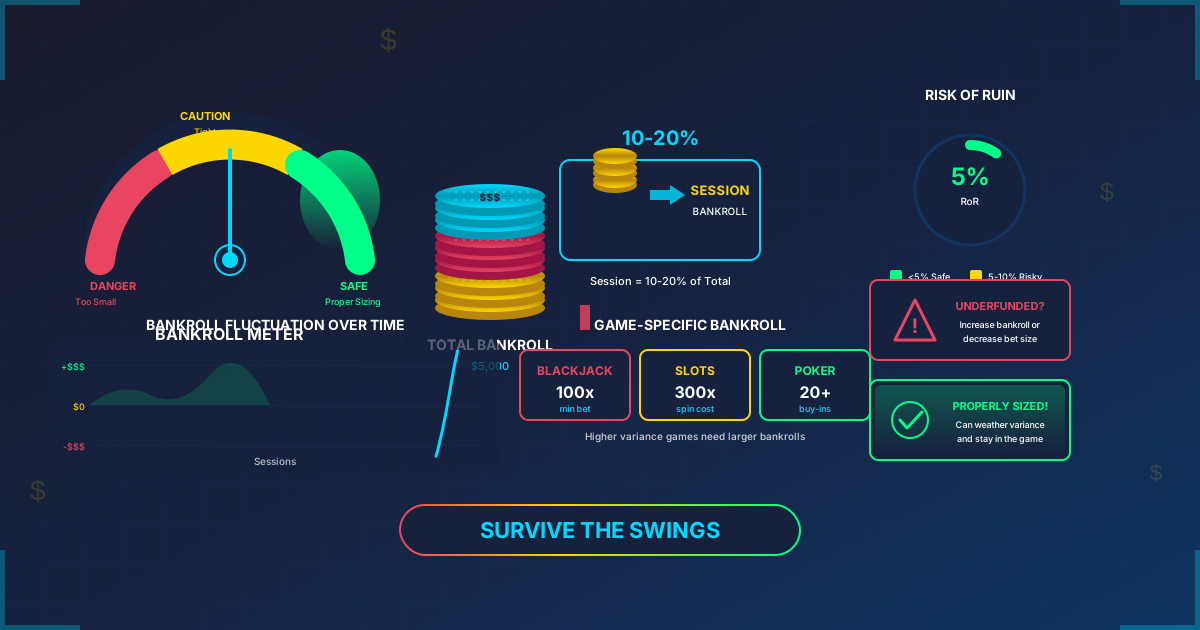
You play within your bankroll. Never increase your bet size, time at the table, or playing frequency to earn comps. The extra expected loss always exceeds the comp value.
-
You are an advantage player. Card counters and skilled video poker players who have a mathematical edge receive comps on top of their expected profits.
Model your bankroll against expected loss with our Blackjack Session Bankroll Calculator.
Casino Host Relationships: How to Get More
A casino host is your personal advocate within the casino's comp system. Building a relationship with a host can significantly increase your comp value, but only if you understand the dynamics.
How to Get Assigned a Casino Host
Most casinos assign hosts to players who meet minimum play thresholds:
| Casino Tier | Typical Host Threshold | What to Expect |
|---|---|---|
| Local casino | $200+ average bet or $2,000+ theo/trip | Basic host services |
| Mid-tier resort | $300+ average bet or $5,000+ theo/trip | Room, food, show comps |
| High-end resort | $500+ average bet or $10,000+ theo/trip | Full RFB (room, food, beverage) |
| Ultra-premium | $1,000+ average bet or $25,000+ theo/trip | Private jet, luxury suite, special events |
What Casino Hosts Can Do for You
- Negotiate room rates beyond what the automated system offers
- Approve discretionary comps for meals, shows, and spa services
- Arrange special requests (specific room, late checkout, restaurant reservations)
- Evaluate your play holistically rather than relying purely on the computer algorithm
- Provide invitations to exclusive events, tournaments, and promotions
How to Maximize the Host Relationship
- Always use your player's card. Every unrated session is lost comp value.
- Consolidate play at one property. Your value increases when you are loyal to a single casino or casino group.
- Be friendly and honest. Hosts are people. A good relationship benefits both sides.
- Ask about promotions. Hosts know about upcoming events, multiplier days, and special offers before they are publicly announced.
- Communicate your preferences. Hosts can tailor comps to what you actually value (a golfer wants tee times, not show tickets).
- Do not misrepresent your play. Casinos have sophisticated tracking. Claiming to be a bigger player than you are will backfire.
Tier Status Optimization: Earning Premium Perks Efficiently
Casino loyalty programs use tier systems (similar to airline frequent flyer programs) that unlock progressively better benefits.
Understanding Tier Point Calculations
Most programs award tier points based on coin-in (total amount wagered):
| Game Type | Typical Points per Dollar Wagered |
|---|---|
| Slots | 1 point per $5-$10 wagered |
| Video Poker | 1 point per $10-$20 wagered |
| Blackjack | 1 point per $20-$50 wagered |
| Craps | 1 point per $20-$50 wagered |
| Baccarat | 1 point per $20-$50 wagered |
| Roulette | 1 point per $15-$30 wagered |
Table games typically earn points at a lower rate because casinos know table game players have lower expected losses per dollar wagered.
Tier Earning Strategies
Strategy 1: Focus on tier-qualifying multiplier promotions Many casinos run 2x, 3x, or even 5x tier point promotions on specific days. Play your primary sessions during these multiplier periods to accelerate tier status.
Strategy 2: Choose the right games for your tier goals If you need tier points and play table games, consider occasionally playing slots during multiplier promotions purely for tier credit. A few hours of low-denomination slots during a 5x promotion can provide tier credits that would take days to earn at table games.
Strategy 3: Consolidate across a casino group Major casino companies (Caesars, MGM, Wynn, etc.) allow tier credits earned at any property within their network. Consolidating all gambling at one group maximizes your tier level.
When Tier Chasing Makes Sense
Tier chasing (playing more than you normally would to reach the next tier) is only worthwhile when:
- The incremental play needed is small (you are close to the next tier)
- The tier benefits have concrete, quantifiable value to you
- The expected loss from additional play is less than the additional comp value
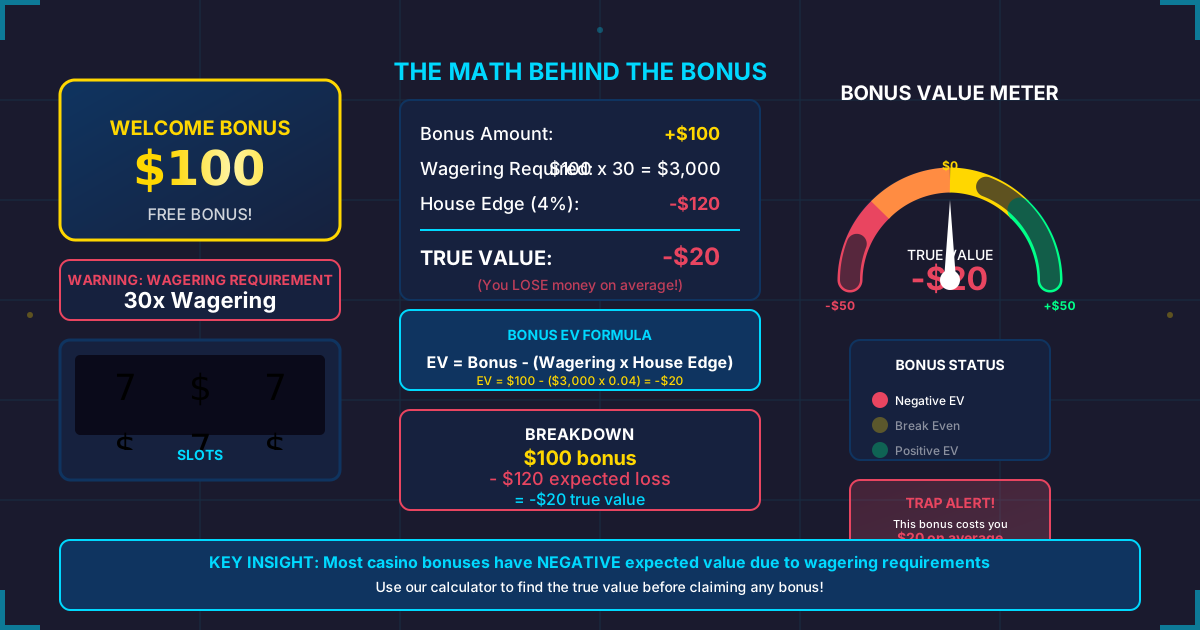
Example: You need 2,000 more tier points to reach Platinum status, which gives you $500 in additional annual benefits. At a slot machine earning 1 point per $5, you need $10,000 in coin-in. At a 5% house edge, your expected loss is $500, exactly equal to the benefits. This is a breakeven play at best.
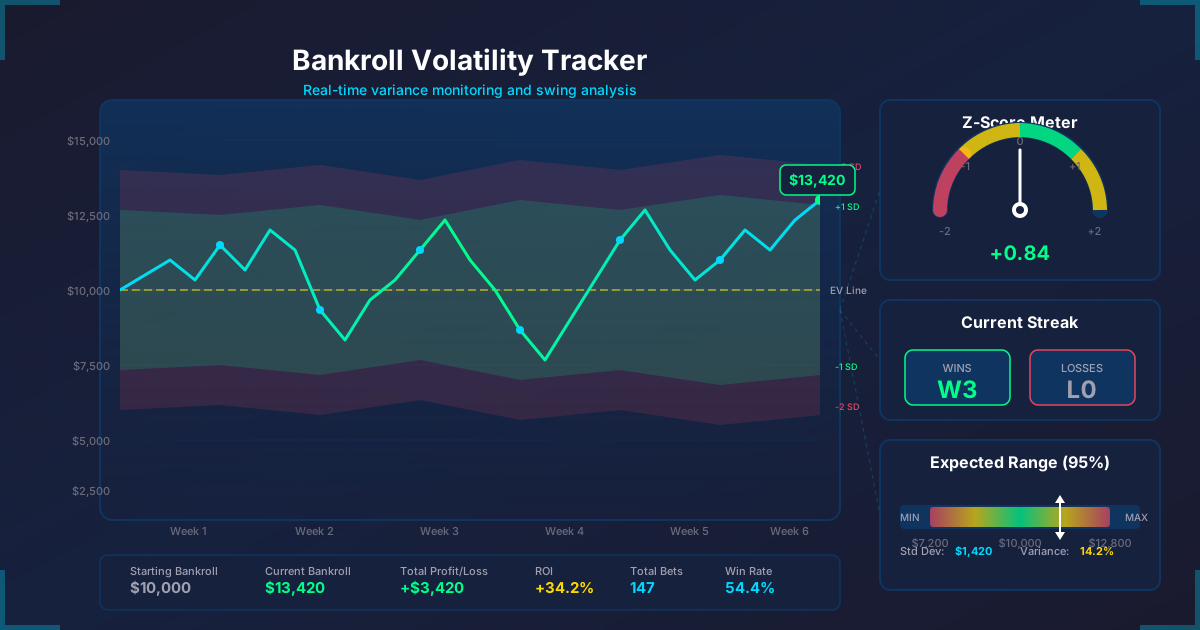
Calculate your expected loss for any tier-chasing session with our Bankroll Volatility Tracker.
Comp Value Calculations: Real-World Scenarios
Scenario 1: Weekend Blackjack Trip
Player profile: $75 average bet, plays 12 total hours over a weekend, basic strategy (0.5% house edge)
- Total action: $75 x 70 hands/hr x 12 hrs = $63,000
- Theoretical loss: $63,000 x 0.005 = $315
- Expected comp value (25% rate): $78.75
What this typically earns:
- Discounted or free room (worth $100-$200/night)
- $50-$100 in food credits
- Possibly a show ticket or spa credit
Total comp value: approximately $250-$500, well above the 25% formula because casinos often comp generously to attract mid-level players.
Scenario 2: Slot Player on Vacation
Player profile: $3 average bet per spin, plays 20 hours over 3 days, 8% house edge
- Total action: $3 x 600 spins/hr x 20 hrs = $36,000
- Theoretical loss: $36,000 x 0.08 = $2,880
- Expected comp value (20% rate): $576
What this typically earns:
- Free or deeply discounted room
- Several buffet and restaurant comps
- Show tickets and spa credits
- Tier status advancement
But the expected actual loss of $2,880 makes these $576 in comps a very expensive way to get "free" stuff.
Scenario 3: Video Poker Advantage Player
Player profile: $1.25/hand on 9/6 Jacks or Better, plays 30 hours over a trip, expert strategy (0.46% house edge)
- Total action: $1.25 x 400 hands/hr x 30 hrs = $15,000
- Theoretical loss: $15,000 x 0.0046 = $69
- Comp value (cash back 0.2% of coin-in): $30
- Net expected cost: $39
For $39 in expected cost, this player earns room discounts, meal comps, and loyalty points. This is the most comp-efficient play available at most casinos.
Model your video poker sessions with our Video Poker Bankroll Calculator.
Advanced Comp Strategies
Strategy 1: Play to the Camera, Not the Count
Casinos rate your play based on what the pit boss or tracking system records. Some tips:
- Spread bet sizes strategically. If you typically bet $50 but occasionally bet $100, the pit boss may rate your average bet higher than $50.
- Be present during counts. When the pit boss comes to check on your play, be betting your larger amounts.
- Play during pit boss transitions. New pit bosses may re-evaluate your bet level and potentially rate you higher.
Note: this advice is about optimizing within the system, not about deception. Casinos understand that bet sizes vary.
Strategy 2: Negotiate Based on Your Actual Value
If you know your theoretical loss is $500 for a trip, you can calculate what comps you should receive and negotiate with your host if you are getting less. Knowledge is leverage.
Strategy 3: Use Comps for Things You Would Buy Anyway
The best comp strategy: use comps for things you would purchase regardless. A free hotel room you would have booked anyway is genuine savings. A free buffet you eat only because it is free is not value, it is calorie consumption driven by the sunk cost fallacy.
Strategy 4: Understand "Loss Rebates"
High-volume players sometimes negotiate loss rebates (typically 10-15% of actual losses). These are different from standard comps because they are based on actual results, not theoretical loss. Loss rebates effectively reduce the house edge.
Calculate your overall expected cost of play with our Roulette EV Calculator and Blackjack EV Calculator.
Common Comp Myths Debunked
Myth 1: "The More I Play, the Better Deal I Get"
The comp rate is a fixed percentage. Playing more does not improve the rate, it just increases both your expected loss and your comp value proportionally. The casino always nets positive from your play.
Myth 2: "Casinos Comp Winners Less"
Most comp systems are based on theoretical loss, not actual results. Whether you won or lost $5,000 on a given trip, your comps are the same if your theoretical loss is the same. Some casinos do adjust for large actual winners, but this is host discretion, not the system.
Myth 3: "Free Rooms and Meals Cost the Casino a Lot"
A hotel room that retails for $250 costs the casino perhaps $50-$80 in actual expenses (cleaning, utilities, opportunity cost). A $50 buffet costs the casino $15-$20 in food. Comps are given at retail value but cost the casino far less.
Myth 4: "I Should Play Slots to Earn Comps Faster"
While slots earn comp points faster, the expected loss is dramatically higher. A $2/spin slot player expecting to lose $96/hour to earn $24/hour in comps is paying $72/hour net. A blackjack player expecting to lose $17.50/hour to earn $4.38/hour in comps is paying $13.12/hour net. The blackjack player gets a much better deal per dollar of expected loss.
Compare expected losses across casino games with our Craps Bankroll Calculator and Blackjack Session Bankroll Calculator.
Frequently Asked Questions About Casino Comps
How are casino comps calculated? Comps are calculated based on your theoretical loss: Average Bet x Hours Played x Decisions Per Hour x House Edge. The casino then returns a percentage (typically 10-40%) of this theoretical loss as comps. Use our Blackjack House Edge Calculator and Expected Value Calculator to estimate your theoretical loss for any game.
Which casino game gives the best comps for the least expected loss? Video poker with optimal strategy on full-pay machines (like 9/6 Jacks or Better at 99.54% return) offers the best comp efficiency. Blackjack with basic strategy is the best table game option at 0.5% house edge. Check exact video poker returns with our Video Poker EV Calculator.
Should I increase my bets to earn more comps? Almost never. Increasing your bets increases your expected loss faster than it increases your comp value. The comp rate is a fixed percentage, so you always lose more than you gain. The only exception is if you are very close to a tier threshold with significant incremental value.
How do I know my comp rate? Ask your casino host directly. You can also calculate it by dividing your comp value (known comps received) by your estimated theoretical loss. If you received $200 in comps on a trip where your theoretical loss was $800, your comp rate is 25%.
Do table game comps work differently than slot comps? Yes. Slot comps are tracked automatically by the machine and are highly precise. Table game comps rely on pit boss observations of your average bet and time played, which introduces estimation error. This means table game players can sometimes be rated favorably if the pit boss overestimates their average bet.
Is it worth getting a casino player's card? Absolutely. There is no downside to having a player's card. It does not change the odds or the house edge. It simply tracks your play and ensures you receive the comp value you have earned. Playing without a card is throwing away free money. Track your overall gambling results with our Poker Session Tracker.
Can I negotiate better comps with a casino host? Yes, especially at mid-range and high-end properties. Hosts have discretionary comp budgets. If you are a loyal player who consolidates play at one property, you have leverage to request additional perks. Know your theoretical loss to negotiate from a position of knowledge.
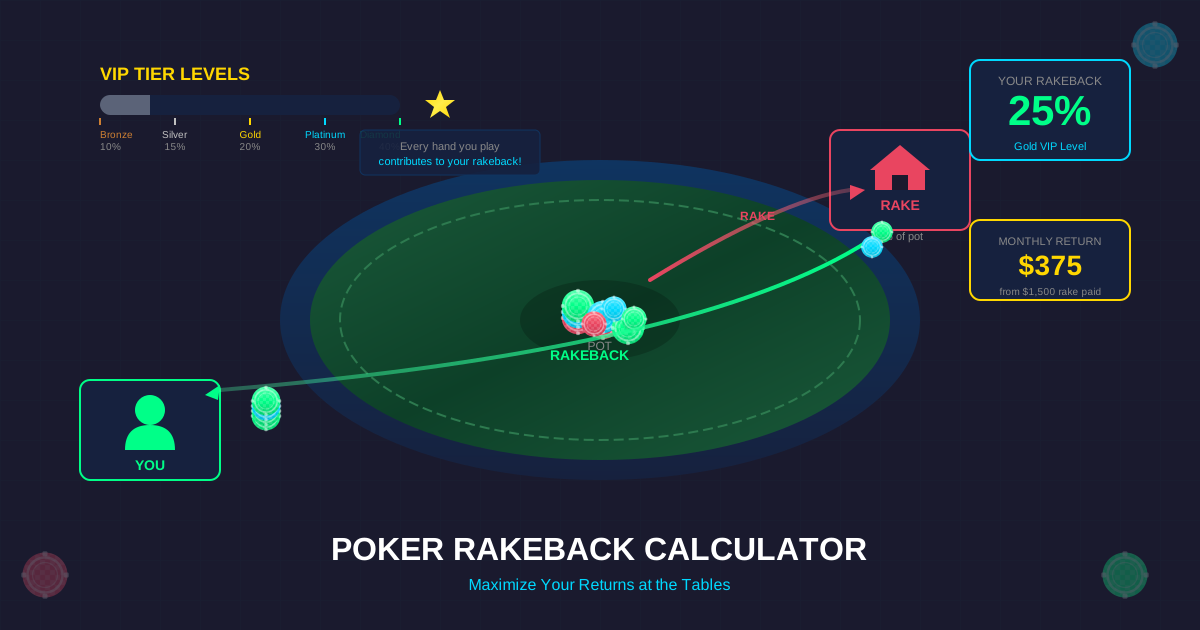
How do online casino loyalty programs compare to physical casinos? Online casinos typically offer lower comp rates (5-15% of theoretical loss as cash back) because their operating costs are much lower and they attract more price-sensitive players. However, online promotions, deposit bonuses, and rakeback programs can provide substantial value when used strategically.
Related Tools for Casino Comp Optimization
- Blackjack House Edge Calculator: Calculate the exact house edge based on your casino's specific blackjack rules.
- Expected Value Calculator: Determine your expected loss per hour for any game and bet size combination.
- Craps Expected Loss Calculator: Calculate your theoretical loss on any craps bet combination.
- Video Poker EV Calculator: Find the exact return percentage for any video poker variant and pay table.
- Blackjack EV Calculator: Model your expected value per hand at various blackjack tables.
- Roulette EV Calculator: Calculate expected loss for different roulette variants and bet types.
- Bankroll Volatility Tracker: Monitor your actual results versus theoretical expectations.
- Blackjack Session Bankroll Calculator: Plan your session bankroll to survive variance while earning comps.
- Craps Bankroll Calculator: Size your craps bankroll for optimal comp-earning sessions.
- Video Poker Bankroll Calculator: Determine the bankroll needed for video poker sessions.
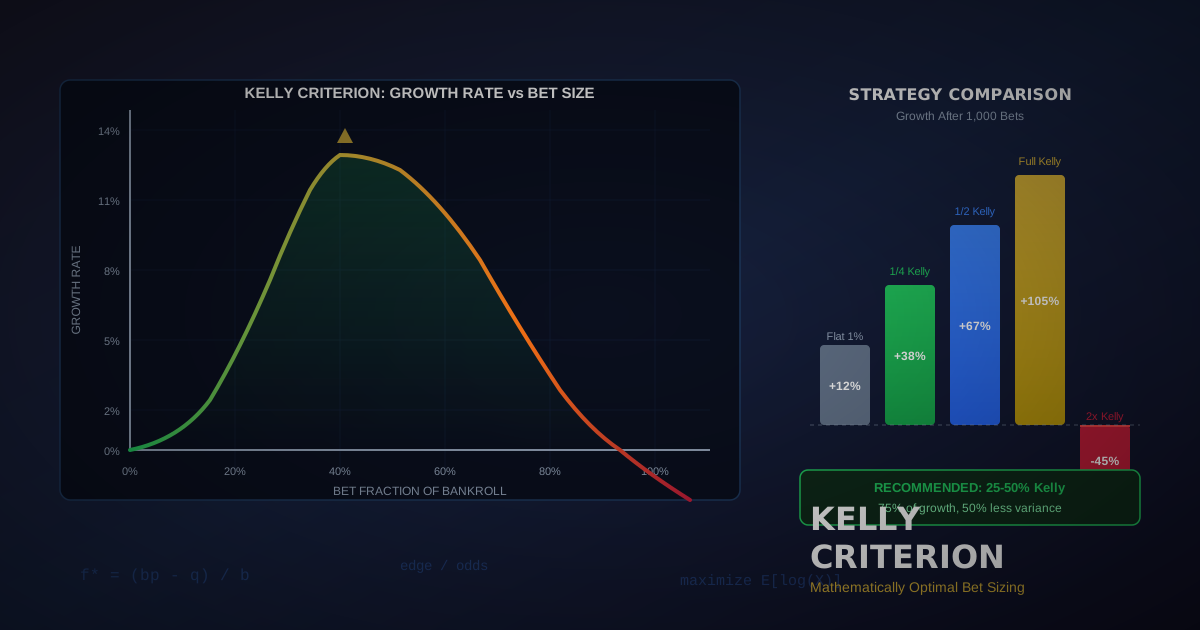
- Kelly Criterion Calculator: Size your bets optimally when you have an edge at advantage games.
Conclusion: Get Value, Do Not Get Played
Casino comps are a legitimate benefit of gambling, but only when you understand the math behind them. The casino always earns more from your play than it gives back in comps. Your job is to minimize the gap between what you lose and what you receive.
The winning comp strategy comes down to three principles: play low-edge games to minimize your theoretical loss, never increase your play to earn comps, and consolidate your action at one property to maximize your tier status and host relationship.
Start by calculating the house edge on your preferred games with our Blackjack House Edge Calculator and Video Poker EV Calculator. Track your sessions and comp earnings with our Poker Session Tracker. And always know your expected loss before you sit down, using our Expected Value Calculator. The casinos know your numbers. You should know them too.
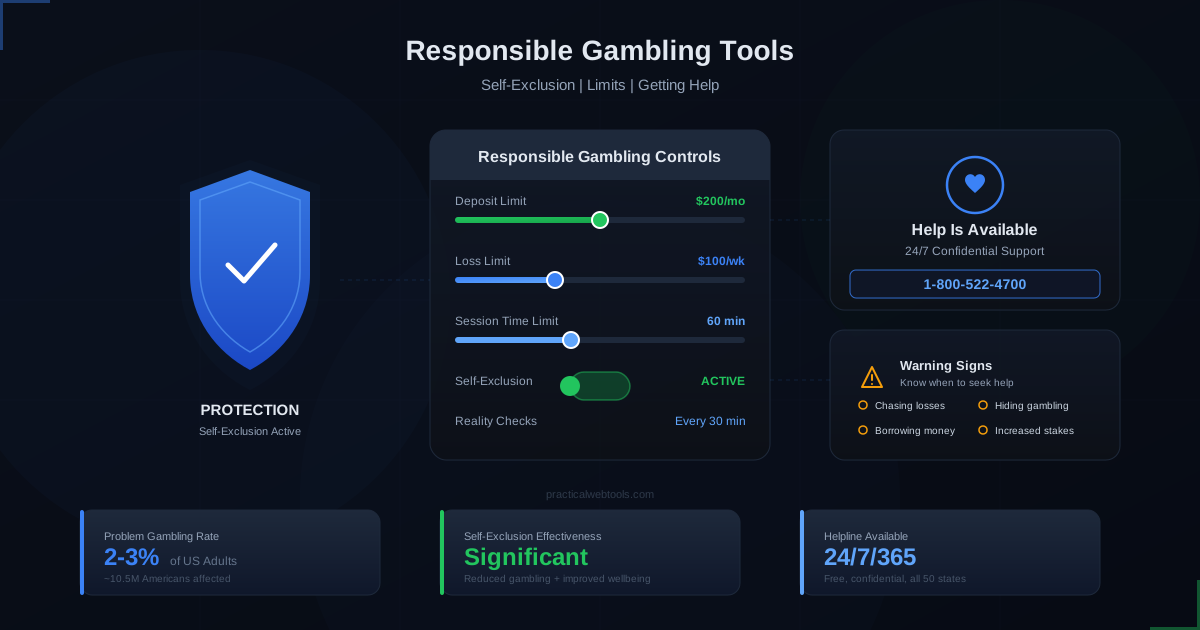
Gambling involves risk. This content is for educational and informational purposes only. Always gamble responsibly, set limits you can afford, and seek help if gambling becomes a problem. Visit the National Council on Problem Gambling or call 1-800-522-4700 for support.