Variance in Gambling: Why You Can Lose Doing Everything Right (2026)
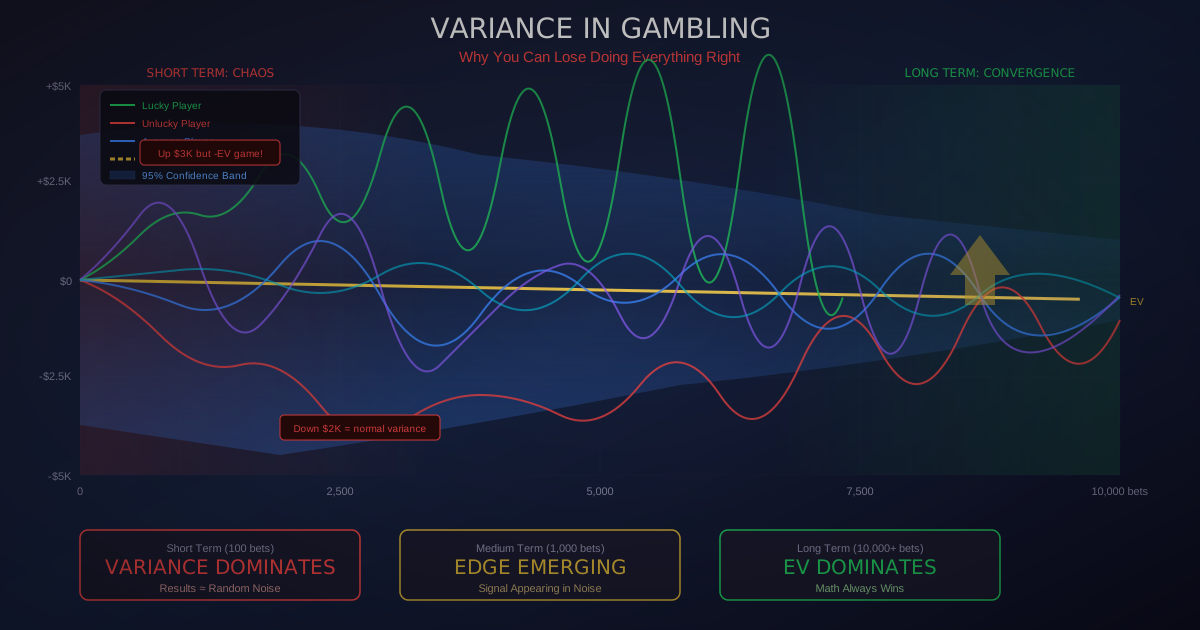
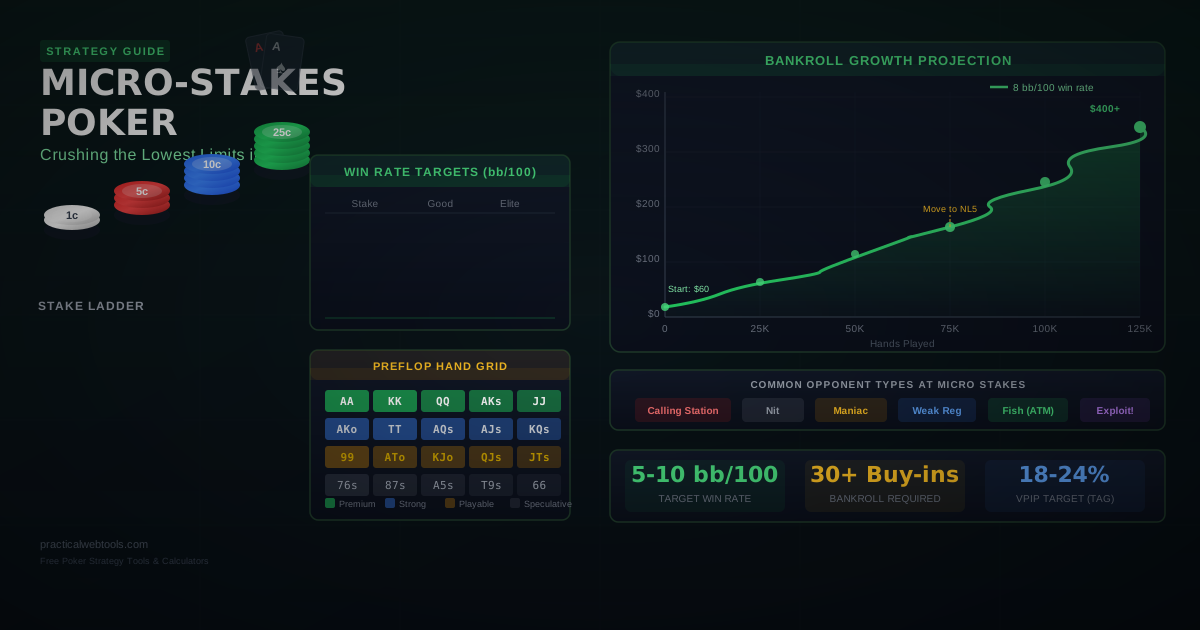
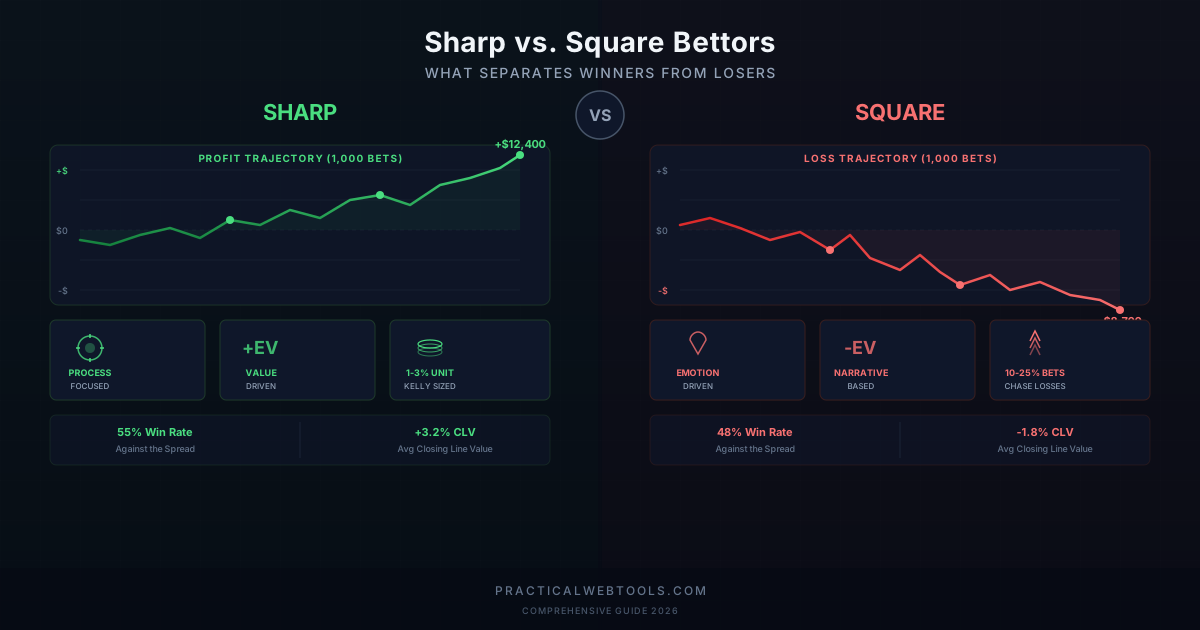
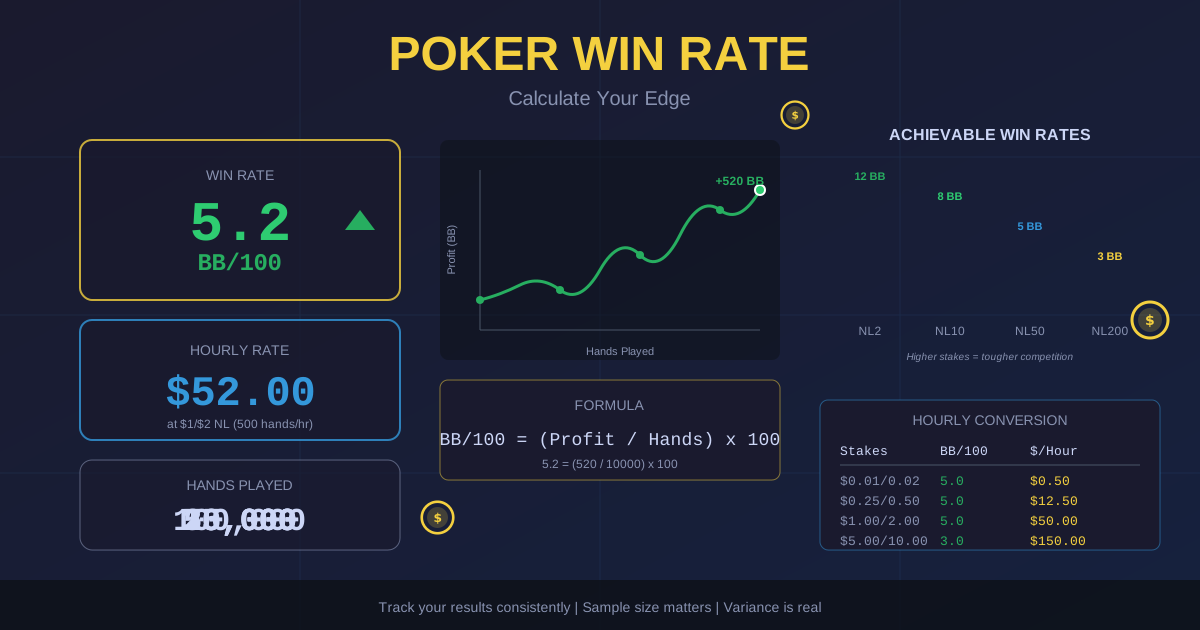
A professional poker player with a proven 5bb/100 win rate will experience a 30+ buy-in downswing during their career with near mathematical certainty. A sports bettor with a legitimate 55% win rate will have months where they lose money. A perfect blackjack basic strategy player will have sessions where they lose 10 buy-ins despite making every correct decision. These outcomes are not flukes, bad luck, or signs of declining skill. They are variance, and variance is the single most misunderstood concept in all of gambling.
Variance is the reason a terrible poker player can win a tournament. It is the reason a smart sports bettor can lose for three straight months. It is the reason a slot machine can pay out a jackpot one hour and eat $500 the next. Variance is the gap between what should happen mathematically and what actually happens in the real world, and that gap can be staggeringly large over short time periods.
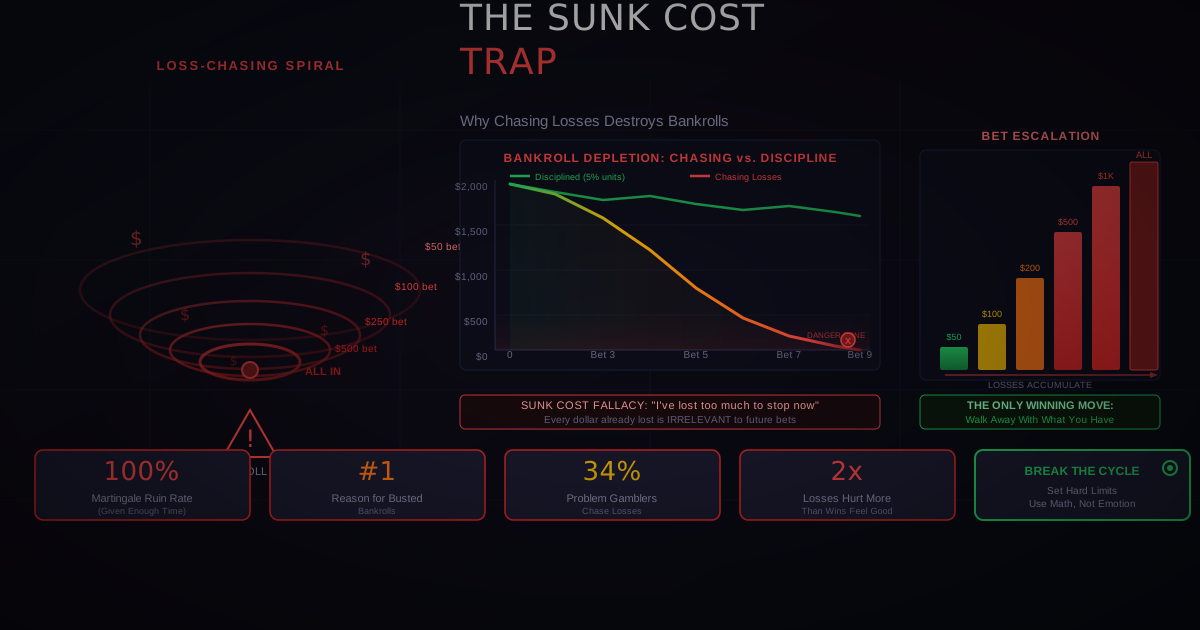
If you are a recreational gambler, understanding variance helps you set realistic expectations and avoid chasing losses. If you are an advantage player, understanding variance is literally the difference between going broke and surviving long enough for your edge to manifest. Either way, variance literacy is not optional. It is essential.
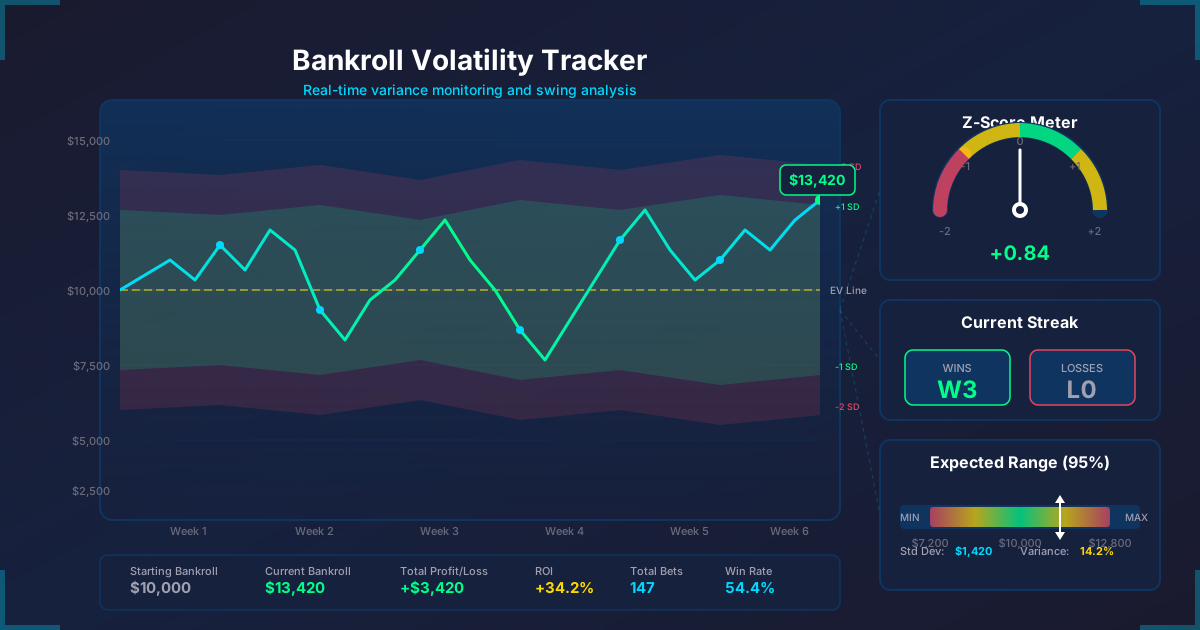
Simulate your expected variance in poker with our free Poker Variance Calculator or track your bankroll volatility with our Bankroll Volatility Tracker.
What Is Variance?
Variance, in gambling terms, measures how much your actual results deviate from your expected results. It quantifies the "spread" or "volatility" of outcomes around the expected value (EV).
Variance vs. Expected Value
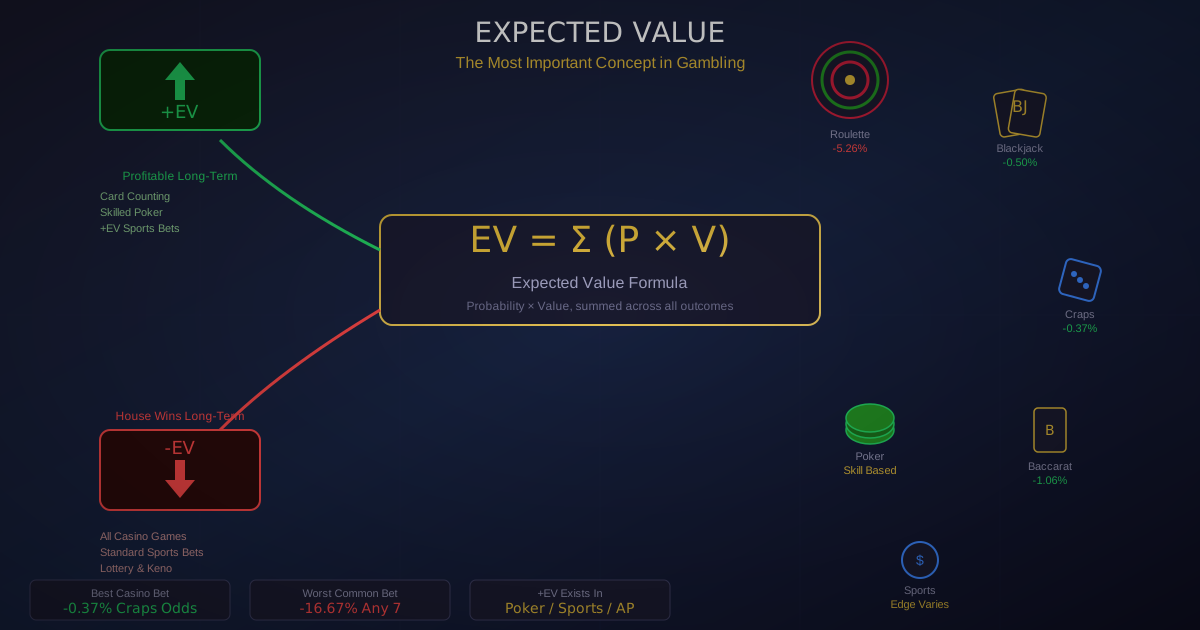
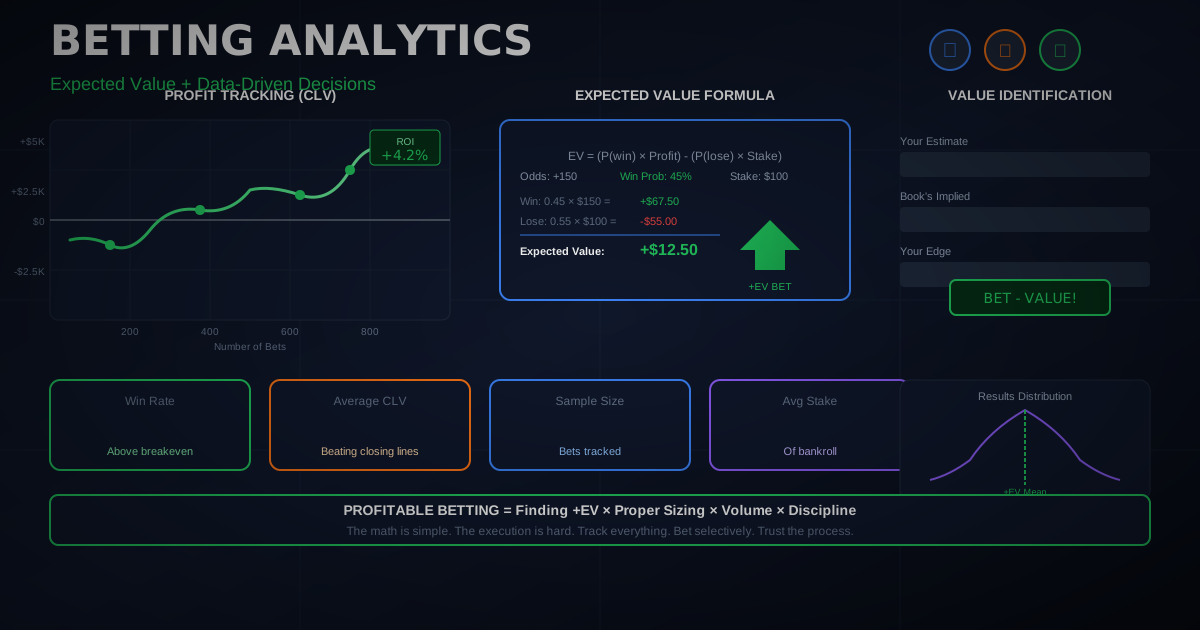
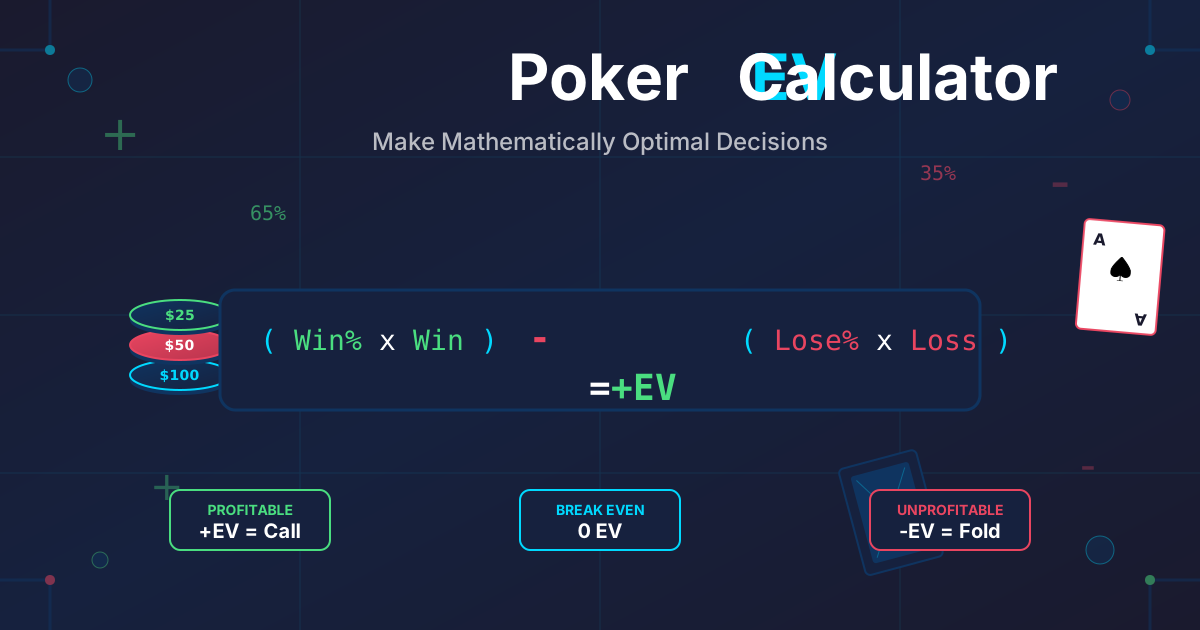
Expected Value (EV) tells you the average outcome over infinite trials. Variance tells you how much individual outcomes scatter around that average.
Analogy: Imagine shooting at a target.
- EV is where your shots land on average (the center of your shot group)
- Variance is how spread out your shots are around that center
- Low variance = tight shot group near the center
- High variance = shots scattered all over the target
In gambling:
- EV tells you your long-run profit or loss rate
- Variance tells you how wild the ride will be getting there
Standard Deviation: The Practical Measure
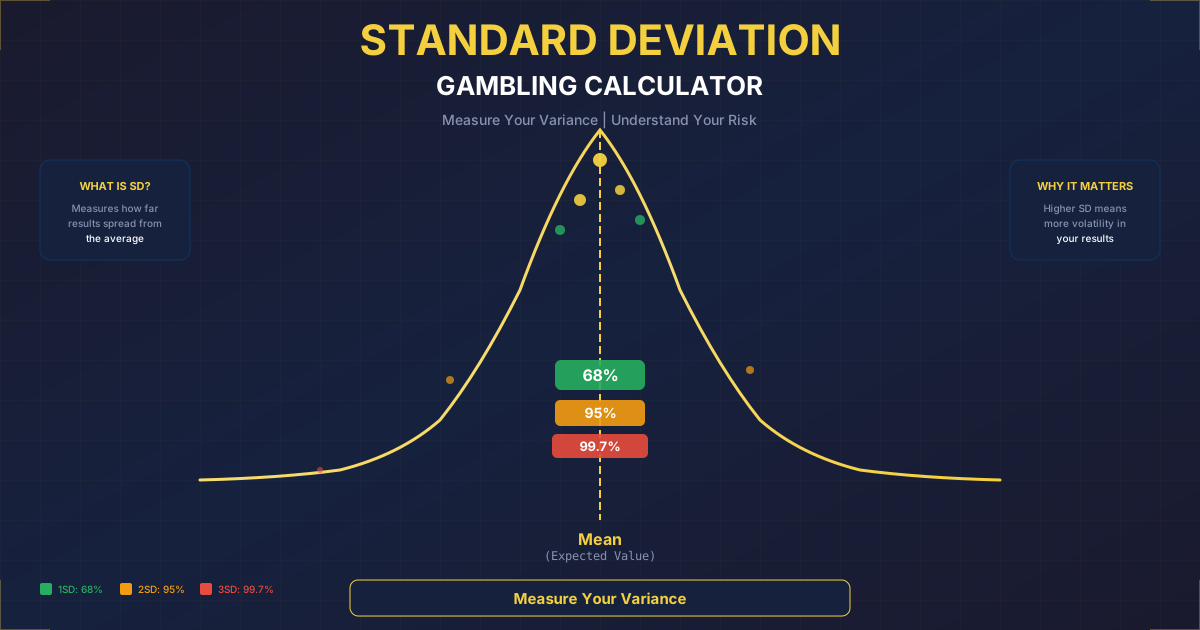
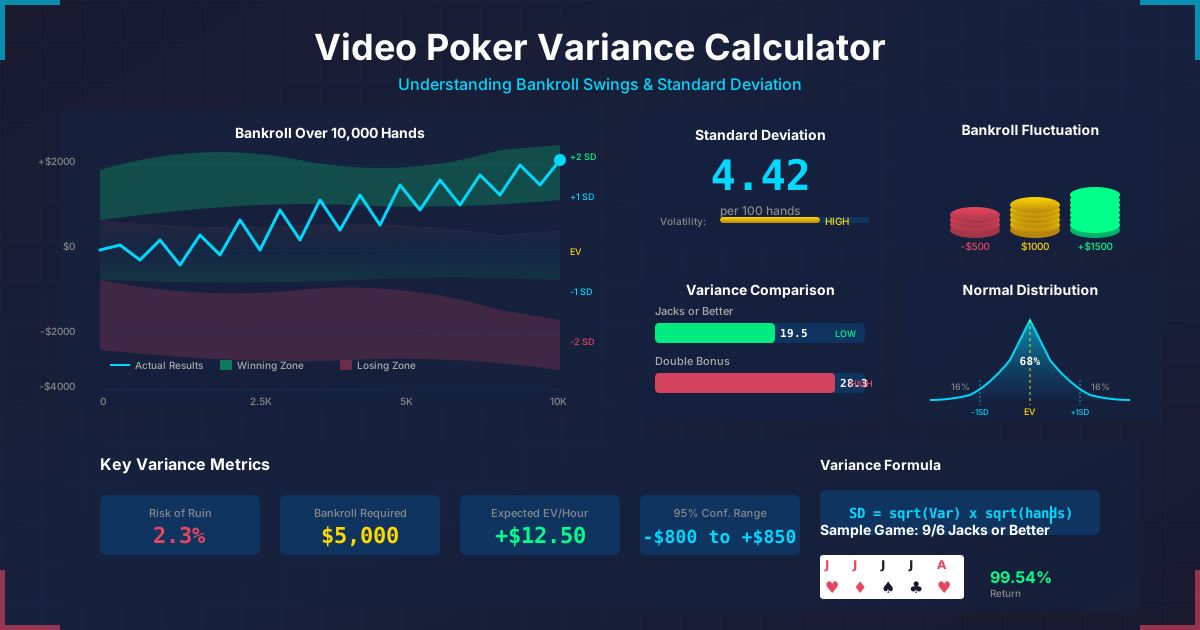
While variance is the technical term, standard deviation (SD) is the practical unit most commonly used. Standard deviation is simply the square root of variance and is expressed in the same units as your results.
Standard deviation tells you the typical range of your results:
- ~68% of results fall within 1 SD of the mean (EV)
- ~95% of results fall within 2 SDs of the mean
- ~99.7% of results fall within 3 SDs of the mean
Example: Roulette Even-Money Bet
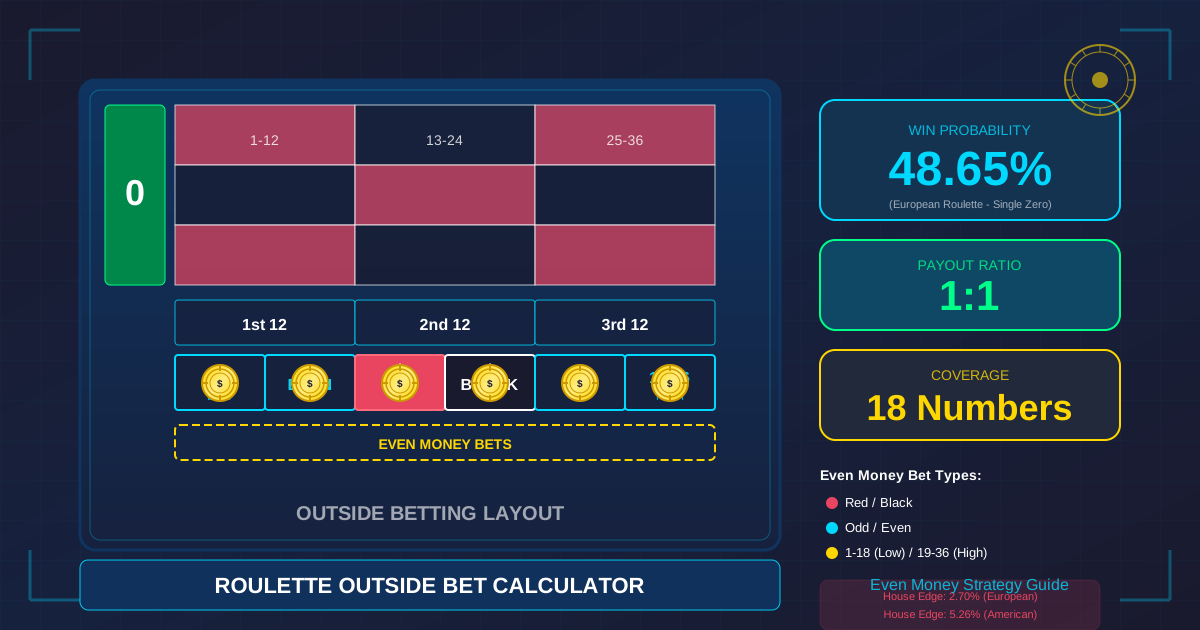
For a $25 bet on red, the standard deviation of a single spin is:
SD = $25 x sqrt(n) x sqrt(p x (1-p) x (payout_ratio^2 + 1))
For a single even-money roulette bet (simplified): SD per spin approximately equals the bet size.
After 100 spins of $25 each:
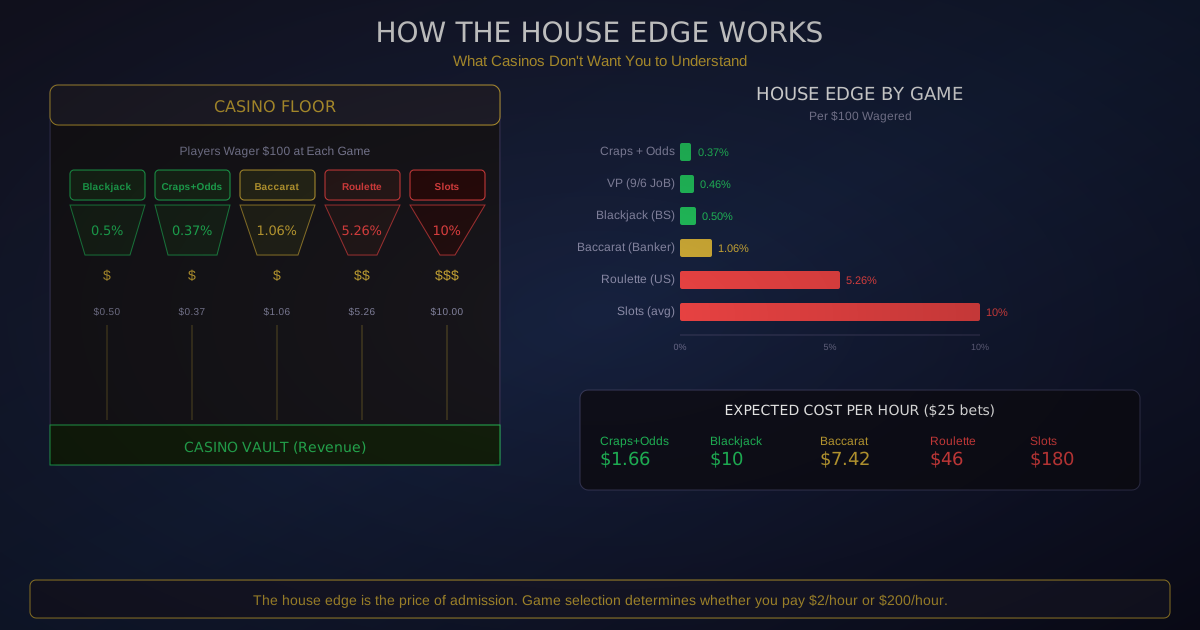
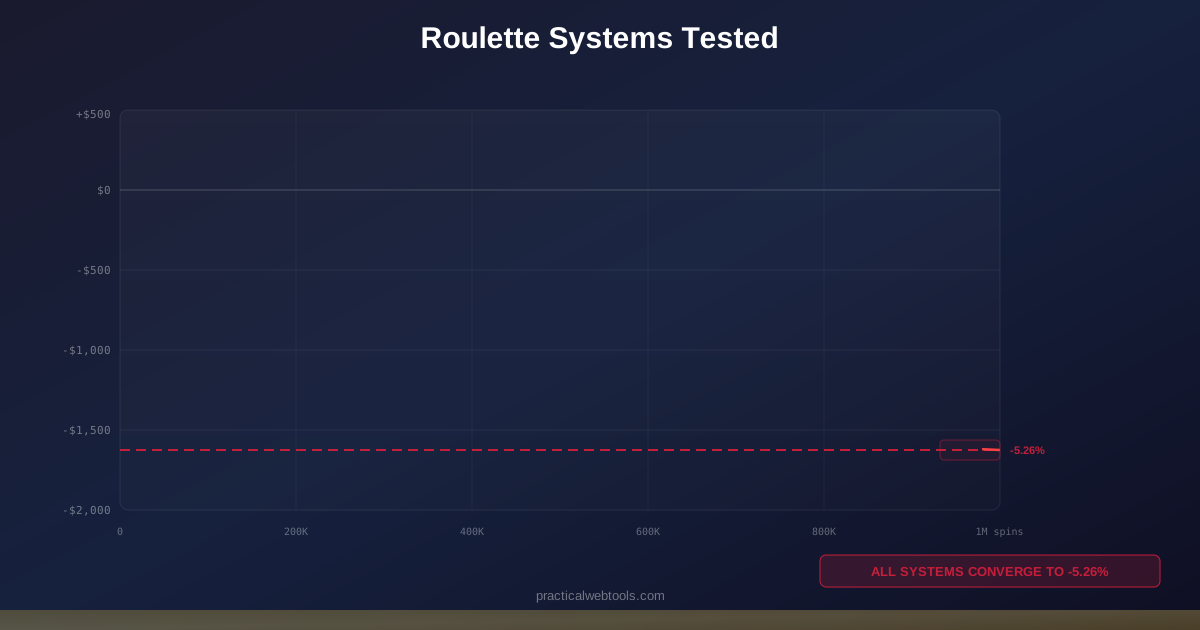
- EV = -$5.26 x (100/38) approximately = -$131.50 (total expected loss on $2,500 wagered)
- SD approximately = $25 x sqrt(100) = $250
This means after 100 spins:
- 68% chance your result is between -$381.50 and +$118.50
- 95% chance your result is between -$631.50 and +$368.50
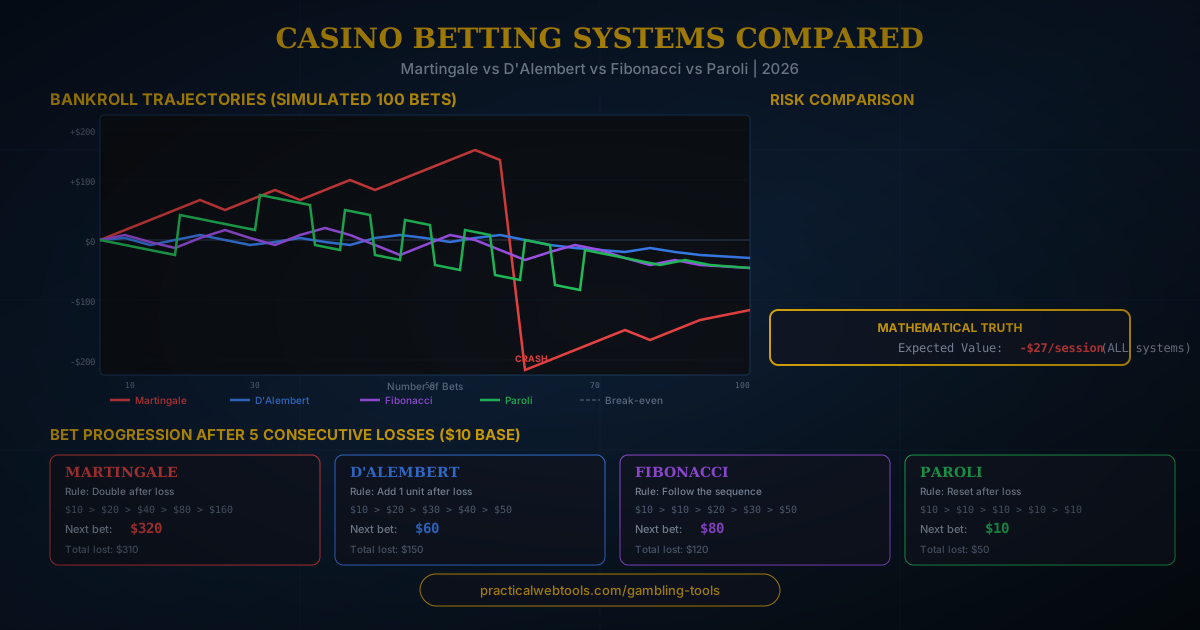
Notice that even with a negative expected value, there is a significant probability of being ahead after 100 spins. That is variance masking the house edge.
Calculate your expected variance with our Bankroll Volatility Tracker.
Variance by Game Type
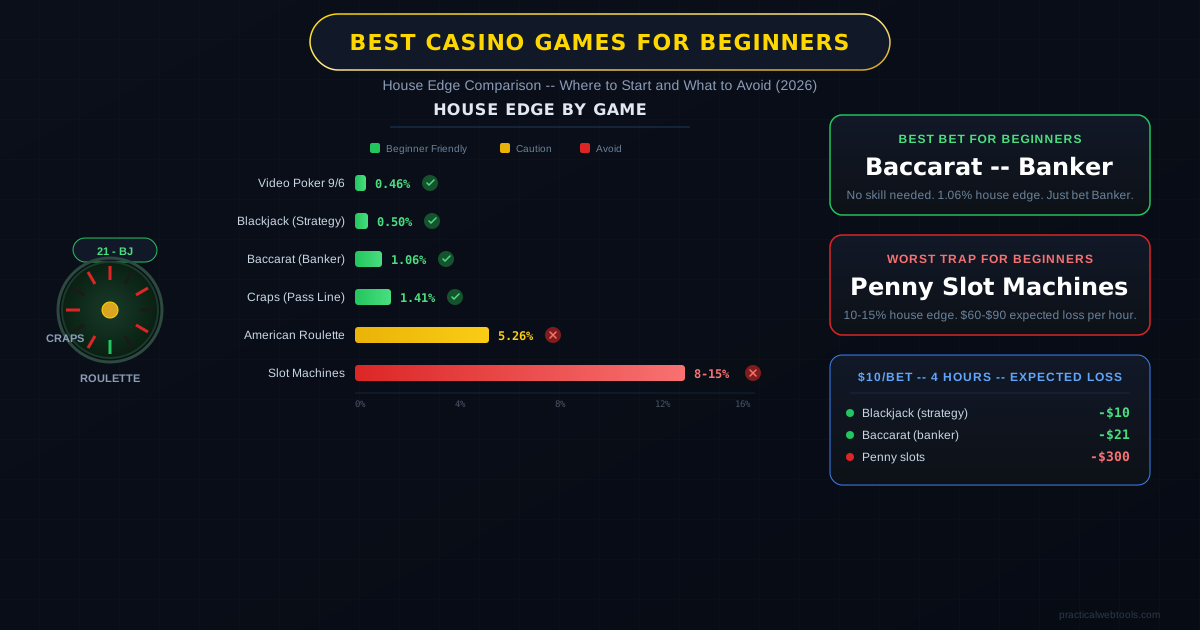
Different games have dramatically different variance levels, which affects both the experience and the bankroll requirements.
Low Variance Games
| Game | Variance Level | What It Feels Like |
|---|---|---|
| Blackjack (basic strategy) | Low-Medium | Steady grinding, small wins/losses |
| Baccarat (Banker) | Low-Medium | Predictable, modest swings |
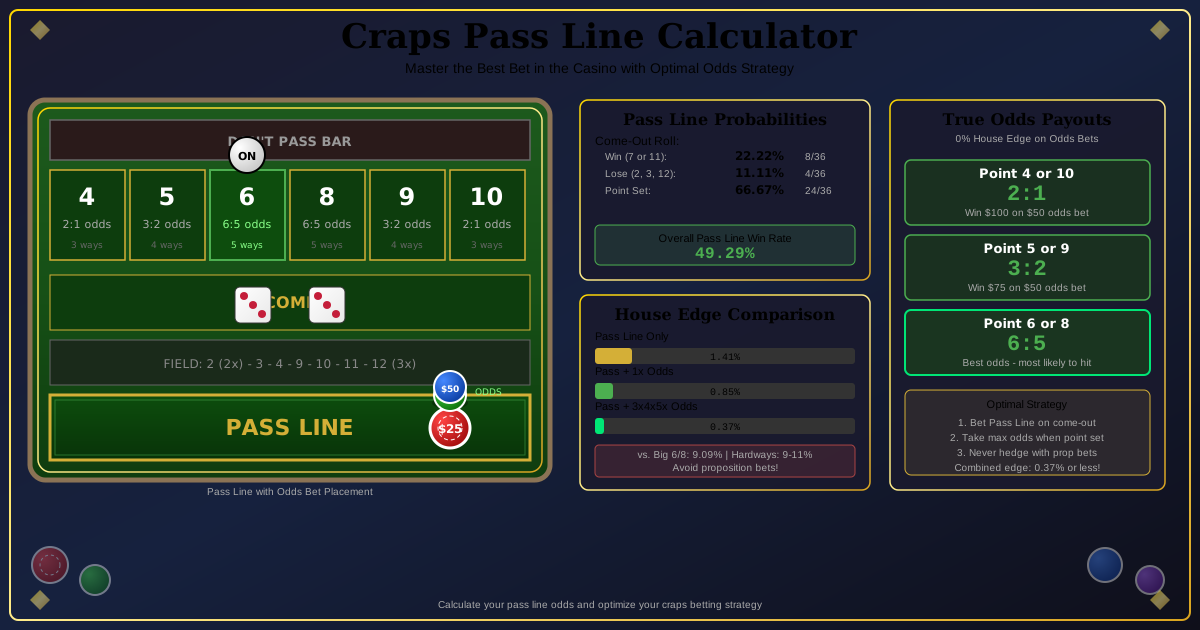
| Craps (Pass + Odds) | Low-Medium | Moderate swings |
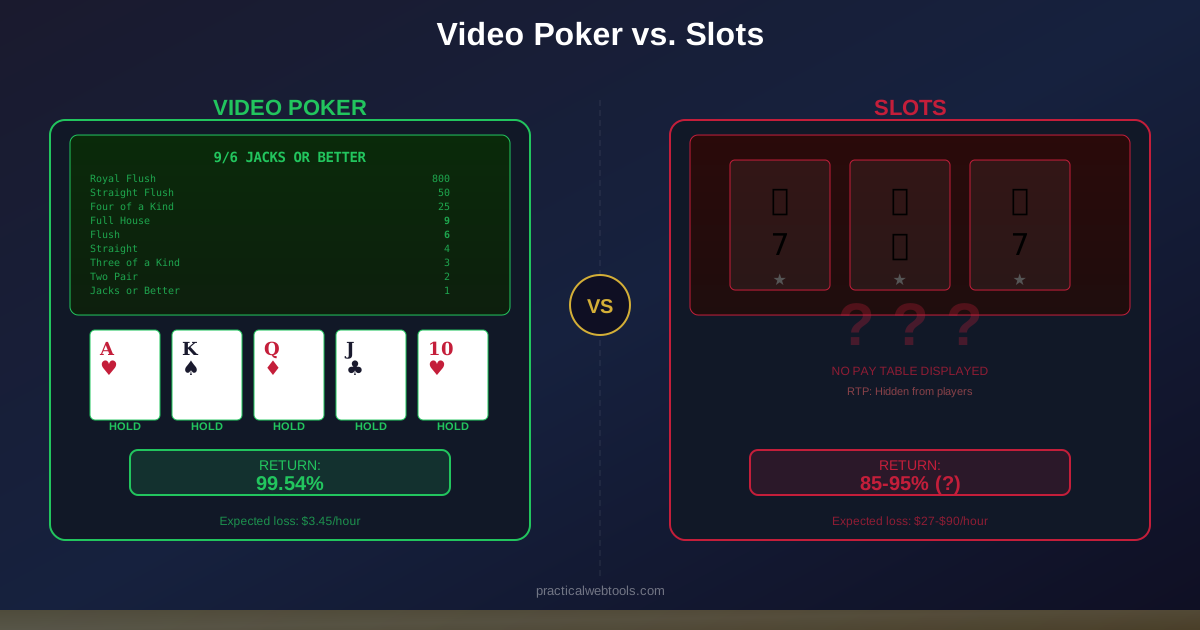
| Video Poker (JoB) | Low (excluding royals) | Slow decline with occasional bumps |
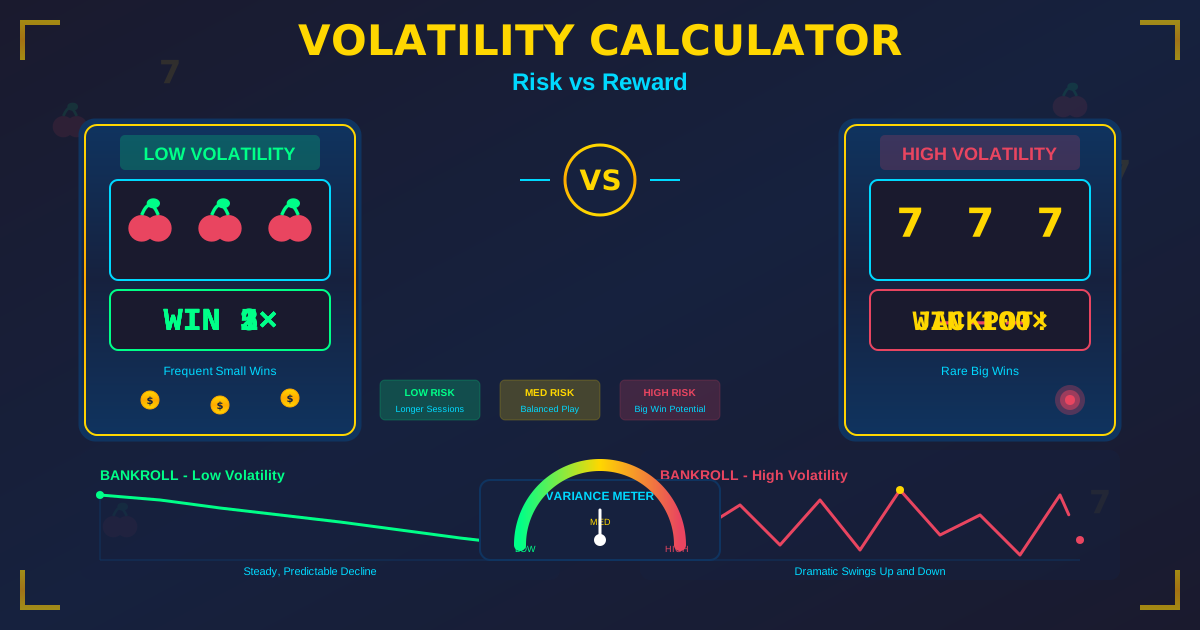
Low variance games produce relatively predictable results. Your bankroll moves slowly in one direction, with moderate fluctuations. You rarely win or lose a massive amount in a single session relative to your total action.
Medium Variance Games
| Game | Variance Level | What It Feels Like |
|---|---|---|
| Roulette (even-money bets) | Medium | Noticeable swings, streaky |
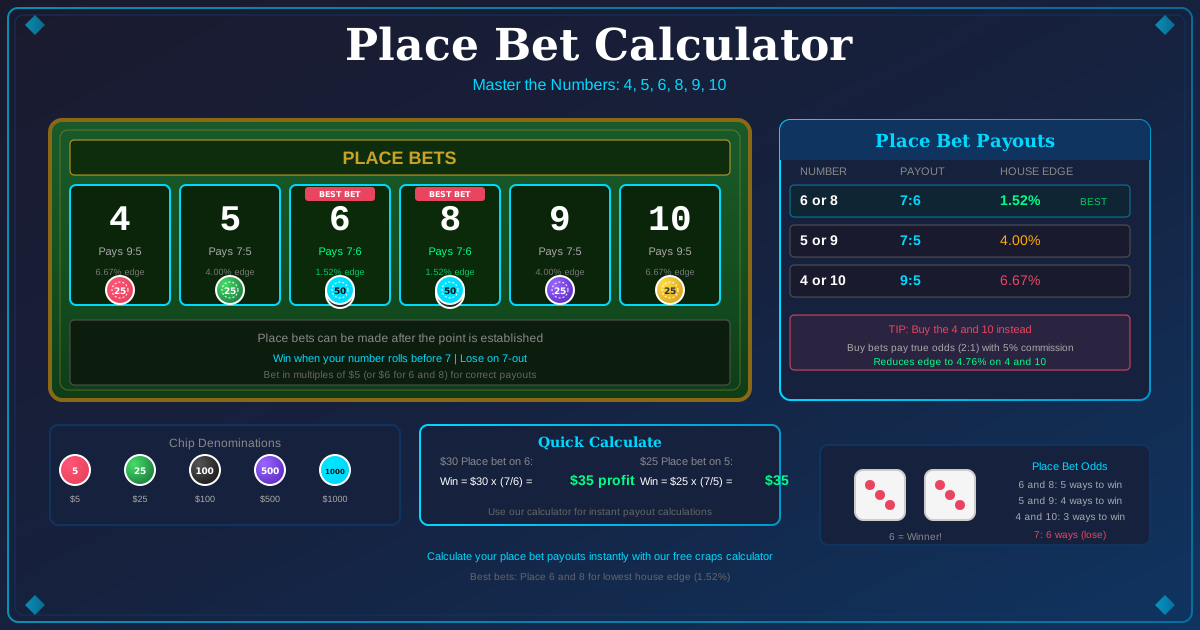
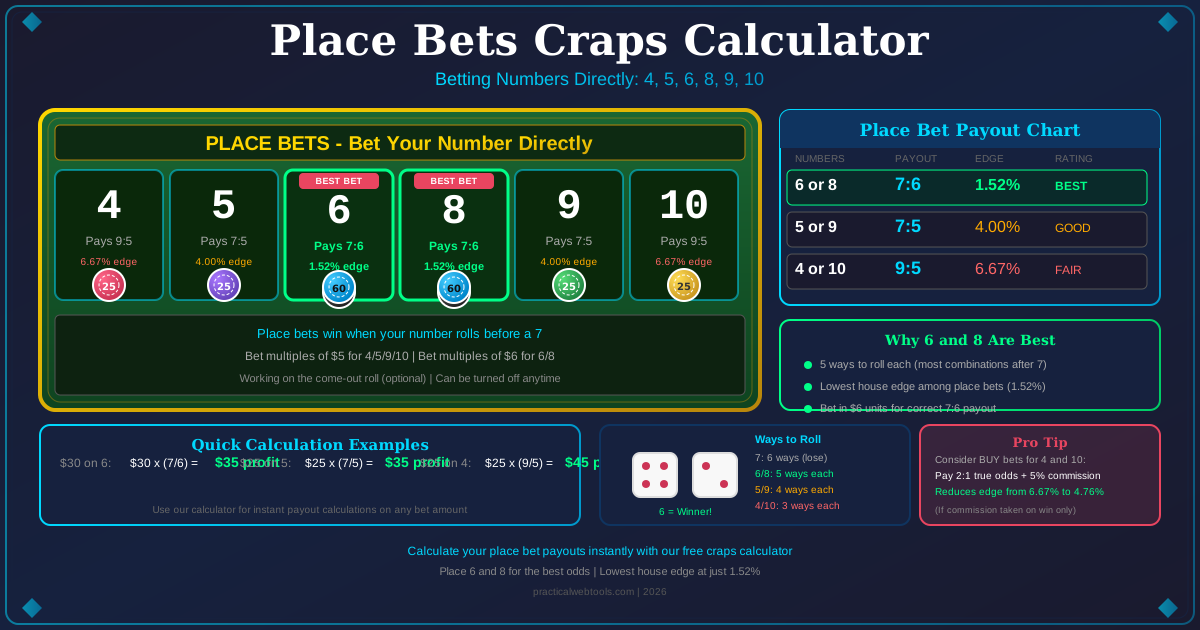
| Craps (Place bets) | Medium | Bigger individual swings |
| Cash game poker (TAG style) | Medium-High | Significant session variation |
Medium variance games produce enough swings that individual sessions feel volatile, but multi-session results are reasonably informative.
High Variance Games
| Game | Variance Level | What It Feels Like |
|---|---|---|
| Roulette (straight-up bets) | High | Mostly losing with rare big wins |
| Slots | Very High | Long losing stretches, sudden payouts |
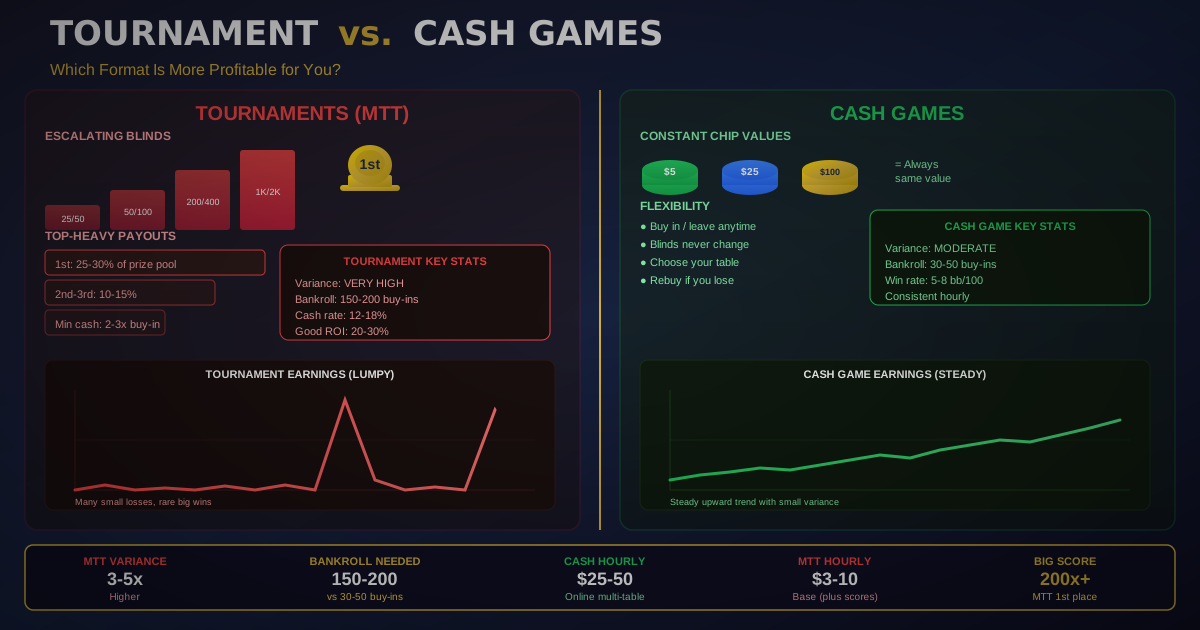
| Tournament poker | Very High | Lots of losses, rare big scores |
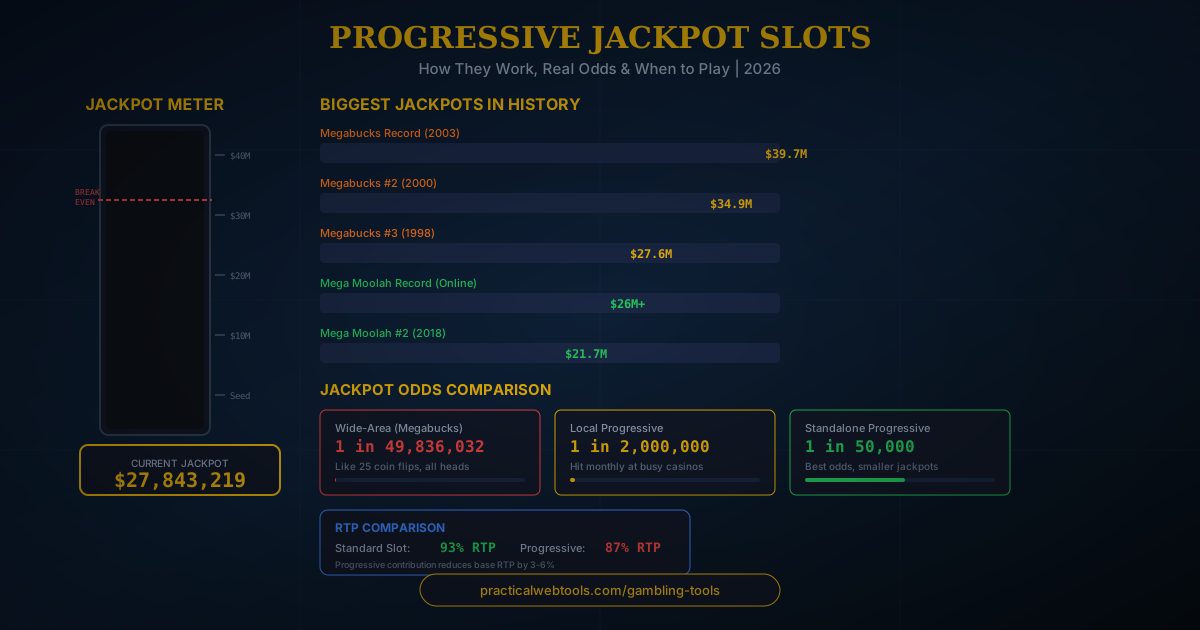
| Progressive jackpots | Extreme | Almost always losing, life-changing wins |
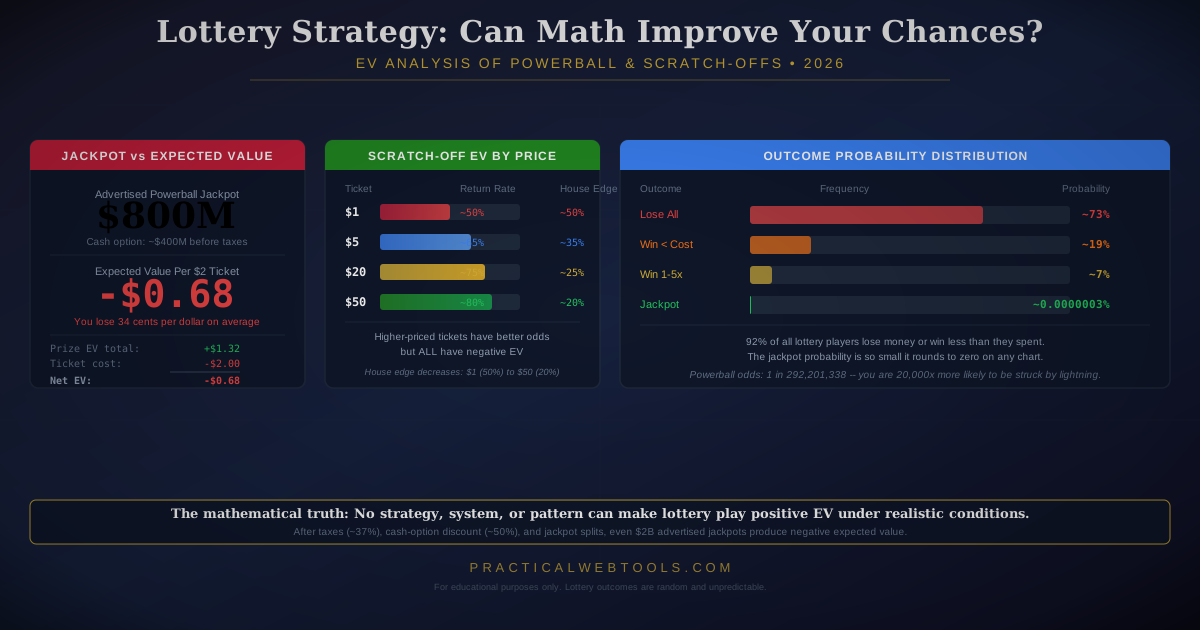
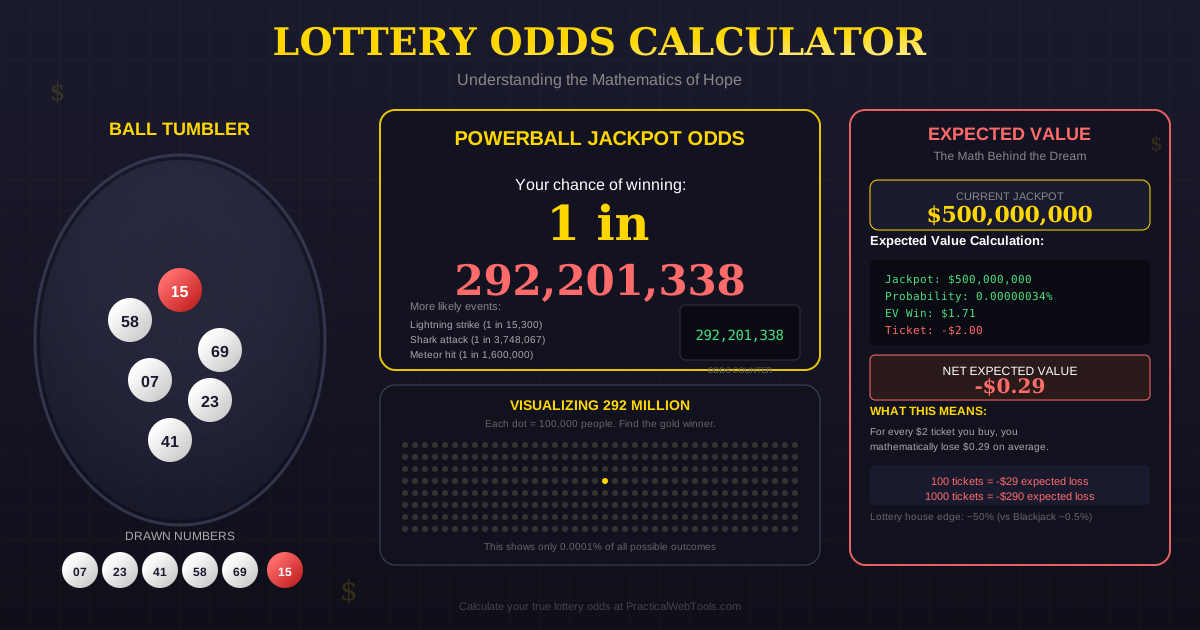
| Lottery | Extreme | Virtually always losing |
High variance games produce long losing stretches punctuated by occasional large wins. The emotional experience alternates between discouragement and euphoria.
Compare variance across poker formats with our Poker Variance Calculator.
Standard Deviation in Poker: Where Variance Matters Most
Poker is where variance understanding matters most because it is a skill game where players invest significant time and emotional energy. In poker, standard deviation is measured in big blinds per 100 hands (bb/100).
Typical Standard Deviations
| Game Type | Typical SD (bb/100) | Variance Feel |
|---|---|---|
| Full Ring NL Hold'em (tight) | 65-80 | Moderate swings |
| 6-Max NL Hold'em (TAG) | 80-100 | Significant swings |
| 6-Max NL Hold'em (LAG) | 95-120 | Wild swings |
| Heads-Up NL Hold'em | 110-150 | Extreme swings |
| Pot-Limit Omaha | 120-160 | Very extreme swings |
| Multi-Table Tournaments | 200-500+ | Brutal swings |
What This Means in Practice
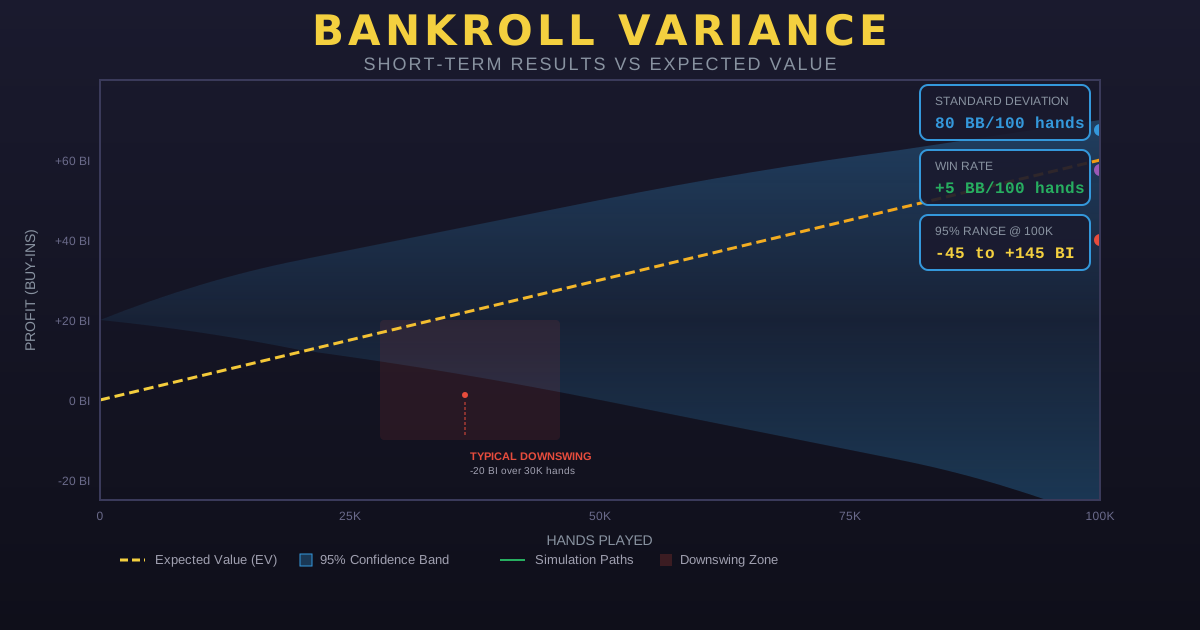
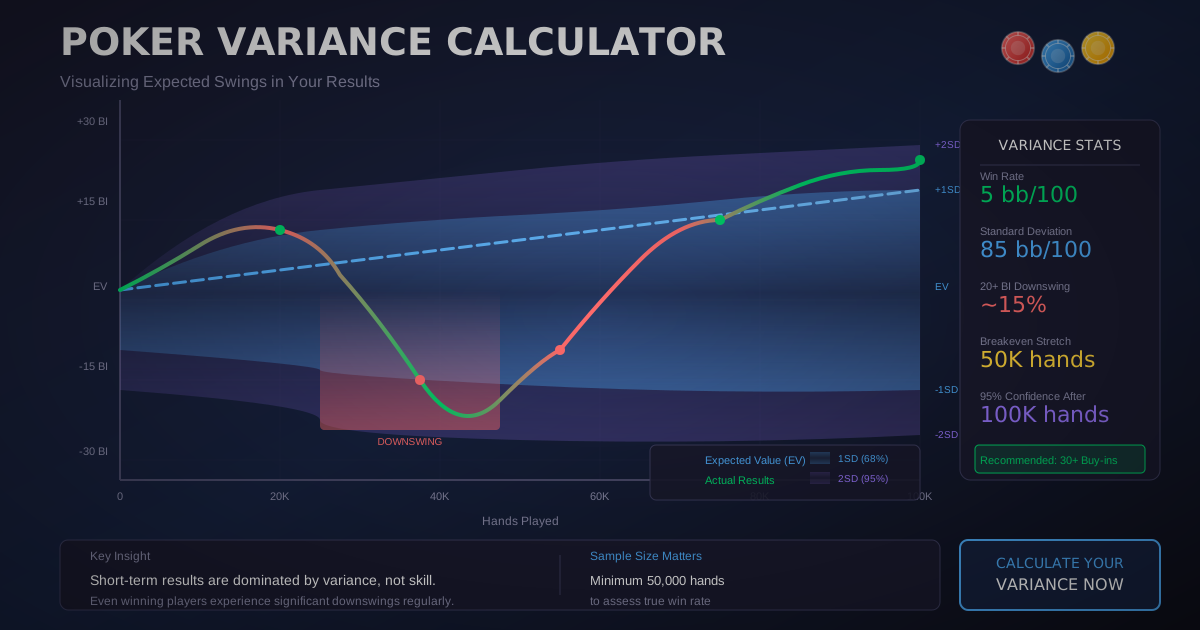
A 6-max player with a 5 bb/100 win rate and 90 bb/100 standard deviation:
After 10,000 hands:
- Expected profit: +500 bb (5 buy-ins)
- Standard deviation: 90 x sqrt(100) = 900 bb
- 95% confidence interval: -1,300 bb to +2,300 bb
- Probability of being at a loss: ~29%
After 100,000 hands:
- Expected profit: +5,000 bb (50 buy-ins)
- Standard deviation: 90 x sqrt(1000) = 2,846 bb
- 95% confidence interval: -692 bb to +10,692 bb
- Probability of being at a loss: ~4%
After 500,000 hands:
- Expected profit: +25,000 bb (250 buy-ins)
- Standard deviation: 90 x sqrt(5000) = 6,364 bb
- 95% confidence interval: +12,272 bb to +37,728 bb
- Probability of being at a loss: <0.01%
A winning player with a solid 5 bb/100 edge still has a 29% chance of being in the red after 10,000 hands. That is roughly one to two months of serious play. Imagine grinding every day for two months, playing well, and being down money. This is not unusual; it is expected for nearly one-third of winning players.
Simulate your specific variance scenario with our Poker Variance Calculator and calculate downswing probabilities with our Poker Downswing Probability Calculator.
The Downswing Reality
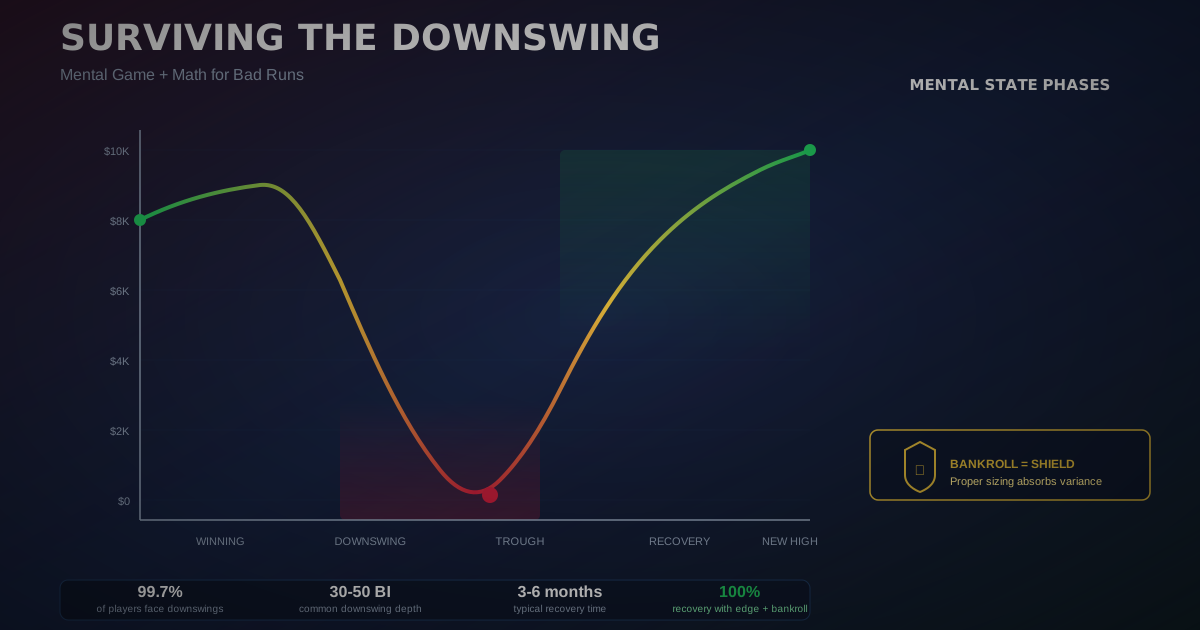
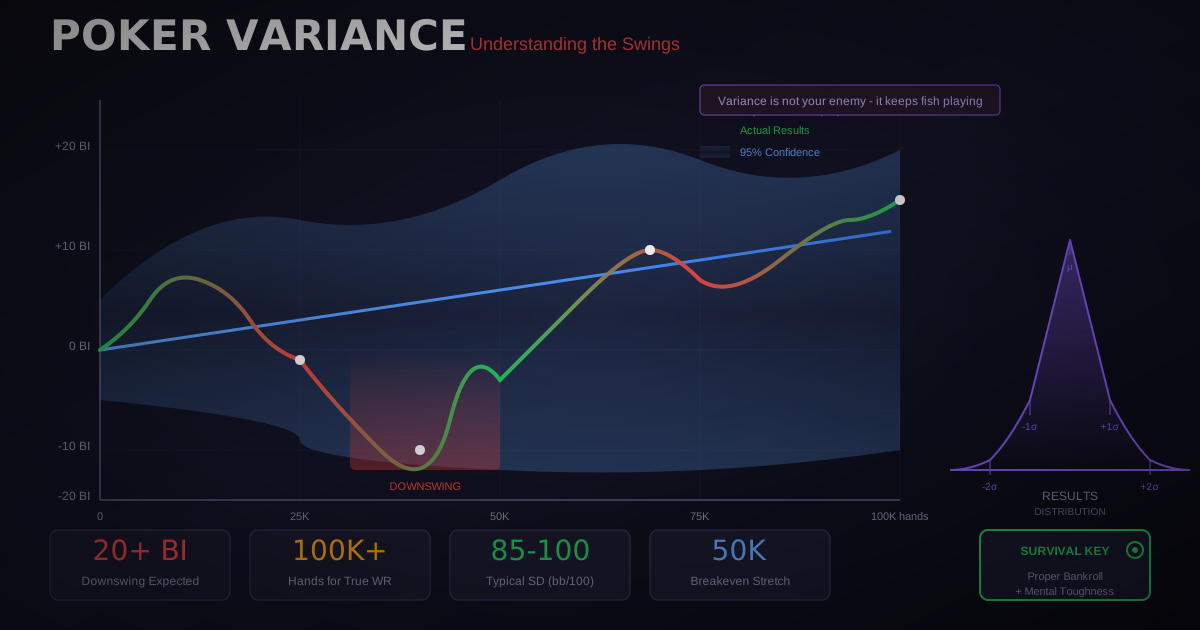
Downswings in poker are not anomalies. They are mathematical inevitabilities. Here is what different win rates should expect:
| Win Rate (bb/100) | SD (bb/100) | 50% chance of X BI downswing | 5% chance of X BI downswing |
|---|---|---|---|
| 1 | 85 | 15+ buy-ins | 35+ buy-ins |
| 3 | 85 | 12+ buy-ins | 28+ buy-ins |
| 5 | 85 | 10+ buy-ins | 22+ buy-ins |
| 8 | 85 | 7+ buy-ins | 17+ buy-ins |
| 10 | 85 | 6+ buy-ins | 14+ buy-ins |
Even an excellent player with a 10 bb/100 win rate has a 50% chance of experiencing a 6+ buy-in downswing and a 5% chance of experiencing a 14+ buy-in downswing. For an average winning player at 3 bb/100, the 50% downswing expectation is 12+ buy-ins.
Calculate your risk of going broke with our Poker Risk of Ruin Calculator and determine proper bankroll with our Poker Bankroll Requirements Calculator.
Variance in Blackjack
Blackjack variance is lower than poker but still significant enough to create misleading short-term results.
Standard Deviation in Blackjack
For a basic strategy player making flat bets:
- SD per hand: approximately 1.15 x bet size
- SD per 100 hands: approximately 11.5 x bet size
- SD per 1,000 hands: approximately 36.4 x bet size
Example: $25 Blackjack Player, Basic Strategy
After 1,000 hands (about 12-13 hours of play):
- Expected loss: 1,000 x $25 x 0.005 = -$125
- Standard deviation: 36.4 x $25 = $910
- 95% range: -$1,945 to +$1,695
After 1,000 hands, a basic strategy player could be anywhere from $1,945 in the hole to $1,695 ahead, despite an expected loss of only $125. The variance dwarfs the expected value, making it impossible to draw meaningful conclusions from a single weekend of play.
Model your blackjack variance with our Blackjack Variance Calculator.
Why Blackjack Feels Misleading
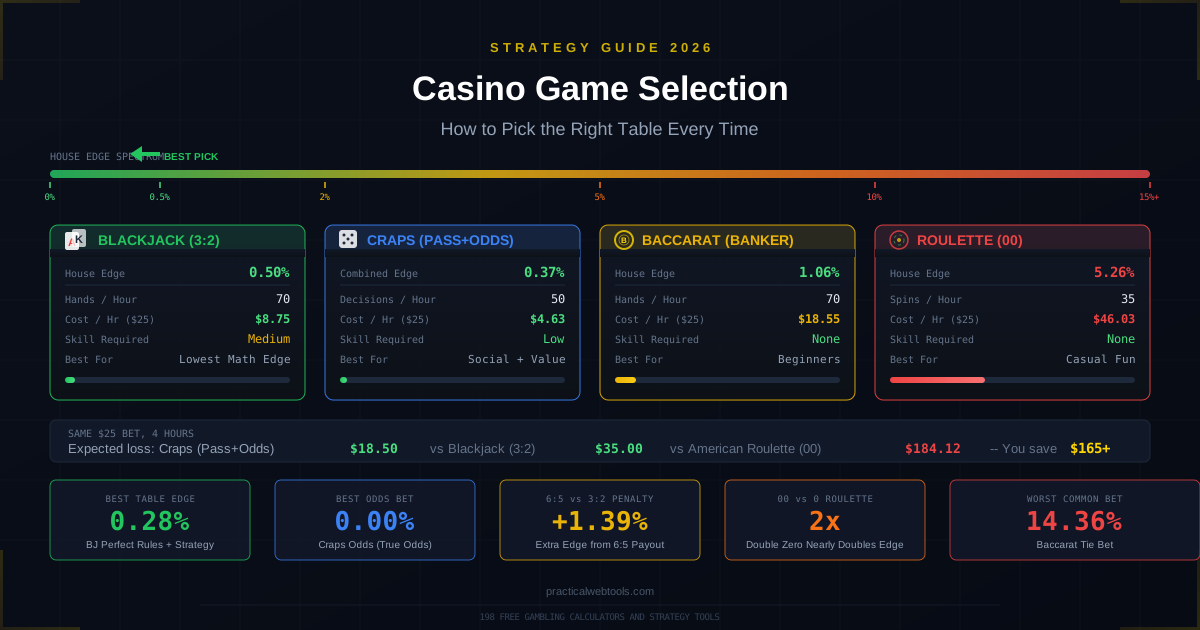
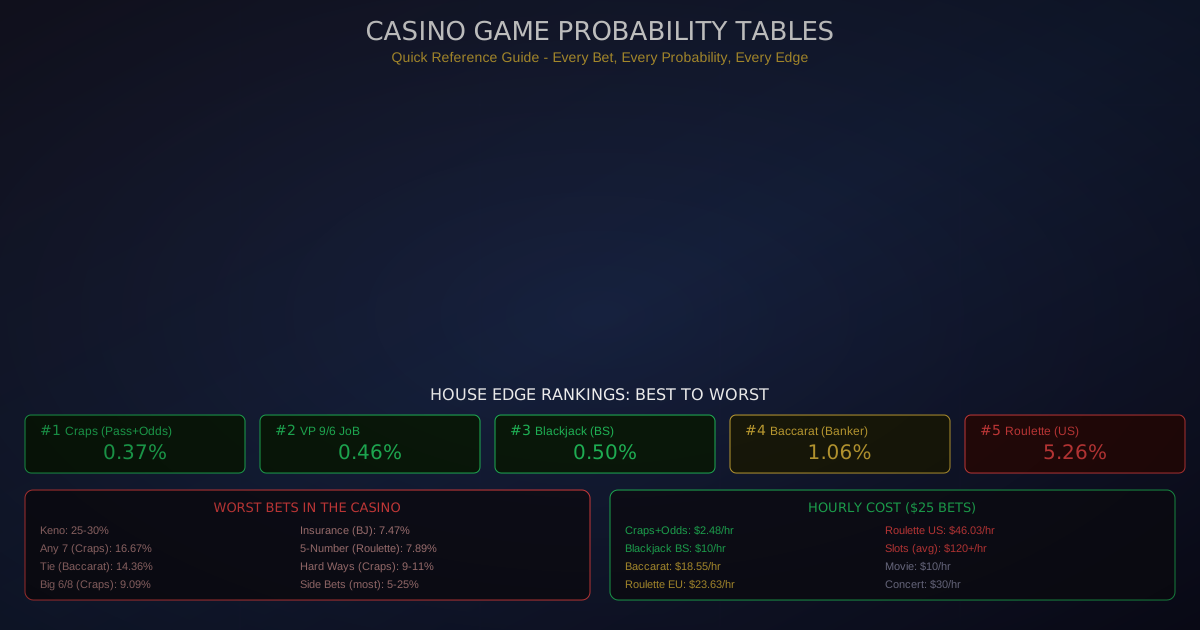
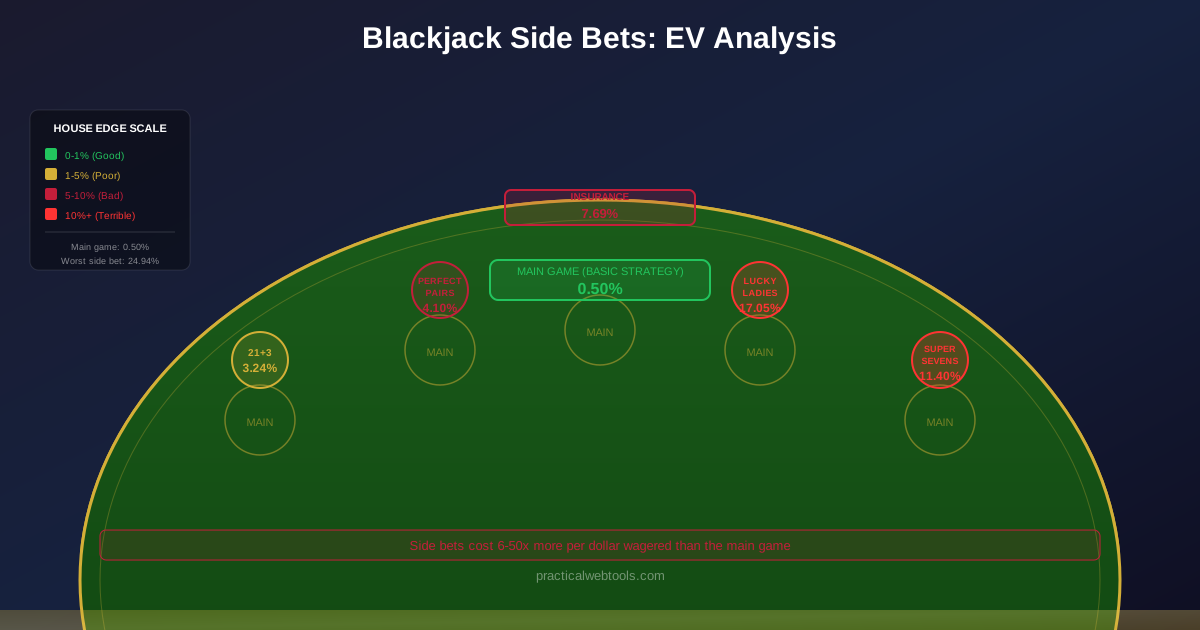
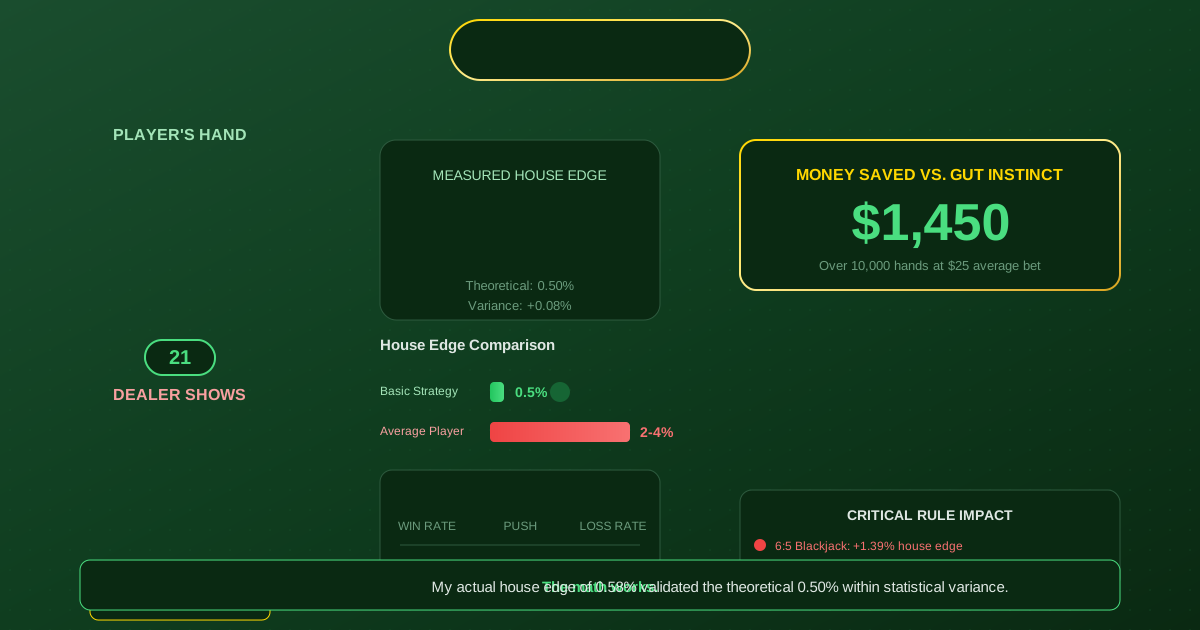
The relatively low house edge in blackjack (0.5% with basic strategy) combined with moderate variance creates a dangerous illusion:
- Players win approximately 48% of individual hands
- Short sessions frequently end in profit
- Players credit wins to skill or "good play"
- Players blame losses on bad luck
- Over thousands of hands, the 0.5% edge quietly erodes bankrolls
Many recreational blackjack players believe they are long-term winners because their limited sample sizes are dominated by variance, not expected value.
Variance in Sports Betting
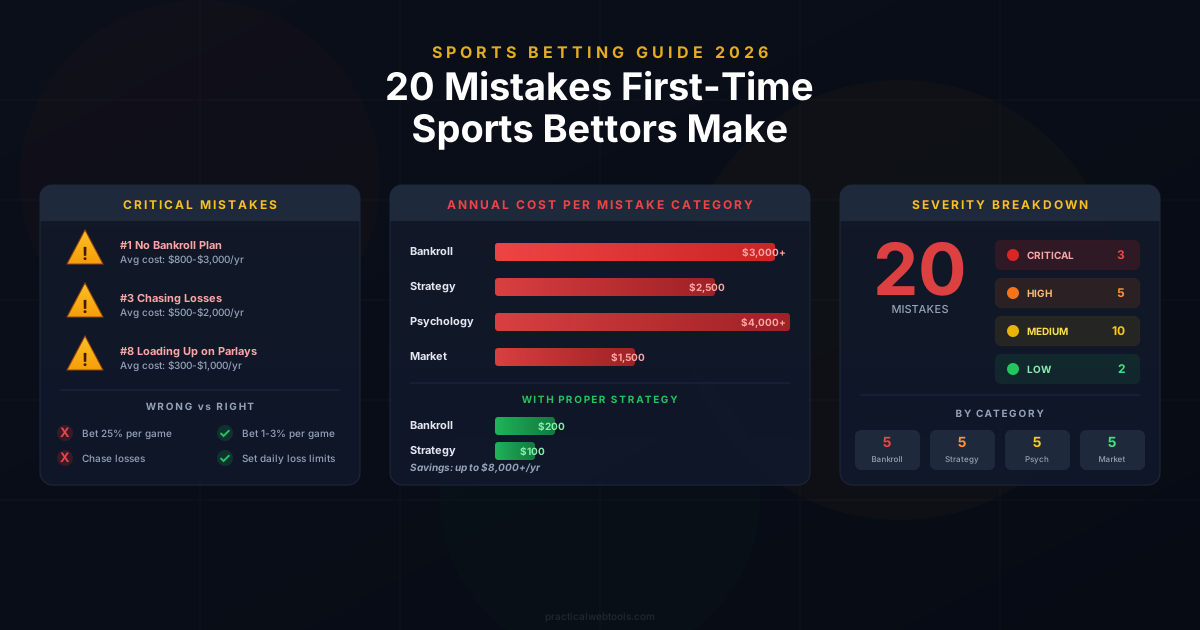
Sports betting variance is particularly challenging because bettors typically place far fewer bets than casino game players, making the sample size problem even worse.
Variance at Different Win Rates
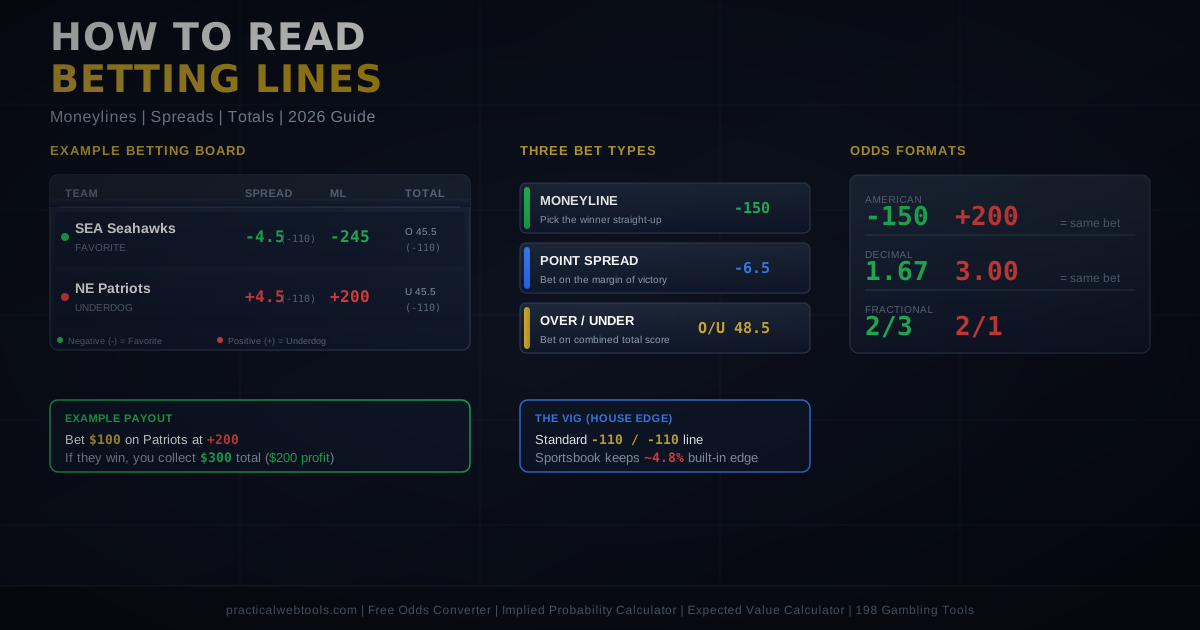
For standard -110 bets (risking $110 to win $100):
| True Win Rate | 100 Bets | 500 Bets | 1,000 Bets | 5,000 Bets |
|---|---|---|---|---|
| 52.4% (breakeven) | ±$1,050 | ±$2,350 | ±$3,320 | ±$7,430 |
| 55% (good edge) | +$350 ±$1,040 | +$1,750 ±$2,330 | +$3,500 ±$3,290 | +$17,500 ±$7,360 |
| 57% (great edge) | +$770 ±$1,030 | +$3,850 ±$2,300 | +$7,700 ±$3,250 | +$38,500 ±$7,270 |
With a strong 55% win rate:
- After 100 bets: Your expected profit is +$350, but the SD is $1,040. You have about a 37% chance of being down money.
- After 500 bets: Expected profit +$1,750, SD $2,330. Still roughly 23% chance of being down.
- After 1,000 bets: Expected profit +$3,500, SD $3,290. About 14% chance of being down.
A sports bettor placing 10 bets per week (520 per year) needs roughly two full years before they can be reasonably confident their results reflect skill rather than luck.
Losing Streaks at 55% Win Rate
| Losing Streak Length | Probability at 55% WR | Expected Frequency |
|---|---|---|
| 5 losses in a row | 1.85% | Once every 54 bets |
| 7 losses in a row | 0.37% | Once every 268 bets |
| 10 losses in a row | 0.034% | Once every 2,953 bets |
| 15 losses in a row | 0.001% | Once every 96,000 bets |
Even with a strong 55% win rate, you should expect a 7-game losing streak roughly once a year if you bet regularly. These streaks feel devastating but are mathematically normal.
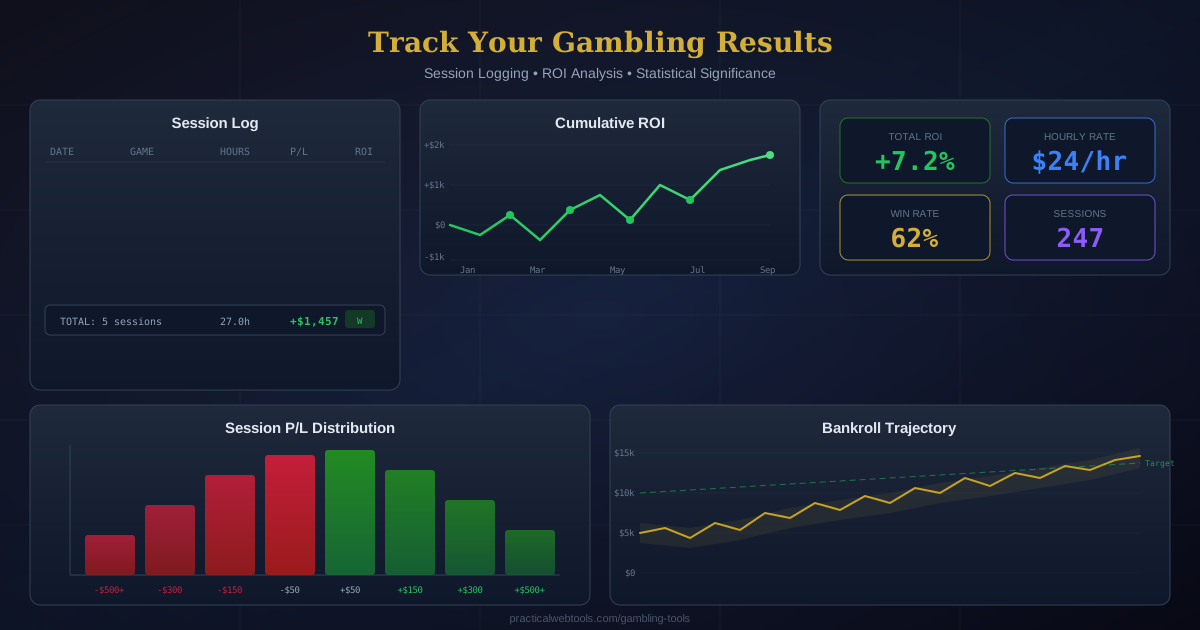
Track your betting performance against expectations with our Bankroll Volatility Tracker.
The Emotional Impact of Variance
Why Variance Hurts More Than Math Suggests
Behavioral economics research shows that losses feel approximately twice as painful as equivalent gains feel pleasurable (loss aversion). This means:
- A $500 loss feels as bad as a $1,000 win feels good
- Downswings feel twice as severe as upswings feel positive
- The emotional experience of variance is significantly worse than the mathematical experience
Tilt: Variance's Most Expensive Consequence
Tilt is the emotional response to variance that causes players to deviate from optimal strategy. It is the single most expensive consequence of variance because it turns a negative-variance event (bad luck) into a negative-EV event (bad play).
The tilt cycle:
- Variance produces a bad result (normal and expected)
- Player feels frustrated/angry (loss aversion)
- Player deviates from strategy (plays too aggressively, chases losses)
- Player loses more money (now from both bad luck AND bad decisions)
- More frustration, more deviation, more losses
Breaking this cycle is essential for any serious gambler, whether playing poker, blackjack, or making sports bets.
Survivorship Bias
Variance creates a misleading picture through survivorship bias:
- Poker winners: You see the players who survived variance and built bankrolls. You do not see the equally skilled players who hit the wrong side of variance and went broke.
- Sports betting gurus: You hear about the tout who had an amazing year. You do not hear about the 99 touts with similar systems who lost money.
- Casino winners: Your friend tells you about their $5,000 roulette win. They do not mention the previous $7,000 in losses.
Variance creates a distorted view of gambling success because winners are visible while losers are silent.
How Much Bankroll Does Variance Require?
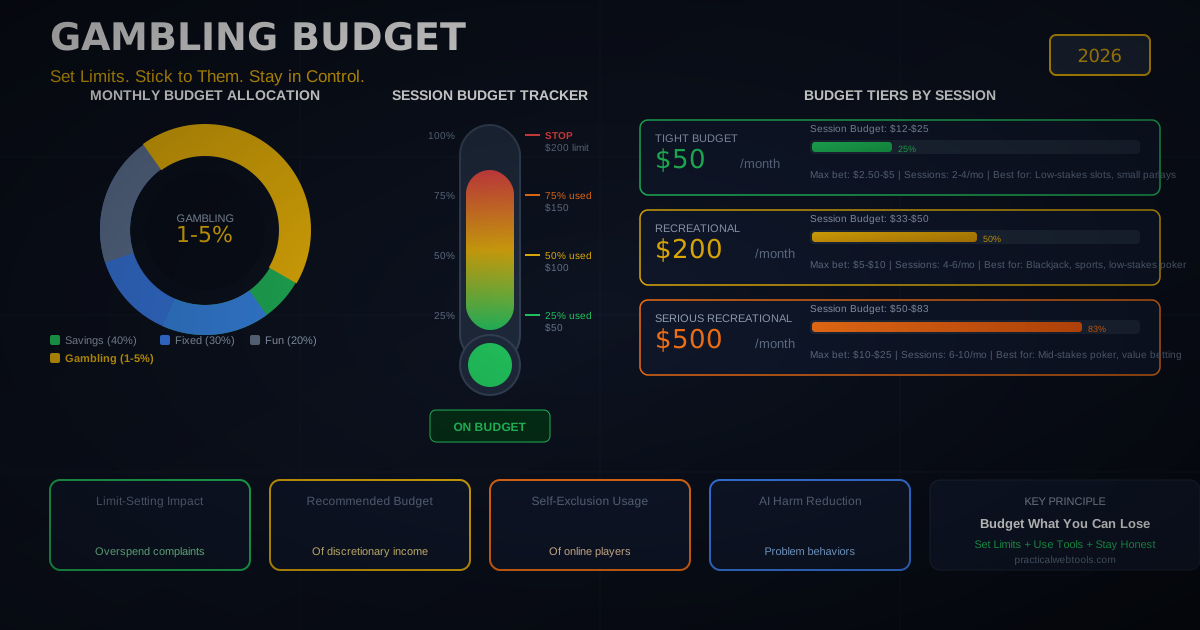
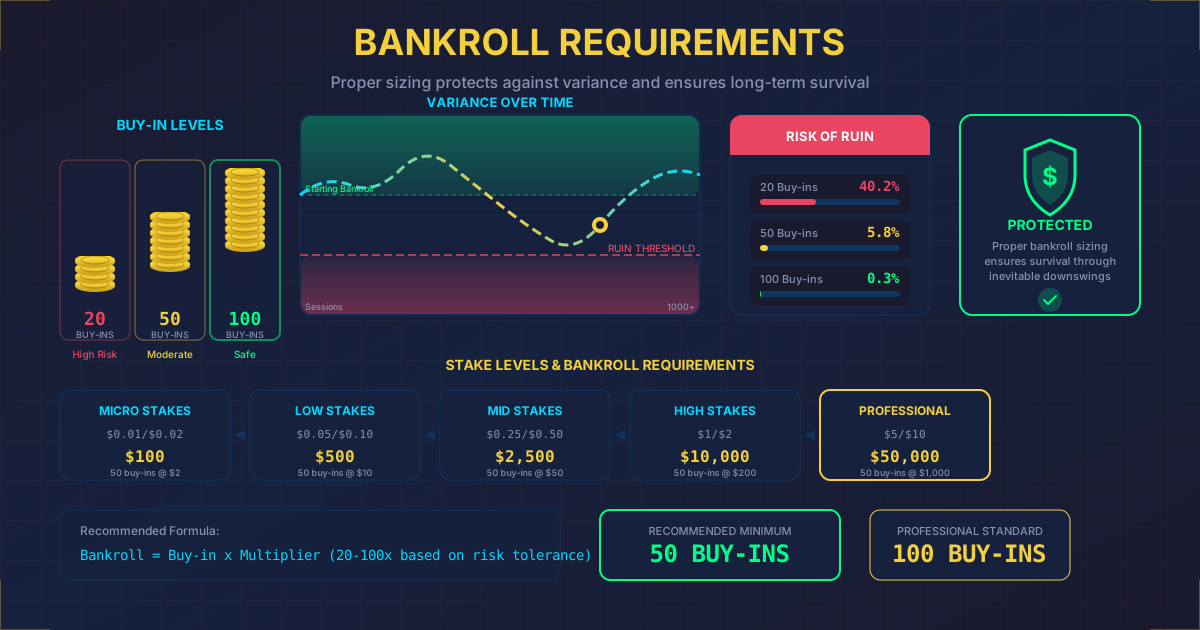
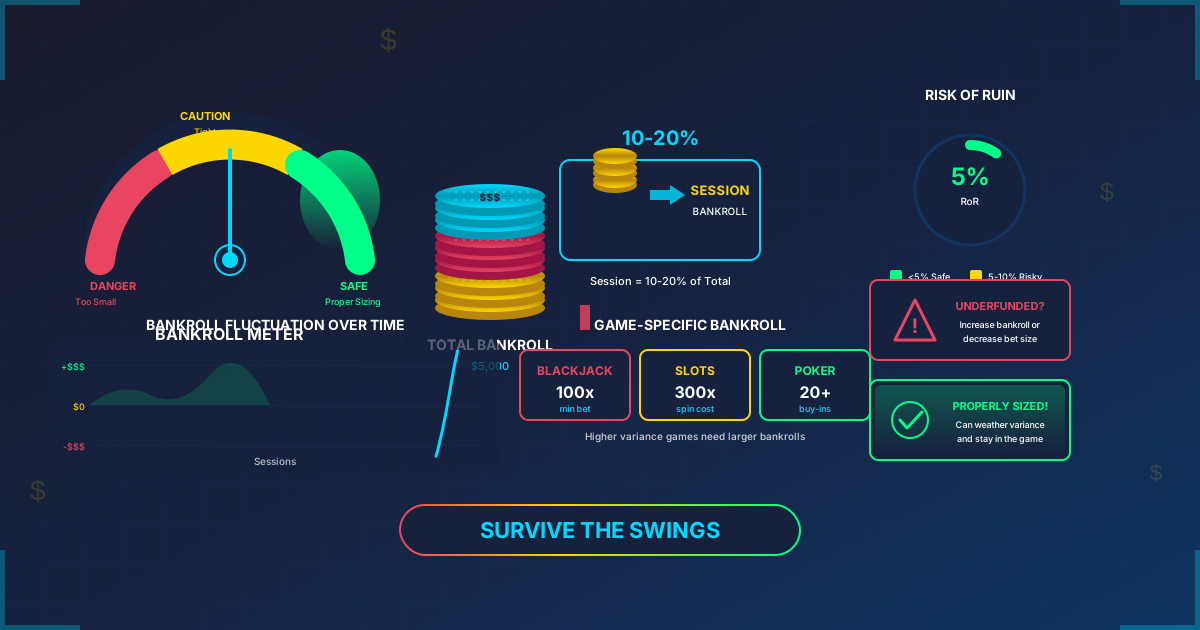
Bankroll requirements are directly determined by variance. Higher variance games need larger bankrolls to survive the inevitable downswings.
Bankroll by Game Type
| Game | Recommended Bankroll | Risk of Ruin |
|---|---|---|
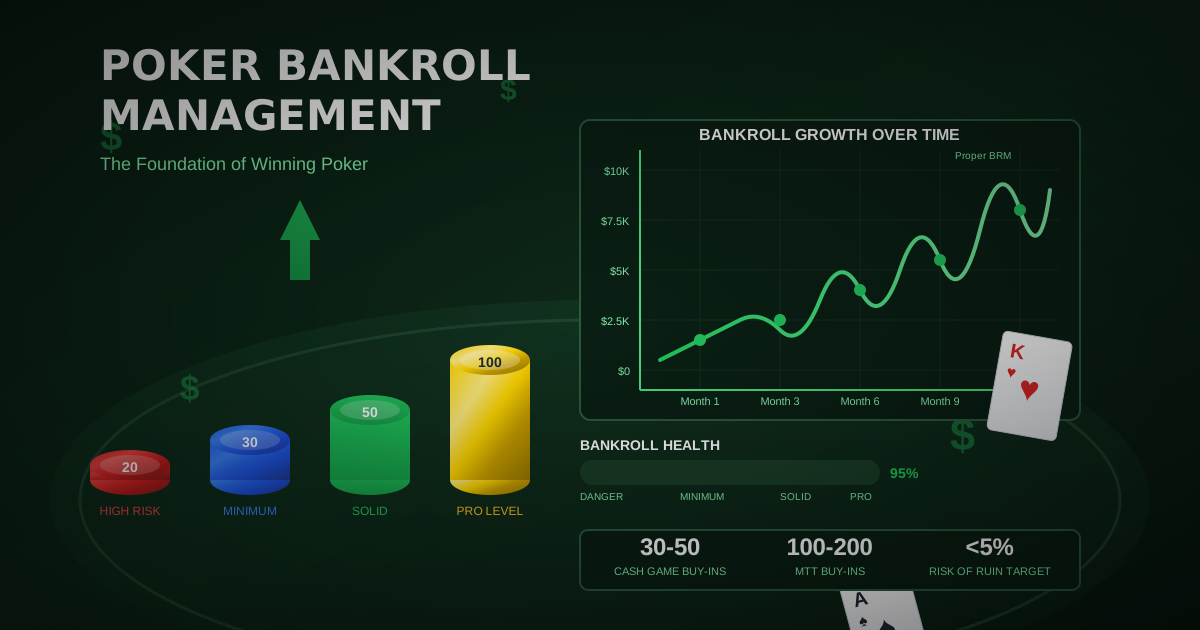
| Poker cash (5bb/100 WR, 85 SD) | 30-50 buy-ins | <5% at 50 BI |
| Poker tournaments (20% ROI) | 100-200 buy-ins | <5% at 150 BI |
| Sports betting (55% WR) | 50-100 units | <5% at 80 units |
| Blackjack basic strategy | 200-300 min bets | Session survival |
| Blackjack card counting | 300-500 min bets | <5% at 500 min bets |
Risk of Ruin Calculations
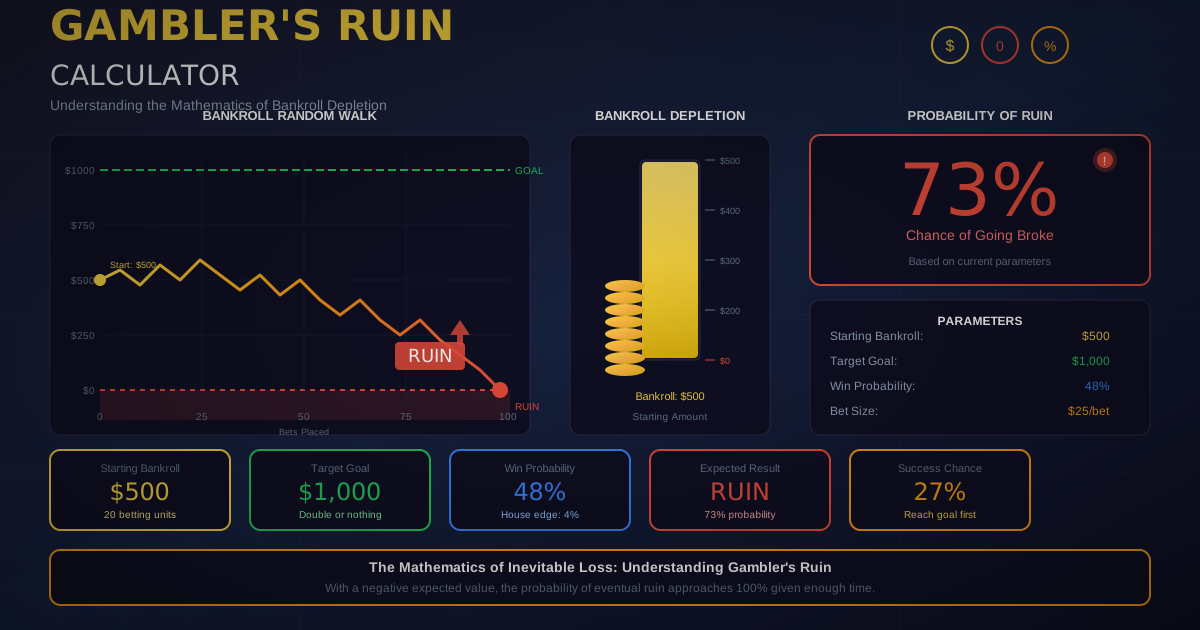
Risk of Ruin (RoR) is the probability of losing your entire bankroll before achieving a specified goal or over an indefinite period:
Poker Cash Game Risk of Ruin (5 bb/100, 85 SD):
| Bankroll (buy-ins) | Risk of Ruin |
|---|---|
| 15 | 26.3% |
| 20 | 17.4% |
| 30 | 7.6% |
| 50 | 1.4% |
| 75 | 0.2% |
| 100 | 0.03% |
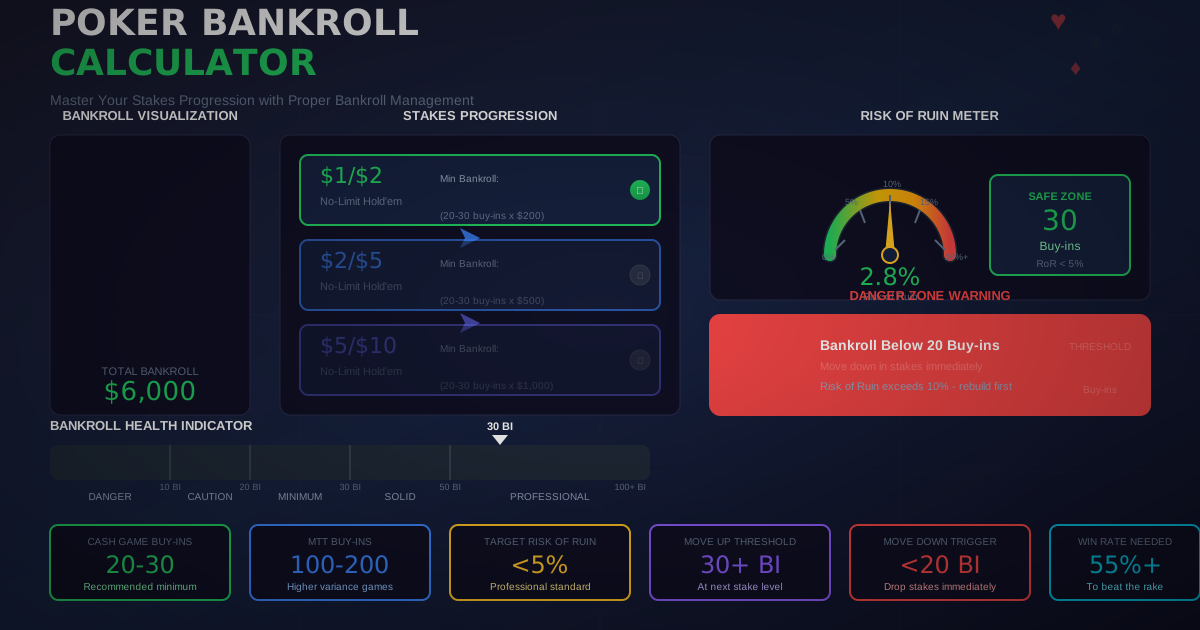
A professional poker player should maintain at least 30-50 buy-ins, with 50 buy-ins providing approximately 1.4% risk of ruin. At 20 buy-ins, you have a 17.4% chance of going broke even with a solid edge.
Calculate your personal risk of ruin with our Poker Risk of Ruin Calculator or Blackjack Risk of Ruin Calculator.
Sample Size: How Long Until Results Are Meaningful?
One of the most important practical questions about variance is: "How many bets/hands/spins do I need before my results tell me something real?"
Minimum Sample Sizes by Game
| Game | Minimum for Moderate Confidence | Minimum for High Confidence |
|---|---|---|
| Poker cash games | 50,000 hands | 200,000+ hands |
| Poker tournaments | 500 tournaments | 2,000+ tournaments |
| Sports betting | 1,000 bets | 3,000+ bets |
| Blackjack | 5,000 hands | 20,000+ hands |
| Roulette | 2,000 spins | 10,000+ spins |
The Poker Sample Size Problem
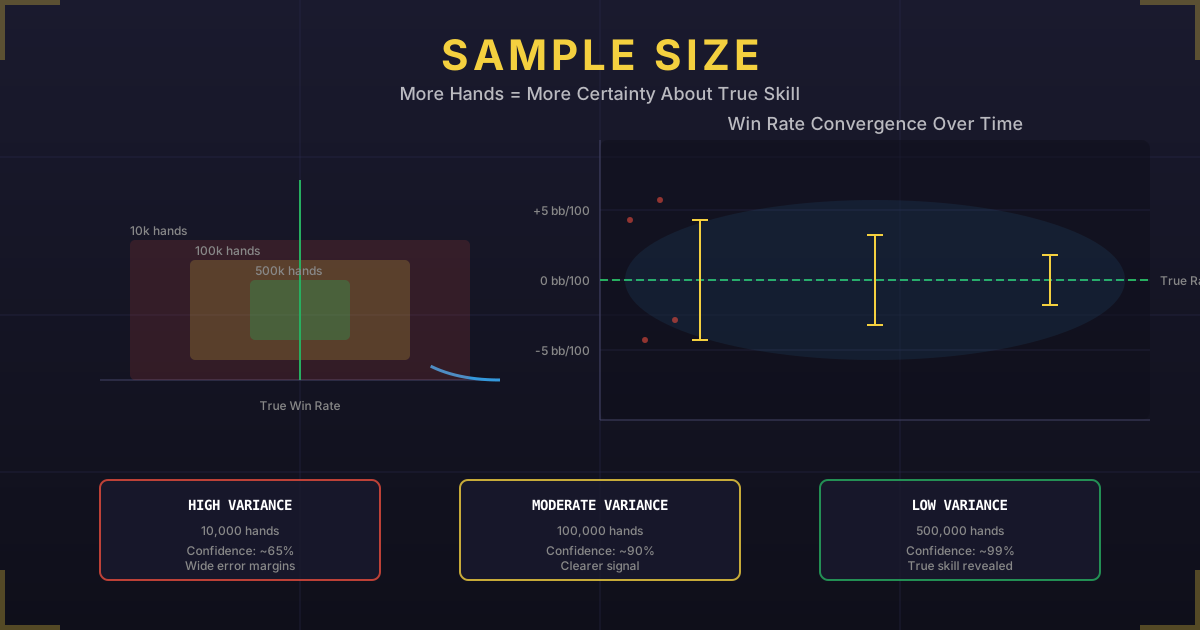
For a cash game player with 5 bb/100 win rate and 85 bb/100 SD:
Confidence that win rate is positive (above zero):
- 10,000 hands: 72% confidence
- 25,000 hands: 85% confidence
- 50,000 hands: 93% confidence
- 100,000 hands: 98% confidence
- 200,000 hands: 99.7% confidence
This means a player needs 100,000+ hands before they can be highly confident they are a winning player. At 30 hands per hour live, that is over 3,300 hours of play. At 500 hands per hour online, that is 200 hours.
Most recreational players never achieve a statistically meaningful sample. Their results are predominantly variance, not skill.
Use our Poker Equity Calculator to analyze individual decisions and our Poker Variance Calculator to understand your expected variance over different sample sizes.
Real-World Variance Examples
Example 1: The Winning Poker Player Who Quit
Daniel is a strong $2/$5 player with a true win rate of 7 bb/100 and SD of 90 bb/100. He plays 20,000 hands and runs 2 standard deviations below expectation:
- Expected profit: 20,000 x 7/100 = 1,400 bb = +$7,000
- Actual result: 1,400 - (2 x 90 x sqrt(200)) = 1,400 - 2,546 = -$5,730
Daniel is a significant winning player, but after 20,000 hands (roughly 2-3 months of regular play), he is down nearly $6,000. He concludes he cannot beat the game and quits. This outcome (running 2 SD below mean) happens to approximately 2.5% of players with his stats. For every 40 Daniels, one will experience this level of bad variance and potentially quit a profitable endeavor.
Example 2: The Sports Bettor's Terrible Month
Rachel has a 56% win rate on -110 bets, placing 50 bets per month. In January, she goes 19-31 (38% win rate):
- Expected wins in 50 bets: 28
- Actual wins: 19
- Probability of 19 or fewer wins at 56% true rate: approximately 3.2%
This is a roughly 1-in-30 month, meaning Rachel should expect one month this bad approximately once every 2.5 years. It feels devastating, but it is a predictable consequence of variance in small samples.
- Expected monthly profit: 50 bets x $110 x (0.56 x 100/110 - 0.44) = +$540
- Actual result: 19 x $100 - 31 x $110 = $1,900 - $3,410 = -$1,510
Example 3: The Blackjack Card Counter's Losing Trip
Marcus is a skilled card counter with a 1.2% edge and $100 average bet. He plays 2,000 hands during a week-long trip.
- Expected profit: 2,000 x $100 x 0.012 = +$2,400
- SD: $100 x 1.15 x sqrt(2,000) = $5,142
- 95% range: -$7,884 to +$12,684
Marcus has about a 32% chance of losing money during this trip despite having a genuine mathematical edge. He could lose as much as $7,884 while playing perfectly. This is why card counters need substantial bankrolls and emotional resilience.
Calculate expected blackjack variance with our Blackjack Variance Calculator and craps variance with our Craps Variance Calculator.
Example 4: The Slot Machine Illusion
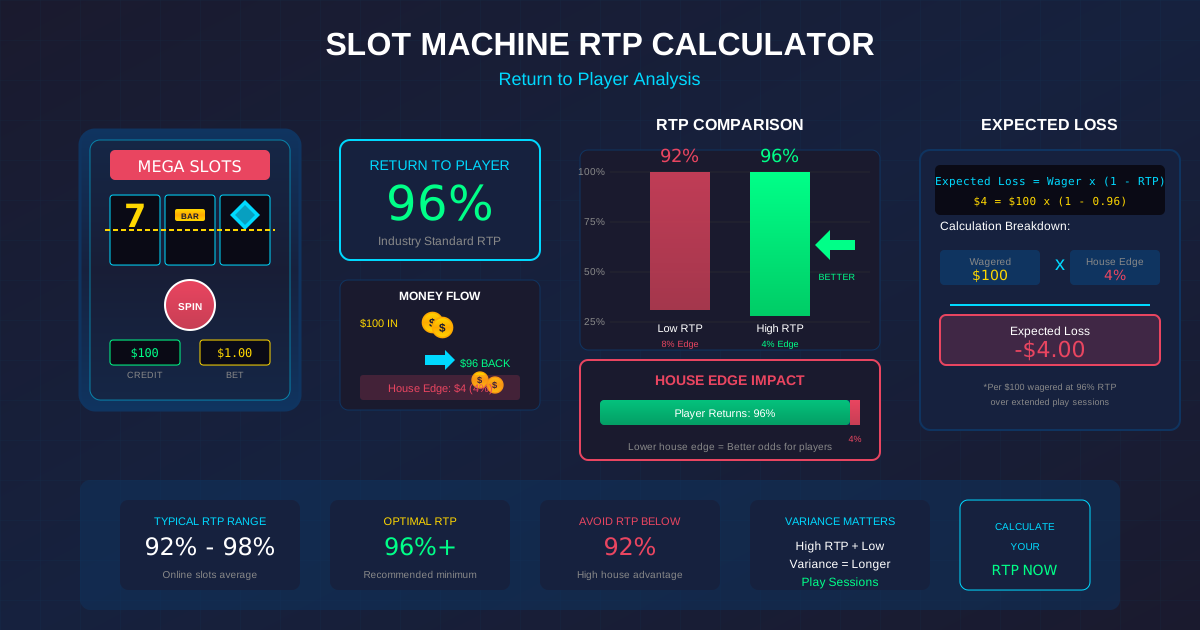
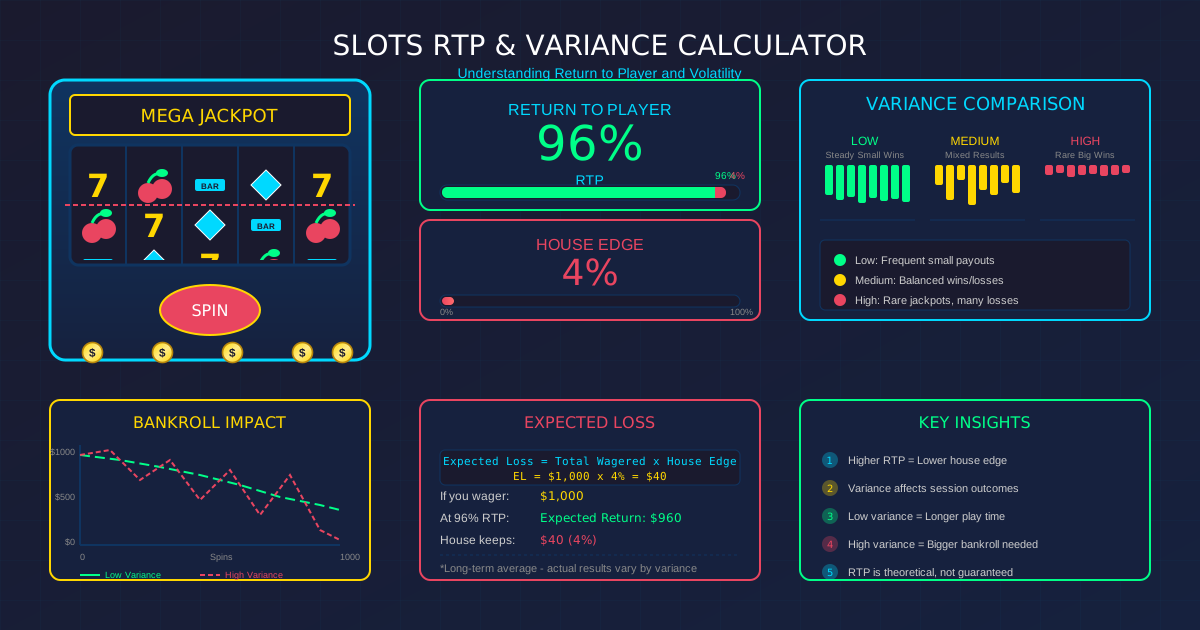
Kim plays a slot machine with 95% RTP and $2 per spin for 3 hours (approximately 1,800 spins).
- Total wagered: 1,800 x $2 = $3,600
- Expected loss: $3,600 x 0.05 = -$180
- But slot SD is very high due to the payout distribution
Kim might walk away up $500 (lucky session) or down $800 (unlucky session). The extreme variance of slots means individual sessions are almost entirely luck-based, creating the false impression that timing, machine choice, or betting patterns matter.
Example 5: The Video Poker Grinder
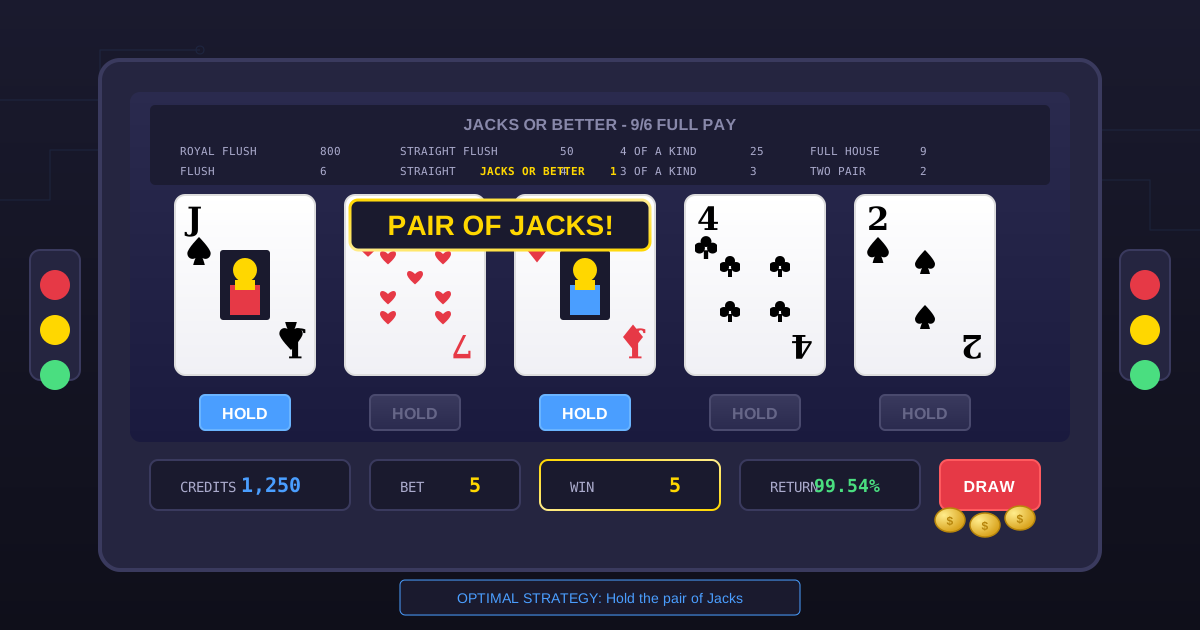
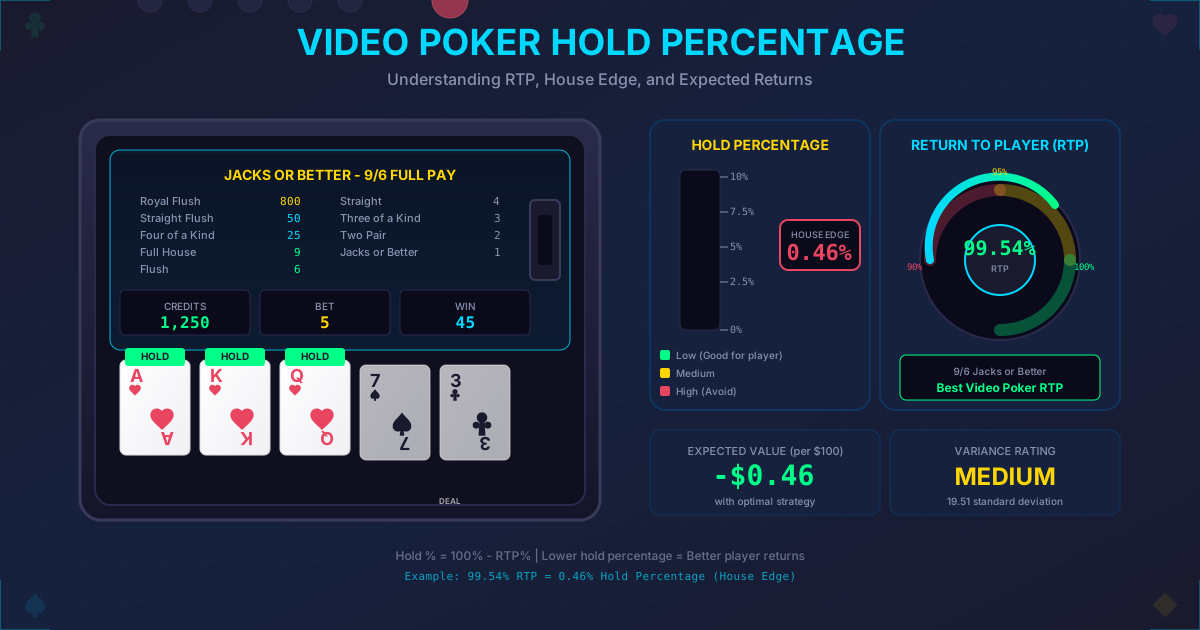
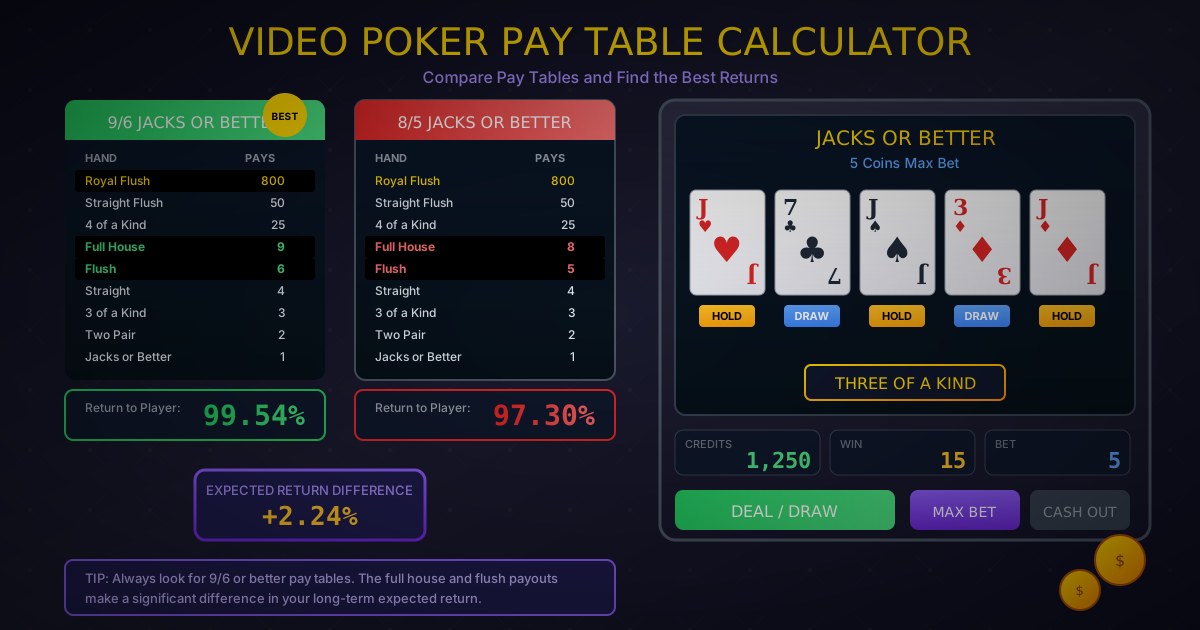
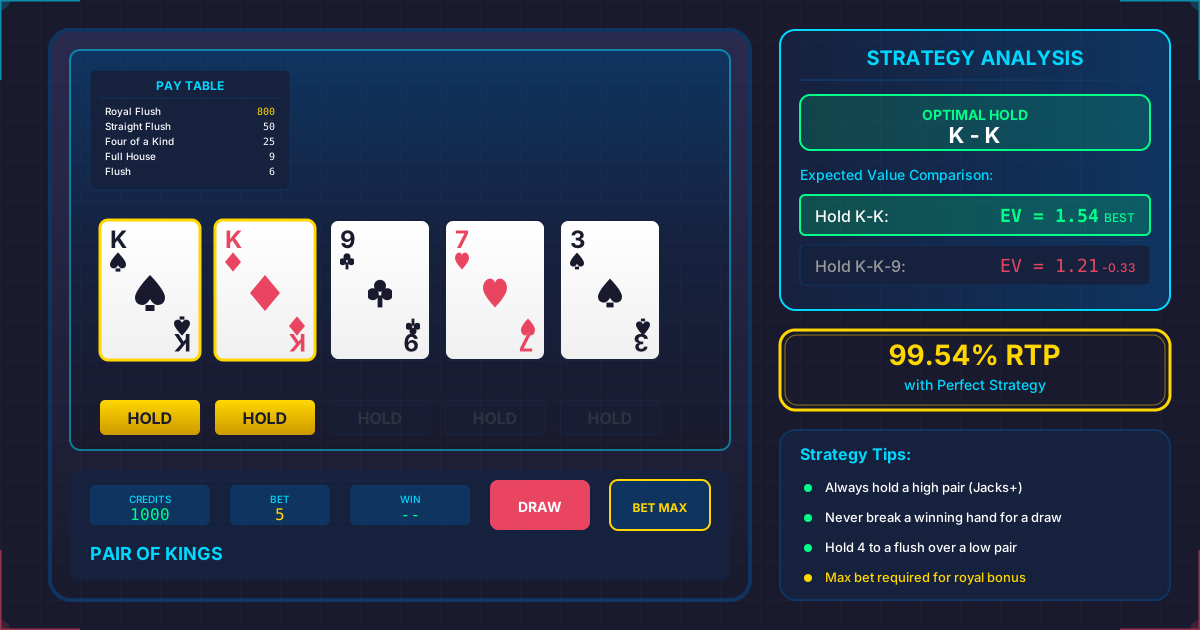
Susan plays 9/6 Jacks or Better at maximum coins ($1.25 per hand) for 20 hours per week.
- Hands per hour: 400
- Weekly hands: 8,000
- Weekly wagered: $10,000
- House edge: 0.46%
- Expected weekly loss: -$46
- Weekly SD: approximately $500
Most weeks, Susan's results are determined more by variance ($500 SD) than by the house edge ($46 expected loss). She will have winning weeks and losing weeks, and it will take months before the 0.46% house edge clearly manifests in her results.
Analyze video poker variance with our Video Poker Variance Calculator.
Reducing Variance (Without Reducing Edge)
In Poker
- Play tighter preflop: Reduces SD by avoiding marginal situations, but may sacrifice small amounts of EV in loose games
- Avoid unnecessary all-ins: Getting it in with smaller edges increases variance
- Table select aggressively: Playing against weaker opponents provides larger edges that survive variance better
- Move down in stakes: Same edge percentage yields smaller absolute swings
- Play more tables: Higher volume allows variance to smooth faster (online only)
In Sports Betting
- Flat bet instead of varying bet size: Reduces variance without affecting EV
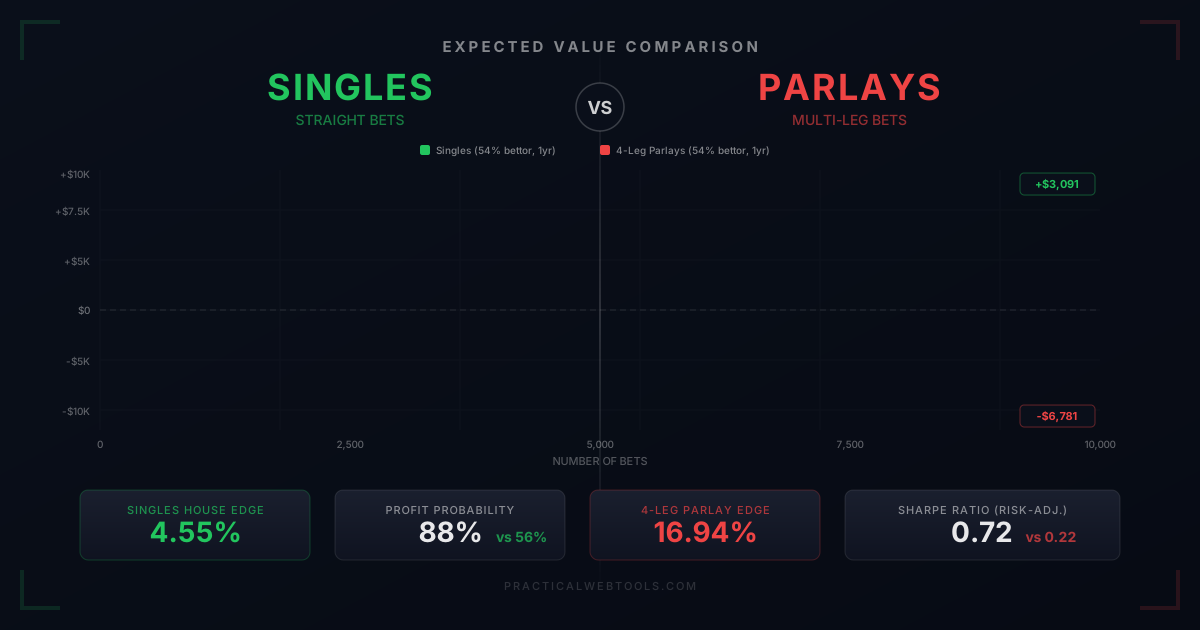
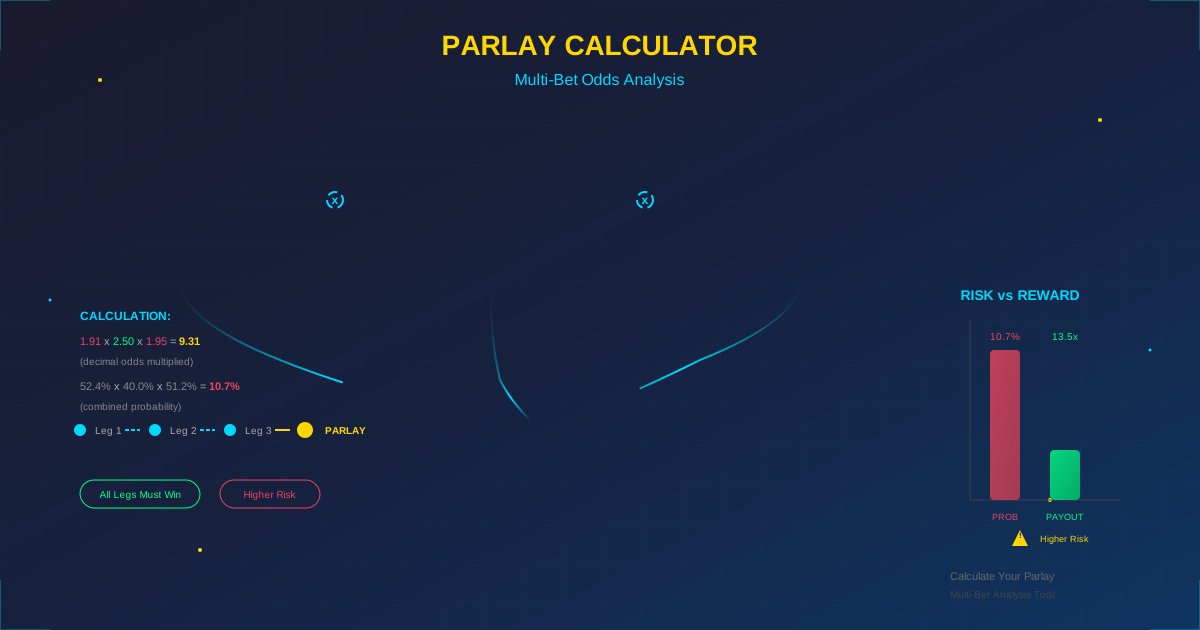
- Avoid parlays: Parlays dramatically increase variance for the same expected value
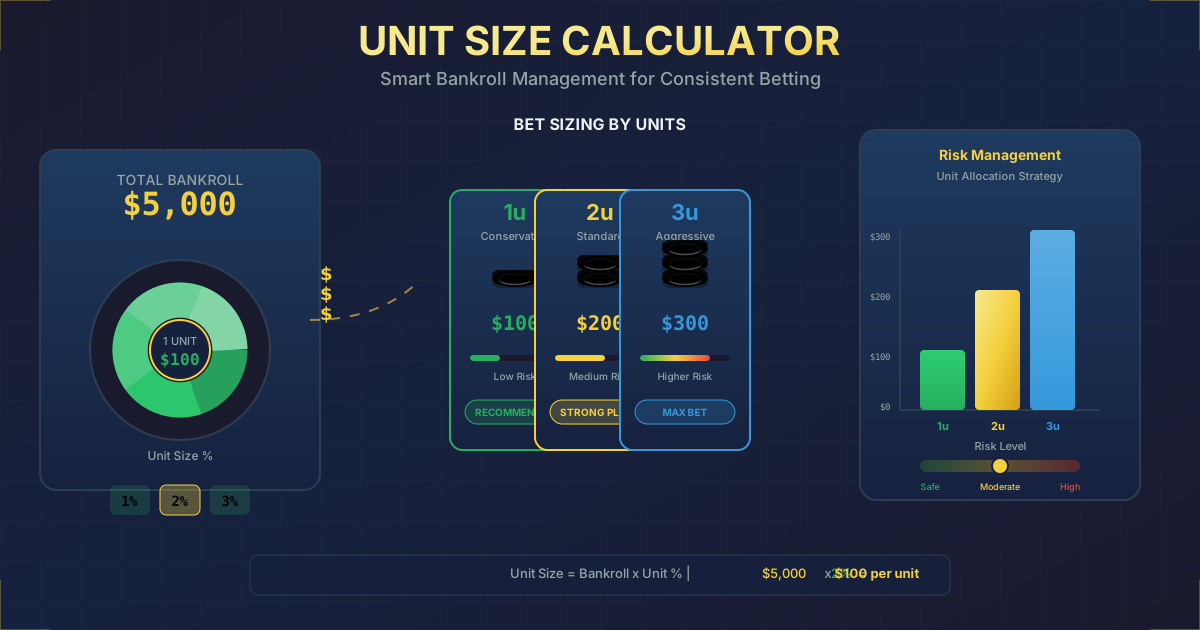
- Bet smaller percentages of bankroll: 1-2% per bet versus 5-10%
- Diversify across sports/leagues: Reduces correlation between bets
In Casino Games
- Choose low-variance games: Blackjack and baccarat over slots and keno
- Make lower-variance bets: Even-money roulette bets over straight-ups
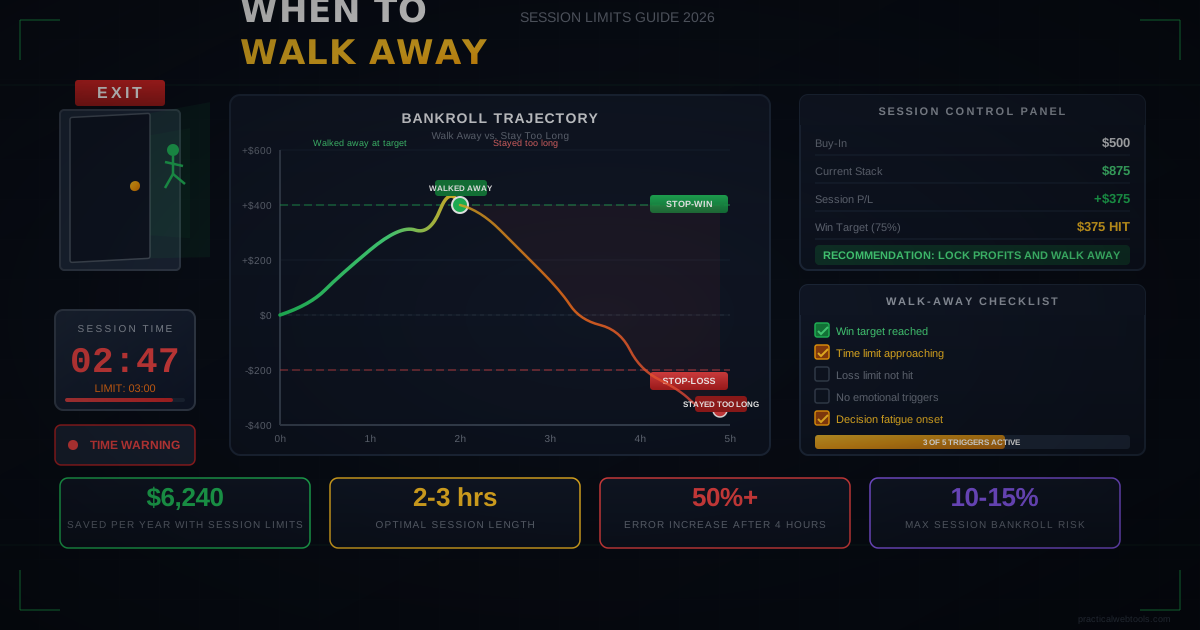
- Reduce session length: Shorter sessions keep results closer to expected value
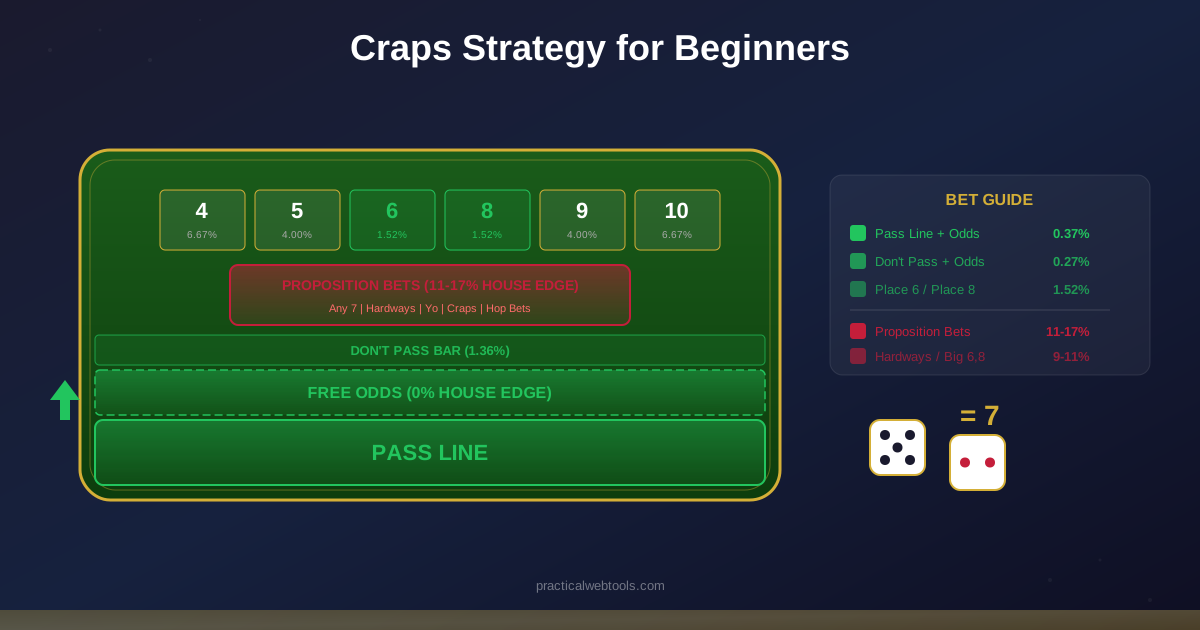
- Take odds in craps: The odds bet has zero house edge and moderate variance
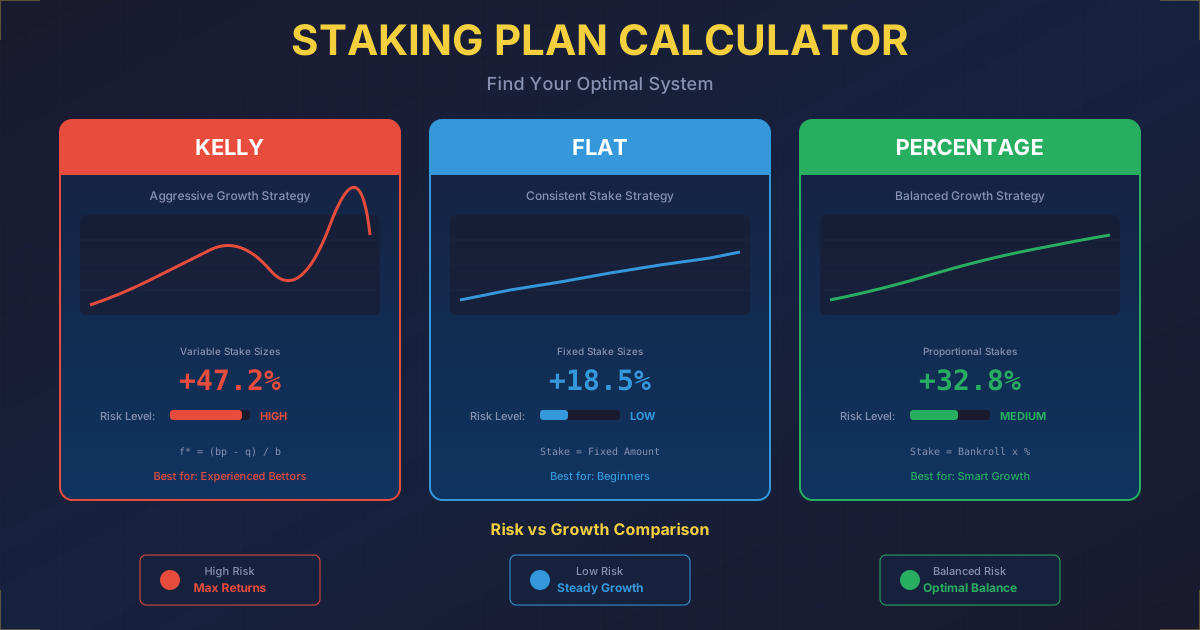
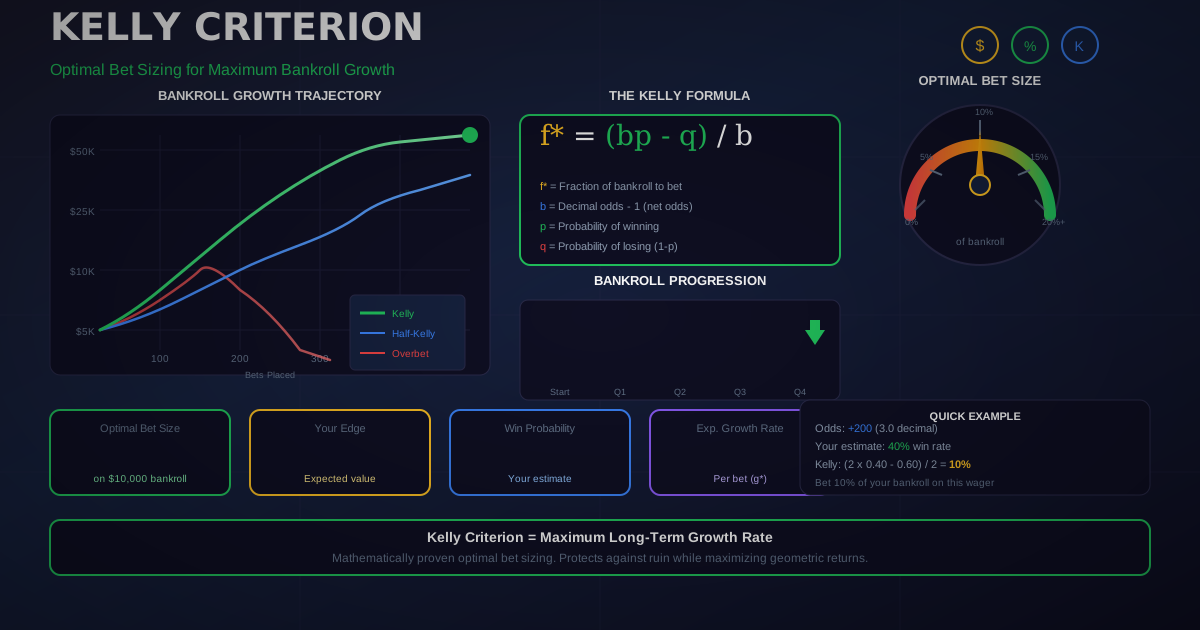
Kelly Criterion: Balancing Edge and Variance
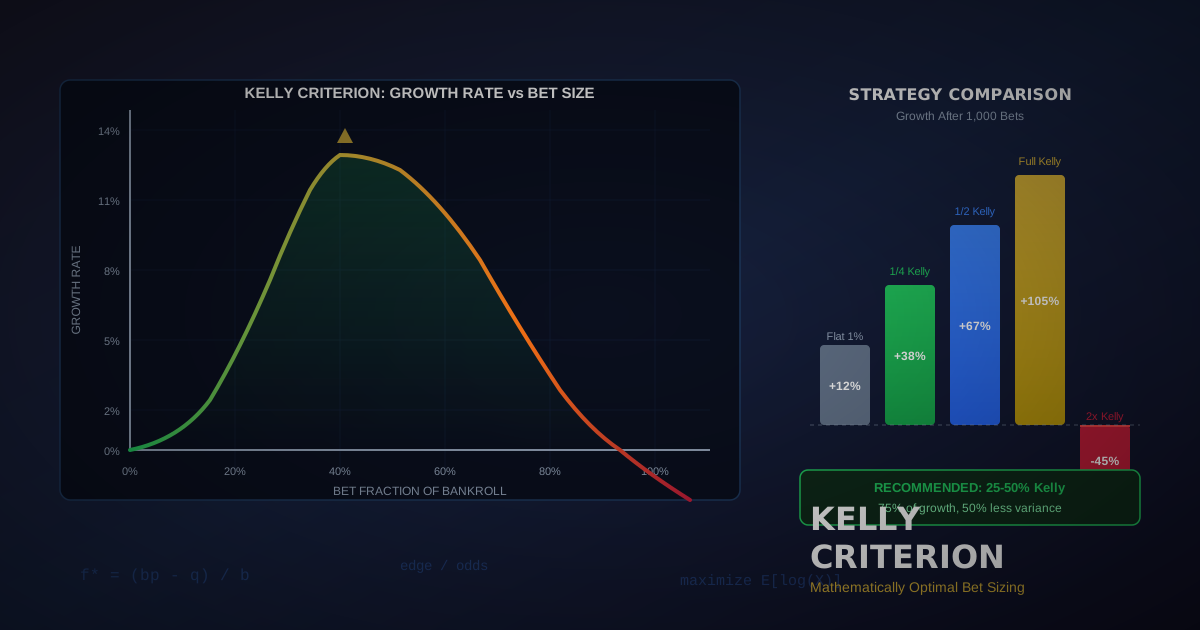
The Kelly Criterion provides the mathematically optimal bet size that maximizes long-term growth while accounting for variance:
Kelly fraction = (edge / odds)
Using fractional Kelly (25-50% of full Kelly) dramatically reduces variance at the cost of slightly slower bankroll growth. Most professionals use quarter to half Kelly.
Example: With a 5% edge on an even-money bet:
- Full Kelly: Bet 5% of bankroll
- Half Kelly: Bet 2.5% of bankroll
- Quarter Kelly: Bet 1.25% of bankroll
Full Kelly has the fastest expected growth but the highest variance. Quarter Kelly grows more slowly but with far less volatility.
Calculate your optimal Kelly fraction with our Kelly Criterion Calculator.
Frequently Asked Questions
What is variance in gambling? Variance measures how much your actual results deviate from the expected average. High variance means your results swing wildly above and below the expected value; low variance means results stay close to the average. It is mathematically quantified through standard deviation. Use our Poker Variance Calculator to see specific numbers for your situation.
Is variance the same as luck? Variance is the mathematical framework that quantifies what people colloquially call "luck." Positive variance (running above EV) is what we call "good luck." Negative variance (running below EV) is "bad luck." But unlike the concept of luck, variance is measurable, predictable, and bounded by mathematical laws.
How long does it take for variance to even out? It depends on the game and your edge. In poker, you need 100,000+ hands for moderate confidence. In sports betting, 1,000+ bets minimum. For casino games, several thousand rounds. The key factor is the ratio of your edge to the standard deviation; smaller edges relative to SD require much larger samples.
Can I go broke even with a positive edge? Yes. If your bankroll is too small relative to the variance of the game, a downswing can wipe you out before your edge has time to manifest. This is why bankroll management is critical. Use our Poker Risk of Ruin Calculator or Blackjack Risk of Ruin Calculator to calculate your specific risk.
Why do high-variance games exist? High variance is what makes gambling exciting for recreational players. The possibility of a big win (positive variance) provides entertainment value. Without variance, casino games would feel like slowly handing money to the house, which is mathematically what happens but emotionally unsatisfying.
What is the relationship between variance and bankroll size? Higher variance requires larger bankrolls to survive. A poker player in a high-variance game (PLO) needs 2-3x the buy-ins of a lower-variance game (full-ring NLH) to achieve the same risk of ruin. Calculate your requirements with our Poker Bankroll Requirements Calculator.
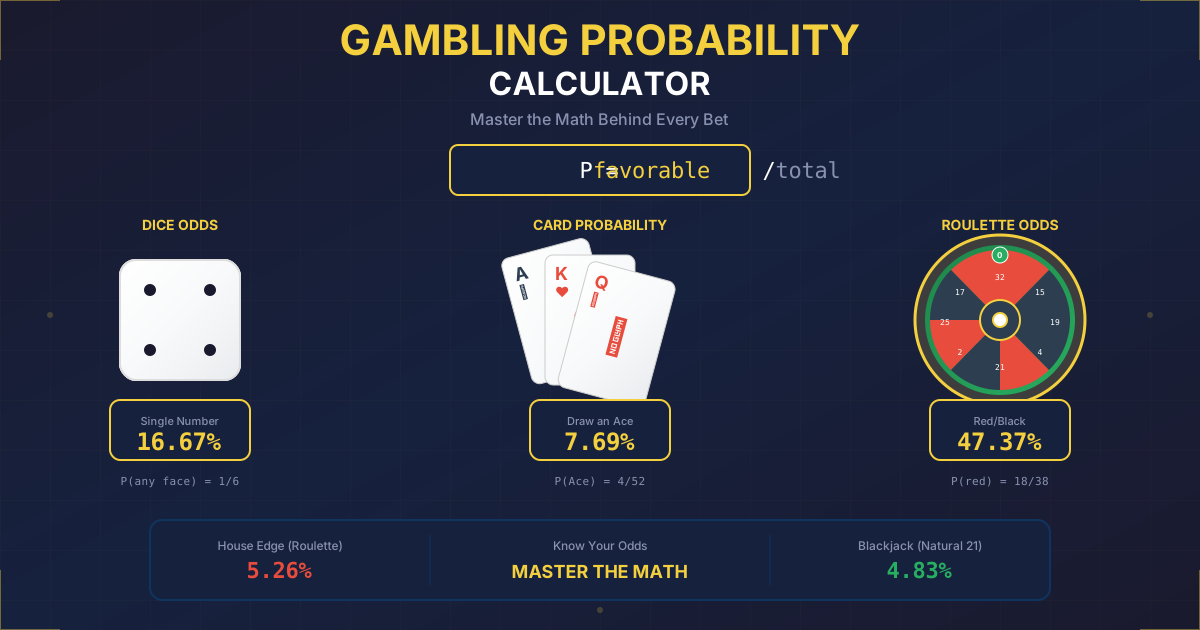
Does variance affect the house edge? No. Variance does not change the expected value of any bet. It only changes how quickly your results converge toward that expected value. A roulette bet has 5.26% house edge whether variance is treating you well or poorly.
How do I know if I'm skilled or just lucky? Track your results over a statistically significant sample (100,000+ hands in poker, 1,000+ bets in sports betting). Compare your actual results to your expected variance range. If your results consistently exceed what variance alone could explain, you likely have genuine skill. Our Roulette Betting Simulator can show you what pure random results look like for comparison.
Related Tools for Variance Analysis
Variance Calculators
- Poker Variance Calculator - Simulate poker variance scenarios
- Blackjack Variance Calculator - Blackjack result distributions
- Craps Variance Calculator - Craps volatility analysis
- Video Poker Variance Calculator - VP variance by pay table
- Bankroll Volatility Tracker - Track actual vs. expected results
Downswing and Risk Tools
- Poker Downswing Probability Calculator - Expected downswing sizes
- Poker Risk of Ruin Calculator - Probability of going broke
- Blackjack Risk of Ruin Calculator - Blackjack bust probability
- Poker Bankroll Requirements Calculator - Proper bankroll sizing
EV and Strategy Tools
- Expected Value Calculator - Calculate EV for any bet
- Kelly Criterion Calculator - Optimal bet sizing
- Poker Equity Calculator - Hand equity analysis
- Roulette Betting Simulator - Simulate and observe variance
- Roulette Probability Calculator - Exact outcome probabilities
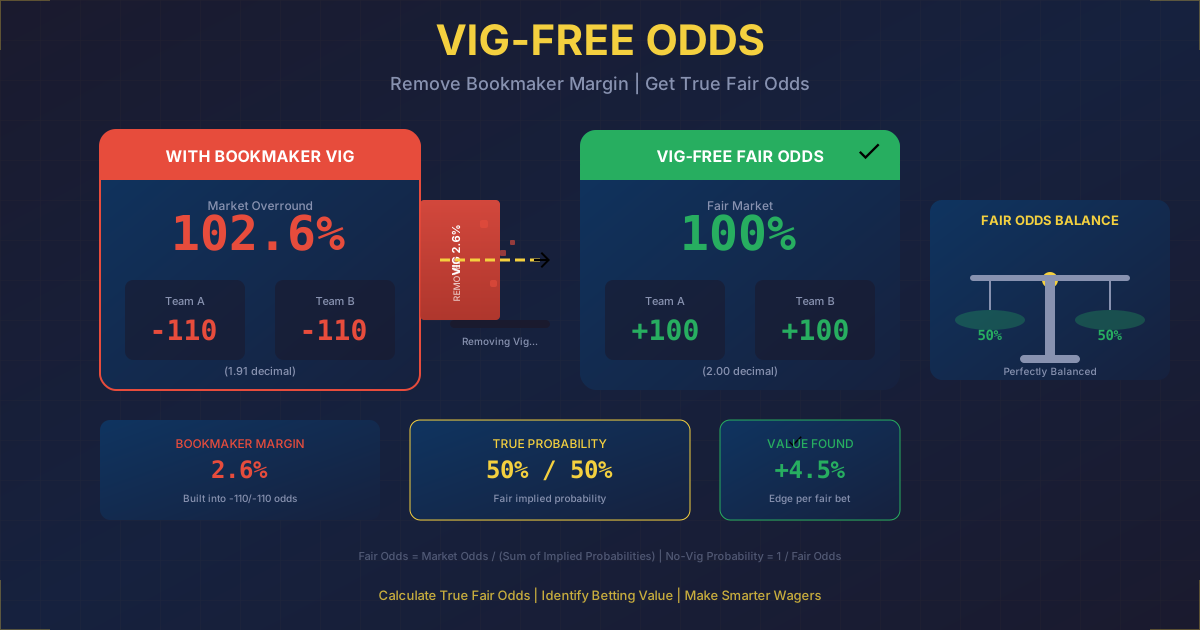
- Hold/Vig Calculator - Sports betting margin analysis
Conclusion
Variance is the invisible force that dominates short-term gambling results. It makes losers feel like winners and winners feel like losers. It creates false confidence and unearned despair. It is the reason gambling is exciting, and it is the reason most gamblers have no idea whether they are actually skilled or merely lucky.
Understanding variance means accepting uncomfortable truths: your last winning streak might have been pure luck, your current losing streak might be normal, and you probably need 10-100x more data than you think before drawing conclusions about your ability.
For recreational gamblers, variance awareness means setting realistic expectations and avoiding the trap of chasing losses. For advantage players, it means sizing your bankroll properly, managing your emotions, and playing the long game with absolute confidence that the math will eventually work in your favor.
Start by simulating your expected variance with our Poker Variance Calculator. Calculate your downswing probabilities with our Poker Downswing Probability Calculator. Determine your bankroll requirements with our Poker Bankroll Requirements Calculator. And track your actual results against mathematical expectations with our Bankroll Volatility Tracker.
Variance is not your enemy. It is the cost of playing in an uncertain world. Understanding it is how you survive long enough for skill to matter.
Gambling involves risk. This content is for educational and informational purposes only. Always gamble responsibly, set limits you can afford, and seek help if gambling becomes a problem. Visit the National Council on Problem Gambling or call 1-800-522-4700 for support.