How to Track Your Gambling Results: Session Logging, ROI, and Knowing If You're Winning (2026)
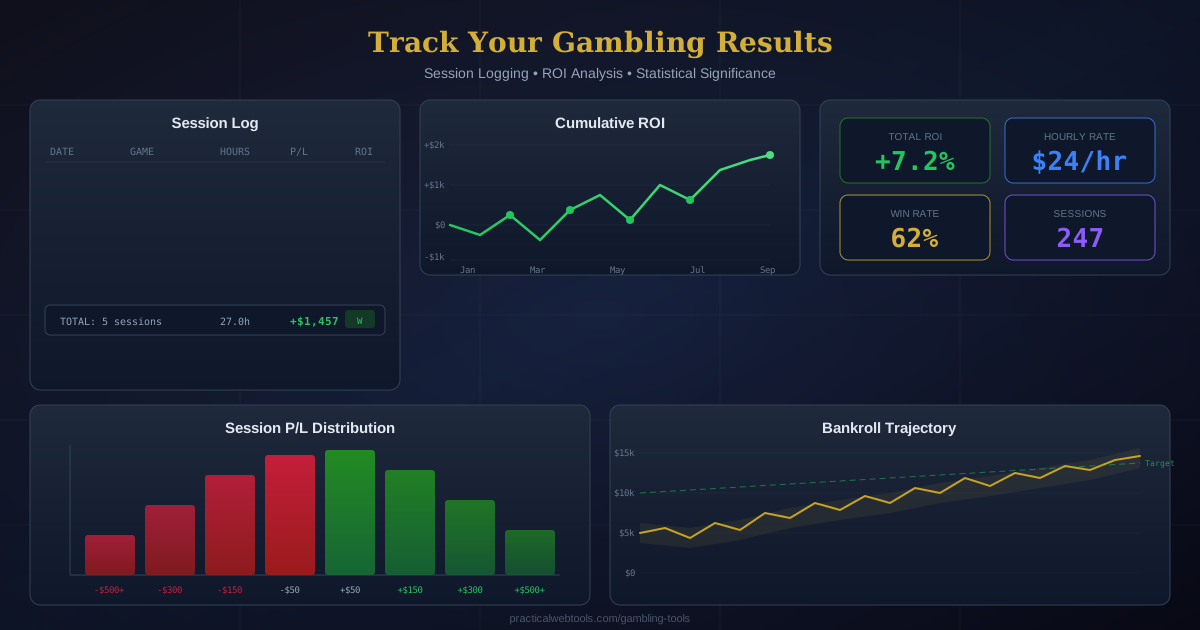
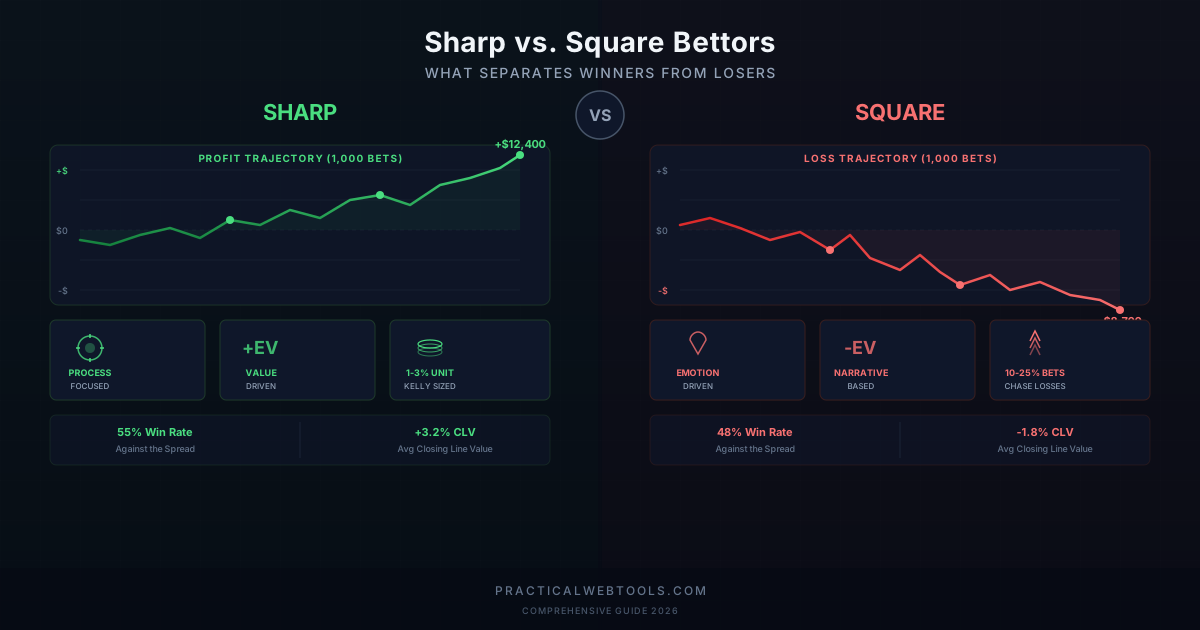
Most gamblers think they are winning. The data says otherwise. Studies consistently show that the vast majority of gamblers overestimate their wins and underestimate their losses. The human brain is wired to remember the $500 winning session vividly while conveniently blurring the five $120 losing sessions that preceded it. Without rigorous tracking, you are operating blind -- and casinos, sportsbooks, and poker rooms are counting on exactly that.
The difference between professional gamblers and recreational ones is not luck or even skill alone. It is discipline -- specifically, the discipline to track every session, calculate true ROI, analyze hourly rates, and let the data tell them whether they actually have an edge. If you want to know whether you are a winning gambler, you need to stop guessing and start measuring.
This guide will show you exactly how to set up a comprehensive tracking system, what metrics matter for each type of gambling, how to calculate whether you are truly profitable, and how many sessions you need before your results are statistically meaningful.
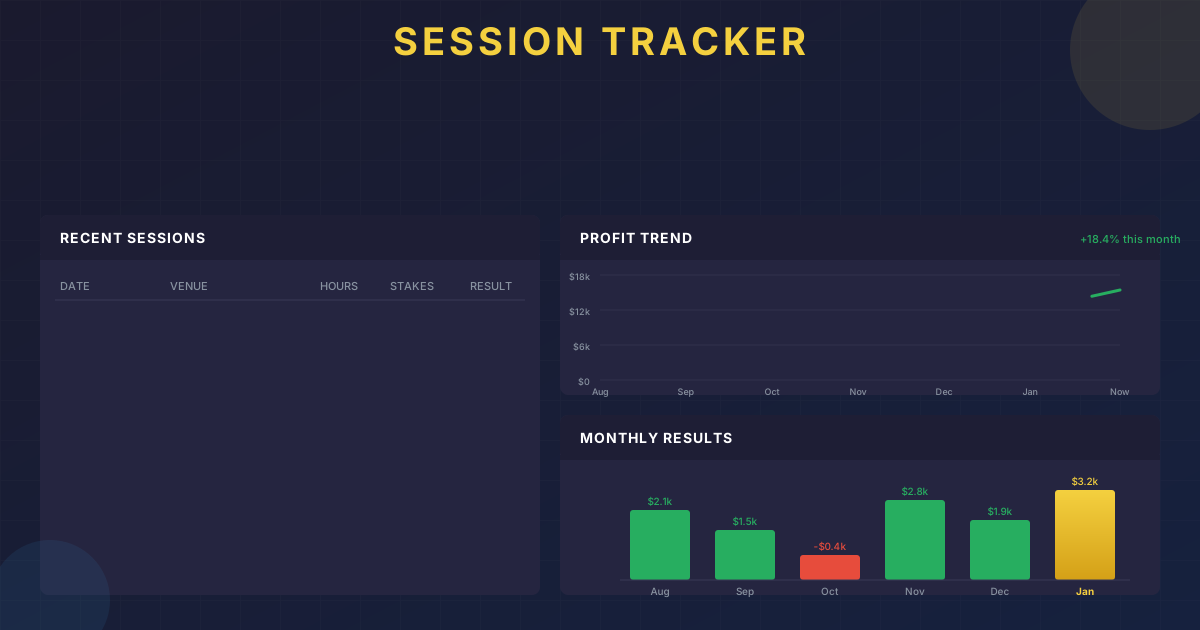
Start tracking your poker sessions right now with our free Poker Session Tracker.
Why Tracking Your Gambling Results Is Non-Negotiable
The Psychology of Selective Memory
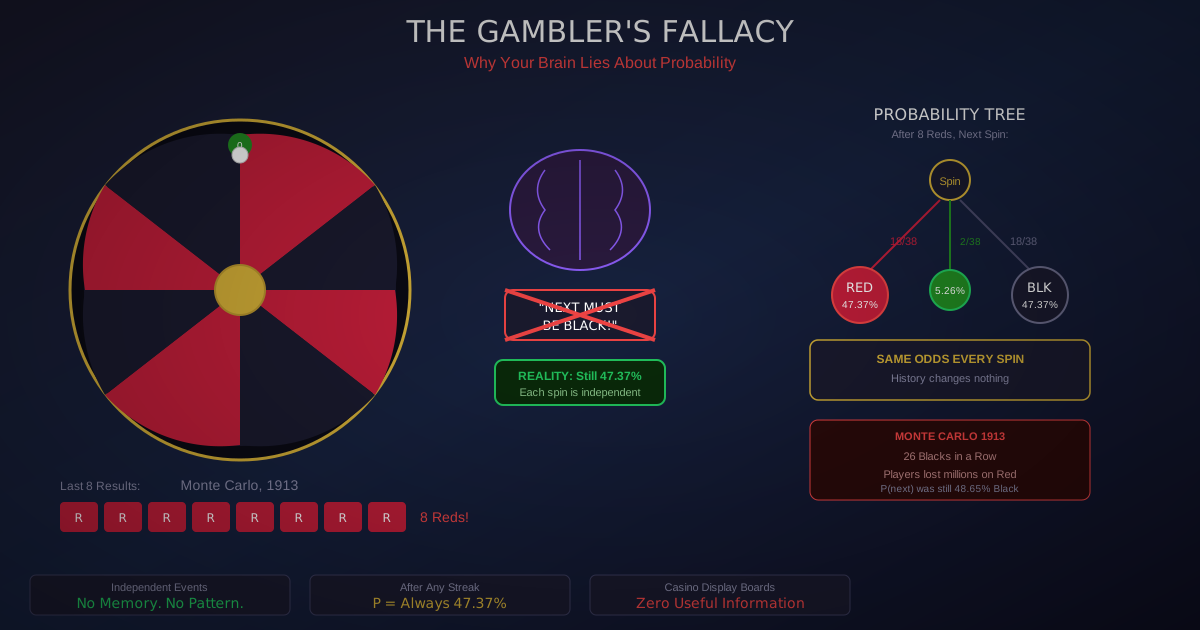
Cognitive biases destroy your ability to accurately assess gambling performance without written records:
- Availability bias: You remember big wins because they are emotionally vivid. The grinding losses blur together.
- Confirmation bias: If you believe you are a winning player, you unconsciously give more weight to winning sessions.
- Loss aversion: Losses feel roughly twice as painful as equivalent wins feel good, so your brain minimizes them.
- Recency bias: Your last few sessions disproportionately shape your perception of overall results.
A study published in the Journal of Gambling Studies found that recreational gamblers overestimated their net winnings by an average of 30-50%. Among self-described "profitable" gamblers, nearly 70% were actually losing money when their results were audited.
What Professionals Do Differently
Every professional gambler -- whether a poker player, sports bettor, or advantage player -- maintains meticulous records. Here is what tracking enables:
| Benefit | Without Tracking | With Tracking |
|---|---|---|
| Know your actual ROI | Guessing | Precise to 0.1% |
| Identify leaks | Invisible | Clear patterns |
| Bankroll management | Emotional | Mathematical |
| Tax reporting | Stressful, inaccurate | Organized, defensible |
| Game selection | Based on feel | Based on data |
| Emotional control | Tilt-prone | Data-driven decisions |
Calculate your true poker ROI with our Poker ROI Calculator.
What to Track: The Essential Metrics by Gambling Type
Poker Session Tracking
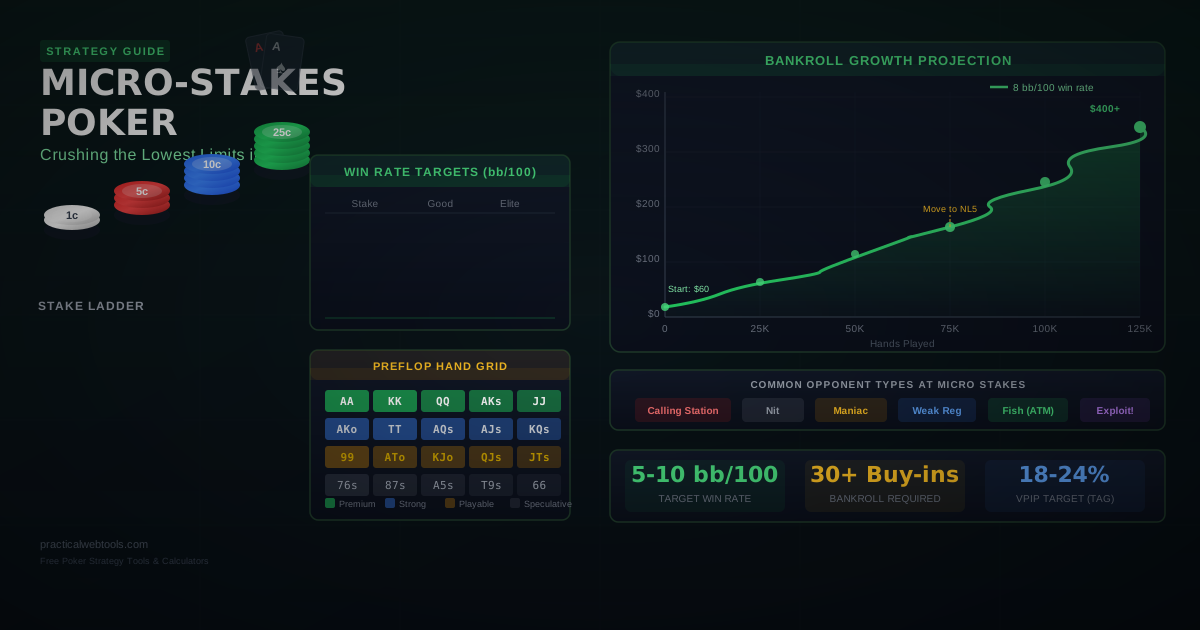
Poker requires the most detailed tracking because your edge comes from skill over time. Here is the minimum you should record for every session:
Core Data Points:
| Field | Example | Why It Matters |
|---|---|---|
| Date | 2026-02-11 | Identifies time-based patterns |
| Start/End Time | 7pm - 1am | Calculates hourly rate |
| Game Type | NL Hold'em | Compares performance across games |
| Stakes | $1/$2 | Normalizes results by stake level |
| Buy-in Amount | $300 | Tracks total investment |
| Cash-out Amount | $487 | Determines session profit/loss |
| Location/Site | Bellagio / PokerStars | Identifies best venues |
| Hours Played | 6.0 | Essential for hourly rate |
| Table Type | 6-max / Full Ring | Spots format preferences |
| Notes | "Ran well, played tight" | Qualitative context |
Advanced Data Points:
- Number of hands dealt (online)
- VPIP/PFR stats (online with HUD)
- Key hands that significantly impacted results
- Tilt rating (1-5 scale for emotional control)
- Physical/mental state assessment
Track all of these automatically with our Poker Session Tracker.
Sports Betting Tracking
Sports bettors need different metrics than poker players. Your tracking spreadsheet or tool should capture:
| Field | Example | Why It Matters |
|---|---|---|
| Date | 2026-02-11 | Time-based analysis |
| Sport | NFL | Sport-specific ROI |
| Bet Type | Spread | Identifies strong bet types |
| Selection | Chiefs -3.5 | Records the specific wager |
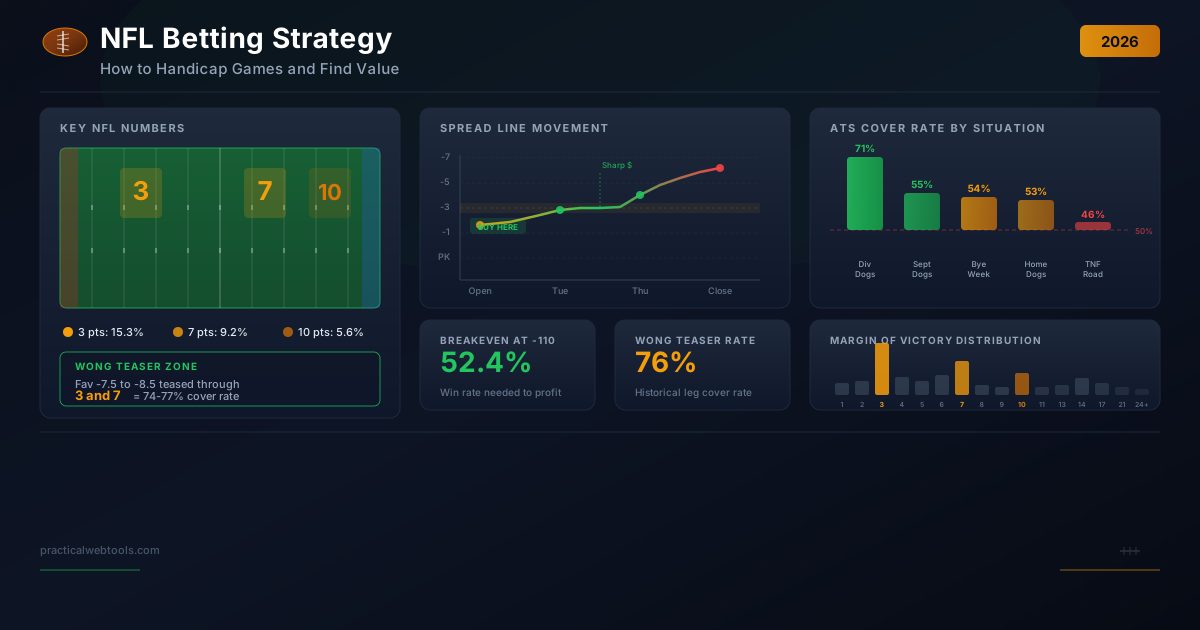
| Odds | -110 | Calculates implied probability |
| Closing Line | -115 | Measures CLV |
| Stake | $100 | Tracks money at risk |
| Result | Win/Loss | Obvious but essential |
| Profit/Loss | +$90.91 | Net result after vig |
| Sportsbook | DraftKings | Identifies best books |
| Reasoning | "Model shows value at -110" | Documents your edge thesis |
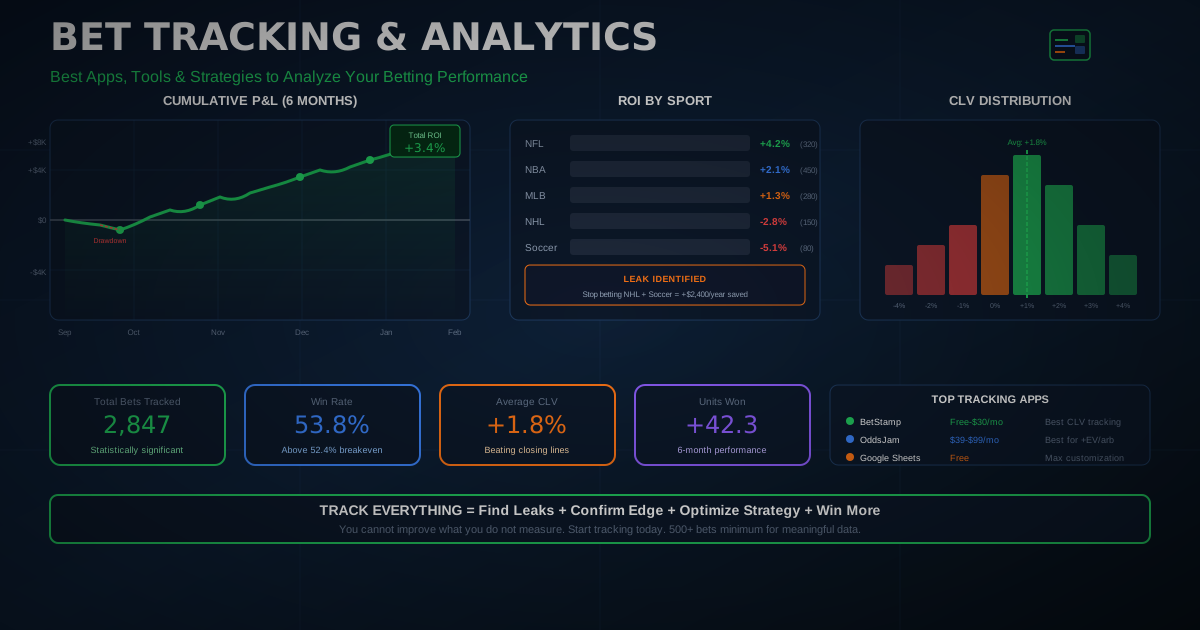
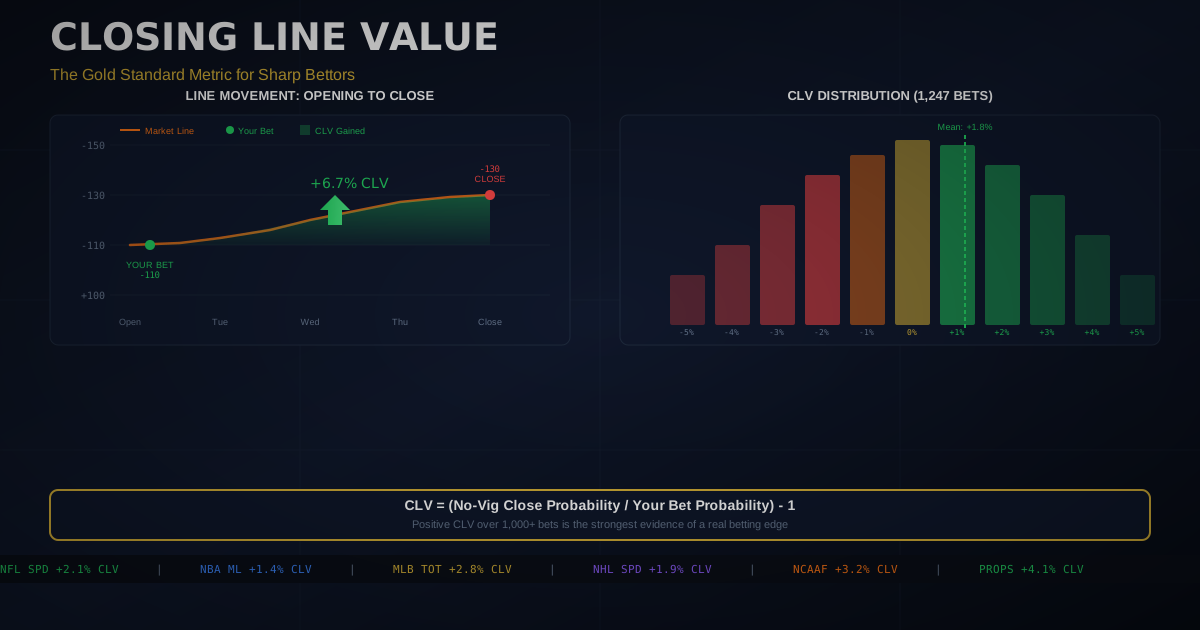
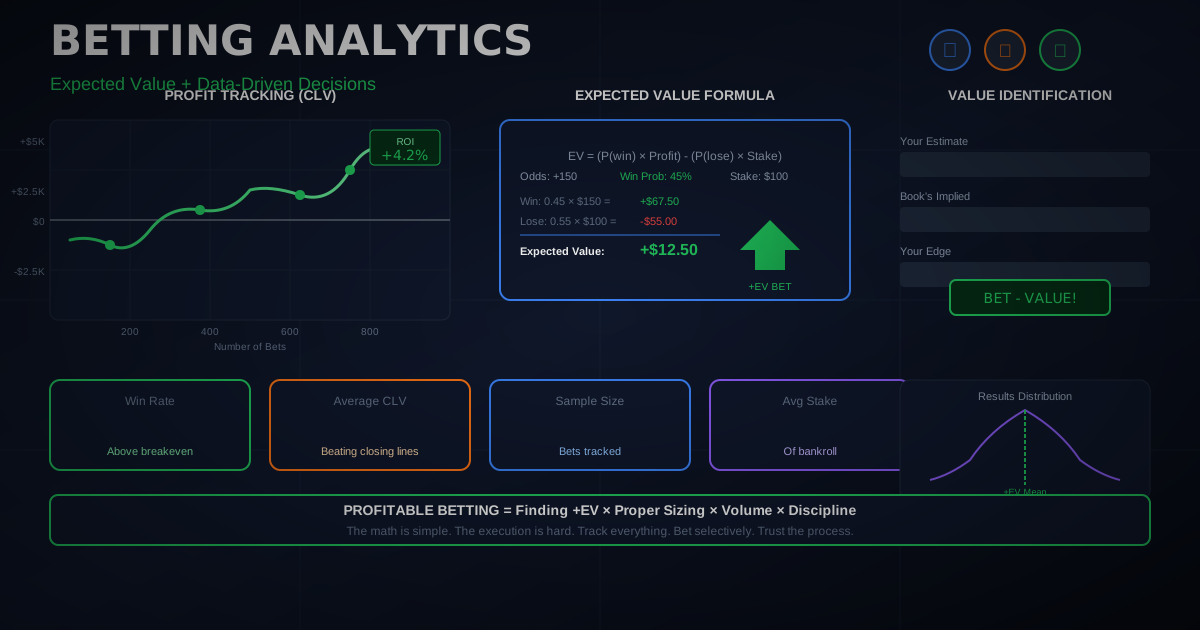
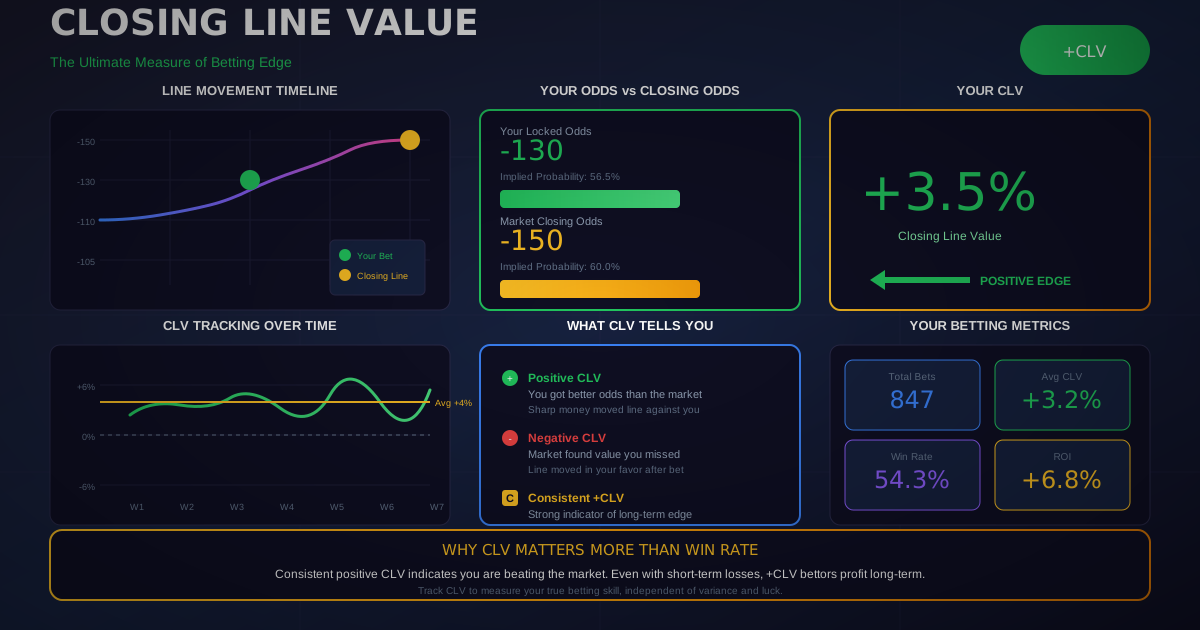
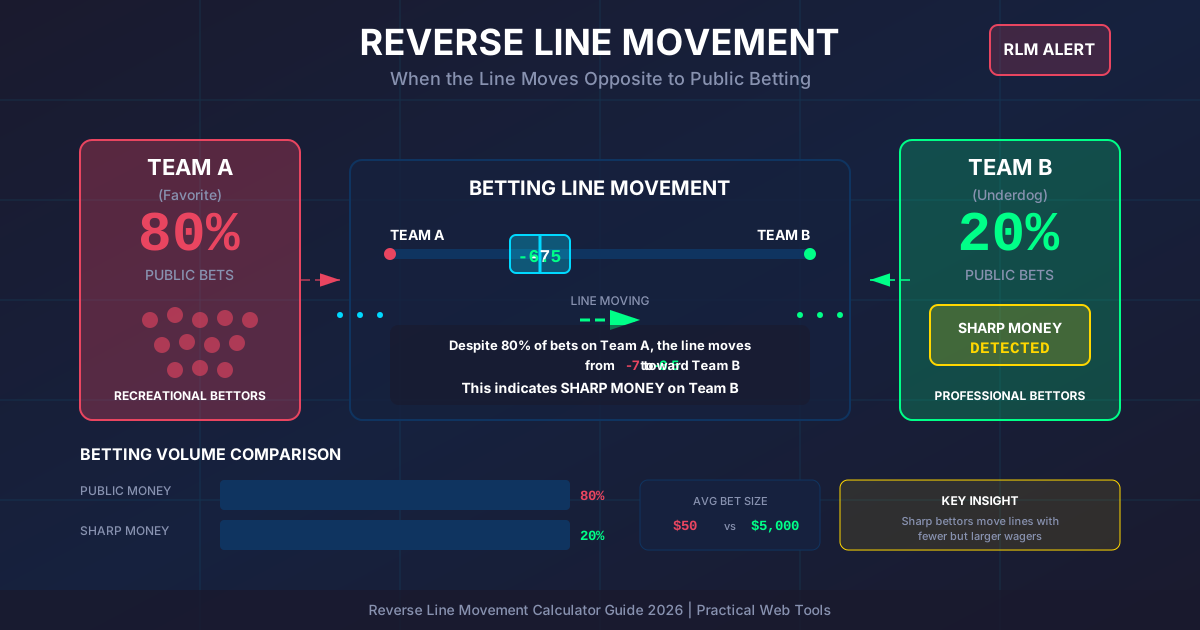
Closing Line Value (CLV) is the single best predictor of long-term sports betting profitability. If you consistently beat the closing line, you are very likely a winning bettor regardless of short-term results.
Track your CLV across thousands of bets with our CLV Tracker.
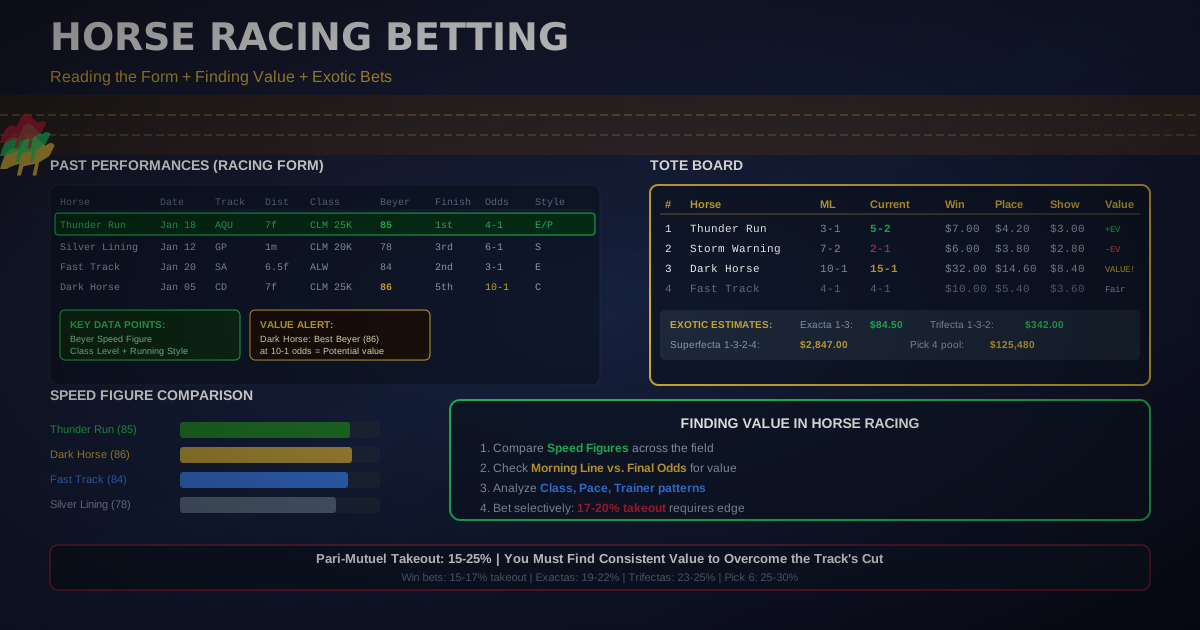
Horse Racing Tracking
Horse racing bettors should track:
- Race date, track, race number, and conditions
- Horse name and post position
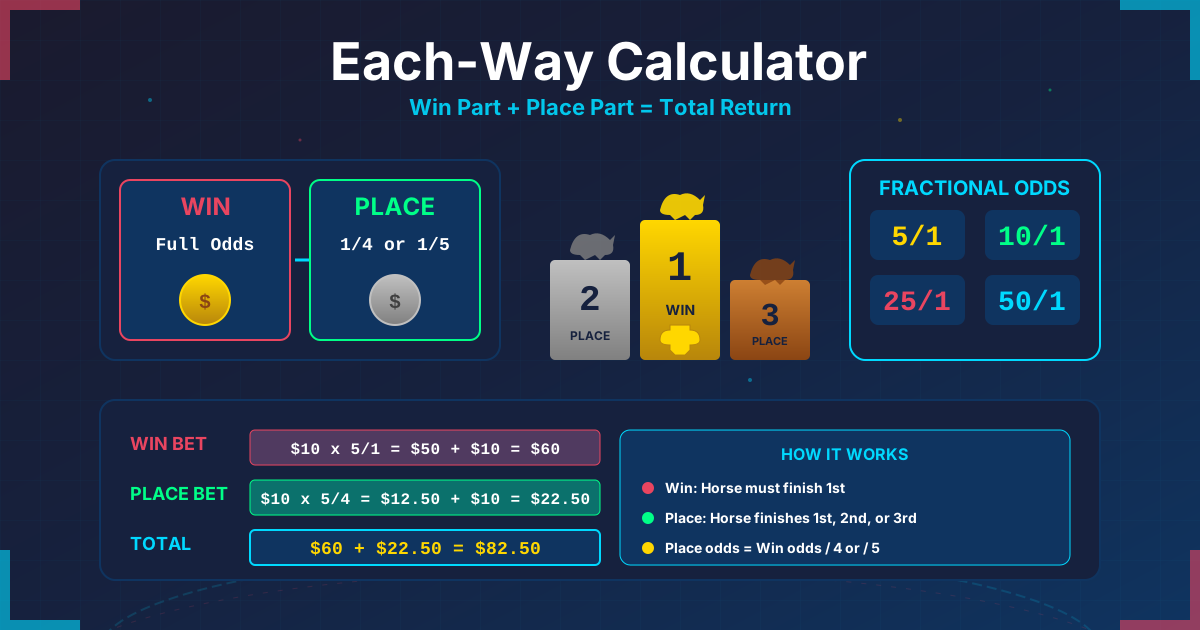
- Bet type (win, place, show, exotic)
- Odds at time of bet and final odds
- Stake amount and payout
- Track condition (fast, muddy, yielding)
- Distance and surface
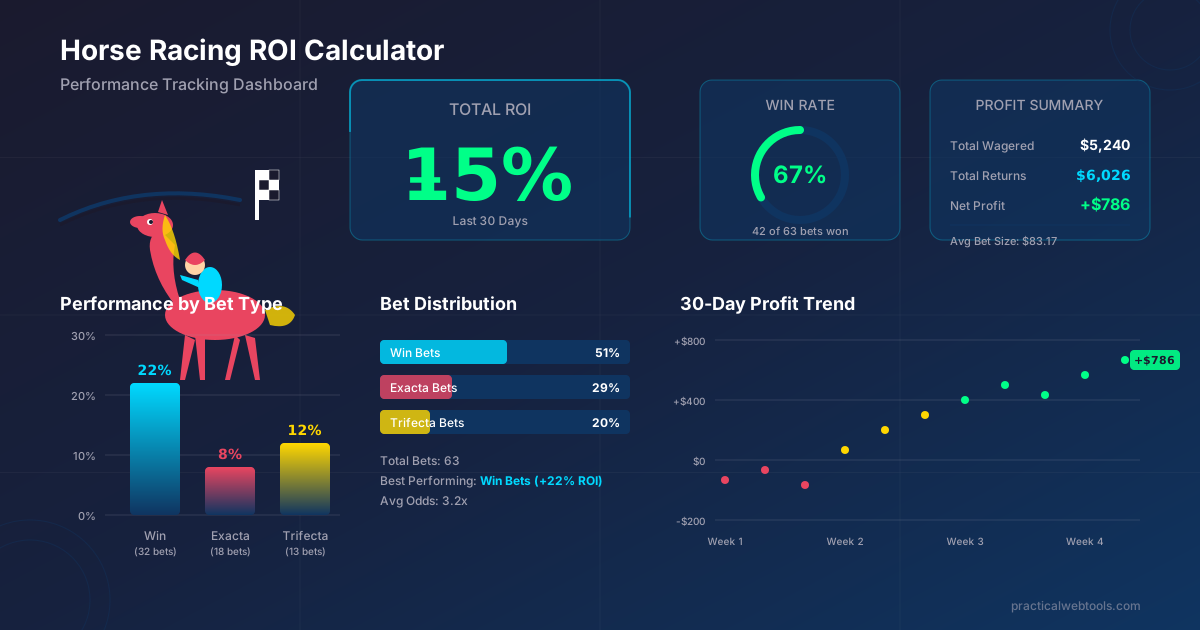
Calculate your horse racing return on investment with our Horse Racing ROI Calculator.
Casino Game Tracking
For table games and slots (primarily for bankroll management and tax purposes):
- Date and casino location
- Game played (blackjack, craps, roulette)
- Table limits and rules variations
- Buy-in and cash-out amounts
- Duration of play
- Comps received (value)
- Net result
How to Calculate Your Gambling ROI
The ROI Formula
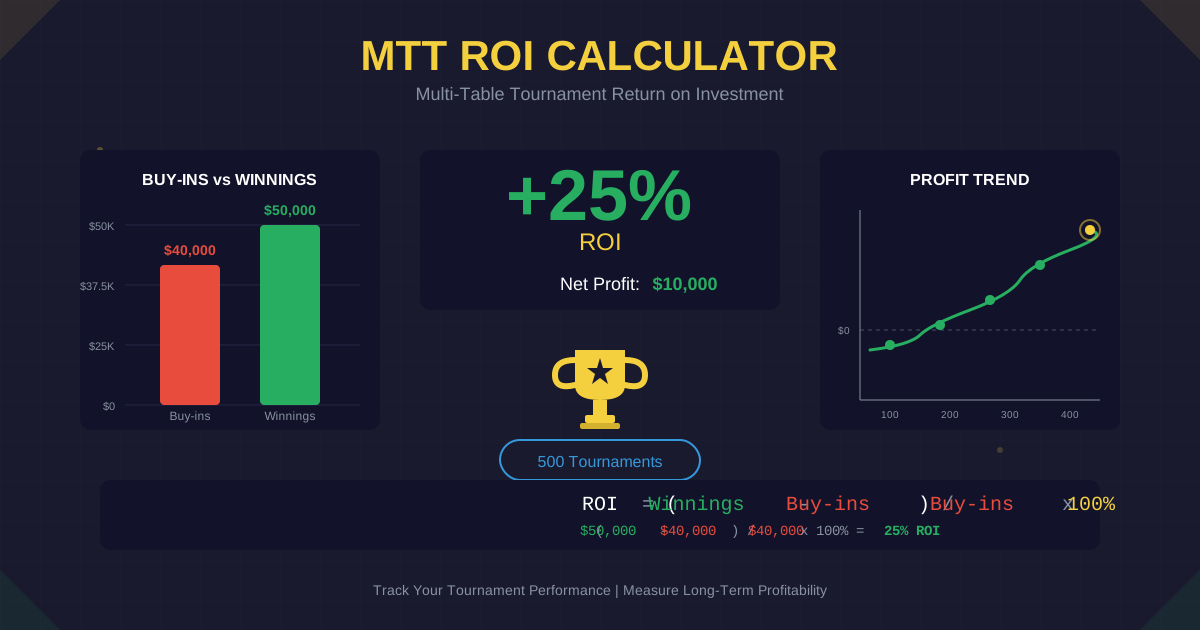
Return on Investment measures your profit as a percentage of total money wagered:
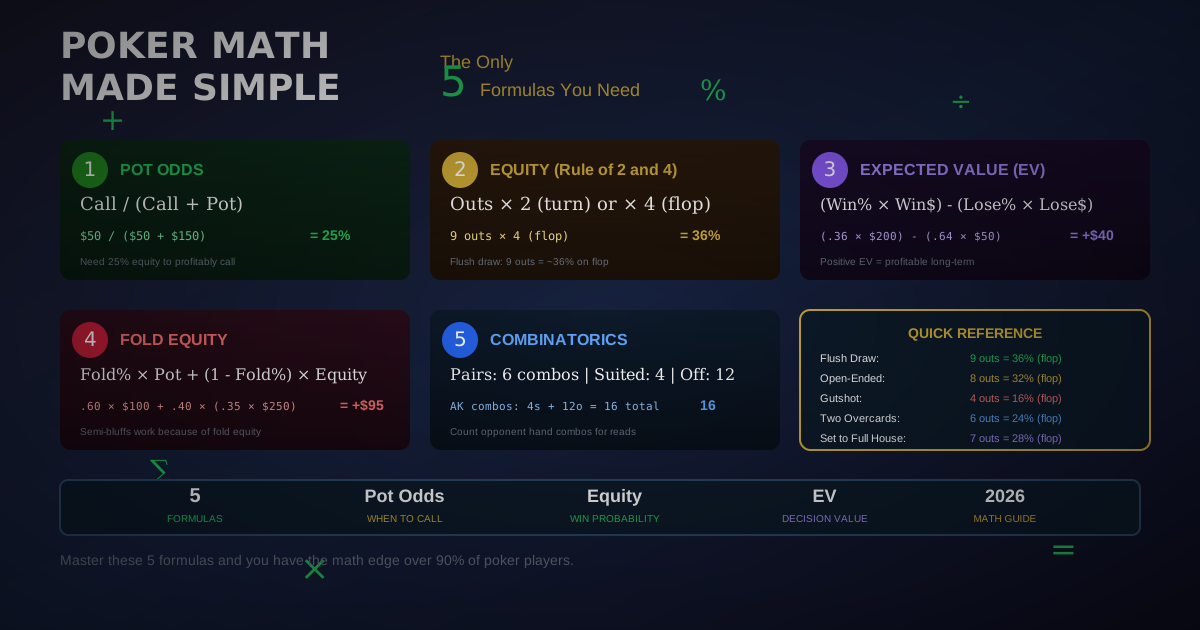
ROI = (Total Profit / Total Amount Wagered) x 100
This differs from simple win/loss tracking because it accounts for how much money you put at risk.
ROI Calculation Examples
Example 1: Sports Bettor
Over 500 bets:
- Total wagered: $50,000
- Total returned: $51,750
- Total profit: $1,750
ROI = ($1,750 / $50,000) x 100 = 3.5%
A 3.5% ROI in sports betting is excellent. Most sharp bettors target 2-5% long-term ROI.
Example 2: Poker Player
Over 1,000 hours of $1/$2 NL:
- Total buy-ins: $180,000
- Total cash-outs: $196,000
- Total profit: $16,000
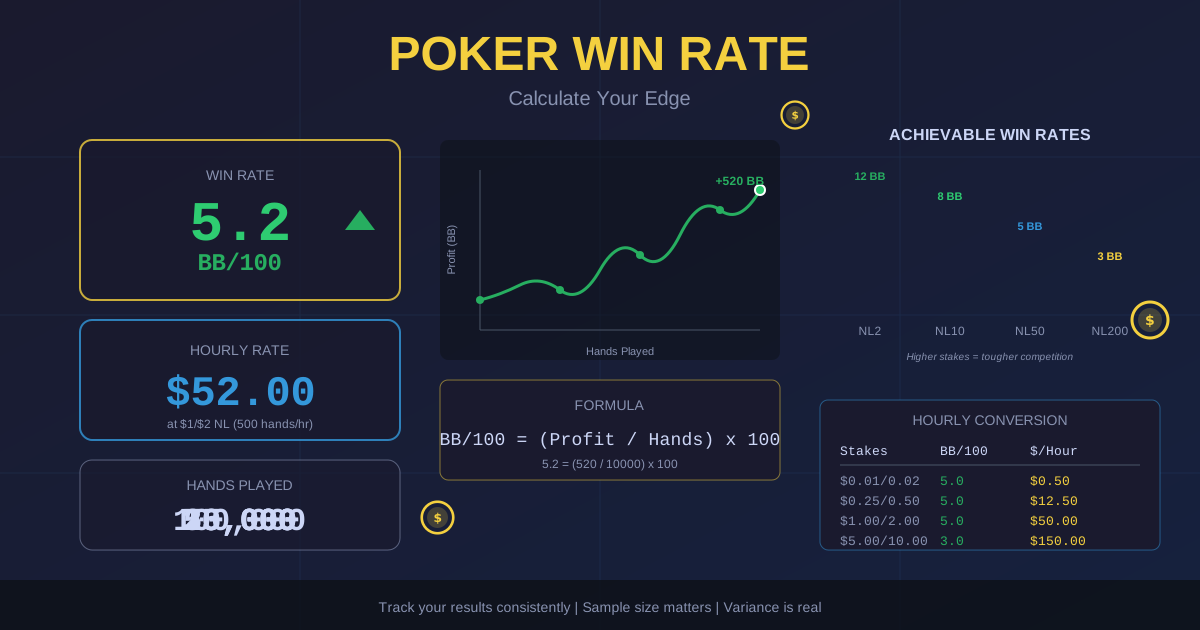
For poker, hourly rate is more useful than ROI: Hourly Rate = $16,000 / 1,000 hours = $16/hour
Calculate your exact hourly rate with our Poker Hourly Rate Calculator.
Example 3: Horse Racing Bettor
Over 1 year:
- Total wagered: $25,000
- Total returned: $23,500
- Total profit: -$1,500
ROI = (-$1,500 / $25,000) x 100 = -6%
This bettor is losing 6 cents for every dollar wagered. The takeaway: tracking revealed a leak that "feeling lucky" never would.
ROI Benchmarks by Gambling Type
| Gambling Type | Losing | Break-Even | Solid | Elite |
|---|---|---|---|---|
| Sports Betting | < -3% | -1% to 1% | 2-5% | 5%+ |
| Poker (BB/100) | < -3 BB | -1 to 1 BB | 3-7 BB | 8+ BB |
| Poker ($/hr at $1/$2) | < $0 | $0-$5 | $10-$25 | $25+ |
| Horse Racing | < -10% | -5% to 0% | 1-5% | 5%+ |
| Blackjack (card counting) | N/A | -0.5% to 0% | 0.5-1.5% | 1.5%+ |
| DFS | < -5% | -2% to 2% | 5-15% | 15%+ |
Run the numbers on your exact poker performance with our Poker ROI Calculator.
Hourly Rate Analysis: What Is Your Time Actually Worth?
Why Hourly Rate Matters More Than Total Profit
A poker player who makes $50,000 per year sounds impressive until you learn they play 60 hours per week. That is $16/hour -- less than many regular jobs. Hourly rate puts your gambling results in the context of opportunity cost.
Calculating True Hourly Rate
Hourly Rate = Net Profit / Total Hours Played
But be honest about "total hours." Include:
- Time at the table/screen
- Travel time to casinos
- Time spent studying, reviewing hands, building models
- Time managing bankroll, deposits, withdrawals
- Time spent on tracking and analysis
Example: Realistic Poker Hourly Rate
- Table time: 800 hours
- Travel: 100 hours
- Study: 150 hours
- Admin: 50 hours
- Total: 1,100 hours
- Net profit: $22,000
Apparent hourly rate: $22,000 / 800 = $27.50/hr True hourly rate: $22,000 / 1,100 = $20/hr
That 27% difference matters when comparing gambling income to employment alternatives.
Get an accurate picture with our Poker Hourly Rate Calculator.
Sample Size: When Are Your Results Statistically Significant?
The Critical Question Most Gamblers Ignore
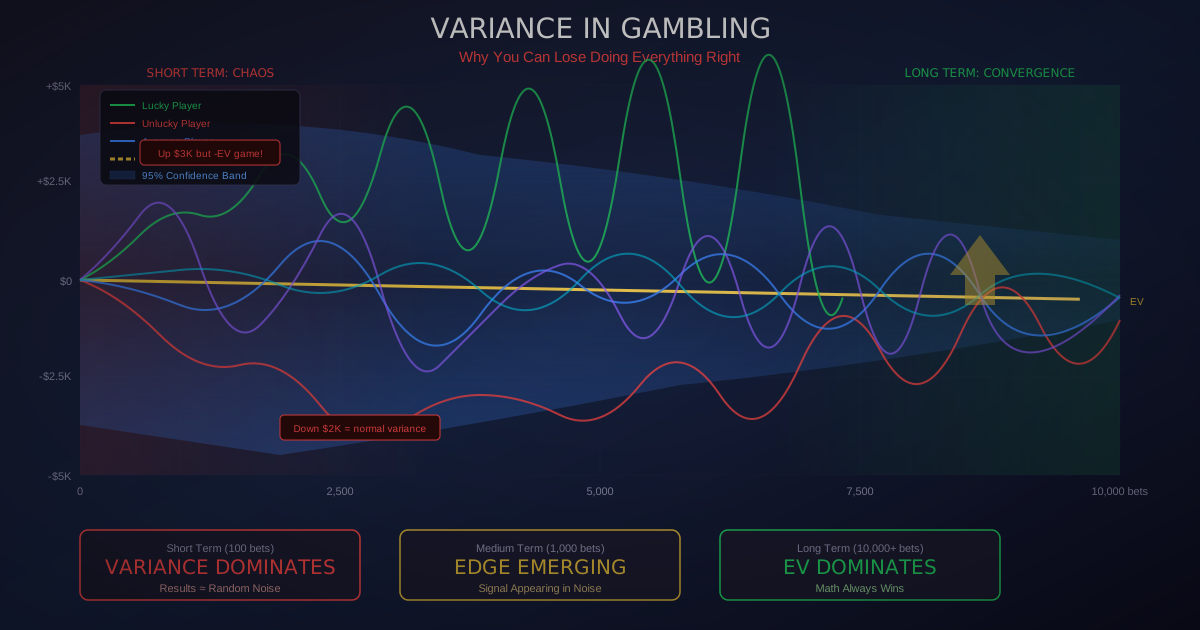
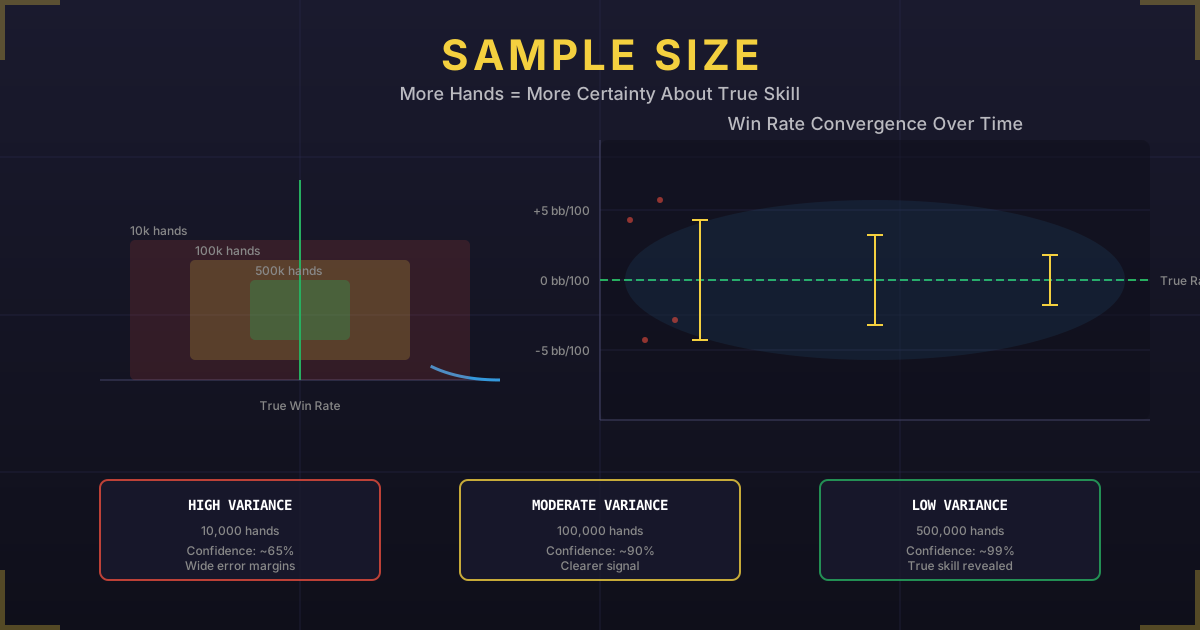
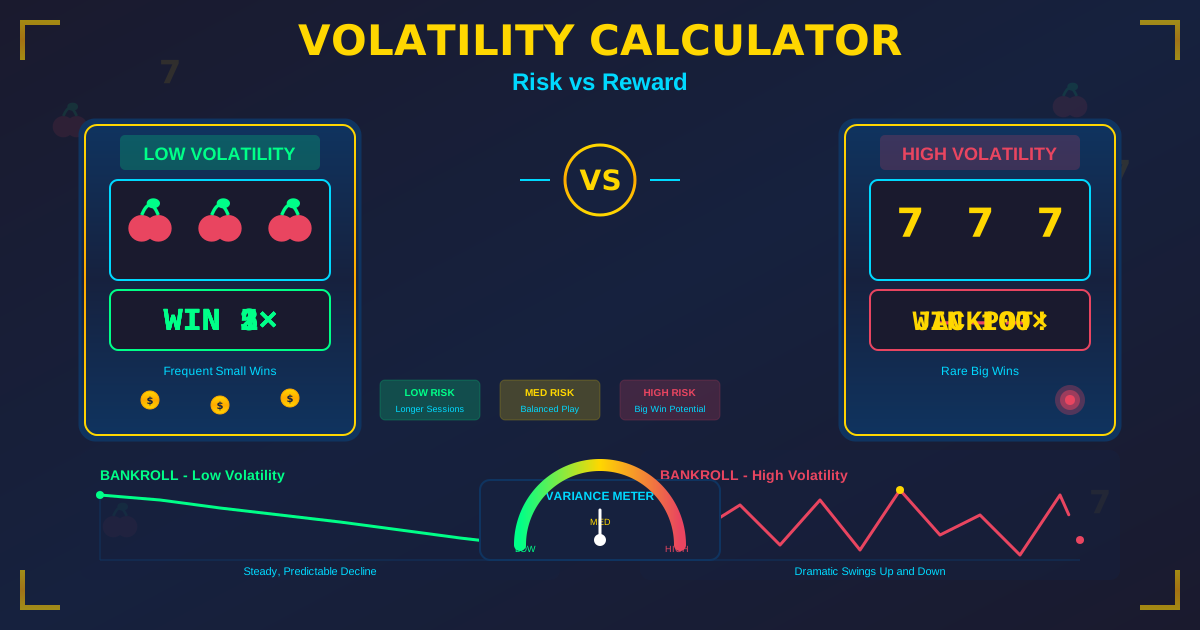
Here is the uncomfortable truth: most gamblers do not have enough data to know if they are winning. Variance (luck) dominates short-term results in virtually every form of gambling.
Minimum Sample Sizes by Activity
| Activity | Minimum for Significance | Ideal Sample Size |
|---|---|---|
| Sports Betting (spreads) | 1,000 bets | 2,500+ bets |
| Sports Betting (moneylines) | 500 bets | 1,500+ bets |
| Poker (cash games) | 50,000 hands | 100,000+ hands |
| Poker (tournaments) | 1,000 tournaments | 3,000+ tournaments |
| Horse Racing | 500 bets | 2,000+ bets |
| DFS | 500 contests | 2,000+ contests |
| Blackjack (counting) | 200 hours | 500+ hours |
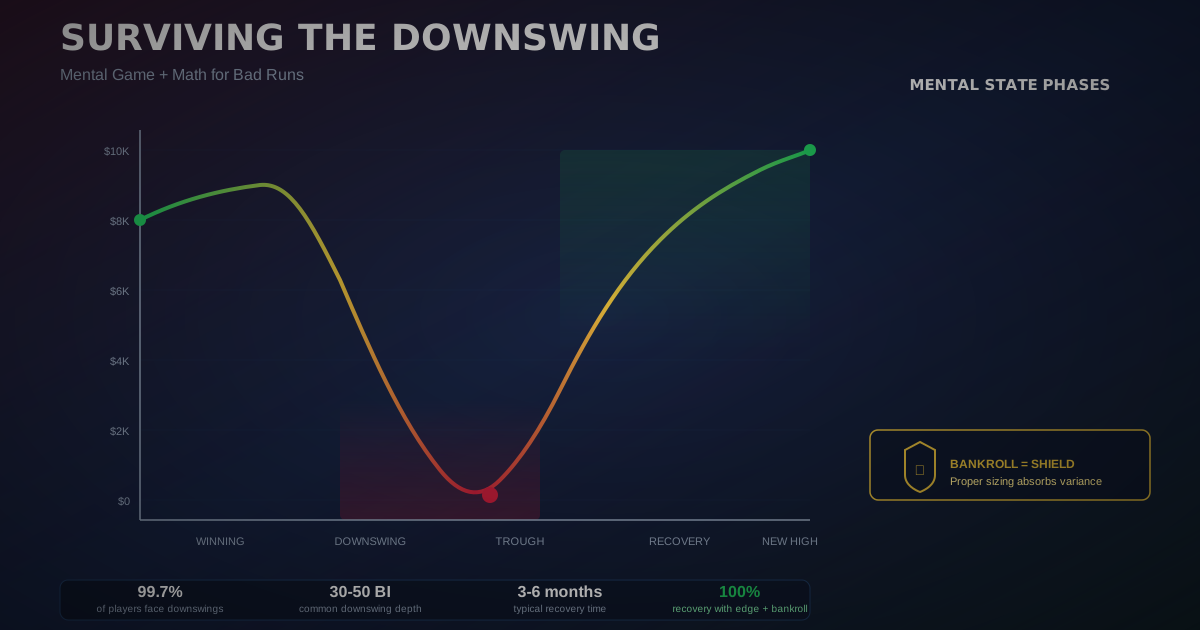
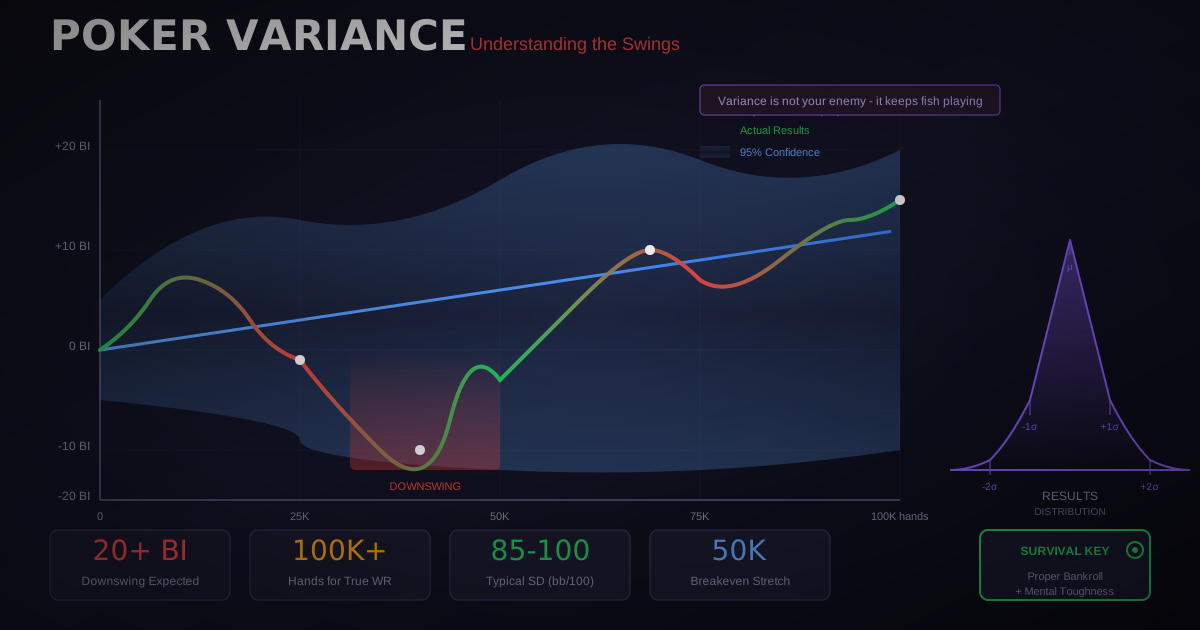
Understanding Variance in Poker
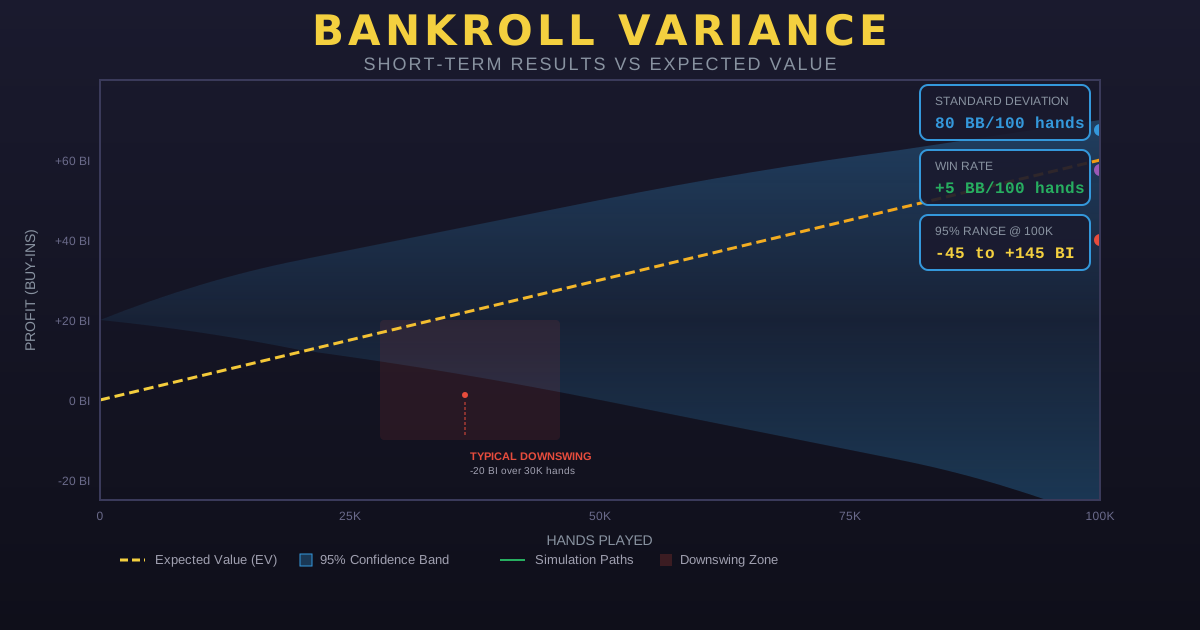
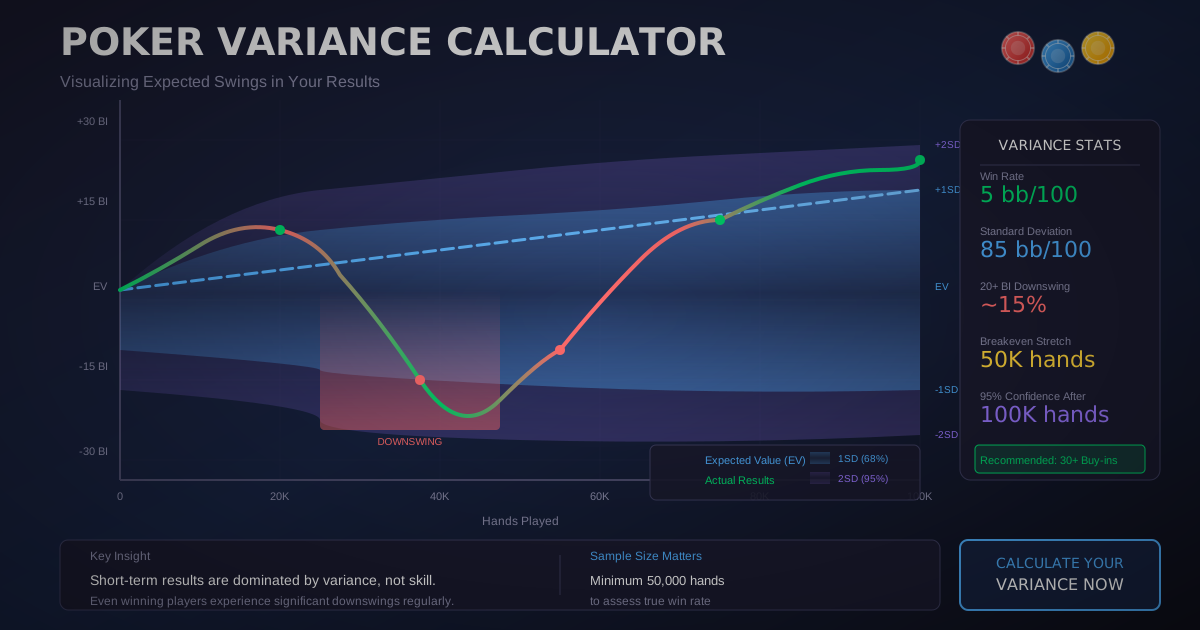
A winning poker player with a 5 BB/100 win rate at $1/$2 NL can still experience:
- 20 buy-in downswings that last thousands of hands
- Losing months that span 40,000+ hands
- Breakeven stretches lasting 100,000+ hands
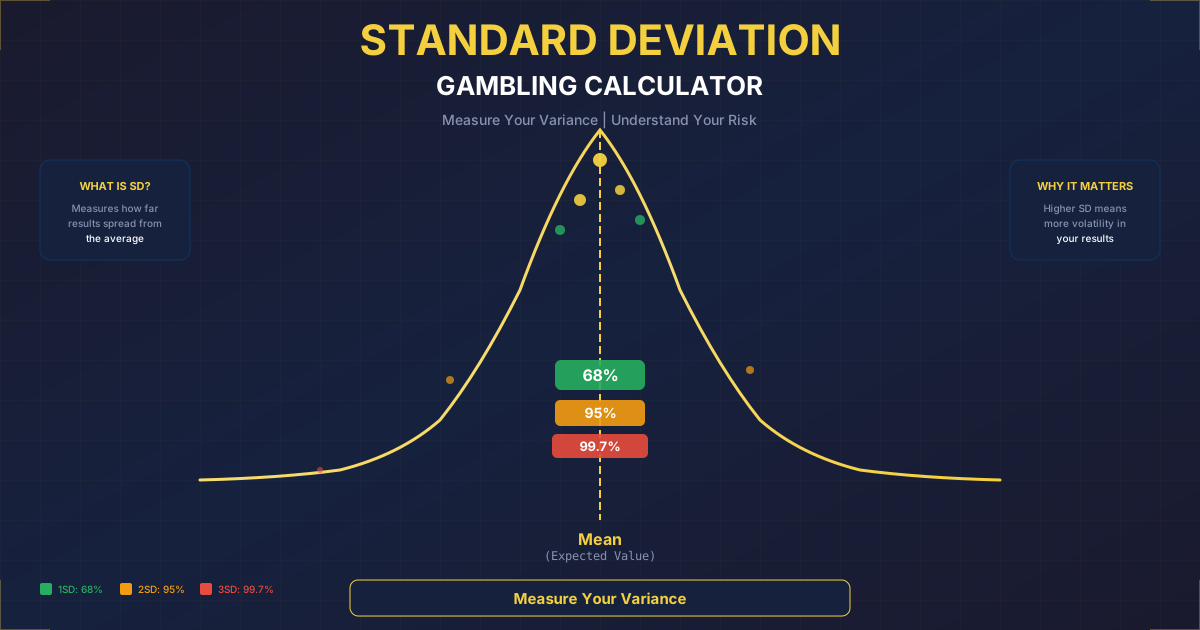
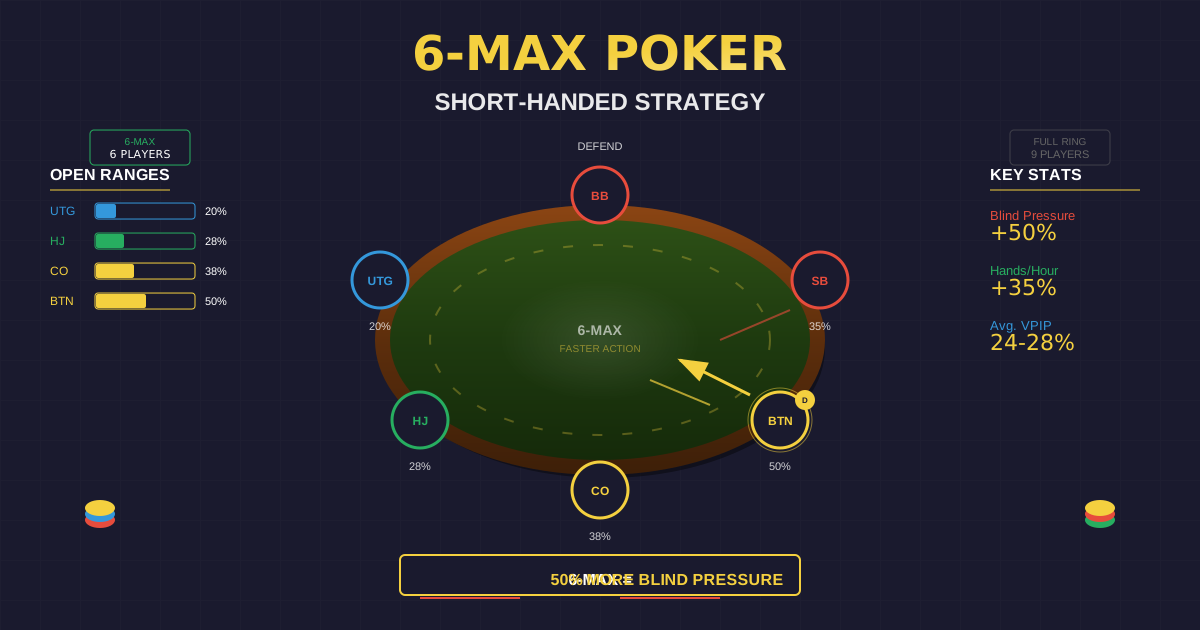
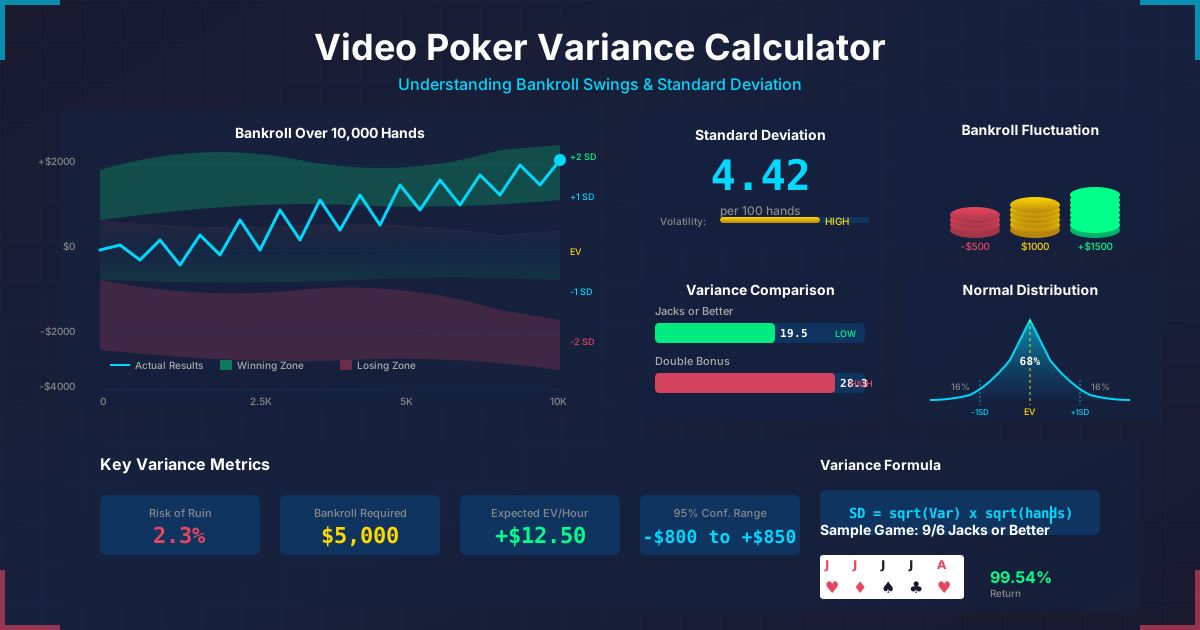
The standard deviation for a typical 6-max player is roughly 75-100 BB/100. With a 5 BB/100 win rate, your results after 10,000 hands could range from -70 BB/100 to +80 BB/100. That is enormous uncertainty.
Visualize your variance and downswing risk with our Poker Variance Calculator.
The Confidence Interval Formula
To determine how confident you can be in your observed win rate:
Confidence Interval = Observed Win Rate +/- (Z x Standard Deviation / sqrt(n))
Where:
- Z = 1.96 for 95% confidence
- Standard Deviation = typical for your game type
- n = number of hands/bets
Example:
- Observed win rate: 7 BB/100 over 25,000 hands
- Standard deviation: 85 BB/100
- Z = 1.96
Margin of error = 1.96 x 85 / sqrt(250) = 1.96 x 85 / 15.81 = 10.53 BB/100
95% confidence interval: 7 +/- 10.53 = -3.53 to 17.53 BB/100
Your true win rate could be anywhere from a significant loser to a massive winner. After only 25,000 hands, you genuinely cannot tell. This is why tracking over long periods is essential.
Check your downswing probability with our Poker Downswing Probability Calculator.
Real-World Tracking Examples
Example 1: The Recreational Poker Player Who Thought He Was Winning
Background: Mike plays $1/$2 NL at his local casino 2-3 times per month. He believes he is a consistent winner and estimates he is up $5,000 over the past year.
After implementing tracking:
| Month | Sessions | Hours | Buy-ins | Cash-outs | Net |
|---|---|---|---|---|---|
| Jan | 3 | 18 | $900 | $1,120 | +$220 |
| Feb | 2 | 14 | $600 | $380 | -$220 |
| Mar | 3 | 20 | $900 | $1,450 | +$550 |
| Apr | 2 | 12 | $600 | $290 | -$310 |
| May | 3 | 16 | $900 | $740 | -$160 |
| Jun | 3 | 21 | $900 | $1,680 | +$780 |
| Jul | 2 | 10 | $600 | $520 | -$80 |
| Aug | 3 | 18 | $900 | $650 | -$250 |
| Sep | 2 | 14 | $600 | $1,100 | +$500 |
| Oct | 3 | 16 | $900 | $730 | -$170 |
| Nov | 2 | 12 | $600 | $880 | +$280 |
| Dec | 3 | 20 | $900 | $1,040 | +$140 |
| Total | 31 | 191 | $8,400 | $9,580 | +$1,180 |
Reality: Mike's actual profit was $1,180, not $5,000. His hourly rate was $6.18/hour. After accounting for gas, food, and tips, he was essentially breaking even. The data did not lie -- his memory did.
Example 2: The Sports Bettor Who Discovered CLV
Background: Sarah bets NFL spreads and totals, averaging 10 bets per week during the season.
Season tracking results (300 bets):
- Win rate: 52.8% against the spread
- ROI: +1.2%
- Average CLV: +1.8%
Sarah's 52.8% win rate was slightly above the 52.4% breakeven point for -110 bets, but with only 300 bets, variance could explain her results entirely. However, her CLV of +1.8% told a more compelling story: she was consistently getting better numbers than the closing line, suggesting genuine skill in line shopping and timing.
Track your closing line value with our CLV Tracker.
Example 3: The Advantage Player Who Used Tracking to Find Leaks
Background: Tom is a semi-professional poker player grinding $2/$5 NL. His tracking data over 500 hours showed an overall win rate of $22/hour. But when he segmented his data, he found something alarming:
| Session Type | Hours | Hourly Rate |
|---|---|---|
| Weekday afternoon | 180 | +$38/hr |
| Weekday evening | 150 | +$25/hr |
| Weekend evening | 120 | +$8/hr |
| After midnight | 50 | -$15/hr |
Tom was a strong winner during weekday sessions when the competition was weaker, but a significant loser in late-night sessions -- likely due to fatigue and tougher weekend lineups. Without tracking, he never would have identified this $15/hour leak.
Example 4: The Horse Racing Bettor Who Changed Strategy
Background: Janet bets horses at her local track, primarily win bets. Her 6-month data:
| Bet Type | Bets | Wagered | Returned | ROI |
|---|---|---|---|---|
| Win bets (favorites) | 150 | $7,500 | $6,900 | -8.0% |
| Win bets (longshots) | 80 | $4,000 | $4,280 | +7.0% |
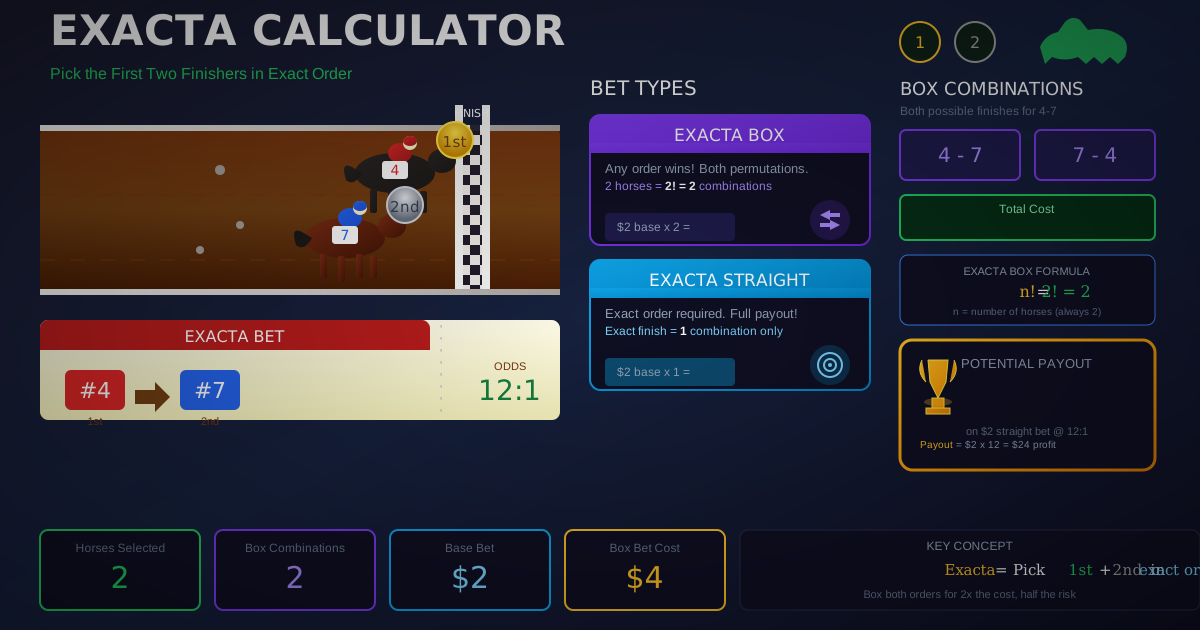
| Exacta boxes | 60 | $3,600 | $3,100 | -13.9% |
| Trifecta boxes | 40 | $2,400 | $1,800 | -25.0% |
Key insight: Janet's longshot win bets were her only profitable category, while her exotic bets were hemorrhaging money. She eliminated exacta and trifecta betting and focused exclusively on win bets at 5-1 odds or higher. Her subsequent 6-month ROI improved to +3.2%.
Building Your Tracking System
Option 1: Spreadsheet Method
A simple spreadsheet works for most recreational gamblers. Here is the structure:
Poker Tracking Sheet Columns: Date | Start Time | End Time | Hours | Game | Stakes | Location | Buy-in | Cash-out | Profit/Loss | Running Total | Notes
Sports Betting Sheet Columns: Date | Sport | League | Bet Type | Selection | Odds | Closing Odds | Stake | Result | P/L | Running Total | CLV | Book | Notes
Option 2: Dedicated Tracking Tools
For more serious tracking with automatic calculations:
Use our Poker Session Tracker for automatic hourly rate, ROI, and trend analysis.
Use our Poker ROI Calculator to calculate return on investment from your session data.
Key Metrics to Monitor Monthly
- Net profit/loss -- the bottom line
- ROI percentage -- efficiency of your wagering
- Hourly rate -- what your time is worth
- Win rate by category -- where you excel and where you leak
- Variance metrics -- is your sample size meaningful?
- Bankroll trajectory -- trending up or down?
Understanding When Your Results Are Meaningful
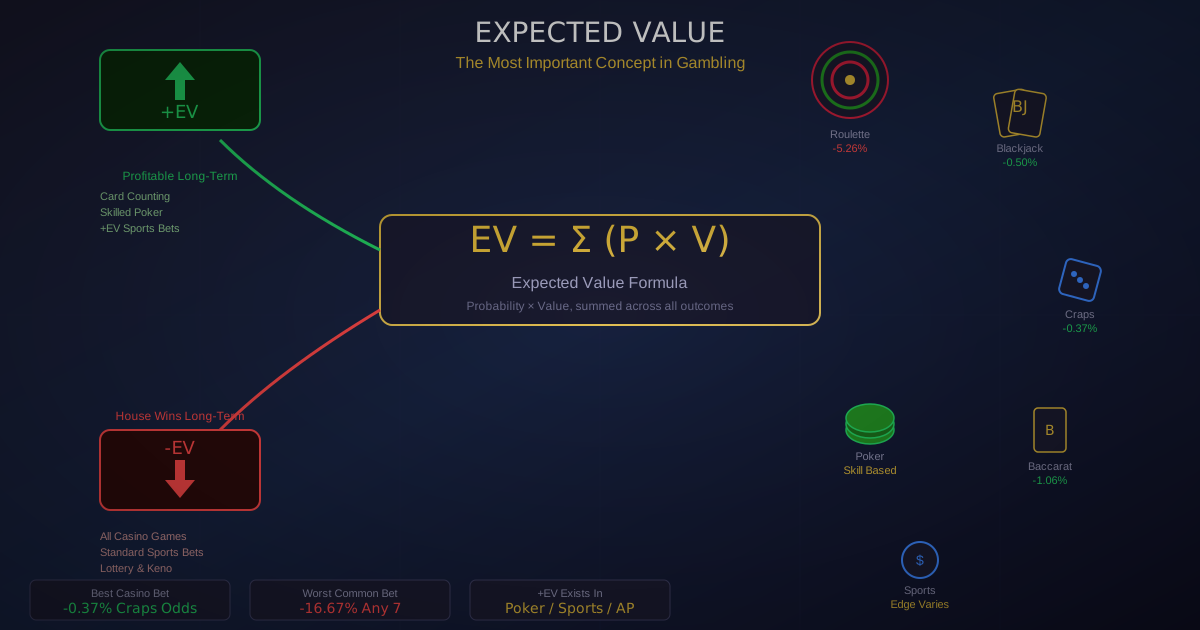
The Expected Value Framework
Before trusting your results, calculate whether your observed performance could be attributed to luck alone.
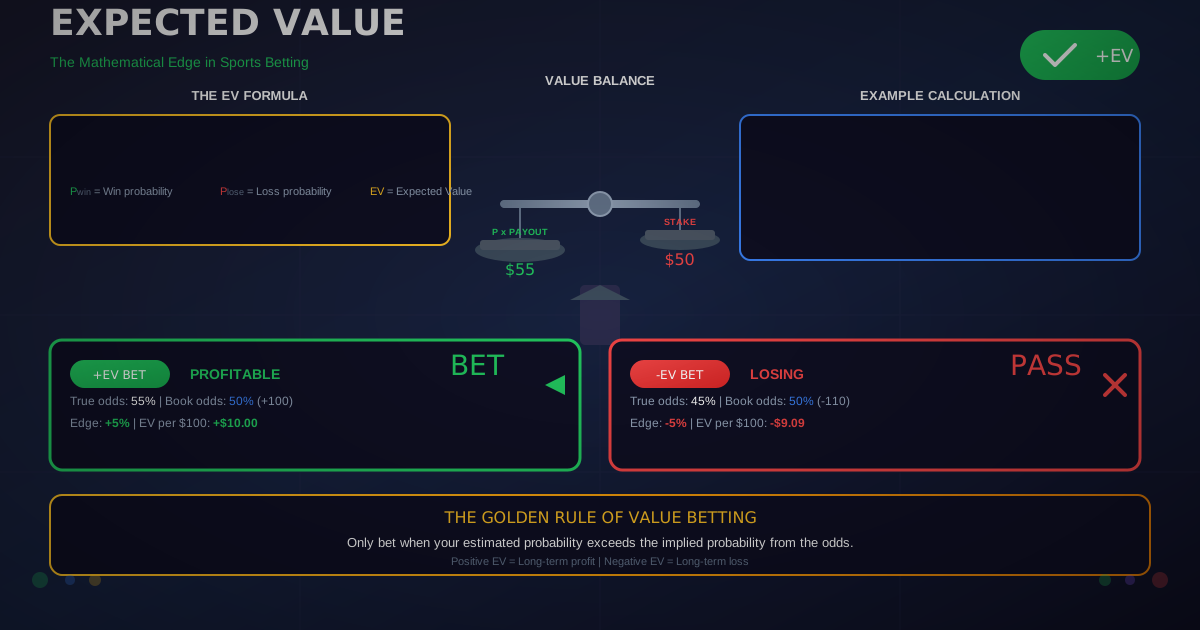
Step 1: Calculate your expected value per bet/hand using our Expected Value Calculator.
Step 2: Determine the standard deviation for your activity. For sports betting at -110 odds:
Standard Deviation per bet = Stake x sqrt(p x (1-p)) / p
Where p = your actual win probability.
Step 3: Calculate how many bets you need for statistical significance:
Required Bets = (Z x SD / Margin)^2
For 95% confidence that you are a 3% ROI bettor: Required bets = (1.96 x 1.0 / 0.03)^2 = approximately 4,268 bets
This means you need thousands of bets before you can confidently say your ROI is not just noise.
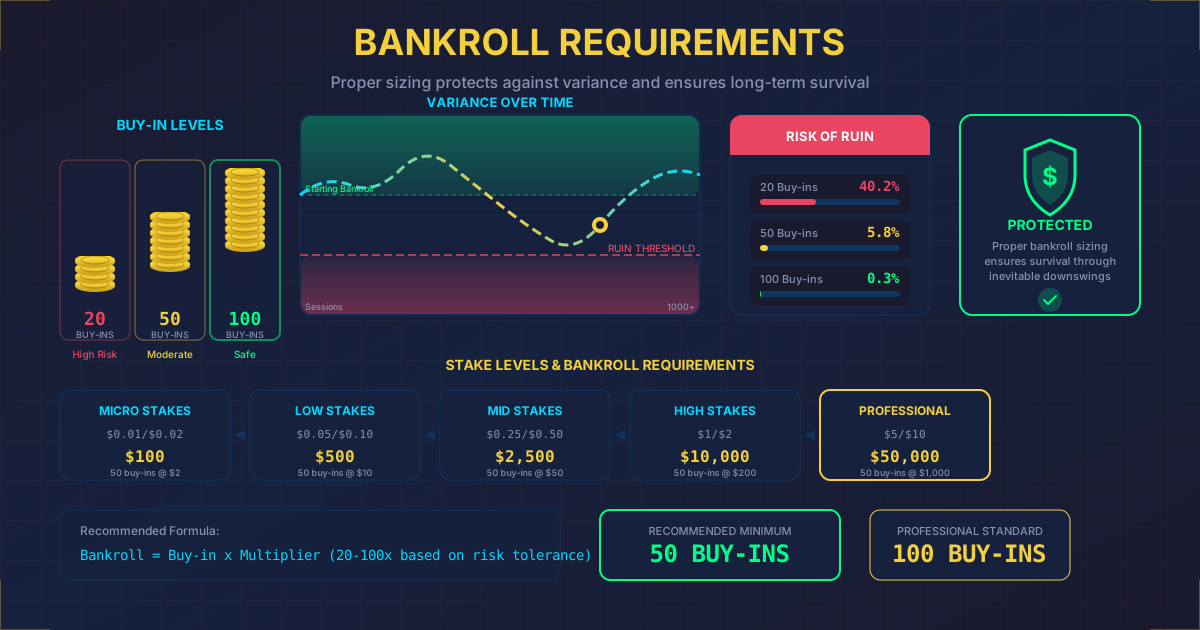
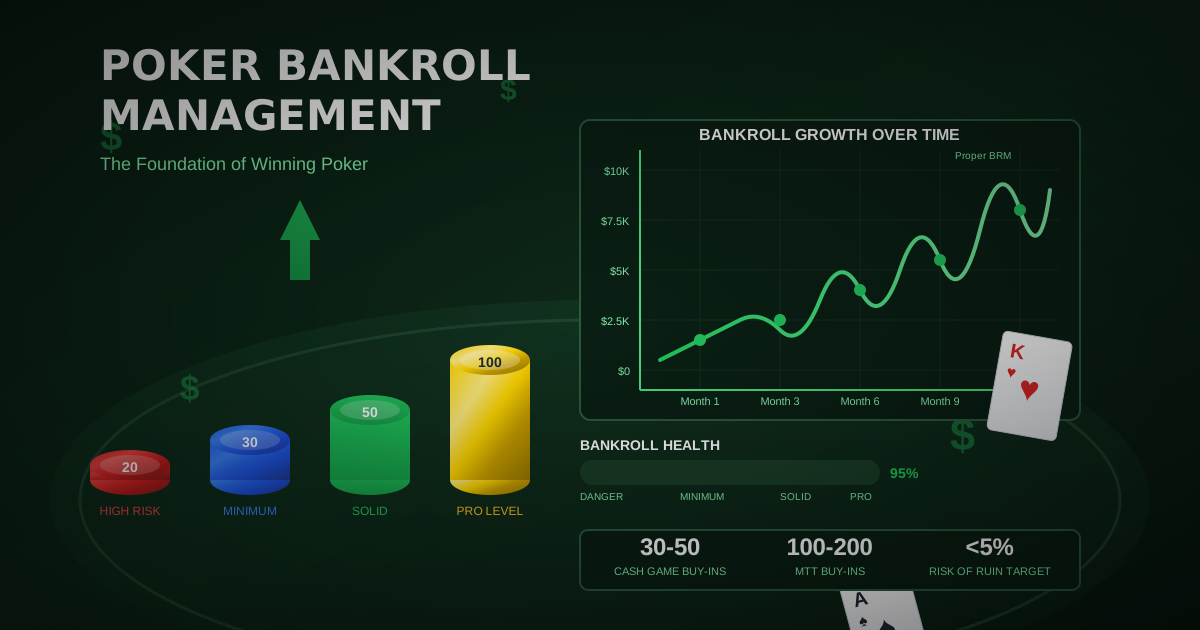
Bankroll Volatility and Risk
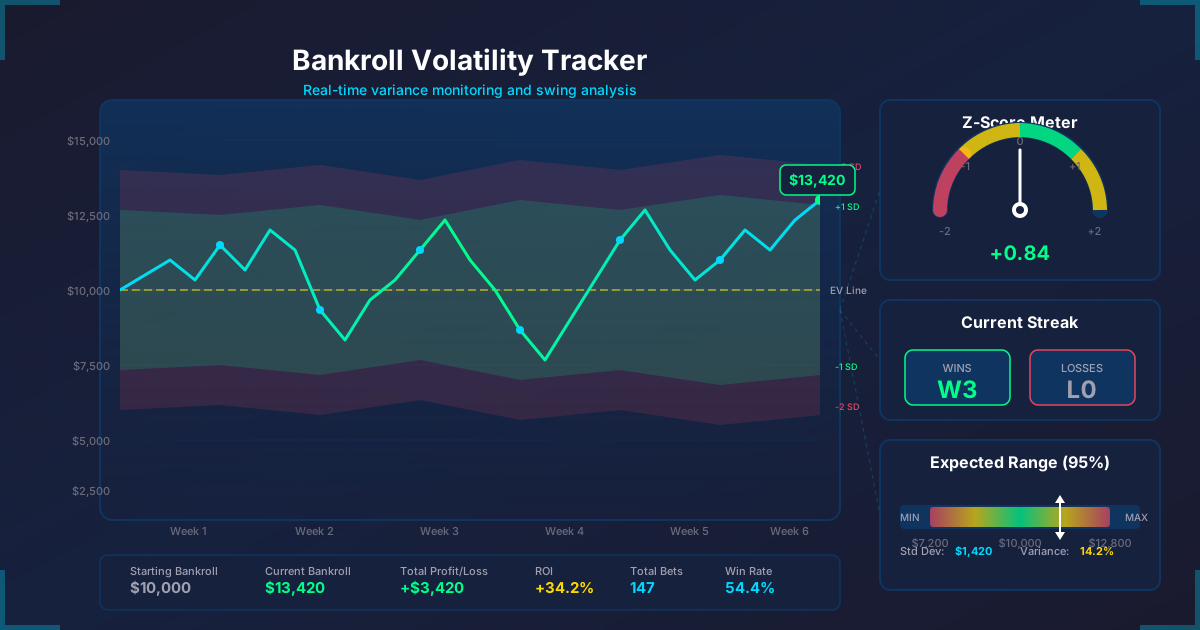
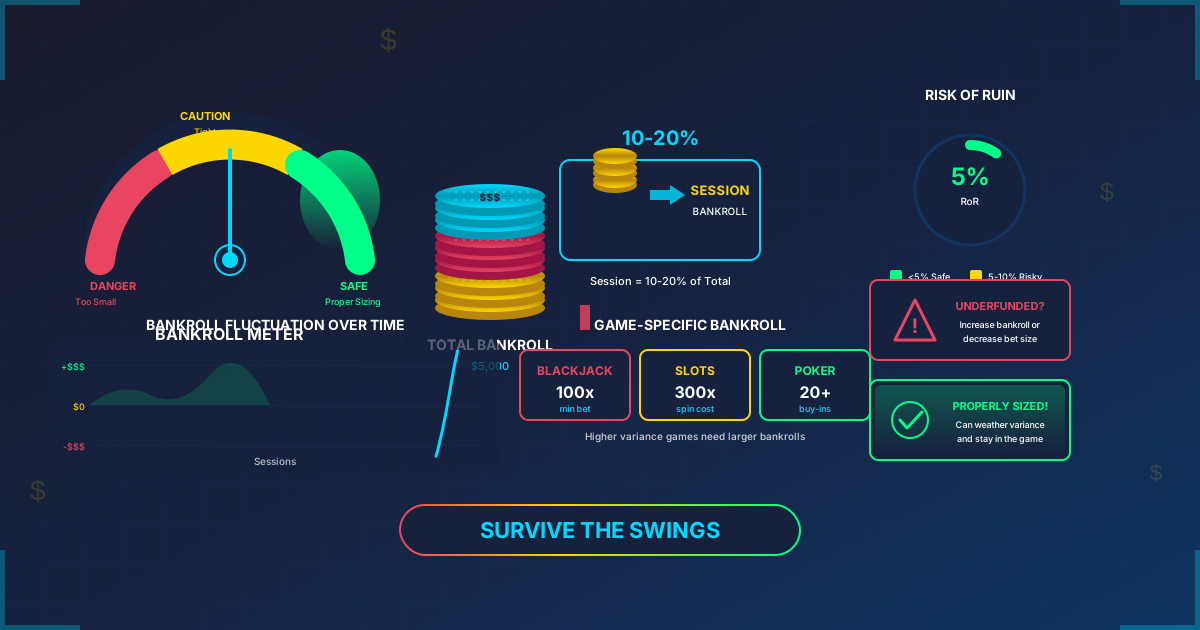
Even with a genuine edge, volatility can wipe out an underfunded bankroll. Track your bankroll swings relative to:
- Maximum drawdown from peak
- Current bankroll vs. recommended bankroll for your stakes
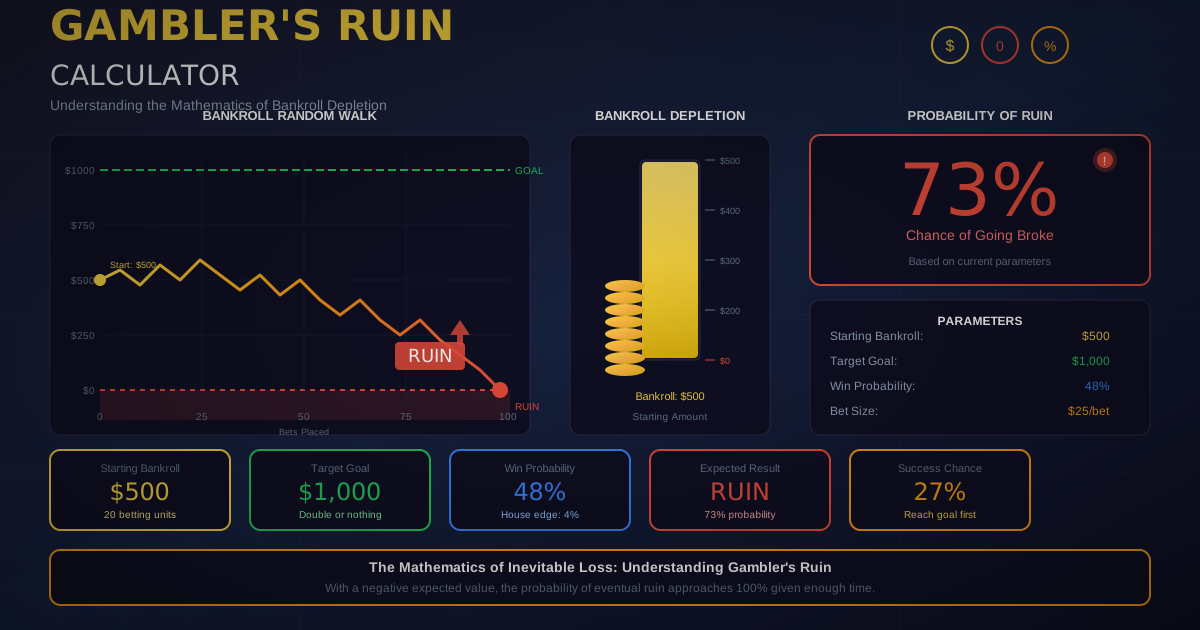
- Risk of ruin percentage at current bankroll level
Monitor your bankroll swings with our Bankroll Volatility Tracker.
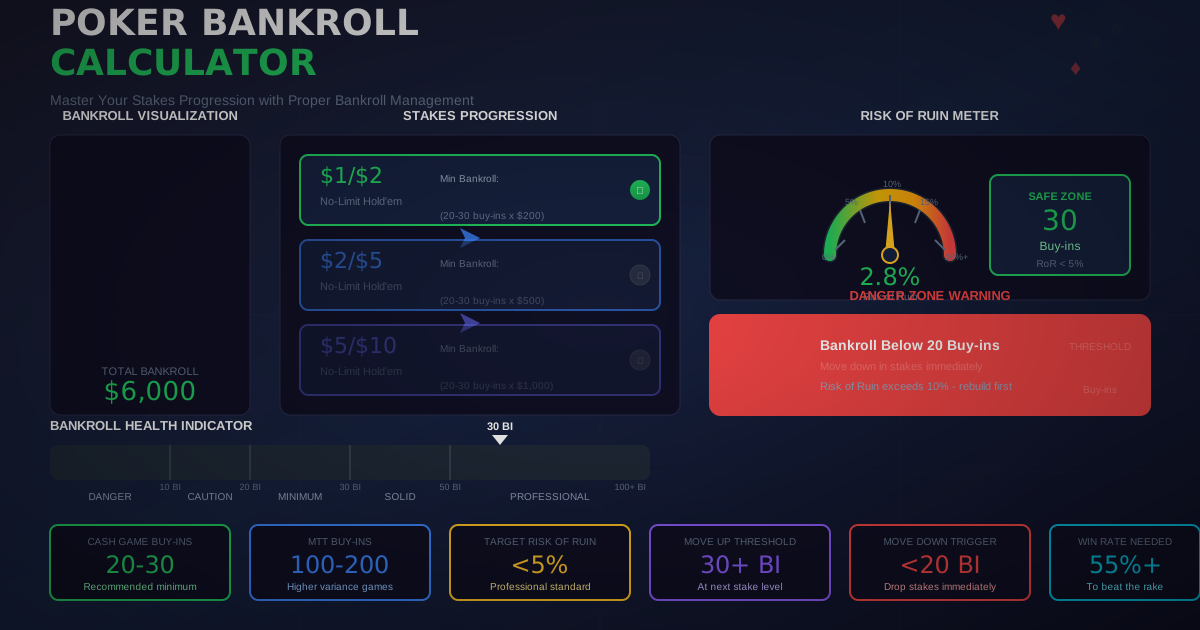
Calculate proper bankroll requirements with our Poker Bankroll Requirements Calculator.
Assess your risk of ruin with our Poker Risk of Ruin Calculator.
Advanced Tracking Metrics
Expected Value per Bet
Track not just your actual results but your expected results. For every bet, record:
- The odds you got
- Your estimated true probability
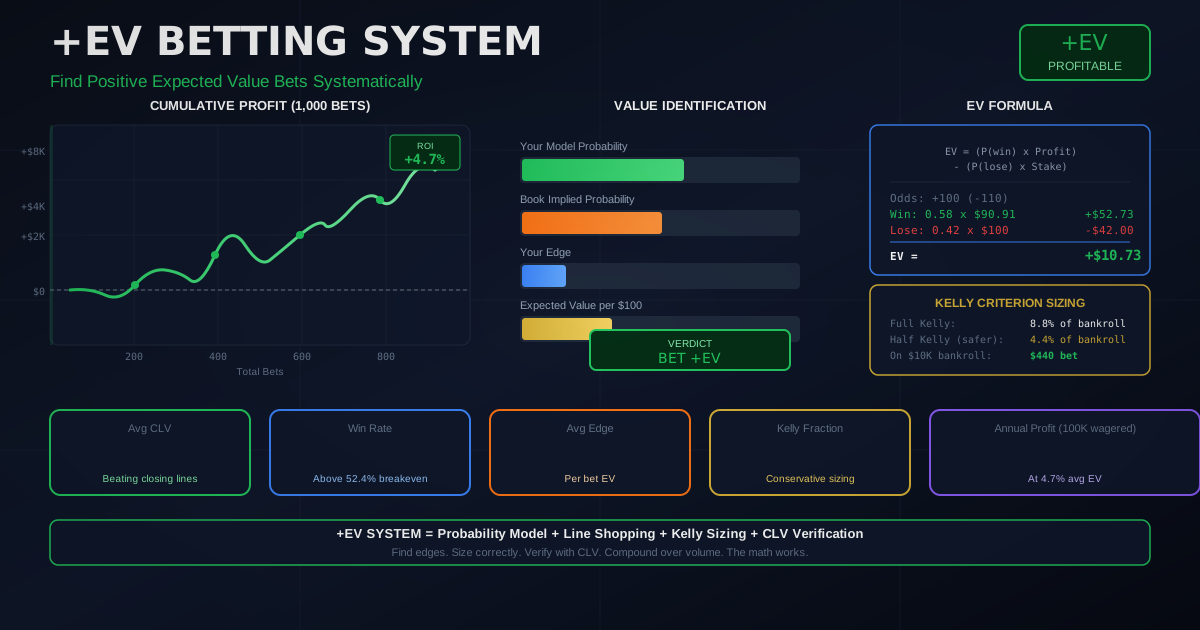
- The calculated EV
Over time, your cumulative EV line should trend upward if you are finding genuine value. If your actual results significantly exceed your EV, you are running above expectation (and should not increase stakes based on lucky results).
Calculate EV for any bet with our Poker EV Calculator.
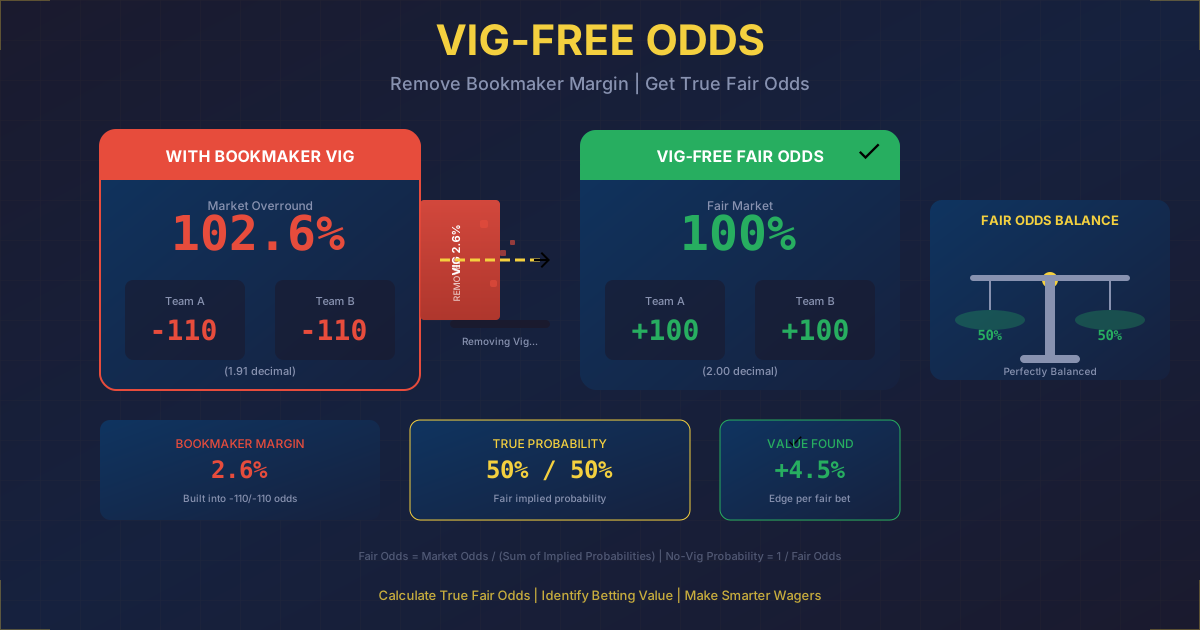
Vig Analysis
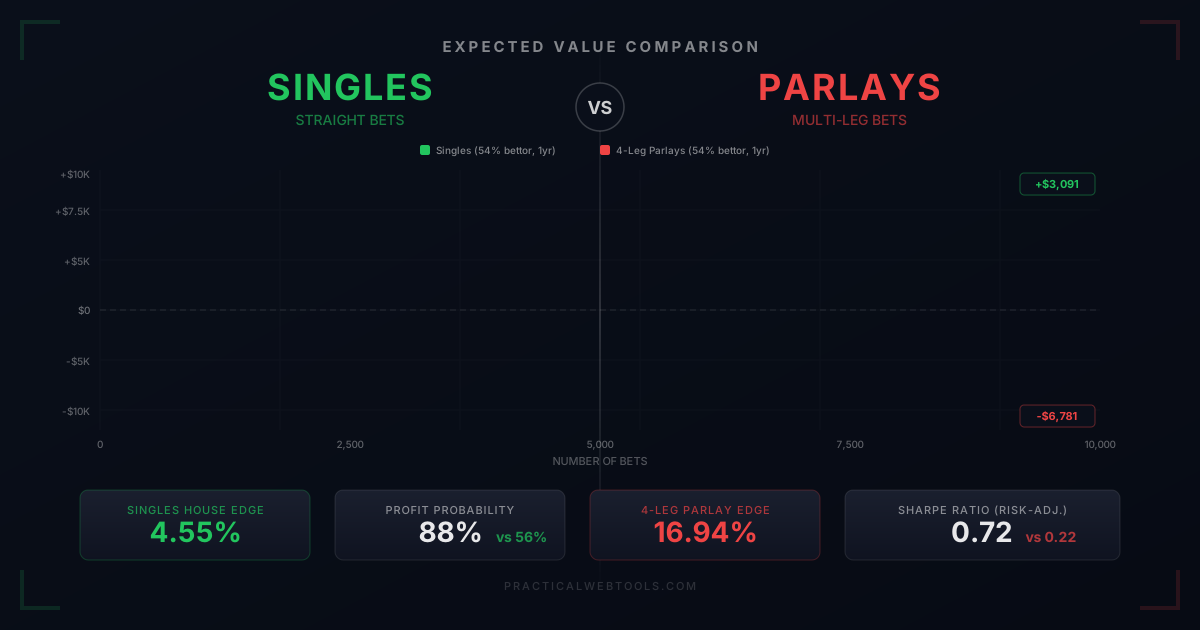
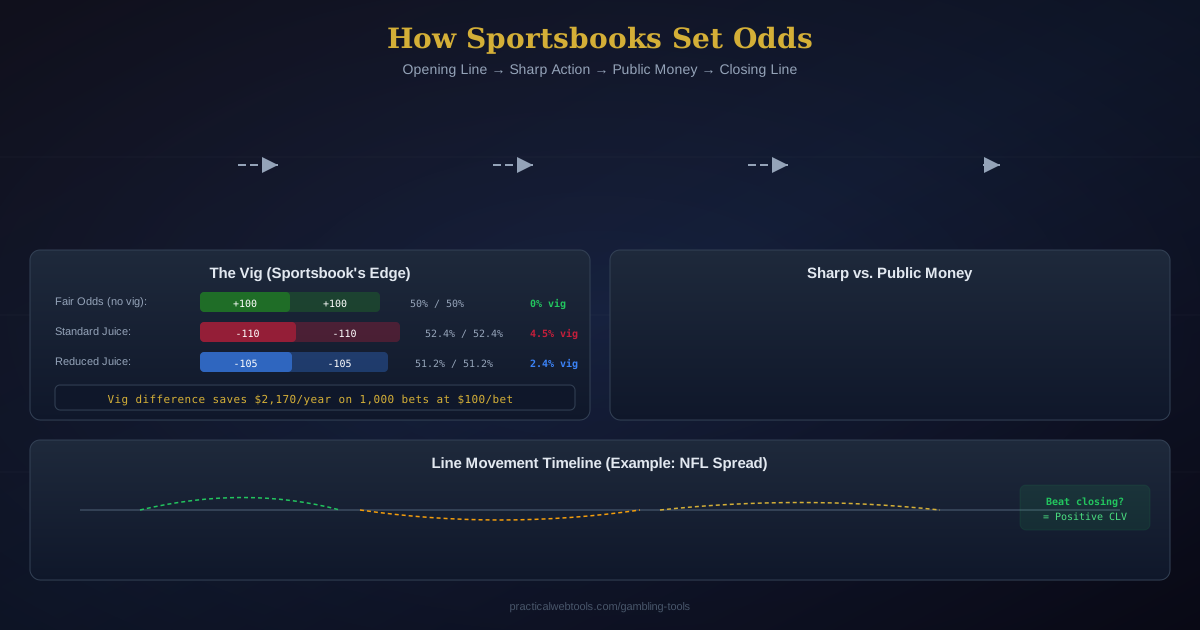
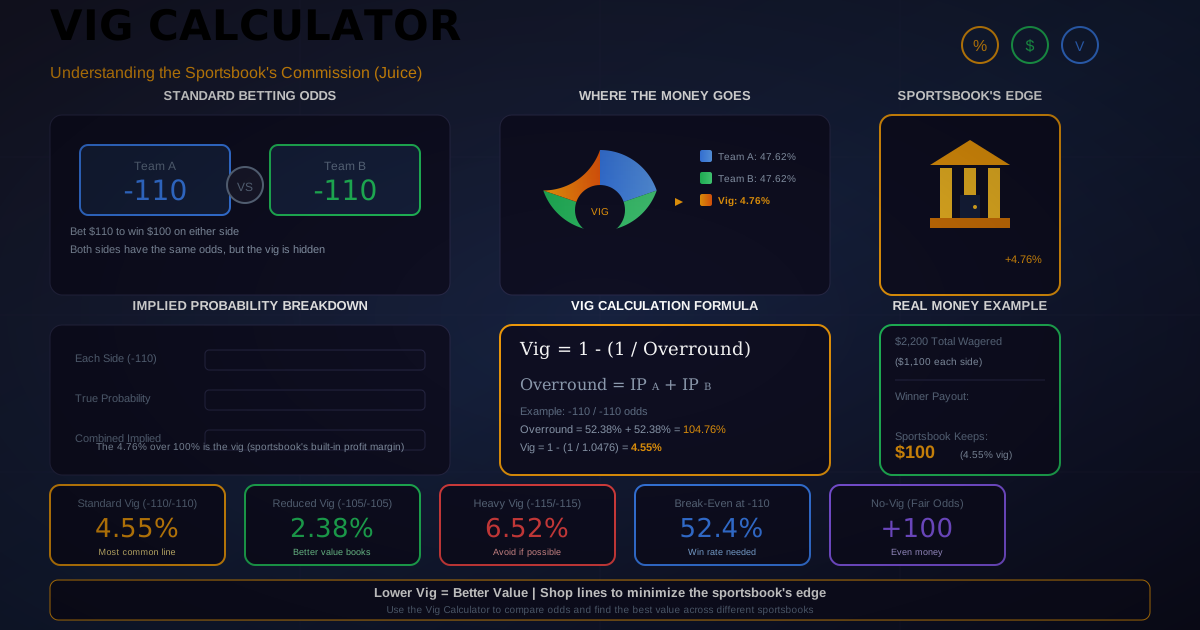
For sports bettors, tracking the vig you pay helps identify which sportsbooks offer better value:
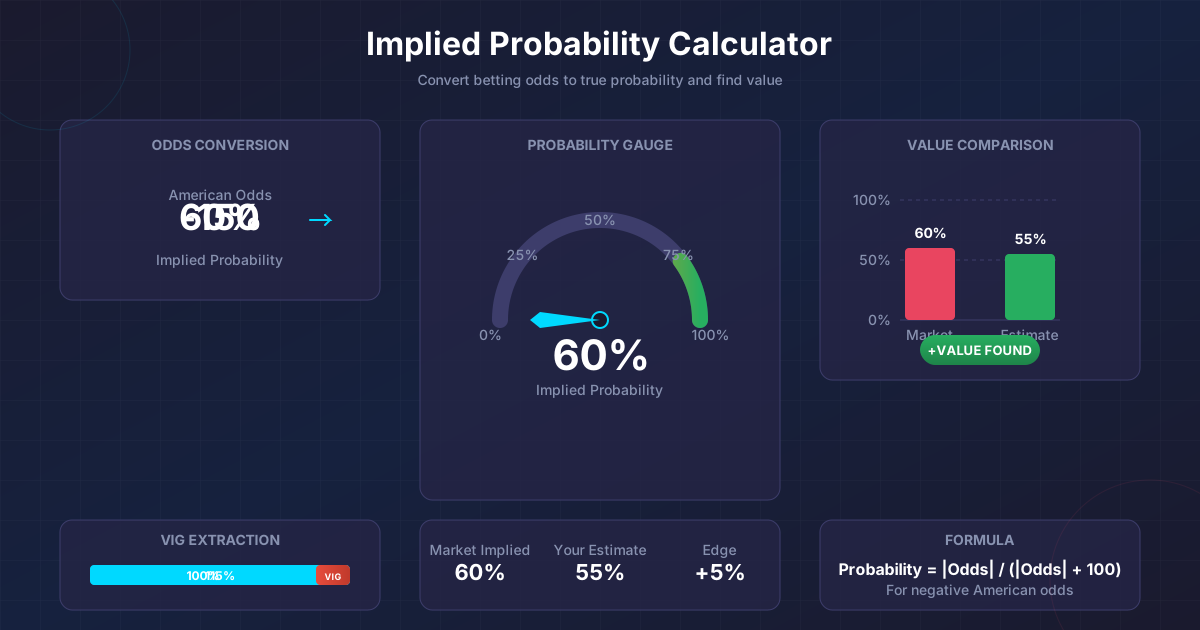
Vig = (1/Decimal Odds Team A + 1/Decimal Odds Team B) - 1
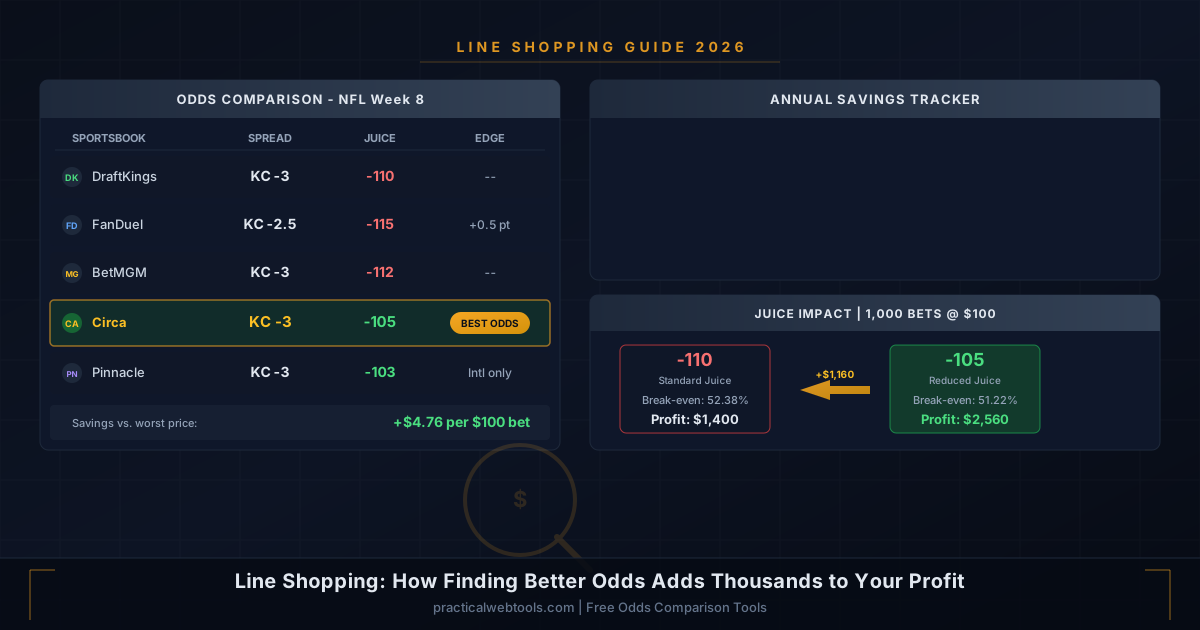
A standard -110/-110 line has 4.5% vig. If you can find -105/-105 lines (2.4% vig), you save 2.1% on every bet -- a massive edge improvement.
Calculate vig on any line with our Hold/Vig Calculator.
Optimal Bet Sizing
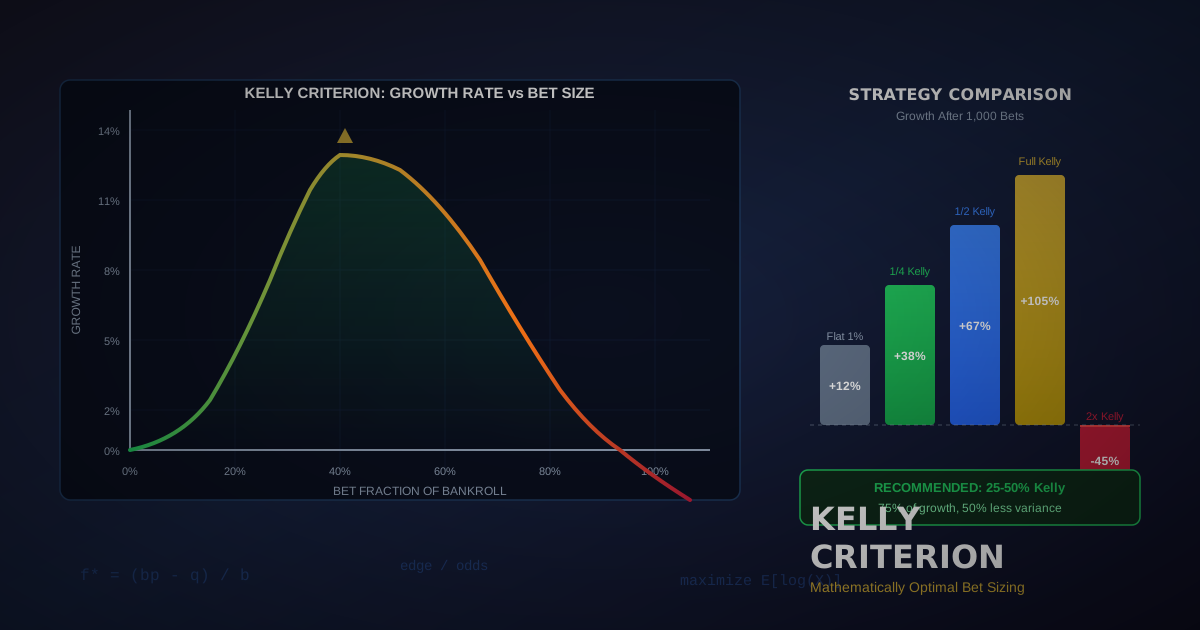
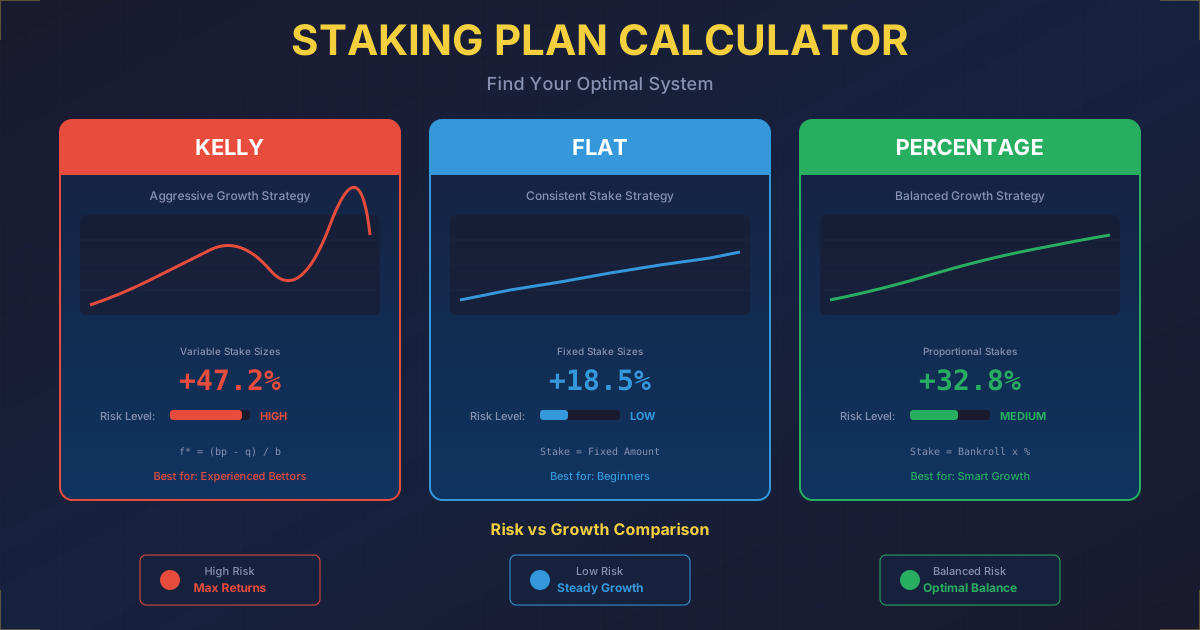
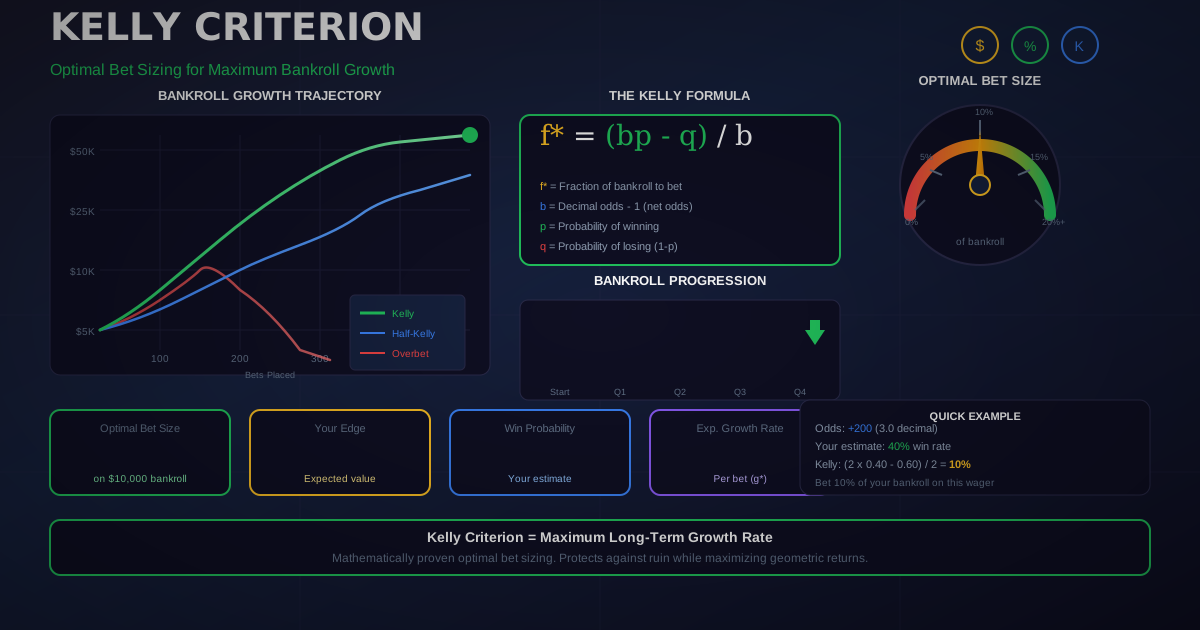
Once you have confirmed a positive expected value, the Kelly Criterion determines optimal bet sizing:
Kelly % = (bp - q) / b
Where:
- b = decimal odds - 1
- p = probability of winning
- q = probability of losing (1 - p)
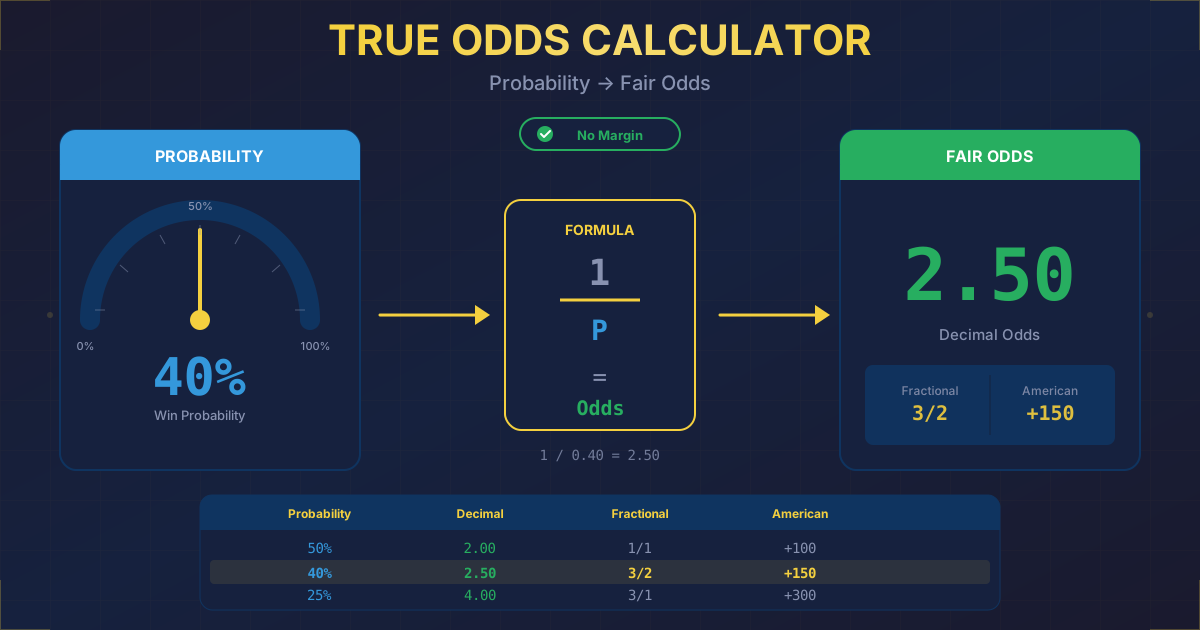
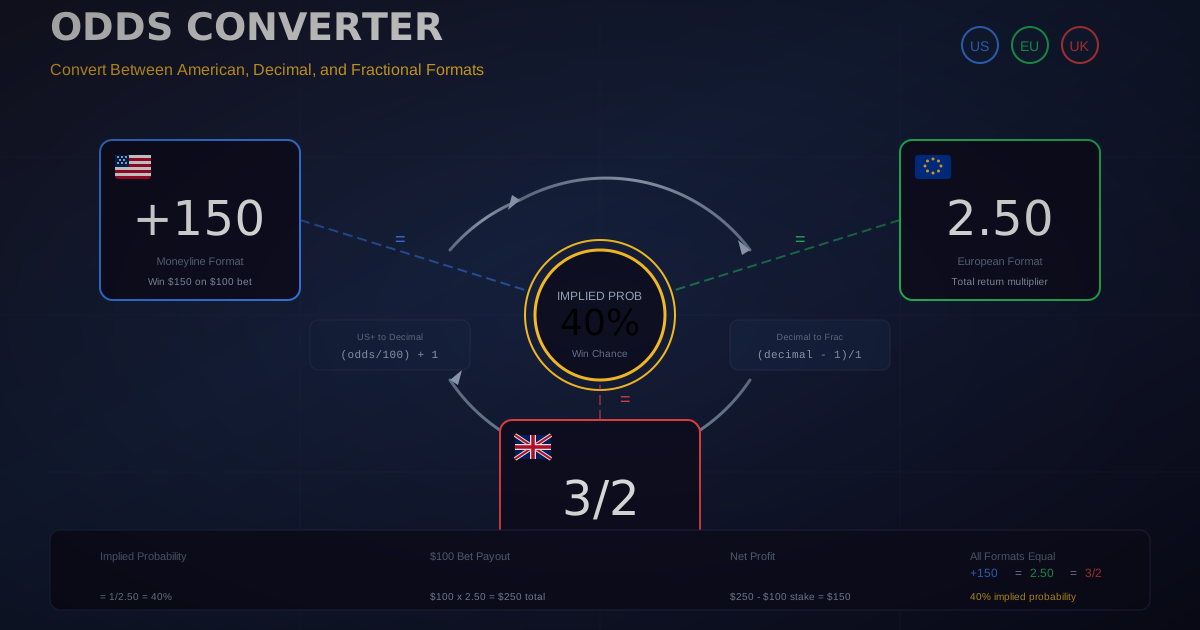
Example: You believe a +150 bet has a 45% chance of winning.
- b = 2.50 - 1 = 1.50
- p = 0.45
- q = 0.55
Kelly % = (1.50 x 0.45 - 0.55) / 1.50 = (0.675 - 0.55) / 1.50 = 0.125 / 1.50 = 8.33%
Most professionals use fractional Kelly (25-50% of full Kelly) to reduce variance.
Calculate optimal bet sizes with our Kelly Criterion Calculator.
Rakeback and Effective Win Rate
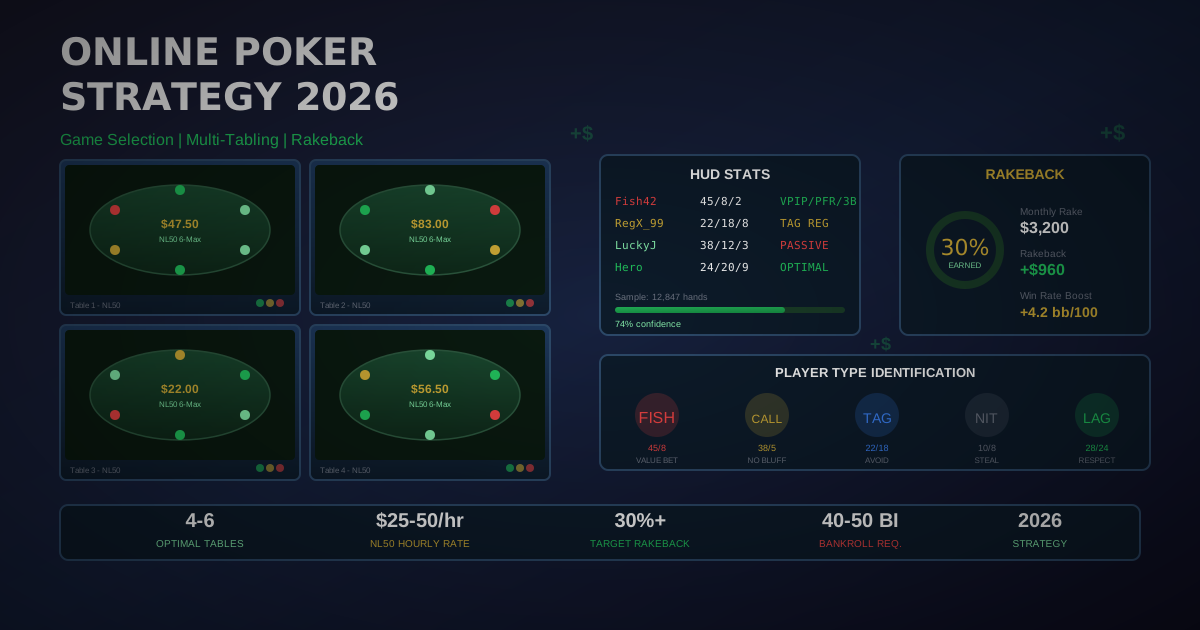
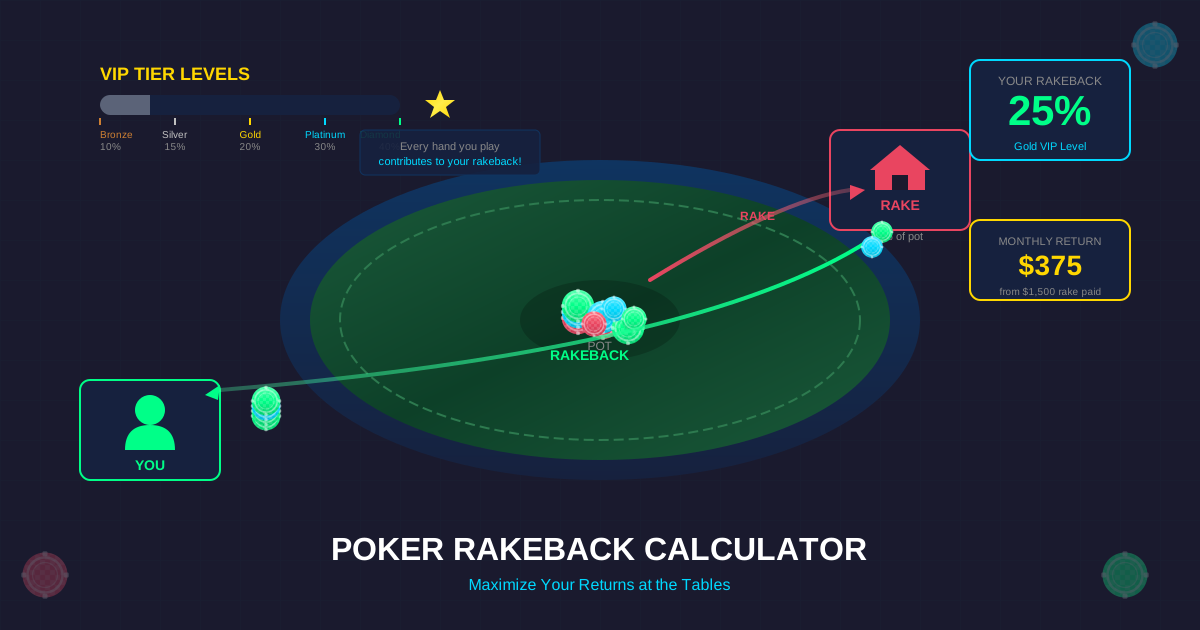
For online poker players, rakeback significantly impacts your bottom line. If you earn $5/hour in rakeback and your base win rate is $15/hour, your effective rate is $20/hour -- a 33% boost.
Calculate your rakeback contribution with our Poker Rakeback Calculator.
Frequently Asked Questions
How long do I need to track before I know if I'm a winning gambler?
For sports betting, you need at minimum 1,000 bets -- ideally 2,500+ -- before your results approach statistical significance. For poker cash games, 50,000-100,000 hands is the minimum. For tournaments, at least 1,000 events. Anything less, and variance can easily disguise your true ability. Track consistently for 6-12 months before drawing conclusions.
What is a good ROI for sports betting?
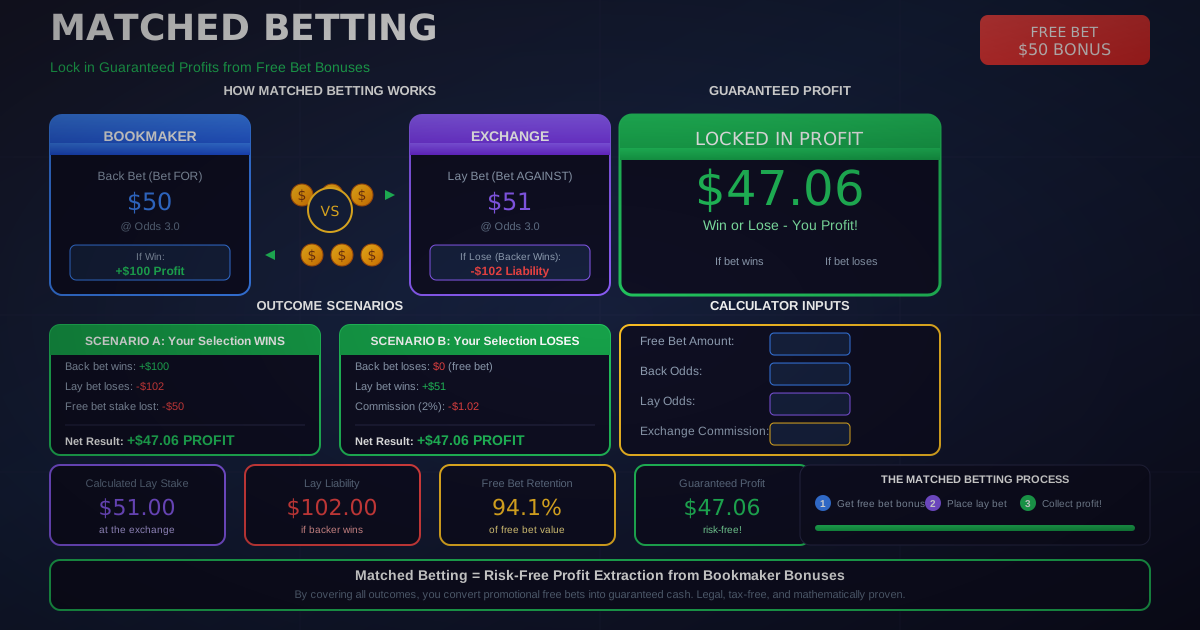
A long-term ROI of 2-5% is considered strong for sports betting. The very best sports bettors in the world typically average 3-7% ROI. Anything above 10% sustained over thousands of bets is extraordinarily rare. If your ROI looks much higher than 5%, either your sample size is too small or you are in a uniquely advantageous situation (such as matched betting or exploiting new sportsbook promotions).
Should I track every single bet, even small ones?
Yes. Tracking selectively introduces bias. You are more likely to track winning bets or "meaningful" bets, which skews your data. Every bet, no matter how small, contributes to your true ROI. Automated tracking tools make this easier by capturing everything without relying on memory.
How do I track gambling results for tax purposes?
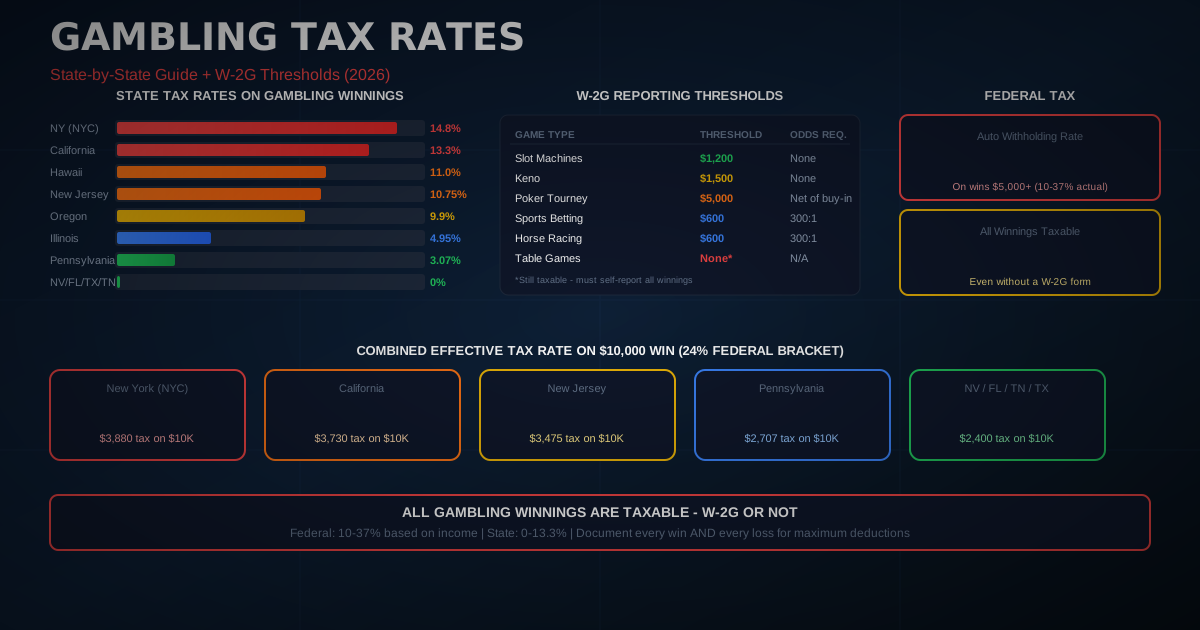
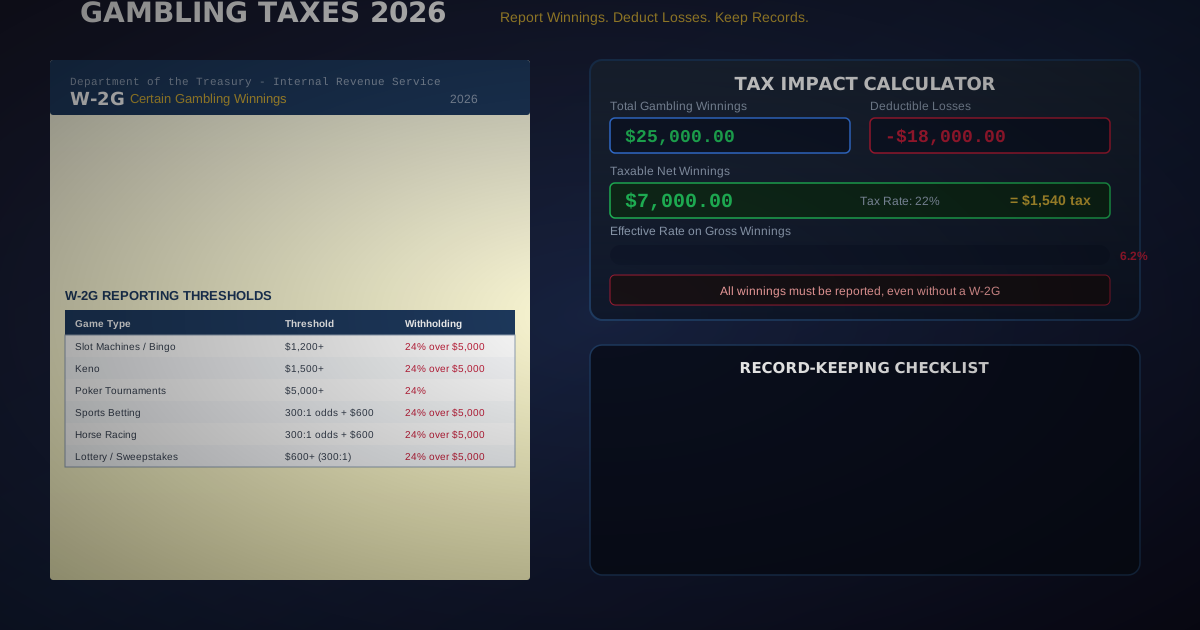
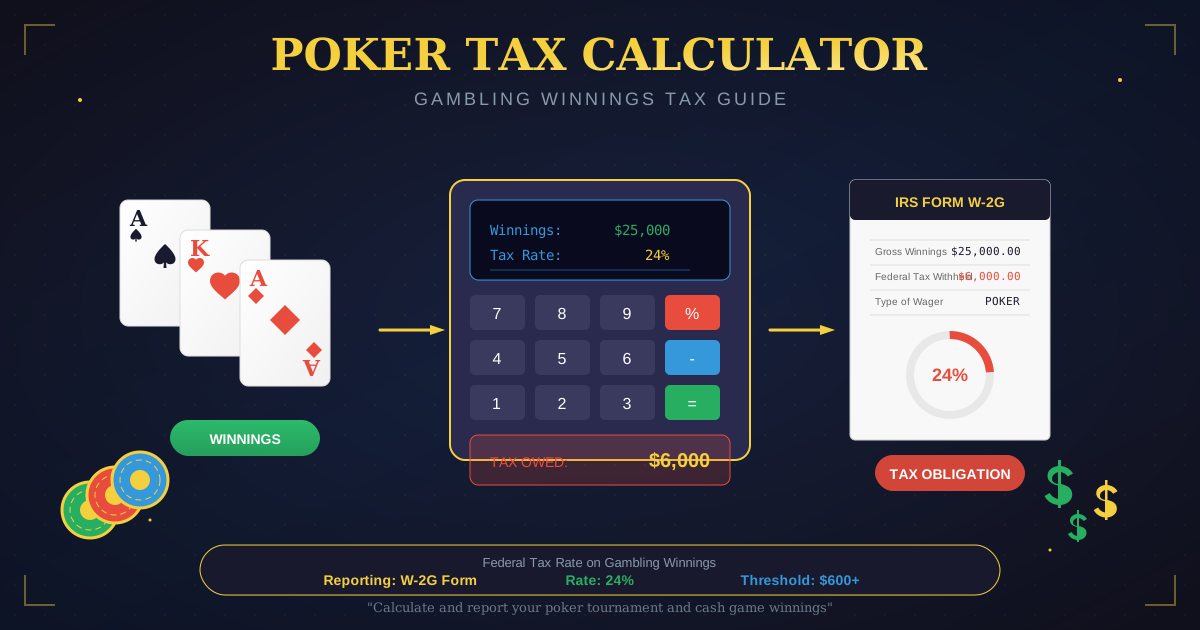
The IRS requires gamblers to report all gambling income. Keep records of date, type of gambling, location, amounts won and lost, and the names of others present (for table games). A detailed session log satisfies IRS documentation requirements. Many professional gamblers maintain separate tracking for tax purposes with receipts and statements from sportsbooks or casinos attached.
What is Closing Line Value and why does it matter?
Closing Line Value (CLV) measures whether you got better odds than the final odds before the event started. If you bet a team at -110 and the closing line was -120, you had positive CLV. CLV is the most reliable predictor of long-term sports betting profitability because it measures your ability to identify value independent of short-term outcomes.
Can I use tracking to improve my game, not just measure it?
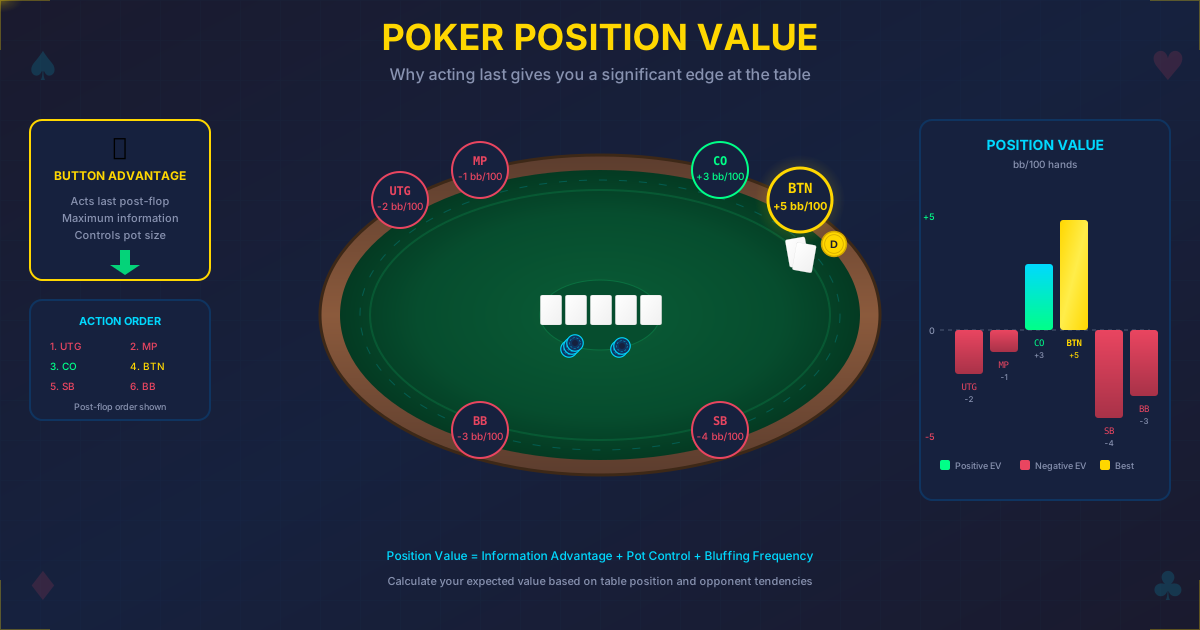
Absolutely. The primary benefit of tracking is identifying specific leaks and strengths. A poker player might discover they lose money from the blinds but crush from the button. A sports bettor might find they are profitable on NFL spreads but lose on NBA totals. These insights allow you to allocate more time and money to your strengths and work on or eliminate your weaknesses.
What is the difference between win rate and ROI?
Win rate typically refers to the percentage of bets or sessions you win. ROI (Return on Investment) measures your profit relative to total money wagered. You can have a 40% win rate and still be highly profitable if your average win is much larger than your average loss. ROI is the more meaningful metric because it accounts for bet sizing and odds.
How do I handle losing streaks mentally when my data says I should be winning?
This is where tracking becomes a psychological tool. If your data over 2,000+ bets shows a 3% ROI and positive CLV, a 15-bet losing streak is mathematically expected to happen regularly. Knowing this -- and seeing it in your data -- helps you maintain discipline. Review our Poker Downswing Probability Calculator to see how common downswings actually are.
Related Tools
Maximize your gambling analysis with these free calculators:
- Poker Session Tracker -- Log sessions and track performance over time
- Poker ROI Calculator -- Calculate your return on investment
- Poker Hourly Rate Calculator -- Determine your true hourly earnings
- CLV Tracker -- Track closing line value for sports bets
- Horse Racing ROI Calculator -- Analyze horse racing profitability
- Expected Value Calculator -- Calculate EV for any bet
- Bankroll Volatility Tracker -- Monitor bankroll swings
- Poker Variance Calculator -- Understand variance impact
- Poker Downswing Probability -- See how likely downswings are
- Poker Bankroll Requirements -- Calculate proper bankroll size
- Poker EV Calculator -- Compute expected value per hand
- Hold/Vig Calculator -- Analyze sportsbook margins
- Kelly Criterion Calculator -- Optimize bet sizing
- Poker Risk of Ruin -- Assess bankruptcy risk
- Poker Rakeback Calculator -- Calculate rakeback earnings
Conclusion
Tracking your gambling results is not optional -- it is the foundation of any serious approach to gambling. Without data, you are guessing. With data, you are making informed decisions about where to play, how much to bet, when to move up in stakes, and whether gambling is even worth your time.
Start today. Log your next session using our Poker Session Tracker. Calculate your historical ROI with our Poker ROI Calculator. Analyze your hourly rate with our Poker Hourly Rate Calculator. The data might confirm what you hoped -- or it might show you something you needed to see. Either way, you will be better off knowing.
The goal is not to win every session. The goal is to make decisions that are profitable over thousands of repetitions and to have the data to prove it. That starts with your very first tracked session.
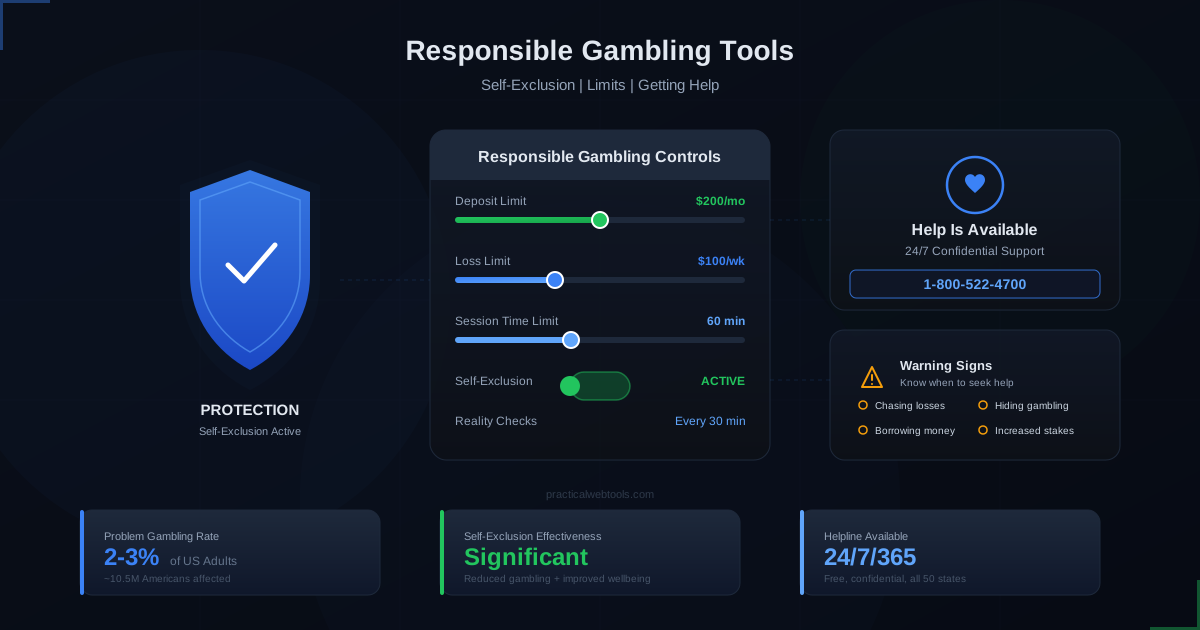
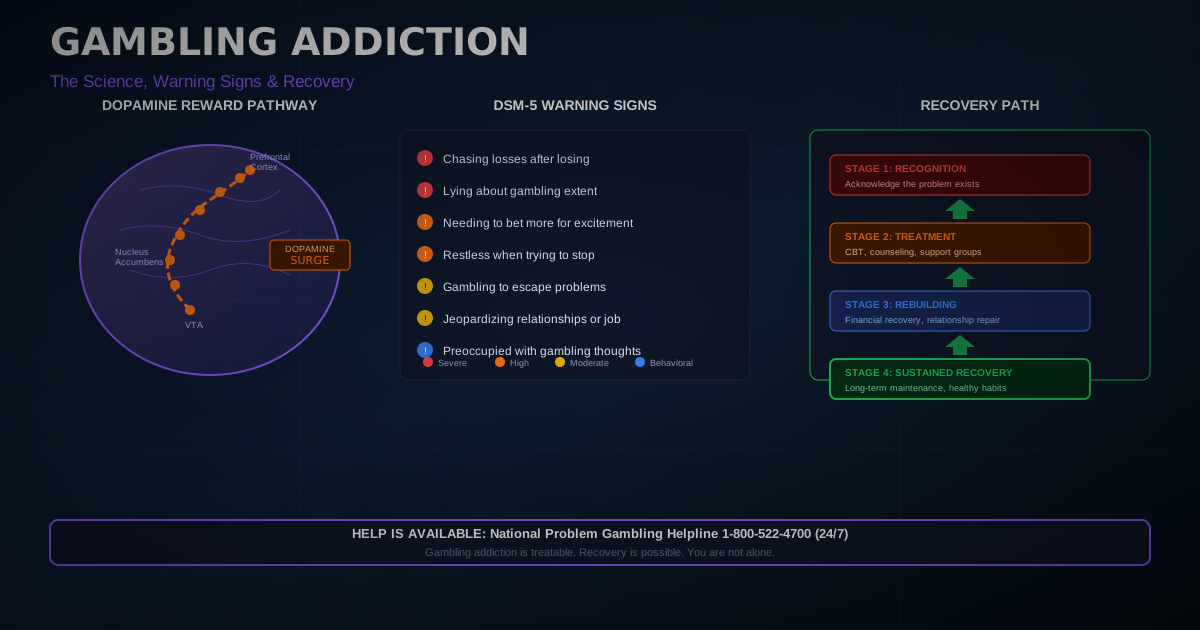
Gambling involves risk. This content is for educational and informational purposes only. Always gamble responsibly, set limits you can afford, and seek help if gambling becomes a problem. Visit the National Council on Problem Gambling or call 1-800-522-4700 for support.