Live Dealer Casino Games: How They Work and Why Players Love Them (2026)
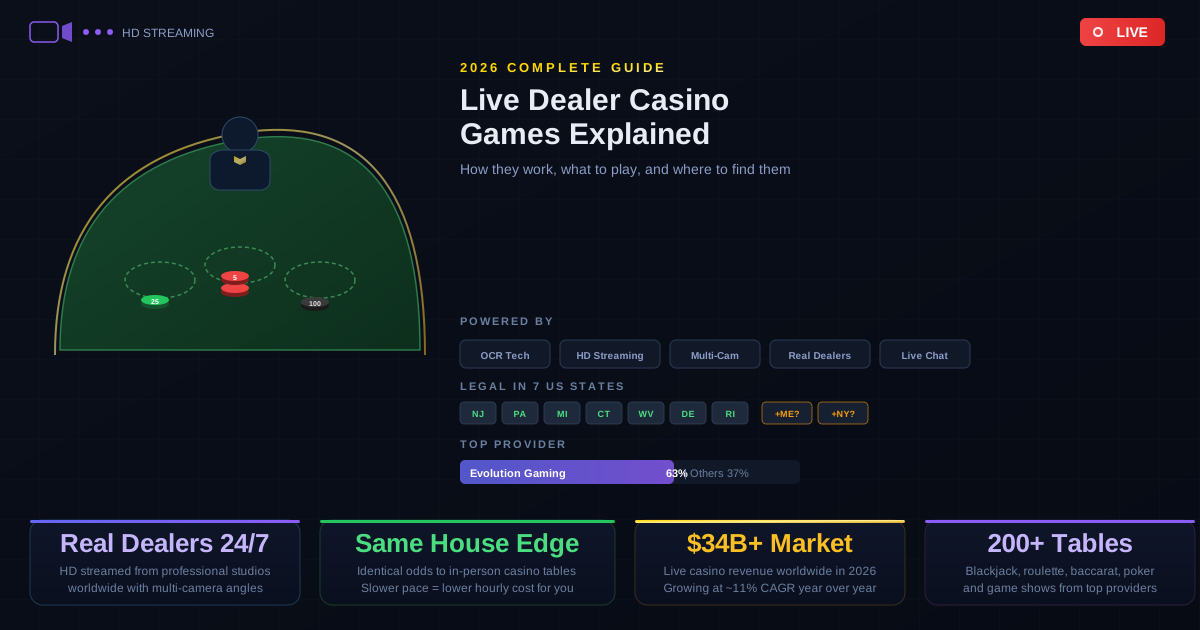
Live dealer casino games have fundamentally changed what it means to gamble online. Instead of clicking buttons and watching random number generators spit out results, you watch a real human dealer shuffle real cards, spin a real roulette wheel, and deal a real game of baccarat---all streamed in high definition to your phone or computer. The live casino segment now generates an estimated $34 billion in annual revenue worldwide, growing at roughly 11% per year. That growth is not accidental. Players want authenticity, social interaction, and the trust that comes from watching every card leave the shoe with their own eyes. Live dealer games deliver all three without requiring a plane ticket to Las Vegas.
This guide breaks down everything you need to know about live dealer casino games in 2026: the technology that makes them possible, the games available, how house edges compare to standard online games, how fast each game plays, where you can legally play in the United States, and how to choose the right live dealer casino for your style of play.
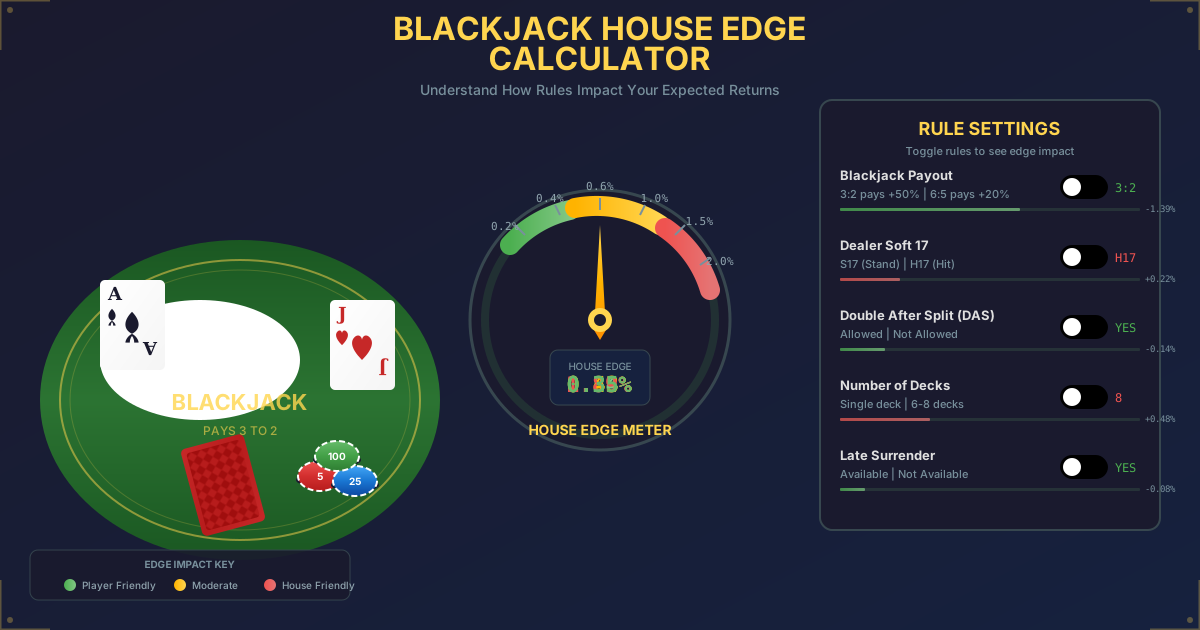
Before you sit down at a live dealer table, know the math. Use our Blackjack House Edge Calculator to see exactly how rule variations affect your expected loss, or try the Roulette Odds Calculator to understand the true probability behind every bet you place.
How Does Live Dealer Casino Technology Work?
Live dealer technology combines professional-grade video production with sophisticated software to create a seamless bridge between physical casino equipment and digital betting interfaces. Understanding these components helps you appreciate why the experience feels authentic---and why you can trust the results.
The Studio Environment
Live dealer games originate from purpose-built studios designed to replicate the look and feel of a high-end casino floor. These are not makeshift setups. Evolution Gaming, the dominant provider with approximately 63% market share, operates studios in Latvia, Malta, Georgia, Romania, New Jersey, Pennsylvania, Michigan, and several other locations. Each studio contains dozens of individually lit tables, professional-grade cameras, and soundproofing to prevent cross-table audio interference.
Some operators also stream from actual casino floors. For example, you can play live dealer blackjack streamed directly from the Borgata in Atlantic City or the MGM Grand in Detroit. These "dual play" tables serve both in-person and online players simultaneously.
Camera Systems and Video Streaming
Each live dealer table uses multiple camera angles---typically three to seven cameras per table. A wide shot captures the full table layout, an overhead camera focuses on the cards or wheel, and close-up cameras zoom in on the dealing area or roulette pocket. The result is a multi-angle broadcast that gives online players a clearer view than most people get sitting at a physical table.
Video streams at 720p or 1080p resolution, with adaptive bitrate technology that adjusts quality based on your internet connection. Most providers recommend a minimum connection speed of 5 Mbps for smooth playback, though 10 Mbps or higher is ideal for HD quality on larger screens.
Optical Character Recognition (OCR)
OCR technology is the invisible backbone of live dealer games. Small cameras embedded in the dealing shoe or positioned above the table scan every card as it is dealt, every number as the roulette ball settles, and every dice result in real time. The OCR system instantly converts these physical outcomes into digital data that appears on your screen.
This is what allows you to see your hand total update automatically, watch the roulette results populate on the board, and receive instant payouts when you win. Without OCR, a human operator would need to manually enter every result---introducing delay and potential errors.
The Game Control Unit (GCU)
The GCU is a small device roughly the size of a shoebox that sits beneath or beside each gaming table. It encodes the live video feed, manages the game state, synchronizes betting windows with dealer actions, and ensures the digital interface stays perfectly in sync with the physical game. When the dealer waves their hand to signal "no more bets," the GCU simultaneously locks the betting interface on every connected player's screen.
Player Interaction Layer
You interact with the game through an on-screen interface overlaid on the live video. Betting chips, action buttons (hit, stand, double down, split), and chat functions all operate through this digital layer. Your bets are transmitted to the server instantly, and the GCU confirms them before the dealer proceeds. This creates a bidirectional communication loop: you see the dealer in real time, and the dealer sees your confirmed bets on a monitor at their station.
| Component | Function | Why It Matters |
|---|---|---|
| Studio cameras (3-7 per table) | Multi-angle HD video capture | Clearer view than sitting at a physical table |
| Adaptive bitrate streaming | Adjusts video quality to your connection | Smooth play even on slower connections |
| OCR technology | Converts physical outcomes to digital data | Instant, error-free result reporting |
| Game Control Unit (GCU) | Synchronizes video, bets, and game state | Perfect timing between dealer and interface |
| Player interface overlay | Bet placement, actions, and chat | Seamless interaction without lag |
| Dealer monitor | Displays confirmed player bets | Dealer knows your action in real time |
What Live Dealer Games Are Available in 2026?
The live dealer game library has expanded well beyond the traditional table game trio. Here is a comprehensive breakdown of every major category available at US-licensed live dealer casinos.
Live Blackjack
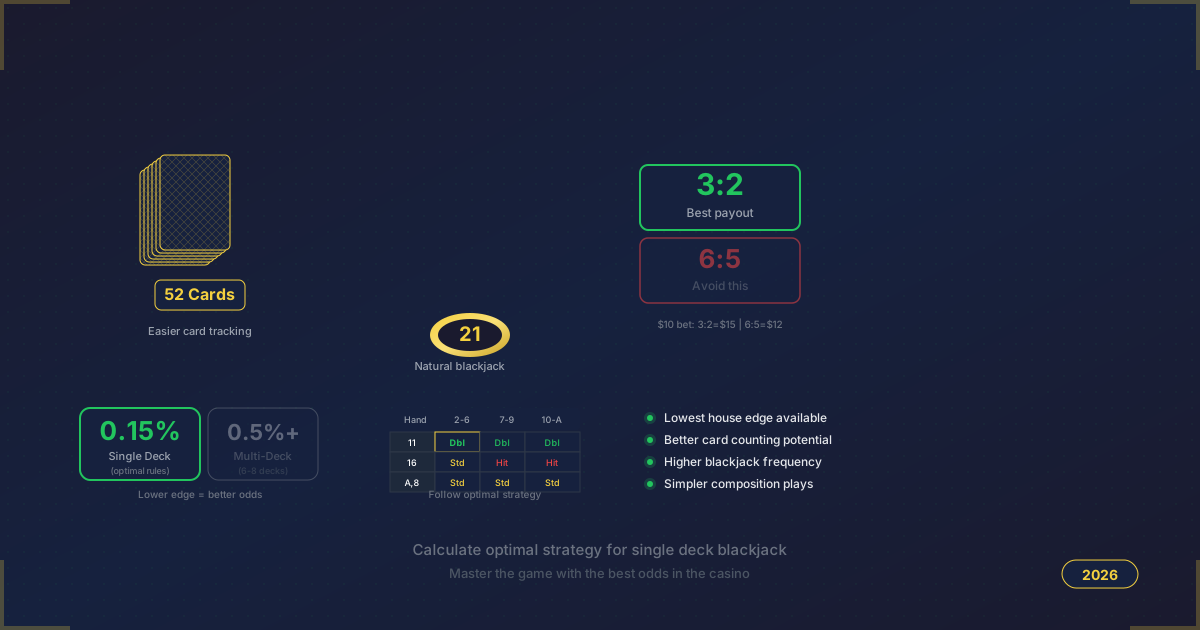
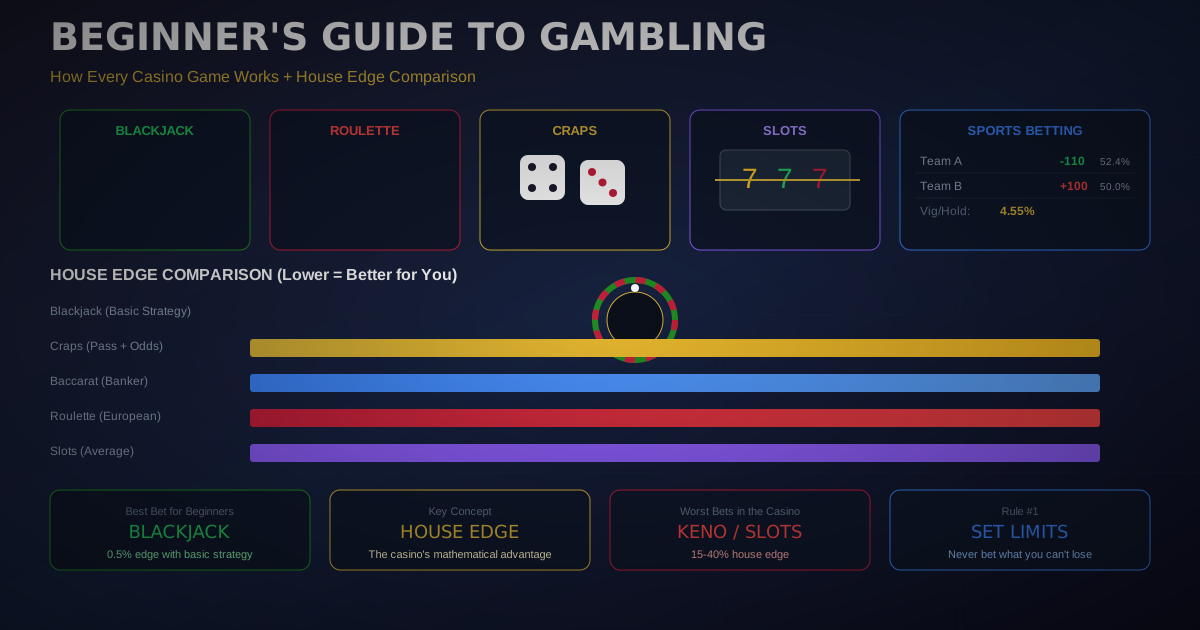
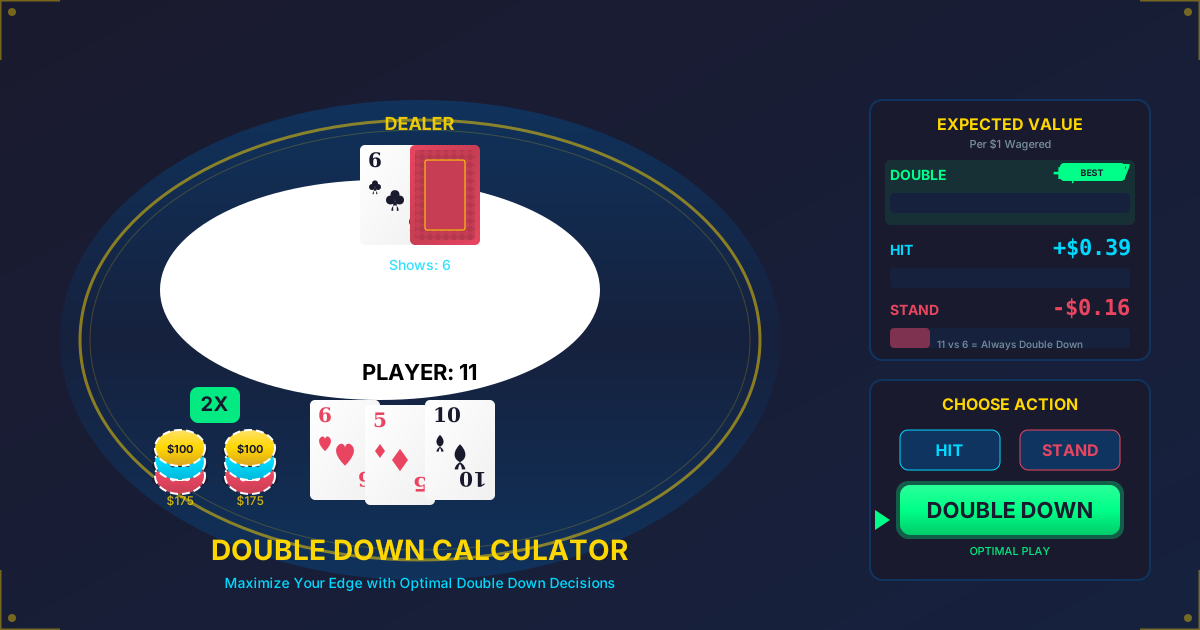
Live blackjack remains the most popular live dealer game, and for good reason. The house edge with basic strategy drops to approximately 0.5%, making it the single best bet in the live casino. Standard live blackjack tables seat seven players and play at a pace of 30 to 40 hands per hour---roughly half the speed of computer-dealt blackjack.
Key variants available:
- Standard Live Blackjack --- Classic 6-deck or 8-deck shoe, dealer stands on soft 17, 3:2 payouts
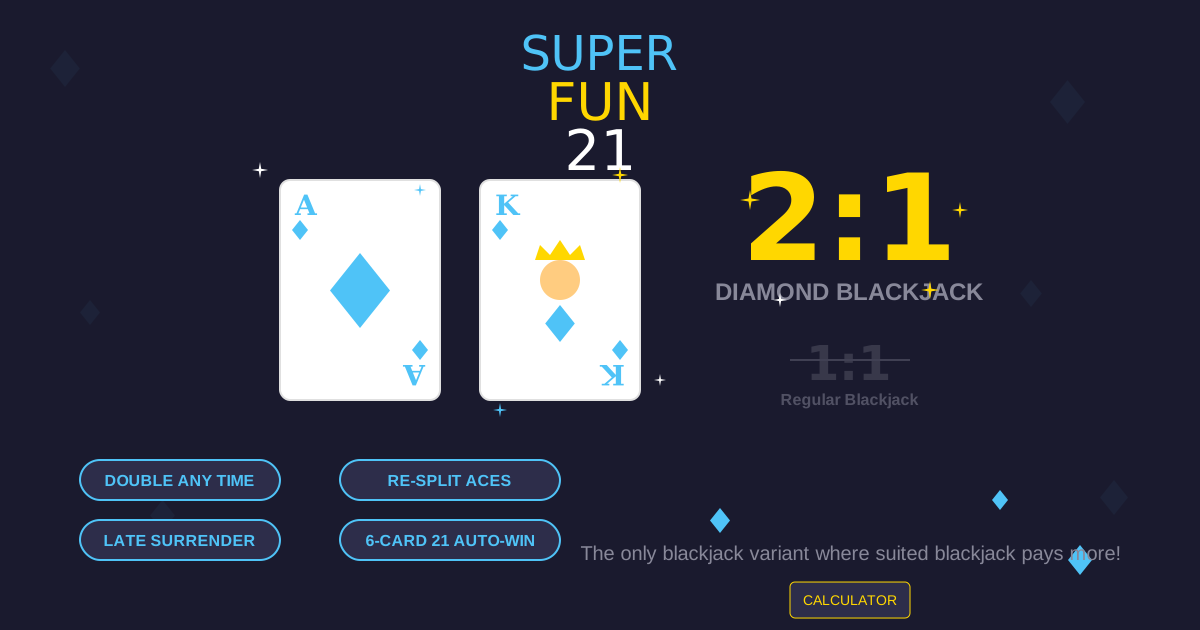
- Infinite Blackjack --- Unlimited seats, one shared hand with player-specific decision points
- Speed Blackjack --- Fastest player to act gets dealt first, pushing pace to 40-50 hands per hour
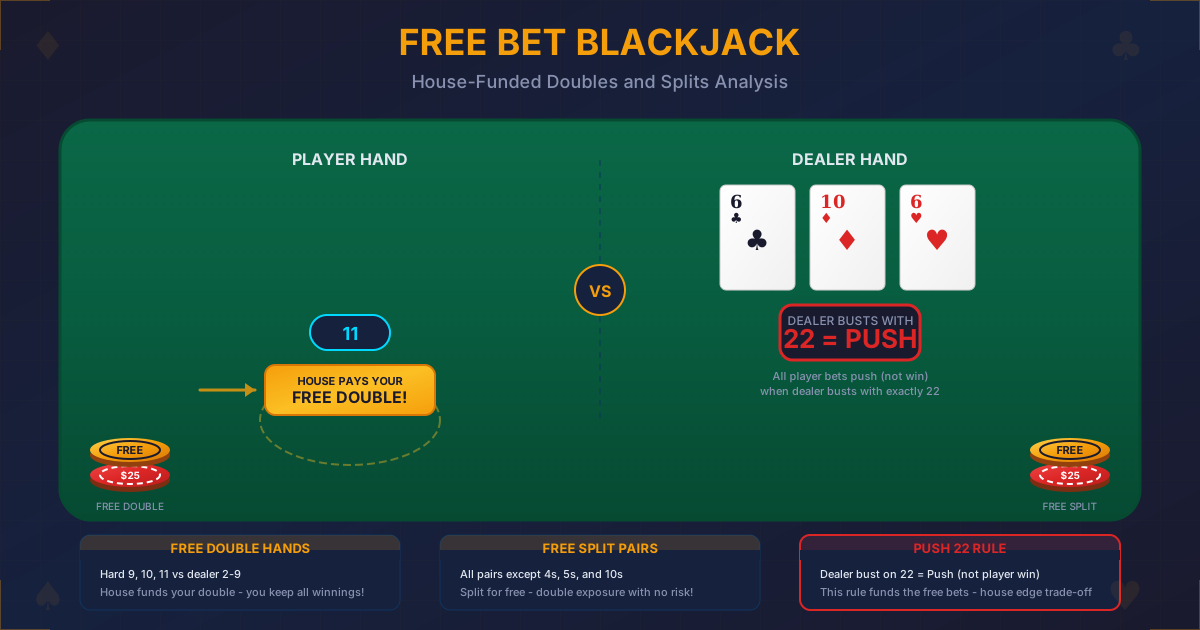
- Free Bet Blackjack --- Free doubles on hard 9-11, free splits on most pairs (modified rules increase house edge to ~1.0%)
- Lightning Blackjack --- Random multipliers applied to winning hands, higher house edge in exchange for bigger potential payouts
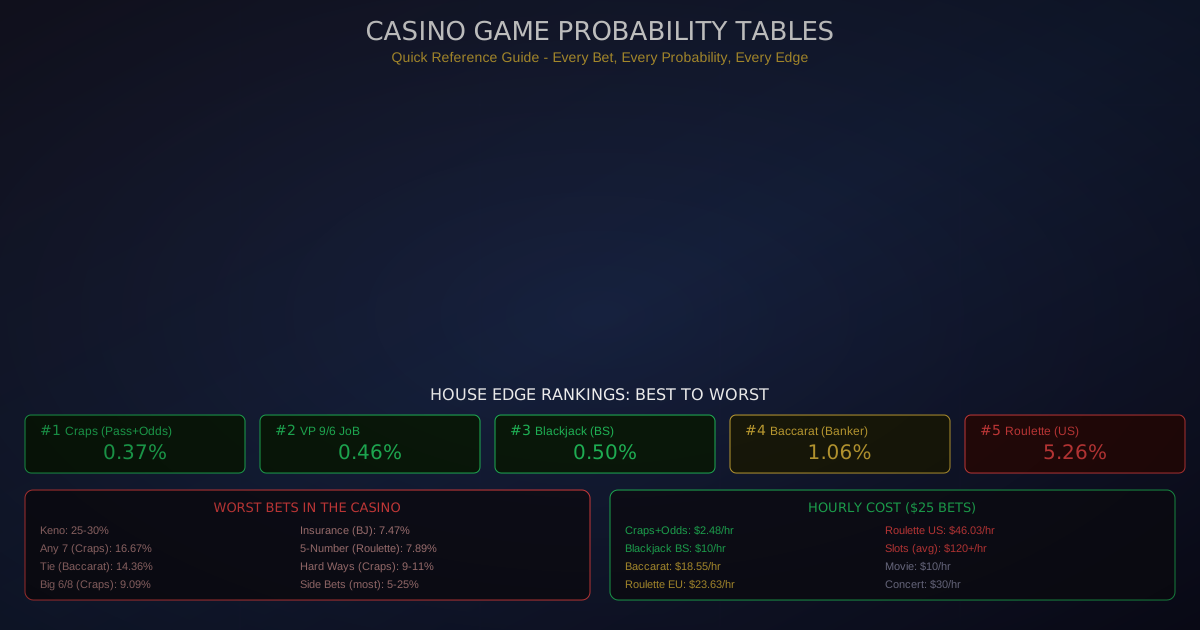
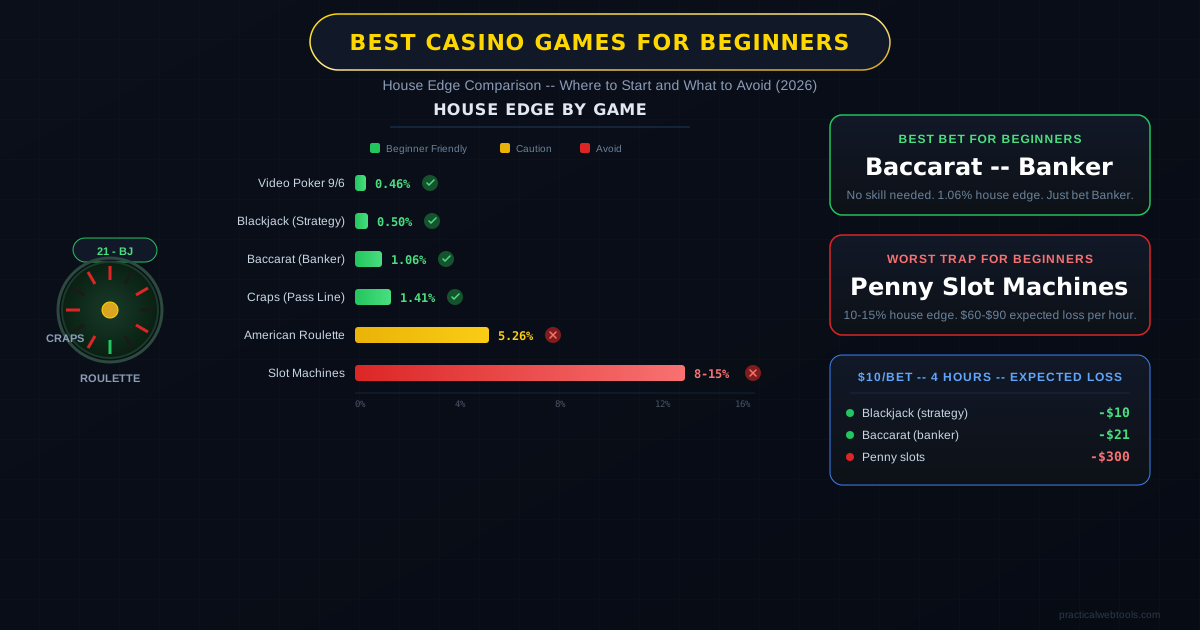
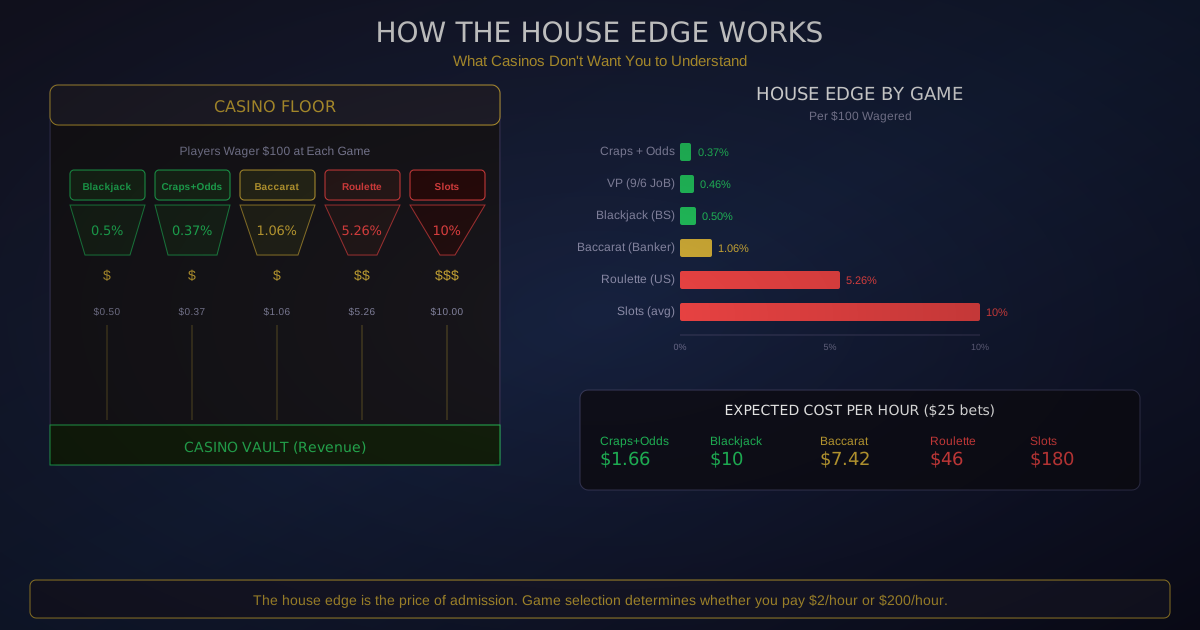
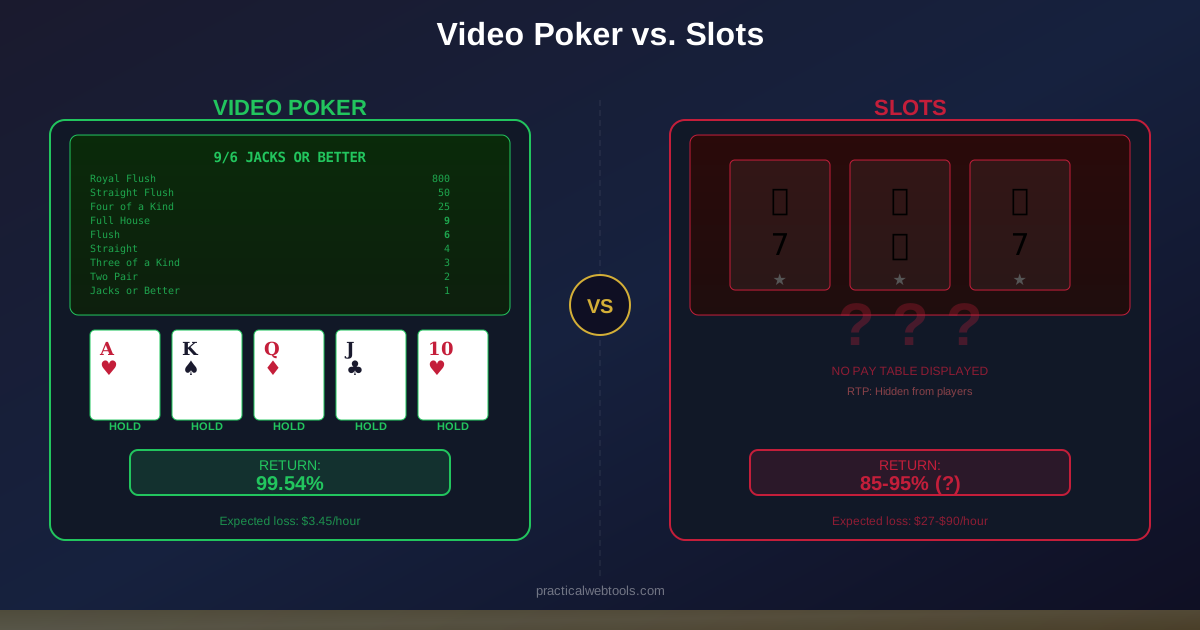
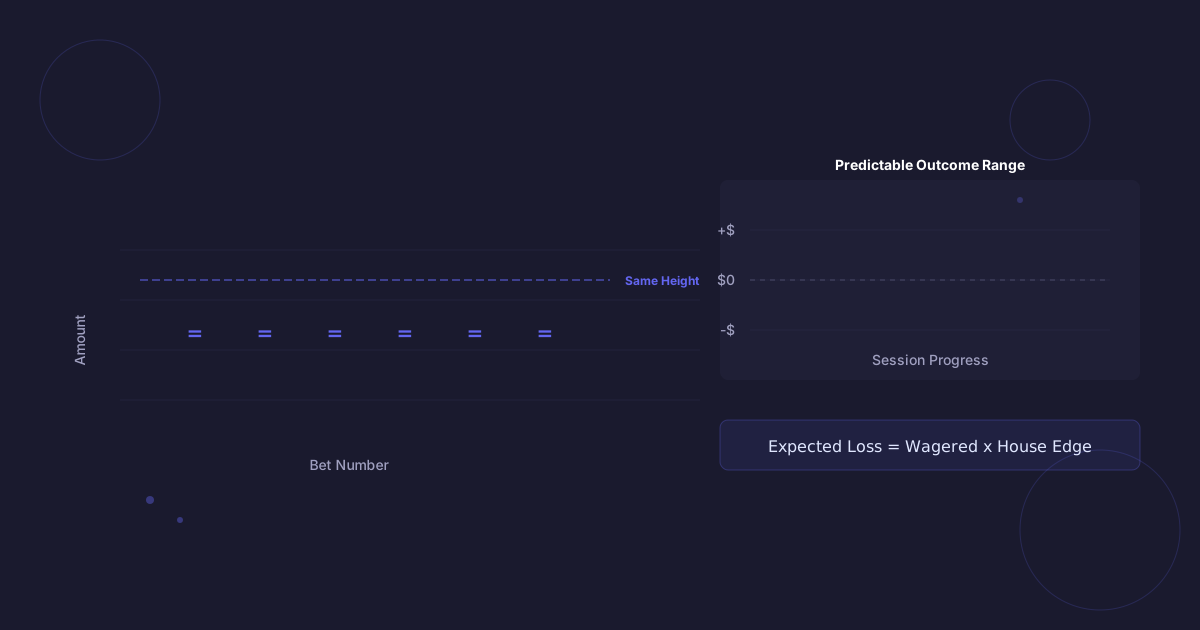
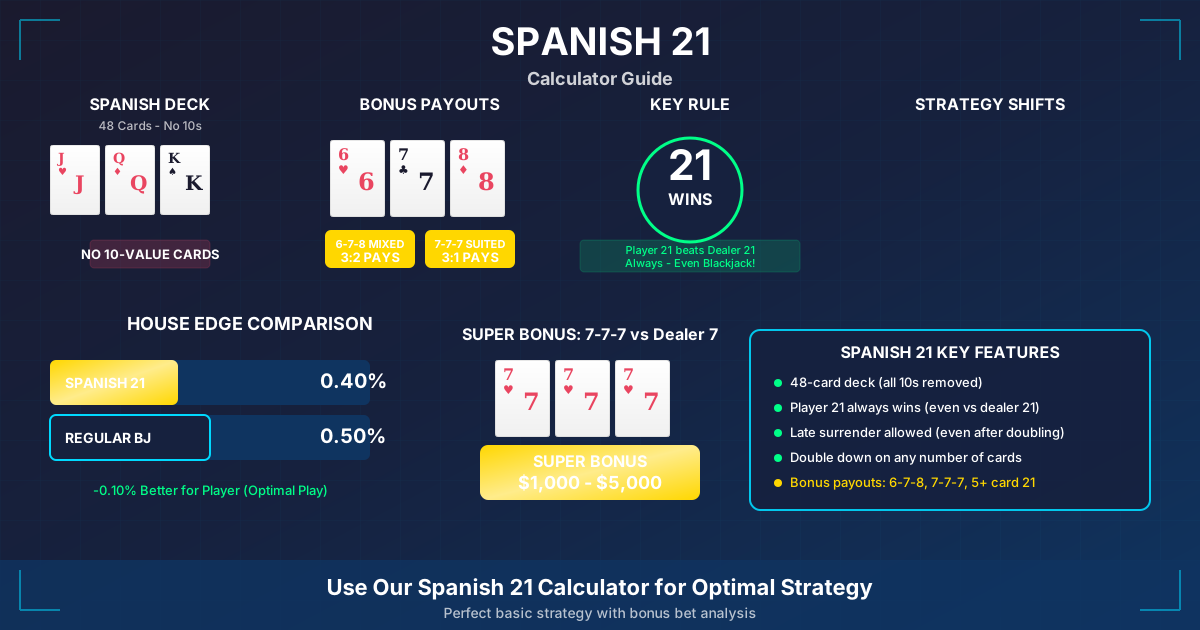
Real-world example: A player betting $25 per hand at a standard live blackjack table using perfect basic strategy plays roughly 35 hands per hour. That is $875 in total action per hour. At a 0.5% house edge, the expected loss is $4.38 per hour. Compare that to a slot machine: at $3 per spin, 600 spins per hour, and a 5% house edge, expected loss is $90 per hour. The difference is staggering.
Use our Blackjack House Edge Calculator to see how specific rule variations (number of decks, soft 17 rule, surrender availability) change your expected cost per hand.
Live Roulette
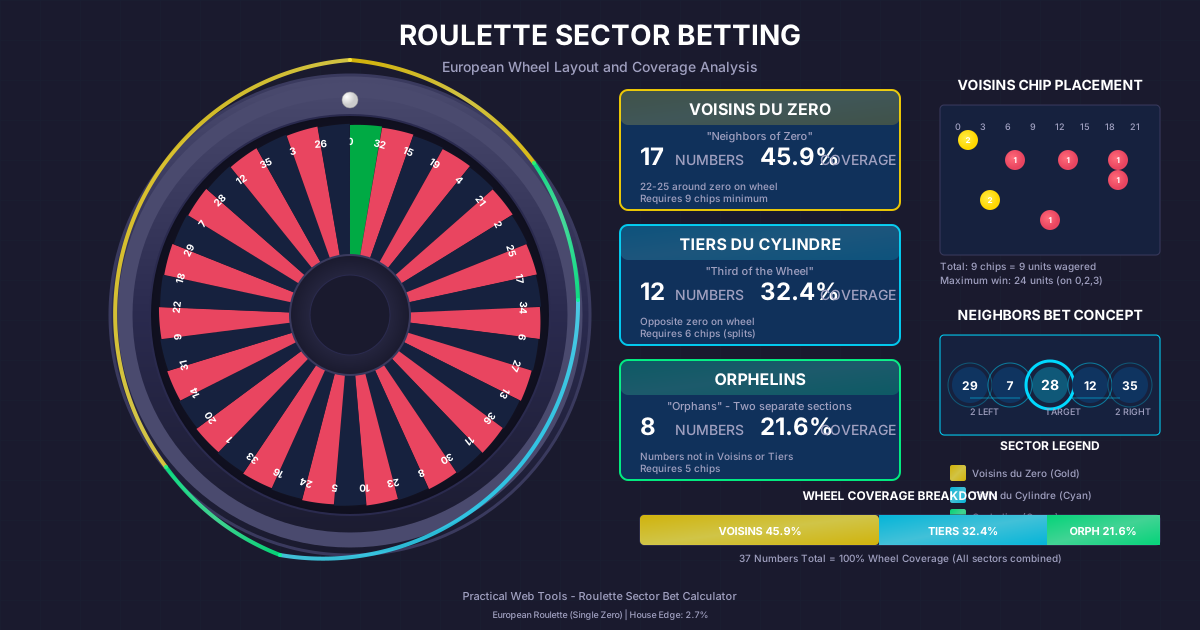
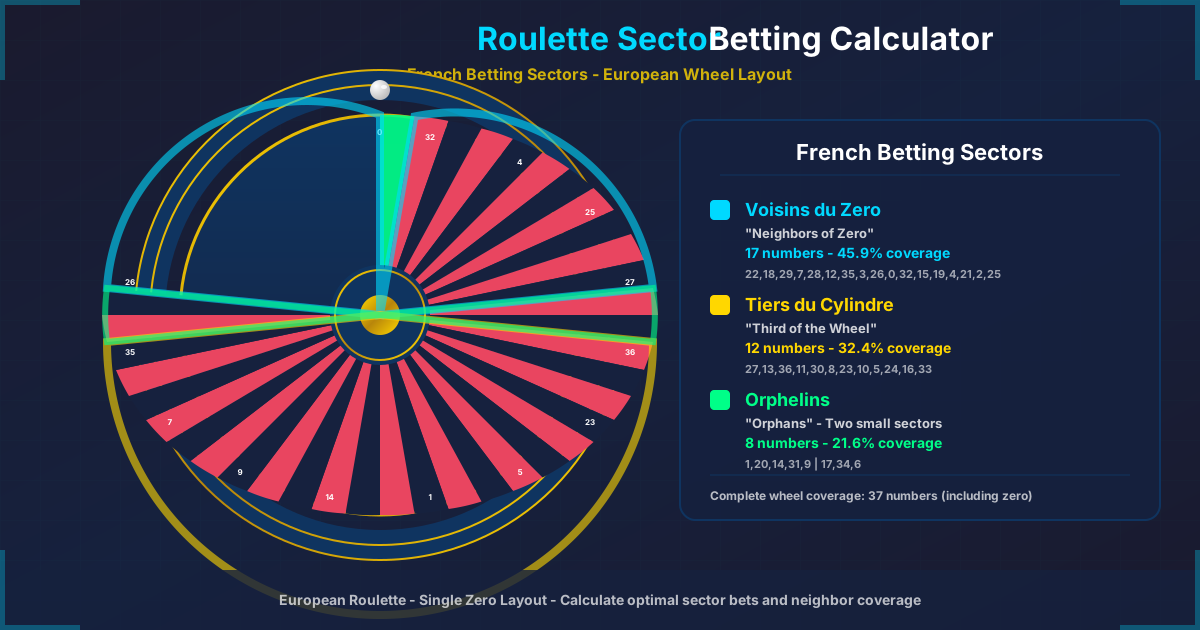
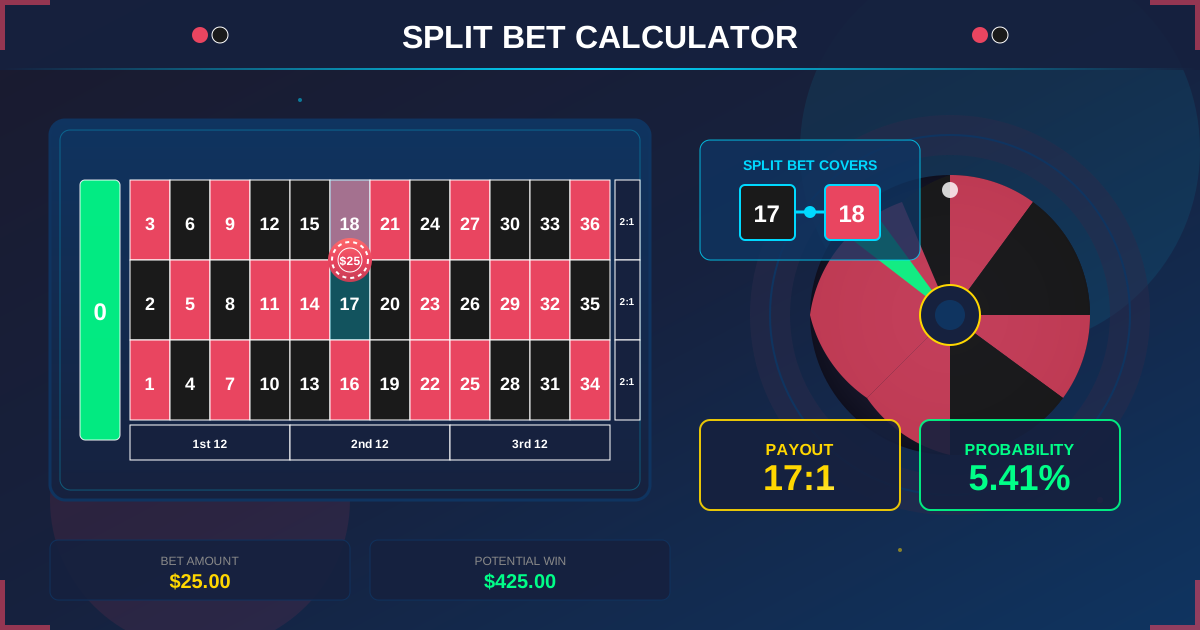
Live roulette delivers the most visually dramatic experience in the live casino. Watching the ball bounce across a physical wheel in real time creates tension that no random number generator can replicate.
Key variants available:
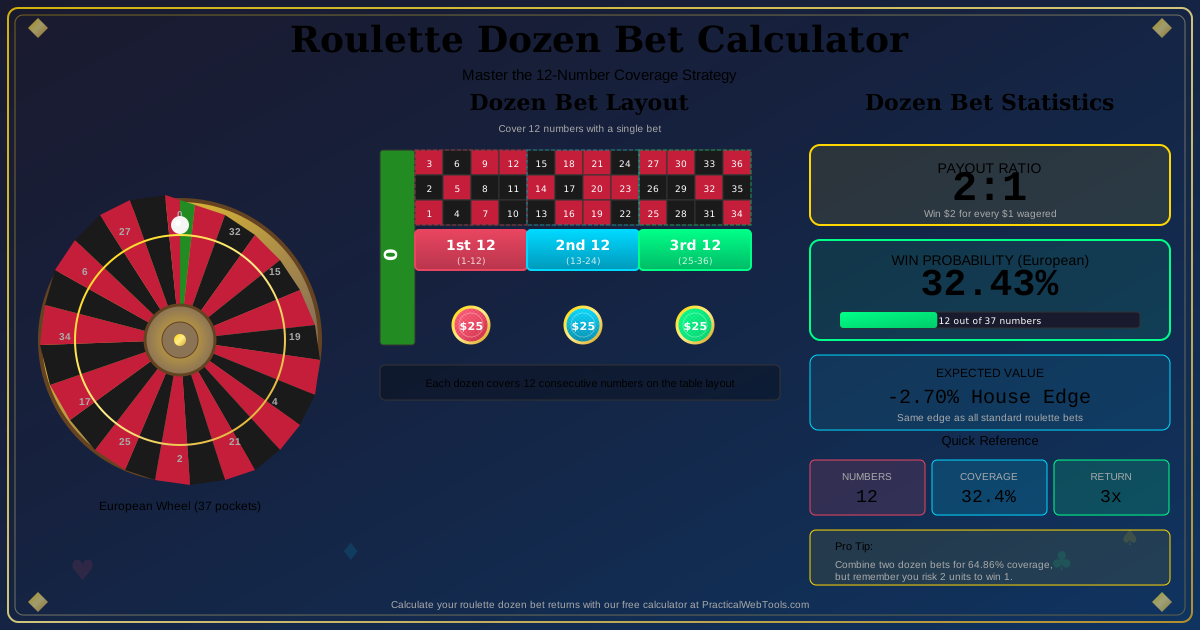
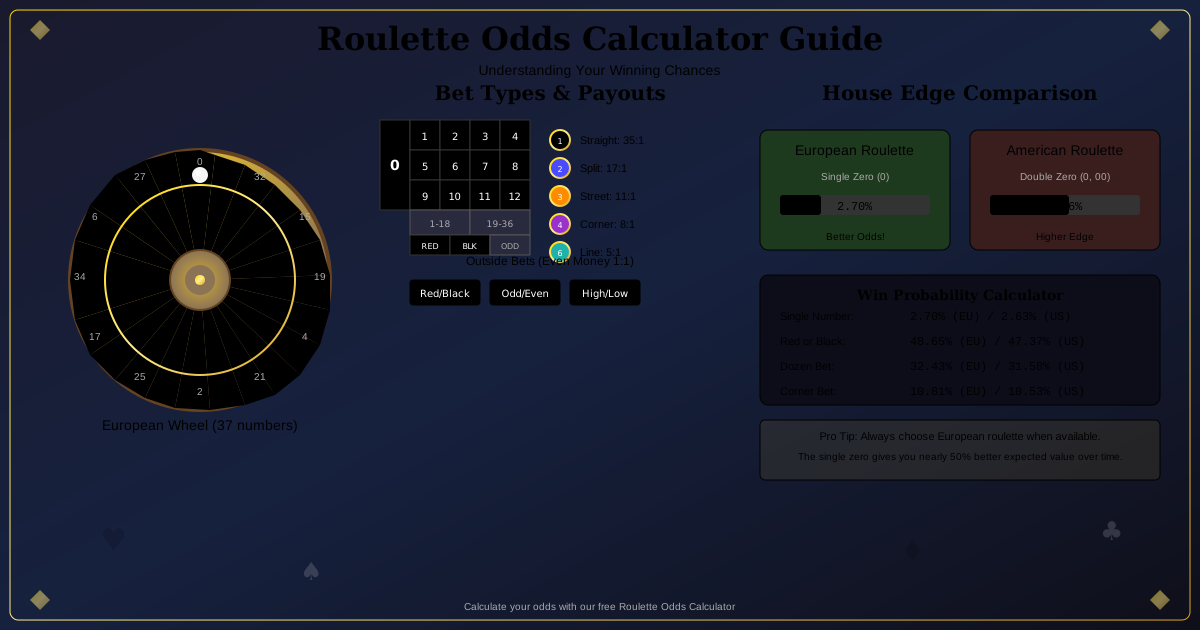
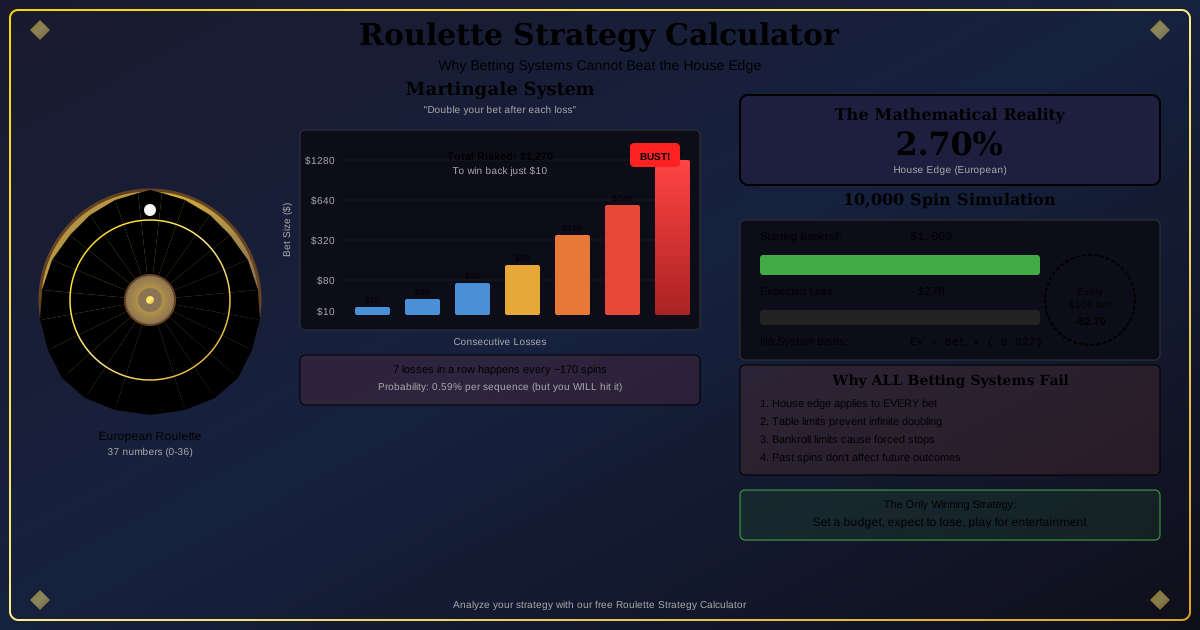
- European Roulette --- Single zero, 2.70% house edge
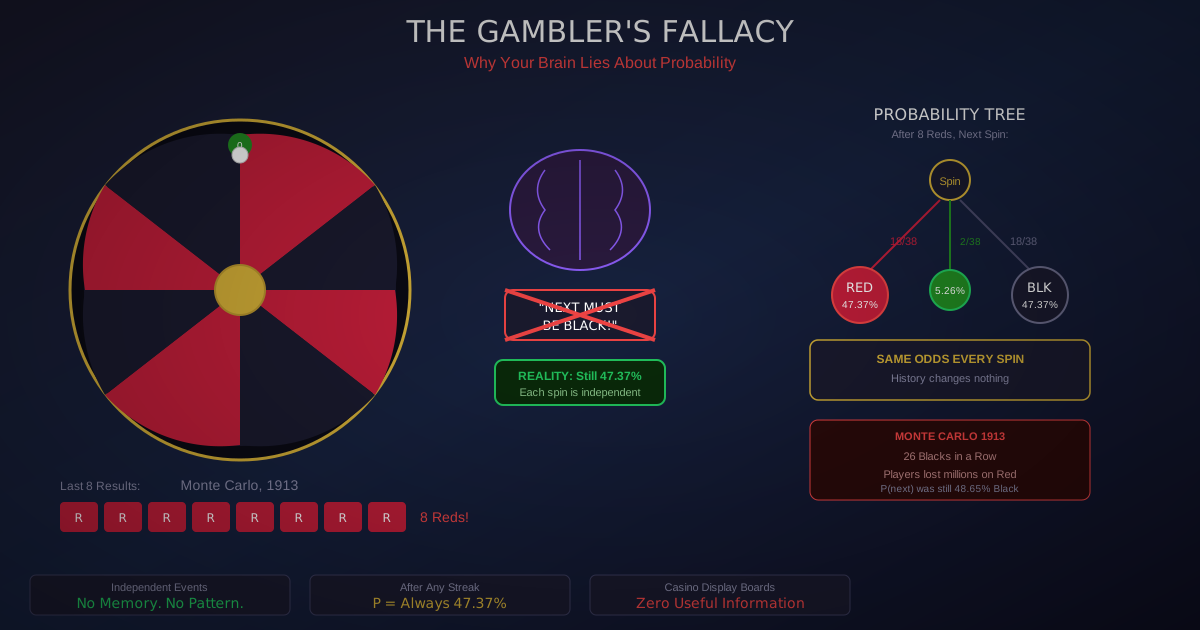
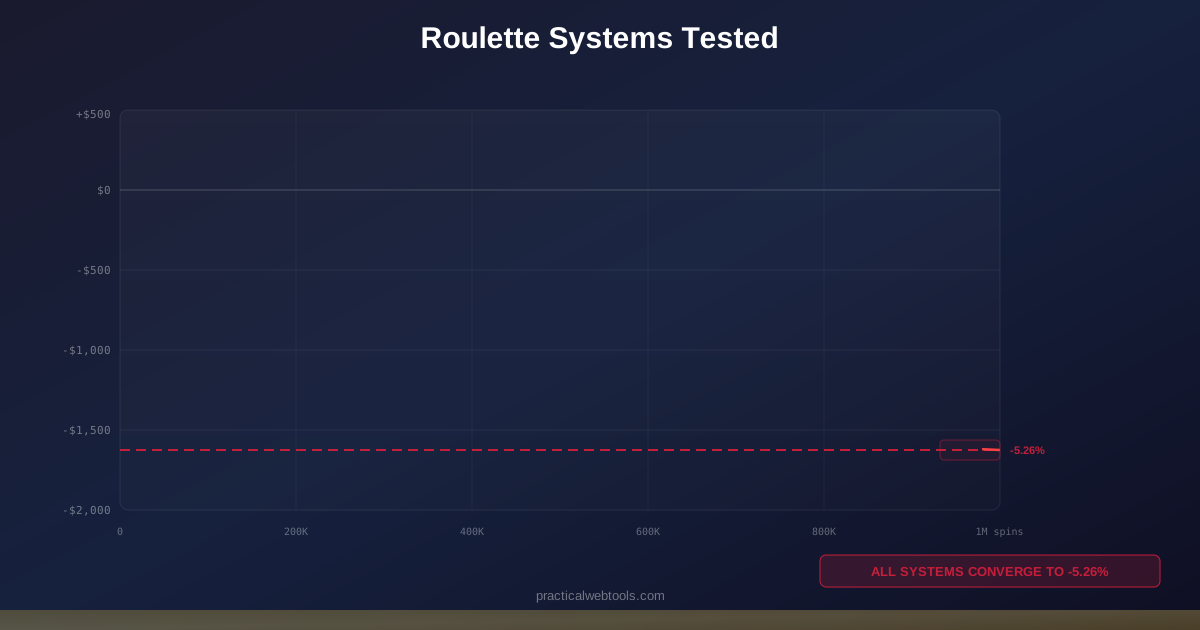
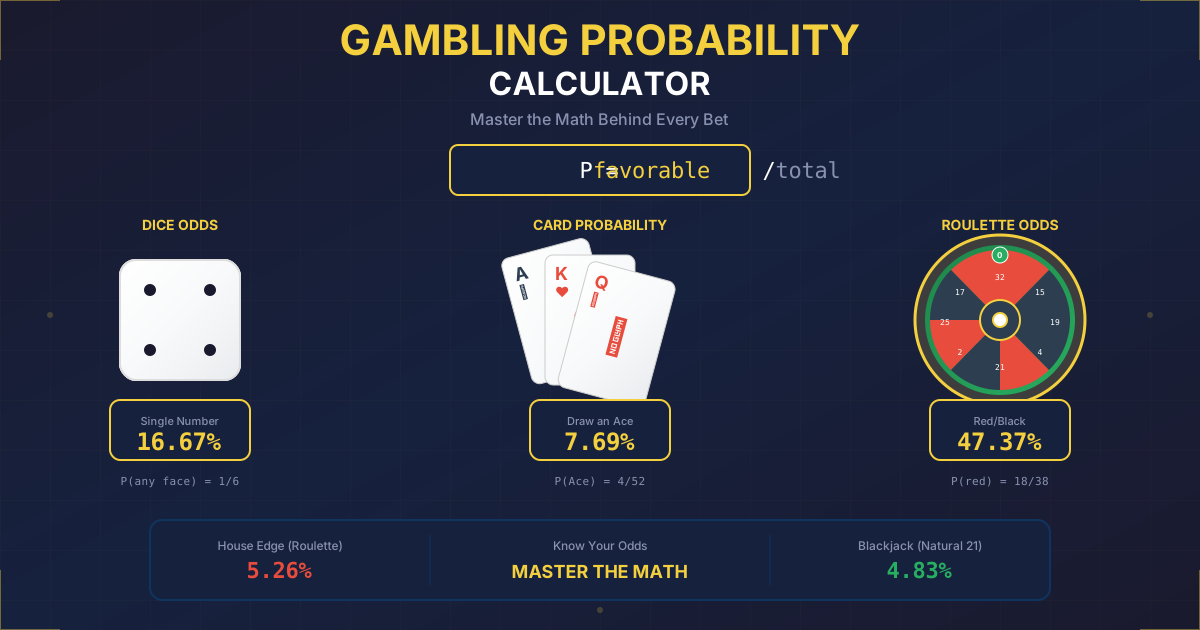
- American Roulette --- Double zero, 5.26% house edge (avoid this when European is available)
- French Roulette --- Single zero with La Partage rule, 1.35% house edge on even-money bets
- Lightning Roulette --- Random multipliers up to 500x on straight-up bets, modified payouts (29:1 instead of 35:1 for non-multiplied numbers), approximately 2.7% average house edge
- Speed Roulette --- 25-second rounds versus the standard 35-40 seconds
- Auto Roulette --- Automated wheel with no physical dealer, 60-80 spins per hour
- Immersive Roulette --- Slow-motion replay of the ball settling, cinematic camera angles
Standard live roulette plays at approximately 25 to 35 spins per hour with a physical dealer. Speed variants increase this to 40-50 spins per hour, and automated wheels reach 60-80.
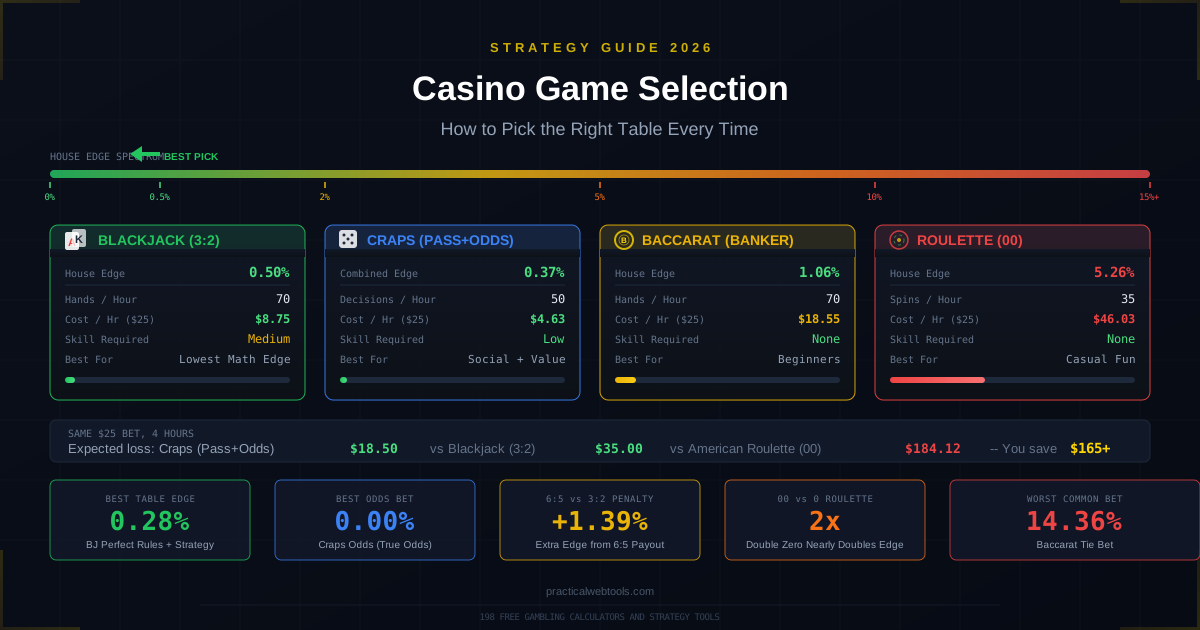
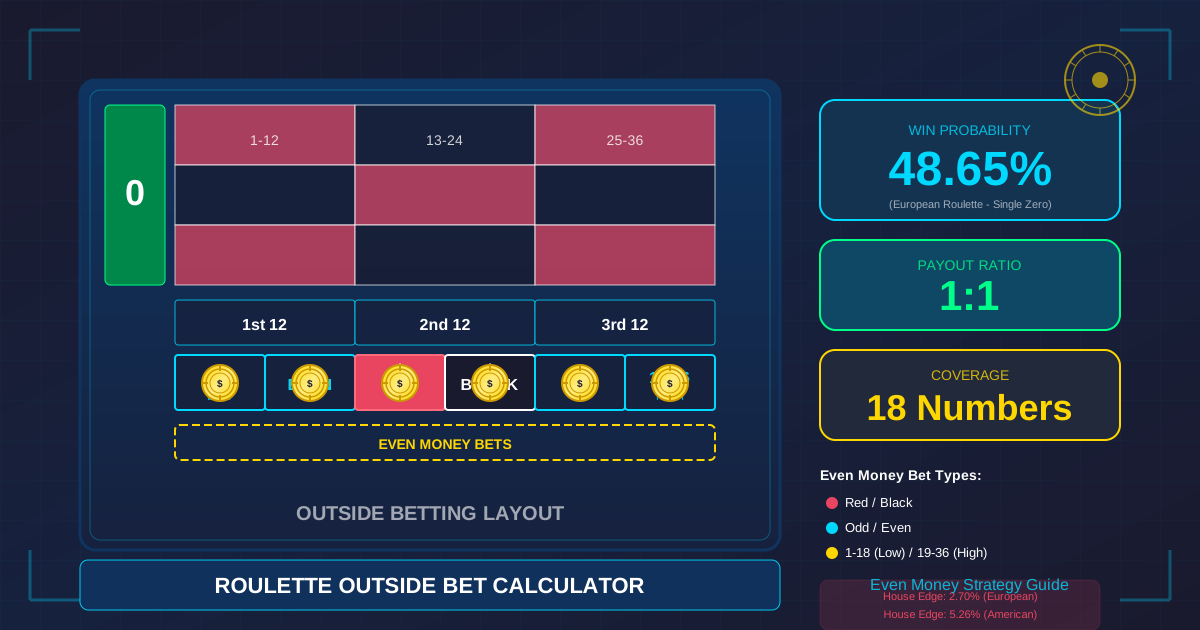
Real-world example: A $10 bettor placing outside bets on European roulette for 30 spins per hour puts $300 into action. At a 2.70% house edge, expected loss is $8.10 per hour. The same bettor on American roulette loses $15.78 per hour---nearly double. Always check which wheel your live casino offers. Our Roulette House Edge Calculator shows the exact difference.
Live Baccarat
Baccarat is the highest-volume table game in Macau and increasingly popular in US live casinos. The game requires no skill---you simply bet on Banker, Player, or Tie---which makes it ideal for players who want a low-house-edge game without studying strategy charts.
Key variants available:
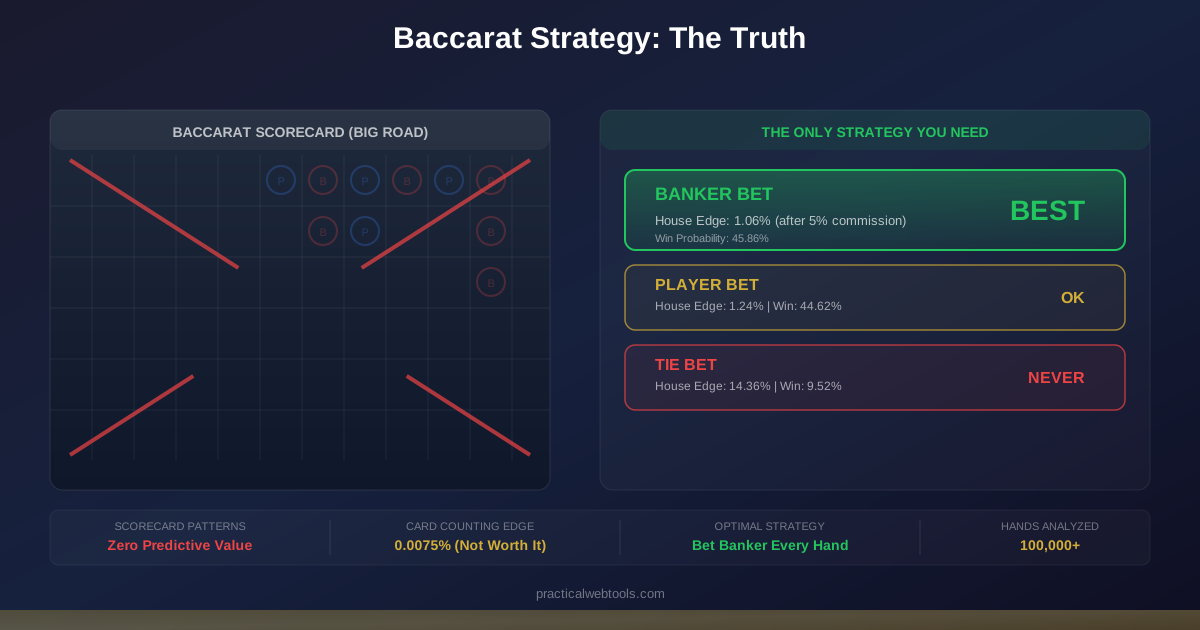
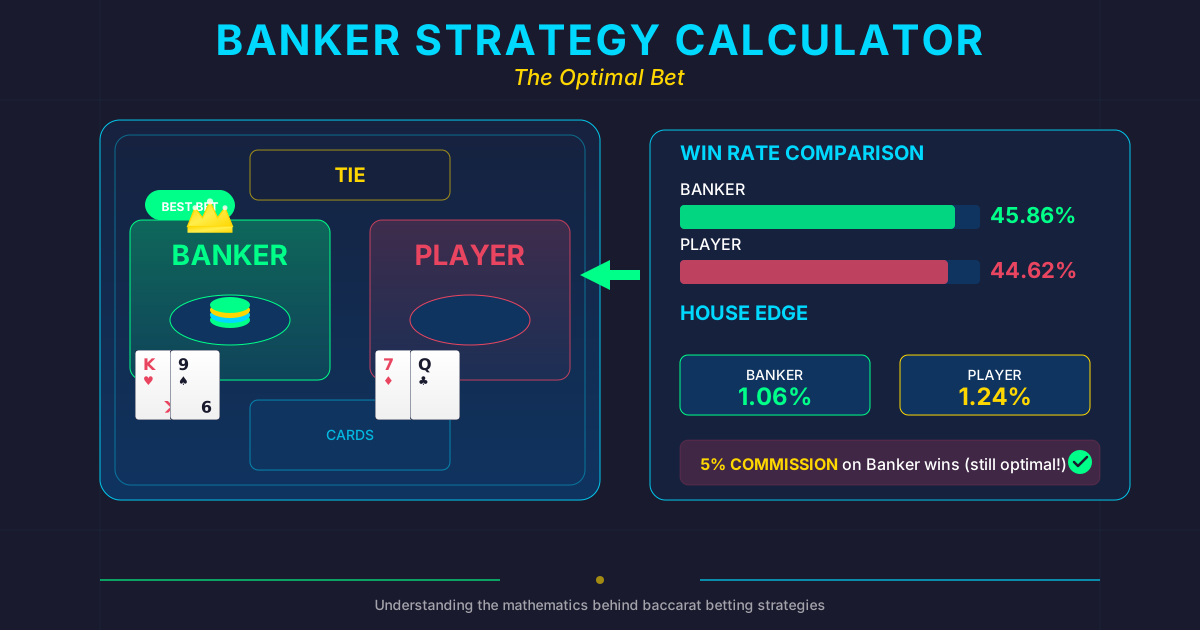
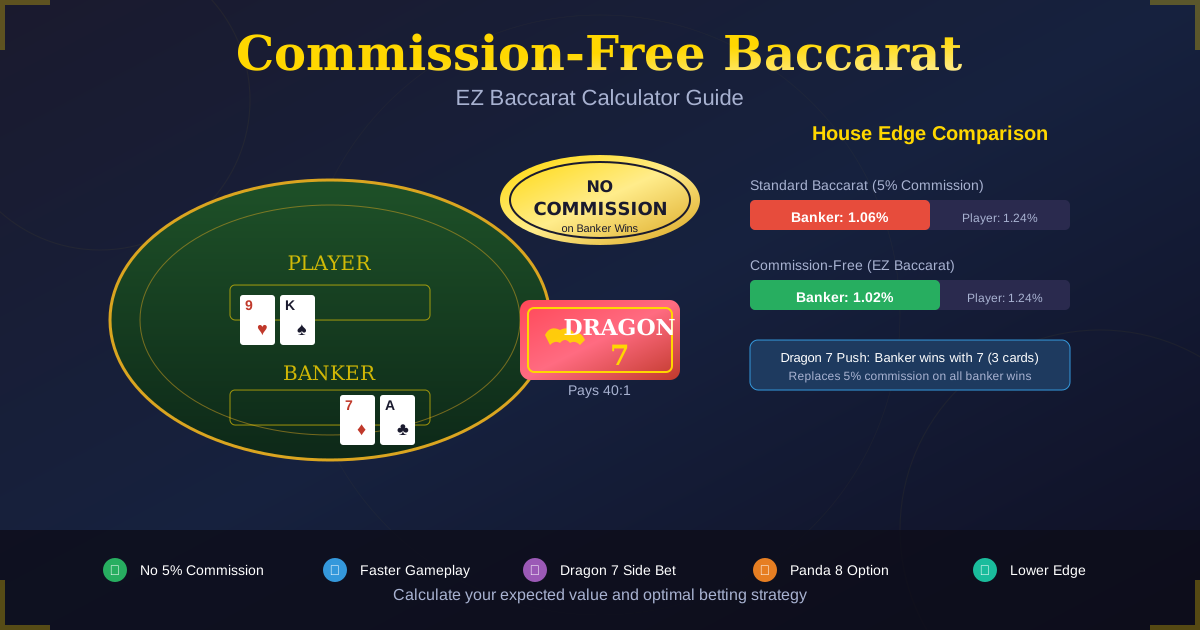
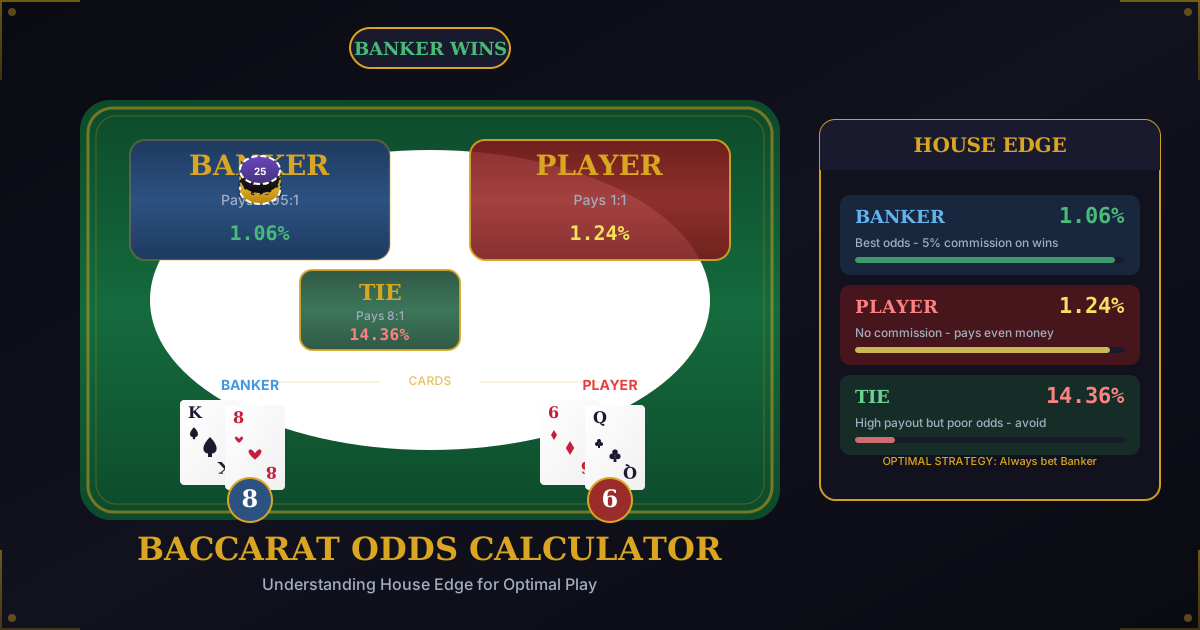
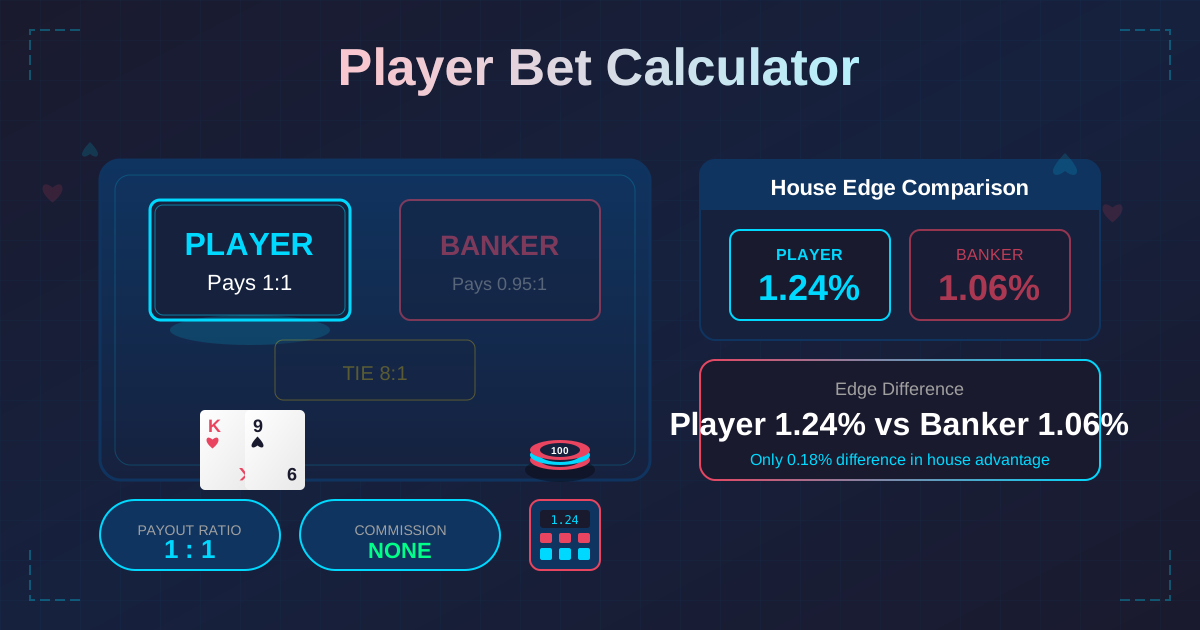
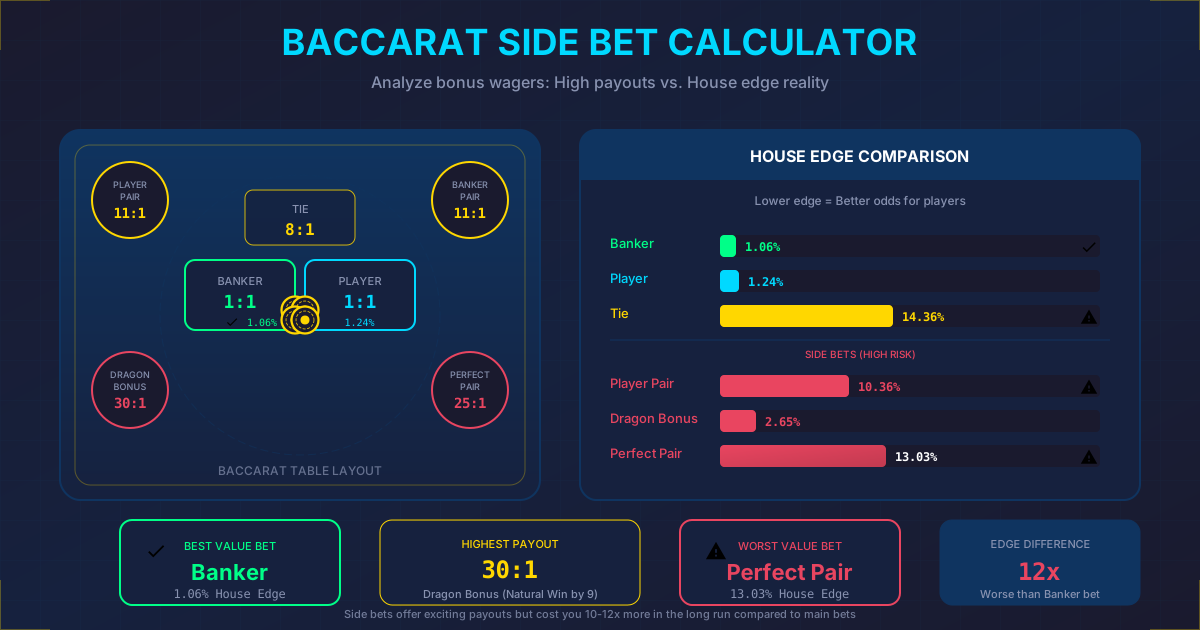
- Standard Baccarat --- 8-deck shoe, Banker bet house edge 1.06%, Player bet 1.24%
- Speed Baccarat --- 27-second rounds versus the standard 48 seconds
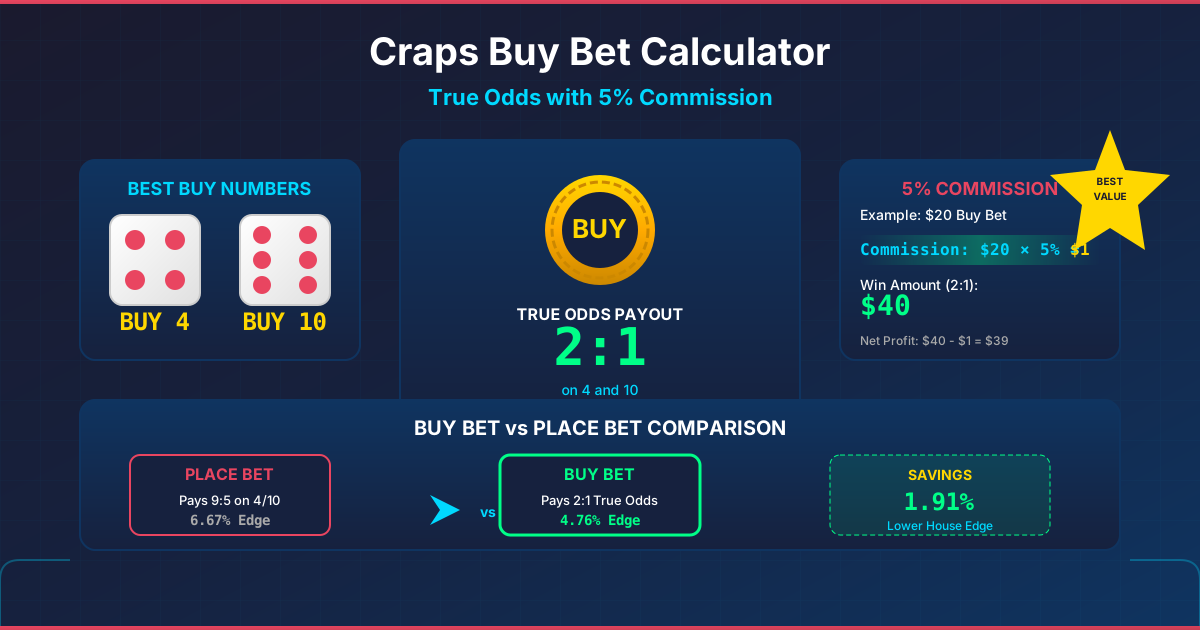
- No Commission Baccarat --- Eliminates the 5% commission on Banker wins but modifies payouts (Banker wins on 6 pay 0.5:1)
- Lightning Baccarat --- Random multipliers up to 512x on winning hands
- Baccarat Squeeze --- Dealer slowly peels back cards for dramatic reveal (same odds, different presentation)
Real-world example: A $50 bettor playing standard baccarat exclusively on Banker bets at 70 hands per hour puts $3,500 into action. At a 1.06% house edge, expected loss is $37.10 per hour. This makes baccarat one of the cheapest games per hour of entertainment in the live casino, second only to blackjack with perfect strategy.
Explore the exact probabilities behind every baccarat bet using our Baccarat Odds Calculator and see how commission rates affect your expected return with the Baccarat House Edge Calculator.
Live Casino Poker
Live casino poker variants pit you against the house rather than other players. These games combine the social atmosphere of live dealer play with the simplified structure of table poker.
Key variants available:
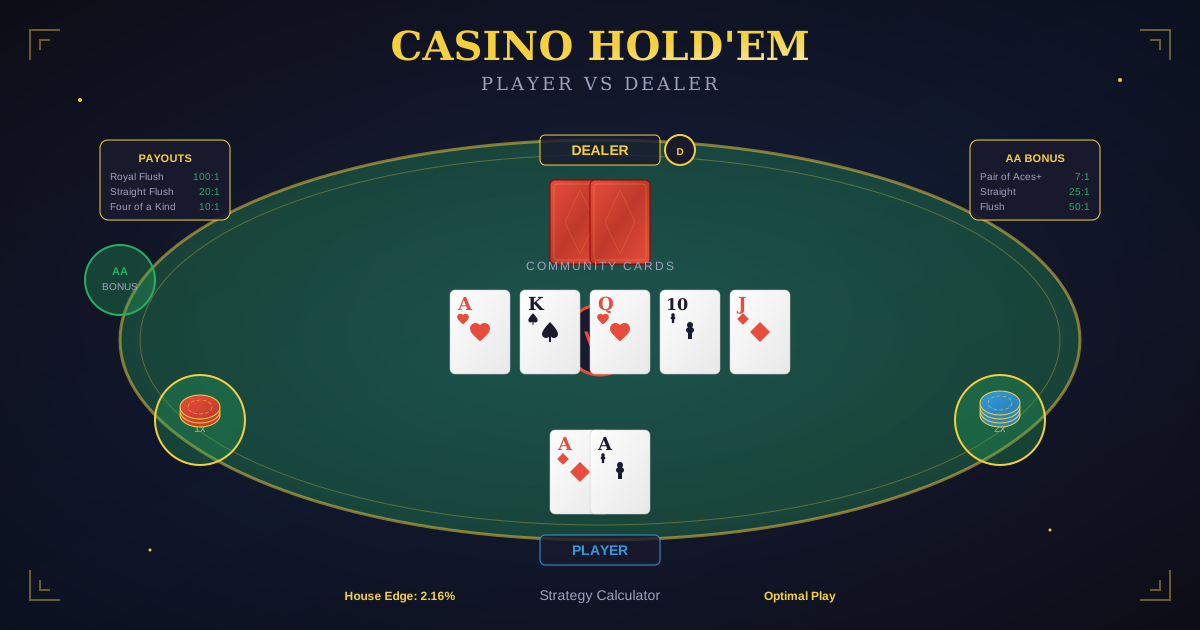
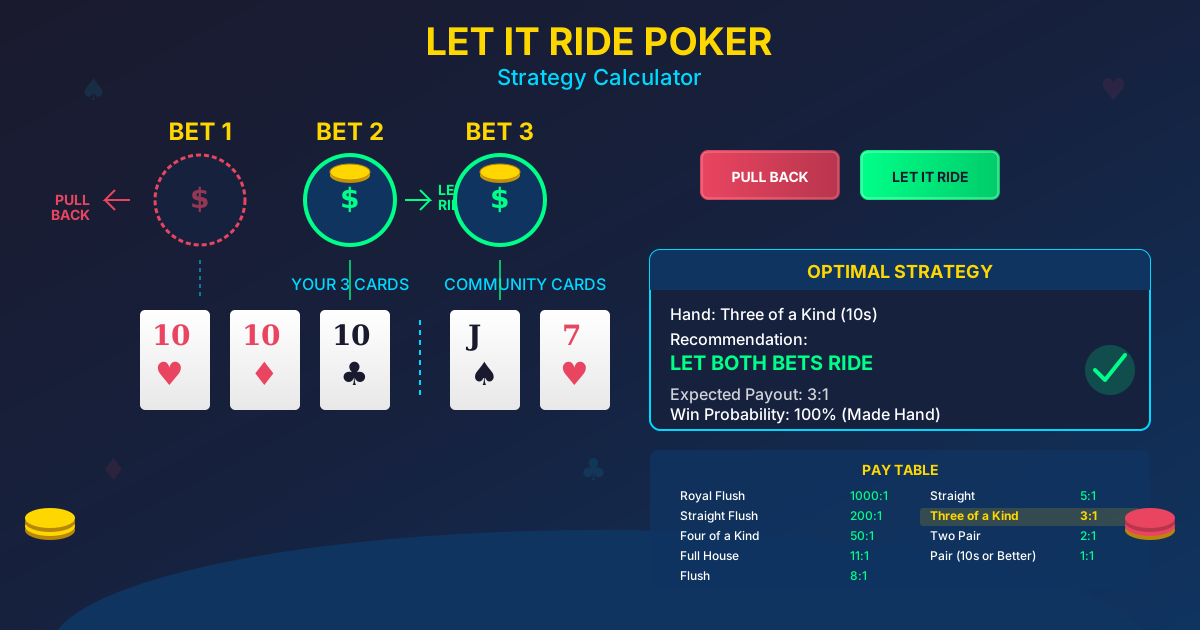
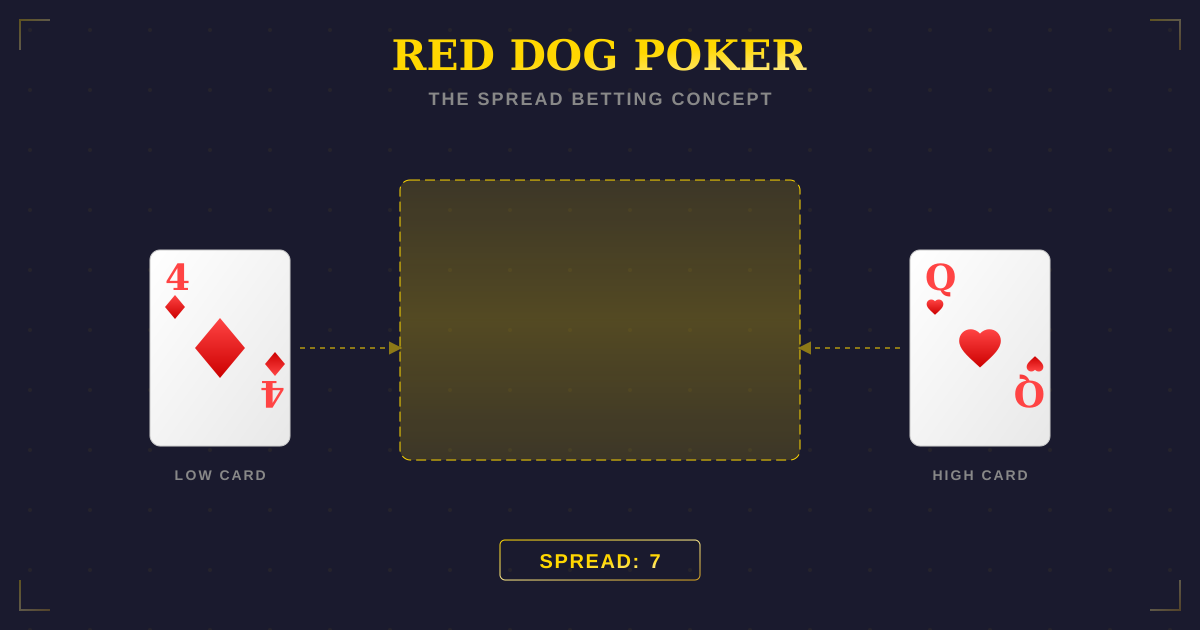
- Casino Hold'em --- Community card poker against the dealer, house edge approximately 2.16%
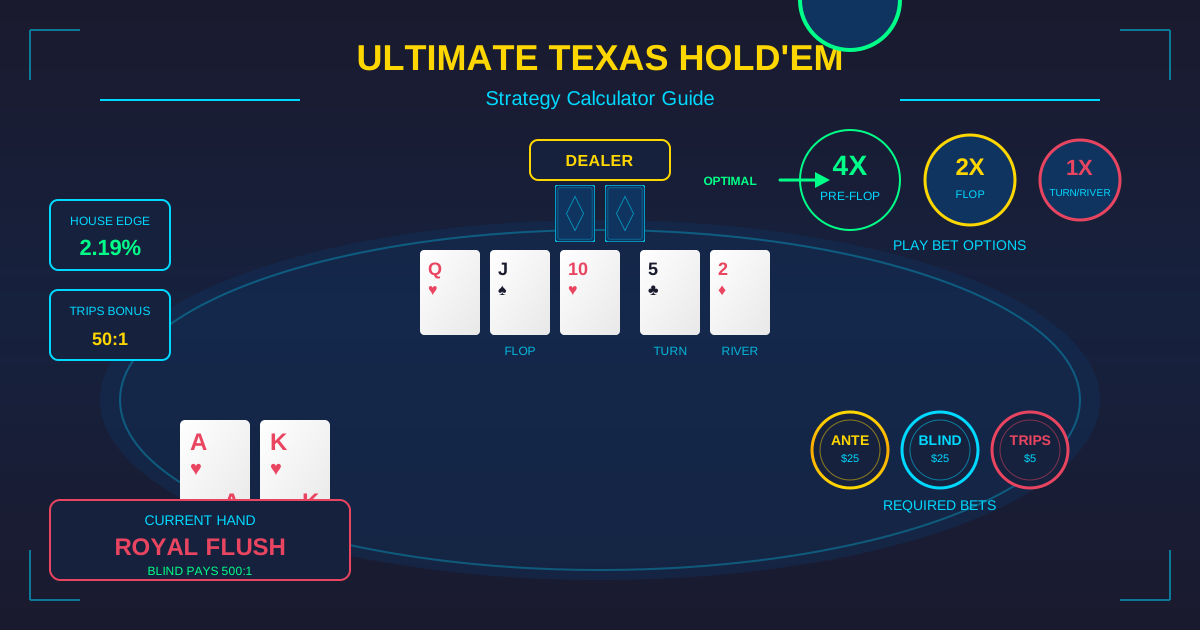
- Ultimate Texas Hold'em --- Multiple betting rounds with escalating raise opportunities, house edge approximately 2.19%
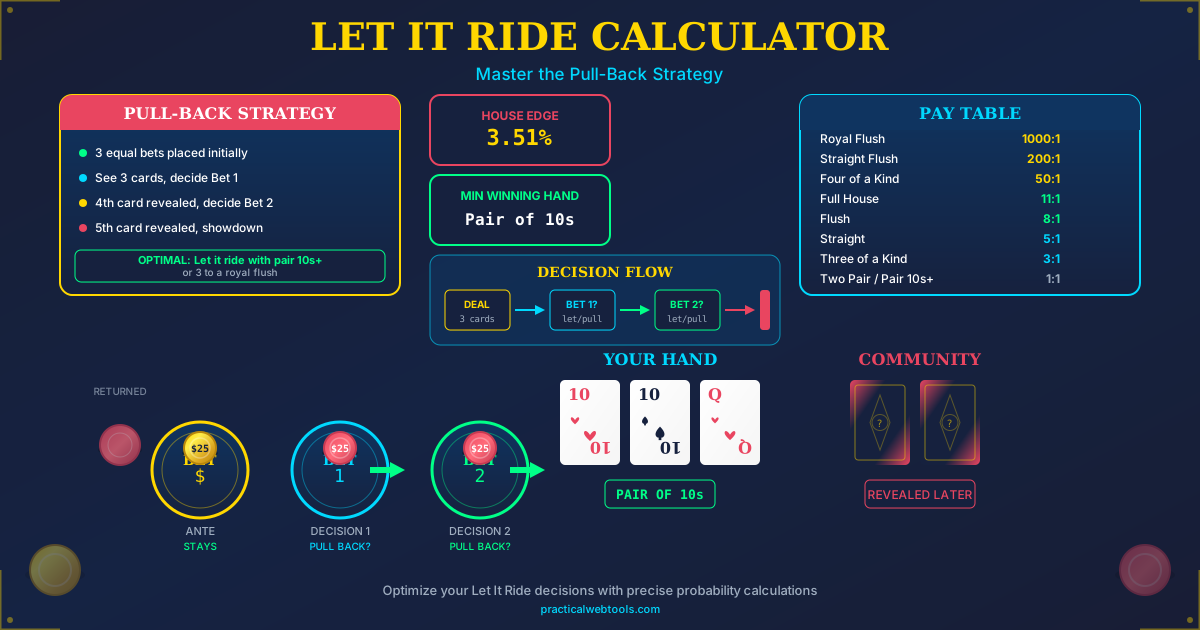
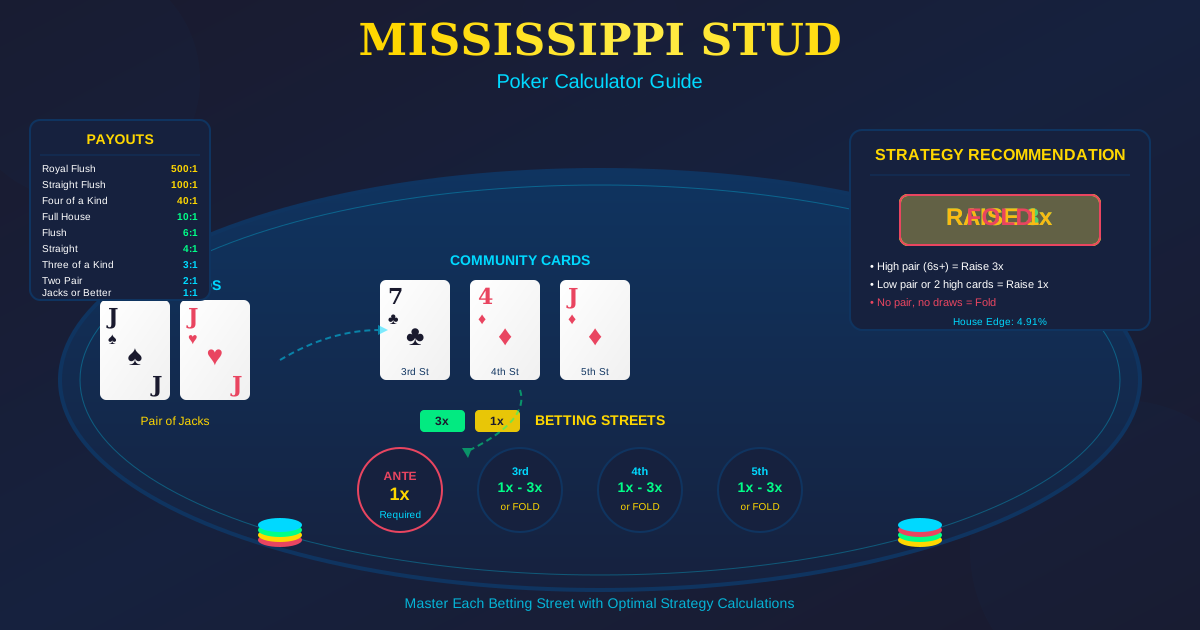
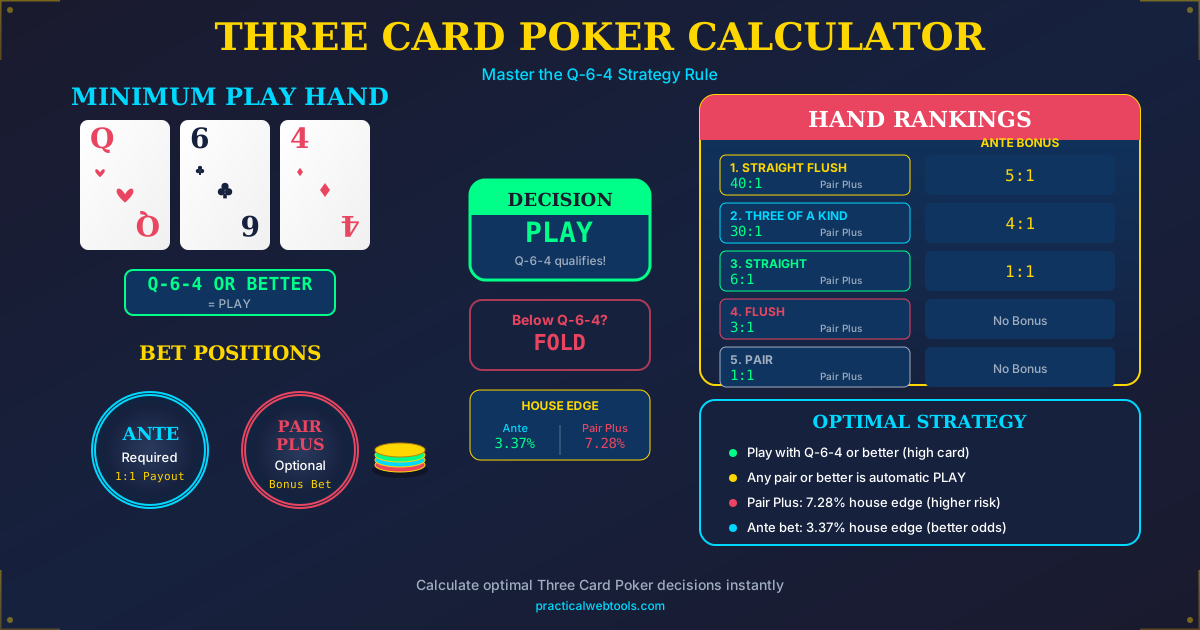
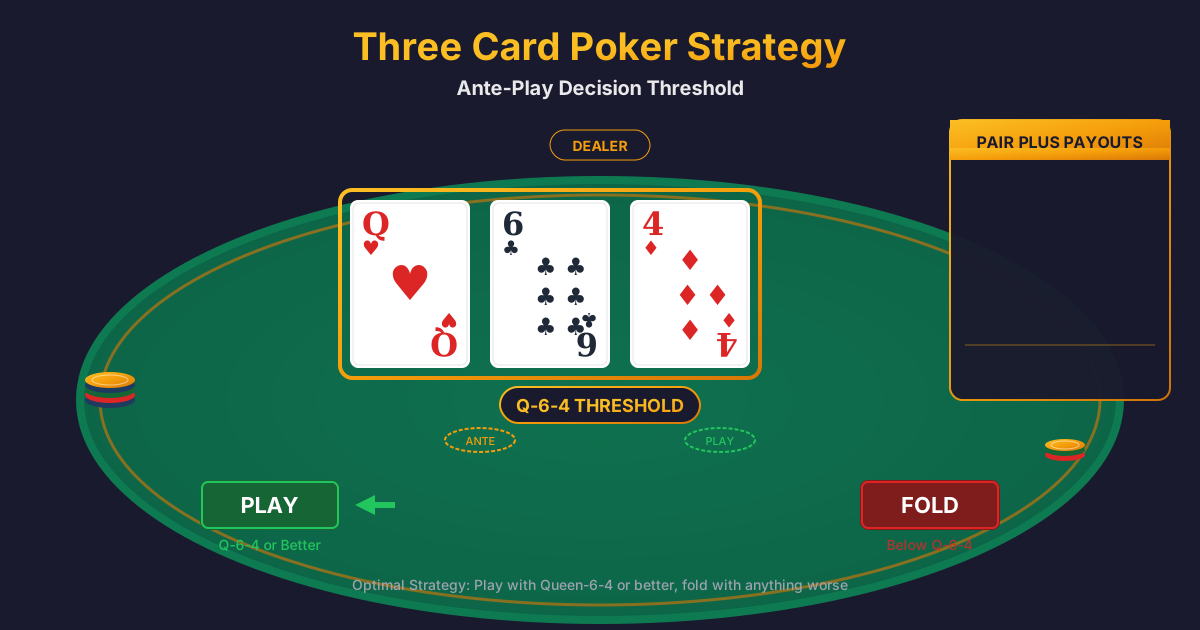
- Three Card Poker --- Fast-paced three-card hands, ante/play house edge approximately 3.37%
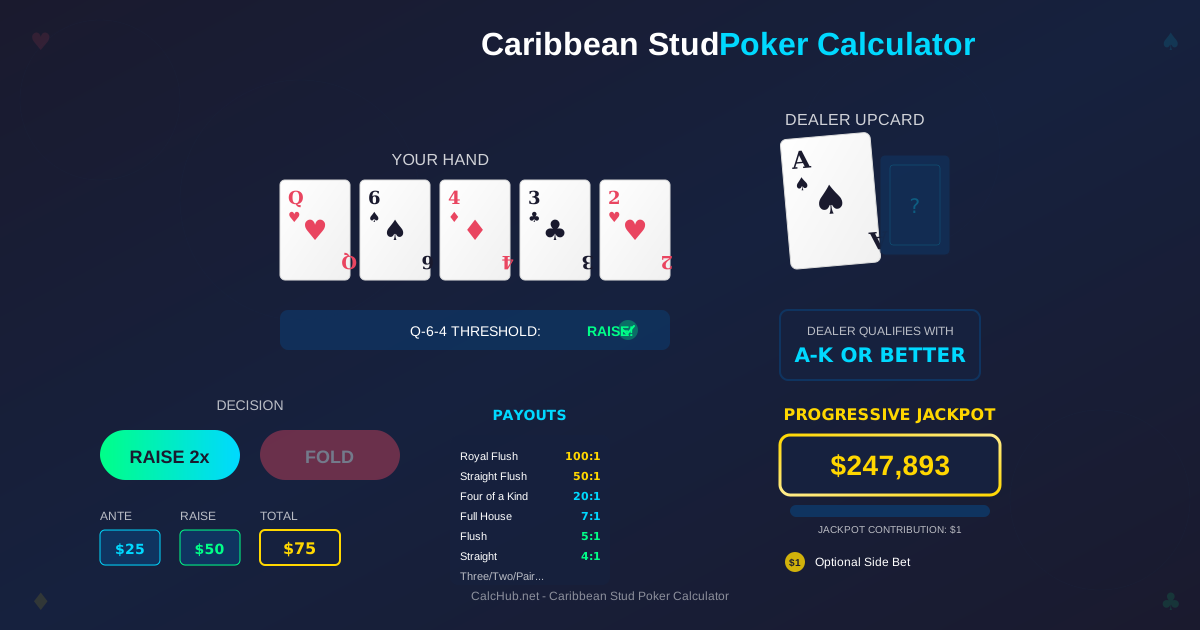
- Caribbean Stud Poker --- Five-card poker with a progressive jackpot side bet
- Texas Hold'em Bonus Poker --- Hold'em structure with optional bonus bet
Casino poker games typically play at 25 to 40 hands per hour, depending on the variant and number of seated players.
Live Game Shows
Game shows represent the fastest-growing category in live dealer gaming. These hybrid experiences combine elements of traditional casino games with TV-style entertainment formats.
Most popular titles:
- Crazy Time --- Wheel-based game with four bonus rounds, consistently among the most-watched live games with thousands of concurrent players
- Lightning Roulette --- Standard roulette with random multiplier overlays (listed above under roulette, but often categorized as a game show)
- Monopoly Live --- Wheel game incorporating an augmented reality Monopoly board
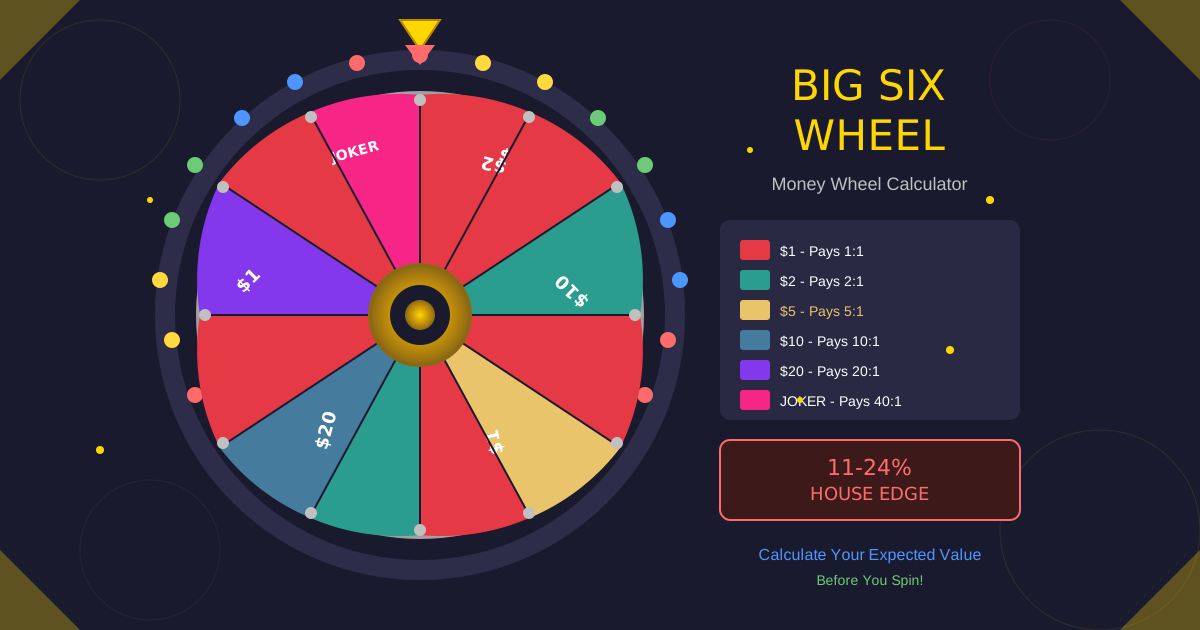
- Dream Catcher --- Simple money wheel with multiplier segments
- Deal or No Deal Live --- Briefcase-opening game based on the TV show format
- Funky Time --- Dance-themed wheel game with multiple bonus rounds
- Mega Ball --- Lottery-style game with multiplier balls
Game shows typically have higher house edges (2% to 10% depending on the title and bet type) but offer larger potential payouts through multiplier mechanics. They appeal to players seeking entertainment value over mathematical optimization.
Complete Live Dealer Game Availability Table
| Game Category | Popular Titles | House Edge Range | Hands/Spins Per Hour | Skill Required |
|---|---|---|---|---|
| Blackjack | Standard, Infinite, Speed, Free Bet, Lightning | 0.5% - 1.5% | 30 - 50 | High (strategy charts) |
| Roulette | European, French, Lightning, Speed, Immersive | 1.35% - 5.26% | 25 - 80 | None |
| Baccarat | Standard, Speed, No Commission, Lightning, Squeeze | 1.06% - 14.36% (Tie) | 40 - 80 | None |
| Casino Poker | Casino Hold'em, UTH, Three Card, Caribbean Stud | 2.16% - 5.22% | 25 - 40 | Medium |
| Game Shows | Crazy Time, Monopoly Live, Dream Catcher, Mega Ball | 2% - 10%+ | Varies | None |
House Edge Comparison: Live Dealer vs. Standard Online (RNG) Games
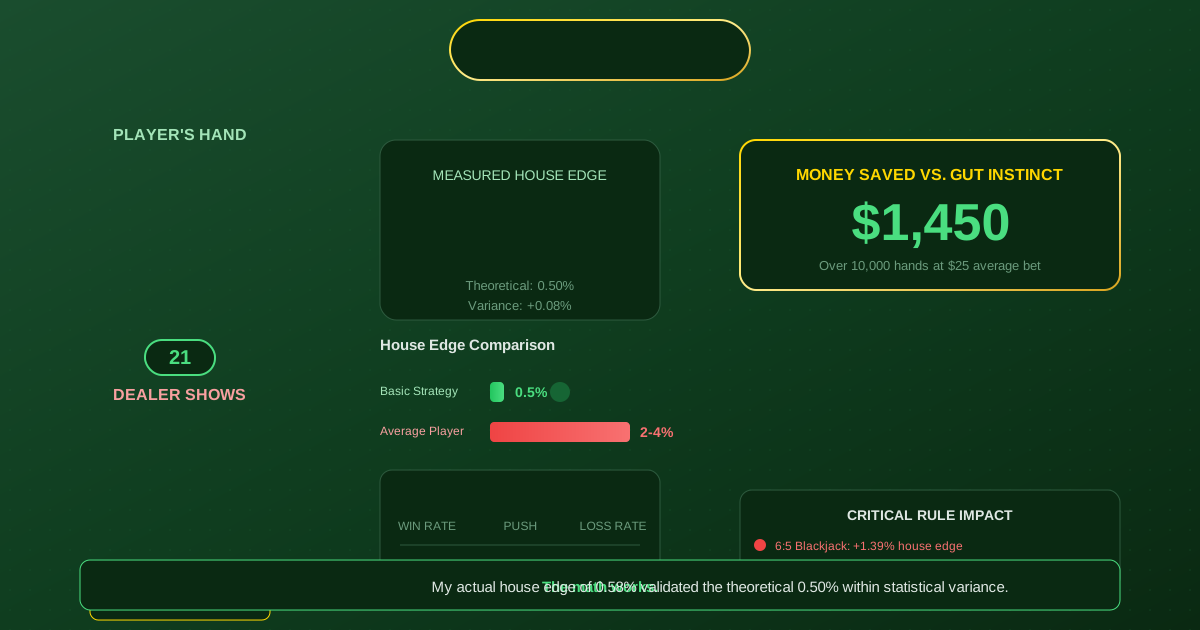
One of the most common questions players ask is whether live dealer games have the same odds as their RNG (random number generator) counterparts. The short answer: the house edges are essentially identical for the same game with the same rules, because the mathematical structure does not change regardless of delivery method. A six-deck blackjack shoe has the same probabilities whether a physical dealer shuffles it or a computer simulates it.
However, practical differences exist that affect your actual cost per session.
| Game | Live Dealer House Edge | RNG House Edge | Difference | Notes |
|---|---|---|---|---|
| Blackjack (basic strategy) | 0.50% | 0.50% | None | Same rules yield same edge |
| European Roulette | 2.70% | 2.70% | None | Identical wheel layout |
| American Roulette | 5.26% | 5.26% | None | Identical wheel layout |
| Baccarat (Banker) | 1.06% | 1.06% | None | Same commission structure |
| Baccarat (Player) | 1.24% | 1.24% | None | Identical payout |
| Three Card Poker | 3.37% | 3.37% | None | Same pay table |
| Lightning Roulette | ~2.70% avg | ~2.70% avg | None | Modified payouts balanced by multipliers |
Why Your Actual Cost Per Hour Differs
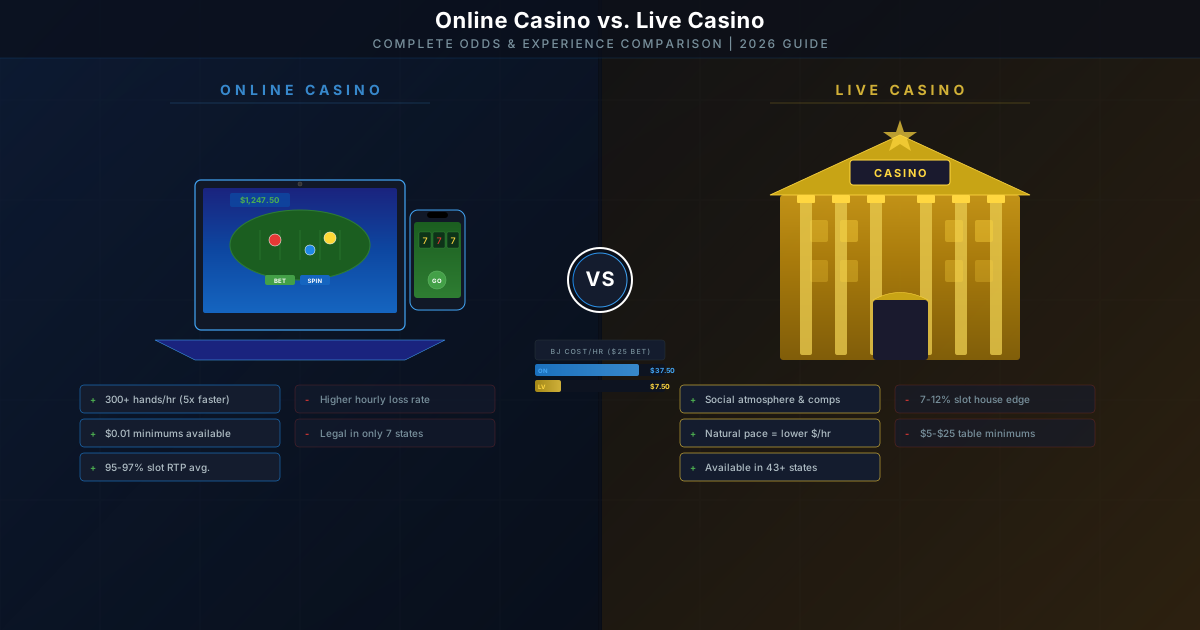
While the per-bet house edge is identical, your total expected loss per hour differs significantly because live dealer games play slower. This is actually an advantage for the player.
| Game | Live Dealer Speed | RNG Speed | Live Cost/Hr ($25 bet) | RNG Cost/Hr ($25 bet) |
|---|---|---|---|---|
| Blackjack | 35 hands/hr | 70 hands/hr | $4.38 | $8.75 |
| European Roulette | 30 spins/hr | 60 spins/hr | $20.25 | $40.50 |
| Baccarat (Banker) | 50 hands/hr | 80 hands/hr | $13.25 | $21.20 |
| Three Card Poker | 30 hands/hr | 55 hands/hr | $25.28 | $46.34 |
At identical bet sizes, a live dealer session costs you roughly 40% to 55% less per hour than an RNG session. The slower pace gives you more entertainment time for the same bankroll. For a player with a $500 session budget playing $25 blackjack with basic strategy, that budget lasts approximately 114 hours at a live dealer table versus 57 hours at an RNG table.
Real-world example: A player who spends 4 hours per week playing live blackjack at $25 per hand with basic strategy expects to lose about $17.50 per session ($4.38 x 4). Over a full year of 52 weeks, that is $910 in expected losses. The same player at RNG blackjack at the same pace would lose $1,820 per year---double the amount---simply because the faster game pushes more hands through the same time window.
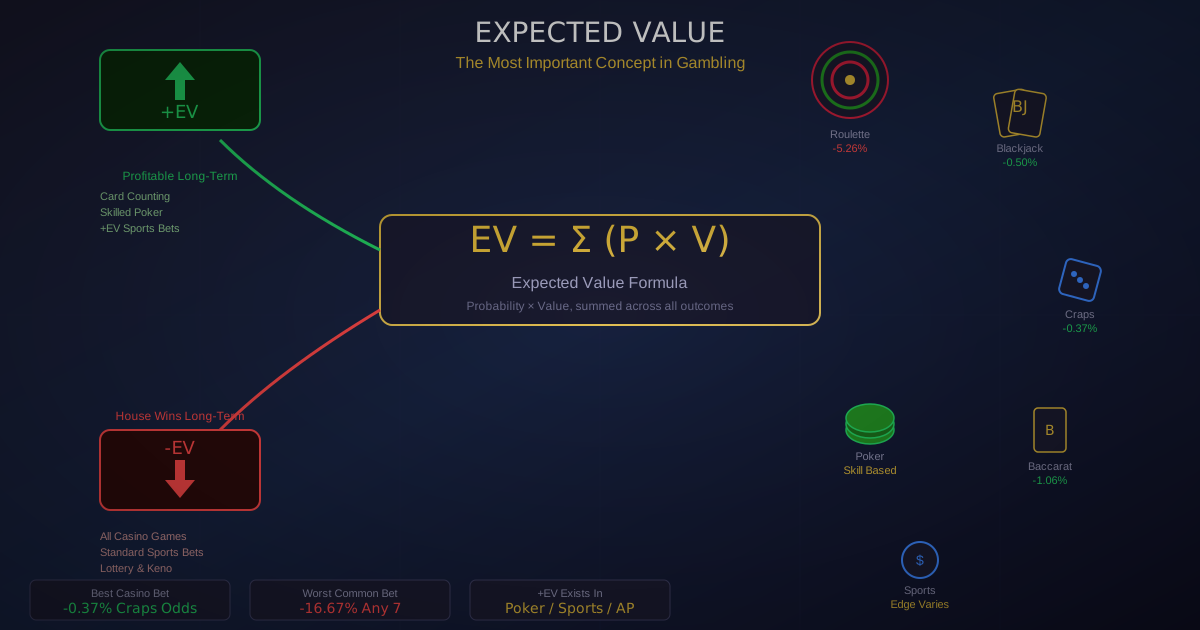
Use our Expected Value Calculator to model your specific bet size, game selection, and session length to understand your true expected cost.
Game Speed and Hands Per Hour: A Detailed Comparison
Understanding game speed matters because it directly controls how much money you put at risk per session. Faster games mean more decisions per hour, which means more exposure to the house edge.
| Game Variant | Hands or Spins Per Hour | Avg. Bet | Action Per Hour | House Edge | Expected Loss/Hr |
|---|---|---|---|---|---|
| Live Blackjack (Standard) | 35 | $25 | $875 | 0.50% | $4.38 |
| Live Blackjack (Speed) | 50 | $25 | $1,250 | 0.50% | $6.25 |
| Live Blackjack (Infinite) | 45 | $25 | $1,125 | 0.56% | $6.30 |
| Live European Roulette | 30 | $25 | $750 | 2.70% | $20.25 |
| Live Speed Roulette | 45 | $25 | $1,125 | 2.70% | $30.38 |
| Auto Roulette | 70 | $25 | $1,750 | 2.70% | $47.25 |
| Live Baccarat (Standard) | 50 | $25 | $1,250 | 1.06% | $13.25 |
| Live Speed Baccarat | 75 | $25 | $1,875 | 1.06% | $19.88 |
| Live Casino Hold'em | 30 | $25 | $750 | 2.16% | $16.20 |
| Live Three Card Poker | 35 | $25 | $875 | 3.37% | $29.49 |
The takeaway is clear: if you want to maximize your playing time on a fixed bankroll, choose standard-speed live blackjack or standard-speed live baccarat (Banker bet). Avoid speed variants and auto roulette unless you are specifically seeking faster action and understand the higher hourly cost.
Social Interaction Features: What Makes Live Dealer Different
The social dimension of live dealer games is arguably their biggest differentiator from RNG casino games. This is the feature that transforms solitary screen-tapping into something that feels like a shared experience.
Live Chat
Every live dealer table includes a text chat window where players can communicate with the dealer and, in many cases, with each other. Dealers are trained to respond conversationally while maintaining game pace. You can congratulate a player on a blackjack, commiserate after a bad beat, or simply chat with the dealer about the game. This creates a communal atmosphere that purely digital games cannot replicate.
Dealer Personalities
Professional live casino dealers undergo extensive training---not just in game mechanics and dealing procedures, but in entertainment and hosting skills. Evolution Gaming dealers, for example, attend a multi-week training academy that covers everything from card handling to camera presence to conversational techniques. The result is that each dealer brings a distinct personality to the table, and regular players often develop preferences for specific dealers or time slots.
Tip Functionality
Some live dealer platforms allow players to tip dealers, similar to the practice at physical casinos. While not universal across all US-licensed operators, this feature reinforces the human connection between player and dealer.
Private Tables and VIP Rooms
High-volume players can access exclusive live dealer environments with higher table limits, dedicated dealers, and sometimes personalized settings. These VIP tables typically require a minimum bankroll or invitation from the casino and offer limits ranging from $500 to $25,000+ per hand.
Multiplayer Awareness
Unlike RNG games where you play in isolation, live dealer tables show you how many other players are seated and (in some games) what bets they place. Watching the Crazy Time bonus wheel with 10,000 other players reacting in real time creates a shared excitement that isolated RNG play simply cannot match.
Tips for Live Dealer Play: Maximizing Value and Minimizing Mistakes
1. Learn Basic Strategy Before Playing Live Blackjack
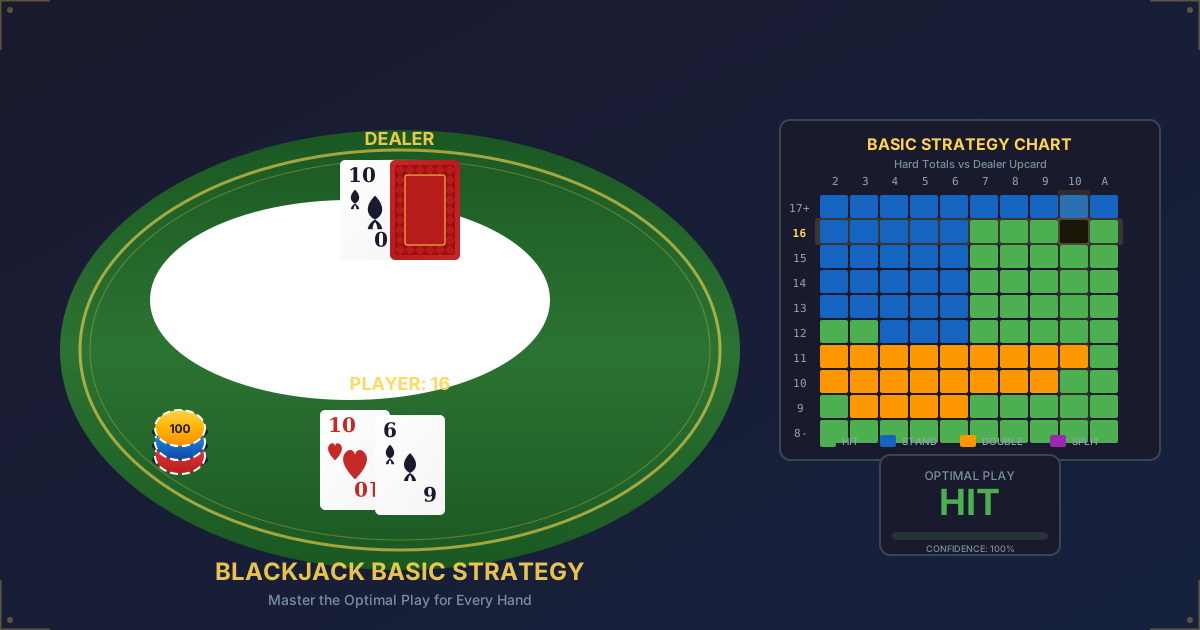
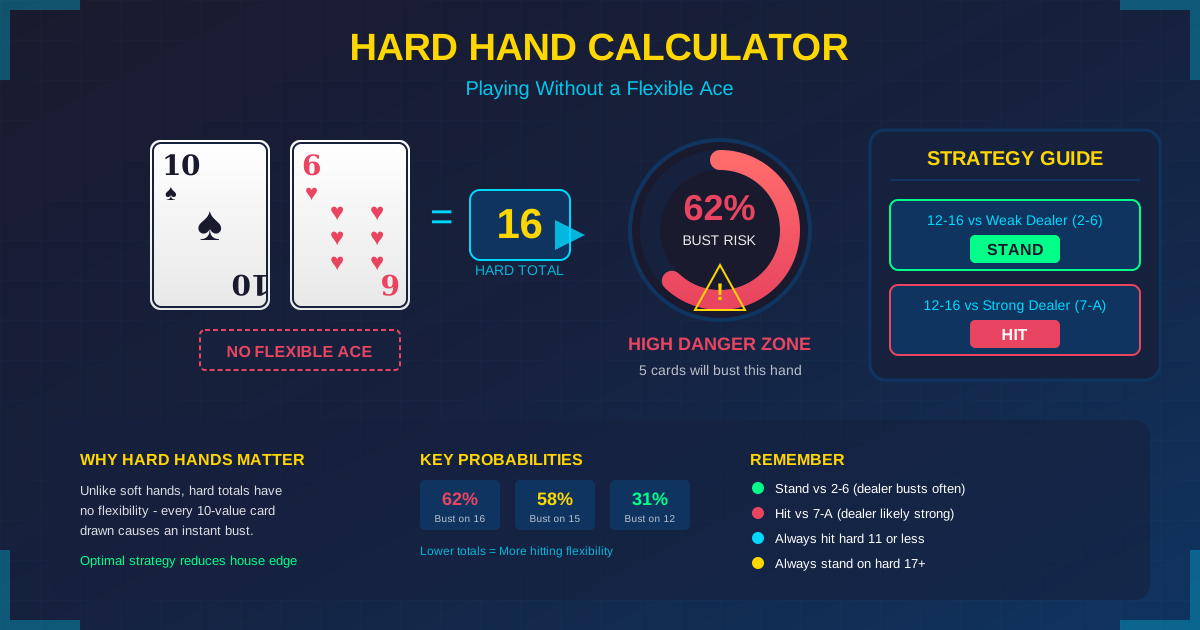
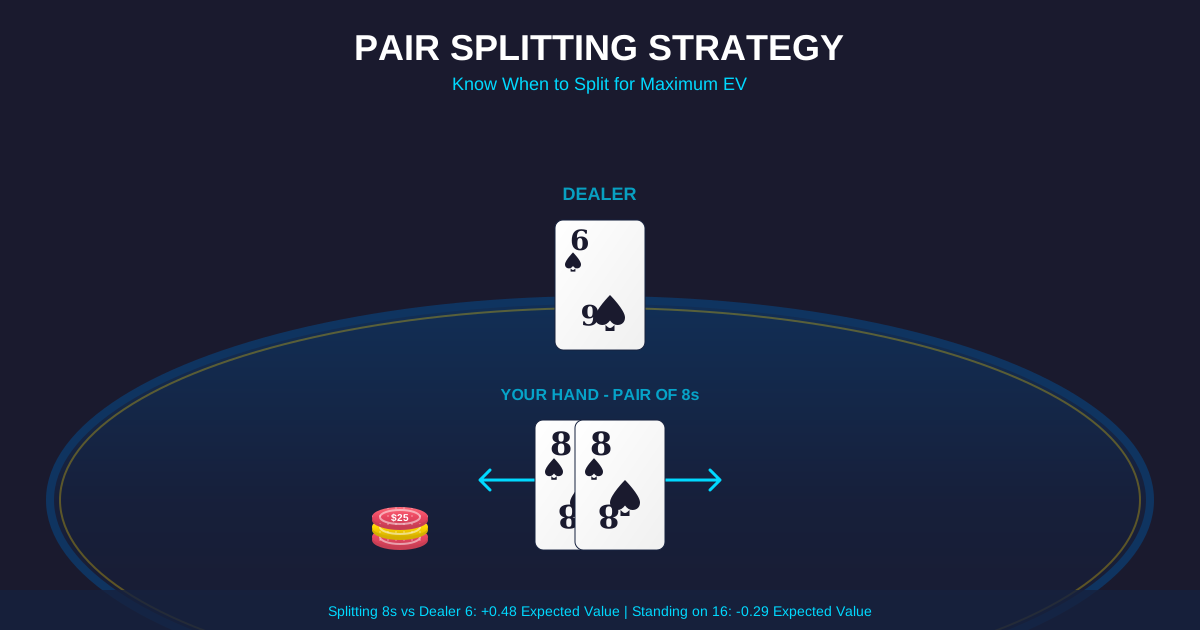
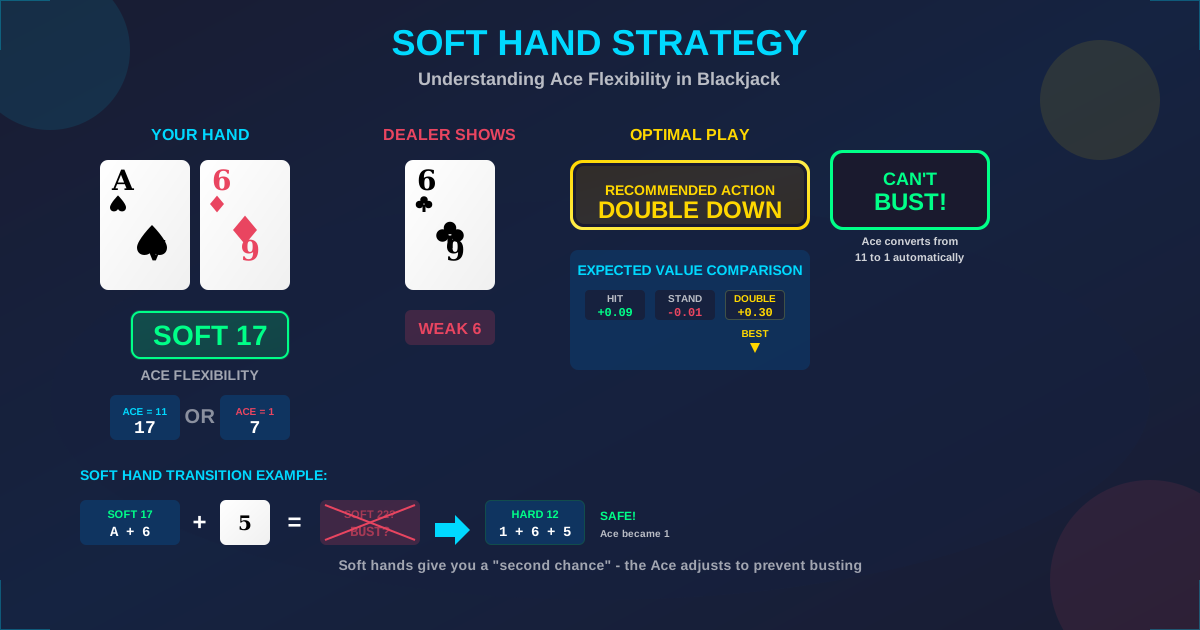
The house edge advantage of live blackjack only materializes if you play correctly. Study a basic strategy chart until the decisions become automatic. The slower pace of live dealer play actually gives you more time to verify your decisions compared to RNG blackjack, so use that advantage.
2. Always Choose European Over American Roulette
If both options are available, European roulette (2.70% house edge) is always superior to American roulette (5.26%). French roulette with La Partage (1.35% on even-money bets) is even better. Check our Roulette House Edge Calculator to quantify the difference over your expected session length.
3. Stick to Banker Bets in Baccarat
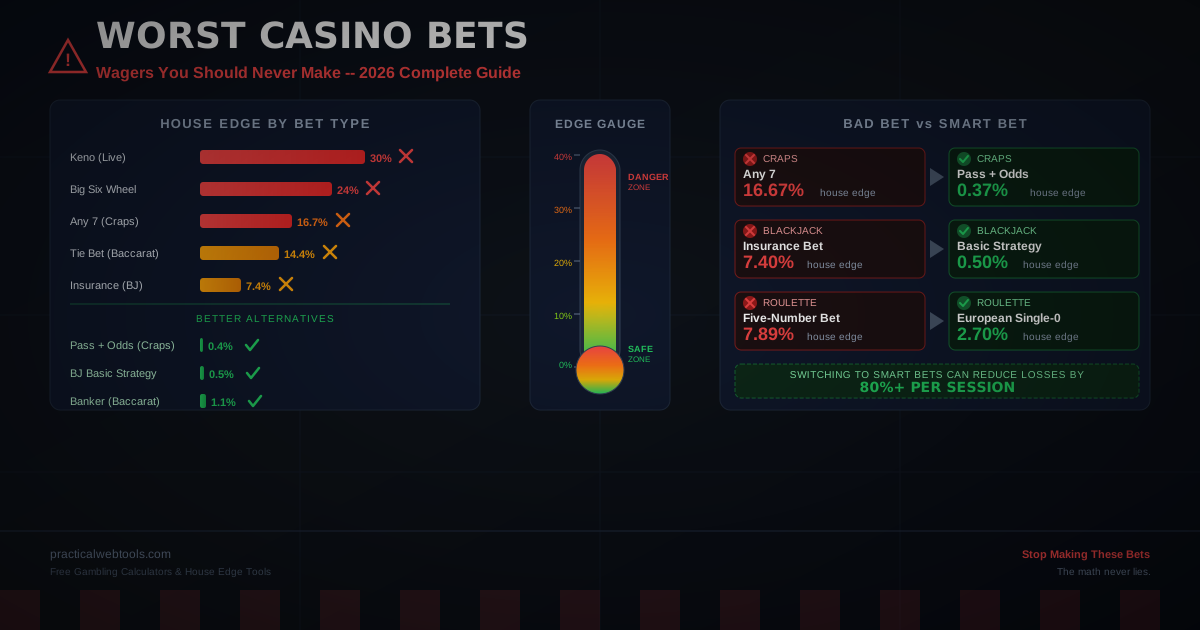
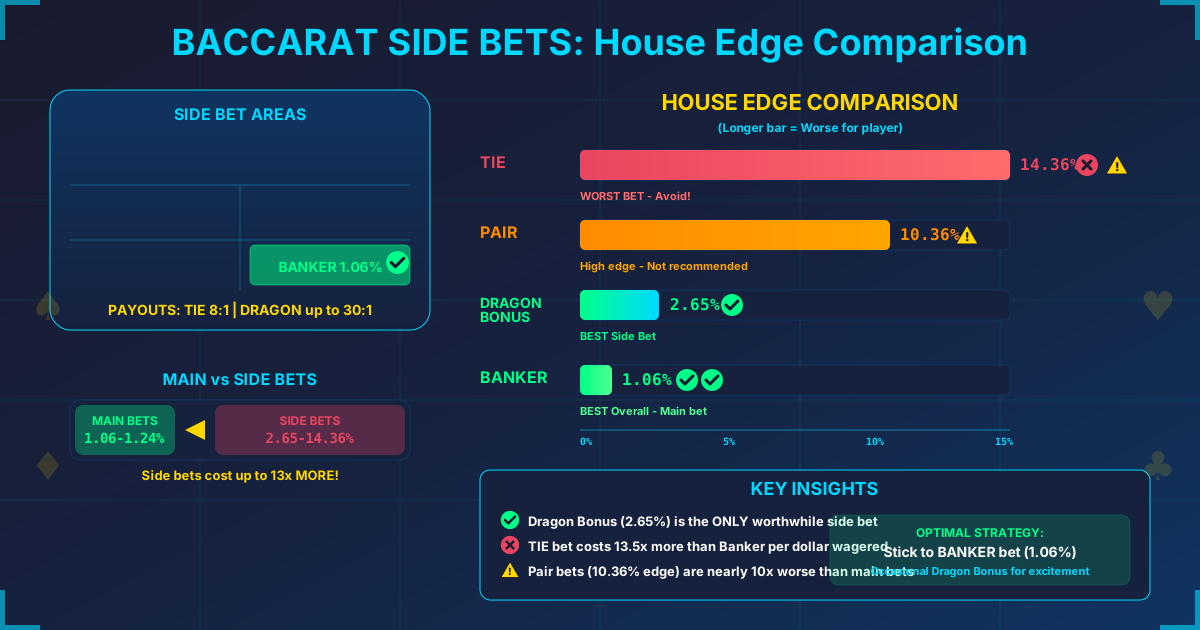
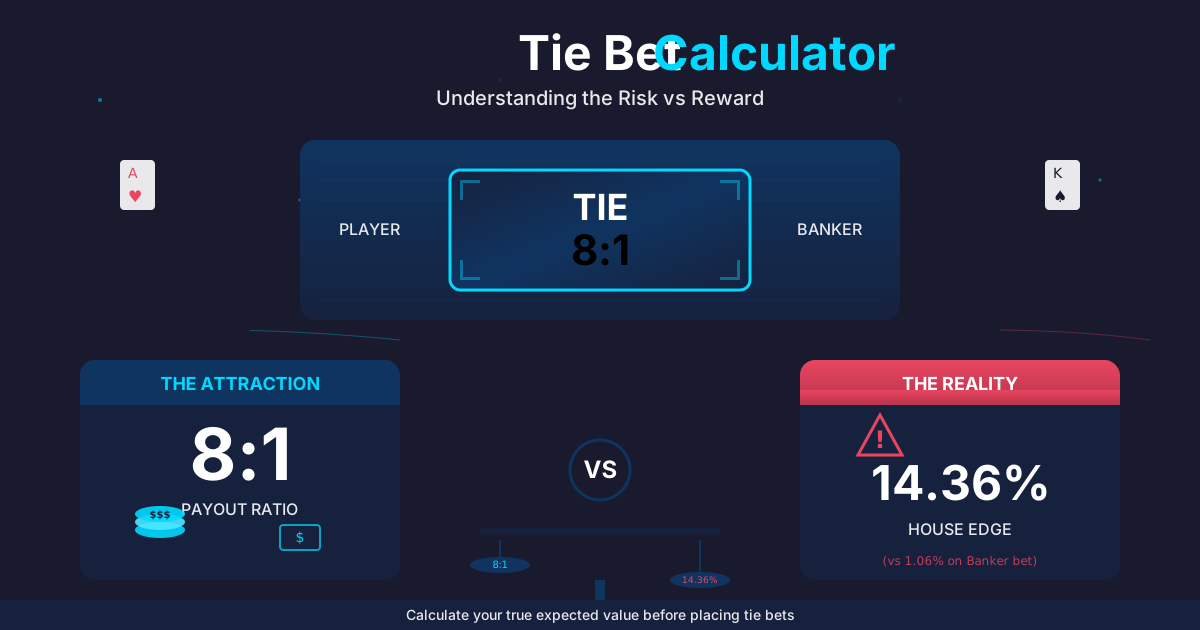
The Banker bet at 1.06% house edge is the mathematically optimal choice in baccarat. The Player bet at 1.24% is acceptable. The Tie bet at 14.36% is one of the worst bets in the entire casino and should be avoided entirely. Our Baccarat Odds Calculator breaks down the exact probabilities.
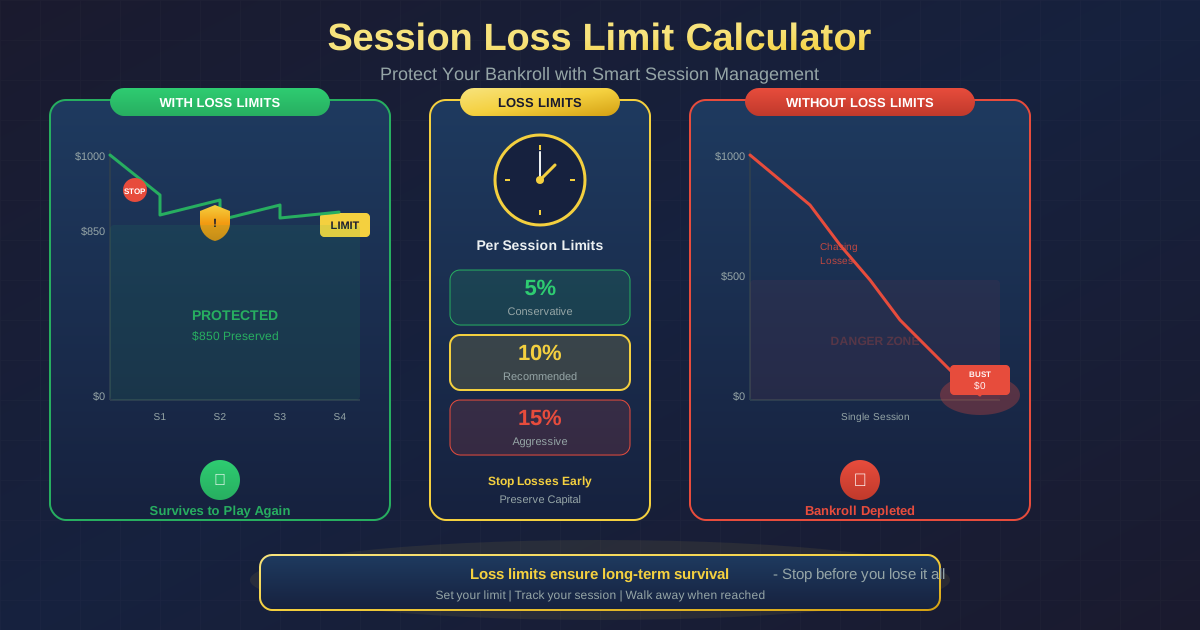
4. Manage Your Bankroll for the Session
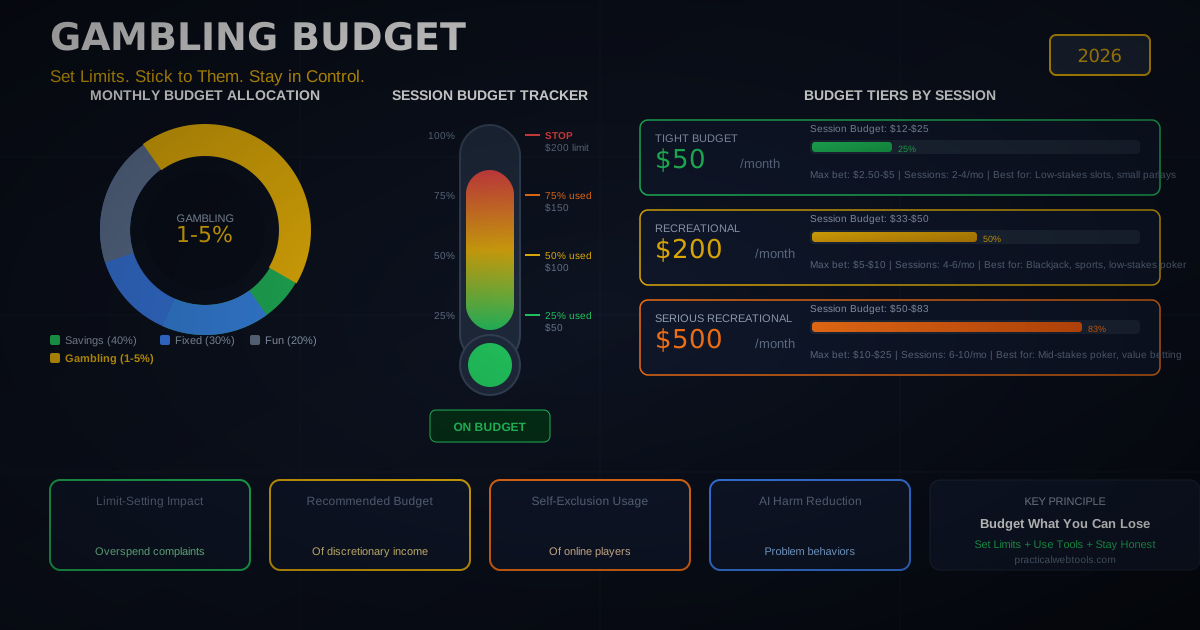
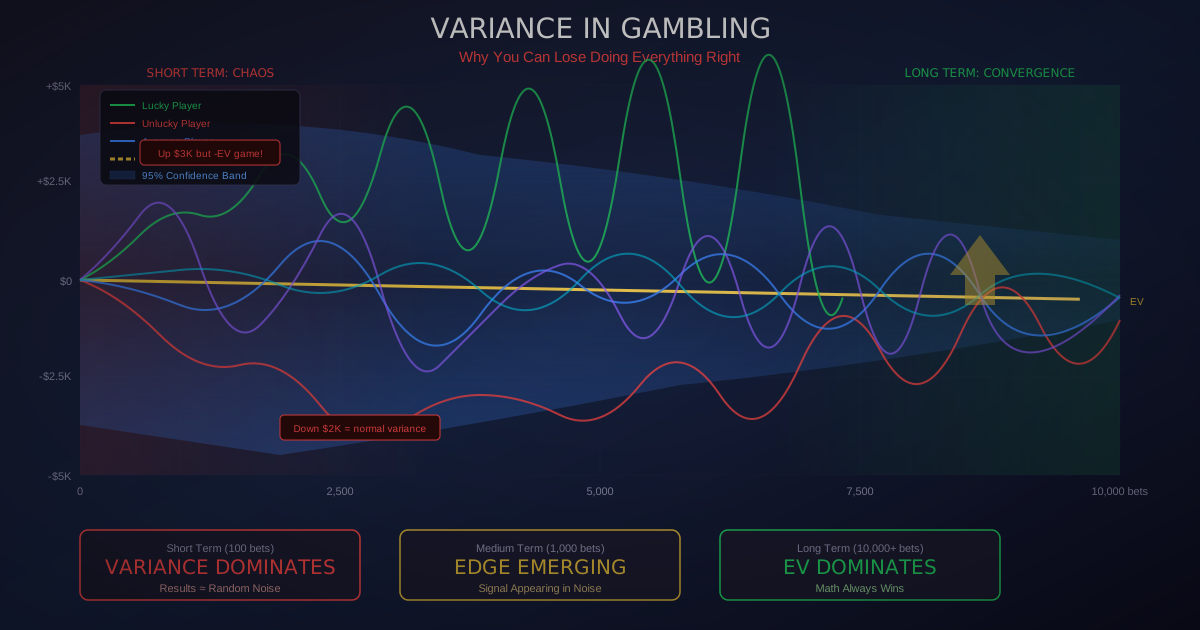
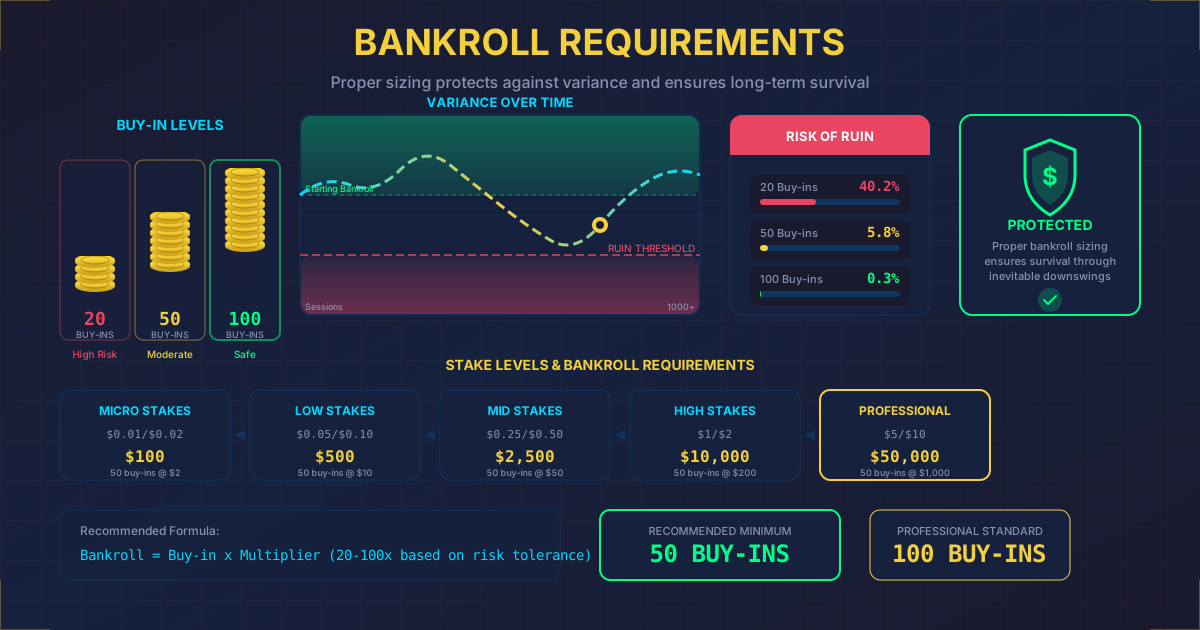
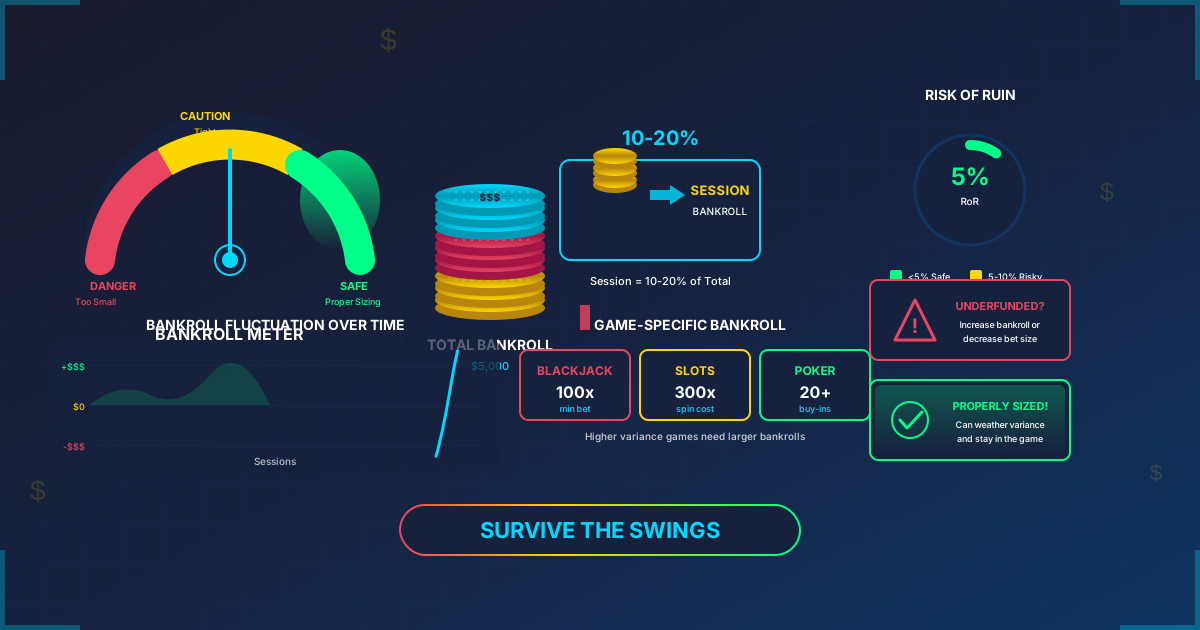
A common mistake is bringing a bankroll that is too small for the table minimum. For live blackjack with a $25 minimum, a recommended session bankroll is 40 to 60 times the minimum bet---$1,000 to $1,500. This gives you enough runway to survive normal variance without going broke. For baccarat at $25 minimums, a smaller multiple of 30 to 40 bets ($750 to $1,000) works because the lower variance of Banker bets means shorter losing streaks.
5. Test Your Internet Connection
Live dealer games require a stable internet connection. A dropped connection mid-hand can cause confusion about the outcome. Before starting a session, verify your connection speed (aim for 10+ Mbps) and switch to a wired connection if Wi-Fi is unreliable. Most platforms have auto-play or default-action rules for disconnections, but you never want to rely on them.
6. Use the Slower Pace to Your Advantage
The 30-40 hands per hour pace of live blackjack means each decision has real breathing room. Use that time to double-check strategy charts, calculate pot odds in poker variants, or simply enjoy the experience without feeling rushed. The slower speed is not a drawback---it is a feature that extends your bankroll.
7. Avoid Side Bets Unless You Are Seeking Entertainment
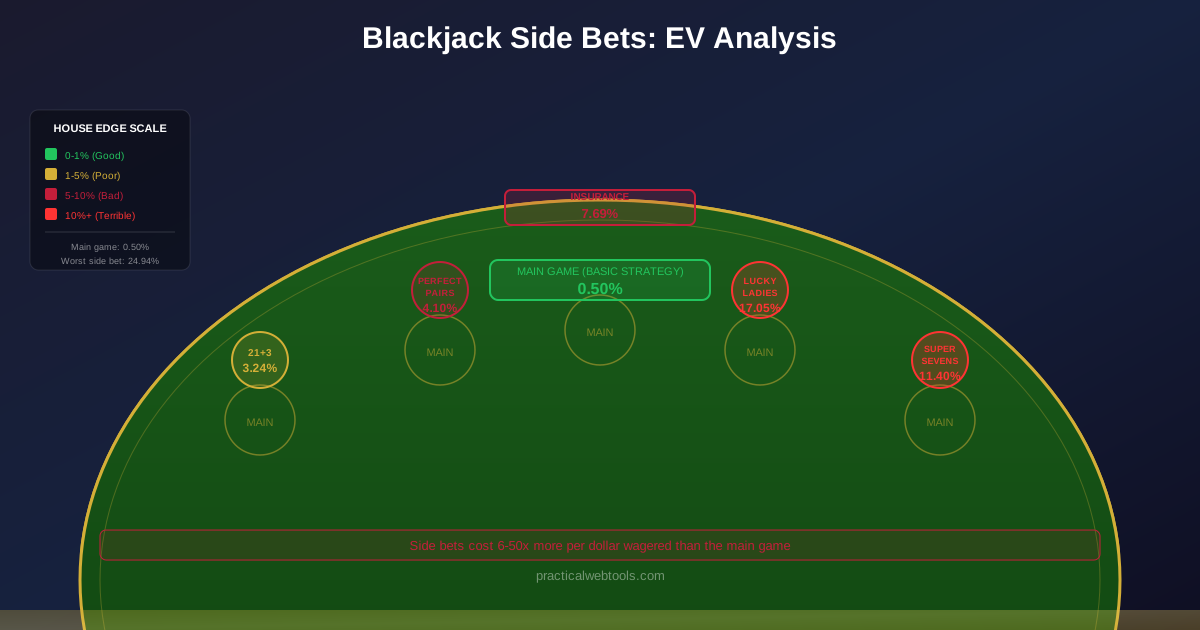
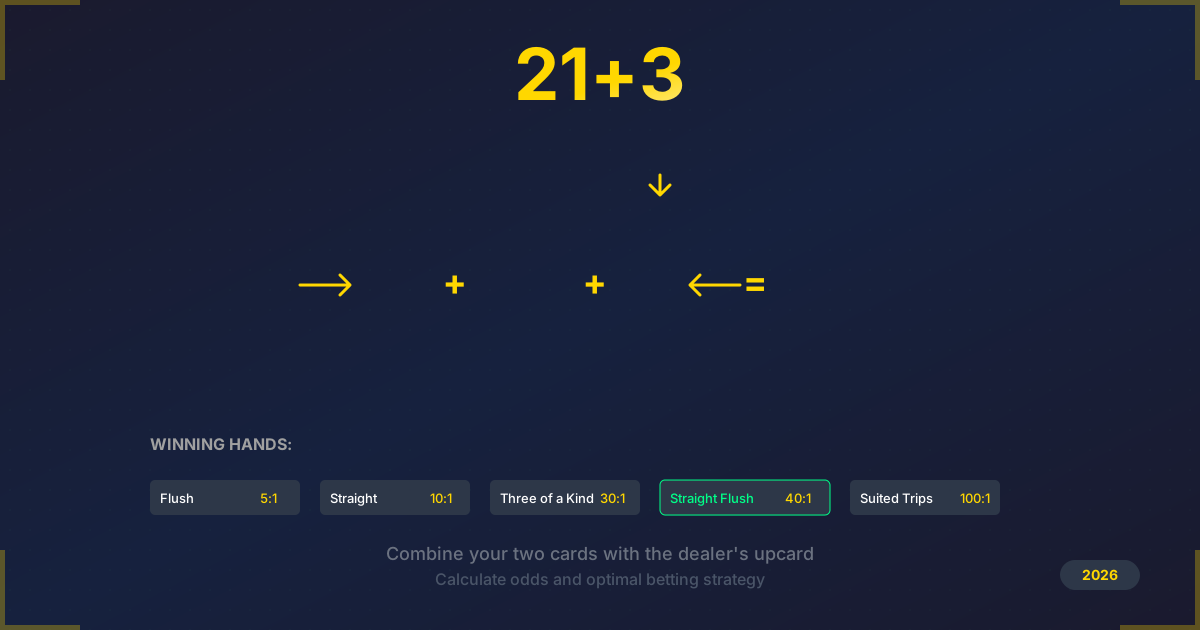
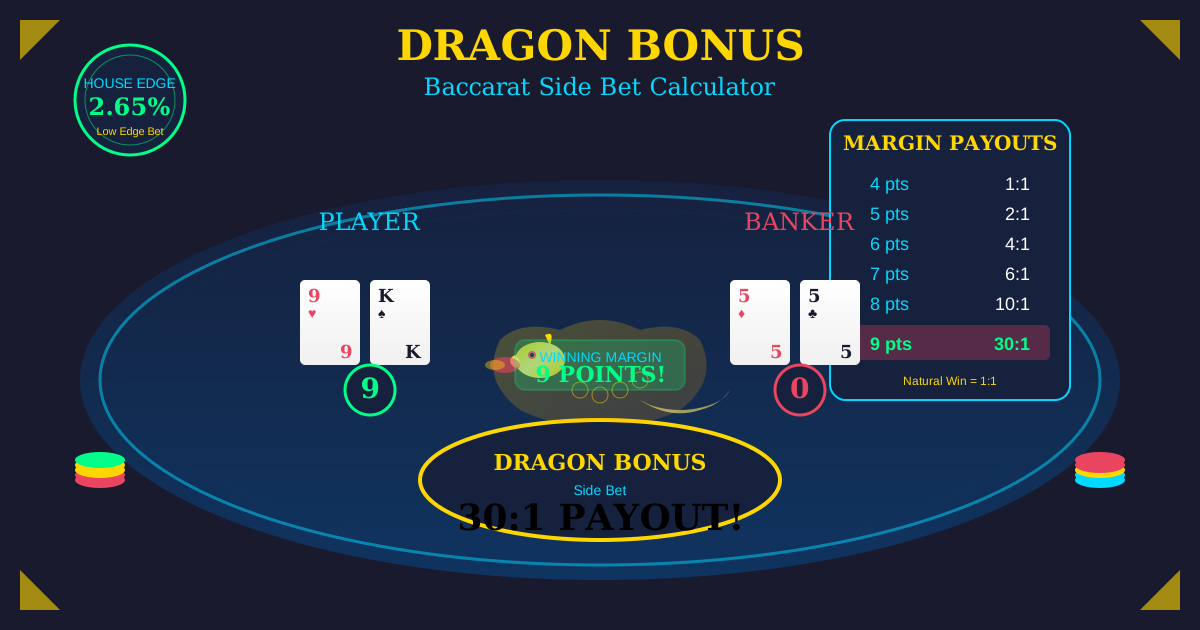
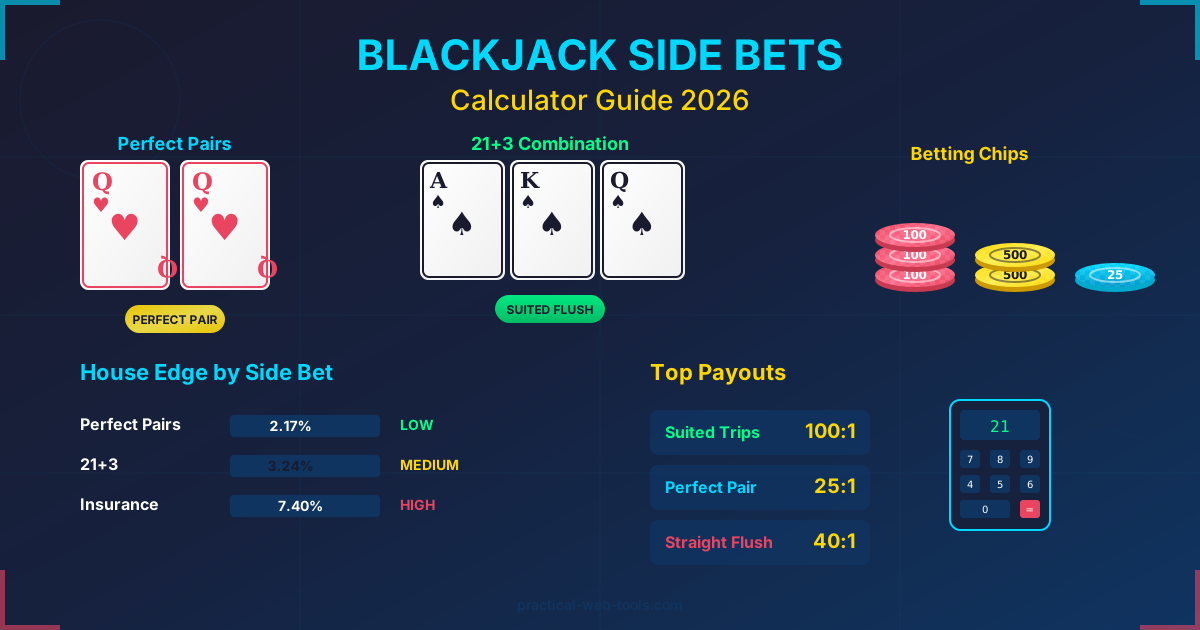
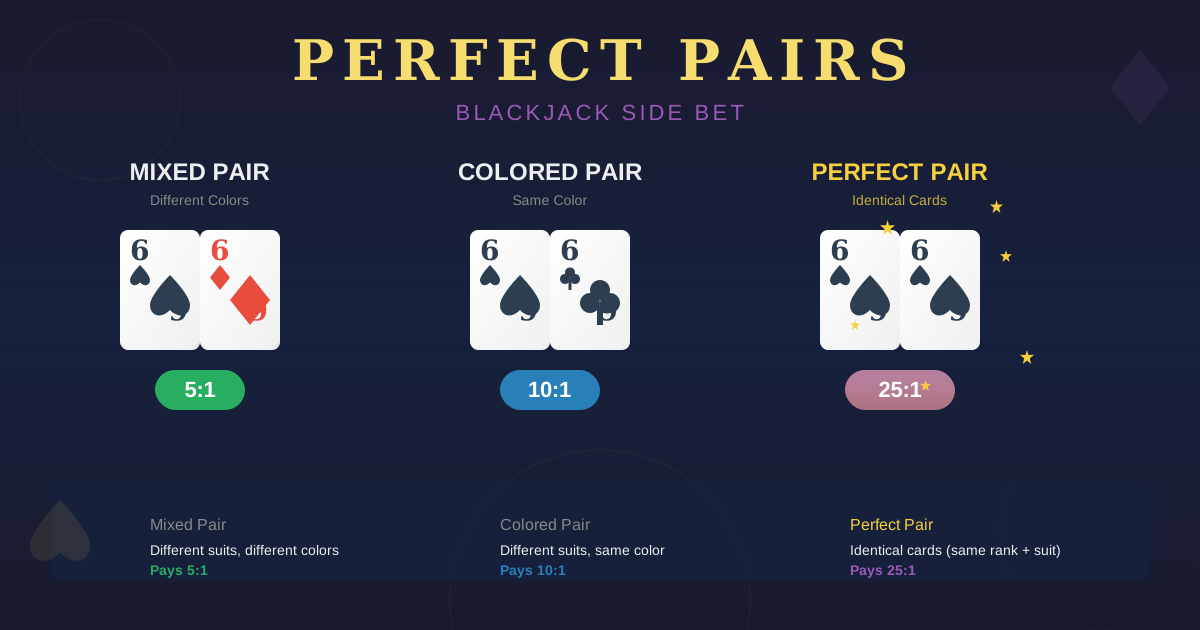
Side bets in live blackjack (Perfect Pairs, 21+3) and baccarat (Dragon Bonus, Panda 8) carry significantly higher house edges, typically 3% to 12%. They add excitement but increase your expected loss. If your goal is to minimize cost per hour, skip them. If you are playing for fun and accept the premium, set a separate budget for side bets.
Real-world example: A player adds a $5 Perfect Pairs side bet to every $25 blackjack hand. Over 35 hands per hour, that is $175 in additional side bet action at a 5.8% house edge, costing an extra $10.15 per hour. Combined with the $4.38 expected loss on the main bet, total expected loss rises from $4.38 to $14.53 per hour---a 232% increase from a seemingly small $5 side bet.
US Availability and Legality: Where Can You Play Live Dealer Games?
As of early 2026, live dealer online casino games are available in a limited number of US states. Each state requires specific licensing, and operators must partner with land-based casinos within the state to offer online games.
States with Legal Live Dealer Online Casinos
| State | Legal Since | Major Operators | Live Dealer Available | Notable Features |
|---|---|---|---|---|
| New Jersey | 2013 | BetMGM, DraftKings, FanDuel, Caesars, Golden Nugget | Yes | Most mature market, widest game selection |
| Pennsylvania | 2019 | BetMGM, DraftKings, FanDuel, Caesars, PokerStars | Yes | Second-largest market by revenue |
| Michigan | 2021 | BetMGM, DraftKings, FanDuel, Caesars, PointsBet | Yes | Growing rapidly, strong live dealer adoption |
| West Virginia | 2020 | BetMGM, DraftKings, FanDuel, Caesars | Yes | Smaller market, limited table selection |
| Connecticut | 2021 | DraftKings, FanDuel (Mohegan Sun/Foxwoods) | Yes | Tribal-operated market |
| Delaware | 2012 | 888, DraftKings | Limited | Smallest market, fewer live options |
| Rhode Island | 2024 | Bally's | Yes | Newest regulated market |
States with Pending or Expected Legislation
- Maine --- Set to become the eighth state with legal online casinos, with launches expected in 2026. Four tribal operators will each partner with one third-party platform (DraftKings and Caesars among the likely partners).
- New York --- Senator Joseph Addabbo introduced legislation in early 2026 to legalize online casinos including live dealer games. If passed, New York would instantly become one of the largest iCasino markets in the country.
- Virginia --- Online casino legislation was pushed to the 2026 legislative session. Supporters see it as a natural extension of the state's existing sports betting infrastructure.
- Illinois, Indiana, Maryland --- Various levels of discussion and preliminary legislation, but none are imminent.
Important Legal Notes
- You must be physically located within the state's borders to play. Geolocation technology verifies your position in real time.
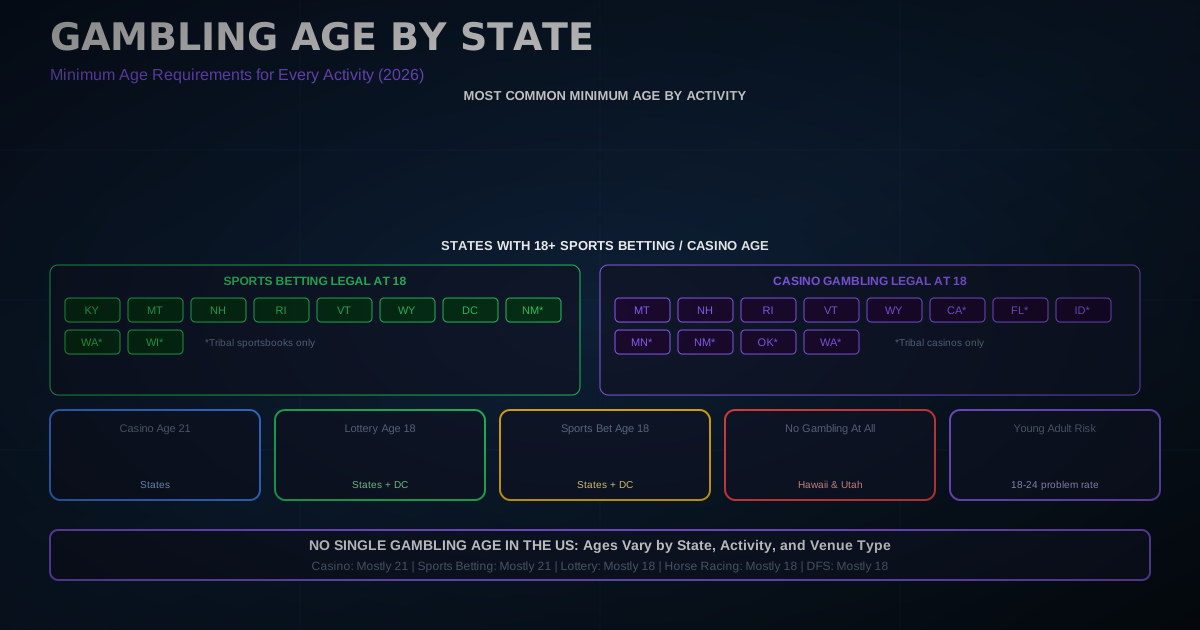
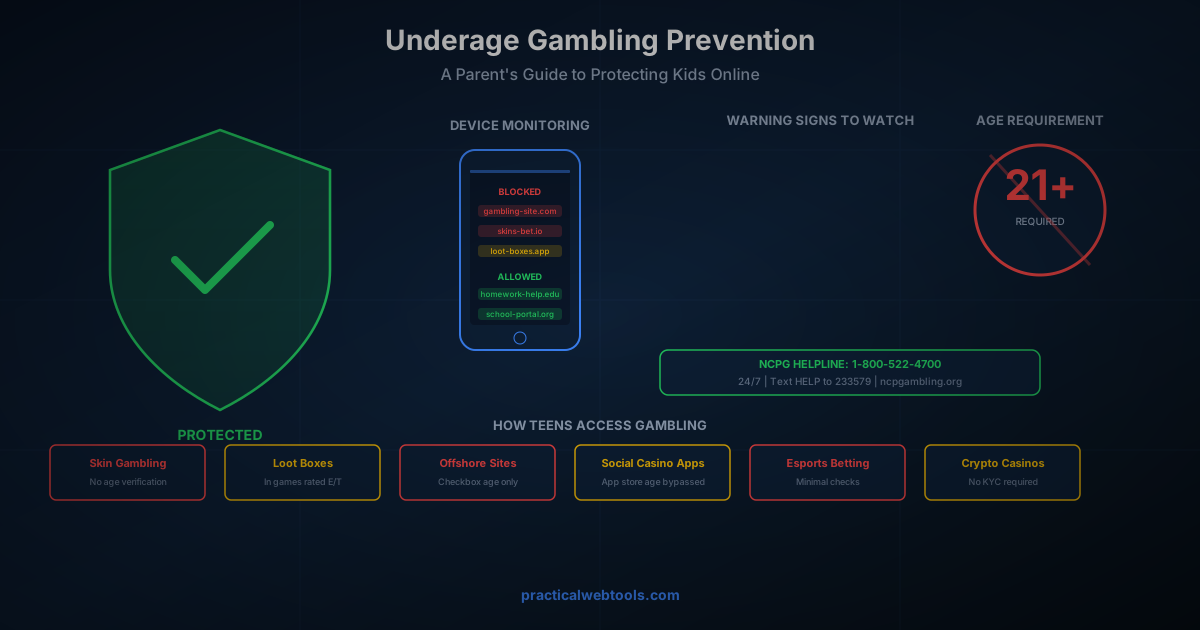
- Minimum age is 21 in all states with legal online casinos.
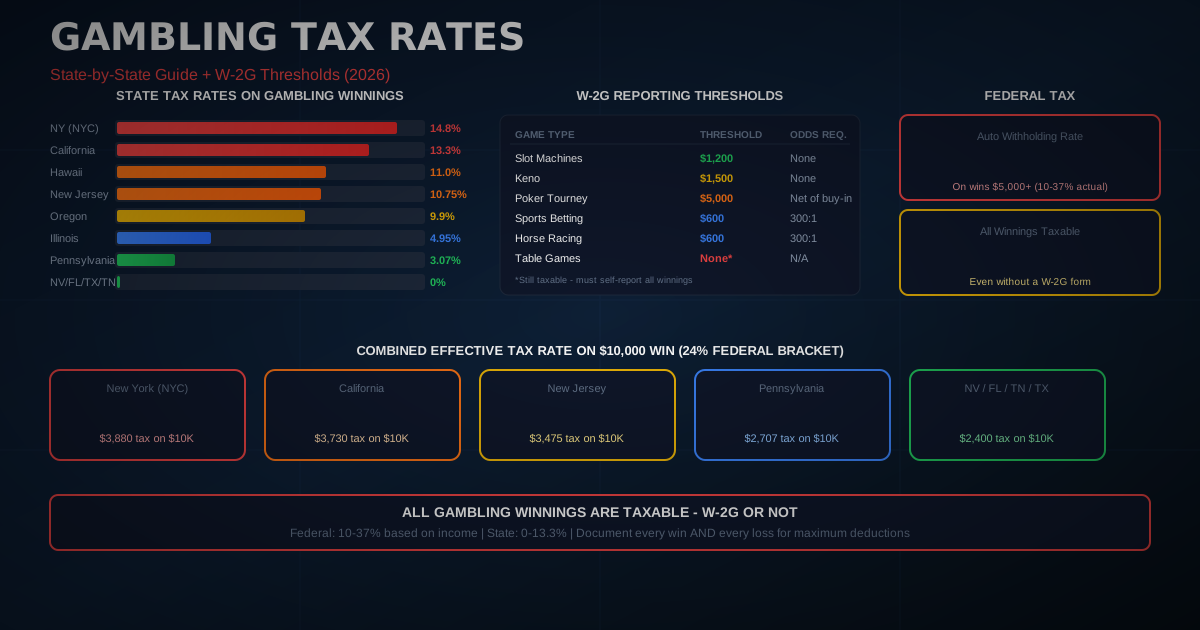
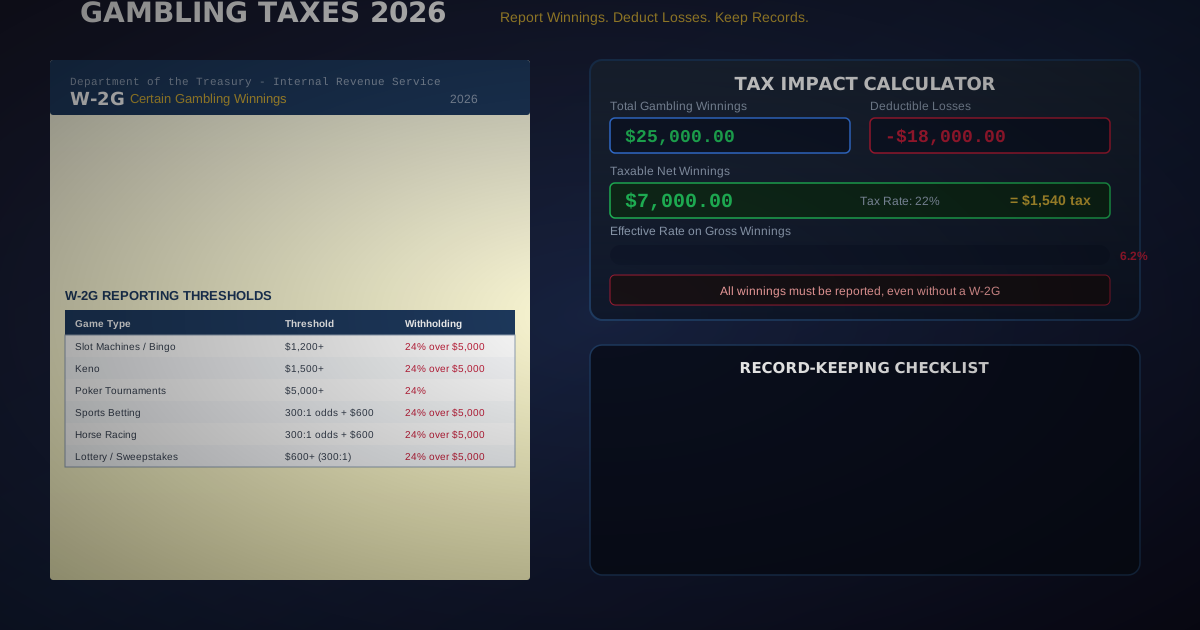
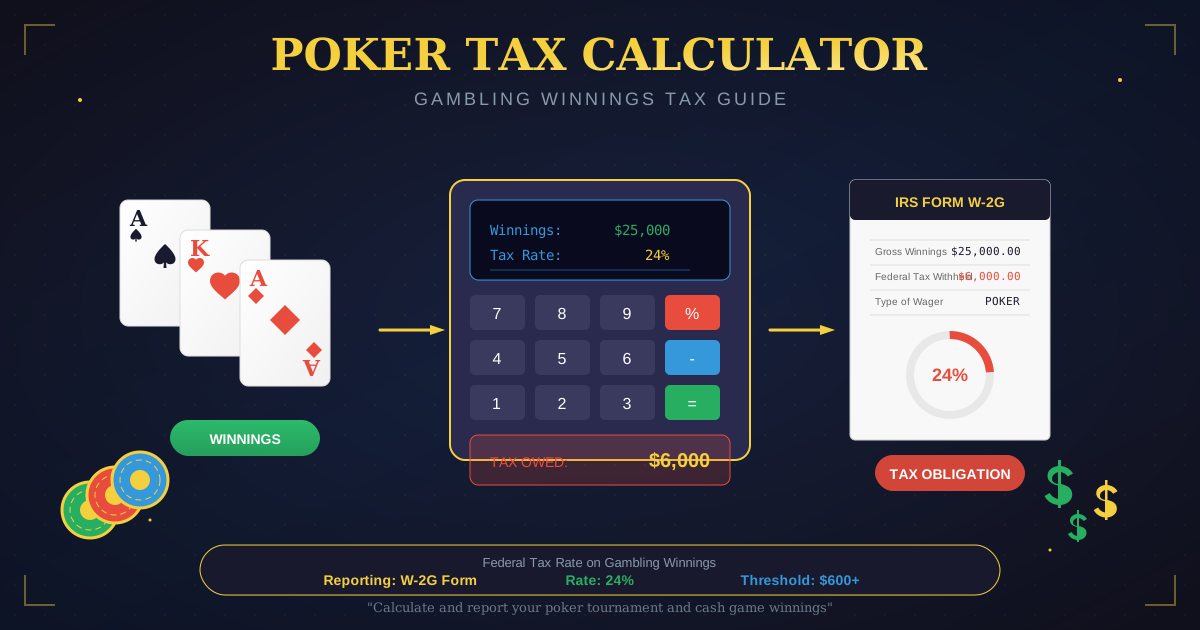
- Winnings are taxable income. The IRS requires reporting of gambling winnings, and casinos issue W-2G forms for significant payouts.
- Each state has its own regulatory body (e.g., New Jersey Division of Gaming Enforcement, Pennsylvania Gaming Control Board) that audits games for fairness.
Choosing the Right Live Dealer Casino: Provider and Platform Comparison
Not all live dealer experiences are created equal. The provider powering the live casino directly affects game quality, streaming reliability, table variety, and betting limits.
Major Live Dealer Providers in 2026
| Provider | Market Share | Games Available | Streaming Quality | US Presence | Table Limits |
|---|---|---|---|---|---|
| Evolution Gaming | ~63% | 200+ tables, 7+ game types | 1080p multi-cam | NJ, PA, MI, CT, WV | $0.50 - $25,000+ |
| Pragmatic Play Live | ~12% | 40+ tables, core games | 1080p | Limited US | $1 - $10,000 |
| Ezugi (Evolution subsidiary) | ~8% | 30+ tables | 720p-1080p | NJ, PA | $1 - $5,000 |
| Playtech Live | ~7% | 50+ tables | 1080p multi-cam | Limited US | $1 - $15,000 |
| BetGames | ~3% | 15+ unique formats | 720p-1080p | Growing | $0.50 - $2,000 |
What to Look For When Choosing a Platform
Game Variety: Evolution-powered casinos offer the widest selection, including exclusive titles like Crazy Time and Lightning Roulette. If variety matters to you, prioritize platforms that use Evolution as their primary live dealer provider.
Table Limits: Limits vary significantly. A casual player betting $5-$25 per hand needs different options than a VIP betting $500-$5,000. Check the minimum and maximum bets before creating an account.
Streaming Quality: All major providers stream at 720p minimum, with Evolution and Playtech offering full 1080p on most tables. If you play on a large screen, streaming quality becomes a noticeable differentiator.
Mobile Experience: Roughly 65% of live dealer play now occurs on mobile devices. Test the mobile interface before committing to a platform. Look for intuitive controls, readable text, and stable video on your specific device.
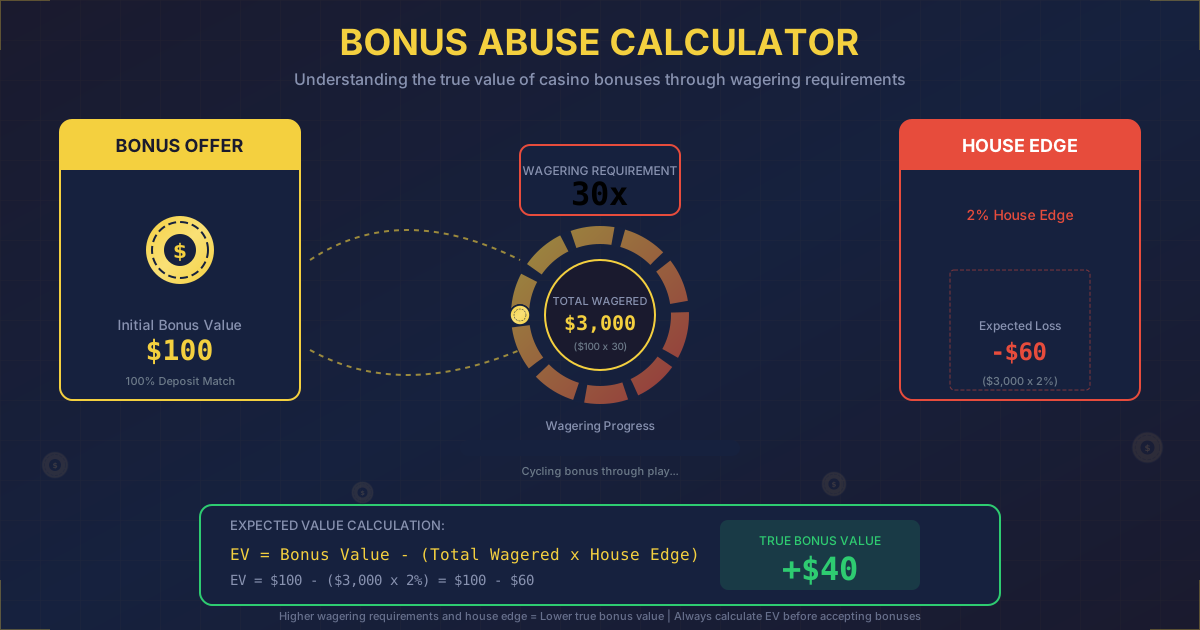
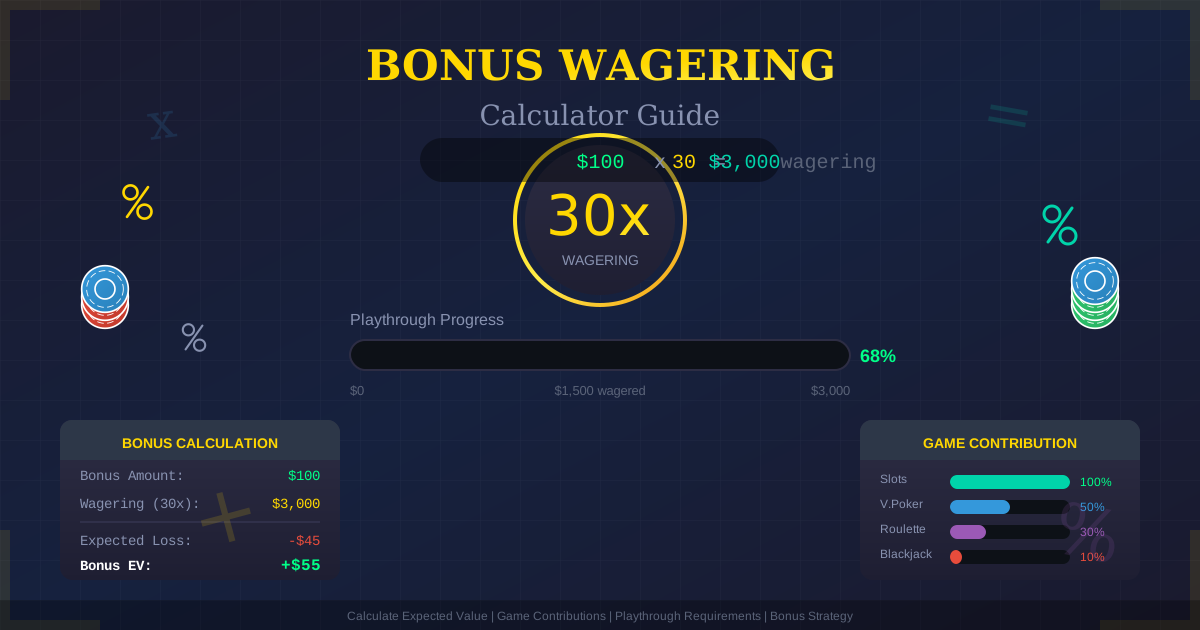
Bonuses and Promotions: Live dealer play often contributes less toward bonus wagering requirements than slots (typically 10-20% contribution rate versus 100% for slots). Read the terms carefully before accepting a bonus if live dealer games are your primary interest.
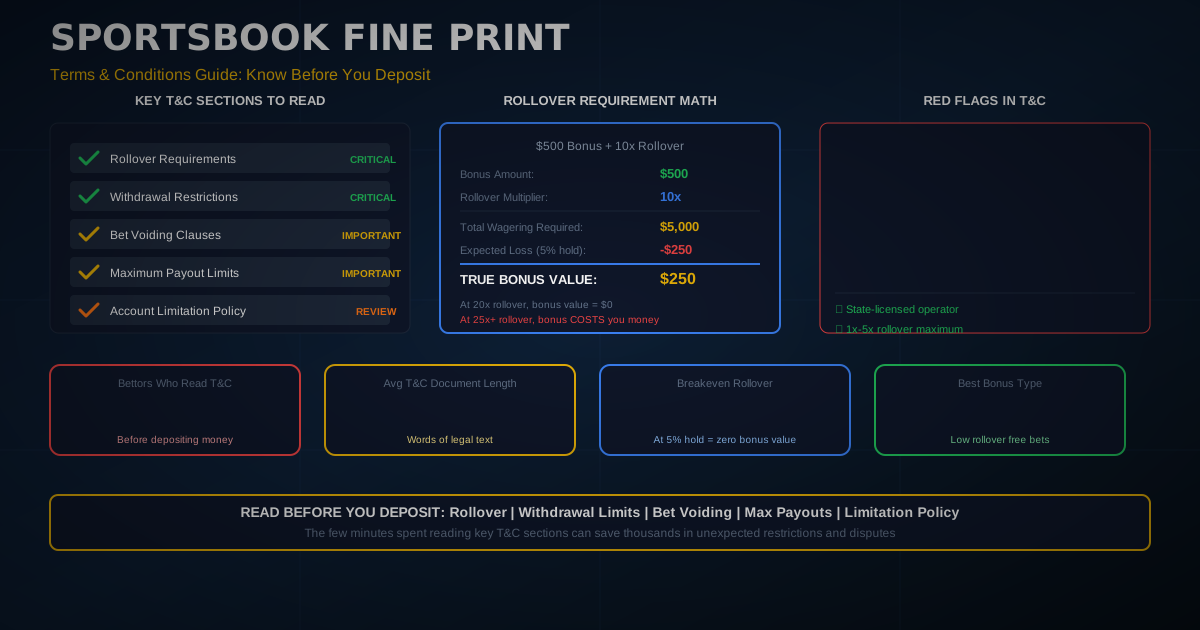
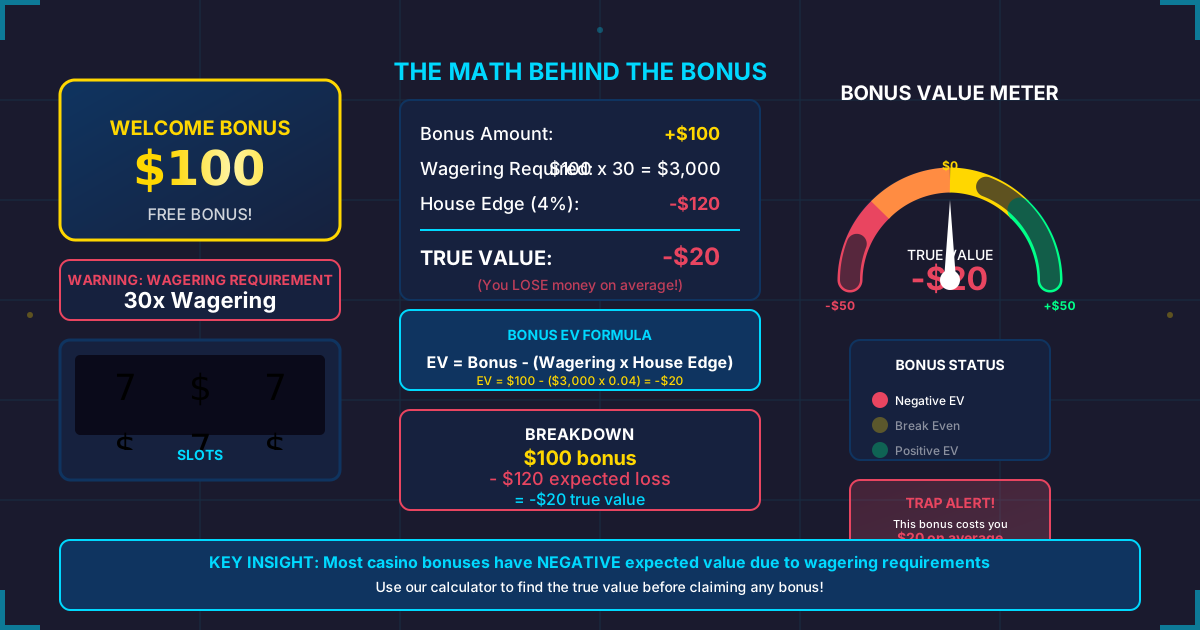
Real-world example: A player accepts a $500 deposit match bonus with a 20x wagering requirement ($10,000 total wagering needed). If live dealer play counts at only 10%, they would need to wager $100,000 at live dealer tables to clear the bonus. At a 0.5% blackjack house edge, that costs $500 in expected losses---exactly equal to the bonus value. The bonus is effectively worthless for live dealer players. Always calculate the true value before opting in.
Common Live Dealer Myths and Misconceptions
"Live Dealer Games Are Rigged Because They Are Online"
Every live dealer game at a licensed US casino is subject to the same regulatory oversight as physical casino games. State gaming commissions audit game outcomes, monitor dealer procedures, and verify that equipment meets strict standards. The use of real physical equipment (actual cards, actual wheels) means the outcomes are governed by the same physics as in-person games. OCR technology simply reports what happens---it does not determine outcomes.
"The Dealer Can See My Cards and Adjust the Game"
In live blackjack and poker variants, your hole cards are dealt face-down and scanned by OCR. The dealer does not see your cards on their monitor. They see your bet amounts and actions (hit, stand, etc.) but not your hand. This mirrors the privacy protections at a physical casino table.
"Live Dealer Games Are Too Slow"
This is a feature, not a bug. As the speed comparison section demonstrates, slower play means lower expected loss per hour. If you find the pace too slow, speed variants and Auto Roulette offer faster action while maintaining the same house edge.
"You Need a Fast Computer or New Phone"
Live dealer games run in web browsers and dedicated apps with modest hardware requirements. Any device manufactured in the last five years with a stable internet connection of 5 Mbps or better can handle live dealer streaming. The processing happens server-side; your device only needs to render the video and transmit your bet selections.
Frequently Asked Questions About Live Dealer Casino Games
What is the minimum bet at live dealer tables? Minimum bets typically start at $0.50 to $5 for games like Infinite Blackjack and Auto Roulette, and $5 to $25 for standard seven-seat live blackjack and roulette tables. VIP tables may start at $100 or higher. Exact minimums vary by operator and time of day---tables are sometimes raised during peak hours.
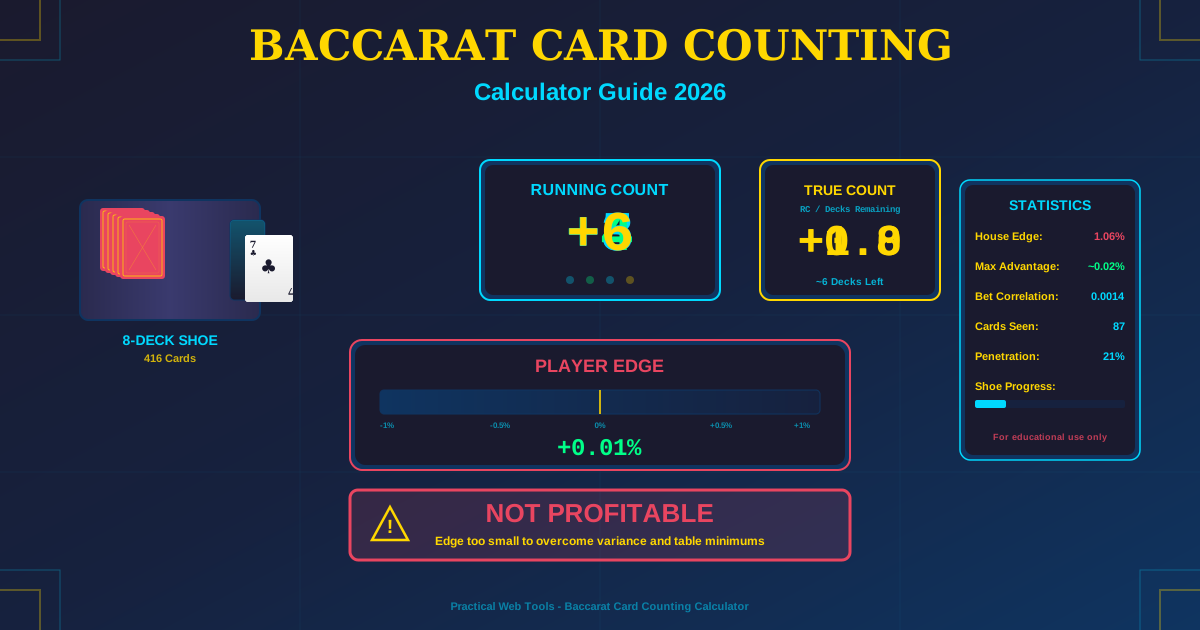
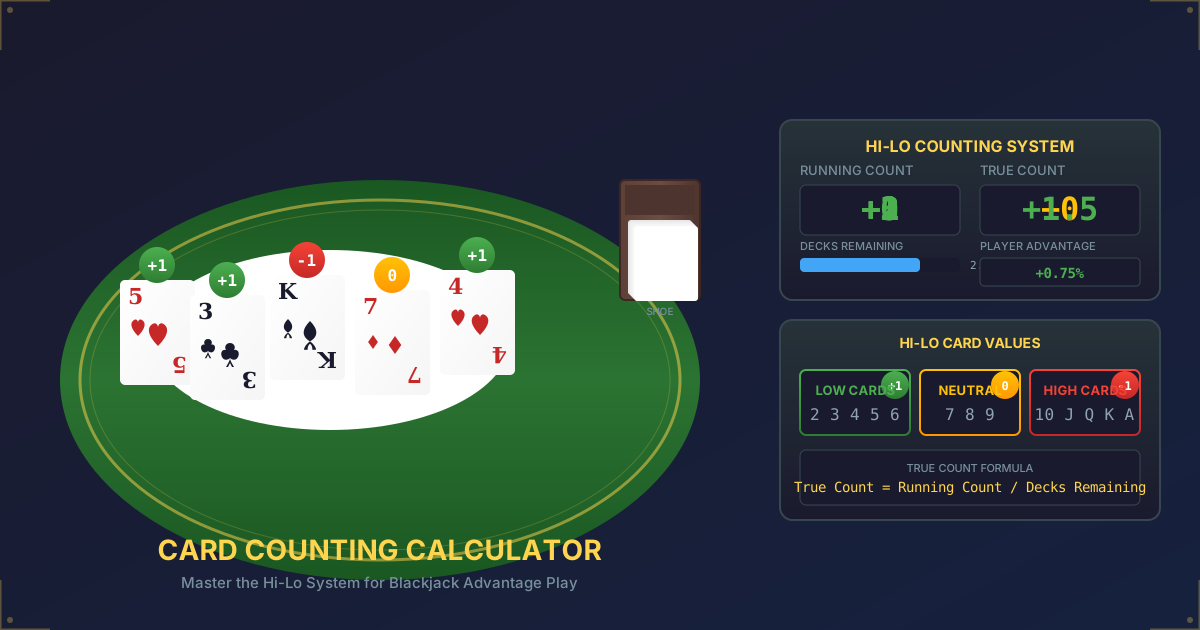
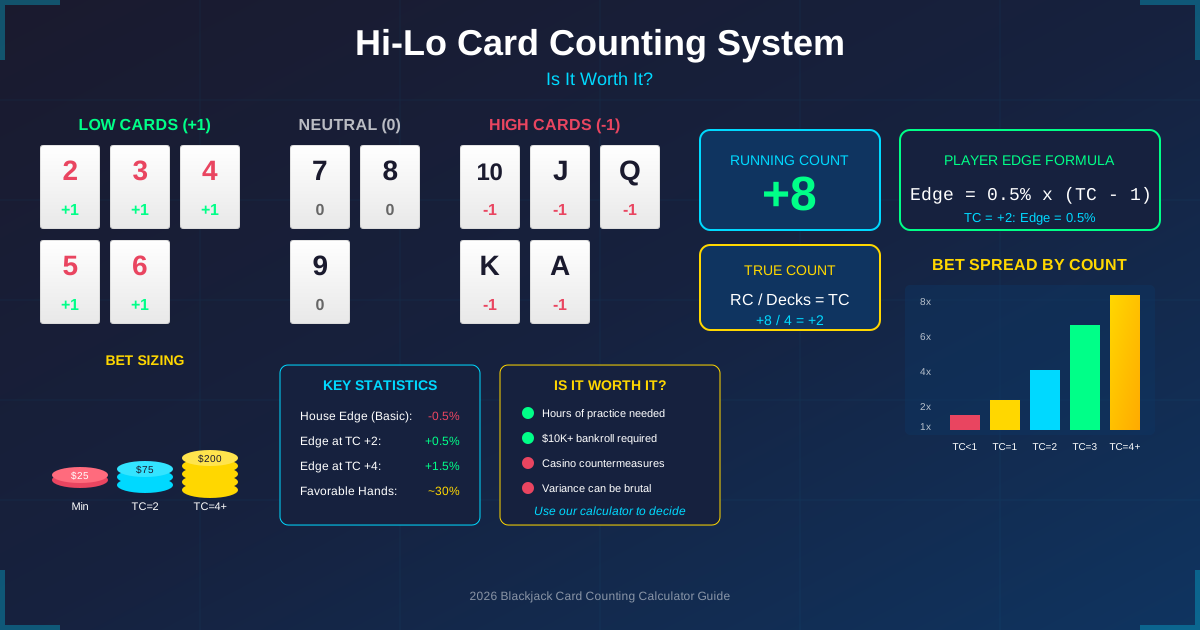
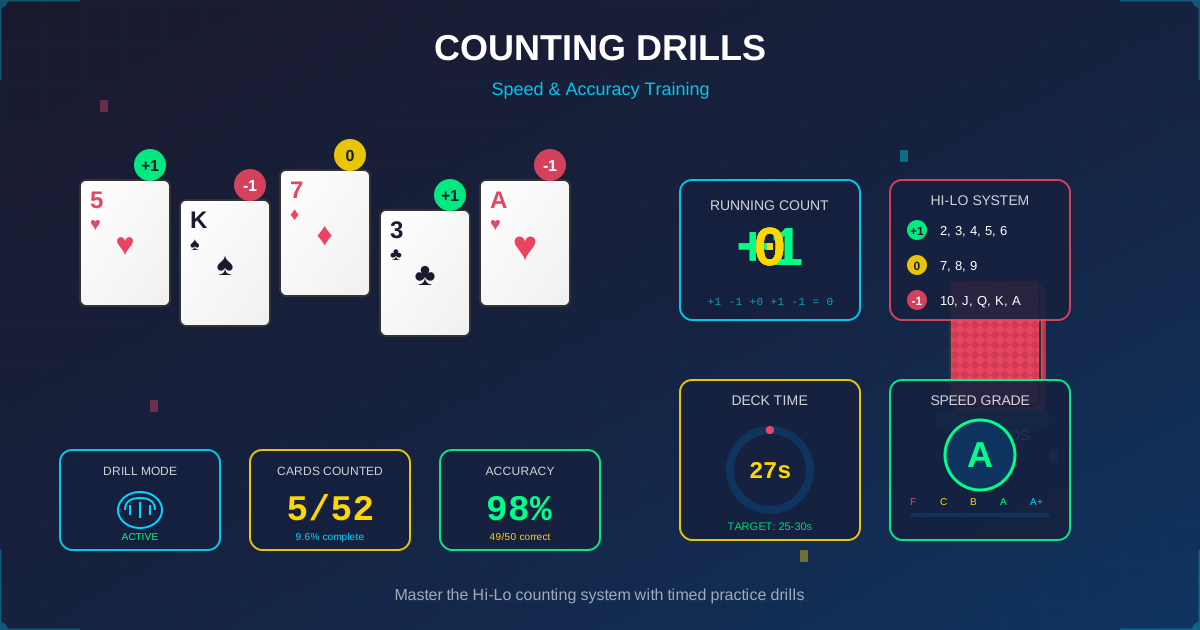
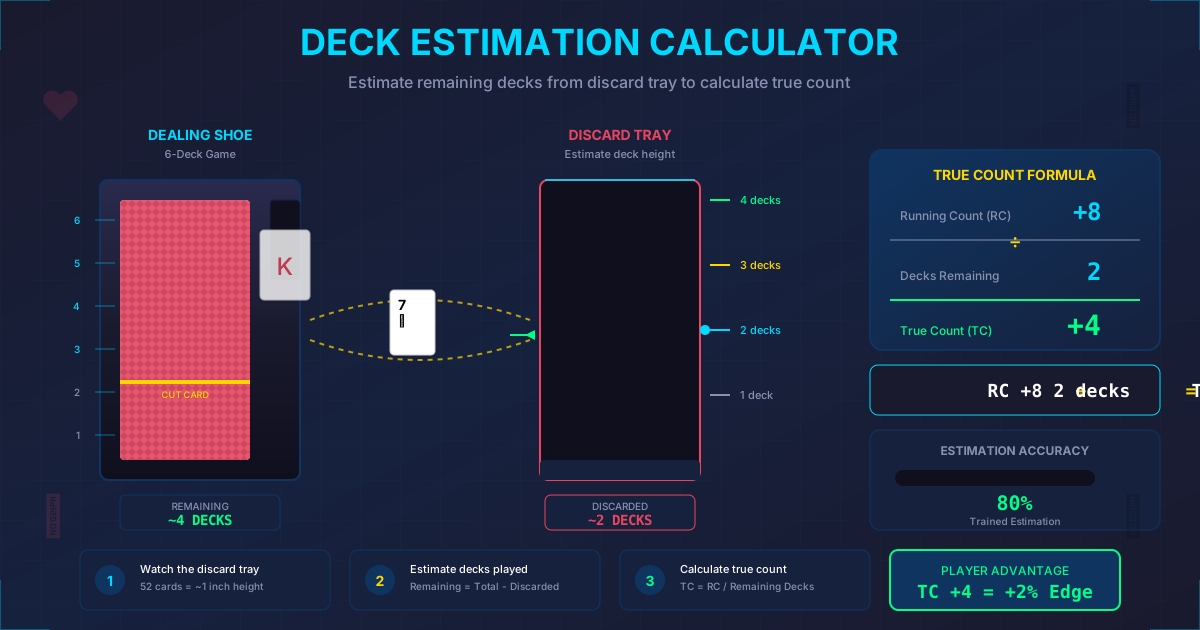
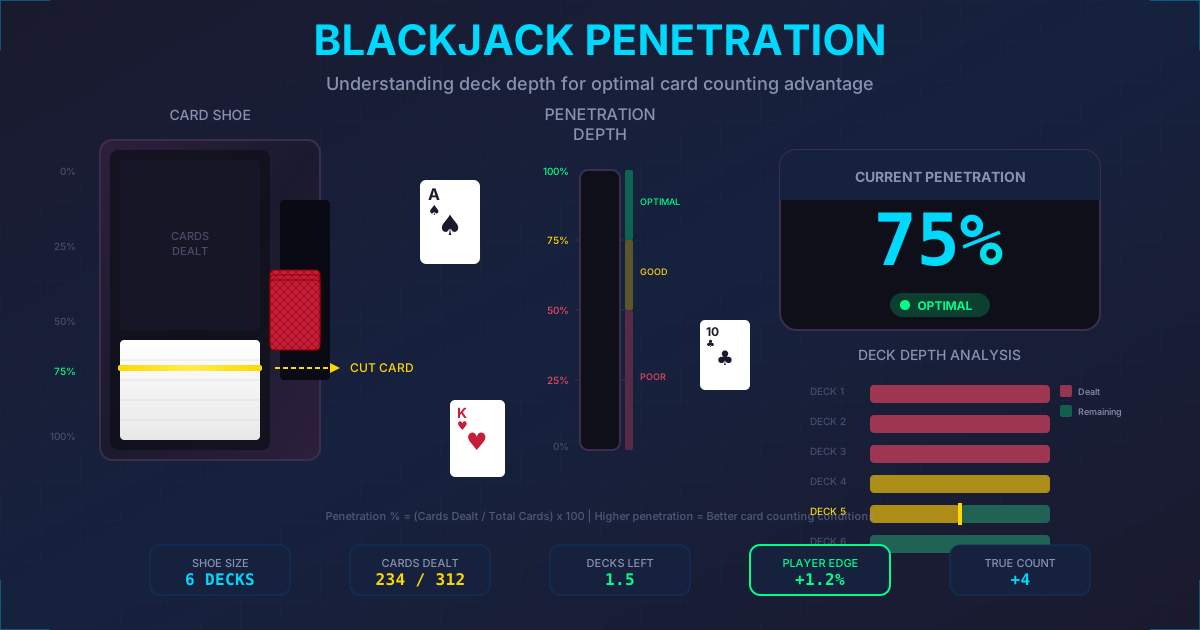
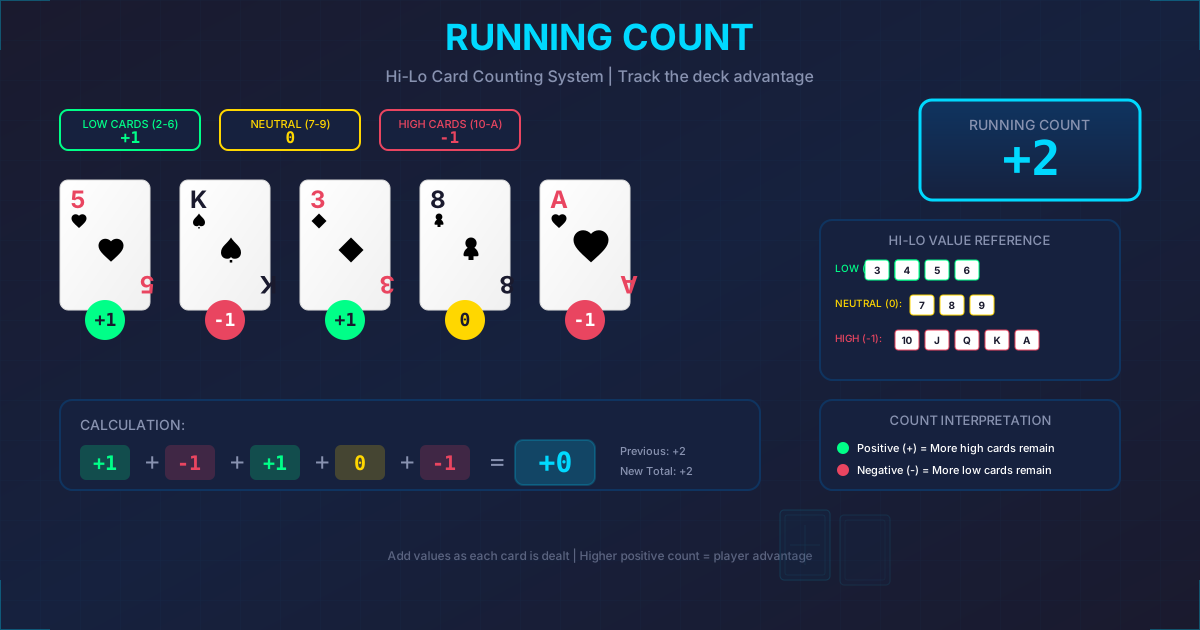
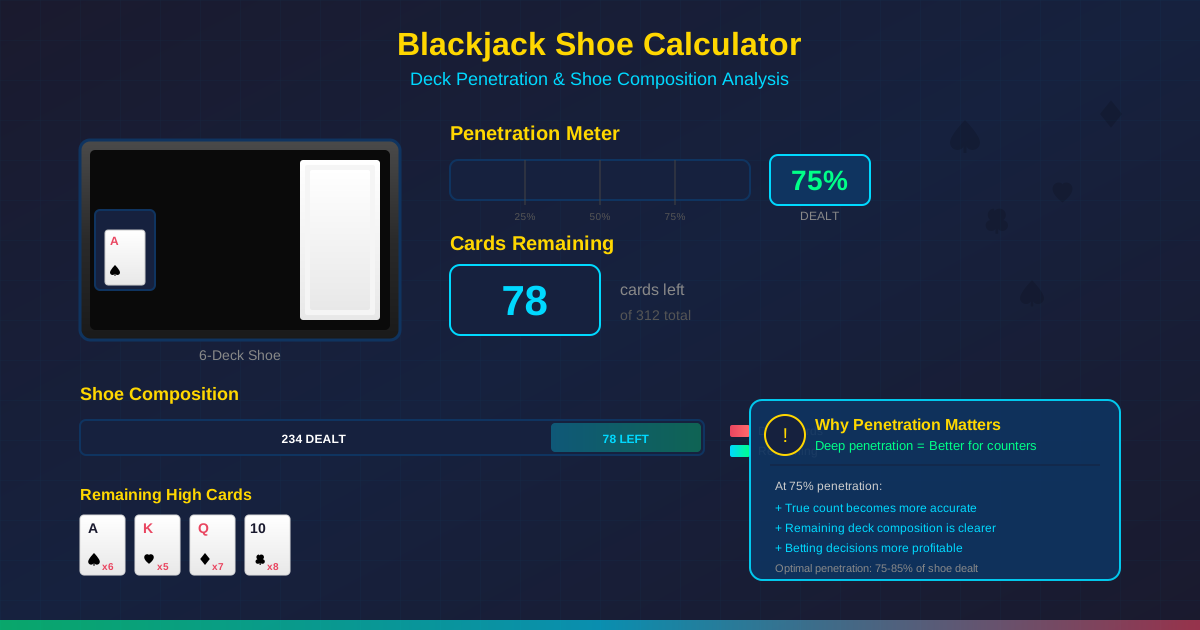
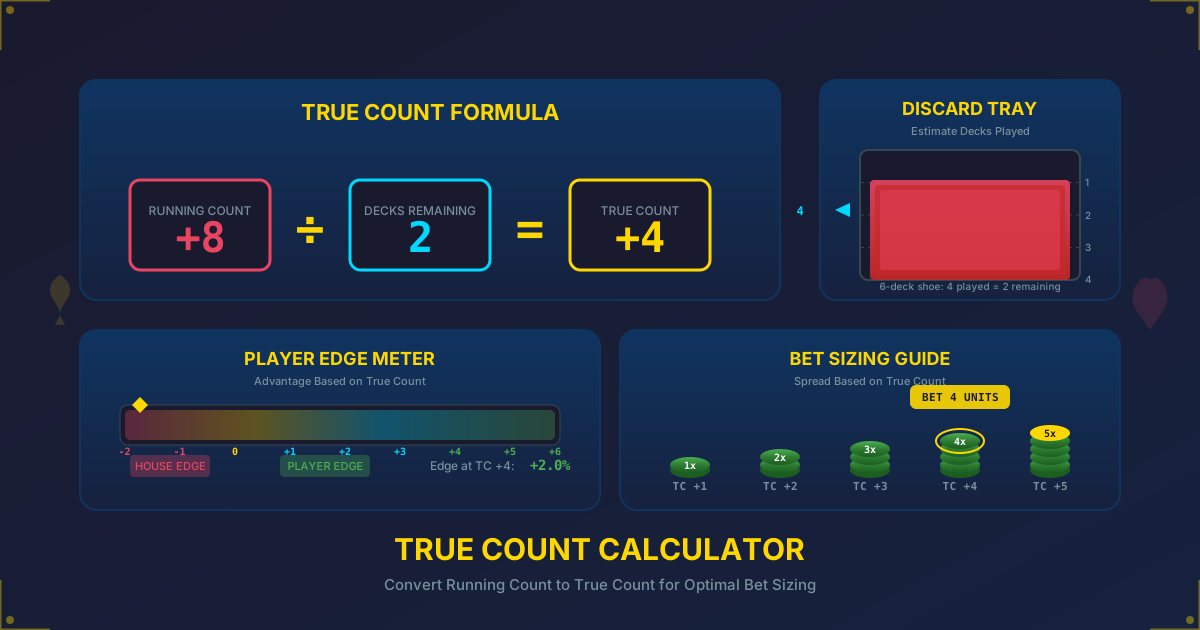
Can I count cards at live dealer blackjack? Technically, the cards are real and dealt from a physical shoe, so card counting is theoretically possible. However, most live dealer blackjack games use eight-deck shoes with frequent shuffling or continuous shuffle machines, which eliminates any meaningful counting edge. Online casinos can also easily detect counting patterns through software analysis of your bet sizing.
Are live dealer games available 24 hours a day? Most major live dealer casinos operate tables around the clock, though game variety and number of available tables may decrease during off-peak hours (typically 4 AM to 10 AM local time). Flagship titles like Infinite Blackjack and Auto Roulette are available 24/7 without exception.
Do live dealer games work on mobile phones? Yes. All major US-licensed operators offer mobile-optimized live dealer experiences through dedicated apps (iOS and Android) and mobile web browsers. Portrait and landscape orientations are supported, with the interface adapting to your screen size. Approximately 65% of live dealer sessions now originate from mobile devices.
What happens if my internet connection drops during a hand? Each operator has specific disconnection policies, but the general approach is that your hand continues according to default rules. In blackjack, a disconnection typically results in a "stand" on your current total. In roulette and baccarat, your placed bets remain active. The hand outcome is determined normally, and your balance updates once you reconnect. Check your operator's disconnection policy before playing.
Is live dealer play taxed? Yes. In the United States, all gambling winnings are taxable income regardless of the game type. Online casinos track your net win/loss and issue W-2G forms for qualifying payouts (typically $600+ or 300:1 odds payouts). Many players use annual win/loss statements from their casino accounts to report net results accurately at tax time.
How do I know the games are fair? Licensed US live dealer casinos are regulated by state gaming commissions that conduct regular audits. Games use real physical equipment (cards, wheels, dice), and outcomes are verified through OCR and recorded on camera. Independent testing agencies like GLI (Gaming Laboratories International) and eCOGRA also certify game fairness. Every hand, spin, and deal is recorded and available for regulatory review.
Can I play live dealer games for free? Most live dealer games do not offer free-play or demo modes because they require real dealers and real equipment operating in real time. However, some operators offer promotional credits or risk-free bets that let new players try live dealer games without risking their own money. RNG versions of the same games are always available in free-play mode for practice.
Tools to Sharpen Your Live Dealer Strategy
Before sitting down at any live dealer table, use these free calculators to understand the math behind every bet:
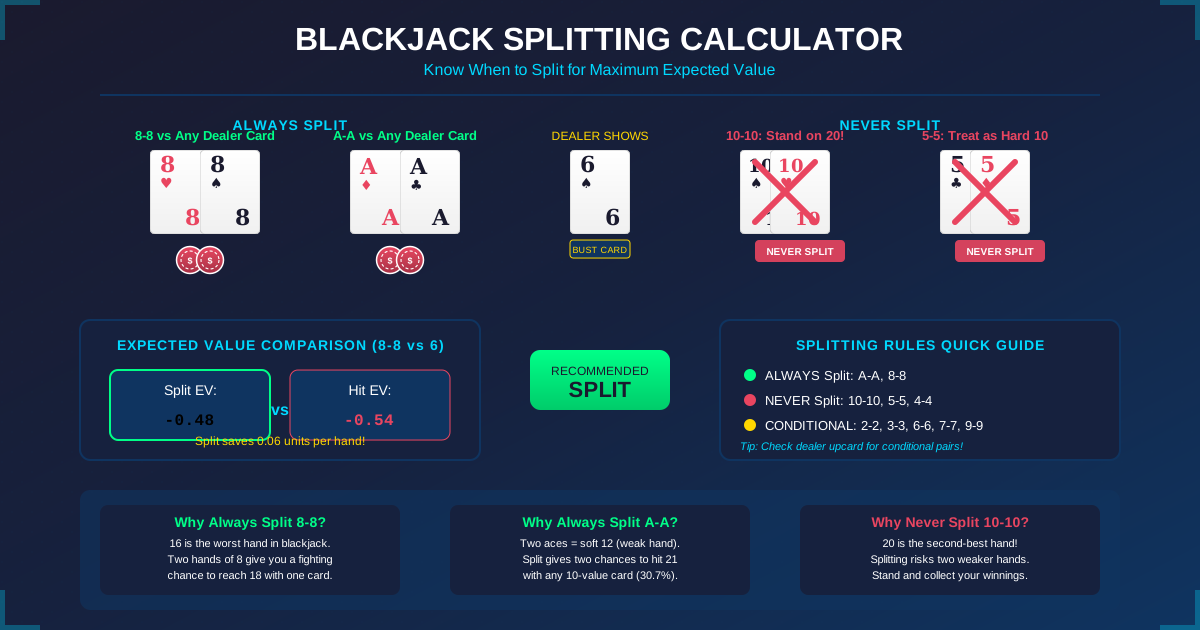
- Blackjack Basic Strategy --- Generate the correct play for every possible hand combination based on your table's specific rules
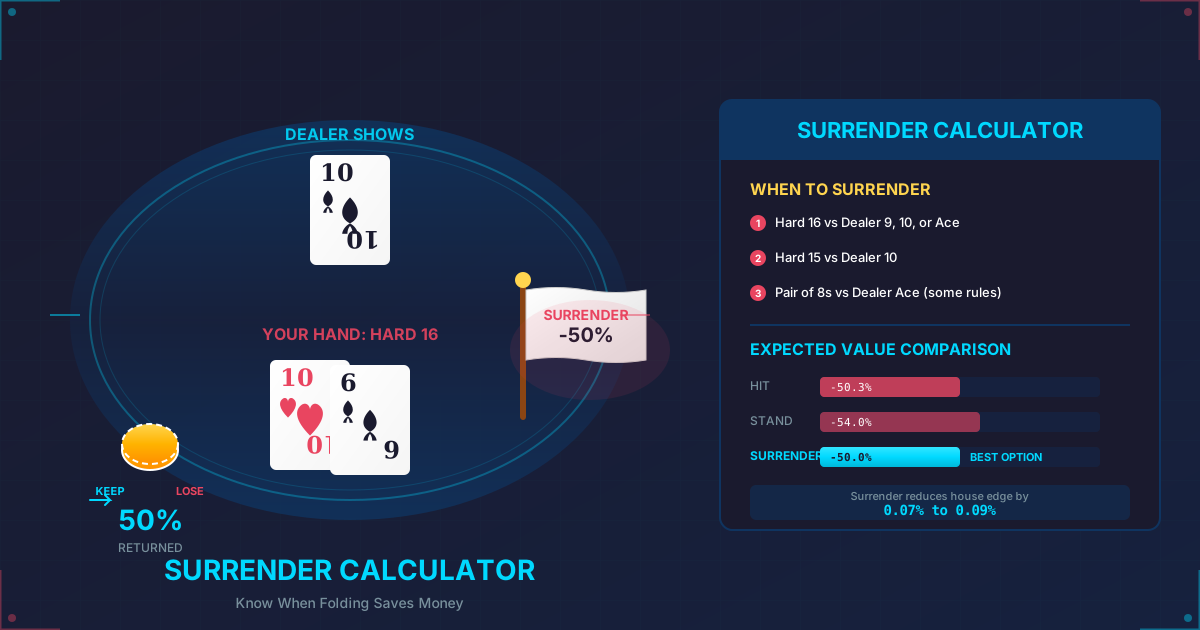
- Blackjack House Edge Calculator --- See exactly how rule changes (number of decks, soft 17, surrender, etc.) affect your expected cost
- Roulette Odds Calculator --- Calculate the true probability and expected value of every roulette bet type
- Roulette House Edge Calculator --- Compare house edges across European, American, and French roulette variants
- Baccarat Odds Calculator --- Break down the exact probabilities for Banker, Player, and Tie bets
- Baccarat House Edge Calculator --- Understand how commission rates and rule variations change the house advantage
- Expected Value Calculator --- Model any bet's expected return over time based on probability and payout
Conclusion: Live Dealer Games Offer the Best of Both Worlds
Live dealer casino games solve the fundamental tension in online gambling: how do you get the convenience of playing from home without sacrificing the trust, social interaction, and authentic atmosphere of a real casino? The answer is a combination of professional dealers, real equipment, HD streaming, OCR technology, and carefully engineered software that ties it all together.
The house edges are identical to their RNG counterparts, but the slower pace means your bankroll lasts longer. The social features make the experience more engaging. The transparency of watching physical cards and wheels eliminates the black-box anxiety that some players feel with computer-generated outcomes.
If you are in one of the seven US states with legal live dealer options, you have access to a gaming experience that was unimaginable just a decade ago. Whether you prefer the strategic depth of live blackjack, the simplicity of live baccarat, the drama of live roulette, or the entertainment spectacle of live game shows, there is a live dealer table running right now with a seat open for you.
Just remember: the math does not change because the dealer is real. The house still has an edge on every bet. Play within your means, use the strategy tools available to minimize that edge, and treat your sessions as entertainment with a known cost---not as an income source.
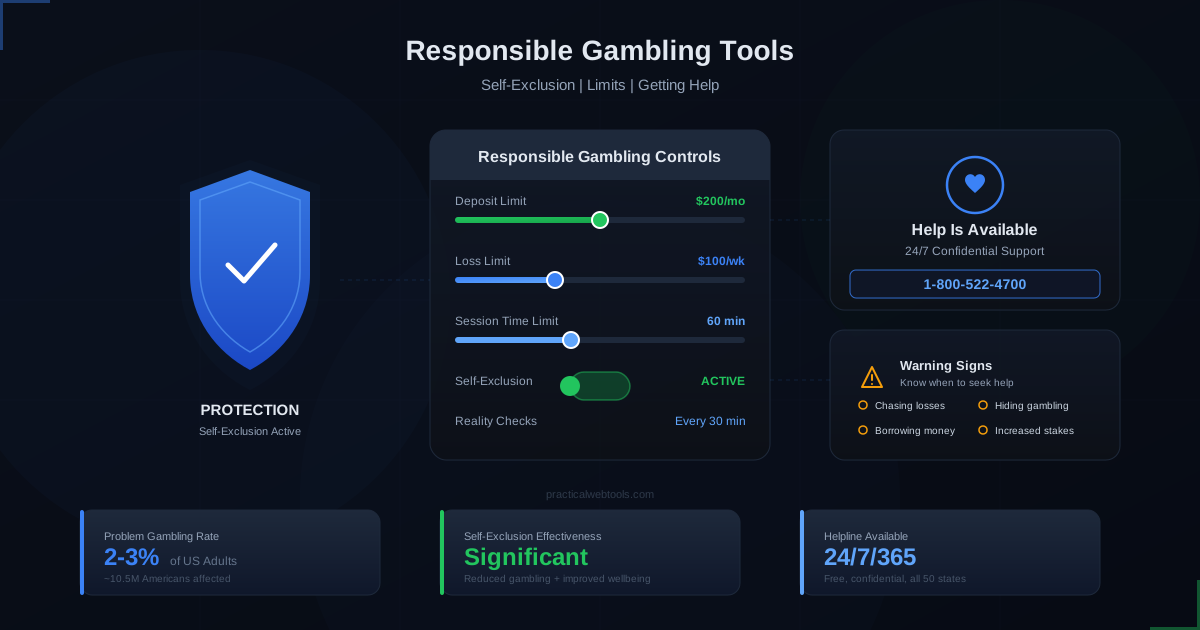
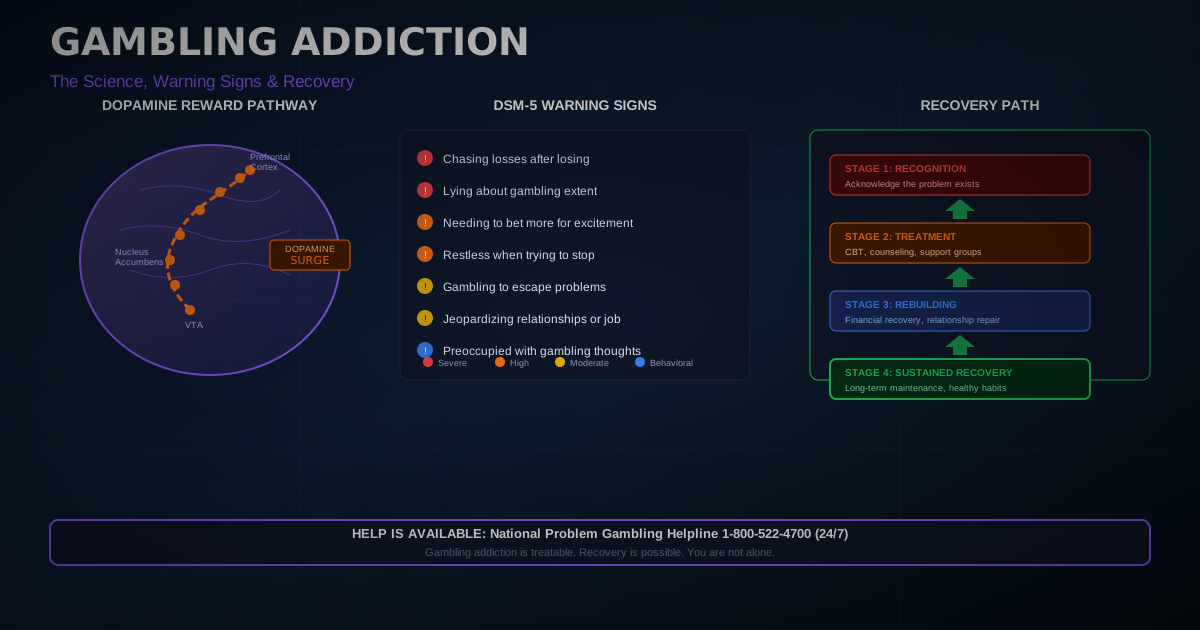
Gambling involves risk. This content is for educational and informational purposes only. Always gamble responsibly, set limits you can afford, and seek help if gambling becomes a problem. Visit the National Council on Problem Gambling or call 1-800-522-4700 for support.