Which States Will Legalize Sports Betting Next? 2026 Predictions and Analysis (2026)

Thirty-eight US states and Washington D.C. now have some form of legal sports betting, yet more than 75 million Americans still live in jurisdictions where placing a legal wager is impossible. The remaining holdout states represent a combined population larger than Canada, and in 2026, several of them are closer to legalization than ever before.
The momentum is undeniable. Since the Supreme Court struck down PASPA in May 2018, the legal sports betting market has expanded at a rate of roughly five new states per year. Combined state tax revenues from sports wagering exceeded $4.2 billion in 2025, creating a fiscal argument that even the most reluctant legislatures are finding difficult to ignore.
This guide provides a comprehensive, state-by-state analysis of where legalization stands in early 2026, which states have active bills in progress, the political and economic factors influencing each market, and realistic timeline predictions for every remaining holdout.
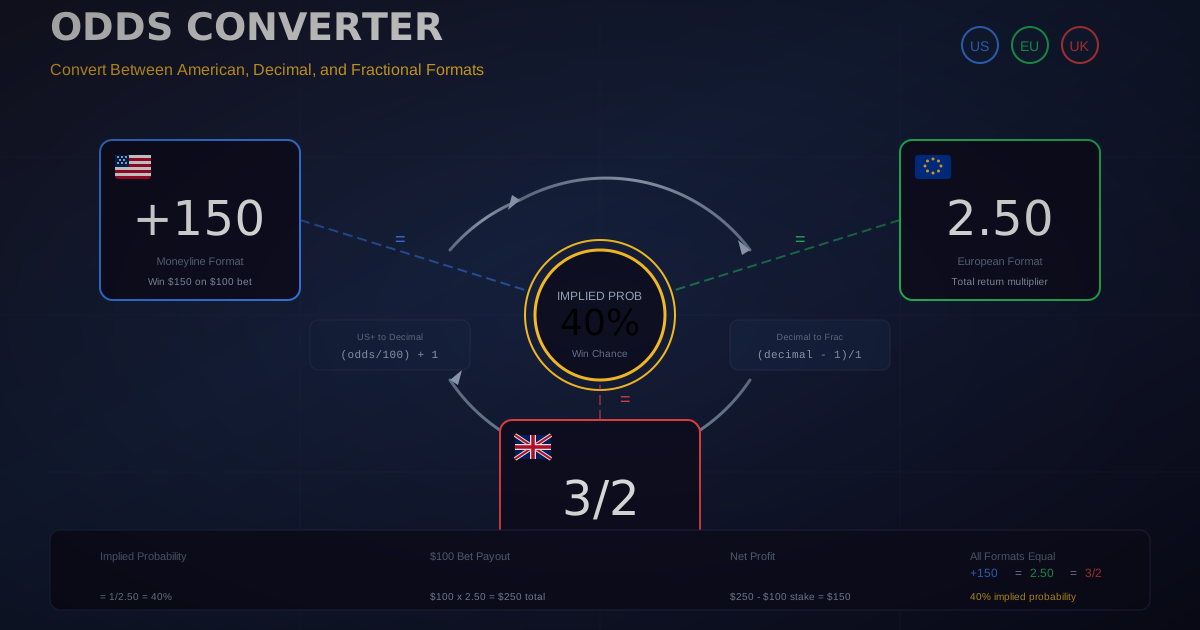
Before you wager in any legal state, make sure you understand the math behind every bet. Use our free Odds Converter to translate between American, decimal, and fractional odds instantly.
How Many States Have Legal Sports Betting in 2026?
As of February 2026, 38 states plus Washington D.C. have legalized sports betting in some form. Of those, 33 offer mobile or online wagering in addition to retail sportsbooks, while five states restrict legal betting to in-person locations only.
Current Legal Sports Betting Landscape
| Status | Count | States |
|---|---|---|
| Legal - Mobile + Retail | 33 | AZ, AR, CO, CT, DE, FL, IL, IN, IA, KS, KY, LA, MA, MD, MI, MS (limited), MT, NV, NH, NJ, NY, NC, OH, OR, PA, RI, SD, TN, VA, VT, WA (tribal), WV, WY |
| Legal - Retail Only | 5 | MS (statewide retail), NE, NM (tribal), ND, WI (tribal) |
| Legalized but Not Launched | 1 | ME |
| Active Legislation Pending | 6 | TX, CA, GA, MO, AL, MN |
| No Active Legislation | 5 | HI, ID, OK, SC, UT |
Revenue Generated by Legal States
The fiscal impact has been staggering. States that legalized early have generated billions in cumulative tax revenue:
| State | Year Legalized | 2025 Tax Revenue | Cumulative Revenue |
|---|---|---|---|
| New Jersey | 2018 | $195M | $1.45B |
| New York | 2022 | $1.92B | $5.1B |
| Pennsylvania | 2019 | $310M | $1.65B |
| Illinois | 2020 | $520M | $1.85B |
| Ohio | 2023 | $290M | $685M |
| Massachusetts | 2023 | $175M | $380M |
New York alone, with its 51% mobile operator tax rate, collected more in sports betting taxes in 2025 than most states collect from their entire casino industries.
Calculate the expected value of any bet across legal sportsbooks with our Expected Value Calculator.
Which States Are Most Likely to Legalize Sports Betting in 2026?
Six states have active bills or significant legislative momentum heading into 2026. Based on political dynamics, bill progress, and historical patterns, here are the most likely states to legalize next, ranked by probability.
Tier 1: High Probability (60%+ chance in 2026)
Texas remains the single largest untapped market in the country. With a population exceeding 30 million, Texas represents more potential bettors than any other holdout state. The 2025 legislative session saw SB 715 pass the Senate before stalling in the House, the closest any Texas sports betting bill has come to passage. Governor Greg Abbott has signaled support for regulated wagering, and a coalition of professional sports teams (Dallas Cowboys, Houston Texans, Texas Rangers, Dallas Mavericks) have formed the Sports Betting Alliance to lobby legislators.
Key factors for Texas:
- The legislature meets in odd-numbered years, meaning the 2027 session is the next regular opportunity
- However, a special session in late 2026 remains possible if revenue projections prove compelling
- Constitutional amendment may be required, necessitating voter approval
- Estimated market size: $6-8 billion annual handle, $400-600M annual tax revenue
- Opposition from religious conservative caucus remains significant but is shrinking
Missouri is arguably the closest to the finish line. Voters approved a sports betting ballot measure in November 2024, and the regulatory framework was being finalized throughout 2025. The Missouri Gaming Commission has been developing licensing requirements, and operators have submitted applications. A launch in mid-to-late 2026 is widely expected.
Missouri market projections:
- Population: 6.2 million
- Estimated annual handle: $4.5-6 billion
- Projected tax rate: 10% of GGR
- Expected annual tax revenue: $45-75M
- Projected operator licenses: 6-8
Tier 2: Moderate Probability (30-50% chance in 2026)
Georgia has seen increasing legislative interest, driven by the state's need for additional education funding and the influence of professional sports franchises in Atlanta. HB 380 was introduced in January 2026 and has bipartisan support, though it faces opposition from rural legislators and church-affiliated groups.
Georgia's path to legalization:
- Requires constitutional amendment (two-thirds legislative vote + voter referendum)
- Governor Brian Kemp has expressed cautious support
- Atlanta Falcons, Hawks, Braves, and United FC actively lobbying
- Neighboring states (Tennessee, North Carolina, Virginia) already legal, creating significant cross-border betting
- Estimated market size: $4-5.5 billion annual handle
Alabama introduced SB 214 in January 2026, proposing a state lottery and regulated sports betting in a combined package. This bundled approach has gained traction because the lottery component has broad popular support that can carry the more controversial sports betting provision.
Alabama considerations:
- No state lottery currently, making the combined bill politically appealing
- Poarch Band of Creek Indians operate the state's only casinos and have significant political influence
- Tribal compact negotiations will be critical
- Estimated revenue from combined lottery + sports betting: $300-500M annually
Tier 3: Lower Probability (15-30% chance in 2026)
California is the ultimate prize for operators, with its 39 million residents and massive sports culture. However, the state's complex political dynamics involving tribal gaming interests, card rooms, and online operators have repeatedly stalled progress. Proposition 26 and 27 both failed in 2022, and no major ballot initiative is currently qualified for 2026.
California's unique challenges:
- Tribal gaming generates $12+ billion annually; tribes are cautious about competition
- Card rooms and online operators are at odds with tribal interests
- Any ballot measure requires massive campaign spending ($200M+ in 2022)
- A retail-only tribal bill could pass more easily than full mobile legalization
- If legalized, market could generate $3-4 billion in annual tax revenue
Minnesota has seen sports betting bills introduced in every session since 2019, but negotiations between tribal nations and state legislators have repeatedly broken down over the scope of mobile betting and who controls the licenses.
Use our Implied Probability Calculator to understand what the odds really mean at any legal sportsbook.
What Political Factors Determine Sports Betting Legalization?
Political dynamics are the single most important factor in legalization timelines. Understanding these dynamics helps predict which states will move next and how quickly.
Revenue Pressure
States facing budget shortfalls are more likely to legalize. Sports betting offers a politically palatable revenue source because it taxes voluntary entertainment spending rather than imposing broad-based taxes on all residents.
| Revenue Pressure Factor | Impact on Legalization |
|---|---|
| State budget deficit | Strong positive driver |
| Neighboring states already legal (revenue migration) | Very strong positive driver |
| Existing gambling infrastructure | Moderate positive (easier implementation) |
| Revenue from existing gaming declining | Moderate positive (diversification) |
| Budget surplus | Negative (less urgency) |
Cross-Border Betting Loss
One of the most compelling arguments for legalization is the documented loss of betting handle to neighboring legal states. Analysis of geolocation data shows:
- Texas bettors travel to Louisiana, Arkansas, Colorado, and New Mexico to place legal bets
- Georgia bettors cross into Tennessee, North Carolina, and Florida
- California bettors use Nevada, Arizona, and Oregon sportsbooks
- Minnesota bettors wager in Iowa, South Dakota, and Wisconsin (tribal)
This cross-border leakage represents both lost tax revenue and economic activity for the holdout states.
Tribal Gaming Influence
In roughly 15 states, tribal gaming interests play a decisive role in sports betting legislation. Tribes may support legalization if they receive exclusive or preferential licensing, or they may oppose it if unrestricted competition threatens their casino revenues.
| Tribal Influence Level | States Affected |
|---|---|
| Dominant (tribal support required) | CA, OK, MN, AL, CT, FL |
| Significant (tribal input shapes bills) | WI, NM, AZ, WA, OR, SD |
| Moderate (tribes participate but don't control) | MI, NY, NC, MS |
| Minimal (few or no tribal operations) | TX, GA, MO, OH, IL |
Religious and Social Conservative Opposition
Opposition from religious organizations and socially conservative legislators remains the primary obstacle in several southern and midwestern states. This opposition is strongest in:
- Utah: Constitutional prohibition on gambling; legalization considered politically impossible in the foreseeable future
- Hawaii: Cultural opposition to gambling runs deep; no organized push for legalization
- Idaho: Strong conservative legislature; gambling expansion consistently rejected
- South Carolina: Religious opposition combined with lack of existing gambling infrastructure
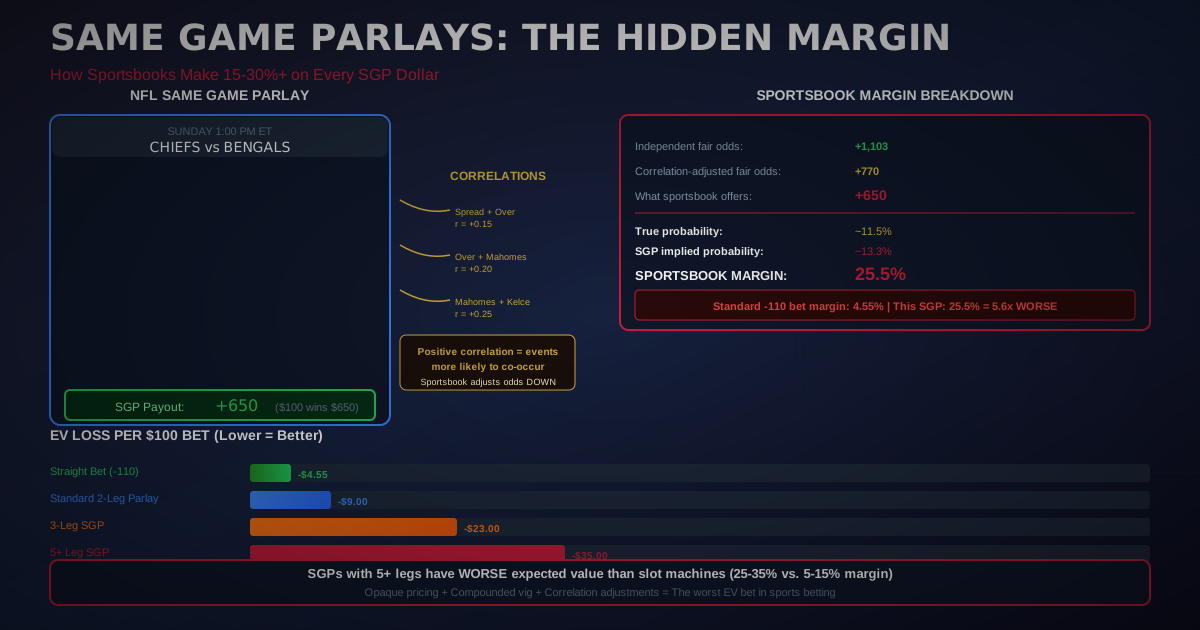
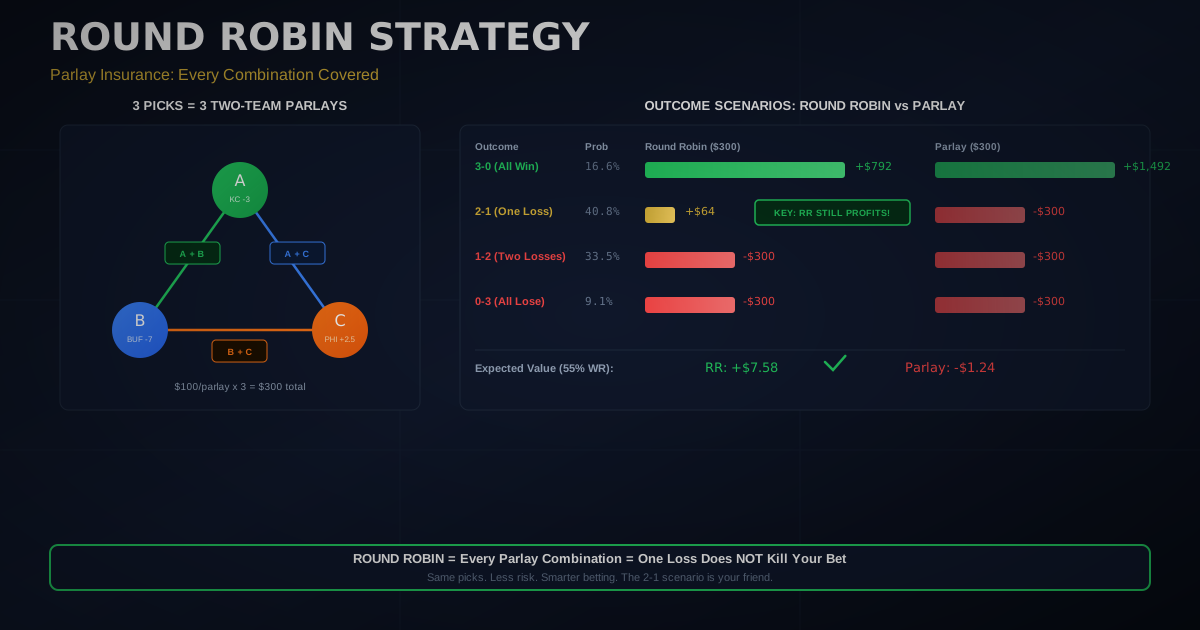
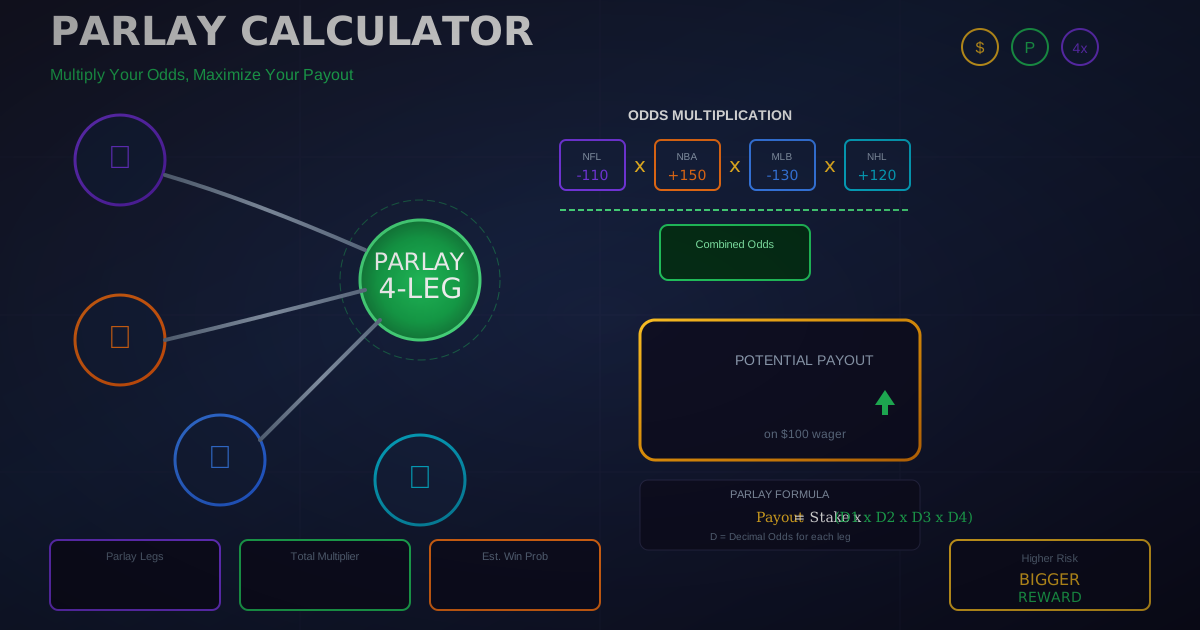
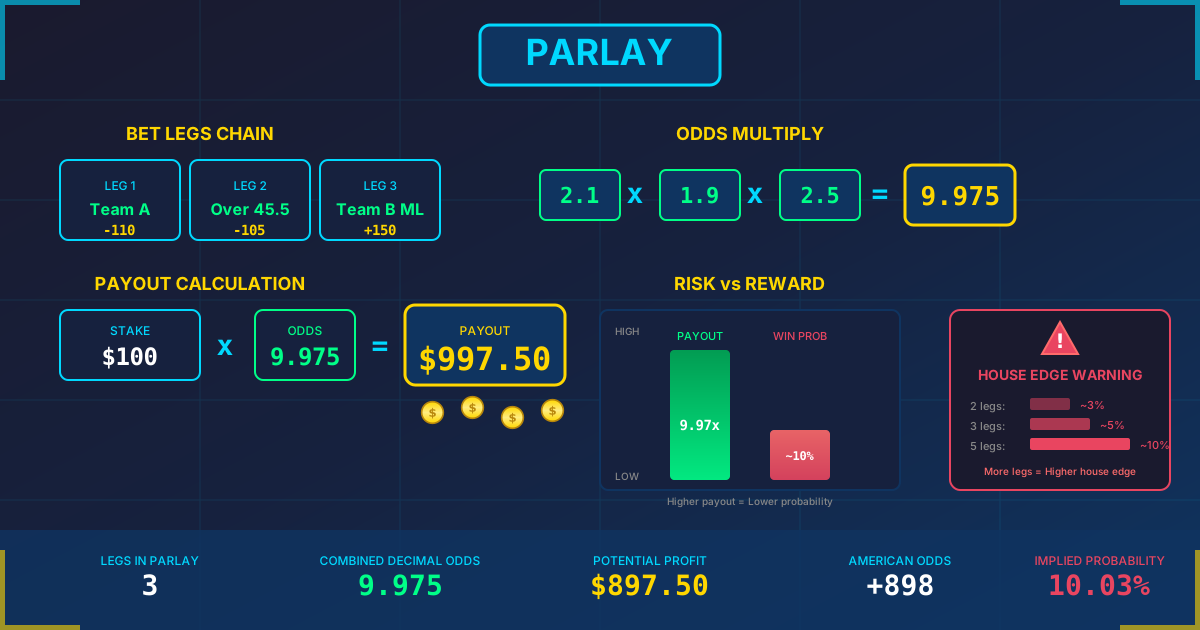
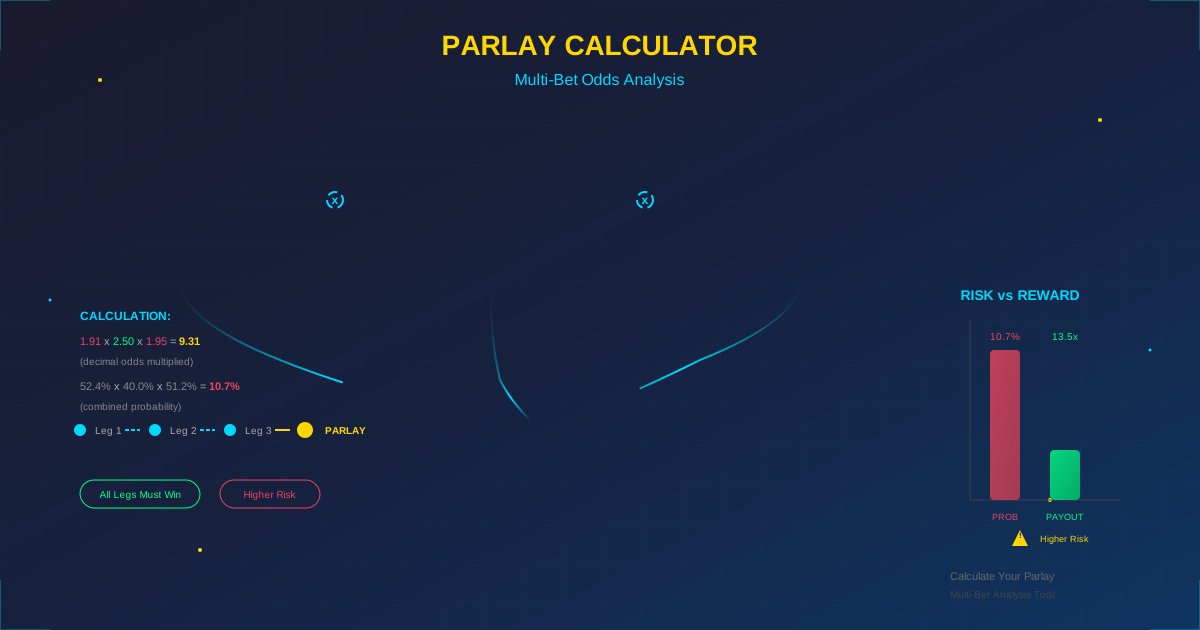
Calculate potential parlay payouts across multiple legal sportsbooks with our Parlay Calculator.
What Regulatory Models Are States Using for Sports Betting?
States have adopted widely different regulatory frameworks, and the model a new state chooses significantly impacts both the market's success and the experience for bettors.
Mobile vs. Retail-Only Models
The single biggest variable in any state's sports betting market is whether mobile wagering is permitted. States with mobile betting consistently generate 85-95% of total handle through apps, while retail-only states see dramatically lower volumes.
| Model | States | Avg. Annual Handle Per Capita |
|---|---|---|
| Full Mobile + Retail | NJ, PA, IL, CO, IN, AZ, OH | $1,200-$2,800 |
| Limited Mobile (geofenced) | MS | $150-$300 |
| Retail Only | NE, ND, NM (tribal) | $50-$150 |
| Tribal Mobile Only | WA | $200-$400 |
The data is clear: mobile access increases per-capita handle by 5-15x compared to retail-only models.
Operator Licensing Approaches
States take varying approaches to how many operators can enter the market:
| Approach | Description | Examples | Pros | Cons |
|---|---|---|---|---|
| Open Market | Unlimited licenses with qualification requirements | NJ, PA, CO, IL | More competition, better odds for bettors | Market fragmentation |
| Limited Licenses | Fixed number of operators | NY (9 mobile), CT (3) | Higher tax rates possible, easier oversight | Less competition, potentially worse odds |
| Tied to Casinos | Online license requires casino partnership | PA, IN, MI | Supports existing gaming industry | Limits new entrants |
| Tribal Exclusive | Only tribal operators | WA, NM | Supports tribal sovereignty | Very limited market |
| State-Run | Government operates sportsbook | OR, MT, NH, DE | All revenue to state | Poor product, less innovation |
Tax Rate Comparison
Tax rates on sports betting gross gaming revenue vary enormously and directly affect the odds bettors receive:
| Tax Rate Tier | States | Rate | Impact on Odds |
|---|---|---|---|
| Very High | NY (51%), NH (50%), PA (36%) | 36-51% | Operators build higher vig into odds |
| High | IL (40% tiered), CT (13.75%), VA (15%) | 13-40% | Moderate impact on odds |
| Moderate | NJ (13%), MI (8.4%), IN (9.5%) | 8-13% | Minimal impact; competitive odds |
| Low | CO (10%), IA (6.75%), NV (6.75%) | 6-10% | Best odds for bettors |
Bettors in New York pay indirectly through less competitive odds because operators must cover the 51% tax rate. Research by the American Gaming Association shows that New York bettors receive odds roughly 2-4% worse than bettors in lower-tax states like New Jersey or Colorado.
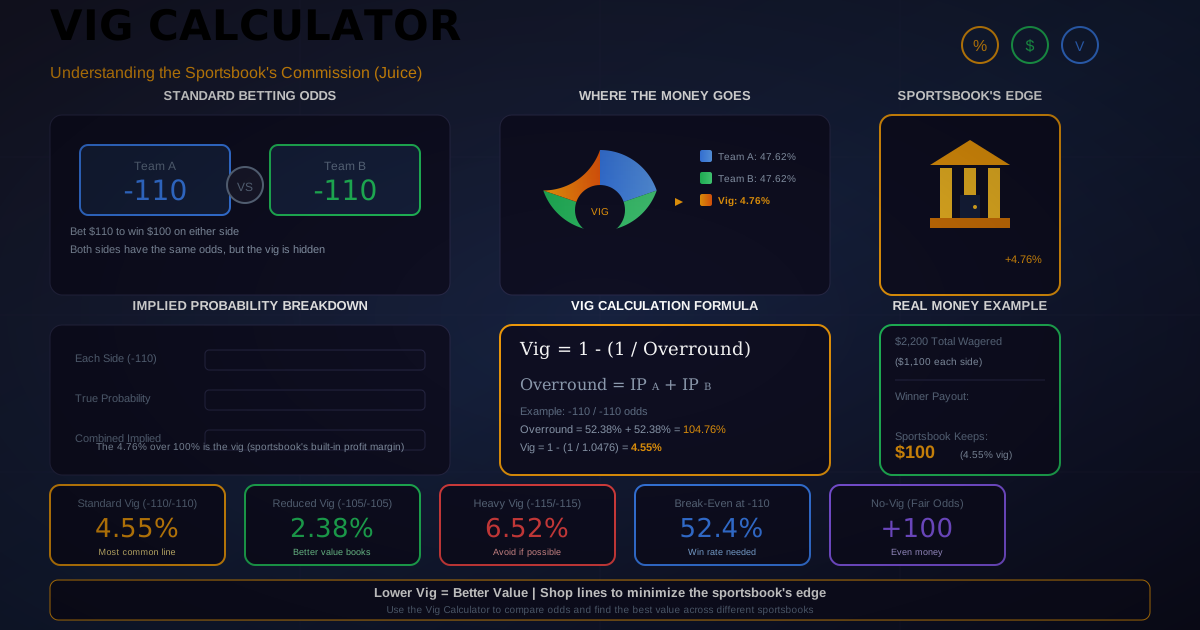
Find the true hold percentage in any betting line with our Hold/Vig Calculator. Lower vig means better value for bettors.
How Does Sports Betting Legalization Impact Neighboring States?
Legalization in one state creates a ripple effect that impacts betting behavior, tax revenue, and political pressure in surrounding states.
The Border Effect
When a state legalizes, geolocation data consistently shows increased app downloads and betting activity within 50 miles of the border from residents of neighboring holdout states. This "border effect" has been documented in multiple markets:
| Border Pair | Effect Measured |
|---|---|
| NJ legalization -> NY bettors | 23% of NJ handle came from NY-area bettors crossing the border before NY legalized |
| IN legalization -> IL/KY bettors | Indiana saw significant cross-border traffic before Illinois and Kentucky legalized |
| TN legalization -> GA bettors | Tennessee's mobile-first model attracted Georgia residents who could bet during visits |
| CO legalization -> TX bettors | Colorado border towns report significant Texas-plate traffic on game days |
Revenue Migration Data
The fiscal impact of cross-border betting loss is quantifiable:
| Holdout State | Estimated Annual Handle Lost to Neighbors | Estimated Tax Revenue Lost |
|---|---|---|
| Texas | $3.5-5.0 billion | $350-700M |
| California | $2.5-4.0 billion | $250-600M |
| Georgia | $1.5-2.5 billion | $150-375M |
| Minnesota | $800M-1.2 billion | $80-180M |
| Alabama | $400-700 million | $40-105M |
These numbers are regularly cited in legislative hearings and represent one of the most effective arguments for legalization.
Compare the true probability implied by different sportsbook odds using our Implied Probability Calculator.
What Revenue Can Newly Legal States Expect from Sports Betting?
Revenue projections for newly legal states can be estimated by analyzing per-capita handle data from existing markets and adjusting for population, sports culture, and regulatory model.
Revenue Projection Methodology
The most reliable projection method uses per-capita handle from comparable markets:
- Start with population (18+ betting-age adults)
- Apply a participation rate (typically 15-25% in mobile states)
- Estimate annual handle per active bettor ($2,000-$5,000)
- Calculate total handle
- Apply operator GGR margin (typically 7-10%)
- Apply state tax rate to get tax revenue
Projected Revenue for Top Holdout States
| State | 18+ Population | Projected Annual Handle | Projected GGR (8%) | Projected Tax Revenue (10%) |
|---|---|---|---|---|
| Texas | 22.5M | $7.5B | $600M | $60M (at 10%) to $300M (at 51%) |
| California | 30.1M | $10.2B | $816M | $82M (at 10%) to $416M (at 51%) |
| Georgia | 8.1M | $3.8B | $304M | $30M to $155M |
| Missouri | 4.7M | $2.2B | $176M | $18M to $90M |
| Minnesota | 4.3M | $2.0B | $160M | $16M to $82M |
| Alabama | 3.8M | $1.4B | $112M | $11M to $57M |
The wide range in tax revenue projections reflects the enormous impact of the chosen tax rate. New York's 51% rate generates far more tax revenue per dollar of handle but also results in fewer operators, less competition, and worse odds for bettors.
How Long Until New Markets Mature?
Data from existing states shows a consistent maturation pattern:
| Year After Launch | % of Mature Market Handle | Notes |
|---|---|---|
| Year 1 | 40-55% | Ramp-up period; promotions heavy |
| Year 2 | 65-80% | Market stabilizing; promotional spend declining |
| Year 3 | 85-95% | Near maturity; organic growth |
| Year 4+ | 100%+ | Mature market with steady growth |
Most states take 2-3 years to reach full market maturity after launching mobile sports betting.
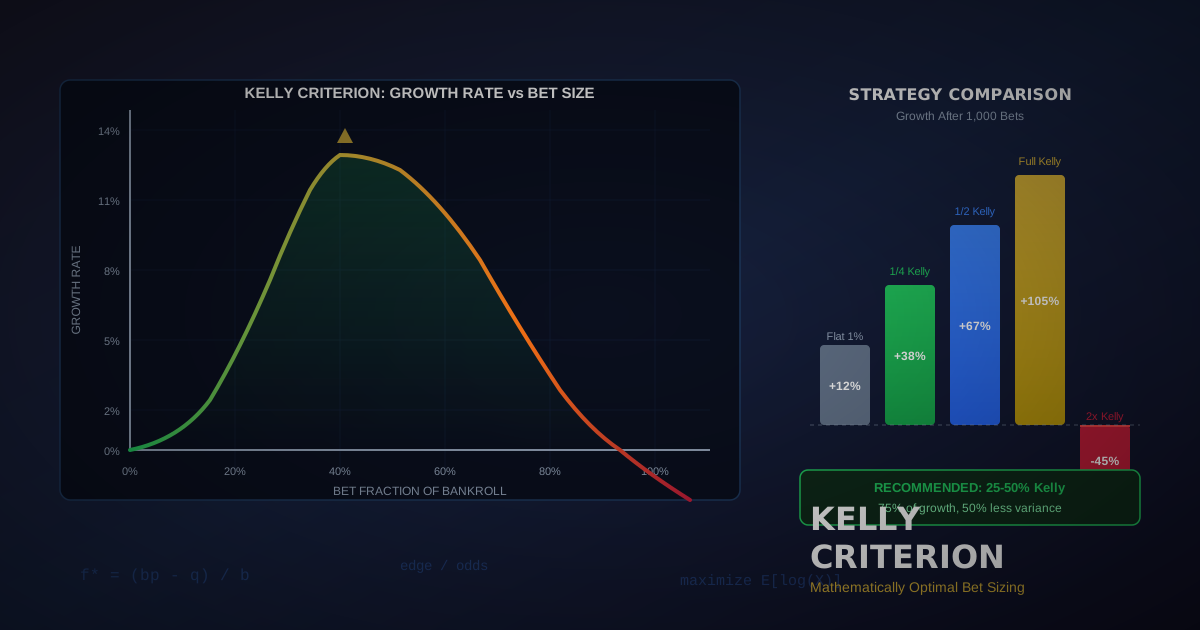
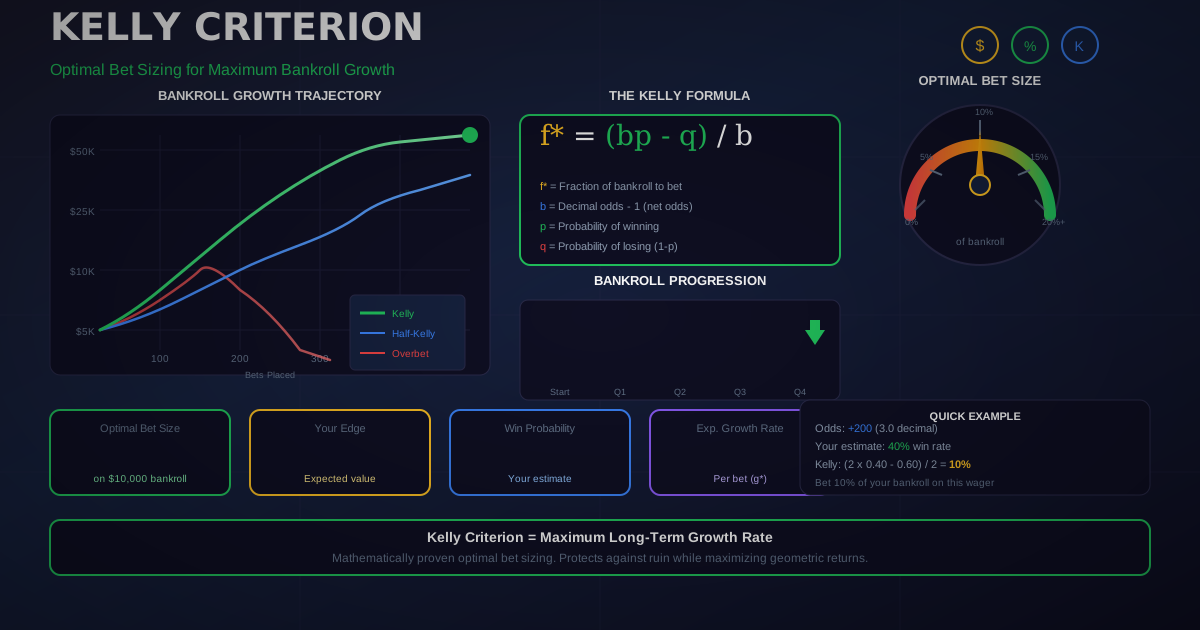
Use our Kelly Criterion Calculator to determine optimal bet sizing based on your edge in any legal market.
What Are the Timeline Predictions for Each Remaining State?
Here are detailed timeline predictions for every state that has not yet legalized sports betting, based on current legislation status, political dynamics, and market conditions.
States With Active Bills (2026-2028 Expected)
| State | Bill Status | Predicted Legalization | Predicted Launch | Confidence |
|---|---|---|---|---|
| Missouri | Voter-approved 2024; rulemaking in progress | Already legalized | Mid-2026 | Very High |
| Texas | SB filed for 2027 session; special session possible | 2027-2028 | 2028-2029 | Moderate |
| Georgia | HB 380 introduced Jan 2026 | 2026-2027 (if amendment passes) | 2027-2028 | Moderate |
| Alabama | SB 214 (lottery + betting combo) | 2026-2027 | 2027-2028 | Moderate |
| Minnesota | Perennial bill; tribal negotiations ongoing | 2027-2028 | 2028-2029 | Low-Moderate |
| California | No current bill; ballot measure possible 2028 | 2028-2030 | 2029-2031 | Low |
States Without Active Bills (2028+ Expected)
| State | Key Obstacle | Predicted Legalization | Confidence |
|---|---|---|---|
| Oklahoma | Tribal compacts dominate gaming | 2028-2030 | Low |
| South Carolina | Conservative legislature; no gambling tradition | 2029-2032 | Very Low |
| Idaho | Strong anti-gambling sentiment | 2030+ | Very Low |
| Hawaii | Cultural opposition; no gambling infrastructure | 2030+ | Very Low |
| Utah | Constitutional ban on gambling | Not foreseeable | Extremely Low |
Utah: The Permanent Holdout?
Utah's state constitution explicitly prohibits all forms of gambling, and the state's dominant religious and cultural attitudes make repeal virtually impossible in any foreseeable timeframe. Utah is widely expected to be the last state in the nation to ever legalize any form of sports betting, if it ever does.
Calculate potential hedge bet amounts when placing wagers across state lines with our Hedge Calculator.
How Does Federal Regulation Affect Sports Betting Expansion?
The question of federal sports betting regulation resurfaces periodically, though the current political environment makes comprehensive federal legislation unlikely in the near term.
Current Federal Framework
Since PASPA was struck down in 2018, sports betting regulation has been left entirely to individual states. The key federal laws that still apply:
| Federal Law | Impact on Sports Betting |
|---|---|
| Wire Act (1961) | Prohibits interstate wagering; limits bets to within state borders |
| UIGEA (2006) | Prohibits financial institutions from processing illegal gambling transactions |
| Indian Gaming Regulatory Act (1988) | Governs tribal gaming operations and compacts |
| Federal excise tax | 0.25% tax on all legal wagers (collected from operators) |
Proposed Federal Bills
Several federal proposals have been floated since 2018, but none have gained significant traction:
- Sports Wagering Market Integrity Act: Would create federal licensing standards and consumer protections. Last introduced in 2023; did not advance.
- SAFE Bet Act: Proposed federal framework with minimum standards for state regulation. Stalled in committee.
- Integrity fee proposals: Professional sports leagues initially sought 1% of handle as an "integrity fee." These proposals have been universally rejected.
Impact on Bettors
The state-by-state approach means bettors face a patchwork of different rules, tax rates, and available operators depending on their location. Key implications:
- You can only bet within the borders of a legal state (geolocation enforced)
- Moving between states may change your available sportsbooks
- Tax obligations vary by state of residence and state where the bet was placed
- No interstate wagering pools (each state's market is siloed)
Understand your tax obligations on any winning bet with our Lottery After-Tax Calculator.
How Is Tribal Gaming Shaping Sports Betting Legalization?
Tribal gaming operations play a crucial role in the sports betting legalization landscape, particularly in states where tribal compacts are the foundation of gambling law.
Tribal Gaming Revenue Context
American Indian tribes operate more than 500 casinos across 29 states, generating over $42 billion in annual revenue. Sports betting represents both an opportunity and a threat to these operations.
Tribal Approaches to Sports Betting
| Approach | Description | States |
|---|---|---|
| Tribal Exclusive | Only tribes can offer sports betting | WA, NM |
| Tribal Priority | Tribes get first access or preferred terms | CT, FL, AZ |
| Tribal Partnership | Tribes partner with commercial operators | MI, NY, NC |
| Tribal Opposition | Tribes oppose non-tribal sports betting | CA (some tribes), OK |
| Tribal Neutral | Tribes not significantly involved | TX, GA, MO |
Key Tribal Negotiations to Watch
Oklahoma is home to 35 tribal nations operating 135 casinos under compacts with the state. Any sports betting legislation must navigate these tribal relationships, and the Chickasaw and Cherokee Nations have been active in shaping the debate. Oklahoma's tribal gaming generates more than $5 billion annually, making it one of the largest tribal gaming markets in the country.
Florida resolved its tribal sports betting debate through the Seminole Tribe's Hard Rock Digital platform, though legal challenges have complicated implementation. The Seminole Compact grants the tribe exclusive control over mobile sports betting statewide, a model that other tribes in other states are watching closely.
California's tribal gaming landscape is the most complex in the nation, with more than 60 tribal casinos generating $12+ billion annually. The tribes are divided between those that want tribal-exclusive sports betting and those willing to allow broader market access. This internal division, combined with opposition from card rooms and online operators, has created a legislative stalemate.
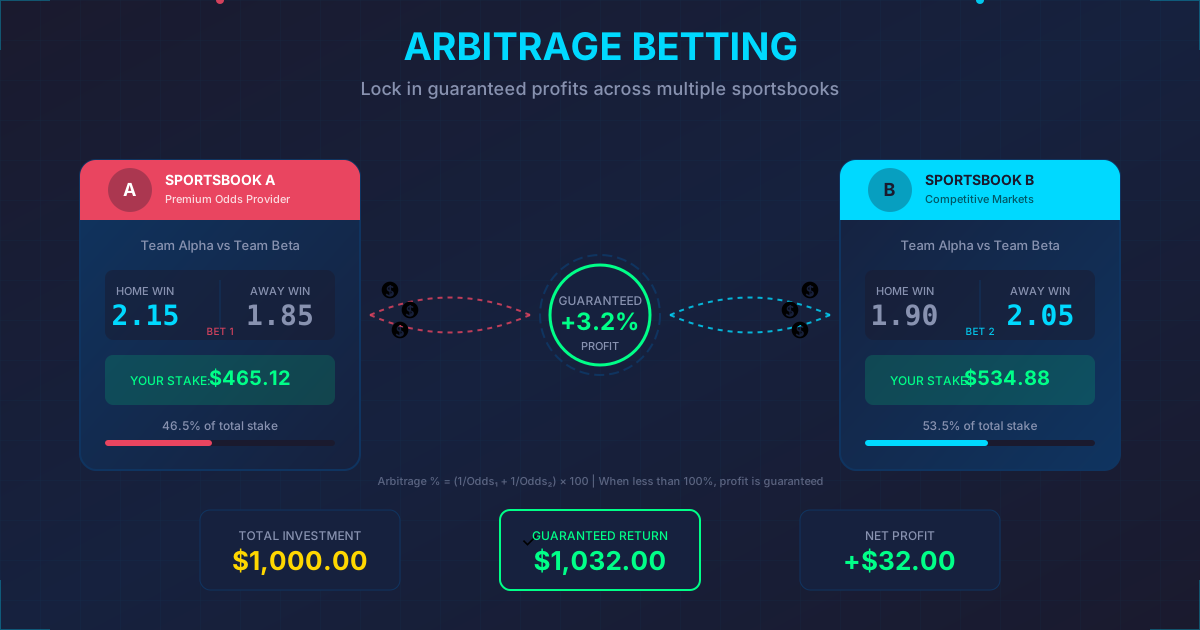
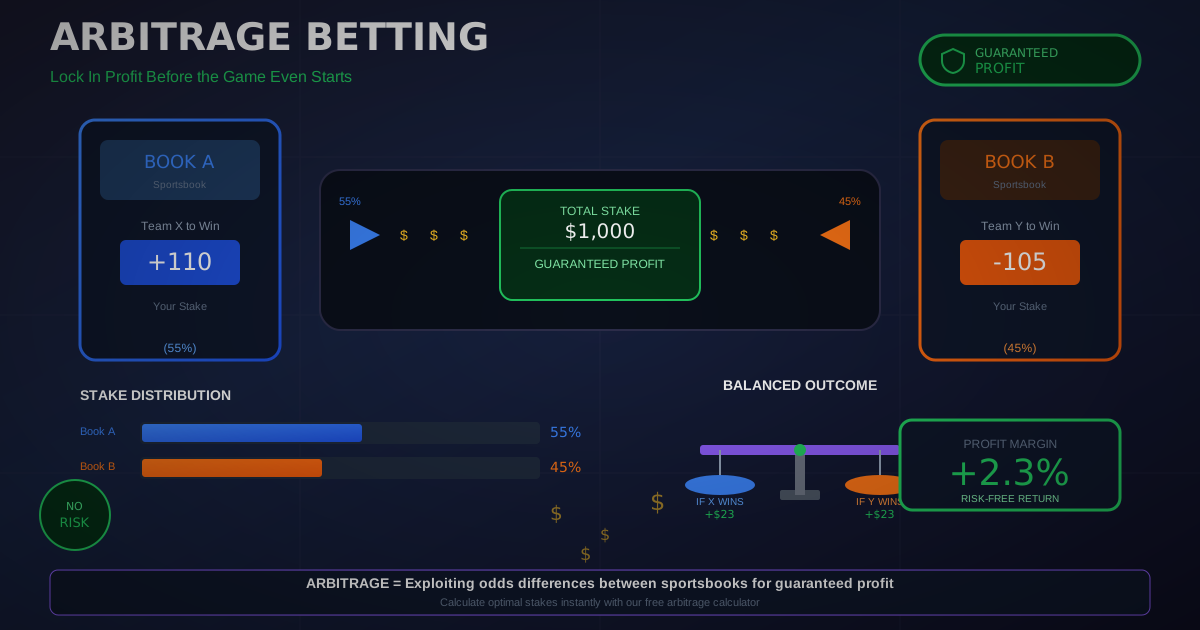
Find guaranteed profit opportunities when they exist with our Arbitrage Calculator.
What Should Bettors in Holdout States Know Right Now?
If you live in a state where sports betting is not yet legal, there are several important things to understand about your current situation and future options.
Legal Risks of Offshore Betting
Many bettors in holdout states use offshore sportsbooks, which operate outside US jurisdiction. This carries significant risks:
| Risk | Description |
|---|---|
| No consumer protection | No state regulator to handle disputes |
| No payout guarantee | Offshore books can refuse to pay without consequence |
| Legal gray area | While enforcement against individual bettors is rare, using offshore books violates federal law |
| No responsible gambling tools | No self-exclusion programs or deposit limits required |
| Tax complications | Winnings are still taxable, but reporting is more complex |
| Identity theft risk | Sharing personal and financial information with unregulated entities |
Preparing for Legalization
If your state is likely to legalize soon, you can prepare by:
- Understanding the math: Learn expected value, implied probability, and bankroll management before legal options arrive
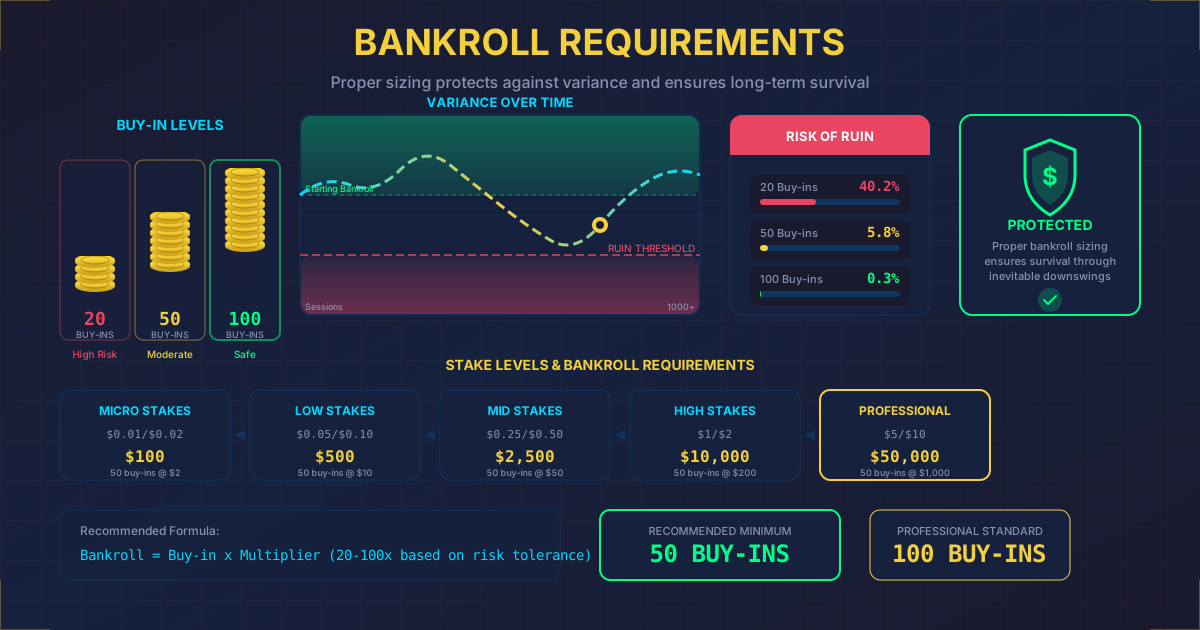
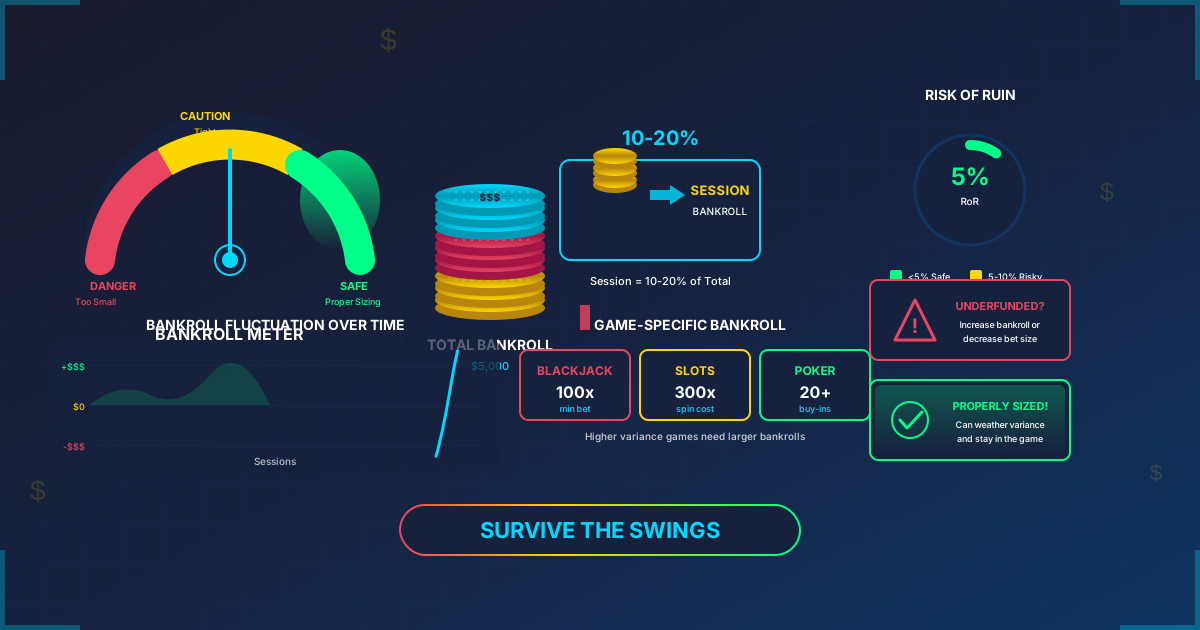
- Building a bankroll: Set aside a dedicated gambling bankroll that you can afford to lose entirely
- Learning about operators: Research which sportsbooks operate in neighboring legal states to understand their offerings
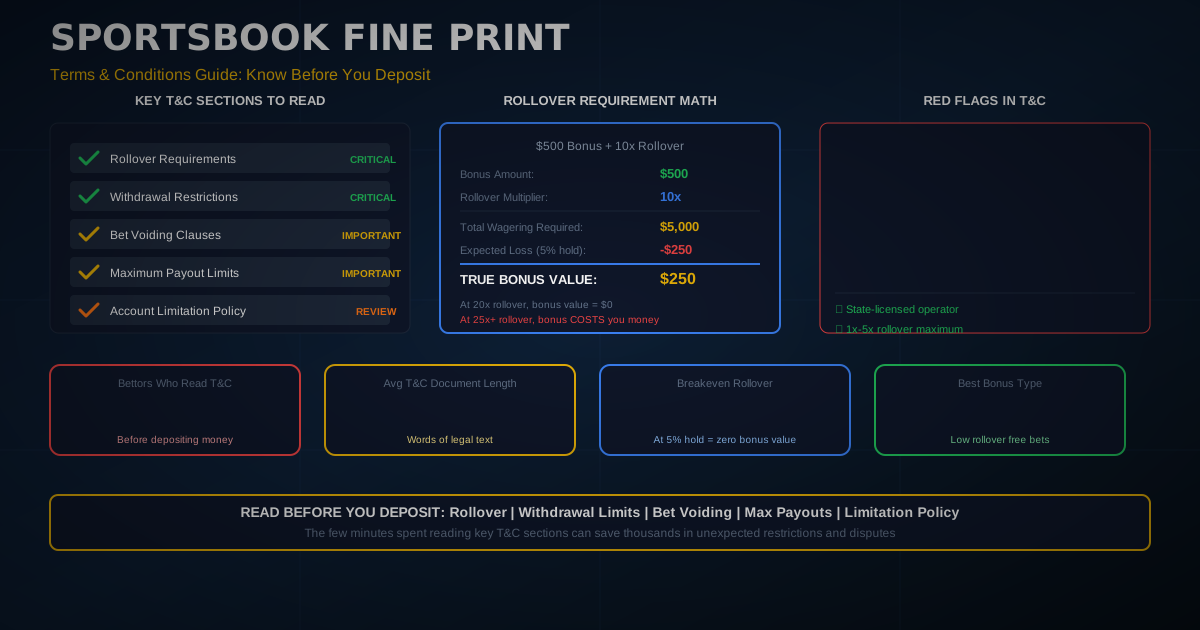
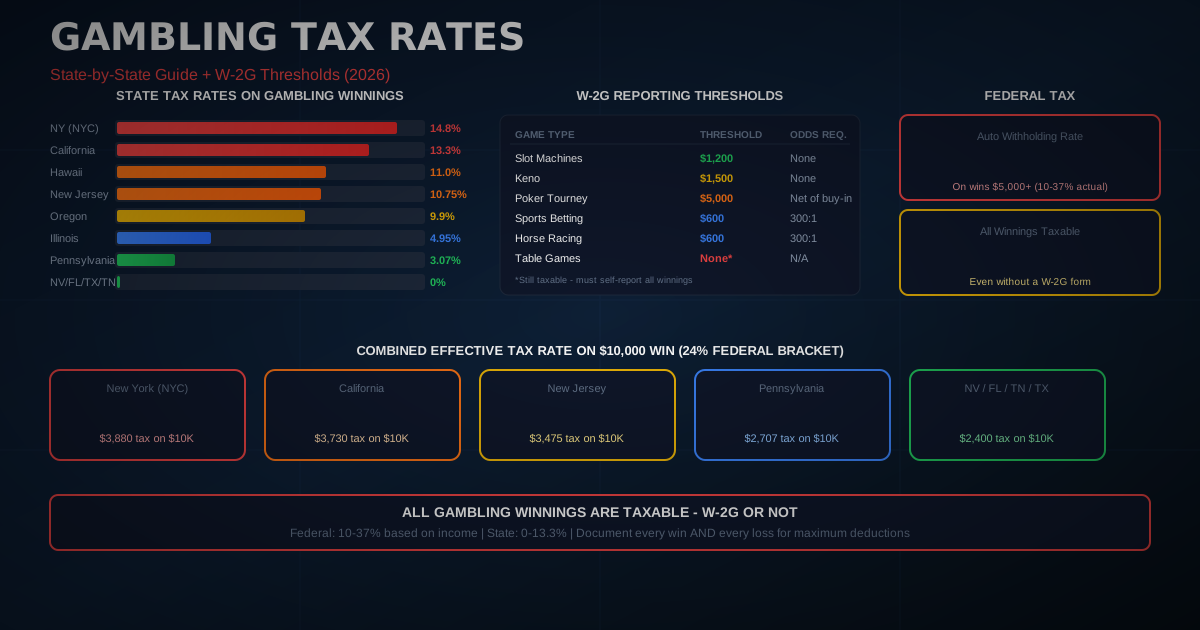
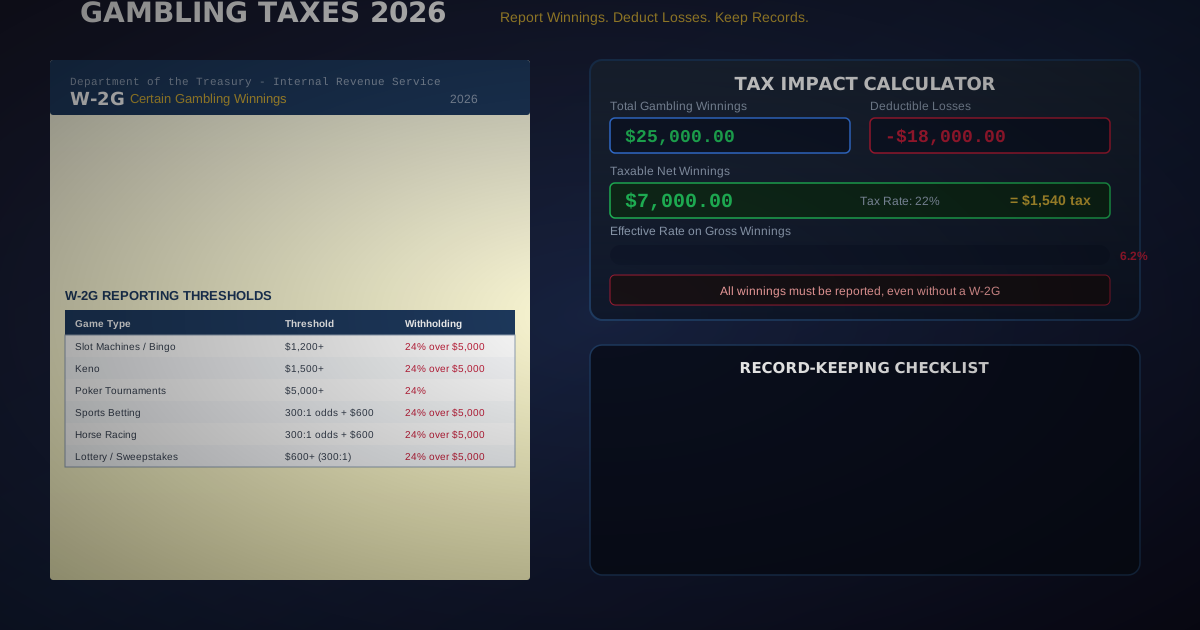
- Understanding tax implications: All gambling winnings are federally taxable regardless of state law
- Setting up responsible gambling practices: Establish limits and self-exclusion awareness before you start
Sign-Up Bonus Landscape
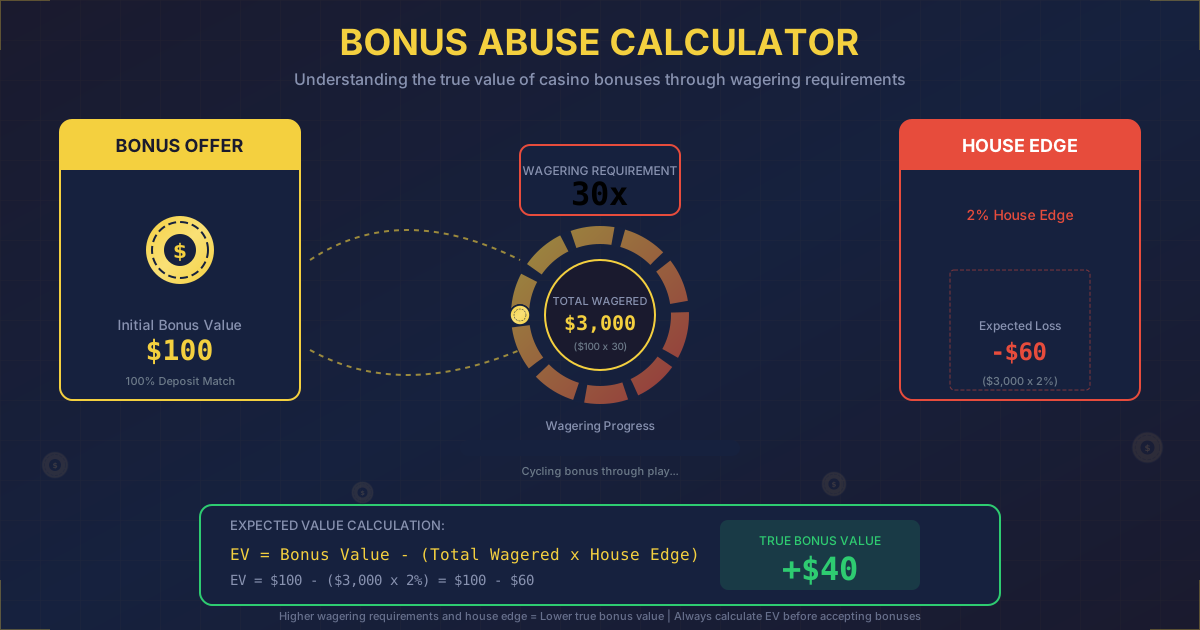
When a state launches legal sports betting, operators typically offer their most aggressive promotions to acquire customers. First-mover bettors in newly legal states can often capture significant promotional value:
| Typical Launch Promotions | Value Range |
|---|---|
| Deposit match bonuses | $100-$1,000 |
| Risk-free first bets | $500-$1,500 |
| Odds boosts | 20-50% profit boost on select bets |
| Referral bonuses | $50-$200 per referral |
| Parlay insurance | Up to $25 back on losing parlays |
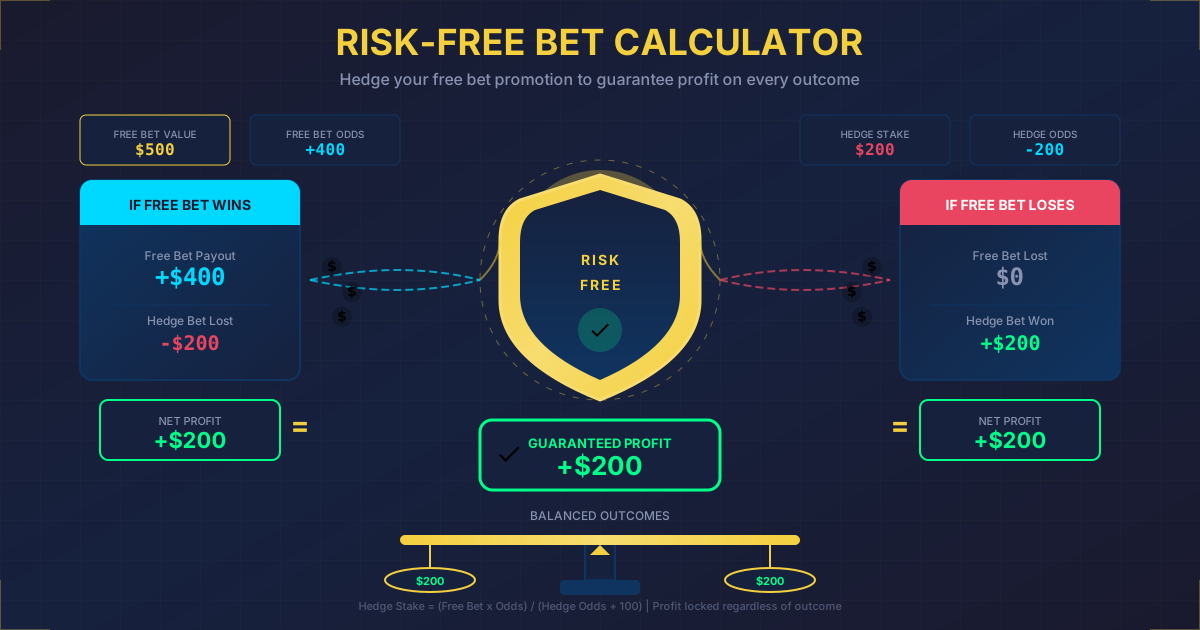
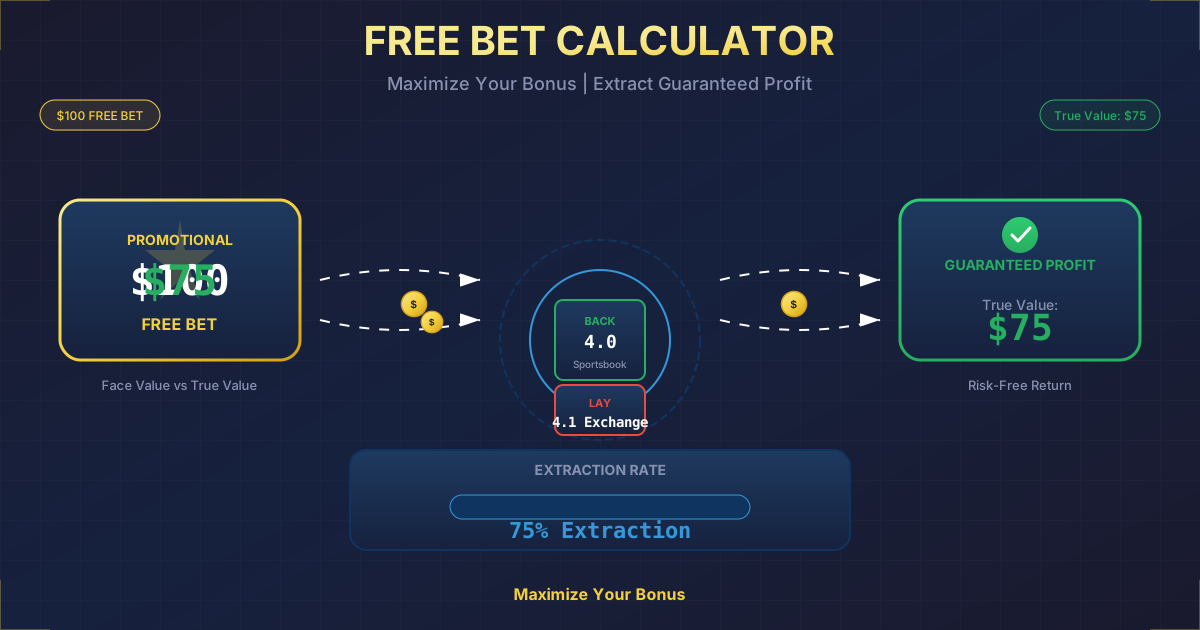
Calculate the true value of free bet promotions with our Free Bet Calculator (Stake Not Returned) or Free Bet Calculator (Stake Returned).
How Do Sports Betting Legalization Campaigns Work?
Understanding the legislative and ballot initiative processes helps predict realistic timelines for legalization in holdout states.
Legislative Path
Most states legalize through standard legislation:
- Bill introduction: A senator or representative files a sports betting bill
- Committee hearings: The bill is assigned to a committee (usually gaming, revenue, or judiciary) for hearings
- Committee vote: If approved, the bill advances to the full chamber
- Floor vote: Full chamber debate and vote
- Second chamber: Process repeats in the other legislative chamber
- Governor's signature: Governor signs or vetoes
- Regulatory rulemaking: State gaming commission develops regulations (6-18 months)
- Operator licensing: Sportsbooks apply for and receive licenses
- Launch: Legal betting begins
This process typically takes 2-4 years from initial bill introduction to market launch.
Ballot Initiative Path
Some states require or prefer voter approval through ballot measures:
- Signature gathering: Proponents collect signatures to qualify for the ballot (typically 5-10% of registered voters)
- Campaign period: Pro and con campaigns spend millions on advertising
- Election: Voters approve or reject the measure
- Implementation: If approved, the legislature implements the regulatory framework
This path can be faster (ballot-to-launch in 12-18 months) but is less predictable and more expensive.
Constitutional Amendment Path
States like Georgia and Texas may require constitutional amendments, which adds complexity:
- Legislative supermajority: Typically requires two-thirds vote in both chambers
- Voter referendum: Amendment goes to voters on the next general election ballot
- Implementation: Legislature passes enabling legislation
- Regulatory development: Gaming commission creates rules
- Launch: Market opens
This is the slowest path, typically requiring 3-5 years from initial legislative action to market launch.
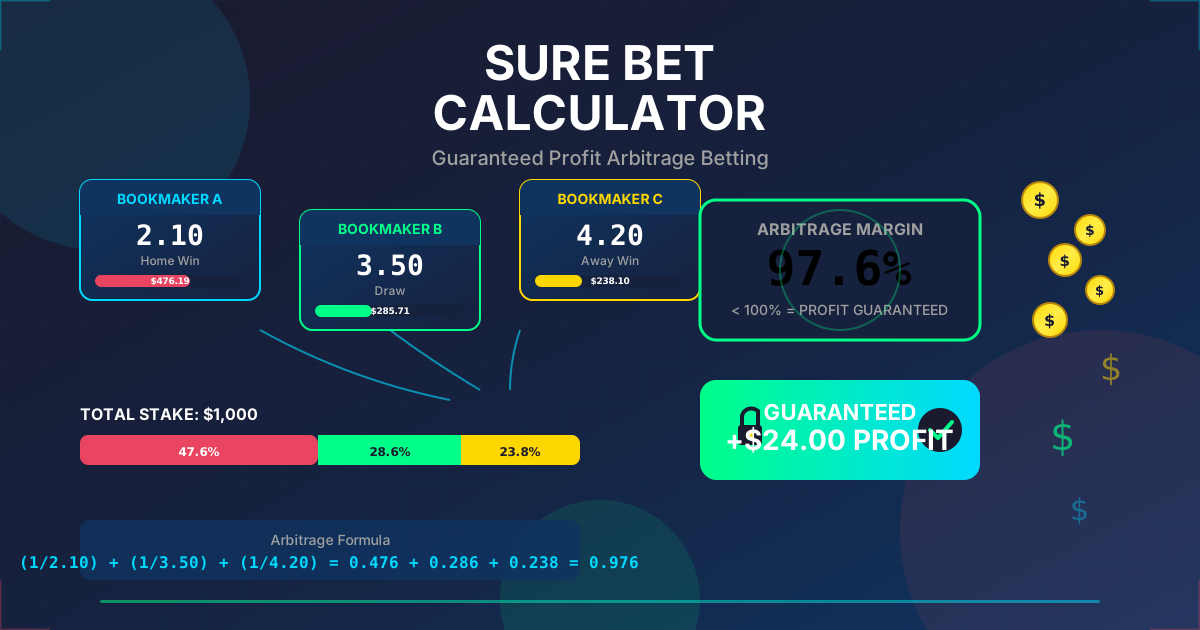
Compare potential outcomes using our Sure Bet Calculator to understand risk-free betting strategies.
What Can We Learn from States That Recently Legalized?
The experiences of states that legalized in 2023-2025 provide valuable lessons for upcoming markets.
North Carolina (Launched March 2024)
North Carolina's mobile launch was one of the most successful in history:
- $1.2 billion handle in the first month
- Eight licensed operators at launch
- 18% tax rate on GGR
- Over $130M in tax revenue in the first year
- Key factor: Large population (10.4M), passionate sports culture (ACC, Panthers, Hornets)
Kentucky (Launched September 2023)
Kentucky's market demonstrated the mid-size state model:
- Steady growth to $250M monthly handle within 6 months
- Seven mobile operators
- 14.25% tax rate on adjusted GGR
- Churchill Downs (home of the Kentucky Derby) was a major advocate for legalization
Vermont (Launched January 2024)
Vermont illustrated the small-state challenge:
- Six licensed operators competing for a population of 647,000
- Monthly handle stabilized around $40-50M
- 20% tax rate on GGR
- Operators reported difficulty reaching profitability in such a small market
Lessons for Upcoming States
| Lesson | Evidence | Implication |
|---|---|---|
| Mobile is essential | States with mobile betting generate 10-20x more handle | New states should prioritize mobile access |
| More operators = better for bettors | Competition drives better odds and promotions | Open licensing models benefit consumers |
| Tax rate affects competitiveness | High-tax states see worse odds | States should balance revenue with consumer value |
| Launch timing matters | States launching before major sports events see faster ramp-up | Target NFL season or March Madness |
| Promotional spend front-loaded | Operators spend heavily in Year 1, declining after | First-year promotional value is highest |
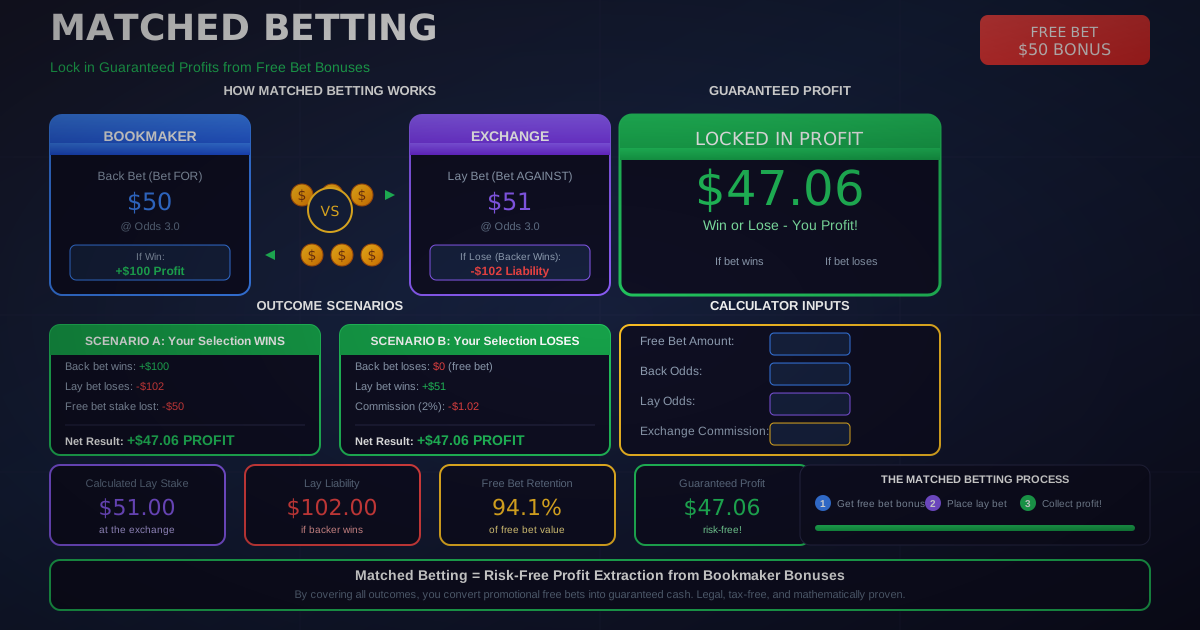
Use our Matched Betting Calculator to maximize value from sign-up promotions when your state launches.
What Impact Does Sports Betting Have on State Economies Beyond Tax Revenue?
The economic impact of legal sports betting extends far beyond direct tax revenue. States that have legalized report significant secondary economic effects that strengthen the case for holdout states.
Job Creation
Legal sports betting creates jobs across multiple sectors:
| Job Category | Estimated Jobs Per State | Average Salary |
|---|---|---|
| Sportsbook operations (customer service, trading, compliance) | 200-1,000 | $45,000-$85,000 |
| Technology (developers, data analysts, cybersecurity) | 100-500 | $75,000-$150,000 |
| Marketing and media | 50-300 | $50,000-$100,000 |
| Regulatory and compliance (state level) | 20-100 | $55,000-$95,000 |
| Retail sportsbook employees (cashiers, hosts) | 50-500 | $30,000-$55,000 |
| Responsible gambling services | 10-50 | $40,000-$70,000 |
New York's sports betting market alone created an estimated 2,500+ direct jobs and 5,000+ indirect jobs since its 2022 mobile launch.
Tourism and Hospitality Effects
States with legal mobile sports betting report measurable tourism benefits:
- Nevada saw continued strong visitation despite competition from neighboring states, partly because sports betting enhances the overall entertainment offering
- New Jersey experienced increased hotel occupancy and restaurant spending on major sporting event weekends
- Arizona reported measurable increases in sports bar revenue after mobile betting launched
Media and Content Industry Growth
Legal sports betting has created an entirely new media ecosystem in each state:
- Local sports betting podcasts and shows
- State-specific handicapping content
- Data analytics companies serving the market
- Affiliate marketing businesses
- Responsible gambling education services
Tax Revenue Earmarking
How states allocate sports betting tax revenue varies and can have significant community impact:
| State | Revenue Allocation |
|---|---|
| New York | Education funding (majority) |
| Colorado | Water conservation projects |
| Tennessee | Education lottery scholarship fund |
| Virginia | Problem gambling treatment, education, general fund |
| Pennsylvania | General fund, property tax relief |
| Illinois | Capital projects fund |
These earmarking decisions can influence public support for legalization in holdout states by tying sports betting revenue to popular causes.
Calculate potential returns on any sports wager with our Parlay Calculator.
How Will the Sports Betting Map Look by 2030?
Looking ahead to the end of the decade, the trajectory is clear: the vast majority of the US population will have access to legal sports betting.
Projected 2030 US Sports Betting Map
| Status (Projected 2030) | States | Population Covered |
|---|---|---|
| Legal Mobile + Retail | 44-46 states + DC | ~310M (93%) |
| Legal Retail Only | 2-3 states | ~8M (2%) |
| No Legal Sports Betting | 2-3 states (UT, HI, possibly ID) | ~6M (2%) |
Market Maturity Projections
| Year | Legal States (Mobile) | Total US Handle | Total Tax Revenue |
|---|---|---|---|
| 2024 (actual) | 33 | $120B | $3.8B |
| 2025 (actual) | 34 | $140B | $4.2B |
| 2026 (projected) | 35-37 | $160B | $4.8B |
| 2028 (projected) | 40-42 | $200B | $6.0B |
| 2030 (projected) | 44-46 | $240B | $7.5B |
The US is on track to become the largest regulated sports betting market in the world, surpassing the combined markets of the UK, Australia, and continental Europe.
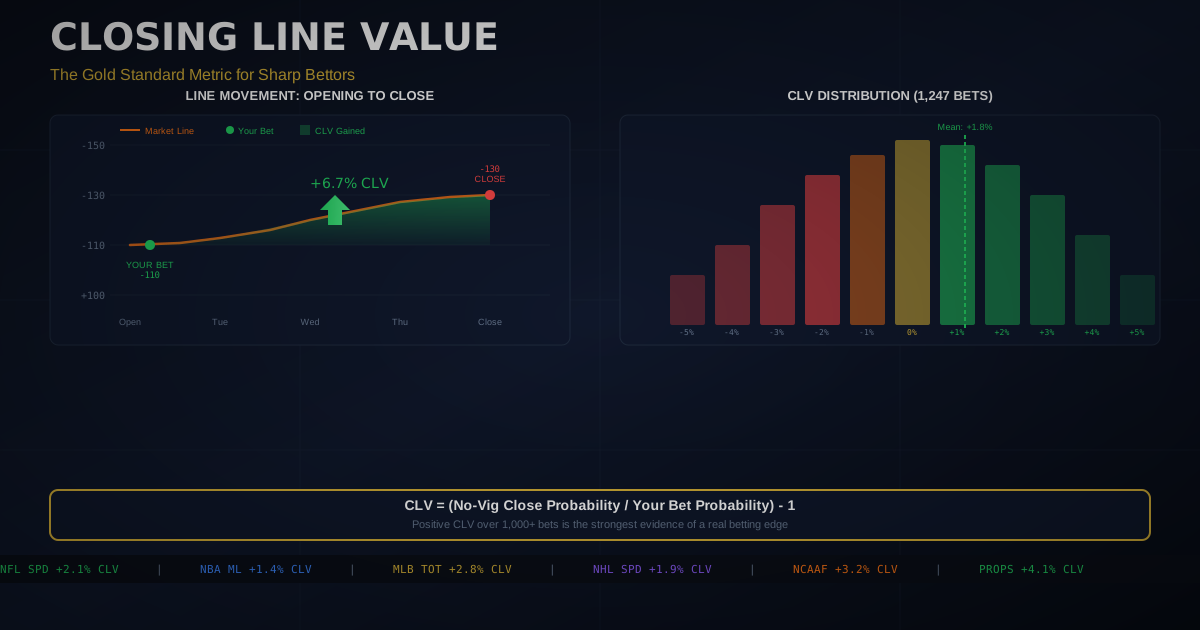
Track your long-term betting performance with our CLV Tracker to measure your edge as new markets open.
Frequently Asked Questions
Which state is most likely to legalize sports betting next? Missouri is the most likely next launch, having already been approved by voters in 2024 and currently completing its regulatory rulemaking process. A mid-2026 launch is expected. After Missouri, Georgia and Alabama have the strongest momentum among states with active 2026 legislation.
Is sports betting legal in Texas? No, sports betting is not legal in Texas as of February 2026. The Texas legislature meets in odd-numbered years, making 2027 the next regular session where a bill could advance. A special session in late 2026 remains possible but uncertain. Texas is widely considered the most important remaining holdout market due to its 30+ million population.
Will California ever legalize sports betting? Likely yes, but the timeline is uncertain. California's complex tribal gaming landscape, competing industry interests, and expensive ballot initiative process have created a stalemate. The earliest realistic ballot measure opportunity is November 2028, with a potential market launch in 2029-2030.
How many states have legal sports betting in 2026? As of February 2026, 38 states plus Washington D.C. have legalized sports betting in some form. Of those, 33 offer mobile wagering, while 5 are retail-only. Missouri is expected to become the next state to launch mobile betting in mid-2026.
What happens if I bet on an offshore sportsbook from a state without legal betting? Using offshore sportsbooks violates federal law, though enforcement against individual bettors is extremely rare. The bigger risks are practical: no consumer protection if the book refuses to pay, no responsible gambling tools, potential identity theft, and complicated tax reporting. You should use our Expected Value Calculator to only take bets with positive expected value at any sportsbook.
Do I have to be a resident of a state to bet there? No. In virtually all legal states, you only need to be physically present within state borders to place a legal bet. You do not need to be a resident. This means you can bet when traveling to or through legal states, as verified by your device's geolocation.
How long does it take from legalization to actually being able to bet? Typically 6-18 months from the governor signing a bill to the first legal bet being placed. The regulatory rulemaking process, operator licensing, and technology testing all take time. States that model their regulations on existing frameworks can move faster.
Will all states eventually legalize sports betting? Almost certainly not all states. Utah has a constitutional ban on gambling that would be extremely difficult to repeal given the state's cultural and religious values. Hawaii also appears unlikely to legalize in the foreseeable future. However, by 2030, at least 44-46 states are projected to have some form of legal sports betting.
Related Gambling Tools
Use these free tools to analyze bets, manage bankroll, and find value across legal sportsbooks:
Odds and Probability Tools
- Odds Converter: Convert between American, decimal, and fractional odds
- Implied Probability Calculator: Find the true probability behind any odds
- Hold/Vig Calculator: Calculate the sportsbook's built-in edge
Expected Value and Edge Tools
- Expected Value Calculator: Calculate EV for any single bet
- CLV Tracker: Track your closing line value over time
- Sure Bet Calculator: Identify guaranteed profit opportunities
Bankroll and Bet Sizing Tools
- Kelly Criterion Calculator: Optimize bet size based on edge
- Bankroll Volatility Tracker: Model variance and drawdown risk
- Hedge Calculator: Calculate hedge amounts for guaranteed profit
Promotional and Bonus Tools
- Free Bet Calculator (SNR): Value stake-not-returned free bets
- Free Bet Calculator (SR): Value stake-returned free bets
- Matched Betting Calculator: Extract value from promotions
Parlay and Multi-Bet Tools
- Parlay Calculator: Calculate parlay odds and payouts
- Arbitrage Calculator: Find and size arbitrage bets
The Sports Betting Legalization Wave Continues
The expansion of legal sports betting across the United States has been one of the fastest regulatory shifts in American history. In just eight years since PASPA was overturned, the market has grown from one legal state (Nevada) to 38, generating billions in tax revenue and transforming the sports viewing experience for tens of millions of Americans.
For bettors in states where legalization is still pending, the question is not if but when. The fiscal arguments are too compelling, the public support too strong, and the cross-border revenue leakage too visible for most legislatures to ignore indefinitely.
When your state does legalize, be ready. Understand expected value. Know how to compare odds across sportsbooks. Have a bankroll management plan in place. And take full advantage of the promotional offers that flood new markets.
Start building your analytical foundation now with our free Expected Value Calculator, Odds Converter, and Kelly Criterion Calculator. The math does not change regardless of which state you are in.
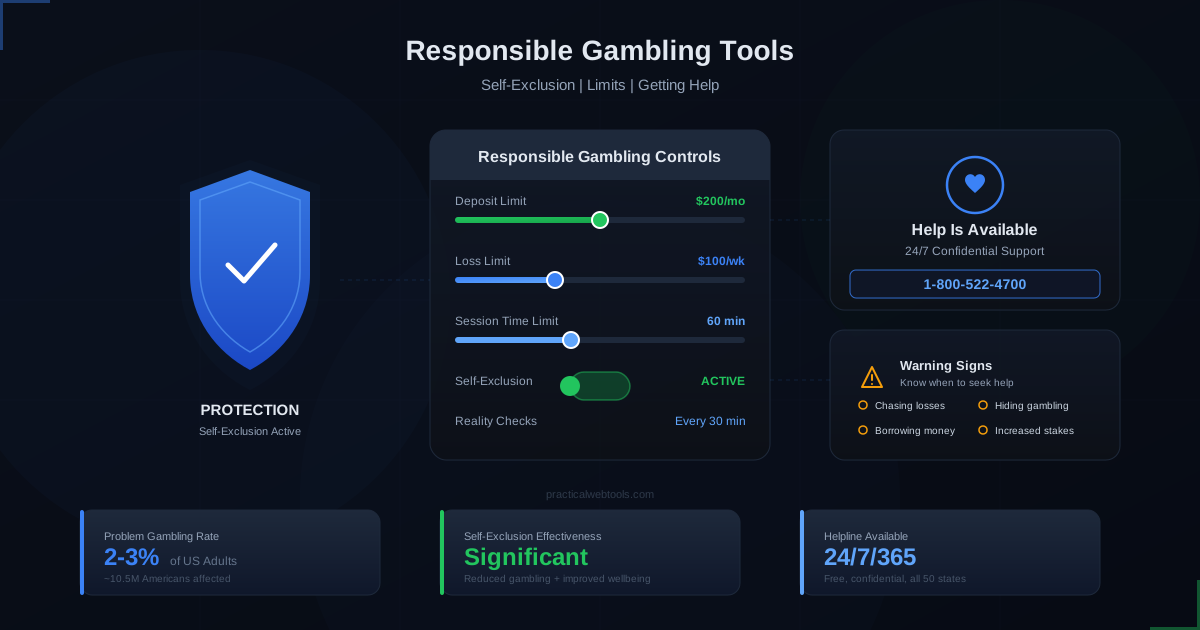
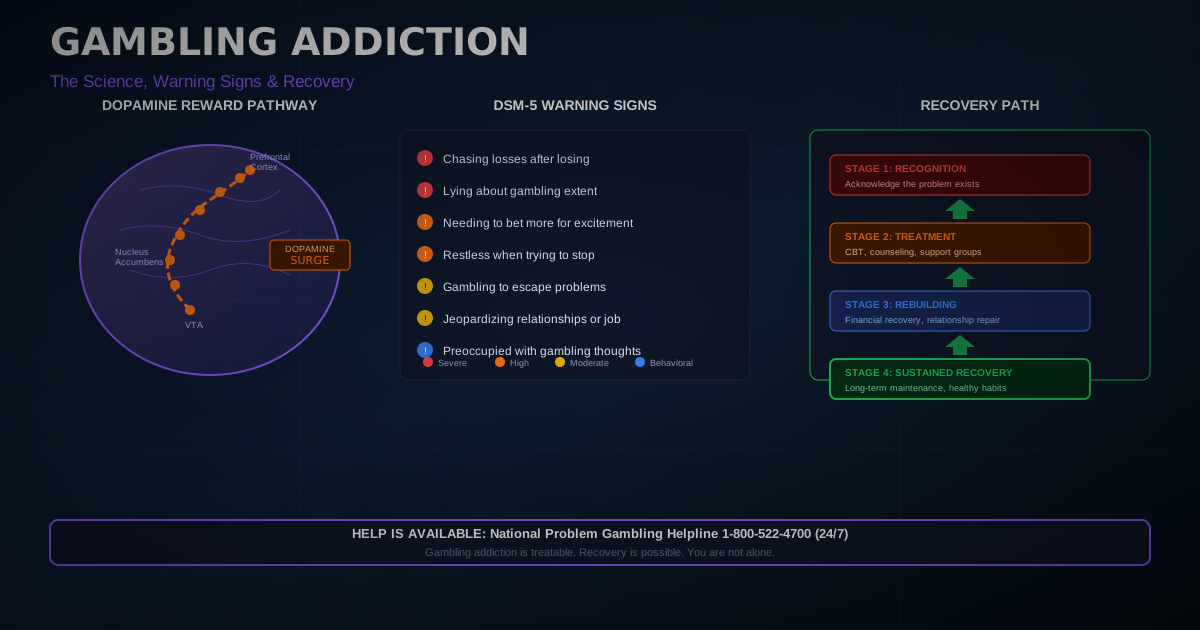
Gambling involves risk and should be approached as entertainment, not as a source of income. Always bet within your means, set strict bankroll limits, and never chase losses. If you or someone you know has a gambling problem, contact the National Council on Problem Gambling at 1-800-522-4700 or visit ncpgambling.org. Must be 21+ to gamble in most US jurisdictions. Please play responsibly.