Casino Etiquette: The Unwritten Rules Every Gambler Should Know (2026)
The man sat down at a $25 blackjack table, pulled out his phone, and started a video call. He placed his bet while FaceTiming his friend, fumbled his cards with one hand, hit on a hard 18 because he was distracted, busted, and then loudly blamed the dealer for dealing too fast. The three other players at the table exchanged glances. Two of them colored up and left within the next shoe. The pit boss walked over. It was not a fun conversation.
Every seasoned casino-goer has witnessed a version of this scene. Casinos are social environments governed by a complex set of written and unwritten rules that most first-time visitors -- and plenty of experienced ones -- never learn until they violate them. These rules exist for good reasons: they keep games running smoothly, protect players from mistakes that cost real money, maintain an enjoyable atmosphere for everyone at the table, and ensure the casino operates efficiently.
Understanding casino etiquette is not about being stuffy or formal. It is about being the kind of player that dealers appreciate, other players enjoy sitting next to, and casino staff go out of their way to accommodate. Good etiquette gets you better service, more comps, friendlier dealers, and a significantly better overall experience.
This guide covers every aspect of casino etiquette you need to know in 2026 -- from buying into a table game to tipping the valet on your way out, and everything in between.
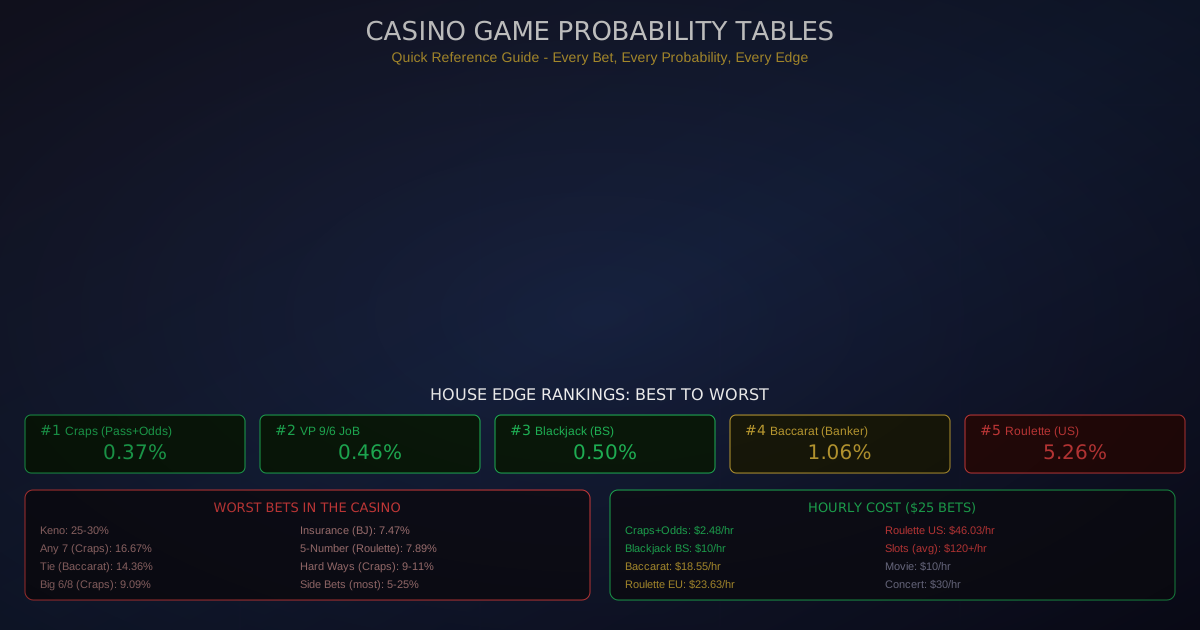
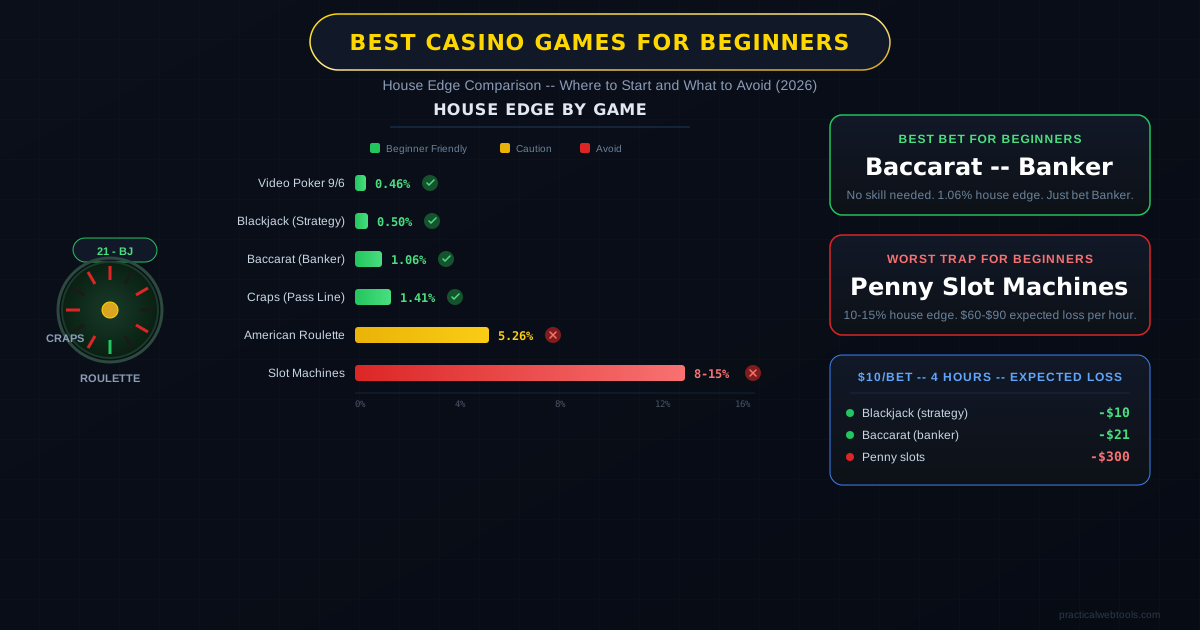
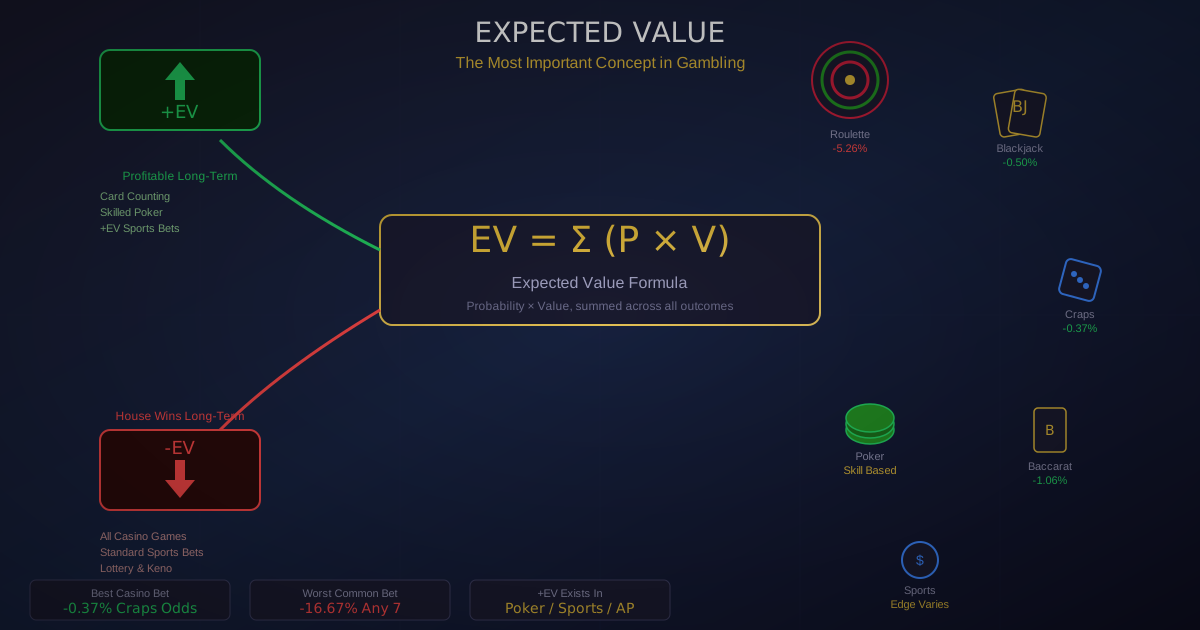
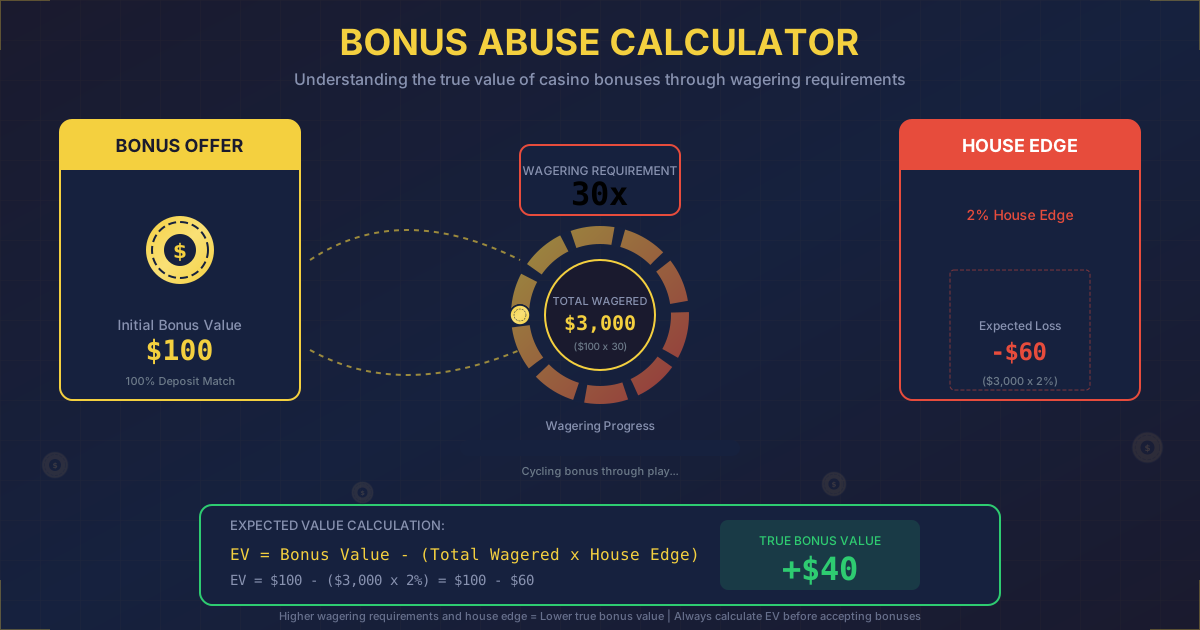
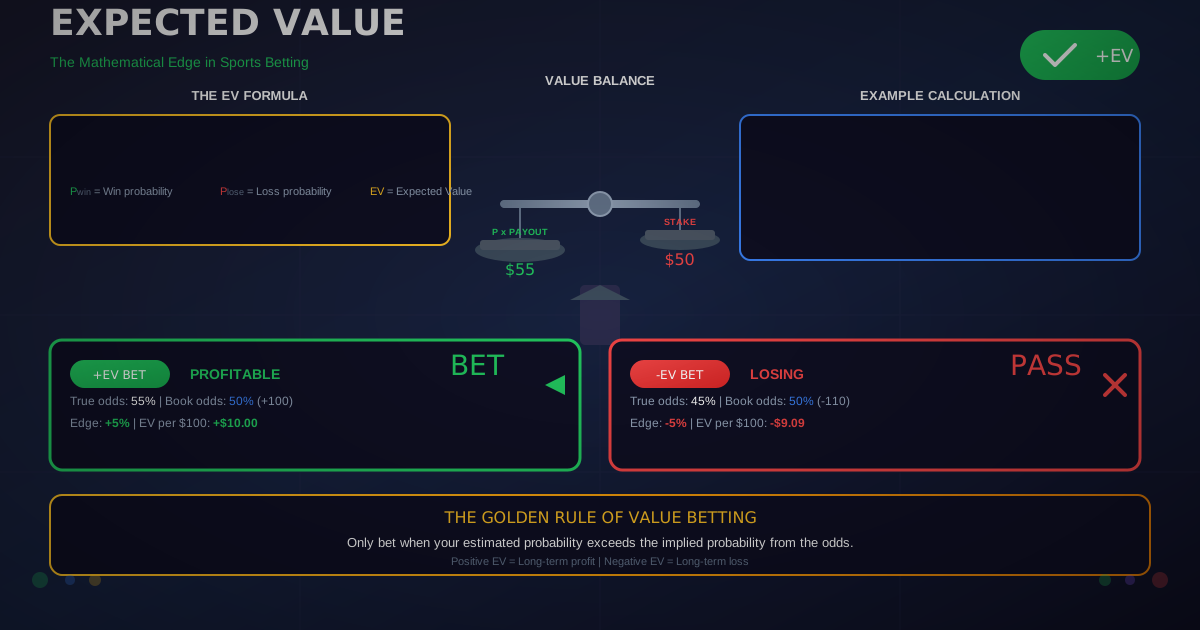
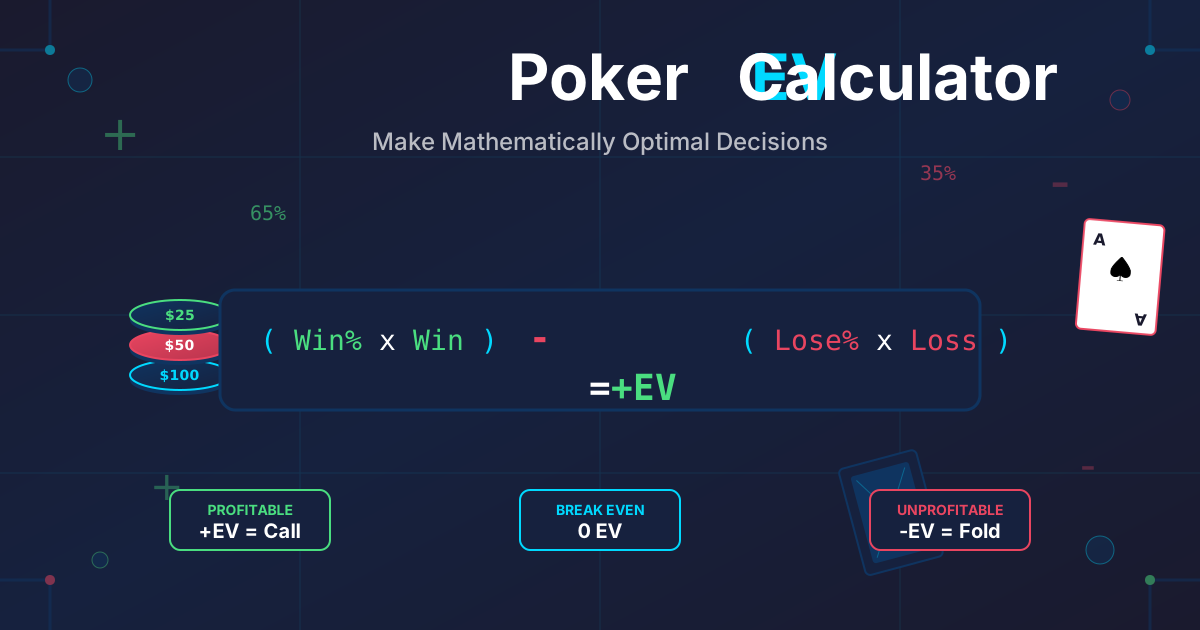
Before you sit down at any table, understand the house edge you are facing with our free Expected Value Calculator.
What Are the Basic Rules of Table Game Etiquette?
Table game etiquette revolves around three core principles: do not slow down the game, do not touch things you should not touch, and communicate clearly with the dealer using proper hand signals. Following these basics ensures a smooth experience for everyone at the table.
Buying In at a Table
When you approach a table game, the buy-in process follows a specific protocol:
- Wait for the current hand to finish before sitting down or placing money on the table. Never interrupt a hand in progress.
- Place your cash on the felt, not in the dealer's hand. Dealers are prohibited from taking anything directly from a player's hand (this is a security and surveillance requirement). Lay your bills flat on the table in the betting area or in front of you.
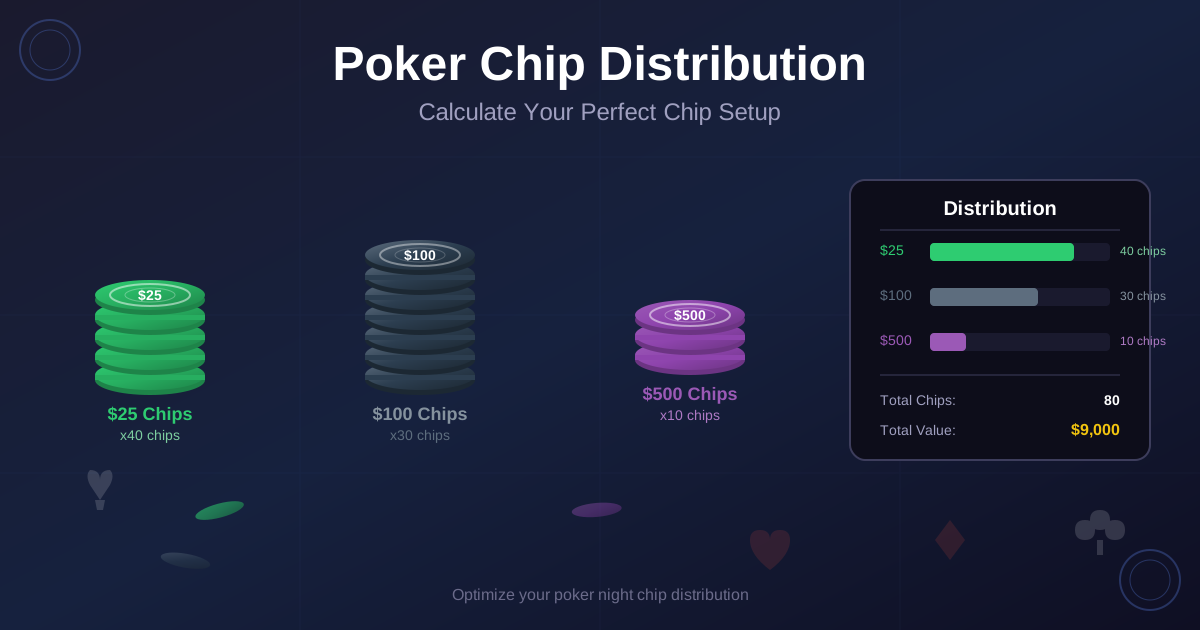
- State your denomination preference if applicable. Say "All greens" (for $25 chips) or "In small" (for the smallest denomination available). If you do not specify, the dealer will typically give you a mix.
- Wait for the dealer to count and spread your money on the felt for the camera to verify, then push your chips to you. Do not reach for chips until the dealer pushes them.
| Do | Do Not |
|---|---|
| Place cash flat on the felt | Hand cash directly to the dealer |
| Wait for the hand to finish | Throw money down mid-hand |
| State your chip denomination preference | Grab chips before the dealer pushes them |
| Make sure the table minimum is within your budget | Sit down at a $100 minimum table with $80 |
Handling Chips
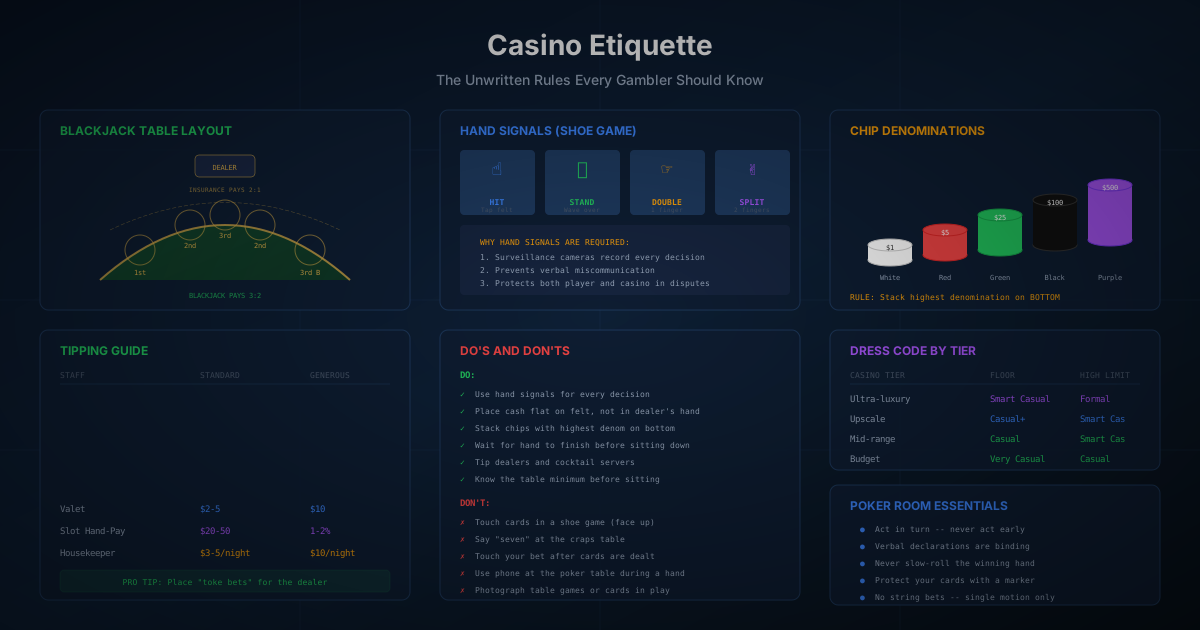
- Stack your chips in neat columns with the highest denomination on the bottom. This lets the dealer quickly assess your bet size.
- Keep your chips in front of you, within the rail and visible at all times. Never put chips in your pocket -- this is considered suspicious by surveillance.
- Do not splash the pot by tossing chips into the betting circle carelessly. Place them in a neat stack.
- Cut your bet from the top if you want to add or reduce your wager. Do not rearrange the stack after the cards are dealt.
Hand Signals in Blackjack
This is one of the most important etiquette points in the casino. Verbal instructions alone are not sufficient. Casinos require hand signals for all player decisions because:
- Surveillance cameras record hand signals as an indisputable record of every decision.
- Dealers may mishear verbal instructions in a noisy environment.
- Hand signals protect both the player and the casino from disputes.
| Decision | Shoe Game (Cards Face Up) | Handheld Game (Cards Face Down) |
|---|---|---|
| Hit | Tap the felt behind your cards with one finger | Scratch the edge of your cards toward you on the felt |
| Stand | Wave your hand horizontally over your cards, palm down | Tuck your cards under your chips |
| Double Down | Place additional chips next to (not on top of) your bet; hold up one finger | Turn cards face up, place additional chips next to bet |
| Split | Place matching bet next to original; hold up two fingers (peace sign) | Turn cards face up, place matching bet next to original |
| Surrender (if available) | Draw an imaginary line behind your bet; say "Surrender" | Say "Surrender" and turn cards face up |
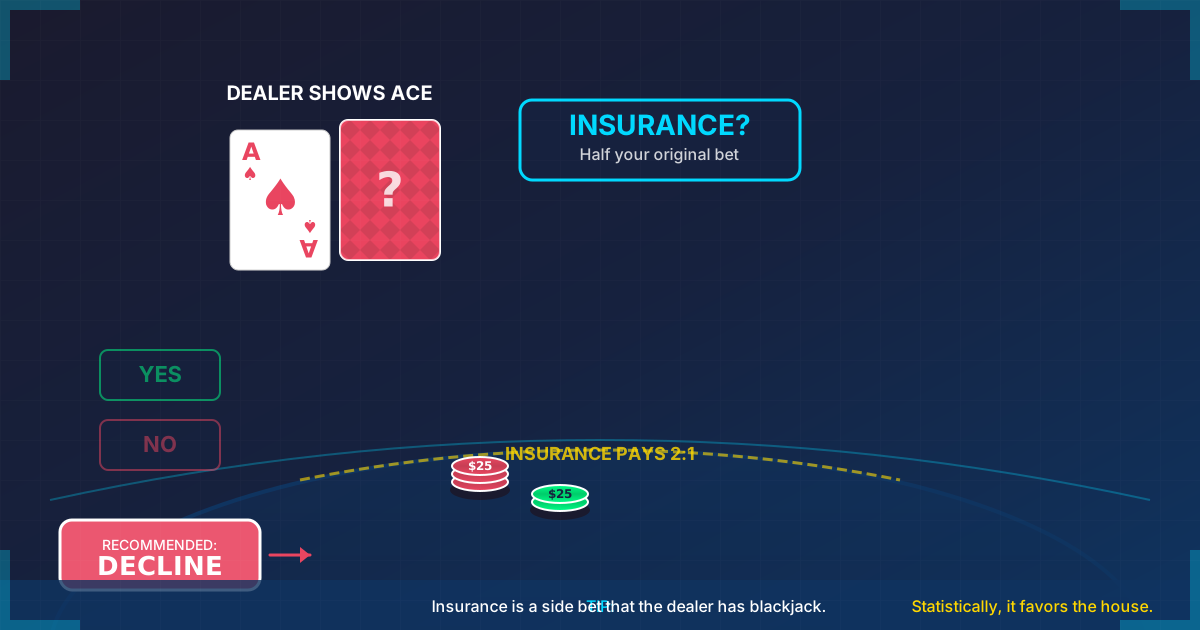
| Insurance | Place insurance bet in the insurance area when offered | Place insurance bet when asked |
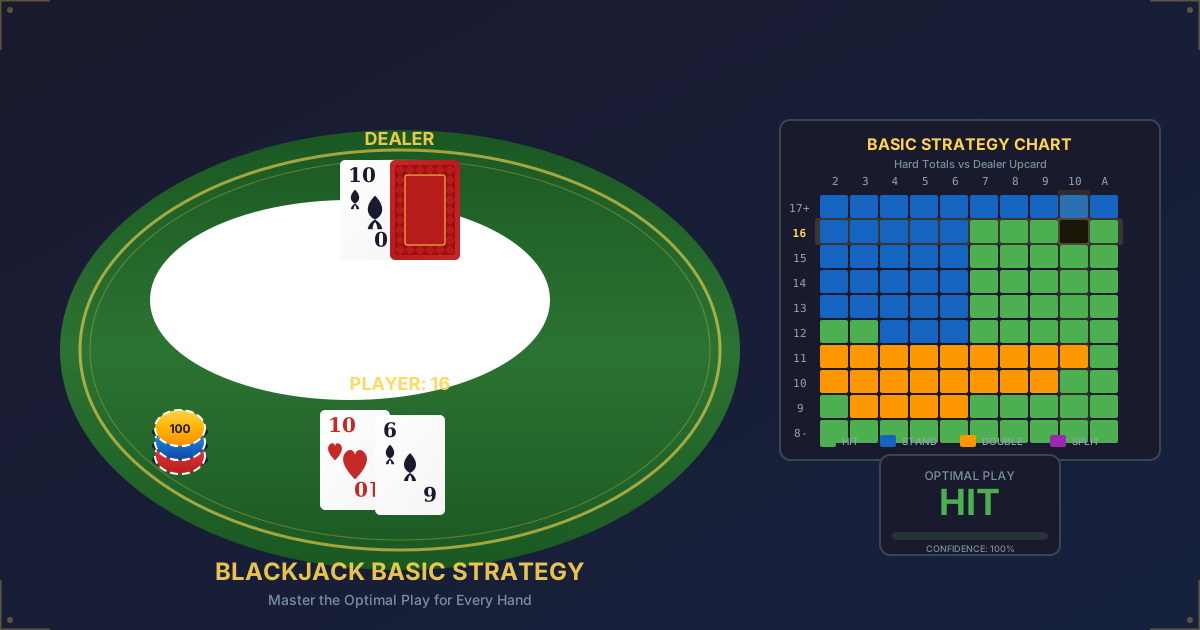
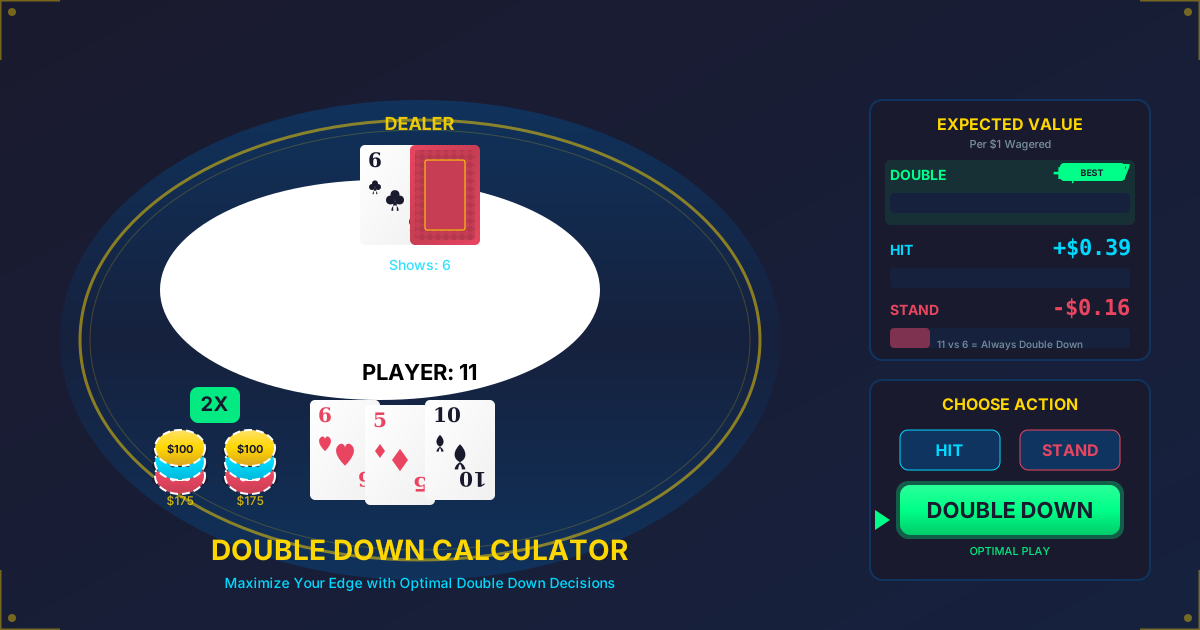
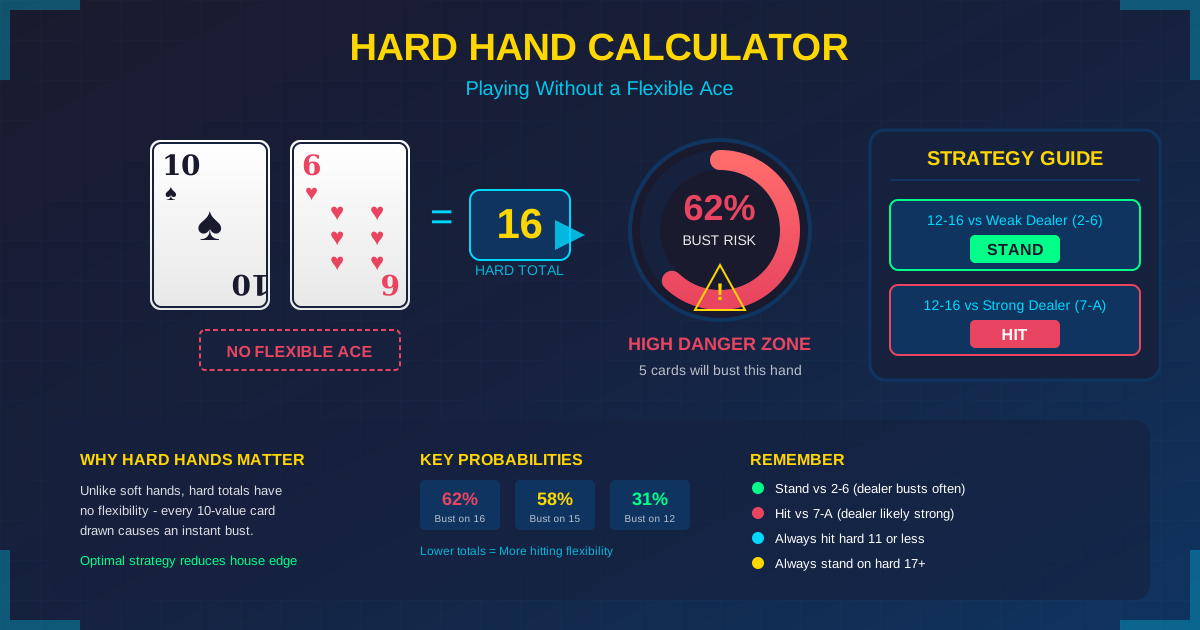
Learn the mathematically correct play for every hand with our Blackjack Basic Strategy Tool.
What Should You Know About Blackjack Table Etiquette?
Blackjack has the most specific etiquette requirements of any table game because player decisions affect the shared shoe, and poor play at one position is (wrongly but commonly) believed to affect other players' outcomes.
Card Touching Rules
- In a shoe game (6-8 decks, cards dealt face up): Never touch your cards. Your hands should not go anywhere near the cards. Everything is done with hand signals.
- In a handheld game (1-2 decks, cards dealt face down): Pick up your cards with one hand only. Never use two hands. Never remove your cards from the table surface (hold them low, over the felt). Never bend, fold, or mark the cards in any way.
The "Third Base Blame" Problem
Third base is the seat immediately to the dealer's right -- the last player to act before the dealer plays their hand. Players at third base often receive unsolicited criticism from other players who believe their decisions affect the dealer's outcome. For example, if the third base player hits and takes the "dealer's bust card," other players may blame them when the dealer ends up winning.
This belief is mathematically incorrect. Over the long run, third-base decisions help and hurt other players equally. But understanding this social dynamic is important:
- If you are new to blackjack, consider avoiding the third base seat until you are comfortable with basic strategy.
- If someone criticizes your play, do not engage in an argument. A simple "I play my own way" or no response at all is best.
- If criticism becomes persistent or aggressive, call the pit boss. Harassment at the table is not acceptable.
Mid-Shoe Entry
Some blackjack tables have a "No Mid-Shoe Entry" policy, indicated by a placard on the table. This means new players cannot join until the dealer shuffles a new shoe. Where mid-shoe entry is allowed, it is courteous to ask the other players, "Mind if I join?" -- though they cannot actually prevent you from sitting down.
Betting Protocols
| Rule | Details |
|---|---|
| Place your bet before the first card is dealt | Late bets are not accepted |
| Do not touch your bet after the first card is dealt | Changing your bet mid-hand is cheating |
| Stack higher denominations on the bottom | $100 chip on bottom, $25 chip on top |
| Use a single stack for your bet | Side-by-side chip placements mean "split" |
| Know the table minimum and maximum | Posted on the placard at the table |
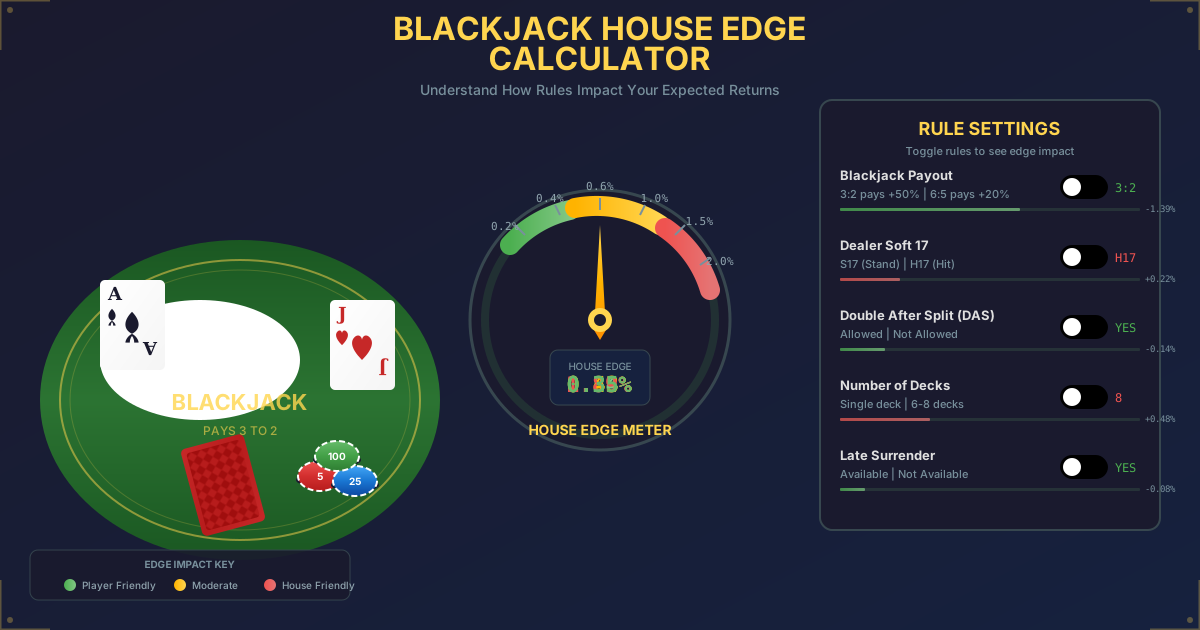
Calculate the exact house edge at your specific blackjack table with our Blackjack House Edge Calculator.
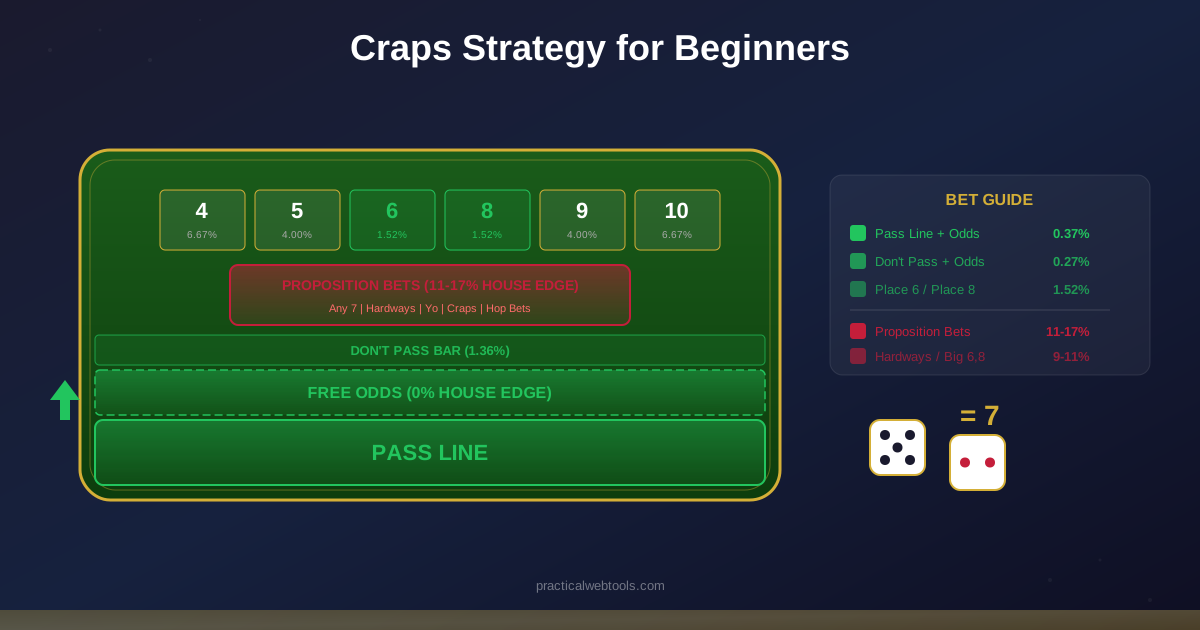
What Is the Proper Etiquette at Craps Tables?
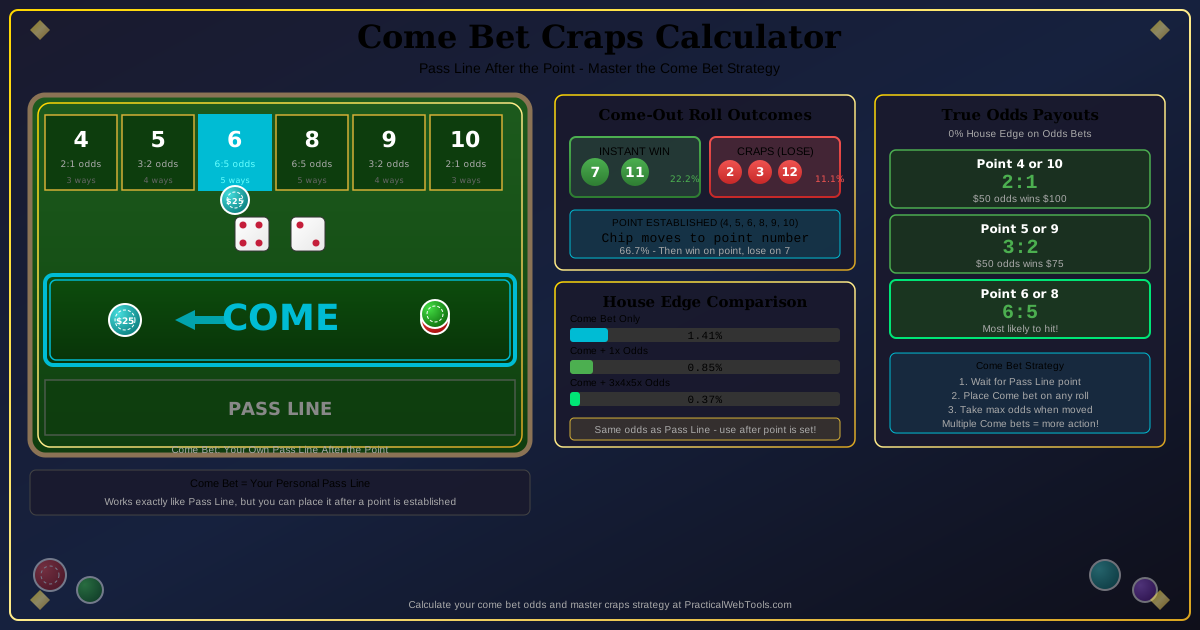
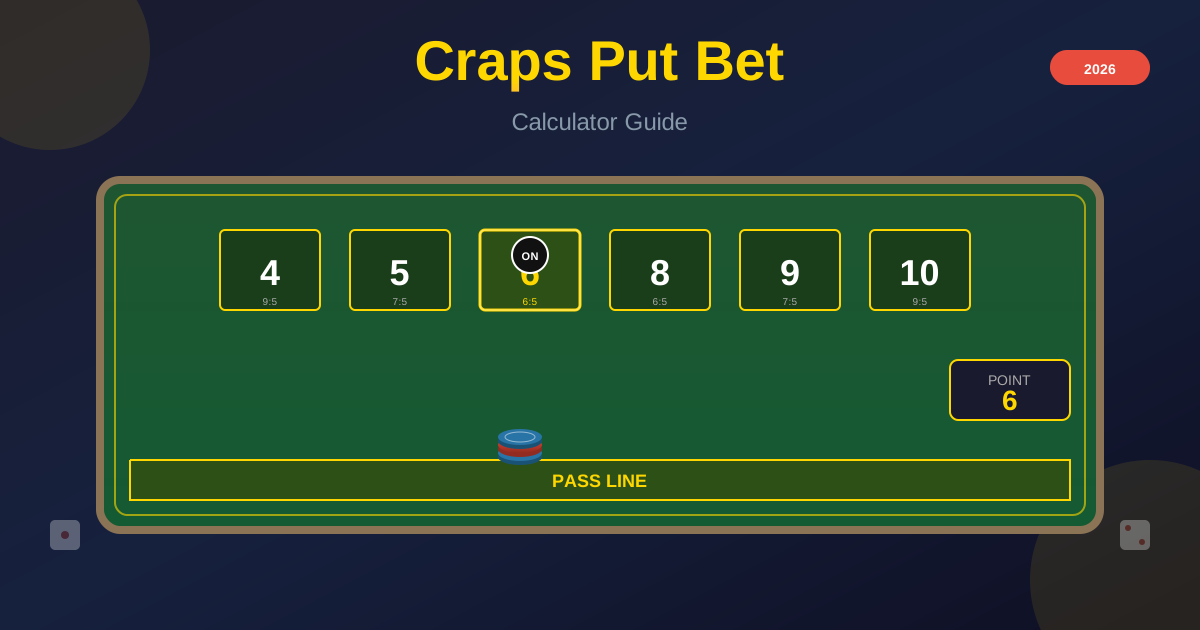
Craps tables are the loudest, most social, and most intimidating spots in the casino. The game moves fast, involves dozens of possible bets, and has its own unique subculture. Here is how to navigate it.
The Shooter's Role
When it is your turn to be the shooter (the person throwing the dice):
- Pick up the dice with one hand only. Using two hands is a major violation that will draw immediate attention from the boxman and surveillance. The casino needs to see that you are not switching the dice.
- Throw the dice to the far end of the table so they hit the back wall. A throw that does not reach the wall will prompt a warning from the stickman ("All the way to the wall, please"). Persistent short throws may result in the boxman asking another shooter to take over.
- Do not hold the dice over the edge of the table or take them out of the view of the cameras.
- Do not blow on the dice for luck. While this was common decades ago, modern casinos discourage it for hygiene reasons.
- You may decline to shoot. Simply say "Pass" or "I do not want to shoot," and the dice will be offered to the next player.
Buying in and Placing Bets
- Place your cash on the table when there is no active roll. Say "Change only" if you just want chips and are not betting immediately.
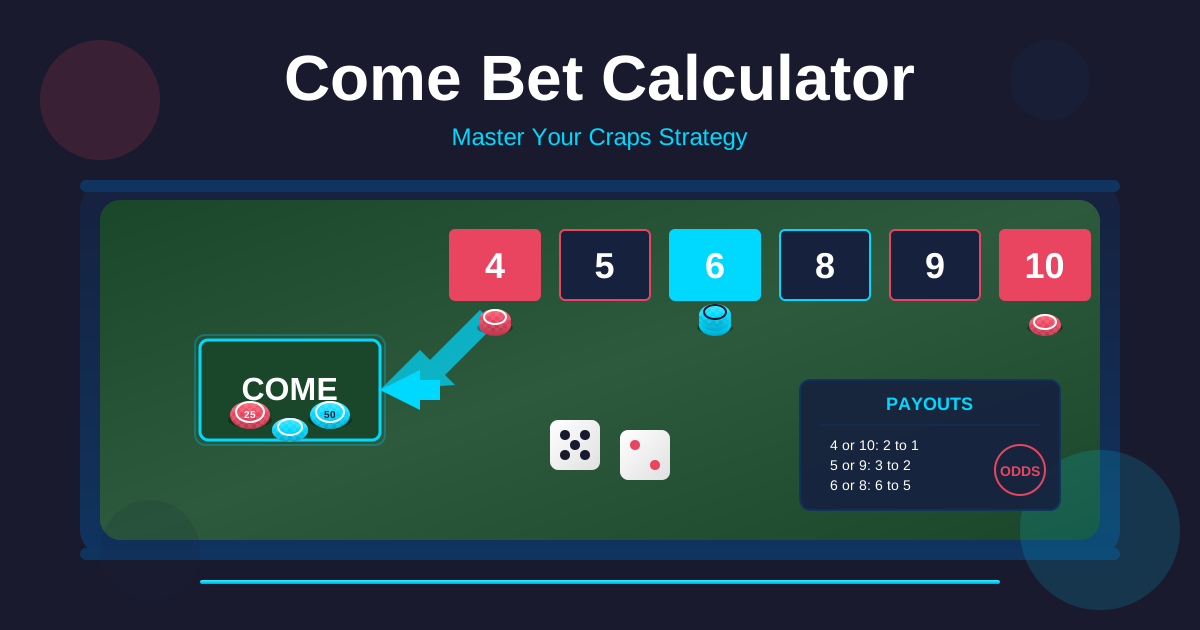
- Place your own pass line, do not pass, come, and field bets. These are in front of you and within your reach.
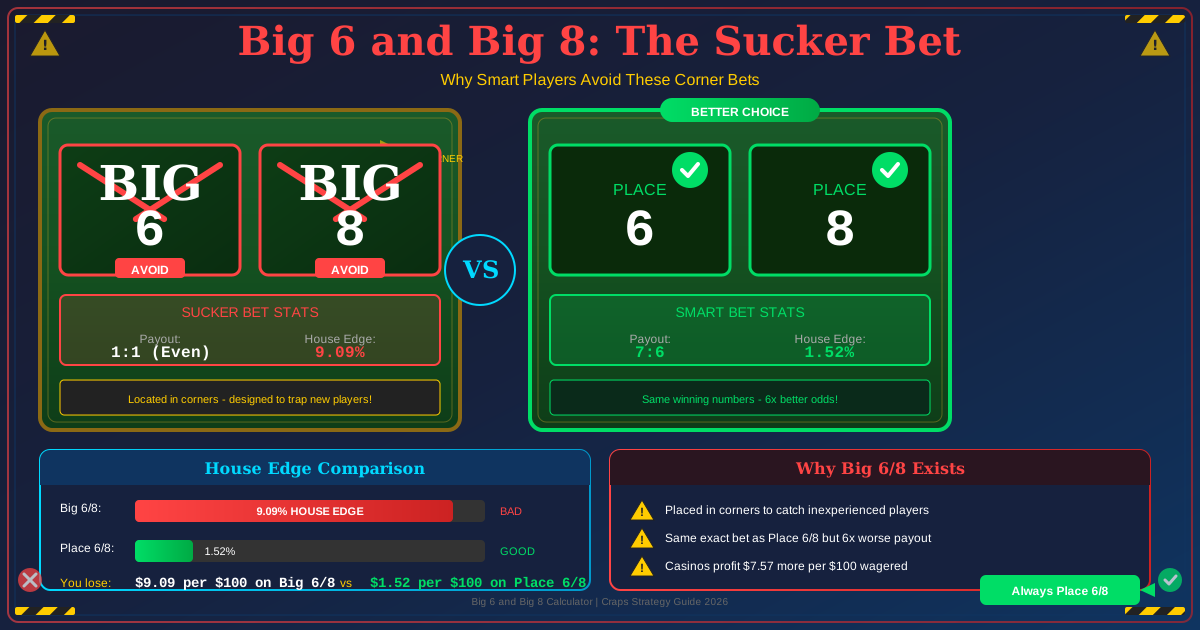
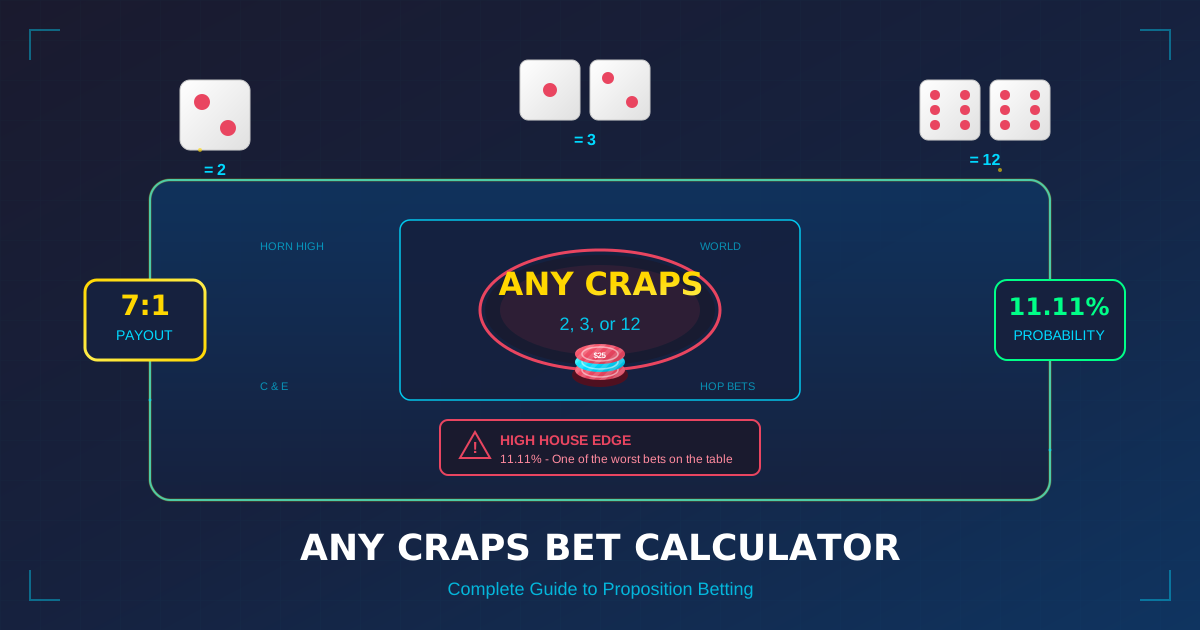
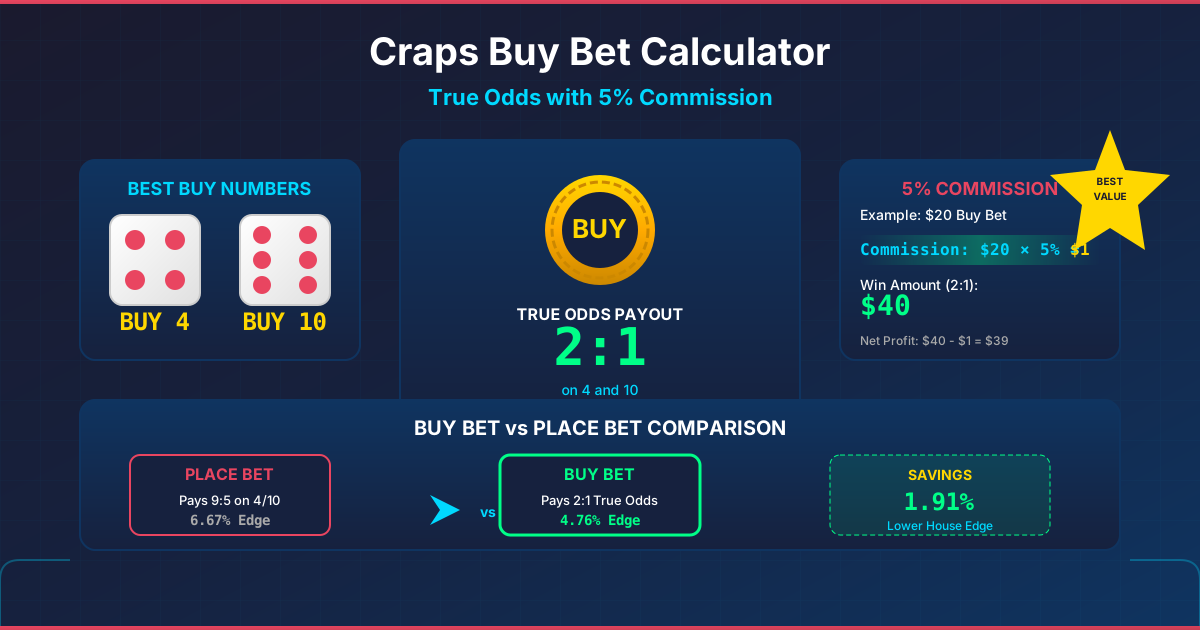
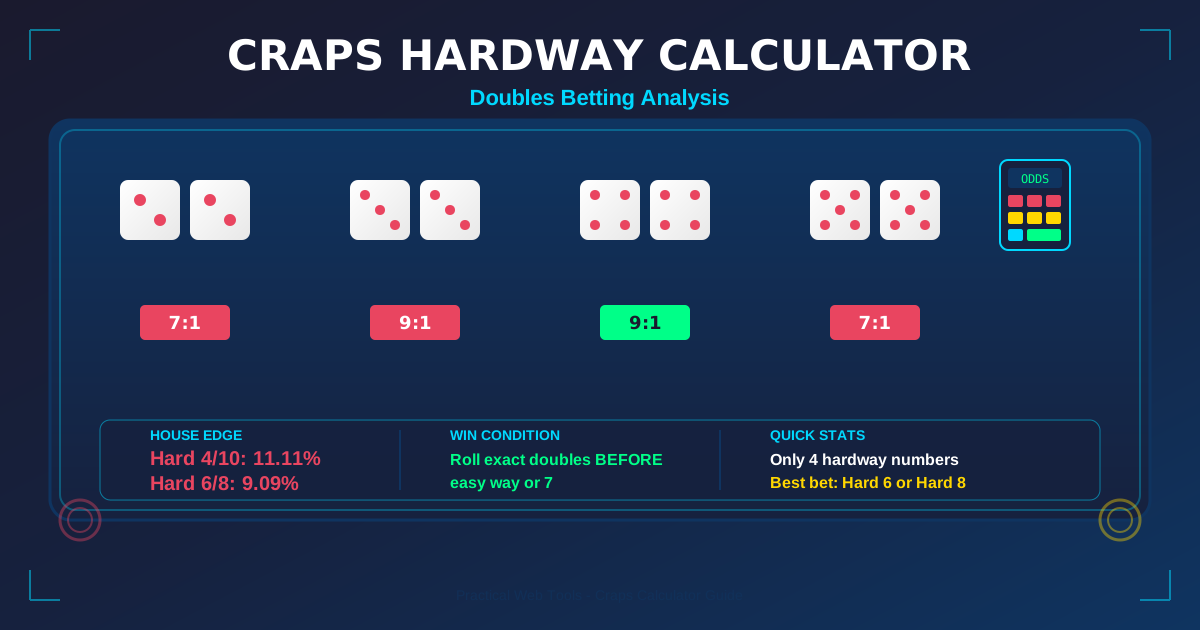
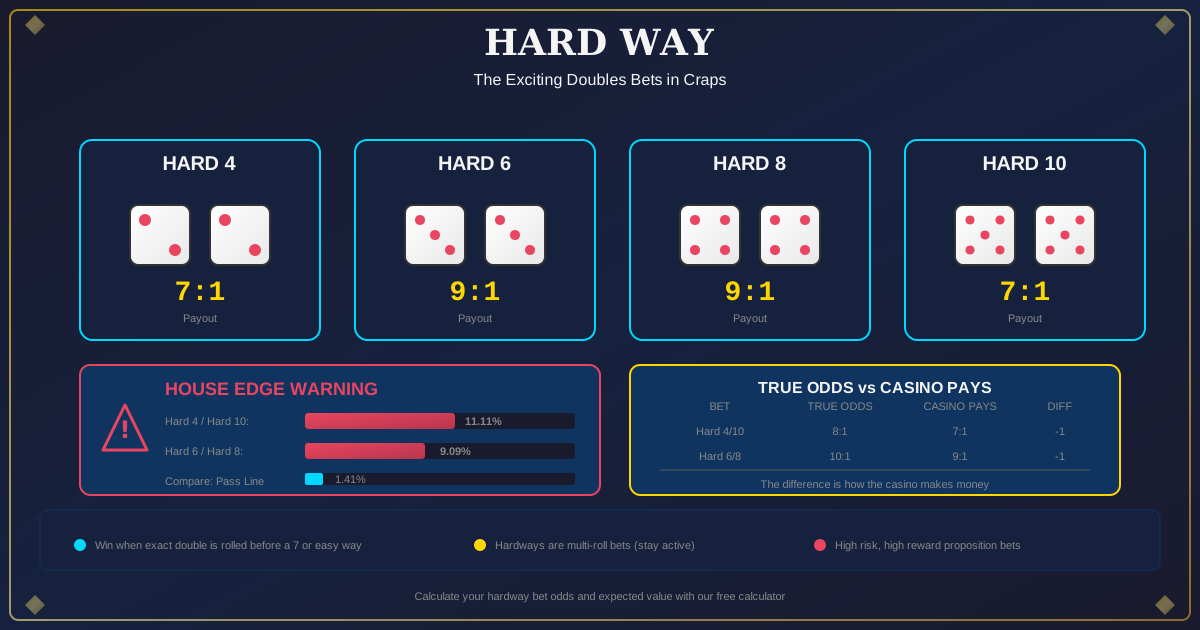
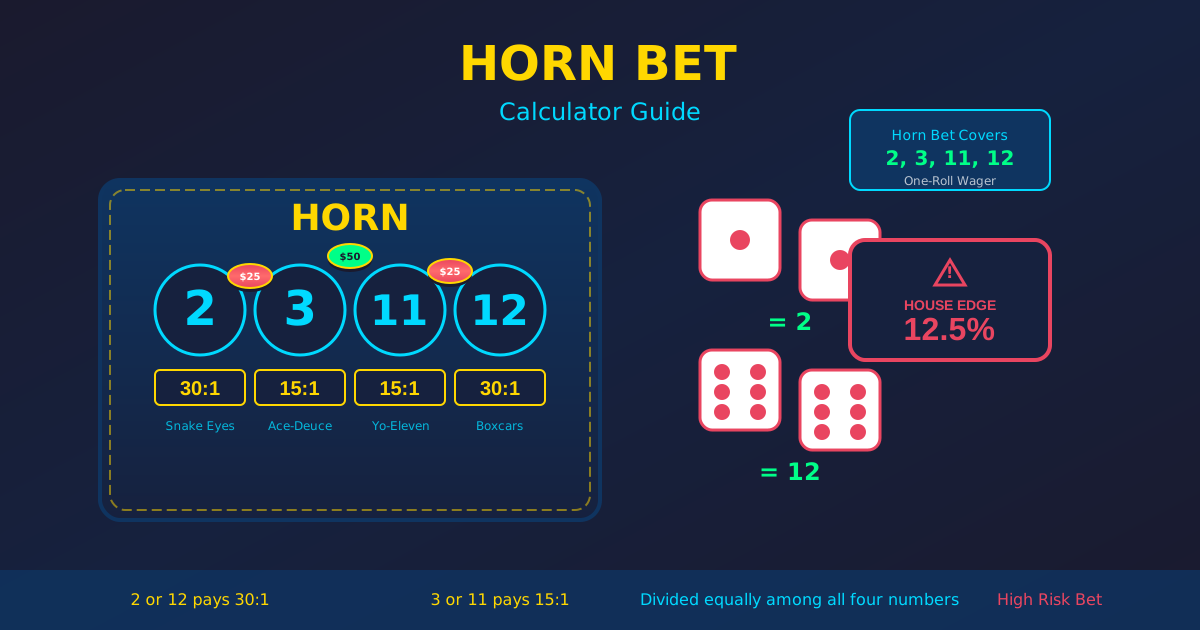
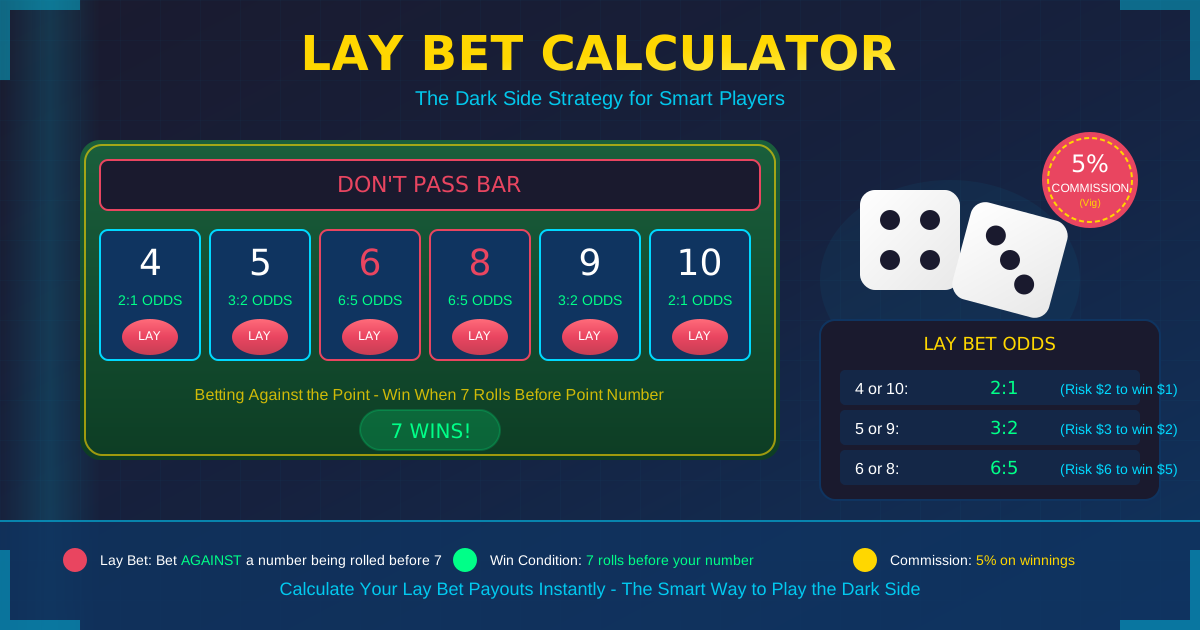
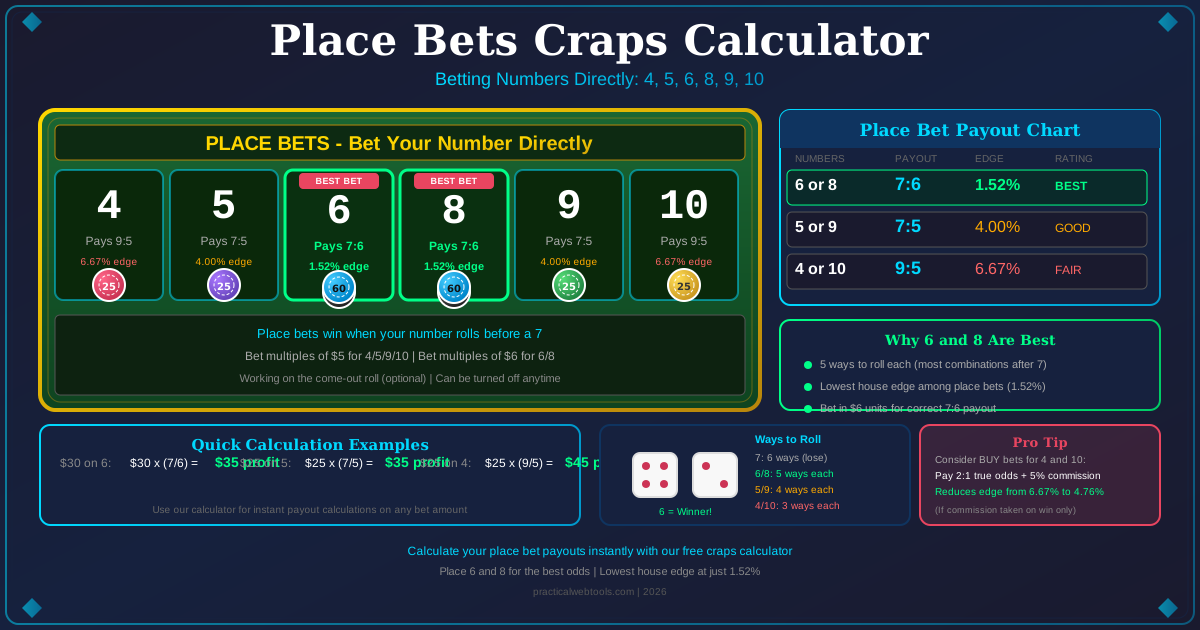
- For place bets, buy bets, lay bets, and proposition bets, toss your chips to the center of the table and tell the dealer what bet you want. Say clearly: "Place the six for $30" or "Hard eight for $5." The dealer will place your bet for you.
- Do not reach across the layout to place bets in areas managed by the dealers. Your hands in the wrong area during a throw can cause a voided roll.
Craps Superstitions to Respect
Even if you do not believe in them, respecting common craps superstitions keeps the table atmosphere positive:
| Superstition | What It Means | How to Respect It |
|---|---|---|
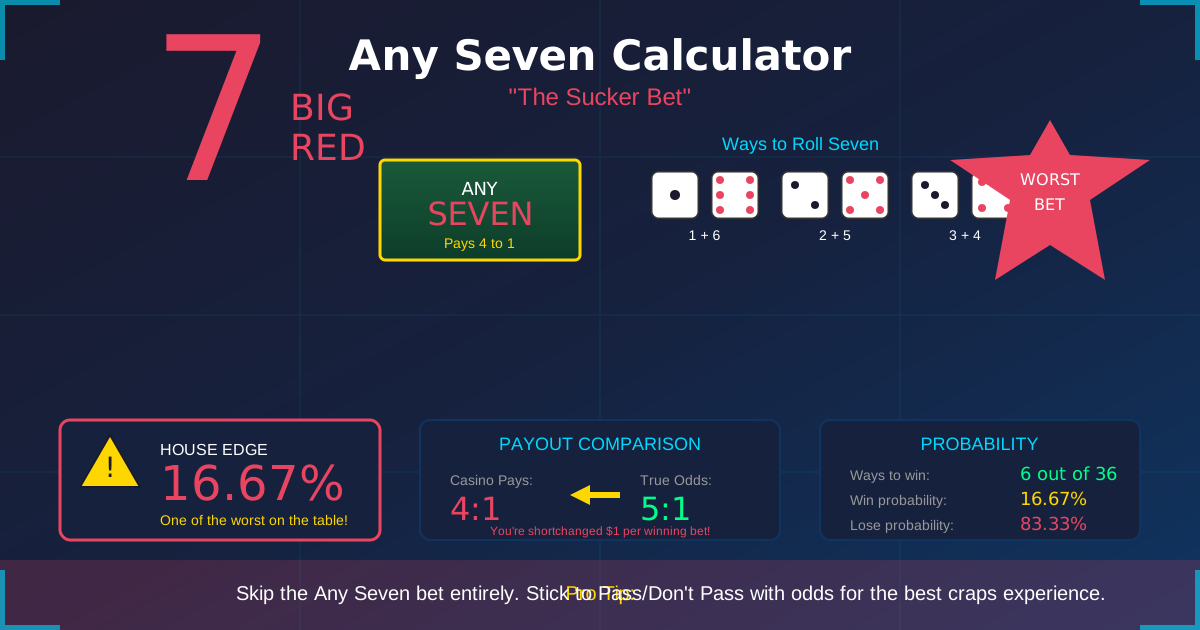
| Never say "seven" at the table | Saying "seven" is believed to bring a seven-out | Say "it" or "the big red" instead |
| Do not hit the shooter's hand with the dice | Dice hitting another player's hand is bad luck | Keep your hands away from the table when dice are thrown |
| New shooter = new luck | Some players increase bets with a new shooter | Do not make pessimistic comments about a new shooter |
| Virgin shooter (first timer) | Some believe first-time shooters are lucky | Encourage a nervous first-timer rather than rushing them |
| Keep the dice moving | A long delay between rolls is bad luck | Pick up and throw the dice promptly when it is your turn |
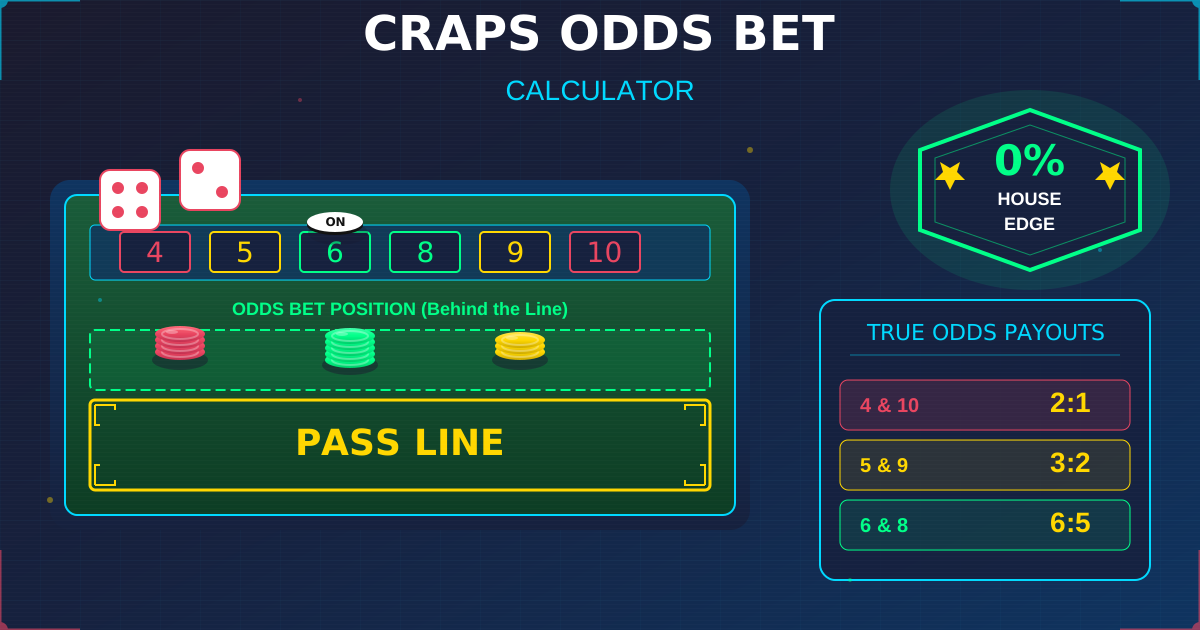
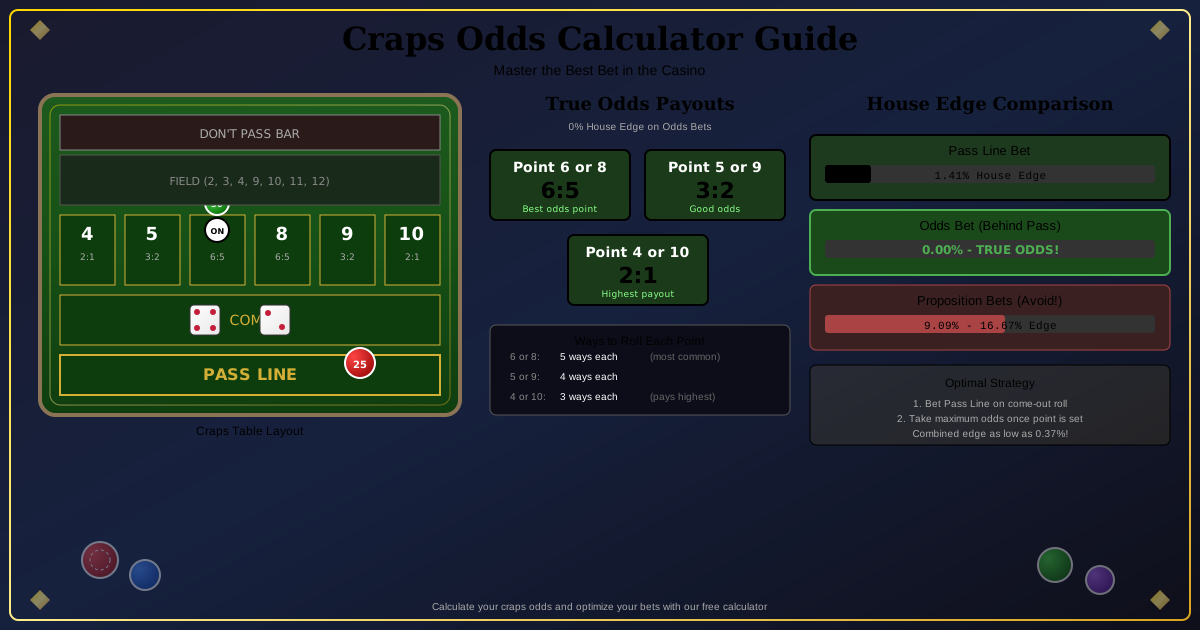
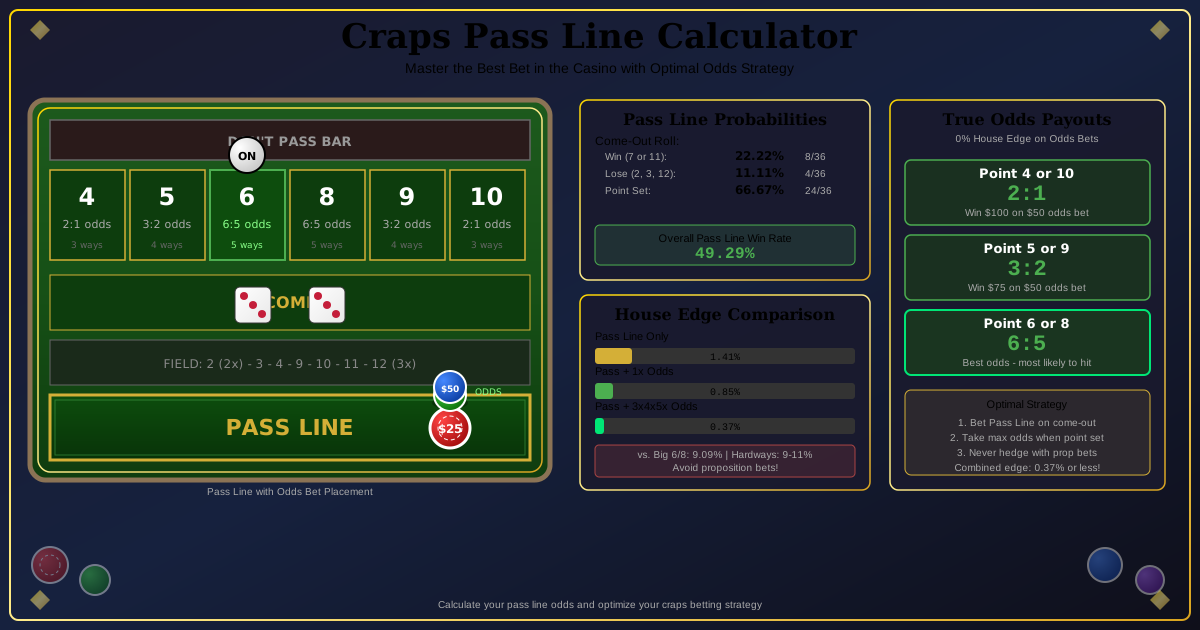
Understand the house edge on every craps bet with our Craps House Edge Calculator.
How Should You Behave at Roulette and Baccarat Tables?
Roulette and baccarat have their own distinct cultures and etiquette requirements that differ from blackjack and craps.
Roulette Etiquette
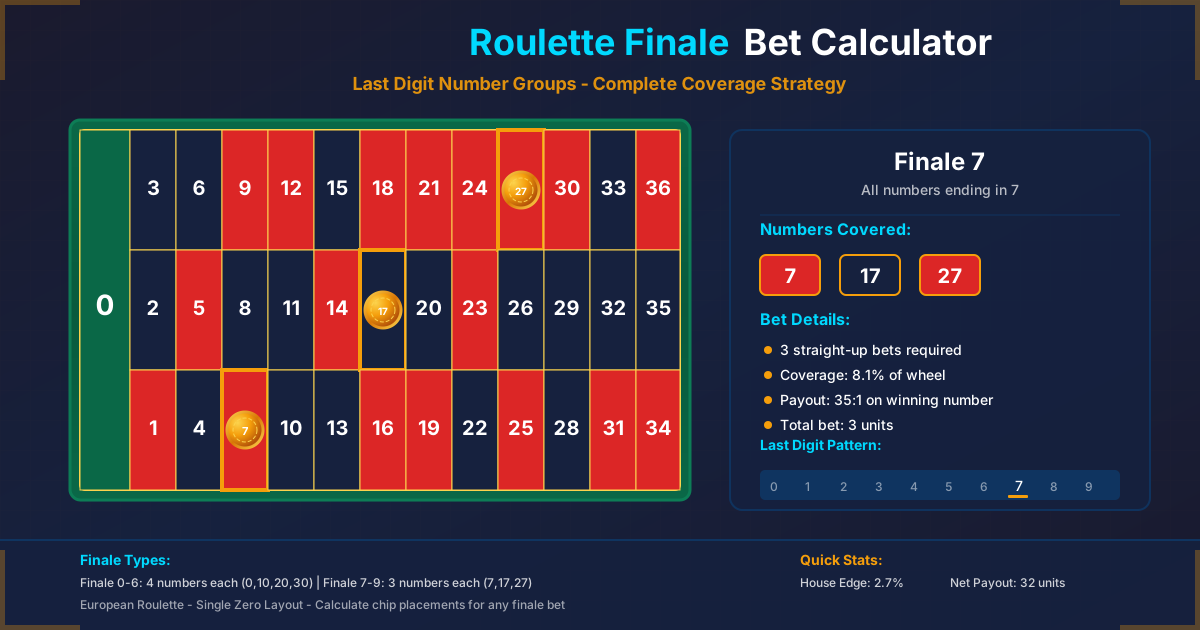
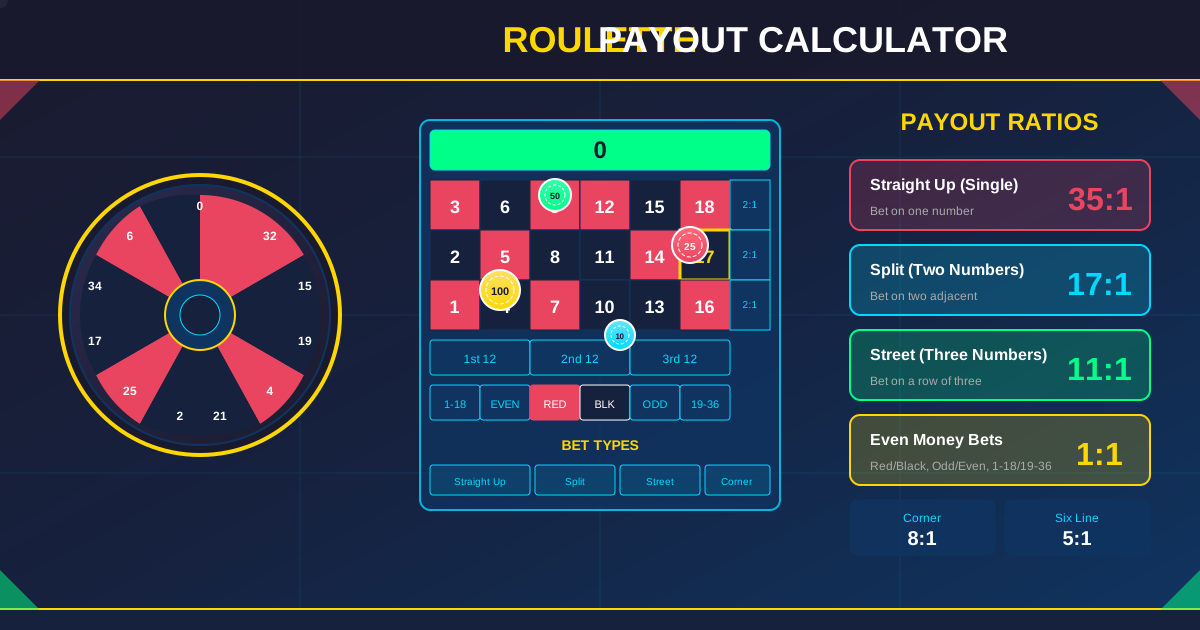
Chip handling is unique in roulette. Each player receives a different color of chips (called "wheel checks") so the dealer can distinguish between players' bets on the crowded layout. These chips have no value outside that specific roulette table.
| Rule | Details |
|---|---|
| Buy in with cash or regular casino chips | Specify your desired chip denomination ("$5 wheel checks, please") |
| Use only your colored chips on the layout | Never use another player's color |
| You may place bets until the dealer says "No more bets" | After the ball starts to drop, hands off |
| Do not touch winning bets | Wait for the dealer to pay all winners and remove the dolly marker |
| Cash out your wheel checks before leaving | You cannot use them at other tables or cash them at the cage |
Common mistakes at roulette:
- Reaching across other players to place bets (ask the dealer to place them for you)
- Stacking chips on top of another player's bet (place yours beside or ask the dealer)
- Trying to take your colored wheel checks to another table (they have no value elsewhere)
- Placing bets after "no more bets" is called (the dealer will remove your bet and may warn you)
Baccarat Etiquette
Baccarat, especially in high-limit rooms, has a more formal atmosphere than most other table games.
Standard baccarat (midi or big table):
- Players take turns handling and squeezing the cards (a ceremonial tradition). When it is your turn, bend and reveal the cards slowly. Do not tear them.
- Dress is often more formal in high-limit baccarat rooms.
- Tipping is appreciated but less frequent than at blackjack tables.
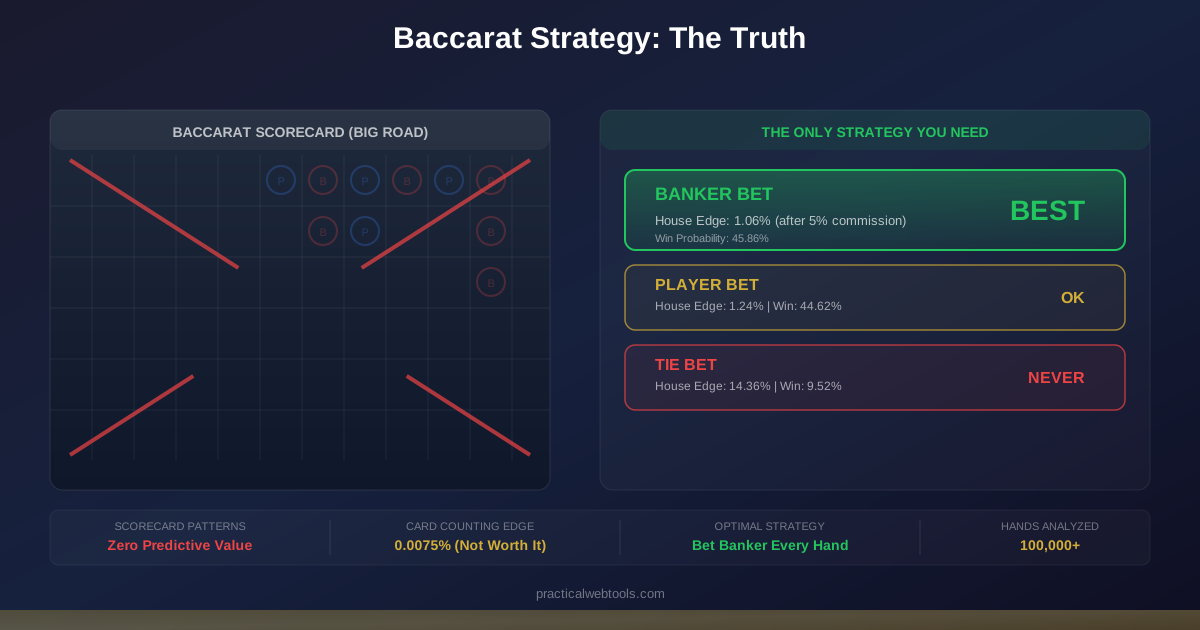
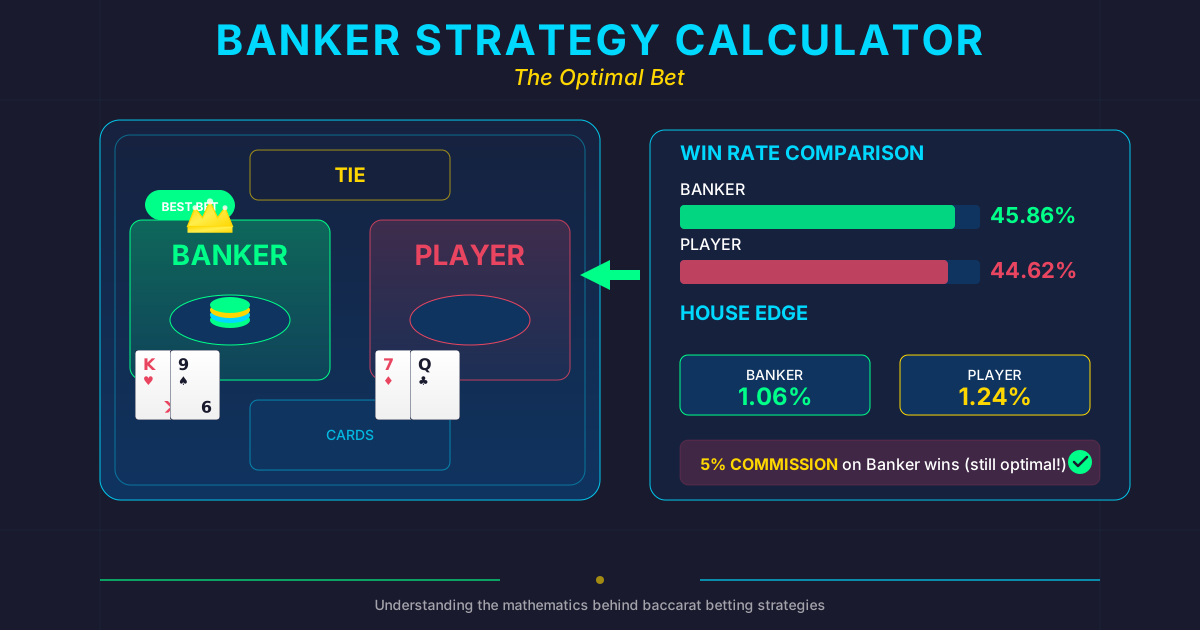
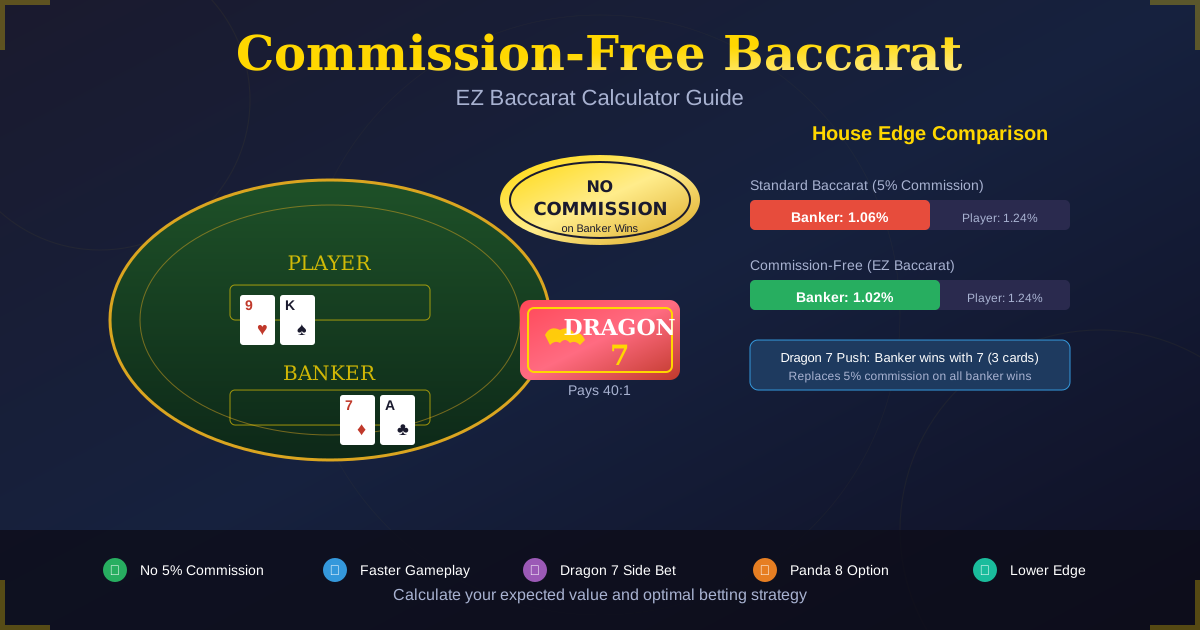
- Commission on Banker bets (typically 5%) is tracked by the dealer and settled when you leave the table or the shoe ends.
Mini-baccarat:
- Faster, lower-limit version. Players do not handle cards.
- Etiquette is similar to blackjack -- place your bet, sit back, let the dealer handle everything.
- More casual atmosphere.
| Baccarat Table Type | Typical Minimum | Dress Code | Player Card Handling | Speed |
|---|---|---|---|---|
| Big/Midi Baccarat | $100-$25,000 | Often smart casual to formal | Yes (rotating) | Slow to moderate |
| Mini-Baccarat | $10-$100 | Casual | No | Fast |
| Stadium Baccarat | $5-$50 | Casual | No (electronic) | Very fast |
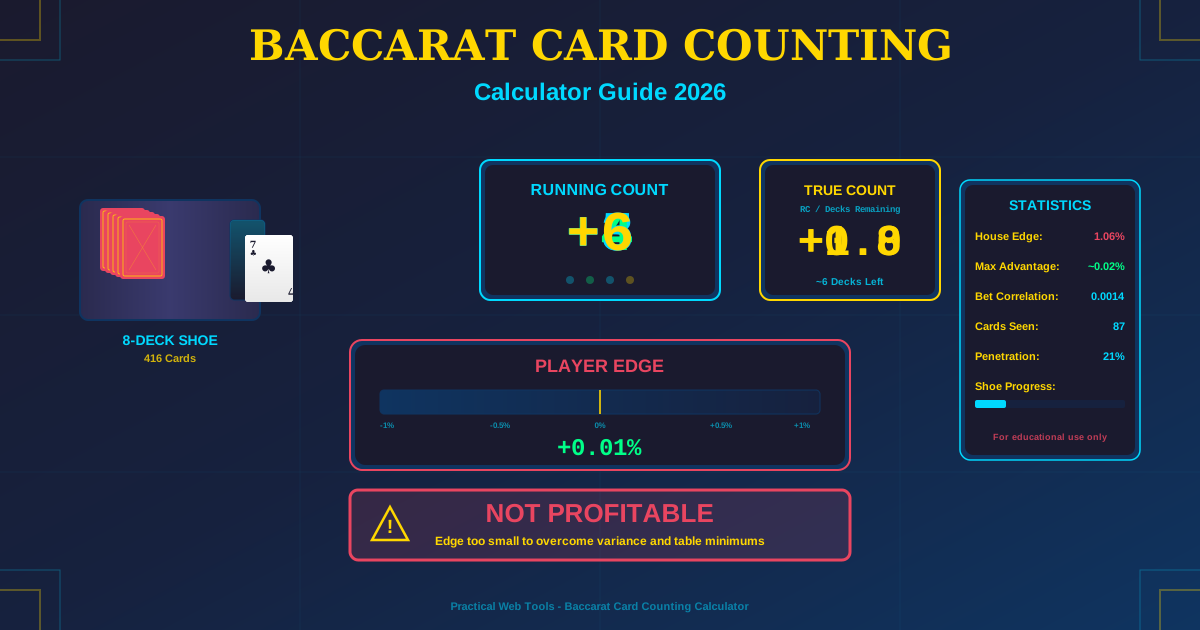
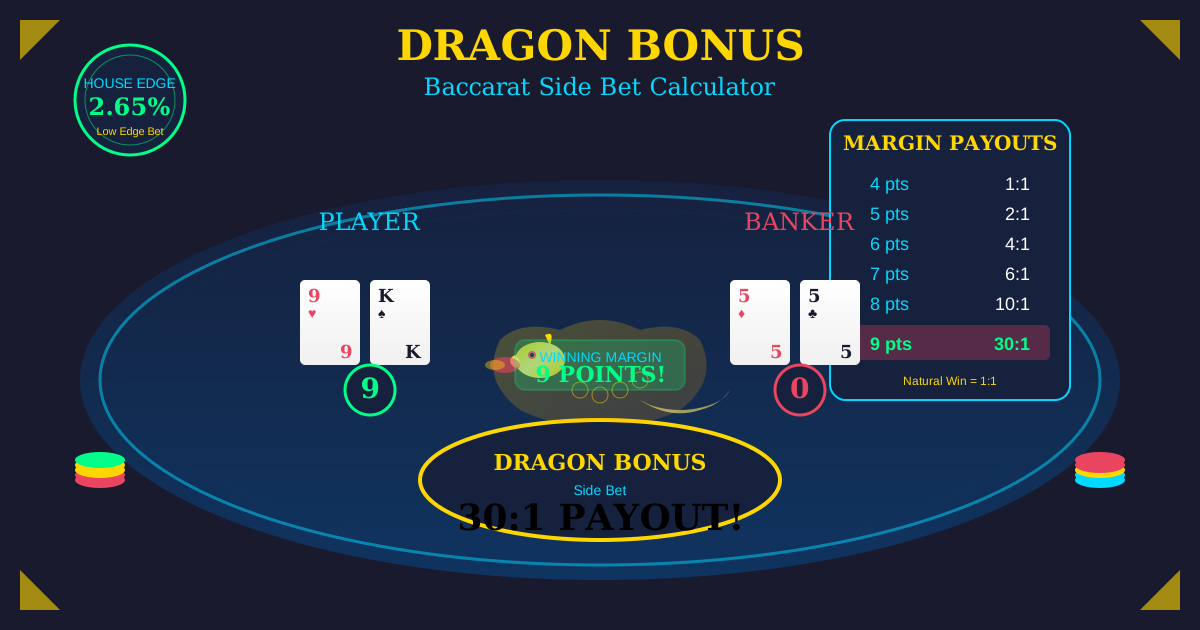
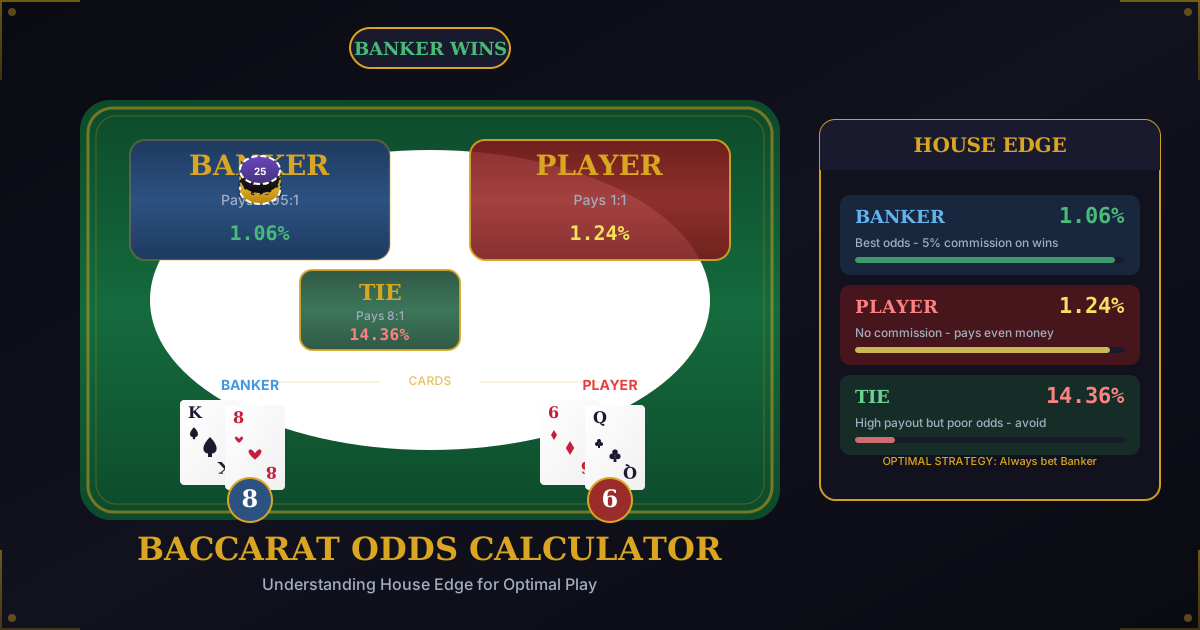
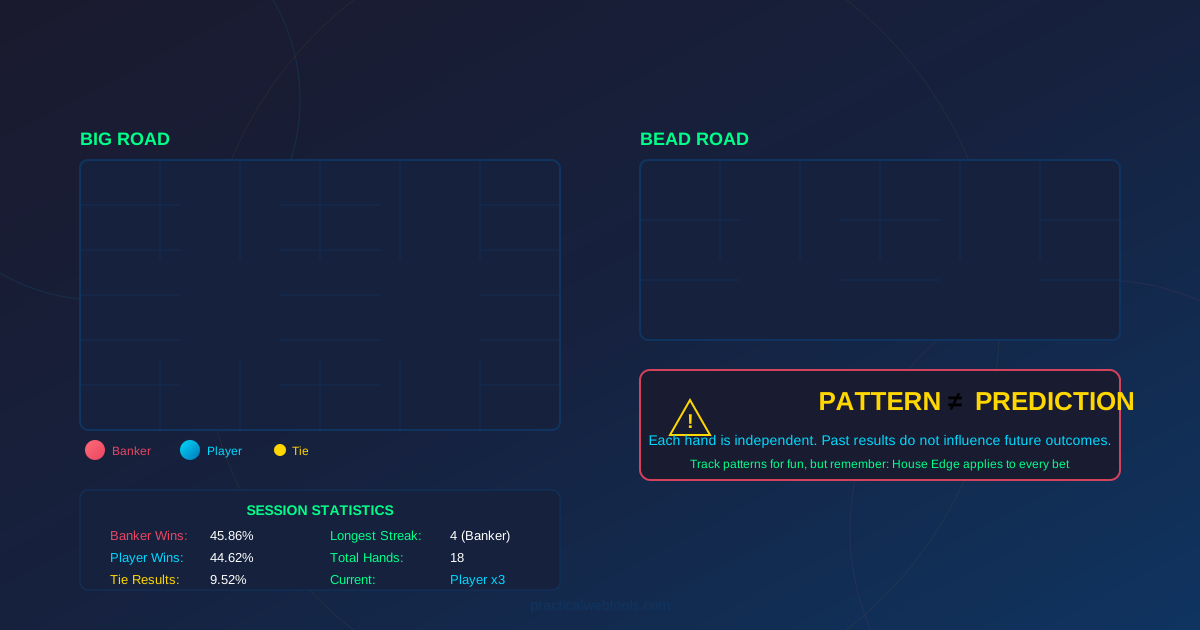
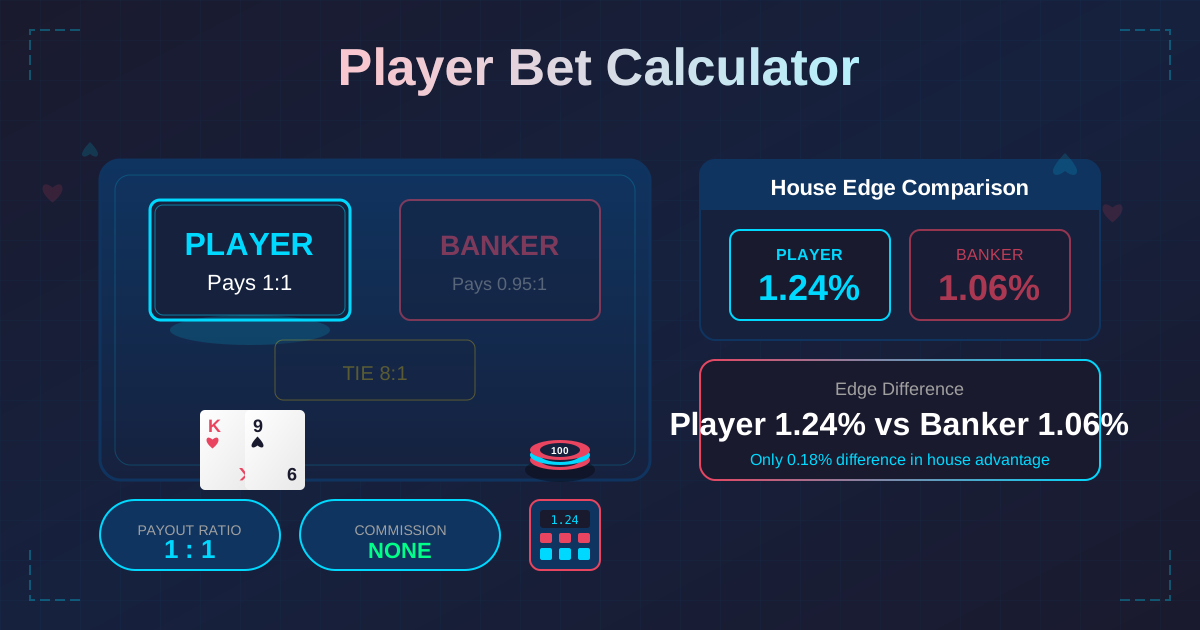
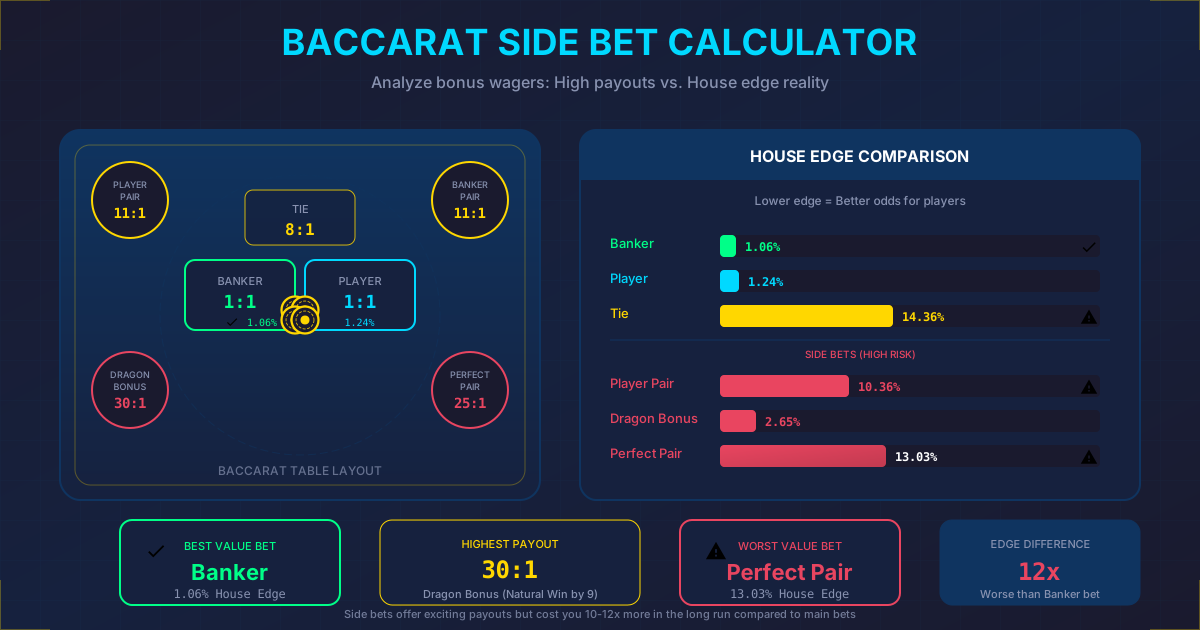
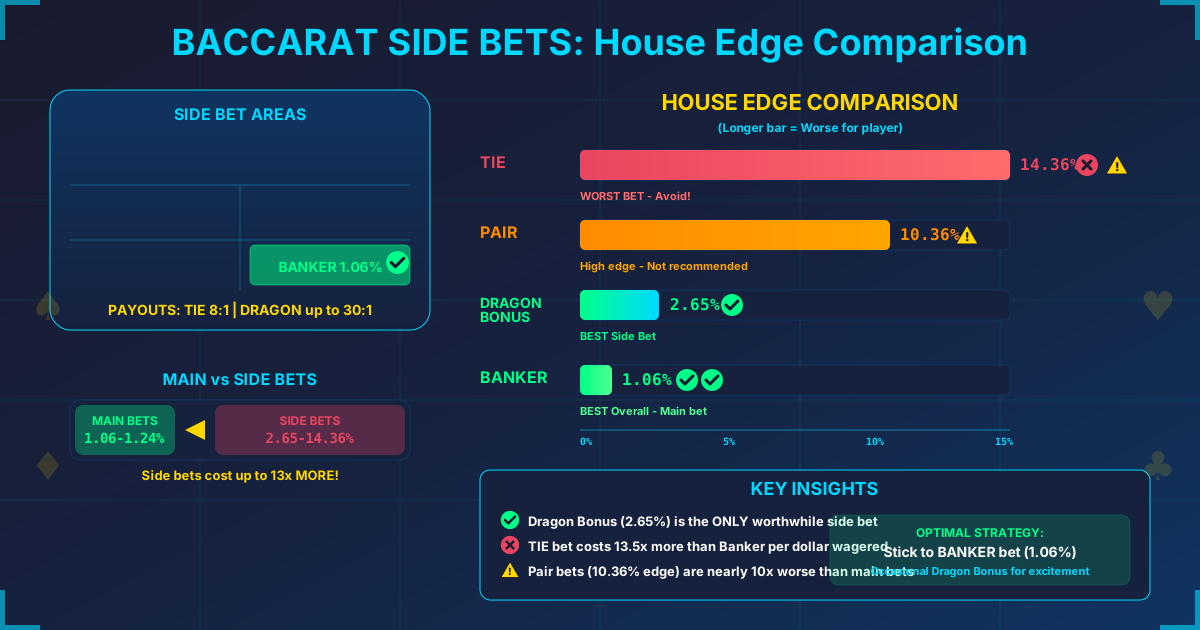
Compare baccarat bet types and their house edges with our Baccarat House Edge Calculator.
What Is the Tipping Guide for Casino Staff?
Tipping is one of the most anxiety-inducing aspects of casino etiquette for newcomers. There are no absolute rules, but there are strong conventions. Casino staff -- from dealers to cocktail servers to valets -- rely on tips as a significant portion of their income.
Dealer Tipping
Dealers are the staff you interact with most, and tipping customs vary by game:
| Tipping Method | How It Works | When to Use |
|---|---|---|
| Tip bet ("toke bet") | Place a bet for the dealer alongside your own. If your hand wins, the dealer wins too. | Most engaging method; dealers love it. Common in blackjack. |
| Direct tip | Hand the dealer a chip and say "For you" or "For the dealers." | When leaving a table, after a good session, or after a big win. |
| Percentage of win | Tip a percentage of your net winnings when leaving. | After a profitable session. |
Recommended Tipping Amounts by Game
| Game | Minimum Tip Convention | Generous Tip Convention | When to Tip |
|---|---|---|---|
| Blackjack ($10-$25 tables) | $1-$2 per hand (every few hands) or tip bet | $5 per hand or regular tip bets | Every few winning hands, or when leaving |
| Blackjack ($50-$100+ tables) | $5 per hand (every few hands) | $10-$25 per hand or tip bets | Same as above |
| Craps | $1-$5 proposition bet for dealers per session | $5-$25 during hot rolls | During good rolls; when leaving |
| Roulette | $1-$5 after winning spins | $5-$10 on big wins | After each win or periodically |
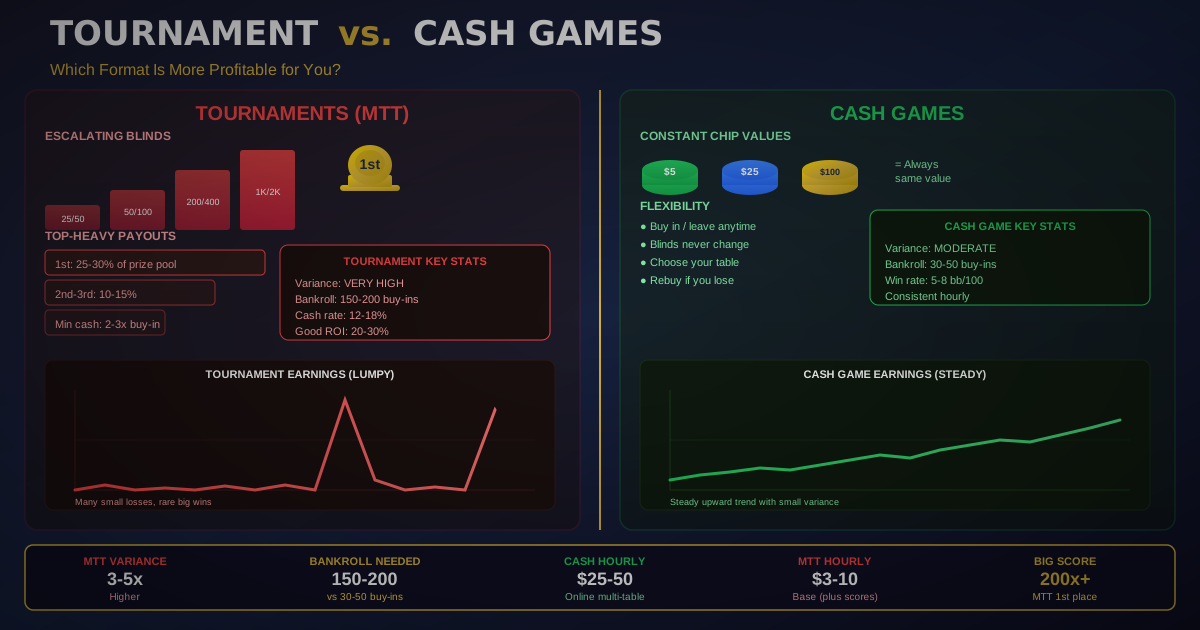
| Poker (cash game) | $1-$2 per pot won | $5 for large pots ($200+) | Every hand you win |
| Poker (tournament) | 2-3% of net winnings | 5% of net winnings | After cashing out of the tournament |
| Baccarat | $5-$25 per session at mini-bac | $25-$100+ at high-limit tables | Periodically or when leaving |
| Slots (hand-pay jackpot) | $20-$50 for the attendant | 1-2% of jackpot for very large wins | When the attendant processes the payout |
Other Casino Staff Tipping
| Staff Member | Standard Tip | When |
|---|---|---|
| Cocktail server | $1-$2 per drink | Each time they bring you a drink |
| Valet | $2-$5 | When your car is returned |
| Hotel housekeeper | $3-$5 per night | Daily (leave on pillow or dresser with a note) |
| Bellhop | $2-$5 per bag | Upon delivery |
| Concierge | $5-$20 | For restaurant reservations, show tickets, special requests |
| Room service | 15-20% of bill (check if gratuity is included) | Upon delivery |
| Pool attendant | $5-$10 | When they set up your chair/cabana |
| Casino host | Not expected (they are compensated by the casino) | A thank-you gift during holidays is a nice gesture |
Tipping When Losing
Should you tip the dealer when you are losing? This is a personal decision, but the convention is:
- You are not obligated to tip when losing. Most players reduce or stop tipping during losing streaks.
- The dealer does not control the cards. They are dealing a random game and your losses are not their fault.
- A small tip when leaving after a loss ($5-$10 for a session of an hour or more) is appreciated and reflects well on you as a player.
- Dealers remember good tippers. If you are a regular, tipping consistently (win or lose) results in better service, more comps recommendations, and a friendlier experience.
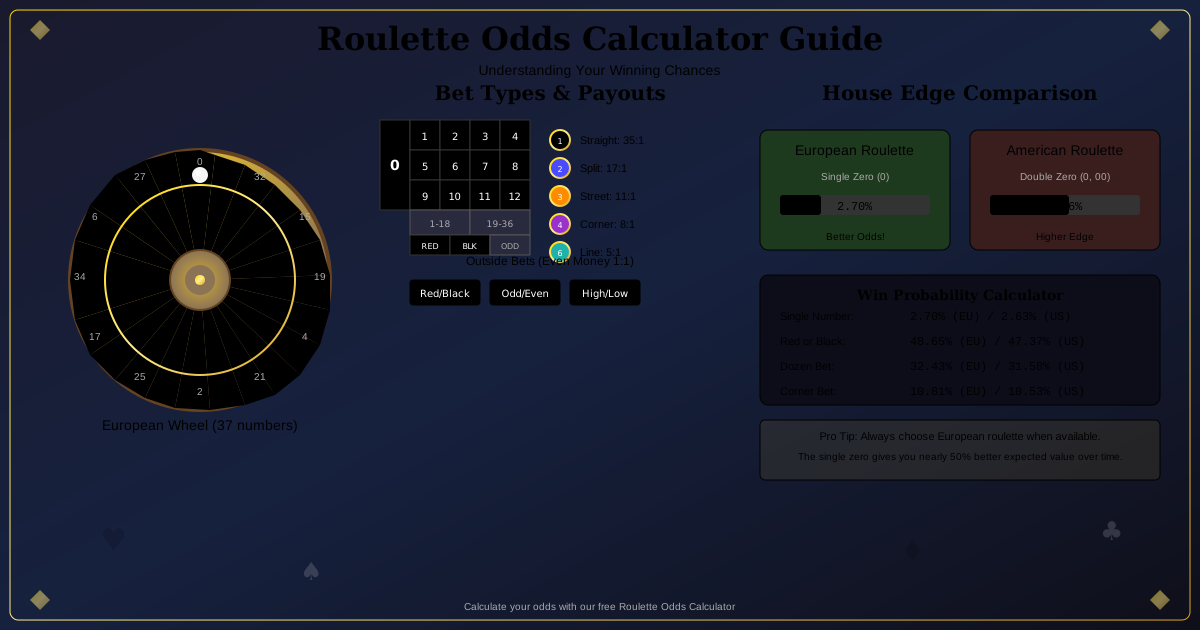
Calculate the true odds on any roulette bet before playing with our Roulette Odds Calculator.
What Are the Dress Code Rules at Casinos?
Casino dress codes in 2026 are significantly more relaxed than they were decades ago, but expectations still vary by casino tier, time of day, and which areas of the property you visit.
Dress Code by Casino Tier
| Casino Tier | Examples | General Floor | High-Limit Room | Nightclub/Lounge | Pool |
|---|---|---|---|---|---|
| Ultra-luxury | Bellagio, Wynn, Encore, Venetian | Smart casual | Business casual to formal | Upscale nightclub attire | Resort wear |
| Upscale | MGM Grand, Caesars, Hard Rock | Casual to smart casual | Smart casual | Nightclub attire | Resort wear |
| Mid-range | Flamingo, Harrah's, Tropicana | Casual | Smart casual | Varies | Resort wear |
| Budget/casual | Circus Circus, Excalibur, local casinos | Very casual | Casual | Varies | Resort wear |
What to Wear and What to Avoid
| Acceptable | Generally Not Acceptable |
|---|---|
| Jeans (clean, not ripped -- at most casinos) | Extremely ripped or dirty clothing |
| Collared shirts, polos, blouses | Tank tops (men -- depends on casino) |
| Sneakers (clean, modern) | Flip-flops (casino floor, not pool area) |
| Dresses, skirts | Swimwear (except at pool) |
| Shorts (at casual/mid-range casinos) | Athletic wear (gym clothes, sweatpants) |
| Sport coats, blazers (always welcome) | Offensive or vulgar graphic tees |
High-Limit and VIP Room Dress Expectations
High-limit rooms (often called "salons" at luxury properties) tend to have slightly stricter expectations:
- Men: Collared shirt or dress shirt, dress shoes or clean sneakers, no shorts
- Women: Dress, blouse with pants/skirt, or equivalent smart casual
- Some high-limit rooms will enforce these standards; others will be lenient for big players regardless of attire
- During daytime hours, expectations are more relaxed than evening
The bottom line: When in doubt, err on the side of dressing slightly better than you think is necessary. No one has ever been turned away from a casino for being too well-dressed.
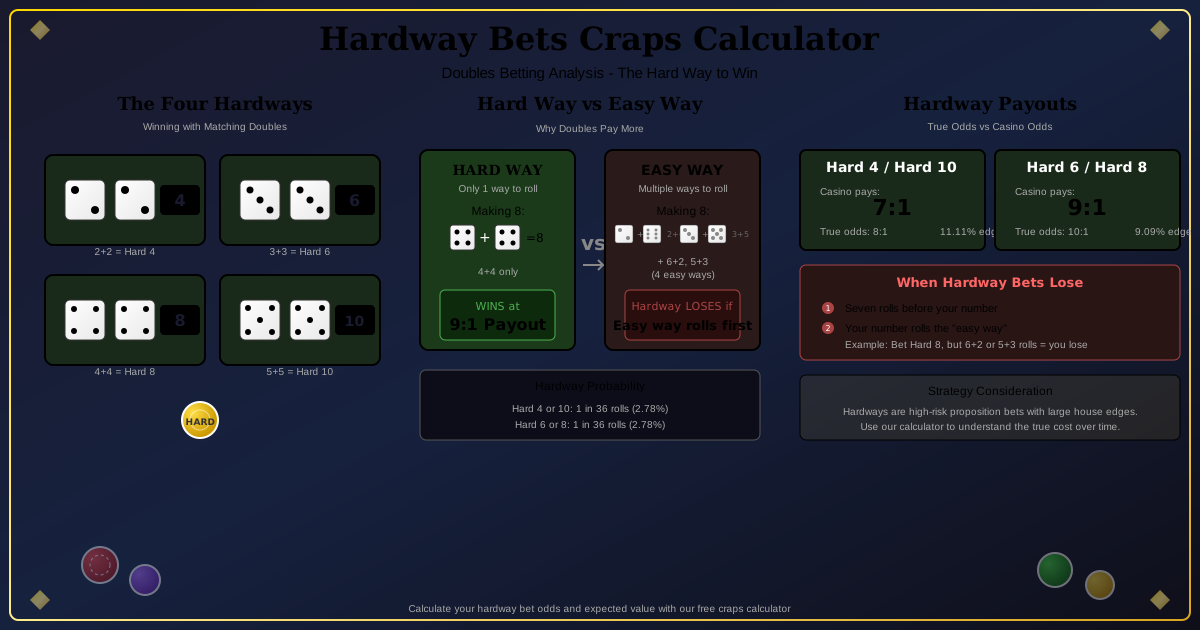
See the expected value of your craps bets with our Craps Odds Calculator.
What Are the Rules for Phone Usage and Photography in Casinos?
Phone and camera policies have evolved significantly, but restrictions remain in specific areas.
Phone Usage Rules
| Area | Phone Use Allowed? | Notes |
|---|---|---|
| General casino floor (slots) | Yes | Keep volume low; do not disrupt neighbors |
| Table games | Limited | Do not hold phone over the table; do not use while actively playing; some tables prohibit phone use entirely |
| Poker room | No phones at the table during a hand | Phones may be used between hands at some rooms; strict no-phone-at-table policy at others |
| Sportsbook | Yes | Common to use phone for research and live updates |
| High-limit rooms | Varies -- ask | Some rooms prohibit phone use; others are relaxed |
| Cage (cashier) | No | Security concern -- no phone use while conducting financial transactions |
Photography and Video Rules
| Activity | Generally Allowed? | Key Restrictions |
|---|---|---|
| Selfies on the casino floor | Yes, in most casinos | Do not capture other players' faces or chip stacks |
| Photos of slot machines | Yes (non-flash) | Do not photograph progressive jackpot displays at some casinos |
| Photos of table games | No | Never photograph cards, chips, or the felt during play |
| Video recording of gameplay | No | Strictly prohibited at all table games |
| Livestreaming | No (without explicit permission) | Some casinos allow authorized streamers; most prohibit it |
| Photos in restaurants/bars | Yes | Standard restaurant photo etiquette applies |
| Photos at the sportsbook | Limited | Do not photograph betting tickets or odds boards at some properties |
Why Restrictions Exist
- Surveillance protection: Casinos do not want unauthorized recording of their security camera positions, table game procedures, or card sequences.
- Player privacy: Many gamblers do not want their casino activity documented or shared.
- Game integrity: Photos or video of cards in play could facilitate cheating.
- Intellectual property: Some casino designs, shows, and entertainment are proprietary.
Learn the perfect blackjack strategy for every hand with our Blackjack Basic Strategy Tool.
What Is Proper Poker Room Etiquette?
Poker rooms operate differently from the main casino floor because you are playing against other players, not the house. The etiquette reflects this competitive but collegial dynamic.
Fundamental Poker Room Rules
| Rule | Why It Matters |
|---|---|
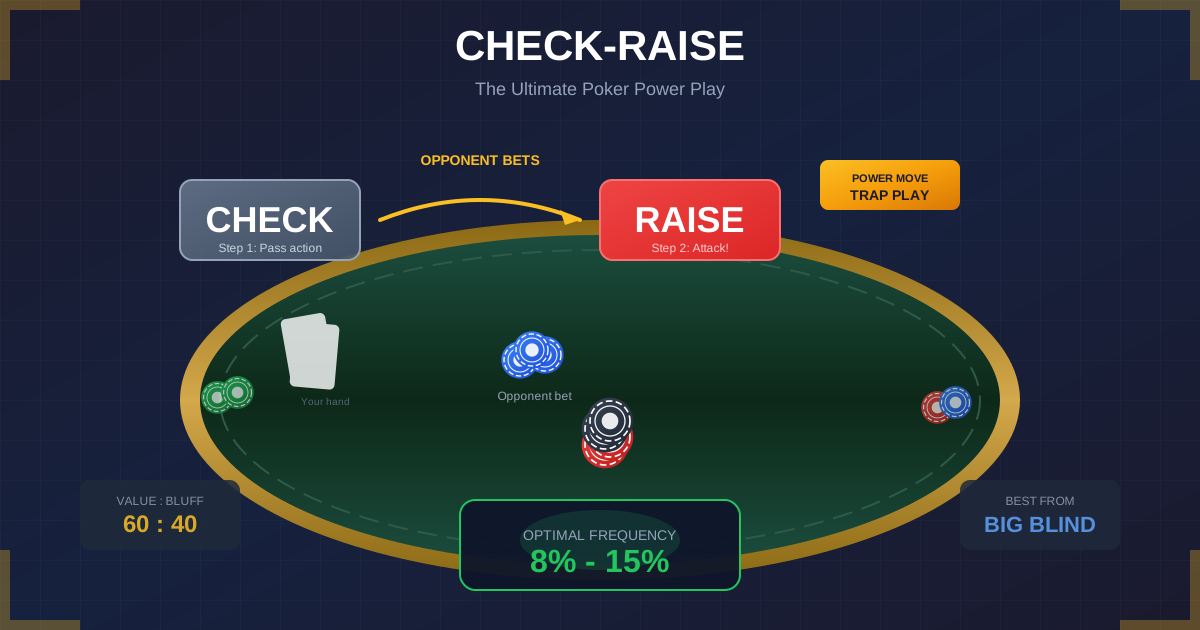
| Act in turn | Do not fold, call, or raise before it is your turn. Acting out of turn gives information to other players. |
| Verbal declarations are binding | If you say "Raise" or "Call," you are committed to that action. |
| One chip rule | Placing a single chip in the pot without announcing a raise is a call, not a raise, at most card rooms. |
| Protect your hand | Place a chip or card protector on your cards. Unprotected hands that the dealer accidentally mucks are dead. |
| Do not show your cards until showdown | Exposing cards to any player during a hand (even an eliminated one) can result in a dead hand or penalty. |
| Do not discuss the hand in progress | Never comment on what you folded or what you think other players have while the hand is still active. |
| String bets are prohibited | You must announce your raise amount or move your entire bet into the pot in a single motion. Reaching back for more chips (a "string bet") is not allowed. |
| Do not slow-roll | If you have the winning hand at showdown, reveal it promptly. Deliberately pausing to build tension before showing the nuts is considered one of the rudest moves in poker. |
Poker Room Social Etiquette
| Do | Do Not |
|---|---|
| Be friendly and conversational (if others are) | Berate other players for bad play |
| Say "Nice hand" when you lose a pot | Slam the table, throw cards, or curse loudly |
| Stack your chips neatly so opponents can estimate your total | Hide big chips behind small ones ("dirty stacking") |
| Pay attention to the action so you act promptly | Consistently take excessive time (unless facing a genuinely difficult decision) |
| Tip the dealer $1-$2 per pot you win | Stiff the dealer on every pot |
| Request a table change if you are unhappy | Argue with the floor about seating |
Tournament-Specific Etiquette
- Be on time for the start. Late registration is allowed at most tournaments, but showing up on time is courteous.
- Count your chips accurately when asked. Other players have a right to know your approximate stack size.
- Do not discuss strategy during breaks with players still in the tournament who might share your table.
- Handle eliminations gracefully. Say "Good game" or simply leave quietly. Do not make a scene.
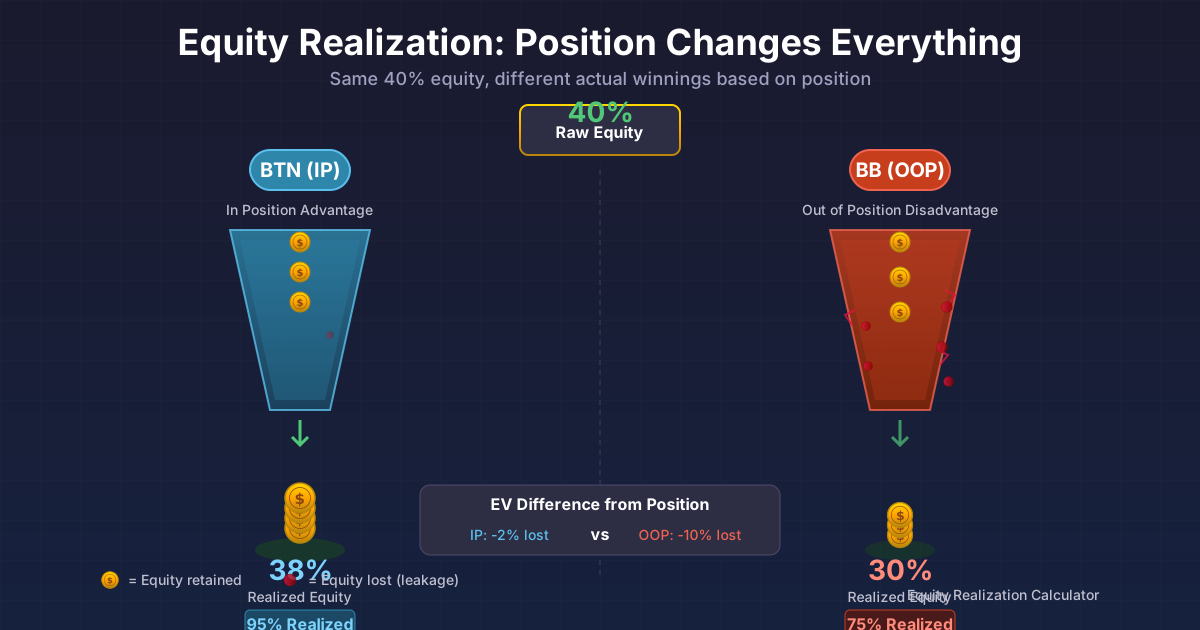
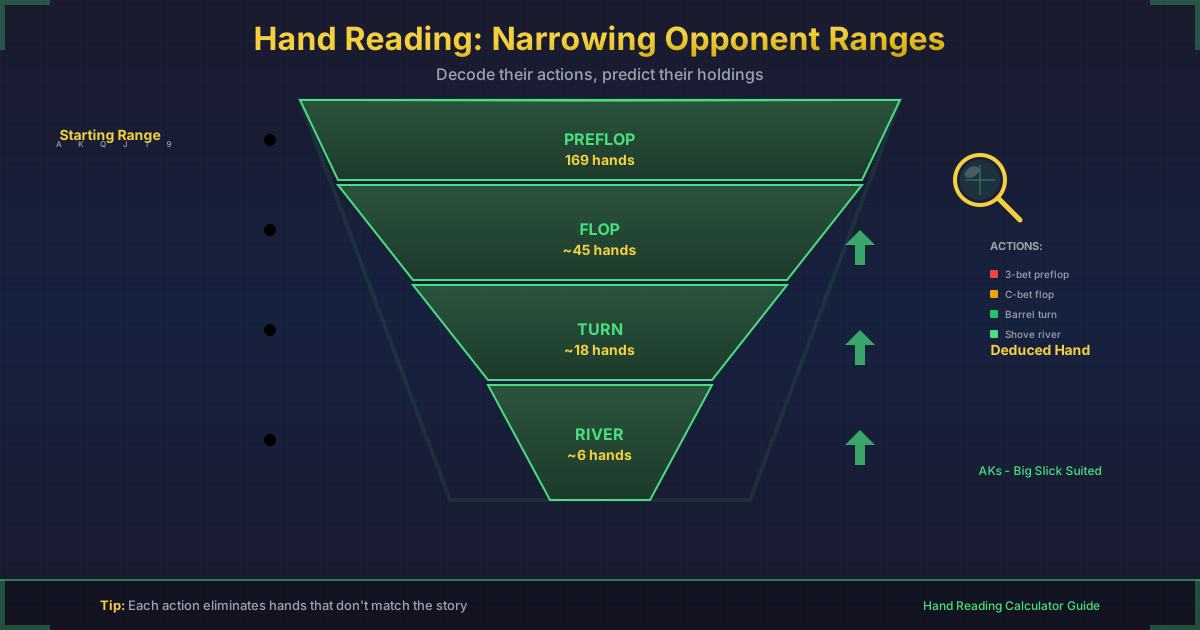
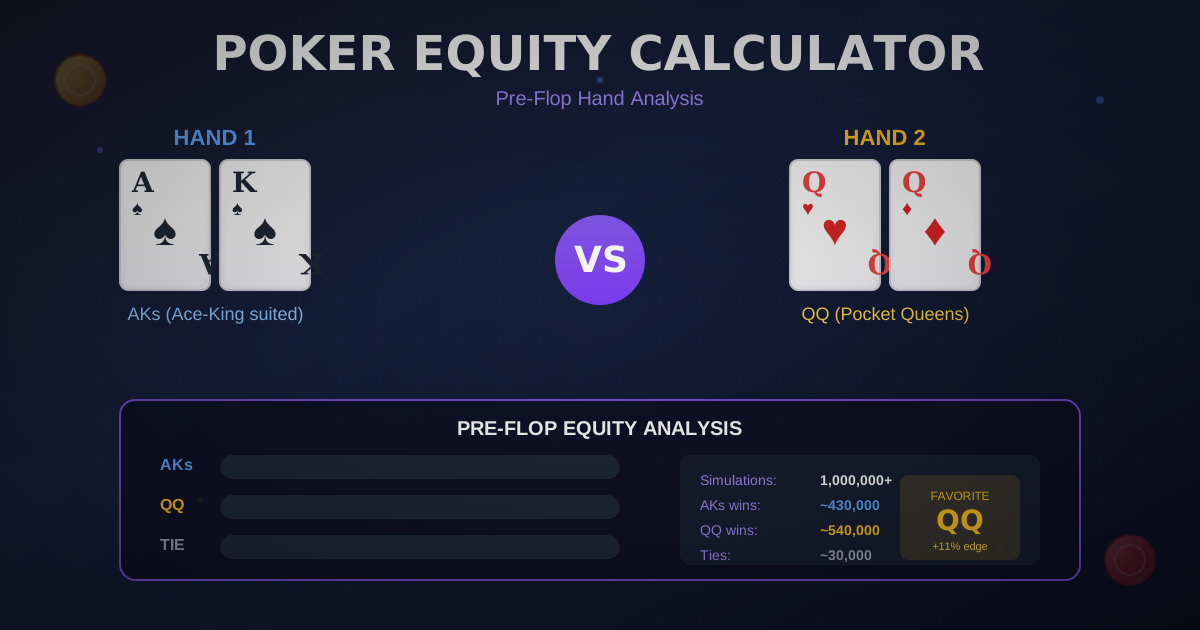
Calculate your poker hand equity in any scenario with our Poker Equity Calculator.
What Is Proper Sportsbook Etiquette?
Sportsbook areas have become increasingly popular and have their own code of conduct, especially during peak times like NFL Sundays, March Madness, and major boxing/MMA events.
Seat Reservation and Usage
| Rule | Details |
|---|---|
| Seats are first-come, first-served | Arrive early for major events; do not ask someone to move from "your" spot |
| Do not reserve seats with personal items for extended periods | A brief bathroom break is fine; leaving a jacket for 2 hours while you play slots is not |
| If every seat is taken, standing room is fair game | Do not stand directly in front of seated viewers |
| Share the space | During peak times, do not spread across multiple seats with your belongings |
Betting Window and Kiosk Etiquette
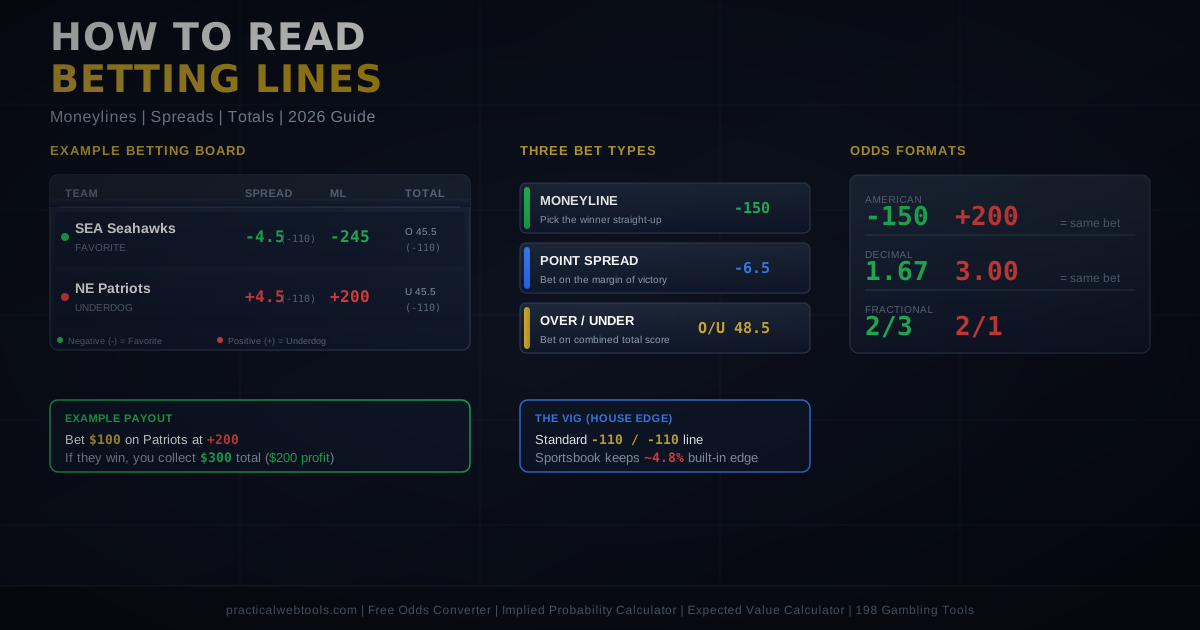
- Know your bet before approaching the window. Write it down if necessary. The ticket writer should not have to explain every bet type to you while 50 people wait in line.
- State your bet clearly. Use the format: sport, team/selection, bet type, amount. Example: "NFL, Chiefs minus three, $100" or "NBA, Lakers moneyline, $50."
- Have your money or players card ready before you reach the window.
- Check your ticket immediately for accuracy before leaving the window. Errors are much easier to fix before you walk away.
- Respect the kiosks. Do not use a betting kiosk to browse options for 10 minutes while others wait. Research on your phone, then use the kiosk to place the bet.
Celebrating (and Commiserating)
- Cheer for your bets. This is expected and part of the fun of the sportsbook. Getting excited when your team scores is completely normal.
- Be aware of the room. Your winning bet is someone else's losing bet. A brief celebration is fine; extended gloating toward other bettors is not.
- Do not taunt other bettors. Even if someone made a bet you think is foolish, keep your opinions to yourself.
- Handle losses with composure. Throwing or ripping up tickets, cursing loudly, or blaming staff for your losses makes the experience worse for everyone.
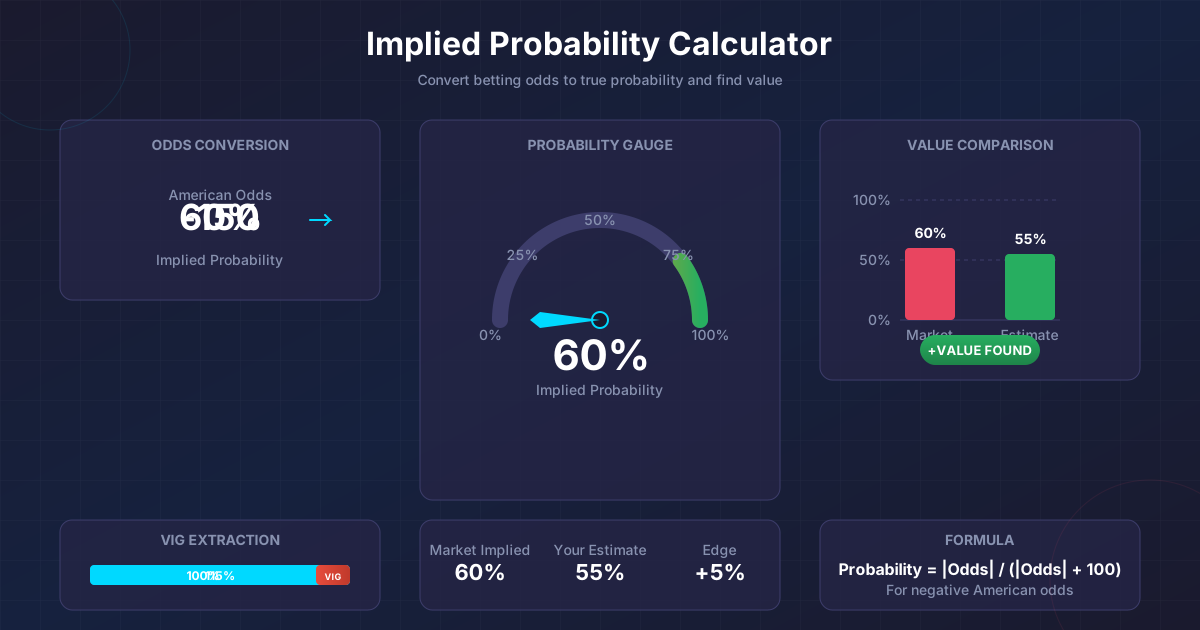
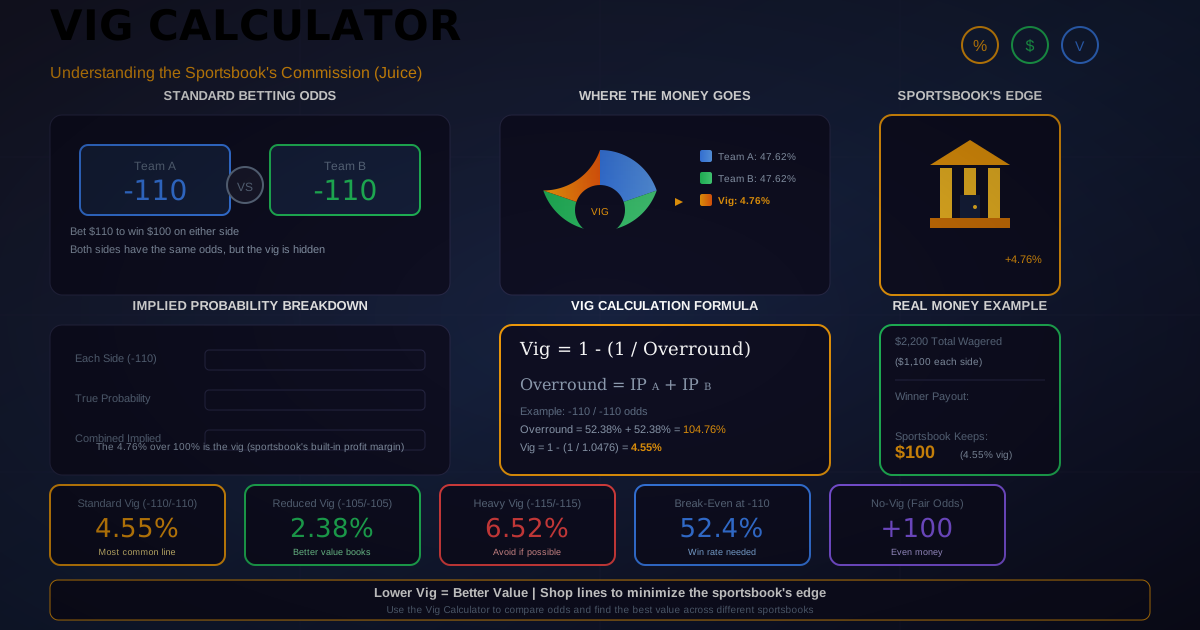
Use our Implied Probability Calculator to evaluate whether a sportsbook line offers value before you bet.
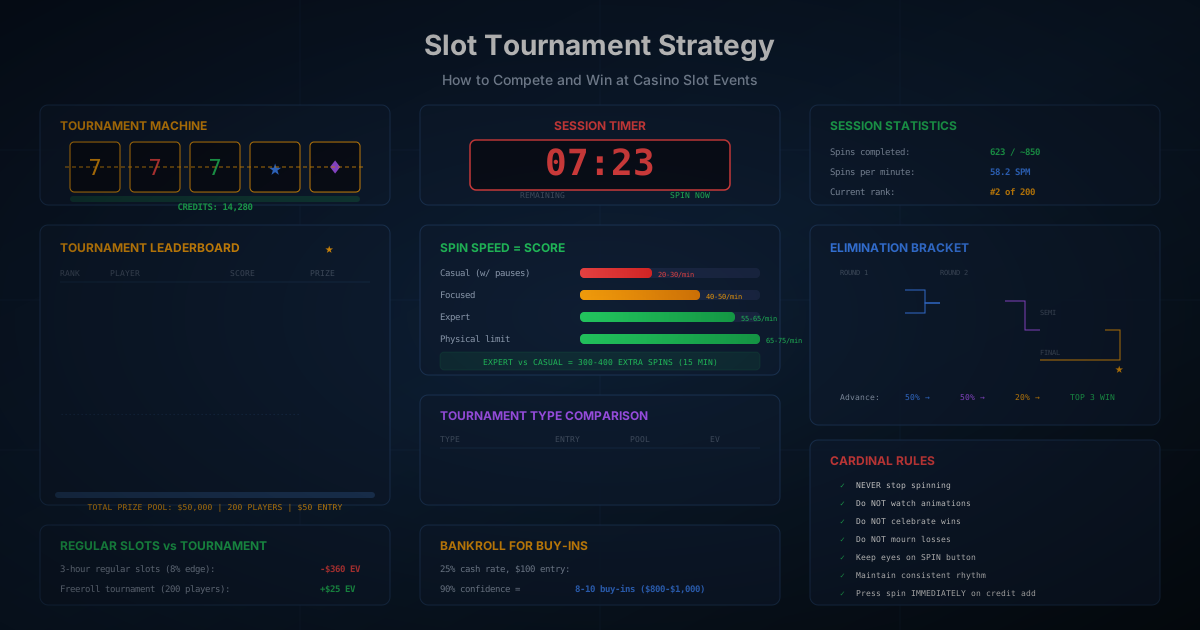
What Are the Rules for Slot Machine Etiquette?
Slot machines may seem like a solo activity, but the crowded casino floor creates plenty of opportunities for etiquette violations.
Machine Reservation
- You can reserve a machine briefly (bathroom break, getting a drink) by leaving a personal item on the chair or pressing the "Reserve" or "Service" button if available. A reasonable reservation is 5-15 minutes.
- You cannot reserve a machine for extended periods. Leaving a jacket on a machine while you eat dinner for an hour is not acceptable, and the casino may remove your items and make the machine available.
- Playing multiple machines at once is allowed if the casino is not busy. When the floor gets crowded, limiting yourself to one machine is courteous.
- If someone's personal item is on a machine and they have been gone for more than 15-20 minutes, it is generally acceptable to ask a slot attendant whether you may play the machine.
Jackpot Etiquette
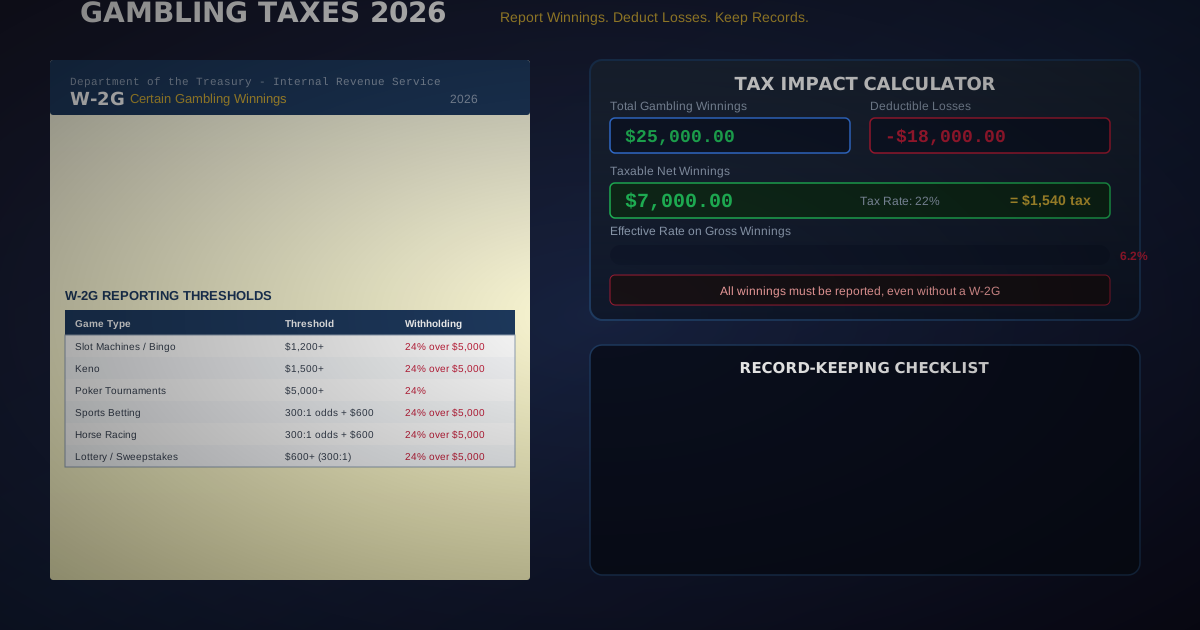
When you or someone near you hits a significant jackpot (especially a hand-pay of $1,200 or more in the US, which triggers tax documentation):
- Stay at the machine. A slot attendant and/or security will come to you. Do not leave the machine until the payout is processed.
- If your neighbor hits a jackpot, offer a congratulatory word. It is a big moment.
- Do not ask how much they won if they do not volunteer the information.
- Tip the attendant who processes the hand-pay ($20-$50 is customary; 1-2% for very large jackpots is generous).
General Slot Floor Etiquette
| Do | Do Not |
|---|---|
| Keep your personal items (bag, coat) in your own space | Spread across two machines with your belongings |
| Use headphones if watching video on your phone | Play phone audio at full volume next to other players |
| Respect the smoking/non-smoking sections | Light up in a non-smoking section |
| Ask for help if a machine malfunctions | Hit or kick the machine in frustration |
| Move if your cigarette smoke is drifting to a non-smoker | Assume everyone around you is fine with smoke |
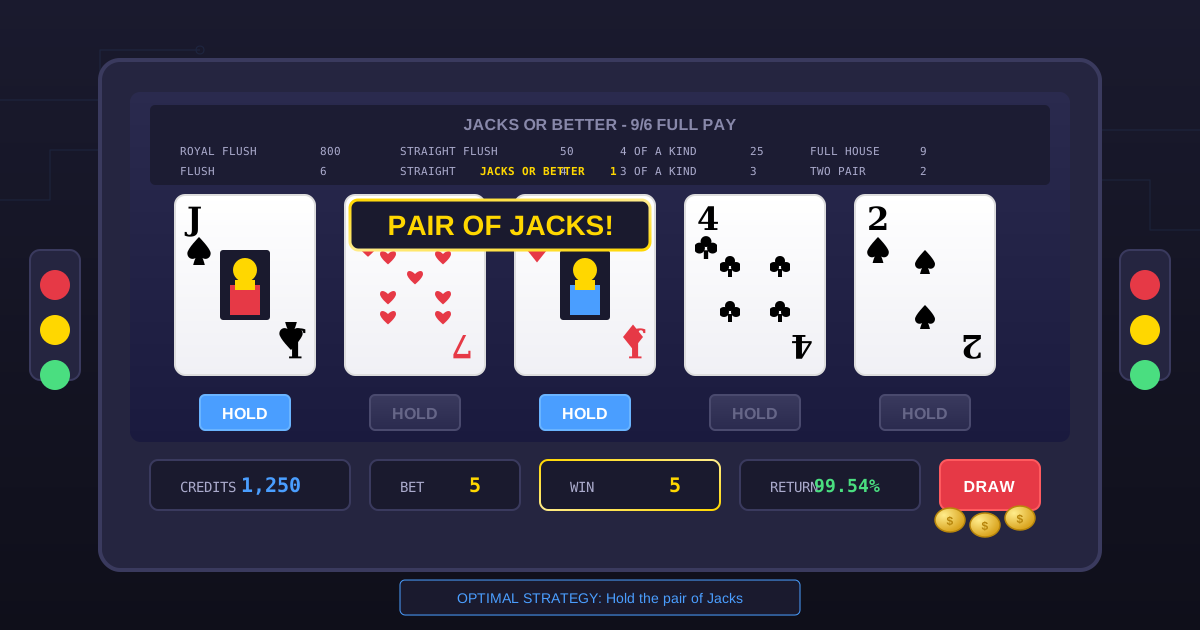
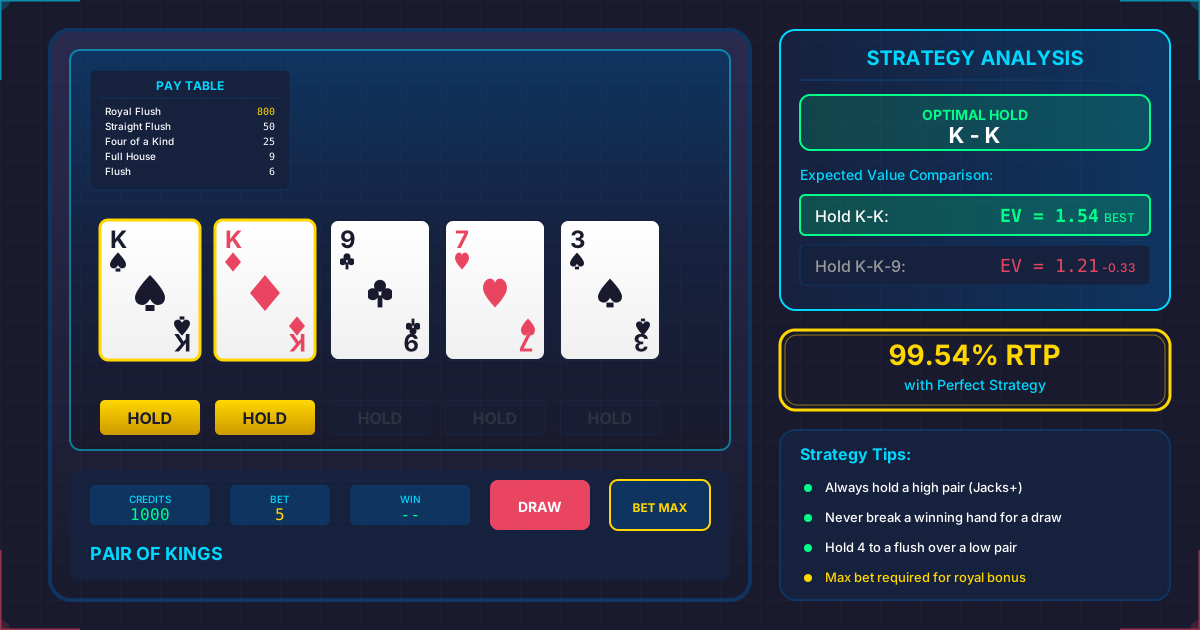
Understand the pay table and expected value of any video poker game with our Video Poker Pay Table Analyzer.
How Should You Handle Disputes and Mistakes at the Casino?
Disputes happen -- a dealer miscounts chips, a bet is placed incorrectly, or the result of a hand is unclear. How you handle these situations matters.
Step-by-Step Dispute Resolution
- Speak up immediately. If you believe a mistake has been made, address it calmly and clearly as soon as you notice it. "Excuse me, I believe my payout was short" or "I think my bet was placed incorrectly."
- Do not touch anything. If the dispute involves chips, cards, or the felt, keep your hands away. The surveillance cameras need to review the undisturbed scene.
- Ask the dealer to call the pit boss. If the dealer cannot resolve the issue to your satisfaction, ask for a supervisor. Say: "Can I speak with the pit boss, please?" This is your right as a player and is not rude or confrontational.
- Explain your perspective calmly to the pit boss. State the facts without emotion. "I had a $75 bet, hit blackjack, and was paid $100 instead of $112.50."
- Request a camera review if necessary. Casinos have comprehensive surveillance, and reviewing the tape will resolve most factual disputes. The pit boss may say, "Let me check the camera" -- this is standard procedure, not an accusation.
- Accept the decision. The pit boss will make a ruling based on the camera footage, dealer testimony, and house rules. If you disagree, you can escalate to the shift manager, but the vast majority of disputes are resolved at the pit boss level.
Common Mistakes and How They Are Handled
| Situation | Standard Resolution |
|---|---|
| Dealer overpays you | The dealer will correct it. If you notice first and alert the dealer, this earns respect. |
| Dealer underpays you | Call it out immediately. The camera will confirm. |
| You accidentally bet the wrong amount | If noticed before cards are dealt, you can adjust. After cards are dealt, the bet stands. |
| Your cards touch another player's cards | Both hands may be declared dead. This is why protecting your cards is essential. |
| Dealer accidentally exposes a card | House rules vary. The exposed card is typically used as a "burn card" or placed back in the shoe. |
| Dispute over hand signals | The camera will review. This is exactly why hand signals are required. |
Never let a dispute escalate into raised voices or personal attacks. Casinos have zero tolerance for aggressive behavior, and you may be asked to leave. A calm, factual approach resolves issues faster and more favorably.
Know the optimal play for every possible blackjack situation with our Blackjack Basic Strategy Tool.
What Casino Superstitions Should You Be Aware Of?
Whether you believe in them or not, casino superstitions are deeply held by many players. Being aware of the major ones helps you avoid accidentally offending or annoying your tablemates.
Common Casino Superstitions
| Superstition | Game | What It Means | How to Be Respectful |
|---|---|---|---|
| Never say "seven" | Craps | Saying the word summons a seven-out | Use "big red" or "it" instead |
| Do not count money at the table | All games | Counting your chips brings bad luck | Count chips during breaks or when coloring up |
| Entering through the main entrance is bad luck | General | Some believe using a side entrance is luckier | Not widely observed anymore, but it exists |
| Do not cross your legs | All games | Crossed legs "cross out" your luck | Be aware if someone asks you to uncross |
| Blowing on dice | Craps | Transfers good luck to the dice | Not as common post-COVID, but still seen |
| Red clothing is lucky | General (especially Asian culture) | Red is associated with good fortune | Not something to worry about |
| Do not whistle at the table | All games | Whistling attracts bad luck | Keep your tunes to yourself |
| Lucky charms and rituals | All games | Players have personal lucky objects or routines | Never touch or comment negatively on someone's lucky charm |
| New dealer changes luck | All games | Some believe a new dealer changes the table's energy | Some players leave when a dealer changes; this is their right |
The Golden Rule of Casino Superstitions
Do not mock other players' superstitions. Even if you believe they are irrational, ridiculing someone's lucky ritual creates a hostile atmosphere and can escalate into a genuine confrontation. The casino is a place where people come to have fun, and superstitions are part of the experience for many.
Calculate the precise odds on any baccarat outcome with our Baccarat Odds Calculator.
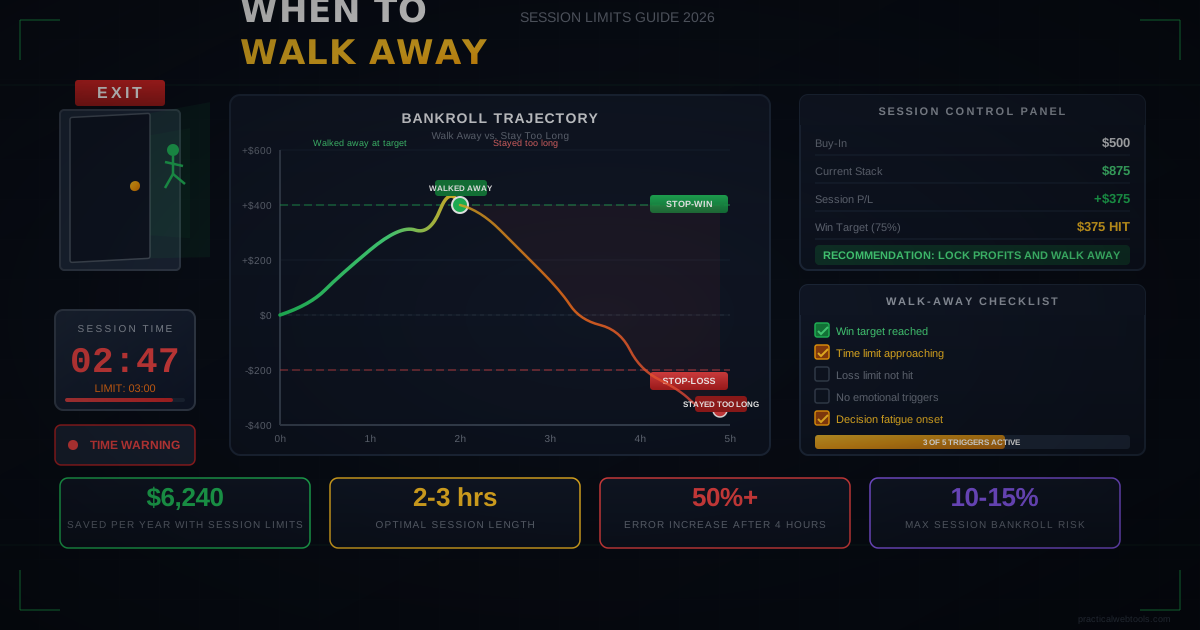
When Should You Leave a Table?
Knowing when and how to leave a table gracefully is an often-overlooked aspect of casino etiquette.
Good Reasons to Leave
| Reason | How to Exit |
|---|---|
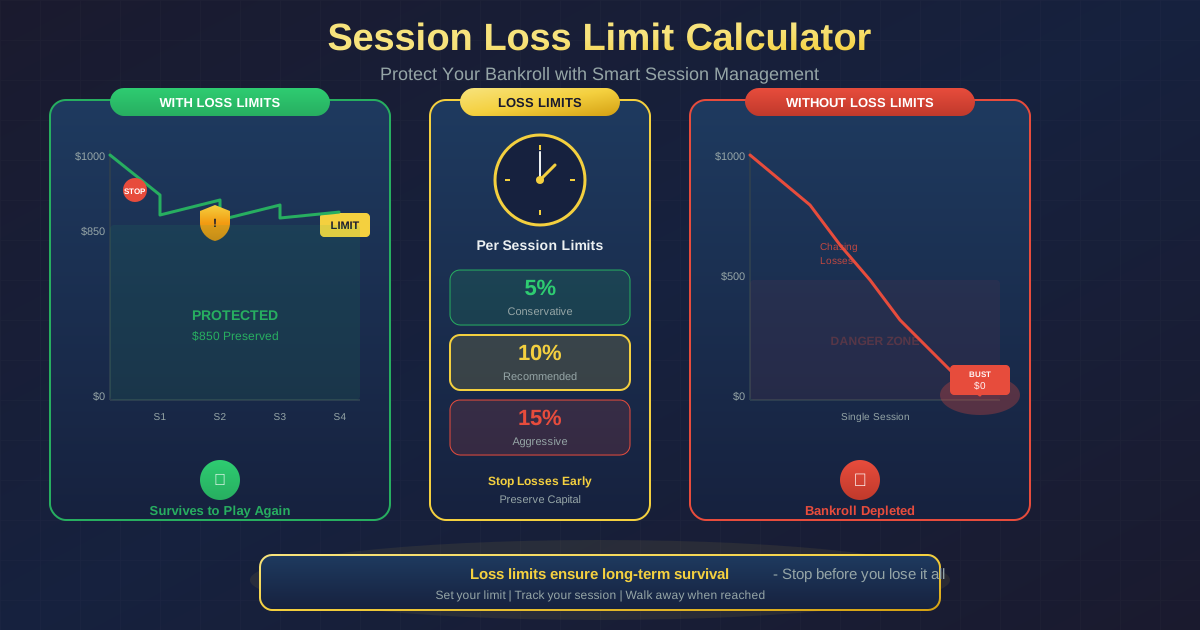
| You have reached your loss limit | Place your remaining chips aside, wait for the hand to finish, and say "I'm going to color up" |
| You have hit your win goal | Same process. Do not feel obligated to keep playing |
| You are not enjoying the table atmosphere | Wait for a natural break (shuffle, new dealer), then color up |
| The table minimum has been raised | You can stay at the old minimum until you leave, but if it is now uncomfortable, color up |
| You are tired or not thinking clearly | Leave immediately. Fatigue leads to bad decisions |
| Another player is making you uncomfortable | Leave or ask the pit boss to intervene |
The Coloring Up Process
When you are ready to leave:
- Wait for the current hand to finish.
- Place all your chips in front of you and say "Color me up, please" or "Coloring up."
- The dealer will count your chips, verify the total, and exchange them for higher-denomination chips (easier to carry and cash out).
- Thank the dealer. A sincere "Thank you" goes a long way.
- Tip if appropriate (see tipping section above).
- Leave. Do not announce your plans ("I'm going to go play poker now"). Just go.
Do Not
- Do not leave mid-hand. Always finish the current hand.
- Do not announce you are leaving in advance and then keep playing for another hour. If you say you are leaving, leave.
- Do not berate the dealer on your way out. Regardless of how your session went, the dealer was doing their job.
- Do not lecture other players about their play as a parting shot.
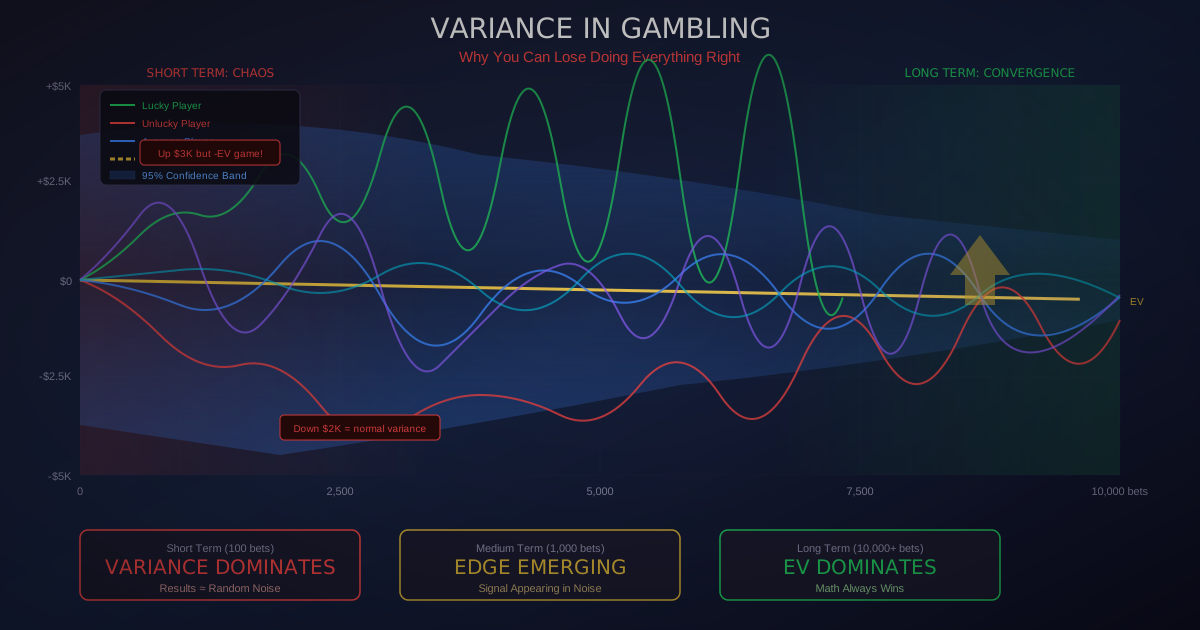
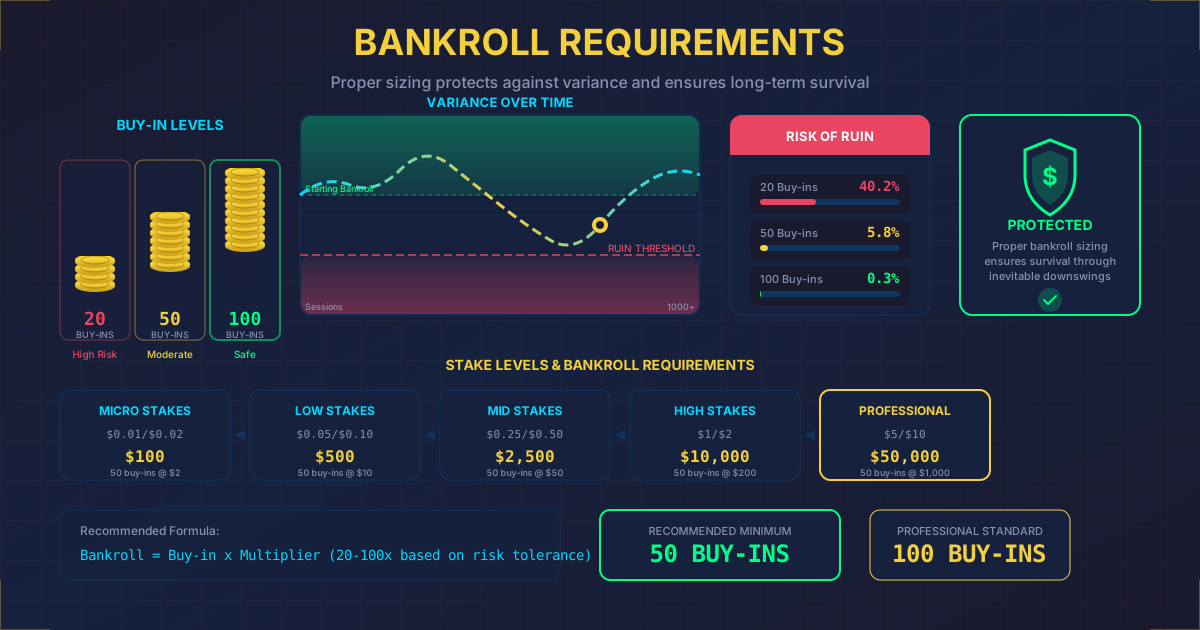
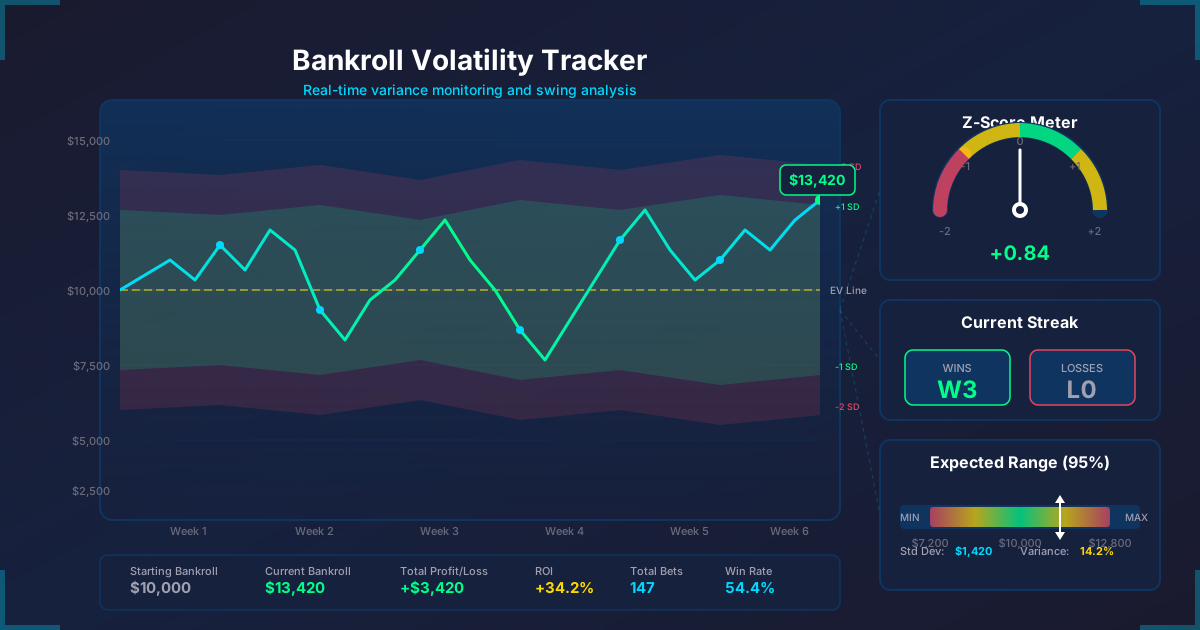
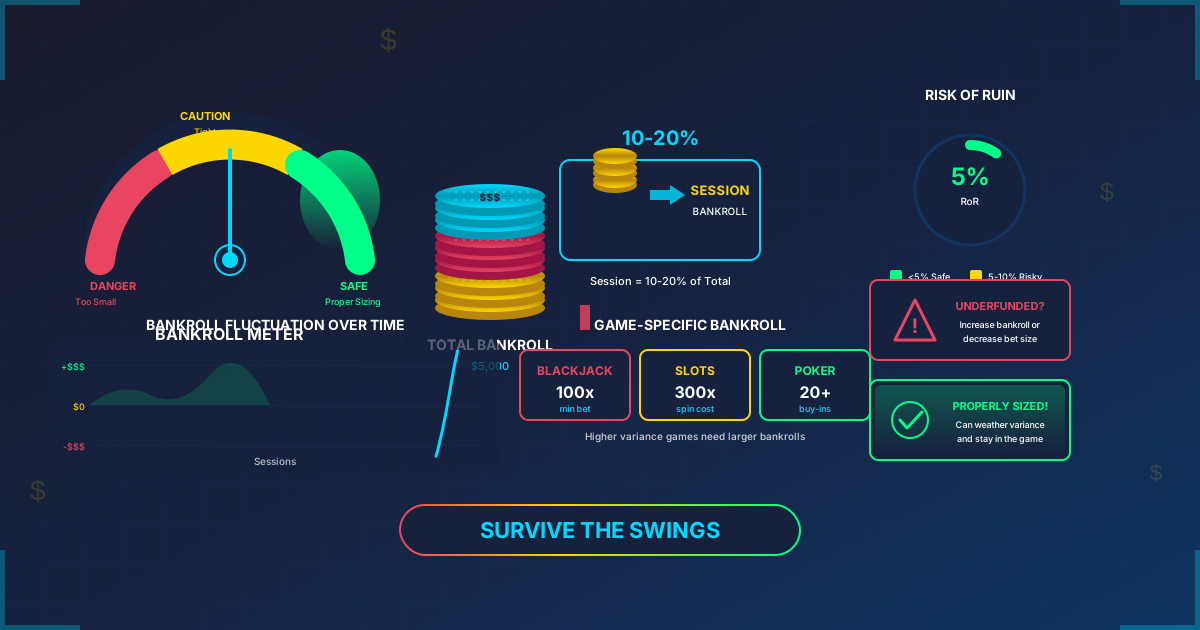
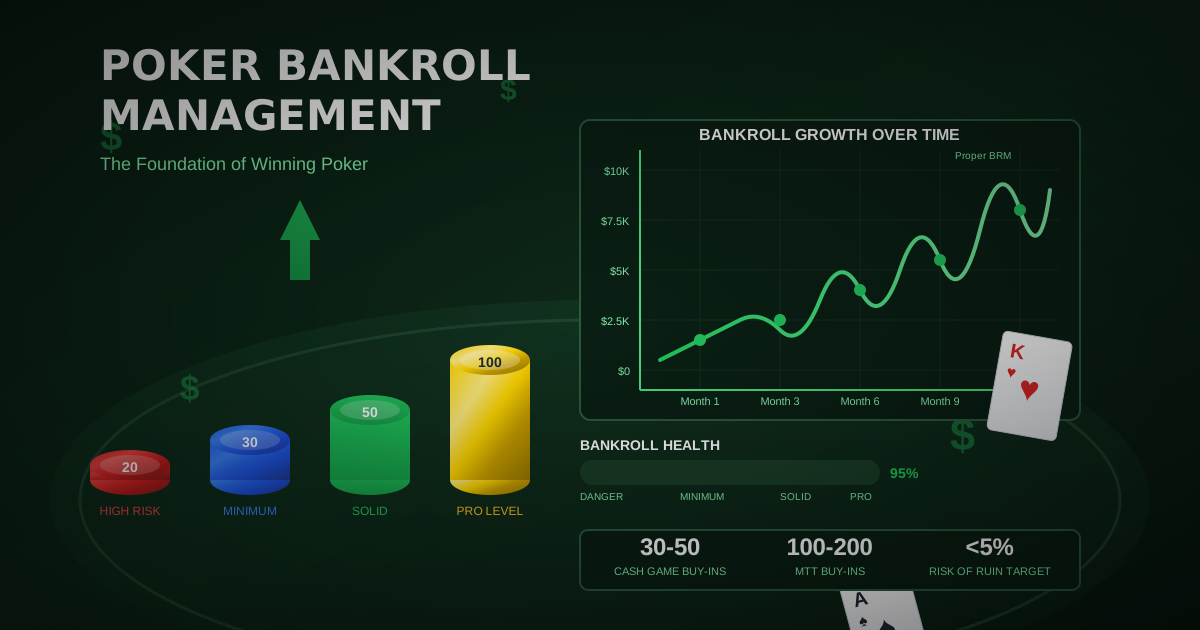
Track your bankroll health across sessions with our Bankroll Volatility Tracker.
Frequently Asked Questions
Is it rude to play blackjack slowly or ask the dealer for advice? Playing at a reasonable pace is expected, but you are not required to make instant decisions. If you need a moment to think, that is acceptable -- especially on genuinely difficult hands. Asking the dealer for advice is also acceptable and common. Dealers are usually happy to tell you what "the book" recommends (basic strategy). However, consistently delaying every hand for 30+ seconds or asking the dealer to make every decision for you will frustrate other players. If you are very new, consider playing at a less crowded table or during off-peak hours.
How much should I tip the dealer if I am losing? There is no obligation to tip while losing. Most players reduce or stop tipping during losing streaks, and dealers understand this. A small tip when leaving the table ($5-$10 for a session of an hour or more) is a nice gesture even after a loss, but it is not expected. If a dealer has been particularly friendly, helpful, or entertaining, tipping to acknowledge that service regardless of your results is appreciated.
Can I bring my own drinks to the casino floor? Most casinos prohibit outside food and beverages on the gaming floor. Complimentary drinks are offered to active players in most casinos (though some have scaled this back in recent years). In casinos that offer free drinks, simply flag down a cocktail server, place your order, and tip $1-$2 per drink. Some casinos now charge for drinks or offer them only to players wagering above certain thresholds.
What happens if I accidentally break a casino rule? For minor infractions (touching cards in a shoe game, saying "seven" at craps, taking too long to act), you will receive a polite warning from the dealer or pit boss. Repeated minor infractions may result in a more firm conversation. For more serious violations (using your phone at a poker table to look up odds, past-posting a bet, or attempting to mark cards), consequences escalate quickly and may include ejection from the casino and banning. The key is intent: accidental mistakes are understood and forgiven; deliberate violations are not.
Should I tip casino cocktail servers in cash or chips? Either is acceptable. Cash is slightly easier for the server (they do not have to convert chips later), but a $1 or $2 chip is perfectly fine and is the most common tipping method on the casino floor. Handing the server a $1 chip when they deliver your drink is standard.
Is it okay to use a strategy card at the blackjack table? Yes. Using a basic strategy reference card at the blackjack table is allowed at virtually all casinos. These small laminated cards are sold in casino gift shops and are welcomed because they help players make better decisions, which actually improves the pace of play. Some casinos even provide them upon request. The only restriction is that the card cannot be placed on the table itself -- hold it in your hand or keep it in your lap.
How do I know if a seat at a table game is available? An empty seat with no chips in front of it is available unless a "Reserved" sign is placed there. Approach the table, wait for the current hand to finish, and ask the dealer, "Is this seat open?" Some players step away briefly (bathroom break) without leaving their chips, and their seat is still occupied. If chips are on the rail in front of a chair but no one is sitting there, the seat is taken.
What should I do if the dealer makes a mathematical error? Speak up immediately and politely. "I think the payout should be $X" or "Can we double-check that count?" Dealers are human and occasional errors happen in both directions. If you notice you were overpaid, the ethical thing to do is to alert the dealer -- and surveillance will likely catch it anyway, which could create an awkward situation later if you stay silent. If you were underpaid, the camera review will confirm it.
Related Gambling Tools
Prepare for your casino visit with these free tools:
- Blackjack Basic Strategy -- Learn the correct play for every blackjack hand
- Blackjack House Edge Calculator -- See how table rules affect the house edge
- Craps House Edge Calculator -- Compare house edges on every craps bet
- Craps Odds Calculator -- Calculate precise craps odds
- Roulette House Edge Calculator -- Compare American and European roulette edges
- Roulette Odds Calculator -- Calculate odds on any roulette wager
- Baccarat House Edge Calculator -- House edges for all baccarat bets
- Baccarat Odds Calculator -- Precise baccarat outcome probabilities
- Video Poker EV Calculator -- Find the best video poker machines
- Video Poker Pay Table Analyzer -- Evaluate pay table quality
- Expected Value Calculator -- Calculate EV on any bet
- Bankroll Volatility Tracker -- Track your bankroll health
- Poker Equity Calculator -- Calculate hand equity in poker
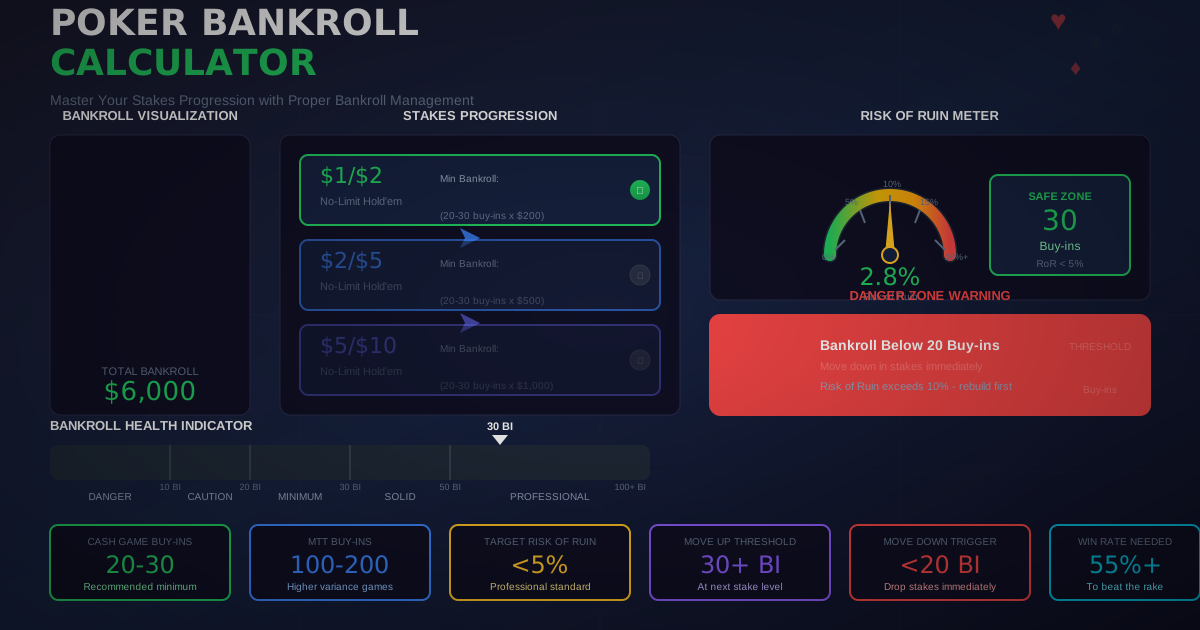
- Poker Bankroll Requirements -- Determine your poker bankroll needs
Conclusion
Casino etiquette is not about memorizing an endless list of arbitrary rules. It is about respect -- for the dealers who work long shifts in a demanding environment, for the other players who are sharing the experience with you, and for the establishment that provides the venue.
The players who follow these guidelines get better service, enjoy their time more, receive more favorable treatment from staff, and are generally welcomed back warmly. The ones who ignore them find that dealers are less friendly, pit bosses are less accommodating, cocktail servers are less attentive, and their overall experience suffers.
You do not need to be perfect. Every regular casino-goer has made etiquette mistakes, especially when they were learning. What matters is being willing to learn, receptive to correction, and respectful of the people around you.
Now that you know the rules of the room, make sure you also know the rules of the games. Understanding the mathematics behind casino games is just as important as understanding the social conventions around them.
Explore our complete suite of Gambling Tools to analyze house edges, calculate expected value, and make smarter decisions at every game in the casino.
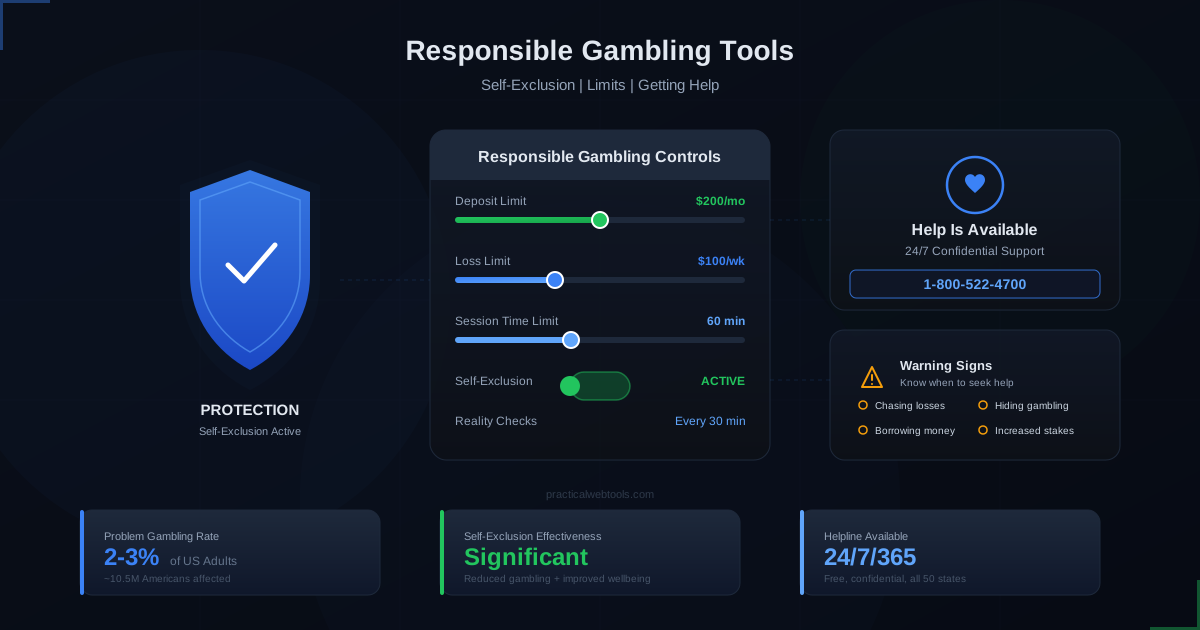
Gambling involves risk and should be approached as entertainment, not as a source of income. Always bet within your means, set strict bankroll limits, and never chase losses. If you or someone you know has a gambling problem, contact the National Council on Problem Gambling at 1-800-522-4700 or visit ncpgambling.org. Must be 21+ to gamble in most US jurisdictions. Please play responsibly.