Blackjack Composition Dependent Strategy Calculator (2026)
Blackjack Composition Strategy Calculator: Beyond Basic Strategy
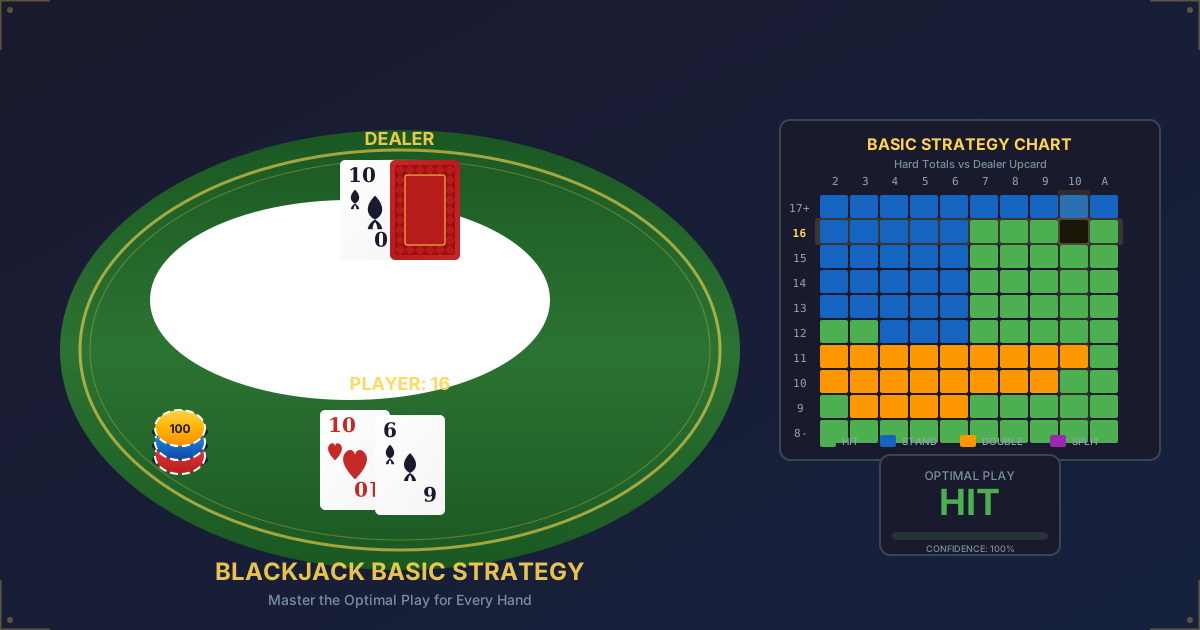
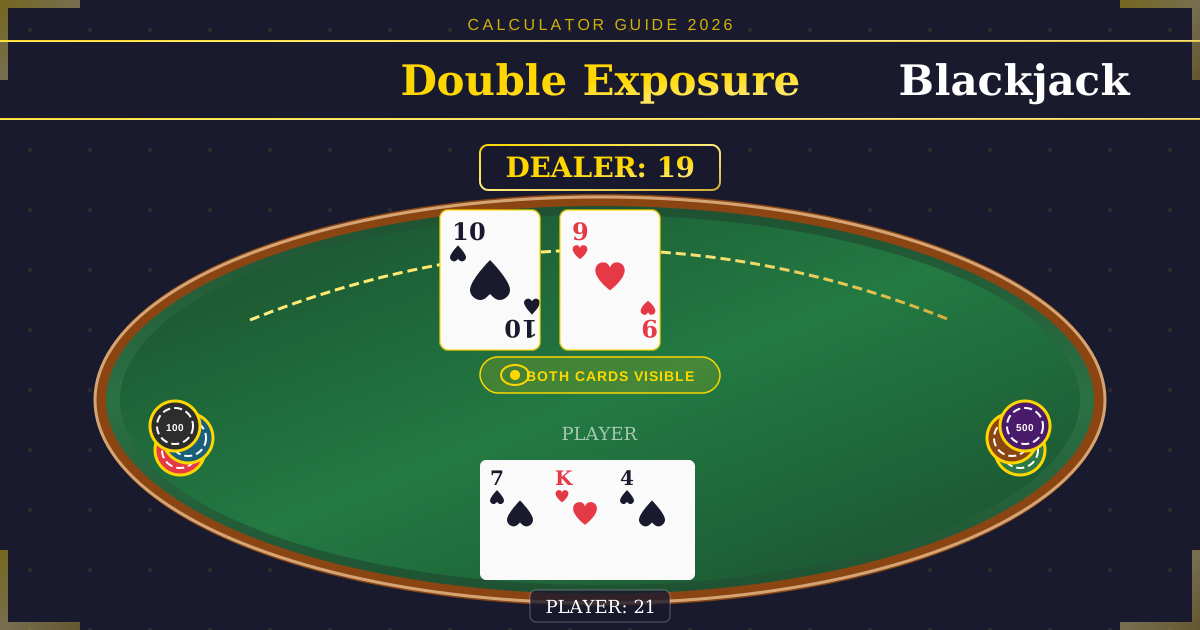
Basic strategy uses only your total versus the dealer's upcard. Composition dependent strategy goes deeper—analyzing the specific cards in your hand to find plays that deviate from basic strategy for a slight additional edge.
What Is Composition Dependent Strategy?
Composition dependent strategy considers which specific cards make up your hand total, not just the total itself. Some hands with the same total should be played differently based on their composition.
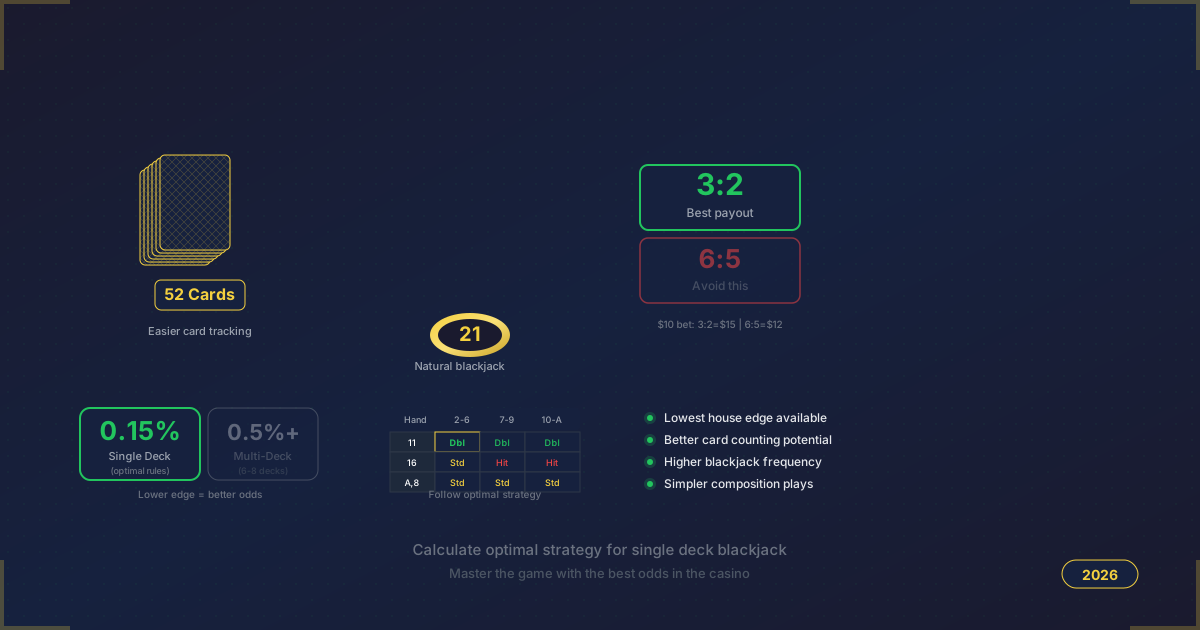
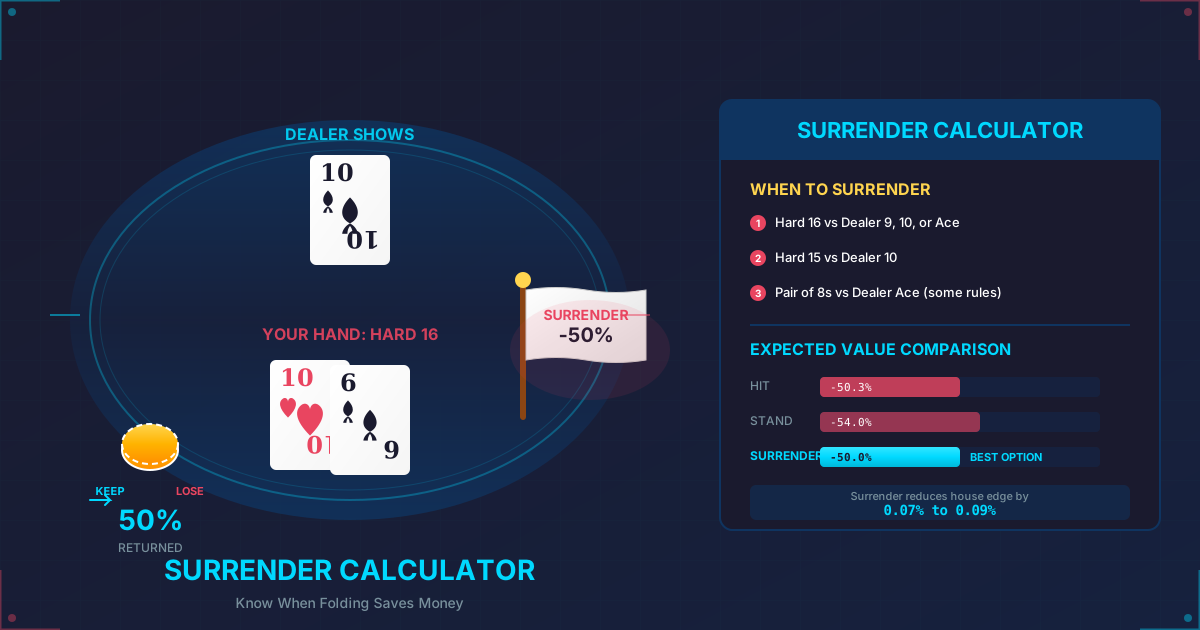
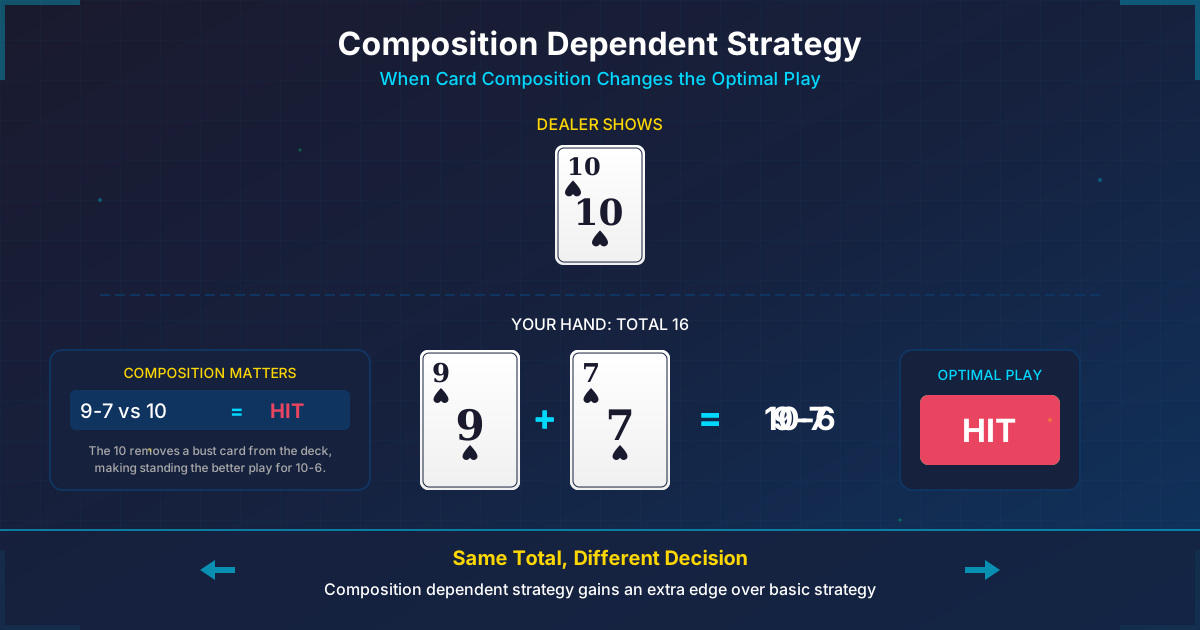
Quick Answer: The most famous example: 16 vs dealer 10. Basic strategy says hit. But with 10-6 composition, stand (10 removes a good hitting card). With 7-9, 8-8, or multi-card 16s, hit. Composition dependent plays add about 0.01-0.02% to your edge—marginal but real for serious players.
How to Use Our Composition Strategy Calculator
Use the Blackjack Composition Strategy Calculator →
Enter your exact cards (not just total) to see composition-aware recommendations.
Step-by-Step Instructions
-
Enter Your Cards: Specific cards, not totals
-
Enter Dealer Upcard: Visible card
-
Select Rules: Decks, DAS, surrender
-
View Recommendation: Optimal play
-
See If It Deviates: From basic strategy
Input Fields Explained
| Field | Description | Example |
|---|---|---|
| Your Cards | Exact hand | 10, 6 |
| Dealer Shows | Upcard | 10 |
| Deck Count | Number of decks | 6 |
| Basic Strategy | Total-based play | Hit |
| Composition Play | Card-based play | Stand |
| EV Difference | Edge improvement | +0.02% |
Key Composition Dependent Plays
16 vs Dealer 10
The most valuable composition play:
| Your Hand | Composition | Play |
|---|---|---|
| 10-6 | Two cards with 10 | Stand |
| 9-7 | Two cards, no 10 | Hit |
| 7-5-4 | Three cards | Hit |
| 8-8 | Pair | Hit (split first) |
| 6-5-5 | Three cards | Hit |
Why 10-6 stands: The 10 in your hand removes one card that would bust you. Remaining deck has fewer 10s.
12 vs Dealer 4
| Your Hand | Composition | Play |
|---|---|---|
| 10-2 | Contains 10 | Stand |
| 9-3 | No 10 | Hit |
| 7-5 | No 10 | Hit |
12 vs Dealer 3
| Your Hand | Composition | Play |
|---|---|---|
| 10-2 | Contains 10 | Hit |
| Any other | — | Hit |
Other Notable Plays
| Total | Vs Dealer | Composition | Play |
|---|---|---|---|
| 15 | 10 | 8-7 | Stand |
| 15 | 10 | 10-5 | Hit |
| 13 | 2 | 10-3 | Stand |
| 13 | 2 | 9-4 | Hit |
Why Composition Matters
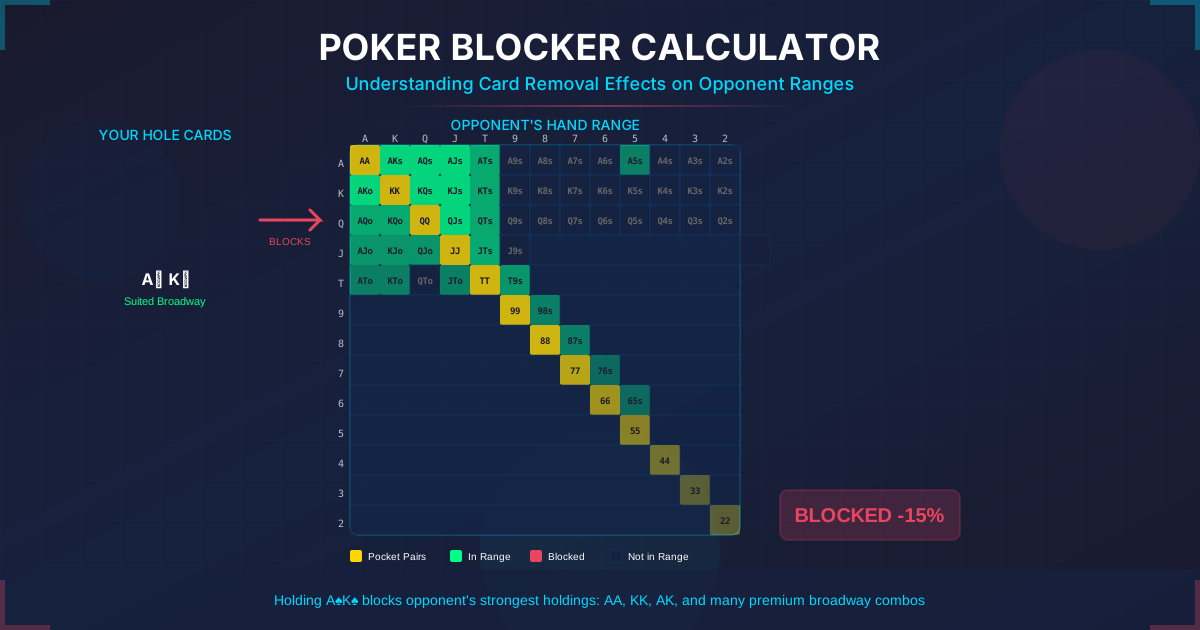
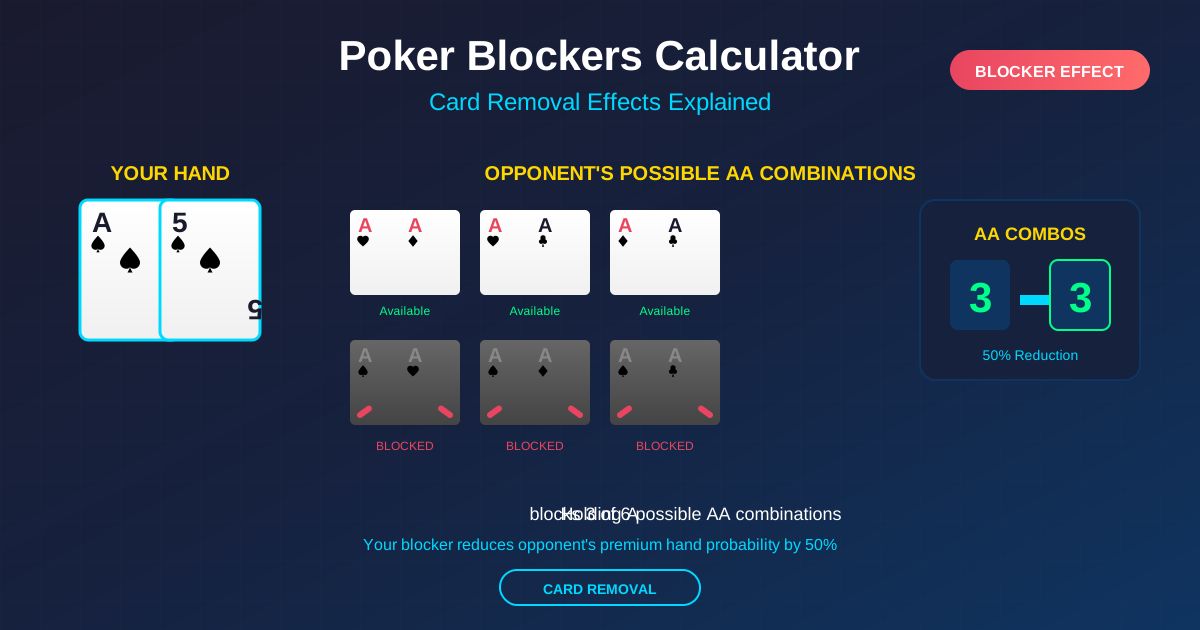
Card Removal Effect
Standard deck: 16 cards worth 10 out of 52

Your hand: 10-6 (total 16)
Remaining 10s: 15 out of 50 (30% vs 30.8%)

Hitting 10-6: Lower bust probability
This tilts decision toward standing
Mathematical Explanation
| Hand | Cards Left | 10s Left | Bust % |
|---|---|---|---|
| 10-6 | 50 | 15 | 30.0% |
| 9-7 | 50 | 16 | 32.0% |
| 7-5-4 | 49 | 16 | 32.7% |
Small differences, but mathematically significant.
Full Composition Chart
Hard Totals vs 10
| Total | Composition | Basic Says | Composition Says |
|---|---|---|---|
| 16 | 10-6 | Hit | Stand |
| 16 | 9-7 | Hit | Hit |
| 16 | 3+ cards | Hit | Hit |
| 15 | 8-7 | Hit | Stand |
| 15 | 10-5 | Hit | Hit |
Hard Totals vs 4
| Total | Composition | Basic Says | Composition Says |
|---|---|---|---|
| 12 | 10-2 | Stand | Hit ... no, Stand |
| 12 | 9-3 | Stand | Stand |
| 12 | 7-5 | Stand | Stand |
Hard Totals vs 2
| Total | Composition | Basic Says | Composition Says |
|---|---|---|---|
| 13 | 10-3 | Stand | Stand |
| 13 | 9-4 | Stand | Stand |
Single Deck vs Multi-Deck
Single Deck Composition Effects
| Situation | Impact |
|---|---|
| Stronger | Card removal more significant |
| More plays | Several additional deviations |
| Value | ~0.02-0.04% additional edge |
Six-Deck Composition Effects
| Situation | Impact |
|---|---|
| Weaker | Card removal diluted |
| Fewer plays | Mainly 16 vs 10 |
| Value | ~0.01% additional edge |
Eight-Deck Composition Effects
| Situation | Impact |
|---|---|
| Minimal | Almost negligible |
| Rare | Very few meaningful plays |
| Value | <0.01% additional edge |
EV Calculations
16 vs 10 Analysis
Two-card 16 (10-6):
EV(Stand) = -0.540
EV(Hit) = -0.541
Difference: +0.001 (stand is better)

Three-card 16:
EV(Stand) = -0.544
EV(Hit) = -0.539
Difference: +0.005 (hit is better)
Value of Composition Strategy
| Game Type | Added Edge |
|---|---|
| Single deck | +0.03% |
| Double deck | +0.02% |
| Six deck | +0.01% |
| Eight deck | +0.005% |
Real-World Examples
Example 1: Classic 16 vs 10
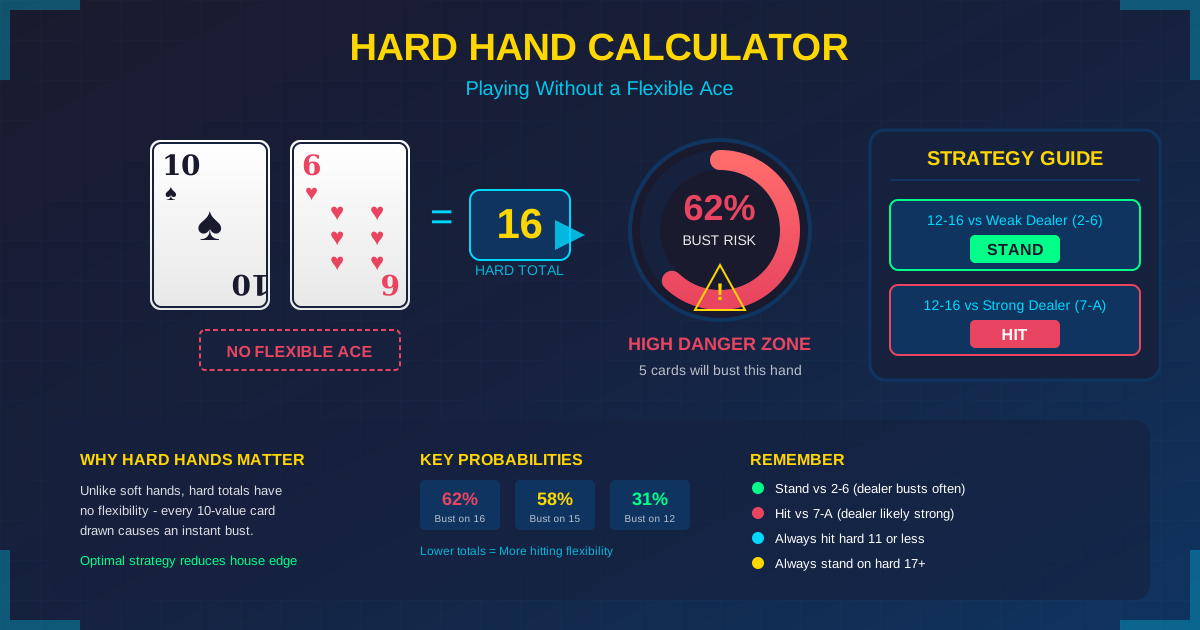
Hand: 10♠, 6♥ Dealer shows: 10♦
Basic strategy: Hit (any 16 vs 10) Composition strategy: Stand
Reasoning: Your 10 removes a bust card from the deck. Marginally better to stand.
Example 2: Multi-Card 16
Hand: 5♣, 6♦, 5♥ Dealer shows: 10♠
Basic strategy: Hit Composition strategy: Hit
Reasoning: No 10 in your hand. Three cards = you've removed small cards, increasing bust probability. Hit.
Example 3: 12 vs 4
Hand: 10♥, 2♠ Dealer shows: 4♣
Basic strategy: Stand Composition strategy: Stand
Reasoning: Having the 10 slightly reduces hitting value, but not enough to change play vs 4.
Combining with Card Counting
Count-Adjusted Composition
| True Count | 16 vs 10 (10-6) |
|---|---|
| -2 or less | Hit |
| -1 to +2 | Stand |
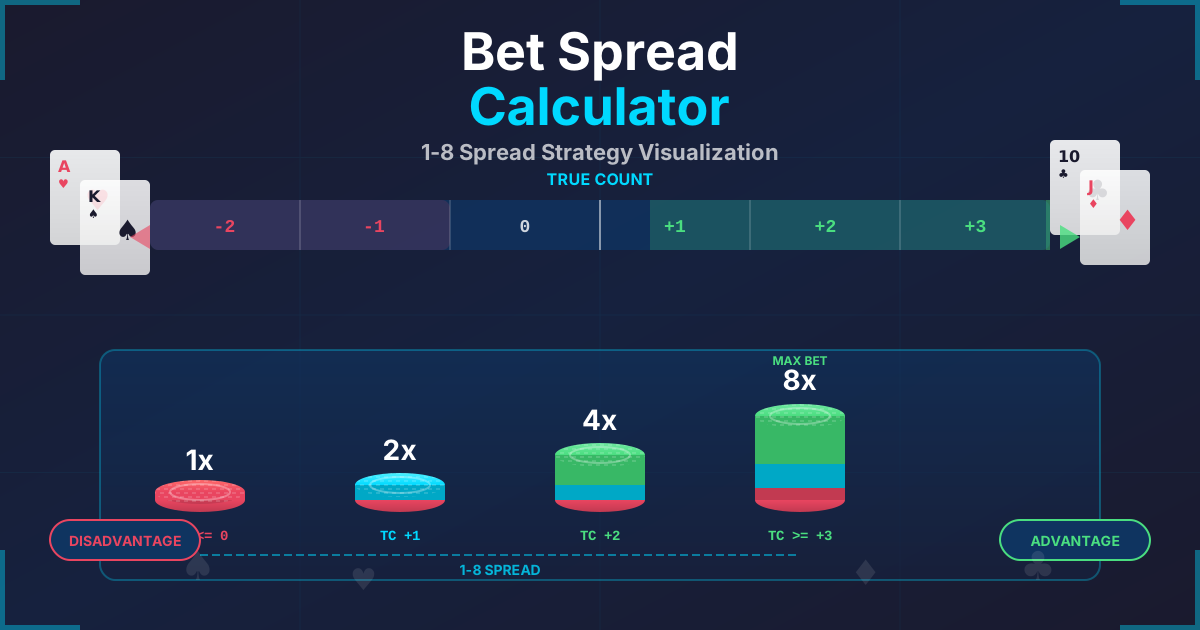
| +3 or more | Stand (stronger) |
When Both Apply
Composition and count both matter:
TC +3, hand is 10-6 vs 10
Composition says: Stand
Count says: Stand (even stronger)
Conclusion: Definitely stand
Memorizing Key Plays
The Essential List
- 16 vs 10: Stand with 10-6, hit otherwise
- 15 vs 10: Stand with 8-7 (marginal)
- 12 vs 4: Stand with 10-2
The "10 in Hand" Rule
If your hand contains a 10:
- Slightly better to stand on stiff hands
- The 10 removes a bust card
- Effect is small but real
Common Mistakes
1. Overvaluing Composition
Mistake: Memorizing dozens of plays Problem: Most add tiny fractions of percent Fix: Focus on 16 vs 10; that's 90% of the value
2. Using in Shoe Games
Mistake: Heavy composition focus in 8-deck Problem: Card removal effect nearly zero Fix: Composition matters mainly in single/double deck
3. Confusing with Counting
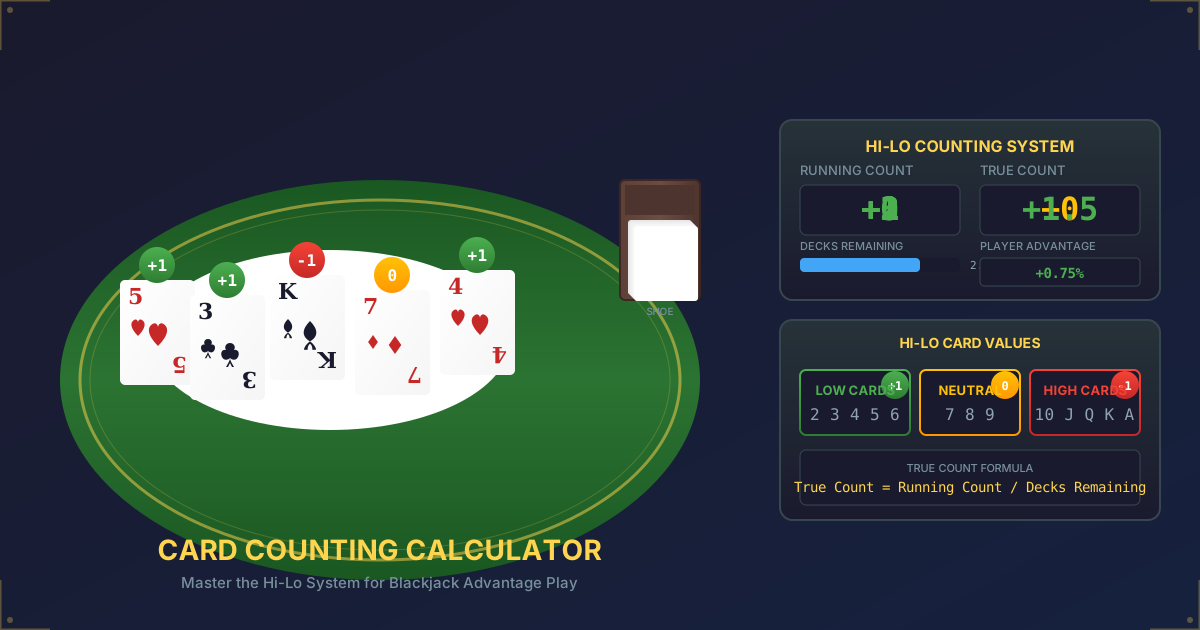
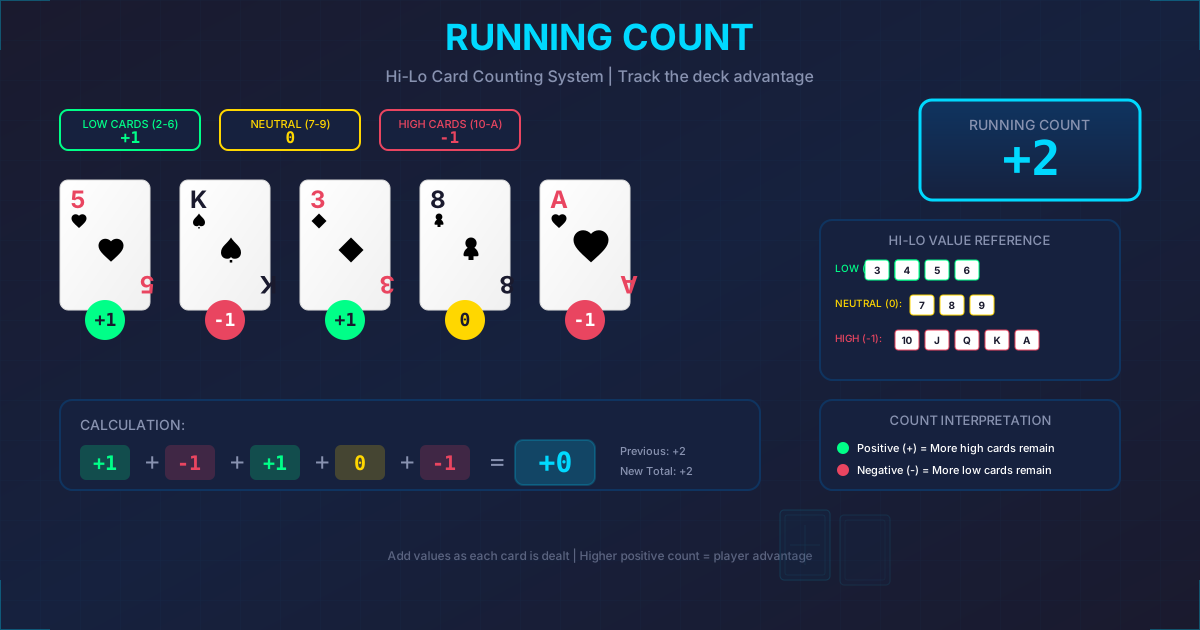
Mistake: Thinking composition = counting Problem: They're different concepts Fix: Composition uses your cards; counting tracks the shoe
4. Wrong Multi-Card Plays
Mistake: Standing on all multi-card 16s Problem: Multi-card 16 should hit vs 10 Fix: Only two-card 10-6 composition stands
Frequently Asked Questions
Is composition strategy worth learning?
For serious players in single/double deck games: yes. For casual players in shoe games: probably not worth the mental effort.
Does composition apply to soft hands?
Rarely. Soft hands have clear basic strategy plays that composition doesn't significantly change.
How does surrender affect composition?
Surrender typically dominates when available. 16 vs 10 with surrender = always surrender (overrides composition).
Should I use composition in online blackjack?
Only if single/double deck. Most online games are 6-8 deck where composition effects are negligible.
Can composition hurt my counting accuracy?
Yes—it's additional mental load. Master counting first; add composition later if you can handle it.
What about pair compositions?
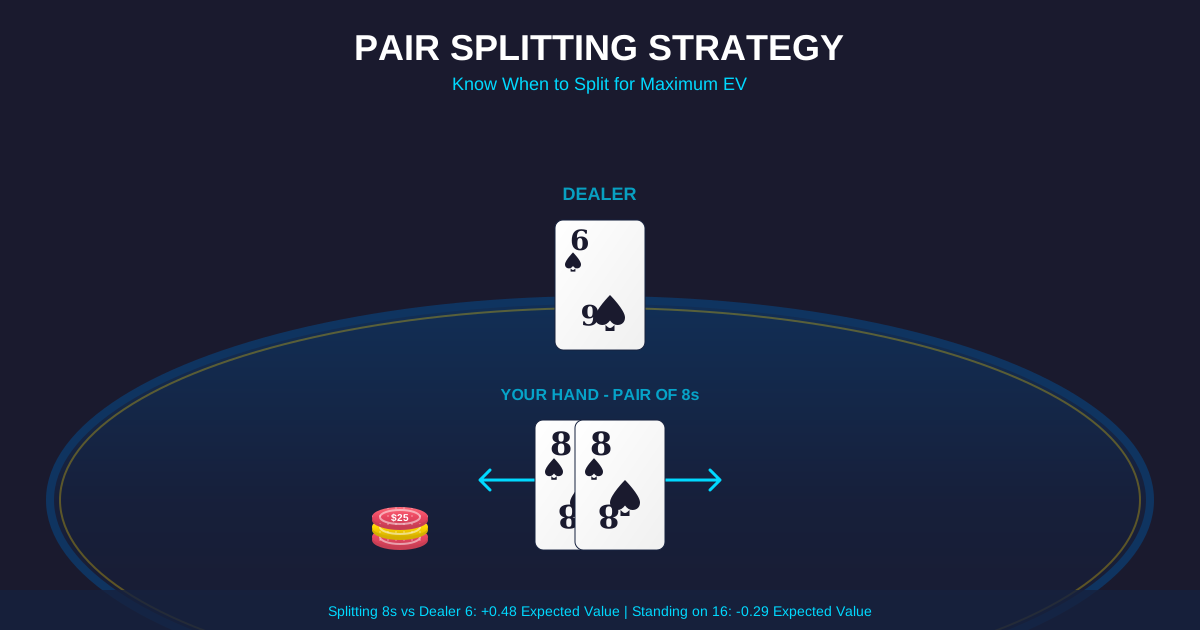
8-8 vs 10 is still split (then hit the 8s). Pair composition follows basic strategy.
Advanced Concepts
Conditional Probability
P(bust | 10-6) vs P(bust | 9-7)

10-6: 15/50 = 30.0% to draw 10
9-7: 16/50 = 32.0% to draw 10

Difference creates composition play
Multi-Card Composition
| Cards | 10s Seen | Effect |
|---|---|---|
| 10-6 | 1 | Less likely to bust |
| 9-7 | 0 | Normal bust odds |
| 7-5-4 | 0 | Removed small cards, worse |
| 6-5-5 | 0 | Removed small cards, worse |
Full Shoe Composition
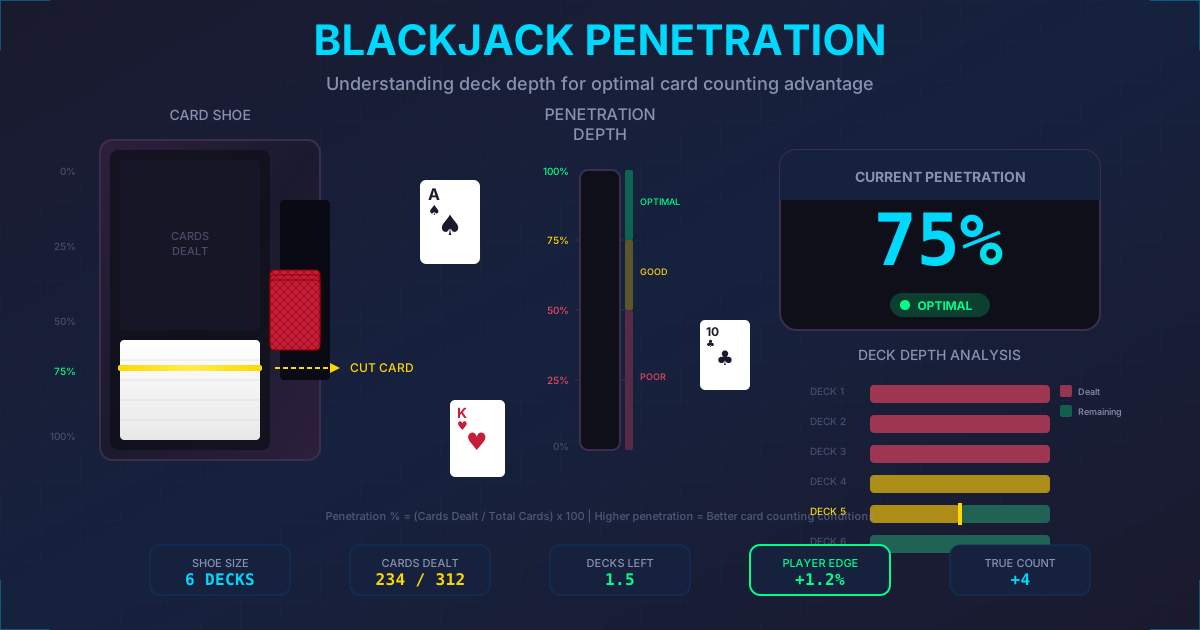
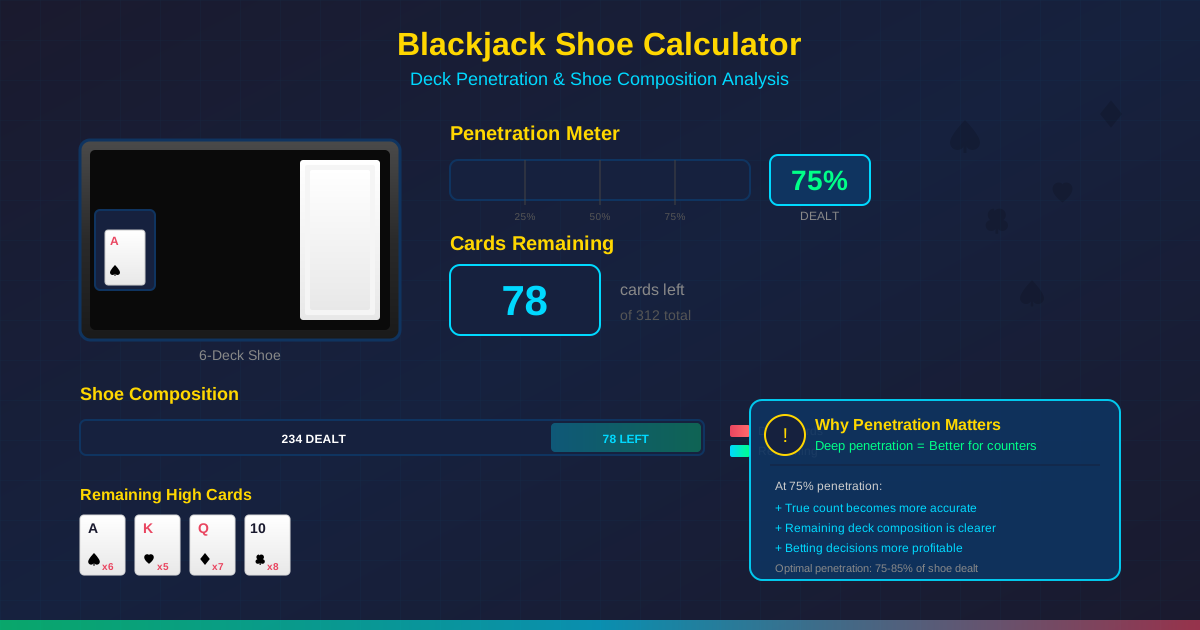
In a full 6-deck shoe (312 cards):
| Hand | 10s Left | Percentage |
|---|---|---|
| 10-6 | 95 | 30.5% |
| 9-7 | 96 | 30.9% |
Difference shrinks to near-zero.
Pro Tips
-
Master basic strategy first: Composition is a tiny edge on top
-
Focus on 16 vs 10: That's the big one
-
Know your game: Single deck = composition matters; 8 deck = forget it
-
Don't overthink: One or two plays, not dozens
-
Combine with counting: If you count, add composition for small edge boost
Related Calculators
- Blackjack Basic Strategy Calculator - Foundation plays
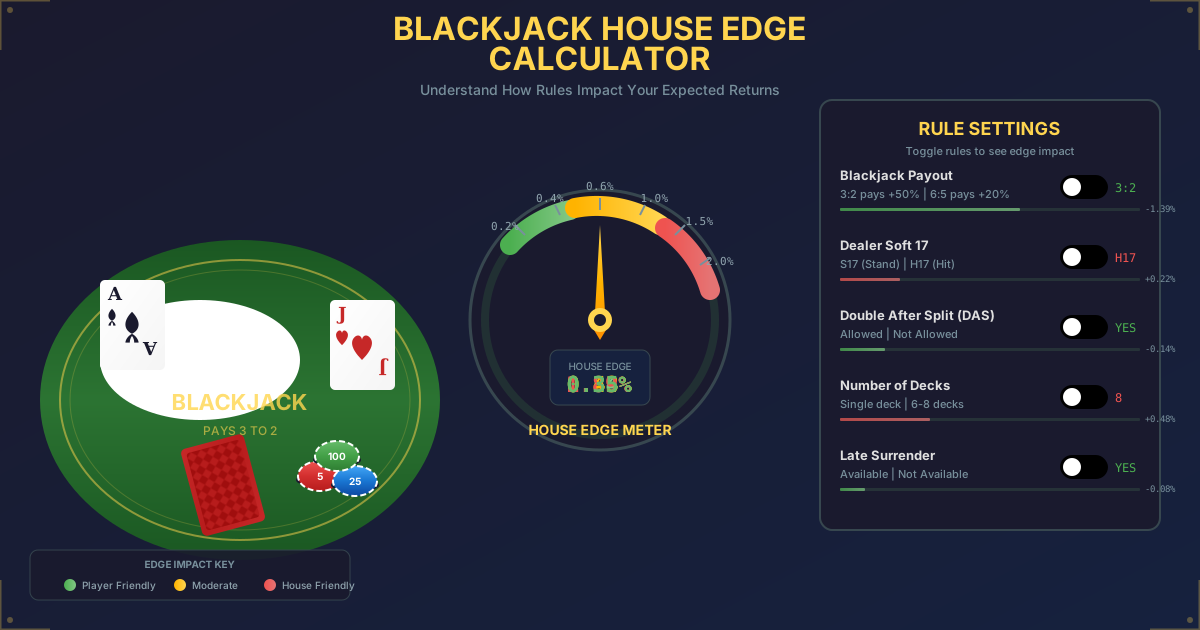
- Blackjack House Edge Calculator - Rule impact
- Blackjack Card Counting Calculator - Count systems
- Blackjack Expected Value Calculator - EV analysis
- Blackjack Risk of Ruin Calculator - Bankroll math
Conclusion
Composition dependent strategy adds a small but real edge beyond basic strategy—particularly in single and double deck games. The key play is 16 vs 10: stand with 10-6, hit with other compositions. Our calculator analyzes your exact cards to find these marginal improvements. For serious players willing to invest the mental effort, composition strategy is the next level beyond basic strategy perfection.
Calculate Composition Plays Now →
The difference between good and great blackjack play often comes down to marginal edges. Composition dependent strategy represents the refinement that separates recreational players from serious advantage players. Master basic strategy first, then add composition awareness for that extra fraction of a percent.