VR and Metaverse Casinos: The Future of Online Gambling (2026)
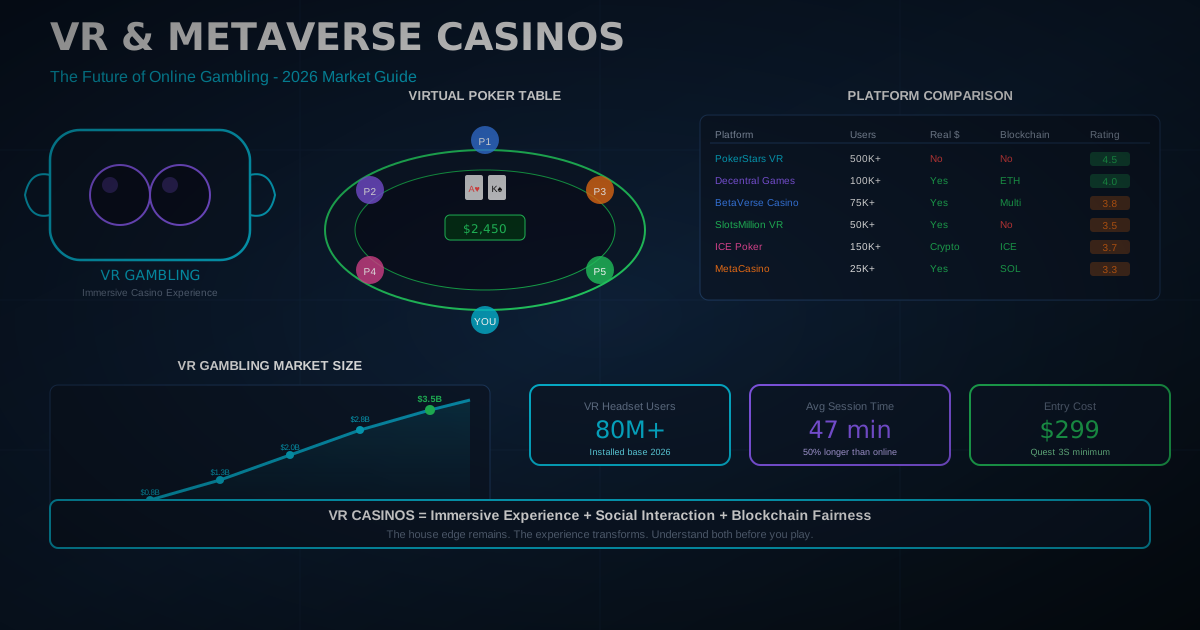
The global VR gambling market is projected to exceed $3.2 billion by the end of 2027, up from under $800 million in 2023. Virtual reality casinos are no longer a futuristic concept. In 2026, thousands of players are walking through photorealistic digital casino floors, sitting down at virtual poker tables with players from around the world, and pulling slot levers with motion controllers, all from their living rooms.
The metaverse gambling sector sits at the intersection of three massive technology trends: virtual reality hardware that has finally become affordable and comfortable, blockchain technology that enables provably fair gaming and cryptocurrency wagering, and social platforms that make virtual interaction feel genuinely engaging. The result is a gambling experience that combines the convenience of online casinos with the social atmosphere of Las Vegas.
But behind the impressive visuals and immersive experiences, the fundamental questions remain the same: What are the house edges? Are the games provably fair? How does regulation work in virtual worlds? And is this actually a better way to gamble, or just a more expensive one?
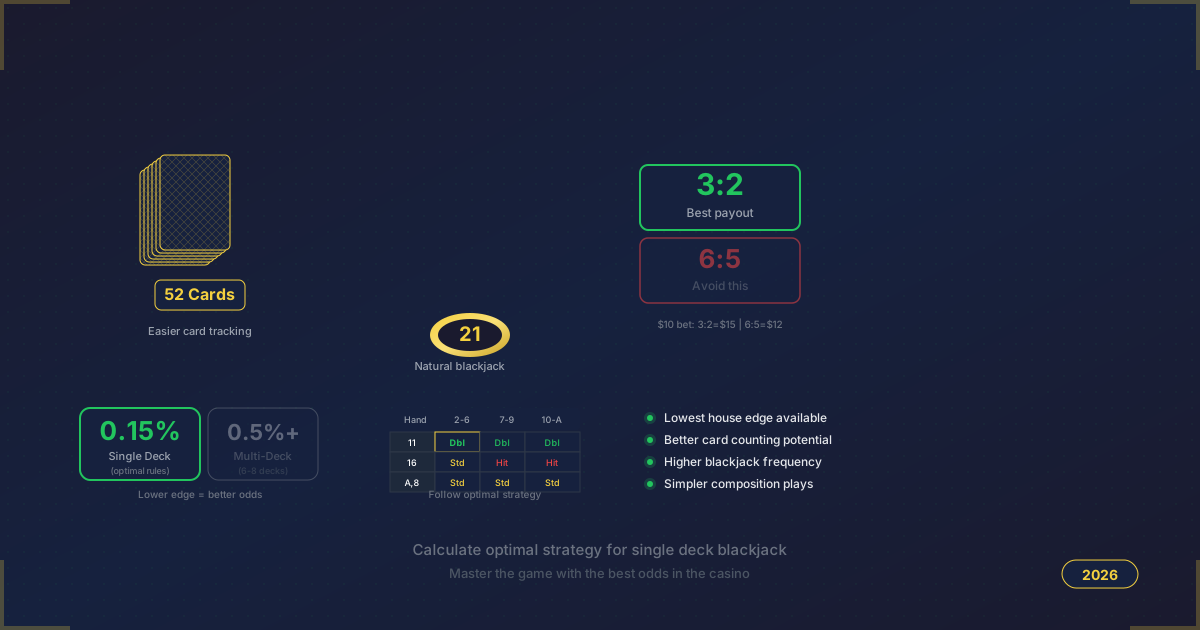
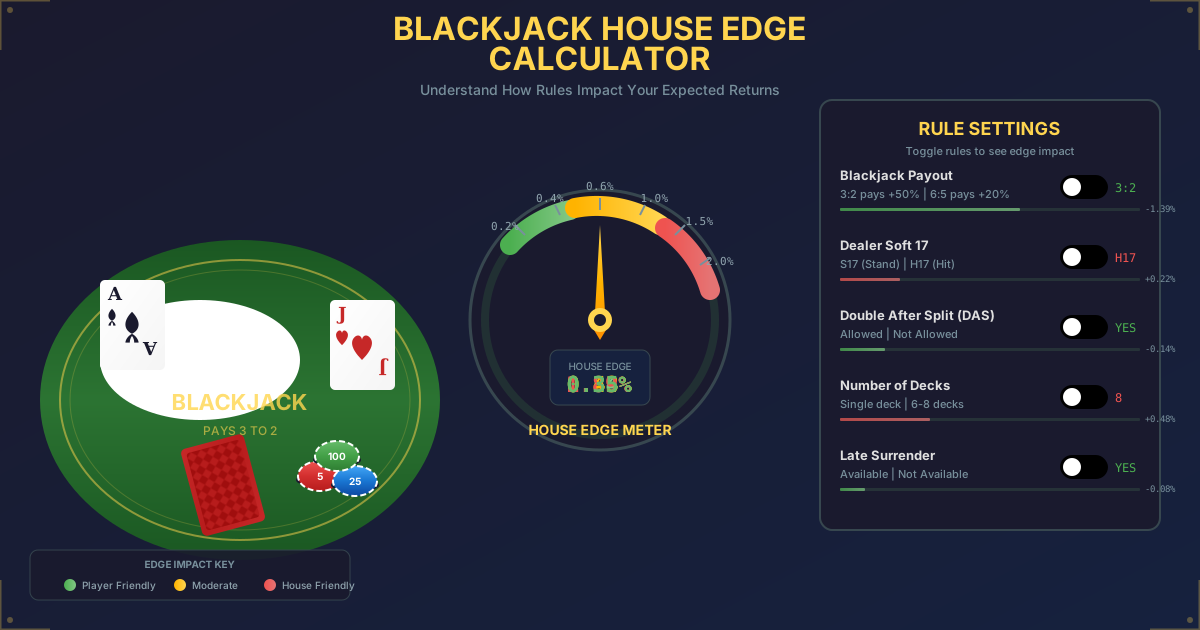
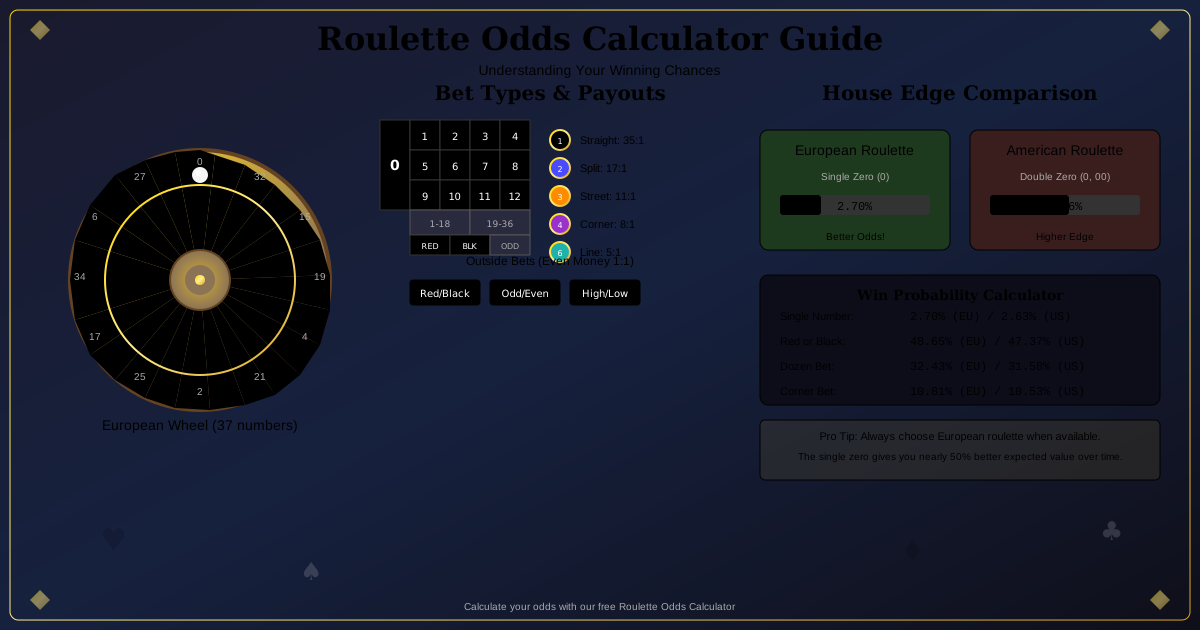
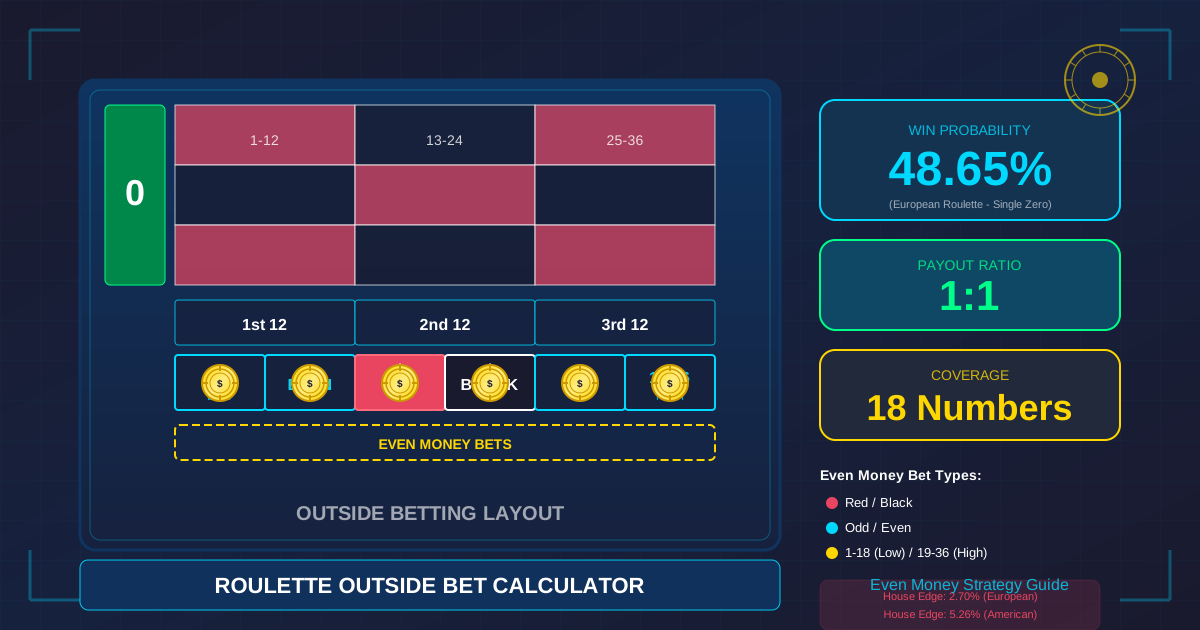
Compare the house edge on any casino game with our free Blackjack House Edge Calculator and Roulette Odds Calculator.
What Are VR Casinos and How Do They Work?
VR casinos are fully immersive virtual environments where players use virtual reality headsets to enter 3D casino spaces, interact with other players through avatars, and play traditional casino games using motion controllers or hand tracking. They simulate the physical experience of being inside a real casino.
The Technology Stack
VR casinos combine several technologies to create the gambling experience:
| Component | Technology | Purpose |
|---|---|---|
| Headset | Meta Quest 3/3S, Apple Vision Pro, PSVR2 | Visual immersion and spatial audio |
| Controllers | Hand tracking, motion controllers | Game interaction (cards, chips, levers) |
| Avatar System | Full-body tracking, facial expressions | Social presence and identity |
| Game Engine | Unity, Unreal Engine 5 | 3D rendering and physics |
| Networking | WebRTC, dedicated servers | Real-time multiplayer |
| Blockchain | Ethereum, Solana, Polygon | Provably fair games, crypto payments |
| RNG | Cryptographic random number generators | Fair game outcomes |
| Payment | Crypto wallets, fiat gateways | Deposits and withdrawals |
How the Experience Feels
When you put on a VR headset and enter a metaverse casino, the experience is dramatically different from clicking buttons on a 2D website:
- You have a body. Your avatar has hands that pick up cards, stack chips, and gesture to other players.
- Spatial audio creates atmosphere. You hear slot machines ringing in the distance, cards shuffling at your table, and the player next to you talking.
- Social interaction is natural. You can turn to the player beside you, nod, shake your head, and have a conversation as if you were sitting next to them.
- The environment is immersive. Casino floors are designed with realistic lighting, architecture, and ambiance that tricks your brain into feeling present.
- Physical gestures replace clicks. You throw chips into the pot, pull slot levers, and wave for a hit in blackjack.
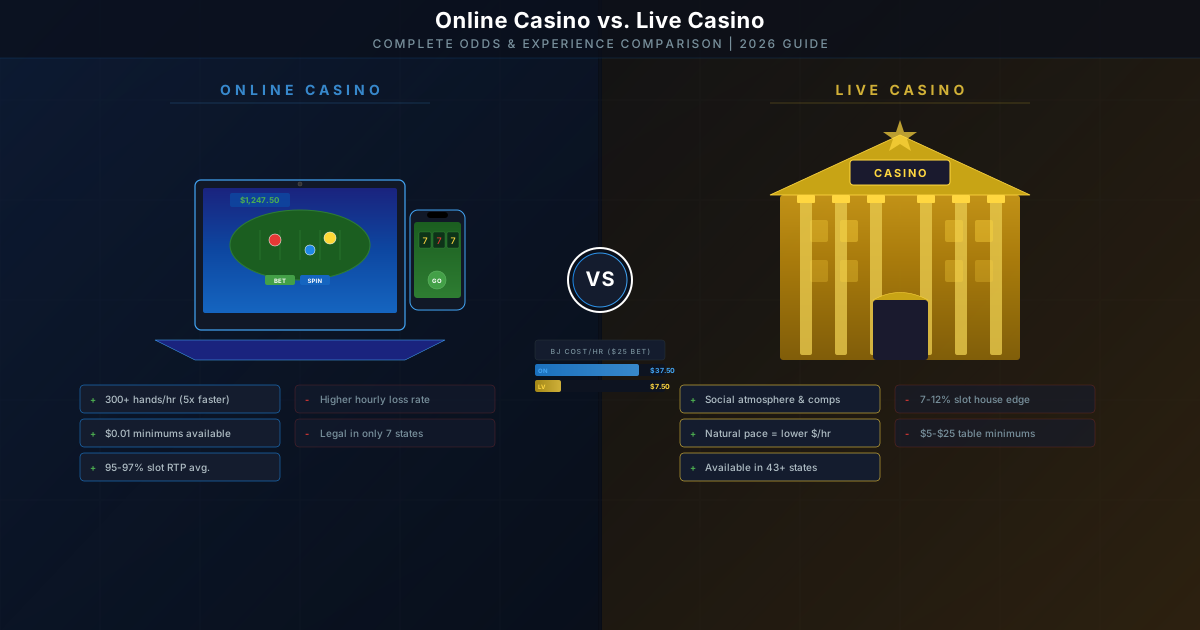
VR Casino vs. Traditional Online Casino vs. Land-Based Casino
| Feature | VR Casino | Traditional Online Casino | Land-Based Casino |
|---|---|---|---|
| Social Interaction | High (voice chat, avatars) | Low (text chat only) | Highest (in person) |
| Convenience | High (play from home) | Highest (any device) | Low (travel required) |
| Game Speed | Moderate | Fastest | Slowest |
| House Edge | Varies (0.5-15%) | Varies (0.5-15%) | Varies (0.5-15%) |
| Atmosphere | Immersive | Minimal | Best |
| Cost to Play | Hardware + bets | Just bets | Travel + hotel + bets |
| Provably Fair | Yes (blockchain) | Sometimes | No |
| Player Tells | Avatar-based | None | Physical tells |
| Accessibility | Requires VR headset | Any device | Physical location |
| Privacy | High | High | Low |
Calculate the exact house edge on any blackjack variant with our Blackjack House Edge Calculator.
What Games Are Available in VR Casinos?
VR casinos offer most traditional casino games adapted for virtual reality, with poker and slots being the most popular. The best VR games take advantage of the medium by adding social and physical elements that are impossible in traditional online casinos.
Available VR Casino Games
| Game | VR Adaptation Quality | Social Element | Popularity | House Edge Range |
|---|---|---|---|---|
| Poker (Texas Hold'em) | Excellent | Very High | #1 | 2.5-5% (rake) |
| Blackjack | Excellent | High | #2 | 0.5-2% |
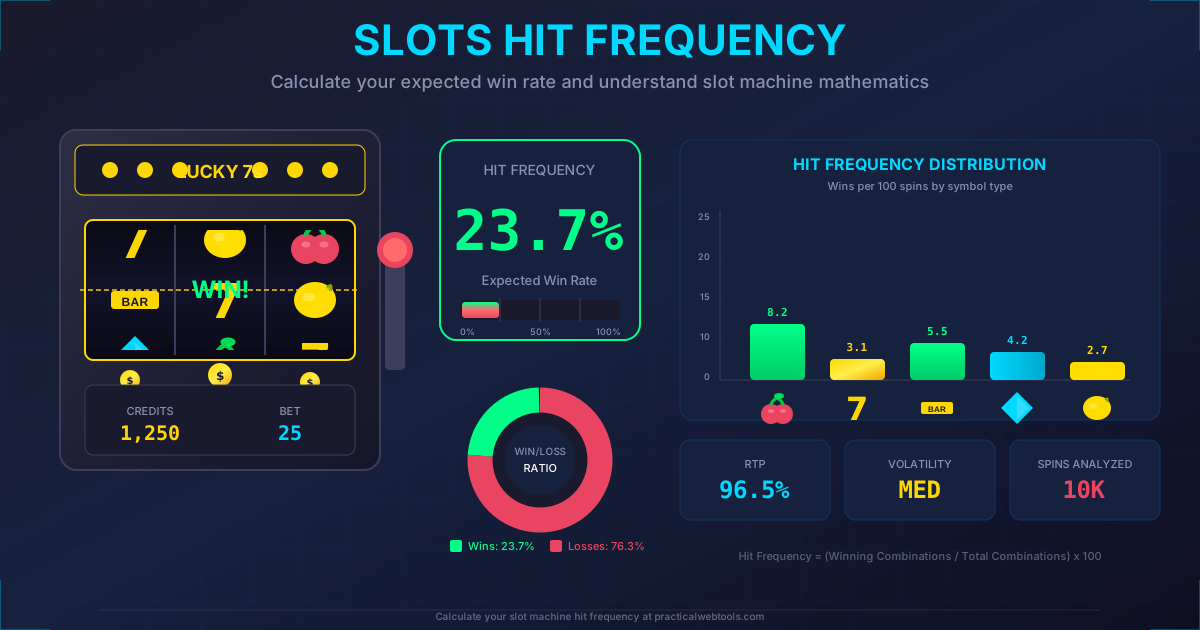
| Slots | Good | Low | #3 | 2-15% |
| Roulette | Very Good | Moderate | #4 | 2.7-5.26% |
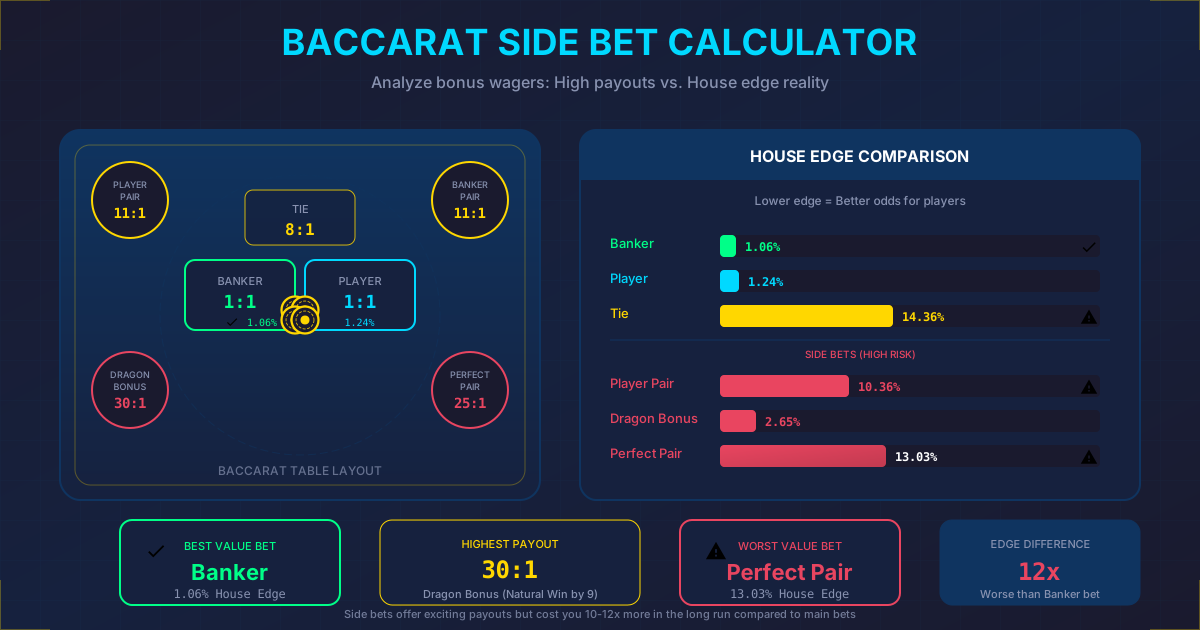
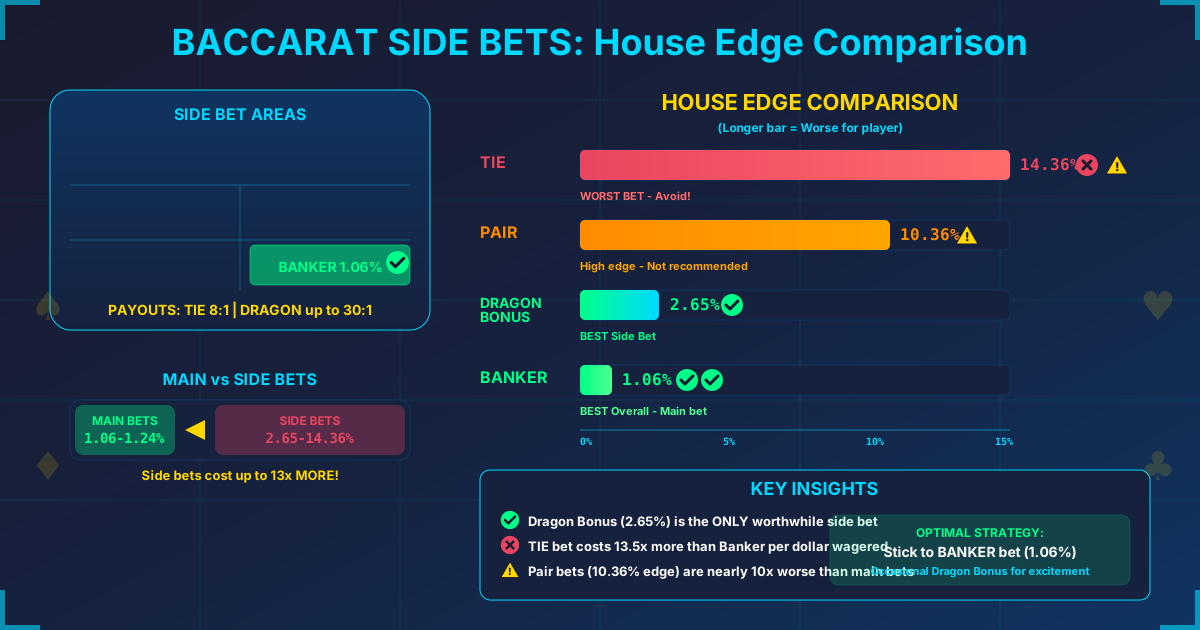
| Baccarat | Good | Moderate | #5 | 1.06-14.36% |
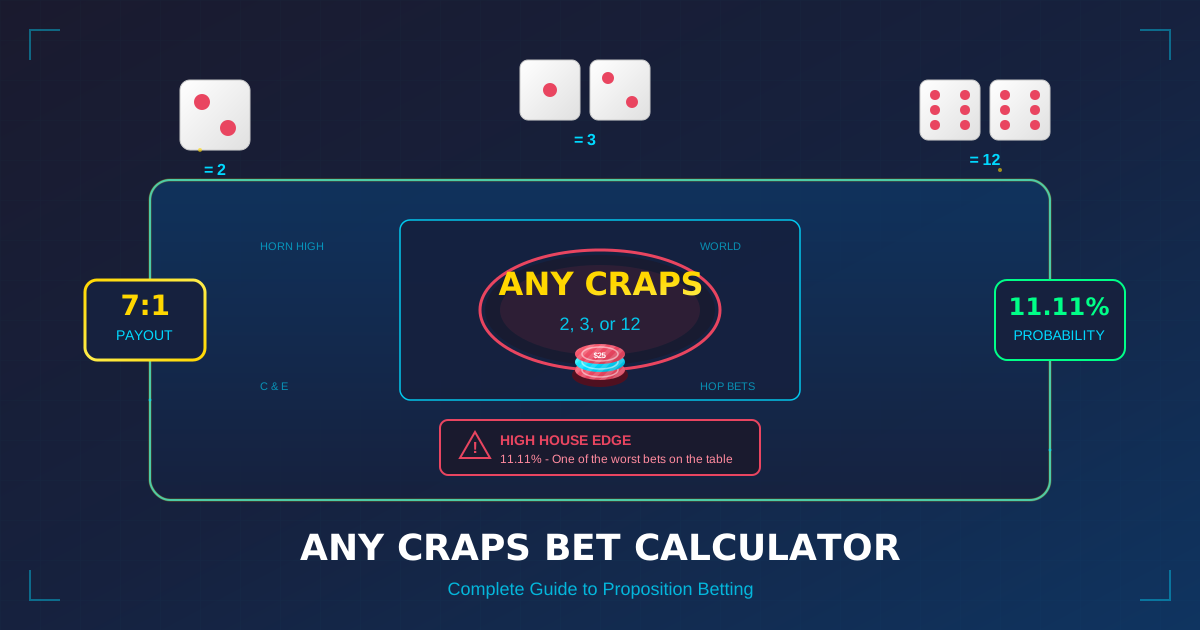
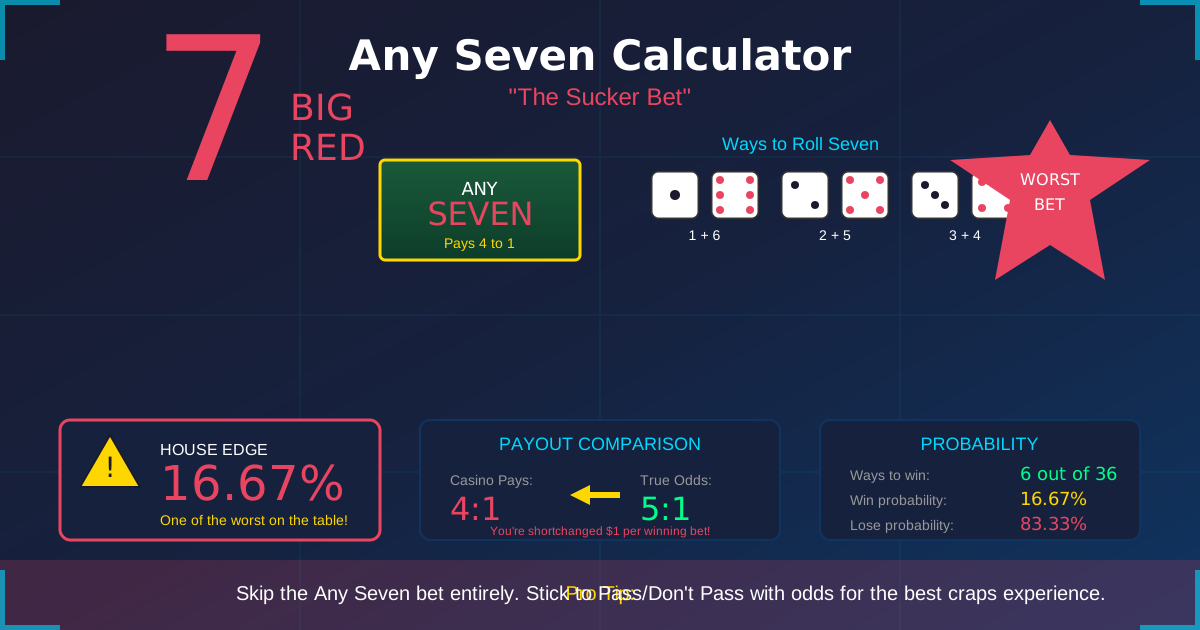
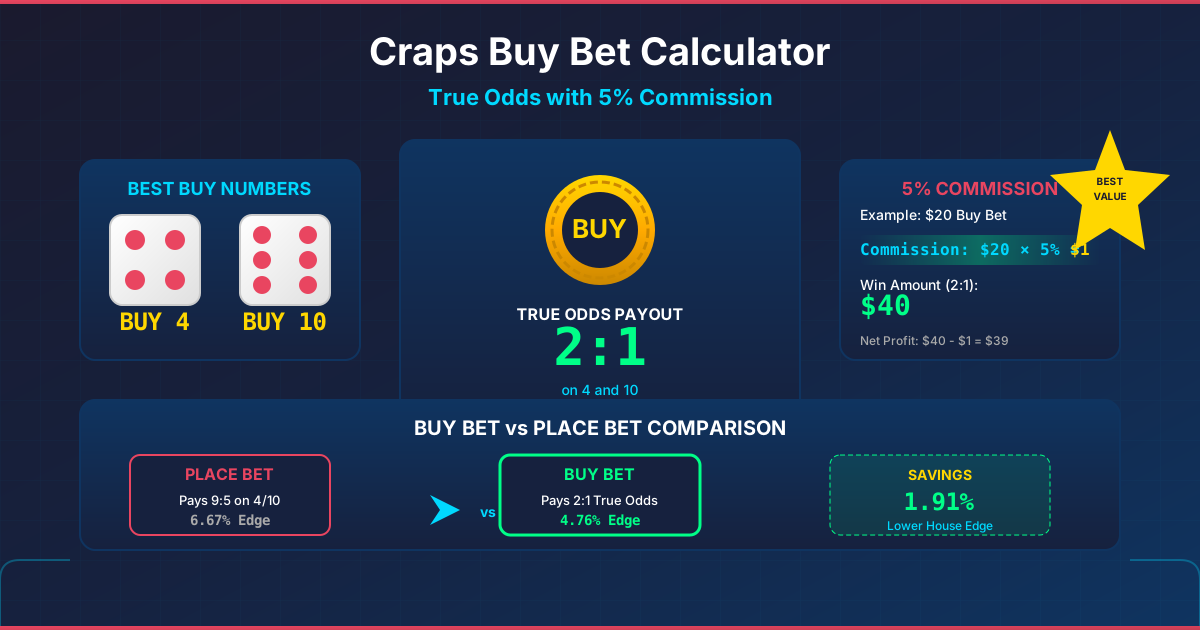
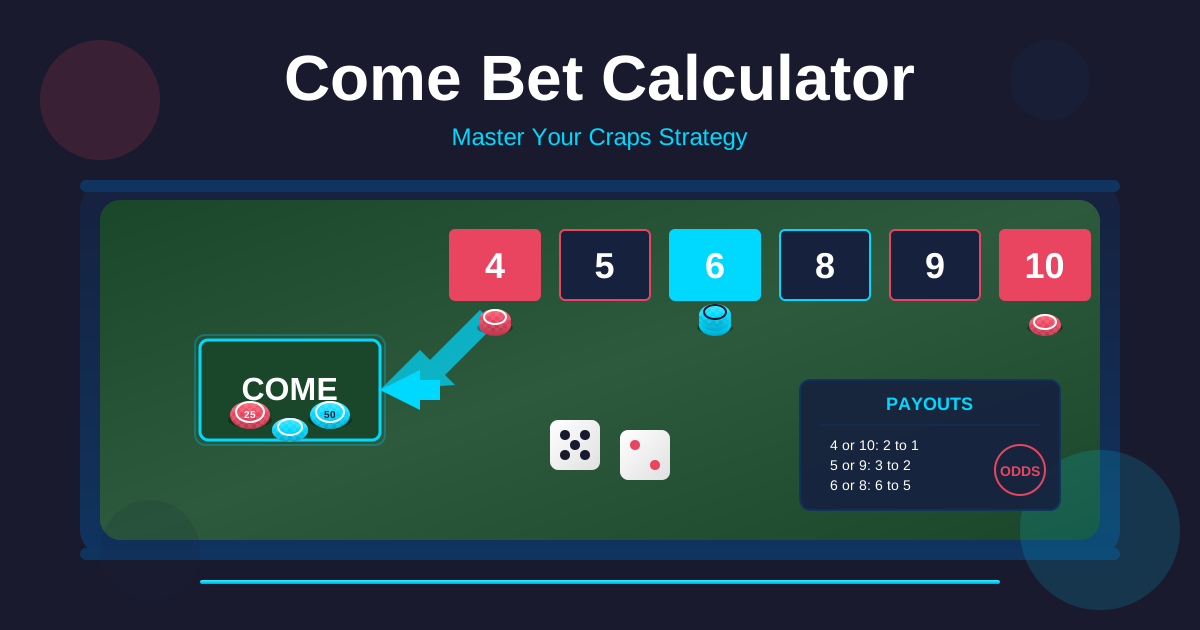
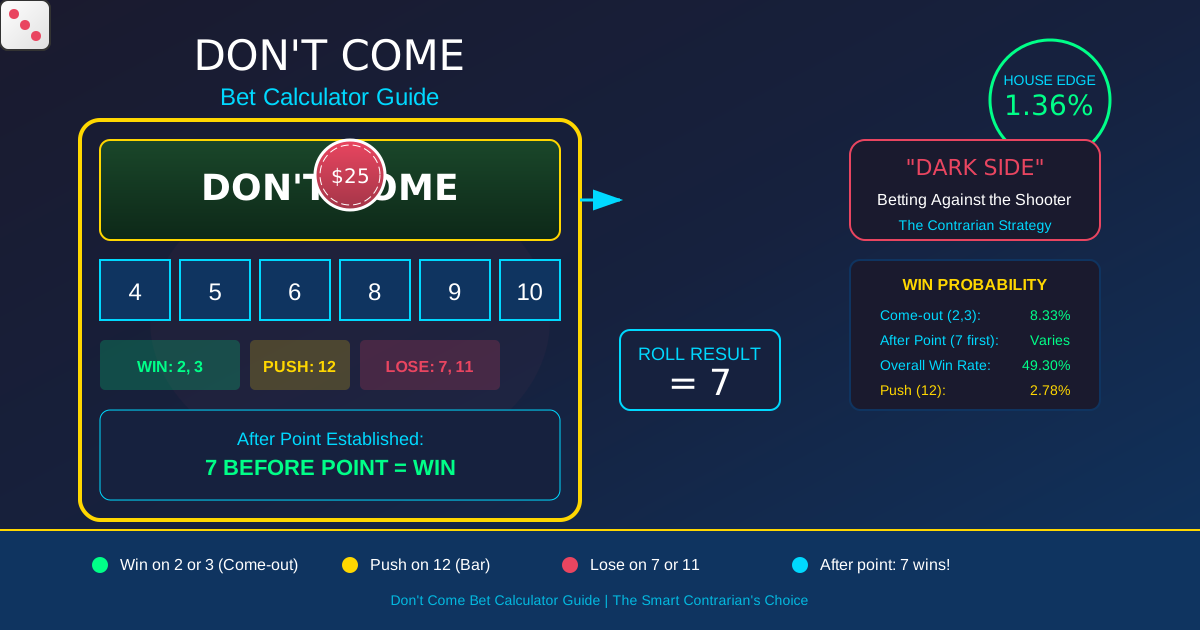
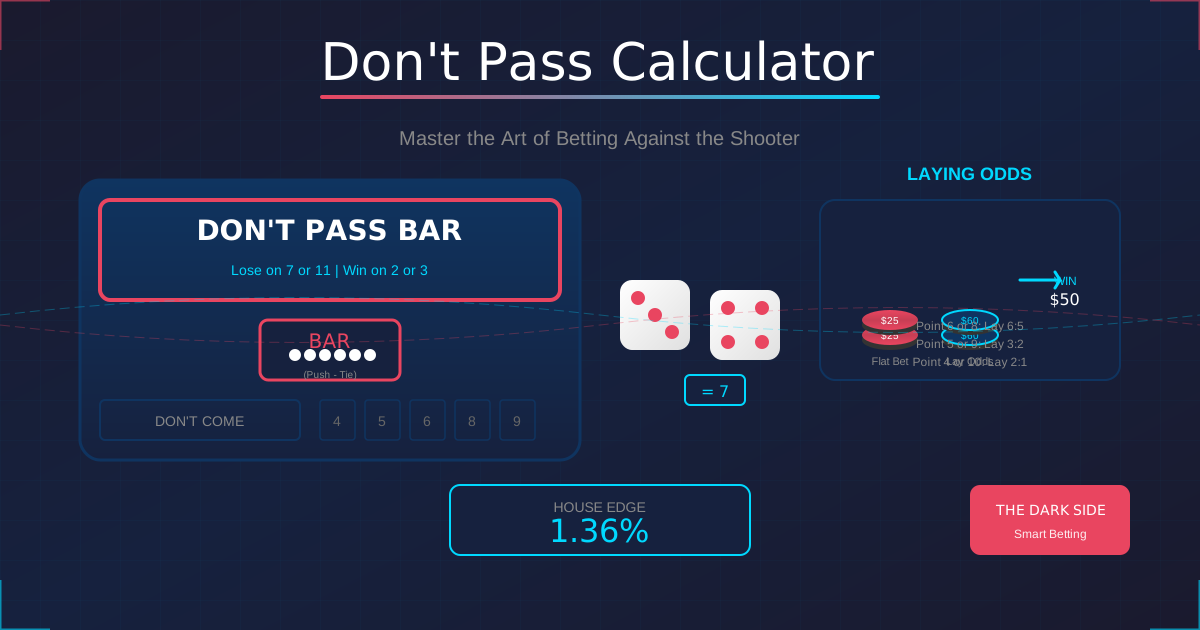
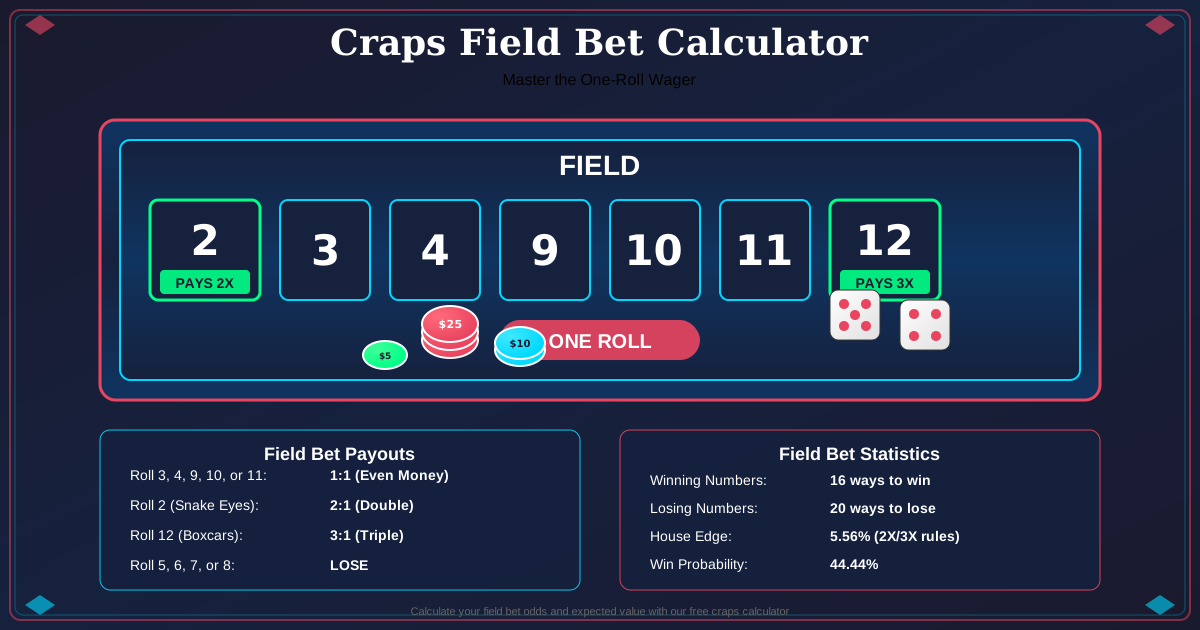
| Craps | Excellent | Very High | #6 | 1.36-16.67% |
| Sports Betting Lounge | Good | High | #7 | Varies |
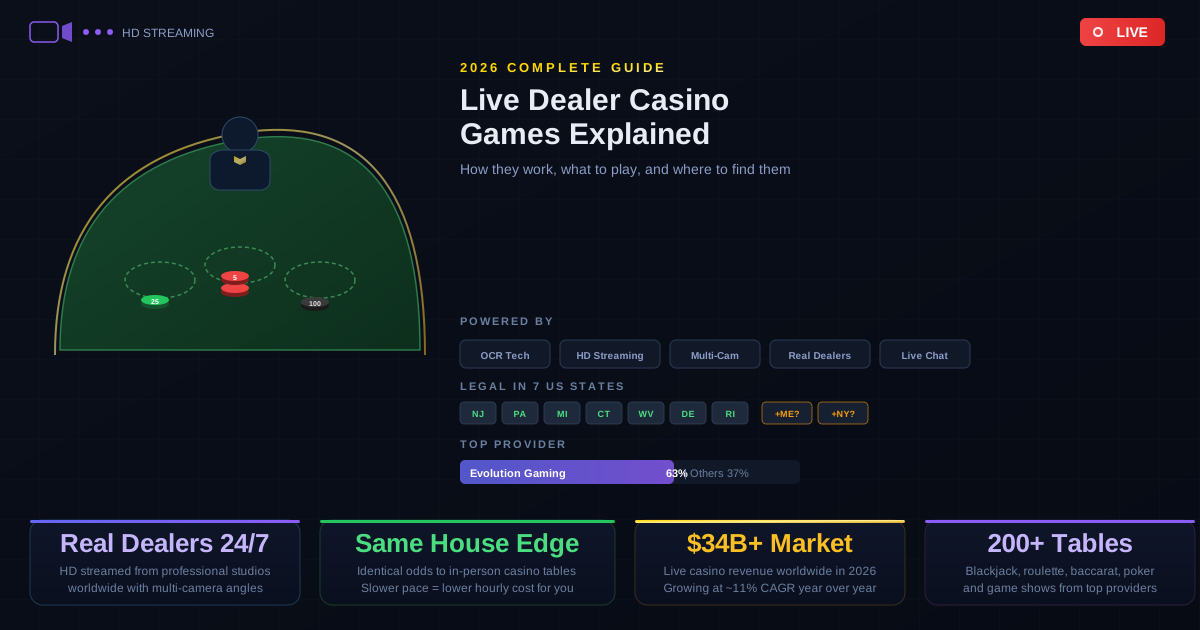
| Live Dealer (Hybrid) | Very Good | High | #8 | Same as table games |
VR Poker: The Flagship Experience
Poker is the game that benefits most from VR because it is fundamentally a social game. In VR poker:
- Read body language through avatars. Players can bluff with gestures, lean forward aggressively, or fidget nervously. While avatar tells are not as reliable as real-world tells, they add a strategic dimension that flat online poker lacks.
- Table talk is natural. Voice chat at the table feels like sitting in a real cardroom.
- Chip handling is physical. You stack, shuffle, and toss chips with your virtual hands.
- Multi-table is possible. Some platforms let you sit at multiple tables in different virtual rooms.
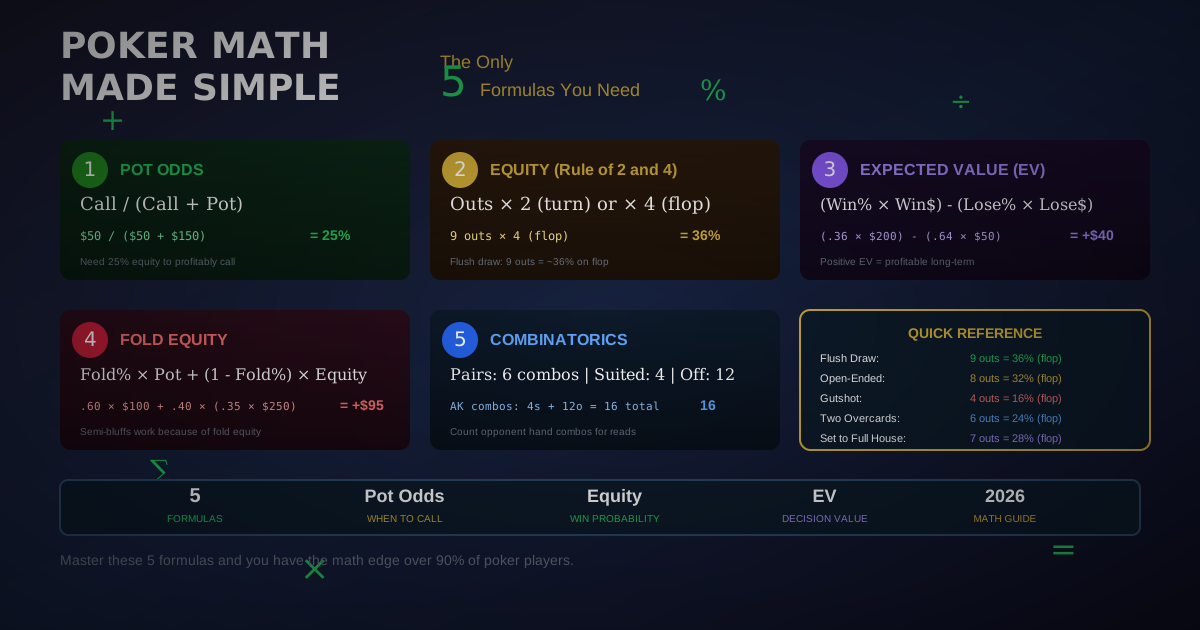
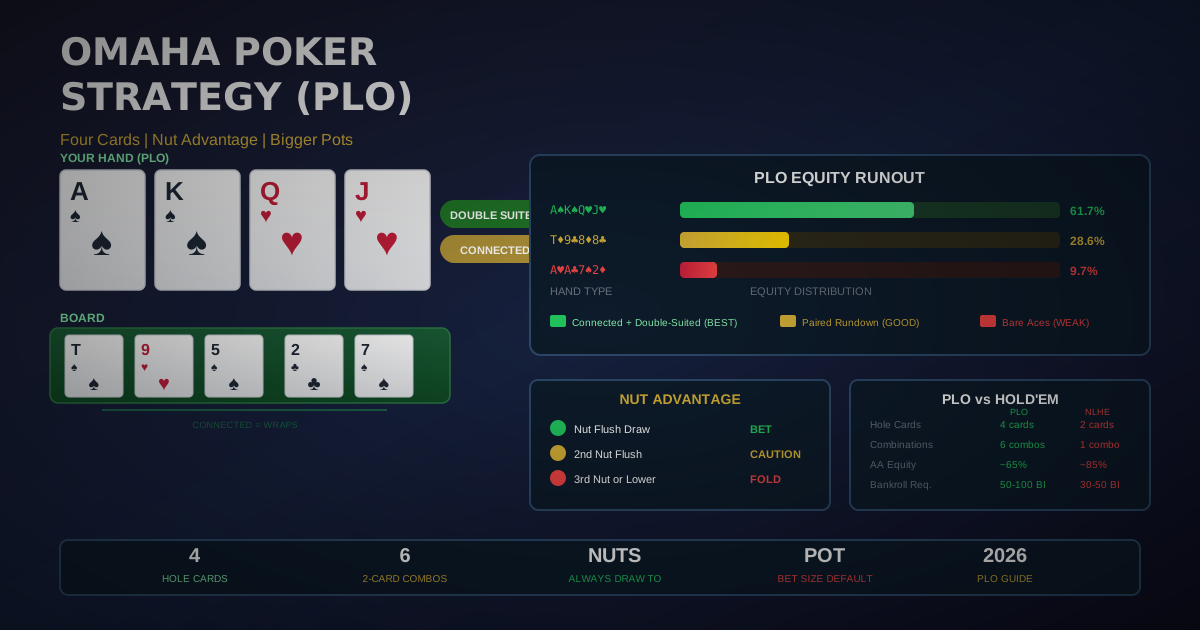
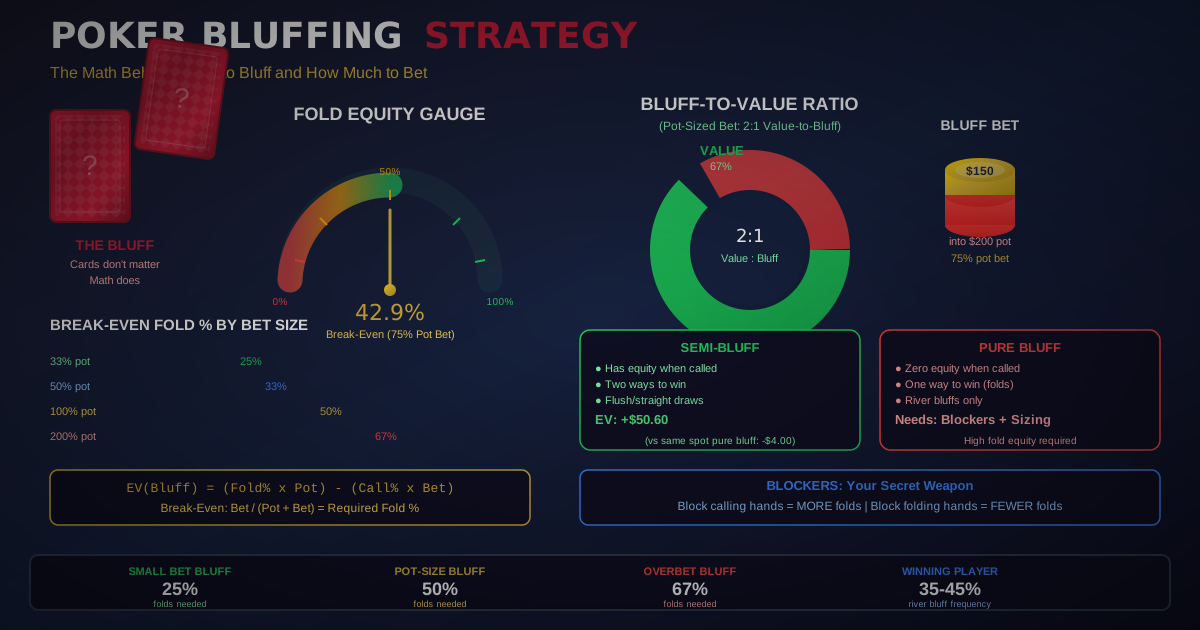
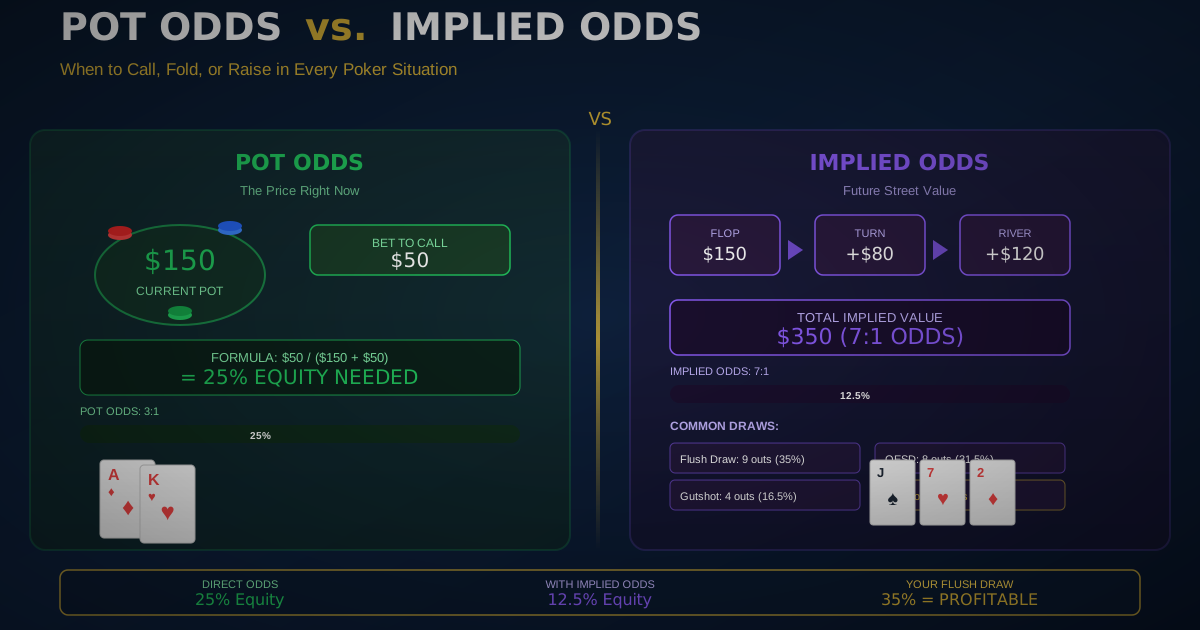
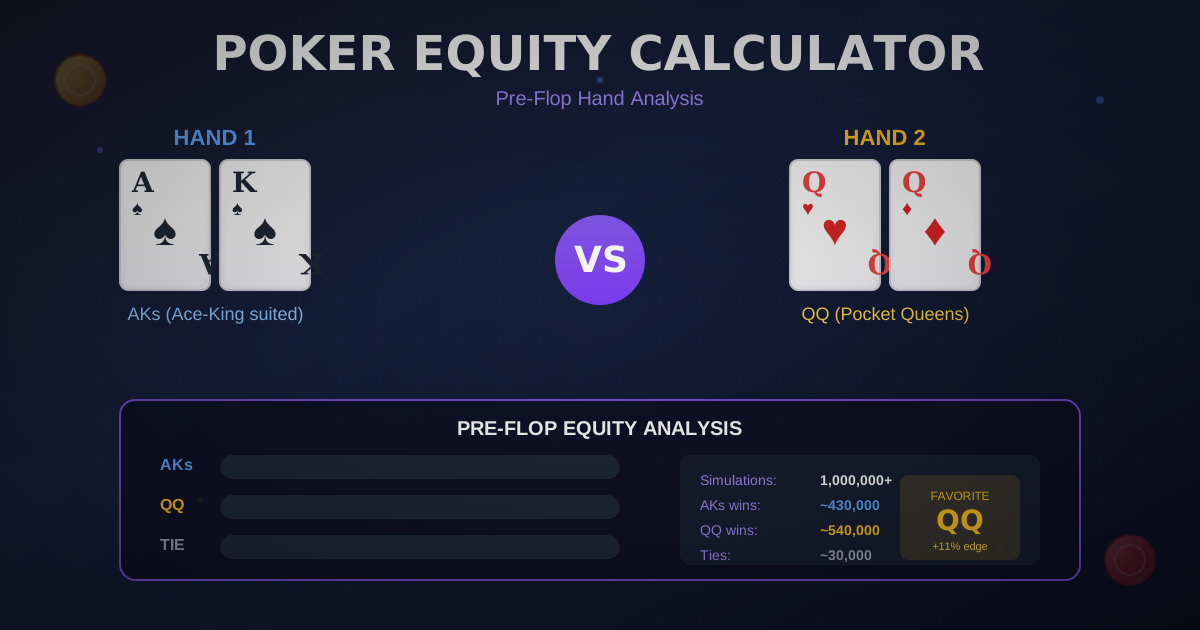
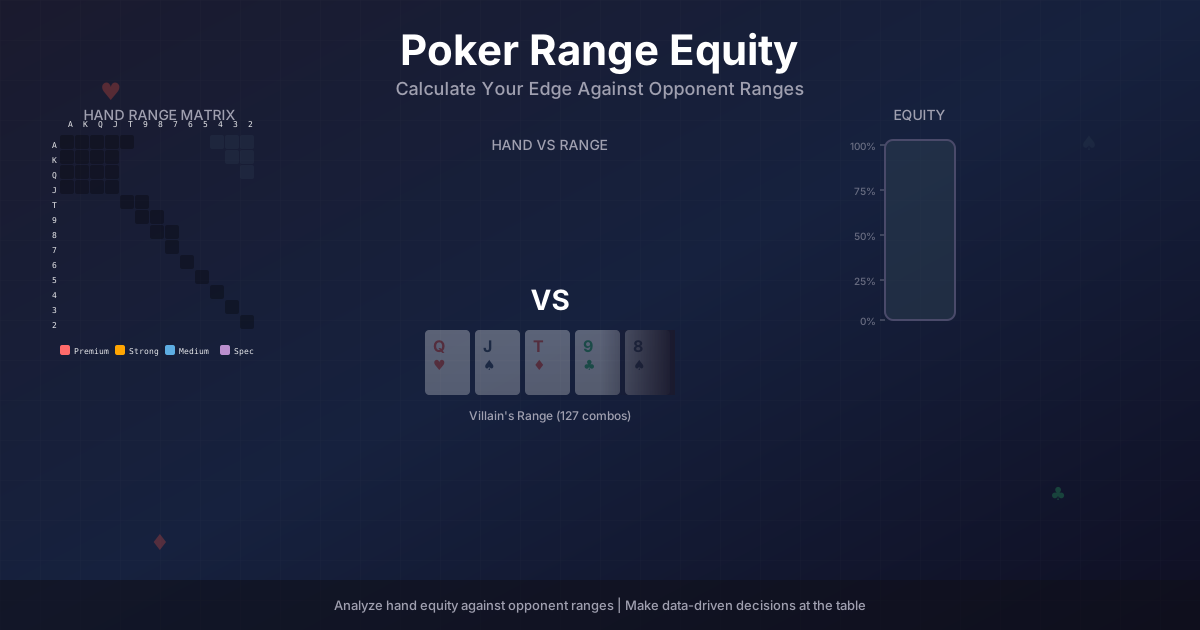
Calculate your poker equity in any hand with our Poker Equity Calculator.
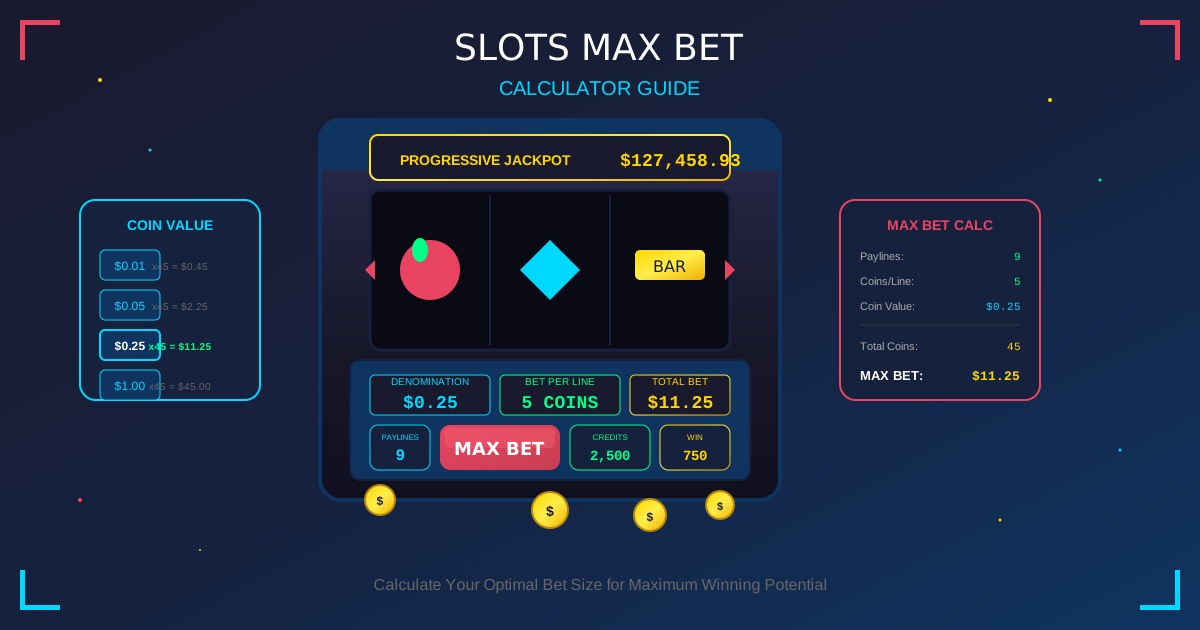
VR Slots: Beyond the Lever Pull
VR slot machines transform a solitary experience into something more engaging:
- 3D environments surrounding each slot machine theme
- Physical interaction with levers, buttons, and bonus game elements
- Social features like watching other players' big wins in real-time
- Themed rooms where the entire environment matches the slot theme
- Group bonus rounds where multiple players participate together
VR Craps and Roulette: Best in Class
Table games like craps and roulette translate beautifully to VR because the physical act of throwing dice or watching a ball spin around a wheel is inherently exciting. VR craps tables often have 8-10 players all cheering and reacting, recreating the energy of a hot streak at a Vegas craps table.
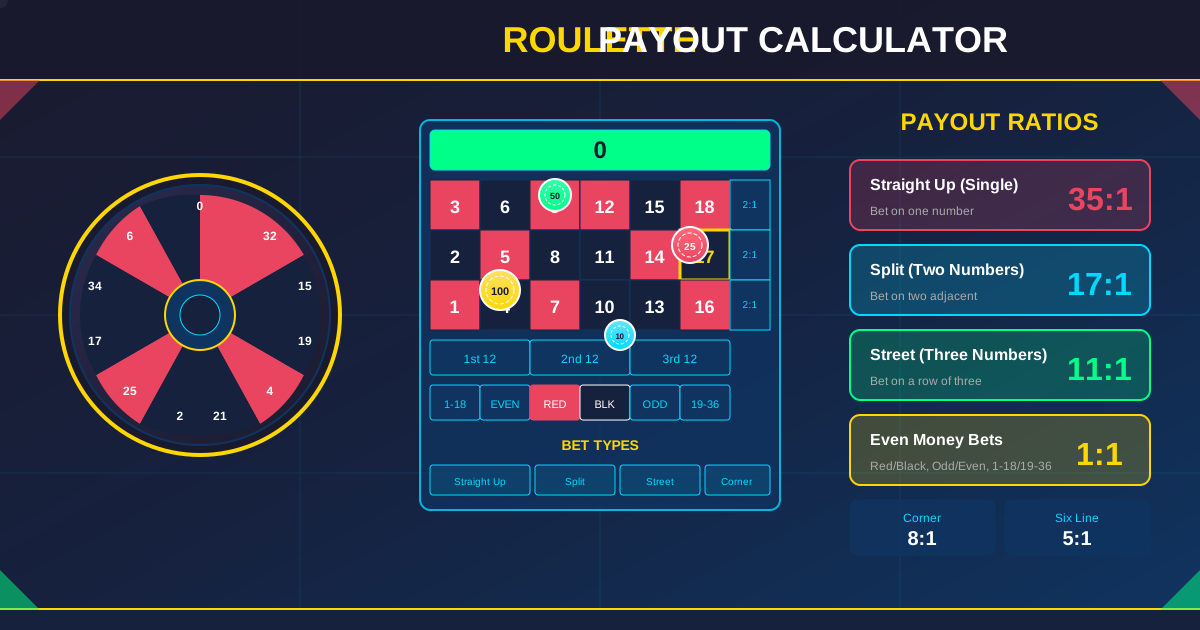
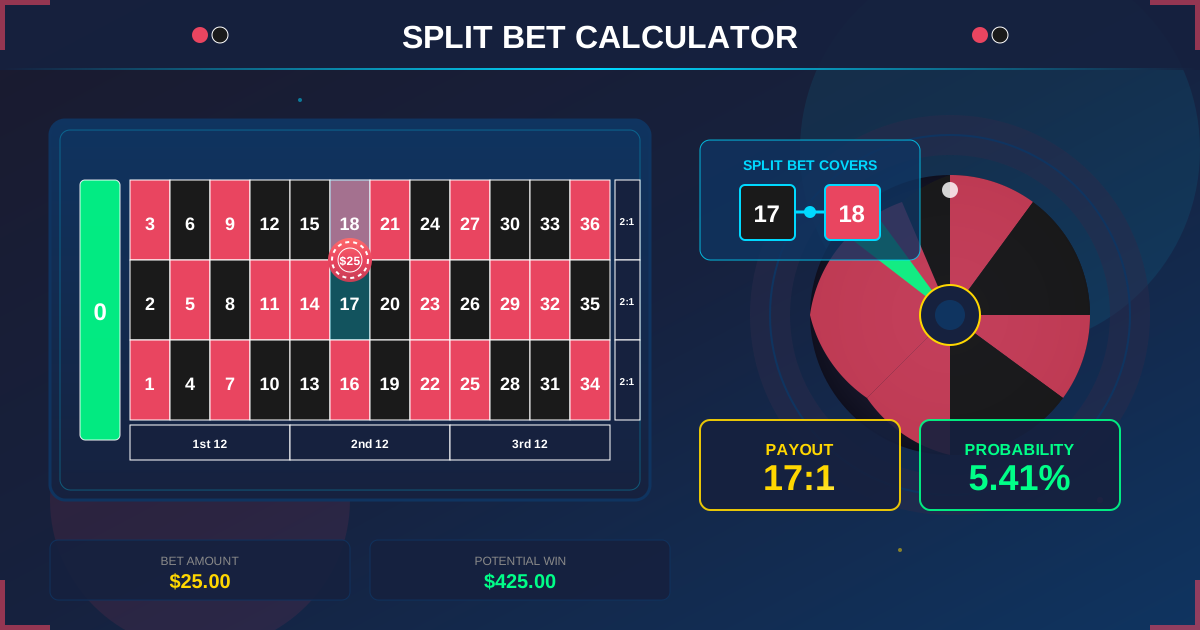
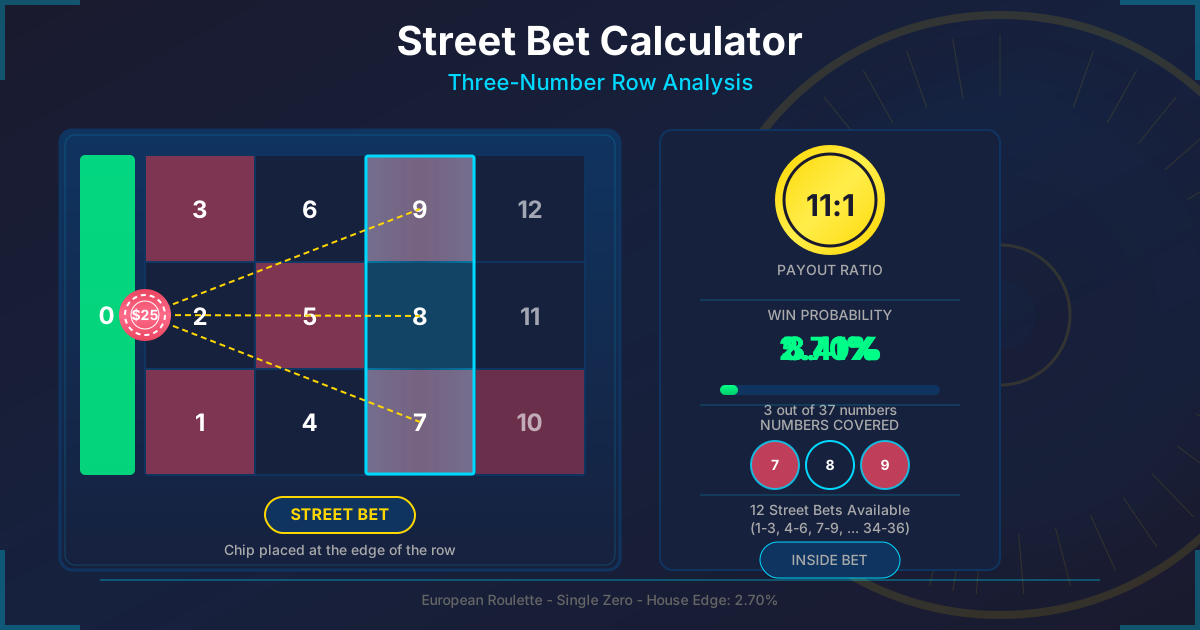
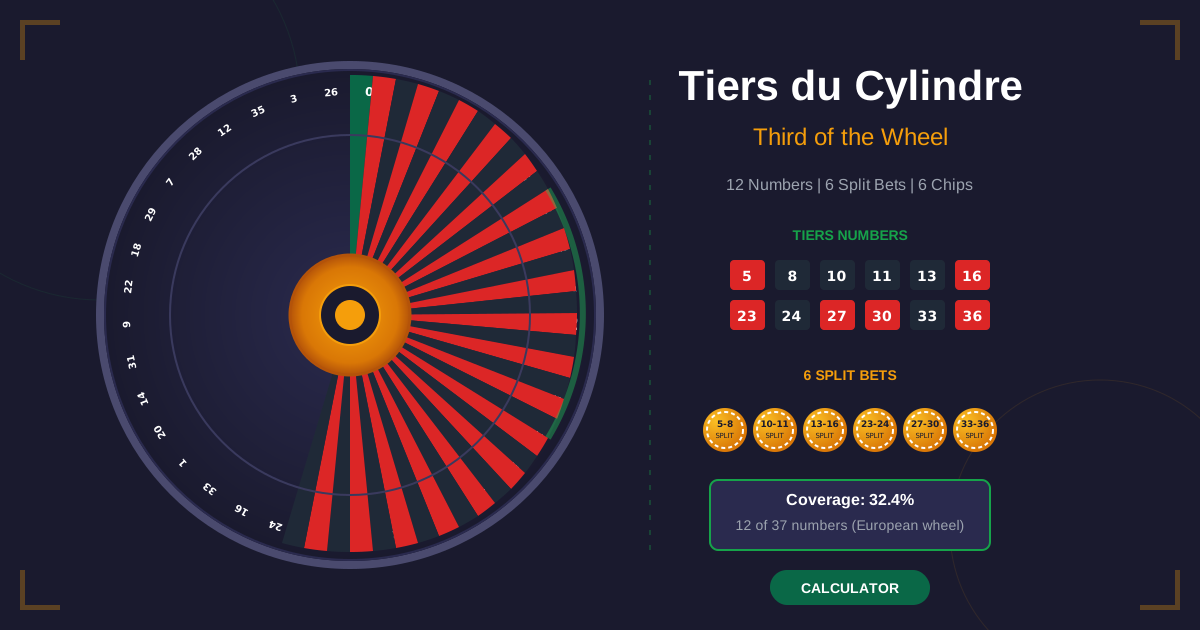
Check the odds on any roulette bet with our Roulette Odds Calculator.
What Are the Top VR and Metaverse Casino Platforms in 2026?
The VR casino landscape includes both standalone VR apps and metaverse-based platforms that integrate gambling into larger virtual worlds. Each platform has different strengths, regulatory compliance, and game offerings.
Platform Comparison
| Platform | Headset Support | Currency | Regulation | Key Feature | User Base |
|---|---|---|---|---|---|
| PokerStars VR | Quest 3, PCVR | Free-to-play | Not real money | Best poker experience | 500K+ |
| Casino VR Poker | Quest 3, PCVR | Free-to-play | Not real money | Social features | 300K+ |
| Decentral Games | Web + VR | Crypto (MANA, ETH) | Curacao license | NFT wearables, DAO governance | 100K+ |
| BetaVerse Casino | Quest 3, PCVR | Crypto + fiat | Malta Gaming Authority | Provably fair, full game suite | 75K+ |
| SlotsMillion VR | PCVR | Fiat currency | Malta, UK licenses | First licensed VR casino | 50K+ |
| ICE Poker | Web + VR | Crypto (ICE token) | Decentralized | Play-to-earn model | 150K+ |
| MetaCasino | Quest 3, Vision Pro | Crypto | Curacao | Apple Vision Pro support | 25K+ |
Free-to-Play vs. Real Money Platforms
A critical distinction exists between free-to-play VR casinos and real-money platforms:
Free-to-Play (PokerStars VR, Casino VR Poker):
- No real money at stake
- Available on all platforms without age verification
- Great for learning VR gambling mechanics
- Monetized through cosmetics and virtual currency purchases
- Player behavior differs significantly from real-money games
Real-Money (SlotsMillion, BetaVerse, Decentral Games):
- Actual money at risk
- Requires age and identity verification
- Regulated by gaming authorities
- House edges comparable to traditional online casinos
- More serious player base
Crypto-Native (Decentral Games, ICE Poker):
- Cryptocurrency deposits and withdrawals
- Often operate in regulatory gray areas
- Blockchain-verifiable fairness
- Token economics add complexity (token value fluctuation affects winnings)
- NFT integration for rewards and VIP status
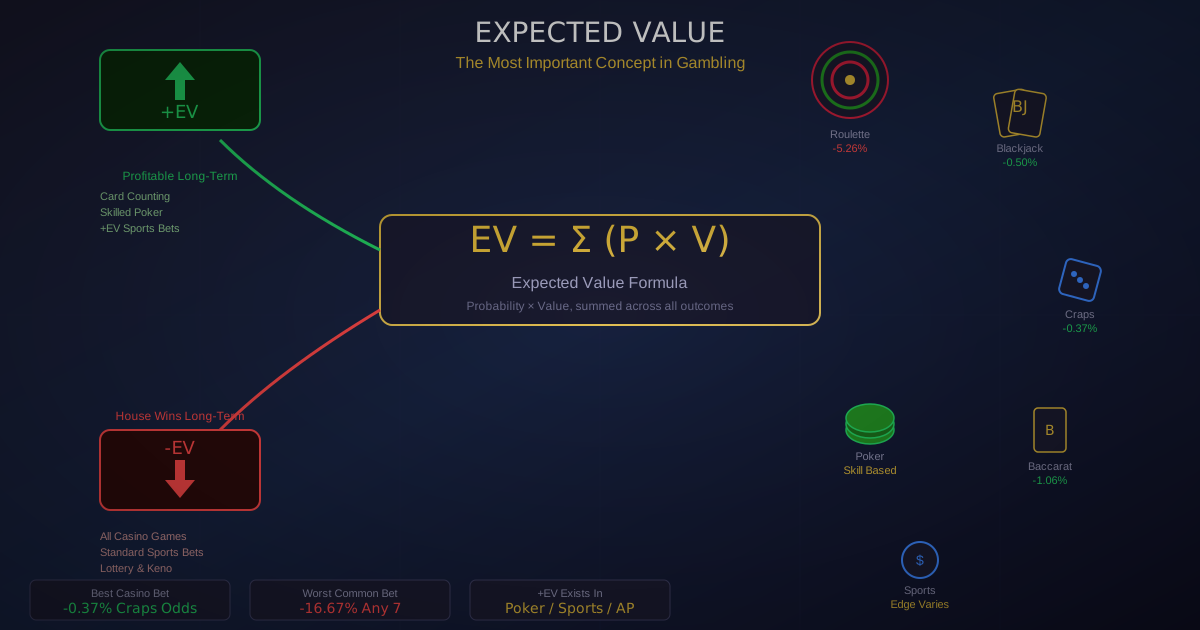
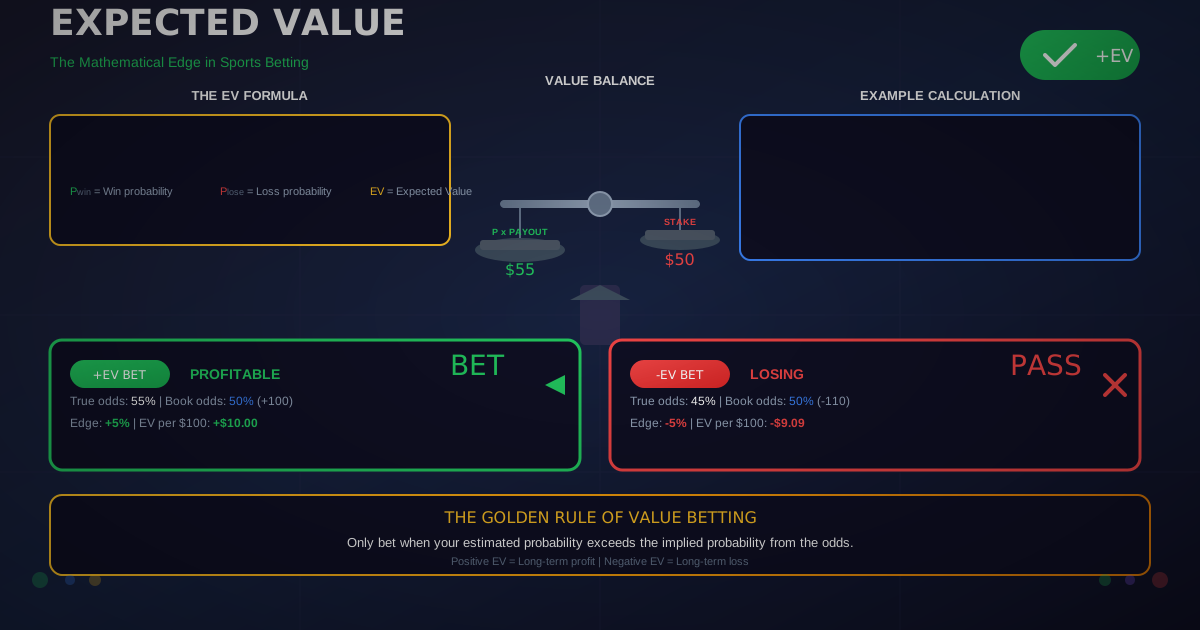
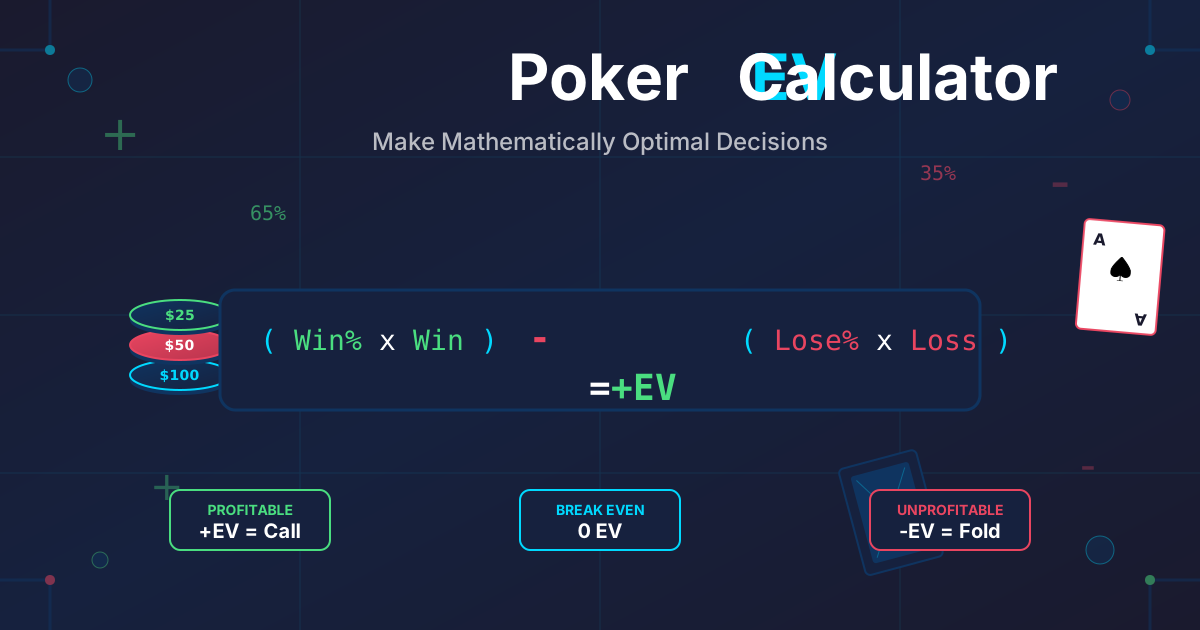
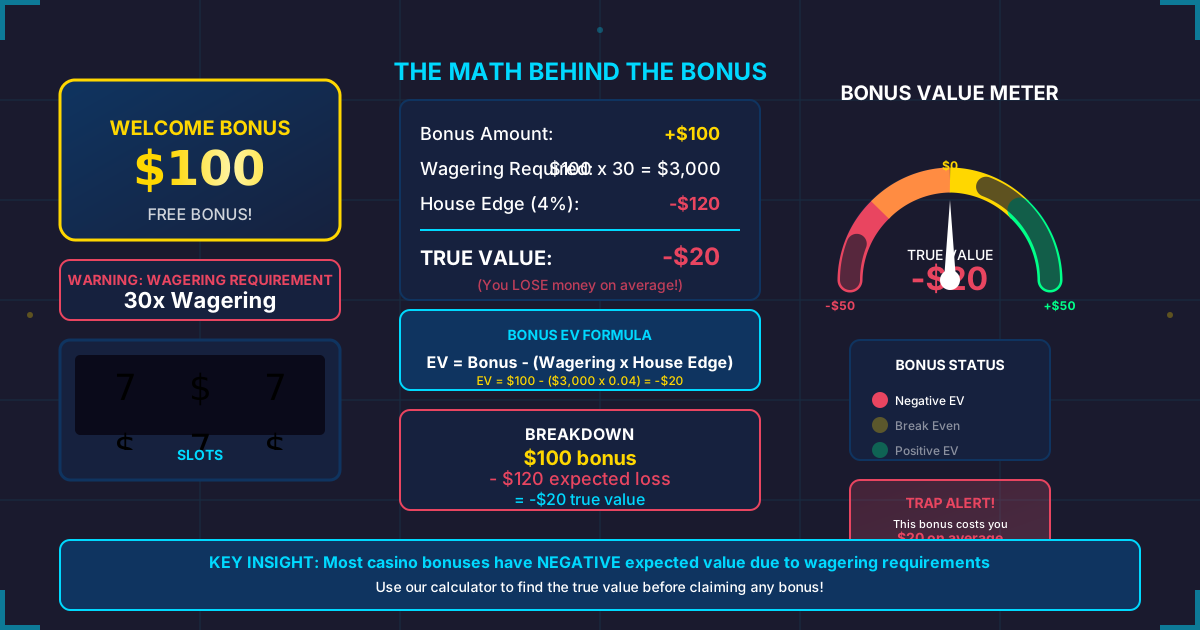
Understand the math behind any casino game with our Expected Value Calculator.
How Does Blockchain Integration Change VR Gambling?
Blockchain technology enables provably fair gaming, cryptocurrency wagering, NFT-based rewards, and decentralized casino governance. This represents a fundamental shift in the trust model of online gambling.
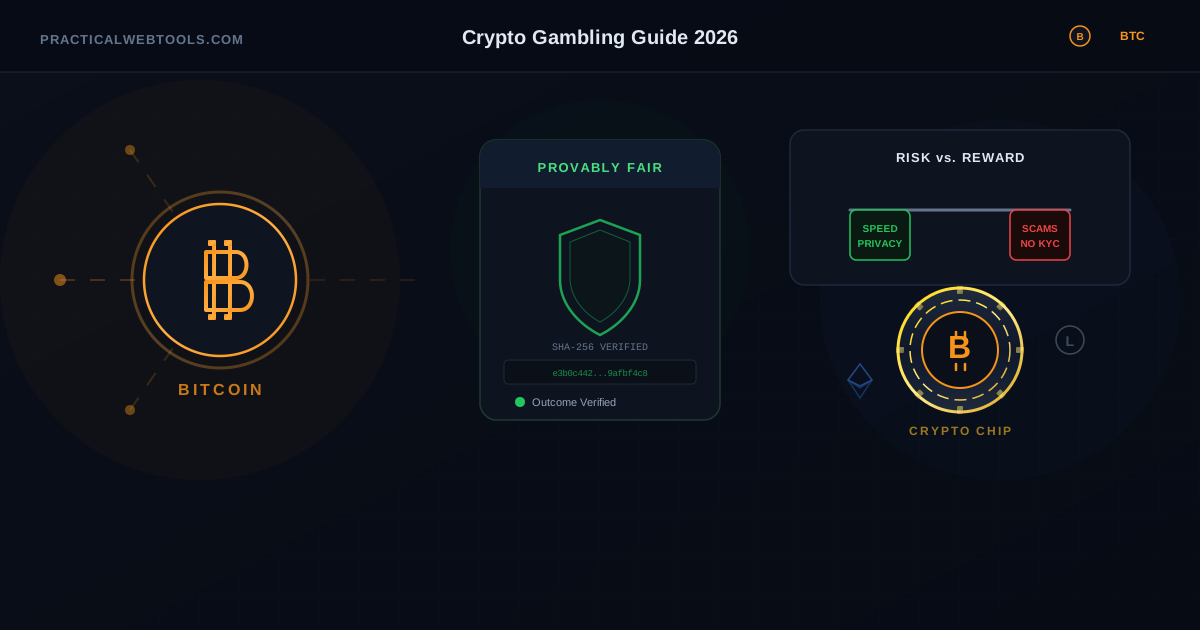
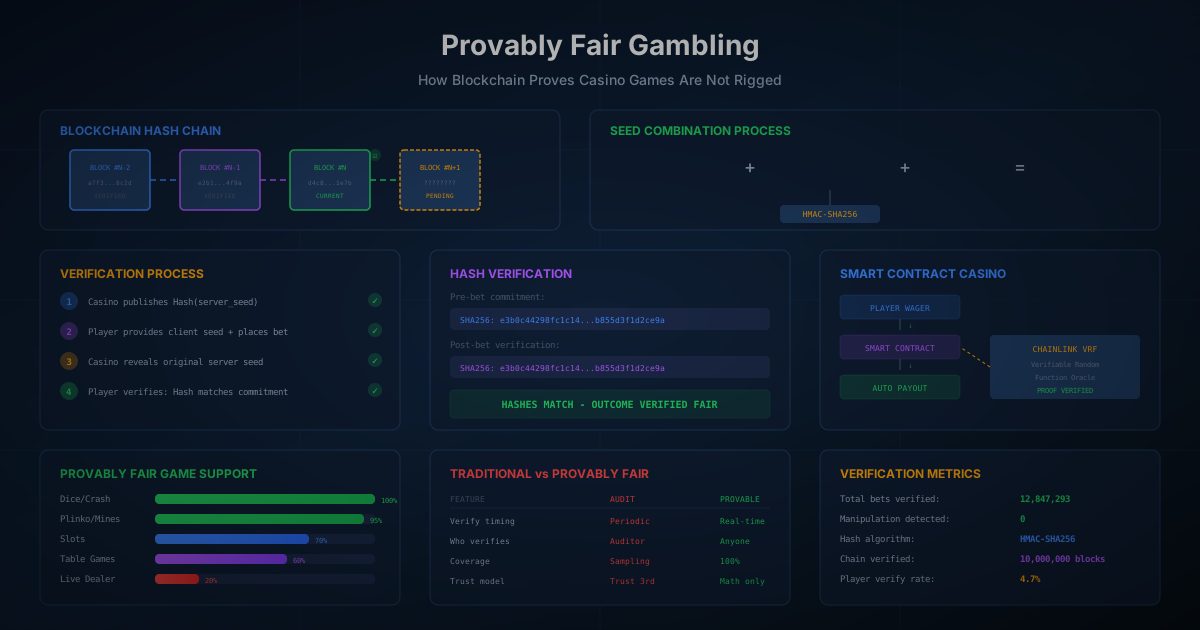
Provably Fair Gaming
Traditional online casinos use Random Number Generators (RNGs) that are audited by third parties. You trust the casino and the auditor. Blockchain-based casinos take a different approach:
| Aspect | Traditional RNG | Blockchain Provably Fair |
|---|---|---|
| Verification | Third-party audit (annual) | Player-verifiable (every hand) |
| Transparency | Trust the casino | Trust the math |
| Manipulation Risk | Possible (if audits fail) | Cryptographically impossible |
| Speed | Instant | Slight delay (block confirmation) |
| Cost | Free for player | Gas fees (varies) |
| Regulatory Acceptance | Widely accepted | Emerging acceptance |
How provably fair works:
- Before each game round, the casino generates a secret seed and shares its hash with the player
- The player provides their own random seed
- Both seeds are combined to determine the outcome
- After the round, the casino reveals its seed
- The player can verify that the outcome matches the combined seeds
- Neither party could have manipulated the result
NFT Rewards and VIP Programs
Many metaverse casinos use NFTs (Non-Fungible Tokens) instead of traditional loyalty programs:
- Wearable NFTs that unlock VIP rooms and higher-limit tables
- Achievement NFTs for milestones (first royal flush, biggest pot won)
- Revenue-sharing NFTs that pay holders a percentage of casino revenue
- Tournament entry NFTs that grant access to exclusive VR poker tournaments
- Tradeable rewards that can be sold on secondary markets
DAO Governance
Some decentralized casinos are governed by DAOs (Decentralized Autonomous Organizations), where token holders vote on:
- House edge percentages
- New game additions
- Revenue distribution
- Platform rules and policies
- Development priorities
This creates a casino owned and operated by its players, a concept that was impossible before blockchain technology.
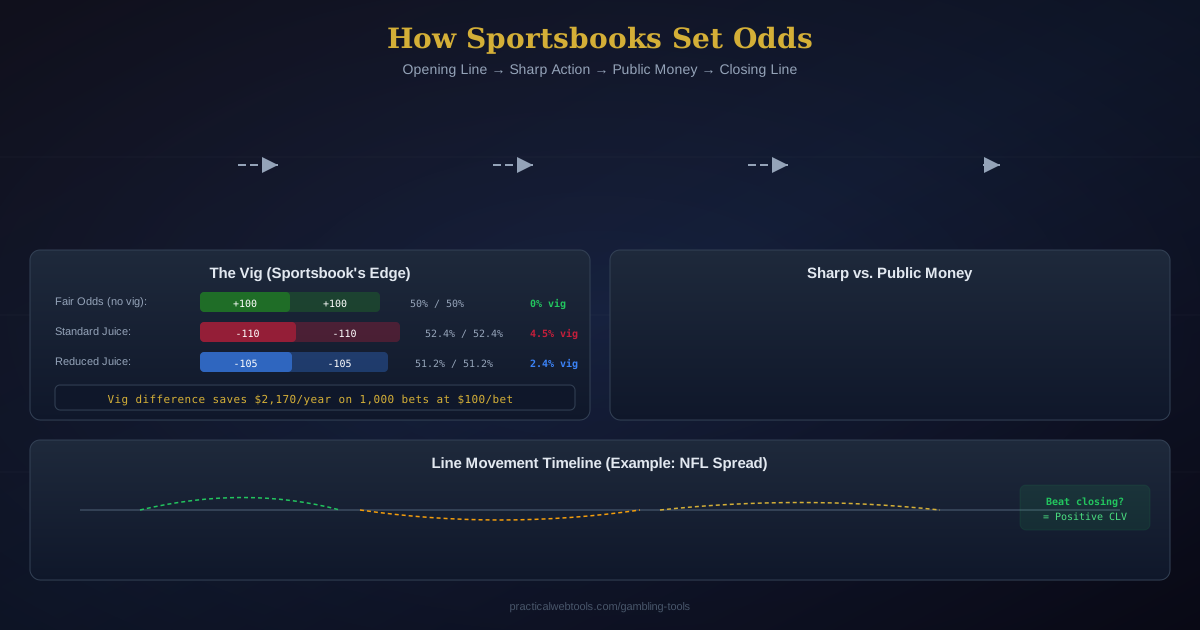
Calculate the hold percentage on any game with our Hold/Vig Calculator.
How Do House Edges in VR Casinos Compare to Real Casinos?
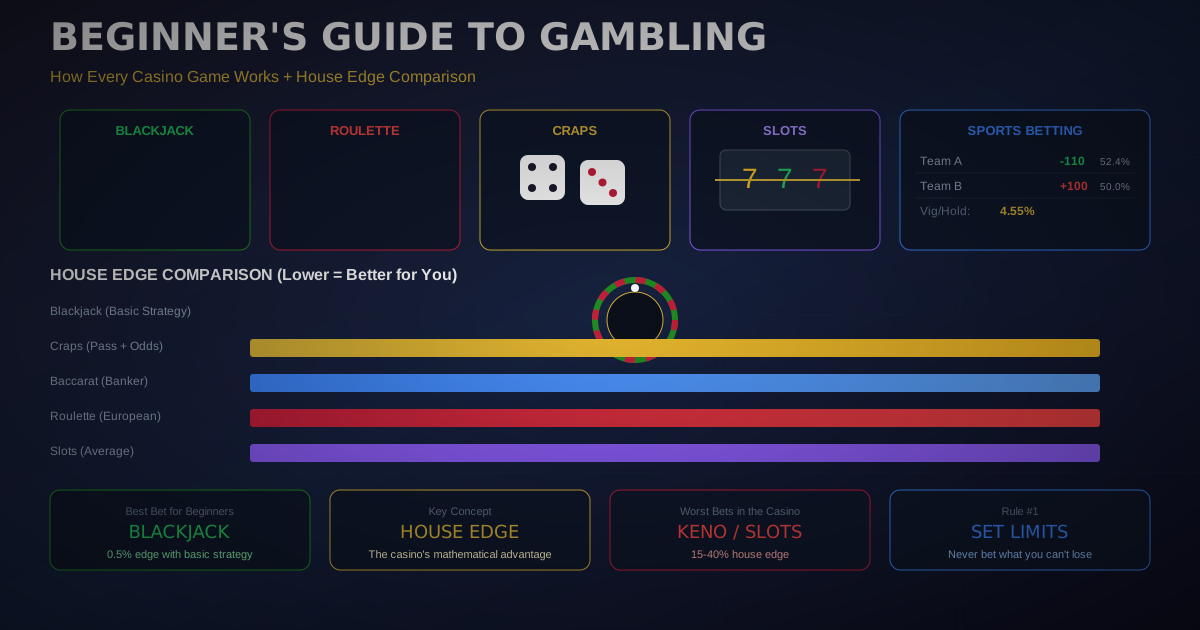
House edges in VR casinos vary significantly by platform and game, but generally fall within the same ranges as traditional online casinos. Blockchain-based platforms sometimes offer lower house edges as a competitive advantage.
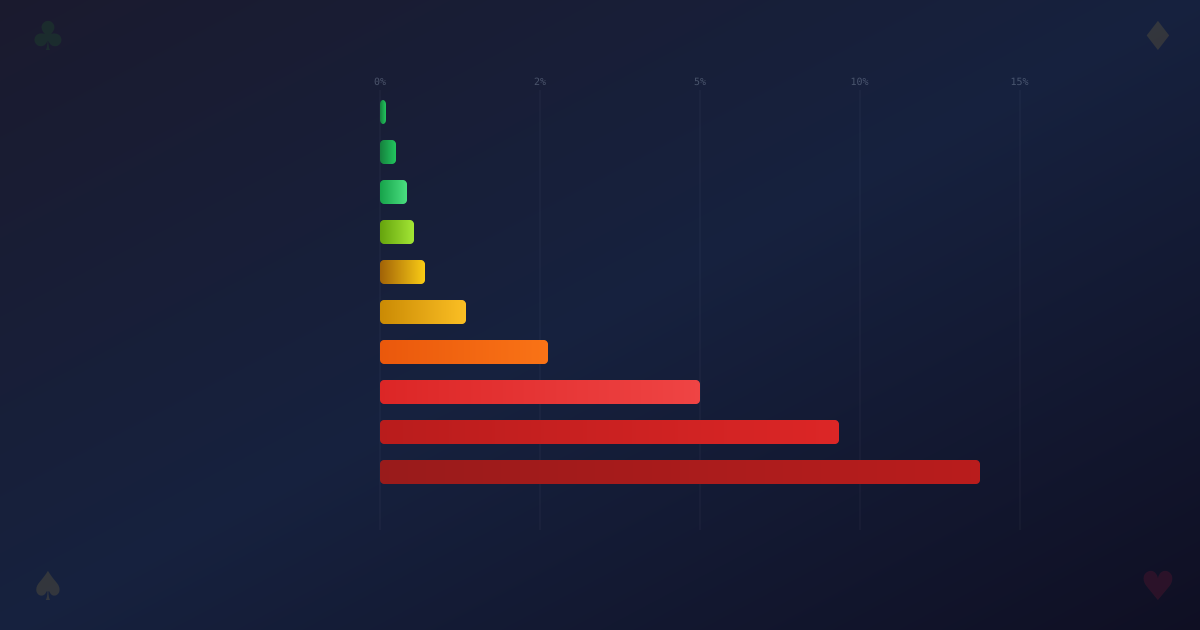
House Edge Comparison by Platform Type
| Game | Las Vegas Strip | Traditional Online | VR Casino (Regulated) | VR Casino (Crypto) |
|---|---|---|---|---|
| Blackjack (basic strategy) | 0.5-1.5% | 0.3-0.8% | 0.5-1.0% | 0.5-2.0% |
| Roulette (European) | 2.70% | 2.70% | 2.70% | 1.0-2.70% |
| Roulette (American) | 5.26% | 5.26% | 5.26% | Rarely offered |
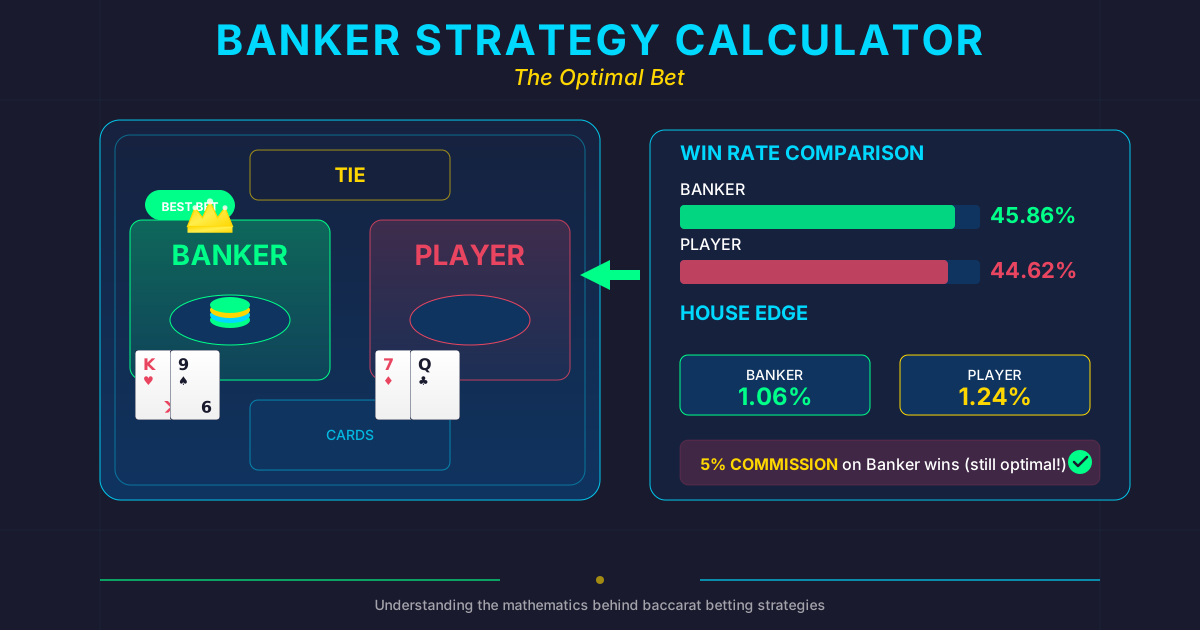
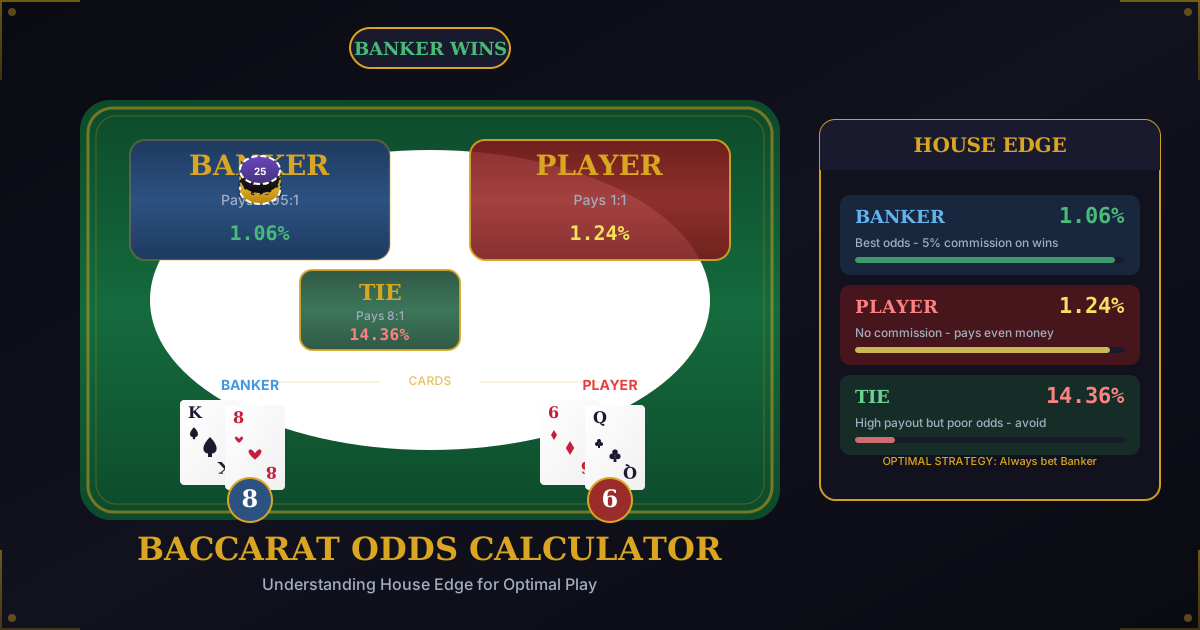
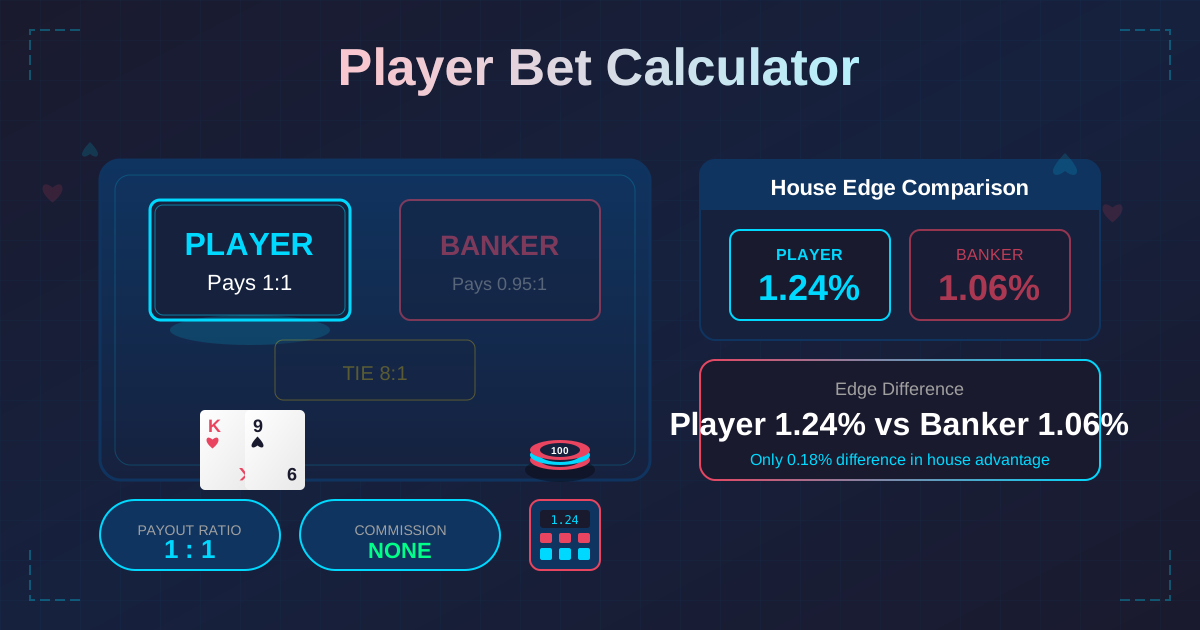
| Baccarat (Banker) | 1.06% | 1.06% | 1.06% | 1.0-1.5% |
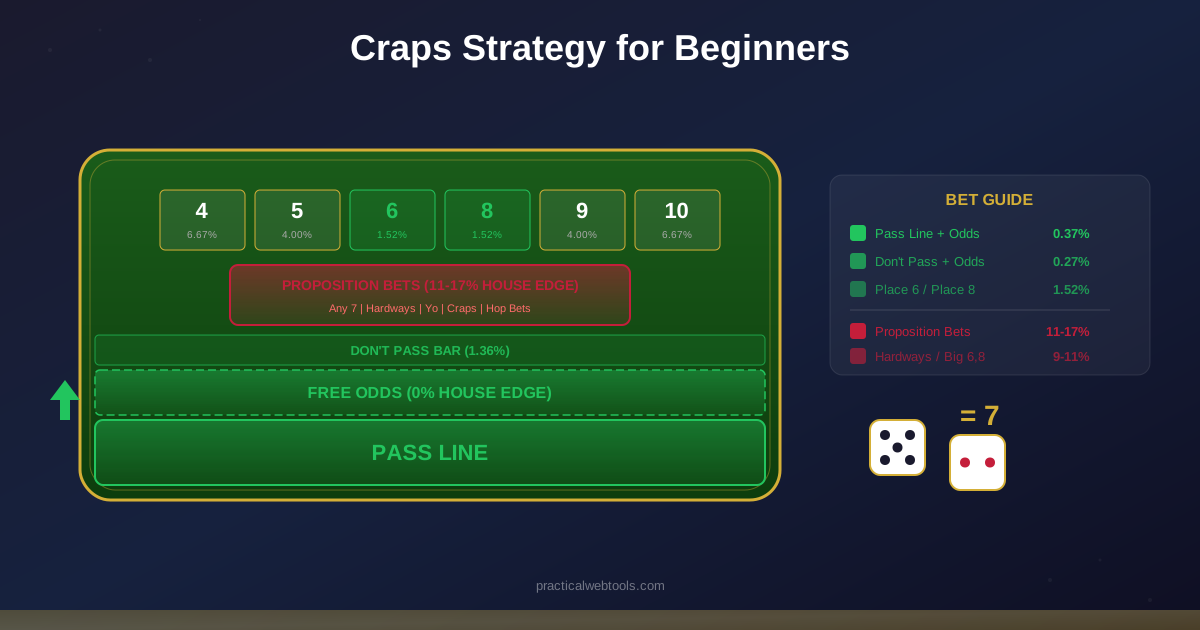
| Craps (Pass Line) | 1.41% | 1.41% | 1.41% | 1.0-1.41% |
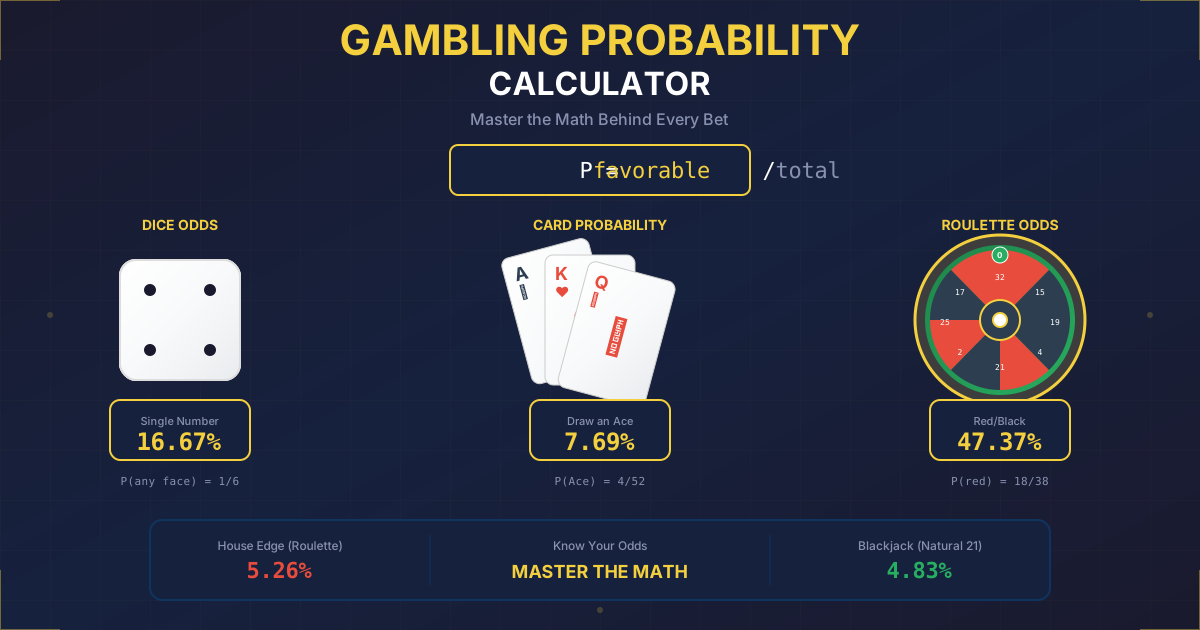
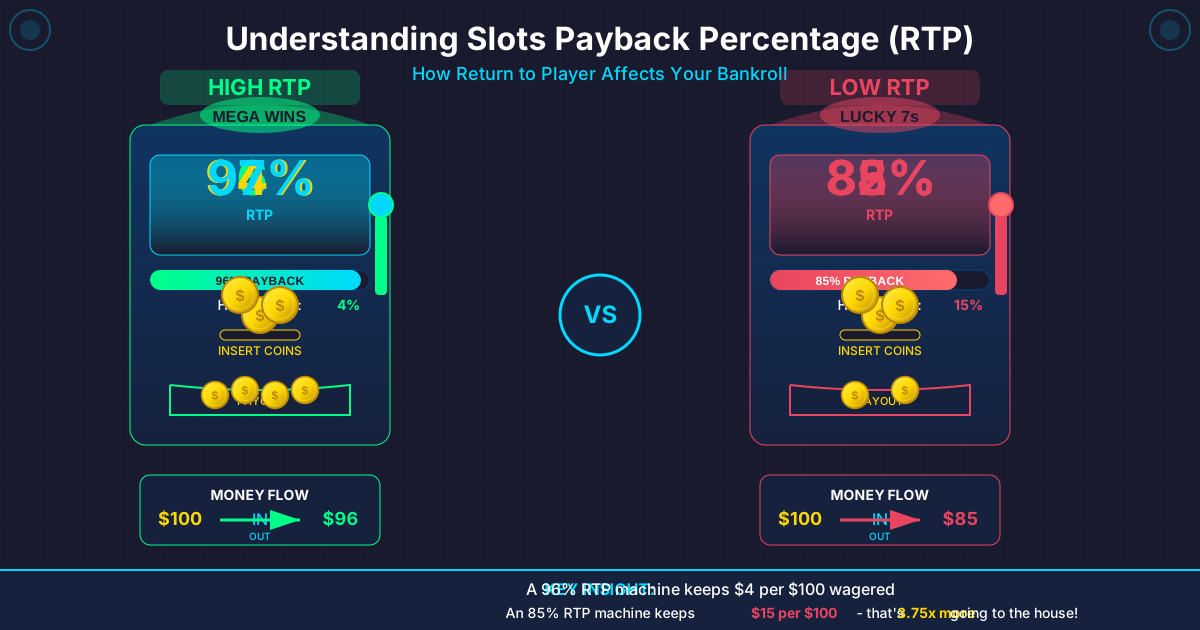
| Slots | 6-15% | 3-10% | 3-10% | 1-8% |
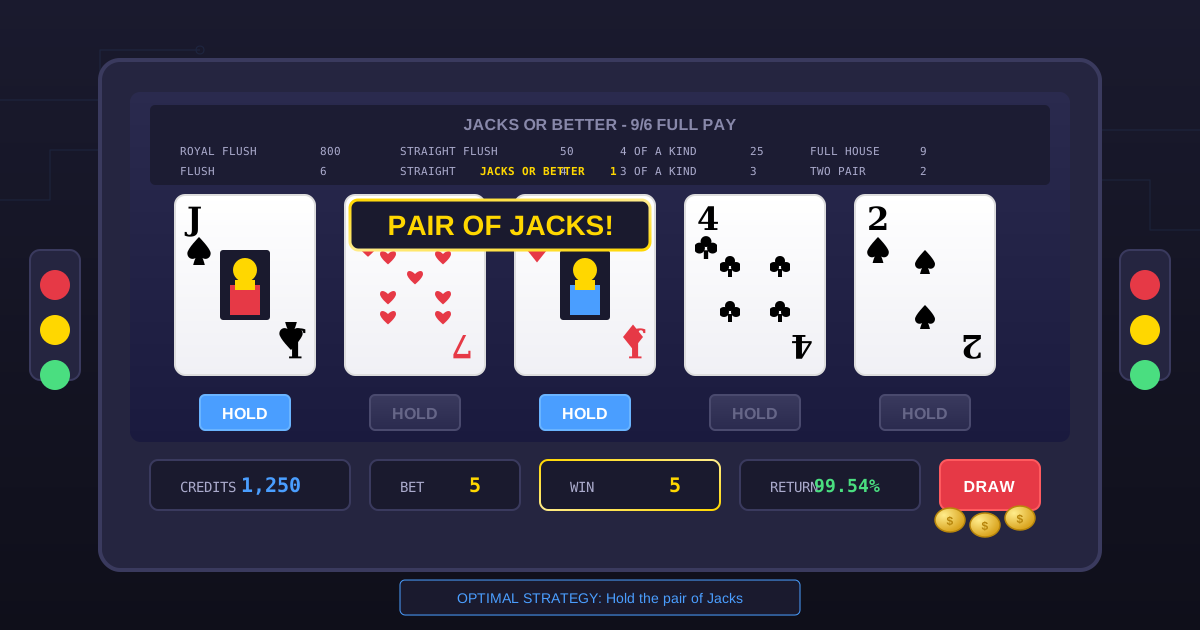
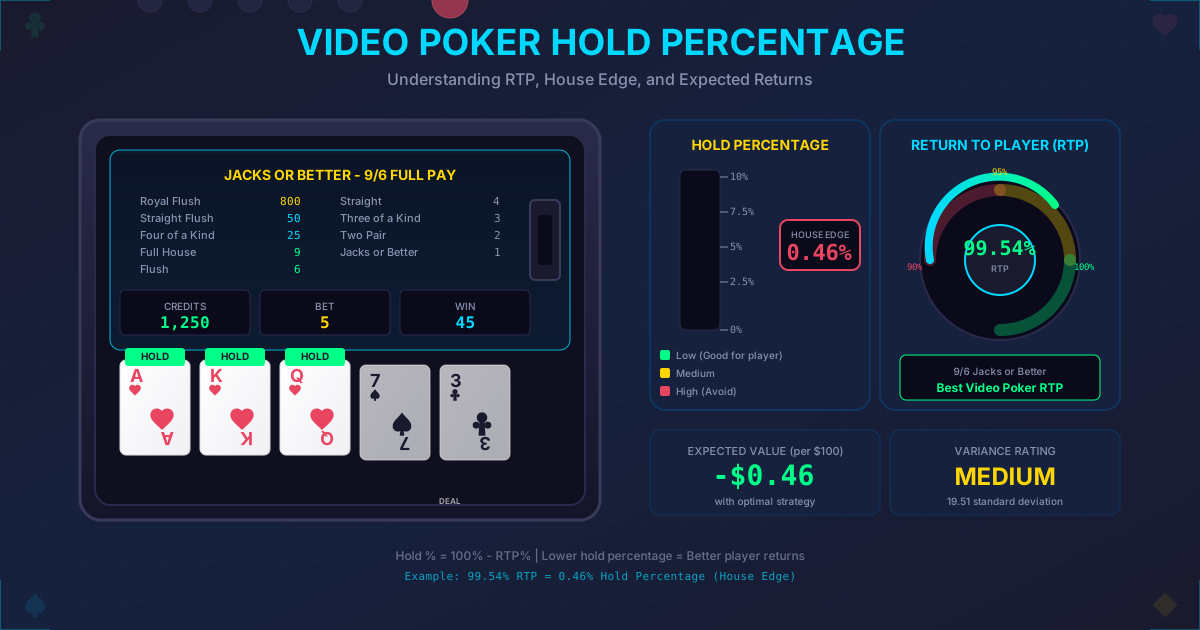
| Video Poker (Jacks+) | 0.46% | 0.2-0.5% | 0.3-0.8% | 0.5-1.5% |
| Poker (rake) | 5-10% | 3-5% | 2.5-5% | 1-3% |
Crypto casinos sometimes advertise house edges as low as 1% on all games. While this is mathematically possible (the casino profits from volume), players should verify the claims using the provably fair system.
Why Some VR Casinos Offer Lower House Edges
- Lower overhead. No physical building, staff, or real-world operational costs.
- Token economics. Revenue comes from token appreciation, not just house edge.
- Competition. The VR casino market is still early; platforms compete on edge to attract players.
- Transparency pressure. Blockchain makes house edges verifiable, creating competitive pressure.
- Volume-based models. Some platforms break even on games and profit from other services.
Verify the house edge on any video poker variant with our Video Poker EV Calculator.
What Hardware Do You Need for VR Gambling?
VR gambling requires a virtual reality headset and, for some platforms, a gaming PC. The minimum entry cost has dropped significantly, with standalone headsets starting under $300.
Hardware Requirements by Platform Tier
| Tier | Headset | Price | PC Required? | Experience Quality |
|---|---|---|---|---|
| Entry Level | Meta Quest 3S | $299 | No | Good |
| Mid-Range | Meta Quest 3 | $499 | No (optional) | Very Good |
| High-End PCVR | Quest 3 + Gaming PC | $1,500+ | Yes | Excellent |
| Premium | Apple Vision Pro | $3,499 | No | Best visual quality |
| Console | PSVR2 + PS5 | $749 | No (PS5 required) | Very Good |
Recommended Setup for VR Casino Gaming
Best Value: Meta Quest 3 ($499)
- Standalone, no PC required
- Supports most VR casino platforms
- Good resolution (2064 x 2208 per eye)
- Hand tracking for natural card and chip handling
- 2+ hour battery life (extend with battery strap)
Best Experience: Meta Quest 3 + Gaming PC (PCVR mode)
- Higher visual fidelity through PC rendering
- Smoother frame rates for complex casino environments
- Access to PCVR-exclusive platforms
- Requires RTX 3070+ GPU and modern CPU
Premium: Apple Vision Pro ($3,499)
- Highest resolution available
- Best for social presence (eye and hand tracking)
- Limited casino app availability as of 2026
- Excellent for VR poker (natural expressions visible through avatar)
Comfort Considerations for Extended Play
Casino sessions can last hours. Comfort accessories matter:
| Accessory | Price | Purpose |
|---|---|---|
| Elite head strap | $50-$100 | Weight distribution for long sessions |
| Battery pack strap | $80-$120 | Extended play time (4-6 hours) |
| Prescription lens inserts | $60-$80 | Clear vision without glasses |
| Facial interface replacement | $30-$50 | Comfort and hygiene |
| VR chair/gaming chair | $200-$500 | Seated comfort for poker sessions |
Calculate your expected session results with our Expected Value Calculator.
What Is the Regulatory Landscape for VR Gambling?
VR gambling regulation is fragmented and evolving. Some jurisdictions treat VR casinos identically to online casinos, while others have not addressed the technology at all. The decentralized nature of metaverse casinos creates additional regulatory challenges.
Current Regulatory Framework by Region
| Region | VR Casino Status | Key Regulators | Crypto Gambling | Notes |
|---|---|---|---|---|
| United States | State-by-state | State gaming commissions | Mostly prohibited | NJ, PA exploring VR licensing |
| United Kingdom | Permitted (with license) | UK Gambling Commission | Restricted | Treated as online gambling |
| Malta | Permitted (with license) | Malta Gaming Authority | Permitted with AML | Most VR casinos licensed here |
| Curacao | Permitted (with license) | Curacao eGaming | Widely permitted | Popular for crypto casinos |
| European Union | Varies by member state | National regulators | Varies | MiCA regulation affects crypto casinos |
| Australia | Mostly restricted | ACMA | Prohibited | Strict online gambling laws apply |
| Japan | Prohibited | NPA | Prohibited | No legal gambling online |
| Decentralized (DAO) | Unregulated | None | Native | Operates outside traditional jurisdiction |
Key Regulatory Challenges
1. Jurisdictional Ambiguity When a player in New York wears a VR headset to enter a casino hosted on servers in Malta, operated by a DAO registered nowhere, using cryptocurrency on a blockchain, which jurisdiction's laws apply?
2. Age Verification in VR VR platforms struggle with age verification. A 16-year-old can create a Meta account, put on a headset, and enter a free-to-play VR casino with virtually no friction. Real-money platforms require KYC (Know Your Customer), but enforcement in VR environments is technically challenging.
3. Responsible Gambling in Immersive Environments VR's immersive nature raises concerns about:
- Increased gambling addiction risk due to heightened engagement
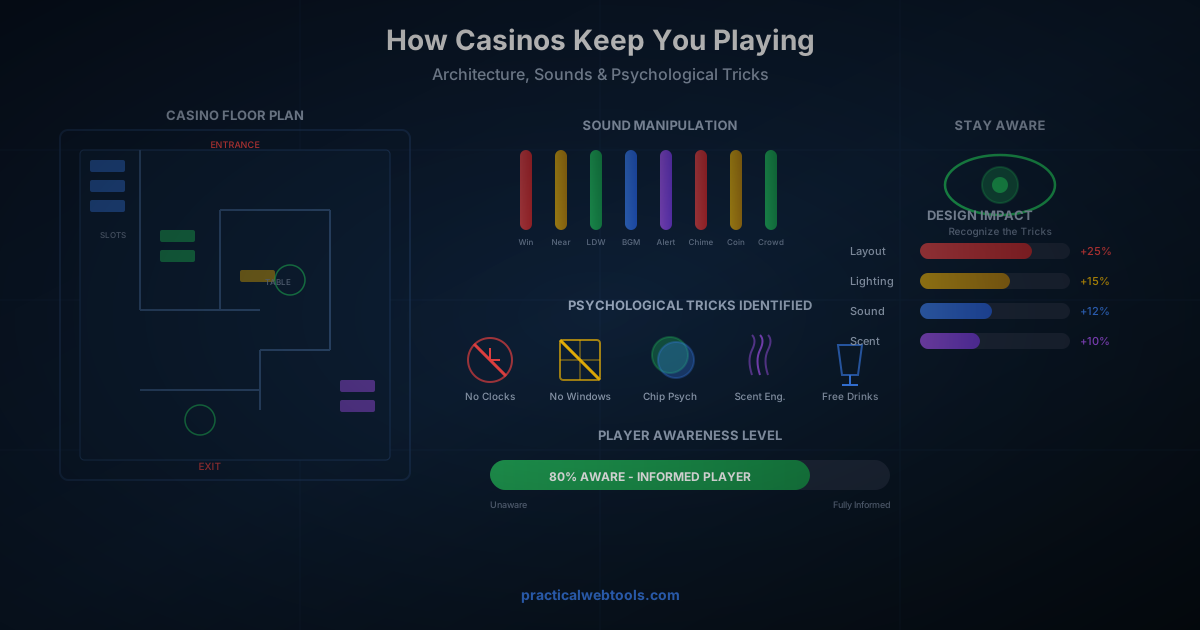
- Loss of time awareness (no clocks, no windows, just like Vegas)
- Social pressure from avatar interactions
- Difficulty implementing self-exclusion in decentralized platforms
4. Cryptocurrency Complications Crypto-native casinos present unique regulatory issues:
- Anti-money laundering (AML) compliance
- Token value fluctuation affects real-money value of bets
- Cross-border transactions without traditional banking oversight
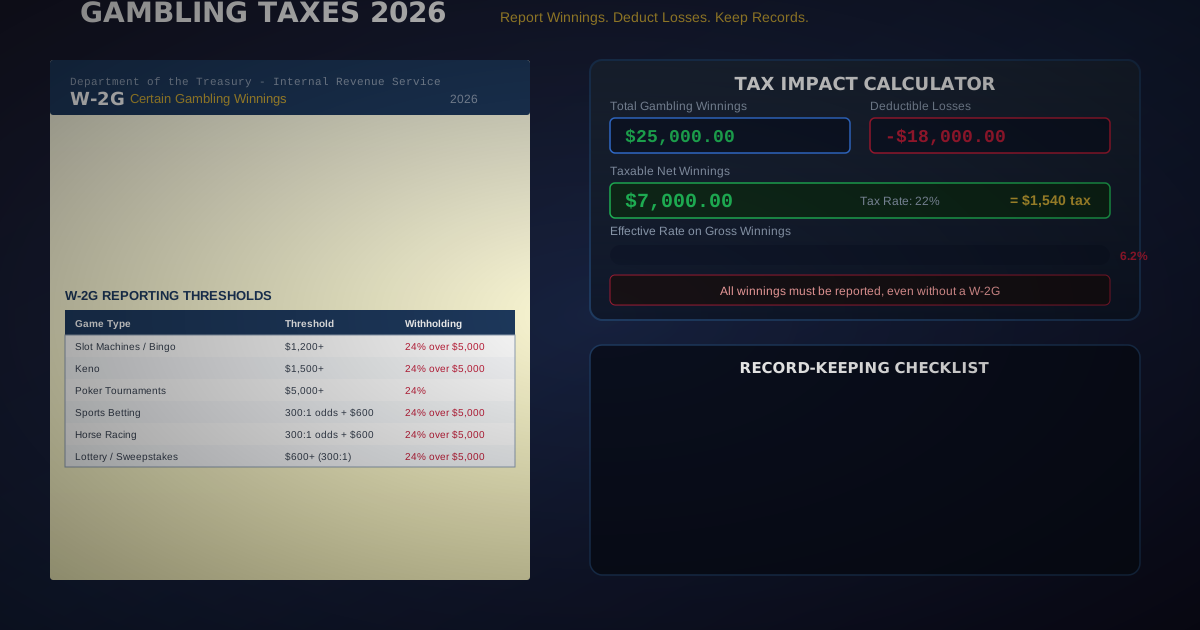
- Tax reporting complexity
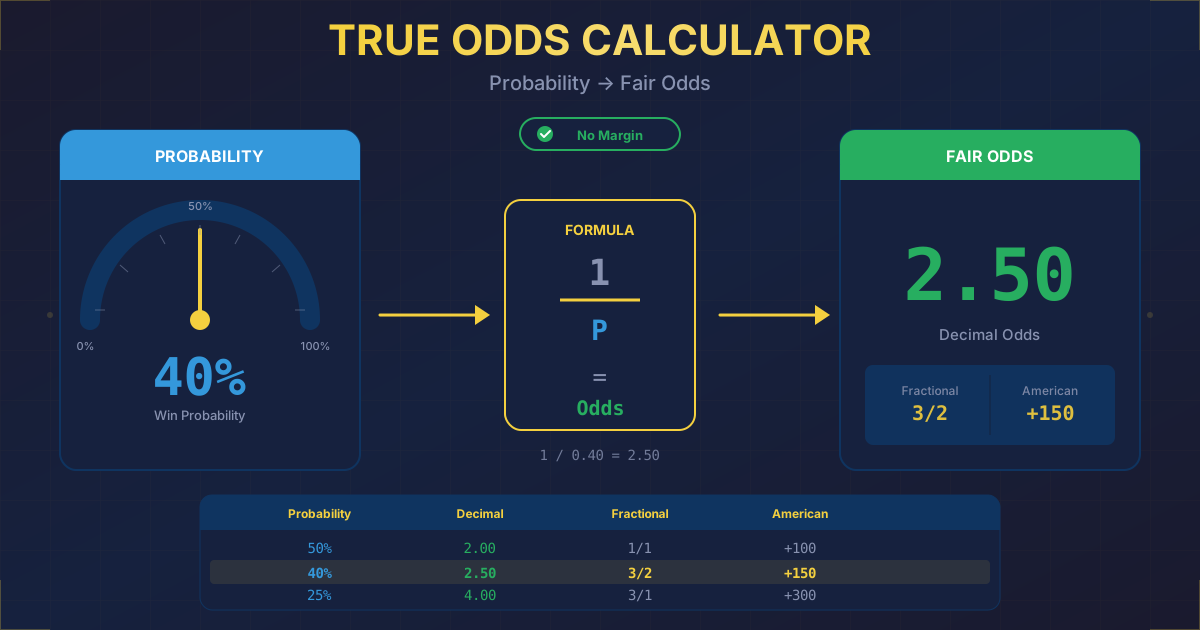
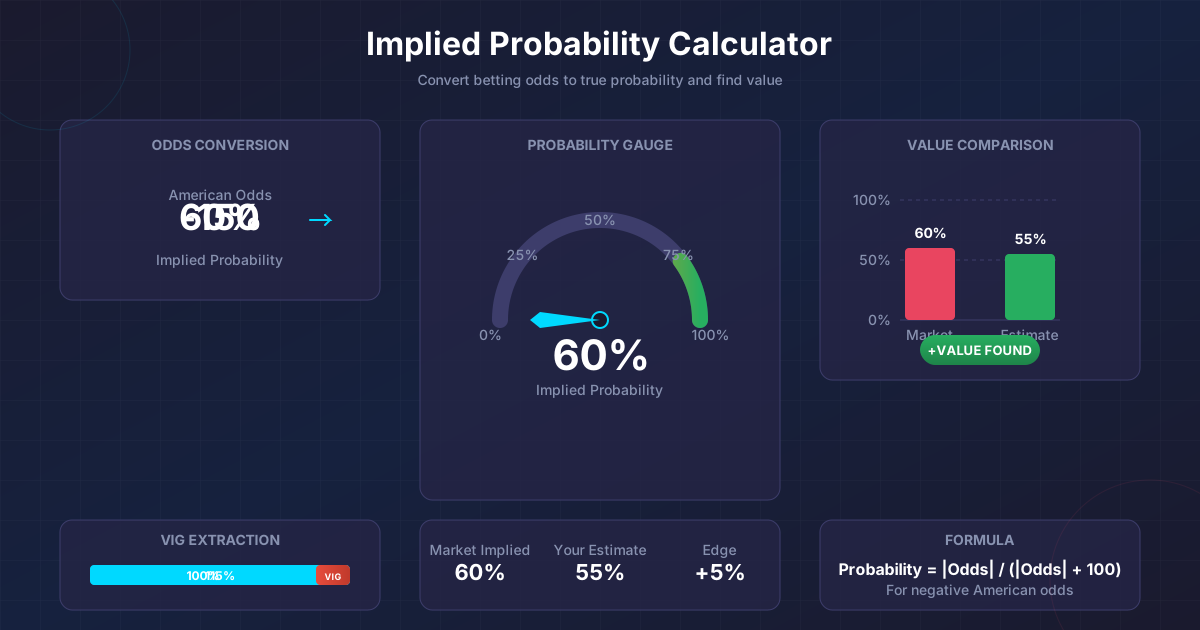
Understand the implied probability behind any casino game odds with our Implied Probability Calculator.
What Is the Market Size and Growth Trajectory?
The VR gambling market is one of the fastest-growing segments in both the gaming and gambling industries, driven by hardware adoption, blockchain innovation, and demand for social gambling experiences.
Market Size Projections
| Year | VR Gambling Market Size | YoY Growth | VR Headset Install Base | Key Driver |
|---|---|---|---|---|
| 2022 | $500M | - | 20M | Early adopters |
| 2023 | $800M | 60% | 30M | Quest 3 launch |
| 2024 | $1.3B | 63% | 45M | Apple Vision Pro, crypto boom |
| 2025 | $2.0B | 54% | 60M | Regulated VR casinos launch |
| 2026 (est.) | $2.8B | 40% | 80M | Mainstream adoption phase |
| 2027 (proj.) | $3.5B | 25% | 100M+ | Market maturation |
| 2030 (proj.) | $6.0B+ | 15-20% | 200M+ | Mass market |
Revenue Distribution by Segment
| Segment | 2026 Market Share | Growth Rate |
|---|---|---|
| VR Poker | 35% | High |
| VR Slots | 25% | Moderate |
| VR Table Games | 20% | High |
| Metaverse Sports Betting | 10% | Very High |
| NFT/Crypto Casino Games | 10% | Very High |
Key Growth Drivers
- Hardware affordability. The Quest 3S at $299 puts VR within reach of most gamblers.
- Social demand. Post-pandemic, people crave social experiences. VR gambling delivers social interaction from home.
- Younger demographics. Millennials and Gen Z prefer interactive, gamified experiences over traditional casino formats.
- Crypto normalization. As cryptocurrency adoption grows, crypto-native VR casinos become more accessible.
- Streaming and content creation. VR casino streaming on Twitch and YouTube drives awareness and adoption.
- Regulatory clarity. As regulators provide frameworks for VR gambling, institutional operators enter the market.
Evaluate the expected return of any bet with our Expected Value Calculator.
How Does Social Interaction in VR Compare to Real Casinos?
The social element is what separates VR casinos from traditional online gambling. Voice chat, avatar body language, and shared experiences create a social dynamic that 2D online casinos cannot replicate.
Social Feature Comparison
| Social Feature | VR Casino | Online Casino | Land-Based Casino |
|---|---|---|---|
| Voice Chat | Yes (spatial audio) | Rare | Yes (natural) |
| Body Language | Avatar-based | No | Full human expression |
| Eye Contact | Yes (some headsets) | No | Yes |
| Table Banter | Natural | Text chat (slow) | Natural |
| Celebrating Wins | Group reactions | Emotes only | Physical celebration |
| Reading Opponents | Avatar tells | Bet timing only | Full read |
| Making Friends | Easy (add friends) | Difficult | Moderate |
| Private Rooms | Yes | Sometimes | VIP only |
The Social Psychology of VR Gambling
Research on VR social interaction shows several important psychological effects:
Presence and Engagement Players in VR report feeling significantly more "present" in the gambling experience compared to flat-screen online casinos. This increased presence leads to:
- Longer session times (30-50% longer than online)
- Higher emotional engagement with wins and losses
- Stronger social bonds with other players
- Greater satisfaction with the overall experience
The Avatar Effect When players customize their avatars, they develop a psychological investment in their virtual identity. This creates:
- Higher retention rates (players return to maintain their avatar's reputation)
- Willingness to spend on cosmetic items
- Stronger adherence to social norms at the virtual table
- An additional motivation to play beyond gambling itself
Responsible Gambling Implications The increased engagement of VR gambling raises important questions:
- Does immersion make it harder to stop playing?
- Does avatar anonymity encourage riskier betting?
- Does social pressure from tablemates influence bet sizing?
- Should VR casinos have mandatory break reminders?
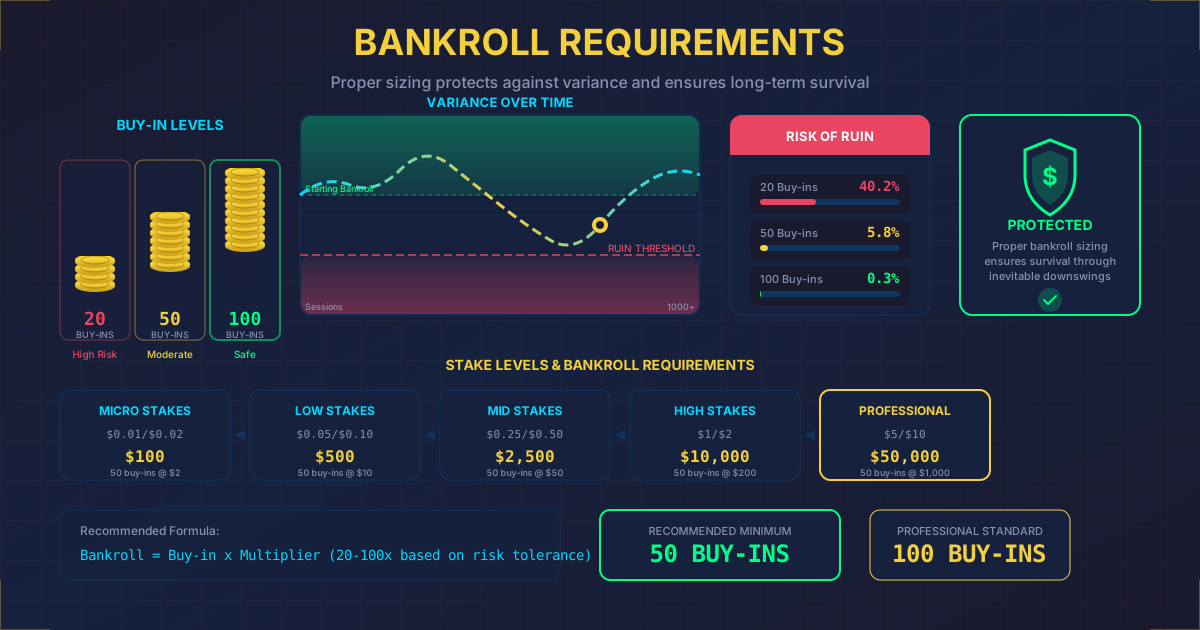
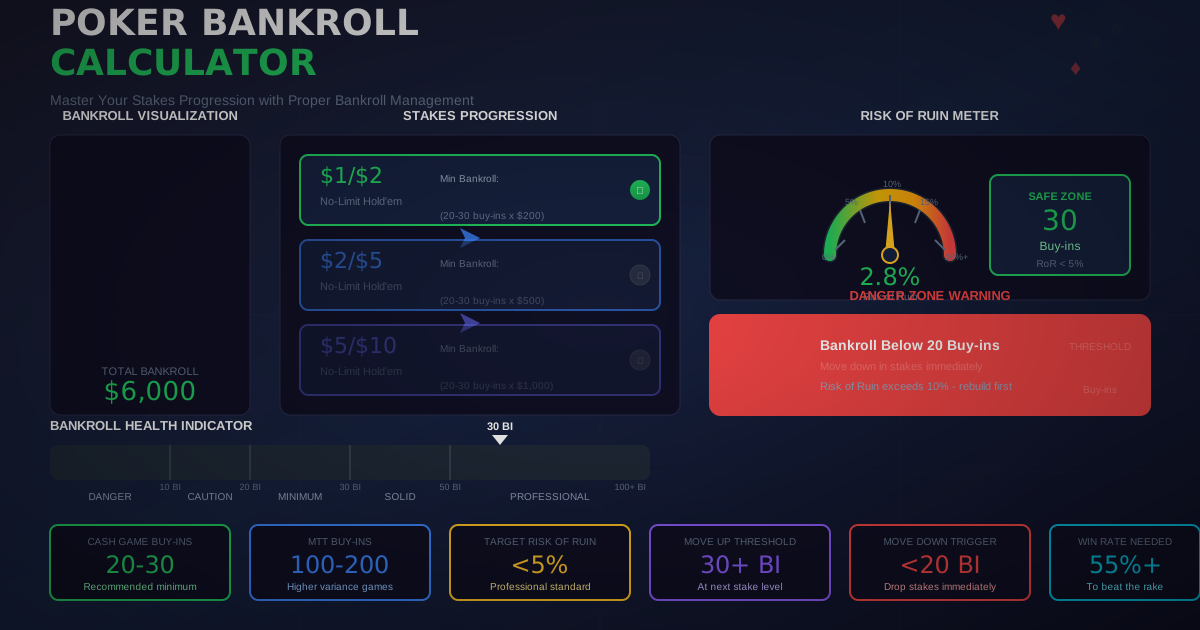
Calculate your poker bankroll requirements for VR poker with our Poker Bankroll Requirements Calculator.
What Are the Risks and Downsides of VR Gambling?
While VR gambling offers exciting possibilities, it also introduces new risks that players should understand before strapping on a headset and placing real-money bets.
Technology Risks
| Risk | Description | Mitigation |
|---|---|---|
| Motion sickness | Extended VR use causes nausea in some users | Take breaks, use comfort settings |
| Eye strain | Prolonged headset use strains eyes | 20-20-20 rule (break every 20 min) |
| Internet dependency | VR casinos require stable internet | Wired connection recommended |
| Platform risk | VR casino could shut down, losing your funds | Only deposit what you can afford to lose |
| Smart contract bugs | Blockchain casinos could have code vulnerabilities | Use audited platforms only |
| Headset tracking | VR companies collect extensive biometric data | Review privacy policies |
Financial Risks Specific to VR Gambling
Crypto volatility. If you deposit 1 ETH worth $3,500 and win 0.5 ETH, but ETH drops 20% before you withdraw, your 1.5 ETH is now worth $4,200 instead of $5,250. The crypto layer adds investment risk on top of gambling risk.
Token-based economies. Some platforms use proprietary tokens. If the platform's token loses value, your winnings lose value. Worse, if the platform fails, the token may become worthless.
Lack of regulation. Decentralized VR casinos operating outside traditional regulation offer no recourse if something goes wrong. No gaming commission will help you recover lost funds from a DAO-governed casino.
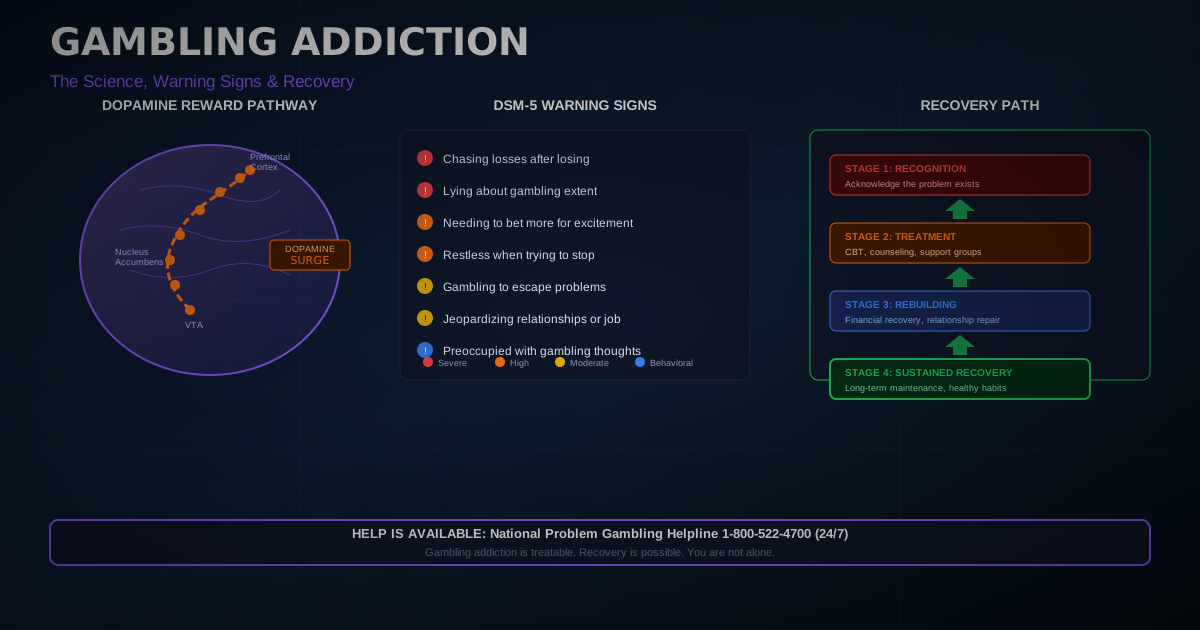
Addiction Concerns
The immersive nature of VR gambling has raised concerns among responsible gambling advocates:
- Time distortion. VR makes it easy to lose track of time, similar to windowless land-based casinos.
- Increased dopamine response. The multisensory experience of VR amplifies the emotional highs of winning.
- Social reinforcement. Other players at the table can encourage continued play.
- Reduced friction. The seamless experience of VR gambling removes many of the natural stopping points that exist in real-world gambling.
- Accessibility. 24/7 access from your home removes the barrier of traveling to a casino.
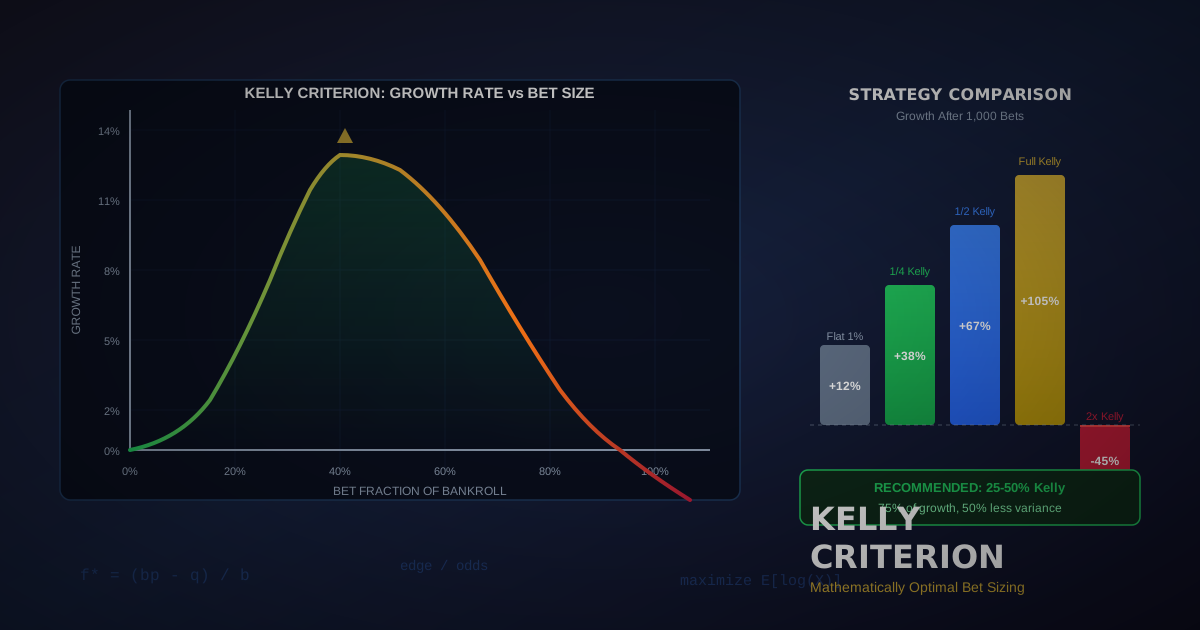
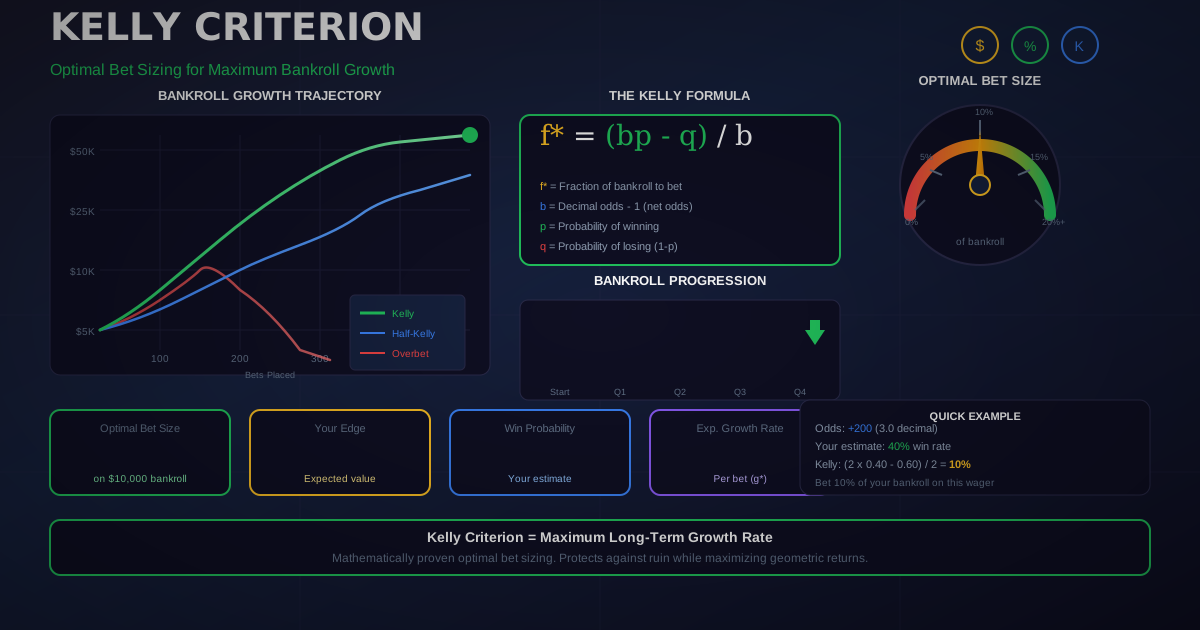
Use our Kelly Criterion Calculator to ensure you are never overexposing your bankroll, whether in VR or any other gambling format.
What Does the Future Hold for VR Gambling?
The VR gambling industry is evolving rapidly, with several emerging trends that will shape the experience over the next 3-5 years.
Near-Term Trends (2026-2027)
Haptic feedback integration. Gloves and vests that let you feel cards in your hand and chips between your fingers. Companies like bHaptics and SenseGlove are developing casino-specific haptic accessories.
AI-powered dealers. AI dealers that respond naturally to conversation, remember regular players, and adjust their personality based on the table atmosphere.
Mixed reality casinos. Using passthrough AR on devices like Quest 3 and Vision Pro to overlay a poker table on your actual dining table, blending real and virtual.
Cross-platform tournaments. Major poker tournaments that allow VR, desktop, and mobile players to compete at the same tables.
Medium-Term Trends (2027-2030)
Full-body tracking. Cameras and sensors that capture your entire body, translating every gesture, posture, and facial expression to your avatar. This will make VR poker reads as nuanced as real-world reads.
Metaverse casino resorts. Complete virtual resort experiences with casinos, shows, restaurants (social dining), sports viewing, and shopping, all within a single VR world.
Regulatory standardization. International frameworks for VR gambling regulation that provide clear rules for operators and protections for players.
Photorealistic graphics. Real-time ray tracing and advanced rendering will make VR casinos visually indistinguishable from real casinos.
Long-Term Vision (2030+)
Neural interfaces. Brain-computer interfaces that could allow gambling without a physical headset, raising profound ethical and regulatory questions.
Persistent virtual economies. Casino winnings that integrate into broader metaverse economies, where VR gambling profits can be spent on virtual real estate, experiences, and goods.
AI opponents with personality. NPC poker players with distinct playing styles, tells, and personalities that provide a training ground for live play.
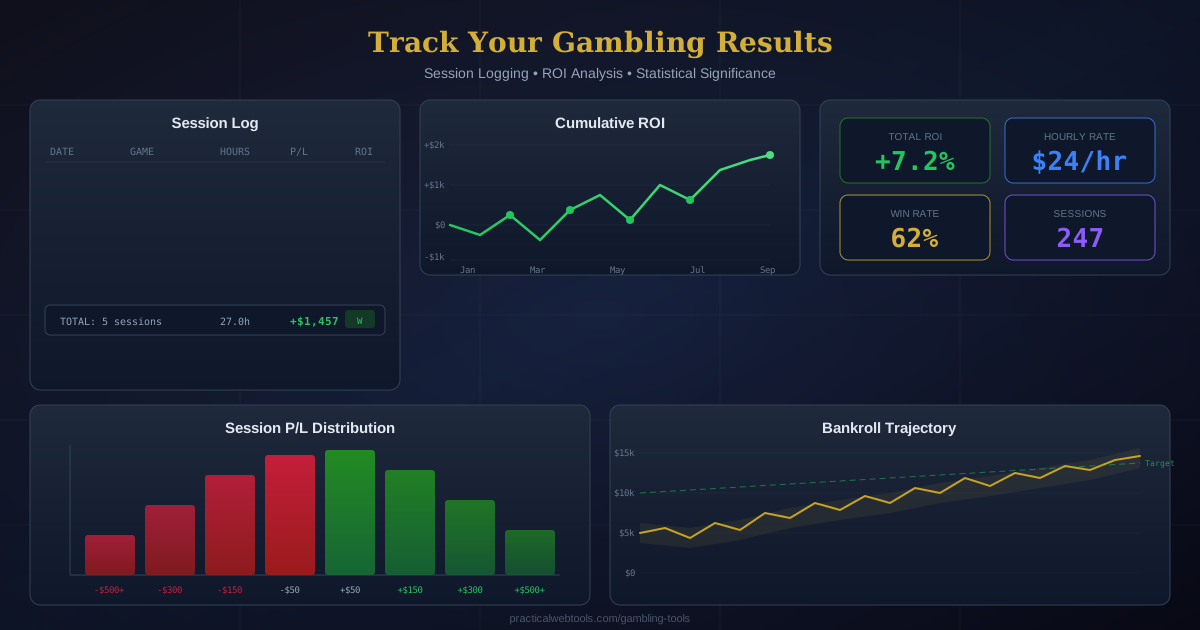
Track your VR poker sessions with our Poker Session Tracker.
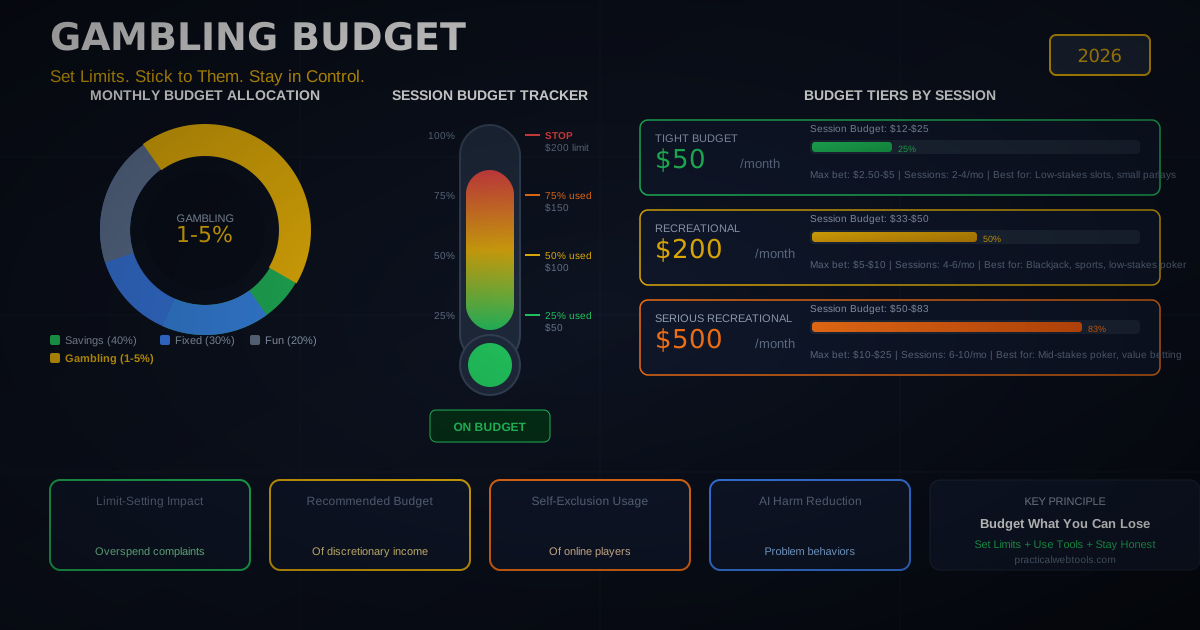
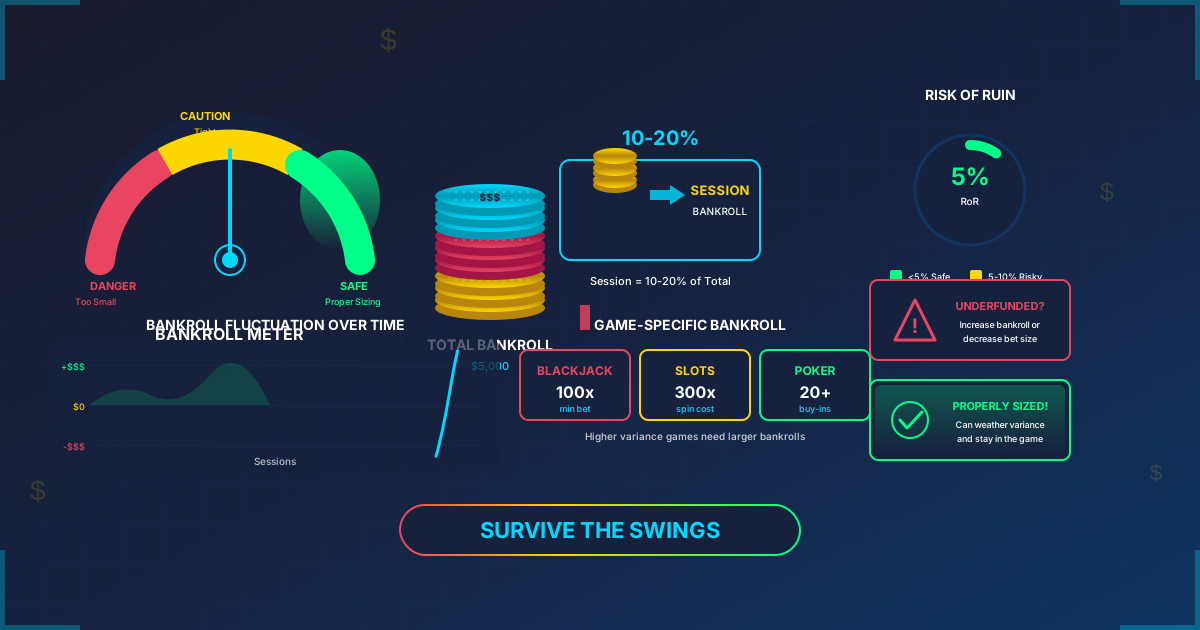
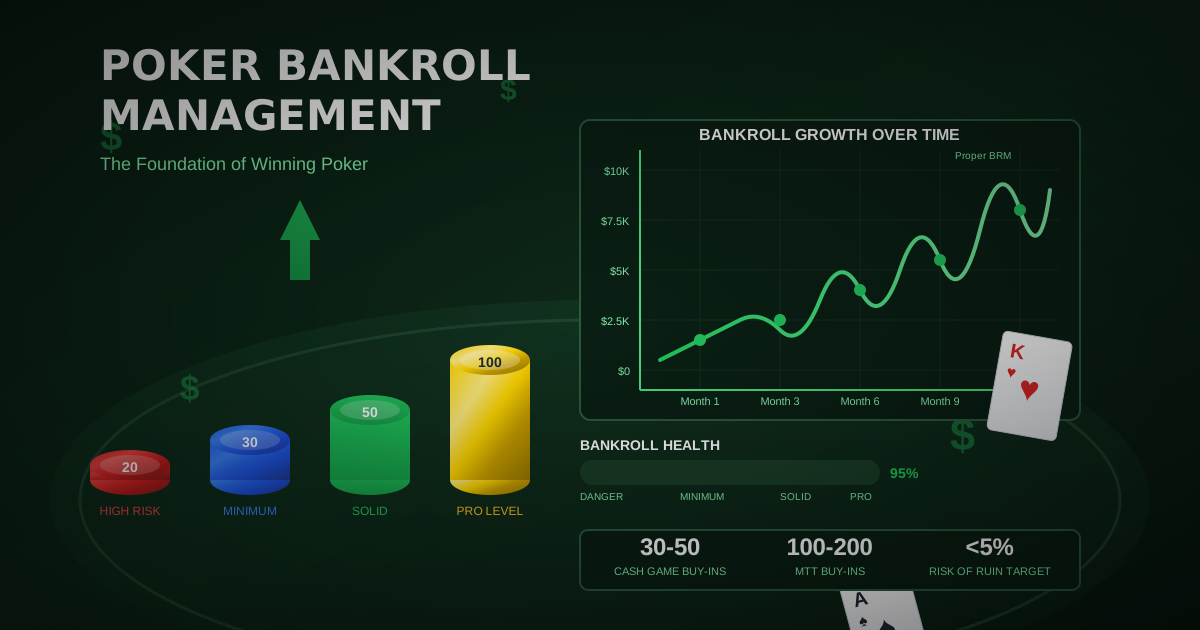
How Should You Approach Bankroll Management in VR Casinos?
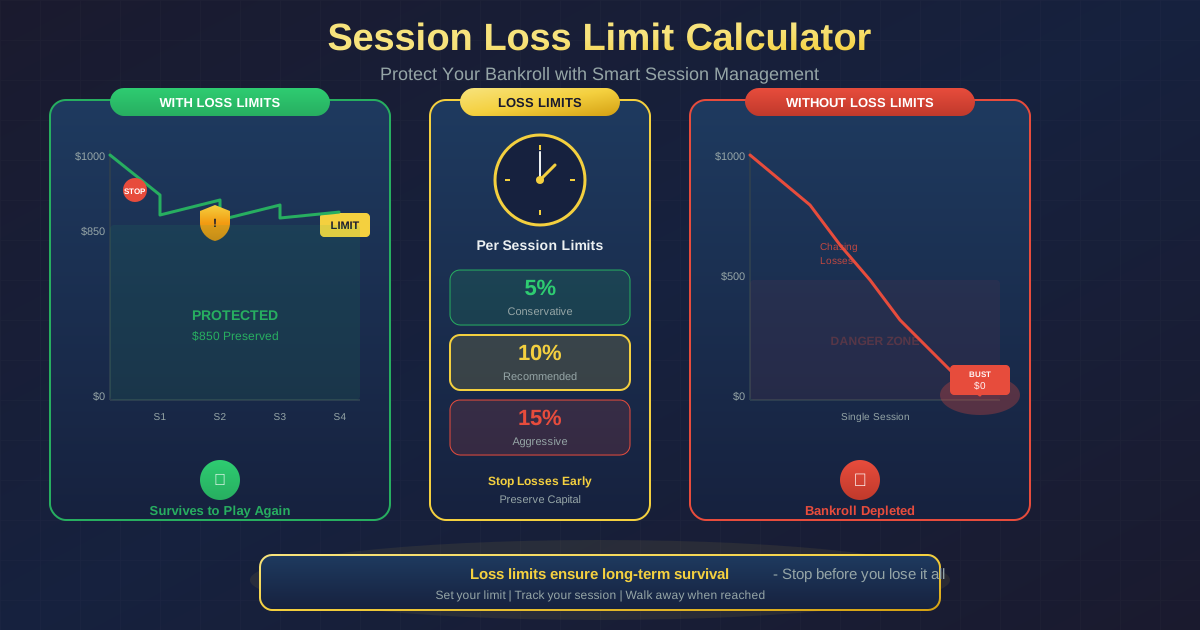
Bankroll management principles apply equally to VR casinos, but the immersive nature of VR gambling introduces additional considerations that can affect your spending discipline.
VR-Specific Bankroll Challenges
The immersive quality of VR creates unique bankroll management challenges that do not exist in traditional online gambling:
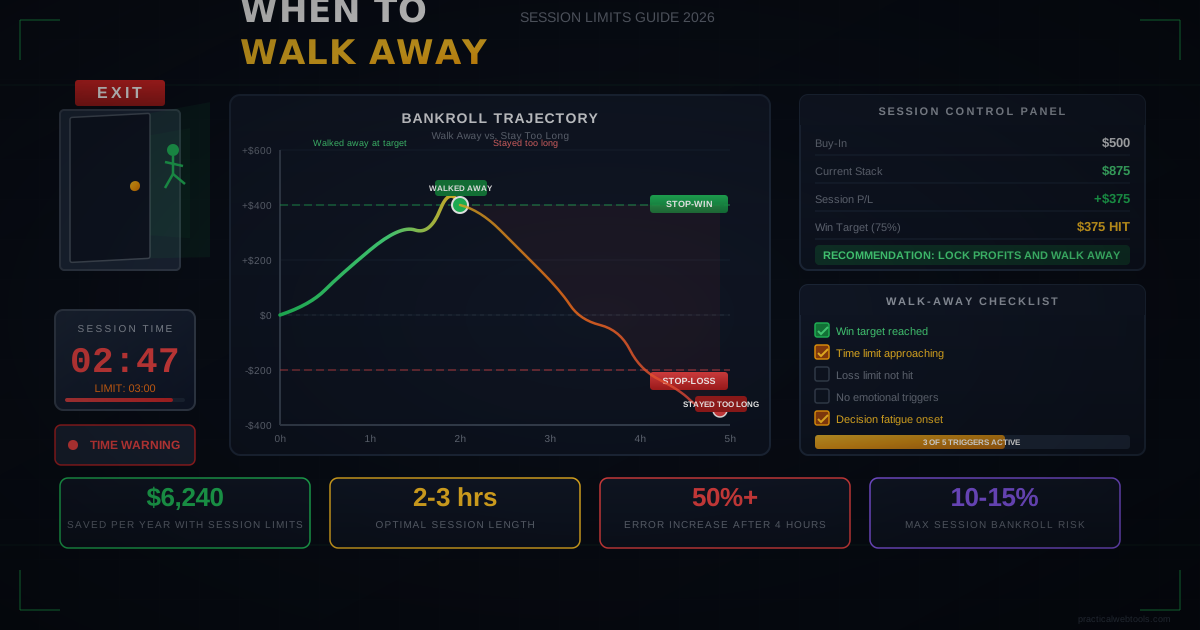
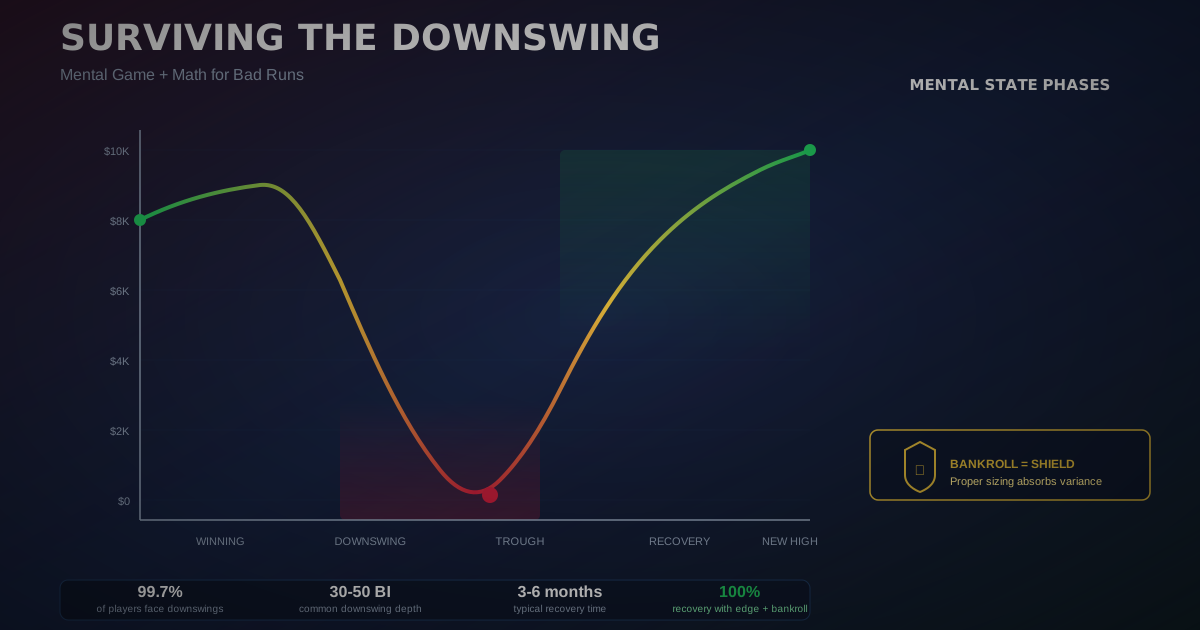
Time Distortion. VR environments are designed to be engaging. Without natural time cues (clocks, daylight changes, phone notifications), it is easy to play far longer than intended. Set alarms outside the VR headset before starting a session.
Emotional Amplification. Wins feel bigger and losses feel more painful in VR. The spatial audio of chips clinking, players cheering, and the visual spectacle of a big win trigger stronger dopamine responses than clicking a button on a screen. This emotional intensity can lead to larger bets and chasing behavior.
Social Pressure. Other players at your VR poker table might bet aggressively, encouraging you to match their stakes. In a 2D online casino, you cannot see other players' behavior. In VR, it is front and center.
Cryptocurrency Abstraction. Many VR casinos use cryptocurrency or proprietary tokens instead of traditional currency. Betting 0.5 ETH feels psychologically different from betting $1,750, even though they are the same amount. This abstraction can lead to larger bets.
VR Casino Bankroll Rules
| Rule | Implementation | Why It Matters |
|---|---|---|
| Set a session budget before entering VR | Decide on max loss ($X) before putting on headset | Prevents impulsive decisions in immersive environment |
| Use a timer | External alarm every 30-60 minutes | Combats time distortion |
| Convert crypto to fiat mentally | Always calculate bet size in dollars | Prevents crypto abstraction from inflating bet sizes |
| Track sessions separately | Log VR casino sessions in your bet tracker | Identifies if VR gambling results differ from other formats |
| Set deposit limits | Use platform deposit limits where available | Hard stop when budget is reached |
| Take breaks | Remove headset for 10 min every hour | Physical and mental reset, reduces immersion-driven decisions |
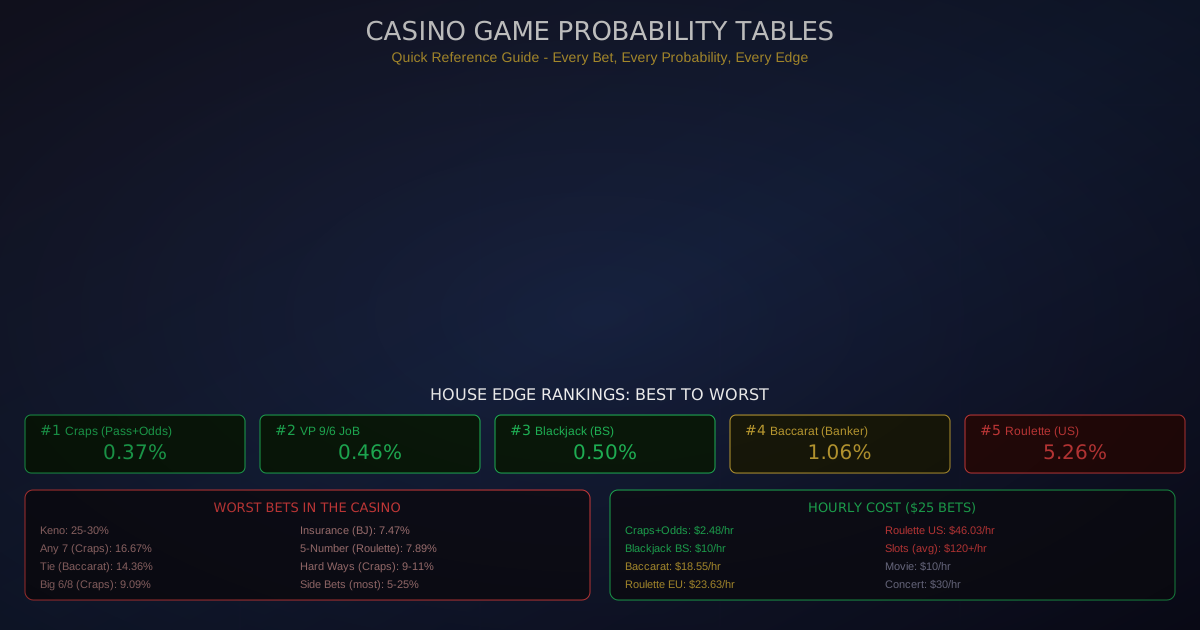
Comparing House Edges: Where VR Players Lose the Most
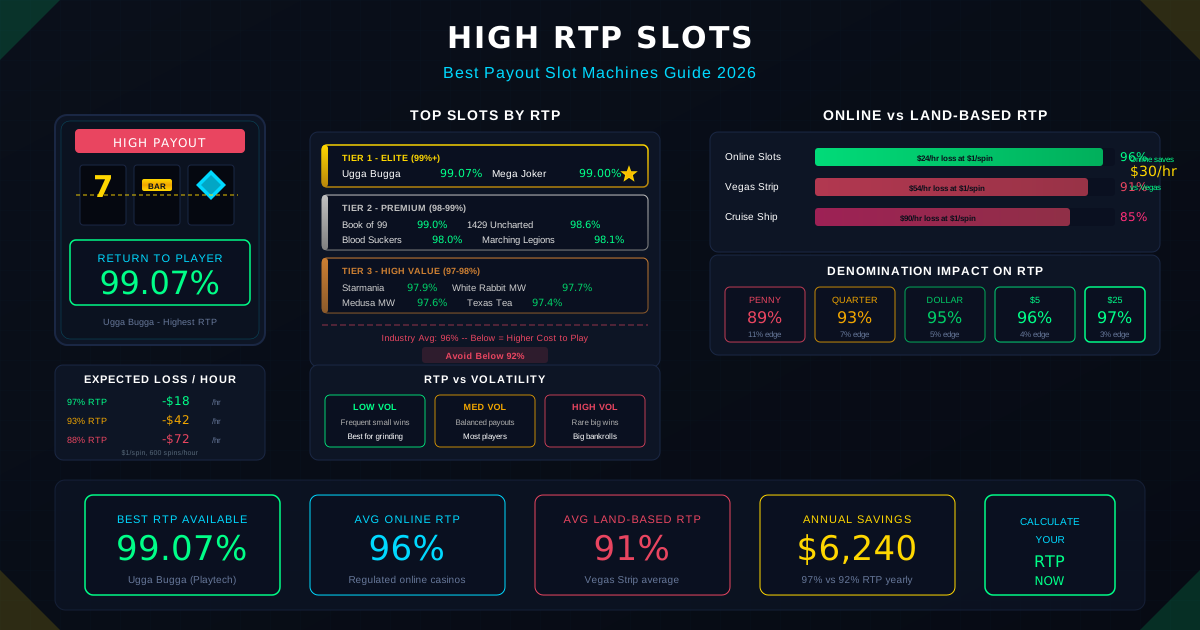
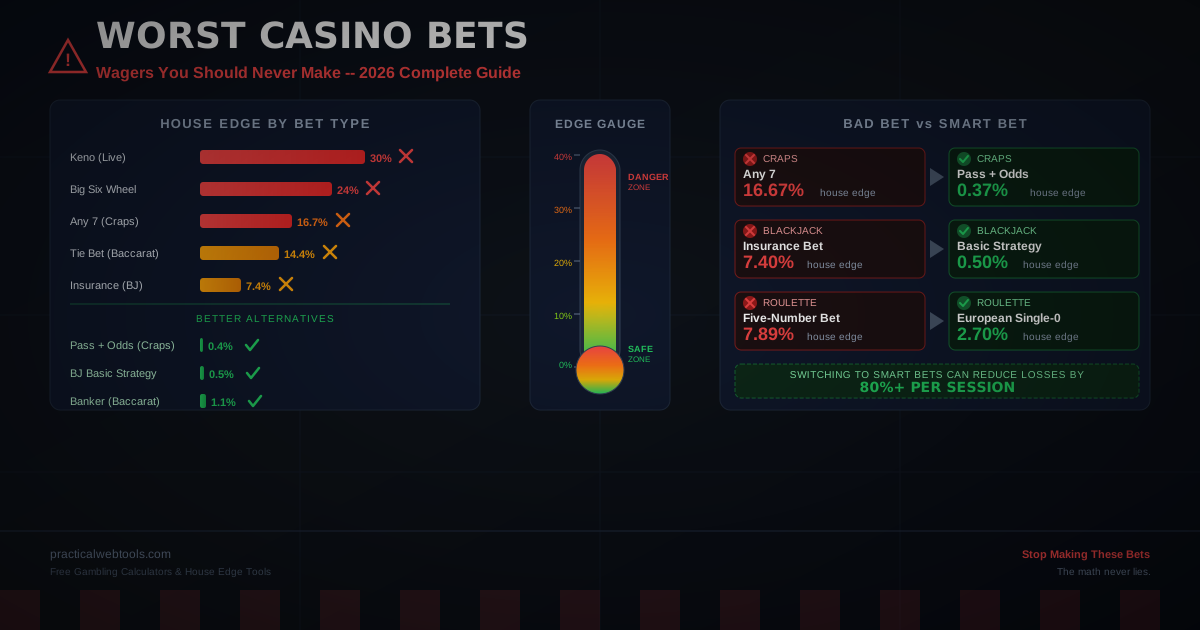
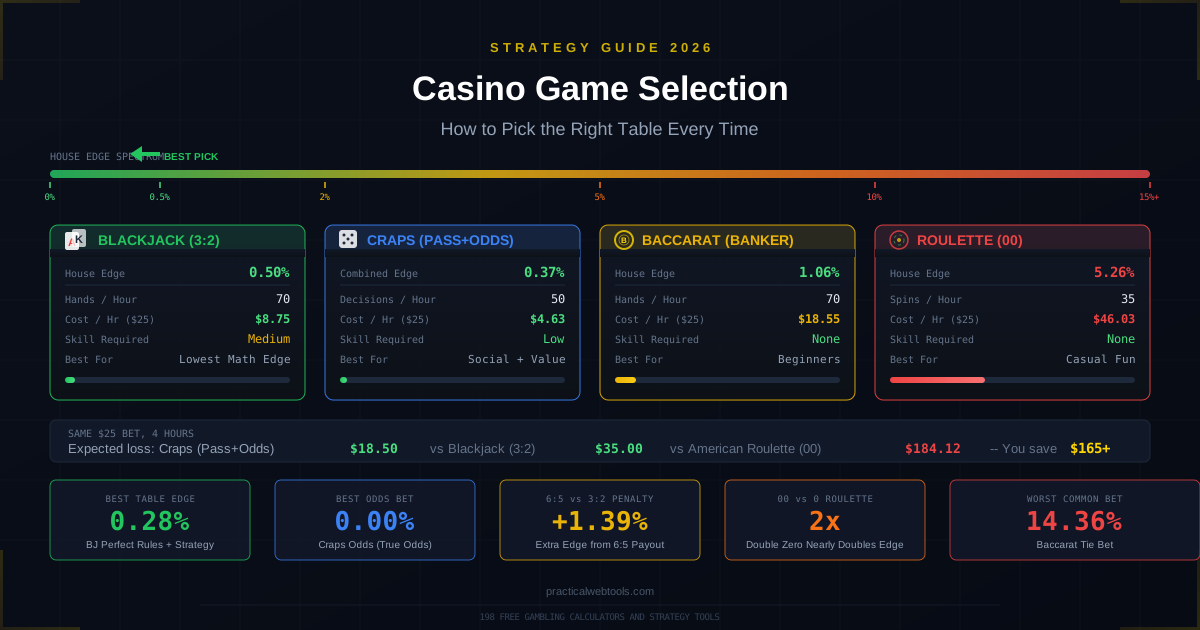
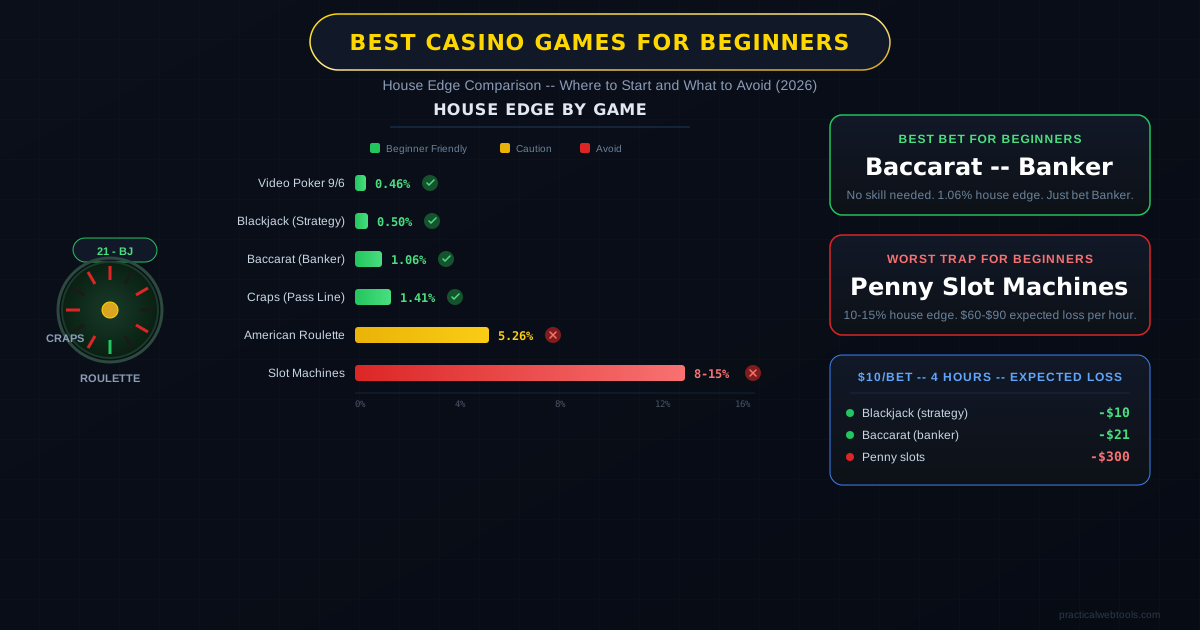
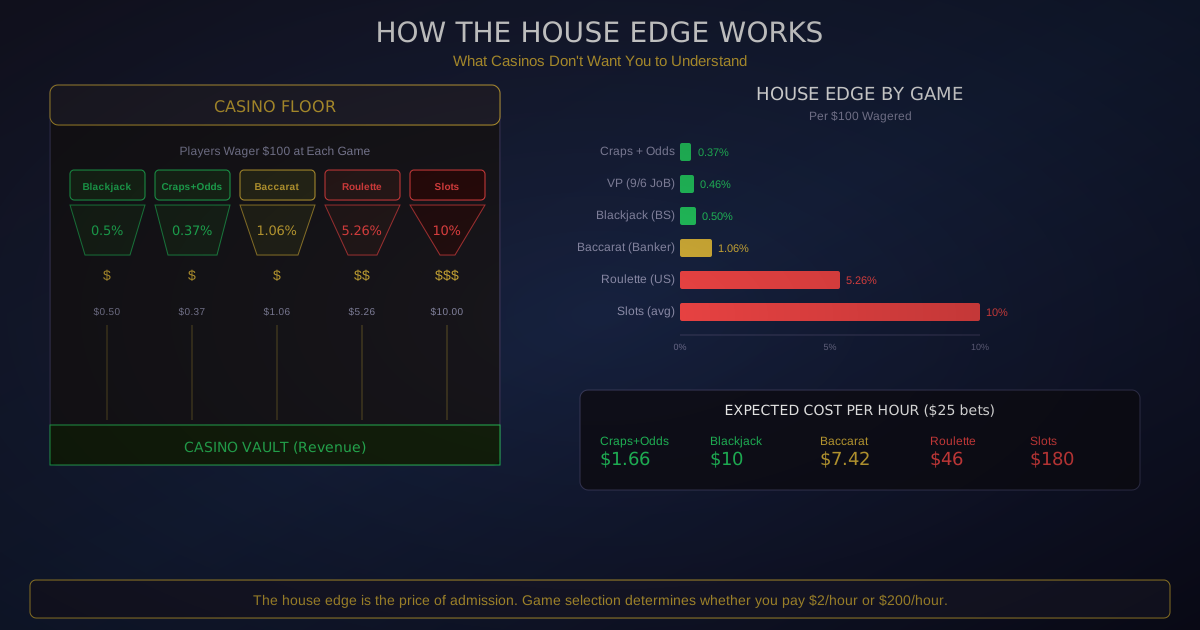
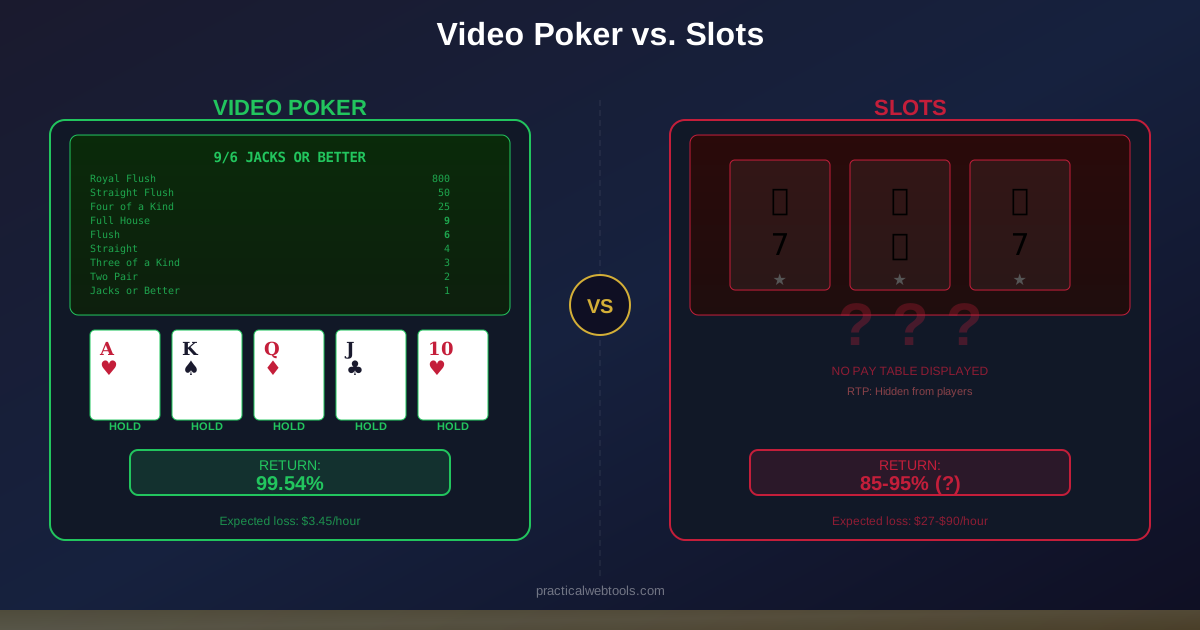
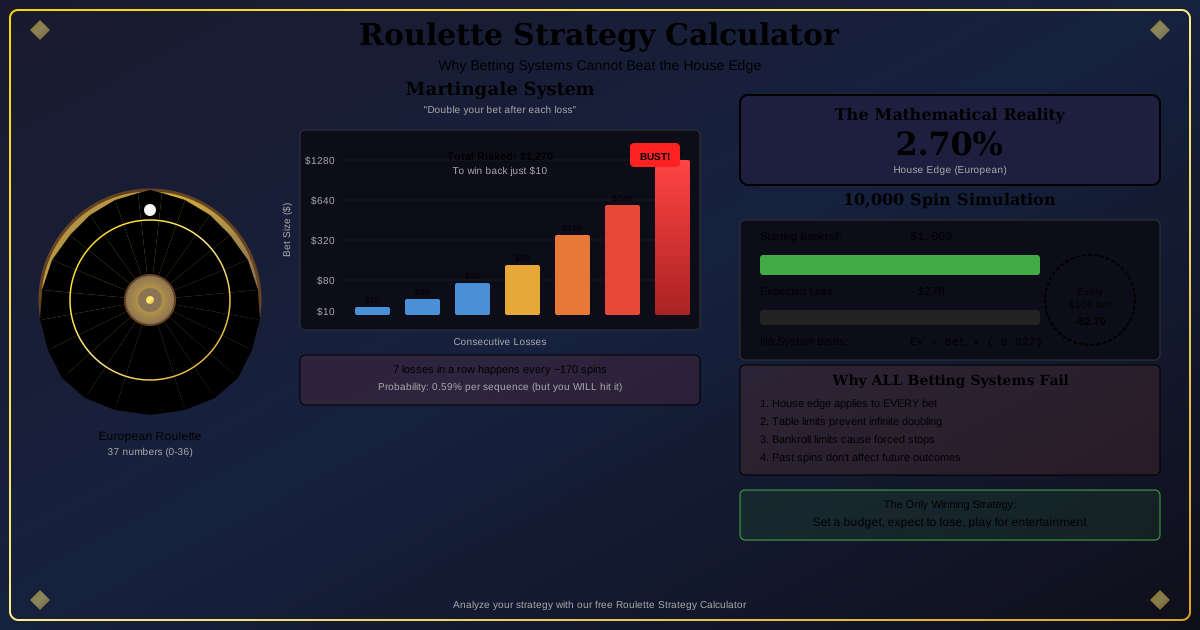
The house edge does not change because you are in VR, but the games you CHOOSE to play in VR might differ from what you would play online. Many VR casino visitors gravitate toward slots because the VR experience of pulling a lever and seeing 3D reels spin is compelling. Slots carry the highest house edge of any casino game.
| Game | House Edge | Typical VR Session Length | Expected Loss per Hour ($10/bet) |
|---|---|---|---|
| Blackjack (basic strategy) | 0.5-1% | 2-3 hours | $3-$6 |
| Baccarat (Banker) | 1.06% | 1.5-2.5 hours | $6-$8 |
| Roulette (European) | 2.70% | 1-2 hours | $16-$22 |
| Craps (Pass Line) | 1.41% | 2-3 hours | $8-$12 |
| Slots (average) | 5-10% | 1.5-3 hours | $30-$60 |
| Video Poker (JoB) | 0.46% | 2-3 hours | $3-$5 |
If you are going to gamble in VR, choose games with the lowest house edge. The VR experience is equally immersive whether you are playing blackjack (0.5% edge) or slots (8% edge), but your bankroll will last dramatically longer at the blackjack table.
Calculate the exact expected loss for any session with our Expected Value Calculator.
How Do You Evaluate a VR Casino Before Depositing?
Not all VR casinos are created equal. Before depositing real money, you should evaluate the platform across several critical dimensions.
VR Casino Evaluation Checklist
| Criterion | What to Look For | Red Flag |
|---|---|---|
| Licensing | Valid gambling license (MGA, UKGC, Curacao) | No license or expired license |
| Provably Fair | Blockchain verification of game outcomes | No transparency on RNG |
| Withdrawal Speed | Fast withdrawals (under 24-48 hours) | Slow or delayed withdrawals, many complaints |
| User Reviews | Positive reviews on independent sites | Mostly negative reviews, complaints of rigged games |
| Game Selection | Variety of games from known providers | Only proprietary games with no third-party audit |
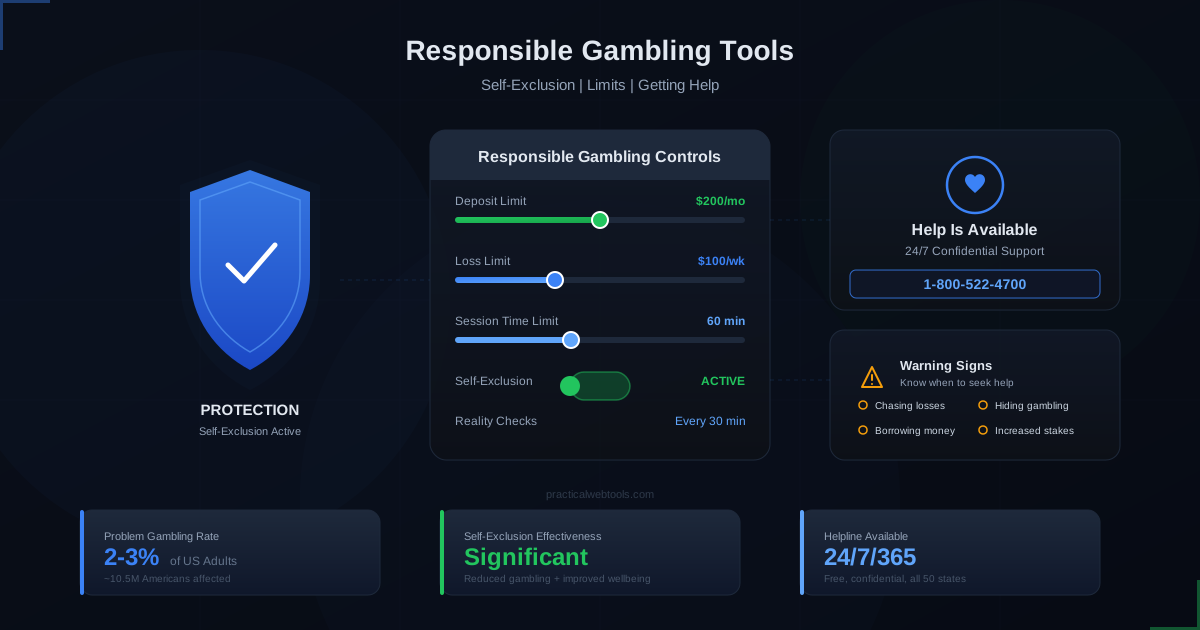
| Responsible Gambling Tools | Deposit limits, session limits, self-exclusion | No responsible gambling features |
| Customer Support | 24/7 live chat, responsive email | No contact options, unresponsive support |
| Security | SSL encryption, 2FA, cold wallet storage (crypto) | No 2FA, reports of hacked accounts |
| Smart Contract Audit | Independent audit of blockchain casino code | No audit, opaque smart contracts |
| Community | Active Discord/Telegram with real users | Dead community, mostly bots |
Questions to Ask Before Your First VR Casino Deposit
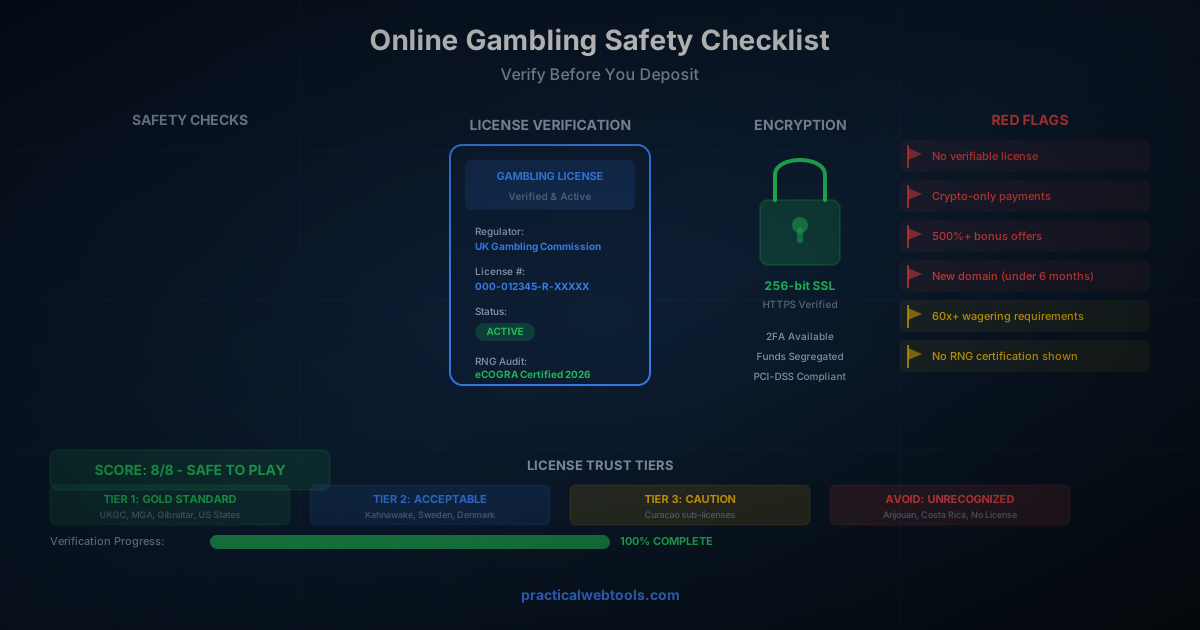
- Is this platform licensed by a recognized regulatory body? Unlicensed casinos offer no recourse if something goes wrong.
- Can I verify game fairness independently? Provably fair or third-party audited games are essential.
- What are the withdrawal limits and processing times? Some platforms make it easy to deposit and hard to withdraw.
- Is my crypto in a hot wallet or cold storage? Hot wallets connected to the internet are more vulnerable to hacking.
- What happens if the platform shuts down? Decentralized platforms have different (sometimes worse) continuity guarantees than licensed operators.
- Are there responsible gambling tools? Deposit limits, loss limits, and self-exclusion options are non-negotiable.
Calculate the odds on any VR roulette bet with our Roulette Odds Calculator.
Frequently Asked Questions
Are VR casinos legal?
The legality depends on your jurisdiction and whether the VR casino involves real money. Free-to-play VR casinos like PokerStars VR are legal virtually everywhere. Real-money VR casinos are legal in jurisdictions that permit online gambling (UK, Malta, some US states). Crypto-native VR casinos operate in regulatory gray areas in many countries. Always check your local laws before gambling with real money in VR.
Can you win real money in VR casinos?
Yes, on platforms that offer real-money gambling. SlotsMillion VR, BetaVerse Casino, and several crypto-native platforms allow real-money wagering with cash or cryptocurrency. Free-to-play platforms like PokerStars VR use virtual currency that has no real-world value. Always verify that a platform is properly licensed before depositing real money.
What is the best VR headset for casino gambling?
The Meta Quest 3 offers the best balance of quality, price, and compatibility with VR casino platforms. It supports both standalone and PCVR modes, has good resolution, and supports hand tracking for natural card and chip interaction. The Apple Vision Pro offers the best visual quality but has limited casino app availability and costs significantly more.
Are VR casino games provably fair?
Blockchain-based VR casinos offer provably fair games where every outcome can be independently verified using cryptographic proofs. Traditional VR casinos use standard RNG systems audited by third parties like eCOGRA or iTech Labs. Always check for either provably fair verification or third-party audit certifications before playing.
Do VR casinos have the same house edge as regular casinos?
Generally yes. Regulated VR casinos offer games with house edges similar to traditional online casinos. Blackjack with basic strategy ranges from 0.5-1%, European roulette is 2.7%, and slots range from 3-10%. Some crypto casinos advertise lower house edges (1-2% on all games) as a competitive advantage, but players should verify these claims.
Is VR gambling more addictive than regular online gambling?
Research is still emerging, but the immersive nature of VR raises legitimate concerns. The enhanced engagement, social pressure, time distortion, and emotional amplification of VR could increase addiction risk for vulnerable individuals. Responsible VR casinos implement session time reminders, deposit limits, and self-exclusion tools.
Can I use VR casinos to practice poker tells and reading opponents?
Yes, and this is one of the best use cases for VR poker. Free-to-play platforms like PokerStars VR let you practice reading avatar-based tells, timing tells, and bet-sizing patterns in a zero-risk environment. While avatar tells differ from real-world tells, the skill of observation and pattern recognition translates.
How much does it cost to start VR gambling?
The minimum hardware cost is $299 for a Meta Quest 3S headset. After that, free-to-play VR casinos cost nothing. For real-money play, deposits start as low as $10-$20 on most platforms. Budget $300-$500 for the headset plus whatever bankroll you are comfortable gambling with.
Related Tools for VR and Online Casino Players
Make smarter gambling decisions with these free calculators:
- Blackjack House Edge Calculator - Calculate the exact house edge for any blackjack variant and rule set
- Roulette Odds Calculator - See the probability and payout for every roulette bet
- Video Poker EV Calculator - Find the expected return on any video poker game
- Expected Value Calculator - Determine if any bet has positive or negative expected value
- Poker Equity Calculator - Calculate your hand equity against opponent ranges
- Poker Bankroll Requirements - Determine the bankroll you need for VR poker stakes
- Poker Session Tracker - Track your VR poker session results over time
- Kelly Criterion Calculator - Calculate optimal bet sizing for any game
- Implied Probability Calculator - Convert casino odds to real probabilities
- Hold/Vig Calculator - Understand the house edge built into any game
- Poker Risk of Ruin - Calculate your probability of going broke at any stake
VR and metaverse casinos represent the next evolution of online gambling. The technology is impressive and rapidly improving, the social experience fills a genuine gap that traditional online casinos cannot address, and blockchain integration adds transparency that the industry has long needed. But the fundamentals of smart gambling remain unchanged: understand the house edge, manage your bankroll, set limits, and never bet more than you can afford to lose, no matter how immersive the experience.
Gambling involves risk and should be approached as entertainment, not as a source of income. Always bet within your means, set strict bankroll limits, and never chase losses. If you or someone you know has a gambling problem, contact the National Council on Problem Gambling at 1-800-522-4700 or visit ncpgambling.org. Must be 21+ to gamble in most US jurisdictions. Please play responsibly.