Super Bowl Betting Guide: Best Prop Bets, Lines, and Party Wagers (2026)
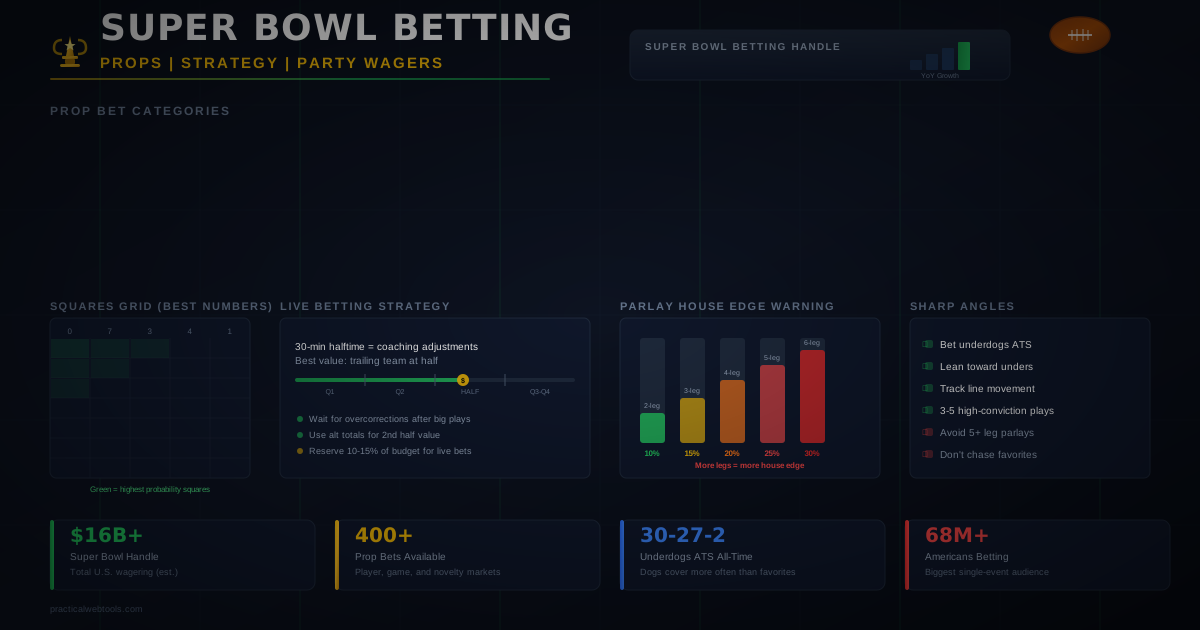
The Super Bowl is the single biggest betting event on the planet, and it is not particularly close. Americans legally wagered an estimated $16 billion on Super Bowl LIX in February 2025, smashing every previous record. Nevada sportsbooks alone booked nearly $190 million the year before that. When Super Bowl LX rolled around in February 2026, the legal handle once again landed north of $1.7 billion through regulated books, with prediction markets like Kalshi adding another $500 million on top. Add in offshore action, office pools, and bar-napkin bets between friends, and the true number of dollars riding on a single football game is staggering.
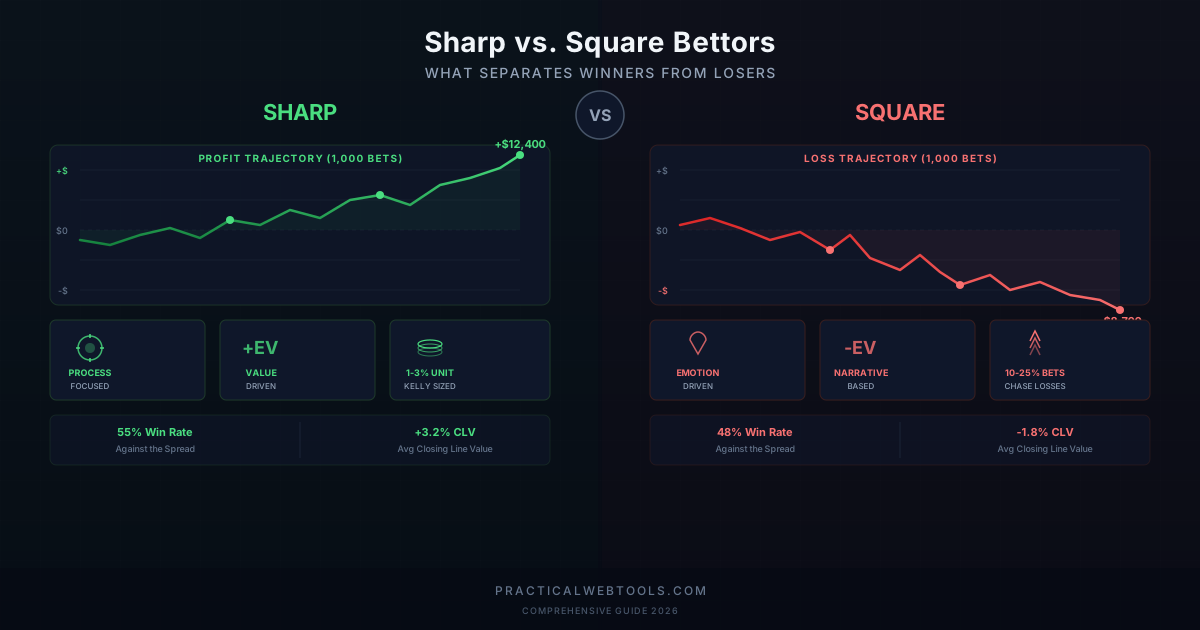
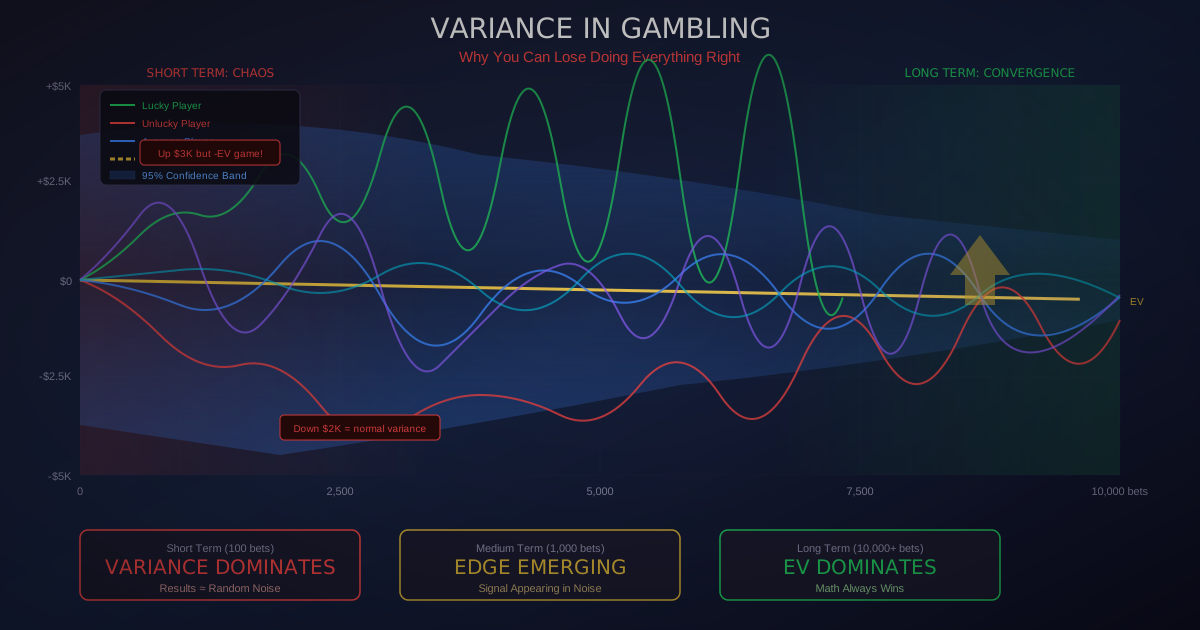
But here is the problem: the overwhelming majority of that money is bet poorly. Recreational bettors chase favorites, hammer overs, stack parlays with no edge, and treat the coin toss like a serious investment. Sportsbooks reported a comfortable profit on Super Bowl LX after the Seahawks blew out the Patriots 29-13, collecting on inflated public lines all day long.
This guide exists to make sure you are not part of the losing majority. Whether you are a sharp looking for angles, a casual bettor wanting to have fun without bleeding money, or a party host putting together a prop sheet for your guests, we break down every category of Super Bowl wagering with real data, historical trends, and mathematical frameworks that actually work.
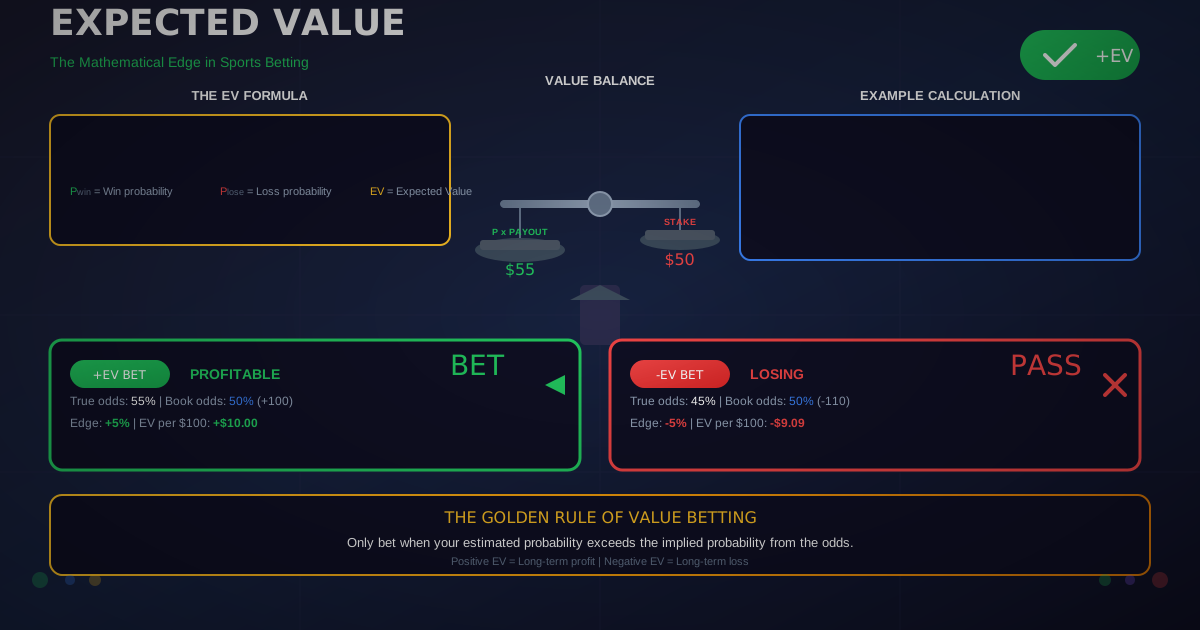
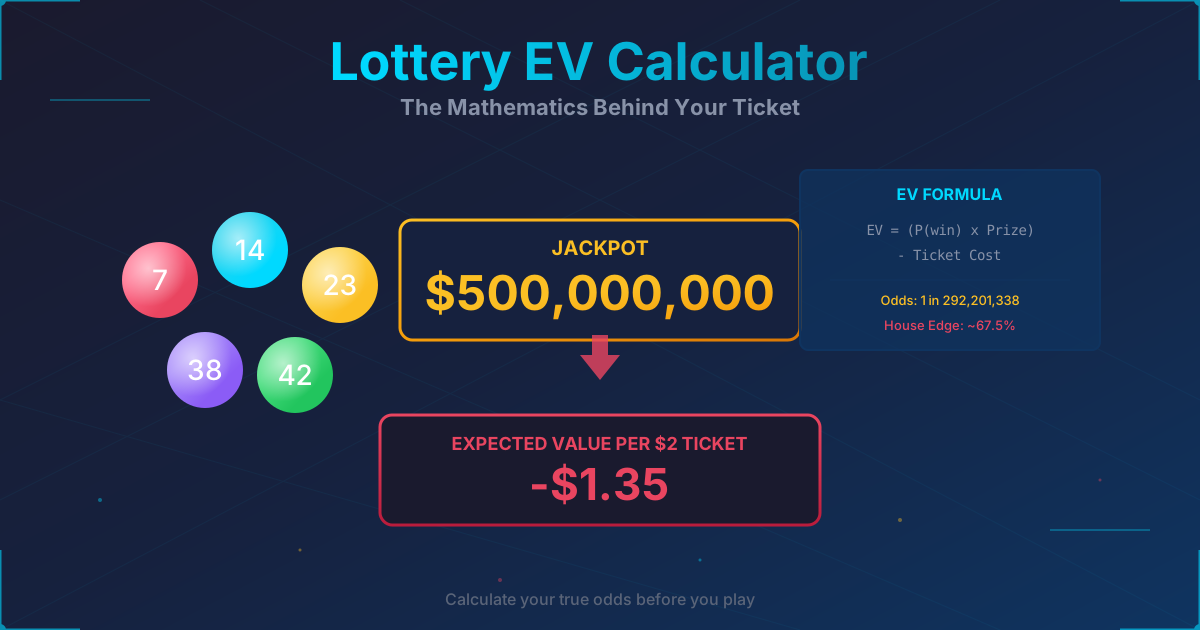
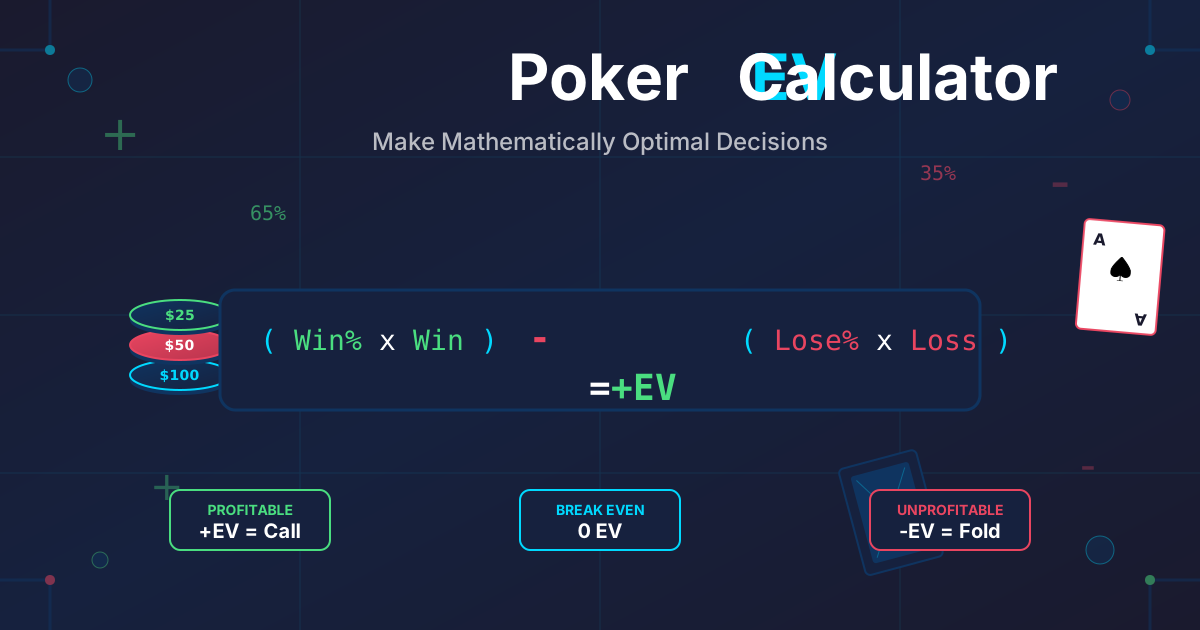
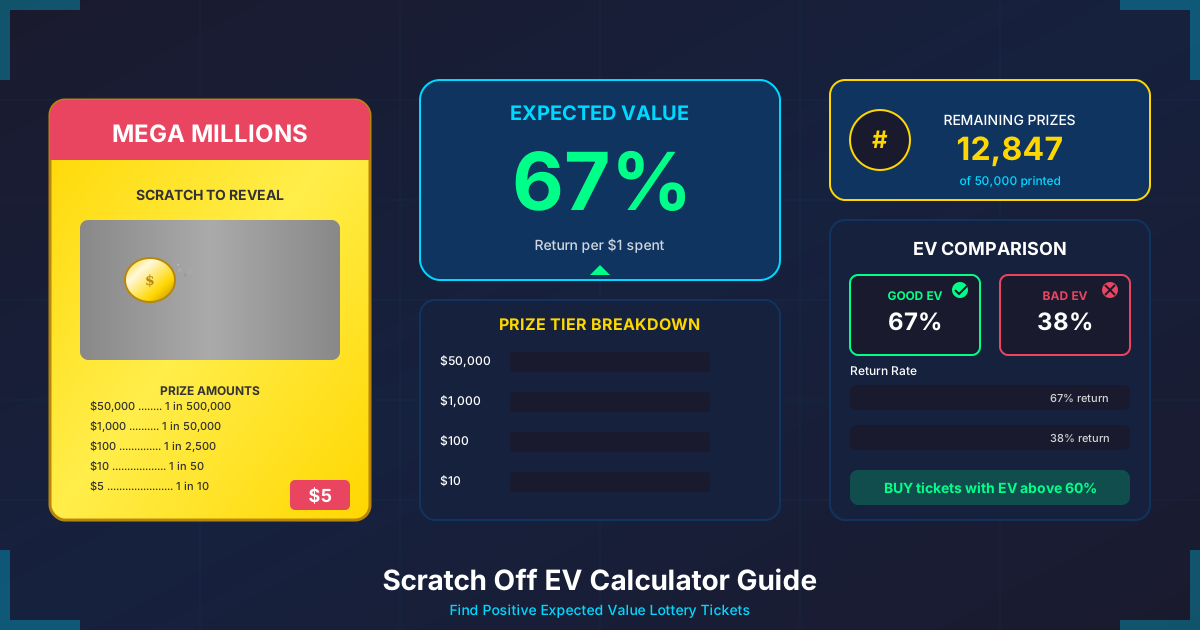
Calculate the true value of any Super Bowl bet with our free Expected Value Calculator.
Super Bowl Betting by the Numbers
Before diving into strategy, it helps to understand the sheer scale of Super Bowl wagering and where the money flows.
| Metric | Figure | Source/Year |
|---|---|---|
| Estimated total U.S. handle (legal + illegal) | $16B+ | Super Bowl LIX (2025) |
| Legal regulated sportsbook handle | $1.71B | Super Bowl LX (2026) |
| Nevada sportsbook handle | $133.8M | Super Bowl LX (2026) |
| Kalshi prediction market handle | $497.7M | Super Bowl LX (2026) |
| Number of U.S. states with legal betting | 41 | As of Feb 2026 |
| Estimated Americans placing a bet | 68M+ | Super Bowl LIX (2025) |
| Average sportsbook hold (win %) | 5-8% | Industry average |
| Number of available prop bet markets | 200-400+ | Varies by sportsbook |
The key takeaway from these numbers is that sportsbooks are extremely profitable on the Super Bowl. The house hold percentage often spikes above normal NFL games because recreational bettors flood the market with uninformed action, especially on props. Understanding this dynamic is the first step toward finding value.
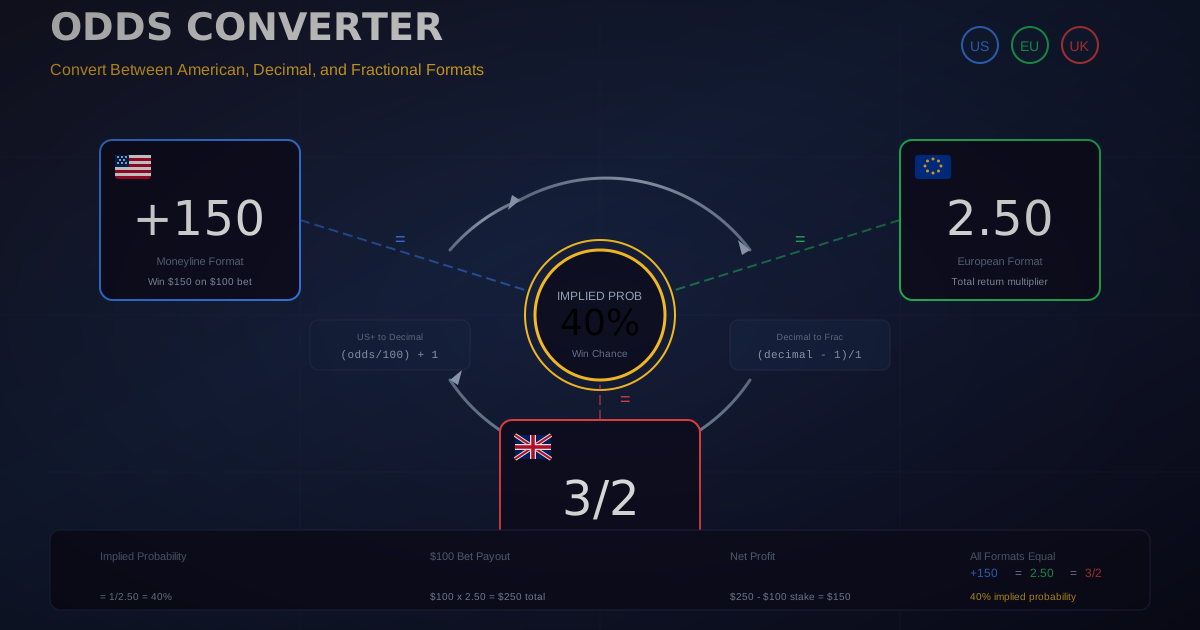
Convert between American, decimal, and fractional odds instantly with our Odds Converter.
Betting the Side: Spread and Moneyline Strategy
The spread and moneyline represent the core of Super Bowl wagering. This is where sharp money concentrates, and where historical trends tell a compelling story.
Super Bowl ATS History: Underdogs Dominate
One of the most consistent trends in all of sports betting is that Super Bowl underdogs cover at an extraordinary rate. The data is overwhelming:
| Time Period | Underdogs ATS | Favorites ATS | Key Insight |
|---|---|---|---|
| All-time (59 games) | 30-27-2 | 27-30-2 | Dogs cover 52.5% of the time |
| Since 2003 | 15-7 ATS | 7-15 ATS | Dogs cover 68.2% in modern era |
| Last 5 Super Bowls | 5-0 ATS | 0-5 ATS | Perfect run for underdogs |
| Favorites of 4.5+ points (since 2000) | N/A | 1-10 ATS | Big favorites almost never cover |
| Favorites of 3+ points (since 1995) | N/A | 3-13-2 ATS | Terrible record for large spreads |
What this means for your betting: If you are deciding between the favorite and the underdog on the spread, historical data screams to take the points. This trend persists because the public overwhelmingly backs favorites in the Super Bowl, inflating the line beyond where it should be. Sharp bettors have exploited this for decades.
Real-World Example: Super Bowl LX
The Seattle Seahawks were 3-point favorites over the New England Patriots in Super Bowl LX. The public hammered Seattle, pushing the line as high as -3.5 at some books. Sharp money came in on New England, but it was not enough to move the market back. Seattle won 29-13, covering easily in what turned out to be a blowout. The lesson: even when the underdog trend fails, the value was still correct. You make the +EV play and accept the variance.
Had you wagered $110 to win $100 on Seattle -3 at standard -110 juice, you would have collected $100 profit. But a bettor who regularly bets Super Bowl underdogs ATS has been profitable over any meaningful sample size in the modern era.
Moneyline vs. Spread Considerations
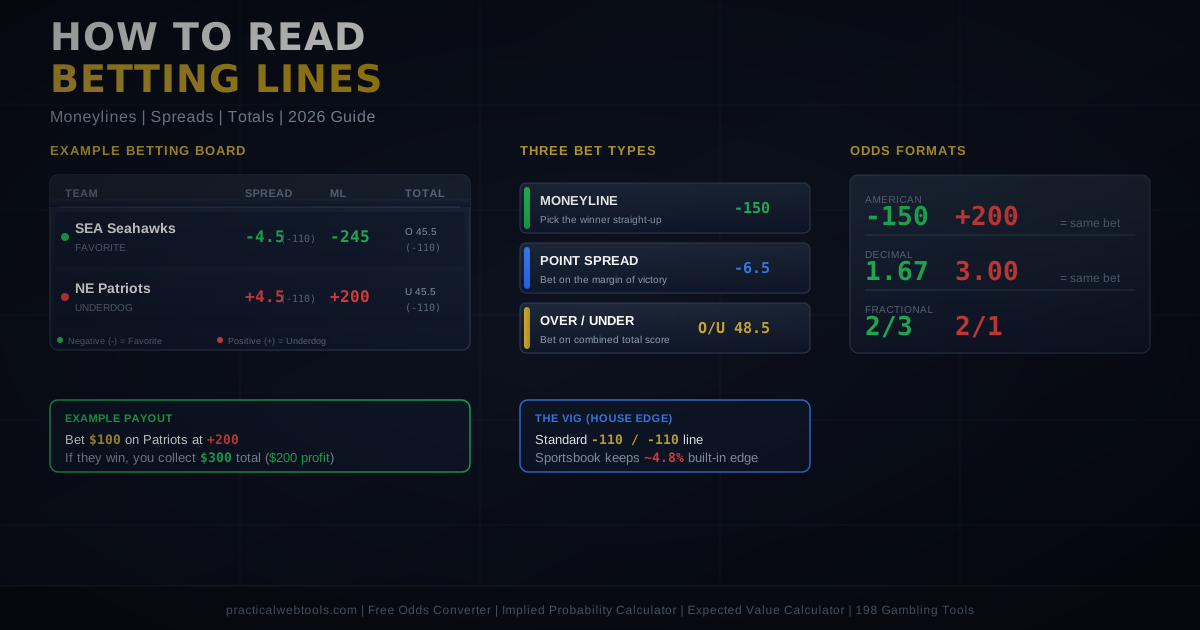
For small underdogs (1-3 points), consider the moneyline instead of the spread. A team getting +2.5 on the spread might be +130 on the moneyline. If you believe the game is close to a coin flip, that +130 moneyline offers better expected value than the -110 spread in many scenarios.
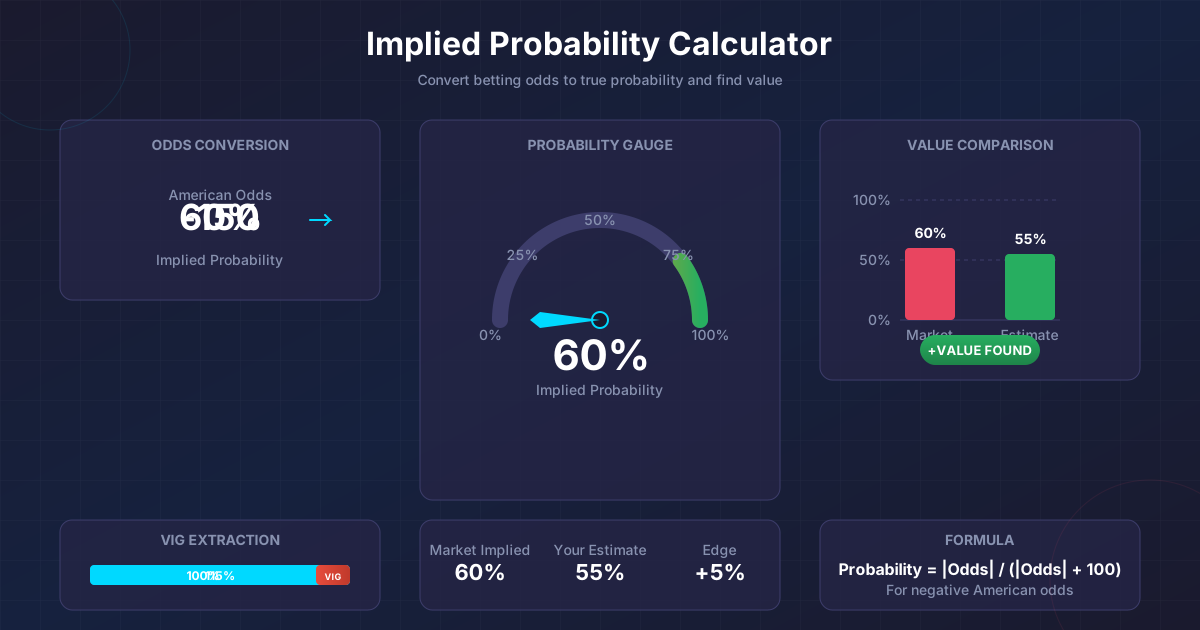
Check the implied probability of any moneyline with our Implied Probability Calculator.
Betting the Total: Over/Under Strategy
The over/under is the second most popular Super Bowl bet, and it carries its own set of traps and opportunities.
Historical Totals Trends
Super Bowl totals have gone under more often than over in recent history. Defenses tend to tighten up on the biggest stage, and coaching staffs spend two weeks game-planning to eliminate an opponent's strengths. Nerves also play a role early in the game, leading to sloppy possessions and punts.
Key data points:
- The under has hit in 6 of the last 10 Super Bowls
- Games with totals set above 50 have gone under at an even higher rate
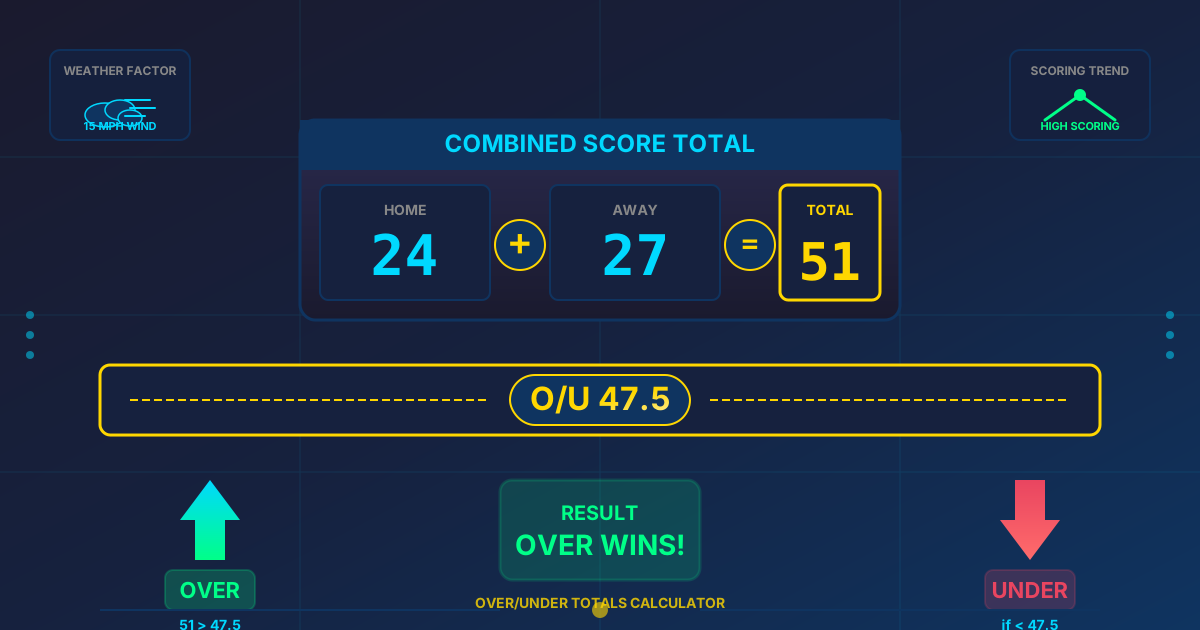
- Super Bowl LX (Seahawks 29, Patriots 13 = 42 total) went well under the posted total of 47.5
- The average Super Bowl final score since 2015 is approximately 22-17
Why the Public Hammers Overs
Sportsbooks know that recreational bettors love action. Scoring is exciting. Watching a defensive slugfest is not. This psychological bias means that the over side gets disproportionate action in the Super Bowl, pushing the total higher than it should be. Sharps consistently fade this by taking unders.
Real-World Example: Value on the Under
Suppose the total is set at 49.5 and you believe the true total should be 46. At standard -110 juice on both sides:
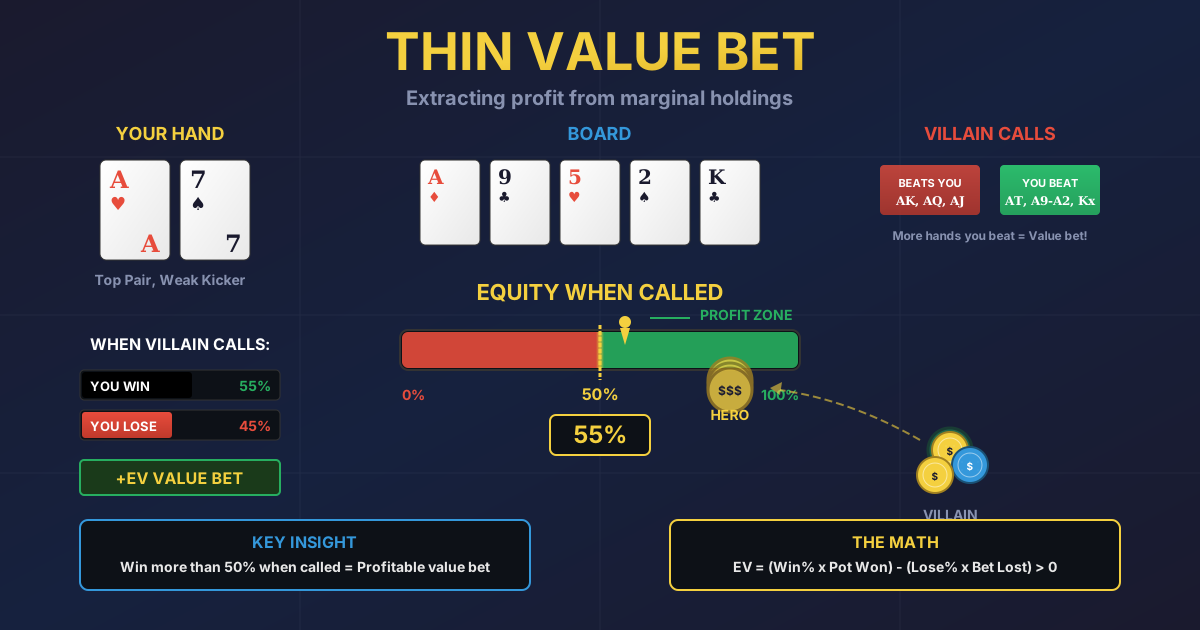
- The implied probability of the under at -110 is 52.4%
- Your estimated probability of the under is approximately 60%
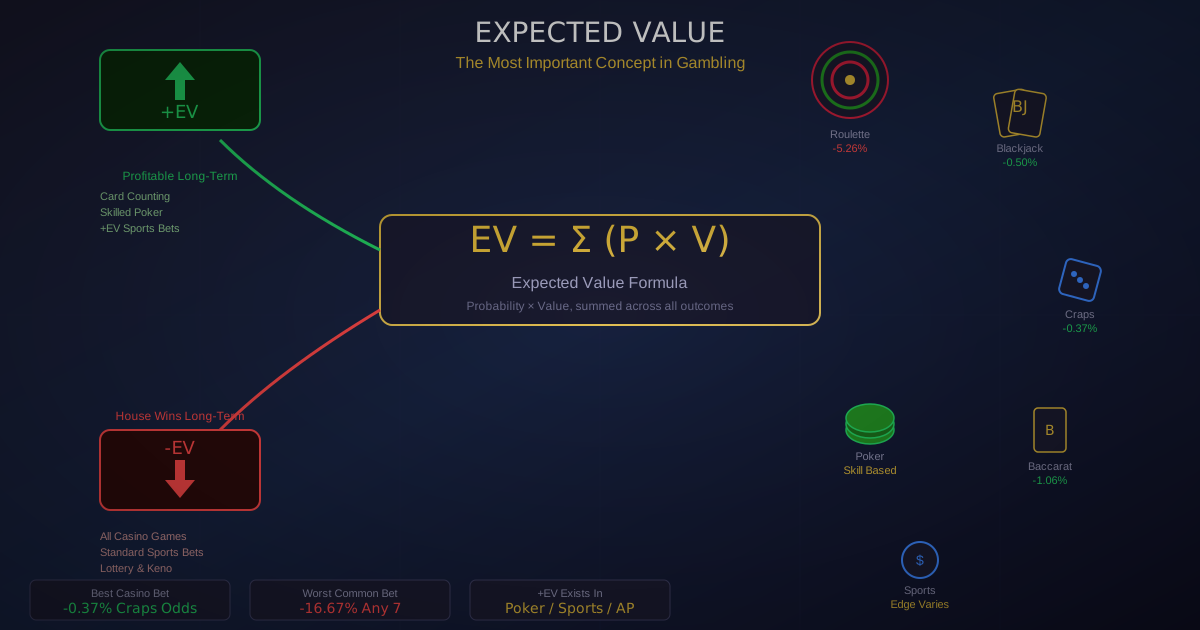
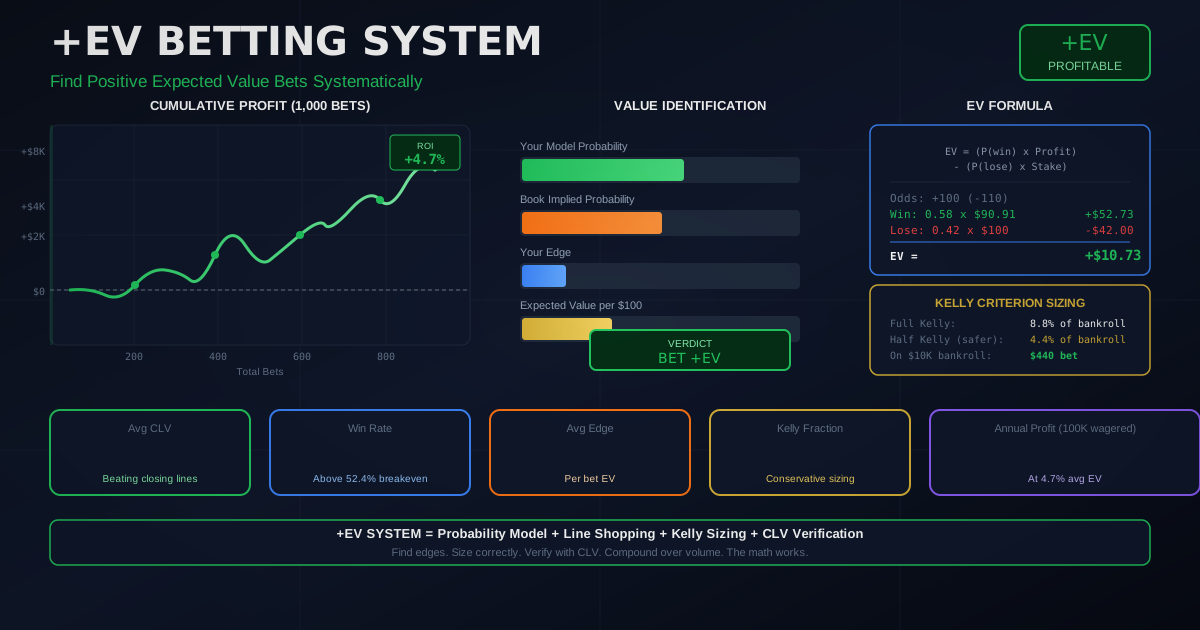
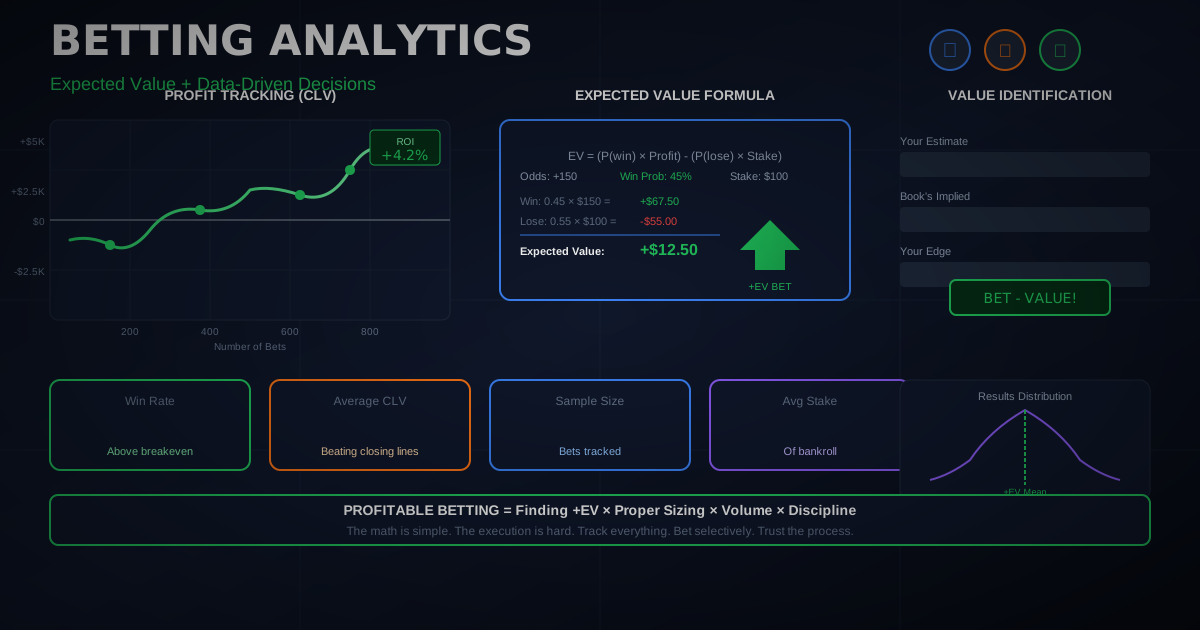
- Expected Value: (0.60 x $100) - (0.40 x $110) = $60 - $44 = +$16 per $110 wagered
That is a massive edge. Even a 2-3 point discrepancy between the posted total and your projection creates meaningful expected value.
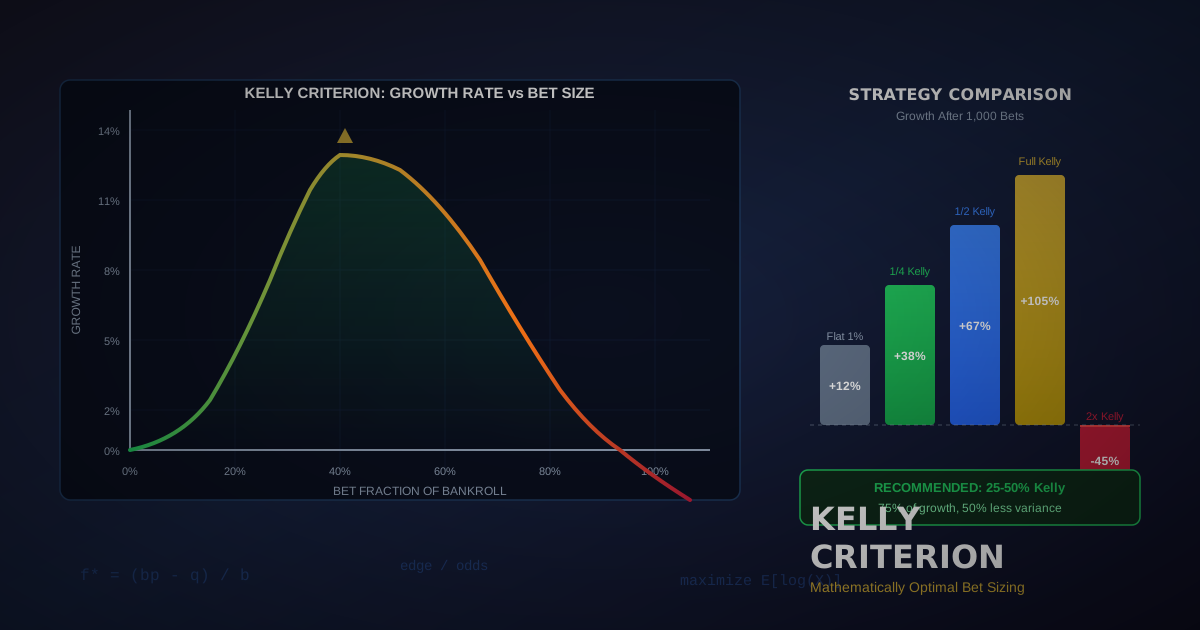
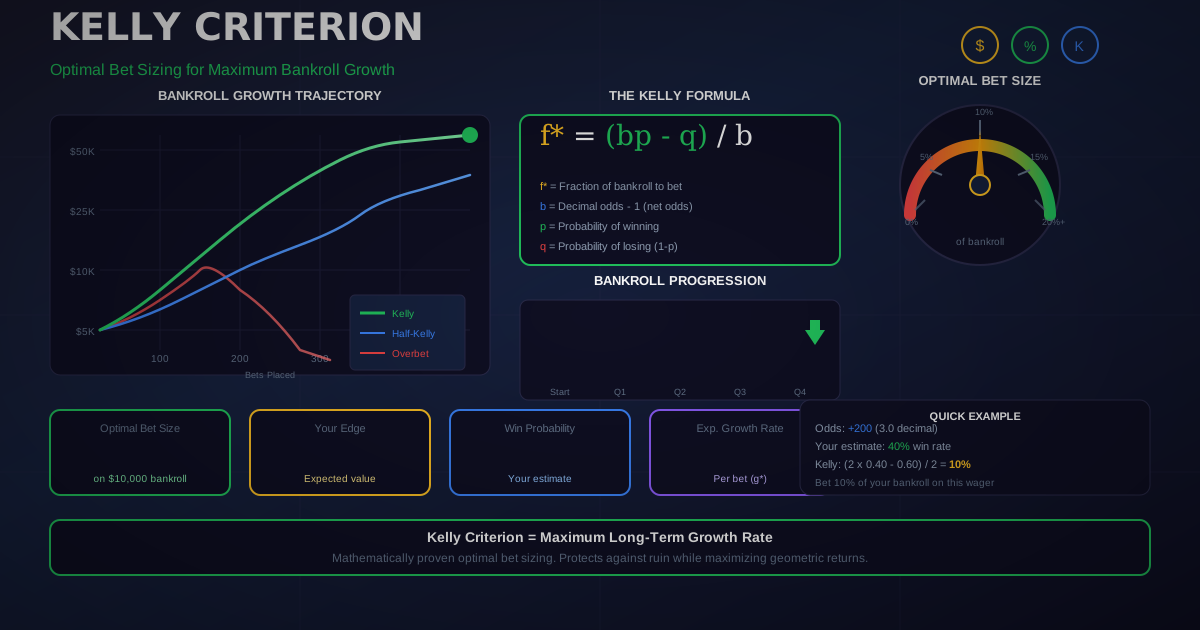
Size your bets optimally using the Kelly Criterion Calculator.
Player Prop Bets: Where the Real Value Lives
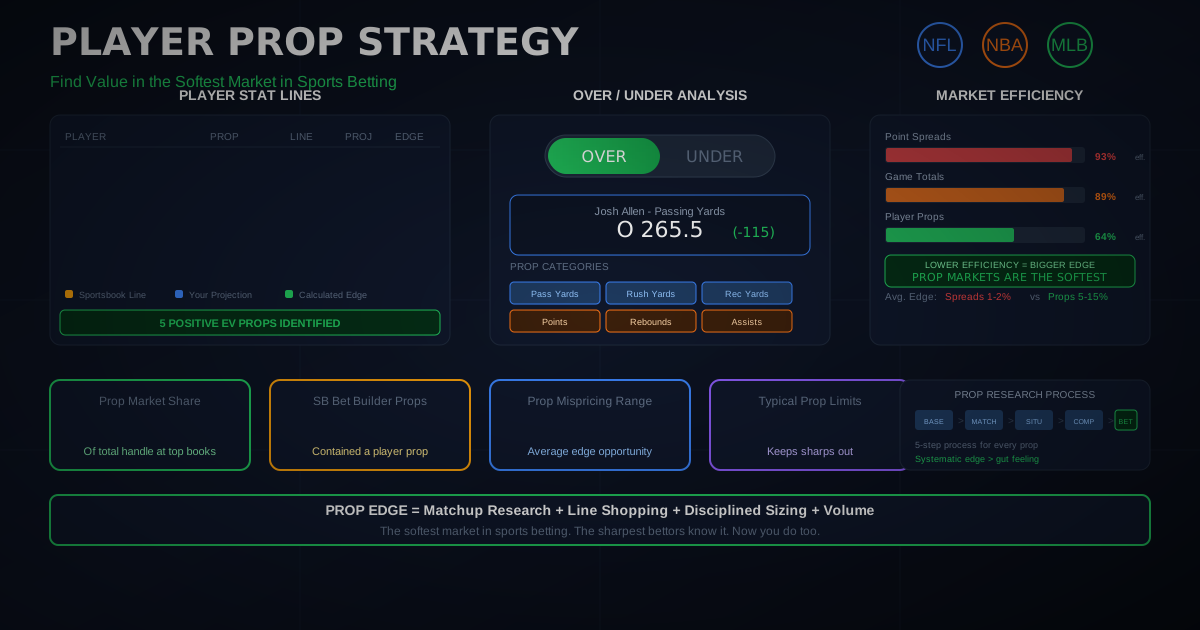
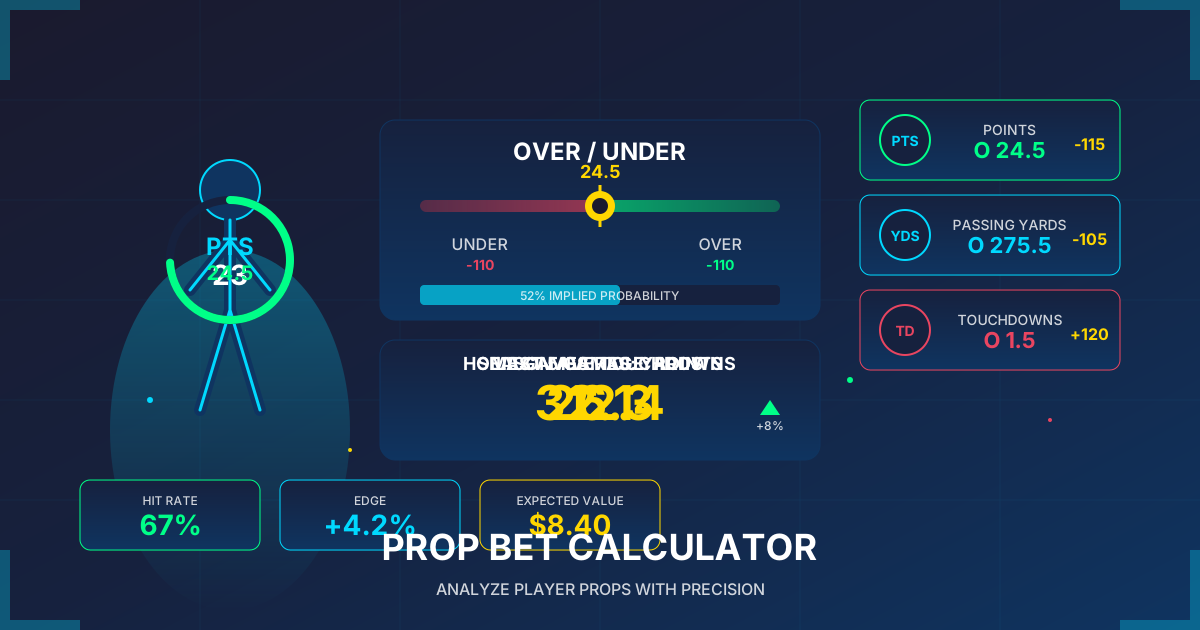
Player props are the fastest-growing segment of Super Bowl betting, and for good reason. With hundreds of individual markets, sportsbooks cannot dedicate the same level of attention to each prop that they give to the spread and total. This creates inefficiencies that informed bettors can exploit.
Passing Props
Quarterback props are the most heavily bet individual markets. Key categories include:
| Prop Category | Typical Range | Sharp Angle |
|---|---|---|
| Passing yards (QB) | 225-325 yards | Overs inflated by public; under can have value on run-heavy teams |
| Passing touchdowns | 1.5-2.5 | Under 2.5 at plus-money is often sharp |
| Interceptions | 0.5-1.5 | Over 0.5 INTs historically hits ~60% in Super Bowls |
| Completions | 22-28 | Correlated with game script; check total |
| Longest completion | 35-45 yards | Under is sharp when defenses play conservatively |
Example: In Super Bowl LX, Drake Maye's passing yards over/under was set at 245.5. The Seahawks' defense had been dominant all season, sacking quarterbacks at a league-leading rate. Maye finished with a rough outing as Seattle sacked him six times and forced three turnovers. Bettors who identified the defensive mismatch and took the under on Maye's passing props cleaned up.
Rushing Props
Running back props often fly under the radar but can offer excellent value.
- Anytime touchdown scorer props for goal-line backs are frequently underpriced. A back who gets 60-70% of carries inside the 5-yard line has a much higher TD probability than his odds suggest.
- Rushing yards overs for workhorse backs in run-first offenses tend to hold value when the team is favored (positive game script = more running in the second half).
- Kenneth Walker III finished Super Bowl LX with 150+ yards from scrimmage and took home MVP honors, rewarding bettors who identified Seattle's ground-game dominance.
Receiving Props
Wide receiver and tight end props are where you can find the biggest mispricings.
- Anytime TD scorer for the WR1 on each team is almost always overpriced because the public loves betting names they recognize. Look at the WR2 or a pass-catching running back for better value.
- Receptions props are more stable than yardage props because they have less variance. A receiver who averages 6 catches per game is unlikely to finish with 0 or 15. This makes the over/under easier to project.
- Approximately 40% of Super Bowl first touchdowns come via passing plays, with wide receivers and tight ends combining for the majority of those scores.
Run the numbers on any prop bet with our Expected Value Calculator.
Game Props: First Score, Halves, and Quarters
Game-level props go beyond individual player performance and focus on how the game unfolds. These markets are popular with both sharp and recreational bettors.
Method of First Score
| First Score Method | Historical Frequency | Typical Odds | Notes |
|---|---|---|---|
| Touchdown (pass) | ~37% | +140 to +170 | Most common outcome |
| Field goal | ~28% | +190 to +220 | More likely in defensive games |
| Touchdown (rush) | ~25% | +250 to +300 | Value when strong running teams play |
| Safety | ~2% | +4000 to +5000 | Longshot but pays big |
| Defensive/ST TD | ~8% | +800 to +1200 | Often overlooked |
Sharp angle: The field goal as first score is historically underpriced in Super Bowls. Teams play conservatively early, and first drives that stall in opposing territory often result in field goal attempts rather than fourth-down gambles.
First Half vs. Second Half
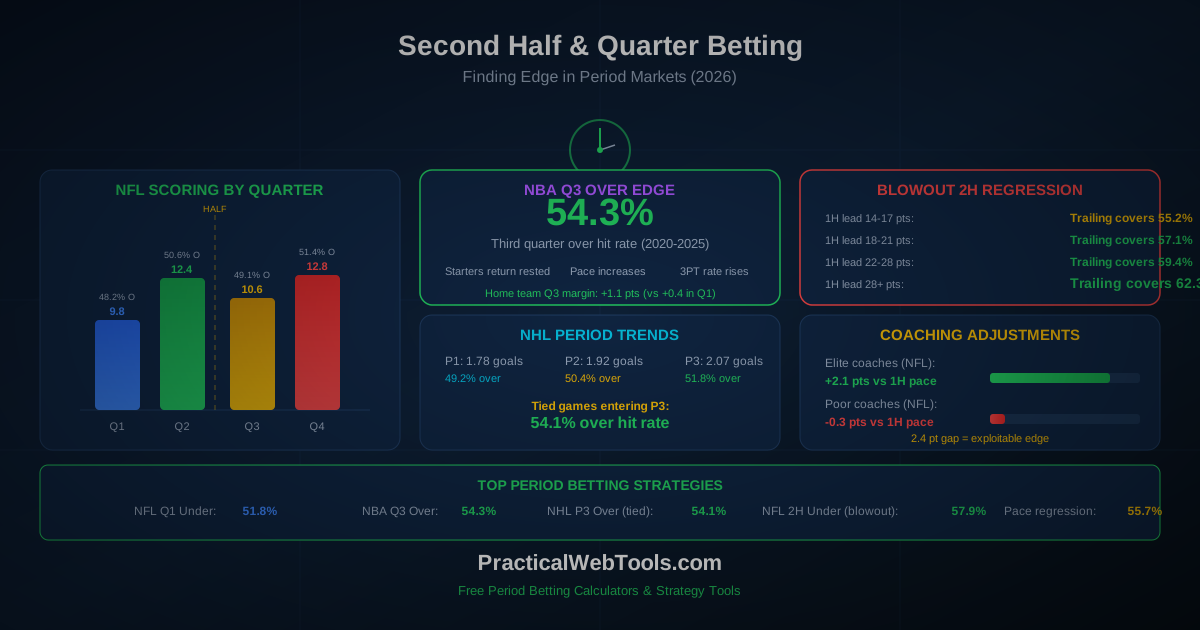
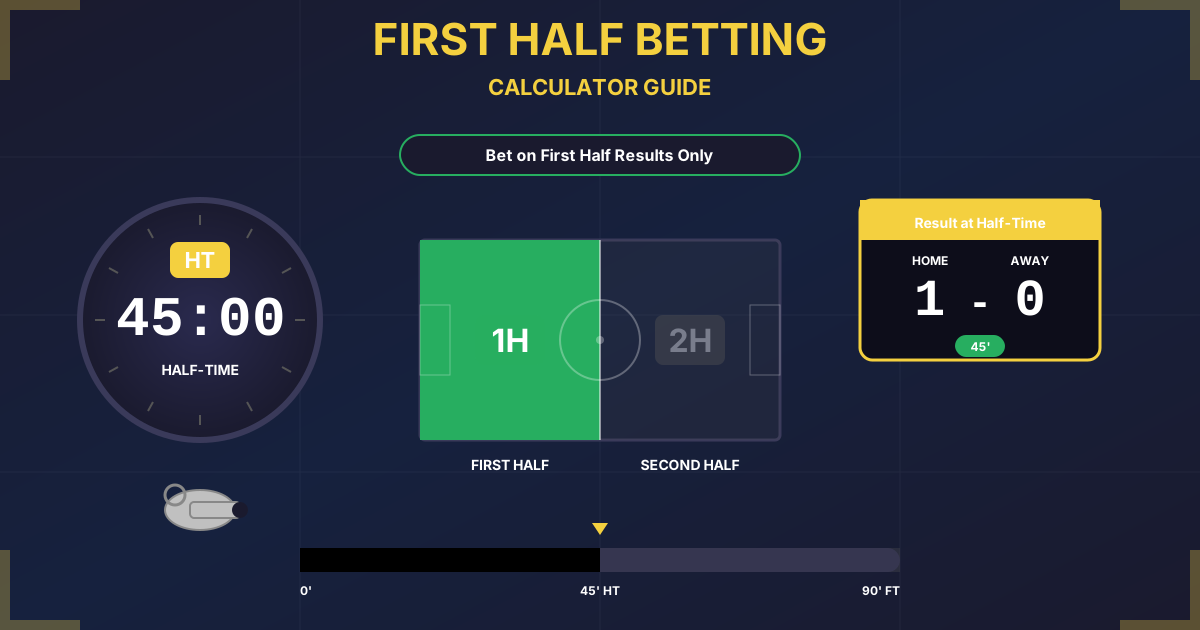
The first half of the Super Bowl tends to be lower-scoring than the second half. Coaches open up their playbooks after halftime, trailing teams become more aggressive, and the extended halftime break (approximately 30 minutes, double a normal NFL halftime) can disrupt the rhythm of the leading team.
Strategy: Consider taking the first-half under and the second-half over as separate bets when the game total seems inflated. This hedges your exposure while capitalizing on the historical scoring distribution.
Quarter-by-Quarter Props
Some sportsbooks offer quarter-specific spreads and totals. The first quarter is historically the lowest-scoring quarter in Super Bowls, making first-quarter unders a consistent sharp play. Look for first-quarter totals above 10.5 and consider the under.
Novelty and Party Prop Bets: Fun Wagers for Casual Bettors
Novelty props are what make Super Bowl betting unique. No other sporting event lets you wager on the color of a liquid or the length of a song. While these bets carry higher house edges, they are perfect for parties and casual entertainment.
The Complete Party Prop Bet Menu
| Novelty Prop | What You Are Betting | Typical Edge | Fun Factor |
|---|---|---|---|
| Coin toss (heads/tails) | Result of the opening coin toss | ~3% house edge (-103 odds) | High -- pure 50/50 excitement |
| National anthem length | Over/under a set time (usually ~100 seconds) | ~5-8% | Medium -- everyone watches |
| Gatorade bath color | Color of liquid dumped on winning coach | ~15-25% | Very high -- great for pools |
| First commercial brand | Which brand airs the first ad | ~20-30% | High -- everyone debates this |
| Halftime show first song | Which song opens the performance | ~10-20% | High for music fans |
| Will there be a safety? | Yes/no on a safety occurring | ~5-8% | Medium -- rare but exciting |
| Will there be overtime? | Yes/no on OT | ~5% | Low probability, big payout |
| MVP position | QB, RB, WR, or defensive player | ~8-12% | Good for group betting |
Coin Toss Deep Dive
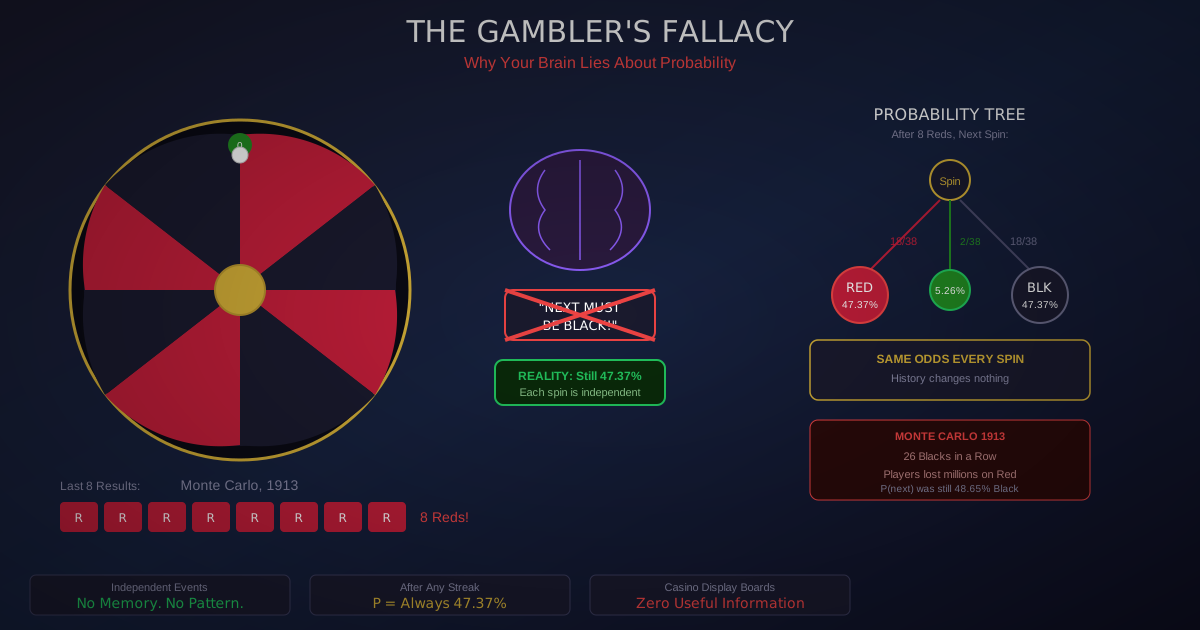
The Super Bowl coin toss is one of the most bet-on props despite being a pure 50/50 random event. Historically, tails has landed 31 out of 59 times (52.5%), but this tiny sample size means nothing statistically. The real story is the house edge: at -103 odds on each side, the sportsbook takes approximately 3% regardless of the outcome.
One wild stat from Super Bowl LX: A single bettor wagered $253,000 on the coin toss and won. That is peak Super Bowl degeneracy, and while it worked out for that individual, it is a terrible bet mathematically. The expected loss on a $253,000 coin toss bet at -103 is roughly $3,700.
National Anthem Length
The over on the national anthem length has hit in 6 of the last 7 Super Bowls. Performers tend to draw out the anthem on the biggest stage, adding vocal runs and dramatic pauses that push the time past the posted line. Jon Batiste performed the anthem at Super Bowl LX.
Party tip: This is an excellent bet for a group pool. Set up a bracket where everyone picks over or under, and award a small prize. It resolves in the first five minutes, getting the party started with immediate excitement.
Gatorade Bath Color
The Gatorade color bet is pure entertainment with a hefty house edge (15-25% depending on the book). For Super Bowl LX, the odds boards favored Orange (+225), Yellow/Green/Lime (+260), and Blue (+260), with Purple, Red/Pink, and Clear as longer shots.
Historical favorites: Orange and clear/water have been the most common colors historically. Some bettors try to research the winning team's sideline Gatorade supply during the week, but sportsbooks are aware of this and adjust accordingly.
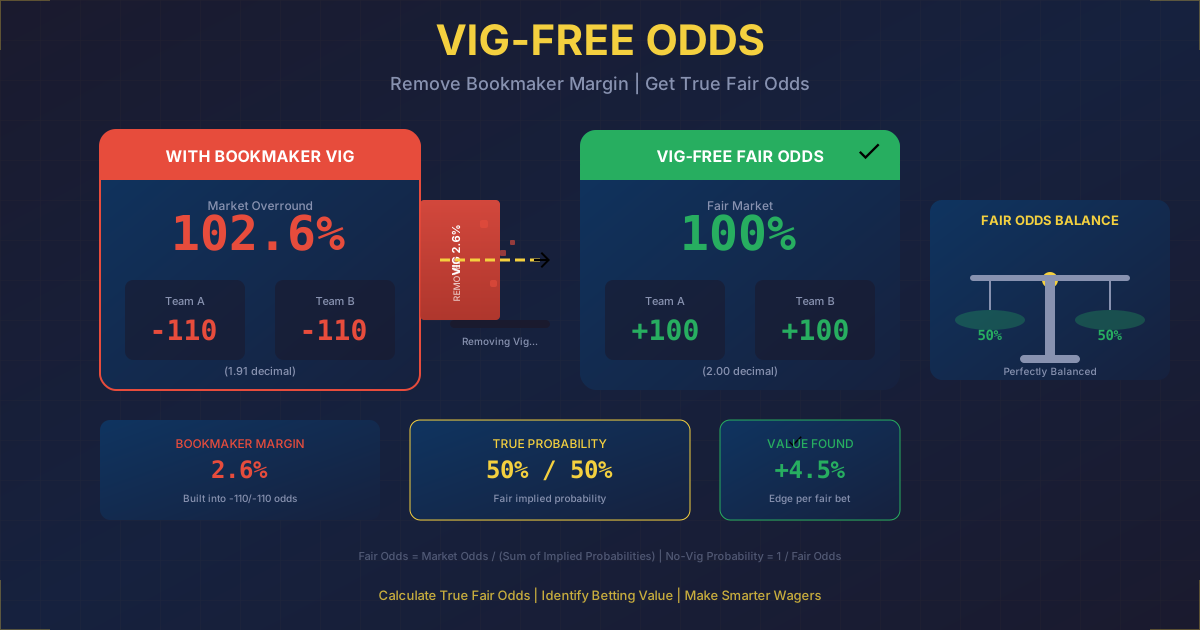
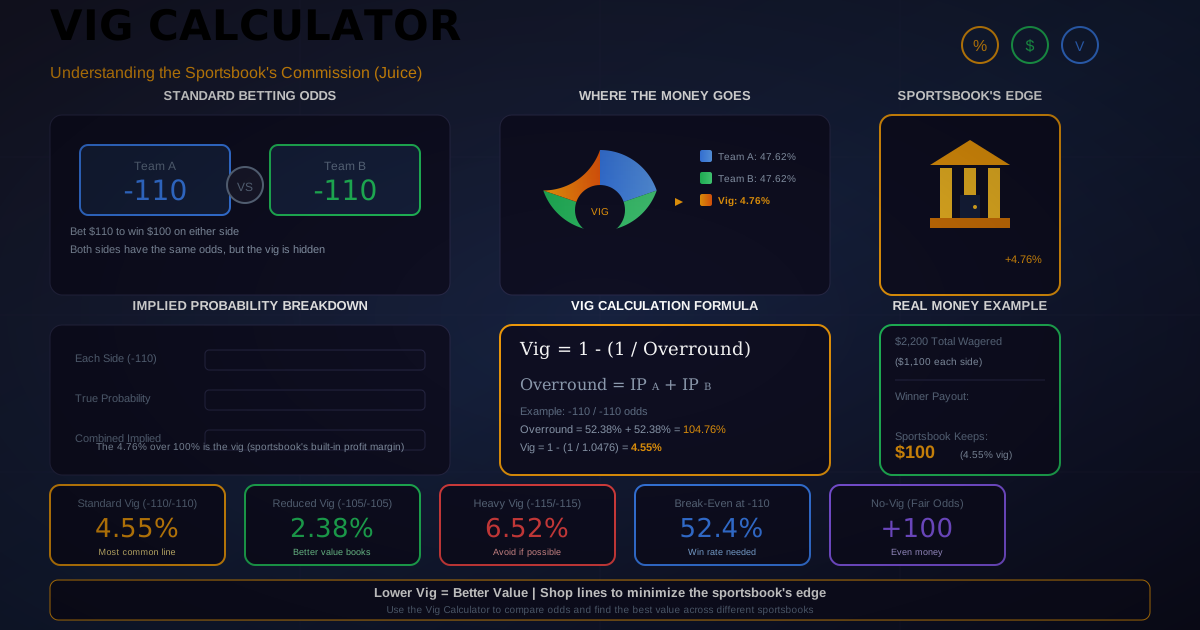
Check the house edge on any prop bet with our Hold/Vig Calculator.
Super Bowl Squares and Office Pool Strategy
Super Bowl squares (also called "football squares" or "the grid") are the most popular non-sportsbook way to bet on the game. Even people who never place a sports bet participate in squares pools at work, at parties, or with family.
How Super Bowl Squares Work
- A 10x10 grid creates 100 squares, each representing a unique combination of last digits (0-9) for each team's score
- Players buy squares (usually $1-$100 each)
- After all squares are sold, numbers 0-9 are randomly assigned to each row and column
- Winners are determined by the last digit of each team's score at the end of each quarter
The Best and Worst Numbers
Not all squares are created equal. Because football scoring revolves around 3-point field goals and 7-point touchdowns, certain last digits appear far more frequently.
| Number | Quality | Why |
|---|---|---|
| 0 | Best | Appears in scores like 0, 10, 20, 30 -- extremely common |
| 7 | Excellent | Touchdowns (7, 14, 21, 28) dominate football scoring |
| 3 | Very good | Field goals create 3, 13, 23 scores frequently |
| 4 | Good | 14, 24 are common; also appears after TD + missed PAT |
| 1 | Decent | 21, 31 happen regularly |
| 6 | Decent | Two field goals (6), or TD without PAT conversion attempts |
| 8 | Poor | Requires unusual scoring combinations |
| 9 | Poor | Rare last digit in football scoring |
| 2 | Very poor | Safety-dependent; almost never appears |
| 5 | Worst | Requires a safety + field goal or similar oddity |
Squares Strategy Tips
Since numbers are assigned randomly after purchase, you cannot choose your numbers. However, you can optimize your squares experience:
- Buy more squares if the price is right. Owning 5-10 squares significantly increases your probability of hitting at least one quarter.
- Spread purchases across the board rather than clustering in one area to maximize coverage.
- Prioritize pools that pay all four quarters (end of Q1, Q2, Q3, and final score) rather than just the final. More payout opportunities reduce variance.
- Quarter payouts favor different numbers. First-quarter scores tend to be low (lots of 0s and 7s), while final scores span a wider range.
Calculate the payout structure of your squares pool with our Expected Value Calculator.
Live Betting the Super Bowl: In-Game Strategy
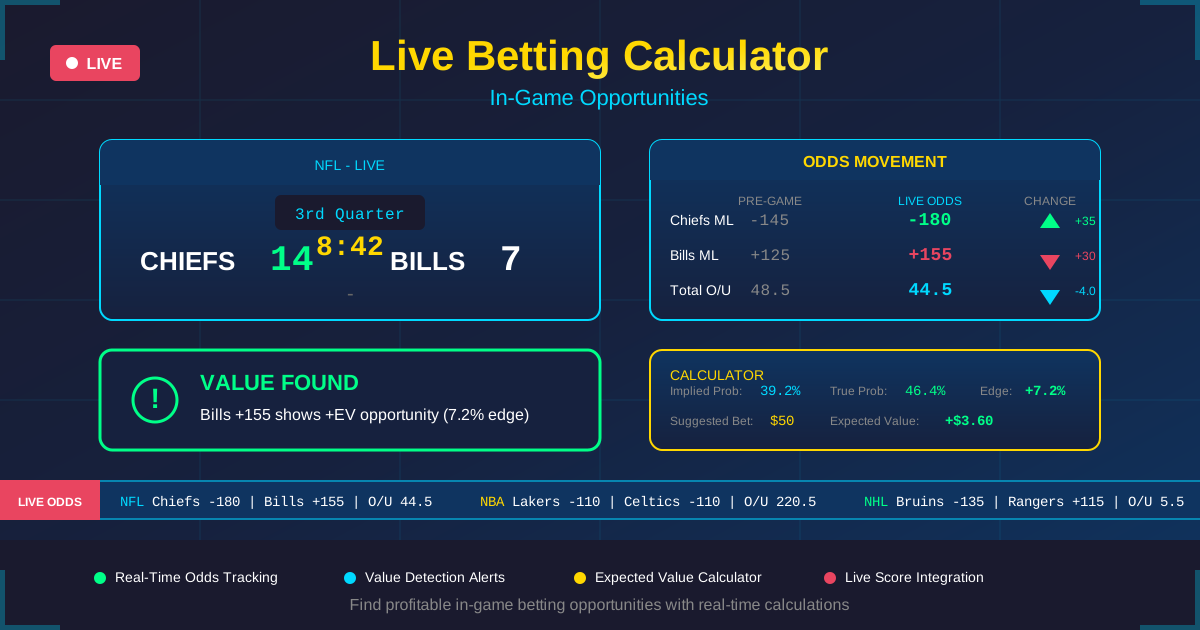
Live (in-game) betting has exploded in recent years, and the Super Bowl is the single biggest live-betting event of the year. The extended halftime break and natural game flow create unique opportunities.
Why Live Betting Offers Value
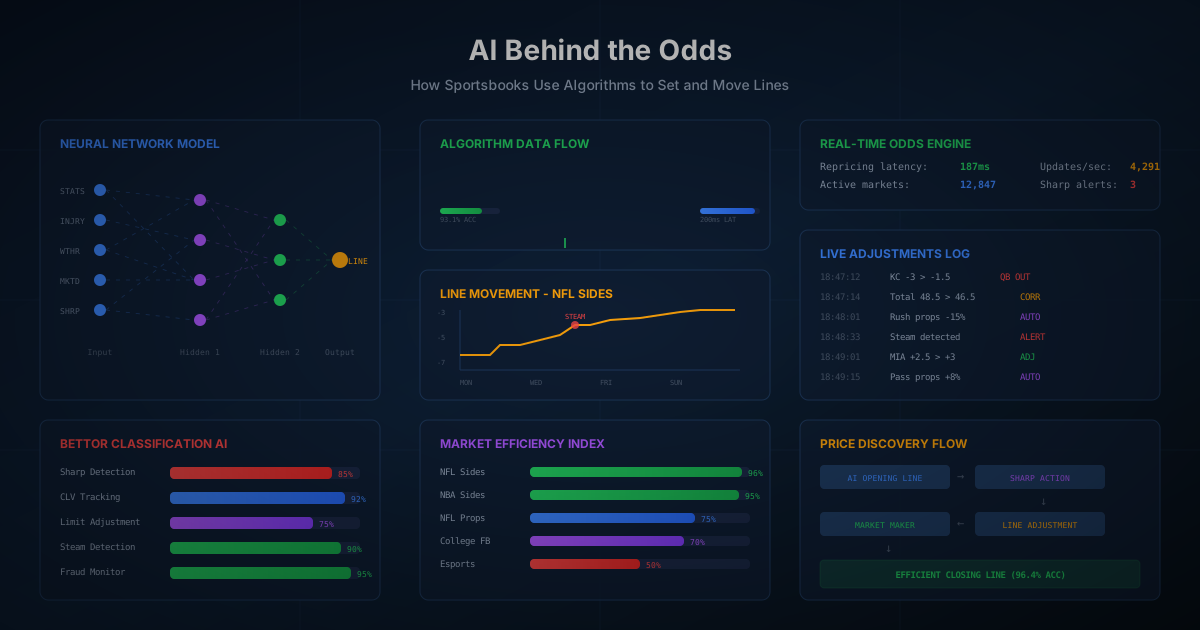
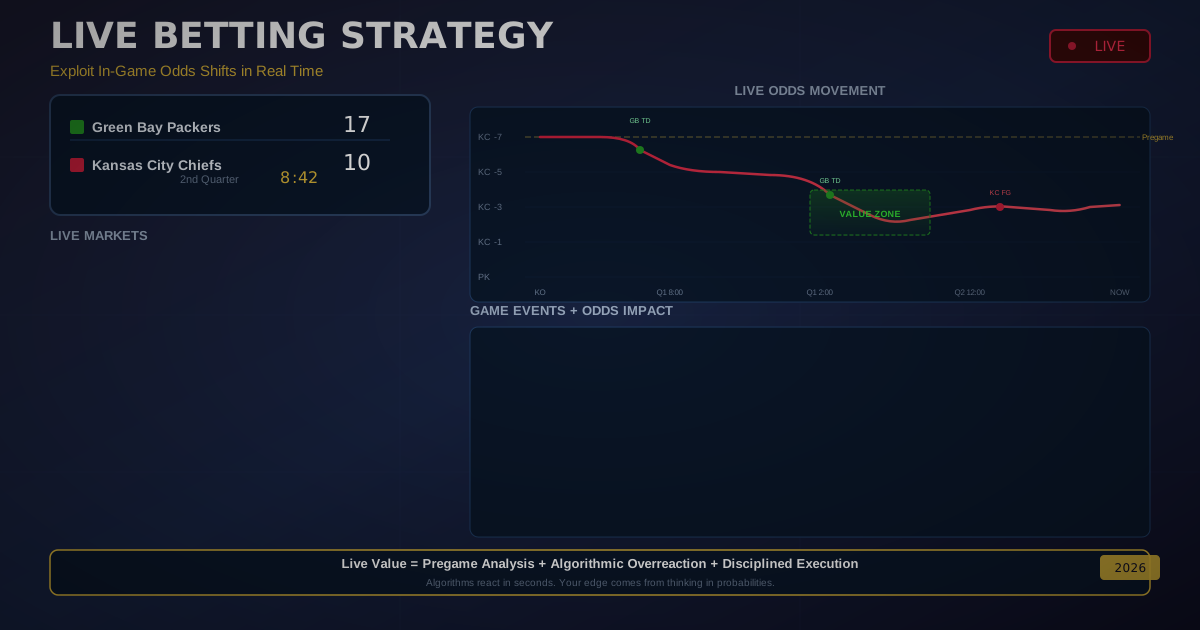
Sportsbooks must update hundreds of live markets in real time. Their algorithms are good, but they are not perfect. Moments of market inefficiency arise after:
- Big plays (touchdowns, turnovers, sacks) that cause overcorrections
- Injuries to key players where the line reacts before the full impact is understood
- Momentum shifts that the algorithm overweights or underweights
The Halftime Reset
The Super Bowl halftime is approximately 30 minutes long, more than double a standard NFL halftime of about 12-15 minutes. This extended break has significant strategic implications:
For trailing teams: The long break allows coaches to make extensive adjustments. Some of the greatest Super Bowl comebacks have happened after halftime, most famously the Patriots' 25-point comeback against the Falcons in Super Bowl LI. Live bettors can often get the trailing team at inflated spreads during halftime.
For leading teams: Momentum does not carry through a 30-minute break the way it does through a 12-minute one. Players cool down, adrenaline subsides, and the trailing team's coaching staff gets extra time to scheme. This makes second-half bets on the trailing team particularly valuable.
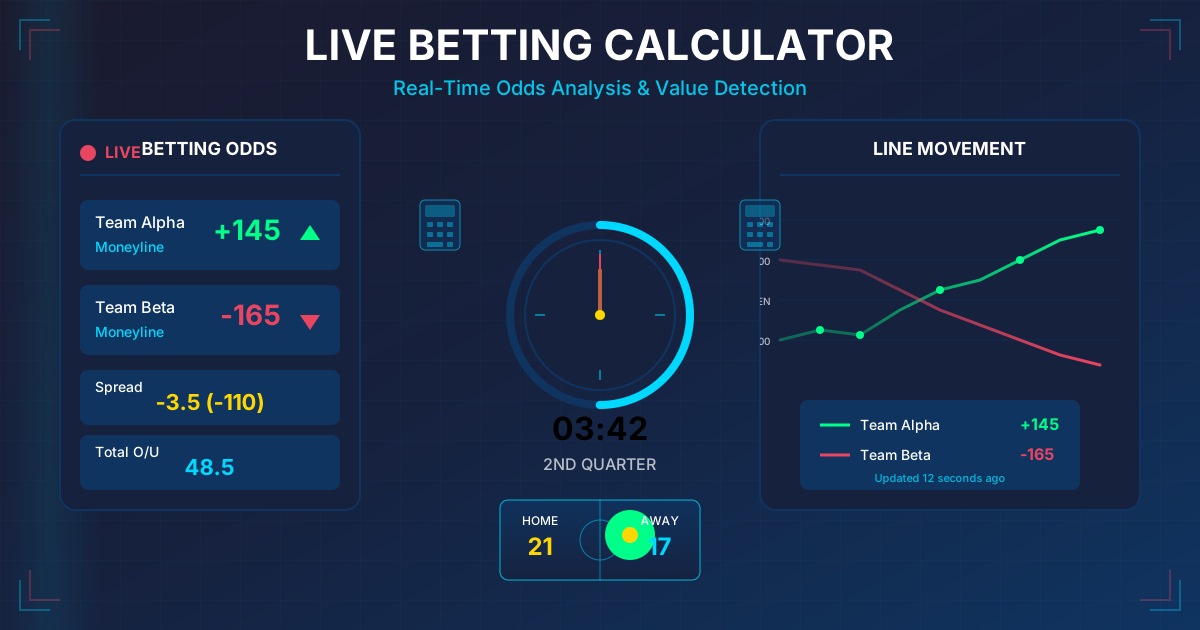
Real-World Live Betting Example
Imagine the favored team leads 17-3 at halftime. The live second-half spread might be set at -3.5 for the favorite. But historically, teams trailing by 14+ at halftime in the Super Bowl have covered the second-half spread more than 55% of the time because of the halftime adjustment effect. That 55% probability at -110 odds represents positive expected value.
Hedge your pre-game bets with our Hedge Calculator as the live odds shift.
Hedging Futures and Super Bowl Parlays
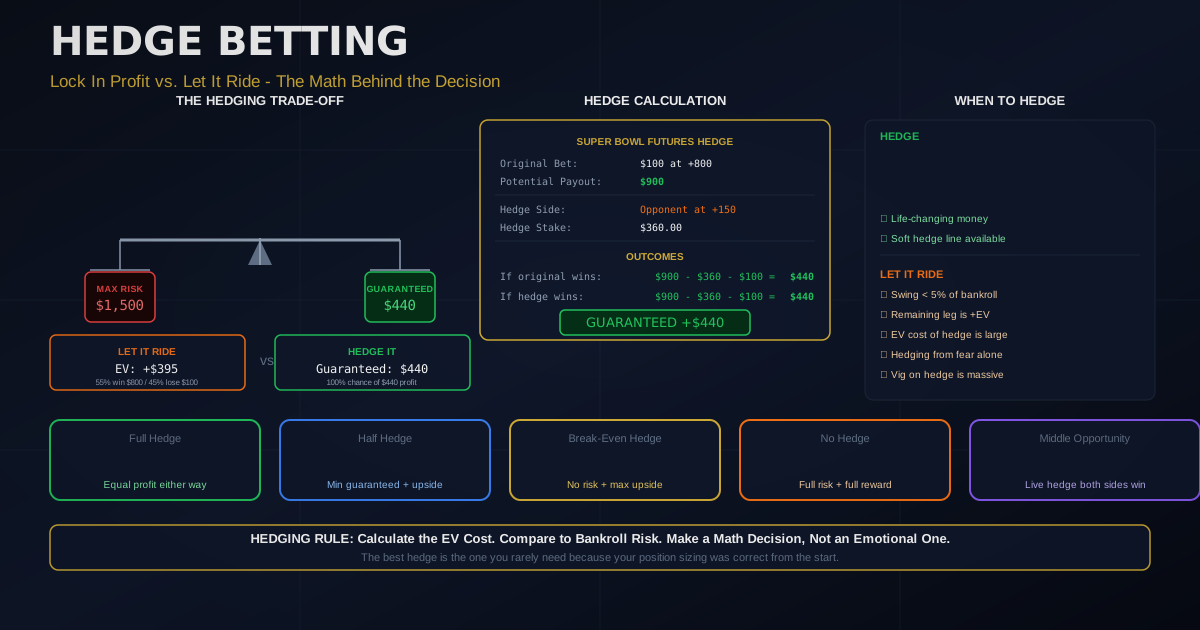
If you placed a futures bet on a team to win the Super Bowl before the season or during the playoffs, you may be sitting on significant potential profit by game day. Deciding whether and how to hedge is one of the most important decisions a bettor can make.
When to Hedge
Hedging makes sense when:
- You have a large futures position that represents a life-changing amount of money
- The hedge opportunity offers better value than your original position
- Your risk tolerance has changed since placing the original bet
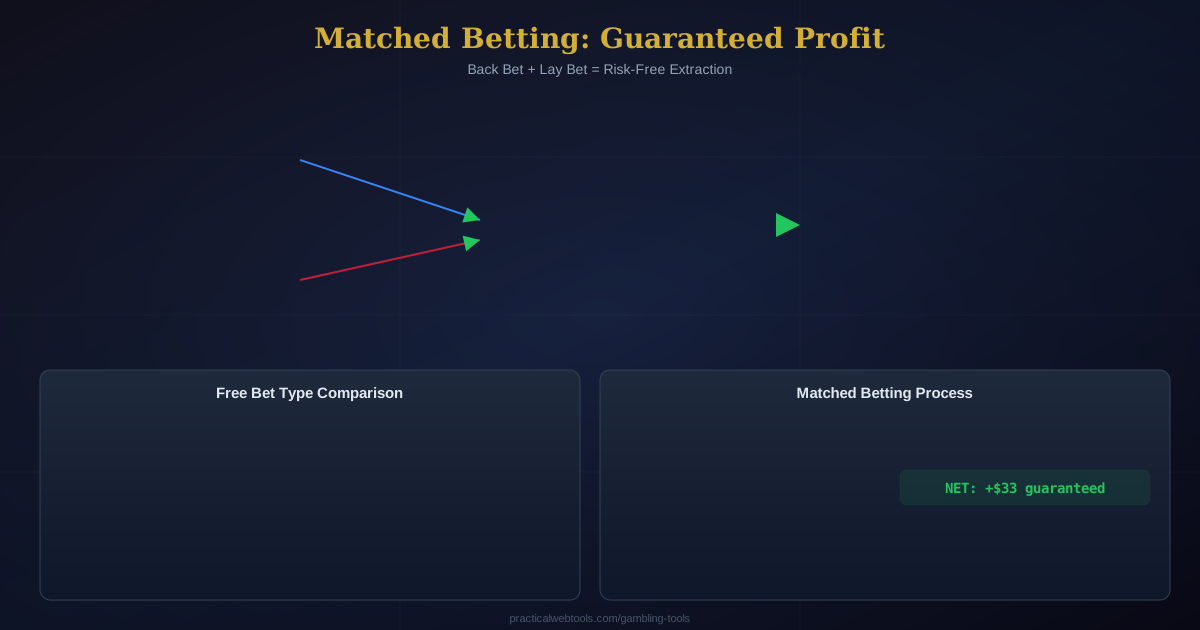
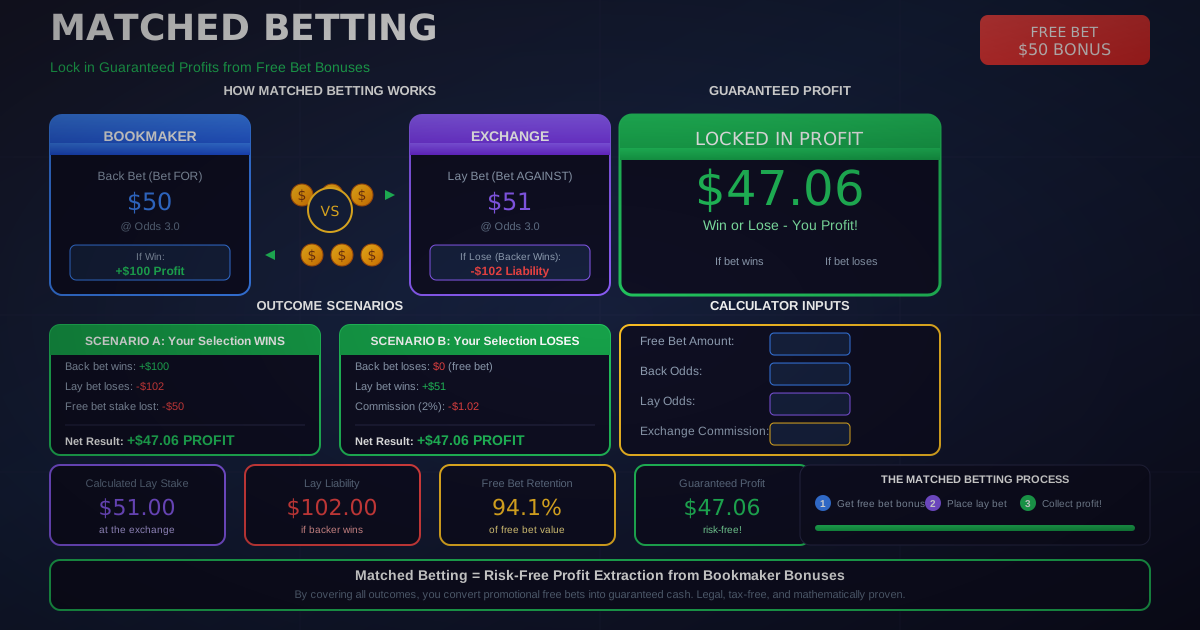
- You want to guarantee profit regardless of the outcome
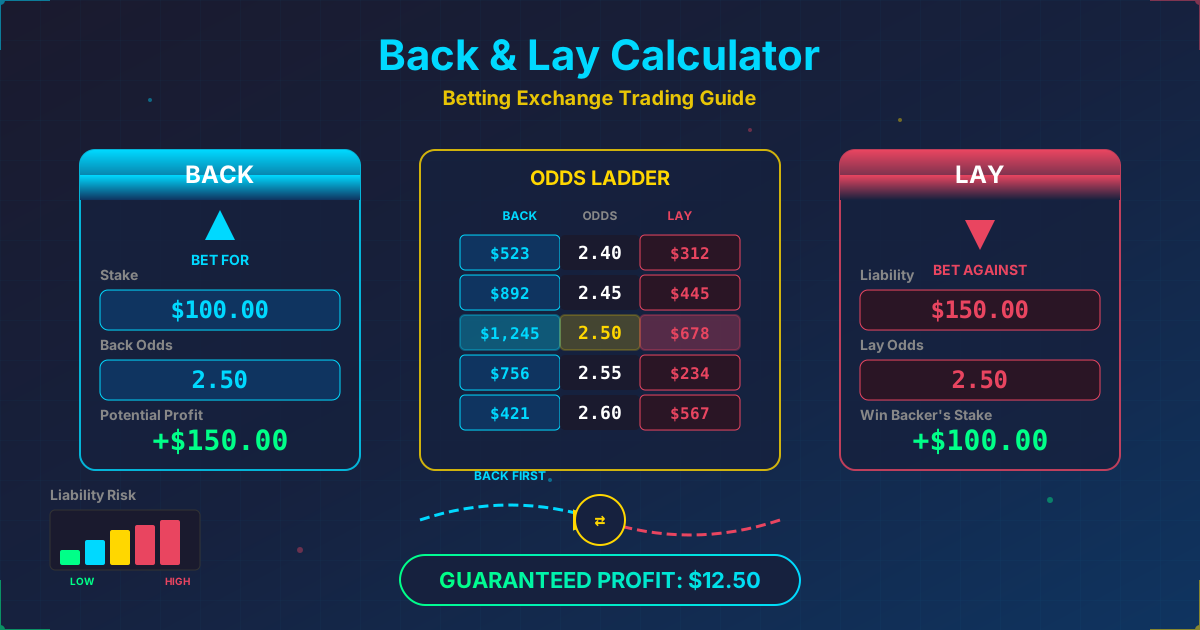
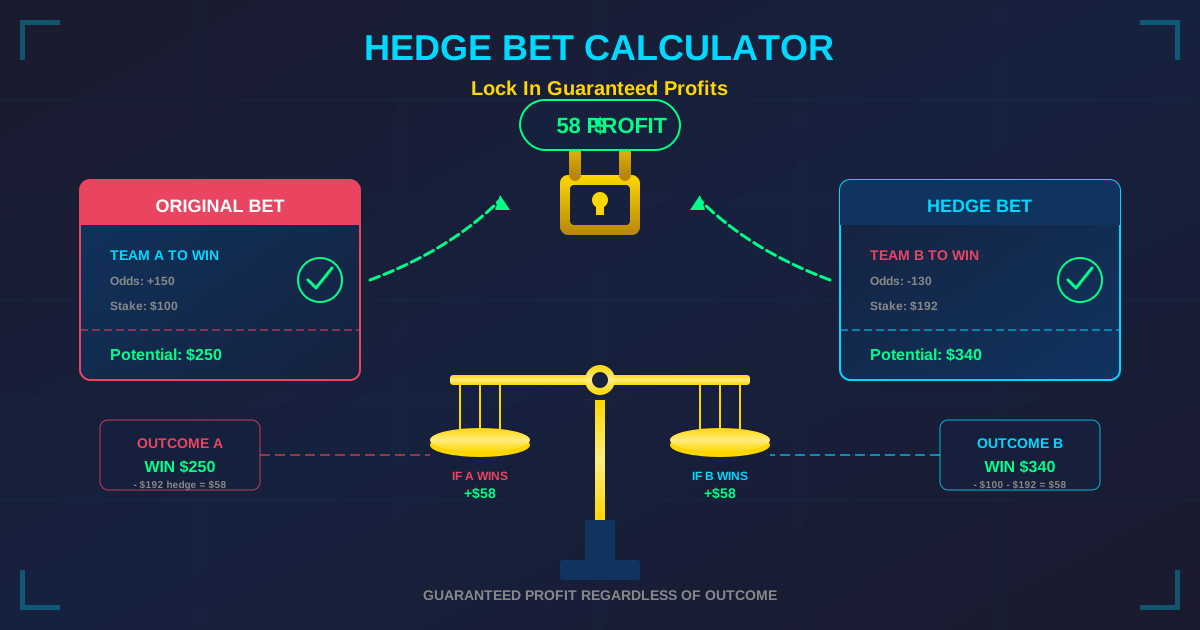
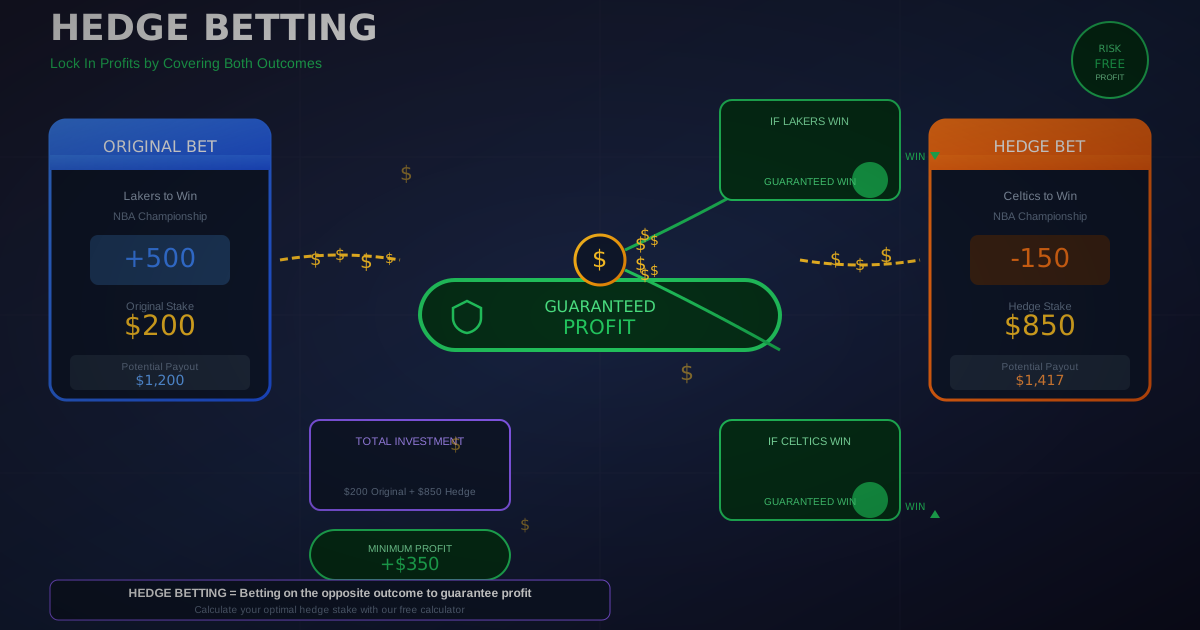
Hedging Example
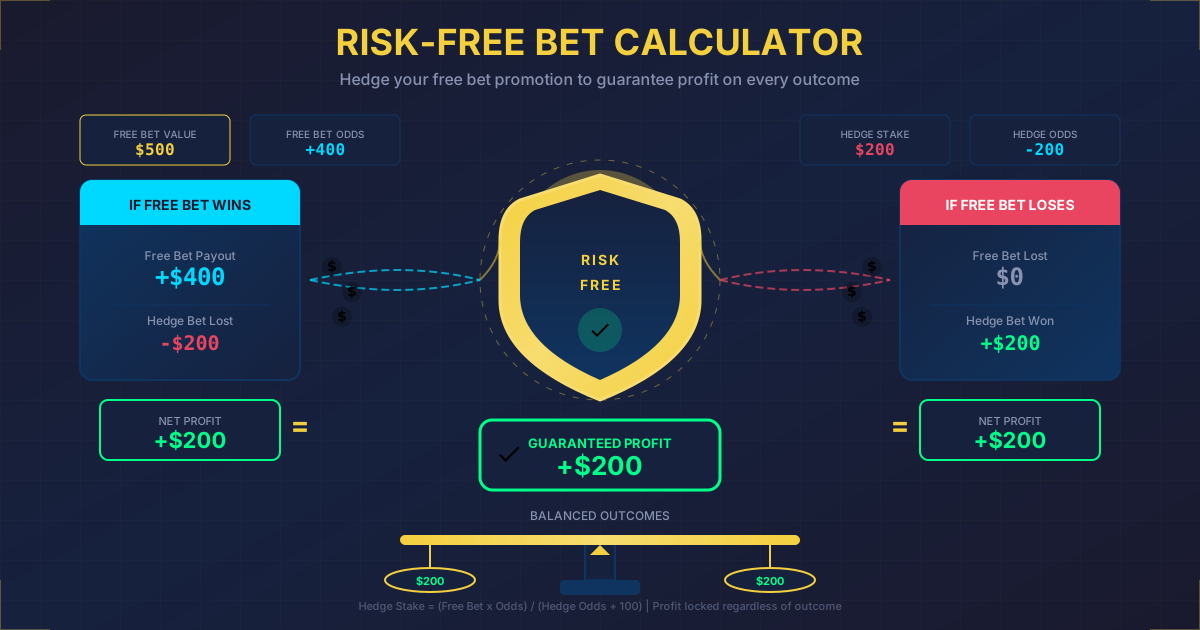
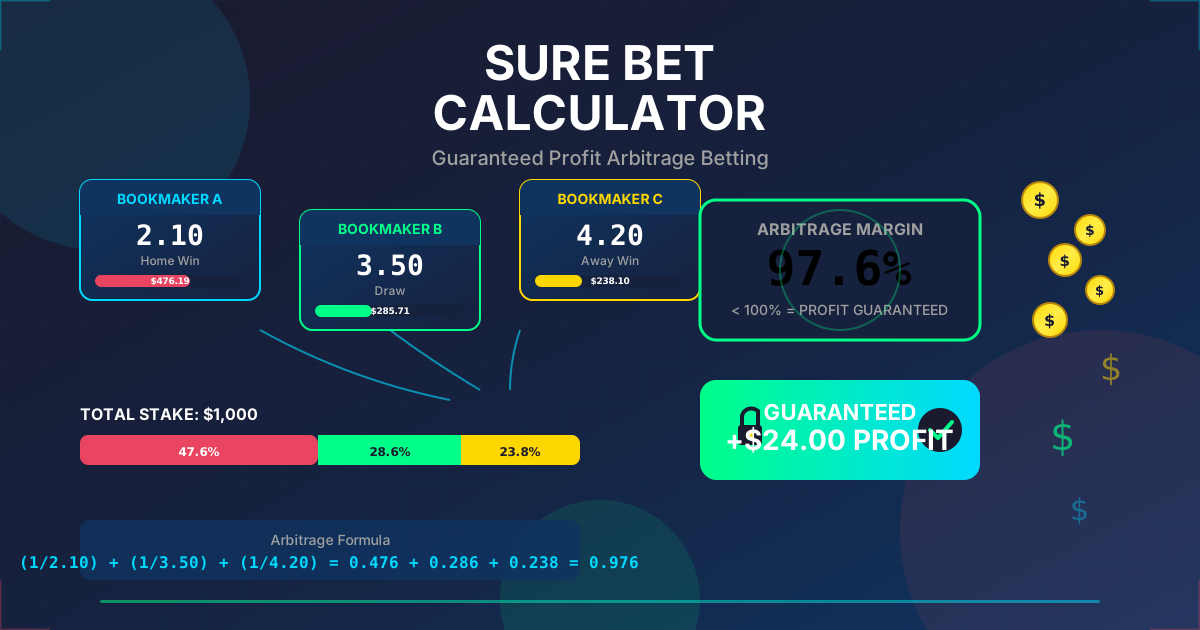
You bet $100 on the Seahawks at +2000 (20/1) before the season to win the Super Bowl. They make it to the big game. Your potential payout is $2,100 ($2,000 profit + $100 stake).
On game day, the Patriots are +140 underdogs on the moneyline. You could hedge by betting on the Patriots:
- Bet $875 on Patriots +140
- If Patriots win: You collect $1,225 from the hedge, minus $100 lost on the futures = $1,125 profit
- If Seahawks win: You collect $2,100 from futures, minus $875 lost on the hedge = $1,225 profit
- Guaranteed profit: $1,125 to $1,225 regardless of outcome
Alternatively, you could hedge less aggressively, locking in a smaller guaranteed profit while keeping more upside on your original Seahawks bet.
Run exact hedge calculations with our Hedge Calculator.
Parlay Strategy for the Super Bowl
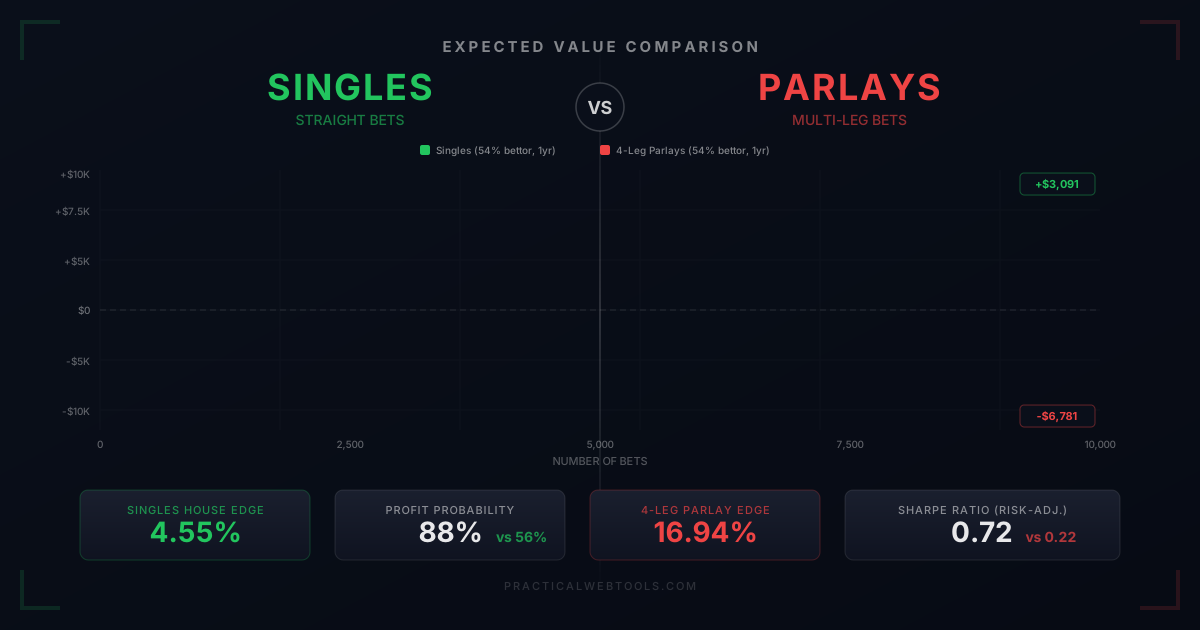
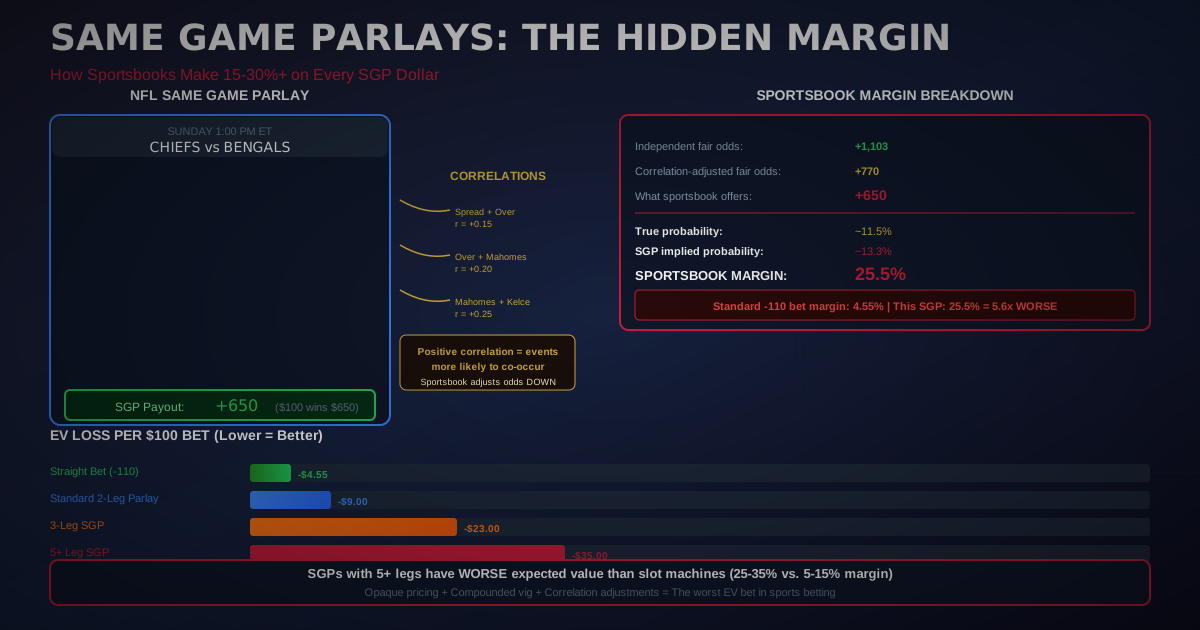
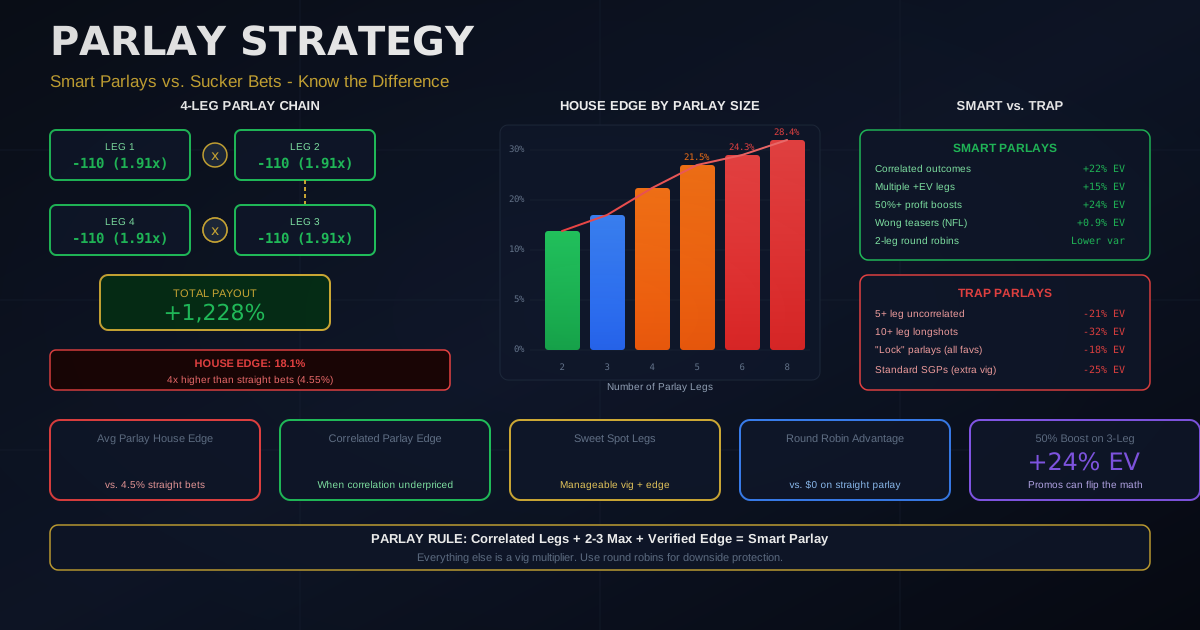
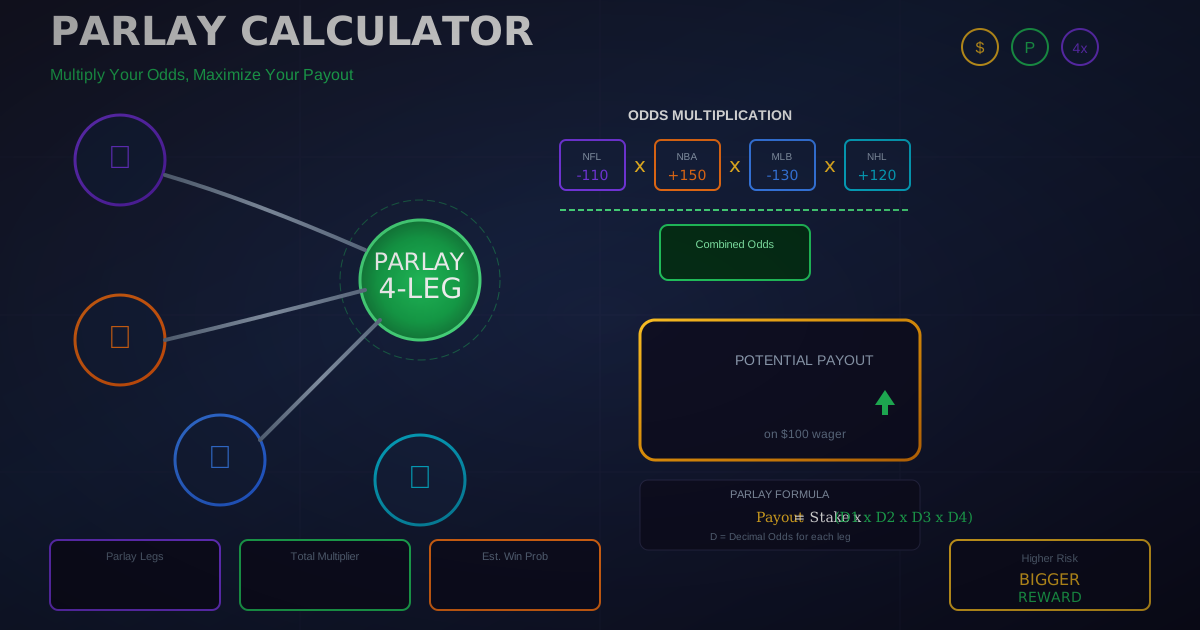
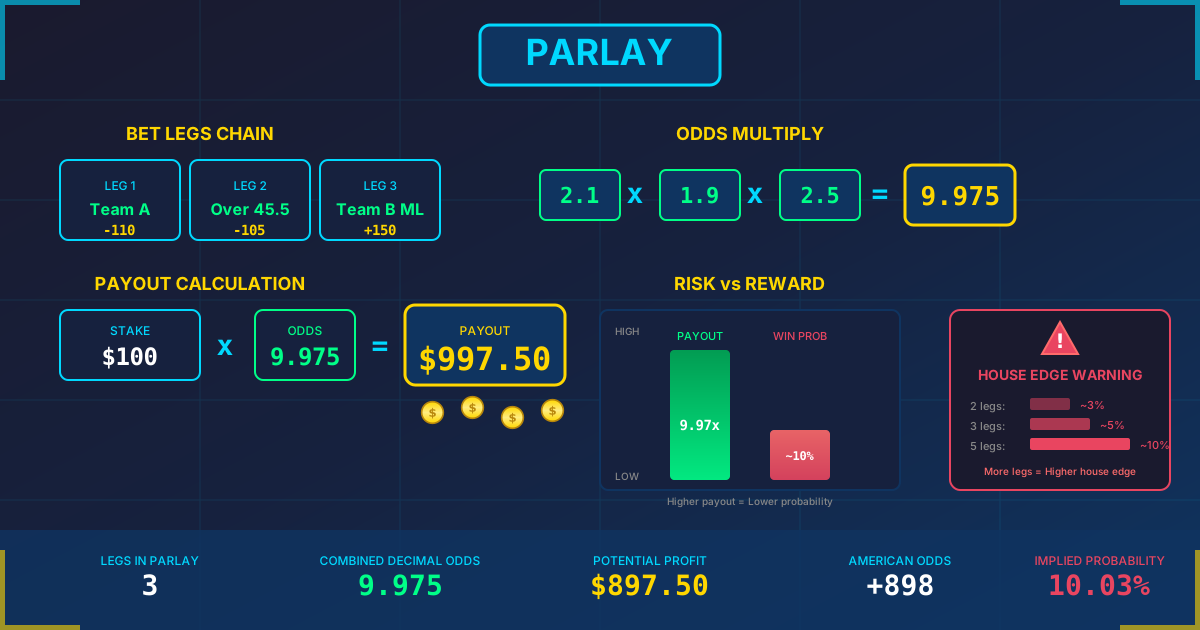
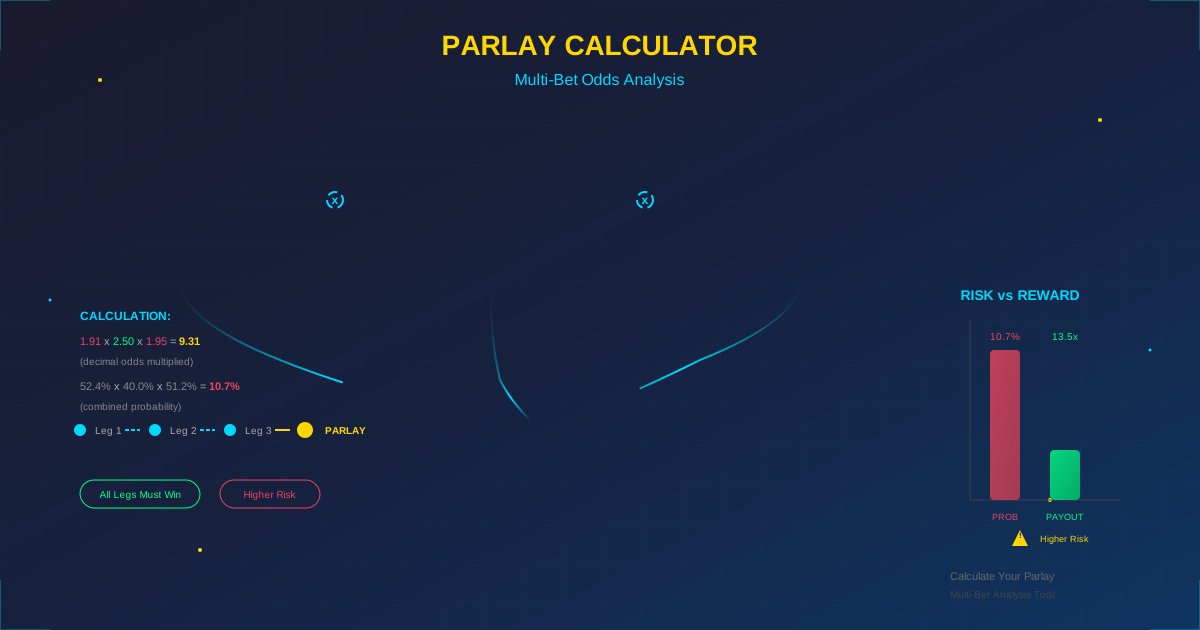
Super Bowl parlays are extremely popular but mathematically challenging. Every leg you add multiplies your risk and the sportsbook's edge.
| Parlay Legs | Approximate House Edge | Example Payout ($100 bet, all -110) |
|---|---|---|
| 2 legs | 10% | $264 |
| 3 legs | 15% | $596 |
| 4 legs | 20% | $1,228 |
| 5 legs | 25% | $2,435 |
| 6 legs | 30% | $4,781 |
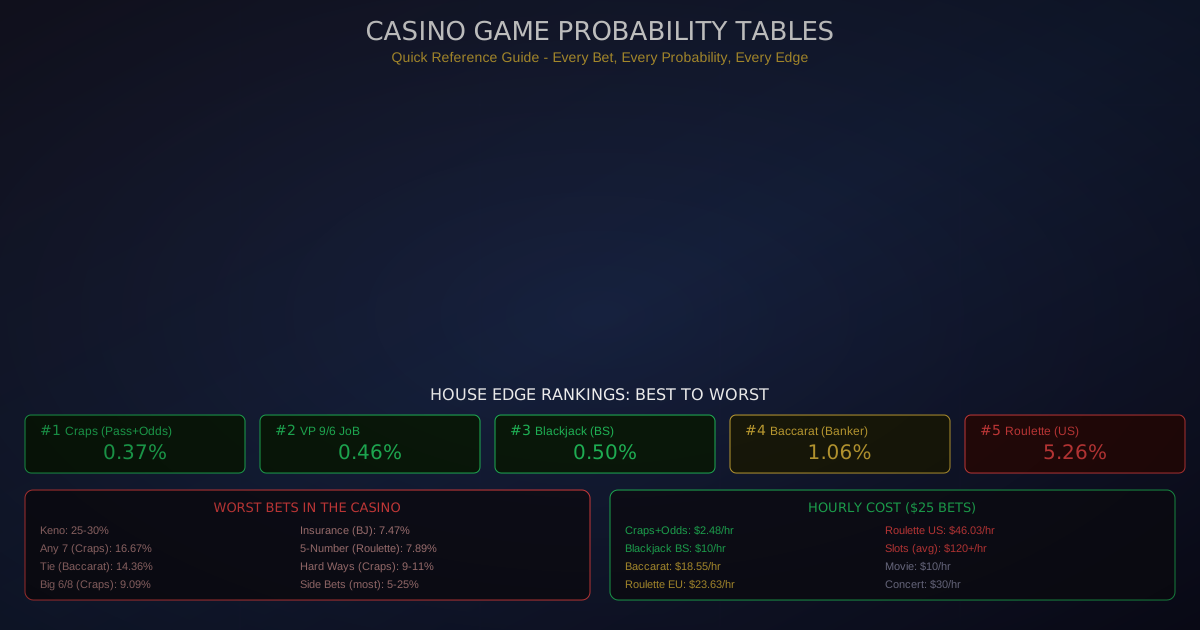
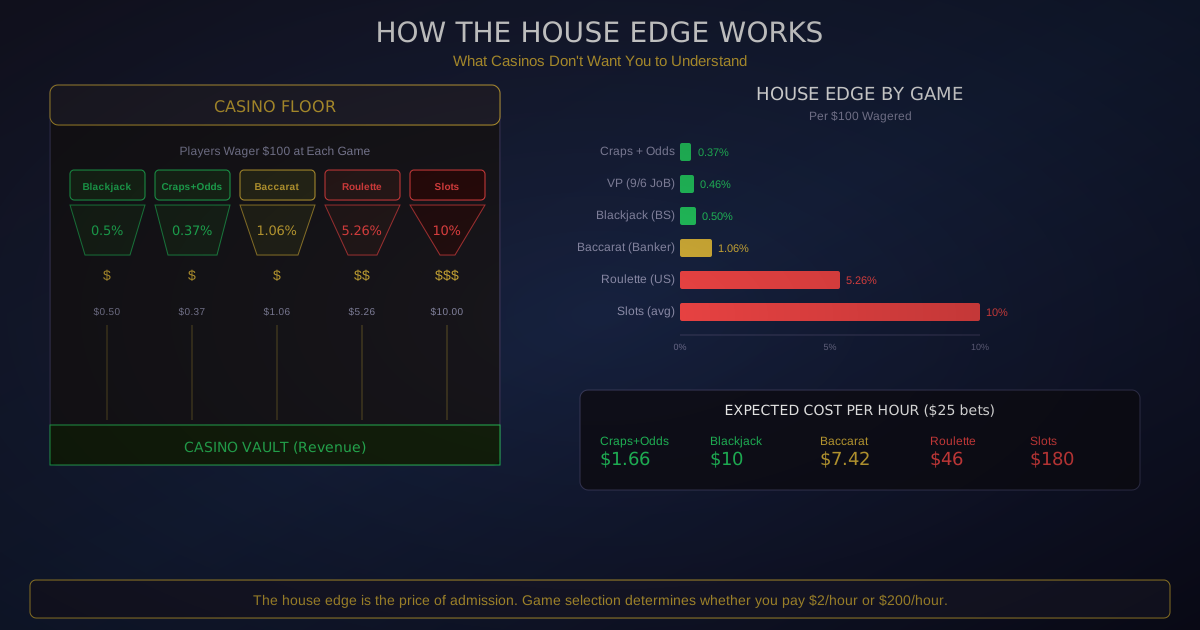
The math is brutal: A 6-leg parlay carries roughly 30% house edge. For every $100 wagered on 6-leg parlays over time, you expect to lose $30.
Smart parlay alternatives:
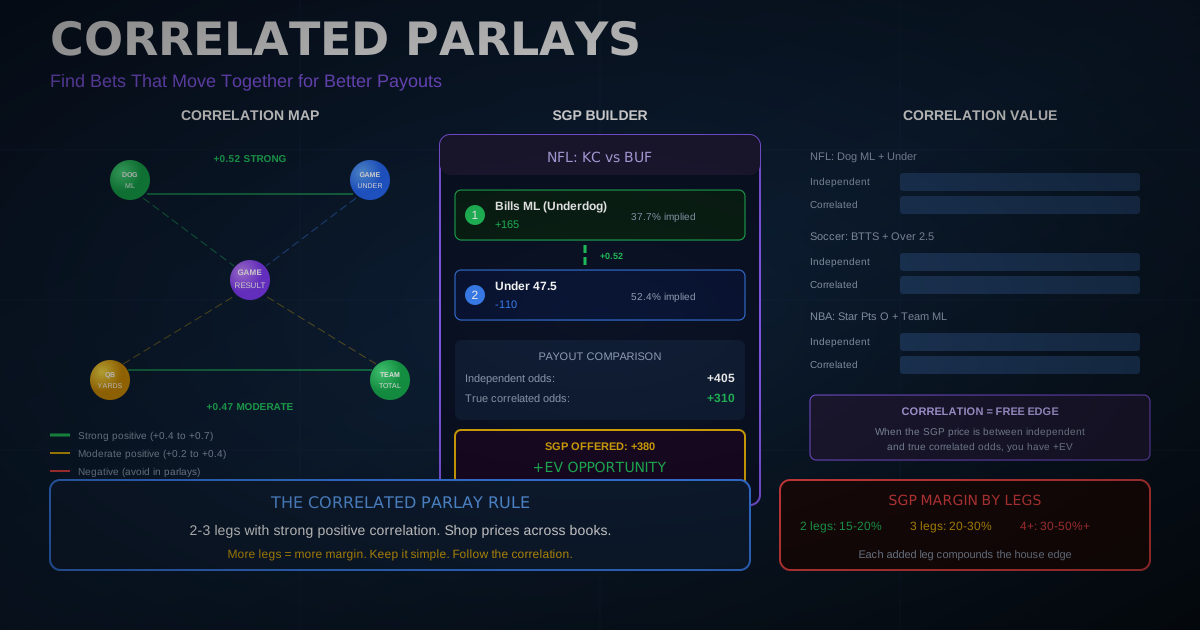
- Correlated parlays where outcomes are linked (e.g., team to win + player on that team to score a TD + game over). Some books offer same-game parlays that allow this.
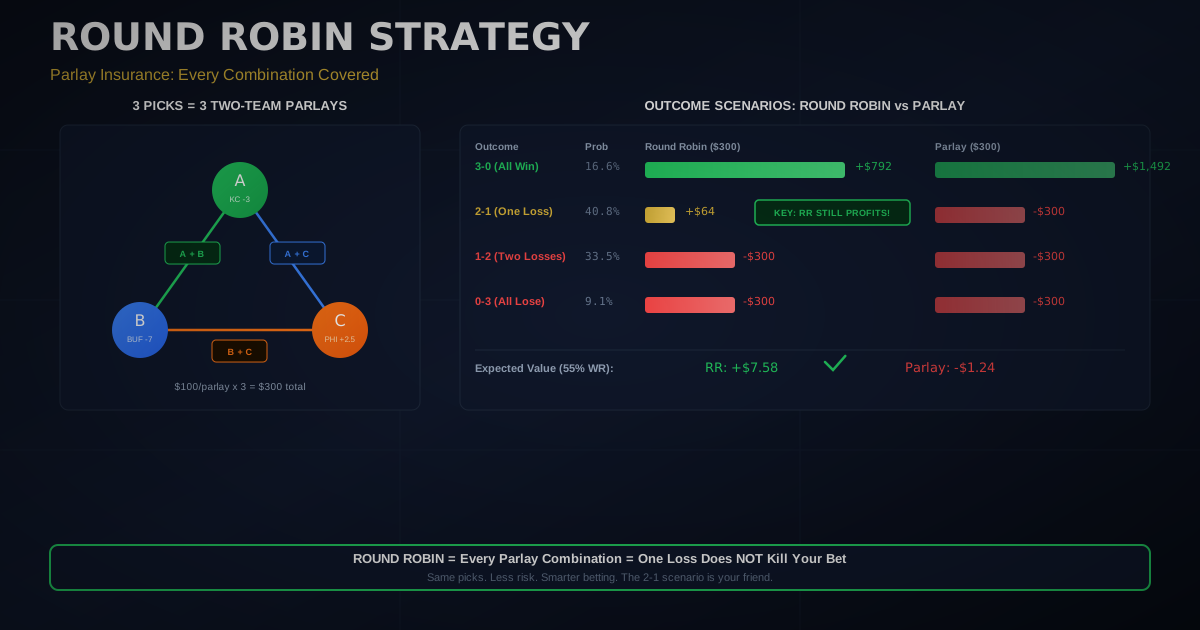
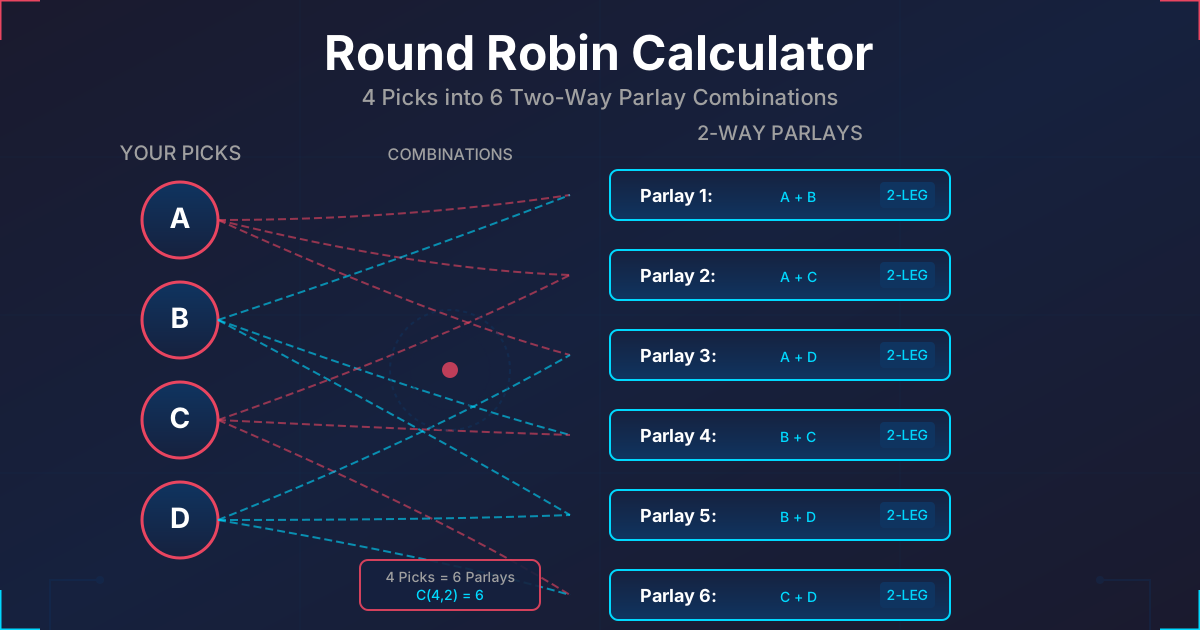
- Round robin bets that break your selections into multiple smaller parlays, reducing the all-or-nothing variance.
- Limit parlays to 2-3 legs where you have genuine edge on each individual component.
Build and calculate round robin combinations with our Round Robin Calculator and check parlay payouts with the Parlay Calculator.
Common Super Bowl Betting Traps (and How to Avoid Them)
Even experienced bettors fall into predictable traps during Super Bowl week. Here are the most common mistakes and how to sidestep them.
Trap 1: Betting the Favorite Because They Are "Better"
The data could not be clearer: Super Bowl favorites are 7-15 ATS since 2003, and favorites of 4.5+ points are a catastrophic 1-10 ATS since 2000. The public overwhelmingly backs favorites, inflating the line beyond fair value. Do not assume the "better team" will cover.
Fix: Evaluate the spread on its own merits. Ask "Would I bet this game if the teams were reversed?" If the answer changes, you are betting the name on the jersey, not the number on the board.
Trap 2: Hammering Overs on Everything
Recreational bettors love overs because scoring is exciting. This is exactly what sportsbooks want. Player prop overs, game totals over, first-half overs, all of them get disproportionate public action. Sharp bettors overwhelmingly lean to unders in the Super Bowl.
Fix: For every over you consider, force yourself to evaluate the under at the same price. You will find that unders often offer better value, especially on game totals and quarterback passing yard props.
Trap 3: Treating the Coin Toss as a Real Bet
Yes, someone wagered $253,000 on the Super Bowl LX coin toss and won. No, this is not a strategy. The coin toss is a -EV bet every single time. The -103 odds guarantee the sportsbook a 3% edge on a perfectly random event.
Fix: If you must bet the coin toss for fun, keep it to a small, entertainment-level amount. Never size a coin toss bet as if it were a real wager.
Trap 4: Stacking Too Many Props
With 200-400+ props available, it is tempting to bet 20 or 30 individual markets. The problem is that each prop carries its own vig, and the cumulative house edge across 30 bets is devastating. Even if you are skilled at evaluating props, the vig erodes your edge across a large number of bets.
Fix: Identify your 3-5 highest-conviction plays and size them appropriately. Quality over quantity.
Trap 5: Ignoring Line Movement
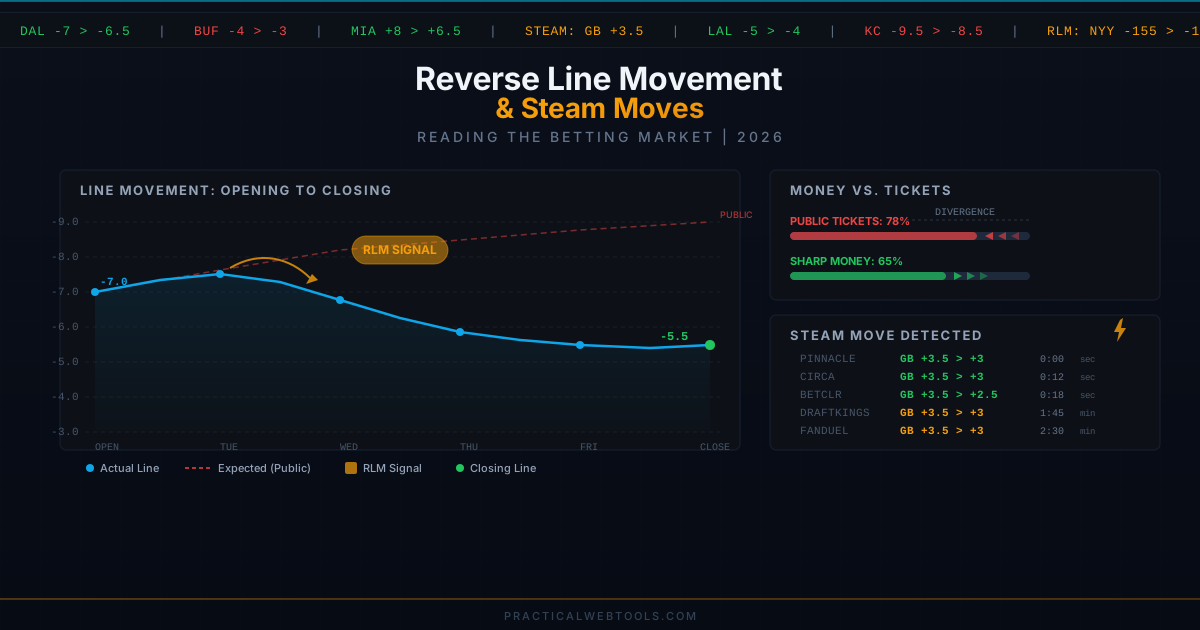
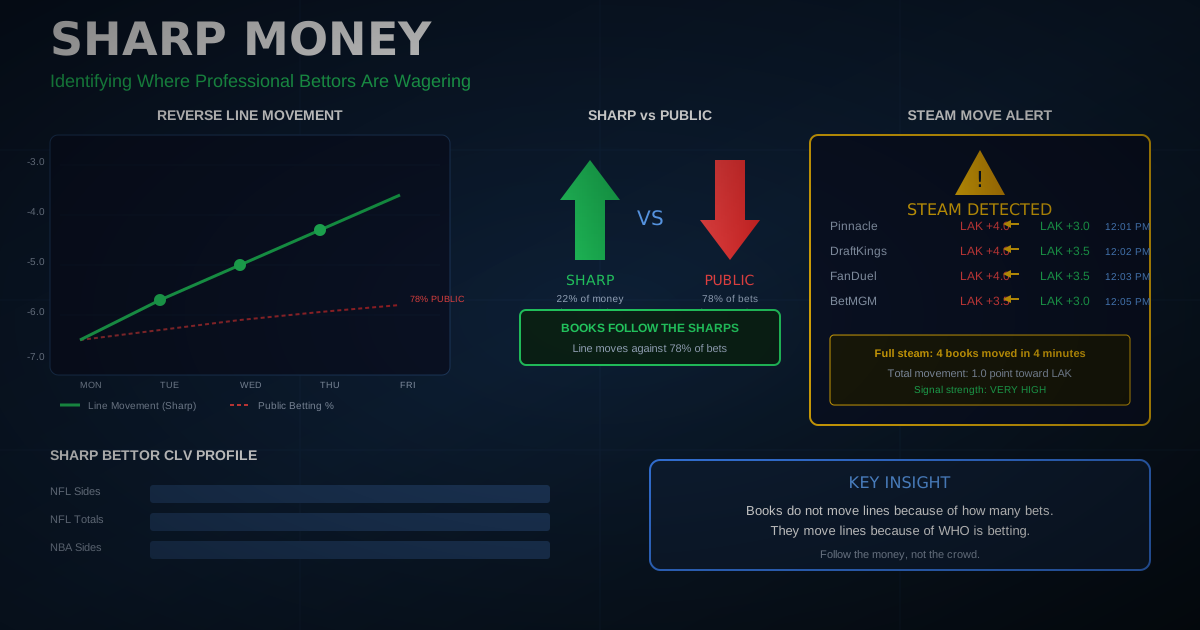
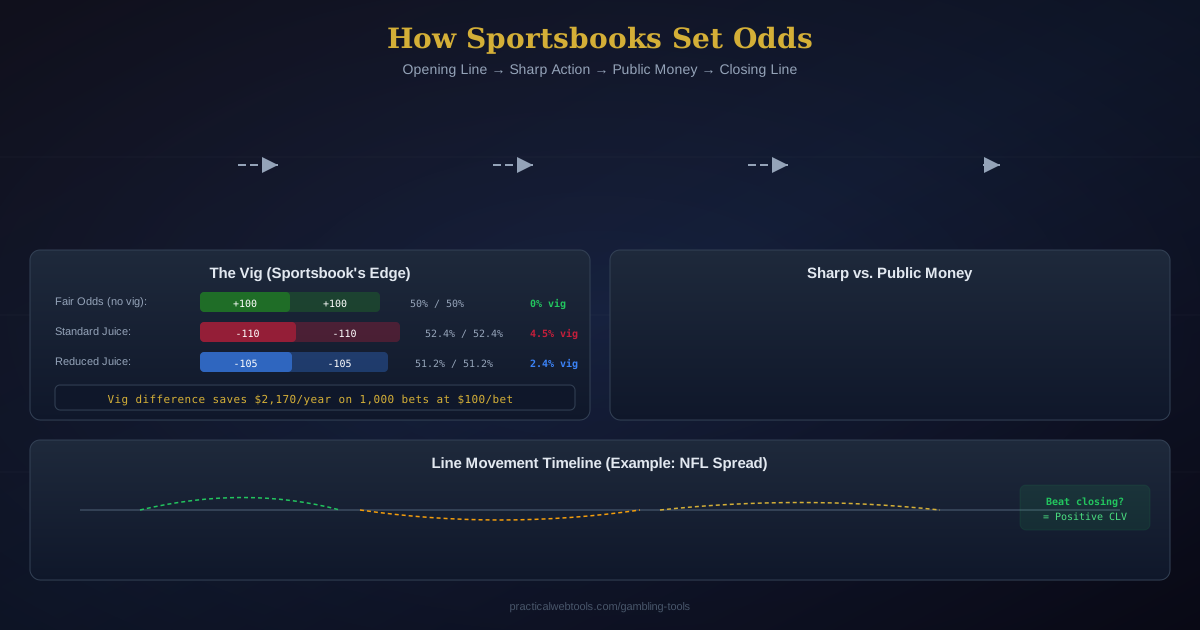
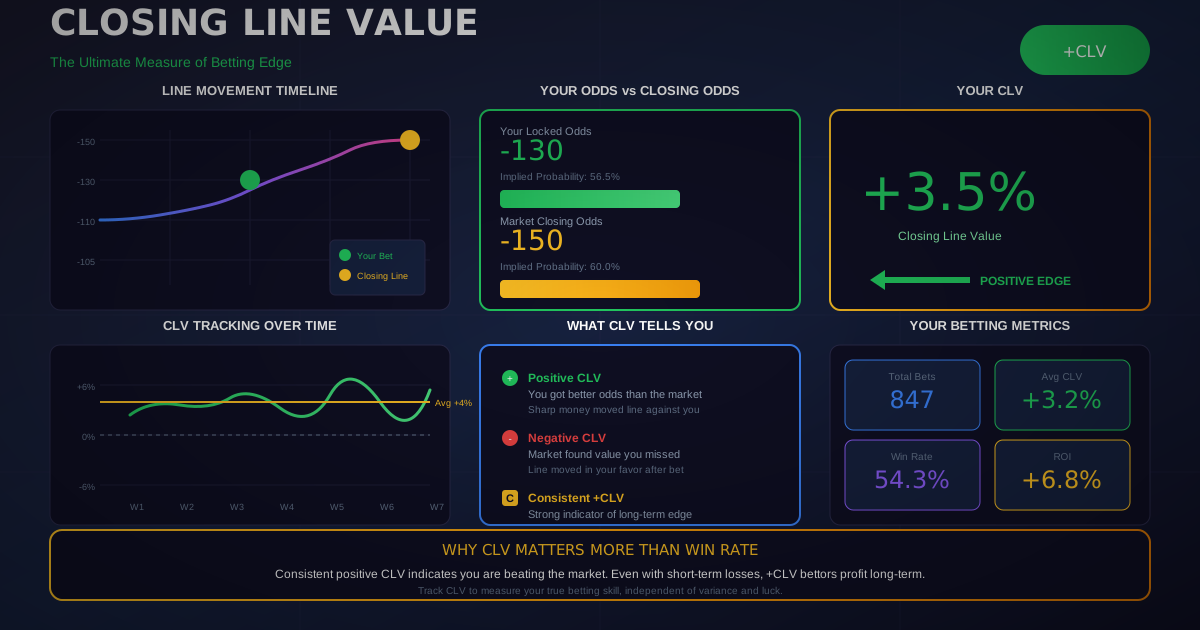
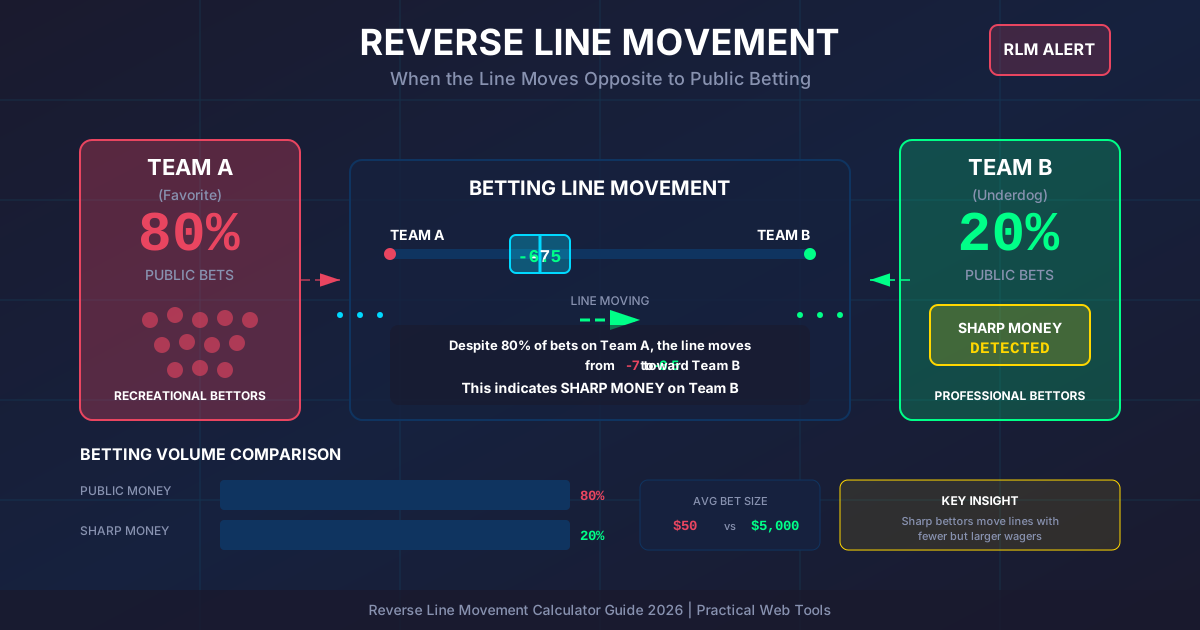
The Super Bowl spread and total often move significantly between the opening line and game day. This movement contains information. If the line moves toward the underdog despite heavy public money on the favorite, that signals sharp money on the dog. Ignoring line movement means ignoring the market's best information.
Fix: Track the opening line, follow the movement, and understand why it moved. Our Implied Probability Calculator can help you see exactly how probability shifts as the line moves.
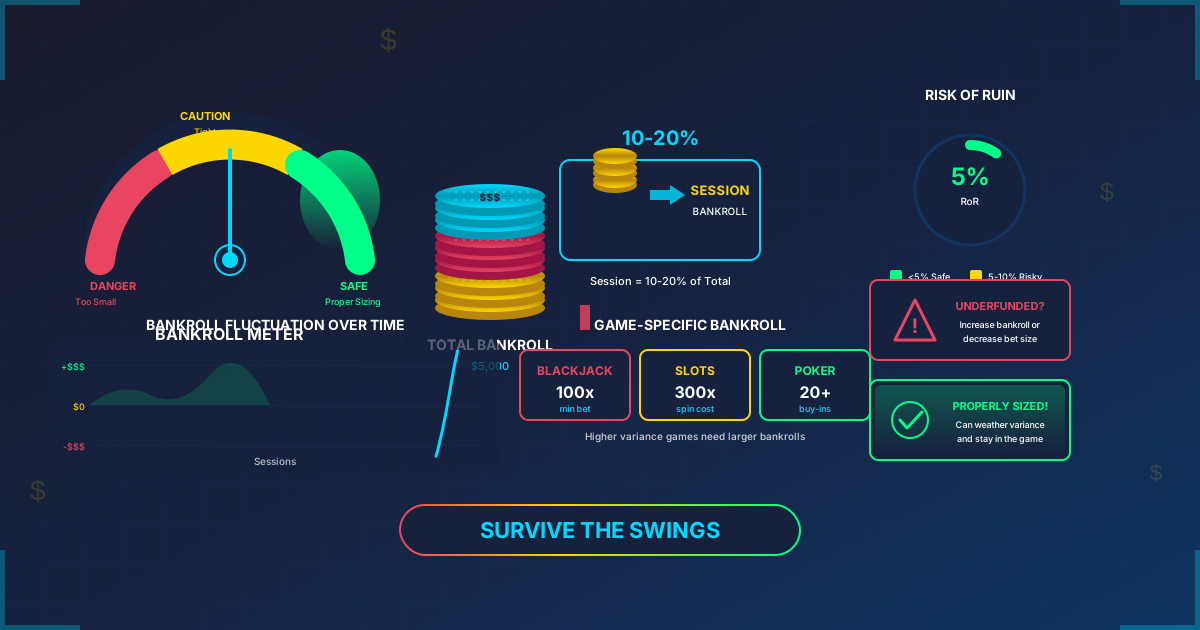
Trap 6: Betting Without a Bankroll Plan
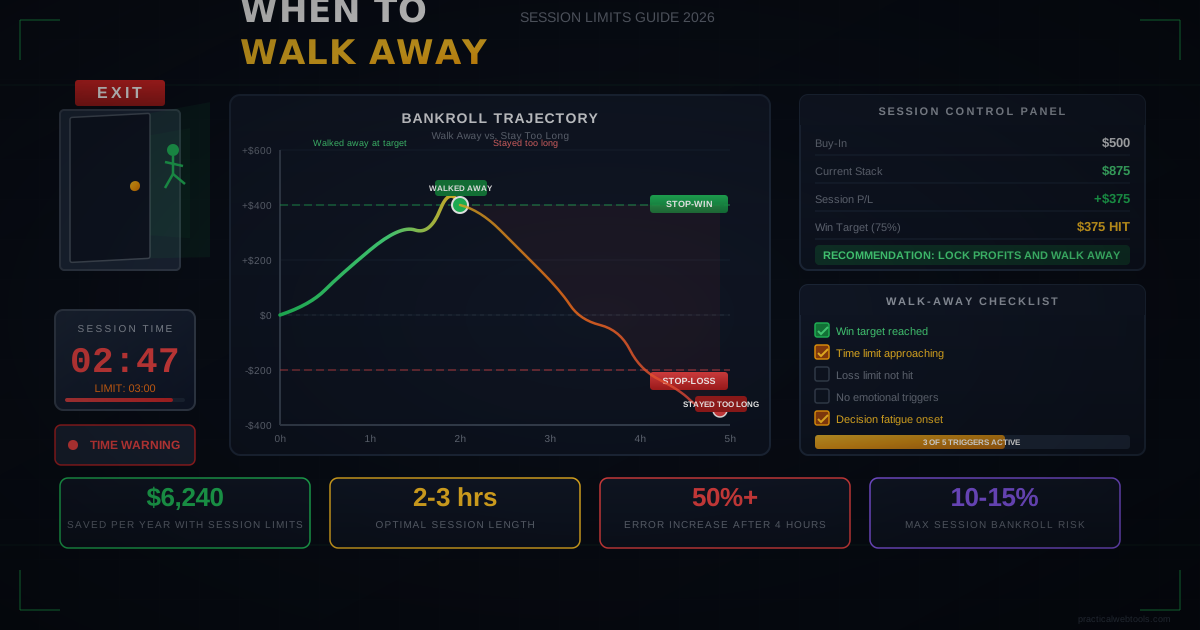
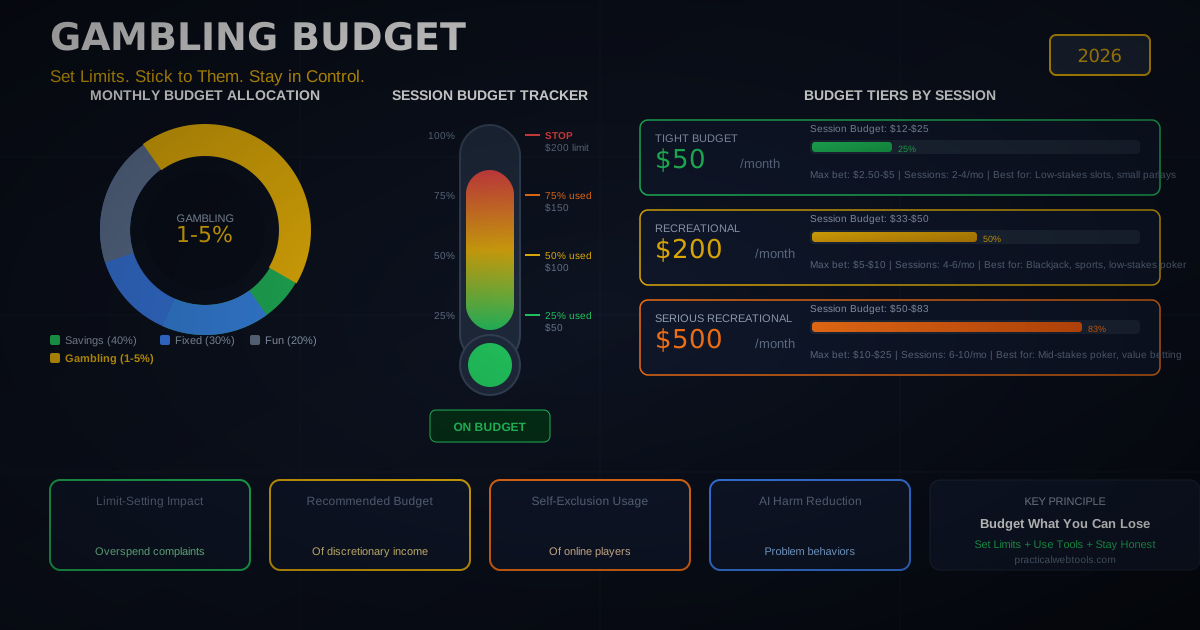
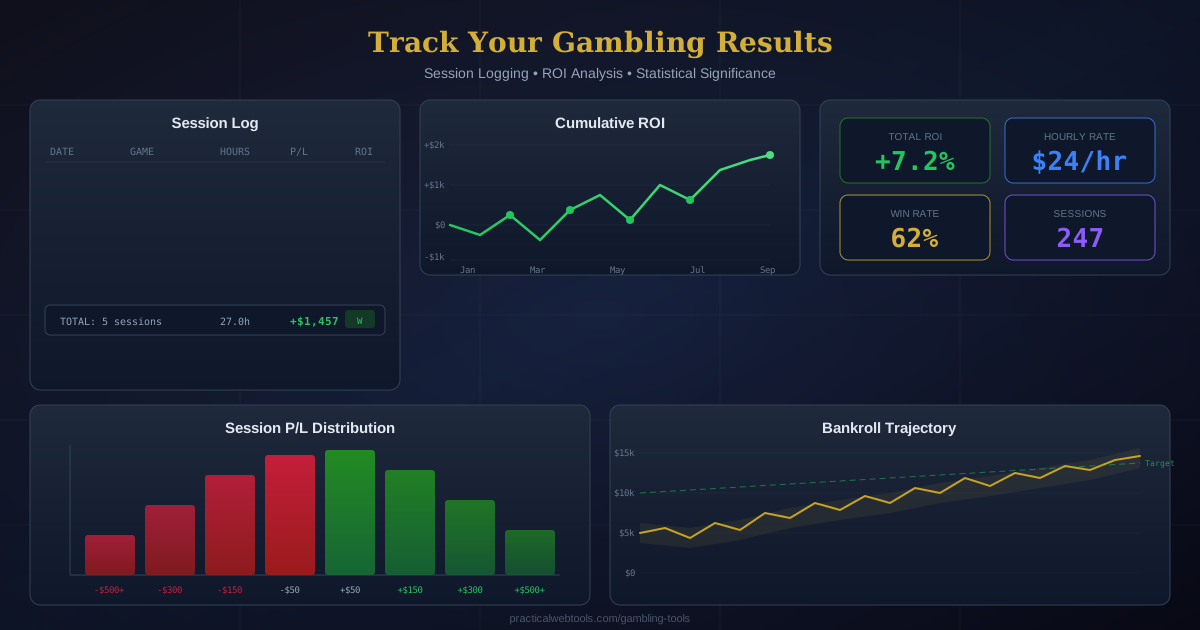
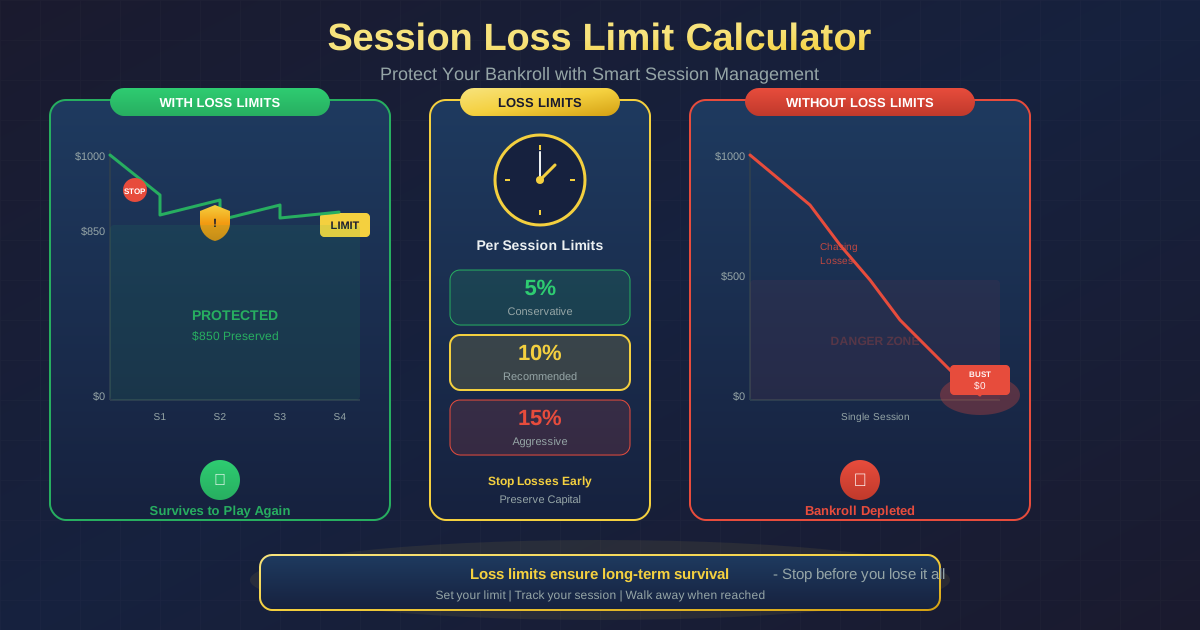
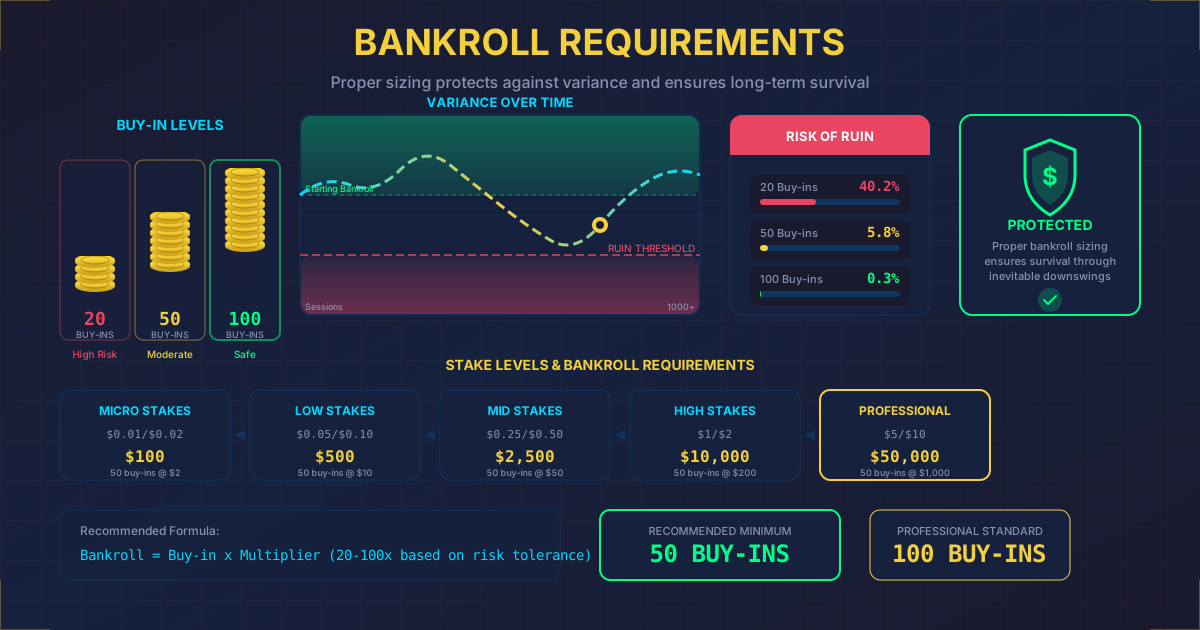
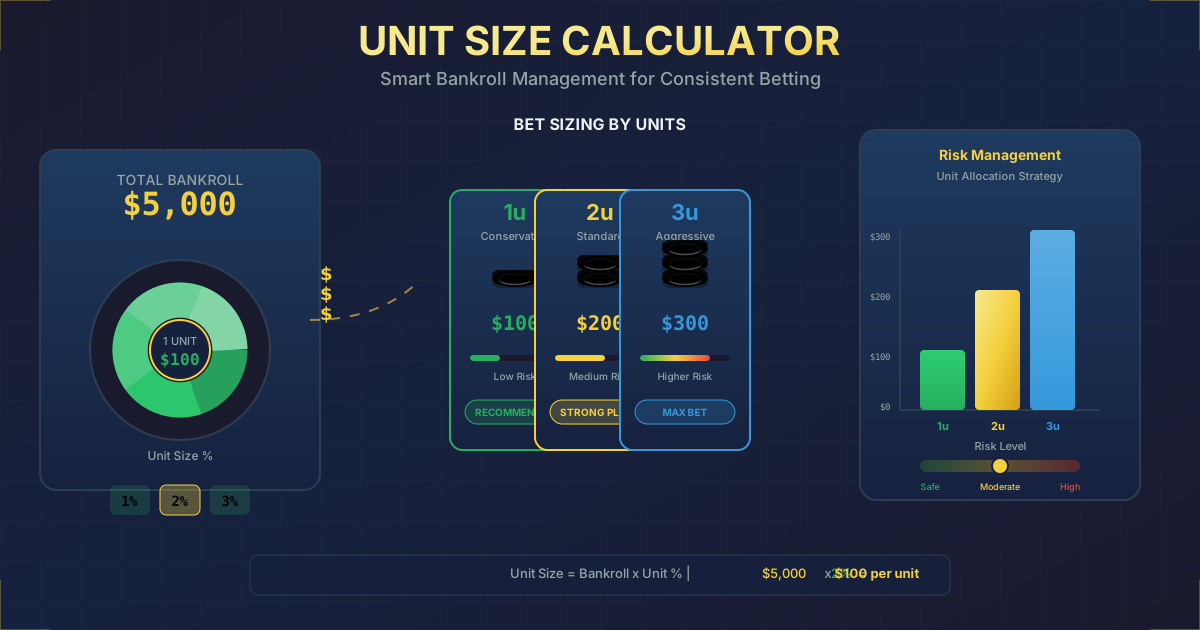
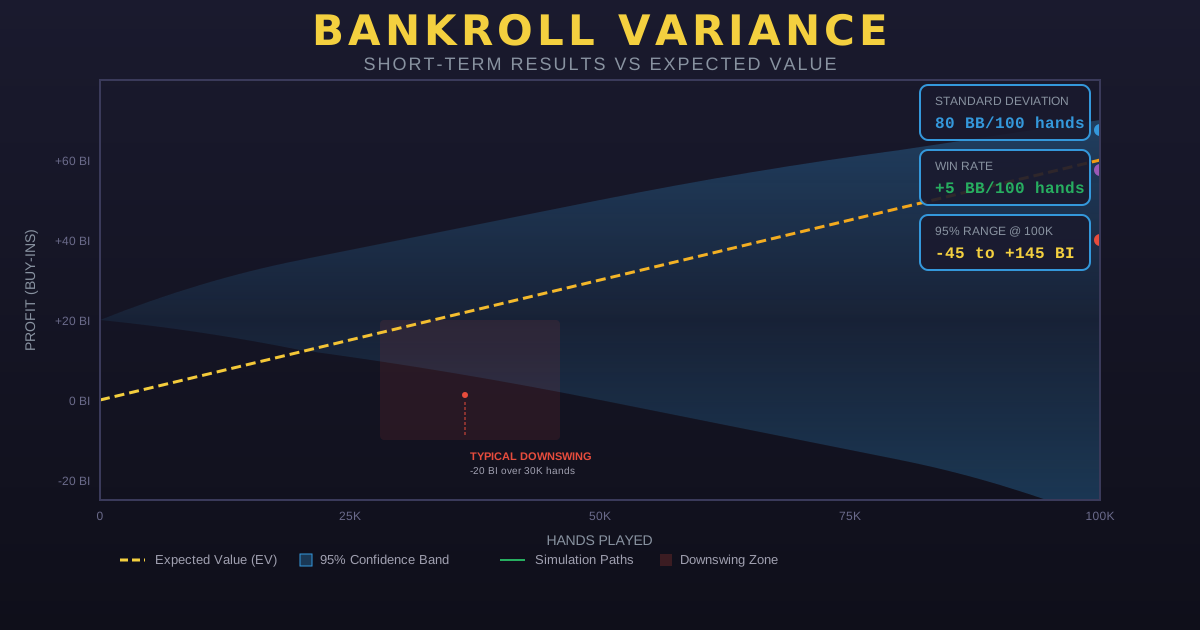
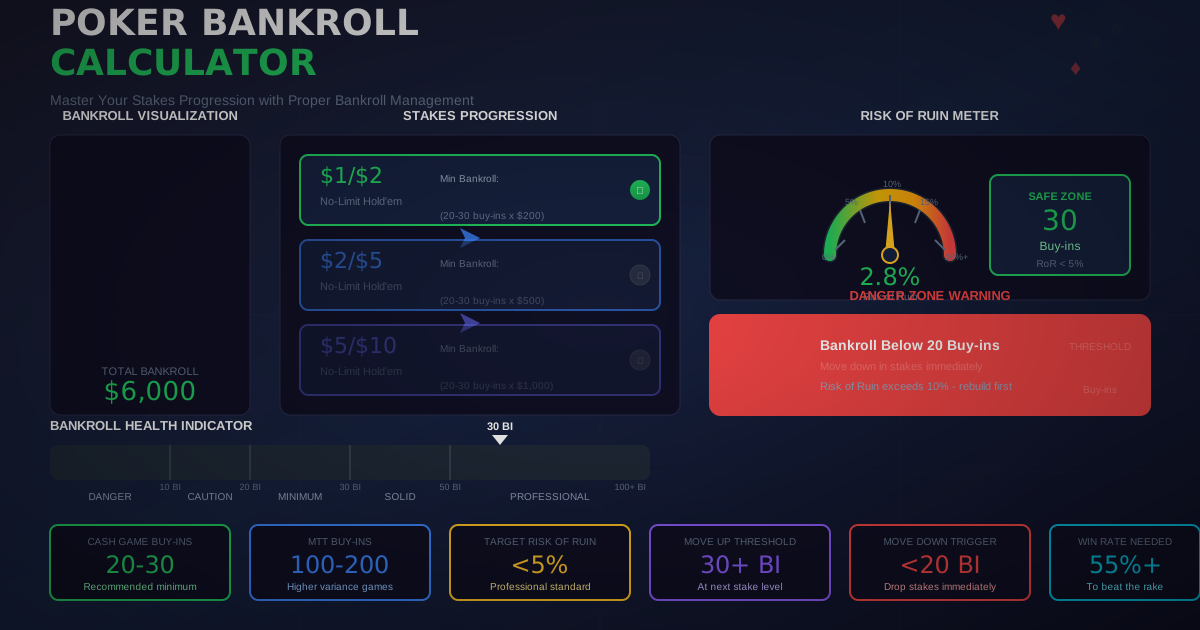
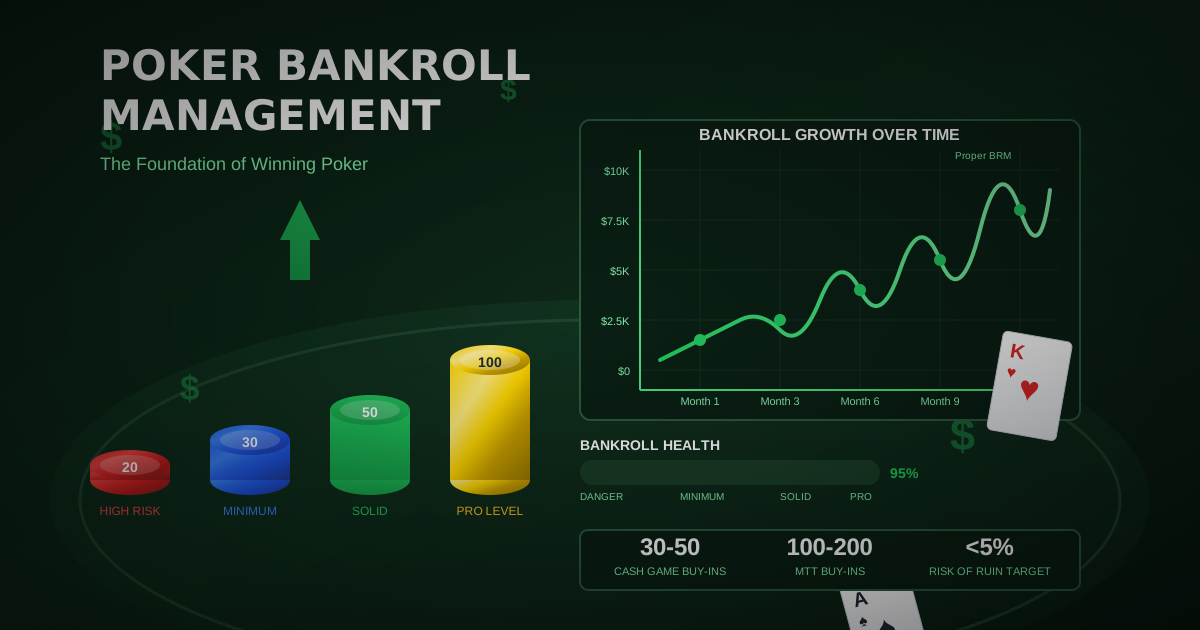
The Super Bowl is a single game. Losing your entire monthly entertainment budget on one event is a recipe for regret. Professional bettors never risk more than 1-5% of their bankroll on a single wager, even when they believe they have a significant edge.
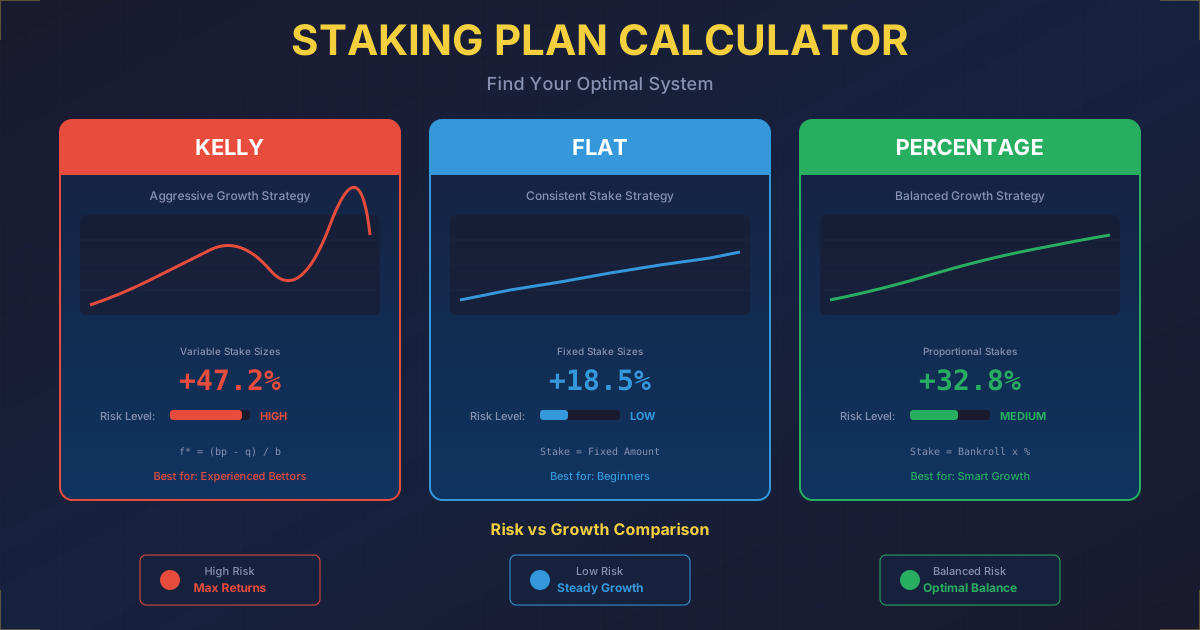
Fix: Set a total Super Bowl budget before the first bet. Divide it across your highest-conviction plays. Use the Kelly Criterion Calculator to determine optimal sizing based on your perceived edge.
Advanced: Teaser Strategy for the Super Bowl
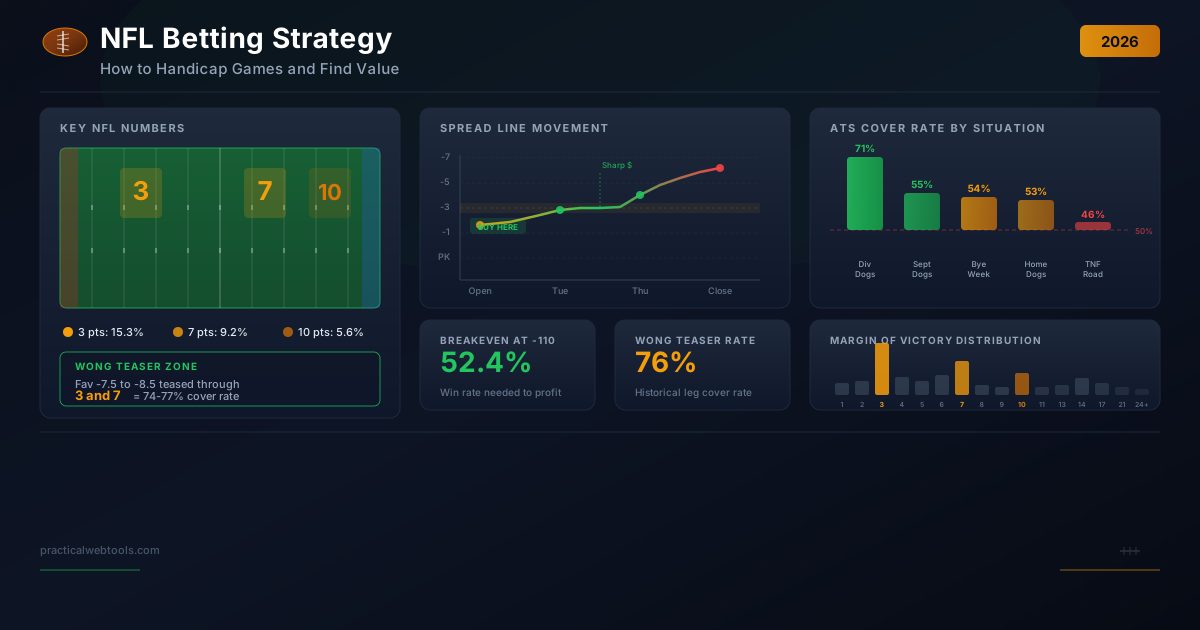
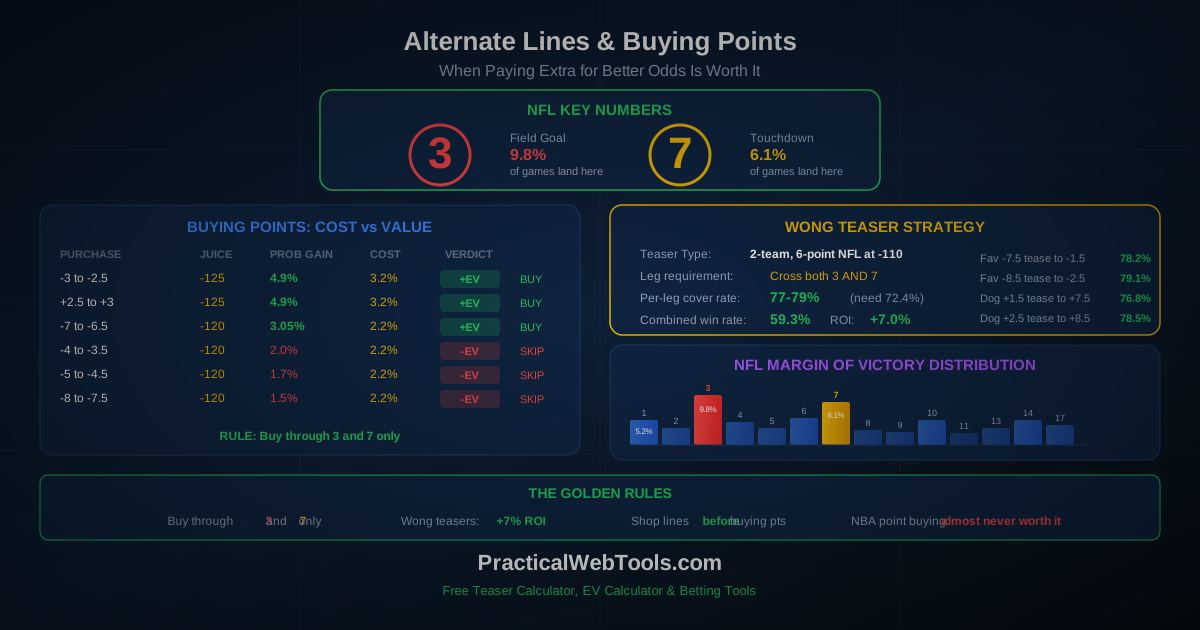
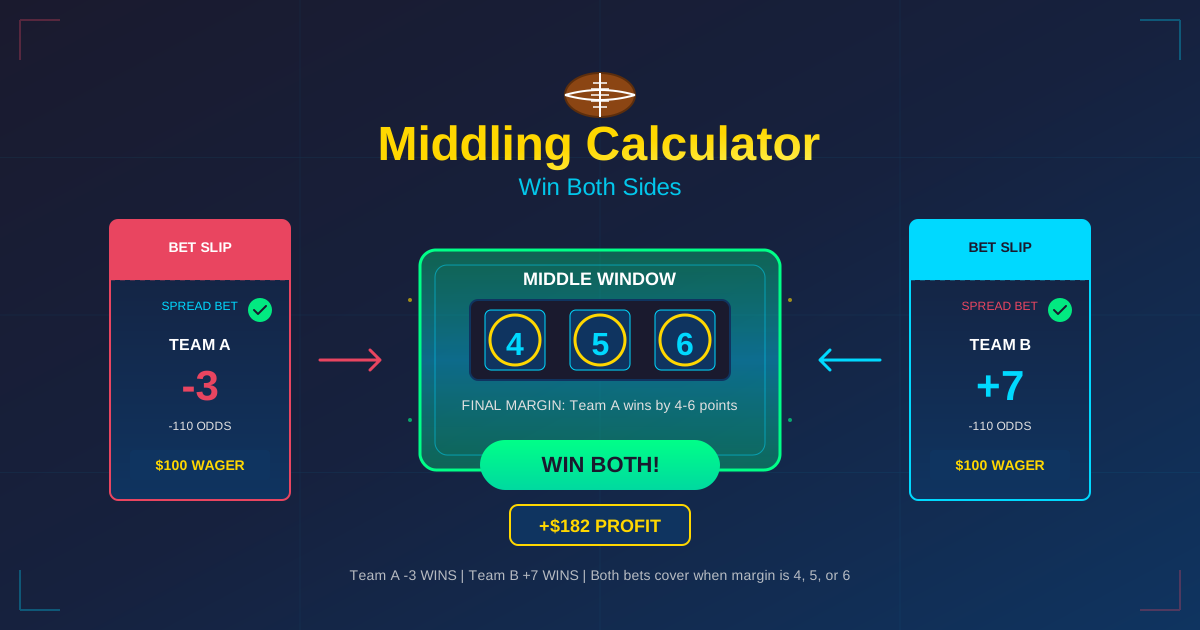
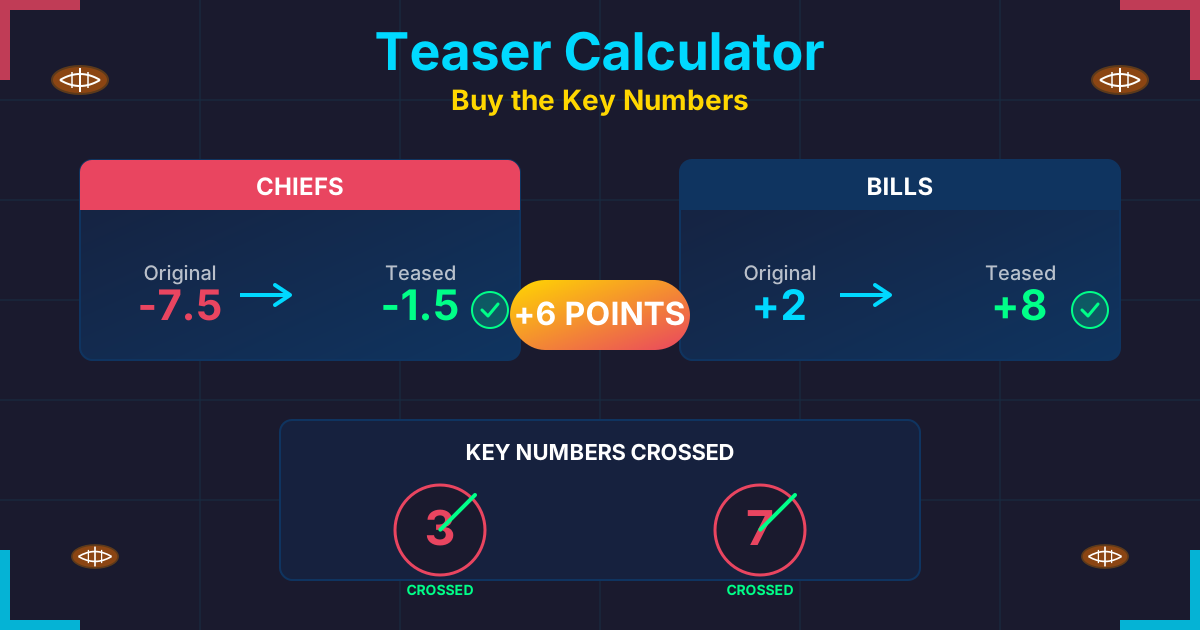
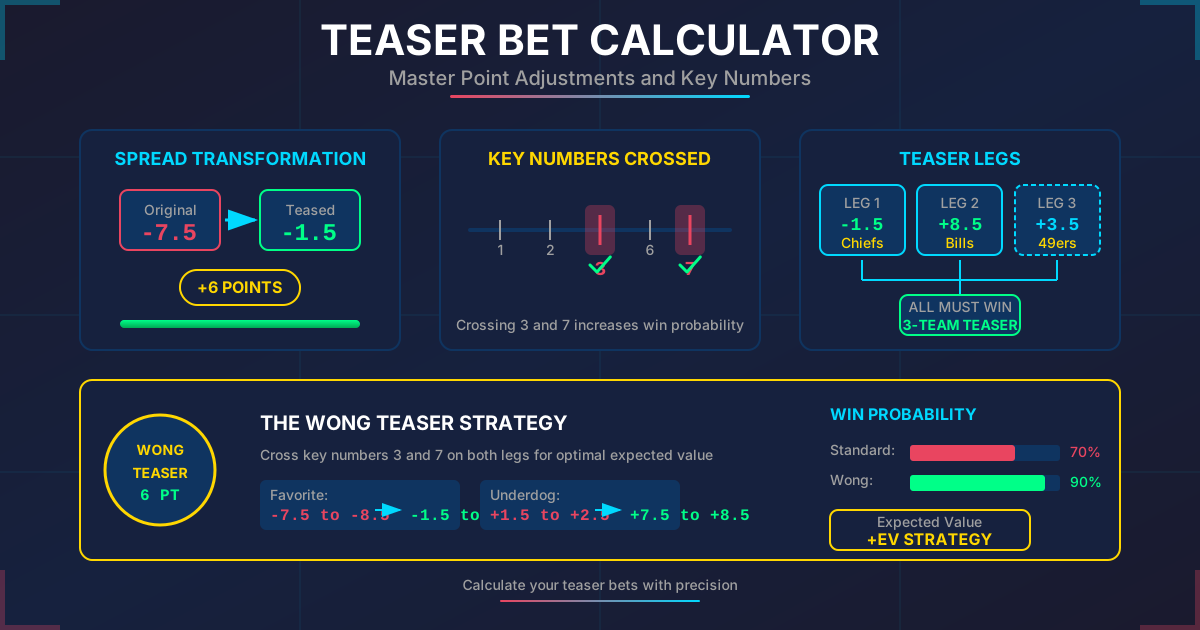
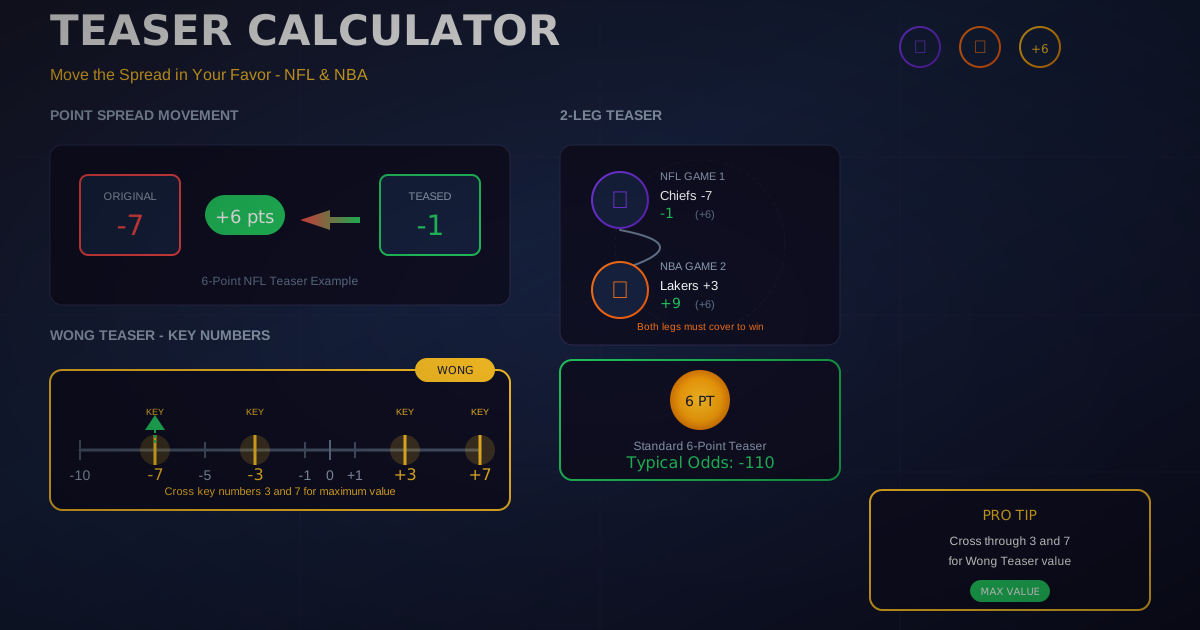
Teasers allow you to move the point spread in your favor by 6, 6.5, or 7 points in exchange for reduced odds. In the NFL regular season, the "Wong teaser" (crossing through key numbers like 3 and 7) is a well-documented profitable strategy. Does it work in the Super Bowl?
Key Numbers in Football
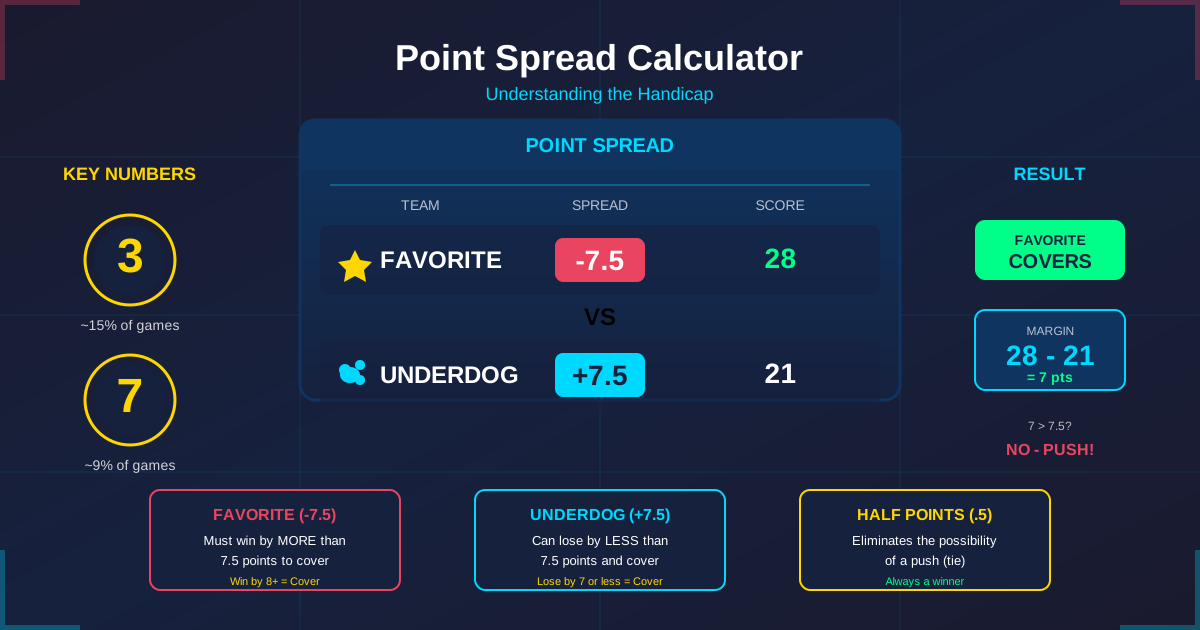
The most common margins of victory in the NFL are 3 and 7 points. Teasers that move a line through these numbers are the most valuable because they capture the highest density of outcomes.
| Teaser Type | Original Line | Teased Line | Key Numbers Crossed |
|---|---|---|---|
| 6-point favorite | -8.5 | -2.5 | Crosses 7 and 3 |
| 6-point underdog | +1.5 | +7.5 | Crosses 3 and 7 |
| 7-point favorite | -10 | -3 | Crosses 7; lands on 3 |
| 7-point underdog | +1 | +8 | Crosses 3 and 7 |
A two-team, 6-point teaser crossing through both 3 and 7 on each leg has been historically profitable in the NFL regular season. In the Super Bowl, with the additional underdog ATS trend, teasing the underdog through key numbers is an especially attractive option.
Calculate teaser payouts and break-even rates with our Teaser Calculator.
Building Your Super Bowl Betting Card: A Step-by-Step Framework
Here is a structured approach to building a profitable (and fun) Super Bowl betting card:
Step 1: Set Your Budget Decide on a total amount you are comfortable losing. This is your Super Bowl bankroll. A good rule: never bet more than you would spend on a nice dinner out.
Step 2: Identify Your Core Bets (60% of budget) These are your highest-conviction plays, typically 2-3 bets on the side, total, or major player props where you believe you have an edge.
Step 3: Allocate for Props (25% of budget) Select 3-5 player or game props where your research suggests the line is off. Focus on unders and less popular players where the public has not inflated the odds.
Step 4: Set Aside Party Money (15% of budget) This is your fun money for novelty props, small parlays, and squares. Expect to lose this portion but enjoy the entertainment value.
Step 5: Reserve a Live Betting Budget If possible, hold back 10-15% of your total budget specifically for live betting opportunities during the game. The best value often appears in-game.
Frequently Asked Questions
What is the best type of Super Bowl bet for beginners? The spread (point spread) is the best starting point for beginners because it is straightforward, has the lowest house edge (typically 4.5% at -110), and has decades of historical data to inform your decision. Take the underdog and the points if you are unsure, as underdogs are 30-27-2 ATS all-time in the Super Bowl.
Are Super Bowl prop bets worth it? Yes, selectively. Player props on less popular markets (receiving yards for a WR2, rushing attempts for a backup RB) can offer genuine value because sportsbooks devote less attention to pricing them accurately. Avoid stacking too many props, though, as the cumulative vig adds up quickly. Use our Hold/Vig Calculator to check the house edge on each prop before betting.
How much should I bet on the Super Bowl? Professional bettors recommend risking no more than 1-5% of your total bankroll on any single bet, even in the Super Bowl. If your total entertainment budget for the game is $200, your largest individual bet should be $10-$20 on your highest-conviction play. Use the Kelly Criterion Calculator to find optimal bet sizing.
Is the coin toss a good bet? No. The coin toss is a pure 50/50 random event with -103 odds on each side, giving the sportsbook a guaranteed 3% edge. There is no skill, no analysis, and no historical pattern that helps. Tails has hit 31 of 59 times, but that slight lean is well within normal statistical variance and has zero predictive value. Bet the coin toss for fun with a small amount, not as a serious wager.
Should I bet the over or under on the Super Bowl total? The under has been the sharp side in recent Super Bowls, hitting in 6 of the last 10 games. Defenses tighten up, coaches game-plan to eliminate big plays, and the pressure of the biggest stage leads to conservative play, especially early. That said, evaluate each game individually based on the specific matchup rather than blindly following a trend.
What are Super Bowl squares and how do I win? Super Bowl squares are a 10x10 grid where each square represents a combination of the last digit of each team's score. Numbers are randomly assigned after squares are purchased, so winning is largely luck-based. The best numbers to have are 0, 7, 3, and 4 because football scoring (touchdowns at 7 points, field goals at 3 points) makes these last digits appear most frequently. The worst numbers are 2, 5, 8, and 9.
Can I make money live betting the Super Bowl? Live betting offers genuine value opportunities because sportsbooks must reprice hundreds of markets in real time. The extended 30-minute halftime break is particularly valuable because algorithms often overcorrect based on first-half results, and coaching adjustments can significantly change the second-half dynamic. Stay disciplined, wait for clear overcorrections, and do not chase momentum.
How do sharp bettors approach the Super Bowl differently? Sharp bettors focus on three principles: (1) bet early to lock in value before the public moves lines, (2) lean heavily toward unders and underdogs because the public inflates overs and favorites, and (3) concentrate on a small number of high-conviction plays rather than spreading action across dozens of props. They treat the Super Bowl like any other game, not as a special occasion to gamble recklessly.
Essential Tools for Super Bowl Bettors
Make smarter Super Bowl bets with these free calculators:
- Odds Converter -- Convert between American, decimal, and fractional odds
- Expected Value Calculator -- Determine if any bet is +EV or -EV
- Implied Probability Calculator -- See the true probability behind any line
- Kelly Criterion Calculator -- Find optimal bet sizing based on your edge
- Parlay Calculator -- Calculate combined odds and payouts for multi-leg bets
- Hold/Vig Calculator -- Check the house edge on any market
- Hedge Calculator -- Calculate exact hedge amounts for futures and live bets
- Teaser Calculator -- Compute teaser payouts and break-even win rates
- Round Robin Calculator -- Build every parlay combination from your selections
Conclusion
The Super Bowl is the most exciting single-day betting event in the world, and it rewards bettors who approach it with discipline, data, and realistic expectations. The historical trends are clear: underdogs cover, unders hit, and the public consistently inflates favorites and overs. Novelty props are fun but expensive. Player props offer real value if you focus on less popular markets. And live betting during the extended halftime creates opportunities that do not exist in any other game.
Set your budget, identify your highest-conviction plays, use the tools linked throughout this guide to verify your math, and enjoy the game. The Super Bowl only happens once a year. Make your bets count.
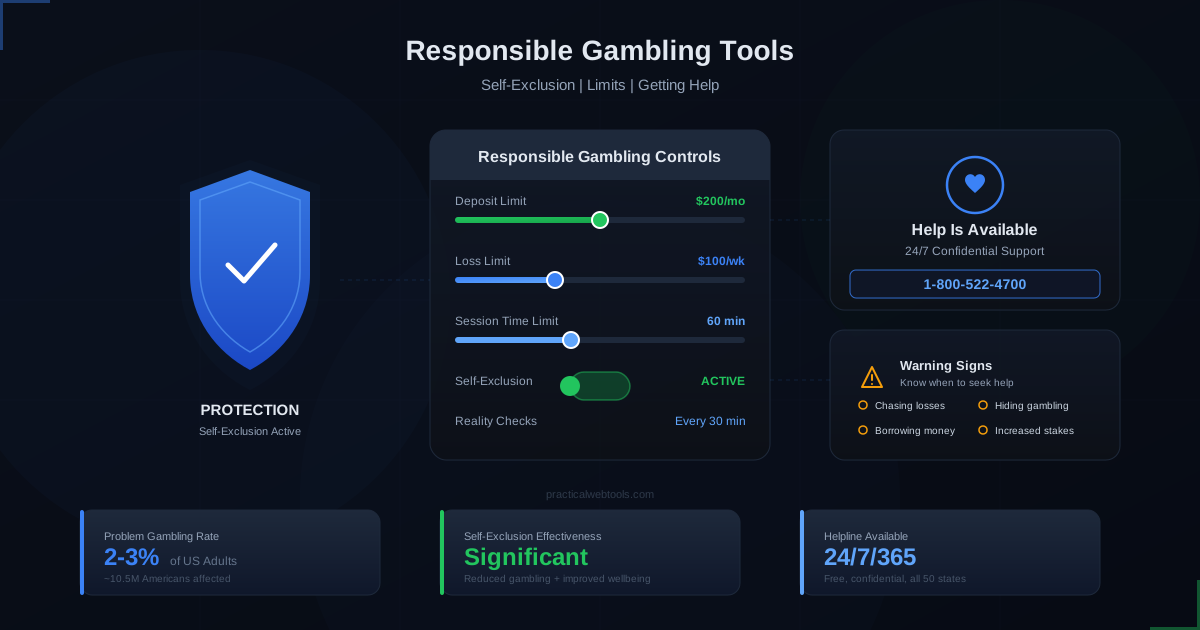
Gambling involves risk. This content is for educational and informational purposes only. Always gamble responsibly, set limits you can afford, and seek help if gambling becomes a problem. Visit the National Council on Problem Gambling or call 1-800-522-4700 for support.