Horse Racing Betting for Beginners: How to Read a Racing Form and Find Value (2026)
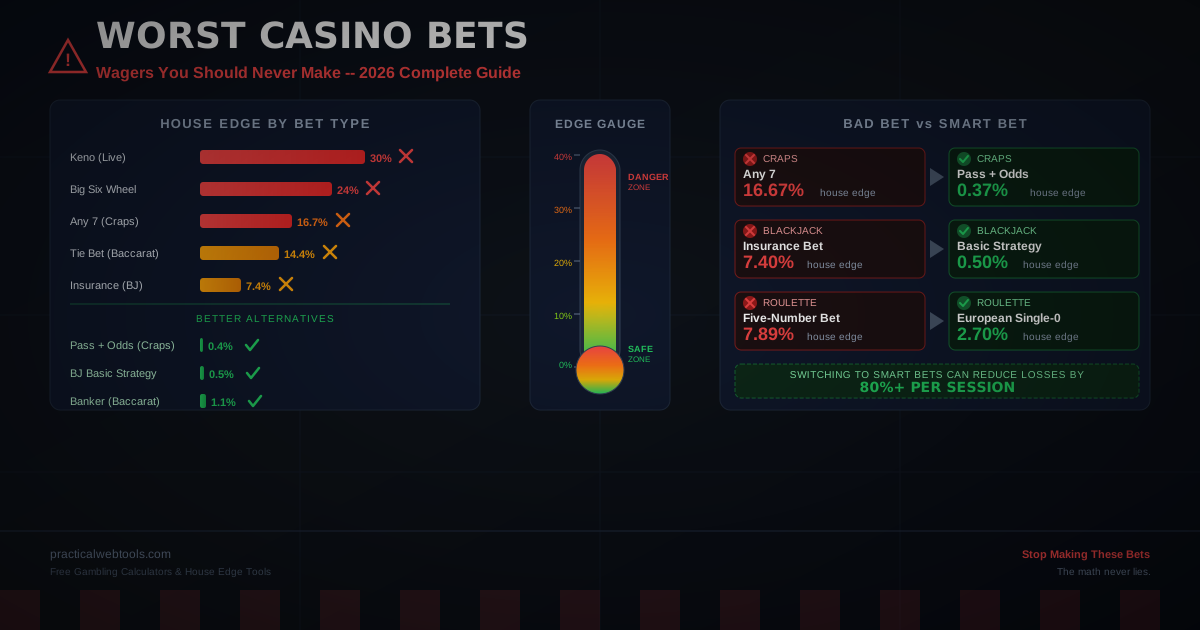
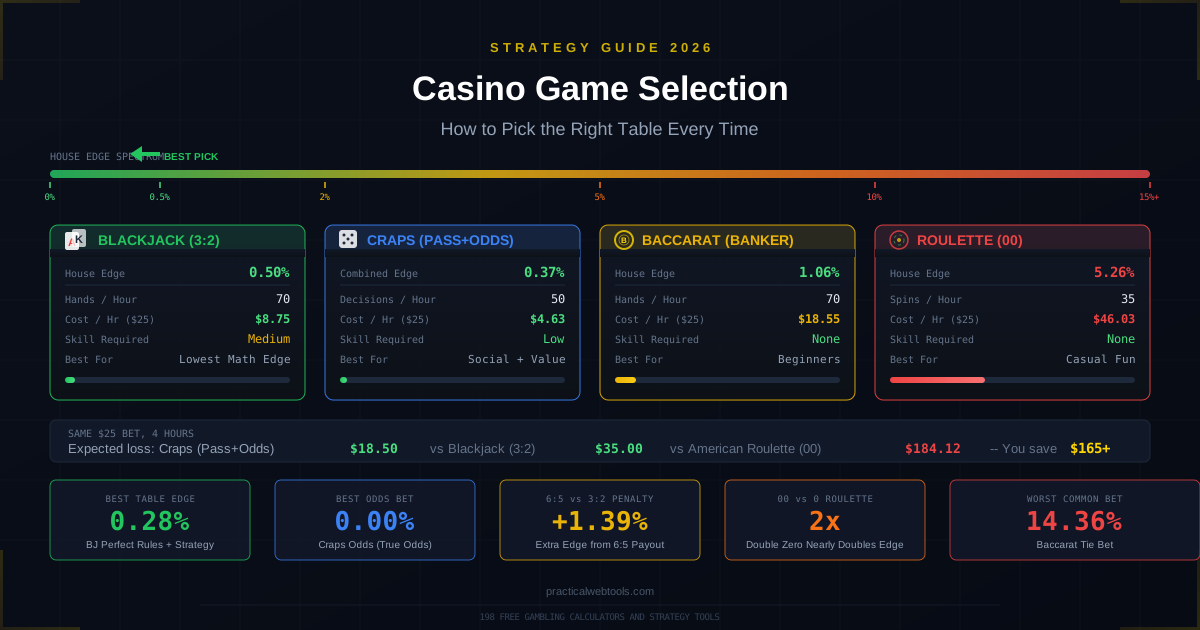
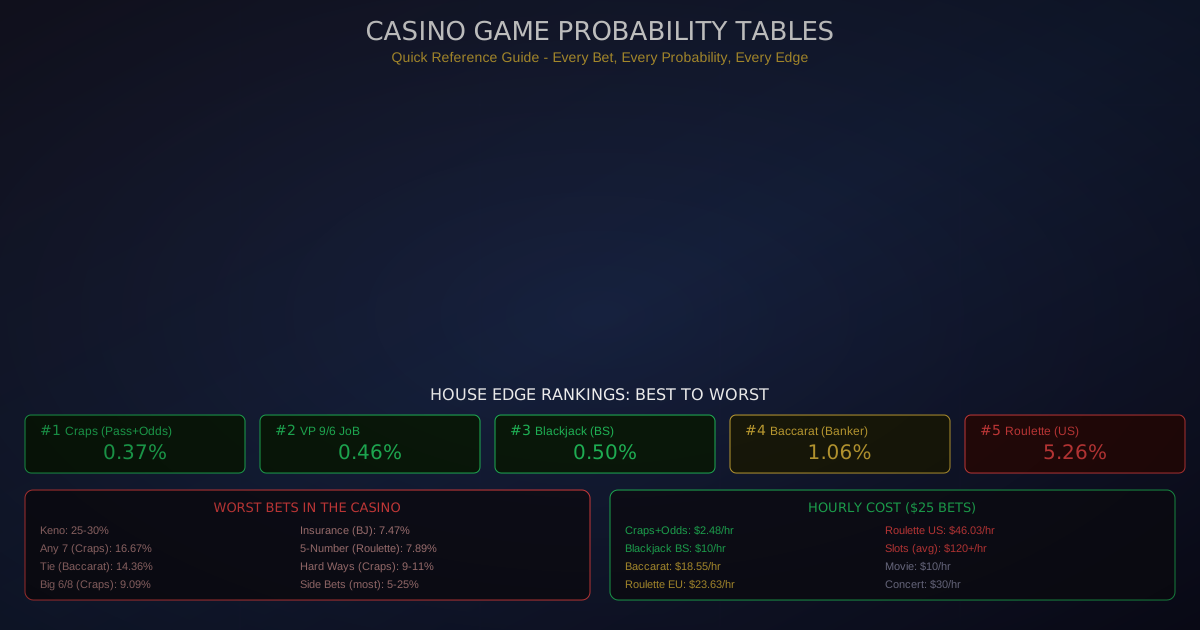
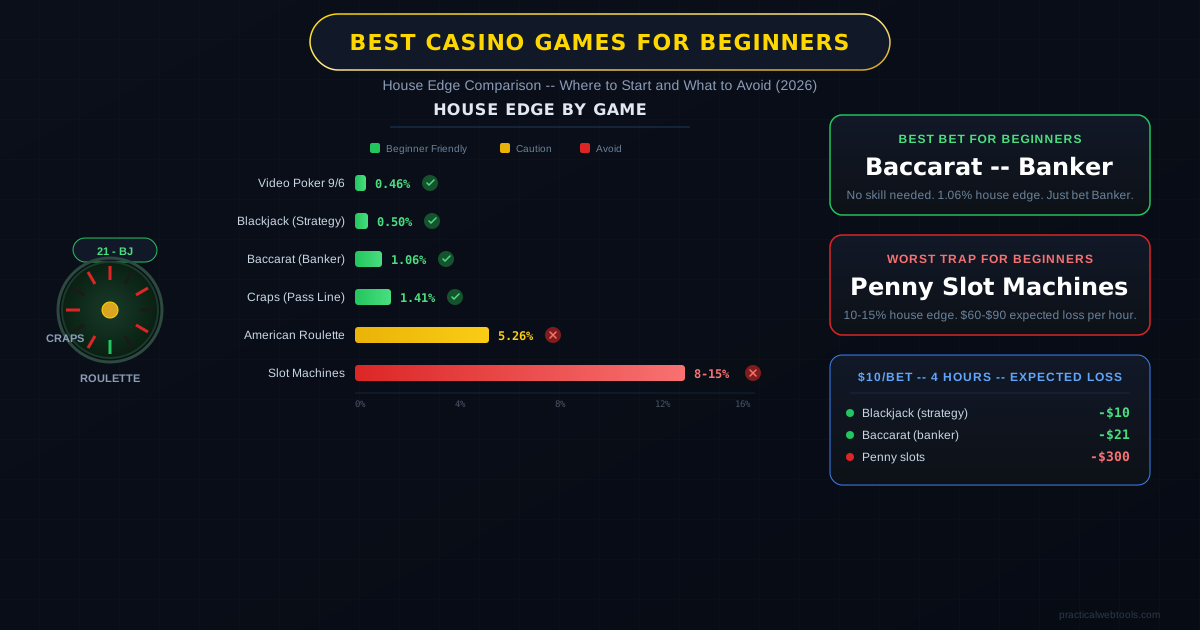
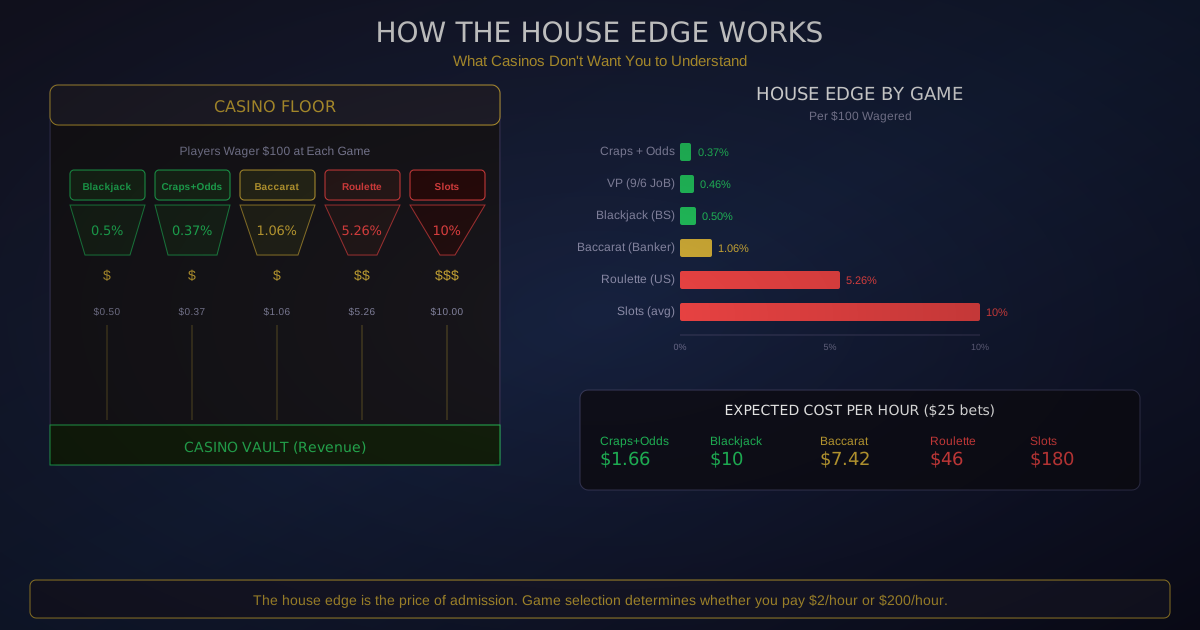
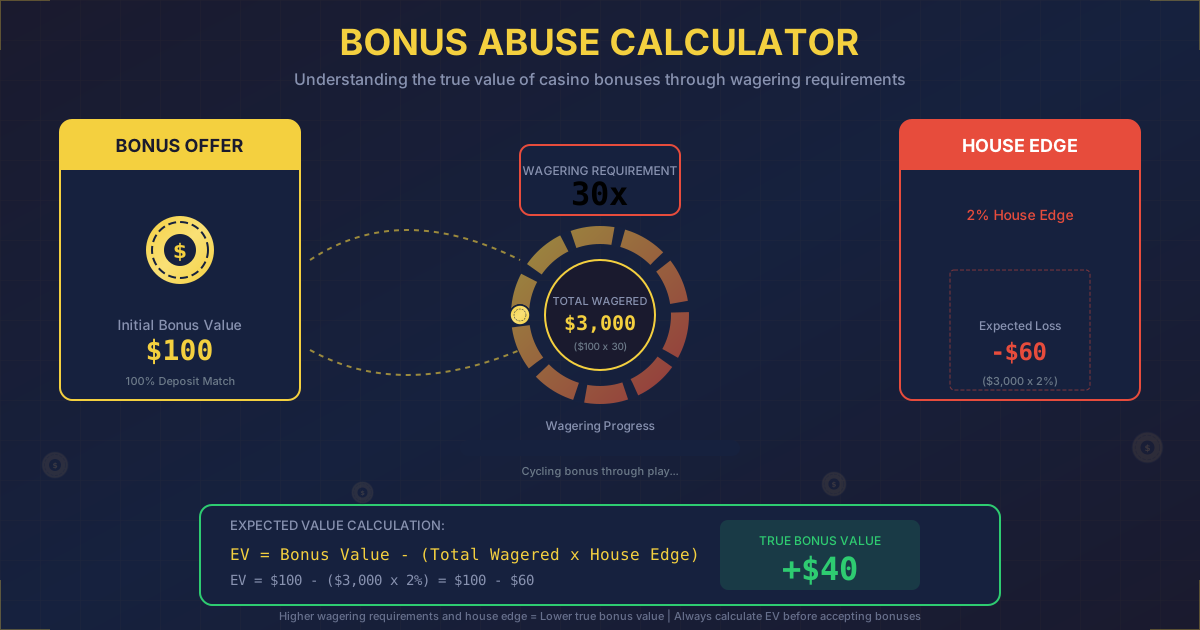
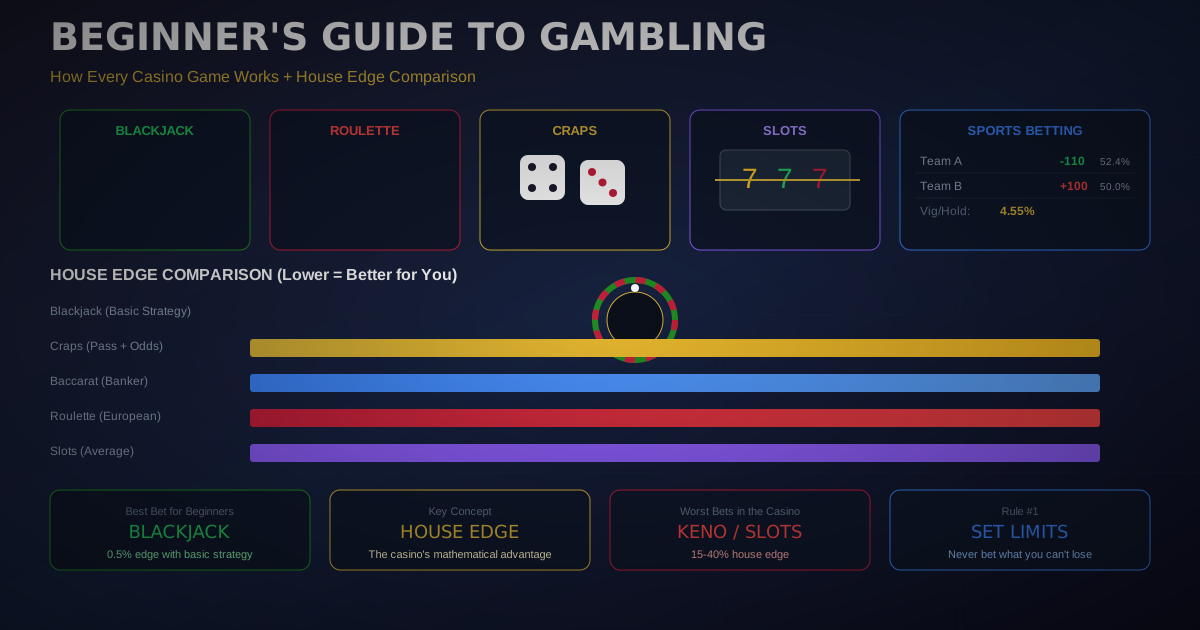
Horse racing is the original sport of kings and the original form of sports betting, yet most bettors at the track lose money because they bet based on a horse's name, jockey's silks, or hunches rather than data. In 2025, the average American racetrack returned approximately 80-83% of all money wagered back to bettors, meaning the total takeout (the track's cut) was 17-20%. Compare that to a 1.41% house edge on craps or 0.5% on blackjack, and you see why horse racing requires skill and selectivity to beat.
The takeout rate sounds brutal, but here is the difference: horse racing uses a pari-mutuel system where you are betting against other bettors, not against the house. The track takes its cut off the top, and the remaining pool is divided among winners. This means the odds are set by the public, and when the public misprices a horse, value exists for bettors who can spot it.
Professional horse racing bettors do not try to pick every winner. They find situations where the public has undervalued a horse, creating odds that exceed the horse's true probability of winning. Over thousands of bets, that edge compounds into profit despite the steep takeout.
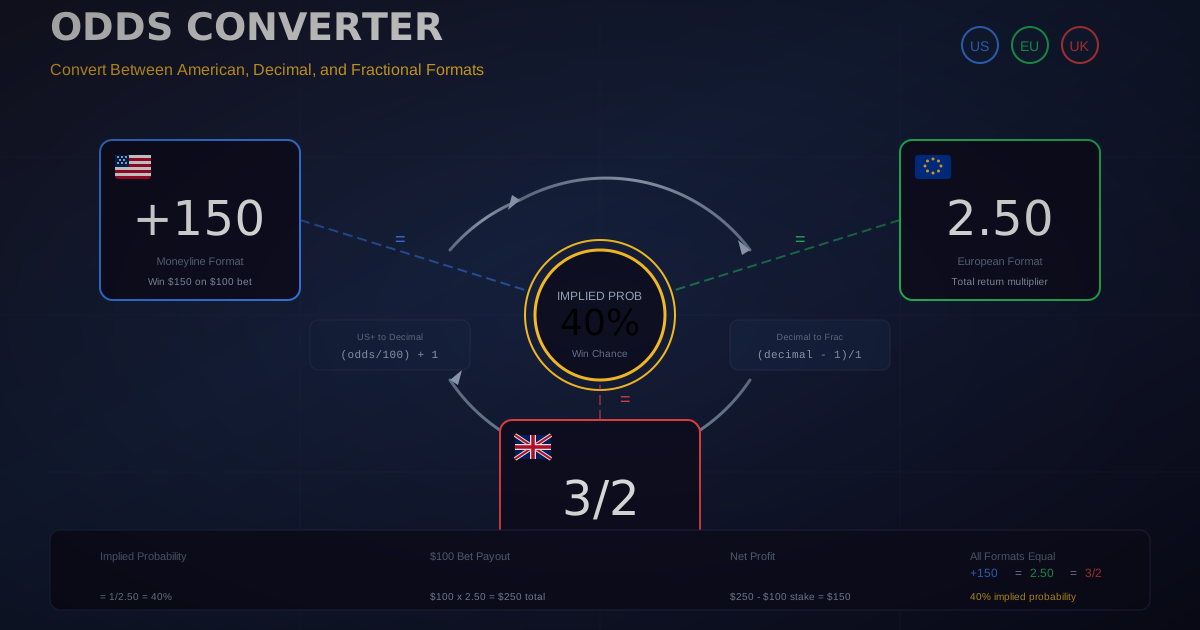
Convert horse racing odds between fractional, decimal, and American formats with our free Horse Racing Odds Converter.
Understanding Horse Racing Bet Types
Before you can handicap a race, you need to understand what you can bet on. Horse racing offers two categories of bets: straight bets and exotic bets.
Straight Bets (Win, Place, Show)
| Bet Type | What It Means | Typical Minimum | Difficulty |
|---|---|---|---|
| Win | Your horse finishes first | $2 | Moderate |
| Place | Your horse finishes first or second | $2 | Easier |
| Show | Your horse finishes first, second, or third | $2 | Easiest |
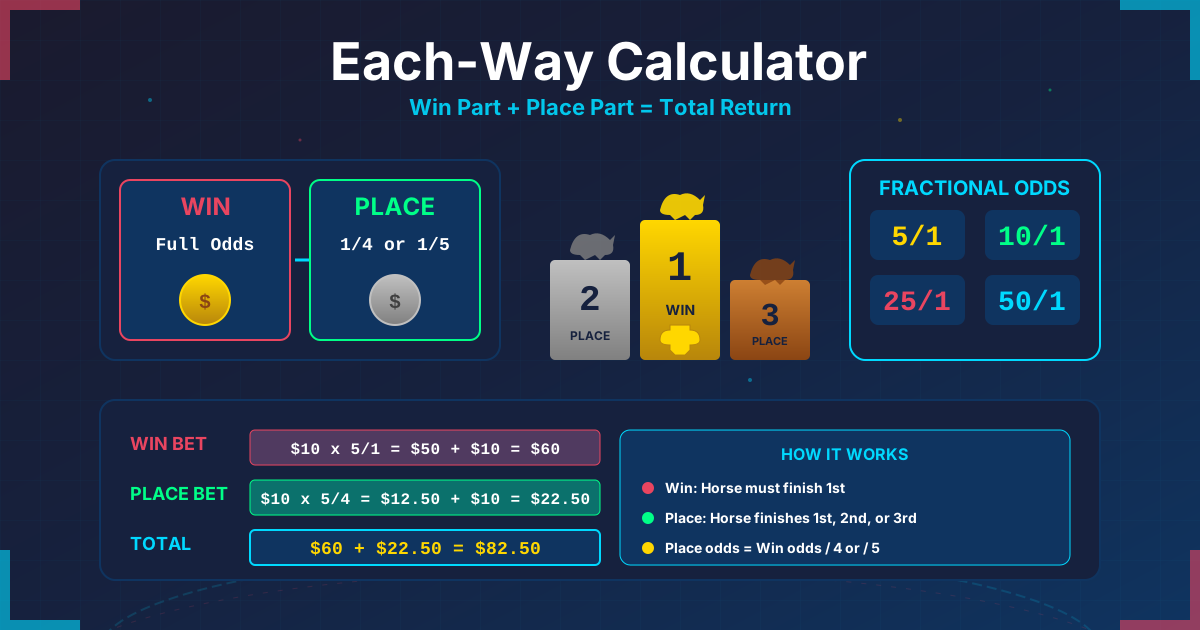
Win bets offer the highest payouts because they are hardest to hit. If a horse goes off at 5-1 odds and wins, your $2 bet returns $12 ($10 profit + $2 stake).
Place bets pay less but hit more often. The place pool is separate from the win pool, and payouts are calculated after the takeout and divided among those who bet on either of the top two finishers.
Show bets have the lowest payouts but highest hit rate. At 5-1 odds, a show bet might only pay $3.40 for a $2 bet. Show bets on favorites often pay the minimum ($2.10-$2.40) and are rarely worth the risk.
Key insight: professional handicappers overwhelmingly bet to win. Place and show bets dilute value because the pools are smaller and more likely to be dominated by chalk (favorites).
Exotic Bets
Exotic bets require picking multiple horses in specific orders or combinations. They offer massive payouts but are harder to hit.
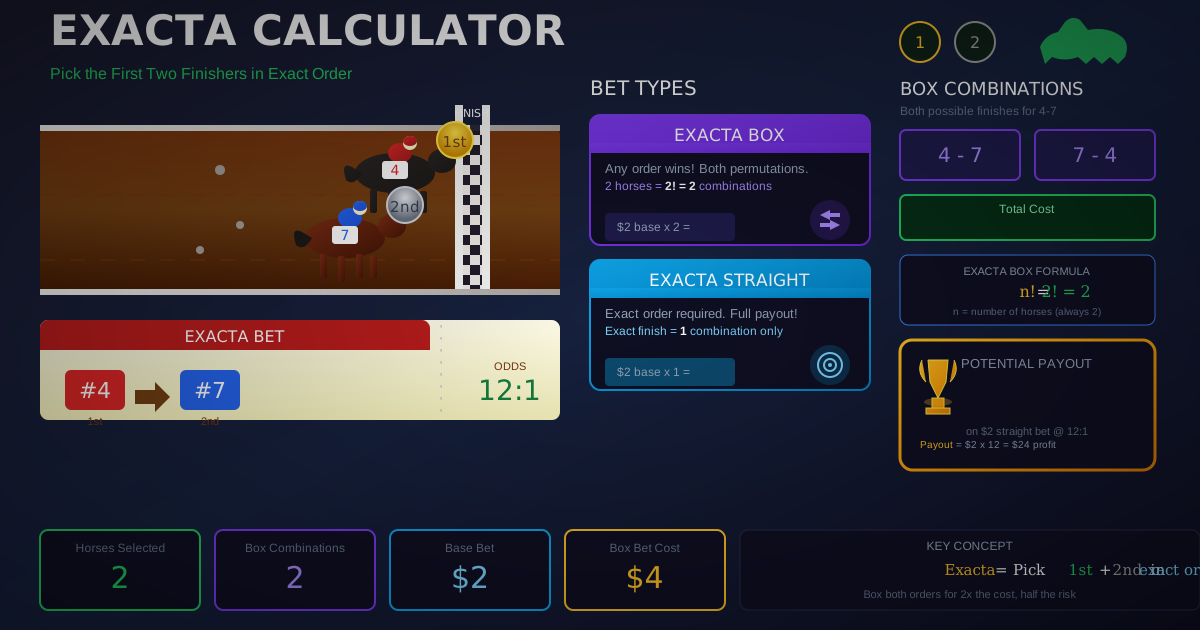
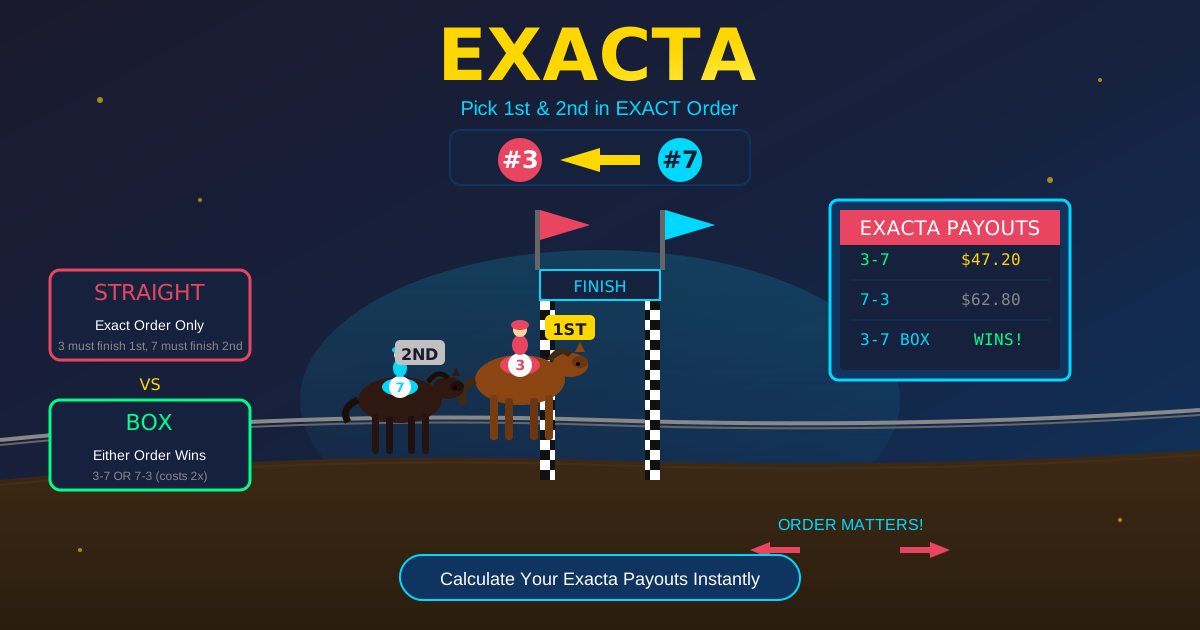
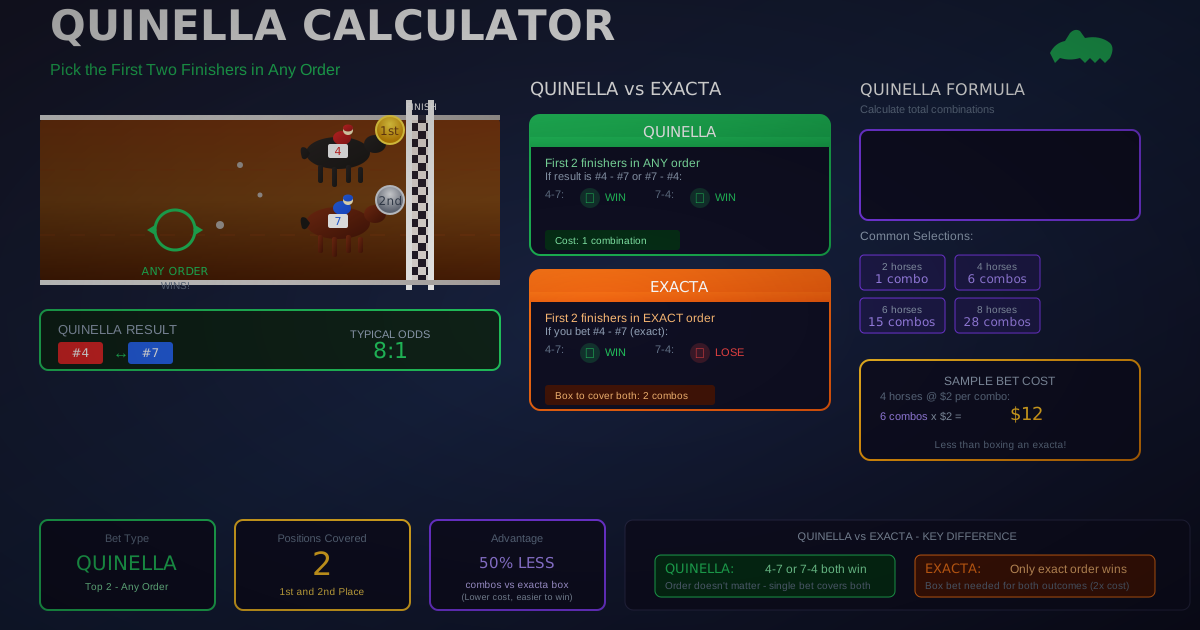
Exacta (picking first and second in order):
| Exacta Strategy | Cost for 8-Horse Field | Coverage |
|---|---|---|
| Straight exacta (one combination) | $2 | 1 combination |
| Box 2 horses | $4 | 2 combinations |
| Box 3 horses | $12 | 6 combinations |
| Box 4 horses | $48 | 12 combinations |
| Key horse on top with 4 others | $8 | 4 combinations |
The exacta is the most popular exotic bet and offers excellent value when you have a strong opinion about the winner but less certainty about second place. Boxing 2-3 horses keeps costs manageable while covering multiple outcomes.
Calculate exact exacta costs and potential payouts with our Exacta Calculator.
Trifecta (picking first, second, and third in order):
| Trifecta Strategy | Cost for 10-Horse Field | Coverage |
|---|---|---|
| Straight trifecta | $2 | 1 combination |
| Box 3 horses | $12 | 6 combinations |
| Box 4 horses | $48 | 24 combinations |
| Box 5 horses | $120 | 60 combinations |
| Key horse on top, 4 others for 2nd/3rd | $24 | 12 combinations |
Trifectas produce headline-grabbing payouts, sometimes exceeding $10,000 for a $2 bet. But the number of possible outcomes in a 10-horse race is 720 (10 x 9 x 8), which means a single straight trifecta covers less than 0.14% of outcomes.
Build and price trifecta tickets with our Trifecta Calculator.
Superfecta (picking first through fourth in order):
The superfecta is the highest-paying standard exotic bet. In a 12-horse field, there are 11,880 possible outcomes (12 x 11 x 10 x 9). A $0.10 superfecta box of 4 horses costs $2.40 (24 combinations x $0.10) and can pay hundreds or thousands of dollars.
Calculate superfecta ticket costs with our Superfecta Calculator.
Pari-Mutuel vs. Fixed Odds
Traditional horse racing uses the pari-mutuel system, where all bets go into a pool, the track takes its cut (15-25%), and the remaining money is divided among winning tickets. This means odds change constantly until the race starts.
Fixed-odds betting, now available at some U.S. tracks and online sportsbooks, locks in your odds at the time you place the bet. This can be advantageous when you spot early value that the public later corrects.
| System | Odds Known At | Takeout/Vig | Advantage |
|---|---|---|---|
| Pari-mutuel | Post time (final odds) | 15-25% | Odds can improve if public bets favorites |
| Fixed odds | Time of bet | 5-15% | Lock in value early; lower takeout |
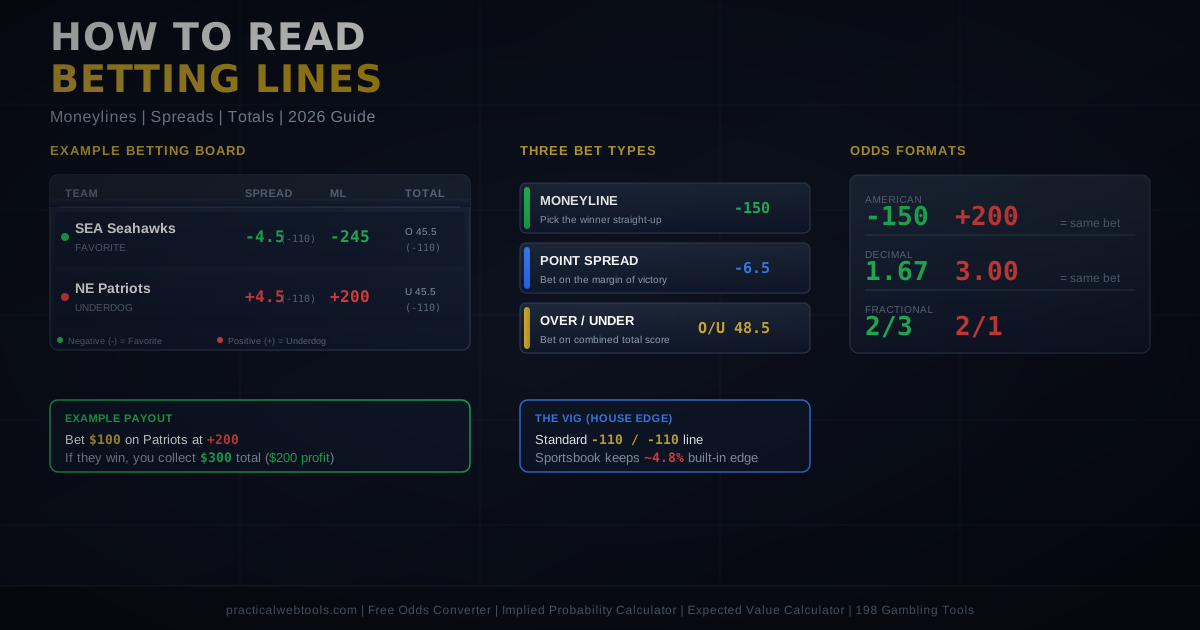
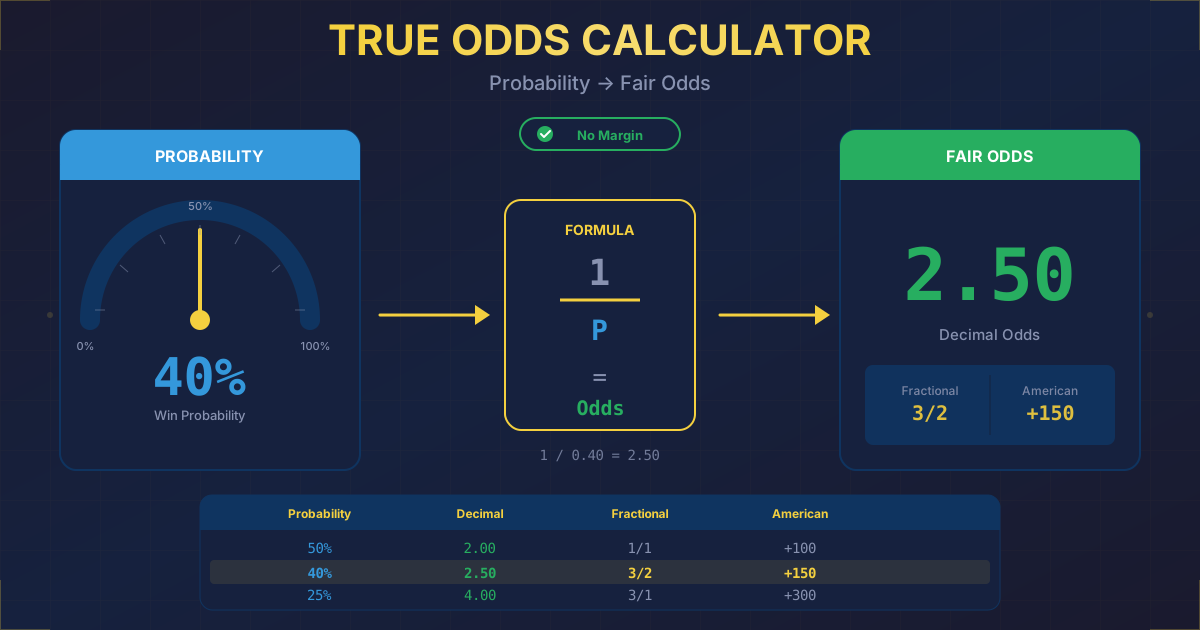
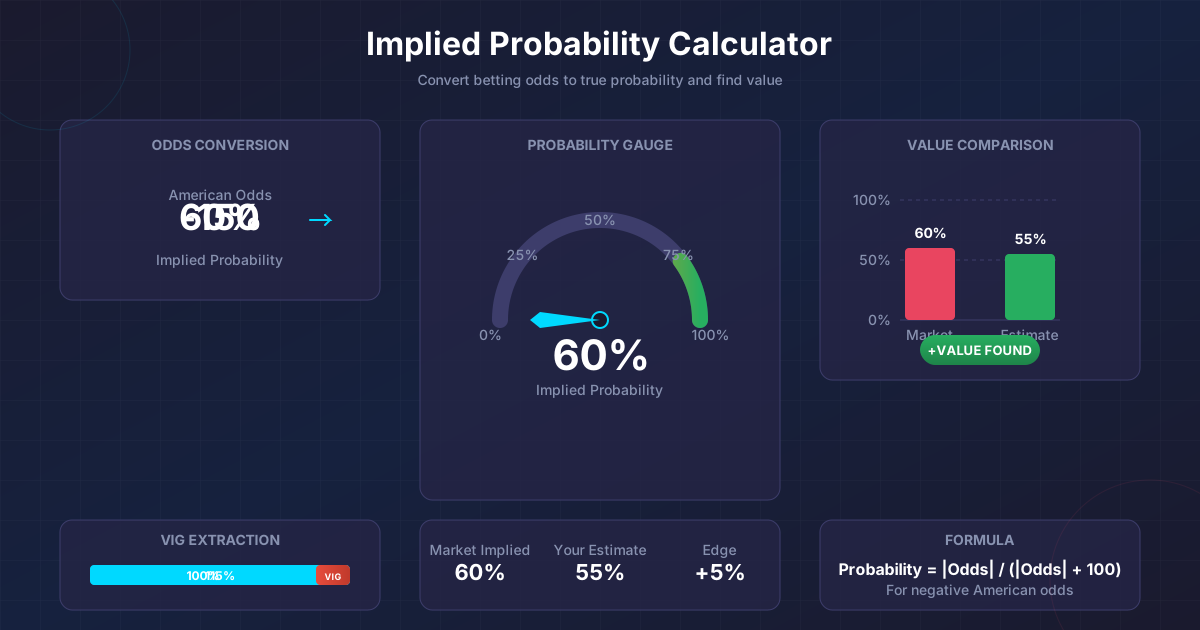
Convert between any odds format and understand implied probabilities with our Odds Converter and Implied Probability Calculator.
How to Read the Racing Form (Past Performances)
The Daily Racing Form (DRF) past performances contain a wealth of data packed into a dense format. Here is what every important element means and how to use it.
The Header Section
At the top of each horse's past performances, you will find:
- Horse name, age, sex, and color (e.g., "Lucky Strike, 4, C, B" = 4-year-old bay colt)
- Sire (father) and Dam (mother) - breeding tells you about surface preference and distance aptitude
- Owner, trainer, and jockey - trainer stats and jockey win percentage are critical
- Morning line odds - the track handicapper's pre-race estimate
Past Performance Lines
Each line represents one previous race. Reading left to right, the key data points include:
| Column | What It Shows | Why It Matters |
|---|---|---|
| Date | When the race was run | Recency matters; look for 2-6 week gaps |
| Track | Where the race was run | Track bias affects results |
| Distance | Race length (e.g., 6f, 1m, 1 1/16m) | Horses have distance preferences |
| Surface | Dirt, turf, or synthetic | Some horses vastly prefer one surface |
| Condition | Firm, good, muddy, sloppy | Wet tracks favor different running styles |
| Class | Claiming price, allowance, stakes | Moving up/down in class is critical |
| Speed Figure | Numerical performance rating | Higher is better; consistency matters |
| Running position | Where the horse was at each call | Shows running style (speed, stalker, closer) |
| Finish position | Where the horse finished | Combined with speed figures for full picture |
| Beaten lengths | How far behind the winner | 1 length ≈ 1/5 of a second |
| Final time | Time of the race | Compare to track records and pars |
Speed Figures: The Most Important Number
Speed figures attempt to normalize performance across different tracks, distances, and conditions into a single number. The Beyer Speed Figure (published in the DRF) is the most widely used. A higher number indicates a faster performance.
Typical Beyer Speed Figure ranges:
| Class Level | Typical Beyer Range |
|---|---|
| Maiden claiming (low) | 50-65 |
| Maiden special weight | 65-80 |
| Claiming ($10K-$25K) | 70-85 |
| Claiming ($25K-$50K) | 80-92 |
| Allowance | 85-100 |
| Graded stakes (G3) | 95-105 |
| Graded stakes (G1) | 105-120+ |
| Kentucky Derby contender | 100-115 |
| Top-class sprinter | 110-125 |
When handicapping, look for:
- The horse's top figure - What is this horse capable of on its best day?
- Average recent figures - What is this horse likely to run today?
- Trend - Are figures improving, declining, or consistent?
- Figure fit - How does this horse's figure compare to others in today's race?
Calculate and compare speed figures with our Speed Figure Calculator.
Real-World Racing Form Analysis Example
You are handicapping a 7-furlong claiming race ($20,000 claiming price) with 8 entries. Here is a simplified comparison:
| Horse | Last 3 Beyers | Avg Beyer | Best Beyer | Class Change | Morning Line |
|---|---|---|---|---|---|
| A - Thunder Run | 82, 79, 85 | 82 | 85 | Same | 3-1 |
| B - Silver Lining | 78, 81, 76 | 78 | 81 | Dropping | 5-1 |
| C - Fast Track | 84, 72, 80 | 79 | 84 | Same | 4-1 |
| D - Lucky Seven | 75, 77, 74 | 75 | 77 | Up from $15K | 8-1 |
| E - Storm Warning | 80, 83, 81 | 81 | 83 | Same | 7-2 |
| F - Dark Horse | 68, 86, 71 | 75 | 86 | Same | 10-1 |
| G - Iron Will | 79, 80, 78 | 79 | 80 | Same | 6-1 |
| H - High Noon | 73, 70, 76 | 73 | 76 | Dropping from $25K | 12-1 |
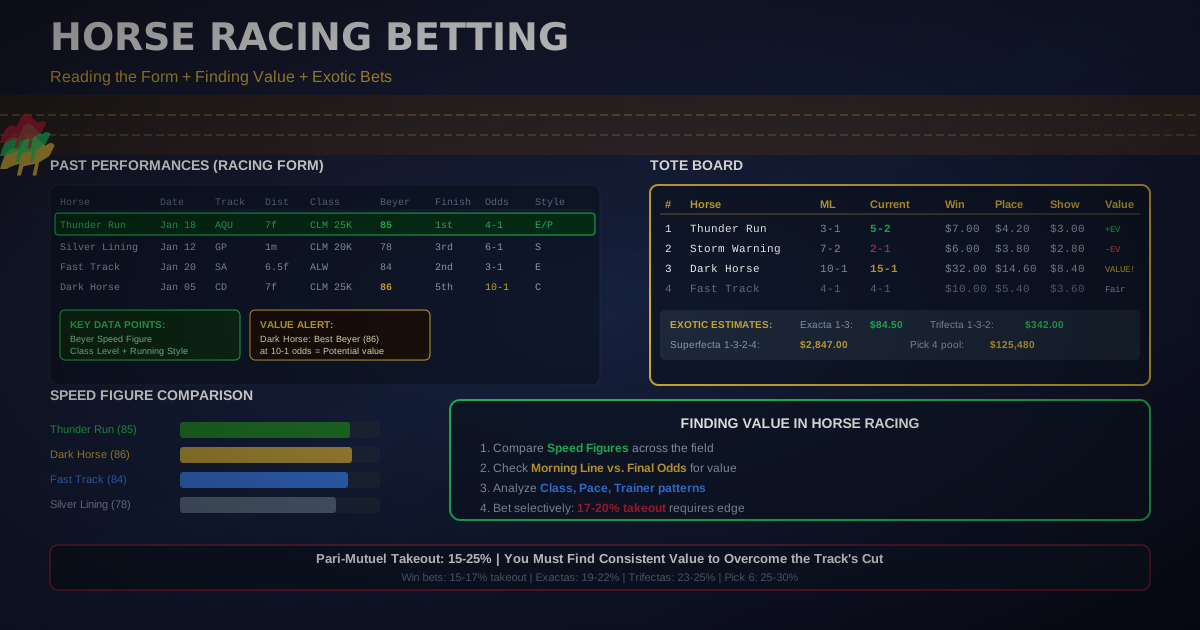
Analysis: Thunder Run (A) and Storm Warning (E) are the class of the field by average figures. But look at Dark Horse (F): an average of 75 looks mediocre, but that 86 in the middle is the highest single figure in the race. If there is a reason for the inconsistency (surface change, trip trouble, wide post), Dark Horse at 10-1 might be the value play.
Morning Line Odds and Finding Value
The morning line is set by the track handicapper before any betting occurs. It represents his estimate of what the final odds will be, not necessarily who he thinks will win.
Morning Line vs. Final Odds
| Scenario | Morning Line | Final Odds | Implication |
|---|---|---|---|
| Horse A | 3-1 | 2-1 | Public is more confident; less value |
| Horse B | 5-1 | 8-1 | Public is less confident; potential value |
| Horse C | 10-1 | 6-1 | Heavy late action; insider confidence? |
| Horse D | 15-1 | 25-1 | Public ignoring; longshot value? |
When a horse's final odds are significantly higher than the morning line, the public disagrees with the handicapper. If your handicapping supports the morning line assessment, you may have found value.
Compare morning line odds to final odds with our Morning Line Comparison Tool.
Calculating Value in Horse Racing
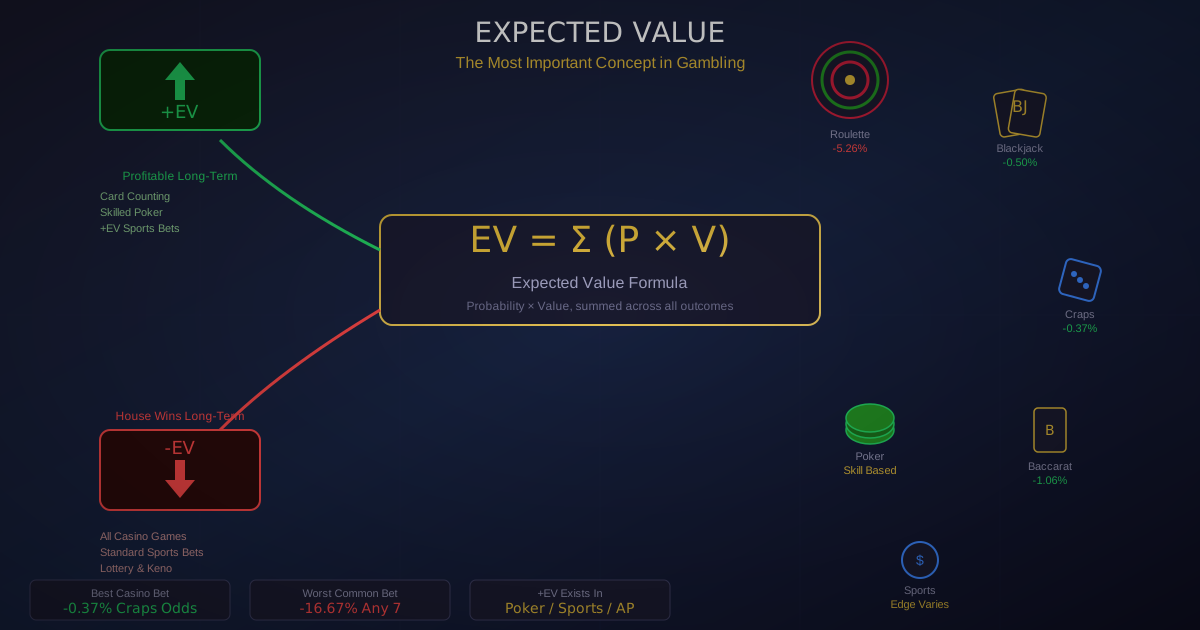
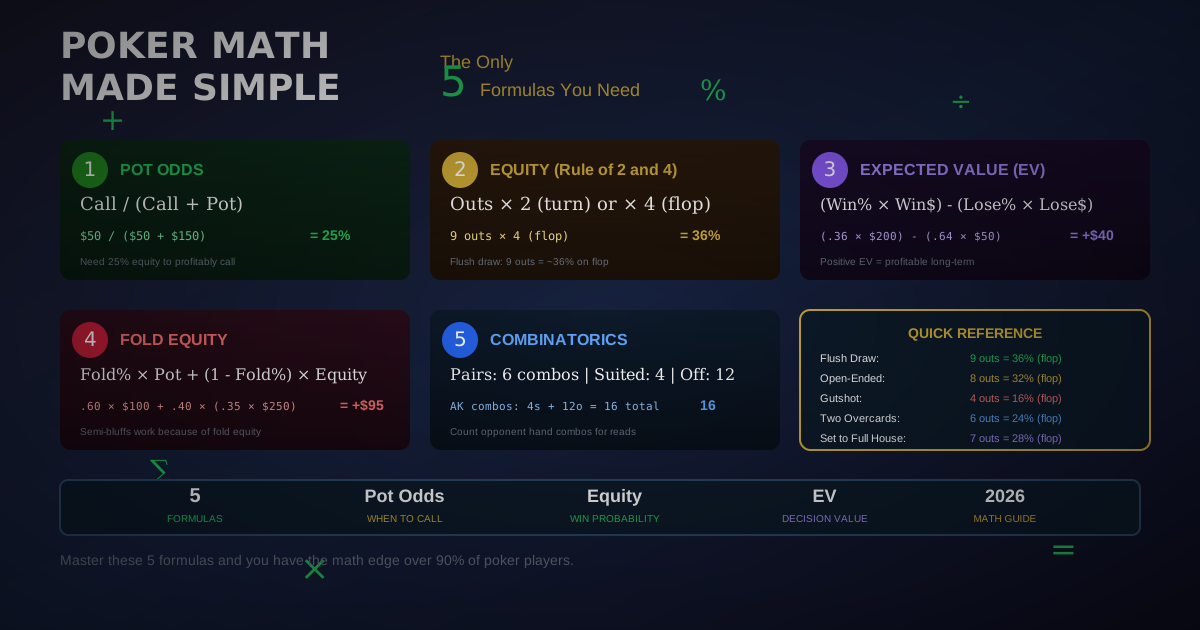
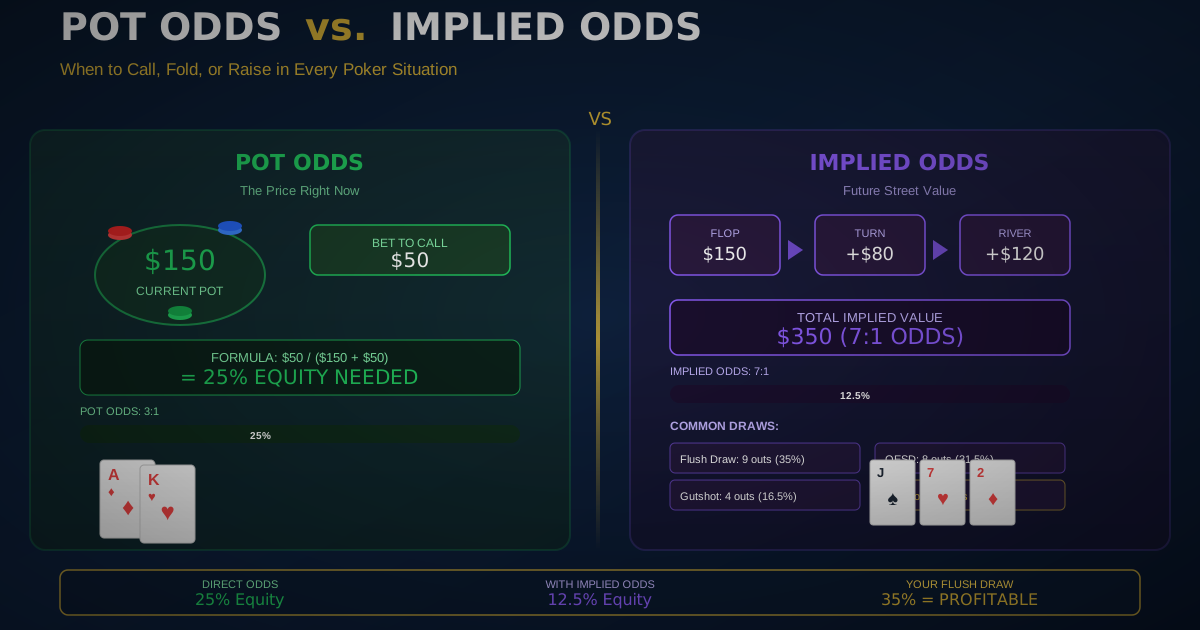
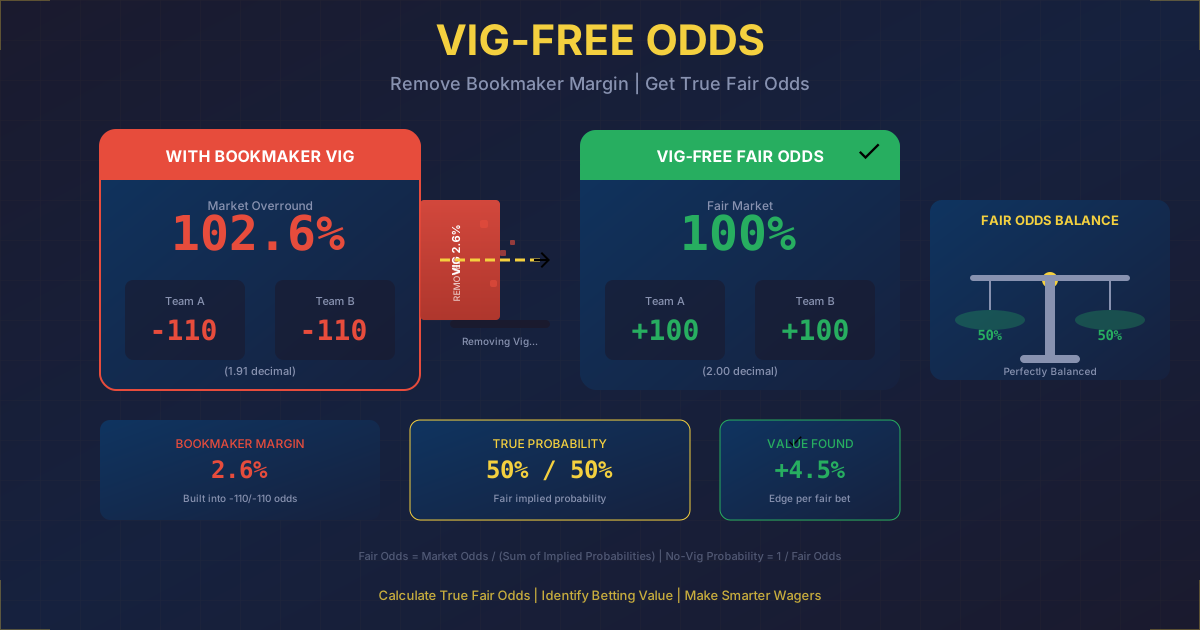
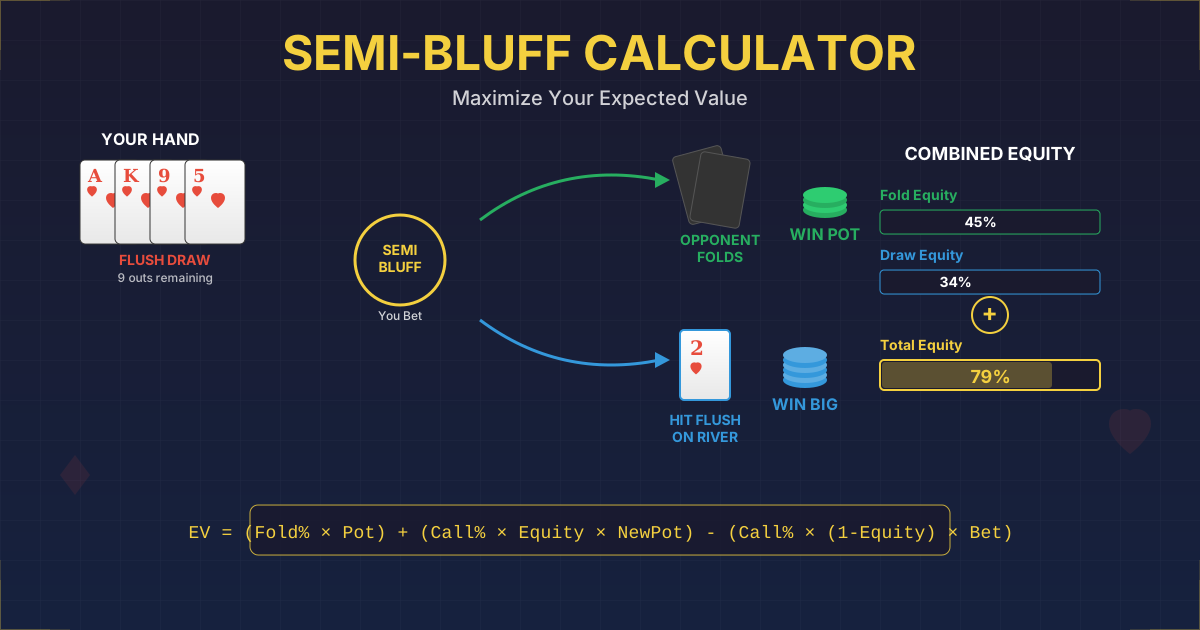
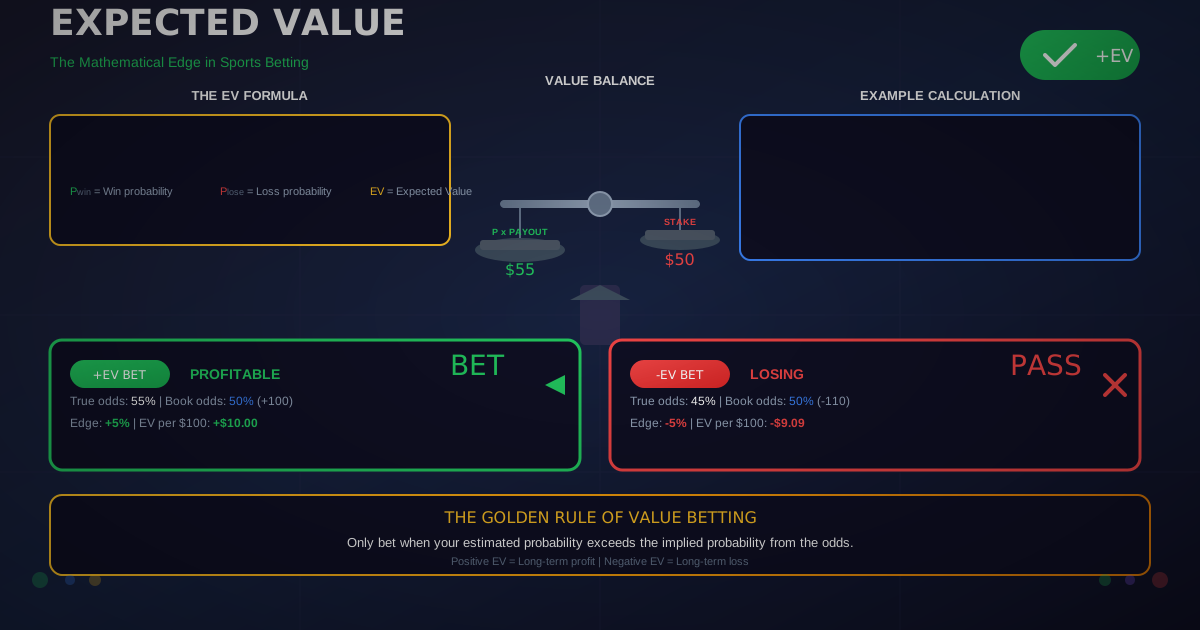
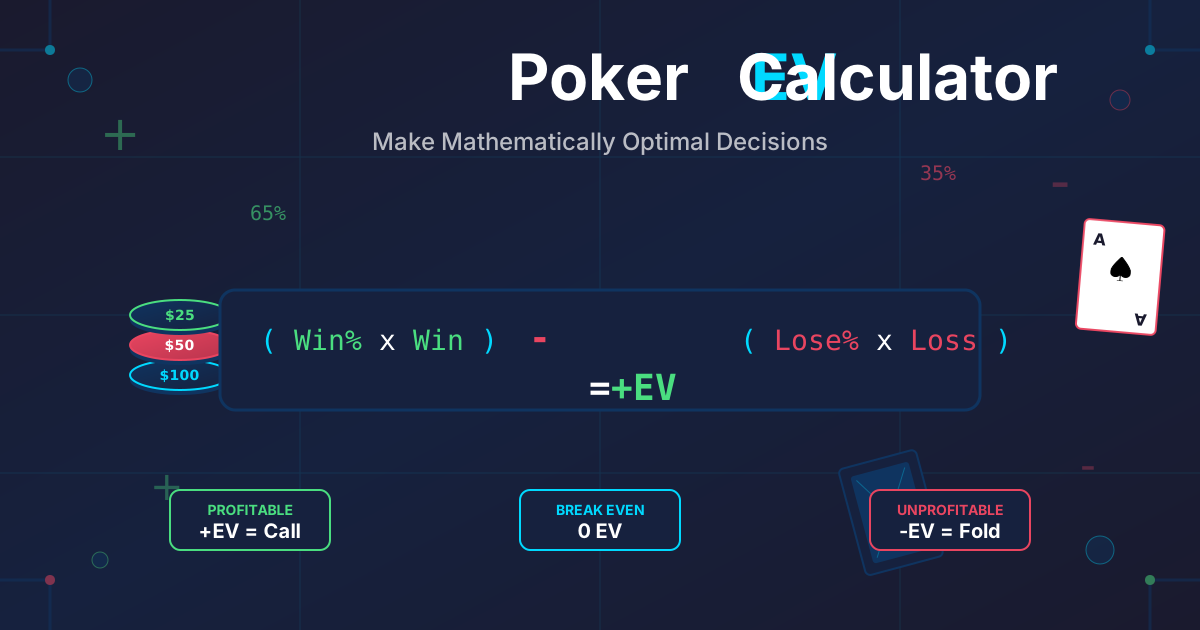
Value exists when the implied probability of a horse's odds is lower than your estimated probability of that horse winning.
Formula:
Value = Your Estimated Win Probability - Implied Probability from Odds
Example:
- You estimate Horse B has a 20% chance of winning
- Horse B's final odds are 8-1, implying a 11.1% probability (1 / (8+1) = 0.111)
- Value = 20% - 11.1% = +8.9% edge
At 8-1 odds with a 20% true win probability:
- EV per $2 bet = (0.20 x $16) - (0.80 x $2) = $3.20 - $1.60 = +$1.60 per $2 bet
That is an 80% return on investment per bet, which is extraordinary. Of course, estimating a horse's true win probability accurately is the hard part.
Calculate expected value on any wager with our Expected Value Calculator.
The Takeout Problem and How to Overcome It
The pari-mutuel takeout makes horse racing among the most expensive forms of gambling. Here is how the takeout affects each pool:
| Pool Type | Typical Takeout | After-Takeout Return |
|---|---|---|
| Win | 15-17% | 83-85% |
| Place | 15-17% | 83-85% |
| Show | 15-17% | 83-85% |
| Exacta | 19-22% | 78-81% |
| Trifecta | 23-25% | 75-77% |
| Superfecta | 24-27% | 73-76% |
| Pick 4 | 23-26% | 74-77% |
| Pick 6 | 25-30% | 70-75% |
To overcome a 20% takeout, you need to be right often enough and at high enough odds to generate a return above 120% (100% to break even + 20% to cover takeout). This requires betting selectively on horses where your edge exceeds the takeout.
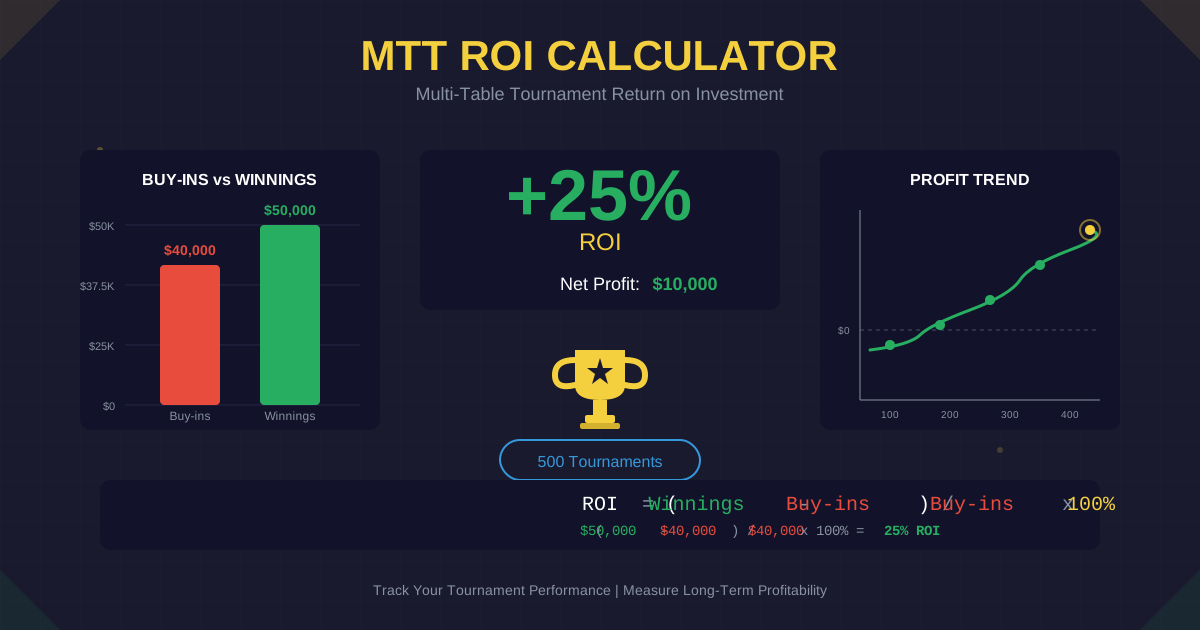
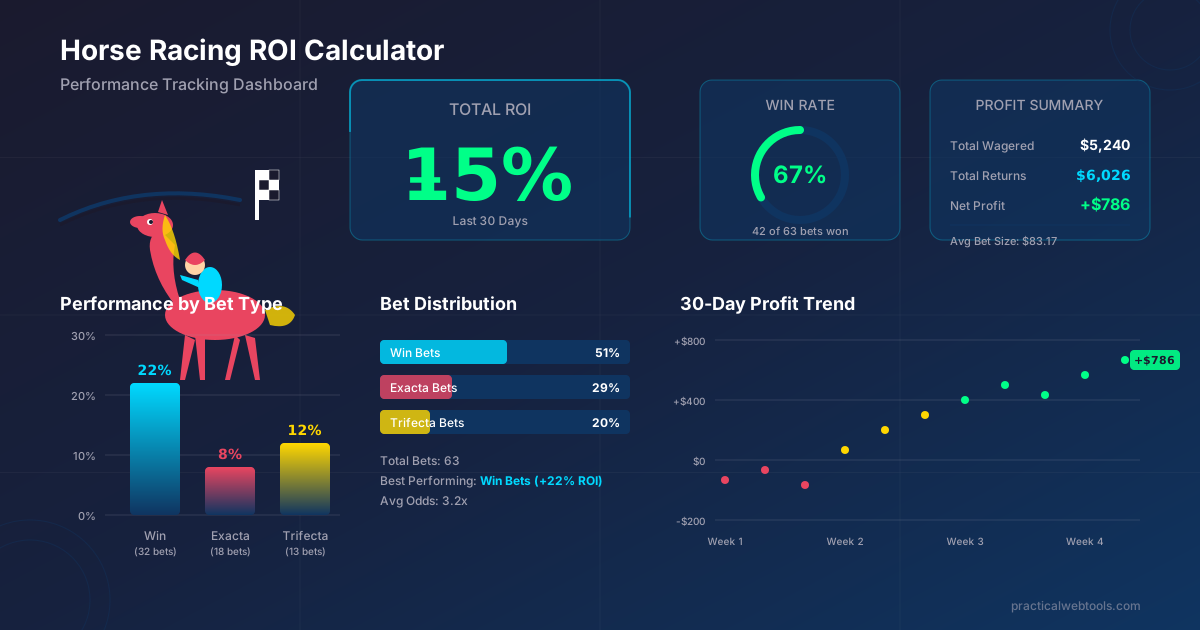
Track your long-term ROI with our Horse Racing ROI Calculator.
Handicapping Strategies for Finding Value
Class Analysis
Class is arguably the most important handicapping factor. A horse dropping in class (for example, from a $50,000 claiming race to a $25,000 claiming race) is facing easier competition. A horse moving up in class faces tougher opponents.
Key class indicators:
- Claiming price: Higher price = better class
- Allowance conditions: Non-winners of 2, 3, or 4 races other than maiden or claiming
- Graded stakes: G3 < G2 < G1 (Group 1 is the highest level)
Example: A horse with 85 Beyer figures dropping from a $40,000 claiming race to $25,000 against horses running 75-80 Beyers has a significant class edge. If the public ignores this because of a recent poor finish, value may exist.
Pace Analysis
Pace analysis examines how a race is likely to unfold based on each horse's running style.
| Running Style | Description | Best Scenario |
|---|---|---|
| Speed (E) | Goes to the lead immediately | Lone speed (only front-runner in the race) |
| Presser (EP) | Sits just behind the leaders | Contested pace among speed horses |
| Stalker (S) | Sits mid-pack | Honest pace; not too fast or slow |
| Closer (C) | Comes from the back | Very fast pace that tires front-runners |
The golden rule of pace: When multiple speed horses are entered, the pace will likely be fast, and closers benefit. When only one speed horse is entered (lone speed), that horse has a huge advantage.
Trainer and Jockey Patterns
Certain trainers excel in specific situations. Look for:
- First-time starters: Some trainers win at 25%+ with first-time starters (average is ~10%)
- Turf-to-dirt switches: Trainers who specialize in surface switches
- Layoff returns: Some trainers are deadly with fresh horses
- Jockey changes: A switch to a top jockey from a journeyman is a positive signal
Track Bias
Track bias refers to inherent advantages on certain parts of the track on a given day. A "speed-favoring" track means front-runners win more than expected. A "closer-friendly" track benefits horses coming from behind.
Check for bias by:
- Watching the early races and noting where winners run
- Checking results from the previous day's card
- Following handicappers who track bias regularly
Bankroll Management for Horse Racing
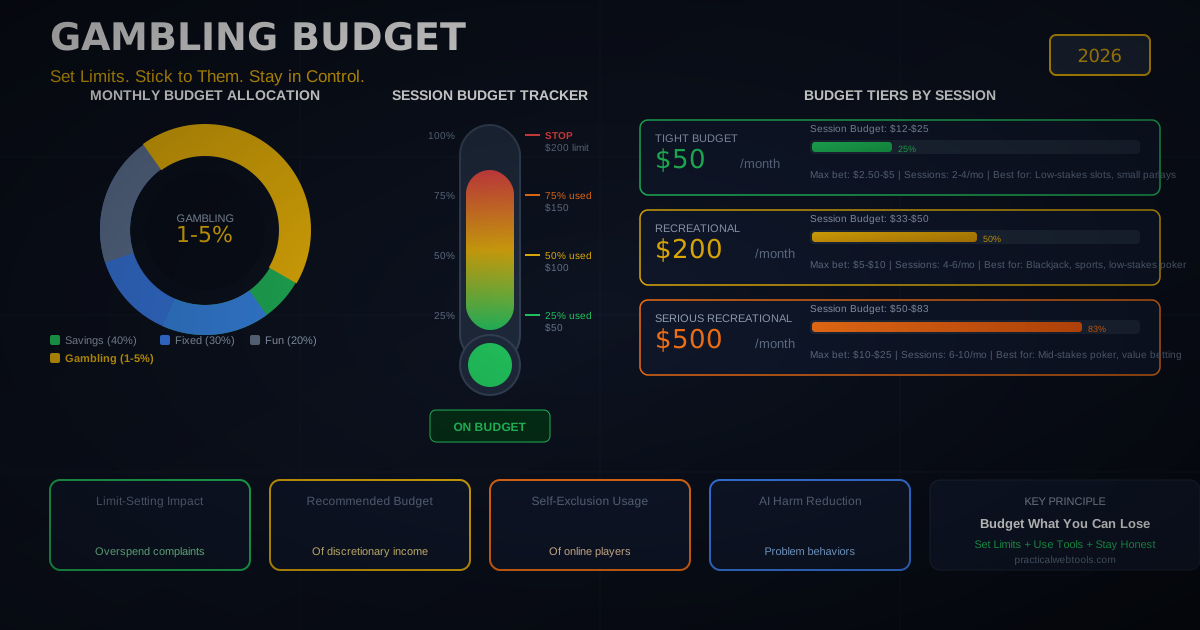
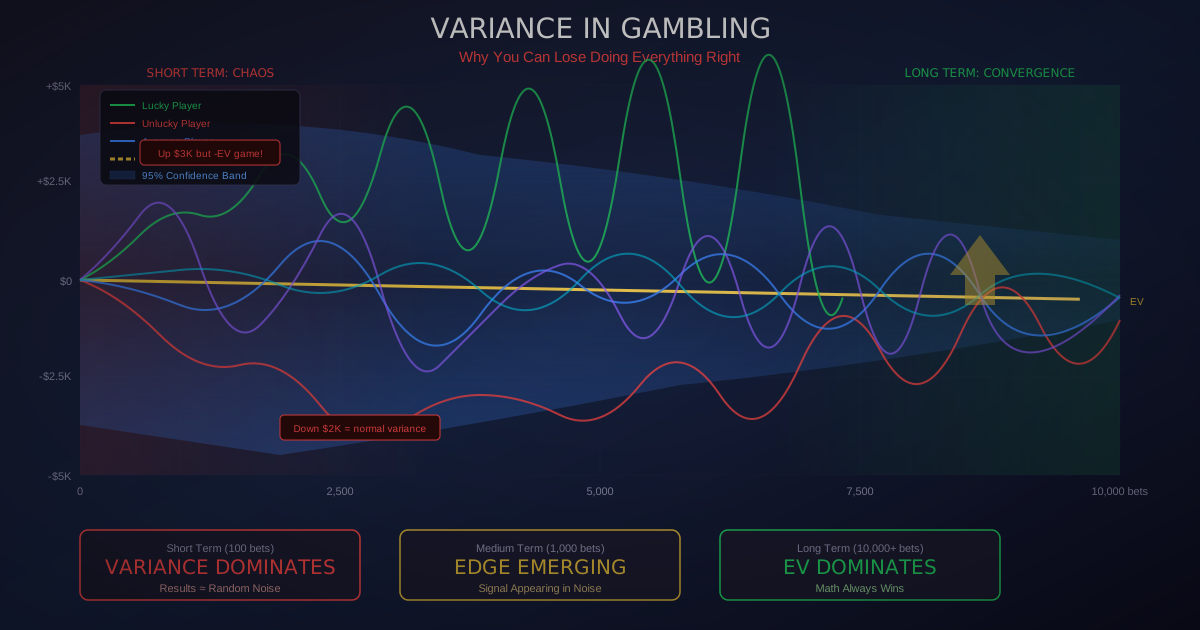
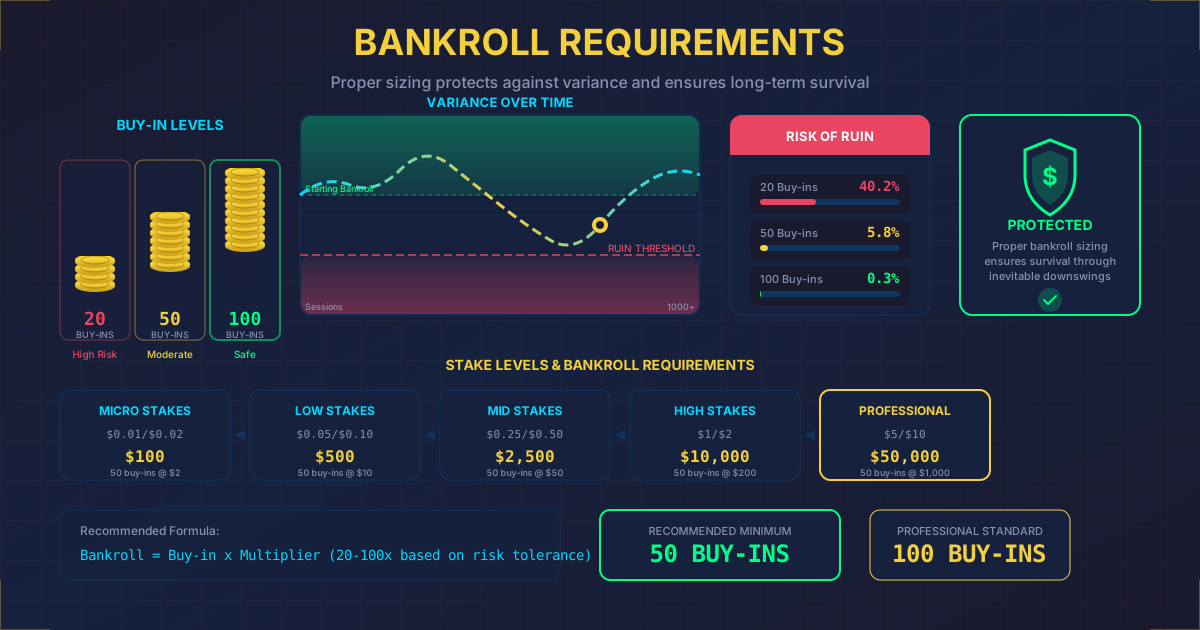
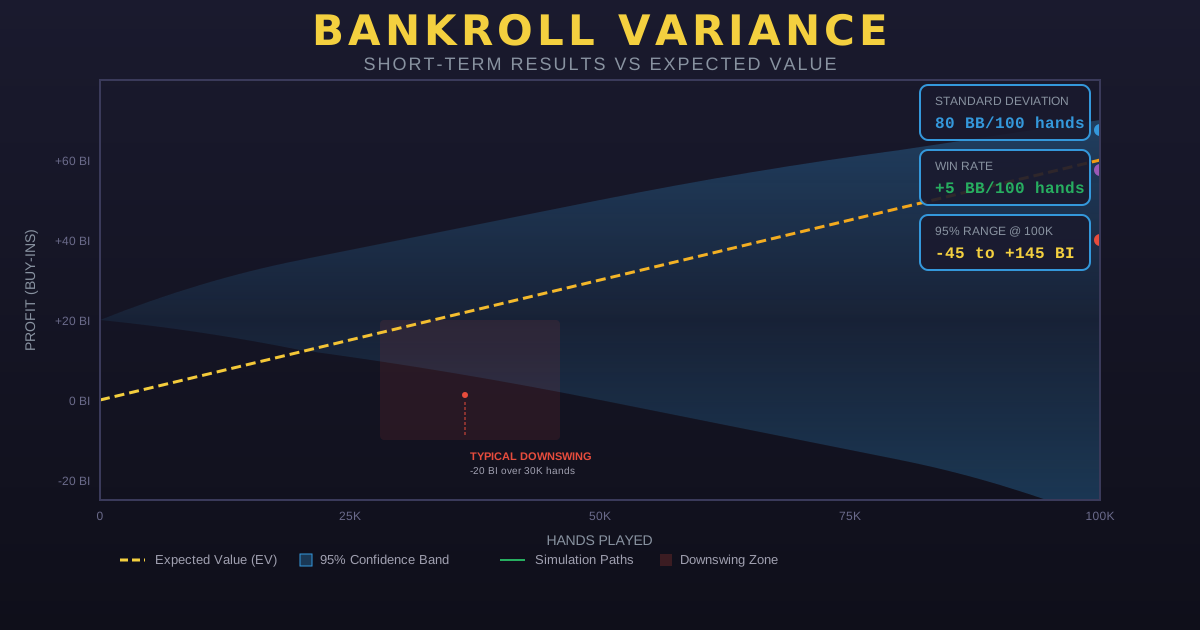
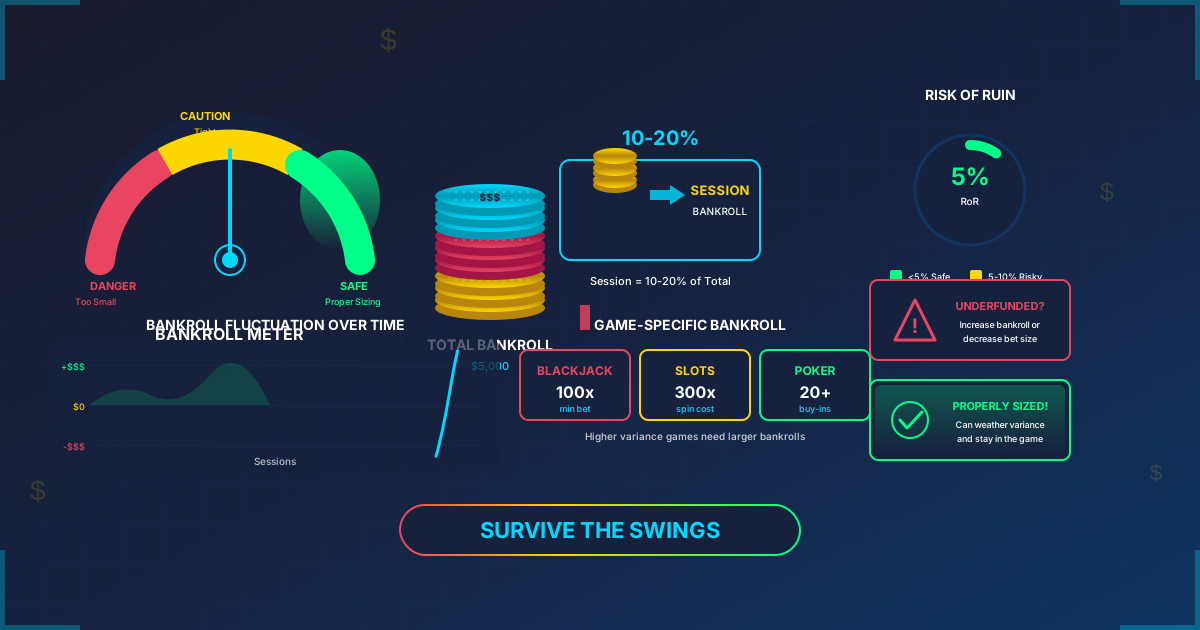
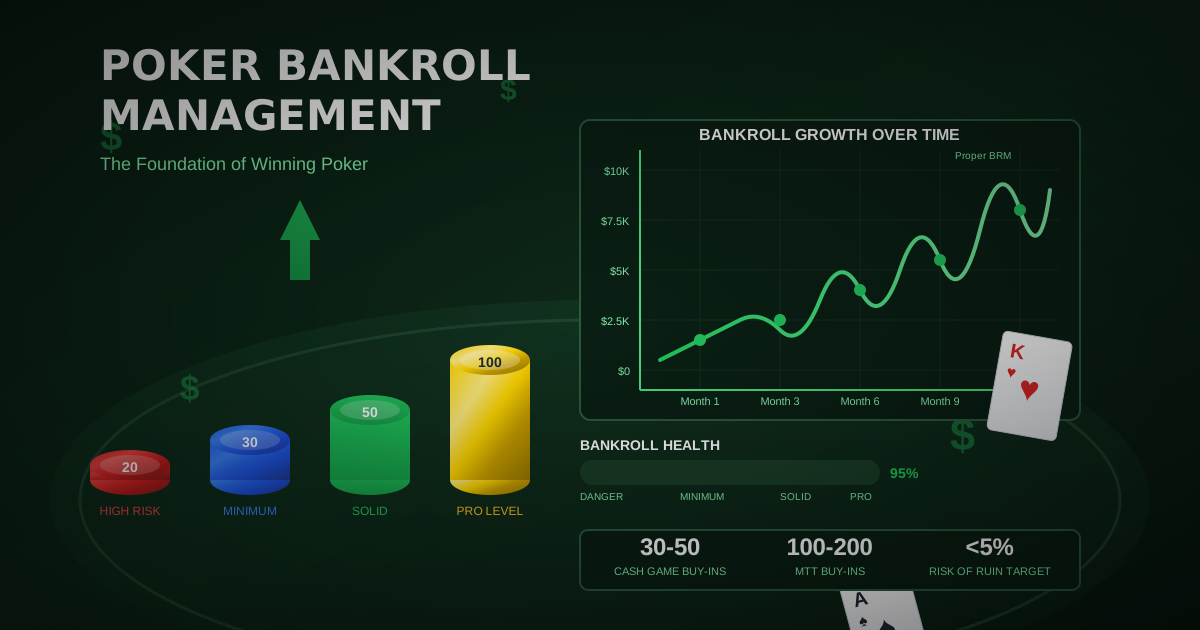
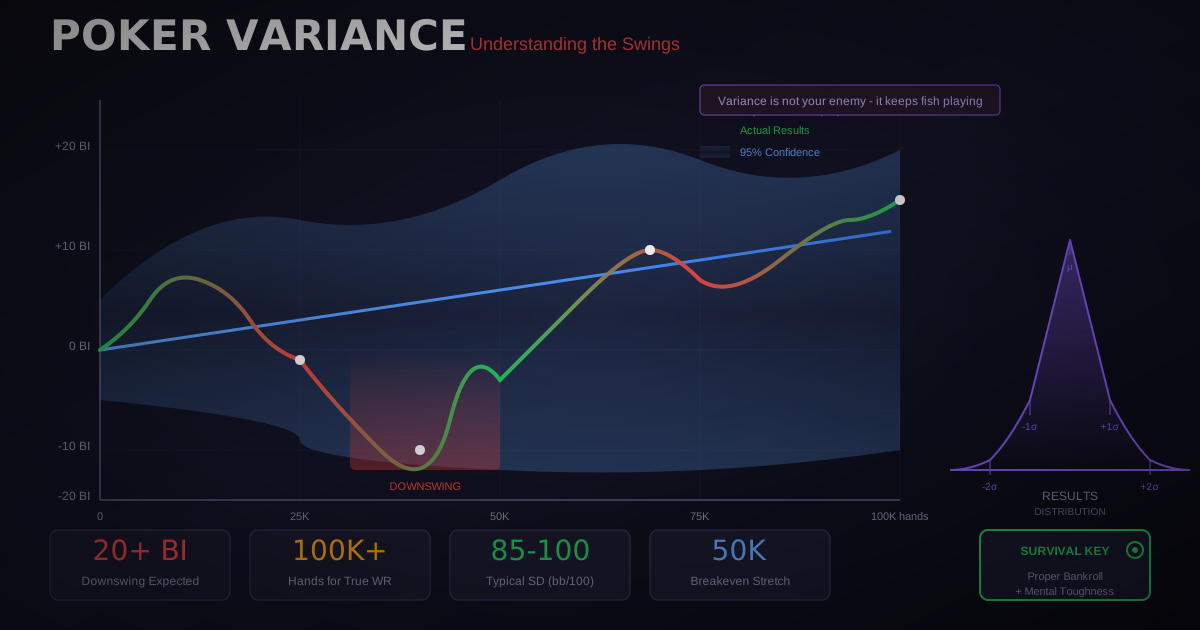
Horse racing is a high-variance form of gambling. Long losing streaks are normal even for winning players. Proper bankroll management is essential for survival.
How Much to Bet Per Race
| Annual Budget | Recommended Per Race (Win Bets) | Per Race (Exotics) |
|---|---|---|
| $1,000 | $10-$20 (1-2%) | $5-$15 (0.5-1.5%) |
| $5,000 | $25-$75 (0.5-1.5%) | $15-$50 (0.3-1%) |
| $10,000 | $50-$150 (0.5-1.5%) | $25-$100 (0.25-1%) |
| $25,000 | $100-$375 (0.4-1.5%) | $50-$200 (0.2-0.8%) |
Key rules:
- Never bet more than 2-3% of your bankroll on a single race
- Bet more on high-value plays (horses with your largest estimated edges)
- Bet less on exotic plays (higher variance requires smaller bets)
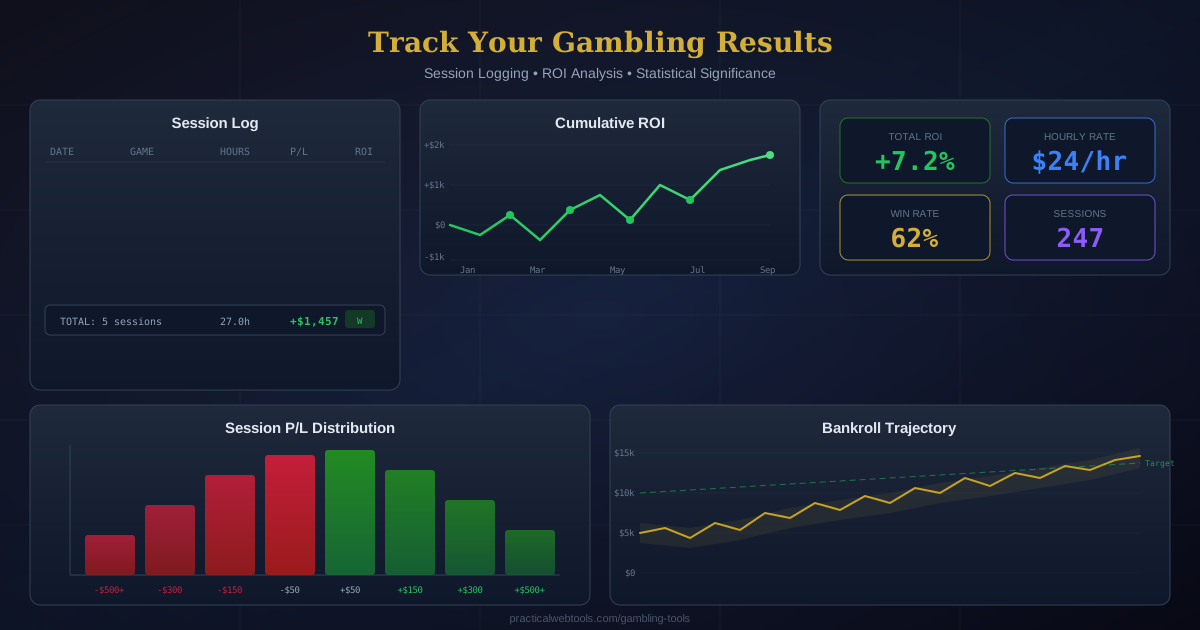
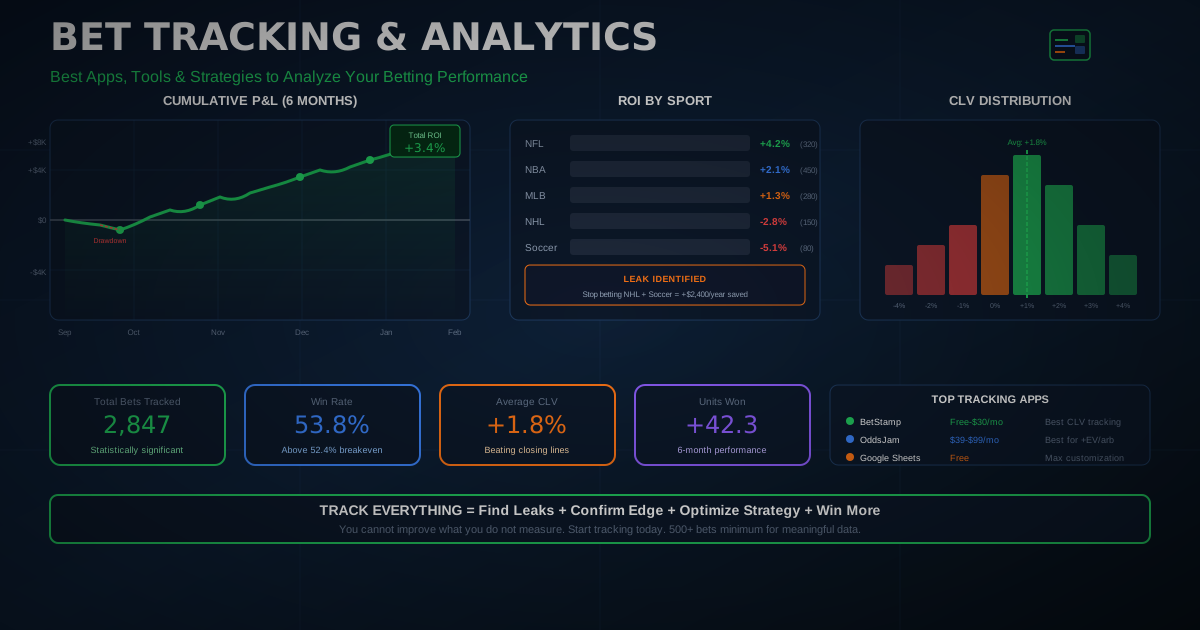
- Track every bet so you know your actual ROI by bet type, track, and distance
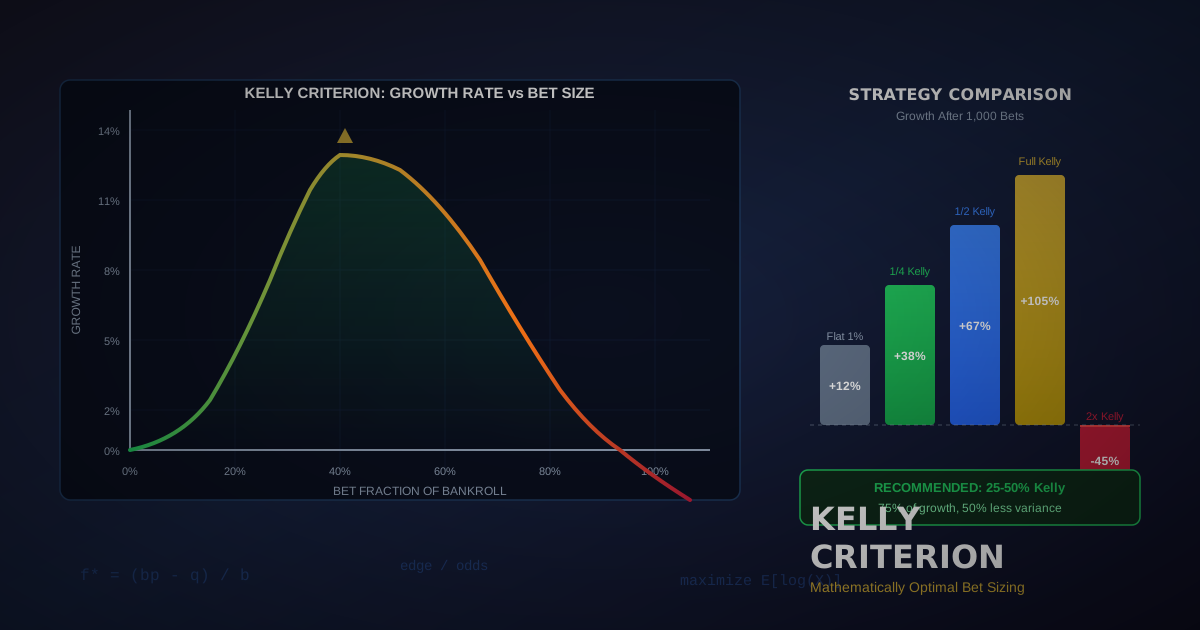
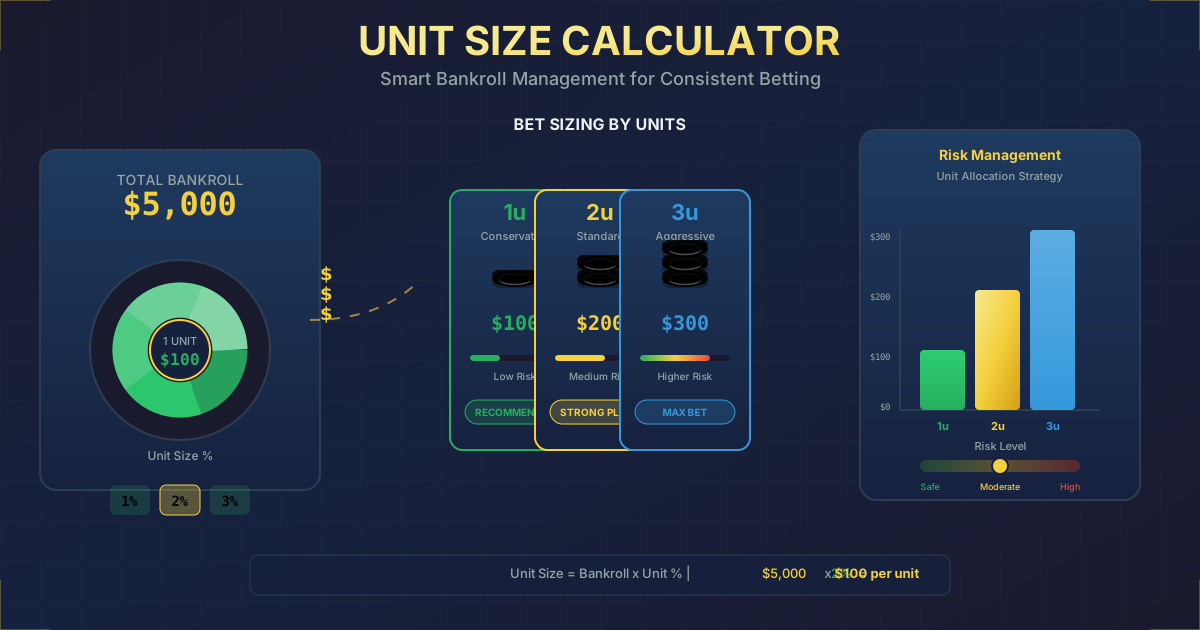
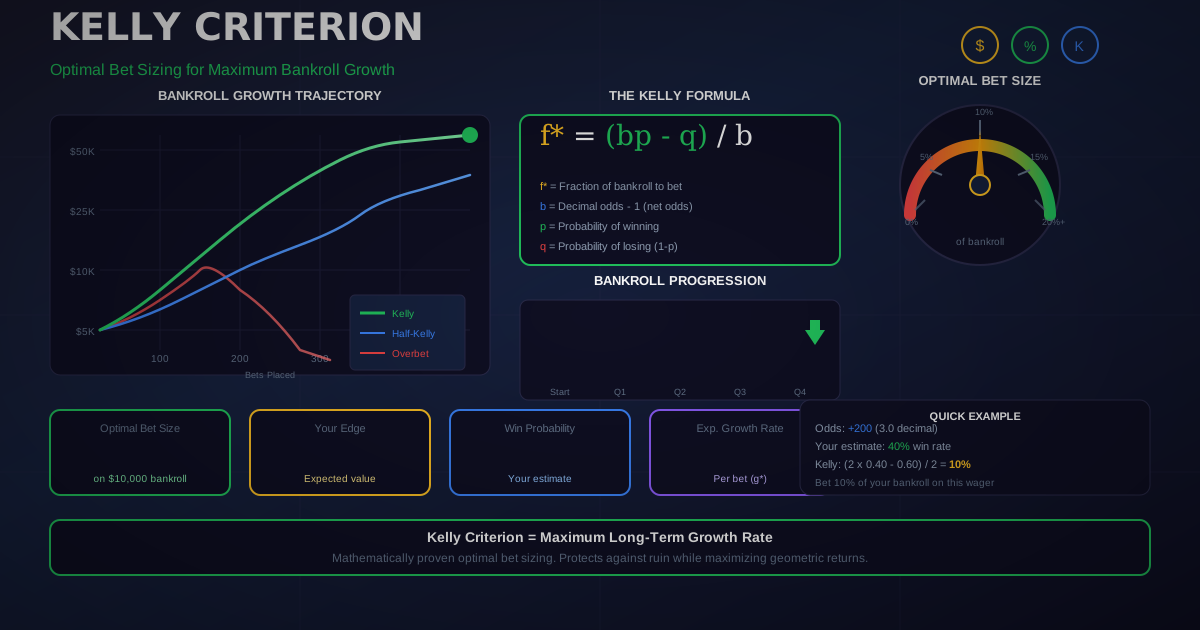
Manage your horse racing bankroll with our Horse Racing Bankroll Calculator and optimize bet sizing with our Kelly Criterion Calculator.
Real-World Bankroll Example
You start the year with a $5,000 horse racing bankroll:
- January: 40 win bets averaging $50 each ($2,000 wagered). Record: 9 winners. Average winning odds: 4.2-1. Return: $2,268. Profit: +$268. ROI: +13.4%.
- February: 35 bets ($1,750 wagered). Record: 5 winners. Average winning odds: 3.8-1. Return: $1,330. Loss: -$420. ROI: -24%.
- March: 45 bets ($2,250 wagered). Record: 11 winners. Average winning odds: 5.1-1. Return: $2,893. Profit: +$643. ROI: +28.6%.
Q1 total: 120 bets, $6,000 wagered, 25 winners (20.8%), $6,491 returned. Net profit: +$491 (+8.2% ROI).
That 8.2% ROI on your total wagered amount is an excellent result that overcomes the ~18% average takeout. But notice the monthly swings: +$268, -$420, +$643. You needed the bankroll cushion to survive February's losing month.
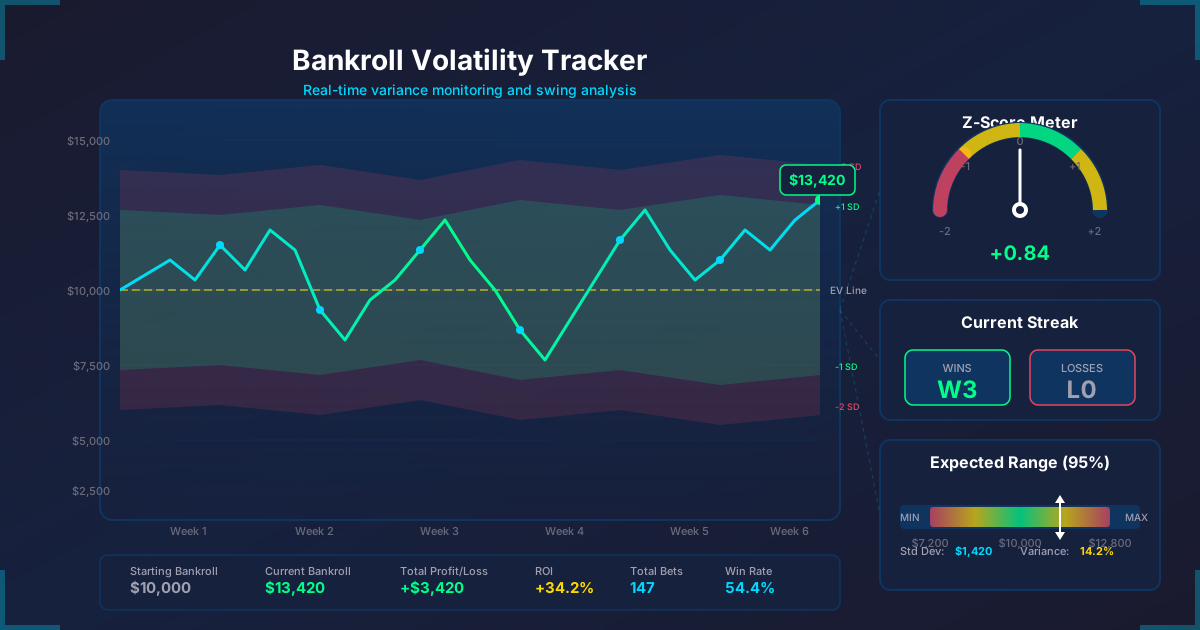
Track your volatility and drawdown risk with our Bankroll Volatility Tracker.
Advanced Concepts: Multi-Race Wagers and Arbitrage
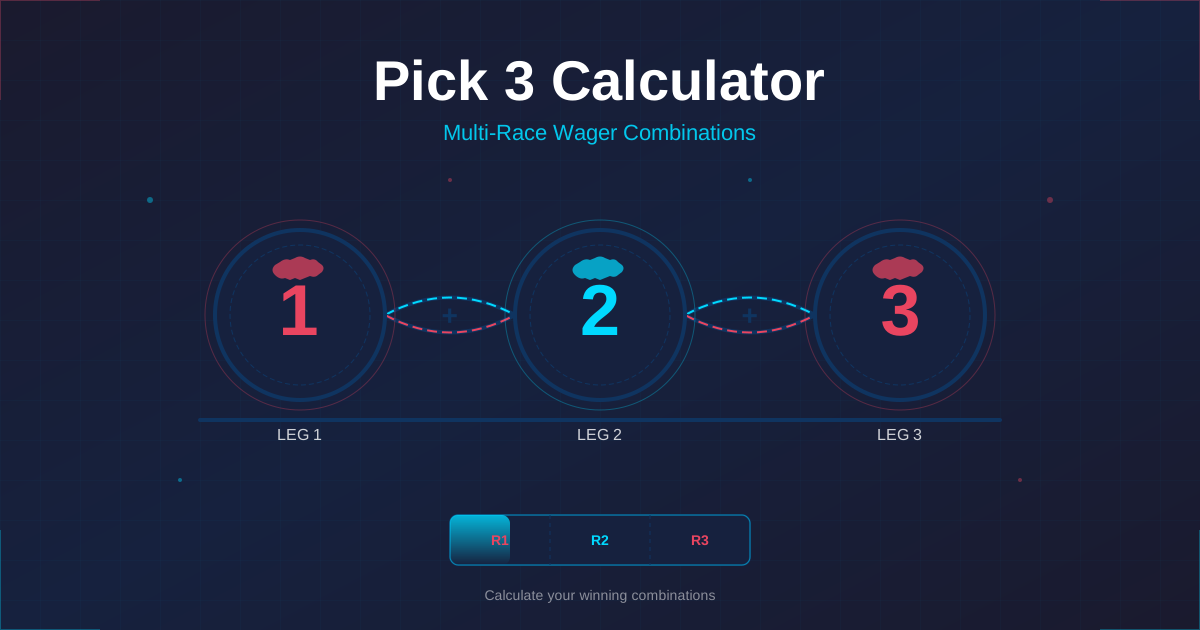
Pick 3, Pick 4, and Pick 6
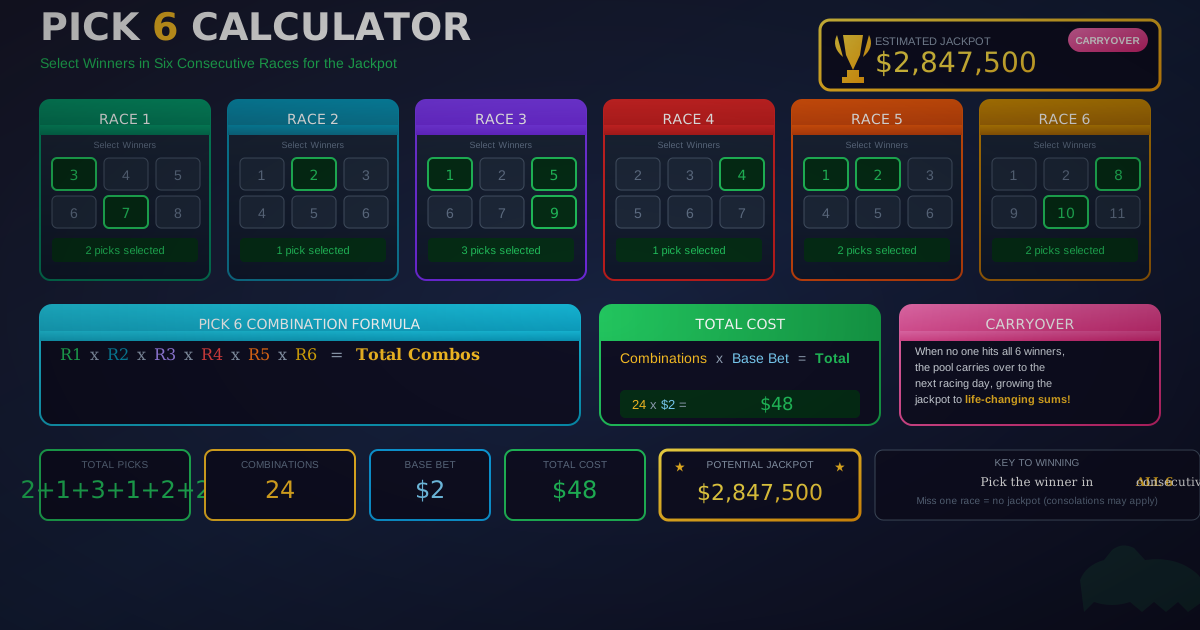
Multi-race wagers require picking winners of consecutive races. They carry higher takeout but also produce the largest payouts in horse racing.
Strategy for multi-race wagers:
- Identify "A" races where you have a strong single (one horse you are very confident in). Use that horse as a single in your ticket.
- Spread in "B" and "C" races where you are less certain, using 3-5 horses.
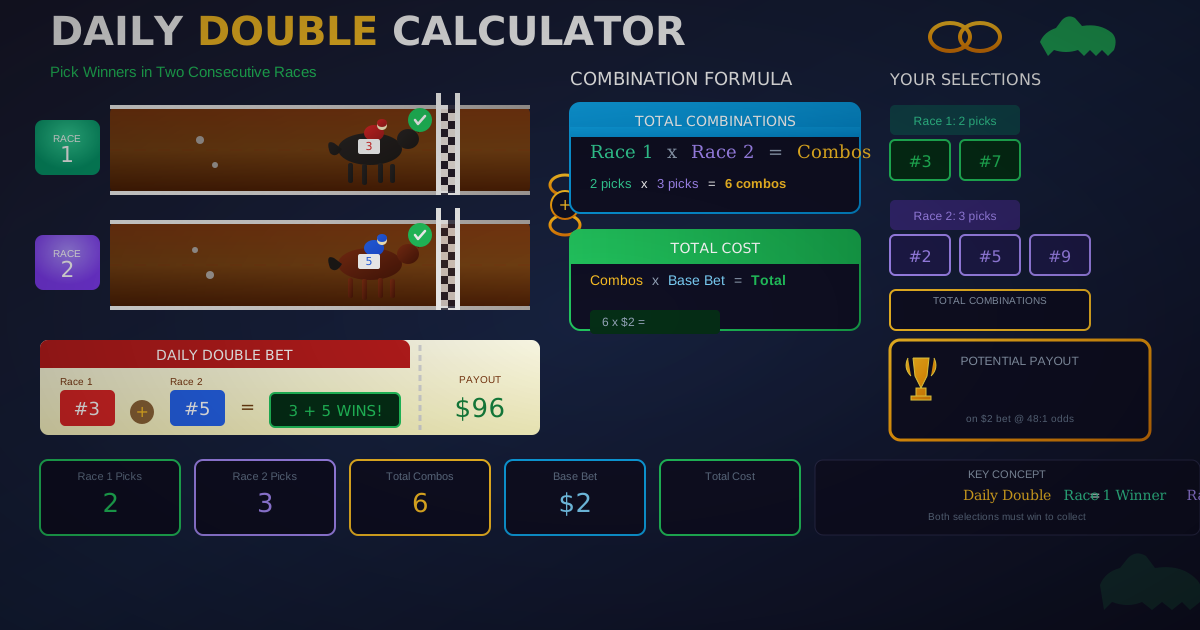
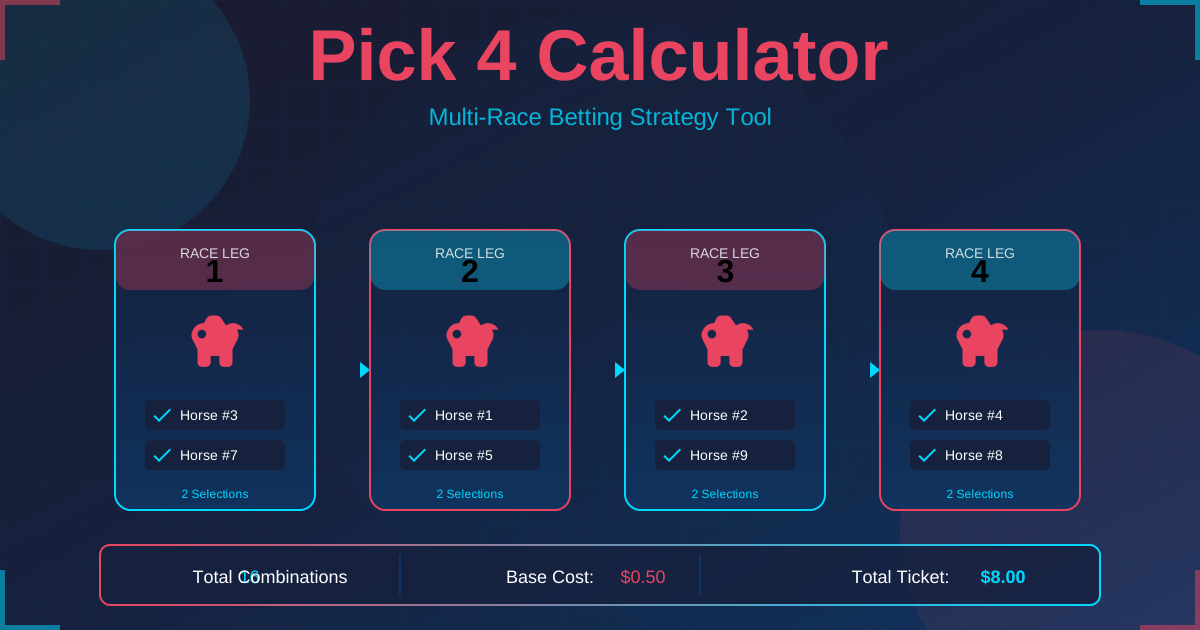
- Keep ticket cost manageable. A Pick 4 with 1x3x1x4 = 12 combinations at $1 each = $12.
Example Pick 4 ticket:
- Race 1: Horse #5 (strong opinion, single)
- Race 2: Horses #2, #4, #7 (three contenders)
- Race 3: Horse #3 (another strong single)
- Race 4: Horses #1, #6, #8, #9 (wide-open race, four horses)
- Total combinations: 1 x 3 x 1 x 4 = 12
- Cost at $1 each: $12
Cross-Track Arbitrage
Because different tracks have different pari-mutuel pools, the same horse can have significantly different odds at different outlets. This creates rare arbitrage opportunities.
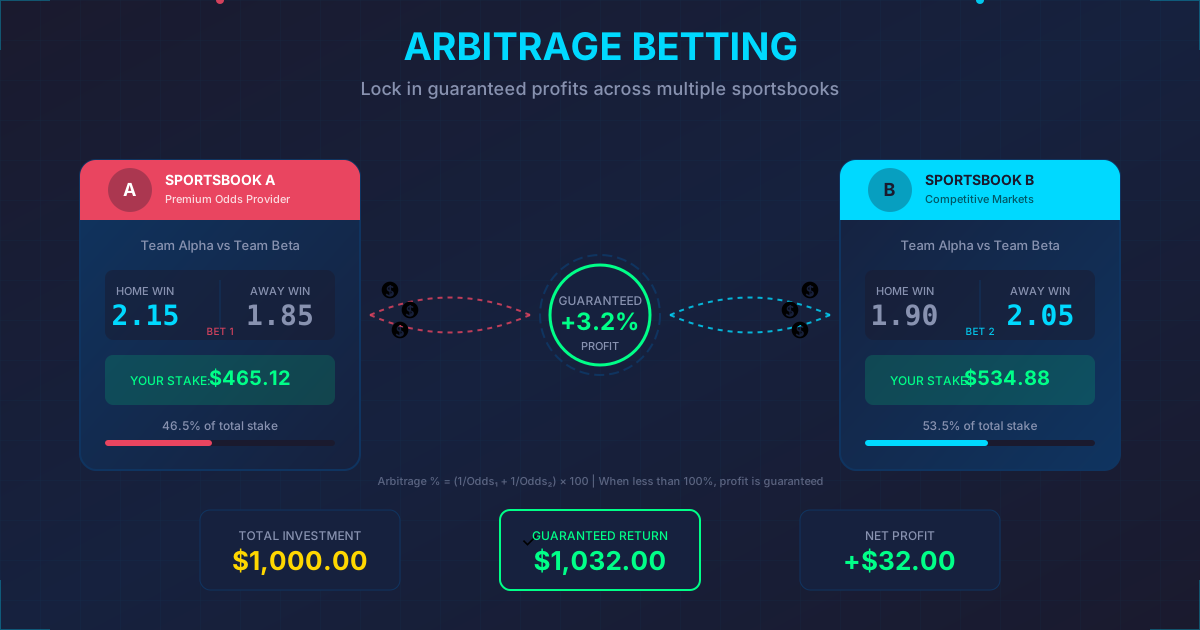
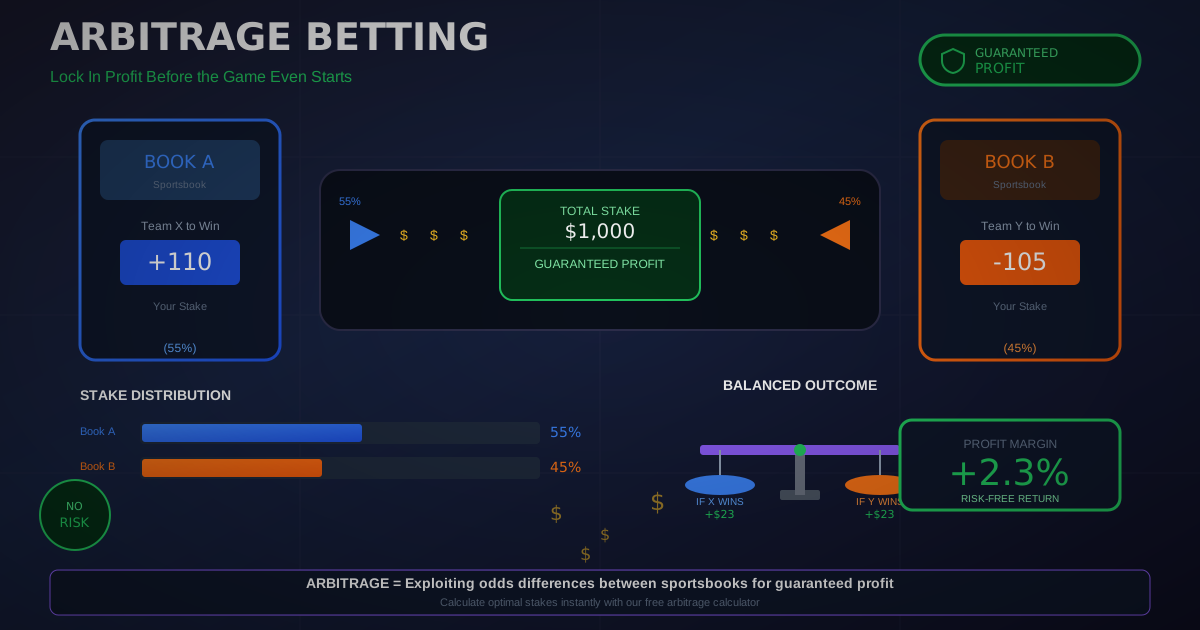
Calculate potential arbitrage with our Arbitrage Calculator.
Frequently Asked Questions
What is the easiest horse racing bet to start with? Win bets are the simplest: pick the horse you think will win, and collect if it does. Start with $2 win bets while you learn, then move to $5-$10 bets once you have developed a handicapping process. Exotic bets (exactas, trifectas) should come later once you understand the basics.
How do I read horse racing odds? Horse racing traditionally uses fractional odds. 5-1 (five to one) means you profit $5 for every $1 wagered. A $2 bet at 5-1 returns $12 ($10 profit + $2 stake). Use our Horse Racing Odds Converter to convert between fractional, decimal, and American odds.
What are speed figures, and why do they matter? Speed figures are numerical ratings that normalize a horse's performance across different tracks, distances, and conditions. A horse that earned an 85 Beyer at one mile at Aqueduct can be directly compared to a horse that earned an 80 Beyer at one mile at Santa Anita. Use our Speed Figure Calculator to compute adjusted speed ratings.
How much does the track take from each bet? The pari-mutuel takeout varies by pool and jurisdiction. Win/place/show pools typically have 15-17% takeout. Exotic pools (exacta, trifecta) have 19-27% takeout. This is significantly higher than casino games, which is why selectivity is crucial.
Can you make money betting on horse racing? Yes, but only a small percentage of bettors consistently profit. Winning requires deep handicapping knowledge, disciplined bankroll management, and the patience to bet selectively on high-value opportunities. Most professionals estimate that 2-5% of serious handicappers achieve long-term profitability.
What is a morning line, and how accurate is it? The morning line is an estimate of what the final odds will be, set by the track handicapper before betting opens. It is typically accurate within one "level" (a 3-1 morning line horse usually goes off between 2-1 and 5-1). When final odds differ significantly from the morning line, it can signal value or insider information. Compare morning line to final odds with our Morning Line Comparison Tool.
Should I box or key my exotic bets? Boxing covers all combinations of your selected horses (more expensive, broader coverage). Keying uses one horse in a specific position with others filling the remaining spots (cheaper, more targeted). If you have a strong opinion about the winner, key that horse on top. If you are less certain, box your top 2-3 selections.
What is the difference between pari-mutuel and fixed-odds horse racing? Pari-mutuel odds are determined by the total betting pool and are not final until the race starts. Fixed odds are locked in at the time you place your bet. Fixed-odds betting generally has lower takeout (5-15% vs. 15-25%) but is not available at all tracks.
Essential Horse Racing Betting Tools
Odds and Probability
- Horse Racing Odds Converter: Convert fractional, decimal, and American odds
- Odds Converter: Universal odds converter for all formats
- Implied Probability Calculator: See the true probability behind any price
- Expected Value Calculator: Calculate EV on any horse racing wager
Exotic Bet Calculators
- Exacta Calculator: Price exacta boxes, keys, and wheels
- Trifecta Calculator: Build optimal trifecta tickets
- Superfecta Calculator: Calculate superfecta costs and combinations
Handicapping Tools
- Speed Figure Calculator: Compute normalized speed ratings
- Morning Line Comparison: Compare morning line to final odds
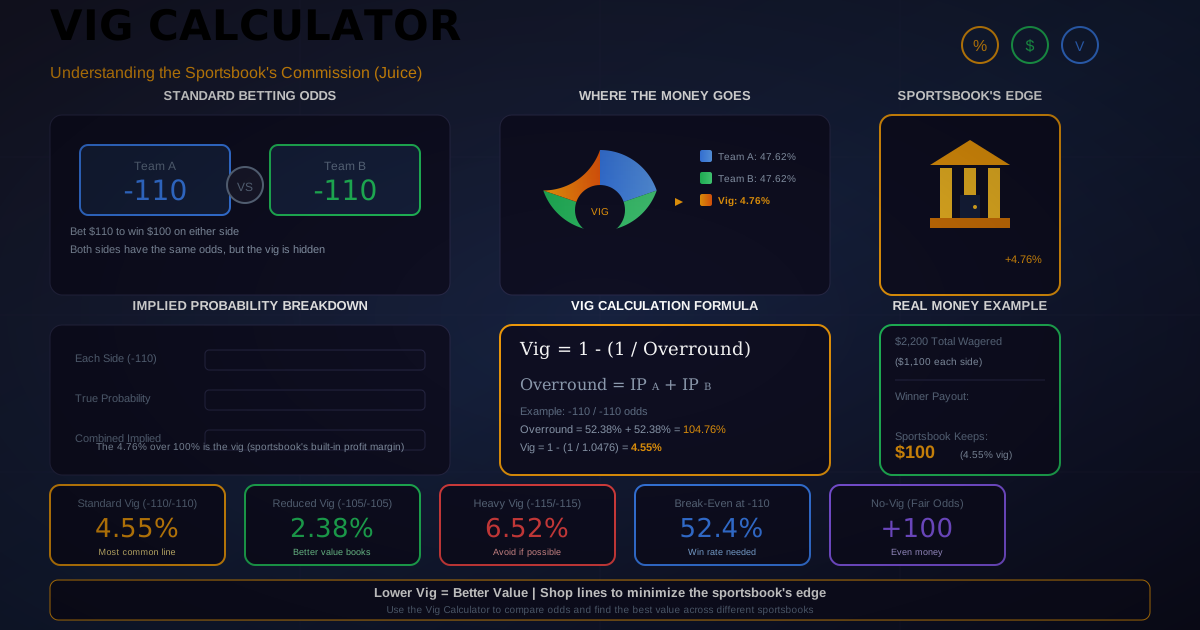
- Hold/Vig Calculator: Analyze the takeout on any pool
Bankroll Management
- Horse Racing ROI Calculator: Track long-term performance
- Horse Racing Bankroll Calculator: Size your bankroll properly
- Kelly Criterion Calculator: Mathematically optimal bet sizing
- Bankroll Volatility Tracker: Monitor variance and drawdown risk
Conclusion: Betting on Horses Requires Homework
Horse racing rewards preparation and punishes laziness. The 17-20% takeout means you cannot casually bet and expect to profit. You need to study the past performances, understand speed figures, analyze pace scenarios, and identify value.
Start small. Bet $2 win bets while you learn to read the form. Track every wager in a spreadsheet. After 200+ bets, analyze your results: Are you profitable? Which bet types work for you? Which tracks or distances are your strengths?
Begin your handicapping journey with our Speed Figure Calculator. Convert odds to probabilities with our Horse Racing Odds Converter. And manage your betting money wisely with our Horse Racing Bankroll Calculator.
The data is there. The tools are free. The question is whether you will do the work.
Gambling involves risk. This content is for educational and informational purposes only. Always gamble responsibly, set limits you can afford, and seek help if gambling becomes a problem. Visit the National Council on Problem Gambling or call 1-800-522-4700 for support.