Blackjack Bet Spread Calculator: Card Counting Strategy (2026)
Blackjack Bet Spread Calculator: Optimize Your Advantage
Card counting only works if you vary your bets with the count. Our calculator shows optimal bet spreads that maximize advantage while managing risk and avoiding casino heat.
What Is a Bet Spread?
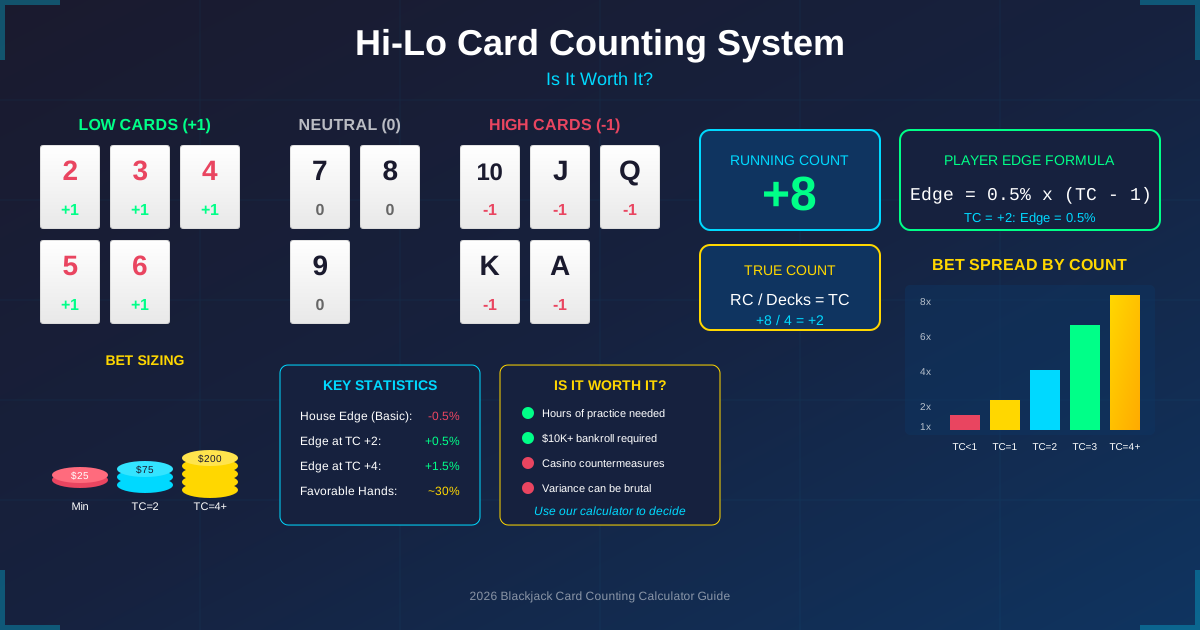
A bet spread is the ratio between your minimum and maximum bets. Card counters bet more when the count is high (advantage) and less when it's low (disadvantage).
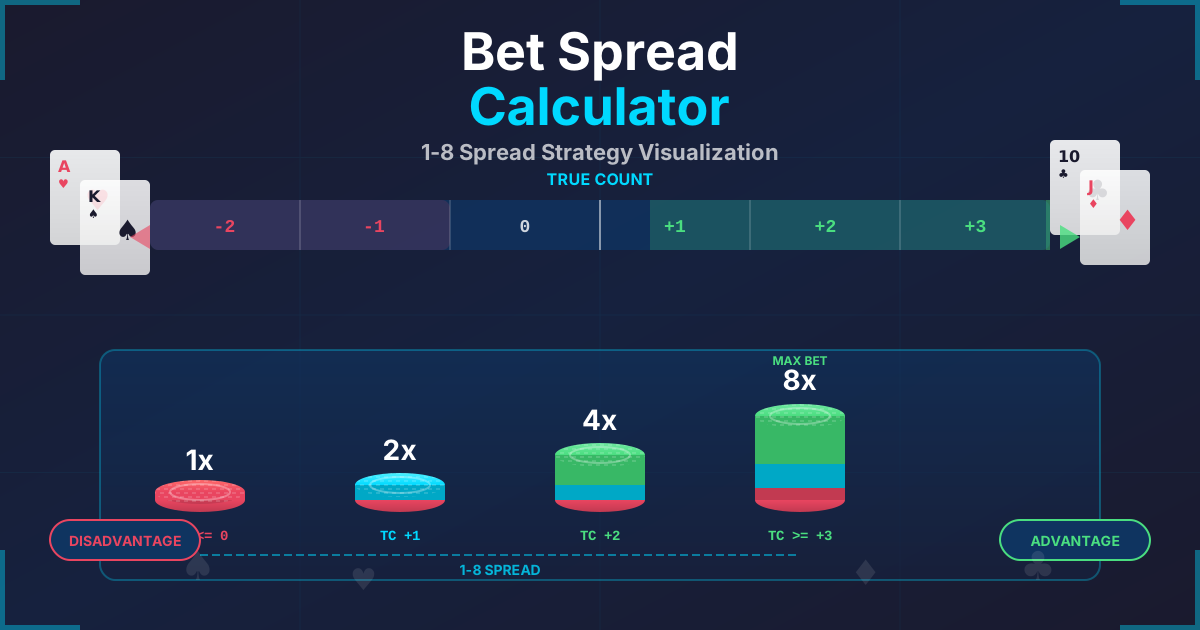
Quick Answer: A 1-8 spread means betting 1 unit at negative counts and up to 8 units at high positive counts. With a $25 minimum, you'd bet $25 to $200. Larger spreads increase profit but also detection risk and variance.
How to Use Our Bet Spread Calculator
Use the Blackjack Bet Spread Calculator →
Enter your parameters to see optimal betting levels.
Step-by-Step Instructions
-
Enter Minimum Bet: Your base wager
-
Set Spread Ratio: 1-6, 1-8, 1-12, etc.
-
Input True Count Levels: Bet ramp by count
-
View Expected Value: Hourly expectation
-
Analyze Risk: Variance and detection probability
Input Fields Explained
| Field | Description | Example |
|---|---|---|
| Min Bet | Base unit | $25 |
| Max Bet | Top of spread | $200 |
| Spread Ratio | Min to max | 1-8 |
| TC Trigger | When to increase | TC +2 |
| Hourly EV | Expected profit | $45/hr |
Bet Spread Fundamentals
Why Spread Matters
At negative counts:
- Casino has advantage
- Bet minimum to limit losses
- Waiting for opportunity
At positive counts:
- Player has advantage
- Bet maximum to capitalize
- Where profit comes from
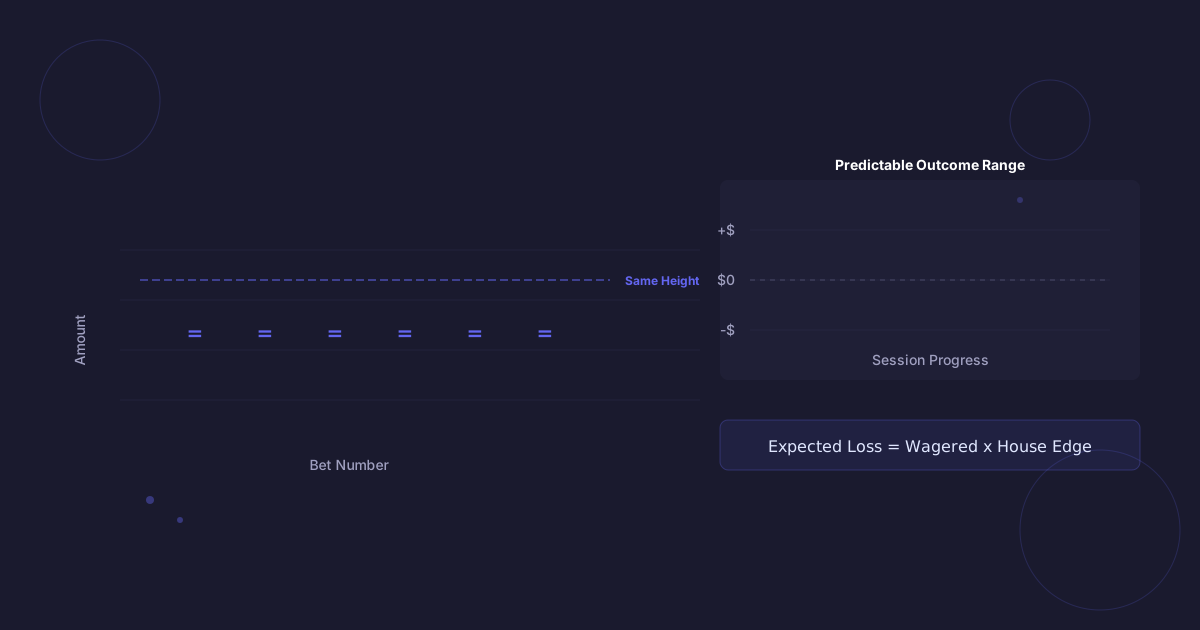
Flat betting with counting = No profit
Basic Spread Structure
| True Count | Bet Multiple | $25 Unit |
|---|---|---|
| TC ≤ 0 | 1 unit | $25 |
| TC +1 | 2 units | $50 |
| TC +2 | 4 units | $100 |
| TC +3 | 6 units | $150 |
| TC +4+ | 8 units | $200 |
Calculating Optimal Spreads
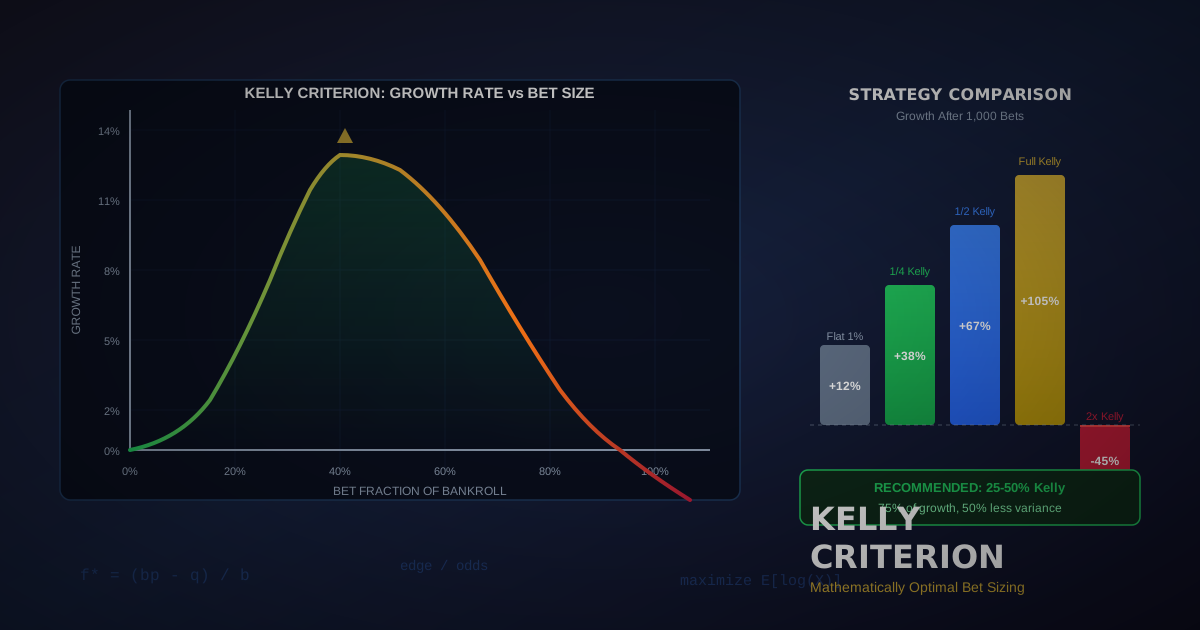
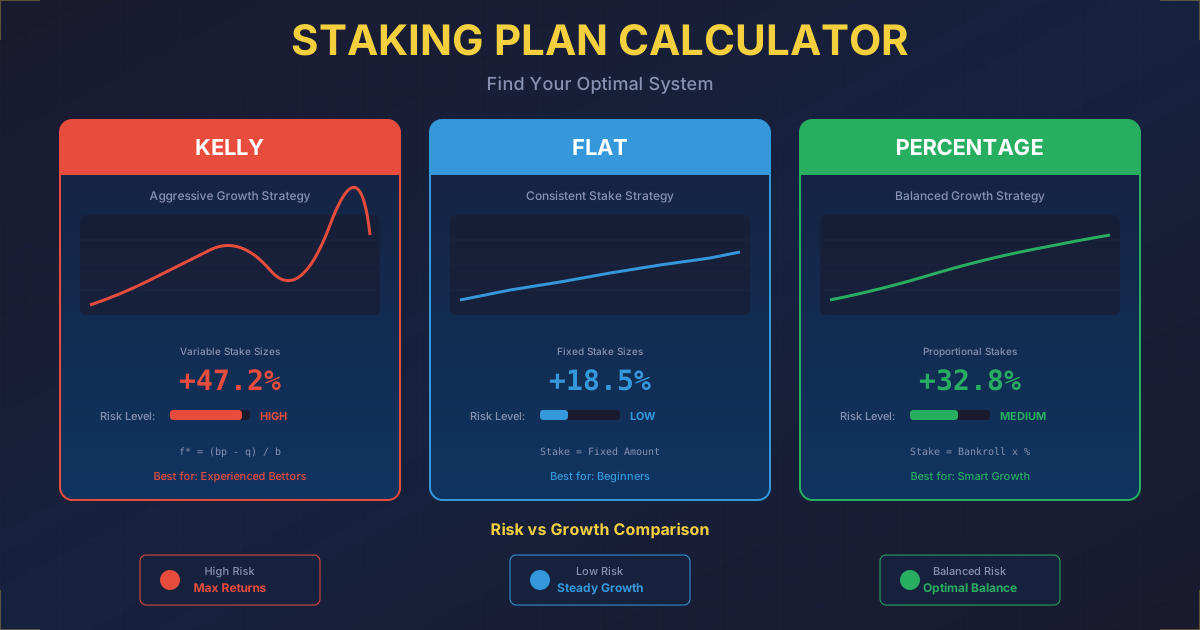
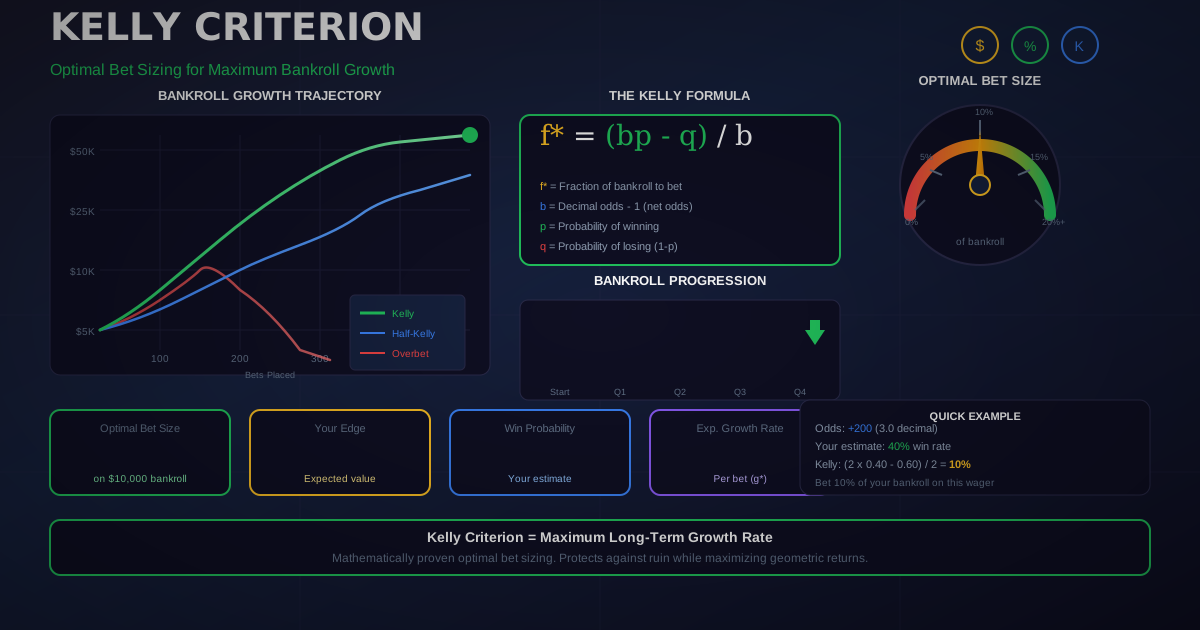
Kelly Criterion for Spreads
Kelly betting optimizes bankroll growth:
Bet = (Edge / Variance) × Bankroll
For blackjack:
- Edge at TC +1: ~0.5%
- Edge at TC +3: ~1.5%
- Variance: ~1.1
Fractional Kelly (25-50%) recommended for safety.
Spread by Count System
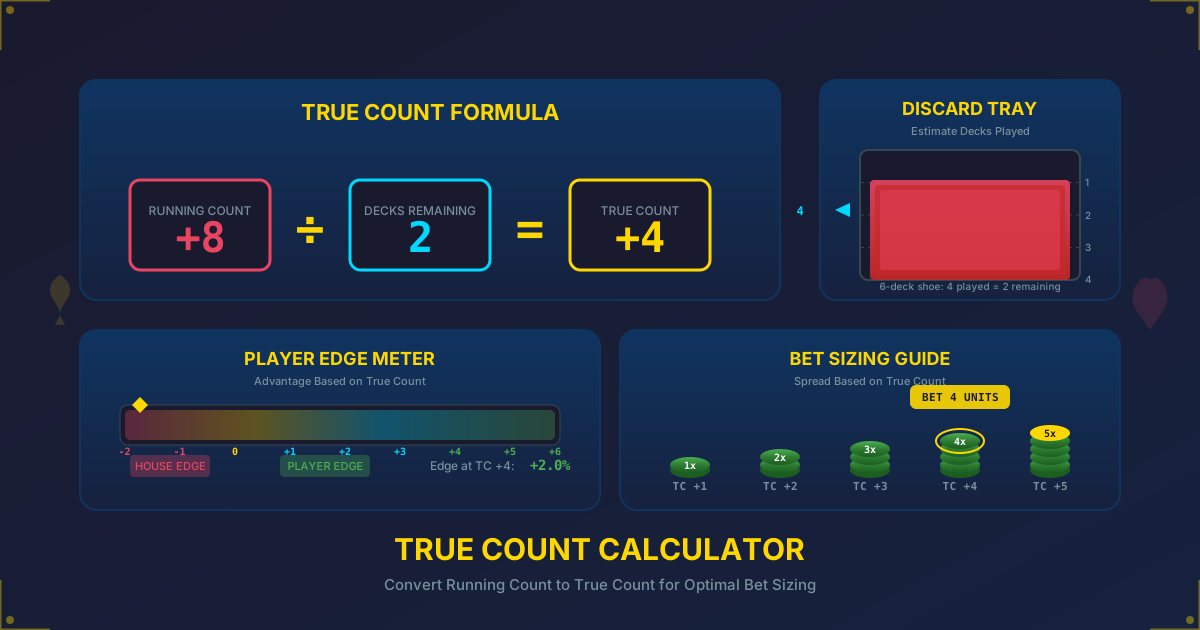
Hi-Lo (TC +1 = ~0.5% edge):
| True Count | Edge | Optimal Bet (Kelly) |
|---|---|---|
| +1 | 0.5% | 0.45% of bankroll |
| +2 | 1.0% | 0.91% of bankroll |
| +3 | 1.5% | 1.36% of bankroll |
| +4 | 2.0% | 1.82% of bankroll |
| +5 | 2.5% | 2.27% of bankroll |
Real-World Spread Examples
Example 1: Conservative Spread (1-4)
Bankroll: $5,000 Minimum bet: $25 Maximum bet: $100
| True Count | Bet |
|---|---|
| ≤ 0 | $25 |
| +1 | $25 |
| +2 | $50 |
| +3 | $75 |
| +4+ | $100 |
Hourly EV: ~$15-20 Risk of Ruin: Very low Detection Risk: Low
Example 2: Standard Spread (1-8)
Bankroll: $10,000 Minimum bet: $25 Maximum bet: $200
| True Count | Bet |
|---|---|
| ≤ 0 | $25 |
| +1 | $50 |
| +2 | $100 |
| +3 | $150 |
| +4+ | $200 |
Hourly EV: ~$35-45 Risk of Ruin: Low Detection Risk: Moderate
Example 3: Aggressive Spread (1-12)
Bankroll: $20,000 Minimum bet: $25 Maximum bet: $300
| True Count | Bet |
|---|---|
| ≤ 0 | $25 |
| +1 | $50 |
| +2 | $100 |
| +3 | $175 |
| +4 | $250 |
| +5+ | $300 |
Hourly EV: ~$50-65 Risk of Ruin: Moderate Detection Risk: High
Managing Detection Risk
Spread Camouflage
Large spreads attract attention. Techniques to reduce heat:
- Gradual changes: Don't jump from $25 to $200 instantly
- Bet with wins: Increase after winning hands
- Occasional wrong bets: Sometimes bet big at low counts
- Table selection: Short sessions at multiple tables
Sustainable Spreads
| Environment | Recommended Spread |
|---|---|
| High surveillance casino | 1-4 or less |
| Average casino | 1-6 |
| Counter-friendly venue | 1-8 to 1-12 |
| Team play | 1-20+ possible |
Wonging (Back-Counting)
Enter tables only at positive counts:
- Stand behind tables, count
- Sit down at TC +2 or higher
- Leave when count goes negative
Effective spread: Infinite (only bet with advantage)
Bankroll Requirements
Bankroll for Different Spreads
| Spread | Minimum Bankroll | Recommended |
|---|---|---|
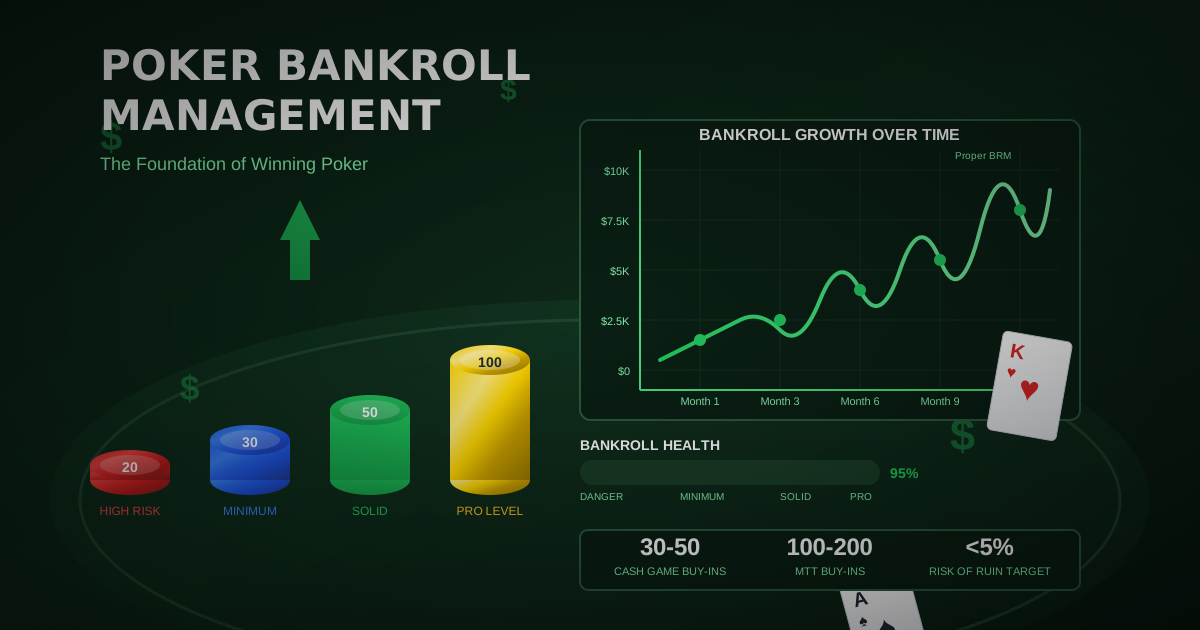
| 1-4 | 200 max bets | 300+ max bets |
| 1-8 | 300 max bets | 500+ max bets |
| 1-12 | 400 max bets | 600+ max bets |
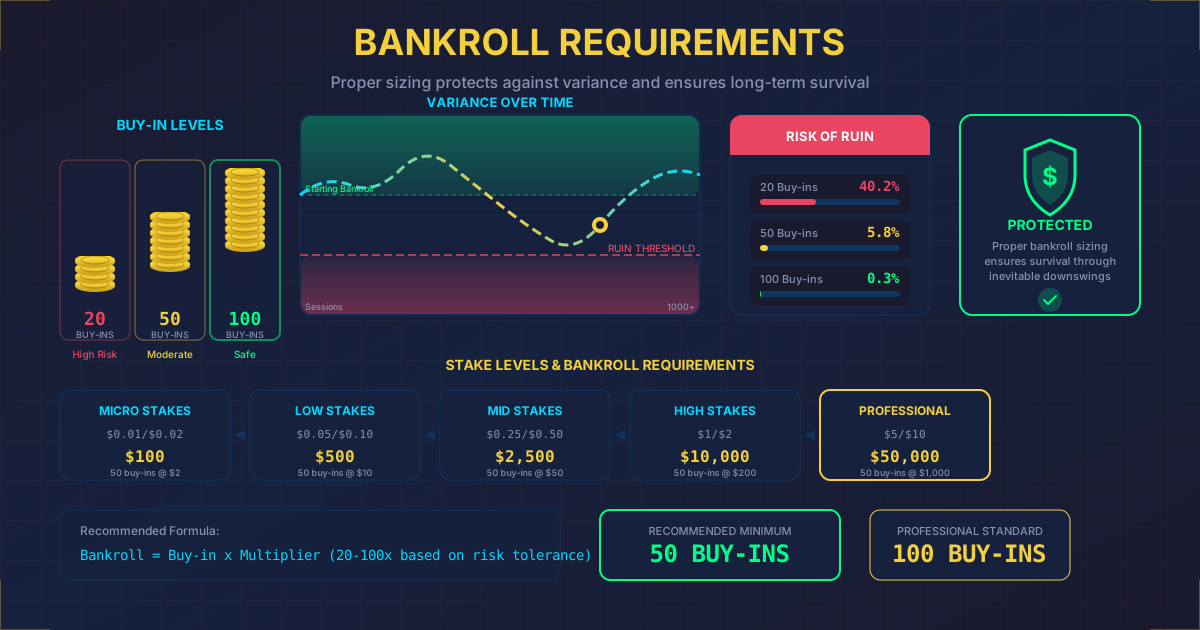
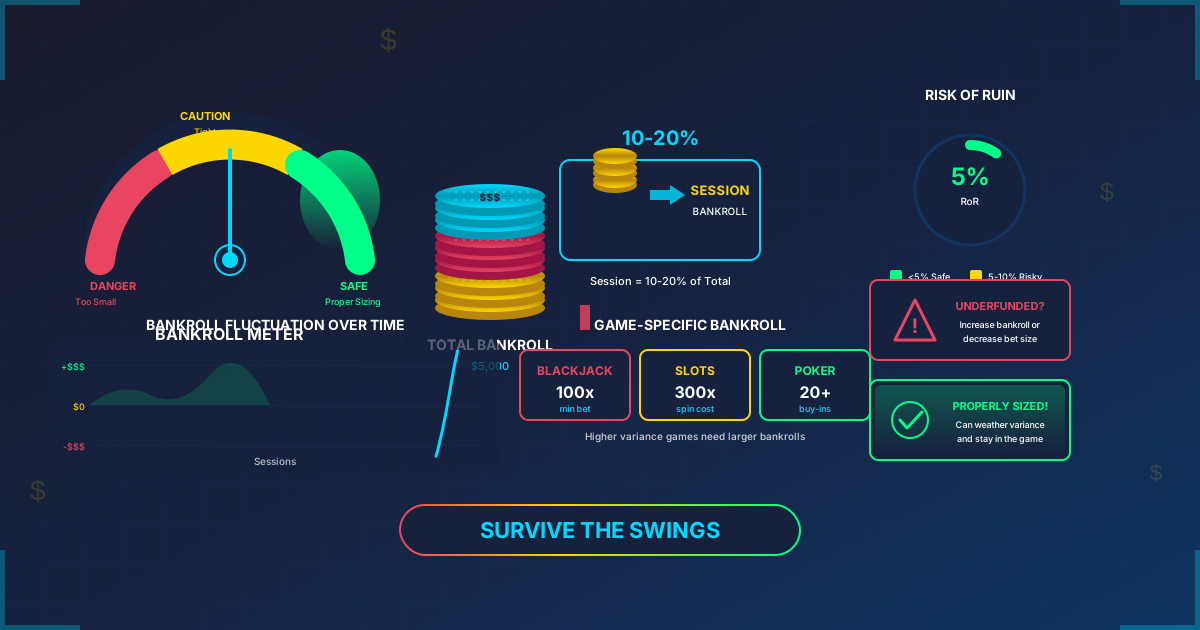
$200 max bet with 1-8 spread needs $60,000-100,000 bankroll.
Risk of Ruin Calculation
Factors:
- Spread size
- Bankroll relative to max bet
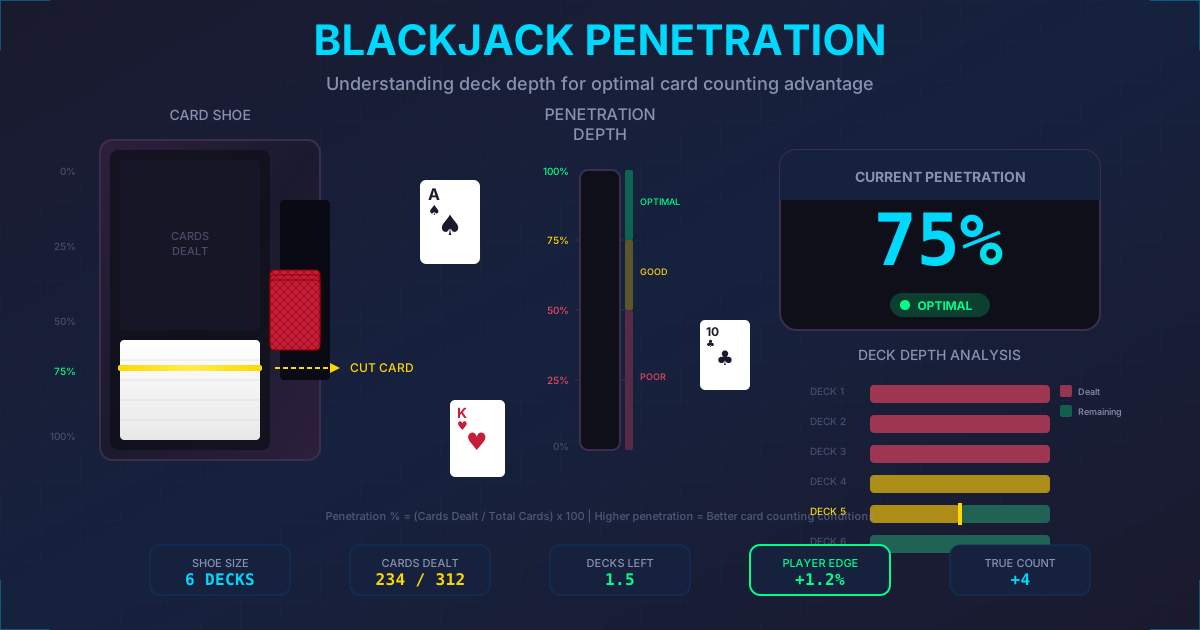
- Rules/penetration quality
- Counting accuracy
Our calculator computes risk based on your specific parameters.
Common Bet Spread Mistakes
1. Spreading Too Wide, Too Fast
Problem: $25 to $500 at TC +4 Reality: Immediate casino attention Fix: Spread gradually, stay sustainable
2. Not Spreading Enough
Problem: 1-2 spread Reality: Can't overcome negative counts Fix: Need at least 1-4 to profit
3. Ignoring Bankroll Size
Problem: $200 max bet on $2,000 bankroll Reality: Risk of ruin is enormous Fix: 100+ max bets minimum
4. Telegraphing Counts
Problem: Bet $25... count cards visibly... bet $200 Reality: Obvious counting behavior Fix: Natural betting patterns
5. Playing Through Negative Shoes
Problem: Staying at tables with TC -3 Reality: Losing your advantage Fix: Leave or Wong out
Frequently Asked Questions
What's the best bet spread?
1-8 is standard for solo counters balancing profit and longevity. Adjust based on your bankroll and casino environment.
How much bankroll do I need?
General rule: 200-500× your maximum bet. For $200 max bets, $40,000-100,000 bankroll.
Will casinos back me off with a 1-8 spread?
Possibly, especially at aggressive venues. Camouflage and table hopping help.
Should I bet more at higher counts?
Yes, but the relationship isn't linear. Edge increases ~0.5% per true count. Bet accordingly.
What about negative counts?
Bet minimum or leave the table. Never spread into negative counts.
How do I practice bet spreading?
Drill at home with simulator software. Bet sizing must be automatic, not calculated at the table.
Advanced Spread Concepts
Cover Plays
Deliberately sub-optimal bets for camouflage:
- Occasionally bet big after losses at low counts
- Sometimes stay at minimum on +2
- Don't always max bet at +5
Cost: Small reduction in EV Benefit: Extended playing time
True Count Theorem
Bet increases should be proportional to edge:
| True Count | Approx Edge | Bet Multiple |
|---|---|---|
| +2 | 1% | 2-3 units |
| +4 | 2% | 4-6 units |
| +6 | 3% | 6-9 units |
Betting Efficiency
Different count systems have different betting efficiencies:
- Hi-Lo: 97% betting correlation
- KO: 98% betting correlation
- Hi-Opt II: 99% betting correlation
Higher efficiency = more accurate bet sizing.
Calculating Hourly EV
Formula
Hourly EV = Hands/Hour × Average Bet × Edge
Example:
- 100 hands/hour
- Average bet: $75 (considering count distribution)
- Average edge: 0.8%
- Hourly EV: 100 × $75 × 0.008 = $60
Realistic Expectations
| Spread | Hourly Hands | Avg Bet | Edge | Hourly EV |
|---|---|---|---|---|
| 1-4 | 80 | $40 | 0.5% | $16 |
| 1-8 | 80 | $60 | 0.8% | $38 |
| 1-12 | 80 | $80 | 1.0% | $64 |
Pro Tips for Bet Spreading
-
Start conservative: Build experience before spreading wide
-
Know your bankroll: Never spread beyond what you can withstand
-
Practice bet sizing: Automatic responses, no hesitation
-
Vary patterns: Don't be a robot
-
Accept short-term losses: Variance is real
Related Blackjack Calculators
- Blackjack Card Counting Calculator - Count tracking
- Blackjack House Edge Calculator - Rule impacts
- Blackjack Basic Strategy Calculator - Optimal plays
- Kelly Criterion Calculator - Bet sizing math
- Blackjack Bankroll Calculator - Session planning
Conclusion
Bet spreading transforms card counting from an academic exercise into actual profit. Our calculator optimizes your spread based on bankroll, risk tolerance, and casino conditions. The math is straightforward—the discipline is the hard part.
Calculate Your Optimal Bet Spread Now →
Master bet spreading, and you unlock blackjack's profit potential. Start conservative, understand variance, and let the math work over time.