Reverse Line Movement and Steam Moves: Reading the Betting Market (2026)
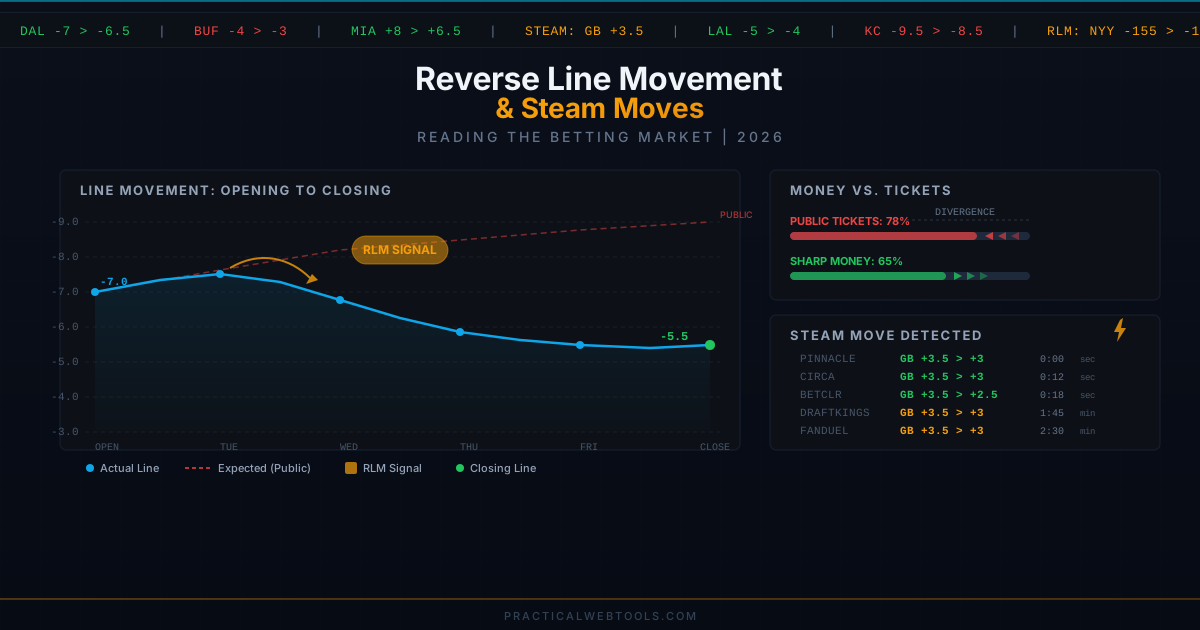
Every betting line tells a story -- but most bettors cannot read the language. When the Dallas Cowboys open at -7 and 78% of spread bets land on Dallas, the line should move to -7.5 or -8 to balance action. Instead, it drops to -6.5. Something happened. Someone with real money -- not just an opinion -- decided the other side was the play. That "someone" is a sharp bettor, and the trail they leave behind is called reverse line movement.
Reverse line movement (RLM) and steam moves are the two most powerful signals the betting market produces. They separate informed money from recreational noise, and for bettors who learn to read them, they provide a genuine edge that has produced documented win rates between 55% and 59% against the spread across major sports over multi-year sample sizes.
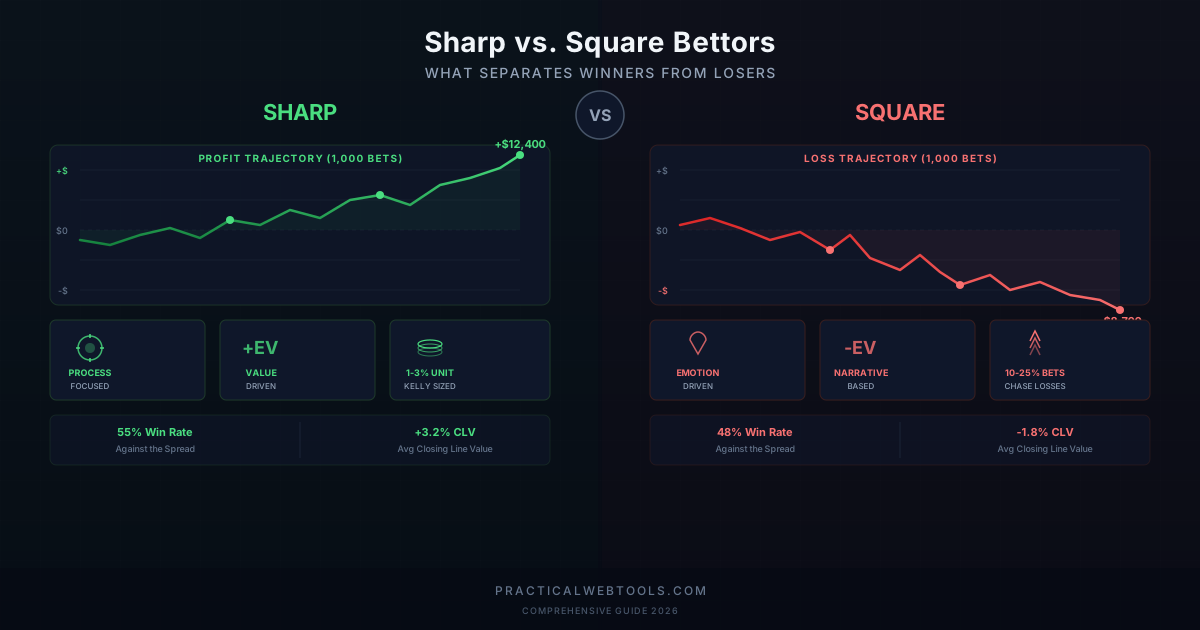
The problem is that most bettors either ignore line movement entirely or misinterpret it. They chase public favorites, bet into inflated numbers, and wonder why their bankroll erodes at a steady 5-8% clip. Meanwhile, sharps are quietly moving lines in the other direction, extracting value from mispriced markets before the window closes.
This guide will teach you to read what the market is actually saying -- how sportsbooks set and adjust lines, what reverse line movement reveals about where the smart money sits, how steam moves create 30-second windows of opportunity, and which sports produce the most reliable RLM signals.
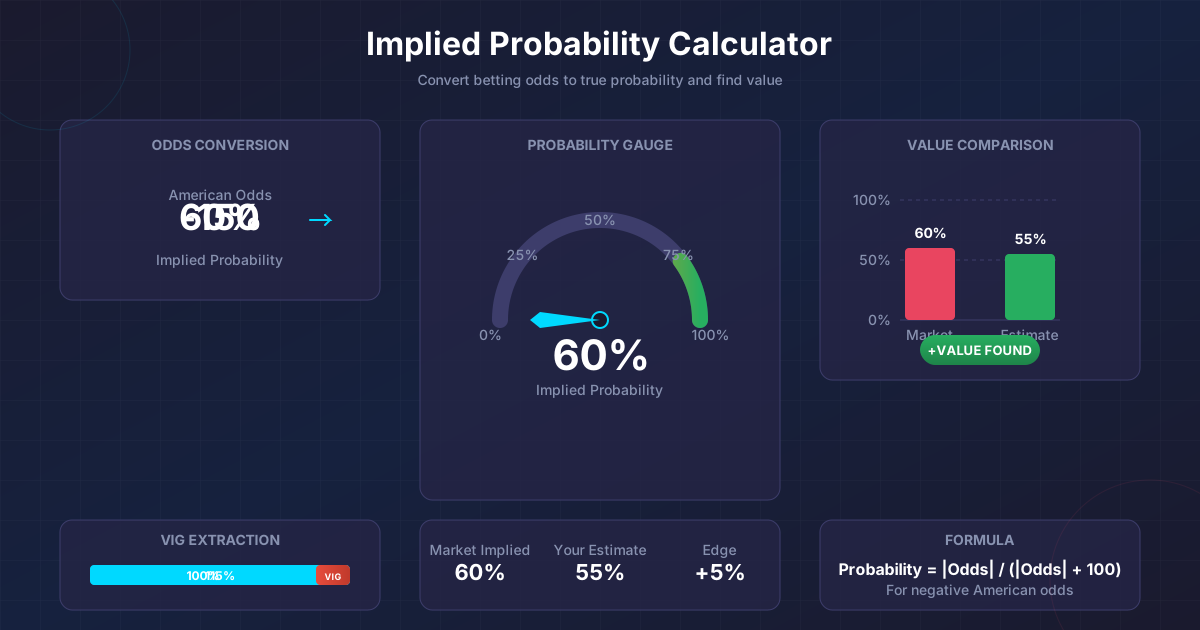
Convert any betting line to its true probability with our free Implied Probability Calculator.
How Sportsbooks Set and Move Lines
Before you can understand reverse line movement, you need to understand the mechanics of how lines are created and why they change.
The Opening Line
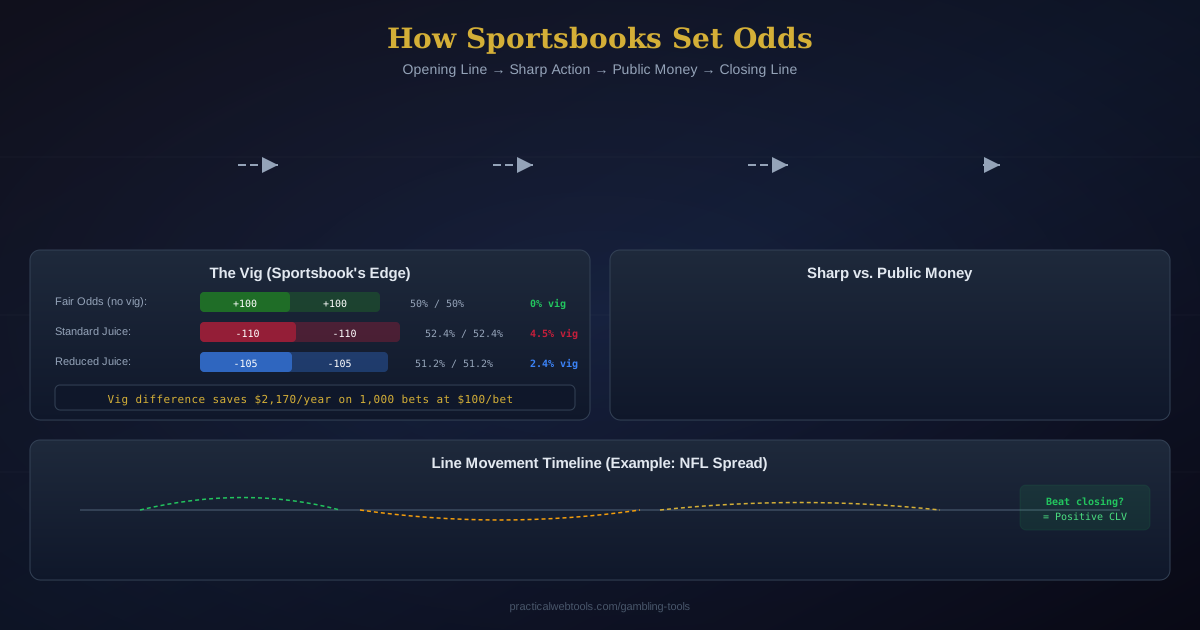
Sportsbooks do not set opening lines to predict outcomes. They set lines to attract balanced action on both sides while embedding their margin (the vig). The process typically involves:
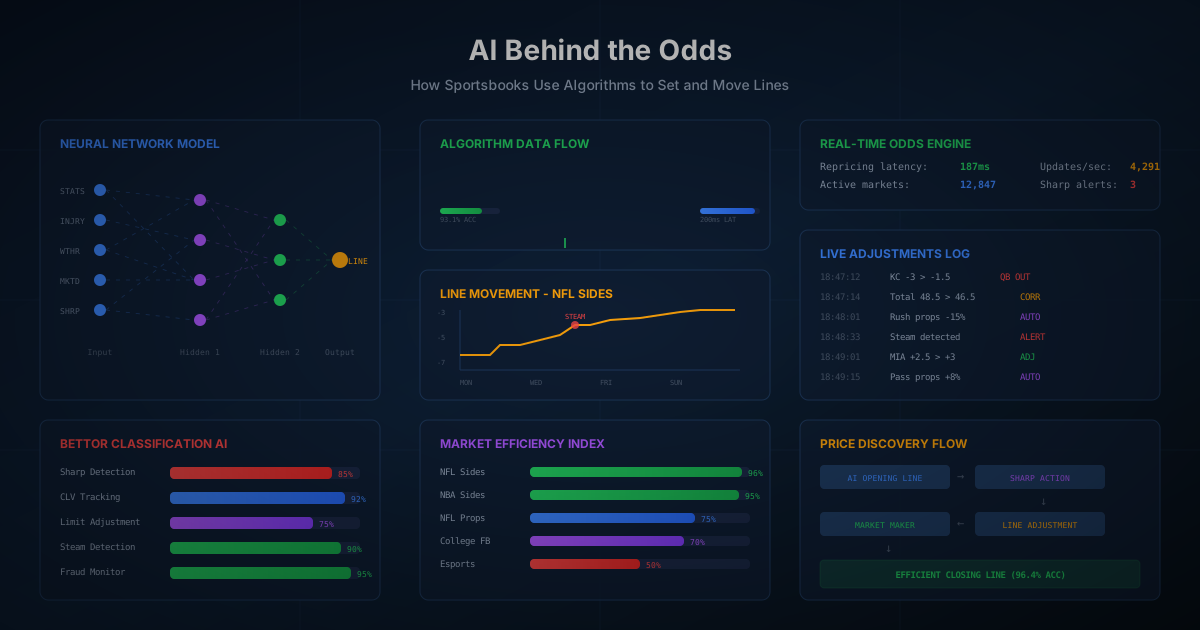
- Power ratings and models -- Quantitative teams at major sportsbooks (Pinnacle, Circa, BetCLR) run proprietary models that assign power ratings to every team
- Market makers post first -- A small number of "market-making" books release opening lines, often with low limits ($500-$2,000)
- Sharp action shapes the opener -- Professional bettors attack these early lines, and their wagers force adjustments before most recreational books even post numbers
- The broader market opens -- DraftKings, FanDuel, BetMGM, and retail books post their lines, typically reflecting where Pinnacle or Circa have already settled
The opening line represents the market's first estimate. The closing line -- the final number before game time -- represents the market's consensus after absorbing all information and money.
Why Lines Move
Lines move for two fundamental reasons:
| Reason | Description | Example |
|---|---|---|
| Money-based movement | Sportsbooks adjust to manage liability when heavy money arrives on one side | $250,000 bet on Patriots -7 moves line to -7.5 |
| Information-based movement | Injury news, weather changes, or lineup announcements alter the true probability | Starting QB ruled out moves line from -6.5 to -3 |
| Respect-based movement | Books move lines after receiving bets from known sharp accounts, regardless of dollar amount | Known sharp bets $10,000 on underdog; line moves 1.5 points |
| Copy movement | Retail books copy line movements from market-making books without receiving action themselves | Pinnacle moves to -4; FanDuel follows within minutes |
The critical distinction: sportsbooks move lines based on the dollar amount wagered, not the number of tickets (individual bets). A single $50,000 wager from a respected sharp account will move a line further than 500 recreational bets of $100 each, even though the recreational side represents the same total dollar volume. This is because sportsbooks track account histories and know which bettors are consistently profitable.
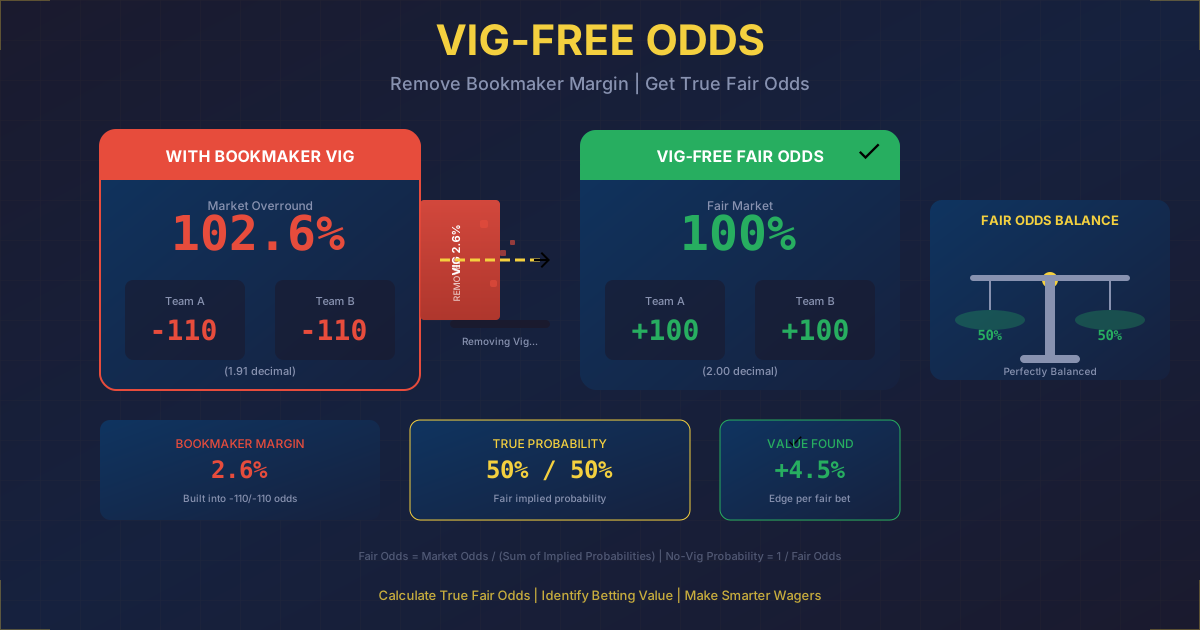
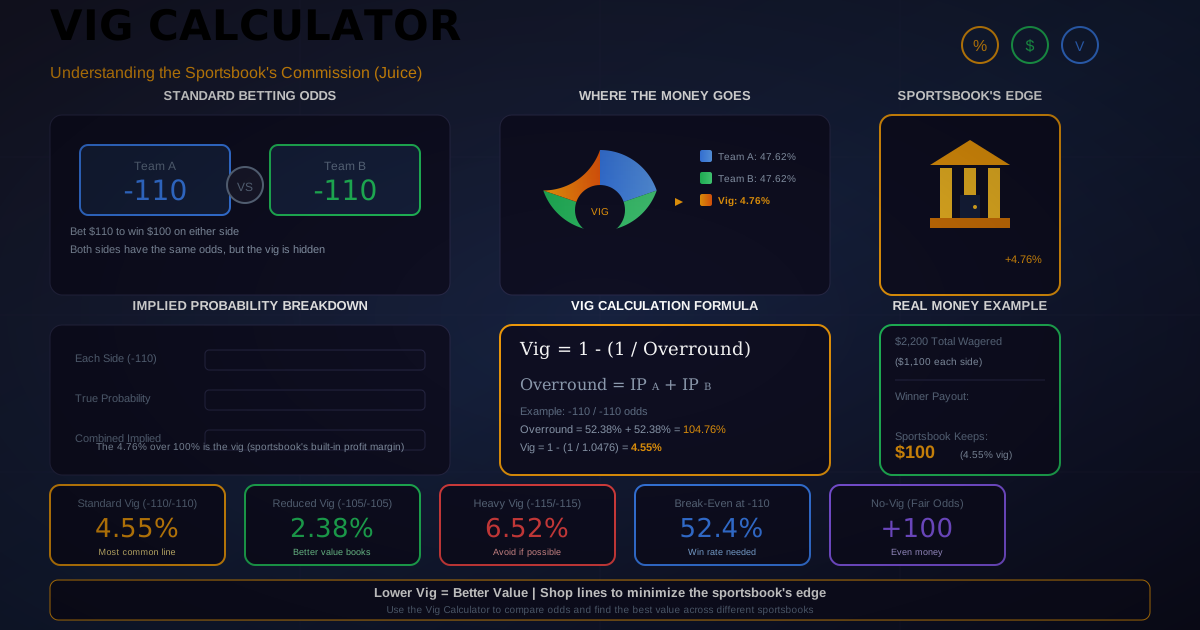
Calculate the true edge embedded in any line with our Hold/Vig Calculator.
The Money vs. Tickets Divergence
This brings us to the most important concept in line movement analysis: the gap between ticket percentage and money percentage.
| Metric | What It Measures | Who It Reflects |
|---|---|---|
| Ticket % | The percentage of individual bets on each side | Primarily recreational/public bettors |
| Money % | The percentage of total dollars wagered on each side | Heavily influenced by sharp/professional bettors |
| Divergence | When ticket % and money % disagree significantly | The clearest signal of sharp vs. public disagreement |
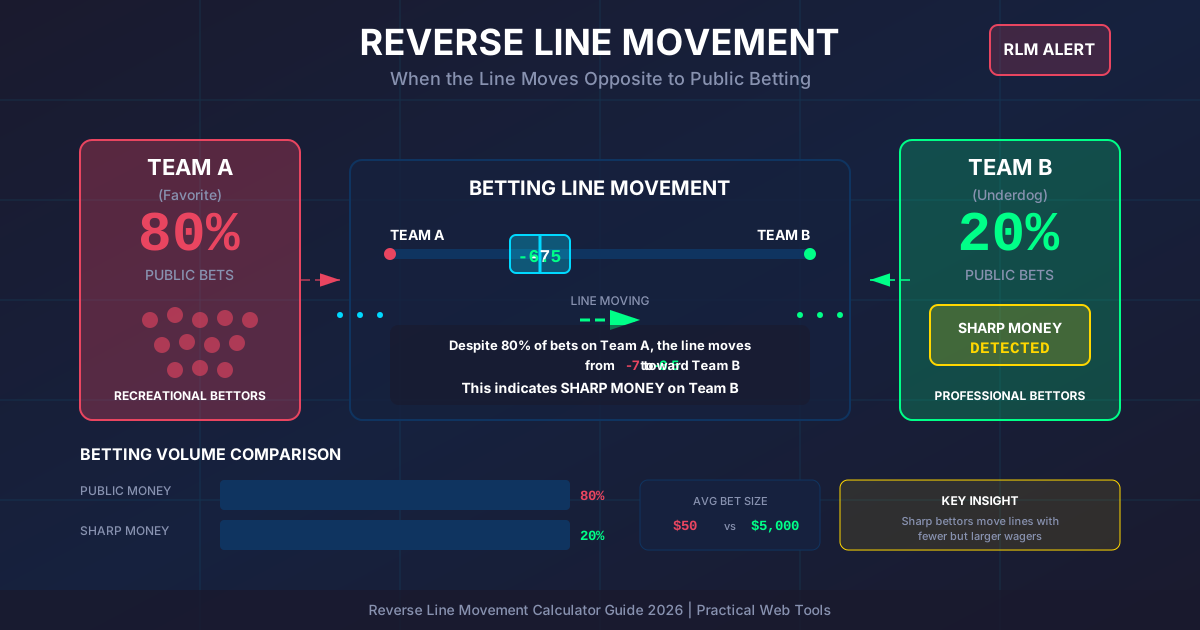
When 75% of tickets are on Team A but only 40% of money is on Team A, it means the public is placing many small bets on one side while sharps are placing fewer but much larger bets on the other. This divergence is the foundation of reverse line movement.
What Is Reverse Line Movement?
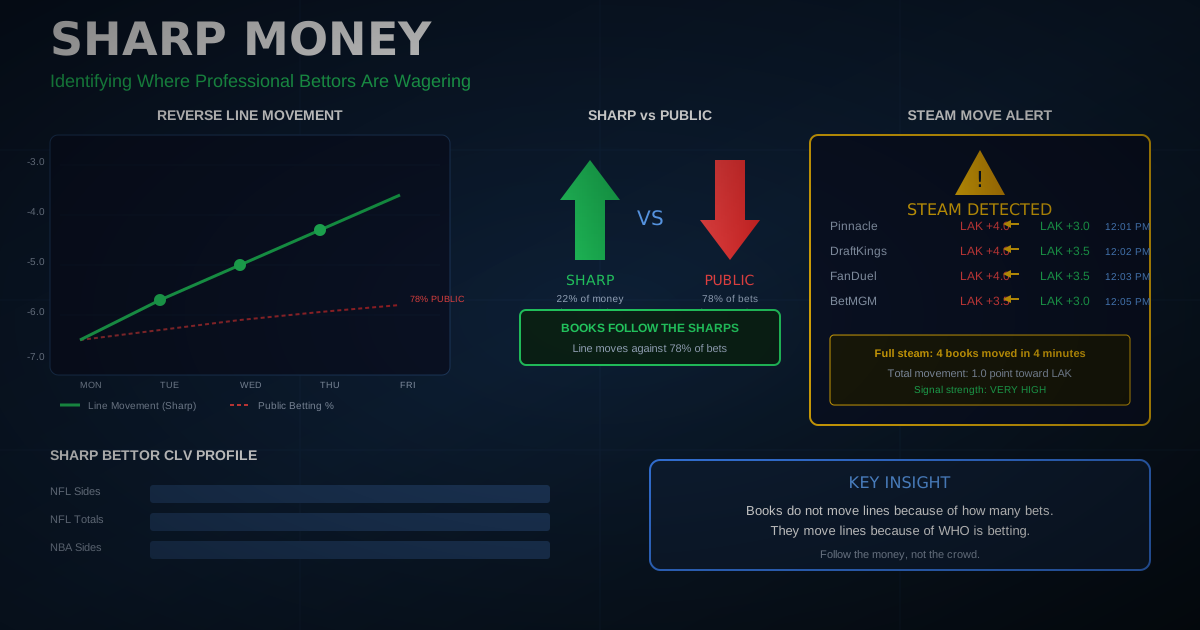
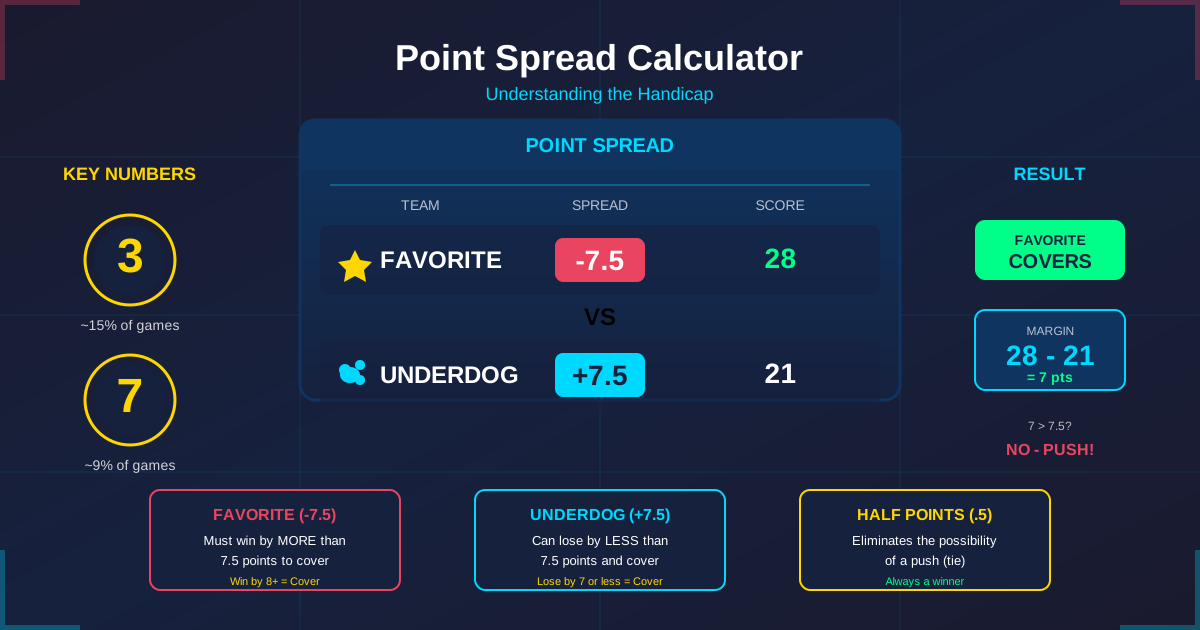
Reverse line movement occurs when a betting line moves in the opposite direction of where the majority of bets are being placed. If 70% of spread bets are on the Cowboys -7, standard market logic says the line should move to -7.5 or -8 (making the Cowboys more expensive to bet). If instead the line drops to -6.5 or -6, that is reverse line movement -- the line moved toward the less popular side.
The Mechanics of RLM
Here is exactly what happens in an RLM scenario:
- Sportsbook opens a line -- Cowboys -7 (-110) vs. Eagles +7 (-110)
- Public loads one side -- 75% of tickets (individual bets) land on Cowboys -7
- Sharps attack the other side -- Professional bettors place large wagers on Eagles +7
- The line moves against the public -- Despite 75% of bets being on Dallas, the line drops to Cowboys -6.5
- The signal is clear -- Sharp money on the Eagles was significant enough to override public volume
Real-World RLM Examples
Example 1: NFL Week 12, 2024 -- Chiefs vs. Raiders
The Chiefs opened at -9.5 against the Raiders. Kansas City was a public darling: 81% of spread tickets backed the Chiefs. By game time, the line had moved from -9.5 to -8.5 -- a full point of reverse line movement toward the Raiders. Sharp bettors had identified the Raiders +9.5 as an overreaction to Kansas City's record, and their money was significant enough to move the number despite overwhelming public ticket count on the other side. The Raiders covered, losing by just 6.
Example 2: NBA Regular Season -- Celtics vs. Heat
Boston opened -8 against Miami. The Celtics attracted 72% of spread bets from the public. However, the line dropped from -8 to -6.5 -- 1.5 points of RLM toward Miami. Sharps recognized that the Heat's defensive metrics against top-5 offenses were being undervalued. Miami covered comfortably, losing by only 3.
Example 3: MLB -- Yankees vs. Orioles
The Yankees opened at -155 on the moneyline against Baltimore. Roughly 68% of moneyline tickets were on New York. But the line moved from Yankees -155 to -140, while the Orioles went from +135 to +120 -- reverse movement toward Baltimore. Sharp bettors had identified a pitching matchup edge that the public was overlooking. The Orioles won outright.
Example 4: College Football -- Alabama vs. LSU
Alabama opened -10 as a home favorite. Public betting was lopsided: 77% of tickets on the Crimson Tide. By kickoff, the spread had moved to -8.5, with some books posting -8. Professional bettors had loaded up on LSU +10, seeing a matchup advantage in the trenches that the public narrative about Alabama's ranking obscured. LSU covered the original spread, losing by 7.
Example 5: NFL Playoff -- Bills vs. Steelers
Buffalo opened -4 in a playoff matchup. The Bills drew 80% of public tickets. The line moved to -3, a full point of RLM. Sharp action on Pittsburgh +4 was driven by the Steelers' defensive performance in cold-weather playoff games and a perceived market overreaction to Buffalo's regular-season passing numbers. Pittsburgh kept it close, covering by falling just 2 points short.
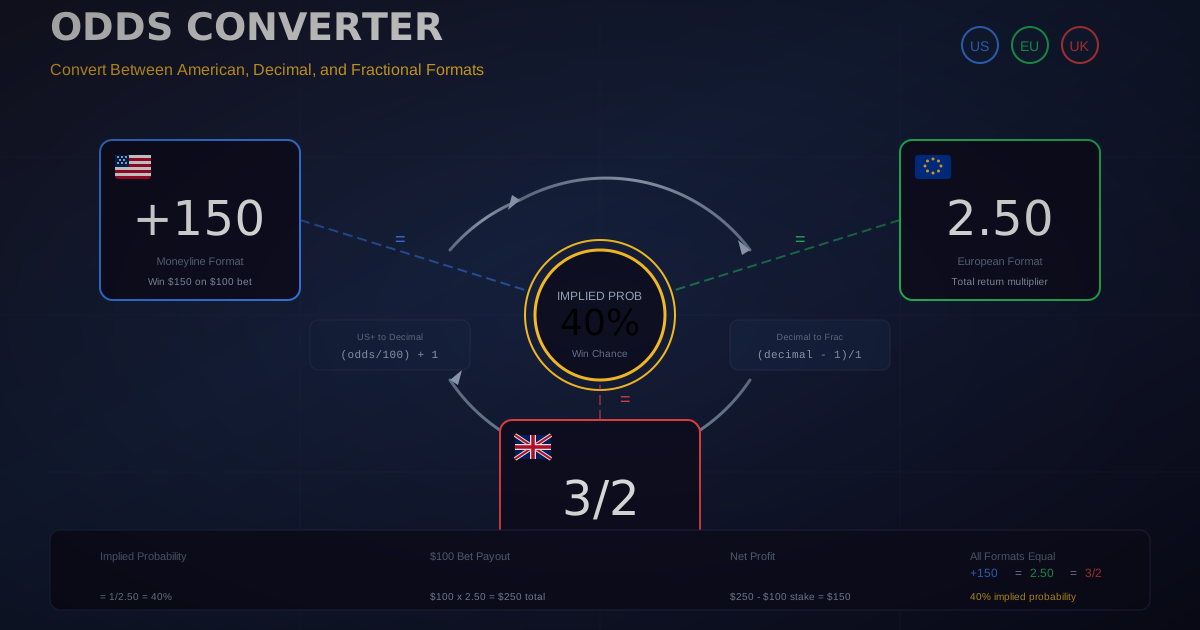
Convert between American, decimal, and fractional odds with our Odds Converter.
Quantifying the RLM Signal
Not all RLM is created equal. The strength of the signal depends on several factors:
| RLM Signal Strength | Ticket % on Popular Side | Line Movement | Historical ATS |
|---|---|---|---|
| Weak | 55-64% | 0.5 points | ~52% |
| Moderate | 65-74% | 0.5-1.0 points | ~54-55% |
| Strong | 75-84% | 1.0-1.5 points | ~56-58% |
| Very Strong | 85%+ | 1.5+ points | ~58-60% |
Historical data from Sports Insights tracking over a decade of RLM signals shows that games meeting the "Strong" threshold -- 75%+ public on one side with at least a full point of reverse movement -- have produced ATS records consistently in the 55-58% range. That may not sound dramatic, but at standard -110 juice, a 56% win rate generates roughly 3.5% ROI per bet. Applied across hundreds of bets per season, that edge compounds significantly.
Identifying Steam Moves
While reverse line movement happens over hours (sometimes days), steam moves happen in seconds. A steam move is a rapid, coordinated line movement across multiple sportsbooks simultaneously, triggered by sharp syndicates placing large bets at multiple books within a narrow time window.
What Defines a Steam Move
| Characteristic | Description |
|---|---|
| Speed | Line moves across 3+ sportsbooks within 30-90 seconds |
| Coordination | Multiple sharp accounts or syndicate runners hit different books simultaneously |
| Magnitude | Typical steam move shifts a spread 0.5-1.5 points in minutes |
| Origin | Usually starts at market-making books (Pinnacle, CRIS, Circa) before spreading |
| Volume | Represents $100,000+ in coordinated wagers across books |
| Window | The profitable betting window lasts approximately 15-60 seconds after detection |
How Steam Moves Work in Practice
A betting syndicate identifies value on the Packers +3.5. They coordinate:
- Runner 1 places $20,000 at Pinnacle on Packers +3.5
- Runner 2 places $15,000 at Circa on Packers +3.5
- Runner 3 places $10,000 at BetCLR on Packers +3.5
- Runner 4 places $8,000 at Heritage on Packers +3.5
All four bets land within a 30-second window. Within 60 seconds:
- Pinnacle moves to Packers +3 (-105)
- Circa moves to Packers +3
- Retail books (DraftKings, FanDuel) begin following within 2-5 minutes
- The window to capture +3.5 at any book has closed
The entire profitable window -- from the first bet landing to the last book adjusting -- lasted under two minutes. Bettors who have steam detection tools and fast execution can sometimes capture value in this brief window, but it requires infrastructure that most recreational bettors lack.
Steam Move vs. Line Move: Key Differences
| Feature | Regular Line Move | Steam Move |
|---|---|---|
| Speed | Hours to days | Seconds to minutes |
| Books affected | Often 1-2 initially | 3+ simultaneously |
| Cause | Gradual accumulation of bets | Coordinated syndicate action |
| Magnitude | 0.5-1 point over hours | 0.5-1.5 points in minutes |
| Replicability | Easy to follow | Extremely difficult to capture |
| Signal strength | Moderate | Very high |
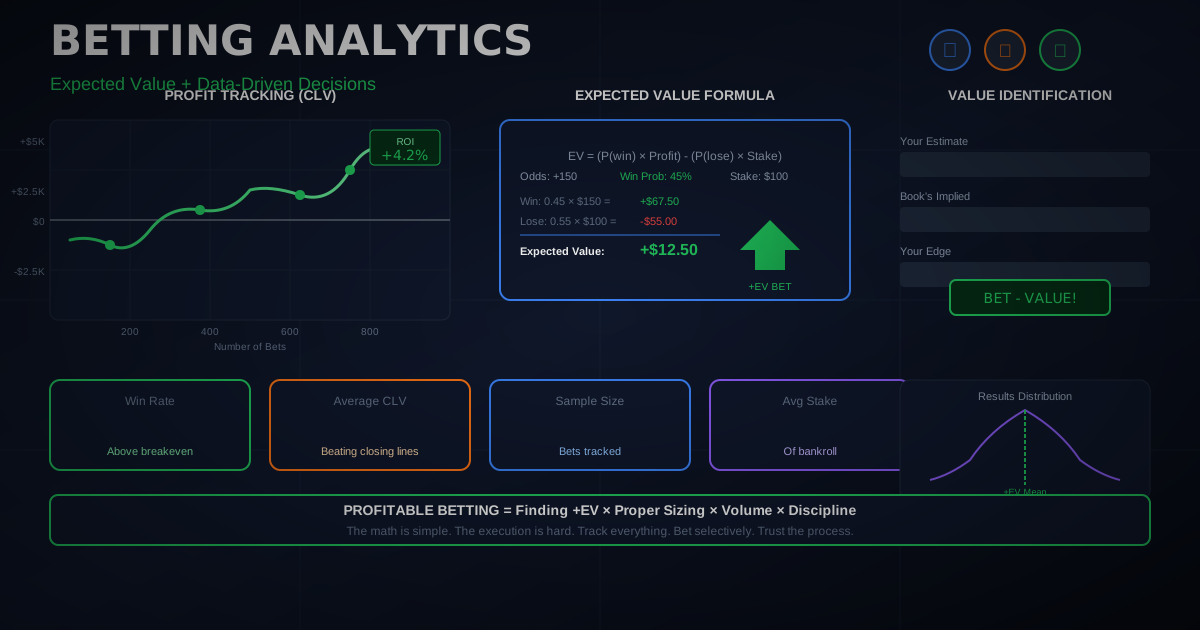
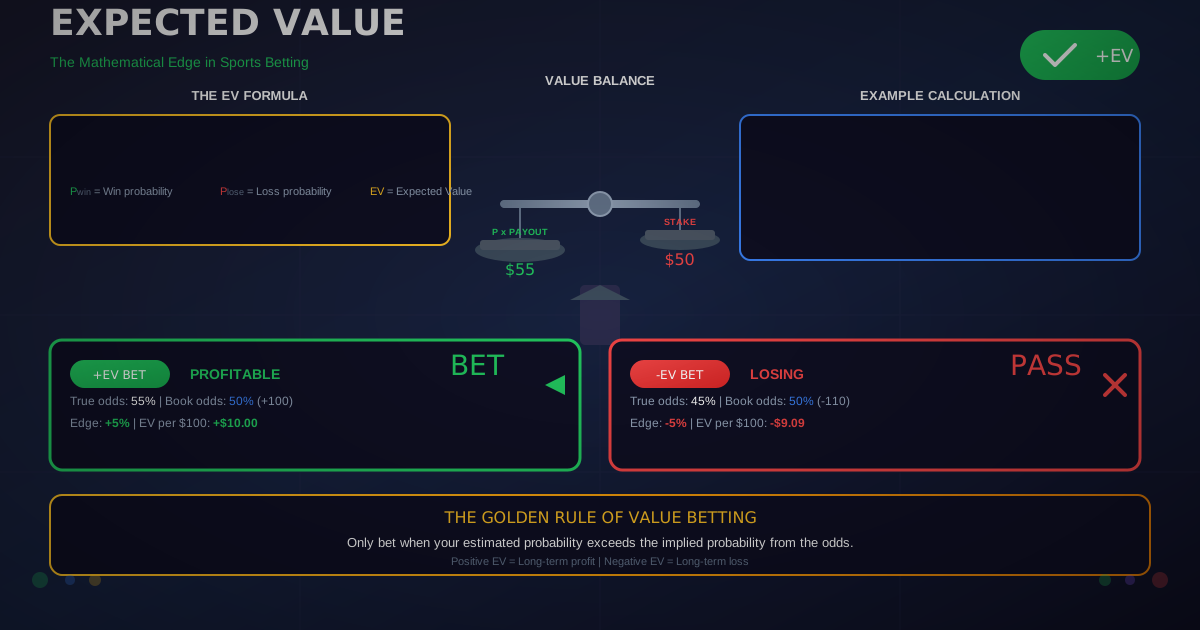
Calculate the expected value of any bet with our free Expected Value Calculator.
Reading Steam Move Patterns
Steam moves carry different weight depending on when they occur:
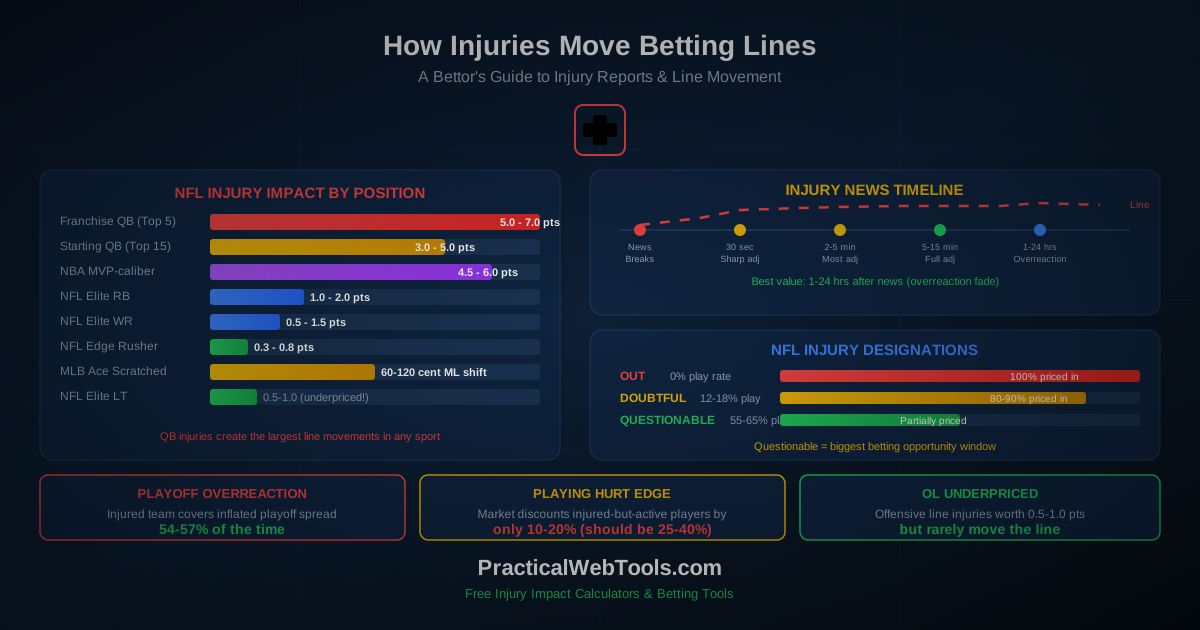
Early-week steam (Monday-Wednesday for NFL): Often driven by the sharpest bettors who have the strongest models. These moves tend to be the most reliable because they represent the market's first correction of mispriced opening lines.
Day-of-game steam: Can be driven by late injury news or weather changes. These moves are informational rather than model-driven, and while still valuable, require verification of the underlying cause.
Right-before-kickoff steam: The most aggressive and hardest to follow. These often represent syndicates dumping their final positions across all available books. The window is effectively zero for outside bettors.
Reading Opening Lines vs. Current Lines
One of the most underutilized analytical tools is comparing the opening line to the current line and understanding what the movement tells you about where the smart money has landed.
Opening Line as a Baseline
The opening line is the market's initial estimate of fair value. As money flows in -- both sharp and public -- the line adjusts. The closing line represents the market's final, most-informed estimate.
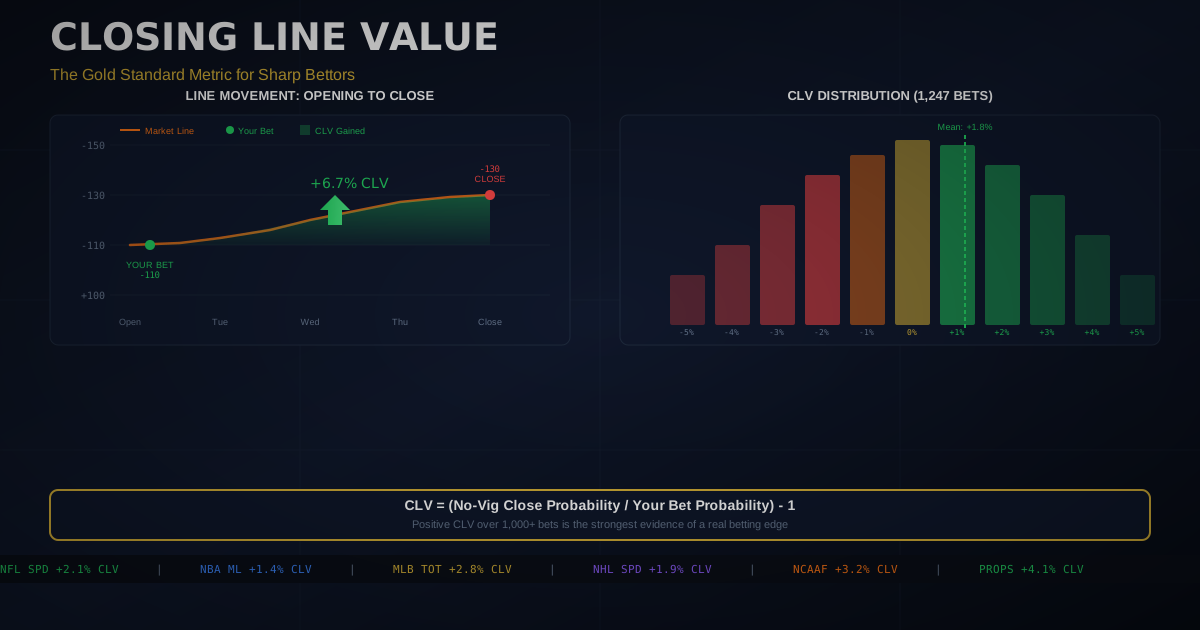
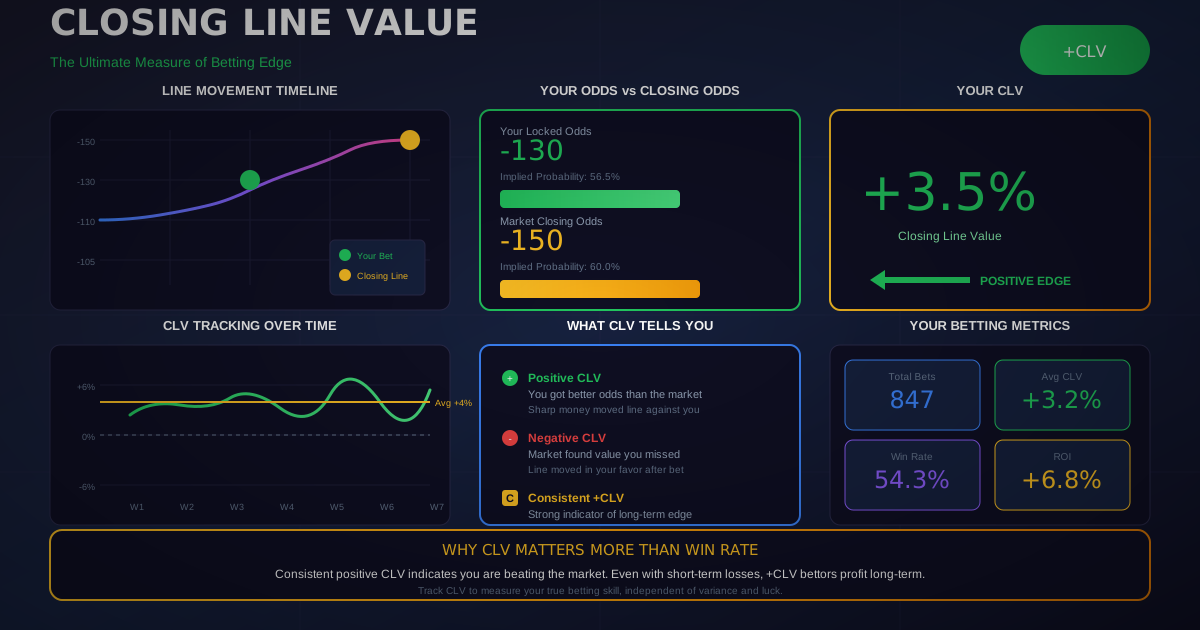
The closing line is widely considered the most efficient predictor in sports betting. Research from Pinnacle and academic studies consistently shows that the closing line is the single best predictor of game outcomes, better than any individual model or handicapper. This is why Closing Line Value (CLV) -- consistently getting better numbers than the closing line -- is the gold standard metric for sharp bettors.
Interpreting Line Movement Direction
| Opening Line | Current Line | Ticket % | Interpretation |
|---|---|---|---|
| Team A -7 | Team A -8 | 70% on A | Public-driven move. No RLM signal. |
| Team A -7 | Team A -6 | 70% on A | Strong RLM. Sharp money on Team B. |
| Team A -7 | Team A -7.5 | 50/50 | Moderate sharp lean toward A (moved beyond public balance). |
| Team A -7 | Team A -5.5 | 80% on A | Extreme RLM. Very heavy sharp action on Team B. Investigate injury news. |
| Team A -3 | Team A -3 | 65% on A | No movement despite public lean. Possible sharp disagreement holding the line. |
CLV and Line Movement
Closing Line Value (CLV) is the definitive measure of whether you are consistently on the right side of line movement. If you bet Team B +7 and the line closes at +6, you captured 1 point of CLV. Over time, positive CLV correlates directly with profitability.
Professional bettors do not measure success by wins and losses over small samples -- they measure it by whether they consistently beat the closing line. Sportsbooks use the same metric internally; accounts that consistently achieve positive CLV get flagged as sharp, often leading to bet limits or account restrictions.
Track your closing line value over time with our CLV Tracker.
Sport-by-Sport RLM Analysis
Reverse line movement does not perform equally across all sports. Market efficiency, bet volume, public bias, and information flow all vary, creating different RLM profiles for each major sport.
NFL RLM Performance
The NFL is the highest-volume betting market in the United States, which creates both opportunities and challenges for RLM:
| NFL RLM Metric | Value |
|---|---|
| Average RLM ATS win rate | 55-57% |
| Best RLM threshold | 70%+ public, 1+ point reverse move |
| Strongest window | Tuesday-Thursday (early sharp action) |
| Weakest signal | Primetime games (most public money, noisier data) |
| Season sample size | ~80-120 qualifying games per season |
| Historical ROI at -110 | +3.2% to +5.5% |
The NFL's week-long betting window gives sharps time to attack opening lines methodically, creating clear RLM patterns. Sunday 1:00 PM games tend to produce the cleanest RLM signals because they receive the broadest mix of public and sharp money.
NBA RLM Performance
| NBA RLM Metric | Value |
|---|---|
| Average RLM ATS win rate | 54-56% |
| Best RLM threshold | 65%+ public, 1+ point reverse move |
| Strongest signal | Back-to-back games (fatigue mispricing) |
| Weakest signal | Nationally televised games |
| Season sample size | ~350-500 qualifying games per season |
| Historical ROI at -110 | +2.0% to +4.5% |
The NBA's high game volume makes it attractive for RLM followers. However, rest advantages, load management, and late lineup changes create noise that can produce false RLM signals. The best NBA RLM signals come from situations where the public is overvaluing a team's brand while sharps have identified fatigue or travel-related edges.
MLB RLM Performance
| MLB RLM Metric | Value |
|---|---|
| Average RLM ATS/moneyline win rate | 53-55% |
| Best RLM threshold | 65%+ public, 10+ cents reverse move |
| Strongest signal | Moneyline reverse movement (not run line) |
| Weakest signal | Heavy public teams (Yankees, Dodgers) |
| Season sample size | ~600-900 qualifying games per season |
| Historical ROI | +1.5% to +3.5% |
Baseball's moneyline-dominant market makes RLM analysis different from spread-based sports. Instead of tracking point movement, you track juice movement. If the public loads the Dodgers at -180 and the line drops to -165, that reverse movement on the moneyline tells the same story: sharp money went the other way.
College Football RLM Performance
| NCAAF RLM Metric | Value |
|---|---|
| Average RLM ATS win rate | 56-59% |
| Best RLM threshold | 70%+ public, 1.5+ point reverse move |
| Strongest signal | Non-marquee Saturday noon games |
| Weakest signal | Rivalry games with emotional public betting |
| Season sample size | ~150-250 qualifying games per season |
| Historical ROI at -110 | +4.0% to +7.0% |
College football produces the strongest RLM signals of any major sport. The reason is simple: public bettors are driven by brand recognition (Alabama, Ohio State, USC) and rankings, while the sheer number of games means sportsbooks cannot set equally sharp opening lines across all matchups. This creates more mispricing opportunities for sharps to exploit, and those exploits show up as RLM.
College Basketball RLM Performance
| NCAAB RLM Metric | Value |
|---|---|
| Average RLM ATS win rate | 55-58% |
| Best RLM threshold | 65%+ public, 1+ point reverse move |
| Strongest signal | Mid-major conference games |
| Weakest signal | March Madness (extreme public volume) |
| Season sample size | ~800-1,200 qualifying games per season |
| Historical ROI at -110 | +3.0% to +6.0% |
Similar to college football, the sheer volume of college basketball games -- over 5,000 per season -- means sportsbooks rely on less-refined models for lower-profile matchups. Sharps exploit these inefficiencies, and their RLM signals are particularly reliable in mid-major conference play where public attention is minimal.
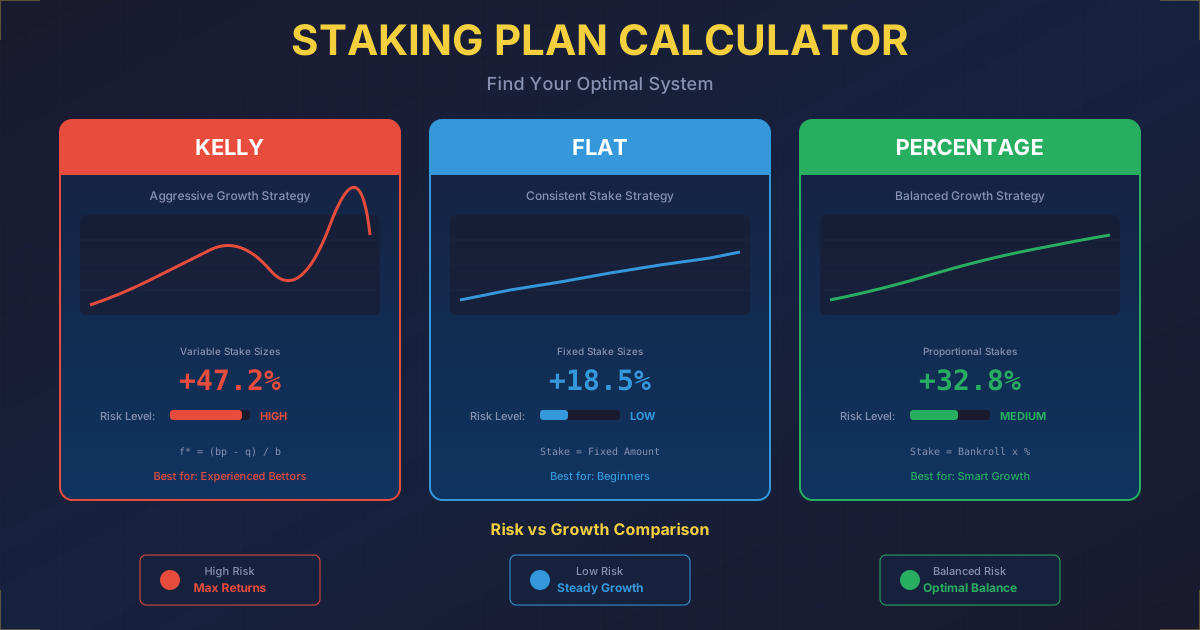
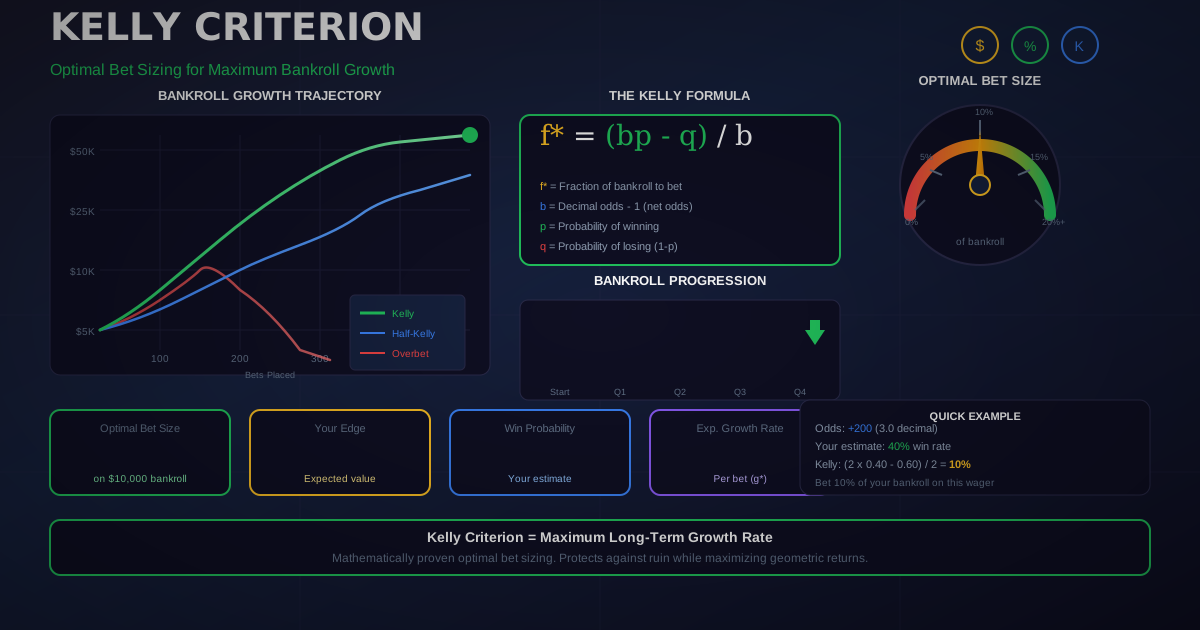
Size your bets optimally based on your edge with our Kelly Criterion Calculator.
False RLM Signals: When Reverse Line Movement Misleads
Not every instance of reverse line movement represents actionable sharp action. Understanding when RLM misleads is just as important as knowing when to follow it.
Common False RLM Triggers
1. Injury-Driven Movement
A starting quarterback is ruled out, and the line moves from -7 to -4. This looks like RLM if 70% of early tickets were on the favorite before the injury announcement, but the movement is information-based, not sharp-money-based. The key distinction: did the line move before or after the injury became public knowledge? If it moved after a public announcement, it is not a sharp signal.
2. Steam Fakes and Head Fakes
Sophisticated syndicates sometimes deliberately create false signals. They place a visible bet on Side A, wait for the market to adjust, then hit Side B at the new, more favorable number. This "head fake" creates temporary RLM that reverses once the true position is revealed.
According to ESPN's reporting on professional betting tactics, head fakes are a documented strategy used by the most sophisticated betting operations. They are not common enough to negate RLM analysis entirely, but they are a reminder that no single signal is infallible.
3. Stale Lines at Slow Books
Some retail sportsbooks are slow to update their lines. If Pinnacle has already moved from -7 to -6 based on sharp action, but a slower book is still posting -7, the ticket percentages at the slower book may show public money on the favorite while the line has already adjusted elsewhere. This creates the appearance of RLM at the slow book when in reality the market has already corrected.
4. Middling and Hedging Activity
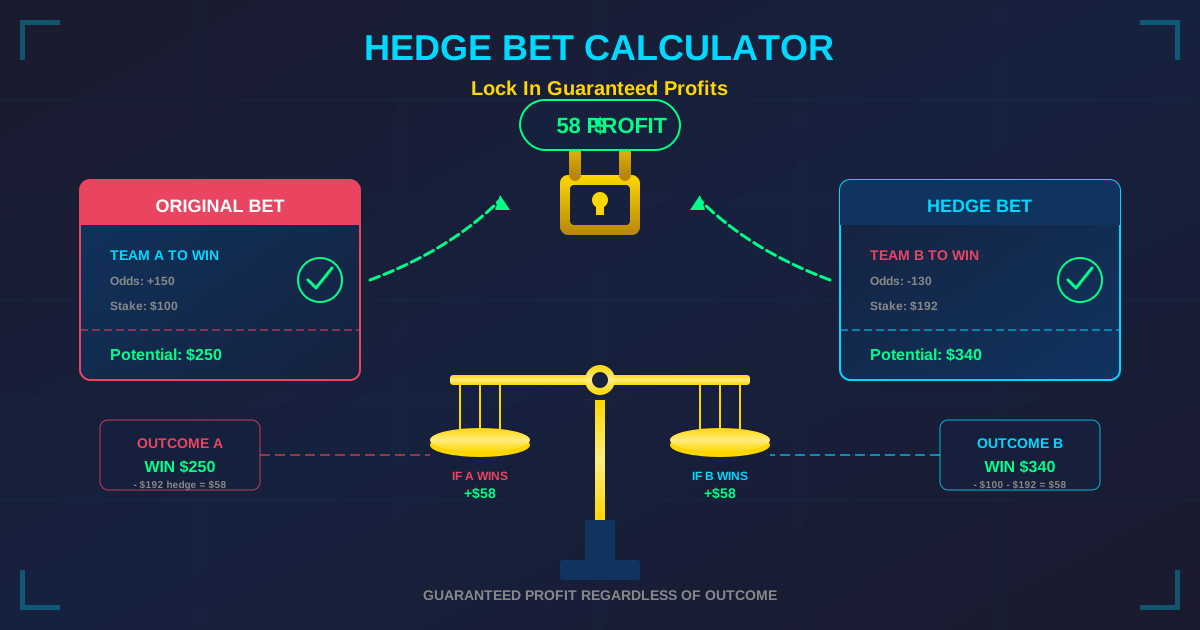
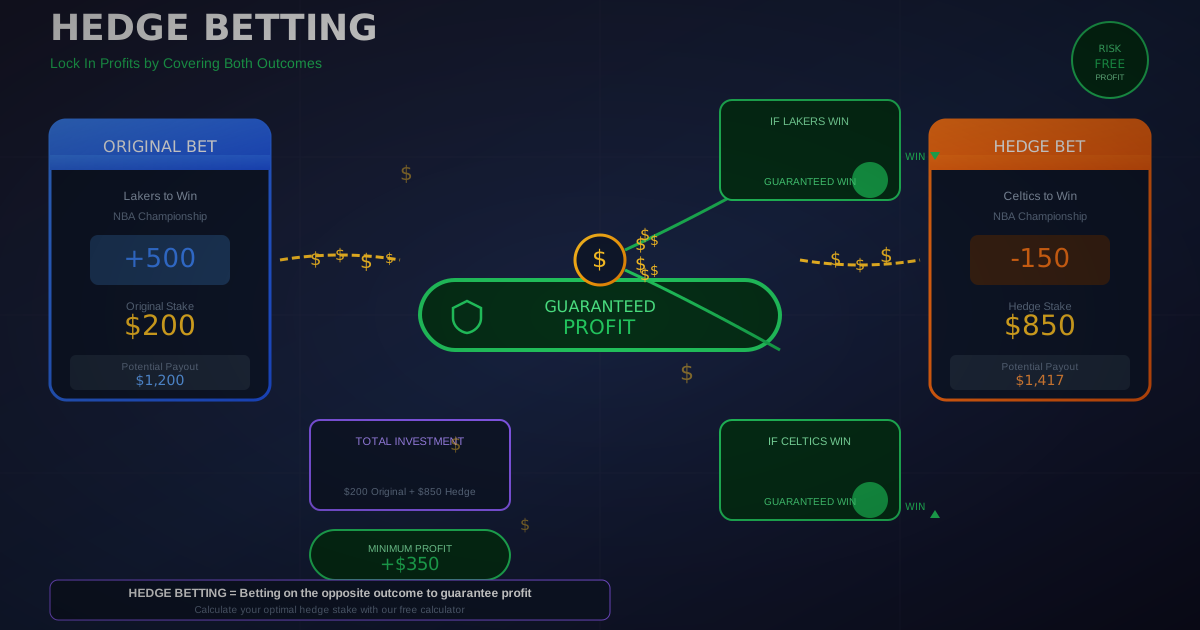
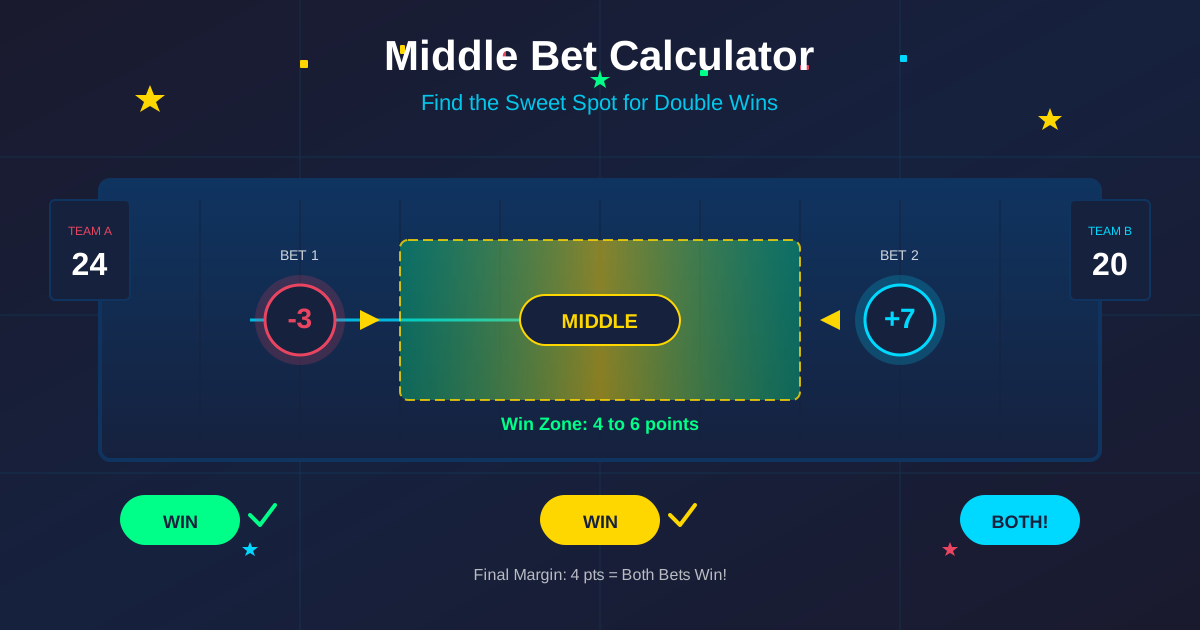
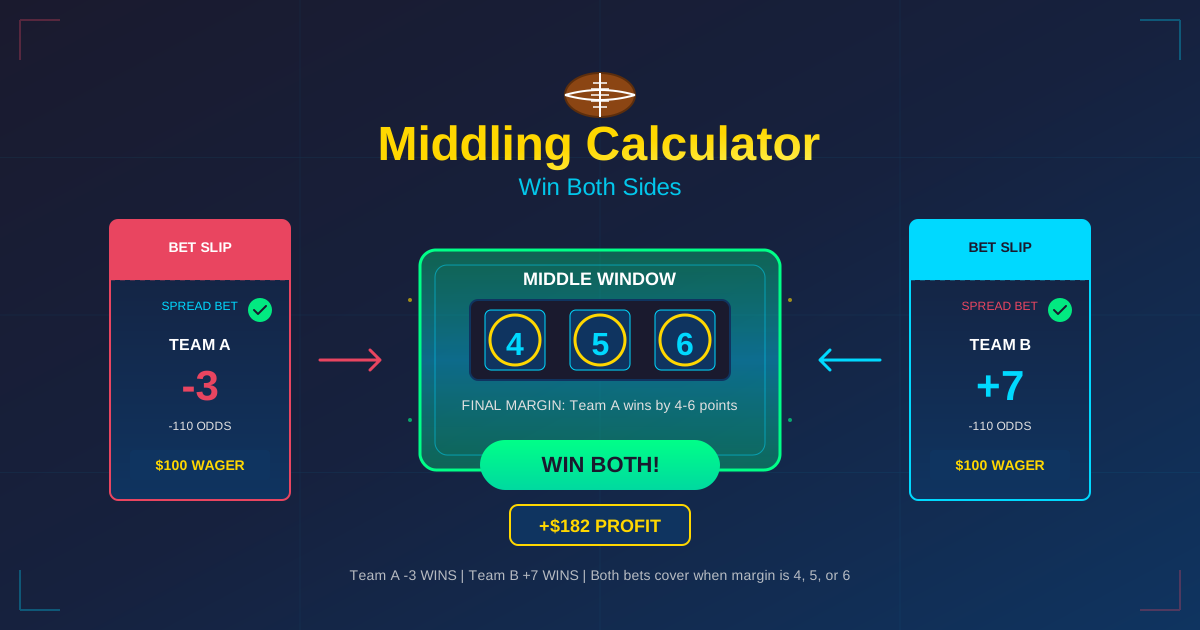
Professional bettors sometimes create apparent RLM by betting both sides at different numbers to guarantee a profit or limit risk. If a sharp bettor took Team A -3 early in the week and then bets Team B +7 later, the second bet creates reverse movement but does not represent a genuine opinion on the game -- it represents position management.
How to Filter Out False Signals
| Filter | What to Check | Why It Matters |
|---|---|---|
| Timing | Did RLM occur before or after public injury/news? | Separates information moves from sharp moves |
| Multi-book confirmation | Did the line move across 3+ books, or just one? | Single-book moves can be noise; multi-book confirms |
| Movement magnitude | Is the reverse move at least 0.5 points (spreads) or 10 cents (moneylines)? | Small reverse moves may be within normal variance |
| Consistent direction | Did the line move in one direction, or back and forth? | Oscillating lines suggest conflicting sharp opinions |
| Time of movement | Did the move happen during normal sharp betting hours? | Unusual timing may indicate non-sharp triggers |
Combining RLM with Other Indicators
Reverse line movement is most powerful when used in combination with other sharp betting indicators rather than in isolation.
The Multi-Indicator Approach
RLM + Closing Line Value (CLV)
If a line exhibits RLM and you can still get a number better than where the line closes, you have a high-confidence play. RLM tells you where the sharps are; CLV confirms you captured value by acting before the market fully adjusted.
RLM + Contrarian Ticket Percentage
The strongest RLM signals come when public ticket percentage is extremely lopsided (75%+) while the line moves against that public consensus. A moderate 55/45 split with slight reverse movement is far less meaningful.
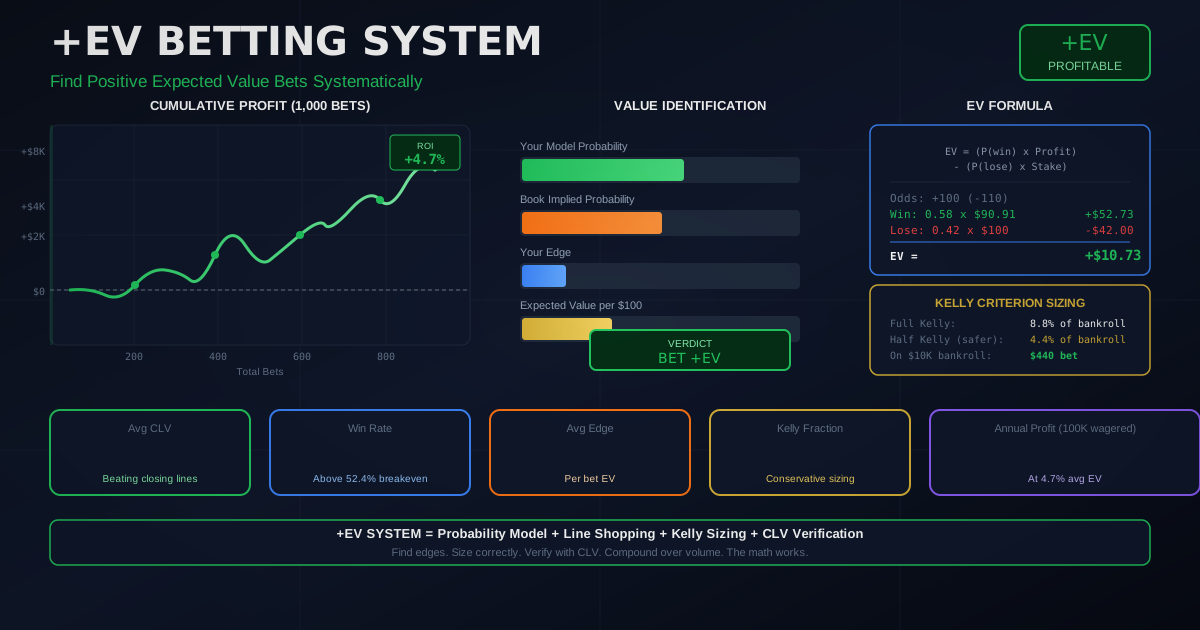
RLM + Expected Value Analysis
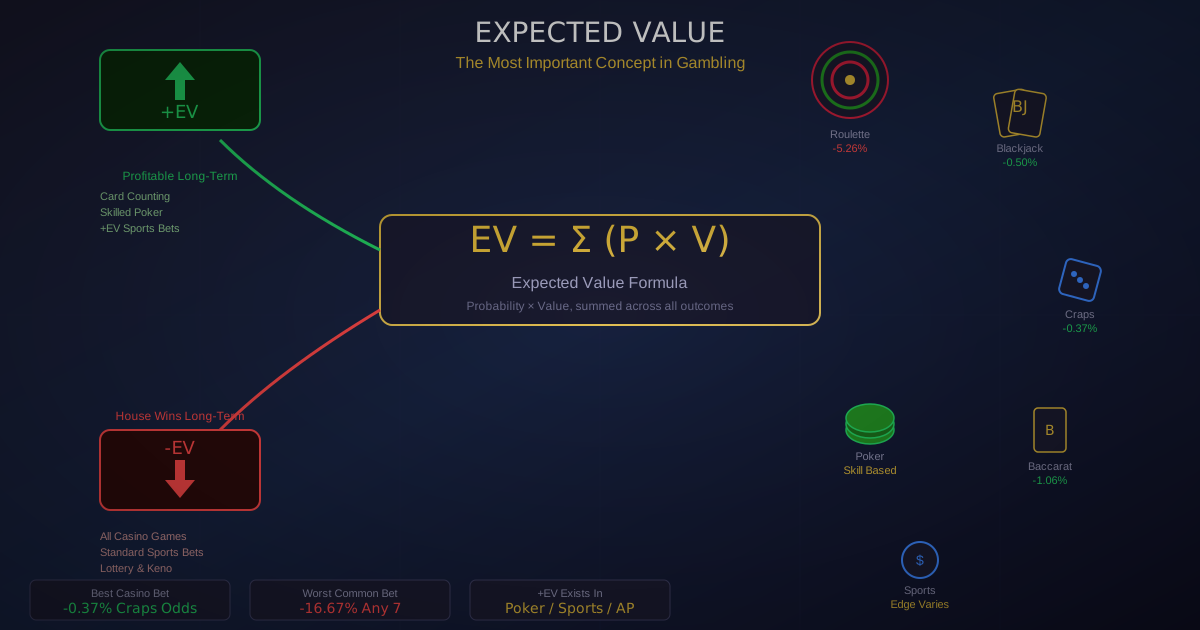
Convert the current line to implied probability, then compare it against your own model's estimated probability. If your model agrees with the RLM direction and shows positive expected value, you have convergence from multiple angles.
Calculate the expected value of any wager using our Expected Value Calculator.
RLM + Total Movement (Not Just Direction)
Pay attention to the total points of movement, not just the direction. A line that opens at -7, moves to -8 on public money, then reverses to -6.5 has 1.5 points of reverse movement from the peak -- a stronger signal than a line that opens at -7 and simply drops to -6.5.
Building a Checklist
Before placing an RLM-based bet, run through this verification process:
- Is the ticket percentage divergence significant (65%+ on one side)?
- Has the line moved at least 0.5 points in the reverse direction?
- Has the movement been confirmed across multiple sportsbooks?
- Is the movement NOT explained by a public injury or news event?
- Does expected value analysis support the RLM side?
- Can you still get a number at or better than the current line?
- Is the game in a sport/league where RLM has historically been profitable?
If you can answer "yes" to 5 or more of these 7 questions, you have a high-quality RLM signal.
Tools for Tracking Line Movement
Tracking reverse line movement and steam moves requires access to real-time data that most casual bettors do not have. Here are the primary categories of tools and data sources.
Professional Tracking Platforms
Odds screens and line aggregators display real-time lines from dozens of sportsbooks, allowing you to see when and where lines move. Platforms like DonBest, Pinnacle's live odds feed, and various odds comparison sites provide this data.
Ticket and money percentage trackers show the split between public bets and dollar volume. Action Network, Sports Insights, and similar platforms provide this data, though the accuracy varies and some sources only show ticket percentage (not money percentage).
Steam detection algorithms automatically flag coordinated line movement across multiple books. These tools scan for the rapid, multi-book movements that define steam and alert subscribers in real time.
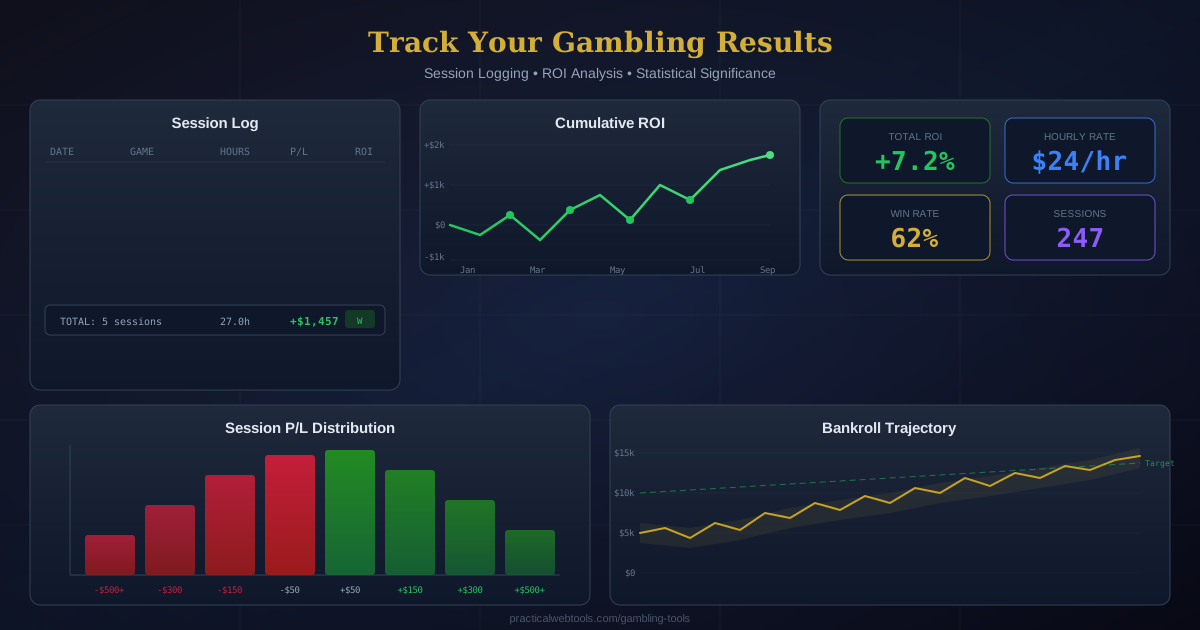
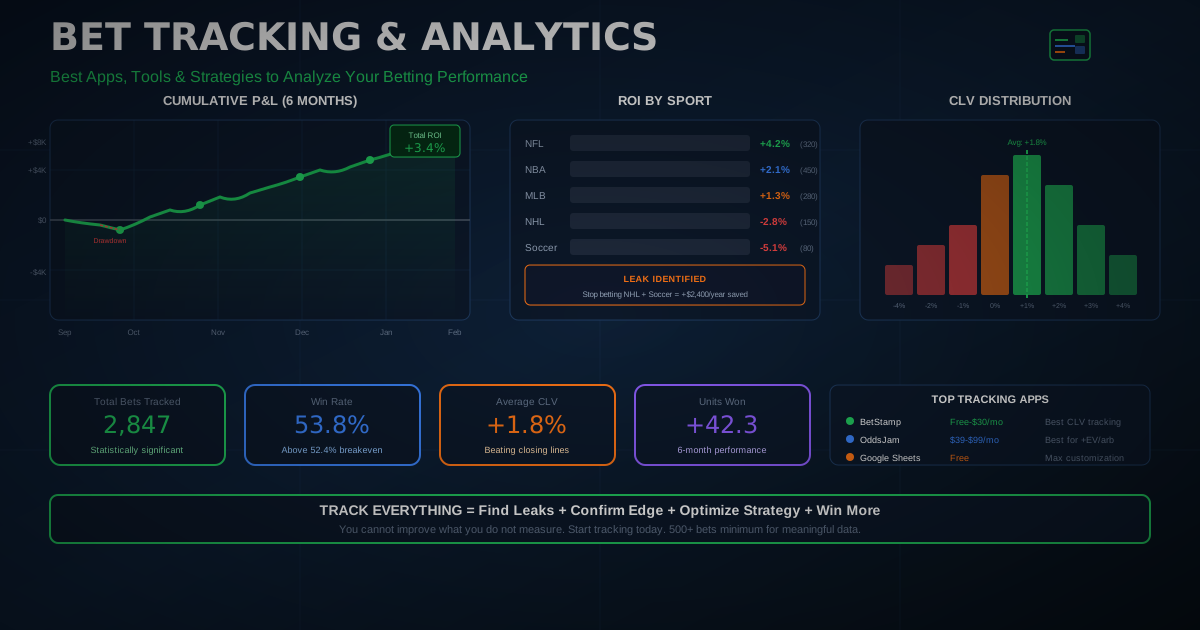
Closing line trackers allow you to record your bet at the time of placement and compare it against the closing line to measure CLV over time.
Free vs. Premium Data
| Data Type | Free Sources | Premium Sources |
|---|---|---|
| Current lines | Most sportsbook apps, odds comparison sites | Real-time feeds with sub-second updates |
| Line history | Limited snapshots, opening/closing only | Tick-by-tick movement charts |
| Ticket % | Some sites show approximate % | Precise data from partnered sportsbooks |
| Money % | Rarely available free | Available through premium subscriptions |
| Steam alerts | Not available | Real-time push notifications |
| CLV tracking | Manual calculation | Automated tracking dashboards |
Building Your Own Tracking System
If you are serious about RLM and steam analysis but want to avoid premium subscription costs, you can build a basic tracking system:
- Screenshot opening lines from 3-5 books when they are first posted
- Record ticket percentages from free sources at multiple time intervals
- Log closing lines before game time
- Calculate the direction and magnitude of movement
- Track your CLV by comparing your bet timing to the closing number
- Maintain a spreadsheet with columns for sport, teams, opening line, closing line, ticket %, bet side, result, and CLV
This manual approach is slower than automated tools, but it builds deep market intuition that no subscription can replace.
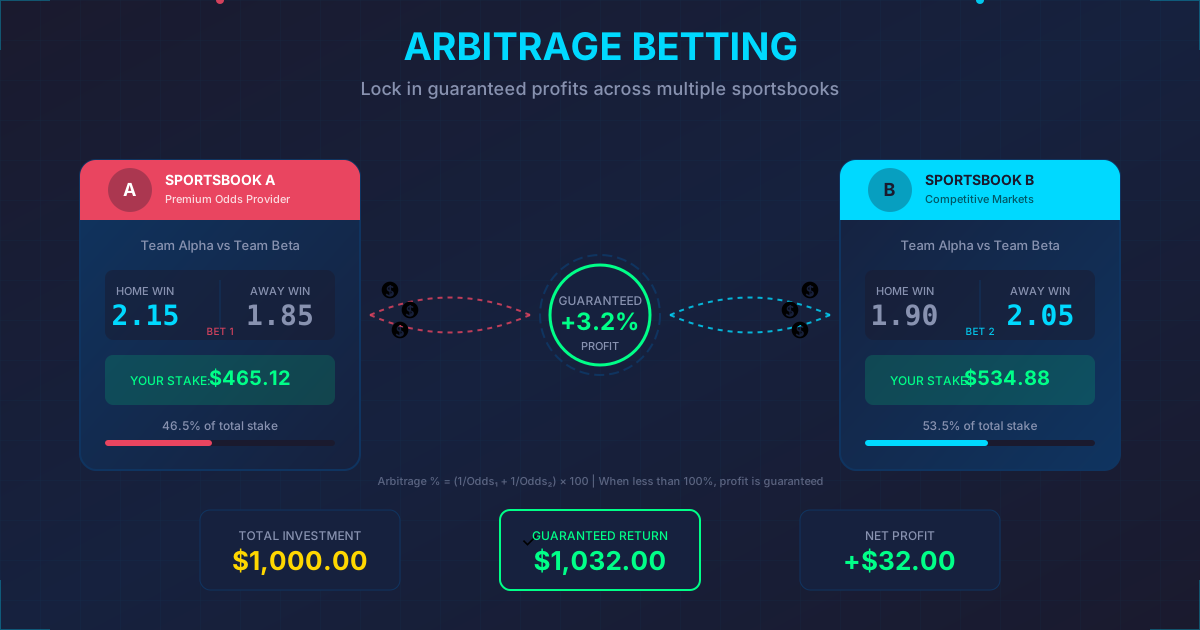
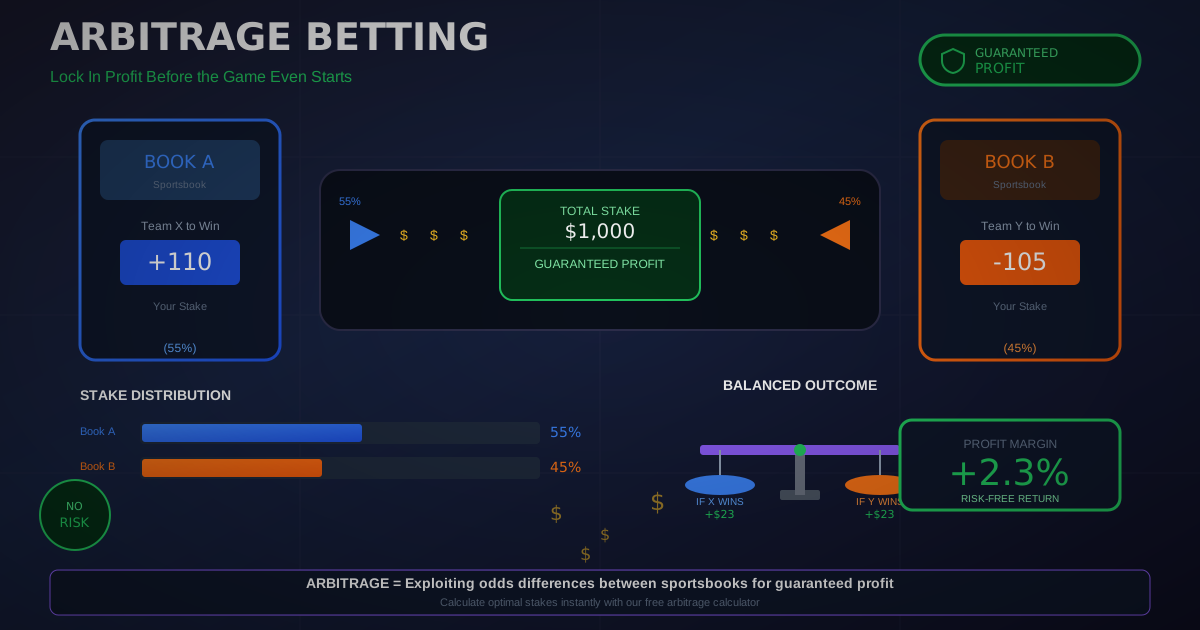
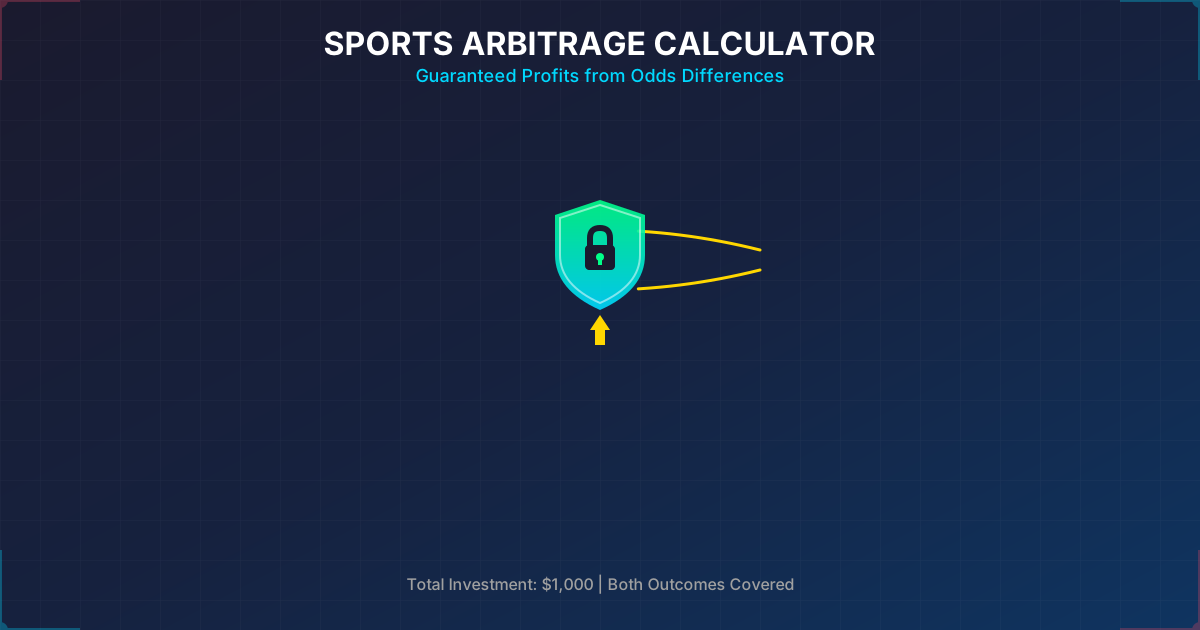
Find risk-free opportunities across sportsbooks with our Arbitrage Calculator.
Advanced RLM Strategies
Timing Your Bets Around RLM
The optimal time to bet depends on which side of the RLM equation you are on:
Betting with the sharps (RLM side): The earlier you act, the better. Once RLM becomes visible, the line has already moved. Your goal is to capture as much of the original number as possible before the market fully adjusts.
Fading the public (waiting for maximum divergence): Sometimes the best strategy is to wait for public money to push a line as far as possible in the wrong direction, then bet the other side at the inflated number. This requires patience and confidence that sharp money will eventually correct the line.
RLM in Live Betting
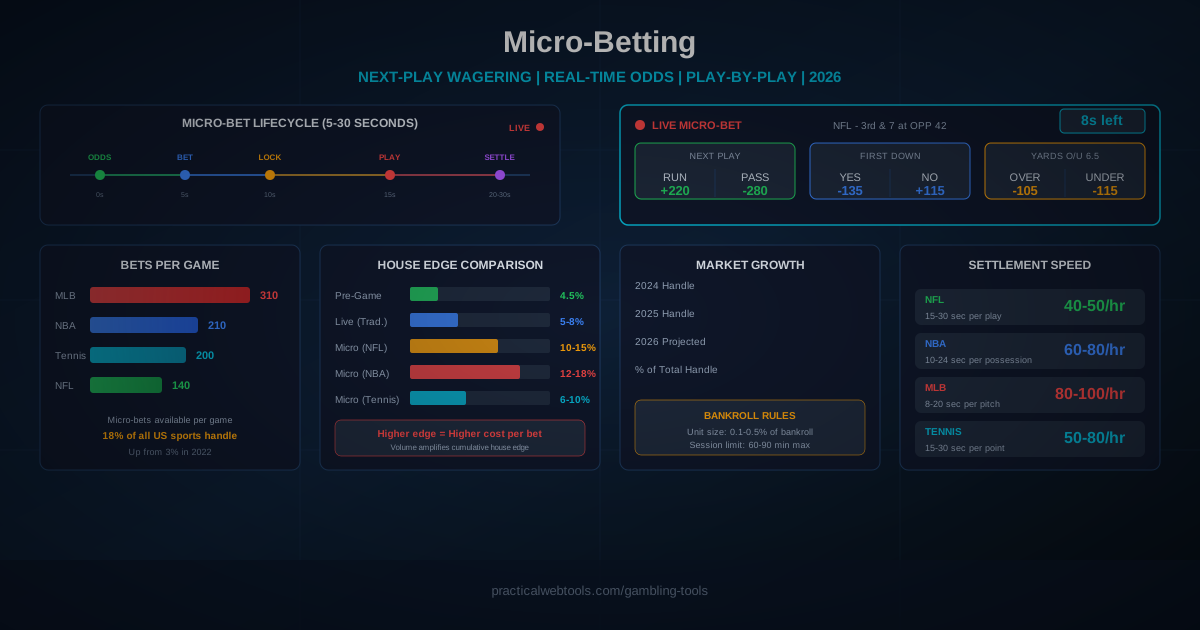
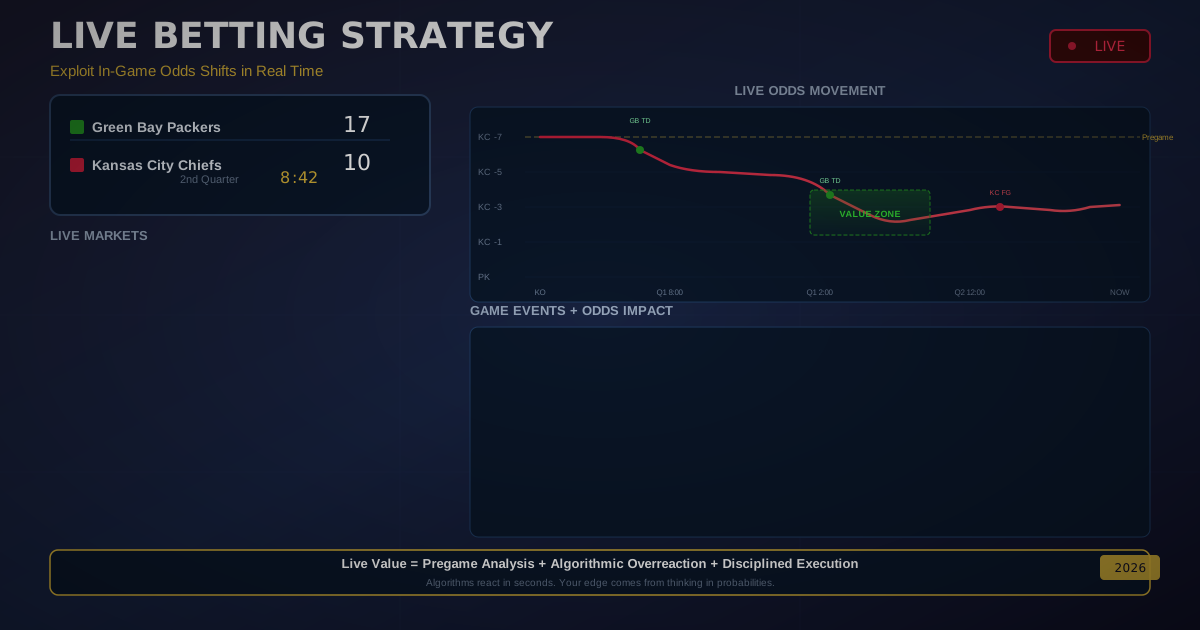
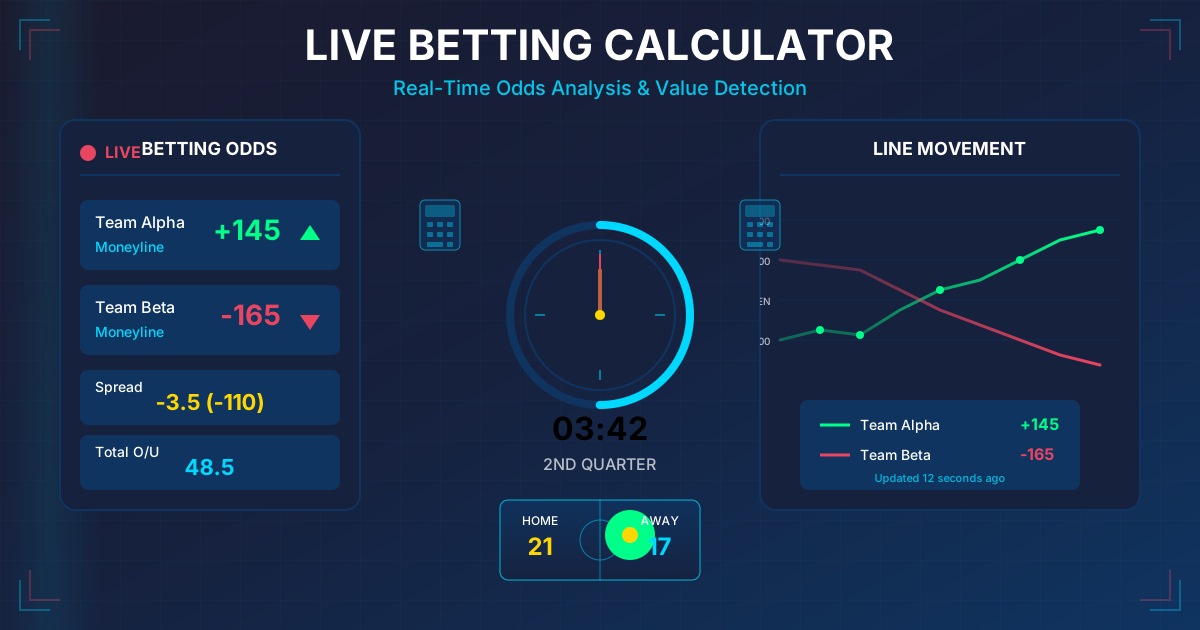
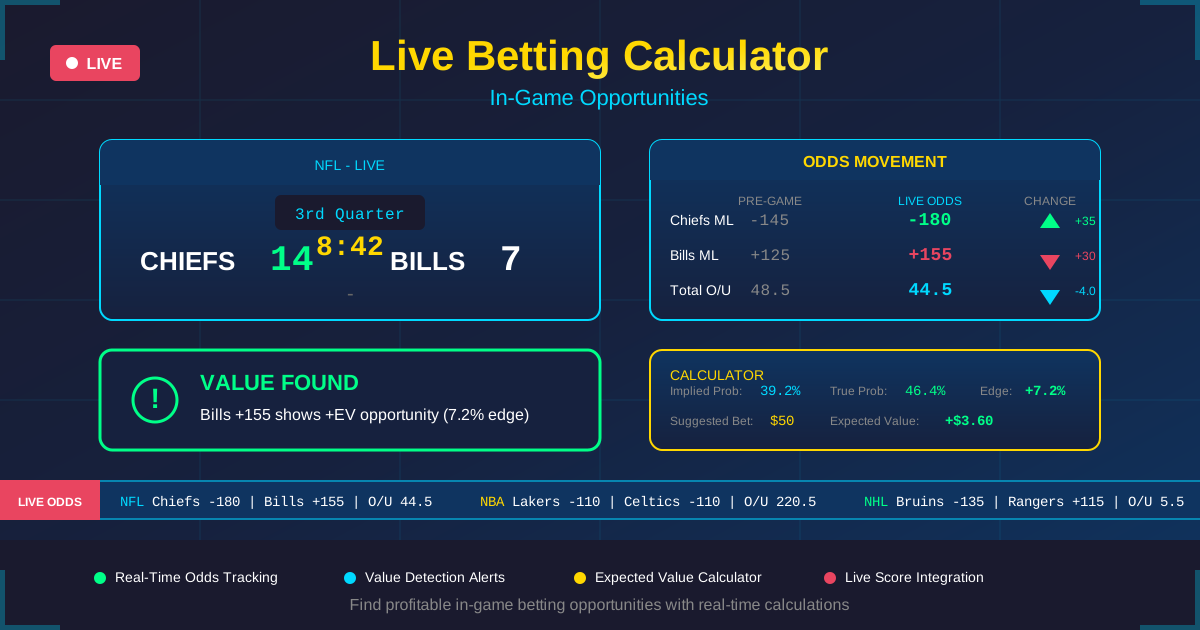
In-game line movement follows similar principles, but at a compressed speed. Sharp live bettors exploit moments when the live line overreacts to in-game events (a quick touchdown, a run of points). While RLM in pre-game markets develops over hours, live RLM can appear and disappear within minutes.
Seasonal RLM Patterns
RLM profitability varies across the season:
| Period | RLM Reliability | Reason |
|---|---|---|
| NFL Weeks 1-4 | High | Public overreacts to previous season narratives; sharps have fresh models |
| NFL Weeks 5-12 | Moderate-High | Market becomes more efficient; still exploitable |
| NFL Weeks 13-17 | Moderate | Sharp and public models converge; less mispricing |
| NFL Playoffs | Lower | Massive public volume creates noise; lines are heavily scrutinized |
| NBA October-December | High | Load management creates mispricing; sharp bettors exploit rest patterns |
| NBA January-March | Moderate | Market adjusts to team strength; fewer mispricings |
| MLB April-May | High | Small sample size of season stats creates public overreaction to early records |
| MLB July-September | Moderate | Larger sample sizes make lines more accurate |
| College Football September | Very High | Public relies on preseason rankings; sharps have superior early-season data |
The Mathematics Behind RLM Profitability
Understanding why RLM works requires understanding the relationship between win rate, vig, and long-term profit.
Break-Even and Profit Thresholds
At standard -110 juice, you need to win 52.38% of your bets to break even. Every percentage point above that threshold generates profit:
| Win Rate | Result per $110 Bet | Annual ROI (500 bets) | Annual Profit ($110/bet) |
|---|---|---|---|
| 52.4% | Break even | 0.0% | $0 |
| 53% | +$0.66/bet avg | +0.6% | $330 |
| 54% | +$1.76/bet avg | +1.6% | $880 |
| 55% | +$2.86/bet avg | +2.6% | $1,430 |
| 56% | +$3.96/bet avg | +3.6% | $1,980 |
| 57% | +$5.06/bet avg | +4.6% | $2,530 |
| 58% | +$6.16/bet avg | +5.6% | $3,080 |
Historical RLM data suggests that well-filtered signals produce win rates in the 55-58% range, translating to 2.6-5.6% ROI per bet. Over a full betting calendar with 500+ qualifying plays, that edge is substantial.
Bankroll Implications
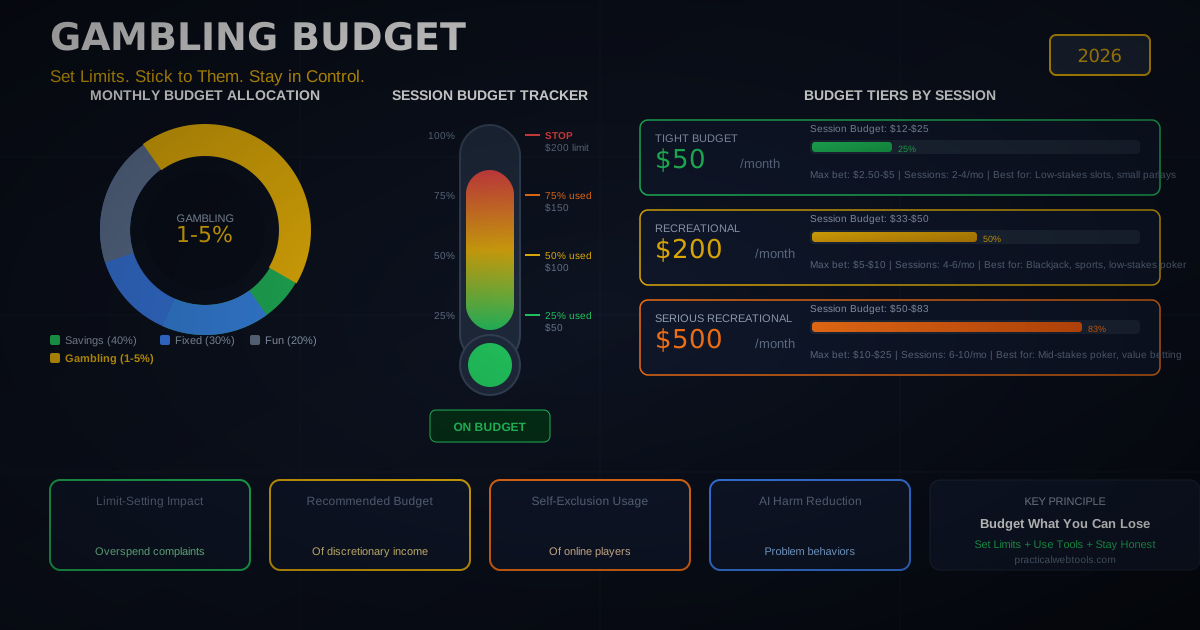
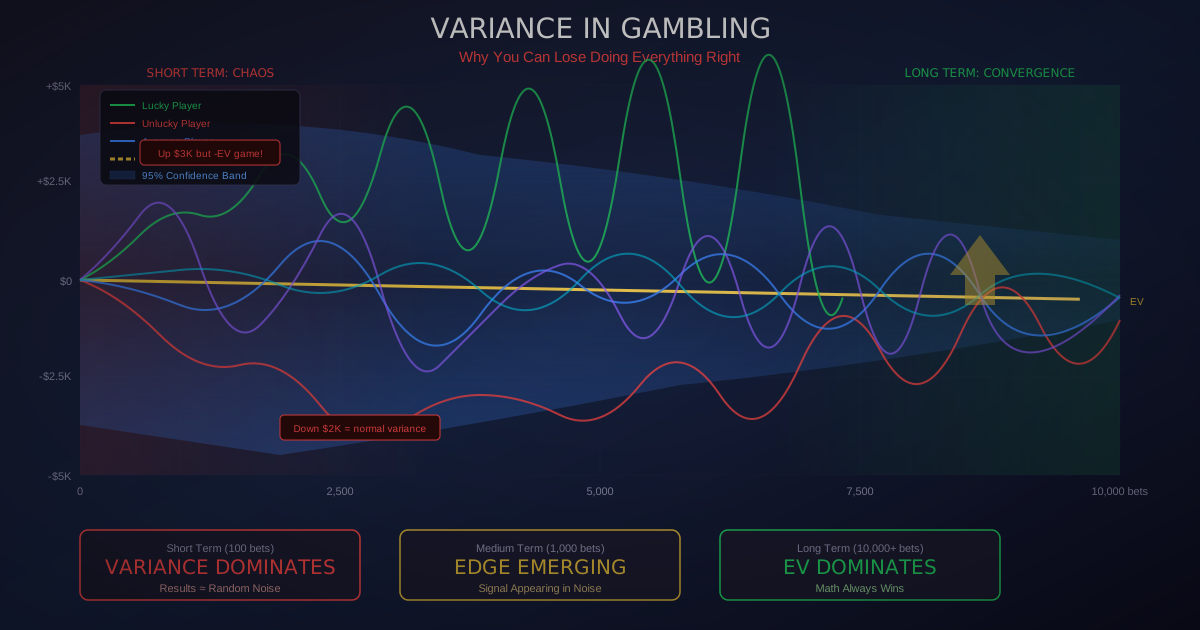
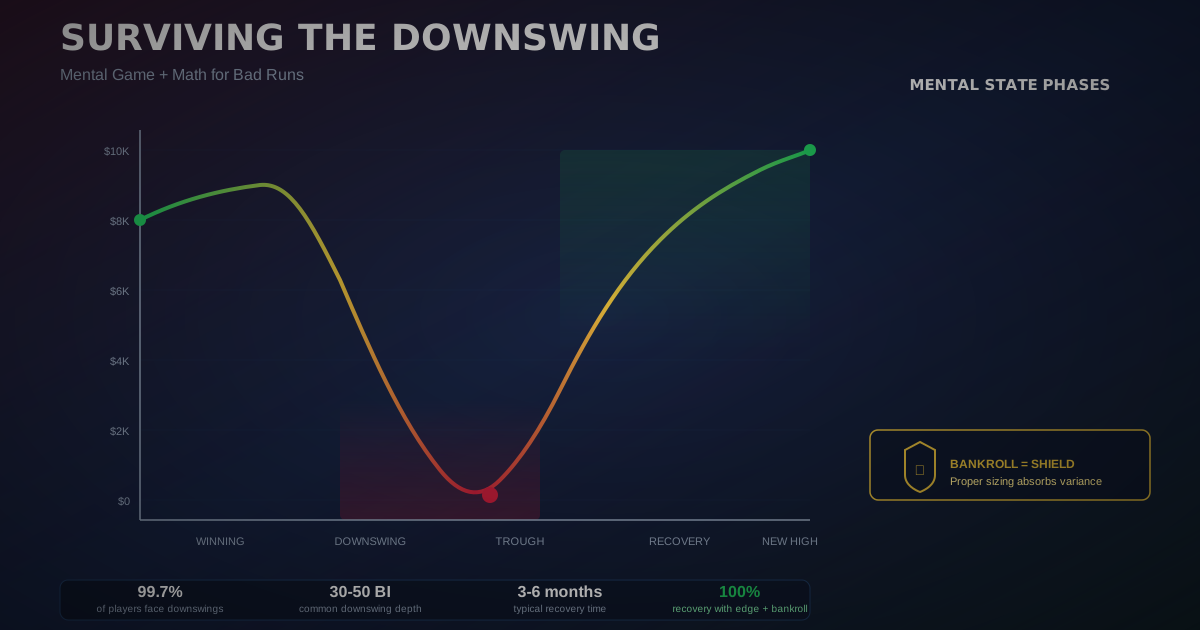
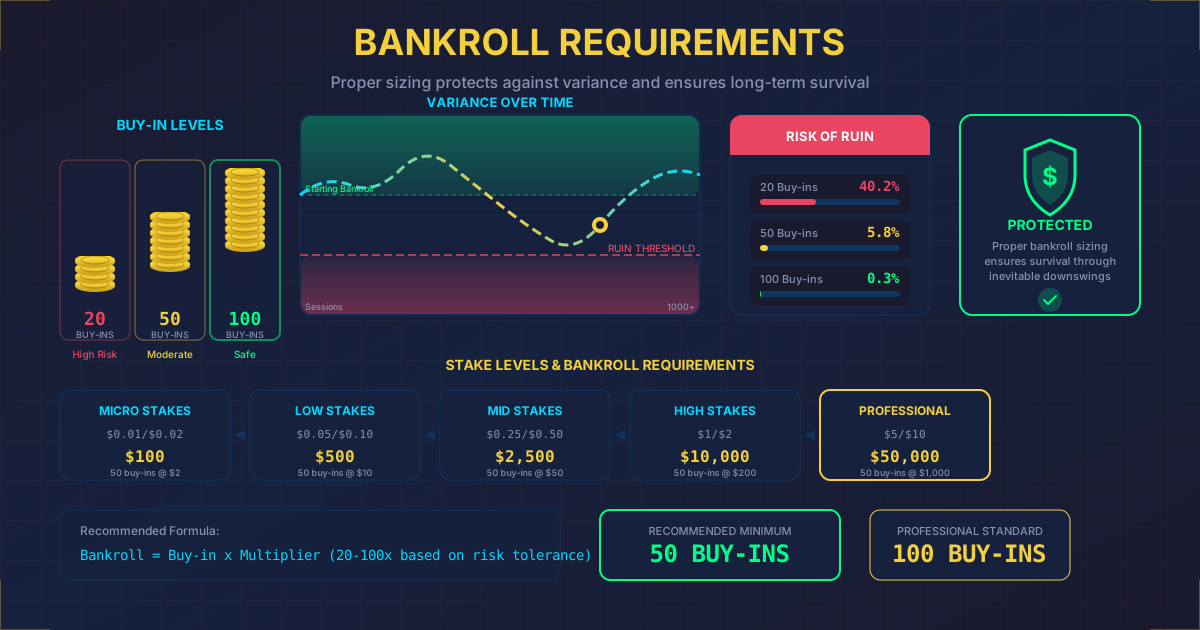
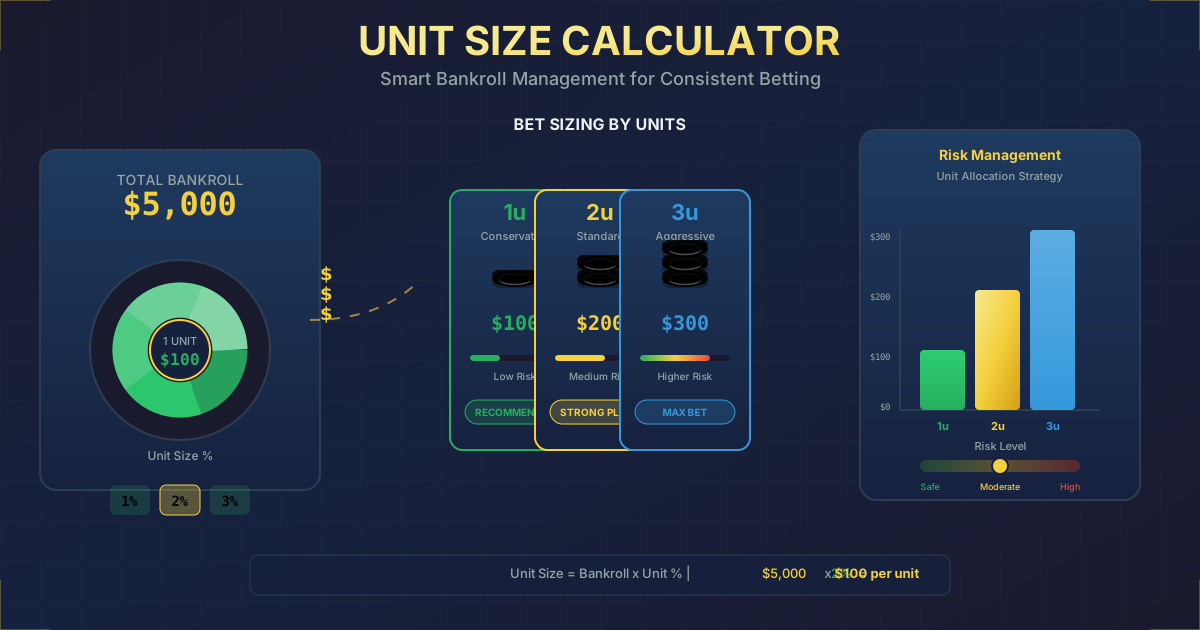
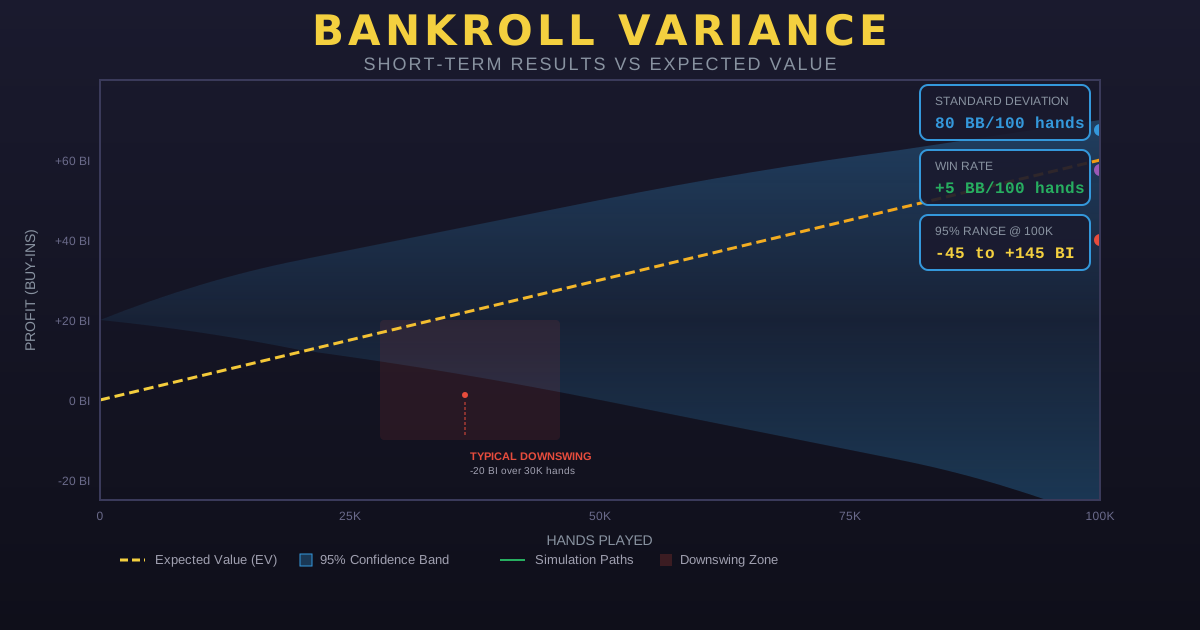
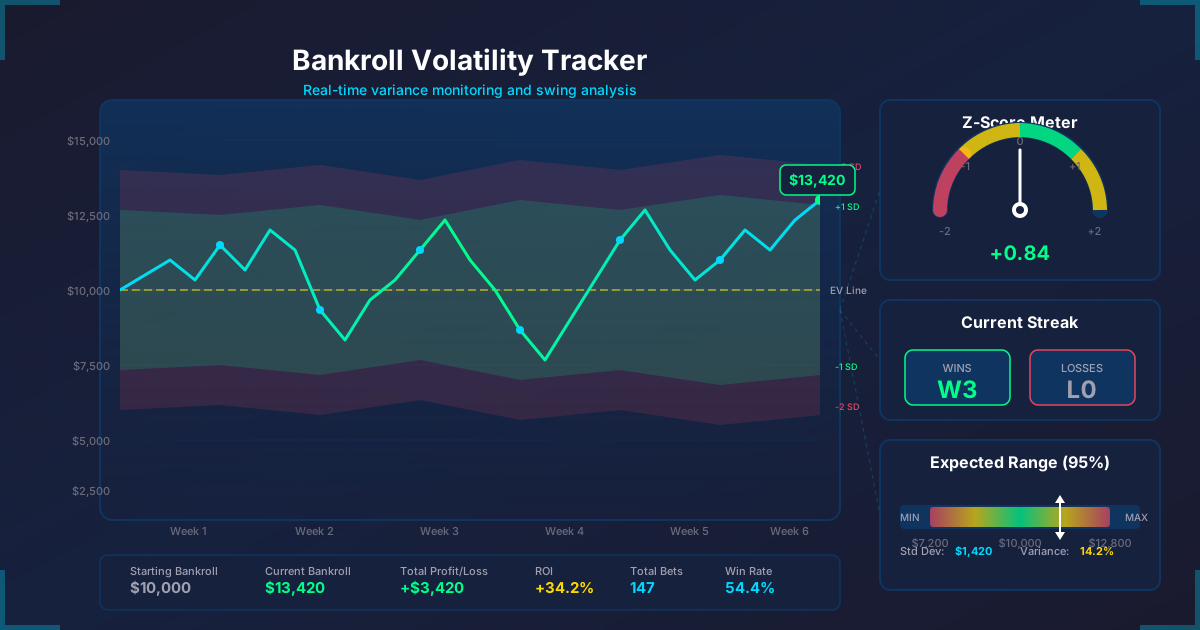
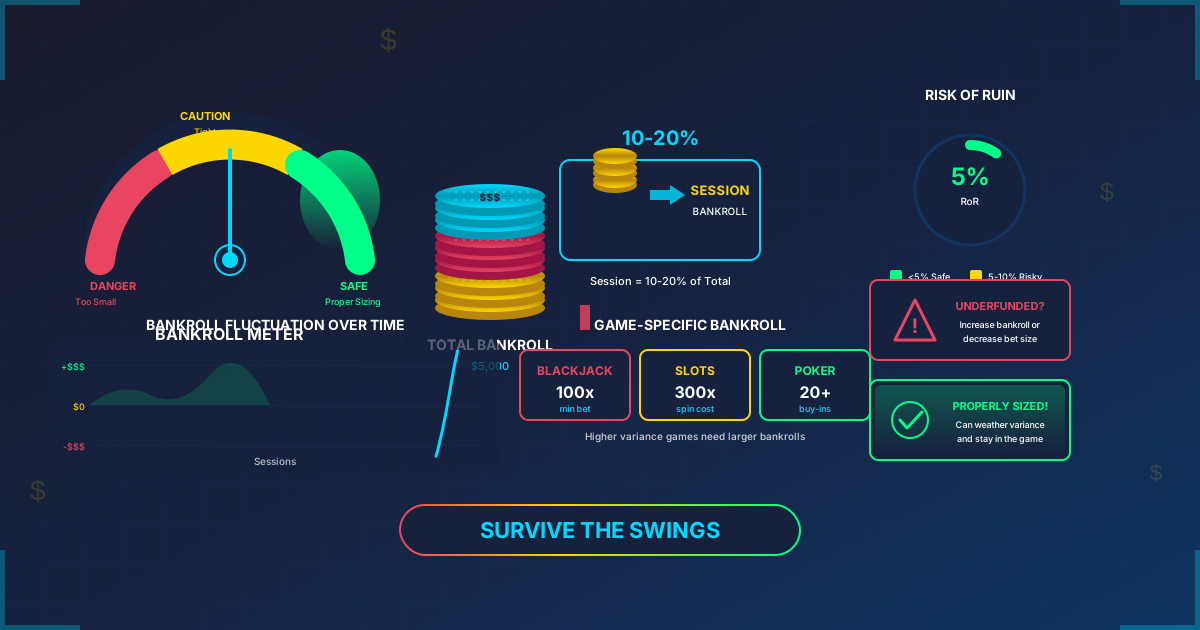
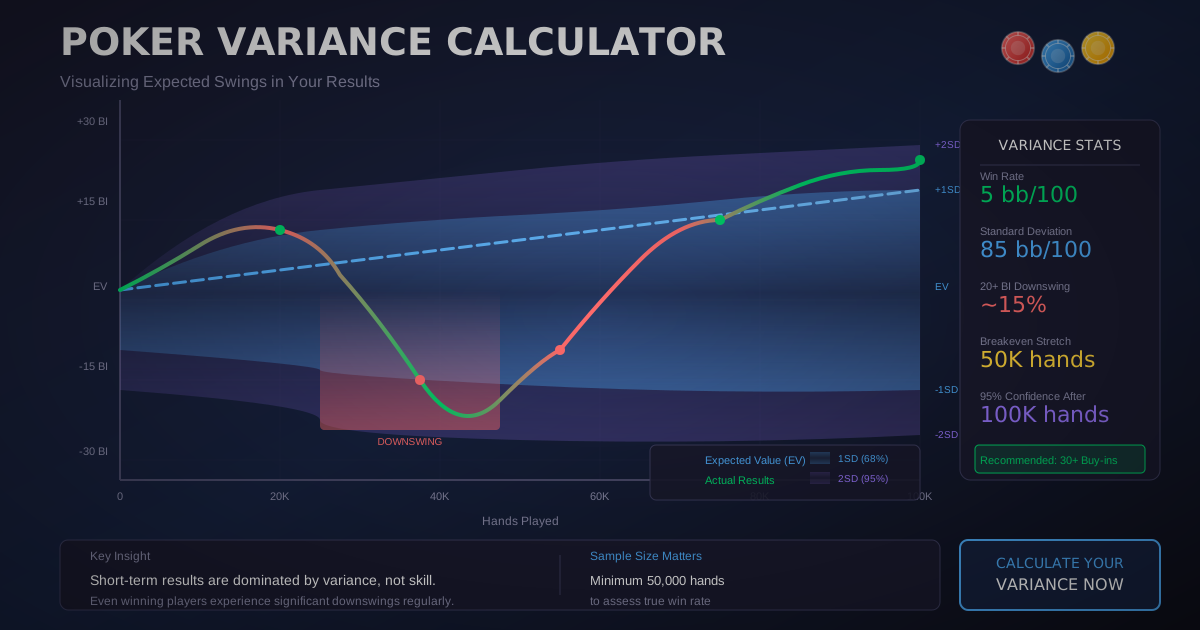
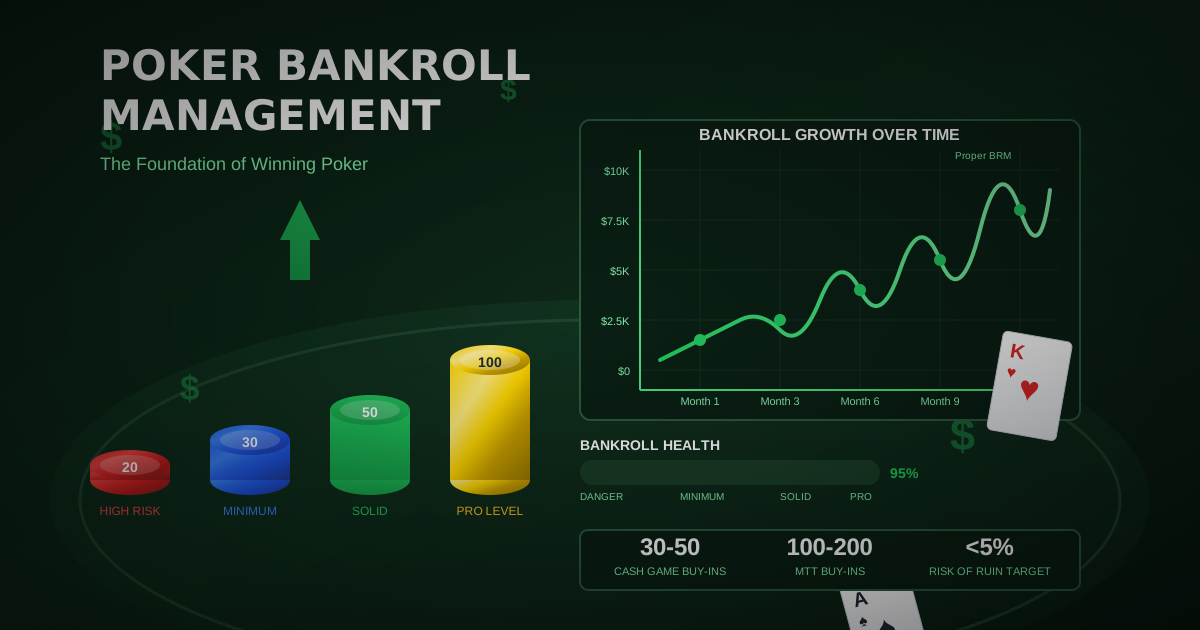
A 55% win rate on RLM plays does not mean you will win every month. Variance in sports betting is real, and even profitable bettors experience losing streaks. Proper bankroll management -- typically risking 1-3% of your bankroll per bet -- ensures you survive the inevitable downswings while your edge plays out over larger sample sizes.
Calculate optimal bet sizing for your edge with our Kelly Criterion Calculator.
Frequently Asked Questions
What is reverse line movement in sports betting?
Reverse line movement (RLM) occurs when a betting line moves in the opposite direction of where the majority of bets are being placed. If 75% of bets are on Team A at -7 but the line drops to -6, the line has moved against the public consensus. This typically indicates that sharp (professional) bettors have placed significant wagers on the other side, and the sportsbook values their money enough to move the line despite the volume of public bets going the other way.
How do you identify a steam move?
A steam move is identified by rapid, coordinated line movement across three or more sportsbooks within a 30-90 second window. When Pinnacle, Circa, and multiple retail books all shift a spread by 0.5-1.5 points within minutes, it signals that a betting syndicate has placed large, coordinated wagers simultaneously. Steam detection tools and real-time odds monitoring services are typically required to identify these moves as they happen, since the profitable window closes within seconds.
How reliable is reverse line movement as a betting strategy?
Historical data shows that well-filtered RLM signals produce win rates between 55% and 59% against the spread, depending on the sport and the strength of the signal. College football and college basketball tend to produce the most profitable RLM signals (56-59% ATS), while MLB produces the lowest (53-55%). RLM is most reliable when combined with other indicators like expected value analysis, CLV tracking, and a threshold of at least 70% public ticket percentage with 1+ point of reverse movement.
What is the difference between ticket percentage and money percentage?
Ticket percentage measures the number of individual bets on each side (one bet = one ticket regardless of amount), while money percentage measures the total dollar amount wagered on each side. A recreational bettor placing $25 and a sharp bettor placing $25,000 each count as one ticket, but they represent vastly different money percentages. The divergence between these two metrics is the foundation of RLM analysis -- when tickets say one thing but dollars say another, the dollars are usually right.
Can sportsbooks create false reverse line movement?
While sportsbooks primarily react to incoming money rather than proactively manipulating lines, false RLM signals can arise from several sources. Injury announcements can cause legitimate information-based moves that look like RLM. Professional syndicates sometimes use "head fakes" -- deliberately betting one side to move the line before attacking the other side at a better number. Stale lines at slow-moving books can also create the appearance of RLM. This is why multi-book confirmation and timing analysis are essential filters.
What is closing line value (CLV) and why does it matter for RLM?
Closing line value measures the difference between the odds at which you placed your bet and the odds at the time the line closes (game time). If you bet Team B +7 and the line closes at +6, you captured 1 point of positive CLV. CLV is considered the single best predictor of long-term betting profitability -- even better than short-term win/loss records. When following RLM, consistently capturing positive CLV confirms that you are acting on genuine sharp signals and timing your bets correctly. Track your CLV with our CLV Tracker.
How quickly do I need to act on a steam move?
The profitable window for a steam move is extremely narrow -- typically 15 to 60 seconds from detection to market correction. By the time most retail bettors notice a steam move, the line has already adjusted at all major books. This is why steam moves are generally more useful as confirmation signals (validating a position you already hold or were planning to take) rather than triggers for new bets. Professional bettors who actively chase steam use automated feeds, pre-funded accounts at multiple books, and one-click bet placement to execute within the window.
Which sports produce the most reliable RLM signals?
College football produces the most reliable RLM signals, with historical ATS records of 56-59% on qualifying plays. The combination of public brand-name bias (casual bettors backing ranked teams), high game volume, and less-efficient opening lines in non-marquee matchups creates consistent mispricing that sharps exploit. College basketball follows closely at 55-58%, driven by similar factors across its massive game volume. The NFL produces reliable signals (55-57%) but with a smaller qualifying sample size per season. MLB moneyline RLM is the least reliable (53-55%) due to the inherent variance in baseball outcomes.
Practical Web Tools for Line Movement Analysis
Apply the concepts from this guide with these free calculators:
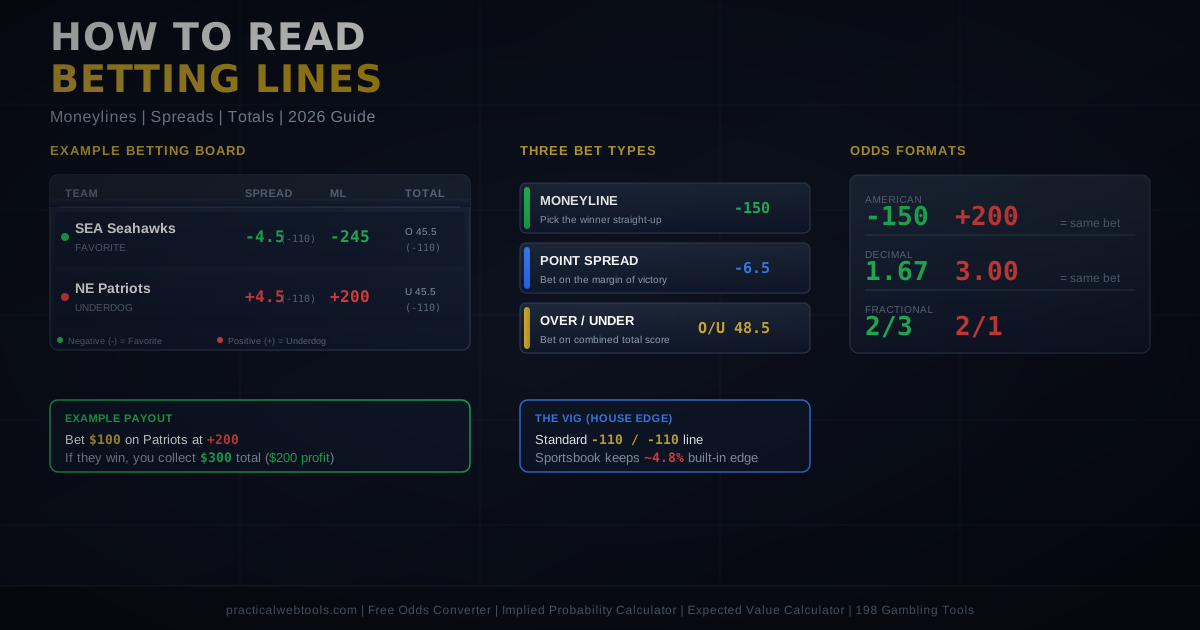
- Odds Converter: Convert between American, decimal, and fractional odds formats to compare lines across international sportsbooks
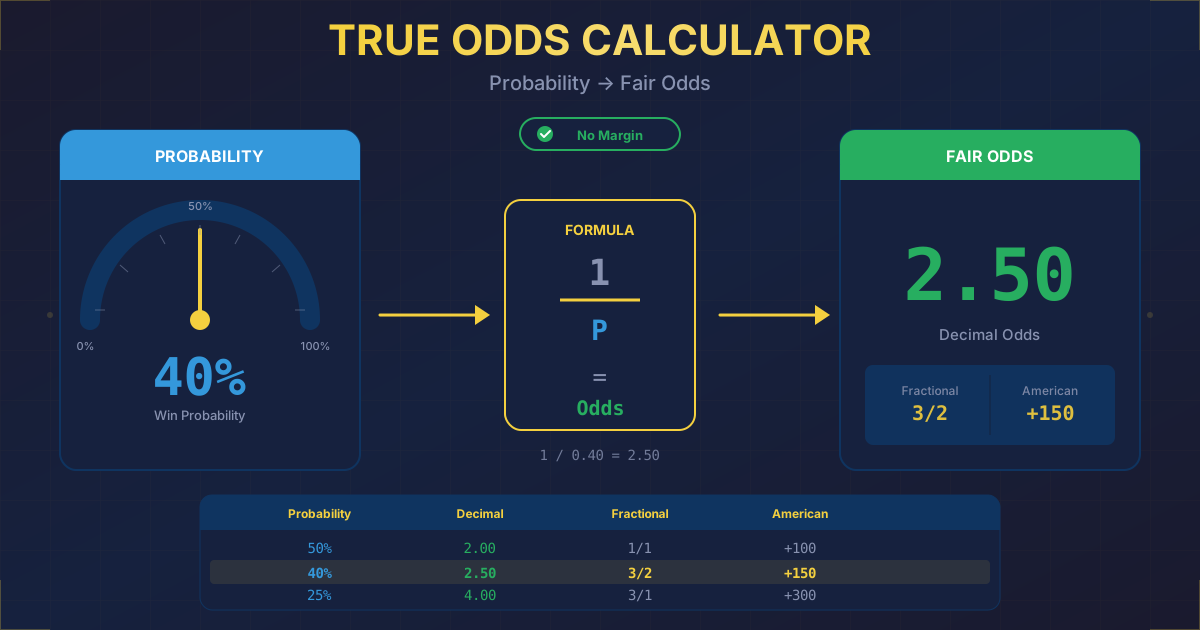
- Implied Probability Calculator: Convert any betting line to its true implied probability -- essential for understanding what the market thinks
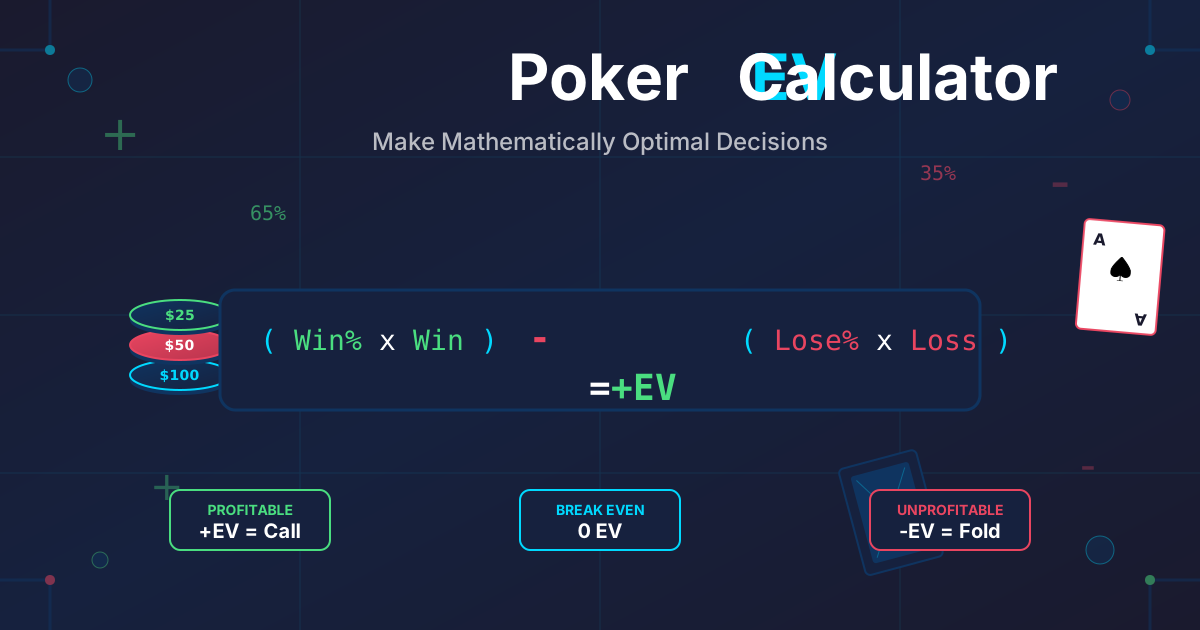
- Expected Value Calculator: Calculate whether a bet has positive or negative expected value based on your probability estimate
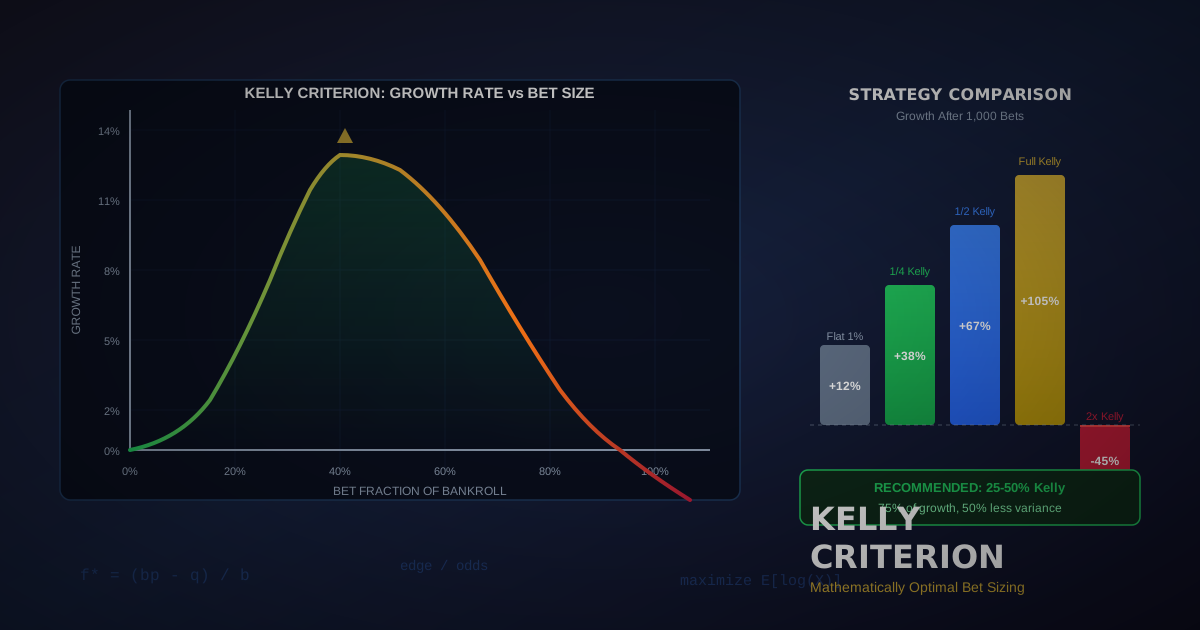
- Kelly Criterion Calculator: Determine the mathematically optimal bet size based on your edge and bankroll
- Hold/Vig Calculator: Calculate the sportsbook's built-in margin on any line to understand the true cost of betting
- CLV Tracker: Track your closing line value over time to measure whether you are consistently beating the market
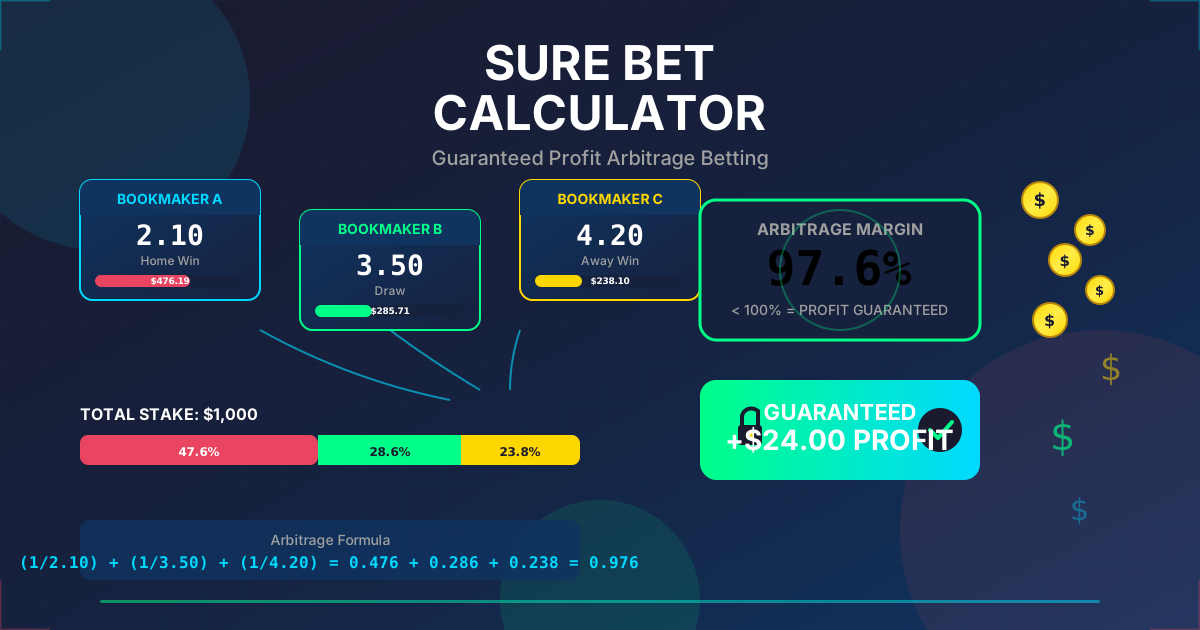
- Arbitrage Calculator: Identify and size arbitrage opportunities when line discrepancies between books create risk-free profit windows
Conclusion
Reverse line movement and steam moves are the closest thing the betting market offers to a transparent signal of where the smart money sits. They are not magic -- no single indicator is -- but when properly filtered and combined with expected value analysis, CLV tracking, and disciplined bankroll management, they provide a documented, repeatable edge in the range of 55-58% ATS across major sports.
The key principles to remember: sportsbooks move lines based on money, not tickets. When the line moves against the public, it means someone the book respects disagrees with the crowd. That disagreement, expressed in six- and seven-figure wagers, carries more information than any pregame television analysis or social media consensus.
Start by tracking opening and closing lines. Record ticket percentages. Note when the line moves against the public and what happens in those games. Over time, you will develop the pattern recognition that separates bettors who read the market from those who simply react to it.
Begin building your analytical edge with our Expected Value Calculator and Implied Probability Calculator.
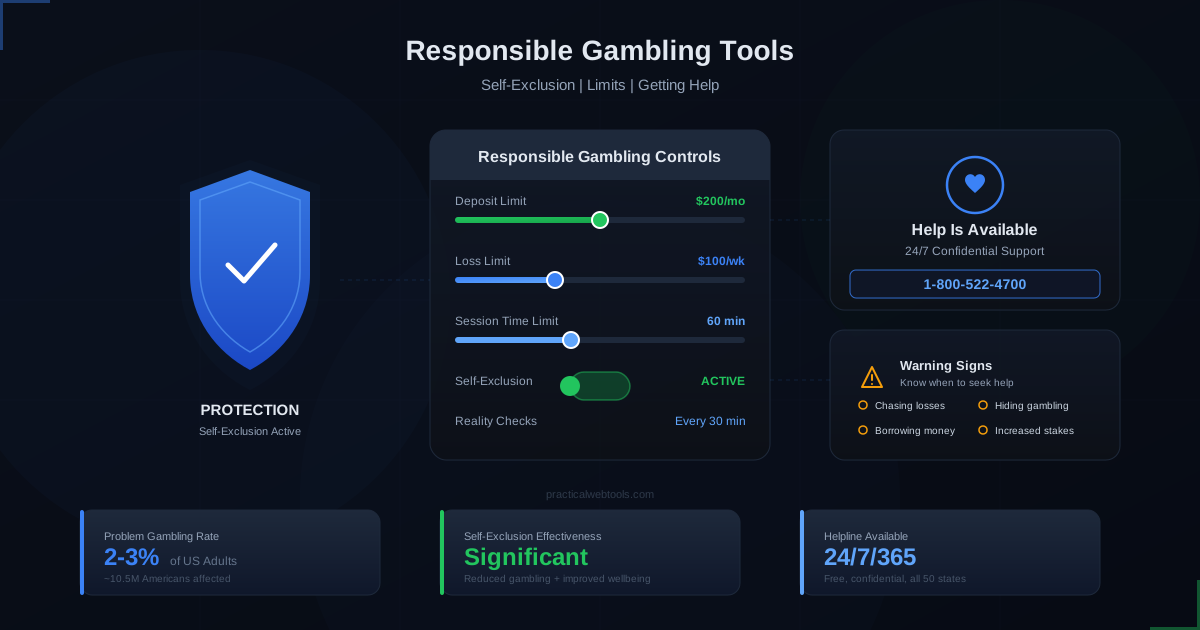
Gambling involves risk. This content is for educational and informational purposes only. Always gamble responsibly, set limits you can afford, and seek help if gambling becomes a problem. Visit the National Council on Problem Gambling or call 1-800-522-4700 for support.