Complete Beginner's Guide to Gambling: How Every Casino and Betting Game Works (2026)
Walking into a casino or opening a sportsbook app for the first time can be overwhelming. Flashing lights, unfamiliar terminology, and dozens of games you have never played create a perfect recipe for costly mistakes. The average first-time gambler loses $500 to $1,200 on their first trip to Las Vegas, and most of that loss comes from playing games they do not understand, betting too much per hand, and chasing losses.
This guide breaks down every major gambling game in plain language. You will learn exactly how each game works mechanically, what the house edge is (the casino's built-in mathematical advantage), which games give you the best odds, and which ones you should avoid entirely. No jargon, no hype, just the math and the facts.
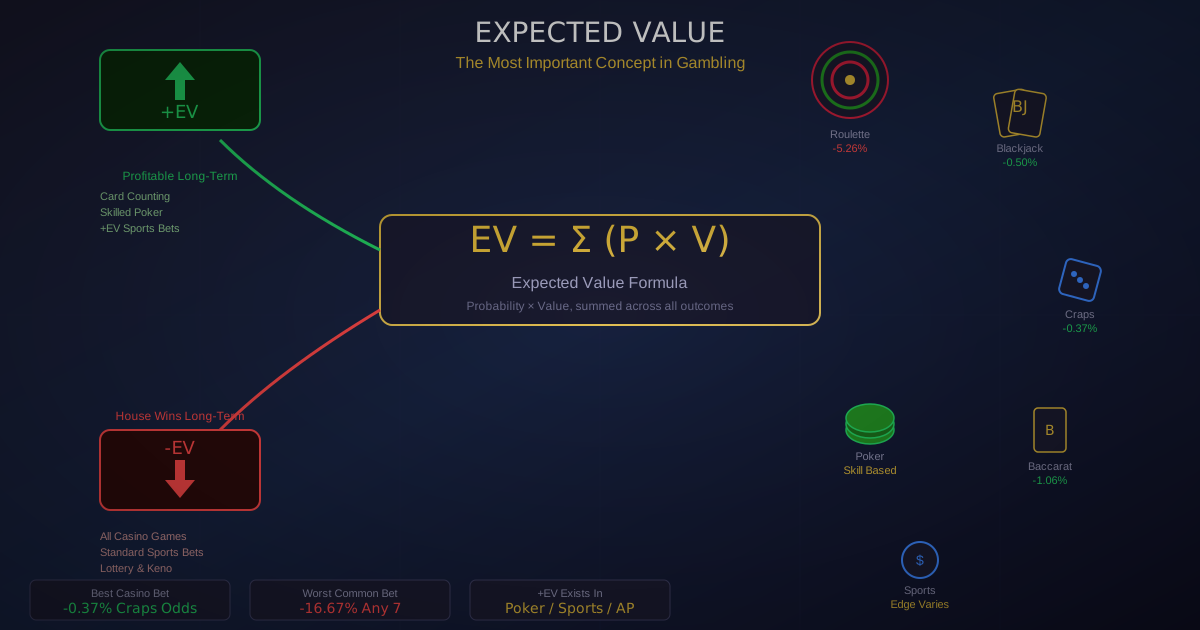
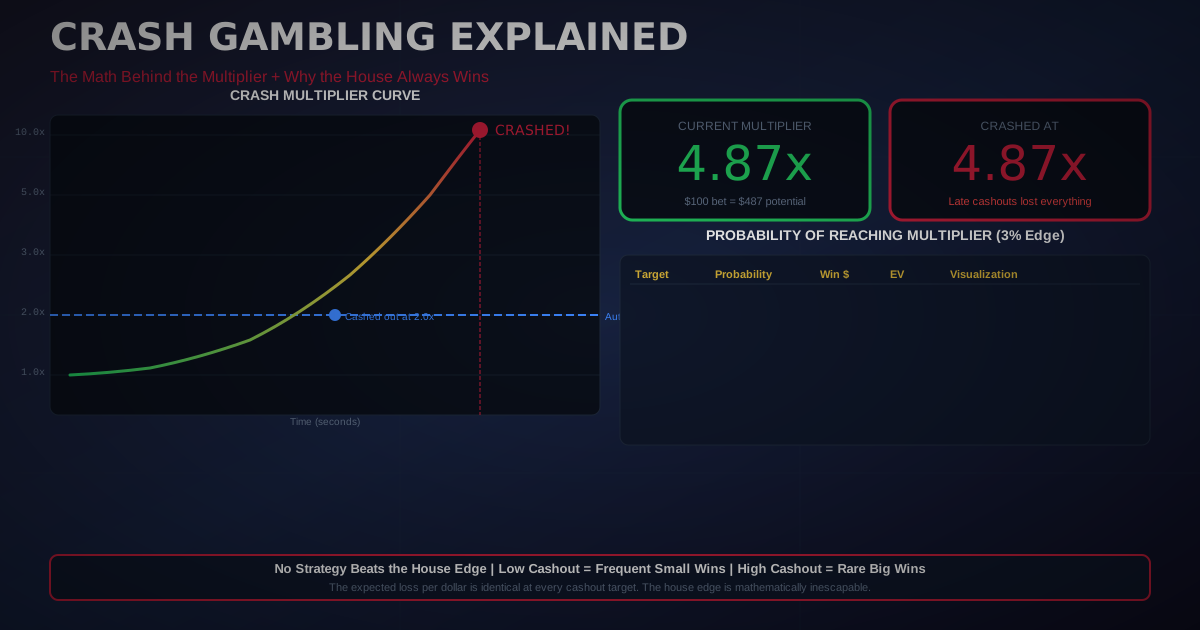
The single most important concept in gambling is this: the house always has an edge. Every casino game, every sportsbook line, every lottery ticket is designed so the operator profits over time. Your goal as an informed gambler is to minimize that edge, manage your money carefully, and treat gambling as entertainment with a known cost, not as a way to make money.
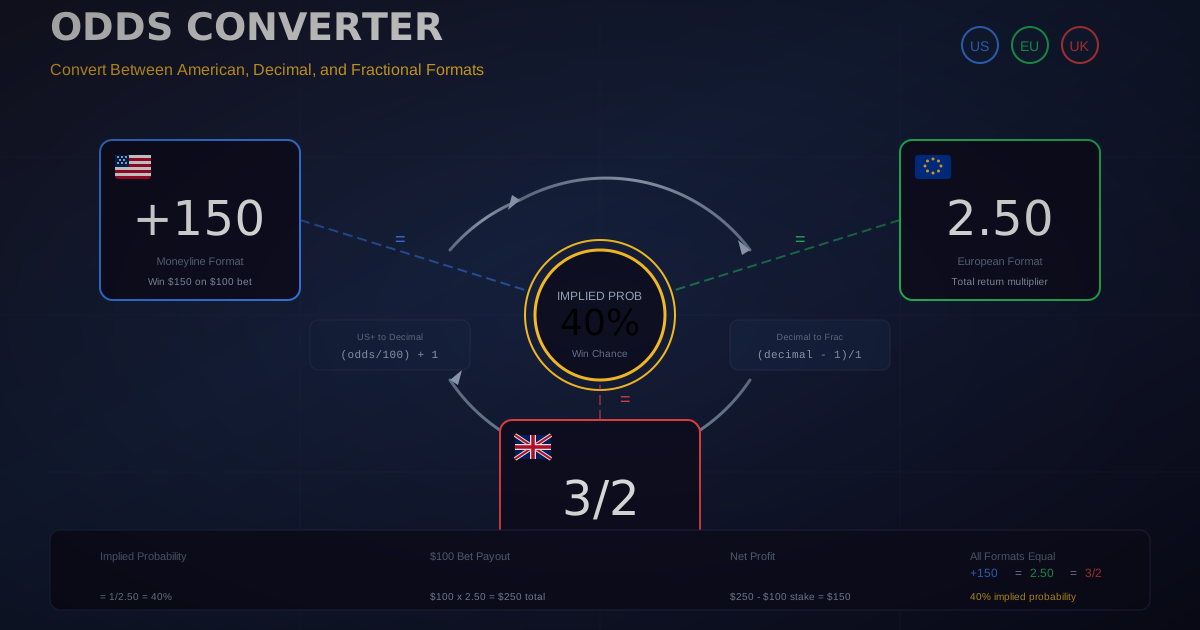
Convert between any odds format instantly with our free Odds Converter.
Understanding the House Edge: The Most Important Concept in Gambling
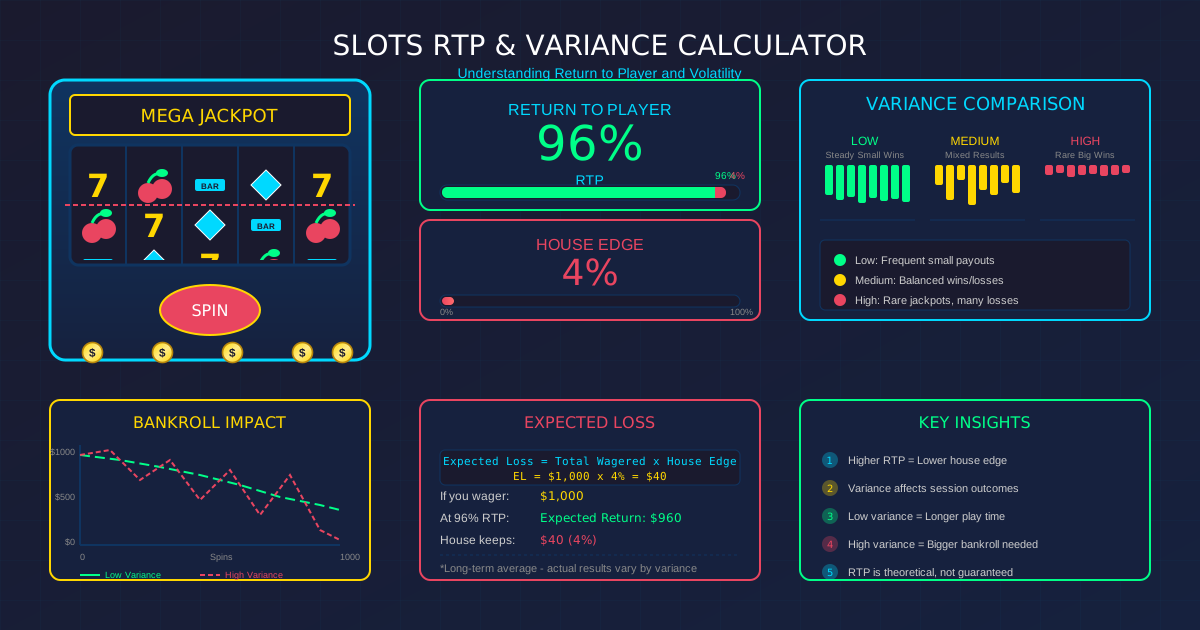
Before you play any game, you need to understand one number: the house edge. This is the mathematical percentage the casino expects to keep from every dollar you wager over the long run.
How the House Edge Works
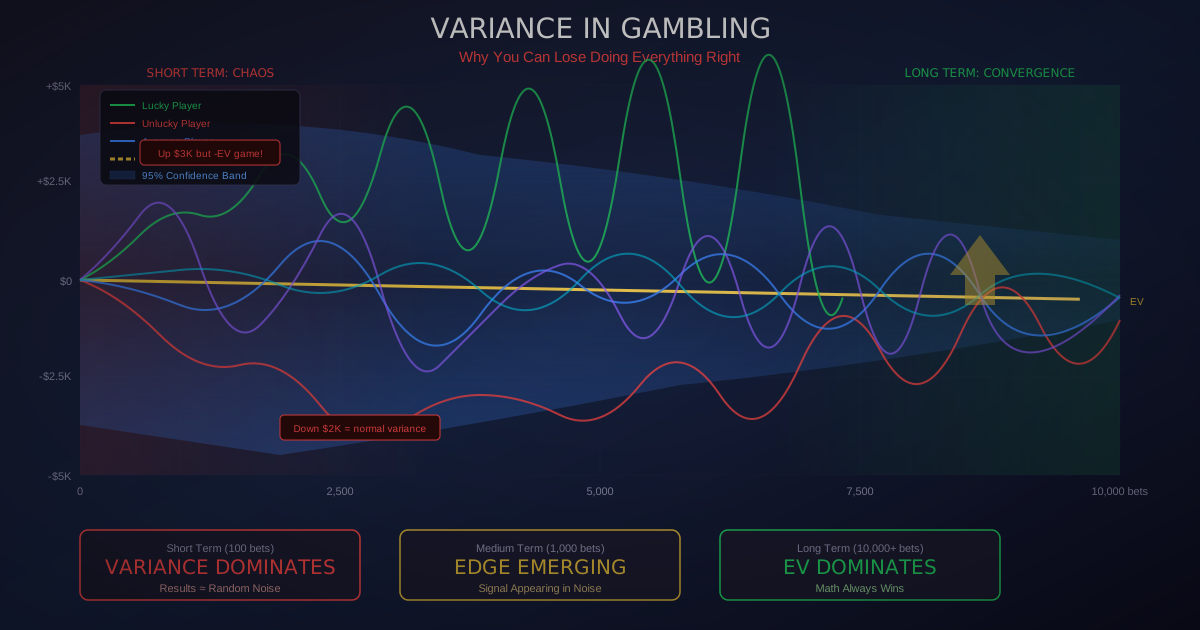
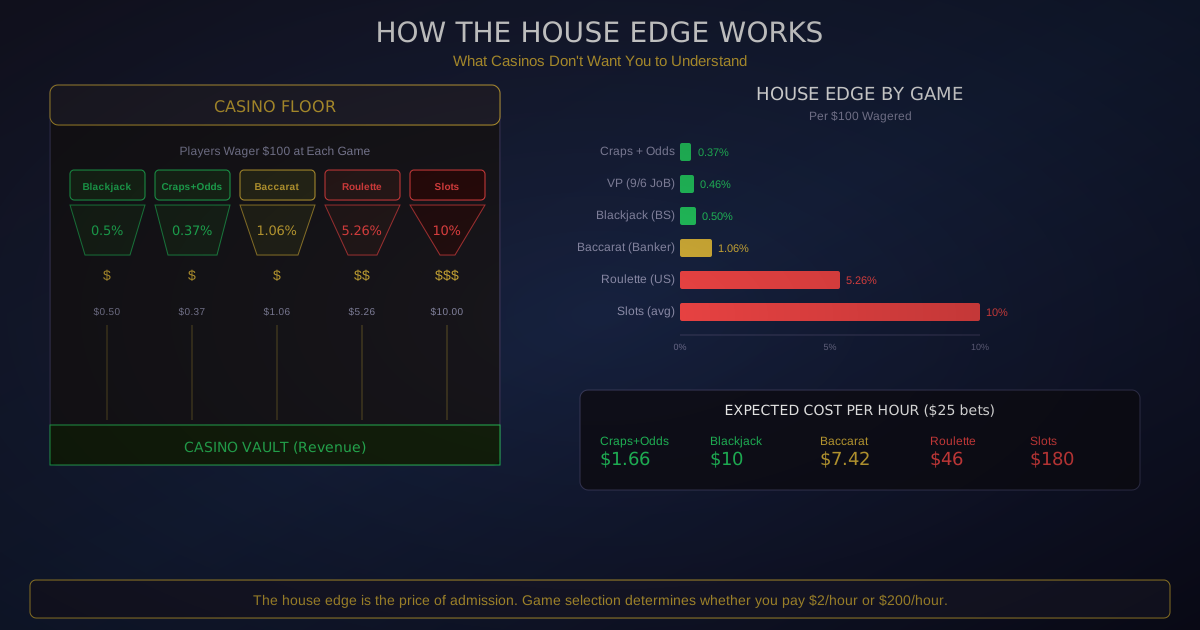
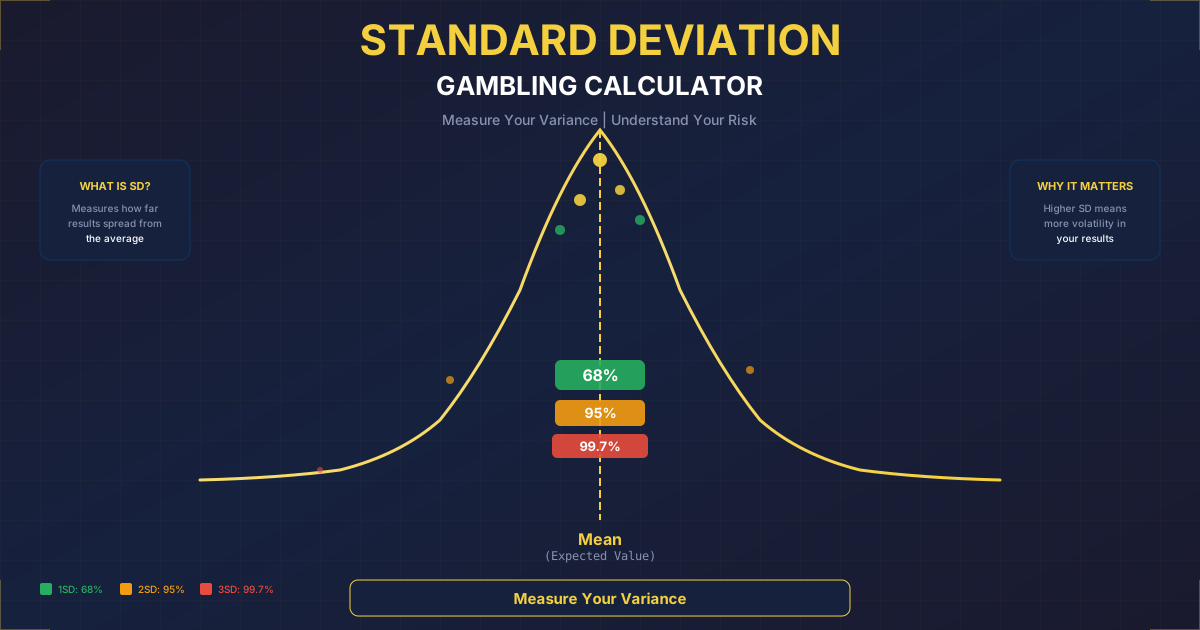
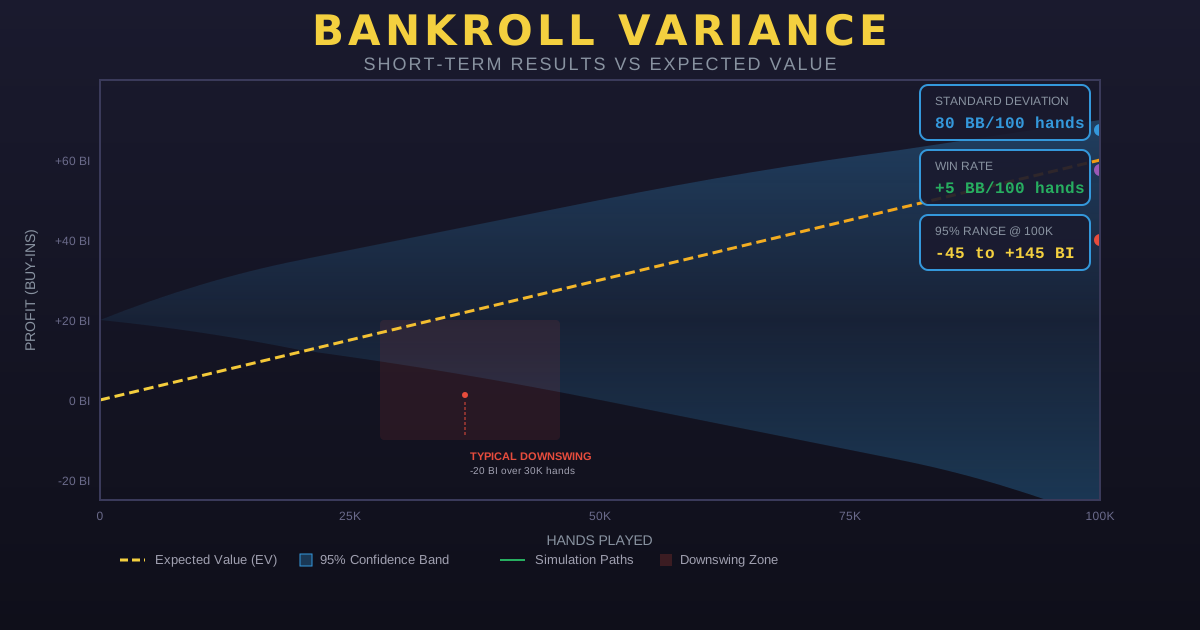
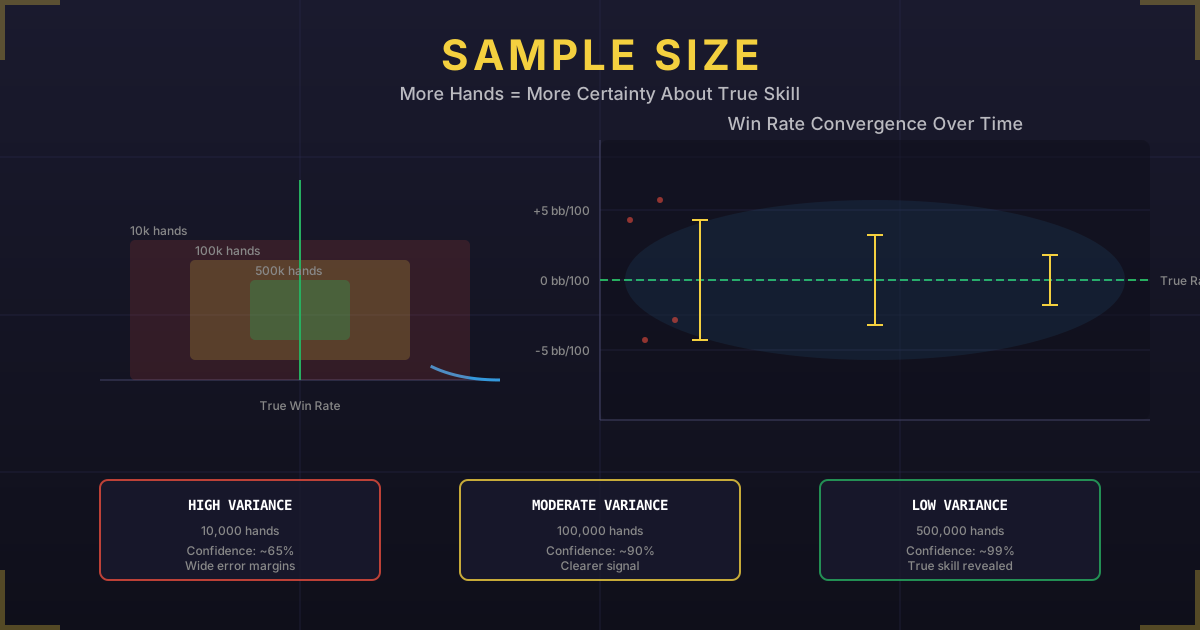
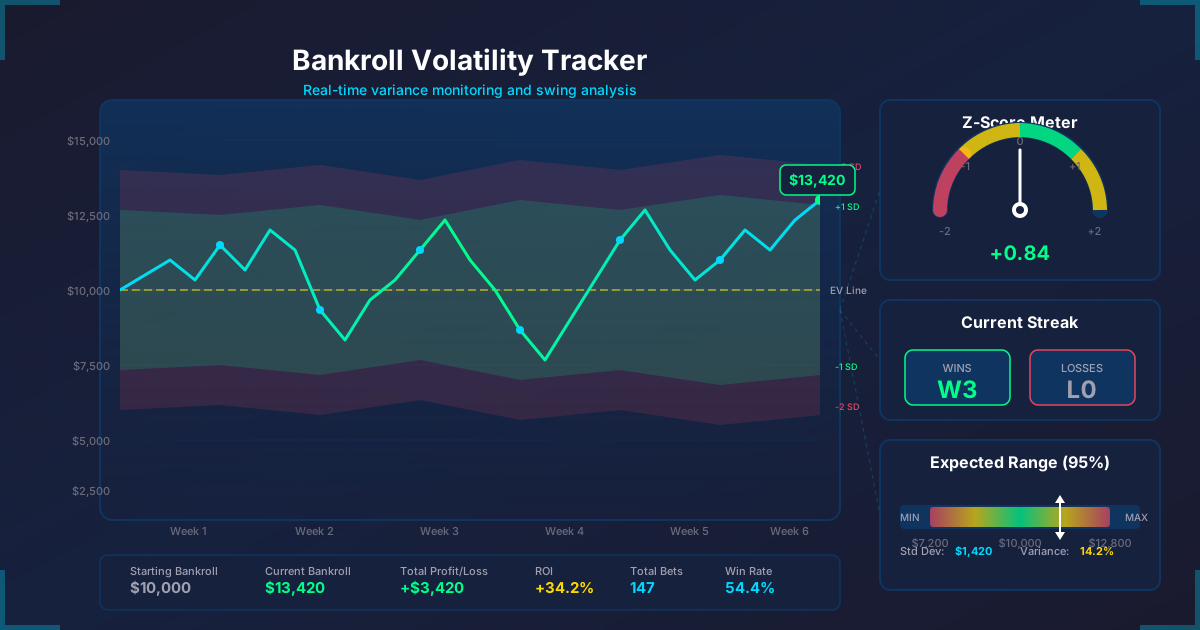
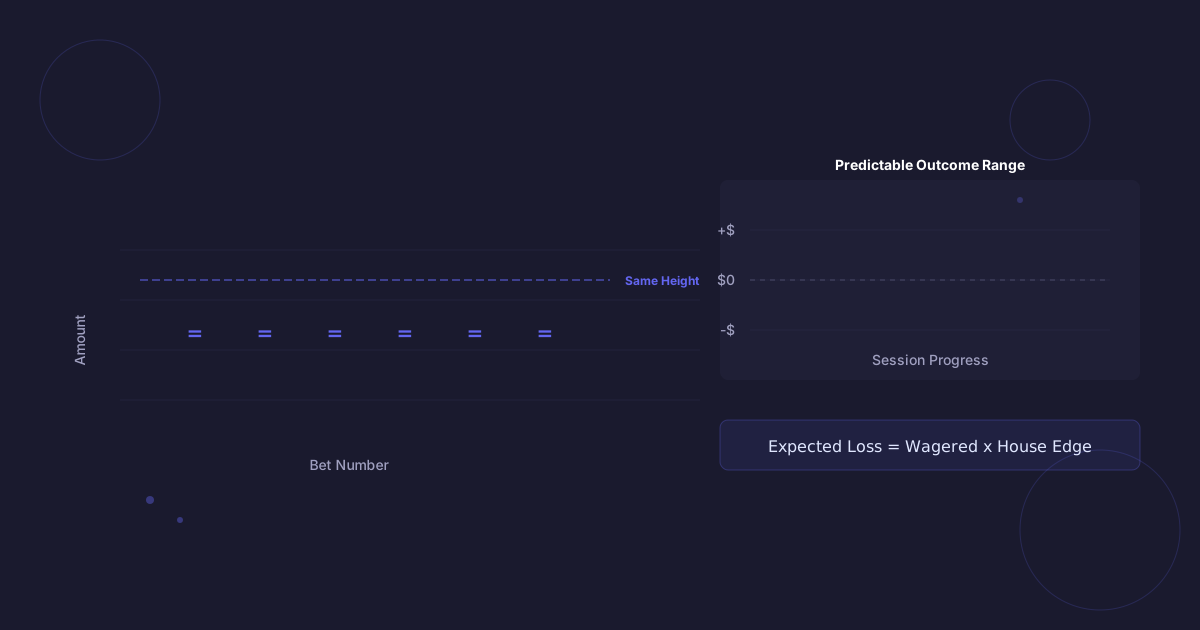
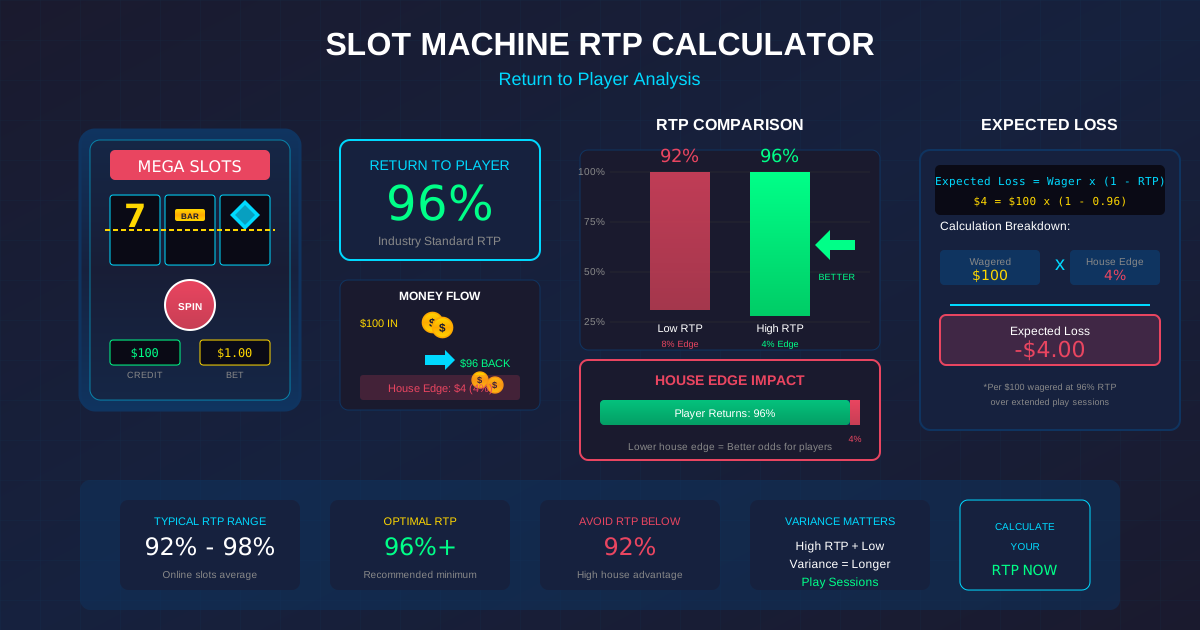
If a game has a 5% house edge, you can expect to lose $5 for every $100 you bet over time. That does not mean you lose exactly $5 every session. You might win $200 one night and lose $300 the next. But over thousands of bets, the math converges toward the house edge.
The formula:
House Edge = (True Odds - Payout Odds) / True Odds x 100
Or more practically:
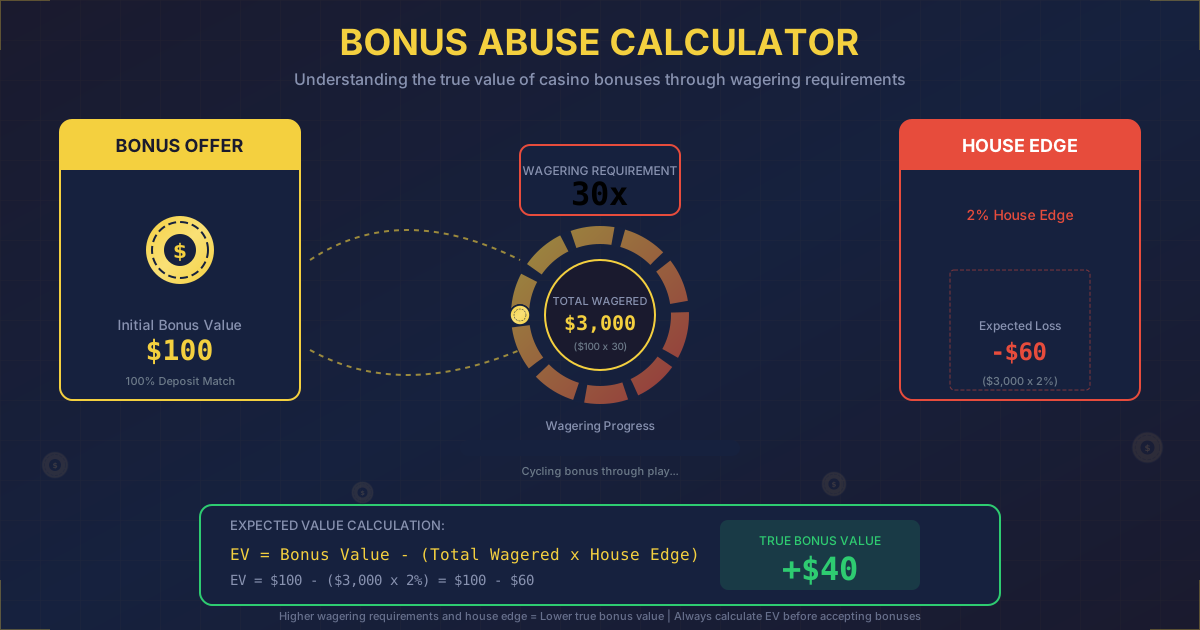
Expected Loss = Total Amount Wagered x House Edge
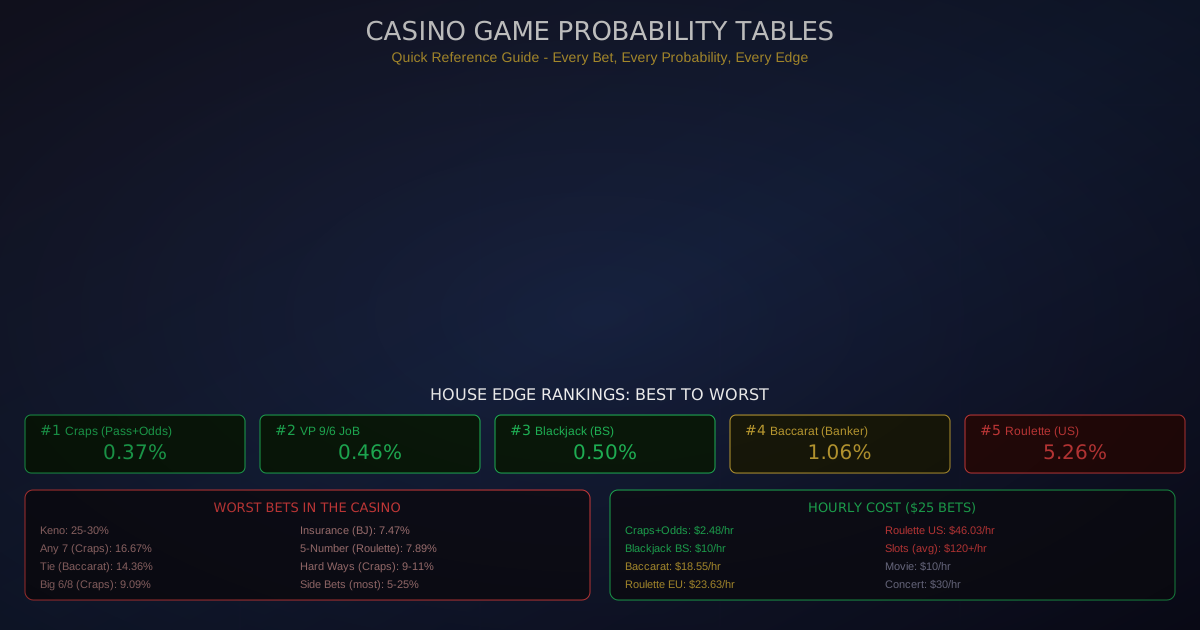
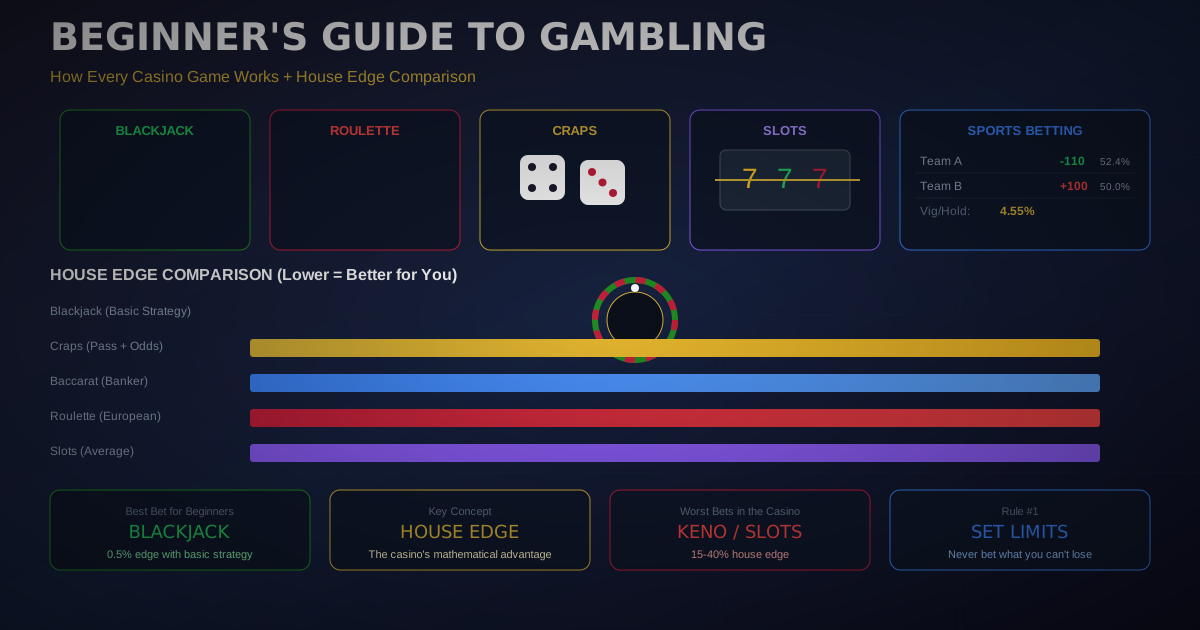
House Edge Comparison Across Casino Games
| Game | Best House Edge | Worst House Edge | Notes |
|---|---|---|---|
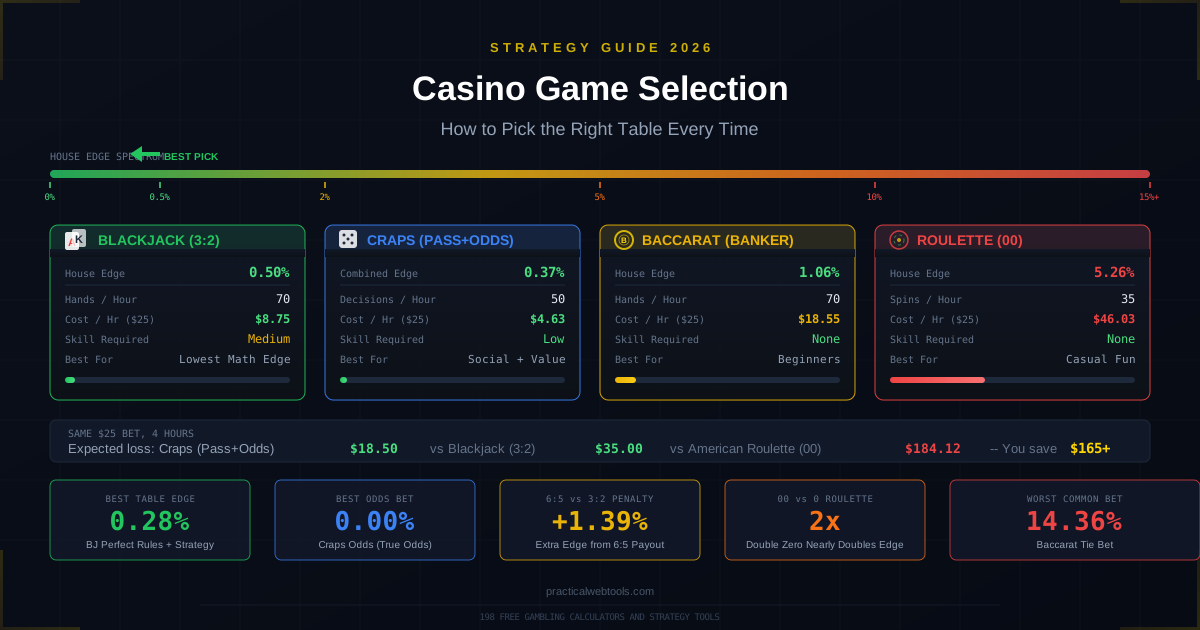
| Blackjack (basic strategy) | 0.5% | 2.0% | Depends on rules and player skill |
| Craps (pass line + odds) | 0.37% | 1.41% | Pass line alone is 1.41%; taking odds reduces it |
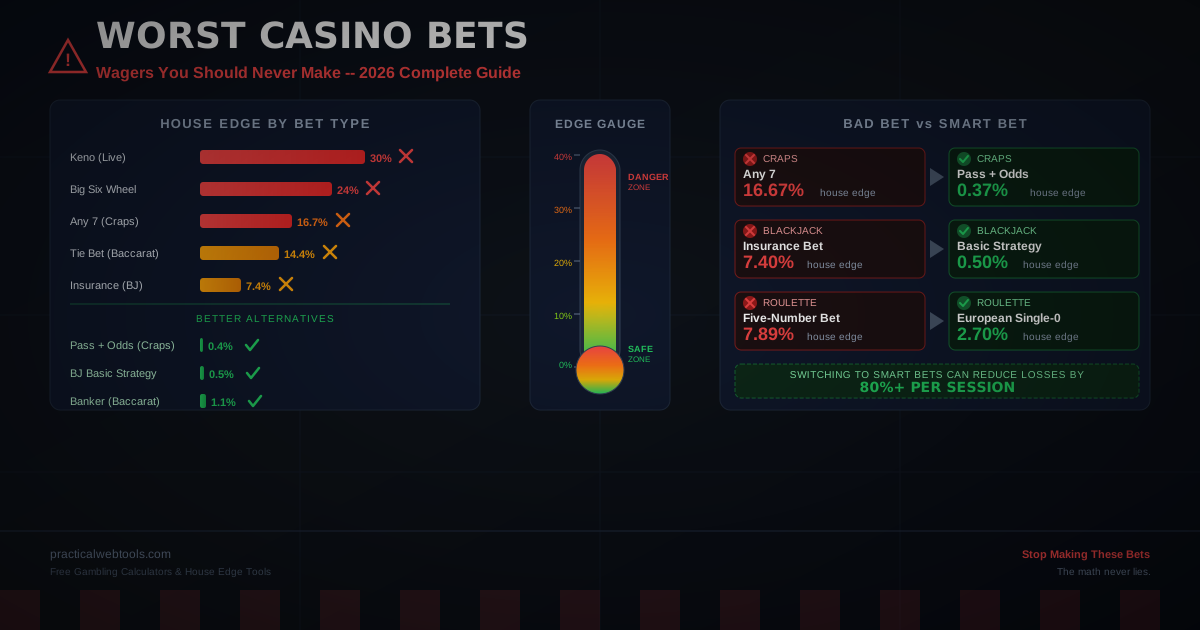
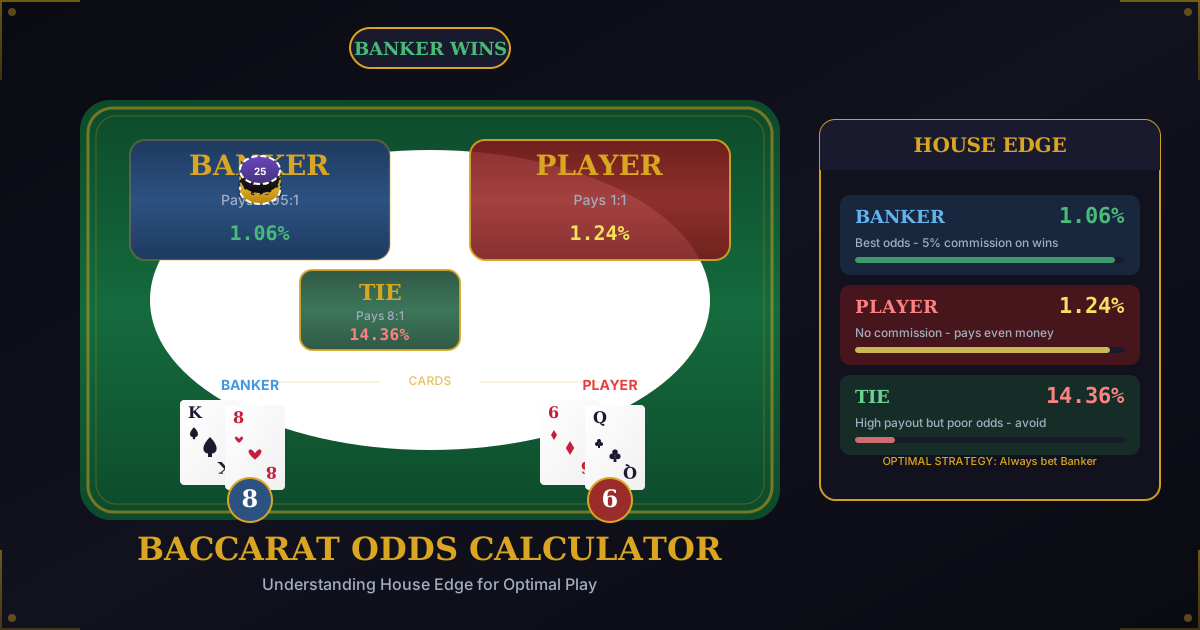
| Baccarat (banker bet) | 1.06% | 14.36% | Tie bet is 14.36%; avoid it entirely |
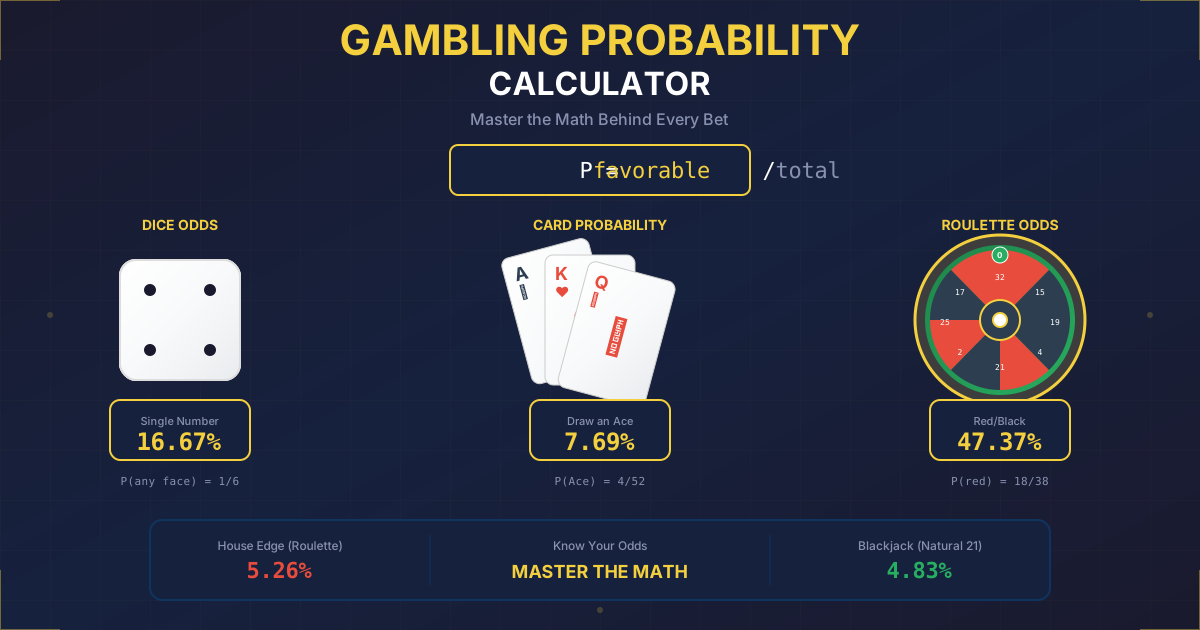
| Roulette (European) | 2.70% | 5.26% | American double-zero is 5.26% |
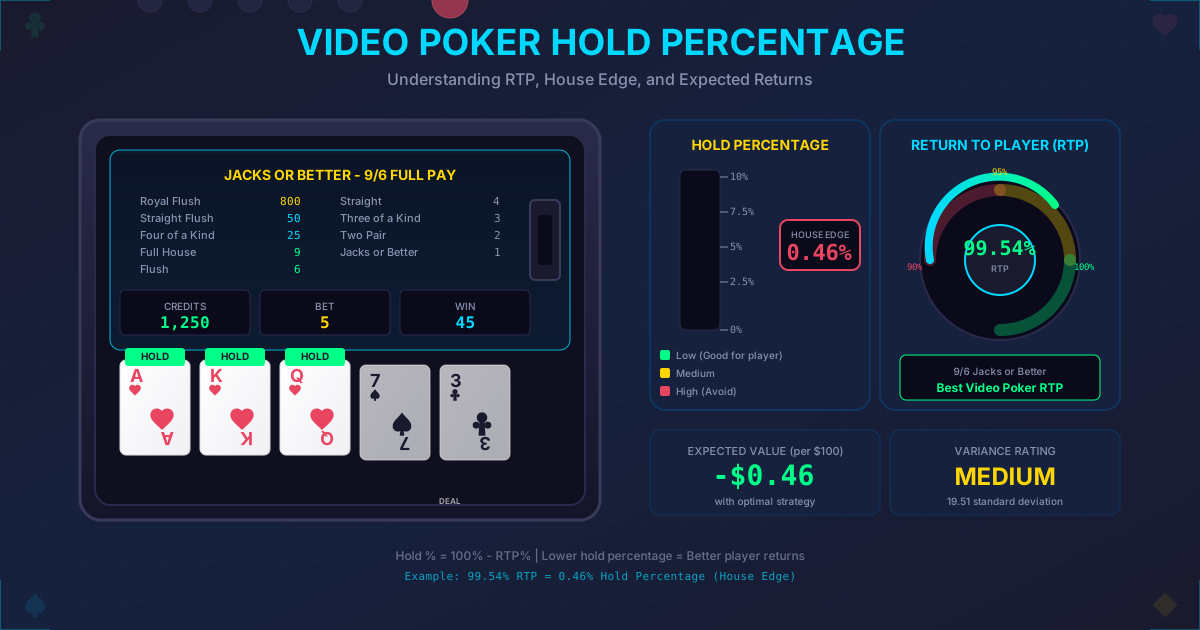
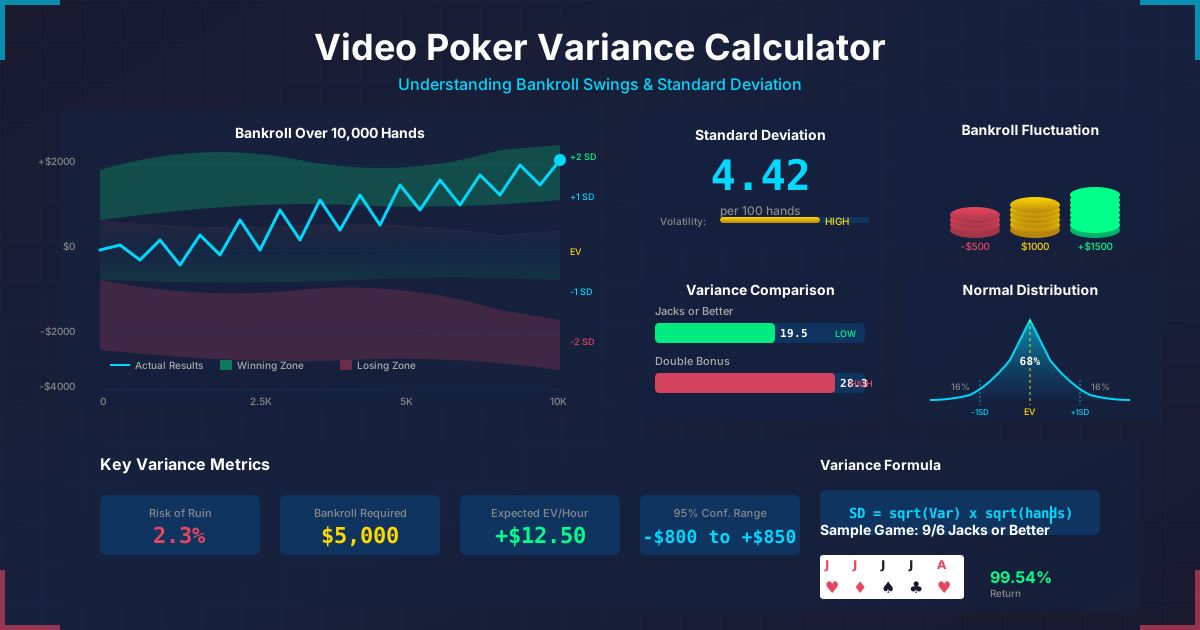
| Video Poker (Jacks or Better) | 0.46% | 5.0%+ | Depends on pay table; 9/6 is best |
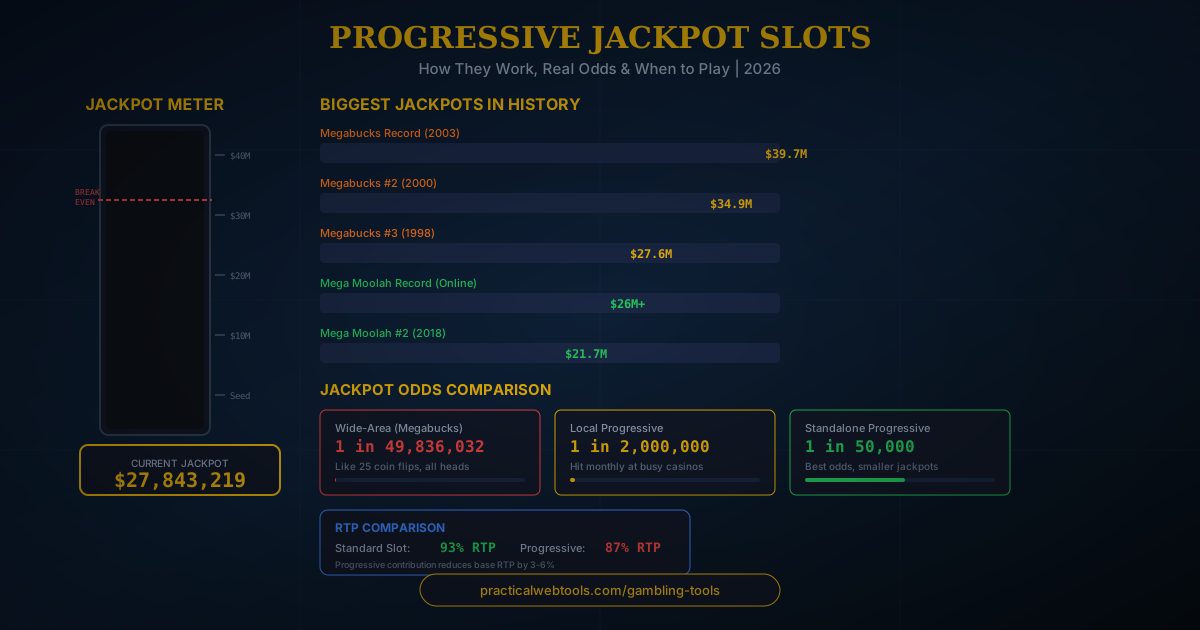
| Slots | 2.0% | 15.0%+ | Varies wildly by machine |
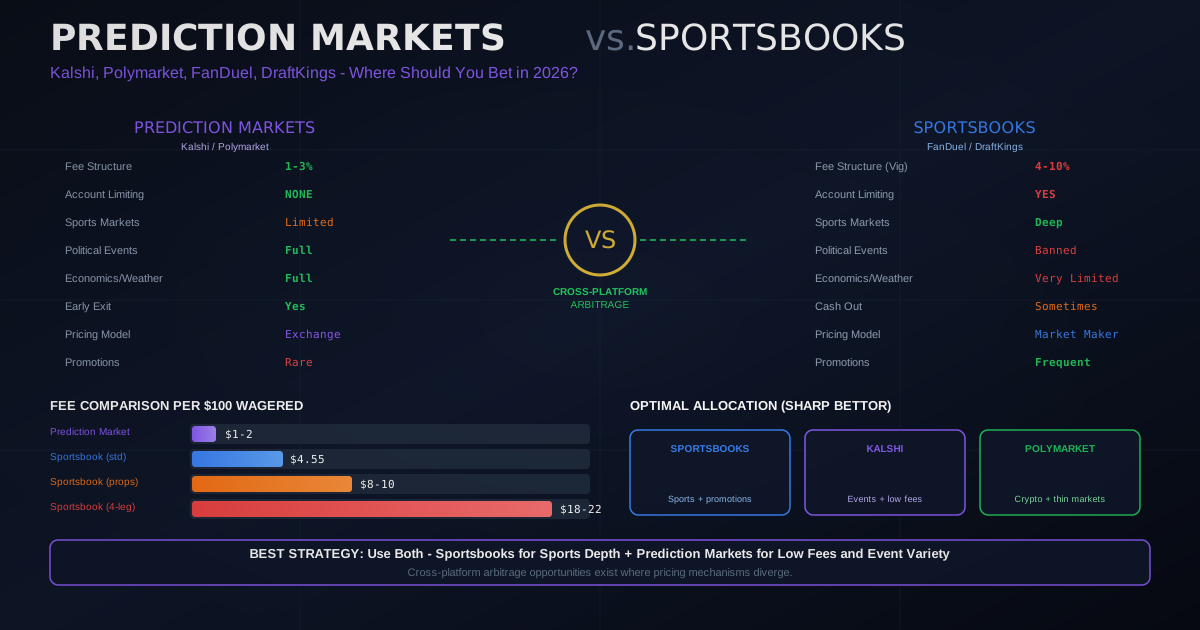
| Sports Betting | 2.0% | 10.0%+ | Depends on vig and bet type |
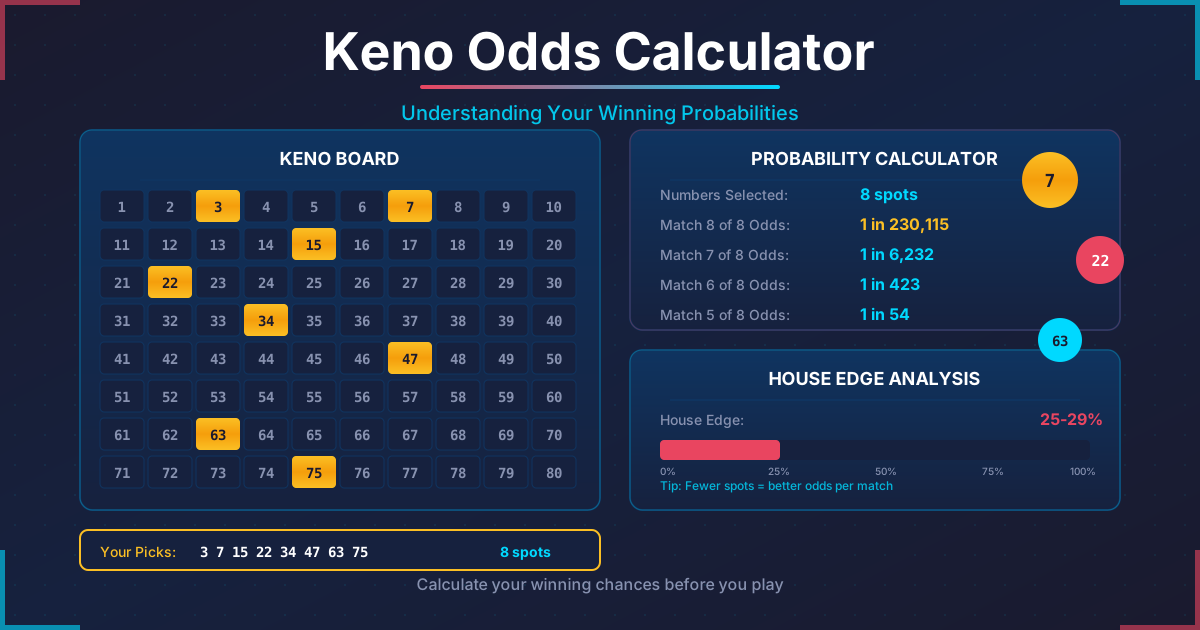
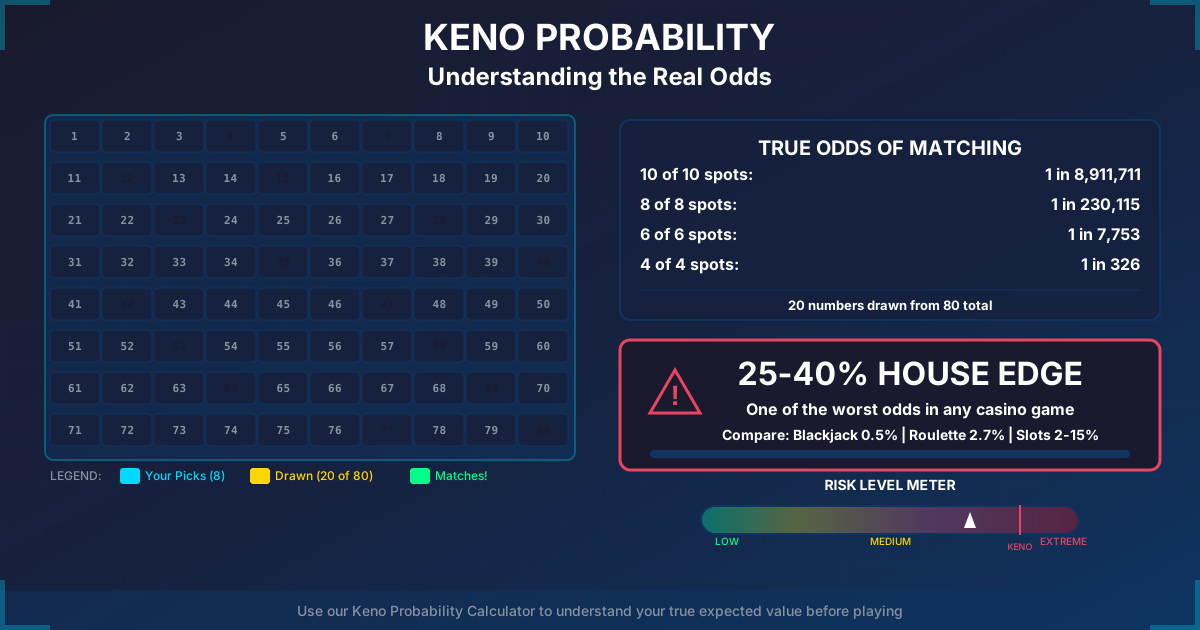
| Keno | 25.0% | 40.0%+ | One of the worst bets in the casino |
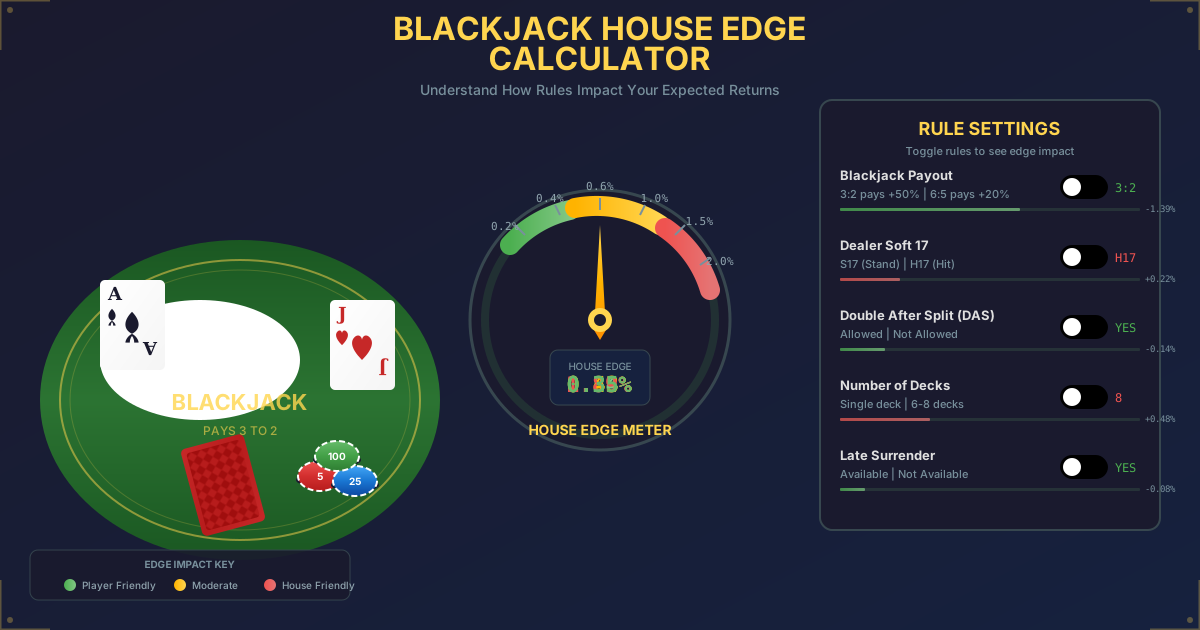
Calculate the exact house edge for any casino game with our Blackjack House Edge Calculator, Roulette House Edge Calculator, Craps House Edge Calculator, and Baccarat House Edge Calculator.
What This Means in Real Dollars
Suppose you visit a casino with $500 and play for 4 hours:
Playing Blackjack (basic strategy, 0.5% house edge):
- Hands per hour: ~70
- Average bet: $15
- Total wagered: 70 x 4 x $15 = $4,200
- Expected loss: $4,200 x 0.005 = $21
Playing Roulette (American, 5.26% house edge):
- Spins per hour: ~35
- Average bet: $15
- Total wagered: 35 x 4 x $15 = $2,100
- Expected loss: $2,100 x 0.0526 = $110.46
Playing Slots (8% house edge):
- Spins per hour: ~600
- Average bet: $1
- Total wagered: 600 x 4 x $1 = $2,400
- Expected loss: $2,400 x 0.08 = $192
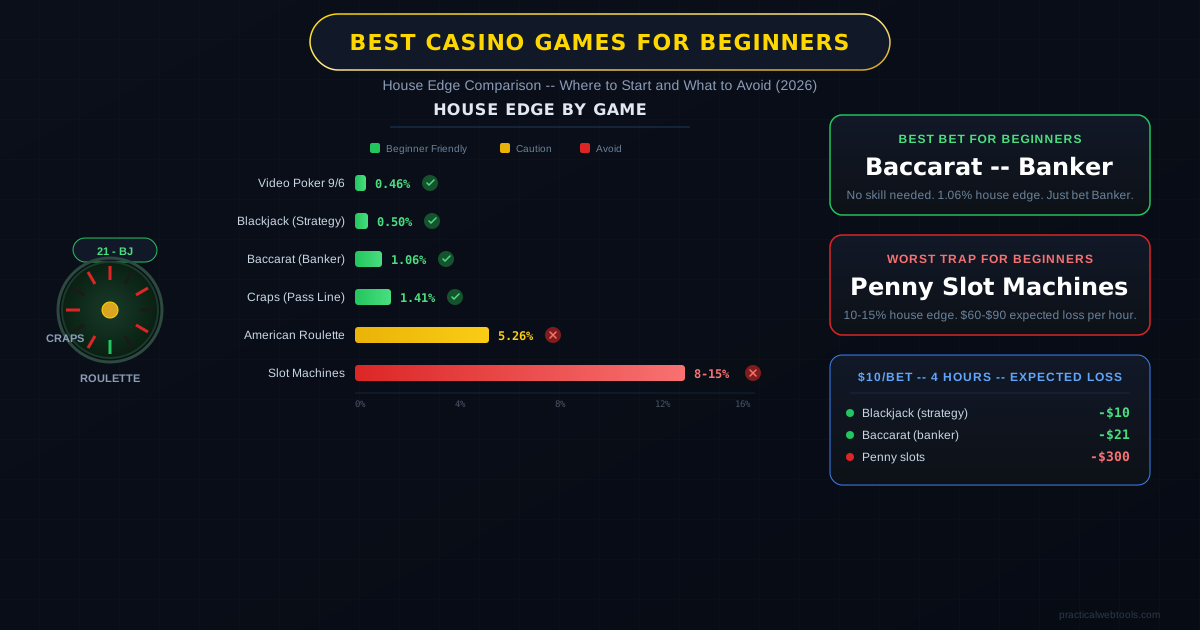
Same casino visit, same time spent, vastly different expected costs. Game selection is the most impactful decision you make.
Blackjack: The Best Odds in the Casino
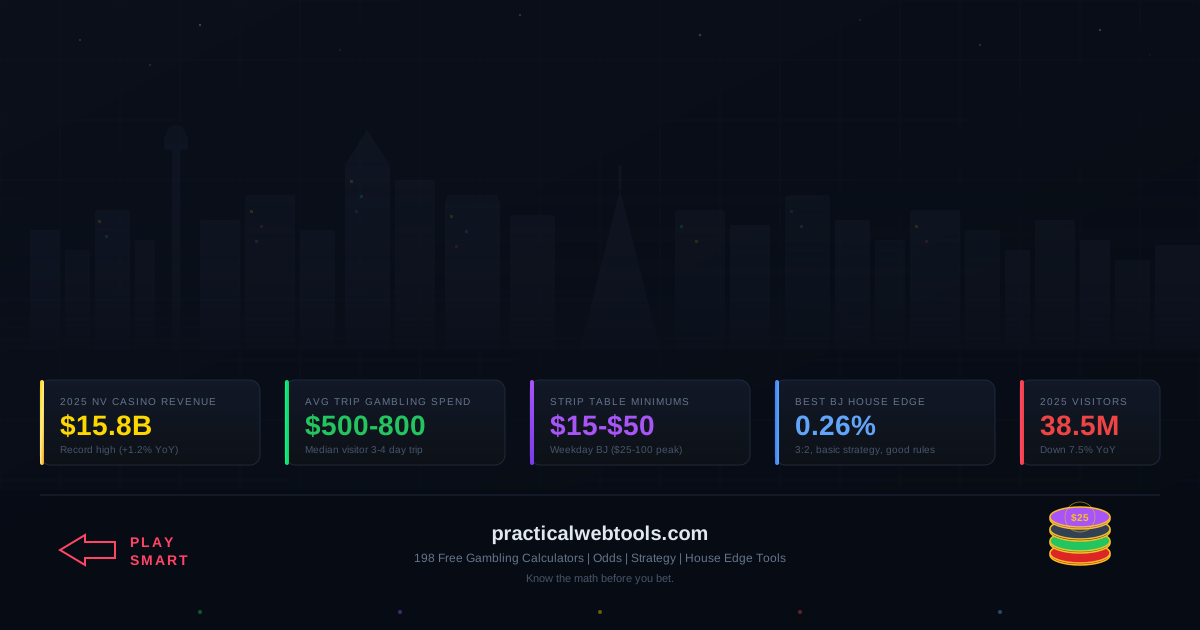
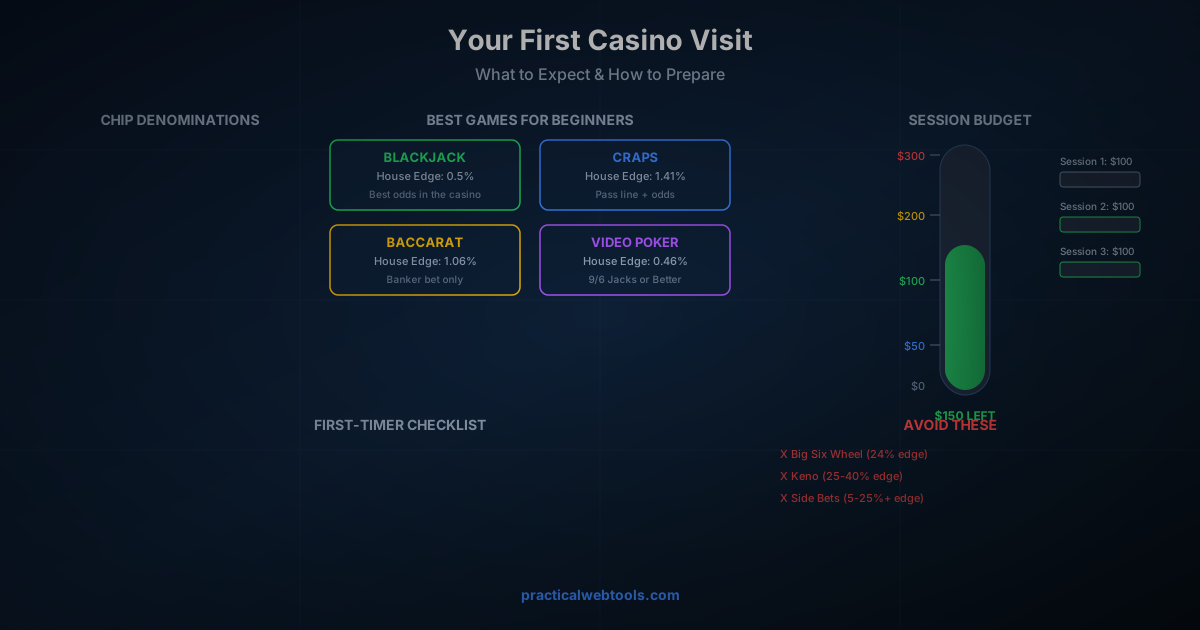
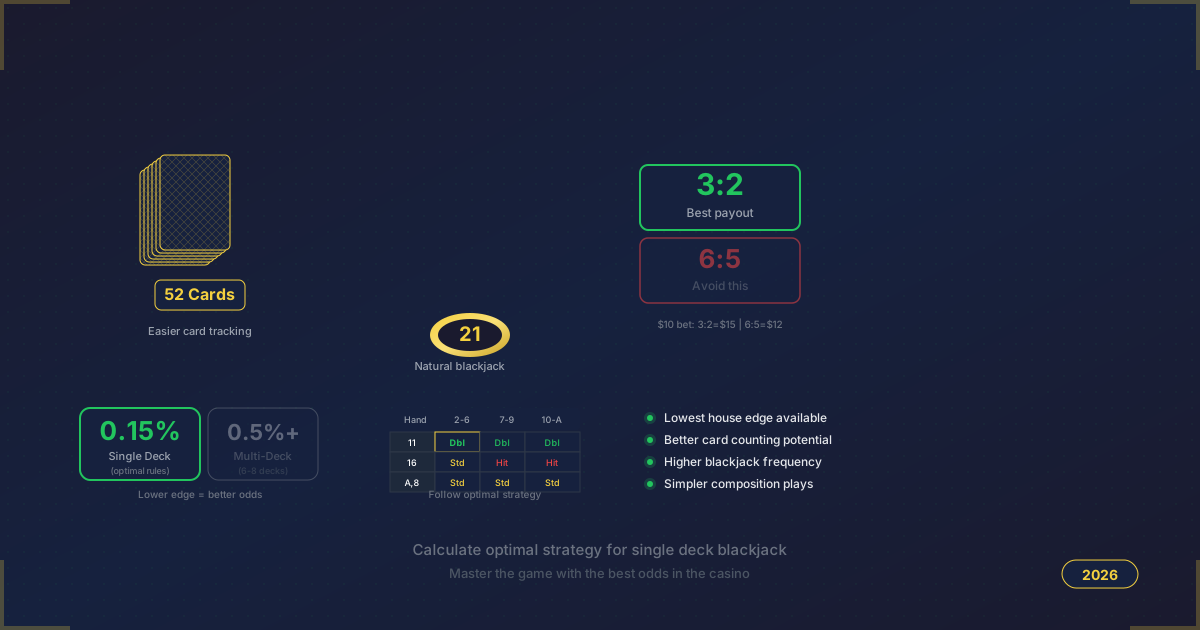
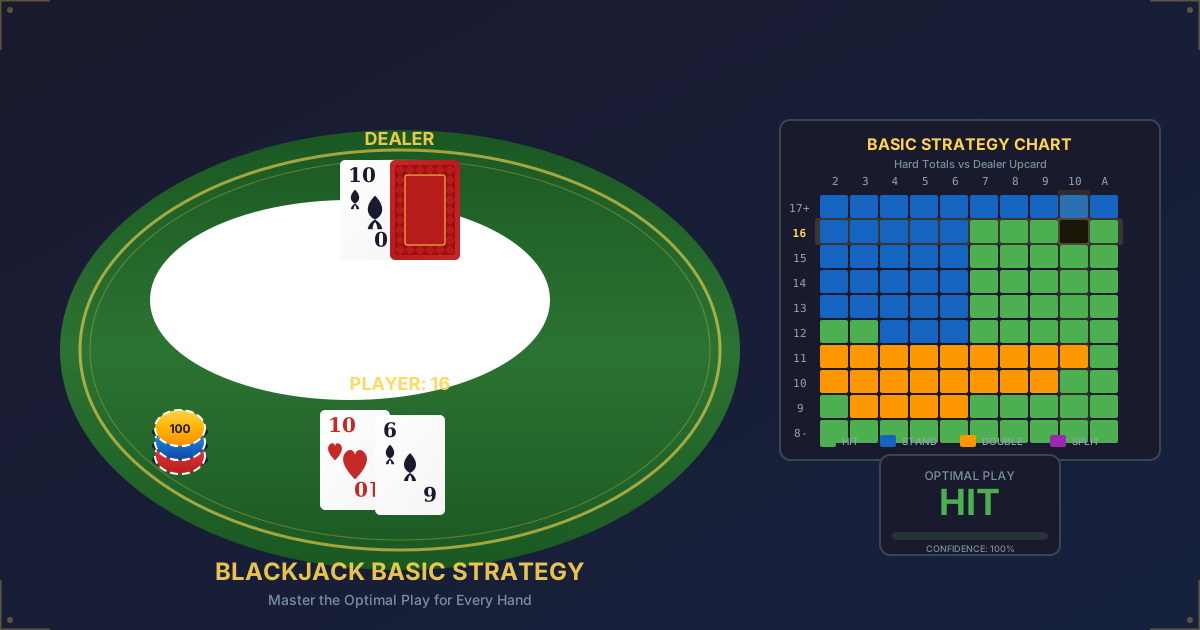
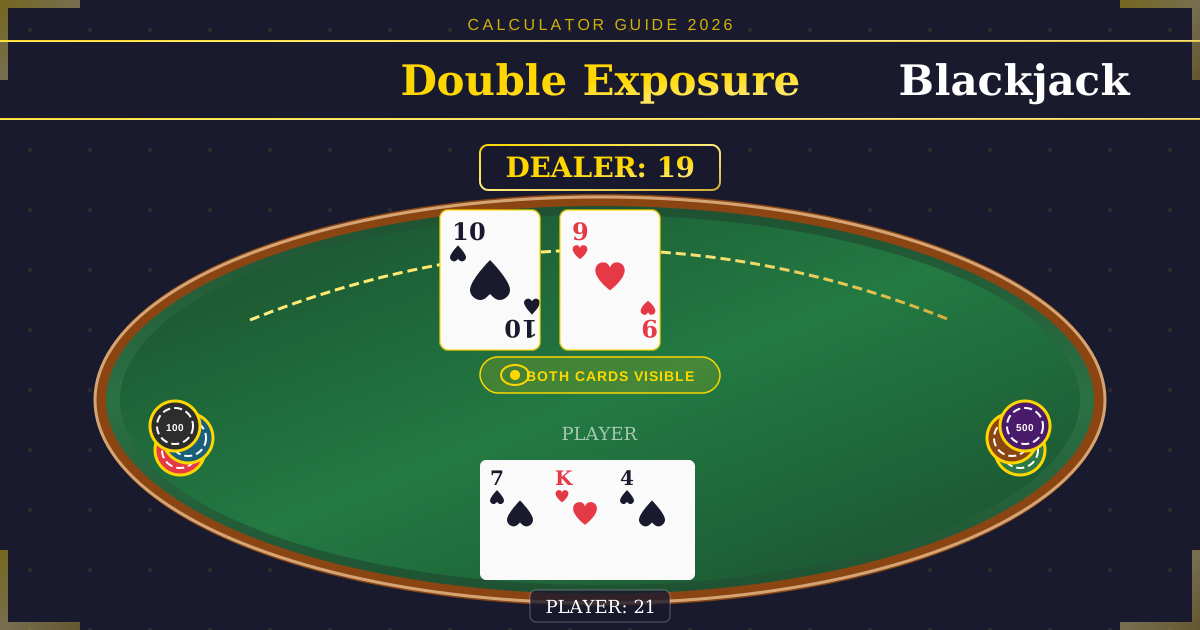
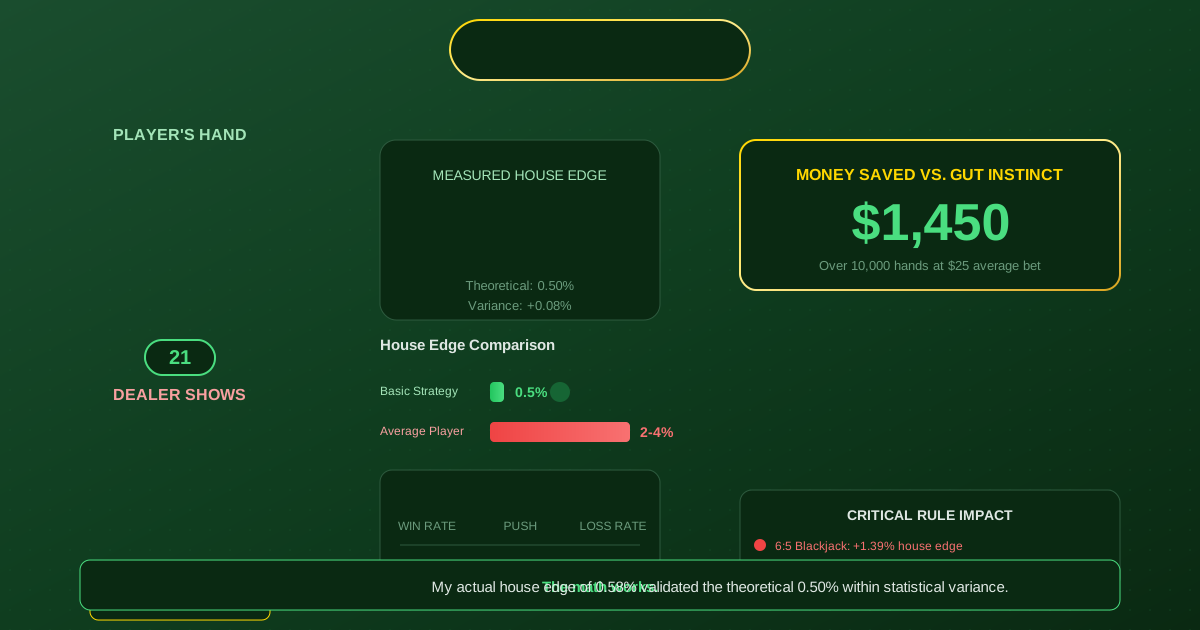
Blackjack is the single best game for beginners who want to minimize losses. With basic strategy (a mathematically optimal set of decisions for every hand), the house edge drops to roughly 0.5%, making it the lowest house edge game on the casino floor.
How Blackjack Works
- You and the dealer are each dealt two cards
- Your goal is to get closer to 21 than the dealer without going over (busting)
- Number cards are face value, face cards are 10, Aces are 1 or 11
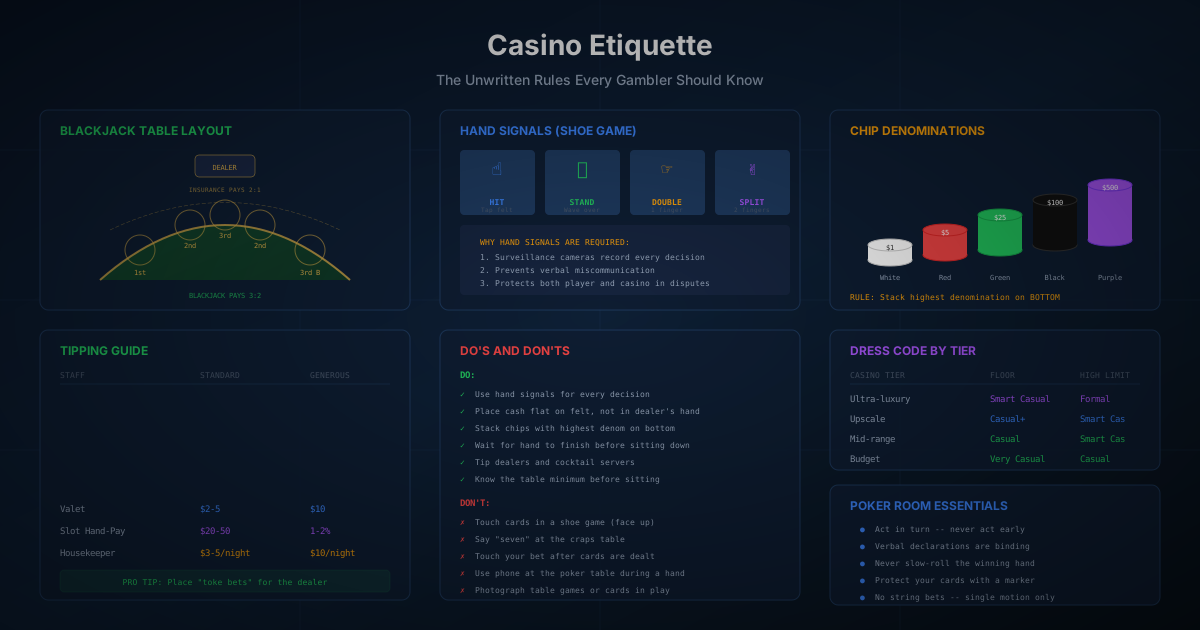
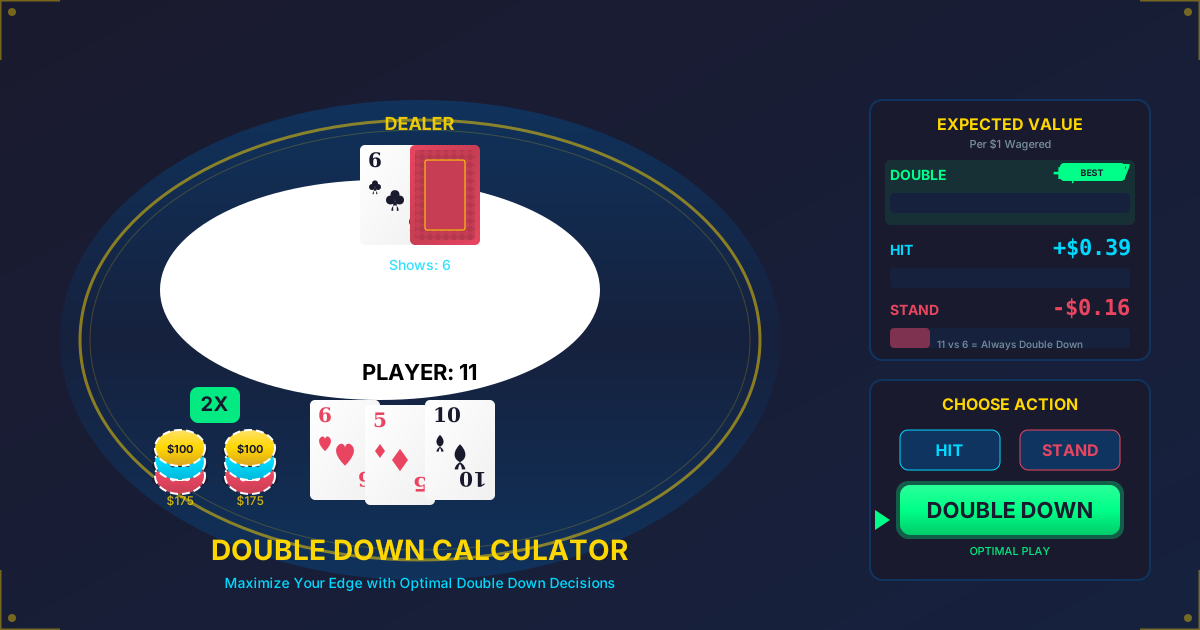
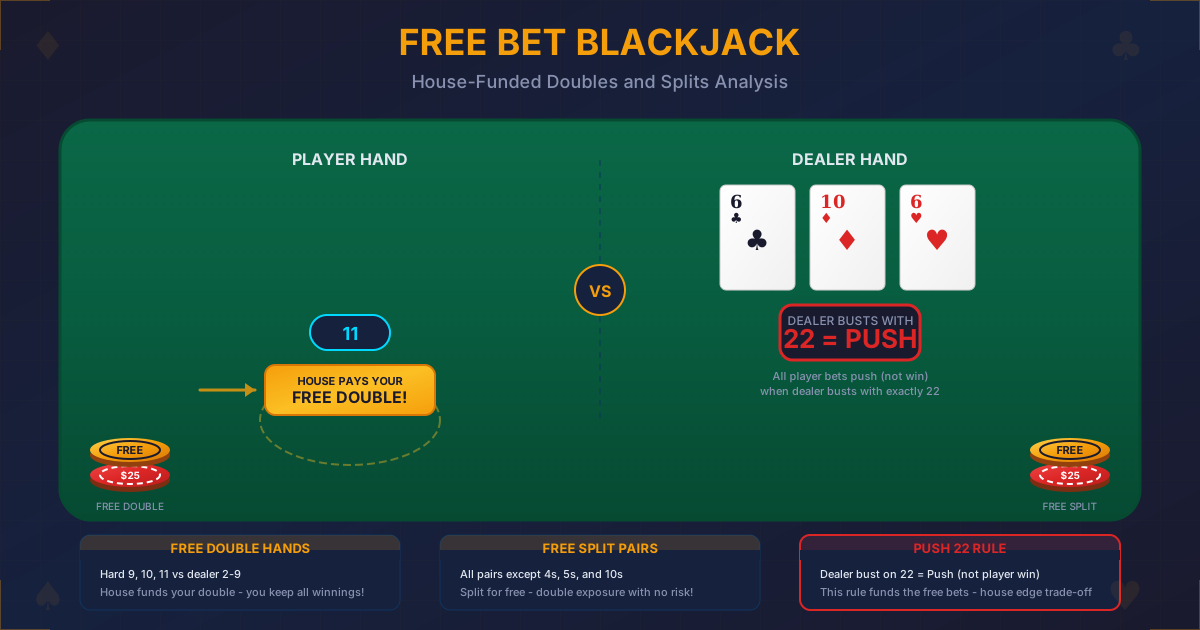
- You choose to hit (take another card), stand (keep your hand), double down (double your bet, take one card), or split (if you have a pair)
- The dealer plays according to fixed rules (usually hits on 16, stands on 17)
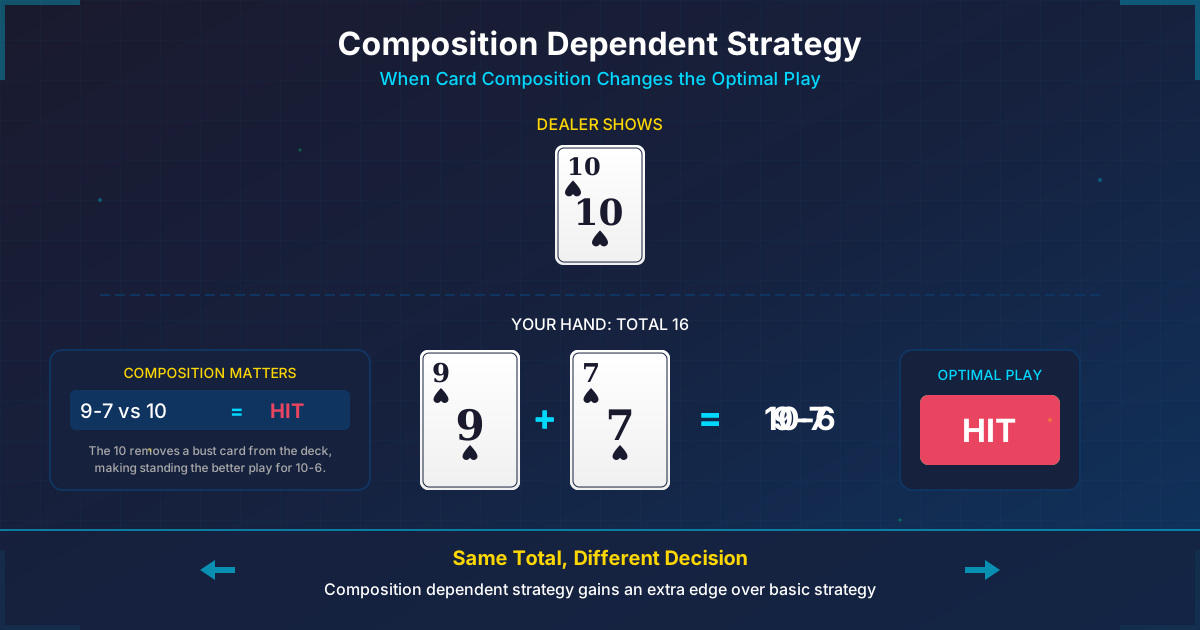
Basic Strategy Overview
Basic strategy tells you the mathematically correct play for every combination of your hand vs. the dealer's up card. Here are the most critical rules:
| Your Hand | Dealer Shows 2-6 | Dealer Shows 7-A |
|---|---|---|
| Hard 8 or less | Hit | Hit |
| Hard 9 | Double if dealer shows 3-6 | Hit |
| Hard 10-11 | Double (if more than dealer) | Double on 10 vs. 2-9; Hit otherwise |
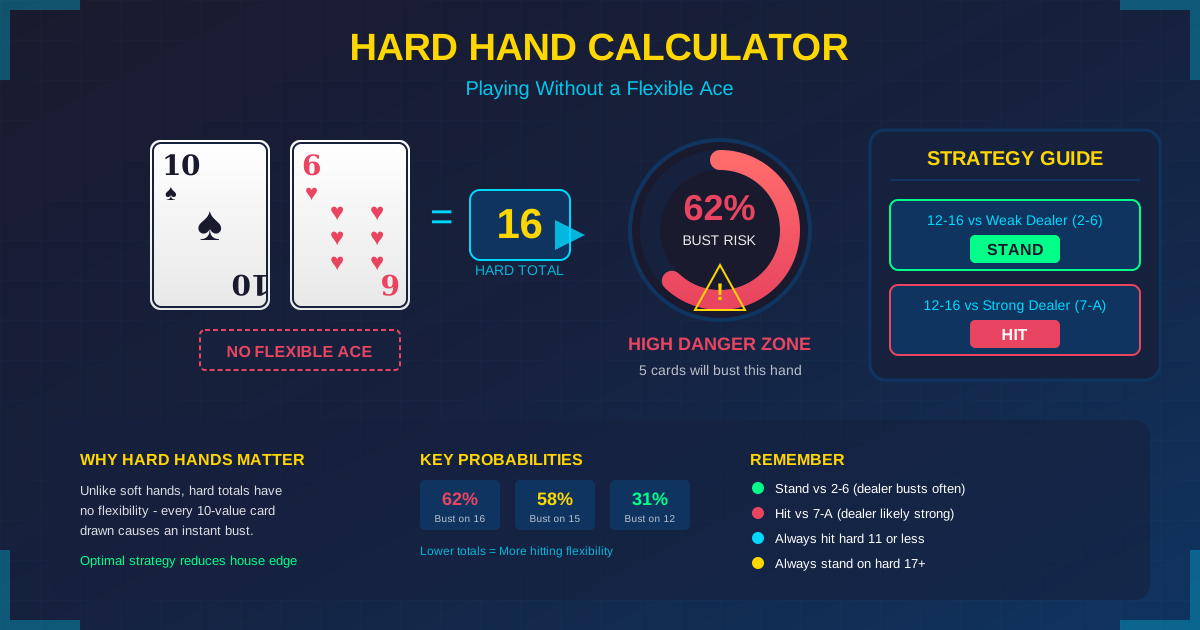
| Hard 12-16 | Stand | Hit |
| Hard 17+ | Stand | Stand |
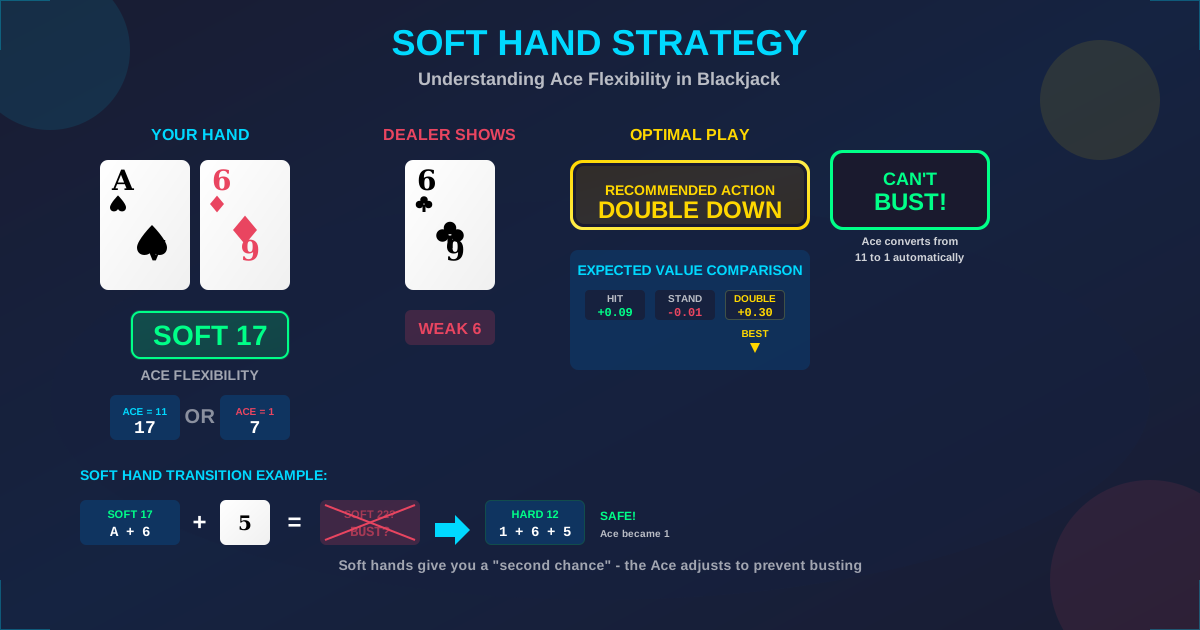
| Soft 17 (A-6) | Double vs. 3-6 | Hit |
| Soft 18 (A-7) | Stand vs. 2-6, 8; Double vs. 3-6 | Hit vs. 9-A |
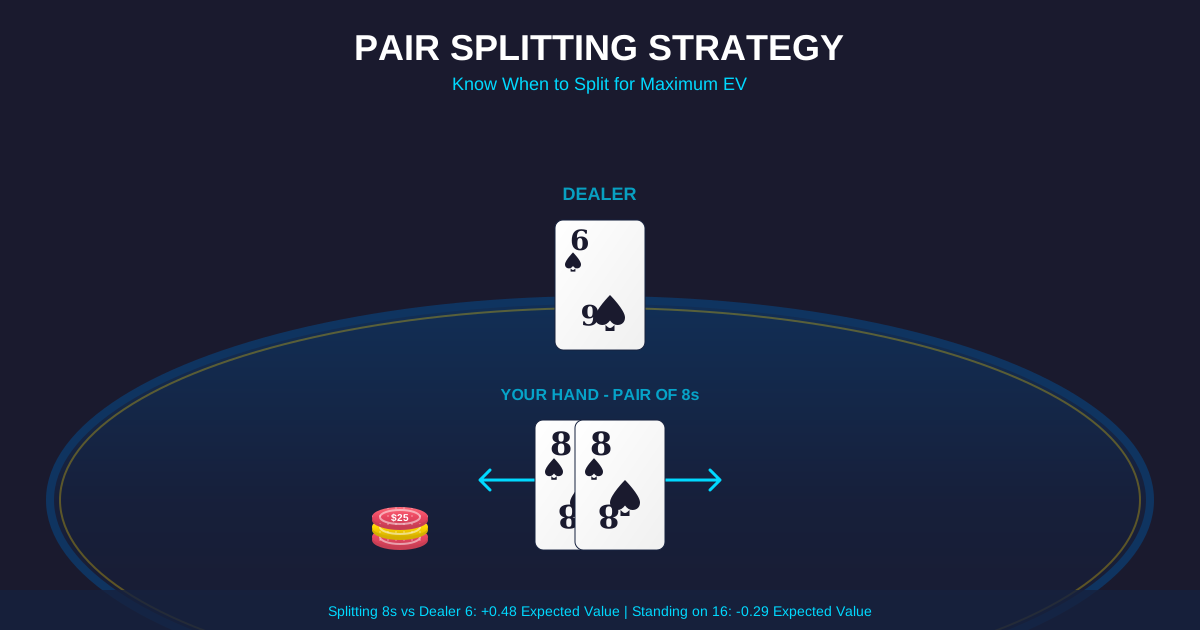
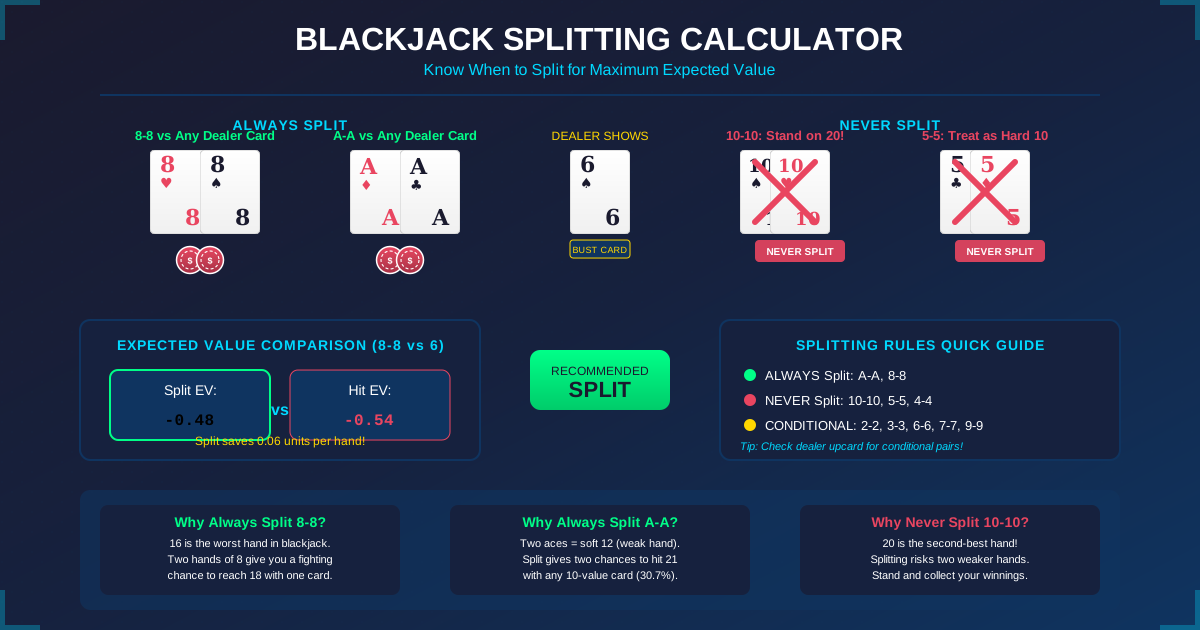
| Pair of Aces or 8s | Always split | Always split |
| Pair of 10s | Never split | Never split |
Get the complete basic strategy chart for any rule set with our Blackjack Basic Strategy Calculator.
Real-World Blackjack Example
You sit down at a $15 minimum table with $300. Playing basic strategy:
- Session 1: You play 80 hands over 75 minutes. You hit a few blackjacks (paying 3:2), make good double-down decisions, and finish up $45. Balance: $345.
- Session 2: Variance swings against you. Over 60 hands, you bust on several double-downs and the dealer pulls 21 three times. You lose $120. Balance: $225.
- Session 3: A steady session of 70 hands. You win some, lose some, finish down $15. Balance: $210.
Total wagered across all three sessions: approximately $3,150. Net result: down $90. That is a 2.9% loss rate, which is within normal variance for basic strategy play (the 0.5% edge means your expected loss was only about $16, but short-term variance is large).
Calculate your expected value per hand with our Blackjack EV Calculator.
Common Blackjack Mistakes Beginners Make
- Not learning basic strategy. Playing by gut costs you 2-4% extra in house edge
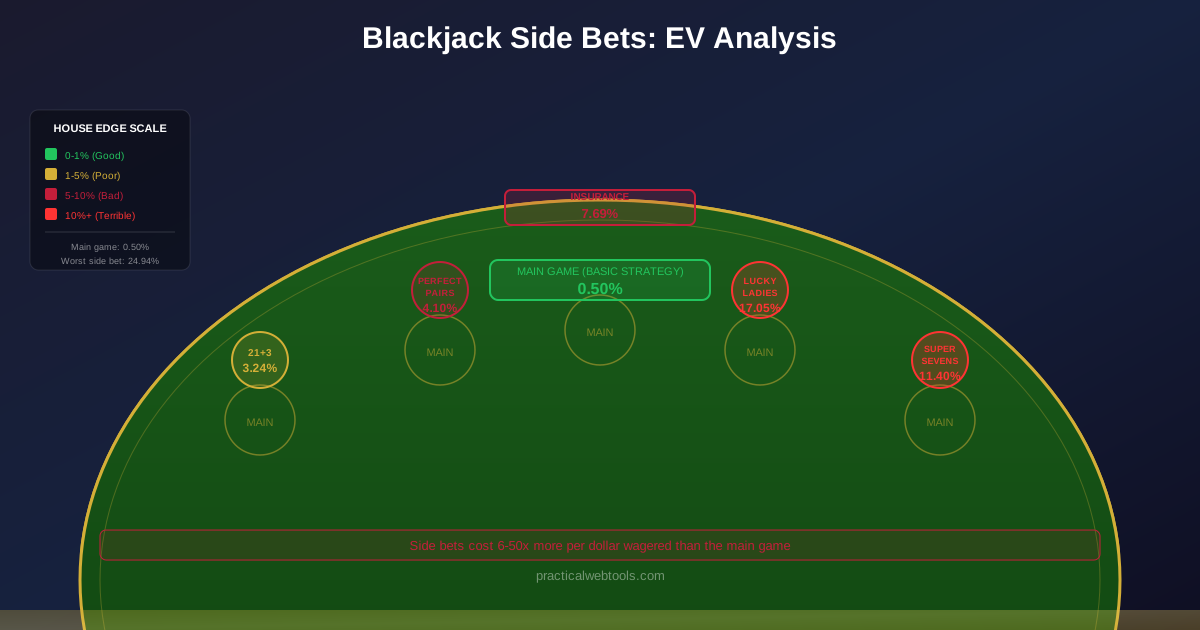
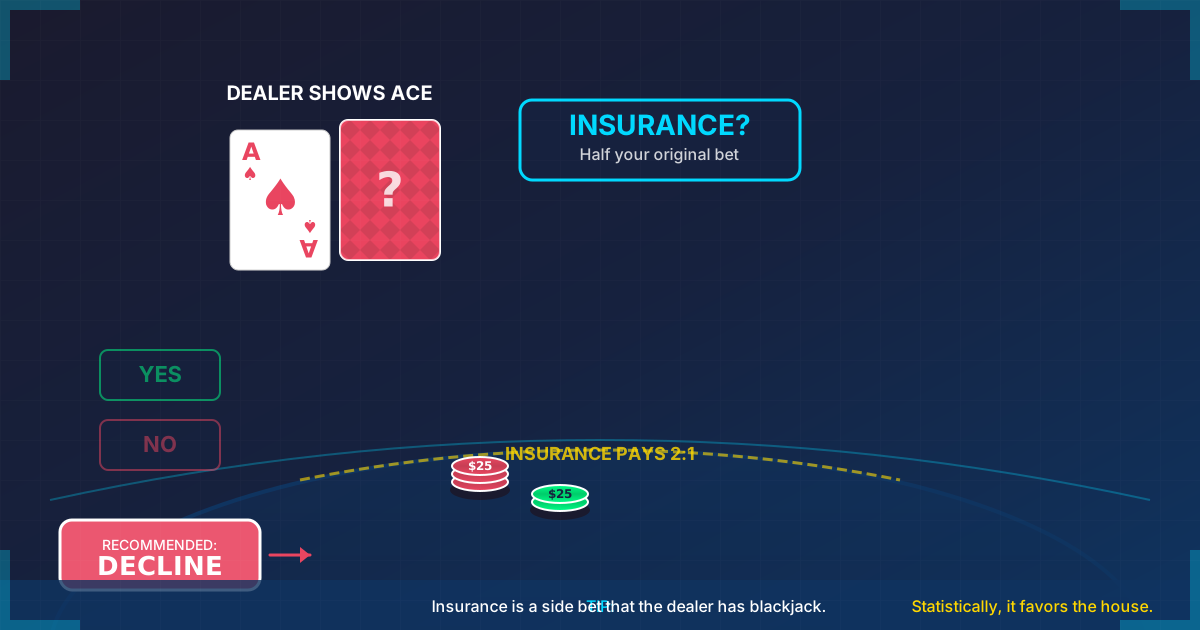
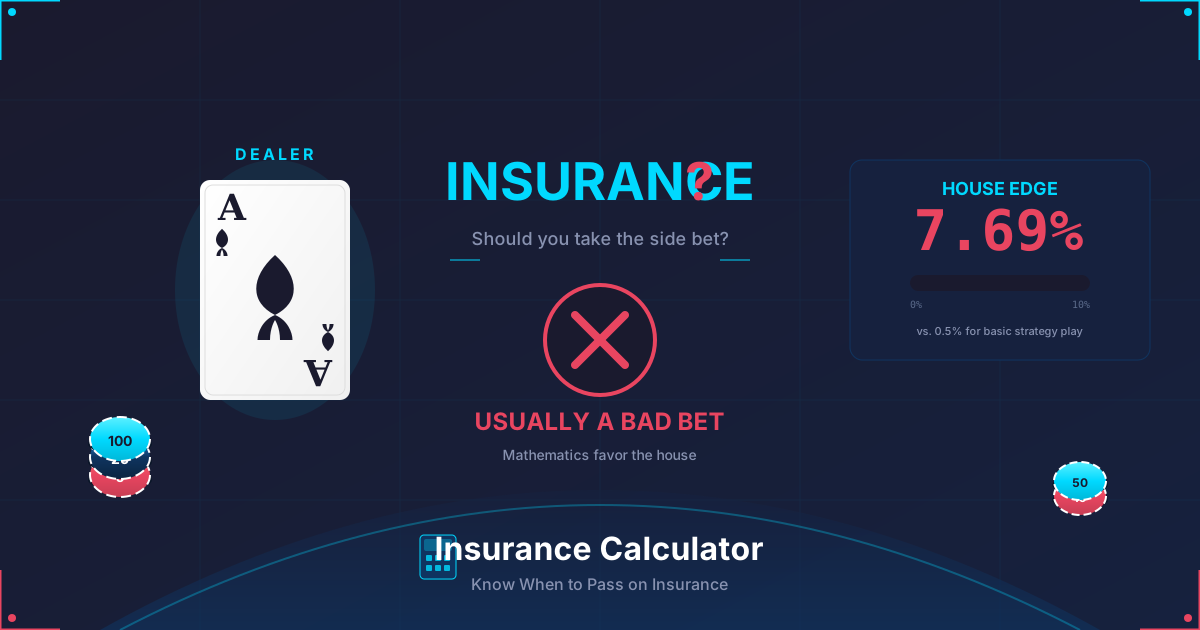
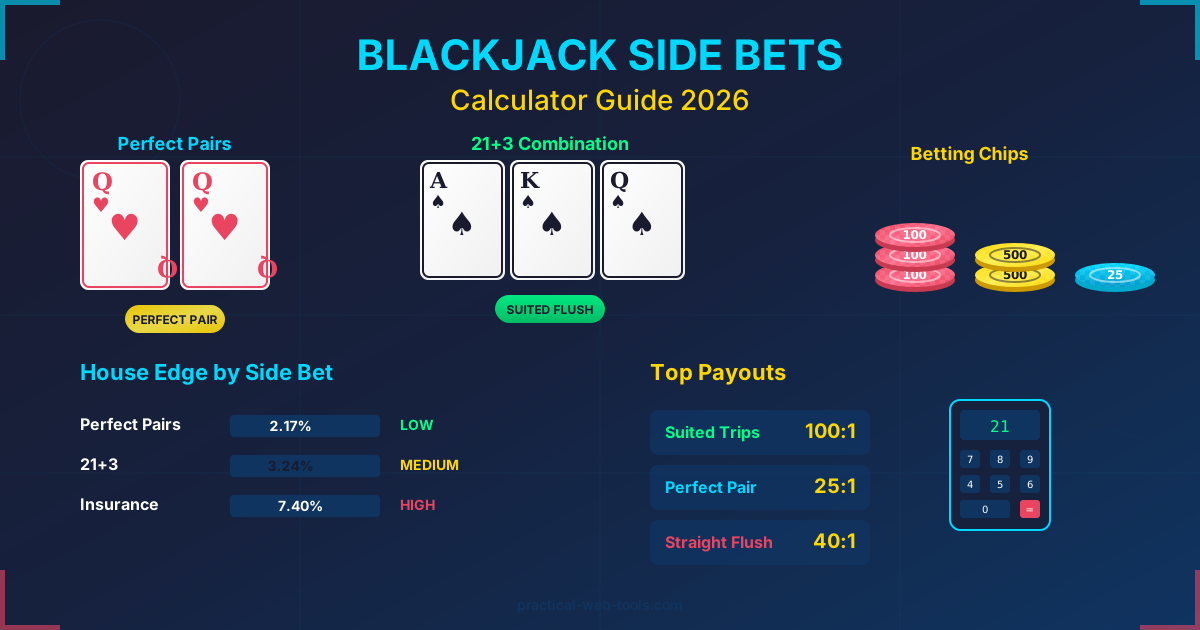
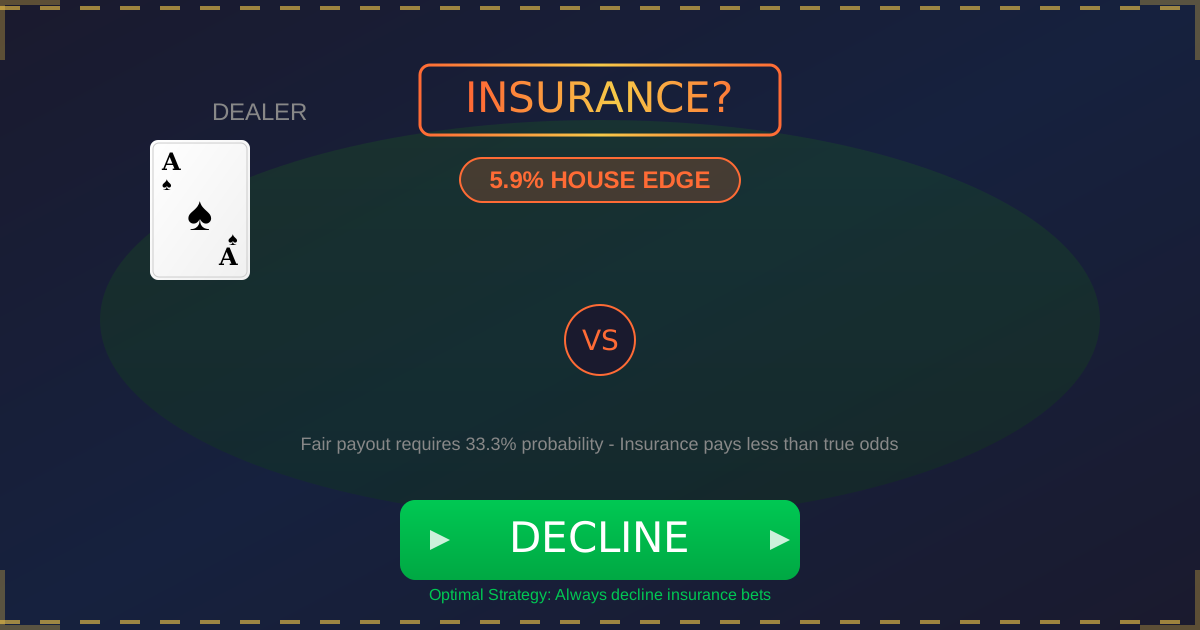
- Taking insurance. Insurance is a side bet with an 8% house edge. Never take it
- Playing 6:5 blackjack. Only play tables that pay 3:2 on blackjack. The 6:5 payout adds 1.4% to house edge
- Splitting tens. Never split a 20. It is the second-best hand possible
- Standing on soft 17. You cannot bust by hitting a soft hand. Basic strategy says hit or double
Roulette: Simple but Costly
Roulette is one of the easiest games to understand but has a significantly higher house edge than blackjack or craps.
How Roulette Works
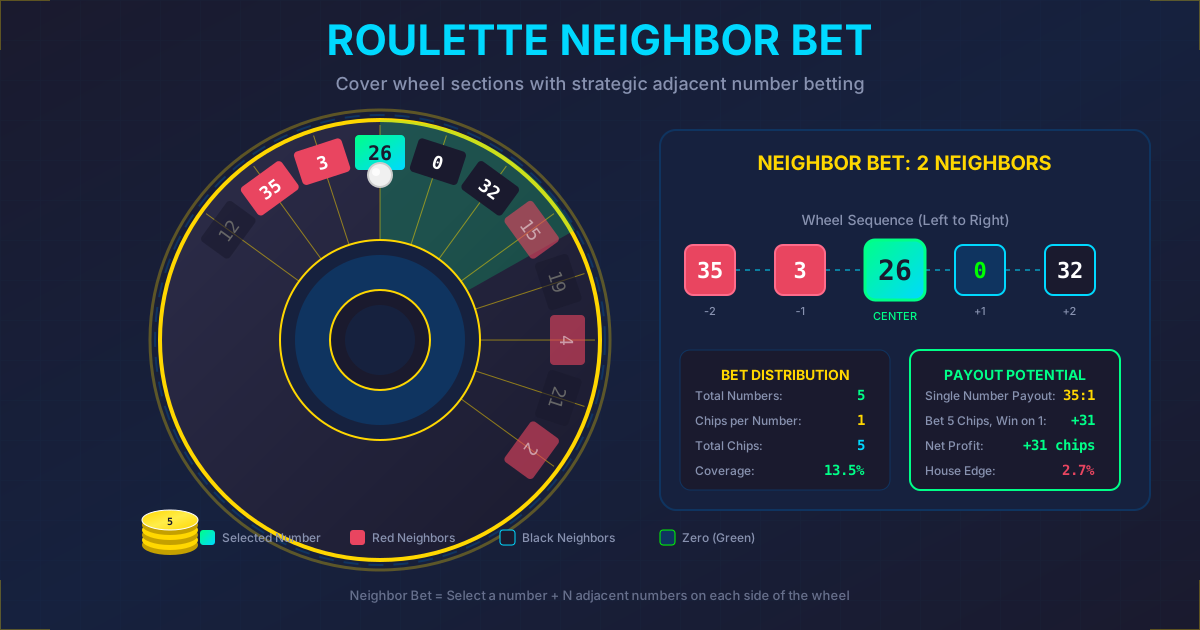
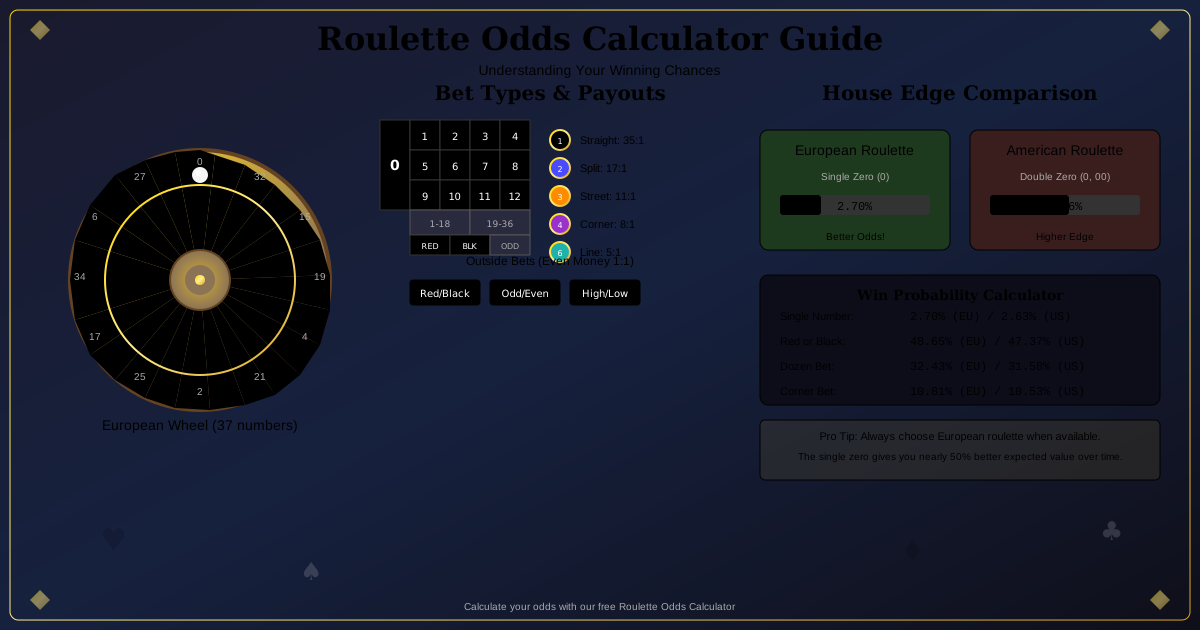
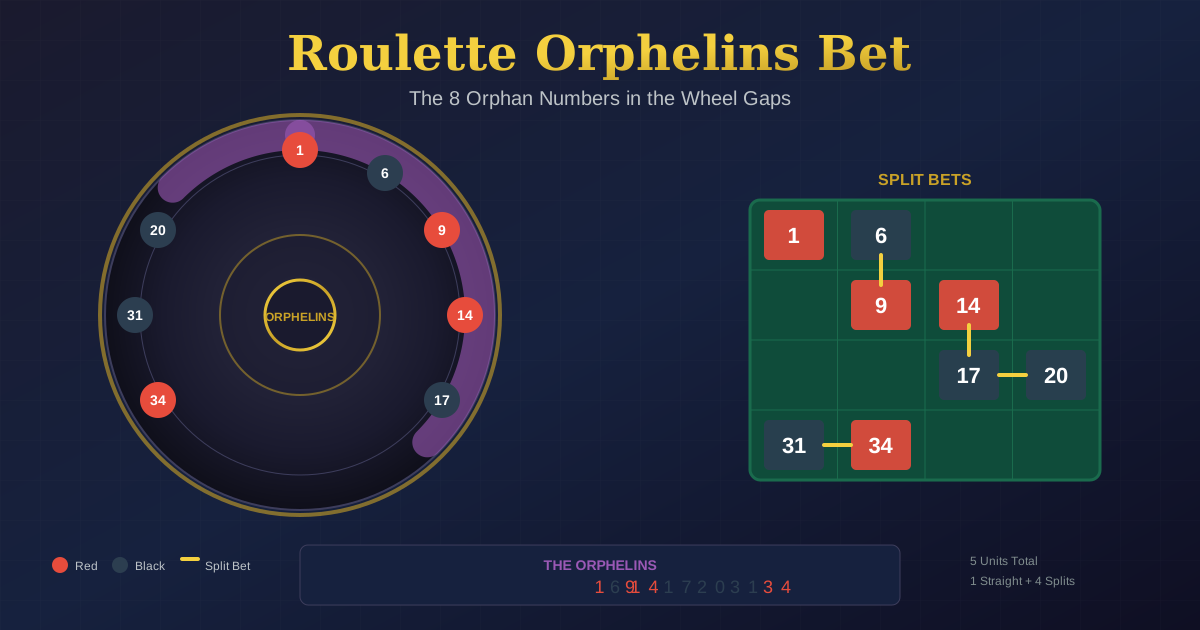
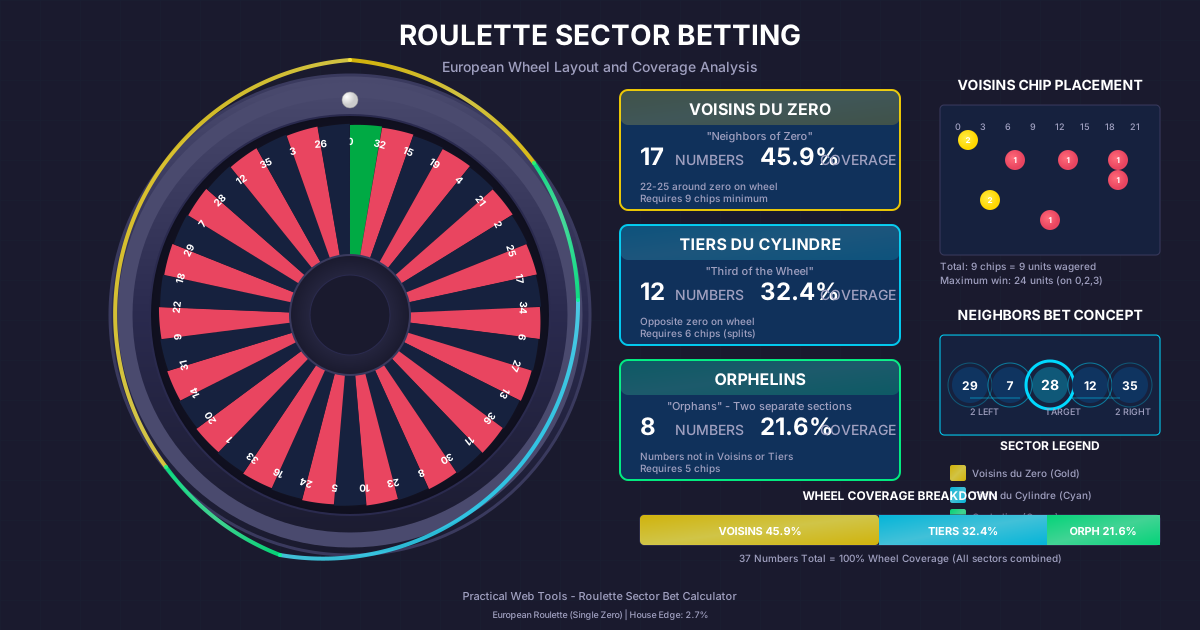
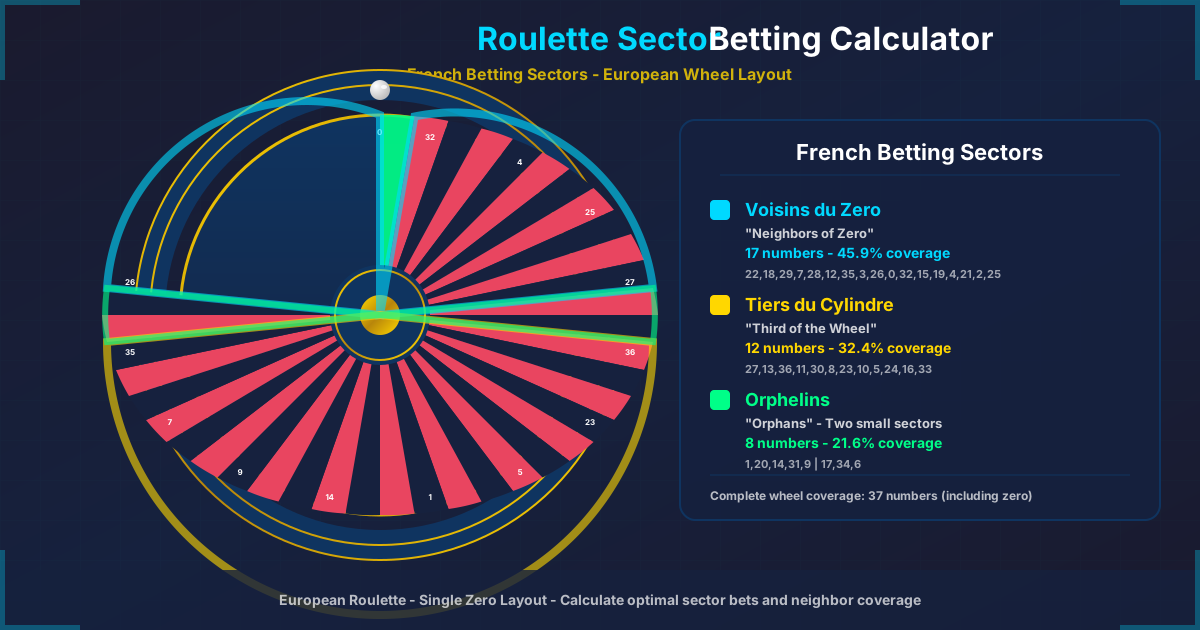
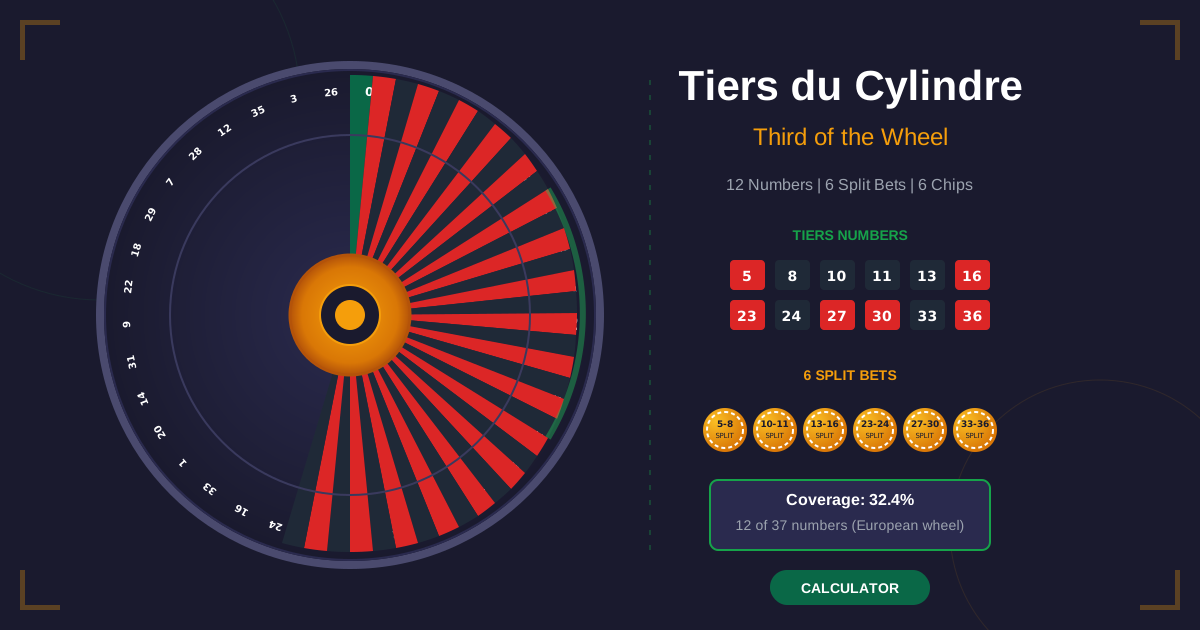
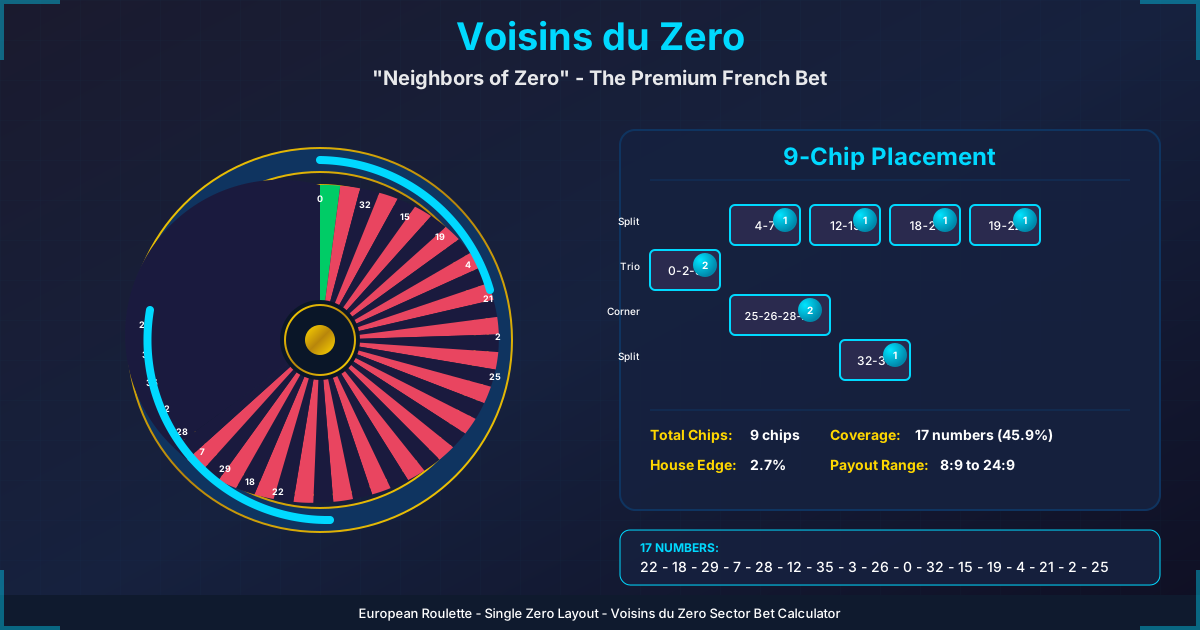
A ball spins around a wheel with numbered pockets (0-36 in European, 0-00-36 in American). You bet on where the ball will land: specific numbers, groups of numbers, colors (red/black), or even/odd.
Roulette Bet Types and Odds
| Bet Type | Payout | European Probability | American Probability | House Edge (Euro) | House Edge (American) |
|---|---|---|---|---|---|
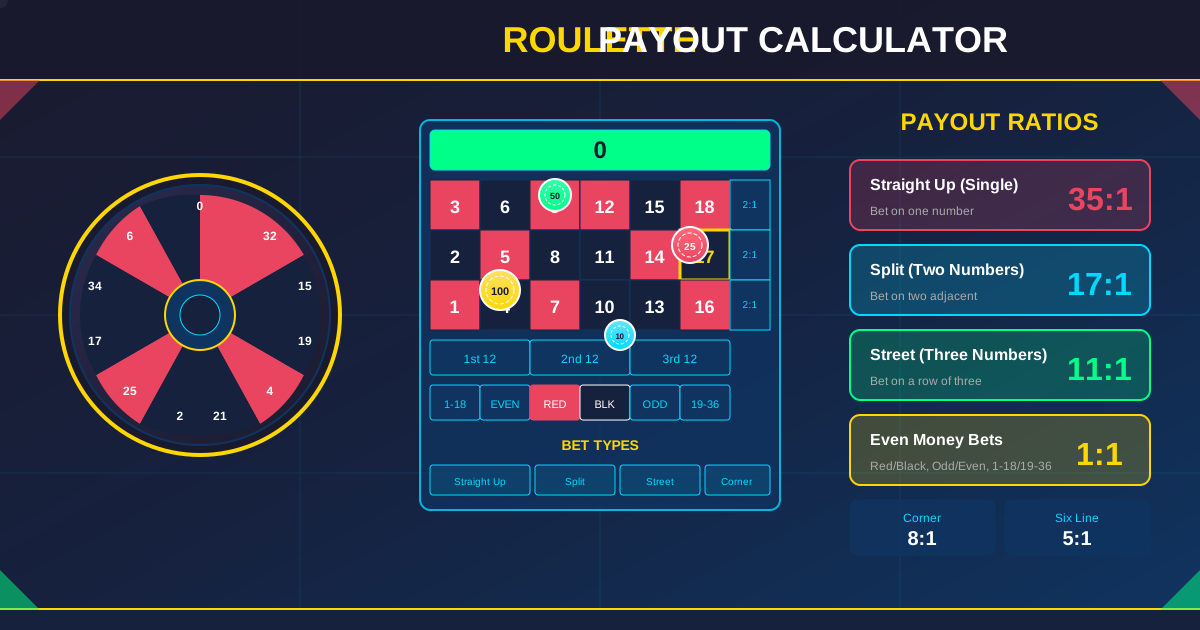
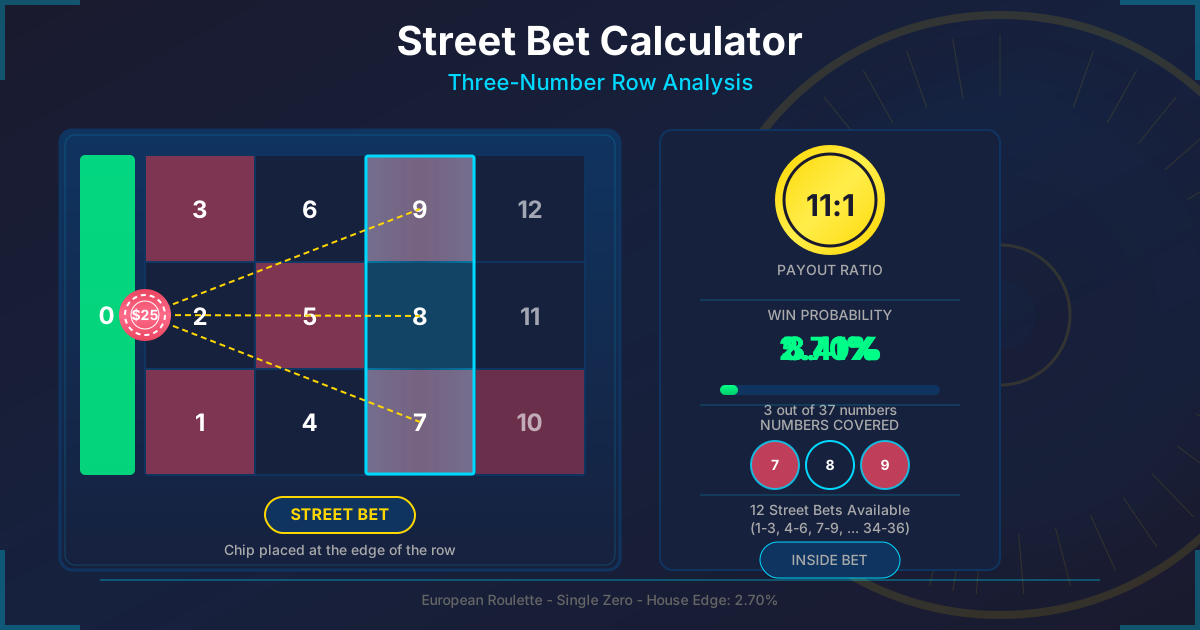
| Straight (single number) | 35:1 | 2.70% | 2.63% | 2.70% | 5.26% |
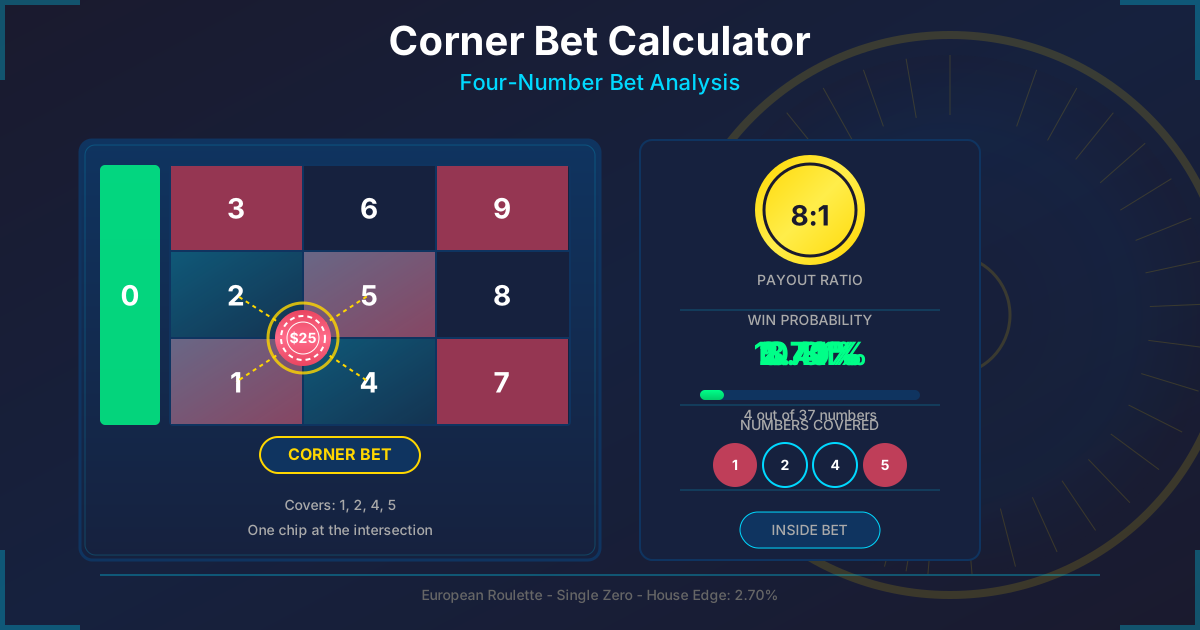
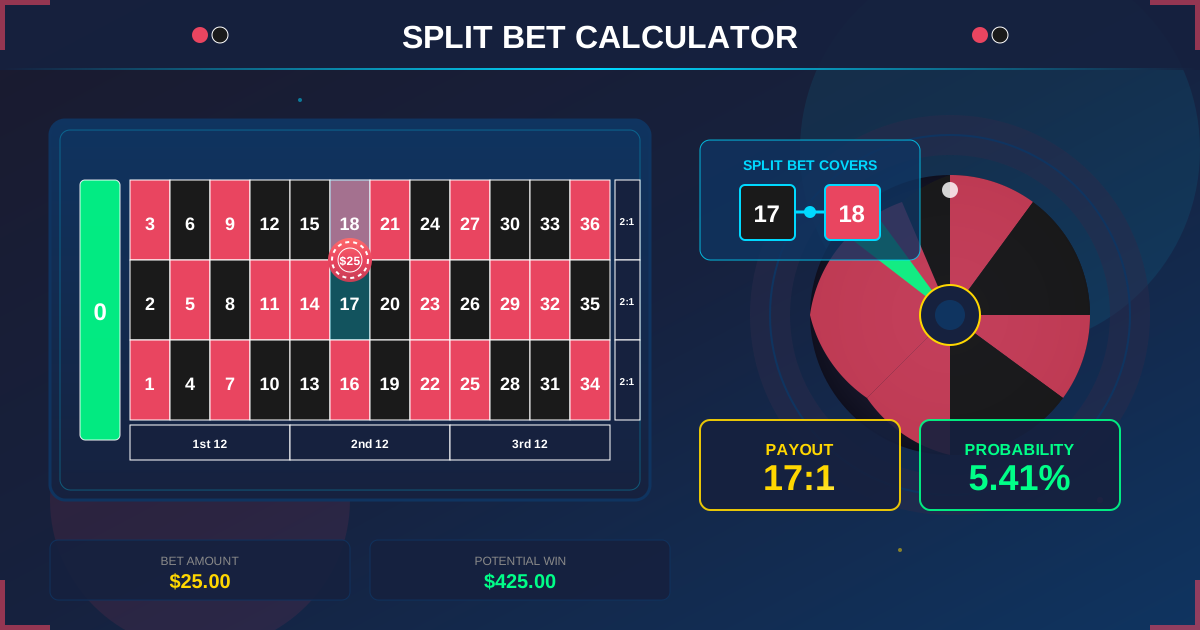
| Split (2 numbers) | 17:1 | 5.41% | 5.26% | 2.70% | 5.26% |
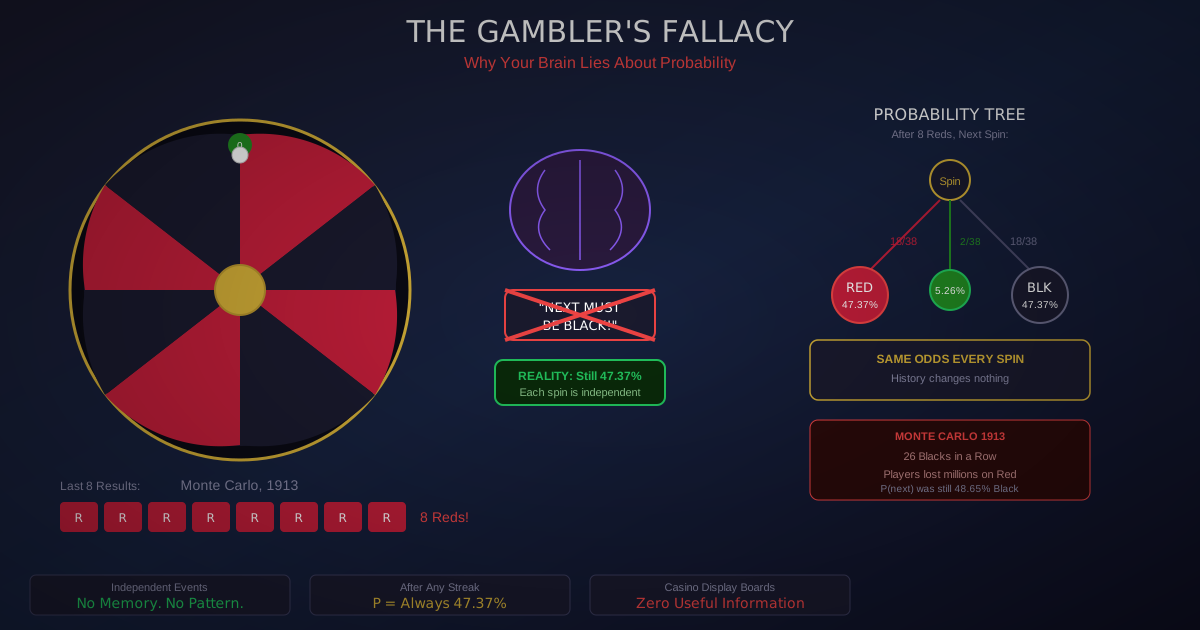
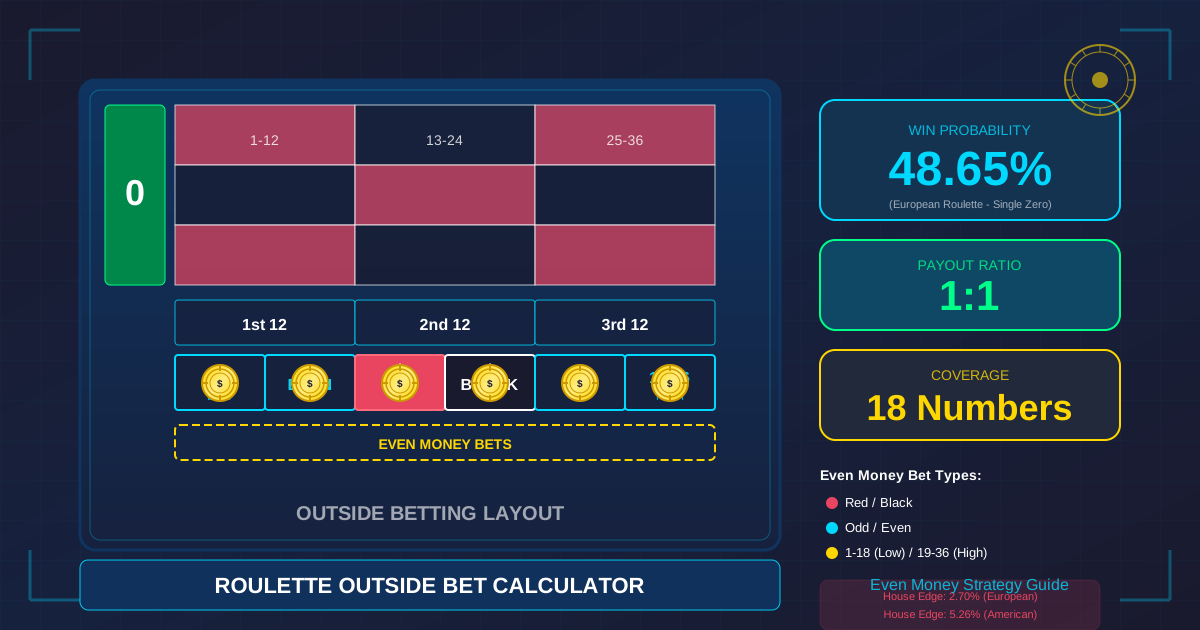
| Red/Black | 1:1 | 48.65% | 47.37% | 2.70% | 5.26% |
| Even/Odd | 1:1 | 48.65% | 47.37% | 2.70% | 5.26% |
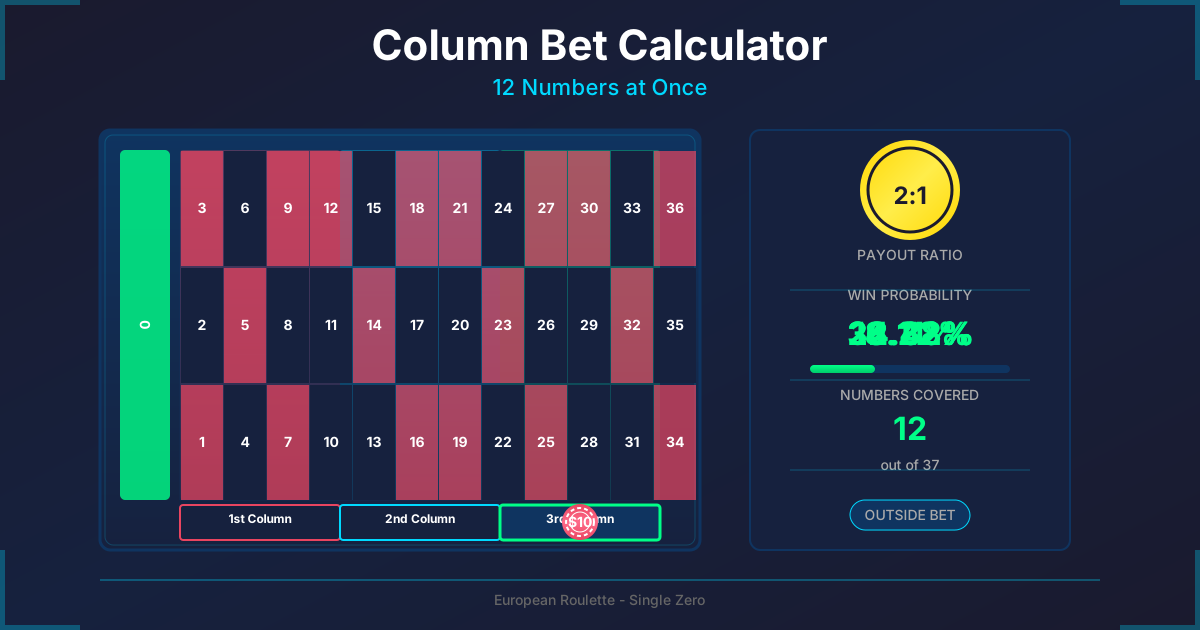
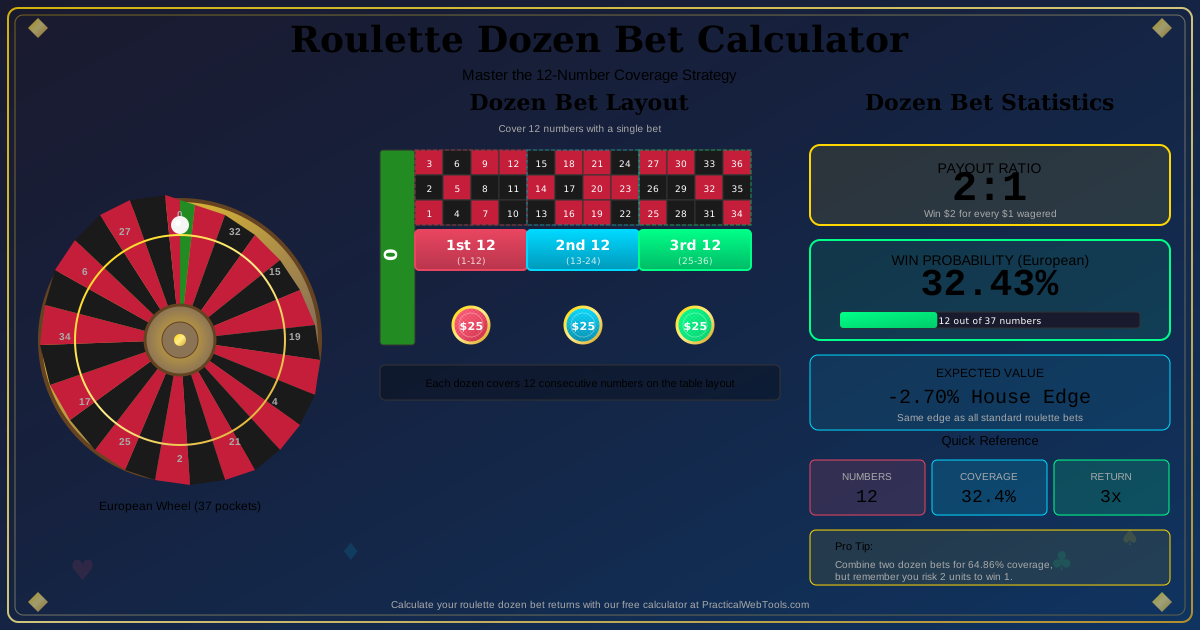
| Dozens (1-12, 13-24, 25-36) | 2:1 | 32.43% | 31.58% | 2.70% | 5.26% |
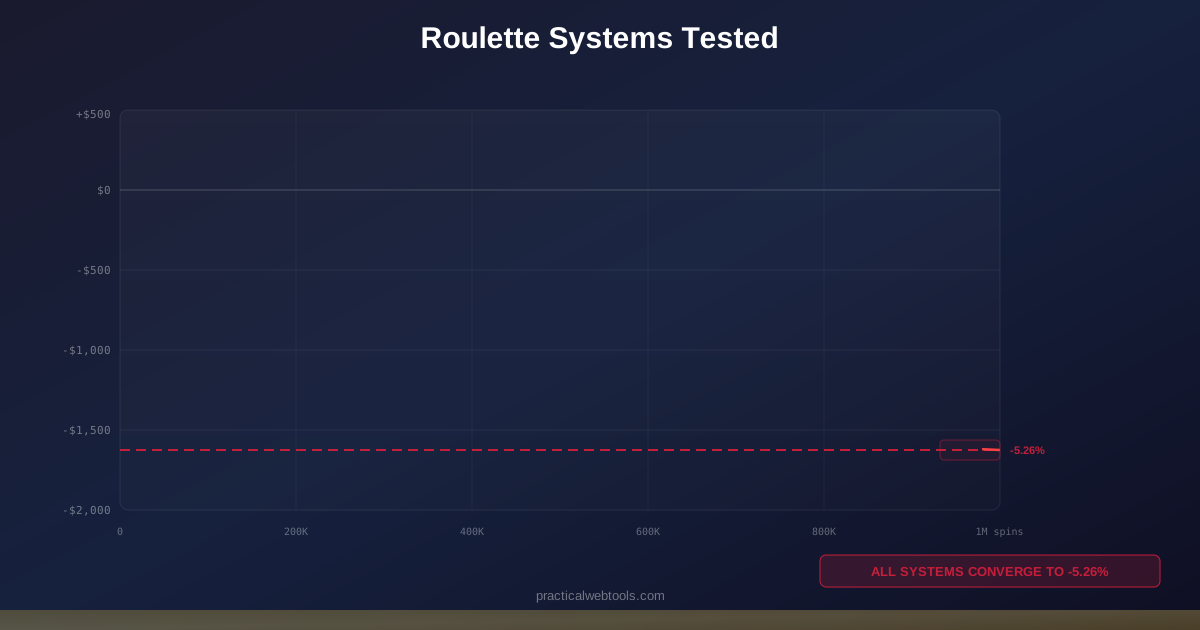
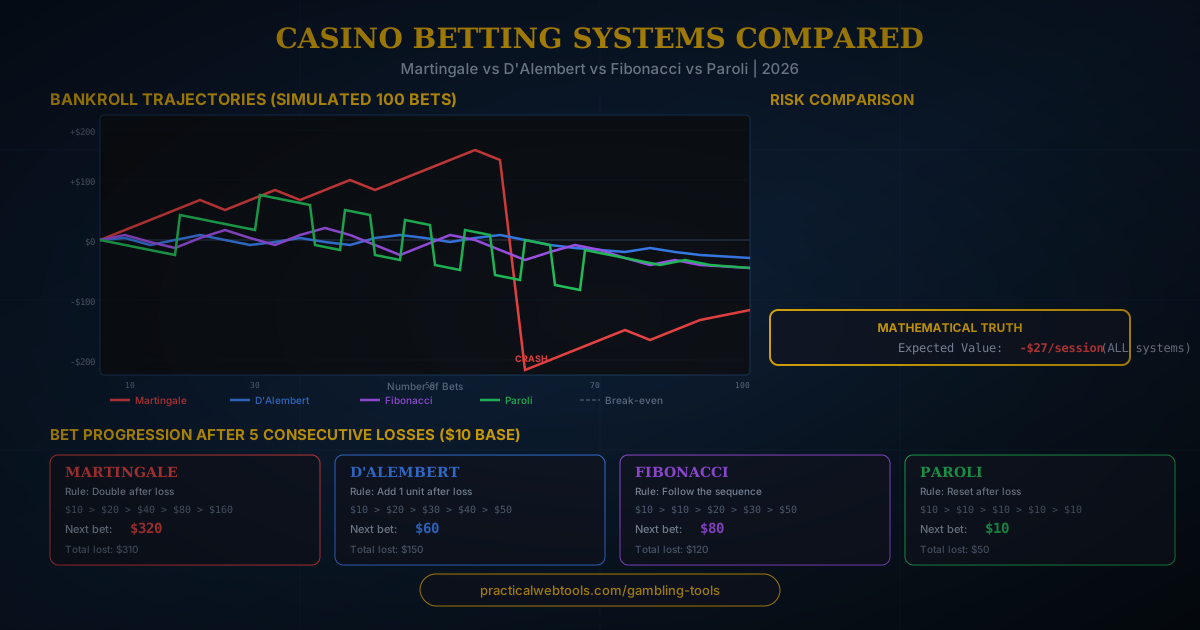
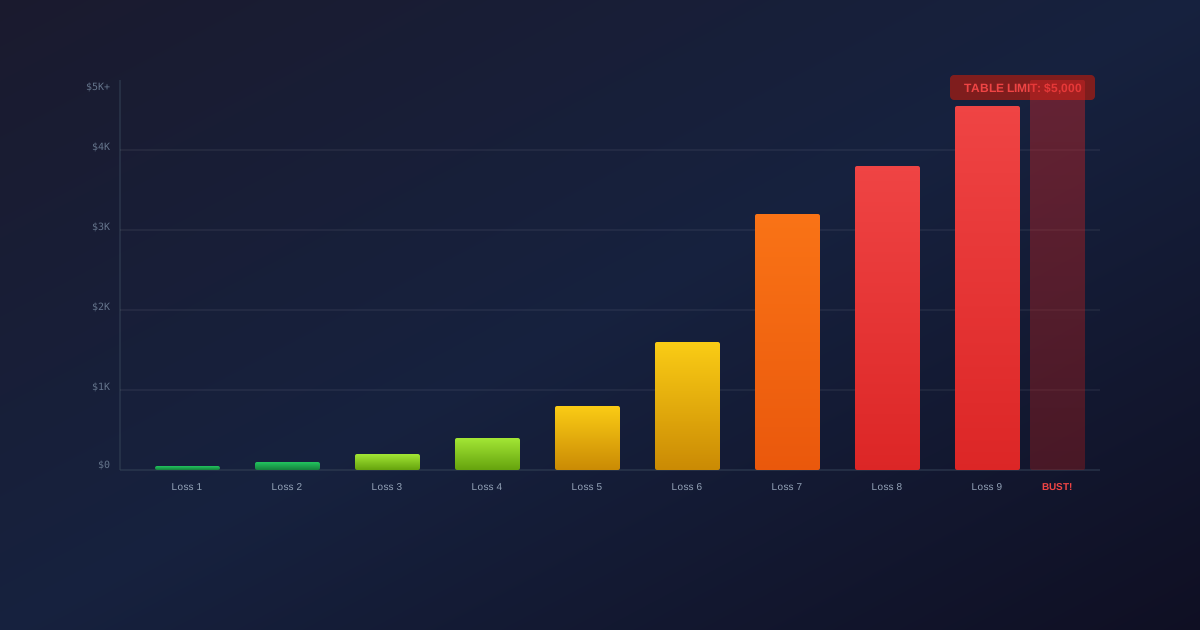
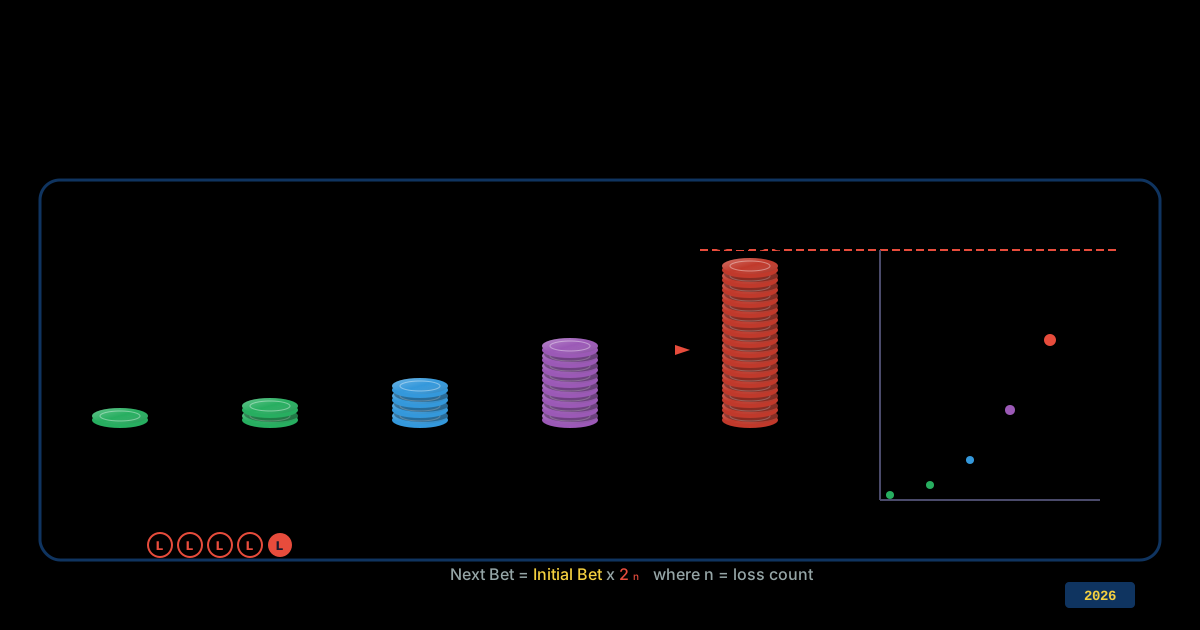
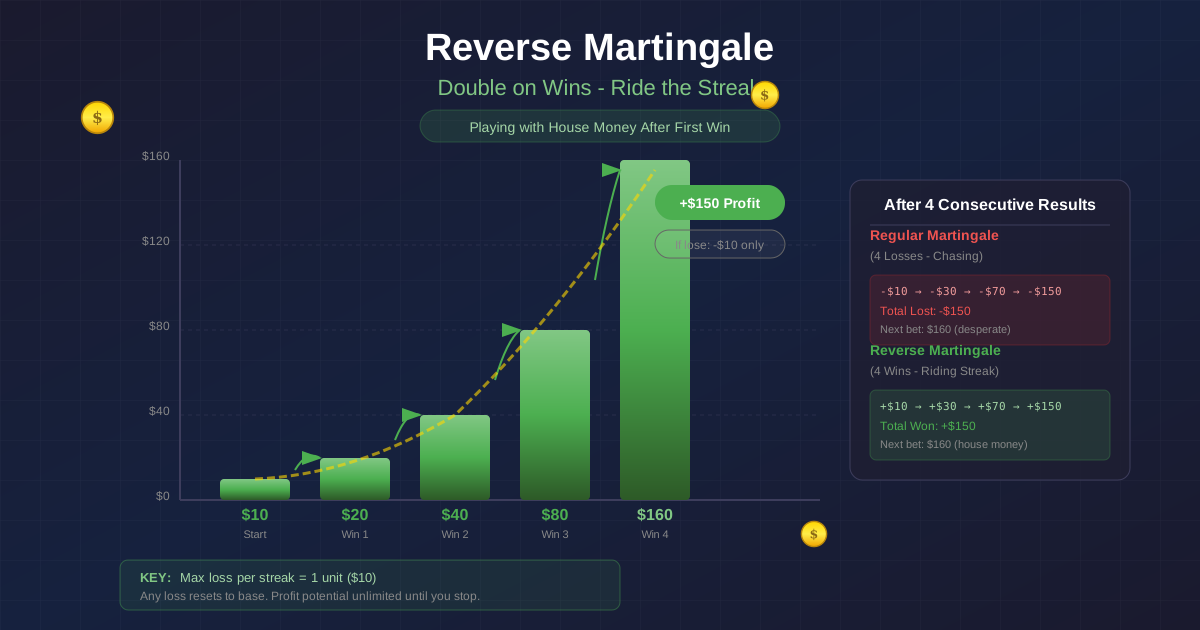
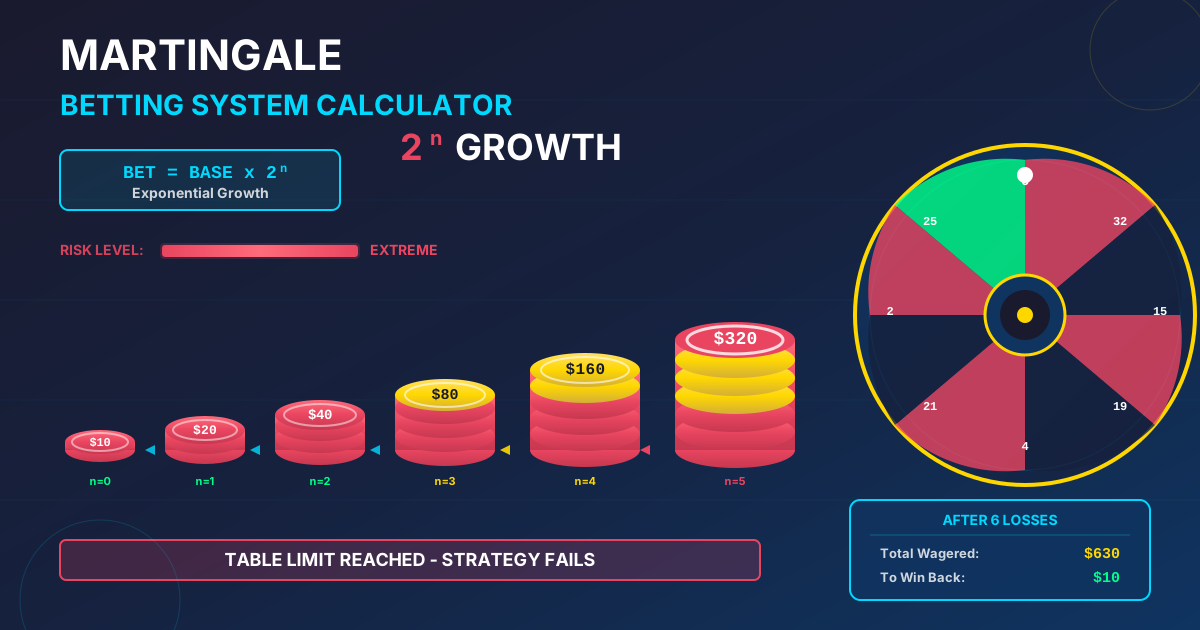
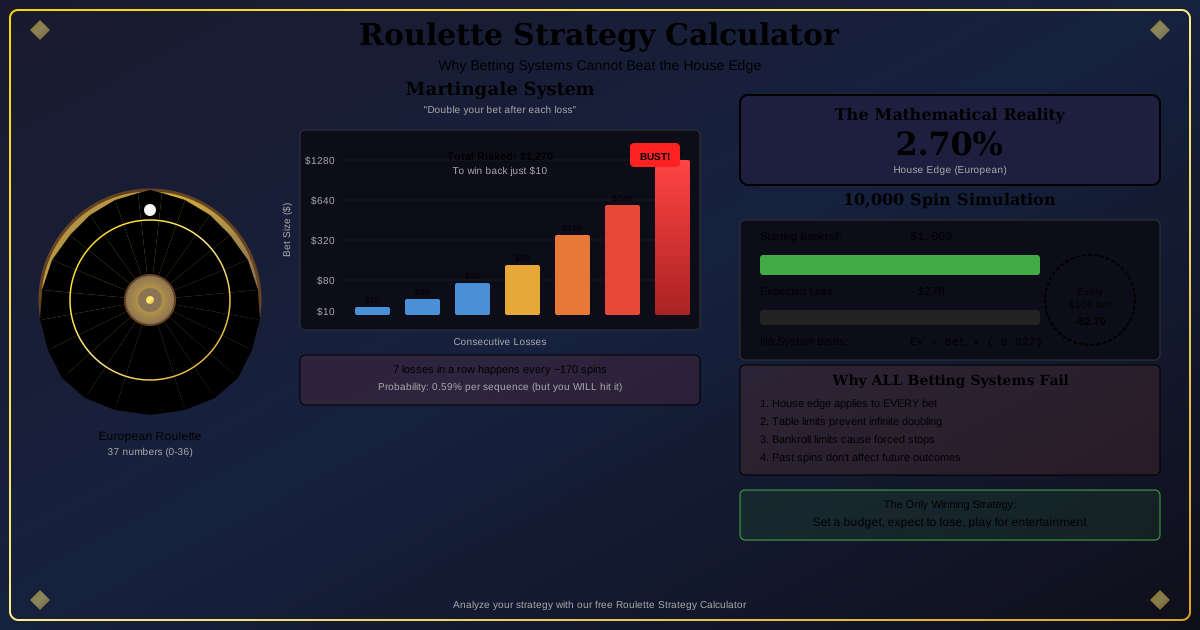
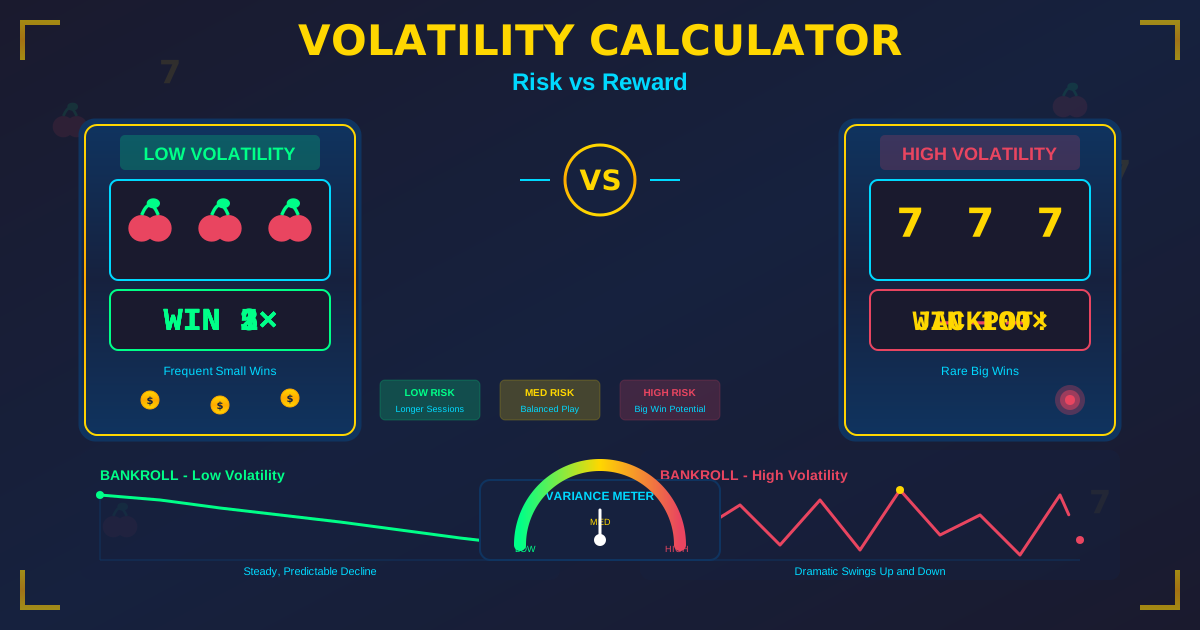
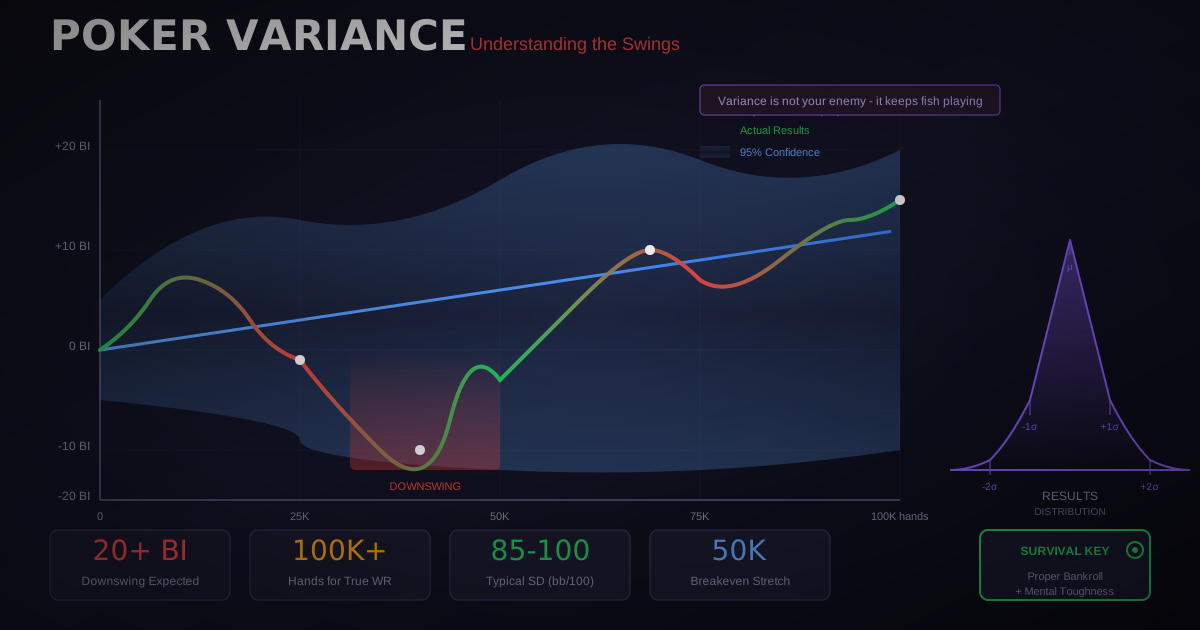
The critical insight: no betting system can change the house edge. Whether you bet $1 on red every spin or use the Martingale system (doubling after every loss), the house edge remains exactly the same over time. Systems only change the distribution of outcomes (many small wins with occasional catastrophic losses) without changing the expected value.
Calculate the exact probability and expected value of any roulette bet with our Roulette Odds Calculator and Roulette EV Calculator.
Real-World Roulette Example
You play European roulette with $200, betting $10 on red each spin:
- Spin 1-10: Red hits 6 times, black 4 times. You win $20. Balance: $220.
- Spin 11-20: Black and green dominate. Red hits only 3 times. You lose $40. Balance: $180.
- Spin 21-30: Even split, 5 reds, 5 non-reds. Net $0. Balance: $180.
After 30 spins at $10 each, you have wagered $300 total. Your expected loss at 2.70% is $8.10. Your actual result (down $20) is well within normal variance.
Simulate thousands of roulette spins to see the long-term math with our Roulette Betting Simulator.
Craps: Intimidating but Excellent Odds
Craps looks chaotic and confusing, but it offers some of the best odds in the casino once you understand two simple bets.
How Craps Works (Simplified)
- The shooter rolls two dice
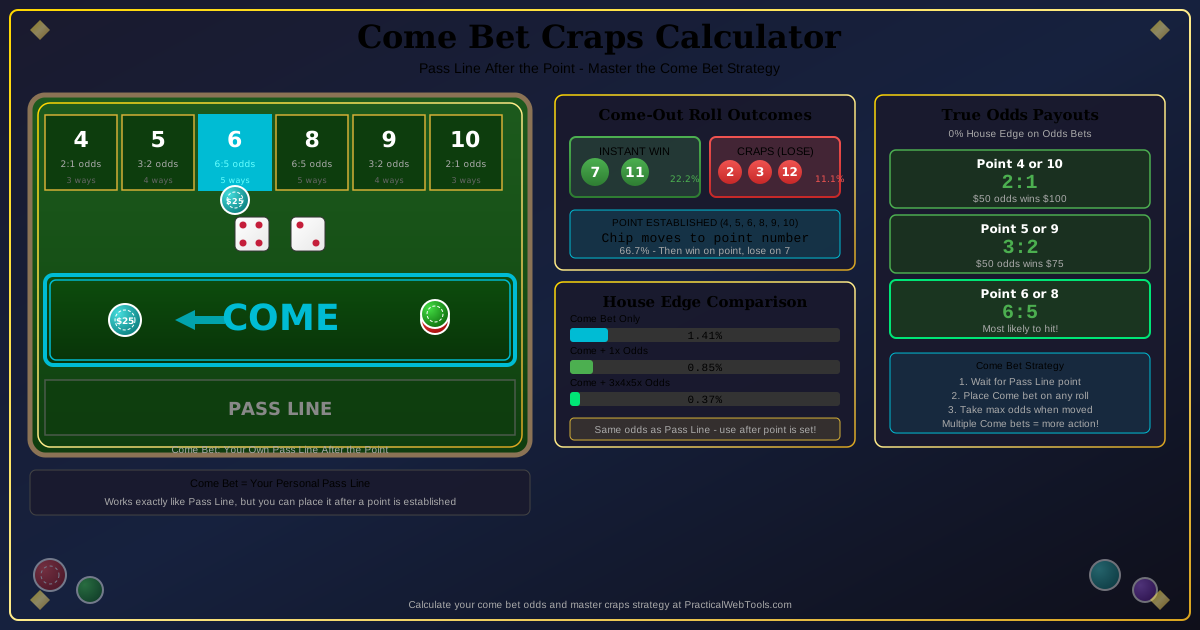
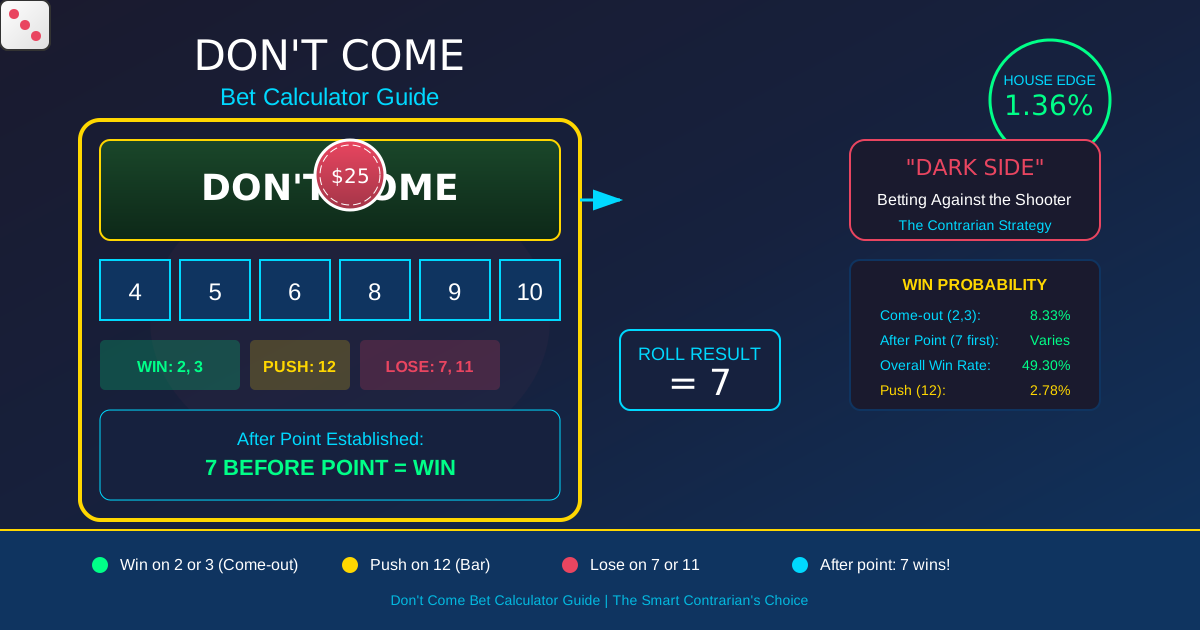
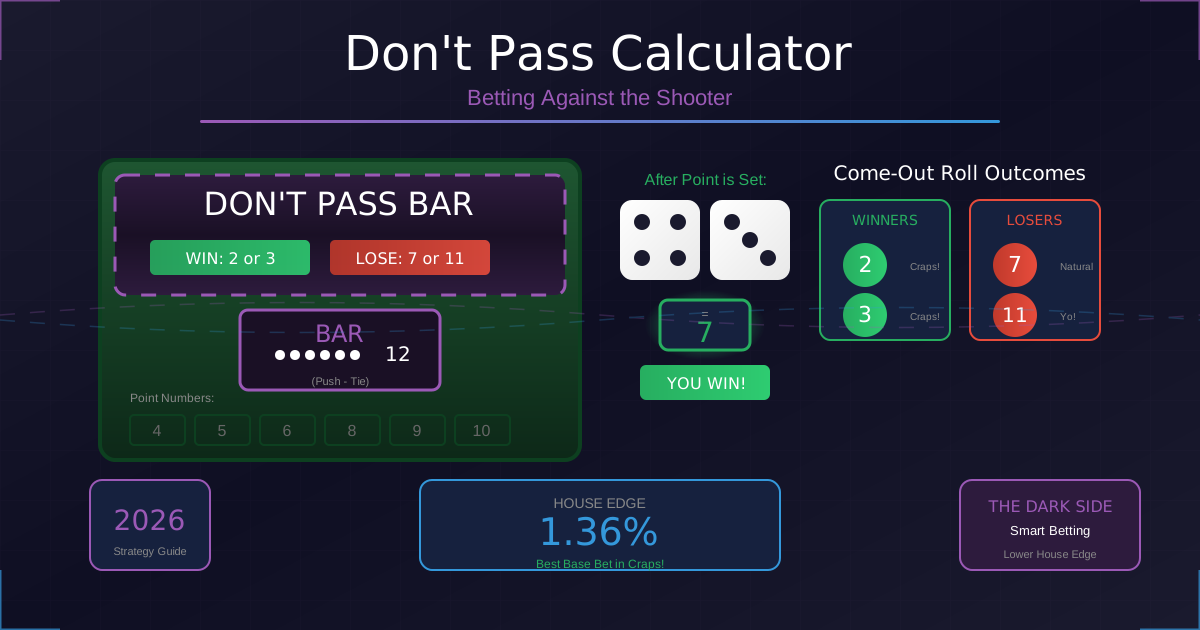
- Come-out roll: If 7 or 11, pass line bets win. If 2, 3, or 12, pass line bets lose
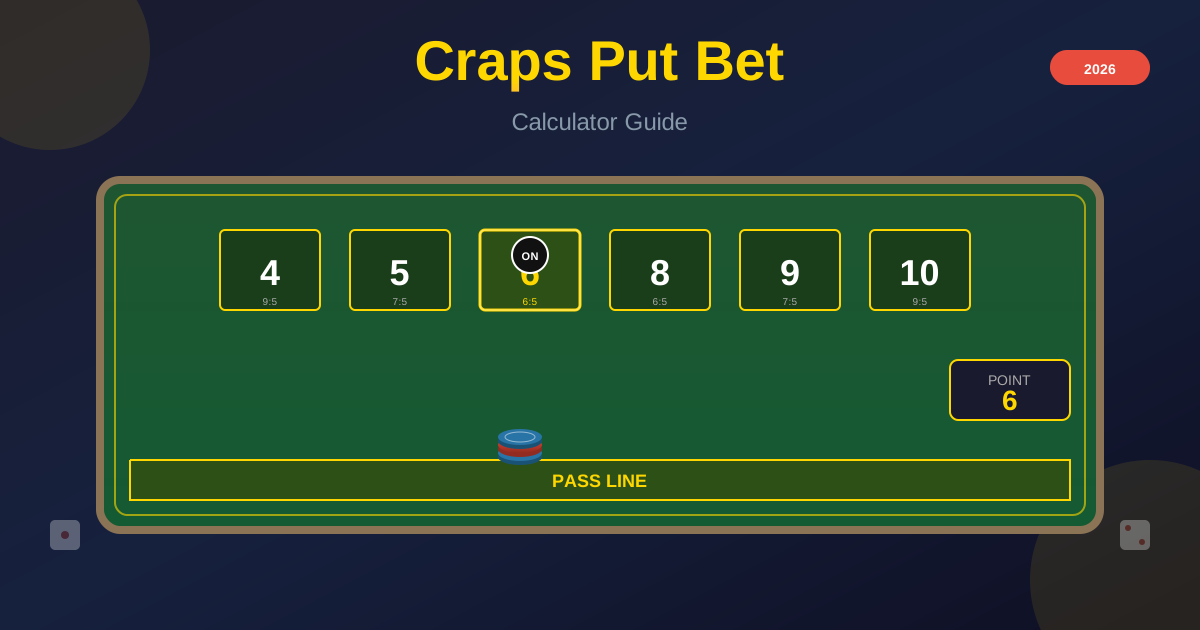
- Any other number (4, 5, 6, 8, 9, 10) becomes the "point"
- The shooter keeps rolling until they roll the point again (pass line wins) or roll a 7 (pass line loses)
The Only Two Bets You Need to Know
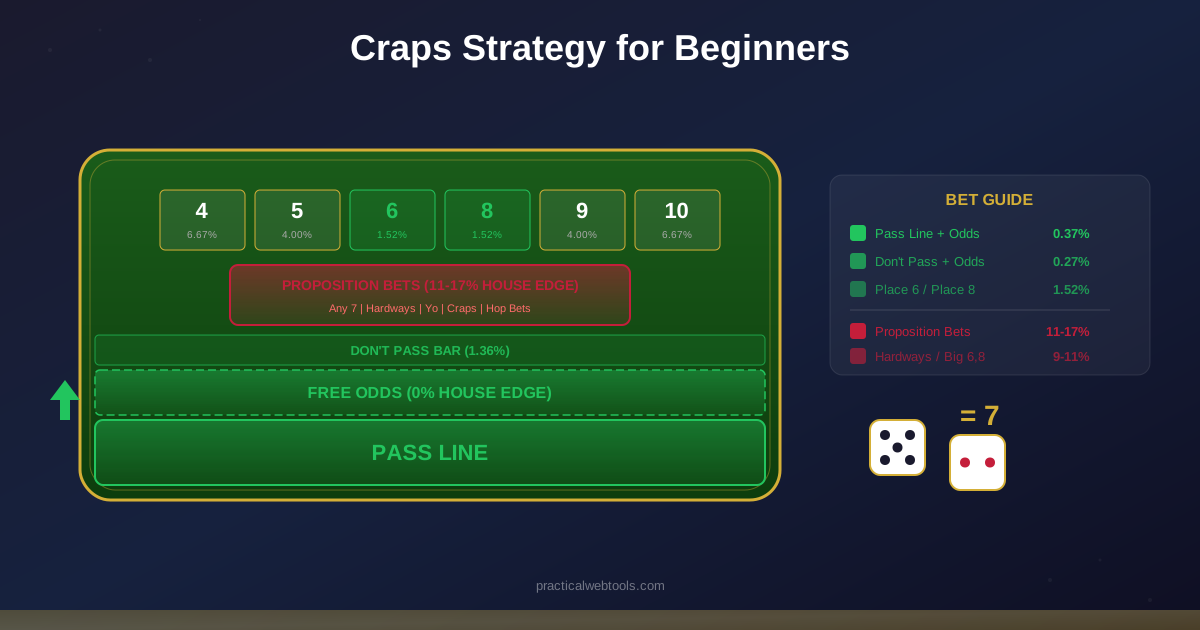
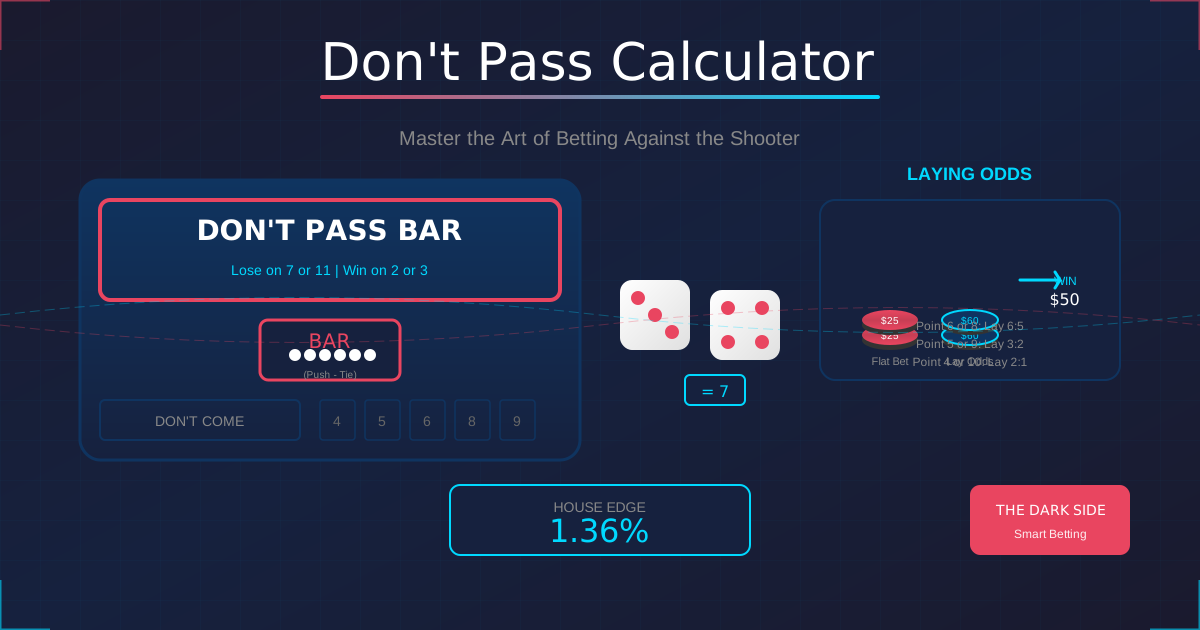
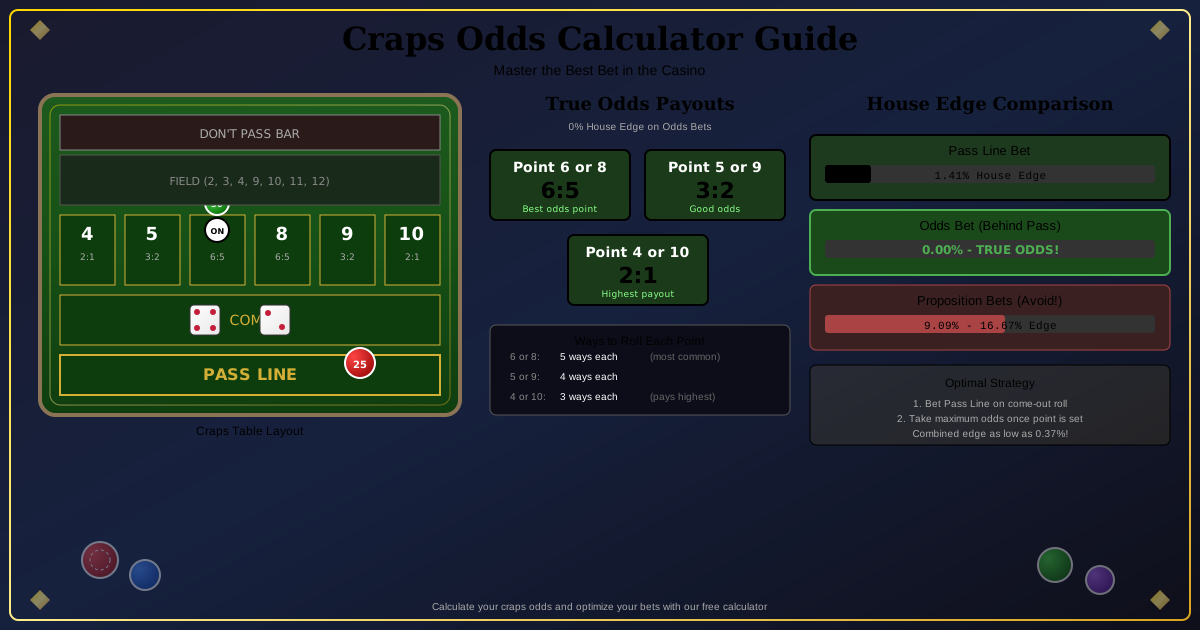
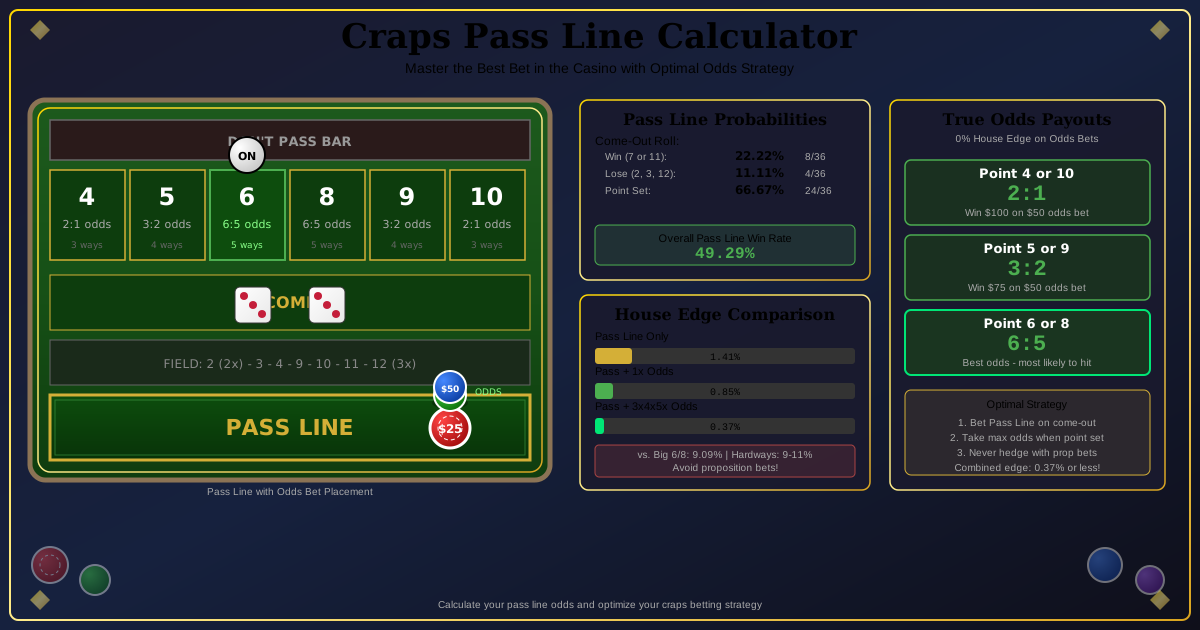
Pass Line Bet (1.41% house edge): This is the fundamental craps bet. You bet before the come-out roll. If the shooter makes their point, you win 1:1.
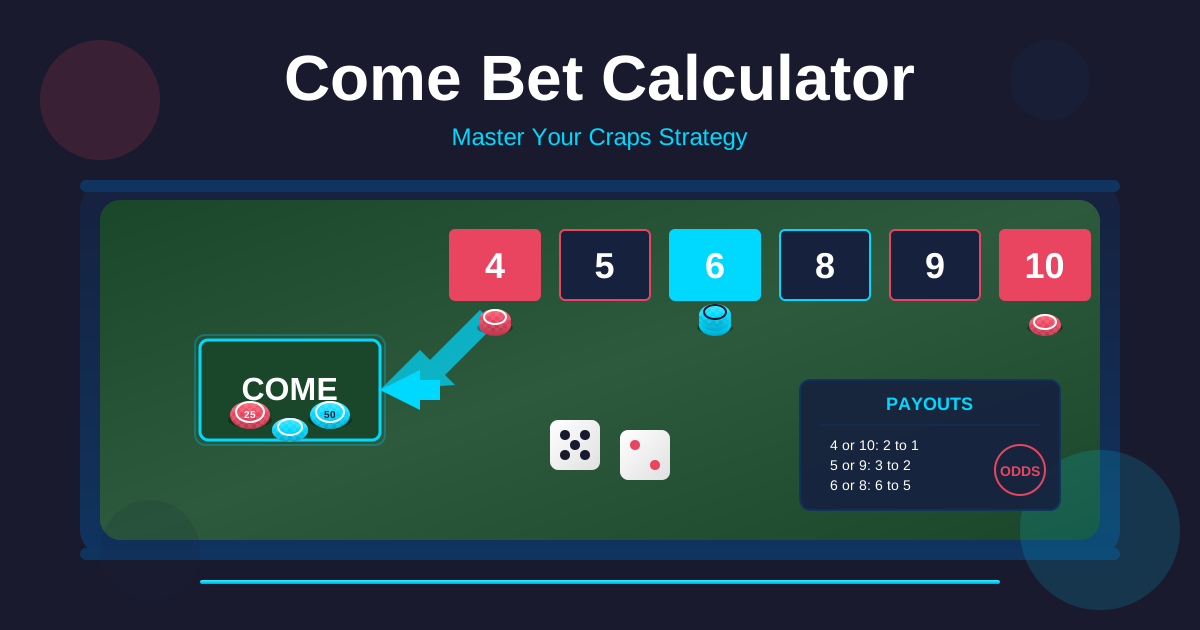
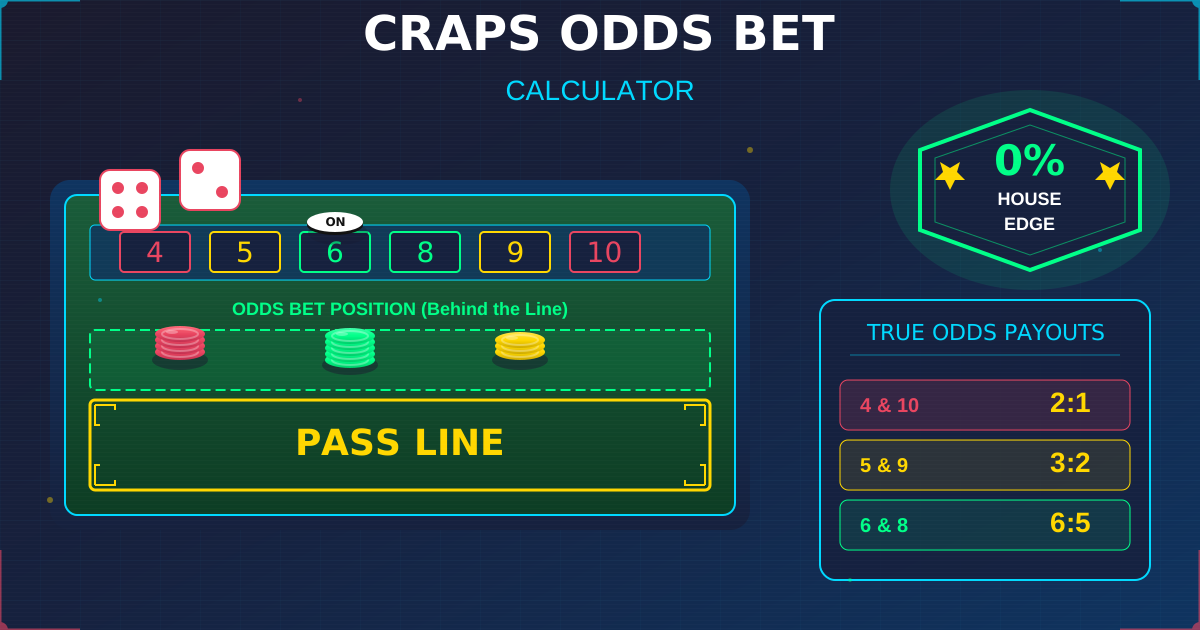
Odds Bet (0% house edge): After a point is established, you can place an additional "odds" bet behind your pass line bet. This bet pays at true odds with zero house edge. It is the only bet in the casino with no house edge.
| Point | True Odds | Payout |
|---|---|---|
| 4 or 10 | 2:1 | $2 for every $1 |
| 5 or 9 | 3:2 | $3 for every $2 |
| 6 or 8 | 6:5 | $6 for every $5 |
When you combine the pass line bet with maximum odds, the combined house edge drops below 0.5%, making craps one of the best games in the casino.
Calculate exact pass line and odds bet returns with our Craps Pass Line Calculator and Craps House Edge Calculator.
Real-World Craps Example
You buy in for $300, betting $10 on the pass line with 3x odds ($30 behind):
- Roll 1: Come-out 7. Pass line wins $10. Balance: $310.
- Roll 2: Come-out 6. Point is 6. You place $30 odds. Shooter rolls 8, 5, 3, 6. Point hit! Pass line pays $10, odds pay $36. Balance: $356.
- Roll 3: Come-out 11. Pass line wins $10. Balance: $366.
- Roll 4: Come-out 4. Point is 4. You place $30 odds. Shooter rolls 9, 8, 7. Seven out. Pass line and odds both lose ($40). Balance: $326.
After 4 decisions, total wagered approximately $160 (pass line bets plus odds). Expected loss at ~0.5% combined: about $0.80. Your actual result (+$26) shows how volatile craps can be in the short term.
Craps Bets to Avoid
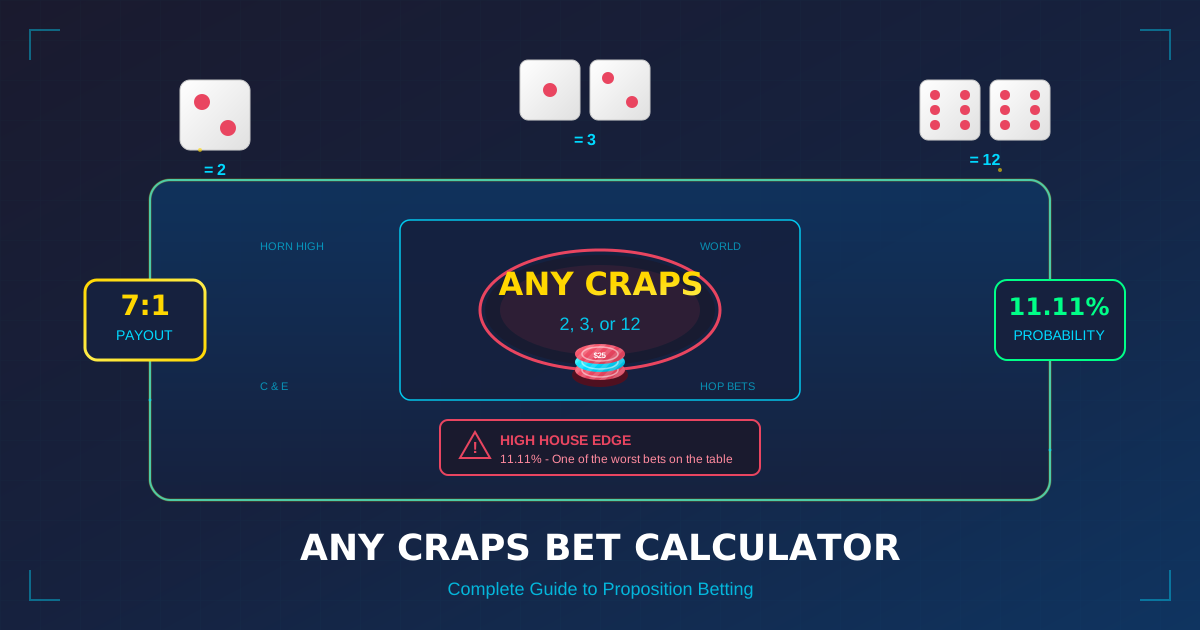
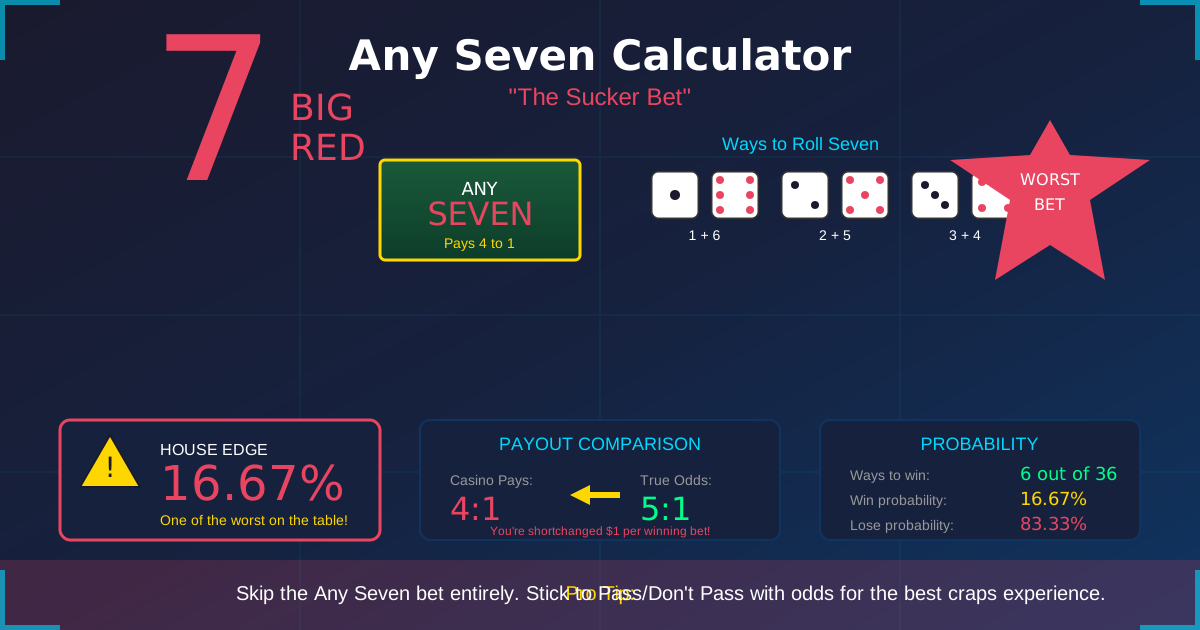
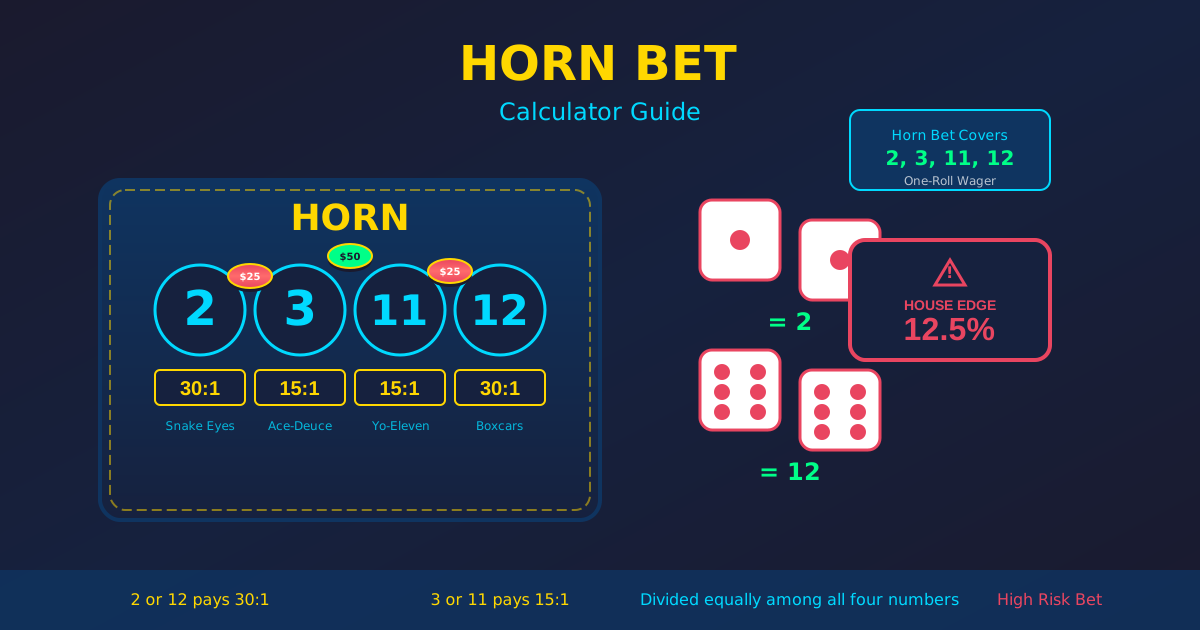
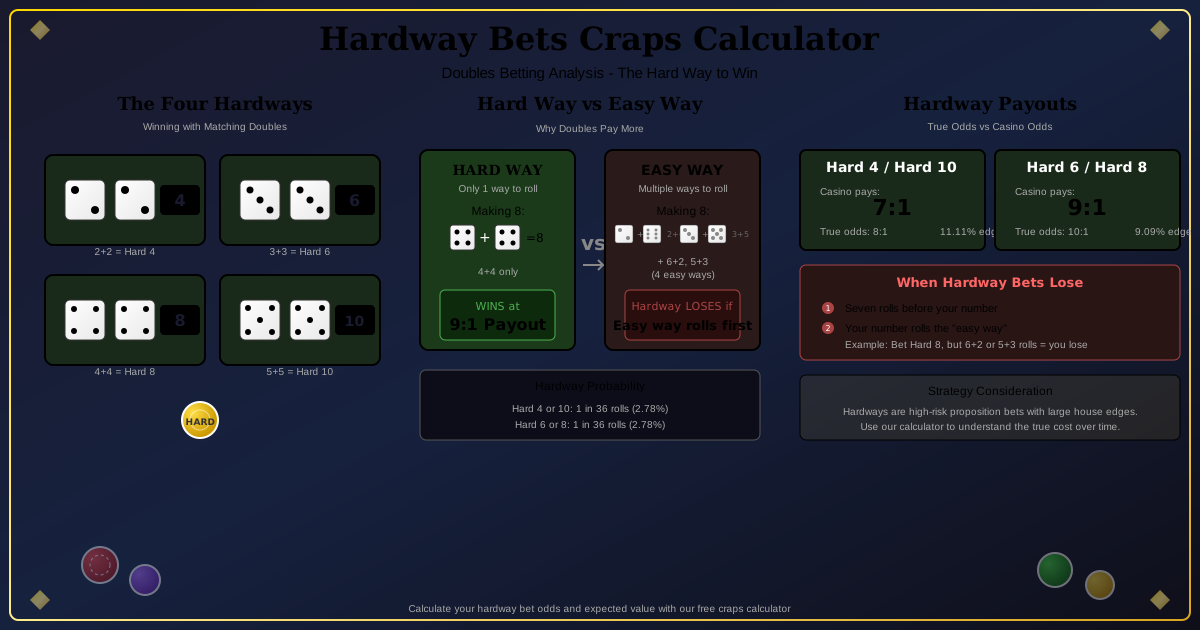
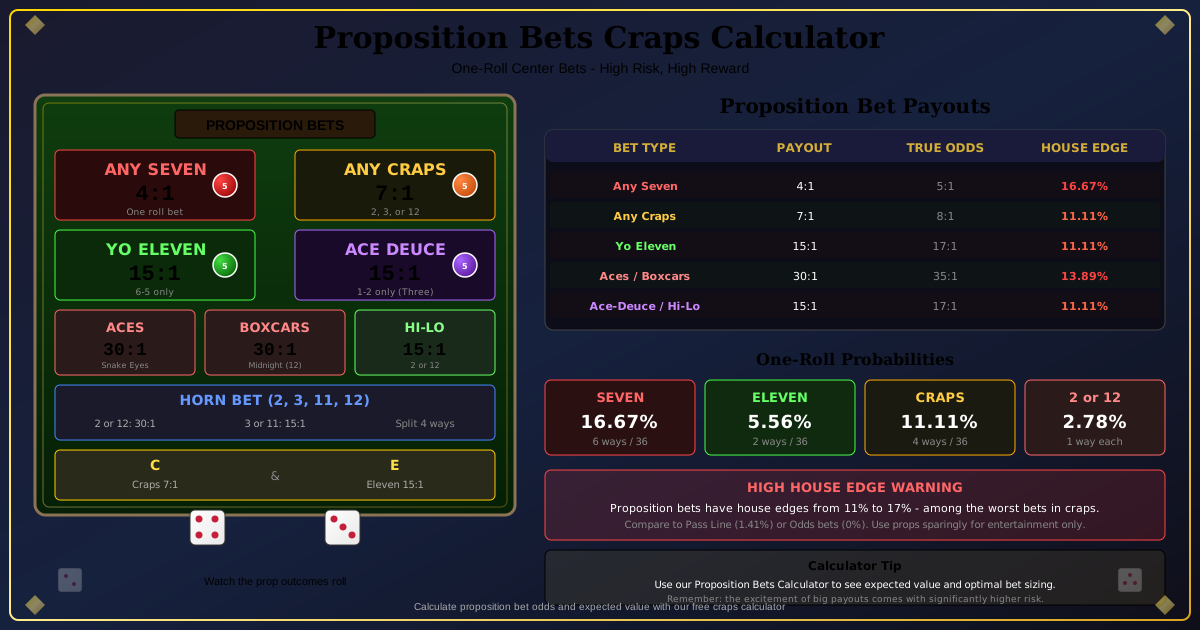
- Any 7 (16.67% house edge): Terrible bet
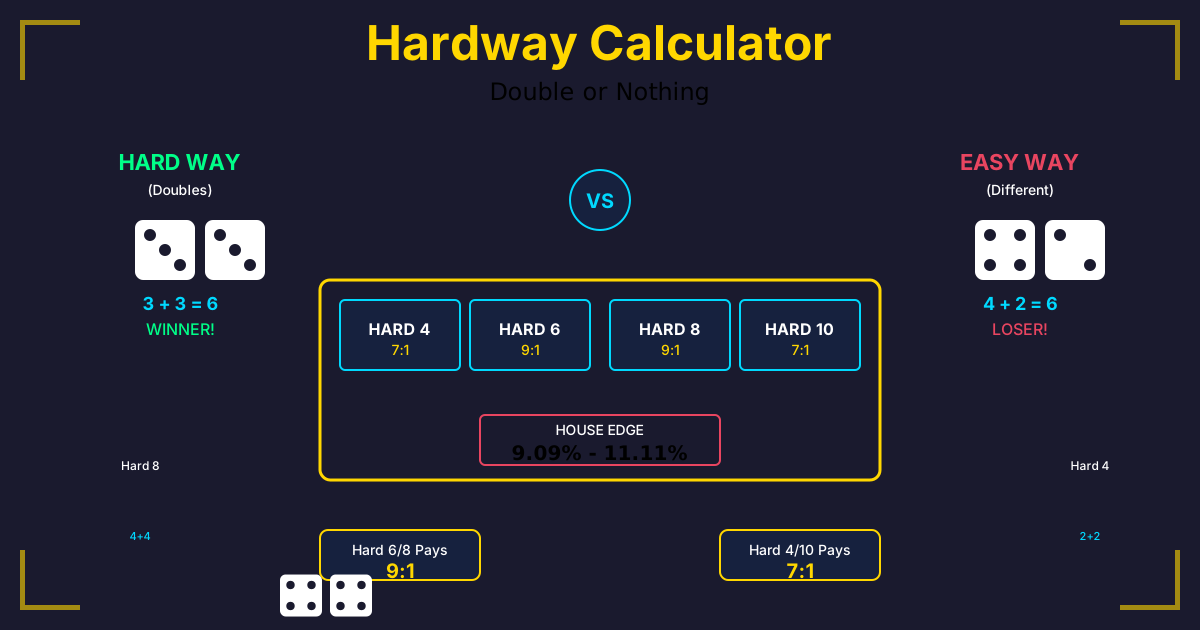
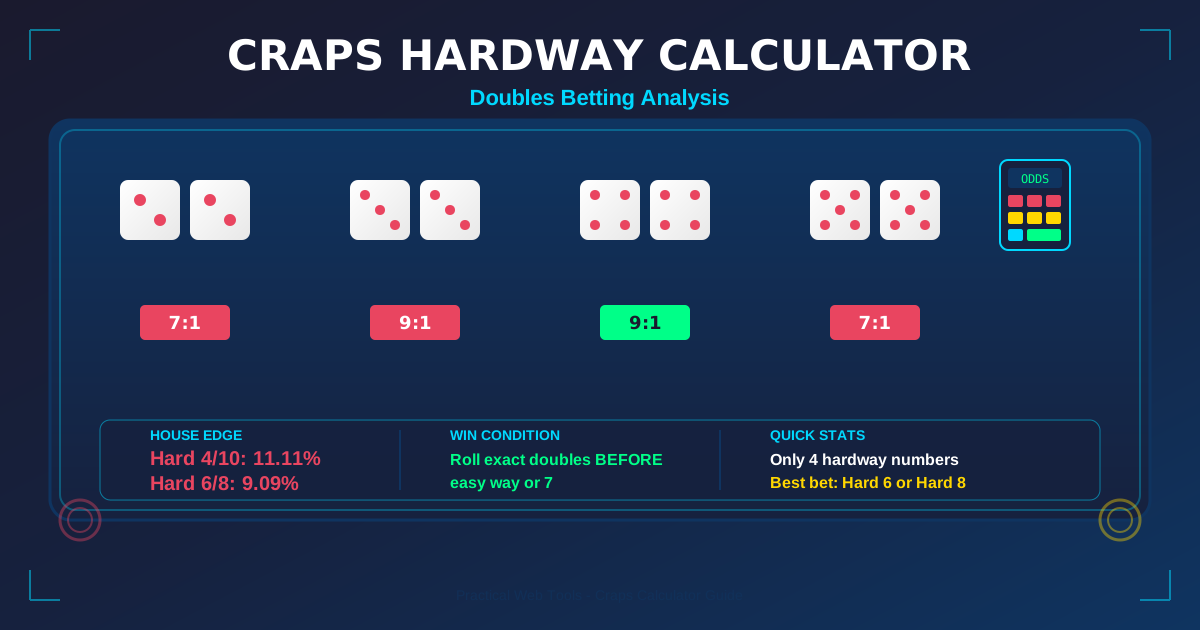
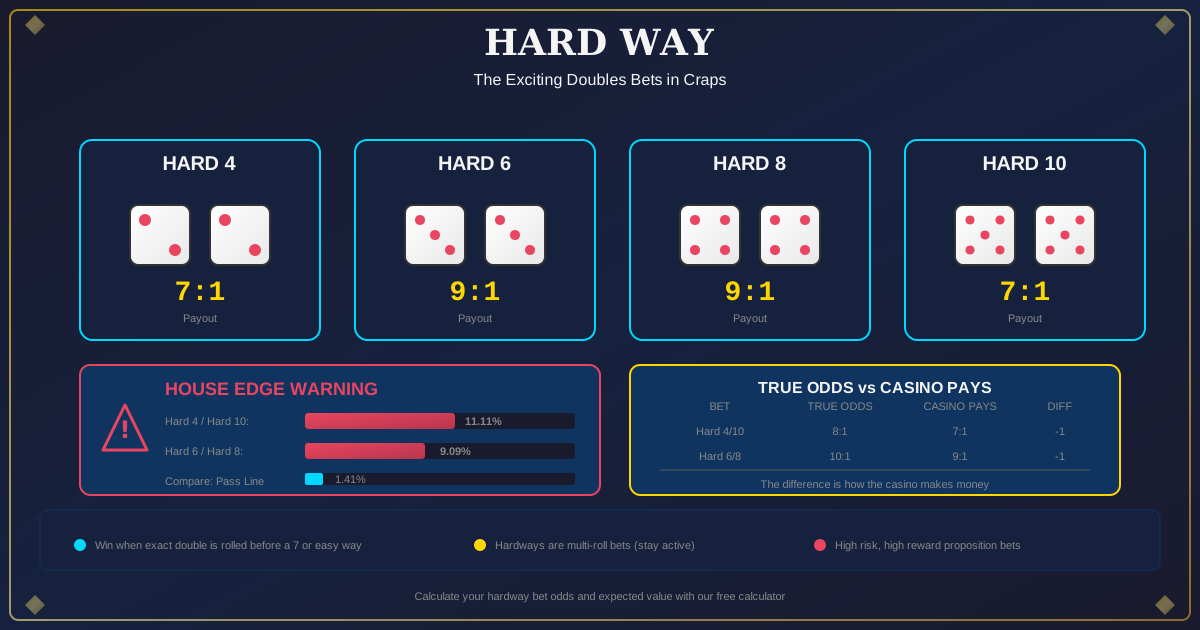
- Hardways (9.09-11.11%): Fun but expensive
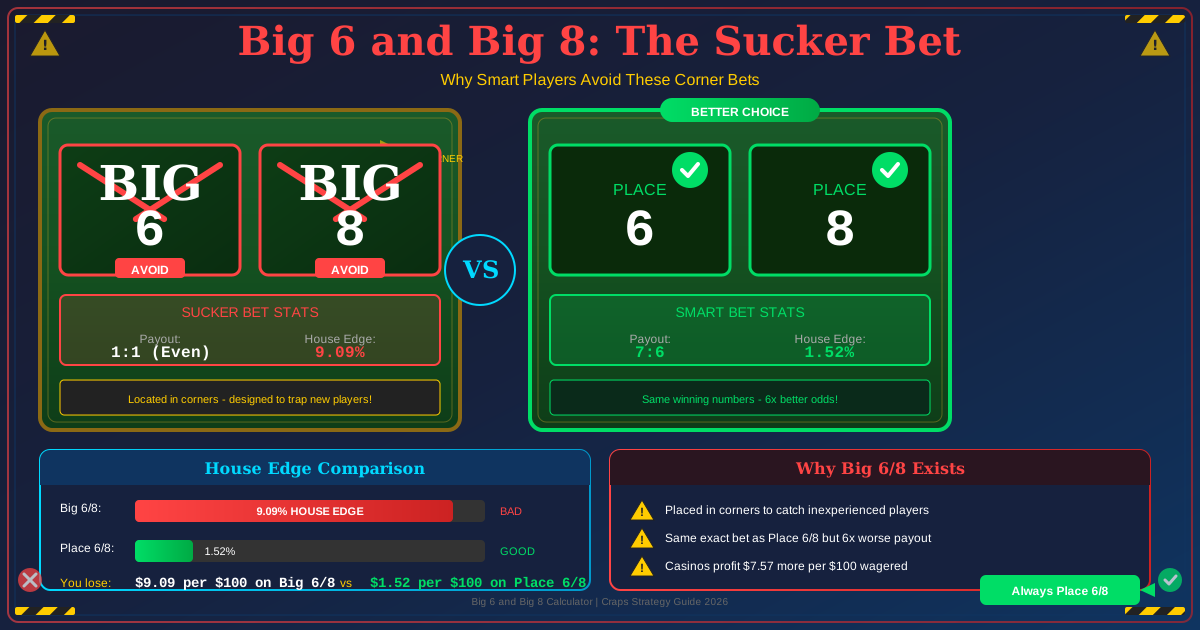
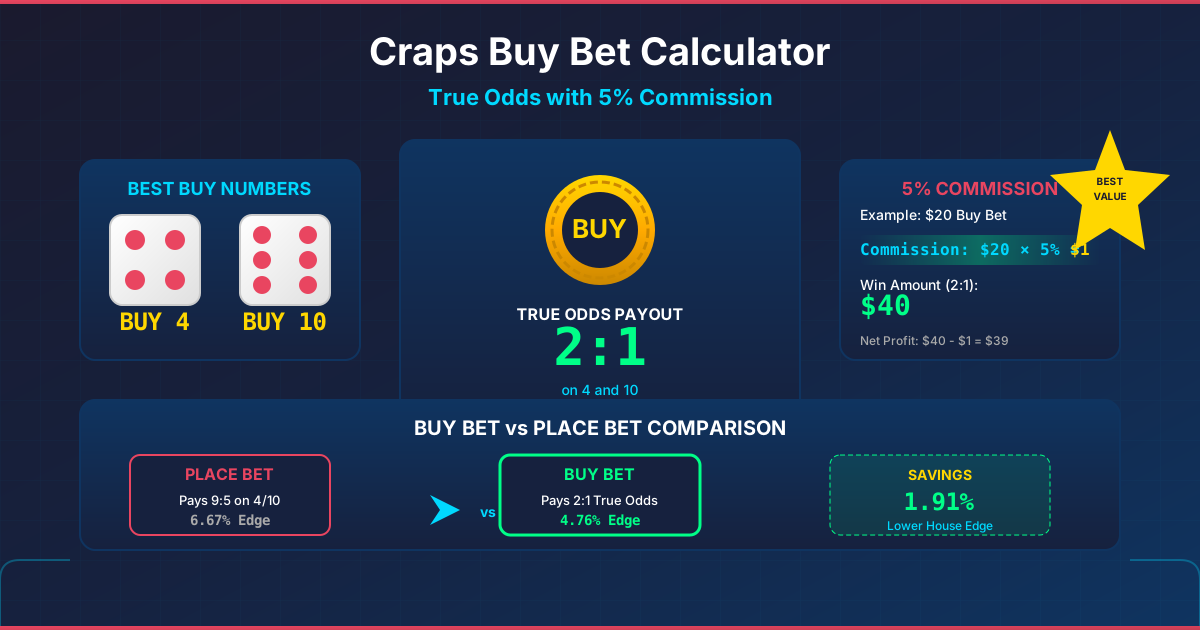
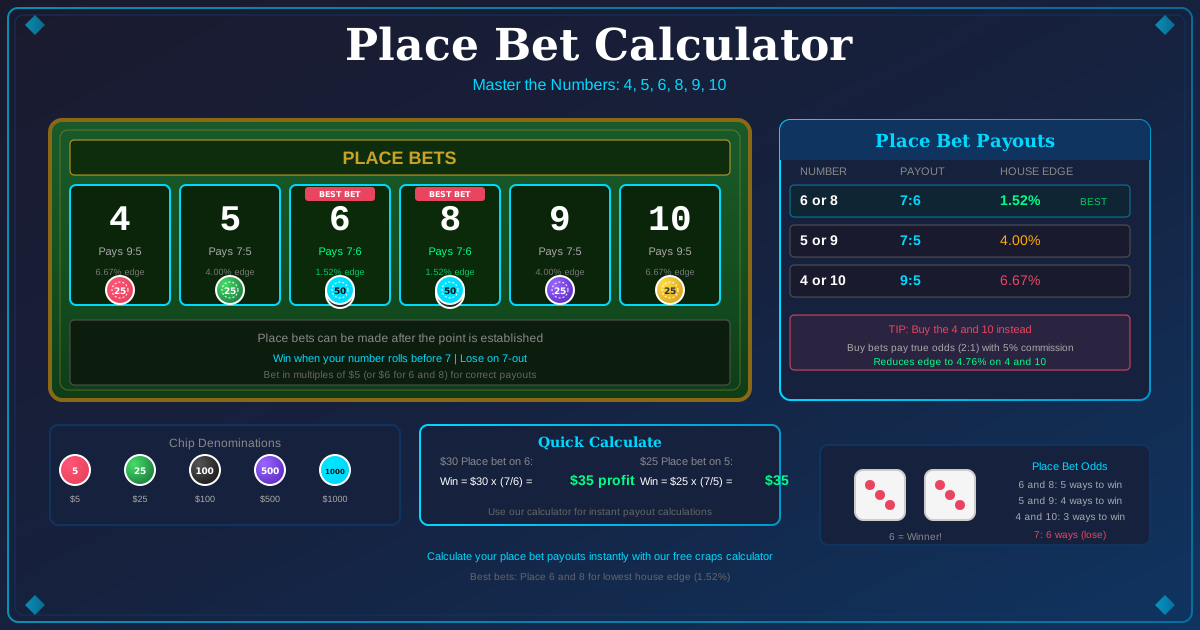
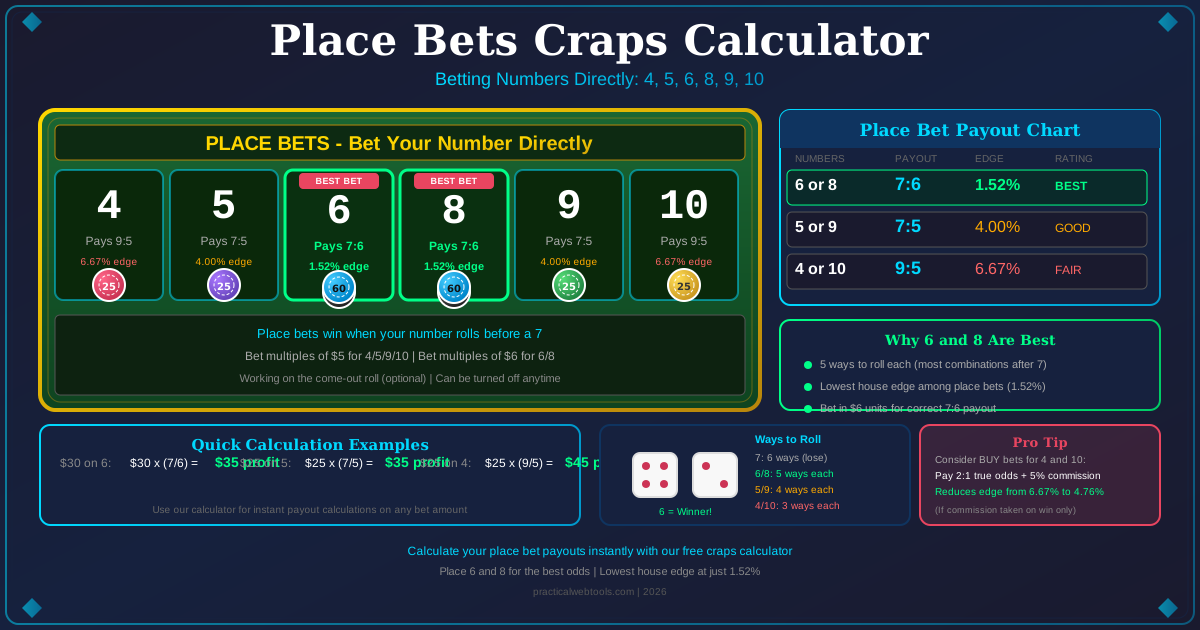
- Big 6/Big 8 (9.09%): Just bet place 6 or place 8 instead (1.52%)
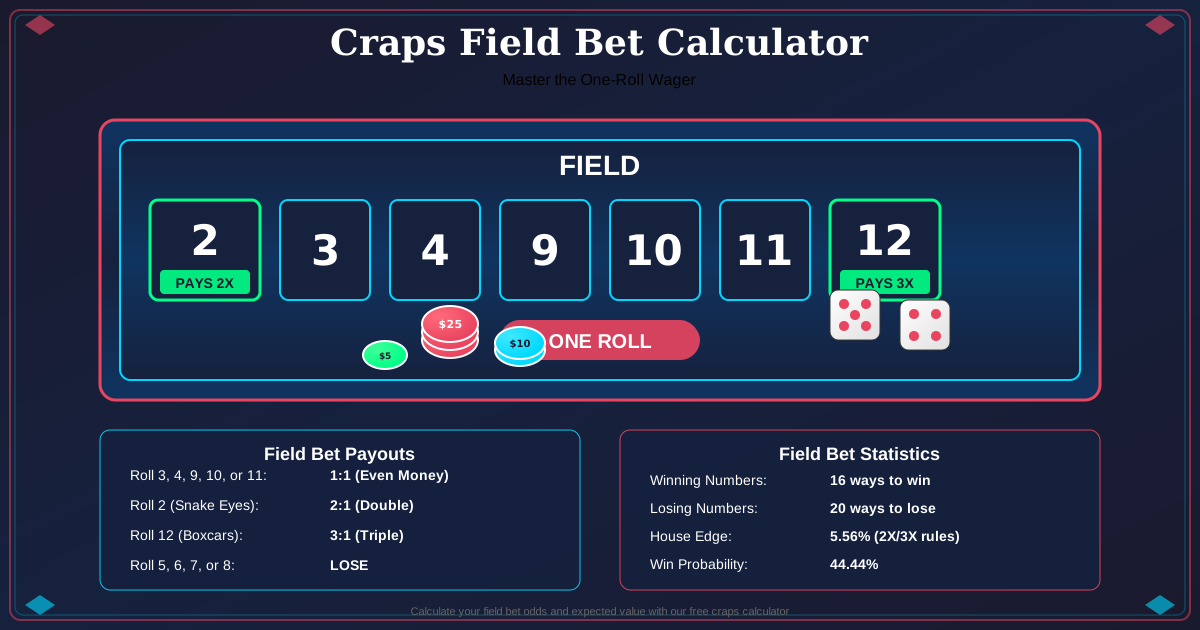
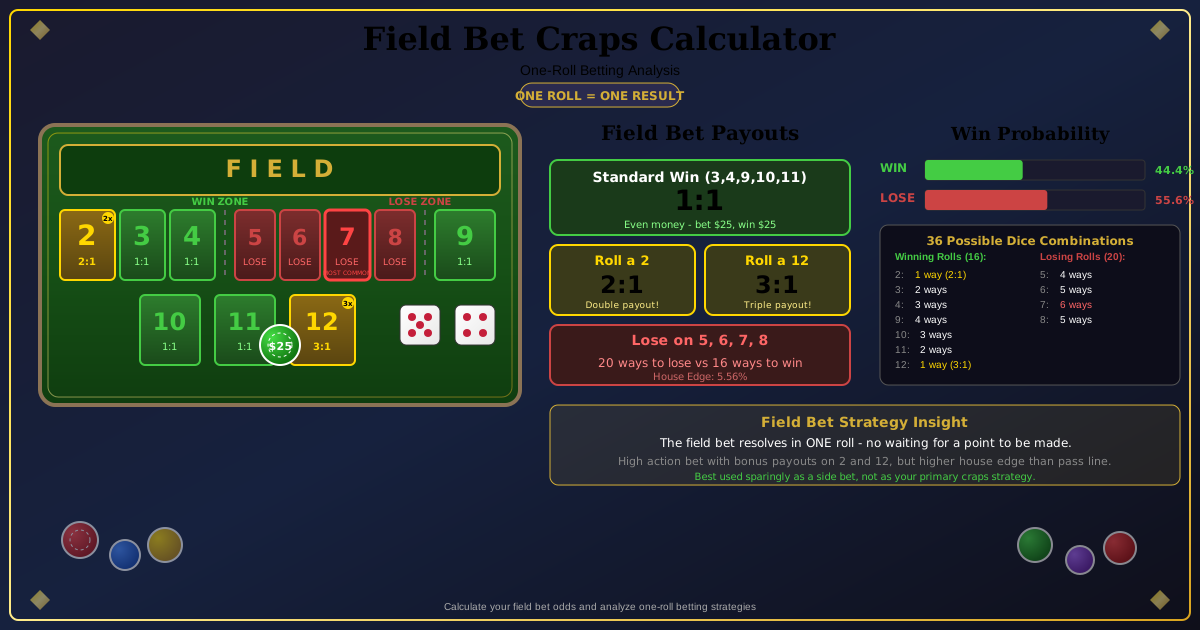
- Field bet with no triple on 12 (5.56%): Acceptable only if 12 pays 3:1
Calculate the expected loss on any craps bet with our Craps Expected Loss Calculator.
Baccarat: The Simple Game with Good Odds
Baccarat is one of the simplest casino games. You bet on "Player," "Banker," or "Tie." Cards are dealt according to fixed rules with no decision-making required.
How Baccarat Works
- Two hands are dealt: "Player" and "Banker"
- Card values: Aces = 1, 2-9 = face value, 10s and face cards = 0
- Hand totals use only the last digit (15 = 5, 20 = 0)
- Fixed drawing rules determine if a third card is dealt
- Closest to 9 wins
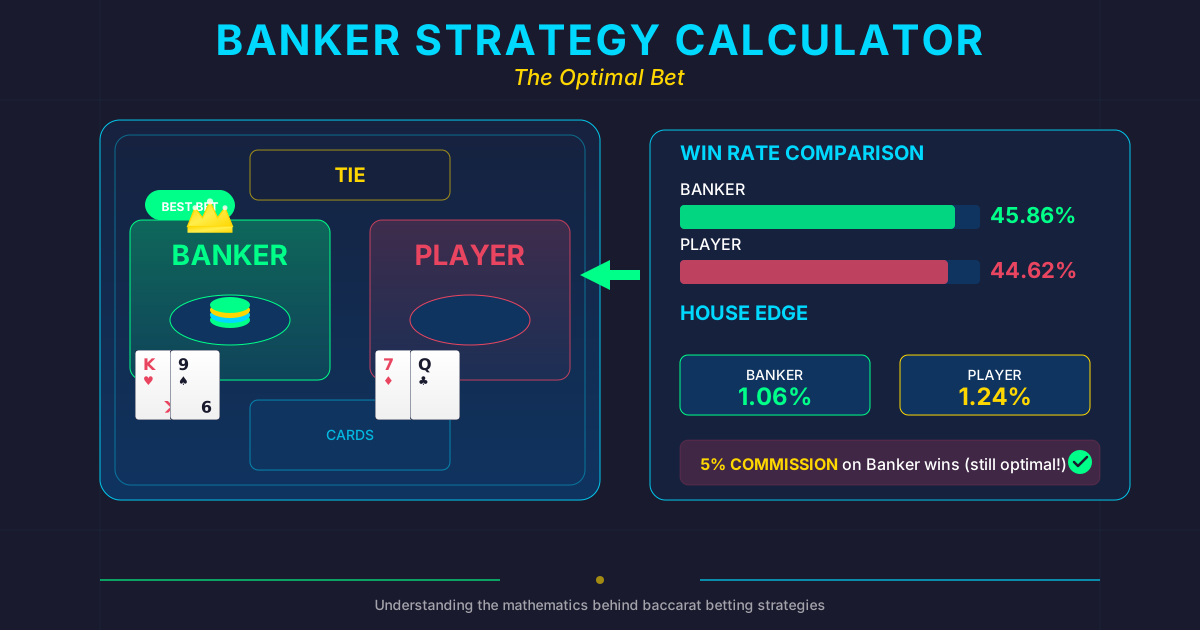
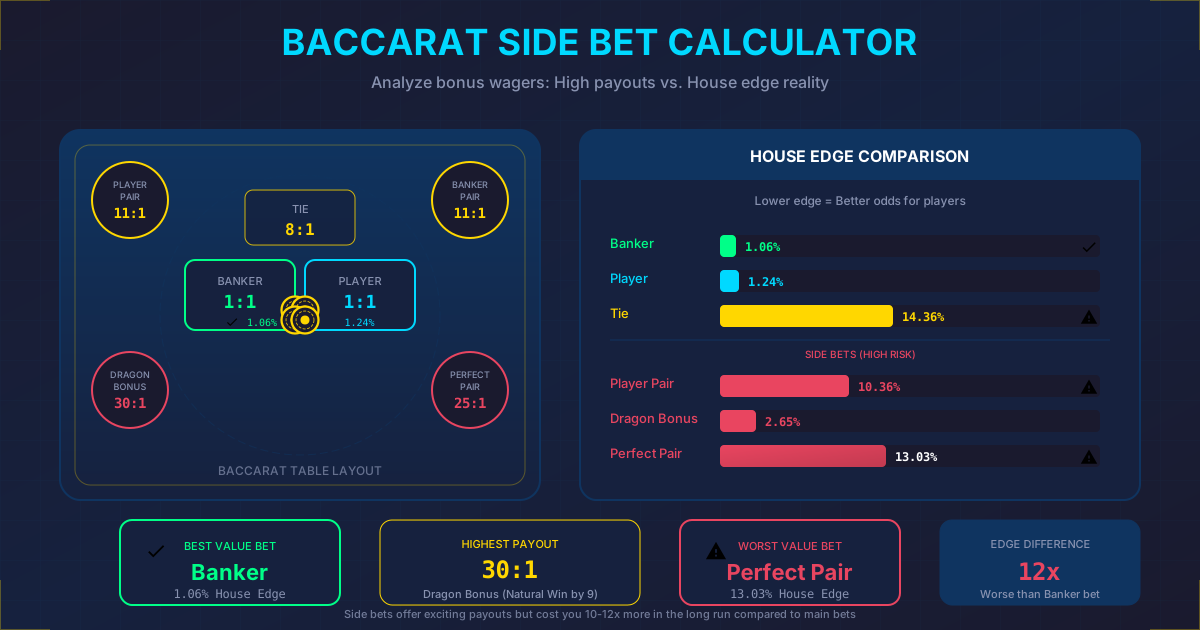
Baccarat Bet Analysis
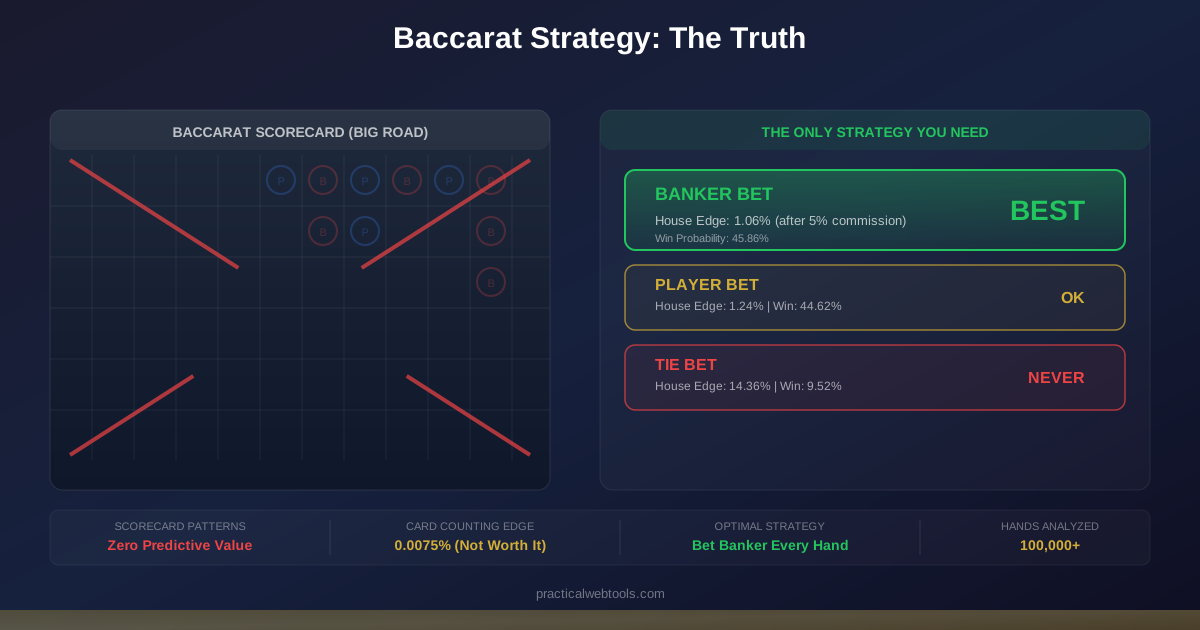
| Bet | House Edge | Commission | Recommendation |
|---|---|---|---|
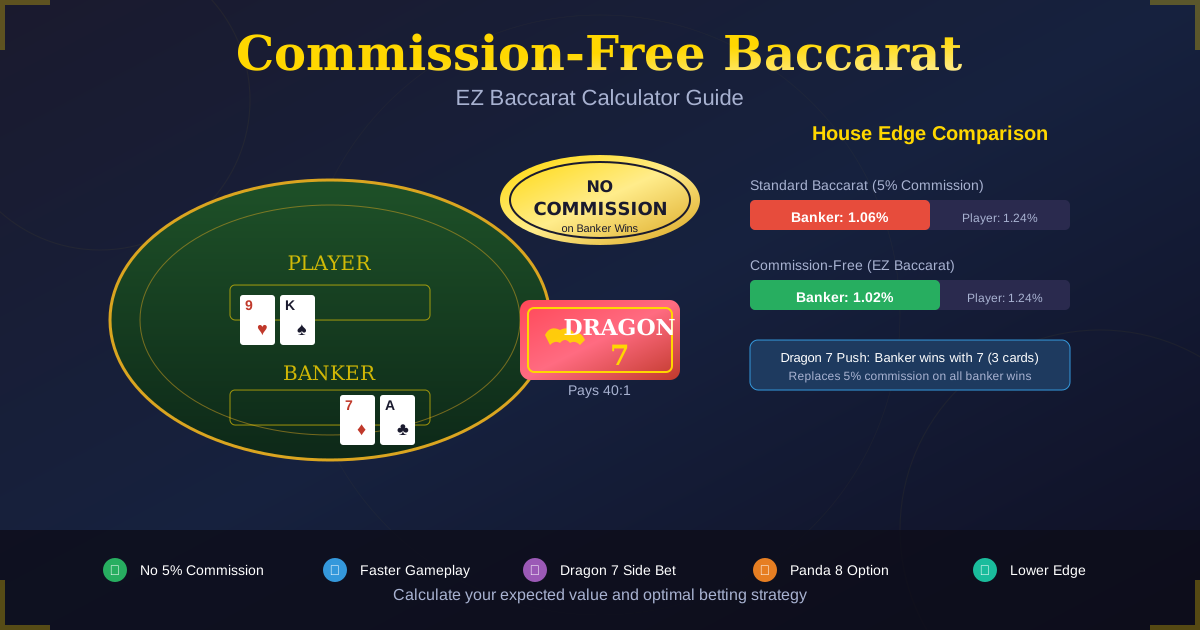
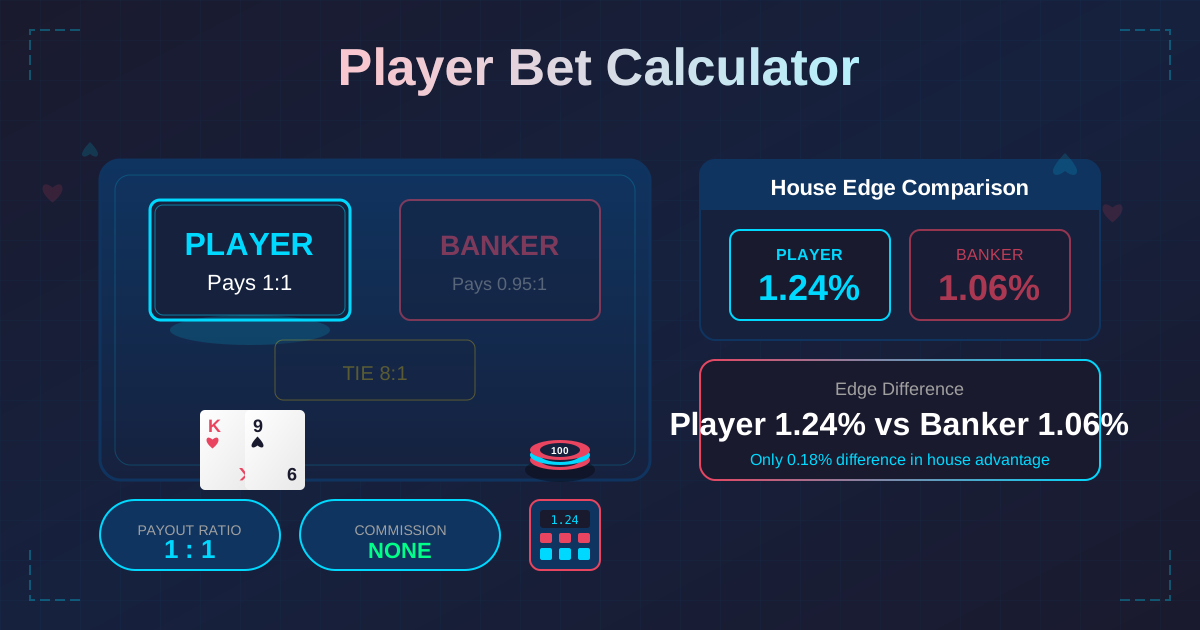
| Banker | 1.06% | 5% commission on wins | Best bet |
| Player | 1.24% | None | Second-best bet |
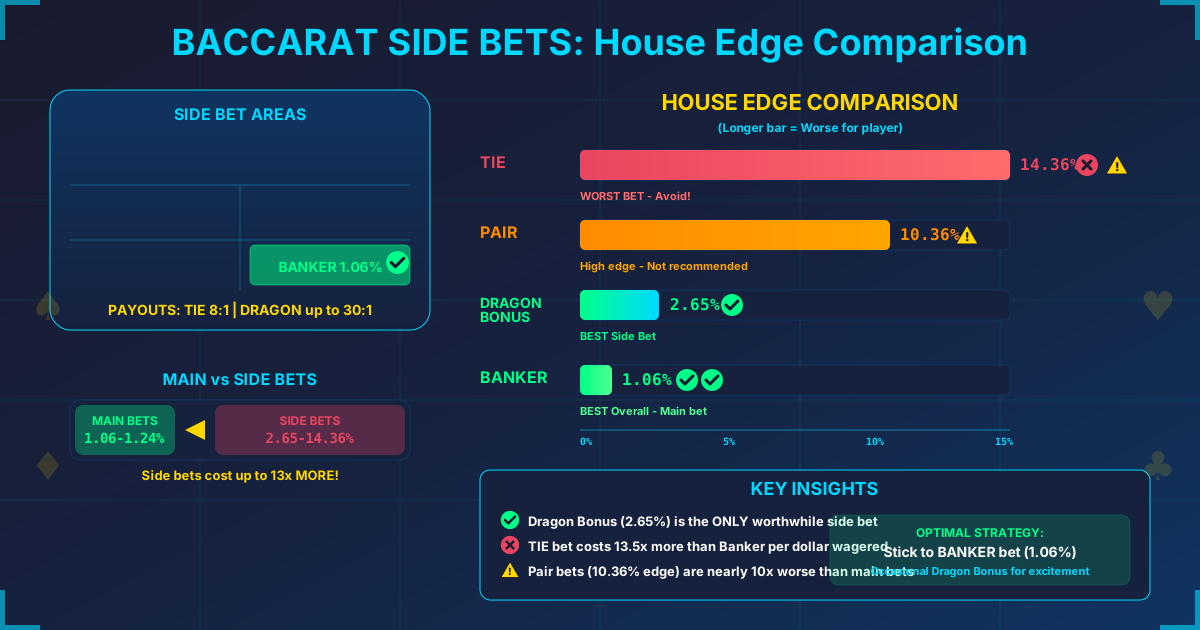
| Tie | 14.36% | None | Never bet this |
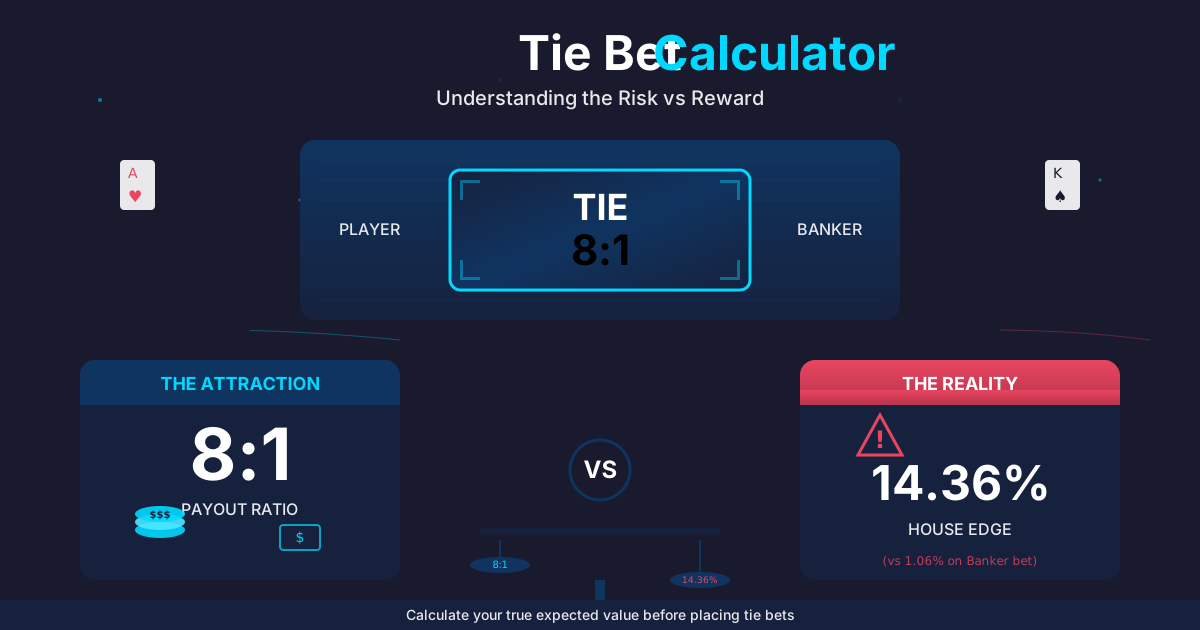
The Banker bet is the best bet in baccarat despite the 5% commission. The Tie bet is one of the worst bets in the entire casino. At 14.36% house edge, you expect to lose $14.36 for every $100 wagered on ties.
Analyze baccarat odds and expected returns with our Baccarat Odds Calculator and Baccarat House Edge Calculator.
Real-World Baccarat Example
You play baccarat with $500, betting $25 on Banker each hand:
Over 80 hands (approximately 2 hours of play):
- Banker wins: 38 hands. At $25, that is $950 minus 5% commission = $902.50
- Player wins: 36 hands. You lose $900
- Ties: 6 hands. Your bet pushes (returned)
- Net result: +$2.50
Total wagered on non-tie hands: 74 x $25 = $1,850. Expected loss at 1.06%: $19.61. Your result (+$2.50) is within normal short-term variance.
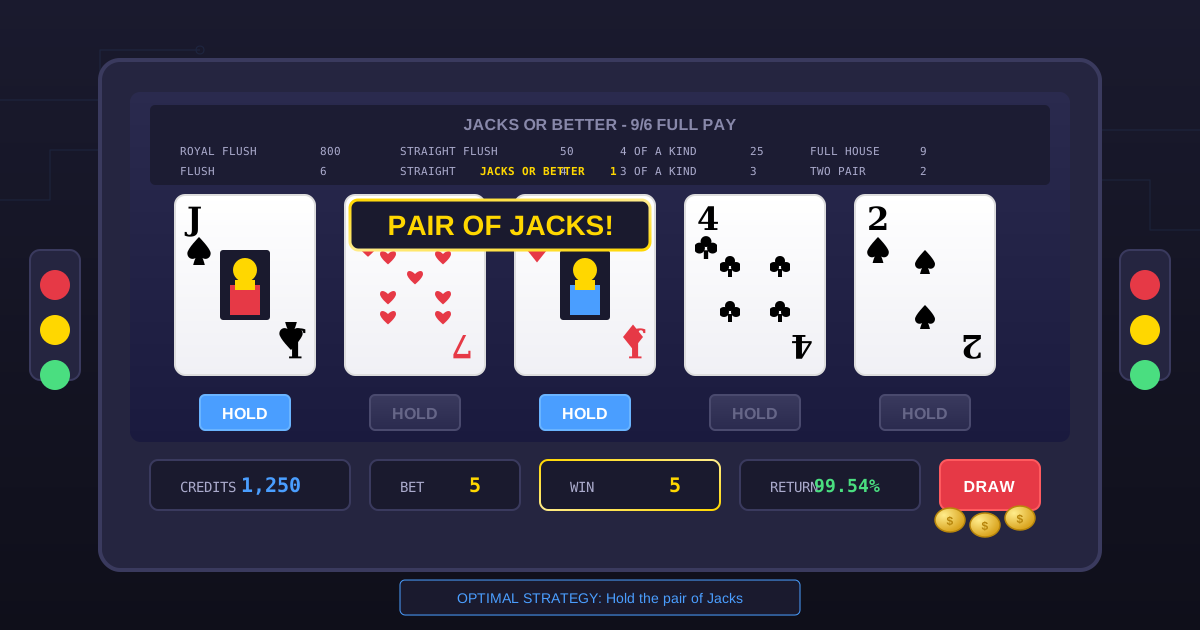
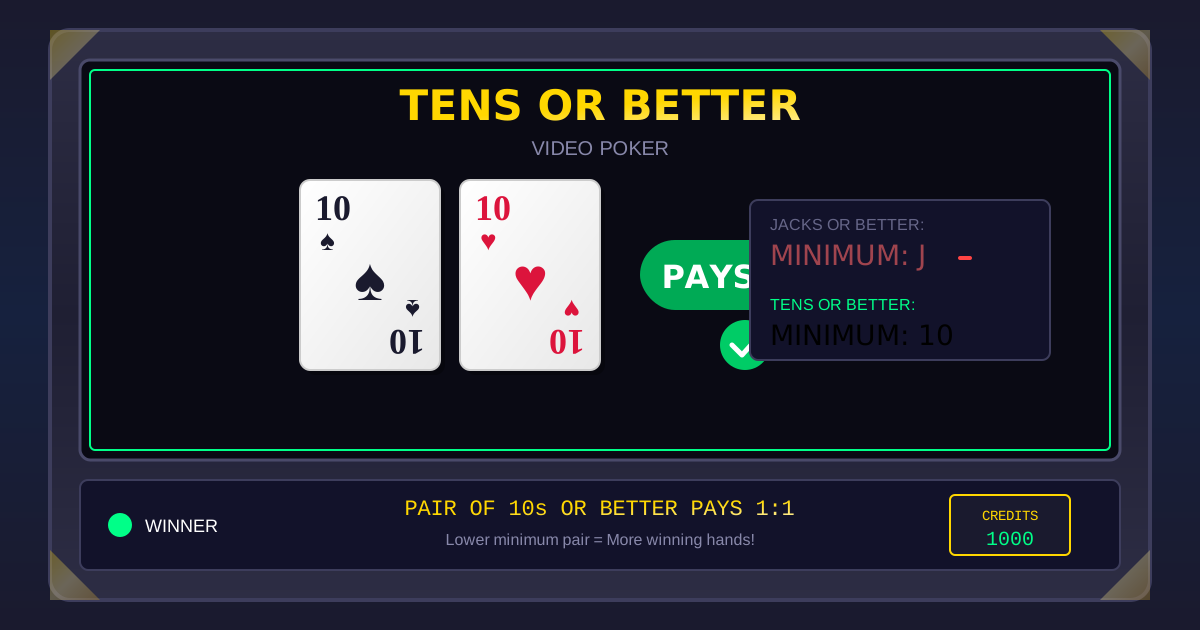
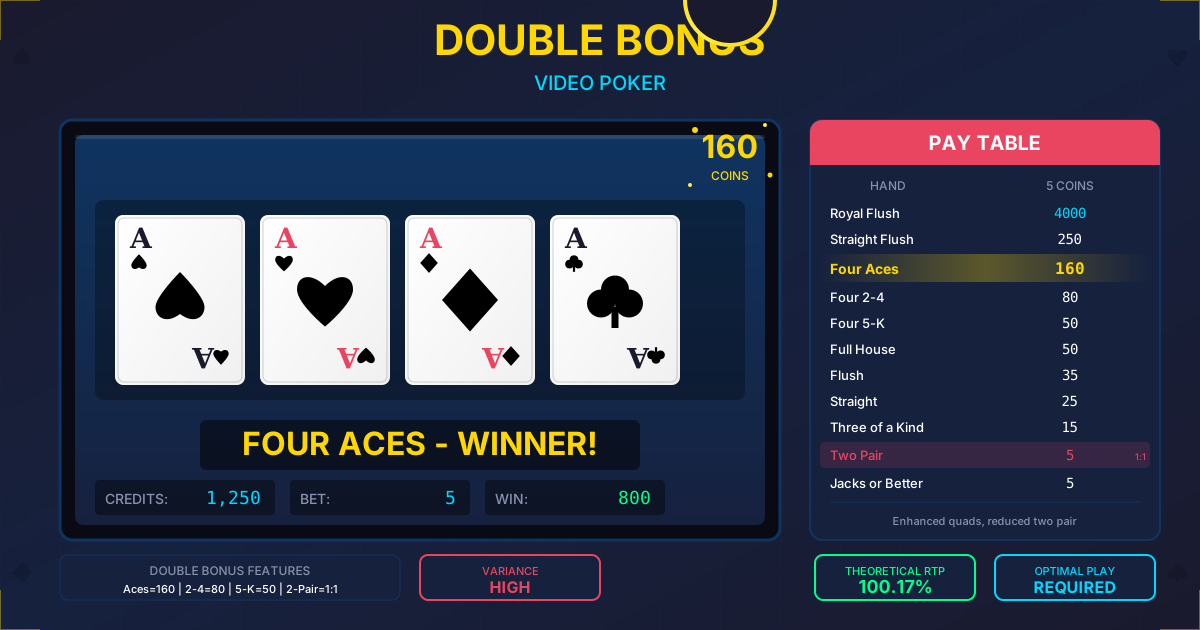
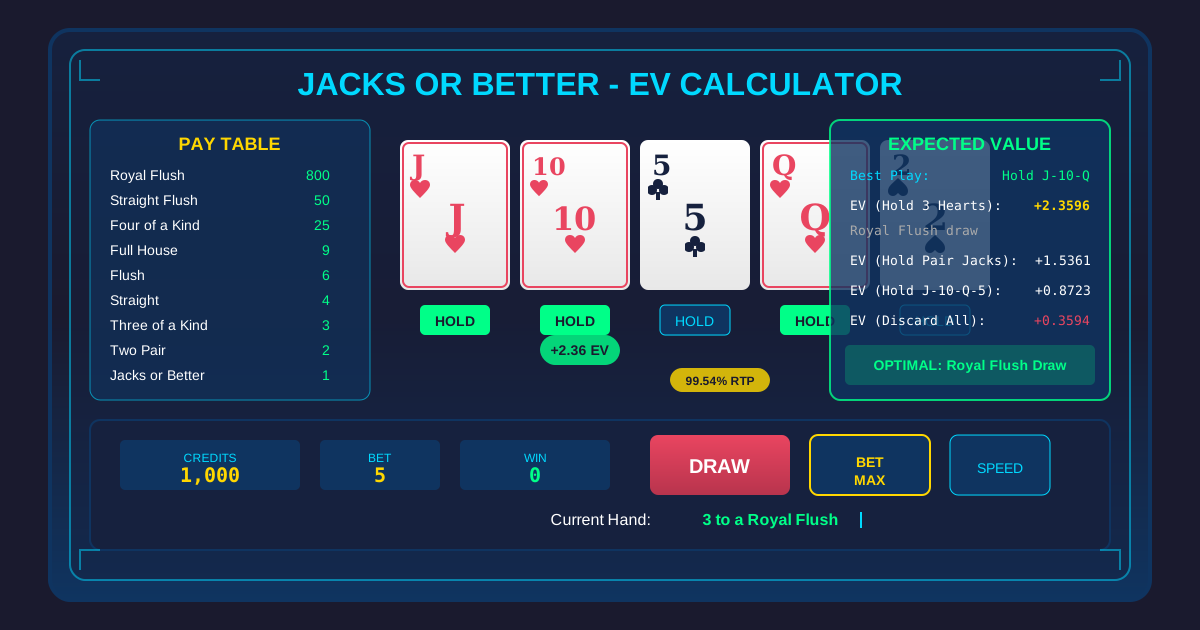
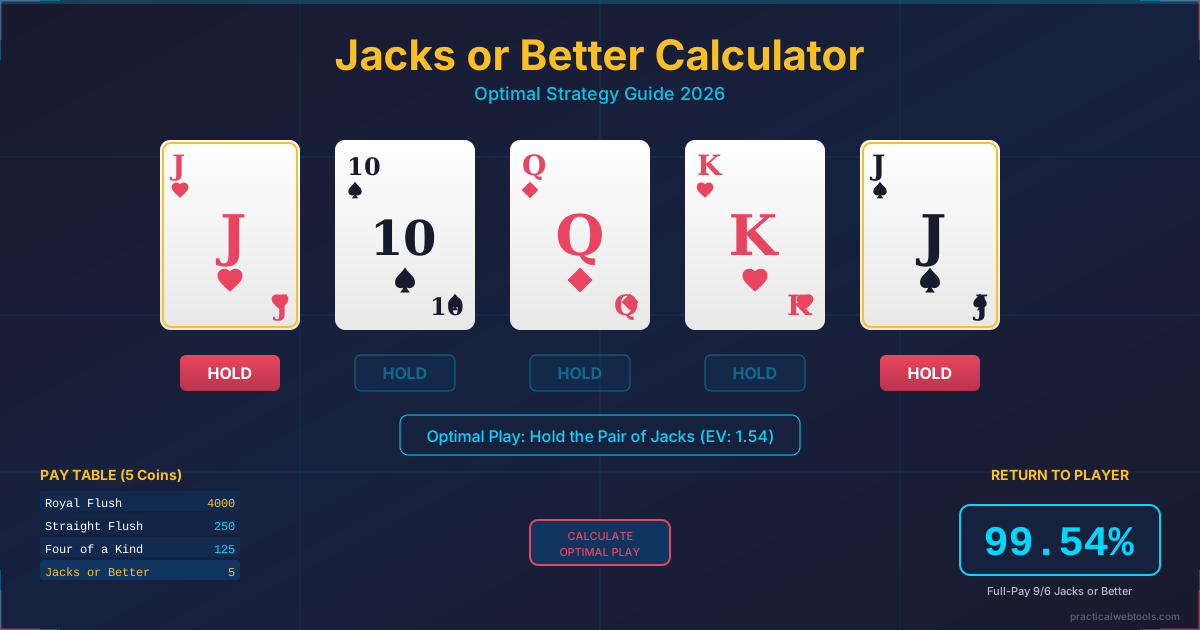
Video Poker: The Hidden Gem
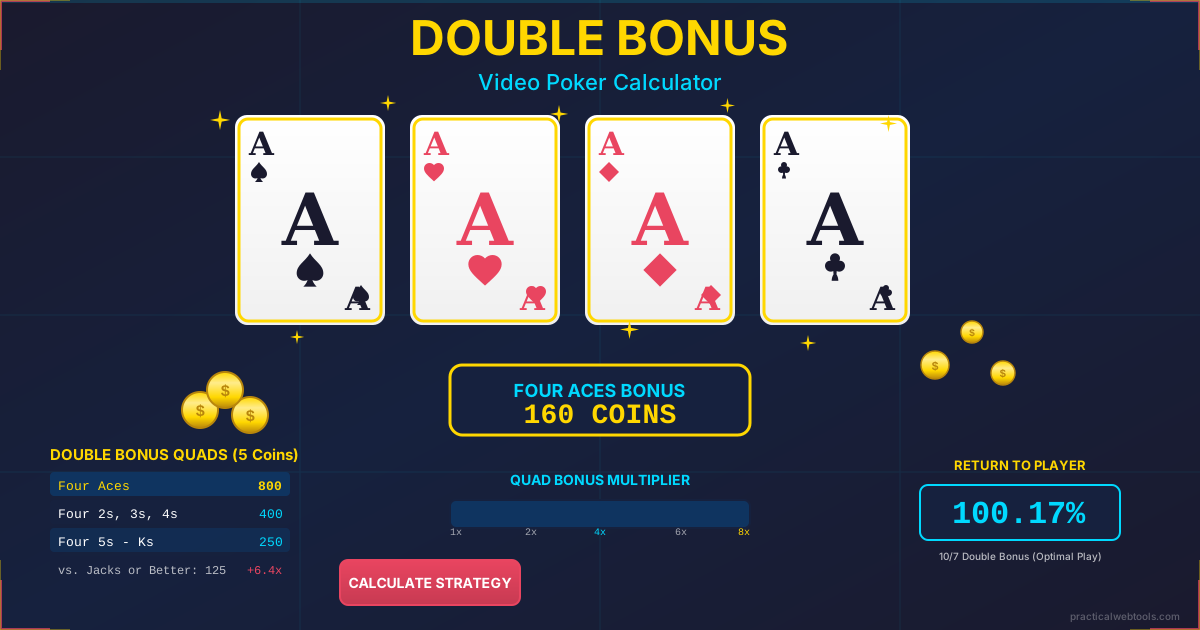
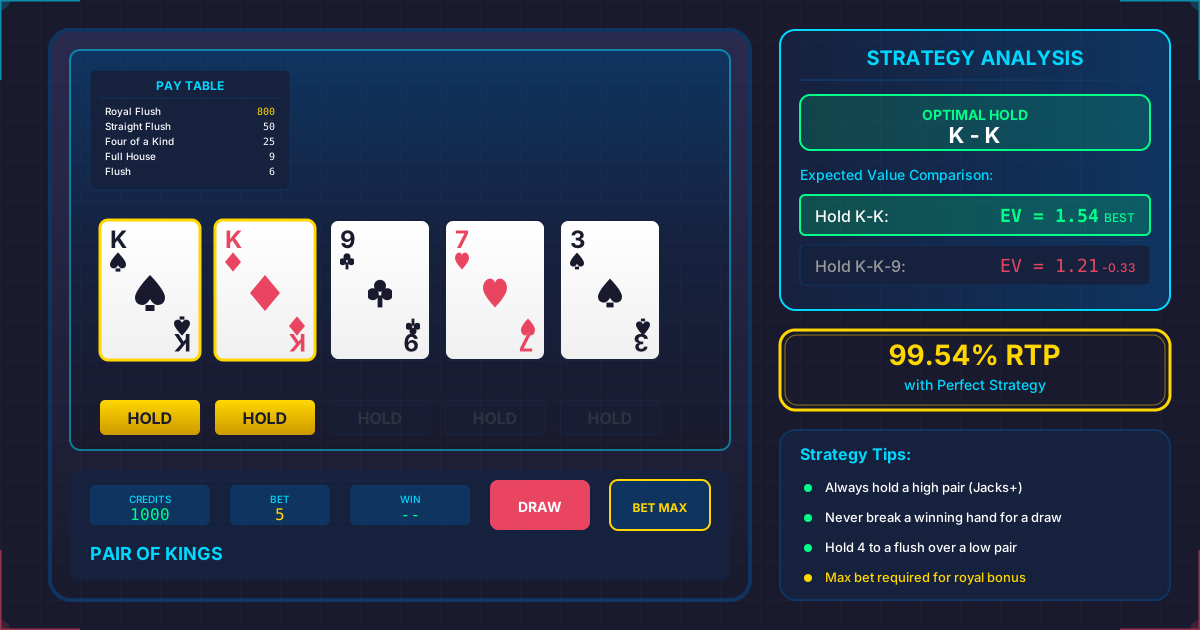
Video poker offers some of the best odds in the casino if you know which machines to play and can learn basic strategy. Some pay tables even offer a slight player advantage.
How Video Poker Works
- Insert money, select bet amount (always bet max coins for full payout on royal flush)
- You are dealt 5 cards
- Choose which cards to hold and which to discard
- Discarded cards are replaced
- Your final hand is paid according to the pay table
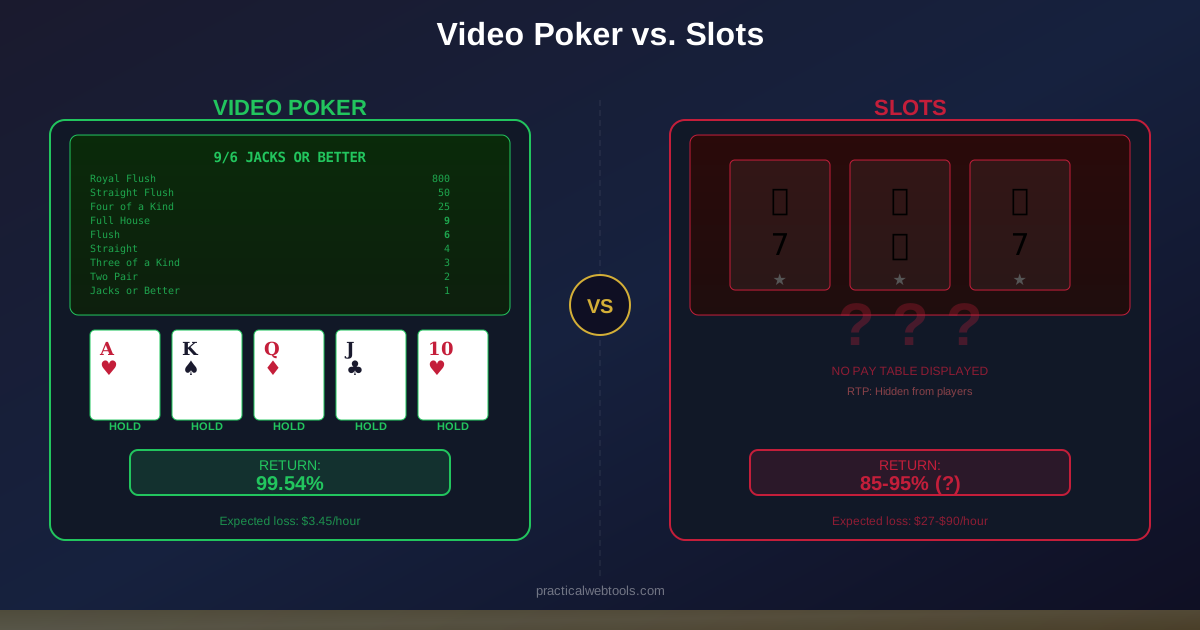
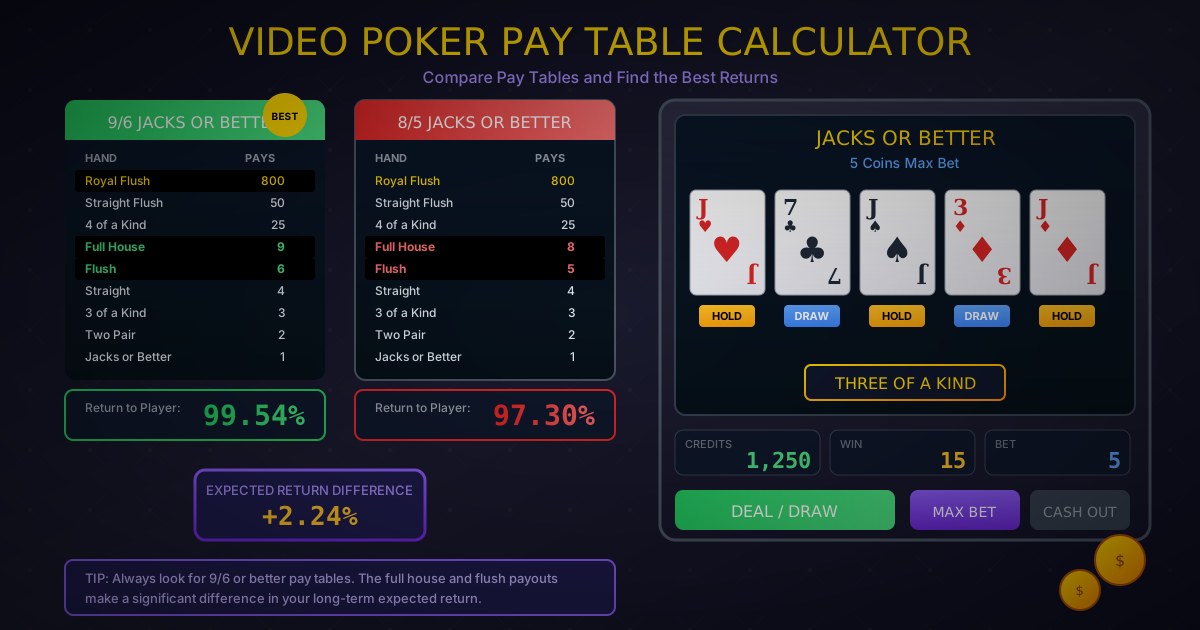
Pay Table Matters Enormously
The same video poker game with different pay tables can have wildly different house edges:
Jacks or Better Pay Tables:
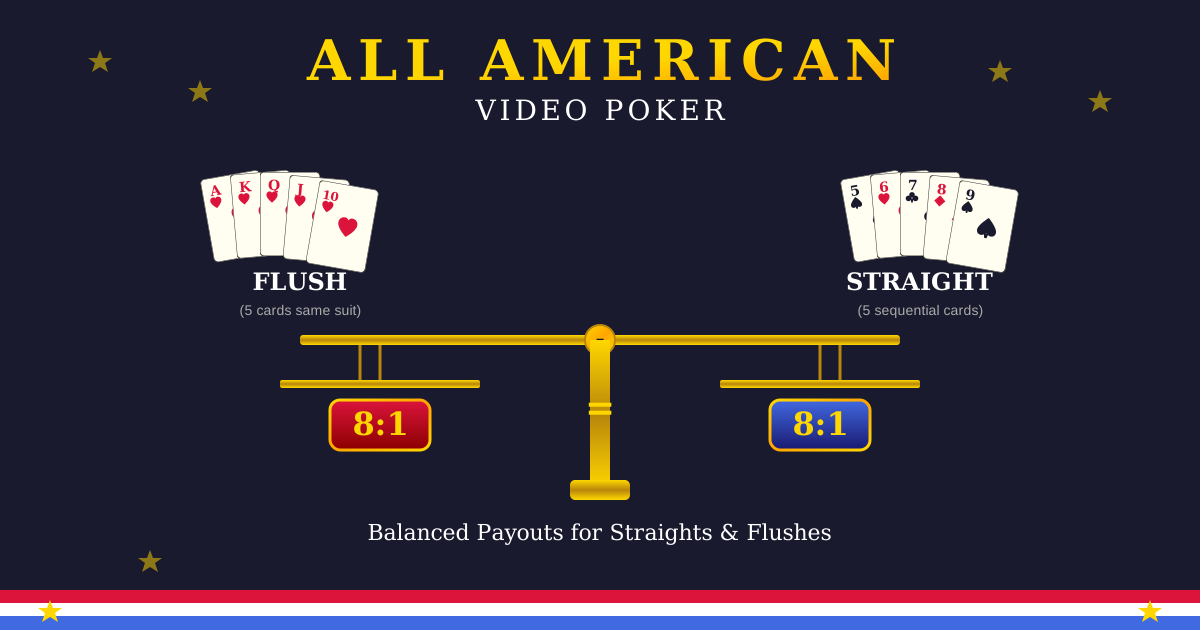
| Pay Table | Full House | Flush | House Edge |
|---|---|---|---|
| 9/6 (full pay) | 9:1 | 6:1 | 0.46% |
| 8/6 | 8:1 | 6:1 | 1.45% |
| 8/5 | 8:1 | 5:1 | 2.70% |
| 7/5 | 7:1 | 5:1 | 3.85% |
| 6/5 | 6:1 | 5:1 | 5.00% |
A 9/6 Jacks or Better machine with perfect strategy has only a 0.46% house edge, making it one of the best bets in the casino. But a 6/5 machine playing the same game has a 5% house edge, comparable to American roulette.
Always check the pay table before sitting down. Look at the Full House and Flush payouts first.
Analyze any video poker pay table with our Video Poker Pay Table Analyzer.
Poker: The Game Where Skill Matters Most
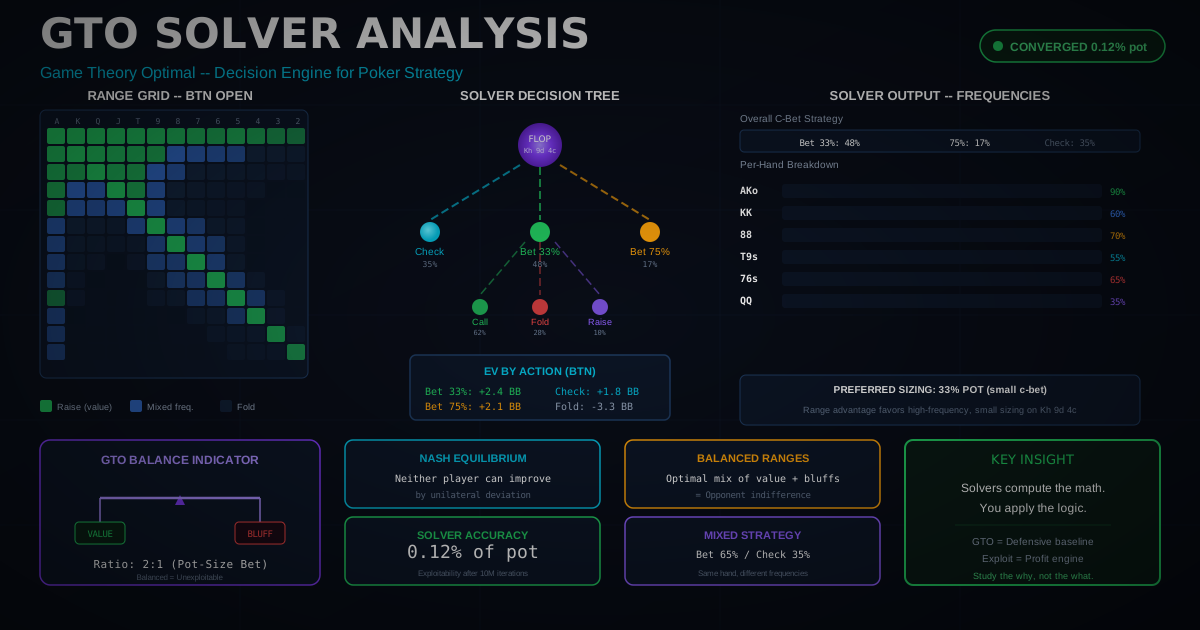
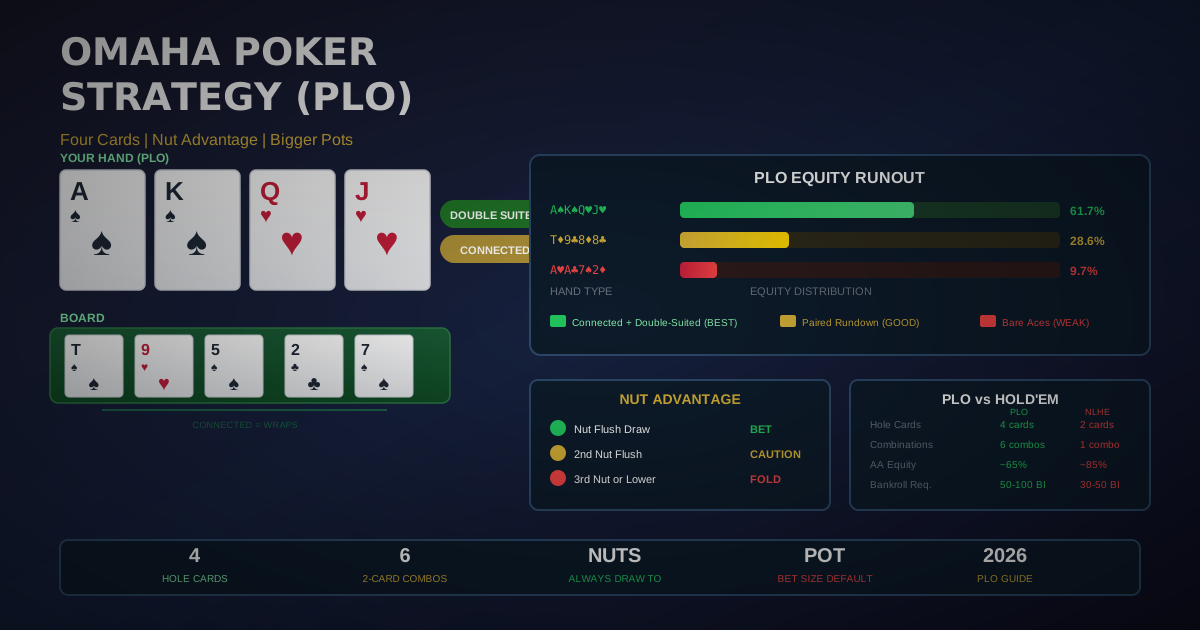
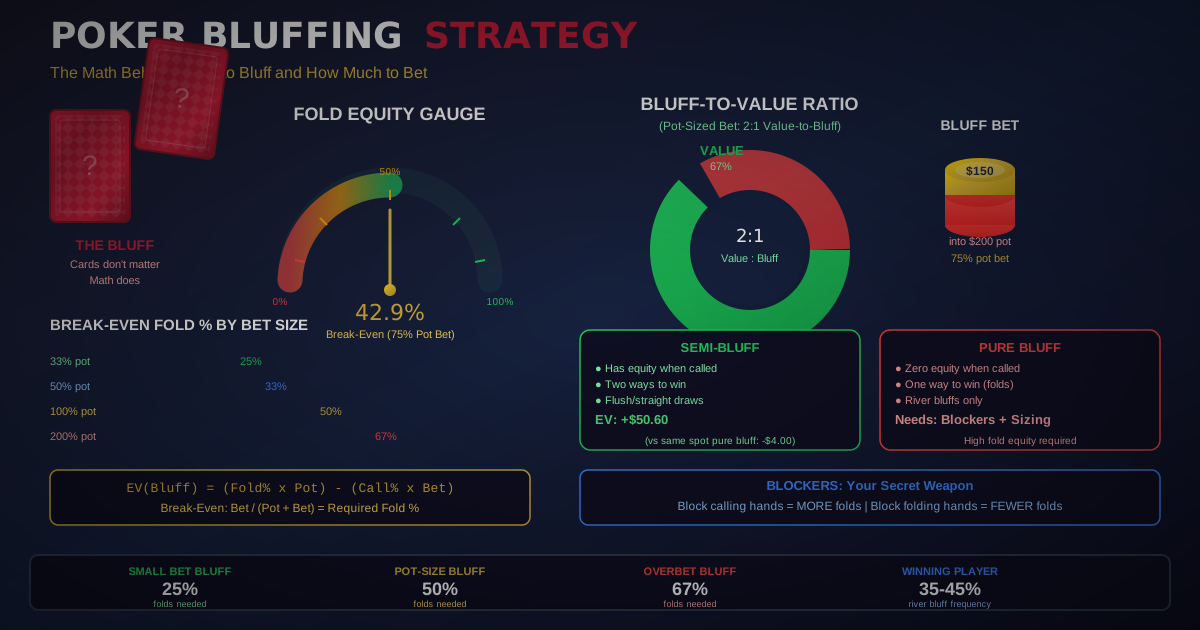
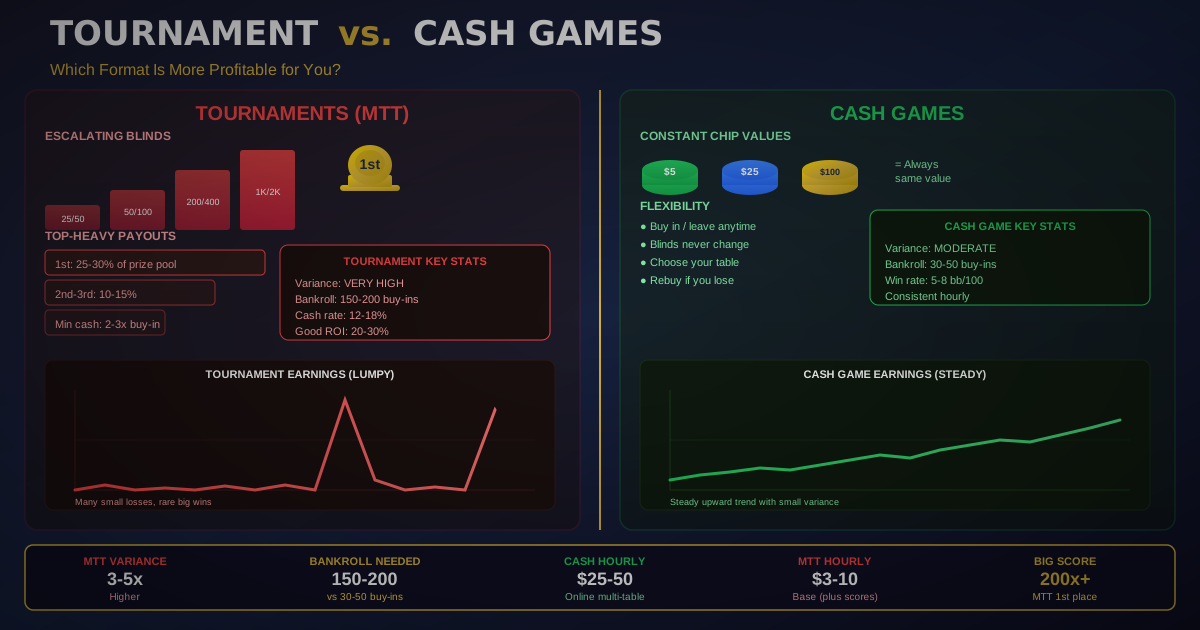
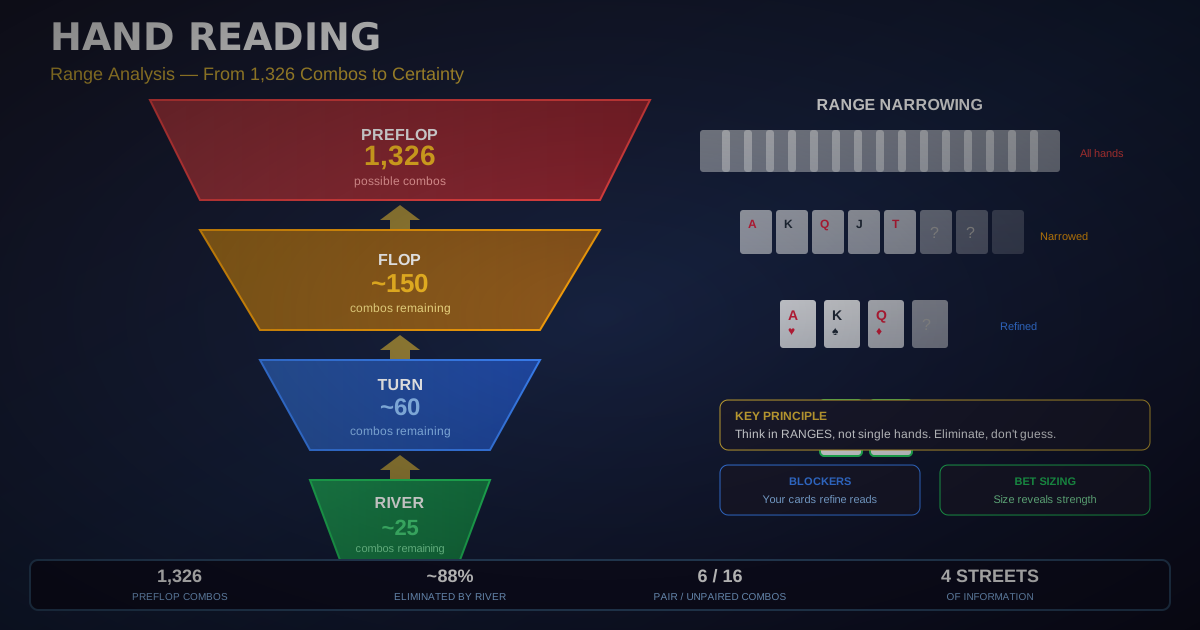
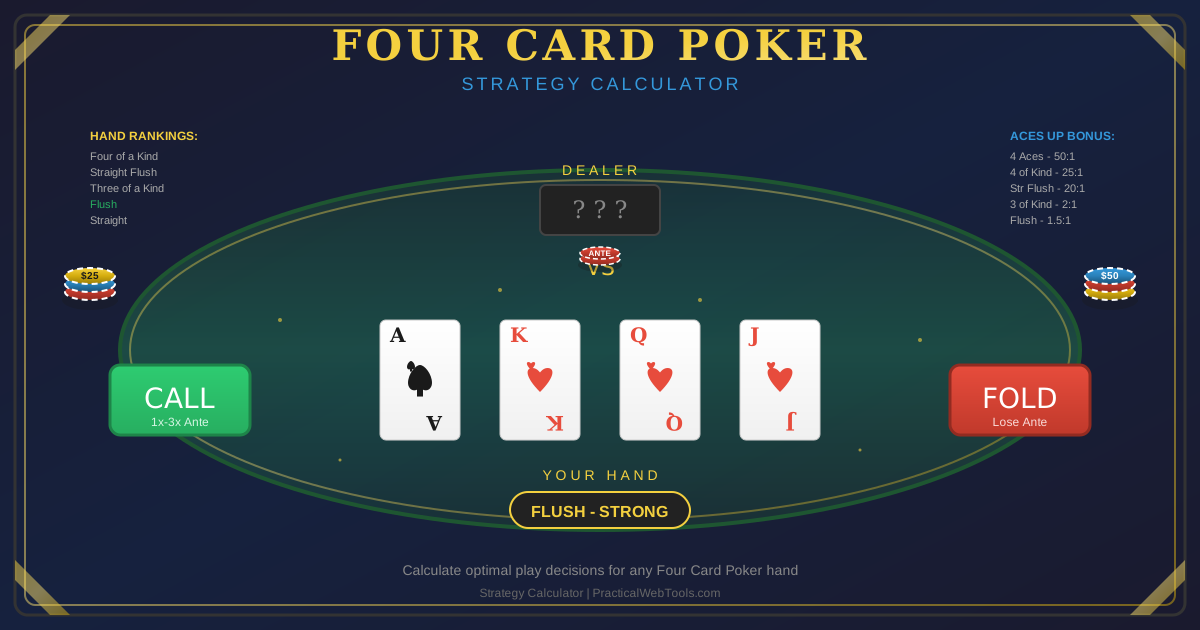
Poker is fundamentally different from all other casino games because you play against other players, not against the house. The house takes a small fee (the rake), but your opponents are your source of profit or loss.
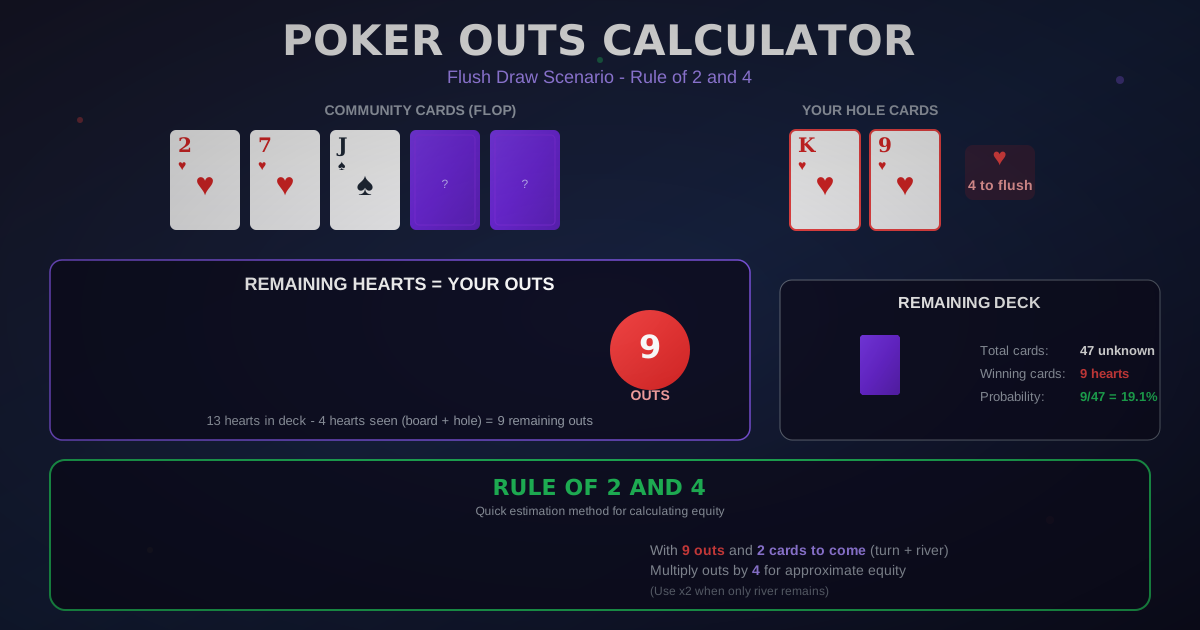
How Texas Hold'em Works
- Each player gets 2 private cards (hole cards)
- Five community cards are dealt face-up in stages (flop, turn, river)
- You make the best 5-card hand using any combination of your cards and the community cards
- Betting rounds occur before the flop, after the flop, after the turn, and after the river
- Best hand (or last player remaining after others fold) wins the pot
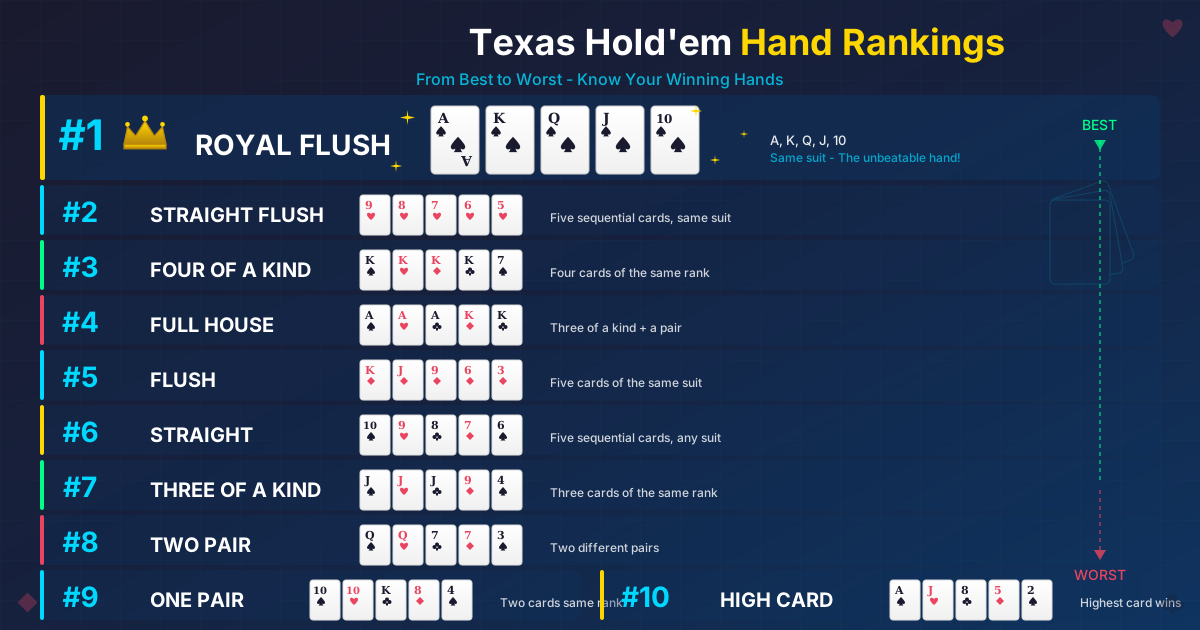
Poker Hand Rankings
| Rank | Hand | Example | Probability |
|---|---|---|---|
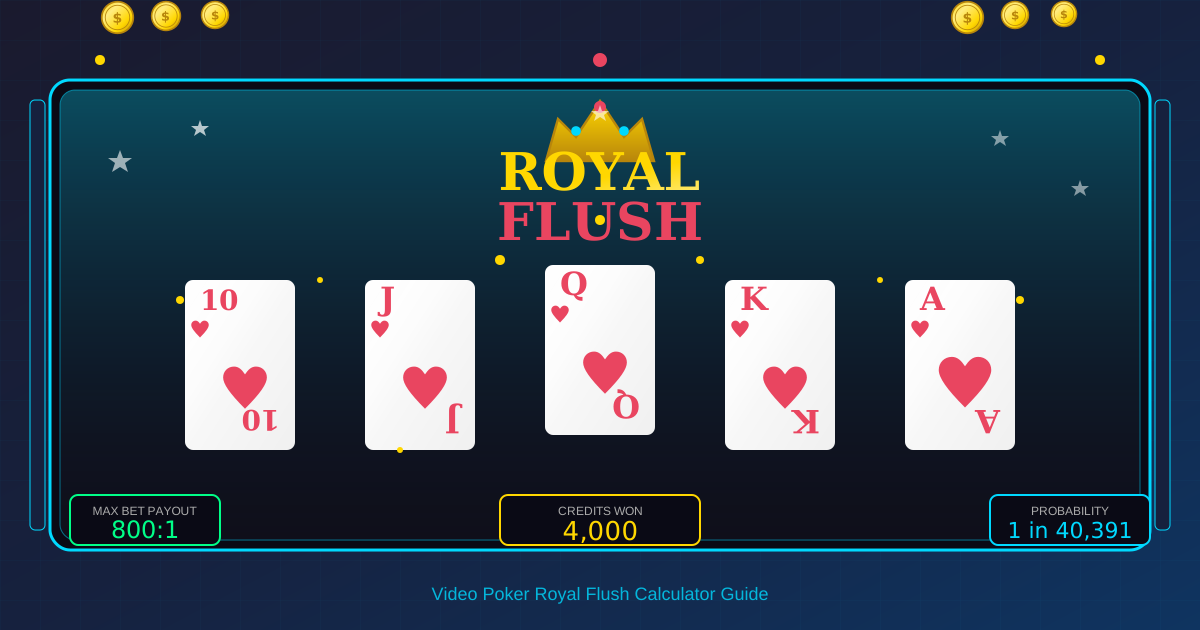
| 1 | Royal Flush | A-K-Q-J-10 same suit | 0.00015% |
| 2 | Straight Flush | 5-6-7-8-9 same suit | 0.0014% |
| 3 | Four of a Kind | 8-8-8-8-K | 0.024% |
| 4 | Full House | K-K-K-7-7 | 0.14% |
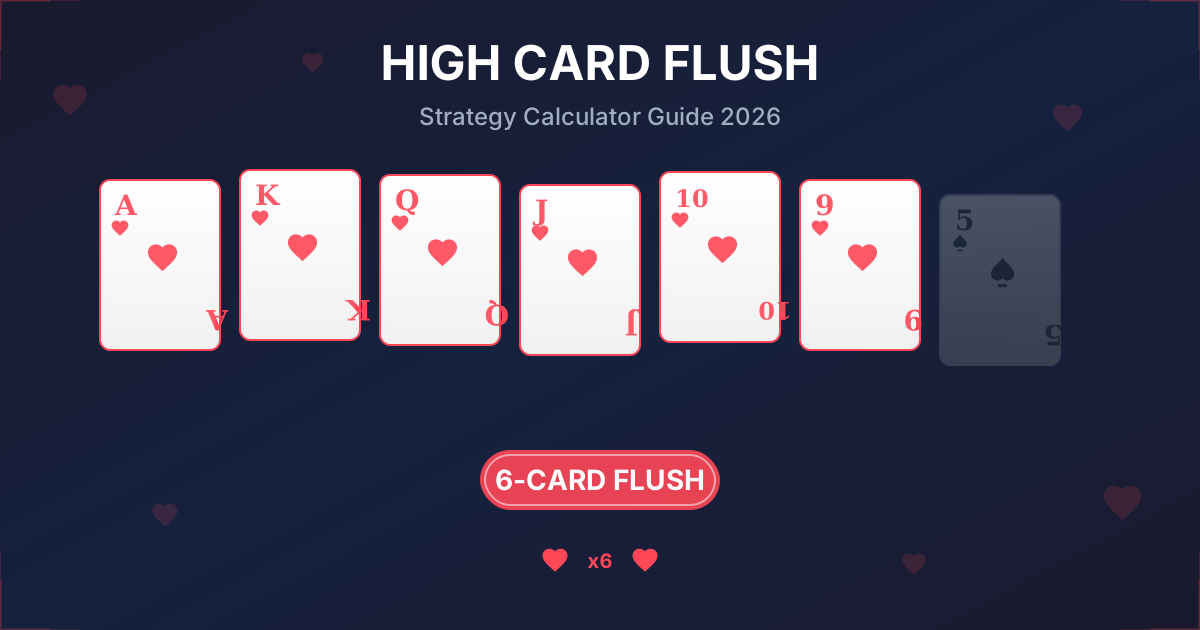
| 5 | Flush | 5 cards same suit | 0.20% |
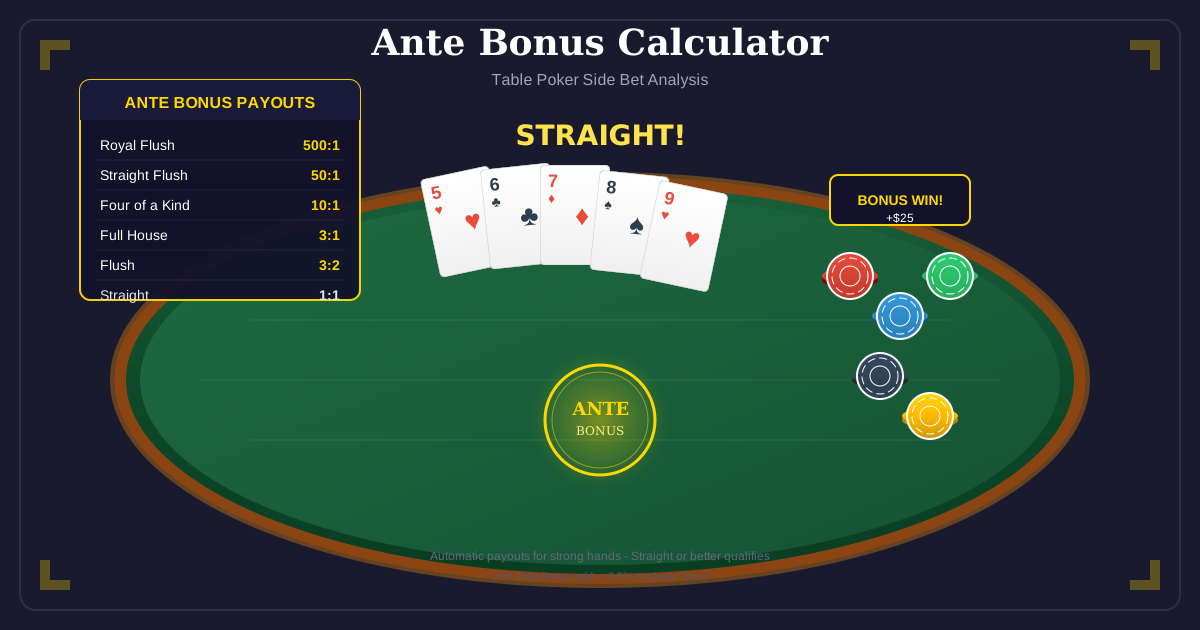
| 6 | Straight | 5-6-7-8-9 mixed suits | 0.39% |
| 7 | Three of a Kind | 7-7-7-K-3 | 2.11% |
| 8 | Two Pair | A-A-8-8-Q | 4.75% |
| 9 | One Pair | J-J-9-5-3 | 42.26% |
| 10 | High Card | A-K-9-5-3 | 50.12% |
Key Poker Concepts for Beginners
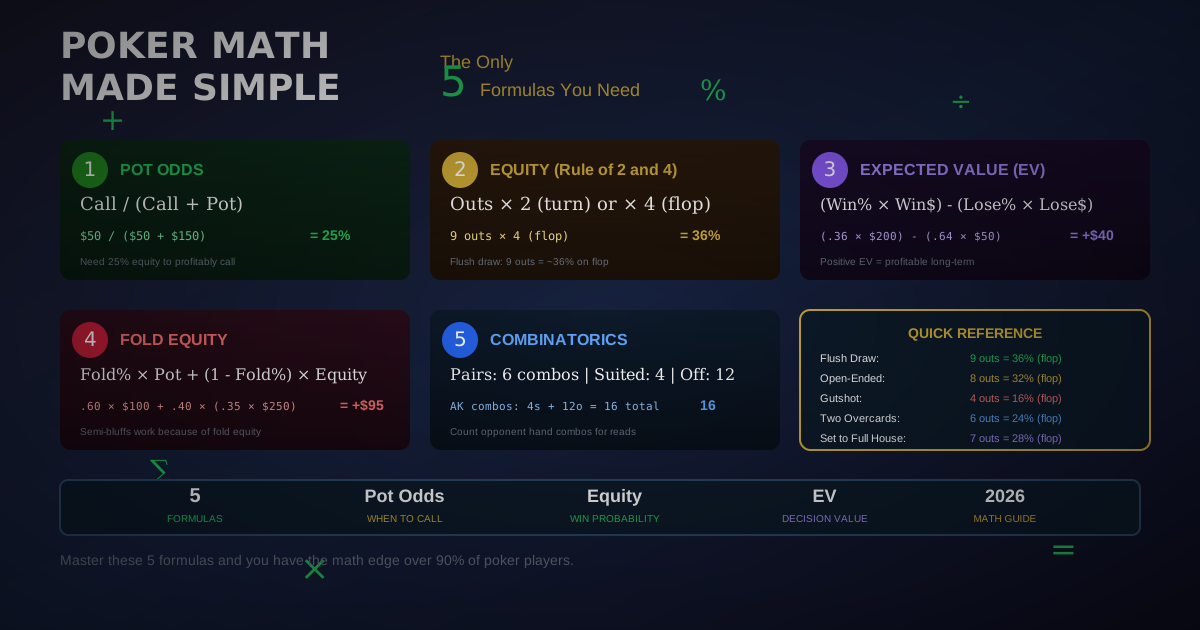
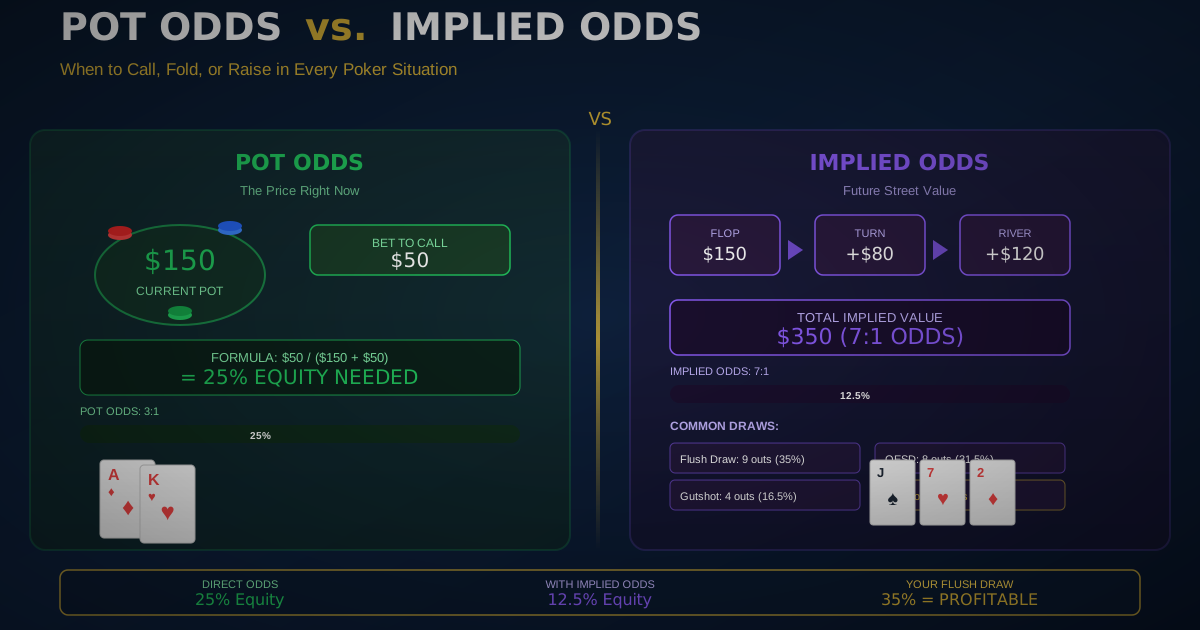
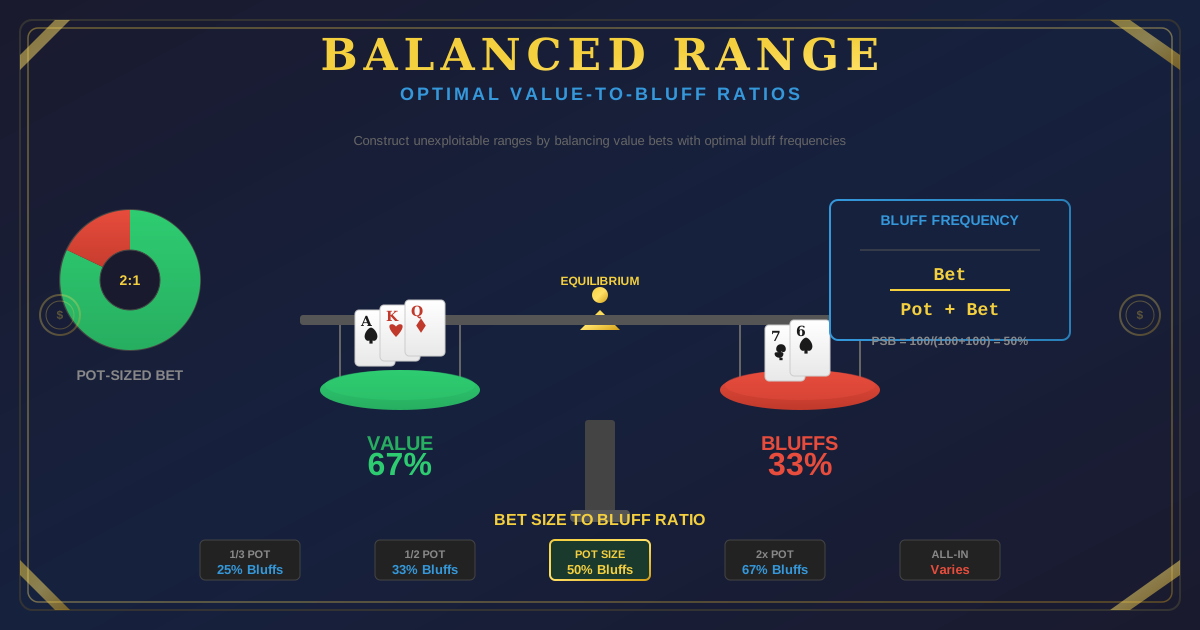
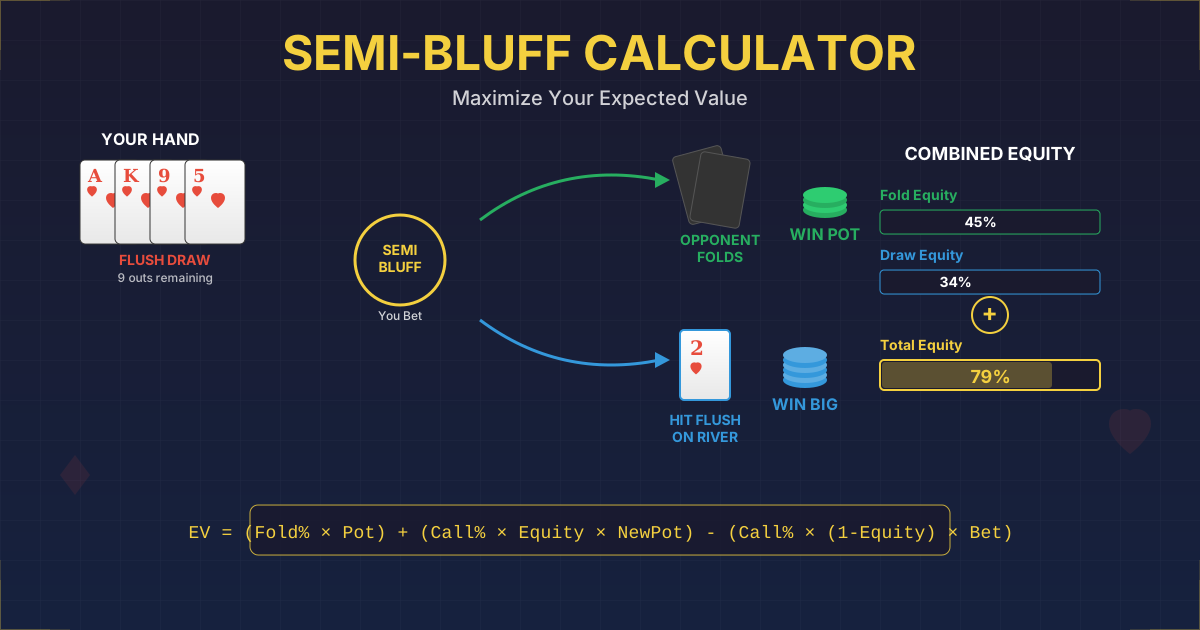
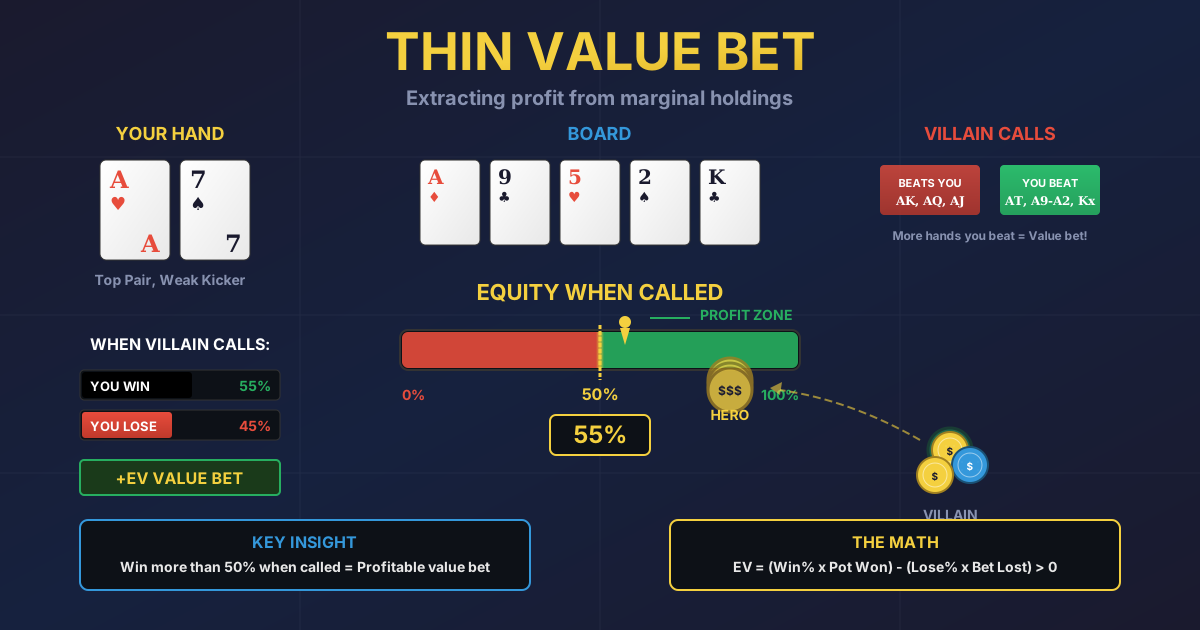
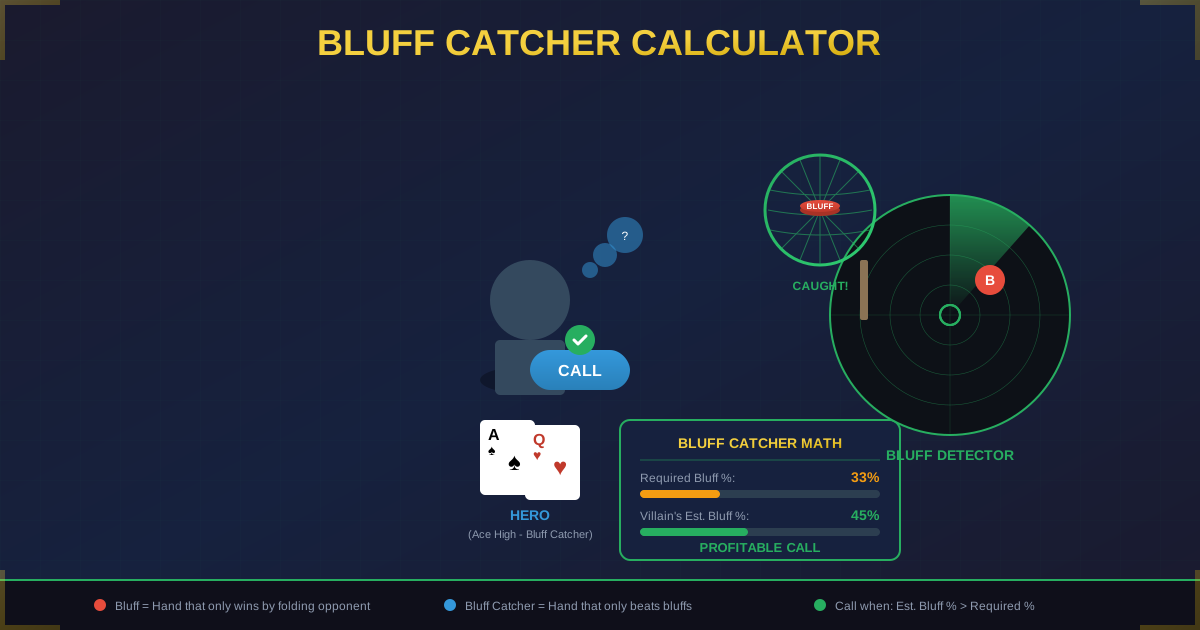
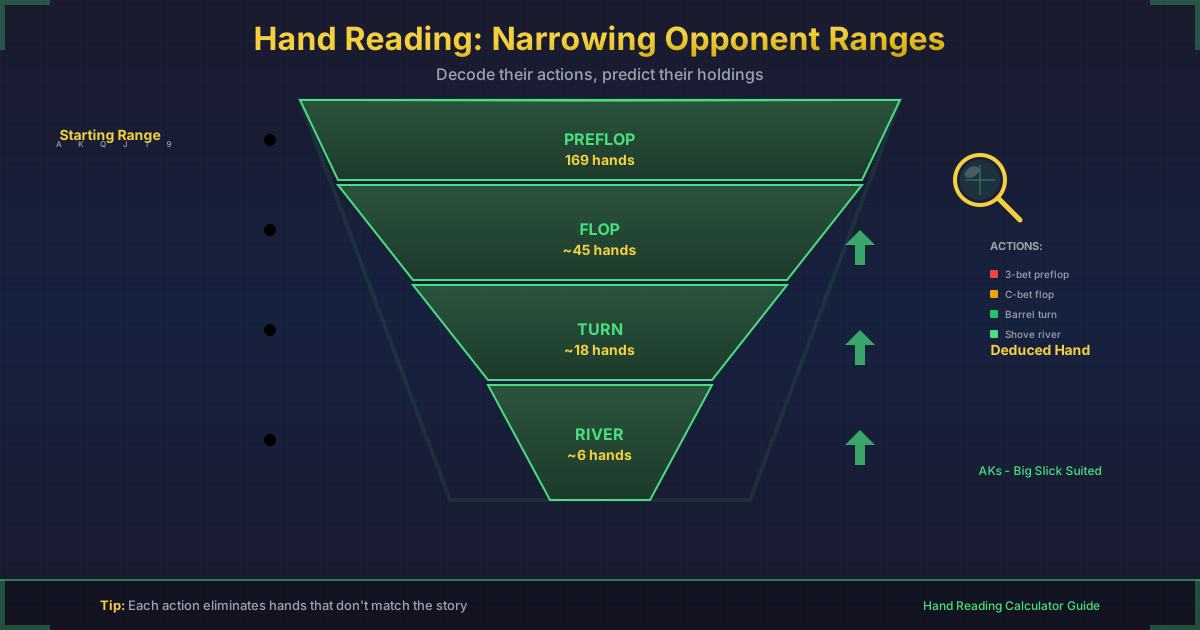
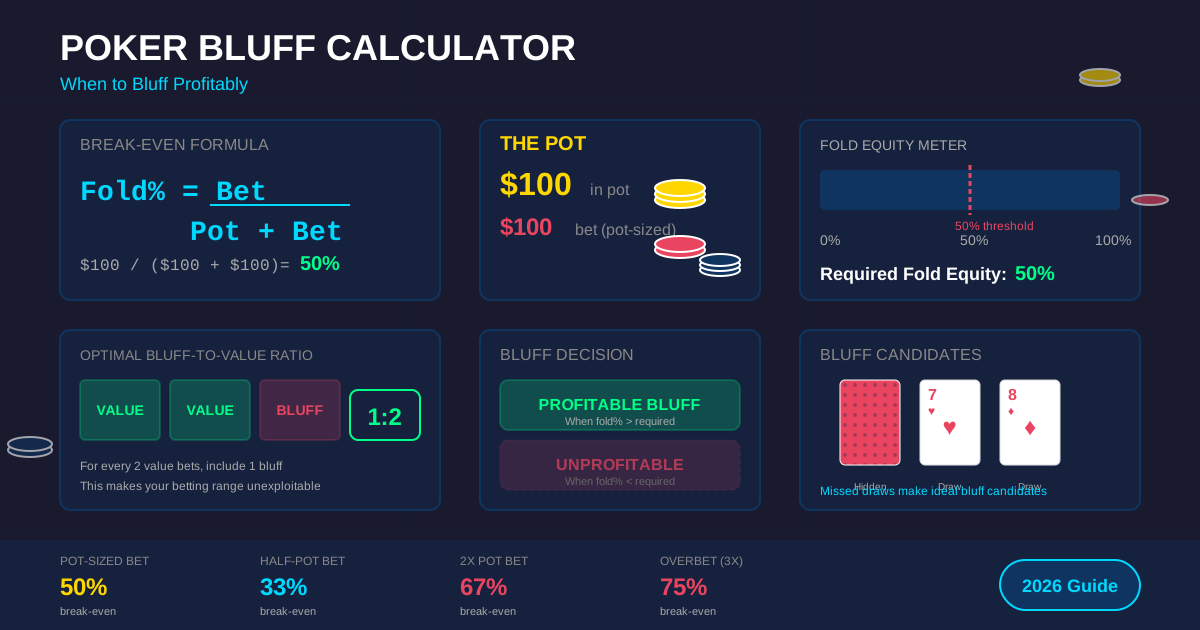
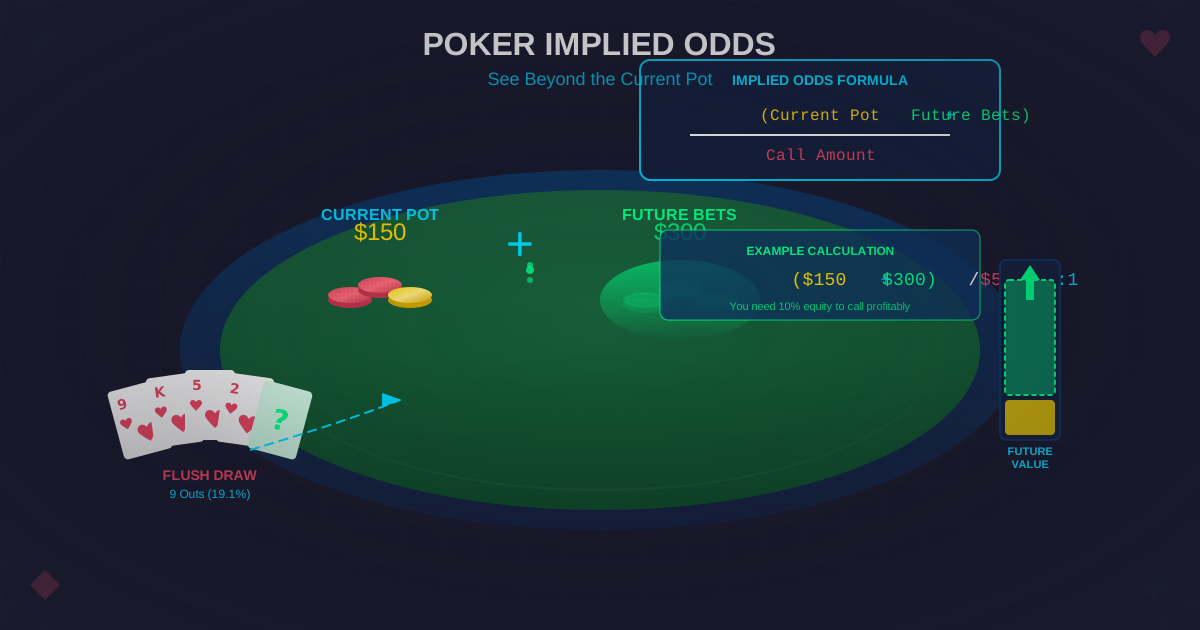
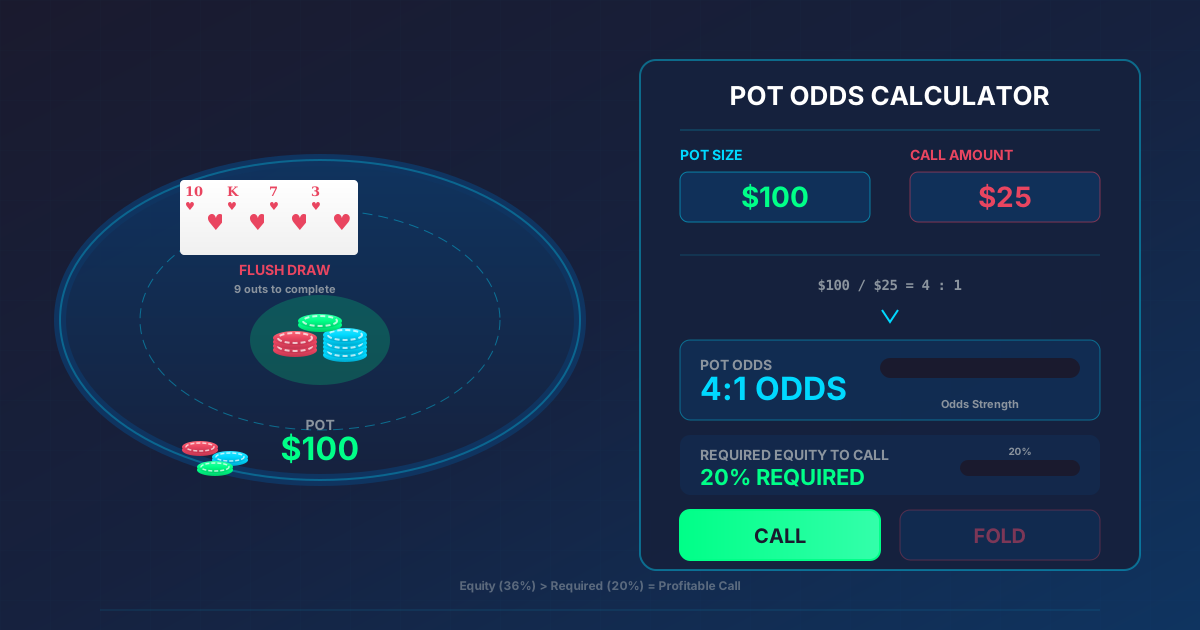
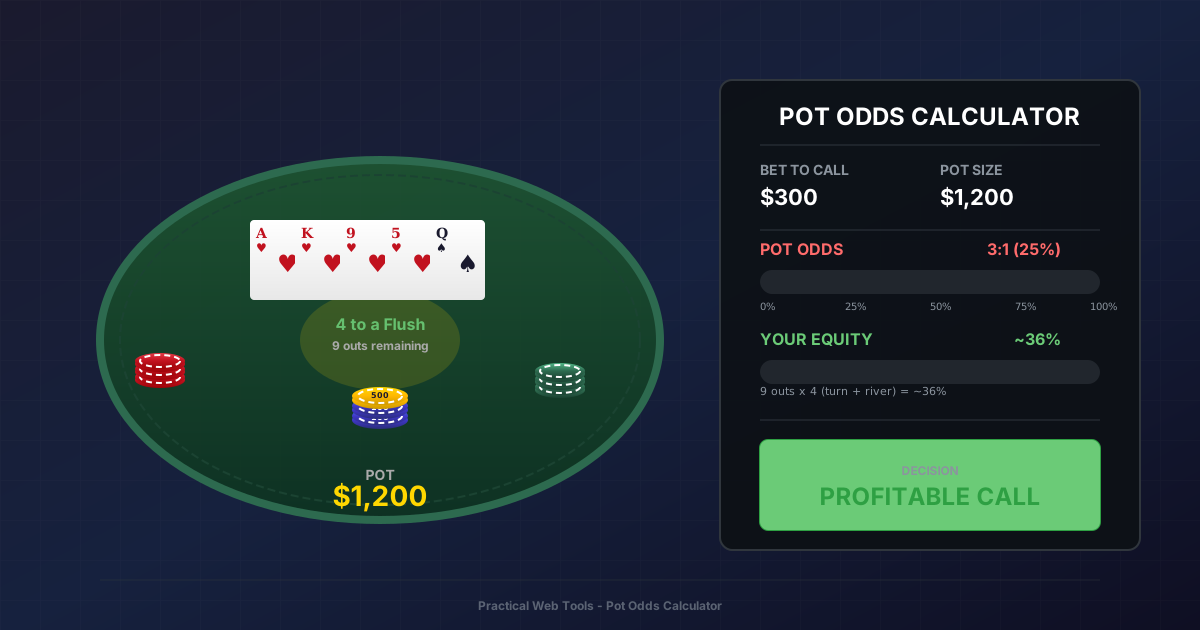
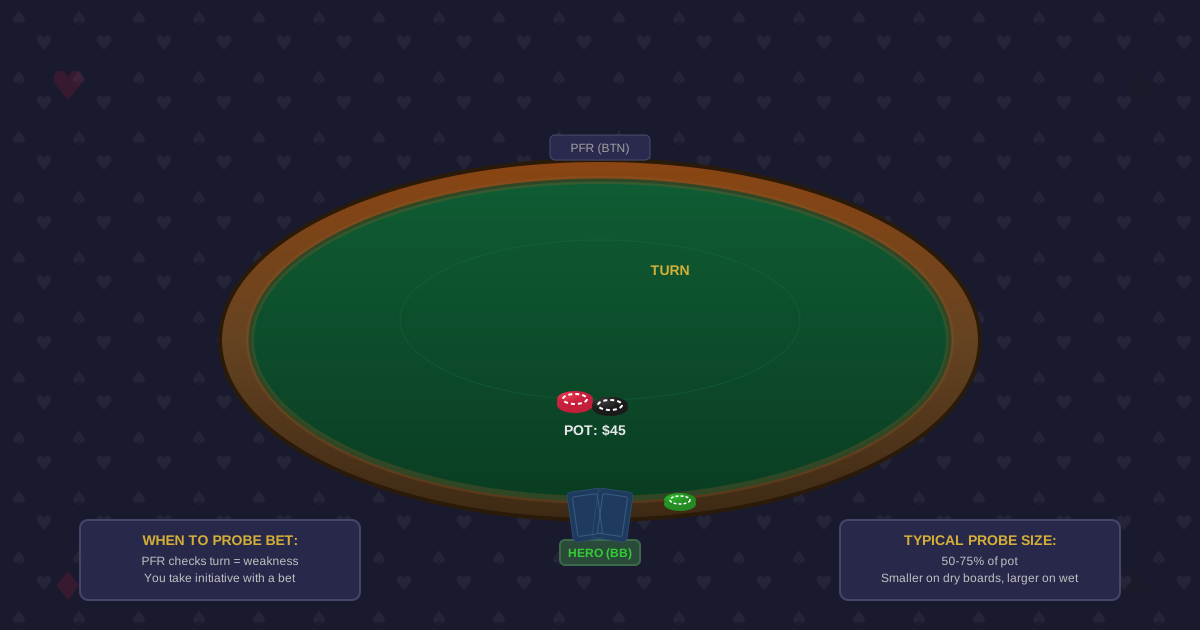
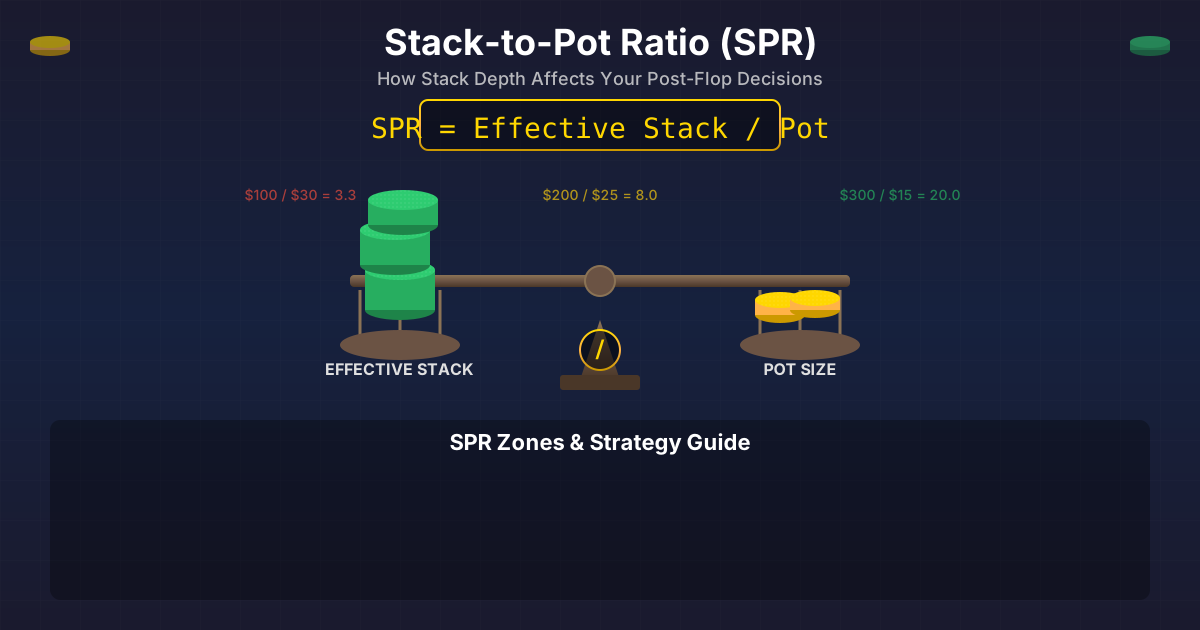
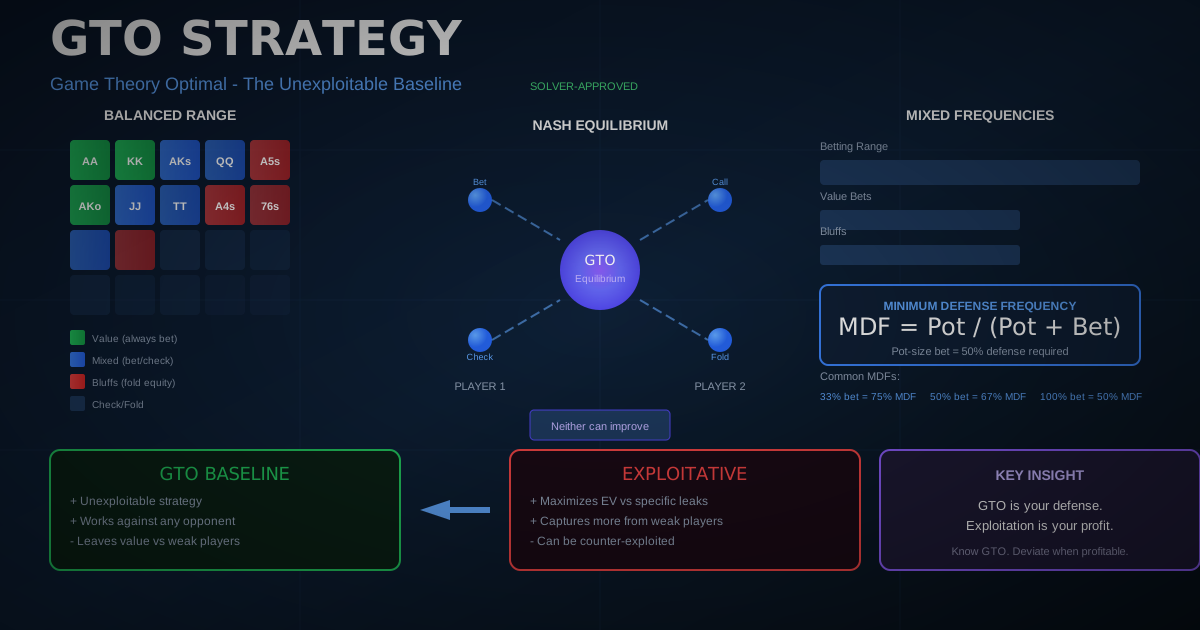
Pot Odds: The ratio of the current pot to the cost of your call. If the pot is $100 and you must call $20, your pot odds are 5:1. You need to win more than 1 in 6 times (16.7%) for the call to be profitable.
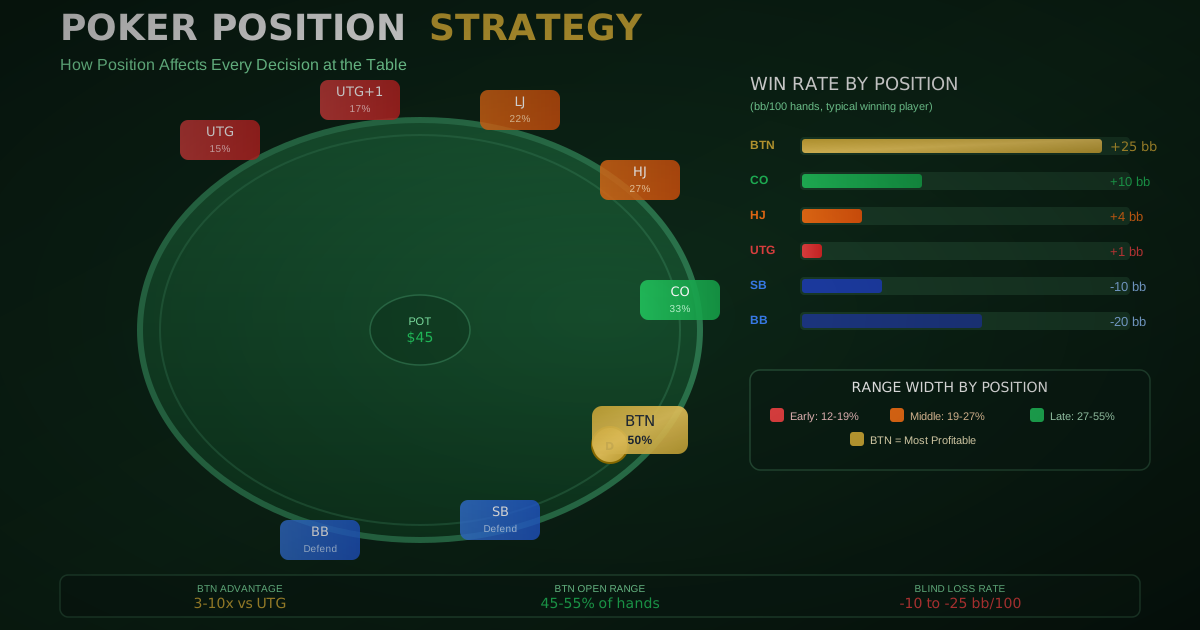
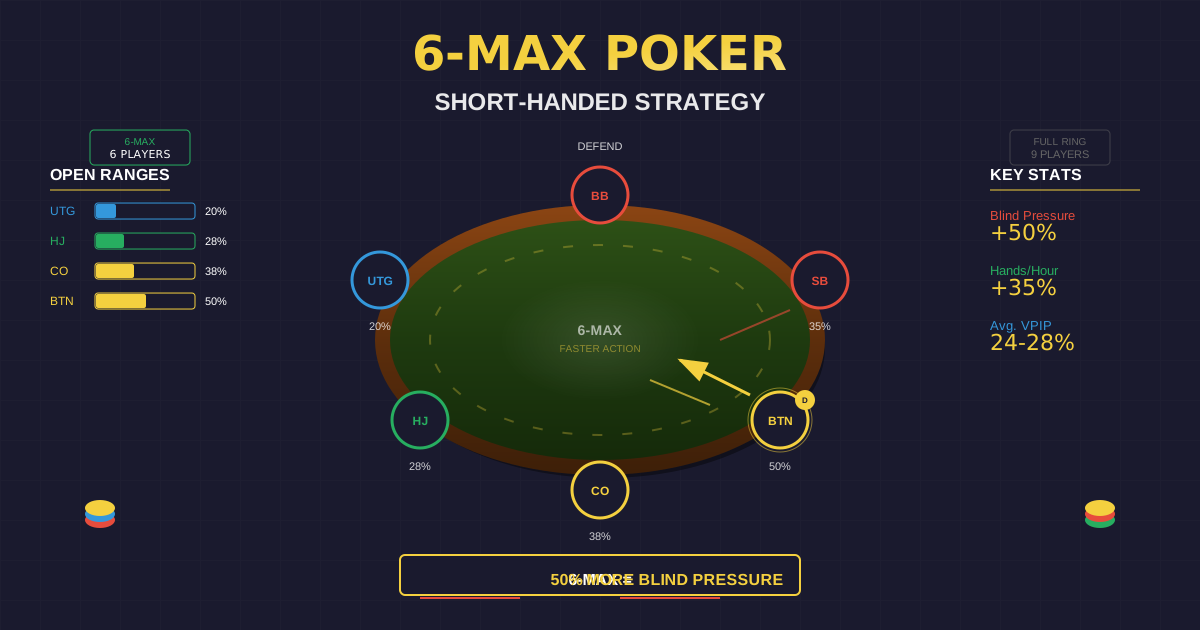
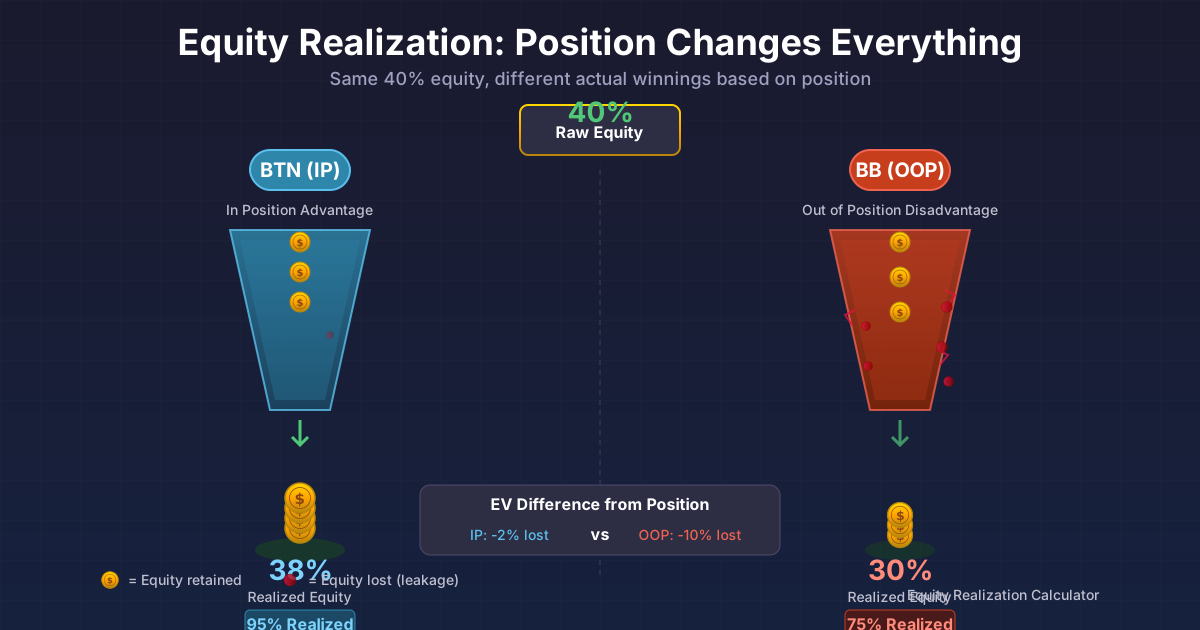
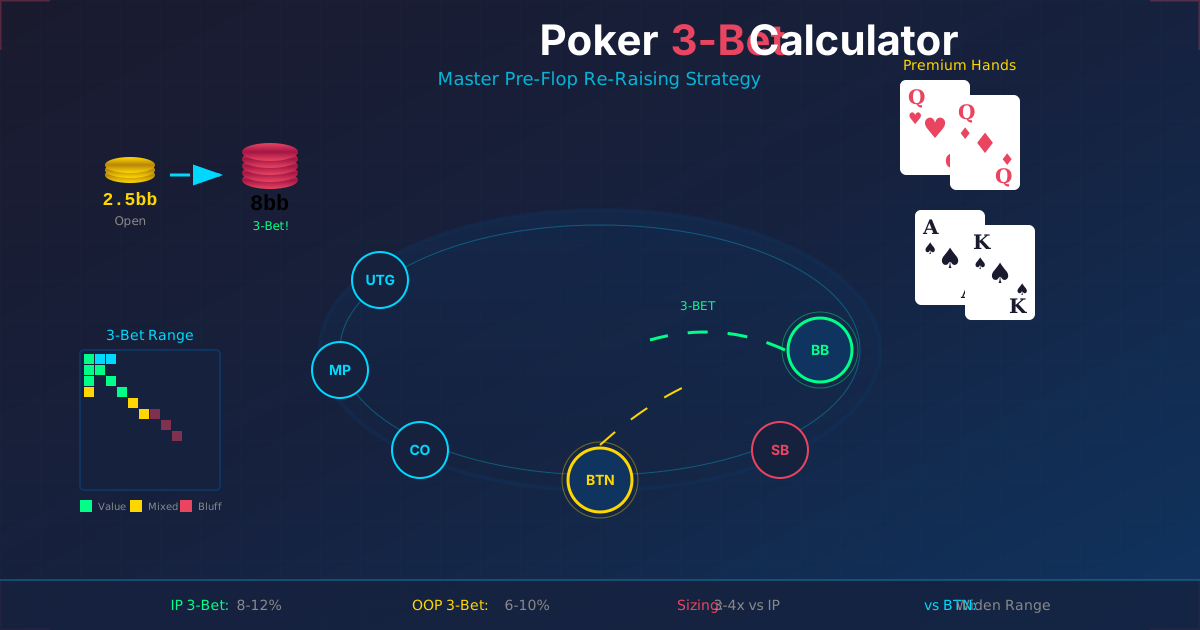
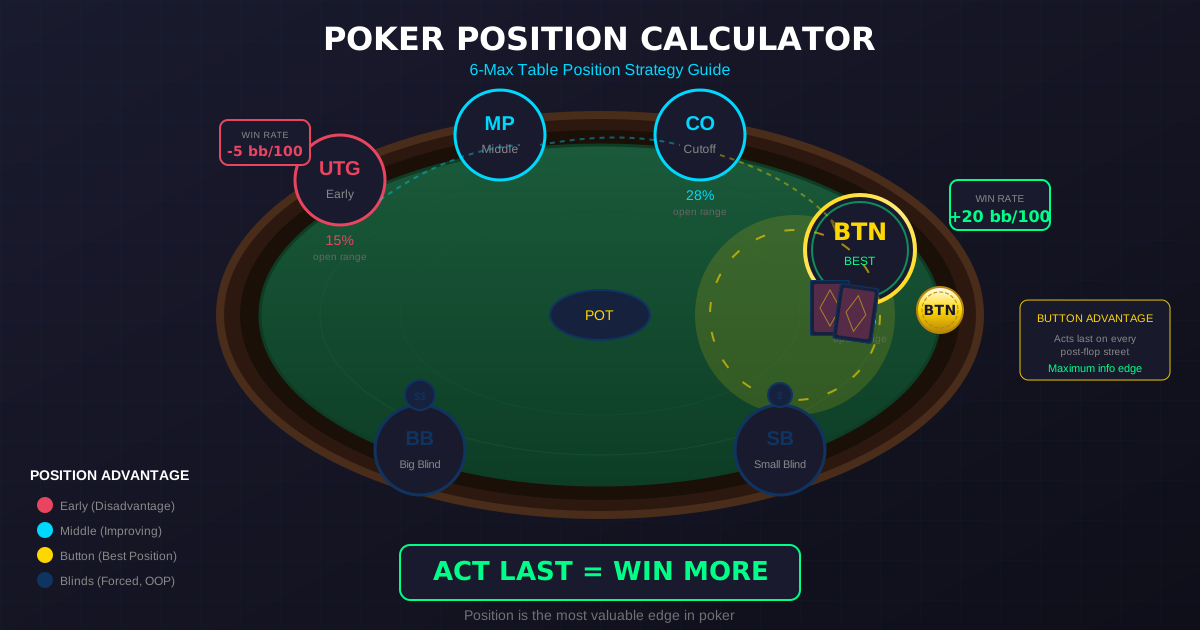
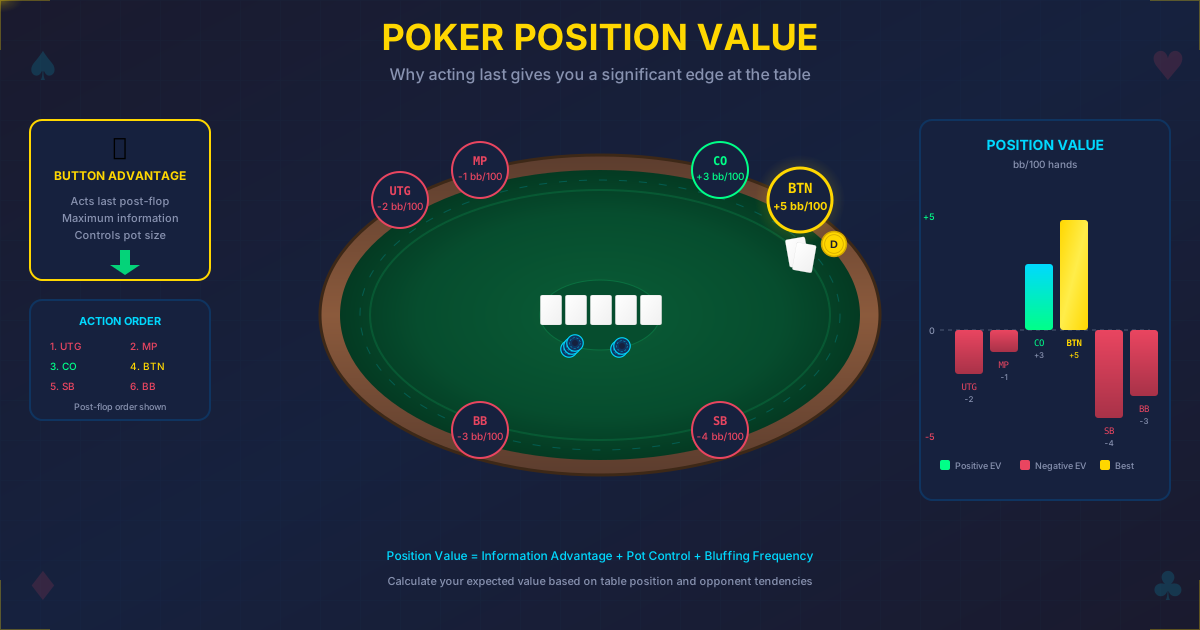
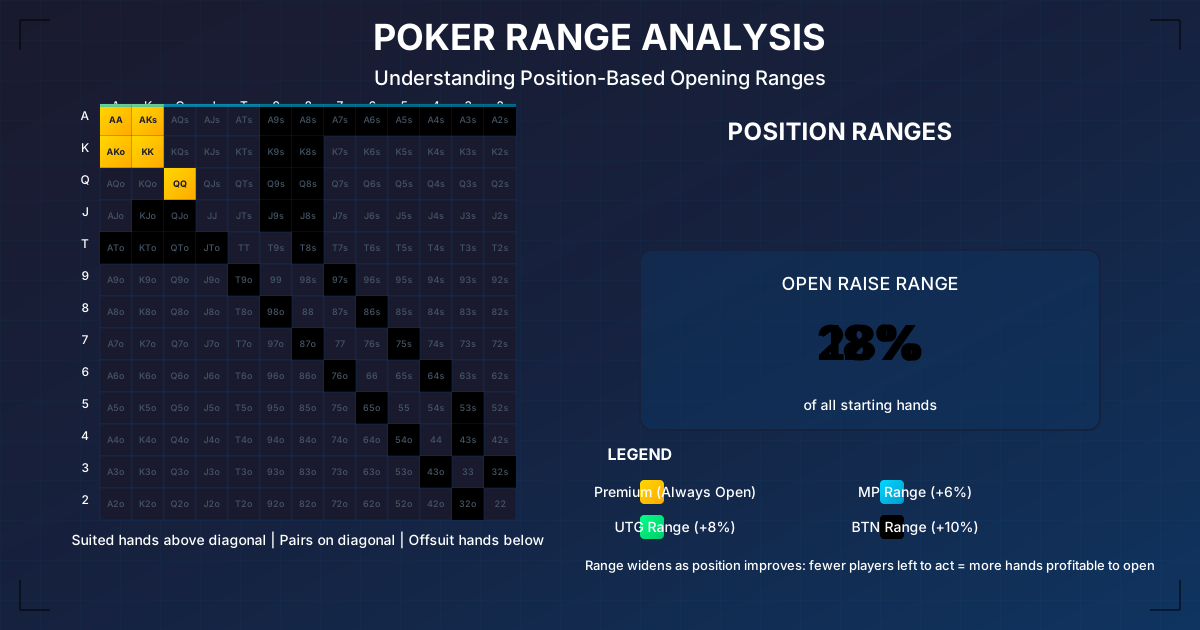
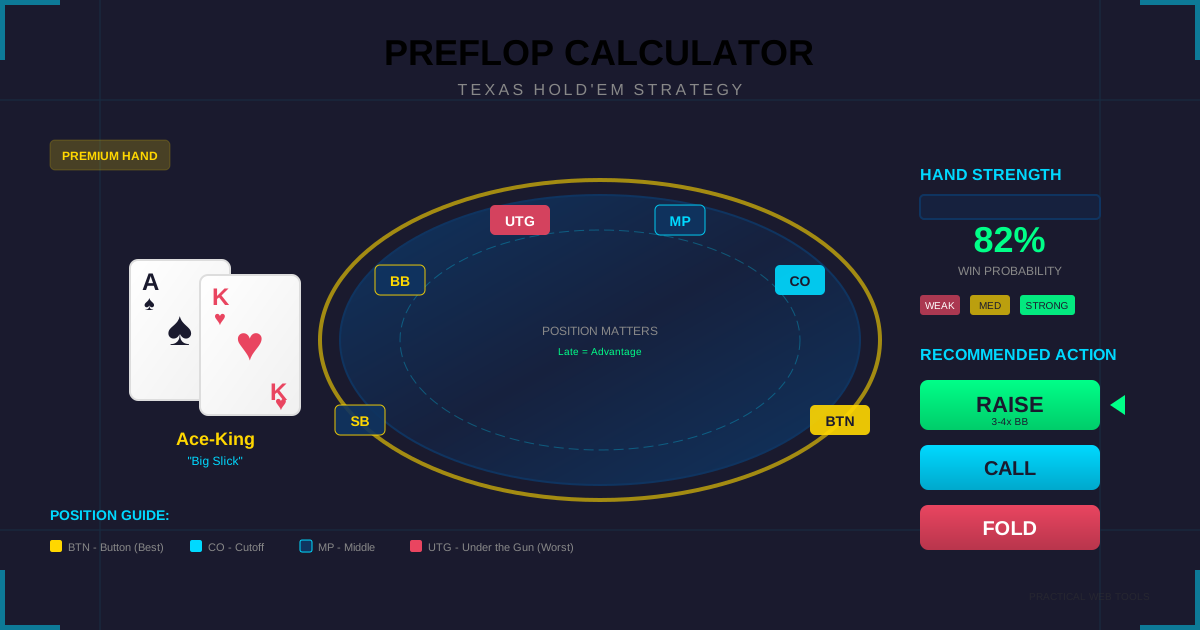
Position: Acting later in a hand is a significant advantage because you see what opponents do first. Play more hands in late position and fewer in early position.
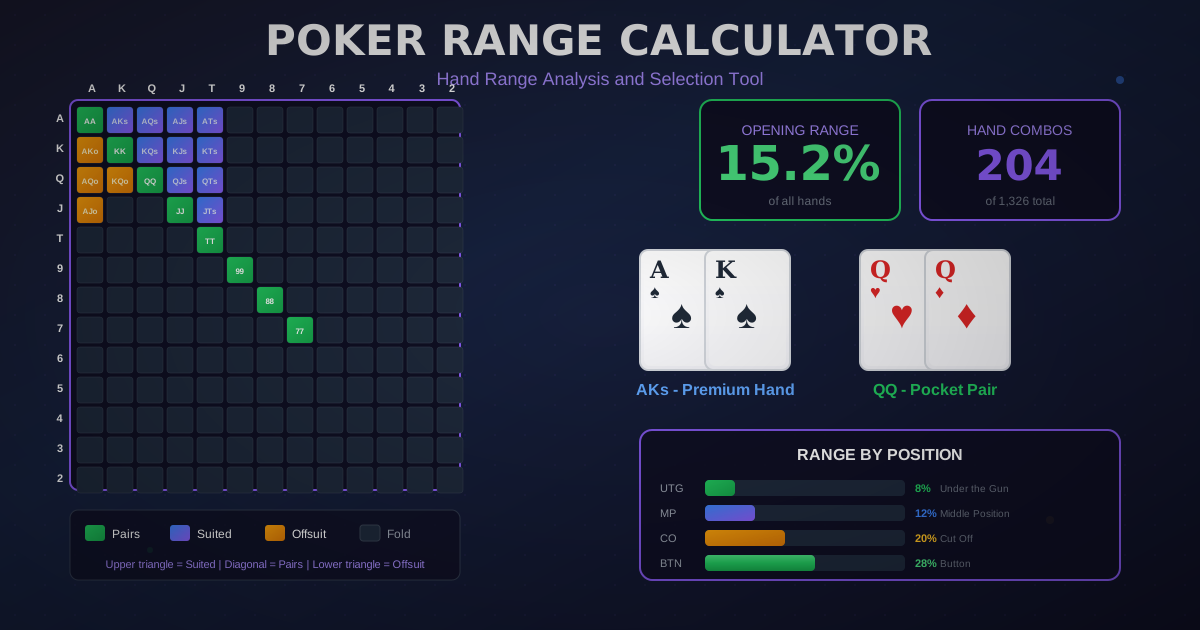
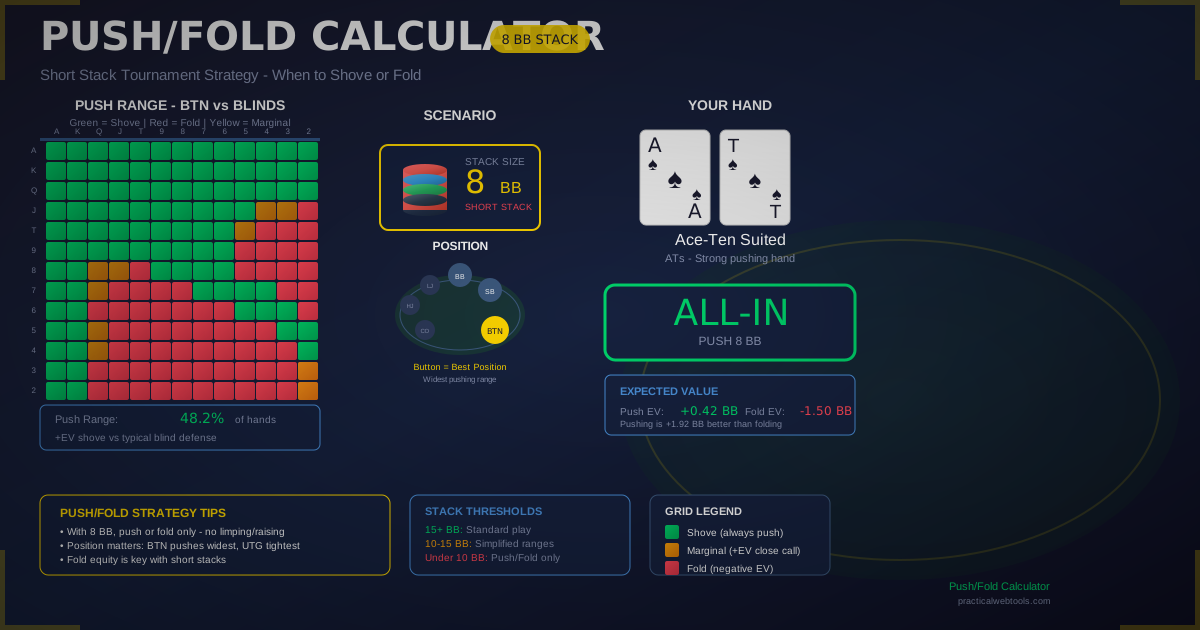
Starting Hand Selection: Most beginners play too many hands. In a 9-player game, you should fold roughly 75-80% of hands before the flop.
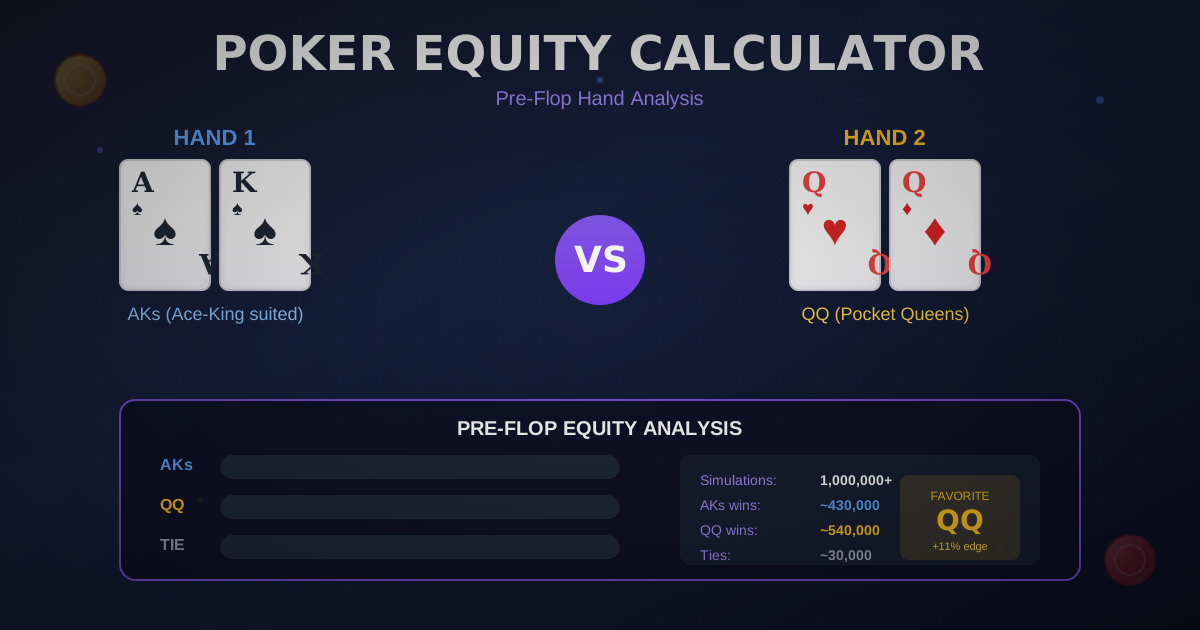
Calculate your equity in any poker hand with our Poker Equity Calculator.
Real-World Poker Example
You play $1/$2 No-Limit Hold'em with a $200 buy-in:
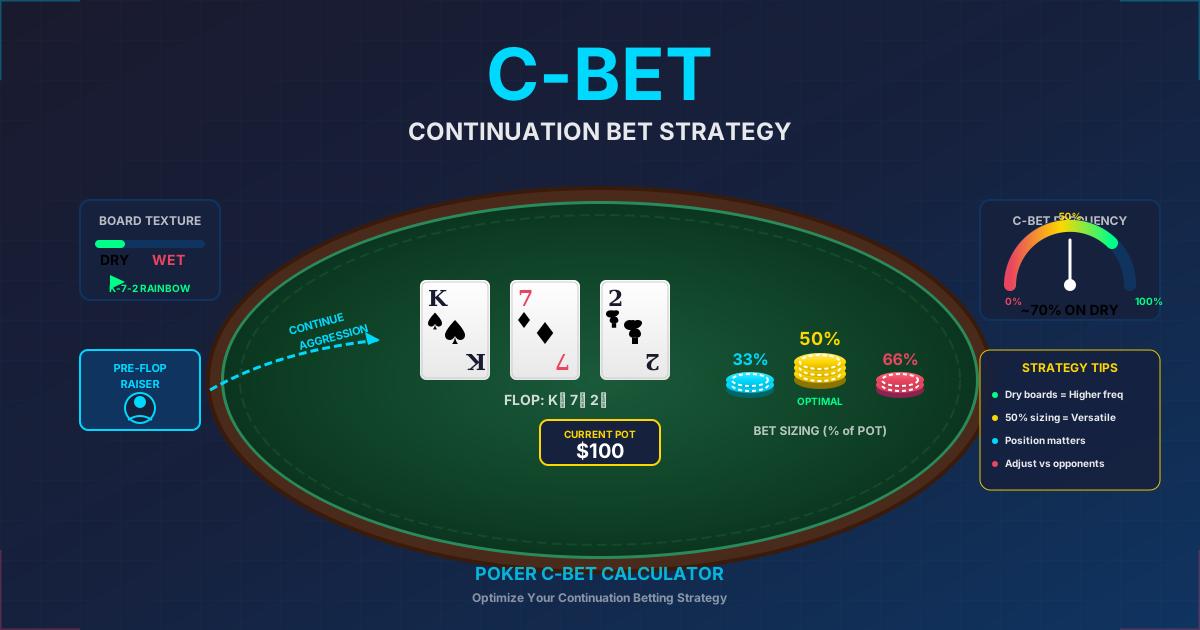
- Hand 1: You are dealt A-K in late position. You raise to $8. One caller. Flop: A-7-2. You bet $12, opponent folds. You win $19 (pot minus rake).
- Hand 2: Pocket 9s. You raise, get re-raised. You call. Flop: K-Q-J. Opponent bets large. You fold, losing your $8 raise.
- Hand 3 (big pot): You have K-Q suited on the button. Flop: K-8-3 with two of your suit. After the turn brings another of your suit, you make a flush. You win a $185 pot against an opponent with K-J.
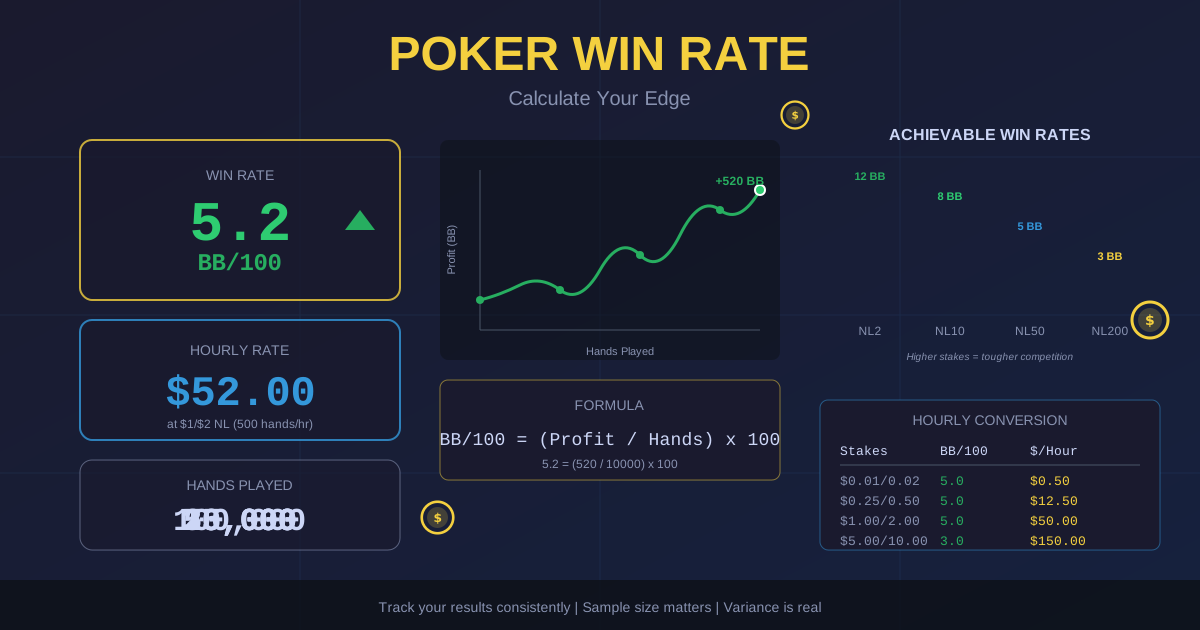
Poker results vary enormously based on skill. A good player at $1/$2 might earn $10-$25 per hour. A poor player might lose $20-$40 per hour at the same table.
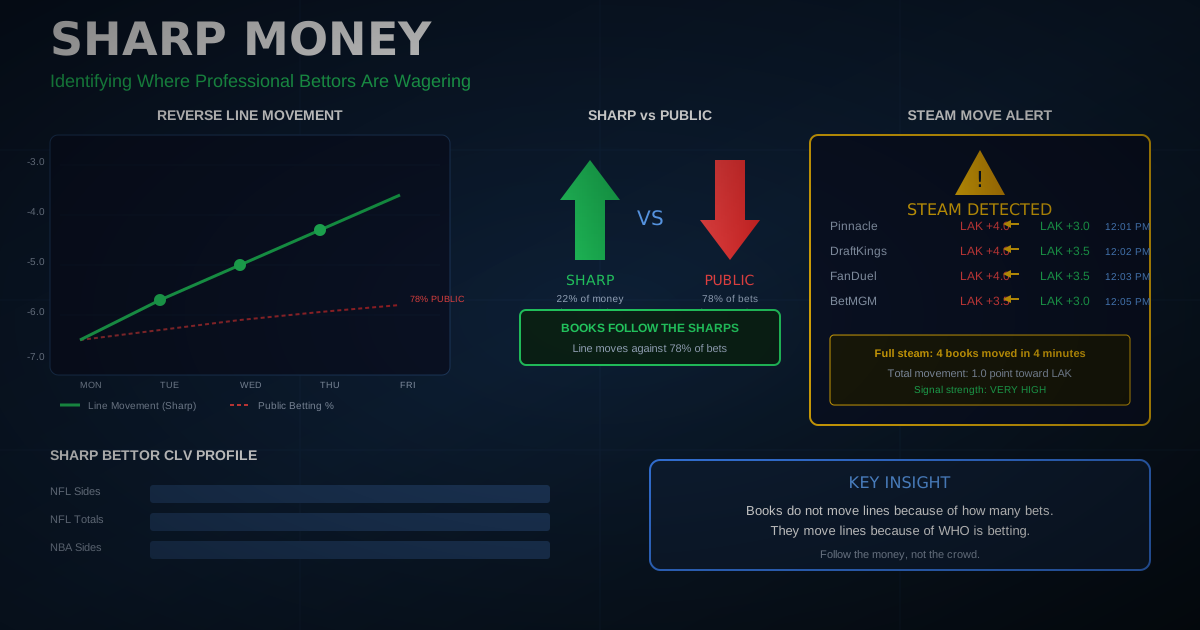
Sports Betting: Understanding the Vig
Sports betting is the fastest-growing gambling category, but most bettors do not understand how the sportsbook makes money.
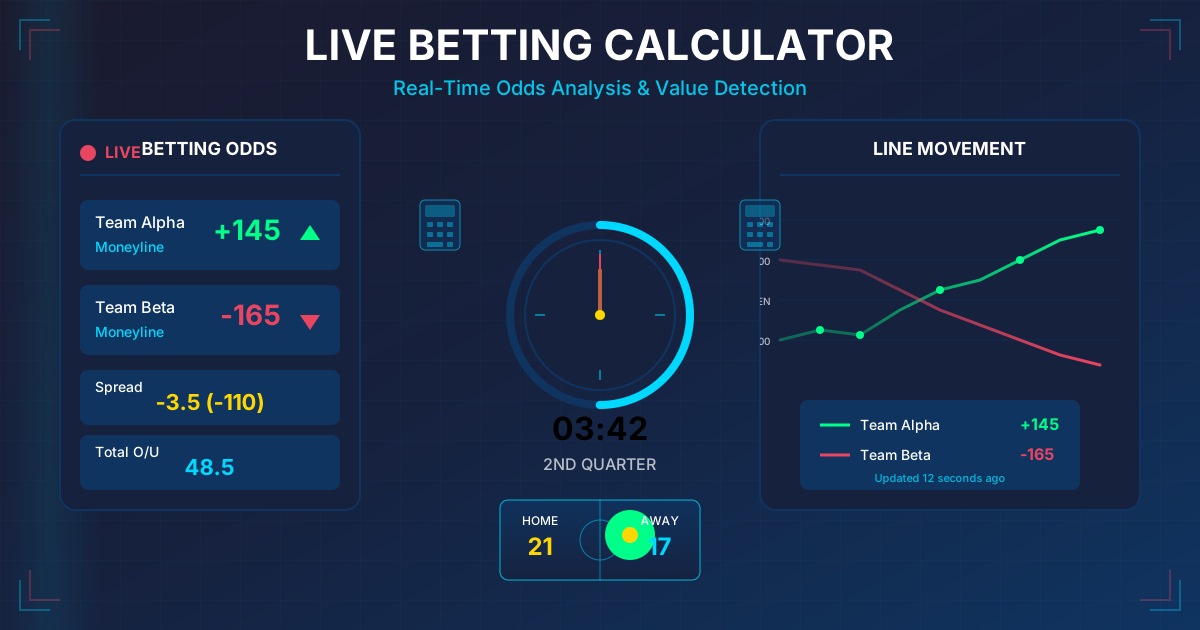
How Sportsbook Odds Work
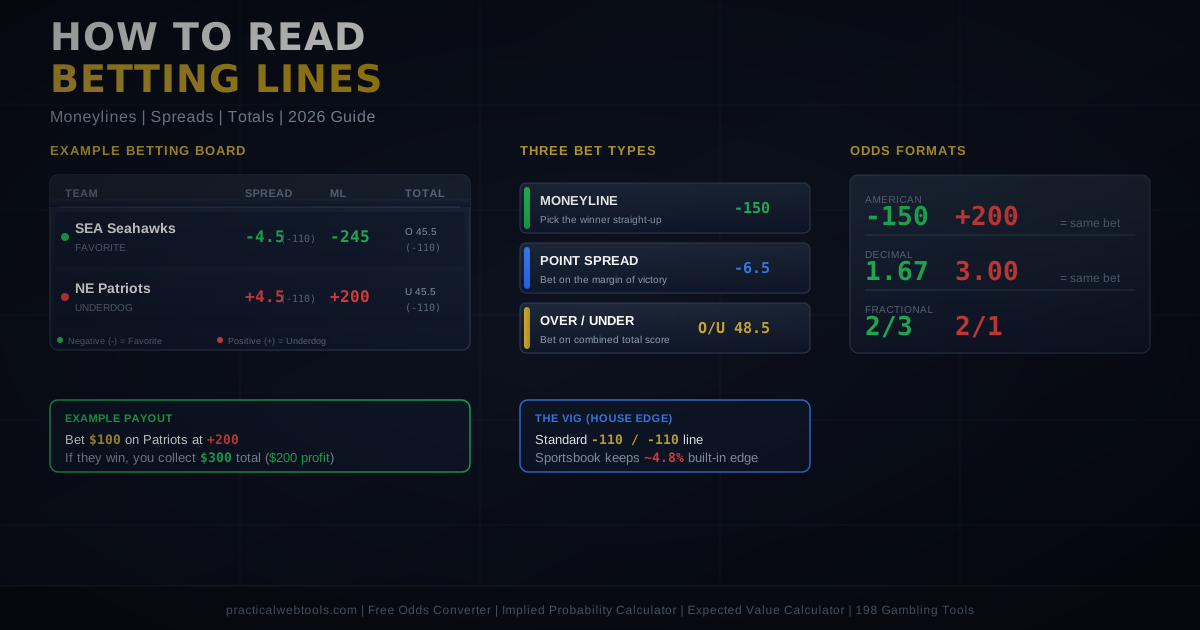
When you see a line like:
Team A: -110 | Team B: +100
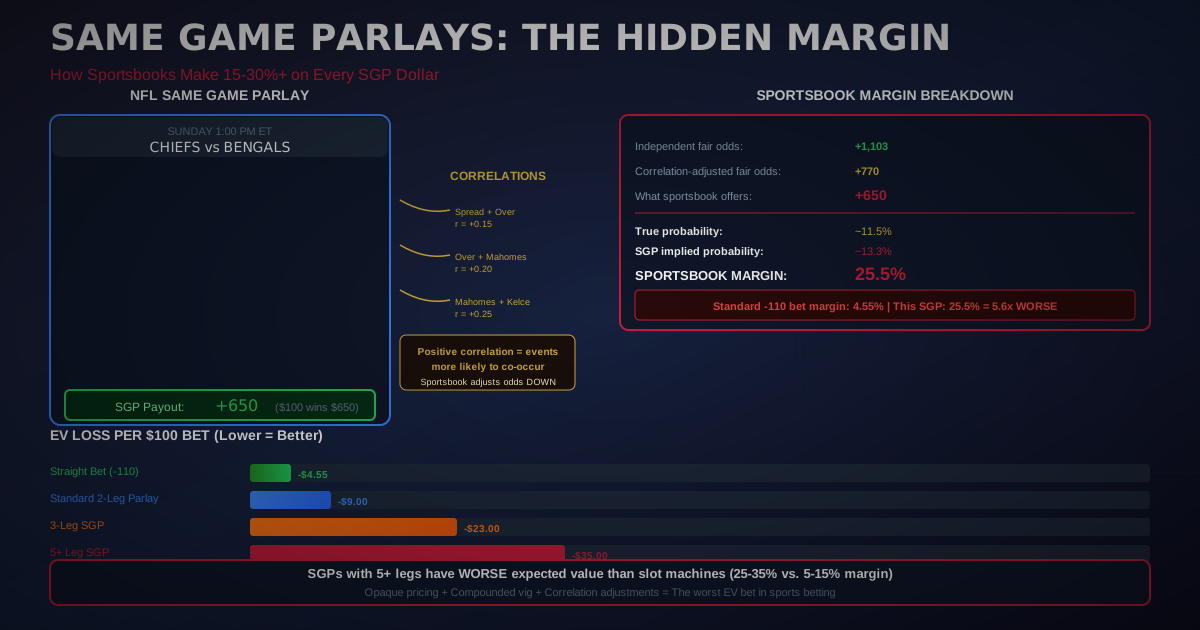
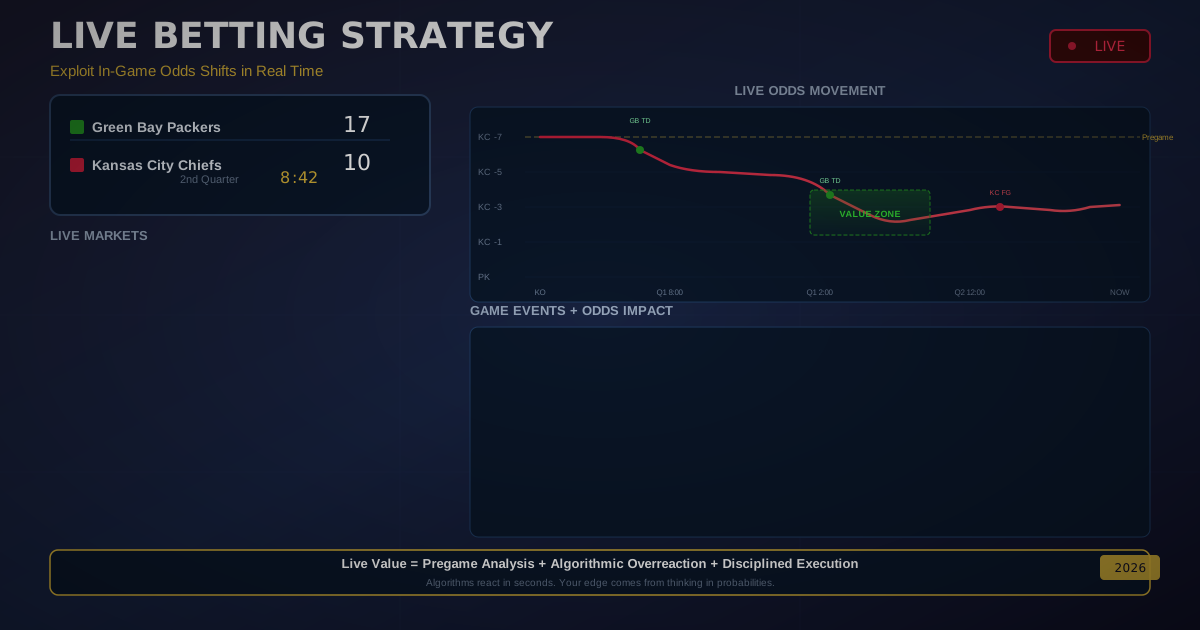
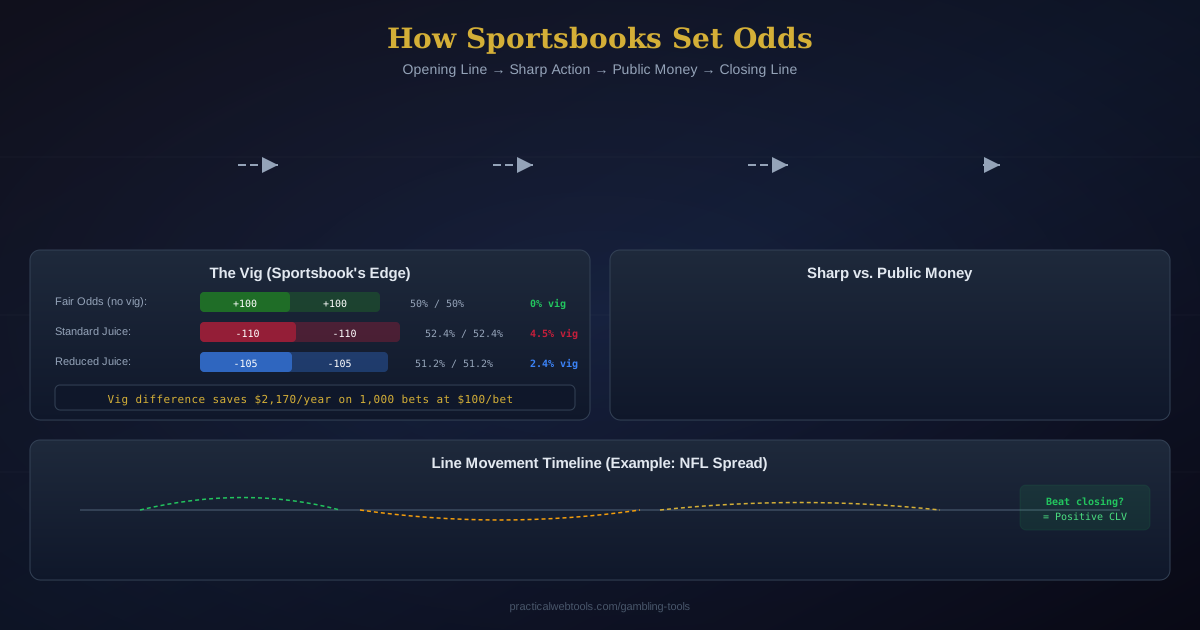
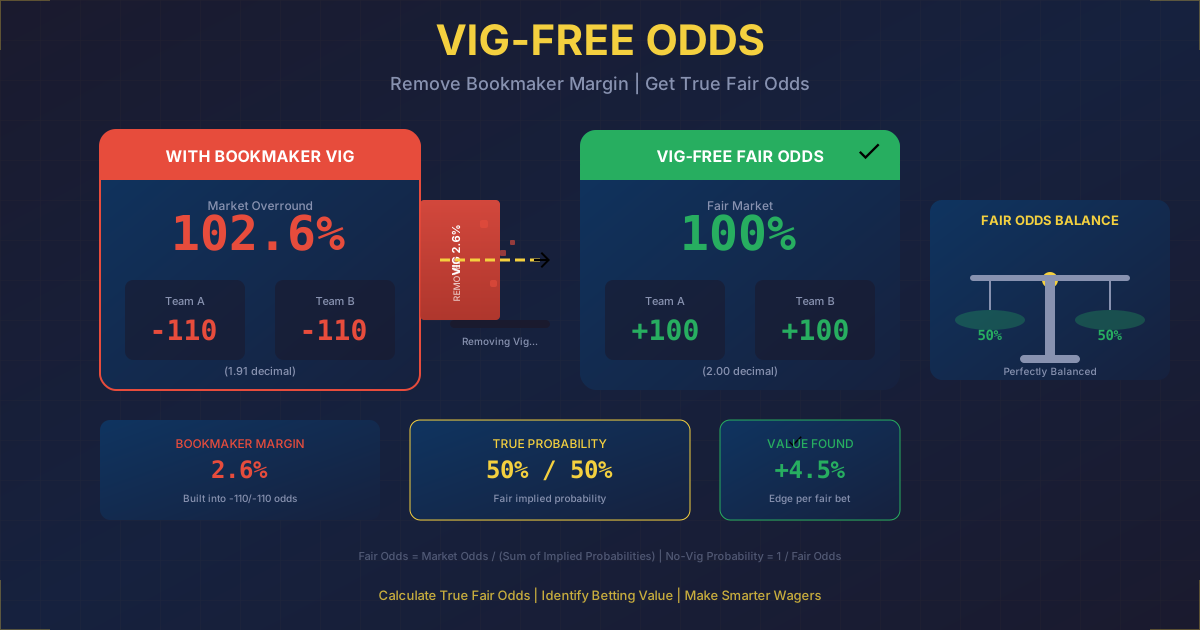
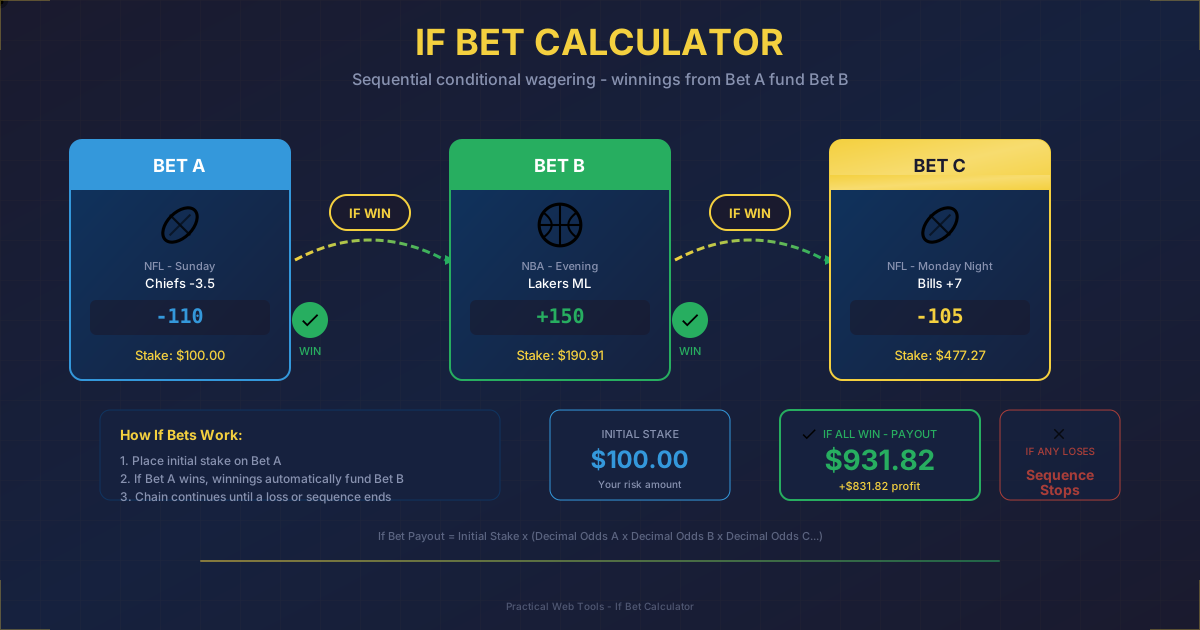
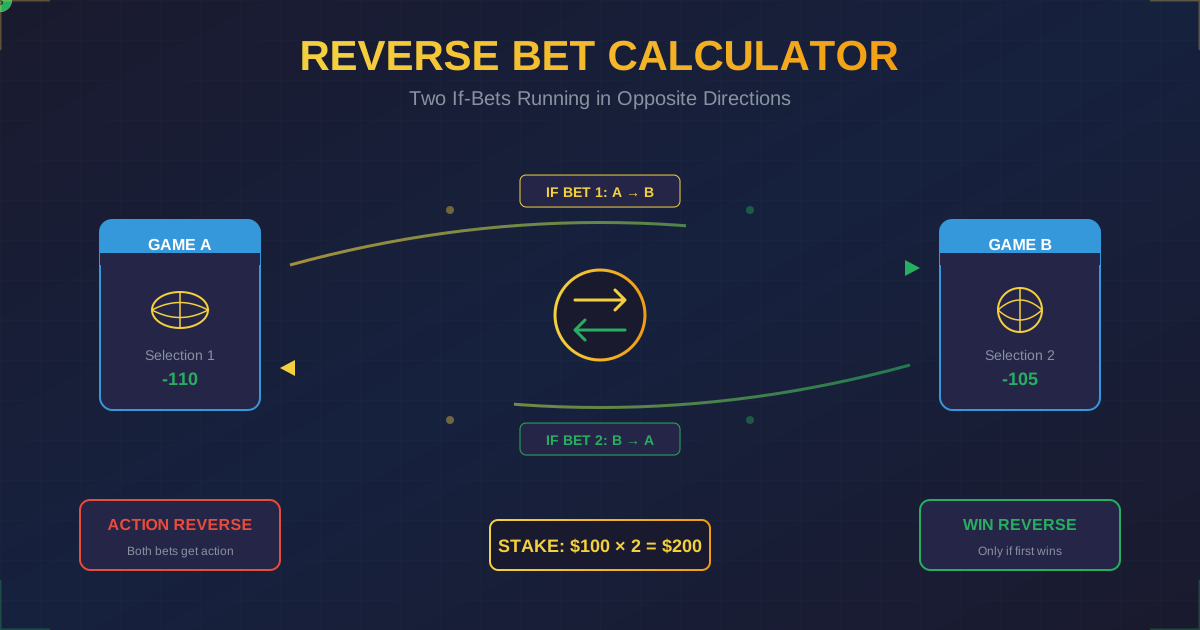
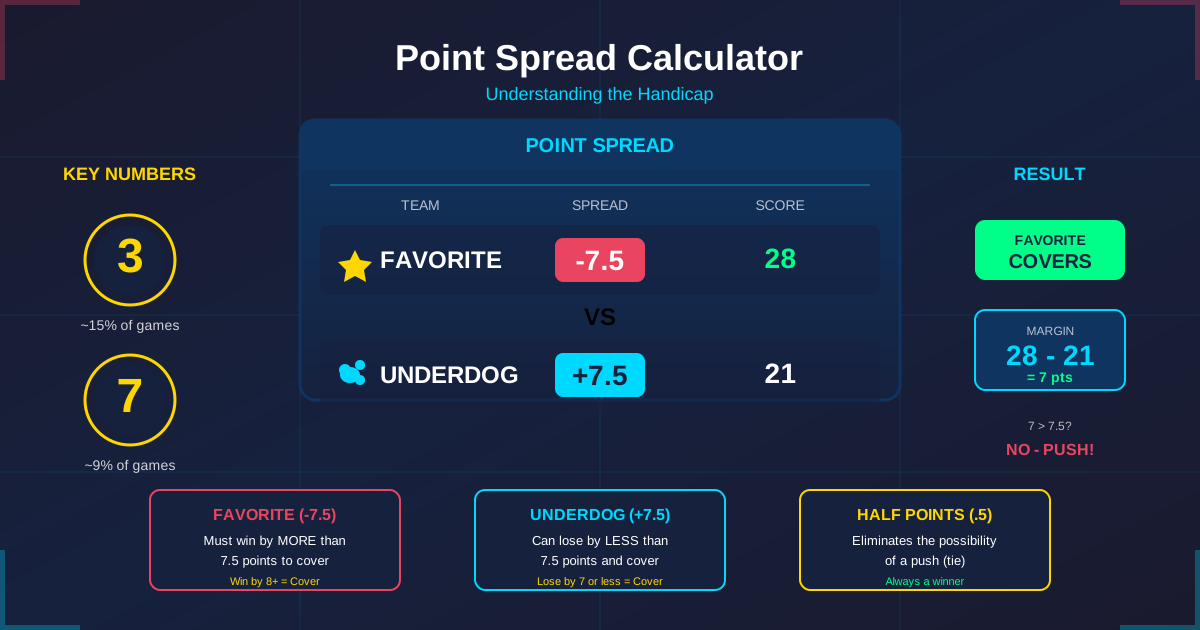
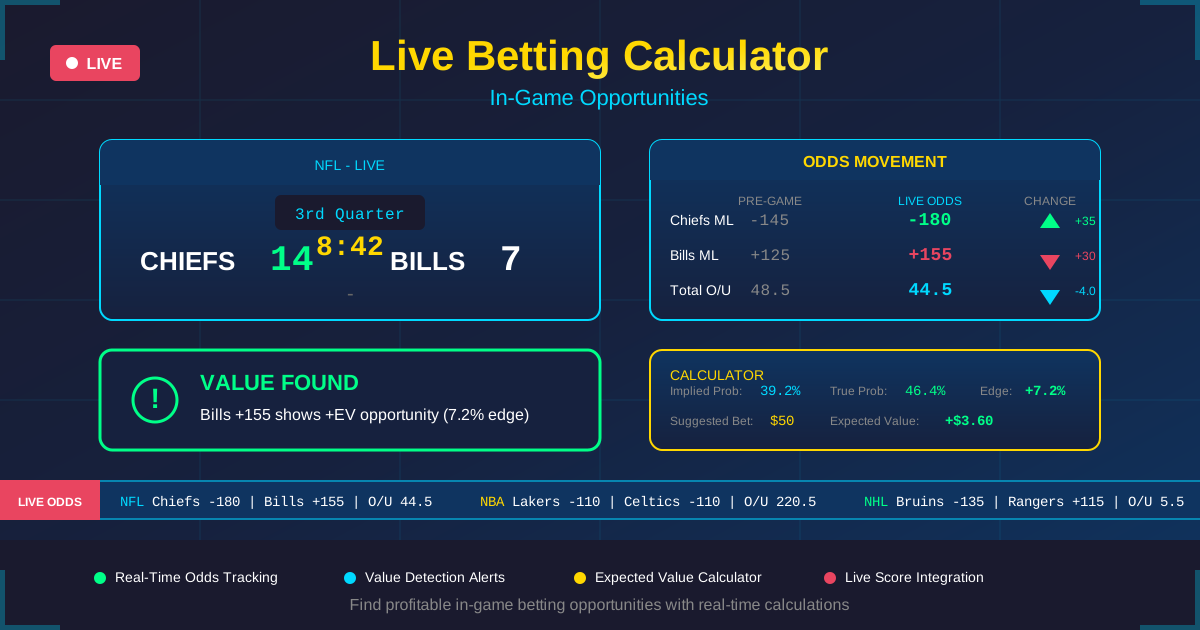
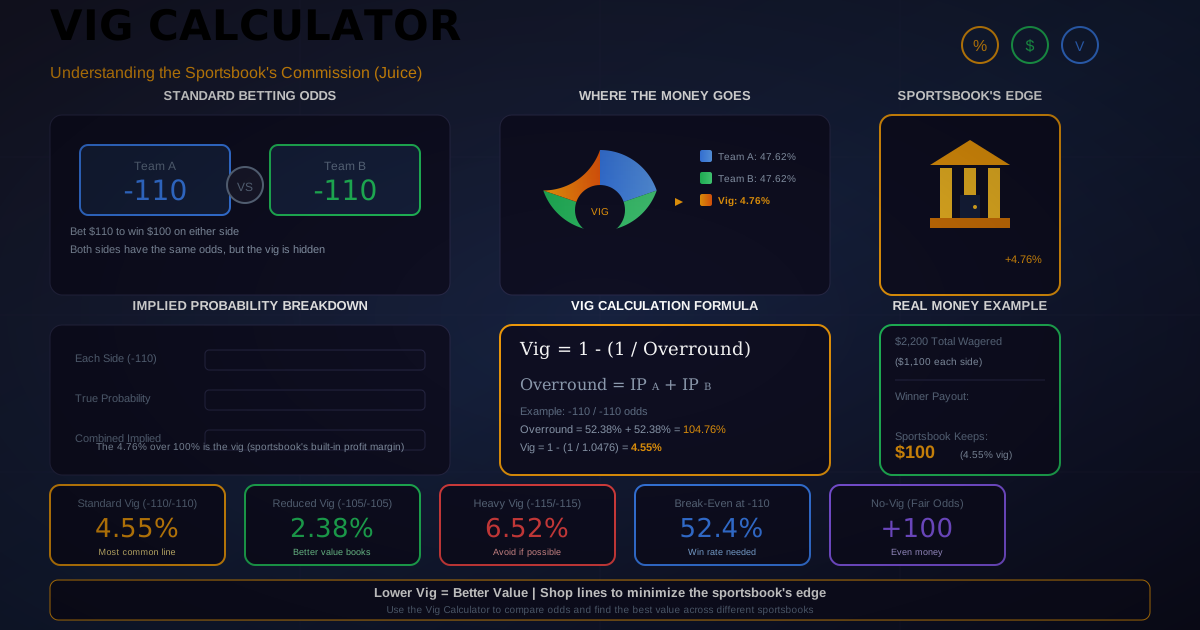
The -110 means you must bet $110 to win $100. The +100 means a $100 bet wins $100. If both sides have equal action, the sportsbook collects $110 from losing Team A bettors and pays out $100 to winning Team B bettors, keeping $10 profit per $210 wagered (4.76% hold).
The Standard Vig
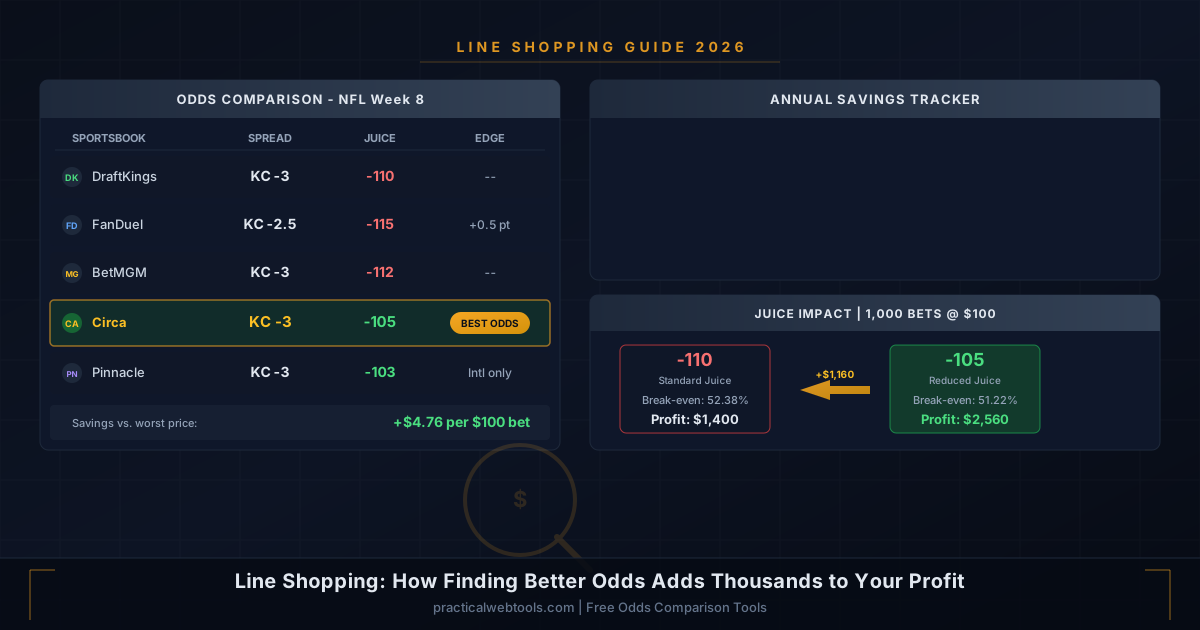
Most point spread and total bets are priced at -110 on both sides. This means:
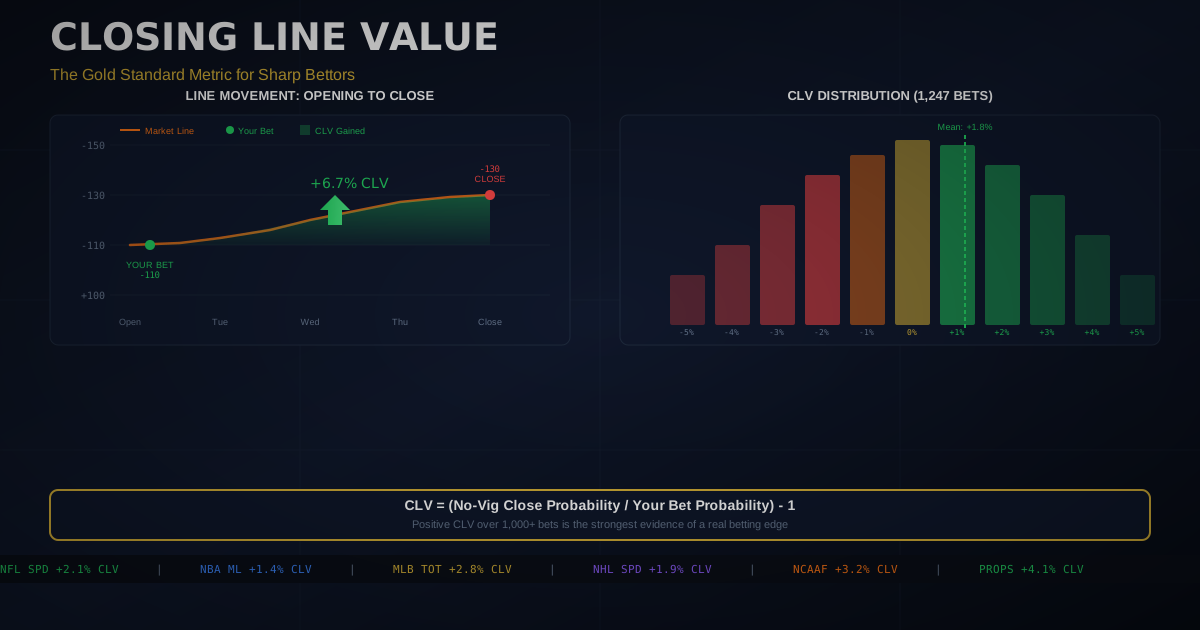
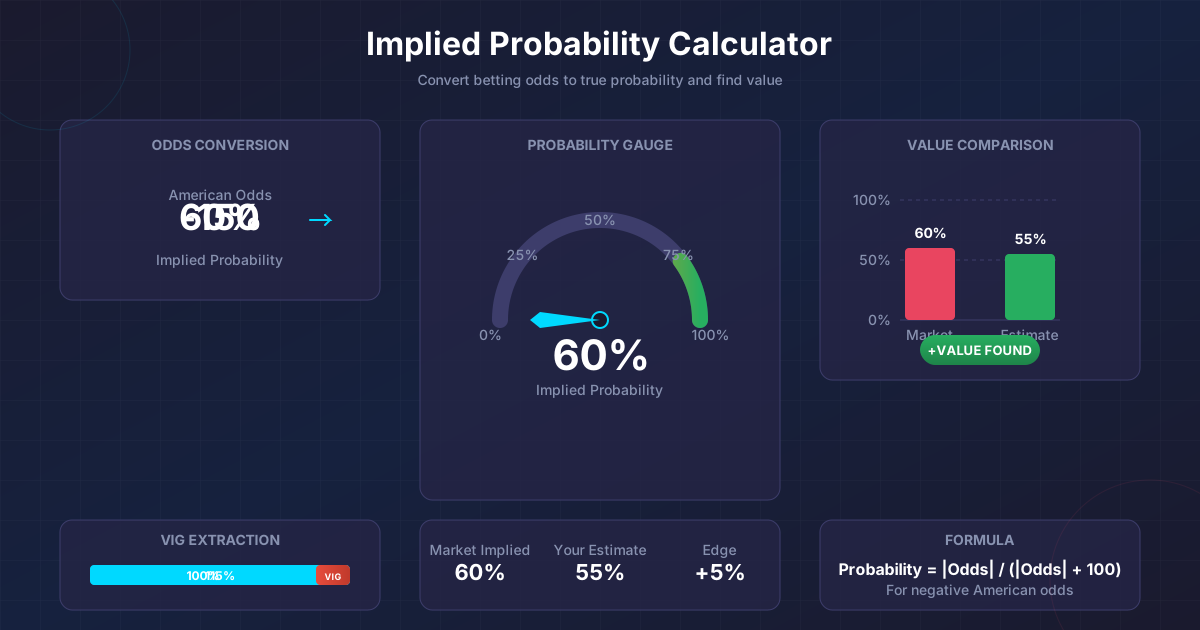
- Implied probability: 52.38% per side
- Combined implied probability: 104.76% (the extra 4.76% is the vig)
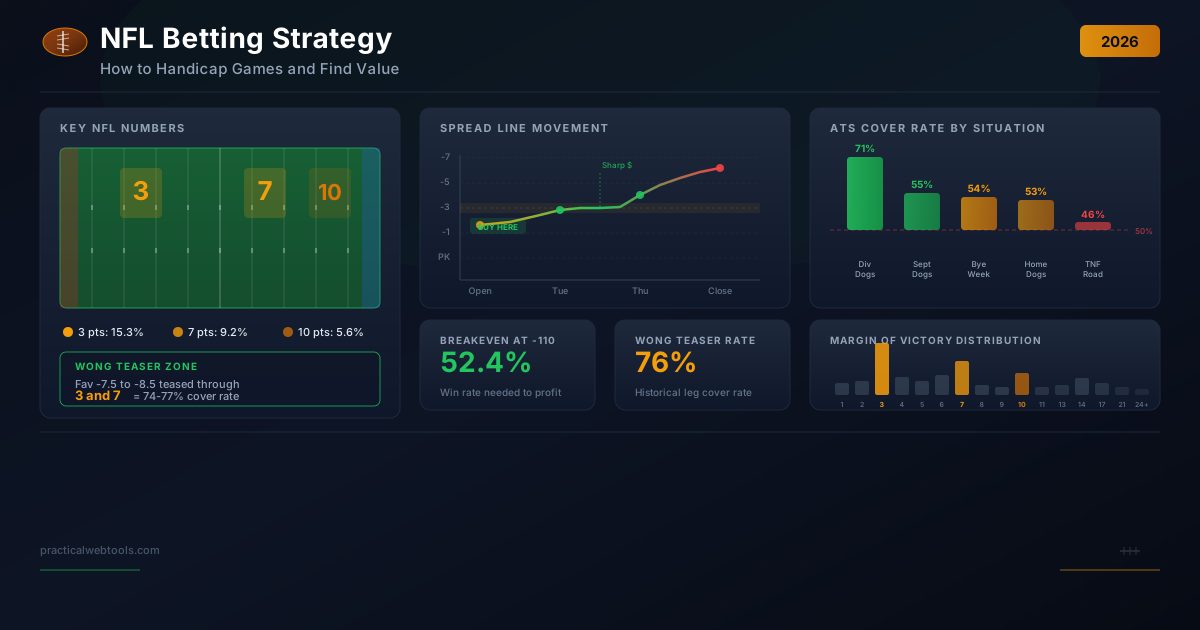
- Break-even win rate: 52.38%
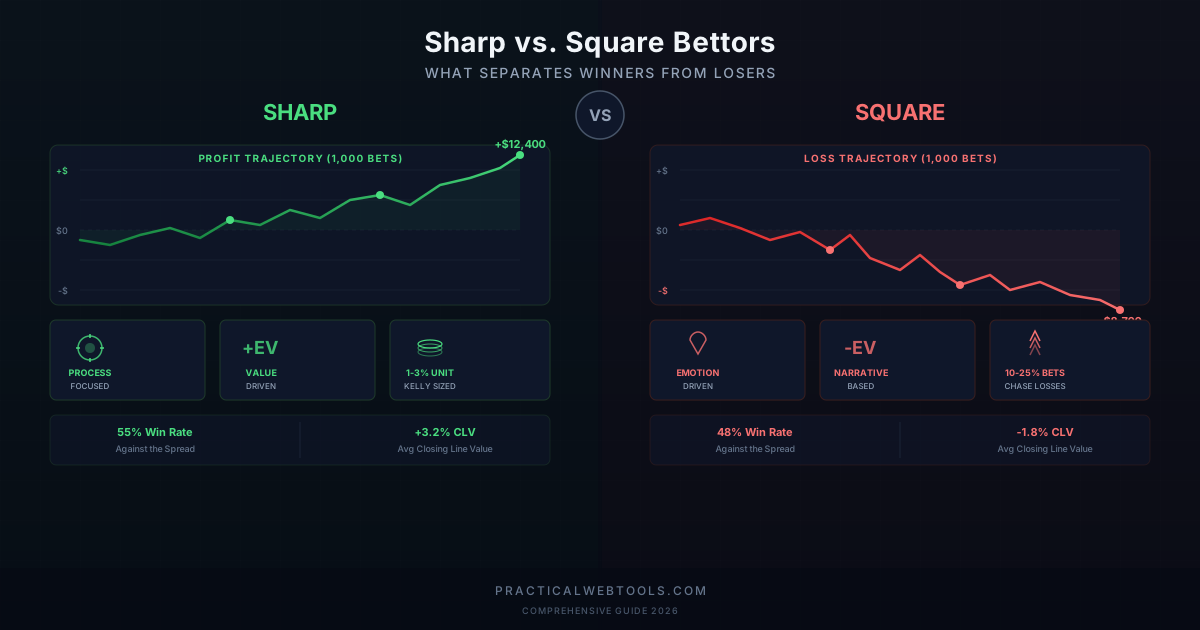
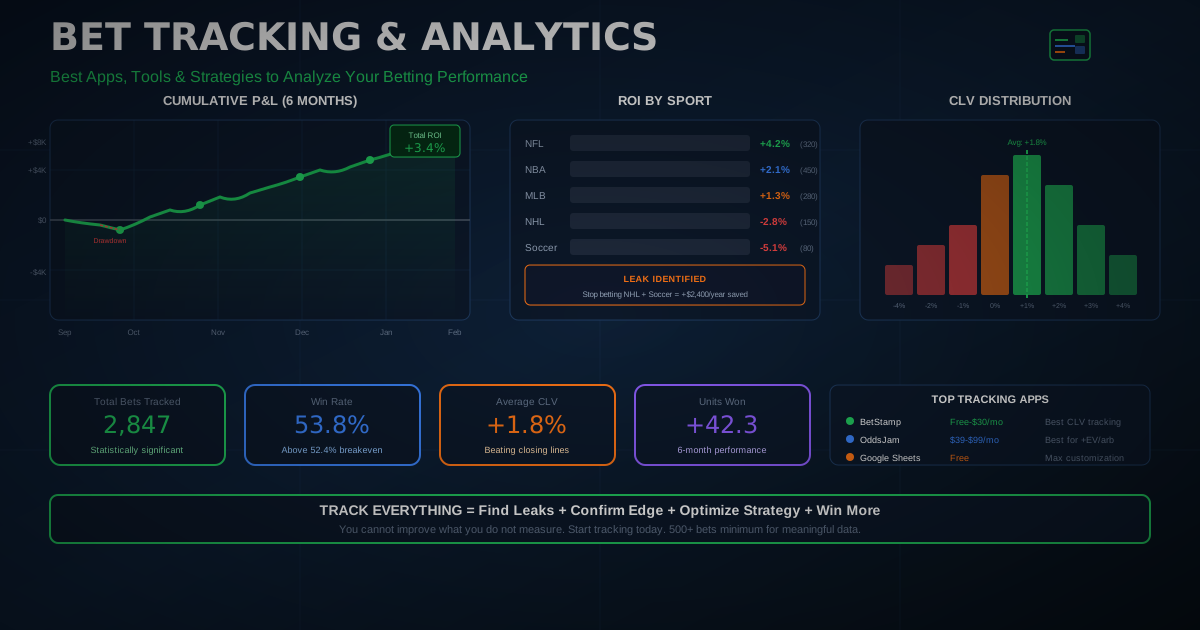
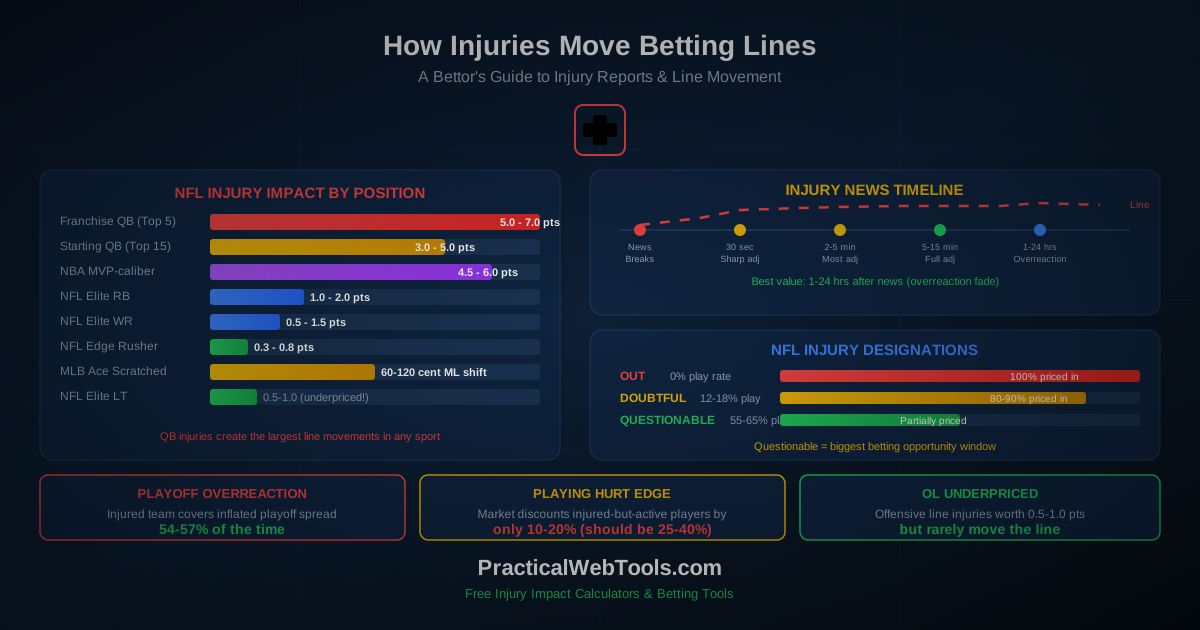
You need to win 52.4% of your bets at -110 just to break even. Most recreational bettors win 47-50% of their bets, which means steady losses.
Calculate the vig on any line with our Hold/Vig Calculator and convert odds instantly with our Odds Converter.
Common Sports Bet Types
| Bet Type | Description | Typical House Edge |
|---|---|---|
| Point Spread | Bet on margin of victory | 4.5-5% |
| Moneyline | Bet on straight winner | 3-8% |
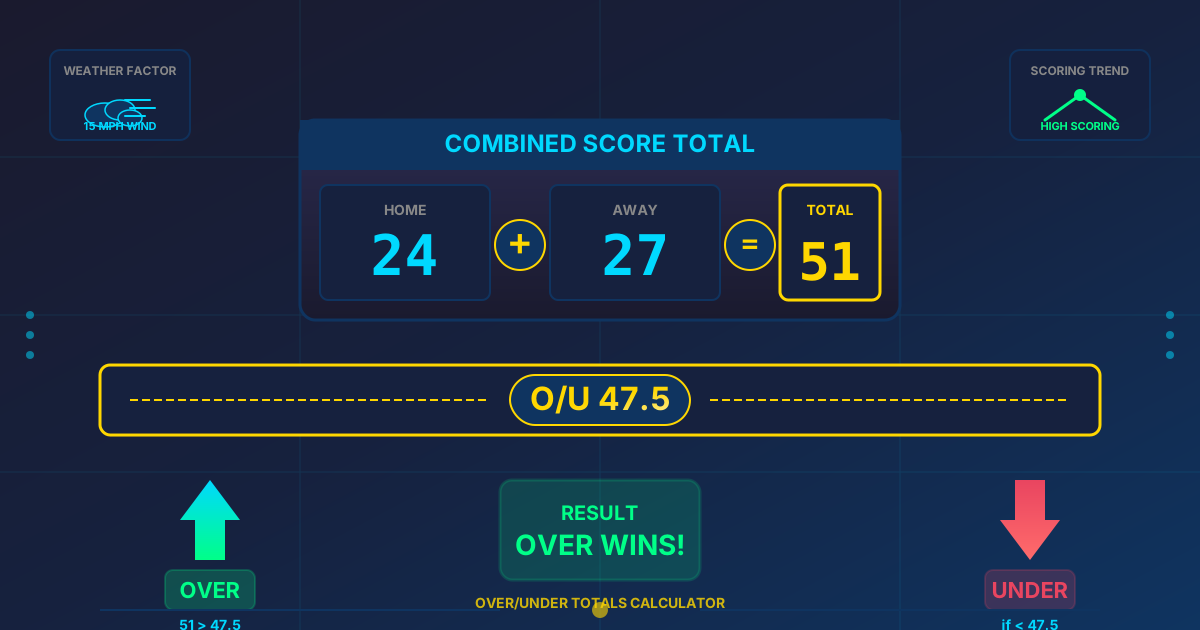
| Totals (Over/Under) | Bet on combined score | 4.5-5% |
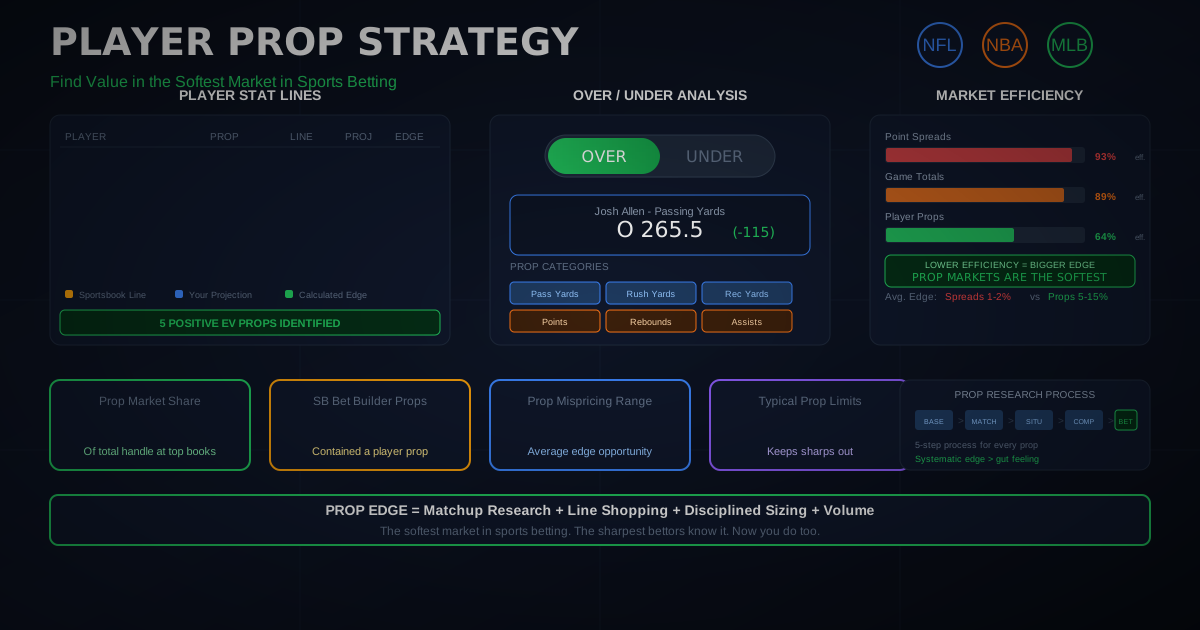
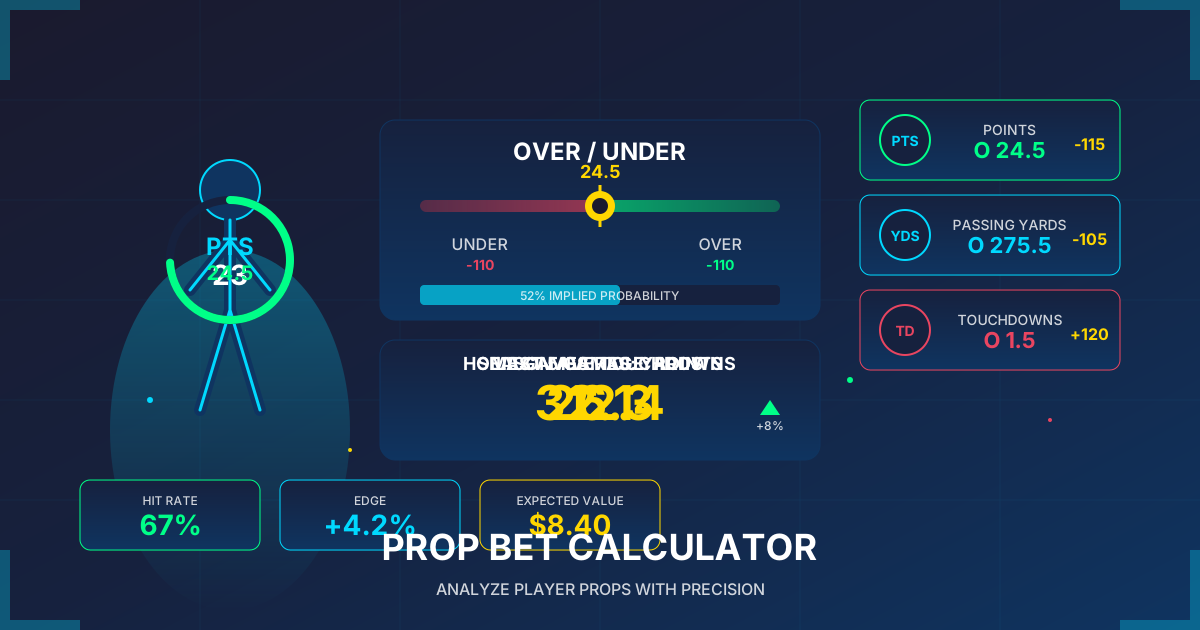
| Player Props | Individual player performance | 5-15% |
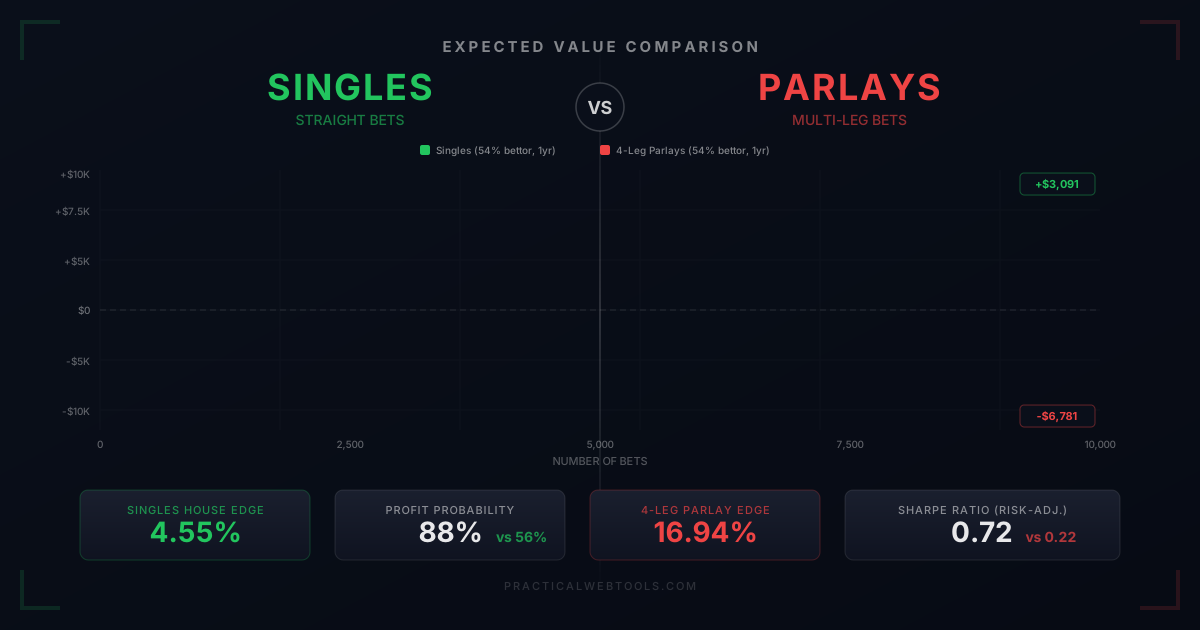
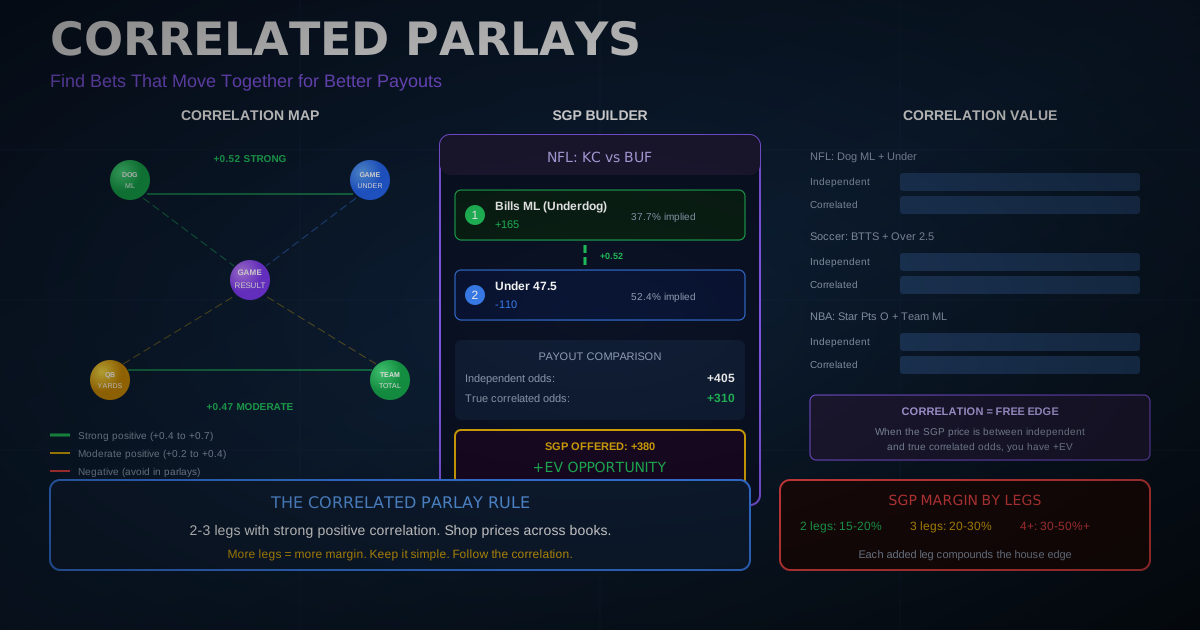
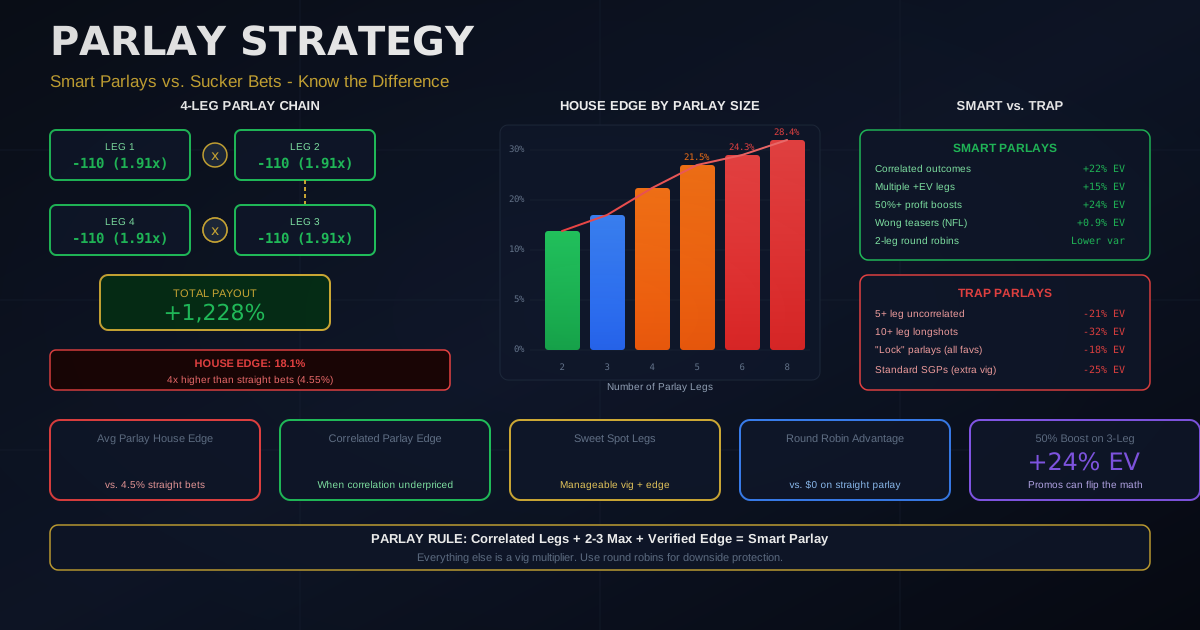
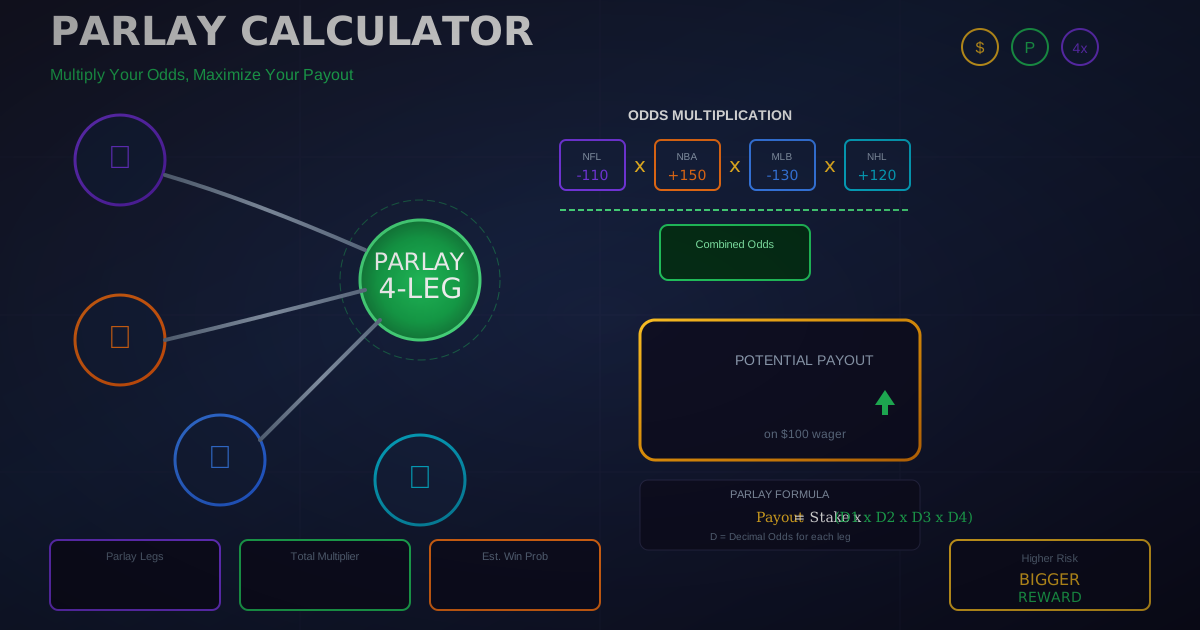
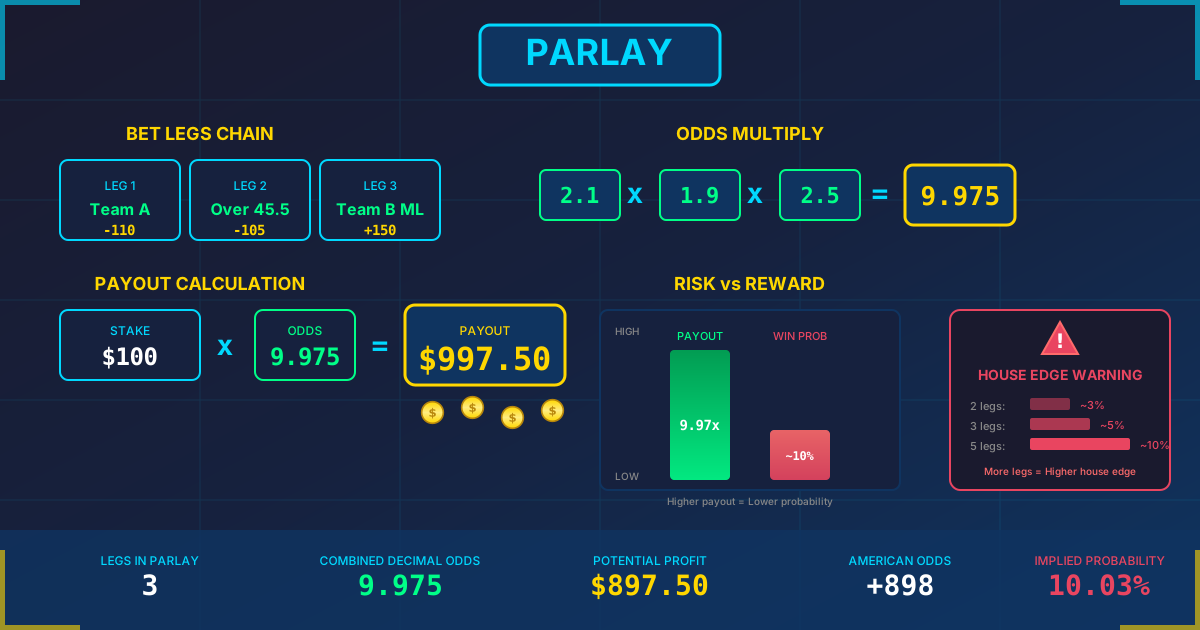
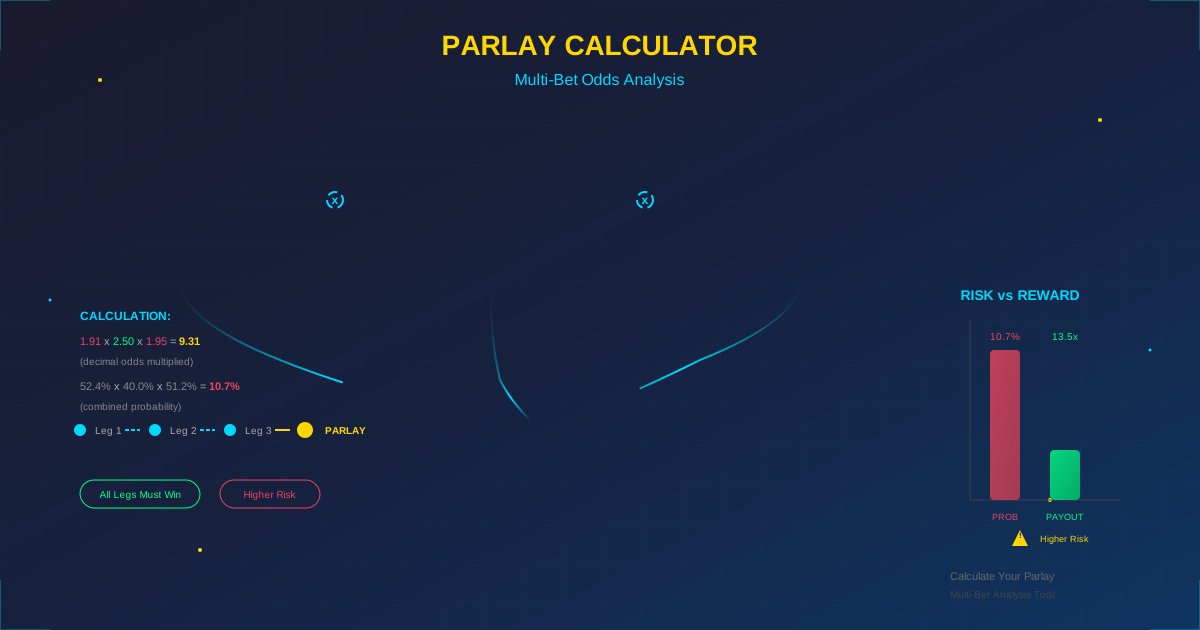
| Parlays | Multiple bets combined | 10-30%+ |
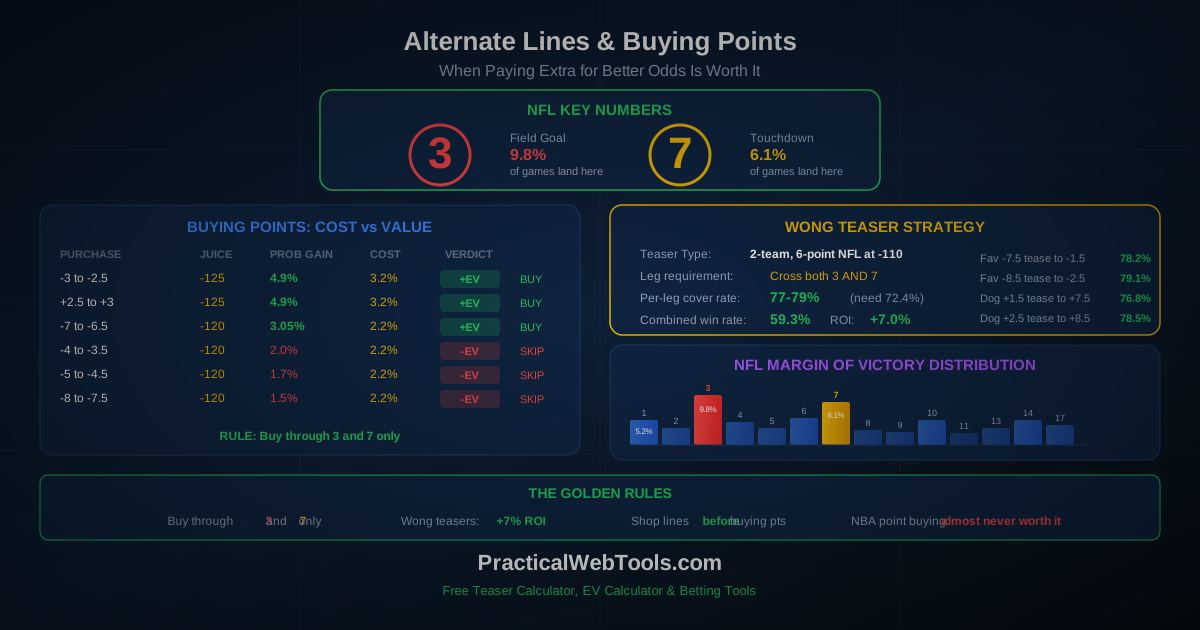
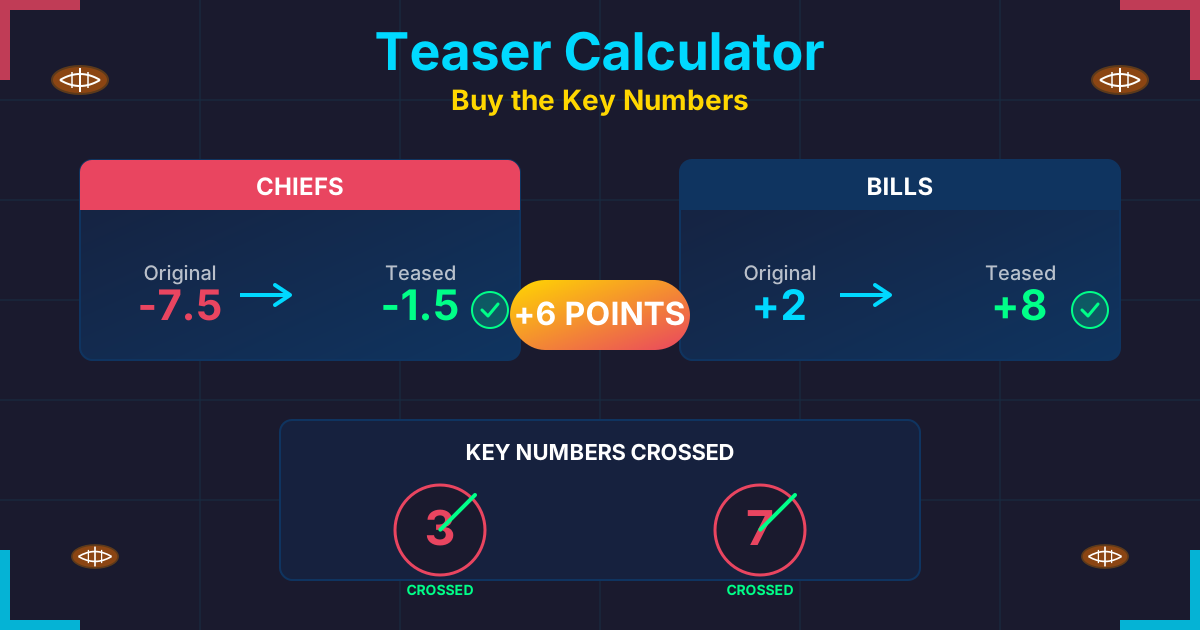
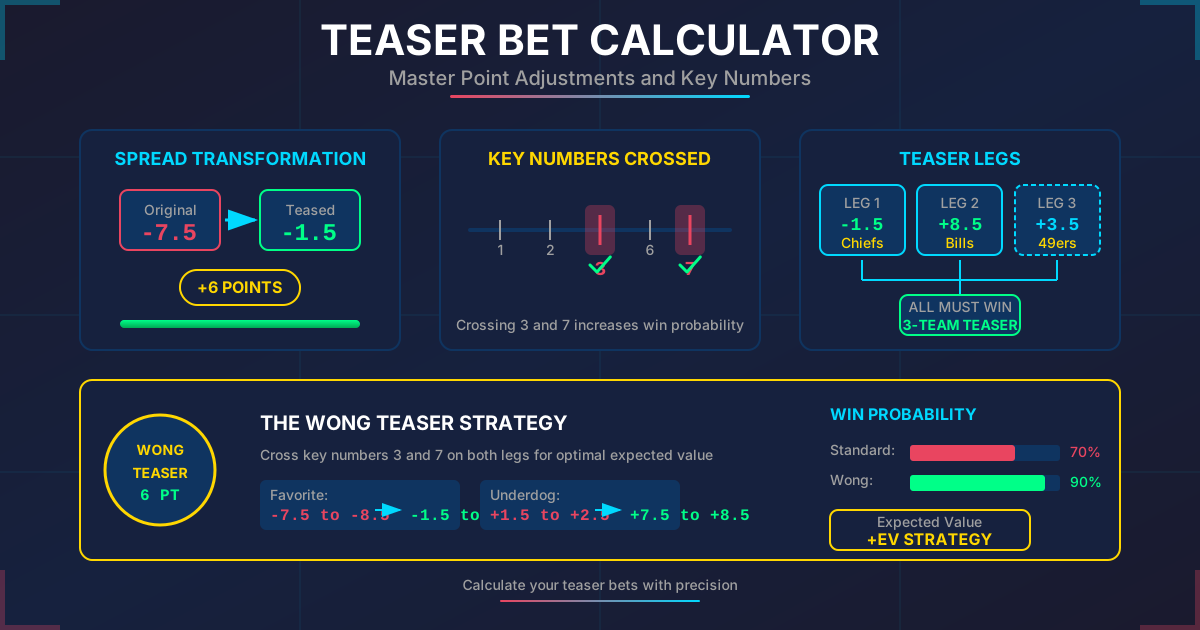
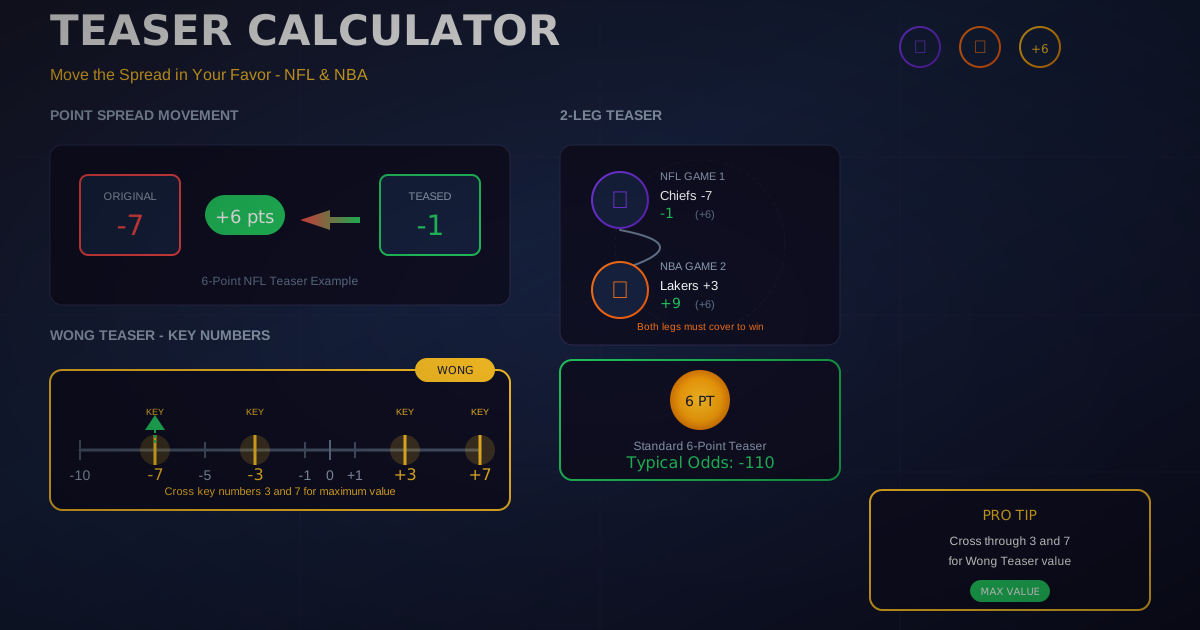
| Teasers | Adjusted spreads combined | 5-10% |
Real-World Sports Betting Example
You bet $100 on NFL games every Sunday for 17 weeks:
- Weeks 1-5: You go 3-2 each week. Up $80. Balance: $1,780 (started with $1,700).
- Weeks 6-10: A cold streak hits. 2-3, 2-3, 1-4, 3-2, 2-3. Down $410. Balance: $1,370.
- Weeks 11-17: You finish strong at 3-2, 3-2, 4-1, 2-3, 3-2, 3-2, 2-3. Up $235. Balance: $1,605.
Final record: 44-41 (51.8% win rate). At -110 odds, your profit is approximately negative $28. Despite a winning record, you barely broke even because of the vig. You needed 52.4% to break even, and you hit 51.8%.
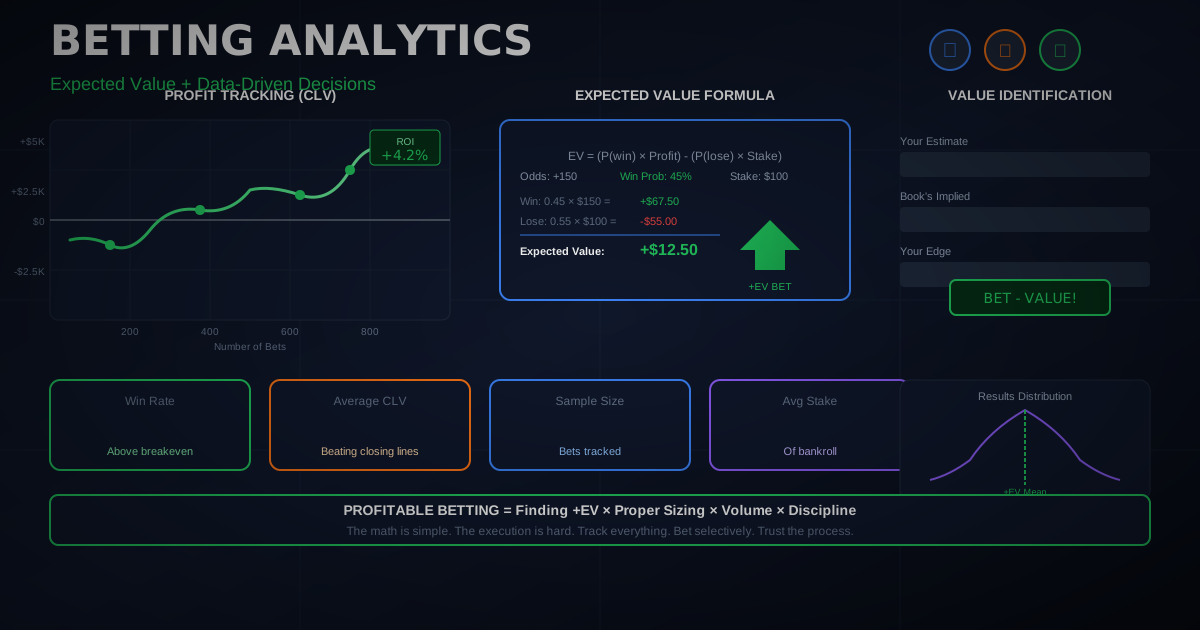
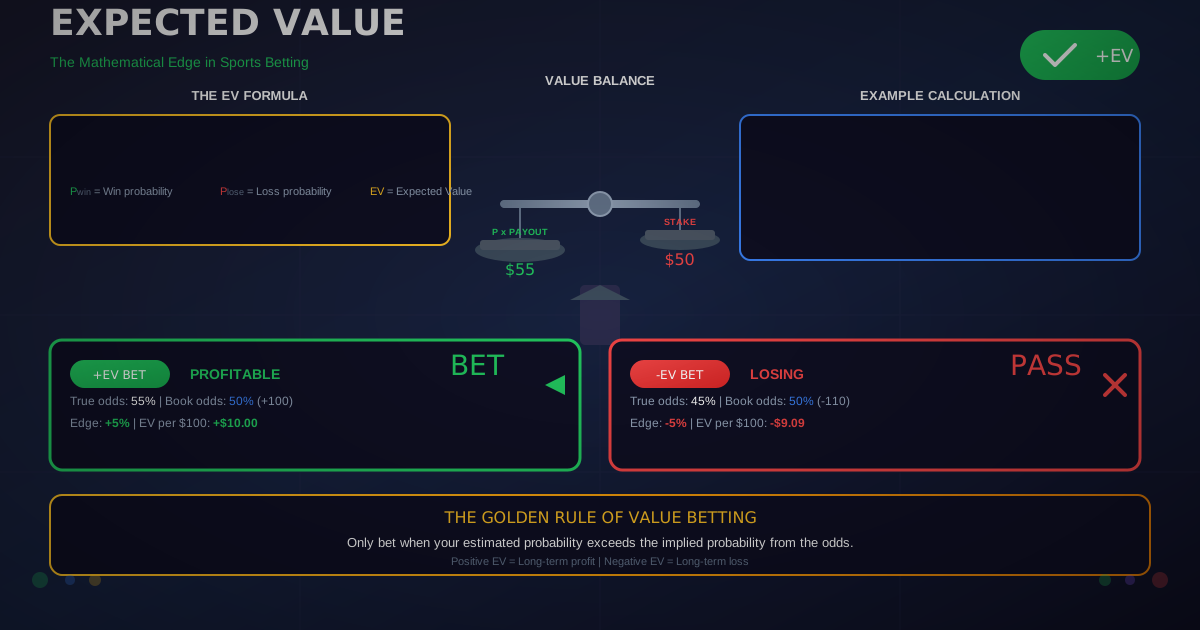
Calculate expected value for any bet with our Expected Value Calculator and see the implied probability behind every line with our Implied Probability Calculator.
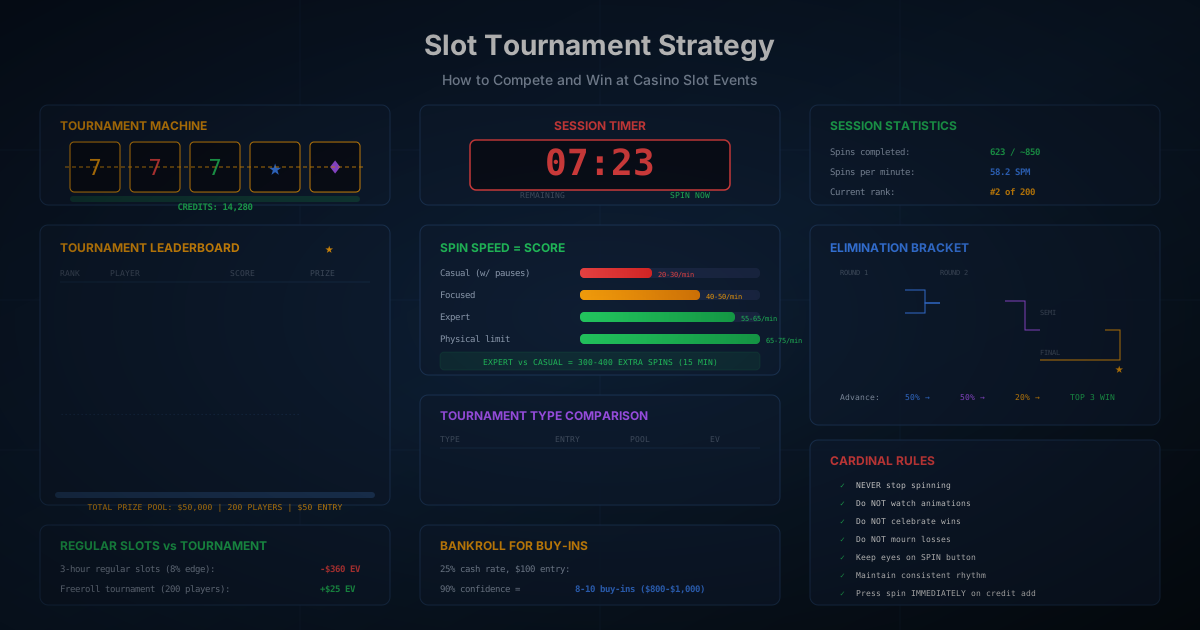
Slots: The Worst Odds (and Why People Play Them)
Slot machines are the highest-revenue game in every casino, and they generally have the worst odds. Understanding why can save you significant money.
How Slots Work
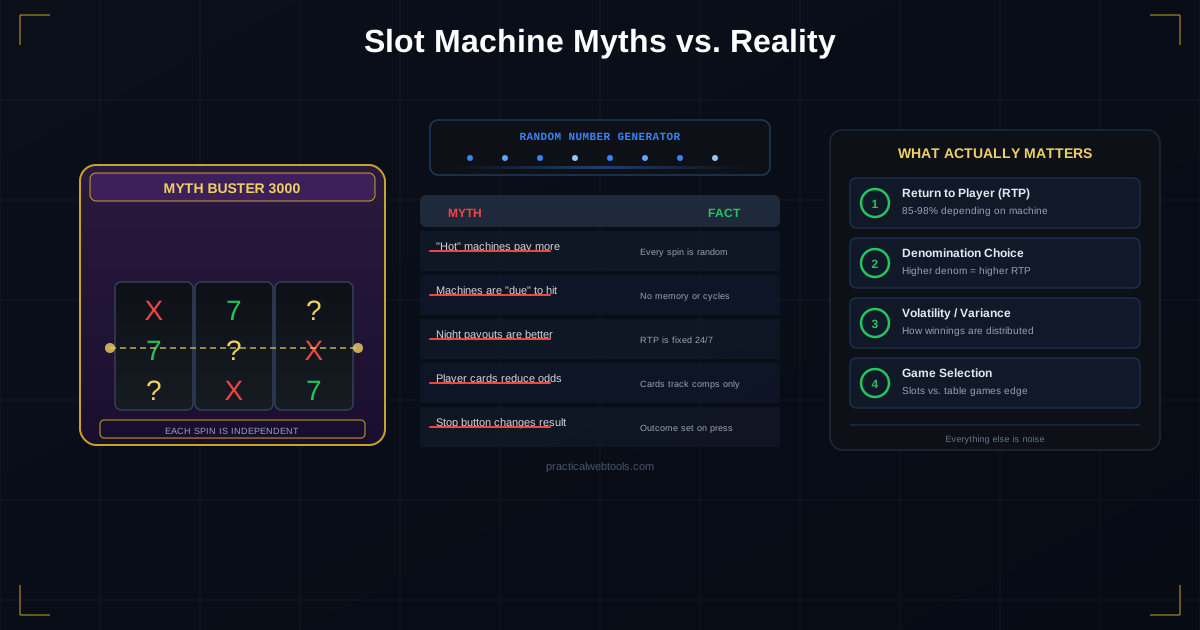
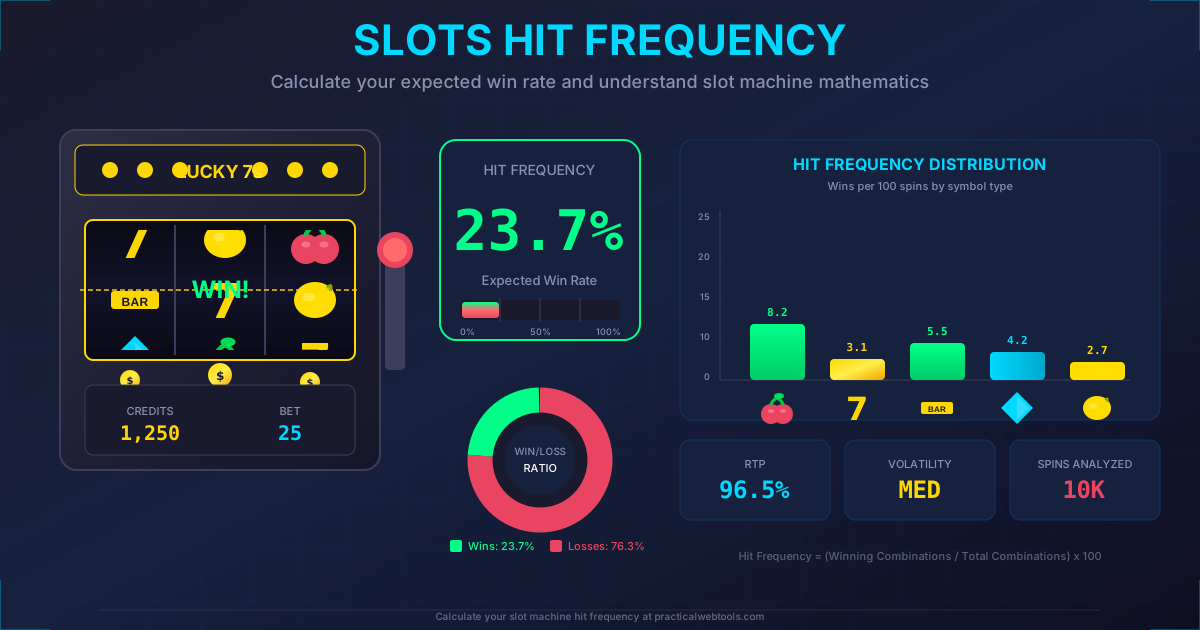
Modern slot machines use a Random Number Generator (RNG) that determines the outcome the instant you press the button. The spinning reels are purely cosmetic. Each spin is independent and random.
Why Slots Have High House Edges
- No skill involved: Every spin has the same expected value regardless of what you do
- High speed of play: 600+ spins per hour means massive total action
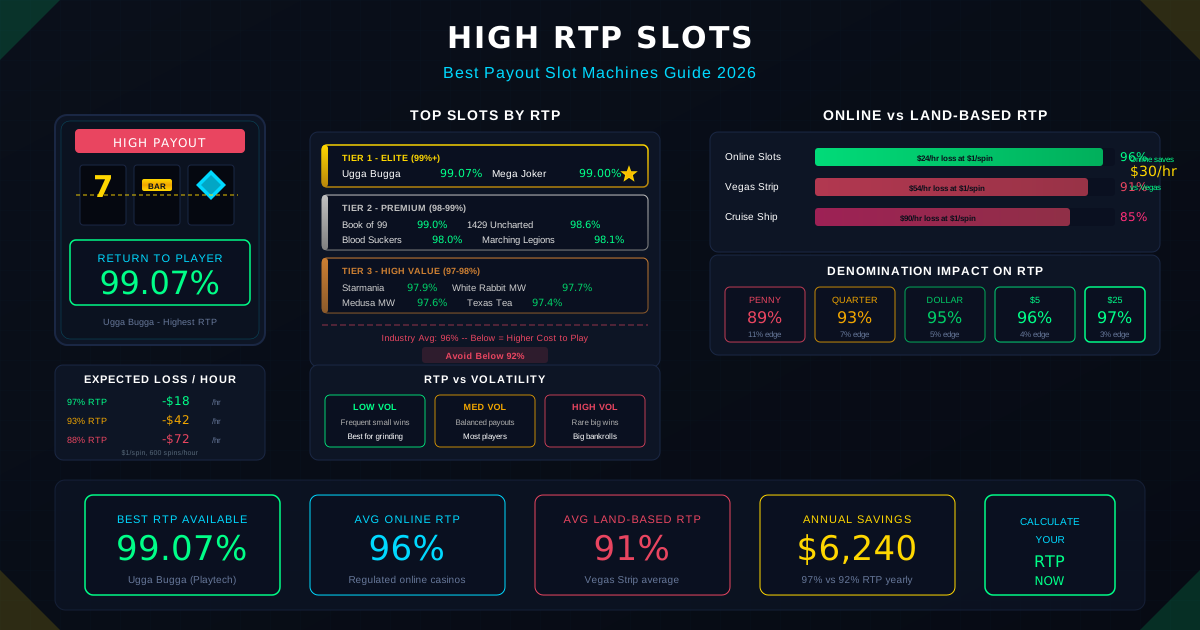
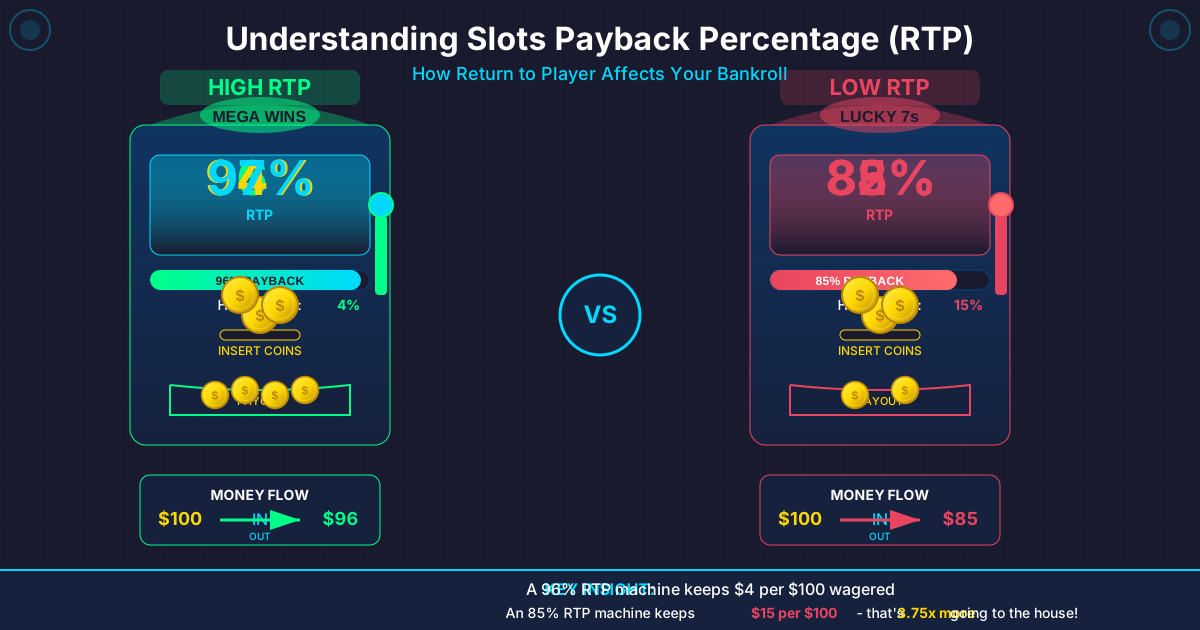
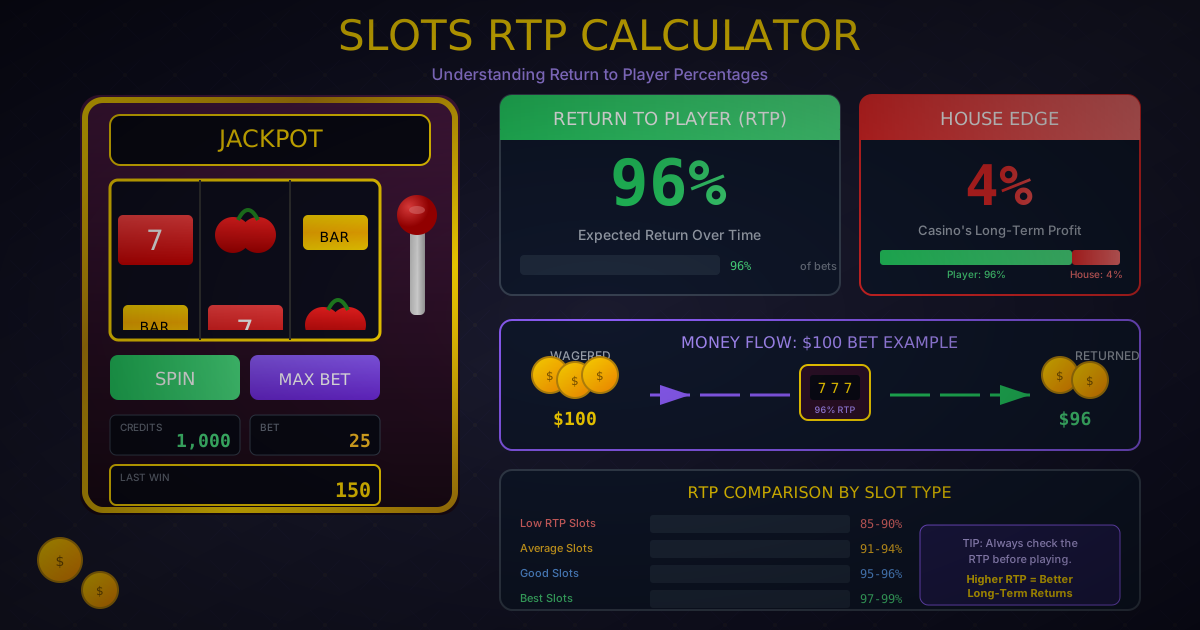
- Variable payback: Machines pay back 85-98% depending on the casino and denomination
- Near-miss illusion: Symbols just above or below the payline create the feeling of "almost winning" despite being mathematically meaningless
Slot House Edge by Denomination (Typical)
| Denomination | Typical Payback | House Edge |
|---|---|---|
| Penny slots | 85-90% | 10-15% |
| Nickel slots | 88-93% | 7-12% |
| Quarter slots | 90-95% | 5-10% |
| Dollar slots | 93-97% | 3-7% |
| $5+ slots | 95-98% | 2-5% |
Higher denomination machines generally have better payback percentages, but you are wagering more per spin. The overall expected loss per hour can be higher on dollar slots than penny slots despite the better payback.
The Math of Slot Play
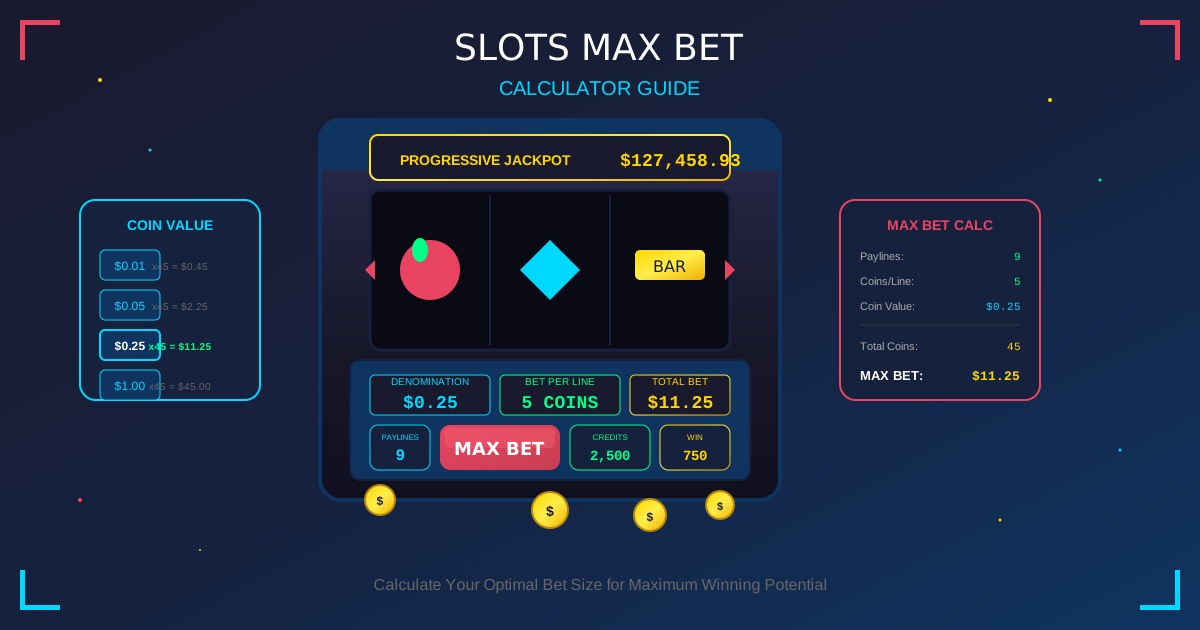
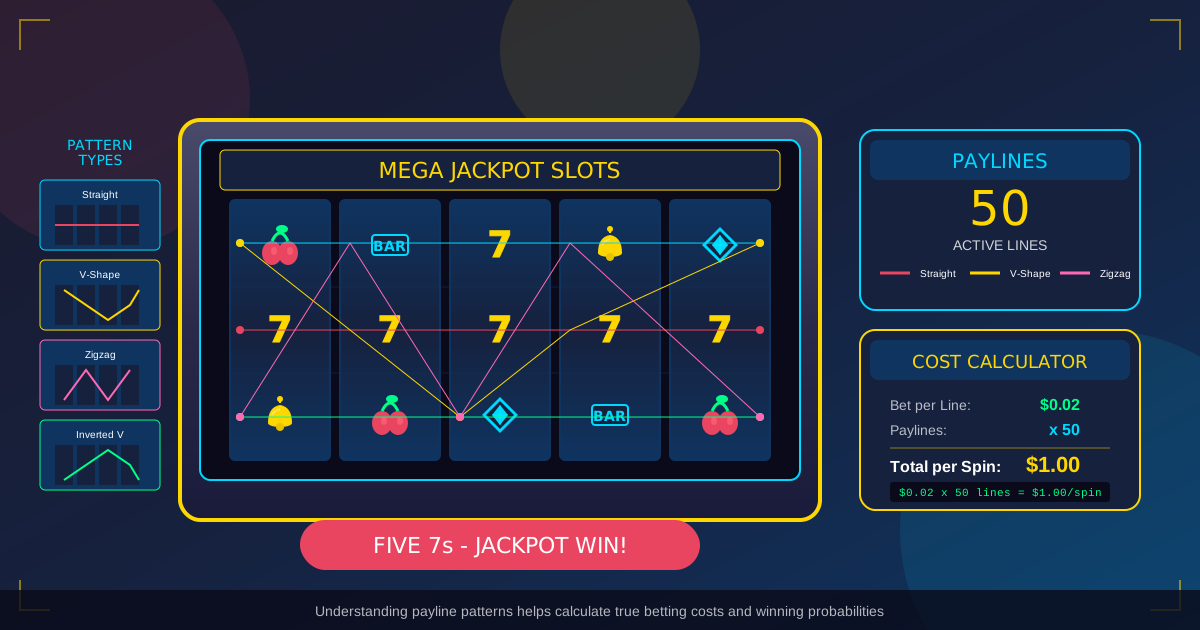
Playing a penny slot at $0.50 per spin (50 lines at $0.01) for 2 hours:
- Spins per hour: 600
- Total spins: 1,200
- Total wagered: 1,200 x $0.50 = $600
- At 10% house edge: Expected loss = $60
Playing a dollar slot at $3 per spin for 2 hours:
- Spins per hour: 500
- Total spins: 1,000
- Total wagered: 1,000 x $3 = $3,000
- At 5% house edge: Expected loss = $150
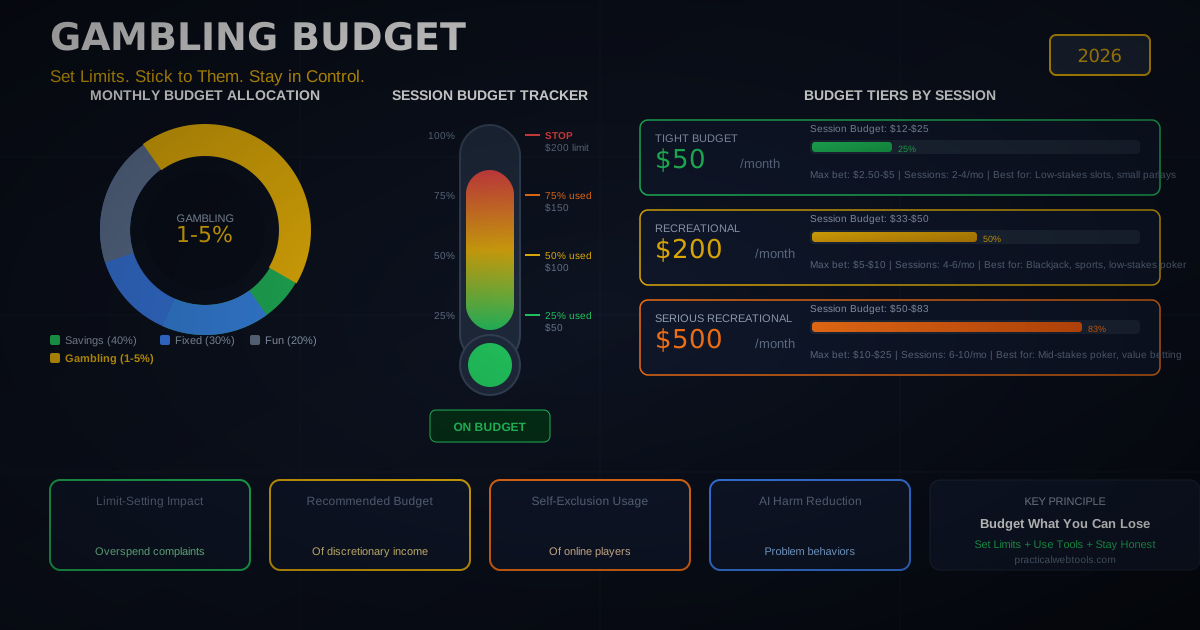
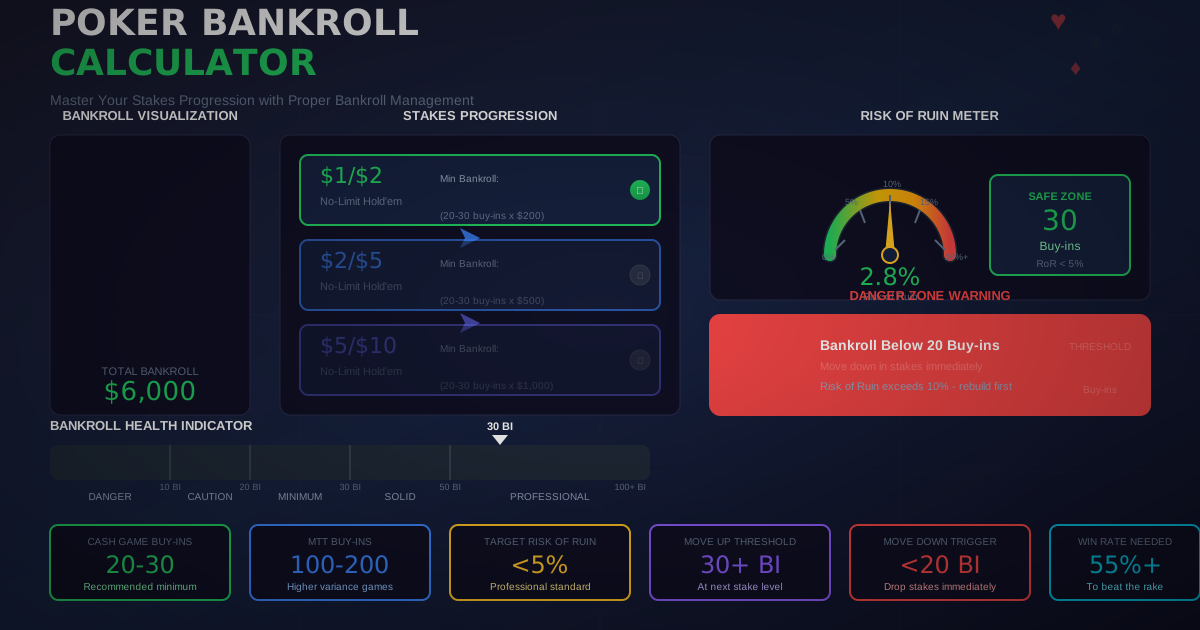
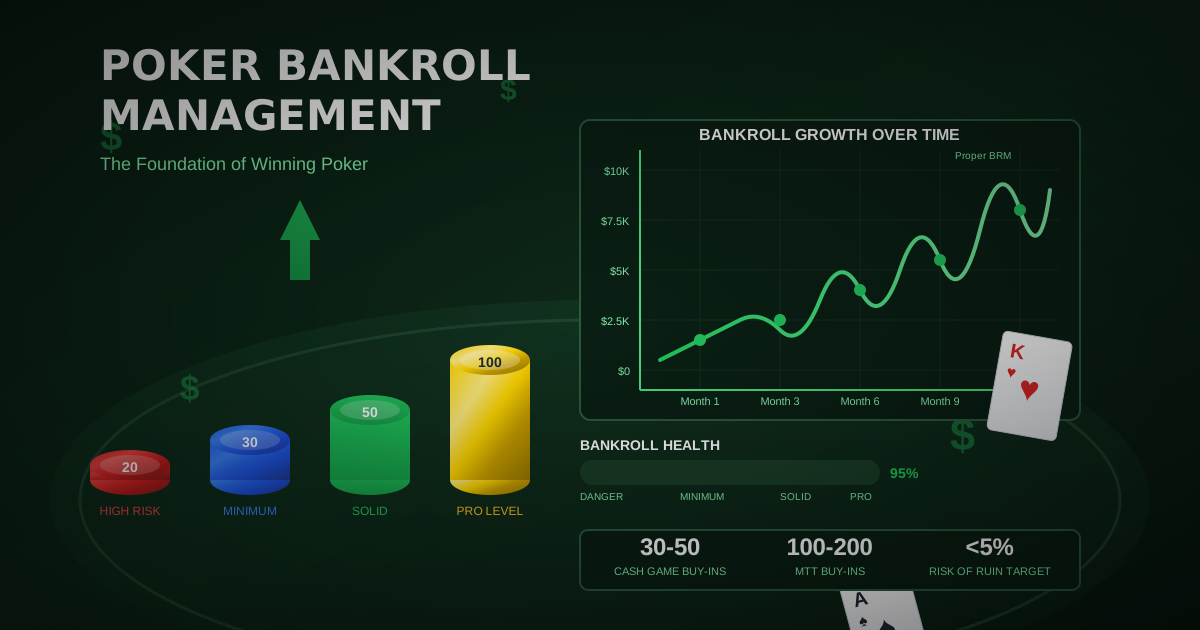
Bankroll Management: The Foundation of Responsible Gambling
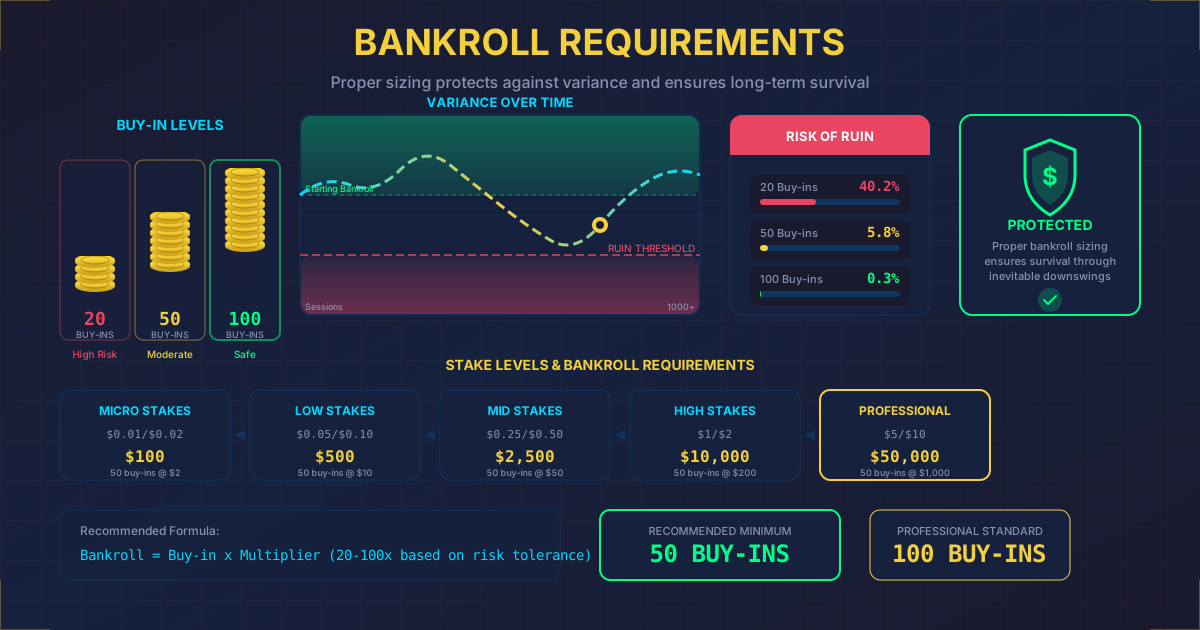
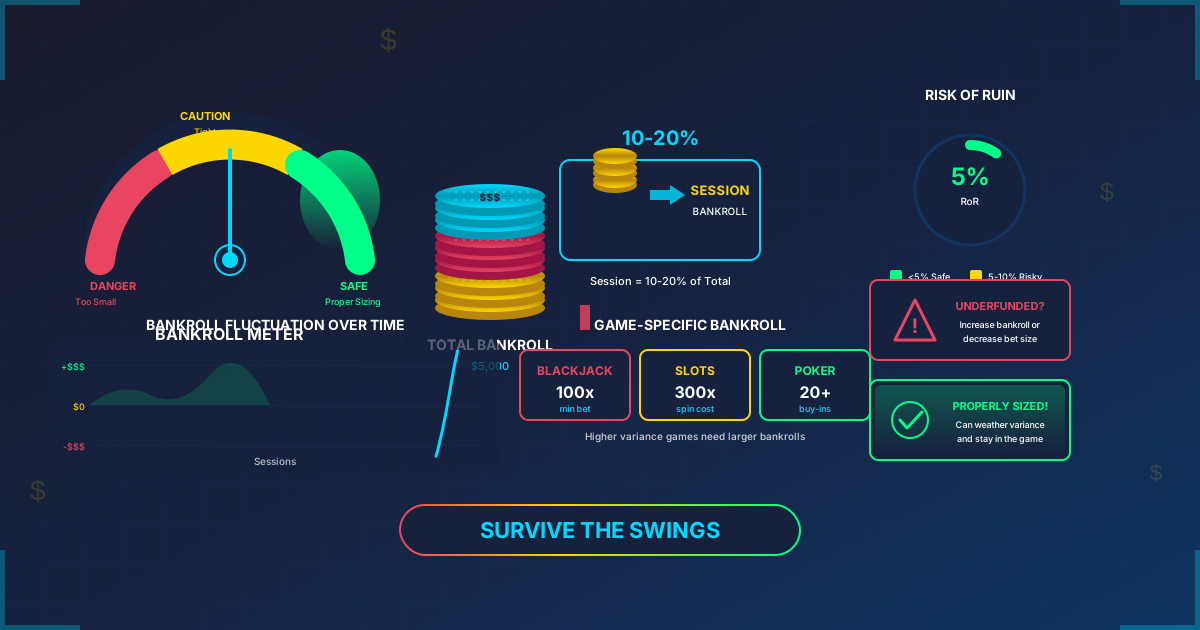
Regardless of which games you play, proper bankroll management is the most important skill in gambling.
The 1% Rule
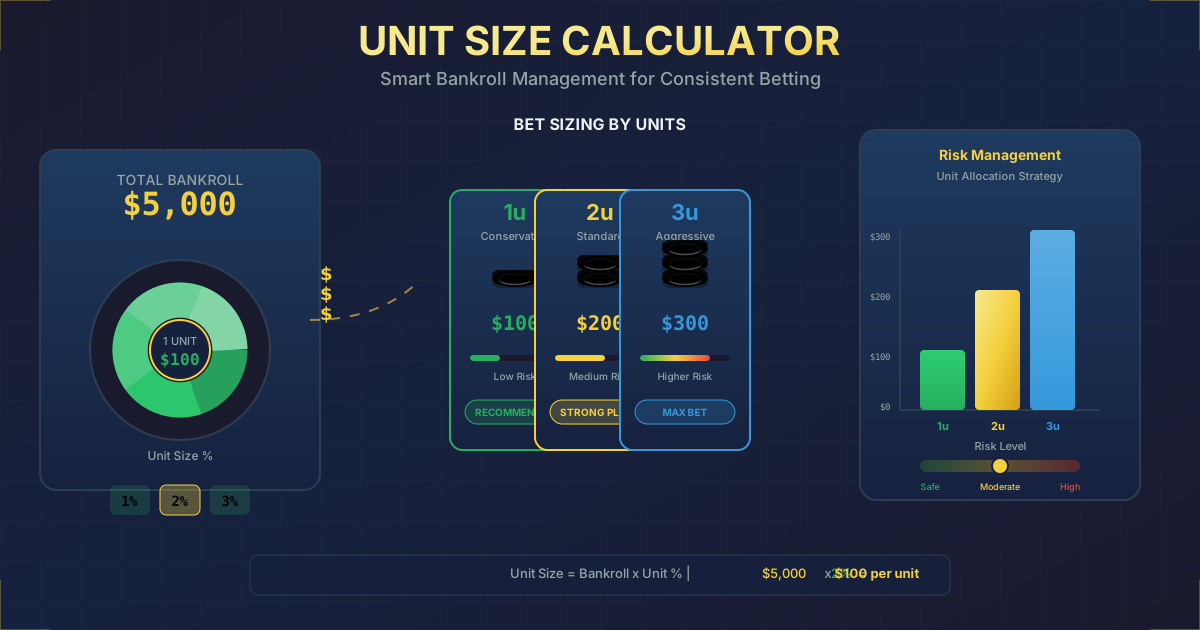
Never risk more than 1-2% of your gambling bankroll on any single bet or hand. This means:
| Bankroll | Maximum Bet (1%) | Maximum Bet (2%) |
|---|---|---|
| $200 | $2 | $4 |
| $500 | $5 | $10 |
| $1,000 | $10 | $20 |
| $5,000 | $50 | $100 |
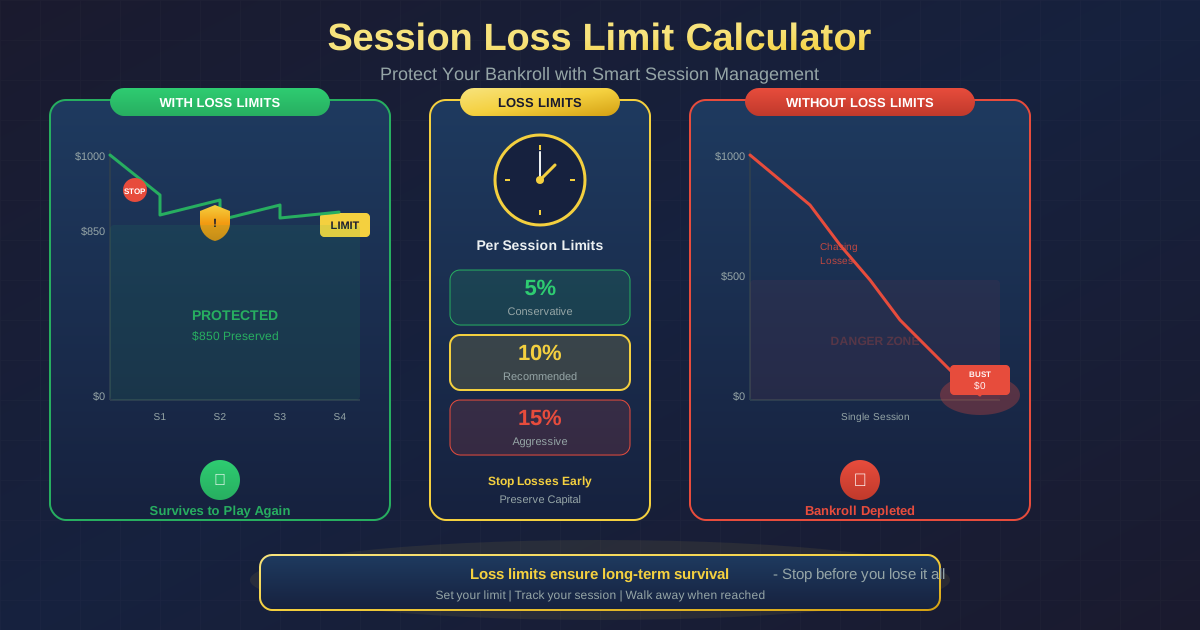
Session Limits
Before you sit down at any game:
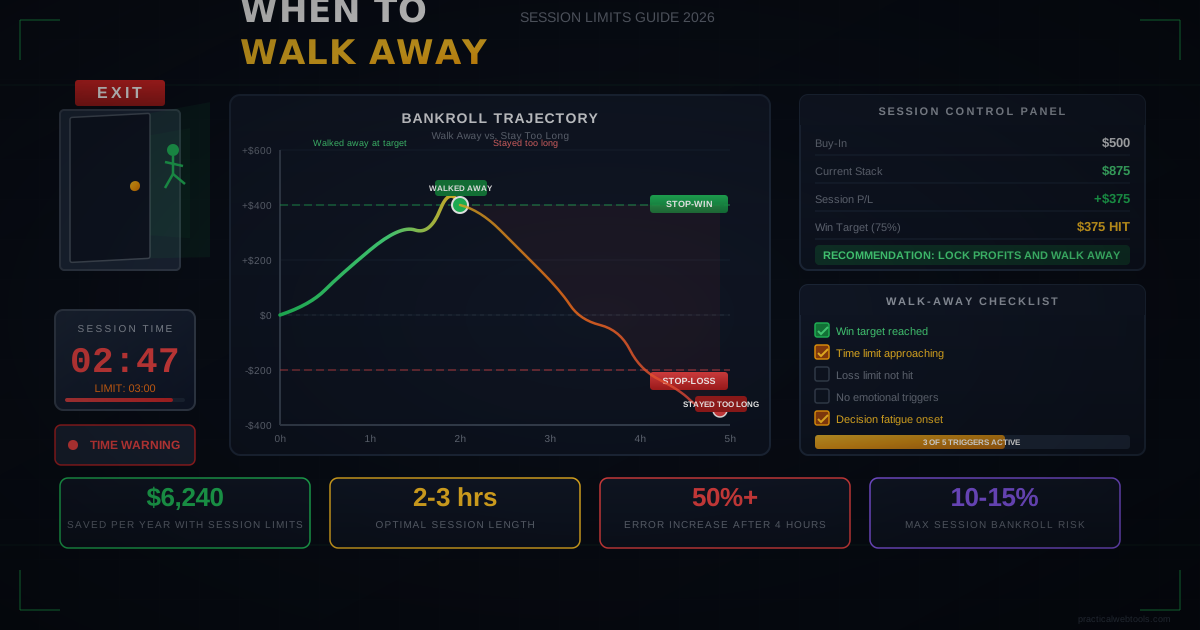
- Set a loss limit. Decide the maximum you are willing to lose (20-25% of your bankroll per session is reasonable)
- Set a win goal. Not required, but helps you lock in profits (50-100% of your buy-in is a reasonable target)
- Set a time limit. The longer you play, the more the house edge grinds your bankroll
- Never chase losses. If you hit your loss limit, walk away. Period.
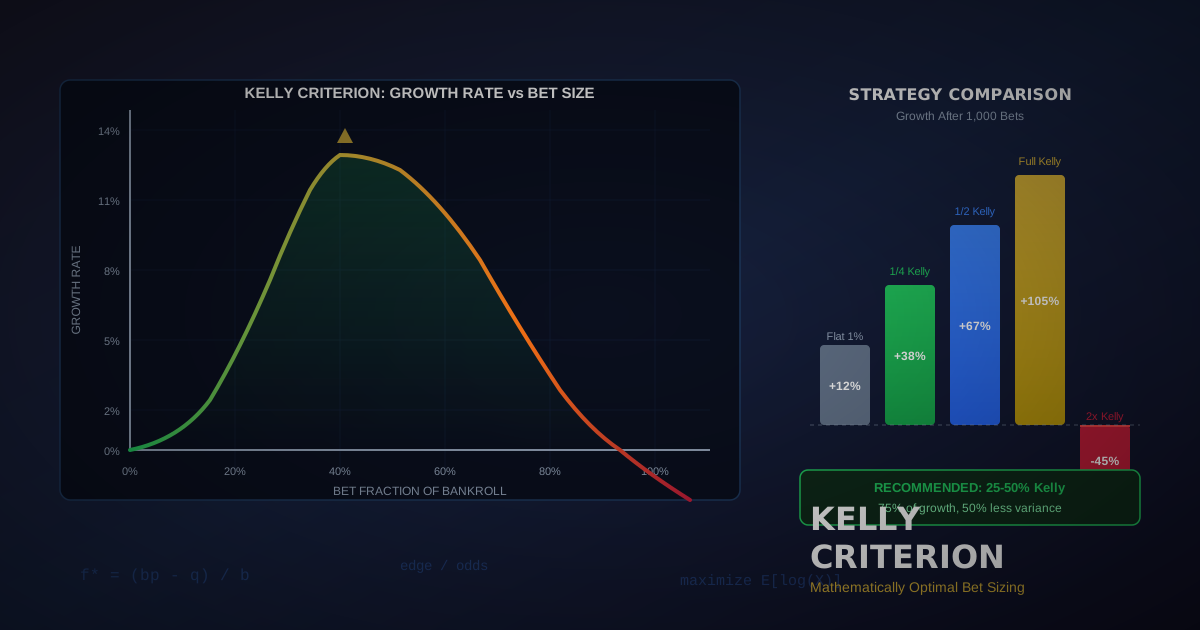
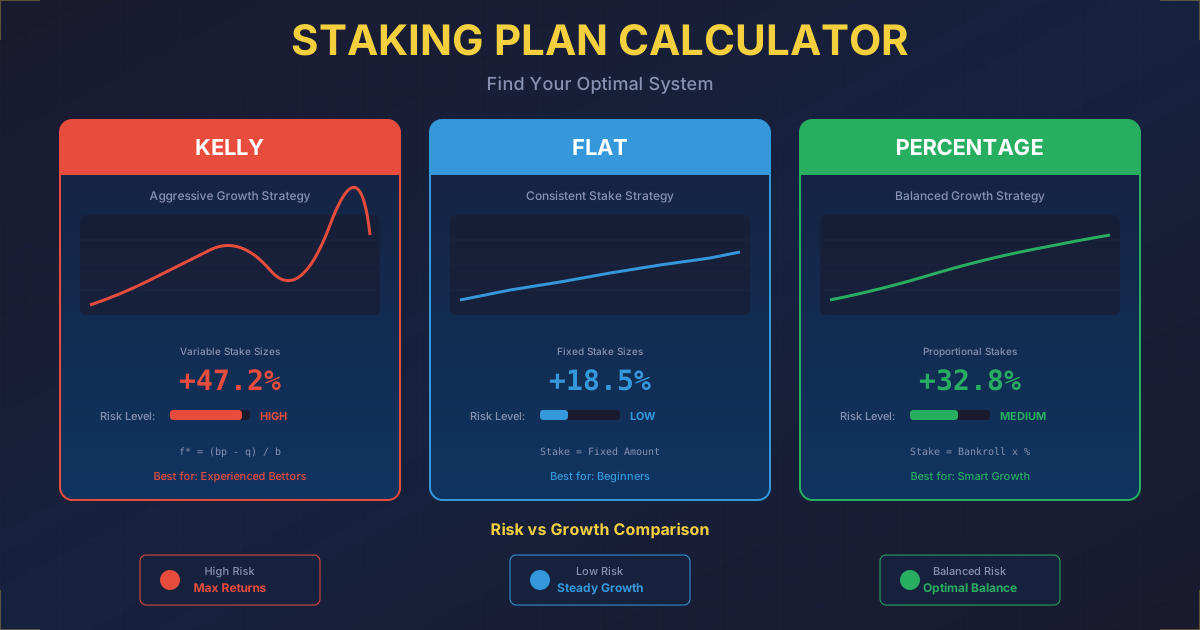
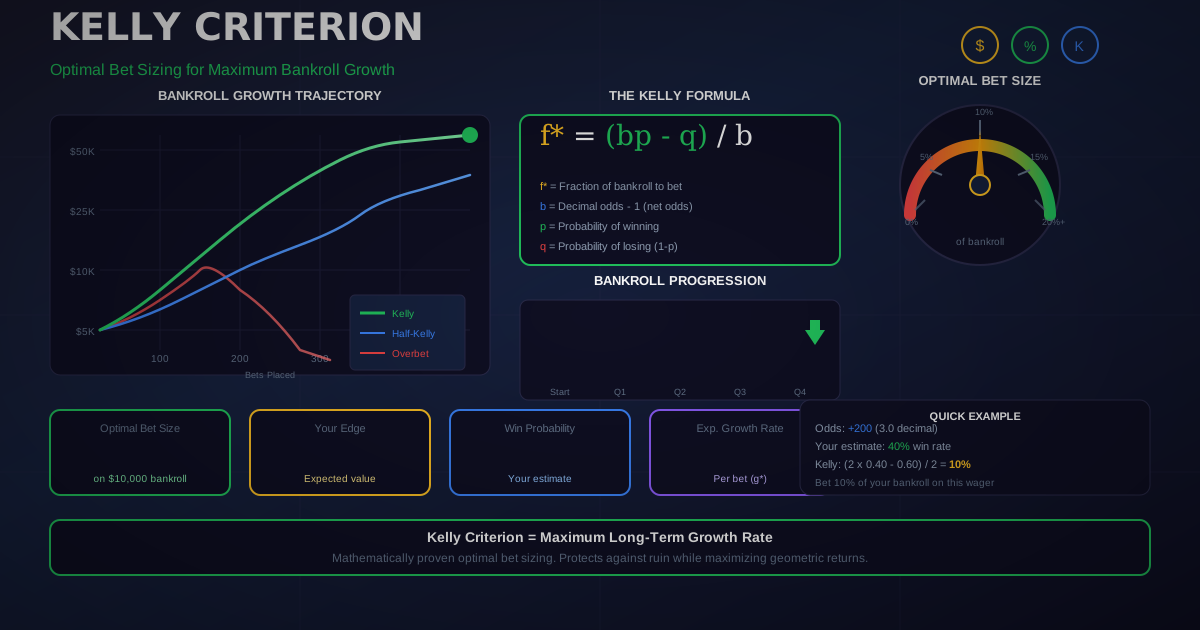
Calculate optimal bet sizing based on your edge with our Kelly Criterion Calculator.
Real-World Bankroll Example
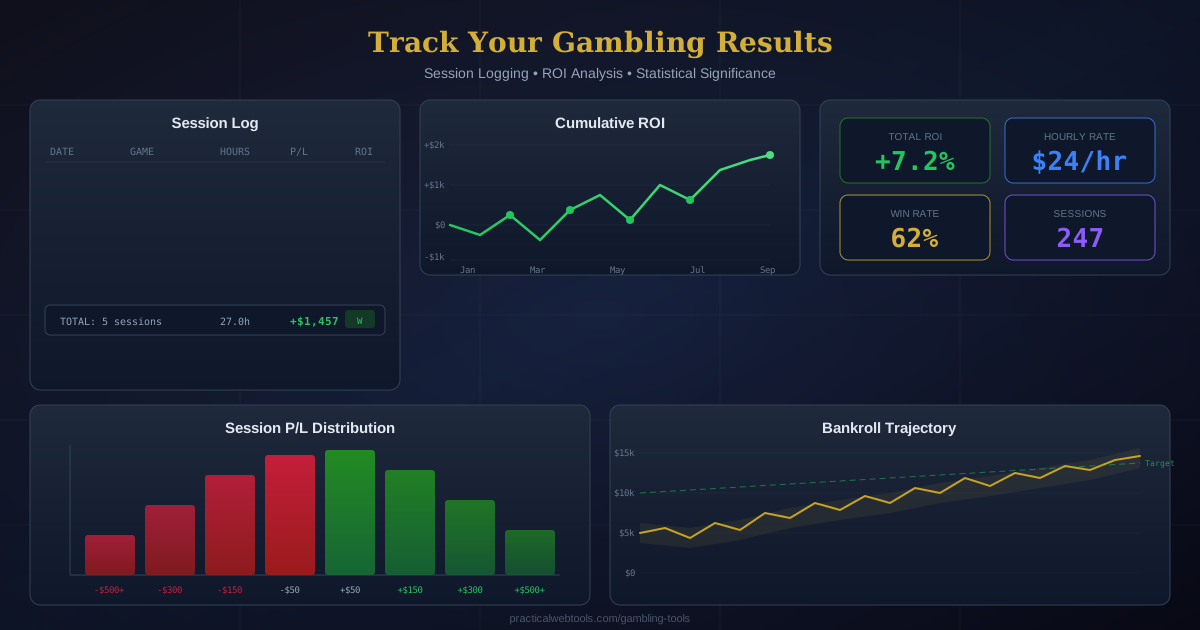
You visit a casino with a $1,000 gambling bankroll for a weekend:
- Friday night (Blackjack): Buy in for $200 at $15 minimum. Play for 2 hours. Finish up $85. Balance: $1,085.
- Saturday afternoon (Craps): Buy in for $250. After 90 minutes of pass line + odds, you are down $120. Balance: $965.
- Saturday night (Poker): Buy in for $200 at $1/$2 NL. After 4 hours, you are up $310. Balance: $1,275.
- Sunday morning (Sports betting): Place three $50 NFL bets. Go 1-2. Down $60 (won $45 on one, lost $100 on two). Balance: $1,215.
Total weekend result: +$215. You had fun, stayed within limits, and ended ahead (not always the case, but good bankroll management kept you in action all weekend).
Games Ranked: Best to Worst for Beginners
Based on house edge, ease of learning, and entertainment value, here is our ranking:
Tier 1: Best Bets (House Edge Under 1.5%)
- Blackjack with basic strategy (0.5%) - Learn basic strategy before you play. Use our Blackjack Basic Strategy Calculator
- Craps pass line + odds (0.37-1.41%) - Stick to pass line and odds. Ignore everything else
- Video Poker 9/6 JoB (0.46%) - Full-pay machines only. Check the pay table first
- Baccarat banker bet (1.06%) - Simplest game with good odds
Tier 2: Acceptable Bets (House Edge 1.5-5%)
- European Roulette (2.70%) - Simple and fun, but never play American roulette if European is available
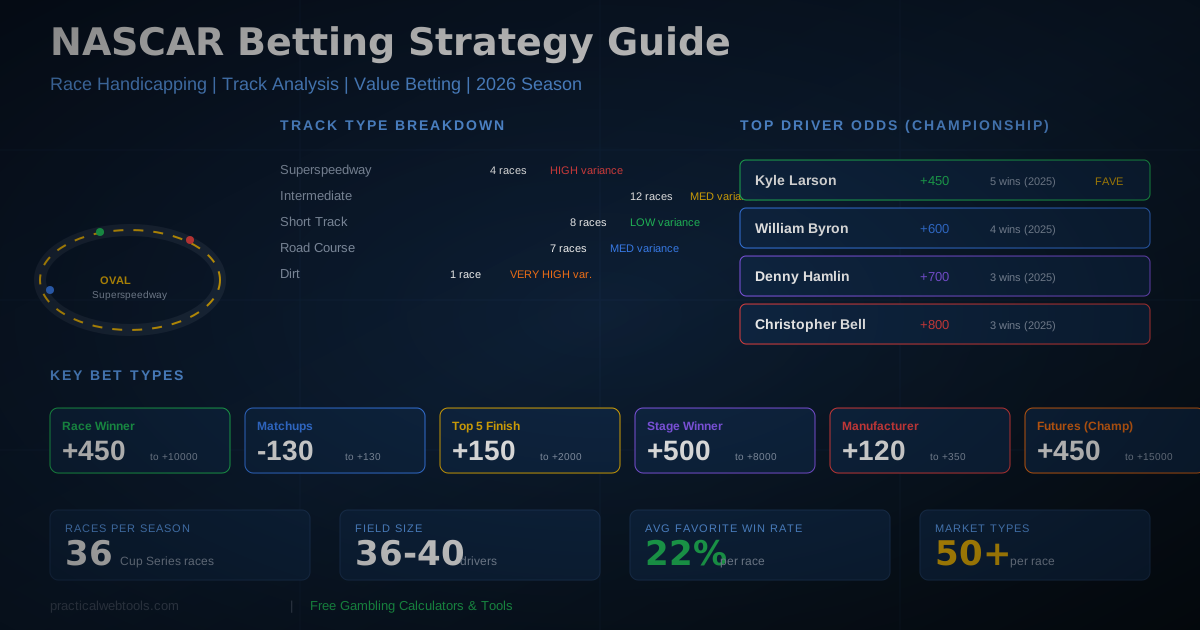
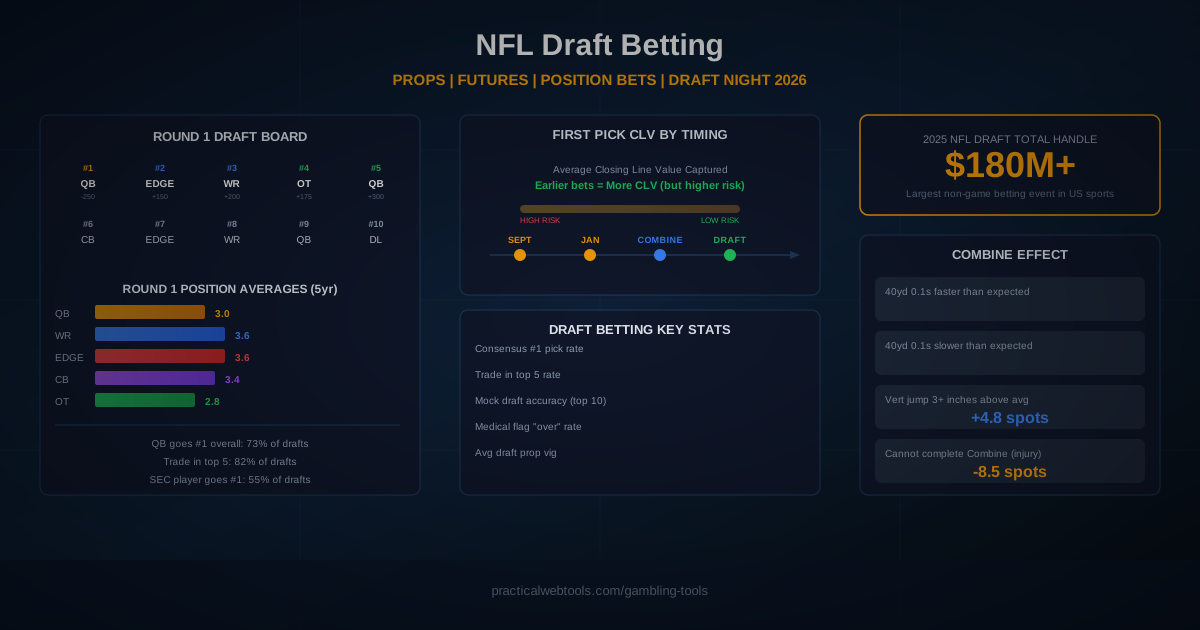
- Sports Betting point spreads (4.5-5%) - Requires knowledge and discipline
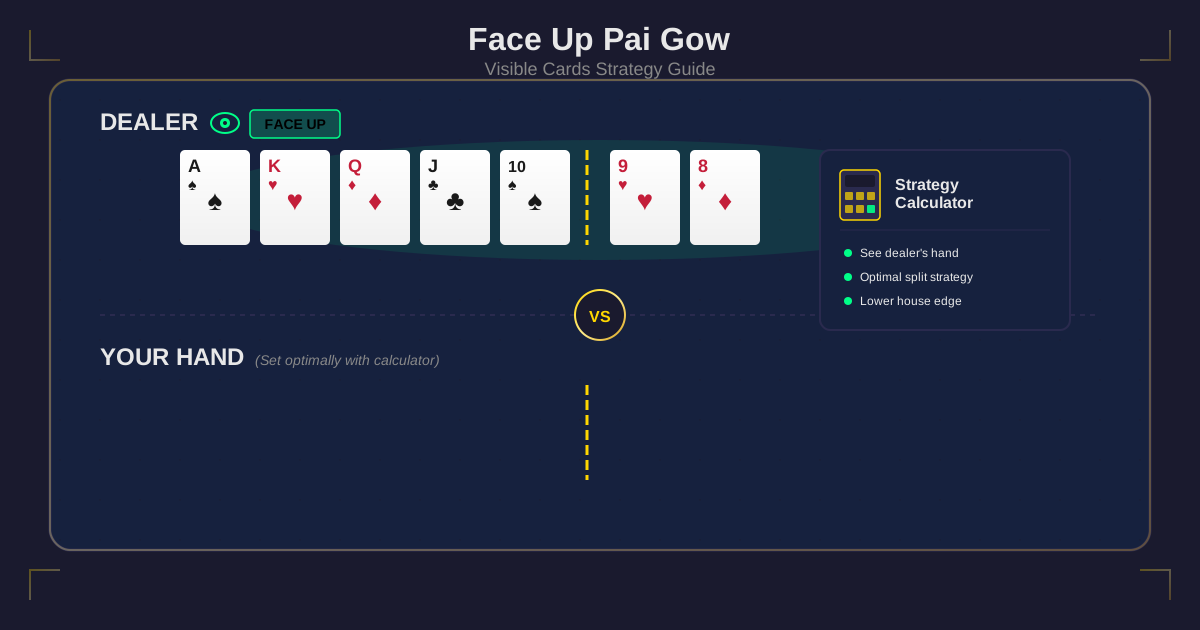
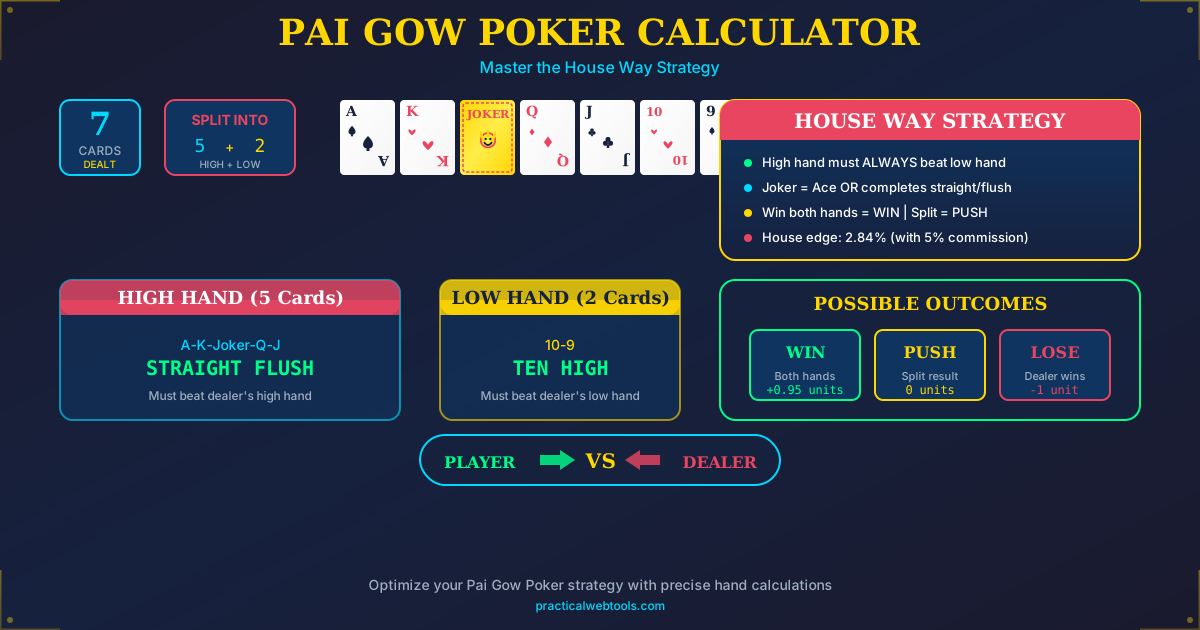
- Pai Gow Poker (2.5%) - Slow-paced, low volatility, good for beginners
Tier 3: Poor Bets (House Edge 5%+)
- American Roulette (5.26%) - Play European instead
- Slots (5-15%) - Entertainment only; expect to lose
- Keno (25-40%) - Mathematically one of the worst bets available
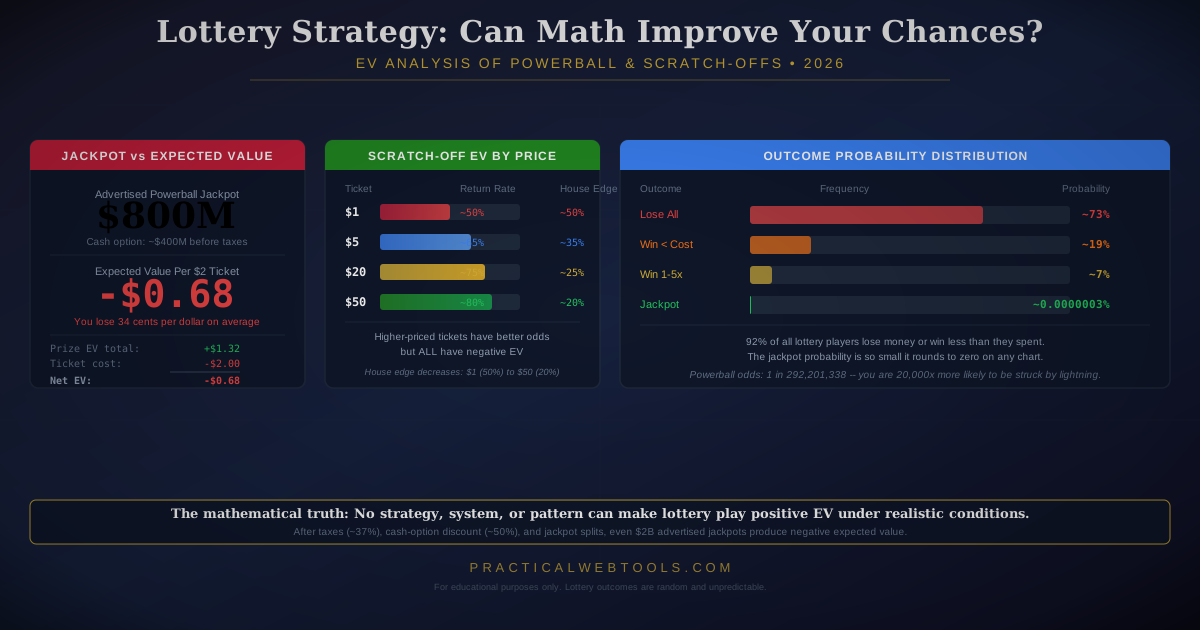
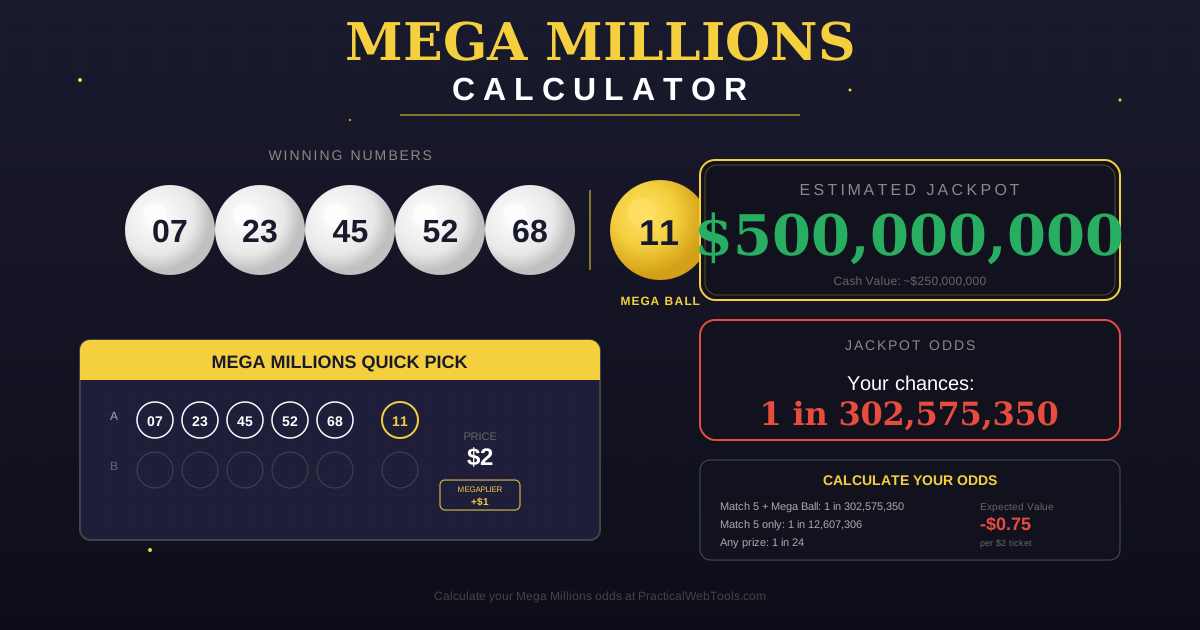
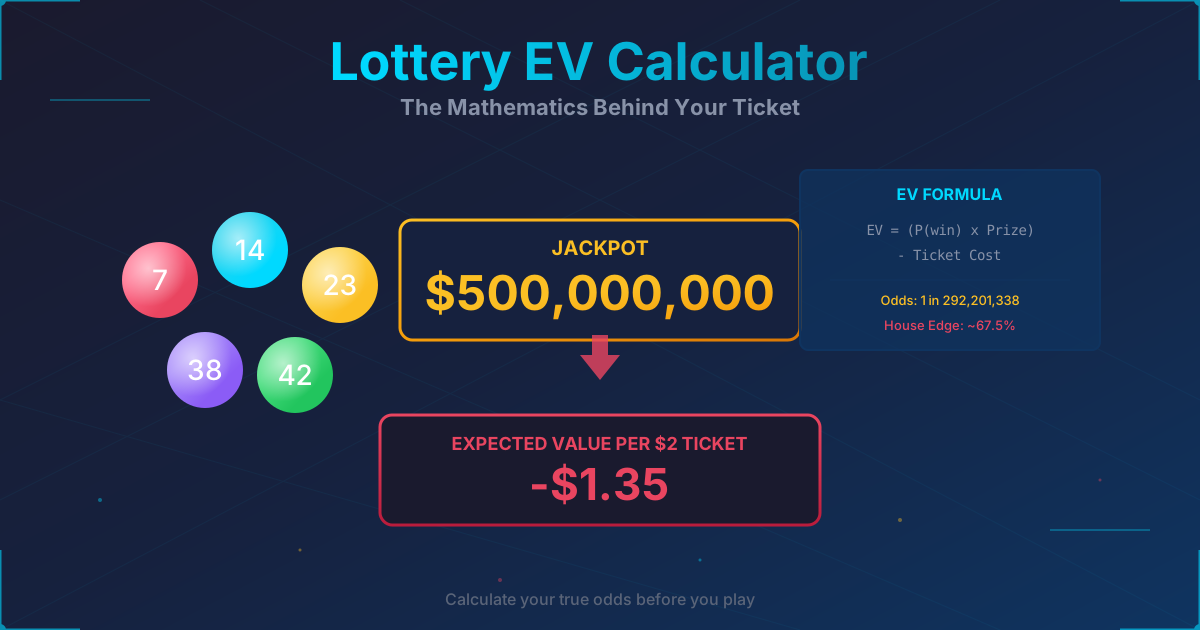
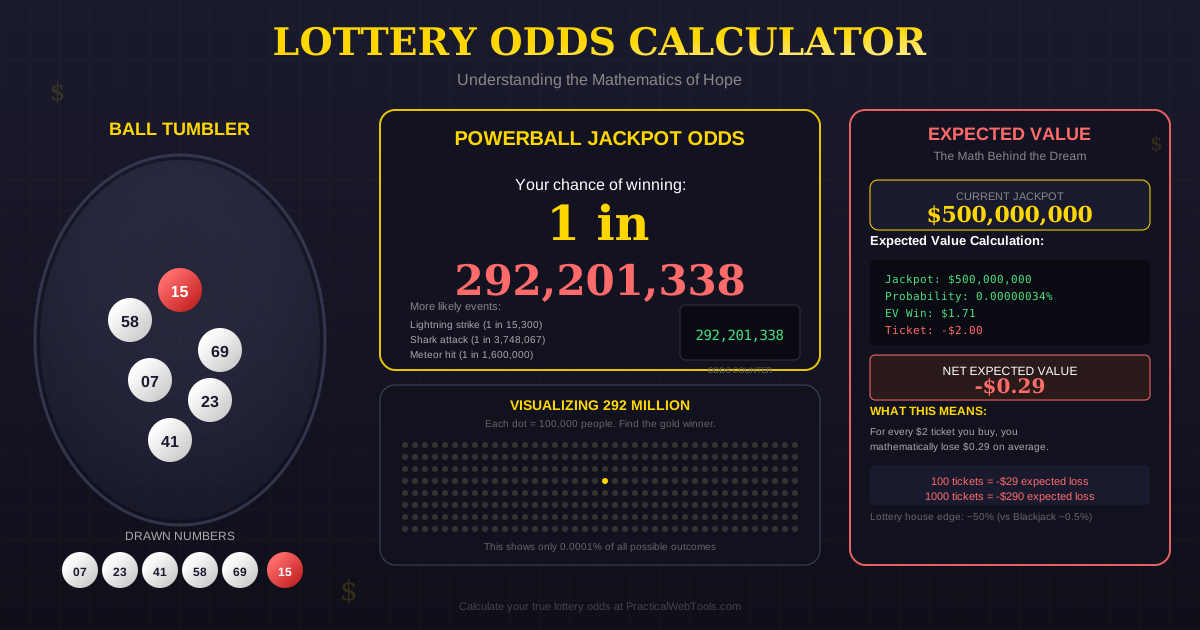
- Lottery (50%+) - Fun for entertainment but not a serious gambling activity
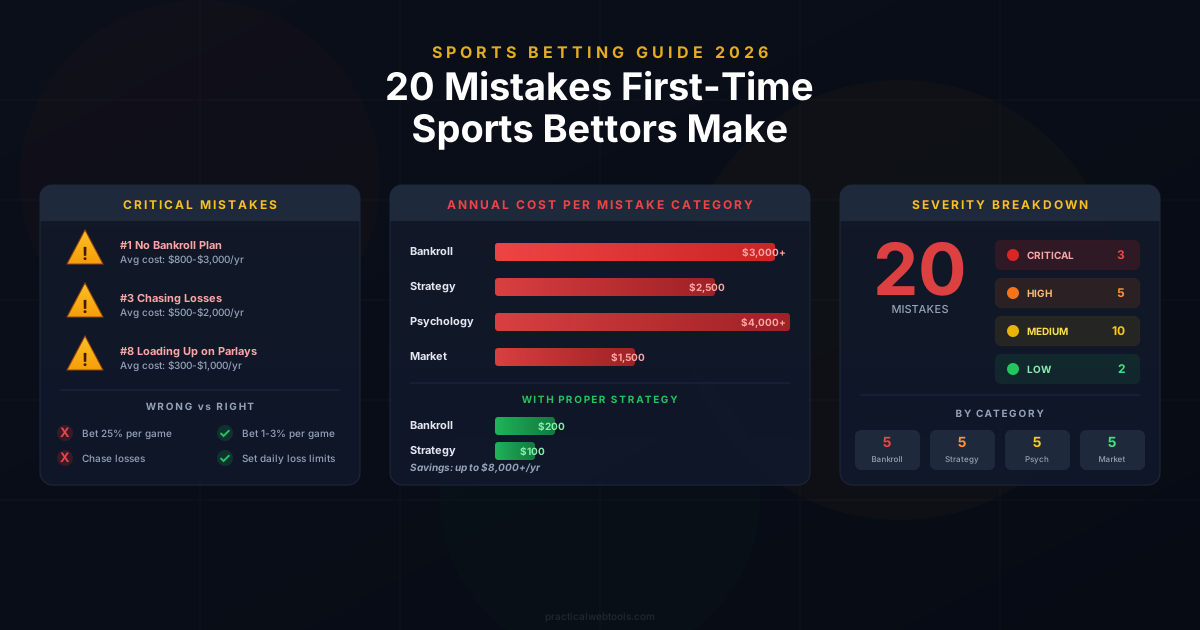
Common Beginner Mistakes to Avoid
Mistake 1: Not Understanding the Game
Too many beginners sit down at a game they have never played and start betting real money. Spend 30 minutes learning the rules and basic strategy first. Free online versions of every casino game exist.
Mistake 2: Betting Without a Budget
Walking into a casino without a fixed budget is how people lose their rent money. Decide how much you can afford to lose (not win) before you start.
Mistake 3: Chasing Losses
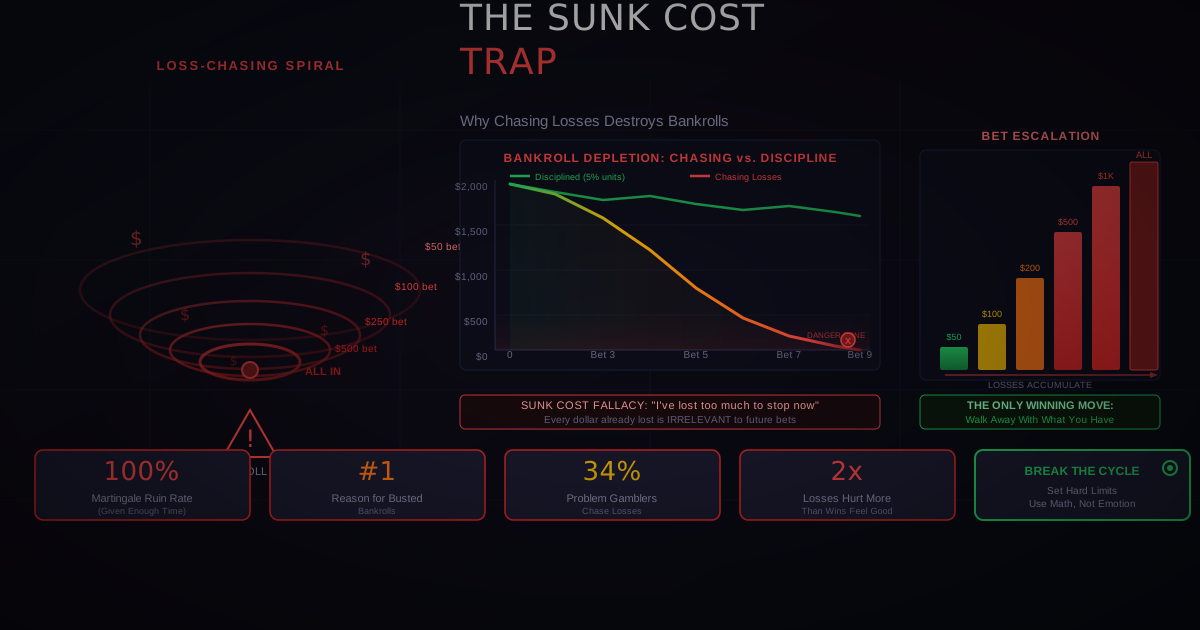
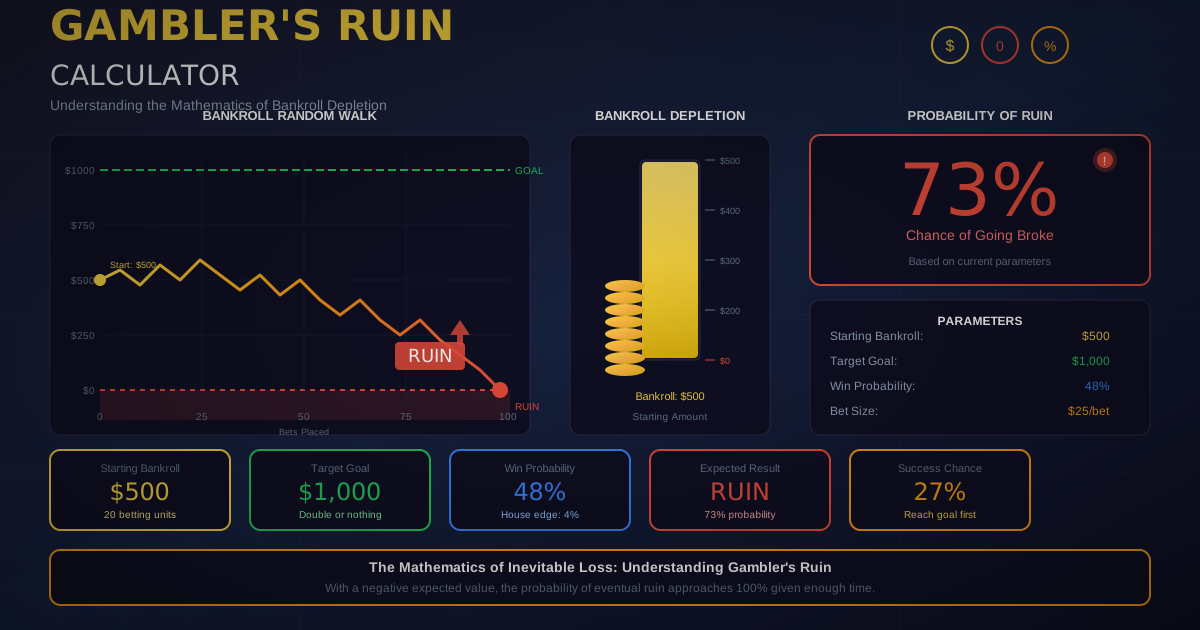
After losing $200, the temptation to bet bigger to "win it back" is powerful. This is the single most destructive behavior in gambling. The math does not change because you are down. Every new bet has the same expected value regardless of your previous results.
Mistake 4: Believing in Systems
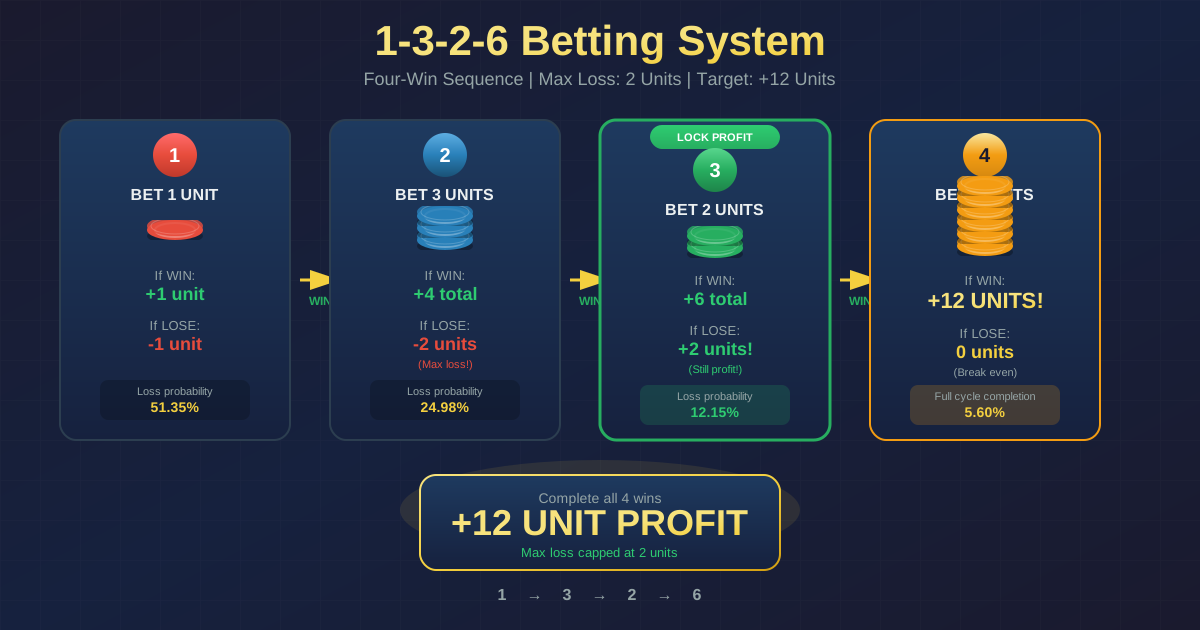
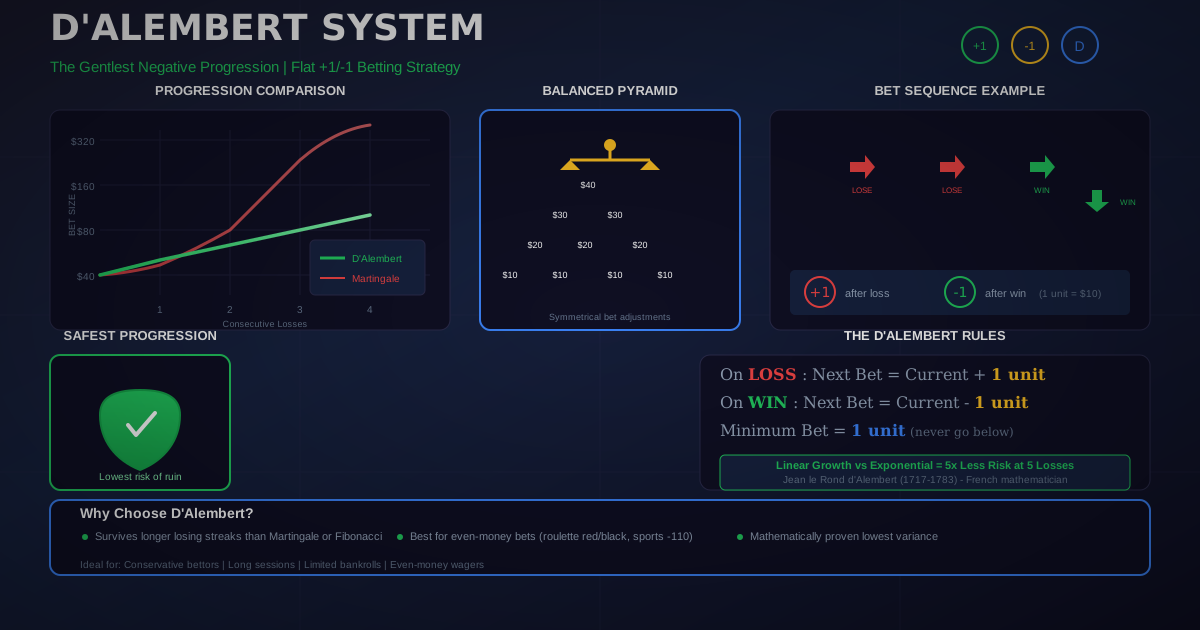
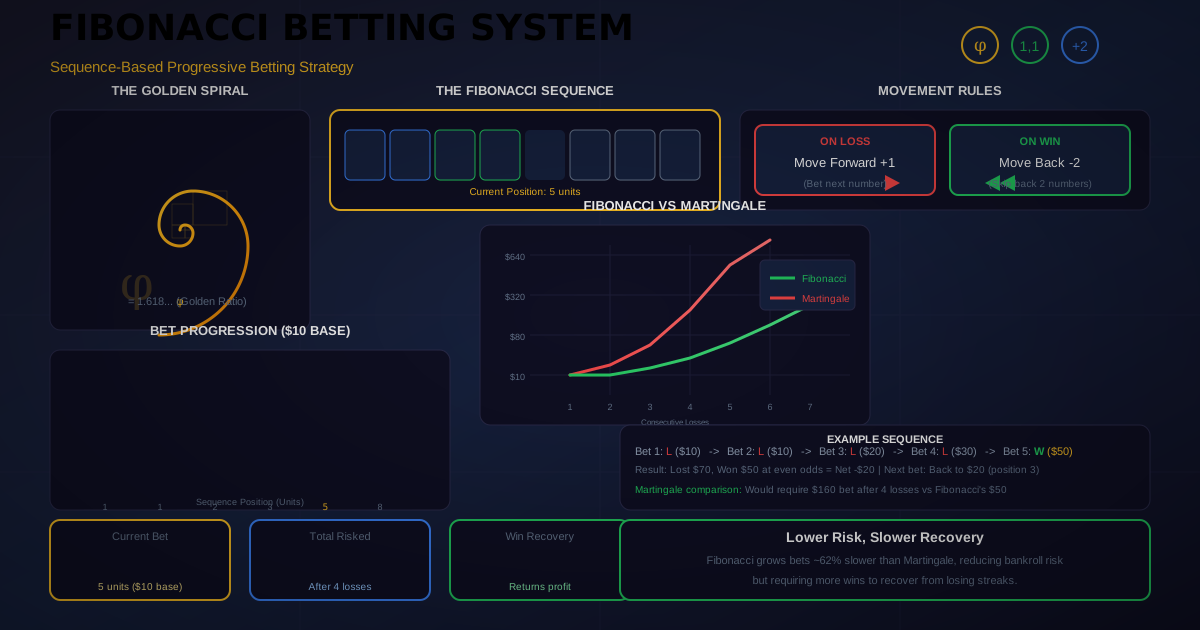
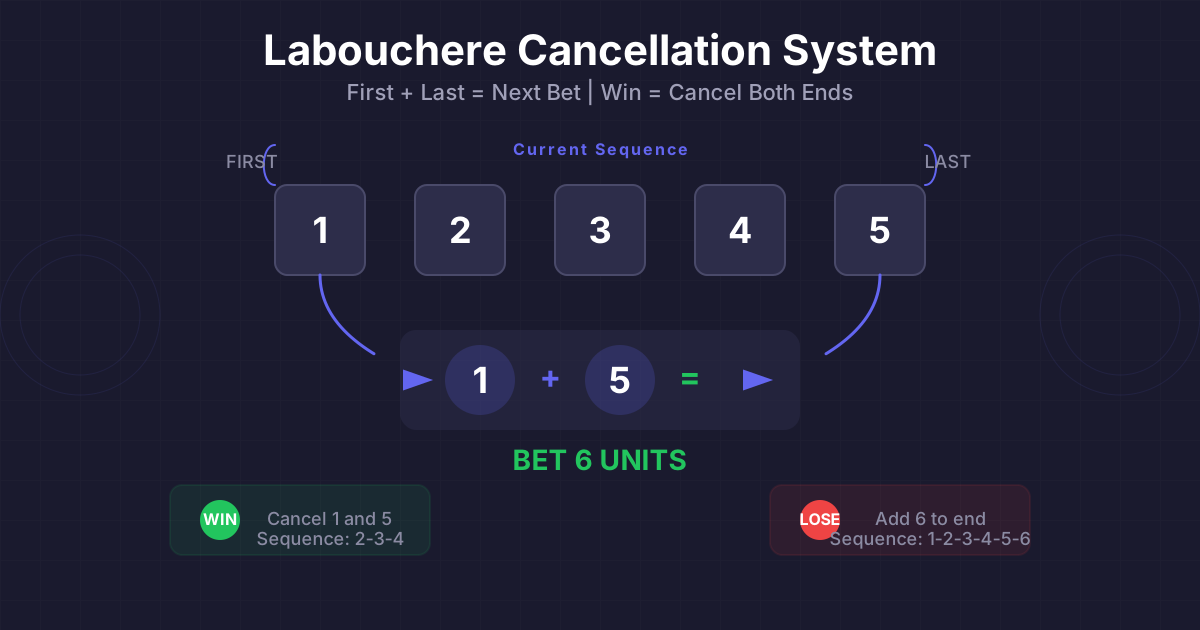
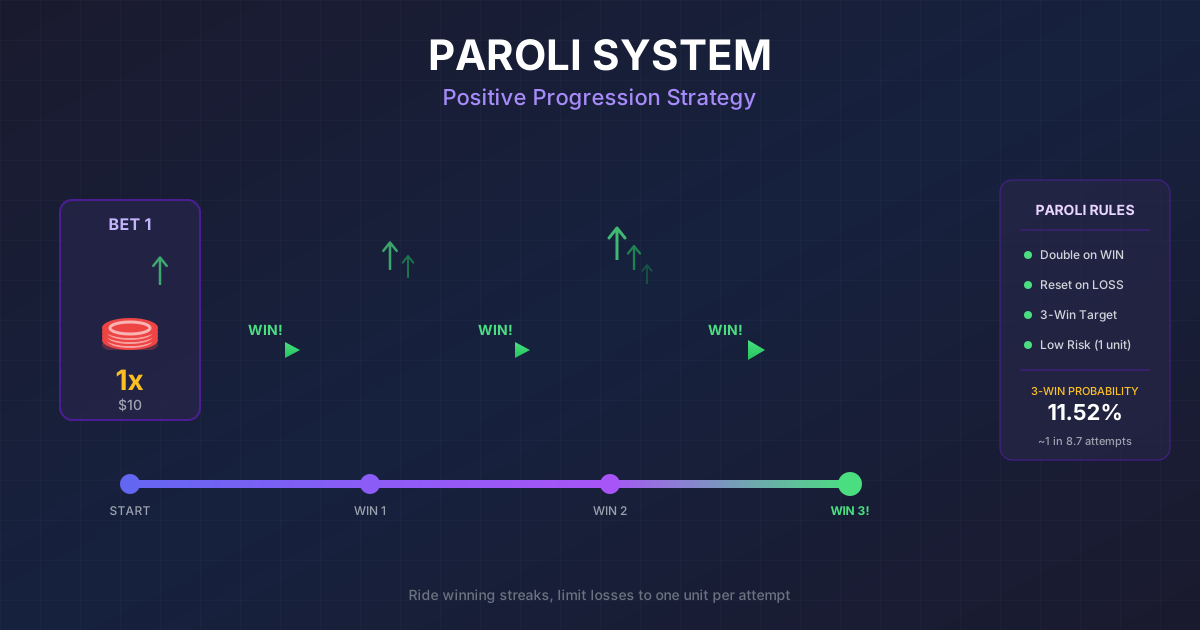
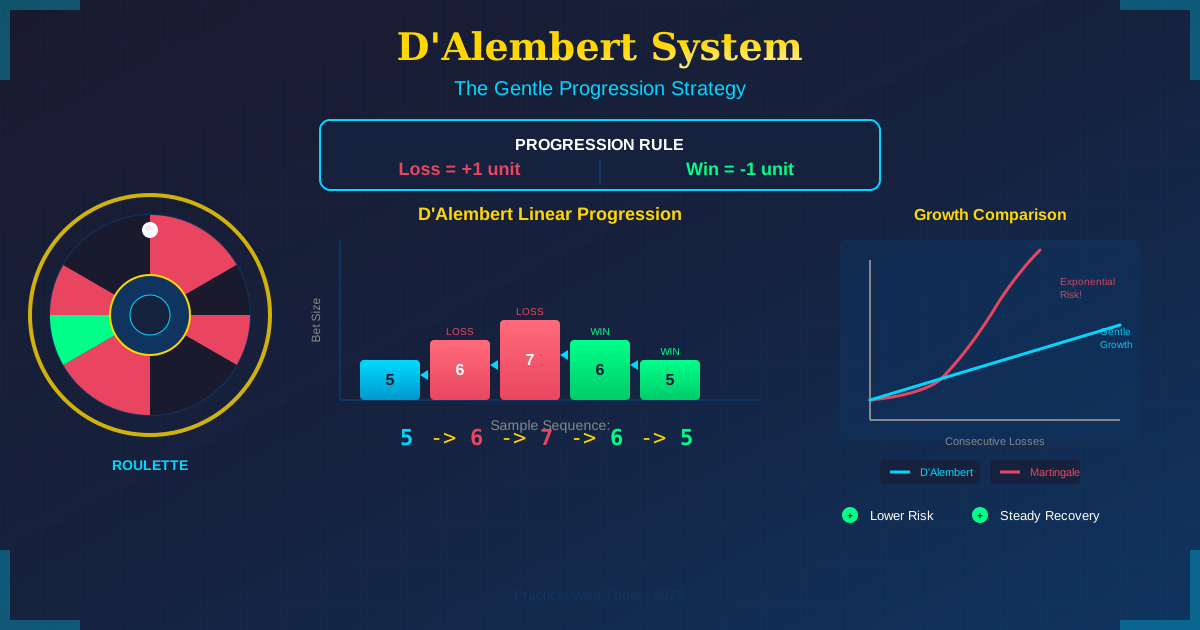
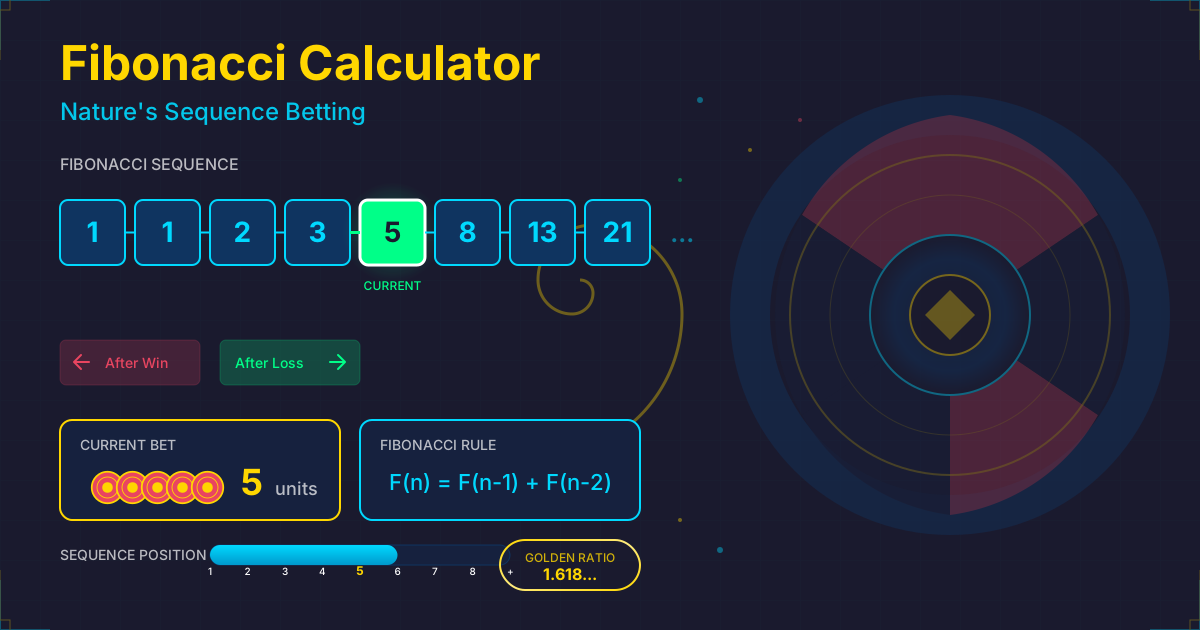
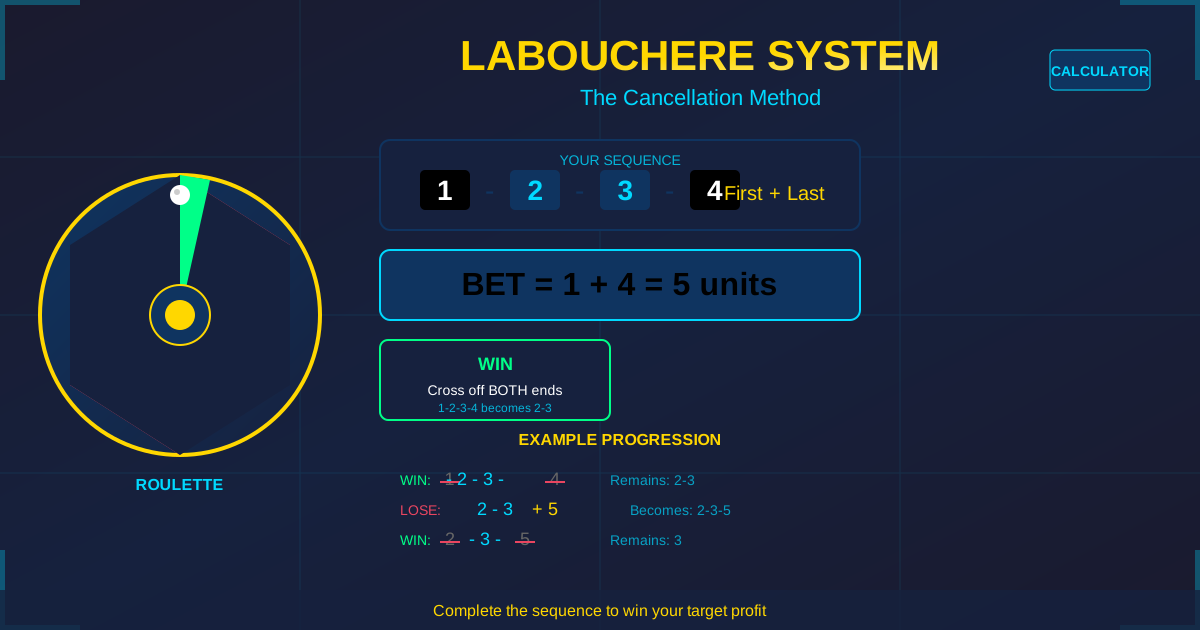
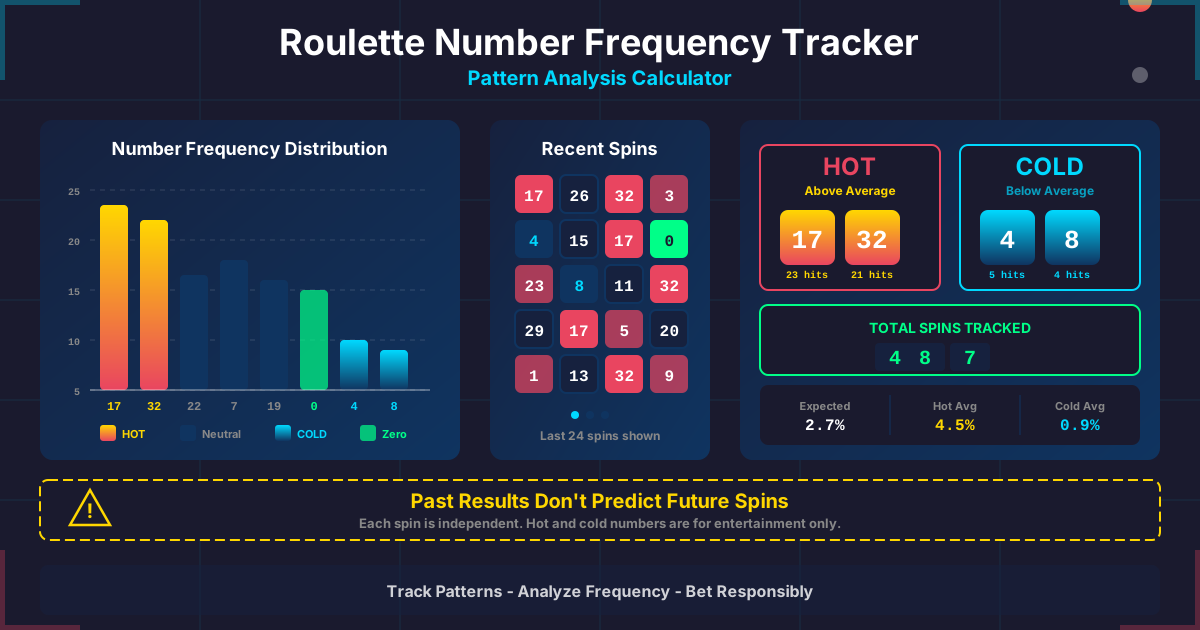
No betting system (Martingale, Fibonacci, D'Alembert, or any other) can overcome the house edge. They change the pattern of wins and losses but not the mathematical expectation. Use our Roulette Probability Calculator to verify this yourself.
Mistake 5: Ignoring the Odds
Playing keno when you could play blackjack, or betting parlays when you could bet straight, costs you dramatically more money over time. Always know the house edge of what you are playing.
Mistake 6: Drinking Too Much
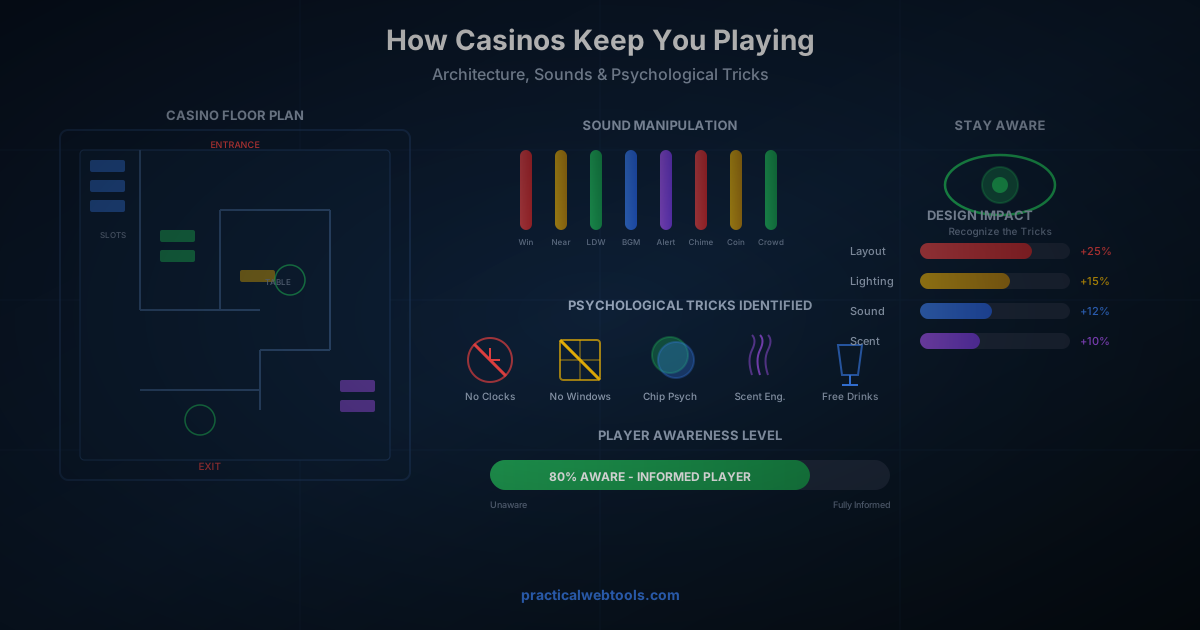
Casinos offer free drinks for a reason. Alcohol impairs judgment and leads to larger, more reckless bets. If you are gambling with money you care about, limit your alcohol consumption.
Frequently Asked Questions
What is the best casino game for beginners? Blackjack with basic strategy offers the lowest house edge (0.5%) and is relatively easy to learn. Our Blackjack Basic Strategy Calculator provides the optimal play for every hand. Baccarat is even simpler (just bet Banker), though the house edge is slightly higher at 1.06%.
How much money should I bring to a casino? Bring only what you can afford to lose entirely. A good rule is 20-40 times your minimum bet for a 2-3 hour session. For $15 blackjack, that is $300-$600. Never gamble with rent money, bill money, or emergency funds.
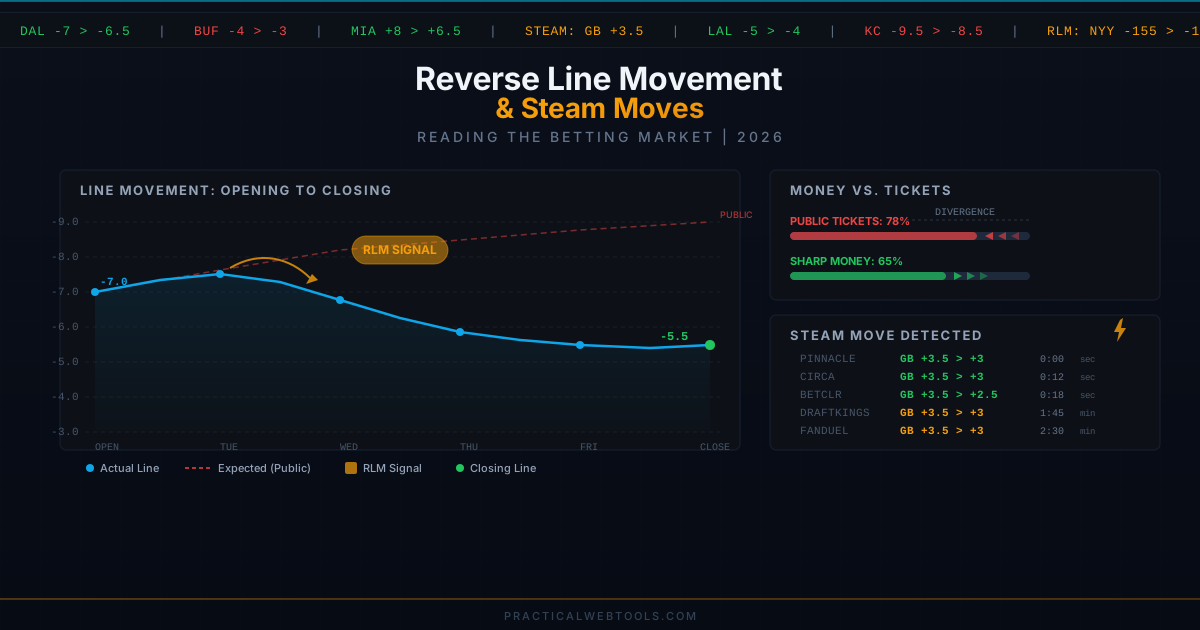
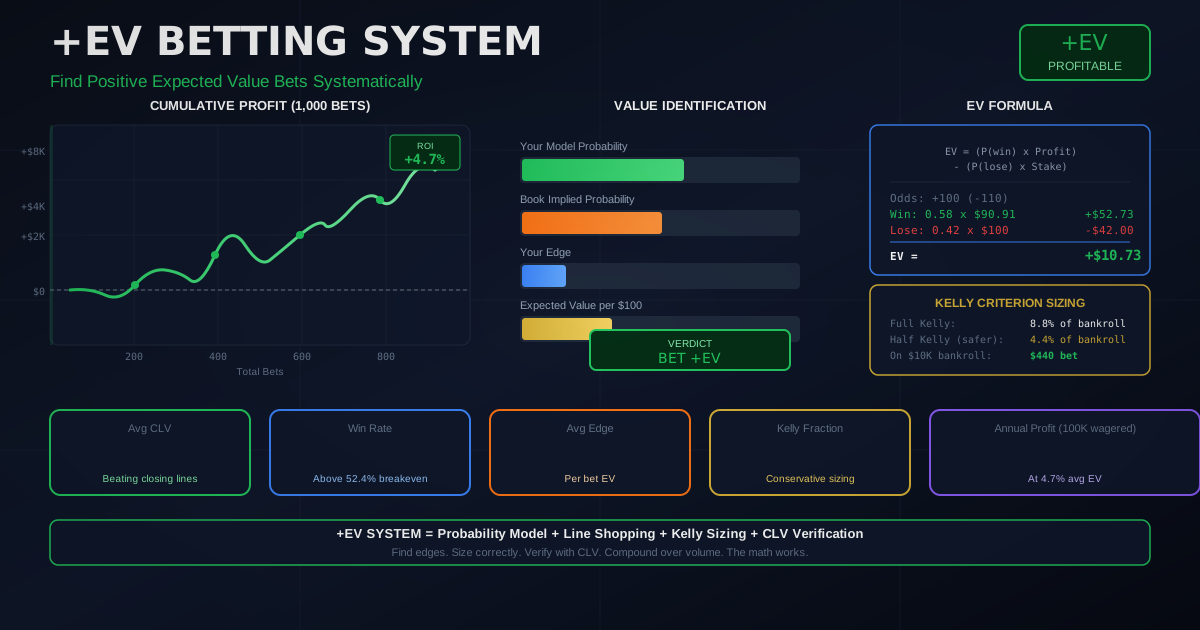
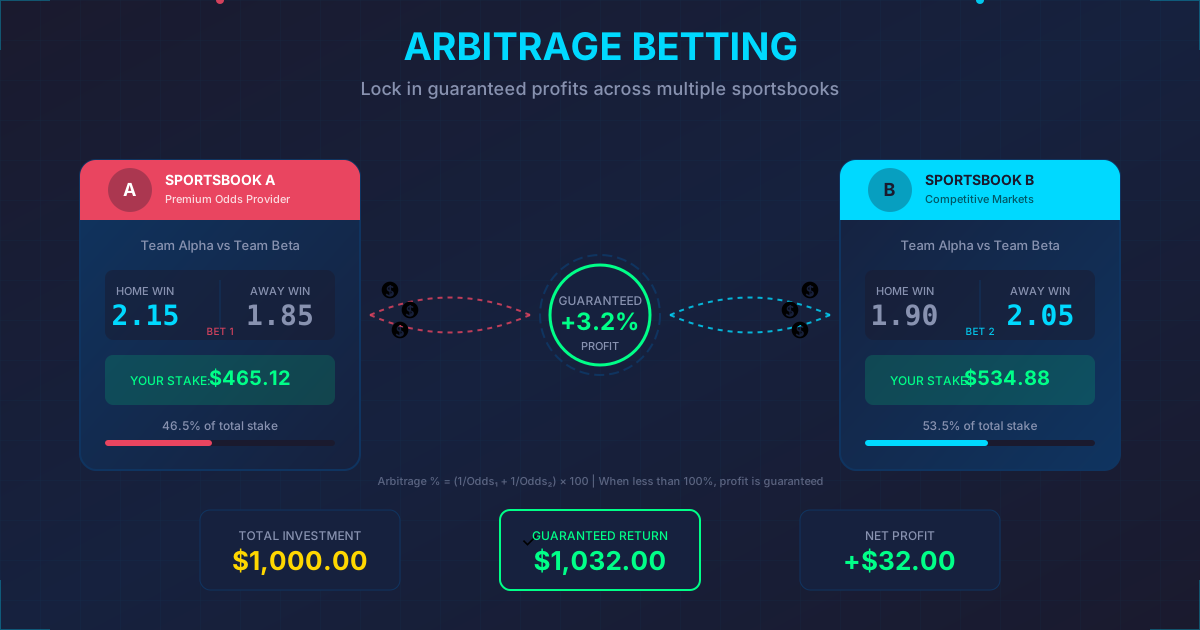
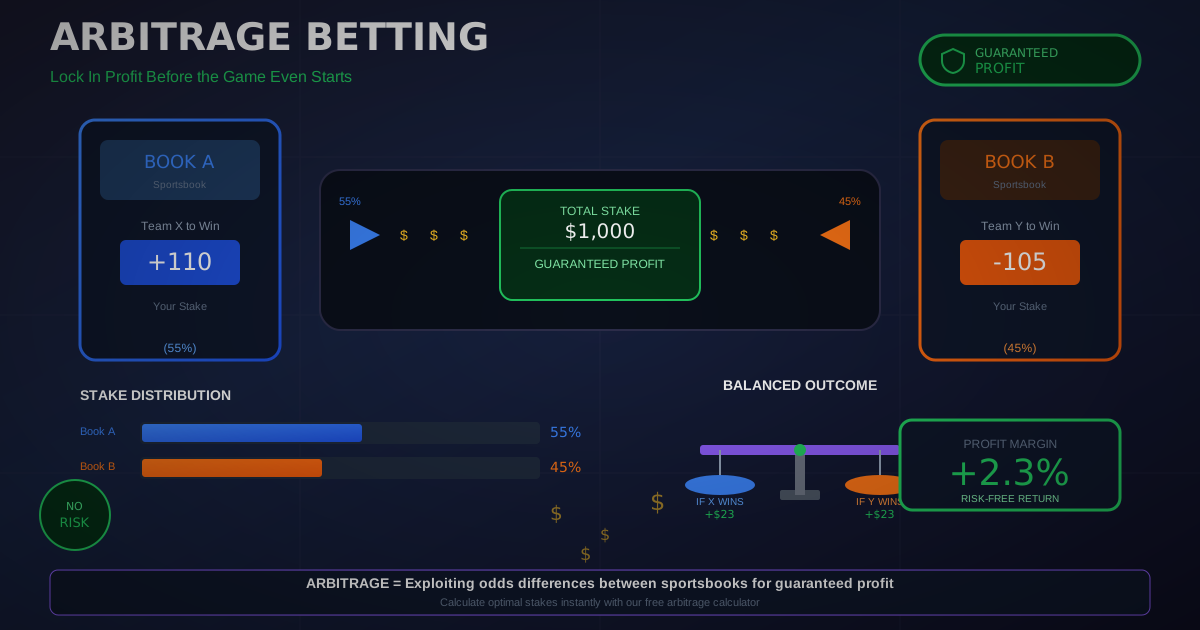
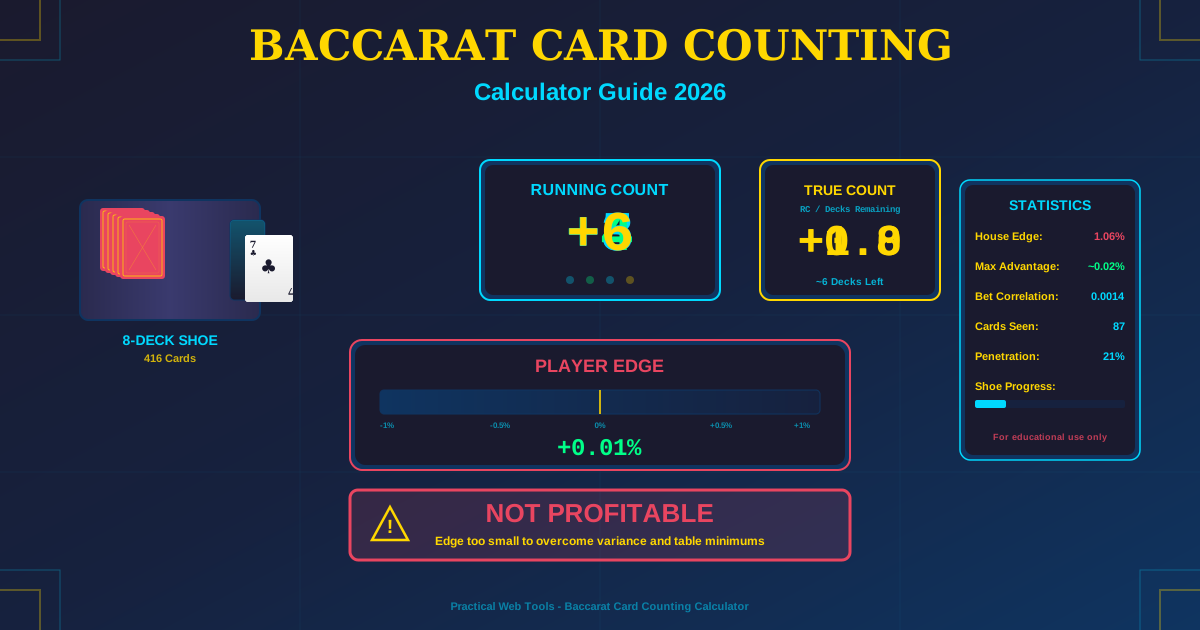
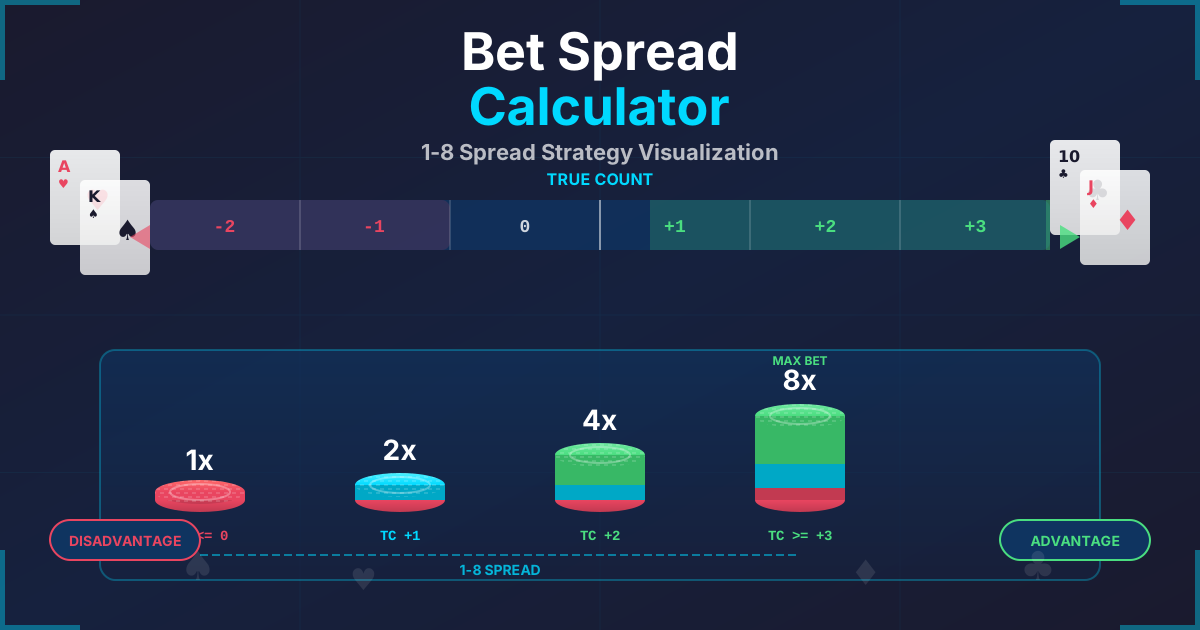
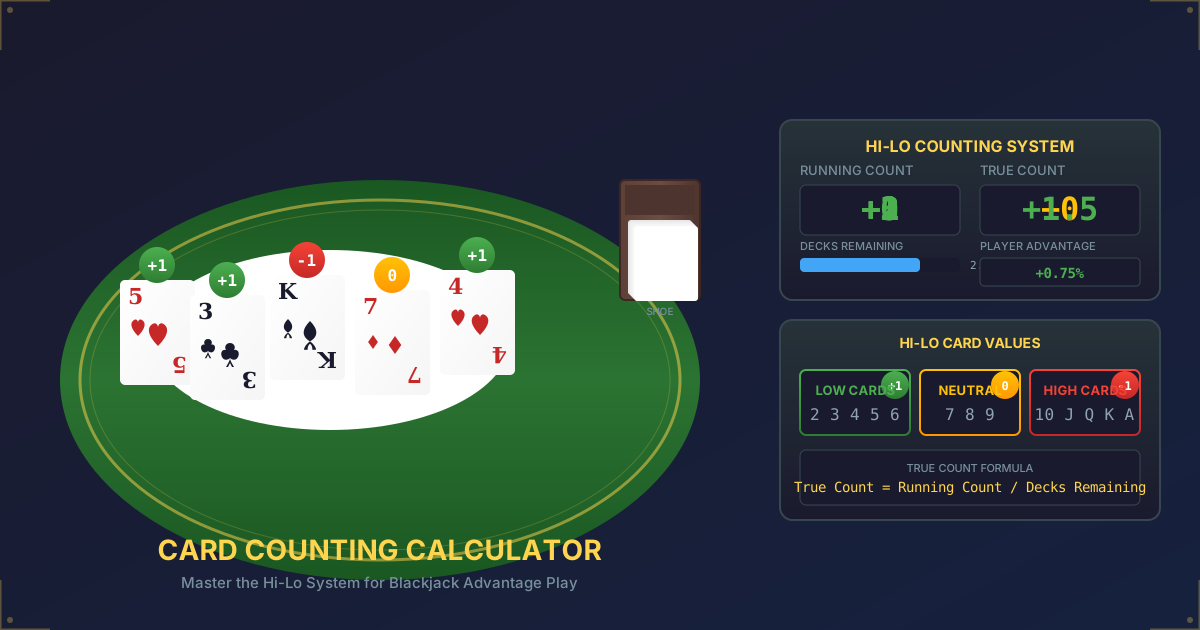
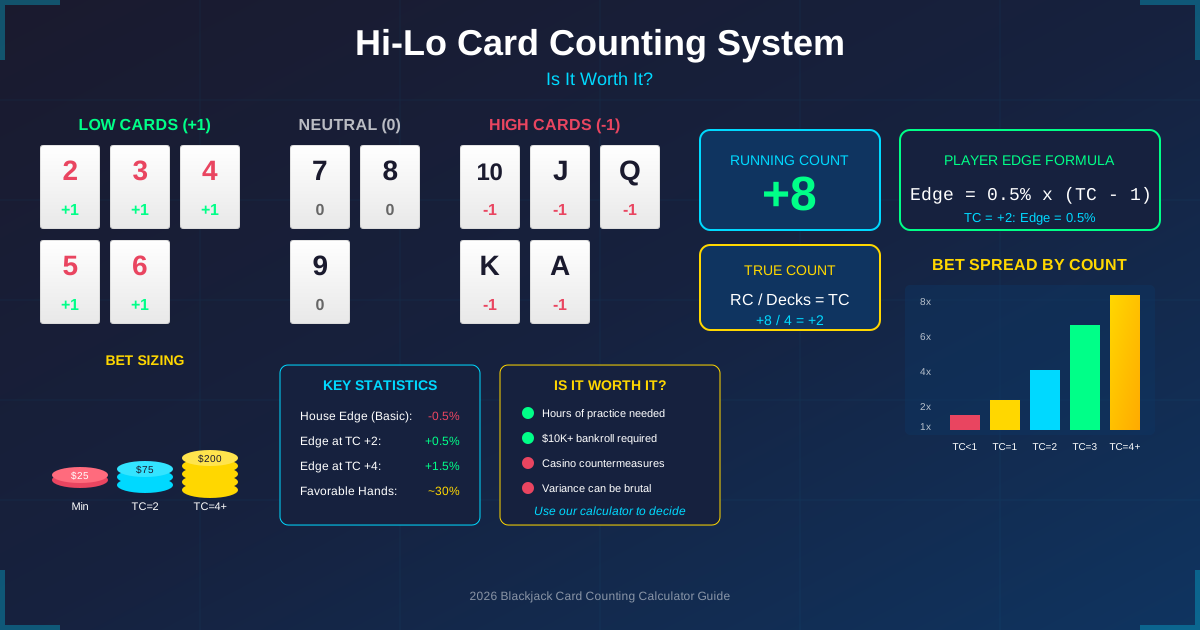
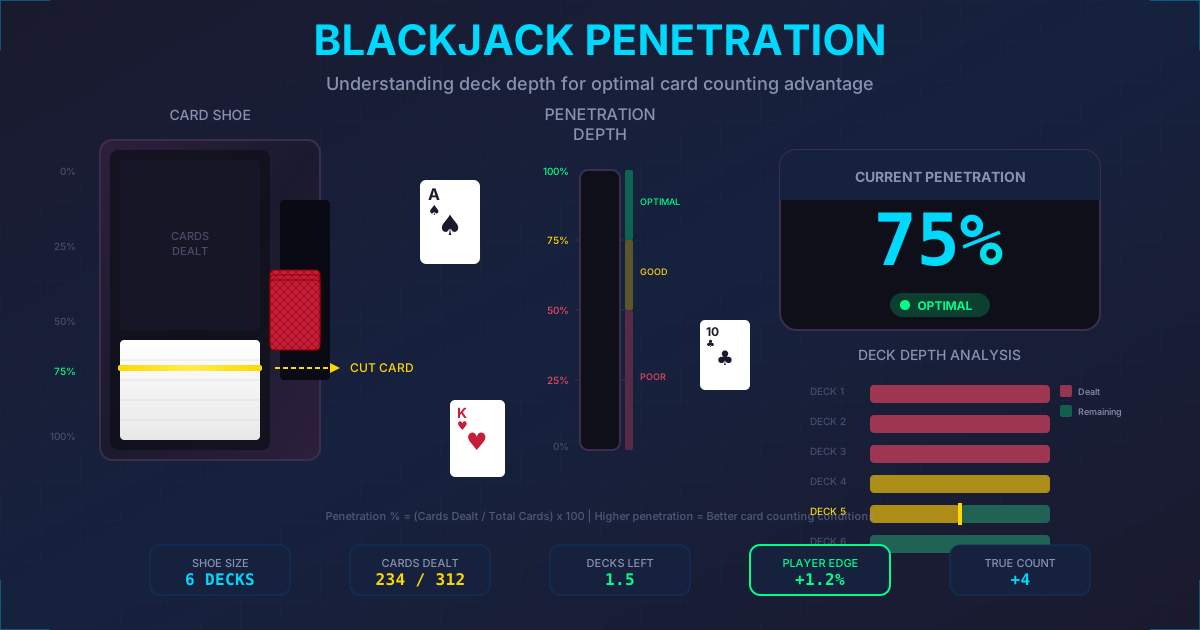
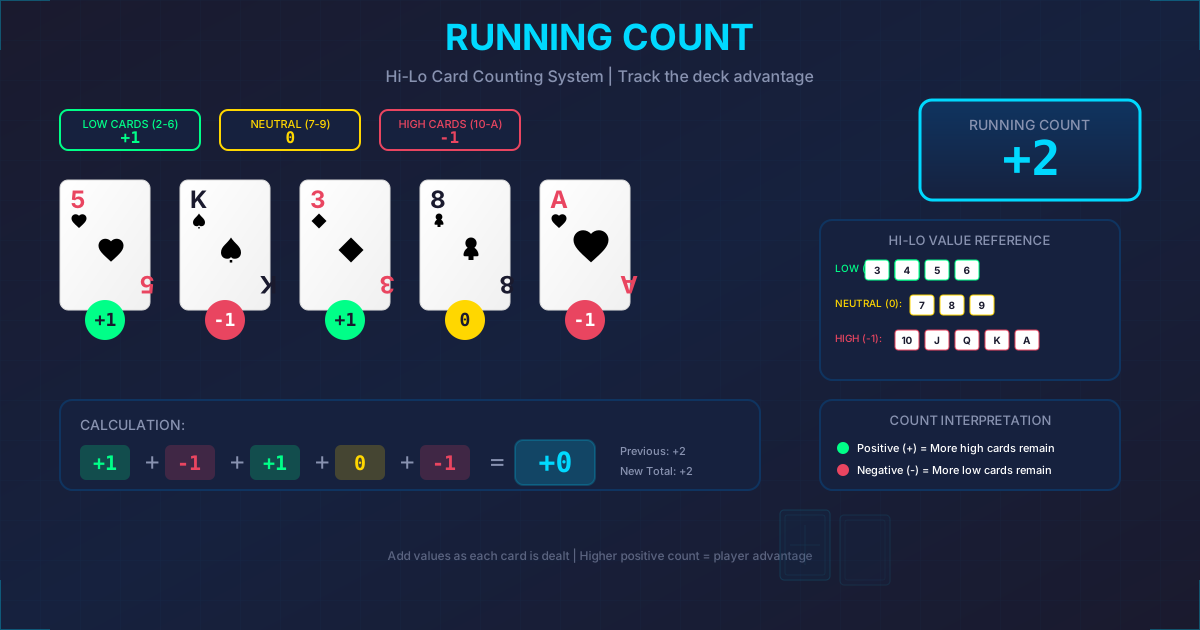
Can I really beat the casino? In the long run, the house edge ensures the casino profits on virtually every game. The exceptions are blackjack card counting (legal but casinos will ban you), poker (you play against other players, not the house), and sports betting (if you can consistently find +EV bets). For the vast majority of players, gambling should be viewed as paid entertainment.
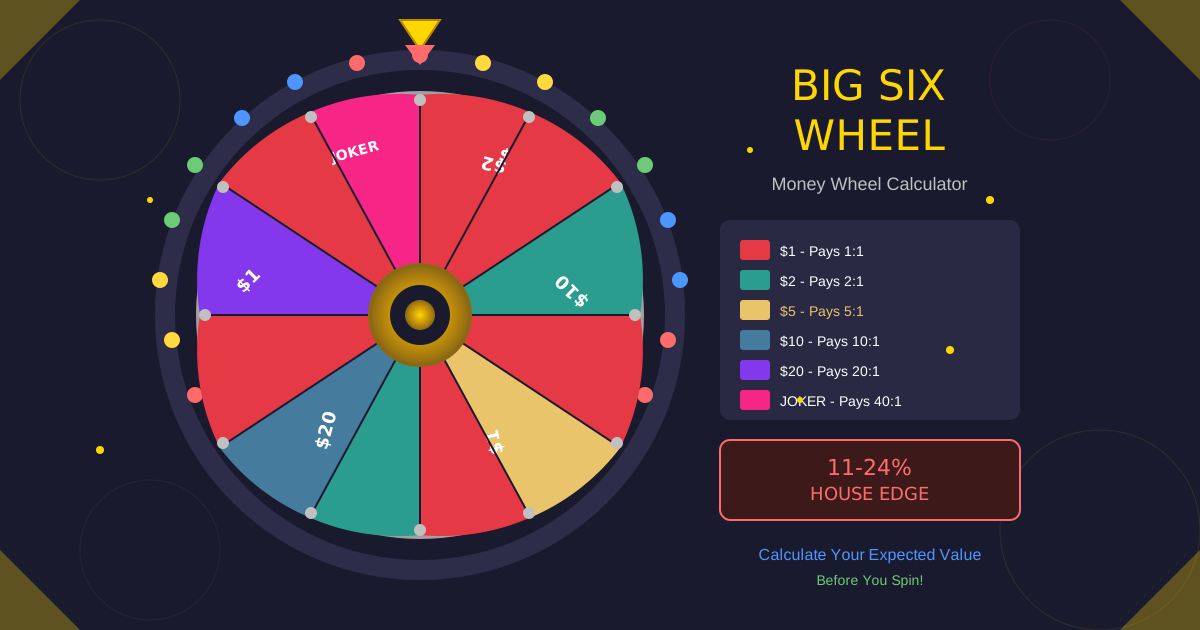
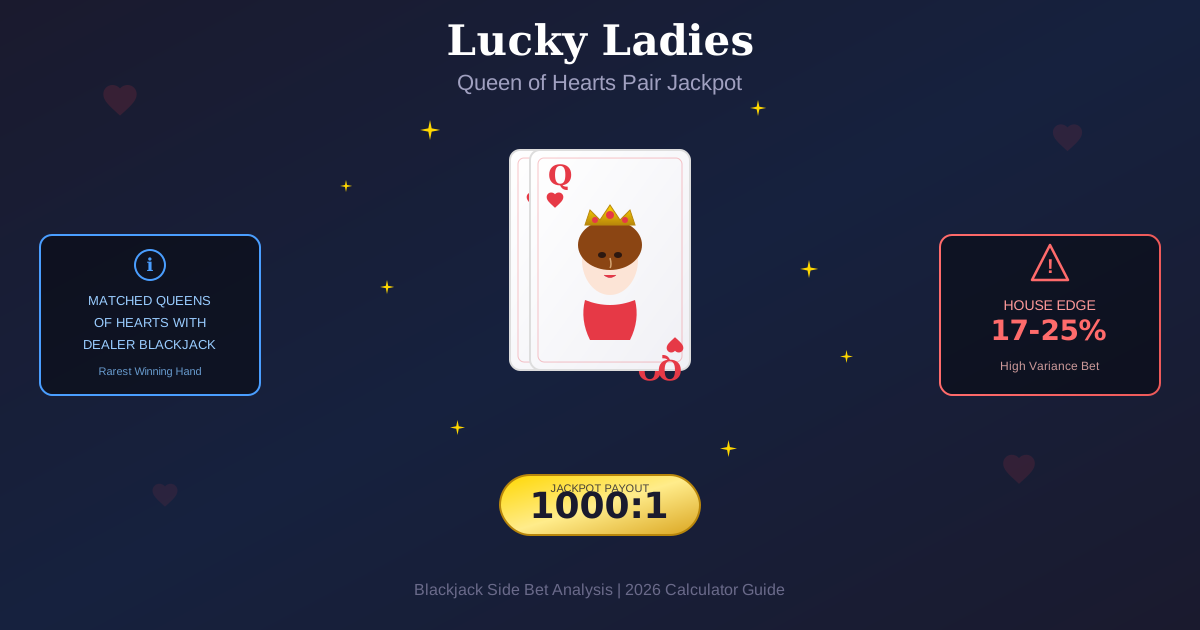
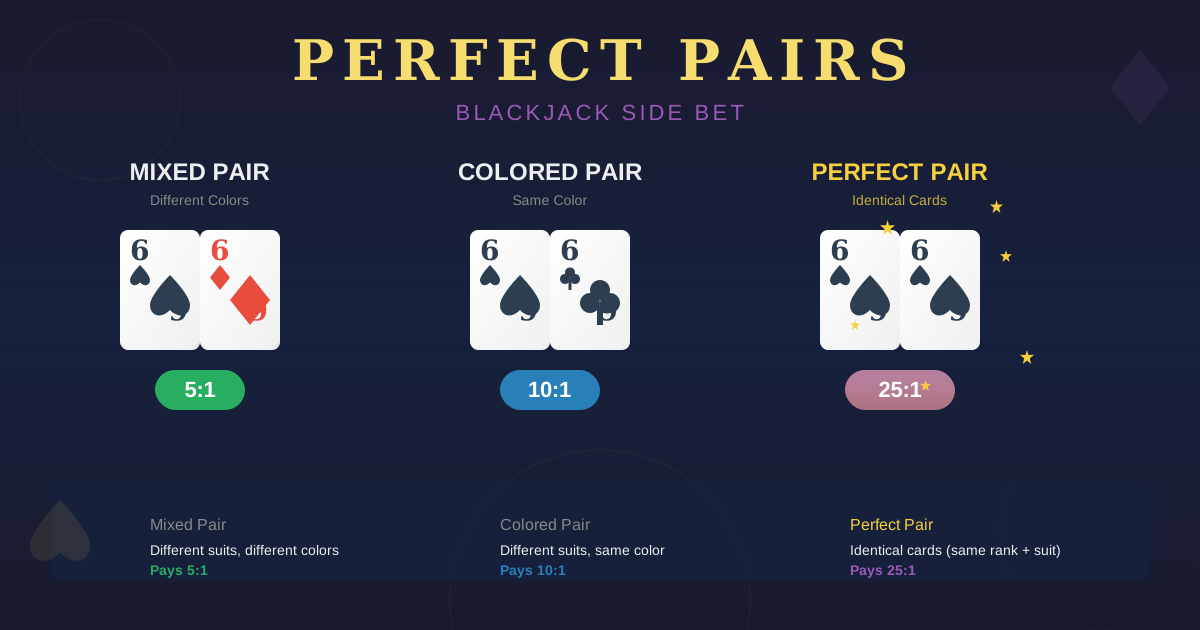
What are the worst bets in a casino? The tie bet in baccarat (14.36% house edge), keno (25-40%), the Big 6 wheel (11-24%), and any craps proposition bet (9-16%). Also avoid 6:5 blackjack tables and any side bets, which typically carry 5-15%+ house edges.
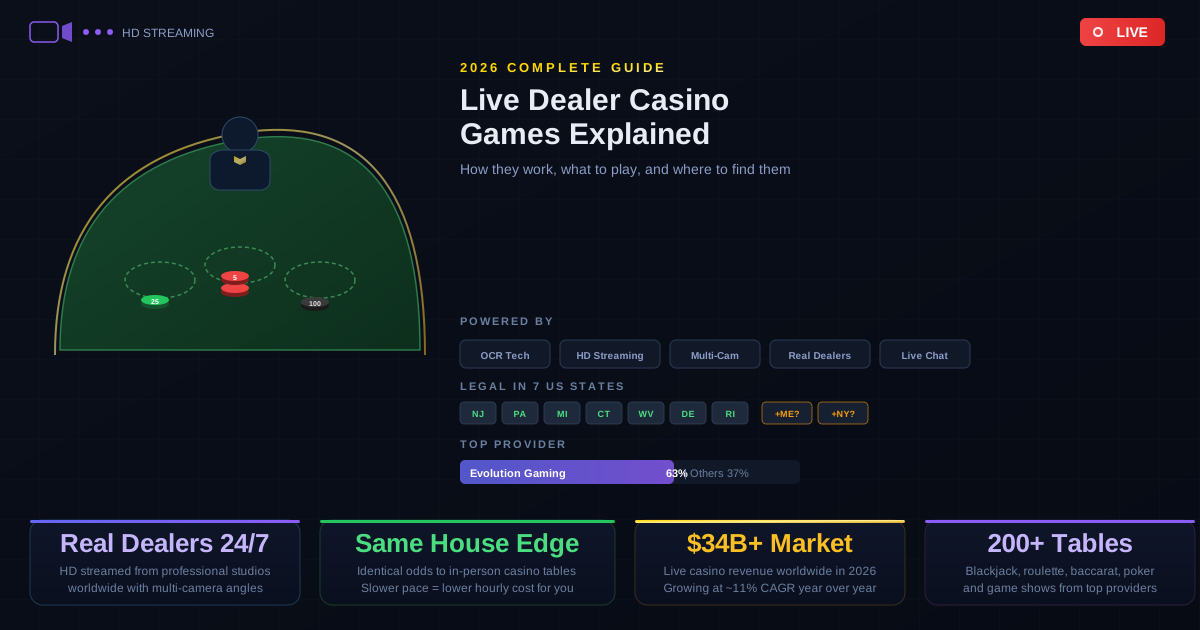
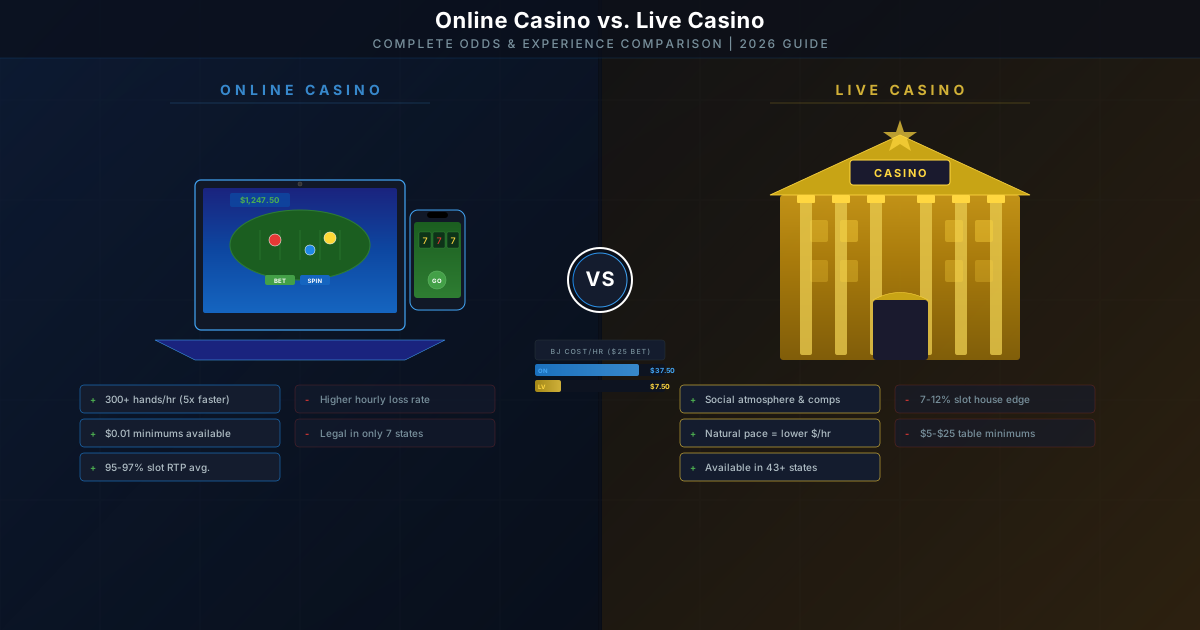
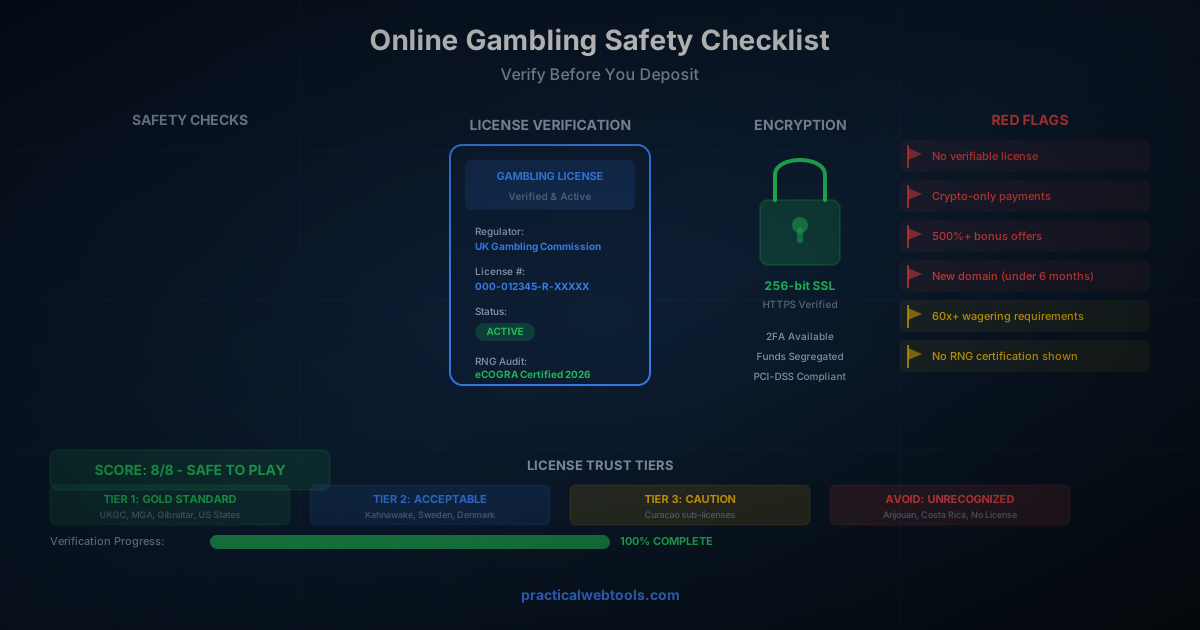
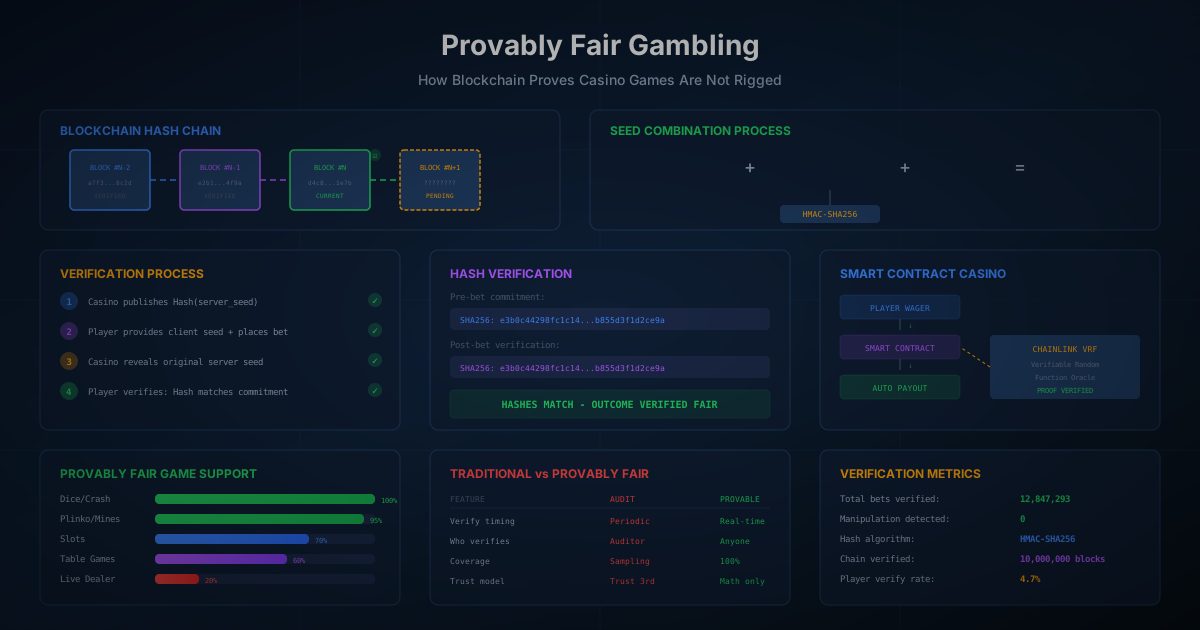
Are online casinos fair? Licensed, regulated online casinos use certified Random Number Generators and are audited by independent testing labs. Stick to licensed operators in regulated markets. Unlicensed offshore sites have no oversight and should be avoided.
What does house edge actually mean in practical terms? If a game has a 5% house edge and you wager $1,000 total over a session, you expect to lose $50. Use our Expected Value Calculator to compute this for any game and bet size. In a single session, your actual result can be far above or below this number due to variance.
Should I use a betting system like the Martingale? No betting system changes the house edge. The Martingale (doubling after each loss) appears to work in the short term but eventually produces catastrophic losses that wipe out all previous gains. The math is clear: if the house edge is negative, no staking system can turn it positive.
What is the difference between house edge and hold? House edge is the theoretical percentage the casino expects to keep from each dollar wagered. Hold is the actual percentage the casino keeps from the player's buy-in. Hold is typically much higher than house edge because players re-wager their winnings multiple times.
Essential Gambling Tools for Beginners
Odds and Probability
- Odds Converter: Convert between American, decimal, and fractional odds
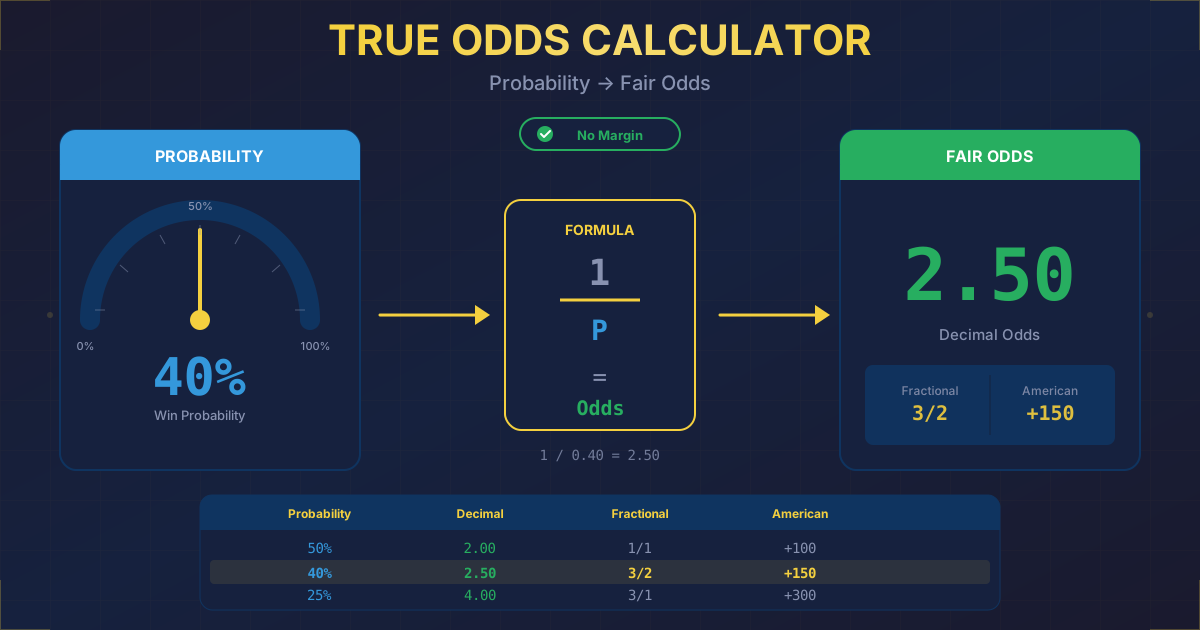
- Implied Probability Calculator: See the true probability behind any odds
- Expected Value Calculator: Calculate the mathematical value of any bet
Casino Game Calculators
- Blackjack Basic Strategy: Perfect strategy for every hand
- Blackjack House Edge Calculator: See how rules affect the edge
- Roulette Odds Calculator: Probability and payouts for every bet
- Craps Pass Line Calculator: Calculate pass line and odds returns
- Baccarat Odds Calculator: Compare Banker, Player, and Tie bets
- Video Poker Pay Table Analyzer: Find the best-paying machines
House Edge Comparison
- Roulette House Edge Calculator: European vs. American comparison
- Craps House Edge Calculator: Every craps bet analyzed
- Baccarat House Edge Calculator: Commission impact on returns
Bankroll Management
- Kelly Criterion Calculator: Mathematically optimal bet sizing
- Hold/Vig Calculator: Understand the sportsbook's cut
Conclusion: Gamble Smart or Do Not Gamble at All
The casino industry generates over $60 billion annually in the United States alone, and that money comes from players. Every game is designed to produce a house profit over time. There is no system, no strategy, and no secret that changes this fundamental reality.
What you can do is make informed decisions. Play games with low house edges. Use basic strategy at blackjack. Take odds at craps. Bet Banker at baccarat. Set firm budgets and stick to them. Treat gambling as entertainment with a known cost, not as an investment strategy.
Start by understanding the math behind any bet with our Expected Value Calculator. Learn basic strategy with our Blackjack Basic Strategy Calculator. And always know what you are paying with our Hold/Vig Calculator.
The informed gambler is the one who has fun and walks away with their finances intact. Be that gambler.
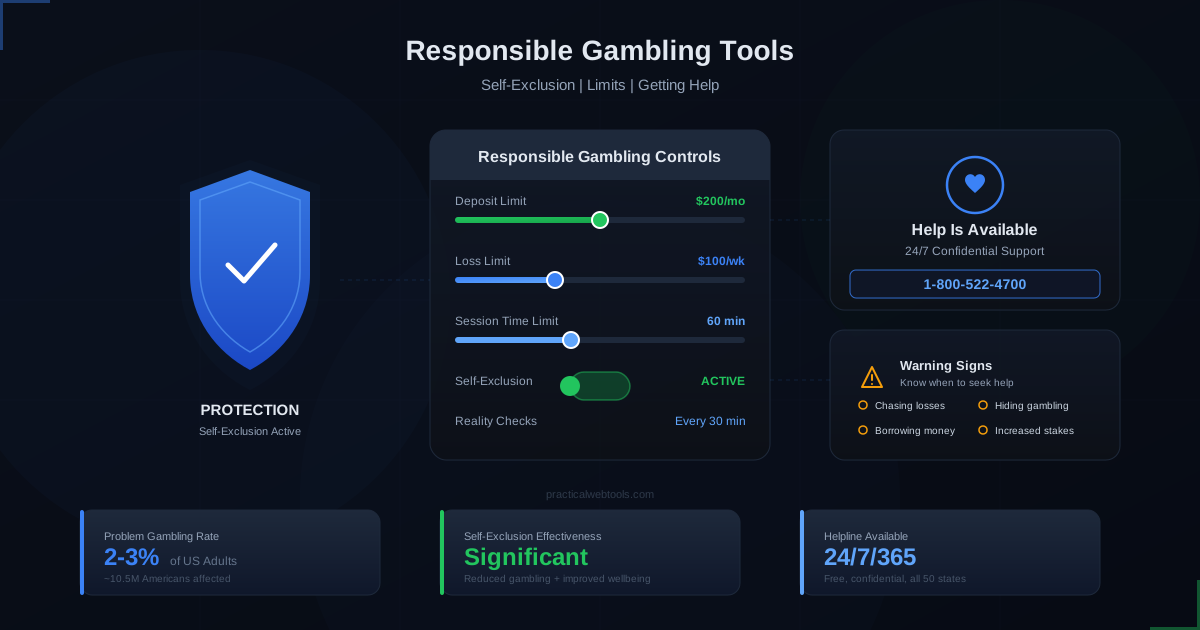
Gambling involves risk. This content is for educational and informational purposes only. Always gamble responsibly, set limits you can afford, and seek help if gambling becomes a problem. Visit the National Council on Problem Gambling or call 1-800-522-4700 for support.