Prediction Markets vs. Sportsbooks: Where Should You Bet in 2026? (Kalshi, Polymarket, FanDuel)
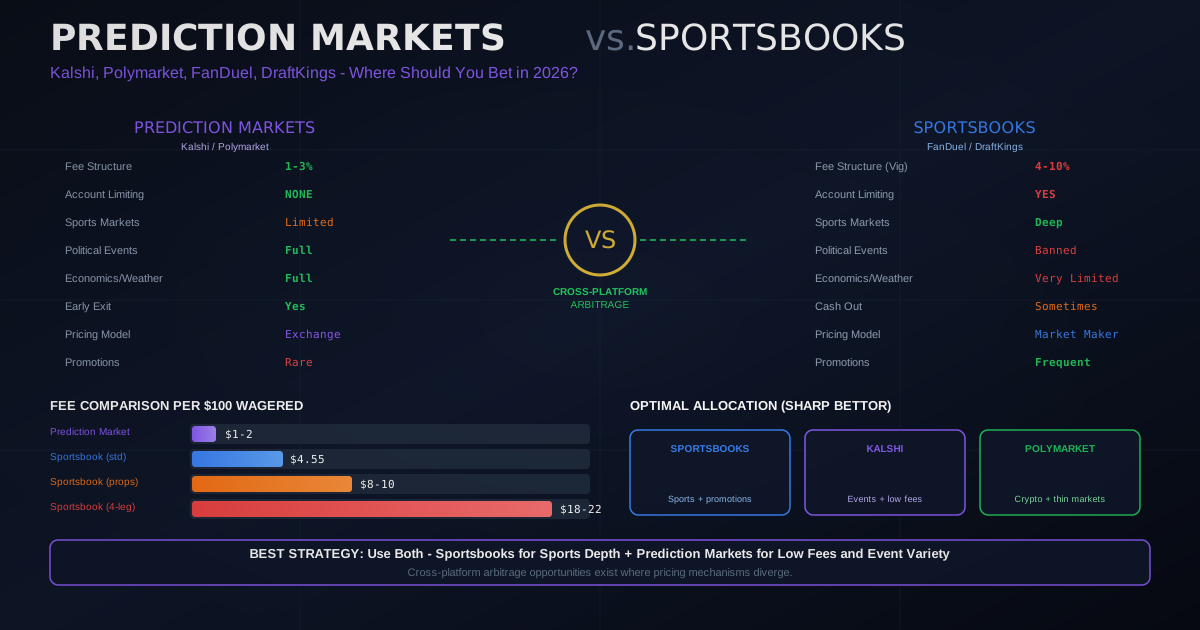
The line between prediction markets and sportsbooks has never been blurrier. In 2026, you can bet on NFL games at FanDuel, trade election contracts on Kalshi, and speculate on crypto prices at Polymarket, all from your phone. But these platforms are not interchangeable. Their fee structures, market mechanics, event types, and regulatory frameworks create fundamentally different opportunities for bettors.
Understanding these differences is not academic. It is the difference between paying 4.5% vig at a sportsbook and paying 1-2% in fees on a prediction market. It is the difference between being limited to sports at DraftKings and having access to weather, politics, economics, and entertainment events on Kalshi. And for advantage players, it is the difference between getting limited for winning and operating on platforms that structurally cannot limit you.
This guide breaks down the complete landscape of prediction markets vs. sportsbooks in 2026. Where each platform excels, where each falls short, and how to strategically allocate your capital across both.
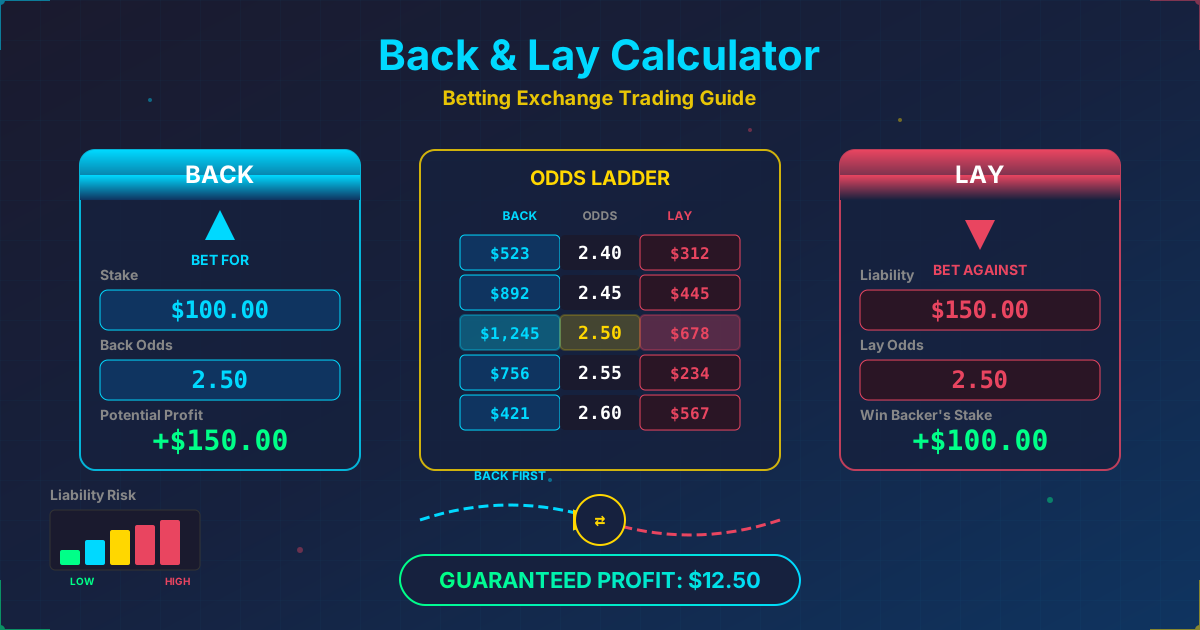
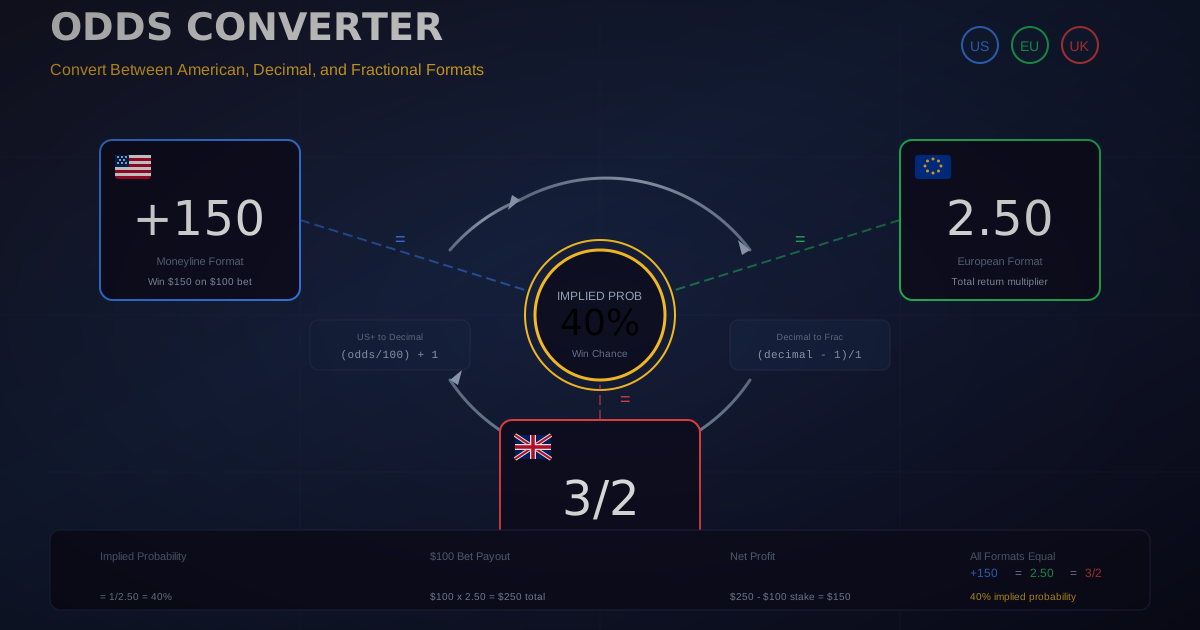
Convert between odds formats across platforms with our Odds Converter.
How Prediction Markets Work
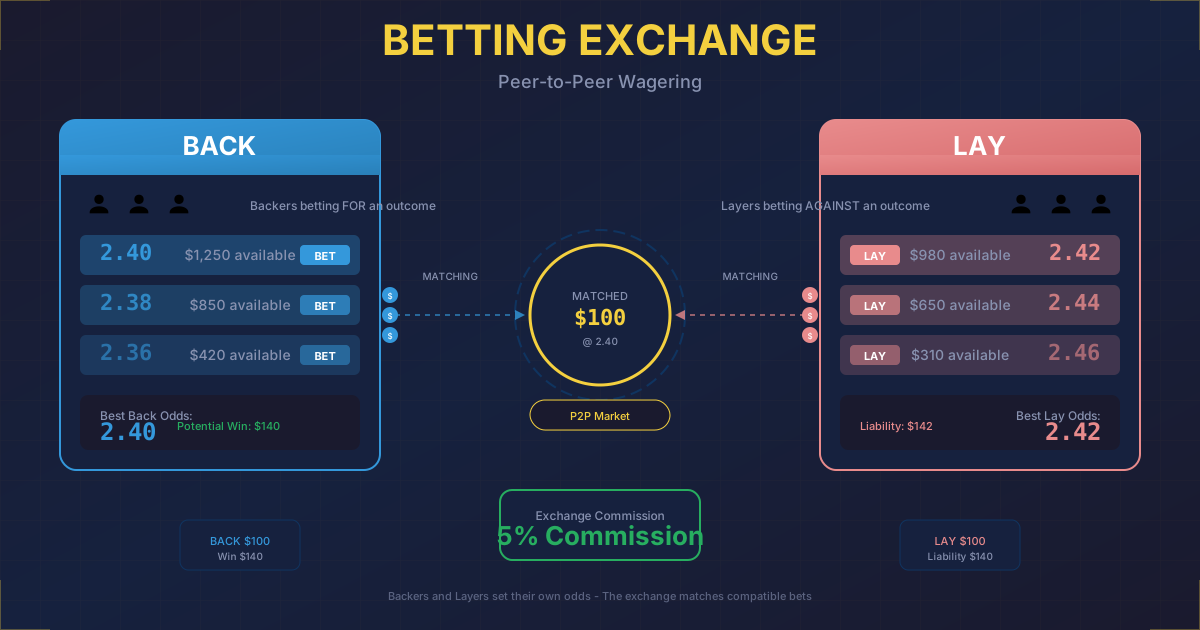
Prediction markets are exchange-based platforms where users buy and sell contracts that pay out based on the outcome of future events. Unlike sportsbooks, there is no house setting the odds. Prices emerge from supply and demand among participants.
The Contract Model
On a platform like Kalshi, a typical contract works like this:
- Event: "Will the Federal Reserve raise rates at the March 2026 meeting?"
- Yes contract price: $0.72 (implying 72% probability)
- No contract price: $0.28 (implying 28% probability)
- Payout if correct: $1.00 per contract
- Payout if wrong: $0.00
If you buy 100 "Yes" contracts at $0.72 each:
- Cost: $72.00
- If Yes: Receive $100.00. Profit: $28.00 (38.9% return)
- If No: Receive $0.00. Loss: $72.00
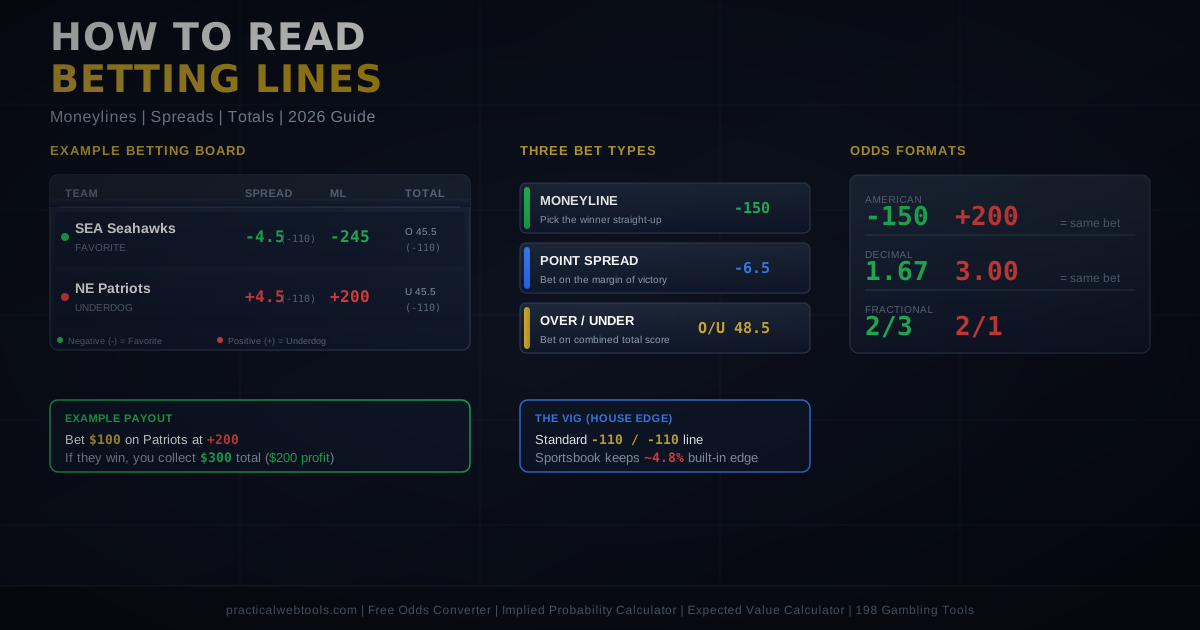
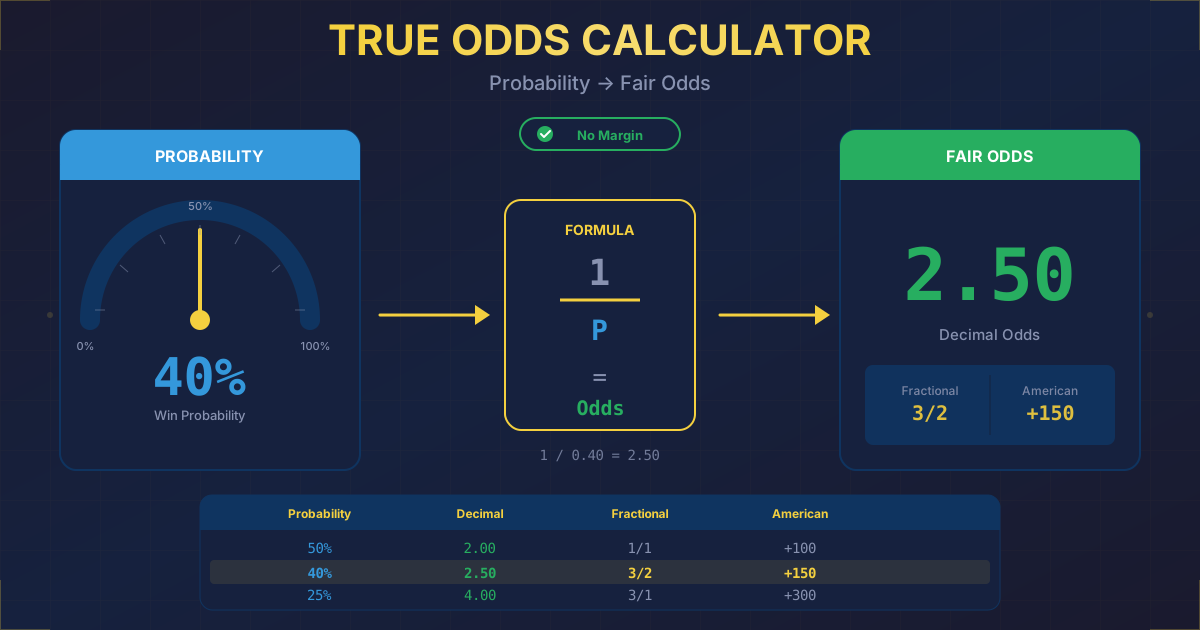
The implied odds of "Yes" at $0.72 are equivalent to -257 in American odds, or 1.389 in decimal odds.
How Prices Move
Unlike sportsbooks where a market maker sets the line, prediction market prices move based on actual trades. If many buyers push the "Yes" price to $0.80, it means the market consensus has shifted to an 80% probability. Sellers who disagree can offer contracts at lower prices.
This creates a continuously updating probability estimate that is often more accurate than expert forecasts. Research by Phillip Tetlock and others has shown prediction markets outperform polls, pundit forecasts, and statistical models in many domains.
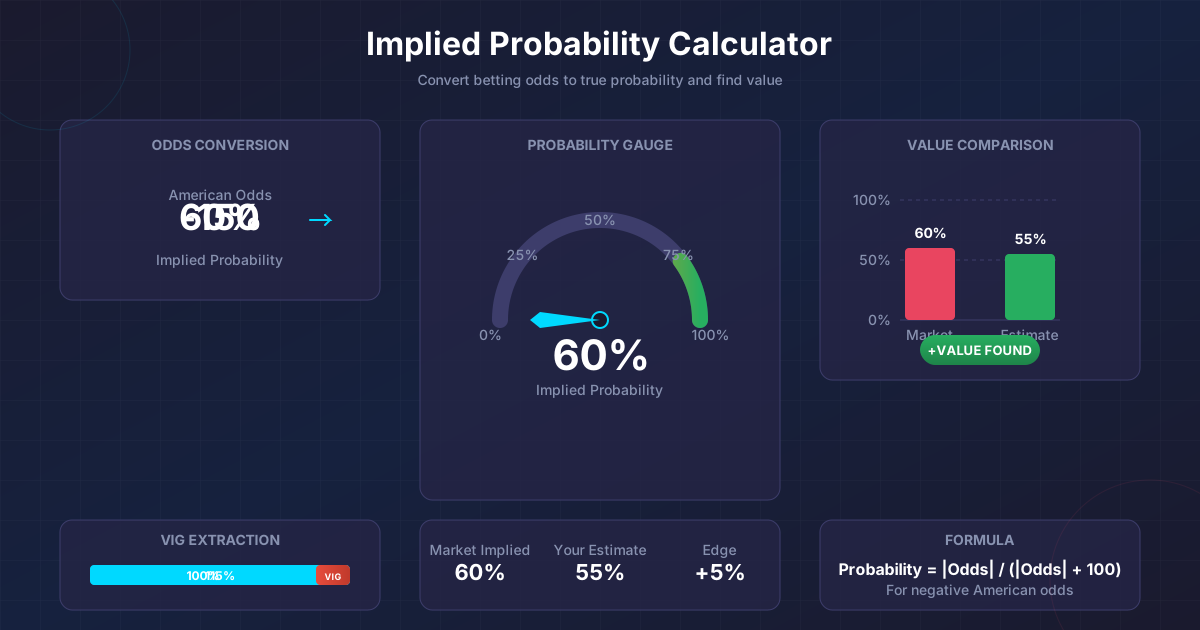
Calculate implied probability from any contract price with our Implied Probability Calculator.
How Sportsbooks Work
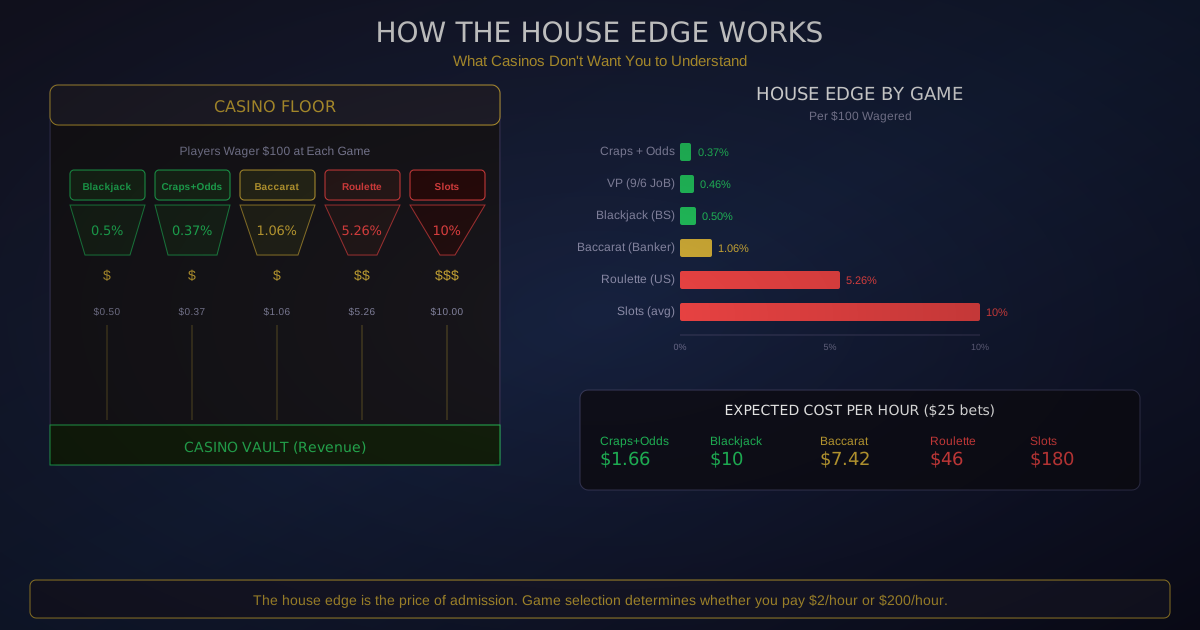
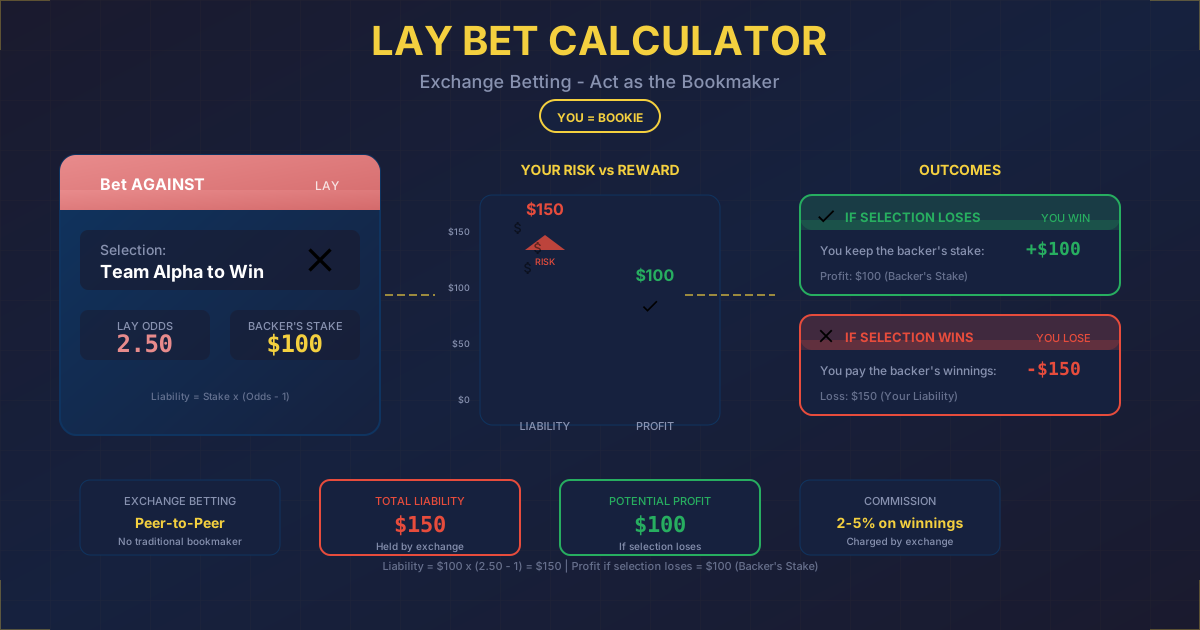
Sportsbooks operate a market-maker model. The book sets the odds (the "line"), and bettors choose which side to bet. The sportsbook profits through the vigorish (vig), which is the margin between the true probability and the implied probability of the offered odds.
The Vig Model
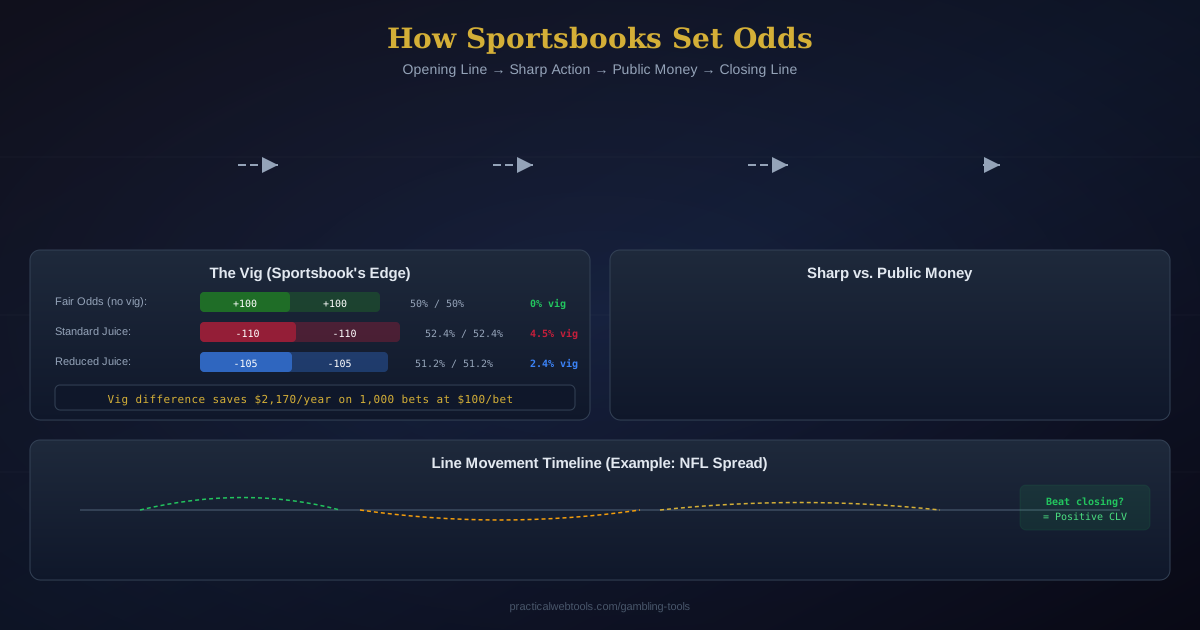
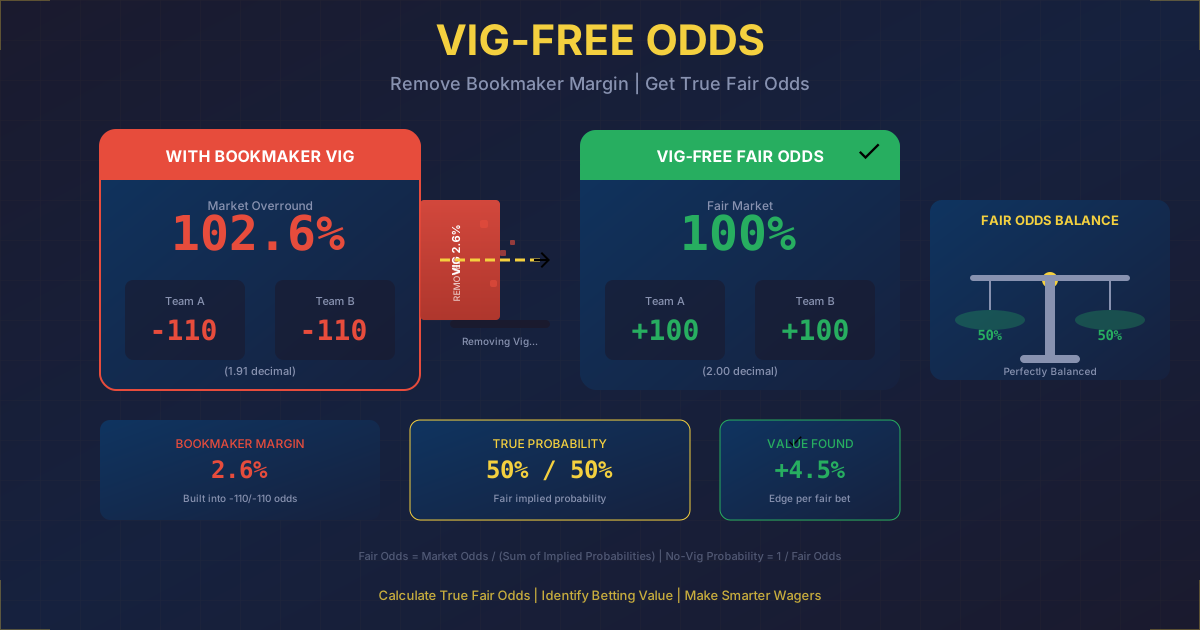
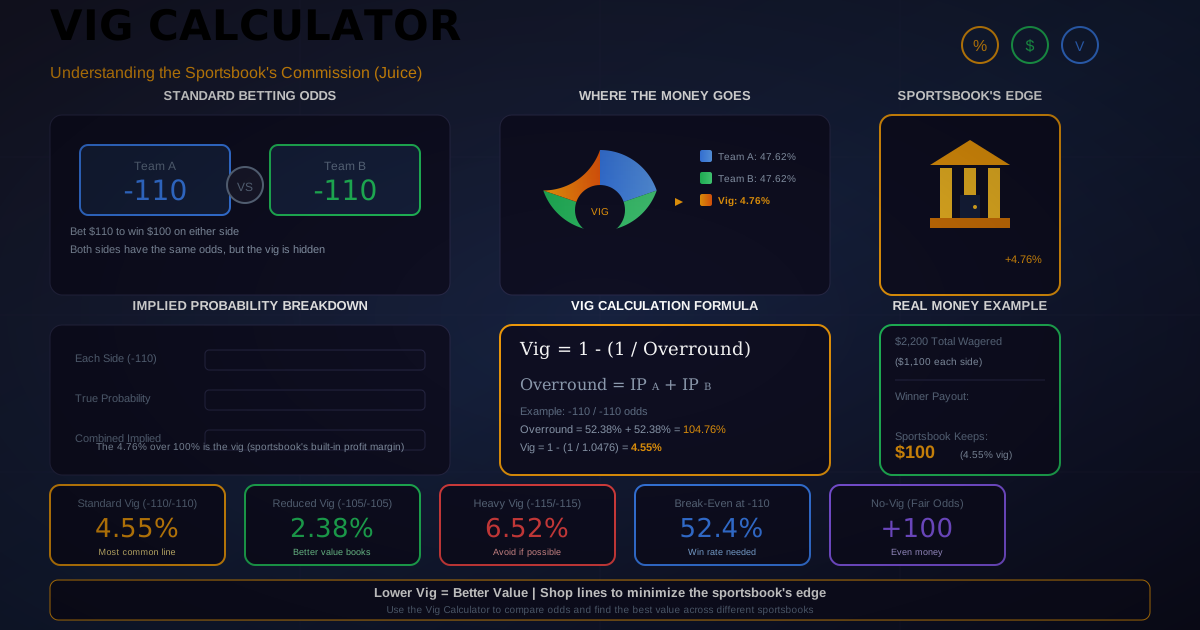
A standard NFL spread bet might be offered at -110 on both sides. The implied probability of each side is 52.38%, totaling 104.76%. The 4.76% overround is the sportsbook's theoretical hold.
In practice, sportsbooks manage their exposure by:
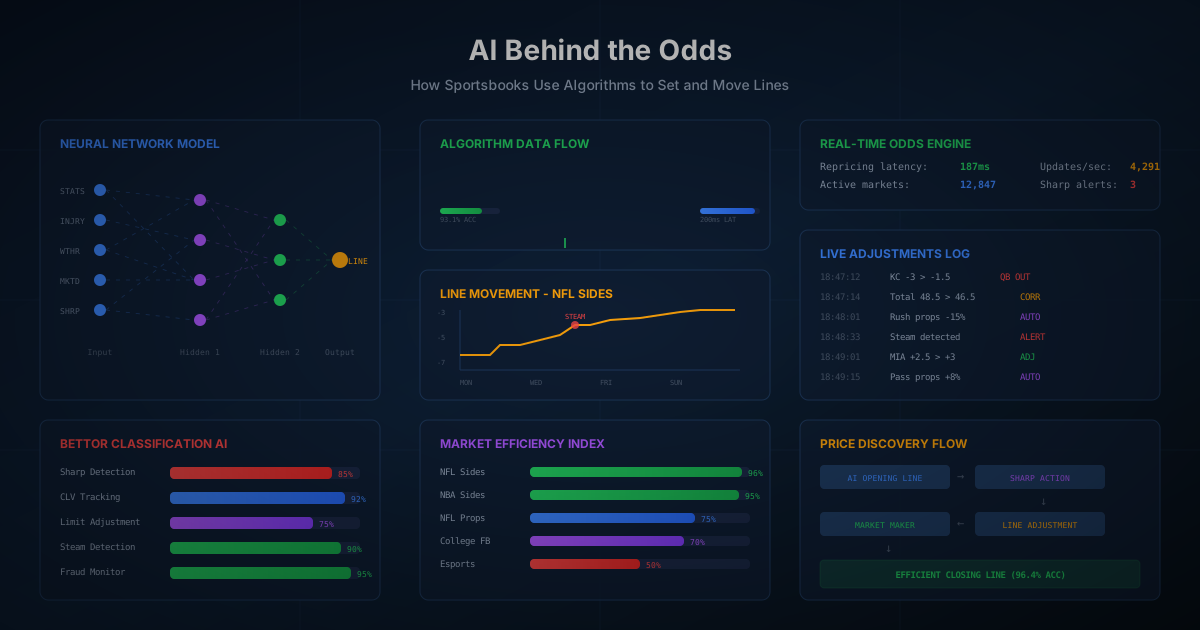
- Setting lines using proprietary models and market data
- Adjusting lines based on betting action (especially sharp money)
- Limiting or banning bettors who consistently beat the closing line
The key difference from prediction markets: the sportsbook is your counterparty. When you win, the sportsbook loses. This creates an inherent conflict of interest that leads to account limitations for winning bettors.
Sharp vs. Soft Books
Not all sportsbooks are the same:
- Sharp books (Pinnacle, Circa) accept large bets from professional bettors and set industry-leading lines. They profit on volume with low margins.
- Soft books (DraftKings, FanDuel, BetMGM) target recreational bettors with promotions and higher vig. They actively limit sharp bettors.
Analyze the vig on any sportsbook line with our Hold/Vig Calculator.
Head-to-Head Comparison: Prediction Markets vs. Sportsbooks
Fee Structure
| Factor | Prediction Markets (Kalshi) | Sportsbooks (FanDuel/DK) |
|---|---|---|
| Fee type | Exchange fee (1-7% of profit) | Vig embedded in odds (4-10%) |
| Typical cost per $100 wagered | $0.50-$2.00 | $4.55 at -110 standard |
| Fee on losing bets | $0 (most platforms) | Full loss (vig included) |
| Volume discounts | Yes (tiered fee structures) | No (but promotions offset) |
| Effective cost for breakeven bettor | ~1% of wagered | ~4.55% of wagered |
Winner: Prediction markets. The fee structure is dramatically cheaper, especially for skilled bettors. A bettor who breaks even on predictions loses 1% on a prediction market but 4.55% at a sportsbook.
Market Efficiency
| Factor | Prediction Markets | Sportsbooks |
|---|---|---|
| Pricing mechanism | Crowd-driven supply/demand | Professional market makers |
| Speed of price adjustment | Moderate (depends on volume) | Fast (automated systems) |
| Accuracy of long-running markets | Very high (Tetlock research) | N/A (most events are short-term) |
| Accuracy of sports lines | Less efficient (lower liquidity) | Highly efficient (massive volume) |
| Manipulation resistance | Moderate (thin markets vulnerable) | High (large balanced action) |
Winner: Depends on market type. Sportsbooks are more efficient for sports. Prediction markets are more accurate for politics, economics, and long-running events where crowd wisdom has time to aggregate.
Event Types
| Event Category | Prediction Markets | Sportsbooks |
|---|---|---|
| Major sports (NFL, NBA, MLB) | Limited availability | Comprehensive |
| Minor sports (tennis, cricket) | Rare | Good availability |
| Politics/elections | Full availability | Banned in most US states |
| Economics (Fed rates, GDP, CPI) | Full availability | Rarely offered |
| Weather events | Some availability | Very limited |
| Entertainment (Oscars, etc.) | Some availability | Limited but growing |
| Crypto/financial | Full availability (Polymarket) | Not available |
| Custom/novel events | Growing | Never |
Winner: Prediction markets for event diversity. Sportsbooks for sports depth.
Account Limitations
| Factor | Prediction Markets | Sportsbooks |
|---|---|---|
| Limiting winning bettors | No (exchange model) | Yes (aggressive limiting) |
| Account closure risk | Very low | Moderate to high for sharps |
| Bet size limits | Market liquidity-dependent | Book-imposed, often low for sharps |
| KYC requirements | Yes (Kalshi), No (Polymarket) | Yes (all US-regulated books) |
| Geographic restrictions | Varies by platform | State-by-state |
Winner: Prediction markets. This is the single biggest advantage. Because prediction markets are exchanges, there is no counterparty incentivized to limit you. If you find edge, you can exploit it indefinitely, subject only to market liquidity.
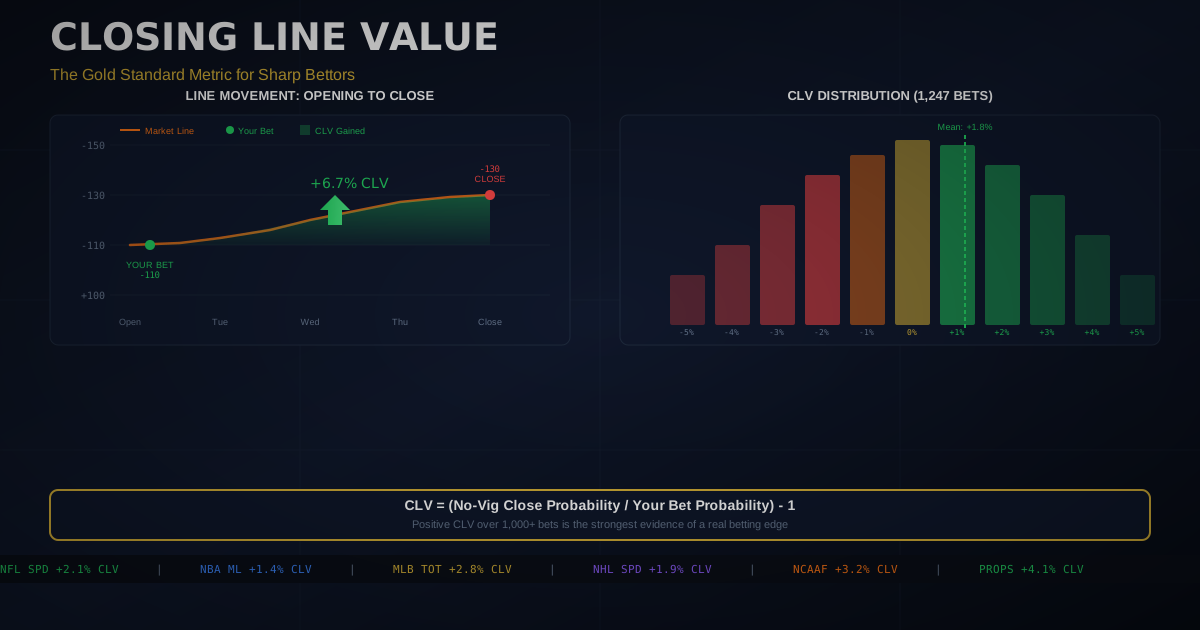
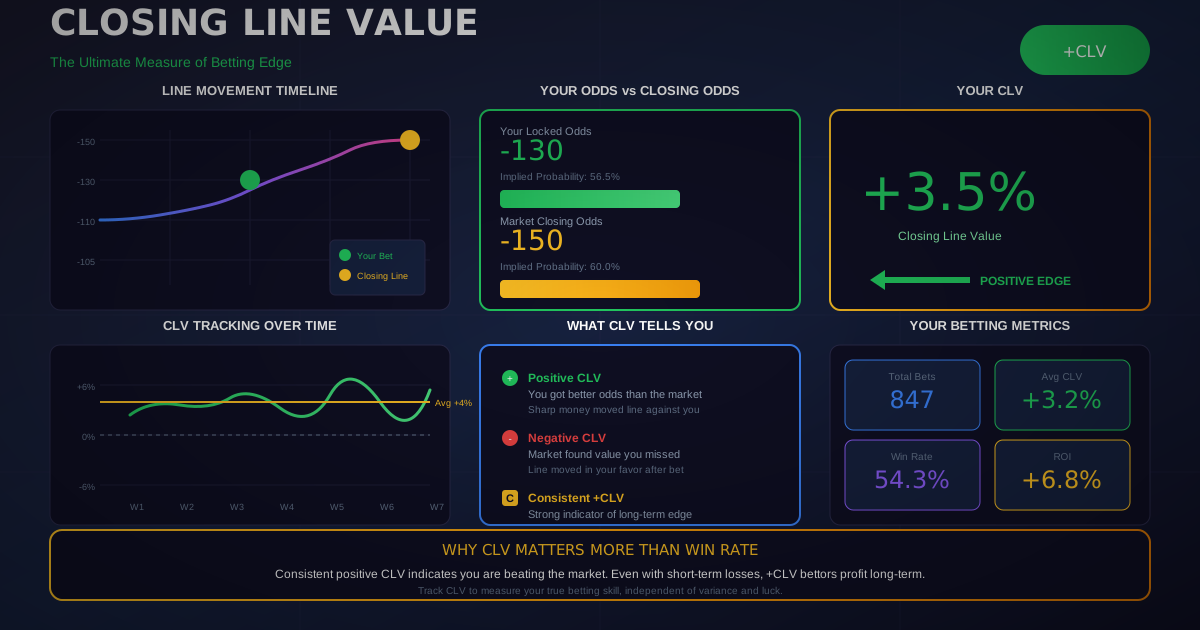
Track your edge across platforms with our CLV Tracker.
Platform Deep Dives
Kalshi
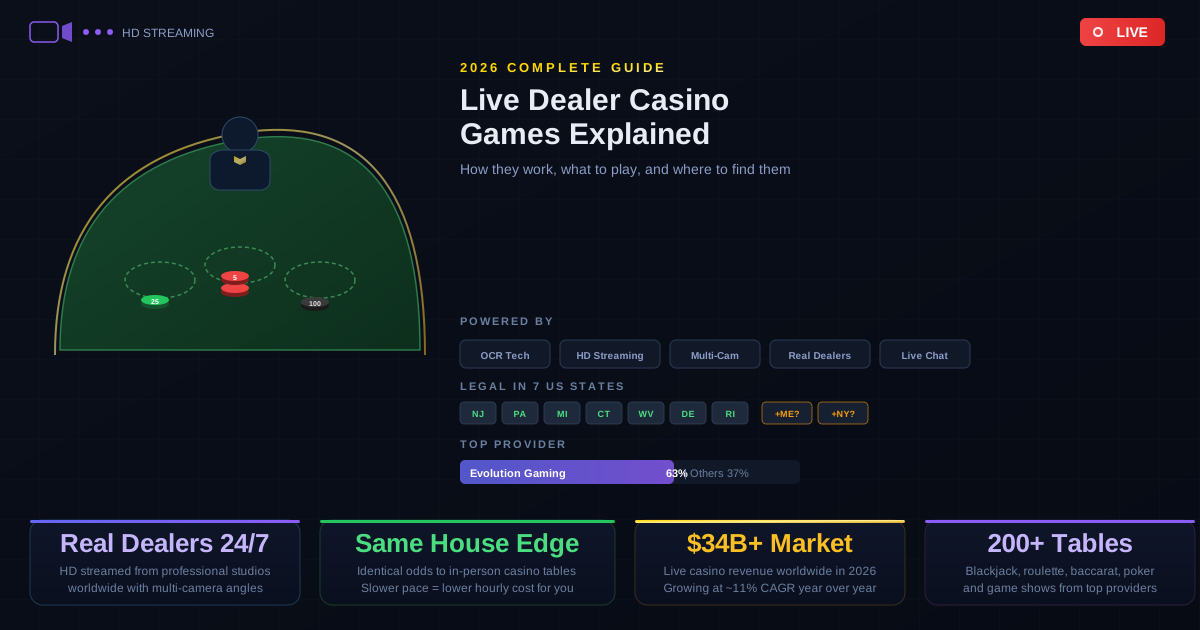
What it is: A CFTC-regulated prediction market exchange based in the US. Trades binary event contracts on politics, economics, weather, and more.
Fee structure: Kalshi charges exchange fees that have evolved. As of 2026, the fee model is tiered based on monthly volume:
| Monthly Volume | Fee Per Contract |
|---|---|
| $0-$5,000 | $0.07 per contract |
| $5,001-$50,000 | $0.04 per contract |
| $50,001+ | $0.02 per contract |
On a $0.72 contract, the $0.07 fee represents roughly 9.7% of your investment but only 25% of your potential $0.28 profit. Fees are charged per-contract, not as a percentage, making high-probability contracts more expensive in fee terms.
Best for: US-based bettors who want regulated access to political, economic, and event contracts. Particularly strong for elections, Fed meetings, economic data releases, and weather events.
Edge opportunities:
- Economic data releases (if you have faster or better models)
- Political events (if you consume information faster than the market)
- Cross-market arbitrage between Kalshi and sportsbooks for overlapping events
Polymarket
What it is: A decentralized prediction market built on the Polygon blockchain. Trades event contracts using USDC (a stablecoin).
Fee structure: Polymarket's fee model is minimal:
- No trading fees on most markets
- Small spread between bid and ask (typically 1-3 cents)
- Gas fees for blockchain transactions (usually under $0.01 on Polygon)
Best for: Global bettors who want access to a wide range of events without KYC requirements. Particularly strong for crypto-related events, international politics, and novel/viral markets.
Key consideration: Polymarket operates in a regulatory gray area in the US. US users should verify current legal status before participating.
Edge opportunities:
- Thin markets that misprice low-profile events
- Cross-platform arbs between Polymarket and Kalshi
- Crypto-specific events where on-chain data provides informational edge
FanDuel / DraftKings
What they are: The two dominant US-regulated sportsbooks, operating in 20+ states.
Fee structure: Vig embedded in odds. Typical holds:
| Market Type | Average Hold |
|---|---|
| NFL spreads | 4.5-5.5% |
| NFL moneylines | 4.0-5.0% |
| NBA spreads | 4.5-5.5% |
| Player props | 6-10% |
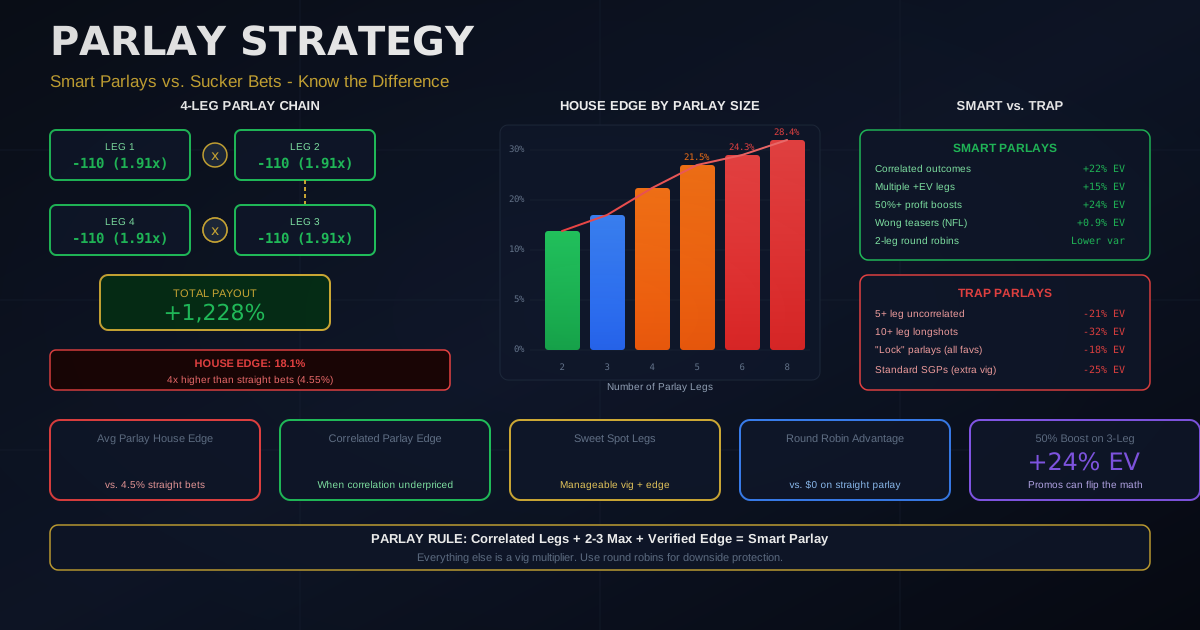
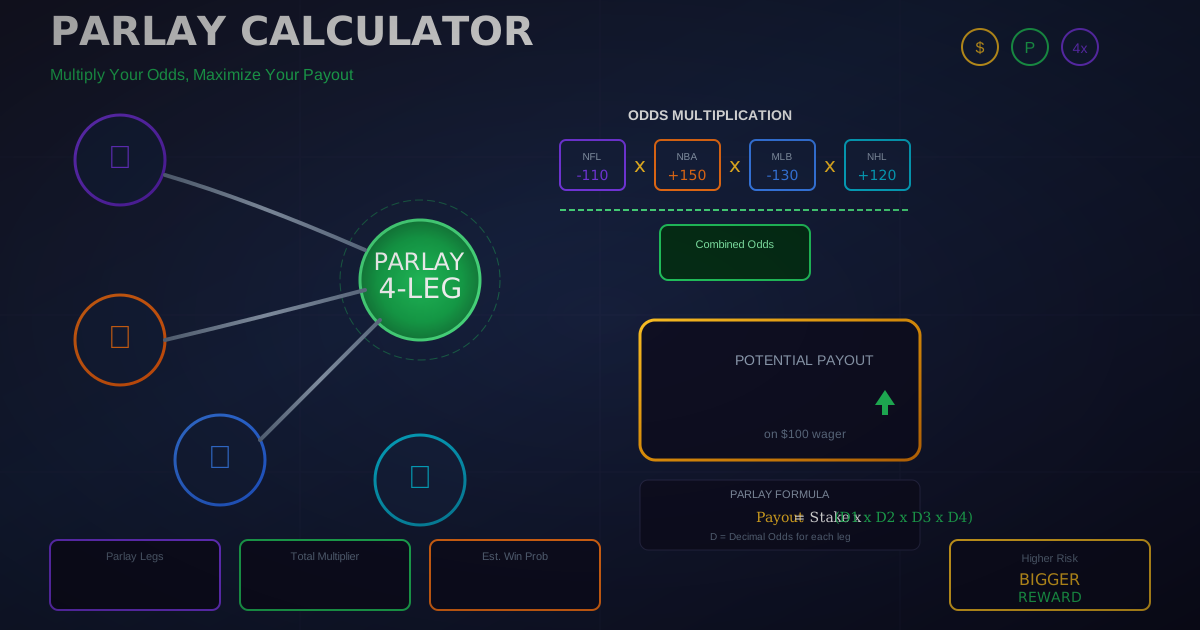
| Parlays (4-leg) | 18-22% |
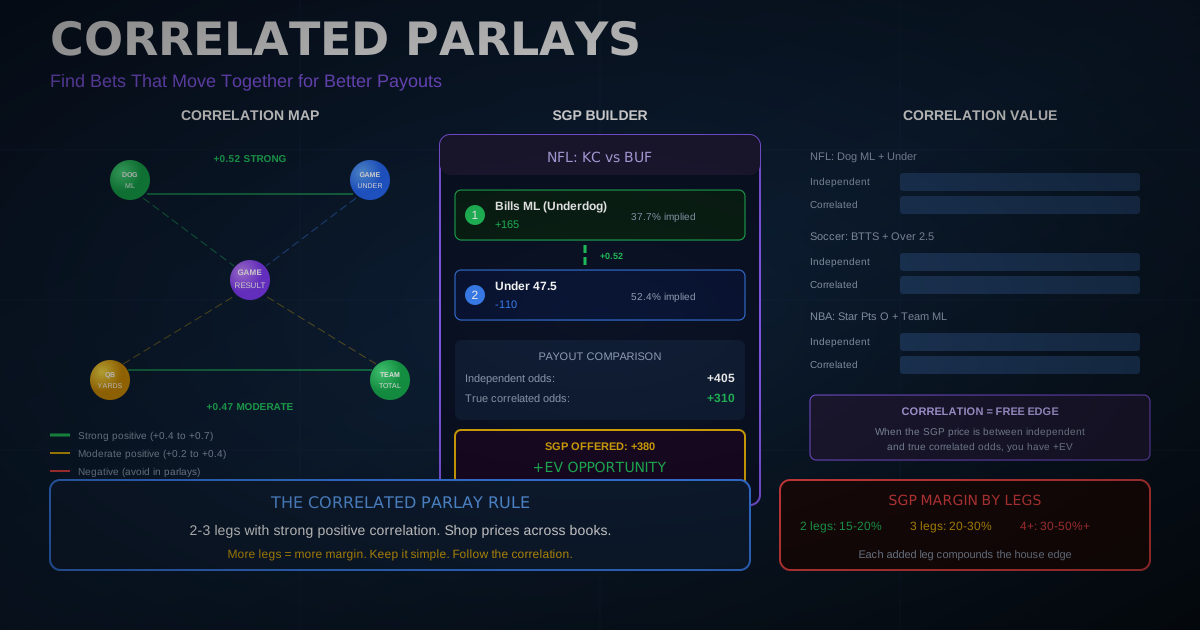
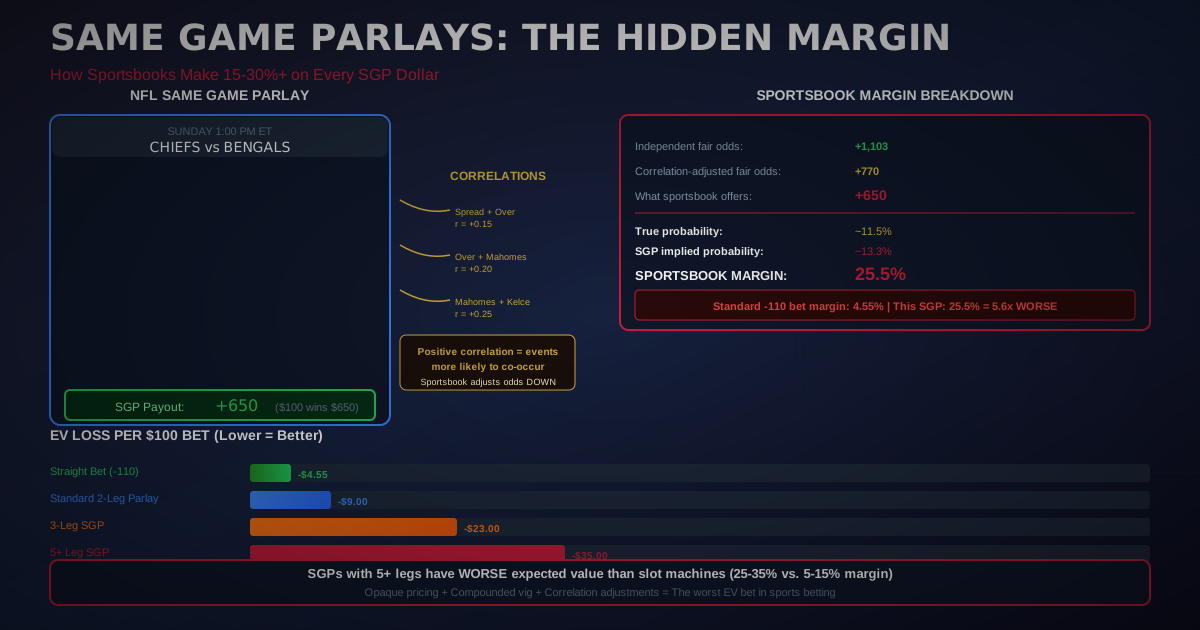
| SGPs | 15-30% |
Best for: Sports betting of all types. The product is polished, the markets are deep, and the promotions can offset the vig for new and active users. The variety of prop markets and bet types (parlays, teasers, if-bets) is unmatched.
Edge opportunities:
- Line shopping between FanDuel and DraftKings (frequent divergence)
- Promotion exploitation (sign-up bonuses, profit boosts)
- Soft player prop lines
- Correlated same-game parlays where correlation is underpriced
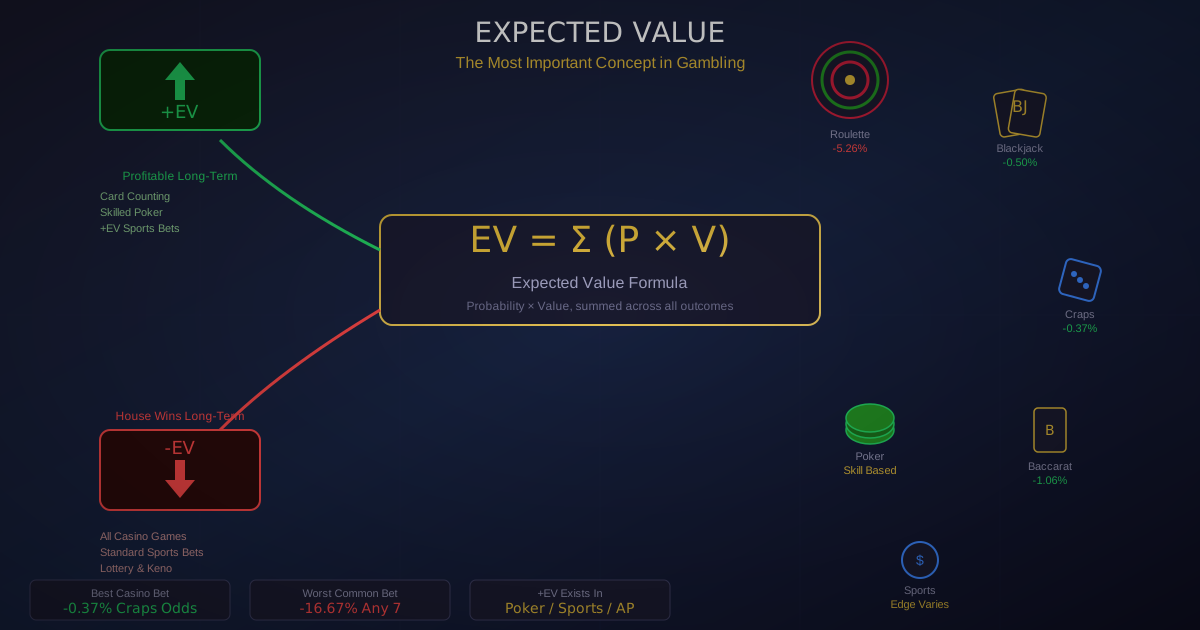
Calculate expected value across any sportsbook with our Expected Value Calculator.
Cross-Platform Arbitrage Opportunities
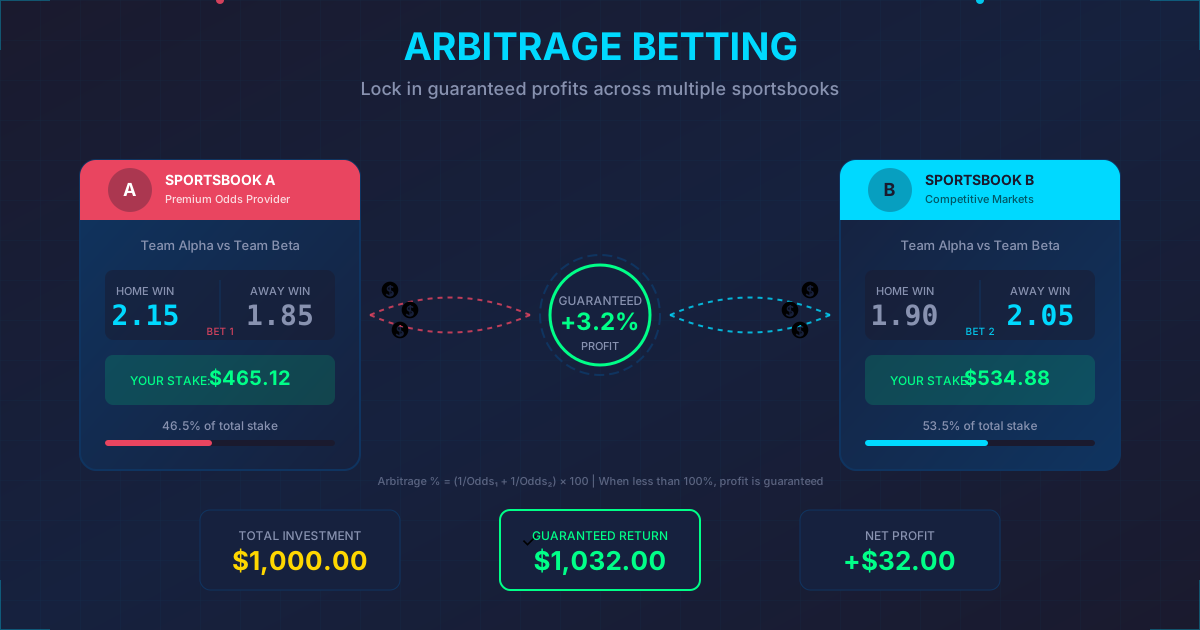
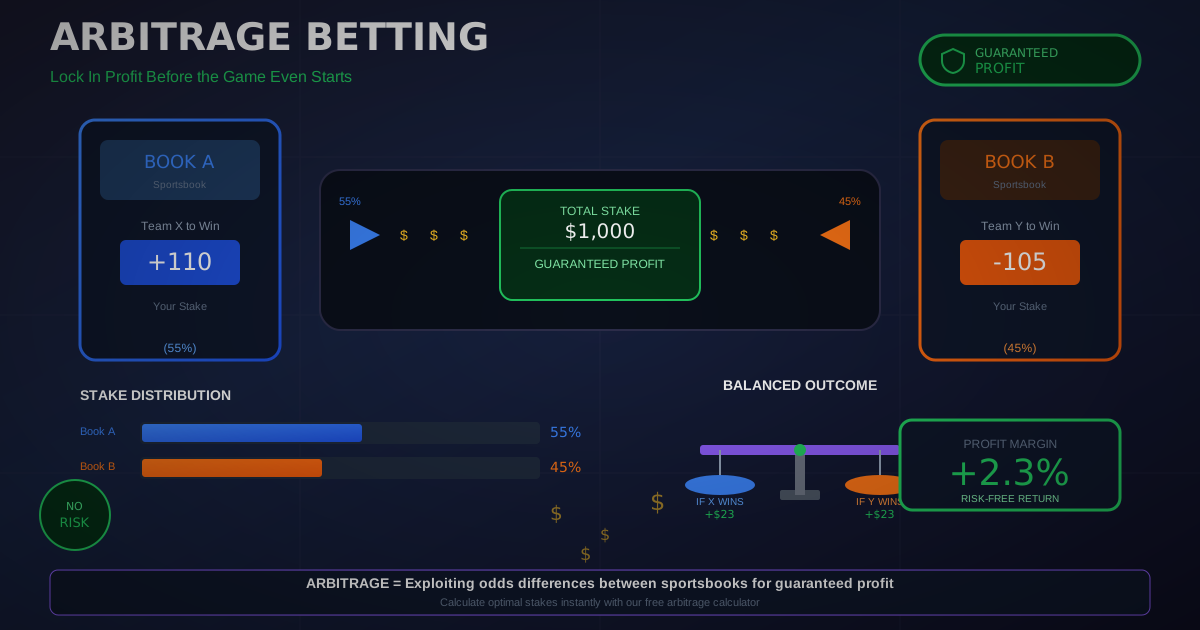
The most exciting opportunity in 2026 betting is the ability to arb between prediction markets and sportsbooks. Because these platforms use different pricing mechanisms and attract different user bases, prices frequently diverge.
Example 1: Super Bowl Winner Market
- Kalshi: Chiefs to win Super Bowl at $0.32 per contract (implied: 32%)
- FanDuel: Chiefs to win Super Bowl at +325 (implied: 23.5%)
If you think the true probability is 28%:
- The Kalshi "Yes" contract at $0.32 is overpriced (sell)
- The FanDuel +325 bet is underpriced (buy)
You could sell "Yes" on Kalshi and bet Chiefs on FanDuel, creating a position that profits if the true probability is between Kalshi's and FanDuel's implied probabilities.
Example 2: Election Night Hedging
During election night as results come in:
- Kalshi updates prices every few seconds based on trades
- Sportsbooks may be slower to update election lines
If a key swing state is called and Kalshi instantly moves Candidate A from $0.55 to $0.75, but a sportsbook still shows Candidate A at +110 (implied 47.6%), you have a massive arb window.
Example 3: Economic Data Arbitrage
- Kalshi: "Will January CPI exceed 3.5%?" priced at $0.40 (40%)
- Sportsbook prop: "CPI over/under 3.45%" with Over at +110 (47.6%)
These are not identical markets (3.5% vs. 3.45%), but the 0.05% difference between the thresholds is small enough that the 7.6% probability gap between platforms may represent genuine mispricing.
Find and calculate arbitrage across platforms with our Arbitrage Calculator.
Strategic Allocation: How to Use Both Platforms
The Optimal Setup for a Serious Bettor in 2026
-
Sportsbooks (60-70% of capital): Use for sports betting where markets are deepest and most actionable. Focus on +EV opportunities, promotions, and line shopping.
-
Kalshi (20-30% of capital): Use for non-sports events: politics, economics, weather. Lower fees mean your edge goes further. No account limitation risk.
-
Polymarket (5-10% of capital): Use for unique events, thin markets, and crypto-related opportunities. Higher risk due to regulatory uncertainty but also higher potential edge in inefficient markets.
Capital Allocation by Bettor Type
| Bettor Type | Sportsbooks | Kalshi | Polymarket |
|---|---|---|---|
| Sports-focused recreational | 90% | 10% | 0% |
| Sports-focused sharp | 70% | 20% | 10% |
| Event/politics specialist | 20% | 60% | 20% |
| Arbitrage-focused | 50% | 30% | 20% |
| Crypto/DeFi native | 10% | 20% | 70% |
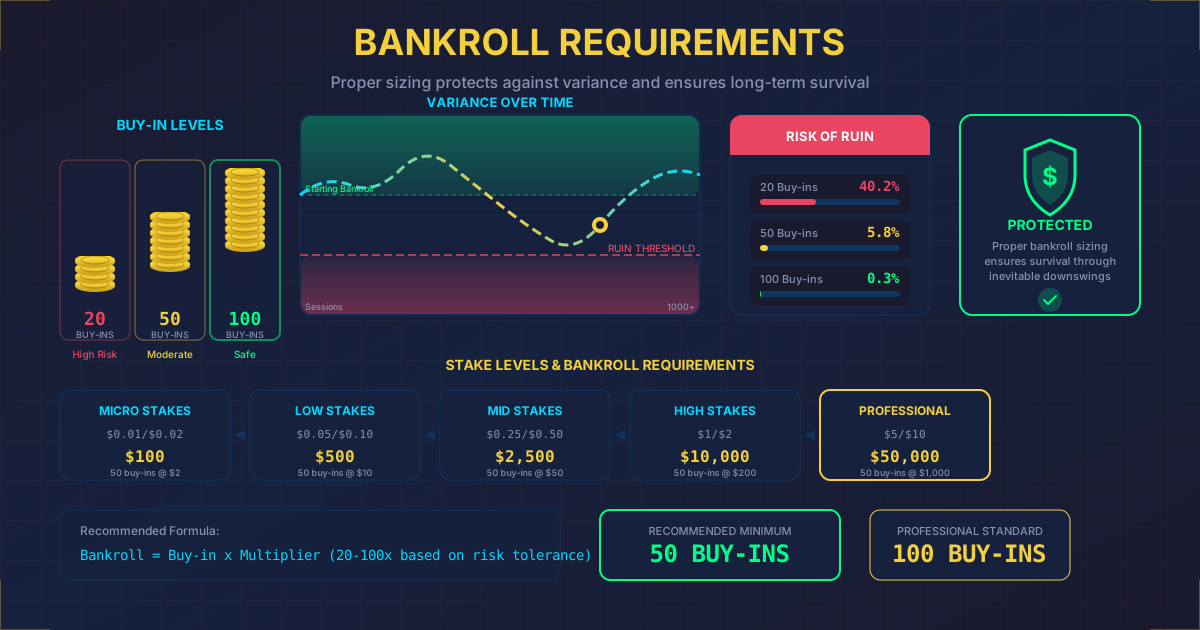
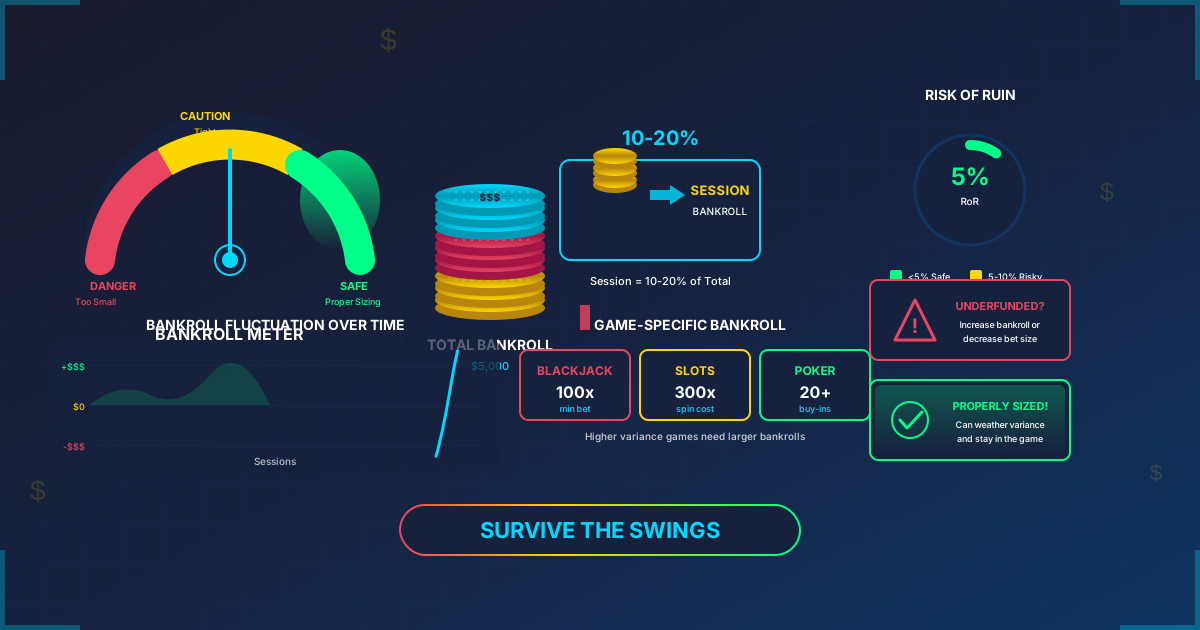
Managing Cross-Platform Bankroll
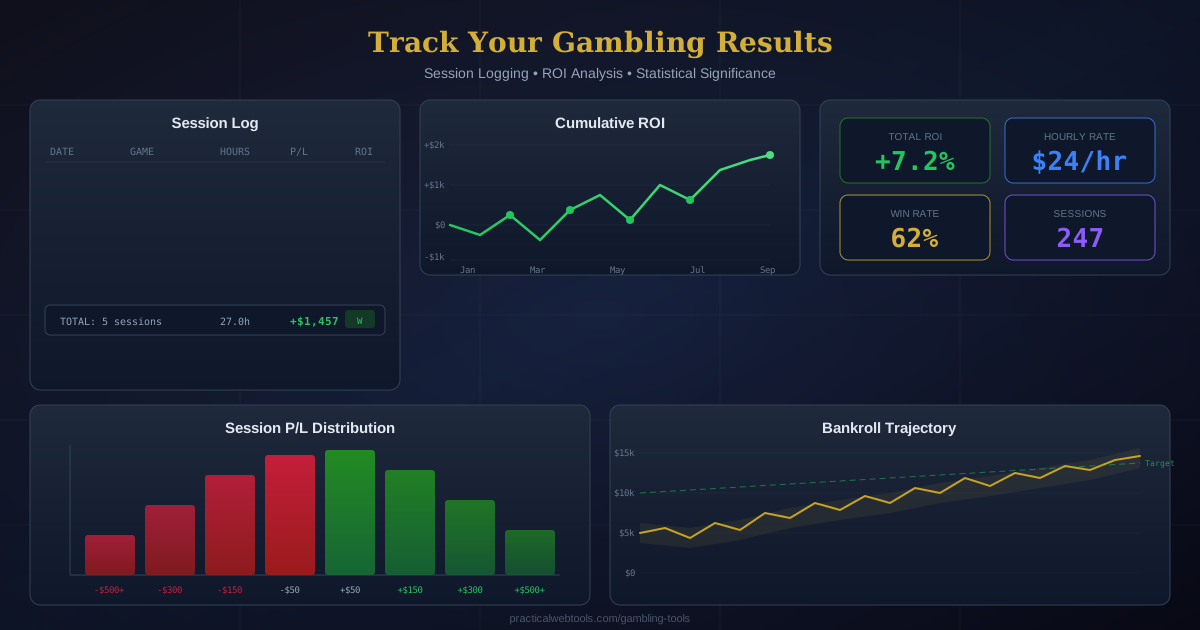
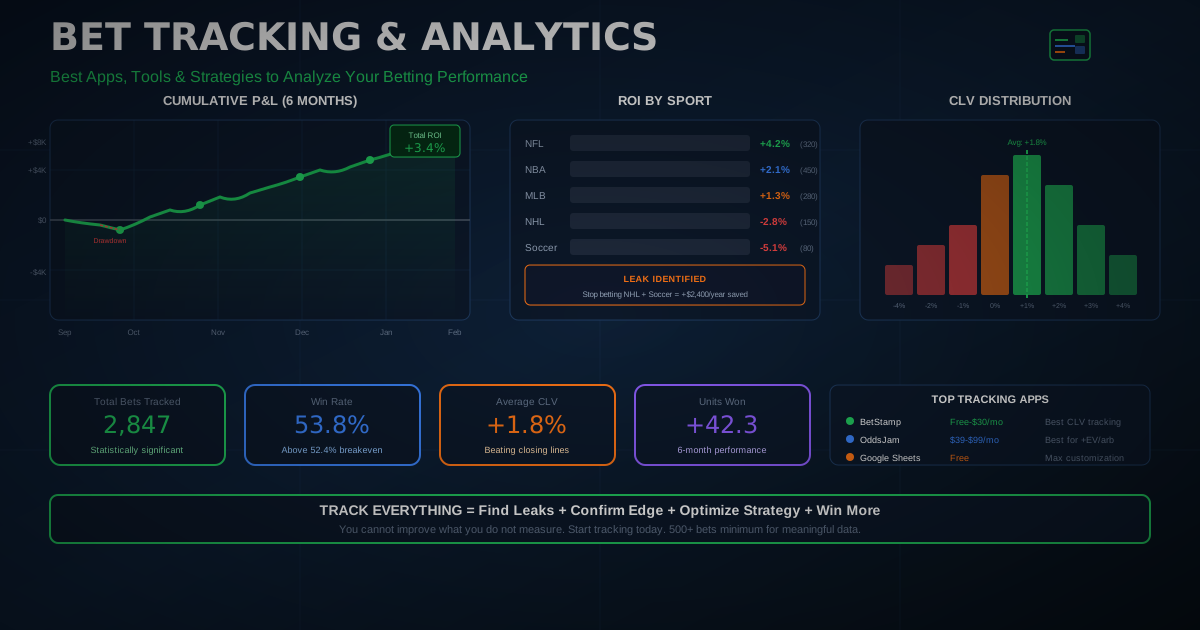
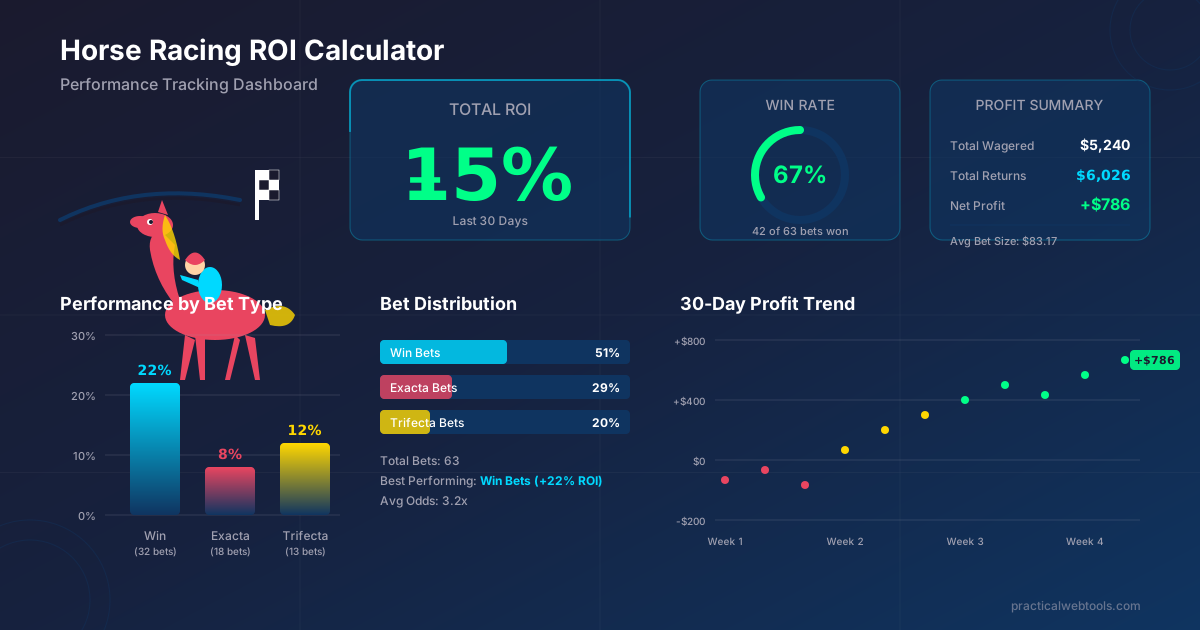
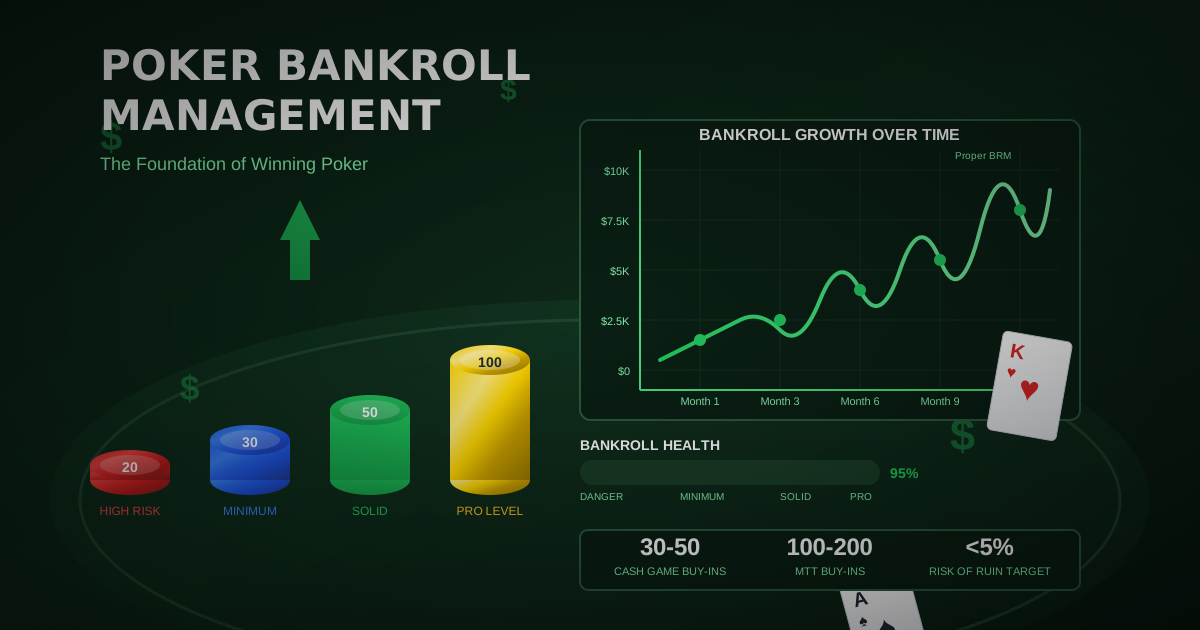
Keep separate bankrolls for each platform category. Track ROI independently to understand where your edge is strongest.
Key metrics to track:
- ROI per platform (sportsbook vs. prediction market)
- Edge per event type (sports, politics, economics)
- Fee cost as percentage of total wagered
- Account limitation impact on sportsbook ROI
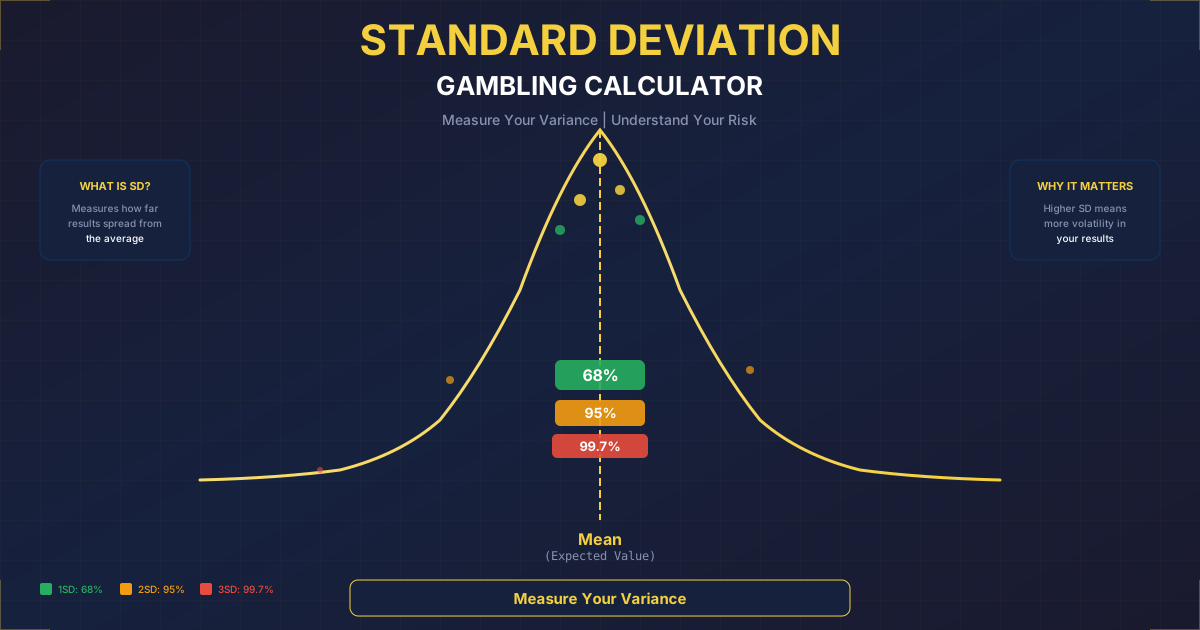
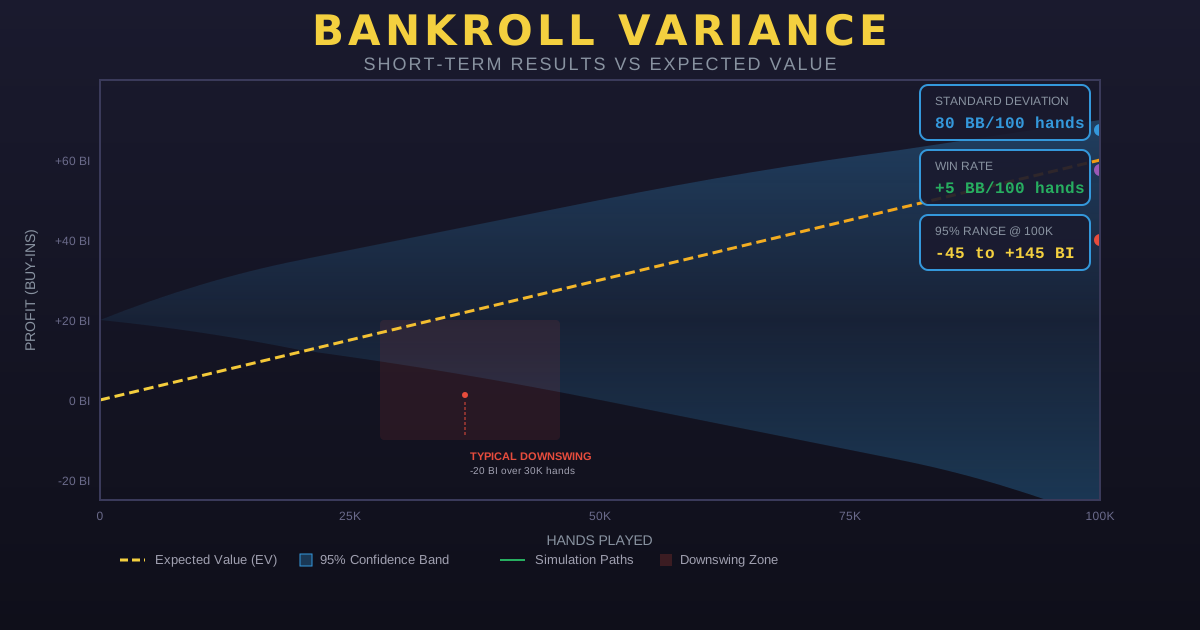
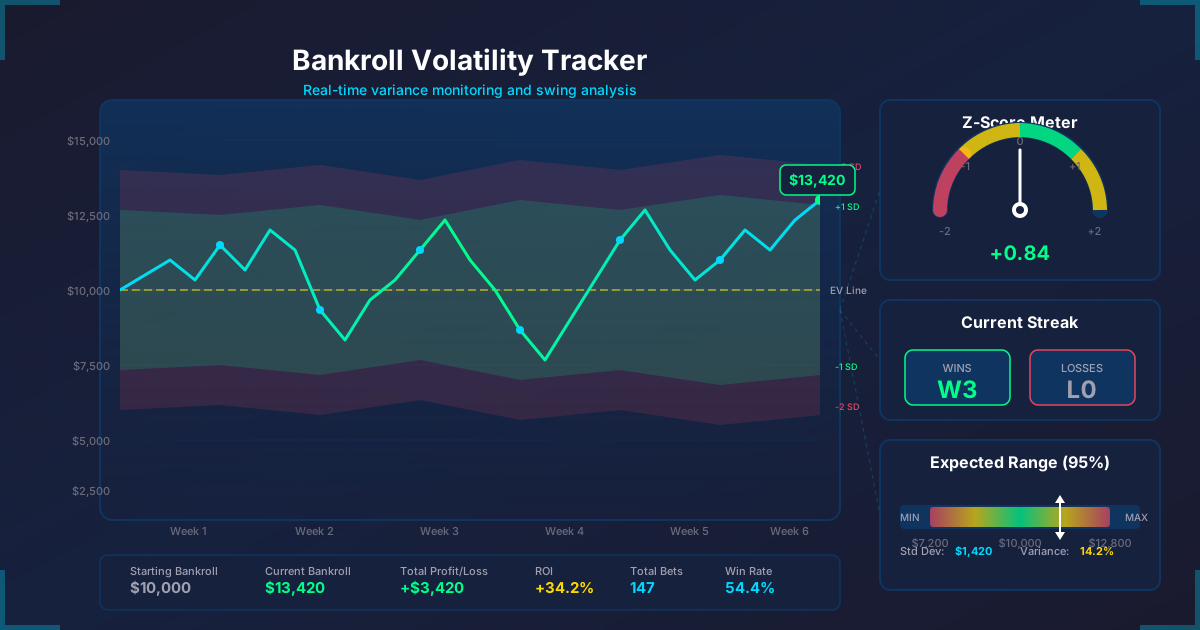
Monitor your portfolio across platforms with our Bankroll Volatility Tracker.
Market Efficiency: Who Gets Prices Right?
Sports Events
Sportsbooks are more efficient for sports because:
- Massive volume ensures fast price discovery
- Sharp bettors contribute to line accuracy
- Proprietary data feeds and algorithms optimize pricing
- Competition among 10+ sportsbooks drives lines to efficient prices
Prediction market sports lines tend to be less efficient due to lower volume and less participation from sports-specific sharp money.
Political Events
Prediction markets are more efficient for politics because:
- They aggregate diverse information sources (not just polls)
- Long-running markets allow prices to converge on truth
- Participants include political insiders, pollsters, and data scientists
- No vig distortion means prices closely reflect true consensus
Research from the 2024 US elections showed prediction markets (particularly Polymarket) outperformed major poll aggregators and expert forecasts in accuracy.
Economic Events
Mixed efficiency. Prediction markets have growing depth in economic event contracts, but institutional participation is still developing. Individual traders with Bloomberg terminals or macro research can find genuine edges, but liquidity limits position sizing.
Determine the fair probability of any event across platforms with our Implied Probability Calculator.
The Regulatory Landscape in 2026
Sportsbooks
Sports betting is regulated state-by-state in the US. As of 2026, 38+ states have legalized online sports betting. The regulatory framework is mature, with strong consumer protections but also limitations:
- Bettors must be physically located in a legal state
- KYC (identity verification) is mandatory
- Sportsbooks report winnings to the IRS
- No political or non-sports event betting at most regulated books
Prediction Markets
The regulatory environment is more complex:
- Kalshi is regulated by the CFTC as a designated contract market. This gives it strong legal standing but limits it to events the CFTC approves.
- Polymarket operates on blockchain infrastructure that has faced US regulatory scrutiny. Its legal status for US users varies.
- The CFTC has been gradually expanding the types of events Kalshi can offer, including political and election events after key rulings.
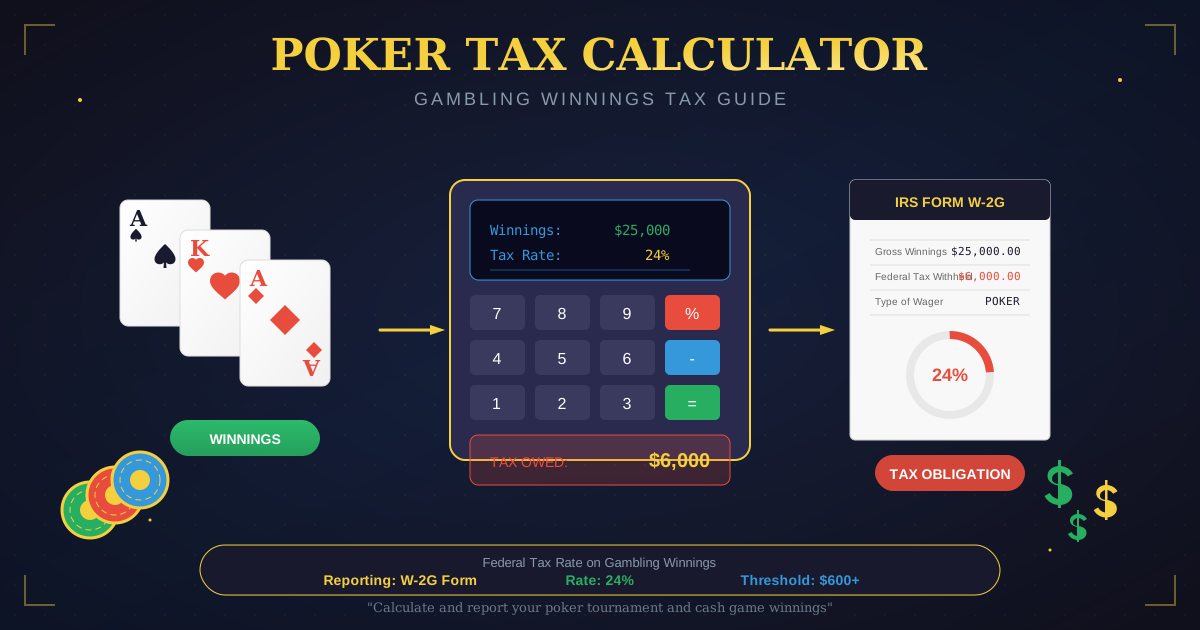
Tax Implications
Both platform types create taxable events:
| Platform | Tax Treatment |
|---|---|
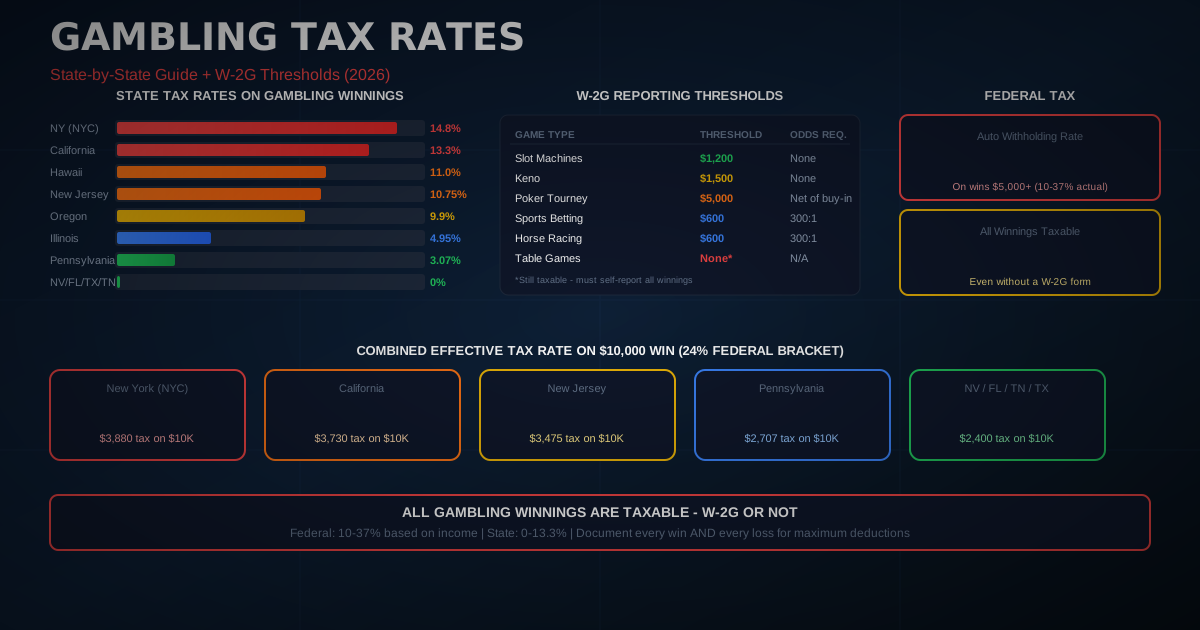
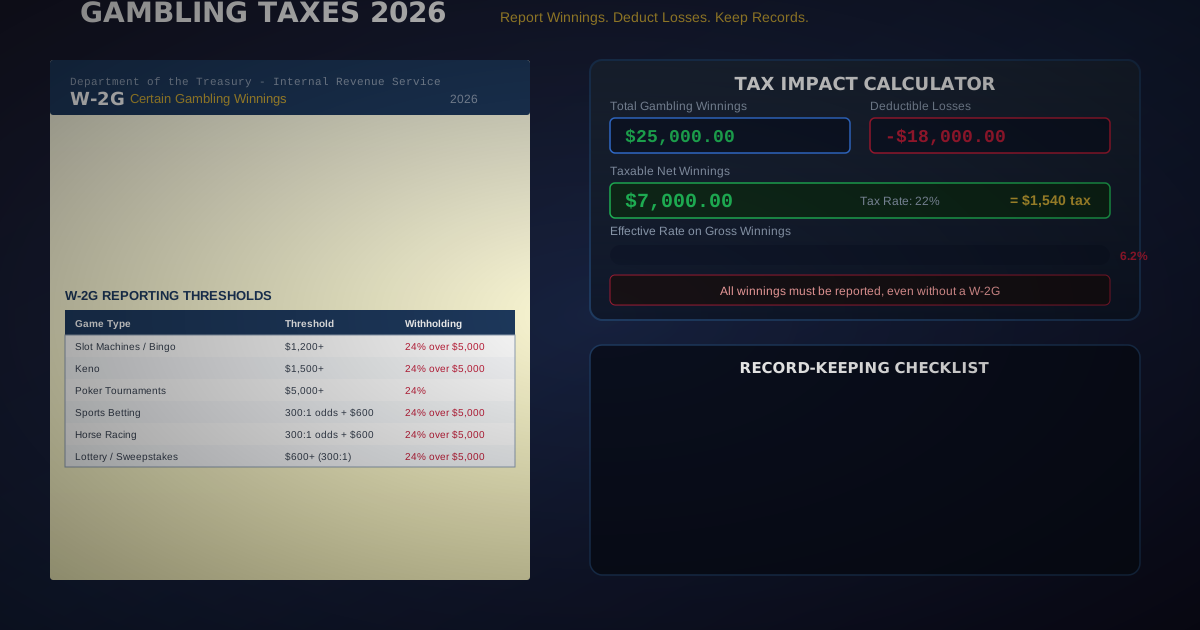
| Sportsbooks | Gambling income (reported on W-2G for large wins) |
| Kalshi | 1099 reporting for net gains |
| Polymarket | Self-reported crypto gains/losses |
Consult a tax professional for your specific situation. Net losses may offset gains in some cases.
Real-World Cross-Platform Strategy Examples
Example 1: The Fed Meeting Play
The Federal Reserve announces interest rate decisions 8 times per year. Kalshi offers contracts on the decision.
Pre-meeting setup:
- Kalshi: "Fed will hold rates steady" at $0.85 (85% implied)
- Your analysis of CME FedWatch tool and economic data suggests 90% probability of a hold
Trade:
- Buy 200 "Hold" contracts at $0.85. Cost: $170
- If correct: Receive $200. Profit: $30 (17.6% return)
- If wrong: Lose $170
After fees ($0.04 x 200 = $8), net profit if correct: $22. Net loss if wrong: $178.
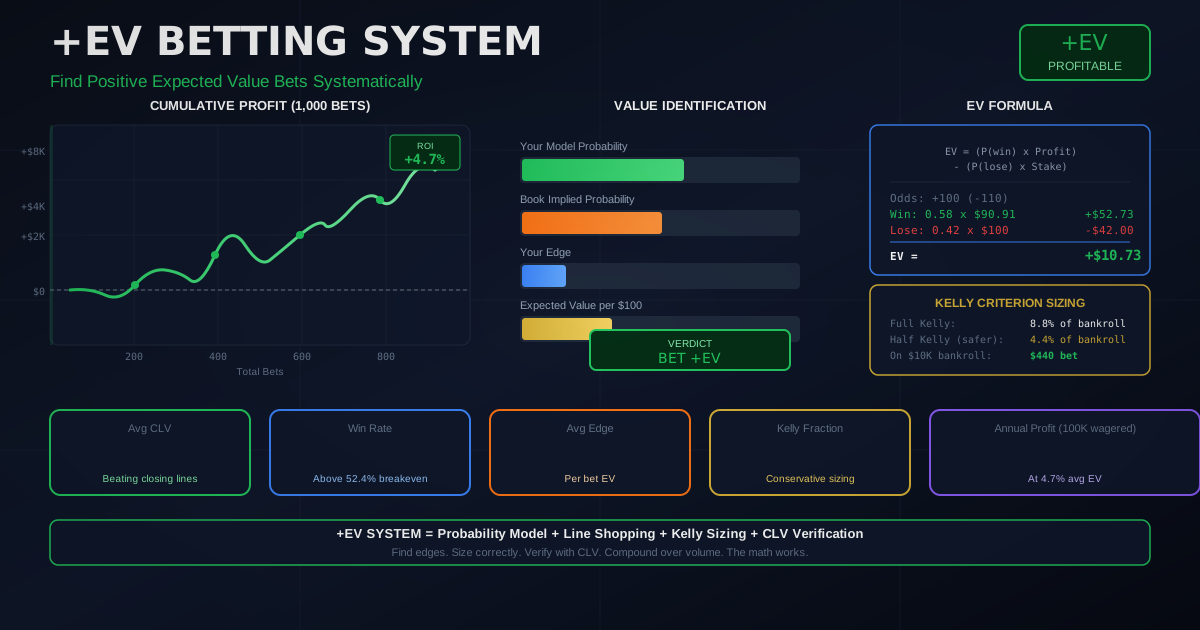
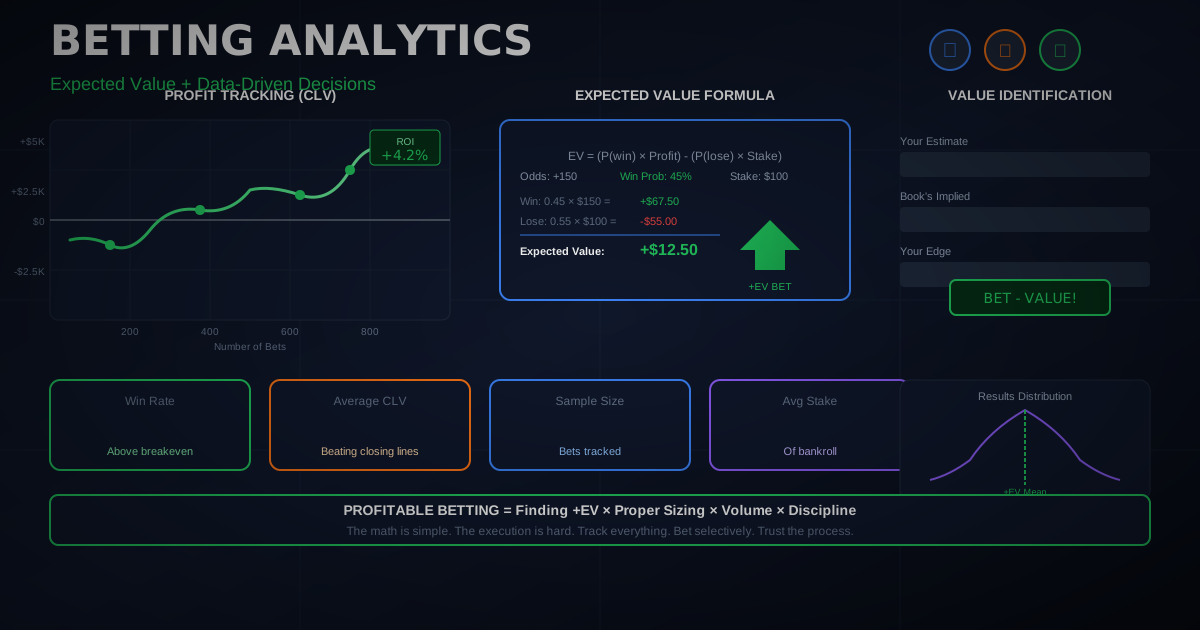
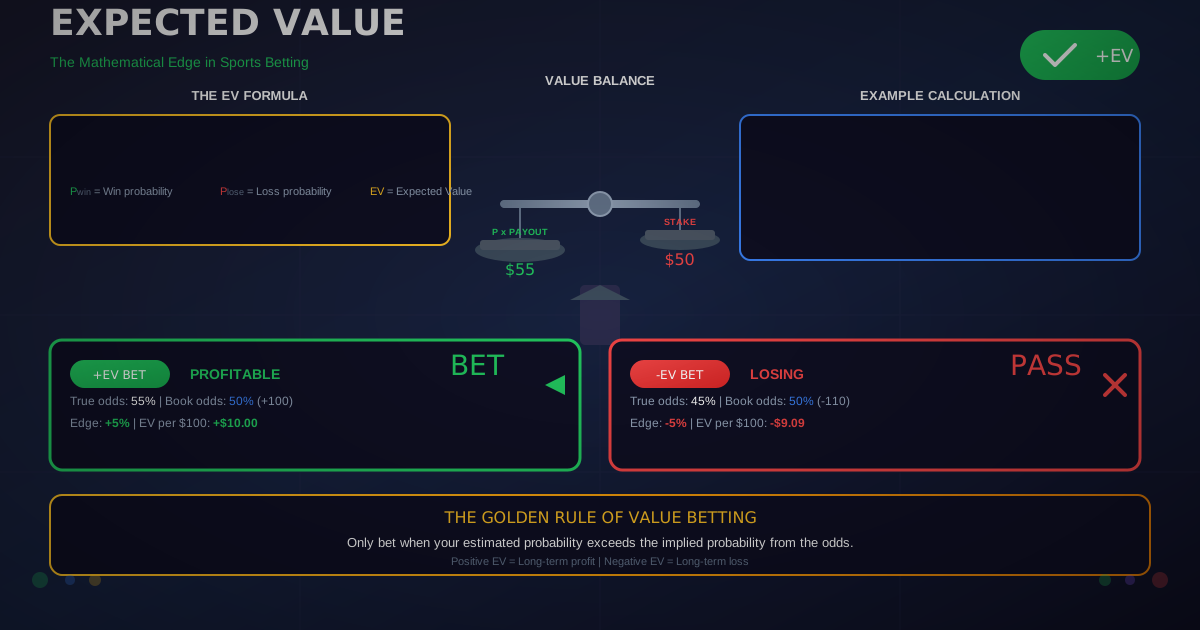
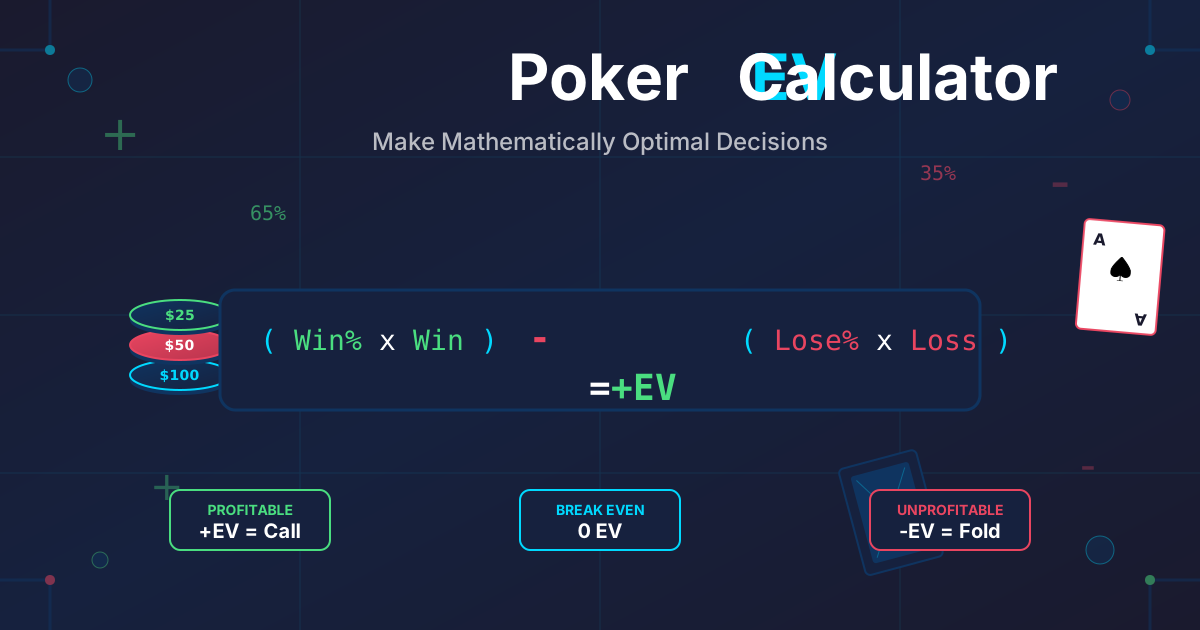
EV = (0.90 x $22) - (0.10 x $178) = $19.80 - $17.80 = +$2.00 per trade
Small edge, but across 8 meetings per year, it compounds.
Example 2: The Election Hedging Strategy
Six months before an election, you identify:
- Kalshi: Candidate A to win presidency at $0.45 (45%)
- Your model: 52% probability
Buy Candidate A on Kalshi. As election approaches and polls shift:
- If price rises to $0.60: Sell contracts for 33% profit (before election)
- If price drops to $0.35: Buy more (if conviction holds) or cut losses
The beauty of prediction markets is you can exit positions before settlement. Sportsbooks typically do not allow cashing out futures at market-implied value.
Example 3: Cross-Platform Weather Arb
- Kalshi: "Hurricane to make US landfall in September" at $0.38
- Sportsbook special prop: "Major hurricane US landfall (Sep-Nov)" at +200 (33.3% implied)
These are not identical markets (Kalshi is September-only; sportsbook includes October-November), but if your meteorological analysis shows September alone has a 42% probability, the Kalshi contract at $0.38 is +EV.
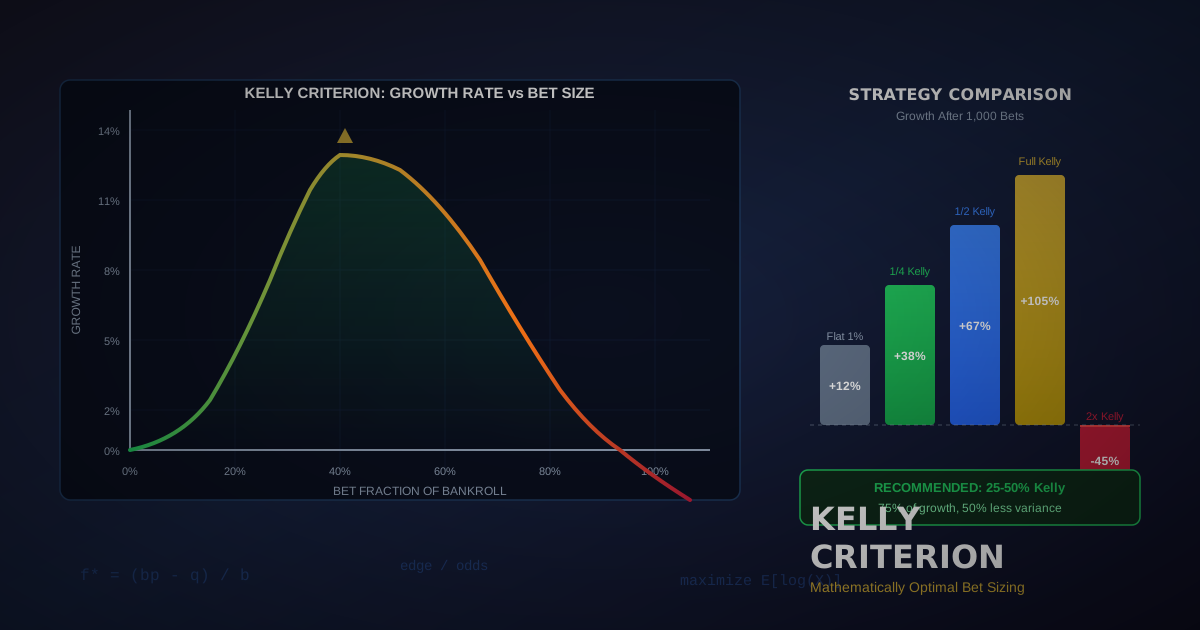
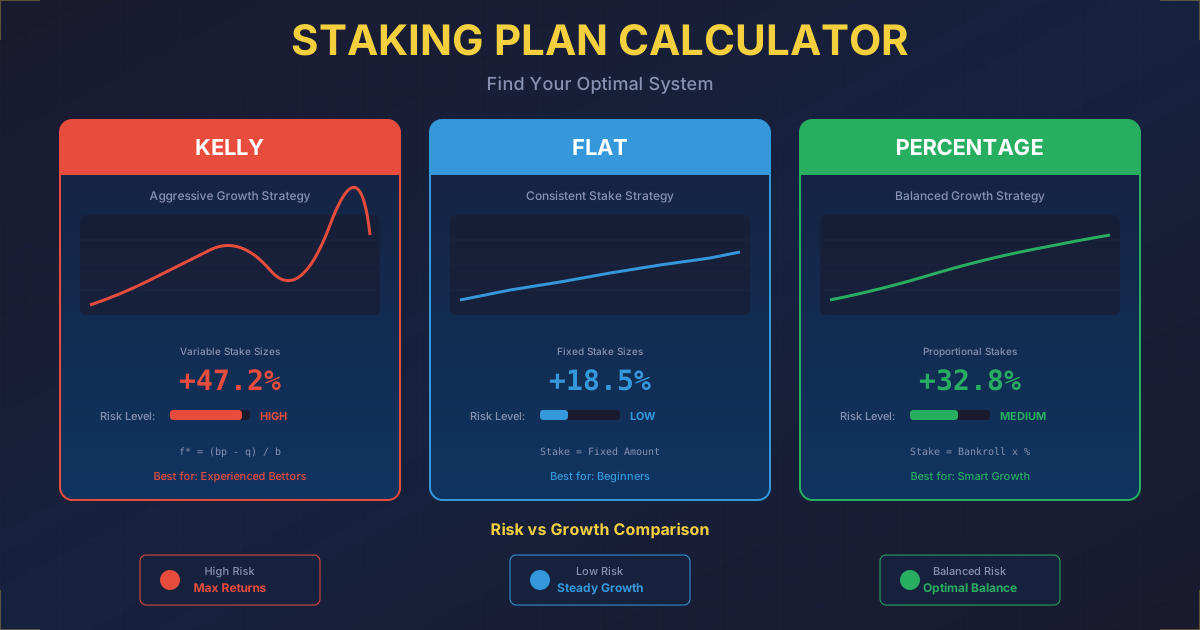
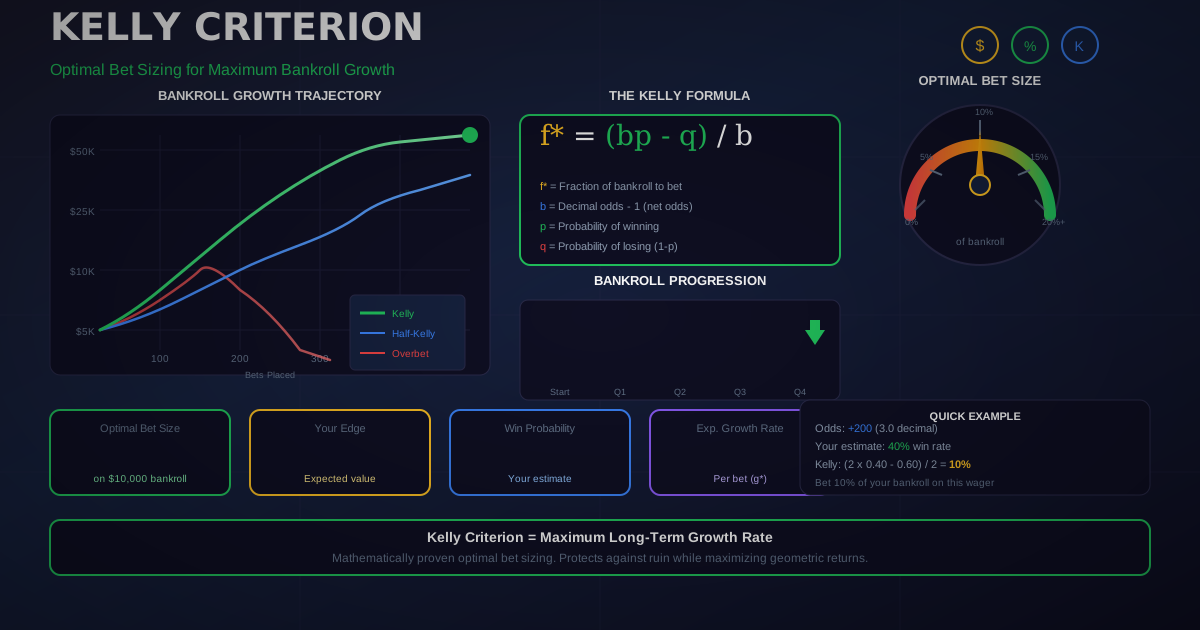
Optimize your bet size across correlated positions with our Kelly Criterion Calculator.
Example 4: The Sportsbook-to-Kalshi Hedge
You bet $500 on the Rams to win the NFC Championship at +800 on FanDuel (implied 11.1%). If the Rams reach the NFC Championship game, their contract on Kalshi for winning the Super Bowl might be at $0.25.
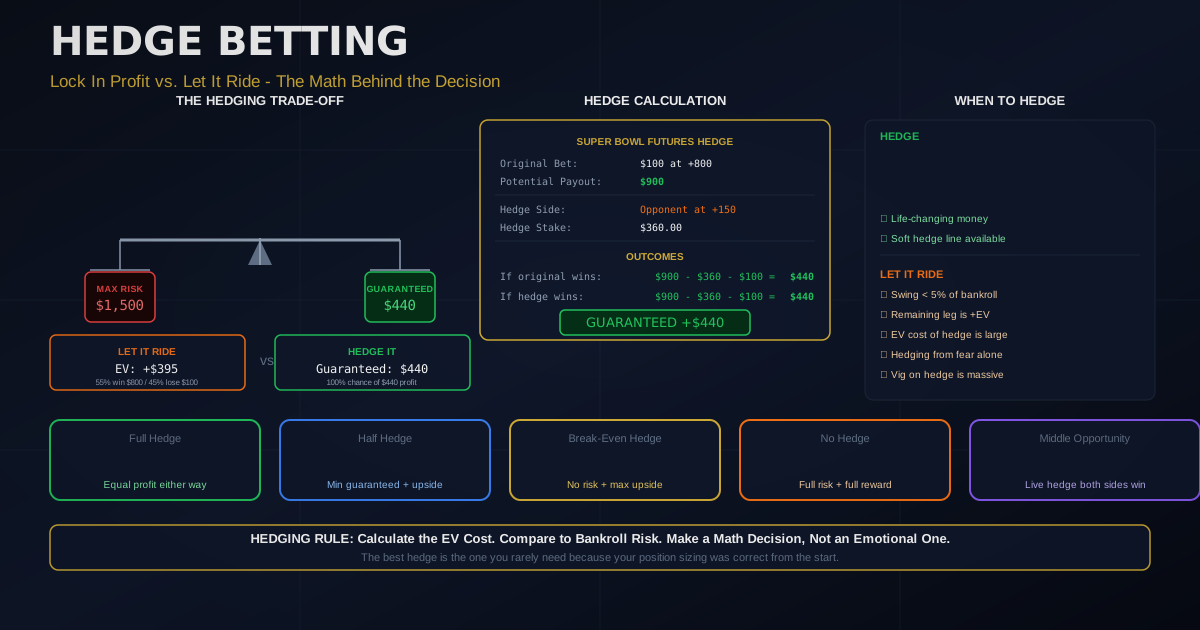
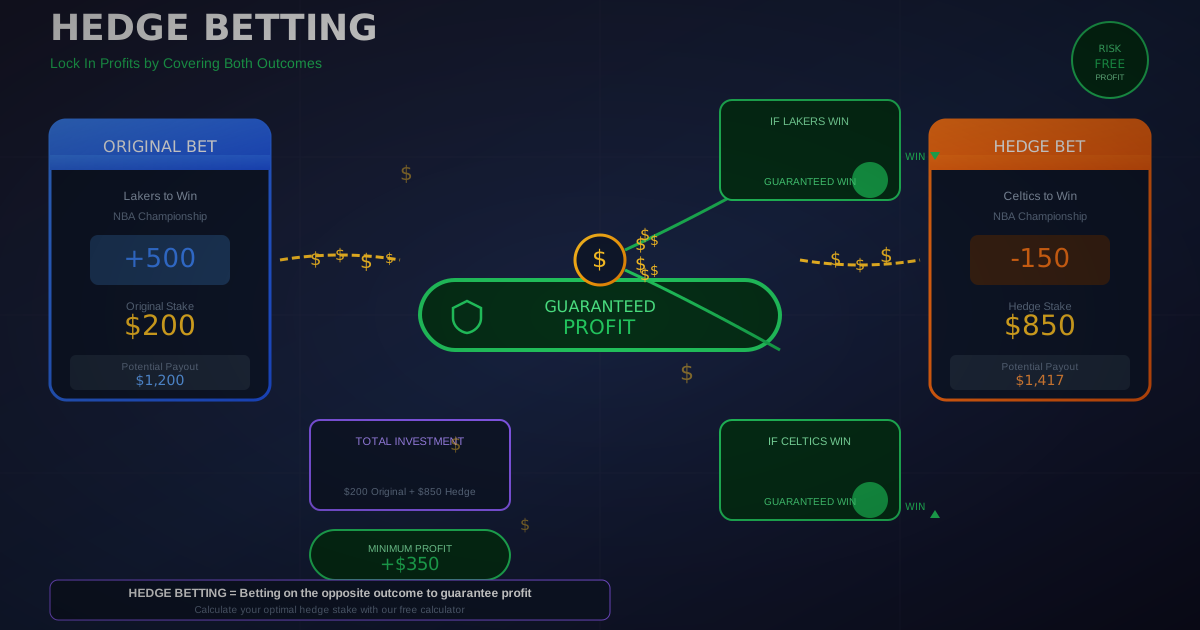
You can now hedge by selling "Rams to win Super Bowl" on Kalshi while your FanDuel bet covers the NFC Championship. This creates a partial hedge that locks in profit on the NFC Championship while maintaining some Super Bowl upside.
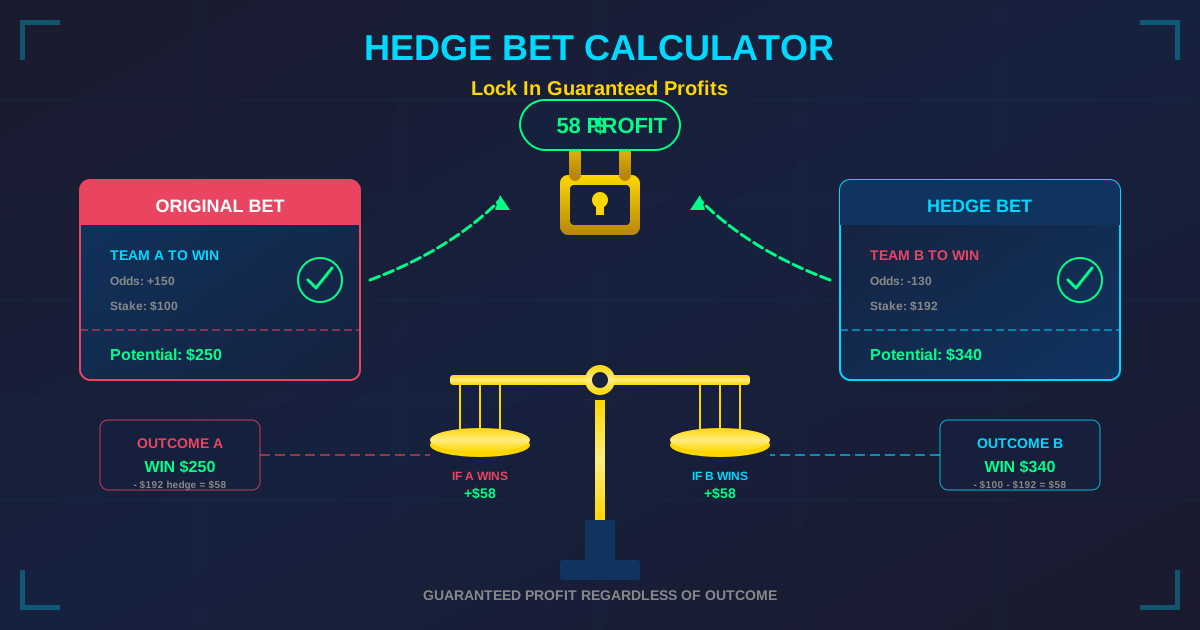
Calculate complex hedge positions with our Hedge Calculator.
Frequently Asked Questions
What is the difference between a prediction market and a sportsbook? A prediction market is an exchange where users trade contracts against each other, with prices set by supply and demand. A sportsbook is a market maker that sets odds and takes the opposite side of your bet. Prediction markets typically have lower fees but less liquidity. Sportsbooks have higher vig but deeper markets for sports. Use our Implied Probability Calculator to compare prices across both.
Is Kalshi legal in the US? Yes. Kalshi is regulated by the Commodity Futures Trading Commission (CFTC) as a designated contract market. It is legal in most US states, though availability varies. Kalshi is not a sportsbook and does not require state-by-state sports betting legalization.
Can I bet on politics at sportsbooks? In most US states, no. Political betting is explicitly prohibited at most regulated sportsbooks. However, some offshore sportsbooks and prediction markets like Kalshi and Polymarket offer political event contracts.
Are prediction markets more profitable than sportsbooks? For skilled bettors, prediction markets often offer better returns because fees are lower (1-3% vs. 4-10% vig) and accounts are never limited. However, sports markets at sportsbooks are much deeper and offer more opportunities per day. The best approach is using both. Track edge with our Expected Value Calculator.
How do I convert prediction market prices to traditional odds? A prediction market contract at $0.60 implies 60% probability. Convert to American odds: 60/40 = -150. Convert to decimal: 1/0.60 = 1.667. Our Odds Converter handles all format conversions instantly.
Can I arbitrage between prediction markets and sportsbooks? Yes, when overlapping events exist. The most common arb opportunities arise during elections, major awards shows, and crossover events that both platforms offer. Identify arbs with our Arbitrage Calculator.
Which platform is better for beginners? Sportsbooks are more user-friendly with familiar bet types, better mobile apps, and generous welcome promotions. Prediction markets require understanding contract mechanics and order books. Start with sportsbooks, then expand to prediction markets as you develop an edge-finding strategy.
Do prediction markets pay taxes? Yes. All profits from prediction markets are taxable income. Kalshi issues 1099 forms. Polymarket gains should be self-reported. Net losses may offset gains depending on your tax situation. Consult a tax professional.
Essential Tools for Multi-Platform Bettors
Odds and Probability Tools
- Odds Converter: Convert between American, decimal, fractional odds and prediction market contract prices
- Implied Probability Calculator: Instantly convert any odds format or contract price to probability for cross-platform comparison
- Hold/Vig Calculator: Calculate the true cost of betting at sportsbooks vs. prediction market fees
Value Finding Tools
- Expected Value Calculator: Determine EV on any bet or contract across platforms
- Arbitrage Calculator: Identify cross-platform arbitrage opportunities between prediction markets and sportsbooks
- Kelly Criterion Calculator: Optimize position sizing across different platform types
Portfolio Management Tools
- Hedge Calculator: Calculate hedging positions across sportsbooks and prediction markets
- CLV Tracker: Track closing line value to verify your edge across platforms
- Bankroll Volatility Tracker: Monitor your full cross-platform portfolio for drawdowns and performance
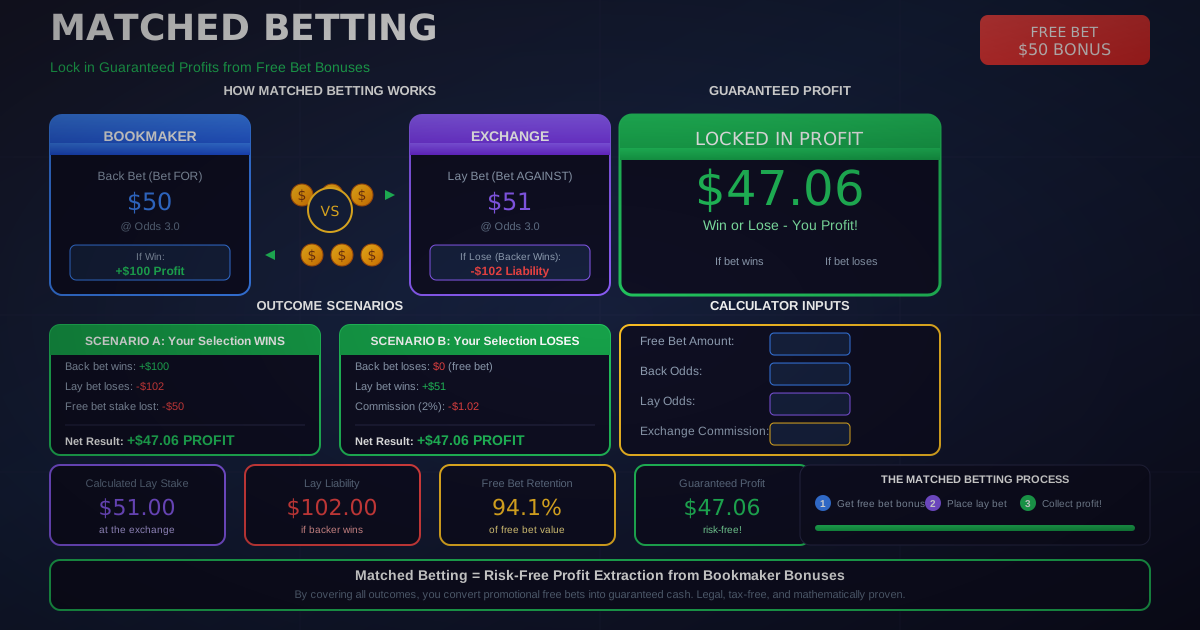
- Matched Betting Calculator: Maximize sportsbook promotion value as part of your overall strategy
Conclusion: The Multi-Platform Edge
The 2026 betting landscape rewards bettors who operate across multiple platforms. Sportsbooks offer the deepest sports markets and most generous promotions. Prediction markets offer lower fees, no account limitations, and access to events that sportsbooks cannot offer.
The sharpest bettors are not choosing between prediction markets and sportsbooks. They are using both, allocating capital where their edge is strongest, and exploiting cross-platform pricing discrepancies when they arise.
Start with a clear understanding of where your informational edge lies. If it is sports, weight your capital toward sportsbooks. If it is politics or economics, prediction markets are your primary venue. And always keep capital allocated for cross-platform arbitrage, because the opportunities are real and growing.
Compare odds instantly across platforms with our Odds Converter. Calculate EV on any contract with our Expected Value Calculator. And size your positions optimally with our Kelly Criterion Calculator.
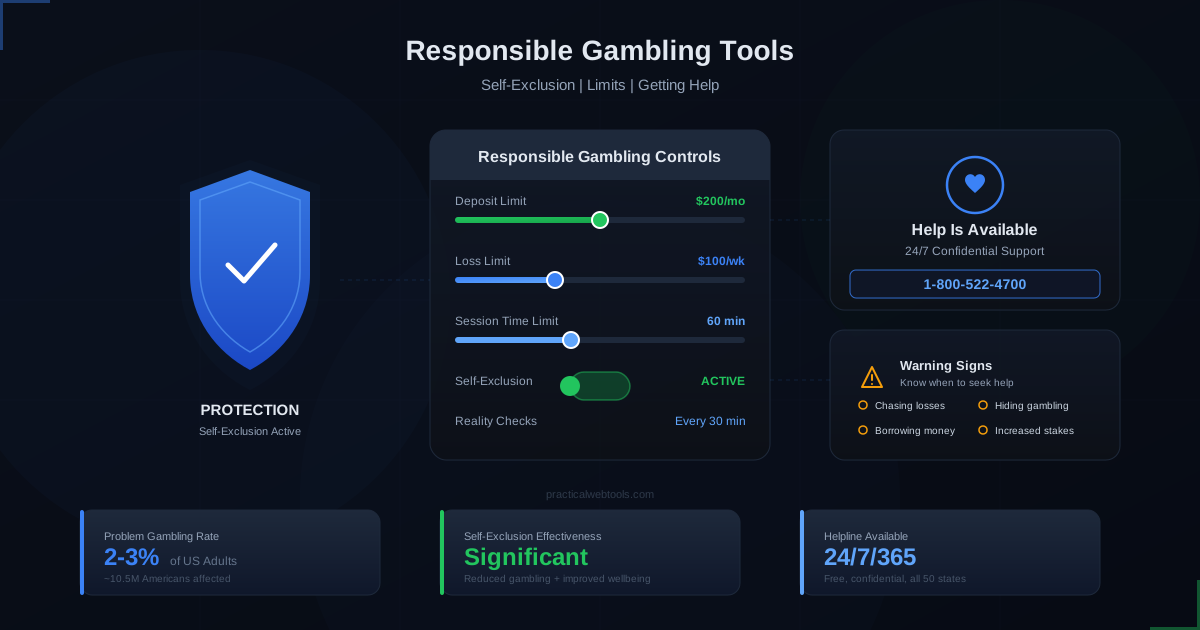
Gambling involves risk. This content is for educational and informational purposes only. Always gamble responsibly, set limits you can afford, and seek help if gambling becomes a problem. Visit the National Council on Problem Gambling or call 1-800-522-4700 for support.