How Sportsbooks Set Odds: Understanding the Market You're Betting Into (2026)
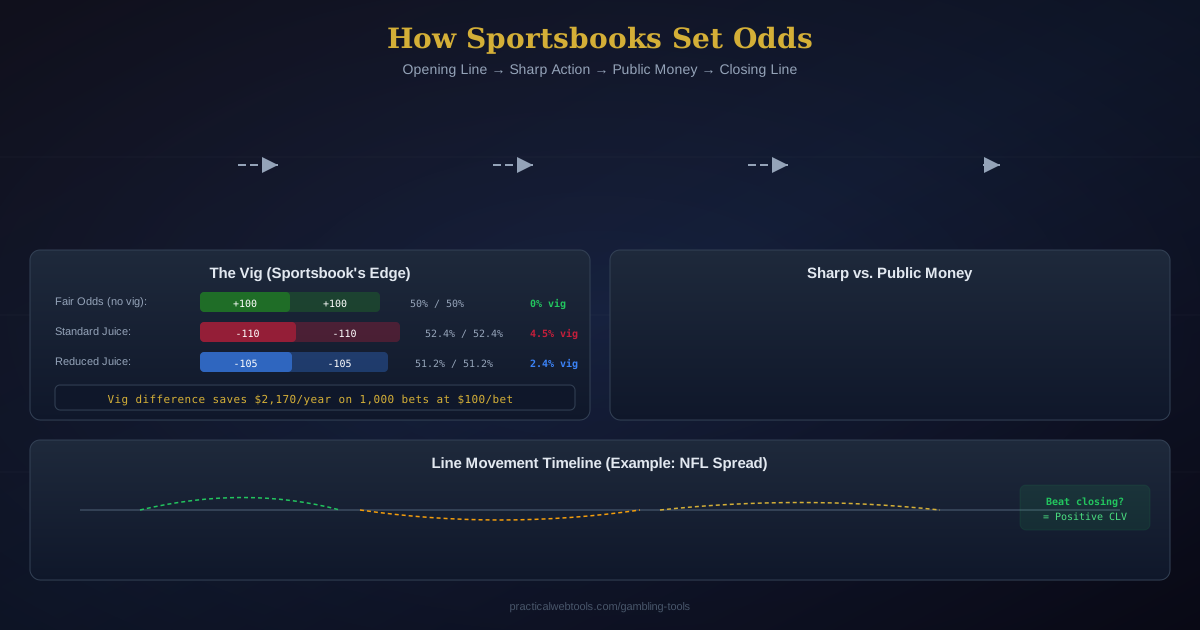
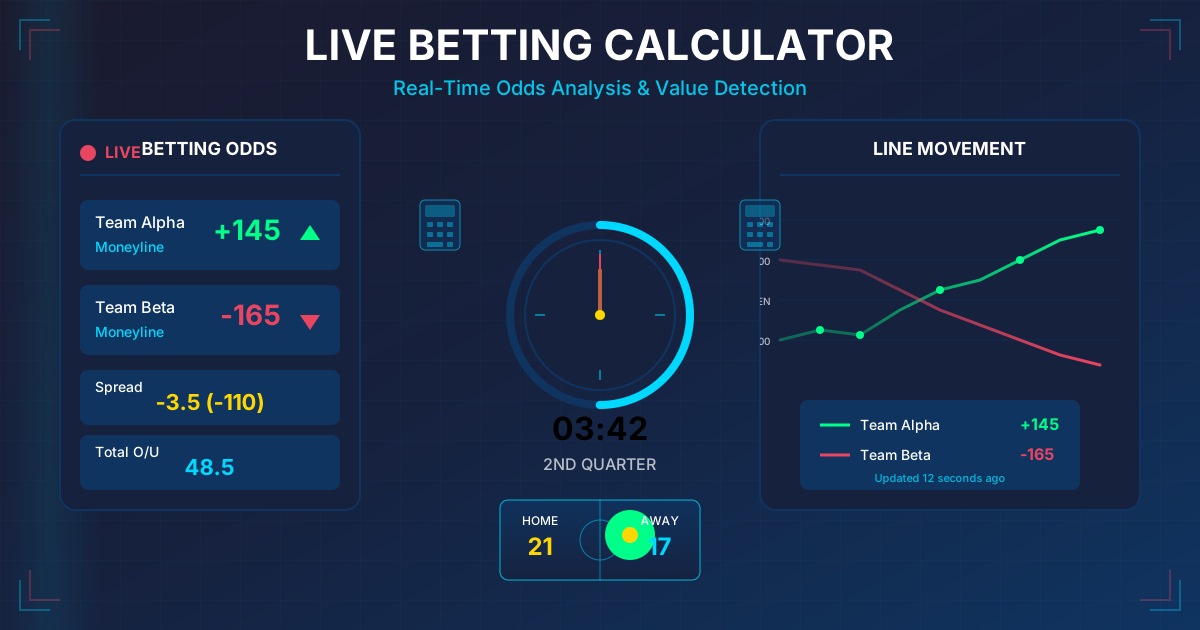
The odds on your screen did not appear by accident. Behind every -110, +150, or -3.5 spread is a sophisticated process involving algorithms, market data, professional bettors, and public money flow. Understanding how sportsbooks set and adjust their odds is arguably the single most valuable piece of knowledge for any serious bettor, because it reveals where the inefficiencies are -- and inefficiency is where profit lives.
Most recreational bettors treat sportsbook lines as gospel truth -- a prediction of what will happen. They are not. Odds are prices. Like any price in a marketplace, they reflect supply and demand, include a markup (the vig), and sometimes misprice the underlying product. Professional bettors understand this distinction and profit from it.
This guide takes you inside the sportsbook's operation: how opening lines are created, how sharp bettors move lines, how public money influences prices, what the vig actually costs you, and most importantly, how to read line movement to identify value before the market corrects itself.
Analyze the vig on any betting line with our free Hold/Vig Calculator.
How Opening Lines Are Created
The Odds Compilation Process
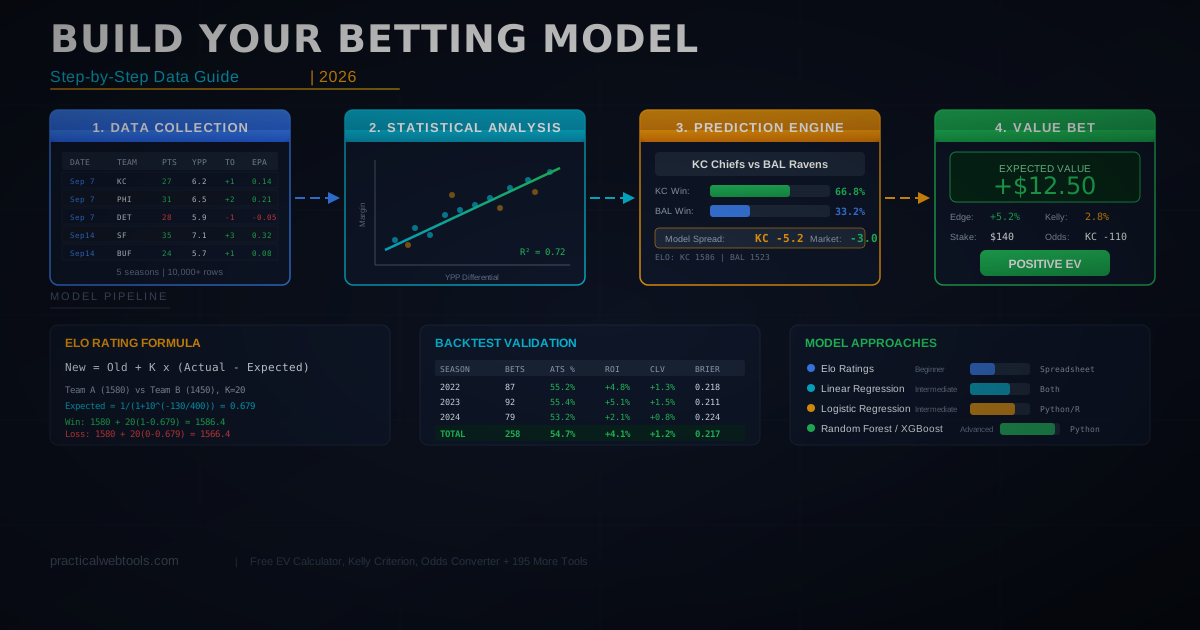
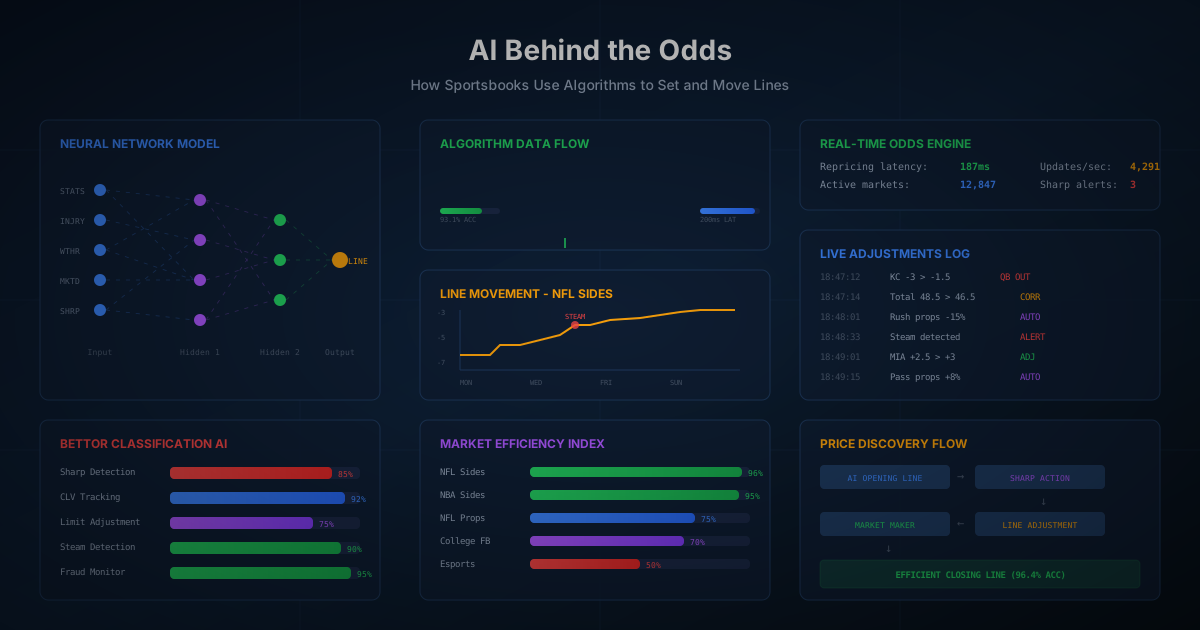
Modern sportsbooks use a combination of statistical models, historical data, and human expertise to set their opening lines.
Step 1: Power Ratings and Models
Every major sportsbook maintains proprietary power ratings for teams and players. These ratings incorporate:
- Historical performance data (win rates, point differentials, margins)
- Player availability and injury reports
- Home/away performance splits
- Strength of schedule adjustments
- Recent form and momentum metrics
- Weather conditions (for outdoor sports)
- Rest days and travel distances
Step 2: Model Output
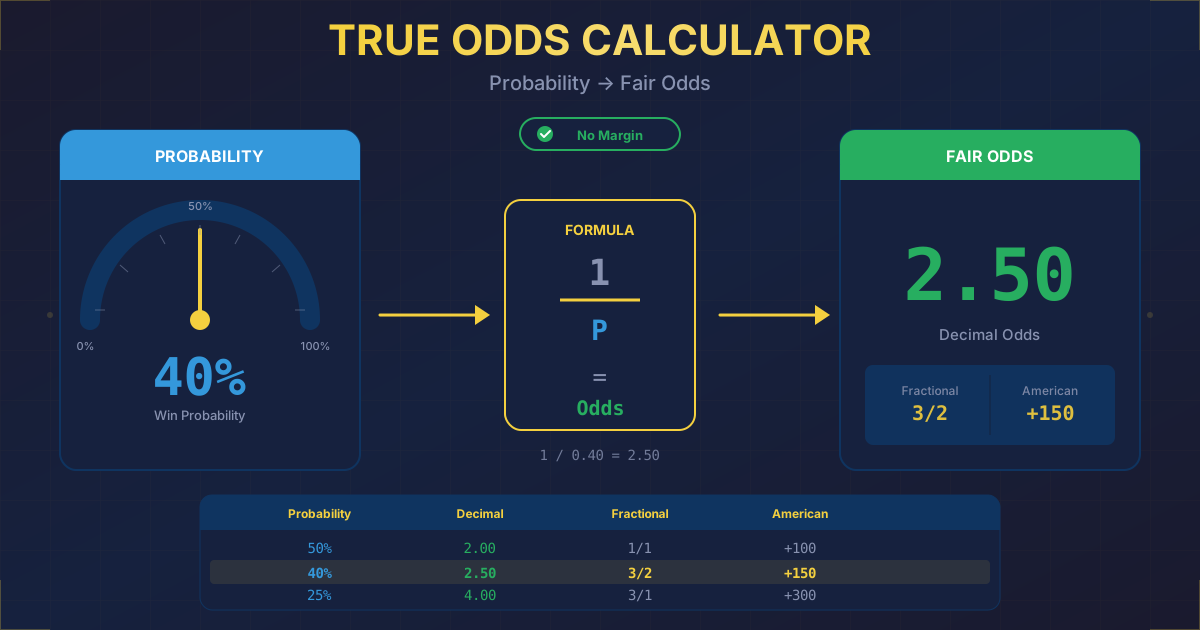
The models generate a "fair line" -- the true estimated probability of each outcome without any built-in margin.
Example: NFL Game
A sportsbook's model determines:
- Team A has a 62% chance to win
- Team B has a 38% chance to win
- Expected margin: Team A by 4.2 points
Fair odds (no vig):
- Team A moneyline: -163 (62% implied)
- Team B moneyline: +163 (38% implied)
- Spread: Team A -4 to -4.5
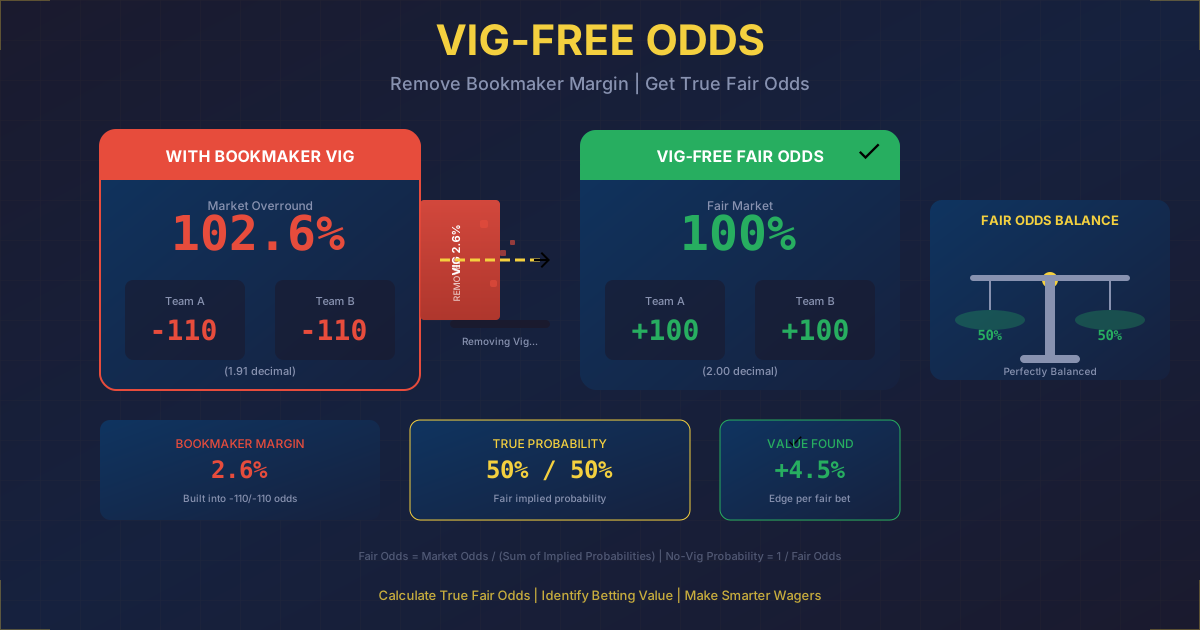
Step 3: Adding the Vig
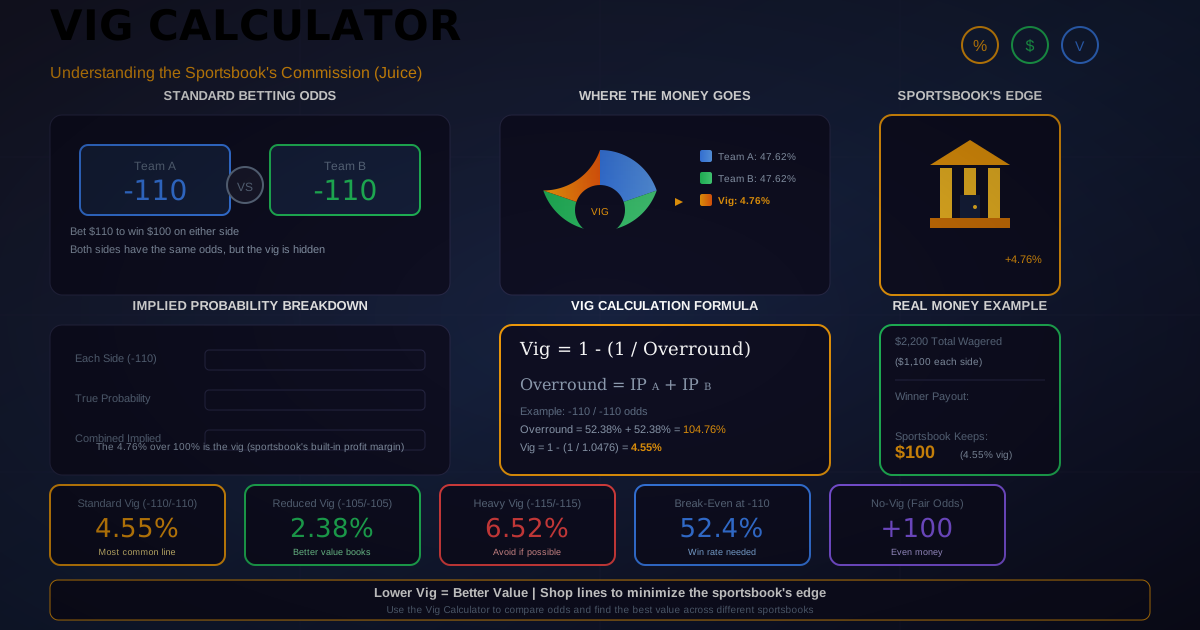
The sportsbook then adds their margin (vig/juice) to both sides:
Odds with vig:
- Team A moneyline: -175 (63.6% implied)
- Team B moneyline: +145 (40.8% implied)
- Combined implied probability: 104.4% (4.4% is the vig)
The vig ensures the sportsbook profits regardless of the outcome, as long as they have balanced action on both sides.
Calculate the vig on any line with our Hold/Vig Calculator.
Who Sets the Opening Line?
Not all sportsbooks are created equal in terms of odds origination:
| Sportsbook Type | Role in Market | Examples |
|---|---|---|
| Market Makers | Set opening lines, accept sharp action | Pinnacle, Circa, BOL |
| Mid-Market | Adjust based on market makers, accept moderate limits | DraftKings, FanDuel |
| Copy-and-Adjust | Copy lines from sharper books, add extra vig | Smaller regional books |
Market makers take on the most risk by opening lines first. They welcome sharp money because it helps them find the true price faster. Retail sportsbooks wait to see where the sharp books land before posting their own numbers.
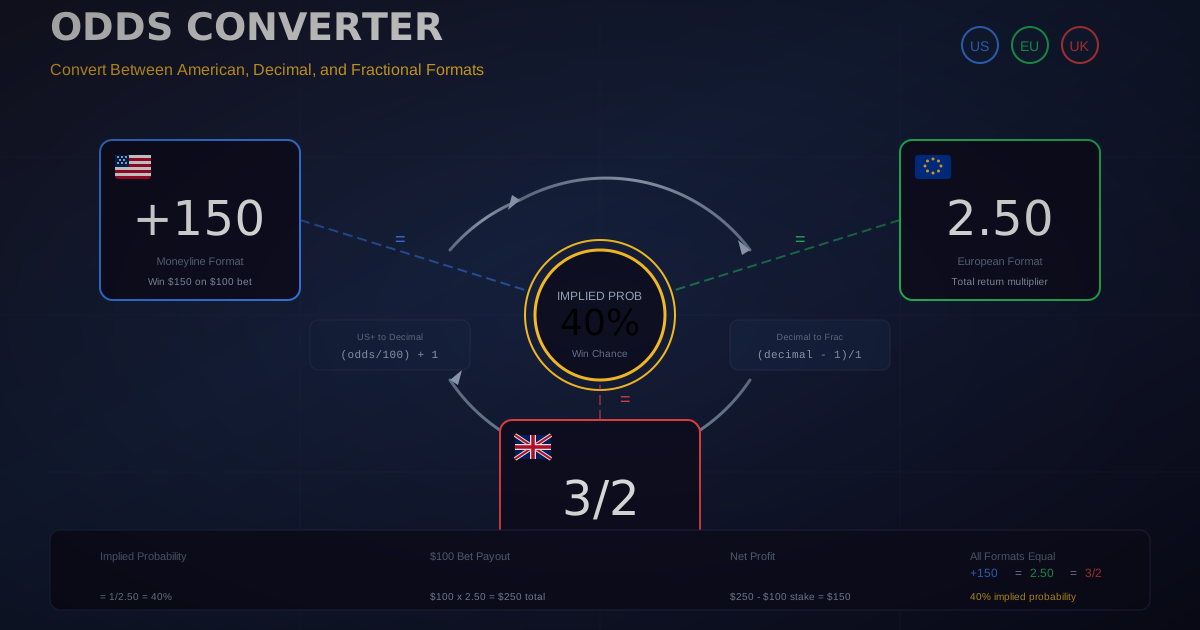
Convert between odds formats to compare across books with our Odds Converter.
The Role of Sharp Bettors in Line Movement
What Makes a Bettor "Sharp"?
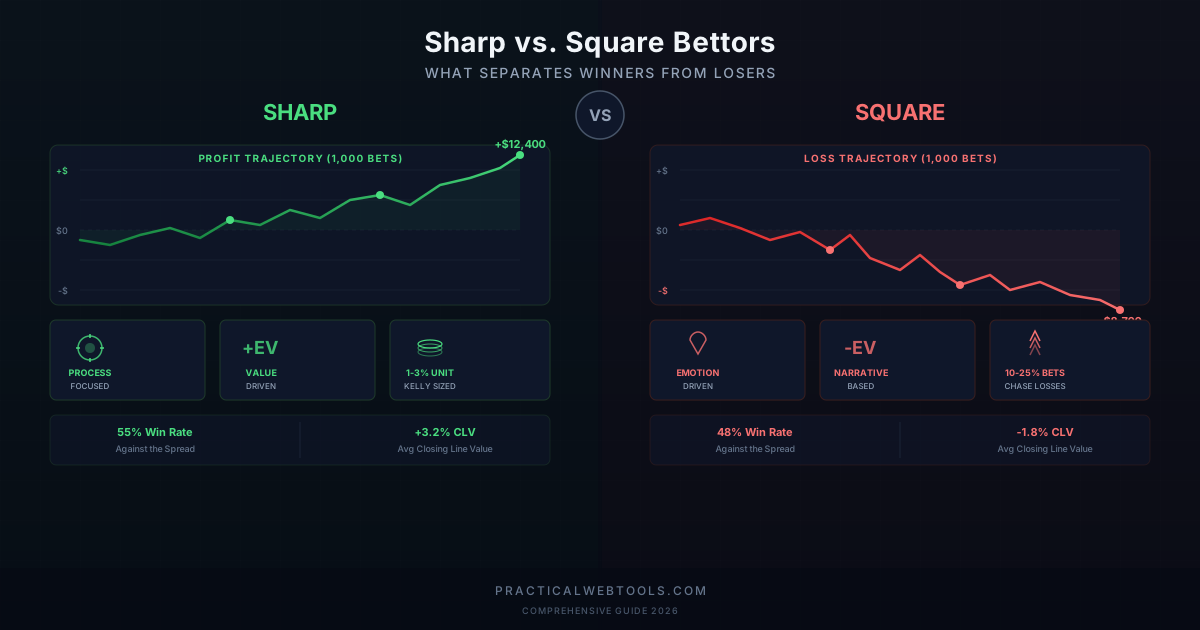
Sharp bettors (also called "wiseguys" or "professionals") are defined not by their bankroll size but by their historical profitability. Sportsbooks track every bettor's performance and classify them:
| Classification | Win Rate (ATS) | Sportsbook Response | Typical Limits |
|---|---|---|---|
| Recreational | 45-49% | Welcome, increase limits | $500-$5,000 |
| Smart Money | 50-53% | Monitor closely | $1,000-$10,000 |
| Sharp | 53-57% | Move lines on their bets | $5,000-$50,000 |
| Syndicate | 55%+ | Limit immediately | Varies |
How Sharps Move Lines
When a sharp bettor places a significant wager, the sportsbook immediately adjusts the line. This is called "sharp action" or "steam."
Example: Sharp Line Movement
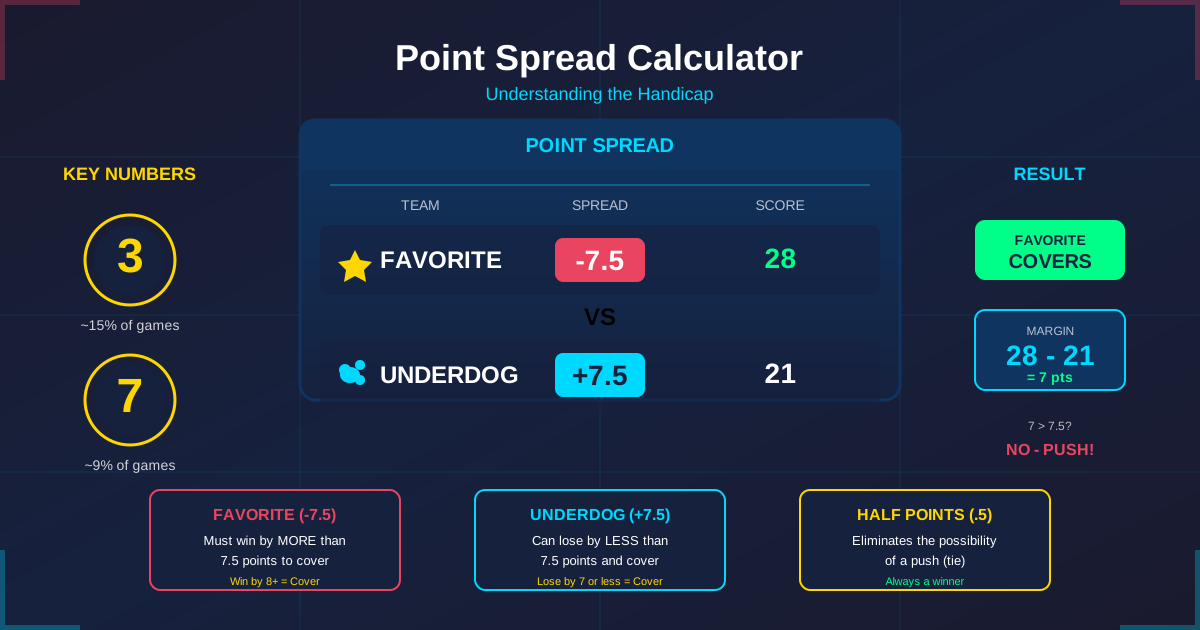
- Opening line: Chiefs -3 (-110/-110)
- Sharp bettor bets $10,000 on Chiefs -3
- Line moves to: Chiefs -3.5 (-110/-110)
- More sharp action on Chiefs
- Line moves to: Chiefs -4 (-110/-110)
The sportsbook moved the line a full point because it respects the sharp bettor's handicapping. The sharps have proven track records of finding value.
Why Sharp Action Matters to You
Sharp line movement reveals information:
- If sharps are betting the Chiefs at -3, they believe the "true line" is higher than -3
- Getting a bet at Chiefs -3 before the move to -4 is called "getting the best of the number"
- This is why timing your bets matters enormously
Track whether you consistently get better numbers than the closing line with our CLV Tracker.
How Public Money Influences Lines
The "Square" Side
Public bettors (also called "squares") tend to:
- Bet favorites and overs
- Bet popular teams regardless of value
- Be influenced by recent results and media narratives
- Bet later in the week after consuming content
- Create lopsided action on one side
Balancing the Book vs. Taking a Position
Sportsbooks respond to public money differently depending on their risk philosophy:
Strategy 1: Balance the Book
Traditional approach -- move the line to attract action on the other side.
- If 80% of bets are on the Chiefs, move the line to Chiefs -4 to make the Broncos +4 more attractive
- Goal: equal money on both sides, guaranteed vig profit
Strategy 2: Shade the Line
Modern approach -- if sharps and the model disagree with the public, keep the line where it is (or shade it toward the public).
- If 80% of public money is on the Chiefs -3, but sharps say the true line is -2.5, keep it at -3
- The book is taking a position, betting that the sharps are right and the public is wrong
- Higher risk but potentially higher reward for the sportsbook
Most modern sportsbooks use a hybrid approach, weighted more toward trusting sharp money than balancing public money.
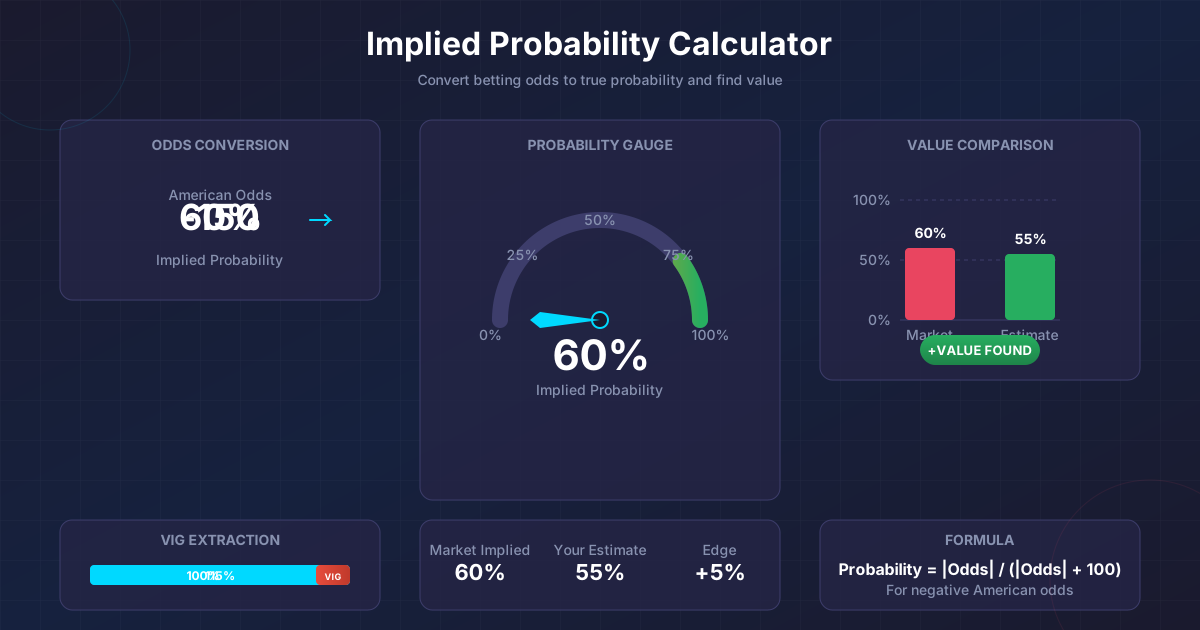
Understand the implied probability of any line with our Implied Probability Calculator.
Understanding Vig (Vigorish): The Sportsbook's Edge
What Is the Vig?
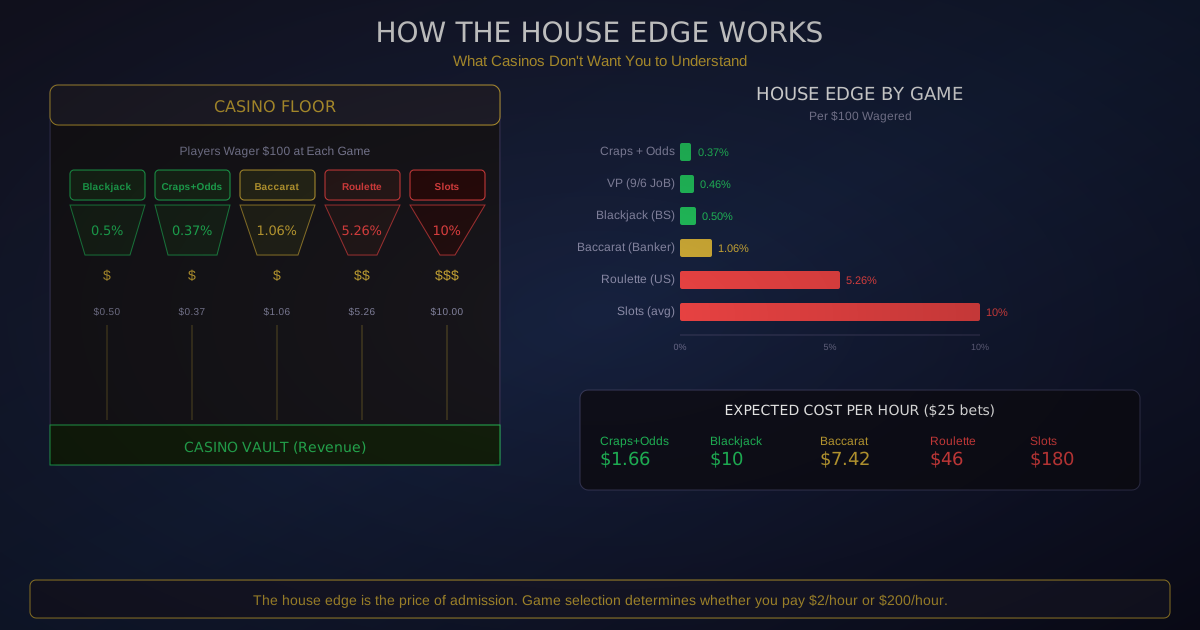
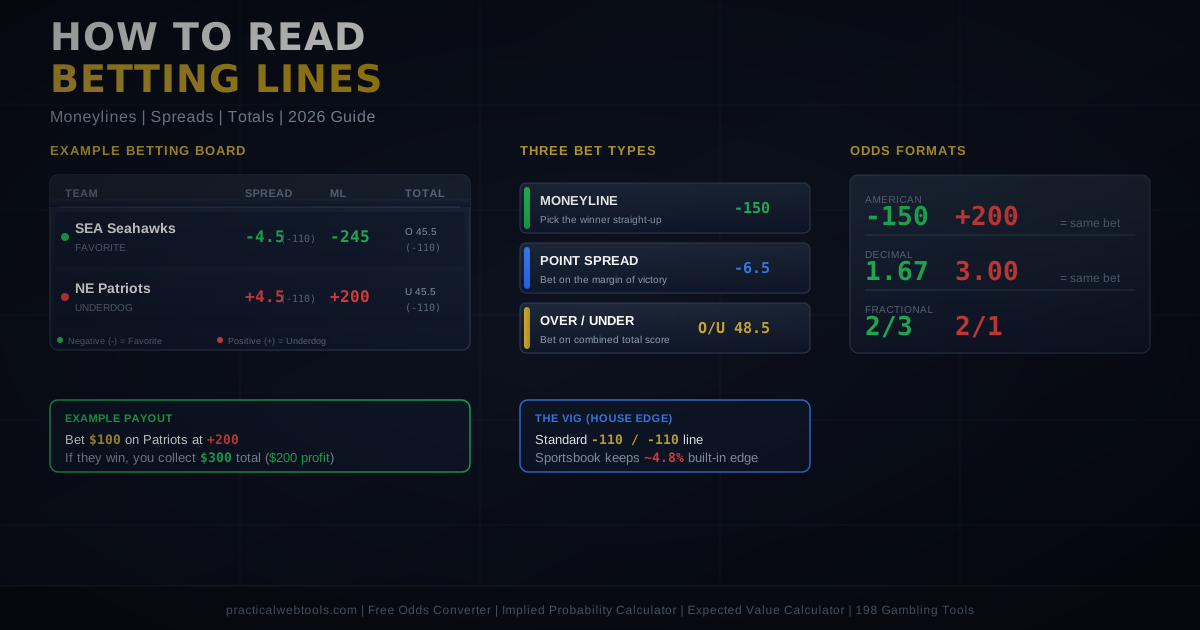
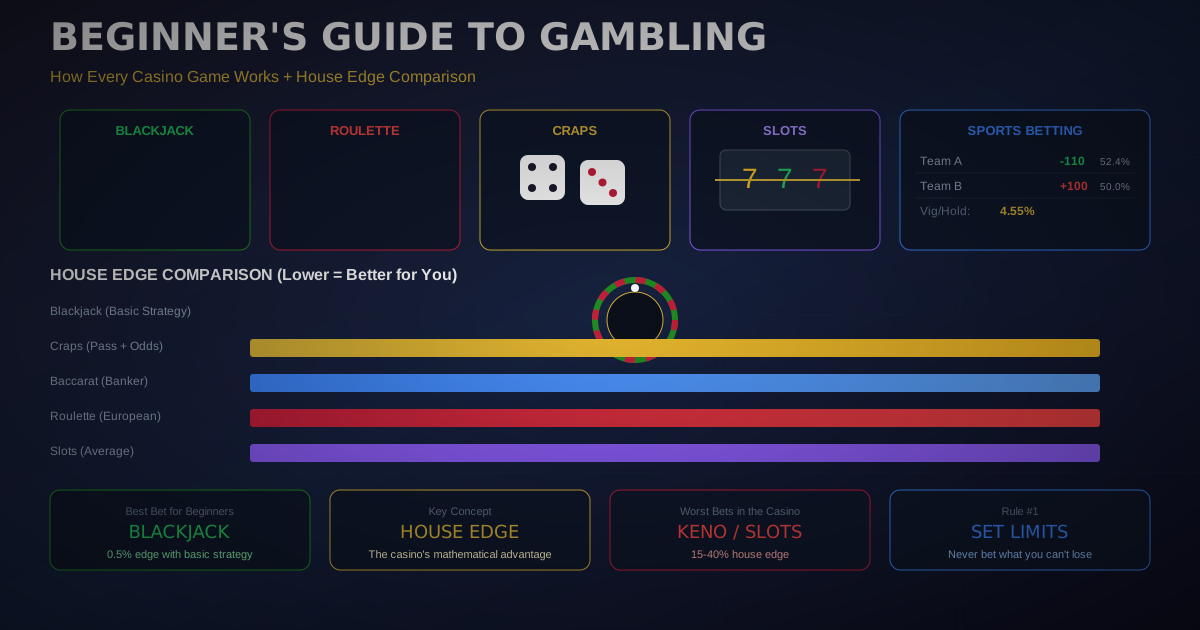
The vig (short for vigorish, also called "juice" or "hold") is the sportsbook's built-in commission on every bet. It is the difference between fair odds and the odds you are offered.
Standard Vig on Different Bet Types
| Bet Type | Typical Odds | Vig % | Breakeven Win Rate |
|---|---|---|---|
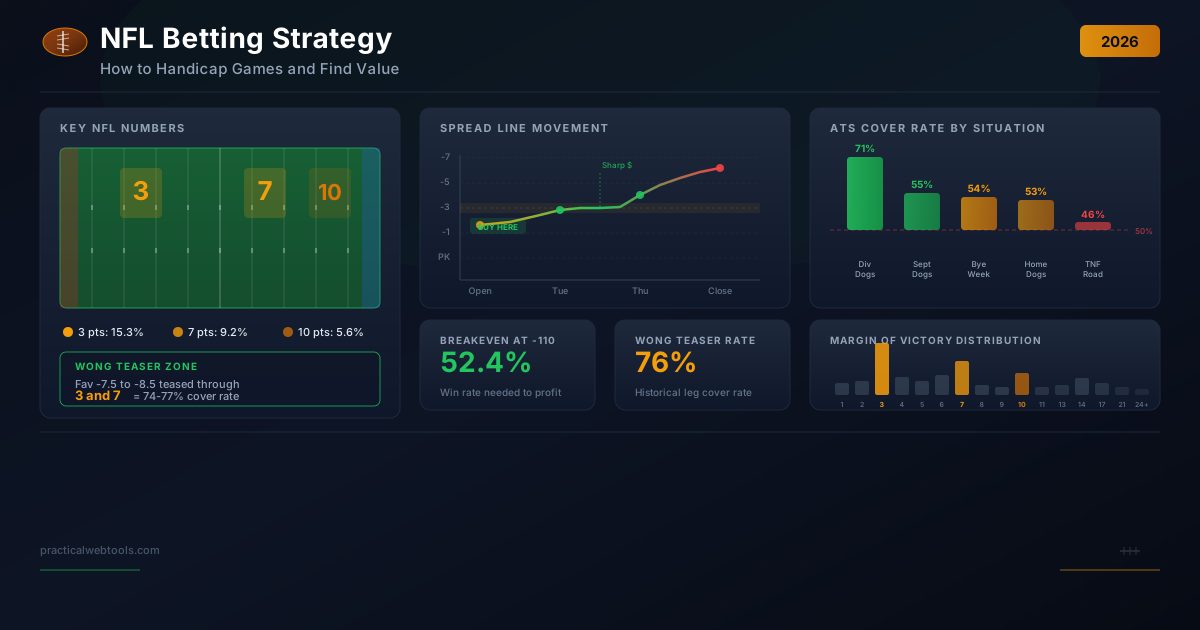
| Spread (standard) | -110/-110 | 4.5% | 52.4% |
| Spread (reduced juice) | -105/-105 | 2.4% | 51.2% |
| Moneyline (close game) | -130/+110 | 5-6% | Varies |
| Moneyline (heavy favorite) | -300/+240 | 8-12% | Varies |
| Totals | -110/-110 | 4.5% | 52.4% |
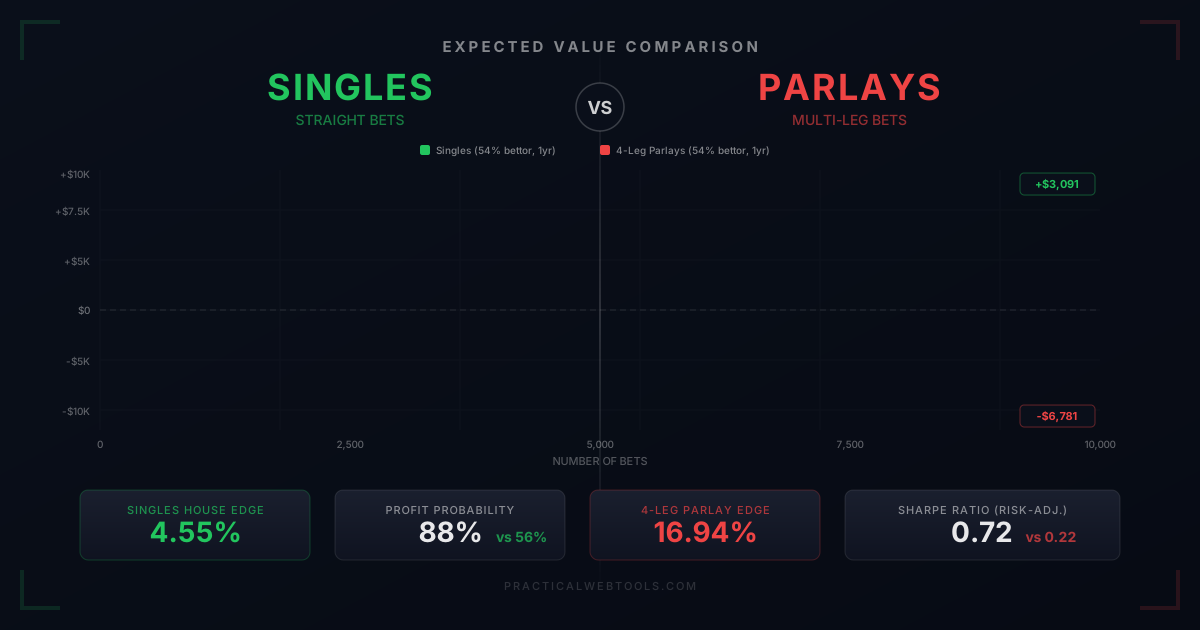
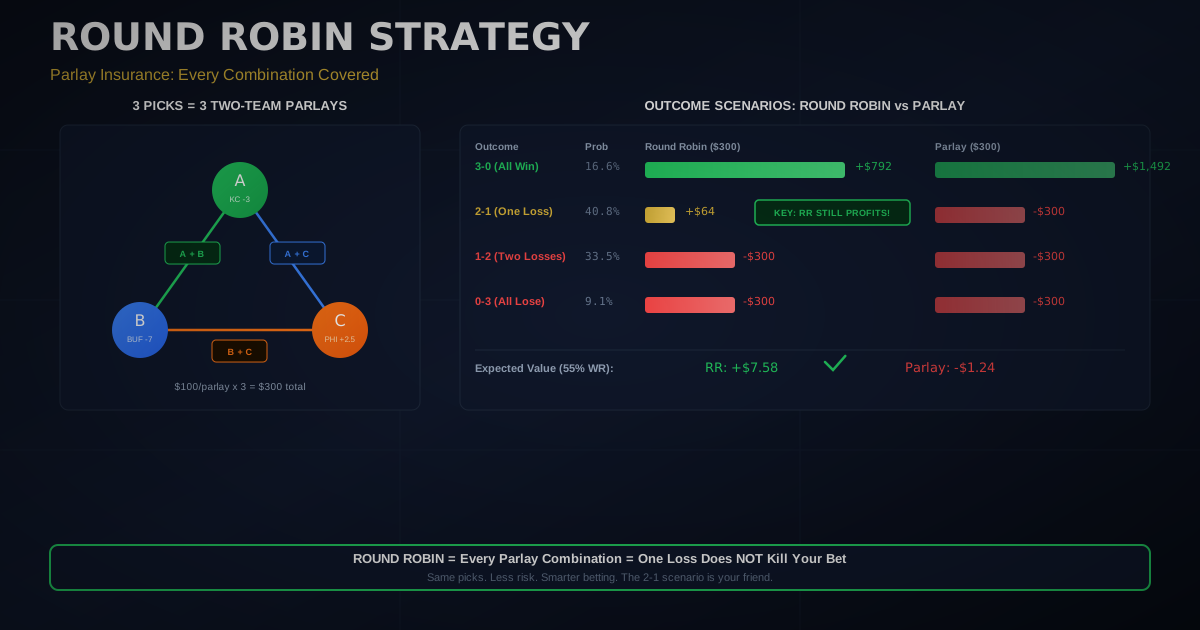
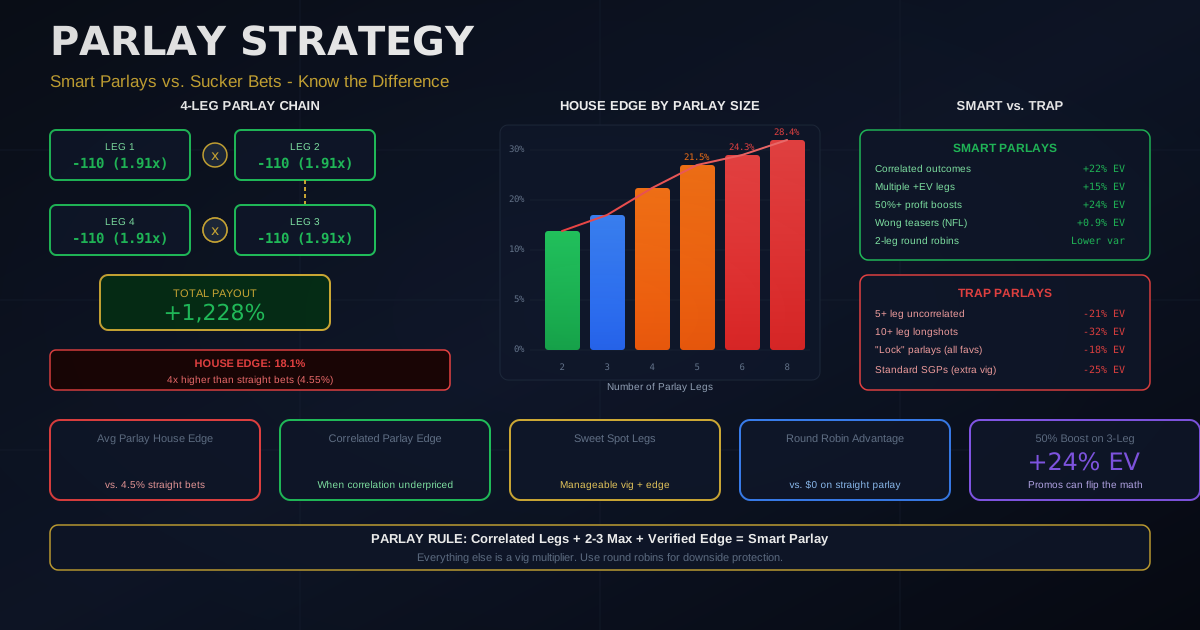
| Parlays | Varies | 15-40% | Varies |
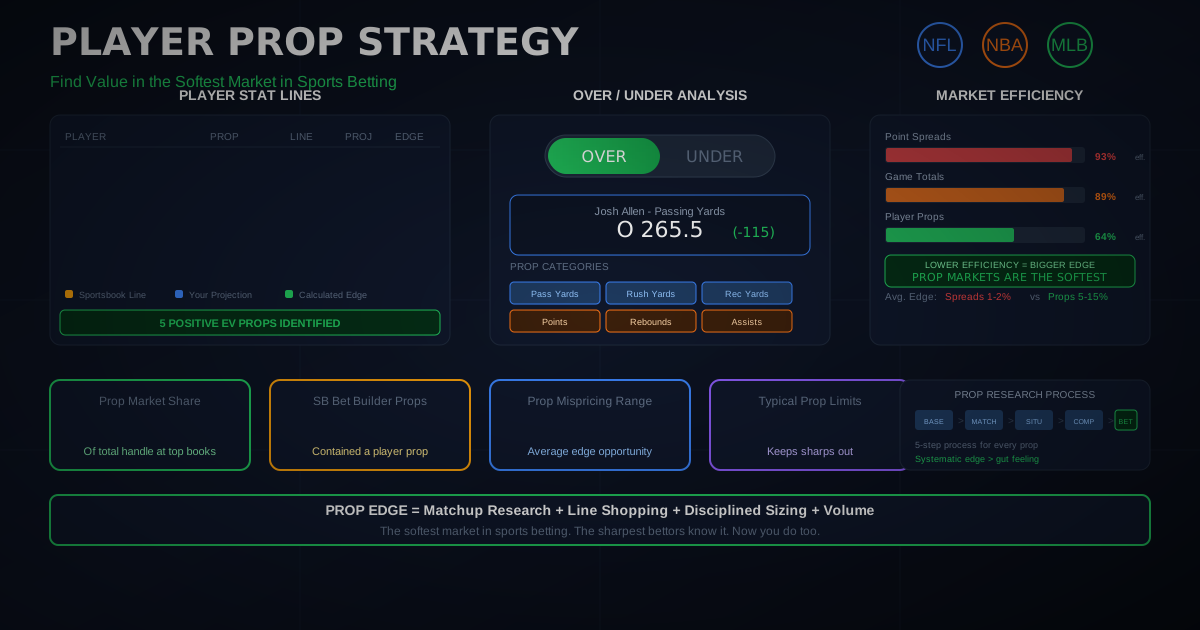
| Props | Varies | 5-15% | Varies |
The Real Cost of Vig
Over 1,000 bets at standard -110/-110 vig:
| Scenario | Win Rate | Profit per $100 Bet | Annual P/L (1,000 bets) |
|---|---|---|---|
| Fair (no vig) | 50% | $0 | $0 |
| Standard vig (-110) | 50% | -$4.55 | -$4,550 |
| Breakeven at -110 | 52.4% | $0 | $0 |
| Sharp bettor | 55% | +$5.00 | +$5,000 |
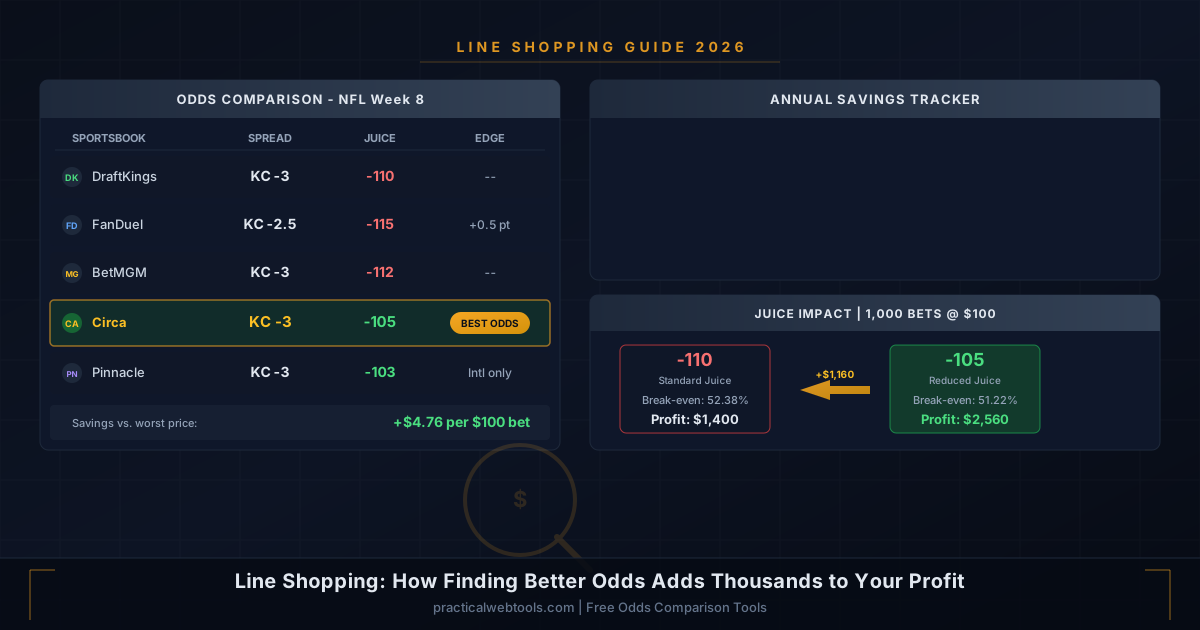
| Reduced juice (-105) | 50% | -$2.38 | -$2,380 |
| Breakeven at -105 | 51.2% | $0 | $0 |
The difference between -110 and -105 juice is $2,170 per year on 1,000 bets. That is real money saved by simply shopping for better lines.
Calculate the exact vig on any market with our Hold/Vig Calculator.
Line Movement: Reading the Market
Types of Line Movement
1. Opening Line Move (Release to Sharp) The initial movement after a line is posted, driven primarily by sharp bettors who have been waiting for the number.
- Happens within minutes to hours of line release
- High-signal movement (sharps are involved)
- Best time to identify value
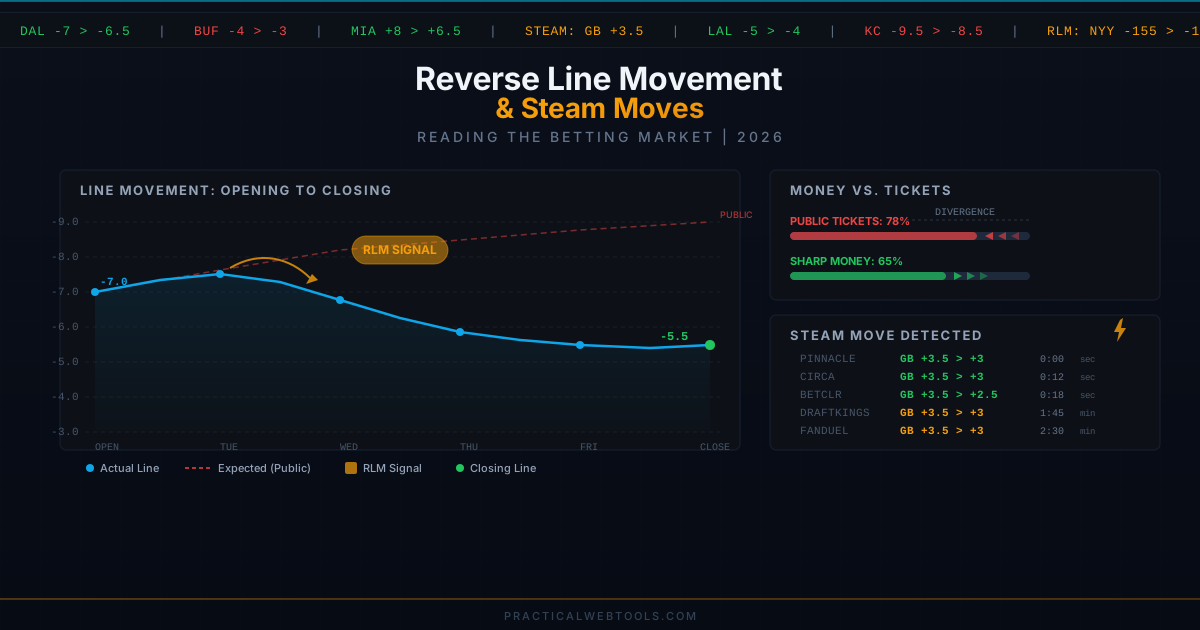
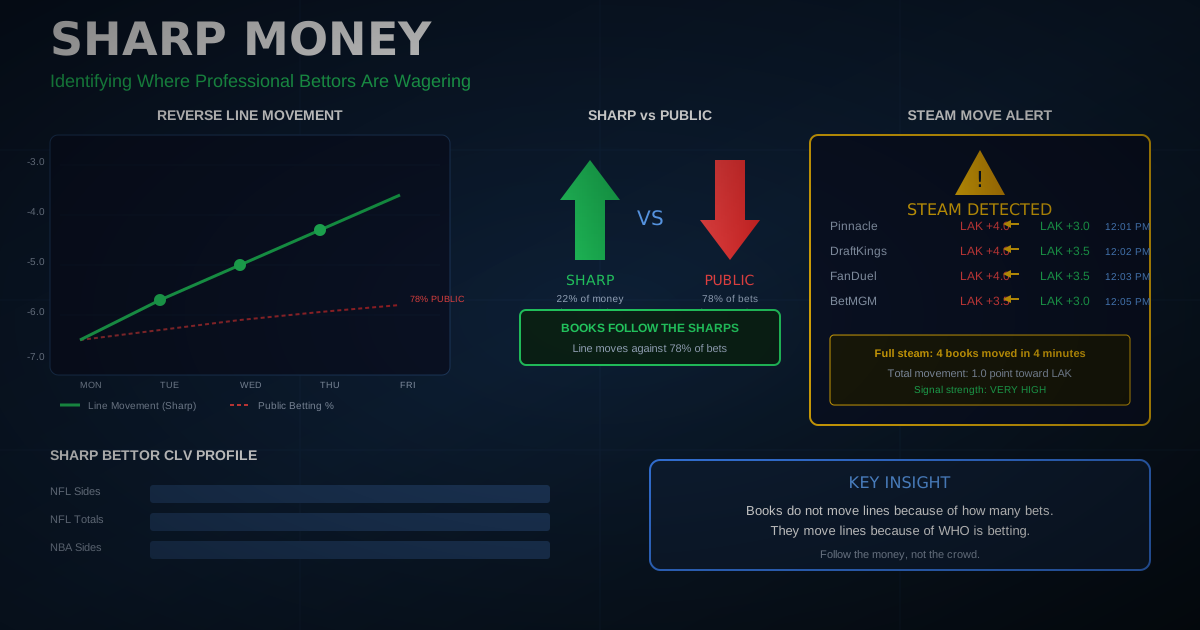
2. Steam Move A sudden, sharp movement across multiple sportsbooks simultaneously, triggered by a coordinated sharp bet or syndicate action.
- Multiple books move the same direction within minutes
- Very high-signal movement
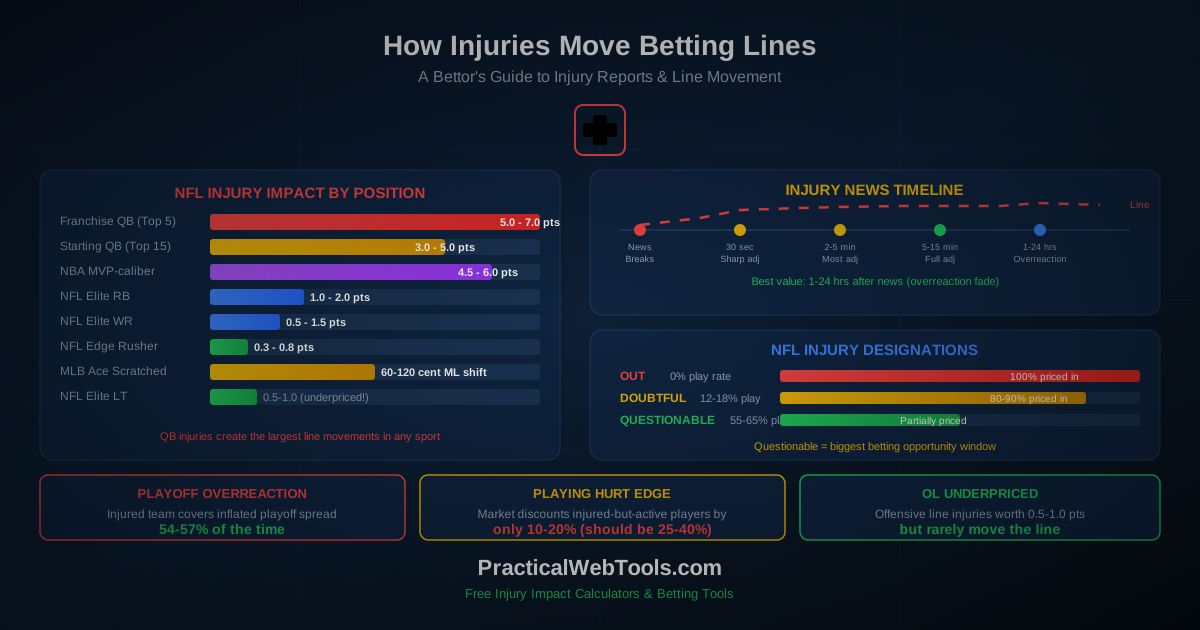
- Often indicates inside information (injury news, lineup changes)
- Extremely difficult to beat unless you act instantly
3. Public Money Drift Gradual movement throughout the week as public bettors place their wagers.
- Typically moves toward favorites and popular teams
- Lower-signal movement
- Can create "contrarian" value on the other side
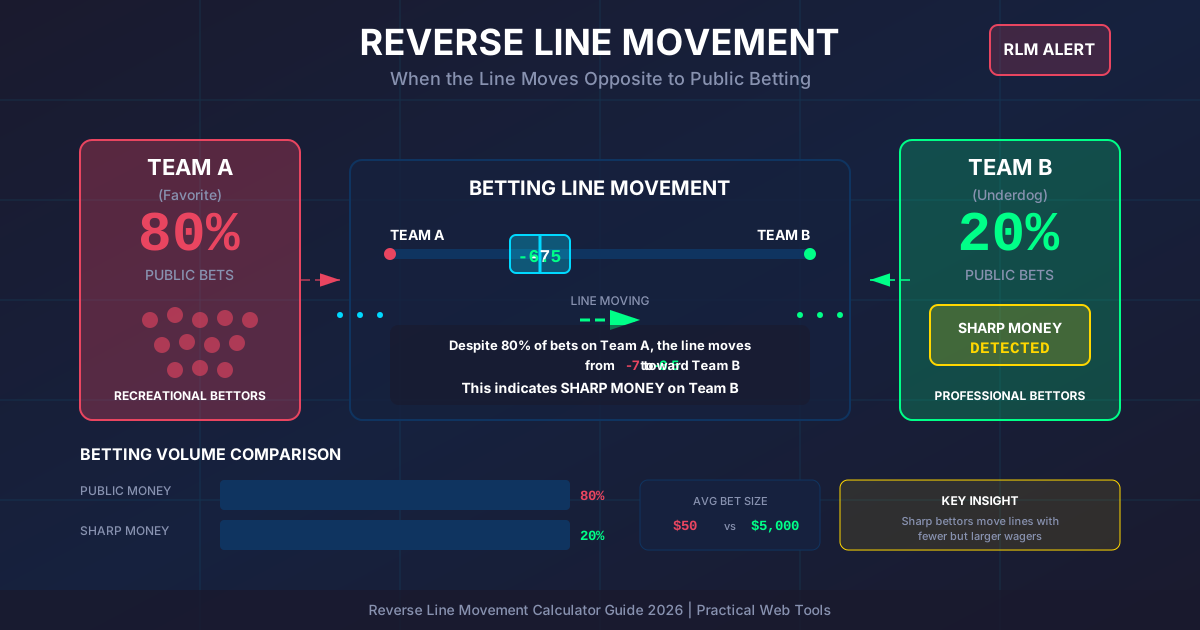
4. Reverse Line Movement (RLM) When the line moves in the opposite direction of where the majority of bets are placed.
- 75% of bets on Team A, but the line moves toward Team B
- Strong indicator that sharp money is on Team B
- One of the most valuable signals for bettors
How to Use Line Movement
Step 1: Note the opening line when it is first released.
Step 2: Track the direction and magnitude of movement.
Step 3: Identify the likely cause (sharp, steam, public, or RLM).
Step 4: If you agree with sharp-side movement, bet early. If you disagree, wait for public money to move the line back.
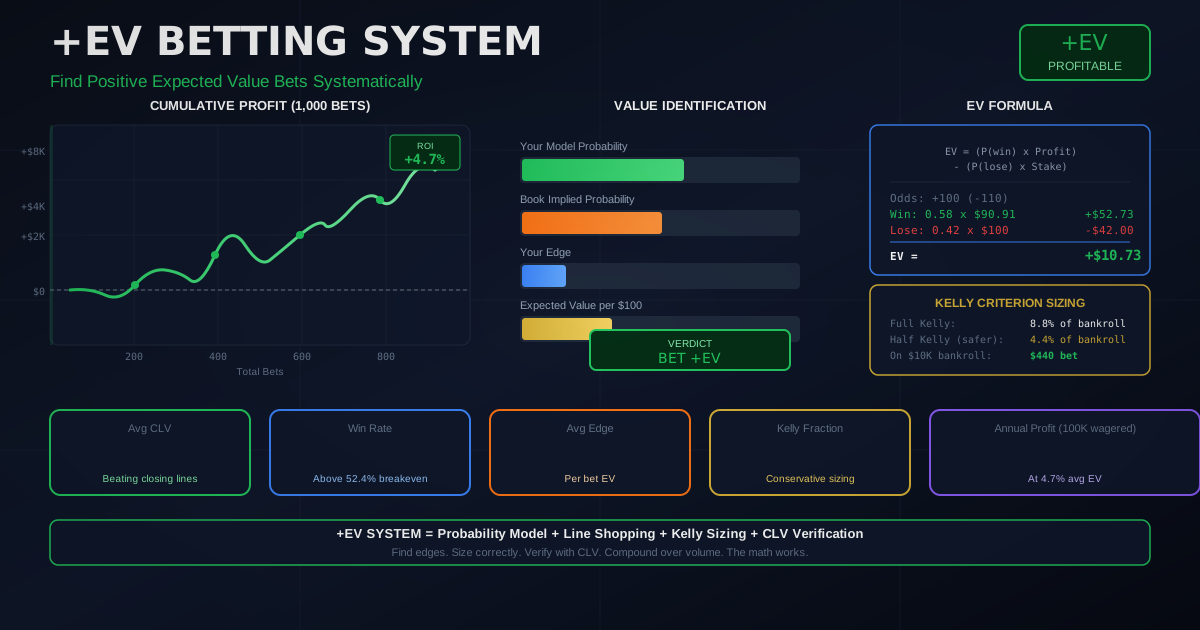
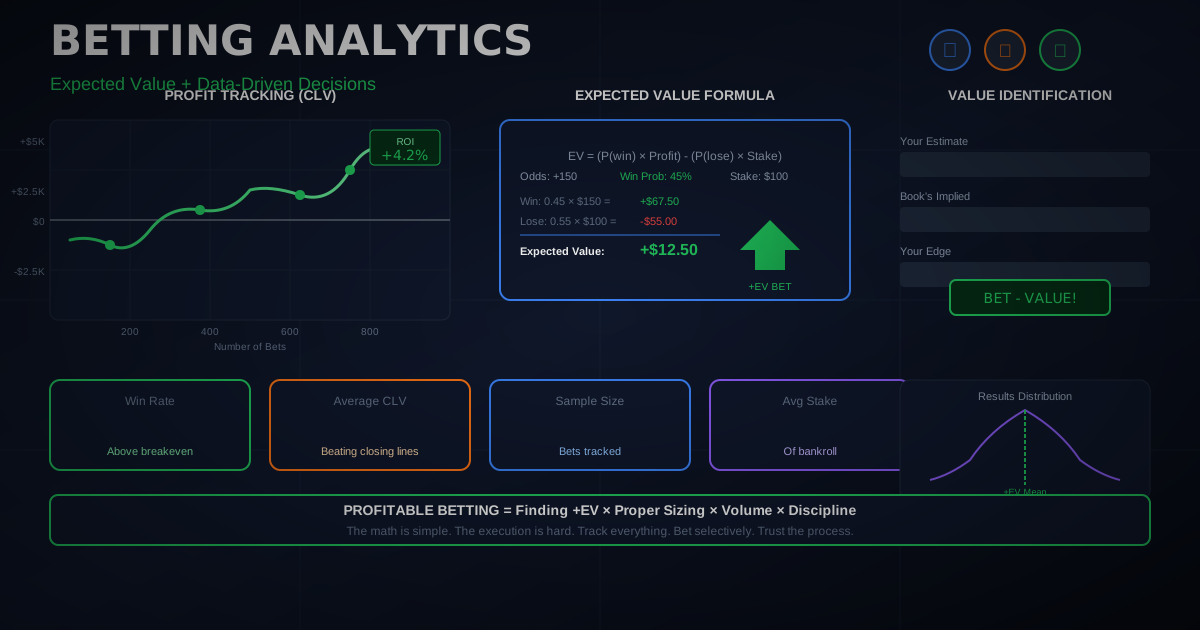
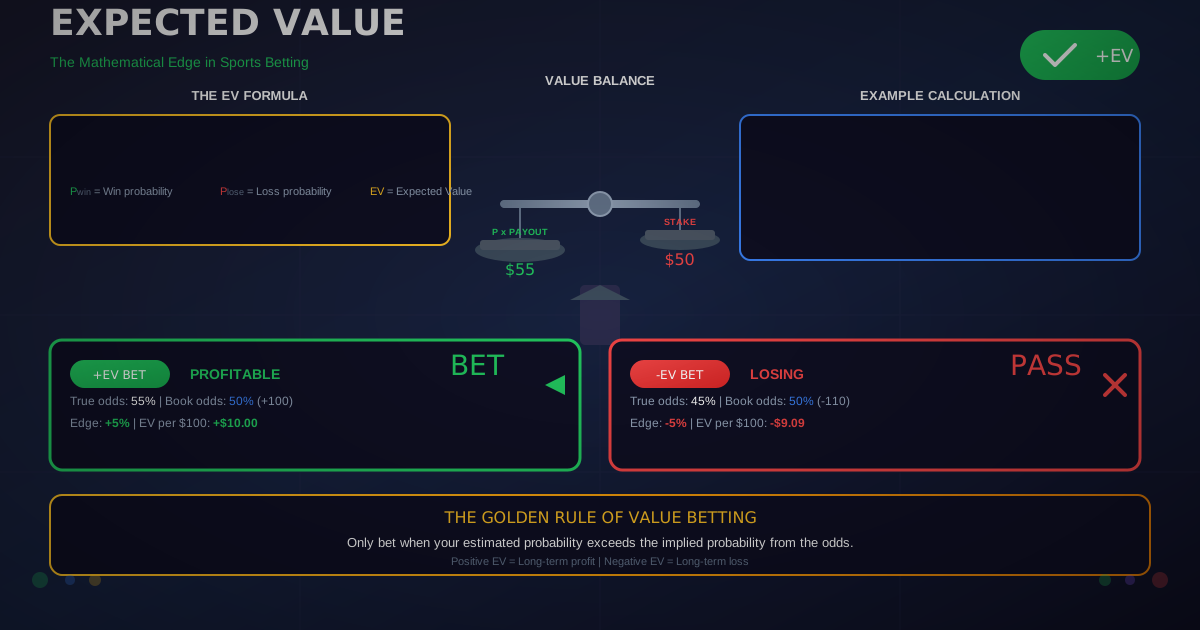
Calculate the expected value of getting a better line with our Expected Value Calculator.
Real-World Examples: Odds Movement in Action
Example 1: NFL Sunday Sharp Steam
Wednesday Opening:
- Packers at Lions: Packers -2.5 (-110/-110)
Thursday (Sharp Action):
- Sharp bettor places $25,000 on Lions +2.5
- Line moves to: Packers -2 (-110/-110)
- More sharp action on Lions
- Line moves to: Packers -1.5 (-110/-110)
Friday-Saturday (Public Money):
- Public bets heavily on Packers (popular team, good record)
- Line moves back to: Packers -2 (-110/-110)
Sunday (Closing Line):
- Final sharp action on Lions
- Closing line: Packers -1.5 (-110/-110)
Analysis: The sharps identified value on the Lions at +2.5. Public money temporarily pushed the line back, but smart money ultimately prevailed. Anyone who bet Lions +2.5 at the opener got 1 point of value compared to the closing line.
Track your CLV to see if you consistently beat the closing line with our CLV Tracker.
Example 2: NBA Total Movement
Morning Opening:
- Lakers vs. Celtics Total: 224.5 (-110/-110)
Midday (Injury News):
- Star player listed as doubtful
- Sharp bettors hammer the Under
- Line drops to: 221.5 (-110/-110)
Evening (Public Reaction):
- Public sees injury news, bets Under
- Line drops further to: 220.0 (-110/-110)
Closing:
- Final line: 219.5 (-110/-110)
The vig tells the story. The total dropped 5 points from opening to closing. Sharps who bet Under 224.5 got 5 points of value. Public bettors who waited until the news was widely reported got Under 220, which still may be the right side but with far less margin of safety.
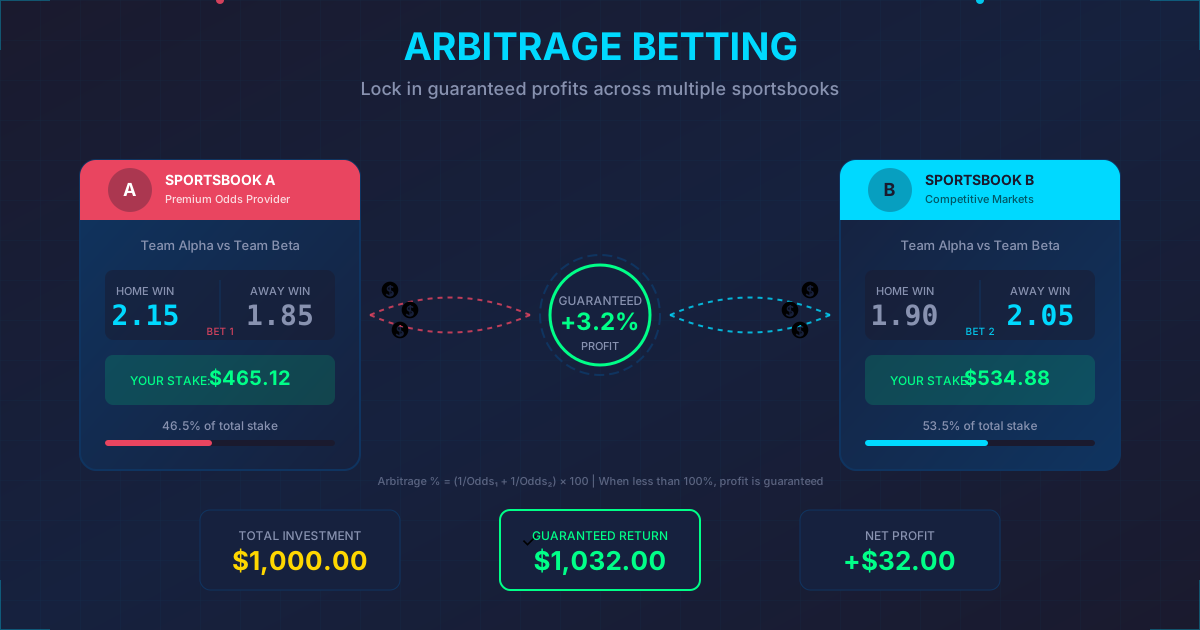
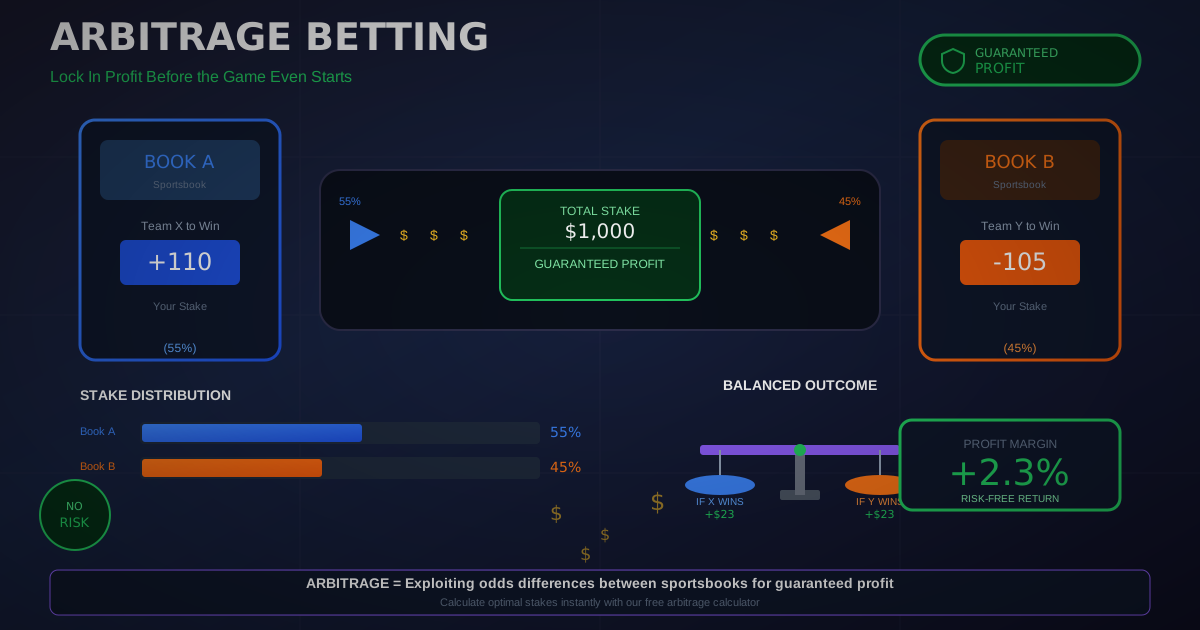
Example 3: Arbitrage from Line Disagreement
Sometimes sportsbooks disagree on a line, creating brief arbitrage windows:
- Sportsbook A: Team X -3 (+105)
- Sportsbook B: Team Y +3.5 (-105)
Both sides have value because the lines cross (you can bet Team X -3 AND Team Y +3.5 and only lose if Team X wins by exactly 3). Plus, the reduced juice means your combined implied probability is under 100%.
Find and calculate arbitrage opportunities with our Arbitrage Calculator.
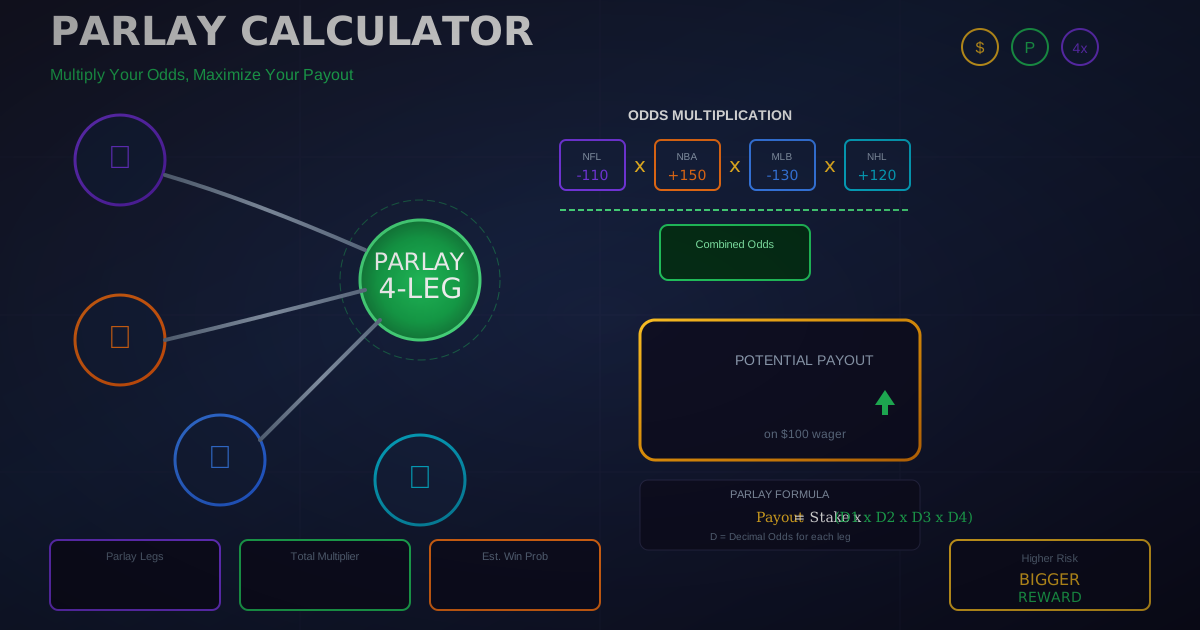
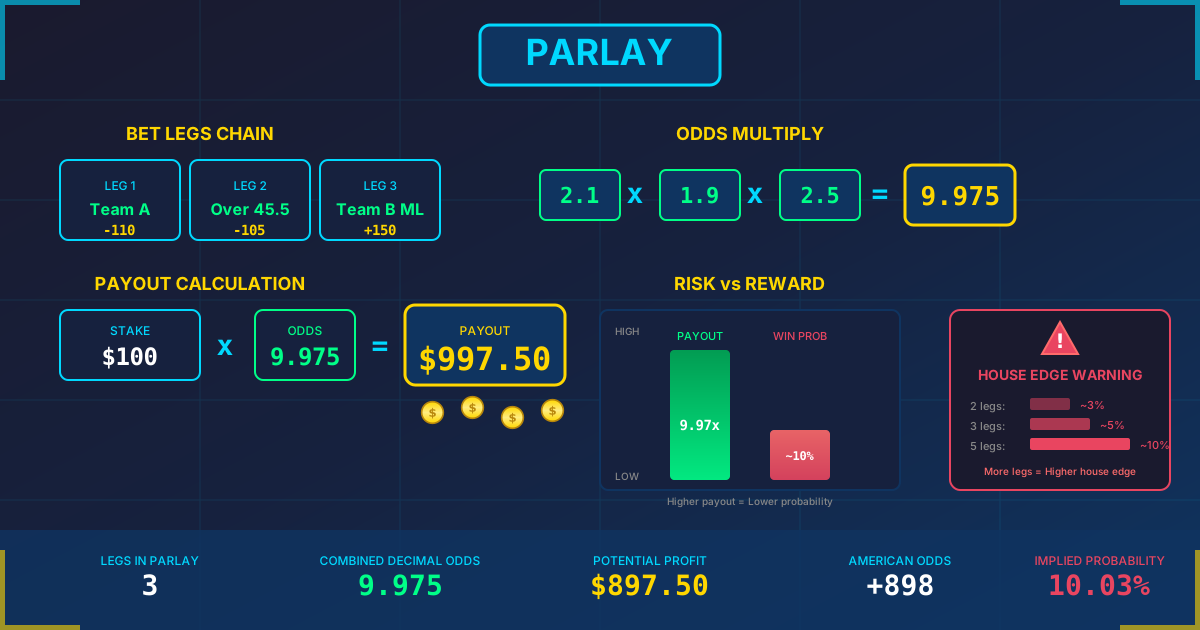
Example 4: Parlay Market Vig Inflation
Sportsbooks build extra vig into parlays by using correlated implied probabilities but paying out at uncorrelated rates:
Two-leg parlay at true odds:
- Leg 1: -110 (52.4% implied)
- Leg 2: -110 (52.4% implied)
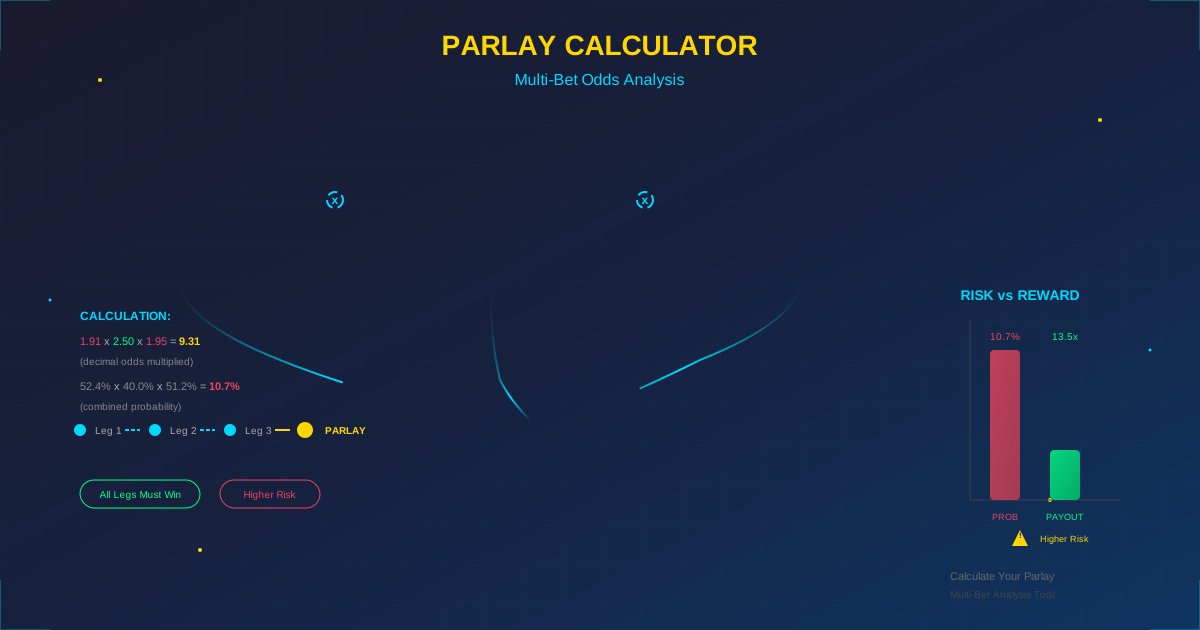
- True parlay probability: 52.4% x 52.4% = 27.5%
- Fair payout at 27.5%: +264
Actual sportsbook parlay payout: +260 (approximately)
The extra margin on parlays makes them one of the sportsbook's most profitable products.
Calculate true parlay payouts with our Parlay Calculator.
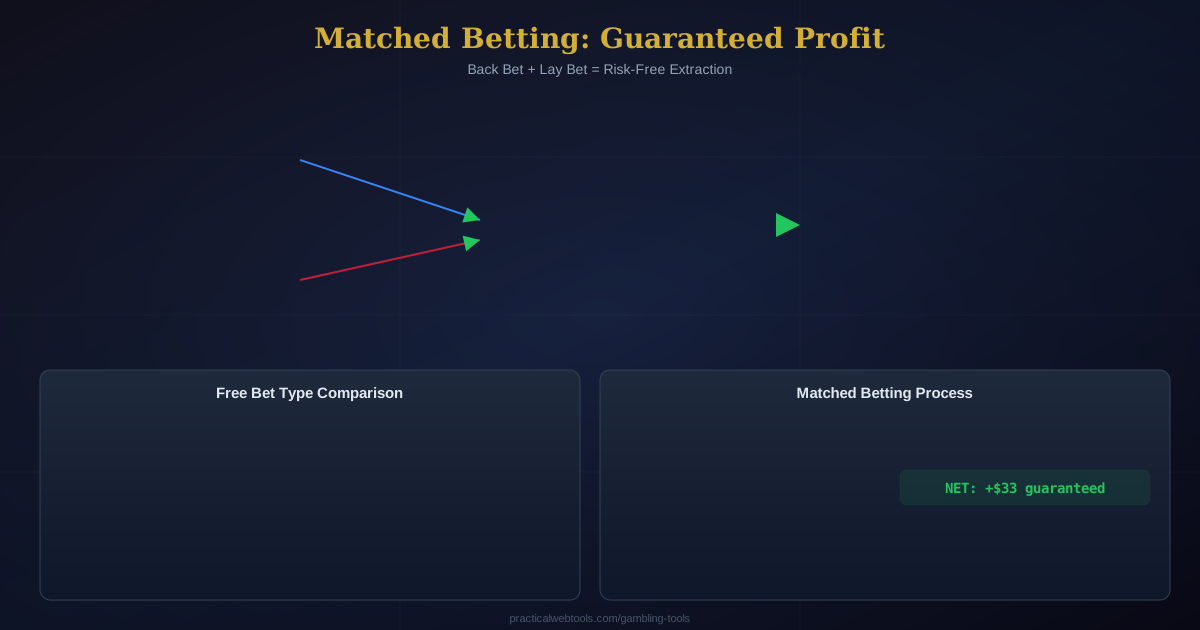
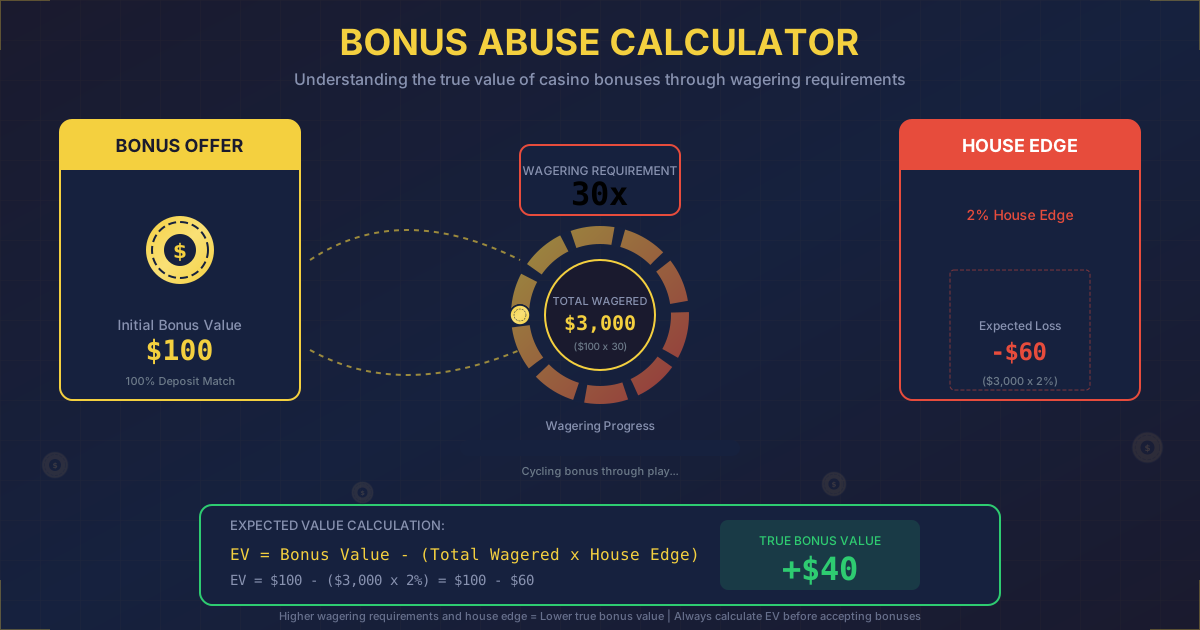
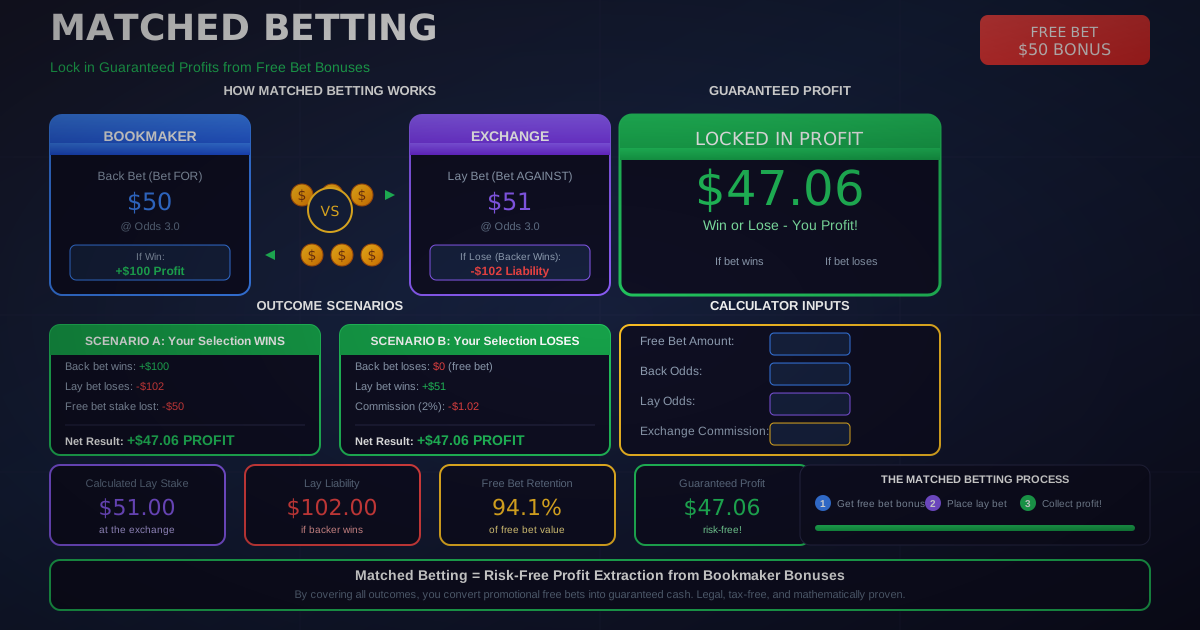
Example 5: Matched Betting Exploiting Promotional Lines
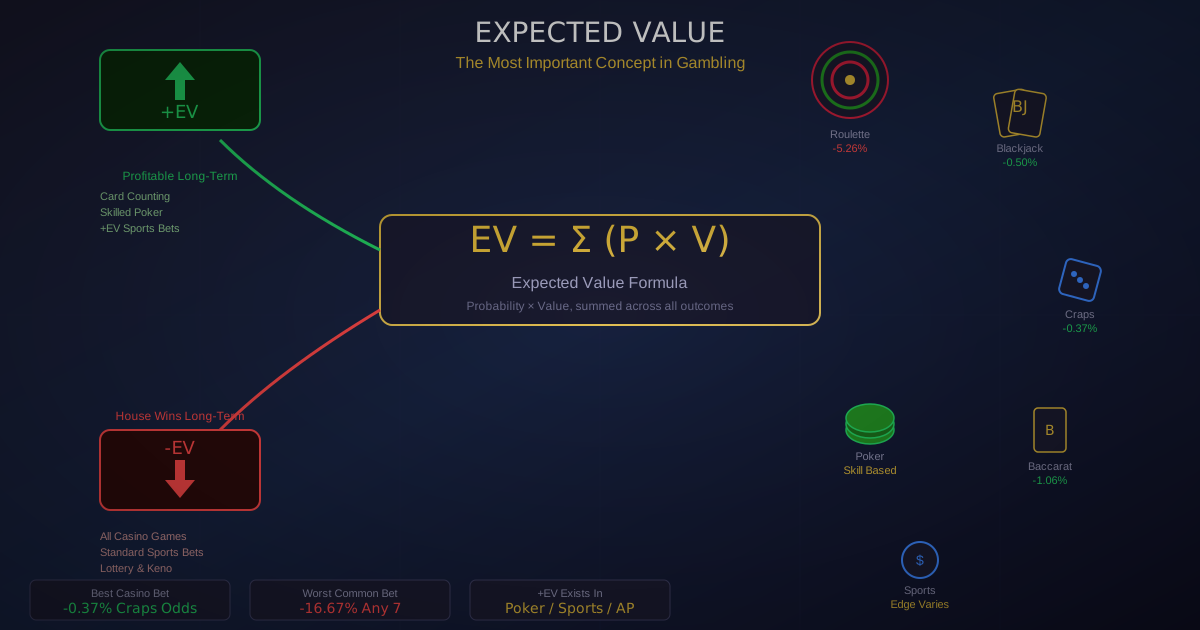
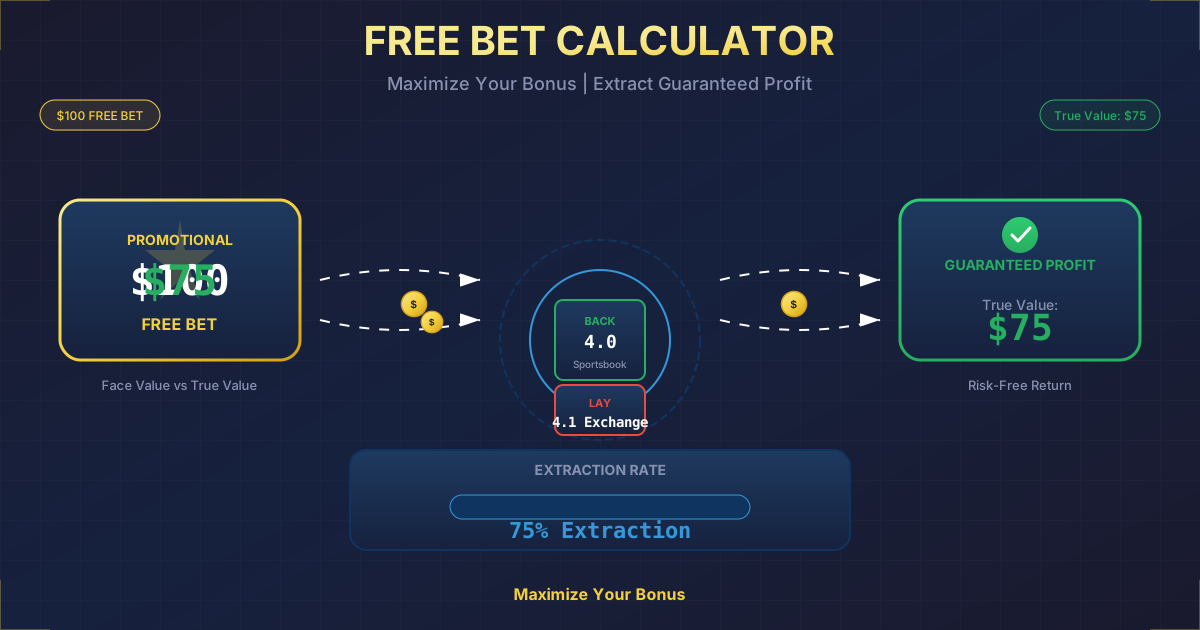
Sportsbooks sometimes offer boosted odds that overshoot fair value. When DraftKings boosts a +200 moneyline to +300, the implied probability drops from 33.3% to 25%. If the true probability is 30%, that boosted line has massive positive EV -- and can be further exploited through matched betting to guarantee profit.
Extract value from boosted odds with our Matched Betting Calculator.
Market Efficiency: When Are Lines Most Accurate?
The Efficiency Spectrum
| Timing | Efficiency | Opportunity |
|---|---|---|
| Opening line | Low | High (if you can spot mispricing) |
| 1-2 hours after open | Medium | Moderate |
| Day before event | Medium-High | Low to moderate |
| 30 min before kickoff | High | Very low |
| Closing line | Highest | Near zero |
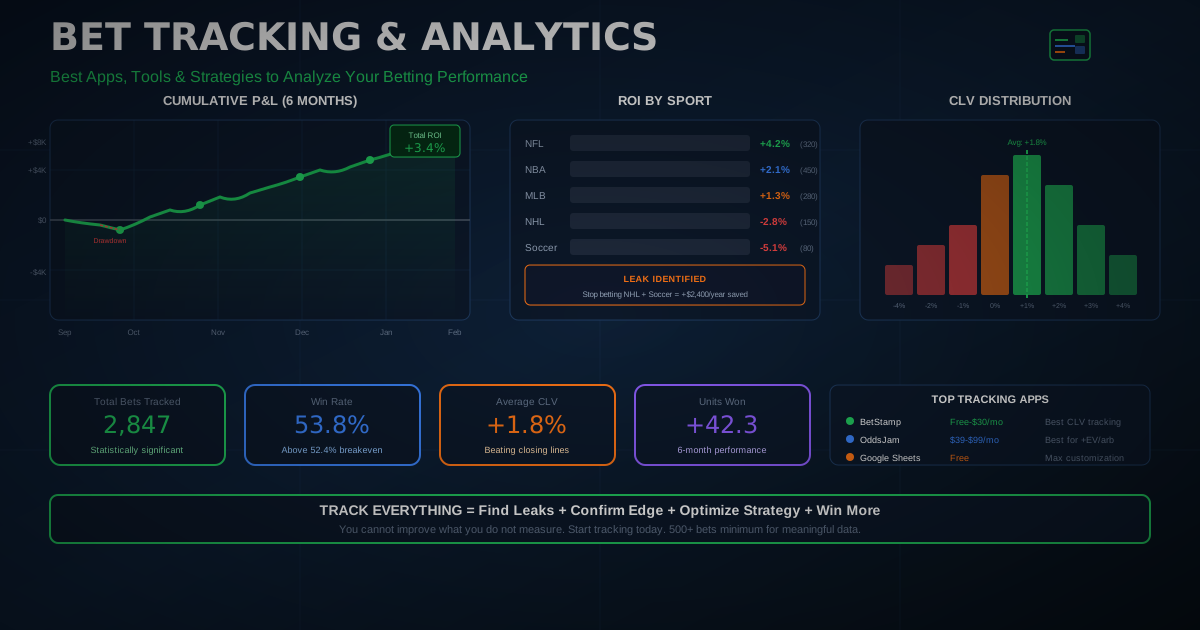
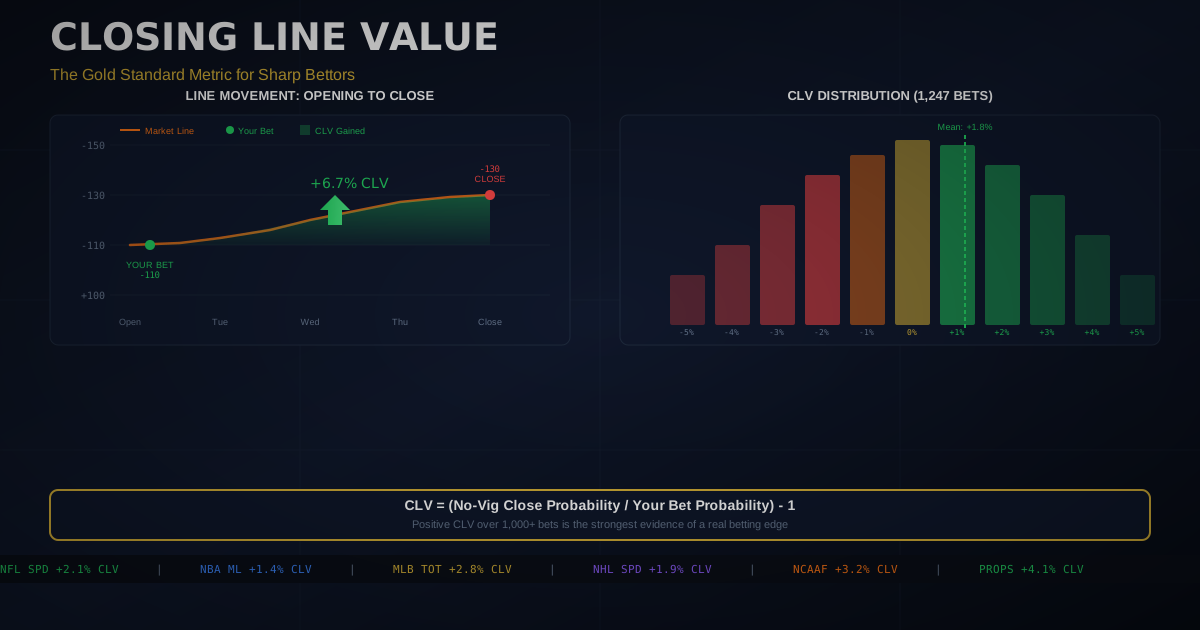
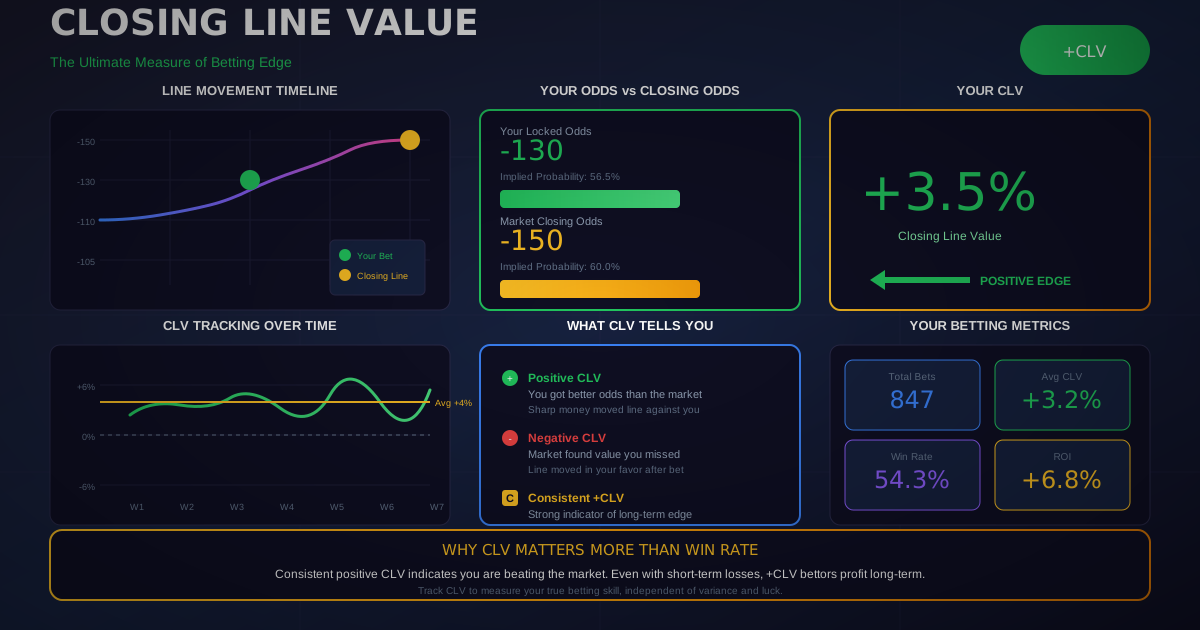
Key insight: The closing line is the most accurate prediction of probability because it has incorporated all available information from sharp bettors, public money, and market dynamics. This is why CLV (beating the closing line) is the gold standard for measuring bettor skill.
Beating the Closing Line
If you consistently get better numbers than the closing line, you are demonstrating genuine handicapping skill. Even a 1-2% improvement over the closing line, compounded over thousands of bets, produces significant profit.
Track your CLV across all your bets with our CLV Tracker.
Optimal Betting Strategy Given Market Structure
Bet Timing
Based on how odds markets work:
- If you have a strong opinion, bet early to capture maximum value before sharps and the public move the line.
- If you are following sharp action, bet immediately when you see sharp-side movement. Waiting reduces your edge.
- If you are fading the public, wait until public money has pushed the line as far as possible (typically close to game time for NFL), then bet the contrarian side.
Line Shopping
Given that different books move lines at different speeds and by different amounts:
Always check at least 3-5 sportsbooks before placing any bet.
The difference between the best and worst available line on the same market frequently exceeds 2-3% in implied probability. Over 1,000 bets, that is the difference between winning and losing.
Use our Odds Converter to compare lines in the same format across sportsbooks.
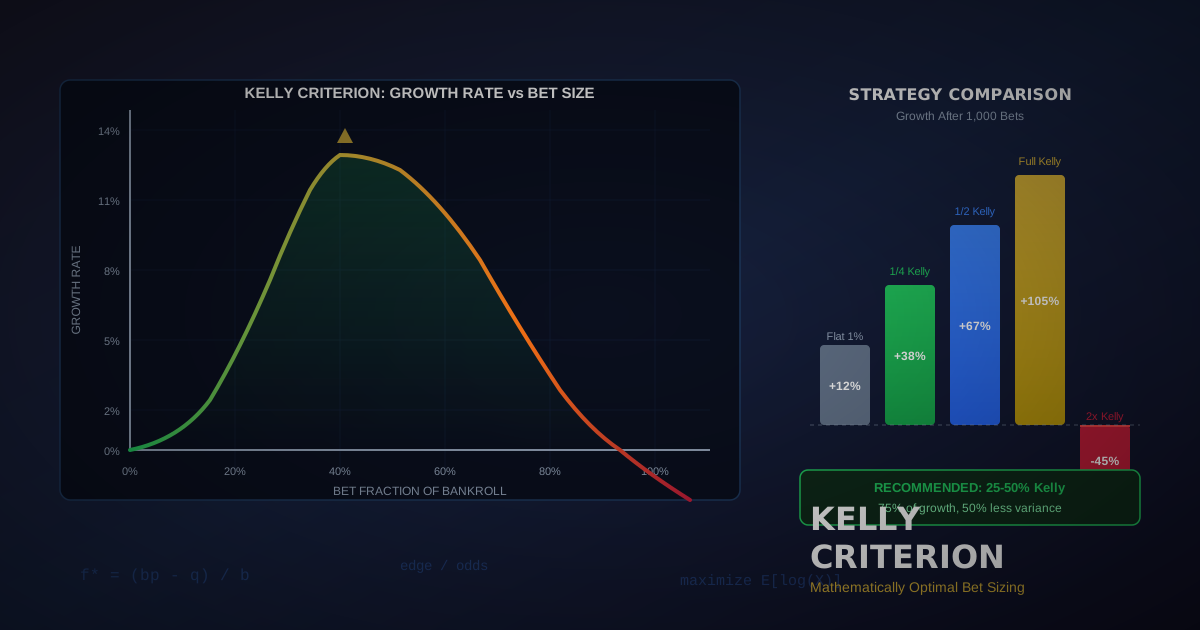
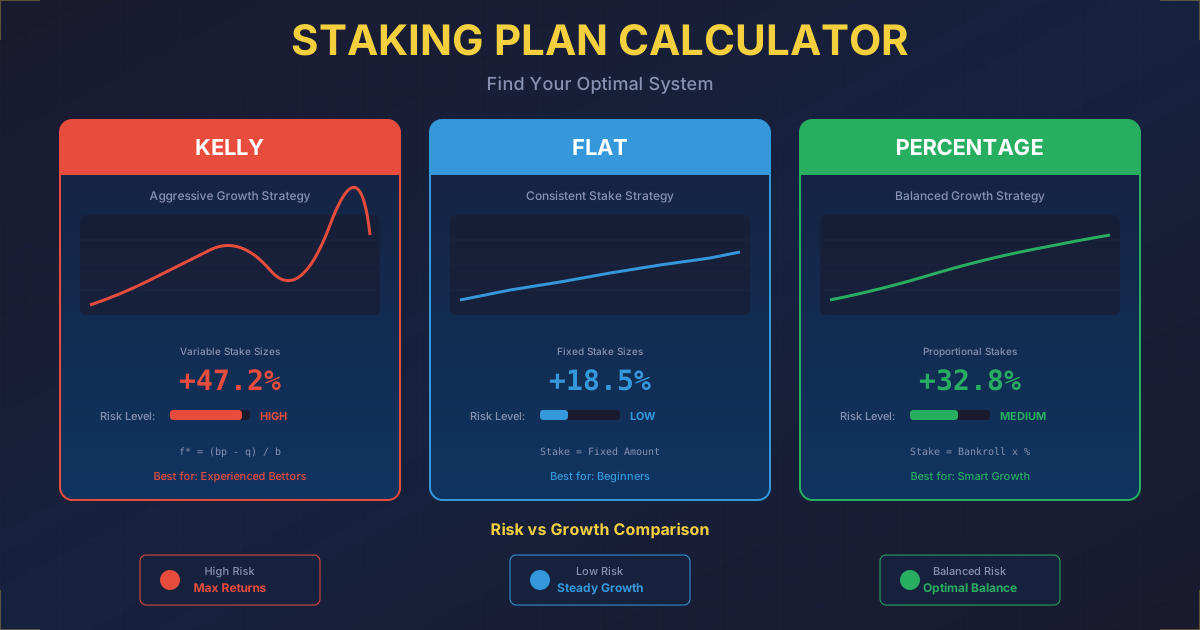
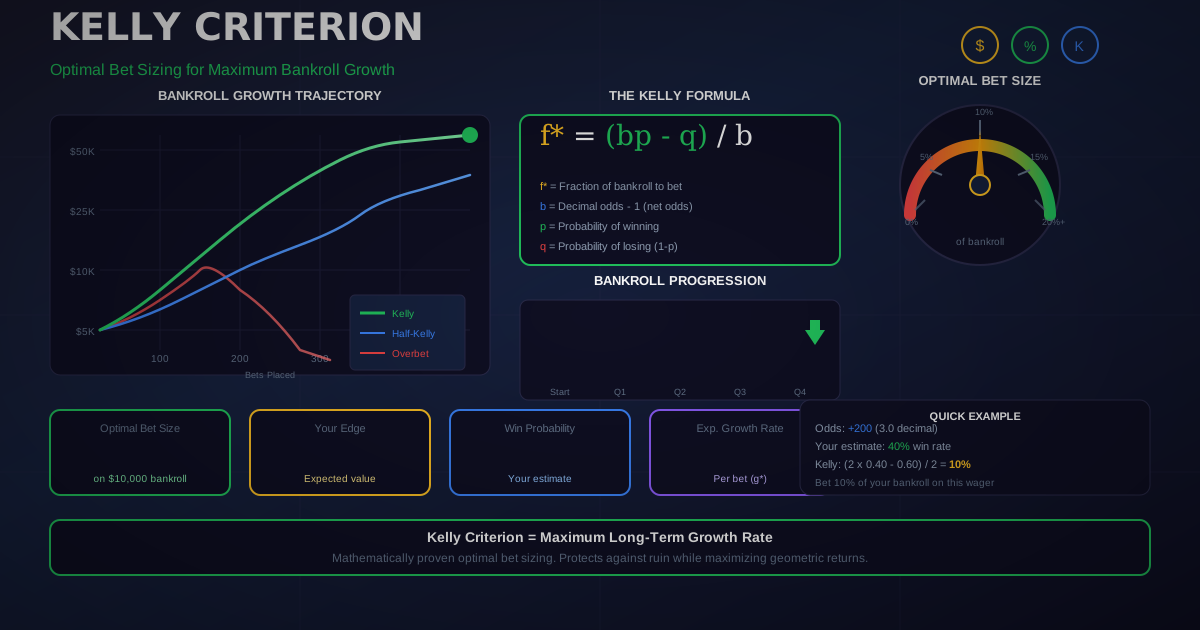
Kelly Criterion for Optimal Sizing
Once you have identified a value bet (where your estimated probability exceeds the implied probability), the Kelly Criterion tells you how much to bet:
Kelly % = (bp - q) / b
Where:
- b = decimal odds - 1
- p = your estimated win probability
- q = 1 - p
Example:
- You believe a team has a 55% chance to cover the spread
- The line is -110 (decimal 1.909)
- b = 0.909
- p = 0.55, q = 0.45
Kelly % = (0.909 x 0.55 - 0.45) / 0.909 = (0.500 - 0.45) / 0.909 = 0.050 / 0.909 = 5.5%
Most professionals use quarter-Kelly (1.4%) or half-Kelly (2.75%) to reduce variance.
Calculate optimal bet sizes with our Kelly Criterion Calculator.
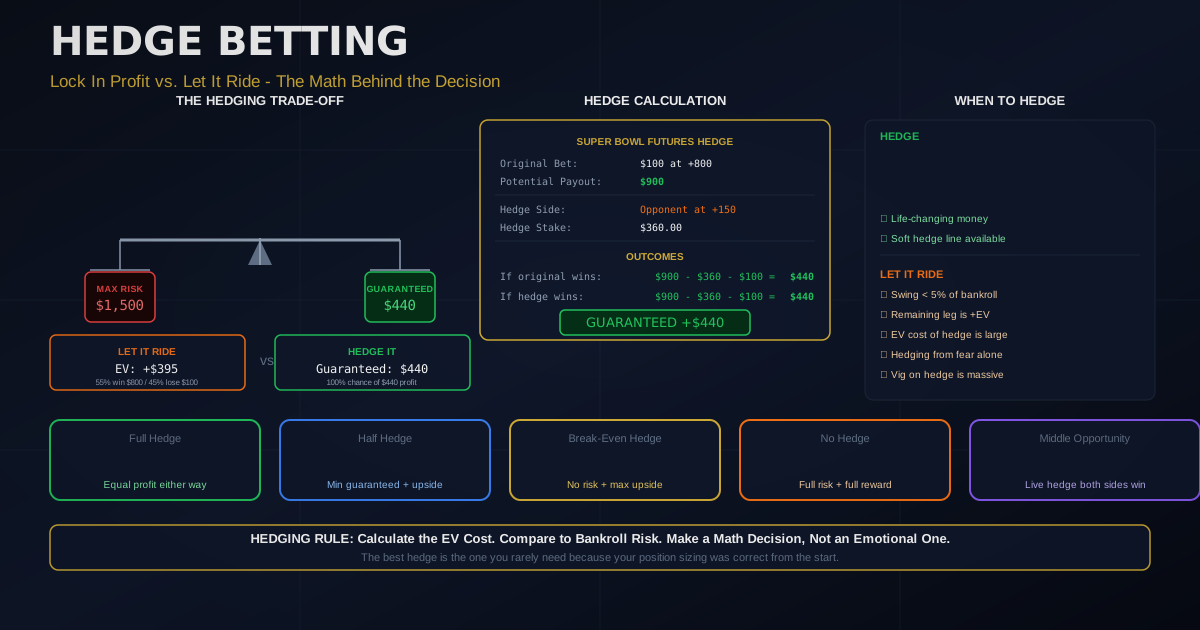
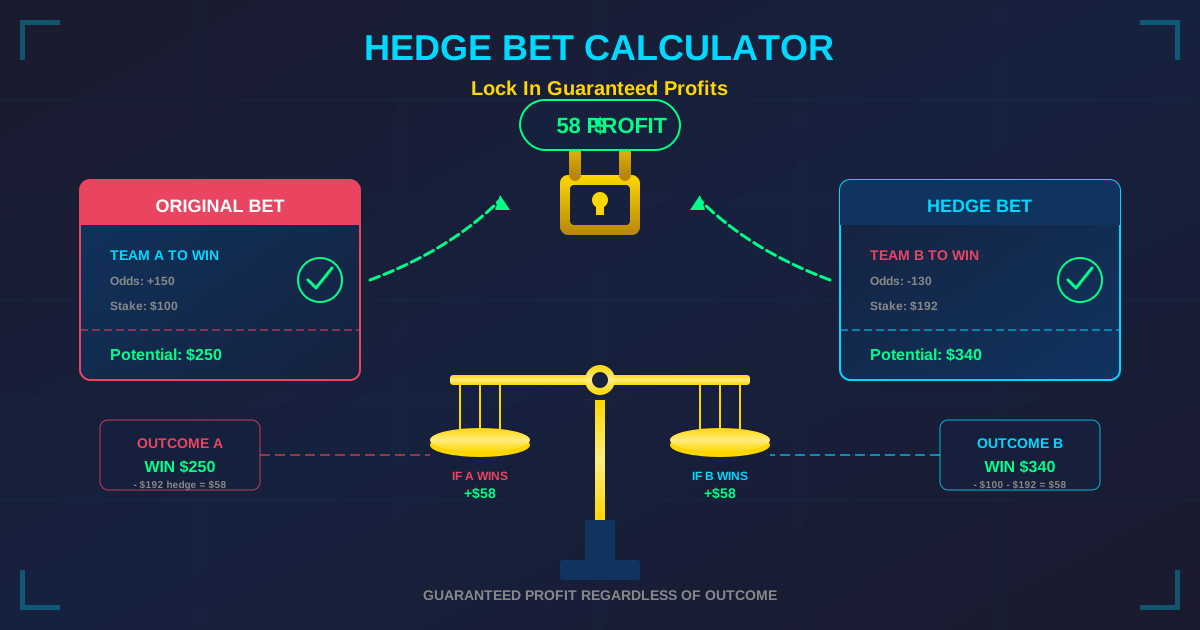
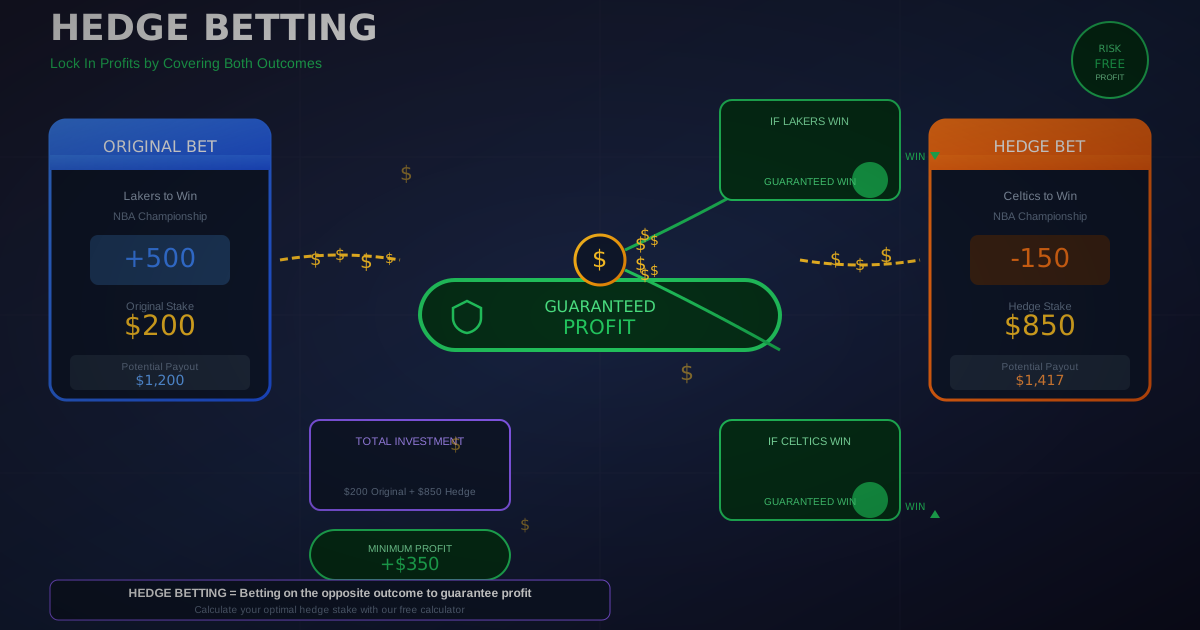
Hedging When Lines Move
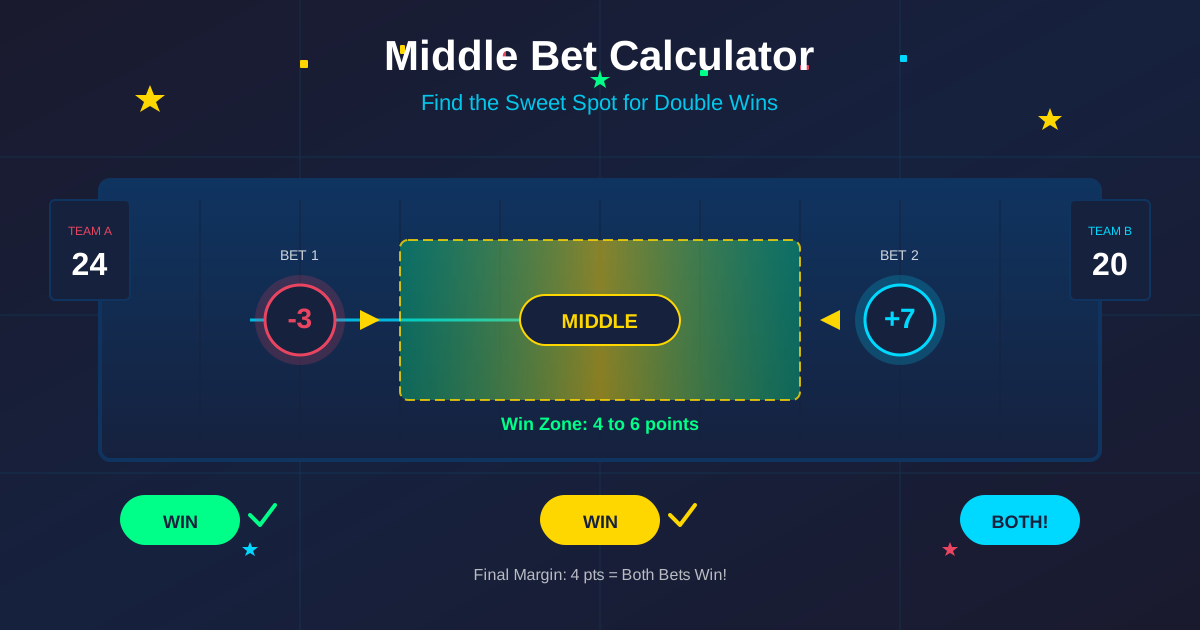
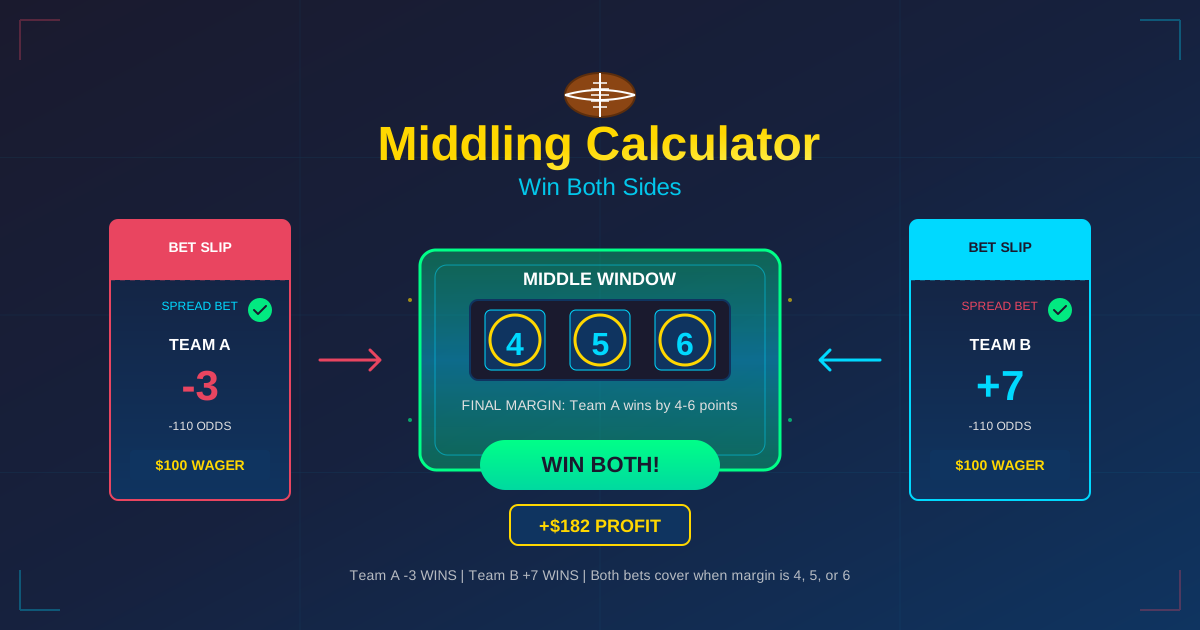
If you bet a team at +7 and the line moves to +3, you can hedge by betting the other side at -3. The 4-point middle creates a range where both bets win.
Example:
- Bet 1: Team B +7 (-110) for $110 to win $100
- Line moves to Team A -3
- Bet 2: Team A -3 (-110) for $110 to win $100
If Team A wins by 4, 5, or 6 -- both bets win ($200 profit). In all other outcomes, one bet wins and one loses (small loss from vig).
Calculate hedge amounts with our Hedge Calculator.
Why Sportsbooks Want You to Not Understand This
Sportsbooks profit most from uninformed bettors. Here is what they do not want you to know:
-
Parlays are their biggest profit center. The vig on parlays is 15-40%, compared to 4.5% on straight bets. They market parlays aggressively for a reason.
-
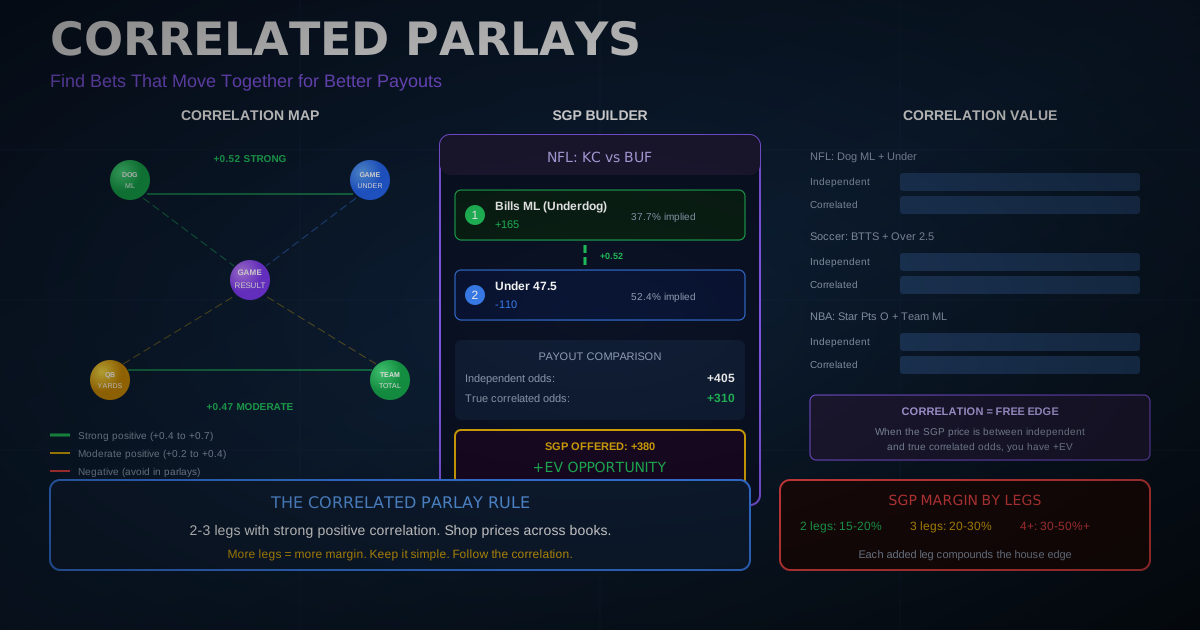
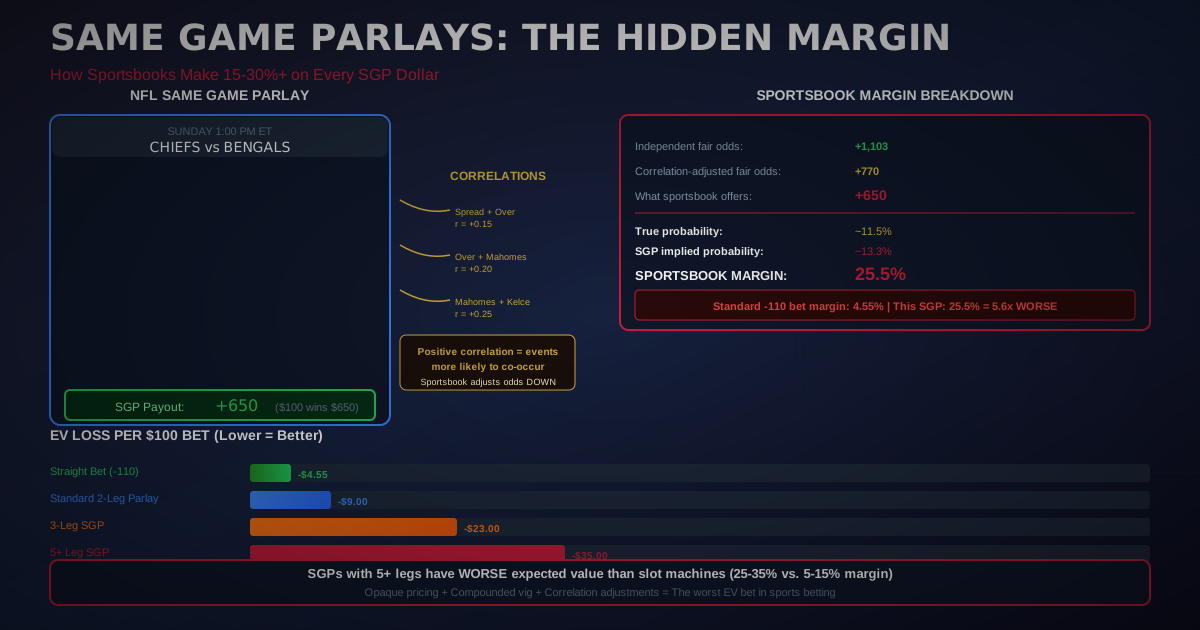
Same-game parlays have correlated vig. The legs are not independent, but sportsbooks price them as if they are, extracting extra margin.
-
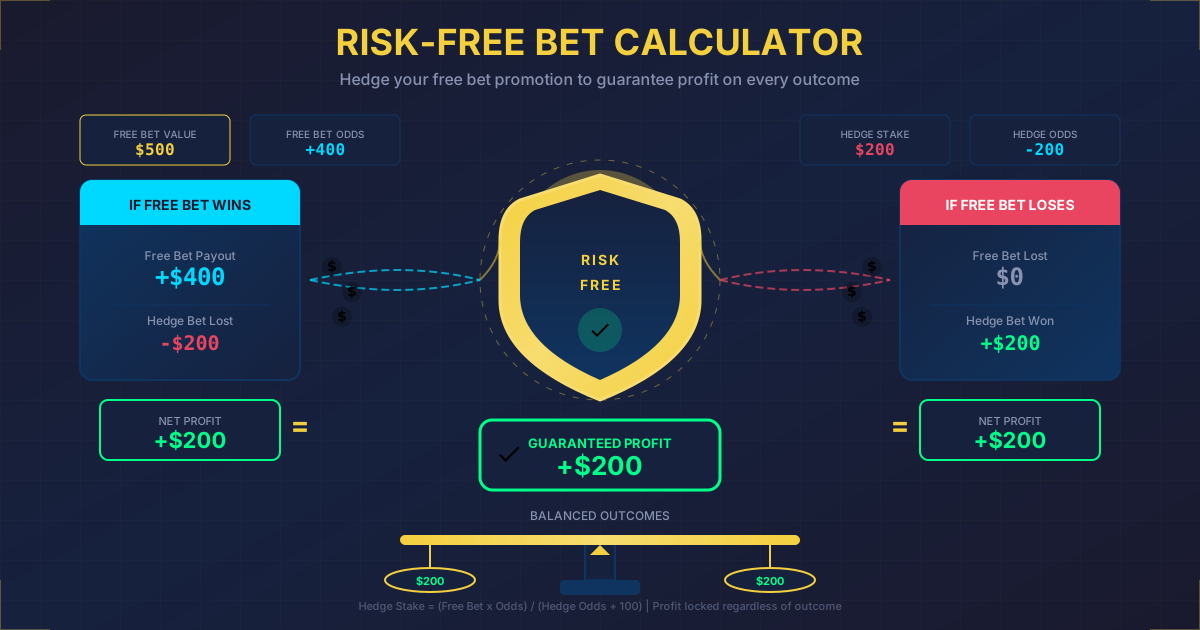
Promotional offers have real value -- but they want you to use them poorly. A $500 free bet is worth $350-$400 if you use matched betting. Most bettors waste it on longshot parlays and capture $0.
-
Reduced juice matters more than sign-up bonuses. Getting -105 instead of -110 on every bet saves more money annually than any welcome bonus.
-
Account restrictions target winners, not losers. If a sportsbook limits your account, it is a compliment -- it means you were costing them money.
Calculate the true expected value of any bet with our Expected Value Calculator.
How Dutching Relates to Odds Setting
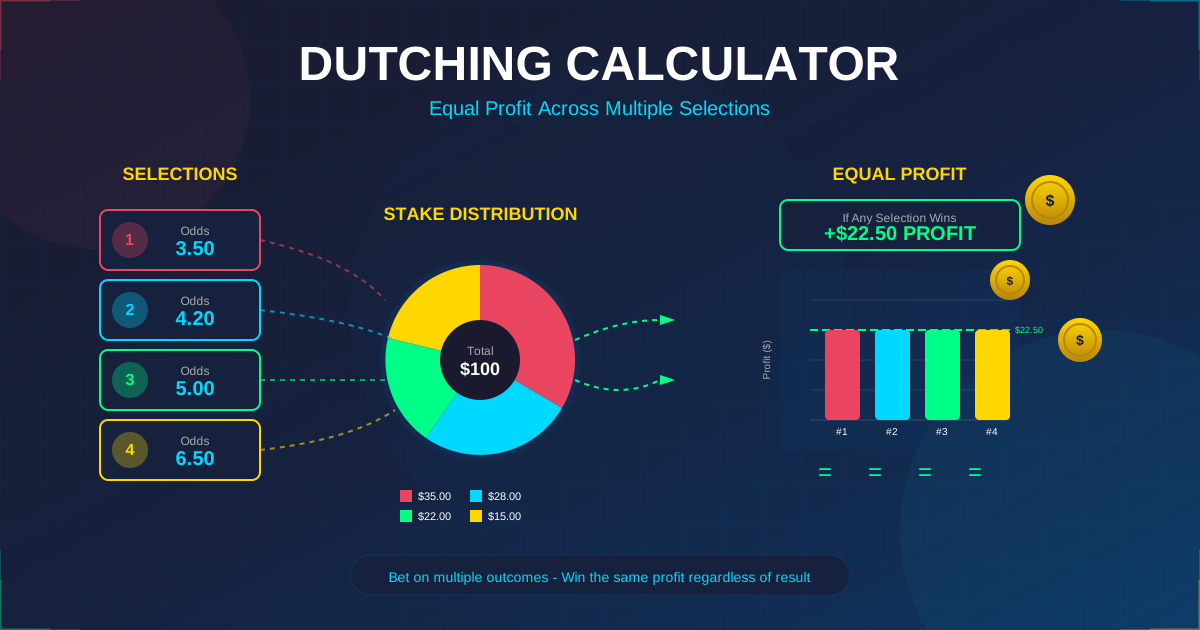
When sportsbooks disagree on outcomes, you can exploit the difference by dutching -- spreading your stake across multiple outcomes at different books to guarantee a profit or reduce risk:
Dutching Formula: Stake on each outcome = (Total Stake x Implied Probability of that outcome) / Sum of all implied probabilities
If the sum of your selected implied probabilities is less than 100%, you have a dutching opportunity with built-in profit.
Calculate dutching stakes across multiple outcomes with our Dutching Calculator.
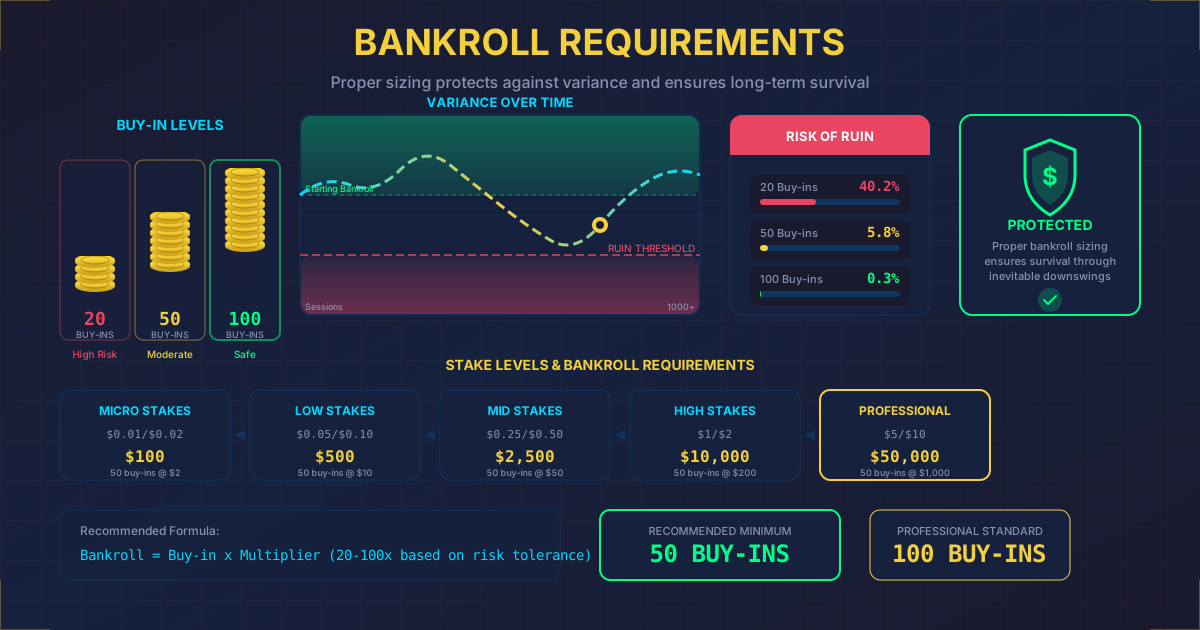
Bankroll Volatility in Odds-Driven Markets
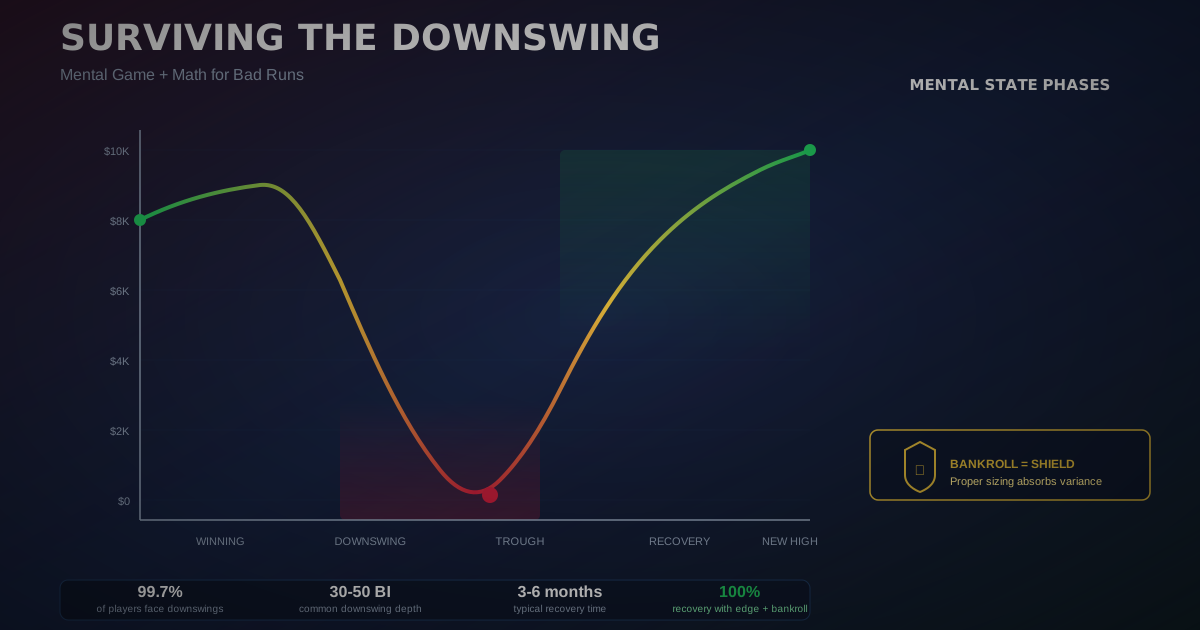
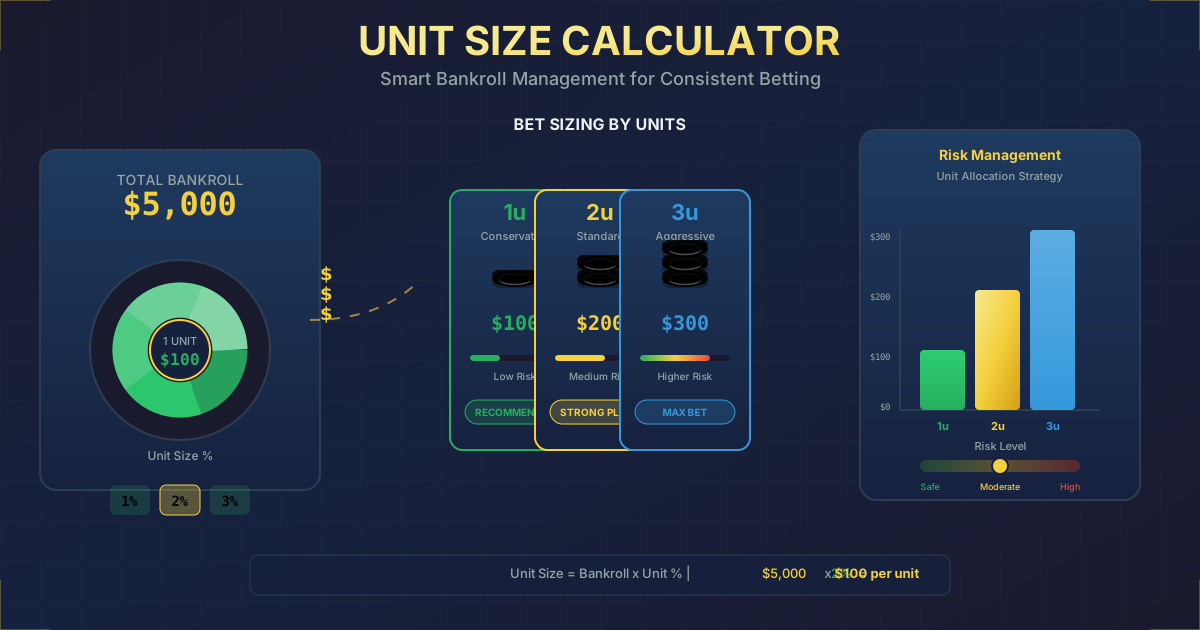
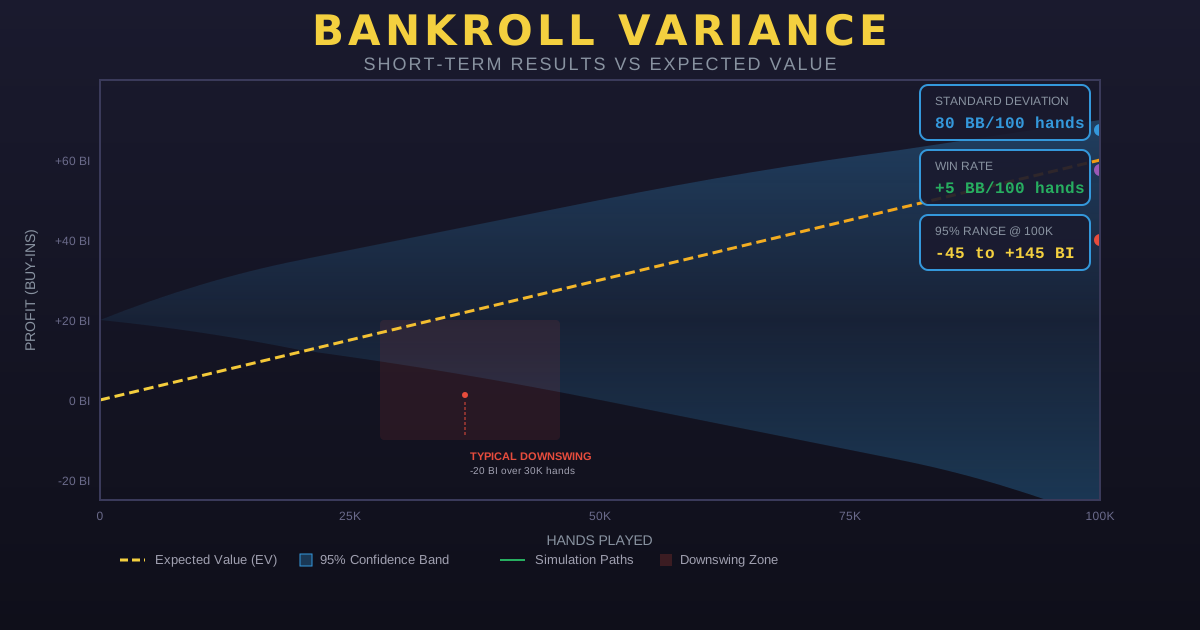
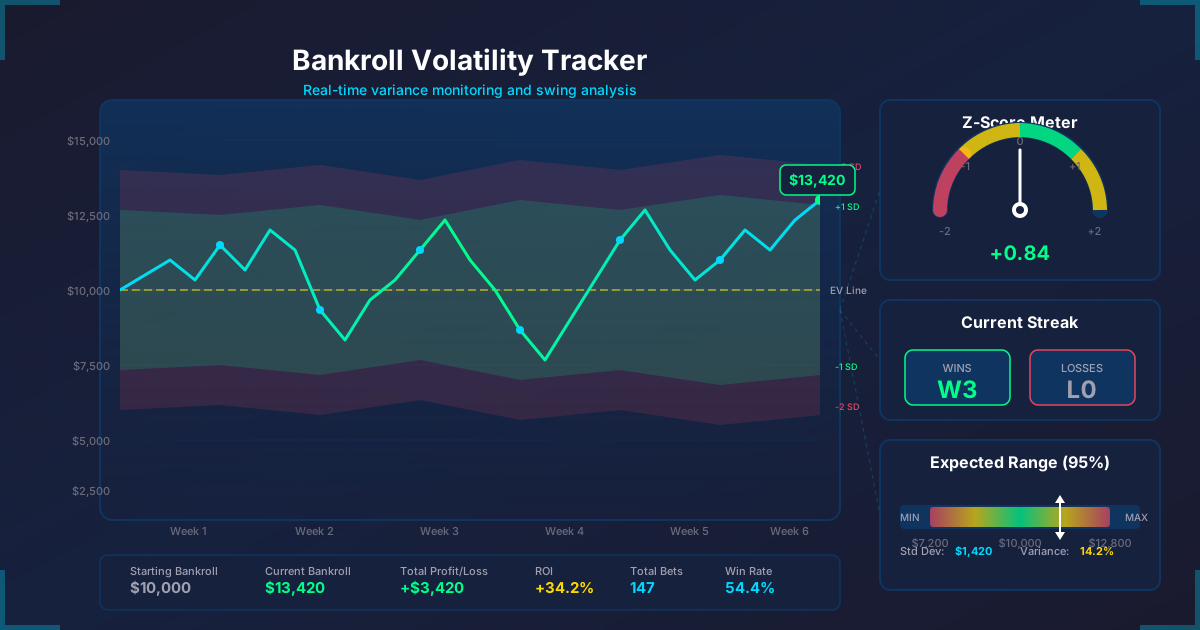
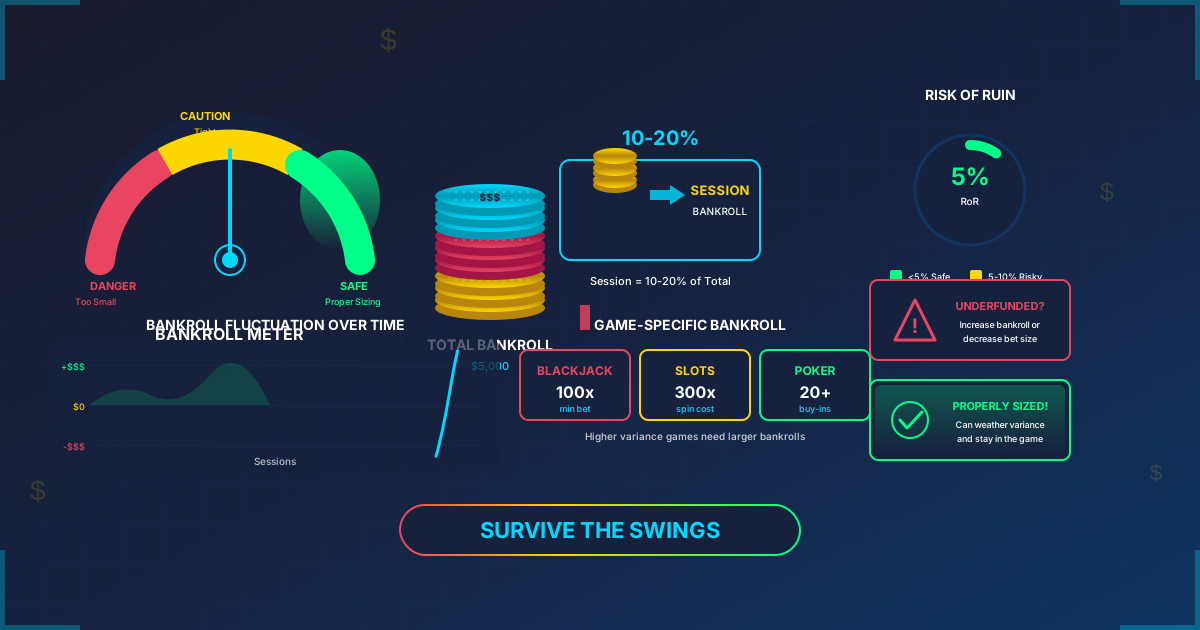
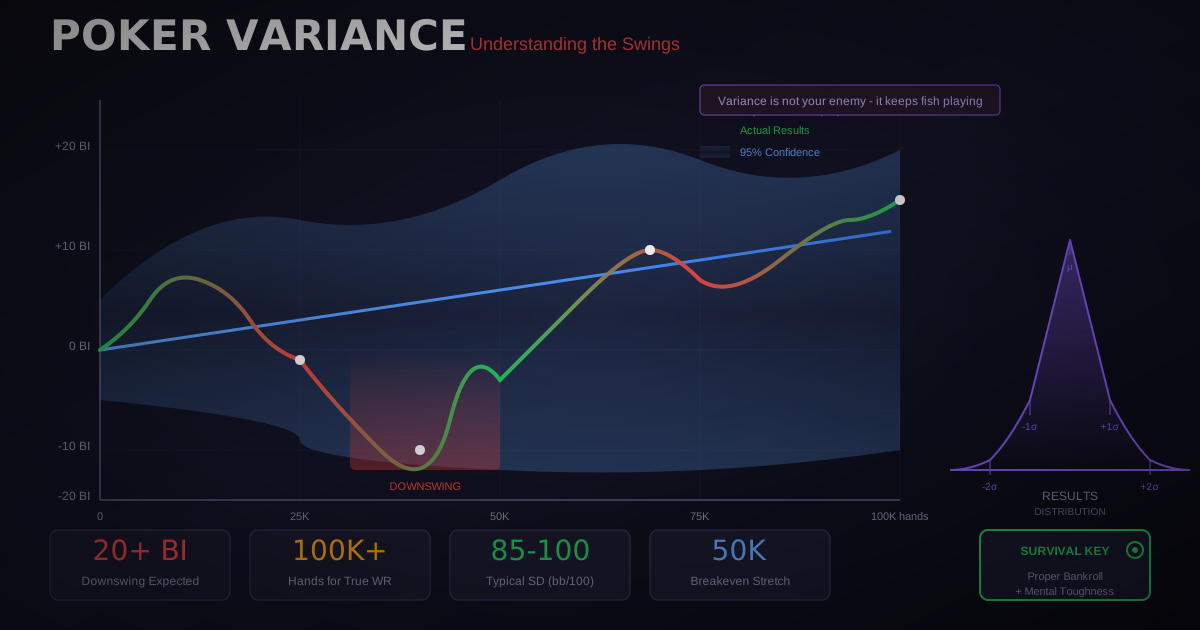
Understanding how sportsbooks set odds also helps you anticipate volatility. Markets with higher vig (props, parlays) extract more money per bet, increasing your effective variance. Markets with lower vig (reduced juice spreads) preserve more of your bankroll, allowing you to withstand longer downswings.
Monitor your bankroll fluctuations with our Bankroll Volatility Tracker.
Sure Bets: When Odds Cross
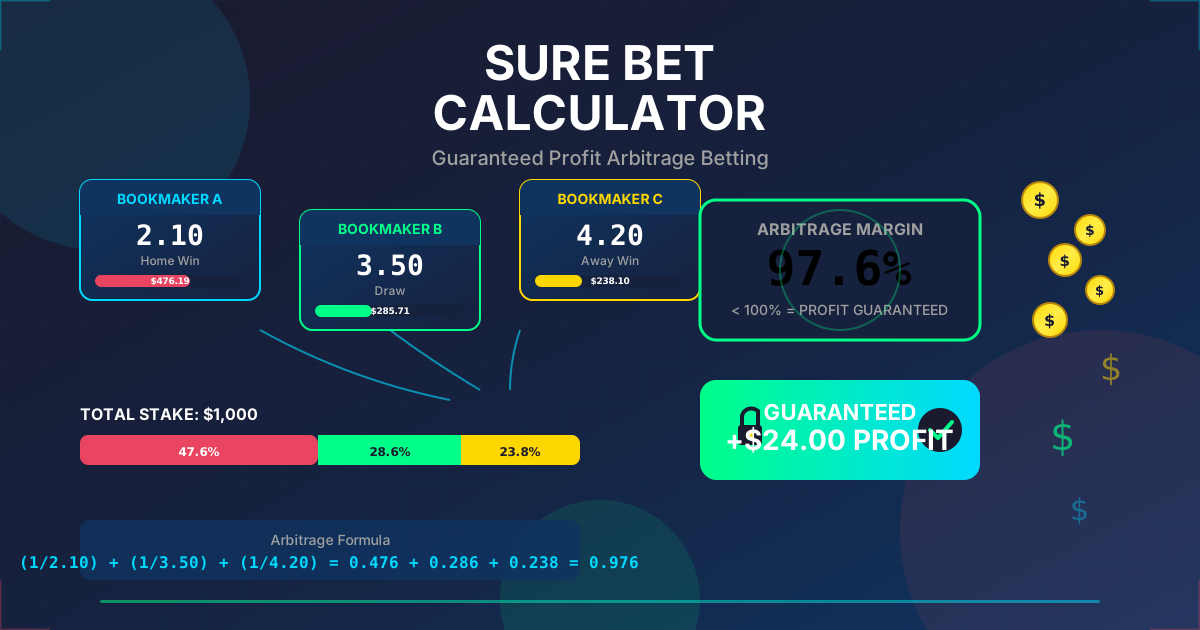
A sure bet (or arbitrage) occurs when the combined implied probabilities across sportsbooks total less than 100%. This is a direct result of books disagreeing on odds or slow line adjustments.
Verify sure bet calculations with our Sure Bet Calculator.
Frequently Asked Questions
Do sportsbooks set odds to predict outcomes?
No. Sportsbooks set odds to attract balanced action on both sides while maintaining their vig margin. The opening line reflects their model's estimate of fair probability, but line movement is driven by money flow, not by updated predictions. The closing line happens to be highly predictive because it has absorbed information from sharp bettors.
What is the difference between vig, juice, and hold?
These terms are closely related but have subtle differences. Vig (vigorish) and juice refer to the commission built into the odds you see. Hold refers to the sportsbook's overall margin on a market (the combined overround). For a standard -110/-110 line, the vig is approximately 10% of your winning amount, and the hold is approximately 4.5% of the total money wagered.
Why do different sportsbooks have different odds?
Different sportsbooks have different models, risk appetites, customer bases, and timing of line updates. A book with mostly sharp customers will have more accurate lines. A book with mostly recreational customers may shade lines toward popular teams. These differences create line shopping opportunities and occasionally arbitrage.
What is Closing Line Value and why is it the best predictor of success?
Closing Line Value measures whether you got better odds than the final line before the event started. It is the best predictor because the closing line represents the market's best estimate of true probability after all information (sharp bets, public money, news) has been absorbed. Consistently beating it means you are identifying value that even the most efficient market misses.
How much does the vig actually cost me per year?
At -110 standard vig, a bettor wagering $100 per bet across 1,000 annual bets loses approximately $4,550 to vig alone (assuming 50% win rate). At reduced -105 juice, that drops to $2,380. The $2,170 difference is essentially free money saved by shopping for better lines.
Can I make money just by following sharp money?
Following sharp action can be profitable, but timing is critical. If you bet at the same price the sharps got, you capture their edge. If you bet after the line has already moved to reflect sharp action, much of the value is gone. Speed matters enormously in this strategy.
What is reverse line movement and should I follow it?
Reverse line movement occurs when the line moves opposite to where the majority of bets are placed. For example, if 70% of bets are on Team A but the line moves toward Team B, it suggests sharp money is on Team B. RLM is one of the most reliable betting signals, but it should be combined with other analysis rather than followed blindly.
How do sportsbooks decide to limit or ban a bettor?
Sportsbooks use sophisticated tracking to monitor every bettor's ROI, CLV, bet timing, market selection, and betting patterns. Bettors who consistently beat the closing line, bet sharp-originated steam moves, or demonstrate sustained profitability get flagged. The book then reduces bet limits or excludes the bettor from certain markets. This is a business decision, not personal -- winning bettors cost the sportsbook money.
Related Tools
Analyze sportsbook lines with these free calculators:
- Hold/Vig Calculator -- Calculate the vig on any betting market
- Implied Probability Calculator -- Convert odds to true probabilities
- Odds Converter -- Compare odds formats across sportsbooks
- CLV Tracker -- Track closing line value over time
- Expected Value Calculator -- Calculate EV for any wager
- Arbitrage Calculator -- Find arb opportunities between books
- Kelly Criterion Calculator -- Optimal bet sizing
- Hedge Calculator -- Calculate hedge positions
- Bankroll Volatility Tracker -- Monitor bankroll swings
- Sure Bet Calculator -- Verify sure bets
- Parlay Calculator -- Calculate true parlay payouts
- Matched Betting Calculator -- Extract bonus value
- Dutching Calculator -- Spread risk across outcomes
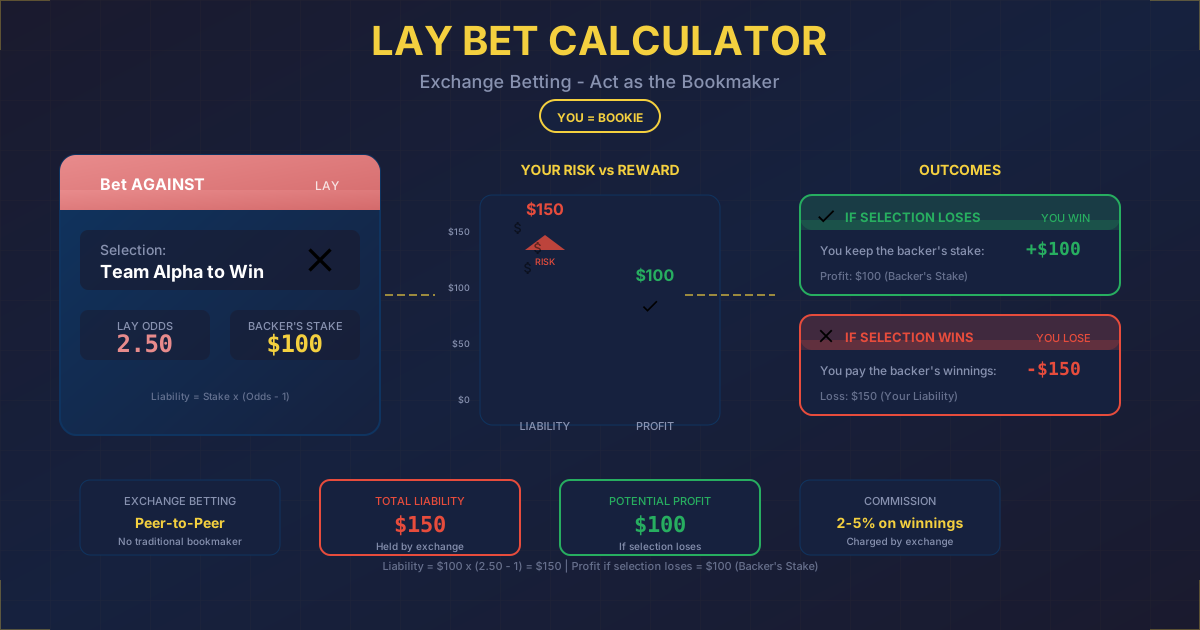
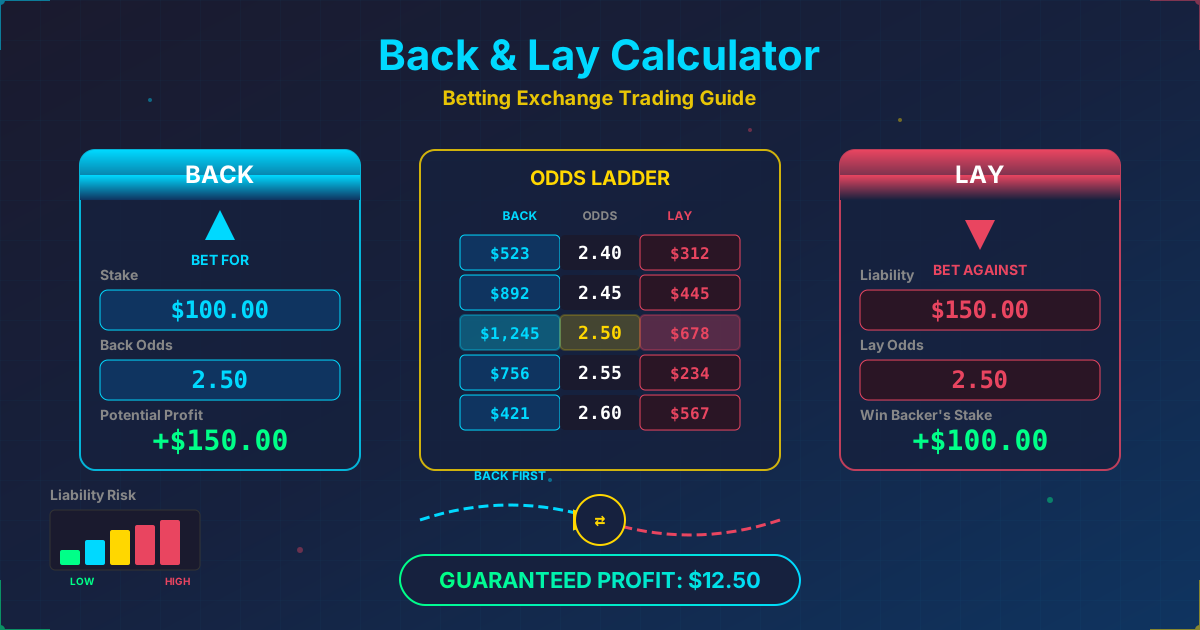
- Lay Bet Calculator -- Calculate exchange lay bets
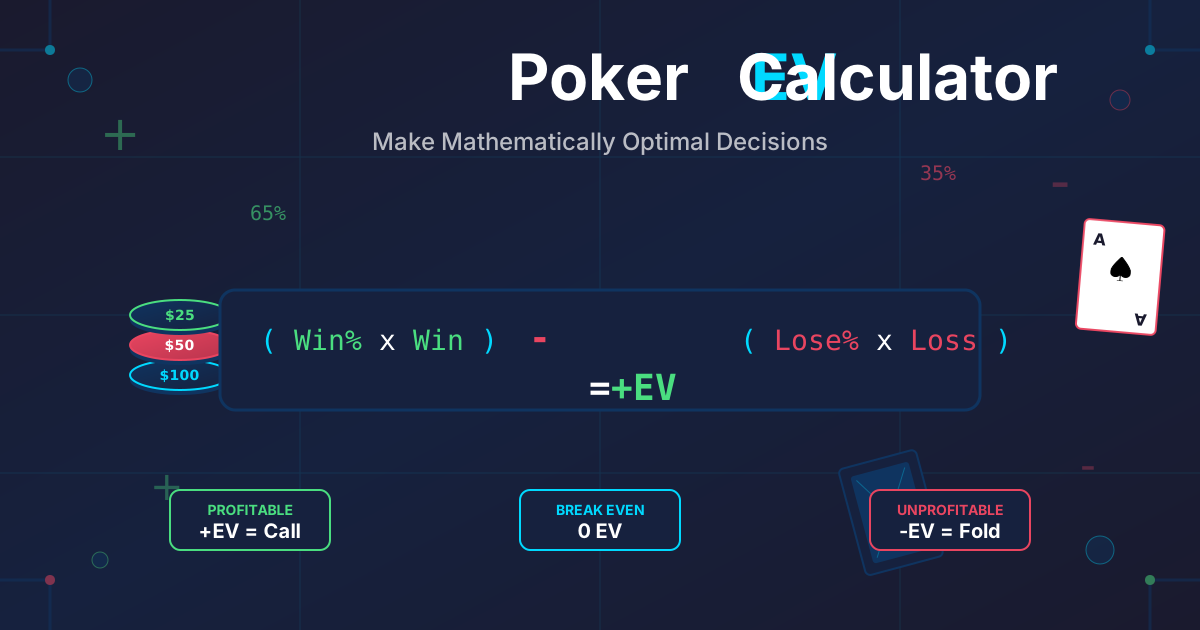
- Poker EV Calculator -- Expected value analysis
Conclusion
Understanding how sportsbooks set odds transforms you from a price taker into a price analyst. You stop seeing lines as predictions and start seeing them as prices -- prices that can be fair, too high, or too low relative to the true probability.
The key takeaways: opening lines are set by models and refined by sharp action. The vig is your constant adversary -- minimize it by shopping for reduced juice. Line movement tells a story if you know how to read it. And Closing Line Value is the ultimate measure of whether you are actually skilled or just lucky.
Start by analyzing the vig on every bet you consider with our Hold/Vig Calculator. Compare odds across books with our Odds Converter. Track your CLV religiously with our CLV Tracker. And calculate expected value before clicking "place bet" with our Expected Value Calculator.
The sportsbook is a business. Treat your betting like one, and the odds start working in your favor.
Gambling involves risk. This content is for educational and informational purposes only. Always gamble responsibly, set limits you can afford, and seek help if gambling becomes a problem. Visit the National Council on Problem Gambling or call 1-800-522-4700 for support.