Omaha Poker Strategy: PLO Starting Hands, Pot Odds, and Common Mistakes (2026)
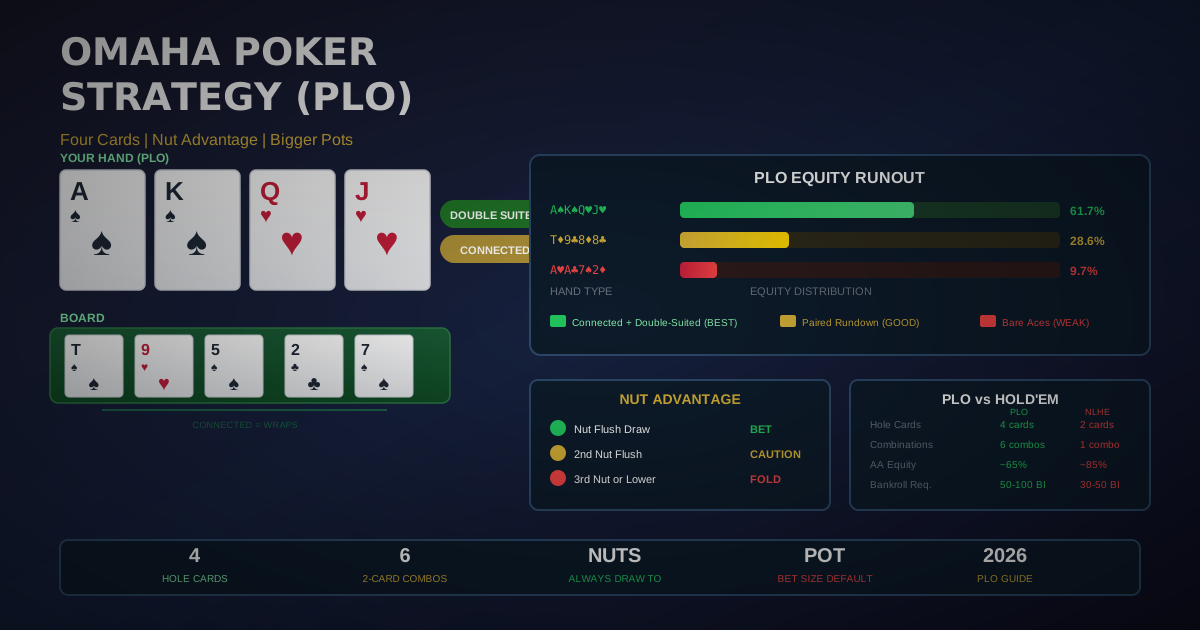
Pot-Limit Omaha is the most action-packed, highest-variance, and fastest-growing form of poker in the world -- and the players who understand its unique mathematics consistently crush those who treat it like Hold'em with two extra cards. PLO is not a minor variation of Texas Hold'em. It is a fundamentally different game that demands a completely different strategic framework.
The core difference is simple but its implications are enormous: you are dealt four cards instead of two, and you must use exactly two of them with exactly three board cards to make your hand. This creates a game where equities run closer together, drawing hands have massive power, nut hands are essential, and the pots grow to staggering sizes.
Consider this: in Hold'em, flopping a set gives you roughly 90% equity against an overpair. In Omaha, that same set can easily be a 60/40 underdog against a big wrap draw with flush outs. A hand that feels invincible in Hold'em is merely a favorite in Omaha. Understanding this equity compression is the single most important conceptual shift for Hold'em players transitioning to PLO.
Calculate your exact Omaha hand equity with our free Omaha Odds Calculator.
How PLO Differs from Texas Hold'em
Before diving into strategy, you must understand the fundamental differences between PLO and Hold'em. These differences affect every single decision you make.
Equity Runs Closer Together
In Hold'em, AA vs. KK preflop is an 81/19 favorite. In PLO, AAxx vs. KKxx might be only 60/40 or 65/35, depending on the other two cards. This equity compression means:
- You cannot rely on "having the best hand" as much
- Premium starting hands are less dominant
- Drawing hands gain enormous value
- Postflop play matters more than preflop domination
- Variance is significantly higher
Nut Hands Are Essential
In Hold'em, top pair with a good kicker wins a lot of pots. In PLO, top pair is essentially worthless. When four cards are dealt to each player, the probability that someone flopped two pair, a set, a straight, or a flush draw increases dramatically.
The PLO mantra: if you do not have the nuts or a draw to the nuts, proceed with extreme caution.
| Hand Strength | Hold'em Value | PLO Value |
|---|---|---|
| Top pair, top kicker | Very strong | Marginal at best |
| Overpair | Strong | Marginal |
| Two pair | Strong | Good but vulnerable |
| Set | Very strong | Strong but not invincible |
| Straight | Very strong | Strong if it is the nut straight |
| Flush | Very strong | Strong only if it is the nut flush |
| Full house | Near-nuts | Very strong |
Pot-Limit Betting Changes Everything
In Pot-Limit Omaha, the maximum bet is the size of the pot. This creates a specific betting dynamic:
- Preflop pots are relatively small compared to the stacks
- Postflop pots escalate rapidly through pot-sized bets and raises
- By the turn, stacks are often committed after a flop bet and call
- River decisions involve huge pots relative to remaining stacks
Example of pot growth:
- Preflop: 4 callers at $5 = $20 pot
- Flop: Pot-sized bet ($20) and one call = $60 pot
- Turn: Pot-sized bet ($60) and one call = $180 pot
- River: $180 pot with $100 remaining = stack committed
This rapid pot escalation is why starting hand selection and position are even more important in PLO than in Hold'em.
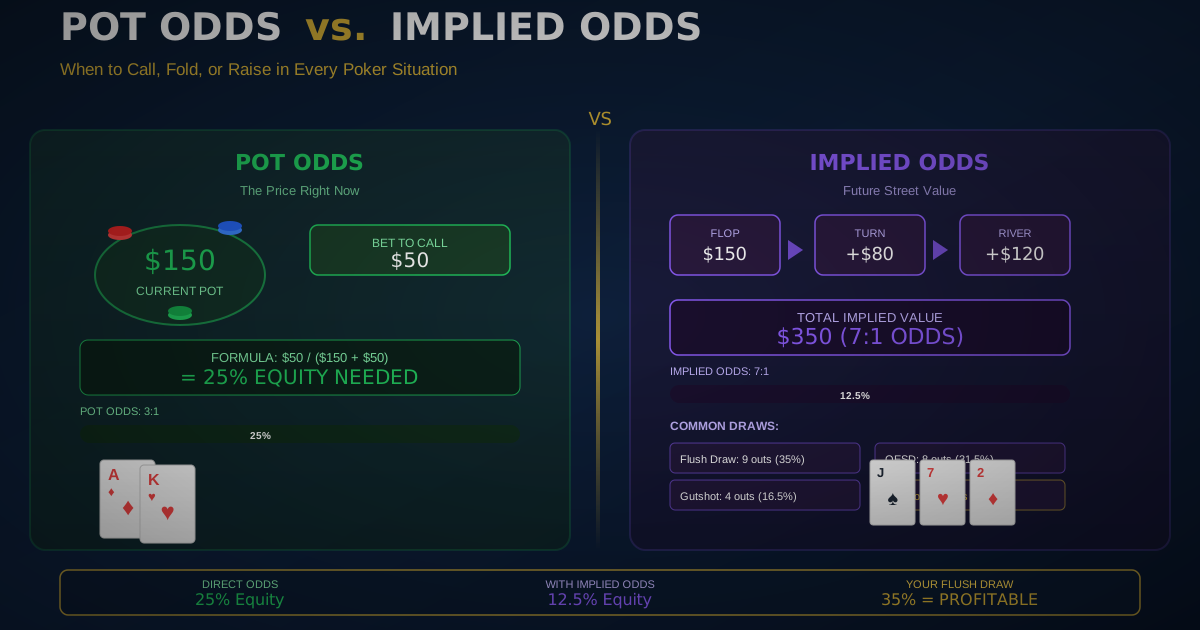
Understand pot odds and implied odds in PLO with our Pot Odds Calculator and Implied Odds Calculator.
PLO Starting Hand Selection
Starting hand selection in PLO is the most important and most misunderstood aspect of the game. Because you are dealt four cards, there are 270,725 possible starting hands compared to 1,326 in Hold'em. Most of these hands are unplayable garbage.
The Four Properties of Strong PLO Hands
Every strong PLO starting hand has at least two of these four properties:
1. Connectivity -- Cards that connect to form straights
- Examples: JT98, 8765, QJT9
- Connected cards create wrap draws, which are PLO's most powerful postflop hands
- Double-connected hands (all four cards working together) are premium
2. Suitedness -- Cards that share suits for flush draws
- Double-suited (two suits): premium feature
- Single-suited: good
- Rainbow (all different suits): significant weakness
- The nut flush draw (Axx of a suit) is extremely valuable
3. High Cards -- Cards that make top pair and overpairs
- AA is the best starting hand feature
- KK is strong but less dominant than in Hold'em
- Big broadway cards contribute to nut straights
4. Pairs -- Cards that can flop sets
- High pairs (AA, KK, QQ) that can make top set
- Medium pairs that flop hidden sets
- Small pairs have less value because bottom set is often beaten
PLO Starting Hand Tiers
Tier 1: Premium (Top 5% -- Always raise/3-bet)
| Hand Type | Examples |
|---|---|
| AAxx double-suited | AAK8 with two suits, AAJT double-suited |
| AAxx with connectivity | AAKQ, AAJT, AAT9 |
| Big rundowns double-suited | KQJTs, QJT9 double-suited |
| AA with pair | AAKK, AAQQ |
Tier 2: Strong (Top 5-15% -- Raise or call raises)
| Hand Type | Examples |
|---|---|
| AAxx single-suited | AA73 with one suit |
| KKxx double-suited with connectivity | KKQJs, KKT9 double-suited |
| Big rundowns single-suited | KQJT, QJT9, JT98 with one suit |
| Double-suited broadways | KQJ9 double-suited, KQT9 double-suited |
Tier 3: Playable (Top 15-30% -- Raise in position, call in position)
| Hand Type | Examples |
|---|---|
| Medium rundowns | T987, 9876, 8765 suited |
| KKxx single-suited | KKJ8 with one suit |
| QQxx double-suited | QQJ9 double-suited |
| Suited aces with connectivity | A567 suited, A89T suited |
Tier 4: Marginal (Top 30-50% -- Play only in position, in multiway pots)
| Hand Type | Examples |
|---|---|
| Low rundowns | 7654, 6543 |
| Single-suited medium hands | T976 with one suit |
| Disconnected suited aces | A2K5 with ace-suited |
| Dry high pairs | KK72 rainbow |
Tier 5: Fold (Bottom 50%+ -- Almost never play)
| Hand Type | Examples |
|---|---|
| Dangler hands | AAK2 rainbow (the 2 is a dangler) |
| Small pairs no connectivity | 3345 rainbow |
| Rainbow disconnected | KT63 rainbow |
| Three-of-a-kind | TTT5 (blocks your own set) |
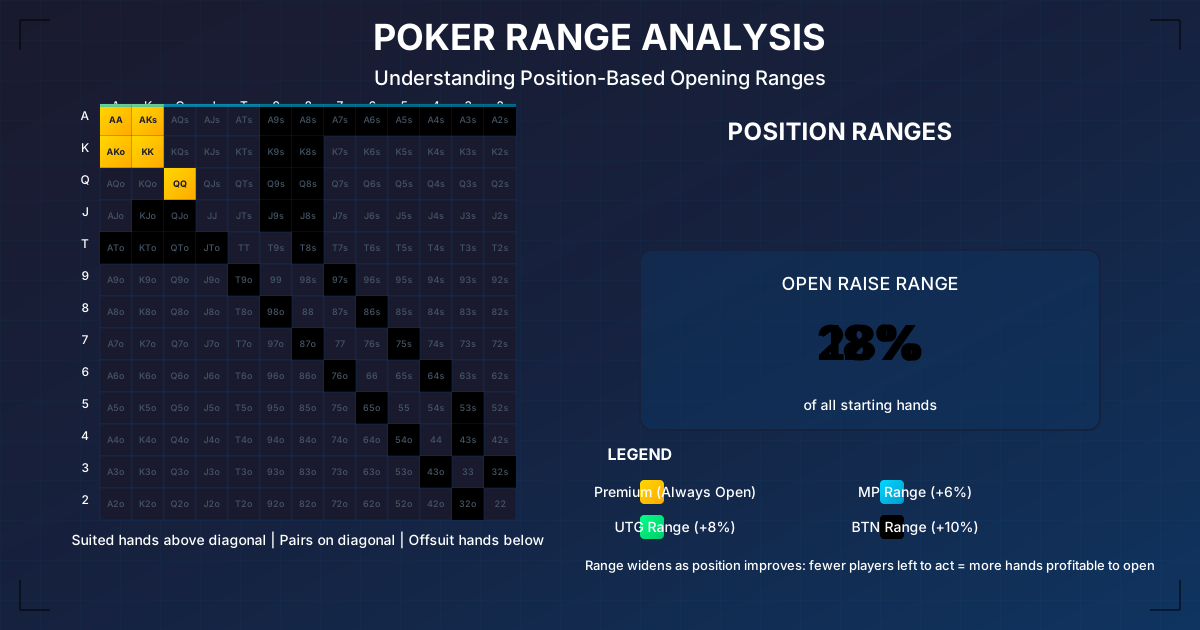
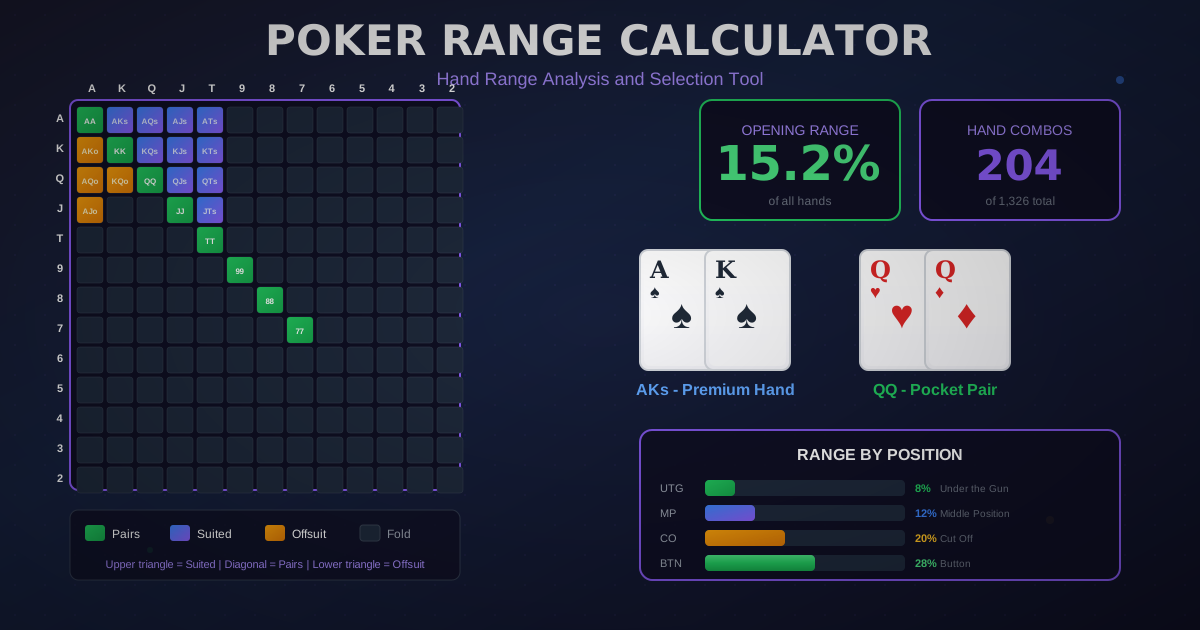
Build and analyze PLO hand ranges with our Poker Hand Range Calculator.
The Dangler Concept
A "dangler" is a card in your four-card hand that does not connect with the other three cards. Danglers reduce your hand's value significantly because they contribute nothing to making strong hands.
Example: AKQJ has zero danglers -- all four cards work together to make straights. AKQ3 has one dangler (the 3), which rarely helps make a winning hand. In PLO, every card must earn its spot.
Example of dangler impact on equity:
- AKQJ double-suited vs. random hand: approximately 63% equity
- AKQ3 double-suited vs. random hand: approximately 58% equity
- That 5% difference compounds across thousands of hands
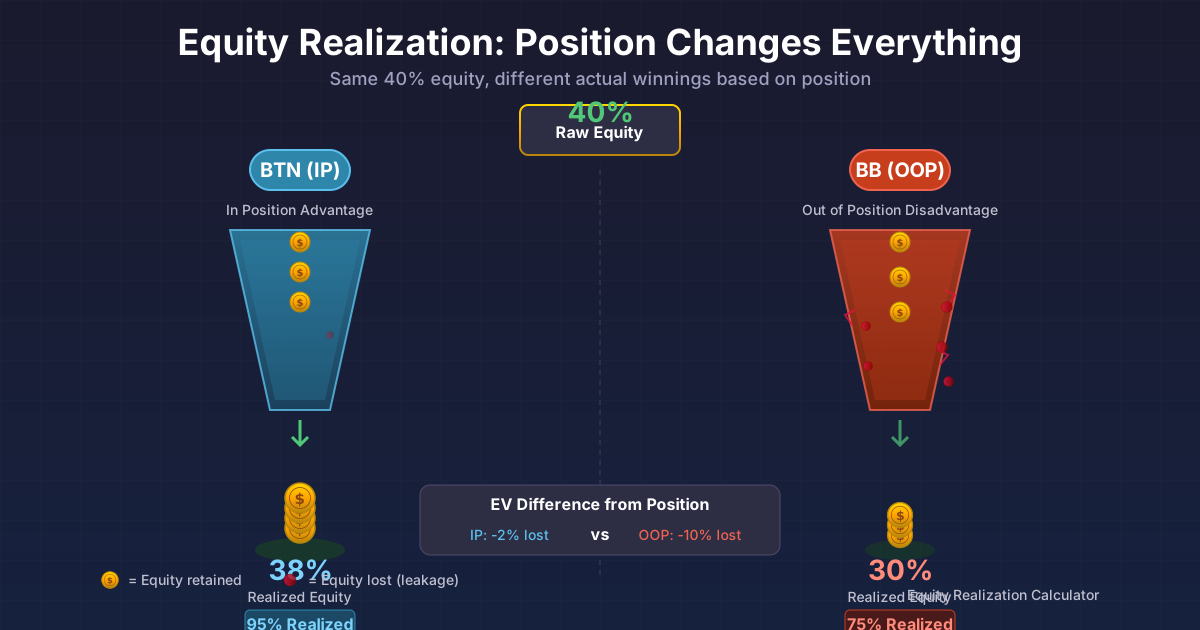
Position Play in PLO
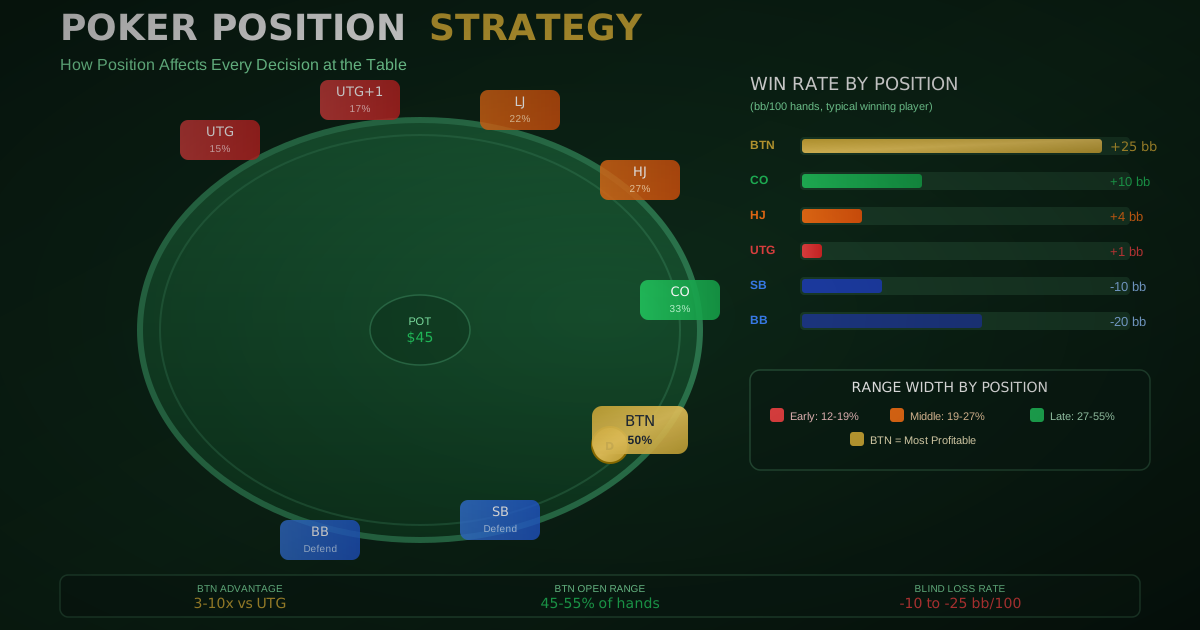
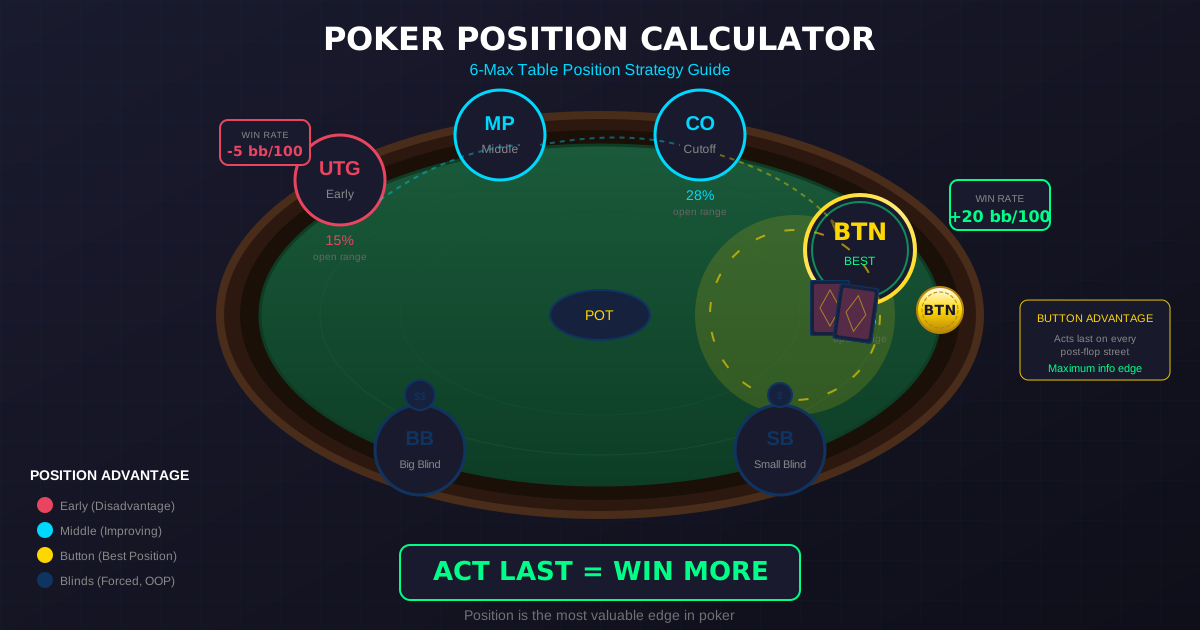
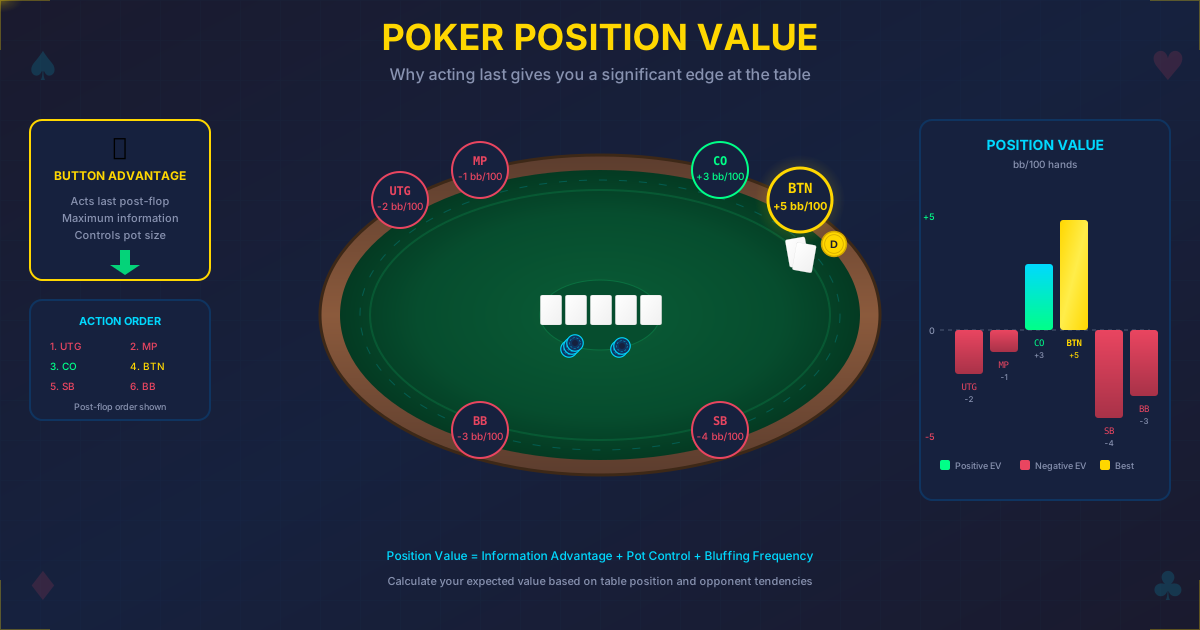
Position is even more important in PLO than in Hold'em because postflop decisions involve larger pots, more complex draw combinations, and more multi-way action.
Why Position Matters More in PLO
-
Information advantage is amplified. With four cards, each player's range is wider. Seeing opponents act first provides critical information about their hand strength.
-
Pot control is essential. In position, you can check behind on dangerous boards, saving huge pot-sized bets when you are uncertain.
-
Drawing hand realization. Many PLO hands need to see additional cards to realize their equity. Position lets you see turns and rivers more cheaply.
-
Bluffing effectiveness. Position makes your bets more credible and allows you to bluff when opponents show weakness.
Position-Based PLO Strategy
In Position (Button, Cutoff):
- Play the widest range of starting hands
- Call 3-bets with speculative hands that play well postflop
- Use pot-control to see cheap turns with drawing hands
- Value bet aggressively when you have the nuts or near-nuts
- Bluff rivers when draws miss and opponents check to you
Out of Position (Blinds, Early Position):
- Play only premium and strong hands
- 3-bet aggressively to reduce the field and build pots when you have AA
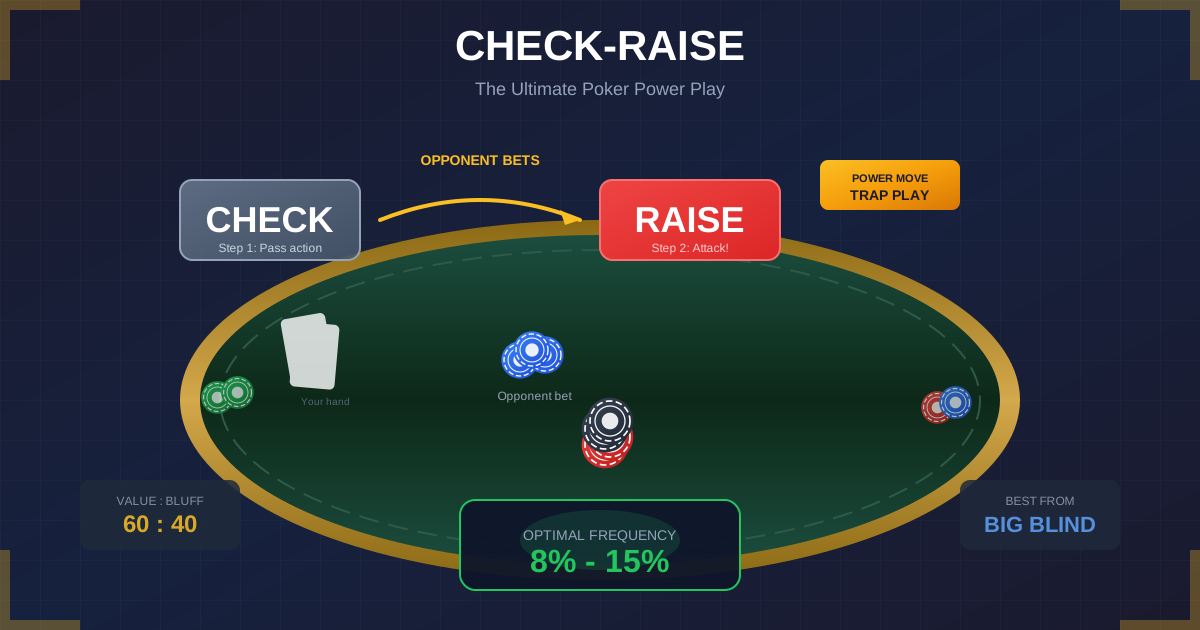
- Check-raise strong draws on the flop to build the pot and/or take it down
- Avoid calling with speculative hands that play poorly multi-way out of position
- When in doubt, lean toward folding rather than calling
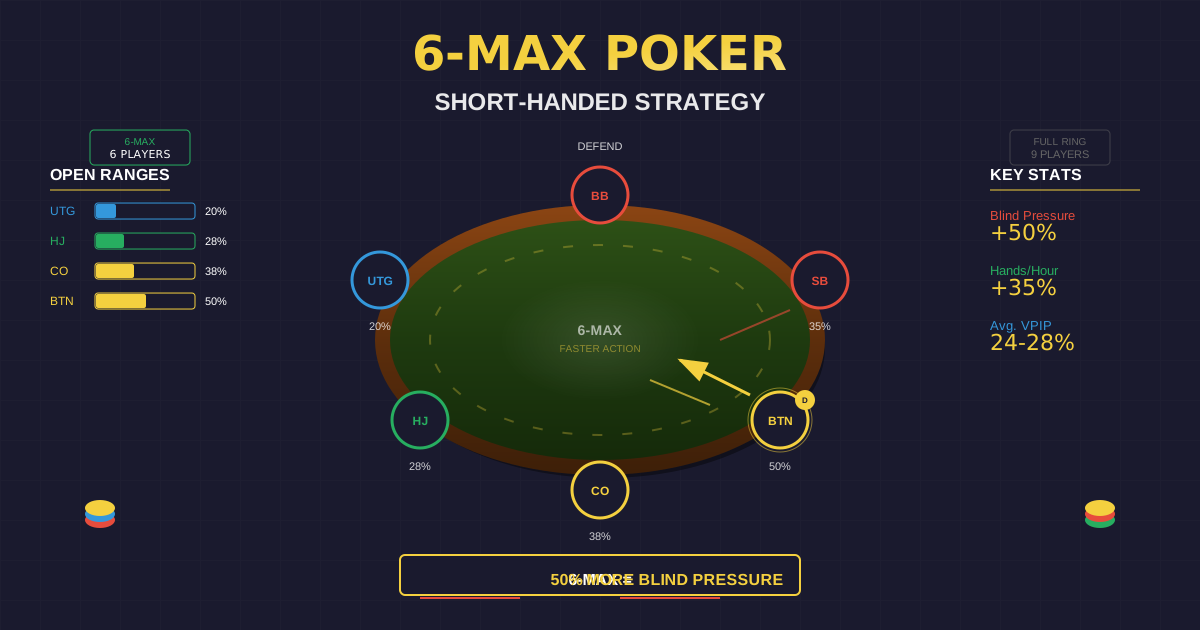
Positional Win Rates in PLO
Typical PLO win rates by position for a solid player:
| Position | Expected Win Rate (bb/100) |
|---|---|
| Button | +15 to +25 |
| Cutoff | +5 to +12 |
| Hijack | -2 to +5 |
| Middle Position | -5 to +2 |
| Under the Gun | -8 to -2 |
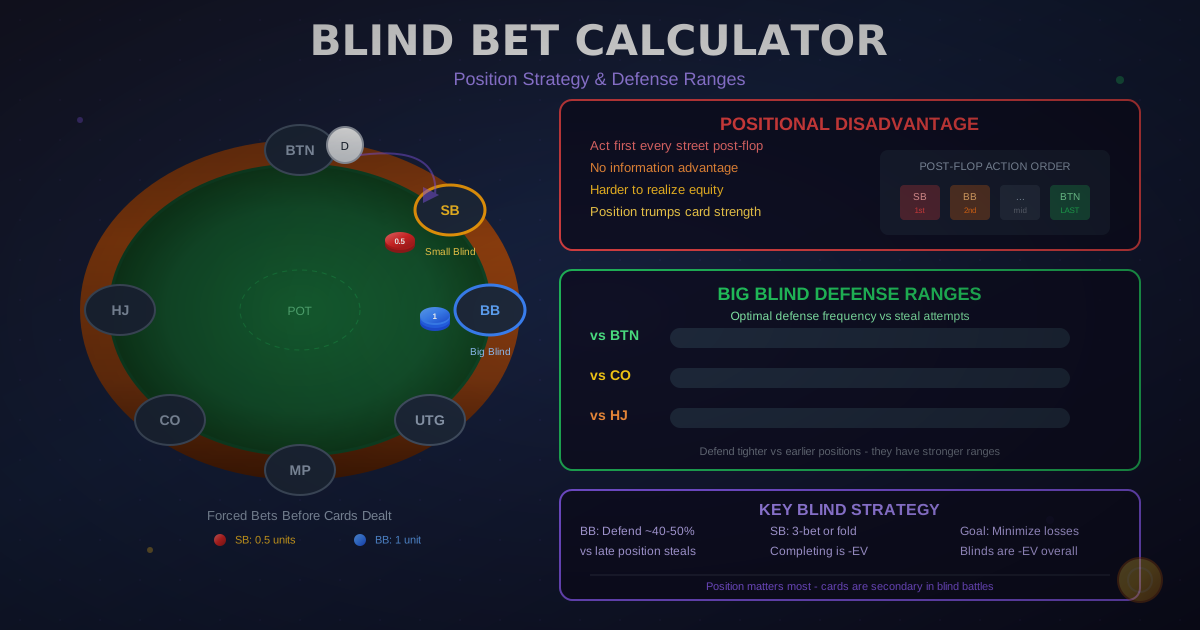
| Big Blind | -15 to -8 |
| Small Blind | -20 to -12 |
The gap between button and blinds is dramatically wider in PLO than in Hold'em, reinforcing how critical position is.
Pot Odds and Drawing in PLO
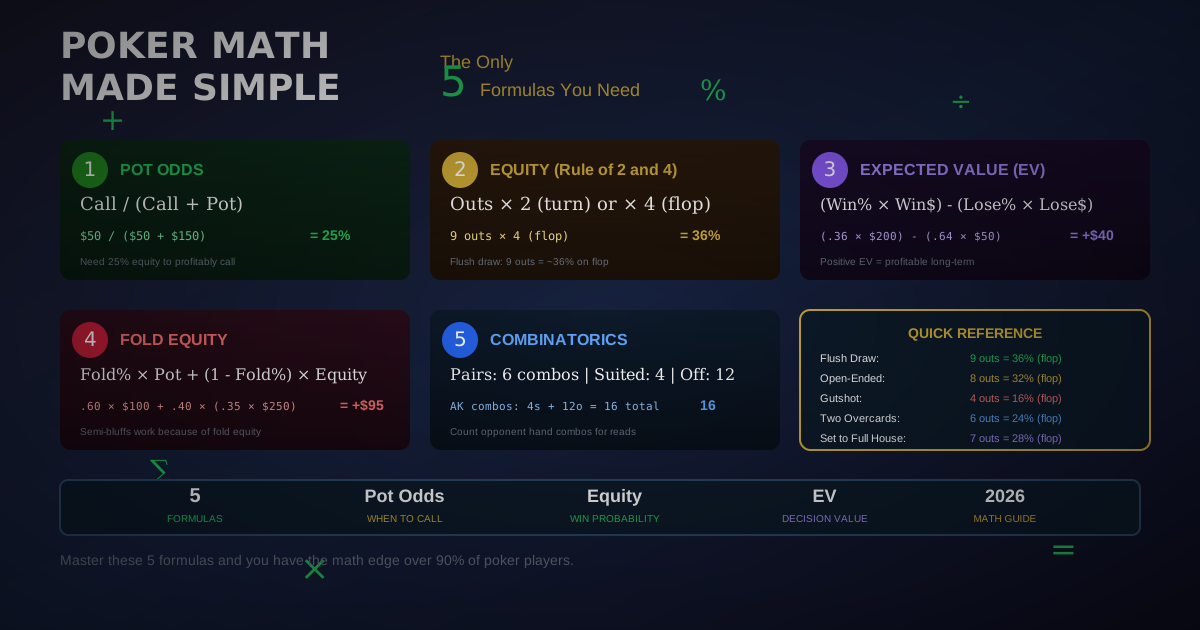
PLO is a drawing game. Understanding pot odds, implied odds, and how to evaluate draws is the core skill that separates winners from losers.
Common PLO Draws and Their Equity
| Draw Type | Outs | Approximate Turn Equity | Approximate River Equity |
|---|---|---|---|
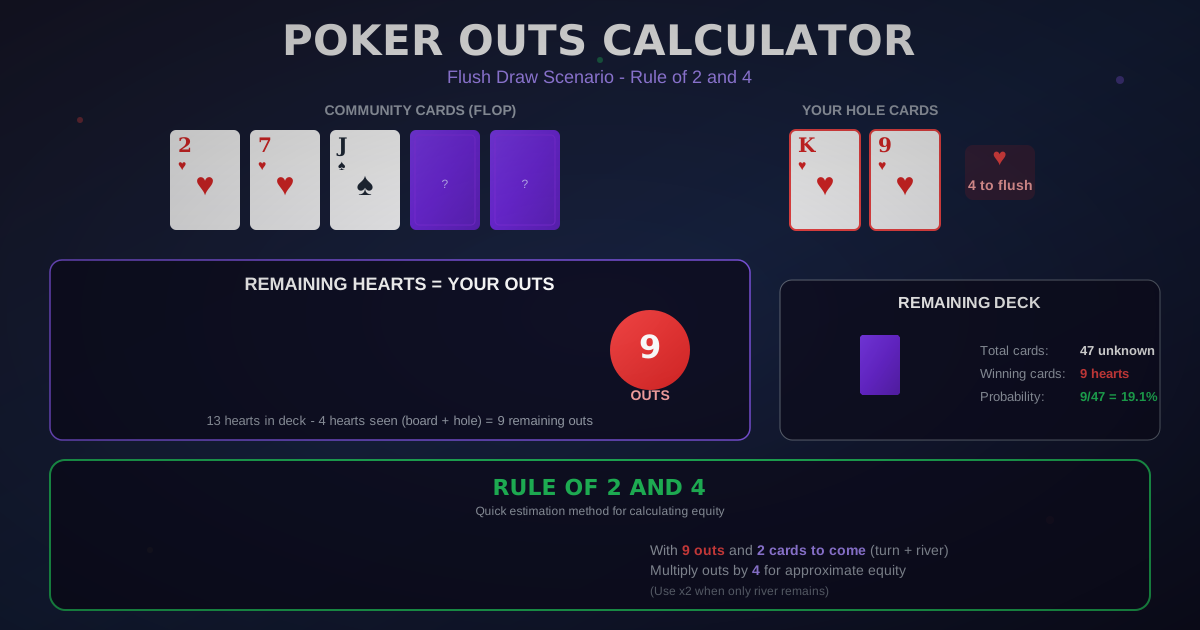
| Nut flush draw | 9 | 19% | 20% |
| Open-ended straight draw | 8 | 17% | 17% |
| 13-card wrap draw | 13 | 28% | 28% |
| 17-card wrap + flush draw | 17 | 36% | 37% |
| 20-card combo draw | 20 | 43% | 43% |
| Set (draw to full house) | 7 | 15% | 15% |
The most powerful hands in PLO are combo draws -- wraps combined with flush draws. A 20-out combo draw (wrap + flush) is actually a favorite against a made hand like top set.
Example: You hold 8-7-6-5 with a heart flush draw on a board of 9-4-2 with two hearts.
Your outs:
- Any T makes a straight (4 outs)
- Any 3 makes a straight (4 outs, minus cards you hold)
- Any 8 or 5 might give you a winning pair (but this is not reliable)
- Any heart gives you the flush (9 outs minus overlaps)
Total: approximately 13-15 outs = 28-32% equity on the turn
Against top set (99xx), this hand is roughly 35-40% equity with two cards to come. In Hold'em, you would rarely have this many outs.
Calculate exact PLO equity for any hand matchup with our Omaha Odds Calculator.
The Wrap Draw: PLO's Most Powerful Hand
A wrap draw occurs when your four hole cards surround the board cards, creating a massive number of straight outs.
Example of a 20-card wrap: Your hand: JT87 Board: 9-6-x
Cards that make a straight: any T, 8, 7, 5 (some already in your hand, so effective outs = 13-20 depending on blockers and suits)
Wraps are the primary reason connected starting hands are so valuable in PLO. A hand like JT98 creates wrap opportunities on a huge number of flops.
Implied Odds in PLO
Implied odds are more important in PLO than in any other poker variant because:
- Pots grow rapidly -- a pot-sized bet on the flop and turn creates enormous pots by the river
- Players stack off frequently -- when they make a strong but non-nut hand
- Nut draws get paid -- opponents cannot fold sets and two pairs when you hit your draw
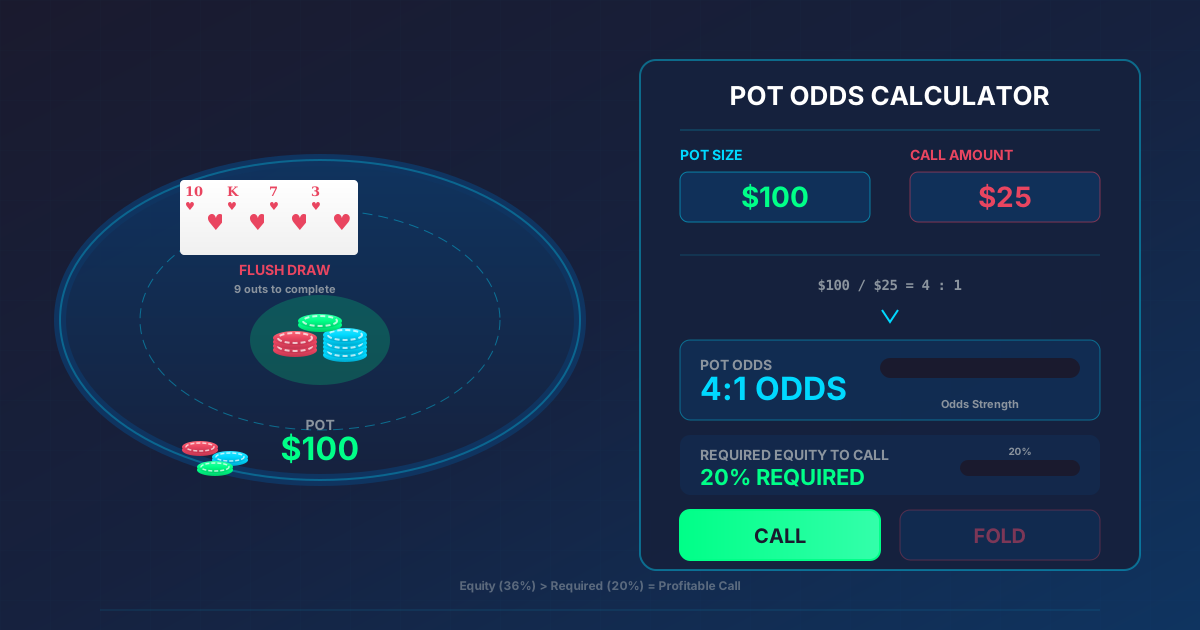
Example of implied odds calculation:
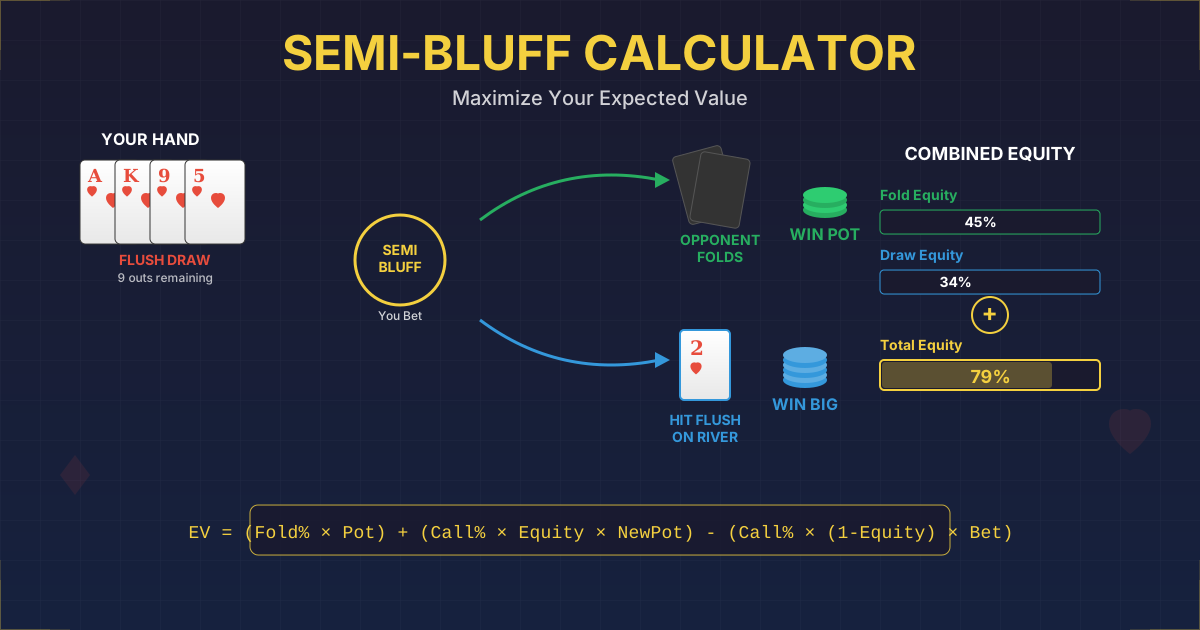
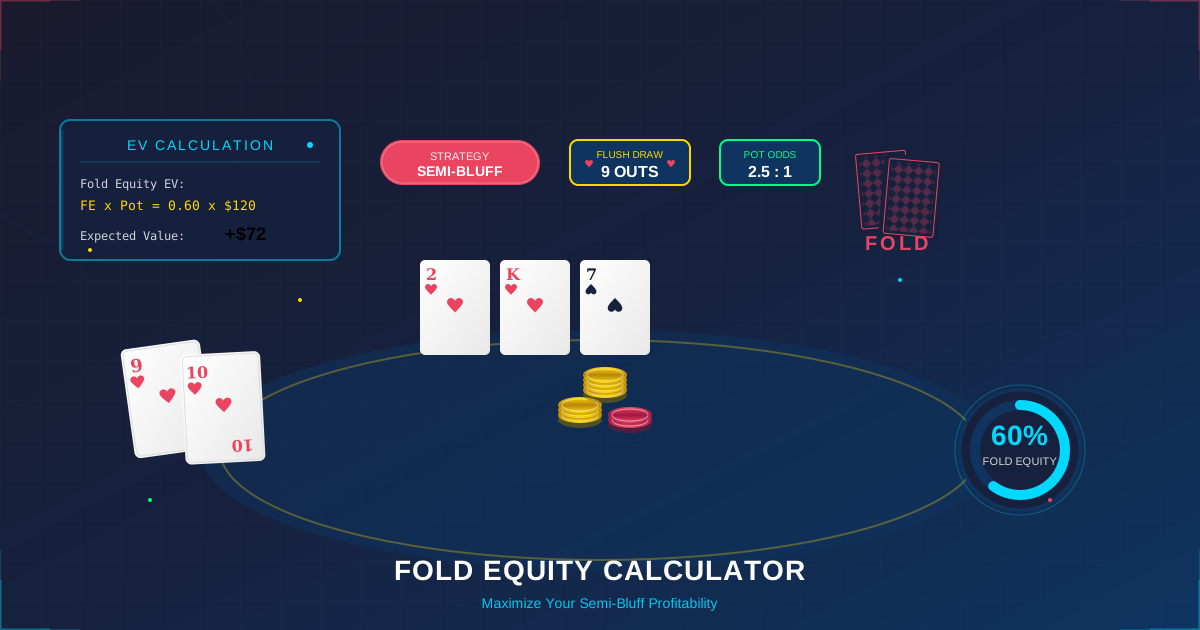
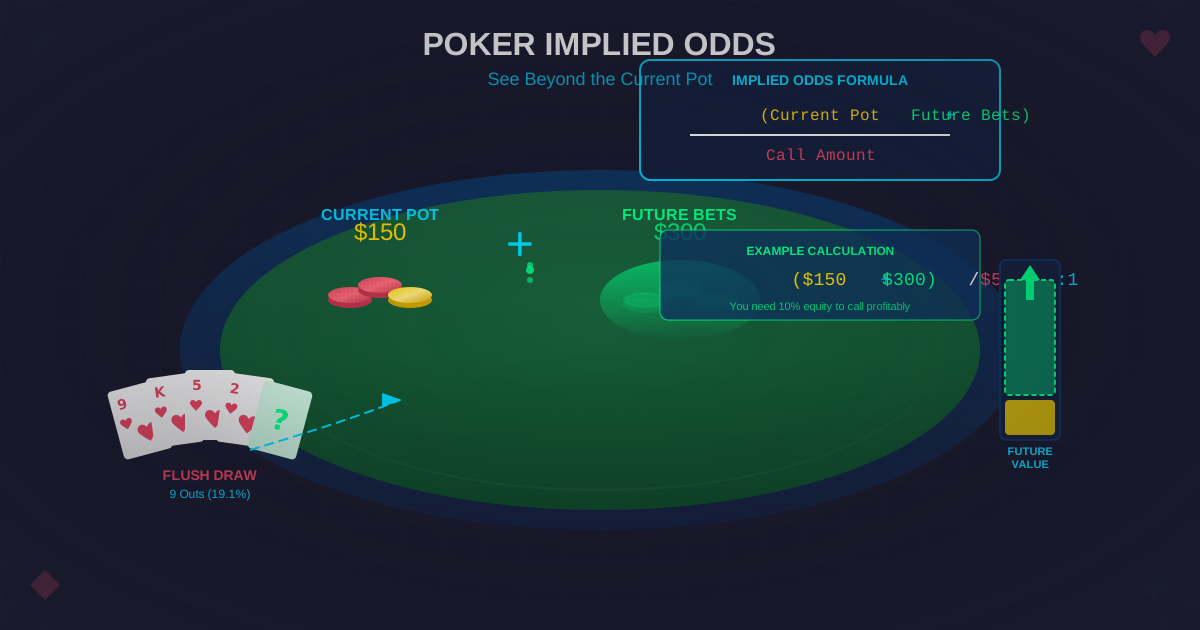
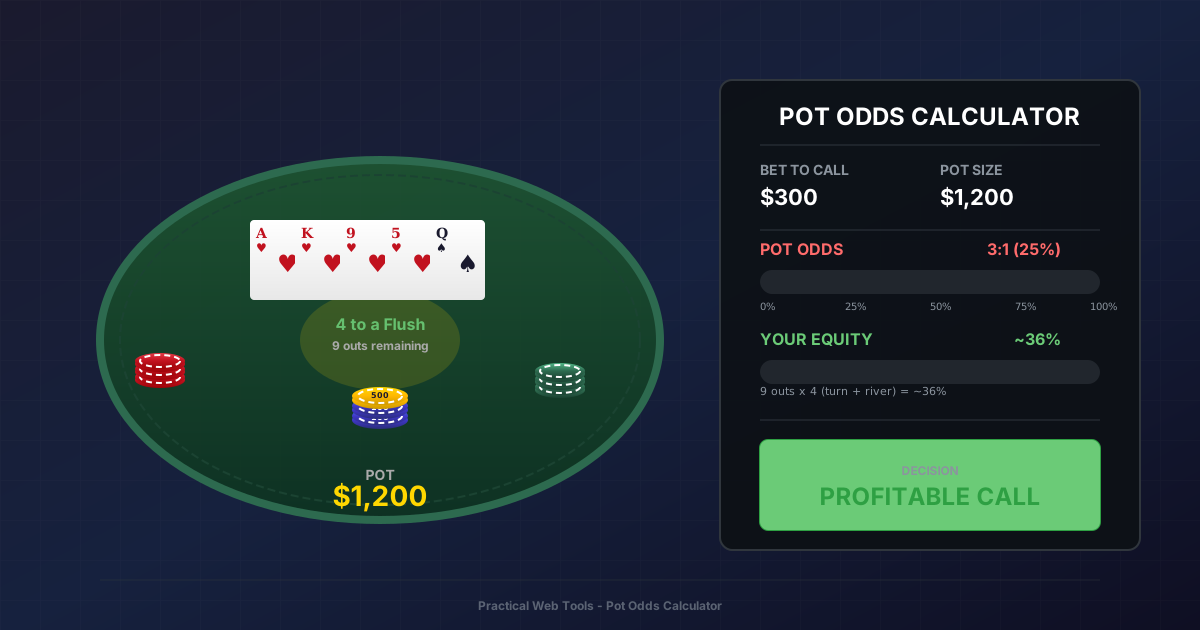
You have a nut flush draw on the flop. Pot is $100. Opponent bets $100. You need to call $100 to win $200 (getting 2:1, needing 33% equity). Your flush draw has about 36% equity with two cards to come, making this a call on direct odds alone.
But the implied odds make this even better. When you hit your flush on the turn, your opponent will often bet again (or call your bet) for another $200-400. Your effective price is $100 to win $400-600, making the call highly profitable.
Calculate implied odds for any draw with our Implied Odds Calculator.
Common PLO Mistakes
Mistake #1: Playing Too Many Hands
The most devastating PLO mistake is playing too many starting hands. With four cards, every hand looks like it has potential. But the math is brutal: most four-card combinations are garbage.
The fix: Play approximately 20-30% of hands in position and 10-15% out of position. Fold hands with danglers, rainbow hands without connectivity, and low pairs without additional features.
Mistake #2: Overvaluing One-Pair Hands
In Hold'em, top pair top kicker is a strong hand. In PLO, top pair is essentially a bluff catcher. With four cards dealt to each opponent and community cards creating multiple draw possibilities, someone almost always has better than one pair.
The fix: Never build large pots with one-pair hands in PLO. Check and pot-control. If opponents bet big, one pair is usually a fold on the flop.
Mistake #3: Playing Non-Nut Flush Draws
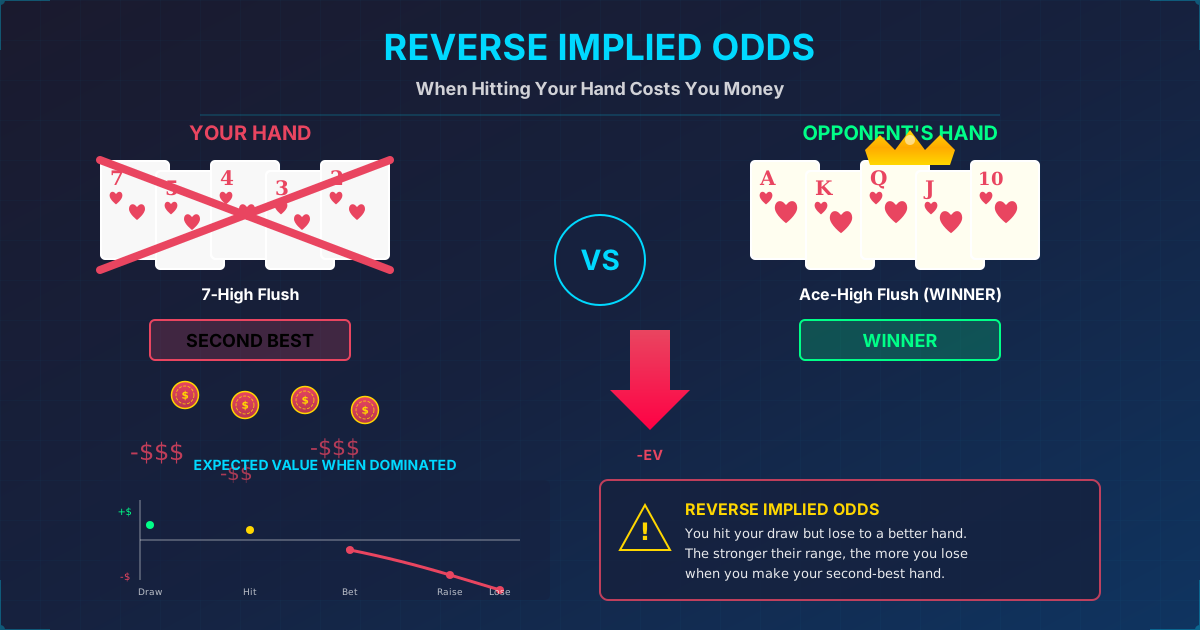
In Hold'em, any flush is typically strong. In PLO, a non-nut flush (anything below the ace-high flush) is extremely dangerous because someone frequently holds the ace-high flush draw. Getting stacked with the second-nut flush is a common and expensive PLO mistake.
The fix: Only invest heavily in nut flush draws (ace-high). With the second or third-nut flush draw, proceed cautiously. With low flush draws (7-high flush), treat them as minor additions to otherwise strong hands, not as standalone draws.
Mistake #4: Ignoring Board Pairing
When the board pairs in PLO, the probability of someone holding a full house or better increases dramatically. If you have a straight or flush on a paired board, your hand is significantly less valuable than on an unpaired board.
The fix: When the board pairs, re-evaluate your hand strength. A flush or straight that was strong on the flop becomes marginal when the board pairs on the turn or river. Be prepared to check and potentially fold.
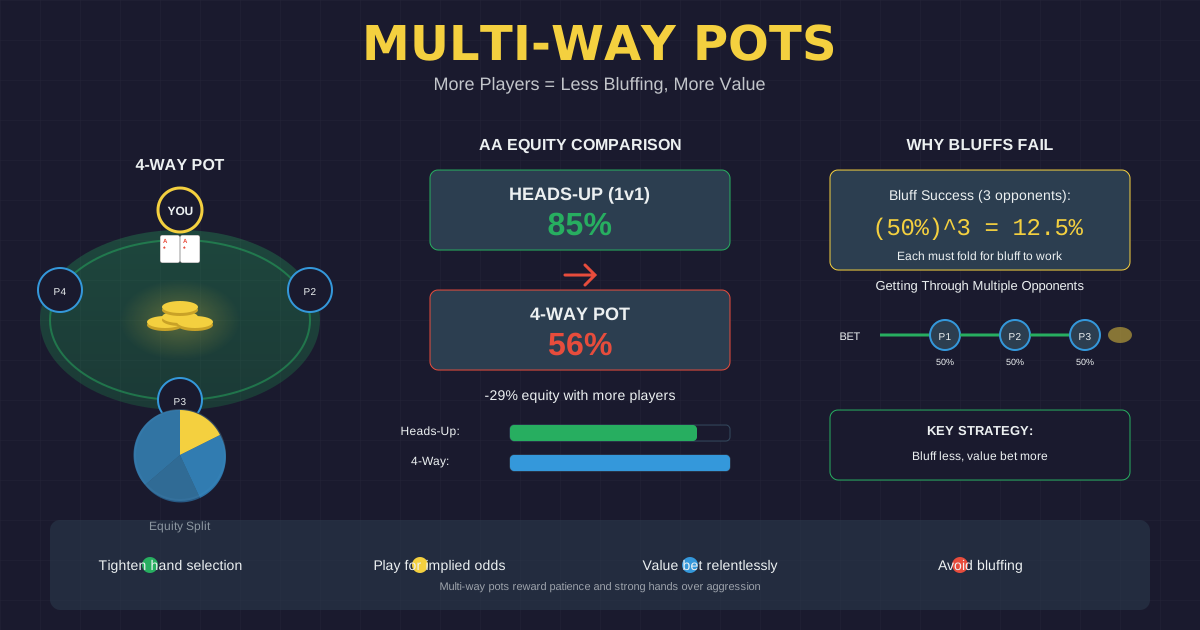
Mistake #5: Not Adjusting for Multi-Way Pots
PLO pots are frequently multi-way (3+ players). In multi-way pots, hand values change dramatically:
- Overpairs lose significant value
- Small sets become vulnerable to overcards and draws
- Nut draws increase in value (more money in the pot to win)
- Bluffing effectiveness decreases (more opponents to fold)
The fix: In multi-way pots, play straightforward. Bet your strong hands for value, draw to the nuts, and avoid bluffing. Check with marginal holdings.
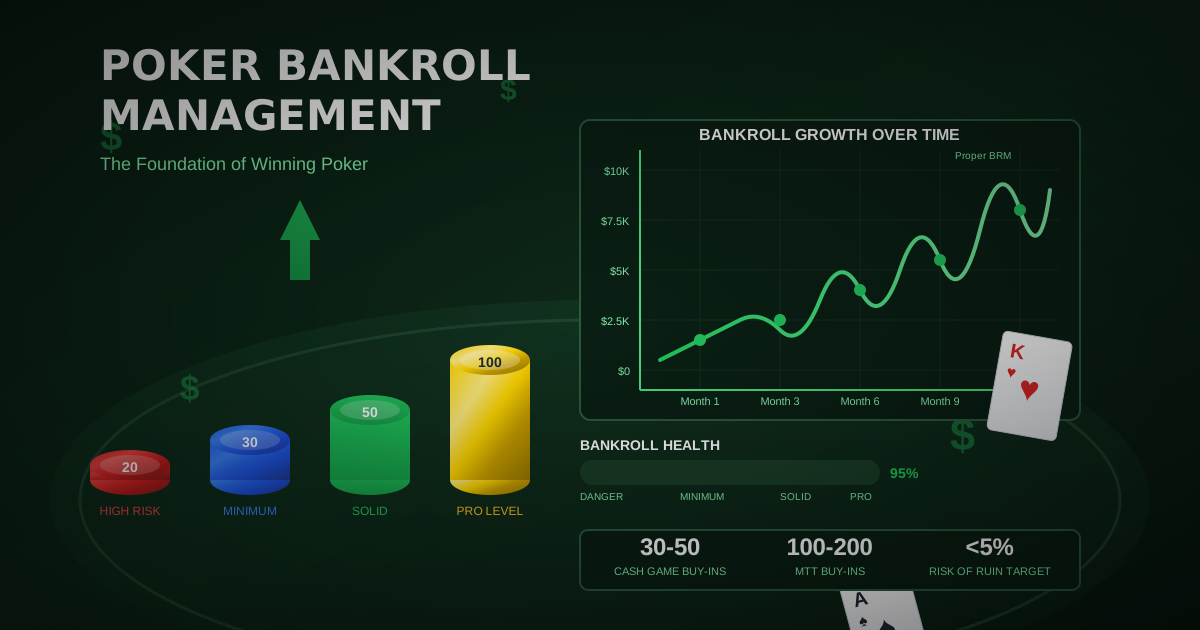
Mistake #6: Using Hold'em Bankroll Requirements
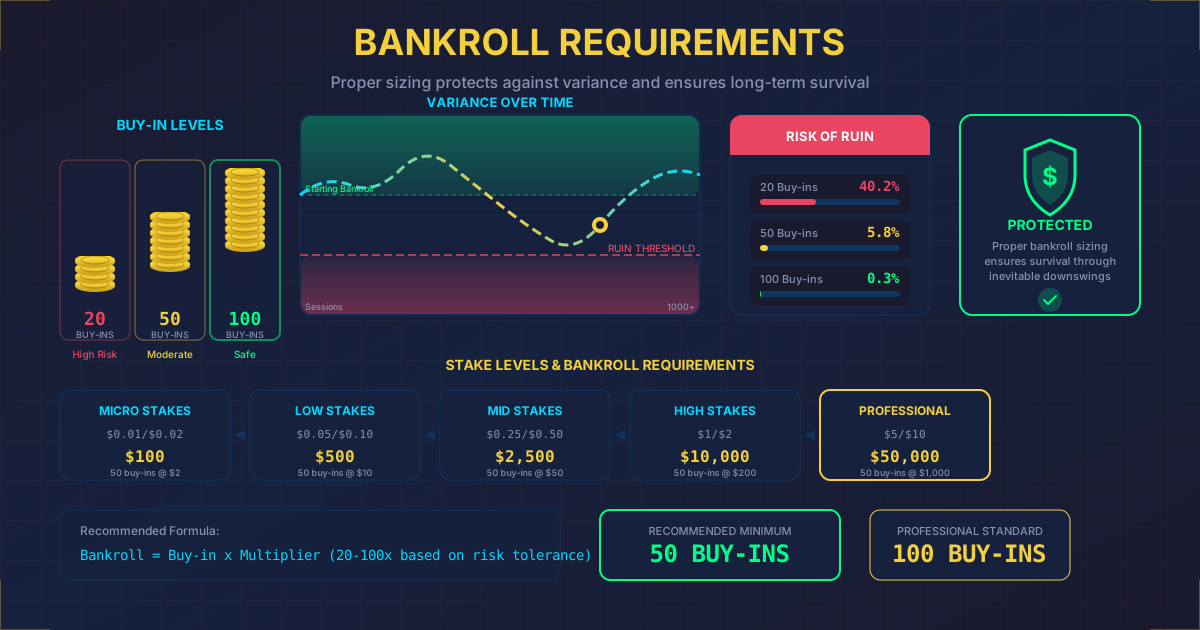
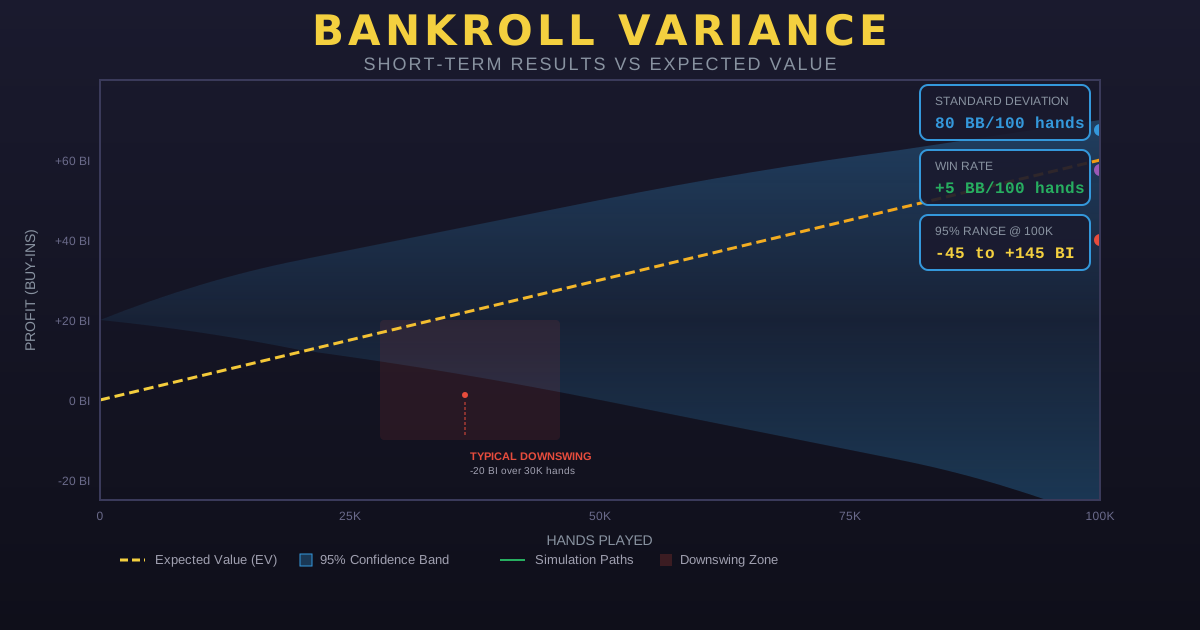
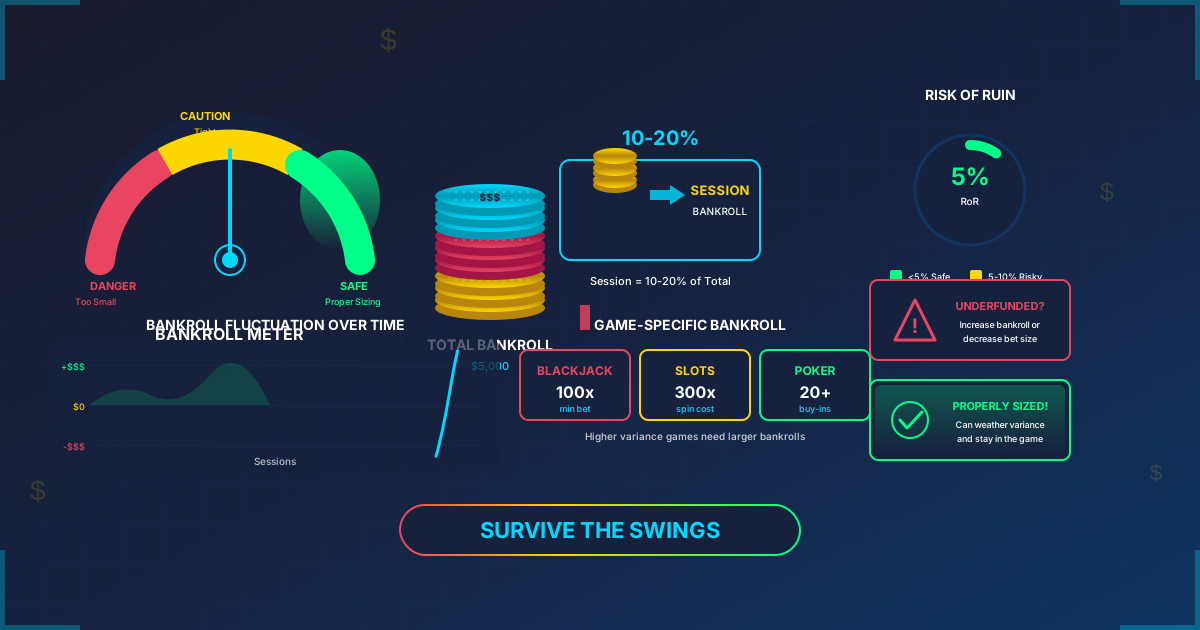
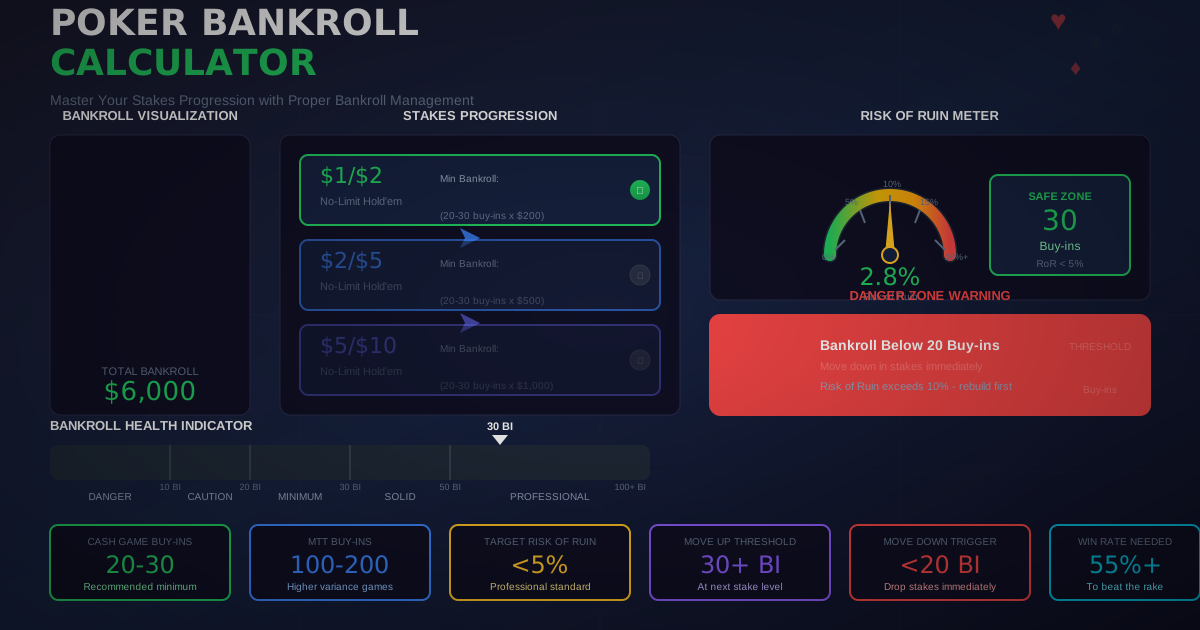
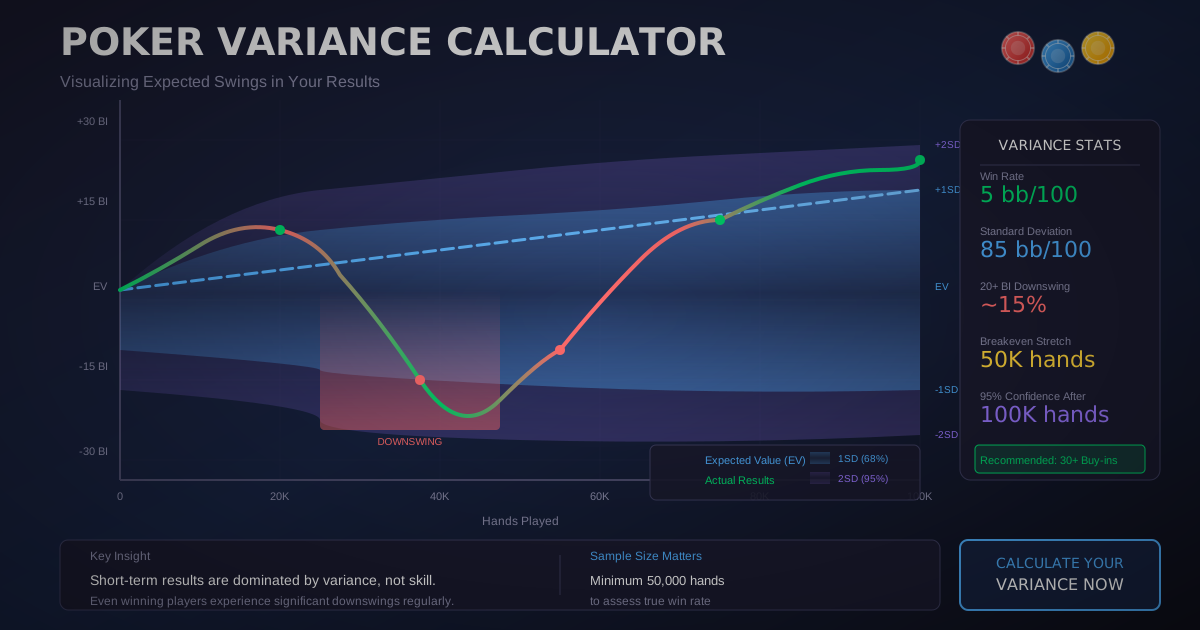
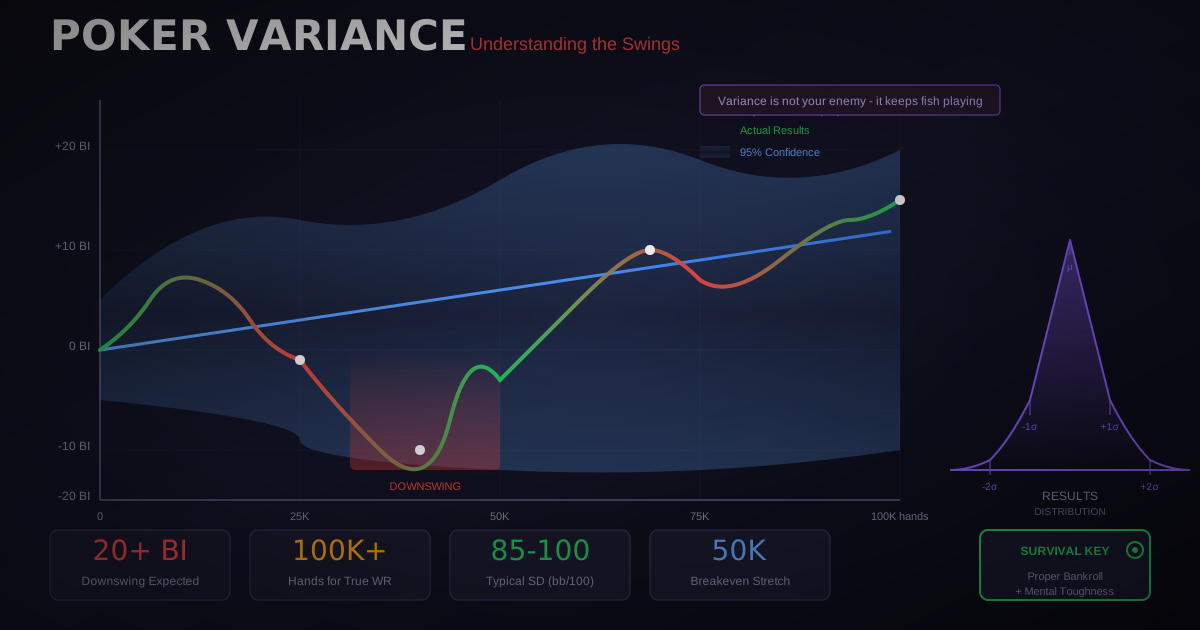
PLO has significantly higher variance than Hold'em. A 5bb/100 PLO winner experiences roughly 50% more variance than a 5bb/100 Hold'em winner because equities run closer and pots are larger.
Bankroll requirements comparison:
| Game Type | Minimum Buy-Ins | Recommended Buy-Ins |
|---|---|---|
| Hold'em Cash | 30 | 40-50 |
| PLO Cash | 50 | 80-100 |
| PLO Tournaments | 150 | 250-300 |
Calculate your PLO-specific bankroll requirements with our Poker Bankroll Requirements Calculator.
Understand PLO variance with our Poker Variance Calculator.
PLO Postflop Strategy
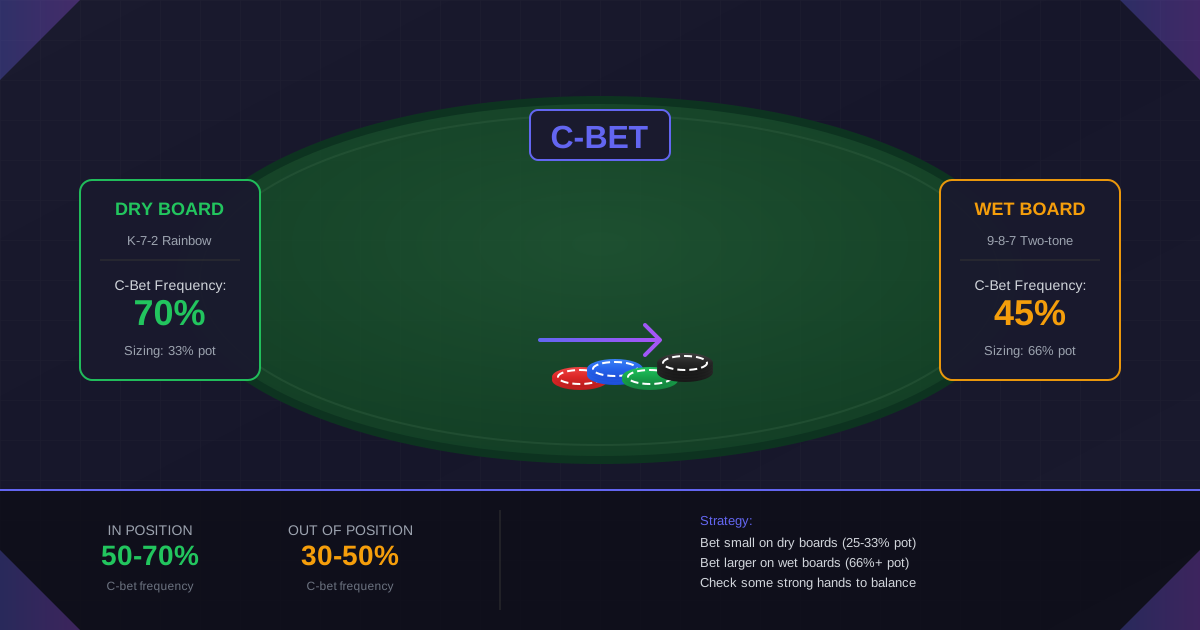
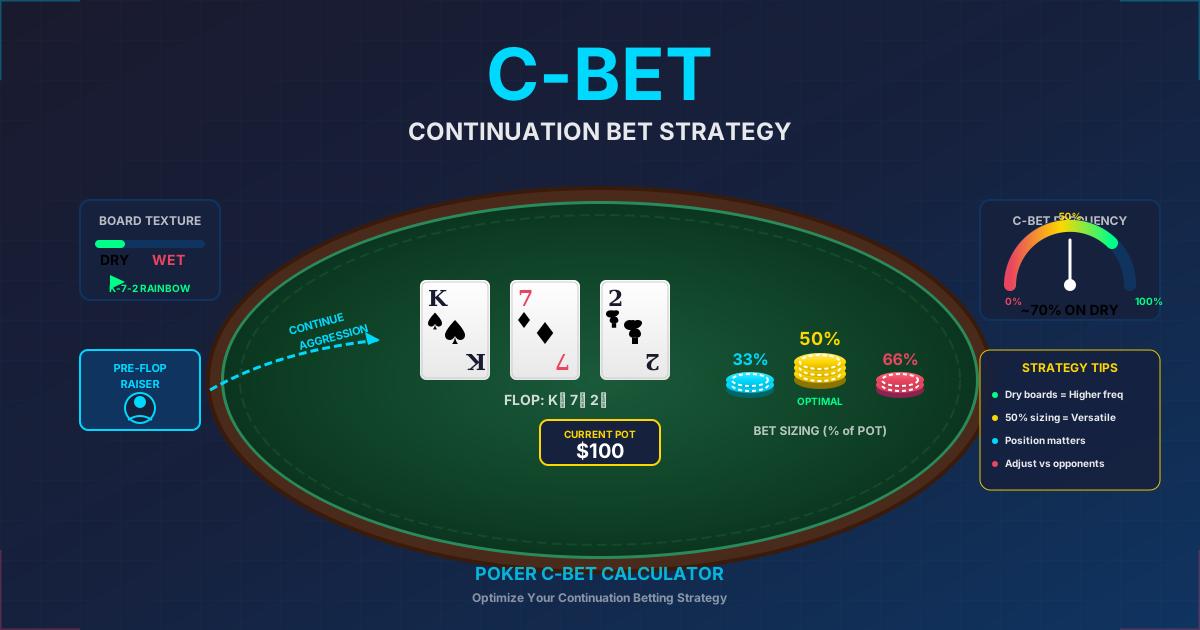
C-Betting in PLO
Continuation betting in PLO requires a different approach than Hold'em:
C-bet when:
- You have the nut advantage on the board (overpair to the board, nut flush draw, nut straight draw)
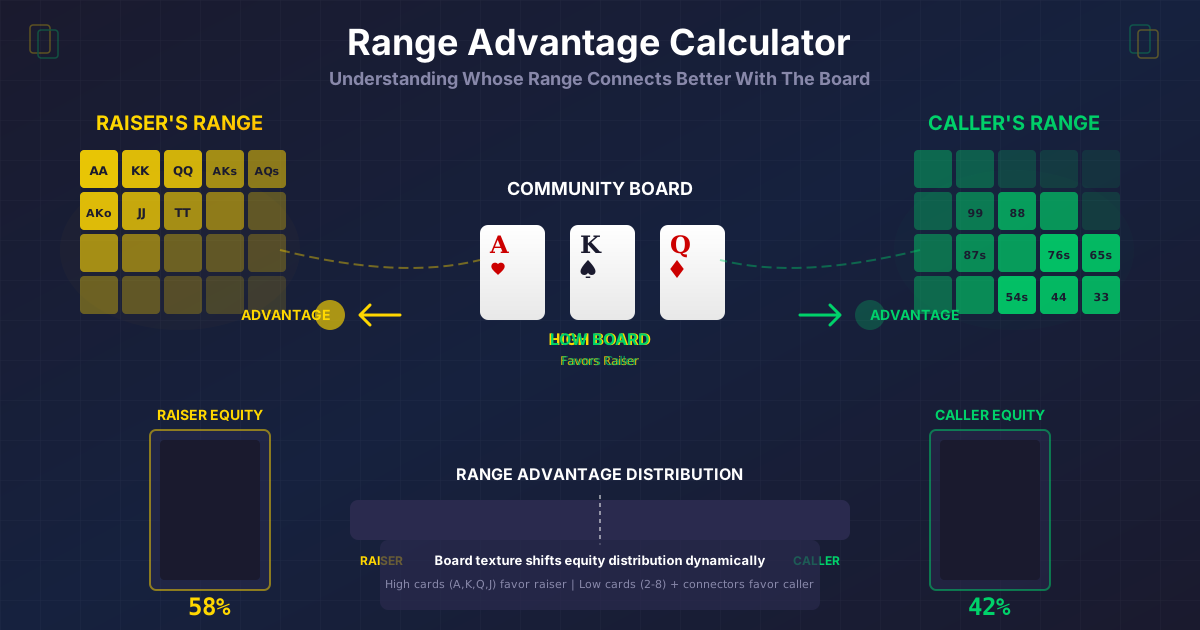
- The board favors your preflop range
- You are heads-up (multi-way, check more often)
- Your hand has strong equity or nut potential
Check when:
- The board is coordinated and you missed completely
- You are multi-way with a marginal hand
- Your hand is strong but not nut-level (e.g., second pair, non-nut flush draw)
- The board favors the caller's range (low, connected boards against big blind callers)
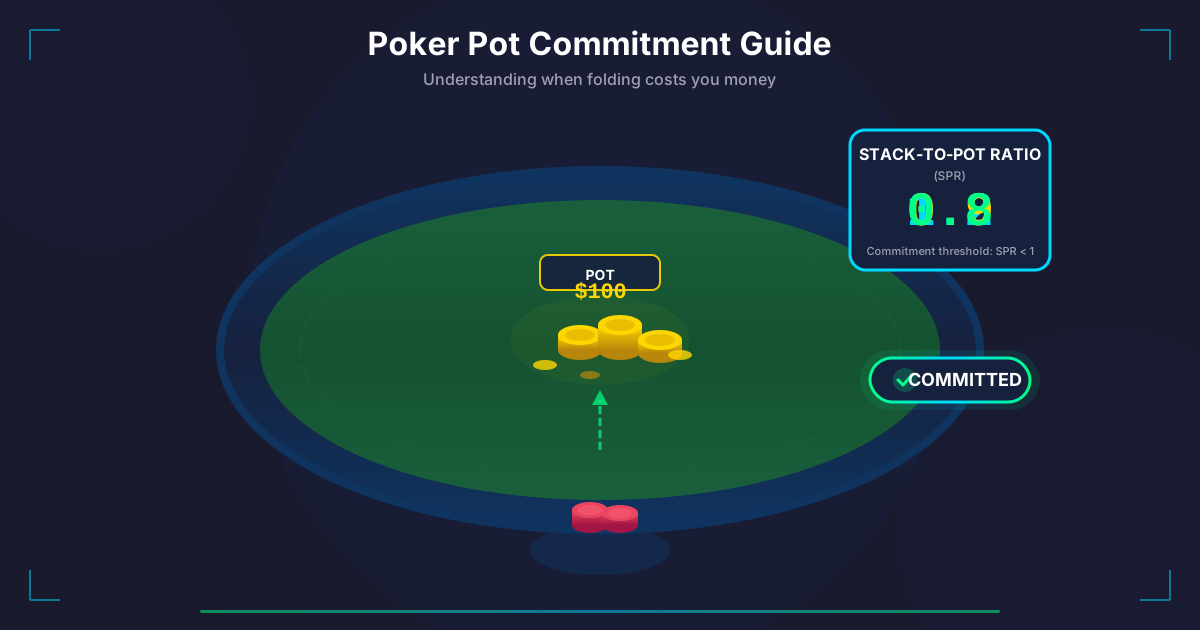
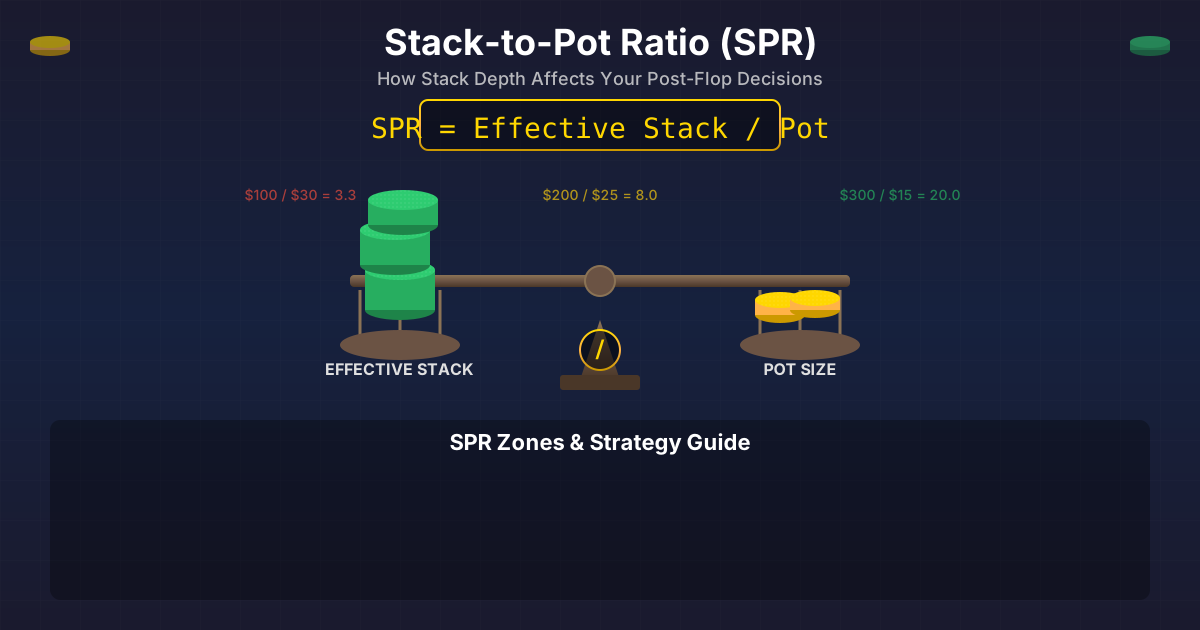
Stack-to-Pot Ratio (SPR) in PLO
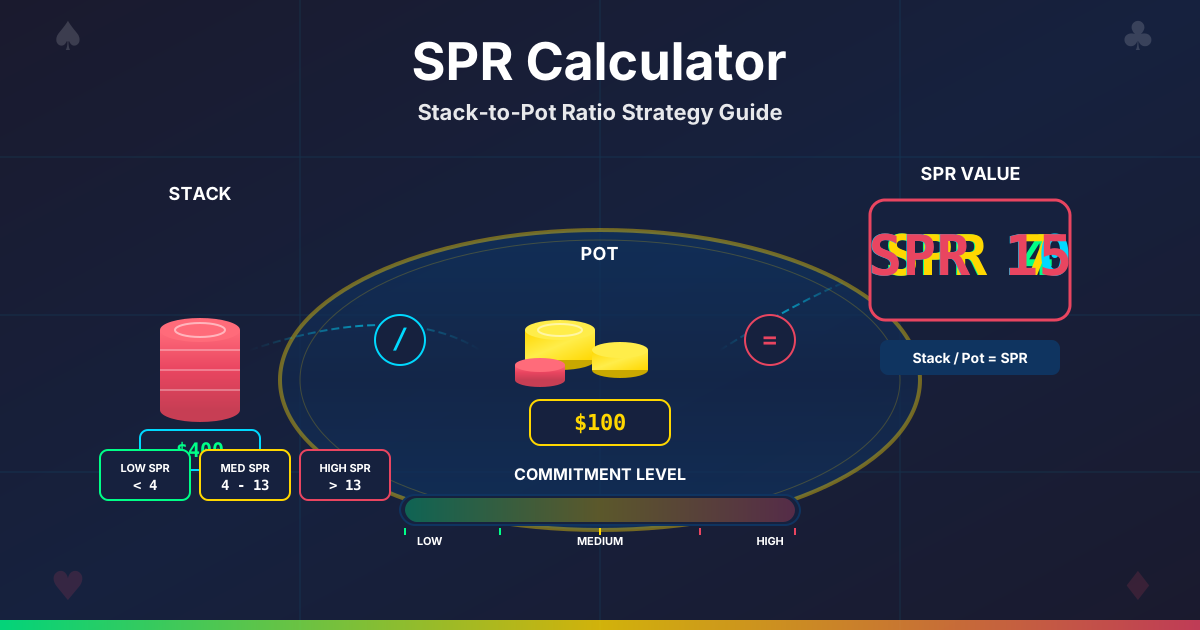
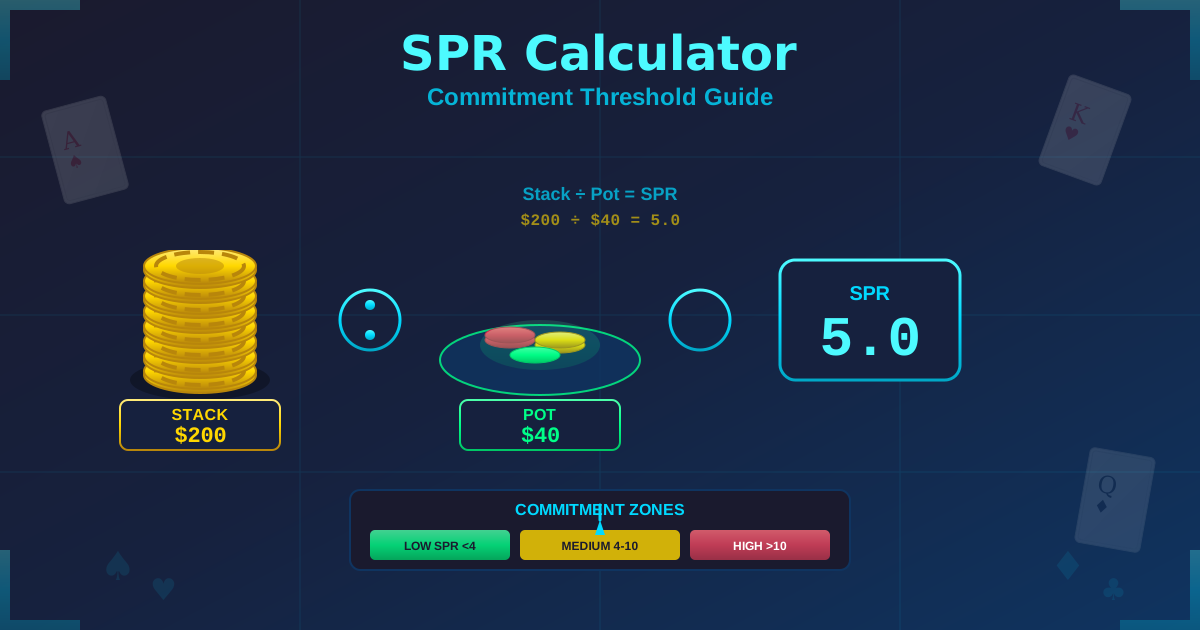
SPR is crucial in PLO because it determines whether you can profitably get your stack in:
| SPR | Strategy | Hand Strength Needed to Stack Off |
|---|---|---|
| <2 | Commit with any strong hand | Top pair+, any two pair, any draw with 8+ outs |
| 2-4 | Selective commitment | Sets, strong two pair, 12+ out draws |
| 4-8 | Standard play | Top set, nut draws with 15+ outs |
| 8-13 | Deep stack play | Only nut hands and massive draws |
| 13+ | Ultra deep | Proceed with extreme caution; implied odds critical |
Analyze SPR in any PLO situation with our Poker SPR Calculator.
Turn and River Play
PLO turn and river play follows a key principle: tighten your range on later streets.
Turn strategy:
- If you bet the flop and got called, narrow your range
- Continue betting with strong hands and good draws
- Check back with marginal hands that want to see a cheap river
- Size your turn bets at 50-75% of the pot to control pot growth
River strategy:
- Value bet only with the nuts or very strong hands
- Bluff only when your hand represents a specific strong holding
- Call with the nuts and near-nuts; fold second-best hands
- Remember that in PLO, opponents rarely bluff river -- if they bet big, they usually have it
Omaha Hi-Lo (O8) Basics
Omaha Hi-Lo (also called O8 or Omaha Eight-or-Better) is a split-pot variant where the pot is divided between the best high hand and the best low hand (if a qualifying low exists).
How the Low Hand Works
To qualify for the low pot, a hand must contain five cards 8 or lower (aces count as low). Straights and flushes do not count against the low hand.
Best possible low hand: A-2-3-4-5 (also known as "the wheel") Qualifying low: Any five unpaired cards 8 or lower
Key concepts:
- If no qualifying low is possible (board has fewer than 3 cards 8 or lower), the high hand wins the entire pot
- Players can use different cards for their high and low hands
- A hand can win both high and low (called "scooping")
Starting Hand Selection in O8
The best O8 starting hands can compete for both the high and low pot:
Premium O8 hands:
- AA23 double-suited (can scoop with nut high and nut low)
- A234 suited (powerful low draw + wheel potential)
- AA2x suited (nut flush + nut low potential)
- A23x suited with connectivity
Strong O8 hands:
- A2xx with an ace suit
- A3xx with connectivity and suitedness
- AAKK double-suited (strong high, no low)
Hands to avoid in O8:
- Middle cards (789T) without an ace or low cards
- Hands with 9s in them (9 is the worst card in O8)
- Low-only hands without high potential (2356 rainbow)
- Three-of-a-kind (blocks your own sets)
Calculate your O8 equity with our Omaha Hi-Lo Calculator.
Key O8 Strategy Principles
1. Scoop potential is everything. Hands that can only win half the pot have limited value. Focus on hands that can win both halves.
2. Never play for only the low. If you can only win the low half, you are investing to win 50% of the pot at best, and you risk being "quartered" (splitting the low with another player, getting only 25% of the pot).
3. Nut low draws need nut high potential. A23x is excellent because the wheel (A-2-3-4-5) is both the nut low AND a straight for the high.
4. Position is critical. Late position allows you to see whether the action suggests someone has a lock on the high or low before committing chips.
PLO Bankroll and Variance Considerations
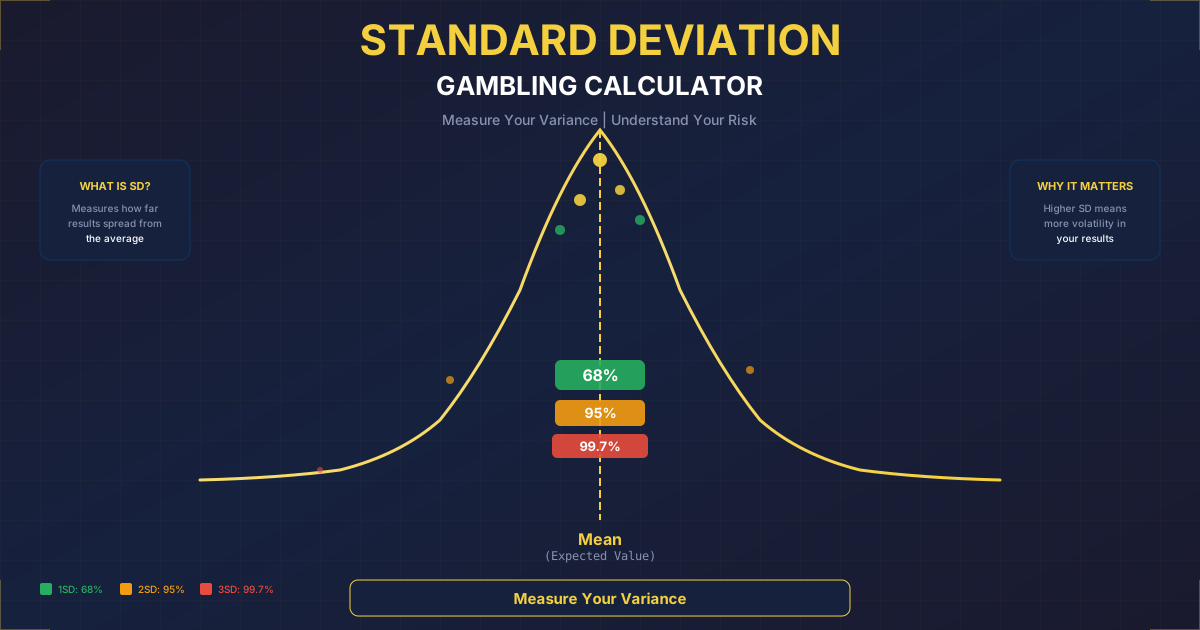
PLO Standard Deviation Comparison
| Game Type | Typical Std Dev (bb/100) | Variance Multiplier vs. Hold'em |
|---|---|---|
| Hold'em Cash (6-max) | 75-90 | 1.0x |
| PLO Cash (6-max) | 110-140 | 1.5-1.7x |
| PLO Cash (full ring) | 100-120 | 1.3-1.5x |
| PLO Hi-Lo Cash | 90-110 | 1.2-1.4x |
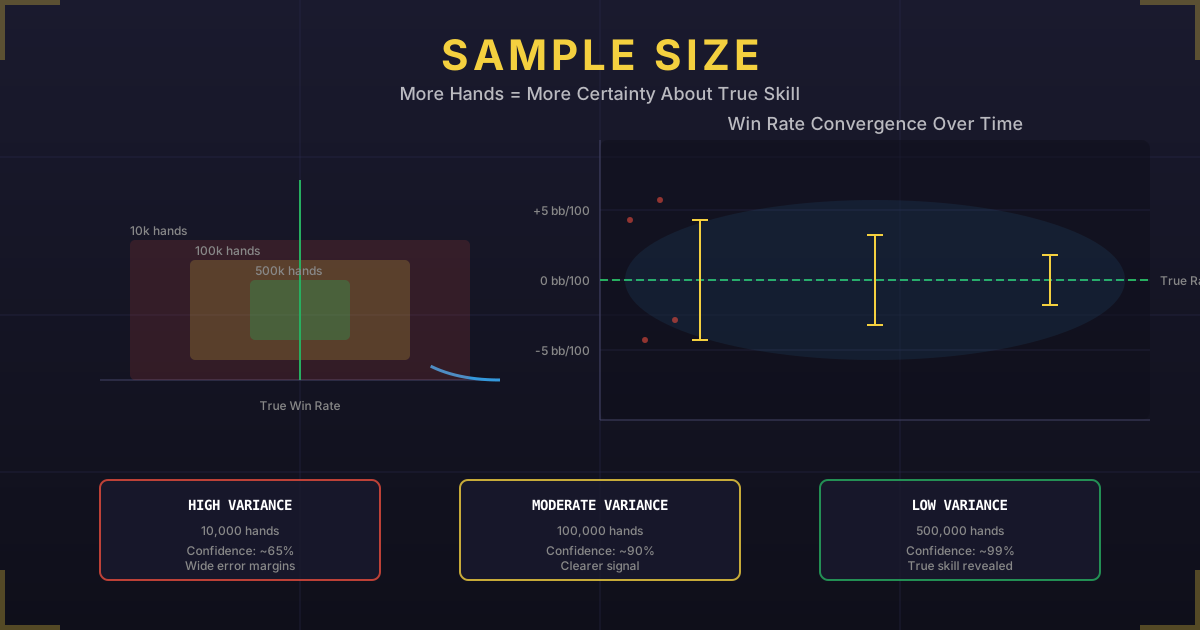
The higher standard deviation in PLO means:
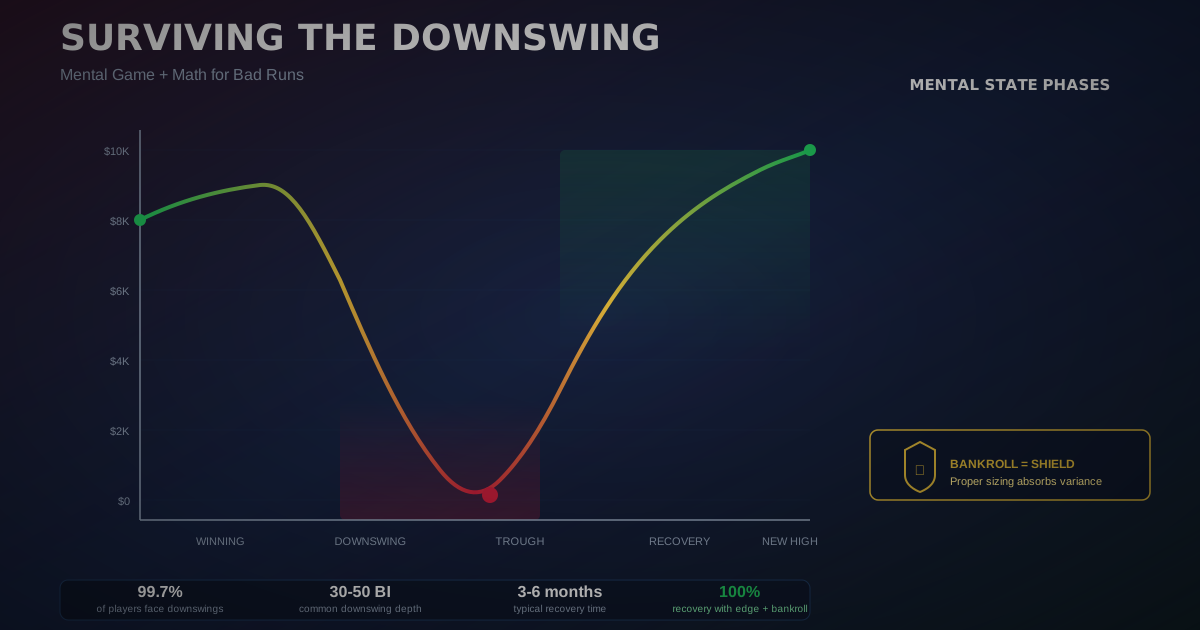
- Downswings are deeper and longer
- Winning streaks feel more dramatic
- Bankroll requirements are 50-100% higher
- Sample sizes for reliable win rates need to be 50% larger
Real-World PLO Bankroll Examples
Example 1: Micro PLO Player
- Stakes: PLO25 ($0.10/$0.25)
- Win rate: 8bb/100
- Std deviation: 120bb/100
- Recommended bankroll: 80 buy-ins = $2,000
- Expected worst downswing in 100K hands: 30-45 buy-ins ($750-1,125)
Example 2: Mid-Stakes PLO Player
- Stakes: PLO200 ($1/$2)
- Win rate: 4bb/100
- Std deviation: 130bb/100
- Recommended bankroll: 100 buy-ins = $20,000
- Expected worst downswing in 100K hands: 50-70 buy-ins ($10,000-14,000)
Example 3: PLO Tournament Player
- Average buy-in: $100
- ROI: 12%
- Recommended bankroll: 250 buy-ins = $25,000
- Expected losing months: 30-40% of months
Simulate your PLO variance and downswing probability with our Poker Variance Calculator.
Why PLO Attracts Action
PLO is the most popular high-stakes cash game in the world for a reason: the action is spectacular. Pots routinely reach 100+ big blinds on the flop, draws and made hands clash in massive confrontations, and the swings create adrenaline that Hold'em simply cannot match.
This action attracts recreational players who want excitement, which creates profitable games for skilled players. The tradeoff is higher variance, larger bankroll requirements, and more emotional volatility.
Assess your risk of ruin for PLO stakes with our Poker Risk of Ruin Calculator.
Transitioning from Hold'em to PLO
Week 1-2: Adjust Your Thinking
- Stop evaluating hands based on two cards. All four cards matter.
- Practice identifying danglers in starting hands
- Learn to think about "nut potential" rather than "hand strength"
- Watch PLO content to see how pros evaluate hands differently
Week 3-4: Master Starting Hands
- Memorize the tier system for starting hands
- Practice hand ranking exercises (which PLO hand is better?)
- Play micro-stakes PLO ($0.02/$0.05 or $0.05/$0.10) with tight ranges
- Focus on only playing hands with connectivity and suitedness
Month 2: Develop Postflop Skills
- Study wrap draws and combo draw identification
- Learn SPR-based commitment decisions
- Practice pot-odds calculations with PLO-specific draws
- Begin tracking results and analyzing hand histories
Month 3+: Refine and Expand
- Study solver outputs for common PLO spots
- Develop an understanding of multi-way pot dynamics
- Work on bet sizing (PLO uses more varied sizing than Hold'em)
- Start moving up in stakes as your bankroll and skill allow
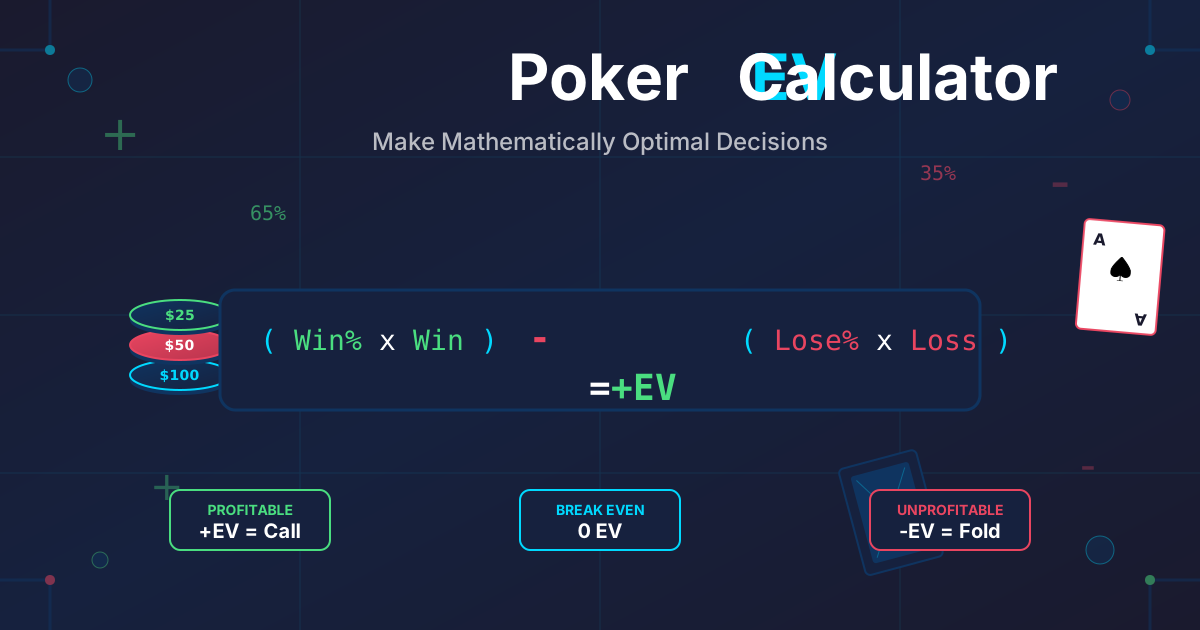
Use our Poker EV Calculator to analyze specific PLO hands and decisions as you study.
Frequently Asked Questions
What is the best starting hand in Omaha? AAKK double-suited is the strongest PLO starting hand, followed by AAJT double-suited and AAQQ double-suited. However, hand strength depends heavily on connectivity and suitedness. AAKK double-suited is roughly 65% equity against a random hand, while AAK2 rainbow drops to about 57%. Evaluate any PLO starting hand with our Omaha Odds Calculator.
How many outs do I need to call in PLO? Use pot odds to determine the minimum equity needed. If you are calling a pot-sized bet, you need 33% equity. In PLO, this typically requires 10-12 outs on the flop (with two cards to come). Use our Pot Odds Calculator for exact calculations.
Why is PLO more profitable than Hold'em? PLO attracts more recreational players seeking action, and the wider range of starting hands means recreational players make more costly errors. The higher variance creates the illusion of luck, keeping weaker players in the game longer. However, PLO also requires a larger bankroll and more sophisticated strategy.
What bankroll do I need for PLO? PLO requires 50-100 buy-ins for cash games (compared to 30-50 for Hold'em). At PLO50 ($0.25/$0.50, $50 buy-in), you need $2,500-5,000. At PLO200 ($1/$2, $200 buy-in), you need $10,000-20,000. Calculate your exact requirements with our Poker Bankroll Requirements Calculator.
What is the biggest mistake Hold'em players make in PLO? Overvaluing one-pair hands. In Hold'em, top pair top kicker is often a strong hand. In PLO, top pair is barely worth a continuation bet. Hold'em players who call large bets with overpairs and top pairs in PLO lose money rapidly. The adjustment is to think in terms of nut potential rather than hand strength.
How is Omaha Hi-Lo different from regular PLO? Omaha Hi-Lo splits the pot between the best high hand and the best qualifying low hand (five cards 8 or lower). This fundamentally changes starting hand selection -- premium hands must have both high and low potential. AA23 double-suited is the best hand because it can scoop both halves. Use our Omaha Hi-Lo Calculator for Hi-Lo equity calculations.
Should I play PLO or Hold'em? Hold'em is better for building fundamentals and offers lower variance. PLO is better for players who enjoy action and have sufficient bankrolls to handle the swings. Many professionals play both, using Hold'em as a consistent income source and PLO for higher-variance, higher-reward sessions.
How important is position in PLO? Position is even more important in PLO than in Hold'em. The button typically wins 15-25bb/100 while the blinds lose 12-20bb/100. This gap is 50-100% wider than in Hold'em. Never underestimate the value of acting last in PLO.
Essential Tools for Omaha Players
Master PLO with these calculators:
- Omaha Odds Calculator: Calculate PLO hand equity for any matchup
- Omaha Hi-Lo Calculator: Analyze O8 split-pot equity scenarios
- Pot Odds Calculator: Calculate pot odds for any PLO draw
- Implied Odds Calculator: Factor in future bets when evaluating draws
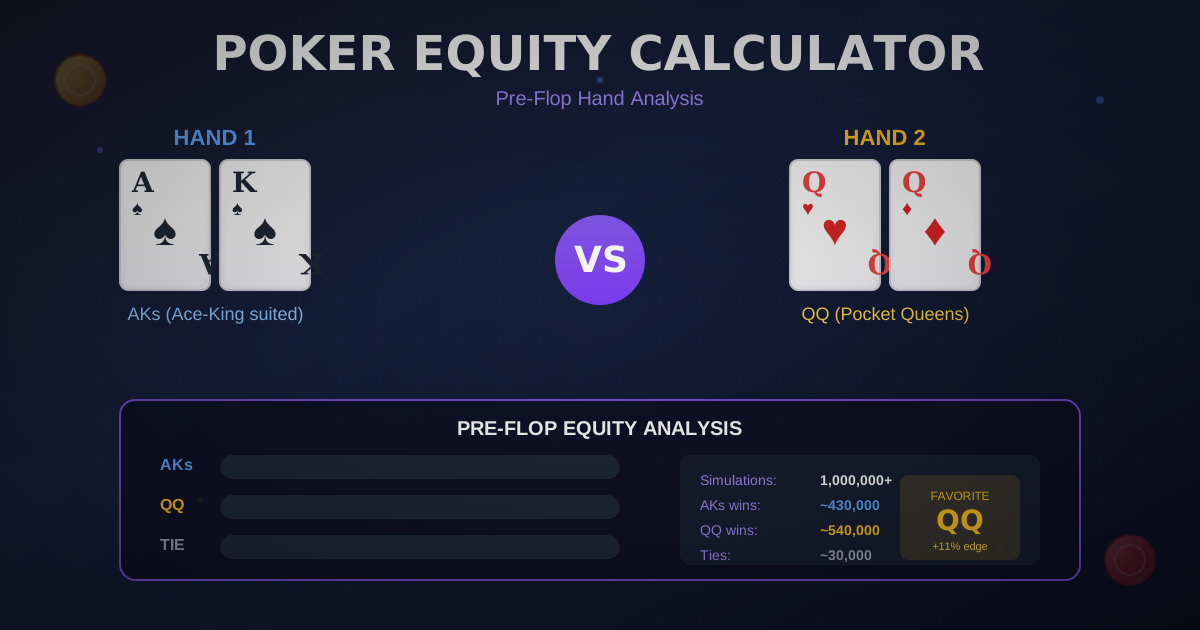
- Poker Equity Calculator: Compare hand ranges and equity distributions
- Poker EV Calculator: Analyze expected value of PLO decisions
- Poker Hand Range Calculator: Build and study PLO hand ranges
- Poker SPR Calculator: Determine stack-to-pot ratio commitment thresholds
- Poker Bankroll Requirements Calculator: Calculate PLO-specific bankroll needs
- Poker Variance Calculator: Simulate PLO variance and downswing probability
Conclusion: PLO Is a Different Game -- Treat It That Way
The players who lose money at PLO are the ones who bring their Hold'em instincts to the Omaha table. They overvalue top pair, chase non-nut draws, ignore position, and play with inadequate bankrolls. The players who win at PLO are the ones who respect the game's unique mathematics: tighter starting hand selection, nut-or-fold postflop mentality, position discipline, and bankroll management that accounts for PLO's elevated variance.
PLO is not harder than Hold'em -- it is different. The skills transfer, but the application changes fundamentally. Master PLO's unique principles, and you will find a game that is both more exciting and more profitable than anything Hold'em can offer.
Start your PLO journey by calculating hand equities with our Omaha Odds Calculator. Study pot odds and implied odds with our Pot Odds Calculator and Implied Odds Calculator. And make sure your bankroll can handle PLO variance with our Poker Bankroll Requirements Calculator.
The action is waiting. Make sure you are prepared before you sit down.
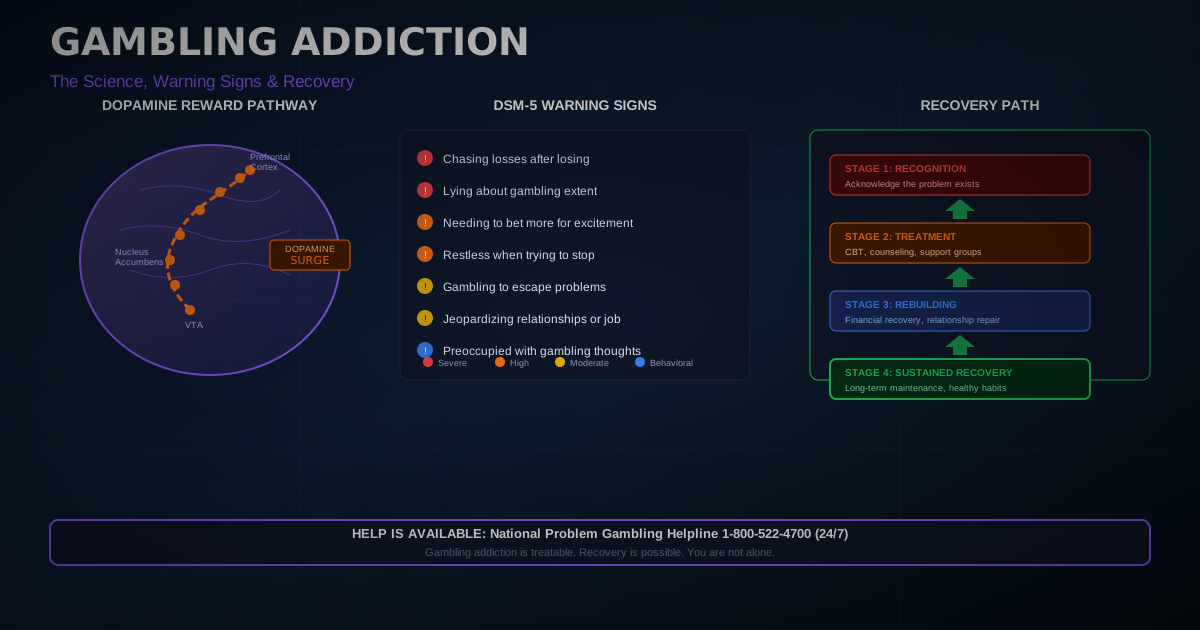
Gambling involves risk. This content is for educational and informational purposes only. Always gamble responsibly, set limits you can afford, and seek help if gambling becomes a problem. Visit the National Council on Problem Gambling or call 1-800-522-4700 for support.