Poker Ante Structure Calculator: Tournament Cost Analysis (2026)
Poker Ante Structure Calculator: The Hidden Tournament Cost
Antes add a mandatory bet from every player each hand, accelerating tournament action. Our calculator shows how antes increase orbit cost, when they should be introduced, and the proper sizing relative to blinds for balanced tournament structures.
What Are Poker Antes?
Antes are forced bets posted by every player (or one player in big blind ante format) before cards are dealt. Unlike blinds affecting two players, antes cost everyone at the table—dramatically increasing the pot size and action incentive every hand.
Quick Answer: Antes = mandatory bet from all players each hand. Typical size: 10-20% of big blind. Orbit cost increases 50-100% with antes. Example: 9-handed 500/1,000 + 100 ante = 2,400/orbit vs 1,500 without. Big blind ante (BBA) = one player posts all antes. Introduces typically at level 3-5. Accelerates tournament action significantly.
How to Use Our Calculator
Use the Ante Structure Calculator →
Calculate orbit costs and stack pressure with antes.
Step-by-Step Instructions
-
Enter Blind Level: Current SB/BB
-
Set Ante Size: Per-player ante
-
Input Player Count: At the table
-
View Orbit Cost: Total cost per round
-
Compare Structures: With and without antes
Input Fields Explained
| Field | Description | Example |
|---|---|---|
| Small Blind | Current SB | 500 |
| Big Blind | Current BB | 1,000 |
| Ante Size | Per player | 100 |
| Players | Table size | 9 |
| Total Antes | All antes combined | 900 |
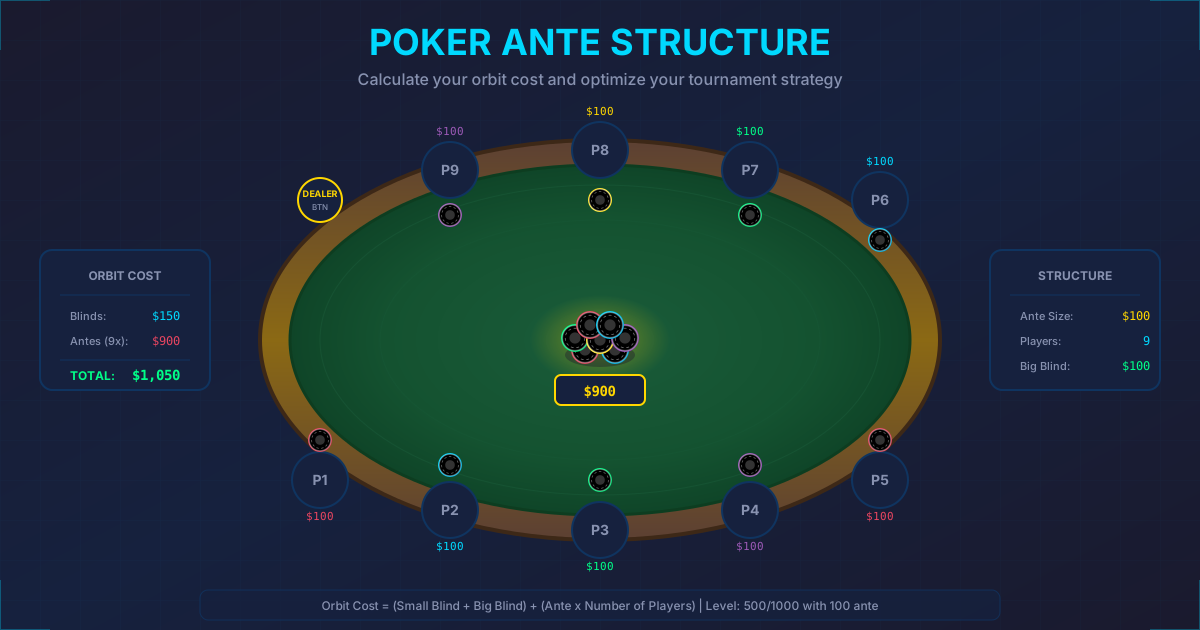
| Orbit Cost | Complete round | 2,400 |
| Without Ante | For comparison | 1,500 |
| Increase | Percentage | +60% |
Ante Fundamentals
Traditional Ante Structure
Each player posts ante each hand:

9-handed with 100 ante:
Total antes per hand: 900

Added to blinds (500/1,000):
Starting pot: 2,400
Without antes: 1,500

60% larger pot every hand
Big Blind Ante (BBA)
One player posts all antes:

BB posts for everyone:
9 × 100 = 900 from BB player

Same mathematical effect
Faster dealing
One chip movement vs nine
Button Ante
Alternative format:
Button posts full ante amount

Button posts: 900
Blinds post: 500 + 1,000

Same pot size
Different player bears ante cost
Rotates like blinds
Orbit Cost Analysis
Cost Without Antes
One orbit = one full rotation

9-handed, 500/1,000 blinds:
SB once: 500
BB once: 1,000
Total: 1,500 per orbit

10 orbits = 15,000 chips
20 orbits = 30,000 chips
Cost With Antes
Same blinds + 100 ante:

Blinds per orbit: 1,500
Antes per orbit: 9 × 100 = 900
Total: 2,400 per orbit

10 orbits = 24,000 chips
20 orbits = 48,000 chips
Percentage Increase
Ante impact on orbit cost:

10% ante (BB = 1,000, ante = 100):
900 extra / 1,500 base = +60%

20% ante (BB = 1,000, ante = 200):
1,800 extra / 1,500 = +120%

Antes roughly double orbit cost
At typical 10-20% sizing
Ante Sizing Standards
Standard Ante Percentages
Common ante to BB ratios:

Conservative: 10% (100 ante at 1,000 BB)
Standard: 12.5% (125 ante at 1,000 BB)
Aggressive: 15-20% (150-200 ante at 1,000 BB)

Higher ante = faster action
Lower ante = more play
Modern Tournament Trends
Evolution of ante sizing:

Traditional: 10% starting late
WSOP style: 12.5% from level 3
Turbo events: 20% from level 2
Online: Often BB ante format

Trend toward earlier, larger antes
Accelerates tournament pace
Round Number Antes
For easy chip handling:

Blinds 500/1,000:
Ante: 100 (easy math)

Blinds 600/1,200:
Ante: 200 (divisible)

Blinds 400/800:
Ante: 100 (easy)

Avoid odd ante amounts
Clean multiples speed up play
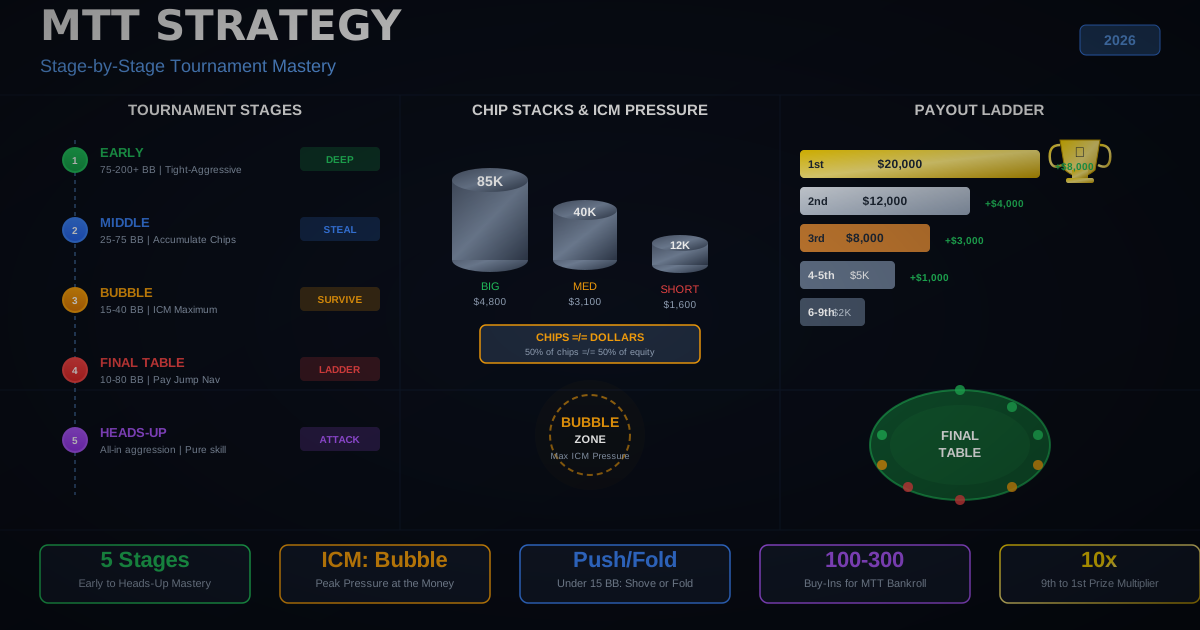
When to Introduce Antes
Level-Based Introduction
Typical ante introduction:

Level 1-2: No antes (early play)
Level 3-5: Antes begin (action starts)
Level 6+: Antes increase with blinds

Early play = patient poker
Ante phase = action poker
Stack-Based Approach
Introduce antes when:

Average stack = 40-50 BBs
(Creates meaningful pressure)

Too early: Antes trivial
Too late: Tournament drags

Sweet spot: 15% of starting chips eaten
Time-Based Structure
For scheduled tournaments:

3-hour event:
Antes at level 3 (hour 1)

6-hour event:
Antes at level 5 (hour 2)

12-hour event:
Antes at level 7 (hour 3)

Scale to event duration
Real-World Examples
Example 1: WSOP Main Event
Level 5: 400/800 + 800 ante (BBA):
Starting pot:
Blinds: 1,200
BBA: 800
Total: 2,000

Orbit cost (9-handed):
Blinds: 1,200
Your ante share: ~89/hand × 9 = 800
Total: 2,000 per orbit

Stack of 50,000:
= 25 orbits of survival
Example 2: Daily Tournament
Level 6: 500/1,000 + 1,000 BBA:
Starting pot: 2,500

For 25,000 stack:
Orbit cost: 2,500
Orbits remaining: 10

Must win hands to survive
Action increases dramatically
Example 3: Comparing Structures
Same blinds, different antes:
Blinds: 1,000/2,000

No ante:
Pot: 3,000
Orbit: 3,000

10% ante (200):
Pot: 4,800 (9-handed)
Orbit: 4,800 (+60%)

20% ante (400):
Pot: 6,600
Orbit: 6,600 (+120%)

Ante sizing matters greatly
Example 4: Short Stack Pressure
15 BB stack with and without antes:
Stack: 15,000
Blinds: 500/1,000

Without antes:
Orbit cost: 1,500
Orbits: 10

With 100 antes (9-handed):
Orbit cost: 2,400
Orbits: 6.25

Antes cut survival time 37%
Must act sooner
Strategy Implications
Pre-Ante Play
Before antes:
- Can wait for premium hands
- Stealing less critical
- Patient approach works
- Stack preservation valued
Post-Ante Play
With antes:
- Must steal to survive
- Calling range widens (pot odds)
- Aggression rewarded
- Can't just wait
Adjustments Required
When antes kick in:

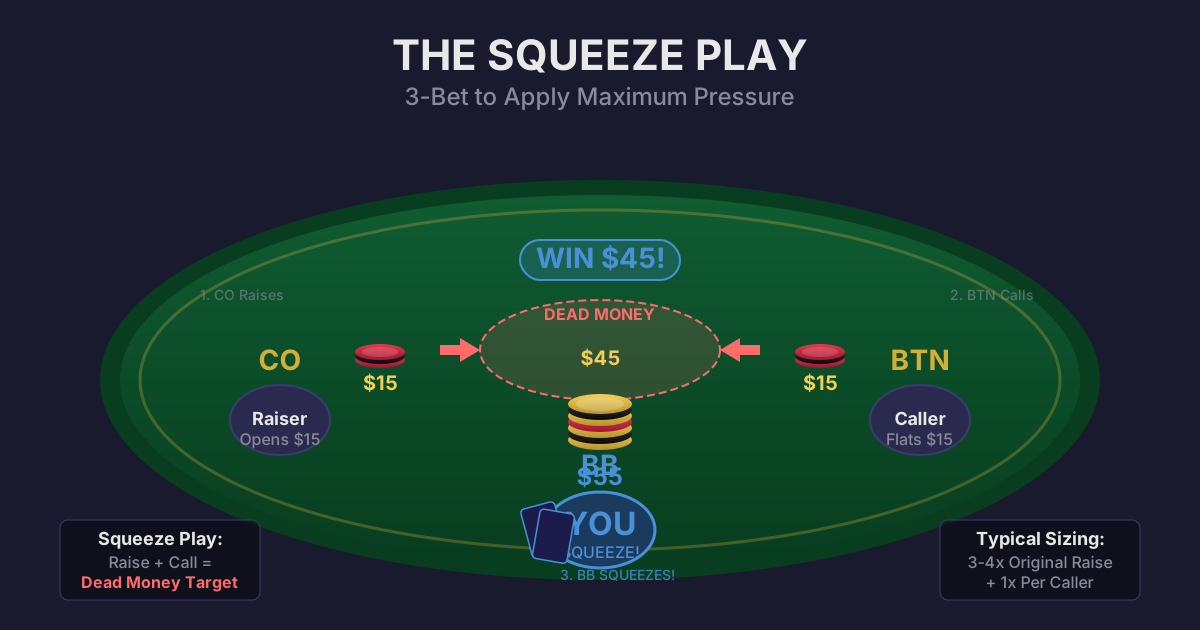
1. Open wider (dead money)
2. Defend more (getting odds)
3. Attack limpers (big pot)
4. 3-bet lighter (fold equity + pot)
5. Shove ranges expand

Antes change optimal strategy
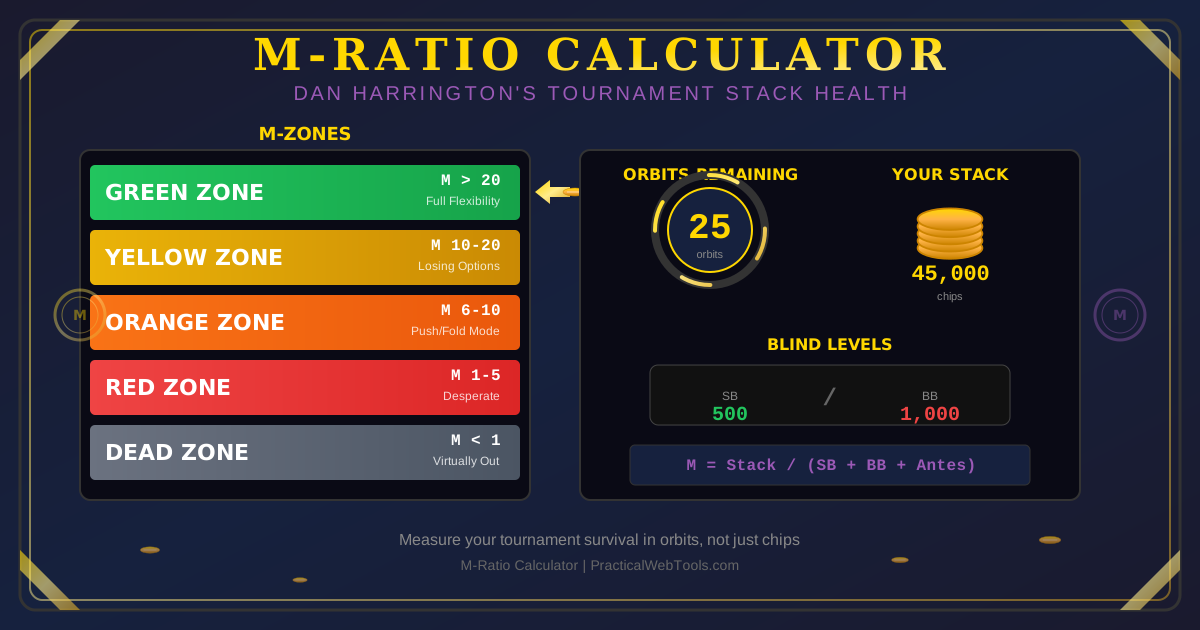
M-Ratio Connection
M Includes Antes
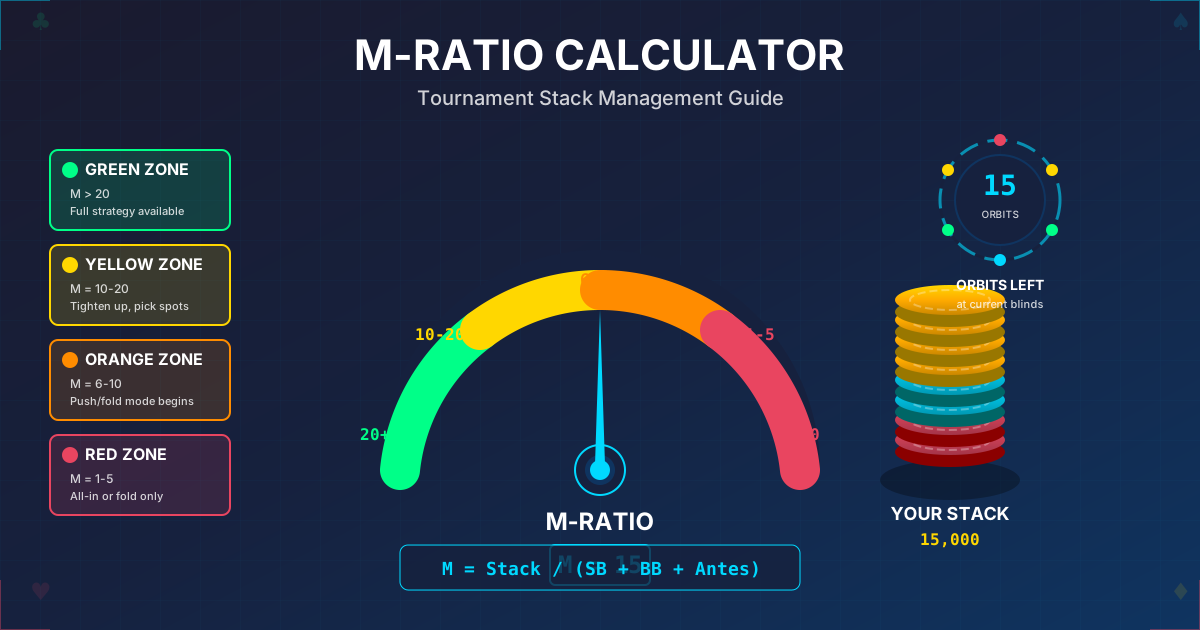
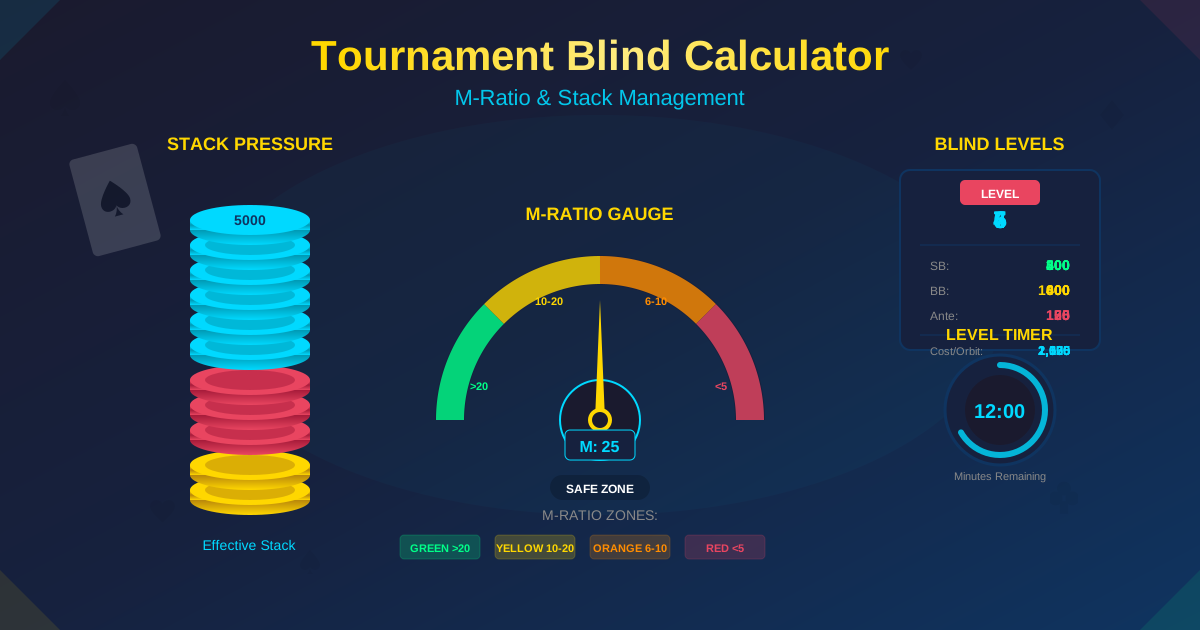
M-ratio formula:
M = Stack ÷ (SB + BB + Total Antes)

Without antes (500/1,000):
25,000 ÷ 1,500 = 16.67 M

With 100 ante 9-handed:
25,000 ÷ 2,400 = 10.42 M

Same stack, lower M
Antes create urgency
Zone Implications
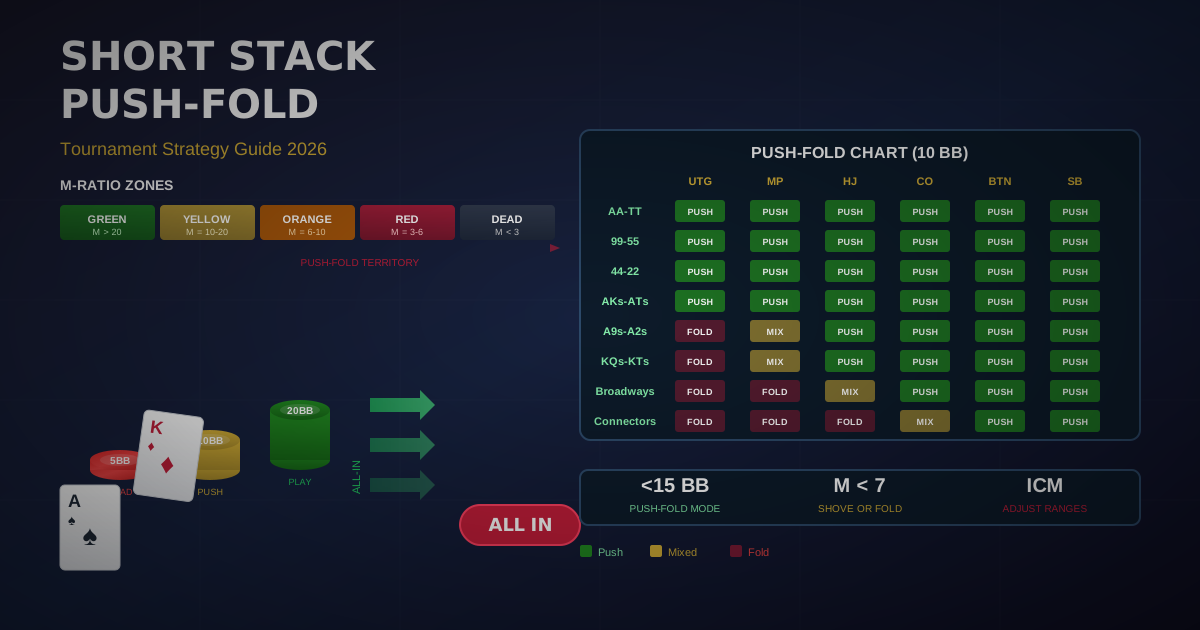
M-ratio zones with antes:

Green (M > 20): Patient play
Yellow (10-20): Tightening
Orange (6-10): Push/fold
Red (1-5): Desperate

Antes push you toward orange faster
Must adjust strategy earlier
Common Mistakes
1. Ignoring Ante Introduction
Mistake: Play same as before antes Problem: Tighter ranges become losing Fix: Widen ranges when antes begin
2. Wrong M Calculation
Mistake: Ignore antes in M-ratio Problem: Overestimate stack health Fix: Include full orbit cost
3. Not Stealing More
Mistake: Same steal frequency Problem: Missing dead money Fix: Increase steal attempts
4. Over-Defending Blinds
Mistake: Defend too wide Problem: Pot odds tempt bad calls Fix: Still need equity
Frequently Asked Questions
What's a standard ante size?
10-15% of the big blind is standard. At 1,000 BB, antes typically range from 100-150.
When should antes start in a tournament?
Typically levels 3-5, when average stacks drop to 40-50 BBs. Earlier for turbos, later for deep stacks.
What's the difference between traditional ante and BBA?
Same total cost; BBA has one player post all antes (faster dealing). The big blind posts for the whole table.
How much do antes increase pot size?
At 10% ante 9-handed, pots increase about 60%. At 20% ante, pots roughly double.
Should I play tighter or looser with antes?
Looser. Antes add dead money, improving pot odds for steals and making passive play unprofitable.
How do antes affect short stacks?
Dramatically. A 15 BB stack survives 10 orbits without antes but only 6 with standard antes.
Pro Tips
-
Recalculate M: Include antes in orbit cost
-
Steal more: Dead money is valuable
-
Watch introduction: Shift gears when antes start
-
Time your shoves: Antes improve fold equity value
-
Defend wisely: Better odds, but need equity
Related Calculators
- Poker M-Ratio Calculator - Stack analysis
- Poker Blind Structure Calculator - Level design
- Poker Tournament Calculator - Prize structure
- Poker Push/Fold Calculator - Short stack play
- Poker ICM Calculator - Tournament equity
Conclusion
Antes dramatically increase tournament action by adding 50-100% to orbit costs. Our calculator shows exactly how ante introduction changes stack dynamics and when to shift from patient play to aggressive action.
Calculate Ante Structure Now →
That 25,000 chip stack looks comfortable at 500/1,000 blinds—until 100 antes kick in and your 16.7 M drops to 10.4. Our calculator reveals how antes transform tournament dynamics and when you must shift from waiting for premiums to fighting for pots.