Crypto Gambling Guide: Bitcoin Casinos, Provably Fair Games, and Risks (2026)
Crypto gambling has exploded from a niche experiment into a $250+ million industry -- with search interest growing roughly 40x over five years and quarterly betting volume reaching $26 billion in early 2025. Bitcoin casinos, provably fair dice games, anonymous sportsbooks, and decentralized wagering platforms have reshaped how millions of people gamble online. For crypto holders, the pitch is compelling: faster payouts, lower fees, global access, and mathematical proof that games are fair.
But the reality is more complicated. For every advantage crypto gambling offers, there is a corresponding risk that traditional regulated gambling does not carry. Unregulated platforms disappear overnight with player funds. Cryptocurrency volatility can erase winnings before you withdraw. Tax obligations are complex and poorly understood. And the same anonymity that attracts privacy-conscious players also shields scam operators from accountability.
This guide covers everything you need to know about gambling with cryptocurrency in 2026 -- how it works, what "provably fair" actually means and how to verify it yourself, which cryptocurrencies are best suited for gambling, the real advantages and serious risks, tax implications, and concrete steps to protect yourself.
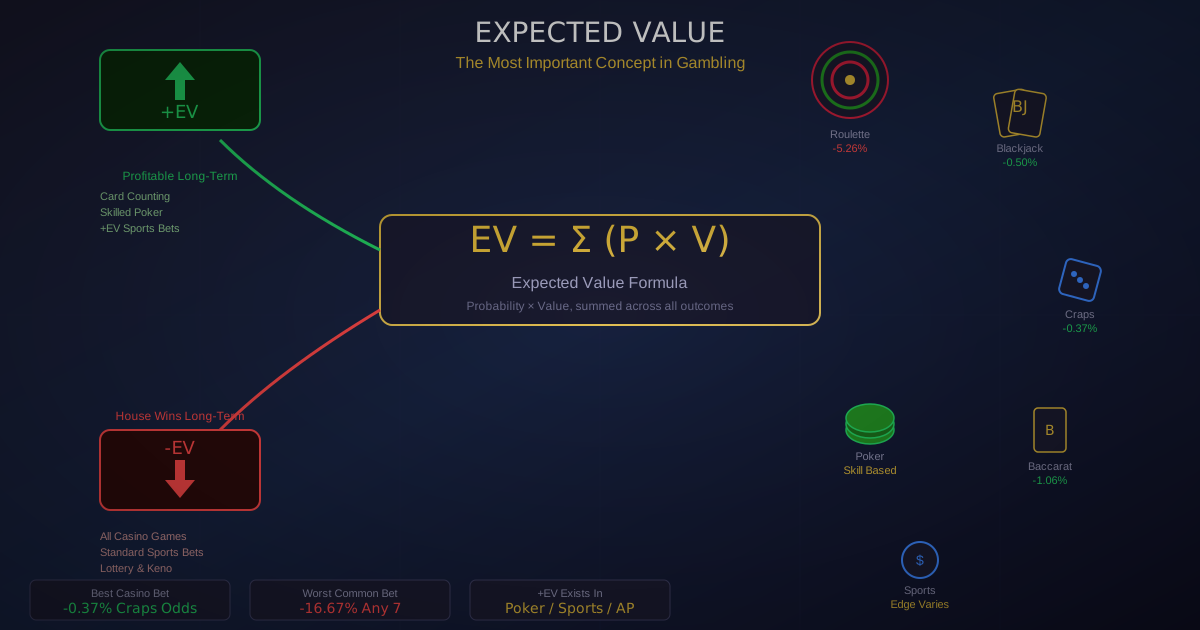
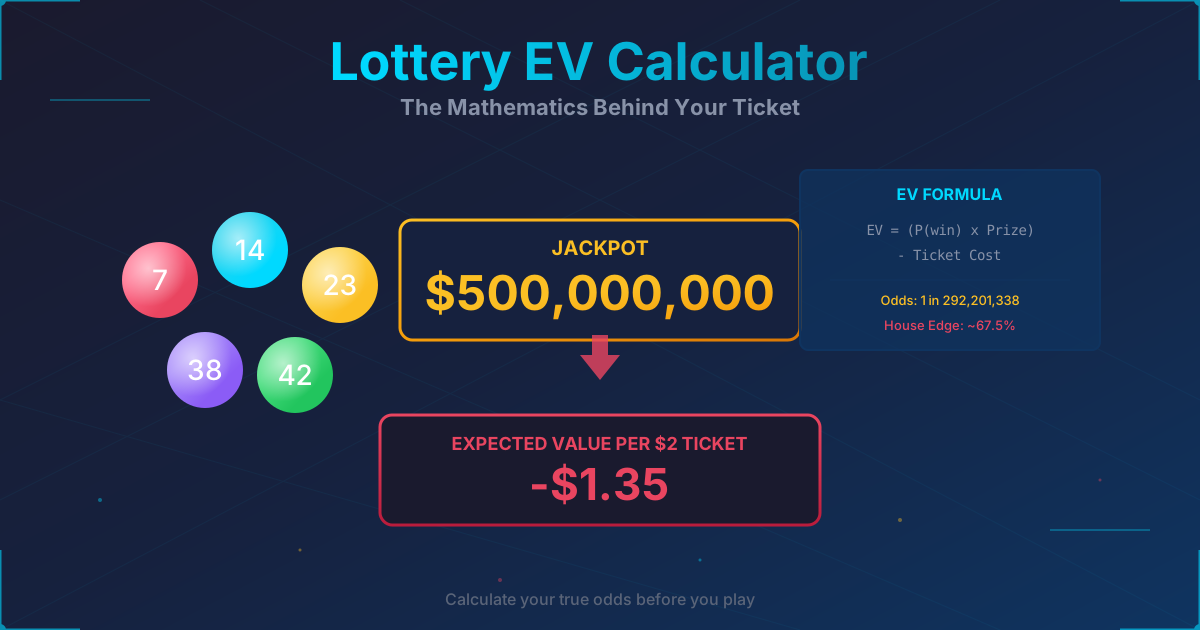
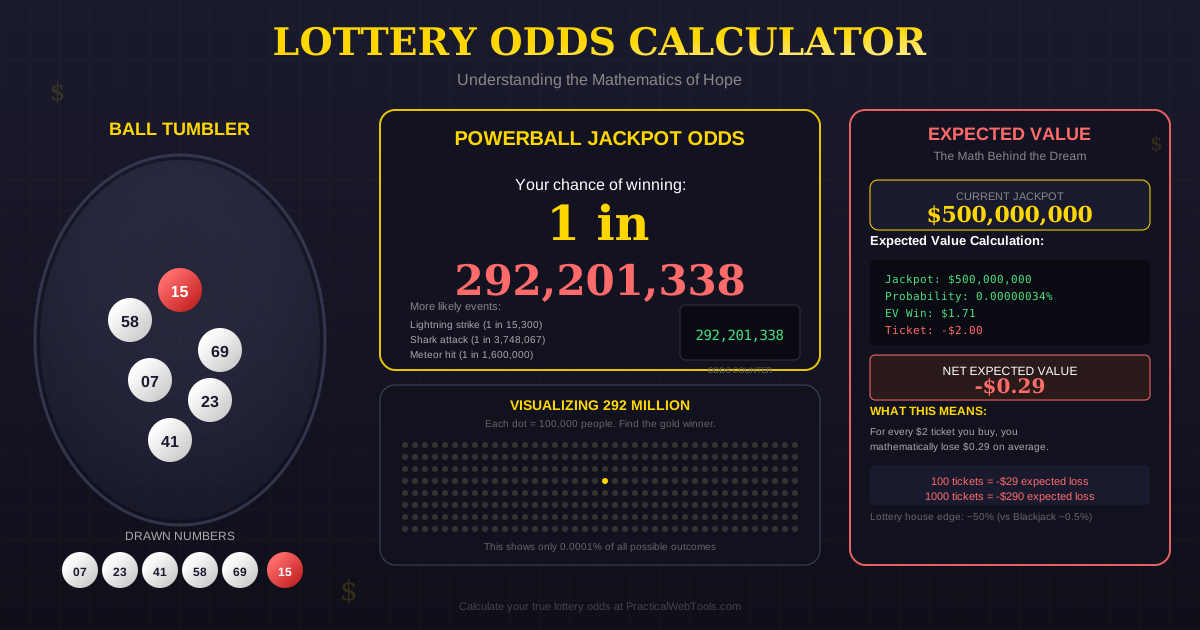
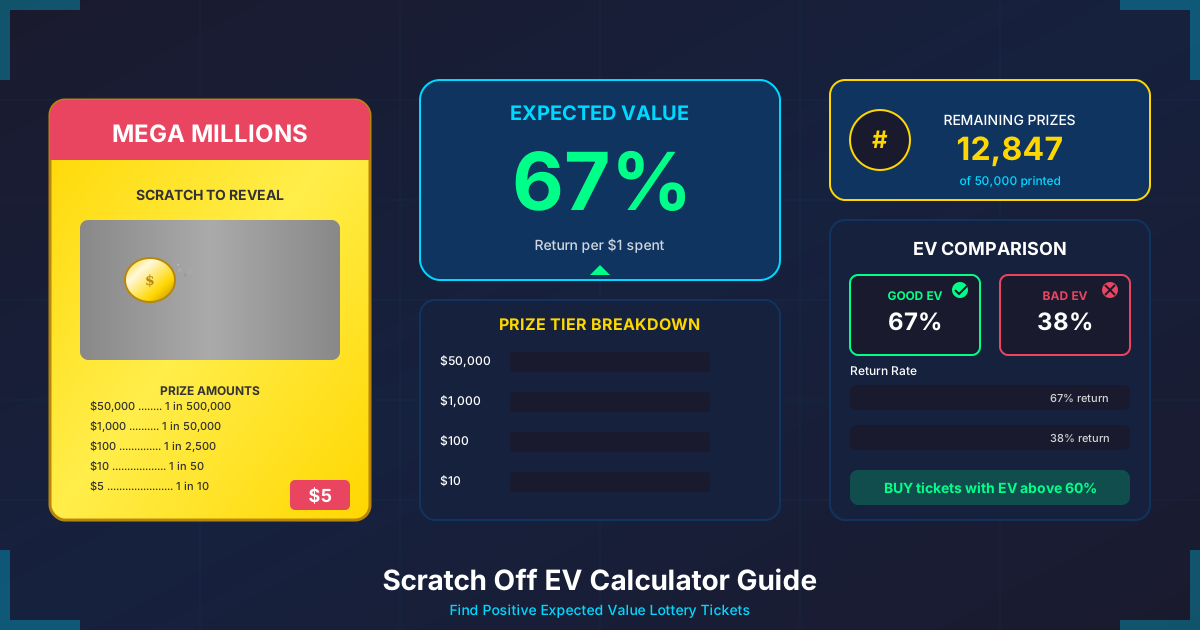
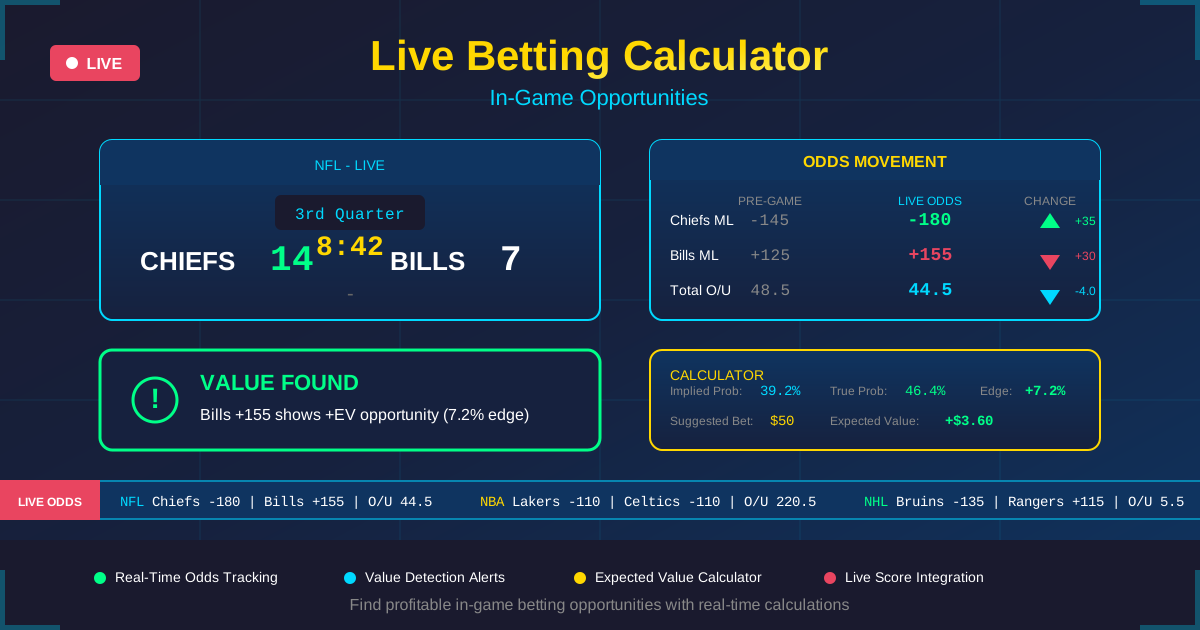
Before placing any bet, calculate the expected value with our free Expected Value Calculator -- it works for crypto wagers just as well as fiat ones.
How Does Crypto Gambling Work?
Crypto gambling operates on the same fundamental principles as traditional online gambling -- you deposit funds, place bets, and withdraw winnings -- but replaces banks and payment processors with blockchain transactions.
The Basic Process
- Create a wallet. You need a cryptocurrency wallet (hardware, software, or exchange-based) holding the cryptocurrency accepted by the platform.
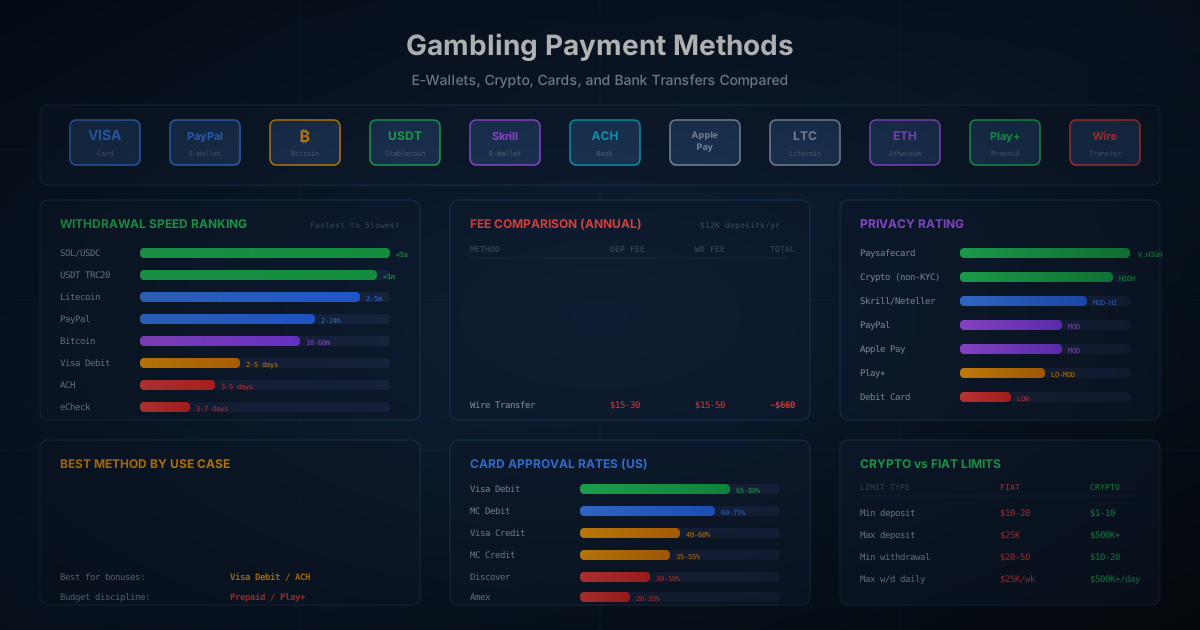
- Send crypto to the casino. The platform provides a deposit address. You transfer funds from your wallet. Depending on the blockchain, this confirms in seconds (Solana, Litecoin) to minutes (Bitcoin, Ethereum).
- Place bets. Your crypto balance is credited to your account, often displayed in both crypto and USD equivalent. You wager on slots, table games, sports, or provably fair originals.
- Withdraw winnings. Request a withdrawal to your personal wallet. Crypto casinos typically process withdrawals far faster than fiat counterparts -- often within minutes rather than days.
What Makes It Different from Traditional Online Gambling?
| Feature | Traditional (Fiat) Gambling | Crypto Gambling |
|---|---|---|
| Deposit Speed | Instant (credit card) to 1-3 days (bank transfer) | 1-60 minutes depending on blockchain |
| Withdrawal Speed | 1-5 business days | Minutes to 1 hour typically |
| Identity Verification | Required (KYC) at all licensed sites | Often minimal or none (varies by platform) |
| Transaction Fees | 0-3% (credit card surcharges common) | Network fees only (often under $1) |
| Regulatory Oversight | Licensed and audited by government agencies | Ranges from fully licensed to completely unregulated |
| Game Fairness Proof | Third-party audits (eCOGRA, GLI, BMM) | Provably fair cryptographic verification + optional audits |
| Dispute Resolution | Regulatory complaint process, chargeback rights | Limited to none -- transactions are irreversible |
| Geographic Access | Restricted by licensing jurisdiction | Generally global (with some exceptions) |
| Privacy | Full identity required | Ranges from email-only to fully anonymous |
| Currency Volatility | Stable fiat value | Crypto value can swing 5-20% in a day |
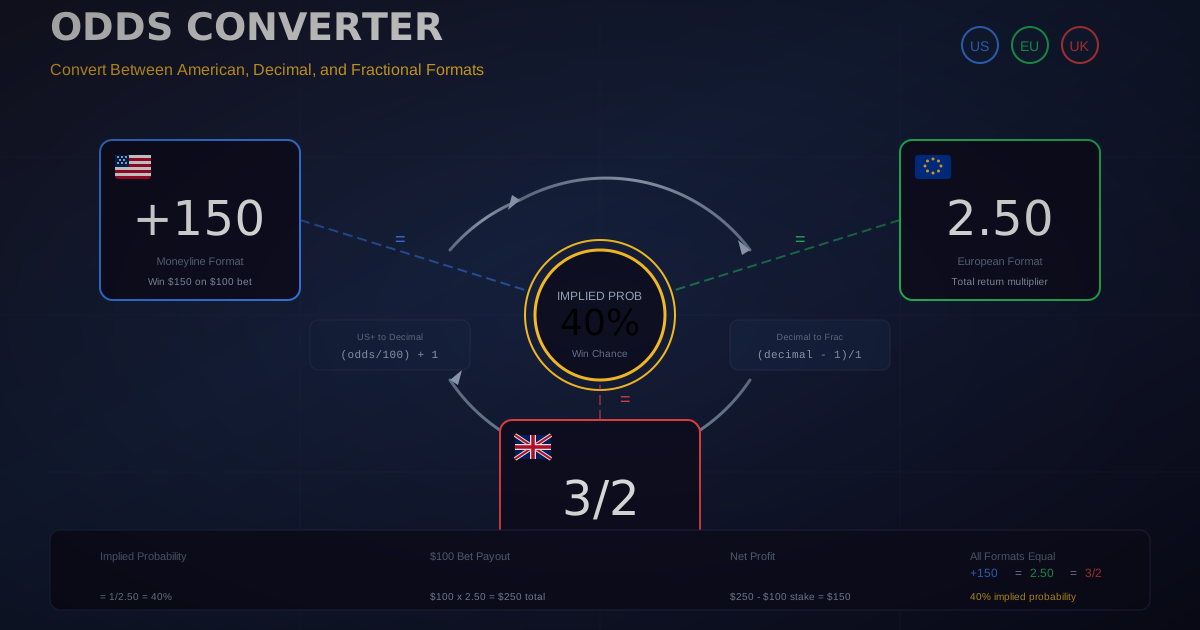
Convert between American, decimal, and fractional odds formats with our Odds Converter -- essential when comparing lines across crypto and fiat sportsbooks.
What Is Provably Fair Gambling?
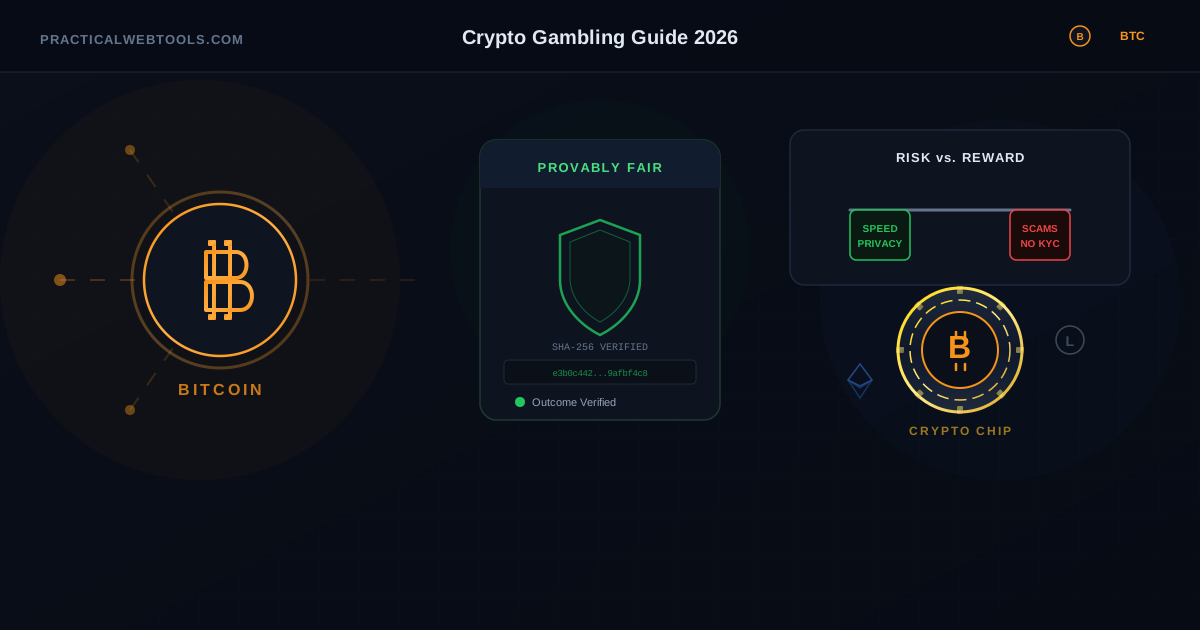
Provably fair gambling is the single most important innovation that crypto brought to the gambling industry. It is a cryptographic system that allows players to independently verify that every game outcome was determined fairly and was not manipulated by the casino.
Why It Matters
In traditional online gambling, you trust that a casino's Random Number Generator (RNG) produces fair results because a third-party auditor says so. You cannot verify individual results yourself. The audit covers statistical distributions over millions of rounds -- it does not prove that your specific hand of blackjack or spin of a slot was fair.
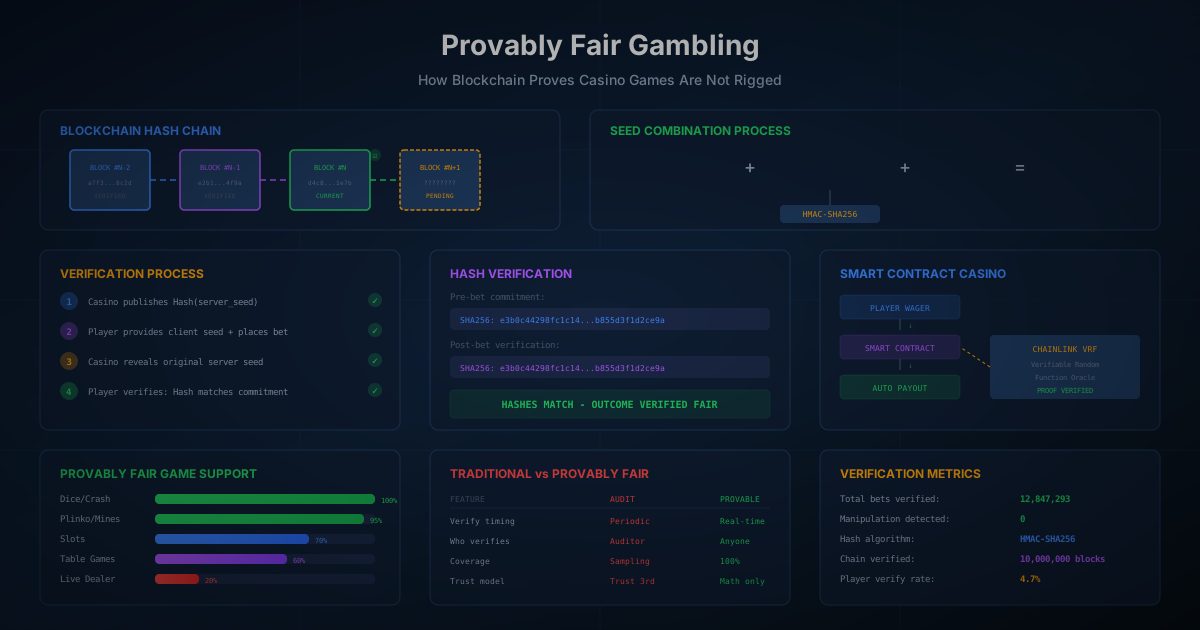
Provably fair systems eliminate this trust requirement. Using the same SHA-256 hashing algorithm that secures the Bitcoin blockchain, they let you verify every single bet after it resolves. The casino commits to the result before you bet, in a way that neither party can change afterward.
How Provably Fair Verification Works
The system uses three components:
- Server Seed -- A secret random string generated by the casino. Before you bet, the casino reveals a hash (encrypted fingerprint) of this seed. The hash proves the seed exists but does not reveal its value.
- Client Seed -- A random string you provide or the platform generates for you. You can change this at any time, ensuring the casino cannot predict your input.
- Nonce -- A counter that increments with each bet, ensuring uniqueness even if seeds stay the same.
Step-by-Step Verification Process
| Step | What Happens | Who Controls It |
|---|---|---|
| 1. Server commits | Casino generates server seed, shows you its SHA-256 hash | Casino |
| 2. Player provides input | You set or accept a client seed | Player |
| 3. Bet is placed | Combined inputs determine the outcome via cryptographic function | Mathematical (neither party) |
| 4. Result revealed | You see the game outcome (win/loss) | Automatic |
| 5. Server seed revealed | After you rotate seeds, the casino reveals the original server seed | Casino |
| 6. Player verifies | You hash the revealed server seed and confirm it matches the hash from Step 1 | Player |
| 7. Outcome confirmed | You combine server seed + client seed + nonce through the same algorithm and verify the outcome matches what was displayed | Player |
A Concrete Example
You play a provably fair dice game where you bet $0.01 BTC (roughly $650 at current prices) on "roll over 50" at 1.98x payout.
- Before your bet, the casino shows you the hash:
e3b0c44298fc1c149afbf4c8996fb924... - Your client seed is
player_abc_123and the nonce is47. - The algorithm combines these to produce a roll of 67.42 -- you win.
- Later, you request the server seed:
casino_secret_xyz_789. - You paste this into an independent SHA-256 hash calculator. The output matches
e3b0c44298fc1c149afbf4c8996fb924...-- confirming the casino did not change it. - You run the full algorithm (server seed + client seed + nonce) through a provably fair verifier and confirm the result is 67.42.
This proves the casino determined the result before you bet and did not change it afterward.
Limitations of Provably Fair
Provably fair is powerful, but it has limits you should understand:
- It only proves the outcome was pre-determined and unaltered. It does not prove the game odds are what the casino claims. A "50/50" game could be designed as 48/52 and still be provably fair -- it just provably generates that 48/52 distribution.
- Not all crypto casino games are provably fair. Many crypto casinos offer traditional slot games and live dealer games that use standard RNG or live video feeds. Provably fair typically applies to "original" games: dice, crash, plinko, mines, and similar titles.
- Verification requires technical understanding. Most players never actually verify. The ability to verify is the deterrent against cheating, but it only works if some percentage of players actually do it.
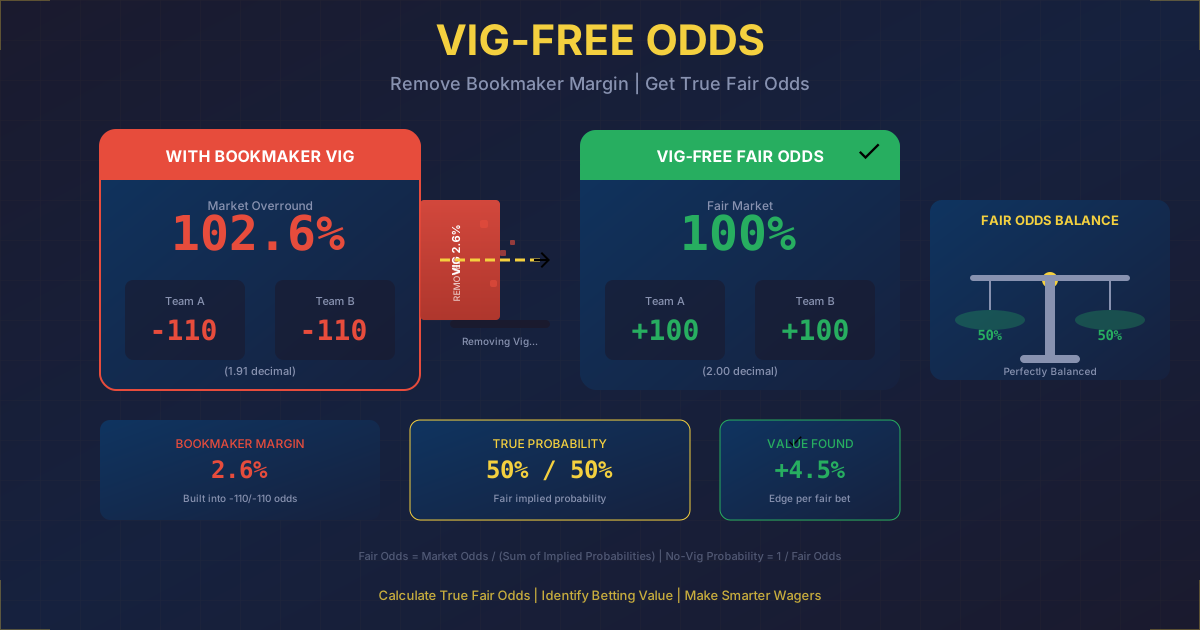
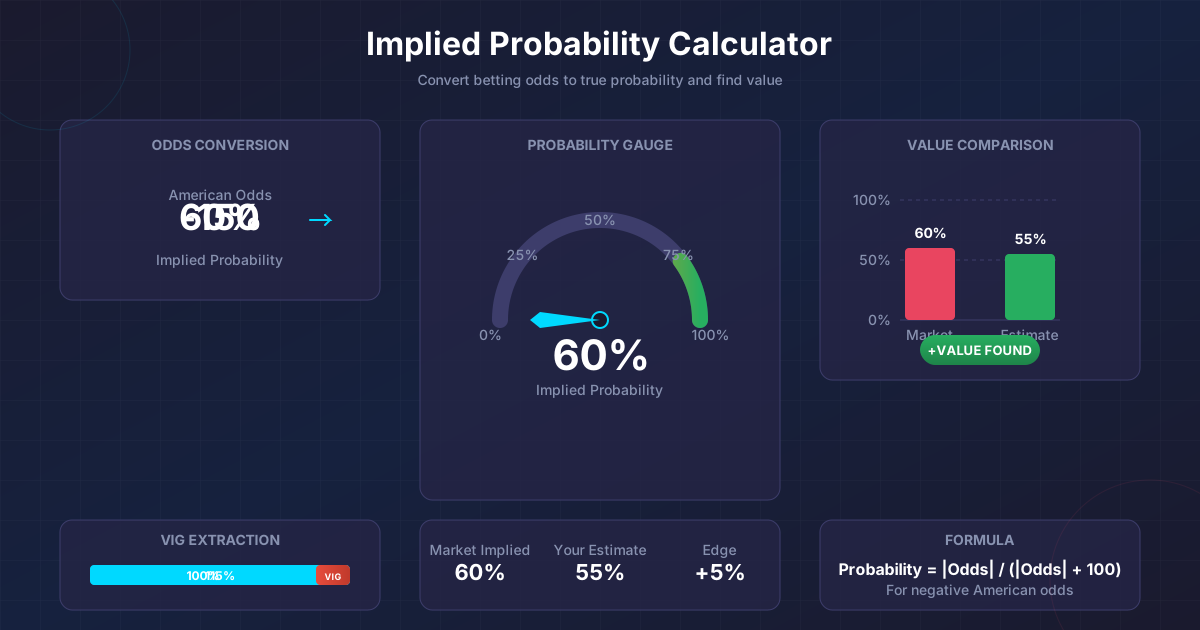
Calculate whether any game's advertised odds make it a good bet with our Implied Probability Calculator.
Bitcoin vs. Other Cryptocurrencies for Gambling
Bitcoin dominates crypto gambling, but it is not always the best choice. Transaction speed, fees, and privacy vary significantly across cryptocurrencies.
Cryptocurrency Comparison for Gambling
| Cryptocurrency | Avg. Confirmation Time | Typical Fee | Privacy Level | Casino Adoption | Best For |
|---|---|---|---|---|---|
| Bitcoin (BTC) | 10-60 minutes | $1-5 | Pseudonymous (traceable) | Highest -- nearly universal | Large deposits, most trusted |
| Bitcoin Lightning | Seconds | Under $0.01 | Moderate | Growing rapidly | Fast micro-bets, sports betting |
| Ethereum (ETH) | 15 seconds - 5 minutes | $0.50-10 (variable) | Pseudonymous (traceable) | Very high | DeFi gambling, smart contract games |
| Litecoin (LTC) | 2-5 minutes | Under $0.05 | Pseudonymous | High | Fast, cheap transactions |
| Solana (SOL) | Under 1 second | Under $0.01 | Low (fully transparent) | Growing | Speed-critical, high-frequency betting |
| Tether (USDT) | Varies by network | Varies by network | Low | Very high | Avoiding volatility |
| USD Coin (USDC) | Varies by network | Varies by network | Low | High | Avoiding volatility, US-regulated stablecoin |
| Dogecoin (DOGE) | 1-10 minutes | Under $0.01 | Pseudonymous | Moderate | Low-stakes fun betting |
| Monero (XMR) | 2-20 minutes | Under $0.05 | Very high (private by default) | Limited | Maximum privacy |
| TRON (TRX) | 3 seconds | Under $0.01 | Low | Moderate | Ultra-cheap transactions |
Key Takeaways
- For most gamblers: Litecoin or Bitcoin Lightning offers the best balance of speed, low fees, and wide acceptance.
- For large amounts: Bitcoin remains the standard. Its liquidity and universal acceptance outweigh its slower speed.
- For avoiding volatility: Stablecoins (USDT, USDC) let you gamble without worrying about crypto price swings.
- For maximum privacy: Monero is the only cryptocurrency with built-in transaction privacy, but far fewer casinos accept it.
- For speed: Solana and TRON process transactions almost instantly for under a penny.
Advantages of Crypto Gambling
Crypto gambling offers genuine advantages over traditional online gambling. Understanding these benefits -- and their limits -- helps you decide if it is right for your situation.
1. Faster Withdrawals
This is the most consistently cited advantage. Traditional online casinos typically take 1-5 business days to process withdrawals because funds pass through banks, payment processors, and compliance reviews. Crypto withdrawals bypass all intermediaries.
Real-world example: A player wins $3,200 (0.049 BTC) on a provably fair crash game. They request a withdrawal at 11:00 PM on a Saturday. The Bitcoin transaction confirms in 22 minutes. At a traditional casino, the same withdrawal requested on a Saturday night would not begin processing until Monday morning and might arrive Wednesday.
2. Lower Fees
Credit card deposits at traditional casinos often carry 2-3% surcharges. Wire transfers cost $25-50. Crypto transaction fees are typically a fraction of this.
Real-world example: Depositing $5,000 via credit card at a traditional casino costs $100-150 in processing fees. Depositing the equivalent in Litecoin costs approximately $0.03.
3. Provably Fair Games
As detailed above, cryptographic verification of game fairness is unique to crypto gambling. Traditional casinos cannot offer this level of individual-bet transparency.
4. Global Access
Crypto gambling platforms are generally accessible worldwide. Players in countries with limited banking infrastructure or restrictive payment processing can participate without a bank account or credit card.
5. Privacy
Many crypto casinos require only an email address to create an account. Some allow fully anonymous play. This protects player privacy but also means less consumer protection.
6. Better Bonuses (Often)
Because crypto casinos have lower payment processing costs and often lower regulatory overhead, many offer more generous bonuses with lower wagering requirements than traditional counterparts.
Real-world example: A crypto casino offers a 150% deposit bonus up to 1 BTC ($65,000) with 30x wagering requirements. A comparable fiat casino offers 100% up to $1,000 with 45x wagering requirements. The crypto bonus is larger in absolute terms and has lower rollover.
7. Censorship Resistance
Players cannot have deposits blocked or reversed by banks, payment processors, or governments. This is an advantage for players in restrictive jurisdictions but also means zero chargeback protection if the casino is fraudulent.
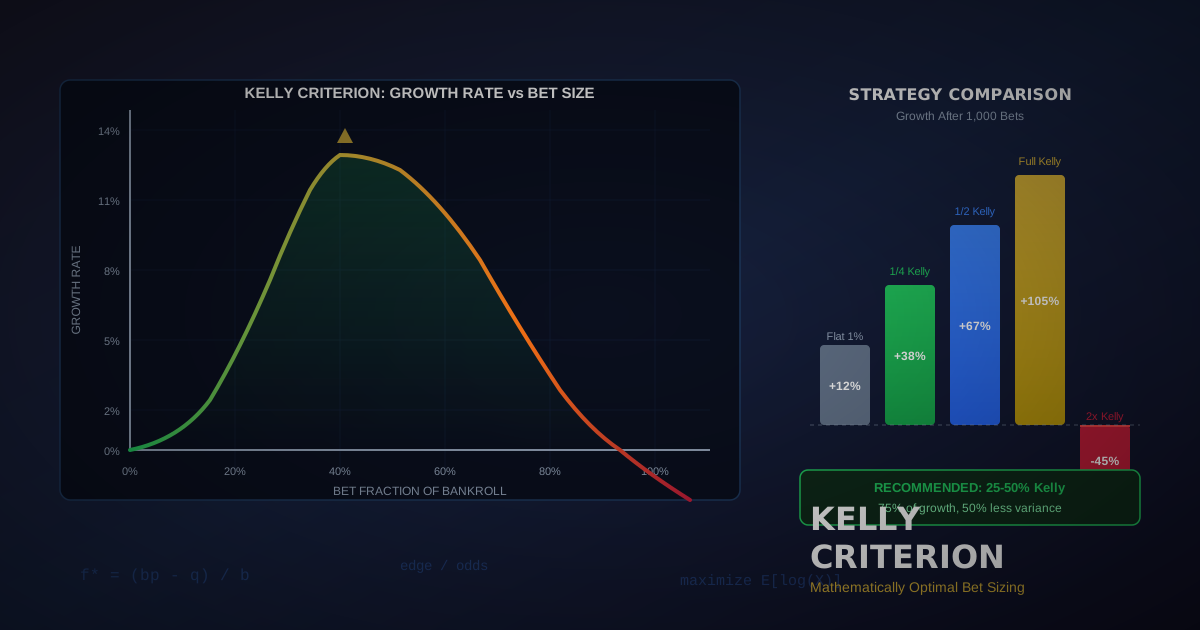
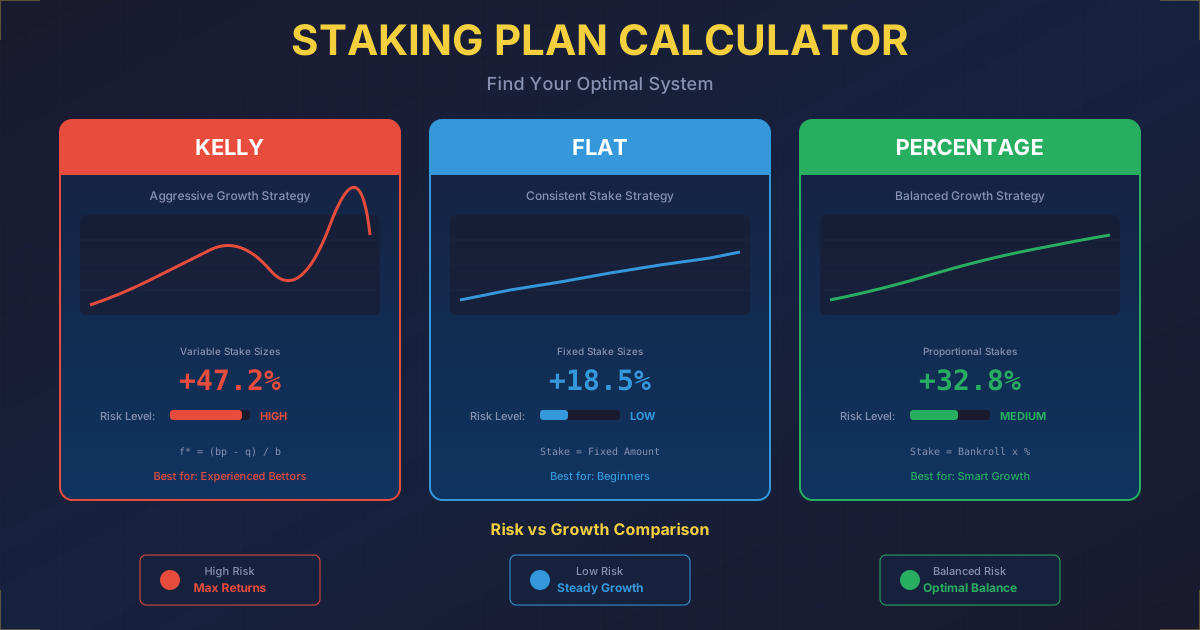
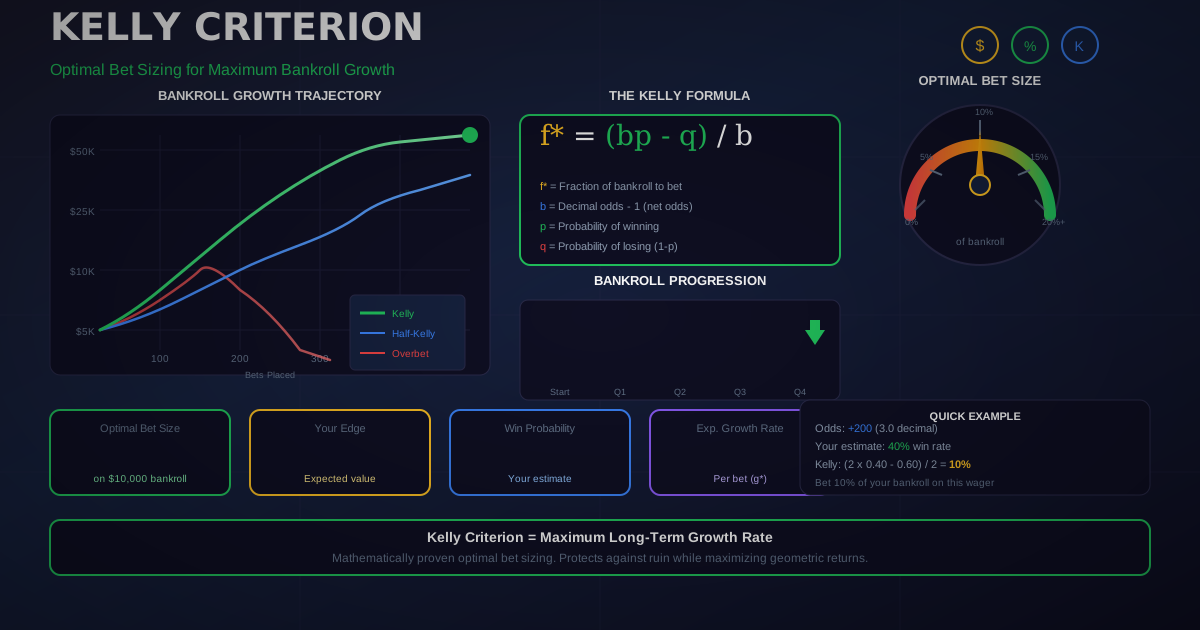
Optimize your bet sizing for any crypto wager with our Kelly Criterion Calculator -- it accounts for your edge and bankroll to calculate the mathematically optimal stake.
Risks and Red Flags: The Serious Downsides
The advantages of crypto gambling exist precisely because it operates with fewer safeguards. Every benefit has a corresponding risk, and some of these risks are severe.
1. Lack of Regulation and Consumer Protection
This is the single biggest risk. The majority of crypto casinos operate under minimal regulation -- typically a Curacao license (which costs approximately $47,000/year and provides limited enforcement) or no license at all.
What this means in practice:
- If a casino refuses to pay your winnings, you have no regulatory body to complain to that can compel payment.
- There is no deposit insurance. If the platform is hacked or goes bankrupt, your funds are gone.
- Responsible gambling features (deposit limits, self-exclusion, reality checks) are often absent or easily circumvented.
Real-world example: In 2023, the crypto casino Stake was hacked for $41 million. While Stake covered the losses from company reserves, a smaller operator hit with the same attack could simply shut down, leaving players with nothing.
2. Cryptocurrency Volatility
Your gambling bankroll is denominated in a volatile asset. Price swings can dramatically affect the real-world value of your deposits and winnings.
Real-world example: A player deposits 1 BTC when Bitcoin is at $68,000. Over two weeks of play, they grow their balance to 1.3 BTC. But Bitcoin drops to $52,000 in that period. Their 1.3 BTC is now worth $67,600 -- less than their original $68,000 deposit despite winning 0.3 BTC at the tables.
3. Scams and Exit Scams
The low barrier to launching a crypto casino means scam operations are common. Red flags include:
| Red Flag | What It Means | Risk Level |
|---|---|---|
| No license of any kind displayed | Completely unaccountable | Critical |
| License from unknown jurisdiction | May be fabricated | High |
| No provably fair verification for "original" games | Cannot verify fairness | High |
| Withdrawal delays exceeding 24 hours without explanation | Possible liquidity issues or exit scam setup | High |
| Bonus terms that make withdrawal nearly impossible | Designed to trap deposits | Medium-High |
| No clear company information or team | Anonymity cuts both ways | Medium |
| Only accepts deposits, withdrawal process unclear | Classic scam pattern | Critical |
| Recently launched with massive bonuses and no reputation | Attraction phase before exit | Medium-High |
4. Irreversible Transactions
If you send crypto to a scam casino, deposit to the wrong address, or get phished, there is no chargeback, no bank to call, and no dispute process. The transaction is final.
5. Addiction Risk Amplified
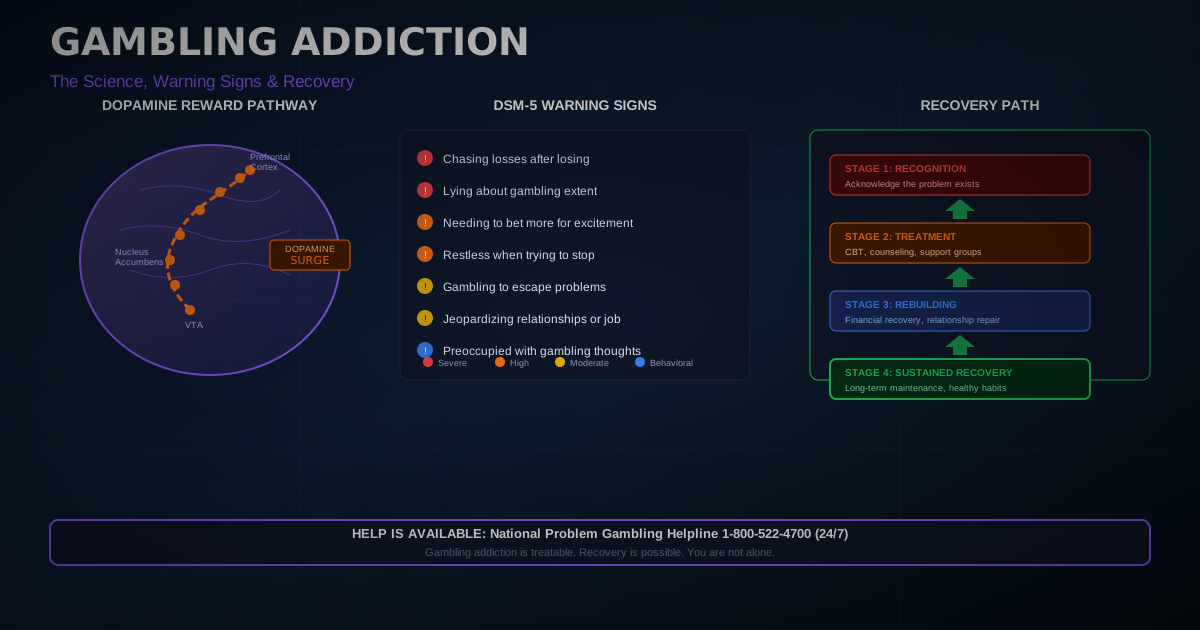
The 24/7 availability, fast game speeds, and absence of traditional responsible gambling controls make crypto gambling potentially more addictive. There are no cooling-off periods enforced by regulation, no limits set by payment processors declining transactions, and no KYC processes that slow down impulsive deposits.
6. Smart Contract Risks
Decentralized gambling platforms run on smart contracts. Bugs in these contracts can be exploited, potentially draining funds from the platform -- and from players who have funds in it.
Real-world example: A DeFi gambling protocol lost $2.3 million in 2024 when an attacker exploited a reentrancy bug in the payout function of its smart contract. Players who had balances in the protocol's pool lost their funds with no recourse.
Crypto Gambling Regulatory Landscape (2026)
The regulatory status of crypto gambling varies dramatically by jurisdiction, and it is evolving rapidly.
Regulatory Status by Region
| Region/Country | Status | Key Details |
|---|---|---|
| United States | Complex patchwork | No federal crypto gambling framework. State-by-state rules. NY, CT, MI, LA actively issuing cease-and-desist orders. Offshore crypto casinos accessible but not legal. |
| United Kingdom | Allowed with license | UK Gambling Commission allows licensed operators to accept crypto if AML/KYC requirements are met. |
| Malta | Regulated hub | Malta Gaming Authority (MGA) offers specific crypto casino licenses. Blockchain Sandbox Framework for testing. |
| Curacao | Permissive licensing | New LOK framework (2024+) with direct B2C/B2B licensing. Annual fee ~$47,000. Supports crypto without restrictions. |
| Gibraltar | Regulated | Accepts crypto under existing gambling framework with additional AML requirements. |
| Australia | Restricted | Interactive Gambling Act prohibits online casinos. Crypto does not change this. |
| China | Banned | Comprehensive ban on both cryptocurrency and gambling. |
| Japan | Gray area | Online gambling largely prohibited, but enforcement on offshore crypto sites is limited. |
| India | State-dependent | No national framework. Some states ban gambling, others allow skill-based games. |
| El Salvador | Favorable | Bitcoin is legal tender. Gambling regulation is minimal. |
The Trend
Regulation is tightening. Countries that previously ignored crypto gambling are now either bringing it under existing frameworks or issuing specific guidance. The Curacao reforms of 2024 and increased US state-level enforcement in 2025 are clear signals that the era of completely unregulated crypto gambling is narrowing.
Crypto Sports Betting
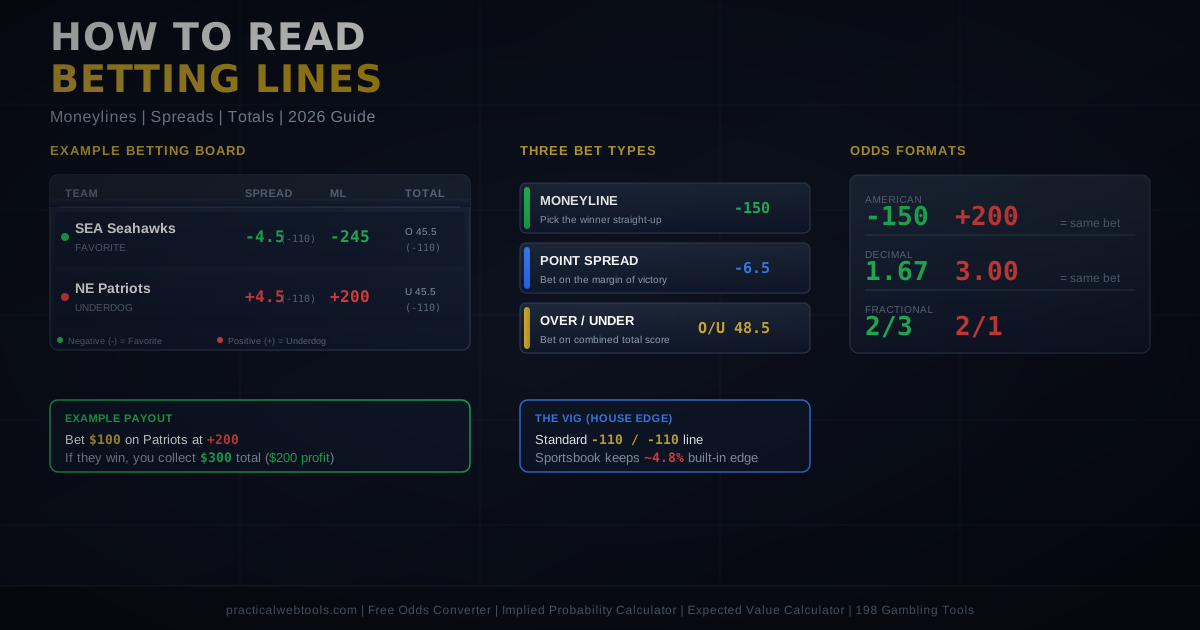
Crypto sportsbooks have grown into one of the largest segments of the crypto gambling market. They offer the same bet types as traditional sportsbooks -- moneylines, spreads, totals, parlays, props, and futures -- but with crypto-specific advantages.
Why Crypto for Sports Betting?
- Higher limits. Many crypto sportsbooks offer higher maximum bets than traditional regulated books, especially on niche markets.
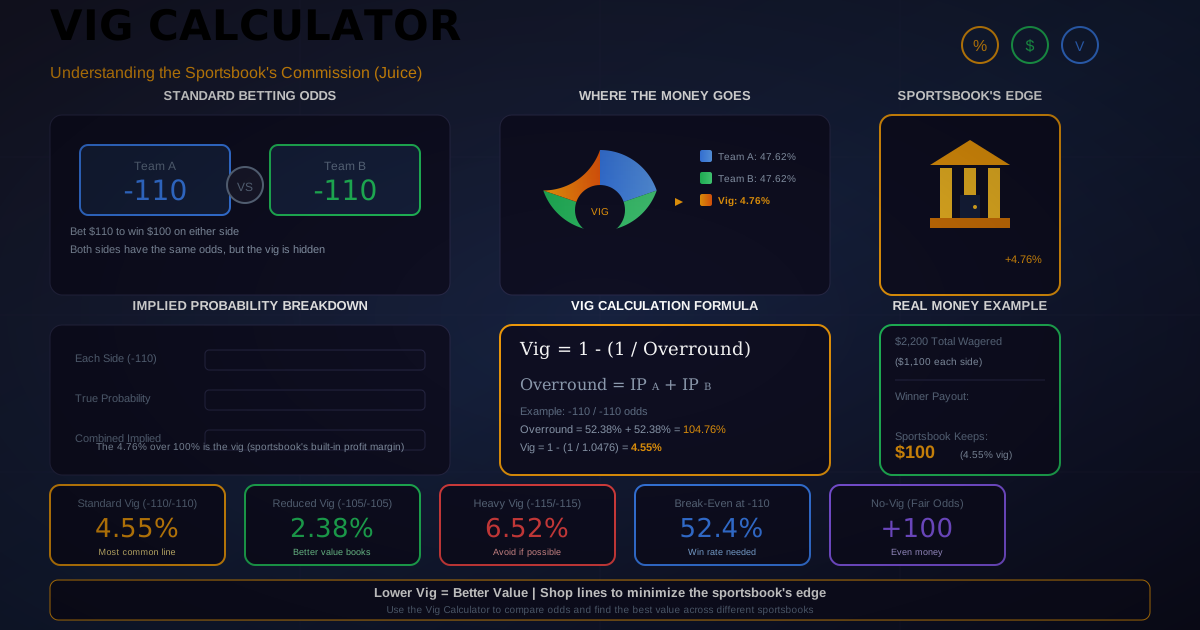
- Better odds (sometimes). Lower operating costs can translate to tighter lines and lower vig.
- Faster payouts. Withdrawals after a game settles can arrive in minutes, not days.
- Global access. Bet on sports events worldwide without geographic payment restrictions.
Example: Crypto Sports Bet with EV Calculation
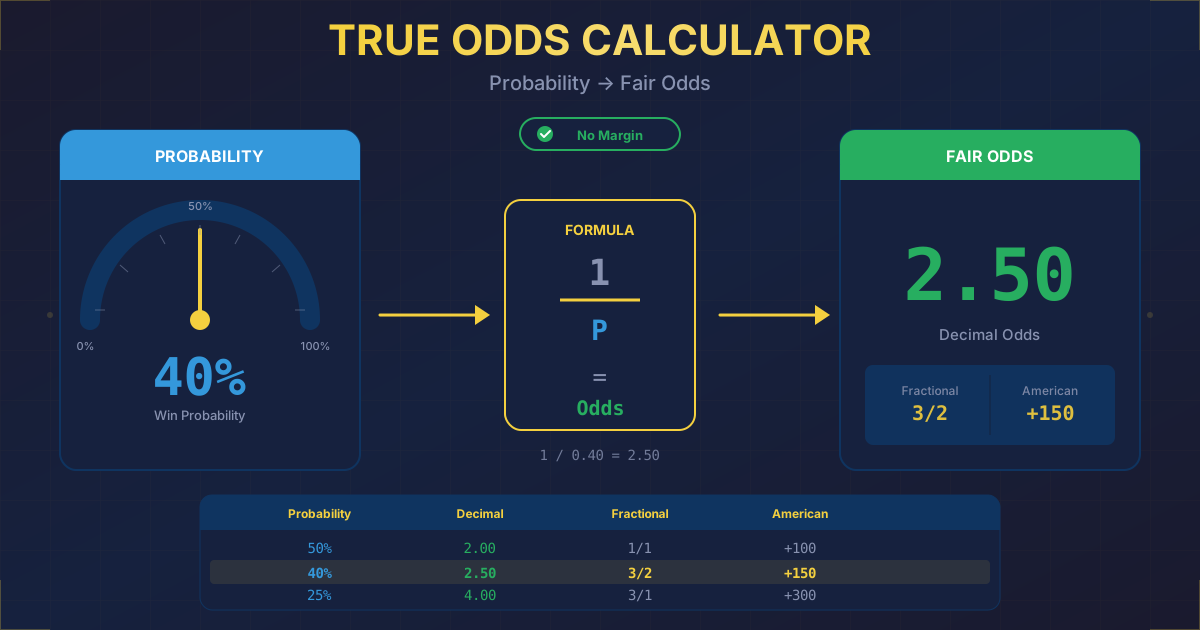
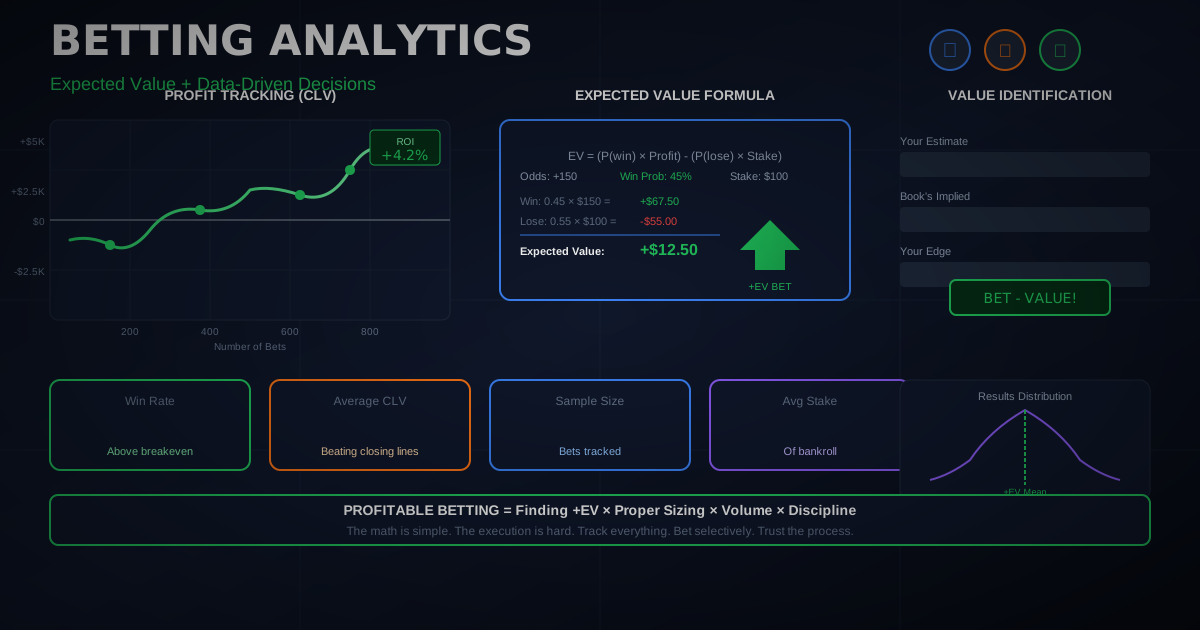
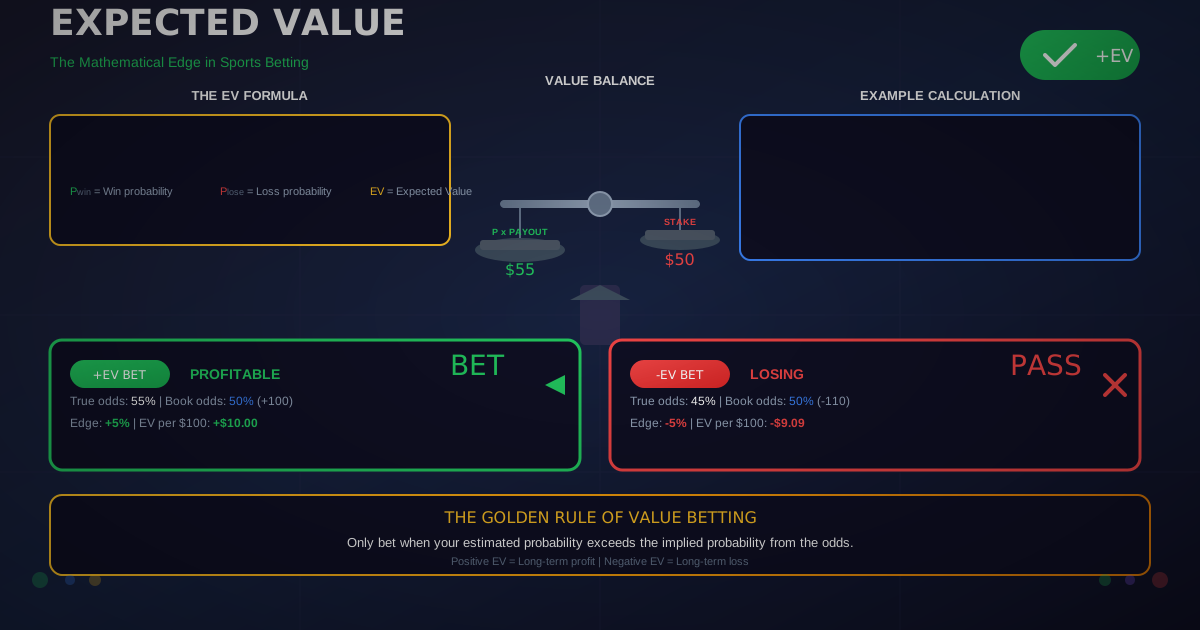
You believe the underdog in an NBA game has a 40% chance to win. A crypto sportsbook offers +180 odds (35.7% implied probability).
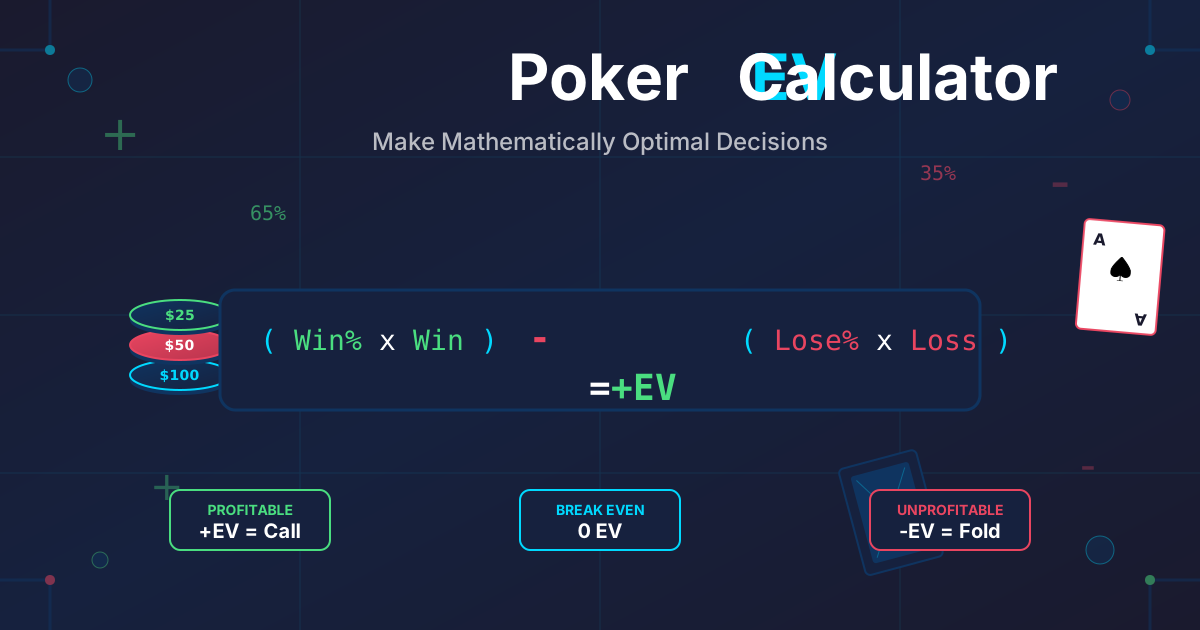
Using our Expected Value Calculator:
- Your estimated win probability: 40%
- Profit if win: $180 per $100 wagered
- Probability of losing: 60%
- Loss if lose: $100
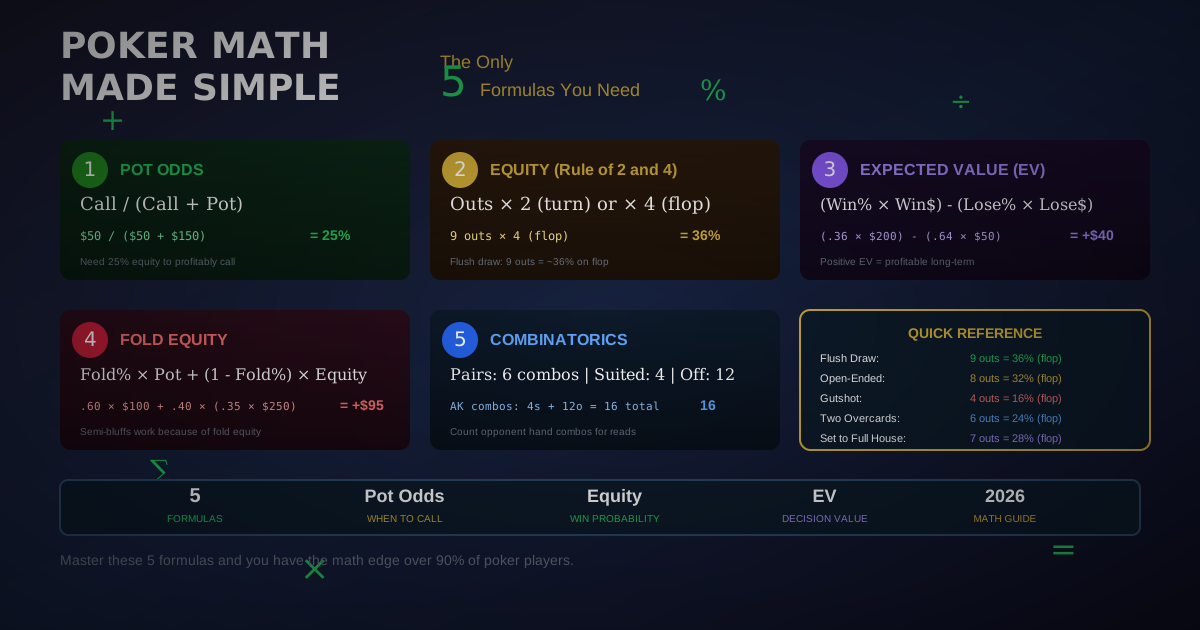
EV = (0.40 x $180) - (0.60 x $100) = $72 - $60 = +$12 per $100 bet
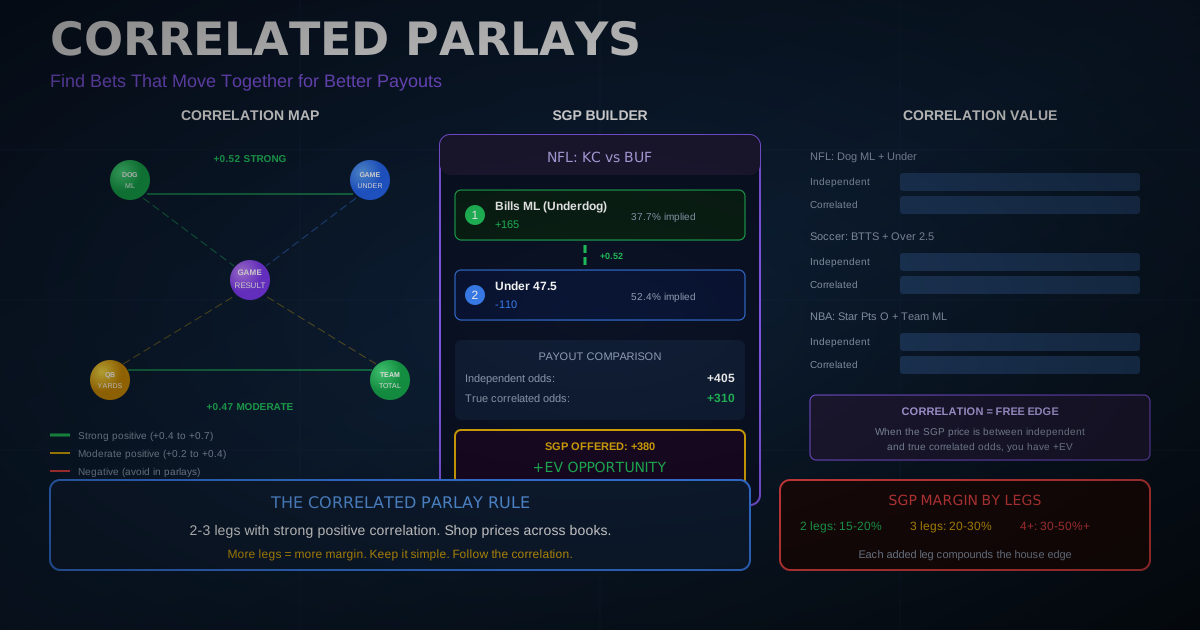
This is a +12% EV bet. The Kelly Criterion Calculator suggests a wager of approximately 6.7% of your bankroll at these odds with this edge.
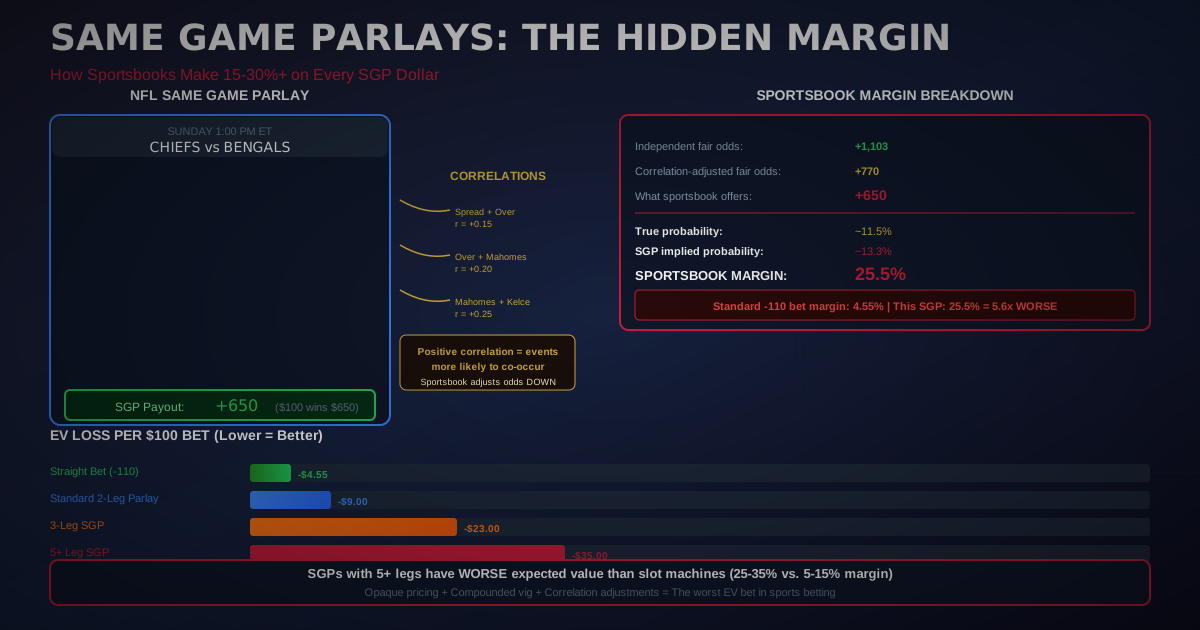
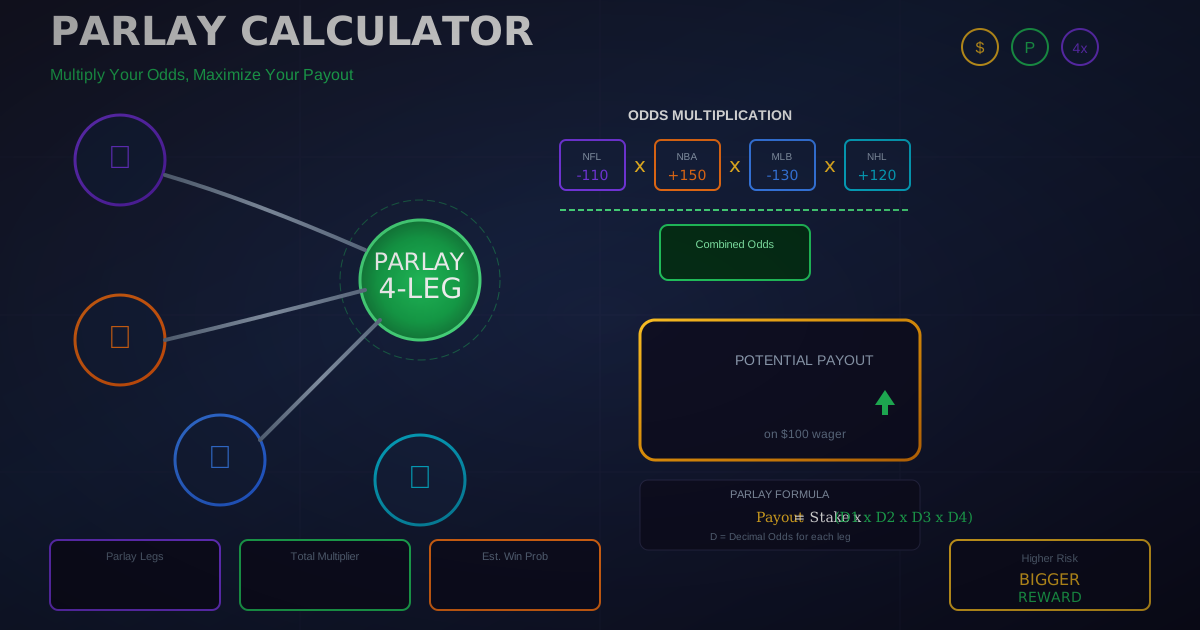
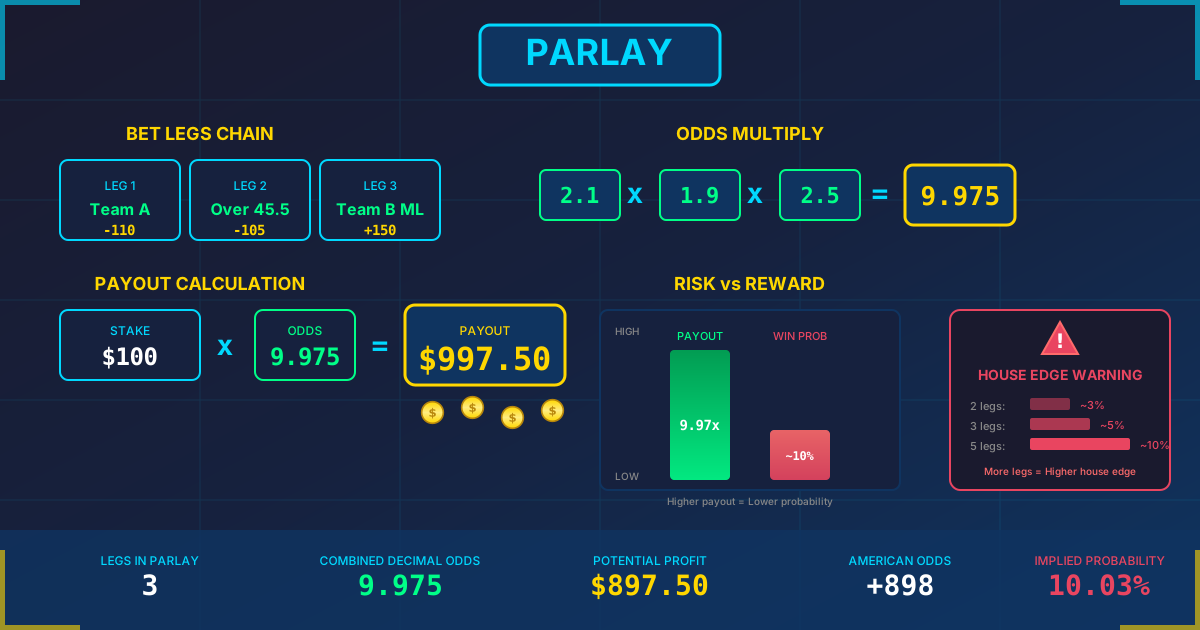
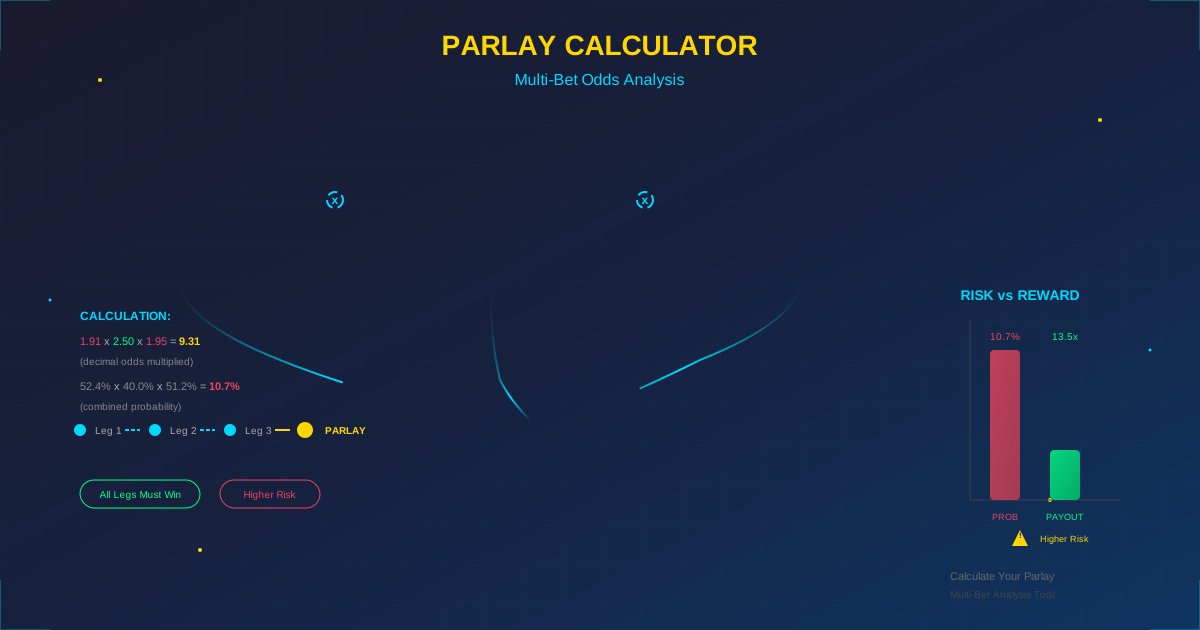
Build and calculate multi-leg parlays with our Parlay Calculator -- it works with any odds format used by crypto sportsbooks.
Crypto Sports Betting Risks
- Unregulated books can change lines after placement without accountability.
- No state-regulated dispute process if the book refuses to pay.
- Counterparty risk -- if the sportsbook goes insolvent, your balance is uninsured.
- Crypto volatility between deposit and withdrawal can affect real returns.
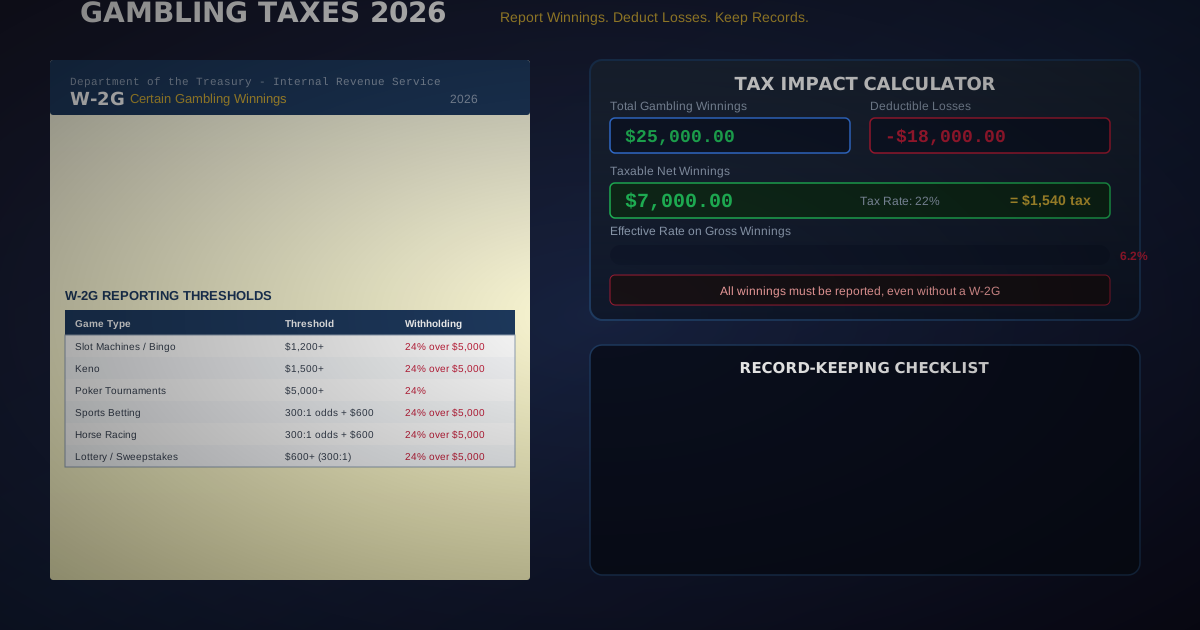
Tax Implications of Crypto Gambling
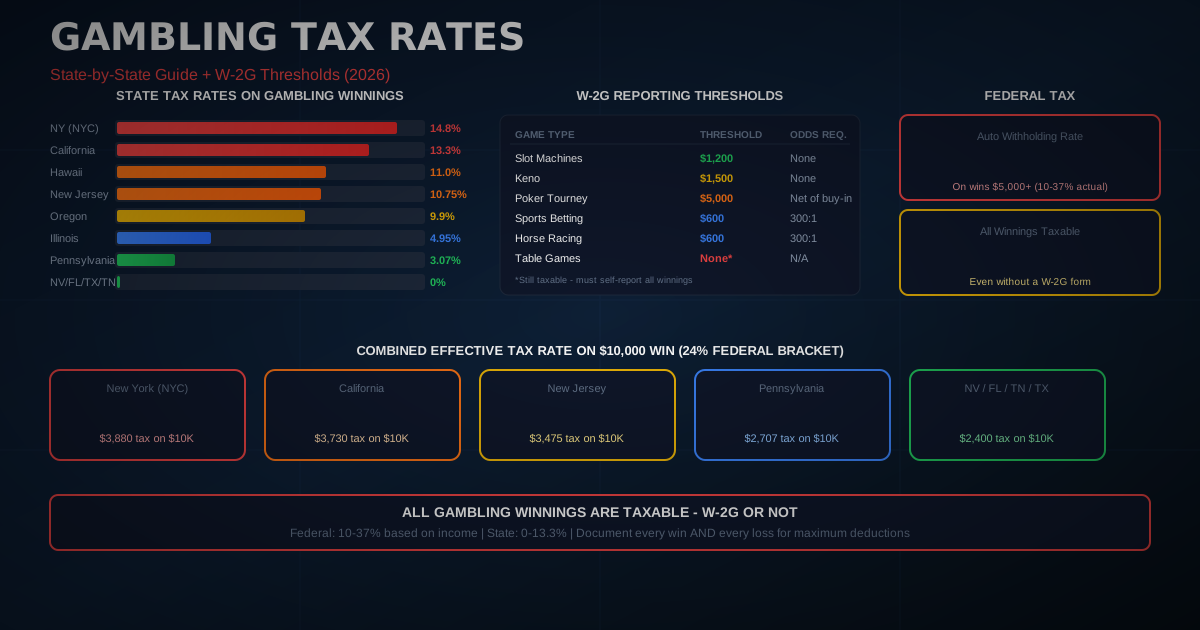
Crypto gambling creates two layers of tax obligations in the United States, and most other countries with capital gains tax regimes have similar rules.
Layer 1: Gambling Income
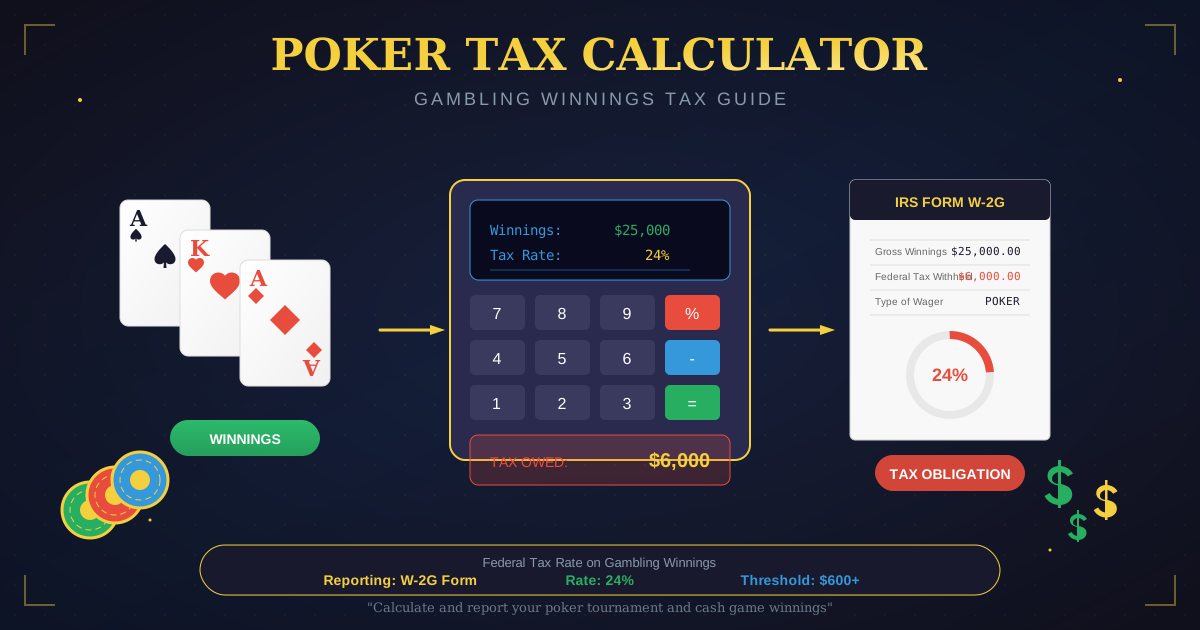
Gambling winnings in cryptocurrency are taxed as ordinary income at the fair market value (USD) of the crypto at the time you receive it. This applies regardless of whether you convert to fiat.
Example: You win 0.1 ETH when Ethereum is trading at $3,500. You owe income tax on $350 in gambling winnings, even if you never sell the ETH.
Layer 2: Capital Gains
If the crypto you won changes in value before you sell, swap, or spend it, you incur a capital gain or loss on the difference.
Example (continued): You later sell that 0.1 ETH when Ethereum is $4,200. You owe capital gains tax on the $70 gain ($420 sale - $350 cost basis).
Key Tax Rules for 2026
| Rule | Detail |
|---|---|
| Reporting | All gambling winnings must be reported on Form 1040 Schedule 1 |
| Loss Deductions | Gambling losses deductible on Schedule A, capped at 90% of winnings (OBBBA, effective Jan 2026) |
| Form 1099-DA | Starting 2026, exchanges must issue Form 1099-DA for crypto transactions |
| Wallet-by-Wallet Basis | Starting 2025, IRS requires cost basis calculated per-wallet, not universally |
| Record Keeping | You are responsible for tracking all activity -- most crypto casinos do not issue tax forms |
| Stablecoin Winnings | Also taxed as income at USD value when received |
| Cross-Border | US citizens owe tax on worldwide gambling income regardless of where the casino is based |
Practical Advice
- Track every transaction. Use crypto tax software (TokenTax, Koinly, CoinLedger) to automatically calculate your obligations.
- Do not assume anonymity means no taxes. The IRS has increasingly sophisticated blockchain analytics. In 2025, new reporting requirements began for cryptocurrency.
- Consider stablecoins to simplify tax calculations -- the value at time of win roughly equals the value at time of sale.
- Consult a tax professional if your crypto gambling volume is significant. The intersection of gambling tax law and crypto tax law is genuinely complex.
How to Stay Safe: A Practical Checklist
If you choose to gamble with cryptocurrency, these steps reduce (but do not eliminate) your risk.
Before You Deposit
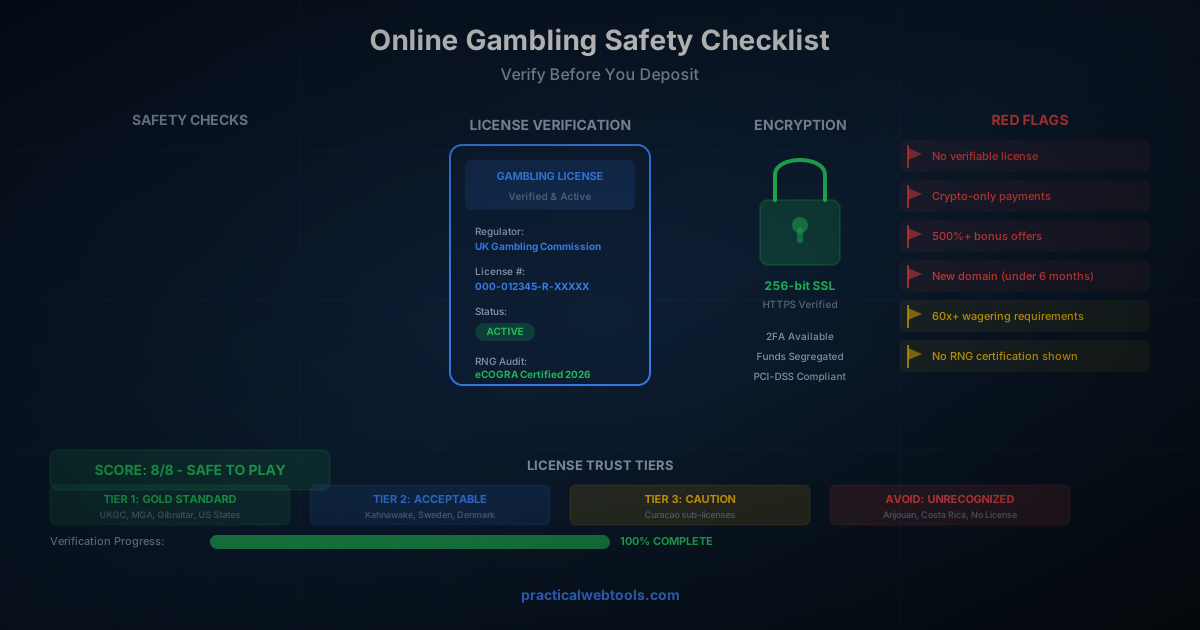
- Verify the license. Check that the casino holds a verifiable license. Curacao, MGA (Malta), UKGC (UK), and Gibraltar are the most common. Verify the license number on the regulator's website -- do not trust the casino's claim alone.
- Research the reputation. Search for player reviews on independent forums (not the casino's own site). Look for patterns of withdrawal complaints.
- Test provably fair verification. If the casino claims provably fair games, verify at least one bet before depositing significant funds.
- Check the withdrawal process. Read the terms and conditions for withdrawal limits, processing times, and wagering requirements before depositing.
- Start small. Make a small deposit, play, and withdraw before depositing larger amounts. If withdrawal is smooth, that is a positive (but not conclusive) sign.
While You Play
- Use a dedicated wallet. Never connect your primary crypto holdings wallet to a gambling site. Use a separate wallet funded only with your gambling bankroll.
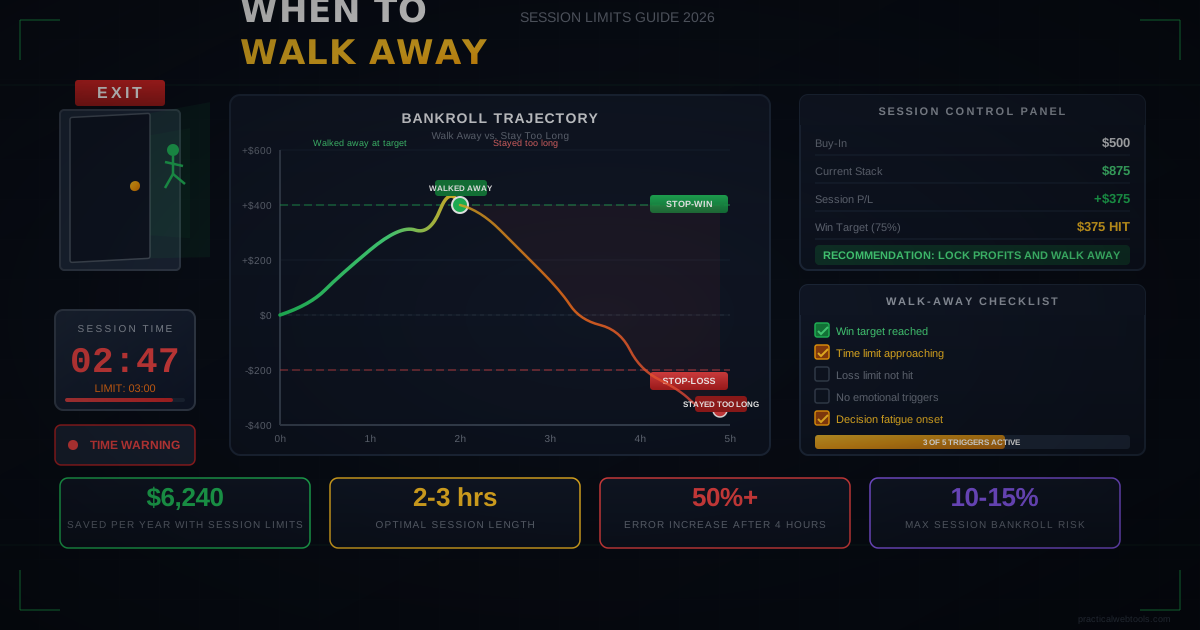
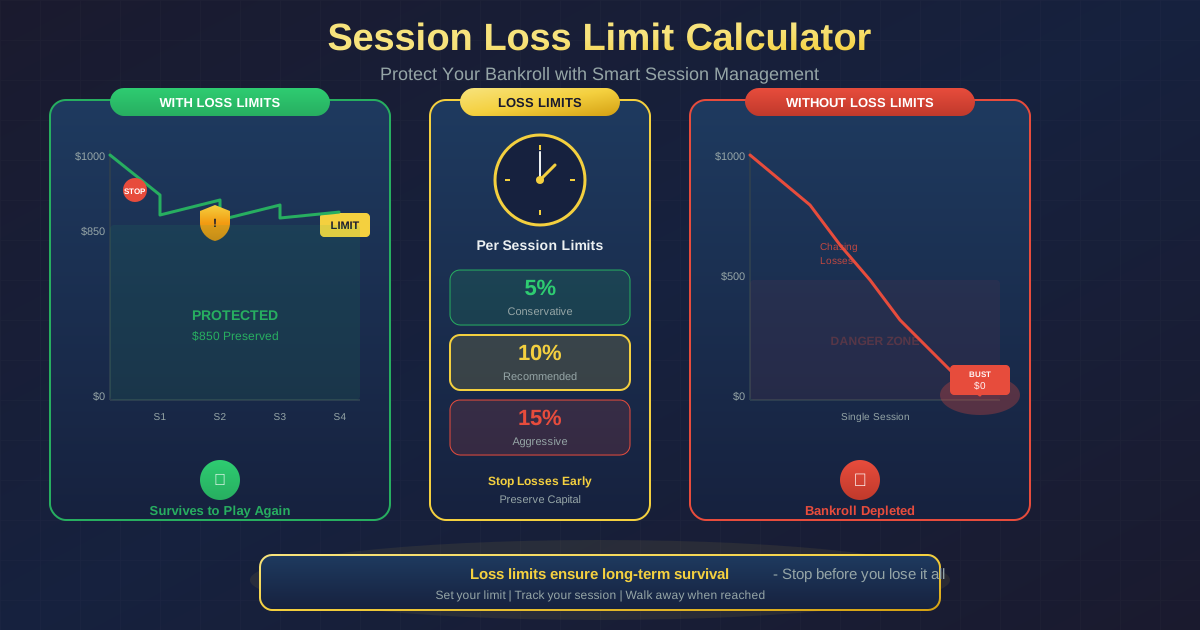
- Set and enforce limits. Decide your maximum loss before each session and stop when you reach it. Crypto gambling makes this harder because there are fewer external controls.
- Track everything. Log every deposit, bet, and withdrawal for tax purposes and bankroll management.
- Use two-factor authentication (2FA). Protect your casino account and crypto wallets with 2FA.
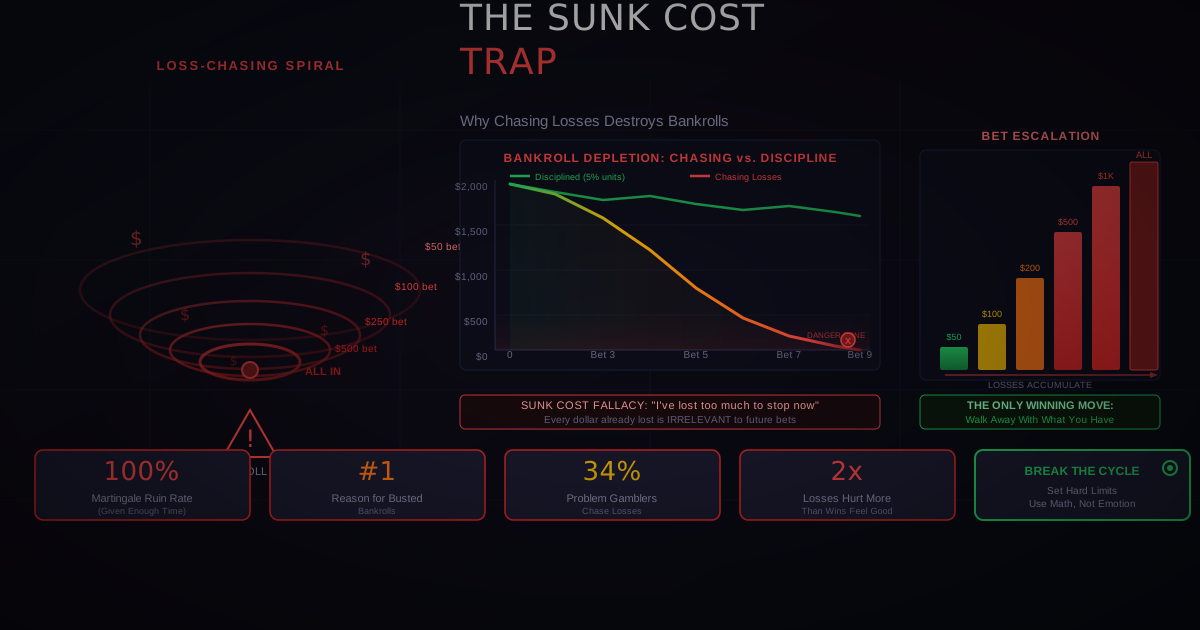
- Avoid chasing losses. The instant deposit capability of crypto makes it dangerously easy to reload after a losing session.
Risk Assessment Framework
| Risk Factor | Low Risk | Medium Risk | High Risk |
|---|---|---|---|
| License | MGA, UKGC, Gibraltar | Curacao, Isle of Man | None or unverifiable |
| Track Record | 3+ years operating, positive reviews | 1-3 years, mixed reviews | Under 1 year or primarily negative |
| Provably Fair | All original games are provably fair | Some games provably fair | No provably fair games |
| Withdrawal History | Consistent fast payouts | Occasional delays | Frequent complaints of withheld funds |
| Transparency | Known team, registered company | Partial company info | Fully anonymous operators |
| Responsible Gambling Tools | Deposit limits, self-exclusion, reality checks | Some tools available | None |
Is Crypto Gambling Right for You?
Crypto gambling is not inherently better or worse than traditional gambling -- it involves different tradeoffs. It may be a reasonable choice if you:
- Already hold cryptocurrency and understand how wallets, transactions, and private keys work
- Value transaction speed and want faster deposits and withdrawals
- Want the ability to cryptographically verify game fairness
- Understand and accept the reduced regulatory protections
- Are disciplined about setting and enforcing your own limits
- Are prepared to handle the tax tracking obligations
It is likely not the right choice if you:
- Are new to cryptocurrency (learn crypto before combining it with gambling)
- Have struggled with gambling addiction (the reduced friction increases risk)
- Rely on regulatory consumer protections and dispute resolution
- Are uncomfortable with the possibility of total loss from platform failure
- Do not want to deal with complex tax reporting
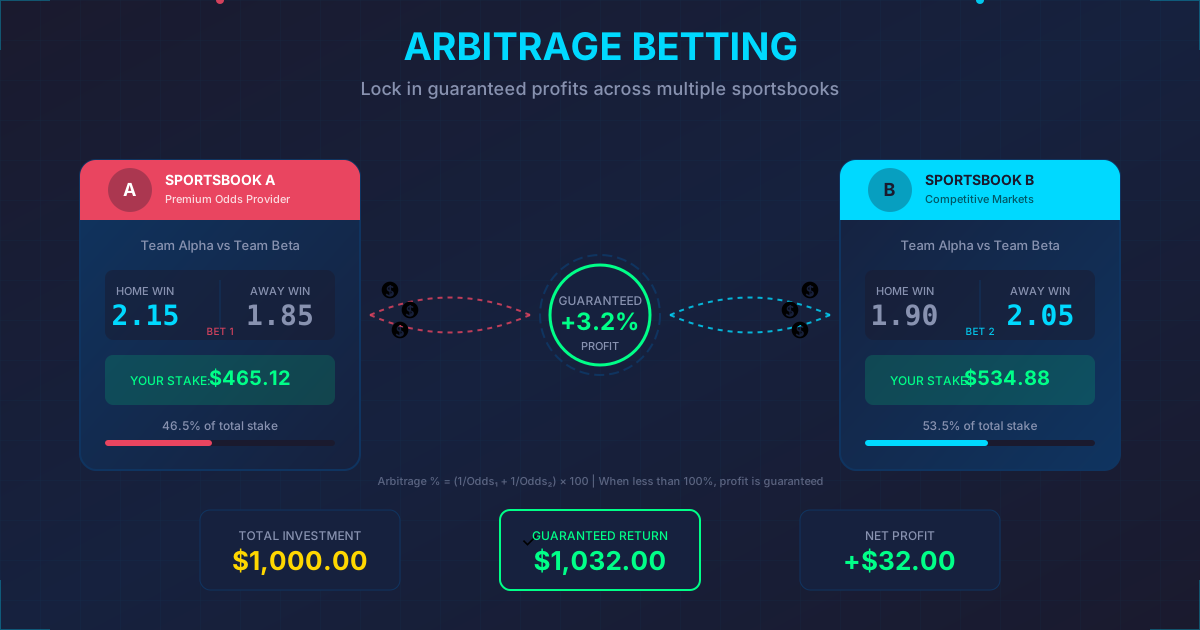
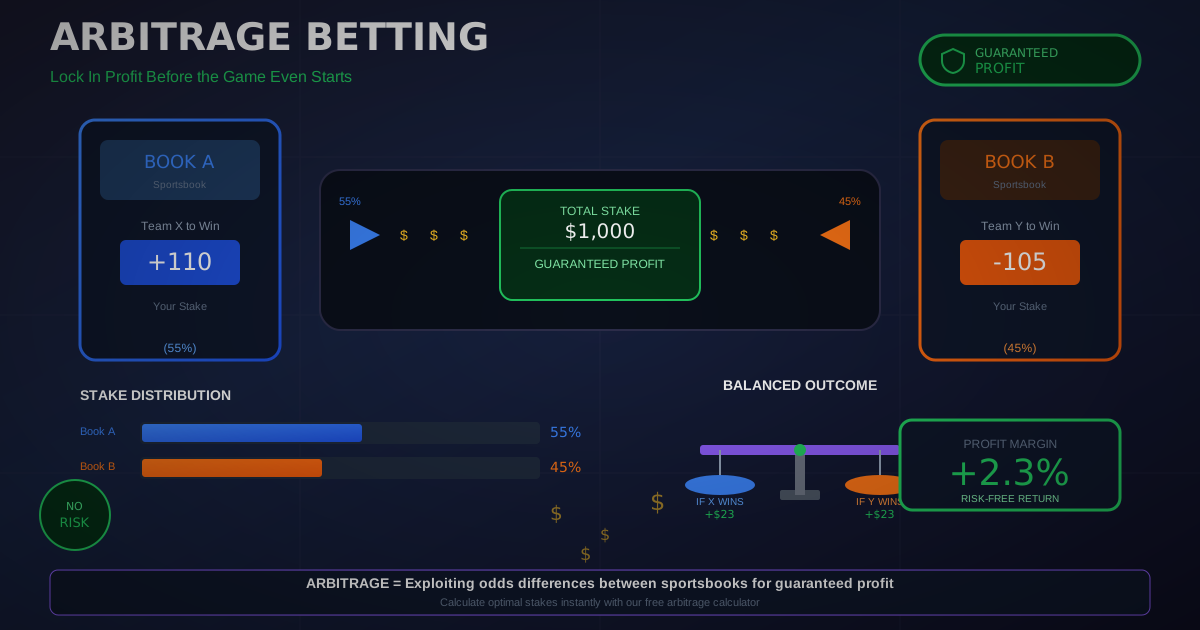
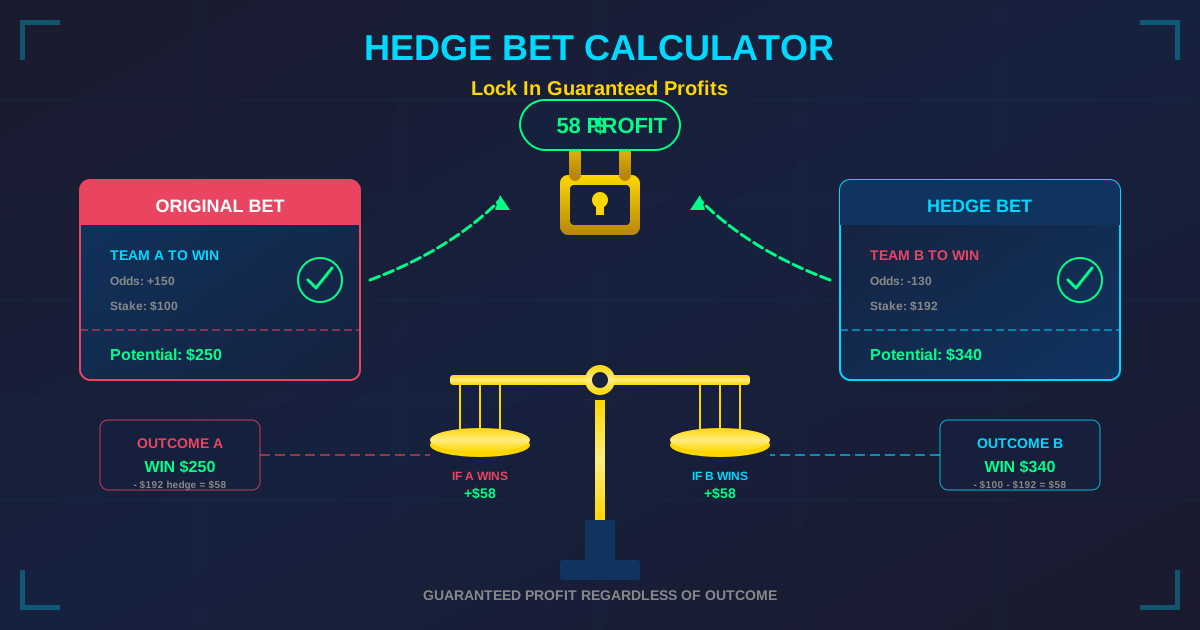
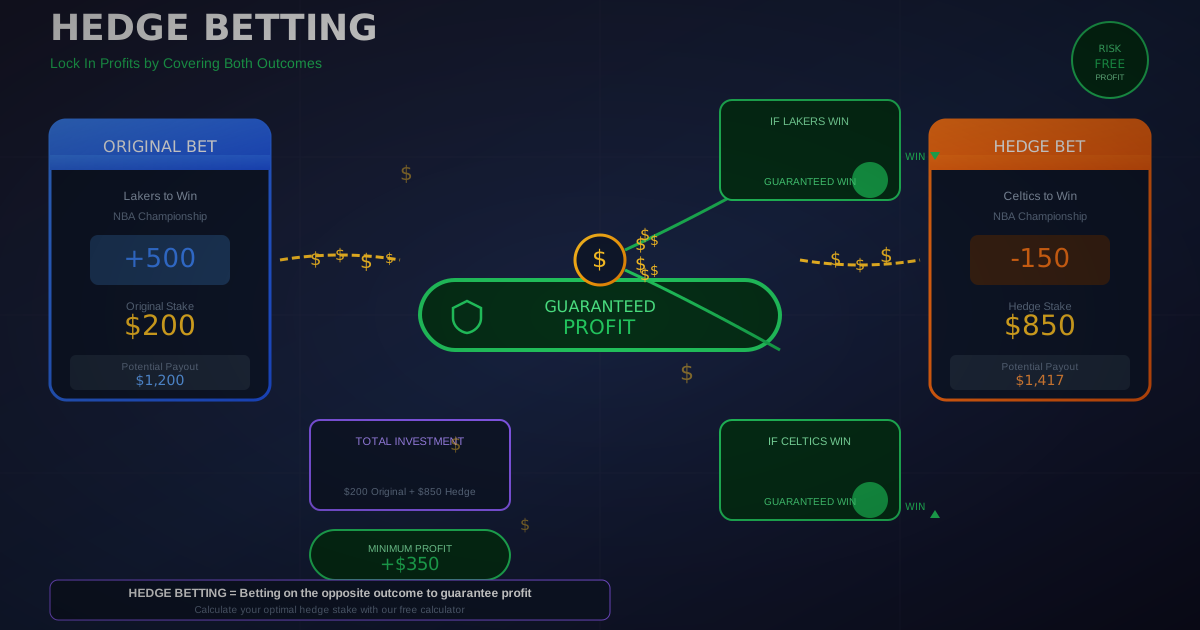
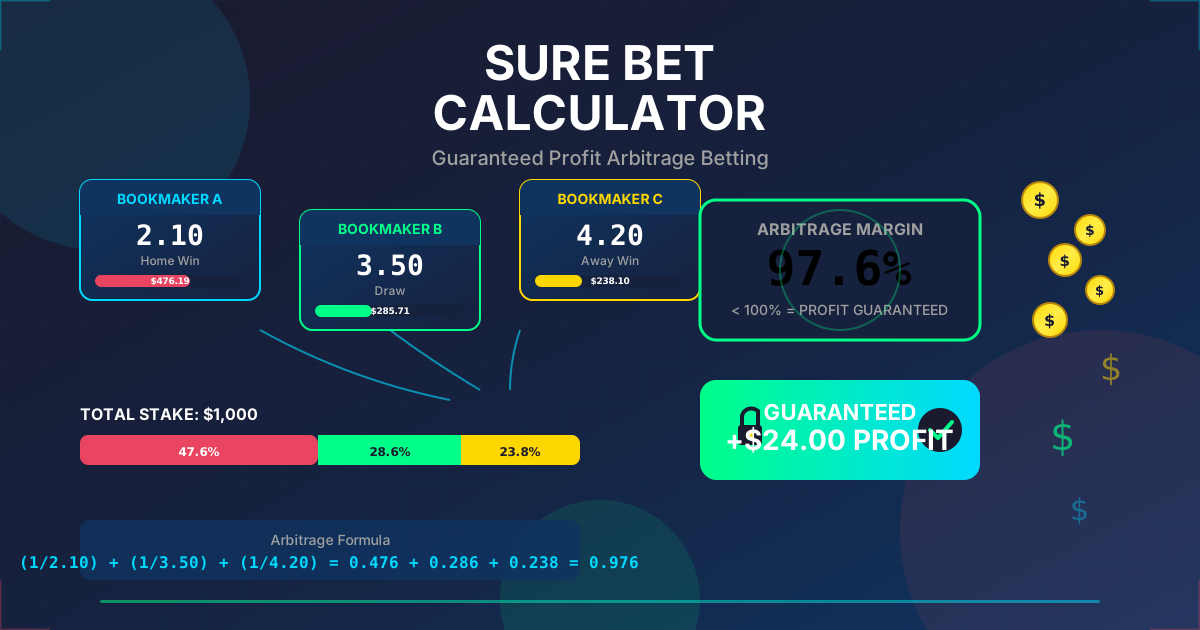
Find risk-free profit opportunities across different sportsbooks with our Arbitrage Calculator -- works for both crypto and fiat books.
Frequently Asked Questions
Is crypto gambling legal? It depends entirely on your jurisdiction. In the United States, there is no federal law specifically addressing crypto gambling, but individual states have their own rules. In the UK, licensed operators can accept crypto. Many countries fall into a gray area where crypto gambling is neither explicitly legal nor illegal. Always check your local laws before participating.
Are Bitcoin casinos rigged? Some are and some are not -- which is exactly the problem. Provably fair casinos provide cryptographic proof that outcomes are not manipulated. Casinos without provably fair systems require the same trust as any unregulated operator. Even with provably fair games, the house edge is built into the game math, so the casino profits over time regardless. Provably fair means fair randomness, not equal odds.
What happens if a crypto casino is hacked? Your funds may be lost with no recourse. Unlike bank accounts, crypto balances are not insured by the FDIC or any government agency. Some major platforms self-insure (Stake covered $41 million in hack losses from reserves), but most smaller operators cannot. This is why you should never deposit more than you can afford to lose entirely.
Do I have to pay taxes on crypto gambling winnings? Yes, in the United States and most developed countries. Crypto gambling winnings are taxed as ordinary income at the USD value when received. You may also owe capital gains tax when you later sell, swap, or spend the crypto. Starting in 2026, exchanges must issue Form 1099-DA. Keep detailed records of all transactions.
What is the best cryptocurrency for gambling? For most players, Litecoin offers the best combination of speed (2-5 minute confirmations), low fees (under $0.05), and wide casino acceptance. Bitcoin Lightning is excellent for supported platforms. If you want to avoid volatility, use stablecoins like USDT or USDC. For maximum privacy, Monero is the strongest option but has limited casino support.
How do I verify a provably fair game? After completing a round, request the server seed from the casino (you may need to rotate to a new seed first). Hash the revealed server seed using an SHA-256 calculator and confirm it matches the hash the casino showed you before the bet. Then run the full algorithm (server seed + client seed + nonce) through the game's verification tool to confirm the displayed result. Many provably fair casinos provide a built-in verification page.
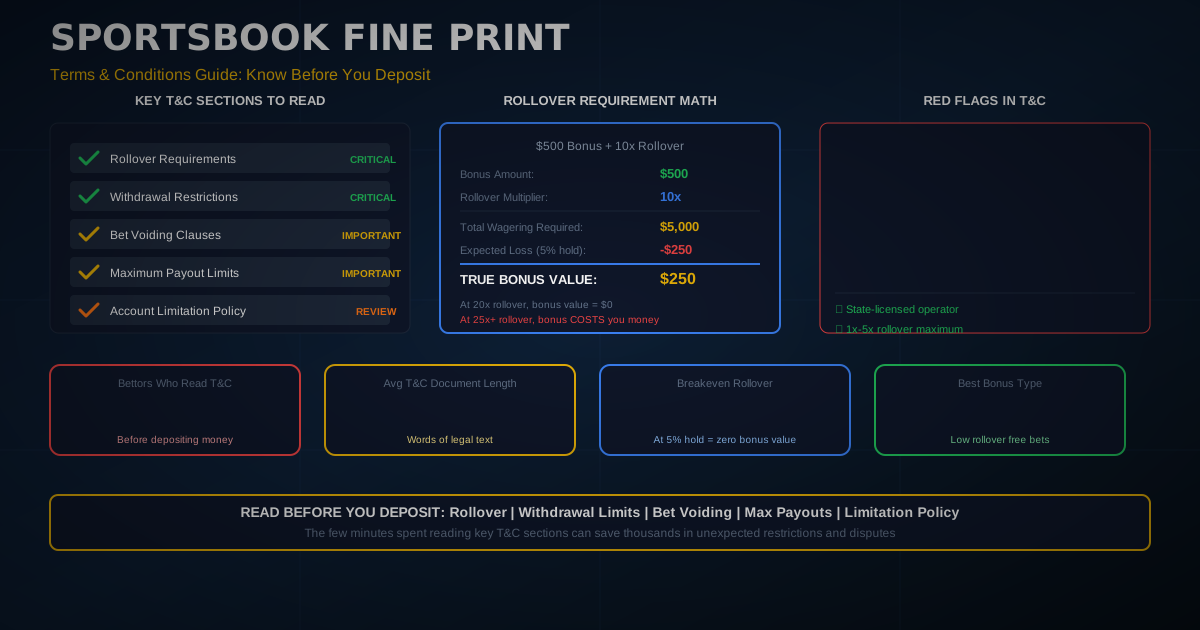
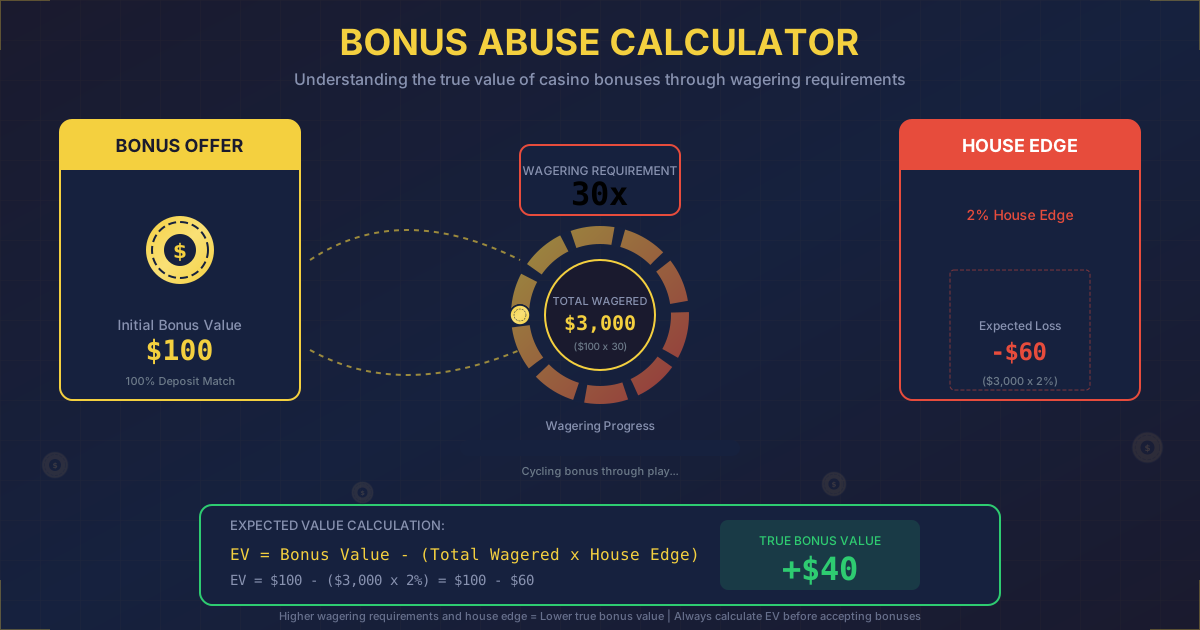
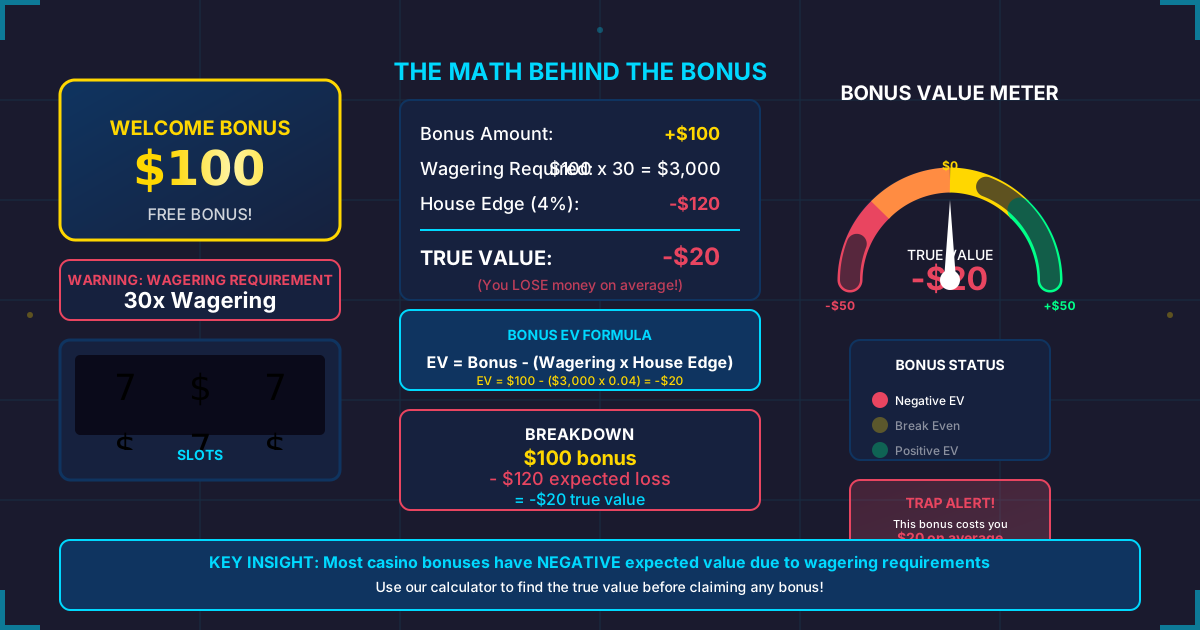
Can I get a bonus at crypto casinos? Yes, and bonuses are often more generous than traditional casino bonuses due to lower operating costs. However, read the wagering requirements carefully. A 150% bonus with 40x wagering requirements on a game with a 3% house edge means you are statistically expected to lose more than the bonus value before you can withdraw. Calculate the effective value of any bonus before accepting it.
Are crypto casinos anonymous? Some are, but anonymity is declining. Many crypto casinos now require email verification, and some implement KYC (Know Your Customer) checks, especially for large withdrawals. Even "anonymous" casinos can be required to implement KYC under new regulations. Additionally, most blockchain transactions are pseudonymous, not anonymous -- meaning they can be traced by blockchain analytics firms.
Tools for Smarter Crypto Gambling
Whether you are placing crypto sports bets or playing provably fair casino games, mathematics gives you the clearest picture of your actual edge. These free calculators work for both crypto and fiat wagers:
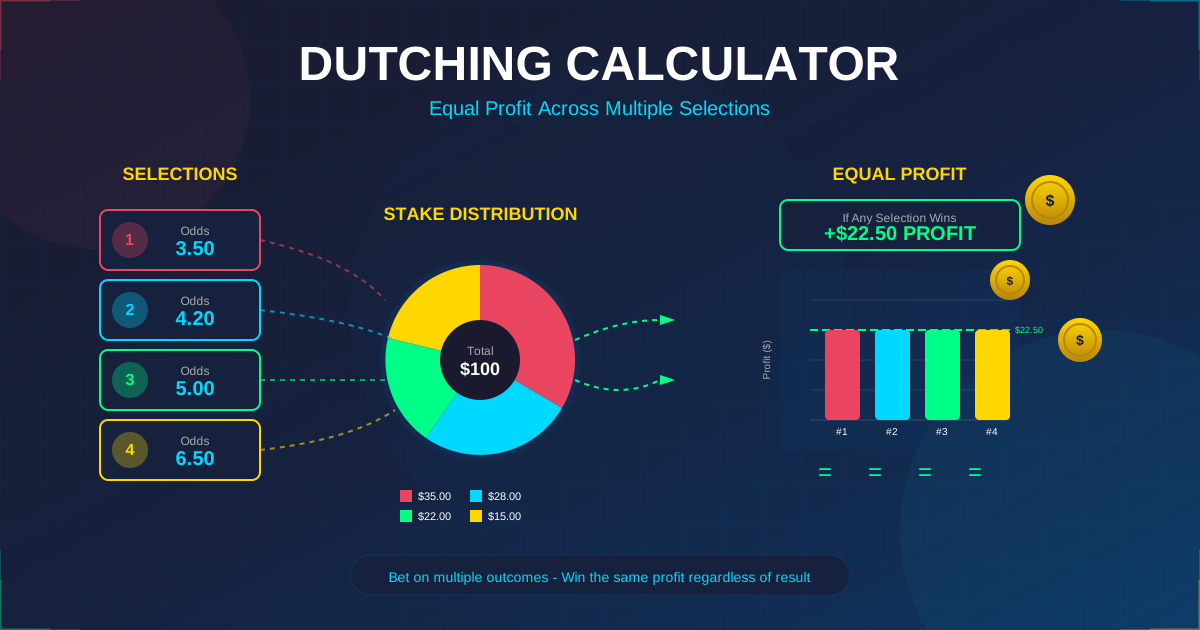
- Expected Value Calculator -- Calculate the long-term profitability of any bet
- Odds Converter -- Convert between American, decimal, and fractional odds used by different sportsbooks
- Kelly Criterion Calculator -- Determine mathematically optimal bet sizing based on your edge
- Implied Probability Calculator -- See the true probability a sportsbook is pricing into any line
- Parlay Calculator -- Calculate combined odds and payouts for multi-leg bets
- Arbitrage Calculator -- Find guaranteed-profit opportunities across multiple sportsbooks
Conclusion
Crypto gambling in 2026 offers real innovations -- provably fair verification, near-instant payouts, and global access without banking intermediaries. These are genuine improvements over aspects of traditional online gambling.
But these advantages come packaged with serious risks that every crypto gambler must understand and accept: minimal regulation, irreversible transactions, platform risk, volatility, complex tax obligations, and a scam-heavy environment. The same features that make crypto gambling attractive (speed, anonymity, decentralization) are the features that make it dangerous when things go wrong.
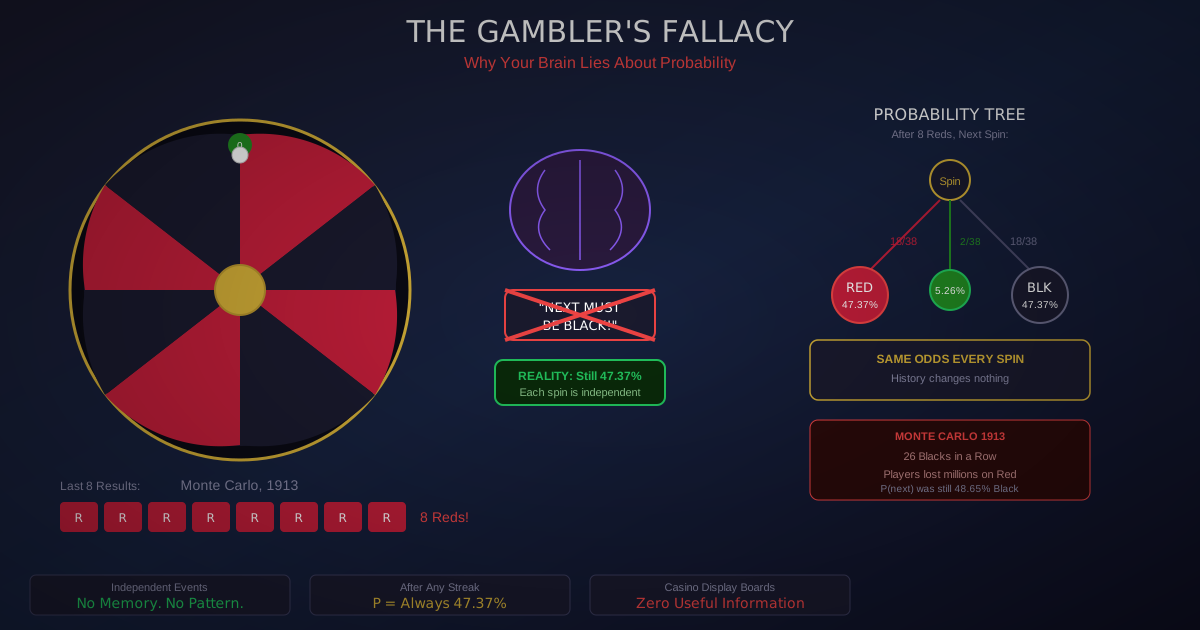
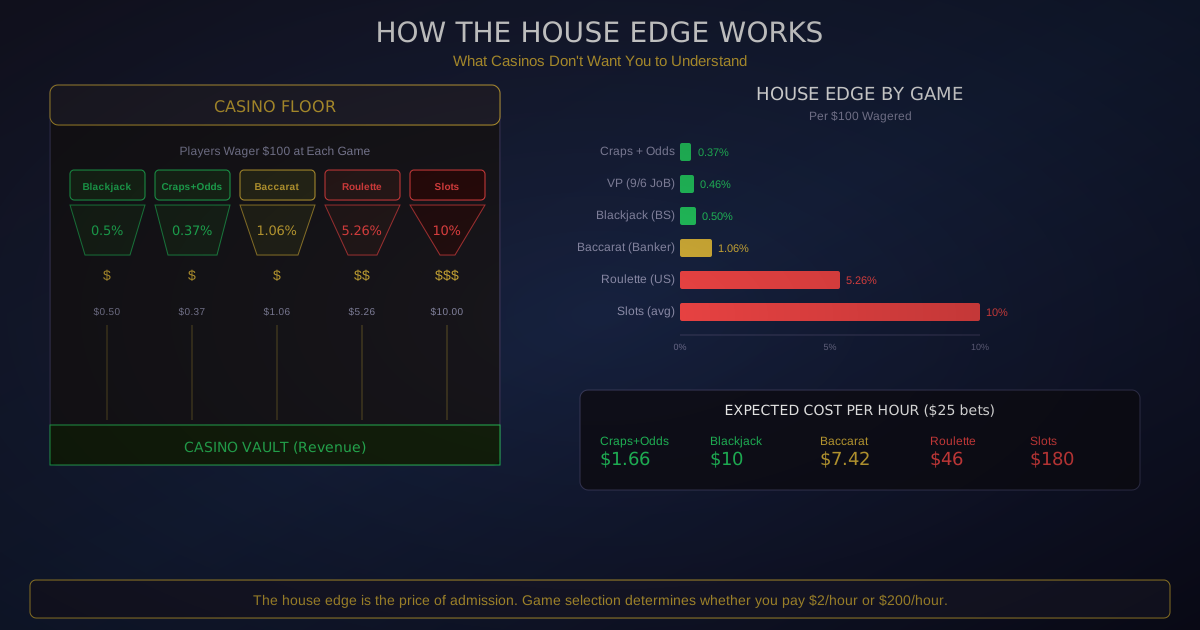
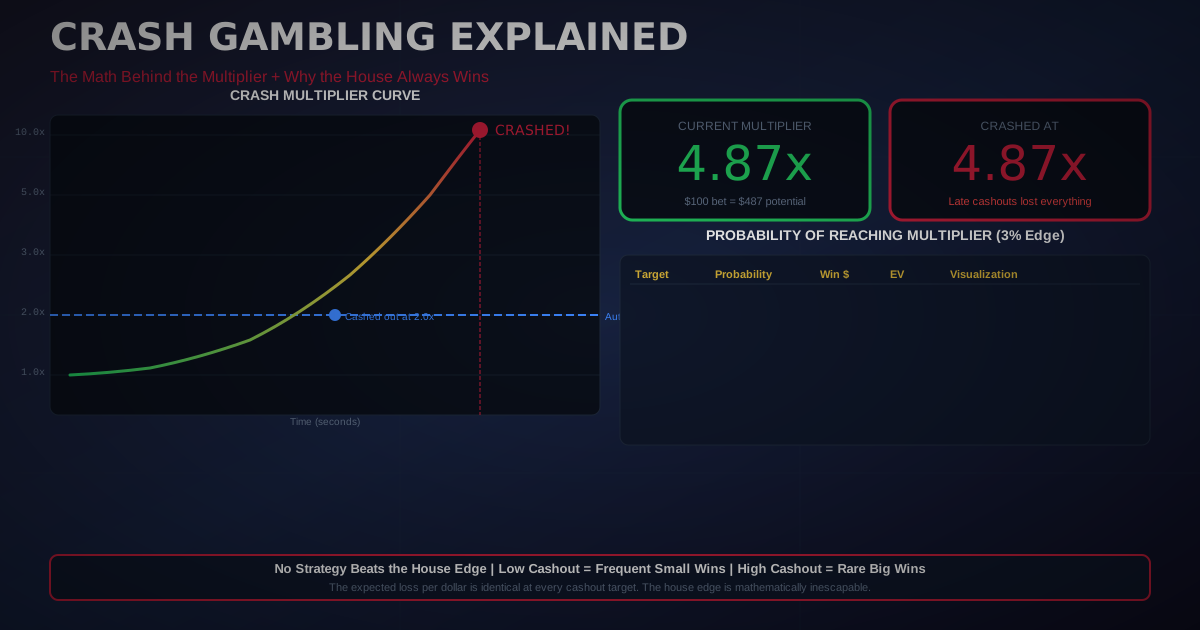
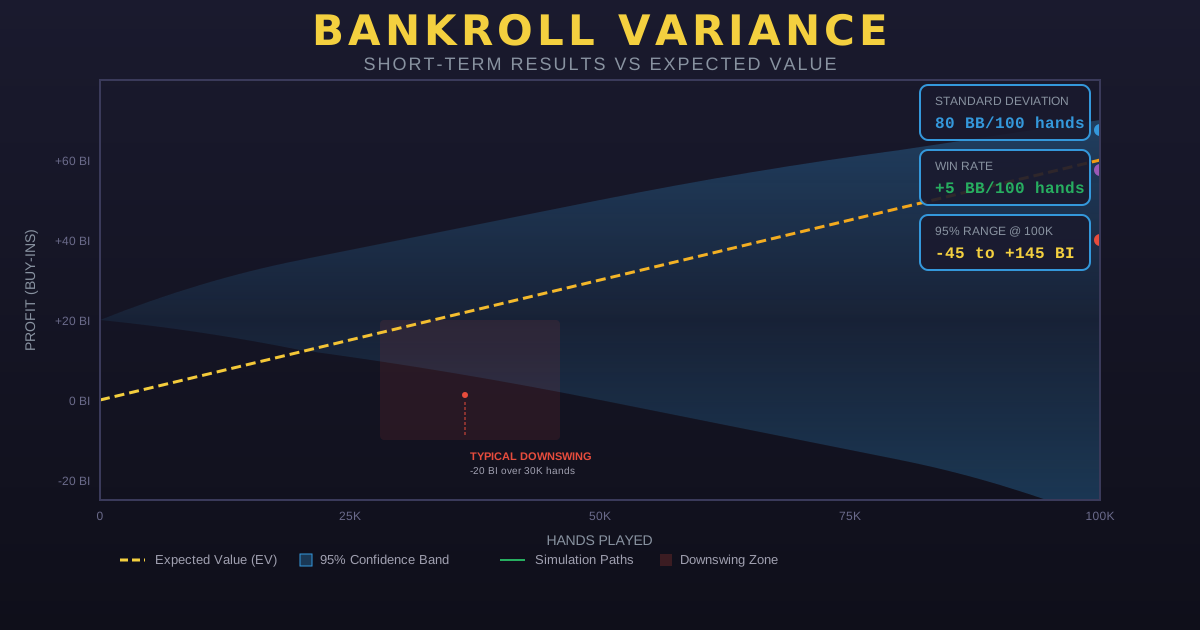
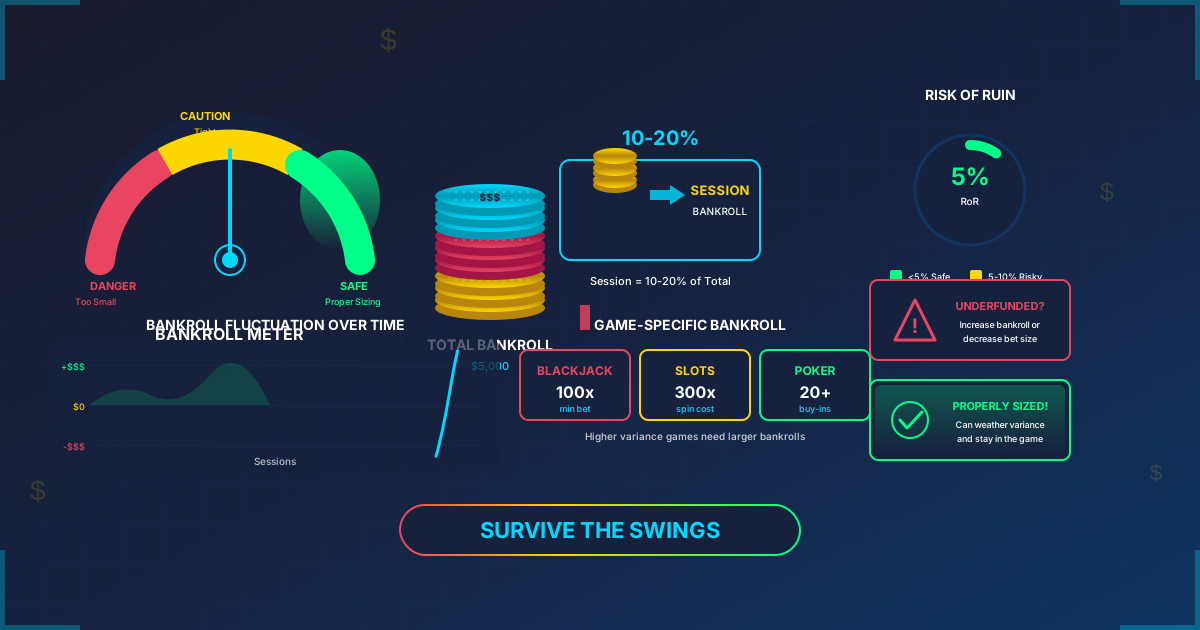
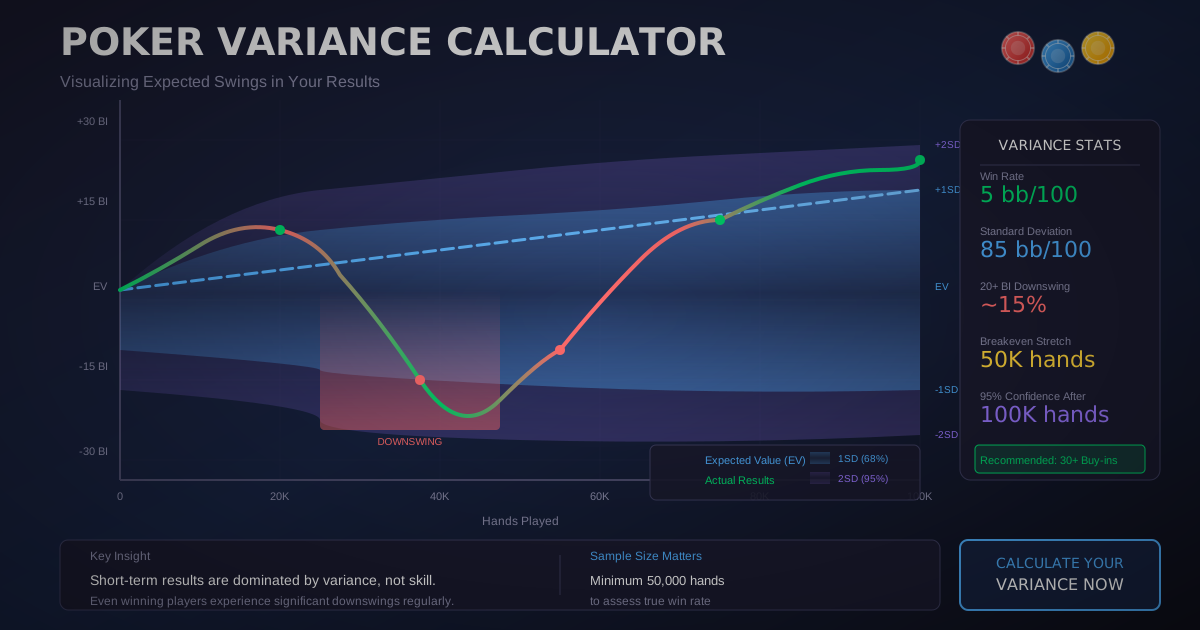
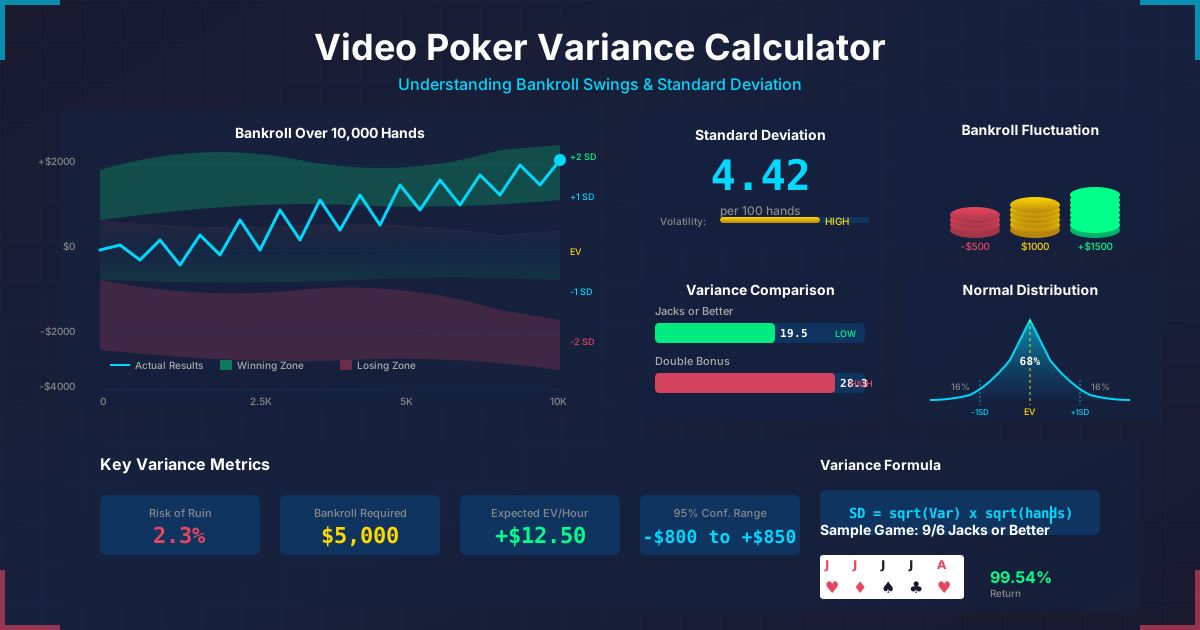
The math of gambling does not change because you are using Bitcoin instead of dollars. The house still has an edge. Variance still dominates short-term results. And bankroll management still determines whether you survive long enough for the math to play out.
Use the tools linked throughout this guide to make informed decisions. Calculate expected value before every bet. Size your wagers with the Kelly Criterion. Track every transaction for tax purposes. And never gamble more than you can afford to lose -- in crypto, "lose" includes the possibility that the platform itself disappears with your funds.
Gambling involves risk. This content is for educational and informational purposes only. Always gamble responsibly, set limits you can afford, and seek help if gambling becomes a problem. Visit the National Council on Problem Gambling or call 1-800-522-4700 for support.