Lottery Strategy: Can Math Improve Your Chances? (EV Analysis of Powerball and Scratch-Offs) (2026)
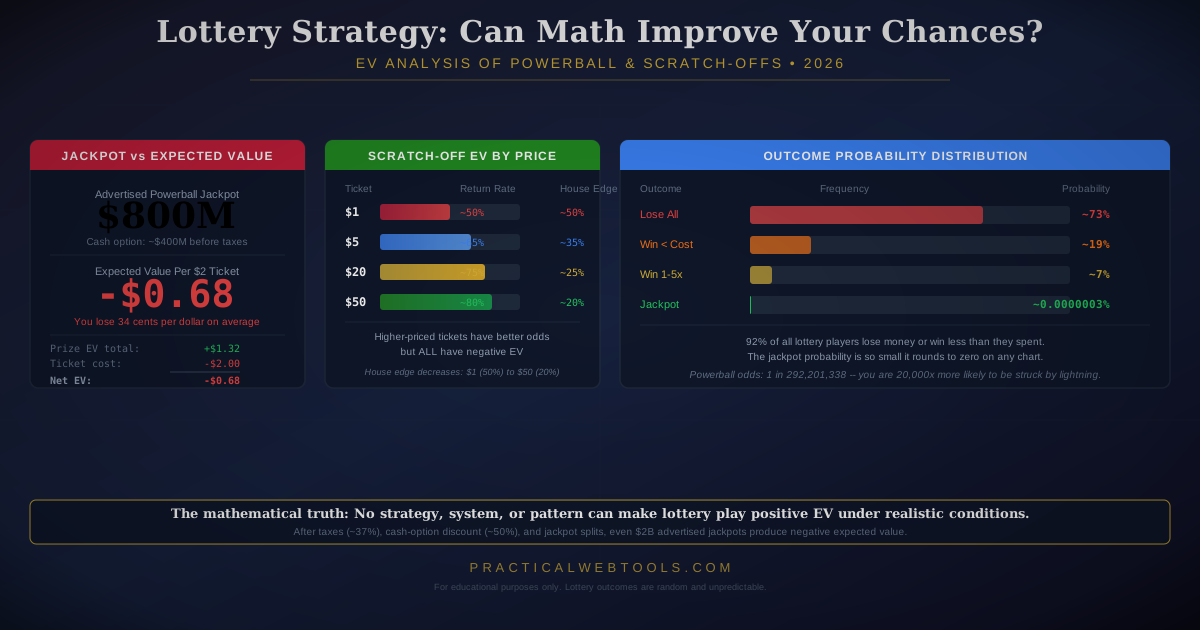
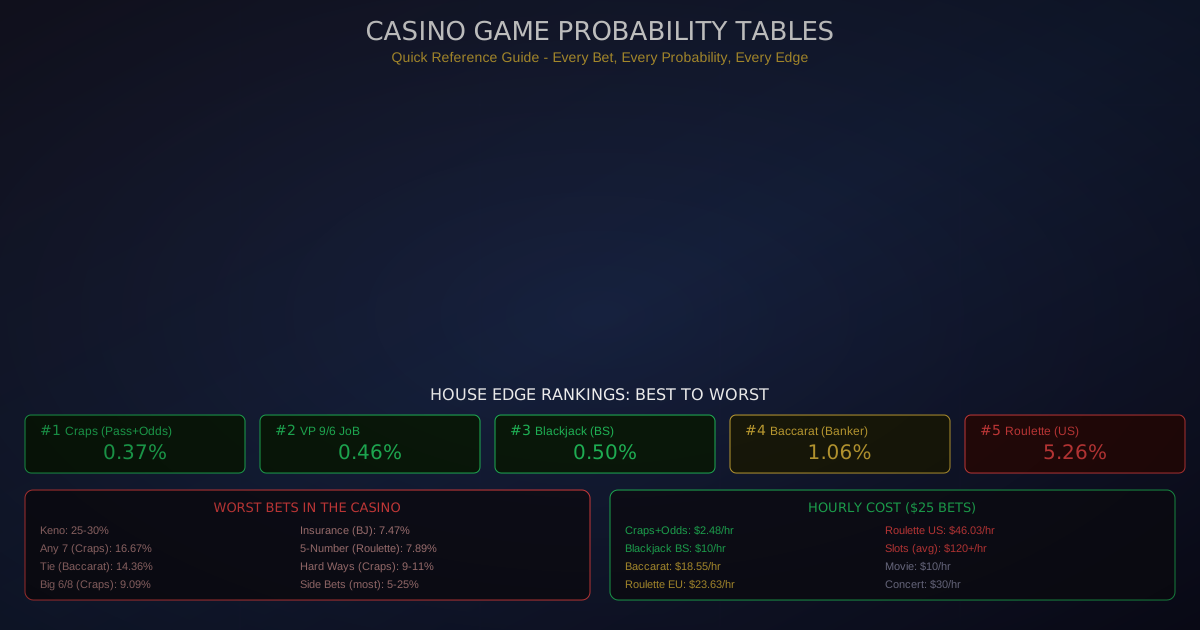
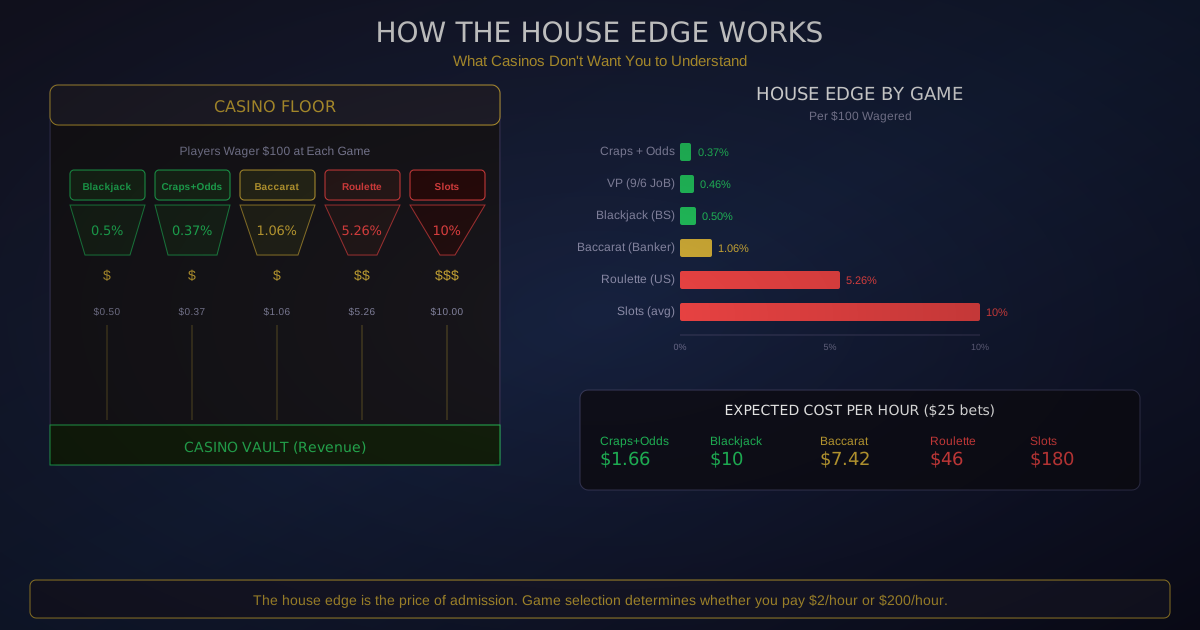
The average American spends $320 per year on lottery tickets, and the mathematical expected return on every dollar spent is roughly $0.50 to $0.65. That means for every $100 you spend on Powerball tickets, you can expect to get back about $50 to $65 over time. The lottery has, by far, the worst expected value of any form of gambling, making slot machines look like a bargain by comparison.
Yet the lottery is also the only form of gambling that can turn $2 into hundreds of millions of dollars. That asymmetric payout structure is what makes it appealing despite the terrible math. The question is not whether the lottery is a good investment (it is not), but whether any mathematical strategy can improve your expected return.
The answer is nuanced. No strategy can change the underlying probability of winning. The numbers are drawn randomly, and every combination has an equal chance. However, certain mathematical approaches can maximize your expected value within the lottery's constraints, and in rare circumstances, lotteries can theoretically become positive EV.
This guide analyzes the math behind every major lottery strategy, calculates exact expected values, and separates genuine mathematical insights from harmful myths.
Calculate the expected value of any lottery ticket with our free Lottery EV Calculator.
The Hard Truth: Lottery Expected Value
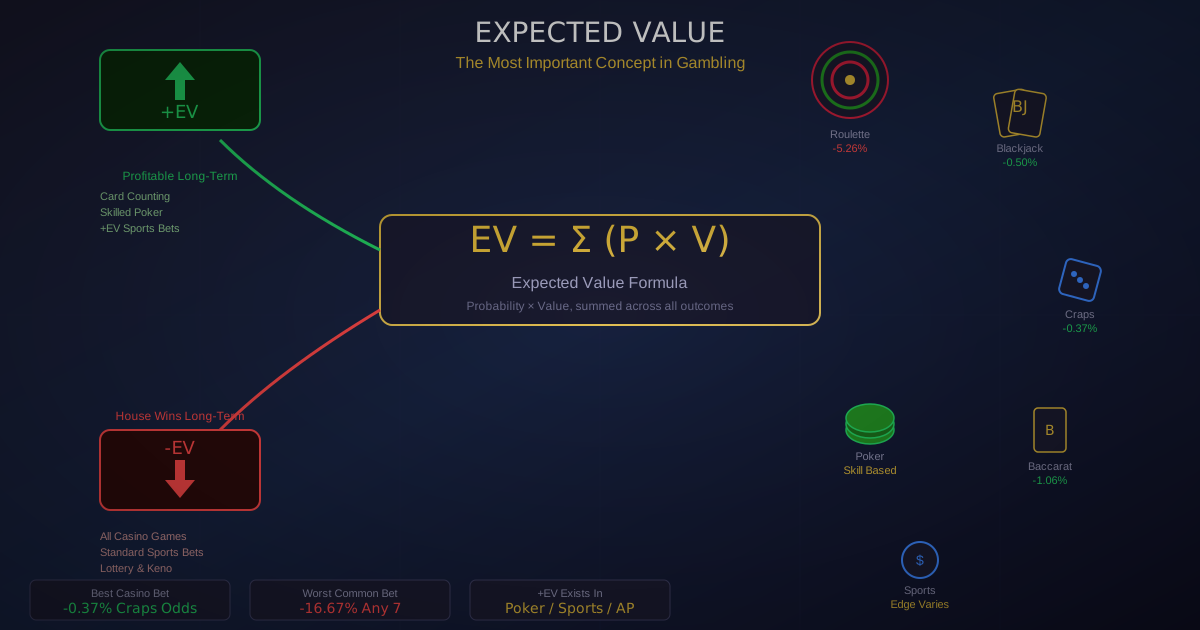
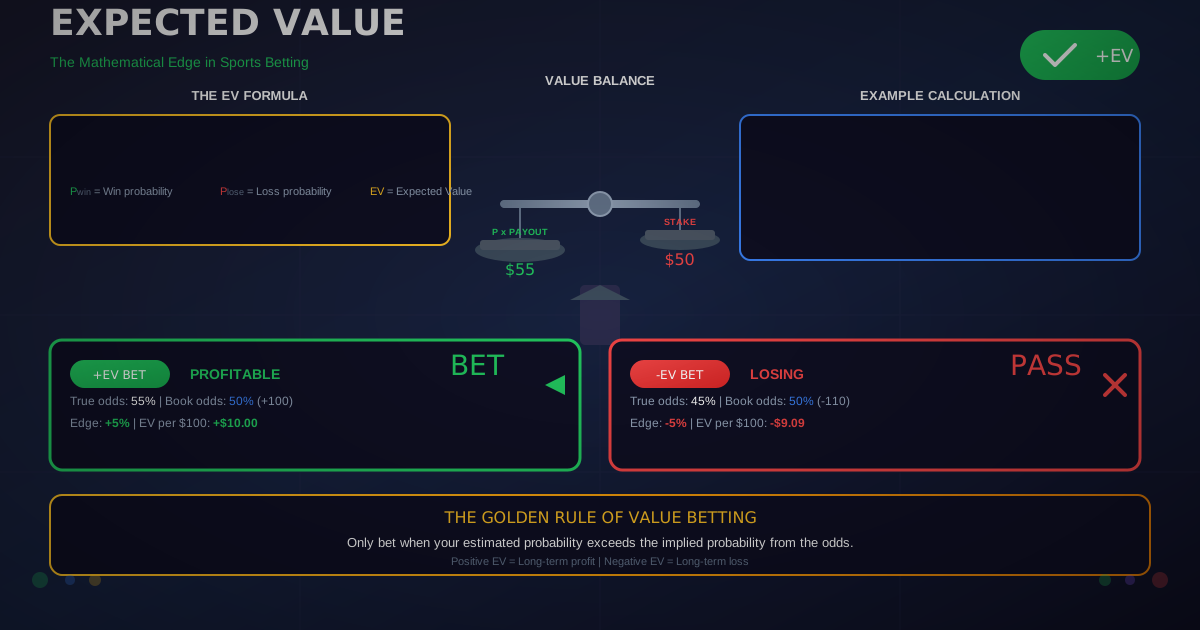
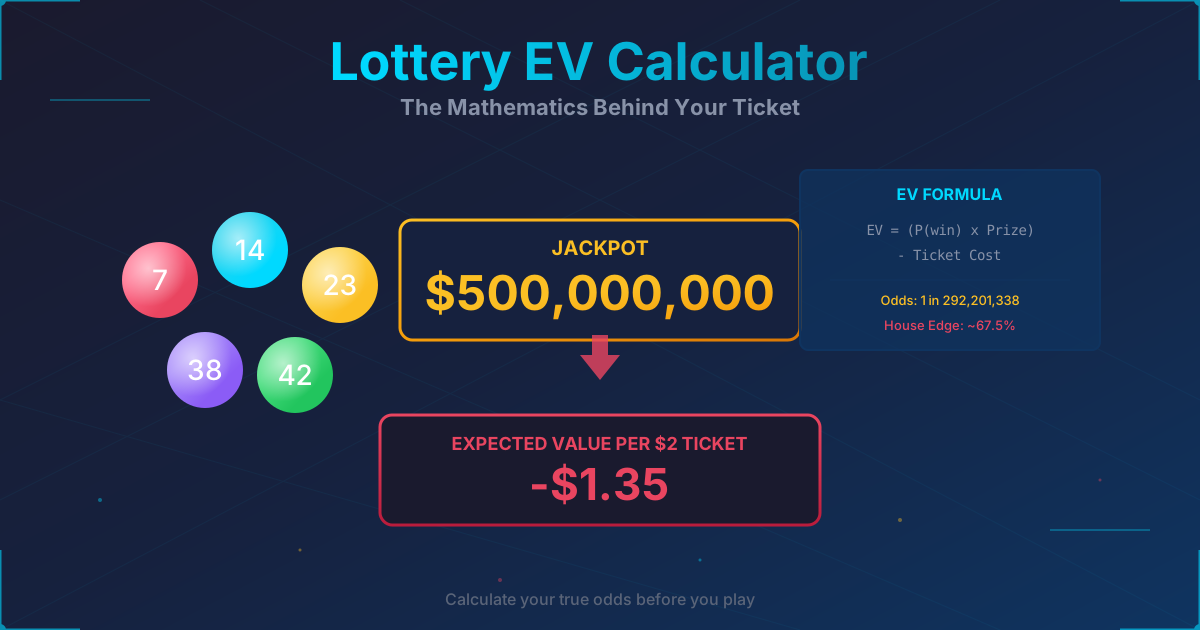
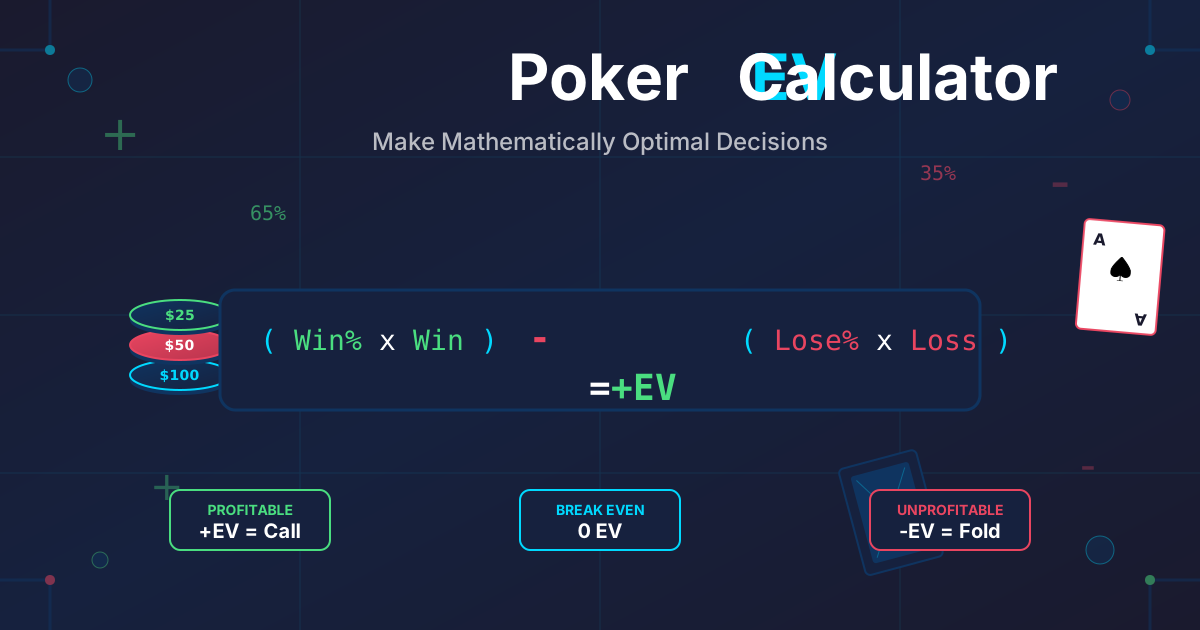
Expected Value (EV) tells you what your ticket is worth mathematically. If a ticket costs $2 and the EV is $0.85, you are paying $2 for something worth $0.85 on average. That is a 57.5% loss rate.
The EV Formula for Lottery
EV = Sum of (Probability of Each Prize x Prize Amount) - Ticket Cost
For a simplified example with just the jackpot:
EV(jackpot portion) = (1 / Odds of Winning) x Jackpot Amount
Powerball EV Analysis (Standard Drawing)
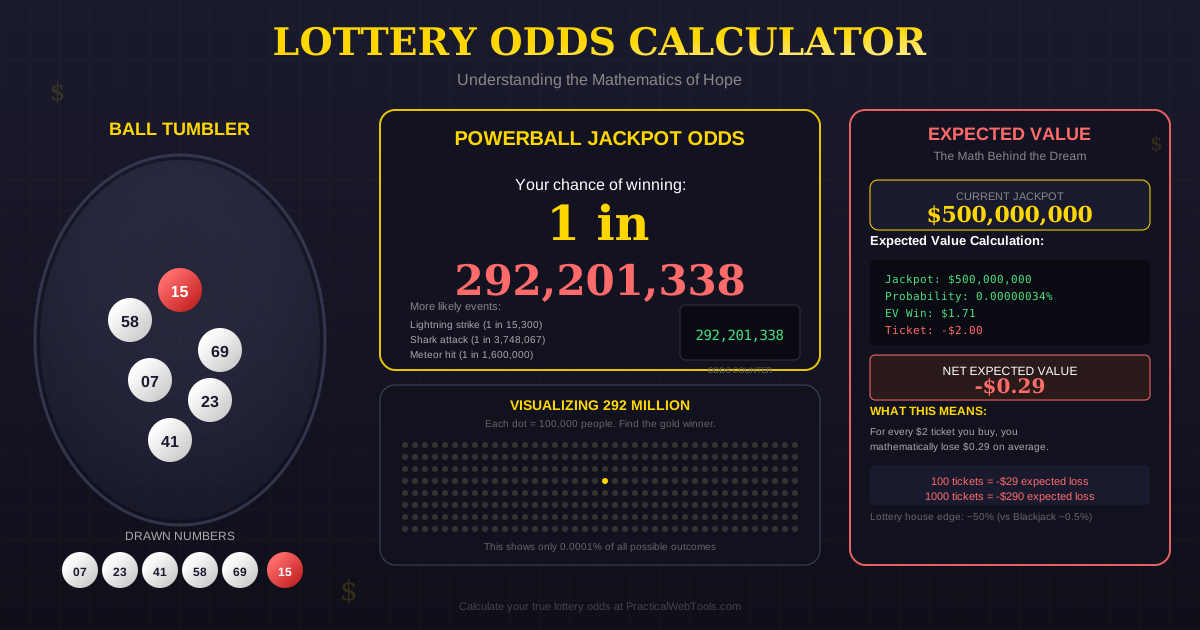
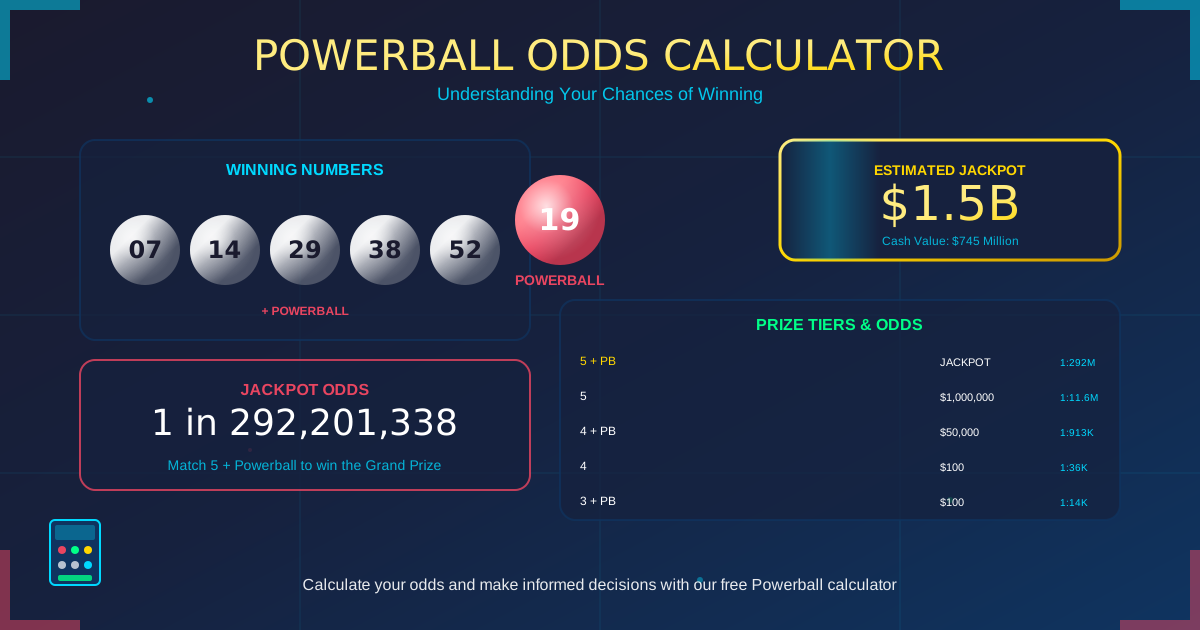
Powerball costs $2 per ticket. Here are the odds and prizes for every tier:
| Prize Tier | Match | Odds | Prize | EV Contribution |
|---|---|---|---|---|
| Jackpot | 5+PB | 1 in 292,201,338 | Varies ($20M+) | Varies |
| 2nd | 5 | 1 in 11,688,054 | $1,000,000 | $0.0856 |
| 3rd | 4+PB | 1 in 913,129 | $50,000 | $0.0548 |
| 4th | 4 | 1 in 36,525 | $100 | $0.0027 |
| 5th | 3+PB | 1 in 14,494 | $100 | $0.0069 |
| 6th | 3 | 1 in 580 | $7 | $0.0121 |
| 7th | 2+PB | 1 in 701 | $7 | $0.0100 |
| 8th | 1+PB | 1 in 92 | $4 | $0.0435 |
| 9th | PB only | 1 in 38 | $4 | $0.1053 |
| Non-jackpot EV total | $0.3209 |
The non-jackpot prizes contribute approximately $0.32 in expected value per $2 ticket. This means the jackpot must contribute at least $1.68 in EV for the ticket to break even.
At what jackpot does the EV break even?
EV(jackpot) = Jackpot / 292,201,338
For EV(jackpot) = $1.68: Jackpot = $1.68 x 292,201,338 = $490,898,248
So a Powerball jackpot needs to exceed approximately $491 million (annuity value) before the ticket is theoretically worth $2. But this ignores two critical factors.
Calculate the exact EV for any Powerball jackpot amount with our Powerball Odds Calculator.
Why the "Break-Even" Jackpot Is a Lie
Two factors destroy the theoretical break-even calculation:
Factor 1: Multiple winners split the jackpot
When jackpots are large, more people buy tickets. This means the probability of splitting the jackpot increases dramatically. At $500 million, an estimated 280-350 million tickets are sold. The probability of multiple winners is substantial.
| Jackpot (Annuity) | Est. Tickets Sold | Prob. of Sole Winner | Expected Share |
|---|---|---|---|
| $200 million | 80 million | 95% | ~$190M |
| $500 million | 300 million | 65% | ~$385M |
| $1 billion | 500 million | 45% | ~$580M |
| $2 billion | 700 million | 30% | ~$760M |
As the jackpot grows, ticket sales grow even faster, reducing your expected share.
Factor 2: Taxes destroy the real return
Lottery winnings are taxed at both federal and state levels. Taking the lump sum (which most financial advisors recommend) further reduces the payout.
| Jackpot (Annuity) | Lump Sum (~60%) | Federal Tax (37%) | State Tax (~5%) | After-Tax Amount |
|---|---|---|---|---|
| $500 million | $300 million | -$111 million | -$15 million | ~$174 million |
| $1 billion | $600 million | -$222 million | -$30 million | ~$348 million |
| $2 billion | $1.2 billion | -$444 million | -$60 million | ~$696 million |
Calculate your exact after-tax lottery winnings with our Lottery After-Tax Calculator.
Adjusted Powerball EV (Realistic)
Accounting for ticket splits and taxes, the true break-even jackpot is much higher:
| Scenario | Advertised Jackpot | After Splits + Tax EV | Non-Jackpot EV | Total EV | Ticket Cost | Net EV |
|---|---|---|---|---|---|---|
| Minimum | $20 million | $0.02 | $0.32 | $0.34 | $2.00 | -$1.66 |
| Average | $150 million | $0.16 | $0.32 | $0.48 | $2.00 | -$1.52 |
| Large | $500 million | $0.36 | $0.32 | $0.68 | $2.00 | -$1.32 |
| Record | $2 billion | $0.58 | $0.32 | $0.90 | $2.00 | -$1.10 |
Even at a record $2 billion jackpot, after accounting for splits and taxes, a Powerball ticket is still deeply negative EV. The ticket is worth approximately $0.90 while costing $2.00, a 55% loss rate.
The theoretical "positive EV" jackpot, accounting for realistic split probabilities and taxes, would need to exceed approximately $2.5-3 billion, a level that has never been reached and almost certainly never will be (because ticket sales spike, increasing split probability, creating a self-correcting mechanism).
Mega Millions EV Analysis
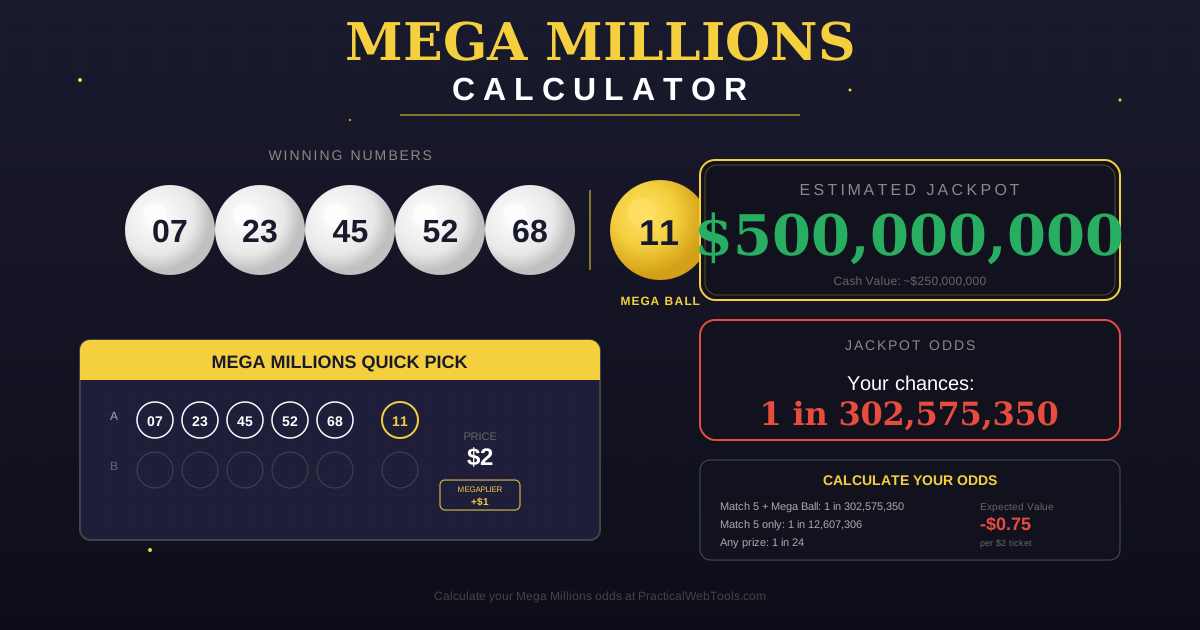
Mega Millions has different odds (1 in 302,575,350 for the jackpot) and a $2 ticket price.
| Prize Tier | Match | Odds | Prize | EV Contribution |
|---|---|---|---|---|
| Jackpot | 5+MB | 1 in 302,575,350 | Varies | Varies |
| 2nd | 5 | 1 in 12,607,306 | $1,000,000 | $0.0793 |
| 3rd | 4+MB | 1 in 931,001 | $10,000 | $0.0107 |
| 4th | 4 | 1 in 38,792 | $500 | $0.0129 |
| 5th | 3+MB | 1 in 14,547 | $200 | $0.0137 |
| 6th | 3 | 1 in 606 | $10 | $0.0165 |
| 7th | 2+MB | 1 in 693 | $10 | $0.0144 |
| 8th | 1+MB | 1 in 89 | $4 | $0.0449 |
| 9th | MB only | 1 in 37 | $2 | $0.0541 |
| Non-jackpot EV total | $0.2465 |
Mega Millions non-jackpot EV ($0.25) is lower than Powerball's ($0.32), making it an even worse bet at lower jackpot levels. The jackpot must contribute $1.75+ in EV for the ticket to reach face value.
Run the complete EV analysis for any Mega Millions drawing with our Mega Millions Calculator.
Scratch-Off Tickets: Better EV, Still Negative
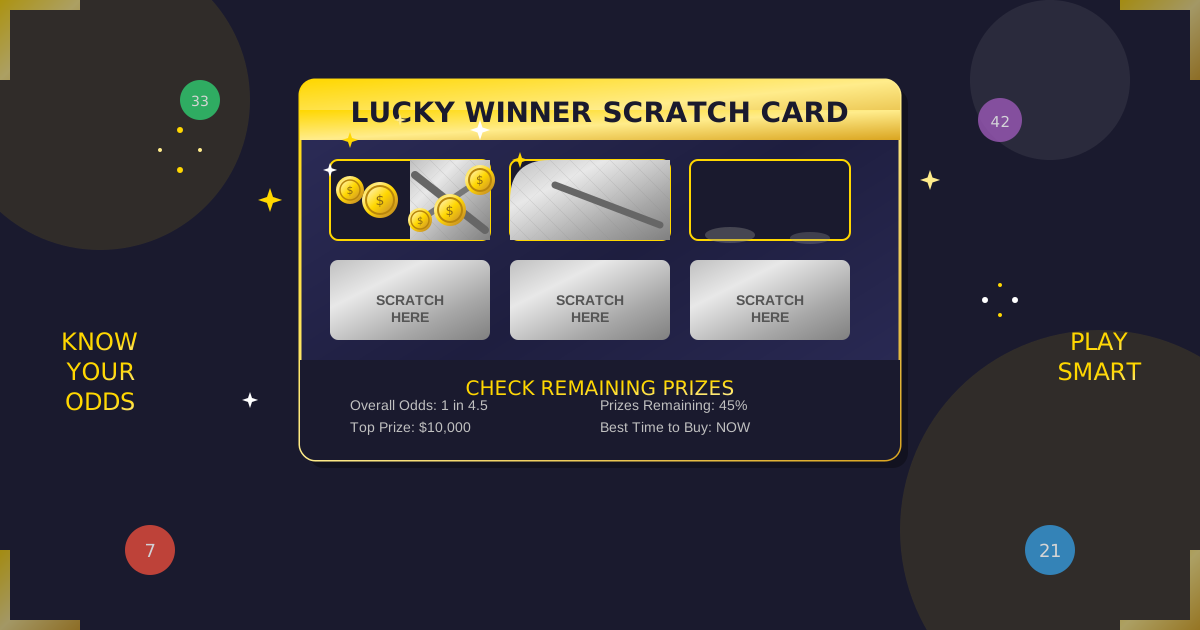
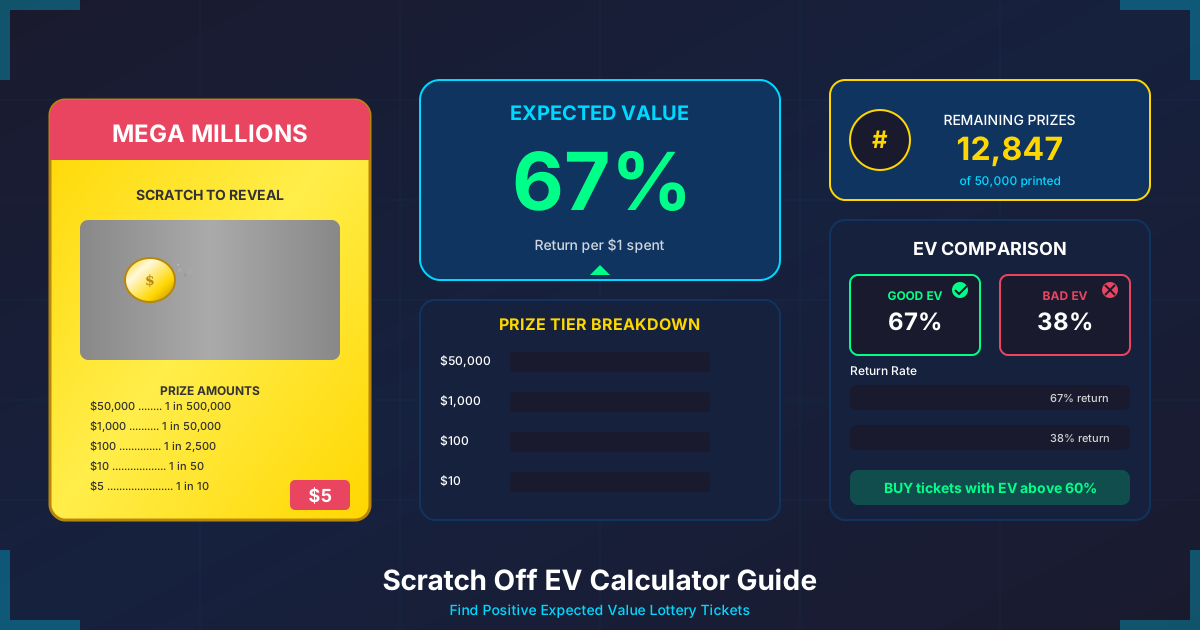
Scratch-off tickets have significantly better expected value than draw games because a larger percentage of revenue goes back to prizes. Typical scratch-off EV ranges from -15% to -35%, compared to -50% to -65% for Powerball/Mega Millions.
Scratch-Off EV by Price Point
| Ticket Price | Typical Prize Payout | Typical EV per Ticket | Loss Rate |
|---|---|---|---|
| $1 | 55-62% | -$0.38 to -$0.45 | 38-45% |
| $2 | 60-65% | -$0.70 to -$0.80 | 35-40% |
| $5 | 63-70% | -$1.50 to -$1.85 | 30-37% |
| $10 | 66-73% | -$2.70 to -$3.40 | 27-34% |
| $20 | 68-76% | -$4.80 to -$6.40 | 24-32% |
| $30 | 70-78% | -$6.60 to -$9.00 | 22-30% |
| $50 | 72-80% | -$10.00 to -$14.00 | 20-28% |
Higher-priced scratch-offs generally have better payout percentages, but you are risking more per ticket. The best EV per dollar spent is typically found in $10-$30 tickets.
Analyze the expected value of any scratch-off game with our Scratch-Off EV Calculator.
When Scratch-Offs Can Be Positive EV
Unlike draw games, scratch-off tickets have a fixed number of prizes. As tickets are sold and prizes are claimed, the remaining EV of unsold tickets changes. In rare cases, a game can become positive EV:
Scenario: A $10 scratch-off game has:
- 3 million tickets printed
- 1.5 million tickets sold
- Total prizes: $2.1 million (70% payout)
- Prizes already claimed: $900,000
- Remaining prizes: $1,200,000
- Remaining tickets: 1,500,000
- Remaining EV per ticket: $1,200,000 / 1,500,000 = $0.80 per $1 spent
This is still negative EV ($0.80 return per $1.00 spent = -20%). But if a disproportionate number of small prizes have been claimed while the top prizes remain:
- Remaining prizes (top-heavy): $1,200,000
- But $800,000 of that is in 2 remaining $400,000 prizes
- Small prize EV: $400,000 / 1,500,000 = $0.27
- Total EV with top prizes: $0.80
The presence of unclaimed top prizes does not make the ticket +EV for most practical purposes because the probability of hitting those specific prizes is still tiny. The per-ticket EV can technically exceed the ticket price only in extreme scenarios where most small prizes remain and the game is near the end of its run.
Real-World Scratch-Off Example
You buy 10 scratch-off tickets at $5 each ($50 total investment):
- Ticket 1: $0 (loser)
- Ticket 2: $5 (break even)
- Ticket 3: $0 (loser)
- Ticket 4: $0 (loser)
- Ticket 5: $10 (small win)
- Ticket 6: $0 (loser)
- Ticket 7: $0 (loser)
- Ticket 8: $5 (break even)
- Ticket 9: $0 (loser)
- Ticket 10: $0 (loser)
Total spent: $50. Total returned: $20. Net loss: $30 (60% loss rate).
This is a fairly typical experience. The expected return on $5 tickets is approximately $3.25-$3.50 per ticket, so your expected return on 10 tickets is $32.50-$35.00. Getting back $20 is slightly below average but well within normal variance for such a small sample.
Lottery "Strategies" Analyzed: Do Any Work?
Strategy 1: Wheeling Systems
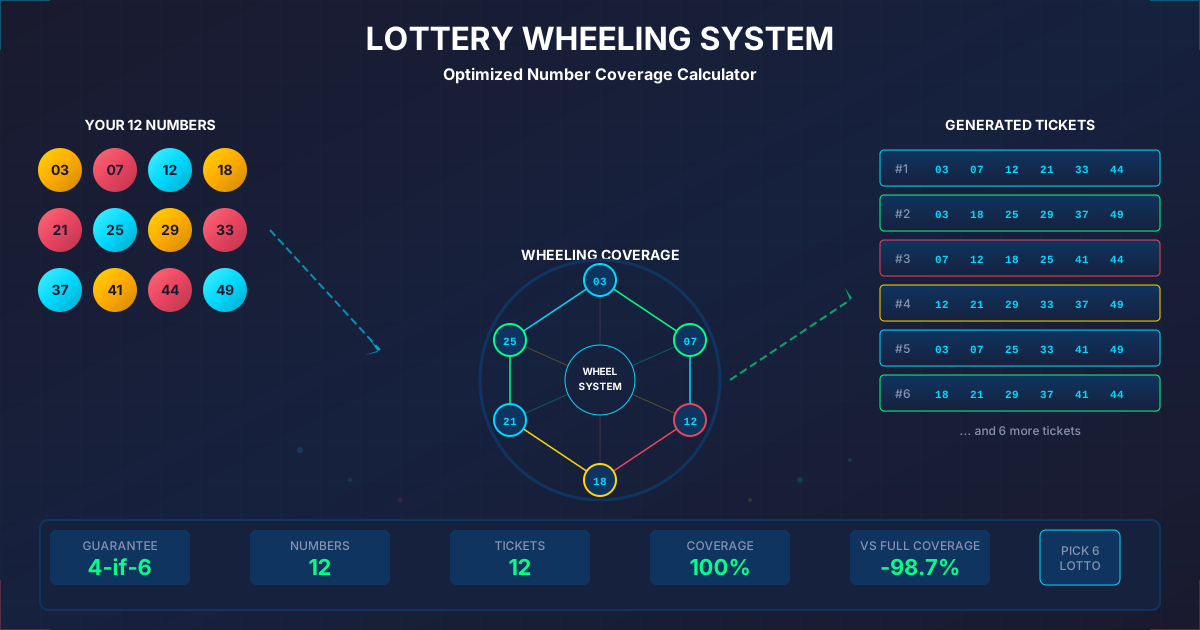
What it is: A wheeling system selects a set of numbers and creates multiple tickets that cover many combinations of those numbers. For example, a "full wheel" of 8 numbers in a pick-5 game covers all 56 possible 5-number combinations from your set of 8.
Does it improve your odds? No, at least not per dollar spent. A wheel of 56 combinations costs 56 times more than a single ticket. Your probability of winning increases proportionally with the number of tickets, not beyond it. Buying 56 random tickets gives you the same probability of winning.
What it does do: If you hit several of your selected numbers, you win multiple prizes across your tickets. Wheels guarantee certain minimum wins if a specified number of your chosen numbers are drawn.
| Wheel Type | Numbers Chosen | Combinations | Cost ($2 each) | Guarantee |
|---|---|---|---|---|
| Full wheel (8 in Pick-5) | 8 | 56 | $112 | All prizes if 5 of 8 drawn |
| Abbreviated wheel (8 in Pick-5) | 8 | 12 | $24 | At least 3-number match if 5 of 8 drawn |
| Key wheel (1 key + 7 in Pick-5) | 8 | 21 | $42 | Jackpot if key + 4 of 7 drawn |
Bottom line: Wheels are a structured way to buy multiple tickets. They do not change the per-dollar EV. They can be fun and guarantee minimum returns if your number selection is good, but they are not a mathematical edge.
Build and analyze wheeling systems with our Lottery Wheeling System Calculator.
Strategy 2: Statistical Number Selection
What it is: Choosing numbers based on frequency analysis (hot numbers, cold numbers, overdue numbers) or avoiding popular number patterns to reduce the chance of splitting a jackpot.
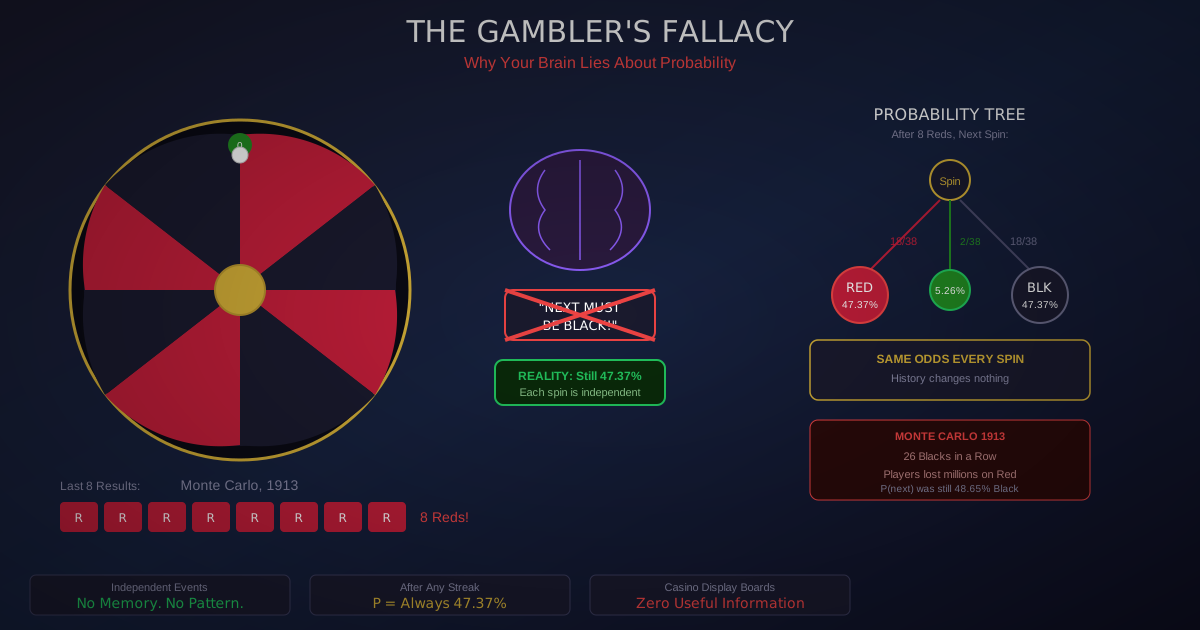
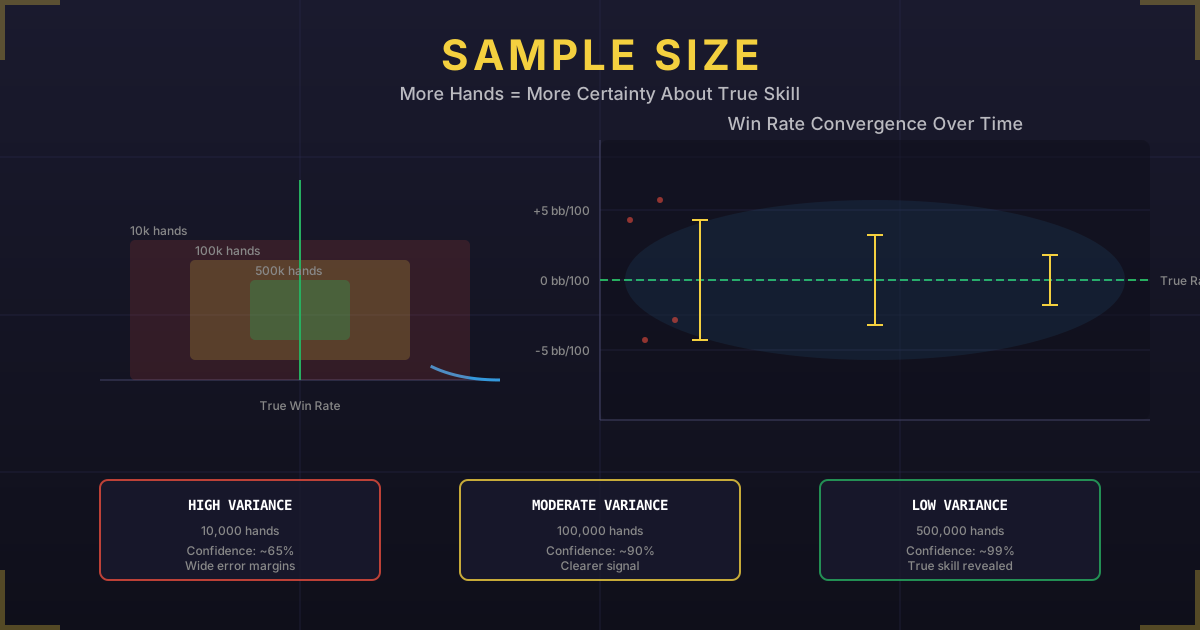
Does frequency analysis work? No. Lottery drawings are independent random events. Past results have zero influence on future drawings. A number that has appeared 10 times in the last 50 drawings has exactly the same probability in the next drawing as a number that has appeared zero times. This is a fundamental principle of probability.
Does avoiding popular numbers work? Partially, yes. While it does not change your probability of winning, it can increase your expected payout if you win. If you avoid numbers that many other players choose (birthdays, meaning numbers 1-31 are overplayed), you are less likely to split the jackpot.
Numbers to avoid (commonly chosen):
- 1 through 31 (birthdays) are heavily overplayed
- Patterns on the slip (diagonal lines, corners)
- Previous winning numbers
- "Lucky" numbers (7, 11, 13, 21)
Numbers that reduce split probability:
- 32 and above (many games go to 69 or 70)
- Mix of odd and even
- Numbers spread across the full range
The math: This strategy does not change your probability of winning, but it can change your expected share of the jackpot by 10-30%, which is meaningful on a percentage basis but negligible in absolute EV given the minuscule odds.
Calculate exact lottery odds for any game format with our Lottery Odds Calculator.
Strategy 3: Lottery Pools (Syndicates)
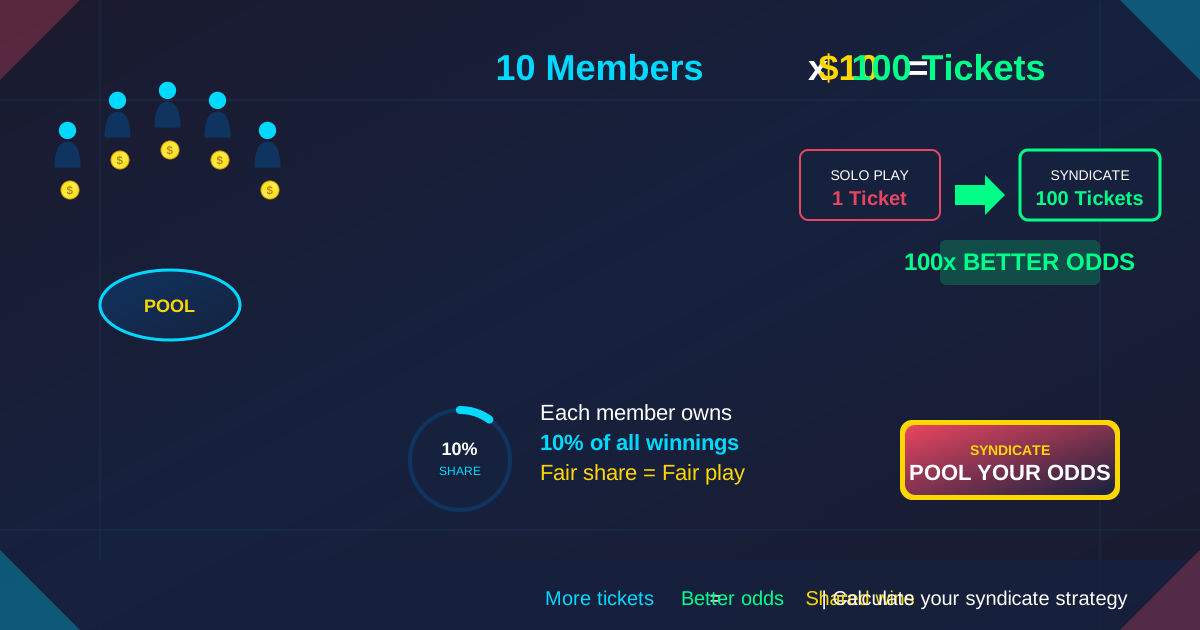
What it is: Pooling money with a group to buy more tickets, sharing any winnings proportionally.
Does it help? Yes and no. A pool increases your probability of winning proportionally to the number of tickets purchased, but your share of any win is reduced by the same proportion. The per-dollar EV remains unchanged.
| Solo Player | 50-Person Pool |
|---|---|
| 1 ticket for $2 | 50 tickets for $2 ($100 total, $2 each) |
| 1 in 292M chance | 50 in 292M chance (1 in 5.84M) |
| 100% of jackpot | 2% of jackpot |
| EV per $2: -$1.32 | EV per $2: -$1.32 |
The EV per dollar is identical. However, pools do offer two practical advantages:
- More frequent small wins reduce the "all or nothing" feeling
- Social experience makes lottery play more enjoyable
- Smaller individual investment for the same total coverage
Organize and manage lottery pools with our Lottery Pool Calculator.
Strategy 4: Second-Chance Drawings
What it is: Many state lotteries offer second-chance drawings where non-winning tickets can be entered for additional prizes. These drawings are often overlooked, creating better odds.
Does it help? Yes. Second-chance drawings have a genuine mathematical impact because relatively few people enter them compared to the prize pools. While the exact odds vary, second-chance entries can add $0.05-$0.25 in EV per ticket, reducing the overall loss rate.
This is the only widely available strategy that genuinely improves EV. Always enter non-winning tickets in second-chance drawings.
Strategy 5: Buying When Jackpots Are Large
What it is: Only buying tickets when the jackpot exceeds a certain threshold, on the theory that larger jackpots offer better EV.
Analysis: Larger jackpots do increase the jackpot EV contribution per ticket. However, as shown earlier, larger jackpots also attract more players, increasing split probability and partially (or fully) offsetting the increased EV.
| Jackpot | Jackpot EV (no split) | Split-Adjusted EV | Non-Jackpot EV | Total EV | Net EV per $2 |
|---|---|---|---|---|---|
| $100M | $0.34 | $0.33 | $0.32 | $0.65 | -$1.35 |
| $300M | $1.03 | $0.82 | $0.32 | $1.14 | -$0.86 |
| $700M | $2.40 | $1.25 | $0.32 | $1.57 | -$0.43 |
| $1.5B | $5.14 | $1.58 | $0.32 | $1.90 | -$0.10 |
The EV improves with larger jackpots but approaches a ceiling due to the split effect. At $1.5 billion, the EV is still negative (about -$0.10 per $2 ticket), and this is before taxes.
Compare EV across different jackpot levels with our Expected Value Calculator.
The After-Tax Reality: What You Actually Take Home
Lottery wins are subject to both federal and state income taxes. The impact is dramatic.
Federal Tax Brackets on Lottery Winnings (2026)
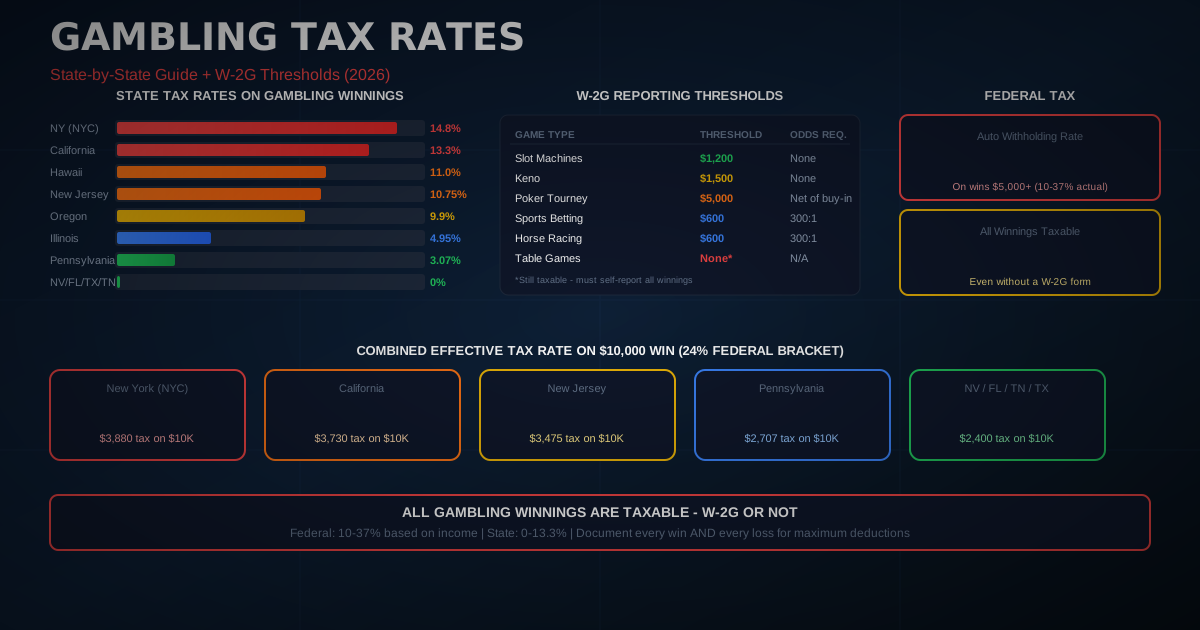
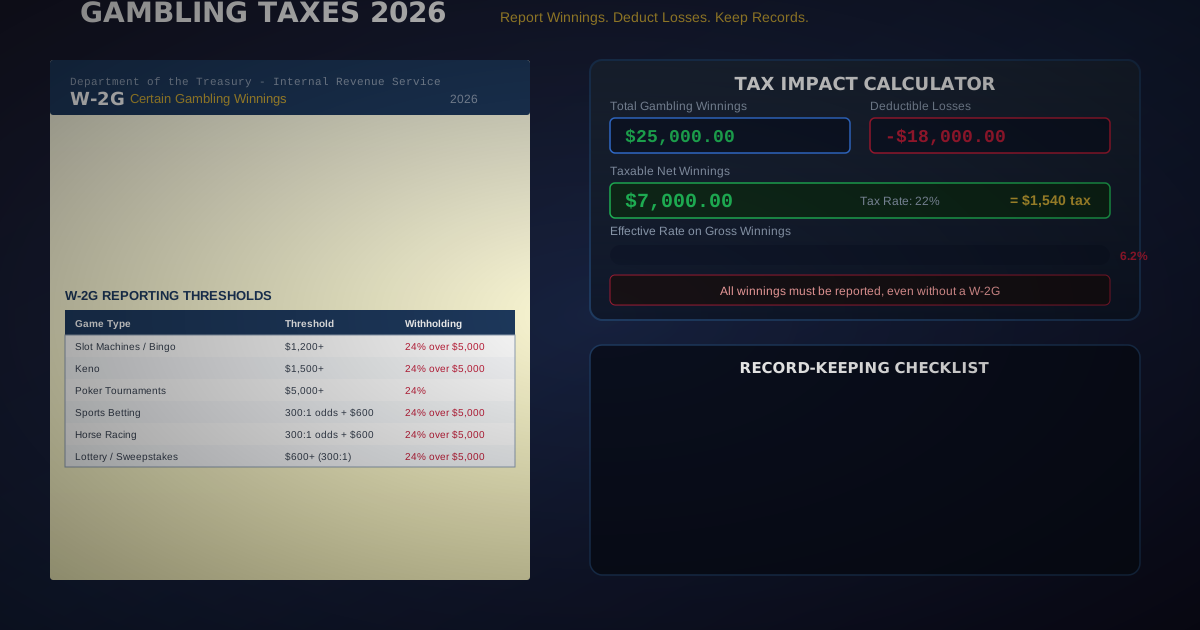
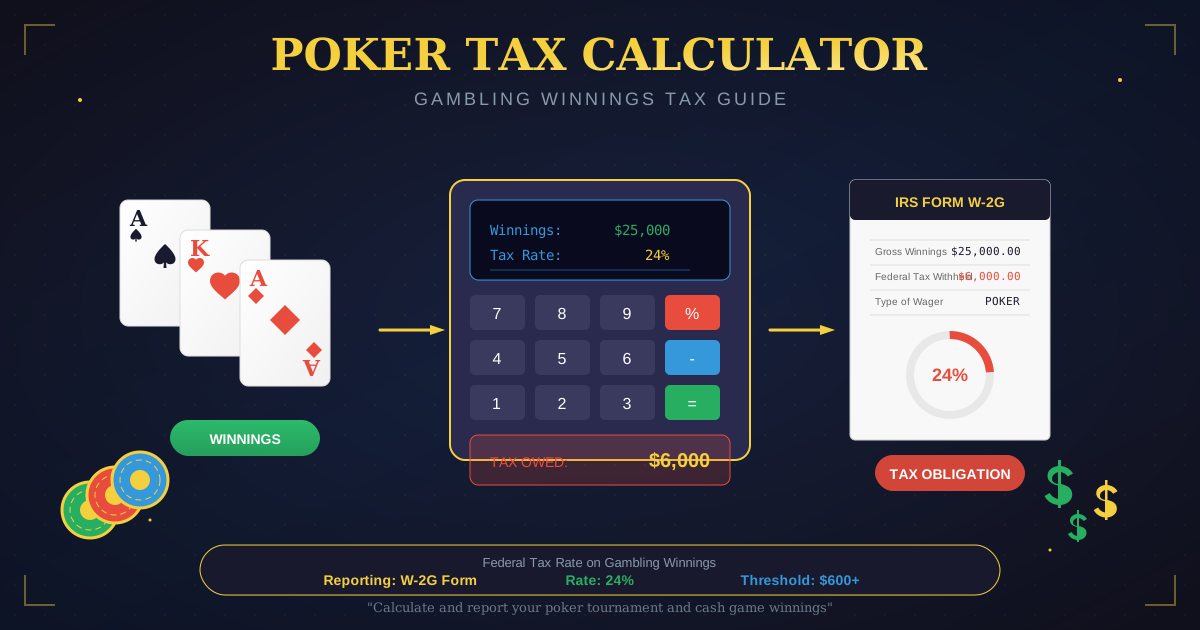
All lottery winnings over $600 are reported. Jackpot winners are in the highest federal bracket (37%).
| Win Amount | Federal Tax (37%) | State Tax (0-10%) | Net After Tax |
|---|---|---|---|
| $1,000 | $370 | $0-$100 | $530-$630 |
| $50,000 | $18,500 | $0-$5,000 | $26,500-$31,500 |
| $1,000,000 | $370,000 | $0-$100,000 | $530,000-$630,000 |
| $100,000,000 lump sum | $37,000,000 | $0-$10,000,000 | $53M-$63M |
A $100 million lump sum becomes $53-63 million after taxes. That is still life-changing money, but it is 37-47% less than the advertised amount.
Calculate your exact after-tax lottery payout for any state with our Lottery After-Tax Calculator.
Lump Sum vs. Annuity
| Factor | Lump Sum | Annuity (30 years) |
|---|---|---|
| Amount | ~60% of advertised | Full advertised amount |
| Tax timing | All at once | Spread over 30 years |
| Investment control | Full control | State invests for you |
| Inflation risk | You manage | Payments increase ~5%/year |
| Risk of mismanagement | Higher | Lower (forced savings) |
Most financial advisors recommend the lump sum for wealthy individuals who can invest wisely, and the annuity for everyone else. The annuity provides built-in protection against the well-documented "lottery curse" of rapid spending.
Real-World Example: $500 Million Powerball Win
- Advertised jackpot: $500 million (annuity)
- Lump sum option: $300 million
- Federal tax (37%): -$111 million
- State tax (California, 0%): $0 (California does not tax lottery)
- State tax (New York, 8.82%): -$26.46 million
- After-tax in California: $189 million
- After-tax in New York: $162.54 million
The difference between winning in California vs. New York is over $26 million. Your state of residence at the time of the win has an enormous impact.
The Mathematical Truth About Lottery Play
After analyzing all the data, here is the honest mathematical summary:
What Math Can Do
- Tell you the exact EV of any ticket at any jackpot level
- Help you avoid splitting jackpots by choosing less popular numbers
- Identify better scratch-off games with higher payout percentages
- Calculate after-tax reality so you have correct expectations
- Show that second-chance drawings add genuine value
What Math Cannot Do
- Predict winning numbers (drawings are random and independent)
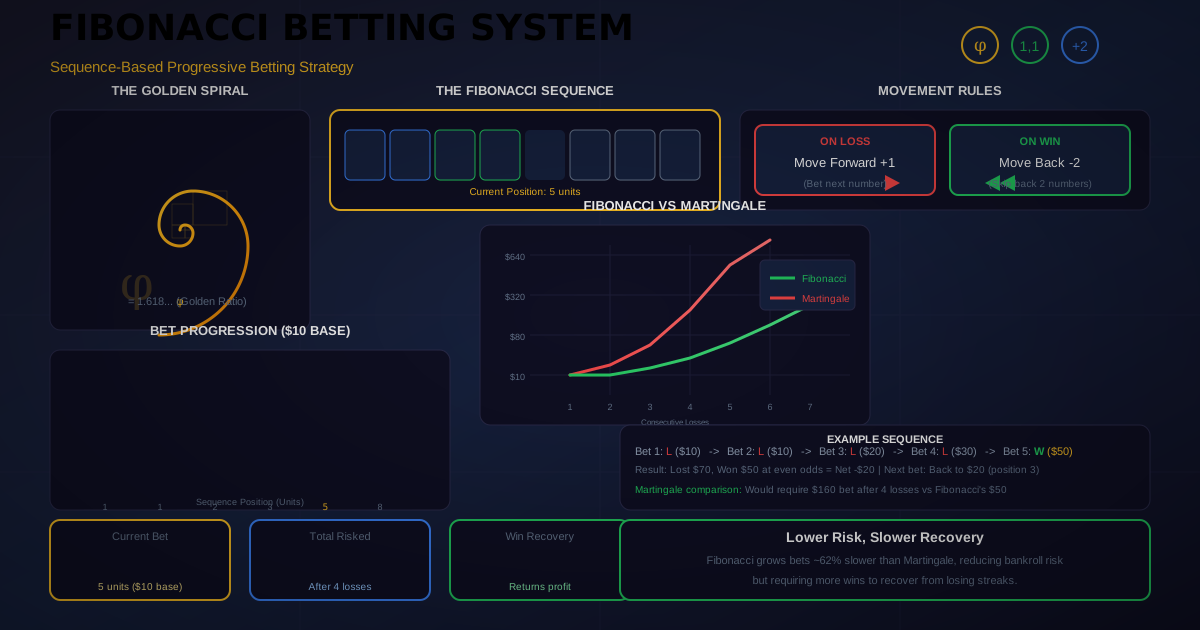
- Turn a -EV game into +EV through any staking system
- Identify "due" numbers (gambler's fallacy)
- Guarantee profits from wheeling systems or pooling
- Change the fundamental odds of any specific drawing
The Bottom Line
| Fact | Reality |
|---|---|
| Best Powerball EV achievable | ~-$0.10 per $2 (at record jackpots, before tax) |
| Best scratch-off EV | ~-$0.40 per $2 ($20+ tickets, best games) |
| Probability of Powerball jackpot | 1 in 292,201,338 (0.000000342%) |
| Expected tickets to win jackpot | 292,201,338 ($584,402,676 at $2 each) |
| Average loss per $100 in lottery | $35-$65 |
Run the probability calculations for any lottery format with our Lottery Odds Calculator and our Roulette Probability Calculator for comparison with casino games.
Frequently Asked Questions
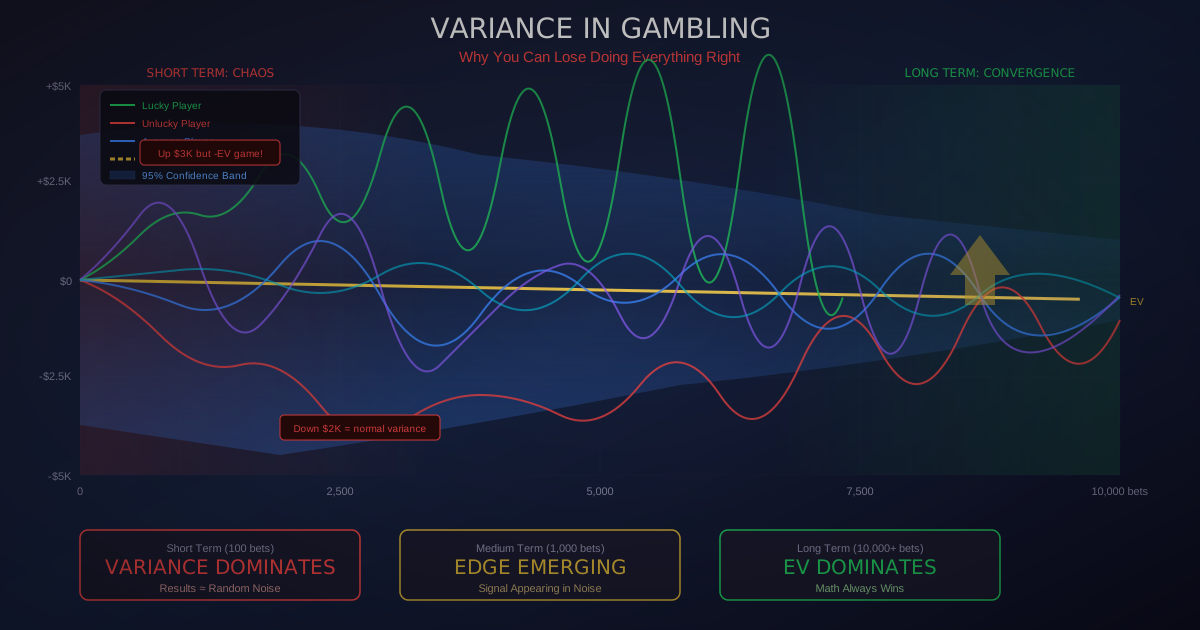
Is there any math-based lottery strategy that actually works? No strategy can overcome the negative expected value of lottery tickets. Avoiding popular numbers can increase your expected payout if you win (by reducing split probability), and entering second-chance drawings adds genuine EV. But nothing changes the fundamental odds. Use our Lottery EV Calculator to verify this for any game.
When does the Powerball jackpot become positive EV? In theory, around $491 million annuity value before accounting for splits and taxes. After accounting for split probability and taxes, the Powerball never realistically reaches positive EV because increased ticket sales at high jackpots create a self-correcting mechanism.
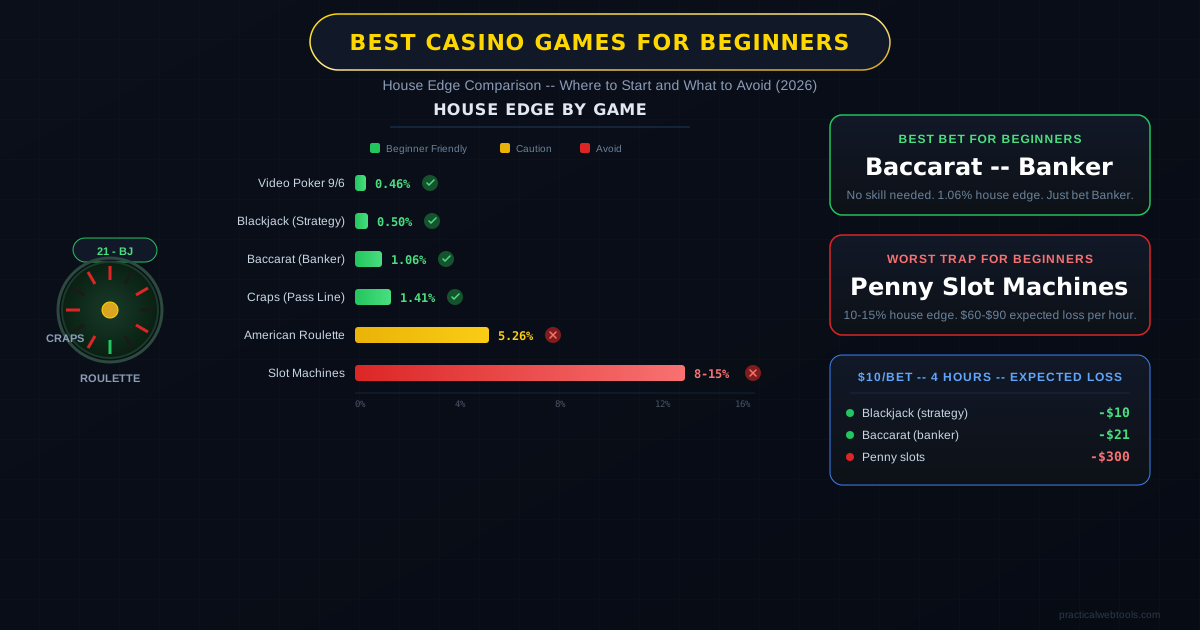
Are scratch-off tickets a better bet than Powerball? Yes, mathematically. Scratch-offs return 60-80% of revenue as prizes, while Powerball returns approximately 50%. The best scratch-off games lose roughly $0.20-$0.30 per dollar, while Powerball loses $0.50-$0.65 per dollar. Calculate exact EV with our Scratch-Off EV Calculator.
Do lottery wheeling systems improve your odds? No, not per dollar spent. A wheel simply structures your ticket purchases to cover more combinations, but buying the same number of random tickets gives identical mathematical probability. Wheels guarantee certain minimum wins if enough of your numbers hit, which is a coverage benefit, not an EV benefit. Build your own wheels with our Lottery Wheeling System Calculator.
How much of a lottery jackpot do you actually take home? After choosing the lump sum (approximately 60% of the advertised jackpot) and paying federal taxes (37%) plus state taxes (0-10%), you take home roughly 33-38% of the advertised jackpot. A $500 million jackpot yields approximately $160-190 million after tax. See exact amounts with our Lottery After-Tax Calculator.
Should I join a lottery pool? Pools do not change the per-dollar EV but offer more frequent wins and a social element. If you are going to play the lottery anyway, pools let you spread your entertainment budget across more tickets. Just make sure to have a written agreement. Manage your pool with our Lottery Pool Calculator.
Are online lottery tickets legitimate? In states with legal online lottery sales, official state lottery websites are legitimate. Third-party sites that buy tickets on your behalf vary in legitimacy. Always use official state lottery platforms when available.
What is the best lottery game to play mathematically? Games with the smallest number pools have the best odds (e.g., a state Pick-5 with 35 numbers vs. Powerball's 69+26). Smaller jackpots but dramatically better odds. Use our Lottery Odds Calculator to compare any two games.
Essential Lottery Analysis Tools
Expected Value Calculators
- Lottery EV Calculator: Calculate EV for any lottery game
- Powerball Odds Calculator: Complete Powerball EV analysis
- Mega Millions Calculator: Mega Millions odds and EV breakdown
- Scratch-Off EV Calculator: Analyze scratch-off ticket value
- Expected Value Calculator: General-purpose EV calculator
Odds and Probability
- Lottery Odds Calculator: Calculate odds for any lottery format
- Implied Probability Calculator: Convert odds to probability
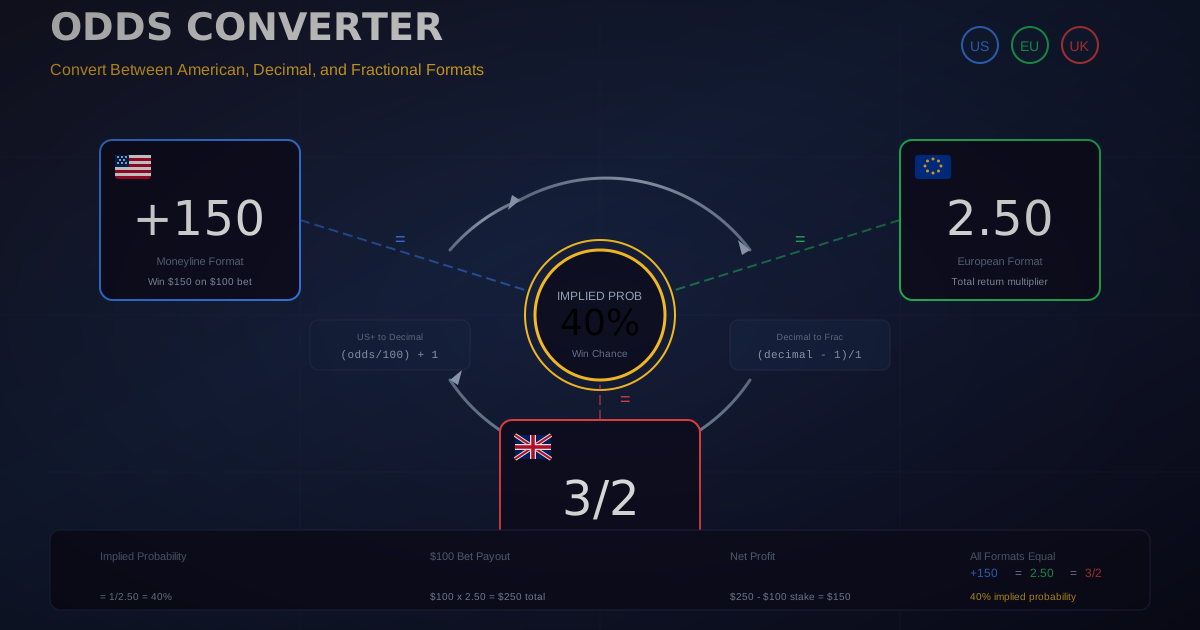
- Odds Converter: Convert between odds formats
Planning Tools
- Lottery After-Tax Calculator: See what you actually take home
- Lottery Pool Calculator: Organize group play
- Lottery Wheeling System: Build systematic ticket coverage
- Kelly Criterion Calculator: Optimal bet sizing theory
Comparison Tools
- Hold/Vig Calculator: Compare lottery takeout to sports betting vig
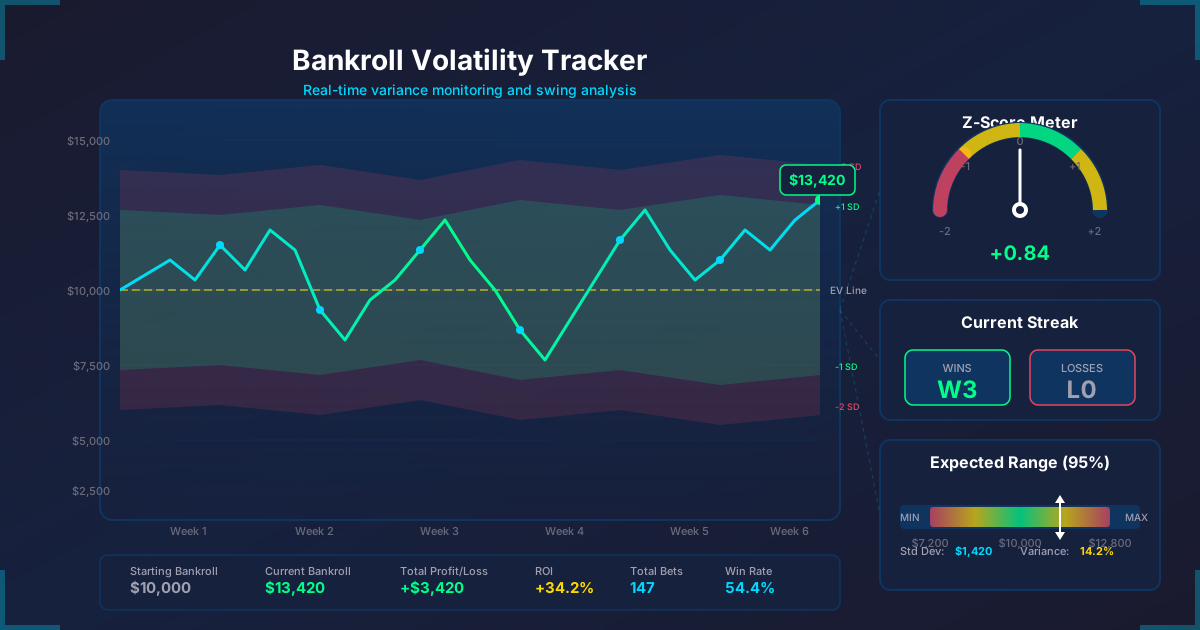
- Bankroll Volatility Tracker: Understand variance in lottery play
Conclusion: Play for Fun, Not for Profit
The lottery is a form of entertainment, not an investment. The expected value is deeply negative on every ticket, every game, at every jackpot level under realistic conditions. No strategy, system, or mathematical approach changes this.
If you enjoy playing the lottery, the mathematically informed approach is: spend only what you would on any other entertainment, avoid popular number combinations to maximize your payout in the vanishingly unlikely event of a jackpot, enter second-chance drawings for genuine added value, and keep expectations firmly grounded in reality.
Start by analyzing any lottery game's true expected value with our Lottery EV Calculator. See your real after-tax payout with our Lottery After-Tax Calculator. And compare odds across games with our Lottery Odds Calculator.
The math does not lie. The lottery is a tax on hope, and the only winning strategy is to play within your entertainment budget.
Gambling involves risk. This content is for educational and informational purposes only. Always gamble responsibly, set limits you can afford, and seek help if gambling becomes a problem. Visit the National Council on Problem Gambling or call 1-800-522-4700 for support.